EP3886367B1 - Automatisierung von 5g-scheiben unter verwendung von echtzeitanalytik - Google Patents
Automatisierung von 5g-scheiben unter verwendung von echtzeitanalytik Download PDFInfo
- Publication number
- EP3886367B1 EP3886367B1 EP21164892.8A EP21164892A EP3886367B1 EP 3886367 B1 EP3886367 B1 EP 3886367B1 EP 21164892 A EP21164892 A EP 21164892A EP 3886367 B1 EP3886367 B1 EP 3886367B1
- Authority
- EP
- European Patent Office
- Prior art keywords
- network
- workflow
- data
- probes
- distributed
- Prior art date
- Legal status (The legal status is an assumption and is not a legal conclusion. Google has not performed a legal analysis and makes no representation as to the accuracy of the status listed.)
- Active
Links
Images






Classifications
-
- H—ELECTRICITY
- H04—ELECTRIC COMMUNICATION TECHNIQUE
- H04L—TRANSMISSION OF DIGITAL INFORMATION, e.g. TELEGRAPHIC COMMUNICATION
- H04L41/00—Arrangements for maintenance, administration or management of data switching networks, e.g. of packet switching networks
- H04L41/06—Management of faults, events, alarms or notifications
- H04L41/0654—Management of faults, events, alarms or notifications using network fault recovery
-
- H—ELECTRICITY
- H04—ELECTRIC COMMUNICATION TECHNIQUE
- H04L—TRANSMISSION OF DIGITAL INFORMATION, e.g. TELEGRAPHIC COMMUNICATION
- H04L41/00—Arrangements for maintenance, administration or management of data switching networks, e.g. of packet switching networks
- H04L41/50—Network service management, e.g. ensuring proper service fulfilment according to agreements
- H04L41/5003—Managing SLA; Interaction between SLA and QoS
-
- H—ELECTRICITY
- H04—ELECTRIC COMMUNICATION TECHNIQUE
- H04L—TRANSMISSION OF DIGITAL INFORMATION, e.g. TELEGRAPHIC COMMUNICATION
- H04L41/00—Arrangements for maintenance, administration or management of data switching networks, e.g. of packet switching networks
- H04L41/50—Network service management, e.g. ensuring proper service fulfilment according to agreements
- H04L41/5032—Generating service level reports
-
- H—ELECTRICITY
- H04—ELECTRIC COMMUNICATION TECHNIQUE
- H04L—TRANSMISSION OF DIGITAL INFORMATION, e.g. TELEGRAPHIC COMMUNICATION
- H04L41/00—Arrangements for maintenance, administration or management of data switching networks, e.g. of packet switching networks
- H04L41/50—Network service management, e.g. ensuring proper service fulfilment according to agreements
- H04L41/5041—Network service management, e.g. ensuring proper service fulfilment according to agreements characterised by the time relationship between creation and deployment of a service
- H04L41/5054—Automatic deployment of services triggered by the service manager, e.g. service implementation by automatic configuration of network components
-
- H—ELECTRICITY
- H04—ELECTRIC COMMUNICATION TECHNIQUE
- H04L—TRANSMISSION OF DIGITAL INFORMATION, e.g. TELEGRAPHIC COMMUNICATION
- H04L43/00—Arrangements for monitoring or testing data switching networks
- H04L43/08—Monitoring or testing based on specific metrics, e.g. QoS, energy consumption or environmental parameters
- H04L43/0805—Monitoring or testing based on specific metrics, e.g. QoS, energy consumption or environmental parameters by checking availability
- H04L43/0817—Monitoring or testing based on specific metrics, e.g. QoS, energy consumption or environmental parameters by checking availability by checking functioning
-
- H—ELECTRICITY
- H04—ELECTRIC COMMUNICATION TECHNIQUE
- H04W—WIRELESS COMMUNICATION NETWORKS
- H04W24/00—Supervisory, monitoring or testing arrangements
- H04W24/04—Arrangements for maintaining operational condition
-
- H—ELECTRICITY
- H04—ELECTRIC COMMUNICATION TECHNIQUE
- H04W—WIRELESS COMMUNICATION NETWORKS
- H04W24/00—Supervisory, monitoring or testing arrangements
- H04W24/08—Testing, supervising or monitoring using real traffic
-
- H—ELECTRICITY
- H04—ELECTRIC COMMUNICATION TECHNIQUE
- H04L—TRANSMISSION OF DIGITAL INFORMATION, e.g. TELEGRAPHIC COMMUNICATION
- H04L41/00—Arrangements for maintenance, administration or management of data switching networks, e.g. of packet switching networks
- H04L41/06—Management of faults, events, alarms or notifications
- H04L41/0604—Management of faults, events, alarms or notifications using filtering, e.g. reduction of information by using priority, element types, position or time
- H04L41/0627—Management of faults, events, alarms or notifications using filtering, e.g. reduction of information by using priority, element types, position or time by acting on the notification or alarm source
-
- H—ELECTRICITY
- H04—ELECTRIC COMMUNICATION TECHNIQUE
- H04L—TRANSMISSION OF DIGITAL INFORMATION, e.g. TELEGRAPHIC COMMUNICATION
- H04L41/00—Arrangements for maintenance, administration or management of data switching networks, e.g. of packet switching networks
- H04L41/06—Management of faults, events, alarms or notifications
- H04L41/0631—Management of faults, events, alarms or notifications using root cause analysis; using analysis of correlation between notifications, alarms or events based on decision criteria, e.g. hierarchy, tree or time analysis
-
- H—ELECTRICITY
- H04—ELECTRIC COMMUNICATION TECHNIQUE
- H04L—TRANSMISSION OF DIGITAL INFORMATION, e.g. TELEGRAPHIC COMMUNICATION
- H04L41/00—Arrangements for maintenance, administration or management of data switching networks, e.g. of packet switching networks
- H04L41/06—Management of faults, events, alarms or notifications
- H04L41/0654—Management of faults, events, alarms or notifications using network fault recovery
- H04L41/0659—Management of faults, events, alarms or notifications using network fault recovery by isolating or reconfiguring faulty entities
- H04L41/0661—Management of faults, events, alarms or notifications using network fault recovery by isolating or reconfiguring faulty entities by reconfiguring faulty entities
Definitions
- the present disclosure generally relates to networking. More particularly, the present disclosure relates to systems and methods for automating 5G slices using real-time analytics.
- 5G fifth-generation
- NR New Radio
- DWDM dense wavelength division multiplexing
- SBA service-based architecture
- E2E end-to-end
- NFV network function virtualization
- service automation etc.
- TOSCA cloud applications
- VFV orchestration There are several modeling languages that are used today in VFV orchestration, such as TOSCA, YANG, Openstack HEAY models and Business Protocol Model and Notation (BPMN).
- the model driven principle is a key enabler for lifecycle management operations that automates various cloud operations such as creation, update, termination, scalability, etc.
- CNF cloud network function
- the LCM operations should be either triggered manually which is the NFV orchestration main scope according to the ETSI NFV reference, or through predefined policy templates that are bundled with orchestration templates to get full automation, and this comes in service orchestration scope which is going beyond NFV orchestration scope by including intelligence and service assurance features to the traditional orchestration platforms.
- WO 2015/065368 describes a realized topology system management (RTSM) database, comprising a database, a number of stored realized topologies, and in which the realized topologies within the DBMS are searchable.
- a method of generating and tracking a realized topology comprising deriving a realized topology from an instantiated topology, storing the realized topology in a RTSM database, and storing a data file representing an association of the realized topology with data describing attributes of a number of nodes of the realized topology and relationships between the nodes.
- the present disclosure relates to automating 5G slices using real-time analytics.
- the objectives of the present invention are achieved through the subject-matter of the independent claims 1, 14 and 15, respectively claiming a method, an apparatus and a system. Preferred embodiments are set out in the dependent claims.
- the present disclosure relates to systems and methods for automating 5G slices using real-time analytics.
- the present disclosure enables lifecycle management operation with management and monitoring systems and 5GC NFs.
- the present disclosure leverages orchestration features using anomaly detection from monitoring systems to reduce the disturbance of services.
- this approach transforms a monitoring system into an active element of the network orchestration cycle. For 5G network operators, this enables real-time automation and dynamic creation of slices considering the real-time status and anomaly reports, reducing the lifecycle management operations by including only the necessary operations as defined by the workflow.
- the transformation towards a self-optimized network must implement the necessary tools for sensing network status and analyze the necessary subsequent actions.
- the 5G have those technical enablers defined already through the management data analytics service (MDAS).
- MDAS management data analytics service
- This service provides data analytics of different network components through monitoring element status, load levels, resources, etc.
- the acquired parameters are representative performance data for objects, network functions (NFs), network slices, and segments.
- NFs network functions
- Those analytics are ingested into the policy control function of that slice or service type to determine compliance with predefined status rules.
- This analytical system allows for balancing the service and preventing any interruptions resulted from unexpected incoming load or lack of enough processing resources.
- the MDAS has all the necessary functions that can be deployed across the network sites for on-time determination of network status.
- the MDAS needs to be interfaced to NFV management and orchestration (MANO) framework. This would allow orchestrators to access the telemetry services of both logic and physical networks for an automotive network that can devise its own resource management policies.
- NFV management and orchestration NFV management and orchestration
- the present disclosure relates to systems and methods for automating 5G slices using real-time analytics.
- FIG. 1 is a block diagram of a cloud-based network 10 in a distributed service deployment.
- the 5G core (5GC) components will be segregated between a mobile edge cloud (MEC)/remote datacenter 12 and a central datacenter 14 where the main 5GC slice is located.
- a new radio (NR) 16 can communicate with components in the remote datacenter 12 via an N3 interface.
- the remote datacenter 12 can include user plane functions (UPF), IP services, etc.
- the NR 16 can communicate with the central datacenter 14 via N1/N2 interfaces.
- the central datacenter 14 can include unified data management (UDM), policy control functions (PCF), access and mobility management functions (AMF), session management functions (SMF), etc.
- UDM unified data management
- PCF policy control functions
- AMF access and mobility management functions
- SMSF session management functions
- the advantage of this architecture is it reduces the time delays through local access to user plane (UP) traffic.
- UP user plane
- an orchestrator 20 connected to the remote datacenter 12 and the central datacenter 14.
- the orchestrator 20 can be a processing device that is configured to implement various functions described herein.
- FIG. 2 is a block diagram of network data analytics function (NWDAF) functionality 30 to collect NFs status, metrics, etc.
- NWDAF network data analytics function
- the NWDAF functionality 30 is implemented in the remote datacenter 12 and the central datacenter 14. Monitoring will include radio resources and UE connectivity on the RAN side and anomaly detection on the core side for cross-layer management and monitoring between the orchestrator 20 and a software-defined networking (SDN)/NFV-enabled control layer 32. It is possible to prioritize the request processing subject to radio resource availability. Monitoring and troubleshooting, and diagnosis are merged with the NWDAF functionality 30 for convergent network/traffic management and utilization. Using all ingested data, the orchestrator would be able to perform LCM operations soon after discovering the topology changes and association between elements of different layers.
- SDN software-defined networking
- virtual probes or simply probes can be software, such as NFVs that are configured to analyze real-world network traffic and obtain reliable insight into subscriber experience, analyze the performance and behavior of network components in a dynamic environment via KPIs and KQIs, generate call data records to troubleshoot any issue on the network and identify its root cause, and the like.
- NFVs software, such as NFVs that are configured to analyze real-world network traffic and obtain reliable insight into subscriber experience, analyze the performance and behavior of network components in a dynamic environment via KPIs and KQIs, generate call data records to troubleshoot any issue on the network and identify its root cause, and the like.
- the probes 40 can be configured to obtain data on the N1 and/or N2 interfaces as well as based on service-based interfaces (e.g., hypertext transfer protocol (HTTP)).
- HTTP hypertext transfer protocol
- the obtained data can be published on a message bus 42 for storage 44 or use in a trusted shell (TSH) session.
- TSH trusted shell
- FIG. 3 is a diagram of interactions between a 5G air interface, SDN controller, orchestration layer, telemetry services, and CNFs for validation and assurance.
- Each core is associated with a certain logic network that is identified by the slice/service type (SST).
- Orchestrators/SDNs manage the association of components and large-scale topology.
- FIG. 4 is a network diagram of digital infrastructure for three example slices, slice #A, #B, #C.
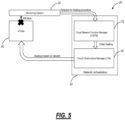
- FIG. 5 is a diagram of probe 40 orchestration.
- the probes 40 are referred to as vProbes, virtual probes, and can be CNFs.
- a monitoring system 50 can detect issues with the probe 40 and set a standby probe 40S to active and request a healing procedure via the orchestrator 20, via a CNF manager (CNFM) 52 that initiates the request and virtual infrastructure manager (CIM) 54 that allocates or liberates the associated resources.
- CNF manager CNF manager
- the probes 40 and NFs collect anomaly data from different network cores and ingest them into big data or the monitoring system 50.
- the sessions are processed in various distributed core elements without having synchronization between clouds or proactive recovery LCM using probe analytics.
- the present disclosure includes a workflow engine as a middle layer between the monitoring system 50 and the orchestrator 20 to trigger dynamic LCM events for associated clouds.
- the anomaly events could also be used to trigger LCM for probes. That is, the present disclosure utilizes slice internal analytics to automate logic networks for 5G and beyond. Sessions are processed in various distributed core elements without having synchronization between clouds or proactive recovery lifecycle management (LCM) using probe analytics.
- LCM proactive recovery lifecycle management
- Existing monitoring approaches lack any self-healing mechanism to handle scalability or issues found during self-troubleshooting, have no ability to enforce the instantiation of dedicated probes/data storage that can handle specific sets of data or certain datacenters, and there is no mechanism to adapt solution topology to meet the changes in network or footprint.
- Existing monitoring approaches are not compliant with zero-touch visions, i.e., automated approaches.
- the LCM is managed using Kubernetes or the orchestrator 20 without any consideration to analytics obtained in real-time from the cloud. Operators use a monitoring solution to detect anomalies without leveraging the troubleshooting reports for real-time LCM operations, especially in large-scale networks. 5GC NFs will be distributed across multiple data raising questions about the of the mechanism that NFV/MANO will use to handle balanced loads across clouds.
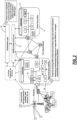
- FIG. 6 is a network diagram illustrating automatic workflow generation for the cloud-based network 10.
- An interface #1 includes user plane (UP) probes 40U that capture UP traffic from UPF interfaces on the central cloud or intermediate UPF (I-UPF) on MEC clouds.
- the interface #1 also includes RAN probes 40R located at the RAN, edge cloud, etc., and fiber probes 40F in the optical network.
- UP user plane
- I-UPF intermediate UPF
- An interface #2 includes control plane (CP) probes 40C that capture signaling messages from 5GC NFs/service-based architecture (SBA).
- CP control plane
- SBA service-based architecture
- An interface #3 includes a capture unit 72 that is an NF that is configured to collects messages from the NWDAF 30.
- Group #4 includes all data collected from the MEC datacenter(s) 12.
- Group #5 includes all data collected from the central datacenter 14.
- Component #6 is data storage 74 for the solution. This could also be replicated with other components in local datacenters as explained below.
- Component #7 is the monitoring system 50 including probe counters, MDAS analytics, and probe alarms.
- Interface #8 is an application programming interface (API) 82, such as a representational state transfer (REST) API, use to export anomaly alarms in form of commands to a workflow engine 90.
- API application programming interface
- REST representational state transfer
- Component #9 is the workflow engine 90 or service that is used to execute processes (alarms, binaries) on the monitoring system 50 via specified virtual instances through the REST APIs 82 accessible in a cloud environment (e.g., mistral).
- the workflow engine 90 can be implemented in the monitoring system 20.
- Interface #10 includes APIs 92, such as REST APIs, for embedding the workflow processes into the TOSCA templates 56.
- Component #11 is the network grand orchestrator 20 component used for network automation. It involves two functions for the proposal: Automated update of TOSCA templates or automated creation of new one to define new LCM operation 56 and to enforce TOSCA Updates by triggering new Modify operation that updates the VNF descriptor by adding the new interface for the newly defined operation.
- Interface #12 is an API 94, such as a REST API, used to connect the network orchestrator 20 with the datacenters 12, 14. APIs aligned with MEF standard should be a good implementation example of this interface.
- the NFs can be CNFs or physical devices, including various components in the datacenters 12, 14.
- the monitoring system 50 advantageously is able to obtain a view of the entire network via the probes 40C, 40U, 40R, 40F and the capture units 72.
- the probes 40 are configured to obtain telecom related data and the capture units 72 are configured to obtain computing-related date (i.e., virtualized Information Technology (IT) infrastructure).
- the monitoring system 50 has the ability to correlate the telecom and IT data.
- the RAN probe 40R captures info from a base station about user equipment (UE) location, RAN data, available frequency bands, available bandwidths, degradation in air interface through specific measurements of quality of service (QoS), drop reasons, throughput, transmission volume for each connection, transmission volume for each base station.
- the RAN probe 40R draws the topology for the network, can use call trace to add UE details, and then use another enrichment interface to capture international mobile subscriber identity (IMSI) for mapping UE location, status, transmission profile with passive monitoring solution on the core side.
- IMSI international mobile subscriber identity
- the fiber probe 40F can tap into the transport network that connects various segments of the network and provides alarms about fiber cracks and deviation in performance caused by reflections or loss. Those probes also report alarms to the monitoring system 50 through API. This also allows to draw granularity per fiber link that allows visibility of fiber topology to the central monitoring system.
- the CP probes 40C capture all CP signaling for all 5GC interfaces, and the UP probes 40U capture UP traffic on the 5GC.
- the RAN probe 40E captures UE transmission profile (air interface domain), and the fiber probe 40F monitors the fiber (transport) network.
- the monitoring system 50 captures telecom KPIs using the passive monitoring probes 40 and can correlate to captured analytics by the capture unit 72 NFs subscribed to the NWDAF 30. For example, delays in UE registration or messages between NFs may be caused by 1) overloaded NFs (limited computational resources) or 2) NF functionality failures.
- the monitoring system 50 can process all probes data and NWDAF analytics to diagnose the error cause and trigger the necessary actions (probe instantiation or core network LCM).
- the monitoring system 50 can select sets of KPIs and apply formulas to detect anomalies triggering LCM.
- the monitoring system 50 can create subfamilies of KPIs Driving new LCM operations to LCM for the various architectures described herein.
- the monitoring system 50 can create rules that generate alarms.
- lifecycle management relates to end customer experience, such as QOS, quality of experience (QOE), service layer agreements (SLA), root cause analysis, troubleshooting, etc. That is, the lifecycle management relates to anything in the 5GC that impacts service to subscribers.
- the API 82 for the interface #8 can be a consumer that is created to parse anomaly related LCM. Responsive to anomaly detection, a customized workflow creation can be triggered to perform new remediations actions with new LCM operation "custom," described below.
- the workflow engine 90 can push the newly created workflow to the orchestrator 20 through a network service (NS) Lifecycle management interface in the form of a subfile TOSCA format and/or YANG models for a CNF configuration.
- NS network service
- the orchestrator 20, the component #11, can embed the new workflow to the onboarded CNF package and enforce TOSCA updates (interfaces section considers the new workflow) via a CNF package management interface sol005.
- the workflow management component enforces the orchestrator to launch the modify LCM operation to update the CNF package via NS LCM sol005 Interface.
- the API 94 for the interface #12 can be used to perform the custom LCM operation by triggering the custom operation from the workflow management 90 component to perform the newly created workflow with remediation actions.
- the monitoring system 50 via the workflow engine 90 can cause probe instantiation or core network LCM.
- probe insanitation once an anomaly is detected, or alarms from NWDAF, or new NFs instantiated, or following network LCM transitions that cause new topology/core to exist, a generic or dedicated probe 40 is instantiated or removed.
- core network LCM For the core network LCM, once the source of an anomaly is detected to be network related issue - for example, NF failure, NF scalability, topology, connectivity issues between core network components that are distributed over multiple clouds, etc., this proposed solution will trigger core network LCM: 1) recreate NFs, or assign resources or, migrate NFs, etc. 2) trigger a 2 nd probe LCM to reattach probes to the new workflow for continuous monitoring.
- Events triggered by the monitoring system 50 are used to capture a subset of anomaly data from a 5GC slice (datacenters 12, 14). This is performed with zero touch operation: events are triggered by a prediction engine associated with the monitoring system 50.
- the custom operations defined in the proposed workflow could be related to the probes 40 or other NFs.
- This can include, for example, instantiating a new component (either a new data source, dedicated probe, cluster-based data storage (elastic search), and the like; scaling an existing component (or subcomponents) without affecting existing CNFs/NFs/NS; healing the monitoring system 50; modifying an existing component (probe to be dedicated for a certain subset of data or selected NFs through rules modification); terminating components of the monitoring system 50, including removing a dedicated probe after restoring normal operation, releasing the associated resource to reduce the footprint, etc.
- monitoring system 50 operations such as a change in the topology (example: adding new data storage for certain data centers to reduce the signaling and data transmission between probes located in multiple sites). This can be achieved by pushing multiple custom workflows triggered by massive sudden increase in the traffic captured in certain network sites. The instantiation of multiple dedicated probes 40 and the request from the customer to have dedicated data storage for a subset of data. Dynamic adaptation in the monitoring system 50 reduces the overall footprint/consumed resources. This operation is driven by network scalability events, for self-optimization and self-troubleshooting of the monitoring system 50.
- the anomaly indicators can be used to trigger LCM events that recover network function normal and optimum behavior.
- This can include deciphering TLS1.3 on 5GC HTTP/2 interfaces for automated capture of network messages.
- deciphering TLS1.3 on 5GC HTTP/2 interfaces for automated capture of network messages.
- the 5G NFs may be located in multiple cloud datacenters 12, 14and there is a need to synchronize the amount of resource dedicated for those NFs based on the incoming traffic.
- FIG. 7 is a flow diagram of a framework to perform custom operations 100.
- a new workflow is created by the workflow engine 90 (step 100-1).
- the new workflow is pushed then to the orchestrator through the CNF package management interface (step 100-2).
- the onboarded CNFM package is updated with the new LCM custom to perform the new workflow (step 100-3).
- the modify LCM operation is triggered by the workflow management operation and launched by the orchestrator 20 (step 100-4).
- the custom LCM operation is triggered by the workflow management operation and launched by the orchestrator to perform the new workflow (step 100-5).
- FIG. 8 is a flowchart of a workflow service process 150 implemented by the workflow engine 90.
- the process 150 can be implemented as a method that includes steps, via a processing device configured to execute the steps, and via a non-transitory computer-readable medium that includes instructions that cause one or more processors to implement the steps.
- the process 150 includes obtaining 152 data from a plurality of interfaces 40, 72 and network functions, NF 30, in one or more datacenters 12, 14 associated with a 5G core, 5GC, network, wherein the data relates to lifecycle management in the 5GC network; responsive 154 to analyzing the data with a set of key performance indicators, KPI, and rules associated therewith that are formulated to detect anomalies that impact the lifecycle management, generating an alarm based on the analyzing based on detection of an anomaly that impacts the lifecycle management; and creating 156 a workflow based on the alarm and pushing the workflow to the 5GC network via an orchestrator 20.
- the process 150 can further include the orchestrator 20 receiving the workflow as a topology and orchestration specification for cloud applications, TOSCA, template and triggering the workflow as a custom lifecycle management operation.
- the process 150 can further include obtaining the data from the plurality of interfaces and the NF via a monitoring system 50 and performing the analyzing via an analytics engine 80.
- the monitoring system 50 and the workflow engine 90 can communicate through application programming interfaces, APIs, in a cloud environment.
- the plurality of interfaces can include connections to probes 40 that are virtual network functions, CNF, configured to monitor any of a user plane, UP, and control plane, CP.
- CNF virtual network functions
- the NF are components configured to perform a network data analytics function, NWDAF 30.
- the workflow is one of a modify operation and a custom operation, each for a virtual network function, CNF, in the 5GC network.
- the workflow is a custom operation to instantiate a new virtual network function, CNF, in the 5GC network, via the orchestrator 20.
- the custom operation includes any of instantiating a new component in the 5GC network, scaling an existing component in the 5GC network, healing an existing component in the 5GC network, and terminating an existing component in the 5GC network.
- the obtaining, the generating, and the creating are performed in real-time during operation of the 5GC network.
- FIG. 9 is a network diagram of multi-cloud automation.
- a management data analytics system (MDAS) is a system that deploys Data analytics functions (DAFs) across all network segments from the RAN to the core to collect the functional status of network components.
- DAFs Data analytics functions
- the CP probe 40C, UP probe 40U, and RAN probe 40R allow monitoring of sessions per UE from the air interface to core network with all associated NFs (components) and anomalies. This data can be correlated with MDAS for sophisticated smart diagnose of error cause.
- the fiber probe 40F monitors the fiber connections between data centers (or multi access edge computing (MEC) nodes).
- the monitoring probes will detect anomaly and changes in performance/ behavior on data centers where fiber connects them. Anomalies from probes and alarms from fiber probes will be used by the monitoring system 50 to trigger a change in topology of the network either by 1) migrating components to avoid defective fiber link, 2) use the topology that has been built by monitoring solution to adapt connectivity using alterative links.
- the monitoring system 50 can corelate fiber probe alarms with MDAS data to detect QoS impacts and trigger necessary LCMs.
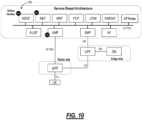
- FIG. 10 is a block diagram of a service-based architecture with active verifiers 180.
- the active verifier 180 is an active small NF element that generates messages similar to any NF in the 5GC.
- the verifiers 180 are instantiated on selected NFs to trigger messages in the core. This allows monitoring solutions to determine functionality and performance by capturing the messages through probes. This can be also used to analyze functionality of certain components (e.g., RabbitMQ when used as a message bus between NFs in SBA).
- FIG. 11 is a block diagram of a processing apparatus 200 which may be used to realize any of the components described herein.
- the processing apparatus 200 may be a digital computer that, in terms of hardware architecture, generally includes a processor 202, input/output (I/O) interfaces 204, a network interface 206, a data store 208, and memory 210. It should be appreciated by those of ordinary skill in the art that FIG. 11 depicts the processing apparatus 200 in an oversimplified manner, and practical embodiments may include additional components and suitably configured processing logic to support known or conventional operating features that are not described in detail herein.
- the components (202, 204, 206, 208, and 210) are communicatively coupled via a local interface 212.
- the local interface 212 may be, for example, but not limited to, one or more buses or other wired or wireless connections, as is known in the art.
- the local interface 212 may have additional elements, which are omitted for simplicity, such as controllers, buffers (caches), drivers, repeaters, and receivers, among many others, to enable communications.
- the local interface 212 may include address, control, and/or data connections to enable appropriate communications among the aforementioned components.
- the processor 202 is a hardware device for executing software instructions.
- the processor 202 may be any custom made or commercially available processor, a central processing unit (CPU), an auxiliary processor among several processors associated with the processing apparatus 200, a semiconductor-based microprocessor (in the form of a microchip or chip set), or generally any device for executing software instructions.
- the processor 202 is configured to execute software stored within the memory 210, to communicate data to and from the memory 210, and to generally control operations of the processing apparatus 200 pursuant to the software instructions.
- the I/O interfaces 204 may be used to receive user input from and/or for providing system output to one or more devices or components.
- I/O interfaces 204 may include, for example, a serial port, a parallel port, a small computer system interface (SCSI), a serial ATA (SATA), a fibre channel, Infiniband, iSCSI, a PCI Express interface (PCI-x), an infrared (IR) interface, a radio frequency (RF) interface, and/or a universal serial bus (USB) interface.
- SCSI small computer system interface
- SATA serial ATA
- PCI-x PCI Express interface
- IR infrared
- RF radio frequency
- USB universal serial bus
- the network interface 206 may be used to enable the processing apparatus 200 to communicate over a network, such as the Internet, a wide area network (WAN), a local area network (LAN), and the like, etc.
- the network interface 206 may include, for example, an Ethernet card or adapter (e.g., 10BaseT, Fast Ethernet, Gigabit Ethernet, 10GbE) or a wireless local area network (WLAN) card or adapter (e.g., 802.11a/b/g/n/ac).
- the network interface 206 may include address, control, and/or data connections to enable appropriate communications on the network.
- a data store 208 may be used to store data.
- the data store 208 may include any of volatile memory elements (e.g., random access memory (RAM, such as DRAM, SRAM, SDRAM, and the like)), nonvolatile memory elements (e.g., ROM, hard drive, tape, CDROM, and the like), and combinations thereof. Moreover, the data store 208 may incorporate electronic, magnetic, optical, and/or other types of storage media. In one example, the data store 208 may be located internal to the processing apparatus 200 such as, for example, an internal hard drive connected to the local interface 212 in the processing apparatus 200. Additionally, in another embodiment, the data store 208 may be located external to the processing apparatus 200 such as, for example, an external hard drive connected to the I/O interfaces 204 (e.g., SCSI or USB connection). In a further embodiment, the data store 208 may be connected to the processing apparatus 200 through a network, such as, for example, a network attached file server.
- the memory 210 may include any of volatile memory elements (e.g., random access memory (RAM, such as DRAM, SRAM, SDRAM, etc.)), nonvolatile memory elements (e.g., ROM, hard drive, tape, CDROM, etc.), and combinations thereof. Moreover, the memory 210 may incorporate electronic, magnetic, optical, and/or other types of storage media. Note that the memory 210 may have a distributed architecture, where various components are situated remotely from one another but can be accessed by the processor 202.
- the software in memory 210 may include one or more software programs, each of which includes an ordered listing of executable instructions for implementing logical functions.
- the software in the memory 210 includes a suitable operating system (O/S) 214 and one or more programs 216.
- O/S operating system
- the operating system 214 essentially controls the execution of other computer programs, such as the one or more programs 216, and provides scheduling, input-output control, file and data management, memory management, and communication control and related services.
- the one or more programs 216 may be configured to implement the various processes, algorithms, methods, techniques, etc. described herein.
- processors such as microprocessors; Central Processing Units (CPUs); Digital Signal Processors (DSPs): customized processors such as Network Processors (NPs) or Network Processing Units (NPUs), Graphics Processing Units (GPUs), or the like; Field-Programmable Gate Arrays (FPGAs); and the like along with unique stored program instructions (including both software and firmware) for control thereof to implement, in conjunction with certain non-processor circuits, some, most, or all of the functions of the methods and/or systems described herein.
- processors such as microprocessors; Central Processing Units (CPUs); Digital Signal Processors (DSPs): customized processors such as Network Processors (NPs) or Network Processing Units (NPUs), Graphics Processing Units (GPUs), or the like; Field-Programmable Gate Arrays (FPGAs); and the like along with unique stored program instructions (including both software and firmware) for control thereof to implement, in conjunction with certain non-processor circuits, some, most, or all
- circuitry configured to
- logic configured to
- some embodiments may include a non-transitory computer-readable medium having instructions stored thereon for programming a computer, server, appliance, device, one or more processors, circuit, etc. to perform functions as described and claimed herein.
- Examples of such non-transitory computer-readable medium include, but are not limited to, a hard disk, an optical storage device, a magnetic storage device, a Read-Only Memory (ROM), a Programmable ROM (PROM), an Erasable PROM (EPROM), an Electrically EPROM (EEPROM), Flash memory, and the like.
- software can include instructions executable by one or more processors (e.g., any type of programmable circuitry or logic) that, in response to such execution, cause the one or more processors to perform a set of operations, steps, methods, processes, algorithms, functions, techniques, etc. as described herein for the various embodiments.
- processors e.g., any type of programmable circuitry or logic
Landscapes
- Engineering & Computer Science (AREA)
- Computer Networks & Wireless Communication (AREA)
- Signal Processing (AREA)
- Environmental & Geological Engineering (AREA)
- Data Exchanges In Wide-Area Networks (AREA)
Claims (15)
- Verfahren (150), das von einer Workflow-Engine (90) implementiert wird, umfassend:Erhalten (152) von Daten von einer Vielzahl von verteilten Sensoren (40) und Netzwerkfunktionen, NF (72), in einem oder mehreren Datenzentren (12, 14), die mit einem 5G-Kern-, 5GC-, Netzwerk verbunden sind, wobei sich die Daten auf das Lebenszyklusmanagement im 5GC-Netzwerk beziehen und Telekommunikationsdaten von den verteilten Sensoren (40) und Rechendaten von den NF (72) beinhalten;als Reaktion (154) auf das Analysieren und Korrelieren der Telekommunikationsdaten und der Rechendaten, um Anomalien zu erkennen, die sich auf das Lebenszyklusmanagement auswirken, Generieren eines Alarms basierend auf der Analyse basierend auf der Erkennung einer Anomalie, die sich auf das Lebenszyklusmanagement auswirkt; undErstellen (156) eines Workflows basierend auf dem Alarm und Übertragen des Workflows über einen Orchestrator (20) an das 5GC-Netzwerk, wobei der Workflow das Instanziieren von mindestens einem verteilten Sensor als virtuelle Netzwerkfunktion, VNF, während des Betriebs des 5GC-Netzwerks und als Reaktion auf das Analysieren und Korrelieren der Telekommunikationsdaten zum Erhalten spezifischer Datensätze beinhaltet und wobei sich der mindestens eine verteilte Sensor in einem von einer Benutzerebene, einer Steuerebene, einem Funkzugangsnetzwerk und einem Glasfasernetzwerk befindet.
- Verfahren nach Anspruch 1, ferner umfassend, dass der Orchestrator (20) den Workflow als eine Vorlage für Topologie- und Orchestrierungsspezifikation für Cloud-Anwendungen, TOSCA, empfängt und den Workflow als einen benutzerdefinierte Lebenszyklusverwaltungsvorgang auslöst.
- Verfahren nach einem der Ansprüche 1 bis 2, ferner umfassend das Erhalten der Daten von der Vielzahl von verteilten Sensoren und den NF über ein Überwachungssystem (50), das die Workflow-Engine (90) implementiert und mit der Vielzahl von verteilten Sensoren (40) und den NF (72) verbunden ist.
- Verfahren nach Anspruch 3, wobei das Überwachungssystem (50) und die Workflow-Engine (90) über Anwendungsprogrammierschnittstellen, APIs, in einer Cloud-Umgebung kommunizieren.
- Verfahren nach einem der Ansprüche 1 bis 4, wobei die Vielzahl von verteilten Sensoren (40) Cloud-Netzwerkfunktionen, CNFs, beinhaltet.
- Verfahren nach einem der Ansprüche 1 bis 5, wobei die Vielzahl von Sensoren (40) eine von Benutzerebenen-, UP-, Sensoren (40U), Steuerebenen-, CP-, Sensoren (40C), Funkzugangsnetz-, RAN-, Sensoren (40R) und Glasfaser-Sensoren (40F) beinhaltet.
- Verfahren nach einem der Ansprüche 1 bis 6, wobei die NF Komponenten sind, die dazu konfiguriert sind, die Rechendaten in den Datenzentren (12, 14) von einer Netzwerkdatenanalysefunktion, NWDAF (30), zu erhalten.
- Verfahren nach einem der Ansprüche 1 bis 7, wobei der Workflow das Entfernen eines Sensors (40) beinhaltet.
- Verfahren nach einem der Ansprüche 1 bis 8, wobei der Workflow eines von dem Neuerstellen von NFs, dem Zuweisen von Ressourcen zu NFs oder das Migrieren von NFs ist.
- Verfahren nach einem der Ansprüche 1 bis 9, wobei der Workflow einer von einem Änderungsvorgang und einem benutzerdefinierten Vorgang, jeweils für eine Cloud-Netzwerkfunktion, CNF, im 5GC-Netzwerk, ist.
- Verfahren nach einem der Ansprüche 1 bis 10, wobei der Workflow ein benutzerdefinierter Vorgang zum Instanziieren einer neuen virtuellen Netzwerkfunktion, VNF, im 5GC-Netzwerk über den Orchestrator (20) ist.
- Verfahren nach einem der Ansprüche 1 bis 11, wobei der Workflow das Instanziieren eines aktiven Prüfers zum Auslösen von Nachrichten im 5GC-Netzwerk zum Bestimmen von Funktionalität und Leistung beinhaltet.
- Verfahren nach einem der Ansprüche 1 bis 12, wobei das Erhalten, das Generieren und das Erstellen in Echtzeit während des Betriebs des 5GC-Netzwerks durchgeführt werden.
- Vorrichtung (200), umfassend einen oder mehrere Prozessoren (202), die dazu konfiguriert sind, das Verfahren nach einem der Ansprüche 1 bis 13 zu implementieren.
- System, umfassend ein Überwachungssystem (50) und eine Workflow-Engine (90), die dazu konfiguriert sind, das Verfahren nach einem der Ansprüche 1 bis 13 zu implementieren.
Applications Claiming Priority (1)
| Application Number | Priority Date | Filing Date | Title |
|---|---|---|---|
| US202063000833P | 2020-03-27 | 2020-03-27 |
Publications (2)
| Publication Number | Publication Date |
|---|---|
| EP3886367A1 EP3886367A1 (de) | 2021-09-29 |
| EP3886367B1 true EP3886367B1 (de) | 2024-09-04 |
Family
ID=75223174
Family Applications (1)
| Application Number | Title | Priority Date | Filing Date |
|---|---|---|---|
| EP21164892.8A Active EP3886367B1 (de) | 2020-03-27 | 2021-03-25 | Automatisierung von 5g-scheiben unter verwendung von echtzeitanalytik |
Country Status (2)
| Country | Link |
|---|---|
| US (1) | US11483218B2 (de) |
| EP (1) | EP3886367B1 (de) |
Families Citing this family (21)
| Publication number | Priority date | Publication date | Assignee | Title |
|---|---|---|---|---|
| WO2020256605A1 (en) * | 2019-06-19 | 2020-12-24 | Telefonaktiebolaget Lm Ericsson (Publ) | Evaluating overall network resource congestion before scaling a network slice |
| US12166784B1 (en) | 2021-01-21 | 2024-12-10 | T-Mobile Usa, Inc. | Cybersecurity system for network slices of wireless telecommunications network |
| US11431746B1 (en) * | 2021-01-21 | 2022-08-30 | T-Mobile Usa, Inc. | Cybersecurity system for common interface of service-based architecture of a wireless telecommunications network |
| US11546767B1 (en) | 2021-01-21 | 2023-01-03 | T-Mobile Usa, Inc. | Cybersecurity system for edge protection of a wireless telecommunications network |
| US11843960B2 (en) * | 2021-04-12 | 2023-12-12 | SIGOS GmbH | Test system and test method for testing a broadband cellular network |
| US11706130B2 (en) * | 2021-07-19 | 2023-07-18 | Cisco Technology, Inc. | Root-causing user experience anomalies to coordinate reactive policies in application-aware routing |
| US11595263B1 (en) * | 2021-08-27 | 2023-02-28 | Trento Systems, Inc. | Dynamic construction of virtual dedicated network slice based on software-defined network |
| CN114158076B (zh) * | 2021-12-14 | 2023-07-14 | 中国联合网络通信集团有限公司 | 策略生成方法、设备及存储介质 |
| WO2023108645A1 (en) * | 2021-12-17 | 2023-06-22 | Zte Corporation | Method, device and computer program product for wireless communication |
| US12445347B2 (en) * | 2021-12-31 | 2025-10-14 | Dish Wireless L.L.C. | Identification of root causes in data processing errors |
| CN114527960B (zh) * | 2021-12-31 | 2025-03-28 | 广东省电信规划设计院有限公司 | 一种5g电力虚拟专网切片的网省分级能力编排设计方法 |
| US11953992B2 (en) * | 2022-06-23 | 2024-04-09 | Dell Products L.P. | Device modification analysis framework |
| US12526291B2 (en) | 2022-09-21 | 2026-01-13 | Hewlett Packard Enterprise Development Lp | Detecting an anomaly event in low dimensional spacenetworks |
| US12445346B2 (en) * | 2022-12-23 | 2025-10-14 | Rakuten Symphony, Inc. | Optimal fault and performance management reporting via NF level northbound reporting agent |
| US12452150B2 (en) * | 2022-12-23 | 2025-10-21 | Rakuten Symphony, Inc. | Optimal performance management reporting via NF level northbound performance reporting agent |
| WO2024136874A1 (en) | 2022-12-23 | 2024-06-27 | Rakuten Mobile Usa Llc | Optimal fault management reporting via nf level northbound fault reporting agent |
| WO2024158378A1 (en) | 2023-01-24 | 2024-08-02 | Rakuten Mobile Usa Llc | Optimal fcaps reporting via host level northbound reporting agent |
| US12549454B2 (en) * | 2023-03-21 | 2026-02-10 | Amdocs Development Limited | System, method, and computer program for a TOSCA modeling optimization for 5G network orchestration |
| CN117313012B (zh) * | 2023-10-17 | 2026-03-24 | 平安银行股份有限公司 | 服务编排系统的故障管理方法、装置、设备及存储介质 |
| WO2025216683A1 (en) * | 2024-04-08 | 2025-10-16 | Telefonaktiebolaget Lm Ericsson (Publ) | Network data analytics function assisted detection and mitigation of network function anomaly |
| CN118139088B (zh) * | 2024-04-30 | 2024-07-16 | 安徽翼控网络科技有限公司 | 一种基于5g网络的设备管理平台 |
Citations (1)
| Publication number | Priority date | Publication date | Assignee | Title |
|---|---|---|---|---|
| US20180131578A1 (en) * | 2016-11-07 | 2018-05-10 | At&T Intellectual Property I, L.P. | Method and apparatus for a responsive software defined network |
Family Cites Families (52)
| Publication number | Priority date | Publication date | Assignee | Title |
|---|---|---|---|---|
| US9204329B2 (en) | 2011-07-21 | 2015-12-01 | Movik Networks | Distributed RAN information collection, consolidation and RAN-analytics |
| CN103947156B (zh) | 2011-09-30 | 2018-01-02 | 瑞典爱立信有限公司 | 用于根原因分析的方法、装置和通信网络 |
| WO2015065368A1 (en) | 2013-10-30 | 2015-05-07 | Hewlett-Packard Development Company, L.P. | Realized topology system management database |
| US9424121B2 (en) | 2014-12-08 | 2016-08-23 | Alcatel Lucent | Root cause analysis for service degradation in computer networks |
| BR112017015617A2 (pt) | 2015-01-20 | 2018-04-10 | Huawei Tech Co Ltd | sistemas e métodos para sdt trabalhar interligada com nfv e sdn. |
| US9838272B2 (en) | 2015-04-13 | 2017-12-05 | Ciena Corporation | Service enhancement discovery for connectivity traits and virtual network functions in network services |
| BR112017023037A2 (pt) | 2015-06-01 | 2018-07-03 | Huawei Tech Co Ltd | aparelho e método para funções virtualizadas em planos de controle e de dados. |
| US10700936B2 (en) | 2015-06-02 | 2020-06-30 | Huawei Technologies Co., Ltd. | System and methods for virtual infrastructure management between operator networks |
| US9392471B1 (en) | 2015-07-24 | 2016-07-12 | Viavi Solutions Uk Limited | Self-optimizing network (SON) system for mobile networks |
| US10348517B2 (en) | 2015-10-09 | 2019-07-09 | Openet Telecom Ltd. | System and method for enabling service lifecycle based policy, licensing, and charging in a network function virtualization ecosystem |
| CN116488995A (zh) * | 2016-01-08 | 2023-07-25 | 苹果公司 | 用于虚拟化网络功能的实例化和终止的技术 |
| JP6725703B2 (ja) | 2016-02-16 | 2020-07-22 | アイディーエーシー ホールディングス インコーポレイテッド | ネットワークスライシング操作 |
| US11444850B2 (en) | 2016-05-02 | 2022-09-13 | Huawei Technologies Co., Ltd. | Method and apparatus for communication network quality of service capability exposure |
| US10142889B2 (en) | 2016-05-13 | 2018-11-27 | Huawei Technologies Co., Ltd. | Method and system for providing guaranteed quality of service and quality of experience channel |
| TWI655877B (zh) | 2017-02-06 | 2019-04-01 | 財團法人工業技術研究院 | 用以選擇網路切片的使用者設備註冊方法、及使用此方法的網路控制器與網路通訊系統 |
| US10986516B2 (en) | 2017-03-10 | 2021-04-20 | Huawei Technologies Co., Ltd. | System and method of network policy optimization |
| EP3632083B1 (de) | 2017-05-22 | 2024-05-15 | Telefonaktiebolaget LM Ericsson (Publ) | Edge-cloud-vermittler und verfahren zur zuteilung von edge-cloud-ressourcen |
| US11323884B2 (en) | 2017-06-27 | 2022-05-03 | Allot Ltd. | System, device, and method of detecting, mitigating and isolating a signaling storm |
| US20190109768A1 (en) | 2017-10-06 | 2019-04-11 | Huawei Technologies Co., Ltd. | Management of network slices and associated services |
| US10721144B2 (en) * | 2017-12-22 | 2020-07-21 | At&T Intellectual Property I, L.P. | Virtualized intelligent and integrated network monitoring as a service |
| JP7263361B2 (ja) | 2018-01-11 | 2023-04-24 | サムスン エレクトロニクス カンパニー リミテッド | サービス性能の監視および報告 |
| US10986528B2 (en) | 2018-02-15 | 2021-04-20 | Huawei Technologies Co., Ltd. | Tracking QoS violated events |
| CA3092249A1 (en) | 2018-02-26 | 2019-08-29 | Sinclair Broadcast Group, Inc. | A next generation multi-channel-tenant virtualized broadcast platform and 5g convergence |
| US10887197B2 (en) | 2018-03-27 | 2021-01-05 | Cisco Technology, Inc. | Deep fusion reasoning engine (DFRE) for dynamic and explainable wireless network QoE metrics |
| US11140047B2 (en) | 2018-04-09 | 2021-10-05 | Intel Corporation | Network data analytics function (NWDAF) influencing fifth generation (5G) quality of service (QoS) configuration and adjustment |
| WO2019197467A1 (en) | 2018-04-10 | 2019-10-17 | Telefonaktiebolaget Lm Ericsson (Publ) | Distributed analytics in 5gc |
| CN113225206B (zh) | 2018-04-13 | 2024-11-26 | 华为技术有限公司 | 通信方法与装置 |
| WO2019225929A1 (en) | 2018-05-21 | 2019-11-28 | Samsung Electronics Co., Ltd. | Method and apparatus for utilizing data collection and analysis function in wireless communication system |
| US11477737B2 (en) | 2018-05-29 | 2022-10-18 | Telefonaktiebolaget Lm Ericsson (Publ) | Systems and methods for investigating and addressing battery life degradation of devices, such as IoT devices, in a cellular communications network |
| WO2019246530A1 (en) | 2018-06-22 | 2019-12-26 | Convida Wireless, Llc | Service layer-based methods to enable efficient analytics of iot data |
| US10917800B2 (en) | 2018-06-22 | 2021-02-09 | Huawei Technologies Co., Ltd. | Data analytics management (DAM), configuration specification and procedures, provisioning, and service based architecture (SBA) |
| EP3811569B1 (de) | 2018-06-25 | 2024-03-13 | Telefonaktiebolaget LM Ericsson (publ) | Verfahren zum berichten von verkehrsmetriken durch eine funktion auf benutzerebene (upf) an eine sitzungsverwaltungsfunktion (smf) in einem telekommunikationsnetz sowie entsprechende upf |
| US11516090B2 (en) | 2018-07-17 | 2022-11-29 | Telefonaktiebolaget Lm Ericsson (Publ) | Open network automation platform (ONAP)—fifth generation core (5GC) interaction for analytics |
| US10581984B2 (en) | 2018-07-23 | 2020-03-03 | Cisco Technology, Inc. | Methods and apparatus for providing information associated with network function (NF) instances of a 5G mobile network |
| US11650862B2 (en) | 2018-07-31 | 2023-05-16 | Parallel Wireless, Inc. | Service bus for telecom infrastructure |
| US10892958B2 (en) | 2018-08-03 | 2021-01-12 | Huawei Technologies Co., Ltd. | Methods and functions of network performance monitoring and service assurance |
| WO2020031158A1 (en) | 2018-08-10 | 2020-02-13 | Nokia Technologies Oy | Method and apparatus for providing service path vectors in service based architecture of communication network |
| WO2020032769A1 (ko) | 2018-08-10 | 2020-02-13 | 삼성전자 주식회사 | 무선 통신 시스템에서 네트워크 트래픽 관리 방법 및 장치 |
| CN112805965B (zh) * | 2018-09-20 | 2024-07-02 | 苹果公司 | 用于端到端测量和性能数据流式传输的系统、方法及设备 |
| US10944796B2 (en) | 2018-09-27 | 2021-03-09 | Palo Alto Networks, Inc. | Network slice-based security in mobile networks |
| GB2577804B (en) | 2018-10-03 | 2022-03-02 | Samsung Electronics Co Ltd | Improvements in and relating to telecommunications networks |
| KR102700547B1 (ko) | 2018-10-05 | 2024-08-30 | 삼성전자 주식회사 | 5g 이동 통신 시스템에서 네트워크 분석 정보를 활용한 효율적 mico 모드 관리 방법 |
| US11678252B2 (en) | 2018-10-05 | 2023-06-13 | Huawei Technologies Co., Ltd. | Quality of service information notification to user equipment, users, and application server |
| EP3864880B1 (de) | 2018-10-12 | 2023-05-10 | Huawei Technologies Co., Ltd. | Vorrichtungen und verfahren zur entdeckung von sammelbaren daten und analytikdaten in einem netzwerk |
| WO2020173580A1 (en) | 2019-02-26 | 2020-09-03 | Telefonaktiebolaget Lm Ericsson (Publ) | Service delivery with joint network and cloud resource management |
| US10785634B1 (en) | 2019-03-08 | 2020-09-22 | Telefonaktiebolaget Lm Ericsson (Publ) | Method for end-to-end (E2E) user equipment (UE) trajectory network automation based on future UE location |
| US10939308B2 (en) | 2019-03-14 | 2021-03-02 | Cisco Technology, Inc. | Deploying network functions in a communication network based on geo-social network data |
| US11012294B2 (en) * | 2019-04-17 | 2021-05-18 | Nefeli Networks, Inc. | Inline data plane monitor placement and operation for network function virtualization |
| US10841974B1 (en) | 2019-08-12 | 2020-11-17 | Verizon Patent And Licensing Inc. | System and method for session relocation at edge networks |
| US11223560B2 (en) * | 2019-08-21 | 2022-01-11 | Verzon Patent and Licensing Inc. | System and methods for unified collection of network information |
| US11943122B2 (en) | 2019-10-03 | 2024-03-26 | Intel Corporation | Management data analytics |
| GB2588985B (en) | 2019-10-04 | 2022-11-09 | Samsung Electronics Co Ltd | Network and method |
-
2021
- 2021-03-23 US US17/209,370 patent/US11483218B2/en active Active
- 2021-03-25 EP EP21164892.8A patent/EP3886367B1/de active Active
Patent Citations (1)
| Publication number | Priority date | Publication date | Assignee | Title |
|---|---|---|---|---|
| US20180131578A1 (en) * | 2016-11-07 | 2018-05-10 | At&T Intellectual Property I, L.P. | Method and apparatus for a responsive software defined network |
Also Published As
| Publication number | Publication date |
|---|---|
| EP3886367A1 (de) | 2021-09-29 |
| US20210306235A1 (en) | 2021-09-30 |
| US11483218B2 (en) | 2022-10-25 |
Similar Documents
| Publication | Publication Date | Title |
|---|---|---|
| EP3886367B1 (de) | Automatisierung von 5g-scheiben unter verwendung von echtzeitanalytik | |
| US11296923B2 (en) | Network fault originator identification for virtual network infrastructure | |
| US10756976B2 (en) | Data network and execution environment replication for network automation and network applications | |
| KR102089284B1 (ko) | 클라우드 검증 및 테스트 자동화 | |
| US10805171B1 (en) | Understanding network entity relationships using emulation based continuous learning | |
| US11539590B2 (en) | Detect impact of network maintenance in software defined infrastructure | |
| US10536348B2 (en) | Operational micro-services design, development, deployment | |
| Barrachina-Muñoz et al. | Cloud-native 5G experimental platform with over-the-air transmissions and end-to-end monitoring | |
| Brandón et al. | Fmone: A flexible monitoring solution at the edge | |
| US10372572B1 (en) | Prediction model testing framework | |
| US10644947B2 (en) | Non-invasive diagnosis of configuration errors in distributed system | |
| US9948524B2 (en) | Network element diagnostic evaluation | |
| US11722371B2 (en) | Utilizing unstructured data in self-organized networks | |
| EP4605830A1 (de) | Kausales argumentationssystem für betriebszwilling (carot) zur entwicklung und zum betrieb von 5g-cnfs | |
| Hwang et al. | Cloud transformation analytics services: a case study of cloud fitness validation for server migration | |
| CN114567559A (zh) | 数据分析模型的训练方法、装置及存储介质 | |
| CN108123821B (zh) | 一种数据分析方法及装置 | |
| US20250211489A1 (en) | Ci/cd framework to install 5g applications | |
| US20260099417A1 (en) | Service mesh monitoring with infrastructure awareness | |
| Lopes et al. | Service Assurance in 5G-based vCDN | |
| US20260081860A1 (en) | Cellular network component automated health checks | |
| US20250362935A1 (en) | Generating consolidated customer information questionnaire for deployment of distributed telco cloud | |
| WO2025088630A1 (en) | An interface between nsmp and mano architecture in a virtualized network | |
| Syed | Towards Policy Driven Network and Service Management in Virtualized Networks | |
| CN120086121A (zh) | 模拟海量边缘设备的资源要素测试方法、系统及存储介质 |
Legal Events
| Date | Code | Title | Description |
|---|---|---|---|
| PUAI | Public reference made under article 153(3) epc to a published international application that has entered the european phase |
Free format text: ORIGINAL CODE: 0009012 |
|
| STAA | Information on the status of an ep patent application or granted ep patent |
Free format text: STATUS: THE APPLICATION HAS BEEN PUBLISHED |
|
| AK | Designated contracting states |
Kind code of ref document: A1 Designated state(s): AL AT BE BG CH CY CZ DE DK EE ES FI FR GB GR HR HU IE IS IT LI LT LU LV MC MK MT NL NO PL PT RO RS SE SI SK SM TR |
|
| STAA | Information on the status of an ep patent application or granted ep patent |
Free format text: STATUS: REQUEST FOR EXAMINATION WAS MADE |
|
| 17P | Request for examination filed |
Effective date: 20220322 |
|
| RBV | Designated contracting states (corrected) |
Designated state(s): AL AT BE BG CH CY CZ DE DK EE ES FI FR GB GR HR HU IE IS IT LI LT LU LV MC MK MT NL NO PL PT RO RS SE SI SK SM TR |
|
| STAA | Information on the status of an ep patent application or granted ep patent |
Free format text: STATUS: EXAMINATION IS IN PROGRESS |
|
| 17Q | First examination report despatched |
Effective date: 20230224 |
|
| P01 | Opt-out of the competence of the unified patent court (upc) registered |
Effective date: 20230513 |
|
| REG | Reference to a national code |
Ref country code: DE Ref legal event code: R079 Free format text: PREVIOUS MAIN CLASS: H04L0012240000 Ipc: H04L0041065400 Ref document number: 602021018138 Country of ref document: DE |
|
| GRAP | Despatch of communication of intention to grant a patent |
Free format text: ORIGINAL CODE: EPIDOSNIGR1 |
|
| STAA | Information on the status of an ep patent application or granted ep patent |
Free format text: STATUS: GRANT OF PATENT IS INTENDED |
|
| RIC1 | Information provided on ipc code assigned before grant |
Ipc: H04L 41/0631 20220101ALN20240429BHEP Ipc: H04L 41/0604 20220101ALN20240429BHEP Ipc: H04L 41/0654 20220101AFI20240429BHEP |
|
| INTG | Intention to grant announced |
Effective date: 20240516 |
|
| GRAS | Grant fee paid |
Free format text: ORIGINAL CODE: EPIDOSNIGR3 |
|
| GRAA | (expected) grant |
Free format text: ORIGINAL CODE: 0009210 |
|
| STAA | Information on the status of an ep patent application or granted ep patent |
Free format text: STATUS: THE PATENT HAS BEEN GRANTED |
|
| AK | Designated contracting states |
Kind code of ref document: B1 Designated state(s): AL AT BE BG CH CY CZ DE DK EE ES FI FR GB GR HR HU IE IS IT LI LT LU LV MC MK MT NL NO PL PT RO RS SE SI SK SM TR |
|
| REG | Reference to a national code |
Ref country code: GB Ref legal event code: FG4D |
|
| REG | Reference to a national code |
Ref country code: CH Ref legal event code: EP |
|
| REG | Reference to a national code |
Ref country code: IE Ref legal event code: FG4D |
|
| REG | Reference to a national code |
Ref country code: DE Ref legal event code: R096 Ref document number: 602021018138 Country of ref document: DE |
|
| REG | Reference to a national code |
Ref country code: LT Ref legal event code: MG9D |
|
| REG | Reference to a national code |
Ref country code: NL Ref legal event code: MP Effective date: 20240904 |
|
| PG25 | Lapsed in a contracting state [announced via postgrant information from national office to epo] |
Ref country code: NO Free format text: LAPSE BECAUSE OF FAILURE TO SUBMIT A TRANSLATION OF THE DESCRIPTION OR TO PAY THE FEE WITHIN THE PRESCRIBED TIME-LIMIT Effective date: 20241204 |
|
| PG25 | Lapsed in a contracting state [announced via postgrant information from national office to epo] |
Ref country code: GR Free format text: LAPSE BECAUSE OF FAILURE TO SUBMIT A TRANSLATION OF THE DESCRIPTION OR TO PAY THE FEE WITHIN THE PRESCRIBED TIME-LIMIT Effective date: 20241205 Ref country code: PL Free format text: LAPSE BECAUSE OF FAILURE TO SUBMIT A TRANSLATION OF THE DESCRIPTION OR TO PAY THE FEE WITHIN THE PRESCRIBED TIME-LIMIT Effective date: 20240904 Ref country code: FI Free format text: LAPSE BECAUSE OF FAILURE TO SUBMIT A TRANSLATION OF THE DESCRIPTION OR TO PAY THE FEE WITHIN THE PRESCRIBED TIME-LIMIT Effective date: 20240904 |
|
| PG25 | Lapsed in a contracting state [announced via postgrant information from national office to epo] |
Ref country code: BG Free format text: LAPSE BECAUSE OF FAILURE TO SUBMIT A TRANSLATION OF THE DESCRIPTION OR TO PAY THE FEE WITHIN THE PRESCRIBED TIME-LIMIT Effective date: 20240904 |
|
| PG25 | Lapsed in a contracting state [announced via postgrant information from national office to epo] |
Ref country code: LV Free format text: LAPSE BECAUSE OF FAILURE TO SUBMIT A TRANSLATION OF THE DESCRIPTION OR TO PAY THE FEE WITHIN THE PRESCRIBED TIME-LIMIT Effective date: 20240904 |
|
| PG25 | Lapsed in a contracting state [announced via postgrant information from national office to epo] |
Ref country code: HR Free format text: LAPSE BECAUSE OF FAILURE TO SUBMIT A TRANSLATION OF THE DESCRIPTION OR TO PAY THE FEE WITHIN THE PRESCRIBED TIME-LIMIT Effective date: 20240904 |
|
| PG25 | Lapsed in a contracting state [announced via postgrant information from national office to epo] |
Ref country code: ES Free format text: LAPSE BECAUSE OF FAILURE TO SUBMIT A TRANSLATION OF THE DESCRIPTION OR TO PAY THE FEE WITHIN THE PRESCRIBED TIME-LIMIT Effective date: 20240904 Ref country code: RS Free format text: LAPSE BECAUSE OF FAILURE TO SUBMIT A TRANSLATION OF THE DESCRIPTION OR TO PAY THE FEE WITHIN THE PRESCRIBED TIME-LIMIT Effective date: 20241204 |
|
| PG25 | Lapsed in a contracting state [announced via postgrant information from national office to epo] |
Ref country code: RS Free format text: LAPSE BECAUSE OF FAILURE TO SUBMIT A TRANSLATION OF THE DESCRIPTION OR TO PAY THE FEE WITHIN THE PRESCRIBED TIME-LIMIT Effective date: 20241204 Ref country code: PL Free format text: LAPSE BECAUSE OF FAILURE TO SUBMIT A TRANSLATION OF THE DESCRIPTION OR TO PAY THE FEE WITHIN THE PRESCRIBED TIME-LIMIT Effective date: 20240904 Ref country code: NO Free format text: LAPSE BECAUSE OF FAILURE TO SUBMIT A TRANSLATION OF THE DESCRIPTION OR TO PAY THE FEE WITHIN THE PRESCRIBED TIME-LIMIT Effective date: 20241204 Ref country code: LV Free format text: LAPSE BECAUSE OF FAILURE TO SUBMIT A TRANSLATION OF THE DESCRIPTION OR TO PAY THE FEE WITHIN THE PRESCRIBED TIME-LIMIT Effective date: 20240904 Ref country code: HR Free format text: LAPSE BECAUSE OF FAILURE TO SUBMIT A TRANSLATION OF THE DESCRIPTION OR TO PAY THE FEE WITHIN THE PRESCRIBED TIME-LIMIT Effective date: 20240904 Ref country code: GR Free format text: LAPSE BECAUSE OF FAILURE TO SUBMIT A TRANSLATION OF THE DESCRIPTION OR TO PAY THE FEE WITHIN THE PRESCRIBED TIME-LIMIT Effective date: 20241205 Ref country code: FI Free format text: LAPSE BECAUSE OF FAILURE TO SUBMIT A TRANSLATION OF THE DESCRIPTION OR TO PAY THE FEE WITHIN THE PRESCRIBED TIME-LIMIT Effective date: 20240904 Ref country code: ES Free format text: LAPSE BECAUSE OF FAILURE TO SUBMIT A TRANSLATION OF THE DESCRIPTION OR TO PAY THE FEE WITHIN THE PRESCRIBED TIME-LIMIT Effective date: 20240904 Ref country code: BG Free format text: LAPSE BECAUSE OF FAILURE TO SUBMIT A TRANSLATION OF THE DESCRIPTION OR TO PAY THE FEE WITHIN THE PRESCRIBED TIME-LIMIT Effective date: 20240904 |
|
| REG | Reference to a national code |
Ref country code: AT Ref legal event code: MK05 Ref document number: 1721555 Country of ref document: AT Kind code of ref document: T Effective date: 20240904 |
|
| PG25 | Lapsed in a contracting state [announced via postgrant information from national office to epo] |
Ref country code: NL Free format text: LAPSE BECAUSE OF FAILURE TO SUBMIT A TRANSLATION OF THE DESCRIPTION OR TO PAY THE FEE WITHIN THE PRESCRIBED TIME-LIMIT Effective date: 20240904 |
|
| PG25 | Lapsed in a contracting state [announced via postgrant information from national office to epo] |
Ref country code: PT Free format text: LAPSE BECAUSE OF FAILURE TO SUBMIT A TRANSLATION OF THE DESCRIPTION OR TO PAY THE FEE WITHIN THE PRESCRIBED TIME-LIMIT Effective date: 20250106 Ref country code: IS Free format text: LAPSE BECAUSE OF FAILURE TO SUBMIT A TRANSLATION OF THE DESCRIPTION OR TO PAY THE FEE WITHIN THE PRESCRIBED TIME-LIMIT Effective date: 20250104 |
|
| PG25 | Lapsed in a contracting state [announced via postgrant information from national office to epo] |
Ref country code: RO Free format text: LAPSE BECAUSE OF FAILURE TO SUBMIT A TRANSLATION OF THE DESCRIPTION OR TO PAY THE FEE WITHIN THE PRESCRIBED TIME-LIMIT Effective date: 20240904 Ref country code: SM Free format text: LAPSE BECAUSE OF FAILURE TO SUBMIT A TRANSLATION OF THE DESCRIPTION OR TO PAY THE FEE WITHIN THE PRESCRIBED TIME-LIMIT Effective date: 20240904 |
|
| PG25 | Lapsed in a contracting state [announced via postgrant information from national office to epo] |
Ref country code: EE Free format text: LAPSE BECAUSE OF FAILURE TO SUBMIT A TRANSLATION OF THE DESCRIPTION OR TO PAY THE FEE WITHIN THE PRESCRIBED TIME-LIMIT Effective date: 20240904 Ref country code: AT Free format text: LAPSE BECAUSE OF FAILURE TO SUBMIT A TRANSLATION OF THE DESCRIPTION OR TO PAY THE FEE WITHIN THE PRESCRIBED TIME-LIMIT Effective date: 20240904 |
|
| PG25 | Lapsed in a contracting state [announced via postgrant information from national office to epo] |
Ref country code: CZ Free format text: LAPSE BECAUSE OF FAILURE TO SUBMIT A TRANSLATION OF THE DESCRIPTION OR TO PAY THE FEE WITHIN THE PRESCRIBED TIME-LIMIT Effective date: 20240904 |
|
| PG25 | Lapsed in a contracting state [announced via postgrant information from national office to epo] |
Ref country code: SK Free format text: LAPSE BECAUSE OF FAILURE TO SUBMIT A TRANSLATION OF THE DESCRIPTION OR TO PAY THE FEE WITHIN THE PRESCRIBED TIME-LIMIT Effective date: 20240904 Ref country code: IT Free format text: LAPSE BECAUSE OF FAILURE TO SUBMIT A TRANSLATION OF THE DESCRIPTION OR TO PAY THE FEE WITHIN THE PRESCRIBED TIME-LIMIT Effective date: 20240904 |
|
| REG | Reference to a national code |
Ref country code: DE Ref legal event code: R097 Ref document number: 602021018138 Country of ref document: DE |
|
| PG25 | Lapsed in a contracting state [announced via postgrant information from national office to epo] |
Ref country code: DK Free format text: LAPSE BECAUSE OF FAILURE TO SUBMIT A TRANSLATION OF THE DESCRIPTION OR TO PAY THE FEE WITHIN THE PRESCRIBED TIME-LIMIT Effective date: 20240904 |
|
| PLBE | No opposition filed within time limit |
Free format text: ORIGINAL CODE: 0009261 |
|
| STAA | Information on the status of an ep patent application or granted ep patent |
Free format text: STATUS: NO OPPOSITION FILED WITHIN TIME LIMIT |
|
| 26N | No opposition filed |
Effective date: 20250605 |
|
| PG25 | Lapsed in a contracting state [announced via postgrant information from national office to epo] |
Ref country code: SE Free format text: LAPSE BECAUSE OF FAILURE TO SUBMIT A TRANSLATION OF THE DESCRIPTION OR TO PAY THE FEE WITHIN THE PRESCRIBED TIME-LIMIT Effective date: 20240904 |
|
| PG25 | Lapsed in a contracting state [announced via postgrant information from national office to epo] |
Ref country code: MC Free format text: LAPSE BECAUSE OF FAILURE TO SUBMIT A TRANSLATION OF THE DESCRIPTION OR TO PAY THE FEE WITHIN THE PRESCRIBED TIME-LIMIT Effective date: 20240904 |
|
| REG | Reference to a national code |
Ref country code: CH Ref legal event code: H13 Free format text: ST27 STATUS EVENT CODE: U-0-0-H10-H13 (AS PROVIDED BY THE NATIONAL OFFICE) Effective date: 20251023 |
|
| PG25 | Lapsed in a contracting state [announced via postgrant information from national office to epo] |
Ref country code: LU Free format text: LAPSE BECAUSE OF NON-PAYMENT OF DUE FEES Effective date: 20250325 |
|
| REG | Reference to a national code |
Ref country code: BE Ref legal event code: MM Effective date: 20250331 |
|
| PG25 | Lapsed in a contracting state [announced via postgrant information from national office to epo] |
Ref country code: BE Free format text: LAPSE BECAUSE OF NON-PAYMENT OF DUE FEES Effective date: 20250331 |
|
| PG25 | Lapsed in a contracting state [announced via postgrant information from national office to epo] |
Ref country code: CH Free format text: LAPSE BECAUSE OF NON-PAYMENT OF DUE FEES Effective date: 20250331 |
|
| PG25 | Lapsed in a contracting state [announced via postgrant information from national office to epo] |
Ref country code: IE Free format text: LAPSE BECAUSE OF NON-PAYMENT OF DUE FEES Effective date: 20250325 |
|
| PGFP | Annual fee paid to national office [announced via postgrant information from national office to epo] |
Ref country code: GB Payment date: 20260211 Year of fee payment: 6 |
|
| PGFP | Annual fee paid to national office [announced via postgrant information from national office to epo] |
Ref country code: DE Payment date: 20260213 Year of fee payment: 6 |
|
| PGFP | Annual fee paid to national office [announced via postgrant information from national office to epo] |
Ref country code: FR Payment date: 20260209 Year of fee payment: 6 |