EP3885380A1 - Photocurable resin composition, sealing material for fuel cells, cured product of said photocurable resin composition, cured product of said sealing material for fuel cells, fuel cell and sealing method - Google Patents
Photocurable resin composition, sealing material for fuel cells, cured product of said photocurable resin composition, cured product of said sealing material for fuel cells, fuel cell and sealing method Download PDFInfo
- Publication number
- EP3885380A1 EP3885380A1 EP19887032.1A EP19887032A EP3885380A1 EP 3885380 A1 EP3885380 A1 EP 3885380A1 EP 19887032 A EP19887032 A EP 19887032A EP 3885380 A1 EP3885380 A1 EP 3885380A1
- Authority
- EP
- European Patent Office
- Prior art keywords
- resin composition
- photocurable resin
- component
- group
- meth
- Prior art date
- Legal status (The legal status is an assumption and is not a legal conclusion. Google has not performed a legal analysis and makes no representation as to the accuracy of the status listed.)
- Pending
Links
- 239000011342 resin composition Substances 0.000 title claims abstract description 187
- 239000000446 fuel Substances 0.000 title claims description 124
- 238000007789 sealing Methods 0.000 title claims description 109
- 238000000034 method Methods 0.000 title claims description 56
- 239000003566 sealing material Substances 0.000 title description 5
- 229920000642 polymer Polymers 0.000 claims abstract description 52
- 239000002245 particle Substances 0.000 claims abstract description 51
- 229920002367 Polyisobutene Chemical group 0.000 claims abstract description 42
- 239000000178 monomer Substances 0.000 claims abstract description 33
- 125000003647 acryloyl group Chemical group O=C([*])C([H])=C([H])[H] 0.000 claims abstract description 29
- 125000002887 hydroxy group Chemical group [H]O* 0.000 claims abstract description 24
- 239000007870 radical polymerization initiator Substances 0.000 claims abstract description 18
- 239000011347 resin Substances 0.000 claims abstract description 8
- 229920005989 resin Polymers 0.000 claims abstract description 8
- -1 polyethylene Polymers 0.000 claims description 114
- NIXOWILDQLNWCW-UHFFFAOYSA-M Acrylate Chemical compound [O-]C(=O)C=C NIXOWILDQLNWCW-UHFFFAOYSA-M 0.000 claims description 100
- 239000003795 chemical substances by application Substances 0.000 claims description 66
- 239000012528 membrane Substances 0.000 claims description 42
- 125000004432 carbon atom Chemical group C* 0.000 claims description 37
- 239000003792 electrolyte Substances 0.000 claims description 33
- 239000007787 solid Substances 0.000 claims description 26
- PPBRXRYQALVLMV-UHFFFAOYSA-N Styrene Chemical compound C=CC1=CC=CC=C1 PPBRXRYQALVLMV-UHFFFAOYSA-N 0.000 claims description 20
- 239000002253 acid Substances 0.000 claims description 17
- 230000015572 biosynthetic process Effects 0.000 claims description 15
- 125000004435 hydrogen atom Chemical group [H]* 0.000 claims description 15
- 150000002430 hydrocarbons Chemical group 0.000 claims description 12
- 229920000089 Cyclic olefin copolymer Polymers 0.000 claims description 11
- 125000000217 alkyl group Chemical group 0.000 claims description 11
- 239000004925 Acrylic resin Substances 0.000 claims description 10
- 229920000178 Acrylic resin Polymers 0.000 claims description 10
- 229910019142 PO4 Inorganic materials 0.000 claims description 10
- 239000010452 phosphate Substances 0.000 claims description 10
- NBIIXXVUZAFLBC-UHFFFAOYSA-K phosphate Chemical compound [O-]P([O-])([O-])=O NBIIXXVUZAFLBC-UHFFFAOYSA-K 0.000 claims description 10
- 230000001678 irradiating effect Effects 0.000 claims description 9
- 239000004793 Polystyrene Substances 0.000 claims description 8
- 125000002723 alicyclic group Chemical group 0.000 claims description 8
- 125000002496 methyl group Chemical group [H]C([H])([H])* 0.000 claims description 8
- 229920002223 polystyrene Polymers 0.000 claims description 8
- 125000004430 oxygen atom Chemical group O* 0.000 claims description 7
- 125000001931 aliphatic group Chemical group 0.000 claims description 6
- 125000000954 2-hydroxyethyl group Chemical group [H]C([*])([H])C([H])([H])O[H] 0.000 claims description 5
- QOXOZONBQWIKDA-UHFFFAOYSA-N 3-hydroxypropyl Chemical group [CH2]CCO QOXOZONBQWIKDA-UHFFFAOYSA-N 0.000 claims description 5
- SXIFAEWFOJETOA-UHFFFAOYSA-N 4-hydroxy-butyl Chemical group [CH2]CCCO SXIFAEWFOJETOA-UHFFFAOYSA-N 0.000 claims description 5
- 239000004743 Polypropylene Substances 0.000 claims description 5
- 125000002029 aromatic hydrocarbon group Chemical group 0.000 claims description 5
- HHQAGBQXOWLTLL-UHFFFAOYSA-N (2-hydroxy-3-phenoxypropyl) prop-2-enoate Chemical compound C=CC(=O)OCC(O)COC1=CC=CC=C1 HHQAGBQXOWLTLL-UHFFFAOYSA-N 0.000 claims description 4
- QISZCVLALJOROC-UHFFFAOYSA-N 3-(2-hydroxyethyl)-4-(2-prop-2-enoyloxyethyl)phthalic acid Chemical compound OCCC1=C(CCOC(=O)C=C)C=CC(C(O)=O)=C1C(O)=O QISZCVLALJOROC-UHFFFAOYSA-N 0.000 claims description 4
- 239000004698 Polyethylene Substances 0.000 claims description 4
- 229920000573 polyethylene Polymers 0.000 claims description 4
- 229920001155 polypropylene Polymers 0.000 claims description 4
- 230000000712 assembly Effects 0.000 claims description 3
- 238000000429 assembly Methods 0.000 claims description 3
- 238000007650 screen-printing Methods 0.000 abstract description 26
- 239000000047 product Substances 0.000 description 52
- 150000001875 compounds Chemical class 0.000 description 31
- 239000007789 gas Substances 0.000 description 26
- 238000001723 curing Methods 0.000 description 23
- 238000012360 testing method Methods 0.000 description 19
- UFHFLCQGNIYNRP-UHFFFAOYSA-N Hydrogen Chemical compound [H][H] UFHFLCQGNIYNRP-UHFFFAOYSA-N 0.000 description 17
- 230000000052 comparative effect Effects 0.000 description 16
- UHOVQNZJYSORNB-UHFFFAOYSA-N Benzene Chemical compound C1=CC=CC=C1 UHOVQNZJYSORNB-UHFFFAOYSA-N 0.000 description 15
- 238000011156 evaluation Methods 0.000 description 15
- 230000035699 permeability Effects 0.000 description 13
- 239000011521 glass Substances 0.000 description 12
- 239000000203 mixture Substances 0.000 description 12
- QVGXLLKOCUKJST-UHFFFAOYSA-N atomic oxygen Chemical compound [O] QVGXLLKOCUKJST-UHFFFAOYSA-N 0.000 description 11
- 239000001301 oxygen Substances 0.000 description 11
- 229910052760 oxygen Inorganic materials 0.000 description 11
- 239000000126 substance Substances 0.000 description 11
- 230000004888 barrier function Effects 0.000 description 10
- 239000002737 fuel gas Substances 0.000 description 10
- 239000007788 liquid Substances 0.000 description 10
- JOYRKODLDBILNP-UHFFFAOYSA-N Ethyl urethane Chemical compound CCOC(N)=O JOYRKODLDBILNP-UHFFFAOYSA-N 0.000 description 9
- 125000002947 alkylene group Chemical group 0.000 description 9
- 125000004805 propylene group Chemical group [H]C([H])([H])C([H])([*:1])C([H])([H])[*:2] 0.000 description 9
- XLYOFNOQVPJJNP-UHFFFAOYSA-N water Substances O XLYOFNOQVPJJNP-UHFFFAOYSA-N 0.000 description 9
- KWOLFJPFCHCOCG-UHFFFAOYSA-N Acetophenone Chemical compound CC(=O)C1=CC=CC=C1 KWOLFJPFCHCOCG-UHFFFAOYSA-N 0.000 description 8
- RRHGJUQNOFWUDK-UHFFFAOYSA-N Isoprene Chemical compound CC(=C)C=C RRHGJUQNOFWUDK-UHFFFAOYSA-N 0.000 description 8
- 239000001257 hydrogen Substances 0.000 description 8
- 229910052739 hydrogen Inorganic materials 0.000 description 8
- 238000002156 mixing Methods 0.000 description 8
- 239000005518 polymer electrolyte Substances 0.000 description 8
- 238000002360 preparation method Methods 0.000 description 8
- OKTJSMMVPCPJKN-UHFFFAOYSA-N Carbon Chemical compound [C] OKTJSMMVPCPJKN-UHFFFAOYSA-N 0.000 description 7
- 238000006243 chemical reaction Methods 0.000 description 7
- 238000012790 confirmation Methods 0.000 description 7
- 238000002425 crystallisation Methods 0.000 description 7
- 230000008025 crystallization Effects 0.000 description 7
- 125000000816 ethylene group Chemical group [H]C([H])([*:1])C([H])([H])[*:2] 0.000 description 7
- 238000004519 manufacturing process Methods 0.000 description 7
- 230000003647 oxidation Effects 0.000 description 7
- 238000007254 oxidation reaction Methods 0.000 description 7
- 238000003860 storage Methods 0.000 description 7
- NDWUBGAGUCISDV-UHFFFAOYSA-N 4-hydroxybutyl prop-2-enoate Chemical compound OCCCCOC(=O)C=C NDWUBGAGUCISDV-UHFFFAOYSA-N 0.000 description 6
- OKKJLVBELUTLKV-UHFFFAOYSA-N Methanol Chemical compound OC OKKJLVBELUTLKV-UHFFFAOYSA-N 0.000 description 6
- VYPSYNLAJGMNEJ-UHFFFAOYSA-N Silicium dioxide Chemical compound O=[Si]=O VYPSYNLAJGMNEJ-UHFFFAOYSA-N 0.000 description 6
- 238000010248 power generation Methods 0.000 description 6
- AZQWKYJCGOJGHM-UHFFFAOYSA-N 1,4-benzoquinone Chemical compound O=C1C=CC(=O)C=C1 AZQWKYJCGOJGHM-UHFFFAOYSA-N 0.000 description 5
- XEEYBQQBJWHFJM-UHFFFAOYSA-N Iron Chemical compound [Fe] XEEYBQQBJWHFJM-UHFFFAOYSA-N 0.000 description 5
- 239000005062 Polybutadiene Substances 0.000 description 5
- 239000000853 adhesive Substances 0.000 description 5
- 230000001070 adhesive effect Effects 0.000 description 5
- 229910052799 carbon Inorganic materials 0.000 description 5
- 239000000470 constituent Substances 0.000 description 5
- 239000000498 cooling water Substances 0.000 description 5
- 230000000694 effects Effects 0.000 description 5
- 239000000463 material Substances 0.000 description 5
- QSHDDOUJBYECFT-UHFFFAOYSA-N mercury Chemical compound [Hg] QSHDDOUJBYECFT-UHFFFAOYSA-N 0.000 description 5
- 229910052753 mercury Inorganic materials 0.000 description 5
- 150000001451 organic peroxides Chemical class 0.000 description 5
- 229920002857 polybutadiene Polymers 0.000 description 5
- 239000000843 powder Substances 0.000 description 5
- 229920001187 thermosetting polymer Polymers 0.000 description 5
- MYMOFIZGZYHOMD-UHFFFAOYSA-N Dioxygen Chemical compound O=O MYMOFIZGZYHOMD-UHFFFAOYSA-N 0.000 description 4
- QIGBRXMKCJKVMJ-UHFFFAOYSA-N Hydroquinone Chemical compound OC1=CC=C(O)C=C1 QIGBRXMKCJKVMJ-UHFFFAOYSA-N 0.000 description 4
- VQTUBCCKSQIDNK-UHFFFAOYSA-N Isobutene Chemical group CC(C)=C VQTUBCCKSQIDNK-UHFFFAOYSA-N 0.000 description 4
- UFWIBTONFRDIAS-UHFFFAOYSA-N Naphthalene Chemical compound C1=CC=CC2=CC=CC=C21 UFWIBTONFRDIAS-UHFFFAOYSA-N 0.000 description 4
- NBIIXXVUZAFLBC-UHFFFAOYSA-N Phosphoric acid Chemical compound OP(O)(O)=O NBIIXXVUZAFLBC-UHFFFAOYSA-N 0.000 description 4
- 150000001412 amines Chemical class 0.000 description 4
- MWPLVEDNUUSJAV-UHFFFAOYSA-N anthracene Chemical compound C1=CC=CC2=CC3=CC=CC=C3C=C21 MWPLVEDNUUSJAV-UHFFFAOYSA-N 0.000 description 4
- 239000013078 crystal Substances 0.000 description 4
- 229910001882 dioxygen Inorganic materials 0.000 description 4
- ZUOUZKKEUPVFJK-UHFFFAOYSA-N diphenyl Chemical compound C1=CC=CC=C1C1=CC=CC=C1 ZUOUZKKEUPVFJK-UHFFFAOYSA-N 0.000 description 4
- 125000003438 dodecyl group Chemical group [H]C([H])([H])C([H])([H])C([H])([H])C([H])([H])C([H])([H])C([H])([H])C([H])([H])C([H])([H])C([H])([H])C([H])([H])C([H])([H])C([H])([H])* 0.000 description 4
- 125000001495 ethyl group Chemical group [H]C([H])([H])C([H])([H])* 0.000 description 4
- 229910021485 fumed silica Inorganic materials 0.000 description 4
- OAKJQQAXSVQMHS-UHFFFAOYSA-N hydrazine Substances NN OAKJQQAXSVQMHS-UHFFFAOYSA-N 0.000 description 4
- 125000001570 methylene group Chemical group [H]C([H])([*:1])[*:2] 0.000 description 4
- VLKZOEOYAKHREP-UHFFFAOYSA-N n-Hexane Chemical compound CCCCCC VLKZOEOYAKHREP-UHFFFAOYSA-N 0.000 description 4
- BASFCYQUMIYNBI-UHFFFAOYSA-N platinum Chemical compound [Pt] BASFCYQUMIYNBI-UHFFFAOYSA-N 0.000 description 4
- 239000004417 polycarbonate Substances 0.000 description 4
- 229920000515 polycarbonate Polymers 0.000 description 4
- 238000001556 precipitation Methods 0.000 description 4
- SMUQFGGVLNAIOZ-UHFFFAOYSA-N quinaldine Chemical compound C1=CC=CC2=NC(C)=CC=C21 SMUQFGGVLNAIOZ-UHFFFAOYSA-N 0.000 description 4
- YCKRFDGAMUMZLT-UHFFFAOYSA-N Fluorine atom Chemical compound [F] YCKRFDGAMUMZLT-UHFFFAOYSA-N 0.000 description 3
- CERQOIWHTDAKMF-UHFFFAOYSA-N Methacrylic acid Chemical compound CC(=C)C(O)=O CERQOIWHTDAKMF-UHFFFAOYSA-N 0.000 description 3
- MUBZPKHOEPUJKR-UHFFFAOYSA-N Oxalic acid Chemical compound OC(=O)C(O)=O MUBZPKHOEPUJKR-UHFFFAOYSA-N 0.000 description 3
- YRKCREAYFQTBPV-UHFFFAOYSA-N acetylacetone Natural products CC(=O)CC(C)=O YRKCREAYFQTBPV-UHFFFAOYSA-N 0.000 description 3
- 239000003963 antioxidant agent Substances 0.000 description 3
- 235000006708 antioxidants Nutrition 0.000 description 3
- QRUDEWIWKLJBPS-UHFFFAOYSA-N benzotriazole Chemical compound C1=CC=C2N[N][N]C2=C1 QRUDEWIWKLJBPS-UHFFFAOYSA-N 0.000 description 3
- 239000012964 benzotriazole Substances 0.000 description 3
- 239000007795 chemical reaction product Substances 0.000 description 3
- KRKNYBCHXYNGOX-UHFFFAOYSA-N citric acid Chemical compound OC(=O)CC(O)(C(O)=O)CC(O)=O KRKNYBCHXYNGOX-UHFFFAOYSA-N 0.000 description 3
- 230000006835 compression Effects 0.000 description 3
- 238000007906 compression Methods 0.000 description 3
- 229920001577 copolymer Polymers 0.000 description 3
- 125000000113 cyclohexyl group Chemical group [H]C1([H])C([H])([H])C([H])([H])C([H])(*)C([H])([H])C1([H])[H] 0.000 description 3
- 229920001971 elastomer Polymers 0.000 description 3
- 239000011737 fluorine Substances 0.000 description 3
- 229910052731 fluorine Inorganic materials 0.000 description 3
- 238000006459 hydrosilylation reaction Methods 0.000 description 3
- 230000001771 impaired effect Effects 0.000 description 3
- 229910052742 iron Inorganic materials 0.000 description 3
- 125000001449 isopropyl group Chemical group [H]C([H])([H])C([H])(*)C([H])([H])[H] 0.000 description 3
- 239000004611 light stabiliser Substances 0.000 description 3
- 238000005259 measurement Methods 0.000 description 3
- NWVVVBRKAWDGAB-UHFFFAOYSA-N p-methoxyphenol Chemical compound COC1=CC=C(O)C=C1 NWVVVBRKAWDGAB-UHFFFAOYSA-N 0.000 description 3
- 238000005191 phase separation Methods 0.000 description 3
- 238000000016 photochemical curing Methods 0.000 description 3
- 229920003229 poly(methyl methacrylate) Polymers 0.000 description 3
- 239000004926 polymethyl methacrylate Substances 0.000 description 3
- 150000003254 radicals Chemical class 0.000 description 3
- 238000006479 redox reaction Methods 0.000 description 3
- 239000005060 rubber Substances 0.000 description 3
- CVHZOJJKTDOEJC-UHFFFAOYSA-N saccharin Chemical compound C1=CC=C2C(=O)NS(=O)(=O)C2=C1 CVHZOJJKTDOEJC-UHFFFAOYSA-N 0.000 description 3
- 239000003381 stabilizer Substances 0.000 description 3
- 125000000999 tert-butyl group Chemical group [H]C([H])([H])C(*)(C([H])([H])[H])C([H])([H])[H] 0.000 description 3
- 229910052723 transition metal Inorganic materials 0.000 description 3
- 150000003624 transition metals Chemical class 0.000 description 3
- 125000003258 trimethylene group Chemical group [H]C([H])([*:2])C([H])([H])C([H])([H])[*:1] 0.000 description 3
- DTGKSKDOIYIVQL-WEDXCCLWSA-N (+)-borneol Chemical group C1C[C@@]2(C)[C@@H](O)C[C@@H]1C2(C)C DTGKSKDOIYIVQL-WEDXCCLWSA-N 0.000 description 2
- GVJHHUAWPYXKBD-UHFFFAOYSA-N (±)-α-Tocopherol Chemical compound OC1=C(C)C(C)=C2OC(CCCC(C)CCCC(C)CCCC(C)C)(C)CCC2=C1C GVJHHUAWPYXKBD-UHFFFAOYSA-N 0.000 description 2
- DXBHBZVCASKNBY-UHFFFAOYSA-N 1,2-Benz(a)anthracene Chemical compound C1=CC=C2C3=CC4=CC=CC=C4C=C3C=CC2=C1 DXBHBZVCASKNBY-UHFFFAOYSA-N 0.000 description 2
- MYRTYDVEIRVNKP-UHFFFAOYSA-N 1,2-Divinylbenzene Chemical compound C=CC1=CC=CC=C1C=C MYRTYDVEIRVNKP-UHFFFAOYSA-N 0.000 description 2
- 125000001140 1,4-phenylene group Chemical group [H]C1=C([H])C([*:2])=C([H])C([H])=C1[*:1] 0.000 description 2
- VXNZUUAINFGPBY-UHFFFAOYSA-N 1-Butene Chemical group CCC=C VXNZUUAINFGPBY-UHFFFAOYSA-N 0.000 description 2
- CRSBERNSMYQZNG-UHFFFAOYSA-N 1-dodecene Chemical group CCCCCCCCCCC=C CRSBERNSMYQZNG-UHFFFAOYSA-N 0.000 description 2
- KWKAKUADMBZCLK-UHFFFAOYSA-N 1-octene Chemical group CCCCCCC=C KWKAKUADMBZCLK-UHFFFAOYSA-N 0.000 description 2
- WJFKNYWRSNBZNX-UHFFFAOYSA-N 10H-phenothiazine Chemical compound C1=CC=C2NC3=CC=CC=C3SC2=C1 WJFKNYWRSNBZNX-UHFFFAOYSA-N 0.000 description 2
- YBYIRNPNPLQARY-UHFFFAOYSA-N 1H-indene Chemical compound C1=CC=C2CC=CC2=C1 YBYIRNPNPLQARY-UHFFFAOYSA-N 0.000 description 2
- ZWEHNKRNPOVVGH-UHFFFAOYSA-N 2-Butanone Chemical compound CCC(C)=O ZWEHNKRNPOVVGH-UHFFFAOYSA-N 0.000 description 2
- CDAWCLOXVUBKRW-UHFFFAOYSA-N 2-aminophenol Chemical compound NC1=CC=CC=C1O CDAWCLOXVUBKRW-UHFFFAOYSA-N 0.000 description 2
- OBGBGHKYJAOXRR-UHFFFAOYSA-N 2-methoxy-1,4-naphthoquinone Chemical compound C1=CC=C2C(=O)C(OC)=CC(=O)C2=C1 OBGBGHKYJAOXRR-UHFFFAOYSA-N 0.000 description 2
- BSKHPKMHTQYZBB-UHFFFAOYSA-N 2-methylpyridine Chemical compound CC1=CC=CC=N1 BSKHPKMHTQYZBB-UHFFFAOYSA-N 0.000 description 2
- FRIBMENBGGCKPD-UHFFFAOYSA-N 3-(2,3-dimethoxyphenyl)prop-2-enal Chemical compound COC1=CC=CC(C=CC=O)=C1OC FRIBMENBGGCKPD-UHFFFAOYSA-N 0.000 description 2
- ZRIMDWRLVGDUBW-UHFFFAOYSA-N 5-hydroxy-2-methylpent-2-enoic acid phosphoric acid Chemical compound P(=O)(O)(O)O.OCCC=C(C(=O)O)C ZRIMDWRLVGDUBW-UHFFFAOYSA-N 0.000 description 2
- CSCPPACGZOOCGX-UHFFFAOYSA-N Acetone Chemical compound CC(C)=O CSCPPACGZOOCGX-UHFFFAOYSA-N 0.000 description 2
- 229910002012 Aerosil® Inorganic materials 0.000 description 2
- VTYYLEPIZMXCLO-UHFFFAOYSA-L Calcium carbonate Chemical compound [Ca+2].[O-]C([O-])=O VTYYLEPIZMXCLO-UHFFFAOYSA-L 0.000 description 2
- BVKZGUZCCUSVTD-UHFFFAOYSA-L Carbonate Chemical compound [O-]C([O-])=O BVKZGUZCCUSVTD-UHFFFAOYSA-L 0.000 description 2
- JLTDJTHDQAWBAV-UHFFFAOYSA-N N,N-dimethylaniline Chemical compound CN(C)C1=CC=CC=C1 JLTDJTHDQAWBAV-UHFFFAOYSA-N 0.000 description 2
- 229920000557 Nafion® Polymers 0.000 description 2
- PXHVJJICTQNCMI-UHFFFAOYSA-N Nickel Chemical compound [Ni] PXHVJJICTQNCMI-UHFFFAOYSA-N 0.000 description 2
- 239000004677 Nylon Substances 0.000 description 2
- ISWSIDIOOBJBQZ-UHFFFAOYSA-N Phenol Chemical compound OC1=CC=CC=C1 ISWSIDIOOBJBQZ-UHFFFAOYSA-N 0.000 description 2
- XBDQKXXYIPTUBI-UHFFFAOYSA-M Propionate Chemical compound CCC([O-])=O XBDQKXXYIPTUBI-UHFFFAOYSA-M 0.000 description 2
- KAESVJOAVNADME-UHFFFAOYSA-N Pyrrole Chemical compound C=1C=CNC=1 KAESVJOAVNADME-UHFFFAOYSA-N 0.000 description 2
- SMWDFEZZVXVKRB-UHFFFAOYSA-N Quinoline Chemical compound N1=CC=CC2=CC=CC=C21 SMWDFEZZVXVKRB-UHFFFAOYSA-N 0.000 description 2
- MCMNRKCIXSYSNV-UHFFFAOYSA-N Zirconium dioxide Chemical compound O=[Zr]=O MCMNRKCIXSYSNV-UHFFFAOYSA-N 0.000 description 2
- GUCYFKSBFREPBC-UHFFFAOYSA-N [phenyl-(2,4,6-trimethylbenzoyl)phosphoryl]-(2,4,6-trimethylphenyl)methanone Chemical compound CC1=CC(C)=CC(C)=C1C(=O)P(=O)(C=1C=CC=CC=1)C(=O)C1=C(C)C=C(C)C=C1C GUCYFKSBFREPBC-UHFFFAOYSA-N 0.000 description 2
- HXGDTGSAIMULJN-UHFFFAOYSA-N acenaphthylene Chemical compound C1=CC(C=C2)=C3C2=CC=CC3=C1 HXGDTGSAIMULJN-UHFFFAOYSA-N 0.000 description 2
- 150000001336 alkenes Chemical class 0.000 description 2
- 229910052782 aluminium Inorganic materials 0.000 description 2
- XAGFODPZIPBFFR-UHFFFAOYSA-N aluminium Chemical compound [Al] XAGFODPZIPBFFR-UHFFFAOYSA-N 0.000 description 2
- 229910000147 aluminium phosphate Inorganic materials 0.000 description 2
- 230000003078 antioxidant effect Effects 0.000 description 2
- 239000012298 atmosphere Substances 0.000 description 2
- CUFNKYGDVFVPHO-UHFFFAOYSA-N azulene Chemical compound C1=CC=CC2=CC=CC2=C1 CUFNKYGDVFVPHO-UHFFFAOYSA-N 0.000 description 2
- ISAOCJYIOMOJEB-UHFFFAOYSA-N benzoin Chemical compound C=1C=CC=CC=1C(O)C(=O)C1=CC=CC=C1 ISAOCJYIOMOJEB-UHFFFAOYSA-N 0.000 description 2
- RWCCWEUUXYIKHB-UHFFFAOYSA-N benzophenone Chemical compound C=1C=CC=CC=1C(=O)C1=CC=CC=C1 RWCCWEUUXYIKHB-UHFFFAOYSA-N 0.000 description 2
- 239000012965 benzophenone Substances 0.000 description 2
- 230000005540 biological transmission Effects 0.000 description 2
- 235000010290 biphenyl Nutrition 0.000 description 2
- 239000004305 biphenyl Substances 0.000 description 2
- WQAQPCDUOCURKW-UHFFFAOYSA-N butanethiol Chemical compound CCCCS WQAQPCDUOCURKW-UHFFFAOYSA-N 0.000 description 2
- 239000004359 castor oil Substances 0.000 description 2
- 235000019438 castor oil Nutrition 0.000 description 2
- 239000003054 catalyst Substances 0.000 description 2
- YCIMNLLNPGFGHC-UHFFFAOYSA-N catechol Chemical compound OC1=CC=CC=C1O YCIMNLLNPGFGHC-UHFFFAOYSA-N 0.000 description 2
- 238000004587 chromatography analysis Methods 0.000 description 2
- WDECIBYCCFPHNR-UHFFFAOYSA-N chrysene Chemical compound C1=CC=CC2=CC=C3C4=CC=CC=C4C=CC3=C21 WDECIBYCCFPHNR-UHFFFAOYSA-N 0.000 description 2
- 239000011248 coating agent Substances 0.000 description 2
- 125000002704 decyl group Chemical group [H]C([H])([H])C([H])([H])C([H])([H])C([H])([H])C([H])([H])C([H])([H])C([H])([H])C([H])([H])C([H])([H])C([H])([H])* 0.000 description 2
- ZQMIGQNCOMNODD-UHFFFAOYSA-N diacetyl peroxide Chemical compound CC(=O)OOC(C)=O ZQMIGQNCOMNODD-UHFFFAOYSA-N 0.000 description 2
- 238000010586 diagram Methods 0.000 description 2
- 238000009792 diffusion process Methods 0.000 description 2
- ARPJZLLWCWXWJQ-UHFFFAOYSA-N dihydrogen phosphate;ethylazanium Chemical compound CCN.OP(O)(O)=O ARPJZLLWCWXWJQ-UHFFFAOYSA-N 0.000 description 2
- VFHVQBAGLAREND-UHFFFAOYSA-N diphenylphosphoryl-(2,4,6-trimethylphenyl)methanone Chemical compound CC1=CC(C)=CC(C)=C1C(=O)P(=O)(C=1C=CC=CC=1)C1=CC=CC=C1 VFHVQBAGLAREND-UHFFFAOYSA-N 0.000 description 2
- 230000005611 electricity Effects 0.000 description 2
- 238000010894 electron beam technology Methods 0.000 description 2
- 150000002148 esters Chemical class 0.000 description 2
- DNJIEGIFACGWOD-UHFFFAOYSA-N ethanethiol Chemical compound CCS DNJIEGIFACGWOD-UHFFFAOYSA-N 0.000 description 2
- ZEMPKEQAKRGZGQ-XOQCFJPHSA-N glycerol triricinoleate Natural products CCCCCC[C@@H](O)CC=CCCCCCCCC(=O)OC[C@@H](COC(=O)CCCCCCCC=CC[C@@H](O)CCCCCC)OC(=O)CCCCCCCC=CC[C@H](O)CCCCCC ZEMPKEQAKRGZGQ-XOQCFJPHSA-N 0.000 description 2
- 238000010438 heat treatment Methods 0.000 description 2
- FFUAGWLWBBFQJT-UHFFFAOYSA-N hexamethyldisilazane Chemical compound C[Si](C)(C)N[Si](C)(C)C FFUAGWLWBBFQJT-UHFFFAOYSA-N 0.000 description 2
- 238000001746 injection moulding Methods 0.000 description 2
- 239000011256 inorganic filler Substances 0.000 description 2
- 229910003475 inorganic filler Inorganic materials 0.000 description 2
- 125000000959 isobutyl group Chemical group [H]C([H])([H])C([H])(C([H])([H])[H])C([H])([H])* 0.000 description 2
- IQPQWNKOIGAROB-UHFFFAOYSA-N isocyanate group Chemical group [N-]=C=O IQPQWNKOIGAROB-UHFFFAOYSA-N 0.000 description 2
- 238000002955 isolation Methods 0.000 description 2
- 125000001972 isopentyl group Chemical group [H]C([H])([H])C([H])(C([H])([H])[H])C([H])([H])C([H])([H])* 0.000 description 2
- 229910052751 metal Inorganic materials 0.000 description 2
- 239000002184 metal Substances 0.000 description 2
- 239000002923 metal particle Substances 0.000 description 2
- 125000004108 n-butyl group Chemical group [H]C([H])([H])C([H])([H])C([H])([H])C([H])([H])* 0.000 description 2
- 125000001280 n-hexyl group Chemical group C(CCCCC)* 0.000 description 2
- 125000000740 n-pentyl group Chemical group [H]C([H])([H])C([H])([H])C([H])([H])C([H])([H])C([H])([H])* 0.000 description 2
- 125000004123 n-propyl group Chemical group [H]C([H])([H])C([H])([H])C([H])([H])* 0.000 description 2
- 229910052757 nitrogen Inorganic materials 0.000 description 2
- LQERIDTXQFOHKA-UHFFFAOYSA-N nonadecane Chemical compound CCCCCCCCCCCCCCCCCCC LQERIDTXQFOHKA-UHFFFAOYSA-N 0.000 description 2
- 229920001778 nylon Polymers 0.000 description 2
- QUAMTGJKVDWJEQ-UHFFFAOYSA-N octabenzone Chemical compound OC1=CC(OCCCCCCCC)=CC=C1C(=O)C1=CC=CC=C1 QUAMTGJKVDWJEQ-UHFFFAOYSA-N 0.000 description 2
- 125000002347 octyl group Chemical group [H]C([*])([H])C([H])([H])C([H])([H])C([H])([H])C([H])([H])C([H])([H])C([H])([H])C([H])([H])[H] 0.000 description 2
- JRZJOMJEPLMPRA-UHFFFAOYSA-N olefin Natural products CCCCCCCC=C JRZJOMJEPLMPRA-UHFFFAOYSA-N 0.000 description 2
- 230000003287 optical effect Effects 0.000 description 2
- NFHFRUOZVGFOOS-UHFFFAOYSA-N palladium;triphenylphosphane Chemical compound [Pd].C1=CC=CC=C1P(C=1C=CC=CC=1)C1=CC=CC=C1.C1=CC=CC=C1P(C=1C=CC=CC=1)C1=CC=CC=C1.C1=CC=CC=C1P(C=1C=CC=CC=1)C1=CC=CC=C1.C1=CC=CC=C1P(C=1C=CC=CC=1)C1=CC=CC=C1 NFHFRUOZVGFOOS-UHFFFAOYSA-N 0.000 description 2
- 125000000864 peroxy group Chemical group O(O*)* 0.000 description 2
- YNPNZTXNASCQKK-UHFFFAOYSA-N phenanthrene Chemical compound C1=CC=C2C3=CC=CC=C3C=CC2=C1 YNPNZTXNASCQKK-UHFFFAOYSA-N 0.000 description 2
- 229950000688 phenothiazine Drugs 0.000 description 2
- 125000000843 phenylene group Chemical group C1(=C(C=CC=C1)*)* 0.000 description 2
- GBROPGWFBFCKAG-UHFFFAOYSA-N picene Chemical compound C1=CC2=C3C=CC=CC3=CC=C2C2=C1C1=CC=CC=C1C=C2 GBROPGWFBFCKAG-UHFFFAOYSA-N 0.000 description 2
- 229910052697 platinum Inorganic materials 0.000 description 2
- 238000006116 polymerization reaction Methods 0.000 description 2
- 229920001296 polysiloxane Polymers 0.000 description 2
- 230000008569 process Effects 0.000 description 2
- BBEAQIROQSPTKN-UHFFFAOYSA-N pyrene Chemical compound C1=CC=C2C=CC3=CC=CC4=CC=C1C2=C43 BBEAQIROQSPTKN-UHFFFAOYSA-N 0.000 description 2
- 229940081974 saccharin Drugs 0.000 description 2
- 235000019204 saccharin Nutrition 0.000 description 2
- 239000000901 saccharin and its Na,K and Ca salt Substances 0.000 description 2
- 150000003839 salts Chemical class 0.000 description 2
- 125000002914 sec-butyl group Chemical group [H]C([H])([H])C([H])([H])C([H])(*)C([H])([H])[H] 0.000 description 2
- 238000000926 separation method Methods 0.000 description 2
- 239000002904 solvent Substances 0.000 description 2
- 125000004079 stearyl group Chemical group [H]C([*])([H])C([H])([H])C([H])([H])C([H])([H])C([H])([H])C([H])([H])C([H])([H])C([H])([H])C([H])([H])C([H])([H])C([H])([H])C([H])([H])C([H])([H])C([H])([H])C([H])([H])C([H])([H])C([H])([H])C([H])([H])[H] 0.000 description 2
- KZNICNPSHKQLFF-UHFFFAOYSA-N succinimide Chemical compound O=C1CCC(=O)N1 KZNICNPSHKQLFF-UHFFFAOYSA-N 0.000 description 2
- 238000003786 synthesis reaction Methods 0.000 description 2
- CIHOLLKRGTVIJN-UHFFFAOYSA-N tert‐butyl hydroperoxide Chemical compound CC(C)(C)OO CIHOLLKRGTVIJN-UHFFFAOYSA-N 0.000 description 2
- 238000010998 test method Methods 0.000 description 2
- 125000000383 tetramethylene group Chemical group [H]C([H])([*:1])C([H])([H])C([H])([H])C([H])([H])[*:2] 0.000 description 2
- XJDNKRIXUMDJCW-UHFFFAOYSA-J titanium tetrachloride Chemical compound Cl[Ti](Cl)(Cl)Cl XJDNKRIXUMDJCW-UHFFFAOYSA-J 0.000 description 2
- CNHDIAIOKMXOLK-UHFFFAOYSA-N toluquinol Chemical compound CC1=CC(O)=CC=C1O CNHDIAIOKMXOLK-UHFFFAOYSA-N 0.000 description 2
- YEYCMBWKTZNPDH-UHFFFAOYSA-N (2,2,6,6-tetramethylpiperidin-4-yl) benzoate Chemical compound C1C(C)(C)NC(C)(C)CC1OC(=O)C1=CC=CC=C1 YEYCMBWKTZNPDH-UHFFFAOYSA-N 0.000 description 1
- WRXCBRHBHGNNQA-UHFFFAOYSA-N (2,4-dichlorobenzoyl) 2,4-dichlorobenzenecarboperoxoate Chemical compound ClC1=CC(Cl)=CC=C1C(=O)OOC(=O)C1=CC=C(Cl)C=C1Cl WRXCBRHBHGNNQA-UHFFFAOYSA-N 0.000 description 1
- KJYSXRBJOSZLEL-UHFFFAOYSA-N (2,4-ditert-butylphenyl) 3,5-ditert-butyl-4-hydroxybenzoate Chemical compound CC(C)(C)C1=CC(C(C)(C)C)=CC=C1OC(=O)C1=CC(C(C)(C)C)=C(O)C(C(C)(C)C)=C1 KJYSXRBJOSZLEL-UHFFFAOYSA-N 0.000 description 1
- FVQMJJQUGGVLEP-UHFFFAOYSA-N (2-methylpropan-2-yl)oxy 2-ethylhexaneperoxoate Chemical compound CCCCC(CC)C(=O)OOOC(C)(C)C FVQMJJQUGGVLEP-UHFFFAOYSA-N 0.000 description 1
- HCXVPNKIBYLBIT-UHFFFAOYSA-N (2-methylpropan-2-yl)oxy 3,5,5-trimethylhexaneperoxoate Chemical compound CC(C)(C)CC(C)CC(=O)OOOC(C)(C)C HCXVPNKIBYLBIT-UHFFFAOYSA-N 0.000 description 1
- QEQBMZQFDDDTPN-UHFFFAOYSA-N (2-methylpropan-2-yl)oxy benzenecarboperoxoate Chemical compound CC(C)(C)OOOC(=O)C1=CC=CC=C1 QEQBMZQFDDDTPN-UHFFFAOYSA-N 0.000 description 1
- KDGNCLDCOVTOCS-UHFFFAOYSA-N (2-methylpropan-2-yl)oxy propan-2-yl carbonate Chemical compound CC(C)OC(=O)OOC(C)(C)C KDGNCLDCOVTOCS-UHFFFAOYSA-N 0.000 description 1
- WYTZZXDRDKSJID-UHFFFAOYSA-N (3-aminopropyl)triethoxysilane Chemical compound CCO[Si](OCC)(OCC)CCCN WYTZZXDRDKSJID-UHFFFAOYSA-N 0.000 description 1
- ZORJPNCZZRLEDF-UHFFFAOYSA-N (3-methoxy-3-methylbutoxy)carbonyloxy (3-methoxy-3-methylbutyl) carbonate Chemical compound COC(C)(C)CCOC(=O)OOC(=O)OCCC(C)(C)OC ZORJPNCZZRLEDF-UHFFFAOYSA-N 0.000 description 1
- NLBJAOHLJABDAU-UHFFFAOYSA-N (3-methylbenzoyl) 3-methylbenzenecarboperoxoate Chemical compound CC1=CC=CC(C(=O)OOC(=O)C=2C=C(C)C=CC=2)=C1 NLBJAOHLJABDAU-UHFFFAOYSA-N 0.000 description 1
- NOBYOEQUFMGXBP-UHFFFAOYSA-N (4-tert-butylcyclohexyl) (4-tert-butylcyclohexyl)oxycarbonyloxy carbonate Chemical compound C1CC(C(C)(C)C)CCC1OC(=O)OOC(=O)OC1CCC(C(C)(C)C)CC1 NOBYOEQUFMGXBP-UHFFFAOYSA-N 0.000 description 1
- RIPYNJLMMFGZSX-UHFFFAOYSA-N (5-benzoylperoxy-2,5-dimethylhexan-2-yl) benzenecarboperoxoate Chemical compound C=1C=CC=CC=1C(=O)OOC(C)(C)CCC(C)(C)OOC(=O)C1=CC=CC=C1 RIPYNJLMMFGZSX-UHFFFAOYSA-N 0.000 description 1
- BLKRGXCGFRXRNQ-SNAWJCMRSA-N (z)-3-carbonoperoxoyl-4,4-dimethylpent-2-enoic acid Chemical compound OC(=O)/C=C(C(C)(C)C)\C(=O)OO BLKRGXCGFRXRNQ-SNAWJCMRSA-N 0.000 description 1
- NALFRYPTRXKZPN-UHFFFAOYSA-N 1,1-bis(tert-butylperoxy)-3,3,5-trimethylcyclohexane Chemical compound CC1CC(C)(C)CC(OOC(C)(C)C)(OOC(C)(C)C)C1 NALFRYPTRXKZPN-UHFFFAOYSA-N 0.000 description 1
- HSLFISVKRDQEBY-UHFFFAOYSA-N 1,1-bis(tert-butylperoxy)cyclohexane Chemical compound CC(C)(C)OOC1(OOC(C)(C)C)CCCCC1 HSLFISVKRDQEBY-UHFFFAOYSA-N 0.000 description 1
- BEQKKZICTDFVMG-UHFFFAOYSA-N 1,2,3,4,6-pentaoxepane-5,7-dione Chemical compound O=C1OOOOC(=O)O1 BEQKKZICTDFVMG-UHFFFAOYSA-N 0.000 description 1
- FNQJDLTXOVEEFB-UHFFFAOYSA-N 1,2,3-benzothiadiazole Chemical compound C1=CC=C2SN=NC2=C1 FNQJDLTXOVEEFB-UHFFFAOYSA-N 0.000 description 1
- JYEUMXHLPRZUAT-UHFFFAOYSA-N 1,2,3-triazine Chemical compound C1=CN=NN=C1 JYEUMXHLPRZUAT-UHFFFAOYSA-N 0.000 description 1
- KETQAJRQOHHATG-UHFFFAOYSA-N 1,2-naphthoquinone Chemical compound C1=CC=C2C(=O)C(=O)C=CC2=C1 KETQAJRQOHHATG-UHFFFAOYSA-N 0.000 description 1
- VNQNXQYZMPJLQX-UHFFFAOYSA-N 1,3,5-tris[(3,5-ditert-butyl-4-hydroxyphenyl)methyl]-1,3,5-triazinane-2,4,6-trione Chemical compound CC(C)(C)C1=C(O)C(C(C)(C)C)=CC(CN2C(N(CC=3C=C(C(O)=C(C=3)C(C)(C)C)C(C)(C)C)C(=O)N(CC=3C=C(C(O)=C(C=3)C(C)(C)C)C(C)(C)C)C2=O)=O)=C1 VNQNXQYZMPJLQX-UHFFFAOYSA-N 0.000 description 1
- XYXJKPCGSGVSBO-UHFFFAOYSA-N 1,3,5-tris[(4-tert-butyl-3-hydroxy-2,6-dimethylphenyl)methyl]-1,3,5-triazinane-2,4,6-trione Chemical compound CC1=CC(C(C)(C)C)=C(O)C(C)=C1CN1C(=O)N(CC=2C(=C(O)C(=CC=2C)C(C)(C)C)C)C(=O)N(CC=2C(=C(O)C(=CC=2C)C(C)(C)C)C)C1=O XYXJKPCGSGVSBO-UHFFFAOYSA-N 0.000 description 1
- YJTKZCDBKVTVBY-UHFFFAOYSA-N 1,3-Diphenylbenzene Chemical group C1=CC=CC=C1C1=CC=CC(C=2C=CC=CC=2)=C1 YJTKZCDBKVTVBY-UHFFFAOYSA-N 0.000 description 1
- YHMYGUUIMTVXNW-UHFFFAOYSA-N 1,3-dihydrobenzimidazole-2-thione Chemical compound C1=CC=C2NC(S)=NC2=C1 YHMYGUUIMTVXNW-UHFFFAOYSA-N 0.000 description 1
- UICXTANXZJJIBC-UHFFFAOYSA-N 1-(1-hydroperoxycyclohexyl)peroxycyclohexan-1-ol Chemical compound C1CCCCC1(O)OOC1(OO)CCCCC1 UICXTANXZJJIBC-UHFFFAOYSA-N 0.000 description 1
- AYMDJPGTQFHDSA-UHFFFAOYSA-N 1-(2-ethenoxyethoxy)-2-ethoxyethane Chemical compound CCOCCOCCOC=C AYMDJPGTQFHDSA-UHFFFAOYSA-N 0.000 description 1
- XSZYESUNPWGWFQ-UHFFFAOYSA-N 1-(2-hydroperoxypropan-2-yl)-4-methylcyclohexane Chemical compound CC1CCC(C(C)(C)OO)CC1 XSZYESUNPWGWFQ-UHFFFAOYSA-N 0.000 description 1
- VFWCMGCRMGJXDK-UHFFFAOYSA-N 1-chlorobutane Chemical compound CCCCCl VFWCMGCRMGJXDK-UHFFFAOYSA-N 0.000 description 1
- 239000012956 1-hydroxycyclohexylphenyl-ketone Substances 0.000 description 1
- OYNOCRWQLLIRON-UHFFFAOYSA-N 1-n,3-n-bis(2,2,6,6-tetramethylpiperidin-4-yl)benzene-1,3-dicarboxamide Chemical group C1C(C)(C)NC(C)(C)CC1NC(=O)C1=CC=CC(C(=O)NC2CC(C)(C)NC(C)(C)C2)=C1 OYNOCRWQLLIRON-UHFFFAOYSA-N 0.000 description 1
- IVVLFHBYPHTMJU-UHFFFAOYSA-N 2,2,4,4-tetramethyl-7-oxa-3,20-diazadispiro[5.1.11^{8}.2^{6}]henicosan-21-one Chemical compound C1C(C)(C)NC(C)(C)CC21C(=O)NC1(CCCCCCCCCCC1)O2 IVVLFHBYPHTMJU-UHFFFAOYSA-N 0.000 description 1
- VDVUCLWJZJHFAV-UHFFFAOYSA-N 2,2,6,6-tetramethylpiperidin-4-ol Chemical compound CC1(C)CC(O)CC(C)(C)N1 VDVUCLWJZJHFAV-UHFFFAOYSA-N 0.000 description 1
- IMQFZQVZKBIPCQ-UHFFFAOYSA-N 2,2-bis(3-sulfanylpropanoyloxymethyl)butyl 3-sulfanylpropanoate Chemical compound SCCC(=O)OCC(CC)(COC(=O)CCS)COC(=O)CCS IMQFZQVZKBIPCQ-UHFFFAOYSA-N 0.000 description 1
- GXURZKWLMYOCDX-UHFFFAOYSA-N 2,2-bis(hydroxymethyl)propane-1,3-diol;dihydroxyphosphanyl dihydrogen phosphite Chemical compound OP(O)OP(O)O.OCC(CO)(CO)CO GXURZKWLMYOCDX-UHFFFAOYSA-N 0.000 description 1
- HQOVXPHOJANJBR-UHFFFAOYSA-N 2,2-bis(tert-butylperoxy)butane Chemical compound CC(C)(C)OOC(C)(CC)OOC(C)(C)C HQOVXPHOJANJBR-UHFFFAOYSA-N 0.000 description 1
- JPOUDZAPLMMUES-UHFFFAOYSA-N 2,2-bis(tert-butylperoxy)octane Chemical compound CCCCCCC(C)(OOC(C)(C)C)OOC(C)(C)C JPOUDZAPLMMUES-UHFFFAOYSA-N 0.000 description 1
- PIZHFBODNLEQBL-UHFFFAOYSA-N 2,2-diethoxy-1-phenylethanone Chemical compound CCOC(OCC)C(=O)C1=CC=CC=C1 PIZHFBODNLEQBL-UHFFFAOYSA-N 0.000 description 1
- LZHUBCULTHIFNO-UHFFFAOYSA-N 2,4-dihydroxy-1,5-bis[4-(2-hydroxyethoxy)phenyl]-2,4-dimethylpentan-3-one Chemical compound C=1C=C(OCCO)C=CC=1CC(C)(O)C(=O)C(O)(C)CC1=CC=C(OCCO)C=C1 LZHUBCULTHIFNO-UHFFFAOYSA-N 0.000 description 1
- ODBCKCWTWALFKM-UHFFFAOYSA-N 2,5-bis(tert-butylperoxy)-2,5-dimethylhex-3-yne Chemical compound CC(C)(C)OOC(C)(C)C#CC(C)(C)OOC(C)(C)C ODBCKCWTWALFKM-UHFFFAOYSA-N 0.000 description 1
- DMWVYCCGCQPJEA-UHFFFAOYSA-N 2,5-bis(tert-butylperoxy)-2,5-dimethylhexane Chemical compound CC(C)(C)OOC(C)(C)CCC(C)(C)OOC(C)(C)C DMWVYCCGCQPJEA-UHFFFAOYSA-N 0.000 description 1
- ZZYASVWWDLJXIM-UHFFFAOYSA-N 2,5-di-tert-Butyl-1,4-benzoquinone Chemical compound CC(C)(C)C1=CC(=O)C(C(C)(C)C)=CC1=O ZZYASVWWDLJXIM-UHFFFAOYSA-N 0.000 description 1
- JZODKRWQWUWGCD-UHFFFAOYSA-N 2,5-di-tert-butylbenzene-1,4-diol Chemical compound CC(C)(C)C1=CC(O)=C(C(C)(C)C)C=C1O JZODKRWQWUWGCD-UHFFFAOYSA-N 0.000 description 1
- JGBAASVQPMTVHO-UHFFFAOYSA-N 2,5-dihydroperoxy-2,5-dimethylhexane Chemical compound OOC(C)(C)CCC(C)(C)OO JGBAASVQPMTVHO-UHFFFAOYSA-N 0.000 description 1
- QYXHDJJYVDLECA-UHFFFAOYSA-N 2,5-diphenylcyclohexa-2,5-diene-1,4-dione Chemical compound O=C1C=C(C=2C=CC=CC=2)C(=O)C=C1C1=CC=CC=C1 QYXHDJJYVDLECA-UHFFFAOYSA-N 0.000 description 1
- GJDRKHHGPHLVNI-UHFFFAOYSA-N 2,6-ditert-butyl-4-(diethoxyphosphorylmethyl)phenol Chemical compound CCOP(=O)(OCC)CC1=CC(C(C)(C)C)=C(O)C(C(C)(C)C)=C1 GJDRKHHGPHLVNI-UHFFFAOYSA-N 0.000 description 1
- YAGPRJYCDKGWJR-UHFFFAOYSA-N 2-(2,4,8,10-tetratert-butylbenzo[d][1,3,2]benzodioxaphosphepin-6-yl)oxy-n,n-bis[2-(2,4,8,10-tetratert-butylbenzo[d][1,3,2]benzodioxaphosphepin-6-yl)oxyethyl]ethanamine Chemical compound O1C2=C(C(C)(C)C)C=C(C(C)(C)C)C=C2C2=CC(C(C)(C)C)=CC(C(C)(C)C)=C2OP1OCCN(CCOP1OC2=C(C=C(C=C2C=2C=C(C=C(C=2O1)C(C)(C)C)C(C)(C)C)C(C)(C)C)C(C)(C)C)CCOP(OC1=C(C=C(C=C11)C(C)(C)C)C(C)(C)C)OC2=C1C=C(C(C)(C)C)C=C2C(C)(C)C YAGPRJYCDKGWJR-UHFFFAOYSA-N 0.000 description 1
- XMNIXWIUMCBBBL-UHFFFAOYSA-N 2-(2-phenylpropan-2-ylperoxy)propan-2-ylbenzene Chemical compound C=1C=CC=CC=1C(C)(C)OOC(C)(C)C1=CC=CC=C1 XMNIXWIUMCBBBL-UHFFFAOYSA-N 0.000 description 1
- LEVFXWNQQSSNAC-UHFFFAOYSA-N 2-(4,6-diphenyl-1,3,5-triazin-2-yl)-5-hexoxyphenol Chemical compound OC1=CC(OCCCCCC)=CC=C1C1=NC(C=2C=CC=CC=2)=NC(C=2C=CC=CC=2)=N1 LEVFXWNQQSSNAC-UHFFFAOYSA-N 0.000 description 1
- YNFFJRREHSSOAU-UHFFFAOYSA-N 2-(4-methoxyphenyl)-4,4,5,6,6,16,16,17,18,18-decamethyl-9,13-dioxa-5,17-diazatricyclo[12.4.0.03,8]octadecane-10,12-dione Chemical compound COC1=CC=C(C=C1)C1C2C(N(C(CC2OC(CC(=O)OC2C1C(N(C(C2)(C)C)C)(C)C)=O)(C)C)C)(C)C YNFFJRREHSSOAU-UHFFFAOYSA-N 0.000 description 1
- ZMWRRFHBXARRRT-UHFFFAOYSA-N 2-(benzotriazol-2-yl)-4,6-bis(2-methylbutan-2-yl)phenol Chemical compound CCC(C)(C)C1=CC(C(C)(C)CC)=CC(N2N=C3C=CC=CC3=N2)=C1O ZMWRRFHBXARRRT-UHFFFAOYSA-N 0.000 description 1
- IYAZLDLPUNDVAG-UHFFFAOYSA-N 2-(benzotriazol-2-yl)-4-(2,4,4-trimethylpentan-2-yl)phenol Chemical compound CC(C)(C)CC(C)(C)C1=CC=C(O)C(N2N=C3C=CC=CC3=N2)=C1 IYAZLDLPUNDVAG-UHFFFAOYSA-N 0.000 description 1
- VQMHSKWEJGIXGA-UHFFFAOYSA-N 2-(benzotriazol-2-yl)-6-dodecyl-4-methylphenol Chemical compound CCCCCCCCCCCCC1=CC(C)=CC(N2N=C3C=CC=CC3=N2)=C1O VQMHSKWEJGIXGA-UHFFFAOYSA-N 0.000 description 1
- VFBJXXJYHWLXRM-UHFFFAOYSA-N 2-[2-[3-(3,5-ditert-butyl-4-hydroxyphenyl)propanoyloxy]ethylsulfanyl]ethyl 3-(3,5-ditert-butyl-4-hydroxyphenyl)propanoate Chemical compound CC(C)(C)C1=C(O)C(C(C)(C)C)=CC(CCC(=O)OCCSCCOC(=O)CCC=2C=C(C(O)=C(C=2)C(C)(C)C)C(C)(C)C)=C1 VFBJXXJYHWLXRM-UHFFFAOYSA-N 0.000 description 1
- SKMNWICOBCDSSQ-UHFFFAOYSA-N 2-[4-[3-(3,5-ditert-butyl-4-hydroxyphenyl)propanoyloxy]-2,2,6,6-tetramethylpiperidin-1-yl]ethyl 3-(3,5-ditert-butyl-4-hydroxyphenyl)propanoate Chemical compound CC(C)(C)C1=C(O)C(C(C)(C)C)=CC(CCC(=O)OCCN2C(CC(CC2(C)C)OC(=O)CCC=2C=C(C(O)=C(C=2)C(C)(C)C)C(C)(C)C)(C)C)=C1 SKMNWICOBCDSSQ-UHFFFAOYSA-N 0.000 description 1
- XKBHBVFIWWDGQX-UHFFFAOYSA-N 2-bromo-3,3,4,4,5,5,5-heptafluoropent-1-ene Chemical compound FC(F)(F)C(F)(F)C(F)(F)C(Br)=C XKBHBVFIWWDGQX-UHFFFAOYSA-N 0.000 description 1
- VGZZAZYCLRYTNQ-UHFFFAOYSA-N 2-ethoxyethoxycarbonyloxy 2-ethoxyethyl carbonate Chemical compound CCOCCOC(=O)OOC(=O)OCCOCC VGZZAZYCLRYTNQ-UHFFFAOYSA-N 0.000 description 1
- RFMXKZGZSGFZES-UHFFFAOYSA-N 2-ethyl-2-(hydroxymethyl)propane-1,3-diol;2-sulfanylacetic acid Chemical compound OC(=O)CS.OC(=O)CS.OC(=O)CS.CCC(CO)(CO)CO RFMXKZGZSGFZES-UHFFFAOYSA-N 0.000 description 1
- LTHNHFOGQMKPOV-UHFFFAOYSA-N 2-ethylhexan-1-amine Chemical compound CCCCC(CC)CN LTHNHFOGQMKPOV-UHFFFAOYSA-N 0.000 description 1
- TVWGHFVGFWIHFN-UHFFFAOYSA-N 2-hexadecan-2-yl-4,6-dimethylphenol Chemical compound CCCCCCCCCCCCCCC(C)C1=CC(C)=CC(C)=C1O TVWGHFVGFWIHFN-UHFFFAOYSA-N 0.000 description 1
- MIRQGKQPLPBZQM-UHFFFAOYSA-N 2-hydroperoxy-2,4,4-trimethylpentane Chemical compound CC(C)(C)CC(C)(C)OO MIRQGKQPLPBZQM-UHFFFAOYSA-N 0.000 description 1
- WFUGQJXVXHBTEM-UHFFFAOYSA-N 2-hydroperoxy-2-(2-hydroperoxybutan-2-ylperoxy)butane Chemical compound CCC(C)(OO)OOC(C)(CC)OO WFUGQJXVXHBTEM-UHFFFAOYSA-N 0.000 description 1
- XMLYCEVDHLAQEL-UHFFFAOYSA-N 2-hydroxy-2-methyl-1-phenylpropan-1-one Chemical compound CC(C)(O)C(=O)C1=CC=CC=C1 XMLYCEVDHLAQEL-UHFFFAOYSA-N 0.000 description 1
- OMIGHNLMNHATMP-UHFFFAOYSA-N 2-hydroxyethyl prop-2-enoate Chemical compound OCCOC(=O)C=C OMIGHNLMNHATMP-UHFFFAOYSA-N 0.000 description 1
- GWZMWHWAWHPNHN-UHFFFAOYSA-N 2-hydroxypropyl prop-2-enoate Chemical compound CC(O)COC(=O)C=C GWZMWHWAWHPNHN-UHFFFAOYSA-N 0.000 description 1
- JZICUKPOZUKZLL-UHFFFAOYSA-N 2-methyl-1,2,3,4-tetrahydroquinoline Chemical compound C1=CC=C2NC(C)CCC2=C1 JZICUKPOZUKZLL-UHFFFAOYSA-N 0.000 description 1
- GAODDBNJCKQQDY-UHFFFAOYSA-N 2-methyl-4,6-bis(octylsulfanylmethyl)phenol Chemical compound CCCCCCCCSCC1=CC(C)=C(O)C(CSCCCCCCCC)=C1 GAODDBNJCKQQDY-UHFFFAOYSA-N 0.000 description 1
- RTEZVHMDMFEURJ-UHFFFAOYSA-N 2-methylpentan-2-yl 2,2-dimethylpropaneperoxoate Chemical compound CCCC(C)(C)OOC(=O)C(C)(C)C RTEZVHMDMFEURJ-UHFFFAOYSA-N 0.000 description 1
- SCUPJVKZFHVSDD-UHFFFAOYSA-N 2-methylpentan-2-yl 3,3-dimethylbutaneperoxoate Chemical compound CCCC(C)(C)OOC(=O)CC(C)(C)C SCUPJVKZFHVSDD-UHFFFAOYSA-N 0.000 description 1
- YMMLZUQDXYPNOG-UHFFFAOYSA-N 2-methylpentan-2-yl 7,7-dimethyloctaneperoxoate Chemical compound CCCC(C)(C)OOC(=O)CCCCCC(C)(C)C YMMLZUQDXYPNOG-UHFFFAOYSA-N 0.000 description 1
- RPBWMJBZQXCSFW-UHFFFAOYSA-N 2-methylpropanoyl 2-methylpropaneperoxoate Chemical compound CC(C)C(=O)OOC(=O)C(C)C RPBWMJBZQXCSFW-UHFFFAOYSA-N 0.000 description 1
- UWRXMIQVSKQAIJ-UHFFFAOYSA-N 2-n-[3-[[4,6-bis[butyl-(1,2,2,6,6-pentamethylpiperidin-4-yl)amino]-1h-triazin-2-yl]-[2-[[4,6-bis[butyl-(1,2,2,6,6-pentamethylpiperidin-4-yl)amino]-1h-triazin-2-yl]-[3-[[4,6-bis[butyl-(1,2,2,6,6-pentamethylpiperidin-4-yl)amino]-1h-triazin-2-yl]amino]propyl Chemical compound C=1C(N(CCCC)C2CC(C)(C)N(C)C(C)(C)C2)=NN(NCCCN(CCN(CCCNN2N=C(C=C(N2)N(CCCC)C2CC(C)(C)N(C)C(C)(C)C2)N(CCCC)C2CC(C)(C)N(C)C(C)(C)C2)N2N=C(C=C(N2)N(CCCC)C2CC(C)(C)N(C)C(C)(C)C2)N(CCCC)C2CC(C)(C)N(C)C(C)(C)C2)N2N=C(C=C(N2)N(CCCC)C2CC(C)(C)N(C)C(C)(C)C2)N(CCCC)C2CC(C)(C)N(C)C(C)(C)C2)NC=1N(CCCC)C1CC(C)(C)N(C)C(C)(C)C1 UWRXMIQVSKQAIJ-UHFFFAOYSA-N 0.000 description 1
- RZVINYQDSSQUKO-UHFFFAOYSA-N 2-phenoxyethyl prop-2-enoate Chemical compound C=CC(=O)OCCOC1=CC=CC=C1 RZVINYQDSSQUKO-UHFFFAOYSA-N 0.000 description 1
- HXIQYSLFEXIOAV-UHFFFAOYSA-N 2-tert-butyl-4-(5-tert-butyl-4-hydroxy-2-methylphenyl)sulfanyl-5-methylphenol Chemical compound CC1=CC(O)=C(C(C)(C)C)C=C1SC1=CC(C(C)(C)C)=C(O)C=C1C HXIQYSLFEXIOAV-UHFFFAOYSA-N 0.000 description 1
- PFANXOISJYKQRP-UHFFFAOYSA-N 2-tert-butyl-4-[1-(5-tert-butyl-4-hydroxy-2-methylphenyl)butyl]-5-methylphenol Chemical compound C=1C(C(C)(C)C)=C(O)C=C(C)C=1C(CCC)C1=CC(C(C)(C)C)=C(O)C=C1C PFANXOISJYKQRP-UHFFFAOYSA-N 0.000 description 1
- IKEHOXWJQXIQAG-UHFFFAOYSA-N 2-tert-butyl-4-methylphenol Chemical compound CC1=CC=C(O)C(C(C)(C)C)=C1 IKEHOXWJQXIQAG-UHFFFAOYSA-N 0.000 description 1
- MSXXDBCLAKQJQT-UHFFFAOYSA-N 2-tert-butyl-6-methyl-4-[3-(2,4,8,10-tetratert-butylbenzo[d][1,3,2]benzodioxaphosphepin-6-yl)oxypropyl]phenol Chemical compound CC(C)(C)C1=C(O)C(C)=CC(CCCOP2OC3=C(C=C(C=C3C=3C=C(C=C(C=3O2)C(C)(C)C)C(C)(C)C)C(C)(C)C)C(C)(C)C)=C1 MSXXDBCLAKQJQT-UHFFFAOYSA-N 0.000 description 1
- BIISIZOQPWZPPS-UHFFFAOYSA-N 2-tert-butylperoxypropan-2-ylbenzene Chemical compound CC(C)(C)OOC(C)(C)C1=CC=CC=C1 BIISIZOQPWZPPS-UHFFFAOYSA-N 0.000 description 1
- JMTMSDXUXJISAY-UHFFFAOYSA-N 2H-benzotriazol-4-ol Chemical compound OC1=CC=CC2=C1N=NN2 JMTMSDXUXJISAY-UHFFFAOYSA-N 0.000 description 1
- KFGFVPMRLOQXNB-UHFFFAOYSA-N 3,5,5-trimethylhexanoyl 3,5,5-trimethylhexaneperoxoate Chemical compound CC(C)(C)CC(C)CC(=O)OOC(=O)CC(C)CC(C)(C)C KFGFVPMRLOQXNB-UHFFFAOYSA-N 0.000 description 1
- WPMYUUITDBHVQZ-UHFFFAOYSA-M 3-(3,5-ditert-butyl-4-hydroxyphenyl)propanoate Chemical compound CC(C)(C)C1=CC(CCC([O-])=O)=CC(C(C)(C)C)=C1O WPMYUUITDBHVQZ-UHFFFAOYSA-M 0.000 description 1
- DOYKFSOCSXVQAN-UHFFFAOYSA-N 3-[diethoxy(methyl)silyl]propyl 2-methylprop-2-enoate Chemical compound CCO[Si](C)(OCC)CCCOC(=O)C(C)=C DOYKFSOCSXVQAN-UHFFFAOYSA-N 0.000 description 1
- LZMNXXQIQIHFGC-UHFFFAOYSA-N 3-[dimethoxy(methyl)silyl]propyl 2-methylprop-2-enoate Chemical compound CO[Si](C)(OC)CCCOC(=O)C(C)=C LZMNXXQIQIHFGC-UHFFFAOYSA-N 0.000 description 1
- QSHVAZMOLNGWSY-UHFFFAOYSA-N 3-butyl-4-methoxyphenol Chemical compound CCCCC1=CC(O)=CC=C1OC QSHVAZMOLNGWSY-UHFFFAOYSA-N 0.000 description 1
- OXYZDRAJMHGSMW-UHFFFAOYSA-N 3-chloropropyl(trimethoxy)silane Chemical compound CO[Si](OC)(OC)CCCCl OXYZDRAJMHGSMW-UHFFFAOYSA-N 0.000 description 1
- QZPSOSOOLFHYRR-UHFFFAOYSA-N 3-hydroxypropyl prop-2-enoate Chemical compound OCCCOC(=O)C=C QZPSOSOOLFHYRR-UHFFFAOYSA-N 0.000 description 1
- XMIIGOLPHOKFCH-UHFFFAOYSA-N 3-phenylpropionic acid Chemical compound OC(=O)CCC1=CC=CC=C1 XMIIGOLPHOKFCH-UHFFFAOYSA-N 0.000 description 1
- JIGUICYYOYEXFS-UHFFFAOYSA-N 3-tert-butylbenzene-1,2-diol Chemical compound CC(C)(C)C1=CC=CC(O)=C1O JIGUICYYOYEXFS-UHFFFAOYSA-N 0.000 description 1
- URDOJQUSEUXVRP-UHFFFAOYSA-N 3-triethoxysilylpropyl 2-methylprop-2-enoate Chemical compound CCO[Si](OCC)(OCC)CCCOC(=O)C(C)=C URDOJQUSEUXVRP-UHFFFAOYSA-N 0.000 description 1
- LVNLBBGBASVLLI-UHFFFAOYSA-N 3-triethoxysilylpropylurea Chemical compound CCO[Si](OCC)(OCC)CCCNC(N)=O LVNLBBGBASVLLI-UHFFFAOYSA-N 0.000 description 1
- UUEWCQRISZBELL-UHFFFAOYSA-N 3-trimethoxysilylpropane-1-thiol Chemical compound CO[Si](OC)(OC)CCCS UUEWCQRISZBELL-UHFFFAOYSA-N 0.000 description 1
- XDLMVUHYZWKMMD-UHFFFAOYSA-N 3-trimethoxysilylpropyl 2-methylprop-2-enoate Chemical compound CO[Si](OC)(OC)CCCOC(=O)C(C)=C XDLMVUHYZWKMMD-UHFFFAOYSA-N 0.000 description 1
- KBQVDAIIQCXKPI-UHFFFAOYSA-N 3-trimethoxysilylpropyl prop-2-enoate Chemical compound CO[Si](OC)(OC)CCCOC(=O)C=C KBQVDAIIQCXKPI-UHFFFAOYSA-N 0.000 description 1
- QRLSTWVLSWCGBT-UHFFFAOYSA-N 4-((4,6-bis(octylthio)-1,3,5-triazin-2-yl)amino)-2,6-di-tert-butylphenol Chemical compound CCCCCCCCSC1=NC(SCCCCCCCC)=NC(NC=2C=C(C(O)=C(C=2)C(C)(C)C)C(C)(C)C)=N1 QRLSTWVLSWCGBT-UHFFFAOYSA-N 0.000 description 1
- YZKNZGTVWINJLH-UHFFFAOYSA-N 4-(2,2,6,6-tetramethylpiperidin-4-yl)butan-1-amine Chemical compound CC1(C)CC(CCCCN)CC(C)(C)N1 YZKNZGTVWINJLH-UHFFFAOYSA-N 0.000 description 1
- MKTOIPPVFPJEQO-UHFFFAOYSA-N 4-(3-carboxypropanoylperoxy)-4-oxobutanoic acid Chemical compound OC(=O)CCC(=O)OOC(=O)CCC(O)=O MKTOIPPVFPJEQO-UHFFFAOYSA-N 0.000 description 1
- STEYNUVPFMIUOY-UHFFFAOYSA-N 4-Hydroxy-1-(2-hydroxyethyl)-2,2,6,6-tetramethylpiperidine Chemical compound CC1(C)CC(O)CC(C)(C)N1CCO STEYNUVPFMIUOY-UHFFFAOYSA-N 0.000 description 1
- ZTKDMNHEQMILPE-UHFFFAOYSA-N 4-methoxy-n,n-dimethylaniline Chemical compound COC1=CC=C(N(C)C)C=C1 ZTKDMNHEQMILPE-UHFFFAOYSA-N 0.000 description 1
- KMVPXBDOWDXXEN-UHFFFAOYSA-N 4-nitrophenylhydrazine Chemical compound NNC1=CC=C([N+]([O-])=O)C=C1 KMVPXBDOWDXXEN-UHFFFAOYSA-N 0.000 description 1
- NSPMIYGKQJPBQR-UHFFFAOYSA-N 4H-1,2,4-triazole Chemical compound C=1N=CNN=1 NSPMIYGKQJPBQR-UHFFFAOYSA-N 0.000 description 1
- GAYWTJPBIQKDRC-UHFFFAOYSA-N 8-trimethoxysilyloctyl 2-methylprop-2-enoate Chemical compound CO[Si](OC)(OC)CCCCCCCCOC(=O)C(C)=C GAYWTJPBIQKDRC-UHFFFAOYSA-N 0.000 description 1
- 229920003934 Aciplex® Polymers 0.000 description 1
- 239000005995 Aluminium silicate Substances 0.000 description 1
- 239000004342 Benzoyl peroxide Substances 0.000 description 1
- OMPJBNCRMGITSC-UHFFFAOYSA-N Benzoylperoxide Chemical compound C=1C=CC=CC=1C(=O)OOC(=O)C1=CC=CC=C1 OMPJBNCRMGITSC-UHFFFAOYSA-N 0.000 description 1
- NLZUEZXRPGMBCV-UHFFFAOYSA-N Butylhydroxytoluene Chemical compound CC1=CC(C(C)(C)C)=C(O)C(C(C)(C)C)=C1 NLZUEZXRPGMBCV-UHFFFAOYSA-N 0.000 description 1
- GAWIXWVDTYZWAW-UHFFFAOYSA-N C[CH]O Chemical group C[CH]O GAWIXWVDTYZWAW-UHFFFAOYSA-N 0.000 description 1
- OYPRJOBELJOOCE-UHFFFAOYSA-N Calcium Chemical compound [Ca] OYPRJOBELJOOCE-UHFFFAOYSA-N 0.000 description 1
- UXVMQQNJUSDDNG-UHFFFAOYSA-L Calcium chloride Chemical compound [Cl-].[Cl-].[Ca+2] UXVMQQNJUSDDNG-UHFFFAOYSA-L 0.000 description 1
- 229920000049 Carbon (fiber) Polymers 0.000 description 1
- 239000004215 Carbon black (E152) Substances 0.000 description 1
- RYGMFSIKBFXOCR-UHFFFAOYSA-N Copper Chemical compound [Cu] RYGMFSIKBFXOCR-UHFFFAOYSA-N 0.000 description 1
- GHKOFFNLGXMVNJ-UHFFFAOYSA-N Didodecyl thiobispropanoate Chemical compound CCCCCCCCCCCCOC(=O)CCSCCC(=O)OCCCCCCCCCCCC GHKOFFNLGXMVNJ-UHFFFAOYSA-N 0.000 description 1
- MUXOBHXGJLMRAB-UHFFFAOYSA-N Dimethyl succinate Chemical compound COC(=O)CCC(=O)OC MUXOBHXGJLMRAB-UHFFFAOYSA-N 0.000 description 1
- KSPIHGBHKVISFI-UHFFFAOYSA-N Diphenylcarbazide Chemical compound C=1C=CC=CC=1NNC(=O)NNC1=CC=CC=C1 KSPIHGBHKVISFI-UHFFFAOYSA-N 0.000 description 1
- QXNVGIXVLWOKEQ-UHFFFAOYSA-N Disodium Chemical class [Na][Na] QXNVGIXVLWOKEQ-UHFFFAOYSA-N 0.000 description 1
- SNRUBQQJIBEYMU-UHFFFAOYSA-N Dodecane Natural products CCCCCCCCCCCC SNRUBQQJIBEYMU-UHFFFAOYSA-N 0.000 description 1
- KCXVZYZYPLLWCC-UHFFFAOYSA-N EDTA Chemical compound OC(=O)CN(CC(O)=O)CCN(CC(O)=O)CC(O)=O KCXVZYZYPLLWCC-UHFFFAOYSA-N 0.000 description 1
- 229920002943 EPDM rubber Polymers 0.000 description 1
- 239000004593 Epoxy Substances 0.000 description 1
- VGGSQFUCUMXWEO-UHFFFAOYSA-N Ethene Chemical compound C=C VGGSQFUCUMXWEO-UHFFFAOYSA-N 0.000 description 1
- 239000005977 Ethylene Substances 0.000 description 1
- 229920003935 Flemion® Polymers 0.000 description 1
- DGAQECJNVWCQMB-PUAWFVPOSA-M Ilexoside XXIX Chemical compound C[C@@H]1CC[C@@]2(CC[C@@]3(C(=CC[C@H]4[C@]3(CC[C@@H]5[C@@]4(CC[C@@H](C5(C)C)OS(=O)(=O)[O-])C)C)[C@@H]2[C@]1(C)O)C)C(=O)O[C@H]6[C@@H]([C@H]([C@@H]([C@H](O6)CO)O)O)O.[Na+] DGAQECJNVWCQMB-PUAWFVPOSA-M 0.000 description 1
- OKOBUGCCXMIKDM-UHFFFAOYSA-N Irganox 1098 Chemical compound CC(C)(C)C1=C(O)C(C(C)(C)C)=CC(CCC(=O)NCCCCCCNC(=O)CCC=2C=C(C(O)=C(C=2)C(C)(C)C)C(C)(C)C)=C1 OKOBUGCCXMIKDM-UHFFFAOYSA-N 0.000 description 1
- YIVJZNGAASQVEM-UHFFFAOYSA-N Lauroyl peroxide Chemical compound CCCCCCCCCCCC(=O)OOC(=O)CCCCCCCCCCC YIVJZNGAASQVEM-UHFFFAOYSA-N 0.000 description 1
- HBBGRARXTFLTSG-UHFFFAOYSA-N Lithium ion Chemical compound [Li+] HBBGRARXTFLTSG-UHFFFAOYSA-N 0.000 description 1
- ZCQWOFVYLHDMMC-UHFFFAOYSA-N Oxazole Chemical compound C1=COC=N1 ZCQWOFVYLHDMMC-UHFFFAOYSA-N 0.000 description 1
- JKIJEFPNVSHHEI-UHFFFAOYSA-N Phenol, 2,4-bis(1,1-dimethylethyl)-, phosphite (3:1) Chemical compound CC(C)(C)C1=CC(C(C)(C)C)=CC=C1OP(OC=1C(=CC(=CC=1)C(C)(C)C)C(C)(C)C)OC1=CC=C(C(C)(C)C)C=C1C(C)(C)C JKIJEFPNVSHHEI-UHFFFAOYSA-N 0.000 description 1
- 239000002202 Polyethylene glycol Substances 0.000 description 1
- 239000004721 Polyphenylene oxide Substances 0.000 description 1
- KJTLSVCANCCWHF-UHFFFAOYSA-N Ruthenium Chemical compound [Ru] KJTLSVCANCCWHF-UHFFFAOYSA-N 0.000 description 1
- 244000028419 Styrax benzoin Species 0.000 description 1
- 235000000126 Styrax benzoin Nutrition 0.000 description 1
- 235000008411 Sumatra benzointree Nutrition 0.000 description 1
- BGNXCDMCOKJUMV-UHFFFAOYSA-N Tert-Butylhydroquinone Chemical compound CC(C)(C)C1=CC(O)=CC=C1O BGNXCDMCOKJUMV-UHFFFAOYSA-N 0.000 description 1
- RTAQQCXQSZGOHL-UHFFFAOYSA-N Titanium Chemical compound [Ti] RTAQQCXQSZGOHL-UHFFFAOYSA-N 0.000 description 1
- SLGBZMMZGDRARJ-UHFFFAOYSA-N Triphenylene Natural products C1=CC=C2C3=CC=CC=C3C3=CC=CC=C3C2=C1 SLGBZMMZGDRARJ-UHFFFAOYSA-N 0.000 description 1
- 229930003427 Vitamin E Natural products 0.000 description 1
- IAXXETNIOYFMLW-COPLHBTASA-N [(1s,3s,4s)-4,7,7-trimethyl-3-bicyclo[2.2.1]heptanyl] 2-methylprop-2-enoate Chemical compound C1C[C@]2(C)[C@@H](OC(=O)C(=C)C)C[C@H]1C2(C)C IAXXETNIOYFMLW-COPLHBTASA-N 0.000 description 1
- STLLXWLDRUVCHL-UHFFFAOYSA-N [2-[1-[2-hydroxy-3,5-bis(2-methylbutan-2-yl)phenyl]ethyl]-4,6-bis(2-methylbutan-2-yl)phenyl] prop-2-enoate Chemical compound CCC(C)(C)C1=CC(C(C)(C)CC)=CC(C(C)C=2C(=C(C=C(C=2)C(C)(C)CC)C(C)(C)CC)OC(=O)C=C)=C1O STLLXWLDRUVCHL-UHFFFAOYSA-N 0.000 description 1
- CGRTZESQZZGAAU-UHFFFAOYSA-N [2-[3-[1-[3-(3-tert-butyl-4-hydroxy-5-methylphenyl)propanoyloxy]-2-methylpropan-2-yl]-2,4,8,10-tetraoxaspiro[5.5]undecan-9-yl]-2-methylpropyl] 3-(3-tert-butyl-4-hydroxy-5-methylphenyl)propanoate Chemical compound CC(C)(C)C1=C(O)C(C)=CC(CCC(=O)OCC(C)(C)C2OCC3(CO2)COC(OC3)C(C)(C)COC(=O)CCC=2C=C(C(O)=C(C)C=2)C(C)(C)C)=C1 CGRTZESQZZGAAU-UHFFFAOYSA-N 0.000 description 1
- IORUEKDKNHHQAL-UHFFFAOYSA-N [2-tert-butyl-6-[(3-tert-butyl-2-hydroxy-5-methylphenyl)methyl]-4-methylphenyl] prop-2-enoate Chemical compound CC(C)(C)C1=CC(C)=CC(CC=2C(=C(C=C(C)C=2)C(C)(C)C)OC(=O)C=C)=C1O IORUEKDKNHHQAL-UHFFFAOYSA-N 0.000 description 1
- RUDUCNPHDIMQCY-UHFFFAOYSA-N [3-(2-sulfanylacetyl)oxy-2,2-bis[(2-sulfanylacetyl)oxymethyl]propyl] 2-sulfanylacetate Chemical compound SCC(=O)OCC(COC(=O)CS)(COC(=O)CS)COC(=O)CS RUDUCNPHDIMQCY-UHFFFAOYSA-N 0.000 description 1
- JOBBTVPTPXRUBP-UHFFFAOYSA-N [3-(3-sulfanylpropanoyloxy)-2,2-bis(3-sulfanylpropanoyloxymethyl)propyl] 3-sulfanylpropanoate Chemical compound SCCC(=O)OCC(COC(=O)CCS)(COC(=O)CCS)COC(=O)CCS JOBBTVPTPXRUBP-UHFFFAOYSA-N 0.000 description 1
- YAAUVJUJVBJRSQ-UHFFFAOYSA-N [3-(3-sulfanylpropanoyloxy)-2-[[3-(3-sulfanylpropanoyloxy)-2,2-bis(3-sulfanylpropanoyloxymethyl)propoxy]methyl]-2-(3-sulfanylpropanoyloxymethyl)propyl] 3-sulfanylpropanoate Chemical compound SCCC(=O)OCC(COC(=O)CCS)(COC(=O)CCS)COCC(COC(=O)CCS)(COC(=O)CCS)COC(=O)CCS YAAUVJUJVBJRSQ-UHFFFAOYSA-N 0.000 description 1
- BGYHLZZASRKEJE-UHFFFAOYSA-N [3-[3-(3,5-ditert-butyl-4-hydroxyphenyl)propanoyloxy]-2,2-bis[3-(3,5-ditert-butyl-4-hydroxyphenyl)propanoyloxymethyl]propyl] 3-(3,5-ditert-butyl-4-hydroxyphenyl)propanoate Chemical compound CC(C)(C)C1=C(O)C(C(C)(C)C)=CC(CCC(=O)OCC(COC(=O)CCC=2C=C(C(O)=C(C=2)C(C)(C)C)C(C)(C)C)(COC(=O)CCC=2C=C(C(O)=C(C=2)C(C)(C)C)C(C)(C)C)COC(=O)CCC=2C=C(C(O)=C(C=2)C(C)(C)C)C(C)(C)C)=C1 BGYHLZZASRKEJE-UHFFFAOYSA-N 0.000 description 1
- 239000006096 absorbing agent Substances 0.000 description 1
- CWRYPZZKDGJXCA-UHFFFAOYSA-N acenaphthalene Natural products C1=CC(CC2)=C3C2=CC=CC3=C1 CWRYPZZKDGJXCA-UHFFFAOYSA-N 0.000 description 1
- 230000002378 acidificating effect Effects 0.000 description 1
- NIXOWILDQLNWCW-UHFFFAOYSA-N acrylic acid group Chemical group C(C=C)(=O)O NIXOWILDQLNWCW-UHFFFAOYSA-N 0.000 description 1
- HFBMWMNUJJDEQZ-UHFFFAOYSA-N acryloyl chloride Chemical compound ClC(=O)C=C HFBMWMNUJJDEQZ-UHFFFAOYSA-N 0.000 description 1
- 125000005073 adamantyl group Chemical group C12(CC3CC(CC(C1)C3)C2)* 0.000 description 1
- 239000000654 additive Substances 0.000 description 1
- 230000000996 additive effect Effects 0.000 description 1
- 150000001338 aliphatic hydrocarbons Chemical class 0.000 description 1
- 125000005907 alkyl ester group Chemical group 0.000 description 1
- 239000000956 alloy Substances 0.000 description 1
- 229910045601 alloy Inorganic materials 0.000 description 1
- 230000005260 alpha ray Effects 0.000 description 1
- PNEYBMLMFCGWSK-UHFFFAOYSA-N aluminium oxide Inorganic materials [O-2].[O-2].[O-2].[Al+3].[Al+3] PNEYBMLMFCGWSK-UHFFFAOYSA-N 0.000 description 1
- 235000012211 aluminium silicate Nutrition 0.000 description 1
- PYKYMHQGRFAEBM-UHFFFAOYSA-N anthraquinone Natural products CCC(=O)c1c(O)c2C(=O)C3C(C=CC=C3O)C(=O)c2cc1CC(=O)OC PYKYMHQGRFAEBM-UHFFFAOYSA-N 0.000 description 1
- 150000004056 anthraquinones Chemical class 0.000 description 1
- 125000003118 aryl group Chemical group 0.000 description 1
- 125000004429 atom Chemical group 0.000 description 1
- 239000011324 bead Substances 0.000 description 1
- WPYMKLBDIGXBTP-UHFFFAOYSA-N benzoic acid Chemical compound OC(=O)C1=CC=CC=C1 WPYMKLBDIGXBTP-UHFFFAOYSA-N 0.000 description 1
- 229960002130 benzoin Drugs 0.000 description 1
- 235000019400 benzoyl peroxide Nutrition 0.000 description 1
- 230000005250 beta ray Effects 0.000 description 1
- FLPKSBDJMLUTEX-UHFFFAOYSA-N bis(1,2,2,6,6-pentamethylpiperidin-4-yl) 2-butyl-2-[(3,5-ditert-butyl-4-hydroxyphenyl)methyl]propanedioate Chemical compound C1C(C)(C)N(C)C(C)(C)CC1OC(=O)C(C(=O)OC1CC(C)(C)N(C)C(C)(C)C1)(CCCC)CC1=CC(C(C)(C)C)=C(O)C(C(C)(C)C)=C1 FLPKSBDJMLUTEX-UHFFFAOYSA-N 0.000 description 1
- RSOILICUEWXSLA-UHFFFAOYSA-N bis(1,2,2,6,6-pentamethylpiperidin-4-yl) decanedioate Chemical compound C1C(C)(C)N(C)C(C)(C)CC1OC(=O)CCCCCCCCC(=O)OC1CC(C)(C)N(C)C(C)(C)C1 RSOILICUEWXSLA-UHFFFAOYSA-N 0.000 description 1
- OSIVCXJNIBEGCL-UHFFFAOYSA-N bis(2,2,6,6-tetramethyl-1-octoxypiperidin-4-yl) decanedioate Chemical compound C1C(C)(C)N(OCCCCCCCC)C(C)(C)CC1OC(=O)CCCCCCCCC(=O)OC1CC(C)(C)N(OCCCCCCCC)C(C)(C)C1 OSIVCXJNIBEGCL-UHFFFAOYSA-N 0.000 description 1
- XITRBUPOXXBIJN-UHFFFAOYSA-N bis(2,2,6,6-tetramethylpiperidin-4-yl) decanedioate Chemical compound C1C(C)(C)NC(C)(C)CC1OC(=O)CCCCCCCCC(=O)OC1CC(C)(C)NC(C)(C)C1 XITRBUPOXXBIJN-UHFFFAOYSA-N 0.000 description 1
- MQDJYUACMFCOFT-UHFFFAOYSA-N bis[2-(1-hydroxycyclohexyl)phenyl]methanone Chemical compound C=1C=CC=C(C(=O)C=2C(=CC=CC=2)C2(O)CCCCC2)C=1C1(O)CCCCC1 MQDJYUACMFCOFT-UHFFFAOYSA-N 0.000 description 1
- OCWYEMOEOGEQAN-UHFFFAOYSA-N bumetrizole Chemical compound CC(C)(C)C1=CC(C)=CC(N2N=C3C=C(Cl)C=CC3=N2)=C1O OCWYEMOEOGEQAN-UHFFFAOYSA-N 0.000 description 1
- BXIQXYOPGBXIEM-UHFFFAOYSA-N butyl 4,4-bis(tert-butylperoxy)pentanoate Chemical compound CCCCOC(=O)CCC(C)(OOC(C)(C)C)OOC(C)(C)C BXIQXYOPGBXIEM-UHFFFAOYSA-N 0.000 description 1
- 235000010354 butylated hydroxytoluene Nutrition 0.000 description 1
- 239000011575 calcium Substances 0.000 description 1
- 229910052791 calcium Inorganic materials 0.000 description 1
- 229910000019 calcium carbonate Inorganic materials 0.000 description 1
- 239000001110 calcium chloride Substances 0.000 description 1
- 229910001628 calcium chloride Inorganic materials 0.000 description 1
- 239000003990 capacitor Substances 0.000 description 1
- 239000004917 carbon fiber Substances 0.000 description 1
- 125000003178 carboxy group Chemical group [H]OC(*)=O 0.000 description 1
- HRYGOPGASPGRAD-UHFFFAOYSA-N carboxyoxy 1,2-dimethoxypropan-2-yl carbonate Chemical compound COCC(C)(OC)OC(=O)OOC(O)=O HRYGOPGASPGRAD-UHFFFAOYSA-N 0.000 description 1
- 238000005341 cation exchange Methods 0.000 description 1
- 238000010538 cationic polymerization reaction Methods 0.000 description 1
- 239000000919 ceramic Substances 0.000 description 1
- 239000002738 chelating agent Substances 0.000 description 1
- 239000004927 clay Substances 0.000 description 1
- 239000002734 clay mineral Substances 0.000 description 1
- 238000000576 coating method Methods 0.000 description 1
- 229910017052 cobalt Inorganic materials 0.000 description 1
- 239000010941 cobalt Substances 0.000 description 1
- GUTLYIVDDKVIGB-UHFFFAOYSA-N cobalt atom Chemical compound [Co] GUTLYIVDDKVIGB-UHFFFAOYSA-N 0.000 description 1
- 238000004891 communication Methods 0.000 description 1
- 230000010485 coping Effects 0.000 description 1
- 229910052802 copper Inorganic materials 0.000 description 1
- 239000010949 copper Substances 0.000 description 1
- 229940120693 copper naphthenate Drugs 0.000 description 1
- PMHQVHHXPFUNSP-UHFFFAOYSA-M copper(1+);methylsulfanylmethane;bromide Chemical compound Br[Cu].CSC PMHQVHHXPFUNSP-UHFFFAOYSA-M 0.000 description 1
- SEVNKWFHTNVOLD-UHFFFAOYSA-L copper;3-(4-ethylcyclohexyl)propanoate;3-(3-ethylcyclopentyl)propanoate Chemical compound [Cu+2].CCC1CCC(CCC([O-])=O)C1.CCC1CCC(CCC([O-])=O)CC1 SEVNKWFHTNVOLD-UHFFFAOYSA-L 0.000 description 1
- AQEDFGUKQJUMBV-UHFFFAOYSA-N copper;ethane-1,2-diamine Chemical compound [Cu].NCCN AQEDFGUKQJUMBV-UHFFFAOYSA-N 0.000 description 1
- VNZQQAVATKSIBR-UHFFFAOYSA-L copper;octanoate Chemical compound [Cu+2].CCCCCCCC([O-])=O.CCCCCCCC([O-])=O VNZQQAVATKSIBR-UHFFFAOYSA-L 0.000 description 1
- HBUAGPABWNMEED-UHFFFAOYSA-N copper;propane-1,2-diamine Chemical compound [Cu].CC(N)CN HBUAGPABWNMEED-UHFFFAOYSA-N 0.000 description 1
- 239000006059 cover glass Substances 0.000 description 1
- SPTHWAJJMLCAQF-UHFFFAOYSA-M ctk4f8481 Chemical compound [O-]O.CC(C)C1=CC=CC=C1C(C)C SPTHWAJJMLCAQF-UHFFFAOYSA-M 0.000 description 1
- 230000001186 cumulative effect Effects 0.000 description 1
- 125000006165 cyclic alkyl group Chemical group 0.000 description 1
- BSVQJWUUZCXSOL-UHFFFAOYSA-N cyclohexylsulfonyl ethaneperoxoate Chemical compound CC(=O)OOS(=O)(=O)C1CCCCC1 BSVQJWUUZCXSOL-UHFFFAOYSA-N 0.000 description 1
- 125000000640 cyclooctyl group Chemical group [H]C1([H])C([H])([H])C([H])([H])C([H])([H])C([H])(*)C([H])([H])C([H])([H])C1([H])[H] 0.000 description 1
- PESYEWKSBIWTAK-UHFFFAOYSA-N cyclopenta-1,3-diene;titanium(2+) Chemical compound [Ti+2].C=1C=C[CH-]C=1.C=1C=C[CH-]C=1 PESYEWKSBIWTAK-UHFFFAOYSA-N 0.000 description 1
- XJOBOFWTZOKMOH-UHFFFAOYSA-N decanoyl decaneperoxoate Chemical compound CCCCCCCCCC(=O)OOC(=O)CCCCCCCCC XJOBOFWTZOKMOH-UHFFFAOYSA-N 0.000 description 1
- 230000018044 dehydration Effects 0.000 description 1
- 238000006297 dehydration reaction Methods 0.000 description 1
- LSXWFXONGKSEMY-UHFFFAOYSA-N di-tert-butyl peroxide Chemical compound CC(C)(C)OOC(C)(C)C LSXWFXONGKSEMY-UHFFFAOYSA-N 0.000 description 1
- 239000012933 diacyl peroxide Substances 0.000 description 1
- 235000014113 dietary fatty acids Nutrition 0.000 description 1
- POSWICCRDBKBMH-UHFFFAOYSA-N dihydroisophorone Natural products CC1CC(=O)CC(C)(C)C1 POSWICCRDBKBMH-UHFFFAOYSA-N 0.000 description 1
- 239000003085 diluting agent Substances 0.000 description 1
- DMBHHRLKUKUOEG-UHFFFAOYSA-N diphenylamine Chemical compound C=1C=CC=CC=1NC1=CC=CC=C1 DMBHHRLKUKUOEG-UHFFFAOYSA-N 0.000 description 1
- 238000007598 dipping method Methods 0.000 description 1
- PWWSSIYVTQUJQQ-UHFFFAOYSA-N distearyl thiodipropionate Chemical compound CCCCCCCCCCCCCCCCCCOC(=O)CCSCCC(=O)OCCCCCCCCCCCCCCCCCC PWWSSIYVTQUJQQ-UHFFFAOYSA-N 0.000 description 1
- 238000009826 distribution Methods 0.000 description 1
- WNAHIZMDSQCWRP-UHFFFAOYSA-N dodecane-1-thiol Chemical compound CCCCCCCCCCCCS WNAHIZMDSQCWRP-UHFFFAOYSA-N 0.000 description 1
- MCPKSFINULVDNX-UHFFFAOYSA-N drometrizole Chemical compound CC1=CC=C(O)C(N2N=C3C=CC=CC3=N2)=C1 MCPKSFINULVDNX-UHFFFAOYSA-N 0.000 description 1
- 229960001484 edetic acid Drugs 0.000 description 1
- 230000032050 esterification Effects 0.000 description 1
- 238000005886 esterification reaction Methods 0.000 description 1
- FWDBOZPQNFPOLF-UHFFFAOYSA-N ethenyl(triethoxy)silane Chemical compound CCO[Si](OCC)(OCC)C=C FWDBOZPQNFPOLF-UHFFFAOYSA-N 0.000 description 1
- NKSJNEHGWDZZQF-UHFFFAOYSA-N ethenyl(trimethoxy)silane Chemical compound CO[Si](OC)(OC)C=C NKSJNEHGWDZZQF-UHFFFAOYSA-N 0.000 description 1
- WOXXJEVNDJOOLV-UHFFFAOYSA-N ethenyl-tris(2-methoxyethoxy)silane Chemical compound COCCO[Si](OCCOC)(OCCOC)C=C WOXXJEVNDJOOLV-UHFFFAOYSA-N 0.000 description 1
- VYSYZMNJHYOXGN-UHFFFAOYSA-N ethyl n-aminocarbamate Chemical compound CCOC(=O)NN VYSYZMNJHYOXGN-UHFFFAOYSA-N 0.000 description 1
- 239000000284 extract Substances 0.000 description 1
- 239000004744 fabric Substances 0.000 description 1
- 239000000194 fatty acid Substances 0.000 description 1
- 229930195729 fatty acid Natural products 0.000 description 1
- 230000002349 favourable effect Effects 0.000 description 1
- 239000000945 filler Substances 0.000 description 1
- 239000010408 film Substances 0.000 description 1
- 239000003063 flame retardant Substances 0.000 description 1
- GVEPBJHOBDJJJI-UHFFFAOYSA-N fluoranthrene Natural products C1=CC(C2=CC=CC=C22)=C3C2=CC=CC3=C1 GVEPBJHOBDJJJI-UHFFFAOYSA-N 0.000 description 1
- RMBPEFMHABBEKP-UHFFFAOYSA-N fluorene Chemical compound C1=CC=C2C3=C[CH]C=CC3=CC2=C1 RMBPEFMHABBEKP-UHFFFAOYSA-N 0.000 description 1
- 229920002313 fluoropolymer Polymers 0.000 description 1
- 239000004811 fluoropolymer Substances 0.000 description 1
- 125000000524 functional group Chemical group 0.000 description 1
- 230000005251 gamma ray Effects 0.000 description 1
- WIGCFUFOHFEKBI-UHFFFAOYSA-N gamma-tocopherol Natural products CC(C)CCCC(C)CCCC(C)CCCC1CCC2C(C)C(O)C(C)C(C)C2O1 WIGCFUFOHFEKBI-UHFFFAOYSA-N 0.000 description 1
- 229910002804 graphite Inorganic materials 0.000 description 1
- 239000010439 graphite Substances 0.000 description 1
- 238000007646 gravure printing Methods 0.000 description 1
- 235000019382 gum benzoic Nutrition 0.000 description 1
- 229910052736 halogen Inorganic materials 0.000 description 1
- 150000002367 halogens Chemical class 0.000 description 1
- 230000020169 heat generation Effects 0.000 description 1
- DDTGNKBZWQHIEH-UHFFFAOYSA-N heptalene Chemical compound C1=CC=CC=C2C=CC=CC=C21 DDTGNKBZWQHIEH-UHFFFAOYSA-N 0.000 description 1
- ACJRMEVDTSKFDP-UHFFFAOYSA-N heptaphene Chemical compound C1=CC=C2C=C(C=C3C4=CC5=CC6=CC=CC=C6C=C5C=C4C=CC3=C3)C3=CC2=C1 ACJRMEVDTSKFDP-UHFFFAOYSA-N 0.000 description 1
- 125000003187 heptyl group Chemical group [H]C([*])([H])C([H])([H])C([H])([H])C([H])([H])C([H])([H])C([H])([H])C([H])([H])[H] 0.000 description 1
- QSQIGGCOCHABAP-UHFFFAOYSA-N hexacene Chemical compound C1=CC=CC2=CC3=CC4=CC5=CC6=CC=CC=C6C=C5C=C4C=C3C=C21 QSQIGGCOCHABAP-UHFFFAOYSA-N 0.000 description 1
- 125000004836 hexamethylene group Chemical group [H]C([H])([*:2])C([H])([H])C([H])([H])C([H])([H])C([H])([H])C([H])([H])[*:1] 0.000 description 1
- FUZZWVXGSFPDMH-UHFFFAOYSA-M hexanoate Chemical compound CCCCCC([O-])=O FUZZWVXGSFPDMH-UHFFFAOYSA-M 0.000 description 1
- PKIFBGYEEVFWTJ-UHFFFAOYSA-N hexaphene Chemical compound C1=CC=C2C=C3C4=CC5=CC6=CC=CC=C6C=C5C=C4C=CC3=CC2=C1 PKIFBGYEEVFWTJ-UHFFFAOYSA-N 0.000 description 1
- 229920006158 high molecular weight polymer Polymers 0.000 description 1
- BHEPBYXIRTUNPN-UHFFFAOYSA-N hydridophosphorus(.) (triplet) Chemical compound [PH] BHEPBYXIRTUNPN-UHFFFAOYSA-N 0.000 description 1
- 229930195733 hydrocarbon Natural products 0.000 description 1
- 150000002432 hydroperoxides Chemical class 0.000 description 1
- 230000002209 hydrophobic effect Effects 0.000 description 1
- NPZTUJOABDZTLV-UHFFFAOYSA-N hydroxybenzotriazole Substances O=C1C=CC=C2NNN=C12 NPZTUJOABDZTLV-UHFFFAOYSA-N 0.000 description 1
- 230000000977 initiatory effect Effects 0.000 description 1
- 150000002500 ions Chemical class 0.000 description 1
- PKBRCANVDCVQJP-UHFFFAOYSA-L iron(2+);propanoate Chemical compound [Fe+2].CCC([O-])=O.CCC([O-])=O PKBRCANVDCVQJP-UHFFFAOYSA-L 0.000 description 1
- 229940119545 isobornyl methacrylate Drugs 0.000 description 1
- 125000004491 isohexyl group Chemical group C(CCC(C)C)* 0.000 description 1
- NLYAJNPCOHFWQQ-UHFFFAOYSA-N kaolin Chemical compound O.O.O=[Al]O[Si](=O)O[Si](=O)O[Al]=O NLYAJNPCOHFWQQ-UHFFFAOYSA-N 0.000 description 1
- 150000002596 lactones Chemical class 0.000 description 1
- 238000007561 laser diffraction method Methods 0.000 description 1
- 239000004973 liquid crystal related substance Substances 0.000 description 1
- 229910001416 lithium ion Inorganic materials 0.000 description 1
- 238000010552 living cationic polymerization reaction Methods 0.000 description 1
- 229910001507 metal halide Inorganic materials 0.000 description 1
- 150000005309 metal halides Chemical class 0.000 description 1
- VHRYZQNGTZXDNX-UHFFFAOYSA-N methacryloyl chloride Chemical compound CC(=C)C(Cl)=O VHRYZQNGTZXDNX-UHFFFAOYSA-N 0.000 description 1
- TWXDDNPPQUTEOV-FVGYRXGTSA-N methamphetamine hydrochloride Chemical compound Cl.CN[C@@H](C)CC1=CC=CC=C1 TWXDDNPPQUTEOV-FVGYRXGTSA-N 0.000 description 1
- VNWKTOKETHGBQD-UHFFFAOYSA-N methane Chemical compound C VNWKTOKETHGBQD-UHFFFAOYSA-N 0.000 description 1
- HRDXJKGNWSUIBT-UHFFFAOYSA-N methoxybenzene Chemical group [CH2]OC1=CC=CC=C1 HRDXJKGNWSUIBT-UHFFFAOYSA-N 0.000 description 1
- SNVLJLYUUXKWOJ-UHFFFAOYSA-N methylidenecarbene Chemical compound C=[C] SNVLJLYUUXKWOJ-UHFFFAOYSA-N 0.000 description 1
- 239000010445 mica Substances 0.000 description 1
- 229910052618 mica group Inorganic materials 0.000 description 1
- TXIZEHFTRRBEMY-UHFFFAOYSA-N n'-(4-bromophenyl)acetohydrazide Chemical compound CC(=O)NNC1=CC=C(Br)C=C1 TXIZEHFTRRBEMY-UHFFFAOYSA-N 0.000 description 1
- CXXPSOUBODTKJI-UHFFFAOYSA-N n'-(4-methylphenyl)acetohydrazide Chemical compound CC(=O)NNC1=CC=C(C)C=C1 CXXPSOUBODTKJI-UHFFFAOYSA-N 0.000 description 1
- JBEVBBJOOYCIGB-UHFFFAOYSA-N n'-(4-nitrophenyl)acetohydrazide Chemical compound CC(=O)NNC1=CC=C([N+]([O-])=O)C=C1 JBEVBBJOOYCIGB-UHFFFAOYSA-N 0.000 description 1
- UICBCXONCUFSOI-UHFFFAOYSA-N n'-phenylacetohydrazide Chemical compound CC(=O)NNC1=CC=CC=C1 UICBCXONCUFSOI-UHFFFAOYSA-N 0.000 description 1
- CKLPECFHCLIYKN-UHFFFAOYSA-N n'-phenylbenzohydrazide Chemical compound C=1C=CC=CC=1C(=O)NNC1=CC=CC=C1 CKLPECFHCLIYKN-UHFFFAOYSA-N 0.000 description 1
- GYVGXEWAOAAJEU-UHFFFAOYSA-N n,n,4-trimethylaniline Chemical compound CN(C)C1=CC=C(C)C=C1 GYVGXEWAOAAJEU-UHFFFAOYSA-N 0.000 description 1
- GEMHFKXPOCTAIP-UHFFFAOYSA-N n,n-dimethyl-n'-phenylcarbamimidoyl chloride Chemical compound CN(C)C(Cl)=NC1=CC=CC=C1 GEMHFKXPOCTAIP-UHFFFAOYSA-N 0.000 description 1
- QIWOKEQEGOOGGH-UHFFFAOYSA-N n-anilinoformamide Chemical compound O=CNNC1=CC=CC=C1 QIWOKEQEGOOGGH-UHFFFAOYSA-N 0.000 description 1
- 125000003136 n-heptyl group Chemical group [H]C([H])([H])C([H])([H])C([H])([H])C([H])([H])C([H])([H])C([H])([H])C([H])([H])* 0.000 description 1
- UIEKYBOPAVTZKW-UHFFFAOYSA-L naphthalene-2-carboxylate;nickel(2+) Chemical compound [Ni+2].C1=CC=CC2=CC(C(=O)[O-])=CC=C21.C1=CC=CC2=CC(C(=O)[O-])=CC=C21 UIEKYBOPAVTZKW-UHFFFAOYSA-L 0.000 description 1
- 125000001971 neopentyl group Chemical group [H]C([*])([H])C(C([H])([H])[H])(C([H])([H])[H])C([H])([H])[H] 0.000 description 1
- 229910052759 nickel Inorganic materials 0.000 description 1
- IJGRMHOSHXDMSA-UHFFFAOYSA-N nitrogen Substances N#N IJGRMHOSHXDMSA-UHFFFAOYSA-N 0.000 description 1
- 239000012299 nitrogen atmosphere Substances 0.000 description 1
- QJGQUHMNIGDVPM-UHFFFAOYSA-N nitrogen group Chemical group [N] QJGQUHMNIGDVPM-UHFFFAOYSA-N 0.000 description 1
- 125000001400 nonyl group Chemical group [H]C([*])([H])C([H])([H])C([H])([H])C([H])([H])C([H])([H])C([H])([H])C([H])([H])C([H])([H])C([H])([H])[H] 0.000 description 1
- NIHNNTQXNPWCJQ-UHFFFAOYSA-N o-biphenylenemethane Natural products C1=CC=C2CC3=CC=CC=C3C2=C1 NIHNNTQXNPWCJQ-UHFFFAOYSA-N 0.000 description 1
- 229950002083 octabenzone Drugs 0.000 description 1
- SSDSCDGVMJFTEQ-UHFFFAOYSA-N octadecyl 3-(3,5-ditert-butyl-4-hydroxyphenyl)propanoate Chemical compound CCCCCCCCCCCCCCCCCCOC(=O)CCC1=CC(C(C)(C)C)=C(O)C(C(C)(C)C)=C1 SSDSCDGVMJFTEQ-UHFFFAOYSA-N 0.000 description 1
- TVMXDCGIABBOFY-UHFFFAOYSA-N octane Chemical compound CCCCCCCC TVMXDCGIABBOFY-UHFFFAOYSA-N 0.000 description 1
- SRSFOMHQIATOFV-UHFFFAOYSA-N octanoyl octaneperoxoate Chemical compound CCCCCCCC(=O)OOC(=O)CCCCCCC SRSFOMHQIATOFV-UHFFFAOYSA-N 0.000 description 1
- 239000013307 optical fiber Substances 0.000 description 1
- 150000001367 organochlorosilanes Chemical class 0.000 description 1
- WCPAKWJPBJAGKN-UHFFFAOYSA-N oxadiazole Chemical compound C1=CON=N1 WCPAKWJPBJAGKN-UHFFFAOYSA-N 0.000 description 1
- 235000006408 oxalic acid Nutrition 0.000 description 1
- 230000001590 oxidative effect Effects 0.000 description 1
- SLIUAWYAILUBJU-UHFFFAOYSA-N pentacene Chemical compound C1=CC=CC2=CC3=CC4=CC5=CC=CC=C5C=C4C=C3C=C21 SLIUAWYAILUBJU-UHFFFAOYSA-N 0.000 description 1
- LGOPTUPXVVNJFH-UHFFFAOYSA-N pentadecanethioic s-acid Chemical compound CCCCCCCCCCCCCCC(O)=S LGOPTUPXVVNJFH-UHFFFAOYSA-N 0.000 description 1
- GUVXZFRDPCKWEM-UHFFFAOYSA-N pentalene Chemical compound C1=CC2=CC=CC2=C1 GUVXZFRDPCKWEM-UHFFFAOYSA-N 0.000 description 1
- MJKYCJBIICJHRD-UHFFFAOYSA-N pentane-2,4-dione;vanadium Chemical compound [V].CC(=O)CC(C)=O MJKYCJBIICJHRD-UHFFFAOYSA-N 0.000 description 1
- JQQSUOJIMKJQHS-UHFFFAOYSA-N pentaphene Chemical compound C1=CC=C2C=C3C4=CC5=CC=CC=C5C=C4C=CC3=CC2=C1 JQQSUOJIMKJQHS-UHFFFAOYSA-N 0.000 description 1
- 150000002978 peroxides Chemical class 0.000 description 1
- 125000005634 peroxydicarbonate group Chemical group 0.000 description 1
- 125000002080 perylenyl group Chemical group C1(=CC=C2C=CC=C3C4=CC=CC5=CC=CC(C1=C23)=C45)* 0.000 description 1
- CSHWQDPOILHKBI-UHFFFAOYSA-N peryrene Natural products C1=CC(C2=CC=CC=3C2=C2C=CC=3)=C3C2=CC=CC3=C1 CSHWQDPOILHKBI-UHFFFAOYSA-N 0.000 description 1
- NQFOGDIWKQWFMN-UHFFFAOYSA-N phenalene Chemical compound C1=CC([CH]C=C2)=C3C2=CC=CC3=C1 NQFOGDIWKQWFMN-UHFFFAOYSA-N 0.000 description 1
- 150000002989 phenols Chemical class 0.000 description 1
- 125000000951 phenoxy group Chemical group [H]C1=C([H])C([H])=C(O*)C([H])=C1[H] 0.000 description 1
- 125000001997 phenyl group Chemical group [H]C1=C([H])C([H])=C(*)C([H])=C1[H] 0.000 description 1
- 125000002467 phosphate group Chemical group [H]OP(=O)(O[H])O[*] 0.000 description 1
- 229910052698 phosphorus Inorganic materials 0.000 description 1
- 239000011574 phosphorus Substances 0.000 description 1
- 230000000704 physical effect Effects 0.000 description 1
- OXNIZHLAWKMVMX-UHFFFAOYSA-N picric acid Chemical compound OC1=C([N+]([O-])=O)C=C([N+]([O-])=O)C=C1[N+]([O-])=O OXNIZHLAWKMVMX-UHFFFAOYSA-N 0.000 description 1
- 239000000049 pigment Substances 0.000 description 1
- 239000004014 plasticizer Substances 0.000 description 1
- 229920003207 poly(ethylene-2,6-naphthalate) Polymers 0.000 description 1
- 229920000058 polyacrylate Polymers 0.000 description 1
- 229920000728 polyester Polymers 0.000 description 1
- 229920000570 polyether Polymers 0.000 description 1
- 229920001223 polyethylene glycol Polymers 0.000 description 1
- 239000011112 polyethylene naphthalate Substances 0.000 description 1
- 229920000139 polyethylene terephthalate Polymers 0.000 description 1
- 239000005020 polyethylene terephthalate Substances 0.000 description 1
- 229920005597 polymer membrane Polymers 0.000 description 1
- 229920000379 polypropylene carbonate Polymers 0.000 description 1
- 229920001343 polytetrafluoroethylene Polymers 0.000 description 1
- 239000004810 polytetrafluoroethylene Substances 0.000 description 1
- 239000004800 polyvinyl chloride Substances 0.000 description 1
- 229920000915 polyvinyl chloride Polymers 0.000 description 1
- 238000004382 potting Methods 0.000 description 1
- 238000007639 printing Methods 0.000 description 1
- 230000001737 promoting effect Effects 0.000 description 1
- UFUASNAHBMBJIX-UHFFFAOYSA-N propan-1-one Chemical compound CC[C]=O UFUASNAHBMBJIX-UHFFFAOYSA-N 0.000 description 1
- BWJUFXUULUEGMA-UHFFFAOYSA-N propan-2-yl propan-2-yloxycarbonyloxy carbonate Chemical compound CC(C)OC(=O)OOC(=O)OC(C)C BWJUFXUULUEGMA-UHFFFAOYSA-N 0.000 description 1
- YPVDWEHVCUBACK-UHFFFAOYSA-N propoxycarbonyloxy propyl carbonate Chemical compound CCCOC(=O)OOC(=O)OCCC YPVDWEHVCUBACK-UHFFFAOYSA-N 0.000 description 1
- LNKHTYQPVMAJSF-UHFFFAOYSA-N pyranthrene Chemical compound C1=C2C3=CC=CC=C3C=C(C=C3)C2=C2C3=CC3=C(C=CC=C4)C4=CC4=CC=C1C2=C34 LNKHTYQPVMAJSF-UHFFFAOYSA-N 0.000 description 1
- 230000002285 radioactive effect Effects 0.000 description 1
- 239000011541 reaction mixture Substances 0.000 description 1
- FMKFBRKHHLWKDB-UHFFFAOYSA-N rubicene Chemical compound C12=CC=CC=C2C2=CC=CC3=C2C1=C1C=CC=C2C4=CC=CC=C4C3=C21 FMKFBRKHHLWKDB-UHFFFAOYSA-N 0.000 description 1
- 229910052707 ruthenium Inorganic materials 0.000 description 1
- 238000000790 scattering method Methods 0.000 description 1
- 125000003548 sec-pentyl group Chemical group [H]C([H])([H])C([H])([H])C([H])([H])C([H])(*)C([H])([H])[H] 0.000 description 1
- 229920002379 silicone rubber Polymers 0.000 description 1
- 239000004945 silicone rubber Substances 0.000 description 1
- 239000011734 sodium Substances 0.000 description 1
- 229910052708 sodium Inorganic materials 0.000 description 1
- 239000000243 solution Substances 0.000 description 1
- 238000004528 spin coating Methods 0.000 description 1
- 238000005507 spraying Methods 0.000 description 1
- 239000010935 stainless steel Substances 0.000 description 1
- 229910001220 stainless steel Inorganic materials 0.000 description 1
- 238000003756 stirring Methods 0.000 description 1
- 239000000758 substrate Substances 0.000 description 1
- 125000000542 sulfonic acid group Chemical group 0.000 description 1
- 150000003464 sulfur compounds Chemical class 0.000 description 1
- 239000006228 supernatant Substances 0.000 description 1
- 239000004094 surface-active agent Substances 0.000 description 1
- OPQYOFWUFGEMRZ-UHFFFAOYSA-N tert-butyl 2,2-dimethylpropaneperoxoate Chemical compound CC(C)(C)OOC(=O)C(C)(C)C OPQYOFWUFGEMRZ-UHFFFAOYSA-N 0.000 description 1
- PRIFGVOVRHAALC-UHFFFAOYSA-N tert-butyl 3,3-dimethylbutaneperoxoate Chemical compound CC(C)(C)CC(=O)OOC(C)(C)C PRIFGVOVRHAALC-UHFFFAOYSA-N 0.000 description 1
- JIYXDFNAPHIAFH-UHFFFAOYSA-N tert-butyl 3-tert-butylperoxycarbonylbenzoate Chemical compound CC(C)(C)OOC(=O)C1=CC=CC(C(=O)OC(C)(C)C)=C1 JIYXDFNAPHIAFH-UHFFFAOYSA-N 0.000 description 1
- NMOALOSNPWTWRH-UHFFFAOYSA-N tert-butyl 7,7-dimethyloctaneperoxoate Chemical compound CC(C)(C)CCCCCC(=O)OOC(C)(C)C NMOALOSNPWTWRH-UHFFFAOYSA-N 0.000 description 1
- SWAXTRYEYUTSAP-UHFFFAOYSA-N tert-butyl ethaneperoxoate Chemical compound CC(=O)OOC(C)(C)C SWAXTRYEYUTSAP-UHFFFAOYSA-N 0.000 description 1
- 125000001973 tert-pentyl group Chemical group [H]C([H])([H])C([H])([H])C(*)(C([H])([H])[H])C([H])([H])[H] 0.000 description 1
- CSKKAINPUYTTRW-UHFFFAOYSA-N tetradecoxycarbonyloxy tetradecyl carbonate Chemical compound CCCCCCCCCCCCCCOC(=O)OOC(=O)OCCCCCCCCCCCCCC CSKKAINPUYTTRW-UHFFFAOYSA-N 0.000 description 1
- LVEOKSIILWWVEO-UHFFFAOYSA-N tetradecyl 3-(3-oxo-3-tetradecoxypropyl)sulfanylpropanoate Chemical compound CCCCCCCCCCCCCCOC(=O)CCSCCC(=O)OCCCCCCCCCCCCCC LVEOKSIILWWVEO-UHFFFAOYSA-N 0.000 description 1
- 229920005992 thermoplastic resin Polymers 0.000 description 1
- VLLMWSRANPNYQX-UHFFFAOYSA-N thiadiazole Chemical compound C1=CSN=N1.C1=CSN=N1 VLLMWSRANPNYQX-UHFFFAOYSA-N 0.000 description 1
- 239000010409 thin film Substances 0.000 description 1
- YRHRIQCWCFGUEQ-UHFFFAOYSA-N thioxanthen-9-one Chemical compound C1=CC=C2C(=O)C3=CC=CC=C3SC2=C1 YRHRIQCWCFGUEQ-UHFFFAOYSA-N 0.000 description 1
- 239000010936 titanium Substances 0.000 description 1
- 229910052719 titanium Inorganic materials 0.000 description 1
- GQIUQDDJKHLHTB-UHFFFAOYSA-N trichloro(ethenyl)silane Chemical compound Cl[Si](Cl)(Cl)C=C GQIUQDDJKHLHTB-UHFFFAOYSA-N 0.000 description 1
- DQZNLOXENNXVAD-UHFFFAOYSA-N trimethoxy-[2-(7-oxabicyclo[4.1.0]heptan-4-yl)ethyl]silane Chemical compound C1C(CC[Si](OC)(OC)OC)CCC2OC21 DQZNLOXENNXVAD-UHFFFAOYSA-N 0.000 description 1
- BPSIOYPQMFLKFR-UHFFFAOYSA-N trimethoxy-[3-(oxiran-2-ylmethoxy)propyl]silane Chemical compound CO[Si](OC)(OC)CCCOCC1CO1 BPSIOYPQMFLKFR-UHFFFAOYSA-N 0.000 description 1
- PGXOVVAJURGPLL-UHFFFAOYSA-N trinaphthylene Chemical group C1=CC=C2C=C3C4=CC5=CC=CC=C5C=C4C4=CC5=CC=CC=C5C=C4C3=CC2=C1 PGXOVVAJURGPLL-UHFFFAOYSA-N 0.000 description 1
- 125000005580 triphenylene group Chemical group 0.000 description 1
- 125000002948 undecyl group Chemical group [H]C([*])([H])C([H])([H])C([H])([H])C([H])([H])C([H])([H])C([H])([H])C([H])([H])C([H])([H])C([H])([H])C([H])([H])C([H])([H])[H] 0.000 description 1
- 239000005050 vinyl trichlorosilane Substances 0.000 description 1
- 235000019165 vitamin E Nutrition 0.000 description 1
- 229940046009 vitamin E Drugs 0.000 description 1
- 239000011709 vitamin E Substances 0.000 description 1
- 229910052724 xenon Inorganic materials 0.000 description 1
- FHNFHKCVQCLJFQ-UHFFFAOYSA-N xenon atom Chemical compound [Xe] FHNFHKCVQCLJFQ-UHFFFAOYSA-N 0.000 description 1
Images
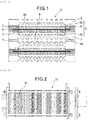
Classifications
-
- C—CHEMISTRY; METALLURGY
- C08—ORGANIC MACROMOLECULAR COMPOUNDS; THEIR PREPARATION OR CHEMICAL WORKING-UP; COMPOSITIONS BASED THEREON
- C08L—COMPOSITIONS OF MACROMOLECULAR COMPOUNDS
- C08L51/00—Compositions of graft polymers in which the grafted component is obtained by reactions only involving carbon-to-carbon unsaturated bonds; Compositions of derivatives of such polymers
- C08L51/06—Compositions of graft polymers in which the grafted component is obtained by reactions only involving carbon-to-carbon unsaturated bonds; Compositions of derivatives of such polymers grafted on to homopolymers or copolymers of aliphatic hydrocarbons containing only one carbon-to-carbon double bond
-
- H—ELECTRICITY
- H01—ELECTRIC ELEMENTS
- H01M—PROCESSES OR MEANS, e.g. BATTERIES, FOR THE DIRECT CONVERSION OF CHEMICAL ENERGY INTO ELECTRICAL ENERGY
- H01M8/00—Fuel cells; Manufacture thereof
- H01M8/10—Fuel cells with solid electrolytes
-
- C—CHEMISTRY; METALLURGY
- C08—ORGANIC MACROMOLECULAR COMPOUNDS; THEIR PREPARATION OR CHEMICAL WORKING-UP; COMPOSITIONS BASED THEREON
- C08F—MACROMOLECULAR COMPOUNDS OBTAINED BY REACTIONS ONLY INVOLVING CARBON-TO-CARBON UNSATURATED BONDS
- C08F290/00—Macromolecular compounds obtained by polymerising monomers on to polymers modified by introduction of aliphatic unsaturated end or side groups
- C08F290/02—Macromolecular compounds obtained by polymerising monomers on to polymers modified by introduction of aliphatic unsaturated end or side groups on to polymers modified by introduction of unsaturated end groups
- C08F290/04—Polymers provided for in subclasses C08C or C08F
- C08F290/042—Polymers of hydrocarbons as defined in group C08F10/00
-
- C—CHEMISTRY; METALLURGY
- C09—DYES; PAINTS; POLISHES; NATURAL RESINS; ADHESIVES; COMPOSITIONS NOT OTHERWISE PROVIDED FOR; APPLICATIONS OF MATERIALS NOT OTHERWISE PROVIDED FOR
- C09K—MATERIALS FOR MISCELLANEOUS APPLICATIONS, NOT PROVIDED FOR ELSEWHERE
- C09K3/00—Materials not provided for elsewhere
- C09K3/10—Materials in mouldable or extrudable form for sealing or packing joints or covers
-
- H—ELECTRICITY
- H01—ELECTRIC ELEMENTS
- H01M—PROCESSES OR MEANS, e.g. BATTERIES, FOR THE DIRECT CONVERSION OF CHEMICAL ENERGY INTO ELECTRICAL ENERGY
- H01M8/00—Fuel cells; Manufacture thereof
- H01M8/02—Details
- H01M8/0271—Sealing or supporting means around electrodes, matrices or membranes
- H01M8/028—Sealing means characterised by their material
- H01M8/0284—Organic resins; Organic polymers
-
- H—ELECTRICITY
- H01—ELECTRIC ELEMENTS
- H01M—PROCESSES OR MEANS, e.g. BATTERIES, FOR THE DIRECT CONVERSION OF CHEMICAL ENERGY INTO ELECTRICAL ENERGY
- H01M8/00—Fuel cells; Manufacture thereof
- H01M8/02—Details
- H01M8/0271—Sealing or supporting means around electrodes, matrices or membranes
- H01M8/0286—Processes for forming seals
-
- C—CHEMISTRY; METALLURGY
- C09—DYES; PAINTS; POLISHES; NATURAL RESINS; ADHESIVES; COMPOSITIONS NOT OTHERWISE PROVIDED FOR; APPLICATIONS OF MATERIALS NOT OTHERWISE PROVIDED FOR
- C09K—MATERIALS FOR MISCELLANEOUS APPLICATIONS, NOT PROVIDED FOR ELSEWHERE
- C09K3/00—Materials not provided for elsewhere
- C09K3/10—Materials in mouldable or extrudable form for sealing or packing joints or covers
- C09K2003/1034—Materials or components characterised by specific properties
- C09K2003/1062—UV-curable materials
-
- H—ELECTRICITY
- H01—ELECTRIC ELEMENTS
- H01M—PROCESSES OR MEANS, e.g. BATTERIES, FOR THE DIRECT CONVERSION OF CHEMICAL ENERGY INTO ELECTRICAL ENERGY
- H01M8/00—Fuel cells; Manufacture thereof
- H01M8/10—Fuel cells with solid electrolytes
- H01M2008/1095—Fuel cells with polymeric electrolytes
-
- H—ELECTRICITY
- H01—ELECTRIC ELEMENTS
- H01M—PROCESSES OR MEANS, e.g. BATTERIES, FOR THE DIRECT CONVERSION OF CHEMICAL ENERGY INTO ELECTRICAL ENERGY
- H01M8/00—Fuel cells; Manufacture thereof
- H01M8/10—Fuel cells with solid electrolytes
- H01M8/1004—Fuel cells with solid electrolytes characterised by membrane-electrode assemblies [MEA]
-
- Y—GENERAL TAGGING OF NEW TECHNOLOGICAL DEVELOPMENTS; GENERAL TAGGING OF CROSS-SECTIONAL TECHNOLOGIES SPANNING OVER SEVERAL SECTIONS OF THE IPC; TECHNICAL SUBJECTS COVERED BY FORMER USPC CROSS-REFERENCE ART COLLECTIONS [XRACs] AND DIGESTS
- Y02—TECHNOLOGIES OR APPLICATIONS FOR MITIGATION OR ADAPTATION AGAINST CLIMATE CHANGE
- Y02E—REDUCTION OF GREENHOUSE GAS [GHG] EMISSIONS, RELATED TO ENERGY GENERATION, TRANSMISSION OR DISTRIBUTION
- Y02E60/00—Enabling technologies; Technologies with a potential or indirect contribution to GHG emissions mitigation
- Y02E60/30—Hydrogen technology
- Y02E60/50—Fuel cells
Definitions
- the present invention relates to a photocurable resin composition, a sealing material for a fuel cell, a cured product thereof, a fuel cell, and a sealing method.
- a fuel cell is a power generator that extracts electricity by chemically reacting hydrogen and oxygen.
- the fuel cell is a clean power generator of the next generation because the fuel cell achieves a high energy efficiency in power generation, and forms water from the reaction of the hydrogen and the oxygen.
- fuel cells There are four types of fuel cells, i.e., a solid polymer fuel cell, a phosphoric acid fuel cell, a molten carbonate fuel cell, and a solid oxide fuel cell.
- the solid polymer fuel cell achieves a high power generation efficiency even though its operation temperature is relatively low temperature (around 80°C), and therefore is expected for usages such as motive power sources for automobiles, power generators for households, small power sources for electronic equipment such as mobile phones, and power sources for emergency.
- a general cell of a solid polymer fuel cell has a structure including: an electrolyte membrane electrode assembly (MEA) structured such that a polymer electrolyte membrane is nipped between an air electrode (cathode) and a fuel electrode (anode); a frame that supports the MEA; and a separator by which a gas flow path is formed.
- MEA electrolyte membrane electrode assembly
- a sealing agent is used in many portions for the purpose of preventing leakage of the fuel gas, the oxygen gas, and so on. Specifically, the sealing agent is used between adjacent separators, between a separator and a frame, between a frame and an electrolyte membrane or MEA, and so on.
- thermosetting resin composition which uses a polyisobutylene polymer and causes a hydrosilylation reaction
- thermosetting resin composition which uses a fluoropolyether compound and causes a hydrosilylation reaction
- thermosetting resin composition which uses a fluoropolymer and causes a hydrosilylation reaction
- thermosetting resin composition which uses an ethylene-propylene-diene rubber
- JP-A-2013-229323 corresponding to US-A-2014/287340 as these compositions are rubber elastic bodies being excellent in gas barrier properties, low moisture permeability, heat resistance, acid resistance, and flexibility.
- these thermosetting resin compositions require a heating process for curing, and therefore have problems
- JP-A-H2-88614 discloses a polymer composition containing a telechelic polyisobutylene polymer having two or three terminal acrylate groups and a reactive diluent.
- the present invention has been made in view of the foregoing circumstances, and has an object to provide a photocurable resin composition that can cope with application by screen printing and can be photocured in a short time.
- One embodiment of the present invention is associated with the following [1]:
- the present invention includes the following embodiments according to [2] to [17] as non-limiting examples of preferred embodiments:
- an acryloyl group and a methacryloyl group are collectively referred to as a (meth)acryloyl group.
- a compound having a (meth)acryloyl group is also referred to as a (meth)acrylate.
- compounds containing the (meth) of (meth)acrylic acid etc. collectively refer to compounds that have and do not have "meth" in the names.
- One aspect of the present invention relates to a photocurable resin composition containing the following components (A) to (D).
- One aspect of the present invention provides a photocurable resin composition that can cope with application by screen printing and can be photocured in a short time:
- the component (A) is not particularly limited as long as it is a polymer having one or more (meth)acryloyl groups and a polyisobutylene skeleton containing - [CH 2 C (CH 3 ) 2 ] - unit.
- a polyisobutylene skeleton containing-[CH 2 C (CH 3 ) 2 ] - unit is also simply referred to as "polyisobutylene skeleton".
- the component (A) has a polyisobutylene skeleton containing -[CH 2 C(CH 3 ) 2 ]- unit.
- the polyisobutylene skeleton included in the component (A) only needs to have -[CH 2 C(CH 3 ) 2 ]- unit, and may further include, for example, other constituent units such as "other constituent units than the -[CH 2 C(CH 3 ) 2 ]- unit".
- the other constituent unit included in the polyisobutylene skeleton is preferably a divalent non-aromatic hydrocarbon group, and more preferably a divalent aliphatic hydrocarbon group.
- examples of the divalent aliphatic hydrocarbon group include a linear or branched alkylene group having 1 to 12 carbon atoms (for example, methylene group, ethylene group, n-propylene group, isopropylene group, n-butylene group, isobutylene group, sec-butylene group, tert-butylene group, n-pentylene group, isopentylene group, sec-pentylene group, tert-pentylene group, n-hexylene group, isohexylene group, sec-hexylene group, tert-hexylene group, heptylene group, octylene group, 2-ethylhexylene group, nonylene group, decylene group, undecylene group, dodecylene group) and the like.
- a linear or branched alkylene group having 1 to 12 carbon atoms for example, methylene group, ethylene group, n-propylene group
- a linear or branched alkylene group having 1 to 6 carbon atoms such as methylene group, ethylene group, trimethylene group, tetramethylene group, propylene group (-CH(CH 3 )CH 2 -), isopropylene group (-C(CH 3 ) 2 -) or the like, is preferable.
- the component (A) suitably contains -[CH 2 C(CH 3 ) 2 ]-unit in an amount of, for example, 70% by mass or more, preferably 75% by mass or more, more preferably 80% by mass or more with respect to a total amount of constituent unit (that is, component (A)).
- the component (A) suitably contains -[CH 2 C(CH 3 ) 2 ]- unit in an amount of, for example, less than 100% by mass
- the component (A) suitably contains the - [CH 2 C (CH 3 ) 2 ] - unit in an amount of 95% by mass or less
- the component (A) suitably contains the -[CH 2 C(CH 3 ) 2 ]- unit in an amount of 90% by mass or less.
- the polyisobutylene skeleton preferably contains - [CH 2 C(CH 3 ) 2 ]- unit in an amount of more than 50% by mass, more preferably 90% by mass or more, still more preferably 95% by mass or more, based on the polyisobutylene skeleton. Furthermore, the polyisobutylene skeleton contains - [CH 2 C (CH 3 ) 2 ] - unit in an amount of 100% by mass or less, preferably less than 100% by mass, more preferably less than 99.5% by mass, based on the polyisobutylene skeleton. Within this range, a more excellent sealing property and a photocurable resin composition that can be photocured in a shorter time can be obtained.
- the component (A) has one or more (meth) acryloyl groups.
- the number of (meth)acryloyl groups included in the component (A) is not particularly limited as long as it is 1 or more, and the number is preferably 1 to 12, more preferably 2 to 8, still more preferably 2 to 4, and particularly preferably 2. Within this range, a more excellent sealing property and a photocurable resin composition that can be photocured in a shorter time can be obtained.
- the (meth)acryloyl group may be present at either the side chain and/or the end of the molecule, but is preferably present at the end of the molecule from the viewpoint of rubber elasticity.
- the polymer is not theoretically restricted but can be defined as, for example, a compound having a structure in which repeating units of a monomer in the molecule are contained, such as a main chain, and containing 100 or more of the repeating units.
- the number of repetitions of -[CH 2 C(CH 3 ) 2 ]- units contained in the component (A) is preferably 100 or more, more preferably 150 or more, and still more preferably 180 or more.
- the number of repetitions of -[CH 2 C(CH 3 ) 2 ]-units contained in the component (A) is preferably 500 or less, more preferably 300 or less, and still more preferably 200 or less. Within this range, a more excellent sealing property and a photocurable resin composition that can be photocured in a shorter time can be obtained.
- the number of repetitions of[CH 2 C(CH 3 ) 2 ]- units is a total of the -[CH 2 C(CH 3 ) 2 ]- units.
- the component (A) is preferably a polymer having a polyisobutylene skeleton represented by the following general formula (1) from the viewpoint of obtaining an excellent sealing property and a photocurable resin composition that can be photocured in a short time.
- Specific examples of the component (A) include polyisobutylene having a (meth)acryloyloxyalkoxyphenyl group.
- the main skeleton of the component (A) is a polyisobutylene skeleton, as for monomers constituting this polyisobutylene skeleton, it is possible to mainly use isobutylene and additionally use the other monomer(s) and to copolymerize them as long as the effects of the present invention are not impaired.
- the other monomer is preferably a non-aromatic monomer. [Chemical 1]
- R 1 represents a monovalent or polyvalent aromatic hydrocarbon group or a monovalent or polyvalent aliphatic hydrocarbon group.
- the aromatic hydrocarbon group is not particularly limited, and examples thereof include groups derived from benzene, pentalene, indene, naphthalene, anthracene, azulene, heptalene, acenaphthalene, phenalene, fluorene, anthraquinone, phenanthrene, biphenyl, terphenyl, quarterphenyl, quinquephenyl, sexiphenyl, triphenylene, pyrene, chrysene, picene, perylene, pentaphene, pentacene, tetraphene, hexaphene, hexacene, rubicene, trinaphthylene, heptaphene, pyranthrene, and the like.
- groups derived from benzene, naphthalene, anthracene, and biphenyl are preferable, and groups derived from benzene are more preferable.
- the aliphatic hydrocarbon group is not particularly limited, and examples thereof include a linear or branched alkyl group having 1 to 12 carbon atoms (for example, methyl group, ethyl group, n-propyl group, isopropyl group, n-butyl group, isobutyl group, sec-butyl group, tert-butyl group, n-pentyl group, isopentyl group, sec-pentyl group, tert-pentyl group, n-hexyl group, isohexyl group, sec-hexyl group, tert-hexyl group, heptyl group, octyl group, 2-ethylhexyl group, nonyl group, decyl group, undecyl group, dodecyl group), a linear or branched alkylene group having 1 to 12 carbon atoms (for example, methylene group, ethylene group, n-propylene
- R 1 is a monovalent or polyvalent group, and when aliphatic hydrocarbon is a trivalent or higher valent group, for example, a group obtained by removing a hydrogen atom from the above-mentioned aliphatic hydrocarbon group can be mentioned.
- the valence of R 1 is not particularly limited, and from the viewpoint of obtaining an excellent sealing property and a photocurable resin composition that can be photocured in a short time, the valence of R 1 is preferably 1 to 12, more preferably 2 to 8, still more preferably 2 to 4, and particularly preferably 2.
- R 1 is preferably a polyvalent aromatic hydrocarbon group, more preferably a divalent to tetravalent benzene-derived group, particularly still more preferably a divalent phenylene group (o-, m-, p-phenylene group), and particularly preferably a divalent p-phenylene group.
- PIB represents a polyisobutylene skeleton containing the -[CH 2 C(CH 3 ) 2 ]-unit (or consisting of - [CH 2 C (CH 3 ) 2 ] - unit).
- the other units are not particularly limited, and examples thereof include a linear or branched alkylene group having 1 to 6 carbon atoms such as methylene group, ethylene group, trimethylene group, tetramethylene group, propylene group (-CH (CH 3 ) CH 2 -) and isopropylene group (-C (CH 3 ) 2 -) .
- PIB preferably consists of -[CH 2 C(CH 3 ) 2 ]- unit or consists of a linear or branched alkylene group having 2 to 6 carbon atoms and - [CH 2 C(CH 3 ) 2 ] - unit, more preferably consists of a branched alkylene group having 3 to 5 carbon atoms and -[CH 2 C(CH 3 ) 2 ]- unit, and particularly preferably consists of an isopropylene group (-C(CH 3 ) 2 -) and - [CH 2 C(CH 3 ) 2 ]- unit (for example, [-C (CH 3 ) 2 - [CH 2 C (CH 3 ) 2 ]-] unit or [-C(CH 3 ) 2 -[C(CH 3 ) 2 CH 2 ]-] unit).
- R 4 represents a divalent hydrocarbon group having 2 to 6 carbon atoms which may contain an oxygen atom.
- the divalent hydrocarbon group having 2 to 6 carbon atoms is not particularly limited, and a group similar to the above PIB can be exemplified.
- R 4 is preferably a divalent hydrocarbon group having 2 or 3 carbon atoms (such as ethylene group (-CH 2 -CH 2 -), trimethylene group (-CH 2 -CH 2 -CH 2 -), propylene group (-CH(CH 3 ) CH 2 -) , isopropylene group (-C(CH 3 ) 2 -), or the like), and more preferably an ethylene group.
- R 4 contains an oxygen atom
- the position of the oxygen atom is not particularly limited.
- an oxygen atom is introduced at at least one end of the above alkylene group or between adjacent carbon atoms constituting the alkylene group, or one or more hydrogen atoms constituting the alkylene group are replaced with an oxygen atom.
- R 2 and R 3 each independently represent a hydrogen atom or a monovalent hydrocarbon group having 1 to 20 carbon atoms.
- R 2 and R 3 may be the same or different.
- the monovalent hydrocarbon group having 1 to 20 carbon atoms is not particularly limited, and examples thereof include linear or branched alkyl groups such as methyl group, ethyl group, n-propyl group, isopropyl group, n-butyl group, isobutyl group, sec-butyl group, tert-butyl group, n-pentyl group, isopentyl, neopentyl, n-hexyl group, cyclohexyl group, n-heptyl group, n-octyl group, 2-ethylhexyl group, n-nonyl group, n-decyl group, n-undecyl group, n-dodecyl group, n-
- R 2 and R 3 are preferably a hydrogen atom or a linear or branched alkyl group having 1 to 8 carbon atoms, more preferably a hydrogen atom or a linear or branched alkyl group having 1 to 3 carbon atoms, and particularly preferably a hydrogen atom.
- R 5 represents a hydrogen atom, a methyl group, and an ethyl group.
- R 5 is preferably a hydrogen atom or a methyl group and more preferably a hydrogen atom.
- n represents an integer of 1 to 6.
- n is preferably an integer of 2 to 4 and more preferably 2.
- the component (A) is preferably liquid at room temperature (25°C) because it is possible to obtain a photocurable resin composition that can cope with application by screen printing even better.
- the molecular weight of the component (A) is not particularly limited, and from the viewpoint of being capable of coping with application by screen printing and obtaining an excellent sealing property, a number average molecular weight by chromatographic measurement is preferably 200 to 500,000, more preferably 1,000 to 100,000, and still more preferably 3,000 to 50,000.
- the number average molecular weight can be calculated by a standard polystyrene conversion method using size permeation chromatography (SEC).
- a viscosity of the component (A) at 25°C is not particularly limited, and from the viewpoint of workability and the like, the viscosity is preferably 5 Pa ⁇ s or more, more preferably 50 Pa ⁇ s or more, and still more preferably 100 Pa ⁇ s or more. Furthermore, the viscosity of the component (A) at 25°C is not particularly limited, and from the same viewpoint, the viscosity is preferably 3000 Pa ⁇ s or less, more preferably 2500 Pa ⁇ s or less, and still more preferably 2000 Pa ⁇ s or less. A particularly preferable viscosity is 1550 Pa ⁇ s or less. Unless otherwise specified, in the measurement of the viscosity, a cone plate type viscometer is used, and the viscosity is a value obtained by measuring the viscosity at 25°C.
- the component (A) may be used alone or in combination of two or more.
- a method of producing the component (A) is not particularly limited, and a known method can be used.
- a known method can be used.
- an obtaining method including reacting a hydroxyl-terminated polyisobutylene with a compound having a (meth)acryloyl group and an isocyanate group; an obtaining method including reacting a hydroxyl-terminated polyisobutylene, a compound containing an isocyanate group, and a compound containing a (meth)acryloyl group and a hydroxyl group; an obtaining method including reacting a hydroxyl-terminated polyisobutylene with an (meth)acrylic acid or a lower ester of (meth)acrylic acid, by a dehydration esterification method or an ester exchange method; and the like.
- a method of producing the polymer having a polyisobutylene skeleton represented by the general formula (1) is not particularly limited, and a known method can be used. Preferable examples thereof include a method including reacting a halogen-terminated polyisobutylene disclosed in JP-A-2013-216782 with a compound represented by the following general formula (2) and containing a (meth)acryloyl group and a phenoxy group. Moreover, the halogen-terminated polyisobutylene can be obtained by a known method, and is preferably obtained by cationic polymerization, and more preferably obtained by living cationic polymerization.
- R 2 , R 3 , R 4 and R 5 may be those as defined above for the formula (1).
- R 4 represents a divalent hydrocarbon group having 2 to 6 carbon atoms and optionally containing an oxygen atom.
- R 2 and R 3 each independently represent a hydrogen atom or a monovalent hydrocarbon group having 1 to 20 carbon atoms.
- R 5 represents a hydrogen atom, a methyl group, and an ethyl group. Preferred embodiments of the these are the same as described with respect to the above general formula (1).
- the compound represented by the above general formula (2) is not particularly limited, and examples thereof include phenoxymethyl (meth)acrylate, phenoxyethyl (meth)acrylate, phenoxypropyl (meth)acrylate, phenoxybutyl (meth)acrylate, phenoxypentyl (meth)acrylate, and the like. Among these, phenoxyethyl (meth)acrylate, phenoxypropyl (meth)acrylate, phenoxybutyl (meth)acrylate, phenoxypentyl (meth)acrylate, and the like are preferable.
- the component (B) contained in the photocurable resin composition according to one embodiment of the present invention is a monofunctional monomer containing a monofunctional monomer having a (meth)acryloyl group and a hydroxy group, which is a component (b1), and a monofunctional monomer having a (meth)acryloyl group but having no hydroxy group, which is a component (b2).
- a photocurable resin composition that can cope with application by screen printing and can be photocured in a short time can be provided by combining (b1) and (b2), an effect of suppressing crystallization of the photocurable resin composition is further exhibited.
- crystallization of the photocurable resin composition means crystal precipitation during storage after production of the photocurable resin composition.
- the hydroxy group included in the component (b1) and not included in the component (b2) also includes an -OH group constituting a part of a functional group such as a carboxyl group and a phosphate group, and particularly preferred is a group existing as a group in which a hydroxyl group (-OH group) is bonded to hydrocarbon, that is, an -OH group bonded to a hydrocarbon group.
- the component (b1) is not particularly limited, and examples thereof include hydroxybutyl (meth)acrylate (for example, 2-hydroxybutyl (meth)acrylate, 4-hydroxybutyl (meth)acrylate, etc.), hydroxypropyl (meth)acrylate (for example, 3-hydroxypropyl (meth)acrylate, 2-hydroxypropyl (meth)acrylate, etc.), hydroxyethyl (meth)acrylate (for example, 2-hydroxyethyl (meth)acrylate, etc.), 2-hydroxy-3-phenoxypropyl acrylate, 2-acryloyloxyethyl-2-hydroxyethyl-phthalic acid, 2-(meth)acryloyloxyethyl acid phosphate, 2-(meth)acryloyloxyethyl acid phosphate, and the like.
- hydroxybutyl (meth)acrylate for example, 2-hydroxybutyl (meth)acrylate, 4-hydroxybutyl (meth)acrylate, etc.
- the component (b1) is preferably at least one selected from the group consisting of 4-hydroxybutyl (meth)acrylate, 3-hydroxypropyl (meth)acrylate, 2-hydroxypropyl (meth)acrylate, 2-hydroxyethyl (meth)acrylate, 2-hydroxybutyl (meta)acrylate, 2-hydroxy-3-phenoxypropyl acrylate, 2-acryloyloxyethyl-2-hydroxyethyl-phthalic acid, 2-(meth)acryloyloxyethyl acid phosphate, and 2-(meth)acryloyloxyethyl acid phosphate.
- 4-hydroxybutyl (meth)acrylate, 3-hydroxypropyl (meth)acrylate, 2-hydroxypropyl (meth)acrylate, and 2-hydroxyethyl (meth)acrylate are more preferable.
- a synthetic product or a commercially available product may be used as the component (b1).
- Commercially available products are not particularly limited, and examples thereof include HOA (N), HOP-A (N), HOB-A, HOB, P-1M, P-1A, G-201P, M-600A (Kyoeisha Chemical Co., Ltd), 4HBA, HPA, HEA (manufactured by Osaka Organic Chemical Industry Ltd.), and the like.
- the component (b1) can be used alone or as a mixture of two or more kinds thereof.
- Examples of (b2) include a (meth)acrylate monomer having an alkyl group having 5 to 30 carbon atoms and having no hydroxy group (also referred to as a hydroxyl group in the present specification), a (meth)acrylate monomer having an alicyclic hydrocarbon group having 5 to 30 carbon atoms and having no hydroxyl group, and the like. That is, examples thereof include a (meth)acrylate monomer having an alkyl group having 5 to 30 carbon atoms or an alicyclic hydrocarbon group having 5 to 30 carbon atoms and having no hydroxy group and the like. Among these, a (meth)acrylate monomer having an alicyclic hydrocarbon group having 5 to 30 carbon atoms and having no hydroxyl group is preferable.
- the number of carbon atoms is preferably 5 or more, and more preferably 7 or more.
- the number of carbon atoms is preferably 30 or less, more preferably 20 or less, still more preferably 15 or less, and even more preferably 10 or less
- Examples of the (meth)acrylate monomer having an alkyl group having 5 to 30 carbon atoms is not particularly limited, and examples thereof include 2-ethylhexyl (meth)acrylate, octyl (meth)acrylate, isooctyl (meth)acrylate, decyl (meth)acrylate, dodecyl (meth)acrylate, isodecyl (meth)acrylate, lauryl (meth)acrylate, n-octadecyl (meth)acrylate, isooctadecyl (meth)acrylate, nonadecan (meth)acrylate, isostearyl (meth)acrylate, stearyl (meth)acrylate, and the like.
- 2-ethylhexyl (meth)acrylate, isooctyl (meth)acrylate, isodecyl (meth)acrylate, lauryl (meth)acrylate, isooctadecyl (meth)acrylate, isostearyl (meth)acrylate, stearyl (meth)acrylate, and the like are preferable.
- the (meth)acrylate monomer having an alkyl group having 5 to 30 carbon atoms and having no hydroxyl group a synthetic product or a commercially available product may be used.
- Commercially available products are not particularly limited, and examples thereof include SR335, SR395, SR440, SR489D, SR313, SR324, SR493D (manufactured by Sartomer), S-1800A (manufactured by Shin-Nakamura Chemical Co, Ltd.), and the like.
- Examples of the (meth)acrylate monomer having an alicyclic hydrocarbon group having 5 to 30 carbon atoms is not particularly limited, and examples thereof include cyclohexyl (meth)acrylate, trimethylcyclohexyl (meth)acrylate, t-butylcyclohexyl (meth)acrylate, dicyclopentanyl (meth)acrylate, dicyclopentenyl (meth)acrylate, dicyclopentenyloxy (meth)acrylate, isobornyl (meth)acrylate, adamantyl (meth)acrylate, dicyclopentenyl di(meth)acrylate, and the like.
- trimethylcyclohexyl (meth)acrylate, t-butylcyclohexyl (meth)acrylate, dicyclopentanyl (meth)acrylate, dicyclopentenyl (meth)acrylate, dicyclopentenyloxy (meth)acrylate, isobornyl (meth)acrylate, and the like are preferable.
- the (meth)acrylate monomer having an alicyclic hydrocarbon group having 5 to 30 carbon atoms and having no hydroxyl group a synthetic product or a commercially available product may be used.
- Commercially available products are not particularly limited, and examples thereof include SR506, SR423 (Sartomer), IBX, IBX-A (Kyoeisha Chemical Co., Ltd), FA-511AS, FA-512AS, FA-513AS, FA-512M, FA- 512MT, FA-513M (Hitachi Chemical Company, Ltd.), and the like.
- the component (b2) can be used alone or as a mixture of two or more kinds thereof.
- the molecular weights of the components (b1) and (b2) are not particularly limited, and are preferably less than 1000, more preferably 500 or less, and still more preferably 300 or less, respectively.
- the molecular weights of the components (b1) and (b2) can be obtained as the sum of atomic weights of atoms constituting them.
- the component (b1) be contained in an amount of 0.1 to 15 parts by mass, and the component (b2) be contained in an amount of 5 to 500 parts by mass. It is more preferable that the component (b1) be contained in an amount of 0.3 to 12 parts by mass, and the component (b2) be contained in an amount of 10 to 300 parts by mass, and it is still more preferable that the component (b1) be contained in an amount of 0.5 to 10 parts by mass, and the component (b2) be contained in an amount of 12 to 200 parts by mass.
- the component (b1) is in a range of preferably 0.5 to 10 parts by mass, more preferably 1.1 to 5.0 parts by mass, and still more preferably 1.3 to 4.0 parts by mass.
- a photo-radical polymerization initiator that is a component (C) contained in the photocurable resin composition according to one embodiment of the present invention is not particularly limited as long as it is a compound generating radicals by irradiation with active energy rays.
- the active energy rays mean all types of rays in a broad sense, which include radioactive rays such as ⁇ ray and ⁇ ray, electromagnetic waves such as ⁇ ray and X ray, electron beam, ultraviolet rays with a wavelength of about 100 to 400 nm, visible rays with a wavelength of about 400 to 800 nm, and the like. Among these, ultraviolet rays are preferable.
- the component (C) is not particularly limited, and examples thereof include an acetophenone-based photo-radical polymerization initiator, a benzoin-based photo-radical polymerization initiator, a benzophenone-based photo-radical polymerization initiator, a thioxanthone-based photo-radical polymerization initiator, an acylphosphine oxide-based photo-radical polymerization initiator, a titanocene-based photo-radical polymerization initiator, and the like.
- the acetophenone-based photo-radical polymerization initiator and the acylphosphine oxide-based photo-radical polymerization initiator are preferable, and the acylphosphine oxide-based photo-radical polymerization initiator is more preferable.
- the acetophenone-based photo-radical polymerization initiator is not particularly limited, and examples thereof include diethoxyacetophenone, 2-hydroxy-2-methyl-1-phenyl-propan-1-one, benzyl dimethyl ketal, 4-(2-hydroxyethoxy)phenyl-(2-hydroxy-2-propyl)ketone, 1-hydroxy-cyclohexyl-phenyl-ketone, 2-methyl-2-morpholino(4-thiomethylphenyl)propan-1-one, 2-benzyl-2-dimethylamino-1-(4-morpholinophenyl)butanone, 2-hydroxy-2-methyl-1-[4-(1-methylvinyl)phenyl]propanone oligomer, and the like.
- acetophenone-based photo-radical polymerization initiator a synthetic product or a commercially available product may be used.
- Commercially available products are not particularly limited, and examples thereof include IRGACURE (registered trademark) 184, IRGACUR (registered trademark) 1173, IRGACURE (registered trademark) 2959, IRGACURE (registered trademark) 127 (manufactured by BASF SE), ESACURE (registered trademark) KIP-150 (manufactured by Lamberti s.p.a.), and the like.
- the acylphosphine oxide-based photo-radical polymerization initiator is not particularly limited, and examples thereof include bis(2,4,6-trimethylbenzoyl)-phenyl-phosphine oxide, 2,4,6-trimethylbenzoyl-diphenyl-phosphine oxide, and the like.
- acylphosphine oxide-based photo-radical polymerization initiator a synthetic product or a commercially available product may be used.
- Commercially available products are not particularly limited, and examples thereof include Omnirad (registered trademark) TPO, Omnirad (registered trademark) 819 (manufactured by IGM Resins B.V.), IRGACURE (registered trademark) 819DW (manufactured by BASF SE), and the like.
- the component (C) may be used alone or in combination of two or more.
- the blending amount of the component (C) is not particularly limited, and for example, is preferably 0.1 to 20 parts by mass, more preferably 0.5 to 10 parts by mass, and still more preferably 1.1 to 5 parts by mass, with respect to 100 parts by mass of the component (A).
- the component (C) is in a range of preferably 0.1 to 10 parts by mass, more preferably 0.5 to 5.0 parts by mass, and still more preferably 0.7 to 4.0 parts by mass.
- the component (D) contained in the photocurable resin composition according to one embodiment of the present invention is not particularly limited as long as it is an organic resin particle. By combining the component (D) with other components according to one embodiment of the present invention, an effect of defoaming air bubbles generated during screen printing of the photocurable resin composition is exhibited. It becomes possible to further suppress phase separation of the photocurable resin composition.
- the component (D) is not particularly limited, and examples thereof include (meth)acrylic resin particles, polystyrene particles, styrene/olefin copolymer particles, polyethylene particles, polypropylene particles, and the like.
- the component (D) is, for example, preferably at least one selected from the group consisting of (meth)acrylic resin particles, polystyrene particles, styrene/olefin copolymer particles, polyethylene particles, and polypropylene particles.
- (meth)acrylic resin particles polystyrene particles, styrene/olefin copolymer particles and the like are preferable, and (meth)acrylic resin particles or styrene/olefin copolymer particles are more preferable.
- the styrene/olefin copolymer particles are obtained by copolymerizing a styrene monomer and another crosslinkable substance to form a polymer, and specific examples thereof include a copolymer of a styrene monomer and divinylbenzene, a copolymer of a styrene monomer and polybutadiene, a copolymer of a styrene monomer and isoprene, and the like.
- a synthetic product or a commercially available product may be used as the component (D).
- Commercially available products of (meth)acrylic resin particles are not particularly limited, and examples thereof include MBX-5, MBX-8, MBX-12, SSX-101, SSX-102, SSX-103, SSX-104, SSX-105, SSX-108, (manufactured by Sekisui Kasei Co., Ltd.), MR-1HG, MR-2G, MR-5C, MX-300, MX-150, MX-500, MZ-5HN (manufactured by Soken Chemical and Engineering Co., Ltd.), and the like.
- polystyrene particles and styrene/olefin copolymer particles are not particularly limited, and examples thereof include SBX-4, SBX-6, SBX-8 (manufactured by Sekisui Kasei Co., Ltd.), KSR-3A, SX-130H, SX-350H, and SX-500H (manufactured by Soken Chemical and Engineering Co., Ltd.), and the like.
- An average particle size of the component (D) is not particularly limited, and is preferably 0.05 to 50 ⁇ m, more preferably 0.1 to 40 ⁇ m, and still more preferably 0.3 to 25 ⁇ m. Within the above range, it becomes possible to cope with screen printing even better.
- the average particle size is a particle size (D50) at a cumulative volume ratio of 50% in a particle size distribution obtained by a laser diffraction/scattering method.
- the shape of the component (D) is not particularly limited, and a spherical shape is preferable from the viewpoint of preventing clogging during screen printing.
- the component (D) may be used alone or in combination of two or more.
- the blending amount of the component (D) is not particularly limited, and is preferably 0.001 to 20 parts by mass, more preferably 0.005 to 10 parts by mass, and still more preferably 0.01 to 5 parts by mass, with respect to 100 parts by mass of the component (A). Within the above range, it is possible to provide a photocurable resin composition that can cope with application by screen printing even better and can be photocured in a short time.
- the photocurable resin composition according to one embodiment of the present invention may use, as long as the object of the present invention is not impaired, an additive such as an oligomer or polymer having a (meth)acryloyl group (excluding the above component (A)), an inorganic fillers, an organic peroxides, a curing accelerators, a storage stabilizers, an antioxidants, a light stabilizers, a plasticizers, a pigments, a flame retardants, a surfactants, and the like.
- an additive such as an oligomer or polymer having a (meth)acryloyl group (excluding the above component (A)
- an inorganic fillers such as an oligomer or polymer having a (meth)acryloyl group (excluding the above component (A)
- an inorganic fillers such as an oligomer or polymer having a (meth)acryloyl group (excluding the above component (A)
- an inorganic fillers such as an oligomer
- the oligomer or polymer having a (meth)acryloyl group is not particularly limited, and examples thereof include urethane (meth)acrylate with polybutadiene skeleton, urethane (meth)acrylate with hydrogenated polybutadiene skeleton, urethane (meth)acrylate with polycarbonate skeleton, urethane (meth)acrylate with polyether skeleton, urethane (meth)acrylate with polyester skeleton, urethane (meth)acrylate with castor oil skeleton, isoprene-based (meth)acrylate, hydrogenated isoprene-based (meth)acrylate, epoxy (meth)acrylate, (meth)acrylic group-containing acrylic polymer, and the like.
- urethane (meth)acrylate with polybutadiene skeleton urethane (meth)acrylate with hydrogenated polybutadiene skeleton, urethane (meth)acrylate with castor oil skeleton, isoprene-based (meth)acrylate, and hydrogenated isoprene-based (meth)acrylate are preferable.
- the oligomer is not theoretically restricted but can be defined as, for example, a compound having a structure in which repeating units of a monomer in the molecule are contained, such as a main chain, and containing 2 or more and less than 100 of the repeating units.
- the oligomer or polymer having a (meth)acryloyl group may be used alone or in combination of two or more.
- An inorganic filler may be added to the photocurable resin composition according to one embodiment of the present invention for the purpose of improving the elastic modulus of a cured product, the flowability and the like, as long as the storage stability is not impaired.
- Specific examples thereof include inorganic powder, metallic powder, and the like.
- a filler of the inorganic powder is not particularly limited, and examples thereof include glass, fumed silica, alumina, mica, ceramics, silicone rubber powder, calcium carbonate, aluminum nitride, carbon powder, kaolin clay, dried clay mineral, dried diatomite, and the like.
- a blending amount of the inorganic powder is not particularly limited, and is preferably about 0.1 to 100 parts by mass with respect to 100 parts by mass of the component (A).
- the fumed silica can be blended for the purpose of adjusting the viscosity of the photocurable resin composition or improving the mechanical strength of a cured product.
- a preferably usable fumed silica is, for example, one obtained by hydrophobic treatment with an organochlorosilane, a polyorganosiloxane, a hexamethyldisilazane, or the like.
- Specific examples of the fumed silica include commercially available products manufactured by NIPPON AEROSIL CO., LTD.
- AEROSIL registered trademark
- R974 R972, R972V, R972CF, R805, R812, R812S, R816, R8200, RY200, RX200, RY200S, R202, and the like.
- An organic peroxide may be added to the photocurable resin composition according to one embodiment of the present invention for the purpose of imparting curability by heating or a redox reaction.
- a redox reaction When the redox reaction is used, radical species can be generated at room temperature, therefore, this is preferred.
- the organic peroxide is not particularly limited, and examples thereof include ketone peroxides such as methyl ethyl ketone peroxide, cyclohexanone peroxide, 3,3,5-trimethylcyclohexanone peroxide, methylcyclohexanone peroxide, methyl acetoacetate peroxide, and acetylacetone peroxide; peroxy ketals such as 1,1-bis (t-butylperoxy)-3,3,5-trimethylcyclohexane, 1,1-bis(t-butylperoxy)cyclohexane, 2,2-bis(t-butylperoxy) octane, n-butyl-4,4-bis(t-butylperoxy)valerate, and 2,2-bis(t-butylperoxy)butane; hydroperoxides such as t-butyl hydroperoxide, cumene hydroperoxide, diisopropylbenzene hydroperoxide, p
- a curing accelerator can be mixed for the purpose of promoting the redox reaction.
- the curing accelerator it is not particularly limited, and preferably, saccharin (o-benzoic acid sulfimide), a hydrazine compound, an amine compound, a mercaptan compound, a transition metal-containing compound, or the like is used.
- the hydrazine compound is not particularly limited, and examples thereof include 1-acetyl-2-phenylhydrazine, 1-acetyl-2(p-tolyl)hydrazine, 1-benzoyl-2-phenylhydrazine, 1-(1', 1', 1'-trifluoro)acetyl-2-phenylhydrazine, 1,5-diphenyl-carbohydrazine, 1-formyl-2-phenylhydrazine, 1-acetyl-2-(p-bromophenyl)hydrazine, 1-acetyl-2-(p-nitrophenyl)hydrazine, 1-acetyl-2-(2'-phenylethylhydrazine), ethyl carbazate, p-nitrophenylhydrazine, p-trisulfonylhydrazide, and the like.
- the amine compound is not particularly limited, and examples thereof include heterocyclic secondary amine such as 2-ethylhexylamine, 1,2,3,4-tetrahydroquinone, and 1,2,3,4-tetrahydroquinaldine; heterocyclic tertiary amine such as quinoline, methylquinoline, quinaldine, and quinoxalinephenazine; aromatic tertiary amine such as N,N-dimethyl-p-toluidine, N,N-dimethyl-anisidine, and N,N-dimethylaniline; an azole-based compound such as 1,2,4-triazole, oxazole, oxadiazol, thiadiazole, benzotriazole, hydroxybenzotriazole, benzoxasole, 1,2,3-benzothiadiazole, and 3-mercaptobenzotrizole; and the like.
- heterocyclic secondary amine such as 2-ethylhexylamine, 1,2,3,4-t
- the mercaptan compound is not particularly limited, and examples thereof include n-dodecyl mercaptan, ethyl mercaptan, butyl mercaptan, tris-[(3-mercaptopropionyloxy)-ethyl]-isocyanurate, pentaerythritol tetrakis (3-mercaptopropionate), dipentaerythritol hexakis (3-mercaptopropionate), trimethylolpropane tris(3-mercaptopropionate), trimethylolpropane tris thioglycolate, pentaerythritol tetrakis thioglycolate, and the like.
- the transition metal-containing compound is not particularly limited, and preferably a metal chelate complex salt is used.
- a metal chelate complex salt is used.
- pentadione iron, pentadione cobalt, pentadione copper, propylenediamine copper, ethylenediamine copper, iron naphthenate, nickel naphthenate, cobalt naphthenate, copper naphthenate, copper octoate, iron hexoate, iron propionate, acetylacetone vanadium, and the like can be mentioned.
- the curing accelerator may be used alone or in combination of multiple kinds thereof.
- a mixture of saccharin, a hydrazine-based compound, an amine-based compound, and a transition metal-containing compound is more preferred because of having a favorable curing promotion effect.
- a storage stabilizer may be added to the photocurable resin composition according to one embodiment of the present invention.
- the storage stabilizer is not particularly limited, and, for example, a radical absorbing agent such as benzoquinone, hydroquinone, or hydroquinone monomethyl ether, a metal chelating agent such as ethylene diamine tetraacetic acid or disodium salt thereof, oxalic acid, acetylacetone, or o-aminophenol, or the like may be added.
- An antioxidant may be added to the photocurable resin composition according to one embodiment of the present invention.
- the antioxidant is not particularly limited, and examples thereof include quinone-based compounds such as ⁇ -naphthoquinone, 2-methoxy-1,4-naphthoquinone, methyl hydroquinone, hydroquinone, hydroquinone monomethyl ether, mono-tert-butyl hydroquinone, 2,5-di-tert-butylhydroquinone, p-benzoquinone, 2,5-diphenyl-p-benzoquinone, and 2,5-di-tert-butyl-p-benzoquinone; phenols (phenol-based compounds) such as phenothiazine, 2,2-methylene-bis(4-methyl-6-tert-butylphenol), catechol, tert-butyl catechol, 2-butyl-4-hydroxyanisol, 2,6-di-tert-butyl-p-cresol, 2-ter
- a light stabilizer may be added to the photocurable resin composition according to one embodiment of the present invention.
- the light stabilizer is not particularly limited, and examples thereof include a hindered amine-based compound such as bis(2,2,6,6-tetramethyl-4-piperidyl) sebacate, bis(1,2,2,6,6-pentamethyl-4-piperidyl) sebacate, 4-benzoyloxy-2,2,6,6-tetramethylpiperidine, 1-[2-[3-(3,5-di-tert-butyl-4-hydroxyphenyl)propionyloxy]ethyl]-4-[3-(3,5-di-tert-butyl-4-hydroxyphenyl)propionyloxy]-2,2,6,6-tetramethylpiperidine, 1,2,2,6,6-pentamethyl-4-piperidinyl-(meth)acrylate, bis(1,2,2,6,6-pentamethyl-4-piperidinyl)[[3,5-bis(1,1-di
- adhesion-imparting agent may be added to the photocurable resin composition according to one embodiment of the present invention.
- the adhesion-imparting agent is not particularly limited, and examples thereof include 3-methacryloxypropylmethyldimethoxysilane, 3-methacryloxypropyltrimethoxysilane, 3-methacryloxypropylmethyldiethoxysilane, 3-methacryloxypropyltriethoxysilane, 3-acryloxypropyltrimethoxysilane, methacryloxyoctyltrimethoxysilane, vinyltrimethoxysilane, vinyltrichlorosilane, vinyltriethoxysilane, vinyl-tris( ⁇ -methoxyethoxy)silane, ⁇ -chloropropyltrimethoxysilane, ⁇ -(3,4-epoxycyclohexyl)ethyltrimethoxysilane, ⁇ -glycidoxypropyltrimethoxysilane, ⁇
- a hydroxyethyl methacrylate phosphate ester a methacryloxyoxyethyl acid phosphate, a half salt of methacryloxyoxyethyl acid phosphate monoethylamine, a 2-hydroxyethyl methacrylic acid phosphate, and the like are preferable.
- the content of the adhesion-imparting agent is not particularly limited, and is preferably 0.05 to 30 parts by mass, and more preferably 0.2 to 10 parts by mass with respect to 100 parts by mass of the component (A).
- a method of producing the photocurable resin composition according to one embodiment of the present invention is not particularly limited, and the photocurable resin composition can be produced by a conventionally known method.
- the photocurable resin composition can be produced by, for example, blending predetermined amounts of the components (A) to (D), followed by mixing at a temperature of preferably 10 to 70°C for preferably 0.1 to 5 hours using a mixing means such as a mixer.
- the photocurable resin composition according to one embodiment of the present invention is preferably produced in a light-shielding environment.
- a method for applying the photocurable resin composition according to one embodiment of the present invention to an adherend is not particularly limited.
- the photocurable resin composition according to one embodiment of the present invention is most suitable for screen printing because the composition exerts the effect of defoaming air bubbles generated during screen printing.
- the photocurable resin composition according to one embodiment of the present invention is preferably liquid at 25°C from the viewpoint of coatability.
- a light source for curing the photocurable resin composition according to one embodiment of the present invention by irradiation with active energy rays is not particularly limited, and known light sources can be used.
- active energy rays for example, light such as ultraviolet rays and visible light
- a low pressure mercury lamp, a medium pressure mercury lamp, a high pressure mercury lamp, an extra high pressure mercury lamp, a black light lamp, a microwave excited mercury lamp, a metal halide lamp, a sodium lamp, a halogen lamp, a xenon lamp, an LED, a fluorescent lamp, sunlight, an electron beam irradiation device, and the like can be mentioned.
- An irradiation dose of light irradiation is preferably 3 kJ/m 2 or more and more preferably 5 kJ/m 2 or more from the viewpoint of the properties of a cured product. Furthermore, from the viewpoint of a tact time of a curing step, the irradiation dose is preferably 50 kJ/m 2 or less, more preferably 25 kJ/m 2 or less, and still more preferably 15 kJ/m 2 or less.
- a cured product according to one embodiment of the present invention may be any product obtained by curing the photocurable resin composition described above or the curable sealing agent for a fuel cell according to another embodiment of the present invention described later regardless of a curing method employed.
- the cured product according to one embodiment of the present invention is preferably obtained by curing the photocurable resin composition described above or the curable sealing agent for a fuel cell according to another embodiment of the present invention described later by irradiation with active energy rays such as ultraviolet rays in the foregoing curing method.
- the embodiment is preferably a cured product obtained by irradiating the photocurable resin composition described above or the curable sealing agent for a fuel cell according to another embodiment of the present invention described later with light.
- the sealing agent includes usages such as an adhesive, a coating agent, an injecting agent, a potting agent, and the like.
- the photocurable resin composition described above is preferably liquid at 25°C.
- the photocurable resin composition described above or the cured product thereof is a rubber elastic body being excellent in low gas permeability (particularly low hydrogen permeability), low moisture permeability, heat resistance, acid resistance, and flexibility
- specific usages of the sealing agent include a stacked body such as a fuel cell, a solar cell, a dye-sensitized solar cell, a lithium ion battery, an electrolytic capacitor, a liquid crystal display, an organic EL display, an electronic paper, a LED, a hard disk device, a photodiode, optical communication/circuit, an electric wire/cable/optical fiber, an optical isolator, a IC card, and the like; a sensor; a substrate; a pharmaceutical and medical instrument and equipment; and the like.
- the usage as fuel cells especially the usage as solid polymer fuel cells is particularly preferable because the photocurable resin composition described above can be quickly cured by irradiation with active energy rays such as ultraviolet rays and has excellent gas barrier properties.
- a curable sealing agent for a fuel cell which includes the photocurable resin composition described above.
- a curable sealing agent for a solid polymer fuel cell containing the photocurable resin composition described above can be mentioned.
- the curable sealing agent for a fuel cell according to one embodiment of the present invention is preferably a sealing agent for a periphery of any member selected from the group consisting of separators, frames, electrolyte membranes, fuel electrodes, air electrodes, and electrolyte membrane electrode assemblies, which are members in a fuel cell. That is, in the curable sealing agent for a fuel cell according to one embodiment of the present invention, a cured product thereof is preferably used to seal a periphery of these members.
- the curable sealing agent for a fuel cell according to one embodiment of the present invention is more preferably a sealing agent between adjacent separators in a fuel cell or a sealing agent between a frame and an electrolyte membrane or an electrolyte membrane electrode assembly (MEA) in a fuel cell. That is, in the curable sealing agent for a fuel cell according to one embodiment of the present invention, a cured product thereof is more preferably used to seal between adjacent separators in a fuel cell according to one embodiment of the present invention, used to seal between a frame and an electrolyte membrane (MEA) in a fuel cell, or used to seal between a frame and an electrolyte membrane electrode assembly (MEA) in a fuel cell.
- MEA electrolyte membrane
- a fuel cell (preferably solid polymer fuel cell) to which the curable sealing agent for a fuel cell according to one embodiment of the present invention is applied is not particularly limited.
- the curable sealing agent for a fuel cell according to one embodiment of the present invention is applied to a fuel cell as described above.
- Another aspect of the present invention relates to a fuel cell.
- a fuel cell is a power generator that generates electricity by chemically reacting hydrogen and oxygen.
- fuel cells there are four main types including a solid polymer fuel cell, a phosphoric acid fuel cell, a molten carbonate fuel cell, and a solid oxide fuel cell.
- the solid polymer fuel cell achieves high power generation efficiency while having a relatively low operating temperature (around 80°C), and therefore is preferably used for applications such as power sources for automobiles, power generators for households, small power source for electronic equipment such as a mobile phone, and power sources for emergency.
- FIG. 1 is a schematic cross-sectional view of a single cell of an example of a fuel cell.
- FIG. 2 is a schematic diagram illustrating the entirety of an example of the fuel cell.
- a typical cell 1 of a solid polymer fuel cell has a structure including: an electrolyte membrane electrode assembly 5 (MEA) structured such that a polymer electrolyte membrane 4 is nipped between an air electrode (cathode electrode) 3a and a fuel electrode (anode electrode) 3b, a frame 6 that supports the MEA, and a separator 2 by which a gas flow path is formed.
- MEA electrolyte membrane electrode assembly 5
- a fuel gas (hydrogen gas) and an oxidation gas (oxygen gas) are supplied through an oxidation gas flow path 8a and a fuel gas flow path 8b.
- oxidation gas flow path 8a a fuel gas flow path 8a and a fuel gas flow path 8b.
- cooling water flows through a flow path 9.
- a package including several hundreds of such cells stacked on one another is referred to as a cell stack 10 as illustrated in FIG. 2 .
- the solid polymer fuel cell 11 has the cell stack 10.
- a sealing agent is used in many portions for the purpose of preventing leakage of the fuel gas, the oxygen gas, and so on. Specifically, the sealing agent is used between adjacent separators, between a separator and a frame, between a frame and an electrolyte membrane or MEA, and so on.
- the fuel cell according to one embodiment of the present invention includes at least one seal selected from the group consisting of a seal between adjacent separators in the fuel cell and a seal between a frame and an electrolyte membrane or an electrolyte membrane electrode assembly in the fuel cell, and at least one of the seals is preferably the cured product of the photocurable resin composition or the cured product of the curable sealing agent for a fuel cell described above.
- the fuel cell is more preferably a solid polymer fuel cell.
- the polymer electrolyte membrane described above for example, there is a cation exchange membrane having ion conductivity, and a preferable one is made of a fluorine-based polymer having a sulfonic acid group or the like, because it is chemically stable and has high resistance under high-temperature operation.
- a fluorine-based polymer having a sulfonic acid group or the like examples include Nafion (registered trademark) manufactured by DuPont, Flemion (registered trademark) manufactured by Asahi Glass Co., Ltd., , Aciplex (registered trademark) manufactured by Asahi Kasei Corporation, and the like.
- Nafion registered trademark
- DuPont DuPont
- Flemion registered trademark
- Aciplex registered trademark
- a polymer electrolyte membrane generally has properties difficult to bond
- use of the photocurable resin composition or the curable sealing agent for a fuel cell described above makes it possible to bond the polymer electrolyte
- the fuel electrode is called a hydrogen electrode or an anode, and a known electrode is used as the fuel electrode.
- a known electrode is used as the fuel electrode.
- an electrode in which carbon carries a catalyst such as platinum, nickel, or ruthenium is used.
- the air electrode is called an oxygen electrode or a cathode, and a known electrode is used as the air electrode.
- an electrode in which carbon carries a catalyst such as platinum or an alloy is used.
- the surface of each electrode may be provided with a gas diffusion layer which functions to diffuse the gas or to moisturize the electrolyte.
- a known layer is used as the gas diffusion layer.
- carbon paper, carbon cloth, carbon fiber and the like can be mentioned.
- the above separator 2 is provided with a finely-ribbed flow path, through which a fuel gas or an oxidizing gas is supplied to the electrode.
- the separator is made of aluminum, stainless steel, titanium, graphite, carbon, or the like.
- the frame supports and reinforces an electrolyte membrane or MEA, which is a thin membrane, so as not to break the electrolyte membrane or MEA.
- an electrolyte membrane or MEA which is a thin membrane, so as not to break the electrolyte membrane or MEA.
- thermoplastic resins such as polyvinyl chloride, polyethylene naphthalate, polyethylene terephthalate, polypropylene, and polycarbonate.
- the curable sealing agent for a fuel cell, or a cured product thereof it is preferable that the members be light-transmissive.
- the fuel cell according to one embodiment of the present invention is a fuel cell characterized in that sealing is provided by the above photocurable resin composition, the curable sealing agent for a fuel cell, or a cured product thereof.
- the members needed to be sealed in the fuel cell for example, there are the separators, the frame, the electrolyte membrane, the fuel electrode, the air electrode, the MEA, and so on. More specifically, sealing is provided between the adjacent separators, between the separator and the frame, between the frame and the electrolyte membrane or MEA (between the frame and the electrolyte membrane or between the frame and MEA), and the like.
- sealing between the separator and the frame” or “between the polymer electrolyte membrane or the MEA and the frame” is to prevent mixing or leakage of the gases, and the sealing between the adjacent separators is provided in order to prevent leakage of the gas and to prevent leakage of the cooling water to the outside from the cooling water flow path. Since a strongly acidic atmosphere is formed by the acid generated from the electrolyte membrane, a preferable sealing agent is required to have acid resistance.
- Another aspect of the present invention relates to a sealing method using the photocurable resin composition (or the curable sealing agent for a fuel cell described above) described above.
- a sealing method using the photocurable resin composition described above is not particularly limited, and typical methods are FIPG (Form-in-Place Gasket), CIPG (Cure-in-Place Gasket), MIPG (Mold-in-Place Gasket), liquid injection molding, and the like.
- FIPG is an adhesive sealing method involving: applying the photocurable resin composition described above to a flange of a seal target component by an automatic coater or the like; and curing the photocurable resin composition, with the flange stuck on another flange, by irradiation with active energy rays such as ultraviolet rays from the light-transmissive flange side.
- FIPG is a method for sealing at least part between at least two flanges of a seal target component having the at least two flanges, and at least one of the flanges is light-transmissive for active energy rays
- the method includes a step of applying the photocurable resin composition described above to a surface of at least one of the flanges, a step of sticking the one flange with the photocurable resin composition applied thereto onto the other flange with the photocurable resin composition interposed in between, and a step of sealing the at least part between the at least two flanges by curing the photocurable resin composition by irradiation with active energy rays through the light-transmissive flange.
- a preferred example is a method for sealing at least part between at least one pair of two flanges to be bonded in a seal target component having the at least two flanges.
- at least one of the two flanges to be bonded allows active energy rays to pass therethrough
- the method includes a step of applying the photocurable resin composition described above to a surface of one of the two flanges to be bonded, a step of sticking one of the two flanges to be bonded onto the other flange with the photocurable resin composition interposed in between, after applying the photocurable resin composition, and a step of curing the photocurable resin composition by irradiation with active energy rays through the flange of the two flanges to be bonded, wherein the flange allows the active energy rays to pass therethrough, and sealing the at least part of between the two flanges to be bonded.
- CIPG is a method involving: applying the photocurable resin composition described above in the form of a bead to a flange of a seal target component by a screen printing coater, an automatic coater, or the like; forming a gasket by curing the photocurable resin composition by irradiation with active energy rays such as ultraviolet rays; and then performing compression sealing with the flange stuck on another flange.
- CIPG is a method for sealing at least part between at least two flanges of a seal target component having the at least two flanges, and the method includes a step of applying the photocurable resin composition described above to at least one of the flanges, a step of irradiating the applied photocurable resin composition with active energy rays to cure the photocurable resin composition to form a gasket composed of a cured product of the photocurable resin composition, and a step of placing the other flange on the gasket, pressure bonding the one flange with the photocurable resin composition applied thereto and the other flange together with the gasket interposed in between, and sealing the at least part between the at least two flanges.
- a preferred example is a method for sealing at least part between at least one pair of two flanges to be bonded in a seal target component having the at least two flanges.
- This method includes a step of applying the photocurable resin composition described above to one of the two flanges to be bonded, a step of curing the photocurable resin composition by irradiating the photocurable resin composition after the applying step with active energy rays to form a gasket composed of a cured product of the photocurable resin composition, and a step of placing the other flange of the two flanges to be bonded on the gasket, pressure bonding the one flange in which the gasket of the two flanges to be bonded is placed and the other flange placed on the gasket together with the gasket interposed in between, and sealing the at least part between the two flanges to be bonded.
- MIPG is a method involving: placing a mold in pressure contact with a flange of a seal target component in advance, injecting the photocurable resin composition described above into a cavity formed between the mold made of a light-transmissive material and the flange, forming a gasket by photocuring the photocurable resin composition by irradiation with the active energy rays such as ultraviolet rays, and performing compression sealing with the flange stuck on the other flange.
- the mold is preferably made of a light-transmissive material, which is specifically glass, polymethylmethacrylate (PMMA), polycarbonate, cycloolefin polymer, olefin, or the like.
- MIPG is a method for sealing at least part between at least two flanges of a seal target component having the at least two flanges, and the method includes a step of placing a gasket formation mold on at least one of the flanges, a step of injecting the photocurable resin composition described above into at least part of a cavity between the gasket formation mold and the flange on which the mold is placed, a step of irradiating the photocurable resin composition with active energy rays to cure the photocurable resin composition, and thus to form a gasket composed of a cured product of the photocurable resin composition, a step of detaching the mold from the one flange, and a step of placing the other flange on the gasket, pressure bonding the one flange and the other
- a preferred example is a method for sealing at least part between at least one pair of two flanges to be bonded in a seal target component having the at least two flanges.
- This method includes a step of placing a gasket formation mold on one of the two flanges to be bonded, a step of injecting the photocurable resin composition described above into at least part of a cavity between the gasket formation mold and the flange on which the gasket formation mold is placed, a step of curing the photocurable resin composition by irradiating the injected photocurable resin composition with active energy rays to form a gasket composed of a cured product of the photocurable resin composition, a step of detaching the gasket formation mold from the flange in which the gasket formation mold is placed, and a step of placing the other flange of the two flanges to be bonded on the gasket, pressure bonding the one flange in which the gasket of the two flanges to be bonded is placed and the other f
- the liquid injection molding is a method involving: forming a gasket by injecting the photocurable resin composition described above with a predetermined pressure into a mold made of a light-transmissive material, and photocuring the photocurable resin composition by irradiation with active energy rays such as ultraviolet rays; and performing compression sealing with the flange stuck on the other flange.
- the mold is preferably made of a light-transmissive material, which is specifically glass, PMMA, polycarbonate, cycloolefin polymer, olefin, or the like.
- a release agent such as a fluorine-based agent or a silicone-based agent, in advance.
- the supernatant was fractionated from the reaction solution, and the solvent and so on were distilled off. After that, the product was dissolved in 3000 ml of n-hexane, was washed with 3000 ml of pure water three times, and was reprecipitated from the methanol. Thereafter, the solvent was distilled off under reduced pressure, and the obtained polymer was vacuum-dried at 80°C for 24 hours to obtain a polyisobutylene (a1) having an acryloyloxyethoxy phenyl group.
- the polymer (a1) contains -[CH 2 C(CH 3 ) 2 ]- unit, and has two acryloyl groups. More specifically, a1 is a polymer of the general formula (1) in which R 1 represents a phenylene group, PIB represents a polyisobutylene skeleton containing -[CH 2 C(CH 3 ) 2 ]- unit, R 4 represents a hydrocarbon group (ethylene group) having 2 carbon atoms, R 2 and R 3 each independently represent a hydrogen atom, R 5 represents a hydrogen atom, and n is 2.
- the number average molecular weight (chromatography method, in terms of polystyrene) of the (a1) was 11,100, and the viscosity (25°C) of the (a1) was 1,550 Pa-s.
- a photocurable resin composition of Example 2 was obtained in the same preparation method as in Example 1 except that the amount of 4-hydroxybutyl acrylate added as the component (b1-1) was 6 parts by mass in Example 1.
- the photocurable resin composition was liquid at 25°C.
- a photocurable resin composition of Example 3 was obtained in the same preparation method as in Example 1 except that hydroxypropyl acrylate (HPA, manufactured by Osaka Organic Chemical Industry Ltd.) as a component (b1-2) was used instead of 4-hydroxybutyl acrylate as the component (b1-1) in Example 1.
- the photocurable resin composition was liquid at 25°C.
- a photocurable resin composition of Example 4 was obtained in the same preparation method as in Example 1 except that hydroxyethyl acrylate (HEA, manufactured by Osaka Organic Chemical Industry Ltd.) as a component (b1-3) was used instead of 4-hydroxybutyl acrylate as the component (b1-1) in Example 1.
- the photocurable resin composition was liquid at 25°C.
- a photocurable resin composition of Example 5 was obtained in the same preparation method as in Example 1 except that styrene-olefin copolymer particles (SBX-6, manufactured by Sekisui Kasei Co., Ltd.) with an average particle size of 6 ⁇ m as the component (D) were used instead of the acrylic resin particles with an average particle size of 1 ⁇ m in Example 1.
- the photocurable resin composition was liquid at 25°C.
- a photocurable resin composition of Comparative Example 1 was obtained in the same preparation method as in Example 1 except that 4-hydroxybutyl acrylate as the component (b1-1) was removed in Example 1.
- a photocurable resin composition of Comparative Example 2 was obtained in the same preparation method as in Example 1 except that zirconia particles (manufactured by Tosoh Corporation) with an average particle size of 30 ⁇ m were used instead of the acrylic resin particles with an average particle size of 1 ⁇ m as the component (D) in Example 1.
- a photocurable resin composition of Comparative Example 3 was obtained in the same preparation method as in Example 1 except that the component (b2) was removed and the amount of 4-hydroxybutyl acrylate as the component (b1-1) was changed from 3 parts by mass to 53 parts by weight in Example 1.
- the photocurable resin composition of Comparative Example 3 was separated immediately after production. Thus, it was difficult to evaluate the properties.
- each photocurable resin composition was dropped onto a slide glass and covered with a cover glass to prepare a test piece in which the photocurable resin composition was sandwiched between the glasses as a thin film.
- an ultraviolet irradiator (UniJet L60 manufactured by Ushio Inc.) an active energy ray was applied to an integrated light intensity of 875 mJ/cm 2 (illuminance 250 mW/cm 2 ⁇ 3.5 seconds), and then, a test was performed to confirm that the glasses adhered to each other so as to be immovable by hands.
- the present invention can provide a photocurable resin composition that can cope with application by screen printing and can be photocured in a short time of 3.5 seconds.
- Comparative Example 1 in Table 1 was a photocurable resin composition in which the component (b1-1) of the component (B) of the present invention was not contained, the result was that both screen printability and photocuring in a short time were inferior.
- Comparative Example 2 was a composition using metal particles instead of the component (D) of the present invention, the result was that the screen printability was inferior.
- moisture permeability water vapor barrier property
- hydrogen gas barrier property hydrogen gas barrier property
- the photocurable resin composition of Example 1 was poured into a frame of 200 mm ⁇ 200 mm ⁇ 1.0 mm. Then, using an ultraviolet irradiator, an ultraviolet ray was applied for 20 seconds to an integrated light intensity of 45 kJ/m 2 to prepare a sheet-shaped cured product having a thickness of 1.0 mm. 5 g of (anhydrous) calcium chloride was placed in an aluminum cup having an opening with a diameter of 30 mm, and the cured product was set in the cup. After the "initial total weight" (g) was measured, the cup was left for 24 hours in a thermo-hygrostat kept at an atmosphere temperature of 40°C and a relative humidity of 95%.
- the moisture permeability is preferably less than 10 g/m 2 •24 h.
- the photocurable resin composition of Example 1 an ultraviolet ray was applied for 20 seconds by an ultraviolet irradiator to an integrated light intensity of 45 kJ/m 2 to prepare a sheet-shaped cured product having a thickness of 1.0 mm.
- a transmission rate of hydrogen gas was measured in accordance with JIS K 7126-1: 2006 (Plastics-Film and sheeting-Determination of gastransmission rate-Part 1: Differential-pressure method).
- the type of the test was a pressure sensor method, and the gas transmission rate was measured under the conditions at 23°C and with a test gas (hydrogen gas) on the high pressure side set to 100 kPa, and then was evaluated based on the following evaluation criteria. Table 2 below shows the results of this implementation.
- the hydrogen gas barrier property is preferably less than 1 ⁇ 10 -15 mol-m/m 2 •s•Pa.
- Example 1 of Table 2 it can be seen that the present invention has low moisture permeability, excellent hydrogen barrier property, and good sealing property.
- the photocurable resin composition of Example 1 and the photocurable resin composition of Comparative Example 2 were placed in glass bottles, respectively, and stored at 25°C for 1 month in a light-shielding environment, and then, the presence or absence of phase separation was confirmed with the naked eye.
- the evaluation result of Example 1 was "accepted” because no separation was confirmed, and the evaluation result of Comparative Example 2 was "rejected” because separation was confirmed. It was confirmed that the phase separation could be suppressed by using organic resin particles instead of metal particles in the photocurable resin composition of the present invention.
- Example 1 Immediately after production, the photocurable resin composition of Example 1 and the photocurable resin composition of Comparative Example 1 were placed in glass bottles, respectively, and stored at 25°C for 1 week in a light-shielding environment, and then, the presence or absence of crystal precipitation was confirmed with the naked eye.
- the evaluation result of Example 1 was "accepted” because it was “without crystal precipitation”
- the evaluation result of Comparative Example 1 was "rejected” because it was "with crystal precipitation”. It was confirmed that crystallization could be suppressed by combining the component (b1) and the component (b2) as the components (B) in the photocurable resin composition of the present invention.
- the present invention has been made in view of the foregoing circumstances, and is a photocurable resin composition that can cope with application by screen printing and can be photocured in a short time, and therefore, the present invention can be used for various sealing applications.
- it is industrially useful because it is effective as a curable sealing agent for a fuel cell.
Landscapes
- Chemical & Material Sciences (AREA)
- Chemical Kinetics & Catalysis (AREA)
- Engineering & Computer Science (AREA)
- General Chemical & Material Sciences (AREA)
- Sustainable Energy (AREA)
- Sustainable Development (AREA)
- Manufacturing & Machinery (AREA)
- Electrochemistry (AREA)
- Life Sciences & Earth Sciences (AREA)
- Organic Chemistry (AREA)
- Medicinal Chemistry (AREA)
- Polymers & Plastics (AREA)
- Health & Medical Sciences (AREA)
- Materials Engineering (AREA)
- Sealing Material Composition (AREA)
- Macromonomer-Based Addition Polymer (AREA)
- Fuel Cell (AREA)
Abstract
Description
- The present invention relates to a photocurable resin composition, a sealing material for a fuel cell, a cured product thereof, a fuel cell, and a sealing method.
- In recent years, fuel cells have drawn attention as new energy systems for automobiles and households. A fuel cell is a power generator that extracts electricity by chemically reacting hydrogen and oxygen. In addition, the fuel cell is a clean power generator of the next generation because the fuel cell achieves a high energy efficiency in power generation, and forms water from the reaction of the hydrogen and the oxygen. There are four types of fuel cells, i.e., a solid polymer fuel cell, a phosphoric acid fuel cell, a molten carbonate fuel cell, and a solid oxide fuel cell. Among them, the solid polymer fuel cell achieves a high power generation efficiency even though its operation temperature is relatively low temperature (around 80°C), and therefore is expected for usages such as motive power sources for automobiles, power generators for households, small power sources for electronic equipment such as mobile phones, and power sources for emergency.
- A general cell of a solid polymer fuel cell has a structure including: an electrolyte membrane electrode assembly (MEA) structured such that a polymer electrolyte membrane is nipped between an air electrode (cathode) and a fuel electrode (anode); a frame that supports the MEA; and a separator by which a gas flow path is formed.
- In order to activate the solid polymer fuel cell, it is necessary to supply a fuel gas containing hydrogen to an anode electrode and supply an oxidation gas containing oxygen to a cathode electrode in such a separated manner that these gases can be isolated from each other. There is a risk of lowering the power generation efficiency if one of the gases is mixed with the other gas due to insufficiency of the isolation. Against such a background, a sealing agent is used in many portions for the purpose of preventing leakage of the fuel gas, the oxygen gas, and so on. Specifically, the sealing agent is used between adjacent separators, between a separator and a frame, between a frame and an electrolyte membrane or MEA, and so on.
- As to sealing agents for use in solid polymer fuel cells, studies have been made on: a thermosetting resin composition which uses a polyisobutylene polymer and causes a hydrosilylation reaction (see
JP-A-2004-111146 JP-A-2004-075824 US-A-2005/043480 ); a thermosetting resin composition which uses a fluoropolymer and causes a hydrosilylation reaction (seeJP-A-2007-100099 US-A-2006/052546 ); and a thermosetting resin composition which uses an ethylene-propylene-diene rubber (seeJP-A-2013-229323 US-A-2014/287340 ) as these compositions are rubber elastic bodies being excellent in gas barrier properties, low moisture permeability, heat resistance, acid resistance, and flexibility. However, these thermosetting resin compositions require a heating process for curing, and therefore have problems in that a long process time is required. - In this regard, attention is being paid to photocurable resin compositions that can shorten a tact time of a curing step.
JP-A-H2-88614 US5,171,760 ) discloses a polymer composition containing a telechelic polyisobutylene polymer having two or three terminal acrylate groups and a reactive diluent. - In recent years, manufacturing sites have been required to further shorten the tact time in the process of applying/curing the sealing agent. Specifically, from the viewpoint of productivity, it is required to cope with screen printing (see
JP-A-2009-117314 JP-A-2008-041448 JP-A-H2-88614 US5,171,760 ) uses a high-molecular-weight polymer in order to improve a sealing property, the problem is that it is difficult to defoam air bubbles generated during screen printing and the polymer composition is not suitable for screen printing. Another problem is that it is difficult to improve photocurability due to the molecular weight and skeleton of the polymer used in the polymer composition ofJP-AH2-88614 US5,171,760 ). - Thus, the present invention has been made in view of the foregoing circumstances, and has an object to provide a photocurable resin composition that can cope with application by screen printing and can be photocured in a short time.
- One embodiment of the present invention is associated with the following [1]:
- [1] a photocurable resin composition containing the following components (A) to (D):
- component (A): a polymer having one or more (meth)acryloyl groups and a polyisobutylene skeleton containing -[CH2C(CH3)2]- unit,
- component (B): a monofunctional monomer containing the following component (b1) and component (b2),
- (b1): a monofunctional monomer having a (meth)acryloyl group and a hydroxy group,
- (b2): a monofunctional monomer having a (meth)acryloyl group and no hydroxy group,
- component (C): a radical polymerization initiator, and
- component (D): organic resin particles.
- The present invention includes the following embodiments according to [2] to [17] as non-limiting examples of preferred embodiments:
- [2] The photocurable resin composition according to [1], wherein the component (A) is a polymer having a polyisobutylene skeleton represented by a general formula (1) described later;
- [3] The photocurable resin composition according to [1] or [2], containing 0.1 to 15 parts by mass of the component (b1) and 5 to 500 parts by mass of the component (b2), with respect to 100 parts by mass of the component (A);
- [4] The photocurable resin composition according to any one of [1] to [3], wherein an average particle size of the component (D) is 0.05 to 50 µm;
- [5] The photocurable resin composition according to any one of [1] to [4], wherein the component (D) is at least one selected from the group consisting of (meth)acrylic resin particles, polystyrene particles, styrene/olefin copolymer particles, polyethylene particles, and polypropylene particles;
- [6] The photocurable resin composition according to any one of [1] to [5], wherein the component (b1) is at least one selected from the group consisting of 4-hydroxybutyl (meth)acrylate, 3-hydroxypropyl (meth)acrylate, 2-hydroxypropyl (meth)acrylate, 2-hydroxyethyl (meth)acrylate, 2-hydroxybutyl (meta)acrylate, 2-hydroxy-3-phenoxypropyl acrylate, 2-acryloyloxyethyl-2-hydroxyethyl-phthalic acid, 2-(meth)acryloyloxyethyl acid phosphate, and 2-(meth)acryloyloxyethyl acid phosphate;
- [7] The photocurable resin composition according to any one of [1] to [6], wherein the component (b2) is a (meth)acrylate monomer having an alkyl group having 5 to 30 carbon atoms or an alicyclic hydrocarbon group having 5 to 30 carbon atoms and having no hydroxy group;
- [8] A curable sealing agent for a fuel cell, including the photocurable resin composition according to any one of [1] to [7];
- [9] The curable sealing agent for a fuel cell according to [8], which is a sealing agent for a periphery of any member selected from the group consisting of separators, frames, electrolyte membranes, fuel electrodes, air electrodes, and electrolyte membrane electrode assemblies, which are members in a fuel cell;
- [10] The curable sealing agent for a fuel cell according to [8], which is a sealing agent between adjacent separators in a fuel cell or a sealing agent between a frame and an electrolyte membrane or an electrolyte membrane electrode assembly in a fuel cell;
- [11] The curable sealing agent for a fuel cell according to any one of [8] to [10], which is a sealing agent for a solid polymer fuel cell;
- [12] A cured product obtained by applying light to the photocurable resin composition according to any one of [1] to [7] or the curable sealing agent for a fuel cell according to any one of [8] to [11].
- [13] A fuel cell comprising at least one seal selected from the group consisting of a seal between adjacent separators in the fuel cell and a seal between a frame and an electrolyte membrane or an electrolyte membrane electrode assembly in the fuel cell, wherein at least one of the seals is the cured product according to
- [12] ; [14] The fuel cell according to [13], which is a solid polymer fuel cell;
- [15] A method for sealing at least part between at least two flanges of a seal target component having the at least two flanges,
- wherein at least one of the flanges is light-transmissive for active energy rays, and
- the method includes:
- a step of applying the photocurable resin composition according to any one of [1] to [7] to a surface of at least one of the flanges;
- a step of sticking the one flange with the photocurable resin composition applied thereto onto the other flange with the photocurable resin composition interposed in between; and
- a step of sealing the at least part between the at least two flanges by curing the photocurable resin composition by irradiation with the active energy ray through the light-transmissive flange;
- [16] A method for sealing at least part between at least two flanges of a seal target component having the at least two flanges, including:
- a step of applying the photocurable resin composition according to any one of [1] to [7] to at least one of the flanges;
- a step of irradiating the applied photocurable resin composition with an active energy ray to cure the photocurable resin composition to form a gasket composed of a cured product of the photocurable resin composition; and
- a step of placing the other flange on the gasket, pressure bonding the one flange with the photocurable resin composition applied thereto and the other flange together with the gasket interposed in between, and sealing the at least part between the at least two flanges;
- [17] A method for sealing at least part between at least two flanges of a seal target component having the at least two flanges, including:
- a step of placing a gasket formation mold on at least one of the flanges;
- a step of injecting the photocurable resin composition according to any one of [1] to [7] into at least part of a cavity between the gasket formation mold and the flange on which the mold is placed;
- a step of irradiating the photocurable resin composition with an active energy ray to cure the photocurable resin composition, and thus to form a gasket composed of a cured product of the photocurable resin composition;
- a step of detaching the mold from the one flange; and
- a step of placing the other flange on the gasket, pressure bonding the one flange and the other flange together with the gasket interposed in between, and sealing the at least part between the at least two flanges.
-
-
FIG. 1 is a schematic cross-sectional view of a single cell of an example of a fuel cell. InFIG. 1 , reference numeral 1 indicates a cell of a solid polymer fuel cell,reference numeral 2 indicates a separator,reference numeral 3a indicates an air electrode (cathode),reference numeral 3b indicates a fuel electrode (anode), reference numeral 4 indicates a polymer electrolyte membrane,reference numeral 5 indicates an electrolyte membrane electrode assembly (MEA), reference numeral 6 indicates a frame,reference numeral 7 indicates an adhesive or sealing agent,reference numeral 8a indicates an oxidation gas flow path,reference numeral 8b indicates a fuel gas flow path, andreference numeral 9 indicates a cooling water flow path. -
FIG. 2 is a schematic diagram illustrating the entirety of an example of the fuel cell. InFIG. 2 ,reference numeral 10 indicates a cell stack andreference numeral 11 indicates a solid polymer fuel cell. - Hereinafter, embodiments of the present invention will be described. The present invention is not limited to only the following embodiments. In the present specification, in the expression "to" or "from" indicating a range from an upper limit value to a lower limit value, the upper and lower limit values themselves are included in the range. That is, "X to Y" showing a range includes X and Y and means "not less than X and not more than Y". In addition, unless otherwise specified, operations and measurements of physical properties and the like are carried out at room temperature (20°C to 25°C)/relative humidity 40% RH to 50% RH.
- In the present specification, an acryloyl group and a methacryloyl group are collectively referred to as a (meth)acryloyl group. A compound having a (meth)acryloyl group is also referred to as a (meth)acrylate. Similarly, for example, compounds containing the (meth) of (meth)acrylic acid etc. collectively refer to compounds that have and do not have "meth" in the names.
- One aspect of the present invention relates to a photocurable resin composition containing the following components (A) to (D). One aspect of the present invention provides a photocurable resin composition that can cope with application by screen printing and can be photocured in a short time:
- component (A): a polymer having one or more (meth)acryloyl groups and a polyisobutylene skeleton containing -[CH2C(CH3)2]- unit,
- component (B): a monofunctional monomer containing the following component (b1) and component (b2),
- (b1): a monofunctional monomer having a (meth)acryloyl group and a hydroxy group,
- (b2): a monofunctional monomer having a (meth)acryloyl group and no hydroxy group,
- component (C): a radical polymerization initiator, and
- component (D): organic resin particles.
- Details of the invention will be described below.
- The component (A) contained in the photocurable resin composition according to one embodiment of the present invention is a polymer having one or more (meth) acryloyl groups (CH2=CH-C (=O) - or CH2=C (CH3) -C (=O)-) and a polyisobutylene skeleton containing -[CH2C(CH3)2] unit. The component (A) is not particularly limited as long as it is a polymer having one or more (meth)acryloyl groups and a polyisobutylene skeleton containing - [CH2C (CH3) 2] - unit. In the present specification, "a polyisobutylene skeleton containing-[CH2C (CH3) 2] - unit" is also simply referred to as "polyisobutylene skeleton".
- The component (A) has a polyisobutylene skeleton containing -[CH2C(CH3)2]- unit. The polyisobutylene skeleton included in the component (A) only needs to have -[CH2C(CH3)2]- unit, and may further include, for example, other constituent units such as "other constituent units than the -[CH2C(CH3)2]- unit". Here, from the viewpoint of obtaining an excellent sealing property and a photocurable resin composition that can be photocured in a short time, the other constituent unit included in the polyisobutylene skeleton is preferably a divalent non-aromatic hydrocarbon group, and more preferably a divalent aliphatic hydrocarbon group. Here, examples of the divalent aliphatic hydrocarbon group include a linear or branched alkylene group having 1 to 12 carbon atoms (for example, methylene group, ethylene group, n-propylene group, isopropylene group, n-butylene group, isobutylene group, sec-butylene group, tert-butylene group, n-pentylene group, isopentylene group, sec-pentylene group, tert-pentylene group, n-hexylene group, isohexylene group, sec-hexylene group, tert-hexylene group, heptylene group, octylene group, 2-ethylhexylene group, nonylene group, decylene group, undecylene group, dodecylene group) and the like. Among these, for example, a linear or branched alkylene group having 1 to 6 carbon atoms, such as methylene group, ethylene group, trimethylene group, tetramethylene group, propylene group (-CH(CH3)CH2-), isopropylene group (-C(CH3)2-) or the like, is preferable.
- The component (A) suitably contains -[CH2C(CH3)2]-unit in an amount of, for example, 70% by mass or more, preferably 75% by mass or more, more preferably 80% by mass or more with respect to a total amount of constituent unit (that is, component (A)). Furthermore, with respect to the total amount of constituent unit (that is, component (A)), the component (A) suitably contains -[CH2C(CH3)2]- unit in an amount of, for example, less than 100% by mass, in another embodiment, the component (A) suitably contains the - [CH2C (CH3) 2] - unit in an amount of 95% by mass or less, and in still another embodiment, the component (A) suitably contains the -[CH2C(CH3)2]- unit in an amount of 90% by mass or less. Within this range, a more excellent sealing property and a photocurable resin composition that can be photocured in a shorter time can be obtained.
- The polyisobutylene skeleton preferably contains - [CH2C(CH3)2]- unit in an amount of more than 50% by mass, more preferably 90% by mass or more, still more preferably 95% by mass or more, based on the polyisobutylene skeleton. Furthermore, the polyisobutylene skeleton contains - [CH2C (CH3) 2] - unit in an amount of 100% by mass or less, preferably less than 100% by mass, more preferably less than 99.5% by mass, based on the polyisobutylene skeleton. Within this range, a more excellent sealing property and a photocurable resin composition that can be photocured in a shorter time can be obtained.
- The component (A) has one or more (meth) acryloyl groups. The number of (meth)acryloyl groups included in the component (A) is not particularly limited as long as it is 1 or more, and the number is preferably 1 to 12, more preferably 2 to 8, still more preferably 2 to 4, and particularly preferably 2. Within this range, a more excellent sealing property and a photocurable resin composition that can be photocured in a shorter time can be obtained. The (meth)acryloyl group may be present at either the side chain and/or the end of the molecule, but is preferably present at the end of the molecule from the viewpoint of rubber elasticity.
- In the present specification, the polymer is not theoretically restricted but can be defined as, for example, a compound having a structure in which repeating units of a monomer in the molecule are contained, such as a main chain, and containing 100 or more of the repeating units.
- The number of repetitions of -[CH2C(CH3)2]- units contained in the component (A) is preferably 100 or more, more preferably 150 or more, and still more preferably 180 or more. The number of repetitions of -[CH2C(CH3)2]-units contained in the component (A) is preferably 500 or less, more preferably 300 or less, and still more preferably 200 or less. Within this range, a more excellent sealing property and a photocurable resin composition that can be photocured in a shorter time can be obtained. Here, when there are two or more[CH2C(CH3)2]- units present at positions away from each other in the molecule, the number of repetitions of[CH2C(CH3)2]- units is a total of the -[CH2C(CH3)2]- units.
- The component (A) is preferably a polymer having a polyisobutylene skeleton represented by the following general formula (1) from the viewpoint of obtaining an excellent sealing property and a photocurable resin composition that can be photocured in a short time. Specific examples of the component (A) include polyisobutylene having a (meth)acryloyloxyalkoxyphenyl group. Although the main skeleton of the component (A) is a polyisobutylene skeleton, as for monomers constituting this polyisobutylene skeleton, it is possible to mainly use isobutylene and additionally use the other monomer(s) and to copolymerize them as long as the effects of the present invention are not impaired. The other monomer is preferably a non-aromatic monomer.
[Chemical 1]
- In the above general formula (1), R1 represents a monovalent or polyvalent aromatic hydrocarbon group or a monovalent or polyvalent aliphatic hydrocarbon group. Here, the aromatic hydrocarbon group is not particularly limited, and examples thereof include groups derived from benzene, pentalene, indene, naphthalene, anthracene, azulene, heptalene, acenaphthalene, phenalene, fluorene, anthraquinone, phenanthrene, biphenyl, terphenyl, quarterphenyl, quinquephenyl, sexiphenyl, triphenylene, pyrene, chrysene, picene, perylene, pentaphene, pentacene, tetraphene, hexaphene, hexacene, rubicene, trinaphthylene, heptaphene, pyranthrene, and the like. Among these, from the viewpoint of obtaining an excellent sealing property and a photocurable resin composition that can be photocured in a short time, groups derived from benzene, naphthalene, anthracene, and biphenyl are preferable, and groups derived from benzene are more preferable. The aliphatic hydrocarbon group is not particularly limited, and examples thereof include a linear or branched alkyl group having 1 to 12 carbon atoms (for example, methyl group, ethyl group, n-propyl group, isopropyl group, n-butyl group, isobutyl group, sec-butyl group, tert-butyl group, n-pentyl group, isopentyl group, sec-pentyl group, tert-pentyl group, n-hexyl group, isohexyl group, sec-hexyl group, tert-hexyl group, heptyl group, octyl group, 2-ethylhexyl group, nonyl group, decyl group, undecyl group, dodecyl group), a linear or branched alkylene group having 1 to 12 carbon atoms (for example, methylene group, ethylene group, n-propylene group, isopropylene group, n-butylene group, isobutylene group, sec-butylene group, tert-butylene group, n-pentylene group, isopentylene group, sec-pentylene group, tert-pentylene group, n-hexylene group, isohexylene group, sec-hexylene group, tert-hexylene group, heptylene group, octylene group, 2-ethylhexylene group, nonylene group, decylene group, undecylene group, dodecylene group), and the like. R1 is a monovalent or polyvalent group, and when aliphatic hydrocarbon is a trivalent or higher valent group, for example, a group obtained by removing a hydrogen atom from the above-mentioned aliphatic hydrocarbon group can be mentioned. Here, the valence of R1 is not particularly limited, and from the viewpoint of obtaining an excellent sealing property and a photocurable resin composition that can be photocured in a short time, the valence of R1 is preferably 1 to 12, more preferably 2 to 8, still more preferably 2 to 4, and particularly preferably 2. That is, R1 is preferably a polyvalent aromatic hydrocarbon group, more preferably a divalent to tetravalent benzene-derived group, particularly still more preferably a divalent phenylene group (o-, m-, p-phenylene group), and particularly preferably a divalent p-phenylene group.
- In the above general formula (1), PIB represents a polyisobutylene skeleton containing the -[CH2C(CH3)2]-unit (or consisting of - [CH2C (CH3) 2] - unit). In the former case (that is, PIB contains other units in addition to -[CH2C(CH3)2]- unit), the other units are not particularly limited, and examples thereof include a linear or branched alkylene group having 1 to 6 carbon atoms such as methylene group, ethylene group, trimethylene group, tetramethylene group, propylene group (-CH (CH3) CH2-) and isopropylene group (-C (CH3) 2-) . Among these, from the viewpoint of obtaining an excellent sealing property and a photocurable resin composition that can be photocured in a short time, PIB preferably consists of -[CH2C(CH3)2]- unit or consists of a linear or branched alkylene group having 2 to 6 carbon atoms and - [CH2C(CH3)2] - unit, more preferably consists of a branched alkylene group having 3 to 5 carbon atoms and -[CH2C(CH3)2]- unit, and particularly preferably consists of an isopropylene group (-C(CH3)2-) and - [CH2C(CH3)2]- unit (for example, [-C (CH3) 2- [CH2C (CH3) 2]-] unit or [-C(CH3)2-[C(CH3)2CH2]-] unit).
- R4 represents a divalent hydrocarbon group having 2 to 6 carbon atoms which may contain an oxygen atom. Here, the divalent hydrocarbon group having 2 to 6 carbon atoms is not particularly limited, and a group similar to the above PIB can be exemplified. Among these, from the viewpoint of obtaining an excellent sealing property and a photocurable resin composition that can be photocured in a short time, R4 is preferably a divalent hydrocarbon group having 2 or 3 carbon atoms (such as ethylene group (-CH2-CH2-), trimethylene group (-CH2-CH2-CH2-), propylene group (-CH(CH3) CH2-) , isopropylene group (-C(CH3)2-), or the like), and more preferably an ethylene group. When R4 contains an oxygen atom, the position of the oxygen atom is not particularly limited. For example, an oxygen atom is introduced at at least one end of the above alkylene group or between adjacent carbon atoms constituting the alkylene group, or one or more hydrogen atoms constituting the alkylene group are replaced with an oxygen atom.
- In the above general formula (1), R2 and R3 each independently represent a hydrogen atom or a monovalent hydrocarbon group having 1 to 20 carbon atoms. Here, R2 and R3 may be the same or different. The monovalent hydrocarbon group having 1 to 20 carbon atoms is not particularly limited, and examples thereof include linear or branched alkyl groups such as methyl group, ethyl group, n-propyl group, isopropyl group, n-butyl group, isobutyl group, sec-butyl group, tert-butyl group, n-pentyl group, isopentyl, neopentyl, n-hexyl group, cyclohexyl group, n-heptyl group, n-octyl group, 2-ethylhexyl group, n-nonyl group, n-decyl group, n-undecyl group, n-dodecyl group, n-tridecyl group, n-tetradecyl group, 2-tetraoctyl group, n-pentadecyl group, n-hexadecyl group, 2-hexyldecyl group, n-heptadecyl group, 1-octylnonyl group, n-octadecyl group, n-nonadecil group, n-icosyl group, and the like; cyclic alkyl groups such as cyclohexyl group, cyclooctyl group, and the like; and the like. Among these, from the viewpoint of obtaining an excellent sealing property and a photocurable resin composition that can be photocured in a short time, R2 and R3 are preferably a hydrogen atom or a linear or branched alkyl group having 1 to 8 carbon atoms, more preferably a hydrogen atom or a linear or branched alkyl group having 1 to 3 carbon atoms, and particularly preferably a hydrogen atom.
- In the above general formula (1), R5 represents a hydrogen atom, a methyl group, and an ethyl group. Among these, from the viewpoint of obtaining an excellent sealing property and a photocurable resin composition that can be photocured in a short time, R5 is preferably a hydrogen atom or a methyl group and more preferably a hydrogen atom.
- In the above general formula (1), n represents an integer of 1 to 6. Among these, from the viewpoint of obtaining an excellent sealing property and a photocurable resin composition that can be photocured in a short time, n is preferably an integer of 2 to 4 and more preferably 2.
- The component (A) is preferably liquid at room temperature (25°C) because it is possible to obtain a photocurable resin composition that can cope with application by screen printing even better.
- The molecular weight of the component (A) is not particularly limited, and from the viewpoint of being capable of coping with application by screen printing and obtaining an excellent sealing property, a number average molecular weight by chromatographic measurement is preferably 200 to 500,000, more preferably 1,000 to 100,000, and still more preferably 3,000 to 50,000. The number average molecular weight can be calculated by a standard polystyrene conversion method using size permeation chromatography (SEC).
- A viscosity of the component (A) at 25°C is not particularly limited, and from the viewpoint of workability and the like, the viscosity is preferably 5 Pa·s or more, more preferably 50 Pa·s or more, and still more preferably 100 Pa·s or more. Furthermore, the viscosity of the component (A) at 25°C is not particularly limited, and from the same viewpoint, the viscosity is preferably 3000 Pa·s or less, more preferably 2500 Pa·s or less, and still more preferably 2000 Pa·s or less. A particularly preferable viscosity is 1550 Pa·s or less. Unless otherwise specified, in the measurement of the viscosity, a cone plate type viscometer is used, and the viscosity is a value obtained by measuring the viscosity at 25°C.
- The component (A) may be used alone or in combination of two or more.
- A method of producing the component (A) is not particularly limited, and a known method can be used. For example, there is an obtaining method including reacting a hydroxyl-terminated polyisobutylene with an acryloyl chloride or methacryloyl chloride, which are disclosed by T. P. Liao and J. P. Kennedy, Polymer Bulletin, Vol. 6, pp. 135 to 141 (1981), and Puskas et al., Polymer Bulletin, Vol. 20, pp. 253 to 260 (1988), and the like. As other methods for producing the component (A), there are: an obtaining method including reacting a hydroxyl-terminated polyisobutylene with a compound having a (meth)acryloyl group and an isocyanate group; an obtaining method including reacting a hydroxyl-terminated polyisobutylene, a compound containing an isocyanate group, and a compound containing a (meth)acryloyl group and a hydroxyl group; an obtaining method including reacting a hydroxyl-terminated polyisobutylene with an (meth)acrylic acid or a lower ester of (meth)acrylic acid, by a dehydration esterification method or an ester exchange method; and the like.
- A method of producing the polymer having a polyisobutylene skeleton represented by the general formula (1) is not particularly limited, and a known method can be used. Preferable examples thereof include a method including reacting a halogen-terminated polyisobutylene disclosed in
JP-A-2013-216782 
- In the above general formula (2), R2, R3, R4 and R5 may be those as defined above for the formula (1). Specifically, R4 represents a divalent hydrocarbon group having 2 to 6 carbon atoms and optionally containing an oxygen atom. R2 and R3 each independently represent a hydrogen atom or a monovalent hydrocarbon group having 1 to 20 carbon atoms. R5 represents a hydrogen atom, a methyl group, and an ethyl group. Preferred embodiments of the these are the same as described with respect to the above general formula (1).
- The compound represented by the above general formula (2) is not particularly limited, and examples thereof include phenoxymethyl (meth)acrylate, phenoxyethyl (meth)acrylate, phenoxypropyl (meth)acrylate, phenoxybutyl (meth)acrylate, phenoxypentyl (meth)acrylate, and the like. Among these, phenoxyethyl (meth)acrylate, phenoxypropyl (meth)acrylate, phenoxybutyl (meth)acrylate, phenoxypentyl (meth)acrylate, and the like are preferable.
- The component (B) contained in the photocurable resin composition according to one embodiment of the present invention is a monofunctional monomer containing a monofunctional monomer having a (meth)acryloyl group and a hydroxy group, which is a component (b1), and a monofunctional monomer having a (meth)acryloyl group but having no hydroxy group, which is a component (b2).
- By combining the component (b1), the component (b2), and other components according to one embodiment of the present invention, a photocurable resin composition that can cope with application by screen printing and can be photocured in a short time can be provided By combining (b1) and (b2), an effect of suppressing crystallization of the photocurable resin composition is further exhibited. Here, crystallization of the photocurable resin composition means crystal precipitation during storage after production of the photocurable resin composition.
- In the present specification, the hydroxy group included in the component (b1) and not included in the component (b2) also includes an -OH group constituting a part of a functional group such as a carboxyl group and a phosphate group, and particularly preferred is a group existing as a group in which a hydroxyl group (-OH group) is bonded to hydrocarbon, that is, an -OH group bonded to a hydrocarbon group.
- The component (b1) is not particularly limited, and examples thereof include hydroxybutyl (meth)acrylate (for example, 2-hydroxybutyl (meth)acrylate, 4-hydroxybutyl (meth)acrylate, etc.), hydroxypropyl (meth)acrylate (for example, 3-hydroxypropyl (meth)acrylate, 2-hydroxypropyl (meth)acrylate, etc.), hydroxyethyl (meth)acrylate (for example, 2-hydroxyethyl (meth)acrylate, etc.), 2-hydroxy-3-phenoxypropyl acrylate, 2-acryloyloxyethyl-2-hydroxyethyl-phthalic acid, 2-(meth)acryloyloxyethyl acid phosphate, 2-(meth)acryloyloxyethyl acid phosphate, and the like. Thus, the component (b1) is preferably at least one selected from the group consisting of 4-hydroxybutyl (meth)acrylate, 3-hydroxypropyl (meth)acrylate, 2-hydroxypropyl (meth)acrylate, 2-hydroxyethyl (meth)acrylate, 2-hydroxybutyl (meta)acrylate, 2-hydroxy-3-phenoxypropyl acrylate, 2-acryloyloxyethyl-2-hydroxyethyl-phthalic acid, 2-(meth)acryloyloxyethyl acid phosphate, and 2-(meth)acryloyloxyethyl acid phosphate. Among these, 4-hydroxybutyl (meth)acrylate, 3-hydroxypropyl (meth)acrylate, 2-hydroxypropyl (meth)acrylate, and 2-hydroxyethyl (meth)acrylate are more preferable.
- As the component (b1), a synthetic product or a commercially available product may be used. Commercially available products are not particularly limited, and examples thereof include HOA (N), HOP-A (N), HOB-A, HOB, P-1M, P-1A, G-201P, M-600A (Kyoeisha Chemical Co., Ltd), 4HBA, HPA, HEA (manufactured by Osaka Organic Chemical Industry Ltd.), and the like.
- The component (b1) can be used alone or as a mixture of two or more kinds thereof.
- Examples of (b2) include a (meth)acrylate monomer having an alkyl group having 5 to 30 carbon atoms and having no hydroxy group (also referred to as a hydroxyl group in the present specification), a (meth)acrylate monomer having an alicyclic hydrocarbon group having 5 to 30 carbon atoms and having no hydroxyl group, and the like. That is, examples thereof include a (meth)acrylate monomer having an alkyl group having 5 to 30 carbon atoms or an alicyclic hydrocarbon group having 5 to 30 carbon atoms and having no hydroxy group and the like. Among these, a (meth)acrylate monomer having an alicyclic hydrocarbon group having 5 to 30 carbon atoms and having no hydroxyl group is preferable. Here, the number of carbon atoms is preferably 5 or more, and more preferably 7 or more. The number of carbon atoms is preferably 30 or less, more preferably 20 or less, still more preferably 15 or less, and even more preferably 10 or less.
- Examples of the (meth)acrylate monomer having an alkyl group having 5 to 30 carbon atoms (that is, (meth)acrylate monomer having an alkyl group having 5 to 30 carbon atoms and having no hydroxyl group) is not particularly limited, and examples thereof include 2-ethylhexyl (meth)acrylate, octyl (meth)acrylate, isooctyl (meth)acrylate, decyl (meth)acrylate, dodecyl (meth)acrylate, isodecyl (meth)acrylate, lauryl (meth)acrylate, n-octadecyl (meth)acrylate, isooctadecyl (meth)acrylate, nonadecan (meth)acrylate, isostearyl (meth)acrylate, stearyl (meth)acrylate, and the like. Among these, 2-ethylhexyl (meth)acrylate, isooctyl (meth)acrylate, isodecyl (meth)acrylate, lauryl (meth)acrylate, isooctadecyl (meth)acrylate, isostearyl (meth)acrylate, stearyl (meth)acrylate, and the like are preferable.
- As the (meth)acrylate monomer having an alkyl group having 5 to 30 carbon atoms and having no hydroxyl group, a synthetic product or a commercially available product may be used. Commercially available products are not particularly limited, and examples thereof include SR335, SR395, SR440, SR489D, SR313, SR324, SR493D (manufactured by Sartomer), S-1800A (manufactured by Shin-Nakamura Chemical Co, Ltd.), and the like.
- Examples of the (meth)acrylate monomer having an alicyclic hydrocarbon group having 5 to 30 carbon atoms (that is, (meth)acrylate monomer having an alicyclic hydrocarbon group having 5 to 30 carbon atoms and having no hydroxyl group) is not particularly limited, and examples thereof include cyclohexyl (meth)acrylate, trimethylcyclohexyl (meth)acrylate, t-butylcyclohexyl (meth)acrylate, dicyclopentanyl (meth)acrylate, dicyclopentenyl (meth)acrylate, dicyclopentenyloxy (meth)acrylate, isobornyl (meth)acrylate, adamantyl (meth)acrylate, dicyclopentenyl di(meth)acrylate, and the like. Among these, trimethylcyclohexyl (meth)acrylate, t-butylcyclohexyl (meth)acrylate, dicyclopentanyl (meth)acrylate, dicyclopentenyl (meth)acrylate, dicyclopentenyloxy (meth)acrylate, isobornyl (meth)acrylate, and the like are preferable.
- As the (meth)acrylate monomer having an alicyclic hydrocarbon group having 5 to 30 carbon atoms and having no hydroxyl group, a synthetic product or a commercially available product may be used. Commercially available products are not particularly limited, and examples thereof include SR506, SR423 (Sartomer), IBX, IBX-A (Kyoeisha Chemical Co., Ltd), FA-511AS, FA-512AS, FA-513AS, FA-512M, FA- 512MT, FA-513M (Hitachi Chemical Company, Ltd.), and the like. The component (b2) can be used alone or as a mixture of two or more kinds thereof.
- The molecular weights of the components (b1) and (b2) are not particularly limited, and are preferably less than 1000, more preferably 500 or less, and still more preferably 300 or less, respectively. The molecular weights of the components (b1) and (b2) can be obtained as the sum of atomic weights of atoms constituting them.
- As a blending amount of the component (B), it is preferable that, with respect to 100 parts by mass of the component (A), the component (b1) be contained in an amount of 0.1 to 15 parts by mass, and the component (b2) be contained in an amount of 5 to 500 parts by mass. It is more preferable that the component (b1) be contained in an amount of 0.3 to 12 parts by mass, and the component (b2) be contained in an amount of 10 to 300 parts by mass, and it is still more preferable that the component (b1) be contained in an amount of 0.5 to 10 parts by mass, and the component (b2) be contained in an amount of 12 to 200 parts by mass. Within the above range, it is possible to provide a photocurable resin composition that can cope with application by screen printing even better and can be photocured in a short time. From the viewpoint of being capable of suppressing the crystallization of the photocurable resin composition, with respect to 100 parts by mass of the component (A), the component (b1) is in a range of preferably 0.5 to 10 parts by mass, more preferably 1.1 to 5.0 parts by mass, and still more preferably 1.3 to 4.0 parts by mass.
- A photo-radical polymerization initiator that is a component (C) contained in the photocurable resin composition according to one embodiment of the present invention is not particularly limited as long as it is a compound generating radicals by irradiation with active energy rays. Here, the active energy rays mean all types of rays in a broad sense, which include radioactive rays such as α ray and β ray, electromagnetic waves such as γ ray and X ray, electron beam, ultraviolet rays with a wavelength of about 100 to 400 nm, visible rays with a wavelength of about 400 to 800 nm, and the like. Among these, ultraviolet rays are preferable.
- The component (C) is not particularly limited, and examples thereof include an acetophenone-based photo-radical polymerization initiator, a benzoin-based photo-radical polymerization initiator, a benzophenone-based photo-radical polymerization initiator, a thioxanthone-based photo-radical polymerization initiator, an acylphosphine oxide-based photo-radical polymerization initiator, a titanocene-based photo-radical polymerization initiator, and the like. Among these, from the viewpoint that a photocurable resin composition that can be photocured in a short time can be obtained by irradiation with active energy rays, the acetophenone-based photo-radical polymerization initiator and the acylphosphine oxide-based photo-radical polymerization initiator are preferable, and the acylphosphine oxide-based photo-radical polymerization initiator is more preferable.
- The acetophenone-based photo-radical polymerization initiator is not particularly limited, and examples thereof include diethoxyacetophenone, 2-hydroxy-2-methyl-1-phenyl-propan-1-one, benzyl dimethyl ketal, 4-(2-hydroxyethoxy)phenyl-(2-hydroxy-2-propyl)ketone, 1-hydroxy-cyclohexyl-phenyl-ketone, 2-methyl-2-morpholino(4-thiomethylphenyl)propan-1-one, 2-benzyl-2-dimethylamino-1-(4-morpholinophenyl)butanone, 2-hydroxy-2-methyl-1-[4-(1-methylvinyl)phenyl]propanone oligomer, and the like.
- As the acetophenone-based photo-radical polymerization initiator, a synthetic product or a commercially available product may be used. Commercially available products are not particularly limited, and examples thereof include IRGACURE (registered trademark) 184, IRGACUR (registered trademark) 1173, IRGACURE (registered trademark) 2959, IRGACURE (registered trademark) 127 (manufactured by BASF SE), ESACURE (registered trademark) KIP-150 (manufactured by Lamberti s.p.a.), and the like.
- The acylphosphine oxide-based photo-radical polymerization initiator is not particularly limited, and examples thereof include bis(2,4,6-trimethylbenzoyl)-phenyl-phosphine oxide, 2,4,6-trimethylbenzoyl-diphenyl-phosphine oxide, and the like.
- As the acylphosphine oxide-based photo-radical polymerization initiator, a synthetic product or a commercially available product may be used. Commercially available products are not particularly limited, and examples thereof include Omnirad (registered trademark) TPO, Omnirad (registered trademark) 819 (manufactured by IGM Resins B.V.), IRGACURE (registered trademark) 819DW (manufactured by BASF SE), and the like.
- The component (C) may be used alone or in combination of two or more.
- The blending amount of the component (C) is not particularly limited, and for example, is preferably 0.1 to 20 parts by mass, more preferably 0.5 to 10 parts by mass, and still more preferably 1.1 to 5 parts by mass, with respect to 100 parts by mass of the component (A). Within the above range, it is possible to provide a photocurable resin composition that can cope with application by screen printing even better and can be photocured in a short time. From the viewpoint of being capable of suppressing the crystallization of the photocurable resin composition, with respect to 100 parts by mass of the component (A), the component (C) is in a range of preferably 0.1 to 10 parts by mass, more preferably 0.5 to 5.0 parts by mass, and still more preferably 0.7 to 4.0 parts by mass.
- The component (D) contained in the photocurable resin composition according to one embodiment of the present invention is not particularly limited as long as it is an organic resin particle. By combining the component (D) with other components according to one embodiment of the present invention, an effect of defoaming air bubbles generated during screen printing of the photocurable resin composition is exhibited. It becomes possible to further suppress phase separation of the photocurable resin composition.
- The component (D) is not particularly limited, and examples thereof include (meth)acrylic resin particles, polystyrene particles, styrene/olefin copolymer particles, polyethylene particles, polypropylene particles, and the like. Thus, the component (D) is, for example, preferably at least one selected from the group consisting of (meth)acrylic resin particles, polystyrene particles, styrene/olefin copolymer particles, polyethylene particles, and polypropylene particles. Among these, (meth)acrylic resin particles, polystyrene particles, styrene/olefin copolymer particles and the like are preferable, and (meth)acrylic resin particles or styrene/olefin copolymer particles are more preferable. Here, the styrene/olefin copolymer particles are obtained by copolymerizing a styrene monomer and another crosslinkable substance to form a polymer, and specific examples thereof include a copolymer of a styrene monomer and divinylbenzene, a copolymer of a styrene monomer and polybutadiene, a copolymer of a styrene monomer and isoprene, and the like.
- As the component (D), a synthetic product or a commercially available product may be used. Commercially available products of (meth)acrylic resin particles are not particularly limited, and examples thereof include MBX-5, MBX-8, MBX-12, SSX-101, SSX-102, SSX-103, SSX-104, SSX-105, SSX-108, (manufactured by Sekisui Kasei Co., Ltd.), MR-1HG, MR-2G, MR-5C, MX-300, MX-150, MX-500, MZ-5HN (manufactured by Soken Chemical and Engineering Co., Ltd.), and the like. Commercially available products of polystyrene particles and styrene/olefin copolymer particles are not particularly limited, and examples thereof include SBX-4, SBX-6, SBX-8 (manufactured by Sekisui Kasei Co., Ltd.), KSR-3A, SX-130H, SX-350H, and SX-500H (manufactured by Soken Chemical and Engineering Co., Ltd.), and the like.
- An average particle size of the component (D) is not particularly limited, and is preferably 0.05 to 50 µm, more preferably 0.1 to 40 µm, and still more preferably 0.3 to 25 µm. Within the above range, it becomes possible to cope with screen printing even better. Here, the average particle size is a particle size (D50) at a cumulative volume ratio of 50% in a particle size distribution obtained by a laser diffraction/scattering method.
- The shape of the component (D) is not particularly limited, and a spherical shape is preferable from the viewpoint of preventing clogging during screen printing.
- The component (D) may be used alone or in combination of two or more.
- The blending amount of the component (D) is not particularly limited, and is preferably 0.001 to 20 parts by mass, more preferably 0.005 to 10 parts by mass, and still more preferably 0.01 to 5 parts by mass, with respect to 100 parts by mass of the component (A). Within the above range, it is possible to provide a photocurable resin composition that can cope with application by screen printing even better and can be photocured in a short time.
- The photocurable resin composition according to one embodiment of the present invention may use, as long as the object of the present invention is not impaired, an additive such as an oligomer or polymer having a (meth)acryloyl group (excluding the above component (A)), an inorganic fillers, an organic peroxides, a curing accelerators, a storage stabilizers, an antioxidants, a light stabilizers, a plasticizers, a pigments, a flame retardants, a surfactants, and the like.
- The oligomer or polymer having a (meth)acryloyl group (excluding the above component (A)) is not particularly limited, and examples thereof include urethane (meth)acrylate with polybutadiene skeleton, urethane (meth)acrylate with hydrogenated polybutadiene skeleton, urethane (meth)acrylate with polycarbonate skeleton, urethane (meth)acrylate with polyether skeleton, urethane (meth)acrylate with polyester skeleton, urethane (meth)acrylate with castor oil skeleton, isoprene-based (meth)acrylate, hydrogenated isoprene-based (meth)acrylate, epoxy (meth)acrylate, (meth)acrylic group-containing acrylic polymer, and the like. Among these, from the viewpoint of having excellent compatibility with the above component (A) and the above component (B), urethane (meth)acrylate with polybutadiene skeleton, urethane (meth)acrylate with hydrogenated polybutadiene skeleton, urethane (meth)acrylate with castor oil skeleton, isoprene-based (meth)acrylate, and hydrogenated isoprene-based (meth)acrylate are preferable.
- In the present specification, the oligomer is not theoretically restricted but can be defined as, for example, a compound having a structure in which repeating units of a monomer in the molecule are contained, such as a main chain, and containing 2 or more and less than 100 of the repeating units.
- The oligomer or polymer having a (meth)acryloyl group (excluding the above component (A)) may be used alone or in combination of two or more.
- An inorganic filler may be added to the photocurable resin composition according to one embodiment of the present invention for the purpose of improving the elastic modulus of a cured product, the flowability and the like, as long as the storage stability is not impaired. Specific examples thereof include inorganic powder, metallic powder, and the like. A filler of the inorganic powder is not particularly limited, and examples thereof include glass, fumed silica, alumina, mica, ceramics, silicone rubber powder, calcium carbonate, aluminum nitride, carbon powder, kaolin clay, dried clay mineral, dried diatomite, and the like. A blending amount of the inorganic powder is not particularly limited, and is preferably about 0.1 to 100 parts by mass with respect to 100 parts by mass of the component (A).
- The fumed silica can be blended for the purpose of adjusting the viscosity of the photocurable resin composition or improving the mechanical strength of a cured product. A preferably usable fumed silica is, for example, one obtained by hydrophobic treatment with an organochlorosilane, a polyorganosiloxane, a hexamethyldisilazane, or the like. Specific examples of the fumed silica include commercially available products manufactured by NIPPON AEROSIL CO., LTD. under the trade names of AEROSIL (registered trademark) R974, R972, R972V, R972CF, R805, R812, R812S, R816, R8200, RY200, RX200, RY200S, R202, and the like.
- An organic peroxide may be added to the photocurable resin composition according to one embodiment of the present invention for the purpose of imparting curability by heating or a redox reaction. When the redox reaction is used, radical species can be generated at room temperature, therefore, this is preferred. The organic peroxide is not particularly limited, and examples thereof include ketone peroxides such as methyl ethyl ketone peroxide, cyclohexanone peroxide, 3,3,5-trimethylcyclohexanone peroxide, methylcyclohexanone peroxide, methyl acetoacetate peroxide, and acetylacetone peroxide; peroxy ketals such as 1,1-bis (t-butylperoxy)-3,3,5-trimethylcyclohexane, 1,1-bis(t-butylperoxy)cyclohexane, 2,2-bis(t-butylperoxy) octane, n-butyl-4,4-bis(t-butylperoxy)valerate, and 2,2-bis(t-butylperoxy)butane; hydroperoxides such as t-butyl hydroperoxide, cumene hydroperoxide, diisopropylbenzene hydroperoxide, p-menthane hydroperoxide, 2,5-dimethylhexane-2,5-dihydroperoxide, and 1,1,3,3-tetramethylbutyl hydroperoxide; dialkyl peroxides such as di-t-butyl peroxide, t-butylcumyl peroxide, dicumyl peroxide, α, α'-bis(t-butylperoxy-m-isopropyl)benzene, 2,5-dimethyl-2,5-di(t-butylperoxy)hexane, and 2,5-dimethyl-2,5-di(t-butylperoxy)hexyne-3; diacyl peroxides such as acetyl peroxide, isobutyryl peroxide, octanoyl peroxide, decanoyl peroxide, lauroyl peroxide, 3,5,5-trimethylhexanoyl peroxide, succinic acid peroxide, benzoyl peroxide, 2,4-dichlorobenzoyl peroxide, and m-toluoyl peroxide; peroxydicarbonates such as diisopropyl peroxydicarbonate, di-2-ethylhexyl peroxydicarbonate, di-n-propyl peroxydicarbonate, bis-(4-t-butyl cyclohexyl)peroxydicarbonate, dimyristyl peroxydicarbonate, di-2-ethoxyethyl peroxydicarbonate, dimethoxyisopropyl peroxydicarbonate, di(3-methyl-3-methoxybutyl)peroxydicarbonate, and diallyl peroxydicarbonate; peroxy esters such as t-butyl peroxyacetate, t-butyl peroxyisobutyrate, t-butyl peroxypivalate, t-butyl peroxyneodecanoate, cumyl peroxyneodecanoate, t-butyl peroxy-2-ethylhexanoate, t-butyl peroxy-3,5,5-trimethylhexanoate, t-butyl peroxylaurate, t-butyl peroxybenzoate, di-t-butyl peroxyisophthalate, 2,5-dimethyl-2,5-di (benzoylperoxy)hexane, t-butyl peroxymaleic acid, t-butyl peroxyisopropyl carbonate, cumyl peroxyoctoate, t-hexyl peroxyneodecanoate, t-hexyl peroxypivalate, t-butyl peroxyneohexanoate, t-hexyl peroxyneohexanoate, and cumyl peroxyneohexanoate; acetylcyclohexylsulfonyl peroxide; t-butyl peroxyallylcarbonate; and the like. These organic peroxides may be used alone or in combination of multiple kinds thereof. Among these, cumene hydroperoxide is preferably used from the viewpoint of curability.
- When an organic peroxide is used, a curing accelerator can be mixed for the purpose of promoting the redox reaction. As the curing accelerator, it is not particularly limited, and preferably, saccharin (o-benzoic acid sulfimide), a hydrazine compound, an amine compound, a mercaptan compound, a transition metal-containing compound, or the like is used.
- The hydrazine compound is not particularly limited, and examples thereof include 1-acetyl-2-phenylhydrazine, 1-acetyl-2(p-tolyl)hydrazine, 1-benzoyl-2-phenylhydrazine, 1-(1', 1', 1'-trifluoro)acetyl-2-phenylhydrazine, 1,5-diphenyl-carbohydrazine, 1-formyl-2-phenylhydrazine, 1-acetyl-2-(p-bromophenyl)hydrazine, 1-acetyl-2-(p-nitrophenyl)hydrazine, 1-acetyl-2-(2'-phenylethylhydrazine), ethyl carbazate, p-nitrophenylhydrazine, p-trisulfonylhydrazide, and the like.
- The amine compound is not particularly limited, and examples thereof include heterocyclic secondary amine such as 2-ethylhexylamine, 1,2,3,4-tetrahydroquinone, and 1,2,3,4-tetrahydroquinaldine; heterocyclic tertiary amine such as quinoline, methylquinoline, quinaldine, and quinoxalinephenazine; aromatic tertiary amine such as N,N-dimethyl-p-toluidine, N,N-dimethyl-anisidine, and N,N-dimethylaniline; an azole-based compound such as 1,2,4-triazole, oxazole, oxadiazol, thiadiazole, benzotriazole, hydroxybenzotriazole, benzoxasole, 1,2,3-benzothiadiazole, and 3-mercaptobenzotrizole; and the like.
- The mercaptan compound is not particularly limited, and examples thereof include n-dodecyl mercaptan, ethyl mercaptan, butyl mercaptan, tris-[(3-mercaptopropionyloxy)-ethyl]-isocyanurate, pentaerythritol tetrakis (3-mercaptopropionate), dipentaerythritol hexakis (3-mercaptopropionate), trimethylolpropane tris(3-mercaptopropionate), trimethylolpropane tris thioglycolate, pentaerythritol tetrakis thioglycolate, and the like.
- The transition metal-containing compound is not particularly limited, and preferably a metal chelate complex salt is used. For example, pentadione iron, pentadione cobalt, pentadione copper, propylenediamine copper, ethylenediamine copper, iron naphthenate, nickel naphthenate, cobalt naphthenate, copper naphthenate, copper octoate, iron hexoate, iron propionate, acetylacetone vanadium, and the like can be mentioned.
- The curing accelerator may be used alone or in combination of multiple kinds thereof. Among these, a mixture of saccharin, a hydrazine-based compound, an amine-based compound, and a transition metal-containing compound is more preferred because of having a favorable curing promotion effect.
- A storage stabilizer may be added to the photocurable resin composition according to one embodiment of the present invention. The storage stabilizer is not particularly limited, and, for example, a radical absorbing agent such as benzoquinone, hydroquinone, or hydroquinone monomethyl ether, a metal chelating agent such as ethylene diamine tetraacetic acid or disodium salt thereof, oxalic acid, acetylacetone, or o-aminophenol, or the like may be added.
- An antioxidant may be added to the photocurable resin composition according to one embodiment of the present invention. The antioxidant is not particularly limited, and examples thereof include quinone-based compounds such as β-naphthoquinone, 2-methoxy-1,4-naphthoquinone, methyl hydroquinone, hydroquinone, hydroquinone monomethyl ether, mono-tert-butyl hydroquinone, 2,5-di-tert-butylhydroquinone, p-benzoquinone, 2,5-diphenyl-p-benzoquinone, and 2,5-di-tert-butyl-p-benzoquinone; phenols (phenol-based compounds) such as phenothiazine, 2,2-methylene-bis(4-methyl-6-tert-butylphenol), catechol, tert-butyl catechol, 2-butyl-4-hydroxyanisol, 2,6-di-tert-butyl-p-cresol, 2-tert-butyl-6-(3-tert-butyl-2-hydroxy-5-methylbenzyl)-4-methylphenyl acrylate, 2-[1-(2-hydroxy-3,5-di-tert-pentylphenyl)ethyl]-4,6-di-tert-pentylphenyl acrylate, 4,4'-butylidene bis(6-tert-butyl-3-methylphenol), 4,4'-thiobis(6-tert-butyl-3-methylphenol), 3,9-bis[2-[3-(3-tert-butyl-4-hydroxy-5-methylphenyl)propionyloxy]-1,1-dimethylethyl]-2,4,8,10-tetraoxaspiro[5,5]undecane, pentaerythritol tetrakis[3-(3,5-di-tert-butyl-4-hydroxyphenyl)propionate], thiodiethylene bis[3-(3,5-di-tert-butyl-4-hydroxyphenyl)propionate], octadecyl-3-(3,5-di-tert-butyl-4-hydroxyphenyl)propionate, N,N'-hexane-1,6-diyl bis[3-(3,5-di-tert-butyl-4-hydroxyphenyl)propionamide], benzene propanoic acid, 3,5-bis(1,1-dimethylethyl)-4-hydroxy-C7-C9 side chain alkyl ester, 2,4-dimethyl-6-(1-methylpentadecyl)phenol, diethyl [[3,5-bis (1,1-dimethylethyl)-4-hydroxyphenyl]methyl]phosphonate, 3,3',3",5,5',5"-hexa-tert-butyl-a,a',a"-(mesitylene-2,4,6-tolyl)tri-p-cresol, calcium diethylbis[[3,5-bis(1,1-dimethylethyl)-4-hydroxyphenyl]methyl]phosohonate, 4,6-bis(octylthiomethyl)-o-cresol, ethylene bis(ozyethylene)bis [3-(5-tert-butyl-4-hydroxy-m-tolyl)propionate], hexamethylene bis[3-(3,5-di-tert-butyl-4 hydroxyphenyl)propionate, 1,3,5-tris(3,5-di-tert-butyl-4-hydroxybenzyl)-1,3,5-triazine-2,4,6(1H,3H,5H)-trione, 1,3,5-tris[(4-tert-butyl-3-hydroxy-2,6-xylyl)methyl]-1,3,5-triazine-2,4,6(1H,3H,5H)-trione, a reaction product between N-phenylbenzene amine and 2,4,6-trimethylpentene, 2,6-di-tert-butyl-4-(4,6-bis(octylthio)1,3,5-triazine-2-ylamino)phenol, picric acid, and citric acid; phosphorous-based compounds such as tris(2,4-di-tert-butylphenyl)phosphite, tris[2[[2,4,8,10-tetra-tert-butyl dibenzo[d,f][1,3,2]dioxaphosphepin-6-yl]oxy]ethyl]amine, bis(2,4-di-tert-butylpheny)pentaerythritol diphosphite bis[2,4-bis(1,1-dimethylethyl)-6-methylphenyl]ethyl ester phosphorus acid, tetrakis(2,4-di-tert-butylphenyl) [1,1-bispheny]-4,4'-diyl bisphosphonite, and 6-[3-(3-tert-butyl-4-hydroxy-5-methylphenyl)propoxy]-2,4,8,10-tetra-tert-butyl dibenz[d,f][1,3,2]dioxaphosphepine; sulfur-based compounds such as dilauryl 3,3'-thiodipropionate, dimyristyl 3,3'-thiodipropionate, distearyl 3,3'-thiodipropionate, pentaerythrityl tetrakis(3-laurylthiopropionate), and 2-mercaptobenzimidazole; amine-based compounds such as phenothiazine; lactone-based compounds; vitamin E-based compounds; and the like. Among these, the phenol-based compound is preferable.
- A light stabilizer may be added to the photocurable resin composition according to one embodiment of the present invention. The light stabilizer is not particularly limited, and examples thereof include a hindered amine-based compound such as bis(2,2,6,6-tetramethyl-4-piperidyl) sebacate, bis(1,2,2,6,6-pentamethyl-4-piperidyl) sebacate, 4-benzoyloxy-2,2,6,6-tetramethylpiperidine, 1-[2-[3-(3,5-di-tert-butyl-4-hydroxyphenyl)propionyloxy]ethyl]-4-[3-(3,5-di-tert-butyl-4-hydroxyphenyl)propionyloxy]-2,2,6,6-tetramethylpiperidine, 1,2,2,6,6-pentamethyl-4-piperidinyl-(meth)acrylate, bis(1,2,2,6,6-pentamethyl-4-piperidinyl)[[3,5-bis(1,1-dimethylethyl)-4-hydroxyphenyl]methyl]butylmalonate, decanedioic acid bis(2,2,6,6-tetramethyl-1(octyloxy)-4-piperidinyl) ester, a reaction product of 1,1-dimethylethyl hydroperoxide and octane, N,N ',N",N ' "-tetrakis- (4, 6-bis- (butyl-(N-methyl-2,2,6,6-tetramethylpiperidin-4-yl)amino)-triazine-2-yl)-4,7-diazadecane-1,10-diamine, a polycondensate of dibutylamine-1,3,5-triazine-N,N'-bis(2,2,6,6-tetramethyl-4-piperidyl-1,6-hexamethylenediamine and N-(2,2,6,6-tetramethyl-4-piperidyl)butylamine, poly[[6-(1,1,3,3-tetramethylbutyl)amino-1,3,5-triazine-2,4-diyl] [(2,2,6,6-tetramethyl-4-piperidyl)imino]hexamethylene[ (2,2,6,6-tetramethyl-4-piperidyl)imino]], a polymer of dimethyl succinate and 4-hydroxy-2,2,6,6-tetramethyl-1-piperidineethanol, 2,2,4,4-tetramethyl-20-(β-lauryloxycarbonyl)ethyl-7-oxa-3,20-diazadispiro[5-1-11-2]heneicosane-21-one, β-alanine-N,-(2,2,6,6-tetramethyl-4-piperidinyl)-dodecyl ester/tetradecyl ester, N-acetyl-3-dodecyl-1-(2,2,6,6-tetramethyl-4-piperidinyl)pyrrolidine-2,5-dione, 2,2,4,4-tetramethyl-7-oxa-3,20-diazadispiro[5,1,11,2]heneicosane-21-one, 2,2,4,4-tetramethyl-21-oxa-3,20-diazadicyclo-[5,1,11,21-heneicosane-20-propanoic acid dodecyl ester/tetradecyl ester, propanedioic acid-[(4-methoxyphenyl)-methylene]-bis(1,2,2,6,6-pentamethyl-4-piperidinyl) ester, a higher fatty acid ester of 2,2,6,6-tetramethyl-4-piperidinol, 1,3-benzenedicarboxamide-N,N'-bis(2,2,6,6-tetramethyl-4-piperidinyl); a benzophenone-based compound such as octabenzone; a benzotriazole-based compound such as 2-(2H-benzotriazol-2-yl)-4-(1,1,3,3-tetramethylbutyl)phenol, 2-(2-hydroxy-5-methylphenyl)benzotriazole, 2-[2-hydroxy-3-(3,4,5,6-tetrahydrophthalimide-methyl)-5-methyl-phenyl]benzotriazole, 2-(3-tert-butyl-2-hydroxy-5-methylphenyl)-5-chlorobenzotriazole, 2-(2-hydroxy-3,5-di-tert-pentylphenyl)benzotriazole, a reaction product of methyl 3-(3-(2H-benzotriazol-2-yl)-5-tert-butyl-4-hydroxyphenyl) propionate and polyethylene glycol, 2-(2H-benzotriazol-2-yl)-6-dodecyl-4-methylphenol; a benzoate-based compound such as 2,4-di-tert-butylphenyl-3,5-di-tert-butyl-4-hydroxybenzoate; a triazine-based compound such as 2-(4,6-diphenyl-1,3,5-triazin-2-yl)-5-[(hexyl)oxy]phenol; and the like. Among these, a hindered amine-based compound is particularly preferable.
- An adhesion-imparting agent may be added to the photocurable resin composition according to one embodiment of the present invention. The adhesion-imparting agent is not particularly limited, and examples thereof include 3-methacryloxypropylmethyldimethoxysilane, 3-methacryloxypropyltrimethoxysilane, 3-methacryloxypropylmethyldiethoxysilane, 3-methacryloxypropyltriethoxysilane, 3-acryloxypropyltrimethoxysilane, methacryloxyoctyltrimethoxysilane, vinyltrimethoxysilane, vinyltrichlorosilane, vinyltriethoxysilane, vinyl-tris(β-methoxyethoxy)silane, γ-chloropropyltrimethoxysilane, β-(3,4-epoxycyclohexyl)ethyltrimethoxysilane, γ-glycidoxypropyltrimethoxysilane, γ-mercaptopropyltrimethoxysilane, γ-aminopropyltriethoxysilane, N-β-(aminoethyl)-γ-aminopropyltrimethoxysilane, N-β-(aminoethyl)-γ-aminopropylmethyldimethoxysilane, γ-ureidopropyltriethoxysilane, hydroxyethyl methacrylate phosphate ester, methacryloxyoxyethyl acid phosphate, a half salt of methacryloxyoxyethyl acid phosphate monoethylamine, 2-hydroxyethyl methacrylic acid phosphate, and the like. Among these, a hydroxyethyl methacrylate phosphate ester, a methacryloxyoxyethyl acid phosphate, a half salt of methacryloxyoxyethyl acid phosphate monoethylamine, a 2-hydroxyethyl methacrylic acid phosphate, and the like are preferable. The content of the adhesion-imparting agent is not particularly limited, and is preferably 0.05 to 30 parts by mass, and more preferably 0.2 to 10 parts by mass with respect to 100 parts by mass of the component (A).
- A method of producing the photocurable resin composition according to one embodiment of the present invention is not particularly limited, and the photocurable resin composition can be produced by a conventionally known method. The photocurable resin composition can be produced by, for example, blending predetermined amounts of the components (A) to (D), followed by mixing at a temperature of preferably 10 to 70°C for preferably 0.1 to 5 hours using a mixing means such as a mixer. The photocurable resin composition according to one embodiment of the present invention is preferably produced in a light-shielding environment.
- A method for applying the photocurable resin composition according to one embodiment of the present invention to an adherend is not particularly limited. For example, it is possible to use methods such as dispensing using an automatic coater, spraying, inkjet, screen printing, gravure printing, dipping, and spin coating. Among these methods, the photocurable resin composition according to one embodiment of the present invention is most suitable for screen printing because the composition exerts the effect of defoaming air bubbles generated during screen printing. The photocurable resin composition according to one embodiment of the present invention is preferably liquid at 25°C from the viewpoint of coatability.
- A light source for curing the photocurable resin composition according to one embodiment of the present invention by irradiation with active energy rays (for example, light such as ultraviolet rays and visible light) is not particularly limited, and known light sources can be used. For example, a low pressure mercury lamp, a medium pressure mercury lamp, a high pressure mercury lamp, an extra high pressure mercury lamp, a black light lamp, a microwave excited mercury lamp, a metal halide lamp, a sodium lamp, a halogen lamp, a xenon lamp, an LED, a fluorescent lamp, sunlight, an electron beam irradiation device, and the like can be mentioned. An irradiation dose of light irradiation is preferably 3 kJ/m2 or more and more preferably 5 kJ/m2 or more from the viewpoint of the properties of a cured product. Furthermore, from the viewpoint of a tact time of a curing step, the irradiation dose is preferably 50 kJ/m2 or less, more preferably 25 kJ/m2 or less, and still more preferably 15 kJ/m2 or less.
- Another aspect of the present invention relates to a cured product of the photocurable resin composition described above or a curable sealing agent for a fuel cell according to another embodiment of the present invention, which will be described later. A cured product according to one embodiment of the present invention may be any product obtained by curing the photocurable resin composition described above or the curable sealing agent for a fuel cell according to another embodiment of the present invention described later regardless of a curing method employed. Here, the cured product according to one embodiment of the present invention is preferably obtained by curing the photocurable resin composition described above or the curable sealing agent for a fuel cell according to another embodiment of the present invention described later by irradiation with active energy rays such as ultraviolet rays in the foregoing curing method. Thus, the embodiment is preferably a cured product obtained by irradiating the photocurable resin composition described above or the curable sealing agent for a fuel cell according to another embodiment of the present invention described later with light.
- As the application to suitably use the photocurable resin composition according to one embodiment of the present invention or a cured product thereof, a curable sealing agent can be mentioned. In the present specification, the sealing agent includes usages such as an adhesive, a coating agent, an injecting agent, a potting agent, and the like. For use in such usages, the photocurable resin composition described above is preferably liquid at 25°C.
- Since the photocurable resin composition described above or the cured product thereof is a rubber elastic body being excellent in low gas permeability (particularly low hydrogen permeability), low moisture permeability, heat resistance, acid resistance, and flexibility, specific usages of the sealing agent include a stacked body such as a fuel cell, a solar cell, a dye-sensitized solar cell, a lithium ion battery, an electrolytic capacitor, a liquid crystal display, an organic EL display, an electronic paper, a LED, a hard disk device, a photodiode, optical communication/circuit, an electric wire/cable/optical fiber, an optical isolator, a IC card, and the like; a sensor; a substrate; a pharmaceutical and medical instrument and equipment; and the like. Among these usages, the usage as fuel cells, especially the usage as solid polymer fuel cells is particularly preferable because the photocurable resin composition described above can be quickly cured by irradiation with active energy rays such as ultraviolet rays and has excellent gas barrier properties. Thus, another aspect of the present invention relates to a curable sealing agent for a fuel cell, which includes the photocurable resin composition described above. As a preferred embodiment in this embodiment, a curable sealing agent for a solid polymer fuel cell containing the photocurable resin composition described above can be mentioned.
- The curable sealing agent for a fuel cell according to one embodiment of the present invention is preferably a sealing agent for a periphery of any member selected from the group consisting of separators, frames, electrolyte membranes, fuel electrodes, air electrodes, and electrolyte membrane electrode assemblies, which are members in a fuel cell. That is, in the curable sealing agent for a fuel cell according to one embodiment of the present invention, a cured product thereof is preferably used to seal a periphery of these members. The curable sealing agent for a fuel cell according to one embodiment of the present invention is more preferably a sealing agent between adjacent separators in a fuel cell or a sealing agent between a frame and an electrolyte membrane or an electrolyte membrane electrode assembly (MEA) in a fuel cell. That is, in the curable sealing agent for a fuel cell according to one embodiment of the present invention, a cured product thereof is more preferably used to seal between adjacent separators in a fuel cell according to one embodiment of the present invention, used to seal between a frame and an electrolyte membrane (MEA) in a fuel cell, or used to seal between a frame and an electrolyte membrane electrode assembly (MEA) in a fuel cell.
- A fuel cell (preferably solid polymer fuel cell) to which the curable sealing agent for a fuel cell according to one embodiment of the present invention is applied is not particularly limited.
- The curable sealing agent for a fuel cell according to one embodiment of the present invention is applied to a fuel cell as described above. Another aspect of the present invention relates to a fuel cell.
- A fuel cell is a power generator that generates electricity by chemically reacting hydrogen and oxygen. As for fuel cells, there are four main types including a solid polymer fuel cell, a phosphoric acid fuel cell, a molten carbonate fuel cell, and a solid oxide fuel cell. Among these, the solid polymer fuel cell achieves high power generation efficiency while having a relatively low operating temperature (around 80°C), and therefore is preferably used for applications such as power sources for automobiles, power generators for households, small power source for electronic equipment such as a mobile phone, and power sources for emergency.
- Hereinafter, an example of the fuel cell will be described with reference to the accompanying drawings. However, the fuel cell to which the curable sealing agent for a fuel cell according to one embodiment of the present invention is applied, and the fuel cell according to another embodiment of the present invention are not limited to those shown below. In the description of the drawings, the same elements are denoted by the same reference numerals, and duplicate descriptions will be omitted. The dimensional ratios in the drawings may be exaggerated and different from the actual ratios for the convenience of description.
-
FIG. 1 is a schematic cross-sectional view of a single cell of an example of a fuel cell.FIG. 2 is a schematic diagram illustrating the entirety of an example of the fuel cell. As shown inFIG. 1 , a typical cell 1 of a solid polymer fuel cell has a structure including: an electrolyte membrane electrode assembly 5 (MEA) structured such that a polymer electrolyte membrane 4 is nipped between an air electrode (cathode electrode) 3a and a fuel electrode (anode electrode) 3b, a frame 6 that supports the MEA, and aseparator 2 by which a gas flow path is formed. When the solid polymer fuel cell is activated, a fuel gas (hydrogen gas) and an oxidation gas (oxygen gas) are supplied through an oxidationgas flow path 8a and a fuelgas flow path 8b. Moreover, for the purpose of suppressing heat generation during power generation, cooling water flows through aflow path 9. A package including several hundreds of such cells stacked on one another is referred to as acell stack 10 as illustrated inFIG. 2 . The solidpolymer fuel cell 11 has thecell stack 10. - When the fuel gas (hydrogen gas) is supplied to the fuel electrode (anode electrode) and the oxidation gas (oxygen gas) is supplied to the oxygen electrode (air electrode, cathode electrode), the following reactions occur at the respective electrodes, and a reaction to generate water (H2+1/2O2→H2O) occurs as a whole. To be more specific, protons (H+) generated at the fuel electrode as described below are diffused inside the solid polymer membrane to move to the oxygen electrode side, and water (H2O) generated by reaction with the oxygen is discharged from the oxygen electrode side.
-
- Fuel electrode (anode electrode) :
H2 → 2H+ + 2e-
- Oxygen electrode (cathode electrode):
1/2O2 + 2H+ + 2e- → H2O
- In order to activate the solid polymer fuel cell, it is necessary to supply a fuel gas containing hydrogen to the anode electrode and supply an oxidation gas containing oxygen to the cathode electrode in such a separated manner that these gases can be isolated from each other. This is because there is a risk of lowering the power generation efficiency if one of the gases is mixed with the other gas due to insufficiency of the isolation. Against such a background, a sealing agent is used in many portions for the purpose of preventing leakage of the fuel gas, the oxygen gas, and so on. Specifically, the sealing agent is used between adjacent separators, between a separator and a frame, between a frame and an electrolyte membrane or MEA, and so on. This corresponds to a case where at least one of an adhesive or sealing
material 7 inFIG. 1 is a sealing material. From this, the fuel cell according to one embodiment of the present invention includes at least one seal selected from the group consisting of a seal between adjacent separators in the fuel cell and a seal between a frame and an electrolyte membrane or an electrolyte membrane electrode assembly in the fuel cell, and at least one of the seals is preferably the cured product of the photocurable resin composition or the cured product of the curable sealing agent for a fuel cell described above. The fuel cell is more preferably a solid polymer fuel cell. - As the polymer electrolyte membrane described above, for example, there is a cation exchange membrane having ion conductivity, and a preferable one is made of a fluorine-based polymer having a sulfonic acid group or the like, because it is chemically stable and has high resistance under high-temperature operation. Examples of commercially available products include Nafion (registered trademark) manufactured by DuPont, Flemion (registered trademark) manufactured by Asahi Glass Co., Ltd., , Aciplex (registered trademark) manufactured by Asahi Kasei Corporation, and the like. Although a polymer electrolyte membrane generally has properties difficult to bond, use of the photocurable resin composition or the curable sealing agent for a fuel cell described above makes it possible to bond the polymer electrolyte membrane.


- The fuel electrode is called a hydrogen electrode or an anode, and a known electrode is used as the fuel electrode. For example, an electrode in which carbon carries a catalyst such as platinum, nickel, or ruthenium is used. Meanwhile, the air electrode is called an oxygen electrode or a cathode, and a known electrode is used as the air electrode. For example, an electrode in which carbon carries a catalyst such as platinum or an alloy is used. The surface of each electrode may be provided with a gas diffusion layer which functions to diffuse the gas or to moisturize the electrolyte. As the gas diffusion layer, a known layer is used. For example, carbon paper, carbon cloth, carbon fiber and the like can be mentioned.
- As illustrated in
FIG. 1 , theabove separator 2 is provided with a finely-ribbed flow path, through which a fuel gas or an oxidizing gas is supplied to the electrode. The separator is made of aluminum, stainless steel, titanium, graphite, carbon, or the like. - The frame supports and reinforces an electrolyte membrane or MEA, which is a thin membrane, so as not to break the electrolyte membrane or MEA. As a material for the frame, there are thermoplastic resins such as polyvinyl chloride, polyethylene naphthalate, polyethylene terephthalate, polypropylene, and polycarbonate. In addition, in order to bond members using the above photocurable resin composition, the curable sealing agent for a fuel cell, or a cured product thereof, it is preferable that the members be light-transmissive.
- The fuel cell according to one embodiment of the present invention is a fuel cell characterized in that sealing is provided by the above photocurable resin composition, the curable sealing agent for a fuel cell, or a cured product thereof. As the members needed to be sealed in the fuel cell, for example, there are the separators, the frame, the electrolyte membrane, the fuel electrode, the air electrode, the MEA, and so on. More specifically, sealing is provided between the adjacent separators, between the separator and the frame, between the frame and the electrolyte membrane or MEA (between the frame and the electrolyte membrane or between the frame and MEA), and the like. The main purpose of sealing "between the separator and the frame" or "between the polymer electrolyte membrane or the MEA and the frame" is to prevent mixing or leakage of the gases, and the sealing between the adjacent separators is provided in order to prevent leakage of the gas and to prevent leakage of the cooling water to the outside from the cooling water flow path. Since a strongly acidic atmosphere is formed by the acid generated from the electrolyte membrane, a preferable sealing agent is required to have acid resistance.
- Another aspect of the present invention relates to a sealing method using the photocurable resin composition (or the curable sealing agent for a fuel cell described above) described above.
- A sealing method using the photocurable resin composition described above is not particularly limited, and typical methods are FIPG (Form-in-Place Gasket), CIPG (Cure-in-Place Gasket), MIPG (Mold-in-Place Gasket), liquid injection molding, and the like.
- FIPG is an adhesive sealing method involving: applying the photocurable resin composition described above to a flange of a seal target component by an automatic coater or the like; and curing the photocurable resin composition, with the flange stuck on another flange, by irradiation with active energy rays such as ultraviolet rays from the light-transmissive flange side. More specifically, FIPG is a method for sealing at least part between at least two flanges of a seal target component having the at least two flanges, and at least one of the flanges is light-transmissive for active energy rays, and the method includes a step of applying the photocurable resin composition described above to a surface of at least one of the flanges, a step of sticking the one flange with the photocurable resin composition applied thereto onto the other flange with the photocurable resin composition interposed in between, and a step of sealing the at least part between the at least two flanges by curing the photocurable resin composition by irradiation with active energy rays through the light-transmissive flange. A preferred example is a method for sealing at least part between at least one pair of two flanges to be bonded in a seal target component having the at least two flanges. In this method, at least one of the two flanges to be bonded allows active energy rays to pass therethrough, and the method includes a step of applying the photocurable resin composition described above to a surface of one of the two flanges to be bonded, a step of sticking one of the two flanges to be bonded onto the other flange with the photocurable resin composition interposed in between, after applying the photocurable resin composition, and a step of curing the photocurable resin composition by irradiation with active energy rays through the flange of the two flanges to be bonded, wherein the flange allows the active energy rays to pass therethrough, and sealing the at least part of between the two flanges to be bonded.
- CIPG is a method involving: applying the photocurable resin composition described above in the form of a bead to a flange of a seal target component by a screen printing coater, an automatic coater, or the like; forming a gasket by curing the photocurable resin composition by irradiation with active energy rays such as ultraviolet rays; and then performing compression sealing with the flange stuck on another flange. More specifically, CIPG is a method for sealing at least part between at least two flanges of a seal target component having the at least two flanges, and the method includes a step of applying the photocurable resin composition described above to at least one of the flanges, a step of irradiating the applied photocurable resin composition with active energy rays to cure the photocurable resin composition to form a gasket composed of a cured product of the photocurable resin composition, and a step of placing the other flange on the gasket, pressure bonding the one flange with the photocurable resin composition applied thereto and the other flange together with the gasket interposed in between, and sealing the at least part between the at least two flanges. A preferred example is a method for sealing at least part between at least one pair of two flanges to be bonded in a seal target component having the at least two flanges. This method includes a step of applying the photocurable resin composition described above to one of the two flanges to be bonded, a step of curing the photocurable resin composition by irradiating the photocurable resin composition after the applying step with active energy rays to form a gasket composed of a cured product of the photocurable resin composition, and a step of placing the other flange of the two flanges to be bonded on the gasket, pressure bonding the one flange in which the gasket of the two flanges to be bonded is placed and the other flange placed on the gasket together with the gasket interposed in between, and sealing the at least part between the two flanges to be bonded.
- MIPG is a method involving: placing a mold in pressure contact with a flange of a seal target component in advance, injecting the photocurable resin composition described above into a cavity formed between the mold made of a light-transmissive material and the flange, forming a gasket by photocuring the photocurable resin composition by irradiation with the active energy rays such as ultraviolet rays, and performing compression sealing with the flange stuck on the other flange. Here, the mold is preferably made of a light-transmissive material, which is specifically glass, polymethylmethacrylate (PMMA), polycarbonate, cycloolefin polymer, olefin, or the like. In addition, for easy demolding of the gasket from the mold after the formation of the gasket, it is preferable to apply a release agent, such as a fluorine-based agent or a silicone-based agent, in advance. More specifically, MIPG is a method for sealing at least part between at least two flanges of a seal target component having the at least two flanges, and the method includes a step of placing a gasket formation mold on at least one of the flanges, a step of injecting the photocurable resin composition described above into at least part of a cavity between the gasket formation mold and the flange on which the mold is placed, a step of irradiating the photocurable resin composition with active energy rays to cure the photocurable resin composition, and thus to form a gasket composed of a cured product of the photocurable resin composition, a step of detaching the mold from the one flange, and a step of placing the other flange on the gasket, pressure bonding the one flange and the other flange together with the gasket interposed in between, and sealing the at least part between the at least two flanges. A preferred example is a method for sealing at least part between at least one pair of two flanges to be bonded in a seal target component having the at least two flanges. This method includes a step of placing a gasket formation mold on one of the two flanges to be bonded, a step of injecting the photocurable resin composition described above into at least part of a cavity between the gasket formation mold and the flange on which the gasket formation mold is placed, a step of curing the photocurable resin composition by irradiating the injected photocurable resin composition with active energy rays to form a gasket composed of a cured product of the photocurable resin composition, a step of detaching the gasket formation mold from the flange in which the gasket formation mold is placed, and a step of placing the other flange of the two flanges to be bonded on the gasket, pressure bonding the one flange in which the gasket of the two flanges to be bonded is placed and the other flange placed on the gasket together with the gasket interposed in between, and sealing the at least part between the two flanges to be bonded.
- The liquid injection molding is a method involving: forming a gasket by injecting the photocurable resin composition described above with a predetermined pressure into a mold made of a light-transmissive material, and photocuring the photocurable resin composition by irradiation with active energy rays such as ultraviolet rays; and performing compression sealing with the flange stuck on the other flange. Here, the mold is preferably made of a light-transmissive material, which is specifically glass, PMMA, polycarbonate, cycloolefin polymer, olefin, or the like. In addition, for easy demolding of the gasket from the mold after the formation of the gasket, it is preferable to apply a release agent, such as a fluorine-based agent or a silicone-based agent, in advance.
- Hereinafter, the present invention will be described in details by taking Examples, but the present invention should not be limited to these Examples.
- After the inside of a 5 L separable flask was replaced with nitrogen, 200 mL of n-hexane and 2000 mL of butyl chloride were added, and then were cooled to -70°C while being stirred under a nitrogen atmosphere. Subsequently, 840 mL (9 mol) of isobutylene, 12 g (0.05 mol) of p-dicumyl chloride, and 1.1 g (0.012 mol) of 2-methylpyridine were added. After the reaction mixture was cooled to -70°C, 5.0 mL (0.05 mol) of titanium tetrachloride was added to initiate polymerization. Three hours after the initiation of polymerization, 40 g of phenoxyethyl acrylate (LIGHT ACRYLATE PO-A, manufactured by kyoeisha Chemical Co., Ltd.) and 110 ml of titanium tetrachloride were added. After that, stirring was continued at -70°C for 4 hours, and then 1000 ml of methanol was added to stop the reaction.
- The supernatant was fractionated from the reaction solution, and the solvent and so on were distilled off. After that, the product was dissolved in 3000 ml of n-hexane, was washed with 3000 ml of pure water three times, and was reprecipitated from the methanol. Thereafter, the solvent was distilled off under reduced pressure, and the obtained polymer was vacuum-dried at 80°C for 24 hours to obtain a polyisobutylene (a1) having an acryloyloxyethoxy phenyl group.
- The polymer (a1) contains -[CH2C(CH3)2]- unit, and has two acryloyl groups. More specifically, a1 is a polymer of the general formula (1) in which R1 represents a phenylene group, PIB represents a polyisobutylene skeleton containing -[CH2C(CH3)2]- unit, R4 represents a hydrocarbon group (ethylene group) having 2 carbon atoms, R2 and R3 each independently represent a hydrogen atom, R5 represents a hydrogen atom, and n is 2. The number average molecular weight (chromatography method, in terms of polystyrene) of the (a1) was 11,100, and the viscosity (25°C) of the (a1) was 1,550 Pa-s.
- 100 parts by mass of the polyisobutylene (a1) having an acryloyloxyethoxy phenyl group obtained as the component (A) of the present invention in Synthesis Example 1 above, 3 parts by mass of 4-hydroxybutyl acrylate (4HBA, manufactured by Osaka Organic Chemical Industry Ltd.) as a component (b1-1) of the component (B), 50 parts by mass of isobornyl methacrylate (SR423, manufactured by Sartomer) as the component (b2) of the component (B), 2 parts by mass of bis(2,4,6-trimethylbenzoyl)-phenyl-phosphine oxide (Omnirad 819, manufactured by IGM Resins B.V.) as the component (C), and 0.05 parts by mass of acrylic resin particles (MR-2G, manufactured by Soken Chemical and Engineering Co., Ltd.) with an average particle size of 1 µm as the component (D) were added in a planetary mixer, and the mixture was mixed by the planetary mixer for 60 minutes at normal temperature (25°C) under a light-shielded condition to obtain a photocurable resin composition of Example 1. The photocurable resin composition was liquid at 25°C.
- A photocurable resin composition of Example 2 was obtained in the same preparation method as in Example 1 except that the amount of 4-hydroxybutyl acrylate added as the component (b1-1) was 6 parts by mass in Example 1. The photocurable resin composition was liquid at 25°C.
- A photocurable resin composition of Example 3 was obtained in the same preparation method as in Example 1 except that hydroxypropyl acrylate (HPA, manufactured by Osaka Organic Chemical Industry Ltd.) as a component (b1-2) was used instead of 4-hydroxybutyl acrylate as the component (b1-1) in Example 1. The photocurable resin composition was liquid at 25°C.
- A photocurable resin composition of Example 4 was obtained in the same preparation method as in Example 1 except that hydroxyethyl acrylate (HEA, manufactured by Osaka Organic Chemical Industry Ltd.) as a component (b1-3) was used instead of 4-hydroxybutyl acrylate as the component (b1-1) in Example 1. The photocurable resin composition was liquid at 25°C.
- A photocurable resin composition of Example 5 was obtained in the same preparation method as in Example 1 except that styrene-olefin copolymer particles (SBX-6, manufactured by Sekisui Kasei Co., Ltd.) with an average particle size of 6 µm as the component (D) were used instead of the acrylic resin particles with an average particle size of 1 µm in Example 1. The photocurable resin composition was liquid at 25°C.
- A photocurable resin composition of Comparative Example 1 was obtained in the same preparation method as in Example 1 except that 4-hydroxybutyl acrylate as the component (b1-1) was removed in Example 1.
- A photocurable resin composition of Comparative Example 2 was obtained in the same preparation method as in Example 1 except that zirconia particles (manufactured by Tosoh Corporation) with an average particle size of 30 µm were used instead of the acrylic resin particles with an average particle size of 1 µm as the component (D) in Example 1.
- A photocurable resin composition of Comparative Example 3 was obtained in the same preparation method as in Example 1 except that the component (b2) was removed and the amount of 4-hydroxybutyl acrylate as the component (b1-1) was changed from 3 parts by mass to 53 parts by weight in Example 1. The photocurable resin composition of Comparative Example 3 was separated immediately after production. Thus, it was difficult to evaluate the properties.
- Test methods used in Examples and Comparative Examples in Table 1 below are as follows.
- As for the confirmation test, an evaluation test was conducted at the following two levels.
- Test A: Each photocurable resin composition was printed and coated on a polytetrafluoroethylene sheet by a screen printing machine in a 25°C environment using a SUS mesh screen printing plate with an opening of about 110 µm. After 10 seconds, it was confirmed with the naked eye whether or not air bubbles disappeared from a printed layer (thickness 50 µm) of the photocurable resin composition.
- Test B: Each photocurable resin composition was squeegee-coated onto a nylon 125-mesh still-stood on a glass plate. After printing and coating, the nylon mesh was manually peeled off from the glass plate, and after 10 seconds, it was confirmed with the naked eye whether or not air bubbles disappeared from a printed layer (thickness 50 µm) of the coated photocurable resin composition.
- The above implementation results are summarized in Table 1 below. The evaluation criteria were as follows.
-
- Accepted: No air bubbles were confirmed in both evaluation tests A and B,
- Rejected: Air bubbles were confirmed in either test A or B.
- 0.01 g of each photocurable resin composition was dropped onto a slide glass and covered with a cover glass to prepare a test piece in which the photocurable resin composition was sandwiched between the glasses as a thin film. Next, using an ultraviolet irradiator (UniJet L60 manufactured by Ushio Inc.), an active energy ray was applied to an integrated light intensity of 875 mJ/cm2 (illuminance 250 mW/cm2 × 3.5 seconds), and then, a test was performed to confirm that the glasses adhered to each other so as to be immovable by hands.
-
- Accepted: Curing was confirmed because the glasses were not be moved by hand,
- Rejected: The glasses were moved by hand, and the composition was uncured.
-
(Table 1) Evaluation result of screen printing property and photocurability of photocurable resin composition Example 1 Example 2 Example 3 Example 4 Example 5 Comparative Example 1 Comparative Example 2 Screen printing property Accepted Accepted Accepted Accepted Accepted Rejected (air bubbles were confirmed in both tests A and B) Rejected (air bubbles were confirmed in both tests A and B) Photocurability Accepted Accepted Accepted Accepted Accepted Rejected Accepted - According to Examples 1 to 5 in Table 1, it can be seen that the present invention can provide a photocurable resin composition that can cope with application by screen printing and can be photocured in a short time of 3.5 seconds.
- Although Comparative Example 1 in Table 1 was a photocurable resin composition in which the component (b1-1) of the component (B) of the present invention was not contained, the result was that both screen printability and photocuring in a short time were inferior. Although Comparative Example 2 was a composition using metal particles instead of the component (D) of the present invention, the result was that the screen printability was inferior.
- In addition, moisture permeability (water vapor barrier property) and hydrogen gas barrier property were tested.
- The photocurable resin composition of Example 1 was poured into a frame of 200 mm × 200 mm × 1.0 mm. Then, using an ultraviolet irradiator, an ultraviolet ray was applied for 20 seconds to an integrated light intensity of 45 kJ/m2 to prepare a sheet-shaped cured product having a thickness of 1.0 mm. 5 g of (anhydrous) calcium chloride was placed in an aluminum cup having an opening with a diameter of 30 mm, and the cured product was set in the cup. After the "initial total weight" (g) was measured, the cup was left for 24 hours in a thermo-hygrostat kept at an atmosphere temperature of 40°C and a relative humidity of 95%. Thereafter, the "total weight after leaving" (g) was measured, and the moisture permeability (g/m2•24 h) was calculated and evaluated based on the following evaluation criteria. The detailed test method conforms to JIS Z 0208: 1976. Table 2 below shows the results of this implementation. For use as a curable sealing agent for a fuel cell, the moisture permeability is preferably less than 10 g/m2•24 h.
-
- Accepted: The moisture permeability is less than 10 g/m2•24 h,
- Rejected: The moisture permeability is 10 g/m2•24 h or more.
- Using the photocurable resin composition of Example 1, an ultraviolet ray was applied for 20 seconds by an ultraviolet irradiator to an integrated light intensity of 45 kJ/m2 to prepare a sheet-shaped cured product having a thickness of 1.0 mm. Next, using the sheet-shaped cured product, a transmission rate of hydrogen gas was measured in accordance with JIS K 7126-1: 2006 (Plastics-Film and sheeting-Determination of gastransmission rate-Part 1: Differential-pressure method). The type of the test was a pressure sensor method, and the gas transmission rate was measured under the conditions at 23°C and with a test gas (hydrogen gas) on the high pressure side set to 100 kPa, and then was evaluated based on the following evaluation criteria. Table 2 below shows the results of this implementation. For use as a photocurable sealing agent for a fuel cell, the hydrogen gas barrier property is preferably less than 1 × 10-15 mol-m/m2•s•Pa.
-
- Accepted: less than 1 × 10-15 mol•m/m2•s•Pa,
- Rejected: 1 × 10-15 mol-m/m2•s•Pa or more.
-
(Table 2) Evaluation result of moisture permeability and hydrogen gas barrier property of photocurable resin composition Moisture permeability Hydrogen gas barrier property Example 1 Accepted Accepted - According to Example 1 of Table 2, it can be seen that the present invention has low moisture permeability, excellent hydrogen barrier property, and good sealing property.
- In addition, a storage stability confirmation test and a crystallization confirmation test were conducted.
- Immediately after production, the photocurable resin composition of Example 1 and the photocurable resin composition of Comparative Example 2 were placed in glass bottles, respectively, and stored at 25°C for 1 month in a light-shielding environment, and then, the presence or absence of phase separation was confirmed with the naked eye. The evaluation result of Example 1 was "accepted" because no separation was confirmed, and the evaluation result of Comparative Example 2 was "rejected" because separation was confirmed. It was confirmed that the phase separation could be suppressed by using organic resin particles instead of metal particles in the photocurable resin composition of the present invention.
- Immediately after production, the photocurable resin composition of Example 1 and the photocurable resin composition of Comparative Example 1 were placed in glass bottles, respectively, and stored at 25°C for 1 week in a light-shielding environment, and then, the presence or absence of crystal precipitation was confirmed with the naked eye. The evaluation result of Example 1 was "accepted" because it was "without crystal precipitation", and the evaluation result of Comparative Example 1 was "rejected" because it was "with crystal precipitation". It was confirmed that crystallization could be suppressed by combining the component (b1) and the component (b2) as the components (B) in the photocurable resin composition of the present invention.
- The present invention has been made in view of the foregoing circumstances, and is a photocurable resin composition that can cope with application by screen printing and can be photocured in a short time, and therefore, the present invention can be used for various sealing applications. In particular, it is industrially useful because it is effective as a curable sealing agent for a fuel cell.
- This application is based on
Japanese Patent Application No. 2018-217819 filed on November 21, 2018 -
- 1
- Cell of solid polymer fuel cell
- 2
- Separator
- 3a
- Air electrode (cathode)
- 3b
- Fuel electrode (anode)
- 4
- Polymer electrolyte membrane
- 5
- Electrolyte membrane electrode assembly (MEA)
- 6
- Frame
- 7
- Adhesive or sealing agent
- 8a
- Oxidation gas flow path
- 8b
- Fuel gas flow path
- 9
- Cooling water flow path
- 10
- Cell stack
- 11
- Solid polymer fuel cell
Claims (17)
- A photocurable resin composition comprising the following components (A) to (D):component (A): a polymer having one or more (meth)acryloyl groups and a polyisobutylene skeleton containing -[CH2C(CH3)2]- unit,component (B): a monofunctional monomer containing the following component (b1) and component (b2),component (b1): a monofunctional monomer having a (meth)acryloyl group and a hydroxy group,component (b2): a monofunctional monomer having a (meth)acryloyl group and no hydroxy group,component (C): a radical polymerization initiator, andcomponent (D): organic resin particles.
- The photocurable resin composition according to claim 1, wherein the component (A) is a polymer having a polyisobutylene skeleton represented by the following general formula (1):
 wherein R1 represents a monovalent or polyvalent aromatic hydrocarbon group or a monovalent or polyvalent aliphatic hydrocarbon group,PIB represents a polyisobutylene skeleton containing the -[CH2C(CH3)2]- unit,R4 represents a divalent hydrocarbon group having 2 to 6 carbon atoms, which optionally contains an oxygen atom,R2 and R3 each independently represent a hydrogen atom or a monovalent hydrocarbon group having 1 to 20 carbon atoms,R5 represents a hydrogen atom or a methyl group, andn represents an integer of 1 to 6.
 - The photocurable resin composition according to claim 1 or 2, containing 0.1 to 15 parts by mass of the component (b1) and 5 to 500 parts by mass of the component (b2), with respect to 100 parts by mass of the component (A).
- The photocurable resin composition according to any one of claims 1 to 3, wherein an average particle size of the component (D) is 0.05 to 50 µm.
- The photocurable resin composition according to any one of claims 1 to 4, wherein the component (D) is at least one selected from the group consisting of (meth)acrylic resin particles, polystyrene particles, styrene/olefin copolymer particles, polyethylene particles, and polypropylene particles.
- The photocurable resin composition according to any one of claims 1 to 5, wherein the component (b1) is at least one selected from the group consisting of 4-hydroxybutyl (meth)acrylate, 3-hydroxypropyl (meth)acrylate, 2-hydroxypropyl (meth)acrylate, 2-hydroxyethyl (meth)acrylate, 2-hydroxybutyl (meta)acrylate, 2-hydroxy-3-phenoxypropyl acrylate, 2-acryloyloxyethyl-2-hydroxyethyl-phthalic acid, 2-(meth)acryloyloxyethyl acid phosphate, and 2-(meth)acryloyloxyethyl acid phosphate.
- The photocurable resin composition according to any one of claims 1 to 6, wherein the component (b2) is a (meth)acrylate monomer having an alkyl group having 5 to 30 carbon atoms or an alicyclic hydrocarbon group having 5 to 30 carbon atoms and having no hydroxy group.
- A curable sealing agent for a fuel cell, comprising the photocurable resin composition according to any one of claims 1 to 7.
- The curable sealing agent for a fuel cell according to claim 8, which is a sealing agent for a periphery of any member selected from the group consisting of separators, frames, electrolyte membranes, fuel electrodes, air electrodes, and electrolyte membrane electrode assemblies, which are members in a fuel cell.
- The curable sealing agent for a fuel cell according to claim 8, which is a sealing agent between adjacent separators in a fuel cell or a sealing agent between a frame and an electrolyte membrane or an electrolyte membrane electrode assembly in a fuel cell.
- The curable sealing agent for a fuel cell according to any one of claims 8 to 10, which is a sealing agent for a solid polymer fuel cell.
- A cured product obtained by applying light to the photocurable resin composition according to any one of claims 1 to 7 or the curable sealing agent for a fuel cell according to any one of claims 8 to 11.
- A fuel cell comprising at least one seal selected from the group consisting of a seal between adjacent separators in the fuel cell and a seal between a frame and an electrolyte membrane or an electrolyte membrane electrode assembly in the fuel cell, wherein at least one of the seals is the cured product according to claim 12.
- The fuel cell according to claim 13, which is a solid polymer fuel cell.
- A method for sealing at least part between at least two flanges of a seal target component having the at least two flanges,wherein at least one of the flanges is light-transmissive for active energy rays, andthe method comprises:a step of applying the photocurable resin composition according to any one of claims 1 to 7 to a surface of at least one of the flanges;a step of sticking the one flange with the photocurable resin composition applied thereto onto the other flange with the photocurable resin composition interposed in between; anda step of sealing the at least part between the at least two flanges by curing the photocurable resin composition by irradiation with the active energy ray through the light-transmissive flange.
- A method for sealing at least part between at least two flanges of a seal target component having the at least two flanges, comprising:a step of applying the photocurable resin composition according to any one of claims 1 to 7 to at least one of the flanges;a step of irradiating the applied photocurable resin composition with an active energy ray to cure the photocurable resin composition to form a gasket composed of a cured product of the photocurable resin composition; anda step of placing the other flange on the gasket, pressure bonding the one flange with the photocurable resin composition applied thereto and the other flange together with the gasket interposed in between, and sealing the at least part between the at least two flanges.
- A method for sealing at least part between at least two flanges of a seal target component having the at least two flanges, comprising:a step of placing a gasket formation mold on at least one of the flanges;a step of injecting the photocurable resin composition according to any one of claims 1 to 7 into at least part of a cavity between the gasket formation mold and the flange on which the mold is placed;a step of irradiating the photocurable resin composition with an active energy ray to cure the photocurable resin composition, and thus to form a gasket composed of a cured product of the photocurable resin composition;a step of detaching the mold from the one flange; anda step of placing the other flange on the gasket, pressure bonding the one flange and the other flange together with the gasket interposed in between, and sealing the at least part between the at least two flanges.
Applications Claiming Priority (2)
| Application Number | Priority Date | Filing Date | Title |
|---|---|---|---|
| JP2018217819 | 2018-11-21 | ||
| PCT/JP2019/040981 WO2020105333A1 (en) | 2018-11-21 | 2019-10-17 | Photocurable resin composition, sealing material for fuel cells, cured product of said photocurable resin composition, cured product of said sealing material for fuel cells, fuel cell and sealing method |
Publications (2)
| Publication Number | Publication Date |
|---|---|
| EP3885380A1 true EP3885380A1 (en) | 2021-09-29 |
| EP3885380A4 EP3885380A4 (en) | 2022-11-23 |
Family
ID=70773976
Family Applications (1)
| Application Number | Title | Priority Date | Filing Date |
|---|---|---|---|
| EP19887032.1A Pending EP3885380A4 (en) | 2018-11-21 | 2019-10-17 | PHOTOCURABLE RESIN COMPOSITION, FUEL CELL SEALING MATERIAL, CURED PRODUCT OF PHOTOCURABLE RESIN COMPOSITION, CURED PRODUCT OF FUEL CELL SEALING MATERIAL, FUEL CELL AND SEALING METHOD |
Country Status (6)
| Country | Link |
|---|---|
| US (1) | US11787931B2 (en) |
| EP (1) | EP3885380A4 (en) |
| JP (1) | JP7393670B2 (en) |
| CN (1) | CN112969732B (en) |
| CA (1) | CA3118391A1 (en) |
| WO (1) | WO2020105333A1 (en) |
Families Citing this family (3)
| Publication number | Priority date | Publication date | Assignee | Title |
|---|---|---|---|---|
| JP7445044B1 (en) * | 2023-03-02 | 2024-03-06 | 株式会社バルカー | Manufacturing method of sealing material |
| CN117866468B (en) * | 2024-02-27 | 2024-06-11 | 佛山禾邦新材料科技有限公司 | Dual-curable high-wettability UV three-proofing paint and preparation method thereof |
| CN118755012A (en) * | 2024-06-29 | 2024-10-11 | 比亚迪股份有限公司 | Sealing material and preparation method and application thereof |
Family Cites Families (19)
| Publication number | Priority date | Publication date | Assignee | Title |
|---|---|---|---|---|
| US5171760A (en) | 1988-08-05 | 1992-12-15 | Edison Polymer Innovation Corp. | UV curable polymer formulation |
| EP0353471B1 (en) | 1988-08-05 | 1994-01-05 | Edison Polymer Innovation Corporation ( Epic) | UV curable polymer formulation |
| JP4243827B2 (en) | 2002-08-15 | 2009-03-25 | 信越化学工業株式会社 | Curable fluoropolyether rubber composition and rubber product |
| JP2004111146A (en) | 2002-09-17 | 2004-04-08 | Mitsui Chemicals Inc | Polymer composition for fuel cell seal parts, fuel cell seal parts, method for producing fuel cell seal parts, and fuel cell |
| JP4618230B2 (en) | 2002-12-05 | 2011-01-26 | ダイキン工業株式会社 | Fluoropolymer composition and cured body |
| EP1580233B1 (en) | 2002-12-05 | 2008-09-17 | Daikin Industries, Ltd. | Fluorine-containing polymer composition and cured body |
| JP2004327204A (en) | 2003-04-24 | 2004-11-18 | Asahi Kasei Chemicals Corp | Light guide plate with integrated light diffusion layer |
| JP2008041448A (en) | 2006-08-07 | 2008-02-21 | Nissan Motor Co Ltd | Separator for fuel cell, fuel cell, and method for manufacturing fuel cell |
| JP2009109993A (en) * | 2007-10-12 | 2009-05-21 | Sumitomo Chemical Co Ltd | Set of polarizing plates, and liquid crystal panel and liquid crystal display device using the same |
| JP4954025B2 (en) | 2007-11-09 | 2012-06-13 | タイガースポリマー株式会社 | Method for forming packing for fuel cell |
| WO2012149091A2 (en) * | 2011-04-27 | 2012-11-01 | Henkel Corporation | Curable elastomer compositions with low temperature sealing capability |
| CN103827158B (en) * | 2011-09-27 | 2017-02-15 | 株式会社钟化 | (meth)acryloyl-terminated polyisobutylene polymer, method for producing same, and active energy ray-curable composition |
| JP6190607B2 (en) | 2012-03-30 | 2017-08-30 | 住友理工株式会社 | Fuel cell seal |
| WO2013147020A1 (en) | 2012-03-30 | 2013-10-03 | 東海ゴム工業株式会社 | Rubber composition and sealed fuel cell |
| JP6010322B2 (en) | 2012-04-09 | 2016-10-19 | 株式会社カネカ | Curable composition and use thereof |
| US10240026B2 (en) * | 2014-09-29 | 2019-03-26 | Three Bond Co., Ltd. | Photocurable resin composition |
| JP7149479B2 (en) * | 2017-04-14 | 2022-10-07 | 株式会社スリーボンド | PHOTOCURABLE RESIN COMPOSITION, FUEL CELL USING THE SAME, AND SEALING METHOD |
| JPWO2019124252A1 (en) * | 2017-12-18 | 2020-12-24 | 株式会社スリーボンド | Curable resin composition, fuel cell and sealing method using it |
| CN113166339B (en) * | 2018-12-25 | 2024-03-19 | 三键有限公司 | Curable resin composition, fuel cell and sealing method |
-
2019
- 2019-10-17 EP EP19887032.1A patent/EP3885380A4/en active Pending
- 2019-10-17 US US17/295,428 patent/US11787931B2/en active Active
- 2019-10-17 JP JP2020558167A patent/JP7393670B2/en active Active
- 2019-10-17 CN CN201980070801.6A patent/CN112969732B/en active Active
- 2019-10-17 WO PCT/JP2019/040981 patent/WO2020105333A1/en not_active Ceased
- 2019-10-17 CA CA3118391A patent/CA3118391A1/en active Pending
Also Published As
| Publication number | Publication date |
|---|---|
| JPWO2020105333A1 (en) | 2021-10-07 |
| EP3885380A4 (en) | 2022-11-23 |
| JP7393670B2 (en) | 2023-12-07 |
| CN112969732A (en) | 2021-06-15 |
| CN112969732B (en) | 2023-11-28 |
| CA3118391A1 (en) | 2020-05-28 |
| US11787931B2 (en) | 2023-10-17 |
| WO2020105333A1 (en) | 2020-05-28 |
| US20210403699A1 (en) | 2021-12-30 |
Similar Documents
| Publication | Publication Date | Title |
|---|---|---|
| EP3340352B1 (en) | Photocurable sealing agent for fuel cell, fuel cell, and sealing method | |
| EP3330305B1 (en) | Photocurable resin composition, fuel cell and sealing method | |
| JP6960078B2 (en) | Curable resin composition, fuel cell and sealing method using it | |
| EP3330304B1 (en) | Photocurable resin composition, fuel cell, and sealing method | |
| EP3730525A1 (en) | Curable resin composition, and fuel cell and sealing method using same | |
| EP3345946B1 (en) | Photocurable resin composition, fuel cell, and sealing method | |
| CN110546179B (en) | Photocurable resin composition, fuel cell using the same, and sealing method | |
| JP7421112B2 (en) | Curable resin composition, fuel cell and sealing method | |
| US11646428B2 (en) | Photocurable resin composition, fuel cell, and sealing method | |
| EP3611200A1 (en) | Photocurable resin composition, fuel cell using same, and sealing method | |
| US11787931B2 (en) | Photocurable resin composition, sealing material for fuel cell, cured product thereof, fuel cell, and sealing method | |
| US12460073B2 (en) | Curable resin composition, fuel cell, and sealing method |
Legal Events
| Date | Code | Title | Description |
|---|---|---|---|
| STAA | Information on the status of an ep patent application or granted ep patent |
Free format text: STATUS: THE INTERNATIONAL PUBLICATION HAS BEEN MADE |
|
| PUAI | Public reference made under article 153(3) epc to a published international application that has entered the european phase |
Free format text: ORIGINAL CODE: 0009012 |
|
| STAA | Information on the status of an ep patent application or granted ep patent |
Free format text: STATUS: REQUEST FOR EXAMINATION WAS MADE |
|
| 17P | Request for examination filed |
Effective date: 20210428 |
|
| AK | Designated contracting states |
Kind code of ref document: A1 Designated state(s): AL AT BE BG CH CY CZ DE DK EE ES FI FR GB GR HR HU IE IS IT LI LT LU LV MC MK MT NL NO PL PT RO RS SE SI SK SM TR |
|
| DAV | Request for validation of the european patent (deleted) | ||
| DAX | Request for extension of the european patent (deleted) | ||
| REG | Reference to a national code |
Ref country code: DE Ref legal event code: R079 Free format text: PREVIOUS MAIN CLASS: C08F0290040000 Ipc: H01M0008028400 |
|
| A4 | Supplementary search report drawn up and despatched |
Effective date: 20221021 |
|
| RIC1 | Information provided on ipc code assigned before grant |
Ipc: H01M 8/0286 20160101ALI20221017BHEP Ipc: H01M 8/10 20160101ALI20221017BHEP Ipc: C09K 3/10 20060101ALI20221017BHEP Ipc: C08F 290/04 20060101ALI20221017BHEP Ipc: H01M 8/0284 20160101AFI20221017BHEP |