EP3885227B1 - Apparatus for controlling autonomous driving of a vehicle, system having the same and method thereof - Google Patents
Apparatus for controlling autonomous driving of a vehicle, system having the same and method thereof Download PDFInfo
- Publication number
- EP3885227B1 EP3885227B1 EP20188874.0A EP20188874A EP3885227B1 EP 3885227 B1 EP3885227 B1 EP 3885227B1 EP 20188874 A EP20188874 A EP 20188874A EP 3885227 B1 EP3885227 B1 EP 3885227B1
- Authority
- EP
- European Patent Office
- Prior art keywords
- vehicle
- autonomous driving
- driving control
- parking brake
- electronic parking
- Prior art date
- Legal status (The legal status is an assumption and is not a legal conclusion. Google has not performed a legal analysis and makes no representation as to the accuracy of the status listed.)
- Active
Links
Images


Classifications
-
- B—PERFORMING OPERATIONS; TRANSPORTING
- B60—VEHICLES IN GENERAL
- B60W—CONJOINT CONTROL OF VEHICLE SUB-UNITS OF DIFFERENT TYPE OR DIFFERENT FUNCTION; CONTROL SYSTEMS SPECIALLY ADAPTED FOR HYBRID VEHICLES; ROAD VEHICLE DRIVE CONTROL SYSTEMS FOR PURPOSES NOT RELATED TO THE CONTROL OF A PARTICULAR SUB-UNIT
- B60W60/00—Drive control systems specially adapted for autonomous road vehicles
- B60W60/001—Planning or execution of driving tasks
- B60W60/0015—Planning or execution of driving tasks specially adapted for safety
-
- B—PERFORMING OPERATIONS; TRANSPORTING
- B60—VEHICLES IN GENERAL
- B60K—ARRANGEMENT OR MOUNTING OF PROPULSION UNITS OR OF TRANSMISSIONS IN VEHICLES; ARRANGEMENT OR MOUNTING OF PLURAL DIVERSE PRIME-MOVERS IN VEHICLES; AUXILIARY DRIVES FOR VEHICLES; INSTRUMENTATION OR DASHBOARDS FOR VEHICLES; ARRANGEMENTS IN CONNECTION WITH COOLING, AIR INTAKE, GAS EXHAUST OR FUEL SUPPLY OF PROPULSION UNITS IN VEHICLES
- B60K28/00—Safety devices for propulsion-unit control, specially adapted for, or arranged in, vehicles, e.g. preventing fuel supply or ignition in the event of potentially dangerous conditions
- B60K28/02—Safety devices for propulsion-unit control, specially adapted for, or arranged in, vehicles, e.g. preventing fuel supply or ignition in the event of potentially dangerous conditions responsive to conditions relating to the driver
-
- B—PERFORMING OPERATIONS; TRANSPORTING
- B60—VEHICLES IN GENERAL
- B60T—VEHICLE BRAKE CONTROL SYSTEMS OR PARTS THEREOF; BRAKE CONTROL SYSTEMS OR PARTS THEREOF, IN GENERAL; ARRANGEMENT OF BRAKING ELEMENTS ON VEHICLES IN GENERAL; PORTABLE DEVICES FOR PREVENTING UNWANTED MOVEMENT OF VEHICLES; VEHICLE MODIFICATIONS TO FACILITATE COOLING OF BRAKES
- B60T7/00—Brake-action initiating means
- B60T7/12—Brake-action initiating means for automatic initiation; for initiation not subject to will of driver or passenger
-
- B—PERFORMING OPERATIONS; TRANSPORTING
- B60—VEHICLES IN GENERAL
- B60W—CONJOINT CONTROL OF VEHICLE SUB-UNITS OF DIFFERENT TYPE OR DIFFERENT FUNCTION; CONTROL SYSTEMS SPECIALLY ADAPTED FOR HYBRID VEHICLES; ROAD VEHICLE DRIVE CONTROL SYSTEMS FOR PURPOSES NOT RELATED TO THE CONTROL OF A PARTICULAR SUB-UNIT
- B60W10/00—Conjoint control of vehicle sub-units of different type or different function
- B60W10/04—Conjoint control of vehicle sub-units of different type or different function including control of propulsion units
-
- B—PERFORMING OPERATIONS; TRANSPORTING
- B60—VEHICLES IN GENERAL
- B60W—CONJOINT CONTROL OF VEHICLE SUB-UNITS OF DIFFERENT TYPE OR DIFFERENT FUNCTION; CONTROL SYSTEMS SPECIALLY ADAPTED FOR HYBRID VEHICLES; ROAD VEHICLE DRIVE CONTROL SYSTEMS FOR PURPOSES NOT RELATED TO THE CONTROL OF A PARTICULAR SUB-UNIT
- B60W10/00—Conjoint control of vehicle sub-units of different type or different function
- B60W10/18—Conjoint control of vehicle sub-units of different type or different function including control of braking systems
-
- B—PERFORMING OPERATIONS; TRANSPORTING
- B60—VEHICLES IN GENERAL
- B60W—CONJOINT CONTROL OF VEHICLE SUB-UNITS OF DIFFERENT TYPE OR DIFFERENT FUNCTION; CONTROL SYSTEMS SPECIALLY ADAPTED FOR HYBRID VEHICLES; ROAD VEHICLE DRIVE CONTROL SYSTEMS FOR PURPOSES NOT RELATED TO THE CONTROL OF A PARTICULAR SUB-UNIT
- B60W10/00—Conjoint control of vehicle sub-units of different type or different function
- B60W10/18—Conjoint control of vehicle sub-units of different type or different function including control of braking systems
- B60W10/182—Conjoint control of vehicle sub-units of different type or different function including control of braking systems including control of parking brakes
-
- B—PERFORMING OPERATIONS; TRANSPORTING
- B60—VEHICLES IN GENERAL
- B60W—CONJOINT CONTROL OF VEHICLE SUB-UNITS OF DIFFERENT TYPE OR DIFFERENT FUNCTION; CONTROL SYSTEMS SPECIALLY ADAPTED FOR HYBRID VEHICLES; ROAD VEHICLE DRIVE CONTROL SYSTEMS FOR PURPOSES NOT RELATED TO THE CONTROL OF A PARTICULAR SUB-UNIT
- B60W10/00—Conjoint control of vehicle sub-units of different type or different function
- B60W10/18—Conjoint control of vehicle sub-units of different type or different function including control of braking systems
- B60W10/184—Conjoint control of vehicle sub-units of different type or different function including control of braking systems with wheel brakes
-
- B—PERFORMING OPERATIONS; TRANSPORTING
- B60—VEHICLES IN GENERAL
- B60W—CONJOINT CONTROL OF VEHICLE SUB-UNITS OF DIFFERENT TYPE OR DIFFERENT FUNCTION; CONTROL SYSTEMS SPECIALLY ADAPTED FOR HYBRID VEHICLES; ROAD VEHICLE DRIVE CONTROL SYSTEMS FOR PURPOSES NOT RELATED TO THE CONTROL OF A PARTICULAR SUB-UNIT
- B60W10/00—Conjoint control of vehicle sub-units of different type or different function
- B60W10/20—Conjoint control of vehicle sub-units of different type or different function including control of steering systems
-
- B—PERFORMING OPERATIONS; TRANSPORTING
- B60—VEHICLES IN GENERAL
- B60W—CONJOINT CONTROL OF VEHICLE SUB-UNITS OF DIFFERENT TYPE OR DIFFERENT FUNCTION; CONTROL SYSTEMS SPECIALLY ADAPTED FOR HYBRID VEHICLES; ROAD VEHICLE DRIVE CONTROL SYSTEMS FOR PURPOSES NOT RELATED TO THE CONTROL OF A PARTICULAR SUB-UNIT
- B60W30/00—Purposes of road vehicle drive control systems not related to the control of a particular sub-unit, e.g. of systems using conjoint control of vehicle sub-units
- B60W30/18—Propelling the vehicle
- B60W30/18009—Propelling the vehicle related to particular drive situations
- B60W30/181—Preparing for stopping
-
- B—PERFORMING OPERATIONS; TRANSPORTING
- B60—VEHICLES IN GENERAL
- B60W—CONJOINT CONTROL OF VEHICLE SUB-UNITS OF DIFFERENT TYPE OR DIFFERENT FUNCTION; CONTROL SYSTEMS SPECIALLY ADAPTED FOR HYBRID VEHICLES; ROAD VEHICLE DRIVE CONTROL SYSTEMS FOR PURPOSES NOT RELATED TO THE CONTROL OF A PARTICULAR SUB-UNIT
- B60W40/00—Estimation or calculation of non-directly measurable driving parameters for road vehicle drive control systems not related to the control of a particular sub unit, e.g. by using mathematical models
- B60W40/02—Estimation or calculation of non-directly measurable driving parameters for road vehicle drive control systems not related to the control of a particular sub unit, e.g. by using mathematical models related to ambient conditions
- B60W40/06—Road conditions
-
- B—PERFORMING OPERATIONS; TRANSPORTING
- B60—VEHICLES IN GENERAL
- B60W—CONJOINT CONTROL OF VEHICLE SUB-UNITS OF DIFFERENT TYPE OR DIFFERENT FUNCTION; CONTROL SYSTEMS SPECIALLY ADAPTED FOR HYBRID VEHICLES; ROAD VEHICLE DRIVE CONTROL SYSTEMS FOR PURPOSES NOT RELATED TO THE CONTROL OF A PARTICULAR SUB-UNIT
- B60W50/00—Details of control systems for road vehicle drive control not related to the control of a particular sub-unit, e.g. process diagnostic or vehicle driver interfaces
- B60W50/08—Interaction between the driver and the control system
- B60W50/12—Limiting control by the driver depending on vehicle state, e.g. interlocking means for the control input for preventing unsafe operation
-
- B—PERFORMING OPERATIONS; TRANSPORTING
- B60—VEHICLES IN GENERAL
- B60W—CONJOINT CONTROL OF VEHICLE SUB-UNITS OF DIFFERENT TYPE OR DIFFERENT FUNCTION; CONTROL SYSTEMS SPECIALLY ADAPTED FOR HYBRID VEHICLES; ROAD VEHICLE DRIVE CONTROL SYSTEMS FOR PURPOSES NOT RELATED TO THE CONTROL OF A PARTICULAR SUB-UNIT
- B60W60/00—Drive control systems specially adapted for autonomous road vehicles
- B60W60/005—Handover processes
-
- B—PERFORMING OPERATIONS; TRANSPORTING
- B60—VEHICLES IN GENERAL
- B60W—CONJOINT CONTROL OF VEHICLE SUB-UNITS OF DIFFERENT TYPE OR DIFFERENT FUNCTION; CONTROL SYSTEMS SPECIALLY ADAPTED FOR HYBRID VEHICLES; ROAD VEHICLE DRIVE CONTROL SYSTEMS FOR PURPOSES NOT RELATED TO THE CONTROL OF A PARTICULAR SUB-UNIT
- B60W60/00—Drive control systems specially adapted for autonomous road vehicles
- B60W60/005—Handover processes
- B60W60/0053—Handover processes from vehicle to occupant
-
- B—PERFORMING OPERATIONS; TRANSPORTING
- B60—VEHICLES IN GENERAL
- B60W—CONJOINT CONTROL OF VEHICLE SUB-UNITS OF DIFFERENT TYPE OR DIFFERENT FUNCTION; CONTROL SYSTEMS SPECIALLY ADAPTED FOR HYBRID VEHICLES; ROAD VEHICLE DRIVE CONTROL SYSTEMS FOR PURPOSES NOT RELATED TO THE CONTROL OF A PARTICULAR SUB-UNIT
- B60W60/00—Drive control systems specially adapted for autonomous road vehicles
- B60W60/005—Handover processes
- B60W60/0059—Estimation of the risk associated with autonomous or manual driving, e.g. situation too complex, sensor failure or driver incapacity
-
- B—PERFORMING OPERATIONS; TRANSPORTING
- B60—VEHICLES IN GENERAL
- B60W—CONJOINT CONTROL OF VEHICLE SUB-UNITS OF DIFFERENT TYPE OR DIFFERENT FUNCTION; CONTROL SYSTEMS SPECIALLY ADAPTED FOR HYBRID VEHICLES; ROAD VEHICLE DRIVE CONTROL SYSTEMS FOR PURPOSES NOT RELATED TO THE CONTROL OF A PARTICULAR SUB-UNIT
- B60W60/00—Drive control systems specially adapted for autonomous road vehicles
- B60W60/005—Handover processes
- B60W60/0061—Aborting handover process
-
- B—PERFORMING OPERATIONS; TRANSPORTING
- B60—VEHICLES IN GENERAL
- B60W—CONJOINT CONTROL OF VEHICLE SUB-UNITS OF DIFFERENT TYPE OR DIFFERENT FUNCTION; CONTROL SYSTEMS SPECIALLY ADAPTED FOR HYBRID VEHICLES; ROAD VEHICLE DRIVE CONTROL SYSTEMS FOR PURPOSES NOT RELATED TO THE CONTROL OF A PARTICULAR SUB-UNIT
- B60W50/00—Details of control systems for road vehicle drive control not related to the control of a particular sub-unit, e.g. process diagnostic or vehicle driver interfaces
- B60W2050/0001—Details of the control system
- B60W2050/0002—Automatic control, details of type of controller or control system architecture
-
- B—PERFORMING OPERATIONS; TRANSPORTING
- B60—VEHICLES IN GENERAL
- B60W—CONJOINT CONTROL OF VEHICLE SUB-UNITS OF DIFFERENT TYPE OR DIFFERENT FUNCTION; CONTROL SYSTEMS SPECIALLY ADAPTED FOR HYBRID VEHICLES; ROAD VEHICLE DRIVE CONTROL SYSTEMS FOR PURPOSES NOT RELATED TO THE CONTROL OF A PARTICULAR SUB-UNIT
- B60W50/00—Details of control systems for road vehicle drive control not related to the control of a particular sub-unit, e.g. process diagnostic or vehicle driver interfaces
- B60W2050/0001—Details of the control system
- B60W2050/0002—Automatic control, details of type of controller or control system architecture
- B60W2050/0004—In digital systems, e.g. discrete-time systems involving sampling
- B60W2050/0005—Processor details or data handling, e.g. memory registers or chip architecture
-
- B—PERFORMING OPERATIONS; TRANSPORTING
- B60—VEHICLES IN GENERAL
- B60W—CONJOINT CONTROL OF VEHICLE SUB-UNITS OF DIFFERENT TYPE OR DIFFERENT FUNCTION; CONTROL SYSTEMS SPECIALLY ADAPTED FOR HYBRID VEHICLES; ROAD VEHICLE DRIVE CONTROL SYSTEMS FOR PURPOSES NOT RELATED TO THE CONTROL OF A PARTICULAR SUB-UNIT
- B60W50/00—Details of control systems for road vehicle drive control not related to the control of a particular sub-unit, e.g. process diagnostic or vehicle driver interfaces
- B60W2050/0062—Adapting control system settings
- B60W2050/007—Switching between manual and automatic parameter input, and vice versa
-
- B—PERFORMING OPERATIONS; TRANSPORTING
- B60—VEHICLES IN GENERAL
- B60W—CONJOINT CONTROL OF VEHICLE SUB-UNITS OF DIFFERENT TYPE OR DIFFERENT FUNCTION; CONTROL SYSTEMS SPECIALLY ADAPTED FOR HYBRID VEHICLES; ROAD VEHICLE DRIVE CONTROL SYSTEMS FOR PURPOSES NOT RELATED TO THE CONTROL OF A PARTICULAR SUB-UNIT
- B60W50/00—Details of control systems for road vehicle drive control not related to the control of a particular sub-unit, e.g. process diagnostic or vehicle driver interfaces
- B60W50/08—Interaction between the driver and the control system
- B60W50/14—Means for informing the driver, warning the driver or prompting a driver intervention
- B60W2050/146—Display means
-
- B—PERFORMING OPERATIONS; TRANSPORTING
- B60—VEHICLES IN GENERAL
- B60W—CONJOINT CONTROL OF VEHICLE SUB-UNITS OF DIFFERENT TYPE OR DIFFERENT FUNCTION; CONTROL SYSTEMS SPECIALLY ADAPTED FOR HYBRID VEHICLES; ROAD VEHICLE DRIVE CONTROL SYSTEMS FOR PURPOSES NOT RELATED TO THE CONTROL OF A PARTICULAR SUB-UNIT
- B60W2420/00—Indexing codes relating to the type of sensors based on the principle of their operation
-
- B—PERFORMING OPERATIONS; TRANSPORTING
- B60—VEHICLES IN GENERAL
- B60W—CONJOINT CONTROL OF VEHICLE SUB-UNITS OF DIFFERENT TYPE OR DIFFERENT FUNCTION; CONTROL SYSTEMS SPECIALLY ADAPTED FOR HYBRID VEHICLES; ROAD VEHICLE DRIVE CONTROL SYSTEMS FOR PURPOSES NOT RELATED TO THE CONTROL OF A PARTICULAR SUB-UNIT
- B60W2520/00—Input parameters relating to overall vehicle dynamics
- B60W2520/04—Vehicle stop
-
- B—PERFORMING OPERATIONS; TRANSPORTING
- B60—VEHICLES IN GENERAL
- B60W—CONJOINT CONTROL OF VEHICLE SUB-UNITS OF DIFFERENT TYPE OR DIFFERENT FUNCTION; CONTROL SYSTEMS SPECIALLY ADAPTED FOR HYBRID VEHICLES; ROAD VEHICLE DRIVE CONTROL SYSTEMS FOR PURPOSES NOT RELATED TO THE CONTROL OF A PARTICULAR SUB-UNIT
- B60W2520/00—Input parameters relating to overall vehicle dynamics
- B60W2520/28—Wheel speed
-
- B—PERFORMING OPERATIONS; TRANSPORTING
- B60—VEHICLES IN GENERAL
- B60W—CONJOINT CONTROL OF VEHICLE SUB-UNITS OF DIFFERENT TYPE OR DIFFERENT FUNCTION; CONTROL SYSTEMS SPECIALLY ADAPTED FOR HYBRID VEHICLES; ROAD VEHICLE DRIVE CONTROL SYSTEMS FOR PURPOSES NOT RELATED TO THE CONTROL OF A PARTICULAR SUB-UNIT
- B60W2552/00—Input parameters relating to infrastructure
-
- B—PERFORMING OPERATIONS; TRANSPORTING
- B60—VEHICLES IN GENERAL
- B60W—CONJOINT CONTROL OF VEHICLE SUB-UNITS OF DIFFERENT TYPE OR DIFFERENT FUNCTION; CONTROL SYSTEMS SPECIALLY ADAPTED FOR HYBRID VEHICLES; ROAD VEHICLE DRIVE CONTROL SYSTEMS FOR PURPOSES NOT RELATED TO THE CONTROL OF A PARTICULAR SUB-UNIT
- B60W2710/00—Output or target parameters relating to a particular sub-units
- B60W2710/18—Braking system
- B60W2710/186—Status of parking brakes
Definitions
- the present invention relates to a vehicle system, and an autonomous driving control method of a vehicle, and more particularly, to a technique capable of protecting users from additional risks when stopping the vehicle.
- the autonomous driving system may provide various functions such as maintaining a predetermined speed, maintaining a distance between vehicles, maintaining a lane, and changing a lane.
- the autonomous driving system may perform autonomous driving by using various devices such as sensors for sensing vehicle's external environment, sensors for sensing vehicle information, GPS, precision maps, user state sensing systems, steering actuators, acceleration and deceleration actuators, communication circuits, and control circuits (e.g., electronic control units (ECUs)).
- ECUs electronice control units
- the autonomous driving system may monitor user's condition, and may provide an appropriate minimum risk maneuver (MRM) according to the user's condition.
- MRM minimum risk maneuver
- US 2015/0120124 A1 recites a method and apparatus for activating or deactivating an automatic driving function of a technical system for assisting the driver of a motor vehicle, referred to as pilot, based on system states of the pilot and between which predefined transitions are possible on the basis of predefined conditions.
- EP 2314490 A1 defines a method that involves transferring the motor vehicle from a takeover condition to a safe condition.
- the driving interference or a request for driver assumption determines plan of action, which contains temporal operational sequence of control commands of vehicle systems.
- US 2018/0111628 A1 refers to a travel control apparatus including an abnormality information acquisition section that acquires information indicating that an abnormality of a driver of a vehicle is detected, a status determination section that makes a determination that the driver is in a driving difficulty state, when the abnormality of the driver is detected continuously, and an evacuation control section that initiates an automatic evacuation control stopping automatically the vehicle when the status determination section makes a determination that the driver is in the driving difficulty state.
- the present invention is defined by the vehicle system according to independent claim 1 and the autonomous driving control method according to independent claim 12. Preferred optional features are recited in the dependent claims.
- a vehicle system according to independent claim 1 is provided.
- the processor may stop the autonomous driving control when the control authority is transferred to the user within a predetermined time or immediately after performing the minimum risk maneuver.
- the processor may determine whether the vehicle is stopped after the minimum risk maneuver ends when the control authority is not transferred to the user within a predetermined time or immediately after performing the minimum risk maneuver.
- the processor may transmit an engagement signal of the electronic parking brake device within a predetermined time or immediately after the vehicle is stopped.
- the autonomous driving control apparatus may further include a communication device configured to transmit a signal for demanding engagement of the electronic parking brake device.
- the processor may transmit the signal for disabling reactivation of an autonomous driving control function to at least one of an input device for inputting an autonomous driving control command, an output device for outputting an autonomous driving control state, or a device related to the autonomous driving control function in a vehicle.
- the electronic parking brake control device may determine whether the vehicle is stopped when demanded for the engagement of the electronic parking brake device from the autonomous driving control apparatus.
- the electronic parking brake control device may allow the electronic parking brake device to be engaged to transmit an engagement completion signal to the autonomous driving control apparatus when the vehicle is determined to be in a stopped state.
- the autonomous driving control apparatus may release the autonomous driving control function when the control authority is transferred to the user within a predetermined time or immediately after performing the minimum risk maneuver.
- the vehicle system may further include an output device configured to output a signal for the demand for control authority transition or a signal for disabling reactivation of the autonomous driving control function.
- the vehicle system may further include an input device configured to receive an autonomous driving control function command from a user.
- the autonomous driving control apparatus may transmits the signal for disabling reactivation of the autonomous driving control function to at least one of the input device, the output device, and a device related to the autonomous driving control function in a vehicle.
- an autonomous driving control method according to independent claim 12 is provided.
- the determining of whether the vehicle is stopped after the minimum risk maneuver ends may include releasing the autonomous driving control when the control authority is transferred to the user within a predetermined time or immediately after performing the minimum risk maneuver.
- the determining of whether the vehicle is stopped after the minimum risk maneuver ends may include determining whether the vehicle is stopped after the minimum risk maneuver ends when the control authority is not transferred to the user within a predetermined time or immediately after performing the minimum risk maneuver.
- the demanding of the engagement of the electronic parking brake device may include may transmit an engagement signal of the electronic parking brake device within a predetermined time or immediately after the vehicle is stopped.
- the processor may perform the reactivation command of the autonomous driving control function when the vehicle is stopped after the minimum risk maneuver is started and the reactivation command of the autonomous driving control function is inputted from the user after the vehicle is restarted.
- a EPB when the vehicle stops after a MRM starts, a EPB is automatically engaged to prevent dangers that may occur after the vehicle stops, such as the vehicle leaving a driving lane due to user's misoperation.
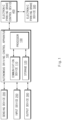
- FIG. 1 illustrates a block diagram showing a configuration of a vehicle system including an autonomous driving control apparatus according to an exemplary form of the present invention.
- the vehicle system includes: an autonomous driving control apparatus 100 for a vehicle, a sensing device 200, an input device 250, an output device 300, and an electronic parking brake control device 400, and an electronic parking brake device 500.
- the autonomous driving control apparatus 100 may be implemented inside the vehicle.
- the autonomous driving control apparatus 100 may be integrally formed with internal control units of the vehicle, or may be implemented as a separate device to be connected to control units by a separate connection means.
- the autonomous driving control apparatus 100 demands control authority transition of a user when a current driving condition is determined as a dangerous situation during autonomous driving control, and performs a minimum risk maneuver (MRM) to decelerate and stop the vehicle when the user does not permit the control authority transition.
- MRM minimum risk maneuver
- the automatic parking control device 500 may be controlled to be automatically engaged to release an autonomous driving control function in a state in which the vehicle maintains a stop, thereby preventing a dangerous situation due to a user's erroneous operation after the vehicle stops.
- the autonomous driving control apparatus 100 includes a storage 120 and a processor 130, and may include a communication device 110.
- the communication device 110 which is a hardware device implemented with various electronic circuits to transmit and receive signals through a wireless or wired connection, may perform communications with devices in the vehicle by using a network communication technique in the vehicle in the present invention, and the communications with the devices in the vehicle may be performed through controller area network (CAN) communication, local interconnect network (LIN) communication, and flex-ray communication.
- CAN controller area network
- LIN local interconnect network
- flex-ray communication a hardware device implemented with various electronic circuits to transmit and receive signals through a wireless or wired connection
- the communication device 110 may transmit and receive control signals and data with respect to the sensing device 200 and the electronic parking brake control device 400.
- the storage 120 may store sensing results of the sensing device 200 regarding driving information of a vehicle, and data and/or algorithms (e.g., a set of instructions/commands) executed by the processor 130, and the like.
- the storage 150 may store road information of a road on which the vehicle is driving.
- the road information may include a map, and the like.
- the road information may include information related to road types (e.g., an automobile road or a general road), road end points, and characteristics of lanes (e.g., confluence lanes, etc.)
- the storage 120 may include a storage medium of at least one type among memories of types such as a flash memory, a hard disk, a micro, a card (e.g., an secure digital (SD) card or an extreme digital (XD) card), a random access memory (RAM), a static RAM (SRAM), a read-only memory (ROM), a programmable ROM (PROM), an electrically erasable PROM (EEPROM), a magnetic memory (MRAM), a magnetic disk, and an optical disk.
- a storage medium of at least one type among memories of types such as a flash memory, a hard disk, a micro, a card (e.g., an secure digital (SD) card or an extreme digital (XD) card), a random access memory (RAM), a static RAM (SRAM), a read-only memory (ROM), a programmable ROM (PROM), an electrically erasable PROM (EEPROM), a magnetic memory (MRAM), a magnetic disk, and an optical disk.
- the processor 130 may be electrically connected to the communication device 110, the storage 120, and the like, and may electrically control each component, and may be an electrical circuit that executes software commands, thereby performing various data processing and calculations described below.
- the processor 130 may process signals transferred between constituent elements of the autonomous driving control apparatus 100 and the devices in the vehicle.
- the processor 130 may be, e.g., an electronic control unit (ECU), a micro controller unit (MCU), or other sub-controllers mounted in the vehicle.
- ECU electronice control unit
- MCU micro controller unit
- the processor 130 performs autonomous driving control.
- the processor 130 may perform driving assistance control on the automobile road.
- the processor 130 may control activation of the autonomous driving control function or deactivation (release) of the autonomous driving control function.
- the processor 130 determines whether a current driving condition is in a limit situation in which the autonomous driving control function is not to able to operate, based on at least some of sensing information regarding driving conditions of the vehicle or road information of a road on which the vehicle is running under the autonomous driving control.
- the limit situation may include a deviation from an operation design area of the autonomous driving control function, and the like. That is, the autonomous driving control apparatus 100 determines whether the current driving condition is in the limit situation, such as a road condition, vehicle behavior, or user misoperation, in which maintaining functions of lanes and distances between vehicles cannot be properly operated.
- the processor 130 When it is determined that the current driving condition is in the limit situation, the processor 130 demands to transfer a control authority to a user (e.g., a driver) of the vehicle.
- a control authority e.g., a driver
- the processor 130 performs the minimum risk maneuver.
- the minimum risk maneuver may include performing deceleration with a constant deceleration (e.g., 1 m/s 2 ) and stop control when the user does not permit the control authority transition despite the demand for the control authority transition for a predetermined time (e.g., 10 s).
- the processor 130 transmits a signal for disabling reactivation of the autonomous driving control function. That is, when the autonomous driving control function is released after the minimum risk maneuver is started, the autonomous driving control function may be started after the vehicle is restarted. Accordingly, the processor 130 may release the autonomous driving control function when the control authority is transferred to the user within a predetermined time or immediately after performing the minimum risk maneuver.
- the a signal for disabling reactivation of the autonomous driving control function may be transmitted to the input device 250, a device related to the autonomous driving in the vehicle, the output device 300, and the like.
- the processor 130 may control the vehicle according to another strategy for a dangerous situation when a magnitude of the deceleration required for avoiding the dangerous situation is greater than a specified value.
- the processor 130 may determine whether the vehicle is stopped after the minimum risk maneuver ends.
- the processor 130 may transmit an electronic parking brake device engagement signal to the electronic parking brake control device 400 within a predetermined time or immediately after the vehicle is stopped.
- the sensing device 200 may detect vehicle surrounding information.
- the sensing device 200 may detect information (e.g., position, speed, and acceleration) related to an external object (e.g., vehicles, pedestrians, etc.) positioned in a front, rear, or side of the vehicle.
- information e.g., position, speed, and acceleration
- an external object e.g., vehicles, pedestrians, etc.
- the sensing device 200 may detect vehicle information, e.g., positions, speeds, accelerations, steering angles, and the like of target vehicles, and a wheel speed of a host vehicle.
- vehicle information e.g., positions, speeds, accelerations, steering angles, and the like of target vehicles, and a wheel speed of a host vehicle.
- the sensing device 200 may include an ultrasonic sensor, a radar, a camera, a laser scanner, and/or a corner radar, a lidar, an acceleration sensor, a yaw rate sensor, a torque measurement sensor and/or a wheel speed sensor, a steering angle sensor, a wheel speed sensor, etc.
- the input device 250 may receive a command for, e.g., activation of the autonomous driving control function, from a user, and may be deactivated when receiving the signal for disabling reactivation of the autonomous driving control function transmitted from the autonomous driving control apparatus 100. Accordingly, when receiving the signal for disabling reactivation of the autonomous driving control function, although an autonomous driving control command is inputted from the user, the input device 250 prevents the autonomous driving control function from being activated unless the vehicle is restarted. That is, the input device 250 may transmit the autonomous driving control command inputted from the user to the autonomous driving control apparatus 100 after the vehicle is restarted, after receiving the signal for disabling reactivation of the autonomous driving control function.
- the input device 250 may include a key button, and may include a mouse, a joystick, a jog shuttle, a stylus pen, and the like. In addition, the input device 250 may include soft keys implemented on the display.
- the output device 300 may output notifications of, e.g., an activation or deactivation state of the autonomous driving control function, a demand for control authority transition, a message reporting that the autonomous driving control function cannot be reactivated.
- the output device 300 may provide a notification that the user of the vehicle can sensibly perceive.
- the output device 300 may include a display, a voice output means such as a speaker, and/or a vibration motor.
- the display may include at least one of a liquid crystal display (LCD), a thin film transistor liquid crystal display (TFT LCD), a an organic light emitting diode display (OLED display), a flexible display, a field emission display (FED), and a 3D display.
- the display may operate as a touch screen, and may be implemented in a form in which an input means and an output means are integrated.
- the electronic parking brake control device 400 controls engagement of the electronic parking brake device 500.
- the electronic parking brake control device 400 may determine whether the vehicle is stopped.
- the electronic parking brake control device 400 may allow the electronic parking brake device 500 to be engaged to transmit an engagement completion signal to the autonomous driving control apparatus 100.
- the electronic parking brake device 500 is an electronic parking brake (EPB), which means that the brake is automatically locked when the vehicle is stopped, and then automatically released when the accelerator is depressed to start driving the vehicle.
- EPB electronic parking brake
- the electronic parking brake device 500 may generate a braking force to a parking brake in a manner that a driving motor is driven and a force is transferred to a cable under a control command of the electronic parking brake control device 400.
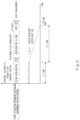
- FIG. 2 illustrates an exemplary operation of an autonomous driving control apparatus according to an exemplary form of the present invention, showing an operation mechanism for control authority transition notification and minimum risk maneuver driving.
- the autonomous driving control apparatus 100 determines whether the current driving condition is in the limit situation, such as a road environment, vehicle behavior, or user misoperation, in which maintaining functions of lanes and distances between vehicles cannot be properly operated, and notifies the user of the demand for control authority transition when it is determined that the current driving condition is in the limit situation.
- the autonomous driving control apparatus 100 may define a control authority transition demand period as A time (e.g., 10 s), and may make a setting so as not to accelerate the vehicle during the corresponding period.
- a time e.g. 10 s
- the autonomous driving control apparatus 100 continuously demands the control authority transition of the user even in the minimum risk maneuver step.
- the autonomous driving control apparatus 100 performs deceleration control with a predetermined deceleration (e.g., 1 m/s 2 ) during a minimum risk maneuver driving period, and performs stop control within a predetermined B time (e.g., up to 30 seconds at the maximum) or immediately.
- a predetermined deceleration e.g., 1 m/s 2
- the autonomous driving control apparatus 100 demands engagement of the electronic parking brake (EPB) of the electronic parking brake control device 400 within a predetermined C time (e.g., 1 s) or immediately after the minimum risk maneuver driving, and ends the autonomous driving control function when confirming the engagement of the EPB.
- a predetermined C time e.g. 1 s
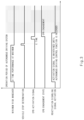
- FIG. 3 illustrates an exemplary operation of an autonomous driving control apparatus according to an exemplary form of the present invention, showing an EPB engagement operation mechanism when the vehicle stops while the minimum risk maneuver is performed.
- the autonomous driving control apparatus 100 performs the minimum risk maneuver for a predetermined time (e.g., up to 30 s at the maximum), and decelerates the vehicle to a constant deceleration (e.g., 1 m/s 2 ) before the vehicle stops to transmit an EPB activation signal after a predetermined time (e.g., 1 s) after the vehicle stops.
- a predetermined time e.g., up to 30 s at the maximum
- the signal for reactivation of the autonomous driving control function may be activated, the autonomous driving control apparatus 100 may transmit the signal for disabling reactivation of the autonomous driving control function to the input device 250, the output device 300, a device related to the autonomous driving control function in the vehicle, and/or the like, and the output device 300 may output a guide message to the user that reactivation is not possible before restarting.
- the autonomous driving control apparatus 100 determines whether the vehicle is stopped based on a wheel speed of the vehicle after stop control of the vehicle is performed after the minimum risk maneuver ends, and transmits an EPB activation signal to the electronic parking brake control device 400 when it is determined that the vehicle is stopped.
- the electronic parking brake control device 400 When receiving the EPB activation signal, the electronic parking brake control device 400 performs EBP engagement. When the EPB is engaged, the autonomous driving control function ends.
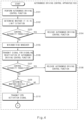
- FIGS. 4 and FIG. 5 illustrate flowcharts for describing an autonomous driving control method according to an exemplary form of the present invention.
- the autonomous driving control apparatus 100 of the vehicle of FIG. 1 performs the processes of FIG. 4 and FIG. 5 .
- operations described as being performed by the device may be understood as being controlled by the processor 130 of the autonomous driving control apparatus 100 of the vehicle.
- the autonomous driving control apparatus 100 determines whether the limit situation has occurred (S102) while performing an autonomous driving control mode (S101).
- the limit situation is a situation in which the autonomous driving control function cannot normally operate, and may include, e.g., a situation in which the autonomous driving control function is out of an operating design area.
- the autonomous driving control apparatus 100 demands control authority transition in vertical and horizontal direction such that the user can directly control the driving in the limit situation (S103). Accordingly, when the user permits the control authority transition, the autonomous driving control apparatus 100 releases the autonomous driving control mode (S104).
- the autonomous driving control apparatus 100 performs the minimum risk maneuver (S105).
- the minimum risk maneuver may include performing deceleration at a predetermined speed and stop control.
- the autonomous driving control apparatus 100 transmits the signal for disabling reactivation of the autonomous driving control function after the minimum risk maneuver is started (S106). That is, when the autonomous driving control function is released after the minimum risk maneuver is started, the autonomous driving control function can be activated after the vehicle restarts, so the user can be allowed to recognize this by outputting a notification that the autonomous driving control function cannot be reactivated to the output device 300.
- the autonomous driving control apparatus 100 may continue to determine whether the control authority transition is permitted during the minimum risk maneuver (S107), and may release the autonomous driving control function when the control authority transition is permitted by the user (S108).
- the autonomous driving control apparatus 100 may continue to execute the minimum risk maneuver to perform vehicle stop control after vehicle deceleration, and may determine whether the vehicle is stopped based on the wheel speed of the vehicle when the minimum risk maneuver ends (S109).
- the autonomous driving control apparatus 100 transmits an EPB activation signal to the electronic parking brake control device 400 (S110).
- the electronic parking brake control device 400 determines whether the vehicle is stopped (S121).
- the electronic parking brake control device 400 drives the electronic parking brake device (EPB) 500 to perform automatic engagement (S122).
- the electronic parking brake control device 400 transmits an EPB engagement signal to the autonomous driving control apparatus 100 (S123).
- the autonomous driving control apparatus 100 determines whether to perform EPB engagement after transmitting the EPB activation signal in step S110 (S111). That is, the autonomous driving control apparatus 100 checks whether the EPB is engaged by using the EPB engagement signal received from the electronic parking brake control device 400, and automatically releases the autonomous driving control function when the EPB engagement is completed (S112).
- an autonomous vehicle determines a risk situation (limit situation) and then demands the control authority transition, and automatically allows the vehicle's electronic parking brake device (EPB) to be engaged and releases the autonomous driving control function when the vehicle is stopped by performing the minimum risk maneuver because the user does not permit the control authority transition.
- a risk situation limit situation
- EPB electronic parking brake device
- FIG. 6 illustrates a computing system according to an exemplary form of the present invention.
- the computing system 1000 includes at least one processor 1100 connected through a bus 1200, a memory 1300, a user interface input device 1400, a user interface output device 1500, and a storage 1600, and a network interface 1700.
- the processor 1100 may be a central processing unit (CPU) or a semiconductor device that performs processing on commands stored in the memory 1300 and/or the storage 1600.
- the memory 1300 and the storage 1600 may include various types of volatile or nonvolatile storage media.
- the memory 1300 may include a read only memory (ROM) and a random access memory (RAM).
- steps of a method or algorithm described in connection with the exemplary forms disclosed herein may be directly implemented by hardware, a software module, or a combination of the two, executed by the processor 1100.
- the software module may reside in a storage medium (i.e., the memory 1300 and/or the storage 1600) such as a RAM memory, a flash memory, a ROM memory, a EPROM memory, a EEPROM memory, a register, a hard disk, a removable disk, and a CD-ROM.
- An exemplary storage medium is coupled to the processor 1100, which can read information from and write information to the storage medium.
- the storage medium may be integrated with the processor 1100.
- the processor and the storage medium may reside within an application specific integrated circuit (ASIC).
- ASIC application specific integrated circuit
- the ASIC may reside within a user terminal.
- the processor and the storage medium may reside as separate components within the user terminal.
Landscapes
- Engineering & Computer Science (AREA)
- Transportation (AREA)
- Mechanical Engineering (AREA)
- Automation & Control Theory (AREA)
- Human Computer Interaction (AREA)
- Chemical & Material Sciences (AREA)
- Combustion & Propulsion (AREA)
- Physics & Mathematics (AREA)
- Mathematical Physics (AREA)
- Control Of Driving Devices And Active Controlling Of Vehicle (AREA)
- Traffic Control Systems (AREA)
- Aviation & Aerospace Engineering (AREA)
- Radar, Positioning & Navigation (AREA)
- Remote Sensing (AREA)
- General Physics & Mathematics (AREA)
- Business, Economics & Management (AREA)
- Health & Medical Sciences (AREA)
- Artificial Intelligence (AREA)
- Evolutionary Computation (AREA)
- Game Theory and Decision Science (AREA)
- Medical Informatics (AREA)
Description
- The present invention relates to a vehicle system, and an autonomous driving control method of a vehicle, and more particularly, to a technique capable of protecting users from additional risks when stopping the vehicle.
- The statements in this section merely provide background information related to the present invention and may not constitute prior art.
- In the automobile industry, an autonomous driving system and a driving assistance system that partially enables autonomous driving have been developed.
- The autonomous driving system may provide various functions such as maintaining a predetermined speed, maintaining a distance between vehicles, maintaining a lane, and changing a lane. The autonomous driving system may perform autonomous driving by using various devices such as sensors for sensing vehicle's external environment, sensors for sensing vehicle information, GPS, precision maps, user state sensing systems, steering actuators, acceleration and deceleration actuators, communication circuits, and control circuits (e.g., electronic control units (ECUs)).
- The autonomous driving system may monitor user's condition, and may provide an appropriate minimum risk maneuver (MRM) according to the user's condition.
US 2015/0120124 A1 recites a method and apparatus for activating or deactivating an automatic driving function of a technical system for assisting the driver of a motor vehicle, referred to as pilot, based on system states of the pilot and between which predefined transitions are possible on the basis of predefined conditions.EP 2314490 A1 defines a method that involves transferring the motor vehicle from a takeover condition to a safe condition. The driving interference or a request for driver assumption determines plan of action, which contains temporal operational sequence of control commands of vehicle systems.US 2018/0111628 A1 refers to a travel control apparatus including an abnormality information acquisition section that acquires information indicating that an abnormality of a driver of a vehicle is detected, a status determination section that makes a determination that the driver is in a driving difficulty state, when the abnormality of the driver is detected continuously, and an evacuation control section that initiates an automatic evacuation control stopping automatically the vehicle when the status determination section makes a determination that the driver is in the driving difficulty state. - The above information disclosed in this Background section is only for enhancement of understanding of the background of the present invention, and therefore it may contain information that does not form the prior art that is already known to a person of ordinary skill in the art.
- The present invention is defined by the vehicle system according to independent claim 1 and the autonomous driving control method according to independent claim 12. Preferred optional features are recited in the dependent claims.
- As an embodiment of the present invention, a vehicle system according to independent claim 1 is provided.
- In an exemplary form, the processor may stop the autonomous driving control when the control authority is transferred to the user within a predetermined time or immediately after performing the minimum risk maneuver.
- In an exemplary form, the processor may determine whether the vehicle is stopped after the minimum risk maneuver ends when the control authority is not transferred to the user within a predetermined time or immediately after performing the minimum risk maneuver.
- In an exemplary form, the processor may transmit an engagement signal of the electronic parking brake device within a predetermined time or immediately after the vehicle is stopped.
- In an exemplary form, the autonomous driving control apparatus may further include a communication device configured to transmit a signal for demanding engagement of the electronic parking brake device.
- In an exemplary form, the processor may transmit the signal for disabling reactivation of an autonomous driving control function to at least one of an input device for inputting an autonomous driving control command, an output device for outputting an autonomous driving control state, or a device related to the autonomous driving control function in a vehicle.
- In an exemplary form, the electronic parking brake control device may determine whether the vehicle is stopped when demanded for the engagement of the electronic parking brake device from the autonomous driving control apparatus.
- In an exemplary form, the electronic parking brake control device may allow the electronic parking brake device to be engaged to transmit an engagement completion signal to the autonomous driving control apparatus when the vehicle is determined to be in a stopped state.
- In an exemplary form, the autonomous driving control apparatus may release the autonomous driving control function when the control authority is transferred to the user within a predetermined time or immediately after performing the minimum risk maneuver.
- In an exemplary form, the vehicle system may further include an output device configured to output a signal for the demand for control authority transition or a signal for disabling reactivation of the autonomous driving control function.
- In an exemplary form, the vehicle system may further include an input device configured to receive an autonomous driving control function command from a user.
- In an exemplary form, the autonomous driving control apparatus may transmits the signal for disabling reactivation of the autonomous driving control function to at least one of the input device, the output device, and a device related to the autonomous driving control function in a vehicle.
- As an embodiment of the present invention, an autonomous driving control method according to independent claim 12 is provided.
- In an exemplary form, the determining of whether the vehicle is stopped after the minimum risk maneuver ends may include releasing the autonomous driving control when the control authority is transferred to the user within a predetermined time or immediately after performing the minimum risk maneuver.
- In an exemplary form, the determining of whether the vehicle is stopped after the minimum risk maneuver ends may include determining whether the vehicle is stopped after the minimum risk maneuver ends when the control authority is not transferred to the user within a predetermined time or immediately after performing the minimum risk maneuver.
- In an exemplary form, the demanding of the engagement of the electronic parking brake device may include may transmit an engagement signal of the electronic parking brake device within a predetermined time or immediately after the vehicle is stopped.
- In an exemplary form, the processor may perform the reactivation command of the autonomous driving control function when the vehicle is stopped after the minimum risk maneuver is started and the reactivation command of the autonomous driving control function is inputted from the user after the vehicle is restarted.
- According to the present invention, when the vehicle stops after a MRM starts, a EPB is automatically engaged to prevent dangers that may occur after the vehicle stops, such as the vehicle leaving a driving lane due to user's misoperation.
- In addition, various effects that can be directly or indirectly identified through this document may be provided.
- Further areas of applicability will become apparent from the description provided herein.
- In order that the invention may be well understood, there will now be described various forms thereof, given by way of example, reference being made to the accompanying drawings, in which:
-
FIG. 1 illustrates a block diagram showing a configuration of a vehicle system including an autonomous driving control apparatus according to an exemplary form of the present invention; -
FIG. 2 illustrates an exemplary operation of an autonomous driving control apparatus for a vehicle according to an exemplary form of the present invention; -
FIG. 3 illustrates an exemplary operation of an autonomous driving control apparatus for a vehicle according to an exemplary form of the present invention; -
FIGS. 4 and5 are flowcharts respectively illustrating an autonomous driving control method according to an exemplary form of the present invention; and -
FIG. 6 illustrates a computing system according to an exemplary form of the present invention. - The drawings described herein are for illustration purposes only.
- The following description is merely exemplary in nature and is not intended to limit the present invention, or uses. It should be understood that throughout the drawings, corresponding reference numerals indicate like or corresponding parts and features.
- Hereinafter, some exemplary forms of the present invention will be described in detail with reference to exemplary drawings. It should be noted that in adding reference numerals to constituent elements of each drawing, the same constituent elements have the same reference numerals as possible even though they are indicated on different drawings.
- Hereinafter, exemplary forms of the present invention will be described in detail with reference to
FIG. 1 to FIG. 5 . -
FIG. 1 illustrates a block diagram showing a configuration of a vehicle system including an autonomous driving control apparatus according to an exemplary form of the present invention. - Referring to
FIG. 1 , the vehicle system includes: an autonomousdriving control apparatus 100 for a vehicle, asensing device 200, aninput device 250, anoutput device 300, and an electronic parkingbrake control device 400, and an electronicparking brake device 500. - The autonomous
driving control apparatus 100 may be implemented inside the vehicle. In this case, the autonomousdriving control apparatus 100 may be integrally formed with internal control units of the vehicle, or may be implemented as a separate device to be connected to control units by a separate connection means. - The autonomous
driving control apparatus 100 demands control authority transition of a user when a current driving condition is determined as a dangerous situation during autonomous driving control, and performs a minimum risk maneuver (MRM) to decelerate and stop the vehicle when the user does not permit the control authority transition. When the vehicle stops after performing the minimum risk maneuver, the automaticparking control device 500 may be controlled to be automatically engaged to release an autonomous driving control function in a state in which the vehicle maintains a stop, thereby preventing a dangerous situation due to a user's erroneous operation after the vehicle stops. - To this end, the autonomous
driving control apparatus 100 includes astorage 120 and aprocessor 130, and may include acommunication device 110. - The
communication device 110, which is a hardware device implemented with various electronic circuits to transmit and receive signals through a wireless or wired connection, may perform communications with devices in the vehicle by using a network communication technique in the vehicle in the present invention, and the communications with the devices in the vehicle may be performed through controller area network (CAN) communication, local interconnect network (LIN) communication, and flex-ray communication. - As an example, the
communication device 110 may transmit and receive control signals and data with respect to thesensing device 200 and the electronic parkingbrake control device 400. - The
storage 120 may store sensing results of thesensing device 200 regarding driving information of a vehicle, and data and/or algorithms (e.g., a set of instructions/commands) executed by theprocessor 130, and the like. - As an example, the storage 150 may store road information of a road on which the vehicle is driving. For example, the road information may include a map, and the like. For example, the road information may include information related to road types (e.g., an automobile road or a general road), road end points, and characteristics of lanes (e.g., confluence lanes, etc.)
- The
storage 120 may include a storage medium of at least one type among memories of types such as a flash memory, a hard disk, a micro, a card (e.g., an secure digital (SD) card or an extreme digital (XD) card), a random access memory (RAM), a static RAM (SRAM), a read-only memory (ROM), a programmable ROM (PROM), an electrically erasable PROM (EEPROM), a magnetic memory (MRAM), a magnetic disk, and an optical disk. - The
processor 130 may be electrically connected to thecommunication device 110, thestorage 120, and the like, and may electrically control each component, and may be an electrical circuit that executes software commands, thereby performing various data processing and calculations described below. - The
processor 130 may process signals transferred between constituent elements of the autonomousdriving control apparatus 100 and the devices in the vehicle. Theprocessor 130 may be, e.g., an electronic control unit (ECU), a micro controller unit (MCU), or other sub-controllers mounted in the vehicle. - The
processor 130 performs autonomous driving control. For example, theprocessor 130 may perform driving assistance control on the automobile road. In addition, theprocessor 130 may control activation of the autonomous driving control function or deactivation (release) of the autonomous driving control function. - The
processor 130 determines whether a current driving condition is in a limit situation in which the autonomous driving control function is not to able to operate, based on at least some of sensing information regarding driving conditions of the vehicle or road information of a road on which the vehicle is running under the autonomous driving control. Herein, the limit situation may include a deviation from an operation design area of the autonomous driving control function, and the like. That is, the autonomousdriving control apparatus 100 determines whether the current driving condition is in the limit situation, such as a road condition, vehicle behavior, or user misoperation, in which maintaining functions of lanes and distances between vehicles cannot be properly operated. - When it is determined that the current driving condition is in the limit situation, the
processor 130 demands to transfer a control authority to a user (e.g., a driver) of the vehicle. When the control authority transition is not permitted by the user, theprocessor 130 performs the minimum risk maneuver. In this case, the minimum risk maneuver may include performing deceleration with a constant deceleration (e.g., 1 m/s2) and stop control when the user does not permit the control authority transition despite the demand for the control authority transition for a predetermined time (e.g., 10 s). - As such, when the minimum risk maneuver is started, the
processor 130 transmits a signal for disabling reactivation of the autonomous driving control function. That is, when the autonomous driving control function is released after the minimum risk maneuver is started, the autonomous driving control function may be started after the vehicle is restarted. Accordingly, theprocessor 130 may release the autonomous driving control function when the control authority is transferred to the user within a predetermined time or immediately after performing the minimum risk maneuver. In this case, the a signal for disabling reactivation of the autonomous driving control function may be transmitted to theinput device 250, a device related to the autonomous driving in the vehicle, theoutput device 300, and the like. - The
processor 130 may control the vehicle according to another strategy for a dangerous situation when a magnitude of the deceleration required for avoiding the dangerous situation is greater than a specified value. When the control authority is not transferred to the user within the predetermined time or immediately after the minimum risk maneuver is performed, theprocessor 130 may determine whether the vehicle is stopped after the minimum risk maneuver ends. - The
processor 130 may transmit an electronic parking brake device engagement signal to the electronic parkingbrake control device 400 within a predetermined time or immediately after the vehicle is stopped. - The
sensing device 200 may detect vehicle surrounding information. For example, thesensing device 200 may detect information (e.g., position, speed, and acceleration) related to an external object (e.g., vehicles, pedestrians, etc.) positioned in a front, rear, or side of the vehicle. - The
sensing device 200 may detect vehicle information, e.g., positions, speeds, accelerations, steering angles, and the like of target vehicles, and a wheel speed of a host vehicle. To this end, thesensing device 200 may include an ultrasonic sensor, a radar, a camera, a laser scanner, and/or a corner radar, a lidar, an acceleration sensor, a yaw rate sensor, a torque measurement sensor and/or a wheel speed sensor, a steering angle sensor, a wheel speed sensor, etc. - The
input device 250 may receive a command for, e.g., activation of the autonomous driving control function, from a user, and may be deactivated when receiving the signal for disabling reactivation of the autonomous driving control function transmitted from the autonomousdriving control apparatus 100. Accordingly, when receiving the signal for disabling reactivation of the autonomous driving control function, although an autonomous driving control command is inputted from the user, theinput device 250 prevents the autonomous driving control function from being activated unless the vehicle is restarted. That is, theinput device 250 may transmit the autonomous driving control command inputted from the user to the autonomousdriving control apparatus 100 after the vehicle is restarted, after receiving the signal for disabling reactivation of the autonomous driving control function. - The
input device 250 may include a key button, and may include a mouse, a joystick, a jog shuttle, a stylus pen, and the like. In addition, theinput device 250 may include soft keys implemented on the display. - The
output device 300 may output notifications of, e.g., an activation or deactivation state of the autonomous driving control function, a demand for control authority transition, a message reporting that the autonomous driving control function cannot be reactivated. In addition, theoutput device 300 may provide a notification that the user of the vehicle can sensibly perceive. For example, theoutput device 300 may include a display, a voice output means such as a speaker, and/or a vibration motor. In this case, the display may include at least one of a liquid crystal display (LCD), a thin film transistor liquid crystal display (TFT LCD), a an organic light emitting diode display (OLED display), a flexible display, a field emission display (FED), and a 3D display. In this case, when a touch sensor formed of a touch film, a touch sheet, or a touch pad is provided on the display, the display may operate as a touch screen, and may be implemented in a form in which an input means and an output means are integrated. - The electronic parking
brake control device 400 controls engagement of the electronicparking brake device 500. - When receiving a demand for the engagement of the electronic
parking brake device 500 from the autonomousdriving control apparatus 100, the electronic parkingbrake control device 400 may determine whether the vehicle is stopped. - When the vehicle is determined to be in a stopped state, the electronic parking
brake control device 400 may allow the electronicparking brake device 500 to be engaged to transmit an engagement completion signal to the autonomousdriving control apparatus 100. - The electronic
parking brake device 500 is an electronic parking brake (EPB), which means that the brake is automatically locked when the vehicle is stopped, and then automatically released when the accelerator is depressed to start driving the vehicle. The electronicparking brake device 500 may generate a braking force to a parking brake in a manner that a driving motor is driven and a force is transferred to a cable under a control command of the electronic parkingbrake control device 400. -
FIG. 2 illustrates an exemplary operation of an autonomous driving control apparatus according to an exemplary form of the present invention, showing an operation mechanism for control authority transition notification and minimum risk maneuver driving. - First, the autonomous
driving control apparatus 100 determines whether the current driving condition is in the limit situation, such as a road environment, vehicle behavior, or user misoperation, in which maintaining functions of lanes and distances between vehicles cannot be properly operated, and notifies the user of the demand for control authority transition when it is determined that the current driving condition is in the limit situation. In this case, the autonomousdriving control apparatus 100 may define a control authority transition demand period as A time (e.g., 10 s), and may make a setting so as not to accelerate the vehicle during the corresponding period. When the user does not permit the control authority transition within the predetermined time (A time) or immediately after a predetermined time after the limit situation occurs, the autonomousdriving control apparatus 100 enters a minimum risk maneuver step. The autonomousdriving control apparatus 100 continuously demands the control authority transition of the user even in the minimum risk maneuver step. The autonomousdriving control apparatus 100 performs deceleration control with a predetermined deceleration (e.g., 1 m/s2) during a minimum risk maneuver driving period, and performs stop control within a predetermined B time (e.g., up to 30 seconds at the maximum) or immediately. - The autonomous
driving control apparatus 100 demands engagement of the electronic parking brake (EPB) of the electronic parkingbrake control device 400 within a predetermined C time (e.g., 1 s) or immediately after the minimum risk maneuver driving, and ends the autonomous driving control function when confirming the engagement of the EPB. -
FIG. 3 illustrates an exemplary operation of an autonomous driving control apparatus according to an exemplary form of the present invention, showing an EPB engagement operation mechanism when the vehicle stops while the minimum risk maneuver is performed. - First, the autonomous
driving control apparatus 100 performs the minimum risk maneuver for a predetermined time (e.g., up to 30 s at the maximum), and decelerates the vehicle to a constant deceleration (e.g., 1 m/s2) before the vehicle stops to transmit an EPB activation signal after a predetermined time (e.g., 1 s) after the vehicle stops. - In this case, when the minimum risk maneuver is started, the signal for reactivation of the autonomous driving control function may be activated, the autonomous
driving control apparatus 100 may transmit the signal for disabling reactivation of the autonomous driving control function to theinput device 250, theoutput device 300, a device related to the autonomous driving control function in the vehicle, and/or the like, and theoutput device 300 may output a guide message to the user that reactivation is not possible before restarting. - The autonomous
driving control apparatus 100 determines whether the vehicle is stopped based on a wheel speed of the vehicle after stop control of the vehicle is performed after the minimum risk maneuver ends, and transmits an EPB activation signal to the electronic parkingbrake control device 400 when it is determined that the vehicle is stopped. - When receiving the EPB activation signal, the electronic parking
brake control device 400 performs EBP engagement. When the EPB is engaged, the autonomous driving control function ends. - Hereinafter, an autonomous driving control method during minimum risk maneuver driving of a vehicle according to an exemplary form of the present invention will be described in detail with reference to FIG. 4A and FIG. 4B,
-
FIGS. 4 andFIG. 5 illustrate flowcharts for describing an autonomous driving control method according to an exemplary form of the present invention. - Hereinafter, it is assumed that the autonomous
driving control apparatus 100 of the vehicle ofFIG. 1 performs the processes ofFIG. 4 andFIG. 5 . In addition, in the description ofFIG. 4 andFIG. 5 , operations described as being performed by the device may be understood as being controlled by theprocessor 130 of the autonomousdriving control apparatus 100 of the vehicle. - Referring to
FIG. 4 andFIG. 5 , the autonomousdriving control apparatus 100 determines whether the limit situation has occurred (S102) while performing an autonomous driving control mode (S101). In this case, the limit situation is a situation in which the autonomous driving control function cannot normally operate, and may include, e.g., a situation in which the autonomous driving control function is out of an operating design area. - The autonomous
driving control apparatus 100 demands control authority transition in vertical and horizontal direction such that the user can directly control the driving in the limit situation (S103). Accordingly, when the user permits the control authority transition, the autonomousdriving control apparatus 100 releases the autonomous driving control mode (S104). - On the other hand, when the user does not permit the control authority transition within a predetermined time (e.g., 10 s) or immediately despite the limited situation, the autonomous
driving control apparatus 100 performs the minimum risk maneuver (S105). In this case, the minimum risk maneuver may include performing deceleration at a predetermined speed and stop control. - The autonomous
driving control apparatus 100 transmits the signal for disabling reactivation of the autonomous driving control function after the minimum risk maneuver is started (S106). That is, when the autonomous driving control function is released after the minimum risk maneuver is started, the autonomous driving control function can be activated after the vehicle restarts, so the user can be allowed to recognize this by outputting a notification that the autonomous driving control function cannot be reactivated to theoutput device 300. - Subsequently, the autonomous
driving control apparatus 100 may continue to determine whether the control authority transition is permitted during the minimum risk maneuver (S107), and may release the autonomous driving control function when the control authority transition is permitted by the user (S108). - On the other hand, when the control authority transition is not permitted by the user even after the minimum risk maneuver is started, the autonomous
driving control apparatus 100 may continue to execute the minimum risk maneuver to perform vehicle stop control after vehicle deceleration, and may determine whether the vehicle is stopped based on the wheel speed of the vehicle when the minimum risk maneuver ends (S109). - When it is determined that the vehicle is stopped, the autonomous
driving control apparatus 100 transmits an EPB activation signal to the electronic parking brake control device 400 (S110). - Accordingly, when receiving the EPB activation signal (S120), the electronic parking
brake control device 400 determines whether the vehicle is stopped (S121). - When it is determined that the vehicle is in a stopped state, the electronic parking
brake control device 400 drives the electronic parking brake device (EPB) 500 to perform automatic engagement (S122). - Subsequently, the electronic parking
brake control device 400 transmits an EPB engagement signal to the autonomous driving control apparatus 100 (S123). - Meanwhile, the autonomous
driving control apparatus 100 determines whether to perform EPB engagement after transmitting the EPB activation signal in step S110 (S111). That is, the autonomousdriving control apparatus 100 checks whether the EPB is engaged by using the EPB engagement signal received from the electronic parkingbrake control device 400, and automatically releases the autonomous driving control function when the EPB engagement is completed (S112). - As described above, in the present invention, an autonomous vehicle determines a risk situation (limit situation) and then demands the control authority transition, and automatically allows the vehicle's electronic parking brake device (EPB) to be engaged and releases the autonomous driving control function when the vehicle is stopped by performing the minimum risk maneuver because the user does not permit the control authority transition.
- As such, additional risks that may occur after the autonomous driving control function ends may be prevented by releasing the autonomous driving control function to maintain the vehicle at the stopped state after the EPB is automatically engaged when the vehicle is stopped after the minimum risk maneuver.
-
FIG. 6 illustrates a computing system according to an exemplary form of the present invention. - Referring to
FIG. 6 , thecomputing system 1000 includes at least oneprocessor 1100 connected through abus 1200, amemory 1300, a userinterface input device 1400, a userinterface output device 1500, and astorage 1600, and anetwork interface 1700. - The
processor 1100 may be a central processing unit (CPU) or a semiconductor device that performs processing on commands stored in thememory 1300 and/or thestorage 1600. Thememory 1300 and thestorage 1600 may include various types of volatile or nonvolatile storage media. For example, thememory 1300 may include a read only memory (ROM) and a random access memory (RAM). - Accordingly, steps of a method or algorithm described in connection with the exemplary forms disclosed herein may be directly implemented by hardware, a software module, or a combination of the two, executed by the
processor 1100. The software module may reside in a storage medium (i.e., thememory 1300 and/or the storage 1600) such as a RAM memory, a flash memory, a ROM memory, a EPROM memory, a EEPROM memory, a register, a hard disk, a removable disk, and a CD-ROM. - An exemplary storage medium is coupled to the
processor 1100, which can read information from and write information to the storage medium. Alternatively, the storage medium may be integrated with theprocessor 1100. The processor and the storage medium may reside within an application specific integrated circuit (ASIC). The ASIC may reside within a user terminal. Alternatively, the processor and the storage medium may reside as separate components within the user terminal.
Claims (12)
- A vehicle system comprising:an electronic parking brake control device (400) configured to control engagement of an electronic parking brake device (500) of a vehicle; andan autonomous driving control apparatus (100) for a vehicle, comprising:
a processor (130) configured to:determine whether a current driving condition of the vehicle is a limit situation during an autonomous driving control, wherein the limit situation is a situation in which the autonomous driving control is disabled based on road information of a road on which the vehicle is running, or sensing information regarding driving conditions of the vehicle,when the limit situation is determined, demand to transfer a control authority to a user of the vehicle,when the control authority is not transferred to the user, start a minimum risk maneuver, andcontrol engagement of the electronic parking brake device (500) when the vehicle is stopped after the minimum risk maneuver ends; anda storage (120) configured to store driving condition data of the vehicle and a set of instructions executed by the processor (130),characterised in thatthe processor (130) is further configured tocheck whether the electronic parking brake device (500) is engaged by using an electronic parking brake engagement signal received from the electronic parking brake control device (400);automatically release the autonomous driving control function when the electronic parking brake engagement is completed; andtransmit, when the minimum risk maneuver is started, a signal to disable reactivation of the autonomous driving control function, wherein the reactivation of the autonomous driving control is prevented unless the vehicle is restarted. - The vehicle system of claim 1, wherein when the control authority is transferred to the user within a predetermined time after performing the minimum risk maneuver or immediately after performing the minimum risk maneuver, the processor (130) is configured to stop the autonomous driving control .
- The vehicle system of claim 1 or 2, wherein the processor (130) is configured to determine whether the vehicle is stopped after the minimum risk maneuver ends when the control authority is not transferred to the user within a predetermined time after performing the minimum risk maneuver or immediately after performing the minimum risk maneuver.
- The vehicle system of any one of the preceding claims, wherein the processor (130) is configured to control transmission of an engagement signal of the electronic parking brake device (500) within a predetermined time after the vehicle is stopped or immediately after the vehicle is stopped.
- The vehicle system of any one of the preceding claims, further comprising a communication device (110) configured to transmit a signal for demanding engagement of the electronic parking brake device (500).
- The vehicle system of any one of the preceding claims, wherein the processor (130) is configured to transmit a signal for disabling reactivation of the autonomous driving control to at least one of an input device (250) for inputting an autonomous driving control command, an output device (300) for outputting an autonomous driving control state, or a device related to the autonomous driving control in a vehicle.
- The vehicle system of claim 1-6, wherein the electronic parking brake control device (400) is configured to determine whether the vehicle is stopped when the engagement of the electronic parking brake device (500) is demanded.
- The vehicle system of claim 7, wherein when the vehicle is in a stopped state, the electronic parking brake control device (400) is configured to: allow the electronic parking brake device (500) to be engaged and transmit an engagement completion signal to the autonomous driving control apparatus (100).
- The vehicle system of any one of claims 1 to 8, further comprising:an output device (300) configured to output a signal to demand to transfer the control authority or a signal to disable reactivation of the autonomous driving control, andan input device (250) configured to receive an autonomous driving control command from the user.
- The vehicle system of claim 9, wherein the autonomous driving control apparatus (100) is configured to transmit the signal for disabling reactivation of the autonomous driving control to at least one of the input device (250), the output device (300), or a device related to the autonomous driving control in a vehicle.
- The vehicle system of any one of claims 1 to 10, wherein the autonomous driving control apparatus (100) is configured to stop the autonomous driving control when the control authority is transferred to the user within a predetermined time after performing the minimum risk maneuver or immediately after performing the minimum risk maneuver.
- An autonomous driving control method of a vehicle, the method comprising:determining, by a processor (130), whether a current driving condition corresponds to a limit situation while the vehicle is under the autonomous driving control, where the autonomous driving control is restricted in the limit situation (S102) wherein whether the current driving condition corresponds to the limit situation is determined based on road information of a road on which the vehicle is driving, or sensing information regarding driving conditions of the vehicle;when the current driving condition corresponds to the limit situation, demanding, by the processor (130), to transfer a control authority to a user of the vehicle, and performing a minimum risk maneuver when the transfer of the control authority is not permitted by the user (S105);transmitting, by the processor (130), a signal for disabling reactivation of the autonomous driving control (S106), wherein reactivation of the autonomous driving control is prevented unless the vehicle is restarted;determining, by the processor (130), whether the vehicle is stopped after the minimum risk maneuver ends (S109); anddemanding, by the processor (130), engagement of an electronic parking brake device (500) when the vehicle is stopped (S110);wherein the method further comprises:checking, by the processor (130), whether the electronic parking brake device (500) is engaged by using an electronic parking brake engagement signal received from an electronic parking brake control device (400)automatically releasing, by the processor (130), the autonomous driving control function when the electronic parking brake engagement is completed (S112).
Applications Claiming Priority (1)
| Application Number | Priority Date | Filing Date | Title |
|---|---|---|---|
| KR1020200035725A KR20210119617A (en) | 2020-03-24 | 2020-03-24 | Apparatus for controlling autonomous driving of a vehicle, system having the same and method thereof |
Publications (2)
| Publication Number | Publication Date |
|---|---|
| EP3885227A1 EP3885227A1 (en) | 2021-09-29 |
| EP3885227B1 true EP3885227B1 (en) | 2025-06-04 |
Family
ID=72178328
Family Applications (1)
| Application Number | Title | Priority Date | Filing Date |
|---|---|---|---|
| EP20188874.0A Active EP3885227B1 (en) | 2020-03-24 | 2020-07-31 | Apparatus for controlling autonomous driving of a vehicle, system having the same and method thereof |
Country Status (5)
| Country | Link |
|---|---|
| US (3) | US11679786B2 (en) |
| EP (1) | EP3885227B1 (en) |
| KR (1) | KR20210119617A (en) |
| CN (1) | CN113442944A (en) |
| ES (1) | ES3039861T3 (en) |
Families Citing this family (6)
| Publication number | Priority date | Publication date | Assignee | Title |
|---|---|---|---|---|
| CN112758108A (en) * | 2021-03-11 | 2021-05-07 | 蔚来汽车科技(安徽)有限公司 | Automatic driving control method, automatic driving control system and vehicle |
| GB202116888D0 (en) * | 2021-11-24 | 2022-01-05 | Agco Int Gmbh | Vehicle being operable in an autonomous driving mode and activation device for activating the autonomous driving mode |
| CN114291109B (en) * | 2021-12-17 | 2023-07-21 | 广东机电职业技术学院 | A shared driving conflict resolution method, system and computer equipment |
| CN116176542B (en) * | 2022-12-08 | 2025-06-10 | 长城汽车股份有限公司 | Vehicle braking method and device, vehicle and storage medium |
| JP2025011628A (en) * | 2023-07-11 | 2025-01-24 | トヨタ自動車株式会社 | vehicle |
| KR102899260B1 (en) * | 2024-03-07 | 2025-12-12 | 에이치엘만도 주식회사 | Parking assistance system and method |
Family Cites Families (9)
| Publication number | Priority date | Publication date | Assignee | Title |
|---|---|---|---|---|
| DE102009050399A1 (en) * | 2009-10-22 | 2011-05-05 | Audi Ag | Method for controlling the operation of a fully automatic, designed for independent vehicle management driver assistance system of a motor vehicle and motor vehicle |
| DE102013222048B4 (en) * | 2013-10-30 | 2023-10-05 | Volkswagen Aktiengesellschaft | Method and device for activating or deactivating an automatic driving function |
| JP2016196285A (en) * | 2015-04-03 | 2016-11-24 | 株式会社デンソー | Travel control device and travel control method |
| DE102015216214A1 (en) * | 2015-08-25 | 2017-03-02 | Robert Bosch Gmbh | Method and device for driver assistance |
| JP2018094960A (en) * | 2016-12-08 | 2018-06-21 | 本田技研工業株式会社 | Vehicle control device |
| KR102642239B1 (en) * | 2016-12-22 | 2024-03-04 | 현대자동차주식회사 | Vehicle And Control Method Thereof |
| EP3552901B1 (en) * | 2018-04-11 | 2025-07-02 | Hyundai Motor Company | Apparatus and method for providing safety strategy in vehicle |
| US11351989B2 (en) * | 2018-04-11 | 2022-06-07 | Hyundai Motor Company | Vehicle driving controller, system including the same, and method thereof |
| JP7168509B2 (en) * | 2019-03-29 | 2022-11-09 | 本田技研工業株式会社 | vehicle control system |
-
2020
- 2020-03-24 KR KR1020200035725A patent/KR20210119617A/en not_active Ceased
- 2020-07-31 ES ES20188874T patent/ES3039861T3/en active Active
- 2020-07-31 EP EP20188874.0A patent/EP3885227B1/en active Active
- 2020-08-17 US US16/995,488 patent/US11679786B2/en active Active
- 2020-08-24 CN CN202010856552.8A patent/CN113442944A/en active Pending
-
2023
- 2023-05-05 US US18/143,631 patent/US12233920B2/en active Active
-
2025
- 2025-01-10 US US19/016,477 patent/US20250145184A1/en active Pending
Also Published As
| Publication number | Publication date |
|---|---|
| US11679786B2 (en) | 2023-06-20 |
| CN113442944A (en) | 2021-09-28 |
| KR20210119617A (en) | 2021-10-06 |
| ES3039861T3 (en) | 2025-10-27 |
| US20250145184A1 (en) | 2025-05-08 |
| EP3885227A1 (en) | 2021-09-29 |
| US12233920B2 (en) | 2025-02-25 |
| US20230271632A1 (en) | 2023-08-31 |
| US20210300431A1 (en) | 2021-09-30 |
Similar Documents
| Publication | Publication Date | Title |
|---|---|---|
| EP3885227B1 (en) | Apparatus for controlling autonomous driving of a vehicle, system having the same and method thereof | |
| KR102417910B1 (en) | Apparatus and method for controlling vehicle platooning | |
| KR20190124122A (en) | Apparatus and method for controlling activation of autonomous driving system of vehicle | |
| KR20200017579A (en) | Apparatus and method for controlling drive of vehicle | |
| EP3552909B1 (en) | Apparatus and method for managing control authority transition in vehicle | |
| US11440540B2 (en) | Apparatus and method for preventing vehicle collision | |
| CN106945663B (en) | Anti-collision method for turning vehicle | |
| US11801873B2 (en) | Apparatus for controlling autonomous driving of a vehicle and method thereof | |
| CN111572515A (en) | Unmanned vehicle and unmanned vehicle braking method | |
| US12145629B2 (en) | Apparatus for controlling autonomous driving of a vehicle, system having the same and method thereof | |
| CN113353097A (en) | Vehicle control device, vehicle, and vehicle control method | |
| KR20220001021A (en) | Apparatus for controlling platooning, system having the same and method for controlling a braking thereof | |
| US20240051554A1 (en) | Apparatus for Controlling a Vehicle and Method Thereof | |
| KR20200102014A (en) | Apparatus for controlling a vehicle interval, system having the same and method thereof | |
| US10293815B2 (en) | Driver assistance system having controller and controlling method thereof | |
| US12541208B2 (en) | Vehicle system with remote operation mode transition control | |
| KR102224150B1 (en) | System for controlling vehicle braking | |
| KR20230007599A (en) | System for controlling remotely parking of a vehicle and method thereof fail safe | |
| US20240326844A1 (en) | Vehicle | |
| JP2025116524A (en) | Vehicle driving control device and method | |
| CN115503713B (en) | Remote driving vehicle, remote driving system, and hunting driving suppressing method | |
| KR20190066952A (en) | Autonomous driving control apparatus and method for changing target thereof | |
| US20250010889A1 (en) | Storage medium | |
| US20240416968A1 (en) | Vehicle control device | |
| CN120773646A (en) | Vehicle with a vehicle body having a vehicle body support |
Legal Events
| Date | Code | Title | Description |
|---|---|---|---|
| PUAI | Public reference made under article 153(3) epc to a published international application that has entered the european phase |
Free format text: ORIGINAL CODE: 0009012 |
|
| STAA | Information on the status of an ep patent application or granted ep patent |
Free format text: STATUS: REQUEST FOR EXAMINATION WAS MADE |
|
| 17P | Request for examination filed |
Effective date: 20210805 |
|
| AK | Designated contracting states |
Kind code of ref document: A1 Designated state(s): AL AT BE BG CH CY CZ DE DK EE ES FI FR GB GR HR HU IE IS IT LI LT LU LV MC MK MT NL NO PL PT RO RS SE SI SK SM TR |
|
| STAA | Information on the status of an ep patent application or granted ep patent |
Free format text: STATUS: EXAMINATION IS IN PROGRESS |
|
| 17Q | First examination report despatched |
Effective date: 20230102 |
|
| P01 | Opt-out of the competence of the unified patent court (upc) registered |
Effective date: 20230505 |
|
| GRAP | Despatch of communication of intention to grant a patent |
Free format text: ORIGINAL CODE: EPIDOSNIGR1 |
|
| STAA | Information on the status of an ep patent application or granted ep patent |
Free format text: STATUS: GRANT OF PATENT IS INTENDED |
|
| INTG | Intention to grant announced |
Effective date: 20250226 |
|
| GRAS | Grant fee paid |
Free format text: ORIGINAL CODE: EPIDOSNIGR3 |
|
| GRAA | (expected) grant |
Free format text: ORIGINAL CODE: 0009210 |
|
| STAA | Information on the status of an ep patent application or granted ep patent |
Free format text: STATUS: THE PATENT HAS BEEN GRANTED |
|
| AK | Designated contracting states |
Kind code of ref document: B1 Designated state(s): AL AT BE BG CH CY CZ DE DK EE ES FI FR GB GR HR HU IE IS IT LI LT LU LV MC MK MT NL NO PL PT RO RS SE SI SK SM TR |
|
| REG | Reference to a national code |
Ref country code: GB Ref legal event code: FG4D |
|
| REG | Reference to a national code |
Ref country code: CH Ref legal event code: EP |
|
| REG | Reference to a national code |
Ref country code: DE Ref legal event code: R096 Ref document number: 602020052198 Country of ref document: DE |
|
| REG | Reference to a national code |
Ref country code: IE Ref legal event code: FG4D |
|
| REG | Reference to a national code |
Ref country code: NL Ref legal event code: MP Effective date: 20250604 |
|
| PG25 | Lapsed in a contracting state [announced via postgrant information from national office to epo] |
Ref country code: FI Free format text: LAPSE BECAUSE OF FAILURE TO SUBMIT A TRANSLATION OF THE DESCRIPTION OR TO PAY THE FEE WITHIN THE PRESCRIBED TIME-LIMIT Effective date: 20250604 |
|
| PGFP | Annual fee paid to national office [announced via postgrant information from national office to epo] |
Ref country code: ES Payment date: 20250801 Year of fee payment: 6 |
|
| PGFP | Annual fee paid to national office [announced via postgrant information from national office to epo] |
Ref country code: DE Payment date: 20250728 Year of fee payment: 6 |
|
| REG | Reference to a national code |
Ref country code: LT Ref legal event code: MG9D |
|
| PG25 | Lapsed in a contracting state [announced via postgrant information from national office to epo] |
Ref country code: GR Free format text: LAPSE BECAUSE OF FAILURE TO SUBMIT A TRANSLATION OF THE DESCRIPTION OR TO PAY THE FEE WITHIN THE PRESCRIBED TIME-LIMIT Effective date: 20250905 Ref country code: NO Free format text: LAPSE BECAUSE OF FAILURE TO SUBMIT A TRANSLATION OF THE DESCRIPTION OR TO PAY THE FEE WITHIN THE PRESCRIBED TIME-LIMIT Effective date: 20250904 |
|
| PG25 | Lapsed in a contracting state [announced via postgrant information from national office to epo] |
Ref country code: PL Free format text: LAPSE BECAUSE OF FAILURE TO SUBMIT A TRANSLATION OF THE DESCRIPTION OR TO PAY THE FEE WITHIN THE PRESCRIBED TIME-LIMIT Effective date: 20250604 |
|
| PGFP | Annual fee paid to national office [announced via postgrant information from national office to epo] |
Ref country code: IT Payment date: 20250728 Year of fee payment: 6 |
|
| PG25 | Lapsed in a contracting state [announced via postgrant information from national office to epo] |
Ref country code: BG Free format text: LAPSE BECAUSE OF FAILURE TO SUBMIT A TRANSLATION OF THE DESCRIPTION OR TO PAY THE FEE WITHIN THE PRESCRIBED TIME-LIMIT Effective date: 20250604 |
|
| PGFP | Annual fee paid to national office [announced via postgrant information from national office to epo] |
Ref country code: GB Payment date: 20250728 Year of fee payment: 6 |
|
| PG25 | Lapsed in a contracting state [announced via postgrant information from national office to epo] |
Ref country code: HR Free format text: LAPSE BECAUSE OF FAILURE TO SUBMIT A TRANSLATION OF THE DESCRIPTION OR TO PAY THE FEE WITHIN THE PRESCRIBED TIME-LIMIT Effective date: 20250604 |
|
| PGFP | Annual fee paid to national office [announced via postgrant information from national office to epo] |
Ref country code: FR Payment date: 20250728 Year of fee payment: 6 |
|
| PG25 | Lapsed in a contracting state [announced via postgrant information from national office to epo] |
Ref country code: RS Free format text: LAPSE BECAUSE OF FAILURE TO SUBMIT A TRANSLATION OF THE DESCRIPTION OR TO PAY THE FEE WITHIN THE PRESCRIBED TIME-LIMIT Effective date: 20250904 |
|
| REG | Reference to a national code |
Ref country code: ES Ref legal event code: FG2A Ref document number: 3039861 Country of ref document: ES Kind code of ref document: T3 Effective date: 20251027 |
|
| PG25 | Lapsed in a contracting state [announced via postgrant information from national office to epo] |
Ref country code: LV Free format text: LAPSE BECAUSE OF FAILURE TO SUBMIT A TRANSLATION OF THE DESCRIPTION OR TO PAY THE FEE WITHIN THE PRESCRIBED TIME-LIMIT Effective date: 20250604 |
|
| PG25 | Lapsed in a contracting state [announced via postgrant information from national office to epo] |
Ref country code: NL Free format text: LAPSE BECAUSE OF FAILURE TO SUBMIT A TRANSLATION OF THE DESCRIPTION OR TO PAY THE FEE WITHIN THE PRESCRIBED TIME-LIMIT Effective date: 20250604 |
|
| PG25 | Lapsed in a contracting state [announced via postgrant information from national office to epo] |
Ref country code: PT Free format text: LAPSE BECAUSE OF FAILURE TO SUBMIT A TRANSLATION OF THE DESCRIPTION OR TO PAY THE FEE WITHIN THE PRESCRIBED TIME-LIMIT Effective date: 20251006 |
|
| REG | Reference to a national code |
Ref country code: AT Ref legal event code: MK05 Ref document number: 1800085 Country of ref document: AT Kind code of ref document: T Effective date: 20250604 |
|
| PG25 | Lapsed in a contracting state [announced via postgrant information from national office to epo] |
Ref country code: IS Free format text: LAPSE BECAUSE OF FAILURE TO SUBMIT A TRANSLATION OF THE DESCRIPTION OR TO PAY THE FEE WITHIN THE PRESCRIBED TIME-LIMIT Effective date: 20251004 |
|
| PG25 | Lapsed in a contracting state [announced via postgrant information from national office to epo] |
Ref country code: AT Free format text: LAPSE BECAUSE OF FAILURE TO SUBMIT A TRANSLATION OF THE DESCRIPTION OR TO PAY THE FEE WITHIN THE PRESCRIBED TIME-LIMIT Effective date: 20250604 Ref country code: SM Free format text: LAPSE BECAUSE OF FAILURE TO SUBMIT A TRANSLATION OF THE DESCRIPTION OR TO PAY THE FEE WITHIN THE PRESCRIBED TIME-LIMIT Effective date: 20250604 |
|
| PG25 | Lapsed in a contracting state [announced via postgrant information from national office to epo] |
Ref country code: CZ Free format text: LAPSE BECAUSE OF FAILURE TO SUBMIT A TRANSLATION OF THE DESCRIPTION OR TO PAY THE FEE WITHIN THE PRESCRIBED TIME-LIMIT Effective date: 20250604 |
|
| PG25 | Lapsed in a contracting state [announced via postgrant information from national office to epo] |
Ref country code: EE Free format text: LAPSE BECAUSE OF FAILURE TO SUBMIT A TRANSLATION OF THE DESCRIPTION OR TO PAY THE FEE WITHIN THE PRESCRIBED TIME-LIMIT Effective date: 20250604 |
|
| PG25 | Lapsed in a contracting state [announced via postgrant information from national office to epo] |
Ref country code: RO Free format text: LAPSE BECAUSE OF FAILURE TO SUBMIT A TRANSLATION OF THE DESCRIPTION OR TO PAY THE FEE WITHIN THE PRESCRIBED TIME-LIMIT Effective date: 20250604 Ref country code: SK Free format text: LAPSE BECAUSE OF FAILURE TO SUBMIT A TRANSLATION OF THE DESCRIPTION OR TO PAY THE FEE WITHIN THE PRESCRIBED TIME-LIMIT Effective date: 20250604 |
|
| REG | Reference to a national code |
Ref country code: CH Ref legal event code: H13 Free format text: ST27 STATUS EVENT CODE: U-0-0-H10-H13 (AS PROVIDED BY THE NATIONAL OFFICE) Effective date: 20260224 |
|
| REG | Reference to a national code |
Ref country code: DE Ref legal event code: R097 Ref document number: 602020052198 Country of ref document: DE |
|
| PG25 | Lapsed in a contracting state [announced via postgrant information from national office to epo] |
Ref country code: LU Free format text: LAPSE BECAUSE OF NON-PAYMENT OF DUE FEES Effective date: 20250731 |
|
| REG | Reference to a national code |
Ref country code: BE Ref legal event code: MM Effective date: 20250731 |
|
| PG25 | Lapsed in a contracting state [announced via postgrant information from national office to epo] |
Ref country code: MC Free format text: LAPSE BECAUSE OF FAILURE TO SUBMIT A TRANSLATION OF THE DESCRIPTION OR TO PAY THE FEE WITHIN THE PRESCRIBED TIME-LIMIT Effective date: 20250604 |
|
| PLBE | No opposition filed within time limit |
Free format text: ORIGINAL CODE: 0009261 |
|
| STAA | Information on the status of an ep patent application or granted ep patent |
Free format text: STATUS: NO OPPOSITION FILED WITHIN TIME LIMIT |
|
| PG25 | Lapsed in a contracting state [announced via postgrant information from national office to epo] |
Ref country code: DK Free format text: LAPSE BECAUSE OF FAILURE TO SUBMIT A TRANSLATION OF THE DESCRIPTION OR TO PAY THE FEE WITHIN THE PRESCRIBED TIME-LIMIT Effective date: 20250604 |
|
| PG25 | Lapsed in a contracting state [announced via postgrant information from national office to epo] |
Ref country code: BE Free format text: LAPSE BECAUSE OF NON-PAYMENT OF DUE FEES Effective date: 20250731 |
|
| REG | Reference to a national code |
Ref country code: CH Ref legal event code: L10 Free format text: ST27 STATUS EVENT CODE: U-0-0-L10-L00 (AS PROVIDED BY THE NATIONAL OFFICE) Effective date: 20260416 |
|
| PG25 | Lapsed in a contracting state [announced via postgrant information from national office to epo] |
Ref country code: CH Free format text: LAPSE BECAUSE OF NON-PAYMENT OF DUE FEES Effective date: 20250731 |