EP3884679B1 - Datenübertragung - Google Patents
Datenübertragung Download PDFInfo
- Publication number
- EP3884679B1 EP3884679B1 EP19801551.3A EP19801551A EP3884679B1 EP 3884679 B1 EP3884679 B1 EP 3884679B1 EP 19801551 A EP19801551 A EP 19801551A EP 3884679 B1 EP3884679 B1 EP 3884679B1
- Authority
- EP
- European Patent Office
- Prior art keywords
- casting
- cast
- network
- data
- rendering
- Prior art date
- Legal status (The legal status is an assumption and is not a legal conclusion. Google has not performed a legal analysis and makes no representation as to the accuracy of the status listed.)
- Active
Links
Images



Classifications
-
- H—ELECTRICITY
- H04—ELECTRIC COMMUNICATION TECHNIQUE
- H04L—TRANSMISSION OF DIGITAL INFORMATION, e.g. TELEGRAPHIC COMMUNICATION
- H04L65/00—Network arrangements, protocols or services for supporting real-time applications in data packet communication
- H04L65/60—Network streaming of media packets
-
- G—PHYSICS
- G06—COMPUTING OR CALCULATING; COUNTING
- G06F—ELECTRIC DIGITAL DATA PROCESSING
- G06F3/00—Input arrangements for transferring data to be processed into a form capable of being handled by the computer; Output arrangements for transferring data from processing unit to output unit, e.g. interface arrangements
- G06F3/14—Digital output to display device ; Cooperation and interconnection of the display device with other functional units
-
- H—ELECTRICITY
- H04—ELECTRIC COMMUNICATION TECHNIQUE
- H04L—TRANSMISSION OF DIGITAL INFORMATION, e.g. TELEGRAPHIC COMMUNICATION
- H04L63/00—Network architectures or network communication protocols for network security
- H04L63/10—Network architectures or network communication protocols for network security for controlling access to devices or network resources
-
- H—ELECTRICITY
- H04—ELECTRIC COMMUNICATION TECHNIQUE
- H04L—TRANSMISSION OF DIGITAL INFORMATION, e.g. TELEGRAPHIC COMMUNICATION
- H04L67/00—Network arrangements or protocols for supporting network services or applications
- H04L67/50—Network services
- H04L67/51—Discovery or management thereof, e.g. service location protocol [SLP] or web services
-
- H—ELECTRICITY
- H04—ELECTRIC COMMUNICATION TECHNIQUE
- H04L—TRANSMISSION OF DIGITAL INFORMATION, e.g. TELEGRAPHIC COMMUNICATION
- H04L67/00—Network arrangements or protocols for supporting network services or applications
- H04L67/50—Network services
- H04L67/60—Scheduling or organising the servicing of application requests, e.g. requests for application data transmissions using the analysis and optimisation of the required network resources
-
- H—ELECTRICITY
- H04—ELECTRIC COMMUNICATION TECHNIQUE
- H04N—PICTORIAL COMMUNICATION, e.g. TELEVISION
- H04N21/00—Selective content distribution, e.g. interactive television or video on demand [VOD]
- H04N21/40—Client devices specifically adapted for the reception of or interaction with content, e.g. set-top-box [STB]; Operations thereof
- H04N21/41—Structure of client; Structure of client peripherals
- H04N21/4104—Peripherals receiving signals from specially adapted client devices
- H04N21/4122—Peripherals receiving signals from specially adapted client devices additional display device, e.g. video projector
-
- H—ELECTRICITY
- H04—ELECTRIC COMMUNICATION TECHNIQUE
- H04N—PICTORIAL COMMUNICATION, e.g. TELEVISION
- H04N21/00—Selective content distribution, e.g. interactive television or video on demand [VOD]
- H04N21/40—Client devices specifically adapted for the reception of or interaction with content, e.g. set-top-box [STB]; Operations thereof
- H04N21/41—Structure of client; Structure of client peripherals
- H04N21/4104—Peripherals receiving signals from specially adapted client devices
- H04N21/4126—The peripheral being portable, e.g. PDAs or mobile phones
-
- H—ELECTRICITY
- H04—ELECTRIC COMMUNICATION TECHNIQUE
- H04N—PICTORIAL COMMUNICATION, e.g. TELEVISION
- H04N21/00—Selective content distribution, e.g. interactive television or video on demand [VOD]
- H04N21/40—Client devices specifically adapted for the reception of or interaction with content, e.g. set-top-box [STB]; Operations thereof
- H04N21/41—Structure of client; Structure of client peripherals
- H04N21/422—Input-only peripherals, i.e. input devices connected to specially adapted client devices, e.g. global positioning system [GPS]
- H04N21/4227—Providing Remote input by a user located remotely from the client device, e.g. at work
-
- H—ELECTRICITY
- H04—ELECTRIC COMMUNICATION TECHNIQUE
- H04N—PICTORIAL COMMUNICATION, e.g. TELEVISION
- H04N21/00—Selective content distribution, e.g. interactive television or video on demand [VOD]
- H04N21/40—Client devices specifically adapted for the reception of or interaction with content, e.g. set-top-box [STB]; Operations thereof
- H04N21/43—Processing of content or additional data, e.g. demultiplexing additional data from a digital video stream; Elementary client operations, e.g. monitoring of home network or synchronising decoder's clock; Client middleware
- H04N21/436—Interfacing a local distribution network, e.g. communicating with another STB or one or more peripheral devices inside the home
- H04N21/43615—Interfacing a Home Network, e.g. for connecting the client to a plurality of peripherals
-
- H—ELECTRICITY
- H04—ELECTRIC COMMUNICATION TECHNIQUE
- H04N—PICTORIAL COMMUNICATION, e.g. TELEVISION
- H04N21/00—Selective content distribution, e.g. interactive television or video on demand [VOD]
- H04N21/60—Network structure or processes for video distribution between server and client or between remote clients; Control signalling between clients, server and network components; Transmission of management data between server and client, e.g. sending from server to client commands for recording incoming content stream; Communication details between server and client
- H04N21/63—Control signaling related to video distribution between client, server and network components; Network processes for video distribution between server and clients or between remote clients, e.g. transmitting basic layer and enhancement layers over different transmission paths, setting up a peer-to-peer communication via Internet between remote STB's; Communication protocols; Addressing
- H04N21/632—Control signaling related to video distribution between client, server and network components; Network processes for video distribution between server and clients or between remote clients, e.g. transmitting basic layer and enhancement layers over different transmission paths, setting up a peer-to-peer communication via Internet between remote STB's; Communication protocols; Addressing using a connection between clients on a wide area network, e.g. setting up a peer-to-peer communication via Internet for retrieving video segments from the hard-disk of other client devices
Definitions
- Casting is a technique of controlling a media content being displayed on a computing device via another computing device.
- the first computing device may send an instructi on to the second computing device indicating a media to be displayed.
- the second computing device retrieves the media from a source of the media.
- the user may send an instruction , to a cast device coupled to the television, via his mobile device, to display a particular video.
- the cast device may thereafter retrieve the media from a source of the video, such YouTube, and thereafter may provide the video to the television to display the video.
- EP 2720470 A2 discloses a data casting through a third -party aggregator.
- the third party aggregator aggregates the data from different devices and transmits it to the user device.
- the user device does not directly communicate with the casting device rather communicates with the aggregator.
- US 2018/192122 A1 discloses transmitting data on various devices, such as a television, a home theater, etc., which are present in the same network.
- the US 2018/192122 A1 discloses an invention where a device is disclosed which acts as many to many hub for receiving and transmitting data.
- Second type of casting may be where a media being played on a first computing device is sent to a second display device or a computing device for being displayed on that device.
- a source of the media is the first computing device.
- a cast request is received at a rendering system from a user device over a home network.
- the cast request is request for casting data from a ca st device communicatively coupled to a first network and a third network, onto a display device communicatively coupled to the home network.
- the rendering system transmits the cast request to a casting system over a second network.
- the rendering system receives, from the casting system to the requested data.
- the data is provided to the casting system by the cast device and the data is obtained by the cast device over the first network .
- the available cast system is automatically discovered by the user device and no configuration or specific software is needed on the user device.
- Content casting is such a service in which a user device may send an instruction to a cast device which may instruct the cast device to retrieve a content from a source and thereafter display the content on a display device.
- the user device may send an instruction to the cast device to play a video from YouTube.
- the cast device may access the video from the YouTube server via a network and may thereafter provide the video to a display device for display.
- the user device may be a mobile phone and the cast device may be a casting device, such as Chromecast.
- the limitation of the above casting operation is that the casting operation cannot work when the cast device and the user device is in two separated networks.
- Discovery of cast device by the user device is based on multicast protocol like MDSN which , by construction, cannot work if the two devices are in separated network (cf RFC 6762
- a host sending Multicast DNS queries to a link-local destination address (including the 224.0.0.251 and FF02::FB link-local multicast addresses) MUST only accept responses to that query that originate from the local link, and silently discard any other response packets.).
- the display device and cast device must remain in close vicinity as they may be coupled by a HDMI cable or others means.
- the present subject matter discloses a casting environment where casting is possible even when the display device and the cast device are not in close vicinity.
- the casting environment comprises a casting system , a cast device, and a rendering system.
- the casting system retrieves a data while the rendering system renders the data on a display device.
- the cast device is present in a first network and is coupled with a display device via a second network. Further, the casting system is coupled with the cast device via a third network.
- the rendering system When a user desires to cast a content on a display device which is not in the first network, the user couples the rendering system to the display device.
- the user further sends a cast request to the rendering system , over a home network and the rendering system transfers the cast request to the casting system over a second network.
- the casting system receives the cast request and transfers the cast request to the cast device o ver a third network.
- the cast device retrieves a data, corresponding to the content requested in the cast request, over the first network and provides the data to casting router.
- the casting router may further transmit the data to the rendering system.
- the cast device may provide the data to an encoder of the casting system.
- the encoder may encode the data and may provide the data to a casting router of the casting system.
- a casting router further transfers the data to a rendering router of the rendering system.
- the rendering router may provide the data to a decoder of the rendering system .
- the decoder may decode the data and may provide the data to a display device for display.
- the content is casted on the display device even if th e display device is not in vicinity of the casting system.
- the user may permanently couple the casting system with the first network and may cast the content at some other place (at places where the first network is not available) using the rendering syste m.
- the casting system is coupled with the cast device without any modification of the cast device.
- Figure 1 shows a casting environment for casting of data on a display device 104.
- the network environment comprises a rendering system 102, the display device 104, a user device 106, a casting system 108, and a cast device 110.
- the display device 104 may be, a television, a light emitting display (LED), a liquid crystal display (LCD) , a tablet.
- the display device 104 has been shown separately in figure 1 , however, in an example, the display device 104 may be integrated with the rendering system 102 or the user device 106.
- the user device 106 may be a mobile device, a laptop, a desktop or any other device which has casting capabilities.
- the rendering system 102 is composed of a rendering router 116 and a decoder 128.
- the decoder 128 is represented in figure 1 as a separate entity, but it must be understood that the decoder 128 can be physically integrated in the rendering router, in the user device or in the display device.
- the decoder 128 and the re ndering router 116 can be located in separated network in the vessel.
- the decoder transmits the video to the display device by high-definition multimedia interface HDMI, video graphics array (VGA), universal serial bus (USB), internet protocol (IP) or any other means.
- the cast device 110 of the present subject matter is coupled to a first network 112.
- the first network 112 may include, but are not limited to, Global System for Mobile Communication (GSM) network, Universal Mobile Telecommunications System (UMTS) network, Personal Communications Service (PCS) network, Time Di vision Multiple Access (TDMA) network, Code Division Multiple Access (CDMA) network, Next Generation Network (NON), satellite network, and Public Switched Telephone Network (PSTN).
- GSM Global System for Mobile Communication
- UMTS Universal Mobile Telecommunications System
- PCS Personal Communications Service
- TDMA Time Di vision Multiple Access
- CDMA Code Division Multiple Access
- NON Next Generation Network
- PSTN Public Switched Telephone Network
- the first network 112 includes various network entities, such as gateways, routers; however, such details have been omitted for the sake of brevity of the present description.
- the display device 104 is in a home network 114.
- the home network may be present in user's home, a ship, a vessel, an airplane.
- the user wishes to cast data on the display device 104.
- the user couples the rendering system 102 with the display device 104.
- the rendering system 102 may be coupled to the display device 104 via connectors, such as HDMI, VGA, USB.
- the user device 106 is coupled with the home network 114 .
- the user device may automatically retrieve information about casting systems present the network environment (explained later with reference to figure 3 ) .
- the user devices may use native functionality to retrieve information about cast device 110 present in the network environment. Thus, in an example, no additional application changes or hardware changes are necessary in the user device 106.
- the cast device 110 may be automatically available in the home network 114.
- the casting system 108 may send the details, such as connections specifications to the rendering system 102 and the rendering system 102 may evaluate the casting system 108.
- the rendering system 102 may send connection information about the home network 114 to the casting system 108.
- the casting system 108 may then allocate an IP to the cast device 110 th at matches the one of the rendering routers 116.
- the rendering router 116 and the cast device 110 will have the same IP address.
- the IP address of the cast device may be dynamically change d in case of new IP address on the rendering router. This way, when user device 106 will retrieve the connection specification of the cast device 110, the latter will appear to be located in the home network 114.
- Communication from the user device 106 to the cast device 110 will be send to the rendering router 116.
- the rendering may thereafter transfer the data to the casting router 120.
- the casting router may forward the data to the cast device 110.
- the user device 106 may be thereafter used by the user to select the casting system which he indents to use for casting data.
- the user device 106 sends the data to the casting system 108 via the rendering system 102.
- the user device 106 may scan the home network 114 to detect the rendering system 102 present in the home network 114.
- the user may, via his user device 106, authorize the rendering system 102 to communicate with the user device 106.
- the user using the user device 106 sends a cast request to the rendering system 102 over the home network 114.
- the cast request may be understood as a request for casting a content on the display device 104.
- the cast request may comprise details, such as unifo rm resource locator of the content and identification (ID) of the casting system to which the cast request is directed to.
- the home network 114 is a network in which the user is currently present.
- the home network 114 may have similar configuration as of the first network 110.
- a rendering router 116 of the rendering system 102 transmits the cast request to the casting system 108 over a second network 118.
- the second network 118 may be a satellite network, internet network, intranet network, GPRS network etc.
- the first network 112 and the second network 118 are two distinct networks. In an example, the first network 112 and second network may be provided by two different service providers.
- the casting system 108 comprises a casting router 120 and an encoder 122.
- the casting system 108 is further coupled to the cast device 110.
- the cast device 110 is coupled with the encoder 122 of the casting system 108 via a connection, such as HDMI, VGA etc. and the casting router 120 of the casting system 108 is coupled to the cast device 110 via a third network 124.
- the cast device 110 is further coupled with the first network 112.
- the cast request sent by the rendering system 102 , over the second network 118, is received by the casting router 120.
- the casting router 120 further transmits the cast request to the cast device 110, over the third network 124.
- the casting router 120 may determine a cast device to which the cast request should be directed to.
- the third network 124 may be similar have similar configuration as of the first network 112. In another example, there may not be a third network 124 and the casting system 108 may transfer the cast request to the cast device over the first network 112.
- the cast device 110 Upon, receiving the cast request, the cast device 110 analyzes the cast request and determines data to be ret rieved. The cast device 110 determines the data to be retrieved based on the cast request.
- the cast request may comprise a uniform resource locator (URL) of the data to be retrieved and the cast device 110 may retrieve the data by accessing the URL.
- the cast device 110 may access a source 126, over the first network 112, to retrieve the data.
- the source 126 may be a database.
- the cast device 110 may thereafter forward the retrie ved data to the encoder 122 via the HDMI/VGA protocol/connection.
- the encoder 122 encodes the data and provides the data to the casting router 120.
- the casting router 120 transmits the encoded data to the rendering system 102.
- the casting ro uter 120 may transmits data at a variable transfer rate.
- the casting system 108 may determine a transfer rate for the data based on various parameter, such as connection specifications, bandwidth of the network, format of data supported by the rendering system 102.
- the rendering router 116 of the rendering system 102 receives the encoded data from the casting system 108 over the second network 118.
- the rendering router may thereafter provide the data to a decoder 128.
- the decoder 128 may decode the data and may thereafter forward the data to the display device 104.
- the display device 104 may display the data.
- the data may be an audio stream, a video stream, or a combination of audio stream and audio stream , including additional information like subtitles, logo, additional audio streams etc.
- the casting router 120 may send the data at a variable bit rate and thus, accordingly the rendering router 116 may receive data at a variable bit rate, in an exampl e.
- the network available on the ship may be referred to as home network.
- the user wishes to cast the data from a cast device available in the user's home and which is coupled to a first network available in the user's home.
- the cast device at the user's home is also coupled with a casting system, such as the casting system 108.
- the user couples a rendering system (such as the rendering system 102) to the display device available in the ship.
- the user device will natively and automatically detect the cast device, and an icon will appear on the user device when a cast compatible application is used. By selecting the icon, the user sends a cast request to the rendering system..
- the rendering system transmits the cast request to the casting system over a satellite network which may be accessible from the ship.
- the casting system sends the cast request to the cast device.
- the cast device retrieves the data, over the first network, from a source and provides the data to the rendering system.
- the casting system thereafter transmits the data to the rendering system via the satellite network.
- the rendering system receives the data and forwards the data to the display device.
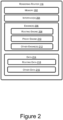
- Figures 2 illustrates the rendering router 116, in accordance with an example of the present subject mat ter.
- the rendering router 116 includes and a memory 202, interface(s) 204, and engine(s) 206.
- the memory 202 may include any computer-readable medium including, for example, volatile memory (e.g., RAM), and/or non -volatile memory (e.g., EPROM, flash memory, etc.).
- the interface(s) 204 may include a variety of software and hardware interfaces that allow the rendering router 116 to interact with other devices or other input/output (I/O) devices.
- the engine(s) 206 may be implemented as a combination of hardware and programming (for example, programmable instructions) to implement certain functionalities of the engine(s) 206, routing of the cast request.
- programming for the engine(s) 206 may be processor executable instructions stored on a non-transitory machine-readable storage medium and the hardware for the engine(s) 206 may include a processing resourc e (for example, implemented as either a single processor or a combination of multiple processors), to execute such instructions.
- the machine-readable storage medium may store instructions that, when executed by the processing resource, implement engine(s) 206.
- the rendering router 116 may include the machine-readable storage medium storing the instructions and the processing resource to execute the instructions, or the machine -readable storage medium may be separate but accessible to the rendering router 116 and the processing resource.
- engine(s) 206 may be implemented by electronic circuitry.
- the engine(s) 206 may include a routing engine 208 and a proxy engine 210.
- the engine(s) 206 may also comprise other engine(s) 212 that supplement functions of the rendering router 116.
- Data 214 serves, amongst other things, as a repository for storing data that may be fetched, processed, received, or generated by the engine(s) 406.
- the data 214 comprises other data 216 corresponding to the other engine(s) 212.
- the data 214 of also comprises routing data 218.
- the casting router 118 have a similar physical configuration as of the rendering router 116.
- the cast request is received by the routing engine 208.
- the routing engine 208 may thereafter may retrieve a required address from the routing data 218 and may transmit the cast request to a casting system, such as the casting system 108.
- the routing engine 208 also receives the encoded data from the casting system 108.
- the routing engine 208 may use a proxy engine 210 to send the cast request and receive the encoded data.
- the proxy engine 210 acts an intermediary between the routing engine 208 and the casting system 108. Using the proxy engine 210 improves the response time of sending the cast request.
- the proxy engine 210 may store a cache of previously connected casting systems and may help in faster connection of the casting system 108 and the routing engine 208.
- the proxy engine 210 may also help in increasing the security of the data transmitted and received.
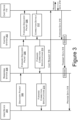
- Figure 3 illustrates a flow diagram for discovering casting system 302 by a user device 304 and receiving connection specifications of the cast device.
- the casting system 302 is similar to the casting system 108 and the user device 106 is similar to the user device 304.
- the user device 304 uses its native functionality to discover the casting system 302 present in the network and no change in application or hardware of the user device 304 is required.
- a cast compatible application such as Netflix, Prime video
- the user device will request the user to allow for searching of the casti ng systems present in the network.
- the discovery of the casting systems is based on the multicast protocol, such as mDSN, SSDP etc.
- the user device 304 sends a multicast discovery packet 306 on a home network.
- the rendering system 308 will receive the discovery packet 306 and will forward the discovery packet 306 to the casting system 304 via a second network, such as the second network 118.
- the casting system 304 then forwards the discovery packet page 10 306 to the cast device 110 over the third network.
- the cast device 310 in return would provide its connections details 312 to the casting system 304.
- the casting system will receive the connection details 312 of the cast device.
- the casting system will thereafter forward its connection specifications 314, along with the connection details 312 of the cast device, to the rendering system 308 and the rendering system 308 will finally forward the connections specification s to the user device.
- connection specifications 314 along with the connection details 312 of the cast device
- rendering system 308 will finally forward the connections specification s to the user device.
- the user device 304 may send a cast request 316 to the cast device 110.
- the cast device 110 may request a source (not shown) to provide the requested data.
- the source may thereafter provide a data 318 to the cast device 110 and the cast device 110 may then forward the data 318 to the casting system 302.
- the casting system 302 encodes the data 318 and transmits the data 318 to the rendering system 308.
- the rendering system 308 decodes the data 318 and provide the data 318 to the user device 306.
- Figure 4 illustrates a method 400 for determining a list of casting systems in a network, in accordance with an example of the present subject matter.
- the method 400 may be implemented in a variety of routers, but for the ease of explanation, the present description of the example method 400 to provide suggestions is provided in reference to the above -described rendering router 116.
- the rendering router 402 receives a list of all casting systems coupled with a network, such as the second network 114.
- the rendering router 302 receive the list of casting systems form the casting router 118 which has automatically discovered the list of casting systems present in the network environment.
- the rendering router 404 receives connection specifications of each of the casting systems.
- the connection specification may indicate the protocols used by the casting systems for connecting to a network.
- the rendering router 402 may receive the connection specifications form the casting router 118.
- the rendering router 404 provides the list of casting systems along with their connection specifications to a user devi ce, such as the user device 106 which may then use the casting system for casting a data on the display device 104.
- Figure 5 illustrates a method 500 for casting data, in accordance with an example of the present subject matter.
- the method 500 may be implemented in a variety of casting system , but for the ease of explanation, the present description of the example method 500 to provide suggestions is provided in reference to the above -described casting system 108.
- a cast request is received by the casting system 108 over a second network, such as the second network 118.
- the cast request is received by a casting router, such as the casting router 120, of the casting system 108.
- the cast request may be initiated in a home network, such as the home network 114.
- the cast request may be initiated by a user device, such as the user device 106.
- the casting system 108 analyzes the cast request to determine a data to be retrieved.
- the cast request comprises details about the data to retrieved.
- the cast request may comprise a URL of the data to be retrieved.
- the casting system forwards the cast request to a cast device.
- the casting system 108 receives a required data from the cast device at block 508.
- the casting system 108 encodes the retrieved data based.
- the casting system 108 sends the encoded data to the rendering system 102.
- the methods and devices of the present subject matter provide techniques for casting of data.
- examples of casting data have been described in a language, specific to structural features and/or methods, it is to be understood that the description are not necessarily limited to the specific features or methods described. Rather, the specific features and methods are disclosed as example for casting data.
Landscapes
- Engineering & Computer Science (AREA)
- Signal Processing (AREA)
- Multimedia (AREA)
- Computer Networks & Wireless Communication (AREA)
- Theoretical Computer Science (AREA)
- General Engineering & Computer Science (AREA)
- Computing Systems (AREA)
- Computer Security & Cryptography (AREA)
- Human Computer Interaction (AREA)
- Physics & Mathematics (AREA)
- General Physics & Mathematics (AREA)
- Computer Hardware Design (AREA)
- Data Exchanges In Wide-Area Networks (AREA)
- Information Transfer Between Computers (AREA)
- Two-Way Televisions, Distribution Of Moving Picture Or The Like (AREA)
Claims (14)
- Ein Verfahren, das Folgendes umfasst:
automatisches Erkennen einer Cast-Vorrichtung (110) durch eine Benutzervorrichtung (106) unter Verwendung einer nativen Cast-Erkennungsfunktionalität der Benutzervorrichtung (106) und basierend auf einem Multicast-Protokoll zum Herstellen einer Kommunikation zwischen der Benutzervorrichtung (106) und der Cast-Vorrichtung (110), wobei ein Cast-System (108) mit der Cast-Vorrichtung (110) über ein drittes Netzwerk (124) gekoppelt ist, die Benutzervorrichtung (106) mit einem Rendering-System (102) über ein Heimnetzwerk (114) gekoppelt ist, und das Rendering-System (102) mit dem Casting-System (108) über ein zweites Netzwerk (118) gekoppelt ist, wobei das zweite Netzwerk (118) ein Satellitennetzwerk ist und wobei die Benutzervorrichtung ein Multicast-Ermittlungspaket (306) an das Heimnetzwerk sendet, das Rendering-System das Entdeckungspaket (306) empfängt und das Entdeckungspaket (306) über das zweite Netzwerk an das Casting-System weiterleitet, das Casting-System dann das Entdeckungspaket über das dritte Netzwerk an das Casting-Gerät weiterleitet, das Casting-Gerät im Gegenzug seine Verbindungsdetails (312) an das Casting-System liefert, das Casting-System empfängt die Verbindungsdetails (312) des Cast-Geräts, das Casting-System leitet daraufhin seine Verbindungsspezifikationen (314) zusammen mit den Verbindungsdetails (312) des Cast-Geräts an das Rendering-System weiter und das Rendering-System leitet schließlich die Verbindungsspezifikationen (314) an das Benutzergerät weiter, um das Casting-System und das Cast-Gerät zu entdecken,Empfangen, durch einen Rendering-Router (116) des Rendering-Systems (102), der Cast-Anforderung über das Heimnetzwerk (114) von der Benutzervorrichtung (106), wobei die Cast-Anforderung das Casting von Daten von der Cast-Vorrichtung (110), die kommunikativ mit einem ersten Netzwerk (112) und dem dritten Netzwerk (124) gekoppelt ist, auf eine Anzeigevorrichtung (104) betrifft, die kommunikativ mit dem Heimnetzwerk (114) gekoppelt ist;Übermittlung der Gießanforderung über das zweite Netzwerk (118) an das Gießsystem (108);Empfangen der angeforderten Gießdaten vom Gießsystem (108) am Wiedergabesystem (102), wobei die angeforderten Gießdaten dem Gießsystem (108) von der Gießvorrichtung (110) bereitgestellt werden und die angeforderten Gießdaten von der Gießvorrichtung (110) über das erste Netzwerk (112) erhalten werden. - Verfahren nach Anspruch 1, wobei die angeforderten Casting-Daten mit einer variablen Bitrate empfangen werden.
- Verfahren nach Anspruch 1, bei dem das Benutzergerät mit dem Rendering-System (102) verbunden ist, um die Besetzungsanforderung zu übertragen:Scannen des Heimnetzwerks (114) über das Benutzergerät (106), um das Rendering-System (102) zu lokalisieren;Autorisierung des Rendering-Systems (102) zur Kommunikation mit dem Benutzergerät (106).
- Verfahren nach Anspruch 1, wobei es sich bei den angeforderten Casting-Daten um mindestens eines der folgenden Elemente handelt: a) einen Videostrom, b) einen Audiostrom und c) eine Kombination aus einem Audiostrom und einem Videostrom.
- Das Verfahren nach Anspruch 1 umfasst ferner das Empfangen einer Liste von Gießsystemen, die kommunikativ mit dem zweiten Netzwerk verbunden sind, zusammen mit den Verbindungsspezifikationen (314) der aufgelisteten Gießsysteme am Wiedergabesystem (102).
- Verfahren nach Anspruch 1, wobei das erste Netz (112) und das zweite Netz (118) zwei unterschiedliche Netze sind.
- Ein Wiedergabesystem (102), das Folgendes umfasst:einen Rendering-Router (102), der Folgendes umfasst:ein Speichereine oder mehrere Schnittstellen; undeine oder mehrere Verarbeitungsvorrichtungen, die mit dem Speicher gekoppelt und geeignet sind, im Speicher gespeicherte Anweisungen auszuführen, um:über die eine oder mehrere Schnittstellen über ein Heimnetzwerk (114) eine Cast-Anforderung von einer Benutzervorrichtung (106) zu empfangen, wobei die Cast-Anforderung das Casting von Daten von einer Cast-Vorrichtung (110), die kommunikativ mit einem ersten Netzwerk (112) und einem dritten Netzwerk (124) verbunden ist, auf eine Anzeigevorrichtung (104) betrifft, die kommunikativ mit dem Heimnetzwerk (114) verbunden ist;Übertragen der Gussanforderung an ein Gießsystem (108) über ein zweites Netzwerk (118), wobei das Gießsystem (108) mit der Gussvorrichtung (110) über das dritte Netzwerk (124) kommunikativ gekoppelt ist; undvom Gießsystem (108) die angeforderten Gießdaten vom Gießsystem (108) empfangen,wobei die angeforderten Gießdaten von der Gießvorrichtung (110) an das Gießsystem (108) geliefert werden,wobei die angeforderten Gussdaten von der Gussvorrichtung (110) über das erste Netzwerk (112) erhalten werden, undwobei die Benutzervorrichtung (106) unter Verwendung einer nativen Cast-Ermittlungsfunktionalität der Benutzervorrichtung (106) auf der Grundlage eines Multicast-Protokolls die Cast-Vorrichtung (110) automatisch ermittelt, um eine Kommunikation zwischen der Benutzervorrichtung (106) und der Cast-Vorrichtung (110) herzustellen, und wobei das zweite Netzwerk (118) ein Satellitennetzwerk ist; und wobei die Benutzervorrichtung ein Multicast-Erkennungspaket (306) an das Heimnetzwerk sendet, das Rendering-System das Erkennungspaket (306) empfängt und das Erkennungspaket (306) über das zweite Netzwerk an das Casting-System weiterleitet, das Casting-System dann das Erkennungspaket über das dritte Netzwerk an die Cast-Vorrichtung weiterleitet, die Cast-Vorrichtung im Gegenzug ihre Verbindungsdetails (312) an das Casting-System liefert, das Casting-System empfängt die Verbindungsdetails (312) des Cast-Geräts, das Casting-System leitet daraufhin seine Verbindungsspezifikationen (314) zusammen mit den Verbindungsdetails (312) des Cast-Geräts an das Rendering-System weiter und das Rendering-System leitet schließlich die Verbindungsspezifikationen (314) an das Benutzergerät weiter, um das Casting-System und das Cast-Gerät zu entdecken.
- Das Rendering-System (102) nach Anspruch 7, das außerdem Folgendes umfasst:einen Decoder (128) zum Decodieren der empfangenen Daten, um decodierte Daten zu erzeugen; undeine Anzeigevorrichtung (104), die in das Wiedergabesystem (102) integriert ist, wobei der Decoder (128) die decodierten Daten an die Anzeigevorrichtung (104) sendet und die Anzeigevorrichtung die decodierten Daten anzeigt.
- Rendering-System (102) nach Anspruch 7, wobei der Rendering-Router (116) über die eine oder mehrere Schnittstellen eine Liste von Casting-Systemen, die mit dem zweiten Netzwerk (118) kommunikativ gekoppelt sind, zusammen mit Verbindungsspezifikationen (314) der Casting-Systeme empfängt und die Liste der Casting-Systeme zusammen mit ihren Verbindungsspezifikationen (314) über das Heimnetzwerk (114) an das Benutzergerät (106) weiterleitet.
- Rendering-System (102) nach Anspruch 7, wobei das erste Netz (112) und das zweite Netz (118) zwei unterschiedliche Netze sind.
- Rendering-System (102) nach Anspruch 7, wobei das Heimnetzwerk (114) in einem Schiff, einem fahrenden Fahrzeug oder einem Flugzeug verfügbar ist.
- Ein Gießsystem (108), das Folgendes umfasst:
eine Gussroutine (120), die Folgendes umfasst:ein Speichereine oder mehrere Schnittstellen; undeine oder mehrere Verarbeitungsvorrichtungen, die mit dem Speicher gekoppelt und geeignet sind, im Speicher gespeicherte Anweisungen auszuführen, um:wobei die Benutzervorrichtung (106) unter Verwendung einer nativen Cast-Ermittlungsfunktionalität der Benutzervorrichtung (106), die auf einem Multicast-Protokoll basiert, automatisch die Cast-Vorrichtung (110) für eine direkte Kommunikation zwischen der Benutzervorrichtung (106) und der Cast-Vorrichtung (110) ermittelt, und wobei das zweite Netzwerk (118) ein Satellitennetzwerk ist und wobei die Benutzervorrichtung ein Multicast-Ermittlungspaket (306) auf dem Heimnetzwerk sendet, das Rendering-System das Ermittlungspaket (306) empfängt und das Ermittlungspaket (306) über das zweite Netzwerk an das Cast-System weiterleitet, das Casting-System leitet dann das Entdeckungspaket über das dritte Netzwerk an das Cast-Gerät weiter, das Cast-Gerät stellt im Gegenzug seine Verbindungsdetails (312) dem Casting-System zur Verfügung, das Casting-System empfängt die Verbindungsdetails (312) des Cast-Geräts, das Casting-System leitet daraufhin seine Verbindungsspezifikationen (314) zusammen mit den Verbindungsdetails (312) des Cast-Geräts an das Rendering-System weiter und das Rendering-System leitet schließlich die Verbindungsspezifikationen (314) an das Benutzergerät weiter, um das Casting-System und das Cast-Gerät zu entdecken.Empfangen einer Abrufanforderung von einer Benutzervorrichtung (106) über ein Wiedergabesystem (102) über ein zweites Netzwerk (118), wobei die Abrufanforderung eine Anforderung zum Abruf von Daten von einer Abrufvorrichtung (110) zu einer Anzeigevorrichtung (104) ist, die in einem Heimnetzwerk (114) vorhanden ist, und wobei die Abrufvorrichtung (110) in einem ersten Netzwerk (112) vorhanden ist;die Gipsanforderung an das Gipsgerät (110) zu übertragen;die angeforderten Gussdaten von der Gussvorrichtung (110) empfangen;die angeforderten Gussdaten, die der Gussanforderung entsprechen, über das zweite Netzwerk (118) an das Wiedergabesystem (102) zu übertragen, - Das Gießsystem (108) nach Anspruch 12, wobei das Gießsystem (108) einen Kodierer (122) umfasst, um die Daten vor der Übertragung der Daten zu kodieren.
- Das Casting-System (108) nach Anspruch 12, wobei das Casting-System (108) die Daten mit einer variablen Bitrate überträgt.
Applications Claiming Priority (3)
| Application Number | Priority Date | Filing Date | Title |
|---|---|---|---|
| EP18206930.2A EP3654660A1 (de) | 2018-11-19 | 2018-11-19 | Datenübertragung |
| US16/580,107 US11115449B2 (en) | 2018-11-19 | 2019-09-24 | Data casting |
| PCT/EP2019/080771 WO2020104222A1 (en) | 2018-11-19 | 2019-11-10 | Data casting |
Publications (3)
| Publication Number | Publication Date |
|---|---|
| EP3884679A1 EP3884679A1 (de) | 2021-09-29 |
| EP3884679C0 EP3884679C0 (de) | 2025-03-05 |
| EP3884679B1 true EP3884679B1 (de) | 2025-03-05 |
Family
ID=64664013
Family Applications (3)
| Application Number | Title | Priority Date | Filing Date |
|---|---|---|---|
| EP18206930.2A Ceased EP3654660A1 (de) | 2018-11-19 | 2018-11-19 | Datenübertragung |
| EP19801551.3A Active EP3884679B1 (de) | 2018-11-19 | 2019-11-10 | Datenübertragung |
| EP19801889.7A Active EP3884680B1 (de) | 2018-11-19 | 2019-11-15 | Datenübertragung mit adaptiver bitrate |
Family Applications Before (1)
| Application Number | Title | Priority Date | Filing Date |
|---|---|---|---|
| EP18206930.2A Ceased EP3654660A1 (de) | 2018-11-19 | 2018-11-19 | Datenübertragung |
Family Applications After (1)
| Application Number | Title | Priority Date | Filing Date |
|---|---|---|---|
| EP19801889.7A Active EP3884680B1 (de) | 2018-11-19 | 2019-11-15 | Datenübertragung mit adaptiver bitrate |
Country Status (5)
| Country | Link |
|---|---|
| US (1) | US11115449B2 (de) |
| EP (3) | EP3654660A1 (de) |
| CN (2) | CN113412627A (de) |
| ES (1) | ES3018794T3 (de) |
| WO (2) | WO2020104222A1 (de) |
Families Citing this family (1)
| Publication number | Priority date | Publication date | Assignee | Title |
|---|---|---|---|---|
| GB2592083B8 (en) * | 2020-03-27 | 2022-11-16 | Spatialbuzz Ltd | Network monitoring system |
Family Cites Families (16)
| Publication number | Priority date | Publication date | Assignee | Title |
|---|---|---|---|---|
| US7765318B2 (en) * | 2002-01-18 | 2010-07-27 | Magna Light Corporation | Wireless distribution & collection system |
| US20040221304A1 (en) * | 2003-02-13 | 2004-11-04 | Sparrell Carlton J. | Digital video recording and playback system with seamless advertisement insertion and playback from multiple locations via a home area network |
| CN1668023A (zh) * | 2004-03-10 | 2005-09-14 | 浙江大学 | 适合数字媒体发布业务的网络结构与传输方法 |
| US8230466B2 (en) * | 2006-11-16 | 2012-07-24 | At&T Intellectual Property I, L.P. | Home automation system and method including remote media access |
| WO2010101515A1 (en) * | 2009-03-03 | 2010-09-10 | Telefonaktiebolaget Lm Ericsson (Publ) | Media transfer to a renderer in a local network from a server in a second local network |
| US9195775B2 (en) * | 2009-06-26 | 2015-11-24 | Iii Holdings 2, Llc | System and method for managing and/or rendering internet multimedia content in a network |
| US9525838B2 (en) * | 2009-08-10 | 2016-12-20 | Sling Media Pvt. Ltd. | Systems and methods for virtual remote control of streamed media |
| WO2014052856A2 (en) * | 2012-09-28 | 2014-04-03 | Marvell World Trade Ltd. | Enhanced user experience for miracast devices |
| EP2720470B1 (de) * | 2012-10-12 | 2018-01-17 | Sling Media, Inc. | Aggregierte Steuerung und Präsentation von Medieninhalt aus mehreren Quellen |
| US9319289B2 (en) * | 2013-05-14 | 2016-04-19 | Broadcom Corporation | Adaptive bit rate (ABR) streaming with server side adaptation |
| US20150312648A1 (en) * | 2014-04-23 | 2015-10-29 | Verizon Patent And Licensing Inc. | Mobile device controlled dynamic room environment using a cast device |
| US20160173937A1 (en) * | 2014-12-11 | 2016-06-16 | Mediatek Inc. | Methods and devices for media casting management among multiple media casting devices supporting different media casting protocols |
| US10097608B2 (en) * | 2015-12-26 | 2018-10-09 | Intel Corporation | Technologies for wireless transmission of digital media |
| US10284492B2 (en) * | 2016-08-10 | 2019-05-07 | Microsoft Technology Licensing, Llc | Control of casting to a media renderer |
| US20180192122A1 (en) * | 2017-01-05 | 2018-07-05 | Blackfire Research Corporation | Enhanced home media experience using a wireless media hub |
| US10389832B2 (en) * | 2017-02-17 | 2019-08-20 | Wyse Technology L.L.C. | Remote casting of media content |
-
2018
- 2018-11-19 EP EP18206930.2A patent/EP3654660A1/de not_active Ceased
-
2019
- 2019-09-24 US US16/580,107 patent/US11115449B2/en active Active
- 2019-11-10 WO PCT/EP2019/080771 patent/WO2020104222A1/en not_active Ceased
- 2019-11-10 EP EP19801551.3A patent/EP3884679B1/de active Active
- 2019-11-10 ES ES19801551T patent/ES3018794T3/es active Active
- 2019-11-10 CN CN201980076318.9A patent/CN113412627A/zh active Pending
- 2019-11-15 EP EP19801889.7A patent/EP3884680B1/de active Active
- 2019-11-15 WO PCT/EP2019/081416 patent/WO2020104300A1/en not_active Ceased
- 2019-11-15 CN CN201980076353.0A patent/CN113396597B/zh active Active
Also Published As
| Publication number | Publication date |
|---|---|
| EP3884680C0 (de) | 2025-12-03 |
| EP3654660A1 (de) | 2020-05-20 |
| US20200162532A1 (en) | 2020-05-21 |
| EP3884679C0 (de) | 2025-03-05 |
| ES3018794T3 (en) | 2025-05-19 |
| US11115449B2 (en) | 2021-09-07 |
| CN113412627A (zh) | 2021-09-17 |
| EP3884679A1 (de) | 2021-09-29 |
| WO2020104222A1 (en) | 2020-05-28 |
| CN113396597A (zh) | 2021-09-14 |
| WO2020104300A1 (en) | 2020-05-28 |
| CN113396597B (zh) | 2024-02-09 |
| EP3884680B1 (de) | 2025-12-03 |
| EP3884680A1 (de) | 2021-09-29 |
Similar Documents
| Publication | Publication Date | Title |
|---|---|---|
| US7272650B2 (en) | Communication protocols operable through network address translation (NAT) type devices | |
| US12335329B2 (en) | System and method for content retrieval from remote network regions | |
| US12149506B2 (en) | Data routing options for a VPN | |
| EP2897340B1 (de) | Routing-proxy für adaptives streaming | |
| US7913293B2 (en) | Method and communication unit for communicating between communication apparatuses | |
| CN102790808B (zh) | 一种域名解析方法和系统、一种客户端 | |
| US11936522B2 (en) | Selecting and operating an optimal virtual private network among multiple virtual private networks | |
| EP3026872B1 (de) | Packetweiterleitungsverfahren, -vorrichtung und -system | |
| JP2022092005A (ja) | ハイブリッドネットワーク内のルーティング | |
| CN107735778B (zh) | 保护内容递送网络和内容原始服务器之间的通信链路 | |
| CN104243627A (zh) | 一种域名解析方法、装置及系统 | |
| US20170041422A1 (en) | Method and system for retrieving a content manifest in a network | |
| CN115314730B (zh) | 应用于虚拟现实vr场景的视频流传输方法及装置 | |
| EP2211507B1 (de) | Verfahren, vorrichtung und system zur verarbeitung eines realtime-streaming-protokolls | |
| EP3884679B1 (de) | Datenübertragung | |
| CN106534794A (zh) | 一种视频监控系统远程控制方法及装置 | |
| US20130080501A1 (en) | Method for transmitting real-time video data over network | |
| CN105897853A (zh) | 一种对等网络连接方法及装置 | |
| US20160285961A1 (en) | Delivering managed and unmanaged content across a network | |
| CN116781613A (zh) | 任播cdn路由中的本地偏好 | |
| CN102439946A (zh) | 数据传输方法和设备 | |
| US11622158B2 (en) | Adaptive bit rate data casting | |
| CN111131761B (zh) | 分布式拼接显示系统和数据传输方法 | |
| CN108307149B (zh) | 一种视频代理系统及监控方法 |
Legal Events
| Date | Code | Title | Description |
|---|---|---|---|
| STAA | Information on the status of an ep patent application or granted ep patent |
Free format text: STATUS: UNKNOWN |
|
| STAA | Information on the status of an ep patent application or granted ep patent |
Free format text: STATUS: THE INTERNATIONAL PUBLICATION HAS BEEN MADE |
|
| PUAI | Public reference made under article 153(3) epc to a published international application that has entered the european phase |
Free format text: ORIGINAL CODE: 0009012 |
|
| STAA | Information on the status of an ep patent application or granted ep patent |
Free format text: STATUS: REQUEST FOR EXAMINATION WAS MADE |
|
| 17P | Request for examination filed |
Effective date: 20210616 |
|
| AK | Designated contracting states |
Kind code of ref document: A1 Designated state(s): AL AT BE BG CH CY CZ DE DK EE ES FI FR GB GR HR HU IE IS IT LI LT LU LV MC MK MT NL NO PL PT RO RS SE SI SK SM TR |
|
| DAV | Request for validation of the european patent (deleted) | ||
| DAX | Request for extension of the european patent (deleted) | ||
| STAA | Information on the status of an ep patent application or granted ep patent |
Free format text: STATUS: EXAMINATION IS IN PROGRESS |
|
| 17Q | First examination report despatched |
Effective date: 20230524 |
|
| GRAP | Despatch of communication of intention to grant a patent |
Free format text: ORIGINAL CODE: EPIDOSNIGR1 |
|
| STAA | Information on the status of an ep patent application or granted ep patent |
Free format text: STATUS: GRANT OF PATENT IS INTENDED |
|
| INTG | Intention to grant announced |
Effective date: 20241105 |
|
| GRAS | Grant fee paid |
Free format text: ORIGINAL CODE: EPIDOSNIGR3 |
|
| GRAA | (expected) grant |
Free format text: ORIGINAL CODE: 0009210 |
|
| STAA | Information on the status of an ep patent application or granted ep patent |
Free format text: STATUS: THE PATENT HAS BEEN GRANTED |
|
| AK | Designated contracting states |
Kind code of ref document: B1 Designated state(s): AL AT BE BG CH CY CZ DE DK EE ES FI FR GB GR HR HU IE IS IT LI LT LU LV MC MK MT NL NO PL PT RO RS SE SI SK SM TR |
|
| REG | Reference to a national code |
Ref country code: GB Ref legal event code: FG4D |
|
| REG | Reference to a national code |
Ref country code: CH Ref legal event code: EP |
|
| REG | Reference to a national code |
Ref country code: IE Ref legal event code: FG4D |
|
| REG | Reference to a national code |
Ref country code: DE Ref legal event code: R096 Ref document number: 602019066937 Country of ref document: DE |
|
| U01 | Request for unitary effect filed |
Effective date: 20250331 |
|
| REG | Reference to a national code |
Ref country code: ES Ref legal event code: FG2A Ref document number: 3018794 Country of ref document: ES Kind code of ref document: T3 Effective date: 20250519 |
|
| U07 | Unitary effect registered |
Designated state(s): AT BE BG DE DK EE FI FR IT LT LU LV MT NL PT RO SE SI Effective date: 20250508 |
|
| PG25 | Lapsed in a contracting state [announced via postgrant information from national office to epo] |
Ref country code: RS Free format text: LAPSE BECAUSE OF FAILURE TO SUBMIT A TRANSLATION OF THE DESCRIPTION OR TO PAY THE FEE WITHIN THE PRESCRIBED TIME-LIMIT Effective date: 20250605 |
|
| PG25 | Lapsed in a contracting state [announced via postgrant information from national office to epo] |
Ref country code: NO Free format text: LAPSE BECAUSE OF FAILURE TO SUBMIT A TRANSLATION OF THE DESCRIPTION OR TO PAY THE FEE WITHIN THE PRESCRIBED TIME-LIMIT Effective date: 20250605 |
|
| PG25 | Lapsed in a contracting state [announced via postgrant information from national office to epo] |
Ref country code: HR Free format text: LAPSE BECAUSE OF FAILURE TO SUBMIT A TRANSLATION OF THE DESCRIPTION OR TO PAY THE FEE WITHIN THE PRESCRIBED TIME-LIMIT Effective date: 20250305 |
|
| U1N | Appointed representative for the unitary patent procedure changed after the registration of the unitary effect |
Representative=s name: BONCEA, OANA-LAURA; LU |
|
| PG25 | Lapsed in a contracting state [announced via postgrant information from national office to epo] |
Ref country code: GR Free format text: LAPSE BECAUSE OF FAILURE TO SUBMIT A TRANSLATION OF THE DESCRIPTION OR TO PAY THE FEE WITHIN THE PRESCRIBED TIME-LIMIT Effective date: 20250606 |
|
| PG25 | Lapsed in a contracting state [announced via postgrant information from national office to epo] |
Ref country code: SM Free format text: LAPSE BECAUSE OF FAILURE TO SUBMIT A TRANSLATION OF THE DESCRIPTION OR TO PAY THE FEE WITHIN THE PRESCRIBED TIME-LIMIT Effective date: 20250305 |
|
| PG25 | Lapsed in a contracting state [announced via postgrant information from national office to epo] |
Ref country code: PL Free format text: LAPSE BECAUSE OF FAILURE TO SUBMIT A TRANSLATION OF THE DESCRIPTION OR TO PAY THE FEE WITHIN THE PRESCRIBED TIME-LIMIT Effective date: 20250305 |
|
| PG25 | Lapsed in a contracting state [announced via postgrant information from national office to epo] |
Ref country code: CZ Free format text: LAPSE BECAUSE OF FAILURE TO SUBMIT A TRANSLATION OF THE DESCRIPTION OR TO PAY THE FEE WITHIN THE PRESCRIBED TIME-LIMIT Effective date: 20250305 |
|
| PG25 | Lapsed in a contracting state [announced via postgrant information from national office to epo] |
Ref country code: SK Free format text: LAPSE BECAUSE OF FAILURE TO SUBMIT A TRANSLATION OF THE DESCRIPTION OR TO PAY THE FEE WITHIN THE PRESCRIBED TIME-LIMIT Effective date: 20250305 |
|
| PG25 | Lapsed in a contracting state [announced via postgrant information from national office to epo] |
Ref country code: IS Free format text: LAPSE BECAUSE OF FAILURE TO SUBMIT A TRANSLATION OF THE DESCRIPTION OR TO PAY THE FEE WITHIN THE PRESCRIBED TIME-LIMIT Effective date: 20250705 |
|
| REG | Reference to a national code |
Ref country code: CH Ref legal event code: U11 Free format text: ST27 STATUS EVENT CODE: U-0-0-U10-U11 (AS PROVIDED BY THE NATIONAL OFFICE) Effective date: 20251201 |
|
| U20 | Renewal fee for the european patent with unitary effect paid |
Year of fee payment: 7 Effective date: 20251028 |
|
| PGFP | Annual fee paid to national office [announced via postgrant information from national office to epo] |
Ref country code: GB Payment date: 20251126 Year of fee payment: 7 |
|
| PLBE | No opposition filed within time limit |
Free format text: ORIGINAL CODE: 0009261 |
|
| STAA | Information on the status of an ep patent application or granted ep patent |
Free format text: STATUS: NO OPPOSITION FILED WITHIN TIME LIMIT |
|
| REG | Reference to a national code |
Ref country code: CH Ref legal event code: L10 Free format text: ST27 STATUS EVENT CODE: U-0-0-L10-L00 (AS PROVIDED BY THE NATIONAL OFFICE) Effective date: 20260114 |
|
| PGFP | Annual fee paid to national office [announced via postgrant information from national office to epo] |
Ref country code: CH Payment date: 20251201 Year of fee payment: 7 |
|
| PGFP | Annual fee paid to national office [announced via postgrant information from national office to epo] |
Ref country code: IE Payment date: 20251021 Year of fee payment: 7 |
|
| PGFP | Annual fee paid to national office [announced via postgrant information from national office to epo] |
Ref country code: ES Payment date: 20251210 Year of fee payment: 7 |
|
| 26N | No opposition filed |
Effective date: 20251208 |