EP3884412B1 - Computerimplementiertes verfahren - Google Patents
Computerimplementiertes verfahren Download PDFInfo
- Publication number
- EP3884412B1 EP3884412B1 EP19809559.8A EP19809559A EP3884412B1 EP 3884412 B1 EP3884412 B1 EP 3884412B1 EP 19809559 A EP19809559 A EP 19809559A EP 3884412 B1 EP3884412 B1 EP 3884412B1
- Authority
- EP
- European Patent Office
- Prior art keywords
- cpu
- executable
- application
- computer program
- variation
- Prior art date
- Legal status (The legal status is an assumption and is not a legal conclusion. Google has not performed a legal analysis and makes no representation as to the accuracy of the status listed.)
- Active
Links
Images








Classifications
-
- G—PHYSICS
- G06—COMPUTING OR CALCULATING; COUNTING
- G06F—ELECTRIC DIGITAL DATA PROCESSING
- G06F21/00—Security arrangements for protecting computers, components thereof, programs or data against unauthorised activity
- G06F21/50—Monitoring users, programs or devices to maintain the integrity of platforms, e.g. of processors, firmware or operating systems
- G06F21/52—Monitoring users, programs or devices to maintain the integrity of platforms, e.g. of processors, firmware or operating systems during program execution, e.g. stack integrity ; Preventing unwanted data erasure; Buffer overflow
- G06F21/54—Monitoring users, programs or devices to maintain the integrity of platforms, e.g. of processors, firmware or operating systems during program execution, e.g. stack integrity ; Preventing unwanted data erasure; Buffer overflow by adding security routines or objects to programs
-
- G—PHYSICS
- G06—COMPUTING OR CALCULATING; COUNTING
- G06F—ELECTRIC DIGITAL DATA PROCESSING
- G06F21/00—Security arrangements for protecting computers, components thereof, programs or data against unauthorised activity
- G06F21/10—Protecting distributed programs or content, e.g. vending or licensing of copyrighted material ; Digital rights management [DRM]
- G06F21/12—Protecting executable software
- G06F21/121—Restricting unauthorised execution of programs
- G06F21/125—Restricting unauthorised execution of programs by manipulating the program code, e.g. source code, compiled code, interpreted code, machine code
-
- G—PHYSICS
- G06—COMPUTING OR CALCULATING; COUNTING
- G06F—ELECTRIC DIGITAL DATA PROCESSING
- G06F21/00—Security arrangements for protecting computers, components thereof, programs or data against unauthorised activity
- G06F21/50—Monitoring users, programs or devices to maintain the integrity of platforms, e.g. of processors, firmware or operating systems
- G06F21/52—Monitoring users, programs or devices to maintain the integrity of platforms, e.g. of processors, firmware or operating systems during program execution, e.g. stack integrity ; Preventing unwanted data erasure; Buffer overflow
- G06F21/53—Monitoring users, programs or devices to maintain the integrity of platforms, e.g. of processors, firmware or operating systems during program execution, e.g. stack integrity ; Preventing unwanted data erasure; Buffer overflow by executing in a restricted environment, e.g. sandbox or secure virtual machine
-
- G—PHYSICS
- G06—COMPUTING OR CALCULATING; COUNTING
- G06F—ELECTRIC DIGITAL DATA PROCESSING
- G06F21/00—Security arrangements for protecting computers, components thereof, programs or data against unauthorised activity
- G06F21/50—Monitoring users, programs or devices to maintain the integrity of platforms, e.g. of processors, firmware or operating systems
- G06F21/55—Detecting local intrusion or implementing counter-measures
- G06F21/554—Detecting local intrusion or implementing counter-measures involving event detection and direct action
-
- G—PHYSICS
- G06—COMPUTING OR CALCULATING; COUNTING
- G06F—ELECTRIC DIGITAL DATA PROCESSING
- G06F21/00—Security arrangements for protecting computers, components thereof, programs or data against unauthorised activity
- G06F21/50—Monitoring users, programs or devices to maintain the integrity of platforms, e.g. of processors, firmware or operating systems
- G06F21/57—Certifying or maintaining trusted computer platforms, e.g. secure boots or power-downs, version controls, system software checks, secure updates or assessing vulnerabilities
- G06F21/577—Assessing vulnerabilities and evaluating computer system security
Definitions
- Reprogramming computer systems can influence their functionality which can be advantageous in case they need to be reprogrammed to improve their functionality but it can also be put to nefarious use if they are reprogrammed to behave in a way which could make them dangerous.
- Source code can be written in a wide variety of computer programming languages such as, for example, Visual Basic, C, C++, FORTRAN, Java and multiple others including assembler code and the assembler program which converts assembly code.
- CPUs on computers cannot determine directly from source code what the computer program is instructing. For this reason, source code is compiled into computer program executables using a compiler which performs the necessary translation between source code and machine code instructions - which the CPU can use to determine the instructions needed to run the computer program.
- the computer program executable 12 is the output of a compiler which generates the machine code at the final stage of the compilation process.
- the generation of machine code is the translation between the parsed and semantically analysed version of the source code of the computer program and the set of machine code instructions which is necessary for the CPU to determine the instructions necessary to run the computer program.
- machine code instructions are described by a machine code identifier, which is often just a number, which corresponds to an operation which is to be performed by the CPU.
- a computer program executable will simply contain a list of numbers. Each number corresponding to an instruction given to the CPU so that the source code may be run on that CPU.
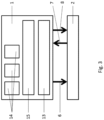
- machine code instructions in a compiled computer program executable 12 are fetched 6 from main memory 1 to the control unit 3 within the central processing unit (CPU) 2.
- the machine code instructions are decoded within the control unit 3 to determine their correspondence with the instructions valid for the CPU and corresponding control signals 11 are then sent to the combinatorial logic 4 and registers 5.
- the control unit 3 In order to determine correspondence between the machine code instructions and the necessary instruction for the CPU 2, the control unit 3 typically uses a lookup table which is indexed by opcodes corresponding to instructions which can be sent to the combinatorial logic and registers 5.
- control unit 3 is configured to read the machine code identifiers in the executable and to match up the identifier with a corresponding instruction for the CPU. The instruction is then used to generate a control signal which is sent from the control unit 3 to the combinatorial logic 4 and the registers 5.
- the combinatorial logic 4 then carries out the operations associated with the machine code instructions read from main memory 1 in accordance with the control signal sent from the control unit 3. These operations will typically comprise writing to memory 7, reading from memory 8, writing to 9 and reading from 10 registers 5 but may include more complex instructions especially where application-specific CPUs and software are being used. Each of these instructions may correspond to at least one opcode in the control unit 3.
- Compilers also provide other forms of functionality. Compilers provide register allocation in that they allocate the variables from the source code to registers in the CPU 2. Optimisation and execution of this process can be carried out using any known means. Compilers also control how operands from the machine code instructions are addressed.
- compilers includes the allocation of the registers of a respective CPU 2 and the addressing modes of the CPU 2.
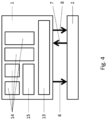
- Figure 2 shows the scenario where the computer program executable 12 in Figure 1 consists of a computer operating system executable 13 and a plurality of application program executables 14. That is to say, the computer program executable is not limited to applications for a computer system and it may include the operating system executable 13. Indeed, the computer program executable 12 may only include the operating system executable 13.
- the computer operating system executable 13 will typically represent an operating system. Examples of operating systems are Microsoft Windows or Google Android but more application specific operating systems are also available.
- Operating systems form an interface between the application program executables 14 and the CPU in that the operating system (executed by execution of the computer operating system executable 13) manages how the resources of the CPU are used for each application.
- Tasks managed by the operating system include input and output, memory allocation, allocation of processor time, storage and the interaction with peripheral devices such as printers and monitors.
- the configuration of computer systems comprising a CPU 2 which is operative to run a computer program executable 12 is typically done in a mass-manufacturing fashion in that many instances of an identically configured CPU 2 are made and many instances of computer program executables 12 are also made. Each instance of the computer program executable 12 can be run on any instance of the CPU 2 because the computer program executable contains instructions which can be executed by the CPU 2.
- the architecture, i.e. the instruction set architecture, of the CPU 2 may be published and therefore third parties may also generate computer program executables to be run on those CPUs as a potential third party need only look at the published architecture to access the opcodes that will be accepted and valid in the CPU.
- This accessibility to the architecture causes a problem in that the CPUs are then open to exploitation which makes any computer system which uses one of the CPUs open to exploitation as it is generally the CPU which carries out instructions provided by an executable.
- bits may be added by altering the sequence in which bits are stored when data is stored in memory. That is to say, bits do not need to be ordered from the least significant bit to the most significant bit, or vice versa, but can be stored in any order. Additionally, further variation may be added by changing the order in which bytes are stored in memory and in instructions. This means that, say, when storing larger data types, the bytes can be stored in the order of high byte to low byte or low byte to high byte - or using some other sequence.
- a second transformation process may be applied to the new instruction set in step S608 in that the steps S602 to S606 may be repeated iteratively to apply a succession of other transformation processes to the instruction set architecture.
- the succession of transformation processes may be based on additional central processing configuration keys.
- the instruction set written into local memory in step S606 i.e. the instruction set which has already been modified, may be distributed to a plurality of second parties.
- a first of the plurality of second parties may be a car manufacturer who wants to use a CPU to control an autonomous vehicle.
- Security is a concern with autonomous vehicles because they are not being controlled by a person, say, but rather by a computer controlled by a CPU. This is not desirable to the car manufacturer as safety is key. Therefore, the car manufacturer may apply at least one of their own transformation processes to the instruction set architecture. Their own transformation processes may be based on an entirely different variation key, i.e. a further central processing configuration key, to the one applied in step S602.
- the manufacturer of the instruction set architecture provided to the car manufacturer need not know what the variation key is or the transformation process that is being used by the car manufacturer.
- the central processing configuration key may be discarded after fabrication of the CPU or even immediately after the transformations have been applied.
- a CPU may then be configured (or fabricated) in a step S612 which is configured by the second party for their products and only for their products.
- any aspect or characteristic of the CPU 2 can be varied using a variation as part of a transformation process applied to an instruction set architecture which describes that CPU 2.
- Instruction set architectures describe the characteristics of a CPU 2 and making a change to an instruction architecture leads to a description of a different CPU 2. To this end, adding variation, whether that is to the opcodes in the control unit 3, to the addressing modes or to other aspects such as whether the CPU 2 is configured to use big endian or little endian representations to represent data or the use of encryption in the storage of data in main memory, generates a different CPU 2.
- any element of the CPU 2 which can be subject of instruction when a computer program is run on that CPU 2, i.e. any programmable element of the CPU 2, can be varied.
- the transformation processes and variations applied to the instruction set architecture which is fed into the processor in step S600 must be kept to a minimal number of trusted individuals. Even if a potential hacker knows the instruction set architecture fed into the processor in step S600, they cannot reprogram the CPU 2 unless they know the succession of transformation processes that have taken place between the initial instruction set architecture and the generation of the instruction set architecture which defines the CPU 2.
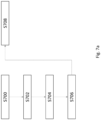
- the compiler is then configured to execute syntax analysis on the lines of code in a step S704.
- step S706 a transformation process is applied to modify the code generation process as part of the software compiler 17b.
- a virtual machine comprises a virtual CPU and part of the functionality of the virtual CPU is a virtual control unit which is written in code which configures the virtual CPU to function in much the same way as CPU 2 which has control unit 3. That is to say, part of the virtual CPU is code which converts bytecode instructions into operations on the virtual machine using corresponding opcodes that are written into the virtual control unit.
- Those bytecode instructions are generated by a compiler which is configured for compiling source code into bytecode instructions rather than machine code instructions. Variation can be added to compilers which compile source code into bytecode instructions and compatible variation can be added to virtual CPUs in much the same way as is described above in relation to steps S600 to S612 and S700 to S708.
- Computer programs that are written in a high level language are not always compiled into machine code, or virtual machine code, in one step. Instead they might be compiled into an assembly language (also known as assembler) for the CPU or virtual machine that they will be executed on.
- Assembly language is a mnemonic way of representing the binary machine code used by CPUs, or virtual machines, which is easier for humans to read and write.
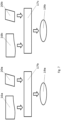
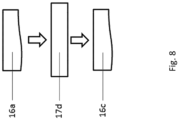
- Figure 8 shows how a software compiler 17d can be used to compile a computer program written in a high level language 16a into a computer program written in assembler 16c.
- the variation in the compiled computer program may be added at the code generation step which converts assembly language into machine code similar to the principles described in relation to steps S700 to S708 using a variation key (which may be described as an assembler variation key).
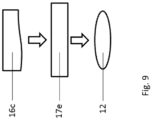
- FIG. 9 illustrates schematically an assembler 17e being used to assemble a computer program written in assembler 16c into a computer program executable 12 which contains instructions for the computer program executable 12 in machine code.
- the variation added by the assembler variation key must be compatible with the variation, i.e. the central processing configuration key used to configure the CPU 2 on which the machine code is going to be run, i.e. the process of configuration which is described in relation to steps S600 to S612.
- the variation added to the code generation process which forms the computer program executable 12 by the assembler variation key must modify the machine code instructions in a way which means that changes are made to the machine code instructions so that they can be correctly interpreted by the control unit 3 of the CPU 2 (which have been transformed by the central processing configuration key).
- Figure 10 schematically illustrates how variation can be added to an assembler to cater for the situation when all or part of the computer program is written in, or compiled to, or generated in assembly language and needs to be converted to a computer program executable 12.
- An assembler 17e inputs a computer program written in assembler 16c and an associated variation key 20 and outputs an executable computer program executable 12 which includes the variation provided by the assembly variation key.
- the compatibility between the transformation applied by assembler 17e and the variation applied during the configuration of the CPU 2 using the central processing configuration key (2) means the computer program executable 12 can be run on the CPU 2.
- Figure 11 shows how a computer program executable 12 can be converted by an executable translator 17f, which reads in the computer program executable 12 and a variation key 20, to output an executable computer program with variation 19a.
- an executable translator 17f which reads in the computer program executable 12 and a variation key 20, to output an executable computer program with variation 19a.
- a computer program executable is, as described above, a file which contains instructions to the CPU 2 which enable the CPU 2 to run the computer program which corresponds to the executable.
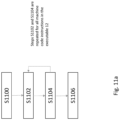
- step S1102 the transformation process 17f is configured to read each instruction and apply a compatible modification to each of the instructions in the computer program executable 12.
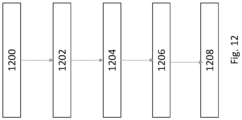
- the company then retrieves the upgraded software for the device and compiles the software into an executable file for that device using the appropriate compatible variation key in a step S1204.
- the executable file is then transmitted to the device in a step S1206 where it can be installed on the device and run in a step S1208.
- the device receives a computer program executable which has not been configured using the correct transformation process, i.e. an incompatible computer program executable, then the illegal computer software can be detected before it becomes troublesome.
- a computer program executable which does not have compatibility with the CPU 2 running the device will be incompatible because the instructions in the computer program executable will not correspond to the correct opcodes for the correct running of the CPU 2.
- the lack of compatibility will cause a malfunction in the computer program.
- the CPU 2 may additionally malfunction due to incorrect or invalid addressing used in the computer program executable.
- devices will have features that will detect when a computer program is malfunctioning. These features may include watchdog timers, illegal instruction traps and out of range read/write detection. If the CPU 2 initialises any of these features due to the lack of compatibility between the executable and the CPU 2, then the CPU 2 will have determined that the computer program executable is indicative of software which should not be run on the machine. That is to say, the computer can then prevent the computer program executable from running on a computer system comprising the CPU 2 and this prevents a computer program corresponding to the computer program executable from running on the computer.
- the hard drive of the computer system may also be configured to perform a scan on the computer program executable to determine whether the executable is compatible with the CPU 2.
- the hard drive may be configured to scan the executable for instructions in the machine code in the computer program executable which correspond to illegal instruction traps in CPU 2.
- the hard drive is the configured to stop that executable from being loaded and run using the CPU 2.
- a similar process can be used when the device runs the software through a virtual machine 15.
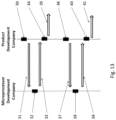
- the scenario in Figure 13 shows a product development company creating a secure version of an existing product.
- the product development company chooses a microprocessor core to use in their new product and places an order for them 31.
- the chosen microprocessor development company packages the core and associated development system 32.
- the core and associated development system is shipped to the product development company 33.
- the product development company develops their new product 34.
- the product development company sells their new product 35.
- the product development company requests a secure version of the microprocessor core and development system from the microprocessor development company 37.
- the microprocessor development company create a unique tool, using a variation key, for creating cores with variation and the associated development system 38. They place a serial number (or other identification) into the new tool and keep a record of this with the variation key that was used. This allows them to update the tool if required in the future.
- Each product that is sold may contain a serial number (or other means of identification). This along with the variation key used to create it may be recorded by the product development company so that the product can be update if required in the future. Providing the mapping of serial numbers (or other means of identification) to variation keys is kept safe only the product development company can re-program the product.
- a loader is a part of the operating system of a computer that is responsible for retrieving a computer program executable file from storage and transforming it into a form in which it can be run by the CPU.
- the loader places the transformed form of the computer program executable file into the memory of the computer which means that the operating system can access the executable and provide it to the CPU at the next opportunity.
- the CPU 2 is configured using variation in accordance with steps S600 to S612 and will only be able to correctly interpret executable files which are compiled using a compatible compiler. This means that the executable files will contain machine code instructions which correspond to opcodes which are valid for the CPU 2.
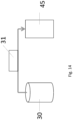
- this configures the loader (as part of the computer system) to determine the presence of invalid opcodes or addressing when it performs the step of determining the instructions contained in the executable file retrieved from secondary storage 30 (which could be a hard disk or any other suitable storage medium) as when the loading process begins it starts with validating the contents of the executable file.
- an executable file has not been compiled using a compatible compiler, i.e. it is a rogue executable file corresponding to a rogue computer program, it will contain machine instructions which will be invalid and this will be detected by the loader 31 during the initial validation step.
- the loader 31 Upon determination of the presence of an invalid machine instruction, the loader 31 is then configured to abort the loading process and prevent the operating system from accessing the rogue executable. This will prevent the rogue executable from being loaded into main memory 45 and protect the computer system from executing the rogue computer program.
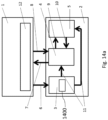
- the CPU 2 i.e. configured in accordance with steps S600 to S612, will maintain a look-up table with valid instructions which is used by the control unit 3 to generate control signals to be transmitted to the combinatorial logic 4 and the registers 5.
- a plurality of the invalid opcodes may be mapped to an interrupt module 1400 in the control unit 3 which generates an interrupt during the running of a computer program executable which has one of the unused opcodes. That is to say, a CPU 2 which is configured in accordance with steps S600 to S612 may be configured to determine a lack of compatibility with the software it is running by determining the presence of an opcode which does not correspond to a valid instruction.
- the interrupt module 1400 is configured to generate an interrupt which stops the running of the respective program when the CPU 2 determines the presence of an opcode which does not correspond to a valid instruction.
- Such a CPU 2 is illustrated in Figure 14a .
- virtual loaders as part of virtual machines may also be configured to execute an interrupt module which generates interrupts on the detection of an invalid opcode in an executable being run the virtual CPU 2.
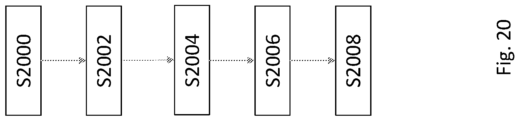
- the computer system will then retrieve the previous version of the software from the "backup" store in a step S2004.
- the previous version is then transitioned from "backup” to "trusted” in a step S2006 and so it can be used by the system to replace the functionality lost due to the removal of the upgrade due to its corrupt status.
- the system then runs the backup version in a step S2008 and recovers the lost functionality.
Landscapes
- Engineering & Computer Science (AREA)
- Computer Security & Cryptography (AREA)
- Software Systems (AREA)
- Theoretical Computer Science (AREA)
- Computer Hardware Design (AREA)
- General Engineering & Computer Science (AREA)
- Physics & Mathematics (AREA)
- General Physics & Mathematics (AREA)
- Multimedia (AREA)
- Technology Law (AREA)
- Computing Systems (AREA)
- Stored Programmes (AREA)
Claims (12)
- Computerimplementiertes Verfahren zum Konfigurieren eines Computersystems, das konfiguriert ist, auf einem Betriebssystem (1702) zu laufen, wobei das Verfahren es dem Computersystem ermöglicht, der Ausführung nicht autorisierter Software zu widerstehen, das Verfahren umfassend:Instanziieren einer Anwendungsprogrammierschnittstelle (1703), um einer Anwendung, die auf dem Computersystem läuft, zu ermöglichen, auf die Funktionalität des Betriebssystems zuzugreifen;Anwenden einer Transformation auf die Anwendungsprogrammierschnittstelle, um die Anwendungsprogrammierschnittstelle zu ändern, wobei das Anwenden einer Transformation auf die Anwendungsprogrammierschnittstelle das Anwenden eines ersten Transformationsprozesses auf eine indizierte Tabelle (1706) von Funktionsaufrufen umfasst, wobei die indizierte Tabelle eine Vielzahl von Funktionsaufrufen auflistet, die jeweils einem Index entsprechen und der ersten Transformationsprozess jeden Index einem anderen Funktionsaufruf neu zuordnet, wobei der erste Transformationsprozess die Anwendung mindestens eines Betriebs basierend auf einem Funktionsaufruf-Variationsschlüssel (1760) umfasst, wobei die Anwendung mindestens eines Betriebs die Anwendung einer Vielzahl von Betrieben umfasst, die jeweils auf einem jeweiligen Funktionsaufruf-Variationsschlüssel basieren.
- Verfahren nach Anspruch 1, wobei der mindestens eine Betrieb ein arithmetischer Betrieb ist.
- Verfahren nach Anspruch 1, wobei der Funktionsaufruf-Variationsschlüssel pseudozufällig oder zufällig erzeugt wird.
- Verfahren nach einem der vorstehenden Ansprüche, wobei die Transformation einer Seriennummer in einer Tabelle zugewiesen wird; und/oder
wobei der mindestens eine Index durch den ersten Transformationsprozess einer illegalen Befehlsfalle zugewiesen wird, wobei als Reaktion darauf, dass ein Computerprogramm einen Aufruf für eine Funktion ausgibt, die der illegalen Befehlsfalle entspricht, die Ausführung der Anwendung angehalten wird. - Verfahren nach Anspruch 4, wobei der mindestens eine Index basierend auf der Nähe zu einem anfälligen Befehl ausgewählt wird.
- Verfahren nach einem der vorstehenden Ansprüche, wobei die Anwendungsprogrammierschnittstelle auf einer virtuellen Maschine instanziiert wird, um auf dem Computer ausgeführt zu werden; und/oder wobei die Transformation auf die durch einen Funktionsaufruf empfangenen Parameter angewendet wird.
- Verfahren nach Anspruch 6, wobei die Transformation die Parameter umschaltet, um die Reihenfolge zu ändern, in der Parameter von der jeweiligen Funktion empfangen werden.
- Verfahren nach einem der vorstehenden Ansprüche, wobei die Transformation das Verfahren ändert, mit dem Parameter von der Anwendung an eine Funktion übergeben werden; und/oder
wobei die Transformation das Verfahren ändert, mit dem Daten von der Funktion an die Anwendung übergeben werden. - Verfahren nach einem der Ansprüche 1 bis 8, das Verfahren umfassend: Bestimmen des Vorhandenseins einer Inkompatibilität zwischen der Anwendung und der Anwendungsprogrammierschnittstelle;
Anhalten der Ausführung der Anwendung. - Verfahren nach Anspruch 9, wobei das Bestimmen des Vorhandenseins einer Inkompatibilität zwischen der Anwendung und der Anwendungsprogrammierschnittstelle das Bestimmen des Vorhandenseins eines illegalen Befehls in dem ausführbaren Programm umfasst, das der Anwendung entspricht.
- Verfahren nach Anspruch 10, wobei das Bestimmen des Vorhandenseins eines illegalen Befehls zur Laufzeit durchgeführt wird.
- Verfahren nach Anspruch 10, wobei das Bestimmen des Vorhandenseins eines illegalen Befehls von dem Ladeprogramm durchgeführt wird.
Applications Claiming Priority (3)
| Application Number | Priority Date | Filing Date | Title |
|---|---|---|---|
| GB1818795.5A GB2579072B (en) | 2018-11-19 | 2018-11-19 | Computer implemented method |
| GB1818791.4A GB2579070B (en) | 2018-11-19 | 2018-11-19 | Computer implemented method |
| PCT/GB2019/053227 WO2020104772A1 (en) | 2018-11-19 | 2019-11-14 | Computer implemented method |
Publications (3)
| Publication Number | Publication Date |
|---|---|
| EP3884412A1 EP3884412A1 (de) | 2021-09-29 |
| EP3884412B1 true EP3884412B1 (de) | 2025-03-05 |
| EP3884412B8 EP3884412B8 (de) | 2025-04-09 |
Family
ID=68696455
Family Applications (1)
| Application Number | Title | Priority Date | Filing Date |
|---|---|---|---|
| EP19809559.8A Active EP3884412B8 (de) | 2018-11-19 | 2019-11-14 | Computerimplementiertes verfahren |
Country Status (3)
| Country | Link |
|---|---|
| US (2) | US11836246B2 (de) |
| EP (1) | EP3884412B8 (de) |
| WO (1) | WO2020104772A1 (de) |
Families Citing this family (1)
| Publication number | Priority date | Publication date | Assignee | Title |
|---|---|---|---|---|
| EP3884412B8 (de) * | 2018-11-19 | 2025-04-09 | Secure Micro Ltd | Computerimplementiertes verfahren |
Family Cites Families (56)
| Publication number | Priority date | Publication date | Assignee | Title |
|---|---|---|---|---|
| US3858182A (en) * | 1972-10-10 | 1974-12-31 | Digital Equipment Corp | Computer program protection means |
| CA2010591C (en) * | 1989-10-20 | 1999-01-26 | Phillip M. Adams | Kernels, description tables and device drivers |
| US6704802B1 (en) * | 1996-03-27 | 2004-03-09 | Dell Usa, Lp | Method and system for communicating between independent software modules |
| US6799277B2 (en) * | 1998-06-04 | 2004-09-28 | Z4 Technologies, Inc. | System and method for monitoring software |
| US6230312B1 (en) * | 1998-10-02 | 2001-05-08 | Microsoft Corporation | Automatic detection of per-unit location constraints |
| US7565546B2 (en) * | 1999-03-30 | 2009-07-21 | Sony Corporation | System, method and apparatus for secure digital content transmission |
| US6598166B1 (en) * | 1999-08-18 | 2003-07-22 | Sun Microsystems, Inc. | Microprocessor in which logic changes during execution |
| AU2001269354A1 (en) | 2000-05-12 | 2001-11-20 | Xtreamlok Pty. Ltd. | Information security method and system |
| US7039622B2 (en) * | 2001-09-12 | 2006-05-02 | Sas Institute Inc. | Computer-implemented knowledge repository interface system and method |
| US6973191B2 (en) * | 2001-11-02 | 2005-12-06 | Activcard | System and method for generating symmetric keys within a personal security device having minimal trust relationships |
| US6897879B2 (en) * | 2002-03-14 | 2005-05-24 | Microsoft Corporation | Hardware-enhanced graphics acceleration of pixel sub-component-oriented images |
| CN101145177B (zh) * | 2002-08-01 | 2011-06-15 | 松下电器产业株式会社 | 加密程序生成方法和设备 |
| US7356812B2 (en) * | 2003-09-30 | 2008-04-08 | Intel Corporation | Passing parameters by implicit reference |
| US7315940B1 (en) * | 2003-10-07 | 2008-01-01 | Nortel Networks Limited | Recovery of a network element after a restart |
| US7694328B2 (en) * | 2003-10-21 | 2010-04-06 | Google Inc. | Systems and methods for secure client applications |
| US7380276B2 (en) * | 2004-05-20 | 2008-05-27 | Intel Corporation | Processor extensions and software verification to support type-safe language environments running with untrusted code |
| US7634813B2 (en) * | 2004-07-21 | 2009-12-15 | Microsoft Corporation | Self-certifying alert |
| US7861234B1 (en) * | 2005-02-23 | 2010-12-28 | Oracle America, Inc. | System and method for binary translation to improve parameter passing |
| US7673181B1 (en) * | 2006-06-07 | 2010-03-02 | Replay Solutions, Inc. | Detecting race conditions in computer programs |
| US8813079B1 (en) * | 2006-06-07 | 2014-08-19 | Ca, Inc. | Thread management to prevent race conditions in computer programs |
| US8079019B2 (en) * | 2007-11-21 | 2011-12-13 | Replay Solutions, Inc. | Advancing and rewinding a replayed program execution |
| US7958497B1 (en) * | 2006-06-07 | 2011-06-07 | Replay Solutions, Inc. | State synchronization in recording and replaying computer programs |
| JP2008040853A (ja) * | 2006-08-08 | 2008-02-21 | Matsushita Electric Ind Co Ltd | アプリケーション実行方法およびアプリケーション実行装置 |
| JP4942438B2 (ja) * | 2006-09-25 | 2012-05-30 | 三洋電機株式会社 | 車両用の電源装置 |
| US8584109B2 (en) | 2006-10-27 | 2013-11-12 | Microsoft Corporation | Virtualization for diversified tamper resistance |
| US8510756B1 (en) * | 2007-12-06 | 2013-08-13 | Parallels IP Holdings GmbH | Guest operating system code optimization for virtual machine |
| CN101286191B (zh) | 2008-05-21 | 2011-01-12 | 成都市华为赛门铁克科技有限公司 | 一种缓冲区溢出攻击的防护方法、装置及系统 |
| US8136158B1 (en) * | 2008-07-21 | 2012-03-13 | Google Inc. | User-level segmentation mechanism that facilitates safely executing untrusted native code |
| US8302210B2 (en) * | 2009-08-24 | 2012-10-30 | Apple Inc. | System and method for call path enforcement |
| US8484753B2 (en) * | 2009-12-02 | 2013-07-09 | Mcafee, Inc. | Hooking nonexported functions by the offset of the function |
| PH12013500269A1 (en) * | 2010-08-10 | 2013-03-04 | World Moto Inc | Universal vehicle management system |
| US8601584B1 (en) * | 2011-09-21 | 2013-12-03 | Trend Micro Incorporated | Protection of computers against argument switch attacks |
| US9721091B2 (en) * | 2012-02-28 | 2017-08-01 | Red Hat Israel, Ltd. | Guest-driven host execution |
| US9626507B2 (en) * | 2012-04-06 | 2017-04-18 | Google Inc. | Hosted application sandboxing |
| US9165138B2 (en) * | 2012-07-11 | 2015-10-20 | Leviathan Security Group, Inc. | Mitigation of function pointer overwrite attacks |
| US9087191B2 (en) * | 2012-08-24 | 2015-07-21 | Vmware, Inc. | Method and system for facilitating isolated workspace for applications |
| TW201423470A (zh) | 2012-12-03 | 2014-06-16 | Inst Information Industry | 安全防護方法及安全防護裝置 |
| WO2014111922A1 (en) | 2013-01-21 | 2014-07-24 | B.G. Negev Technologies And Applications Ltd. | Method and system for protecting computerized systems from malicious code |
| US9117080B2 (en) * | 2013-07-05 | 2015-08-25 | Bitdefender IPR Management Ltd. | Process evaluation for malware detection in virtual machines |
| US9342462B2 (en) * | 2013-10-31 | 2016-05-17 | Oracle International Corporation | Systems and methods for implementing low-latency lookup circuits using sparse hash functions |
| WO2015073450A1 (en) * | 2013-11-12 | 2015-05-21 | Wesie Andrew Michael | Improved control flow integrity system and method |
| EP3084601A4 (de) * | 2013-12-17 | 2017-07-26 | Intel Corporation | Verfahren zur virtualisierung einer tragbaren berechnungsvorrichtung |
| US10171370B1 (en) * | 2014-05-30 | 2019-01-01 | Amazon Technologies, Inc. | Distribution operating system |
| US9182990B1 (en) * | 2014-07-01 | 2015-11-10 | Google Inc. | Method and apparatus for detecting execution of unsupported instructions while testing multiversioned code |
| IL242523A0 (en) | 2015-04-16 | 2016-04-21 | Yuval Elovici | A method and system for protecting computer systems from malicious software using variable commands |
| US10579792B2 (en) * | 2015-11-23 | 2020-03-03 | Armor Defense Inc. | Extracting malicious instructions on a virtual machine |
| US10268601B2 (en) * | 2016-06-17 | 2019-04-23 | Massachusetts Institute Of Technology | Timely randomized memory protection |
| CN106209886B (zh) * | 2016-07-22 | 2019-11-05 | 广州爱九游信息技术有限公司 | web接口数据加密加签方法、装置及服务器 |
| US10310991B2 (en) * | 2016-08-11 | 2019-06-04 | Massachusetts Institute Of Technology | Timely address space randomization |
| US9904527B1 (en) * | 2016-08-12 | 2018-02-27 | Amazon Technologies, Inc. | Optimizing API implementer programs using fine-grained code analysis |
| US10904291B1 (en) * | 2017-05-03 | 2021-01-26 | Hrl Laboratories, Llc | Low-overhead software transformation to enforce information security policies |
| US10061933B1 (en) * | 2018-01-09 | 2018-08-28 | Booz Allen Hamilton Inc. | System and method for controlling the power states of a mobile computing device |
| US11171983B2 (en) * | 2018-06-29 | 2021-11-09 | Intel Corporation | Techniques to provide function-level isolation with capability-based security |
| CA3101507C (en) * | 2018-07-17 | 2021-09-21 | Mergebase Software Inc. | Systems and methods for managing and securing computer systems |
| EP3884412B8 (de) * | 2018-11-19 | 2025-04-09 | Secure Micro Ltd | Computerimplementiertes verfahren |
| US12192214B2 (en) * | 2021-05-05 | 2025-01-07 | Sophos Limited | Mitigating threats associated with tampering attempts |
-
2019
- 2019-11-14 EP EP19809559.8A patent/EP3884412B8/de active Active
- 2019-11-14 US US17/294,967 patent/US11836246B2/en active Active
- 2019-11-14 WO PCT/GB2019/053227 patent/WO2020104772A1/en not_active Ceased
-
2023
- 2023-11-29 US US18/523,270 patent/US20240095344A1/en active Pending
Also Published As
| Publication number | Publication date |
|---|---|
| EP3884412A1 (de) | 2021-09-29 |
| US11836246B2 (en) | 2023-12-05 |
| EP3884412B8 (de) | 2025-04-09 |
| US20240095344A1 (en) | 2024-03-21 |
| US20210271752A1 (en) | 2021-09-02 |
| WO2020104772A1 (en) | 2020-05-28 |
Similar Documents
| Publication | Publication Date | Title |
|---|---|---|
| EP3414696B1 (de) | Vorrichtung und verfahren zur erzeugung von signierten begrenzten zeigern | |
| EP3414700B1 (de) | Vorrichtung und verfahren zur steuerung von beschränkten zeigern | |
| EP3076292B1 (de) | System und verfahren zur steuerung des zugangs eines nativen bildes eines maschinencodes zu betriebssystemressourcen | |
| JP2004038966A (ja) | セキュアな変数データ保護を提供するセキュアで不明瞭なタイプライブラリ | |
| CA2930424A1 (en) | Improved control flow integrity system and method | |
| Bai et al. | idea: Static analysis on the security of apple kernel drivers | |
| CN107577925A (zh) | 基于双重ARM指令虚拟的Android应用程序保护方法 | |
| US20240095344A1 (en) | Computer implemented method | |
| CN113168320B (zh) | 用类选择性替换遗留加载模块程序以在java虚拟机中执行 | |
| CN107209815B (zh) | 用于使用返回导向编程的代码混淆的方法 | |
| GB2579072A (en) | Computer implemented method | |
| GB2579070A (en) | Computer implemented method | |
| Okhravi et al. | One giant leap for computer security | |
| US11361070B1 (en) | Protecting devices from remote code execution attacks | |
| Orlando et al. | A Survey of WebAssembly Usage for Embedded Applications: Safety and Portability Considerations. | |
| Winderix | Security Enhanced LLVM | |
| Dubreuil et al. | PhiAttack: Rewriting the Java Card Class Hierarchy | |
| ROSSI | SELinux policies for fine-grained protection of Android apps | |
| US20060037005A1 (en) | Method and apparatus for increasing computer security | |
| CN121256756A (zh) | 一种代码混淆方法、业务执行方法、介质、设备及产品 | |
| HK40052953A (en) | Selective substitution of legacy load module programs with classes for execution in a java virtual machine | |
| Belblidia | An aspect oriented approach for security hardening: semantic foundations |
Legal Events
| Date | Code | Title | Description |
|---|---|---|---|
| STAA | Information on the status of an ep patent application or granted ep patent |
Free format text: STATUS: UNKNOWN |
|
| STAA | Information on the status of an ep patent application or granted ep patent |
Free format text: STATUS: THE INTERNATIONAL PUBLICATION HAS BEEN MADE |
|
| PUAI | Public reference made under article 153(3) epc to a published international application that has entered the european phase |
Free format text: ORIGINAL CODE: 0009012 |
|
| STAA | Information on the status of an ep patent application or granted ep patent |
Free format text: STATUS: REQUEST FOR EXAMINATION WAS MADE |
|
| 17P | Request for examination filed |
Effective date: 20210520 |
|
| AK | Designated contracting states |
Kind code of ref document: A1 Designated state(s): AL AT BE BG CH CY CZ DE DK EE ES FI FR GB GR HR HU IE IS IT LI LT LU LV MC MK MT NL NO PL PT RO RS SE SI SK SM TR |
|
| DAV | Request for validation of the european patent (deleted) | ||
| DAX | Request for extension of the european patent (deleted) | ||
| STAA | Information on the status of an ep patent application or granted ep patent |
Free format text: STATUS: EXAMINATION IS IN PROGRESS |
|
| 17Q | First examination report despatched |
Effective date: 20230202 |
|
| REG | Reference to a national code |
Ref country code: DE Ref legal event code: R079 Free format text: PREVIOUS MAIN CLASS: G06F0021560000 Ipc: G06F0021120000 Ref country code: DE Ref legal event code: R079 Ref document number: 602019066952 Country of ref document: DE Free format text: PREVIOUS MAIN CLASS: G06F0021560000 Ipc: G06F0021120000 |
|
| GRAP | Despatch of communication of intention to grant a patent |
Free format text: ORIGINAL CODE: EPIDOSNIGR1 |
|
| STAA | Information on the status of an ep patent application or granted ep patent |
Free format text: STATUS: GRANT OF PATENT IS INTENDED |
|
| RIC1 | Information provided on ipc code assigned before grant |
Ipc: G06F 21/12 20130101AFI20231215BHEP |
|
| INTG | Intention to grant announced |
Effective date: 20240122 |
|
| RIN1 | Information on inventor provided before grant (corrected) |
Inventor name: SERPELL, MARTIN Inventor name: ROHAFZA, ALI |
|
| GRAJ | Information related to disapproval of communication of intention to grant by the applicant or resumption of examination proceedings by the epo deleted |
Free format text: ORIGINAL CODE: EPIDOSDIGR1 |
|
| STAA | Information on the status of an ep patent application or granted ep patent |
Free format text: STATUS: EXAMINATION IS IN PROGRESS |
|
| P01 | Opt-out of the competence of the unified patent court (upc) registered |
Effective date: 20240418 |
|
| GRAS | Grant fee paid |
Free format text: ORIGINAL CODE: EPIDOSNIGR3 |
|
| STAA | Information on the status of an ep patent application or granted ep patent |
Free format text: STATUS: GRANT OF PATENT IS INTENDED |
|
| GRAP | Despatch of communication of intention to grant a patent |
Free format text: ORIGINAL CODE: EPIDOSNIGR1 |
|
| INTC | Intention to grant announced (deleted) | ||
| INTG | Intention to grant announced |
Effective date: 20240604 |
|
| GRAC | Information related to communication of intention to grant a patent modified |
Free format text: ORIGINAL CODE: EPIDOSCIGR1 |
|
| INTG | Intention to grant announced |
Effective date: 20241030 |
|
| GRAA | (expected) grant |
Free format text: ORIGINAL CODE: 0009210 |
|
| STAA | Information on the status of an ep patent application or granted ep patent |
Free format text: STATUS: THE PATENT HAS BEEN GRANTED |
|
| AK | Designated contracting states |
Kind code of ref document: B1 Designated state(s): AL AT BE BG CH CY CZ DE DK EE ES FI FR GB GR HR HU IE IS IT LI LT LU LV MC MK MT NL NO PL PT RO RS SE SI SK SM TR |
|
| REG | Reference to a national code |
Ref country code: GB Ref legal event code: FG4D |
|
| RBV | Designated contracting states (corrected) |
Designated state(s): AL AT BE BG CH CY CZ DE DK EE ES FI FR GR HR HU IE IS IT LI LT LU LV MC MK MT NL NO PL PT RO RS SE SI SK SM TR |
|
| REG | Reference to a national code |
Ref country code: CH Ref legal event code: PK Free format text: BERICHTIGUNG B8 Ref country code: CH Ref legal event code: EP |
|
| REG | Reference to a national code |
Ref country code: DE Ref legal event code: R096 Ref document number: 602019066952 Country of ref document: DE |
|
| REG | Reference to a national code |
Ref country code: IE Ref legal event code: FG4D |
|
| REG | Reference to a national code |
Ref country code: NL Ref legal event code: FP |
|
| PG25 | Lapsed in a contracting state [announced via postgrant information from national office to epo] |
Ref country code: RS Free format text: LAPSE BECAUSE OF FAILURE TO SUBMIT A TRANSLATION OF THE DESCRIPTION OR TO PAY THE FEE WITHIN THE PRESCRIBED TIME-LIMIT Effective date: 20250605 |
|
| PG25 | Lapsed in a contracting state [announced via postgrant information from national office to epo] |
Ref country code: FI Free format text: LAPSE BECAUSE OF FAILURE TO SUBMIT A TRANSLATION OF THE DESCRIPTION OR TO PAY THE FEE WITHIN THE PRESCRIBED TIME-LIMIT Effective date: 20250305 |
|
| PG25 | Lapsed in a contracting state [announced via postgrant information from national office to epo] |
Ref country code: ES Free format text: LAPSE BECAUSE OF FAILURE TO SUBMIT A TRANSLATION OF THE DESCRIPTION OR TO PAY THE FEE WITHIN THE PRESCRIBED TIME-LIMIT Effective date: 20250305 |
|
| REG | Reference to a national code |
Ref country code: LT Ref legal event code: MG9D |
|
| PG25 | Lapsed in a contracting state [announced via postgrant information from national office to epo] |
Ref country code: NO Free format text: LAPSE BECAUSE OF FAILURE TO SUBMIT A TRANSLATION OF THE DESCRIPTION OR TO PAY THE FEE WITHIN THE PRESCRIBED TIME-LIMIT Effective date: 20250605 |
|
| PG25 | Lapsed in a contracting state [announced via postgrant information from national office to epo] |
Ref country code: HR Free format text: LAPSE BECAUSE OF FAILURE TO SUBMIT A TRANSLATION OF THE DESCRIPTION OR TO PAY THE FEE WITHIN THE PRESCRIBED TIME-LIMIT Effective date: 20250305 |
|
| PG25 | Lapsed in a contracting state [announced via postgrant information from national office to epo] |
Ref country code: LV Free format text: LAPSE BECAUSE OF FAILURE TO SUBMIT A TRANSLATION OF THE DESCRIPTION OR TO PAY THE FEE WITHIN THE PRESCRIBED TIME-LIMIT Effective date: 20250305 |
|
| PG25 | Lapsed in a contracting state [announced via postgrant information from national office to epo] |
Ref country code: GR Free format text: LAPSE BECAUSE OF FAILURE TO SUBMIT A TRANSLATION OF THE DESCRIPTION OR TO PAY THE FEE WITHIN THE PRESCRIBED TIME-LIMIT Effective date: 20250606 Ref country code: BG Free format text: LAPSE BECAUSE OF FAILURE TO SUBMIT A TRANSLATION OF THE DESCRIPTION OR TO PAY THE FEE WITHIN THE PRESCRIBED TIME-LIMIT Effective date: 20250305 |
|
| REG | Reference to a national code |
Ref country code: AT Ref legal event code: MK05 Ref document number: 1773564 Country of ref document: AT Kind code of ref document: T Effective date: 20250305 |
|
| PG25 | Lapsed in a contracting state [announced via postgrant information from national office to epo] |
Ref country code: SE Free format text: LAPSE BECAUSE OF FAILURE TO SUBMIT A TRANSLATION OF THE DESCRIPTION OR TO PAY THE FEE WITHIN THE PRESCRIBED TIME-LIMIT Effective date: 20250305 |
|
| PG25 | Lapsed in a contracting state [announced via postgrant information from national office to epo] |
Ref country code: SM Free format text: LAPSE BECAUSE OF FAILURE TO SUBMIT A TRANSLATION OF THE DESCRIPTION OR TO PAY THE FEE WITHIN THE PRESCRIBED TIME-LIMIT Effective date: 20250305 |
|
| PG25 | Lapsed in a contracting state [announced via postgrant information from national office to epo] |
Ref country code: PT Free format text: LAPSE BECAUSE OF FAILURE TO SUBMIT A TRANSLATION OF THE DESCRIPTION OR TO PAY THE FEE WITHIN THE PRESCRIBED TIME-LIMIT Effective date: 20250707 |
|
| PG25 | Lapsed in a contracting state [announced via postgrant information from national office to epo] |
Ref country code: IT Free format text: LAPSE BECAUSE OF FAILURE TO SUBMIT A TRANSLATION OF THE DESCRIPTION OR TO PAY THE FEE WITHIN THE PRESCRIBED TIME-LIMIT Effective date: 20250305 Ref country code: PL Free format text: LAPSE BECAUSE OF FAILURE TO SUBMIT A TRANSLATION OF THE DESCRIPTION OR TO PAY THE FEE WITHIN THE PRESCRIBED TIME-LIMIT Effective date: 20250305 |
|
| PG25 | Lapsed in a contracting state [announced via postgrant information from national office to epo] |
Ref country code: AT Free format text: LAPSE BECAUSE OF FAILURE TO SUBMIT A TRANSLATION OF THE DESCRIPTION OR TO PAY THE FEE WITHIN THE PRESCRIBED TIME-LIMIT Effective date: 20250305 |
|
| PG25 | Lapsed in a contracting state [announced via postgrant information from national office to epo] |
Ref country code: CZ Free format text: LAPSE BECAUSE OF FAILURE TO SUBMIT A TRANSLATION OF THE DESCRIPTION OR TO PAY THE FEE WITHIN THE PRESCRIBED TIME-LIMIT Effective date: 20250305 |
|
| PG25 | Lapsed in a contracting state [announced via postgrant information from national office to epo] |
Ref country code: RO Free format text: LAPSE BECAUSE OF FAILURE TO SUBMIT A TRANSLATION OF THE DESCRIPTION OR TO PAY THE FEE WITHIN THE PRESCRIBED TIME-LIMIT Effective date: 20250305 |
|
| PG25 | Lapsed in a contracting state [announced via postgrant information from national office to epo] |
Ref country code: SK Free format text: LAPSE BECAUSE OF FAILURE TO SUBMIT A TRANSLATION OF THE DESCRIPTION OR TO PAY THE FEE WITHIN THE PRESCRIBED TIME-LIMIT Effective date: 20250305 |
|
| PG25 | Lapsed in a contracting state [announced via postgrant information from national office to epo] |
Ref country code: IS Free format text: LAPSE BECAUSE OF FAILURE TO SUBMIT A TRANSLATION OF THE DESCRIPTION OR TO PAY THE FEE WITHIN THE PRESCRIBED TIME-LIMIT Effective date: 20250705 |
|
| REG | Reference to a national code |
Ref country code: DE Ref legal event code: R097 Ref document number: 602019066952 Country of ref document: DE |
|
| PGFP | Annual fee paid to national office [announced via postgrant information from national office to epo] |
Ref country code: NL Payment date: 20251125 Year of fee payment: 7 |
|
| PGFP | Annual fee paid to national office [announced via postgrant information from national office to epo] |
Ref country code: DE Payment date: 20251127 Year of fee payment: 7 |
|
| PLBE | No opposition filed within time limit |
Free format text: ORIGINAL CODE: 0009261 |
|
| STAA | Information on the status of an ep patent application or granted ep patent |
Free format text: STATUS: NO OPPOSITION FILED WITHIN TIME LIMIT |
|
| PG25 | Lapsed in a contracting state [announced via postgrant information from national office to epo] |
Ref country code: DK Free format text: LAPSE BECAUSE OF FAILURE TO SUBMIT A TRANSLATION OF THE DESCRIPTION OR TO PAY THE FEE WITHIN THE PRESCRIBED TIME-LIMIT Effective date: 20250305 |
|
| REG | Reference to a national code |
Ref country code: CH Ref legal event code: L10 Free format text: ST27 STATUS EVENT CODE: U-0-0-L10-L00 (AS PROVIDED BY THE NATIONAL OFFICE) Effective date: 20260114 |
|
| PGFP | Annual fee paid to national office [announced via postgrant information from national office to epo] |
Ref country code: FR Payment date: 20251127 Year of fee payment: 7 |
|
| 26N | No opposition filed |
Effective date: 20251208 |
|
| REG | Reference to a national code |
Ref country code: CH Ref legal event code: H13 Free format text: ST27 STATUS EVENT CODE: U-0-0-H10-H13 (AS PROVIDED BY THE NATIONAL OFFICE) Effective date: 20260623 |
|
| PG25 | Lapsed in a contracting state [announced via postgrant information from national office to epo] |
Ref country code: LT Free format text: LAPSE BECAUSE OF FAILURE TO SUBMIT A TRANSLATION OF THE DESCRIPTION OR TO PAY THE FEE WITHIN THE PRESCRIBED TIME-LIMIT Effective date: 20250305 |
|
| PG25 | Lapsed in a contracting state [announced via postgrant information from national office to epo] |
Ref country code: MC Free format text: LAPSE BECAUSE OF FAILURE TO SUBMIT A TRANSLATION OF THE DESCRIPTION OR TO PAY THE FEE WITHIN THE PRESCRIBED TIME-LIMIT Effective date: 20250305 |
|
| PG25 | Lapsed in a contracting state [announced via postgrant information from national office to epo] |
Ref country code: LU Free format text: LAPSE BECAUSE OF NON-PAYMENT OF DUE FEES Effective date: 20251114 Ref country code: CH Free format text: LAPSE BECAUSE OF NON-PAYMENT OF DUE FEES Effective date: 20251130 |