EP3883814B1 - Modular cargo platform for automotive applications - Google Patents
Modular cargo platform for automotive applications Download PDFInfo
- Publication number
- EP3883814B1 EP3883814B1 EP19887929.8A EP19887929A EP3883814B1 EP 3883814 B1 EP3883814 B1 EP 3883814B1 EP 19887929 A EP19887929 A EP 19887929A EP 3883814 B1 EP3883814 B1 EP 3883814B1
- Authority
- EP
- European Patent Office
- Prior art keywords
- module
- vehicle body
- vehicle
- detachable portion
- detachable
- Prior art date
- Legal status (The legal status is an assumption and is not a legal conclusion. Google has not performed a legal analysis and makes no representation as to the accuracy of the status listed.)
- Active
Links
Images
Classifications
-
- B—PERFORMING OPERATIONS; TRANSPORTING
- B60—VEHICLES IN GENERAL
- B60R—VEHICLES, VEHICLE FITTINGS, OR VEHICLE PARTS, NOT OTHERWISE PROVIDED FOR
- B60R9/00—Supplementary fittings on vehicle exterior for carrying loads, e.g. luggage, sports gear or the like
- B60R9/06—Supplementary fittings on vehicle exterior for carrying loads, e.g. luggage, sports gear or the like at vehicle front or rear
- B60R9/065—Enclosure-type carriers, e.g. trunks
-
- B—PERFORMING OPERATIONS; TRANSPORTING
- B60—VEHICLES IN GENERAL
- B60Q—ARRANGEMENT OF SIGNALLING OR LIGHTING DEVICES, THE MOUNTING OR SUPPORTING THEREOF OR CIRCUITS THEREFOR, FOR VEHICLES IN GENERAL
- B60Q1/00—Arrangement of optical signalling or lighting devices, the mounting or supporting thereof or circuits therefor
- B60Q1/26—Arrangement of optical signalling or lighting devices, the mounting or supporting thereof or circuits therefor the devices being primarily intended to indicate the vehicle, or parts thereof, or to give signals, to other traffic
- B60Q1/2619—Arrangement of optical signalling or lighting devices, the mounting or supporting thereof or circuits therefor the devices being primarily intended to indicate the vehicle, or parts thereof, or to give signals, to other traffic built in the vehicle body
- B60Q1/2623—Details of the fastening means
-
- B—PERFORMING OPERATIONS; TRANSPORTING
- B60—VEHICLES IN GENERAL
- B60Q—ARRANGEMENT OF SIGNALLING OR LIGHTING DEVICES, THE MOUNTING OR SUPPORTING THEREOF OR CIRCUITS THEREFOR, FOR VEHICLES IN GENERAL
- B60Q1/00—Arrangement of optical signalling or lighting devices, the mounting or supporting thereof or circuits therefor
- B60Q1/0029—Spatial arrangement
- B60Q1/0035—Spatial arrangement relative to the vehicle
-
- B—PERFORMING OPERATIONS; TRANSPORTING
- B62—LAND VEHICLES FOR TRAVELLING OTHERWISE THAN ON RAILS
- B62D—MOTOR VEHICLES; TRAILERS
- B62D63/00—Motor vehicles or trailers not otherwise provided for
- B62D63/02—Motor vehicles
- B62D63/025—Modular vehicles
-
- B—PERFORMING OPERATIONS; TRANSPORTING
- B60—VEHICLES IN GENERAL
- B60P—VEHICLES ADAPTED FOR LOAD TRANSPORTATION OR TO TRANSPORT, TO CARRY, OR TO COMPRISE SPECIAL LOADS OR OBJECTS
- B60P3/00—Vehicles adapted to transport, to carry or to comprise special loads or objects
- B60P3/42—Vehicles adapted to transport, to carry or to comprise special loads or objects convertible from one use to a different one
Definitions
- the present disclosure relates to cargo platforms for automotive vehicles. More particularly, the present disclosure relates to modular cargo platforms for use in automotive vehicles.
- Vehicle body structure is a body on frame structure, in which a chassis portion of the vehicle is constructed separately from a vehicle body portion. The vehicle body portion is attached to the chassis to define the overall vehicle.
- the chassis may also support other vehicle structure, such as the engine and drivetrain.
- the body on frame construction is currently most commonly used on pickup traditional pickup trucks and SUVs, as well many fleet vehicles. The body on frame construction allows for the vehicle body to be updated and or changed and still use the same underlying chassis construction, thereby reducing assembly costs while allowing for modifications or updates to overall vehicle appearance.
- a unibody construction integrates the frame or chassis with the body, such that it is a single piece.
- the unibody construction can result in weight savings, as the traditional heavy steel construction of the separate chassis is not used. The reduced weight results in better fuel of power efficiency.
- changes to the overall vehicle effectively require changes to the entire structure of the vehicle, because there is not a separate chassis on which an updated body style is simply attached.
- Unibody vehicles currently in production do not provide the ability to attach aftermarket modules, because the body structure is already formed as a single piece. If changes to the cargo area or other portion of the unibody are desired, a completely different unibody design is required, requiring additional manufacturing space and setups. Further relevant prior art is described in CN 102 285 377 B , WO 2013/156 639 , US 4 887 859 and DE 10 2015 016 954 A1 . Moreover, US 2017/197679 A1 discloses a system for modifying a vehicle structure comprising: a vehicle body; a first module detachably attached to a structure of the vehicle body at an interface having plurality of mounting points with a predetermined spacing; a second module with mounting points having the predetermined spacing.
- the first module is detachable from the vehicle body and replaceable on the vehicle body with the second module, the first module being a cargo platform, wherein the second module has a different overall size relative to the first module.
- the first and second module are electrically connectable to the vehicle body.
- a system 10 including a vehicle body 12 and a first module 14 attached to the vehicle body 12 is provided.
- the first module 14 may be in the form of a cargo module, and may include a body portion 16 and a rear portion 18 that are detachably coupled together.
- the first module 14 is detachably coupled to the vehicle body 12.
- the rear portion 18 may also be referred to as a detachable portion.
- the vehicle body 12 is in the form of a unibody vehicle structure, in which the vehicle body defines an exterior body 12a and an interior cabin 12b therein, and including a bottom structure 12c.
- the unibody construction of the vehicle body 12 allows for wheels 20 to be attached to the vehicle body 12 rather than being attached to a separate bottom chassis component.
- the wheels 20 may include integrated wheel-end motors, or may be driven by a separate engine and drivetrain or a separate battery powered motor that drives the wheels 20 via a driveshaft or half shaft.
- the unibody construction of the vehicle body 12 may also support various vehicle interior components, vehicle doors, and other vehicle mounted components in a manner known in the art.
- the vehicle body 12 may include a front end 12d, which may include the windshield and other traditional vehicle front-end components, and the vehicle body may further include a rear structure 22 integral with the vehicle body 12.
- the rear structure 22 is disposed rearward from the interior 12c defined by the vehicle body 12.
- the first module 14 may be in the form of a cargo module, as described above.
- the first module 14 may include a front end 24 and a rear end 26.
- the front end 24 may be configured to mate with the rear structure 22 of the vehicle body in a detachable manner.
- the first module 14 may be a separable and separate structure from the unibody vehicle body 12. While the first module 14 may be a separate structure relative to the vehicle body 12, the vehicle body 12 may still be referred to a unibody construction, as the vehicle may still operate and be structurally sound even without the first module 14 being attached.
- the first module 14 may be attached to the vehicle body via fasteners (not shown), which may be in the form of any traditional fastener style that can join the front end 24 of the first module 14 to the rear structure 22 of the vehicle body 12 in a secure manner, while allowing the first module 14 to be detached at a subsequent time, while also allowing for the first module 14 to be re-attached to the rear structure 22 of the vehicle at a further time.
- another module may be attached to the rear structure 22 at a later time after detaching the first module 14.
- the fasteners may be in the form of screws, bolts, clamps, or the like.
- the first module 14 may be attached to the rear structure 22 of the vehicle body 12 via the fasteners to define an interface 30 between the first module 14 and the vehicle 12.
- the interface 30 may define a plurality of mounting points 32 for the fasteners.
- the mounting points 32 may be determined based on a standard mounting pattern between the first module 14 and the vehicle body 12, such that the mounting pattern and spacing between mounting points may be known for applying to other modules.
- the mounting pattern spacing may be determined based on vehicle load/stiffness requirements, such that a sufficient spacing may be determined to sufficiently retain the module 14 to the structure 22 of the vehicle.
- the first module 14 in the form of a cargo module may be a stock cargo platform that may be supplied initially along with the vehicle body 12.
- the first module 14 in the form of a cargo platform may define a flat upper surface 14a onto which cargo may be carried.
- the first module 14 may also have other forms, such as a cargo holding structure, like a trunk or a hatch.
- the rear end 26 of the first module 14 may include an interface 34 between the body portion 16 and the rear portion 18.
- the rear portion 18 may be attachable to (and detachable from) the body portion 16 at the interface via a plurality of fasteners (not shown) spaced apart at distinct mounting points 36 that are defined at the interface 34.
- the spacing of the mounting points 36 may be predetermined such that further modules or detachable portions may be constructed to include the same mounting point spacing, such that the rear portion 18 may be detached from the first module 14 and later attached to a further module.
- the rear portion 18 may be in the form of a tail lamp module and/or sensor module.
- the rear portion 18 has a shape that complements the shape of the rear end of body portion 16 of the first module 14 such that, when the rear portion 18 is attached to the body portion 16 to define the first module 14, the first module 14 has a continuous shape with a continuous edge.
- the rear portion 18 may in some cases act as a bumper. However, in other cases, the rear portion 18 may be included in additional to a separate bumper portion, which may be part of the module 14 or part of the vehicle structure 22.
- the rear portion 18 may have other forms. For example, rather than including tail lamps or sensors, the rear portion 18 may include no lamps or sensors and may instead simply be a structural component to fill out the shape of the first module 14.
- the rear portion 18 may have various colors or functionality, and may be replaced as part of the first module 14 with other styles of the rear portion 18.
- the rear portion 18 may also be configured to include other vehicle components, if desired.
- the rear portion 18 may include cameras, controllers, communication devices, or the like.
- a second module 40 may replace the first module 14 on the vehicle 12.
- the second module 40 includes the same attachment points as the first module 14, and may therefore be attachable to the rear structure 22 of the vehicle 12 at the interface 30 via the same mounting points 32.
- the second module 40 may include a body portion 42 and a recess 44 formed at a rear end of the body portion that may be sized and arranged to receive the rear portion 18 of the first module 14.
- the second module 40 has a different overall size relative to the first module 14, and may be arranged to provide different functionality.
- the second module 40 may have a greater height than the first module 14.
- the second module 14 may be arranged as desired by aftermarket manufacturers, or OEMs, to suit the needs of an aftermarket consumer or industry.
- the second module 14 may be configured for food delivery, in which the second module 40 may be specially insulated or configured to provide heat or cooling to an internal chamber of the second module 40.
- the second module 40 may also be configured to provide infrastructure monitoring or to act as a charging platform.
- the second module 40 may be further configured to provide other uses and benefits.
- the second module 40 could simply be configured as providing additional covered cargo space for the vehicle. As described above, the second module 40 has a different shape and size and the first module 14.
- the second module 40 may be configured to receive power from one of the power sources of the vehicle 12. Power is provided by an electrical connection between the vehicle body 12 and the rear module 40 at the same electrical interface that would communicate with the tail lamps and/or sensors of the rear portion 18 of the first module 14. Power may be provided by vehicle battery or range extender module (not shown) that are also connected with the vehicle body 12. Accordingly, the rear portion 18 that is detachable from the first module 14 may also be electrically connected to both the first module 14 and the second module 40.
- the rear portion 18 is attachable to the second module 40 in the same manner in which it was attached to the body portion 16 of the first module. Accordingly, the second module 40 may include similarly spaced attachment points such that the rear portion 18 may be attached. When the rear portion 18 is attached to the second module 40, it may be considered part of the second module 40.
- the rear portion 18 may not be detachable from the first module 14, and may instead be integrated into the first module 14.
- the second module 40 may similarly include an integrated rear portion 18 that is provided with the second module 40.
- the rear module 40 may still include the recess 44, and a separate rear portion 18 that was not part of the first module 40 may be combined with the rear module 40 to become part of the rear module 40.
- the above described arrangement provides for modular modification of a unibody vehicle without requiring substantial redesign of the unibody to suit different end user needs.
- the modification of the vehicle may be performed quickly and easily and without the need for special tools or mechanical expertise.
- components such as lights, sensors, cameras, controllers, or the like need not be provided with each further module that is manufactured.
- the components provided in the rear portion 18 can be re-used multiple times with different types of modules.
- a method for operating the system 10 includes providing the vehicle body 12 with the first module 14 attached thereto, with the first module 14 including the rear portion 18 attached thereto.
- the first module 14 may be detached from the vehicle body 12, and the rear portion 18 may be detached from the body portion 16 of the first module 14.
- the rear portion 18 may be detached either before or after the first module 14 is detached from the vehicle body 12.
- the second module 40 may be attached to the vehicle body 12.
- the rear portion 18 may be attached to the second module 40, and this step may be performed either before or after the second module 40 is attached to the vehicle body 12.
- the system 10 allows for the vehicle body 12 to have various module styles attached thereto to define a variety of different overall vehicle with different functionality.
- the method may further includes making and breaking electrical connections between the vehicle body and the first module 14 or second module 40, as well as between the rear portion 18 and the modules 14, 40.
Landscapes
- Engineering & Computer Science (AREA)
- Mechanical Engineering (AREA)
- Transportation (AREA)
- Chemical & Material Sciences (AREA)
- Combustion & Propulsion (AREA)
- Lighting Device Outwards From Vehicle And Optical Signal (AREA)
- Body Structure For Vehicles (AREA)
- Health & Medical Sciences (AREA)
- Public Health (AREA)
Description
- This
PCT International Patent Application claims the benefit of and priority to U.S. Provisional Patent Application Serial No. 62/770,194 filed on November 21, 2018 - The present disclosure relates to cargo platforms for automotive vehicles. More particularly, the present disclosure relates to modular cargo platforms for use in automotive vehicles.
- Traditional passenger vehicles, such as internal combustion engine based vehicles, electric vehicles, or hybrid electric vehicles, are in common use. Such vehicles include a vehicle body, chassis, powertrain, and engine or motor compartment, among other vehicle structure. One type of vehicle body structure is a body on frame structure, in which a chassis portion of the vehicle is constructed separately from a vehicle body portion. The vehicle body portion is attached to the chassis to define the overall vehicle. The chassis may also support other vehicle structure, such as the engine and drivetrain. The body on frame construction is currently most commonly used on pickup traditional pickup trucks and SUVs, as well many fleet vehicles. The body on frame construction allows for the vehicle body to be updated and or changed and still use the same underlying chassis construction, thereby reducing assembly costs while allowing for modifications or updates to overall vehicle appearance.
- Another type of vehicle body construction is a unibody construction. A unibody construction integrates the frame or chassis with the body, such that it is a single piece. The unibody construction can result in weight savings, as the traditional heavy steel construction of the separate chassis is not used. The reduced weight results in better fuel of power efficiency. However, given the single body construction, changes to the overall vehicle effectively require changes to the entire structure of the vehicle, because there is not a separate chassis on which an updated body style is simply attached.
- Unibody vehicles currently in production do not provide the ability to attach aftermarket modules, because the body structure is already formed as a single piece. If changes to the cargo area or other portion of the unibody are desired, a completely different unibody design is required, requiring additional manufacturing space and setups. Further relevant prior art is described in
CN 102 285 377 B ,WO 2013/156 639 ,US 4 887 859 andDE 10 2015 016 954 A1 . Moreover,US 2017/197679 A1 discloses a system for modifying a vehicle structure comprising: a vehicle body; a first module detachably attached to a structure of the vehicle body at an interface having plurality of mounting points with a predetermined spacing; a second module with mounting points having the predetermined spacing. According to this document, the first module is detachable from the vehicle body and replaceable on the vehicle body with the second module, the first module being a cargo platform, wherein the second module has a different overall size relative to the first module. The first and second module are electrically connectable to the vehicle body. - In view of the foregoing, there remains a need for improvements to the modularity of unibody vehicles.
- In particular, it is provided a system for modifying a vehicle structure, the system having the features defined in claim 1. Further there is provided a method for modifying a vehicle structure, the method having the features defined in claim 7. Further preferred embodiments are defined in the dependent claims.
- Other advantages of the present invention will be readily appreciated, as the same becomes better understood by reference to the following detailed description when considered in connection with the accompanying drawings wherein:
-
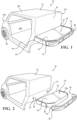
FIG. 1 is a perspective view of a vehicle having a first module attached to a vehicle body; -
FIG. 2 is an exploded view of the vehicle with the first module detached from the vehicle body, and a tail lamp module detached from the first module; -
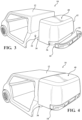
FIG. 3 is an exploded view of the vehicle with a second module detached from the vehicle body and the tail lamp module detached from the second module; and -
FIG. 4 is a perspective view of the vehicle with the second module and tail lamp module assembled with the vehicle body. - Referring to
Figure 1 , asystem 10 including avehicle body 12 and afirst module 14 attached to thevehicle body 12 is provided. Thefirst module 14 may be in the form of a cargo module, and may include abody portion 16 and arear portion 18 that are detachably coupled together. Thefirst module 14 is detachably coupled to thevehicle body 12. Therear portion 18 may also be referred to as a detachable portion. - The
vehicle body 12 is in the form of a unibody vehicle structure, in which the vehicle body defines anexterior body 12a and aninterior cabin 12b therein, and including abottom structure 12c. The unibody construction of thevehicle body 12 allows forwheels 20 to be attached to thevehicle body 12 rather than being attached to a separate bottom chassis component. Thewheels 20 may include integrated wheel-end motors, or may be driven by a separate engine and drivetrain or a separate battery powered motor that drives thewheels 20 via a driveshaft or half shaft. The unibody construction of thevehicle body 12 may also support various vehicle interior components, vehicle doors, and other vehicle mounted components in a manner known in the art. - The
vehicle body 12 may include afront end 12d, which may include the windshield and other traditional vehicle front-end components, and the vehicle body may further include arear structure 22 integral with thevehicle body 12. Therear structure 22 is disposed rearward from the interior 12c defined by thevehicle body 12. - The
first module 14 may be in the form of a cargo module, as described above. Thefirst module 14 may include afront end 24 and arear end 26. Thefront end 24 may be configured to mate with therear structure 22 of the vehicle body in a detachable manner. Put another way, thefirst module 14 may be a separable and separate structure from theunibody vehicle body 12. While thefirst module 14 may be a separate structure relative to thevehicle body 12, thevehicle body 12 may still be referred to a unibody construction, as the vehicle may still operate and be structurally sound even without thefirst module 14 being attached. - The
first module 14 may be attached to the vehicle body via fasteners (not shown), which may be in the form of any traditional fastener style that can join thefront end 24 of thefirst module 14 to therear structure 22 of thevehicle body 12 in a secure manner, while allowing thefirst module 14 to be detached at a subsequent time, while also allowing for thefirst module 14 to be re-attached to therear structure 22 of the vehicle at a further time. Alternatively, another module may be attached to therear structure 22 at a later time after detaching thefirst module 14. For example, the fasteners may be in the form of screws, bolts, clamps, or the like. - The
first module 14 may be attached to therear structure 22 of thevehicle body 12 via the fasteners to define aninterface 30 between thefirst module 14 and thevehicle 12. Theinterface 30 may define a plurality ofmounting points 32 for the fasteners. Themounting points 32 may be determined based on a standard mounting pattern between thefirst module 14 and thevehicle body 12, such that the mounting pattern and spacing between mounting points may be known for applying to other modules. The mounting pattern spacing may be determined based on vehicle load/stiffness requirements, such that a sufficient spacing may be determined to sufficiently retain themodule 14 to thestructure 22 of the vehicle. - The
first module 14 in the form of a cargo module may be a stock cargo platform that may be supplied initially along with thevehicle body 12. Thefirst module 14 in the form of a cargo platform may define a flatupper surface 14a onto which cargo may be carried. Thefirst module 14 may also have other forms, such as a cargo holding structure, like a trunk or a hatch. - The
rear end 26 of thefirst module 14 may include aninterface 34 between thebody portion 16 and therear portion 18. Therear portion 18 may be attachable to (and detachable from) thebody portion 16 at the interface via a plurality of fasteners (not shown) spaced apart atdistinct mounting points 36 that are defined at theinterface 34. The spacing of themounting points 36 may be predetermined such that further modules or detachable portions may be constructed to include the same mounting point spacing, such that therear portion 18 may be detached from thefirst module 14 and later attached to a further module. - The
rear portion 18 may be in the form of a tail lamp module and/or sensor module. Therear portion 18 has a shape that complements the shape of the rear end ofbody portion 16 of thefirst module 14 such that, when therear portion 18 is attached to thebody portion 16 to define thefirst module 14, thefirst module 14 has a continuous shape with a continuous edge. Therear portion 18 may in some cases act as a bumper. However, in other cases, therear portion 18 may be included in additional to a separate bumper portion, which may be part of themodule 14 or part of thevehicle structure 22. - The
rear portion 18 may have other forms. For example, rather than including tail lamps or sensors, therear portion 18 may include no lamps or sensors and may instead simply be a structural component to fill out the shape of thefirst module 14. Therear portion 18 may have various colors or functionality, and may be replaced as part of thefirst module 14 with other styles of therear portion 18. Therear portion 18 may also be configured to include other vehicle components, if desired. For example, therear portion 18 may include cameras, controllers, communication devices, or the like. - With reference to
Figures 3 and 4 , asecond module 40 is shown that may replace thefirst module 14 on thevehicle 12. Thesecond module 40 includes the same attachment points as thefirst module 14, and may therefore be attachable to therear structure 22 of thevehicle 12 at theinterface 30 via the same mounting points 32. Thesecond module 40 may include abody portion 42 and arecess 44 formed at a rear end of the body portion that may be sized and arranged to receive therear portion 18 of thefirst module 14. By using therear module 18 with thesecond module 40, there is no need to attach additional aftermarket components (such as sensors or lamps) to make the vehicle street legal when therear portion 18 already includes these types of components. - The
second module 40 has a different overall size relative to thefirst module 14, and may be arranged to provide different functionality. For example, thesecond module 40 may have a greater height than thefirst module 14. Thesecond module 14 may be arranged as desired by aftermarket manufacturers, or OEMs, to suit the needs of an aftermarket consumer or industry. For example, thesecond module 14 may be configured for food delivery, in which thesecond module 40 may be specially insulated or configured to provide heat or cooling to an internal chamber of thesecond module 40. Thesecond module 40 may also be configured to provide infrastructure monitoring or to act as a charging platform. Thesecond module 40 may be further configured to provide other uses and benefits. Thesecond module 40 could simply be configured as providing additional covered cargo space for the vehicle. As described above, thesecond module 40 has a different shape and size and thefirst module 14. - Depending on the arrangement and components included with the
second module 40, thesecond module 40 may be configured to receive power from one of the power sources of thevehicle 12. Power is provided by an electrical connection between thevehicle body 12 and therear module 40 at the same electrical interface that would communicate with the tail lamps and/or sensors of therear portion 18 of thefirst module 14. Power may be provided by vehicle battery or range extender module (not shown) that are also connected with thevehicle body 12. Accordingly, therear portion 18 that is detachable from thefirst module 14 may also be electrically connected to both thefirst module 14 and thesecond module 40. - The
rear portion 18 is attachable to thesecond module 40 in the same manner in which it was attached to thebody portion 16 of the first module. Accordingly, thesecond module 40 may include similarly spaced attachment points such that therear portion 18 may be attached. When therear portion 18 is attached to thesecond module 40, it may be considered part of thesecond module 40. - According to a not claimed embodiment, the
rear portion 18 may not be detachable from thefirst module 14, and may instead be integrated into thefirst module 14. In this approach, thesecond module 40 may similarly include an integratedrear portion 18 that is provided with thesecond module 40. Alternatively, therear module 40 may still include therecess 44, and a separaterear portion 18 that was not part of thefirst module 40 may be combined with therear module 40 to become part of therear module 40. - The above described arrangement provides for modular modification of a unibody vehicle without requiring substantial redesign of the unibody to suit different end user needs. The modification of the vehicle may be performed quickly and easily and without the need for special tools or mechanical expertise.
- By allowing for the detachment of the
rear portion 18 and installation on a further module, such as thesecond module 40, components such as lights, sensors, cameras, controllers, or the like need not be provided with each further module that is manufactured. Thus, the components provided in therear portion 18 can be re-used multiple times with different types of modules. - A method for operating the
system 10 includes providing thevehicle body 12 with thefirst module 14 attached thereto, with thefirst module 14 including therear portion 18 attached thereto. Thefirst module 14 may be detached from thevehicle body 12, and therear portion 18 may be detached from thebody portion 16 of thefirst module 14. Therear portion 18 may be detached either before or after thefirst module 14 is detached from thevehicle body 12. - After detaching the
first module 14, thesecond module 40 may be attached to thevehicle body 12. Therear portion 18 may be attached to thesecond module 40, and this step may be performed either before or after thesecond module 40 is attached to thevehicle body 12. - The above steps may be repeated to replace the
second module 40 with another module, such as the previously detachedfirst module 14, or another module type. Thus, thesystem 10 allows for thevehicle body 12 to have various module styles attached thereto to define a variety of different overall vehicle with different functionality. - The method may further includes making and breaking electrical connections between the vehicle body and the
first module 14 orsecond module 40, as well as between therear portion 18 and themodules - Obviously, many modifications and variations of the present invention are possible in light of the above teachings and may be practiced as long as they fall within the scope of the appended claims.
Claims (7)
- A system (10) for modifying a vehicle structure (22), the system (10) comprising:a vehicle body (12);a first module (14) detachably attached to a structure of the vehicle body (12) at an interface (30) having plurality of mounting points (32) with a predetermined spacing;a detachable portion (18) of the first module (14), wherein the detachable portion (18) is detachably attached to a body portion (16) of the first module (14); anda second module (40) with mounting points (36) having the predetermined spacing;wherein the first module (40) is detachable from the vehicle body (12) and replaceable on the vehicle body (12) with the second module (40); andwherein the detachable portion (18) is detachable from the body portion (16) of the first module (14) and subsequently attachable to the second module (40),wherein the vehicle structure (22) is a unibody vehicle structure,wherein the first module (14) is a cargo platform,wherein the second module (40) has a different overall size relative to the first module (14), wherein the first and second module (14, 40) are electrically connectable to the vehicle body (12),wherein the detachable portion (18) is electrically connectable to the first module (14) and the second module (40),wherein power can be provided by an electrical connection between the vehicle body (12) and the second module (40) at the same electrical interface that would communicate with tail lamps and/or sensors of the detachable portion (18) of the first module (14).
- The system (10) of claim 1, wherein the detachable portion (18) includes lamps or sensors configured to operate with both the first module (14) and the second module (40), such that additional lamps or sensors are not attached to the second module (40).
- The system (10) of claim 1, wherein the first module (14) is a rear module, and the detachable portion (18) is a rear portion of the rear module.
- The system (10) of claim 1, wherein the body portion of the first module (14) defines a curved surface, and the detachable portion (18) includes a corresponding curved surface that mates with the curved surface of the first module (14).
- The system (10) of claim 1, wherein the second module (40) includes a body portion (42) and a recess (44), wherein the recess (44) is sized and arranged to receive the detachable portion (18) of the first module (14).
- The system (10) of claim 5, wherein the body portion (42) of the second module (40) overhangs the recess (44).
- A method for modifying a vehicle structure (22), the method including the steps of:providing a vehicle body (12) and a first module (14) detachably attached thereto via plurality of mounting points (32) disposed on the vehicle body (12) with a predetermined spacing;detaching the first module (14) from the vehicle body (12);detaching a detachable portion (18) from a body portion of the first module (14);attaching a second module (40) to the vehicle body (12) via the plurality of mounting points (36) after detaching the first module (14); andattaching the detachable portion (18) to the second module (40) after detaching the detachable portion (18) from the first module (14), wherein the detachable portion (18) includes lamps or sensors, and additional lamps or sensors are not attached to the second module (40), wherein the first module (14) and second module (40) have different overall sizes, wherein the vehicle body (12) is a unibody structure,wherein the first and second module (14, 40) are electrically connectable to the vehicle body (12),wherein the detachable portion (18) is electrically connectable to the first module (14) and the second module (40),wherein power can be provided by an electrical connection between the vehicle body (12) and the second module (40) at the same electrical interface that would communicate the lamps and/or sensors of the detachable portion (18) of the first module (14).
Applications Claiming Priority (2)
| Application Number | Priority Date | Filing Date | Title |
|---|---|---|---|
| US201862770194P | 2018-11-21 | 2018-11-21 | |
| PCT/US2019/062420 WO2020106846A1 (en) | 2018-11-21 | 2019-11-20 | Modular cargo platform for automotive applications |
Publications (3)
| Publication Number | Publication Date |
|---|---|
| EP3883814A1 EP3883814A1 (en) | 2021-09-29 |
| EP3883814A4 EP3883814A4 (en) | 2022-08-03 |
| EP3883814B1 true EP3883814B1 (en) | 2024-01-10 |
Family
ID=70774258
Family Applications (1)
| Application Number | Title | Priority Date | Filing Date |
|---|---|---|---|
| EP19887929.8A Active EP3883814B1 (en) | 2018-11-21 | 2019-11-20 | Modular cargo platform for automotive applications |
Country Status (3)
| Country | Link |
|---|---|
| US (1) | US12017620B2 (en) |
| EP (1) | EP3883814B1 (en) |
| WO (1) | WO2020106846A1 (en) |
Families Citing this family (7)
| Publication number | Priority date | Publication date | Assignee | Title |
|---|---|---|---|---|
| SE541628C2 (en) * | 2018-03-06 | 2019-11-19 | Scania Cv Ab | A drive module for a vehicle and a vehicle assembled from a set of modules |
| US11505265B2 (en) * | 2020-11-03 | 2022-11-22 | Alpha Motor Corporation | Multipurpose vehicle system with interchangeable operational components and power supplies |
| KR102461607B1 (en) * | 2020-11-05 | 2022-11-03 | 한국타이어앤테크놀로지 주식회사 | Modular driving apparatus |
| USD1042226S1 (en) | 2022-05-16 | 2024-09-17 | Alpha Motor Corporation | Electric vehicle |
| US11970229B1 (en) | 2021-04-30 | 2024-04-30 | Alpha Motor Corporation | Vehicle chassis |
| USD1014330S1 (en) | 2021-04-30 | 2024-02-13 | Alpha Motor Corporation | Electric vehicle |
| USD1059213S1 (en) * | 2022-10-06 | 2025-01-28 | Micro Mobility Systems Ag | Vehicle with cargo module |
Family Cites Families (15)
| Publication number | Priority date | Publication date | Assignee | Title |
|---|---|---|---|---|
| DE3414617A1 (en) | 1985-04-19 | 1985-10-31 | Aper Ludwig Dipl Designer Fh | Motor vehicle |
| US4842326A (en) * | 1987-05-08 | 1989-06-27 | John A. DiVito | Motor vehicles with interchangeable functional body modules |
| US5000501A (en) * | 1990-02-20 | 1991-03-19 | Edward Cunha | Vehicle body panel |
| US7557699B2 (en) | 2005-11-22 | 2009-07-07 | Walton Douglas H | Indicator light system for towed objects |
| US7971919B2 (en) | 2006-01-13 | 2011-07-05 | Vertanen Industries, Inc. | Cargo bed insert for utility vehicle, front end mounting assembly, and optional accessories items for use therewith, along with utility vehicle incorporating the same |
| US7849601B2 (en) | 2007-01-11 | 2010-12-14 | Ford Motor Company | Method of manufacturing a vehicle |
| CN102285377B (en) | 2011-05-31 | 2013-06-05 | 浙江吉利汽车研究院有限公司 | Modularized electric automobile |
| EP2589512B1 (en) | 2011-11-04 | 2015-02-11 | Brenderup AB | Light support bar for a vehicle trailer |
| ES1076926Y (en) | 2012-04-17 | 2012-08-10 | Espina Roberto Brugos | Transformable automobile |
| CA2957214C (en) * | 2014-08-19 | 2023-11-21 | Magna International Inc. | Modular tailgate |
| US9981600B2 (en) * | 2015-12-21 | 2018-05-29 | Truck Accessories Group, Llc | Adjustable truck cover light |
| DE102015016954A1 (en) | 2015-12-24 | 2016-07-21 | Daimler Ag | Modular design for producing different construction variants of a vehicle, in particular a passenger car |
| WO2017123607A1 (en) * | 2016-01-12 | 2017-07-20 | Rivian Ip Holdings, Llc | Systems and methods for modular components for electric vehicles |
| US10207757B2 (en) | 2016-01-12 | 2019-02-19 | Rivian Ip Holdings, Llc | Systems and methods for reconfigurable electric vehicles |
| US10202152B2 (en) * | 2016-12-15 | 2019-02-12 | Ford Global Technologies, Llc | Pickup box header and integrated toolbox assembly |
-
2019
- 2019-11-20 US US17/295,468 patent/US12017620B2/en active Active
- 2019-11-20 WO PCT/US2019/062420 patent/WO2020106846A1/en not_active Ceased
- 2019-11-20 EP EP19887929.8A patent/EP3883814B1/en active Active
Also Published As
| Publication number | Publication date |
|---|---|
| EP3883814A1 (en) | 2021-09-29 |
| US12017620B2 (en) | 2024-06-25 |
| WO2020106846A1 (en) | 2020-05-28 |
| US20220017019A1 (en) | 2022-01-20 |
| EP3883814A4 (en) | 2022-08-03 |
Similar Documents
| Publication | Publication Date | Title |
|---|---|---|
| EP3883814B1 (en) | Modular cargo platform for automotive applications | |
| US20240246613A1 (en) | Reconfigurable vehicle | |
| US11235670B2 (en) | High voltage battery unit for vehicle and underbody of vehicle | |
| US12473044B2 (en) | Modular vehicle structure | |
| US6276477B1 (en) | Component car system | |
| US4842326A (en) | Motor vehicles with interchangeable functional body modules | |
| JPH10507716A (en) | Automobile manufacturing method | |
| CN114269636B (en) | motor vehicle unit | |
| US20100019538A1 (en) | Modular Architecture for Combat Tactical Vehicle | |
| US20120139292A1 (en) | Motor vehicle and method for the production of a motor vehicle | |
| CN109562715A (en) | Vehicle with removable panel component | |
| EP2552763B1 (en) | Common underbody platform for front engine front wheel drive and rear engine rear wheel drive vehicles | |
| WO2009017533A1 (en) | Modular light vehicle chassis | |
| US20220080892A1 (en) | Vehicle body mounted side view mirror assemblies with accessory mounting platforms | |
| EP1375314A1 (en) | Modular body and frame assembly for a vehicle | |
| US8511741B2 (en) | Recreational vehicle having chassis with integral cap | |
| US20210179193A1 (en) | High voltage battery unit for vehicle and underbody of vehicle | |
| US12168489B2 (en) | Electric vehicle platform and modular vehicle structure including electric vehicle platform | |
| EP1140547B1 (en) | An arrangement at an instrument panel for motor vehicles | |
| CN101985304B (en) | Motor vehicle front end and method for its production | |
| CN219529180U (en) | Engine with upper-arranged foot starting mechanism and cross-country motorcycle | |
| CN208393484U (en) | Hood support component and automobile | |
| US5931246A (en) | Automobile with a body support structure and method of manufacturing same | |
| CN216660144U (en) | All-terrain vehicle | |
| US12583382B2 (en) | Synchronized lighting for electric vehicles |
Legal Events
| Date | Code | Title | Description |
|---|---|---|---|
| STAA | Information on the status of an ep patent application or granted ep patent |
Free format text: STATUS: THE INTERNATIONAL PUBLICATION HAS BEEN MADE |
|
| PUAI | Public reference made under article 153(3) epc to a published international application that has entered the european phase |
Free format text: ORIGINAL CODE: 0009012 |
|
| STAA | Information on the status of an ep patent application or granted ep patent |
Free format text: STATUS: REQUEST FOR EXAMINATION WAS MADE |
|
| 17P | Request for examination filed |
Effective date: 20210616 |
|
| AK | Designated contracting states |
Kind code of ref document: A1 Designated state(s): AL AT BE BG CH CY CZ DE DK EE ES FI FR GB GR HR HU IE IS IT LI LT LU LV MC MK MT NL NO PL PT RO RS SE SI SK SM TR |
|
| DAV | Request for validation of the european patent (deleted) | ||
| DAX | Request for extension of the european patent (deleted) | ||
| A4 | Supplementary search report drawn up and despatched |
Effective date: 20220630 |
|
| RIC1 | Information provided on ipc code assigned before grant |
Ipc: B62D 63/02 20060101ALI20220624BHEP Ipc: B60Q 1/26 20060101ALI20220624BHEP Ipc: B60Q 1/00 20060101ALI20220624BHEP Ipc: B60R 9/045 20060101ALI20220624BHEP Ipc: B60Q 1/30 20060101ALI20220624BHEP Ipc: B60P 3/42 20060101ALI20220624BHEP Ipc: B60P 3/40 20060101AFI20220624BHEP |
|
| GRAP | Despatch of communication of intention to grant a patent |
Free format text: ORIGINAL CODE: EPIDOSNIGR1 |
|
| STAA | Information on the status of an ep patent application or granted ep patent |
Free format text: STATUS: GRANT OF PATENT IS INTENDED |
|
| INTG | Intention to grant announced |
Effective date: 20230619 |
|
| GRAJ | Information related to disapproval of communication of intention to grant by the applicant or resumption of examination proceedings by the epo deleted |
Free format text: ORIGINAL CODE: EPIDOSDIGR1 |
|
| STAA | Information on the status of an ep patent application or granted ep patent |
Free format text: STATUS: REQUEST FOR EXAMINATION WAS MADE |
|
| GRAP | Despatch of communication of intention to grant a patent |
Free format text: ORIGINAL CODE: EPIDOSNIGR1 |
|
| STAA | Information on the status of an ep patent application or granted ep patent |
Free format text: STATUS: GRANT OF PATENT IS INTENDED |
|
| P01 | Opt-out of the competence of the unified patent court (upc) registered |
Effective date: 20231008 |
|
| INTC | Intention to grant announced (deleted) | ||
| GRAS | Grant fee paid |
Free format text: ORIGINAL CODE: EPIDOSNIGR3 |
|
| INTG | Intention to grant announced |
Effective date: 20231108 |
|
| GRAA | (expected) grant |
Free format text: ORIGINAL CODE: 0009210 |
|
| STAA | Information on the status of an ep patent application or granted ep patent |
Free format text: STATUS: THE PATENT HAS BEEN GRANTED |
|
| AK | Designated contracting states |
Kind code of ref document: B1 Designated state(s): AL AT BE BG CH CY CZ DE DK EE ES FI FR GB GR HR HU IE IS IT LI LT LU LV MC MK MT NL NO PL PT RO RS SE SI SK SM TR |
|
| REG | Reference to a national code |
Ref country code: GB Ref legal event code: FG4D |
|
| REG | Reference to a national code |
Ref country code: CH Ref legal event code: EP |
|
| REG | Reference to a national code |
Ref country code: DE Ref legal event code: R096 Ref document number: 602019045057 Country of ref document: DE |
|
| REG | Reference to a national code |
Ref country code: IE Ref legal event code: FG4D |
|
| REG | Reference to a national code |
Ref country code: LT Ref legal event code: MG9D |
|
| REG | Reference to a national code |
Ref country code: NL Ref legal event code: MP Effective date: 20240110 |
|
| PG25 | Lapsed in a contracting state [announced via postgrant information from national office to epo] |
Ref country code: NL Free format text: LAPSE BECAUSE OF FAILURE TO SUBMIT A TRANSLATION OF THE DESCRIPTION OR TO PAY THE FEE WITHIN THE PRESCRIBED TIME-LIMIT Effective date: 20240110 |
|
| PG25 | Lapsed in a contracting state [announced via postgrant information from national office to epo] |
Ref country code: NL Free format text: LAPSE BECAUSE OF FAILURE TO SUBMIT A TRANSLATION OF THE DESCRIPTION OR TO PAY THE FEE WITHIN THE PRESCRIBED TIME-LIMIT Effective date: 20240110 |
|
| PG25 | Lapsed in a contracting state [announced via postgrant information from national office to epo] |
Ref country code: IS Free format text: LAPSE BECAUSE OF FAILURE TO SUBMIT A TRANSLATION OF THE DESCRIPTION OR TO PAY THE FEE WITHIN THE PRESCRIBED TIME-LIMIT Effective date: 20240510 |
|
| PG25 | Lapsed in a contracting state [announced via postgrant information from national office to epo] |
Ref country code: LT Free format text: LAPSE BECAUSE OF FAILURE TO SUBMIT A TRANSLATION OF THE DESCRIPTION OR TO PAY THE FEE WITHIN THE PRESCRIBED TIME-LIMIT Effective date: 20240110 |
|
| PG25 | Lapsed in a contracting state [announced via postgrant information from national office to epo] |
Ref country code: GR Free format text: LAPSE BECAUSE OF FAILURE TO SUBMIT A TRANSLATION OF THE DESCRIPTION OR TO PAY THE FEE WITHIN THE PRESCRIBED TIME-LIMIT Effective date: 20240411 |
|
| PG25 | Lapsed in a contracting state [announced via postgrant information from national office to epo] |
Ref country code: HR Free format text: LAPSE BECAUSE OF FAILURE TO SUBMIT A TRANSLATION OF THE DESCRIPTION OR TO PAY THE FEE WITHIN THE PRESCRIBED TIME-LIMIT Effective date: 20240110 Ref country code: RS Free format text: LAPSE BECAUSE OF FAILURE TO SUBMIT A TRANSLATION OF THE DESCRIPTION OR TO PAY THE FEE WITHIN THE PRESCRIBED TIME-LIMIT Effective date: 20240410 |
|
| PG25 | Lapsed in a contracting state [announced via postgrant information from national office to epo] |
Ref country code: ES Free format text: LAPSE BECAUSE OF FAILURE TO SUBMIT A TRANSLATION OF THE DESCRIPTION OR TO PAY THE FEE WITHIN THE PRESCRIBED TIME-LIMIT Effective date: 20240110 |
|
| PG25 | Lapsed in a contracting state [announced via postgrant information from national office to epo] |
Ref country code: RS Free format text: LAPSE BECAUSE OF FAILURE TO SUBMIT A TRANSLATION OF THE DESCRIPTION OR TO PAY THE FEE WITHIN THE PRESCRIBED TIME-LIMIT Effective date: 20240410 Ref country code: NO Free format text: LAPSE BECAUSE OF FAILURE TO SUBMIT A TRANSLATION OF THE DESCRIPTION OR TO PAY THE FEE WITHIN THE PRESCRIBED TIME-LIMIT Effective date: 20240410 Ref country code: LT Free format text: LAPSE BECAUSE OF FAILURE TO SUBMIT A TRANSLATION OF THE DESCRIPTION OR TO PAY THE FEE WITHIN THE PRESCRIBED TIME-LIMIT Effective date: 20240110 Ref country code: IS Free format text: LAPSE BECAUSE OF FAILURE TO SUBMIT A TRANSLATION OF THE DESCRIPTION OR TO PAY THE FEE WITHIN THE PRESCRIBED TIME-LIMIT Effective date: 20240510 Ref country code: HR Free format text: LAPSE BECAUSE OF FAILURE TO SUBMIT A TRANSLATION OF THE DESCRIPTION OR TO PAY THE FEE WITHIN THE PRESCRIBED TIME-LIMIT Effective date: 20240110 Ref country code: GR Free format text: LAPSE BECAUSE OF FAILURE TO SUBMIT A TRANSLATION OF THE DESCRIPTION OR TO PAY THE FEE WITHIN THE PRESCRIBED TIME-LIMIT Effective date: 20240411 Ref country code: ES Free format text: LAPSE BECAUSE OF FAILURE TO SUBMIT A TRANSLATION OF THE DESCRIPTION OR TO PAY THE FEE WITHIN THE PRESCRIBED TIME-LIMIT Effective date: 20240110 Ref country code: BG Free format text: LAPSE BECAUSE OF FAILURE TO SUBMIT A TRANSLATION OF THE DESCRIPTION OR TO PAY THE FEE WITHIN THE PRESCRIBED TIME-LIMIT Effective date: 20240110 |
|
| PG25 | Lapsed in a contracting state [announced via postgrant information from national office to epo] |
Ref country code: PT Free format text: LAPSE BECAUSE OF FAILURE TO SUBMIT A TRANSLATION OF THE DESCRIPTION OR TO PAY THE FEE WITHIN THE PRESCRIBED TIME-LIMIT Effective date: 20240510 Ref country code: PL Free format text: LAPSE BECAUSE OF FAILURE TO SUBMIT A TRANSLATION OF THE DESCRIPTION OR TO PAY THE FEE WITHIN THE PRESCRIBED TIME-LIMIT Effective date: 20240110 |
|
| PG25 | Lapsed in a contracting state [announced via postgrant information from national office to epo] |
Ref country code: SE Free format text: LAPSE BECAUSE OF FAILURE TO SUBMIT A TRANSLATION OF THE DESCRIPTION OR TO PAY THE FEE WITHIN THE PRESCRIBED TIME-LIMIT Effective date: 20240110 Ref country code: PT Free format text: LAPSE BECAUSE OF FAILURE TO SUBMIT A TRANSLATION OF THE DESCRIPTION OR TO PAY THE FEE WITHIN THE PRESCRIBED TIME-LIMIT Effective date: 20240510 Ref country code: PL Free format text: LAPSE BECAUSE OF FAILURE TO SUBMIT A TRANSLATION OF THE DESCRIPTION OR TO PAY THE FEE WITHIN THE PRESCRIBED TIME-LIMIT Effective date: 20240110 Ref country code: LV Free format text: LAPSE BECAUSE OF FAILURE TO SUBMIT A TRANSLATION OF THE DESCRIPTION OR TO PAY THE FEE WITHIN THE PRESCRIBED TIME-LIMIT Effective date: 20240110 |
|
| REG | Reference to a national code |
Ref country code: AT Ref legal event code: UEP Ref document number: 1648660 Country of ref document: AT Kind code of ref document: T Effective date: 20240110 |
|
| PG25 | Lapsed in a contracting state [announced via postgrant information from national office to epo] |
Ref country code: DK Free format text: LAPSE BECAUSE OF FAILURE TO SUBMIT A TRANSLATION OF THE DESCRIPTION OR TO PAY THE FEE WITHIN THE PRESCRIBED TIME-LIMIT Effective date: 20240110 |
|
| REG | Reference to a national code |
Ref country code: DE Ref legal event code: R097 Ref document number: 602019045057 Country of ref document: DE |
|
| PG25 | Lapsed in a contracting state [announced via postgrant information from national office to epo] |
Ref country code: SM Free format text: LAPSE BECAUSE OF FAILURE TO SUBMIT A TRANSLATION OF THE DESCRIPTION OR TO PAY THE FEE WITHIN THE PRESCRIBED TIME-LIMIT Effective date: 20240110 |
|
| PG25 | Lapsed in a contracting state [announced via postgrant information from national office to epo] |
Ref country code: CZ Free format text: LAPSE BECAUSE OF FAILURE TO SUBMIT A TRANSLATION OF THE DESCRIPTION OR TO PAY THE FEE WITHIN THE PRESCRIBED TIME-LIMIT Effective date: 20240110 Ref country code: EE Free format text: LAPSE BECAUSE OF FAILURE TO SUBMIT A TRANSLATION OF THE DESCRIPTION OR TO PAY THE FEE WITHIN THE PRESCRIBED TIME-LIMIT Effective date: 20240110 |
|
| PG25 | Lapsed in a contracting state [announced via postgrant information from national office to epo] |
Ref country code: SK Free format text: LAPSE BECAUSE OF FAILURE TO SUBMIT A TRANSLATION OF THE DESCRIPTION OR TO PAY THE FEE WITHIN THE PRESCRIBED TIME-LIMIT Effective date: 20240110 |
|
| PG25 | Lapsed in a contracting state [announced via postgrant information from national office to epo] |
Ref country code: SM Free format text: LAPSE BECAUSE OF FAILURE TO SUBMIT A TRANSLATION OF THE DESCRIPTION OR TO PAY THE FEE WITHIN THE PRESCRIBED TIME-LIMIT Effective date: 20240110 Ref country code: SK Free format text: LAPSE BECAUSE OF FAILURE TO SUBMIT A TRANSLATION OF THE DESCRIPTION OR TO PAY THE FEE WITHIN THE PRESCRIBED TIME-LIMIT Effective date: 20240110 Ref country code: RO Free format text: LAPSE BECAUSE OF FAILURE TO SUBMIT A TRANSLATION OF THE DESCRIPTION OR TO PAY THE FEE WITHIN THE PRESCRIBED TIME-LIMIT Effective date: 20240110 Ref country code: EE Free format text: LAPSE BECAUSE OF FAILURE TO SUBMIT A TRANSLATION OF THE DESCRIPTION OR TO PAY THE FEE WITHIN THE PRESCRIBED TIME-LIMIT Effective date: 20240110 Ref country code: DK Free format text: LAPSE BECAUSE OF FAILURE TO SUBMIT A TRANSLATION OF THE DESCRIPTION OR TO PAY THE FEE WITHIN THE PRESCRIBED TIME-LIMIT Effective date: 20240110 Ref country code: CZ Free format text: LAPSE BECAUSE OF FAILURE TO SUBMIT A TRANSLATION OF THE DESCRIPTION OR TO PAY THE FEE WITHIN THE PRESCRIBED TIME-LIMIT Effective date: 20240110 |
|
| PLBE | No opposition filed within time limit |
Free format text: ORIGINAL CODE: 0009261 |
|
| STAA | Information on the status of an ep patent application or granted ep patent |
Free format text: STATUS: NO OPPOSITION FILED WITHIN TIME LIMIT |
|
| PG25 | Lapsed in a contracting state [announced via postgrant information from national office to epo] |
Ref country code: IT Free format text: LAPSE BECAUSE OF FAILURE TO SUBMIT A TRANSLATION OF THE DESCRIPTION OR TO PAY THE FEE WITHIN THE PRESCRIBED TIME-LIMIT Effective date: 20240110 |
|
| 26N | No opposition filed |
Effective date: 20241011 |
|
| PG25 | Lapsed in a contracting state [announced via postgrant information from national office to epo] |
Ref country code: IT Free format text: LAPSE BECAUSE OF FAILURE TO SUBMIT A TRANSLATION OF THE DESCRIPTION OR TO PAY THE FEE WITHIN THE PRESCRIBED TIME-LIMIT Effective date: 20240110 |
|
| PG25 | Lapsed in a contracting state [announced via postgrant information from national office to epo] |
Ref country code: SI Free format text: LAPSE BECAUSE OF FAILURE TO SUBMIT A TRANSLATION OF THE DESCRIPTION OR TO PAY THE FEE WITHIN THE PRESCRIBED TIME-LIMIT Effective date: 20240110 |
|
| REG | Reference to a national code |
Ref country code: CH Ref legal event code: PL |
|
| PG25 | Lapsed in a contracting state [announced via postgrant information from national office to epo] |
Ref country code: MC Free format text: LAPSE BECAUSE OF FAILURE TO SUBMIT A TRANSLATION OF THE DESCRIPTION OR TO PAY THE FEE WITHIN THE PRESCRIBED TIME-LIMIT Effective date: 20240110 |
|
| PG25 | Lapsed in a contracting state [announced via postgrant information from national office to epo] |
Ref country code: LU Free format text: LAPSE BECAUSE OF NON-PAYMENT OF DUE FEES Effective date: 20241120 |
|
| REG | Reference to a national code |
Ref country code: CH Ref legal event code: PL |
|
| PG25 | Lapsed in a contracting state [announced via postgrant information from national office to epo] |
Ref country code: CH Free format text: LAPSE BECAUSE OF NON-PAYMENT OF DUE FEES Effective date: 20241130 |
|
| REG | Reference to a national code |
Ref country code: BE Ref legal event code: MM Effective date: 20241130 |
|
| PG25 | Lapsed in a contracting state [announced via postgrant information from national office to epo] |
Ref country code: FI Free format text: LAPSE BECAUSE OF FAILURE TO SUBMIT A TRANSLATION OF THE DESCRIPTION OR TO PAY THE FEE WITHIN THE PRESCRIBED TIME-LIMIT Effective date: 20240110 |
|
| PG25 | Lapsed in a contracting state [announced via postgrant information from national office to epo] |
Ref country code: BE Free format text: LAPSE BECAUSE OF NON-PAYMENT OF DUE FEES Effective date: 20241130 |
|
| PGFP | Annual fee paid to national office [announced via postgrant information from national office to epo] |
Ref country code: GB Payment date: 20250930 Year of fee payment: 7 |
|
| PGFP | Annual fee paid to national office [announced via postgrant information from national office to epo] |
Ref country code: FR Payment date: 20250908 Year of fee payment: 7 |
|
| PG25 | Lapsed in a contracting state [announced via postgrant information from national office to epo] |
Ref country code: IE Free format text: LAPSE BECAUSE OF NON-PAYMENT OF DUE FEES Effective date: 20241120 |
|
| PGFP | Annual fee paid to national office [announced via postgrant information from national office to epo] |
Ref country code: DE Payment date: 20250923 Year of fee payment: 7 |
|
| PGFP | Annual fee paid to national office [announced via postgrant information from national office to epo] |
Ref country code: AT Payment date: 20251027 Year of fee payment: 7 |
|
| PG25 | Lapsed in a contracting state [announced via postgrant information from national office to epo] |
Ref country code: HU Free format text: LAPSE BECAUSE OF FAILURE TO SUBMIT A TRANSLATION OF THE DESCRIPTION OR TO PAY THE FEE WITHIN THE PRESCRIBED TIME-LIMIT; INVALID AB INITIO Effective date: 20191120 |
|
| PG25 | Lapsed in a contracting state [announced via postgrant information from national office to epo] |
Ref country code: CY Free format text: LAPSE BECAUSE OF FAILURE TO SUBMIT A TRANSLATION OF THE DESCRIPTION OR TO PAY THE FEE WITHIN THE PRESCRIBED TIME-LIMIT; INVALID AB INITIO Effective date: 20191120 |