EP3883390B1 - Novel applications of hop acids - Google Patents
Novel applications of hop acids Download PDFInfo
- Publication number
- EP3883390B1 EP3883390B1 EP19812722.7A EP19812722A EP3883390B1 EP 3883390 B1 EP3883390 B1 EP 3883390B1 EP 19812722 A EP19812722 A EP 19812722A EP 3883390 B1 EP3883390 B1 EP 3883390B1
- Authority
- EP
- European Patent Office
- Prior art keywords
- hop
- acid
- oil
- essential oil
- composition
- Prior art date
- Legal status (The legal status is an assumption and is not a legal conclusion. Google has not performed a legal analysis and makes no representation as to the accuracy of the status listed.)
- Active
Links
Images

Classifications
-
- C—CHEMISTRY; METALLURGY
- C11—ANIMAL OR VEGETABLE OILS, FATS, FATTY SUBSTANCES OR WAXES; FATTY ACIDS THEREFROM; DETERGENTS; CANDLES
- C11B—PRODUCING, e.g. BY PRESSING RAW MATERIALS OR BY EXTRACTION FROM WASTE MATERIALS, REFINING OR PRESERVING FATS, FATTY SUBSTANCES, e.g. LANOLIN, FATTY OILS OR WAXES; ESSENTIAL OILS; PERFUMES
- C11B9/00—Essential oils; Perfumes
- C11B9/0026—Essential oils; Perfumes compounds containing an alicyclic ring not condensed with another ring
- C11B9/0034—Essential oils; Perfumes compounds containing an alicyclic ring not condensed with another ring the ring containing six carbon atoms
-
- C—CHEMISTRY; METALLURGY
- C12—BIOCHEMISTRY; BEER; SPIRITS; WINE; VINEGAR; MICROBIOLOGY; ENZYMOLOGY; MUTATION OR GENETIC ENGINEERING
- C12C—BEER; PREPARATION OF BEER BY FERMENTATION; PREPARATION OF MALT FOR MAKING BEER; PREPARATION OF HOPS FOR MAKING BEER
- C12C3/00—Treatment of hops
- C12C3/04—Conserving; Storing; Packing
- C12C3/08—Solvent extracts from hops
-
- A—HUMAN NECESSITIES
- A23—FOODS OR FOODSTUFFS; TREATMENT THEREOF, NOT COVERED BY OTHER CLASSES
- A23L—FOODS, FOODSTUFFS OR NON-ALCOHOLIC BEVERAGES, NOT OTHERWISE PROVIDED FOR; PREPARATION OR TREATMENT THEREOF
- A23L2/00—Non-alcoholic beverages; Dry compositions or concentrates therefor; Preparation or treatment thereof
- A23L2/52—Adding ingredients
- A23L2/56—Flavouring or bittering agents
-
- A—HUMAN NECESSITIES
- A23—FOODS OR FOODSTUFFS; TREATMENT THEREOF, NOT COVERED BY OTHER CLASSES
- A23L—FOODS, FOODSTUFFS OR NON-ALCOHOLIC BEVERAGES, NOT OTHERWISE PROVIDED FOR; PREPARATION OR TREATMENT THEREOF
- A23L29/00—Foods or foodstuffs containing additives; Preparation or treatment thereof
- A23L29/10—Foods or foodstuffs containing additives; Preparation or treatment thereof containing emulsifiers
-
- B—PERFORMING OPERATIONS; TRANSPORTING
- B01—PHYSICAL OR CHEMICAL PROCESSES OR APPARATUS IN GENERAL
- B01F—MIXING, e.g. DISSOLVING, EMULSIFYING OR DISPERSING
- B01F23/00—Mixing according to the phases to be mixed, e.g. dispersing or emulsifying
- B01F23/40—Mixing liquids with liquids; Emulsifying
- B01F23/41—Emulsifying
-
- B—PERFORMING OPERATIONS; TRANSPORTING
- B01—PHYSICAL OR CHEMICAL PROCESSES OR APPARATUS IN GENERAL
- B01F—MIXING, e.g. DISSOLVING, EMULSIFYING OR DISPERSING
- B01F23/00—Mixing according to the phases to be mixed, e.g. dispersing or emulsifying
- B01F23/40—Mixing liquids with liquids; Emulsifying
- B01F23/43—Mixing liquids with liquids; Emulsifying using driven stirrers
-
- C—CHEMISTRY; METALLURGY
- C12—BIOCHEMISTRY; BEER; SPIRITS; WINE; VINEGAR; MICROBIOLOGY; ENZYMOLOGY; MUTATION OR GENETIC ENGINEERING
- C12C—BEER; PREPARATION OF BEER BY FERMENTATION; PREPARATION OF MALT FOR MAKING BEER; PREPARATION OF HOPS FOR MAKING BEER
- C12C3/00—Treatment of hops
- C12C3/04—Conserving; Storing; Packing
-
- C—CHEMISTRY; METALLURGY
- C12—BIOCHEMISTRY; BEER; SPIRITS; WINE; VINEGAR; MICROBIOLOGY; ENZYMOLOGY; MUTATION OR GENETIC ENGINEERING
- C12C—BEER; PREPARATION OF BEER BY FERMENTATION; PREPARATION OF MALT FOR MAKING BEER; PREPARATION OF HOPS FOR MAKING BEER
- C12C5/00—Other raw materials for the preparation of beer
- C12C5/02—Additives for beer
- C12C5/026—Beer flavouring preparations
-
- C—CHEMISTRY; METALLURGY
- C12—BIOCHEMISTRY; BEER; SPIRITS; WINE; VINEGAR; MICROBIOLOGY; ENZYMOLOGY; MUTATION OR GENETIC ENGINEERING
- C12C—BEER; PREPARATION OF BEER BY FERMENTATION; PREPARATION OF MALT FOR MAKING BEER; PREPARATION OF HOPS FOR MAKING BEER
- C12C7/00—Preparation of wort
- C12C7/28—After-treatment, e.g. sterilisation
- C12C7/287—Treating beerwort with hopextract
-
- A—HUMAN NECESSITIES
- A23—FOODS OR FOODSTUFFS; TREATMENT THEREOF, NOT COVERED BY OTHER CLASSES
- A23V—INDEXING SCHEME RELATING TO FOODS, FOODSTUFFS OR NON-ALCOHOLIC BEVERAGES AND LACTIC OR PROPIONIC ACID BACTERIA USED IN FOODSTUFFS OR FOOD PREPARATION
- A23V2002/00—Food compositions, function of food ingredients or processes for food or foodstuffs
-
- B—PERFORMING OPERATIONS; TRANSPORTING
- B01—PHYSICAL OR CHEMICAL PROCESSES OR APPARATUS IN GENERAL
- B01F—MIXING, e.g. DISSOLVING, EMULSIFYING OR DISPERSING
- B01F23/00—Mixing according to the phases to be mixed, e.g. dispersing or emulsifying
- B01F23/40—Mixing liquids with liquids; Emulsifying
- B01F23/41—Emulsifying
- B01F23/414—Emulsifying characterised by the internal structure of the emulsion
- B01F23/4145—Emulsions of oils, e.g. fuel, and water
-
- B—PERFORMING OPERATIONS; TRANSPORTING
- B01—PHYSICAL OR CHEMICAL PROCESSES OR APPARATUS IN GENERAL
- B01F—MIXING, e.g. DISSOLVING, EMULSIFYING OR DISPERSING
- B01F23/00—Mixing according to the phases to be mixed, e.g. dispersing or emulsifying
- B01F23/40—Mixing liquids with liquids; Emulsifying
- B01F23/48—Mixing liquids with liquids; Emulsifying characterised by the nature of the liquids
Definitions
- the present invention relates to novel applications of hop acids and formulations using hop acids. More specifically, the present invention relates to formulations comprising hop acids to stabilise or emulsify hop oils or other essential oils in aqueous media.
- Hop acids are a group of organic compounds with acidic character obtained from the hop plant Humulus lupulus. Hop acids include alpha acids (humulone and its homologues), beta acids (lupulone and its homologues) and derivatives formed by isomerisation, oxidation and reduction. Many of these compounds give bitterness to beer.
- Essential oils are natural aroma oils extracted from plants and, typically, distilled to form a concentrated oil.
- the oils may contain a single component but are often a complex mixture of components.
- Essential oils may be used in a number of industries, including perfumery and in flavouring food and beverages.
- Hop oils are used to flavour beer, either by adding hop cones or extracts to the beer or by adding isolated hop essential oils or fractions thereof.
- Isolated hop oils are commonly used by brewers in preference to dry hopping due to greater consistency of flavour and bitterness from one batch to another. Additionally, dry hopping with hop cones causes yield losses due to uptake of beer on the cellulosic material, which does not occur when adding isolated hop oils.
- Hop oils are conventionally formulated as either aqueous emulsions using synthetic emulsifiers such as polysorbates, or dissolved in solvents such as propylene glycol. These ingredients however, are synthetic and not found naturally in beer. Additionally propylene glycol is subject to regulatory limits as a carrier for flavourings.
- An alternative solvent is ethanol, but this is undesirable due to its flammable nature making transport expensive and, because it is not an inert solvent, side reactions can potentially occur with flavour components in the oil. Additionally, brewers do not like to add exogenous ethanol to beer, since the preference is for all alcohol in the brewed product to have been produced solely during the brewing process.
- hop acids can be used as emulsifiers which hitherto has not been reported.
- essential oils such as hop essential oils can be formulated as stable aqueous emulsions by combination with hop acids. This new formulation overcomes all the problems associated with existing synthetic emulsifiers and solvents.
- essential oil being mixtures of components obtained by extraction from plant material
- fractionated essential oils being single components or selections of components that have been isolated or purified from a whole essential oil.
- essential oil as used herein will be construed accordingly.
- an aqueous emulsifiable composition or emulsion comprising at least one hop acid and at least one essential oil in water.
- the present invention provides an aqueous emulsifiable composition comprising: 0.01-5.00 wt% of at least one essential oil; 0.005-10.0 wt% of at least one hop acid; and water; wherein the composition has a hop acid content and total essential oil content in a ratio of 1:5 to 5:1, and the balance being water.
- the present invention provides a method of stabilising or emulsifying an essential oil or mixture of essential oils, the method comprising the step of mixing the essential oil or mixture of essential oils with at least one hop acid to form an essential oil and hop acid mixture, wherein the hop acid and essential oils are mixed to provide a hop acid content and total essential oil content in a ratio of 1:5 to 5:1; and mixing the essential oil and hop acid mixture with water.
- the method further comprises the step of shear mixing the mixture or high-pressure homogenisation of the mixture, preferably, high-pressure homogenisation.
- Also described but not part of the invention is the use, as an emulsifier, of a composition comprising at least one hop acid.
- the at least one hop acid is a beta acid, alpha acid, iso-alpha acid, rho-iso-alpha acid, tetrahydro-iso-alpha acid, hexa-hydro-iso-alpha acid, hexahydro-beta acid, hulupone or humulinone or a mixture or mixtures thereof.
- the at least one hop acid is at least one hop beta acid.
- the at least one hop acid is at least one hop acid salt, more preferably a monovalent salt, even more preferably a potassium salt or a sodium salt, most preferably a potassium salt.
- the at least one hop acid or hop acid salt is at least one isolated or purified hop acid or hop acid salt.
- the at least one essential oil is at least one hop essential oil, or at least one fruit essential oil, or at least one flower essential oil, or at least one seed essential oil, or mixture or mixtures thereof.
- the composition has a hop acid content and total essential oil content in a ratio of about 1:5 to about 5:1; preferably in a ratio of about 1:2 to about 2:1.
- the composition is formed by mixing the at least one hop acid and the at least one essential oil and combining the mixture with water.
- the composition has an essential oil content of up to about 2 wt%, more preferably up to about 1 wt%. Most preferably, the composition has an essential oil content of from 0.1 wt% to 1 wt%.
- the composition has a hop acid content of 0.01 wt/% or more, more preferably, 0.05 wt%.
- the composition has a hop acid content of up to about 5 wt%, more preferably up to about 2 wt%. Most preferably, the composition has a hop acid content of 0.05 wt% to 2 wt%.
- the present invention also provides a method of flavouring a beverage, the method comprising mixing a composition as defined above with a beverage.
- the beverage has an alcohol content of 10 % ABV or lower, 5 % ABV or lower, 1.2 % ABV or lower; 1.0 % ABV or lower; 0.5 % ABV or lower; 0.1 % ABV or lower; or 0.05 % ABV or lower.
- the at least one essential oil is at least one hop essential oil and the beverage is a beer.
- the composition is mixed during or at the end of the beer brewing process.
- the present disclosure further describes a beverage obtained by the method of flavouring a beverage.
- Preparations were prepared by mixing essential oils with hop acids and water at room temperature, suitably by premixing oil and hop acid before mixing with water. The mixture was manually stirred, shear mixed or high pressure homogenised. Advantageous compositions were prepared using a high-pressure homogeniser at 5,000 - 50,000 psi, which gave an oil droplet particle size of ⁇ 10 ⁇ m.
- Hop oil extracts can be prepared by standard techniques (such as by using supercritical carbon dioxide). Whole hop oils are prepared by distillation techniques such as molecular distillation, steam distillation or hydro-distillation. All these techniques are well-known to the skilled person ( Handbook of Brewing, Edition 3, CRC Press, 2017, sec 7.3.7 ) and many hop oils and hop oil extracts are available commercially.
- Hop oil fractions such as spicy, citrussy and floral
- Hop acids can be isolated and prepared by standard techniques. All these techniques are well-known to the skilled person ( Developments in Food Science 27, Chemistry and Analysis of Hop and Beer Bitter Acids, Elsevier, 1991 ) and many are available commercially.
- a dilute aqueous solution of a potassium salt of hop beta resin (Barth-Haas-Group, BetaStab'10 A) (400g) was evaporated under reduced pressure at 70°C, to give a brown semi-solid (96g, 41% hop beta acids).
- hop beta acid crystals (138g, 85.87%) were warmed to 60°C and 40% w/w potassium hydroxide (3.6g) added dropwise until pH 10.1. A brown semi-solid resin was formed (containing 62.09% hop beta acids).
- the potassium salt of hop beta acids (KBA) of Example 2 (0.32g, 62.09% hop beta acids) and citrussy hop oil (0.2g) obtained from purification of hop essential oil (Barth-Haas-Group) were manually mixed.
- the mixture 0.52g, 38% hop beta acids
- the resultant emulsion containing 0.1% w/w citrussy hop oil and 0.1% w/w hop beta acids was passed through a high-pressure homogeniser (Avestin Emulsiflex-C3) at 25,000psi.
- KBA hop beta acids
- the crude potassium salt of hop beta resin (KBR) of Example 1 (2.5g, 41% hop beta acids) and citrussy hop oil (0.5g) were manually stirred.
- the resultant mixture (3g) was added to stirred deionized water (500g) at room temperature.
- the resultant emulsion containing 0.1% w/w citrussy hop oil and 0.2% w/w hop beta acids was passed through a high-pressure homogeniser (Avestin Emulsiflex-C3) at 25,000psi.
- Examples 3-5 were repeated using spicy hop oils and floral hop oils in place of the citrussy hop oil, giving the following combinations: Hop beta acid / Hop beta resin potassium salt Hop oil (0.1% w / w) Citrussy Spicy Floral 0.1% KBA w/w Example 3
- Example 6 Example 9 0.05% KBA w/w Example 4
- Example 7 Example 10 0.2% KBR w/w
- Example 8 Example 11
- Bottles of a commercial lager beer (300ml) were cooled to 5°C.
- the crown corks were removed and 0.12ml of the 0.1% oil formulations of Example 3, 6 and 9) were injected into the beer in respective bottles.
- Each bottle was re-corked and vigorously shaken for 10 minutes.
- the bottles were stored at 5°C overnight prior to analysis by a taste panel and with a haze meter.
- Dosing at 400ppb oil was chosen as a standard dosing rate for the purposes of our tests and comparisons.
- a suitable dose for a particular beer will depend on the base beer, whether the oil is a whole extract or an oil fraction and the final flavour the brewer is seeking to achieve.
- Doses may typically be in the region of 100-200ppb oil.
- Example 5 was repeated, replacing the citrussy hop oil fraction with distilled whole hop oils from the variety Target:
- Example 5 was repeated using 100% orange ( Citrus sinensis ) essential oil (Miaroma) to give a final formulation of 0.1% w/w orange oil and 0.2% w/w hop beta acids.
- the potassium salt of hop alpha acids (0.09g) and HD Target hop oil (0.09g) were mixed together and added to vigorously stirred water (90g) at room temperature. Stirring was continued for 2 hours.
- Example 17 was repeated with the potassium salt of hop alpha acids replaced with the potassium salt of iso-alpha acids (Example 18) and the potassium salt of hop beta acids (Example 19).
- the potassium salt of hop beta resin (KBR) from Example 1 (3.6g, 41% hop beta acids) and a Cascade oil fraction (1.5g) (Barth Haas Group) were mixed with vigorous stirring (5.1g). A portion of this mixture (0.034g) was added to water (9.66g) and vigorously stirred for 30 minutes resulting in a formulation containing 0.1% w/w oil and 0.1% w/w hop beta acids. The final stage was repeated with different ratios of the mixture to water to give 10%, 1%, 0.5%, 0.05% and 0.01% w/w oil formulations.
- KBR hop beta resin
- the potassium salt of hop beta resin (KBR) from Example 1 (2.4g, 41% hop beta acids) and hydro-distilled Target whole hop oil (Barth-Haas Group) (1g) were mixed with vigorous stirring (3.4g). A portion of this mixture (0.034g) was added to water (9.66g) and vigorously stirred for 30 minutes resulting in a formulation containing 0.1% w/w oil and 0.1% w/w hop beta acids. The final stage was repeated with different ratios of the mixture to water to give 5%, 2%, 1%, 0.5%, 0.05% and 0.01% w/w oil formulations.
- Target hop oil replaced with lemon ( Citrus limon ) essential oil (NHR Organic Oils) (Example 22) or peppermint ( Mentha piperita ) essential oil (NHR Organic Oils) (Example 23).
- Example 5 was repeated except that, instead of high-pressure homogenisation at 25,000psi, the formulation was shear mixed at 24,000rpm (Example 24) or high pressure homogenised at 10,000 psi (Example 25).
- Example 4 Formulations from Example 4, Example 5 and a 0.1% solution of citrussy hop oil in propylene glycol, as a Reference Example of the industry standard formulation, were dosed into a neutral all-malt lager beer at 280 ppm. The beer was assessed by a four-member taste panel. The results are given in Table 3 below.
- Orange essential oil ( Citrus sinensis ) Miaroma was mixed with the KBR of Example 1 in ratios of 5:1, 2:1, 1:1, 1:2 and 1:5. These mixtures were vigorously stirred with water to give 1% and 0.1% oil formulations.
- Lemon ( Citrus limon ) essential oil (NHR Organic Oils) (0.2g) and the KBA of Example 2 (0.13g) was mixed and added to vigorously stirred water (200g) to give a lemon formulation.
- the lemon formulation (30g) was thoroughly stirred with sugar (Tate and Lyle) (150g) and water (120g) to form a lemon sugar syrup (Example 28) containing 50% sugar and 100ppm oil.
- the lemon formulation (150g) was also thoroughly stirred with sugar (Tate and Lyle) (150g) to form a lemon sugar syrup (Example 29) containing 50% sugar and 500ppm oil.
- Example 28 The lemon sugar syrup formulation of Example 28 (50g) was added to still and sparkling spring water (450g) to give lemon-flavoured drinks containing 5% sugar and 10ppm oil. This was repeated with lemon sugar syrup (Example 30) to give lemon-flavoured drinks containing 5% sugar and 50ppm oil.
- Example 29 The lemon sugar syrup of Example 29 (50g) was added to still and sparkling spring water (450g) to give lemon-flavoured drinks containing 5% sugar and 50ppm oil. This was repeated with the lemon sugar syrup formulation of Example 31 to give lemon-flavoured drinks containing 5% sugar and 50ppm oil.
- hop beta resin (Barth-Haas Group, BetaStab ® 10 A) was acidified with 40% sulphuric acid (200g) at 70°C. The resultant resin layer was purified by recrystallization to give hop beta acid crystals (138g, 85.87%). Hop beta acid crystals (10g) were warmed to 80°C and 40% w/w sodium hydroxide (2.4g) added dropwise until pH 10.1. A brown semi-solid resin was formed (containing 84.56% hop beta acids).
- Citrussy hop oil (0.2g) was mixed with either KBA from Example 2, NaBA from Example 33 or hop beta acid crystals. Each mixture was vigorously stirred with water (200g) to give formulations containing 0.1% oil and 0.05% hop beta acids. Additionally citrussy hop oil (0.2g) was vigorously stirred with water (200g) without any hop beta acid addition.
- Tetra resin (20g, 75.2% tetrahydro-iso-alpha acids) (Barth Haas Group) was stirred at 70°C and 45% w/w potassium hydroxide (5.2g) added dropwise. The mixture was heated at 80°C for a further 1h to give a brown semi-solid (containing 69.9% tetrahydro-iso-alpha acids).
- the potassium salt of tetrahydro-iso-alpha acids of Example 38 (0.3g, 69.9% tetrahydro-iso-alpha acids) and citrussy hop oil (0.2g) was added to deionised water (200g) and mixed with a high shear mixer (UltraTurrax) at 9,200 rpm for 10 minutes.
- the resultant emulsion was passed five times through a high-pressure homogeniser (Avestin Emulsiflex-C3) at 25,000psi. After 134 days at room temperature, the emulsion showed excellent stability.
- a dosed beer sample from Example 12 was degassed overnight at 5°C and the haze measured using a haze meter (Hach 2100N Turbidimeter) and compared against beers dosed with essential oils dissolved propylene glycol (the current industry standard) for comparison. The results are shown in Table 1.
- Table 1 Haze Formulation Hop oil in formulation Hop oil added to beer Hop beta acid added to beer Haze at 5°C (EBC units) Control None 0ppm 0 0.38 Propylene glycol Citrussy fraction 400ppb 0 0.43 Propylene glycol Spicy fraction 400ppb 0 0.43 Example 4 Citrussy fraction 400ppb 200ppb 0.45 Example 7 Spicy fraction 400ppb 200ppb 0.41 Example 5 Citrussy fraction 400ppb 800ppb 0.96 Example 8 Spicy fraction 400ppb 800ppb 0.75
- Example 12 The dosed beer samples from Example 12 were tested empirically with a five-member tasting panel. The results are given in Table 2.
- Table 2 Formulation Hop oil in formulation Hop oil added to beer Hop beta acid added to beer Sensory evaluation - Increased hop aroma and flavour cf. control (% tasters agree) Control None 0ppm 0 No Propylene glycol Citrussy fraction 400ppb 0 Yes (100%) Propylene glycol Spicy fraction 400ppb 0 Yes (100%) Example 4 Citrussy fraction 400ppb 200ppb Yes (100%) Example 7 Spicy fraction 400ppb 200ppb Yes (100%) Example 5 Citrussy fraction 400ppb 800ppb Yes (100%) Example 8 Spicy fraction 400ppb 800ppb Yes (100%)
- Example 26 The dosed beer samples from Example 26 were tested empirically with a four-membertasting panel and the total hop aroma intensity assessed on a scale of 1 (low) to 10 (high). The results are given in Table 3.
- Table 3 Formulation Hop oil added to beer Hop Aroma Intensity Control 0ppb 3
- Example 4 280ppb 6
- Example 5 280ppb 5
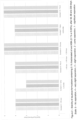
- Figure 1 shows the stability of aqueous whole oil formulations (based on the preparations in Examples 13 to 16) after 35, 105 and 360 days.
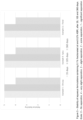
- Figure 2 shows the stability results of the aqueous solutions of fractionated oil formulations (based on Examples 3, 6 and 9 with 0.1% KBA and Examples 4, 7 and 10 with 0.05% KBA) after 48, 99 and 239 days.
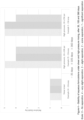
- Figure 3 shows the stability results of the aqueous solutions of fractionated oil formulations (based on Examples 5, 8 and 11 with 0.2% KBR) after 35, 105 and 360 days.
- Figure 4 shows the stability results of aqueous formulations under different mixing.
- the term 'shear mixed' denote formulations which were shear mixed at 24,000 rpm, but not high pressure homogenised.
- '10 ⁇ 10K psi' denotes formulations homogenised by 10 passes at 10,000 psi (69MPa).
- '10 x 25K psi' denotes formulations homogenised by 10 passes at 25,000 psi (172MPa).
- Figure 1 demonstrates the stability of the whole oil formulations after 35, 105 and 360 days. Very good stability is seen.
- Figures 2 and 3 demonstrate that the fractionated oil formulations with both KBR and KBA, have even better stability.
- Figure 4 shows the benefit of high-pressure homogenization. Shear mixed samples did show some separation of the hop oil but can be rapidly re-mixed simply by shaking.
- Table 4 shows the stability of formulations made using Example 20 of varying oil concentration (note: samples were not high pressure homogenised).
- Table 4 Oil concentration Potassium hop beta acid concentration Stability 3 days 70 days 10% w/w 10% w/w 1 1 1% w/w 1% w/w 4 3 0.5% w/w 0.5% w/w 5 4 0.1% w/w 0.1% w/w 5 4 0.05% w/w 0.05% w/w 5 5 0.01% w/w 0.01% w/w 5 5
- Table 5 shows the stability of formulations made using Examples 21 to 23 of varying oil types and concentration (note: samples were not high pressure homogenised).
- Table 5 Oil concentration Potassium hop beta acid concentration Stability of oil formulation after 74 days Hydro-distilled Target hop oil
- Example 21 Lemon oil
- Example 22 Peppermint oil
- Example 23 5% w/w 5% w/w 1 1 1 2% w/w 2% w/w 2 2 1 1% w/w 1% w/w 3 3 2 0.5% w/w 0.5% w/w 4 3 2 0.1% w/w 0.1% w/w 4 4 3 0.05% w/w 0.05% w/w 4 4 4 0.01% w/w 0.01% w/w 5 4 4 4
- Table 7 shows the stability of formulations made using Examples 27 with varying ratios of oil and KBR (note: samples were not high pressure homogenised).
- Table 7 Ratio of oil to KBR Calculated density of mixture Stability of formulation 5 days 37 days 1% oil 0.1% oil 1% oil 0.1% oil 5:1 0.90 1 1 1 1 2:1 0.94 1 1 1 1 1:1 0.97 2 4 1 4 1:2 1.01 3 5 3 4 1:5 1.05 4 4 2 4
- hop acids may be acting as weighting agents, as well as or rather than emulsifiers.
- hop acids improve the stability of the formulations although hop beta acids show optimum effectiveness.
- Table 9 shows that aqueous hop beta acid and essential oil formulations containing sugar show good stability. Table 9 Lemon Syrup Stability 14 days Formulation Sugar concentration Oil concentration Hop beta acid concentration Example 28 50% 100ppm 50ppm 4 Example 29 50% 500ppm 250ppm 5 Example 30 50% 100ppm 0ppm 1 Example 31 50% 500ppm 0ppm 2
- hop beta acids as different salts (sodium and potassium) and in their free acid form was assessed and the results shown in Table 10.
- Table 10 Formulation Hop beta Acid used Stability 3 days Example 34 KBA 4 Example 35 NaBA 4 Example 36 Hop beta acid crystals 2 Example 37 None 1
- hop acids (optimally in their salt form) can stabilise hop oils and other essential oils in aqueous formulations.
- the formulations disperse well and have excellent stability.
- the formulations are made by mixing the hop or other essential oil and potassium hop beta acid resin and then mixing vigorously into water. Stability can be enhanced by high-pressure homogenisation of the aqueous formulation.
- the formulations are typically cloudy in appearance. Optimum formulations show good stability at least up to six months. Even at high oil concentrations of 5 wt%, if separation does occur, a brief shake by hand readily restores a uniform emulsion.
- the hop acids may be acting solely as emulsifiers (ie., they have a polar portion to solubilise in water and lipophilic portion to solubilise oil).
- the potassium hop beta acids when added to water, the potassium hop beta acids would be expected to form mainly the free acid and hence be water-insoluble (pKa - co. 5.5 - 7.8) under the acidic or neutral pH conditions of certain essential oil preparations. Accordingly, we hypothesise that the hop beta acids potentially may alternatively or additionally be acting as weighting agents.
- Hop oils typically have density of 0.8 - 0.9g/ml and potassium hop beta acids have density of ca. 1.1g/ml.
- Hop acids found to be suitable in this work include hop beta acids (lupulones), hop alpha acids (humulones), iso-alpha acids (iso-humulones), rho-iso-alpha acids (rho-iso-humulones), tetrahydro-iso-alpha acids (tetrahydro-iso-humulones), hexahydro-iso-alpha acids (hexahydro-iso-humulones), hexahydro-beta acids (hexahydro-lupulones), hulupones, humulinones, including co, n, ad homologues, isomers (e.g. cis/trans), stereoisomers (R and S) and mixtures thereof.
- Preferred formulations use beta acids, but other hop acids such as alpha acids, iso-alpha acids and tetrahydroiso-alpha acids also show good properties.
- any essential oil is suitable for formulation in accordance with the present invention.
- the invention is particularly useful for food and drink applications using essential oils such as: hop, orange, lemon, lavender, oregano.
- the essential oils may be whole hop oils (e.g. steam distilled (SD), molecular distilled (MD), hydro-distilled (HD)) or fractionated hop oils (e.g. spicy, citrussy, floral, late hop floral fractions), as required, having regard to the intended purpose of the essential oil.
- the formulations can be used to dose hop oil formulations in the brewing process - ideally at end of the process - to the final bright beer or to dose citrus essential oils into fruit-based drinks.
- the present invention also provides methods of flavouring beverages by mixing an inventive composition with a beverage; and beverages obtainable by this method.
- the compositions of the present invention are useful in flavouring low alcohol beverages, such as beers having an alcohol content of 1.2 % ABV or lower; 1.0 % ABV or lower; 0.5 % ABV or lower; 0.1 % ABV or lower; or 0.05 % ABV or lower.
- thickening agents e.g. Xanthan gum
- Xanthan gum can be added.
- hop alpha acids and hop beta acids are already commonly present in beer
- ethanol or propylene glycol, or other synthetic emulsifiers there have been very few natural emulsifiers available for food use, hence this application has a broad scope not only in beer, but for many other food and drink formulations.
- hop acids have antimicrobial activity, so will tend to protect the aqueous formulations from micro-contamination.
- No bacterial, yeast or mould growth was seen in any unopened samples, even after extended periods of storage, such as twelve months or more. This demonstrates that products prepared with compositions of the present invention have good shelf-life.
- the addition of 400ppb of hop oil to a beer will only add an additional 200 - 800ppb of iso-hop alpha acids and will therefore have a negligible or no impact on the taste of the beer.
- hop acids can not only be exploited for essential oils, but may be used to stabilise other oil / water-based mixtures.
- the hop acids can be used to emulsify any oil soluble components such as flavours, colours, antioxidants and vitamins.
- the hop acids can be used to emulsify water insoluble components such as flavours, colours, aromas and active ingredients.
- the hop acids may be used to emulsify certain water-insoluble active ingredients in pharmaceutical compositions.
Landscapes
- Chemical & Material Sciences (AREA)
- Engineering & Computer Science (AREA)
- Organic Chemistry (AREA)
- Life Sciences & Earth Sciences (AREA)
- Food Science & Technology (AREA)
- Health & Medical Sciences (AREA)
- Wood Science & Technology (AREA)
- Biochemistry (AREA)
- General Health & Medical Sciences (AREA)
- Genetics & Genomics (AREA)
- General Engineering & Computer Science (AREA)
- Bioinformatics & Cheminformatics (AREA)
- Zoology (AREA)
- Chemical Kinetics & Catalysis (AREA)
- Nutrition Science (AREA)
- Polymers & Plastics (AREA)
- Oil, Petroleum & Natural Gas (AREA)
- Non-Alcoholic Beverages (AREA)
- Seasonings (AREA)
- Fats And Perfumes (AREA)
- Medicines Containing Plant Substances (AREA)
- Cosmetics (AREA)
Description
- The present invention relates to novel applications of hop acids and formulations using hop acids. More specifically, the present invention relates to formulations comprising hop acids to stabilise or emulsify hop oils or other essential oils in aqueous media.
- Hop acids are a group of organic compounds with acidic character obtained from the hop plant Humulus lupulus. Hop acids include alpha acids (humulone and its homologues), beta acids (lupulone and its homologues) and derivatives formed by isomerisation, oxidation and reduction. Many of these compounds give bitterness to beer.
- Essential oils are natural aroma oils extracted from plants and, typically, distilled to form a concentrated oil. The oils may contain a single component but are often a complex mixture of components. Essential oils may be used in a number of industries, including perfumery and in flavouring food and beverages. Hop oils are used to flavour beer, either by adding hop cones or extracts to the beer or by adding isolated hop essential oils or fractions thereof.
- Isolated hop oils are commonly used by brewers in preference to dry hopping due to greater consistency of flavour and bitterness from one batch to another. Additionally, dry hopping with hop cones causes yield losses due to uptake of beer on the cellulosic material, which does not occur when adding isolated hop oils. Hop oils are conventionally formulated as either aqueous emulsions using synthetic emulsifiers such as polysorbates, or dissolved in solvents such as propylene glycol. These ingredients however, are synthetic and not found naturally in beer. Additionally propylene glycol is subject to regulatory limits as a carrier for flavourings. An alternative solvent is ethanol, but this is undesirable due to its flammable nature making transport expensive and, because it is not an inert solvent, side reactions can potentially occur with flavour components in the oil. Additionally, brewers do not like to add exogenous ethanol to beer, since the preference is for all alcohol in the brewed product to have been produced solely during the brewing process.
- L. Narziss et al. (BRAUWELT, 113(66), 1973, pp. 1339-1344) is a report of a study on hop dosing using aqueous solutions of hop extracts.
US 3,979,527 describes a method for the production of hop oil, which comprises steam distilling hop oil in admixture with water from hops under vacuum at a temperature not exceeding 50°C.CA796724A describes a process for the production of a hop concentrate.US 3,486,906 describes a composition comprising an isohumulone and a solvent selected from propylene glycol and glycerine. - Accordingly, there is a need for an alternative hop oil formulation.
- Surprisingly, we have found that hop acids can be used as emulsifiers which hitherto has not been reported. In this invention, essential oils such as hop essential oils can be formulated as stable aqueous emulsions by combination with hop acids. This new formulation overcomes all the problems associated with existing synthetic emulsifiers and solvents.
- We have also determined that our developments are applicable to both: i) whole essential oils, being mixtures of components obtained by extraction from plant material; and ii) fractionated essential oils, being single components or selections of components that have been isolated or purified from a whole essential oil. The term "essential oil" as used herein will be construed accordingly.
- In its broadest sense, an aqueous emulsifiable composition or emulsion comprising at least one hop acid and at least one essential oil in water is described. The present invention provides an aqueous emulsifiable composition comprising: 0.01-5.00 wt% of at least one essential oil; 0.005-10.0 wt% of at least one hop acid; and water; wherein the composition has a hop acid content and total essential oil content in a ratio of 1:5 to 5:1, and the balance being water.
- In a further aspect, the present invention provides a method of stabilising or emulsifying an essential oil or mixture of essential oils, the method comprising the step of mixing the essential oil or mixture of essential oils with at least one hop acid to form an essential oil and hop acid mixture, wherein the hop acid and essential oils are mixed to provide a hop acid content and total essential oil content in a ratio of 1:5 to 5:1; and mixing the essential oil and hop acid mixture with water.
- Preferably, the method further comprises the step of shear mixing the mixture or high-pressure homogenisation of the mixture, preferably, high-pressure homogenisation.
- Also described but not part of the invention is the use, as an emulsifier, of a composition comprising at least one hop acid.
- Preferably, the at least one hop acid is a beta acid, alpha acid, iso-alpha acid, rho-iso-alpha acid, tetrahydro-iso-alpha acid, hexa-hydro-iso-alpha acid, hexahydro-beta acid, hulupone or humulinone or a mixture or mixtures thereof.
- Preferably, the at least one hop acid is at least one hop beta acid.
- Preferably, the at least one hop acid is at least one hop acid salt, more preferably a monovalent salt, even more preferably a potassium salt or a sodium salt, most preferably a potassium salt.
- Preferably, the at least one hop acid or hop acid salt is at least one isolated or purified hop acid or hop acid salt.
- Preferably, the at least one essential oil is at least one hop essential oil, or at least one fruit essential oil, or at least one flower essential oil, or at least one seed essential oil, or mixture or mixtures thereof.
- The composition has a hop acid content and total essential oil content in a ratio of about 1:5 to about 5:1; preferably in a ratio of about 1:2 to about 2:1.
- Preferably, the composition is formed by mixing the at least one hop acid and the at least one essential oil and combining the mixture with water.
- Preferably, the composition has an essential oil content of up to about 2 wt%, more preferably up to about 1 wt%. Most preferably, the composition has an essential oil content of from 0.1 wt% to 1 wt%.
- Preferably, the composition has a hop acid content of 0.01 wt/% or more, more preferably, 0.05 wt%.
- Preferably, the composition has a hop acid content of up to about 5 wt%, more preferably up to about 2 wt%. Most preferably, the composition has a hop acid content of 0.05 wt% to 2 wt%.
- The present invention also provides a method of flavouring a beverage, the method comprising mixing a composition as defined above with a beverage. Advantageously, the beverage has an alcohol content of 10 % ABV or lower, 5 % ABV or lower, 1.2 % ABV or lower; 1.0 % ABV or lower; 0.5 % ABV or lower; 0.1 % ABV or lower; or 0.05 % ABV or lower.
- Advantageously, the at least one essential oil is at least one hop essential oil and the beverage is a beer. Conveniently, the composition is mixed during or at the end of the beer brewing process.
- The present disclosure further describes a beverage obtained by the method of flavouring a beverage.
- The above and other aspects of the present invention will now be described in further detail, with reference, by way of example only, to the following examples.
- Preparations were prepared by mixing essential oils with hop acids and water at room temperature, suitably by premixing oil and hop acid before mixing with water. The mixture was manually stirred, shear mixed or high pressure homogenised. Advantageous compositions were prepared using a high-pressure homogeniser at 5,000 - 50,000 psi, which gave an oil droplet particle size of <10µm.
- Hop oil extracts can be prepared by standard techniques (such as by using supercritical carbon dioxide). Whole hop oils are prepared by distillation techniques such as molecular distillation, steam distillation or hydro-distillation. All these techniques are well-known to the skilled person (Handbook of Brewing, ) and many hop oils and hop oil extracts are available commercially.
- Hop oil fractions, such as spicy, citrussy and floral, are commonly known fractions, and are typically made by supercritical fluid extraction, as disclosed for example by G. Aerts (The J. of Supercritical Fluids, 71, 147-161, 2012) or by fractionation techniques as described by Murray et al (Proceedings of the European Brewery Convention Madrid. IRL Press, Oxford, 321-328, 1987), to which further reference should be made.
- Hop acids can be isolated and prepared by standard techniques. All these techniques are well-known to the skilled person (Developments in Food Science 27, Chemistry and Analysis of Hop and Beer Bitter Acids, Elsevier, 1991 ) and many are available commercially.
- Accordingly, except where the context necessitates, details of the extraction or isolation procedures are omitted in the following examples.
- A dilute aqueous solution of a potassium salt of hop beta resin (Barth-Haas-Group, BetaStab'10 A) (400g) was evaporated under reduced pressure at 70°C, to give a brown semi-solid (96g, 41% hop beta acids).
- A dilute aqueous solution of a potassium salt of hop beta resin (Barth-Haas Group, BetaStab®10 A) was acidified with 40% sulphuric acid (200g) at 70°C. The resultant resin layer was purified by recrystallization to give hop beta acid crystals (138g, 85.87%). Hop beta acid crystals (10g) were warmed to 60°C and 40% w/w potassium hydroxide (3.6g) added dropwise until pH 10.1. A brown semi-solid resin was formed (containing 62.09% hop beta acids).
- The potassium salt of hop beta acids (KBA) of Example 2 (0.32g, 62.09% hop beta acids) and citrussy hop oil (0.2g) obtained from purification of hop essential oil (Barth-Haas-Group) were manually mixed. The mixture (0.52g, 38% hop beta acids) was added to vigorously stirred deionized water (200g) at room temperature. The resultant emulsion containing 0.1% w/w citrussy hop oil and 0.1% w/w hop beta acids was passed through a high-pressure homogeniser (Avestin Emulsiflex-C3) at 25,000psi.
- The potassium salt of hop beta acids (KBA) of Example 2 (0.16g, 62.09% hop beta acids) and citrussy hop oil (0.2g) were manually mixed. The mixture (0.36g, 27.6% hop beta acids) was added to vigorously stirred deionized water (200g) at room temperature. The resultant emulsion containing 0.1% w/w citrussy hop oil and 0.05% w/w hop beta acids was passed through a high-pressure homogeniser (Avestin Emulsiflex-C3) at 25,000psi.
- The crude potassium salt of hop beta resin (KBR) of Example 1 (2.5g, 41% hop beta acids) and citrussy hop oil (0.5g) were manually stirred. The resultant mixture (3g) was added to stirred deionized water (500g) at room temperature. The resultant emulsion containing 0.1% w/w citrussy hop oil and 0.2% w/w hop beta acids was passed through a high-pressure homogeniser (Avestin Emulsiflex-C3) at 25,000psi.
- Examples 3-5 were repeated using spicy hop oils and floral hop oils in place of the citrussy hop oil, giving the following combinations:
Hop beta acid/Hop beta resin potassium salt Hop oil (0.1% w/w) Citrussy Spicy Floral 0.1% KBA w/w Example 3 Example 6 Example 9 0.05% KBA w/w Example 4 Example 7 Example 10 0.2% KBR w/w Example 5 Example 8 Example 11 - Bottles of a commercial lager beer (300ml) were cooled to 5°C. The crown corks were removed and 0.12ml of the 0.1% oil formulations of Example 3, 6 and 9) were injected into the beer in respective bottles. Each bottle was re-corked and vigorously shaken for 10 minutes. The bottles were stored at 5°C overnight prior to analysis by a taste panel and with a haze meter.
- Dosing at 400ppb oil was chosen as a standard dosing rate for the purposes of our tests and comparisons. The skilled person will appreciate that a suitable dose for a particular beer will depend on the base beer, whether the oil is a whole extract or an oil fraction and the final flavour the brewer is seeking to achieve. Doses may typically be in the region of 100-200ppb oil.
- Example 5 was repeated, replacing the citrussy hop oil fraction with distilled whole hop oils from the variety Target:
- hydro-distilled (HD) (Example 13),
- molecular distilled (MD) (Example 14); and
- steam distilled (SD) (Example 15).
- Example 5 was repeated using 100% orange (Citrus sinensis) essential oil (Miaroma) to give a final formulation of 0.1% w/w orange oil and 0.2% w/w hop beta acids.
- The potassium salt of hop alpha acids (0.09g) and HD Target hop oil (0.09g) were mixed together and added to vigorously stirred water (90g) at room temperature. Stirring was continued for 2 hours.
- Example 17 was repeated with the potassium salt of hop alpha acids replaced with the potassium salt of iso-alpha acids (Example 18) and the potassium salt of hop beta acids (Example 19).
- The potassium salt of hop beta resin (KBR) from Example 1 (3.6g, 41% hop beta acids) and a Cascade oil fraction (1.5g) (Barth Haas Group) were mixed with vigorous stirring (5.1g). A portion of this mixture (0.034g) was added to water (9.66g) and vigorously stirred for 30 minutes resulting in a formulation containing 0.1% w/w oil and 0.1% w/w hop beta acids. The final stage was repeated with different ratios of the mixture to water to give 10%, 1%, 0.5%, 0.05% and 0.01% w/w oil formulations.
- The potassium salt of hop beta resin (KBR) from Example 1 (2.4g, 41% hop beta acids) and hydro-distilled Target whole hop oil (Barth-Haas Group) (1g) were mixed with vigorous stirring (3.4g). A portion of this mixture (0.034g) was added to water (9.66g) and vigorously stirred for 30 minutes resulting in a formulation containing 0.1% w/w oil and 0.1% w/w hop beta acids. The final stage was repeated with different ratios of the mixture to water to give 5%, 2%, 1%, 0.5%, 0.05% and 0.01% w/w oil formulations.
- The experiment was repeated with the Target hop oil replaced with lemon (Citrus limon) essential oil (NHR Organic Oils) (Example 22) or peppermint (Mentha piperita) essential oil (NHR Organic Oils) (Example 23).
- Example 5 was repeated except that, instead of high-pressure homogenisation at 25,000psi, the formulation was shear mixed at 24,000rpm (Example 24) or high pressure homogenised at 10,000 psi (Example 25).
- Formulations from Example 4, Example 5 and a 0.1% solution of citrussy hop oil in propylene glycol, as a Reference Example of the industry standard formulation, were dosed into a neutral all-malt lager beer at 280 ppm. The beer was assessed by a four-member taste panel. The results are given in Table 3 below.
- Orange essential oil (Citrus sinensis) Miaroma was mixed with the KBR of Example 1 in ratios of 5:1, 2:1, 1:1, 1:2 and 1:5. These mixtures were vigorously stirred with water to give 1% and 0.1% oil formulations.
- Lemon (Citrus limon) essential oil (NHR Organic Oils) (0.2g) and the KBA of Example 2 (0.13g) was mixed and added to vigorously stirred water (200g) to give a lemon formulation.
- The lemon formulation (30g) was thoroughly stirred with sugar (Tate and Lyle) (150g) and water (120g) to form a lemon sugar syrup (Example 28) containing 50% sugar and 100ppm oil. The lemon formulation (150g) was also thoroughly stirred with sugar (Tate and Lyle) (150g) to form a lemon sugar syrup (Example 29) containing 50% sugar and 500ppm oil.
- This methodology was repeated but without any addition of KBA to give lemon sugar syrups containing 50% sugar and 100ppm oil (Example 30) and 50% sugar and 500ppm oil (Example 31).
- The lemon sugar syrup formulation of Example 28 (50g) was added to still and sparkling spring water (450g) to give lemon-flavoured drinks containing 5% sugar and 10ppm oil. This was repeated with lemon sugar syrup (Example 30) to give lemon-flavoured drinks containing 5% sugar and 50ppm oil.
- The lemon sugar syrup of Example 29 (50g) was added to still and sparkling spring water (450g) to give lemon-flavoured drinks containing 5% sugar and 50ppm oil. This was repeated with the lemon sugar syrup formulation of Example 31 to give lemon-flavoured drinks containing 5% sugar and 50ppm oil.
- A dilute aqueous solution of a potassium salt of hop beta resin (Barth-Haas Group, BetaStab®10 A) was acidified with 40% sulphuric acid (200g) at 70°C. The resultant resin layer was purified by recrystallization to give hop beta acid crystals (138g, 85.87%). Hop beta acid crystals (10g) were warmed to 80°C and 40% w/w sodium hydroxide (2.4g) added dropwise until pH 10.1. A brown semi-solid resin was formed (containing 84.56% hop beta acids).
- Citrussy hop oil (0.2g) was mixed with either KBA from Example 2, NaBA from Example 33 or hop beta acid crystals. Each mixture was vigorously stirred with water (200g) to give formulations containing 0.1% oil and 0.05% hop beta acids. Additionally citrussy hop oil (0.2g) was vigorously stirred with water (200g) without any hop beta acid addition.
- Tetra resin (20g, 75.2% tetrahydro-iso-alpha acids) (Barth Haas Group) was stirred at 70°C and 45% w/w potassium hydroxide (5.2g) added dropwise. The mixture was heated at 80°C for a further 1h to give a brown semi-solid (containing 69.9% tetrahydro-iso-alpha acids).
- The potassium salt of tetrahydro-iso-alpha acids of Example 38 (0.3g, 69.9% tetrahydro-iso-alpha acids) and citrussy hop oil (0.2g) was added to deionised water (200g) and mixed with a high shear mixer (UltraTurrax) at 9,200 rpm for 10 minutes. The resultant emulsion was passed five times through a high-pressure homogeniser (Avestin Emulsiflex-C3) at 25,000psi. After 134 days at room temperature, the emulsion showed excellent stability.
- A dosed beer sample from Example 12 was degassed overnight at 5°C and the haze measured using a haze meter (Hach 2100N Turbidimeter) and compared against beers dosed with essential oils dissolved propylene glycol (the current industry standard) for comparison. The results are shown in Table 1.
Table 1 - Haze Formulation Hop oil in formulation Hop oil added to beer Hop beta acid added to beer Haze at 5°C (EBC units) Control None 0ppm 0 0.38 Propylene glycol Citrussy fraction 400ppb 0 0.43 Propylene glycol Spicy fraction 400ppb 0 0.43 Example 4 Citrussy fraction 400ppb 200ppb 0.45 Example 7 Spicy fraction 400ppb 200ppb 0.41 Example 5 Citrussy fraction 400ppb 800ppb 0.96 Example 8 Spicy fraction 400ppb 800ppb 0.75 - These results show that the formulation from Examples 4 and 7 (as with a propylene glycol formulation), do not increase the haze of the beer significantly from the control, so the hop oil formulation can be added in the final bright beer (or potentially anywhere in the brewing process) without negative effects. Formulations from Examples 5 and 8 do cause some haze so would need to be added prior to a final beer filter to ensure a clear final beer.
- The dosed beer samples from Example 12 were tested empirically with a five-member tasting panel. The results are given in Table 2.
Table 2 Formulation Hop oil in formulation Hop oil added to beer Hop beta acid added to beer Sensory evaluation - Increased hop aroma and flavour cf. control (% tasters agree) Control None 0ppm 0 No Propylene glycol Citrussy fraction 400ppb 0 Yes (100%) Propylene glycol Spicy fraction 400ppb 0 Yes (100%) Example 4 Citrussy fraction 400ppb 200ppb Yes (100%) Example 7 Spicy fraction 400ppb 200ppb Yes (100%) Example 5 Citrussy fraction 400ppb 800ppb Yes (100%) Example 8 Spicy fraction 400ppb 800ppb Yes (100%) - The results demonstrate that by adding only 400ppb of hop oil to the beer a stronger hop aroma/flavour was observed by all participants in all samples compared with the control.
- The dosed beer samples from Example 26 were tested empirically with a four-membertasting panel and the total hop aroma intensity assessed on a scale of 1 (low) to 10 (high). The results are given in Table 3.
Table 3 Formulation Hop oil added to beer Hop Aroma Intensity Control 0ppb 3 Example 4 280ppb 6 Example 5 280ppb 5 Reference Example - 0.1% citrussy oil in propylene glycol 280ppb 5 - The results demonstrate that by adding only 280ppb of hop oil to the beer a stronger hop aroma/flavour was observed by all participants in all samples compared with the control. Beers dosed with formulation using KBA (example 4) showed the greatest hop aroma intensity.
- This confirms that the inventive formulations satisfactorily release the hop oil into the beer.
-
Figure 1 shows the stability of aqueous whole oil formulations (based on the preparations in Examples 13 to 16) after 35, 105 and 360 days. -
Figure 2 shows the stability results of the aqueous solutions of fractionated oil formulations (based on Examples 3, 6 and 9 with 0.1% KBA and Examples 4, 7 and 10 with 0.05% KBA) after 48, 99 and 239 days.Figure 3 shows the stability results of the aqueous solutions of fractionated oil formulations (based on Examples 5, 8 and 11 with 0.2% KBR) after 35, 105 and 360 days.Figure 4 shows the stability results of aqueous formulations under different mixing. The term 'shear mixed' denote formulations which were shear mixed at 24,000 rpm, but not high pressure homogenised. '10 × 10K psi' denotes formulations homogenised by 10 passes at 10,000 psi (69MPa). '10 x 25K psi' denotes formulations homogenised by 10 passes at 25,000 psi (172MPa). - The stability was assessed by the following scale: 5 - No visible separation, 4 - very slight separation, 3 - slight separation, 2- some separation, 1 -significant separation.
-
Figure 1 demonstrates the stability of the whole oil formulations after 35, 105 and 360 days. Very good stability is seen. -
Figures 2 and3 demonstrate that the fractionated oil formulations with both KBR and KBA, have even better stability.Figure 4 shows the benefit of high-pressure homogenization. Shear mixed samples did show some separation of the hop oil but can be rapidly re-mixed simply by shaking. - Table 4 below shows the stability of formulations made using Example 20 of varying oil concentration (note: samples were not high pressure homogenised).
Table 4 Oil concentration Potassium hop beta acid concentration Stability 3 days 70 days 10% w/ w 10% w/ w 1 1 1% w/ w 1% w/ w 4 3 0.5% w/w 0.5% w/ w 5 4 0.1% w/w 0.1% w/ w 5 4 0.05% w/w 0.05% w/ w 5 5 0.01% w/w 0.01% w/ w 5 5 - Table 5 below shows the stability of formulations made using Examples 21 to 23 of varying oil types and concentration (note: samples were not high pressure homogenised).
Table 5 Oil concentration Potassium hop beta acid concentration Stability of oil formulation after 74 days Hydro-distilled Target hop oil Example 21 Lemon oil Example 22 Peppermint oil Example 23 5% w/ w 5% w/ w 1 1 1 2% w/ w 2% w/ w 2 2 1 1% w/ w 1% w/ w 3 3 2 0.5% w/w 0.5% w/ w 4 3 2 0.1% w/w 0.1% w/ w 4 4 3 0.05% w/w 0.05% w/ w 4 4 4 0.01% w/w 0.01% w/ w 5 4 4 - The density of the essential oils and the hop acid salts was assessed, and the results are shown in Table 6 below.
Table 6 Component Density - g/ml at 25°C HD Target hop oil 0.92 MD Target hop oil 0.91 SD Target hop oil 0.86 Spicy fraction 1.17 Citrussy fraction 0.98 Floral fraction 0.92 Late hop floral fraction 0.93 Orange oil 0.85 Potassium beta acid resin 1.09 Potassium iso-alpha acid resin 1.15 - Table 7 below shows the stability of formulations made using Examples 27 with varying ratios of oil and KBR (note: samples were not high pressure homogenised).
Table 7 Ratio of oil to KBR Calculated density of mixture Stability of formulation 5 days 37 days 1% oil 0.1 % oil 1% oil 0.1% oil 5:1 0.90 1 1 1 1 2:1 0.94 1 1 1 1 1:1 0.97 2 4 1 4 1:2 1.01 3 5 3 4 1:5 1.05 4 4 2 4 - It was observed that the optimum formulations arise when the combined density of the hop acid and oil are similar to the density of the water so that the oil remains in suspension and does not tend to rise or cream to the top or sediment on the bottom. This suggests that the hop acids may be acting as weighting agents, as well as or rather than emulsifiers.
- The use of other hop acid salts was assessed, and the results shown in Table 8.
Table 8 Formulation Hop Acid (potassium salt) Stability 19 days 210 days Example 17 Alpha acid 4 2 Example 18 Iso- alpha acid 3 1 Example 19 Beta acid 4 3 - It was observed that all hop acids improve the stability of the formulations although hop beta acids show optimum effectiveness.
- Table 9 shows that aqueous hop beta acid and essential oil formulations containing sugar show good stability.
Table 9 Lemon Syrup Stability 14 days Formulation Sugar concentration Oil concentration Hop beta acid concentration Example 28 50 % 100ppm 50ppm 4 Example 29 50 % 500ppm 250ppm 5 Example 30 50 % 100ppm 0ppm 1 Example 31 50 % 500ppm 0ppm 2 - When these syrups were added to still or sparkling water, sweet, lemon-flavoured drinks were produced (Example 32).
- The use of hop beta acids as different salts (sodium and potassium) and in their free acid form was assessed and the results shown in Table 10.
Table 10 Formulation Hop beta Acid used Stability 3 daysExample 34 KBA 4 Example 35 NaBA 4 Example 36 Hop beta acid crystals 2 Example 37 None 1 - It was observed that best stability was formulations with hop beta acids in their salt form, rather than their free acid form. As expected, if no hop beta acids were added to the formulation, the oil rapidly separated from the water.
- From our work, we have determined that hop acids (optimally in their salt form) can stabilise hop oils and other essential oils in aqueous formulations. The formulations disperse well and have excellent stability.
- The formulations are made by mixing the hop or other essential oil and potassium hop beta acid resin and then mixing vigorously into water. Stability can be enhanced by high-pressure homogenisation of the aqueous formulation. The formulations are typically cloudy in appearance. Optimum formulations show good stability at least up to six months. Even at high oil concentrations of 5 wt%, if separation does occur, a brief shake by hand readily restores a uniform emulsion.
- The hop acids may be acting solely as emulsifiers (ie., they have a polar portion to solubilise in water and lipophilic portion to solubilise oil). However, when added to water, the potassium hop beta acids would be expected to form mainly the free acid and hence be water-insoluble (pKa - co. 5.5 - 7.8) under the acidic or neutral pH conditions of certain essential oil preparations. Accordingly, we hypothesise that the hop beta acids potentially may alternatively or additionally be acting as weighting agents. Hop oils typically have density of 0.8 - 0.9g/ml and potassium hop beta acids have density of ca. 1.1g/ml. By mixing the acids with oil, the resultant droplets could be expected to have similar densities to water, thereby being less prone to creaming.
- Hop acids found to be suitable in this work include hop beta acids (lupulones), hop alpha acids (humulones), iso-alpha acids (iso-humulones), rho-iso-alpha acids (rho-iso-humulones), tetrahydro-iso-alpha acids (tetrahydro-iso-humulones), hexahydro-iso-alpha acids (hexahydro-iso-humulones), hexahydro-beta acids (hexahydro-lupulones), hulupones, humulinones, including co, n, ad homologues, isomers (e.g. cis/trans), stereoisomers (R and S) and mixtures thereof. Preferred formulations use beta acids, but other hop acids such as alpha acids, iso-alpha acids and tetrahydroiso-alpha acids also show good properties.
- From our work, it appears that any essential oil is suitable for formulation in accordance with the present invention. The invention is particularly useful for food and drink applications using essential oils such as: hop, orange, lemon, lavender, oregano. The essential oils may be whole hop oils (e.g. steam distilled (SD), molecular distilled (MD), hydro-distilled (HD)) or fractionated hop oils (e.g. spicy, citrussy, floral, late hop floral fractions), as required, having regard to the intended purpose of the essential oil. For example, the formulations can be used to dose hop oil formulations in the brewing process - ideally at end of the process - to the final bright beer or to dose citrus essential oils into fruit-based drinks.
- Accordingly, the present invention also provides methods of flavouring beverages by mixing an inventive composition with a beverage; and beverages obtainable by this method. The compositions of the present invention are useful in flavouring low alcohol beverages, such as beers having an alcohol content of 1.2 % ABV or lower; 1.0 % ABV or lower; 0.5 % ABV or lower; 0.1 % ABV or lower; or 0.05 % ABV or lower.
- Additional components, such as thickening agents, e.g. Xanthan gum can be added.
- In the context of brewing beer, since hop alpha acids and hop beta acids are already commonly present in beer, by applying the methods and compositions of the present invention, it is not necessary to use ethanol or propylene glycol, or other synthetic emulsifiers. Hitherto, there have been very few natural emulsifiers available for food use, hence this application has a broad scope not only in beer, but for many other food and drink formulations.
- Additionally, hop acids have antimicrobial activity, so will tend to protect the aqueous formulations from micro-contamination. No bacterial, yeast or mould growth was seen in any unopened samples, even after extended periods of storage, such as twelve months or more. This demonstrates that products prepared with compositions of the present invention have good shelf-life.
- Taste testing trials have shown that, when formulations are added to beer, the flavour or aroma of the hop oil are released into the beer. Hop beta acids themselves have very little taste impact and so will not give any negative effect on aroma or flavour of the final beer in the amounts resulting from use of the compositions of the present invention. Other hop acids are bitter, but the amount added by the formulations of the present invention are sufficiently low that the amount of hop acid will not significantly affect taste of final product. For example, iso-alpha acids have a taste threshold in beer of a few ppm whereas the taste threshold for hop essential oils is typically in terms of parts per billion. Typically, beer contains 10-100ppm iso-hop alpha acid for bitterness. Accordingly, in the context of the preferred formulations in which the ratio of hop oil to hop acid salt is in the range of 1:2 to 2:1, the addition of 400ppb of hop oil to a beer will only add an additional 200 - 800ppb of iso-hop alpha acids and will therefore have a negligible or no impact on the taste of the beer.
- Additionally, the emulsification properties of hop acids can not only be exploited for essential oils, but may be used to stabilise other oil / water-based mixtures. For instance, with food and beverages, the hop acids can be used to emulsify any oil soluble components such as flavours, colours, antioxidants and vitamins. Similarly, in cosmetic and personal care products, the hop acids can be used to emulsify water insoluble components such as flavours, colours, aromas and active ingredients. Additionally, the hop acids may be used to emulsify certain water-insoluble active ingredients in pharmaceutical compositions.
Claims (15)
- An aqueous emulsifiable composition comprising:0.01-5.00 wt% of at least one essential oil;0.005-10.0 wt% of at least one hop acid; andwater;wherein the composition has a hop acid content and total essential oil content in a ratio of 1:5 to 5:1, and the balance being water.
- A composition as claimed in claim 1, wherein the at least one hop acid is at least one hop beta acid, hop alpha acid, iso-alpha acid, rho-iso-alpha acid, tetrahydro-iso-alpha acid, hexahydro-iso-alpha acid, hexahydro-iso-beta acid, hulupone or humulinone or a mixture or mixtures thereof.
- A composition as claimed in claim 2, wherein the at least one hop acid is at least one hop beta acid.
- A composition as claimed in any preceding claim, wherein the at least one hop acid is at least one hop acid salt.
- A composition as claimed in any preceding claim, wherein the at least one essential oil is at least one hop essential oil, or at least one fruit essential oil, at least one flower essential oil, at least one seed essential oil, or mixture or mixtures thereof.
- A composition as claimed in any preceding claim, wherein the composition has a hop acid content and total essential oil content in a ratio of 1:2 to 2:1.
- A composition as claimed in any preceding claim, wherein the composition has an essential oil content of up to 2 wt%.
- A composition as claimed in any preceding claim, wherein the composition has a hop acid content of (a) 0.01 wt% or more and/or (b) up to 5 wt%.
- A composition as claimed in any preceding claim, which does not include ethanol, propylene glycol or a synthetic emulsifier.
- A method of stabilising or emulsifying an essential oil or mixture of essential oils, the method comprising:mixing the essential oil or mixture of essential oils with at least one hop acid to form an essential oil and hop acid mixture, wherein the hop acid and essential oils are mixed to provide a hop acid content and total essential oil content in a ratio of 1:5 to 5:1; andmixing the essential oil and hop acid mixture with water.
- A method as claimed in claim 10, wherein:(i) the hop acid or hop acid salt is an isolated hop acid or hop acid salt; and/or(ii) the essential oil or mixture of essential oils, the hop acid or mixture of hop acids and water are mixed to provide (a) an essential oil content of up to 5 wt% and/or (b) a hop acid content of 0.01 wt% or more.
- A method as claimed in claims 10 or 11 further comprising the step of shear mixing the mixture or high-pressure homogenisation of the mixture, preferably, high-pressure homogenisation.
- A method of flavouring a beverage, the method comprising mixing a composition as claimed in any one of claims 1 to 9 with a beverage.
- A method as claimed in claim 13, wherein (a) the beverage has an alcohol content of 10 % ABV or lower, and/or (b) the beverage is a beer.
- A method as claimed in claim 13, wherein the beverage is a beer and the composition is mixed with the beverage during or at the end of a beer brewing process.
Applications Claiming Priority (2)
| Application Number | Priority Date | Filing Date | Title |
|---|---|---|---|
| GBGB1818793.0A GB201818793D0 (en) | 2018-11-19 | 2018-11-19 | Novel applications of hop acids |
| PCT/EP2019/081843 WO2020104478A1 (en) | 2018-11-19 | 2019-11-19 | Novel applications of hop acids |
Publications (3)
| Publication Number | Publication Date |
|---|---|
| EP3883390A1 EP3883390A1 (en) | 2021-09-29 |
| EP3883390C0 EP3883390C0 (en) | 2023-08-09 |
| EP3883390B1 true EP3883390B1 (en) | 2023-08-09 |
Family
ID=64739938
Family Applications (1)
| Application Number | Title | Priority Date | Filing Date |
|---|---|---|---|
| EP19812722.7A Active EP3883390B1 (en) | 2018-11-19 | 2019-11-19 | Novel applications of hop acids |
Country Status (7)
| Country | Link |
|---|---|
| US (1) | US12630782B2 (en) |
| EP (1) | EP3883390B1 (en) |
| AU (1) | AU2019382828A1 (en) |
| BR (1) | BR112021009684A2 (en) |
| GB (1) | GB201818793D0 (en) |
| WO (1) | WO2020104478A1 (en) |
| ZA (1) | ZA202102611B (en) |
Families Citing this family (4)
| Publication number | Priority date | Publication date | Assignee | Title |
|---|---|---|---|---|
| WO2023165886A1 (en) | 2022-03-03 | 2023-09-07 | Firmenich Sa | Solid delivery systems |
| US12084636B2 (en) * | 2022-10-05 | 2024-09-10 | Abstrax Tech Inc. | Flavor enhanced hop materials |
| WO2026068507A1 (en) * | 2024-09-25 | 2026-04-02 | Givaudan Sa | Emulsion comprising aqueous phase, hop oil, emulsifier and polymeric terpene |
| US20260125625A1 (en) * | 2024-11-06 | 2026-05-07 | Abstrax Tech Inc. | Hops acids stabilized emulsions |
Citations (2)
| Publication number | Priority date | Publication date | Assignee | Title |
|---|---|---|---|---|
| US3155522A (en) * | 1961-07-04 | 1964-11-03 | Carlton & United Breweries | Process for the production of a hop concentrate |
| JP2014034517A (en) * | 2012-08-07 | 2014-02-24 | T Hasegawa Co Ltd | Inhibitor of bitter taste of menthol |
Family Cites Families (10)
| Publication number | Priority date | Publication date | Assignee | Title |
|---|---|---|---|---|
| CA796724A (en) * | 1968-10-15 | P. Hildebrand Robert | Hop concentrate and process for preparation thereof | |
| US3486906A (en) | 1965-03-01 | 1969-12-30 | Kalamazoo Spice Extract Co | Water-dispersible hop flavors for malt beverages and the like |
| CA1047436A (en) * | 1974-06-11 | 1979-01-30 | Brewing Patents Limited | Preparation of hop oil |
| ZA802802B (en) | 1979-05-24 | 1981-05-27 | Brewing Patents Ltd | Preparation of hop extracts rich in particular constituents |
| JP3513877B2 (en) | 1993-02-12 | 2004-03-31 | サントリー株式会社 | Hop extract, method for producing the same, and method for producing highly aromatic beer |
| BR0110965A (en) | 2000-06-30 | 2003-06-03 | Steiner Inc S S | Improvements in beer bitterness |
| US7413758B2 (en) | 2002-03-26 | 2008-08-19 | Millercoors Llc | Preparation of light stable hop products |
| US20140255587A1 (en) | 2013-03-11 | 2014-09-11 | S.S. Steiner, Inc. | Novel hop powders |
| GB201617691D0 (en) | 2016-10-19 | 2016-11-30 | Barth Innovations Ltd | Hop products |
| US11479745B2 (en) | 2017-04-07 | 2022-10-25 | John I. Haas, Inc. | Hop extraction products and processes for improved beverage fermentation and flavor |
-
2018
- 2018-11-19 GB GBGB1818793.0A patent/GB201818793D0/en not_active Ceased
-
2019
- 2019-11-19 EP EP19812722.7A patent/EP3883390B1/en active Active
- 2019-11-19 WO PCT/EP2019/081843 patent/WO2020104478A1/en not_active Ceased
- 2019-11-19 BR BR112021009684-1A patent/BR112021009684A2/en not_active Application Discontinuation
- 2019-11-19 US US17/294,675 patent/US12630782B2/en active Active
- 2019-11-19 AU AU2019382828A patent/AU2019382828A1/en not_active Abandoned
-
2021
- 2021-04-20 ZA ZA2021/02611A patent/ZA202102611B/en unknown
Patent Citations (2)
| Publication number | Priority date | Publication date | Assignee | Title |
|---|---|---|---|---|
| US3155522A (en) * | 1961-07-04 | 1964-11-03 | Carlton & United Breweries | Process for the production of a hop concentrate |
| JP2014034517A (en) * | 2012-08-07 | 2014-02-24 | T Hasegawa Co Ltd | Inhibitor of bitter taste of menthol |
Also Published As
| Publication number | Publication date |
|---|---|
| EP3883390C0 (en) | 2023-08-09 |
| US12630782B2 (en) | 2026-05-19 |
| AU2019382828A1 (en) | 2021-06-03 |
| GB201818793D0 (en) | 2019-01-02 |
| BR112021009684A2 (en) | 2021-08-31 |
| US20220017838A1 (en) | 2022-01-20 |
| EP3883390A1 (en) | 2021-09-29 |
| WO2020104478A1 (en) | 2020-05-28 |
| ZA202102611B (en) | 2024-09-25 |
Similar Documents
| Publication | Publication Date | Title |
|---|---|---|
| US12630782B2 (en) | Applications of hop acids | |
| TWI450959B (en) | Alcohol-based impregnants or foods, beverages and methods of making the same | |
| US4133903A (en) | Process for preparing bitter beverages | |
| EP2414501B1 (en) | Mixed drink | |
| EP1282369B1 (en) | Ambient stable beverage | |
| JP2022000061A (en) | Beer taste beverage and method for producing the same | |
| EP3529346B1 (en) | Hop products | |
| EP1761245A2 (en) | Natural extract containing xanthohumol, and method for the production thereof and products produced therefrom | |
| RU2053277C1 (en) | Wine apple sparkling semisweet beverage | |
| CN106793817B (en) | Use of laver extract, and method for enhancing carbonation of carbonated beverage | |
| DE69824198T2 (en) | IMPROVING THE TASTE PROPERTIES OF FERMENTED BEVERAGES | |
| US3486906A (en) | Water-dispersible hop flavors for malt beverages and the like | |
| EP0307051B1 (en) | Beer | |
| KR20200101944A (en) | Beverage and its manufacturing method | |
| US20230332077A1 (en) | Hop extract | |
| RU2181762C1 (en) | Sweet liqueur | |
| RU2163632C1 (en) | Wine drink | |
| JP7064799B1 (en) | Alcohol sensation modifiers and alcoholic beverages | |
| EP1842901B1 (en) | Method of making an alcoholic beverage | |
| JP2025003033A (en) | Method for enhancing carbonation | |
| US20170020165A1 (en) | Iso-alpha acid tinctures and carbonated beverage compositions including the same | |
| AU2001274014A1 (en) | Ambient stable beverage | |
| CZ13305U1 (en) | Flavored beer | |
| HUP0100919A2 (en) | Spirituous liquor of reduced alcoholic content with cider | |
| CZ5275U1 (en) | Mixed beer-based alcoholic beverages |
Legal Events
| Date | Code | Title | Description |
|---|---|---|---|
| STAA | Information on the status of an ep patent application or granted ep patent |
Free format text: STATUS: UNKNOWN |
|
| STAA | Information on the status of an ep patent application or granted ep patent |
Free format text: STATUS: THE INTERNATIONAL PUBLICATION HAS BEEN MADE |
|
| PUAI | Public reference made under article 153(3) epc to a published international application that has entered the european phase |
Free format text: ORIGINAL CODE: 0009012 |
|
| STAA | Information on the status of an ep patent application or granted ep patent |
Free format text: STATUS: REQUEST FOR EXAMINATION WAS MADE |
|
| 17P | Request for examination filed |
Effective date: 20210510 |
|
| AK | Designated contracting states |
Kind code of ref document: A1 Designated state(s): AL AT BE BG CH CY CZ DE DK EE ES FI FR GB GR HR HU IE IS IT LI LT LU LV MC MK MT NL NO PL PT RO RS SE SI SK SM TR |
|
| DAV | Request for validation of the european patent (deleted) | ||
| DAX | Request for extension of the european patent (deleted) | ||
| GRAP | Despatch of communication of intention to grant a patent |
Free format text: ORIGINAL CODE: EPIDOSNIGR1 |
|
| STAA | Information on the status of an ep patent application or granted ep patent |
Free format text: STATUS: GRANT OF PATENT IS INTENDED |
|
| INTG | Intention to grant announced |
Effective date: 20230316 |
|
| GRAS | Grant fee paid |
Free format text: ORIGINAL CODE: EPIDOSNIGR3 |
|
| GRAA | (expected) grant |
Free format text: ORIGINAL CODE: 0009210 |
|
| STAA | Information on the status of an ep patent application or granted ep patent |
Free format text: STATUS: THE PATENT HAS BEEN GRANTED |
|
| AK | Designated contracting states |
Kind code of ref document: B1 Designated state(s): AL AT BE BG CH CY CZ DE DK EE ES FI FR GB GR HR HU IE IS IT LI LT LU LV MC MK MT NL NO PL PT RO RS SE SI SK SM TR |
|
| REG | Reference to a national code |
Ref country code: GB Ref legal event code: FG4D |
|
| REG | Reference to a national code |
Ref country code: CH Ref legal event code: EP |
|
| REG | Reference to a national code |
Ref country code: IE Ref legal event code: FG4D |
|
| REG | Reference to a national code |
Ref country code: DE Ref legal event code: R096 Ref document number: 602019034750 Country of ref document: DE |
|
| U01 | Request for unitary effect filed |
Effective date: 20230811 |
|
| U07 | Unitary effect registered |
Designated state(s): AT BE BG DE DK EE FI FR IT LT LU LV MT NL PT SE SI Effective date: 20230818 |
|
| U20 | Renewal fee for the european patent with unitary effect paid |
Year of fee payment: 5 Effective date: 20231017 |
|
| PG25 | Lapsed in a contracting state [announced via postgrant information from national office to epo] |
Ref country code: GR Free format text: LAPSE BECAUSE OF FAILURE TO SUBMIT A TRANSLATION OF THE DESCRIPTION OR TO PAY THE FEE WITHIN THE PRESCRIBED TIME-LIMIT Effective date: 20231110 |
|
| PG25 | Lapsed in a contracting state [announced via postgrant information from national office to epo] |
Ref country code: IS Free format text: LAPSE BECAUSE OF FAILURE TO SUBMIT A TRANSLATION OF THE DESCRIPTION OR TO PAY THE FEE WITHIN THE PRESCRIBED TIME-LIMIT Effective date: 20231209 |
|
| PG25 | Lapsed in a contracting state [announced via postgrant information from national office to epo] |
Ref country code: RS Free format text: LAPSE BECAUSE OF FAILURE TO SUBMIT A TRANSLATION OF THE DESCRIPTION OR TO PAY THE FEE WITHIN THE PRESCRIBED TIME-LIMIT Effective date: 20230809 Ref country code: NO Free format text: LAPSE BECAUSE OF FAILURE TO SUBMIT A TRANSLATION OF THE DESCRIPTION OR TO PAY THE FEE WITHIN THE PRESCRIBED TIME-LIMIT Effective date: 20231109 Ref country code: IS Free format text: LAPSE BECAUSE OF FAILURE TO SUBMIT A TRANSLATION OF THE DESCRIPTION OR TO PAY THE FEE WITHIN THE PRESCRIBED TIME-LIMIT Effective date: 20231209 Ref country code: HR Free format text: LAPSE BECAUSE OF FAILURE TO SUBMIT A TRANSLATION OF THE DESCRIPTION OR TO PAY THE FEE WITHIN THE PRESCRIBED TIME-LIMIT Effective date: 20230809 Ref country code: GR Free format text: LAPSE BECAUSE OF FAILURE TO SUBMIT A TRANSLATION OF THE DESCRIPTION OR TO PAY THE FEE WITHIN THE PRESCRIBED TIME-LIMIT Effective date: 20231110 |
|
| REG | Reference to a national code |
Ref country code: GB Ref legal event code: 732E Free format text: REGISTERED BETWEEN 20240201 AND 20240207 |
|
| PG25 | Lapsed in a contracting state [announced via postgrant information from national office to epo] |
Ref country code: PL Free format text: LAPSE BECAUSE OF FAILURE TO SUBMIT A TRANSLATION OF THE DESCRIPTION OR TO PAY THE FEE WITHIN THE PRESCRIBED TIME-LIMIT Effective date: 20230809 |
|
| RAP2 | Party data changed (patent owner data changed or rights of a patent transferred) |
Owner name: BARTH-HAAS UK LIMITED |
|
| U1K | Transfer of rights of the unitary patent after the registration of the unitary effect |
Owner name: BARTH-HAAS UK LIMITED; GB |
|
| PG25 | Lapsed in a contracting state [announced via postgrant information from national office to epo] |
Ref country code: ES Free format text: LAPSE BECAUSE OF FAILURE TO SUBMIT A TRANSLATION OF THE DESCRIPTION OR TO PAY THE FEE WITHIN THE PRESCRIBED TIME-LIMIT Effective date: 20230809 |
|
| PG25 | Lapsed in a contracting state [announced via postgrant information from national office to epo] |
Ref country code: SM Free format text: LAPSE BECAUSE OF FAILURE TO SUBMIT A TRANSLATION OF THE DESCRIPTION OR TO PAY THE FEE WITHIN THE PRESCRIBED TIME-LIMIT Effective date: 20230809 Ref country code: RO Free format text: LAPSE BECAUSE OF FAILURE TO SUBMIT A TRANSLATION OF THE DESCRIPTION OR TO PAY THE FEE WITHIN THE PRESCRIBED TIME-LIMIT Effective date: 20230809 Ref country code: ES Free format text: LAPSE BECAUSE OF FAILURE TO SUBMIT A TRANSLATION OF THE DESCRIPTION OR TO PAY THE FEE WITHIN THE PRESCRIBED TIME-LIMIT Effective date: 20230809 Ref country code: CZ Free format text: LAPSE BECAUSE OF FAILURE TO SUBMIT A TRANSLATION OF THE DESCRIPTION OR TO PAY THE FEE WITHIN THE PRESCRIBED TIME-LIMIT Effective date: 20230809 Ref country code: SK Free format text: LAPSE BECAUSE OF FAILURE TO SUBMIT A TRANSLATION OF THE DESCRIPTION OR TO PAY THE FEE WITHIN THE PRESCRIBED TIME-LIMIT Effective date: 20230809 |
|
| REG | Reference to a national code |
Ref country code: DE Ref legal event code: R097 Ref document number: 602019034750 Country of ref document: DE |
|
| PLBE | No opposition filed within time limit |
Free format text: ORIGINAL CODE: 0009261 |
|
| STAA | Information on the status of an ep patent application or granted ep patent |
Free format text: STATUS: NO OPPOSITION FILED WITHIN TIME LIMIT |
|
| REG | Reference to a national code |
Ref country code: CH Ref legal event code: PL |
|
| PG25 | Lapsed in a contracting state [announced via postgrant information from national office to epo] |
Ref country code: MC Free format text: LAPSE BECAUSE OF FAILURE TO SUBMIT A TRANSLATION OF THE DESCRIPTION OR TO PAY THE FEE WITHIN THE PRESCRIBED TIME-LIMIT Effective date: 20230809 |
|
| 26N | No opposition filed |
Effective date: 20240513 |
|
| PG25 | Lapsed in a contracting state [announced via postgrant information from national office to epo] |
Ref country code: CH Free format text: LAPSE BECAUSE OF NON-PAYMENT OF DUE FEES Effective date: 20231130 |
|
| PG25 | Lapsed in a contracting state [announced via postgrant information from national office to epo] |
Ref country code: MC Free format text: LAPSE BECAUSE OF FAILURE TO SUBMIT A TRANSLATION OF THE DESCRIPTION OR TO PAY THE FEE WITHIN THE PRESCRIBED TIME-LIMIT Effective date: 20230809 Ref country code: CH Free format text: LAPSE BECAUSE OF NON-PAYMENT OF DUE FEES Effective date: 20231130 |
|
| REG | Reference to a national code |
Ref country code: IE Ref legal event code: MM4A |
|
| PG25 | Lapsed in a contracting state [announced via postgrant information from national office to epo] |
Ref country code: IE Free format text: LAPSE BECAUSE OF NON-PAYMENT OF DUE FEES Effective date: 20231119 |
|
| U20 | Renewal fee for the european patent with unitary effect paid |
Year of fee payment: 6 Effective date: 20240918 |
|
| PG25 | Lapsed in a contracting state [announced via postgrant information from national office to epo] |
Ref country code: IE Free format text: LAPSE BECAUSE OF NON-PAYMENT OF DUE FEES Effective date: 20231119 |
|
| PG25 | Lapsed in a contracting state [announced via postgrant information from national office to epo] |
Ref country code: CY Free format text: LAPSE BECAUSE OF FAILURE TO SUBMIT A TRANSLATION OF THE DESCRIPTION OR TO PAY THE FEE WITHIN THE PRESCRIBED TIME-LIMIT; INVALID AB INITIO Effective date: 20191119 |
|
| PG25 | Lapsed in a contracting state [announced via postgrant information from national office to epo] |
Ref country code: HU Free format text: LAPSE BECAUSE OF FAILURE TO SUBMIT A TRANSLATION OF THE DESCRIPTION OR TO PAY THE FEE WITHIN THE PRESCRIBED TIME-LIMIT; INVALID AB INITIO Effective date: 20191119 |
|
| U20 | Renewal fee for the european patent with unitary effect paid |
Year of fee payment: 7 Effective date: 20251024 |
|
| PG25 | Lapsed in a contracting state [announced via postgrant information from national office to epo] |
Ref country code: TR Free format text: LAPSE BECAUSE OF FAILURE TO SUBMIT A TRANSLATION OF THE DESCRIPTION OR TO PAY THE FEE WITHIN THE PRESCRIBED TIME-LIMIT Effective date: 20230809 |
|
| PGFP | Annual fee paid to national office [announced via postgrant information from national office to epo] |
Ref country code: GB Payment date: 20251027 Year of fee payment: 7 |