EP3882445B1 - Carter distribution - Google Patents
Carter distribution Download PDFInfo
- Publication number
- EP3882445B1 EP3882445B1 EP21162716.1A EP21162716A EP3882445B1 EP 3882445 B1 EP3882445 B1 EP 3882445B1 EP 21162716 A EP21162716 A EP 21162716A EP 3882445 B1 EP3882445 B1 EP 3882445B1
- Authority
- EP
- European Patent Office
- Prior art keywords
- actuating
- arrangement according
- electric machine
- tubular part
- engine
- Prior art date
- Legal status (The legal status is an assumption and is not a legal conclusion. Google has not performed a legal analysis and makes no representation as to the accuracy of the status listed.)
- Active
Links
Images



Classifications
-
- F—MECHANICAL ENGINEERING; LIGHTING; HEATING; WEAPONS; BLASTING
- F02—COMBUSTION ENGINES; HOT-GAS OR COMBUSTION-PRODUCT ENGINE PLANTS
- F02B—INTERNAL-COMBUSTION PISTON ENGINES; COMBUSTION ENGINES IN GENERAL
- F02B67/00—Engines characterised by the arrangement of auxiliary apparatus not being otherwise provided for, e.g. the apparatus having different functions; Driving auxiliary apparatus from engines, not otherwise provided for
- F02B67/04—Engines characterised by the arrangement of auxiliary apparatus not being otherwise provided for, e.g. the apparatus having different functions; Driving auxiliary apparatus from engines, not otherwise provided for of mechanically-driven auxiliary apparatus
- F02B67/06—Engines characterised by the arrangement of auxiliary apparatus not being otherwise provided for, e.g. the apparatus having different functions; Driving auxiliary apparatus from engines, not otherwise provided for of mechanically-driven auxiliary apparatus driven by means of chains, belts, or like endless members
-
- F—MECHANICAL ENGINEERING; LIGHTING; HEATING; WEAPONS; BLASTING
- F02—COMBUSTION ENGINES; HOT-GAS OR COMBUSTION-PRODUCT ENGINE PLANTS
- F02B—INTERNAL-COMBUSTION PISTON ENGINES; COMBUSTION ENGINES IN GENERAL
- F02B67/00—Engines characterised by the arrangement of auxiliary apparatus not being otherwise provided for, e.g. the apparatus having different functions; Driving auxiliary apparatus from engines, not otherwise provided for
- F02B67/04—Engines characterised by the arrangement of auxiliary apparatus not being otherwise provided for, e.g. the apparatus having different functions; Driving auxiliary apparatus from engines, not otherwise provided for of mechanically-driven auxiliary apparatus
-
- Y—GENERAL TAGGING OF NEW TECHNOLOGICAL DEVELOPMENTS; GENERAL TAGGING OF CROSS-SECTIONAL TECHNOLOGIES SPANNING OVER SEVERAL SECTIONS OF THE IPC; TECHNICAL SUBJECTS COVERED BY FORMER USPC CROSS-REFERENCE ART COLLECTIONS [XRACs] AND DIGESTS
- Y02—TECHNOLOGIES OR APPLICATIONS FOR MITIGATION OR ADAPTATION AGAINST CLIMATE CHANGE
- Y02T—CLIMATE CHANGE MITIGATION TECHNOLOGIES RELATED TO TRANSPORTATION
- Y02T10/00—Road transport of goods or passengers
- Y02T10/60—Other road transportation technologies with climate change mitigation effect
- Y02T10/62—Hybrid vehicles
Definitions
- the present invention relates to an internal combustion engine of a motor vehicle.
- the present invention relates to a timing case for an internal combustion engine which drives an electric motor, in particular a current generator.
- the present invention relates more particularly to a timing case arranged between a thermal engine and an electric motor.
- a motor vehicle can be equipped with a thermal engine assisted by an electric machine to increase its efficiency or extend the vehicle's range.
- the electric machine may be a current generator capable of increasing the charge of a battery for an electric motor.
- the electric motor is in this context capable of rotating said generator to produce electrical energy.
- the electric machine can also be formed by an alternator-starter capable of assisting a thermal engine during the vehicle's starting phases. This is called a P0 hybrid engine.
- the architecture of a P0 hybrid engine requires that the electric motor be turned towards the distribution face of the thermal engine. From said distribution face emerges a drive end of a crankshaft carrying a drive wheel capable of driving with a belt or a chain accessories including a water pump and a camshaft.
- the electric motor is usually connected to the internal combustion engine by a belt that runs between the crankshaft drive wheel and the internal combustion engine's drive wheel.
- the belt drive limits the efficiency of this type of P0 hybrid engine.
- the distribution face of the thermal engine is covered by a distribution casing which provides a seal against vapors and oils contained between the distribution face of the thermal engine and said casing and necessary to ensure lubrication of the transmissions between the rotating axes.
- the publication DE102004005349-A1 proposes a hybrid engine comprising an internal combustion engine and an electric machine in a P0 configuration with an epicyclic gear train connecting the thermal engine to the electric motor.
- a disadvantage is the significant size of the said motorization, the electric motor is positioned against the thermal engine, in particular against a transverse face of the thermal engine.
- Another disadvantage concerns the efficiency of the transmission between the thermal engine and the electric motor linked to the efficiency of the epicyclic gear train.
- Another disadvantage is the complexity of the connection between the two motors and therefore of assembling/disassembling the two motors together.
- EP1829725-A2 proposes an arrangement of an electric motor opposite the transmission face to the distribution face of a thermal engine.
- the publication FR3022495-A1 offers a hybrid transmission system to a hybrid machine arranged on the transmission face side of the thermal engine.
- the aim of the invention is to remedy these problems and one of the objects of the invention is a connection between the two thermal and electric engines facing the distribution face of the thermal engine which is simple and reliable.
- the present invention relates more particularly to a motor vehicle powertrain arrangement comprising a heat engine comprising a rotation axis holding a drive toothed wheel integral in rotation with an actuation system arranged at the end of an electric machine actuation arm, said axis and said actuation shaft being substantially parallel,
- the electric machine is arranged along the longitudinal axis in the extension of the thermal engine, which reduces the transverse size of the powertrain.
- crankshaft gear meshes directly with the gear of the electric machine's drive system to enable higher power transmission.
- hybrid powertrains comprising a thermal or internal combustion engine (ICE) coupled with an electric motor or electric machine.
- ICE thermal or internal combustion engine
- the electric power allows the thermal engine to be used in areas of greater efficiency by increasing the load and storing the additional energy in the battery. Electric traction alone is marginal, especially because the electric machine is rarely disconnectable from the thermal engine.
- This hybridization generally includes either a 48 V alternator-starter at P0. Its power varies from 12 kW at 48 V to around 40 kW at a few hundred volts, but does not exceed half that of the thermal propellant.
- Range extenders are also available with a hybrid engine comprising a thermal engine and an electric machine that generates electric current.
- the thermal engine is connected to the electric machine and is able to turn the electric motor's actuator arm, which can then produce electricity. This electricity will be stored in a battery and then used by an electric motor connected to the vehicle's wheels.
- This type of range extender is known as a "Range extender.”
- the invention may relate to a P0 hybrid engine or a range extender.
- the invention relates to a powertrain comprising a thermal or internal combustion engine (not shown) and an electric machine 14, said thermal engine comprising a rotation axis holding a drive toothed wheel 21 meshing with an actuating toothed wheel 11 of an actuating system 10 of the electric machine 14, said actuating system 10 is rotationally integral with an actuating arm 15 of the electric machine.
- FIG. 1 represents a distribution casing 12 which is intended to cover the distribution face of the thermal engine. It is recalled that the distribution face is opposite the transmission face of the thermal engine which includes couplings with for example a flywheel or a gearbox.
- the electric machine 14 On said distribution casing 12 is mounted the electric machine 14 with its actuating arm 15 holding at one end which is turned towards the thermal engine the actuating toothed wheel 11.
- the actuating gear wheel 11 is coplanar with the driving gear wheel 21, which is secured at least in rotation to the end of the crankshaft (not shown).
- the electric machine is thus separated from the thermal engine by the timing case. It is arranged in the extension of the thermal engine along the longitudinal axis X of said engine.
- the two toothed wheels 11, 21 and the distribution face are covered by the distribution casing 12.
- the actuating gear wheels 11 of the electric machine and the drive gear wheels 21 of the crankshaft are arranged on the distribution face side of the heat engine, which makes it possible to normally couple said heat engine on the transmission side to a gearbox and to a running gear of a motor vehicle in the case of a P0 type hybridization.
- the drive gear wheel 21 of the thermal engine which is carried by one end of a crankshaft (not shown) emerging from the distribution face of the engine, directly meshes with the actuating gear wheel 11, which is held at the end of the actuating arm of the electric machine, that is to say that there is contact between the two wheels 11, 21 without an intermediate part, to efficiently transmit a significant torque from one to the other of the two wheels, without being limited by an intermediate element such as a belt or chain.
- the electric machine is fixed on the external wall 12x of the timing case 12 facing the outside of the heat engine by fixing means which may include 12v screws. It has its actuation axis X' parallel to the longitudinal axis X of the heat engine, here of the crankshaft. In this advantageous manner, it is simple to separate the electric motor from the entire powertrain to access the heat engine.
- the heat engine has the shape of a rectangular parallelepiped and the distribution face is flat and vertical, orthogonal to the drive axis X of the crankshaft.
- the two drive 21 and actuating 11 toothed wheels are coplanar and parallel to the distribution face.
- the actuating arm 15 of the thermal machine 11 passes through the distribution casing 12 through a drilled orifice 16 called a coupling orifice in said casing.
- Said arm 15 is held along the axis X' preferably by bearings 17, 17' or bearings housed in said orifice 16.
- the axis of the actuating arm of the electric machine is kept parallel to the longitudinal axis X of the crankshaft drive and movable in rotation with a minimum of friction.
- the coupling orifice 16 emerging from the external face 12x of the timing case 12.
- the drive axis of the crankshaft as well as the drive wheel 21 are completely covered by the timing case 12.
- the actuating arm 15 of said electric machine 14 is inserted into the actuating system 10 of said electric machine in a reversible manner.
- the actuating arm can be engaged in the actuating system 10, and disengaged from said system in a simple manner.
- Said actuation system 10 comprises a tubular part 18 passing through the distribution casing 12, said tubular part is mounted to move in rotation in said casing.
- the actuation arm 15 is fitted into the tubular part 18.
- the tubular part 18 passes through the coupling orifice 16.
- the actuation system 10 is carried by the distribution casing.
- the tubular part 18 is held in the coupling orifice 16 by bearings 17, 17'.
- the tubular part 18 holds the actuating gear 11 at one end facing the distribution face.
- the tubular part is fixed integrally to the actuating toothed wheel 11.
- the tubular part 18 and the actuating toothed wheel 11 come from a single part obtained preferably by molding and forming the actuating system 10 of the electric machine.
- the tubular part has 18c grooves on its inner wall 18i.
- FIG. 5 shows the actuating arm 15 of the electric machine 14.
- Said arm extends from the electric machine 14 towards the heat engine.
- the arm comprises a coupling part 15a at its free end 15l which is turned towards the heat engine when the electric machine is mounted against the timing case of the heat engine.
- Said coupling part comprises teeth 15d of a shape substantially complementary to the grooves 18c of the tubular part 18 of the actuating system 10 apart from the mounting clearance.
- the actuating arm 15 of the thermal machine is thus reversibly fitted into the tubular part 18 of the actuating system so that said actuating arm 15 and the actuating system 10 are integral in rotation.
- the electric machine can be easily detached from the distribution casing 12 after unscrewing the fixing screws 12v and sliding the actuating arm 15 along the X' axis along the tubular part 18.
- the thermal engine is coupled to the electric machine via the timing case in a simple and reliable manner with significant torque transmission.
- the actuating gear wheel 11 can be mounted integral with the distribution face of the heat engine.
- the actuation system 10 can be secured to the distribution face of the heat engine.
Landscapes
- Engineering & Computer Science (AREA)
- Chemical & Material Sciences (AREA)
- Combustion & Propulsion (AREA)
- Mechanical Engineering (AREA)
- General Engineering & Computer Science (AREA)
- Connection Of Motors, Electrical Generators, Mechanical Devices, And The Like (AREA)
- Arrangement Or Mounting Of Propulsion Units For Vehicles (AREA)
- Hybrid Electric Vehicles (AREA)
Description
- La présente invention concerne un moteur à combustion interne de véhicule automobile.
- La présente invention concerne un carter de distribution de moteur à combustion interne qui entraine un moteur électrique, notamment une génératrice de courant.
- La présente invention concerne plus particulièrement un carter de distribution disposé entre un moteur thermique et un moteur électrique.
- Un véhicule automobile peut être équipé d'une motorisation thermique aidé par une machine électrique pour augmenter son efficacité ou étendre le rayon d'action du véhicule.
- La machine électrique peut être une génératrice de courant apte à accroitre la charge d'une batterie pour un moteur électrique. Le moteur électrique est dans ce cadre apte à faire tourner ladite génératrice pour produire l'énergie électrique.
- La machine électrique peut être également formée par un alterno-démarreur apte à aider un moteur thermique lors des phases de démarrage du véhicule. On parle alors de moteur hybride P0.
- Le moteur électrique est connecté en permanence avec le moteur thermique.
- De manière connue, l'architecture d'un moteur hybride P0 nécessite que le moteur électrique soit tourné vers la face de distribution du moteur thermique. De ladite face de distribution débouchent une extrémité d'entrainement d'un vilebrequin portant une roue d'entrainement apte à entrainer avec une courroie ou une chaine des accessoires dont une pompe à eau et un arbre à cames.
- Il est connu de disposer la machine électrique accolée contre la paroi du moteur thermique. Toutefois un tel agencement augmente considérablement l'encombrement radial de l'ensemble composé des deux moteurs selon un axe transversal Y à l'axe longitudinal X du moteur thermique.
- Le moteur électrique est généralement connecté avec le moteur thermique par une courroie qui entoure la roue d'entrainement du vilebrequin et la roue d'actionnement du moteur thermique. La transmission par courroie limite l'efficacité de ce type de moteur hybride P0.
- La face de distribution du moteur thermique est recouverte par un carter de distribution qui permet une étanchéité aux vapeurs et huiles contenues entre la face de distribution du moteur thermique et ledit carter et nécessaires pour assurer les lubrifications des transmissions entre les axes tournants.
- La publication
DE102004005349-A1 propose un moteur hybride comprenant un moteur à combustion interne et une machine électrique dans une configuration P0 avec un train épicycloïdal reliant le moteur thermique au moteur électrique. - Un inconvénient est l'encombrement important de ladite motorisation, le moteur électrique est positionné contre le moteur thermique, notamment contre une face transversale du moteur thermique.
- Un autre inconvénient concerne l'efficacité de la transmission entre le moteur thermique et le moteur électrique liée au rendement du train épicycloïdal.
- Un autre inconvénient concerne la complexité de la liaison entre les deux moteurs et donc de l'assemblage/désassemblage des deux moteurs ensemble.
- La publication
EP1829725-A2 propose un agencement de moteur électrique en face de la face de transmission opposée à la face de distribution d'un moteur thermique. - La publication
FR3022495-A1 - Les publications
US 2013/068201 A1 etUS 2012/058850 A1 divulguent également des agencements pertinents dans le domaine de la connexion d'une machine électrique à un moteur à combustion. Ce type d'agencement est connu et permet un couplage du moteur thermique avec le moteur électrique. - Il ne permet pas de réaliser des agencements du côté de la face de distribution du moteur afin d'optimiser l'encombrement du groupe motopropulseur comprenant un moteur thermique et une machine électrique.
- Le but de l'invention est de remédier à ces problèmes et un des objets de l'invention est une liaison entre les deux moteurs thermique et électrique tournée vers la face de distribution du moteur thermique simple et fiable.
- La présente invention concerne plus particulièrement un agencement de groupe motopropulseur de véhicule automobile comprenant un moteur thermique comportant un axe de rotation tenant une roue dentée d'entrainement solidaire en rotation avec un système d'actionnement disposé à l'extrémité d'un bras d'actionnement de machine électrique, ledit axe et ledit arbre d'actionnement étant sensiblement parallèles,
- Caractérisé en ce que la machine électrique est agencée en vis-à-vis de la face de distribution du moteur thermique.
- De manière avantageuse, la machine électrique est disposée selon l'axe longitudinal dans le prolongement du moteur thermique ce qui diminue l'encombrement transversal du groupe motopropulseur.
- Selon d'autres caractéristiques de l'invention :
- le moteur thermique est séparé de la machine électrique par un carter de distribution.
- De manière avantageuse, le carter de distribution est agencé entre le moteur thermique et le moteur électrique permettant une étanchéité du moteur électrique.
- la machine électrique est fixée sur le carter de distribution.
- De manière avantageuse, le carter de distribution permet la fixation du moteur électrique et son accouplement avec le moteur thermique.
- le système d'actionnement est connecté au bras d'actionnement de la machine électrique par une liaison en rotation réversible.
- De manière avantageuse, le système d'actionnement est connecté ou lié au bras d'actionnement de la machine électrique par une liaison en rotation réversible pour faciliter la mise en place et son enlèvement de la liaison de la machine électrique du groupe motopropulseur.
- le bras d'actionnement de la machine thermique traverse le carter de distribution.
- De manière avantageuse, le bras d'actionnement du moteur électrique traverse le carter de distribution pour avoir un orifice de petit diamètre et garantir l'étanchéité.
- le bras d'actionnement est entouré par des roulements ou des paliers logés dans le carter de distribution.
- De manière avantageuse, le bras d'actionnement est entouré par des roulements ou des paliers logés dans le carter de distribution pour réduire les frottements et améliorer l'efficacité du groupe.
- le système d'actionnement est porté par le carter de distribution.
- De manière avantageuse, le système d'actionnement est solidaire du carter de distribution avec la machine électrique, il est de ce fait porté par ledit carter, ce qui permet d'avoir une compacité de l'ensemble et de faciliter l'assemblage du groupe motopropulseur.
- le système d'actionnement comprend une roue dentée d'actionnement coplanaire avec la roue d'entrainement du vilebrequin, tenue par une pièce tubulaire.
- De manière le système d'actionnement comprend une roue dentée d'actionnement et une pièce tubulaire, ladite pièce tubulaire et la roue dentée sont coaxiales. La pièce tubulaire tient la roue dentée à une extrémité tournée vers la face de distribution du moteur thermique.
- la pièce tubulaire est maintenue par des roulements ou des paliers logés dans l'orifice d'accouplement percé dans le carter de distribution.
- De manière avantageuse, la pièce tubulaire est maintenue dans l'orifice d'accouplement traversant le carter de distribution à l'aide de roulements ou de paliers permettant une liaison pivot de ladite pièce tubulaire avec un seul degré de liberté en rotation.
- le bras d'actionnement est emmanché dans la pièce tubulaire mobile en rotation, du système d'actionnement.
- De manière avantageuse, le bras d'actionnement est entouré par la pièce tubulaire, notamment ledit bras est enfoncé dans la pièce tubulaire. Ledit bras est ainsi bien maintenu dans le carter de distribution.
- la pièce tubulaire est solidaire en rotation de la roue dentée.
- De manière avantageuse, la pièce tubulaire est solidaire en rotation de la roue dentée pour former un maintien et un actionnement du bras d'actionnement de la machine électrique.
- la pièce tubulaire et la roue dentée d'actionnement sont issues d'une même pièce.
- De manière avantageuse, la pièce tubulaire et la roue dentée d'actionnement sont d'une seule pièce obtenue de manière préférentielle par moulage, ce qui facilite l'obtention du système d'actionnement.
- la pièce tubulaire comprend des cannelures sur sa paroi intérieure.
- De manière avantageuse, la pièce tubulaire comprend des cannelures pour permettre un accouplement en rotation et un accouplement/désaccouplement aisé.
- le bras d'actionnement comprend des dents engagées dans les cannelures de la pièce tubulaire
- De manière avantageuse, le bras d'actionnement comprend
- la roue dentée du vilebrequin engrène directement sur la roue dentée d'actionnement du système d'actionnement de la machine électrique.
- De manière avantageuse, la roue dentée du vilebrequin engrène directement sur la roue dentée du système d'actionnement de la machine électrique pour permettre une transmission de plus forte puissance.
- D'autres caractéristiques et avantages de l'invention apparaîtront à la lecture de la description qui suit de modes particuliers de réalisation de l'invention donnés à titre d'exemples non limitatifs et représentés sur les dessins annexés, dans lesquels :
- [
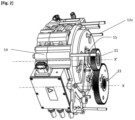
Fig. 1 ] est une vue schématique de groupe motopropulseur comportant une machine électrique. - [
Fig. 2 ] est une vue schématique de la machine électrique. - [
Fig. 3 ] est une vue de coupe longitudinale de l'agencement de la machine électrique accolée au moteur thermique. - [
Fig. 4 ] est une vue schématique de l'agencement des roues dentées d'entrainement du vilebrequin et d'actionnement de la machine thermique. - [
Fig. 5 ] est une vue schématique de la roue d'actionnement de la machine électrique. - Dans la description qui va suivre, des chiffres de référence identiques désignent des pièces identiques ou ayant des fonctions similaires.
- Afin de réduire ou de limiter les générations de polluants, les véhicules automobiles actuels sont pourvus de motorisation hybride comprenant un moteur thermique ou à combustion interne dénommé ICE couplé avec un moteur électrique ou une machine électrique. La puissance électrique permet d'utiliser le moteur thermique dans des zones de meilleur rendement en augmentant la charge et en stockant le supplément d'énergie dans la batterie. La traction en électrique seul est marginale, surtout parce que la machine électrique est rarement déconnectable du moteur thermique.
- Cette hybridation inclut généralement soit un alterno-démarreur de 48 V en P0. Sa puissance varie de 12 kW sous 48 V à environ 40 kW sous quelques centaines de volts, mais n'excède pas la moitié de celle du propulseur thermique.
- On peut aussi disposer de prolongateur d'autonomie avec une motorisation hybride comportant un moteur thermique et une machine électrique qui est une génératrice de courant électrique. Le moteur thermique est connecté à la machine électrique et apte à faire tourner le bras d'actionnement du moteur électrique qui pourra alors produire de l'électricité. Cette électricité sera contenue dans une batterie pour être utilisé ensuite par un moteur électrique connecté aux roues du véhicule. Ce type de prolongateur d'économie est connu sous le nom de « Range extender ».
- L'invention peut concerner une motorisation hybride P0 ou un prolongateur d'autonomie.
- L'invention concerne un groupe motopropulseur comportant un moteur thermique ou à combustion interne (non représenté) et une machine électrique 14, ledit moteur thermique comprenant un axe de rotation tenant une roue dentée 21 d'entrainement engrenant une roue dentée d'actionnement 11 d'un système d'actionnement 10 de la machine électrique 14, ledit système d'actionnement 10 est solidaire en rotation avec un bras d'actionnement 15 de la machine électrique.
- La
figure 1 représente un carter de distribution 12 qui est destiné à recouvrir la face de distribution du moteur thermique. On rappelle que la face de distribution est opposée à la face de transmission du moteur thermique qui comporte des accouplements avec par exemple un volant moteur ou une boite de vitesses. - Sur ledit carter de distribution 12 est montée la machine électrique 14 avec son bras d'actionnement 15 tenant à une extrémité qui est tournée vers le moteur thermique la roue dentée d'actionnement 11. Comme représenté en
figure 2 , la roue dentée d'actionnement 11 est coplanaire avec la roue dentée d'entrainement 21, laquelle est solidaire au moins en rotation de l'extrémité du vilebrequin (non représenté). La machine électrique est ainsi séparée du moteur thermique par le carter de distribution. Elle est disposée dans le prolongement du moteur thermique selon l'axe longitudinal X dudit moteur. - Les deux roues dentées 11, 21 et la face de distribution sont recouvertes par le carter de distribution 12.
- Les roues dentées d'actionnement 11 de la machine électrique et d'entrainement 21 du vilebrequin sont disposées du côté de la face de distribution du moteur thermique, ce qui permet d'accoupler normalement ledit moteur thermique côté transmissions à une boite de vitesses et à un train roulant de véhicule automobile dans le cas d'une hybridation de type P0.
- De manière avantageuse, selon les
figures 3 et4 , la roue dentée d'entrainement 21 du moteur thermique, qui est portée par une extrémité d'un vilebrequin (non représenté) débouchant de la face de distribution du moteur, engrène directement la roue dentée d'actionnement 11, laquelle est tenue en bout du bras d'actionnement de la machine électrique, c'est-à-dire qu'il y a un contact entre les deux roues 11,21 sans pièce intermédiaire, pour transmettre de façon efficace un couple important de l'une à l'autre des deux roues, sans être limité par un élément intermédiaire tel qu'une courroie ou chaîne. - Selon la
figure 3 , la machine électrique est fixée sur la paroi externe 12x du carter de distribution 12 tournée vers l'extérieur du moteur thermique par des moyens de fixation qui peuvent comprendre des vis 12v. Elle présente son axe d'actionnement X' parallèle à l'axe longitudinal X du moteur thermique, ici du vilebrequin. De cette manière avantageuse, il est simple de désolidariser le moteur électrique de l'ensemble du groupe motopropulseur pour accéder au moteur thermique. - Pour faciliter la compréhension, le moteur thermique présente une forme de parallélépipède rectangle et la face de distribution est plane et verticale, orthogonale à l'axe d'entrainement X du vilebrequin. Les deux roues dentées d'entrainement 21 et d'actionnement 11 sont coplanaires et parallèles à la face de distribution.
- Comme représenté sur les
figures 2 et3 , le bras d'actionnement 15 de la machine thermique 11 traverse le carter de distribution 12 par un orifice percé 16 dit d'accouplement dans ledit carter. Ledit bras 15 est maintenu selon l'axe X' de manière préférentielle par des roulements 17, 17' ou des paliers logés dans ledit orifice 16. De cette façon, l'axe du bras d'actionnement de la machine électrique est maintenu parallèle à l'axe longitudinal X d'entrainement du vilebrequin et mobile en rotation avec un minimum de frottement. Sur lafigure 3 , on voit l'orifice d'accouplement 16 débouchant de la face externe 12x du carter de distribution 12. Au contraire, en ce qui concerne l'axe d'entrainement du vilebrequin ainsi que la roue d'entrainement 21 sont totalement recouverts par le carter de distribution 12. - Pour faciliter la mise en place de la machine électrique, selon un mode réalisation préféré, le bras d'actionnement 15 de ladite machine électrique 14 est inséré dans le système d'actionnement 10 de ladite machine électrique de manière réversible. Le bras d'actionnement pourra être engagé dans le système d'actionnement 10, et désengagé dudit système de manière simple.
- Ledit système d'actionnement 10 comprend une pièce tubulaire 18 traversant le carter de distribution 12, ladite pièce tubulaire est montée mobile en rotation dans ledit carter. Le bras d'actionnement 15 est emmanché dans la pièce tubulaire 18. La pièce tubulaire 18 traverse l'orifice d'accouplement 16.
- Selon la
figure 3 , le système d'actionnement 10 est porté par le carter de distribution. La pièce tubulaire 18 est maintenue dans l'orifice d'accouplement 16 par des roulements 17,17'. On distingue deux roulements pour maintenir la pièce tubulaire et réaliser une liaison pivot, ici un premier roulement à billes 17 et un second roulement à aiguilles 17'. Ladite liaison pivot permet un seul degré de liberté ici en rotation. La pièce tubulaire 18 tient la roue dentée d'actionnement 11 à une extrémité tournée vers la face de distribution. - Ainsi que représenté en
figure 4 , la pièce tubulaire est fixée solidaire à la roue dentée d'actionnement 11. De manière préférentielle, la pièce tubulaire 18 et la roue dentée d'actionnement 11 sont issues d'une seule pièce obtenue de façon préférentielle par moulage et formant le système d'actionnement 10 de la machine électrique. - La pièce tubulaire comporte des cannelures 18c sur sa paroi intérieure 18i.
- La
figure 5 montre le bras d'actionnement 15 de la machine électrique 14. Ledit bras s'étend depuis la machine électrique 14 vers le moteur thermique. Le bras comprend une partie d'accouplement 15a à son extrémité libre 15l qui est tournée vers le moteur thermique quand la machine électrique est montée contre le carter de distribution du moteur thermique. Ladite partie d'accouplement comprend des dentures 15d de forme sensiblement complémentaire aux cannelures 18c de la pièce tubulaire 18 du système d'actionnement 10 au jeu de montage près. - Le bras d'actionnement 15 de la machine thermique est ainsi emmanché de façon réversible dans la pièce tubulaire 18 du système d'actionnement de sorte que ledit bras d'actionnement 15 et le système d'actionnement 10 sont solidaires en rotation.
- Ensuite la machine électrique peut être désolidarisée facilement du carter de distribution 12 après dévissage des vis de fixation 12v et en faisant coulisser selon l'axe X' le bras d'actionnement 15 le long de la pièce tubulaire 18.
- Le montage de la machine électrique en liaison avec le moteur thermique peut comprendre les étapes suivantes :
- 1. Le système d'actionnement 10 est monté sur le carter de distribution, la pièce tubulaire est maintenue par les deux roulements.
- 2. Le carter de distribution peut être présenté devant la face de distribution du moteur thermique.
- 3. La roue dentée d'entrainement 21 du vilebrequin est montée sur l'extrémité du vilebrequin et est fixée au vilebrequin.
- 4. Un dispositif d'engagement peut permettre l'engagement des dents de la roue dentée d'actionnement 11 du système d'actionnement 10 de la machine électrique 12 dans la roue dentée d'entrainement 21 du vilebrequin et réduire sensiblement les jeux de montage.
- 5. Le carter de distribution est ensuite fixé au moteur thermique avec le vissage des vis de fixation 12v.
- L'objectif est atteint :
Le moteur thermique est accouplé à la machine électrique par l'intermédiaire du carter de distribution de façon simple et fiable ave une transmission de couple importante. - Comme il va de soi, l'invention ne se limite pas aux seules formes d'exécution de cette prise, décrites ci-dessus à titre d'exemples, elle en embrasse au contraire toutes les variantes.
- Par exemple, la roue dentée d'actionnement 11 peut être montée solidaire de la face de distribution du moteur thermique.
- Le système d'actionnement 10 peut être solidaire de la face de distribution du moteur thermique.
Claims (15)
- Agencement de groupe motopropulseur de véhicule automobile comprenant un moteur thermique comportant un axe de rotation tenant une roue dentée d'entrainement (21) solidaire en rotation avec un système d'actionnement (10) disposé à l'extrémité d'un arbre d'actionnement (15) de machine électrique (14), ledit axe de rotation et ledit arbre d'actionnement étant sensiblement parallèles,
Caractérisé en ce que la machine électrique (14) est agencée en vis-à-vis de la face de distribution du moteur thermique. - Agencement selon la revendication 1, caractérisé en ce que le moteur thermique est séparé de la machine électrique (14) par un carter de distribution (12).
- Agencement selon la revendication 2, caractérisé en ce que la machine électrique (14) est fixée sur le carter de distribution (12).
- Agencement selon l'une quelconque des revendications 2 à 3, caractérisé en ce que le système d'actionnement (10) est connecté au bras d'actionnement (15) de la machine électrique par une liaison en rotation réversible.
- Agencement selon l'une quelconque des revendications 2 à 4, caractérisé en ce que le bras d'actionnement (15) de la machine thermique (14) traverse le carter de distribution (12).
- Agencement selon l'une quelconque des revendications 2 à 5, caractérisé en ce que le bras d'actionnement (15) est entouré par des roulements ou des paliers logés dans un orifice traversant d'accouplement (16) creusé dans le carter de distribution (12).
- Agencement selon l'une quelconque des revendications 2 à 6, caractérisé en ce que le système d'actionnement (10) est porté par le carter de distribution (12).
- Agencement selon l'une quelconque des revendications 6 à 7, caractérisé en ce que le système d'actionnement (10) comprend une roue dentée d'actionnement (11) coplanaire avec la roue d'entrainement (21) du vilebrequin, tenue par une pièce tubulaire (18).
- Agencement selon la revendication 8, caractérisé en ce que la pièce tubulaire (18) est maintenue par des roulements ou des paliers logés dans l'orifice d'accouplement (16) creusé dans le carter de distribution (12).
- Agencement selon la revendication 8 ou 9, caractérisé en ce que le bras d'actionnement (15) est emmanché dans la pièce tubulaire (18) mobile en rotation.
- Agencement selon l'une quelconque des revendications 8 à 10, caractérisé en ce que la pièce tubulaire (18) est solidaire en rotation de la roue dentée d'actionnement (11).
- Agencement selon l'une quelconque des revendications 8 à 11, caractérisé en ce que la pièce tubulaire (18) et la roue dentée d'actionnement (11) sont issues d'une même pièce.
- Agencement selon l'une quelconque des revendications 8 à 12, caractérisé en ce que la pièce tubulaire (18) comprend des cannelures (18c) sur sa paroi intérieure (18i).
- Agencement selon la revendication 13, caractérisé en ce que le bras d'actionnement (15) comprend des dents engagées dans les cannelures (18c) de la pièce tubulaire (18).
- Agencement selon l'une quelconque des revendications 1 à 14, caractérisé en ce que la roue dentée d'entrainement (21) du vilebrequin engrène directement sur la roue dentée d'actionnement (11) du système d'actionnement (10) de la machine électrique.
Applications Claiming Priority (1)
| Application Number | Priority Date | Filing Date | Title |
|---|---|---|---|
| FR2002771A FR3108275B1 (fr) | 2020-03-20 | 2020-03-20 | Carter distribution |
Publications (2)
| Publication Number | Publication Date |
|---|---|
| EP3882445A1 EP3882445A1 (fr) | 2021-09-22 |
| EP3882445B1 true EP3882445B1 (fr) | 2025-05-07 |
Family
ID=70295540
Family Applications (1)
| Application Number | Title | Priority Date | Filing Date |
|---|---|---|---|
| EP21162716.1A Active EP3882445B1 (fr) | 2020-03-20 | 2021-03-16 | Carter distribution |
Country Status (2)
| Country | Link |
|---|---|
| EP (1) | EP3882445B1 (fr) |
| FR (1) | FR3108275B1 (fr) |
Family Cites Families (8)
| Publication number | Priority date | Publication date | Assignee | Title |
|---|---|---|---|---|
| NL102626C (fr) * | 1954-03-15 | |||
| US6789522B2 (en) * | 2001-07-23 | 2004-09-14 | John Seymour | Engine for aeronautical applications |
| DE102004005349A1 (de) | 2004-02-02 | 2005-08-18 | Fev Motorentechnik Gmbh | Hybridmotor |
| FR2898082B1 (fr) | 2006-03-02 | 2009-12-11 | Peugeot Citroen Automobiles Sa | Agencement d'une machine electrique tournante dans un moteur a combustion interne et vehicule automobile comportant un tel agencement d'un moteur thermique et d'une machine electrique. |
| US7194994B1 (en) * | 2006-03-08 | 2007-03-27 | Vintage Air, Inc. | Bracket assembly for mounting accessories to the front of a small-block Ford motor |
| US20120058850A1 (en) * | 2010-09-03 | 2012-03-08 | Potter Brian J | Auxiliary Drive Assembly For A Front Drive Assembly |
| US20130068201A1 (en) * | 2011-09-21 | 2013-03-21 | Ecomotors, Inc. | Modular Gear Case for Driving Accessories Associated With an Internal Combustion Engine |
| FR3022495B1 (fr) | 2014-06-24 | 2017-12-22 | Renault Sas | Transmission hybride a machine electrique deportee et procede de commande de changements de rapports |
-
2020
- 2020-03-20 FR FR2002771A patent/FR3108275B1/fr active Active
-
2021
- 2021-03-16 EP EP21162716.1A patent/EP3882445B1/fr active Active
Also Published As
| Publication number | Publication date |
|---|---|
| FR3108275B1 (fr) | 2024-09-27 |
| EP3882445A1 (fr) | 2021-09-22 |
| FR3108275A1 (fr) | 2021-09-24 |
Similar Documents
| Publication | Publication Date | Title |
|---|---|---|
| FR2814121A1 (fr) | Groupe motopropulseur pour un vehicule automobile a propulsion hybride | |
| EP3176018B1 (fr) | Groupe motopropulseur d'un vehicule | |
| FR3052401A1 (fr) | Dispositif de transmission de couple, notamment pour vehicule automobile | |
| EP4011670A1 (fr) | Module hybride | |
| EP3882445B1 (fr) | Carter distribution | |
| FR2990729A1 (fr) | Demarreur a lanceur muni d'une roue libre immobile en translation | |
| EP3882444B1 (fr) | Carter distribution comprenant un système d' entrainement d' accessoires | |
| EP1529673A1 (fr) | Unité de transmission pour une chaíne de traction d'un groupe motopropulseur de véhicules automobiles | |
| EP2558741B1 (fr) | Groupe motopropulseur pour vehicule automobile, comprenant une machine electrique | |
| FR2934933A1 (fr) | Machine electrique tournante comprenant un ensemble reducteur de vitesse a organe de liaison | |
| EP3850235A1 (fr) | Machine électrique tournante munie d'un manchon de liaison intégrant un amortisseur | |
| FR2819873A1 (fr) | Boite de vitesses a deux arbres primaires paralleles | |
| WO2019201472A1 (fr) | Systeme d'entrainement pour un vehicule automobile hybride et systeme de transmission comprenant un tel systeme d'entrainement | |
| EP3771584A1 (fr) | Dispositif de transmission de couple | |
| EP3842666A1 (fr) | Groupe motopropulseur electrique a deux embrayages | |
| FR2942521A1 (fr) | Demarreur pour vehicules | |
| FR3071889B1 (fr) | Systeme d'embrayage comportant un plateau de reaction supporte par un organe d'entree | |
| EP3850728A1 (fr) | Machine électrique tournante munie d'au moins une gorge de réserve de lubrifiant | |
| FR3143453A1 (fr) | Boite de vitesses de groupe motopropulseur hybride | |
| FR3078377A1 (fr) | Dispositif de transmission pour vehicule hybride | |
| WO2023186935A1 (fr) | Ensemble moteur pour un dispositif d'essuyage | |
| FR3164420A1 (fr) | Dispositif d’actionnement et système de transmission d’un véhicule | |
| EP3414480B1 (fr) | Vanne de dosage lineaire | |
| FR3130208A1 (fr) | Dispositif de couplage combinant un crabot et un embrayage | |
| FR3166104A1 (fr) | Dispositif d’actionnement et système de transmission d’un véhicule |
Legal Events
| Date | Code | Title | Description |
|---|---|---|---|
| PUAI | Public reference made under article 153(3) epc to a published international application that has entered the european phase |
Free format text: ORIGINAL CODE: 0009012 |
|
| STAA | Information on the status of an ep patent application or granted ep patent |
Free format text: STATUS: THE APPLICATION HAS BEEN PUBLISHED |
|
| AK | Designated contracting states |
Kind code of ref document: A1 Designated state(s): AL AT BE BG CH CY CZ DE DK EE ES FI FR GB GR HR HU IE IS IT LI LT LU LV MC MK MT NL NO PL PT RO RS SE SI SK SM TR |
|
| STAA | Information on the status of an ep patent application or granted ep patent |
Free format text: STATUS: REQUEST FOR EXAMINATION WAS MADE |
|
| 17P | Request for examination filed |
Effective date: 20210930 |
|
| RBV | Designated contracting states (corrected) |
Designated state(s): AL AT BE BG CH CY CZ DE DK EE ES FI FR GB GR HR HU IE IS IT LI LT LU LV MC MK MT NL NO PL PT RO RS SE SI SK SM TR |
|
| RAP3 | Party data changed (applicant data changed or rights of an application transferred) |
Owner name: RENAULT S.A.S |
|
| RAP3 | Party data changed (applicant data changed or rights of an application transferred) |
Owner name: RENAULT S.A.S |
|
| P01 | Opt-out of the competence of the unified patent court (upc) registered |
Effective date: 20230608 |
|
| STAA | Information on the status of an ep patent application or granted ep patent |
Free format text: STATUS: EXAMINATION IS IN PROGRESS |
|
| 17Q | First examination report despatched |
Effective date: 20231024 |
|
| RAP1 | Party data changed (applicant data changed or rights of an application transferred) |
Owner name: NEW H POWERTRAIN HOLDING, S.L.U. |
|
| GRAP | Despatch of communication of intention to grant a patent |
Free format text: ORIGINAL CODE: EPIDOSNIGR1 |
|
| STAA | Information on the status of an ep patent application or granted ep patent |
Free format text: STATUS: GRANT OF PATENT IS INTENDED |
|
| INTG | Intention to grant announced |
Effective date: 20241119 |
|
| GRAS | Grant fee paid |
Free format text: ORIGINAL CODE: EPIDOSNIGR3 |
|
| GRAA | (expected) grant |
Free format text: ORIGINAL CODE: 0009210 |
|
| STAA | Information on the status of an ep patent application or granted ep patent |
Free format text: STATUS: THE PATENT HAS BEEN GRANTED |
|
| AK | Designated contracting states |
Kind code of ref document: B1 Designated state(s): AL AT BE BG CH CY CZ DE DK EE ES FI FR GB GR HR HU IE IS IT LI LT LU LV MC MK MT NL NO PL PT RO RS SE SI SK SM TR |
|
| REG | Reference to a national code |
Ref country code: GB Ref legal event code: FG4D Free format text: NOT ENGLISH |
|
| REG | Reference to a national code |
Ref country code: CH Ref legal event code: EP |
|
| REG | Reference to a national code |
Ref country code: DE Ref legal event code: R096 Ref document number: 602021030251 Country of ref document: DE |
|
| REG | Reference to a national code |
Ref country code: IE Ref legal event code: FG4D Free format text: LANGUAGE OF EP DOCUMENT: FRENCH |
|
| REG | Reference to a national code |
Ref country code: NL Ref legal event code: MP Effective date: 20250507 |
|
| PG25 | Lapsed in a contracting state [announced via postgrant information from national office to epo] |
Ref country code: PT Free format text: LAPSE BECAUSE OF FAILURE TO SUBMIT A TRANSLATION OF THE DESCRIPTION OR TO PAY THE FEE WITHIN THE PRESCRIBED TIME-LIMIT Effective date: 20250908 Ref country code: ES Free format text: LAPSE BECAUSE OF FAILURE TO SUBMIT A TRANSLATION OF THE DESCRIPTION OR TO PAY THE FEE WITHIN THE PRESCRIBED TIME-LIMIT Effective date: 20250507 Ref country code: FI Free format text: LAPSE BECAUSE OF FAILURE TO SUBMIT A TRANSLATION OF THE DESCRIPTION OR TO PAY THE FEE WITHIN THE PRESCRIBED TIME-LIMIT Effective date: 20250507 |
|
| REG | Reference to a national code |
Ref country code: LT Ref legal event code: MG9D |
|
| PG25 | Lapsed in a contracting state [announced via postgrant information from national office to epo] |
Ref country code: NO Free format text: LAPSE BECAUSE OF FAILURE TO SUBMIT A TRANSLATION OF THE DESCRIPTION OR TO PAY THE FEE WITHIN THE PRESCRIBED TIME-LIMIT Effective date: 20250807 Ref country code: GR Free format text: LAPSE BECAUSE OF FAILURE TO SUBMIT A TRANSLATION OF THE DESCRIPTION OR TO PAY THE FEE WITHIN THE PRESCRIBED TIME-LIMIT Effective date: 20250808 |
|
| PG25 | Lapsed in a contracting state [announced via postgrant information from national office to epo] |
Ref country code: PL Free format text: LAPSE BECAUSE OF FAILURE TO SUBMIT A TRANSLATION OF THE DESCRIPTION OR TO PAY THE FEE WITHIN THE PRESCRIBED TIME-LIMIT Effective date: 20250507 Ref country code: NL Free format text: LAPSE BECAUSE OF FAILURE TO SUBMIT A TRANSLATION OF THE DESCRIPTION OR TO PAY THE FEE WITHIN THE PRESCRIBED TIME-LIMIT Effective date: 20250507 |
|
| REG | Reference to a national code |
Ref country code: AT Ref legal event code: MK05 Ref document number: 1792682 Country of ref document: AT Kind code of ref document: T Effective date: 20250507 |
|
| PG25 | Lapsed in a contracting state [announced via postgrant information from national office to epo] |
Ref country code: BG Free format text: LAPSE BECAUSE OF FAILURE TO SUBMIT A TRANSLATION OF THE DESCRIPTION OR TO PAY THE FEE WITHIN THE PRESCRIBED TIME-LIMIT Effective date: 20250507 |
|
| PG25 | Lapsed in a contracting state [announced via postgrant information from national office to epo] |
Ref country code: HR Free format text: LAPSE BECAUSE OF FAILURE TO SUBMIT A TRANSLATION OF THE DESCRIPTION OR TO PAY THE FEE WITHIN THE PRESCRIBED TIME-LIMIT Effective date: 20250507 |
|
| PG25 | Lapsed in a contracting state [announced via postgrant information from national office to epo] |
Ref country code: AT Free format text: LAPSE BECAUSE OF FAILURE TO SUBMIT A TRANSLATION OF THE DESCRIPTION OR TO PAY THE FEE WITHIN THE PRESCRIBED TIME-LIMIT Effective date: 20250507 |
|
| PG25 | Lapsed in a contracting state [announced via postgrant information from national office to epo] |
Ref country code: RS Free format text: LAPSE BECAUSE OF FAILURE TO SUBMIT A TRANSLATION OF THE DESCRIPTION OR TO PAY THE FEE WITHIN THE PRESCRIBED TIME-LIMIT Effective date: 20250807 |
|
| PG25 | Lapsed in a contracting state [announced via postgrant information from national office to epo] |
Ref country code: IS Free format text: LAPSE BECAUSE OF FAILURE TO SUBMIT A TRANSLATION OF THE DESCRIPTION OR TO PAY THE FEE WITHIN THE PRESCRIBED TIME-LIMIT Effective date: 20250907 |
|
| PG25 | Lapsed in a contracting state [announced via postgrant information from national office to epo] |
Ref country code: LV Free format text: LAPSE BECAUSE OF FAILURE TO SUBMIT A TRANSLATION OF THE DESCRIPTION OR TO PAY THE FEE WITHIN THE PRESCRIBED TIME-LIMIT Effective date: 20250507 |
|
| PG25 | Lapsed in a contracting state [announced via postgrant information from national office to epo] |
Ref country code: DK Free format text: LAPSE BECAUSE OF FAILURE TO SUBMIT A TRANSLATION OF THE DESCRIPTION OR TO PAY THE FEE WITHIN THE PRESCRIBED TIME-LIMIT Effective date: 20250507 Ref country code: SM Free format text: LAPSE BECAUSE OF FAILURE TO SUBMIT A TRANSLATION OF THE DESCRIPTION OR TO PAY THE FEE WITHIN THE PRESCRIBED TIME-LIMIT Effective date: 20250507 |
|
| PG25 | Lapsed in a contracting state [announced via postgrant information from national office to epo] |
Ref country code: CZ Free format text: LAPSE BECAUSE OF FAILURE TO SUBMIT A TRANSLATION OF THE DESCRIPTION OR TO PAY THE FEE WITHIN THE PRESCRIBED TIME-LIMIT Effective date: 20250507 |
|
| PG25 | Lapsed in a contracting state [announced via postgrant information from national office to epo] |
Ref country code: EE Free format text: LAPSE BECAUSE OF FAILURE TO SUBMIT A TRANSLATION OF THE DESCRIPTION OR TO PAY THE FEE WITHIN THE PRESCRIBED TIME-LIMIT Effective date: 20250507 |
|
| PG25 | Lapsed in a contracting state [announced via postgrant information from national office to epo] |
Ref country code: RO Free format text: LAPSE BECAUSE OF FAILURE TO SUBMIT A TRANSLATION OF THE DESCRIPTION OR TO PAY THE FEE WITHIN THE PRESCRIBED TIME-LIMIT Effective date: 20250507 Ref country code: SK Free format text: LAPSE BECAUSE OF FAILURE TO SUBMIT A TRANSLATION OF THE DESCRIPTION OR TO PAY THE FEE WITHIN THE PRESCRIBED TIME-LIMIT Effective date: 20250507 |
|
| PG25 | Lapsed in a contracting state [announced via postgrant information from national office to epo] |
Ref country code: IT Free format text: LAPSE BECAUSE OF FAILURE TO SUBMIT A TRANSLATION OF THE DESCRIPTION OR TO PAY THE FEE WITHIN THE PRESCRIBED TIME-LIMIT Effective date: 20250507 |
|
| REG | Reference to a national code |
Ref country code: DE Ref legal event code: R097 Ref document number: 602021030251 Country of ref document: DE |
|
| PLBE | No opposition filed within time limit |
Free format text: ORIGINAL CODE: 0009261 |
|
| STAA | Information on the status of an ep patent application or granted ep patent |
Free format text: STATUS: NO OPPOSITION FILED WITHIN TIME LIMIT |
|
| REG | Reference to a national code |
Ref country code: CH Ref legal event code: L10 Free format text: ST27 STATUS EVENT CODE: U-0-0-L10-L00 (AS PROVIDED BY THE NATIONAL OFFICE) Effective date: 20260318 |
|
| PGFP | Annual fee paid to national office [announced via postgrant information from national office to epo] |
Ref country code: GB Payment date: 20260324 Year of fee payment: 6 |
|
| PGFP | Annual fee paid to national office [announced via postgrant information from national office to epo] |
Ref country code: DE Payment date: 20260319 Year of fee payment: 6 |
|
| 26N | No opposition filed |
Effective date: 20260210 |
|
| PGFP | Annual fee paid to national office [announced via postgrant information from national office to epo] |
Ref country code: FR Payment date: 20260323 Year of fee payment: 6 |