EP3882360B1 - Genomic selection method of huaxi cattle - Google Patents
Genomic selection method of huaxi cattle Download PDFInfo
- Publication number
- EP3882360B1 EP3882360B1 EP20192869.4A EP20192869A EP3882360B1 EP 3882360 B1 EP3882360 B1 EP 3882360B1 EP 20192869 A EP20192869 A EP 20192869A EP 3882360 B1 EP3882360 B1 EP 3882360B1
- Authority
- EP
- European Patent Office
- Prior art keywords
- genomic
- gebv
- cattle
- data
- huaxi
- Prior art date
- Legal status (The legal status is an assumption and is not a legal conclusion. Google has not performed a legal analysis and makes no representation as to the accuracy of the status listed.)
- Active
Links
Images


Classifications
-
- C—CHEMISTRY; METALLURGY
- C12—BIOCHEMISTRY; BEER; SPIRITS; WINE; VINEGAR; MICROBIOLOGY; ENZYMOLOGY; MUTATION OR GENETIC ENGINEERING
- C12Q—MEASURING OR TESTING PROCESSES INVOLVING ENZYMES, NUCLEIC ACIDS OR MICROORGANISMS; COMPOSITIONS OR TEST PAPERS THEREFOR; PROCESSES OF PREPARING SUCH COMPOSITIONS; CONDITION-RESPONSIVE CONTROL IN MICROBIOLOGICAL OR ENZYMOLOGICAL PROCESSES
- C12Q1/00—Measuring or testing processes involving enzymes, nucleic acids or microorganisms; Compositions therefor; Processes of preparing such compositions
- C12Q1/68—Measuring or testing processes involving enzymes, nucleic acids or microorganisms; Compositions therefor; Processes of preparing such compositions involving nucleic acids
- C12Q1/6813—Hybridisation assays
- C12Q1/6827—Hybridisation assays for detection of mutation or polymorphism
-
- G—PHYSICS
- G16—INFORMATION AND COMMUNICATION TECHNOLOGY [ICT] SPECIALLY ADAPTED FOR SPECIFIC APPLICATION FIELDS
- G16B—BIOINFORMATICS, i.e. INFORMATION AND COMMUNICATION TECHNOLOGY [ICT] SPECIALLY ADAPTED FOR GENETIC OR PROTEIN-RELATED DATA PROCESSING IN COMPUTATIONAL MOLECULAR BIOLOGY
- G16B20/00—ICT specially adapted for functional genomics or proteomics, e.g. genotype-phenotype associations
- G16B20/30—Detection of binding sites or motifs
-
- G—PHYSICS
- G16—INFORMATION AND COMMUNICATION TECHNOLOGY [ICT] SPECIALLY ADAPTED FOR SPECIFIC APPLICATION FIELDS
- G16B—BIOINFORMATICS, i.e. INFORMATION AND COMMUNICATION TECHNOLOGY [ICT] SPECIALLY ADAPTED FOR GENETIC OR PROTEIN-RELATED DATA PROCESSING IN COMPUTATIONAL MOLECULAR BIOLOGY
- G16B20/00—ICT specially adapted for functional genomics or proteomics, e.g. genotype-phenotype associations
- G16B20/20—Allele or variant detection, e.g. single nucleotide polymorphism [SNP] detection
-
- G—PHYSICS
- G16—INFORMATION AND COMMUNICATION TECHNOLOGY [ICT] SPECIALLY ADAPTED FOR SPECIFIC APPLICATION FIELDS
- G16B—BIOINFORMATICS, i.e. INFORMATION AND COMMUNICATION TECHNOLOGY [ICT] SPECIALLY ADAPTED FOR GENETIC OR PROTEIN-RELATED DATA PROCESSING IN COMPUTATIONAL MOLECULAR BIOLOGY
- G16B20/00—ICT specially adapted for functional genomics or proteomics, e.g. genotype-phenotype associations
- G16B20/40—Population genetics; Linkage disequilibrium
-
- G—PHYSICS
- G16—INFORMATION AND COMMUNICATION TECHNOLOGY [ICT] SPECIALLY ADAPTED FOR SPECIFIC APPLICATION FIELDS
- G16B—BIOINFORMATICS, i.e. INFORMATION AND COMMUNICATION TECHNOLOGY [ICT] SPECIALLY ADAPTED FOR GENETIC OR PROTEIN-RELATED DATA PROCESSING IN COMPUTATIONAL MOLECULAR BIOLOGY
- G16B35/00—ICT specially adapted for in silico combinatorial libraries of nucleic acids, proteins or peptides
- G16B35/20—Screening of libraries
Definitions
- the application relates to the technical field of beef cattle breeding, especially relating to a genomic selection method of Huaxi cattle.
- the purpose of the application is to provide a genomic selection method of Huaxi cattle, to solve the problem raised in the background art.
- the quality control in S2 is eliminating the unqualified individuals and SNP, biochip is Illumina BovineHD beadchip.
- the economic traits in S1 comprise 6 indexes: growth and development, fattening, slaughter, carcass, meat quality and reproduction, 87 traits in total.
- the QTLs in S3 comprise significant SNPs related to weaning weight, average daily gain during fattening, carcass weight, dressing percentage and calving difficulty.
- the Optimized Bayesian algorithm is used to calculate the effect value of all SNP markers of each trait.
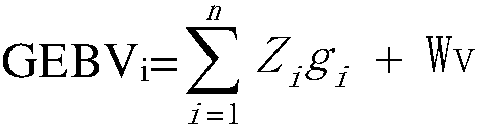
- g i is the i th marked effect of the 770K beadchip, and the variance is ⁇ g i 2 ; n is the total number of markers; e is the random residual vector with a variance of ⁇ e 2 I , and ⁇ e 2 is the residual variance.
- GCBI individual genomic China beef index
- Gebv CE is the genomic estimated breeding value of calving difficulty
- Gebv WWT is the genomic estimated breeding value of weaning weight
- Gebv DG_F the genomic estimated breeding value of average daily gain during fattening
- Gebv CW is the genomic estimated breeding value of carcass weight
- Gebv DP is the genomic estimated breeding value of dressing percentage.
- the purpose of the application is to establish a high-efficiency selection method of high-quality Huaxi cattle based on genomic selection technology, comprehensively improve the selection efficiency of beef cattle in China, greatly save the breeding cost, provide a molecular method for selecting cattle for breeding and the cultivation of high-quality Huaxi cattle, and facilitate a rapid development of beef cattle breeding industry.
- the breeding scheme of Huaxi breeding cattle is shown in FIG. 2 .
- the average generation interval of Huaxi breeding cattle by using conventional breeding techniques is 3.5-4 years. If more than 100 descendants information are used, the reliability of breeding value estimation can reach 0.75, and it takes at least 5 years to cultivate an excellent Huaxi breeding cattle.
- an excellent Huaxi breeding bull can be cultivated in 2 years by using genomic selection technology, which greatly shortens the generation interval. Since blood can be collected from the candidate breeding cattle after birth to obtain the genotype, it is possible to use the genomic selection method of Huaxi cattle for early selection, which greatly saves the feeding cost and improves the selection efficiency and accuracy.
- Huaxi cattle aged from 5 to 9 months in Wulagai district were transported to a fattening and slaughtering integrated company in October every year, where each one of the Huaxi cattle should be measured for body weight and size data upon entry to the company.
- weight and body size data are measured every three months. All the individuals in Huaxi cattle in this resource population were fattened intensively according to a unified feeding management method, and the feedstuff were all the same.
- Huaxi cattle were fattened for 6 months, 20ml of venous blood was collected and stored, and 2ml of blood was used for extracting DNA (Deoxyribo Nucleic Acid). All individuals were treated with Illumina BovineHD(770K) high-density SNP (Single Nucleotide Polymorphism) chip to obtain the SNP data, and 44 representative Huaxi cattle were selected for whole genome resequencing. On the day before cattle slaughter, each one of the Huaxi cattle were fasting for 24 hours, and the live weight and body size before slaughter were measured. When Huaxi cattle of resource population were fattened intensively for 10-12 months, namely August to October of the following year, they were slaughtered in batches, and the slaughter and carcass data were obtained.
- Slaughter data includes all data of slaughtered cattle during slaughtering process, such as head weight, tongue weight, hoof weight, cowhide weight, kidney oil fat, red viscera (heart, liver, spleen, kidney) and white viscera (stomach) data, testicles and other slaughter data.
- the segmentation data of the carcasses included the weight of beef clod, such as belly meat, neck meat, shin, money tendon, upper brain, eye meat, ectoloph, tenderloin, shank, topside, silverside.
- meat samples (12-13 rib eye muscles, each about 1Kg) were collected for phenotypic data measurement of meat quality traits, which included shear force, water holding capacity(WHC), pH, marbling score, area of carcass eye muscle, intramuscular fat content, fatty acid traits of meat samples and the like.
- WHC water holding capacity
- pH pH
- marbling score area of carcass eye muscle
- intramuscular fat content fatty acid traits of meat samples and the like.
- weaning weight not only reflected the growth of calves before weaning, but also played a decisive role in the growth trend of calves after weaning.
- Calving difficulty reflected the reproductive ability of the female offspring of the cattle.
- Average daily gain during fattening was an important index to evaluate the growth and development of Huaxi cattle, in a sense, the average daily gain during fattening directly reflected the utilization of feedstuff by cattle.
- Carcass weight and dressing percentage were important indexes that directly reflected the relative carcass quality and production performance of beef cattle. Therefore, it was of great economic significance to select these five traits as important breeding target traits for selection and assortative mating to improve the production performance of beef cattle.
- the candidate QTLs were identified by using the imputed resequencing data for weaning weight, average daily gain in fattening, carcass weight, dressing percentage and calving difficulty, and then the identified QTLs were combined with beadchip data after quality control to form standard data for genomic selection of Huaxi cattle. Table 3.
- FIG. 3 shows the distribution of SNPs on each chromosome before and after quality control with beadchip in 1407 Huaxi cattle. It can be seen from FIG. 3 that unqualified SNPs on each chromosome are of the similar proportion.
- FIG. 4 shows the distribution map of the detected SNPs on each autosome for beadchip in Huaxi cattle population, indicating that most SNPs on autosomes are detected, and only a few are not detected.
- FIG. 5 shows the distribution map of the minor allele frequency (MAF) of all SNP markers (774,660 SNPs) for beadchip in Huaxi cattle population, it can be seen that the rare sites of the minor allele frequency ( ⁇ 0.05) account for a certain proportion, after removing these sites, the MAF of the remaining markers are evenly distributed.
- FIG. 6 is a probability density map among SNPs markers of Illumina BovineHD chip, it can be seen from FIG.
- FIG. 7 is the linkage disequilibrium map of Huaxi cattle population, it can be seen from FIG. 7 that the resource population of Huaxi cattle applied with beadchip has an average distance less than 10kb, which leads the population to a strong linkage disequilibrium state.
- the method can make up for the blank of genomic selection of beef cattle in China, solve the problem of lack of genomic selection method in beef cattle production process, provide technical means for selecting cattle for breeding beef cattle with high-efficiency and high-quality in China, accelerate the process of beef cattle breeding in China, and facilitate the rapid development of beef cattle industry in China.
- the results show that the new breed of Huaxi cattle bred by the genomic selection method has a 50% growth compared with the conventional breeding technology.
- the accuracy of genomic breeding value estimated by this self-developed new method (BayesBT) increase by 10-30%. This method can quickly estimate the genomic breeding value of Huaxi cattle in China, and has great application value and popularization prospect for beef cattle breeding in China.
Landscapes
- Life Sciences & Earth Sciences (AREA)
- Health & Medical Sciences (AREA)
- Engineering & Computer Science (AREA)
- Physics & Mathematics (AREA)
- Bioinformatics & Cheminformatics (AREA)
- Chemical & Material Sciences (AREA)
- General Health & Medical Sciences (AREA)
- Biotechnology (AREA)
- Genetics & Genomics (AREA)
- Molecular Biology (AREA)
- Proteomics, Peptides & Aminoacids (AREA)
- Biophysics (AREA)
- Theoretical Computer Science (AREA)
- Analytical Chemistry (AREA)
- Medical Informatics (AREA)
- Spectroscopy & Molecular Physics (AREA)
- Bioinformatics & Computational Biology (AREA)
- Evolutionary Biology (AREA)
- Organic Chemistry (AREA)
- Wood Science & Technology (AREA)
- Zoology (AREA)
- Biochemistry (AREA)
- Library & Information Science (AREA)
- Microbiology (AREA)
- Immunology (AREA)
- General Engineering & Computer Science (AREA)
- Ecology (AREA)
- Physiology (AREA)
- Measuring Or Testing Involving Enzymes Or Micro-Organisms (AREA)
Description
- The application relates to the technical field of beef cattle breeding, especially relating to a genomic selection method of Huaxi cattle.
- The primary factors that limit the development of beef cattle industry in China are the issues of breed and provenance. The existing beef cattle breeding population in China has inadequate capacities in breeding stock and supply, thus the breeding bulls are mainly imported. Among the overall beef cattle amount of livestock, 27.88 million were Huaxi cattle and its hybrid, accounting for 65%. At present, there are 38 breeding bull stations in China for beef bulls, in which 1,900 bulls for semen collection are in stock, and 1,100 are Huaxi cattle. The breeding group can only provide about 100 qualified bulls annually, and about 250 bulls need to be imported annually to update the group, with an import rate up to 70%. Therefore, researches are in process to target the relevant aspects. Document by Ma, Lund, Amand and Su, 2019 discloses a genetic method for predicting economic traits in cattle, based on the use of Bayesian model.
- Also document
WO2016100061 discloses such a method. - The purpose of the application is to provide a genomic selection method of Huaxi cattle, to solve the problem raised in the background art.
- To achieve the above purpose, the embodiments of the application provide the following technical scheme:
A genomic selection method of Huaxi cattle, the specific steps are as follows: - S1. constructing a reference population and determining 87 economic traits;
- S2. collecting and preserving blood for each individual in the reference population, extracting DNA and genotyping by using biochip, quality control of the data after genotyping;
- S3. proceeding genotype imputation from high density beadchip data to the resequencing data, and then identifying QTLs (quantitative trait loci)for five important economic traits;
- S4. integrating the identified QTLs with the high density beadchip genotyping data to obtain the standard data, calculating the effects of all SNP markers of each trait;
- S5. collecting blood and extracting DNA from a candidate population, genotyping using biochip, proceeding imputation to the standard data after quality control, multiplying the genotype vector of the candidate population by the vector of SNP effects where the effects of all SNP markers and QTLs were estimated by the reference population, thus obtaining the genomic estimated breeding value (GEBV) of the candidate population and calculating the genomic China beef index (GCBI) of the individual according to the genomic estimated breeding value.
- As a further scheme of the embodiments in the application: the quality control in S2 is eliminating the unqualified individuals and SNP, biochip is Illumina BovineHD beadchip.
- As a further scheme of the embodiments in the application: the economic traits in S1 comprise 6 indexes: growth and development, fattening, slaughter, carcass, meat quality and reproduction, 87 traits in total.
- As a further scheme of the embodiments in the application: the QTLs in S3 comprise significant SNPs related to weaning weight, average daily gain during fattening, carcass weight, dressing percentage and calving difficulty.
- As a further scheme of the embodiments in the application: the Optimized Bayesian algorithm is used to calculate the effect value of all SNP markers of each trait.
- As a further scheme of the embodiments in the application: it is envisaged in the optimized Bayesian algorithm that the probability of SNPs with effect is (1-π), the probability of SNPs without effect is π, and the variance of SNP effects follows the inversed chi-square distribution, its model is as follows:


- As a further scheme of the embodiments in the application: the equation of individual genomic China beef index (GCBI) in S5 is as follows:

- Compared with the prior art, the embodiments of the invention have the beneficial effects that:
The purpose of the application is to establish a high-efficiency selection method of high-quality Huaxi cattle based on genomic selection technology, comprehensively improve the selection efficiency of beef cattle in China, greatly save the breeding cost, provide a molecular method for selecting cattle for breeding and the cultivation of high-quality Huaxi cattle, and facilitate a rapid development of beef cattle breeding industry. -
-
FIG. 1 is a flow chart of genomic selection method of Huaxi cattle. -
FIG. 2 is a flow chart showing the improved selection efficiency by genomic selection method of Huaxi cattle. -
FIG. 3 is a comparison diagram of SNPs on each autosome before and after data quality control with 770K chip in genomic selection method of Huaxi cattle. -
FIG. 4 is a graph showing detection rate of 770K chip markers in genomic selection method of Huaxi cattle. -
FIG. 5 is a graph showing the distribution of the minor allele frequency of SNP markers on 770K chip. -
FIG. 6 is a probability density diagram of the marker interval on 770K chip in genomic selection method of Huaxi cattle. -
FIG. 7 is a graph showing the linkage disequilibrium of the reference population in the genomic selection method in the Huaxi cattle. - The technical scheme of the application will be described clearly and completely in combination with the embodiments in the application.
- A genomic selection method of Huaxi cattle, the specific steps were as follows:
-
S 1. a reference population was constructed and the economic traits were determined: a team started to build 2,320 basic cows of Huaxi cattle in Wulagai Management District of Xilingol League, Inner Mongolia in 2008. With the expanding of the population each year, by 2019, the number of basic cows of Huaxi cattle had exceeded 4,000. The progeny of the basic cow group was used to construct the reference population of Huaxi cattle, and the phenotypic data measured included 6 categories of growth and development, fattening, slaughter, carcass, meat quality and reproduction, and 87 important economic traits in total. - S2. the blood was collected and preserved from each individual in the reference population, DNA was extracted, genotyping was carried out by using Illumina BovineHD (770K) beadchip, and genotyping data was quality controlled by using plink 1.0 software.
- S3. the 770K chip data of the reference population were imputed to the resequencing data (16165263SNPs) by using Beagle software with the resequencing data from 44 cows to identify the candidate QTLs for weaning weight, average daily gain during fattening, carcass weight, dressing percentage and calving difficulty.
- S4. through SNP genotyping of individuals in the reference population, the screened QTL(quantitative trait locus) loci were integrated with the 770K beadchip loci after quality control, and the 770K chip data were filled into the 770K+QTL locus integrated data by Beagle software. Combined with the phenotypic data, the optimal Bayesian algorithm (BayesBT) based on QTL loci of weaning weight, average daily gain during fattening period, carcass weight, dressing percentage and calving difficulty was used to estimate the effect value of all SNP markers of each trait. It was envisaged in BayesBT that the probability of SNPs with effect is (1-π), the probability of SNPs without effect is π, and the variance of effect obeyed inverse chi-square distribution. The estimation model is as follows:


- S5. the blood was collected from the candidate cattle, DNA was extracted, and genotyped via Illumina BovineHD(770K) beadchip. The original chip data was imported into Genome Studio software (reference genome UMD3.1) for quality control to obtain high-quality SNP genotyping data, and the candidate individual genotypes were filled to 770K+QTL locus integration data with Beagle software. The genomic estimated breeding value (GEBV) of the candidate population could be obtained by multiplying the genotype vector of the candidate individual by the locus effect value via utilizing the locus effect value of SNP markers and QTL estimated by the reference population(
- According to the actual situation of domestic breeding data of beef cattle, five important economic traits, namely weaning weight, average daily gain during fattening, carcass weight, dressing percentage and calving difficulty, were selected for genomic evaluation. After standardization, the genomic estimated breeding values of each trait were weighted according to the economic weighting ratio, and the genomic China beef index (GCBI) was obtained. The basic statistics of each trait were shown in Table 1, and the evaluation of accuracy of the genomic breeding value estimation was obtained by 5-fold cross validation with BayesBT calculation software V1.0 for the five quantitative traits.
Table 1. Basic statistics and accuracy of genomic breeding value estimation for each traits traits Number AVG SD accuracy of genomic breeding value estimation weaning weight 1191 163.25 57.32 0.518 average daily gain during fattening 1312 0.97 0.22 0.539 carcass weight 1325 276.33 48.53 0.555 dressing percentage 1321 0.54 0.03 0.433 calving difficulty 1081 1.33 0.49 0.487 
- The breeding scheme of Huaxi breeding cattle is shown in
FIG. 2 . The average generation interval of Huaxi breeding cattle by using conventional breeding techniques is 3.5-4 years. If more than 100 descendants information are used, the reliability of breeding value estimation can reach 0.75, and it takes at least 5 years to cultivate an excellent Huaxi breeding cattle. However, an excellent Huaxi breeding bull can be cultivated in 2 years by using genomic selection technology, which greatly shortens the generation interval. Since blood can be collected from the candidate breeding cattle after birth to obtain the genotype, it is possible to use the genomic selection method of Huaxi cattle for early selection, which greatly saves the feeding cost and improves the selection efficiency and accuracy. - S1. establishment of reference population and determination of phenotypic traits: a team started to build the first Huaxi cattle resource population in China in Wulagai Management District of Xilingol League, Inner Mongolia since 2008. With the expanding of the population each year, by 2017, the number of basic cows of Huaxi cattle had exceeded 4,000. In July or August every year, the body size and weight data of calves and basic cows were measured in Wulagai management district, and the corresponding reproduction recording data were collected. In order to facilitate the measurement and collection of data on growth and development traits, slaughter traits, carcass traits and meat quality traits of the resource population in subsequent periods, Huaxi cattle aged from 5 to 9 months in Wulagai district were transported to a fattening and slaughtering integrated company in October every year, where each one of the Huaxi cattle should be measured for body weight and size data upon entry to the company. During concentrated fattening, weight and body size data are measured every three months. All the individuals in Huaxi cattle in this resource population were fattened intensively according to a unified feeding management method, and the feedstuff were all the same. When Huaxi cattle were fattened for 6 months, 20ml of venous blood was collected and stored, and 2ml of blood was used for extracting DNA (Deoxyribo Nucleic Acid). All individuals were treated with Illumina BovineHD(770K) high-density SNP (Single Nucleotide Polymorphism) chip to obtain the SNP data, and 44 representative Huaxi cattle were selected for whole genome resequencing. On the day before cattle slaughter, each one of the Huaxi cattle were fasting for 24 hours, and the live weight and body size before slaughter were measured. When Huaxi cattle of resource population were fattened intensively for 10-12 months, namely August to October of the following year, they were slaughtered in batches, and the slaughter and carcass data were obtained. Slaughter data includes all data of slaughtered cattle during slaughtering process, such as head weight, tongue weight, hoof weight, cowhide weight, kidney oil fat, red viscera (heart, liver, spleen, kidney) and white viscera (stomach) data, testicles and other slaughter data. After slaughter, all cattle carcasses were segmented after acid excretion for 48 hours, the segmentation data of the carcasses included the weight of beef clod, such as belly meat, neck meat, shin, money tendon, upper brain, eye meat, ectoloph, tenderloin, shank, topside, silverside. At the same time, in the process of carcass segmentation, meat samples (12-13 rib eye muscles, each about 1Kg) were collected for phenotypic data measurement of meat quality traits, which included shear force, water holding capacity(WHC), pH, marbling score, area of carcass eye muscle, intramuscular fat content, fatty acid traits of meat samples and the like. As a comprehensive index, weaning weight not only reflected the growth of calves before weaning, but also played a decisive role in the growth trend of calves after weaning. Calving difficulty reflected the reproductive ability of the female offspring of the cattle. Average daily gain during fattening was an important index to evaluate the growth and development of Huaxi cattle, in a sense, the average daily gain during fattening directly reflected the utilization of feedstuff by cattle. Carcass weight and dressing percentage were important indexes that directly reflected the relative carcass quality and production performance of beef cattle. Therefore, it was of great economic significance to select these five traits as important breeding target traits for selection and assortative mating to improve the production performance of beef cattle.
- S2. genotyping and processing of chip data: 1047 indivuduals of Huaxi cattle were all genotyped with Illumina BovineHD (777962 SNPs) beadchip, and the SNP (42669 SNPs) on sex chromosome and plasmid were eliminated. The distribution of SNPs on each autosome in 1407 individuals was shown in Table 2, with 735293 SNPs in total.
Table 2. the number and ratio of SNPs on each autosome before quality control. chromosome 1 2 3 4 5 6 7 8 9 10 number of SNPs 46495 40056 35579 34980 34842 35519 33168 33529 31060 30449 ratio 6.32% 5.45% 4.84% 4.76% 4.74% 4.83% 4.51% 4.56% 4.22% 4.14 % chromosome 11 12 13 14 15 16 17 18 19 20 number of SNPs 32015 26127 23594 24780 24755 24178 22266 19386 18908 21490 ratio 4.35% 3.55% 3.21% 3.37% 3.37% 3.29% 3.03% 2.64% 2.57% 2.92 % chromosome 21 22 23 24 25 26 27 28 29 number of SNPs 21175 18034 15215 18620 12931 15242 13152 13038 14710 ratio 2.88% 2.45% 2.07% 2.53% 1.76% 2.07% 1.79% 1.77% 2.00% - Before data analysis, it was necessary to control the quality of genotype data, and eliminate the unqualified individuals and SNPs by using PLINK V1.9. The quality control standard and code in the application was: plink --cow --file filename --geno 0.1 --maf 0.05 --hwe 0.000001 --mind 0.1 --recode12 --out filename. After quality control, there were 1233 Huaxi cattle and 597031 SNPs remaining. After quality control, the chip data of Huaxi cattle population was imputed to the resequencing data of 44 Huaxi cattle, and the missing SNPs after quality control were filled with Beagle software. The running command of Beagle software was: java -Xmx1000m -jar beagle.jar unphased =file.bgl out = output niterations = 100, then the Beagle software was used to impute the SNPs by each chromosome into resequencing data (16165263 SNPs), running command was: java -d64 -Xss100m -Xmx100g -jar beagle.08Jun17.d8b.jar gt=chr1_vcf.gz ref=chr1.gt.vcf.gz ne=74 map=chr1_qc.map out=impute_chr1.gt nthreads=64. After imputation, the number and ratio of each autosome were shown in Table 3. The candidate QTLs were identified by using the imputed resequencing data for weaning weight, average daily gain in fattening, carcass weight, dressing percentage and calving difficulty, and then the identified QTLs were combined with beadchip data after quality control to form standard data for genomic selection of Huaxi cattle.
Table 3. The number and ratio of SNPs on each autosome of resequencing data chromosome 1 2 3 4 5 6 7 8 9 10 number of SNPs 1040161 817823 753530 805070 760028 729866 696822 695580 618942 629850 ratio 6.43% 5.06% 4.66% 4.98% 4.70% 4.52% 4.31% 4.30% 3.83% 3.90 % chromosome 11 12 13 14 15 16 17 18 19 20 number of SNPs 687725 589685 568756 549805 594180 499293 469807 420515 408670 458459 ratio 4.25% 3.65% 3.52% 3.40% 3.68% 3.09% 2.91% 2.60% 2.53% 2.84 % chromosome 21 22 23 24 25 26 27 28 29 number of SNPs 442247 382461 401819 450136 288791 364731 294293 346013 400205 ratio 2.74% 2.37% 2.49% 2.78% 1.79% 2.26% 1.82% 2.14% 2.48% -
FIG. 3 shows the distribution of SNPs on each chromosome before and after quality control with beadchip in 1407 Huaxi cattle. It can be seen fromFIG. 3 that unqualified SNPs on each chromosome are of the similar proportion. -
FIG. 4 shows the distribution map of the detected SNPs on each autosome for beadchip in Huaxi cattle population, indicating that most SNPs on autosomes are detected, and only a few are not detected.FIG. 5 shows the distribution map of the minor allele frequency (MAF) of all SNP markers (774,660 SNPs) for beadchip in Huaxi cattle population, it can be seen that the rare sites of the minor allele frequency (< 0.05) account for a certain proportion, after removing these sites, the MAF of the remaining markers are evenly distributed.FIG. 6 is a probability density map among SNPs markers of Illumina BovineHD chip, it can be seen fromFIG. 6 that the majority of the distance between SNP markers is less than 10kb, and SNPs with a distance of 4kb account for the largest portion.FIG. 7 is the linkage disequilibrium map of Huaxi cattle population, it can be seen fromFIG. 7 that the resource population of Huaxi cattle applied with beadchip has an average distance less than 10kb, which leads the population to a strong linkage disequilibrium state. - The method can make up for the blank of genomic selection of beef cattle in China, solve the problem of lack of genomic selection method in beef cattle production process, provide technical means for selecting cattle for breeding beef cattle with high-efficiency and high-quality in China, accelerate the process of beef cattle breeding in China, and facilitate the rapid development of beef cattle industry in China. The results show that the new breed of Huaxi cattle bred by the genomic selection method has a 50% growth compared with the conventional breeding technology. With regard to the largest reference population (2500 in total) of Huaxi cattle, the accuracy of genomic breeding value estimated by this self-developed new method (BayesBT) increase by 10-30%. This method can quickly estimate the genomic breeding value of Huaxi cattle in China, and has great application value and popularization prospect for beef cattle breeding in China.
- The above described are only preferred embodiments of the present application, It should be understood by those skilled in the art that, without departing from the principle of the present application, any variations and modifications fall into the scope of the present application. Any appended drawing reference signs shall not be construed as limiting the claim.
- In addition, it should be understood that although this specification is described according to embodiments, each embodiment does not contain only one independent technical scheme. The description of this specification is only for the sake of clarity, and those skilled in the art should take the specification as a whole. The technical schemes in each embodiment can also be combined appropriately to form other embodiments that can be understood by those skilled in the art. Nonetheless, the method is defined in the appended claims.
Claims (4)
- A genomic selection method of Huaxi cattle, comprising the following steps:S1. constructing a reference population and determining economic traits;S2. collecting and preserving blood for each individual in the reference population, extracting DNA and genotyping, quality control of the data after genotyping;S3. proceeding genotype imputation to the processed genotype data, obtaining a sequencing data, and then screening QTL loci;wherein the QTL loci comprise significant SNPs related to weaning weight, average daily gain during fattening, carcass weight, dressing percentage and calving difficulty;S4. integrating the identified QTLs with the high density beadchip genotyping data to obtain the standard data, calculating the effects of all SNP markers of each trait;S5. collecting blood and extracting DNA from a candidate population, genotyping using the biochip, proceeding imputation to the standard data after quality control, multiplying the genotype vector of the candidate population by the vector of SNP effects, wherein the effects of all SNP markers and QTLs were estimated by the reference population, thus obtaining the genomic estimated breeding value of the candidate population and calculating the genomic China beef index of the individual according to the genomic estimated breeding value; wherein the equation of individual comprehensive selection index(GCBI) used for the selection is as follows:

- The genomic selection method according to claim 1, wherein the quality control in S2 is eliminating the unqualified individuals and SNP, wherein the genotyping is carried out by using Illumina BovineHD beadchip.
- The genomic selection method according to claim 1 or 2, wherein the economic traits in S1 comprise 6 indexes: growth and development, fattening, slaughter, carcass, meat quality and reproduction.
- The genomic selection method according to claim 1, wherein using the Optimized Bayesian algorithm to calculate the effect value of all SNP markers of each trait, wherein in the optimized Bayesian algorithm the probability of SNPs with effect is (1-π), the probability of SNPs without effect is π, and the variance of effect obeys the inverse chi-square distribution, its model is as follows:


Applications Claiming Priority (1)
| Application Number | Priority Date | Filing Date | Title |
|---|---|---|---|
| CN202010192316.0A CN111243667B (en) | 2020-03-18 | 2020-03-18 | Genome selection method of Huaxi cattle |
Publications (3)
| Publication Number | Publication Date |
|---|---|
| EP3882360A1 EP3882360A1 (en) | 2021-09-22 |
| EP3882360B1 true EP3882360B1 (en) | 2023-12-06 |
| EP3882360C0 EP3882360C0 (en) | 2023-12-06 |
Family
ID=70873524
Family Applications (1)
| Application Number | Title | Priority Date | Filing Date |
|---|---|---|---|
| EP20192869.4A Active EP3882360B1 (en) | 2020-03-18 | 2020-08-26 | Genomic selection method of huaxi cattle |
Country Status (2)
| Country | Link |
|---|---|
| EP (1) | EP3882360B1 (en) |
| CN (1) | CN111243667B (en) |
Families Citing this family (17)
| Publication number | Priority date | Publication date | Assignee | Title |
|---|---|---|---|---|
| CN114418182B (en) * | 2021-12-17 | 2023-01-31 | 北京市农林科学院信息技术研究中心 | Beef cattle breeding optimization method and device based on machine learning |
| CN114300043B (en) * | 2021-12-23 | 2025-02-18 | 西南民族大学 | A genotype filling method for yak genome sequencing data |
| CN114360651B (en) * | 2021-12-28 | 2025-03-28 | 中国海洋大学 | A genome prediction method, prediction system and application |
| CN114574598B (en) * | 2022-04-02 | 2023-08-08 | 中国农业科学院北京畜牧兽医研究所 | Method for identifying or assisting in identifying area of pig 5/6 rib eye muscle |
| CN117334250A (en) * | 2022-06-24 | 2024-01-02 | 中国农业大学 | Methods and applications for selecting functional sites based on sequencing data |
| CN115287364A (en) * | 2022-06-24 | 2022-11-04 | 中国农业大学 | 17K SNP sequencing typing chip for breeding up to hundred kilograms of weight and day-age characters of pigs and application |
| CN115261486B (en) * | 2022-07-27 | 2023-06-23 | 中国农业科学院北京畜牧兽医研究所 | A Huaxi cattle whole genome selection breeding chip and its application |
| CN115198023B (en) * | 2022-08-08 | 2023-05-12 | 海南大学 | Hainan cattle liquid-phase breeding chip and application thereof |
| CN116103412B (en) * | 2023-03-06 | 2025-08-08 | 中国农业大学 | Methods for Identifying the Breeding Value of Cow Embryos |
| CN119351561A (en) * | 2023-07-13 | 2025-01-24 | 中国农业科学院北京畜牧兽医研究所 | A molecular marker related to cattle carcass traits and its application |
| CN118888008B (en) * | 2024-07-09 | 2025-07-11 | 中国农业科学院北京畜牧兽医研究所 | A genome selection method for Huaxi cattle based on whole genome SNP information and its application |
| CN119560021A (en) * | 2024-10-14 | 2025-03-04 | 中国农业科学院兰州畜牧与兽药研究所 | A method for genomic selection breeding of fine wool sheep |
| CN119360956B (en) * | 2024-10-15 | 2025-07-11 | 中国农业科学院北京畜牧兽医研究所 | A genome selection method based on deep learning reaGP |
| CN118957105B (en) * | 2024-10-16 | 2025-01-14 | 吉林省农业科学院(中国农业科技东北创新中心) | Liquid phase chip for beef cattle blood system identification and design method and application thereof |
| CN119601082B (en) * | 2024-11-28 | 2026-02-13 | 中国农业科学院兰州畜牧与兽药研究所 | Fine wool sheep genome selection method |
| CN120108495B (en) * | 2025-05-07 | 2025-09-05 | 中国农业科学院北京畜牧兽医研究所 | A parameter-free Bayesian genomic selection method for Huaxi cattle |
| CN121171334A (en) * | 2025-09-10 | 2025-12-19 | 中国农业科学院北京畜牧兽医研究所 | Beef cattle genome matching method integrating genetic advantage and defect and application |
Family Cites Families (10)
| Publication number | Priority date | Publication date | Assignee | Title |
|---|---|---|---|---|
| US20080167851A1 (en) * | 2007-01-08 | 2008-07-10 | Searete Llc, A Limited Liability Corporation Of The State Of Delaware | Systems for genome selection |
| CN103598146B (en) * | 2013-10-15 | 2016-09-28 | 天津市奶牛发展中心 | A kind of method utilizing full-length genome to select to cultivate good species bull with sex control embryo technology |
| CN103914632A (en) * | 2014-02-26 | 2014-07-09 | 中国农业大学 | Method for rapidly evaluating genome breeding value and application |
| RU2583301C2 (en) * | 2014-03-18 | 2016-05-10 | Государственное научное учреждение Всероссийский научно-исследовательский институт генетики и разведения сельскохозяйственных животных Российской академии сельскохозяйственных наук | Method for genomic cattle breeding |
| CN104109713B (en) * | 2014-06-24 | 2016-04-13 | 山东农业大学 | With the multilocus assisted selection method that wheat conventional breeding whole process is combined |
| MX2017007712A (en) * | 2014-12-18 | 2017-10-27 | Pioneer Hi Bred Int | Improved molecular breeding methods. |
| CN104615912B (en) * | 2015-03-04 | 2017-12-08 | 中国农业科学院北京畜牧兽医研究所 | A kind of improved whole-genome association algorithm based on path |
| CN105010233A (en) * | 2015-08-11 | 2015-11-04 | 吉林康大食品有限公司 | Method for breeding high-reproductive-performance breeding rabbits through SNP assistant selection breeding technology |
| CN108244041B (en) * | 2018-02-07 | 2020-07-31 | 四川农业大学 | Cultivation method of hybrid summer western beef cattle |
| CN109830261B (en) * | 2019-01-23 | 2023-05-05 | 西南大学 | A method for screening candidate genes for quantitative traits |
-
2020
- 2020-03-18 CN CN202010192316.0A patent/CN111243667B/en active Active
- 2020-08-26 EP EP20192869.4A patent/EP3882360B1/en active Active
Also Published As
| Publication number | Publication date |
|---|---|
| CN111243667B (en) | 2020-10-16 |
| CN111243667A (en) | 2020-06-05 |
| EP3882360A1 (en) | 2021-09-22 |
| EP3882360C0 (en) | 2023-12-06 |
Similar Documents
| Publication | Publication Date | Title |
|---|---|---|
| EP3882360A1 (en) | Genomic selection method of huaxi cattle | |
| CN112002371A (en) | Genome selection method for residual feed intake of white feather broilers | |
| CN113637768B (en) | A SNP molecular marker related to the number of deformed piglets produced by sows on chromosome 13 of pigs and its application | |
| CN107779516B (en) | It is a kind of influence pig birth weight character SNP marker and its application | |
| CN115305289B (en) | Genome selection method for reducing chicken abdominal fat rate by integrating SNP (Single nucleotide polymorphism) point set priori information | |
| CN115094149B (en) | SNP (Single nucleotide polymorphism) marker related to pig backfat thickness and detection method and application thereof | |
| CN112760387B (en) | SNP molecular marker related to total nipple number of pigs and application | |
| EP2027771A1 (en) | Sequencing the mitochondrial DNA with reference to the fertility as a means for the optimization of sow breeding lines | |
| CN113699246A (en) | SNP molecular marker influencing pig feed conversion efficiency traits and application thereof | |
| CN110358840A (en) | The SNP molecular genetic marker of TPP2 gene relevant to remaining feed intake | |
| CN115948570A (en) | A kind of SNP molecular marker related to pig birth weight and its application | |
| CN110144408B (en) | SNP molecular marker located on pig chromosome 7 and related to total papilla number and application | |
| CN112609009B (en) | The combination and application of SNP molecular markers associated with body weight and body size of Guangxi Sanhuang chicken based on whole genome sequencing | |
| CN118006793A (en) | A SNP molecular marker on pig chromosome 13 associated with backfat thickness and its application | |
| CN116200502B (en) | SNP (Single nucleotide polymorphism) marker related to semen quantity of white feather broilers and application thereof | |
| CN116970713A (en) | SNP molecular marker related to reproduction traits on goat chromosome 26 and application | |
| CN107858440A (en) | A kind of SNP marker related to pig birth weight character and application thereof | |
| CN116121402A (en) | SNP molecular marker related to Su Shan pig total nipple number and application | |
| CN113549699B (en) | A genomic selection method for egg production in white-feathered broilers | |
| CN113736889B (en) | SNP molecular marker related to pig stillbirth number and live litter rate on chromosome 7 and application thereof | |
| WO2025162480A1 (en) | Gene chip based on pig functional mutation sites interfering with transcription factor binding strength and construction method therefor, and use | |
| CN113678767A (en) | Breeding method for prawn disease resistance character | |
| CN110195116B (en) | Boar sperm motility related molecular genetic marker and application and acquisition method thereof | |
| CN115896302B (en) | SNP molecular markers related to pig reproductive traits and their application | |
| KR102794673B1 (en) | SNP marker composition for predicting reproduction-related trait of Hanwoo cow and uses thereof |
Legal Events
| Date | Code | Title | Description |
|---|---|---|---|
| PUAI | Public reference made under article 153(3) epc to a published international application that has entered the european phase |
Free format text: ORIGINAL CODE: 0009012 |
|
| STAA | Information on the status of an ep patent application or granted ep patent |
Free format text: STATUS: THE APPLICATION HAS BEEN PUBLISHED |
|
| AK | Designated contracting states |
Kind code of ref document: A1 Designated state(s): AL AT BE BG CH CY CZ DE DK EE ES FI FR GB GR HR HU IE IS IT LI LT LU LV MC MK MT NL NO PL PT RO RS SE SI SK SM TR |
|
| STAA | Information on the status of an ep patent application or granted ep patent |
Free format text: STATUS: REQUEST FOR EXAMINATION WAS MADE |
|
| 17P | Request for examination filed |
Effective date: 20220322 |
|
| RBV | Designated contracting states (corrected) |
Designated state(s): AL AT BE BG CH CY CZ DE DK EE ES FI FR GB GR HR HU IE IS IT LI LT LU LV MC MK MT NL NO PL PT RO RS SE SI SK SM TR |
|
| GRAP | Despatch of communication of intention to grant a patent |
Free format text: ORIGINAL CODE: EPIDOSNIGR1 |
|
| STAA | Information on the status of an ep patent application or granted ep patent |
Free format text: STATUS: GRANT OF PATENT IS INTENDED |
|
| RIC1 | Information provided on ipc code assigned before grant |
Ipc: G16B 20/00 20190101ALI20230614BHEP Ipc: C12Q 1/6827 20180101AFI20230614BHEP |
|
| INTG | Intention to grant announced |
Effective date: 20230704 |
|
| GRAS | Grant fee paid |
Free format text: ORIGINAL CODE: EPIDOSNIGR3 |
|
| GRAA | (expected) grant |
Free format text: ORIGINAL CODE: 0009210 |
|
| STAA | Information on the status of an ep patent application or granted ep patent |
Free format text: STATUS: THE PATENT HAS BEEN GRANTED |
|
| AK | Designated contracting states |
Kind code of ref document: B1 Designated state(s): AL AT BE BG CH CY CZ DE DK EE ES FI FR GB GR HR HU IE IS IT LI LT LU LV MC MK MT NL NO PL PT RO RS SE SI SK SM TR |
|
| REG | Reference to a national code |
Ref country code: GB Ref legal event code: FG4D |
|
| REG | Reference to a national code |
Ref country code: CH Ref legal event code: EP |
|
| REG | Reference to a national code |
Ref country code: DE Ref legal event code: R096 Ref document number: 602020022208 Country of ref document: DE |
|
| REG | Reference to a national code |
Ref country code: IE Ref legal event code: FG4D |
|
| U01 | Request for unitary effect filed |
Effective date: 20240103 |
|
| U07 | Unitary effect registered |
Designated state(s): AT BE BG DE DK EE FI FR IT LT LU LV MT NL PT SE SI Effective date: 20240112 |
|
| PG25 | Lapsed in a contracting state [announced via postgrant information from national office to epo] |
Ref country code: GR Free format text: LAPSE BECAUSE OF FAILURE TO SUBMIT A TRANSLATION OF THE DESCRIPTION OR TO PAY THE FEE WITHIN THE PRESCRIBED TIME-LIMIT Effective date: 20240307 |
|
| PG25 | Lapsed in a contracting state [announced via postgrant information from national office to epo] |
Ref country code: ES Free format text: LAPSE BECAUSE OF FAILURE TO SUBMIT A TRANSLATION OF THE DESCRIPTION OR TO PAY THE FEE WITHIN THE PRESCRIBED TIME-LIMIT Effective date: 20231206 |
|
| PG25 | Lapsed in a contracting state [announced via postgrant information from national office to epo] |
Ref country code: GR Free format text: LAPSE BECAUSE OF FAILURE TO SUBMIT A TRANSLATION OF THE DESCRIPTION OR TO PAY THE FEE WITHIN THE PRESCRIBED TIME-LIMIT Effective date: 20240307 Ref country code: ES Free format text: LAPSE BECAUSE OF FAILURE TO SUBMIT A TRANSLATION OF THE DESCRIPTION OR TO PAY THE FEE WITHIN THE PRESCRIBED TIME-LIMIT Effective date: 20231206 |
|
| PG25 | Lapsed in a contracting state [announced via postgrant information from national office to epo] |
Ref country code: RS Free format text: LAPSE BECAUSE OF FAILURE TO SUBMIT A TRANSLATION OF THE DESCRIPTION OR TO PAY THE FEE WITHIN THE PRESCRIBED TIME-LIMIT Effective date: 20231206 Ref country code: NO Free format text: LAPSE BECAUSE OF FAILURE TO SUBMIT A TRANSLATION OF THE DESCRIPTION OR TO PAY THE FEE WITHIN THE PRESCRIBED TIME-LIMIT Effective date: 20240306 Ref country code: HR Free format text: LAPSE BECAUSE OF FAILURE TO SUBMIT A TRANSLATION OF THE DESCRIPTION OR TO PAY THE FEE WITHIN THE PRESCRIBED TIME-LIMIT Effective date: 20231206 |
|
| PG25 | Lapsed in a contracting state [announced via postgrant information from national office to epo] |
Ref country code: IS Free format text: LAPSE BECAUSE OF FAILURE TO SUBMIT A TRANSLATION OF THE DESCRIPTION OR TO PAY THE FEE WITHIN THE PRESCRIBED TIME-LIMIT Effective date: 20240406 |
|
| PG25 | Lapsed in a contracting state [announced via postgrant information from national office to epo] |
Ref country code: CZ Free format text: LAPSE BECAUSE OF FAILURE TO SUBMIT A TRANSLATION OF THE DESCRIPTION OR TO PAY THE FEE WITHIN THE PRESCRIBED TIME-LIMIT Effective date: 20231206 |
|
| PG25 | Lapsed in a contracting state [announced via postgrant information from national office to epo] |
Ref country code: SK Free format text: LAPSE BECAUSE OF FAILURE TO SUBMIT A TRANSLATION OF THE DESCRIPTION OR TO PAY THE FEE WITHIN THE PRESCRIBED TIME-LIMIT Effective date: 20231206 |
|
| PG25 | Lapsed in a contracting state [announced via postgrant information from national office to epo] |
Ref country code: SM Free format text: LAPSE BECAUSE OF FAILURE TO SUBMIT A TRANSLATION OF THE DESCRIPTION OR TO PAY THE FEE WITHIN THE PRESCRIBED TIME-LIMIT Effective date: 20231206 Ref country code: SK Free format text: LAPSE BECAUSE OF FAILURE TO SUBMIT A TRANSLATION OF THE DESCRIPTION OR TO PAY THE FEE WITHIN THE PRESCRIBED TIME-LIMIT Effective date: 20231206 Ref country code: RO Free format text: LAPSE BECAUSE OF FAILURE TO SUBMIT A TRANSLATION OF THE DESCRIPTION OR TO PAY THE FEE WITHIN THE PRESCRIBED TIME-LIMIT Effective date: 20231206 Ref country code: IS Free format text: LAPSE BECAUSE OF FAILURE TO SUBMIT A TRANSLATION OF THE DESCRIPTION OR TO PAY THE FEE WITHIN THE PRESCRIBED TIME-LIMIT Effective date: 20240406 Ref country code: CZ Free format text: LAPSE BECAUSE OF FAILURE TO SUBMIT A TRANSLATION OF THE DESCRIPTION OR TO PAY THE FEE WITHIN THE PRESCRIBED TIME-LIMIT Effective date: 20231206 |
|
| PG25 | Lapsed in a contracting state [announced via postgrant information from national office to epo] |
Ref country code: PL Free format text: LAPSE BECAUSE OF FAILURE TO SUBMIT A TRANSLATION OF THE DESCRIPTION OR TO PAY THE FEE WITHIN THE PRESCRIBED TIME-LIMIT Effective date: 20231206 |
|
| U20 | Renewal fee for the european patent with unitary effect paid |
Year of fee payment: 5 Effective date: 20240719 |
|
| PG25 | Lapsed in a contracting state [announced via postgrant information from national office to epo] |
Ref country code: PL Free format text: LAPSE BECAUSE OF FAILURE TO SUBMIT A TRANSLATION OF THE DESCRIPTION OR TO PAY THE FEE WITHIN THE PRESCRIBED TIME-LIMIT Effective date: 20231206 |
|
| REG | Reference to a national code |
Ref country code: DE Ref legal event code: R097 Ref document number: 602020022208 Country of ref document: DE |
|
| PLBE | No opposition filed within time limit |
Free format text: ORIGINAL CODE: 0009261 |
|
| STAA | Information on the status of an ep patent application or granted ep patent |
Free format text: STATUS: NO OPPOSITION FILED WITHIN TIME LIMIT |
|
| 26N | No opposition filed |
Effective date: 20240909 |
|
| REG | Reference to a national code |
Ref country code: CH Ref legal event code: PL |
|
| PG25 | Lapsed in a contracting state [announced via postgrant information from national office to epo] |
Ref country code: CH Free format text: LAPSE BECAUSE OF NON-PAYMENT OF DUE FEES Effective date: 20240831 Ref country code: MC Free format text: LAPSE BECAUSE OF FAILURE TO SUBMIT A TRANSLATION OF THE DESCRIPTION OR TO PAY THE FEE WITHIN THE PRESCRIBED TIME-LIMIT Effective date: 20231206 |
|
| PGFP | Annual fee paid to national office [announced via postgrant information from national office to epo] |
Ref country code: GB Payment date: 20250626 Year of fee payment: 6 |
|
| PG25 | Lapsed in a contracting state [announced via postgrant information from national office to epo] |
Ref country code: IE Free format text: LAPSE BECAUSE OF NON-PAYMENT OF DUE FEES Effective date: 20240826 |
|
| U20 | Renewal fee for the european patent with unitary effect paid |
Year of fee payment: 6 Effective date: 20250624 |
|
| U1N | Appointed representative for the unitary patent procedure changed after the registration of the unitary effect |
Representative=s name: ACAPO ONSAGERS AS; NO |
|
| PG25 | Lapsed in a contracting state [announced via postgrant information from national office to epo] |
Ref country code: CY Free format text: LAPSE BECAUSE OF FAILURE TO SUBMIT A TRANSLATION OF THE DESCRIPTION OR TO PAY THE FEE WITHIN THE PRESCRIBED TIME-LIMIT; INVALID AB INITIO Effective date: 20200826 |
|
| PG25 | Lapsed in a contracting state [announced via postgrant information from national office to epo] |
Ref country code: HU Free format text: LAPSE BECAUSE OF FAILURE TO SUBMIT A TRANSLATION OF THE DESCRIPTION OR TO PAY THE FEE WITHIN THE PRESCRIBED TIME-LIMIT; INVALID AB INITIO Effective date: 20200826 |