EP3881602B1 - Verfahren und vorrichtung zur vorhersage einer wiederverbindung einer mobilstation - Google Patents
Verfahren und vorrichtung zur vorhersage einer wiederverbindung einer mobilstation Download PDFInfo
- Publication number
- EP3881602B1 EP3881602B1 EP19818175.2A EP19818175A EP3881602B1 EP 3881602 B1 EP3881602 B1 EP 3881602B1 EP 19818175 A EP19818175 A EP 19818175A EP 3881602 B1 EP3881602 B1 EP 3881602B1
- Authority
- EP
- European Patent Office
- Prior art keywords
- access point
- mobile station
- received
- reception power
- measurements
- Prior art date
- Legal status (The legal status is an assumption and is not a legal conclusion. Google has not performed a legal analysis and makes no representation as to the accuracy of the status listed.)
- Active
Links
Images
Classifications
-
- H—ELECTRICITY
- H04—ELECTRIC COMMUNICATION TECHNIQUE
- H04W—WIRELESS COMMUNICATION NETWORKS
- H04W36/00—Hand-off or reselection arrangements
- H04W36/0005—Control or signalling for completing the hand-off
- H04W36/0083—Determination of parameters used for hand-off, e.g. generation or modification of neighbour cell lists
- H04W36/00837—Determination of triggering parameters for hand-off
-
- H—ELECTRICITY
- H04—ELECTRIC COMMUNICATION TECHNIQUE
- H04W—WIRELESS COMMUNICATION NETWORKS
- H04W36/00—Hand-off or reselection arrangements
- H04W36/0005—Control or signalling for completing the hand-off
- H04W36/0083—Determination of parameters used for hand-off, e.g. generation or modification of neighbour cell lists
- H04W36/00837—Determination of triggering parameters for hand-off
- H04W36/008375—Determination of triggering parameters for hand-off based on historical data
-
- H—ELECTRICITY
- H04—ELECTRIC COMMUNICATION TECHNIQUE
- H04W—WIRELESS COMMUNICATION NETWORKS
- H04W36/00—Hand-off or reselection arrangements
- H04W36/0005—Control or signalling for completing the hand-off
- H04W36/0083—Determination of parameters used for hand-off, e.g. generation or modification of neighbour cell lists
- H04W36/0085—Hand-off measurements
-
- H—ELECTRICITY
- H04—ELECTRIC COMMUNICATION TECHNIQUE
- H04W—WIRELESS COMMUNICATION NETWORKS
- H04W16/00—Network planning, e.g. coverage or traffic planning tools; Network deployment, e.g. resource partitioning or cells structures
- H04W16/22—Traffic simulation tools or models
-
- H—ELECTRICITY
- H04—ELECTRIC COMMUNICATION TECHNIQUE
- H04W—WIRELESS COMMUNICATION NETWORKS
- H04W36/00—Hand-off or reselection arrangements
- H04W36/34—Reselection control
- H04W36/36—Reselection control by user or terminal equipment
-
- H—ELECTRICITY
- H04—ELECTRIC COMMUNICATION TECHNIQUE
- H04W—WIRELESS COMMUNICATION NETWORKS
- H04W84/00—Network topologies
- H04W84/02—Hierarchically pre-organised networks, e.g. paging networks, cellular networks, WLAN [Wireless Local Area Network] or WLL [Wireless Local Loop]
- H04W84/10—Small scale networks; Flat hierarchical networks
- H04W84/12—WLAN [Wireless Local Area Networks]
Definitions
- the present invention relates to a method and a device for anticipating a reconnection of a mobile station connected to a first access point to a second access point.
- WiFi-type wireless telecommunications networks comprise a plurality of access points to allow a mobile station to access an Internet-type network when the station is connected to one of the access points of the telecommunications network wireless.
- connection of the mobile station to an access point depends on the position of the mobile station in the network formed by the access points. If the mobile station moves, it may move away from the access point to which the mobile station is connected and lose quality of service. She will have to reconnect to another access point.
- Connection changes are called intercellular transfers or “Handover” in English.
- Changes are often made when the mobile station leaves the coverage area of the access point to which the mobile station is connected and enters a coverage area of another access point.
- the patent application KR 20150094936 discloses a handoff determination system capable of accounting for performance anomalies in a wireless LAN environment.
- the aim of the present invention is to solve the drawbacks of the prior art by proposing a method and a device which make it possible to anticipate a reconnection of a mobile station to an access point so as to avoid an excessive drop in the communication quality for the mobile station.
- the invention proposes a method for anticipating a reconnection of a mobile station connected to a first access point to a second point. access points, the access points forming a wireless telecommunications network, as defined in claim 1.
- the invention also relates to a device for anticipating a reconnection of a mobile station connected to a first access point to a second access point, the access points forming a wireless telecommunications network, such as defined in claim 8.
- the present invention makes it possible to anticipate a reconnection of a mobile station to an access point so as to avoid an excessive drop in the quality of communication for the mobile station.
- the method further comprises a step of calculating a score for each access point and in that the determination whether a reconnection of the station to the second access must be performed is is determined from the calculated scores.
- the physical bit rates between each access point and the mobile station are the physical bit rates received by the mobile station.
- the first access point transfers to the second access point the modeling of the physical bit rate between the first access point and the mobile station with respect to the reception power of the signal transmitted by the mobile station and received by the first access point.
- the modeling is obtained from a first, second and third affine straight lines, the guiding coefficient and the ordinate of the second affine straight line are determined for each mobile station from data rate measurements between the first access point and the mobile station with respect to a power in reception of a signal transmitted by a mobile station and received by the first access point.
- the director coefficient is determined from an average of measurements, half of the measurements are greater than 50% of the maximum physical bit rate between the first access point and the mobile station and less than 80% of the maximum physical throughput between the first access point and the mobile station, the other half of the measurements are less than 50% of the maximum physical throughput between the first access point and the mobile station and greater than 20% of the maximum physical throughput between the first access point and the mobile station.
- the modeling is obtained by defining around the affine straight lines a zone determined from a predetermined percentage of the maximum physical bit rate between the first access point and the mobile station.
- the invention also relates to computer programs stored on an information medium, said programs comprising instructions making it possible to implement the methods described above, when they are loaded and executed by a computer system.
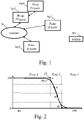
- the Fig. 1 represents a telecommunication system in which the present invention is implemented.
- the system comprises a plurality of access points denoted Ap1, Ap2, Ap3 and Ap4 which allow, when a mobile station St1 is connected to an access point among the access points Ap1, Ap2, Ap3 or Ap4 to access an internet-type communication network In via a residential gateway not shown in Fig. 1 .
- the access point Ap4 is connected to the communication network In via the access point Ap1.
- connection of the mobile station St1 to an access point depends on the position of the mobile station in the network formed by the access points Ap1, Ap2 and Ap3. If the mobile station moves, it may move away from the access point to which the mobile station is connected and lose quality of service. She will have to reconnect to another access point.
- Wi-Fi performance is subject to several parameters related to the environment of the access point and the mobile station St1. Several types of disturbances can influence these parameters independently of each other. Due to the complexity of disturbances, which are often cumulative, it is difficult to predict the quality of the physical Wi-Fi connection for a long enough period to be able, for example, to issue a relevant alert concerning poor quality of the Wi-Fi connection. Fi and direct a station to another access point.
- the present invention uses the communication parameters which are the measurement of the power in reception of a received signal or RSSi, acronym for Received Signal Strength Indication and the physical flow between the access point and the mobile station (Phy-Rate) to model the link between the access point and the mobile station and to characterize the level of performance of the physical throughput of the link in relation to the level of attenuation between the access point and the mobile station in an environment without consideration of noise to predict a reconnection of the mobile station to another access point.
- RSSi the measurement of the power in reception of a received signal or RSSi, acronym for Received Signal Strength Indication
- Physical flow between the access point and the mobile station Physical flow between the access point and the mobile station
- the physical bit rate taken into account is the physical bit rate received by the mobile station and the RSSI considered is that seen by the access point because the modeling must be applicable to all the mobile stations.
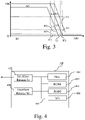
- the Fig. 2 represents an example of a variation curve of the physical bit rate of a link between a mobile station and an access point as a function of the reception power of a signal transmitted by a mobile station and received by an access point.
- the curve in bold line denoted 20 represents the variation function of the physical bit rate of a link between a mobile station and an access point as a function of the reception power of a signal emitted by a mobile station.
- Curve 20 is, according to the present invention, modeled by curve 25 shown in fine lines.
- Curve 25 is divided into three parts denoted Zone 1, Zone 2 and Zone 3.
- the Zone 1 part comprises the part of the curve 25 for which the Phy-Rate, represented in percent relative to the maximum Phi-Rate is close to or equal to the maximum Phi-Rate PhyRatemax.
- the Zone 2 part comprises the part of the curve 25 for which the Phy-Rate level decreases in relation to the decrease in RSSI.
- the Zone 3 part includes the part of curve 25 for which the Phy-Rate is close to or equal to zero
- the coefficients m and p must be adjusted for each mobile station. This is because mobile stations have different performance due to their own set of radio chips, antennas, noise and electromagnetic interference. From an initial curve, the adjustment is performed using samples (PhyRate, RSSI) from pilot signals.
- the initial curve depends on the type of mobile station. For example, the m-coefficient is -16 and the p-coefficient is 1333 for a maximum Phyrate of 500 Mbps.
- m n is the coefficient m of index n
- PhyRate A is the PhyRate measured at point A
- PhyRate B is the PhyRate measured at point B
- RSSI A is the RSSI measured at point A
- RSSI B is the RSSI measured at point B.
- the samples A and B must respect the following rules: Be centered on the part of the curve in zone 2, i.e. one coefficient must be located in the upper part at 50% of the PhyRateMax and the other coefficient must be located in the lower part at 50% of PhyRateMax.
- One sample must be less than 80% of PhyRateMax and the other coefficient must be greater than 20% of PhyRatemax.
- Samples A and B should be far enough apart to reduce the error in calculating the slope.
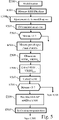
- the Fig. 3 represents an example of the different levels of coverage obtained from the variation curve of the physical bit rate of a link between a mobile station and an access point as a function of the power in reception of a signal emitted by a mobile station and received by an access point.
- level 1 is rated N1
- level 2 is rated N2
- level 3 is rated N4
- level 5 is rated N5.
- the reconnection mechanism to another access point is based on the anticipation of the future value of the torque (RSSI, PhyRate) for the next 10 seconds. If it is considered that this pair will be in a low coverage area, a transfer or reconnection to another access point is initiated. This transfer requires a selection of the access point to which the mobile station will be directed. To determine this access point, a pre-handover is performed by anticipating the performance of the mobile station on the future access point.
- pre-handover is to determine the best access point to which the mobile station could be directed.
- Metrics are the measurement of RSSI.
- the access point to which the mobile station is connected calculates, for each access point, including itself, a prediction of the value of the RSSI and a prediction of the value v RSSI .
- the Fig. 4 shows an example of an access point architecture in which the present invention is implemented.
- Processor 400 is capable of executing instructions loaded into volatile memory 203 from non-volatile memory 402, external memory (not shown), storage medium, such as an SD card or other , or a communication network.
- volatile memory 203 non-volatile memory 402
- external memory not shown
- storage medium such as an SD card or other
- a communication network such as an SD card or other
- processor 400 is able to read instructions from the volatile memory 403 and execute them.
- These instructions form a computer program which causes the implementation, by the processor 400, of all or part of the method described in relation to the Fig. 5 .
- All or part of the process described in relation to the Fig. 5 can be implemented in software form by execution of a set of instructions by a programmable machine, such as a DSP ( Digital Signal Processor in English or Unit of Digital Signal Processing in French) or a microcontroller or be implemented in hardware form by a dedicated machine or component, such as an FPGA ( Field-Programmable Gate Array ) or an ASIC ( Application-Specifie Integrated Circuit ) in French).
- a programmable machine such as a DSP ( Digital Signal Processor in English or Unit of Digital Signal Processing in French) or a microcontroller or be implemented in hardware form by a dedicated machine or component, such as an FPGA ( Field-Programmable Gate Array ) or an ASIC ( Application-Specifie Integrated Circuit ) in French).
- the Fig. 5 represents an example of an algorithm executed by an access point according to the present invention.
- the present algorithm is described in an example in which it is executed by processor 400.
- the processor 400 performs a modeling of the physical bit rate between the first access point and the mobile station with respect to the reception power of a signal transmitted by a mobile station and received by the first access point. access based on power measurements in reception of signals transmitted by the mobile station and received by the first access point.
- the physical bit rates between each access point and the mobile station are the physical bit rates received by the mobile station.
- the modeling is obtained from a first, second and third affine straight line, the director coefficient and the ordinate of the second affine straight line are determined for each mobile station from physical flow measurements between the first access point and the mobile station with respect to a reception power of a signal transmitted by a mobile station and received by the first access point.
- the steering coefficient is determined from an average of measurements, half of the measurements are greater than 50% of the maximum physical throughput between the first access point and the mobile station and less than 80% of the maximum physical throughput between the first access point and the mobile station, the other half of the measurements are less than 50% of the maximum physical rate between the first access point and the mobile station and greater than 20% of the maximum physical rate between the first access point access and mobile station.
- the modeling is obtained by defining around the affine straight lines a zone determined from a predetermined percentage of the maximum physical bit rate between the first access point and the mobile station.
- the processor 400 defines coverage levels as described with reference to the Fig. 2 .
- the processor 400 optionally transfers to the other access points the modeling of the physical flow between the first access point and the mobile station with respect to the reception power of the signal transmitted by the mobile station and received by the access point.
- step E501 the processor 400 controls the Wi-Fi interface 406 so that physical flow measurements between the first access point and the mobile station as well as power measurements in reception of signals transmitted by the mobile station and received by the first access point are performed.
- step E501bis the processor 400 possibly performs an adjustment of the modeling as described with reference to the Fig. 2 by using the measurements of physical bit rates between the first access point and the mobile station as well as the measurements of powers in reception of signals transmitted by the mobile station and received by the first access point obtained in step E501.
- the processor 400 determines the level in which the mobile station is located from the measurements as described with reference to the Fig. 2 .
- the processor 400 checks whether the level determined at step E502 is lower than level 4.
- step E503 If so, the processor 400 goes to step E503. If not, the processor 400 interrupts the present algorithm.
- processor 400 commands each access point to perform measurements as described with reference to Fig. 2 .
- the processor 400 obtains power measurements in reception of signals transmitted by the mobile station and received by each access point as described with reference to the Fig. 2 and calculates the physical data rates between each access point and the mobile station and the rate of variation of the physical data rates between each access point and the mobile station from the measurements obtained and the modeling as described with reference to Fig. 2 .
- the processor 400 performs a calculation of anticipations of a physical bit rate between each access point and the mobile station as described with reference to the Fig. 2 .
- the processor 400 calculates a score for each access point as described with reference to the Fig. 2 .
- the processor 400 checks whether the level determined at step E502 is lower than level 3.
- processor 400 goes to step E509. If not, processor 400 returns to step E501.
- the processor 400 determines that a reconnection of the mobile station to the second access point must be performed based on the scores calculated as described with reference to Fig. 2 .
- the processor 400 activates the 5-minute timeout during which no reconnection can be made unless the coverage level is less than 3.
Landscapes
- Engineering & Computer Science (AREA)
- Computer Networks & Wireless Communication (AREA)
- Signal Processing (AREA)
- Mobile Radio Communication Systems (AREA)
Claims (10)
- Verfahren zum Antizipieren einer Neuverbindung einer mit einem ersten Zugangspunkt verbundenen Mobilstation zu einem zweiten Zugangspunkt, wobei die Zugangspunkte ein drahtloses Telekommunikationsnetz bilden, dadurch gekennzeichnet, dass das Verfahren die folgenden vom ersten Zugangspunkt ausgeführten Schritte aufweist:- Modellierung eines physikalischen Durchsatzes zwischen dem ersten Zugangspunkt und der Mobilstation bezüglich einer Empfangsleistung eines von einer Mobilstation gesendeten und vom ersten Zugangspunkt empfangenen Signals ausgehend von Empfangsleistungsmessungen von von der Mobilstation gesendeten und vom ersten Zugangspunkt empfangenen Signalen,- Bestimmung von Pegeln ausgehend von der Modellierung, wobei die Pegel ausgehend vom physikalischen Durchsatz zwischen dem ersten Zugangspunkt und der Mobilstation und von der Empfangsleistung eines von einer Mobilstation gesendeten und vom ersten Zugangspunkt empfangenen Signals definiert werden,- Messungen physikalischer Durchsätze zwischen dem ersten Zugangspunkt und der Mobilstation,- Messungen von Empfangsleistungen von von der Mobilstation gesendeten und vom ersten Zugangspunkt empfangenen Signalen,- Bestimmung eines Pegels, auf dem sich die Mobilstation befindet, ausgehend von den Messungen,- Überprüfung, ob der Pegel, auf dem sich die Mobilstation befindet, niedriger ist als einer der ausgehend von der Modellierung bestimmten Pegel, und wenn ja, weist das Verfahren außerdem die folgenden Schritte auf:- Erhalt von Empfangsleistungsmessungen von von der Mobilstation gesendeten und vom ersten und vom zweiten Zugangspunkt empfangenen Signalen,- Berechnung eines Werts der Empfangsleistung eines von der Mobilstation gesendeten und vom ersten Zugangspunkt empfangenen Signals und einer Änderungsgeschwindigkeit der Empfangsleistung eines von der Mobilstation gesendeten und vom ersten Zugangspunkt empfangenen Signals ausgehend von den erhaltenen Messungen und der Modellierung,- Berechnung, ausgehend vom berechneten Wert der Empfangsleistung eines von der Mobilstation gesendeten und vom ersten Zugangspunkt empfangenen Signals und der Änderungsgeschwindigkeit der Empfangsleistung eines von der Mobilstation gesendeten und vom ersten Zugangspunkt empfangenen Signals, von Antizipationen eines physikalischen Durchsatzes zwischen jedem Zugangspunkt und der Mobilstation,- Bestimmung, ob eine Neuverbindung der Station zum zweiten Zugangspunkt unter anderen ausgehend von den berechneten Antizipationen ausgeführt werden muss.
- Verfahren nach Anspruch 1, dadurch gekennzeichnet, dass das Verfahren außerdem einen Schritt der Berechnung eines Scores für jeden Zugangspunkt aufweist, und dass die Bestimmung, ob eine Neuverbindung der Station mit dem zweiten Zugangspunkt ausgeführt werden muss, ausgehend von den berechneten Scores bestimmt wird.
- Verfahren nach Anspruch 1 oder 2, dadurch gekennzeichnet, dass die physikalischen Durchsätze zwischen jedem Zugangspunkt und der Mobilstation die von der Mobilstation empfangenen physikalischen Durchsätze sind.
- Verfahren nach einem der Ansprüche 1 bis 3, dadurch gekennzeichnet, dass das Verfahren außerdem einen Schritt der Übertragung der Modellierung des physikalischen Durchsatzes zwischen dem ersten Zugangspunkt und der Mobilstation bezüglich der Empfangsleistung des von der Mobilstation gesendeten und vom ersten Zugangspunkt empfangenen Signals zum zweiten Zugangspunkt aufweist.
- Verfahren nach einem der Ansprüche 1 bis 4, dadurch gekennzeichnet, dass die Modellierung ausgehend von einer ersten, zweiten und dritten affinen Geraden erhalten wird, wobei der Richtkoeffizient und die Ordinate der zweiten affinen Geraden für jede Mobilstation ausgehend von Messungen physikalischer Durchsätze zwischen dem ersten Zugangspunkt und der Mobilstation bezüglich einer Empfangsleistung eines von einer Mobilstation gesendeten und vom ersten Zugangspunkt empfangenen Signals bestimmt werden.
- Verfahren nach Anspruch 5, dadurch gekennzeichnet, dass der Richtkoeffizient ausgehend von einem Messungsmittelwert bestimmt wird, wobei die Hälfte der Messungen höher als 50% des maximalen physikalischen Durchsatzes zwischen dem ersten Zugangspunkt und der Mobilstation und niedriger als 80% des maximalen physikalischen Durchsatzes zwischen dem ersten Zugangspunkt und der Mobilstation sind, die andere Hälfte der Messungen niedriger als 50% des maximalen physikalischen Durchsatzes zwischen dem ersten Zugangspunkt und der Mobilstation und höher als 20% des maximalen physikalischen Durchsatzes zwischen dem ersten Zugangspunkt und der Mobilstation sind.
- Verfahren nach Anspruch 6, dadurch gekennzeichnet, dass die Modellierung erhalten wird, indem um die affinen Geraden herum eine ausgehend von einem vorbestimmten Prozentsatz des maximalen physikalischen Durchsatzes zwischen dem ersten Zugangspunkt und der Mobilstation bestimmte Zone definiert wird.
- Vorrichtung zum Antizipieren einer Neuverbindung einer mit einem ersten Zugangspunkt verbundenen Mobilstation zu einem zweiten Zugangspunkt, wobei die Zugangspunkte ein drahtloses Telekommunikationsnetz bilden, dadurch gekennzeichnet, dass die Vorrichtung im ersten Zugangspunkt enthalten ist und aufweist:- Einrichtungen zur Modellierung eines physikalischen Durchsatzes zwischen dem ersten Zugangspunkt und der Mobilstation bezüglich einer Empfangsleistung eines von einer Mobilstation gesendeten und vom ersten Zugangspunkt empfangenen Signals ausgehend von Empfangsleistungsmessungen von von der Mobilstation gesendeten und vom ersten Zugangspunkt empfangenen Signalen,- Einrichtungen zur Bestimmung von Pegeln ausgehend von der Modellierung, wobei die Pegel ausgehend vom physikalischen Durchsatz zwischen dem ersten Zugangspunkt und der Mobilstation und der Empfangsleistung eines von einer Mobilstation gesendeten und vom ersten Zugangspunkt empfangenen Signals definiert werden,- Einrichtungen für Messungen physikalischer Durchsätze zwischen dem ersten Zugangspunkt und der Mobilstation,- Einrichtungen für Empfangsleistungsmessungen von von der Mobilstation gesendeten und vom ersten Zugangspunkt empfangenen Signalen,- Einrichtungen zur Bestimmung eines Pegels, auf dem sich die Mobilstation befindet, ausgehend von den Messungen,- Einrichtungen zur Überprüfung, ob der Pegel, auf dem sich die Mobilstation befindet, niedriger ist als einer der ausgehend von der Modellierung bestimmten Pegel, und wenn ja, Einrichtungen zur Aktivierung von:- Einrichtungen für den Erhalt von Empfangsleistungsmessungen von von der Mobilstation gesendeten und vom ersten und vom zweiten Zugangspunkt empfangenen Signalen,- Einrichtungen zur Berechnung eines Werts der Empfangsleistung eines von der Mobilstation gesendeten und vom ersten Zugangspunkt empfangenen Signals und einer Änderungsgeschwindigkeit der Empfangsleistung eines von der Mobilstation gesendeten und vom ersten Zugangspunkt empfangenen Signals ausgehend von den erhaltenen Messungen und der Modellierung,- Einrichtungen zur Berechnung, ausgehend vom berechneten Wert der Empfangsleistung eines von der Mobilstation gesendeten und vom ersten Zugangspunkt empfangenen Signals und der Änderungsgeschwindigkeit der Empfangsleistung eines von der Mobilstation gesendeten und vom ersten Zugangspunkt empfangenen Signals, von Antizipationen eines physikalischen Durchsatzes zwischen jedem Zugangspunkt und der Mobilstation,- Einrichtungen zur Bestimmung, ob eine Neuverbindung der Station zum zweiten Zugangspunkt unter anderen ausgehend von den berechneten Antizipationen ausgeführt werden muss.
- Computerprogramm, das auf einem Informationsträger gespeichert ist, wobei das Programm Anweisungen aufweist, die es ermöglichen, das Verfahren nach einem der Ansprüche 1 bis 7 durchzuführen, wenn es von einem EDV-System geladen und ausgeführt wird.
- Speichereinrichtungen, dadurch gekennzeichnet, dass sie ein Computerprogramm speichern, das Anweisungen zur Durchführung, durch eine Vorrichtung, des Verfahrens nach einem der Ansprüche 1 bis 7 enthalten, wenn das Programm von einem Prozessor der Vorrichtung ausgeführt wird.
Applications Claiming Priority (2)
| Application Number | Priority Date | Filing Date | Title |
|---|---|---|---|
| FR1873544A FR3091119A1 (fr) | 2018-12-20 | 2018-12-20 | Procédé et un dispositif d’anticipation d’une reconnexion d’une station mobile |
| PCT/EP2019/085832 WO2020127410A1 (fr) | 2018-12-20 | 2019-12-18 | Procédé et dispositif d'anticipation d'une reconnexion d'une station mobile |
Publications (2)
| Publication Number | Publication Date |
|---|---|
| EP3881602A1 EP3881602A1 (de) | 2021-09-22 |
| EP3881602B1 true EP3881602B1 (de) | 2022-09-21 |
Family
ID=66676715
Family Applications (1)
| Application Number | Title | Priority Date | Filing Date |
|---|---|---|---|
| EP19818175.2A Active EP3881602B1 (de) | 2018-12-20 | 2019-12-18 | Verfahren und vorrichtung zur vorhersage einer wiederverbindung einer mobilstation |
Country Status (5)
| Country | Link |
|---|---|
| US (1) | US11665604B2 (de) |
| EP (1) | EP3881602B1 (de) |
| CA (1) | CA3123754C (de) |
| FR (1) | FR3091119A1 (de) |
| WO (1) | WO2020127410A1 (de) |
Family Cites Families (3)
| Publication number | Priority date | Publication date | Assignee | Title |
|---|---|---|---|---|
| US7756082B1 (en) * | 2001-09-07 | 2010-07-13 | Atheros Communications, Inc. | Wireless LAN using background scanning technique |
| KR101549120B1 (ko) * | 2014-02-12 | 2015-09-04 | 부산대학교 산학협력단 | 무선랜 환경에서 성능 이상 현상을 고려한 핸드오프 결정 시스템 및 방법 |
| US11039364B2 (en) * | 2018-09-28 | 2021-06-15 | Google Llc | Methods and apparatus for proactively switching between available networks |
-
2018
- 2018-12-20 FR FR1873544A patent/FR3091119A1/fr active Pending
-
2019
- 2019-12-18 CA CA3123754A patent/CA3123754C/fr active Active
- 2019-12-18 WO PCT/EP2019/085832 patent/WO2020127410A1/fr not_active Ceased
- 2019-12-18 EP EP19818175.2A patent/EP3881602B1/de active Active
- 2019-12-18 US US17/414,881 patent/US11665604B2/en active Active
Also Published As
| Publication number | Publication date |
|---|---|
| EP3881602A1 (de) | 2021-09-22 |
| WO2020127410A1 (fr) | 2020-06-25 |
| CA3123754A1 (fr) | 2020-06-25 |
| CA3123754C (fr) | 2023-06-20 |
| FR3091119A1 (fr) | 2020-06-26 |
| US11665604B2 (en) | 2023-05-30 |
| US20220060951A1 (en) | 2022-02-24 |
Similar Documents
| Publication | Publication Date | Title |
|---|---|---|
| EP3694149B1 (de) | Verfahren und vorrichtung zur bestimmung der netzwerkqualität | |
| EP3957028B1 (de) | Verfahren zur vorhersage einer signal- und/oder dienstqualität und zugehörige vorrichtung | |
| EP0289384B1 (de) | Verfahren zur automatischen Auswahl einer gerichteten Empfangsantenne unter mehreren Empfangsantennen | |
| EP3881602B1 (de) | Verfahren und vorrichtung zur vorhersage einer wiederverbindung einer mobilstation | |
| EP4406202A1 (de) | Titel verfahren zur vorhersage der dienstqualität eines kommunikationsnetzes, entsprechendes computerprogrammprodukt und entsprechende elektronische vorhersagevorrichtung | |
| EP2724575B1 (de) | Verfahren zur steuerung der leistung in mobilen netzwerken | |
| US10250320B2 (en) | Satellite signal strength indication and reflection detection | |
| US9912470B2 (en) | System and method for wide-band adaptive equalization and eye opening monitoring with link quality detection | |
| EP2519047B1 (de) | Verfahren zur Optimierung der Qualität eines Handynetzes | |
| EP1616445B1 (de) | Testsystem und -verfahren für ein mobilfunknetz | |
| FR3133721A1 (fr) | Procede ameliore de selection d’un canal de communication entre un aeronef et une station distante, et systeme de communication executant le procede. | |
| EP1714511B1 (de) | Verfahren zur optimierung der planung in einem cdma-kommunikationssystem | |
| CN119233288B (zh) | 一种用于5g路由器的信号强度检测方法、系统及设备 | |
| EP3755103B1 (de) | Verfahren und system zur übertragung von daten von einem datenübertrager zu einem server | |
| FR3128845A1 (fr) | Procédé de transfert intercellulaire entre stations de base d'un réseau de radiocommunication : Réseau de radiocommunication et produit programme d'ordinateur associés. | |
| EP3454591B1 (de) | Datenübertragungsverfahren eines schienenkommunikationssystems, entsprechendes computerprogramm, entsprechende kommunikationsausrüstung und entsprechendes schienenkommunikationssystem | |
| EP4496384A1 (de) | Verfahren zur optimierung der bord-/bodenkonnektivität für schienenverkehr | |
| CN121842724A (zh) | 一种波束管理方法、装置、设备以及存储介质 | |
| WO2008040908A2 (fr) | Estimation de composantes d'attenuation d'un signal radio propage | |
| EP4734397A1 (de) | Optimierung eines drahtlosen netzwerks | |
| EP4248682A1 (de) | Verfahren zur optimierung einer übergabe zwischen zellen in einem mobilen netzwerk und zugehöriges system | |
| WO2025008178A1 (fr) | Procédé de prédiction d'une variation de qualité de service dans un réseau de télécommunication cellulaire, dispositif de prédiction et programme d'ordinateur correspondants | |
| EP4727194A1 (de) | Verfahren zur bestimmung einer optimalen konfiguration einer funkstation, entsprechendes computerprogrammprodukt und konfigurationsvorrichtung | |
| FR3149742A1 (fr) | Procede de gestion d’une interface radio d’un dispositif de communication | |
| EP4599531A1 (de) | Verfahren zur charakterisierung der qualität einer funkverbindung zwischen einem fahrzeug und einer bodeneinheit |
Legal Events
| Date | Code | Title | Description |
|---|---|---|---|
| STAA | Information on the status of an ep patent application or granted ep patent |
Free format text: STATUS: UNKNOWN |
|
| STAA | Information on the status of an ep patent application or granted ep patent |
Free format text: STATUS: THE INTERNATIONAL PUBLICATION HAS BEEN MADE |
|
| PUAI | Public reference made under article 153(3) epc to a published international application that has entered the european phase |
Free format text: ORIGINAL CODE: 0009012 |
|
| STAA | Information on the status of an ep patent application or granted ep patent |
Free format text: STATUS: REQUEST FOR EXAMINATION WAS MADE |
|
| 17P | Request for examination filed |
Effective date: 20210615 |
|
| AK | Designated contracting states |
Kind code of ref document: A1 Designated state(s): AL AT BE BG CH CY CZ DE DK EE ES FI FR GB GR HR HU IE IS IT LI LT LU LV MC MK MT NL NO PL PT RO RS SE SI SK SM TR |
|
| DAV | Request for validation of the european patent (deleted) | ||
| DAX | Request for extension of the european patent (deleted) | ||
| REG | Reference to a national code |
Ref country code: DE Ref legal event code: R079 Ref document number: 602019019887 Country of ref document: DE Free format text: PREVIOUS MAIN CLASS: H04W0036300000 Ipc: H04W0036000000 |
|
| GRAP | Despatch of communication of intention to grant a patent |
Free format text: ORIGINAL CODE: EPIDOSNIGR1 |
|
| STAA | Information on the status of an ep patent application or granted ep patent |
Free format text: STATUS: GRANT OF PATENT IS INTENDED |
|
| RIC1 | Information provided on ipc code assigned before grant |
Ipc: H04W 84/12 20090101ALN20220405BHEP Ipc: H04W 36/36 20090101ALN20220405BHEP Ipc: H04W 36/24 20090101ALN20220405BHEP Ipc: H04W 16/22 20090101ALN20220405BHEP Ipc: H04W 36/00 20090101AFI20220405BHEP |
|
| RIC1 | Information provided on ipc code assigned before grant |
Ipc: H04W 84/12 20090101ALN20220411BHEP Ipc: H04W 36/36 20090101ALN20220411BHEP Ipc: H04W 36/24 20090101ALN20220411BHEP Ipc: H04W 16/22 20090101ALN20220411BHEP Ipc: H04W 36/00 20090101AFI20220411BHEP |
|
| INTG | Intention to grant announced |
Effective date: 20220511 |
|
| GRAS | Grant fee paid |
Free format text: ORIGINAL CODE: EPIDOSNIGR3 |
|
| GRAA | (expected) grant |
Free format text: ORIGINAL CODE: 0009210 |
|
| STAA | Information on the status of an ep patent application or granted ep patent |
Free format text: STATUS: THE PATENT HAS BEEN GRANTED |
|
| AK | Designated contracting states |
Kind code of ref document: B1 Designated state(s): AL AT BE BG CH CY CZ DE DK EE ES FI FR GB GR HR HU IE IS IT LI LT LU LV MC MK MT NL NO PL PT RO RS SE SI SK SM TR |
|
| REG | Reference to a national code |
Ref country code: GB Ref legal event code: FG4D Free format text: NOT ENGLISH |
|
| REG | Reference to a national code |
Ref country code: CH Ref legal event code: EP |
|
| REG | Reference to a national code |
Ref country code: DE Ref legal event code: R096 Ref document number: 602019019887 Country of ref document: DE |
|
| REG | Reference to a national code |
Ref country code: IE Ref legal event code: FG4D Free format text: LANGUAGE OF EP DOCUMENT: FRENCH |
|
| REG | Reference to a national code |
Ref country code: AT Ref legal event code: REF Ref document number: 1520581 Country of ref document: AT Kind code of ref document: T Effective date: 20221015 |
|
| REG | Reference to a national code |
Ref country code: LT Ref legal event code: MG9D |
|
| REG | Reference to a national code |
Ref country code: NL Ref legal event code: MP Effective date: 20220921 |
|
| PG25 | Lapsed in a contracting state [announced via postgrant information from national office to epo] |
Ref country code: SE Free format text: LAPSE BECAUSE OF FAILURE TO SUBMIT A TRANSLATION OF THE DESCRIPTION OR TO PAY THE FEE WITHIN THE PRESCRIBED TIME-LIMIT Effective date: 20220921 Ref country code: RS Free format text: LAPSE BECAUSE OF FAILURE TO SUBMIT A TRANSLATION OF THE DESCRIPTION OR TO PAY THE FEE WITHIN THE PRESCRIBED TIME-LIMIT Effective date: 20220921 Ref country code: NO Free format text: LAPSE BECAUSE OF FAILURE TO SUBMIT A TRANSLATION OF THE DESCRIPTION OR TO PAY THE FEE WITHIN THE PRESCRIBED TIME-LIMIT Effective date: 20221221 Ref country code: LV Free format text: LAPSE BECAUSE OF FAILURE TO SUBMIT A TRANSLATION OF THE DESCRIPTION OR TO PAY THE FEE WITHIN THE PRESCRIBED TIME-LIMIT Effective date: 20220921 Ref country code: LT Free format text: LAPSE BECAUSE OF FAILURE TO SUBMIT A TRANSLATION OF THE DESCRIPTION OR TO PAY THE FEE WITHIN THE PRESCRIBED TIME-LIMIT Effective date: 20220921 Ref country code: FI Free format text: LAPSE BECAUSE OF FAILURE TO SUBMIT A TRANSLATION OF THE DESCRIPTION OR TO PAY THE FEE WITHIN THE PRESCRIBED TIME-LIMIT Effective date: 20220921 |
|
| REG | Reference to a national code |
Ref country code: AT Ref legal event code: MK05 Ref document number: 1520581 Country of ref document: AT Kind code of ref document: T Effective date: 20220921 |
|
| PG25 | Lapsed in a contracting state [announced via postgrant information from national office to epo] |
Ref country code: HR Free format text: LAPSE BECAUSE OF FAILURE TO SUBMIT A TRANSLATION OF THE DESCRIPTION OR TO PAY THE FEE WITHIN THE PRESCRIBED TIME-LIMIT Effective date: 20220921 Ref country code: GR Free format text: LAPSE BECAUSE OF FAILURE TO SUBMIT A TRANSLATION OF THE DESCRIPTION OR TO PAY THE FEE WITHIN THE PRESCRIBED TIME-LIMIT Effective date: 20221222 |
|
| PG25 | Lapsed in a contracting state [announced via postgrant information from national office to epo] |
Ref country code: SM Free format text: LAPSE BECAUSE OF FAILURE TO SUBMIT A TRANSLATION OF THE DESCRIPTION OR TO PAY THE FEE WITHIN THE PRESCRIBED TIME-LIMIT Effective date: 20220921 Ref country code: RO Free format text: LAPSE BECAUSE OF FAILURE TO SUBMIT A TRANSLATION OF THE DESCRIPTION OR TO PAY THE FEE WITHIN THE PRESCRIBED TIME-LIMIT Effective date: 20220921 Ref country code: PT Free format text: LAPSE BECAUSE OF FAILURE TO SUBMIT A TRANSLATION OF THE DESCRIPTION OR TO PAY THE FEE WITHIN THE PRESCRIBED TIME-LIMIT Effective date: 20230123 Ref country code: ES Free format text: LAPSE BECAUSE OF FAILURE TO SUBMIT A TRANSLATION OF THE DESCRIPTION OR TO PAY THE FEE WITHIN THE PRESCRIBED TIME-LIMIT Effective date: 20220921 Ref country code: CZ Free format text: LAPSE BECAUSE OF FAILURE TO SUBMIT A TRANSLATION OF THE DESCRIPTION OR TO PAY THE FEE WITHIN THE PRESCRIBED TIME-LIMIT Effective date: 20220921 Ref country code: AT Free format text: LAPSE BECAUSE OF FAILURE TO SUBMIT A TRANSLATION OF THE DESCRIPTION OR TO PAY THE FEE WITHIN THE PRESCRIBED TIME-LIMIT Effective date: 20220921 |
|
| PG25 | Lapsed in a contracting state [announced via postgrant information from national office to epo] |
Ref country code: SK Free format text: LAPSE BECAUSE OF FAILURE TO SUBMIT A TRANSLATION OF THE DESCRIPTION OR TO PAY THE FEE WITHIN THE PRESCRIBED TIME-LIMIT Effective date: 20220921 Ref country code: PL Free format text: LAPSE BECAUSE OF FAILURE TO SUBMIT A TRANSLATION OF THE DESCRIPTION OR TO PAY THE FEE WITHIN THE PRESCRIBED TIME-LIMIT Effective date: 20220921 Ref country code: IS Free format text: LAPSE BECAUSE OF FAILURE TO SUBMIT A TRANSLATION OF THE DESCRIPTION OR TO PAY THE FEE WITHIN THE PRESCRIBED TIME-LIMIT Effective date: 20230121 Ref country code: EE Free format text: LAPSE BECAUSE OF FAILURE TO SUBMIT A TRANSLATION OF THE DESCRIPTION OR TO PAY THE FEE WITHIN THE PRESCRIBED TIME-LIMIT Effective date: 20220921 |
|
| REG | Reference to a national code |
Ref country code: DE Ref legal event code: R097 Ref document number: 602019019887 Country of ref document: DE |
|
| PG25 | Lapsed in a contracting state [announced via postgrant information from national office to epo] |
Ref country code: NL Free format text: LAPSE BECAUSE OF FAILURE TO SUBMIT A TRANSLATION OF THE DESCRIPTION OR TO PAY THE FEE WITHIN THE PRESCRIBED TIME-LIMIT Effective date: 20220921 Ref country code: AL Free format text: LAPSE BECAUSE OF FAILURE TO SUBMIT A TRANSLATION OF THE DESCRIPTION OR TO PAY THE FEE WITHIN THE PRESCRIBED TIME-LIMIT Effective date: 20220921 |
|
| PLBE | No opposition filed within time limit |
Free format text: ORIGINAL CODE: 0009261 |
|
| STAA | Information on the status of an ep patent application or granted ep patent |
Free format text: STATUS: NO OPPOSITION FILED WITHIN TIME LIMIT |
|
| PG25 | Lapsed in a contracting state [announced via postgrant information from national office to epo] |
Ref country code: DK Free format text: LAPSE BECAUSE OF FAILURE TO SUBMIT A TRANSLATION OF THE DESCRIPTION OR TO PAY THE FEE WITHIN THE PRESCRIBED TIME-LIMIT Effective date: 20220921 |
|
| REG | Reference to a national code |
Ref country code: CH Ref legal event code: PL |
|
| REG | Reference to a national code |
Ref country code: BE Ref legal event code: MM Effective date: 20221231 |
|
| 26N | No opposition filed |
Effective date: 20230622 |
|
| PG25 | Lapsed in a contracting state [announced via postgrant information from national office to epo] |
Ref country code: SI Free format text: LAPSE BECAUSE OF FAILURE TO SUBMIT A TRANSLATION OF THE DESCRIPTION OR TO PAY THE FEE WITHIN THE PRESCRIBED TIME-LIMIT Effective date: 20220921 Ref country code: LU Free format text: LAPSE BECAUSE OF NON-PAYMENT OF DUE FEES Effective date: 20221218 |
|
| PG25 | Lapsed in a contracting state [announced via postgrant information from national office to epo] |
Ref country code: LI Free format text: LAPSE BECAUSE OF NON-PAYMENT OF DUE FEES Effective date: 20221231 Ref country code: IE Free format text: LAPSE BECAUSE OF NON-PAYMENT OF DUE FEES Effective date: 20221218 Ref country code: CH Free format text: LAPSE BECAUSE OF NON-PAYMENT OF DUE FEES Effective date: 20221231 |
|
| PG25 | Lapsed in a contracting state [announced via postgrant information from national office to epo] |
Ref country code: BE Free format text: LAPSE BECAUSE OF NON-PAYMENT OF DUE FEES Effective date: 20221231 |
|
| PG25 | Lapsed in a contracting state [announced via postgrant information from national office to epo] |
Ref country code: CY Free format text: LAPSE BECAUSE OF FAILURE TO SUBMIT A TRANSLATION OF THE DESCRIPTION OR TO PAY THE FEE WITHIN THE PRESCRIBED TIME-LIMIT Effective date: 20220921 |
|
| PG25 | Lapsed in a contracting state [announced via postgrant information from national office to epo] |
Ref country code: MK Free format text: LAPSE BECAUSE OF FAILURE TO SUBMIT A TRANSLATION OF THE DESCRIPTION OR TO PAY THE FEE WITHIN THE PRESCRIBED TIME-LIMIT Effective date: 20220921 Ref country code: IT Free format text: LAPSE BECAUSE OF FAILURE TO SUBMIT A TRANSLATION OF THE DESCRIPTION OR TO PAY THE FEE WITHIN THE PRESCRIBED TIME-LIMIT Effective date: 20220921 Ref country code: HU Free format text: LAPSE BECAUSE OF FAILURE TO SUBMIT A TRANSLATION OF THE DESCRIPTION OR TO PAY THE FEE WITHIN THE PRESCRIBED TIME-LIMIT; INVALID AB INITIO Effective date: 20191218 |
|
| PG25 | Lapsed in a contracting state [announced via postgrant information from national office to epo] |
Ref country code: MC Free format text: LAPSE BECAUSE OF FAILURE TO SUBMIT A TRANSLATION OF THE DESCRIPTION OR TO PAY THE FEE WITHIN THE PRESCRIBED TIME-LIMIT Effective date: 20220921 |
|
| PG25 | Lapsed in a contracting state [announced via postgrant information from national office to epo] |
Ref country code: TR Free format text: LAPSE BECAUSE OF FAILURE TO SUBMIT A TRANSLATION OF THE DESCRIPTION OR TO PAY THE FEE WITHIN THE PRESCRIBED TIME-LIMIT Effective date: 20220921 Ref country code: MC Free format text: LAPSE BECAUSE OF FAILURE TO SUBMIT A TRANSLATION OF THE DESCRIPTION OR TO PAY THE FEE WITHIN THE PRESCRIBED TIME-LIMIT Effective date: 20220921 |
|
| PG25 | Lapsed in a contracting state [announced via postgrant information from national office to epo] |
Ref country code: BG Free format text: LAPSE BECAUSE OF FAILURE TO SUBMIT A TRANSLATION OF THE DESCRIPTION OR TO PAY THE FEE WITHIN THE PRESCRIBED TIME-LIMIT Effective date: 20220921 |
|
| PG25 | Lapsed in a contracting state [announced via postgrant information from national office to epo] |
Ref country code: MT Free format text: LAPSE BECAUSE OF FAILURE TO SUBMIT A TRANSLATION OF THE DESCRIPTION OR TO PAY THE FEE WITHIN THE PRESCRIBED TIME-LIMIT Effective date: 20220921 |
|
| PGFP | Annual fee paid to national office [announced via postgrant information from national office to epo] |
Ref country code: DE Payment date: 20251126 Year of fee payment: 7 |
|
| PGFP | Annual fee paid to national office [announced via postgrant information from national office to epo] |
Ref country code: GB Payment date: 20251119 Year of fee payment: 7 |
|
| PGFP | Annual fee paid to national office [announced via postgrant information from national office to epo] |
Ref country code: FR Payment date: 20251120 Year of fee payment: 7 |