EP3879155B1 - Sustainable industrial hose - Google Patents
Sustainable industrial hose Download PDFInfo
- Publication number
- EP3879155B1 EP3879155B1 EP21152491.3A EP21152491A EP3879155B1 EP 3879155 B1 EP3879155 B1 EP 3879155B1 EP 21152491 A EP21152491 A EP 21152491A EP 3879155 B1 EP3879155 B1 EP 3879155B1
- Authority
- EP
- European Patent Office
- Prior art keywords
- hose
- sustainable
- epdm
- epr
- layer
- Prior art date
- Legal status (The legal status is an assumption and is not a legal conclusion. Google has not performed a legal analysis and makes no representation as to the accuracy of the status listed.)
- Revoked
Links
Images
Classifications
-
- F—MECHANICAL ENGINEERING; LIGHTING; HEATING; WEAPONS; BLASTING
- F16—ENGINEERING ELEMENTS AND UNITS; GENERAL MEASURES FOR PRODUCING AND MAINTAINING EFFECTIVE FUNCTIONING OF MACHINES OR INSTALLATIONS; THERMAL INSULATION IN GENERAL
- F16L—PIPES; JOINTS OR FITTINGS FOR PIPES; SUPPORTS FOR PIPES, CABLES OR PROTECTIVE TUBING; MEANS FOR THERMAL INSULATION IN GENERAL
- F16L11/00—Hoses, i.e. flexible pipes
- F16L11/04—Hoses, i.e. flexible pipes made of rubber or flexible plastics
- F16L11/08—Hoses, i.e. flexible pipes made of rubber or flexible plastics with reinforcements embedded in the wall
- F16L11/081—Hoses, i.e. flexible pipes made of rubber or flexible plastics with reinforcements embedded in the wall comprising one or more layers of a helically wound cord or wire
- F16L11/082—Hoses, i.e. flexible pipes made of rubber or flexible plastics with reinforcements embedded in the wall comprising one or more layers of a helically wound cord or wire two layers
-
- F—MECHANICAL ENGINEERING; LIGHTING; HEATING; WEAPONS; BLASTING
- F16—ENGINEERING ELEMENTS AND UNITS; GENERAL MEASURES FOR PRODUCING AND MAINTAINING EFFECTIVE FUNCTIONING OF MACHINES OR INSTALLATIONS; THERMAL INSULATION IN GENERAL
- F16L—PIPES; JOINTS OR FITTINGS FOR PIPES; SUPPORTS FOR PIPES, CABLES OR PROTECTIVE TUBING; MEANS FOR THERMAL INSULATION IN GENERAL
- F16L11/00—Hoses, i.e. flexible pipes
- F16L11/04—Hoses, i.e. flexible pipes made of rubber or flexible plastics
- F16L11/08—Hoses, i.e. flexible pipes made of rubber or flexible plastics with reinforcements embedded in the wall
- F16L11/081—Hoses, i.e. flexible pipes made of rubber or flexible plastics with reinforcements embedded in the wall comprising one or more layers of a helically wound cord or wire
- F16L11/083—Hoses, i.e. flexible pipes made of rubber or flexible plastics with reinforcements embedded in the wall comprising one or more layers of a helically wound cord or wire three or more layers
-
- C—CHEMISTRY; METALLURGY
- C08—ORGANIC MACROMOLECULAR COMPOUNDS; THEIR PREPARATION OR CHEMICAL WORKING-UP; COMPOSITIONS BASED THEREON
- C08L—COMPOSITIONS OF MACROMOLECULAR COMPOUNDS
- C08L23/00—Compositions of homopolymers or copolymers of unsaturated aliphatic hydrocarbons having only one carbon-to-carbon double bond; Compositions of derivatives of such polymers
- C08L23/02—Compositions of homopolymers or copolymers of unsaturated aliphatic hydrocarbons having only one carbon-to-carbon double bond; Compositions of derivatives of such polymers not modified by chemical after-treatment
- C08L23/16—Ethylene-propylene or ethylene-propylene-diene copolymers
-
- C—CHEMISTRY; METALLURGY
- C09—DYES; PAINTS; POLISHES; NATURAL RESINS; ADHESIVES; COMPOSITIONS NOT OTHERWISE PROVIDED FOR; APPLICATIONS OF MATERIALS NOT OTHERWISE PROVIDED FOR
- C09D—COATING COMPOSITIONS, e.g. PAINTS, VARNISHES OR LACQUERS; FILLING PASTES; CHEMICAL PAINT OR INK REMOVERS; INKS; CORRECTING FLUIDS; WOODSTAINS; PASTES OR SOLIDS FOR COLOURING OR PRINTING; USE OF MATERIALS THEREFOR
- C09D123/00—Coating compositions based on homopolymers or copolymers of unsaturated aliphatic hydrocarbons having only one carbon-to-carbon double bond; Coating compositions based on derivatives of such polymers
- C09D123/02—Coating compositions based on homopolymers or copolymers of unsaturated aliphatic hydrocarbons having only one carbon-to-carbon double bond; Coating compositions based on derivatives of such polymers not modified by chemical after-treatment
- C09D123/16—Elastomeric ethylene-propylene or ethylene-propylene-diene copolymers, e.g. EPR and EPDM rubbers
-
- F—MECHANICAL ENGINEERING; LIGHTING; HEATING; WEAPONS; BLASTING
- F16—ENGINEERING ELEMENTS AND UNITS; GENERAL MEASURES FOR PRODUCING AND MAINTAINING EFFECTIVE FUNCTIONING OF MACHINES OR INSTALLATIONS; THERMAL INSULATION IN GENERAL
- F16L—PIPES; JOINTS OR FITTINGS FOR PIPES; SUPPORTS FOR PIPES, CABLES OR PROTECTIVE TUBING; MEANS FOR THERMAL INSULATION IN GENERAL
- F16L11/00—Hoses, i.e. flexible pipes
- F16L11/04—Hoses, i.e. flexible pipes made of rubber or flexible plastics
- F16L11/08—Hoses, i.e. flexible pipes made of rubber or flexible plastics with reinforcements embedded in the wall
- F16L11/085—Hoses, i.e. flexible pipes made of rubber or flexible plastics with reinforcements embedded in the wall comprising one or more braided layers
-
- F—MECHANICAL ENGINEERING; LIGHTING; HEATING; WEAPONS; BLASTING
- F16—ENGINEERING ELEMENTS AND UNITS; GENERAL MEASURES FOR PRODUCING AND MAINTAINING EFFECTIVE FUNCTIONING OF MACHINES OR INSTALLATIONS; THERMAL INSULATION IN GENERAL
- F16L—PIPES; JOINTS OR FITTINGS FOR PIPES; SUPPORTS FOR PIPES, CABLES OR PROTECTIVE TUBING; MEANS FOR THERMAL INSULATION IN GENERAL
- F16L11/00—Hoses, i.e. flexible pipes
- F16L11/04—Hoses, i.e. flexible pipes made of rubber or flexible plastics
- F16L11/12—Hoses, i.e. flexible pipes made of rubber or flexible plastics with arrangements for particular purposes, e.g. specially profiled, with protecting layer, heated, electrically conducting
-
- C—CHEMISTRY; METALLURGY
- C08—ORGANIC MACROMOLECULAR COMPOUNDS; THEIR PREPARATION OR CHEMICAL WORKING-UP; COMPOSITIONS BASED THEREON
- C08L—COMPOSITIONS OF MACROMOLECULAR COMPOUNDS
- C08L2203/00—Applications
- C08L2203/20—Applications use in electrical or conductive gadgets
- C08L2203/202—Applications use in electrical or conductive gadgets use in electrical wires or wirecoating
-
- C—CHEMISTRY; METALLURGY
- C08—ORGANIC MACROMOLECULAR COMPOUNDS; THEIR PREPARATION OR CHEMICAL WORKING-UP; COMPOSITIONS BASED THEREON
- C08L—COMPOSITIONS OF MACROMOLECULAR COMPOUNDS
- C08L2312/00—Crosslinking
Definitions
- the field to which the disclosure generally relates to hoses and particularly to high performance, reinforced hoses which are useful in a wide variety of applications. More specifically, the present invention relates to reinforced hoses where one or more layers of the hoses are formed from sustainable rubber materials and/or reinforcements.
- Rubber hoses are used in a variety of applications for transporting fluids such as liquids and gases.
- such hoses are commonly used as garden hoses, refrigeration hoses, torque converter hoses, automotive heater hoses, coolant hoses, power transmission hoses, power steering hoses, etc. It is necessary that such hoses not only be flexible enough to meet dimensional configurations required for such applications, but that the hose be sufficiently resistant to internal forces which may tend to deform the hose due to high pressure of the liquid or gas flowing through the hose.
- manufacturers of hoses for use in high, medium or low-pressure environments typically include a reinforcement layer between an inner tubular layer and an outer tubular layer, both formed from a petroleum-based material. Natural rubber is also commonly used as well.
- a commonly used petroleum-based material for forming one or more rubber layers is ethylene-propylene diene terpolymer (EPDM).
- EPDM ethylene-propylene diene terpolymer
- the EPDM polymer is made from ethylene, propylene, and a diene comonomer that enables crosslinking via sulfur vulcanization.
- the ethylene and propylene raw material components are typically derived from petroleum.
- Another commonly used petroleum-based material for forming one or more rubber layers is ethylene propylene rubber (EPR) which also has ethylene and propylene raw material components derived from petroleum.
- EPR ethylene propylene rubber
- EP0933576 B1 describes a recyclable hose comprising an inner and a cover layer, wherein an intermediate layer is made from a mixture of PE or PP type or their mixtures, polyolefin rubbers of the EPDM/EPM type and starch.
- US 2013/340876 A1 is concerned with methods for leak prevention of water cooling hoses.
- a hose to be processed according to US 2013/340876 A1 the document discloses a water cooling hose with an inner and outer EPDM layer and a reinforcement layer.
- hoses include an inner tube, a reinforcement layer disposed outwardly from the inner tube, and a cover layer disposed outwardly from the reinforcement layer, where the cover layer includes a cured composition having a sustainable content and formed from a mixture including EPDM and/or EPR sustainable polymer and a sulfur or peroxide based curing system.
- the EPDM and/or EPR sustainable polymer has ethylene monomer derived from one or more renewable sources, such as, but limited to, ethylene monomer derived from sugar cane.
- the mixture may further include one or more of recovered carbon black and sustainable oils from renewable sources.
- the hose embodiments may also include the reinforcement layer of fibers from sustainable material.
- the hose contains the sustainable content in an amount of up to 75% by weight based upon total hose weight, or greater than 25% by weight based upon total hose weight, or even greater than 50% by weight based upon total hose weight.
- hoses include an inner tube, a reinforcement layer disposed outwardly from the inner tube, and a cover layer disposed outwardly from the reinforcement layer, where the inner tube includes a cured composition having a sustainable content and formed from a mixture including EPDM and/or EPR sustainable polymer and a sulfur or peroxide based curing system.
- the EPDM and/or EPR sustainable polymer has ethylene monomer derived from one or more renewable sources, such as, but limited to, ethylene monomer derived from sugar cane.
- the mixture may further include one or more of recovered carbon black and sustainable oils from renewable sources.
- the hose embodiments may also include the reinforcement layer of fibers from sustainable material.
- the hose contains the sustainable content in an amount of up to 75% by weight based upon total hose weight, or greater than 25% by weight based upon total hose weight, or even greater than 50% by weight based upon total hose weight.
- the cover layer also includes a cured composition formed from a mixture including EPDM and/or EPR sustainable polymer and a sulfur or peroxide based curing system.
- any references to "one embodiment” or “an embodiment” means that a particular element, feature, structure, or characteristic described in connection with the embodiment is included in at least one embodiment.
- the appearances of the phrase “in one embodiment” in various places in the specification are not necessarily referring to the same embodiment.
- the hose 100 is composed of at least an inner tube 102, reinforcing layer 104, and outer cover layer 106.
- the outer cover layer 106 and/or the inner tube layer is formed from EPDM and/or EPR sustainable polymers (hereinafter referred to as "EPDM/EPR sustainable polymers" or "EPDM/EPR sustainable polymer”) using ethylene monomer derived from one or more renewable sources.
- EPDM/EPR sustainable polymers hereinafter referred to as "EPDM/EPR sustainable polymers” or "EPDM/EPR sustainable polymer”
- EPDM/EPR sustainable polymer EPR sustainable polymers
- ethylene monomer derived from one or more renewable sources ethylene monomer derived from one or more renewable sources.
- either or both the inner tube 102 and the outer cover layer 106 are formed by cured composition having a sustainable content which includes EPDM/EPR sustainable polymers, as well as other optional sustainable ingredients from renewable or recoverable sources, as part of the sustainable content. So long as it is in the range where the properties of the
- renewable sources are one or more plant materials selected from the group consisting of sugar cane and sugar beet, maple, date palm, sugar palm, sorghum, American agave, corn, wheat, barley, sorghum, rice, potato, cassava, sweet potato, algae, fruit, materials comprising cellulose, wine, materials comprising hemicelluloses, materials comprising lignin, wood, straw, sugarcane bagasse, sugarcane leaves, corn stover, wood residues, paper, and combinations thereof.
- Some useful EPDM/EPR sustainable polymers are those disclosed in United States Pat. App. Pub. 20190315948 A1 .
- Crosslinking of the EPDM/EPR sustainable polymers mostly takes place via vulcanization with sulfur, but may also accomplished with peroxides (for better heat resistance) or with phenolic resins.
- the EPDM/EPR sustainable polymers useful in forming the inner tube 102 and/or cover layer 106 may be admixed with from about 50 to about 700 phr, of fillers such as carbon black, calcium carbonate, talc, clay or hydrated silica, or mixtures of the foregoing.
- fillers such as carbon black, calcium carbonate, talc, clay or hydrated silica, or mixtures of the foregoing.
- Other conventional additives, process and extender oils, antioxidants, waxes, pigments, plasticizers, softeners and the like may be added according to common rubber processing practice without departing from the disclosure.
- the elastomeric composition also contains from about 0.5 to about 1.5 phr of an antiozonant or antioxidant and from about 10 phr to about 200 phr of a paraffinic oil and/or naphthenic oil plasticizer/softener.
- the amount of carbon black is from about 200 phr to about 400 phr, and the amount of calcium carbonate is from about 150 phr to about 350 phr.
- recovered carbon black (rCB) and/or sustainable oils from renewable sources are admixed with the EPDM/EPR sustainable polymer, and it is within the scope of the disclosure that either or both the inner tube 102 and the outer cover layer 106 is/are formed from EPDM/EPR sustainable polymers admixed with recovered carbon black and/or sustainable oils from renewable sources.
- the recovered carbon black may be derived from any suitable source(s), such as, but not limited to, scrap tire, roofing membrane process start up scrap, conveyor belt scrap, and/or hose scrap.
- Sustainable oils may be derived from any suitable source(s), such as, but not limited to, automotive motor oil recycling, bio-derived oils such as corn oil, coconut oil, rapeseed oil, soybean oil, vegetable oil, etc., and the like.
- the reinforcing layer 104 constituting the hose 100 is not particularly limited, but like the reinforcing layer of a conventional hose may be one or more layers of a yarn produced from a vinylon fiber, rayon fiber, hemp fiber, polyester fiber, polyvinyl acetate fiber, nylon fiber, aramid fiber, natural fiber, etc. or a metal wire or metal alloy wire etc. braided, wrapped in a spiral, or wrapped in a plurality of spiraled layers wound in counter directions.
- the reinforcement layer may be formed from sustainable materials as part of the sustainable content, as well.
- the sustainable content weight amount including the EPDM/EPR sustainable polymer, and other optional materials from sustainable or renewable sources or recovered materials, when used, may be up to about 95% by weight based upon total hose weight, up to about 75% by weight based upon total hose weight, up to about 65% by weight based upon total hose weight, greater than 50% by weight based upon total hose weight, greater than 40% by weight based upon total hose weight, greater than 25% by weight based upon total hose weight, or even greater than 5% by weight based upon total hose weight.
- the inner tube 102 by known extrusion processes, provide an optional bonding layer or reinforcement on its outer surface if necessary, braid / spiral the reinforcing layer 104 over the same, and cover the same with the outer cover 106 by extrusion so as to bond the layers of the hose integrally.
- the hoses may then be cured.
- the hose 200 includes an inner tube 102, reinforcing layer 104, outer cover 106, similar to hose 100 described above, and further includes layer 208, which may be a ply reinforcement layer, or a bonding layer, or backing layer, or barrier layer, and layer 208 is disposed between inner tube 102 and reinforcing layer 104.
- layer 208 When used as a ply reinforcement layer, it is not particularly limited, but may be produced from a vinylon fiber, rayon fiber, polyester fiber, nylon fiber, fiber from sustainable material, or aramid fiber, etc. in a ply configuration.
- a barrier layer it is not particularly limited, but may be produced from nylon, PVDF, THV, and the like.
- the hose 300 includes an inner tube 102, reinforcing layer 104, friction layer 310, second reinforcing layer 312, and outer cover 106.
- the second reinforcing layer 312, is not particularly limited, but may be produced from a vinylon fiber, rayon fiber, polyester fiber, nylon fiber, aromatic polyamide fiber, fiber from sustainable material, etc. or a hard steel wire etc. braided, wrapped in a spiral, or wrapped in a plurality of spiraled layers wound in counter directions.
- Hose embodiments have the structure shown in FIG. 4 .
- Hose 400 includes an inner tube 102, reinforcing layer 104, friction layer 310, second reinforcing layer 312, and outer cover 106.
- the hose further includes a layer 208 disposed between inner tube 102 and reinforcing layer 104.
- reinforcing layers 104 friction layers 310, second reinforcing layers 312, outer covers 106, and ply reinforcement layers depicted above, such may be formed from any suitable materials know to those of skill in the art. In some aspects, such layers may be formed from those materials disclosed in United States Pat. No. 6,179,008 B1 .
- Hose 500 includes an inner tube 102, reinforcing layer 104, outer cover 106, layer 208, which may be a ply reinforcement layer, or a bonding layer, or backing layer, or barrier layer, similar to hose 200 described above. Disposed between inner tube 102 and layer 208 is a friction layer 502. Also, disposed between layer 208 and reinforcing layer 104 is friction layer 504. With reference to FIG. 6 , hose 600 is similar to hose 500, and further includes friction layer 310 and second reinforcing layer 312 disposed between reinforcing layer 104 and outer cover 106, as shown. According to some aspects of the disclosure, layers 502, 504, or 310, or any combination thereof, may also include EPDM/EPR sustainable polymers.
- each of the reinforcing layers may be formed by spiral winding one or more layers of a yarn or hard steel wire. Reinforcing layers may also be formed from braid or knit reinforcements.
- a first layer may be spiral wound in a first winding direction, and a second layer spiral wound in a second winding direction opposite the first winding direction.
- the first layer is laid at a positive angle relative to the longitudinal axis of the hose, and the second layer laid at a negative angle relative to the longitudinal axis.
- the angle of one of layers may be between about 45° and 65°, and the angle of the other layers between about -45° and -65°.
- the optional friction layer used in embodiments according to the disclosure is typically from about 0.020 inches (0.5 mm) to about 0.051 inches (1.3 mm) thick, is more typically from about 0.024 inches (0.6 mm) to about 0.043 inches (1.1 mm) thick, and in some aspects, will be from about 0.028 inches (0.7 mm) to about 0.035 inches (0.9 mm) in thickness.
- the friction layer may be formed from any suitable curable rubber based composition, containing such rubber as EPDM/EPR sustainable polymer, acrylonitrile butadiene rubber (NBR), hydrogenated NBR, carboxylated NBR, polychloroprene, fluoroelastomer, epichlorohydrin, nitrile, carboxylated nitrile rubber, CPE, CSM, styrene-butadiene rubber (SBR), NBR/PVC blends, or any blends thereof.
- EPDM/EPR sustainable polymer acrylonitrile butadiene rubber (NBR), hydrogenated NBR, carboxylated NBR, polychloroprene, fluoroelastomer, epichlorohydrin, nitrile, carboxylated nitrile rubber, CPE, CSM, styrene-butadiene rubber (SBR), NBR/PVC blends, or any blends thereof.
- NBR acrylonitrile butadiene rubber
- the curable rubber employed in the friction layer of some hoses in accordance with the disclosure may also contain various additives in conventional or suitable amounts known to persons having ordinary skill in the art.
- additives may include, and are not limited to, retardants to prevent an unduly quick cure, antioxidants, adhesion promoters, processing aids, reinforcing agents, talc and fillers, such as carbon black, silica, other mineral fillers, lignin, and the like.
- Reinforcing fillers are typically utilized at a level which is within the range of about 20 parts per hundred parts (phr) to about 400 phr.
- talc is incorporated in an amount of from about 10 phr to about 60 phr, and such may be included in compositions useful in any layers of the hoses.
- cover layers have a thickness of from about 0.039 inches (1 mm) to about 0.12 inches (3 mm), from about 0.059 inches (1.5 mm) to about 0.098 inches (2.5 mm), and in some instances, about 0.067 inches (1.7 mm) to about 0.075 inches (1.9 mm).
- the cover layer can be formed from the EPDM/EPR sustainable polymer, acrylonitrile butadiene rubber (NBR), hydrogenated NBR, carboxylated NBR, polychloroprene, fluoroelastomer, epichlorohydrin, nitrile, carboxylated nitrile rubber, CPE, CSM, styrene-butadiene rubber (SBR), NBR/PVC blends, or any blends thereof. Any of the materials forming the cover layer may be further loaded with metal particles, carbon black, or another electrically-conductive particulate, flake, or fiber filler so as to render the hose electrically-conductive for static dissipation or other applications.
- compositions forming the cover layer also include such additives as retardants to prevent an unduly quick cure, antioxidants, adhesion promoters, processing aids, reinforcing agents and fillers, such as carbon black, silica, other mineral fillers, lignin, and the like.
- the inner tube may be formed from the EPDM/EPR sustainable polymer, acrylonitrile butadiene rubber (NBR), hydrogenated NBR, carboxylated NBR, polychloroprene, fluoroelastomer, epichlorohydrin, nitrile, carboxylated nitrile rubber, CPE, CSM, styrene-butadiene rubber (SBR), NBR/PVC blends, or any blends thereof. Any suitable amount of these materials may be used. Additional fillers and additives may be included in the formulation of the composition depending upon the requirements of the particular application envisioned.
- Such fillers and additives may include curing agents or systems, wetting agents or surfactants, plasticizers, processing oils, pigments, dispersants, dyes, and other colorants, opacifying agents, foaming or anti-foaming agents, anti-static agents, coupling agents such as titanates, chain extending oils, tackifiers, flow modifiers, pigments, lubricants, silanes, and other agents, stabilizers, emulsifiers, antioxidants, thickeners, free sulfur, peroxide(s), and/or flame retardants.
- the formulation of the material may be compounded in a conventional mixing apparatus as an admixture of the rubber and filler components, and any additional fillers or additives.
- at least one of the inner tube layer and the cover layer is formed from the EPDM/EPR sustainable polymer as noted above.
- the thickness of the inner tube in some embodiments according to the disclosure may be from about 0.031 inches (0.8 mm) to about 0.157 inches (4 mm), and in some instances, from about 0.039 inches (1.0 mm) to about 0.138 inches (3.5 mm).
- a hose was prepared using EPDM sustainable polymer for the inner tube and the cover layer.
- the hose also included two reinforcement layers, and friction layers disposed between the inner tube and a first reinforcement layer, and also between the two reinforcement layers.
- the hose inside diameter was about 15.9 mm and the outside diameter was about 22.9 mm.
- the hose was tested for certain properties.
- the hose had a burst pressure of greater than 2.76 MPa, and in one test the burst pressure was 3.30 MPa.
- each of the inner tube and cover layer after curing, had a tensile strength values of 5 MPa or greater; and in one test, the inner tube had tensile strength of 5.2 MPa, and the cover layer had tensile strength of 6.0 MPa.
- the EPDM/EPR sustainable polymers and other sustainable materials may be useful for other applications, such as roofing membranes, seals, roll covers, vibration control, electrical insulation, belts, gaskets, automotive heating and cooling lines, air conditioning hose, turbocharger, engine and drivetrain systems and likely anywhere else EPDM can be used.
- the hoses may be water or air hoses for industrial or automotive applications, such as garden hose, air hoses, steam hose, automotive washer tubing, food / beverage hose, and the like.
Landscapes
- Engineering & Computer Science (AREA)
- General Engineering & Computer Science (AREA)
- Mechanical Engineering (AREA)
- Chemical & Material Sciences (AREA)
- Organic Chemistry (AREA)
- Health & Medical Sciences (AREA)
- Life Sciences & Earth Sciences (AREA)
- Chemical Kinetics & Catalysis (AREA)
- Medicinal Chemistry (AREA)
- Polymers & Plastics (AREA)
- Wood Science & Technology (AREA)
- Materials Engineering (AREA)
- Rigid Pipes And Flexible Pipes (AREA)
- Laminated Bodies (AREA)
- Compositions Of Macromolecular Compounds (AREA)
Description
- The field to which the disclosure generally relates to hoses and particularly to high performance, reinforced hoses which are useful in a wide variety of applications. More specifically, the present invention relates to reinforced hoses where one or more layers of the hoses are formed from sustainable rubber materials and/or reinforcements.
- This section provides background information to facilitate a better understanding of the various aspects of the disclosure. It should be understood that the statements in this section of this document are to be read in this light, and not as admissions of prior art.
- Rubber hoses are used in a variety of applications for transporting fluids such as liquids and gases. For example, such hoses are commonly used as garden hoses, refrigeration hoses, torque converter hoses, automotive heater hoses, coolant hoses, power transmission hoses, power steering hoses, etc. It is necessary that such hoses not only be flexible enough to meet dimensional configurations required for such applications, but that the hose be sufficiently resistant to internal forces which may tend to deform the hose due to high pressure of the liquid or gas flowing through the hose. In order to ensure that the hose meets these requirements, manufacturers of hoses for use in high, medium or low-pressure environments typically include a reinforcement layer between an inner tubular layer and an outer tubular layer, both formed from a petroleum-based material. Natural rubber is also commonly used as well.
- A commonly used petroleum-based material for forming one or more rubber layers is ethylene-propylene diene terpolymer (EPDM). The EPDM polymer is made from ethylene, propylene, and a diene comonomer that enables crosslinking via sulfur vulcanization. The ethylene and propylene raw material components are typically derived from petroleum. Another commonly used petroleum-based material for forming one or more rubber layers is ethylene propylene rubber (EPR) which also has ethylene and propylene raw material components derived from petroleum.
-
EP0933576 B1 describes a recyclable hose comprising an inner and a cover layer, wherein an intermediate layer is made from a mixture of PE or PP type or their mixtures, polyolefin rubbers of the EPDM/EPM type and starch. -
US 2013/340876 A1 is concerned with methods for leak prevention of water cooling hoses. As an example of a hose to be processed according toUS 2013/340876 A1 , the document discloses a water cooling hose with an inner and outer EPDM layer and a reinforcement layer. - There is an ongoing goal to use renewable materials for forming rubber and/or reinforcement materials, for example, EPDM and/or EPR sustainable polymers made of ethylene which is derived from sustainable sources and not from petroleum. Such need is met, at least in part, with embodiments according to this disclosure.
- This summary is provided to introduce a selection of concepts that are further described below in the detailed description. This summary is not intended to identify key or essential features of the claimed subject matter, nor is it intended to be used as an aid in limiting the scope of the claimed subject matter.
- In a first aspect of the disclosure, hoses include an inner tube, a reinforcement layer disposed outwardly from the inner tube, and a cover layer disposed outwardly from the reinforcement layer, where the cover layer includes a cured composition having a sustainable content and formed from a mixture including EPDM and/or EPR sustainable polymer and a sulfur or peroxide based curing system. The EPDM and/or EPR sustainable polymer has ethylene monomer derived from one or more renewable sources, such as, but limited to, ethylene monomer derived from sugar cane. The mixture may further include one or more of recovered carbon black and sustainable oils from renewable sources. The hose embodiments may also include the reinforcement layer of fibers from sustainable material. In some embodiments, the hose contains the sustainable content in an amount of up to 75% by weight based upon total hose weight, or greater than 25% by weight based upon total hose weight, or even greater than 50% by weight based upon total hose weight.
- In another aspect of the disclosure, hoses include an inner tube, a reinforcement layer disposed outwardly from the inner tube, and a cover layer disposed outwardly from the reinforcement layer, where the inner tube includes a cured composition having a sustainable content and formed from a mixture including EPDM and/or EPR sustainable polymer and a sulfur or peroxide based curing system. The EPDM and/or EPR sustainable polymer has ethylene monomer derived from one or more renewable sources, such as, but limited to, ethylene monomer derived from sugar cane. The mixture may further include one or more of recovered carbon black and sustainable oils from renewable sources. The hose embodiments may also include the reinforcement layer of fibers from sustainable material. In some embodiments, the hose contains the sustainable content in an amount of up to 75% by weight based upon total hose weight, or greater than 25% by weight based upon total hose weight, or even greater than 50% by weight based upon total hose weight. In some cases, the cover layer also includes a cured composition formed from a mixture including EPDM and/or EPR sustainable polymer and a sulfur or peroxide based curing system.
- Certain embodiments of the disclosure will hereafter be described with reference to the accompanying drawings, wherein like reference numerals denote like elements. It should be understood, however, that the accompanying figures illustrate the various implementations described herein and are not meant to limit the scope of various technologies described herein, and:
-
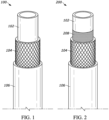
FIG. 1 illustrates in perspective view, a hose according to some aspects of the disclosure; and, -
FIG. 2 depicts in perspective view, another hose according to some aspects of the disclosure; -
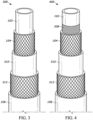
FIG. 3 illustrates in perspective view, yet another hose according to some aspects of the disclosure; -
FIG. 4 depicts in perspective view, another hose according to some aspects of the disclosure; -
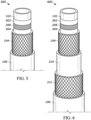
FIG. 5 illustrates in perspective view, yet another hose according to some aspects of the disclosure; and, -
FIG. 6 depicts in perspective view, another hose according to some aspects of the disclosure. - The following description of the variations is merely illustrative in nature and is in no way intended to limit the scope of the disclosure, its application, or uses. The description and examples are presented herein solely for the purpose of illustrating the various embodiments of the disclosure and should not be construed as a limitation to the scope and applicability of the disclosure. In the summary of the disclosure and this detailed description, each numerical value should be read once as modified by the term "about" (unless already expressly so modified), and then read again as not so modified unless otherwise indicated in context. Also, in the summary of the disclosure and this detailed description, it should be understood that a concentration or amount or value range listed or described as being useful, suitable, or the like, is intended that any and every concentration or amount or value within the range, including the end points, is to be considered as having been stated. For example, "a range of from 1 to 10" is to be read as indicating each and every possible number along the continuum between about 1 and about 10. Thus, even if specific data points within the range, or even no data points within the range, are explicitly identified or refer to only a few specific, it is to be understood that inventors appreciate and understand that any and all data points within the range are to be considered to have been specified, and that inventors had possession of the entire range and all points within the range.
- Unless expressly stated to the contrary, "or" refers to an inclusive or and not to an exclusive or. For example, a condition A or B is satisfied by anyone of the following: A is true (or present) and B is false (or not present), A is false (or not present) and B is true (or present), and both A and B are true (or present).
- In addition, use of the "a" or "an" are employed to describe elements and components of the embodiments herein. This is done merely for convenience and to give a general sense of concepts according to the disclosure. This description should be read to include one or at least one and the singular also includes the plural unless otherwise stated.
- The terminology and phraseology used herein is for descriptive purposes and should not be construed as limiting in scope. Language such as "including," "comprising," "having," "containing," or "involving," and variations thereof, is intended to be broad and encompass the subject matter listed thereafter, equivalents, and additional subject matter not recited.
- Also, as used herein any references to "one embodiment" or "an embodiment" means that a particular element, feature, structure, or characteristic described in connection with the embodiment is included in at least one embodiment. The appearances of the phrase "in one embodiment" in various places in the specification are not necessarily referring to the same embodiment.
- Some hose embodiments according to the disclosure have the structure shown in
FIG. 1 . Thehose 100 is composed of at least aninner tube 102, reinforcinglayer 104, andouter cover layer 106. In the invention, theouter cover layer 106 and/or the inner tube layer is formed from EPDM and/or EPR sustainable polymers (hereinafter referred to as "EPDM/EPR sustainable polymers" or "EPDM/EPR sustainable polymer") using ethylene monomer derived from one or more renewable sources. Accordingly, it is within the scope of the disclosure that either or both theinner tube 102 and theouter cover layer 106 are formed by cured composition having a sustainable content which includes EPDM/EPR sustainable polymers, as well as other optional sustainable ingredients from renewable or recoverable sources, as part of the sustainable content. So long as it is in the range where the properties of the hoses of the disclosure are not impaired, a composition other than the EPDM/EPR sustainable polymers may also, in some aspects, be used for theinner tube 102 orouter cover layer 106. - Some non-limiting examples of renewable sources are one or more plant materials selected from the group consisting of sugar cane and sugar beet, maple, date palm, sugar palm, sorghum, American agave, corn, wheat, barley, sorghum, rice, potato, cassava, sweet potato, algae, fruit, materials comprising cellulose, wine, materials comprising hemicelluloses, materials comprising lignin, wood, straw, sugarcane bagasse, sugarcane leaves, corn stover, wood residues, paper, and combinations thereof. Some useful EPDM/EPR sustainable polymers are those disclosed in
United States Pat. App. Pub. 20190315948 A1 . - Crosslinking of the EPDM/EPR sustainable polymers mostly takes place via vulcanization with sulfur, but may also accomplished with peroxides (for better heat resistance) or with phenolic resins.
- The EPDM/EPR sustainable polymers useful in forming the
inner tube 102 and/orcover layer 106 may be admixed with from about 50 to about 700 phr, of fillers such as carbon black, calcium carbonate, talc, clay or hydrated silica, or mixtures of the foregoing. Other conventional additives, process and extender oils, antioxidants, waxes, pigments, plasticizers, softeners and the like may be added according to common rubber processing practice without departing from the disclosure. For example, in some embodiments, the elastomeric composition also contains from about 0.5 to about 1.5 phr of an antiozonant or antioxidant and from about 10 phr to about 200 phr of a paraffinic oil and/or naphthenic oil plasticizer/softener. Also, in some embodiments, the amount of carbon black is from about 200 phr to about 400 phr, and the amount of calcium carbonate is from about 150 phr to about 350 phr. - In some aspects, recovered carbon black (rCB) and/or sustainable oils from renewable sources (as part of the sustainable content) are admixed with the EPDM/EPR sustainable polymer, and it is within the scope of the disclosure that either or both the
inner tube 102 and theouter cover layer 106 is/are formed from EPDM/EPR sustainable polymers admixed with recovered carbon black and/or sustainable oils from renewable sources. The recovered carbon black may be derived from any suitable source(s), such as, but not limited to, scrap tire, roofing membrane process start up scrap, conveyor belt scrap, and/or hose scrap. Sustainable oils may be derived from any suitable source(s), such as, but not limited to, automotive motor oil recycling, bio-derived oils such as corn oil, coconut oil, rapeseed oil, soybean oil, vegetable oil, etc., and the like. - Referring again to
FIG. 1 , the reinforcinglayer 104 constituting thehose 100 is not particularly limited, but like the reinforcing layer of a conventional hose may be one or more layers of a yarn produced from a vinylon fiber, rayon fiber, hemp fiber, polyester fiber, polyvinyl acetate fiber, nylon fiber, aramid fiber, natural fiber, etc. or a metal wire or metal alloy wire etc. braided, wrapped in a spiral, or wrapped in a plurality of spiraled layers wound in counter directions. In some other aspects, the reinforcement layer may be formed from sustainable materials as part of the sustainable content, as well. - In hose embodiments according to the disclosure, the sustainable content weight amount, including the EPDM/EPR sustainable polymer, and other optional materials from sustainable or renewable sources or recovered materials, when used, may be up to about 95% by weight based upon total hose weight, up to about 75% by weight based upon total hose weight, up to about 65% by weight based upon total hose weight, greater than 50% by weight based upon total hose weight, greater than 40% by weight based upon total hose weight, greater than 25% by weight based upon total hose weight, or even greater than 5% by weight based upon total hose weight.
- Further, in the production of some hoses according to the disclosure, it is possible to produce the
inner tube 102 by known extrusion processes, provide an optional bonding layer or reinforcement on its outer surface if necessary, braid / spiral the reinforcinglayer 104 over the same, and cover the same with theouter cover 106 by extrusion so as to bond the layers of the hose integrally. The hoses may then be cured. - In another aspect of the disclosure, some hose embodiments have the structure shown in
FIG. 2 . Thehose 200 includes aninner tube 102, reinforcinglayer 104,outer cover 106, similar tohose 100 described above, and further includeslayer 208, which may be a ply reinforcement layer, or a bonding layer, or backing layer, or barrier layer, andlayer 208 is disposed betweeninner tube 102 and reinforcinglayer 104. When used as a ply reinforcement layer, it is not particularly limited, but may be produced from a vinylon fiber, rayon fiber, polyester fiber, nylon fiber, fiber from sustainable material, or aramid fiber, etc. in a ply configuration. When used as a barrier layer, it is not particularly limited, but may be produced from nylon, PVDF, THV, and the like. - In yet another aspect of the disclosure, some hose embodiments have the structure shown in
FIG. 3 . Thehose 300 includes aninner tube 102, reinforcinglayer 104,friction layer 310, second reinforcinglayer 312, andouter cover 106. The second reinforcinglayer 312, is not particularly limited, but may be produced from a vinylon fiber, rayon fiber, polyester fiber, nylon fiber, aromatic polyamide fiber, fiber from sustainable material, etc. or a hard steel wire etc. braided, wrapped in a spiral, or wrapped in a plurality of spiraled layers wound in counter directions. - In some another aspects of the disclosure, hose embodiments have the structure shown in
FIG. 4 .Hose 400 includes aninner tube 102, reinforcinglayer 104,friction layer 310, second reinforcinglayer 312, andouter cover 106. The hose further includes alayer 208 disposed betweeninner tube 102 and reinforcinglayer 104. - With regards to the reinforcing
layers 104, friction layers 310, second reinforcinglayers 312,outer covers 106, and ply reinforcement layers depicted above, such may be formed from any suitable materials know to those of skill in the art. In some aspects, such layers may be formed from those materials disclosed inUnited States Pat. No. 6,179,008 B1 . - Now referencing
FIG. 5 which depicts some other hose embodiments according to the disclosure.Hose 500 includes aninner tube 102, reinforcinglayer 104,outer cover 106,layer 208, which may be a ply reinforcement layer, or a bonding layer, or backing layer, or barrier layer, similar tohose 200 described above. Disposed betweeninner tube 102 andlayer 208 is afriction layer 502. Also, disposed betweenlayer 208 and reinforcinglayer 104 isfriction layer 504. With reference toFIG. 6 ,hose 600 is similar tohose 500, and further includesfriction layer 310 and second reinforcinglayer 312 disposed between reinforcinglayer 104 andouter cover 106, as shown. According to some aspects of the disclosure, layers 502, 504, or 310, or any combination thereof, may also include EPDM/EPR sustainable polymers. - As described above, each of the reinforcing layers may be formed by spiral winding one or more layers of a yarn or hard steel wire. Reinforcing layers may also be formed from braid or knit reinforcements. In those cases where two layers of a yarn, metal wire, or metal alloy wire are used, a first layer may be spiral wound in a first winding direction, and a second layer spiral wound in a second winding direction opposite the first winding direction. In some cases, the first layer is laid at a positive angle relative to the longitudinal axis of the hose, and the second layer laid at a negative angle relative to the longitudinal axis. The angle of one of layers may be between about 45° and 65°, and the angle of the other layers between about -45° and -65°.
- The optional friction layer used in embodiments according to the disclosure is typically from about 0.020 inches (0.5 mm) to about 0.051 inches (1.3 mm) thick, is more typically from about 0.024 inches (0.6 mm) to about 0.043 inches (1.1 mm) thick, and in some aspects, will be from about 0.028 inches (0.7 mm) to about 0.035 inches (0.9 mm) in thickness. The friction layer may be formed from any suitable curable rubber based composition, containing such rubber as EPDM/EPR sustainable polymer, acrylonitrile butadiene rubber (NBR), hydrogenated NBR, carboxylated NBR, polychloroprene, fluoroelastomer, epichlorohydrin, nitrile, carboxylated nitrile rubber, CPE, CSM, styrene-butadiene rubber (SBR), NBR/PVC blends, or any blends thereof.
- The curable rubber employed in the friction layer of some hoses in accordance with the disclosure, may also contain various additives in conventional or suitable amounts known to persons having ordinary skill in the art. Such additives may include, and are not limited to, retardants to prevent an unduly quick cure, antioxidants, adhesion promoters, processing aids, reinforcing agents, talc and fillers, such as carbon black, silica, other mineral fillers, lignin, and the like. Reinforcing fillers are typically utilized at a level which is within the range of about 20 parts per hundred parts (phr) to about 400 phr. In some embodiments, talc is incorporated in an amount of from about 10 phr to about 60 phr, and such may be included in compositions useful in any layers of the hoses.
- Referring again to cover layers, in some embodiments according to the disclosure, cover layers have a thickness of from about 0.039 inches (1 mm) to about 0.12 inches (3 mm), from about 0.059 inches (1.5 mm) to about 0.098 inches (2.5 mm), and in some instances, about 0.067 inches (1.7 mm) to about 0.075 inches (1.9 mm). The cover layer can be formed from the EPDM/EPR sustainable polymer, acrylonitrile butadiene rubber (NBR), hydrogenated NBR, carboxylated NBR, polychloroprene, fluoroelastomer, epichlorohydrin, nitrile, carboxylated nitrile rubber, CPE, CSM, styrene-butadiene rubber (SBR), NBR/PVC blends, or any blends thereof. Any of the materials forming the cover layer may be further loaded with metal particles, carbon black, or another electrically-conductive particulate, flake, or fiber filler so as to render the hose electrically-conductive for static dissipation or other applications. The compositions forming the cover layer also include such additives as retardants to prevent an unduly quick cure, antioxidants, adhesion promoters, processing aids, reinforcing agents and fillers, such as carbon black, silica, other mineral fillers, lignin, and the like.
- As described above, the inner tube may be formed from the EPDM/EPR sustainable polymer, acrylonitrile butadiene rubber (NBR), hydrogenated NBR, carboxylated NBR, polychloroprene, fluoroelastomer, epichlorohydrin, nitrile, carboxylated nitrile rubber, CPE, CSM, styrene-butadiene rubber (SBR), NBR/PVC blends, or any blends thereof. Any suitable amount of these materials may be used. Additional fillers and additives may be included in the formulation of the composition depending upon the requirements of the particular application envisioned. Such fillers and additives, which may be functional or inert, may include curing agents or systems, wetting agents or surfactants, plasticizers, processing oils, pigments, dispersants, dyes, and other colorants, opacifying agents, foaming or anti-foaming agents, anti-static agents, coupling agents such as titanates, chain extending oils, tackifiers, flow modifiers, pigments, lubricants, silanes, and other agents, stabilizers, emulsifiers, antioxidants, thickeners, free sulfur, peroxide(s), and/or flame retardants. The formulation of the material may be compounded in a conventional mixing apparatus as an admixture of the rubber and filler components, and any additional fillers or additives. According to the invention, at least one of the inner tube layer and the cover layer is formed from the EPDM/EPR sustainable polymer as noted above.
- The thickness of the inner tube in some embodiments according to the disclosure, may be from about 0.031 inches (0.8 mm) to about 0.157 inches (4 mm), and in some instances, from about 0.039 inches (1.0 mm) to about 0.138 inches (3.5 mm).
- One example was prepared for the purpose of further illustrating the nature of some of the embodiments and aspects of the disclosure and are not intended as a limitation on the scope thereof. A hose was prepared using EPDM sustainable polymer for the inner tube and the cover layer. The hose also included two reinforcement layers, and friction layers disposed between the inner tube and a first reinforcement layer, and also between the two reinforcement layers. The hose inside diameter was about 15.9 mm and the outside diameter was about 22.9 mm. The hose was tested for certain properties. The hose had a burst pressure of greater than 2.76 MPa, and in one test the burst pressure was 3.30 MPa. Tested independently, each of the inner tube and cover layer, after curing, had a tensile strength values of 5 MPa or greater; and in one test, the inner tube had tensile strength of 5.2 MPa, and the cover layer had tensile strength of 6.0 MPa.
- In addition to the hose applications described above, the EPDM/EPR sustainable polymers and other sustainable materials may be useful for other applications, such as roofing membranes, seals, roll covers, vibration control, electrical insulation, belts, gaskets, automotive heating and cooling lines, air conditioning hose, turbocharger, engine and drivetrain systems and likely anywhere else EPDM can be used. In hose applications, the hoses may be water or air hoses for industrial or automotive applications, such as garden hose, air hoses, steam hose, automotive washer tubing, food / beverage hose, and the like.
- The foregoing description of the embodiments has been provided for purposes of illustration and description. Example embodiments are provided so that this disclosure will be sufficiently thorough, and will convey the scope to those who are skilled in the art. Numerous specific details are set forth such as examples of specific components, devices, and methods, to provide a thorough understanding of embodiments of the disclosure, but are not intended to be exhaustive or to limit the disclosure. It will be appreciated that it is within the scope of the disclosure that individual elements or features of a particular embodiment are generally not limited to that particular embodiment, but, where applicable, are interchangeable and can be used in a selected embodiment, even if not specifically shown or described. The same may also be varied in many ways. Such variations are not to be regarded as a departure from the disclosure, and all such modifications are intended to be included within the scope of the disclosure, wherein the present invention is defined by the appended claims.
Claims (12)
- A hose (100) comprising an inner tube (102), a reinforcement layer (104) disposed outwardly from the inner tube (102), and a cover layer (106) disposed outwardly from the reinforcement layer (104), characterized in that the cover layer (106) and/or the inner tube (102) comprise(s) a cured composition having a sustainable content and formed from a mixture comprising EPDM and/or EPR sustainable polymer and a sulfur or peroxide based curing system, wherein the EPDM and/or EPR sustainable polymer comprises ethylene monomer derived from one or more renewable sources.
- The hose (100) according to claim 1, characterized in that the renewable sources are one or more plant materials selected from the group consisting of sugar cane and sugar beet, maple, date palm, sugar palm, sorghum, American agave, corn, wheat, barley, sorghum, rice, potato, cassava, sweet potato, algae, fruit, materials comprising cellulose, wine, materials comprising hemicelluloses, materials comprising lignin, wood, straw, sugarcane bagasse, sugarcane leaves, corn stover, wood residues, paper, and combinations thereof.
- The hose (100) according to claim 1, characterized in that the EPDM and/or EPR sustainable polymer comprises ethylene monomer derived from sugar cane.
- The hose (100) according to any one of claims 1 to 3, characterized in that the mixture further comprises recovered carbon black.
- The hose (100) according to any one of claims 1 to 4, characterized in that the mixture further comprises sustainable oils from renewable sources.
- The hose (100) according to any one of claims 1 to 5, characterized in that the reinforcement layer (104) comprises fiber from a sustainable material.
- The hose (100) according to any one of claims 1 to 6, characterized in that the sustainable content is an amount of up to 95% by weight based upon total hose weight.
- The hose (100) according to any one of claims 1 to 7, characterized in that the sustainable content is an amount of greater than 25% by weight based upon total hose weight.
- The hose (100) according to claim 8, characterized in that the sustainable content is an amount of greater than 50% by weight based upon total hose weight.
- The hose (100) according to any one of claims 1 to 9, characterized in that the cover layer (106) comprises the cured composition formed from a mixture comprising EPDM and/or EPR sustainable polymer and a sulfur or peroxide based curing system.
- The hose (100) according to any one of claims 1 to 9, characterized in that the inner tube (102) comprises the cured composition formed from a mixture comprising EPDM and/or EPR sustainable polymer and a sulfur or peroxide based curing system.
- The hose (100) according to any one of claims 1 to 9, characterized in that both the inner tube (102) and the cover layer (106) comprise the cured composition formed from a mixture comprising EPDM and/or EPR sustainable polymer and a sulfur or peroxide based curing system.
Applications Claiming Priority (1)
| Application Number | Priority Date | Filing Date | Title |
|---|---|---|---|
| US16/813,173 US11168815B2 (en) | 2020-03-09 | 2020-03-09 | Sustainable industrial hose |
Publications (2)
| Publication Number | Publication Date |
|---|---|
| EP3879155A1 EP3879155A1 (en) | 2021-09-15 |
| EP3879155B1 true EP3879155B1 (en) | 2023-12-27 |
Family
ID=74572616
Family Applications (1)
| Application Number | Title | Priority Date | Filing Date |
|---|---|---|---|
| EP21152491.3A Revoked EP3879155B1 (en) | 2020-03-09 | 2021-01-20 | Sustainable industrial hose |
Country Status (2)
| Country | Link |
|---|---|
| US (2) | US11168815B2 (en) |
| EP (1) | EP3879155B1 (en) |
Families Citing this family (2)
| Publication number | Priority date | Publication date | Assignee | Title |
|---|---|---|---|---|
| US12163604B2 (en) | 2020-03-09 | 2024-12-10 | Contitech Usa, Inc. | Sustainable industrial hose |
| DE102023207621A1 (en) * | 2023-08-24 | 2025-02-27 | Contitech Deutschland Gmbh | SUSTAINABLE HOSE OR SUSTAINABLE SEAL WITH DETECTABLE LAYER |
Citations (13)
| Publication number | Priority date | Publication date | Assignee | Title |
|---|---|---|---|---|
| EP0933576A1 (en) | 1998-01-30 | 1999-08-04 | TPR S.p.A. Nucleo Industriale | Completely recyclable multilayered hose |
| US20020100516A1 (en) | 2001-01-30 | 2002-08-01 | Powell Steven M. | Thermoplastic reinforced hose construction |
| EP1495857A1 (en) | 2003-07-11 | 2005-01-12 | The Goodyear Tire & Rubber Company | Air conditioning hose |
| DE102011002256A1 (en) | 2011-04-26 | 2012-10-31 | Contitech Mgw Gmbh | Hose transporting a coolant, its use and method for its production |
| US20130340876A1 (en) | 2012-06-20 | 2013-12-26 | International Business Machines Corporation | Implementing leak prevention of water cooling hoses |
| US20140027003A1 (en) | 2012-07-25 | 2014-01-30 | Hutchinson | Rubber Composition Based On At Least One EPDM And A Phase-Change Material, Pipe Incorporating Same And Process For Preparing This Composition |
| US20150330538A1 (en) | 2014-05-16 | 2015-11-19 | Eaton Corporation | Aerospace hose having epdm rubber layer |
| EP3064345A1 (en) | 2015-03-04 | 2016-09-07 | ContiTech MGW GmbH | Hose tubing, particularly for the transport of coolants, its application and process for the production thereof. |
| KR20160123473A (en) | 2015-04-15 | 2016-10-26 | (주) 화승소재 | Thermoplastic elastomer composition |
| US20160355665A1 (en) | 2015-02-13 | 2016-12-08 | Amril Ag | Ester plasticizers based on renewable raw materials for elastomers |
| KR20170075689A (en) | 2017-06-19 | 2017-07-03 | (주) 화승소재 | Thermoplastic elastomer composition using bio-based material |
| US20190315948A1 (en) | 2018-04-16 | 2019-10-17 | Braskem S.A. | Bio-based eva compositions and articles and methods thereof |
| FR3080379A1 (en) | 2018-04-23 | 2019-10-25 | Usine De Kervellerin | ELASTOMER COMPOSITION COMPRISING OIL SHELL PARTICLES |
Family Cites Families (18)
| Publication number | Priority date | Publication date | Assignee | Title |
|---|---|---|---|---|
| JPS5915143B2 (en) | 1980-04-08 | 1984-04-07 | ト−レ・シリコ−ン株式会社 | Compounded rubber composition |
| US4833194A (en) | 1987-11-13 | 1989-05-23 | R.J.F. International Corporation | Elastomeric thermoplastic compositions |
| US5279874A (en) * | 1990-10-31 | 1994-01-18 | Toyoda Gosei Co., Ltd. | Ethylene-propylene rubber compositions |
| JP3351081B2 (en) | 1993-12-15 | 2002-11-25 | ジェイエスアール株式会社 | Thermoplastic elastomer composition |
| WO1997029153A1 (en) | 1996-02-09 | 1997-08-14 | The Yokohama Rubber Co., Ltd. | Thermoplastic elastomer composition, process for the preparation thereof, hose made by using the composition, and process for the production thereof |
| US6573303B2 (en) * | 2000-09-21 | 2003-06-03 | University Of Massachusetts | Thermoplastic elastomers and polymers derived from recycled rubber and plastics |
| JP2003278958A (en) * | 2002-03-25 | 2003-10-02 | Tokai Rubber Ind Ltd | Hydrogen fuel transfer hose for fuel cell vehicles |
| US7211611B2 (en) | 2003-12-11 | 2007-05-01 | Nike, Inc. | Rubber compositions with non-petroleum oils |
| US20050238832A1 (en) | 2004-04-22 | 2005-10-27 | Kostamo Dale E | Hose with variable reinforcement |
| DE102008055480A1 (en) | 2008-02-15 | 2009-08-20 | Contitech Mgw Gmbh | Flexible hose for high pressures and temperatures, in particular charge air or cooling water hose |
| US9976021B2 (en) | 2009-11-18 | 2018-05-22 | Exxonmobil Chemical Patents Inc. | Compositions comprising EPDM and a polyolefin elastomer, preparation and use thereof |
| CN102781901B (en) * | 2010-02-11 | 2016-08-03 | 梅塔玻利克斯公司 | For the method preparing monomer component from genetically modified polyhydroxyalkanoatefrom biomass |
| US8752591B2 (en) | 2010-06-10 | 2014-06-17 | Veyance Technologies, Inc | Kink, crush, and burst resistant flexible hose |
| US20120186684A1 (en) * | 2011-01-24 | 2012-07-26 | The Gates Corporation | Flame Resistant Hose Construction and Method |
| US8685515B2 (en) * | 2011-09-15 | 2014-04-01 | Tokai Rubber Industries, Ltd. | Refrigerant-transporting hose |
| US8487014B1 (en) | 2012-04-30 | 2013-07-16 | Ford Global Technologies, Llc | Silica filler pretreated with bio-based polyol and elastomer composition containing the same |
| US10955072B2 (en) * | 2018-09-07 | 2021-03-23 | Contitech Usa, Inc. | Lightweight hoses |
| IT201900015135A1 (en) | 2019-08-28 | 2021-02-28 | Fitt Spa | BIOLOGICAL AND BIODEGRADABLE FLEXIBLE HOSE FOR THE TRANSPORT OF FLUIDS |
-
2020
- 2020-03-09 US US16/813,173 patent/US11168815B2/en active Active
-
2021
- 2021-01-20 EP EP21152491.3A patent/EP3879155B1/en not_active Revoked
- 2021-11-02 US US17/453,215 patent/US11867324B2/en active Active
Patent Citations (13)
| Publication number | Priority date | Publication date | Assignee | Title |
|---|---|---|---|---|
| EP0933576A1 (en) | 1998-01-30 | 1999-08-04 | TPR S.p.A. Nucleo Industriale | Completely recyclable multilayered hose |
| US20020100516A1 (en) | 2001-01-30 | 2002-08-01 | Powell Steven M. | Thermoplastic reinforced hose construction |
| EP1495857A1 (en) | 2003-07-11 | 2005-01-12 | The Goodyear Tire & Rubber Company | Air conditioning hose |
| DE102011002256A1 (en) | 2011-04-26 | 2012-10-31 | Contitech Mgw Gmbh | Hose transporting a coolant, its use and method for its production |
| US20130340876A1 (en) | 2012-06-20 | 2013-12-26 | International Business Machines Corporation | Implementing leak prevention of water cooling hoses |
| US20140027003A1 (en) | 2012-07-25 | 2014-01-30 | Hutchinson | Rubber Composition Based On At Least One EPDM And A Phase-Change Material, Pipe Incorporating Same And Process For Preparing This Composition |
| US20150330538A1 (en) | 2014-05-16 | 2015-11-19 | Eaton Corporation | Aerospace hose having epdm rubber layer |
| US20160355665A1 (en) | 2015-02-13 | 2016-12-08 | Amril Ag | Ester plasticizers based on renewable raw materials for elastomers |
| EP3064345A1 (en) | 2015-03-04 | 2016-09-07 | ContiTech MGW GmbH | Hose tubing, particularly for the transport of coolants, its application and process for the production thereof. |
| KR20160123473A (en) | 2015-04-15 | 2016-10-26 | (주) 화승소재 | Thermoplastic elastomer composition |
| KR20170075689A (en) | 2017-06-19 | 2017-07-03 | (주) 화승소재 | Thermoplastic elastomer composition using bio-based material |
| US20190315948A1 (en) | 2018-04-16 | 2019-10-17 | Braskem S.A. | Bio-based eva compositions and articles and methods thereof |
| FR3080379A1 (en) | 2018-04-23 | 2019-10-25 | Usine De Kervellerin | ELASTOMER COMPOSITION COMPRISING OIL SHELL PARTICLES |
Non-Patent Citations (9)
| Title |
|---|
| ALVAREZ GRIMA MONTSE, HOUGH PHILIP: "The world's first bio based EPDM", GREEN POLYMER CHEMISTRY 2014, 20 March 2014 (2014-03-20), XP093227930 |
| ANONYMOUS: "Keltan® Eco 5470 ", ARLANXEO, 7 October 2014 (2014-10-07), XP093227921 |
| ARLANXEO: "Keltan® Eco 8550 Product Data Sheet", ARLANXEO, 30 October 2013 (2013-10-30), XP055790020, Retrieved from the Internet <URL:http://www.symtake.com/en/modules/filelist/index.php/download/get/496> [retrieved on 20210325] |
| KOBAYASHI YOJI, SATO HISASHI: "Development of high-performance brake hose for automotive use", RUBBER WORLD, 1 February 1997 (1997-02-01), pages 27 - 28, XP093227925 |
| LI GREG, LAAKSO RAY, LAI YUMING, YANG WENZHAO, WU SHARON, NGUYEN LENA: "High heat resistant EPDM solution", RUBBERWORLD, 1 August 2019 (2019-08-01), pages 22 - 30, XP093227928 |
| MARJAN VAN URK MARJAN , MARJAN : "Keltan® Eco EPDM from sustainable source", LANXESS ENERGIZING CHEMISTRY, LANXESS, 1 April 2013 (2013-04-01), pages 1 - 30, XP093220254, Retrieved from the Internet <URL:https://www.sgf.se/wp-content/uploads/Keltan-ECO-EPDM-from-sustainable-source.pdf> |
| OMAR FARUK, JIMI TJONG, MOHINI SAIN: "Lightweight and Sustainable Materials for Automotive Applications", 1 January 2017, CRC PRESS, ISBN: 978-1-4987-5687-7, article MARTIN VAN DUIN, PHILIP HOUGH, JOYCE KERSJES, MARJAN VAN URK, M. MONTSERRAT ALVAREZ GRIMA, AND NIELS VAN DER AAR: "Chapter 5: Bio-Based EPDM Rubber and Sustainable EPDM Compounding", pages: 167 - 202, XP009558505 |
| STRASSBURGER JOERG: "LANXESS Keltan elastomers ideal for weather strips and coolant hoses – Motorindia", MOTORINDIA, 21 April 2014 (2014-04-21), pages 1 - 2, XP093220261, Retrieved from the Internet <URL:https://www.motorindiaonline.in/lanxess-keltan-elastomers-ideal-weather-strips-coolant-hoses/> |
| VAN DUIN, MARTIN: "Green EPDM compounds", KAUTSCHUK UND GUMMI - KUNSTSTOFFE., HUTHIG VERLAG, HEIDELBERG., DE, vol. 71, no. 1-2, 1 January 2018 (2018-01-01), DE , pages 26 - 37, XP055713823, ISSN: 0948-3276 |
Also Published As
| Publication number | Publication date |
|---|---|
| US20210278018A1 (en) | 2021-09-09 |
| US20220057024A1 (en) | 2022-02-24 |
| US11867324B2 (en) | 2024-01-09 |
| US11168815B2 (en) | 2021-11-09 |
| EP3879155A1 (en) | 2021-09-15 |
Similar Documents
| Publication | Publication Date | Title |
|---|---|---|
| EP3609696B1 (en) | High pressure compact spiral hydraulic hose | |
| EP2411718B1 (en) | Compact high pressure rubber hose | |
| US4633912A (en) | Hose construction | |
| US8844580B2 (en) | Low fluid permeation rubber hose | |
| CN101855075B (en) | Hose for transporting refrigerant | |
| US12145329B2 (en) | Fiber reinforced composite materials, articles and related methods | |
| CN101407602A (en) | Rubber composition for non-aqueous pipe for automobile and non-aqueous pipe using same | |
| US11867324B2 (en) | Sustainable industrial hose | |
| WO2009061361A1 (en) | Low-permeation flexible fuel hose | |
| JP3809069B2 (en) | Vacuum hose | |
| JP2007292303A (en) | Fuel transport hose | |
| JPWO2000040884A1 (en) | hose | |
| WO2017207306A1 (en) | Light weight, high performance tubed fuel line | |
| US20200080667A1 (en) | Lightweight hoses | |
| US20250003531A1 (en) | Fiber reinforced hoses, composite materials and articles, and related methods | |
| US11565494B2 (en) | Sustainable industrial hose | |
| US12163604B2 (en) | Sustainable industrial hose | |
| JP4636992B2 (en) | Fuel hose and manufacturing method thereof | |
| US10066766B1 (en) | Hose inner layer formed of ECO blended with NBR/PVC | |
| EP3113944A1 (en) | Multilayer tube and use thereof for fluid transportation at medium pressure | |
| JP5231044B2 (en) | Fuel hose | |
| JP2938538B2 (en) | Low permeability hose | |
| US12629904B2 (en) | Fiber reinforced composite materials, articles and related methods | |
| MXPA00012289A (en) | Hose construction having inner core of hydrogenated nbr |
Legal Events
| Date | Code | Title | Description |
|---|---|---|---|
| PUAI | Public reference made under article 153(3) epc to a published international application that has entered the european phase |
Free format text: ORIGINAL CODE: 0009012 |
|
| STAA | Information on the status of an ep patent application or granted ep patent |
Free format text: STATUS: THE APPLICATION HAS BEEN PUBLISHED |
|
| AK | Designated contracting states |
Kind code of ref document: A1 Designated state(s): AL AT BE BG CH CY CZ DE DK EE ES FI FR GB GR HR HU IE IS IT LI LT LU LV MC MK MT NL NO PL PT RO RS SE SI SK SM TR |
|
| STAA | Information on the status of an ep patent application or granted ep patent |
Free format text: STATUS: REQUEST FOR EXAMINATION WAS MADE |
|
| 17P | Request for examination filed |
Effective date: 20220315 |
|
| RBV | Designated contracting states (corrected) |
Designated state(s): AL AT BE BG CH CY CZ DE DK EE ES FI FR GB GR HR HU IE IS IT LI LT LU LV MC MK MT NL NO PL PT RO RS SE SI SK SM TR |
|
| GRAP | Despatch of communication of intention to grant a patent |
Free format text: ORIGINAL CODE: EPIDOSNIGR1 |
|
| STAA | Information on the status of an ep patent application or granted ep patent |
Free format text: STATUS: GRANT OF PATENT IS INTENDED |
|
| RIC1 | Information provided on ipc code assigned before grant |
Ipc: C09D 123/16 20060101ALI20230628BHEP Ipc: C08L 23/16 20060101ALI20230628BHEP Ipc: F16L 11/08 20060101AFI20230628BHEP |
|
| INTG | Intention to grant announced |
Effective date: 20230802 |
|
| GRAS | Grant fee paid |
Free format text: ORIGINAL CODE: EPIDOSNIGR3 |
|
| GRAA | (expected) grant |
Free format text: ORIGINAL CODE: 0009210 |
|
| STAA | Information on the status of an ep patent application or granted ep patent |
Free format text: STATUS: THE PATENT HAS BEEN GRANTED |
|
| AK | Designated contracting states |
Kind code of ref document: B1 Designated state(s): AL AT BE BG CH CY CZ DE DK EE ES FI FR GB GR HR HU IE IS IT LI LT LU LV MC MK MT NL NO PL PT RO RS SE SI SK SM TR |
|
| REG | Reference to a national code |
Ref country code: GB Ref legal event code: FG4D |
|
| REG | Reference to a national code |
Ref country code: CH Ref legal event code: EP |
|
| REG | Reference to a national code |
Ref country code: DE Ref legal event code: R096 Ref document number: 602021007957 Country of ref document: DE |
|
| REG | Reference to a national code |
Ref country code: IE Ref legal event code: FG4D |
|
| P01 | Opt-out of the competence of the unified patent court (upc) registered |
Effective date: 20240116 |
|
| PG25 | Lapsed in a contracting state [announced via postgrant information from national office to epo] |
Ref country code: GR Free format text: LAPSE BECAUSE OF FAILURE TO SUBMIT A TRANSLATION OF THE DESCRIPTION OR TO PAY THE FEE WITHIN THE PRESCRIBED TIME-LIMIT Effective date: 20240328 |
|
| REG | Reference to a national code |
Ref country code: LT Ref legal event code: MG9D |
|
| PG25 | Lapsed in a contracting state [announced via postgrant information from national office to epo] |
Ref country code: LT Free format text: LAPSE BECAUSE OF FAILURE TO SUBMIT A TRANSLATION OF THE DESCRIPTION OR TO PAY THE FEE WITHIN THE PRESCRIBED TIME-LIMIT Effective date: 20231227 |
|
| PG25 | Lapsed in a contracting state [announced via postgrant information from national office to epo] |
Ref country code: ES Free format text: LAPSE BECAUSE OF FAILURE TO SUBMIT A TRANSLATION OF THE DESCRIPTION OR TO PAY THE FEE WITHIN THE PRESCRIBED TIME-LIMIT Effective date: 20231227 |
|
| PG25 | Lapsed in a contracting state [announced via postgrant information from national office to epo] |
Ref country code: LT Free format text: LAPSE BECAUSE OF FAILURE TO SUBMIT A TRANSLATION OF THE DESCRIPTION OR TO PAY THE FEE WITHIN THE PRESCRIBED TIME-LIMIT Effective date: 20231227 Ref country code: GR Free format text: LAPSE BECAUSE OF FAILURE TO SUBMIT A TRANSLATION OF THE DESCRIPTION OR TO PAY THE FEE WITHIN THE PRESCRIBED TIME-LIMIT Effective date: 20240328 Ref country code: FI Free format text: LAPSE BECAUSE OF FAILURE TO SUBMIT A TRANSLATION OF THE DESCRIPTION OR TO PAY THE FEE WITHIN THE PRESCRIBED TIME-LIMIT Effective date: 20231227 Ref country code: ES Free format text: LAPSE BECAUSE OF FAILURE TO SUBMIT A TRANSLATION OF THE DESCRIPTION OR TO PAY THE FEE WITHIN THE PRESCRIBED TIME-LIMIT Effective date: 20231227 Ref country code: BG Free format text: LAPSE BECAUSE OF FAILURE TO SUBMIT A TRANSLATION OF THE DESCRIPTION OR TO PAY THE FEE WITHIN THE PRESCRIBED TIME-LIMIT Effective date: 20240327 |
|
| REG | Reference to a national code |
Ref country code: NL Ref legal event code: MP Effective date: 20231227 |
|
| REG | Reference to a national code |
Ref country code: AT Ref legal event code: MK05 Ref document number: 1644817 Country of ref document: AT Kind code of ref document: T Effective date: 20231227 |
|
| PG25 | Lapsed in a contracting state [announced via postgrant information from national office to epo] |
Ref country code: NL Free format text: LAPSE BECAUSE OF FAILURE TO SUBMIT A TRANSLATION OF THE DESCRIPTION OR TO PAY THE FEE WITHIN THE PRESCRIBED TIME-LIMIT Effective date: 20231227 |
|
| PG25 | Lapsed in a contracting state [announced via postgrant information from national office to epo] |
Ref country code: SE Free format text: LAPSE BECAUSE OF FAILURE TO SUBMIT A TRANSLATION OF THE DESCRIPTION OR TO PAY THE FEE WITHIN THE PRESCRIBED TIME-LIMIT Effective date: 20231227 Ref country code: RS Free format text: LAPSE BECAUSE OF FAILURE TO SUBMIT A TRANSLATION OF THE DESCRIPTION OR TO PAY THE FEE WITHIN THE PRESCRIBED TIME-LIMIT Effective date: 20231227 Ref country code: NO Free format text: LAPSE BECAUSE OF FAILURE TO SUBMIT A TRANSLATION OF THE DESCRIPTION OR TO PAY THE FEE WITHIN THE PRESCRIBED TIME-LIMIT Effective date: 20240327 Ref country code: NL Free format text: LAPSE BECAUSE OF FAILURE TO SUBMIT A TRANSLATION OF THE DESCRIPTION OR TO PAY THE FEE WITHIN THE PRESCRIBED TIME-LIMIT Effective date: 20231227 Ref country code: LV Free format text: LAPSE BECAUSE OF FAILURE TO SUBMIT A TRANSLATION OF THE DESCRIPTION OR TO PAY THE FEE WITHIN THE PRESCRIBED TIME-LIMIT Effective date: 20231227 Ref country code: HR Free format text: LAPSE BECAUSE OF FAILURE TO SUBMIT A TRANSLATION OF THE DESCRIPTION OR TO PAY THE FEE WITHIN THE PRESCRIBED TIME-LIMIT Effective date: 20231227 |
|
| PG25 | Lapsed in a contracting state [announced via postgrant information from national office to epo] |
Ref country code: IS Free format text: LAPSE BECAUSE OF FAILURE TO SUBMIT A TRANSLATION OF THE DESCRIPTION OR TO PAY THE FEE WITHIN THE PRESCRIBED TIME-LIMIT Effective date: 20240427 |
|
| PG25 | Lapsed in a contracting state [announced via postgrant information from national office to epo] |
Ref country code: CZ Free format text: LAPSE BECAUSE OF FAILURE TO SUBMIT A TRANSLATION OF THE DESCRIPTION OR TO PAY THE FEE WITHIN THE PRESCRIBED TIME-LIMIT Effective date: 20231227 Ref country code: AT Free format text: LAPSE BECAUSE OF FAILURE TO SUBMIT A TRANSLATION OF THE DESCRIPTION OR TO PAY THE FEE WITHIN THE PRESCRIBED TIME-LIMIT Effective date: 20231227 |
|
| PG25 | Lapsed in a contracting state [announced via postgrant information from national office to epo] |
Ref country code: SK Free format text: LAPSE BECAUSE OF FAILURE TO SUBMIT A TRANSLATION OF THE DESCRIPTION OR TO PAY THE FEE WITHIN THE PRESCRIBED TIME-LIMIT Effective date: 20231227 |
|
| PG25 | Lapsed in a contracting state [announced via postgrant information from national office to epo] |
Ref country code: SM Free format text: LAPSE BECAUSE OF FAILURE TO SUBMIT A TRANSLATION OF THE DESCRIPTION OR TO PAY THE FEE WITHIN THE PRESCRIBED TIME-LIMIT Effective date: 20231227 Ref country code: SK Free format text: LAPSE BECAUSE OF FAILURE TO SUBMIT A TRANSLATION OF THE DESCRIPTION OR TO PAY THE FEE WITHIN THE PRESCRIBED TIME-LIMIT Effective date: 20231227 Ref country code: RO Free format text: LAPSE BECAUSE OF FAILURE TO SUBMIT A TRANSLATION OF THE DESCRIPTION OR TO PAY THE FEE WITHIN THE PRESCRIBED TIME-LIMIT Effective date: 20231227 Ref country code: IT Free format text: LAPSE BECAUSE OF FAILURE TO SUBMIT A TRANSLATION OF THE DESCRIPTION OR TO PAY THE FEE WITHIN THE PRESCRIBED TIME-LIMIT Effective date: 20231227 Ref country code: IS Free format text: LAPSE BECAUSE OF FAILURE TO SUBMIT A TRANSLATION OF THE DESCRIPTION OR TO PAY THE FEE WITHIN THE PRESCRIBED TIME-LIMIT Effective date: 20240427 Ref country code: EE Free format text: LAPSE BECAUSE OF FAILURE TO SUBMIT A TRANSLATION OF THE DESCRIPTION OR TO PAY THE FEE WITHIN THE PRESCRIBED TIME-LIMIT Effective date: 20231227 Ref country code: CZ Free format text: LAPSE BECAUSE OF FAILURE TO SUBMIT A TRANSLATION OF THE DESCRIPTION OR TO PAY THE FEE WITHIN THE PRESCRIBED TIME-LIMIT Effective date: 20231227 Ref country code: AT Free format text: LAPSE BECAUSE OF FAILURE TO SUBMIT A TRANSLATION OF THE DESCRIPTION OR TO PAY THE FEE WITHIN THE PRESCRIBED TIME-LIMIT Effective date: 20231227 |
|
| PG25 | Lapsed in a contracting state [announced via postgrant information from national office to epo] |
Ref country code: PL Free format text: LAPSE BECAUSE OF FAILURE TO SUBMIT A TRANSLATION OF THE DESCRIPTION OR TO PAY THE FEE WITHIN THE PRESCRIBED TIME-LIMIT Effective date: 20231227 Ref country code: PT Free format text: LAPSE BECAUSE OF FAILURE TO SUBMIT A TRANSLATION OF THE DESCRIPTION OR TO PAY THE FEE WITHIN THE PRESCRIBED TIME-LIMIT Effective date: 20240429 |
|
| PG25 | Lapsed in a contracting state [announced via postgrant information from national office to epo] |
Ref country code: PT Free format text: LAPSE BECAUSE OF FAILURE TO SUBMIT A TRANSLATION OF THE DESCRIPTION OR TO PAY THE FEE WITHIN THE PRESCRIBED TIME-LIMIT Effective date: 20240429 Ref country code: PL Free format text: LAPSE BECAUSE OF FAILURE TO SUBMIT A TRANSLATION OF THE DESCRIPTION OR TO PAY THE FEE WITHIN THE PRESCRIBED TIME-LIMIT Effective date: 20231227 |
|
| REG | Reference to a national code |
Ref country code: CH Ref legal event code: PL |
|
| PG25 | Lapsed in a contracting state [announced via postgrant information from national office to epo] |
Ref country code: LU Free format text: LAPSE BECAUSE OF NON-PAYMENT OF DUE FEES Effective date: 20240120 |
|
| REG | Reference to a national code |
Ref country code: DE Ref legal event code: R026 Ref document number: 602021007957 Country of ref document: DE |
|
| PLBI | Opposition filed |
Free format text: ORIGINAL CODE: 0009260 |
|
| PLBI | Opposition filed |
Free format text: ORIGINAL CODE: 0009260 |
|
| PG25 | Lapsed in a contracting state [announced via postgrant information from national office to epo] |
Ref country code: LU Free format text: LAPSE BECAUSE OF NON-PAYMENT OF DUE FEES Effective date: 20240120 Ref country code: MC Free format text: LAPSE BECAUSE OF FAILURE TO SUBMIT A TRANSLATION OF THE DESCRIPTION OR TO PAY THE FEE WITHIN THE PRESCRIBED TIME-LIMIT Effective date: 20231227 |
|
| PLAB | Opposition data, opponent's data or that of the opponent's representative modified |
Free format text: ORIGINAL CODE: 0009299OPPO |
|
| PLBI | Opposition filed |
Free format text: ORIGINAL CODE: 0009260 |
|
| PLAX | Notice of opposition and request to file observation + time limit sent |
Free format text: ORIGINAL CODE: EPIDOSNOBS2 |
|
| PG25 | Lapsed in a contracting state [announced via postgrant information from national office to epo] |
Ref country code: DK Free format text: LAPSE BECAUSE OF FAILURE TO SUBMIT A TRANSLATION OF THE DESCRIPTION OR TO PAY THE FEE WITHIN THE PRESCRIBED TIME-LIMIT Effective date: 20231227 |
|
| PG25 | Lapsed in a contracting state [announced via postgrant information from national office to epo] |
Ref country code: BE Free format text: LAPSE BECAUSE OF NON-PAYMENT OF DUE FEES Effective date: 20240131 |
|
| PG25 | Lapsed in a contracting state [announced via postgrant information from national office to epo] |
Ref country code: CH Free format text: LAPSE BECAUSE OF NON-PAYMENT OF DUE FEES Effective date: 20240131 |
|
| 26 | Opposition filed |
Opponent name: HUTCHINSON Effective date: 20240917 |
|
| 26 | Opposition filed |
Opponent name: TI AUTOMOTIVE TECHNOLOGY CENTER GMBH Effective date: 20240926 Opponent name: RDL PATENTANWAELTE PARTG MBB Effective date: 20240925 |
|
| PG25 | Lapsed in a contracting state [announced via postgrant information from national office to epo] |
Ref country code: DK Free format text: LAPSE BECAUSE OF FAILURE TO SUBMIT A TRANSLATION OF THE DESCRIPTION OR TO PAY THE FEE WITHIN THE PRESCRIBED TIME-LIMIT Effective date: 20231227 Ref country code: CH Free format text: LAPSE BECAUSE OF NON-PAYMENT OF DUE FEES Effective date: 20240131 Ref country code: BE Free format text: LAPSE BECAUSE OF NON-PAYMENT OF DUE FEES Effective date: 20240131 |
|
| REG | Reference to a national code |
Ref country code: BE Ref legal event code: MM Effective date: 20240131 |
|
| 26 | Opposition filed |
Opponent name: TI AUTOMOTIVE TECHNOLOGY CENTER GMBH Effective date: 20240926 |
|
| R26 | Opposition filed (corrected) |
Opponent name: TEKLAS GMBH Effective date: 20240926 Opponent name: RDL PATENTANWAELTE PARTG MBB Effective date: 20240925 |
|
| PLAF | Information modified related to communication of a notice of opposition and request to file observations + time limit |
Free format text: ORIGINAL CODE: EPIDOSCOBS2 |
|
| PG25 | Lapsed in a contracting state [announced via postgrant information from national office to epo] |
Ref country code: IE Free format text: LAPSE BECAUSE OF NON-PAYMENT OF DUE FEES Effective date: 20240120 |
|
| PG25 | Lapsed in a contracting state [announced via postgrant information from national office to epo] |
Ref country code: IE Free format text: LAPSE BECAUSE OF NON-PAYMENT OF DUE FEES Effective date: 20240120 |
|
| PLBB | Reply of patent proprietor to notice(s) of opposition received |
Free format text: ORIGINAL CODE: EPIDOSNOBS3 |
|
| PGFP | Annual fee paid to national office [announced via postgrant information from national office to epo] |
Ref country code: DE Payment date: 20250131 Year of fee payment: 5 |
|
| PG25 | Lapsed in a contracting state [announced via postgrant information from national office to epo] |
Ref country code: SI Free format text: LAPSE BECAUSE OF FAILURE TO SUBMIT A TRANSLATION OF THE DESCRIPTION OR TO PAY THE FEE WITHIN THE PRESCRIBED TIME-LIMIT Effective date: 20231227 |
|
| PG25 | Lapsed in a contracting state [announced via postgrant information from national office to epo] |
Ref country code: CY Free format text: LAPSE BECAUSE OF FAILURE TO SUBMIT A TRANSLATION OF THE DESCRIPTION OR TO PAY THE FEE WITHIN THE PRESCRIBED TIME-LIMIT; INVALID AB INITIO Effective date: 20210120 |
|
| PG25 | Lapsed in a contracting state [announced via postgrant information from national office to epo] |
Ref country code: HU Free format text: LAPSE BECAUSE OF FAILURE TO SUBMIT A TRANSLATION OF THE DESCRIPTION OR TO PAY THE FEE WITHIN THE PRESCRIBED TIME-LIMIT; INVALID AB INITIO Effective date: 20210120 |
|
| RDAF | Communication despatched that patent is revoked |
Free format text: ORIGINAL CODE: EPIDOSNREV1 |
|
| REG | Reference to a national code |
Ref country code: DE Ref legal event code: R064 Ref document number: 602021007957 Country of ref document: DE Ref country code: DE Ref legal event code: R103 Ref document number: 602021007957 Country of ref document: DE |
|
| PG25 | Lapsed in a contracting state [announced via postgrant information from national office to epo] |
Ref country code: TR Free format text: LAPSE BECAUSE OF FAILURE TO SUBMIT A TRANSLATION OF THE DESCRIPTION OR TO PAY THE FEE WITHIN THE PRESCRIBED TIME-LIMIT Effective date: 20231227 |
|
| RDAD | Information modified related to despatch of communication that patent is revoked |
Free format text: ORIGINAL CODE: EPIDOSCREV1 |
|
| RDAG | Patent revoked |
Free format text: ORIGINAL CODE: 0009271 |
|
| STAA | Information on the status of an ep patent application or granted ep patent |
Free format text: STATUS: PATENT REVOKED |
|
| REG | Reference to a national code |
Ref country code: CH Ref legal event code: N12 Free format text: ST27 STATUS EVENT CODE: U-0-0-N10-N12 (AS PROVIDED BY THE NATIONAL OFFICE) Effective date: 20260218 |
|
| 27W | Patent revoked |
Effective date: 20251120 |
|
| GBPR | Gb: patent revoked under art. 102 of the ep convention designating the uk as contracting state |
Effective date: 20251120 |
|
| PGFP | Annual fee paid to national office [announced via postgrant information from national office to epo] |
Ref country code: GB Payment date: 20260123 Year of fee payment: 6 |
|
| PGFP | Annual fee paid to national office [announced via postgrant information from national office to epo] |
Ref country code: FR Payment date: 20260123 Year of fee payment: 6 |