EP3878701A1 - System and method for sensing passengers in vehicle by using ultra-wide band radar - Google Patents
System and method for sensing passengers in vehicle by using ultra-wide band radar Download PDFInfo
- Publication number
- EP3878701A1 EP3878701A1 EP19905512.0A EP19905512A EP3878701A1 EP 3878701 A1 EP3878701 A1 EP 3878701A1 EP 19905512 A EP19905512 A EP 19905512A EP 3878701 A1 EP3878701 A1 EP 3878701A1
- Authority
- EP
- European Patent Office
- Prior art keywords
- frame
- data
- movement
- frame data
- vehicle
- Prior art date
- Legal status (The legal status is an assumption and is not a legal conclusion. Google has not performed a legal analysis and makes no representation as to the accuracy of the status listed.)
- Pending
Links
Images



Classifications
-
- B—PERFORMING OPERATIONS; TRANSPORTING
- B60—VEHICLES IN GENERAL
- B60R—VEHICLES, VEHICLE FITTINGS, OR VEHICLE PARTS, NOT OTHERWISE PROVIDED FOR
- B60R21/00—Arrangements or fittings on vehicles for protecting or preventing injuries to occupants or pedestrians in case of accidents or other traffic risks
- B60R21/01—Electrical circuits for triggering passive safety arrangements, e.g. airbags, safety belt tighteners, in case of vehicle accidents or impending vehicle accidents
- B60R21/015—Electrical circuits for triggering passive safety arrangements, e.g. airbags, safety belt tighteners, in case of vehicle accidents or impending vehicle accidents including means for detecting the presence or position of passengers, passenger seats or child seats, and the related safety parameters therefor, e.g. speed or timing of airbag inflation in relation to occupant position or seat belt use
- B60R21/01512—Passenger detection systems
- B60R21/0153—Passenger detection systems using field detection presence sensors
-
- G—PHYSICS
- G01—MEASURING; TESTING
- G01S—RADIO DIRECTION-FINDING; RADIO NAVIGATION; DETERMINING DISTANCE OR VELOCITY BY USE OF RADIO WAVES; LOCATING OR PRESENCE-DETECTING BY USE OF THE REFLECTION OR RERADIATION OF RADIO WAVES; ANALOGOUS ARRANGEMENTS USING OTHER WAVES
- G01S13/00—Systems using the reflection or reradiation of radio waves, e.g. radar systems; Analogous systems using reflection or reradiation of waves whose nature or wavelength is irrelevant or unspecified
- G01S13/02—Systems using reflection of radio waves, e.g. primary radar systems; Analogous systems
- G01S13/50—Systems of measurement based on relative movement of target
- G01S13/52—Discriminating between fixed and moving objects or between objects moving at different speeds
- G01S13/56—Discriminating between fixed and moving objects or between objects moving at different speeds for presence detection
-
- B—PERFORMING OPERATIONS; TRANSPORTING
- B60—VEHICLES IN GENERAL
- B60R—VEHICLES, VEHICLE FITTINGS, OR VEHICLE PARTS, NOT OTHERWISE PROVIDED FOR
- B60R16/00—Electric or fluid circuits specially adapted for vehicles and not otherwise provided for; Arrangement of elements of electric or fluid circuits specially adapted for vehicles and not otherwise provided for
- B60R16/02—Electric or fluid circuits specially adapted for vehicles and not otherwise provided for; Arrangement of elements of electric or fluid circuits specially adapted for vehicles and not otherwise provided for electric constitutive elements
- B60R16/023—Electric or fluid circuits specially adapted for vehicles and not otherwise provided for; Arrangement of elements of electric or fluid circuits specially adapted for vehicles and not otherwise provided for electric constitutive elements for transmission of signals between vehicle parts or subsystems
-
- B—PERFORMING OPERATIONS; TRANSPORTING
- B60—VEHICLES IN GENERAL
- B60R—VEHICLES, VEHICLE FITTINGS, OR VEHICLE PARTS, NOT OTHERWISE PROVIDED FOR
- B60R21/00—Arrangements or fittings on vehicles for protecting or preventing injuries to occupants or pedestrians in case of accidents or other traffic risks
- B60R21/01—Electrical circuits for triggering passive safety arrangements, e.g. airbags, safety belt tighteners, in case of vehicle accidents or impending vehicle accidents
- B60R21/015—Electrical circuits for triggering passive safety arrangements, e.g. airbags, safety belt tighteners, in case of vehicle accidents or impending vehicle accidents including means for detecting the presence or position of passengers, passenger seats or child seats, and the related safety parameters therefor, e.g. speed or timing of airbag inflation in relation to occupant position or seat belt use
- B60R21/01512—Passenger detection systems
- B60R21/01542—Passenger detection systems detecting passenger motion
-
- G—PHYSICS
- G01—MEASURING; TESTING
- G01S—RADIO DIRECTION-FINDING; RADIO NAVIGATION; DETERMINING DISTANCE OR VELOCITY BY USE OF RADIO WAVES; LOCATING OR PRESENCE-DETECTING BY USE OF THE REFLECTION OR RERADIATION OF RADIO WAVES; ANALOGOUS ARRANGEMENTS USING OTHER WAVES
- G01S13/00—Systems using the reflection or reradiation of radio waves, e.g. radar systems; Analogous systems using reflection or reradiation of waves whose nature or wavelength is irrelevant or unspecified
- G01S13/02—Systems using reflection of radio waves, e.g. primary radar systems; Analogous systems
- G01S13/0209—Systems with very large relative bandwidth, i.e. larger than 10 %, e.g. baseband, pulse, carrier-free, ultrawideband
-
- G—PHYSICS
- G01—MEASURING; TESTING
- G01S—RADIO DIRECTION-FINDING; RADIO NAVIGATION; DETERMINING DISTANCE OR VELOCITY BY USE OF RADIO WAVES; LOCATING OR PRESENCE-DETECTING BY USE OF THE REFLECTION OR RERADIATION OF RADIO WAVES; ANALOGOUS ARRANGEMENTS USING OTHER WAVES
- G01S13/00—Systems using the reflection or reradiation of radio waves, e.g. radar systems; Analogous systems using reflection or reradiation of waves whose nature or wavelength is irrelevant or unspecified
- G01S13/88—Radar or analogous systems specially adapted for specific applications
- G01S13/93—Radar or analogous systems specially adapted for specific applications for anti-collision purposes
- G01S13/931—Radar or analogous systems specially adapted for specific applications for anti-collision purposes of land vehicles
-
- G—PHYSICS
- G01—MEASURING; TESTING
- G01S—RADIO DIRECTION-FINDING; RADIO NAVIGATION; DETERMINING DISTANCE OR VELOCITY BY USE OF RADIO WAVES; LOCATING OR PRESENCE-DETECTING BY USE OF THE REFLECTION OR RERADIATION OF RADIO WAVES; ANALOGOUS ARRANGEMENTS USING OTHER WAVES
- G01S7/00—Details of systems according to groups G01S13/00, G01S15/00, G01S17/00
- G01S7/003—Transmission of data between radar, sonar or lidar systems and remote stations
-
- G—PHYSICS
- G01—MEASURING; TESTING
- G01S—RADIO DIRECTION-FINDING; RADIO NAVIGATION; DETERMINING DISTANCE OR VELOCITY BY USE OF RADIO WAVES; LOCATING OR PRESENCE-DETECTING BY USE OF THE REFLECTION OR RERADIATION OF RADIO WAVES; ANALOGOUS ARRANGEMENTS USING OTHER WAVES
- G01S7/00—Details of systems according to groups G01S13/00, G01S15/00, G01S17/00
- G01S7/02—Details of systems according to groups G01S13/00, G01S15/00, G01S17/00 of systems according to group G01S13/00
- G01S7/28—Details of pulse systems
- G01S7/285—Receivers
- G01S7/292—Extracting wanted echo-signals
- G01S7/2923—Extracting wanted echo-signals based on data belonging to a number of consecutive radar periods
-
- G—PHYSICS
- G01—MEASURING; TESTING
- G01S—RADIO DIRECTION-FINDING; RADIO NAVIGATION; DETERMINING DISTANCE OR VELOCITY BY USE OF RADIO WAVES; LOCATING OR PRESENCE-DETECTING BY USE OF THE REFLECTION OR RERADIATION OF RADIO WAVES; ANALOGOUS ARRANGEMENTS USING OTHER WAVES
- G01S7/00—Details of systems according to groups G01S13/00, G01S15/00, G01S17/00
- G01S7/02—Details of systems according to groups G01S13/00, G01S15/00, G01S17/00 of systems according to group G01S13/00
- G01S7/40—Means for monitoring or calibrating
-
- G—PHYSICS
- G01—MEASURING; TESTING
- G01S—RADIO DIRECTION-FINDING; RADIO NAVIGATION; DETERMINING DISTANCE OR VELOCITY BY USE OF RADIO WAVES; LOCATING OR PRESENCE-DETECTING BY USE OF THE REFLECTION OR RERADIATION OF RADIO WAVES; ANALOGOUS ARRANGEMENTS USING OTHER WAVES
- G01S7/00—Details of systems according to groups G01S13/00, G01S15/00, G01S17/00
- G01S7/02—Details of systems according to groups G01S13/00, G01S15/00, G01S17/00 of systems according to group G01S13/00
- G01S7/41—Details of systems according to groups G01S13/00, G01S15/00, G01S17/00 of systems according to group G01S13/00 using analysis of echo signal for target characterisation; Target signature; Target cross-section
- G01S7/414—Discriminating targets with respect to background clutter
-
- G—PHYSICS
- G01—MEASURING; TESTING
- G01S—RADIO DIRECTION-FINDING; RADIO NAVIGATION; DETERMINING DISTANCE OR VELOCITY BY USE OF RADIO WAVES; LOCATING OR PRESENCE-DETECTING BY USE OF THE REFLECTION OR RERADIATION OF RADIO WAVES; ANALOGOUS ARRANGEMENTS USING OTHER WAVES
- G01S7/00—Details of systems according to groups G01S13/00, G01S15/00, G01S17/00
- G01S7/02—Details of systems according to groups G01S13/00, G01S15/00, G01S17/00 of systems according to group G01S13/00
- G01S7/41—Details of systems according to groups G01S13/00, G01S15/00, G01S17/00 of systems according to group G01S13/00 using analysis of echo signal for target characterisation; Target signature; Target cross-section
- G01S7/415—Identification of targets based on measurements of movement associated with the target
-
- H—ELECTRICITY
- H04—ELECTRIC COMMUNICATION TECHNIQUE
- H04L—TRANSMISSION OF DIGITAL INFORMATION, e.g. TELEGRAPHIC COMMUNICATION
- H04L67/00—Network arrangements or protocols for supporting network services or applications
- H04L67/01—Protocols
- H04L67/12—Protocols specially adapted for proprietary or special-purpose networking environments, e.g. medical networks, sensor networks, networks in vehicles or remote metering networks
Definitions
- the present invention relates to an in-vehicle passenger detection system and method, and more particularly, to an in-vehicle passenger detection system and method using an Ultra-Wide Band radar.
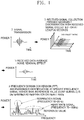
- FIG. 1 is a diagram illustrating a typical method of detecting a passenger in a vehicle using an Ultra-Wide Band radar according to the prior art.
- FIG. 1 as a method of detecting passengers in a vehicle using an Ultra-Wide Band radar, there is a method of recognizing whether a passenger is in a vehicle by detecting a frequency signal corresponding to respiration or heart rate in the frequency domain using Fourier transform after collecting received data for a long time in order to minimize noise caused by vehicle internal vibration and errors due to multiple reflections.
- the present invention is to provide an in-vehicle passenger detection system and method capable of quickly detecting passengers in a vehicle using an Ultra-Wide Band radar.
- an in-vehicle passenger detection system includes: a transceiver configured to transmit an Ultra-Wide Band radar pulse signal at a predetermined time period and receive a reflected signal reflected by objects in a vehicle; a behavior detection module configured to detect a behavior of a passenger in the vehicle using the reflected signal; and a fine movement detection module configured to detect a breathing or heartbeat of the passenger in the vehicle by using the reflected signal.
- the in-vehicle passenger detection system further includes a communication unit configured to transmit a passenger detection fact to a driver terminal or a manager terminal through a wired or wireless communication network when a passenger in the vehicle is detected by the behavior detection module and the fine movement detection module.
- the behavior detection module generates frame data including a plurality of frame values representing a magnitude of the reflected signal obtained by sampling the reflected signal at a predetermined time period, generates and stores movement data by calculating a difference value between frame-by-frame values of frame data adjacent to each other in time, accumulates frame-by-frame values of the stored movement data, generates movement accumulation data, and compares the movement accumulation data with a threshold value to check the presence of passengers in the vehicle.
- the behavior detection module includes: a first signal magnitude operation unit configured to receive a reflected signal input from the transceiver, and generate and output frame data including a plurality of frame values representing a magnitude of the reflected signal obtained by sampling the reflected signal at a predetermined time period; a first movement data generation unit configured to generate movement data by calculating a difference value between frame-by-frame values of frame data adjacent to each other in time among a plurality of frame data output from the first signal magnitude operation unit; an accumulation operation unit configured to generate movement accumulation data by accumulating frame-by-frame values of movement data sequentially output from the first movement data generation unit; and a first movement determination unit configured to check the presence of a passenger in the vehicle by comparing each frame value of the movement accumulation data with a threshold value.
- the in-vehicle passenger detection system further includes: a first frame data storage unit configured to store the frame data output from the first signal magnitude operation unit and output the stored frame data to the first movement data generation unit; and a movement data storage unit configured to sequentially stores movement data sequentially output from the first movement data generation unit and output the stored movement data to the accumulation operation unit.
- the fine movement detection module generates frame data including a plurality of frame values representing a magnitude of the reflected signal obtained by sampling the reflected signal at a predetermined time period, generates movement data by accumulating a value for each frame of frame data for a predetermined time among frame data, compares the movement data with a threshold value to check the presence of the passenger's breathing or heartbeat in the vehicle to count the presence, and determines that there is a passenger in the vehicle when the counted value reaches a predefined number of times.
- the fine movement detection module removes a background with little movement and noise appearing in the frame data from the frame data and stores the frame data with the noise removed, and accumulates frame data for a predetermined time for each frame among the frame data stored with the noise removed to generate movement data.
- the fine movement detection module includes: a second signal magnitude operation unit configured to receive a reflected signal input from the transceiver, calculate an absolute magnitude of the reflected signal, and generate and output frame data including a plurality of frame values representing a magnitude of a reflected signal over time; a noise removing unit configured to remove a background with little movement and noise appearing on the frame data from the frame data using a feedback loop; a second frame data storage unit configured to sequentially store frame data output from the noise removing unit; a second movement data generation unit configured to generate movement data by accumulating a value for each frame of frame data for a predetermined time among the frame data stored in the second frame data storage unit; a second movement determination unit configured to compare values of each frame of movement data with a predefined threshold value, and determine that there is movement when the frame exceeding the threshold value exists; and a counter configured to count the number of times that it is determined that there is the movement and notify the controller of the presence of passengers in the vehicle when the number of counts reaches a predefined number.
- the in-vehicle passenger detection system further includes a time limiting unit configured to remove frame values outside a predefined limit time from the frame data input from the noise removing unit and output frame data including only frame values within the limit time to the second frame data storage unit.
- an in-vehicle passenger detection method includes: (a) transmitting an Ultra-Wide Band radar pulse signal at a predetermined time period and receiving a reflected signal reflected by objects in a vehicle; (b) detecting a behavior of the passenger in the vehicle using the reflected signal; and (c) at the same time as step (b), detecting a breathing or heartbeat of the passenger in the vehicle using the reflected signal.
- the in-vehicle passenger detection method further includes, (d) when a passenger in the vehicle is detected, transmitting a passenger detection fact to a driver terminal or a manager terminal through a wired or wireless communication network.
- the (b) step includes generating frame data including a plurality of frame values representing a magnitude of the reflected signal obtained by sampling the reflected signal at a predetermined time period, generating and storing movement data by calculating a difference value between frame-by-frame values of frame data adjacent to each other in time, generating movement accumulation data by accumulating frame-by-frame values of the stored movement data, and comparing the movement accumulation data with a threshold value to check the presence of passengers in the vehicle.
- the (b) step includes: (b1) receiving a reflected signal input in the (a) step, and generating frame data including a plurality of frame values representing a magnitude of the reflected signal obtained by sampling the reflected signal at a predetermined time period; (b3) generating movement data by calculating a difference value between frame-by-frame values of frame data adjacent to each other in time among a plurality of frame data generated in the (b1) step; (b5) generating movement accumulation data by accumulating frame-by-frame values of movement data sequentially generated in the (b3) step; and (b6) checking the presence of a passenger in the vehicle by comparing each frame value of the movement accumulation data with a threshold value.
- the in-vehicle passenger detection method further includes, between the (b1) step and the (b3) step, (b2) storing the frame data generated in the (b1) step, wherein the method further includes, between the (b3) step and the (b5) step, (b4) sequentially storing the movement data generated in the (b3) step, wherein in the step (b3) the movement data is generated by calculating a difference value between frame-by-frame values of frame data adjacent to each other in time among the plurality of frame data stored in the step (b2), wherein in the step (b5) the movement accumulation data is generated by accumulating frame-by-frame values of the movement data sequentially stored in the step (b4).
- the (c) step includes generating frame data including a plurality of frame values representing a magnitude of the reflected signal obtained by sampling the reflected signal at a predetermined time period, generating movement data by accumulating a value for each frame of frame data for a predetermined time among frame data, comparing the movement data with a threshold value to check the presence of the passenger's breathing or heartbeat in the vehicle to count the presence, and determining that there is a passenger in the vehicle when the counted value reaches a predefined number of times.
- the movement data is generated by removing a background with little movement and noise appearing in the frame data from the frame data and storing the frame data with the noise removed, and accumulating frame data for a predetermined time for each frame among the frame data stored with the noise removed to generate movement data.
- the (c) step includes: (c1) receiving a reflected signal input in the (a) step, calculating an absolute magnitude of the reflected signal, and generating and outputting frame data including a plurality of frame values representing a magnitude of a reflected signal over time; (c2) removing a background with little movement and noise appearing on the frame data from the frame data; (c4) sequentially storing the frame data with the noise removed; (c5) generating movement data by accumulating a value for each frame of frame data for a predetermined time among the frame data stored in the (c4) step; (c6) comparing values of each frame of movement data with a predefined threshold value, and determining that there is movement when the frame exceeding the threshold value exists; and (c7) counting the number of times that it is determined that there is the movement and determining that a passenger in the vehicle is detected when the number of counts reaches a predefined number of times.
- the in-vehicle passenger detection method further includes, between the (c2) and (c4) steps, (c3) removing frame values outside a predefined time limit from the frame data output in the step (c2), and generating frame data including only frame values within the time limit, wherein the frame data generated in the step (c3) is stored sequentially in the step (c4).
- the present invention can detect passengers in a vehicle faster than the time required to process the values collected using the conventional Ultra-Wide Band radar in the frequency domain by processing the values collected using the Ultra-Wide Band radar in the time domain.
- the present invention detects a large movement, such as a passenger's hand or foot movement in a vehicle, and a small movement, such as a passenger breathing quietly, using separate data processing procedures, so that faster and more accurate passenger detection is possible.
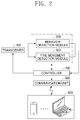
- FIG. 2 is a diagram showing the overall configuration of an in-vehicle passenger detection system using an Ultra-Wide Band radar according to a preferred embodiment of the present invention.
- a transceiver 100 for transmitting Ultra-Wide Band radar pulse signals and receiving signals reflected by objects in the vehicle
- a behavior detection module 200 for detecting
- the transceiver 100 is installed at a predefined position in the vehicle (e.g., front or rear of the vehicle), transmits Ultra-Wide Band radar signal pulses at a constant time period according to the control of the controller 400, and outputs the received reflected signals to the behavior detection module 200 and the fine movement detection module 300, respectively, when the reflected signal pulse reflected from various objects in the vehicle is received.
- a predefined position in the vehicle e.g., front or rear of the vehicle
- the transceiver 100 transmits Ultra-Wide Band radar signal pulses at a constant time period according to the control of the controller 400, and outputs the received reflected signals to the behavior detection module 200 and the fine movement detection module 300, respectively, when the reflected signal pulse reflected from various objects in the vehicle is received.
- Each of the behavior detection module 200 and the fine movement module 300 receiving the reflected signal detects the behavior or fine movement of the passenger in the vehicle and outputs the detected behavior or fine movement to the controller 400, as described later with reference to FIGS. 3 to 6 .
- the controller 400 transmits the fact that the passenger in the vehicle is detected through the communication unit 500 to the driver terminal 600 or the manager terminal 600.
- FIG. 3 is a block diagram showing a detailed configuration of a behavior detection module 200 according to a preferred embodiment of the present invention
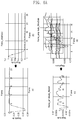
- FIGS. 4A and 4B are diagrams illustrating a data processing flow performed by the behavior detection module 200 of FIG. 3 .
- the behavior detection module 200 includes a first signal magnitude operation unit 210, a first frame data storage unit 220, a first movement data generation unit 230, a movement data storage unit 240, an accumulation operation unit 250, and a first movement determination unit 260.
- the first signal magnitude operation unit 210 receives the reflected signal from the transceiver 100, calculates the absolute magnitude of the reflected signal, generates frame data including a plurality of frame values representing the magnitude of the reflected signal over time, and outputs the generated frame data to the first frame data storage unit 220.
- the transceiver 100 samples and outputs the received signal at regular time periods, and each sampling time is defined as a frame, and the frame data includes a plurality of these frame values.
- the signal of (a) of FIG. 4a shows only 27 frames out of all frames of the received reflected signal. In this case, as the number of frames is smaller, it means that the signal pulse is transmitted from the transceiver and the reflected signal is received in a short time, and it represents a signal received by being reflected by the object at a short distance from the transceiver, and as the number of frames is larger, it represents a signal received by being reflected at a distance from the transceiver.
- the first signal magnitude operation unit 210 calculates the signal magnitude by calculating the magnitude of the complex number, and as shown in (b) of FIG. 4a , outputs the frame data mapped to the signal magnitude for each frame to the first frame data storage unit 220.
- the first frame data storage unit 220 accumulatively stores frame data input from the first signal magnitude operation unit 210 for a predetermined time, and enables the first movement data generation unit 230 to sequentially use the stored frame data according to the time order.
- the first movement data generation unit 230 generates movement data by obtaining a difference between the same frame of two temporally adjacent frame data among frame data of a plurality of times stored in the first frame data storage unit 220.
- a preferred embodiment of the present invention accumulates the difference between the same frame values in the frame data of these adjacent times, and checks whether or not movement is detected at a distance corresponding to each frame.
- the first movement data generation unit 230 generates movement data by obtaining a difference between the same frame of two temporally adjacent frame data among frame data of a plurality of times stored in the first frame data storage unit 220.
- the movement data storage unit 240 generates movement data for each frame included in the frame data in the A-B, B-C, C-D, D-E,,,,, method, and the movement data has the same number of frames as the frame data.
- (d) of FIG. 4a shows an example of movement data.
- the movement data storage unit 240 stores movement data received from the first movement data generation unit 230 in chronological order, as shown in (e) of FIG. 4b .
- FIG. 4b is a diagram illustrating an example of movement accumulation data.
- the first movement determination unit 260 compares the movement accumulation data with a preset threshold to determine whether a passenger is present in the vehicle.
- a preset threshold In the example shown in (g) of FIG. 4b , since the frames exceeding the threshold are the first frame(frame 1) and the fifth frame(frame 5), it can be seen that there is a moving object in a very close position from the transceiver.
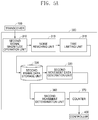
- FIGS. 5a and 5b are block diagrams showing a detailed configuration of a fine movement detection module 300 according to a preferred embodiment of the present invention
- FIGS. 6a and 6b are diagrams illustrating a data processing flow performed by the fine movement detection module 300 of FIG. 5a .
- the fine movement detection module 300 includes a second signal magnitude operation unit 310, a noise controller 400, a time limiting unit 315, a second frame data storage unit 320, a second movement data generation unit 330, a second movement determination unit 360, and a counter 370.
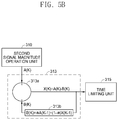
- the noise removing unit 313 includes a subtractor 313a and a noise correction value generation unit 313b.
- the reflected signal received from the transceiver 100 is output to the second signal magnitude operation unit 310 (see (a) of FIG. 6a ), and the second signal magnitude operation unit 310 receives the reflected signal from the transceiver 100, calculates the absolute magnitude of the reflected signal, and outputs the frame data A(k) to the noise removing unit 313. (see (b) of FIG. 6a ). Since the function of the second signal magnitude operation unit 310 is the same as that of the first signal magnitude operation unit 210, a detailed description will be omitted.
- the noise removing unit 313 removes a background with little movement and noise appearing on the frame data from the frame data using a feedback loop.
- Equation 1 a subtraction operation according to Equation 1 below is performed on the frame data A(k) input from the second signal magnitude operation unit 310 with the noise correction value B(k) output from the noise correction value generation unit 313b such that the result X(k) is output to the time limiting unit 315.
- X k A k ⁇ B k
- the noise correction value generation unit 313b performs an operation according to Equation 2 below using the operation result X(k) of Equation 1 output to the time limiting unit 315 and frame data A(k) input to the subtractor 313a and generates a noise correction value B(k) to output the generated noise correction value B(k) to the subtractor 313a.
- B k ⁇ A k ⁇ 1 + 1 ⁇ ⁇ X k ⁇ 1
- ⁇ is a weight coefficient of 0 ⁇ 1.
- the time limiting unit 315 limits the time during which the transceiver 100 transmits the pulse signal and receives the reflected signal in the frame data to a predefined time to remove frame values outside the limited time and output frame data including only frame values within the limited time to the second frame data storage unit 320.
- the second frame data storage unit 320 stores frame data input from the time limiting unit 315 (see (d) of FIG. 6a ), and the second movement data generation unit 330 accumulates a value of frame data for a predetermined time for each frame among the frame data stored in the second frame data storage unit 320, generates movement data, and outputs the movement data to the second movement determination unit 360 (see (e) of FIG. 6b ).
- each frame value of frame data for 5 seconds is accumulated, but the accumulation time may be set according to the environment.
- the second movement determination unit 360 compares the values of each frame of movement data input from the second movement data generation unit 330 with a predefined threshold, and if there is a frame exceeding the threshold, determines that there is movement and notifies the counter 370 that movement is detected (see (f) of FIG. 6b ).
- the fine movement detection module of the present invention is a configuration that detects fine movement such as heartbeat or respiration, and such microscopic movement can also occur due to the influence of the surrounding environment or noise. Therefore, in a preferred embodiment of the present invention, when such a fine movement is detected as many times as a predefined number for a certain period of time, it can be determined that a passenger with periodic breathing or periodic heartbeat exists in the vehicle.
- the present invention can also be implemented as a computer-readable code on a computer-readable recording medium.
- the computer-readable recording medium includes all types of recording devices that store data that can be read by a computer system. Examples of computer-readable recording media include ROM, RAM, CD-ROM, magnetic tapes, floppy disks, and optical data storage devices.
- the computer-readable recording medium can be distributed over a computer system connected through a network to store and execute computer-readable codes in a distributed manner.
Landscapes
- Engineering & Computer Science (AREA)
- Radar, Positioning & Navigation (AREA)
- Remote Sensing (AREA)
- Computer Networks & Wireless Communication (AREA)
- Physics & Mathematics (AREA)
- General Physics & Mathematics (AREA)
- Mechanical Engineering (AREA)
- Health & Medical Sciences (AREA)
- Computing Systems (AREA)
- General Health & Medical Sciences (AREA)
- Medical Informatics (AREA)
- Signal Processing (AREA)
- Electromagnetism (AREA)
- Radar Systems Or Details Thereof (AREA)
- Measurement Of The Respiration, Hearing Ability, Form, And Blood Characteristics Of Living Organisms (AREA)
- Alarm Systems (AREA)
- Management, Administration, Business Operations System, And Electronic Commerce (AREA)
- Emergency Alarm Devices (AREA)
Abstract
Description
- The present invention relates to an in-vehicle passenger detection system and method, and more particularly, to an in-vehicle passenger detection system and method using an Ultra-Wide Band radar.
- In recent hot summer, accidents are frequently occurring because children are neglected in a school vehicle. In order to prevent such an accident, in recent years, a technology that detects a passenger in a vehicle and informs the driver or manager is developed.
- As a technology for detecting passengers in a vehicle, a technology using an ultrasonic sensor, a technology using an infrared sensor, a technology using a tilt sensor, and technologies combining the above technologies are introduced in various ways. However, these conventional techniques have disadvantages such as resolution, reaction speed, limit of measurement distance, and being affected by the surrounding environment a lot.
- In order to secure the limitations of these sensors, recently, a technology for detecting passengers using an Ultra-Wide Band radar that operates at low power, has a fast response speed, and has a high resolution is under active research.
-
FIG. 1 is a diagram illustrating a typical method of detecting a passenger in a vehicle using an Ultra-Wide Band radar according to the prior art. - As shown in
FIG. 1 , as a method of detecting passengers in a vehicle using an Ultra-Wide Band radar, there is a method of recognizing whether a passenger is in a vehicle by detecting a frequency signal corresponding to respiration or heart rate in the frequency domain using Fourier transform after collecting received data for a long time in order to minimize noise caused by vehicle internal vibration and errors due to multiple reflections. - In the case of the prior art for detecting passengers using heart rate or respiration rate, it is less affected by the environment and has the advantage of high judgment accuracy, but it takes at least 30 to 40 seconds to collect the received data, and there is a disadvantage that it usually takes more than 1 minute to check the presence/absence of data on the respiratory rate and heart rate in the frequency domain using the processed data.
- The present invention is to provide an in-vehicle passenger detection system and method capable of quickly detecting passengers in a vehicle using an Ultra-Wide Band radar.
- According to a preferred embodiment of the present invention for solving the above-described problem, an in-vehicle passenger detection system includes: a transceiver configured to transmit an Ultra-Wide Band radar pulse signal at a predetermined time period and receive a reflected signal reflected by objects in a vehicle; a behavior detection module configured to detect a behavior of a passenger in the vehicle using the reflected signal; and a fine movement detection module configured to detect a breathing or heartbeat of the passenger in the vehicle by using the reflected signal.
- In addition, the in-vehicle passenger detection system further includes a communication unit configured to transmit a passenger detection fact to a driver terminal or a manager terminal through a wired or wireless communication network when a passenger in the vehicle is detected by the behavior detection module and the fine movement detection module.
- Furthermore, the behavior detection module generates frame data including a plurality of frame values representing a magnitude of the reflected signal obtained by sampling the reflected signal at a predetermined time period, generates and stores movement data by calculating a difference value between frame-by-frame values of frame data adjacent to each other in time, accumulates frame-by-frame values of the stored movement data, generates movement accumulation data, and compares the movement accumulation data with a threshold value to check the presence of passengers in the vehicle.
- Moreover, the behavior detection module includes: a first signal magnitude operation unit configured to receive a reflected signal input from the transceiver, and generate and output frame data including a plurality of frame values representing a magnitude of the reflected signal obtained by sampling the reflected signal at a predetermined time period; a first movement data generation unit configured to generate movement data by calculating a difference value between frame-by-frame values of frame data adjacent to each other in time among a plurality of frame data output from the first signal magnitude operation unit; an accumulation operation unit configured to generate movement accumulation data by accumulating frame-by-frame values of movement data sequentially output from the first movement data generation unit; and a first movement determination unit configured to check the presence of a passenger in the vehicle by comparing each frame value of the movement accumulation data with a threshold value.
- In addition, the in-vehicle passenger detection system further includes: a first frame data storage unit configured to store the frame data output from the first signal magnitude operation unit and output the stored frame data to the first movement data generation unit; and a movement data storage unit configured to sequentially stores movement data sequentially output from the first movement data generation unit and output the stored movement data to the accumulation operation unit.
- Moreover, the fine movement detection module generates frame data including a plurality of frame values representing a magnitude of the reflected signal obtained by sampling the reflected signal at a predetermined time period, generates movement data by accumulating a value for each frame of frame data for a predetermined time among frame data, compares the movement data with a threshold value to check the presence of the passenger's breathing or heartbeat in the vehicle to count the presence, and determines that there is a passenger in the vehicle when the counted value reaches a predefined number of times.
- Moreover, the fine movement detection module removes a background with little movement and noise appearing in the frame data from the frame data and stores the frame data with the noise removed, and accumulates frame data for a predetermined time for each frame among the frame data stored with the noise removed to generate movement data.
- Moreover, the fine movement detection module includes: a second signal magnitude operation unit configured to receive a reflected signal input from the transceiver, calculate an absolute magnitude of the reflected signal, and generate and output frame data including a plurality of frame values representing a magnitude of a reflected signal over time; a noise removing unit configured to remove a background with little movement and noise appearing on the frame data from the frame data using a feedback loop; a second frame data storage unit configured to sequentially store frame data output from the noise removing unit; a second movement data generation unit configured to generate movement data by accumulating a value for each frame of frame data for a predetermined time among the frame data stored in the second frame data storage unit; a second movement determination unit configured to compare values of each frame of movement data with a predefined threshold value, and determine that there is movement when the frame exceeding the threshold value exists; and a counter configured to count the number of times that it is determined that there is the movement and notify the controller of the presence of passengers in the vehicle when the number of counts reaches a predefined number.
- Furthermore, the noise removing unit includes: a subtractor configured to subtract a noise correction value B(k)=αA(k-1)+(1-α)X(k-1) ) calculated in a previous operation cycle from frame data A(k) input from the second signal magnitude operation unit and output a result X(k); and a noise correction value generation unit configured to generate a noise correction value B(k-1) using frame data X(k-1) from which noise is removed and output from the subtractor in the previous operation cycle and frame data A(k-1) input to the subtractor in the previous operation cycle and output the generated noise correction value B(k-1) to the subtractor.
- Moreover, the in-vehicle passenger detection system further includes a time limiting unit configured to remove frame values outside a predefined limit time from the frame data input from the noise removing unit and output frame data including only frame values within the limit time to the second frame data storage unit.
- On the other hand, according to a preferred embodiment of the present invention for solving the above-described problem, an in-vehicle passenger detection method includes: (a) transmitting an Ultra-Wide Band radar pulse signal at a predetermined time period and receiving a reflected signal reflected by objects in a vehicle; (b) detecting a behavior of the passenger in the vehicle using the reflected signal; and (c) at the same time as step (b), detecting a breathing or heartbeat of the passenger in the vehicle using the reflected signal.
- Moreover, the in-vehicle passenger detection method further includes, (d) when a passenger in the vehicle is detected, transmitting a passenger detection fact to a driver terminal or a manager terminal through a wired or wireless communication network.
- In addition, the (b) step includes generating frame data including a plurality of frame values representing a magnitude of the reflected signal obtained by sampling the reflected signal at a predetermined time period, generating and storing movement data by calculating a difference value between frame-by-frame values of frame data adjacent to each other in time, generating movement accumulation data by accumulating frame-by-frame values of the stored movement data, and comparing the movement accumulation data with a threshold value to check the presence of passengers in the vehicle.
- Furthermore, the (b) step includes: (b1) receiving a reflected signal input in the (a) step, and generating frame data including a plurality of frame values representing a magnitude of the reflected signal obtained by sampling the reflected signal at a predetermined time period; (b3) generating movement data by calculating a difference value between frame-by-frame values of frame data adjacent to each other in time among a plurality of frame data generated in the (b1) step; (b5) generating movement accumulation data by accumulating frame-by-frame values of movement data sequentially generated in the (b3) step; and (b6) checking the presence of a passenger in the vehicle by comparing each frame value of the movement accumulation data with a threshold value.
- Furthermore, the in-vehicle passenger detection method further includes, between the (b1) step and the (b3) step, (b2) storing the frame data generated in the (b1) step, wherein the method further includes, between the (b3) step and the (b5) step, (b4) sequentially storing the movement data generated in the (b3) step, wherein in the step (b3) the movement data is generated by calculating a difference value between frame-by-frame values of frame data adjacent to each other in time among the plurality of frame data stored in the step (b2), wherein in the step (b5) the movement accumulation data is generated by accumulating frame-by-frame values of the movement data sequentially stored in the step (b4).
- In addition, the (c) step includes generating frame data including a plurality of frame values representing a magnitude of the reflected signal obtained by sampling the reflected signal at a predetermined time period, generating movement data by accumulating a value for each frame of frame data for a predetermined time among frame data, comparing the movement data with a threshold value to check the presence of the passenger's breathing or heartbeat in the vehicle to count the presence, and determining that there is a passenger in the vehicle when the counted value reaches a predefined number of times.
- Moreover, in the (c) step, the movement data is generated by removing a background with little movement and noise appearing in the frame data from the frame data and storing the frame data with the noise removed, and accumulating frame data for a predetermined time for each frame among the frame data stored with the noise removed to generate movement data.
- Furthermore, the (c) step includes: (c1) receiving a reflected signal input in the (a) step, calculating an absolute magnitude of the reflected signal, and generating and outputting frame data including a plurality of frame values representing a magnitude of a reflected signal over time; (c2) removing a background with little movement and noise appearing on the frame data from the frame data; (c4) sequentially storing the frame data with the noise removed; (c5) generating movement data by accumulating a value for each frame of frame data for a predetermined time among the frame data stored in the (c4) step; (c6) comparing values of each frame of movement data with a predefined threshold value, and determining that there is movement when the frame exceeding the threshold value exists; and (c7) counting the number of times that it is determined that there is the movement and determining that a passenger in the vehicle is detected when the number of counts reaches a predefined number of times.
- Moreover, the step (c2) includes: generating a noise correction value (B(k)=αA(k-1)+(1-α)X(k-1)) using a frame data X(k-1) from which noise is removed in a previous operation cycle and a frame data A(k-1) input in the previous operation cycle; and subtracting a noise correction value B(k) calculated in the previous operation cycle from a frame data A(k) input in the step (c1) and outputting a result X(k).
- In addition, the in-vehicle passenger detection method further includes, between the (c2) and (c4) steps, (c3) removing frame values outside a predefined time limit from the frame data output in the step (c2), and generating frame data including only frame values within the time limit, wherein the frame data generated in the step (c3) is stored sequentially in the step (c4).
- The present invention can detect passengers in a vehicle faster than the time required to process the values collected using the conventional Ultra-Wide Band radar in the frequency domain by processing the values collected using the Ultra-Wide Band radar in the time domain.
- In addition, the present invention detects a large movement, such as a passenger's hand or foot movement in a vehicle, and a small movement, such as a passenger breathing quietly, using separate data processing procedures, so that faster and more accurate passenger detection is possible.
-
-
FIG. 1 is a diagram illustrating a typical method of detecting a passenger in a vehicle using an Ultra-Wide Band radar according to the prior art. -
FIG. 2 is a diagram showing the overall configuration of an in-vehicle passenger detection system using an Ultra-Wide Band radar according to a preferred embodiment of the present invention. -
FIG. 3 is a block diagram showing a detailed configuration of a behavior detection module according to a preferred embodiment of the present invention. -
FIGS. 4a and4b are diagrams illustrating a data processing flow performed in the behavior detection module ofFIG. 3 . -
FIGS. 5a and5b are block diagrams showing a detailed configuration of a fine movement detection module according to a preferred embodiment of the present invention. -
FIGS. 6a and6b are diagrams illustrating a data processing flow performed in the fine movement detection module ofFIG. 5A . - Hereinafter, exemplary embodiments of the present invention will be described with reference to the accompanying drawings.
-
FIG. 2 is a diagram showing the overall configuration of an in-vehicle passenger detection system using an Ultra-Wide Band radar according to a preferred embodiment of the present invention. - Referring to
FIG. 2 , an in-vehicle passenger detection system (hereinafter, "passenger detection system") using an Ultra-Wide Band radar according to a preferred embodiment of the present invention includes atransceiver 100 for transmitting Ultra-Wide Band radar pulse signals and receiving signals reflected by objects in the vehicle, abehavior detection module 200 for detecting a passenger's behavior in the vehicle (a large movement such as shaking a hand or moving a seat is defined as a behavior) using the reflected signal received through thetransceiver 100, a finemovement detection module 300 for detecting the breathing or heartbeat of a passenger in the vehicle using the reflected signal received through thetransceiver 100, acommunication unit 500 for transmitting the passenger detection fact to thedriver terminal 600 or themanager terminal 600 through a wired or wireless communication network when a passenger in the vehicle is detected, and acontroller 400 for controlling the above components. - Referring to
FIG. 2 , when the overall operation of the in-vehicle passenger detection system and method according to a preferred embodiment of the present invention is described, first, thetransceiver 100 is installed at a predefined position in the vehicle (e.g., front or rear of the vehicle), transmits Ultra-Wide Band radar signal pulses at a constant time period according to the control of thecontroller 400, and outputs the received reflected signals to thebehavior detection module 200 and the finemovement detection module 300, respectively, when the reflected signal pulse reflected from various objects in the vehicle is received. - Each of the
behavior detection module 200 and thefine movement module 300 receiving the reflected signal detects the behavior or fine movement of the passenger in the vehicle and outputs the detected behavior or fine movement to thecontroller 400, as described later with reference toFIGS. 3 to 6 . - When a passenger in the vehicle is detected, the
controller 400 transmits the fact that the passenger in the vehicle is detected through thecommunication unit 500 to thedriver terminal 600 or themanager terminal 600. -
FIG. 3 is a block diagram showing a detailed configuration of abehavior detection module 200 according to a preferred embodiment of the present invention, andFIGS. 4A and4B are diagrams illustrating a data processing flow performed by thebehavior detection module 200 ofFIG. 3 . - When a detailed configuration and function of the
behavior detection module 200 are described with reference toFIGS. 3 ,4A and4B , thebehavior detection module 200 includes a first signalmagnitude operation unit 210, a first framedata storage unit 220, a first movementdata generation unit 230, a movementdata storage unit 240, anaccumulation operation unit 250, and a firstmovement determination unit 260. - The first signal
magnitude operation unit 210 receives the reflected signal from thetransceiver 100, calculates the absolute magnitude of the reflected signal, generates frame data including a plurality of frame values representing the magnitude of the reflected signal over time, and outputs the generated frame data to the first framedata storage unit 220. - As shown in (a) of
FIG. 4a , after transmitting the pulse signal, thetransceiver 100 samples and outputs the received signal at regular time periods, and each sampling time is defined as a frame, and the frame data includes a plurality of these frame values. The signal of (a) ofFIG. 4a shows only 27 frames out of all frames of the received reflected signal. In this case, as the number of frames is smaller, it means that the signal pulse is transmitted from the transceiver and the reflected signal is received in a short time, and it represents a signal received by being reflected by the object at a short distance from the transceiver, and as the number of frames is larger, it represents a signal received by being reflected at a distance from the transceiver. - Since the reflected signal is expressed as a complex number, the first signal
magnitude operation unit 210 calculates the signal magnitude by calculating the magnitude of the complex number, and as shown in (b) ofFIG. 4a , outputs the frame data mapped to the signal magnitude for each frame to the first framedata storage unit 220. - As shown in (c) of
FIG. 4a , the first framedata storage unit 220 accumulatively stores frame data input from the first signalmagnitude operation unit 210 for a predetermined time, and enables the first movementdata generation unit 230 to sequentially use the stored frame data according to the time order. - The first movement
data generation unit 230 generates movement data by obtaining a difference between the same frame of two temporally adjacent frame data among frame data of a plurality of times stored in the first framedata storage unit 220. - For example, in the examples shown in (b) and (c) of
FIG. 4a , it can be seen that frame data received and stored from thetransceiver 100 have a large peak value in frame 2. This means that an object exists at a very close distance from thetransceiver 100. However, if such an object has no movement at all, it is likely not the passenger, but the back of the seat closest to thetransceiver 100. - On the other hand, assuming that frame data is generated every 0.2 seconds, when a large value is detected in frame 5 in 0.2 seconds, a large value is detected in frame 7 in 0.4 seconds, a large value is detected in 10 frames in 0.6 seconds, and a large value is detected as the frame changes between frame 5 and frame 10 after that, this means that the passenger is moving at a distance between frame 5 and frame 10.
- Accordingly, a preferred embodiment of the present invention accumulates the difference between the same frame values in the frame data of these adjacent times, and checks whether or not movement is detected at a distance corresponding to each frame.
- For this, the first movement
data generation unit 230 generates movement data by obtaining a difference between the same frame of two temporally adjacent frame data among frame data of a plurality of times stored in the first framedata storage unit 220. - For example, assuming that frame data A, B, C, D, E,,,, are stored in the first frame
data storage unit 220 in chronological order, the movementdata storage unit 240 generates movement data for each frame included in the frame data in the A-B, B-C, C-D, D-E,,,, method, and the movement data has the same number of frames as the frame data. (d) ofFIG. 4a shows an example of movement data. - The movement
data storage unit 240 stores movement data received from the first movementdata generation unit 230 in chronological order, as shown in (e) ofFIG. 4b . - Thereafter, the
accumulation operation unit 250 accumulates movement data stored in the movementdata storage unit 240 for a predetermined time for each frame to generate movement accumulation data. (f) ofFIG. 4b is a diagram illustrating an example of movement accumulation data. By accumulating movement data in this way, the effect of noise can be minimized. In addition, movement can be tracked by comparing movement accumulation data generated in a certain time unit in chronological order. - Then, as shown in (g) of
FIG. 4b , the firstmovement determination unit 260 compares the movement accumulation data with a preset threshold to determine whether a passenger is present in the vehicle. In the example shown in (g) ofFIG. 4b , since the frames exceeding the threshold are the first frame(frame 1) and the fifth frame(frame 5), it can be seen that there is a moving object in a very close position from the transceiver. -
FIGS. 5a and5b are block diagrams showing a detailed configuration of a finemovement detection module 300 according to a preferred embodiment of the present invention, andFIGS. 6a and6b are diagrams illustrating a data processing flow performed by the finemovement detection module 300 ofFIG. 5a . - Referring to
FIGS. 5a and5b and6a and6b , the finemovement detection module 300 according to a preferred embodiment of the present invention includes a second signalmagnitude operation unit 310, anoise controller 400, atime limiting unit 315, a second framedata storage unit 320, a second movementdata generation unit 330, a secondmovement determination unit 360, and acounter 370. In addition, thenoise removing unit 313 includes asubtractor 313a and a noise correctionvalue generation unit 313b. - First, the reflected signal received from the
transceiver 100 is output to the second signal magnitude operation unit 310 (see (a) ofFIG. 6a ), and the second signalmagnitude operation unit 310 receives the reflected signal from thetransceiver 100, calculates the absolute magnitude of the reflected signal, and outputs the frame data A(k) to thenoise removing unit 313. (see (b) ofFIG. 6a ). Since the function of the second signalmagnitude operation unit 310 is the same as that of the first signalmagnitude operation unit 210, a detailed description will be omitted. - The
noise removing unit 313 removes a background with little movement and noise appearing on the frame data from the frame data using a feedback loop. - Referring to
FIG. 5b , a subtraction operation according toEquation 1 below is performed on the frame data A(k) input from the second signalmagnitude operation unit 310 with the noise correction value B(k) output from the noise correctionvalue generation unit 313b such that the result X(k) is output to thetime limiting unit 315.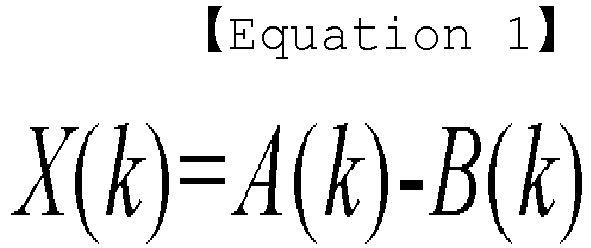
- The noise correction
value generation unit 313b performs an operation according to Equation 2 below using the operation result X(k) ofEquation 1 output to thetime limiting unit 315 and frame data A(k) input to thesubtractor 313a and generates a noise correction value B(k) to output the generated noise correction value B(k) to thesubtractor 313a.
- In Equation 2, α is a weight coefficient of 0<α<1. The
subtractor 313a newly receives the frame data A(k) from the second signalmagnitude operation unit 310, subtracts the noise correction value B(k)=αA(k-1)+(1-α)X(k-1) calculated in the previous operation cycle from the newly input frame data A(k), and outputs the result X(k) to the time limiting unit 315 (see (c) ofFIG. 6a ). - Through the feedback operation as described above, frame values representing a motionless object and unexpectedly input noise on the frame data are removed.
- The
time limiting unit 315 limits the time during which thetransceiver 100 transmits the pulse signal and receives the reflected signal in the frame data to a predefined time to remove frame values outside the limited time and output frame data including only frame values within the limited time to the second framedata storage unit 320. - The second frame
data storage unit 320 stores frame data input from the time limiting unit 315 (see (d) ofFIG. 6a ), and the second movementdata generation unit 330 accumulates a value of frame data for a predetermined time for each frame among the frame data stored in the second framedata storage unit 320, generates movement data, and outputs the movement data to the second movement determination unit 360 (see (e) ofFIG. 6b ). In a preferred embodiment of the present invention, each frame value of frame data for 5 seconds is accumulated, but the accumulation time may be set according to the environment. - Thereafter, the second
movement determination unit 360 compares the values of each frame of movement data input from the second movementdata generation unit 330 with a predefined threshold, and if there is a frame exceeding the threshold, determines that there is movement and notifies thecounter 370 that movement is detected (see (f) ofFIG. 6b ). - When the movement detection result is notified from the second
movement determination unit 360, thecounter 370 increments the internal counter by 1, and when the counter value reaches a predefined value, thecounter 370 outputs that a fine movement is detected to thecontroller 400. The fine movement detection module of the present invention is a configuration that detects fine movement such as heartbeat or respiration, and such microscopic movement can also occur due to the influence of the surrounding environment or noise. Therefore, in a preferred embodiment of the present invention, when such a fine movement is detected as many times as a predefined number for a certain period of time, it can be determined that a passenger with periodic breathing or periodic heartbeat exists in the vehicle. - The present invention can also be implemented as a computer-readable code on a computer-readable recording medium. The computer-readable recording medium includes all types of recording devices that store data that can be read by a computer system. Examples of computer-readable recording media include ROM, RAM, CD-ROM, magnetic tapes, floppy disks, and optical data storage devices. In addition, the computer-readable recording medium can be distributed over a computer system connected through a network to store and execute computer-readable codes in a distributed manner.
- So far, the present invention is examined based on its preferred embodiments. Those of ordinary skill in the art to which the present invention pertains will be able to understand that the present invention may be implemented in a modified form without departing from the essential characteristics of the present invention. Therefore, the disclosed embodiments should be considered from an illustrative point of view rather than a limiting point of view. The scope of the present invention is shown in the claims rather than the above description, and all differences within the scope equivalent thereto should be construed as being included in the present invention.
Claims (20)
- An in-vehicle passenger detection system comprising:a transceiver configured to transmit an Ultra-Wide Band radar pulse signal at a predetermined time period and receive a reflected signal reflected by objects in a vehicle;a behavior detection module configured to detect a behavior of a passenger in the vehicle using the reflected signal; anda fine movement detection module configured to detect a breathing or heartbeat of the passenger in the vehicle by using the reflected signal.
- The in-vehicle passenger detection system of claim 1, further comprising a communication unit configured to transmit a passenger detection fact to a driver terminal or a manager terminal through a wired or wireless communication network when a passenger in the vehicle is detected by the behavior detection module and the fine movement detection module.
- The in-vehicle passenger detection system of claim 1, wherein the behavior detection module generates frame data including a plurality of frame values representing a magnitude of the reflected signal obtained by sampling the reflected signal at a predetermined time period, generates and stores movement data by calculating a difference value between frame-by-frame values of frame data adjacent to each other in time, accumulates frame-by-frame values of the stored movement data, generates movement accumulation data, and compares the movement accumulation data with a threshold value to check the presence of passengers in the vehicle.
- The in-vehicle passenger detection system of claim 3, wherein the behavior detection module comprises:a first signal magnitude operation unit configured to receive a reflected signal input from the transceiver, and generate and output frame data including a plurality of frame values representing a magnitude of the reflected signal obtained by sampling the reflected signal at a predetermined time period;a first movement data generation unit configured to generate movement data by calculating a difference value between frame-by-frame values of frame data adjacent to each other in time among a plurality of frame data output from the first signal magnitude operation unit;an accumulation operation unit configured to generate movement accumulation data by accumulating frame-by-frame values of movement data sequentially output from the first movement data generation unit; anda first movement determination unit configured to check the presence of a passenger in the vehicle by comparing each frame value of the movement accumulation data with a threshold value.
- The in-vehicle passenger detection system of claim 4, further comprising:a first frame data storage unit configured to store the frame data output from the first signal magnitude operation unit and output the stored frame data to the first movement data generation unit; anda movement data storage unit configured to sequentially stores movement data sequentially output from the first movement data generation unit and output the stored movement data to the accumulation operation unit.
- The in-vehicle passenger detection system of claim 1, wherein the fine movement detection module generates frame data including a plurality of frame values representing a magnitude of the reflected signal obtained by sampling the reflected signal at a predetermined time period, generates movement data by accumulating a value for each frame of frame data for a predetermined time among frame data, compares the movement data with a threshold value to check the presence of the passenger's breathing or heartbeat in the vehicle to count the presence, and determines that there is a passenger in the vehicle when the counted value reaches a predefined number of times.
- The in-vehicle passenger detection system of claim 6, wherein the fine movement detection module removes a background with little movement and noise appearing in the frame data from the frame data and stores the frame data with the noise removed, and accumulates frame data for a predetermined time for each frame among the frame data stored with the noise removed to generate movement data.
- The in-vehicle passenger detection system of claim 7, wherein the fine movement detection module comprises:a second signal magnitude operation unit configured to receive a reflected signal input from the transceiver, calculate an absolute magnitude of the reflected signal, and generate and output frame data including a plurality of frame values representing a magnitude of a reflected signal over time;a noise removing unit configured to remove a background with little movement and noise appearing on the frame data from the frame data using a feedback loop;a second frame data storage unit configured to sequentially store frame data output from the noise removing unit;a second movement data generation unit configured to generate movement data by accumulating a value for each frame of frame data for a predetermined time among the frame data stored in the second frame data storage unit;a second movement determination unit configured to compare values of each frame of movement data with a predefined threshold value, and determine that there is movement when the frame exceeding the threshold value exists; anda counter configured to count the number of times that it is determined that there is the movement and notify a controller of the presence of passengers in the vehicle when the number of counts reaches a predefined number.
- The in-vehicle passenger detection system of claim 8, wherein the noise removing unit comprises:a subtractor configured to subtract a noise correction value B(k)=αA(k-1)+(1-α)X(k-1) ) calculated in a previous operation cycle from frame data A(k) input from the second signal magnitude operation unit and output a result X(k); anda noise correction value generation unit configured to generate a noise correction value B(k-1) using frame data X(k-1) from which noise is removed and output from the subtractor in the previous operation cycle and frame data A(k-1) input to the subtractor in the previous operation cycle and output the generated noise correction value B(k-1) to the subtractor.
- The in-vehicle passenger detection system of claim 8, further comprising a time limiting unit configured to remove frame values outside a predefined limit time from the frame data input from the noise removing unit and output frame data including only frame values within the limit time to the second frame data storage unit.
- An in-vehicle passenger detection method performed in an in-vehicle passenger detection system, the method comprising:(a) transmitting an Ultra-Wide Band radar pulse signal at a predetermined time period and receiving a reflected signal reflected by objects in a vehicle;(b) detecting a behavior of the passenger in the vehicle using the reflected signal; and(c) at the same time as step (b), detecting a breathing or heartbeat of the passenger in the vehicle using the reflected signal.
- The in-vehicle passenger detection method of claim 11, further comprising, (d) when a passenger in the vehicle is detected, transmitting a passenger detection fact to a driver terminal or a manager terminal through a wired or wireless communication network.
- The in-vehicle passenger detection method of claim 11, wherein the (b) step comprises generating frame data including a plurality of frame values representing a magnitude of the reflected signal obtained by sampling the reflected signal at a predetermined time period, generating and storing movement data by calculating a difference value between frame-by-frame values of frame data adjacent to each other in time, generating movement accumulation data by accumulating frame-by-frame values of the stored movement data, and comparing the movement accumulation data with a threshold value to check the presence of passengers in the vehicle.
- The in-vehicle passenger detection method of claim 13, wherein the (b) step comprises:(b1) receiving a reflected signal input in the (a) step, and generating frame data including a plurality of frame values representing a magnitude of the reflected signal obtained by sampling the reflected signal at a predetermined time period;(b3) generating movement data by calculating a difference value between frame-by-frame values of frame data adjacent to each other in time among a plurality of frame data generated in the (b1) step;(b5) generating movement accumulation data by accumulating frame-by-frame values of movement data sequentially generated in the (b3) step; and(b6) checking the presence of a passenger in the vehicle by comparing each frame value of the movement accumulation data with a threshold value.
- The in-vehicle passenger detection method of claim 13, further comprising, between the (b1) step and the (b3) step, (b2) storing the frame data generated in the (b1) step,wherein the method further comprises, between the (b3) step and the (b5) step, (b4) sequentially storing the movement data generated in the (b3) step,wherein in the step (b3), the movement data is generated by calculating a difference value between frame-by-frame values of frame data adjacent to each other in time among the plurality of frame data stored in the step (b2) ,wherein in the step (b5), the movement accumulation data is generated by accumulating frame-by-frame values of the movement data sequentially stored in the step (b4).
- The in-vehicle passenger detection method of claim 11, wherein the (c) step comprises generating frame data including a plurality of frame values representing a magnitude of the reflected signal obtained by sampling the reflected signal at a predetermined time period, generating movement data by accumulating a value for each frame of frame data for a predetermined time among frame data, comparing the movement data with a threshold value to check the presence of the passenger's breathing or heartbeat in the vehicle to count the presence, and determining that there is a passenger in the vehicle when the counted value reaches a predefined number of times.
- The in-vehicle passenger detection method of claim 16, wherein in the (c) step, the movement data is generated by removing a background with little movement and noise appearing in the frame data from the frame data and storing the frame data with the noise removed, and accumulating frame data for a predetermined time for each frame among the frame data stored with the noise removed to generate movement data.
- The in-vehicle passenger detection method of claim 17, wherein the (c) step comprises:(c1) receiving a reflected signal input in the (a) step, calculating an absolute magnitude of the reflected signal, and generating and outputting frame data including a plurality of frame values representing a magnitude of a reflected signal over time;(c2) removing a background with little movement and noise appearing on the frame data from the frame data;(c4) sequentially storing the frame data with the noise removed;(c5) generating movement data by accumulating a value for each frame of frame data for a predetermined time among the frame data stored in the (c4) step;(c6) comparing values of each frame of movement data with a predefined threshold value, and determining that there is movement when the frame exceeding the threshold value exists; and(c7) counting the number of times that it is determined that there is the movement and determining that a passenger in the vehicle is detected when the number of counts reaches a predefined number of times.
- The in-vehicle passenger detection method of claim 18, wherein the step (c2) comprises:generating a noise correction value (B(k)=αA(k-1)+(1-α)X(k-1) using a frame data X(k-1) from which noise is removed in a previous operation cycle and a frame data A(k-1) input in the previous operation cycle; andsubtracting a noise correction value B(k) calculated in the previous operation cycle from a frame data A(k) input in the step (c1) and outputting a result X(k).
- The in-vehicle passenger detection method of claim 18, further comprising, between the (c2) and (c4) steps, (c3) removing frame values outside a predefined time limit from the frame data output in the step (c2), and generating frame data including only frame values within the time limit,
wherein the frame data generated in the step (c3) is stored sequentially in the step (c4).
Applications Claiming Priority (2)
| Application Number | Priority Date | Filing Date | Title |
|---|---|---|---|
| KR1020180171506A KR102151195B1 (en) | 2018-12-28 | 2018-12-28 | System and method for detecting passenger in vehicle using UWB |
| PCT/KR2019/017637 WO2020138782A1 (en) | 2018-12-28 | 2019-12-12 | System and method for sensing passengers in vehicle by using ultra-wide band radar |
Publications (2)
| Publication Number | Publication Date |
|---|---|
| EP3878701A1 true EP3878701A1 (en) | 2021-09-15 |
| EP3878701A4 EP3878701A4 (en) | 2022-08-17 |
Family
ID=71127218
Family Applications (1)
| Application Number | Title | Priority Date | Filing Date |
|---|---|---|---|
| EP19905512.0A Pending EP3878701A4 (en) | 2018-12-28 | 2019-12-12 | SYSTEM AND METHOD FOR DETECTING PASSENGERS IN A VEHICLE USING ULTRA-WIDEBAND RADAR |
Country Status (6)
| Country | Link |
|---|---|
| US (1) | US12038492B2 (en) |
| EP (1) | EP3878701A4 (en) |
| JP (1) | JP7279165B2 (en) |
| KR (1) | KR102151195B1 (en) |
| CN (1) | CN113226861B (en) |
| WO (1) | WO2020138782A1 (en) |
Families Citing this family (23)
| Publication number | Priority date | Publication date | Assignee | Title |
|---|---|---|---|---|
| US12094614B2 (en) | 2017-08-15 | 2024-09-17 | Koko Home, Inc. | Radar apparatus with natural convection |
| US11004567B2 (en) | 2017-08-15 | 2021-05-11 | Koko Home, Inc. | System and method for processing wireless backscattered signal using artificial intelligence processing for activities of daily life |
| US11997455B2 (en) | 2019-02-11 | 2024-05-28 | Koko Home, Inc. | System and method for processing multi-directional signals and feedback to a user to improve sleep |
| US10810850B2 (en) | 2019-02-19 | 2020-10-20 | Koko Home, Inc. | System and method for state identity of a user and initiating feedback using multiple sources |
| US11971503B2 (en) | 2019-02-19 | 2024-04-30 | Koko Home, Inc. | System and method for determining user activities using multiple sources |
| US11719804B2 (en) * | 2019-09-30 | 2023-08-08 | Koko Home, Inc. | System and method for determining user activities using artificial intelligence processing |
| US11240635B1 (en) | 2020-04-03 | 2022-02-01 | Koko Home, Inc. | System and method for processing using multi-core processors, signals, and AI processors from multiple sources to create a spatial map of selected region |
| US11184738B1 (en) | 2020-04-10 | 2021-11-23 | Koko Home, Inc. | System and method for processing using multi core processors, signals, and AI processors from multiple sources to create a spatial heat map of selected region |
| CN111830476B (en) * | 2020-07-30 | 2024-12-03 | 应急管理部上海消防研究所 | A heartbeat simulation device for radar life detector detection |
| KR102602766B1 (en) | 2021-10-07 | 2023-11-15 | 현대모비스 주식회사 | A system for sensing a fluid using motion propensity and a method for sensing a fluid |
| KR102582729B1 (en) * | 2022-08-09 | 2023-09-25 | 주식회사 에너자이 | Method, device, and system for detecting an occupant |
| DE102022208460B4 (en) | 2022-08-15 | 2024-08-29 | Volkswagen Aktiengesellschaft | Method for determining the position and vital parameters of an occupant of a motor vehicle and motor vehicle |
| US12115937B2 (en) * | 2022-12-20 | 2024-10-15 | T-Mobile Innovations Llc | On-board diagnostic second generation module incorporating a low power radar-based sensor |
| CN116626673A (en) * | 2023-04-21 | 2023-08-22 | 合肥四相至新科技有限公司 | Method and device for in-vehicle living body detection |
| WO2024224461A1 (en) * | 2023-04-25 | 2024-10-31 | 三菱電機株式会社 | State monitoring device and state monitoring method |
| CN116592079B (en) * | 2023-05-18 | 2025-09-12 | 科建高分子材料(上海)股份有限公司 | Universal modular damping plate assembly and its application method on automobile automatic door |
| US12434648B2 (en) | 2023-06-20 | 2025-10-07 | Ford Global Technologies, Llc | Systems and methods for ultra-wide band based vehicle sensing |
| US20240427002A1 (en) * | 2023-06-21 | 2024-12-26 | Applied Concepts, Inc. | System and method of operation for near field auxiliary radar |
| WO2025063886A1 (en) * | 2023-09-19 | 2025-03-27 | Agency For Science, Technology And Research | System and method for body movement detection |
| JP2025052742A (en) * | 2023-09-25 | 2025-04-07 | 株式会社Soken | Organism detection device |
| US20250172683A1 (en) * | 2023-11-29 | 2025-05-29 | GM Global Technology Operations LLC | System and method for vehicle occupancy detection |
| FR3160777A1 (en) * | 2024-03-28 | 2025-10-03 | Stmicroelectronics International N.V. | Motion detection radar device |
| CN121522590A (en) * | 2024-08-12 | 2026-02-13 | 阿尔卑斯阿尔派株式会社 | Data processing methods and data processing systems |
Family Cites Families (22)
| Publication number | Priority date | Publication date | Assignee | Title |
|---|---|---|---|---|
| US6820897B2 (en) | 1992-05-05 | 2004-11-23 | Automotive Technologies International, Inc. | Vehicle object detection system and method |
| US8604932B2 (en) * | 1992-05-05 | 2013-12-10 | American Vehicular Sciences, LLC | Driver fatigue monitoring system and method |
| DE102005020847A1 (en) | 2005-05-02 | 2006-11-09 | Carsten Dr. Koch | Device for contactless position determination for motor vehicle passengers, uses detected information for controlling safety and comfort functions in motor vehicle |
| JP5062510B2 (en) * | 2006-08-16 | 2012-10-31 | 日本電気株式会社 | Boarding fee settlement system, boarding fee settlement method, boarding fee settlement program, portable terminal and management server |
| JP5682504B2 (en) | 2010-09-09 | 2015-03-11 | コニカミノルタ株式会社 | Safety monitoring device |
| SI2472289T1 (en) * | 2010-12-07 | 2013-05-31 | Kapsch Trafficcom Ag | |
| JP5718139B2 (en) * | 2011-04-21 | 2015-05-13 | 日野自動車株式会社 | Radar device, bus, passenger movement detection method, and program |
| CN102423261B (en) | 2011-09-20 | 2013-10-02 | 中国人民解放军第四军医大学 | Ultra-wide bandwidth radar type non-contact life parameter real-time monitoring system |
| US10495725B2 (en) * | 2012-12-05 | 2019-12-03 | Origin Wireless, Inc. | Method, apparatus, server and system for real-time vital sign detection and monitoring |
| CN105452898B (en) * | 2013-08-14 | 2018-02-13 | Iee国际电子工程股份公司 | Radar Sensing for Vehicle Passengers |
| JP6544236B2 (en) | 2013-09-13 | 2019-07-17 | コニカミノルタ株式会社 | Storage system, control device, image information storage method in storage system, control method in control device, and program |
| KR20170055352A (en) * | 2015-11-11 | 2017-05-19 | 주식회사 이에스피 | Driver Vital Detecting System using Impulse UWB RADAR |
| KR101642697B1 (en) | 2015-12-03 | 2016-08-10 | 양선종 | Biometrics measuring system of the driver and Biometrics measuring method for the same |
| KR102581694B1 (en) * | 2016-08-31 | 2023-09-21 | 엘에스오토모티브테크놀로지스 주식회사 | Passenger monitoring method and system in vehicle |
| US20180065504A1 (en) * | 2016-09-02 | 2018-03-08 | Atieva, Inc. | Vehicle Child Detection and Response System |
| KR101908314B1 (en) * | 2016-10-17 | 2018-10-17 | 서울교통공사 | Monitoring AND safety System for human body and object of platform screen door |
| KR101895999B1 (en) * | 2016-11-25 | 2018-09-06 | (주)넥스트팩토리 | A Safety Device & A Safety System For A Children's School Bus |
| KR101752858B1 (en) * | 2016-12-09 | 2017-07-19 | 메타빌드주식회사 | Radar-based high-precision unexpected incident detecting system |
| KR101903401B1 (en) | 2017-02-17 | 2018-10-04 | 옴니센서(주) | Apparatus and method for measuring biometric information in vehicle using UWB radar |
| KR101960660B1 (en) * | 2017-06-15 | 2019-03-21 | 주식회사 디엠엑스 | System and method for protecting passenger |
| US11925446B2 (en) * | 2018-02-22 | 2024-03-12 | Vayyar Imaging Ltd. | Radar-based classification of vehicle occupants |
| CA3148412A1 (en) * | 2019-08-05 | 2021-02-11 | Srivatsan RAMESH | Non-contact identification of multi-person presence for elderly care |
-
2018
- 2018-12-28 KR KR1020180171506A patent/KR102151195B1/en active Active
-
2019
- 2019-12-12 WO PCT/KR2019/017637 patent/WO2020138782A1/en not_active Ceased
- 2019-12-12 EP EP19905512.0A patent/EP3878701A4/en active Pending
- 2019-12-12 CN CN201980086592.4A patent/CN113226861B/en active Active
- 2019-12-12 JP JP2021534815A patent/JP7279165B2/en active Active
- 2019-12-12 US US17/418,547 patent/US12038492B2/en active Active
Also Published As
| Publication number | Publication date |
|---|---|
| CN113226861B (en) | 2023-06-06 |
| KR102151195B1 (en) | 2020-10-26 |
| US20220075051A1 (en) | 2022-03-10 |
| KR20200081703A (en) | 2020-07-08 |
| US12038492B2 (en) | 2024-07-16 |
| JP2022519983A (en) | 2022-03-28 |
| JP7279165B2 (en) | 2023-05-22 |
| EP3878701A4 (en) | 2022-08-17 |
| WO2020138782A1 (en) | 2020-07-02 |
| CN113226861A (en) | 2021-08-06 |
Similar Documents
| Publication | Publication Date | Title |
|---|---|---|
| EP3878701A1 (en) | System and method for sensing passengers in vehicle by using ultra-wide band radar | |
| JP6112865B2 (en) | Method for estimating velocity and / or displacement from an accelerometer measurement sample | |
| US9638711B2 (en) | Method and system for discerning a false positive in a fall detection signal | |
| US20150317890A1 (en) | Detecting changes in position of a device in a horizontal or vertical direction | |
| US10448849B2 (en) | Contextual heart rate monitoring | |
| KR102270401B1 (en) | Real-time warning for distracted pedestrians with smartphones | |
| US9478139B2 (en) | Driving safety system and barrier screening method thereof | |
| KR101804681B1 (en) | A human detecting apparatus and method using a low-resolution 2d lidar sensor | |
| US9128111B2 (en) | Monitoring velocity and dwell trends from wireless sensor | |
| KR101647634B1 (en) | Apparatus and method for handling emergency situation of wheel chair a passenger | |
| CN116087943A (en) | Indoor falling detection method and system based on millimeter wave radar | |
| KR102103260B1 (en) | A accupancy sensing apparatus and method using Ultra-Wideband Radar | |
| KR101678313B1 (en) | Method and Device for Counting the Number of People Using Radar | |
| Sun et al. | A new fall detection algorithm based on depth information using RGB-D camera | |
| WO2011064697A1 (en) | Method for estimating velocities and/or displacements from accelerometer measurement samples | |
| KR102235932B1 (en) | Apparatus and method for measuring psychological anxiety | |
| JP7207050B2 (en) | Moving object state quantity estimation device and program | |
| CN121275349A (en) | Method and related equipment for detecting braking distance of field vehicle | |
| CN105205989A (en) | Intelligent fatigue driving prevention headrest | |
| CN120524412A (en) | Multi-source noise evaluation method, device and storage medium | |
| KR20160002130A (en) | System and method for predicting of user situation, and recording medium for performing the method | |
| KR20120036252A (en) | Apparatus and method for presuming moving object of speed and distance using pir sensor | |
| KR20180002413A (en) | Device and method for measuring distance traveled |
Legal Events
| Date | Code | Title | Description |
|---|---|---|---|
| STAA | Information on the status of an ep patent application or granted ep patent |
Free format text: STATUS: THE INTERNATIONAL PUBLICATION HAS BEEN MADE |
|
| PUAI | Public reference made under article 153(3) epc to a published international application that has entered the european phase |
Free format text: ORIGINAL CODE: 0009012 |
|
| STAA | Information on the status of an ep patent application or granted ep patent |
Free format text: STATUS: REQUEST FOR EXAMINATION WAS MADE |
|
| 17P | Request for examination filed |
Effective date: 20210611 |
|
| AK | Designated contracting states |
Kind code of ref document: A1 Designated state(s): AL AT BE BG CH CY CZ DE DK EE ES FI FR GB GR HR HU IE IS IT LI LT LU LV MC MK MT NL NO PL PT RO RS SE SI SK SM TR |
|
| DAV | Request for validation of the european patent (deleted) | ||
| DAX | Request for extension of the european patent (deleted) | ||
| A4 | Supplementary search report drawn up and despatched |
Effective date: 20220720 |
|
| RIC1 | Information provided on ipc code assigned before grant |
Ipc: G01S 13/931 20200101ALI20220714BHEP Ipc: G01S 7/41 20060101ALI20220714BHEP Ipc: G01S 7/40 20060101ALI20220714BHEP Ipc: G01S 13/02 20060101ALI20220714BHEP Ipc: B60R 16/023 20060101ALI20220714BHEP Ipc: B60R 21/015 20060101AFI20220714BHEP |
|
| P01 | Opt-out of the competence of the unified patent court (upc) registered |
Effective date: 20230901 |
|
| STAA | Information on the status of an ep patent application or granted ep patent |
Free format text: STATUS: EXAMINATION IS IN PROGRESS |
|
| 17Q | First examination report despatched |
Effective date: 20241002 |