EP3876476B1 - Netzwerkbandbreitenverwaltung - Google Patents
Netzwerkbandbreitenverwaltung Download PDFInfo
- Publication number
- EP3876476B1 EP3876476B1 EP21155523.0A EP21155523A EP3876476B1 EP 3876476 B1 EP3876476 B1 EP 3876476B1 EP 21155523 A EP21155523 A EP 21155523A EP 3876476 B1 EP3876476 B1 EP 3876476B1
- Authority
- EP
- European Patent Office
- Prior art keywords
- data
- data component
- network traffic
- network
- distribution
- Prior art date
- Legal status (The legal status is an assumption and is not a legal conclusion. Google has not performed a legal analysis and makes no representation as to the accuracy of the status listed.)
- Active
Links
Images












Classifications
-
- H—ELECTRICITY
- H04—ELECTRIC COMMUNICATION TECHNIQUE
- H04L—TRANSMISSION OF DIGITAL INFORMATION, e.g. TELEGRAPHIC COMMUNICATION
- H04L41/00—Arrangements for maintenance, administration or management of data switching networks, e.g. of packet switching networks
- H04L41/08—Configuration management of networks or network elements
- H04L41/0896—Bandwidth or capacity management, i.e. automatically increasing or decreasing capacities
-
- G—PHYSICS
- G06—COMPUTING OR CALCULATING; COUNTING
- G06F—ELECTRIC DIGITAL DATA PROCESSING
- G06F16/00—Information retrieval; Database structures therefor; File system structures therefor
- G06F16/20—Information retrieval; Database structures therefor; File system structures therefor of structured data, e.g. relational data
- G06F16/24—Querying
- G06F16/245—Query processing
- G06F16/2458—Special types of queries, e.g. statistical queries, fuzzy queries or distributed queries
- G06F16/2474—Sequence data queries, e.g. querying versioned data
-
- G—PHYSICS
- G06—COMPUTING OR CALCULATING; COUNTING
- G06N—COMPUTING ARRANGEMENTS BASED ON SPECIFIC COMPUTATIONAL MODELS
- G06N20/00—Machine learning
-
- G—PHYSICS
- G06—COMPUTING OR CALCULATING; COUNTING
- G06N—COMPUTING ARRANGEMENTS BASED ON SPECIFIC COMPUTATIONAL MODELS
- G06N7/00—Computing arrangements based on specific mathematical models
- G06N7/01—Probabilistic graphical models, e.g. probabilistic networks
-
- H—ELECTRICITY
- H04—ELECTRIC COMMUNICATION TECHNIQUE
- H04L—TRANSMISSION OF DIGITAL INFORMATION, e.g. TELEGRAPHIC COMMUNICATION
- H04L43/00—Arrangements for monitoring or testing data switching networks
- H04L43/04—Processing captured monitoring data, e.g. for logfile generation
-
- H—ELECTRICITY
- H04—ELECTRIC COMMUNICATION TECHNIQUE
- H04L—TRANSMISSION OF DIGITAL INFORMATION, e.g. TELEGRAPHIC COMMUNICATION
- H04L43/00—Arrangements for monitoring or testing data switching networks
- H04L43/08—Monitoring or testing based on specific metrics, e.g. QoS, energy consumption or environmental parameters
- H04L43/0876—Network utilisation, e.g. volume of load or congestion level
-
- H—ELECTRICITY
- H04—ELECTRIC COMMUNICATION TECHNIQUE
- H04L—TRANSMISSION OF DIGITAL INFORMATION, e.g. TELEGRAPHIC COMMUNICATION
- H04L47/00—Traffic control in data switching networks
- H04L47/10—Flow control; Congestion control
- H04L47/12—Avoiding congestion; Recovering from congestion
- H04L47/122—Avoiding congestion; Recovering from congestion by diverting traffic away from congested entities
-
- H—ELECTRICITY
- H04—ELECTRIC COMMUNICATION TECHNIQUE
- H04L—TRANSMISSION OF DIGITAL INFORMATION, e.g. TELEGRAPHIC COMMUNICATION
- H04L47/00—Traffic control in data switching networks
- H04L47/10—Flow control; Congestion control
- H04L47/12—Avoiding congestion; Recovering from congestion
- H04L47/125—Avoiding congestion; Recovering from congestion by balancing the load, e.g. traffic engineering
-
- H—ELECTRICITY
- H04—ELECTRIC COMMUNICATION TECHNIQUE
- H04L—TRANSMISSION OF DIGITAL INFORMATION, e.g. TELEGRAPHIC COMMUNICATION
- H04L47/00—Traffic control in data switching networks
- H04L47/70—Admission control; Resource allocation
-
- H—ELECTRICITY
- H04—ELECTRIC COMMUNICATION TECHNIQUE
- H04L—TRANSMISSION OF DIGITAL INFORMATION, e.g. TELEGRAPHIC COMMUNICATION
- H04L47/00—Traffic control in data switching networks
- H04L47/70—Admission control; Resource allocation
- H04L47/82—Miscellaneous aspects
- H04L47/822—Collecting or measuring resource availability data
-
- H—ELECTRICITY
- H04—ELECTRIC COMMUNICATION TECHNIQUE
- H04L—TRANSMISSION OF DIGITAL INFORMATION, e.g. TELEGRAPHIC COMMUNICATION
- H04L47/00—Traffic control in data switching networks
- H04L47/70—Admission control; Resource allocation
- H04L47/82—Miscellaneous aspects
- H04L47/826—Involving periods of time
-
- H—ELECTRICITY
- H04—ELECTRIC COMMUNICATION TECHNIQUE
- H04L—TRANSMISSION OF DIGITAL INFORMATION, e.g. TELEGRAPHIC COMMUNICATION
- H04L47/00—Traffic control in data switching networks
- H04L47/70—Admission control; Resource allocation
- H04L47/83—Admission control; Resource allocation based on usage prediction
-
- H—ELECTRICITY
- H04—ELECTRIC COMMUNICATION TECHNIQUE
- H04L—TRANSMISSION OF DIGITAL INFORMATION, e.g. TELEGRAPHIC COMMUNICATION
- H04L67/00—Network arrangements or protocols for supporting network services or applications
- H04L67/01—Protocols
- H04L67/10—Protocols in which an application is distributed across nodes in the network
- H04L67/1001—Protocols in which an application is distributed across nodes in the network for accessing one among a plurality of replicated servers
- H04L67/1004—Server selection for load balancing
- H04L67/101—Server selection for load balancing based on network conditions
-
- H—ELECTRICITY
- H04—ELECTRIC COMMUNICATION TECHNIQUE
- H04L—TRANSMISSION OF DIGITAL INFORMATION, e.g. TELEGRAPHIC COMMUNICATION
- H04L41/00—Arrangements for maintenance, administration or management of data switching networks, e.g. of packet switching networks
- H04L41/02—Standardisation; Integration
- H04L41/0246—Exchanging or transporting network management information using the Internet; Embedding network management web servers in network elements; Web-services-based protocols
- H04L41/0273—Exchanging or transporting network management information using the Internet; Embedding network management web servers in network elements; Web-services-based protocols using web services for network management, e.g. simple object access protocol [SOAP]
-
- H—ELECTRICITY
- H04—ELECTRIC COMMUNICATION TECHNIQUE
- H04L—TRANSMISSION OF DIGITAL INFORMATION, e.g. TELEGRAPHIC COMMUNICATION
- H04L41/00—Arrangements for maintenance, administration or management of data switching networks, e.g. of packet switching networks
- H04L41/08—Configuration management of networks or network elements
- H04L41/0803—Configuration setting
- H04L41/0823—Configuration setting characterised by the purposes of a change of settings, e.g. optimising configuration for enhancing reliability
-
- H—ELECTRICITY
- H04—ELECTRIC COMMUNICATION TECHNIQUE
- H04L—TRANSMISSION OF DIGITAL INFORMATION, e.g. TELEGRAPHIC COMMUNICATION
- H04L41/00—Arrangements for maintenance, administration or management of data switching networks, e.g. of packet switching networks
- H04L41/14—Network analysis or design
- H04L41/142—Network analysis or design using statistical or mathematical methods
-
- H—ELECTRICITY
- H04—ELECTRIC COMMUNICATION TECHNIQUE
- H04L—TRANSMISSION OF DIGITAL INFORMATION, e.g. TELEGRAPHIC COMMUNICATION
- H04L41/00—Arrangements for maintenance, administration or management of data switching networks, e.g. of packet switching networks
- H04L41/14—Network analysis or design
- H04L41/147—Network analysis or design for predicting network behaviour
-
- H—ELECTRICITY
- H04—ELECTRIC COMMUNICATION TECHNIQUE
- H04L—TRANSMISSION OF DIGITAL INFORMATION, e.g. TELEGRAPHIC COMMUNICATION
- H04L43/00—Arrangements for monitoring or testing data switching networks
- H04L43/02—Capturing of monitoring data
- H04L43/026—Capturing of monitoring data using flow identification
Definitions
- a technical problem with the currently available systems for network bandwidth management for web servers is that the estimation of expected network traffic at the future time may be inefficient, inaccurate, and/or not relevant to support effective network bandwidth management.
- a network bandwidth handler system to effectively manage network bandwidth based on accurate network traffic forecasting.
- a method includes receiving data representing consumption of a computing resource by an application executing on one or more servers in the distributed computing system.
- the method also includes processing the received data into a time series having multiple resource consumption values by the application with corresponding time stamps and decomposing the time series into a regular component and an irregular component.
- the method further includes generating a predicted consumption value of the computing resource by the application at a future time point according to the trend, cyclic pattern, or seasonal pattern of the regular component of the time series and causing immediate adjustment of an amount of the computing resource provisioned in the distributed computing system for the application according to the generated predicted consumption value.
- the present disclosure is described by referring mainly to examples thereof.
- the examples of the present disclosure described herein may be used together in different combinations.
- details are set forth in order to provide an understanding of the present disclosure. It will be readily apparent, however, that the present disclosure may be practiced without limitation to all these details.
- the terms “a” and “an” are intended to denote at least one of a particular element.
- the terms “a” and “an” may also denote more than one of a particular element.
- the term “includes” means includes but not limited to, the term “including” means including but not limited to.
- the term “based on” means based at least in part on, the term “based upon” means based at least in part upon, and the term “such as” means such as but not limited to.
- the term “relevant” means closely connected or appropriate to what is being done or considered.
- bandwidth requirement of a server supporting a web service can be expressed as a function of network traffic.
- Existing approaches for determining bandwidth requirement for a web server are based on forecasting network traffic for the future and by using several other factors such as, for example, the size of web pages provisioned by the web server, the computational capability of the web server supporting a web service, or the type of content on the web pages.
- Existing approaches for forecasting network traffic involve analyzing historical data i.e. past trend of network traffic or web demand by using various models such as, for example, a local trend model, a local seasonal model, or an intermittent demand model.
- a system for network bandwidth management may be used to provide an estimated network bandwidth for a future time point.
- the system may provide a structured scheme for managing network bandwidth utilization for example, but not limited to, web servers, web services, web applications, web platforms, web portals, e-commerce websites, and/or the like.
- the system may enable modelling of chronological information and historical network traffic data to accurately forecast expected network traffic in future, also referred to as estimated network traffic.
- the system Based on the estimated network traffic, the system also provides an estimated bandwidth i.e. an estimation of bandwidth for the server that may be used in the future.
- the estimated bandwidth is used to, for example, automatically, configure or re-configure configuration settings of the server.
- Some of the network settings that may be configured or reconfigured includes at least one of a file and print service settings, file transfer settings, domain name server (DNS) settings, remote access settings, web service settings, email settings, and dynamic host configuration protocol (DHCP) settings.
- DNS domain name server
- DHCP dynamic host configuration protocol
- the system may dynamically allocate bandwidth to the server, based on the bandwidth estimation.
- the allocated bandwidth to the server may be changed dynamically based on changing network traffic during different cycles or intervals over a period of time.
- the system includes various components, for example, a processor, a network bandwidth handler, a dynamic bandwidth allocator, and a load balancer to manage network bandwidth for the server.
- the system may handle bandwidth of the server based on one or more operations performed by these components.
- a network bandwidth handler of the system accesses a time series distribution data including a distribution of data points.
- the distribution of data points indicates an average count of network packets collected over a pre-defined time period.
- the average count of network packets is representative of network traffic at a server.
- the pre-defined time period may be defined based on for instance, but not limited to, a user input, an application context, a business rule, etc.
- the network bandwidth handler determines, from the time series distribution data, one or more data components indicative of portions of network traffic contributed due to various factors. For instance, the network bandwidth handler decomposes the time series distribution data to determine data components like, a trend data component, a seasonal data component, a cyclical data component, and an irregular or residual data component, from the time series distribution data.
- the trend data component includes a distribution of a first set of data points indicative of a development or inherent trend of a first portion of the network traffic over the pre-defined time period.
- the seasonal data component includes a distribution of a second set of data points indicative of a second portion of the network traffic.
- the second set of data points is indicative of a recurring and persistent change in a pattern of the second portion of the network traffic.
- the cyclical data component includes a distribution of a third set of data points indicative of a third portion of the network traffic developed due to a predefined operational rule.
- the irregular data component includes a fourth set of data points indicative of a fourth portion of the network traffic undefined by a definitive external factor.
- the network bandwidth handler computes a baseline distribution traffic data indicative of a base count of network packets over the pre-defined time period.
- the baseline distribution traffic data is computed based on the trend data component, the cyclical data component, and the seasonal data component..
- various traffic data components described herein may be influenced by a number of external factors, also referred herein as covariate metrics.
- the covariate metrics represents one or more external factors contributing to the network traffic over the pre-defined time period.
- the covariate metrics may correspond to a size of a web page, a non-seasonal promotion, a count of images on the web page, a capability of the server hosting the web page, a load time interval for loading the web page, a ranking of the web page, a performance of a search optimizer coupled to the server, or other relevant factors.
- the network bandwidth handler may further identify from the irregular or residual data component, an auto regression data component and a moving average data component.
- the auto regression data component may correspond to a distribution of a fifth set of data points indicative of regression of the fourth set of data points over a lag time interval.
- the moving average data component may correspond to a distribution of a sixth set of data points indicative of regression of error values of the fourth set of data points over the lag time interval.
- the network bandwidth handler determines an estimated network traffic for a future time interval based on the baseline distribution traffic data, a lagged covariate factor, and covariate metrics.
- the covariate metrics referred herein may correspond to other covariate factors for example, day part indicator, holiday indicator, etc.
- the lagged covariate factor may be determined based on the auto-regression data component and the moving average data component.
- the estimated network traffic may represent a forecast of expected network traffic in future.
- the network bandwidth handler may provide an estimated bandwidth for the future time interval based on a local weighted regression using a pre-defined smoothing parameter.
- the local weighted regression may be performed based on a local weighted scatter plot smoother model i.e. a LOESS model.
- the dynamic bandwidth allocator may allocate, network bandwidth to the server based on pre-stored network traffic data applicable for the server and the estimated bandwidth for the future time interval.
- the present disclosure aims to provide an accurate forecasting of network traffic that may be expected at a server at a future point in time. Accurately forecasting the network traffic for future enables efficient network bandwidth management for the server. For example, based on an expected network traffic, bandwidth requirements for the server may be pre-planned. Efficiently planning bandwidth requirements, such as an estimated bandwidth for the server to cater web demand in future helps in avoiding server outage or instances of crashing of server, due to unexpected increase in network traffic or the web demand. Also, by analyzing the forecasted network traffic and estimated bandwidth for the server, any instances of anticipated server failure may be identified, and preventive actions may be taken well in advance accordingly.
- some of the preventive actions that may be taken may include, for example, deploying more servers to cater to increasing web demand, increasing computational capability of the servers, reducing load on the server, performing load balancing, improving data connection speed and/or quality of the server, reconfiguring network settings of the server, etc.
- Fig. 1 illustrates a system 100 for network bandwidth management, according to an example implementation of the present disclosure.
- the system 100 may provide network bandwidth management for a server.
- the server may be for example, but not limited to, a web server or a server hosting a website or a web portal, and/or the like.
- the system 100 may include a processor 120.
- the processor 120 may be coupled to a network bandwidth handler 130, a dynamic bandwidth allocator 140, and a load balancer 150.
- the network bandwidth handler 130 may correspond to a component that may handle bandwidth requirement for the server. For instance, according to an example, the network bandwidth handler 130 may handle bandwidth requirement for the server based on changing network traffic conditions, over a period of time. The network bandwidth handler 130 may predict or forecast expected network traffic in future to identify bandwidth requirement for the server. According to an example, the network bandwidth handler 130 may predict the expected network traffic by daypart, for instance, for different periods of a day, for example, morning, afternoon, or evening. In another example, the network bandwidth handler 130 may predict the expected network traffic for any pre-defined time interval. Furthermore, based on the expected network traffic, the network bandwidth handler 130 may provide an estimation of the bandwidth requirement for the server in the future i.e. for a future time instance.
- the dynamic bandwidth allocator 140 may allocate network bandwidth to the server based on one or more factors. For instance, in one example, the dynamic bandwidth allocator 140 may allocate network bandwidth to the server based on a current network traffic or web demand. In another example, the dynamic bandwidth allocator 140 may allocate the network bandwidth to the server based on the expected network traffic i.e. forecasted network traffic. The dynamic bandwidth allocator 140 may access the expected network traffic from the network bandwidth handler 130.
- the dynamic bandwidth allocator 140 may allocate the network bandwidth to the server based on the expected network traffic along with one or more of other factors for example, but not limited to, a size of web pages, computational capability of the server, a type of content developing the network traffic, a priority associated with the network traffic, a buffer bandwidth value, etc.
- the bandwidth allocation for the server may be a function of size of web pages hosted by the server, the estimated network traffic, and a buffer value.
- bandwidth allocation to the server may be performed based on load balancing of the network traffic.
- the load balancer 150 of the system 100 may perform load balancing of the network traffic at the server.
- the load balancer 150 may monitor a current network traffic at the server and further perform load balancing of the network traffic at the server based on monitored traffic, under various situations. For example, in one situation, when a bandwidth allocated to the server is insufficient to support the current network traffic, the load balancer 150 may perform load balancing of the network traffic. The load balancer 150 may perform a comparison of the allocated bandwidth to the server against a desired bandwidth based on the current network traffic. Accordingly, if the allocated bandwidth is determined to be less than the desired bandwidth, the load balancer 150 may perform the load balancing. In another example, the load balancer 150 may perform load balancing of the network traffic at several host servers based on current network traffic at the each of the several host servers and based on other factors. These factors may include, for example, expected network traffic, load history of the server, a type of content hosted by the server, etc. Further details of the load balancing by the load balancer 150 are described in reference to Figs 2 , 3 , and 14 .
- the system 100 may perform bandwidth estimation for the server for a future point in time.
- the network bandwidth handler 130 may access time series distribution data.
- the time series distribution data may comprise a distribution of data points over a pre-defined time period.
- the time series distribution data may represent the distribution of data points i.e. data values corresponding to an average count of network packets over the pre-defined time period.
- the average count of network packets may be indicative of network traffic directed at a server during the pre-defined time period.
- the time series distribution data may be collected in a required or defined format for example, in a chronological order, so as to perform analysis and modelling of the time series distribution data to eventually forecast the expected network traffic, details of which are described hereinafter.
- the network bandwidth handler 130 may analyze the time series distribution data and identify one or more data components from the time series distribution data.
- the network bandwidth handler 130 may split or decompose the time series distribution data to obtain the various data components, based on an unobserved component model, which is described in further detail with reference to Figs. 2-21 .
- the data components may be indicative of a distribution of one or more sets of data points collected over the pre-defined time period. Each set of the data points may represent a portion of the network traffic that may be developed at the server because of a key metric, details of which are described later in reference to Figs 2-21 .
- the network bandwidth handler 130 may determine from the time series distribution data, (a) a trend data component, (b) a seasonal data component, (c) a cyclical data component, and/or (d) a residual or irregular data component.
- Each of these data components may be expressed as a stochastic process that may include random variables which may evolve over the pre-defined time period.
- the trend data component may include a first set of data points.
- the first set of data points may correspond to an inherent trend or development of network traffic over a pre-defined time period.
- the first set of data points corresponding to the trend data component may be indicative of development of a first portion of the network traffic.
- the trend data component may be indicative of a linearly or nonlinearly, increasing or decreasing trend of the network traffic, over the pre-defined time period.
- Figs. 6A , 6D , and 11 illustrates pictorial representation of examples of the trend data component.
- the seasonal data component may include a distribution of second set of data points collected over the pre-defined time period.
- the second set of data points may be indicative of a second portion of the network traffic.
- the second portion of the network traffic may correspond to a recurring and/or persistent change in a pattern of development of the network traffic at the server.
- the recurring and/or persistent change may be due to seasonal factors.
- the seasonal data component may correspond to a portion of the network traffic on an e-commerce website hosted by the server due to a promotional offer running during a festival period.
- Figs.6B , 6D , and 11 illustrates pictorial representation of examples of the seasonal data component.
- the cyclical data component may include a distribution of a third set of data points.
- the third set of data points may be indicative of a third portion of the network traffic.
- the third portion of the network traffic may be developed due to a predefined operational rule.
- the predefined operational rule may correspond to a business rule.
- the third portion of the network traffic at the server may be developed due to users visiting the e-commerce website during end of a business cycle or a financial quarter for the e-commerce business.
- the third portion of the network traffic may correspond to the cyclical data component.
- the network bandwidth handler 130 may obtain, from the time series distribution data, one or more data components representative of stochastic processes that may be explained in terms of any pattern, behavior, or visible observation i.e. trend, seasonal phase, cyclic phase etc. from past traffic data i.e. historical network traffic data.
- the trend data component, the seasonal data component, and the cyclic data component may be collectively referred hereinafter as explainable data components, hereinafter throughout the description.
- the network bandwidth handler 130 upon identifying the explainable data components, may also identify a residual or left over data component.
- the residual or left over data component may be referred hereinafter as the irregular data component.
- the irregular data component may represent that portion of the network traffic that may not be explained in terms of any pattern, trend, or any visible behavior, in the historical network traffic data.
- the irregular data component may include a fourth set of data points collected over the pre-defined time period.
- the fourth set of data points may be indicative of a fourth portion of the network traffic.
- the fourth portion of the network traffic may correspond that portion of the network traffic which may be undefined or unexplained by a definitive external factor.
- Figs. 6C , 6D , and 11 illustrates pictorial representation of examples of the irregular data component.
- the network bandwidth handler 130 may compute a baseline distribution traffic data.
- the baseline traffic data may be indicative of a base count of network packets over the pre-defined time period.
- the network bandwidth handler 130 may compute the baseline distribution traffic data based on the explainable data components, i.e. the trend data component, the seasonal data component, and the cyclic data component. Further details of computing the baseline distribution traffic data are described in reference to Figs. 2-21 .
- the network bandwidth handler 130 may identify, from the irregular data component, an auto regression data component and a moving average data component.
- the auto regression data component may include a distribution of a fifth set of data points.
- the fifth set of data points may be indicative of regression of the fourth set of data points i.e. data points of the irregular data component over a lag time interval.
- the moving average data component may include a distribution of sixth set of data points.
- the sixth set of data points may be indicative of regression of error values of the fourth set of data points, over the lag time interval.
- the identification of the auto regression data component and the moving average data component from the irregular data component, by the network bandwidth handler 130 may provide a definitive explanation to unexplained portion of the network traffic collected in form of the time series distribution data. Said differently, identification of the auto regression data component and the moving average data component may provide an explanation to portion of the network traffic that may be left over after removing the explainable components.
- the auto regression data component identified by the network bandwidth handler 130 may be used to recognize a correlation between two data points of the fourth set of data points recorded at two different instances of time.
- the auto regression data component may provide a correlation between a first data point of the fourth set of data points with a second data point of the fourth set of data point.
- the second data point corresponds to a data value that may be recorded at a first time instance subsequent to a second time instance.
- a difference between data points at the first time instance and the second time instance, which are correlated may be referred as "lag time interval".
- the fifth set of data points i.e. data points corresponding to the auto regression data component may comprise such data points that may represent a regression of some data points of the fourth set of data points, over the lag time interval.
- the network bandwidth handler 130 may identify the auto regression data component of the time series distribution data. Identification of the auto regression data component enables that an evolving variable of interest i.e. the fourth portion of the network traffic may be regressed upon its own lagged or prior values. Further details of the auto regression data component are described in reference to Figs 2-21 .
- the network bandwidth handler 130 may identify the moving average data component from the irregular data component.
- the moving average data component may be used to recognize a correlation between error versions of two data points of the fourth set of data points at two different instances of time.
- the moving average data component provides a correlation between a third data point of the fourth set of data points with a fourth data point of the fourth set of data point.
- the third data point and the fourth data point corresponds to error versions of respective data values recorded at two time instances.
- the third data point represents an error version of an average count of network packets recorded at a third time interval
- the fourth data point represents an error version of an average count of network packets that may be recorded at a fourth time interval.
- the fourth time interval may be subsequent to the third time interval.
- the sixth set of data points corresponding to the moving average data component may include data points representing regression of some error versions of data points of the fourth set of data points, over a lag time interval.
- the identification of the moving average data component, by the network bandwidth handler 130 enables that the unexplained portion i.e. the irregular data component holds a linear relationship with forecasted error terms.
- the data points corresponding to the sixth set lags upon previous error versions.
- the network bandwidth handler 130 may determine the lagged covariate factor. The lagged covariate factor may be used along with other components, by the network bandwidth handler 130, to estimate future network traffic.
- the network bandwidth handler 130 may determine, an estimated network traffic for a future time point.
- the network bandwidth handler 130 may determine the estimated network traffic based on the data components computed by the network bandwidth handler 130. For example, the network bandwidth handler 130 may determine the estimated network traffic based on the baseline distribution traffic data, a lagged covariate factor, and covariate metrics.
- the network bandwidth handler 130 may perform a local weighted regression to determine the estimated network traffic.
- the local weighted regression may be performed using a LOESS model, which may utilize a smoothing parameter, further details of which are described later in reference to Figs. 2-21 .
- the network bandwidth handler 130 may provide an estimated bandwidth for the server for a future time period.
- the network bandwidth handler 130 may provide the estimated bandwidth for the server based on the estimated network traffic and/or other factors which are described in more details in description of Figs. 2-21 .
- the system 100 may include the processor 120.
- the processor 120 may be coupled to the network bandwidth handler 130, the dynamic bandwidth allocator 140, and the load balancer 150.
- the network bandwidth handler may include one or more components that may perform one or more operations for handling network bandwidth management for the server.
- the network bandwidth handler 130 may include, for example, but not limited to, four units for (a) analyzing and processing historical network traffic data, (b) predicting an estimate of network traffic in future, and (c) providing an estimated bandwidth for the server.
- the network bandwidth handler 130 may include a data harmonizer 202, a baseline traffic estimator 204, a lag parameter estimator 206, and a dynamic bandwidth estimator 208.
- the data harmonizer 202 may access a time series distribution data 210.
- the time series distribution data 210 may include data points distributed over a pre-defined time period 212. The data points may correspond to data values indicating an average count of network packets directed at the server during the pre-defined time period 212.
- the data harmonizer 202 may access the time series distribution data 210 in a defined format. For instance, the data harmonizer 202 may access the time series distribution data 210 in a chronological order.
- Fig. 5 illustrates a pictorial representation of an example of the time series distribution data 210 that may be accessed by the data harmonizer 202 over the pre-defined time period 212.
- the time series distribution data 210 may represent a sequence of average count of network packets i.e. data points recorded at successive equally spaced time points of the pre-defined time period 212.
- the time series distribution data 210 may correspond to a sequence of discrete-time data of historic instances of web traffic or network packets.
- the pre-defined time period 212 may be a user defined time period.
- a user may provide an input of a duration or range comprising a starting time and an ending time.
- the data harmonizer 202 may access the time series distribution data 210 for the user defined time period.
- the time series distribution data 210 may represent a chronological representation of historical data of network traffic directed at the server.
- the time series distribution data 210 may represent data points that may be aggregated thrice for each day i.e. Morning, Afternoon, and Evening.
- the time series distribution data 210 may represent historical data of network traffic at the server for past two years, and the data points indicating the average count of network packets would be distributed across 2190 instances of time i.e. 365*2*3.
- the data harmonizer 202 may collect the time series distribution data 210 that may include the distribution of data points representing portions of network traffic that may have been developed due to various external factors. For example, network traffic at a server hosting an e-commerce website may be affected due to various factors for example, but not limited to, a trending fashion or trending items, seasonal phases like festivals, wedding seasons, cyclical business rules like end of year sale, etc.
- various portions of the time series distribution data 210 i.e. past network traffic, may correspond to segments of the time series data 210 that may be correlated to one or more of these factors.
- the covariate metrics 214 may represent factors applicable at pre-defined time intervals of the pre-defined time period 212 for each segment of the time series distribution data 210.
- data accessed by the data harmonizer 202 may be flagged or correlated with respect to one or more factors of the covariate metrics 214.
- the covariate metrics 214 may be calculated by the network bandwidth handler 130 based on the identification of one or more external factors influencing the network traffic over the pre-defined time period.
- Fig. 4 provides further details on the time series distribution data 210 aggregation based on the covariate metrics 214.
- the network bandwidth handler 130 may include the baseline traffic estimator 204.
- the baseline traffic estimator 204 may access the time series distribution data 210 from the data harmonizer 202. Furthermore, the baseline traffic estimator 204 may decompose the time series distribution data 210 into various data components. The baseline traffic estimator 204 may decompose the time series distribution data 210 to obtain a trend data component 216, a seasonal data component 218, a cyclical data component 220, and an irregular data component 222.
- the data components viz. the trend data component 216, the seasonal data component 218, and the cyclic data component 220 may correspond to the explainable data components, as described earlier. Furthermore, these data components may be expressed as a stochastic process that include variables which may evolve over the pre-defined time period in a random manner. Following few paragraphs describes further details of each of these data components.
- the trend data component 216 may include the first set of data points that may be indicative of development or inherent trend of a first portion of the network traffic.
- the first portion may be indicative of part of the network traffic that may be explained in form of a linear trend or a non-linear trend.
- the trend data component 216 may include distribution of the first set of data points representing an overall increasing or a decreasing inherent trend of the network traffic developed over the pre-defined time period.
- Figs. 6A , 6D , and 11 illustrates pictorial representation of examples of the trend data component 216.
- the baseline traffic estimator 204 may identify the trend data component 216 from the time series distribution data 210 using a random walk model, details of which are further described in reference to Figs.6A-6D and 11 .
- the seasonal data component 218 identified by the baseline traffic estimator 204 may be indicative of a second portion of the network traffic developed over the pre-defined time period 212 due to a seasonal factor.
- the seasonal data component 218 may include a distribution of second set of data points collected over the pre-defined time period. Data points of the second set of data points may represent such portions of the network traffic which may be developed in past due to a recurring event or a persistent or periodic change in usual events or a pattern of the network traffic.
- the seasonal data component may represent portion of the network traffic at an e-commerce website hosted by the server that may be developed due to a festival offer e.g.
- the baseline traffic estimator 204 may identify the seasonal data component 218 based on deterministic seasonal trigonometric model, details of which are described further in reference to Figs. 2-21 .
- the cyclical data component 220 identified by the baseline traffic estimator 204 may be indicative of the third portion of the network traffic at the server that may developed due to a predefined operational rule.
- the pre-defined operational rule referred herein may correspond to a business rule, as described earlier in reference to Fig. 1 .
- the cyclic data component 220 may include a distribution of a third set of data points representative of the third portion of network traffic.
- the cyclic data component may correspond to the network traffic developed due to users visiting an online e-learning web portal hosted by the server, during start of an educational program or enrollment session of an e-learning module.
- the baseline traffic estimator 204 may obtain, from the time series distribution data 210, data components viz. the trend data component 216, the seasonal data component 218, the cyclic data component 220, and any other data component, that may be explained in terms of any pattern, behavior, or visible observation, from a previous history of network traffic or historical network traffic data i.e. the time series distribution data 210. Furthermore, the baseline traffic estimator 204 may also identify a residual data component, i.e. an irregular data component 222 that may be unexplained in terms of previous history of network traffic or historical network traffic data, as described earlier.
- a residual data component i.e. an irregular data component 222 that may be unexplained in terms of previous history of network traffic or historical network traffic data, as described earlier.
- the irregular data component 222 may correspond to left over data components after splitting the explainable data components i.e. the trend data component 216, the seasonal data component 218, the cyclic data component 220, from the time series distribution data 210.
- the fourth set of data points of the irregular data component may be indicative of a fourth portion of the network traffic undefined or unexplained by definitive external factor i.e. trend, pattern, seasonal phase, or cyclic phase.
- Figs. 6C , 6D , and 11 illustrates pictorial representations of examples of the irregular data component 222.
- the baseline traffic estimator 204 may compute a baseline distribution traffic data.
- the baseline distribution traffic data may be indicative of an estimated baseline of distribution of the time series distribution data 210.
- the baseline traffic estimator 204 may compute the baseline distribution traffic data by forecasting an estimation of various sets of future data points corresponding to each of the trend data component 216, the seasonal data component 218, and the cyclical data component 220.
- the baseline distribution traffic data may be expressed as a function of the trend data component 216, the seasonal data component 218, and the cyclical data component 220.
- Fig. 11 illustrates a pictorial representation of an example of the baseline distribution traffic data computed by the baseline traffic estimator 204.
- the lag parameter estimator 206 of the network bandwidth handler 130 may perform estimation of the irregular data component 222 i.e. the unexplained data component of the time series distribution data 210.
- the lag parameter estimator 206 may access the irregular data component 222 from the baseline traffic estimator 204.
- the lag parameter estimator 206 may transform the data points of the irregular data component 222 as a weak stationary stochastic process.
- the lag parameter estimator 206 may perform an evaluation to identify if one or more data points corresponding to the irregular data component 222 i.e. the fourth set of data points may be affected by its previous versions or any error versions of itself in past, details of which are described hereinafter.
- the lag parameter estimator 206 may determine an auto regression (AR) data component 224 and a moving average data component 226, from the irregular data component 222.
- the AR data component 224 may include a distribution of a fifth set of data points.
- the fifth set of data points may be indicative of regression of the fourth set of data points of the irregular data component 222, over a first lag time interval.
- the first lag time interval for the AR data component 224 may be determined based on evaluation of a plot constructed using an auto-correlation function (ACF), by the lag parameter estimator 206, details of which are described later in the description.
- ACF auto-correlation function
- the ACF may be a function that may provide values of auto-correlation of a series, i.e., distribution of data points over a period of time with its lagged values.
- the auto-correlation function describes a relationship or a degree of relationship of present data values, i.e., data points with past data values, i.e. past data points.
- the moving average data component 226 may include a distribution of sixth set of data points.
- the sixth set of data points may be indicative of regression of error values of the fourth set of data points of the irregular data component 222, over a second lag time interval.
- the second lag time interval for the moving average data component 226 may be determined based on evaluation of a plot constructed using a partial auto-correlation function (PACF), details of which are described later in the description.
- the PACF may be a function that may provide values of partial-correlation of a series, i.e., a distribution of error versions of data points over a period of time with its lagged values.
- the lag parameter estimator 206 may identify the AR data component 224 to recognize a correlation between two data points of the fourth set of data points at two different instances of time separated by a lag interval. Said differently, by determining the AR data component 224, the lag parameter estimator 206, provides a correlation between a first data point of the fourth set of data points with a second data point of the fourth set of data point. The second data point corresponds to a data value that may be recorded subsequent to a lag time, i.e. after a time instance on which the first data point may be recorded. Accordingly, in one example, the lag parameter estimator 206 may identify all such data points from the irregular data component 222 that may be correlated with prior versions of itself.
- the lag parameter estimator 206 may establish that the second data point may be correlated with the first data point recorded at a previous instance of time, if the correlation between the two data points, exceeds a pre-defined threshold for example, a confidence threshold, details of which are further described in reference to Figs 7 and 12 . Furthermore, the lag parameter estimator 206 may collate all such data points and respective time instances of recording of such data points as the fifth set of data points corresponding to the AR data component 224. In this manner, by the identification of the AR data component 224, the lag parameter estimator 206, may enable that some data points corresponding to the unexplainable part of the time series distribution data 210 may be explained as an evolving variable of interest i.e. data points regressed upon its own lagged or prior values. Furthermore, the lag parameter estimator 206 may estimate future values of such data points that may be considered for future network traffic forecasting by the network bandwidth handler 130.
- a pre-defined threshold for example, a confidence threshold, details of which are further
- the lag parameter estimator 206 may identify the moving average data component 226 to recognize a correlation between error versions of two data points of the fourth set of data points at two different instances of time. For instance, based on determination of the moving average component the lag parameter estimator 206, may provide a correlation between a third data point representative of an error value of the fourth set of data points with a fourth data point representative of another error value of the fourth set of data point.
- the fourth data point corresponds to a data value that may be recorded subsequent to a lag time, i.e. after a time instance on which the second data point may be recorded. Accordingly, the lag parameter estimator 206 may identify all such data points representing error versions of data values that may be correlated with prior error versions of itself.
- the lag parameter estimator 206 may establish that the fourth data point may be correlated with the third data point recorded at a previous instance of time, if the correlation between the two data points, exceeds a pre-defined threshold for example, a confidence threshold, details of which are further described in reference to Figs 7 and 12 . Furthermore, the lag parameter estimator 206 may collate all such data points representing error versions of values at lagged time intervals and respective time instances of recording of such data points as the sixth set of data points corresponding to the AR data component 224. Furthermore, the lag parameter estimator 206 may estimate future error versions of data values that may be considered for future network traffic forecasting by the network bandwidth handler 130.
- a pre-defined threshold for example, a confidence threshold
- the lag parameter estimator 206 may compute a first correlation parameter 228 and a second correlation parameter 230, respectively. Furthermore, to estimate future data points i.e. data points for future time point corresponding to the irregular data component 222, the lag parameter estimator 206 may use the first correlation parameter 228 and the second correlation parameter 230, details of which are described in following paragraph.
- the lag parameter estimator 206 may construct, using the ACF, a first plot representing a distribution of correlation values between data points distributed over lagged time intervals.
- the first plot may include at least a first correlation value indicative of a first correlation between a part of network traffic at a first time instance and another part of the network traffic at a second time instance subsequent to the first time instance.
- Fig. 7 illustrates an example of pictorial representation of a first plot 702 constructed by the lag parameter estimator 206.
- the lag parameter estimator 206 may construct, using the PACF, a second plot representing a distribution of correlation between error versions of data points over lagged time intervals.
- the second plot may include at least a second correlation value indicative of a second correlation between an error version of data point associated with a part of the network traffic at a third time instance and the error version of another data point associated another part of the network traffic at a fourth time instance.
- the fourth time instance may be subsequent to the third time instance.
- Fig. 7 also illustrates an example of pictorial representation of a second plot 704 constructed by the lag parameter estimator 206.
- the lag parameter estimator 206 may determine, a first correlation parameter (P) 228 based on the first correlation value of the first plot and a first confidence threshold. Furthermore, the lag parameter estimator 206 may determine, a second correlation parameter (Q) 230 based on evaluation of the second correlation value of the second plot against a second confidence threshold.
- the first confidence threshold and the second confidence threshold may be pre-defined. In an example, these thresholds may be defined based on correlation series for different lagged values. For instance, a user may define these thresholds based on correlation trends present in the time series distribution data. Further, a factor that may influence these threshold may be auto-correlation itself. In an instance, the first confidence threshold and the second confidence threshold may be for example 95%. In another instance, the first confidence threshold and the second confidence threshold may be for example 90% and 85% respectively.
- the first confidence threshold may be indicative of a threshold value beyond which any correlation value between two data points identified on the first plot may be considered as a high correlation.
- the lag parameter estimator 206 may record a high correlation existing between two data points at a corresponding lag of the time interval on X axis. Accordingly, if the first correlation value on Y axis in the first plot is identified to be lesser than the first confidence threshold, the lag parameter estimator 206 may record a low correlation existing between two data points at a corresponding lag of the time interval on X axis.
- the second confidence threshold may be indicative of a threshold value beyond which any correlation value between error versions of two data points identified on the second plot can be considered as a high correlation.
- the lag parameter estimator 206 may record a high correlation existing between error versions of two data points at a corresponding lag of the time interval on X axis.
- the lag parameter estimator 206 may record a low correlation existing between error versions of two data points at a corresponding lag of the time interval on X axis.
- the lag parameter estimator 206 may compute, the AR data component 224 based on the first correlation parameter (P) 228 for a future time instance and may compute the moving average data component 226 for the future time instance based on the second correlation parameter (Q) 230. Furthermore, a lagged covariate factor 234 may be determined based on the AR data component and the moving average data component 226. Further details of the AR data component 224, the moving average data component 226, the first correlation parameter 228, and the second correlation data parameter 230 are described in reference to Figs 7 and 12 .
- the network bandwidth handler 130 may include the dynamic bandwidth estimator 208 to predict estimated network traffic for future time point. Furthermore, based on the estimated network traffic, the network bandwidth handler 130 may provide a bandwidth estimation 232 for the server. To determine the estimated bandwidth 232, the dynamic bandwidth estimator 208 may utilize a LOESS i.e. a locally weighted scatter plot smoother model 236 for predicting the estimated network traffic in future time point, details of which are described in following paragraph.
- LOESS i.e. a locally weighted scatter plot smoother model 236 for predicting the estimated network traffic in future time point, details of which are described in following paragraph.
- the dynamic bandwidth estimator 208 may determine an estimated network traffic for a future time point based on multiple inputs. For instance, the estimated network traffic for the future time point may be determined based on (a) the baseline distribution traffic data, which is a combination of trend data component 216, seasonal data component 218, and cyclical data component 220 (b) a lagged covariate factor 234, and (c) the covariate metrics 214.
- the lagged covariate factor 234 may be computed by the dynamic bandwidth estimator 208 based on the AR data component 224 and/or the moving average data component 226 itself.
- the dynamic bandwidth estimator 208 may provide, the baseline distribution traffic data, the lagged covariate factor 234, and the covariate metrics 214 as inputs to the LOESS model 236.
- the dynamic bandwidth estimator 208 may determine the estimated network traffic for the future time point. Furthermore, the dynamic bandwidth estimator 208 may provide the bandwidth estimation 232 for the future time for the server based on the estimated network traffic for the future time point, details of which are further described in reference to Figs. 3-21 .
- the dynamic bandwidth allocator 140 may allocate network bandwidth to the server.
- the dynamic bandwidth allocator 140 may allocate the network bandwidth dynamically to the server based on one or more factors and in different manners, which are described hereinafter, by way of several examples.
- the dynamic bandwidth allocator 140 may allocate network bandwidth to the server based on a network bandwidth allocation data 238.
- the network bandwidth allocation data 238 may include, for example, details of current bandwidth allocation to the server, bandwidth allocation details for the server at various past time intervals, etc.
- the dynamic bandwidth allocator 140 may allocate network bandwidth to the server based on other parameters like web server data 240 that may include data related to current network traffic or web demand.
- the dynamic bandwidth allocator 140 may allocate the network bandwidth to the server based on the estimated network bandwidth i.e. forecasted bandwidth accessed from the network bandwidth handler 130. Furthermore, in some examples, the dynamic bandwidth allocator 140 may allocate the network bandwidth to the server based on the bandwidth estimation 232 along with other factors, for example, but not limited to, size of web pages, computational capability of the server, type of content developing the network traffic, priority associated with the network traffic or web demand, buffer bandwidth value, etc.
- the bandwidth allocation for the server may be defined as a function of size of web pages hosted by the server, the estimated network traffic, and a buffer value. Accordingly, the dynamic bandwidth allocator 140 may compute the bandwidth and allocate it to the server. In another example, the dynamic bandwidth allocator 140 may allocate network bandwidth to the server based on network traffic data pre-stored as the web server data 240 applicable for the server and/or the bandwidth estimation 232 for the future time point.
- the load balancer 150 may perform load balancing of the network traffic at the server.
- the load balancer 150 may monitor a current network traffic at the server.
- the load balancer 150 may store data values of network traffic that may have been observed in recent time intervals. For instance, the load balancer 150 may store details corresponding to the network packets that may have been transacted at the server in recent past i.e. in a time period which may relatively far smaller than the pre-defined time period 212.
- the load balancer 150 may store such data values as current traffic data 242.
- the load balancer 150 may store network traffic experienced in any pre-defined range of time period or user defined range of past time instances, as current traffic data 242, and may use it for load balancing the network traffic at the server.
- the load balancer may analyze the current traffic data 242 and perform load balancing of the network traffic at the server based on one or more pre-defined rules. For instance, in one example, the load balancer 150 may analyze the current traffic data 242 to identify if the bandwidth allocated to the server is insufficient to support the current network traffic. Based on the identification, the load balancer 150 may perform load balancing of the network traffic at the server. In some examples, the load balancer 150 may perform a comparison of the allocated bandwidth to the server against a desired bandwidth based on the current traffic data 242.
- the load balancer 150 may perform the load balancing, if the allocated bandwidth is determined to be less than the desired bandwidth.
- the load balancing by the load balancer 150 may involve distributing, the current network traffic to several host servers based on pre-defined rules.
- the details pertaining to distribution of the network traffic performed by the load balancer 150 may be stored as traffic distribution data 244 and may be reused by the load balancer 150 on a future time instance.
- the load balancer 150 may access the traffic distribution data 244 and may re-use a previously used traffic distribution schema stored in the traffic distribution data 244 for performing load balancing during a subsequent time instance.
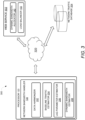
- Fig. 3 illustrates various components of a system comprising the network bandwidth handler 130, the dynamic bandwidth allocator 140, and the load balancer 150 used for network bandwidth management, according to another example implementation of the present disclosure.
- a web service 302 may comprise the dynamic bandwidth allocator 140 and the load balancer 150 of the system 100, as described in Figs 1 and 2 .
- the web service 302 may correspond to a cloud component, for example, a cloud based service or a cloud based infrastructure, or a cloud based platform.
- the network bandwidth handler 130 may be communicatively coupled to the web service 302 via a communication network 320.
- the network bandwidth handler 130 and the web service 302 may also be communicatively coupled to a network traffic database 304 via the communication network 320.
- the network traffic database 304 may store network traffic data at the plurality of servers during the pre-defined time period 212.
- the communication network 320 may be a cellular network, a broadband network, a telephonic network, an open network, such as the Internet, or a private network, such as an intranet and/or the extranet, or any combination thereof.
- the communication network 320 can be any collection of distinct networks operating wholly or partially in conjunction to provide connectivity between the system 100, one or more servers, and/or the data source(s).
- the communication network 320 may include and/or support one or more networks, such as, but are not limited to, one or more of WiMax, a Local Area Network (LAN), Wireless Local Area Network (WLAN), a Personal area network (PAN), a Campus area network (CAN), a Metropolitan area network (MAN), a Wide area network (WAN), a Wireless wide area network (WWAN), or any broadband network, and may be further enabled with technologies such as, by way of example, Global System for Mobile Communications (GSM), Personal Communications Service (PCS), Bluetooth, WiFi, Fixed Wireless Data, 2G, 2.5G, 3G, 4G, IMT-Advanced, pre-4G, LTE Advanced, mobile WiMax, WiMax 2, WirelessMAN-Advanced networks, enhanced data rates for GSM evolution (EDGE), General packet radio service (GPRS), enhanced GPRS, iBurst, UMTS, HSPDA, HSUPA, HSPA, UMTS-TDD, 1 ⁇ RTT, EV-DO, messaging protocols such as, TCP/IP, SMS, MMS
- the web service 302 may be coupled to a plurality of servers.
- the load balancer 150 of the web service 302 may monitor network traffic at the plurality of servers and perform load balancing of the network traffic at the plurality of servers, in a manner as described earlier in reference to Figs 1 and 2 .
- the web service 302 may access historical network traffic data from the network traffic database 304 via the communication network 320.
- the dynamic bandwidth allocator 140 may use the network traffic data accessed from the network traffic database 304 and forecasted network traffic accessed from the network bandwidth handler 130, to compute a network bandwidth to be allocated to a server.
- the dynamic bandwidth allocator 140 may accordingly allocate the network bandwidth to the server.
- Fig. 14 illustrates a pictorial representation of an example of dynamic bandwidth allocation based on a bandwidth estimation, by a dynamic bandwidth allocator.
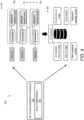
- Fig. 4 illustrates a pictorial representation 400 of data harmonization by the data harmonizer 202, according to an example implementation of the present disclosure.
- the data harmonizer 202 may be deployed by the network bandwidth handler 130 of the system 100 for network bandwidth management.
- the data harmonizer 202 may access the time series distribution data 210.
- the time series distribution data 210 may include data points (D0-Dn) collected over a time period (T1-Tn).
- the data points (D0-Dn) may represent an average count of network packets corresponding to network traffic that may be directed at a server at respective time instances of the time period (T1-Tn).
- the time period (T1-Tn) may correspond to the pre-defined time period 212 e.g. a user defined time period.
- the data harmonizer 202 may access the time series distribution data 210 in a defined format. For example, the data harmonizer 202 may access the time series distribution data 210 in a chronological order of day part time morning, afternoon, and evening. , These data points recorded at pre-defined time intervals may be arranged in a sequential order represented as a series of data values spread over the pre-defined time period.
- the data points D0-Dn may be correlated with one or more external factors i.e. the covariate metrics 214, as described earlier.
- the data points D0-Dn of the time series distribution data 210 may be correlated with covariates (Covariates t1, Covariates t2, ... Covariates Tn) relevant at respective time instances (T1-Tn).
- D0 represents a data value indicating an average count of network packets developed due to covariates at time T1.
- Dn represents a data value indicating an average count of network packets developed due to covariates at time Tn.
- one or more segments of the time series distribution data 210 may represent a distribution of various portions of network traffic which may have been developed due to various external factors. Said differently, each of the segments of the time series distribution data 210 may be correlated to one or more of these external factors. Various portions of the network traffic at the server may be impacted by the external factors, also referred herein as the covariate metrics 214, influencing development of the network traffic or its any portion thereof at the server.
- the covariate metrics 214 for the time series distribution data 210 illustrated in the view 402 may be, clickable links on a web page of a web site hosted by the server, images on the web page, audio or video content on the web page, size of the web page, non-seasonal promotional offer on the web page, computational capability or speed of the server hosting the web page, etc.
- the data harmonizer 202 may access the time series distribution data 210 including average count of network packets based on the covariate metrics 214 predominantly applicable at respective time instances (T1-Tn). Also, each data point of the distribution of data points in the time series distribution data 210 may be identified or flagged with one or more of the covariate metrics 214, to which it may be correlated. As an example, referring to the first view 402, the data point D0 is associated with covariates at time instance T1. Similarly, the data point Dn is associated with covariates at time instance Tn, and so on.
- a second view 404 of the Fig. 4 illustrates various external factors or the covariate metrics 214 influencing the development of the network traffic corresponding to various portions of the time series distribution data 210.
- Fig. 5 illustrates a pictorial representation 500 of collection of the time series distribution data 210 by the data harmonizer 202, according to an example implementation of the present disclosure.
- the data harmonizer 202 may access the time series distribution data 210 in form of a plot i.e. a graph representing a data set.
- the data harmonizer 202 may access a plot 502 as an input.
- the plot 502, as illustrated in Fig. 5 shows the distribution of data points (D0-Dn) distributed over the pre-defined time period ranging from time instance T0 to time instance Tn.
- value of each data point is represented on Y axis 506 and time instance is represented on X axis 504.
- Time period between time instance T0 to time instance Tn, as illustrated in the plot 502 may be a user defined time period.
- a user may provide an input of a duration or range comprising a starting time T0 and an ending time Tn, for which the time series distribution data 210 may be accessed by the data harmonizer 202.
- the data harmonizer 202 may access the time series distribution data 210 during the user defined time period.
- the trend data component 216 may be obtained by the baseline traffic estimator 204, according to an example embodiment of the present disclosure.
- the baseline traffic estimator 204 may access the time series distribution data 210.
- the baseline traffic estimator 204 may decompose the time series distribution data 210 into one or more data components where each data component may be defined as a stochastic process. Accordingly, the baseline traffic estimator 204 may obtain the trend data component 216 from the time series distribution data 210.
- the baseline traffic estimator 204 may also obtain other data components like the seasonal data component 218, the cyclic data component 220, and the irregular data component 222, details of which are described in Figs 6B onwards.
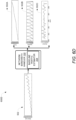
- Fig. 6A illustrates a plot 602A representing the trend data component 216 of the time series distribution data 210.
- the trend data component 216 illustrated in the plot 602A represents the distribution of the first set of data points corresponding to an average count of network packets collected over the pre-defined time period (T 0 - Tn).
- the first set of data points represented on the plot 602A may be indicative of such data points of the time series distribution data 210 that may correspond to an inherent development of the network traffic, for example, in form of a linearly increasing trend 606A, over the pre-defined time period.
- the plot 602A of the trend component data 216 represents a portion of the network traffic represented in the plot 502 of the time series distribution data 210.
- value of each data point of the first set of data points i.e. corresponding to the trend data component 216 is represented on Y axis 604A and its corresponding time instance i.e. time instance of recording that data point is represented on X axis 504.
- the baseline traffic estimator 204 may obtain the trend data component 216, as illustrated in the plot 602A, by using a random walk model.
- a random walk model for each time instance within the pre-defined time period 212, a variable may take a random step away from its previous value.
- M (t) represents a data point of the first set of data points, i.e. an average count of network packets corresponding to portion of network traffic that contributes for increasing inherent trend, recorded at time instance t. It may be understood from the above equation that trend at time t is affected by its previous instance t-1.
- the above equation represents a monotonically increasing trend in the development of a variable i.e. the network traffic.
- Z' (t) corresponds to the random step at time instance t, by which the value of the variable in a next time instance shifts from its previous value.
- the random step may be a constant value or may vary at different time instances.
- Fig. 6B illustrates a pictorial representation of an example of the seasonal data component 218 of the time series distribution data 210, obtained by the baseline traffic estimator 204.
- the baseline traffic estimator 204 may access the time series distribution data 210.
- the baseline traffic estimator 204 may decompose the time series distribution data 210 to obtain the seasonal data component 218 from the time series distribution data 210.
- Fig. 6B illustrates a plot 602B representing the seasonal data component 218 of the time series distribution data 210.
- the seasonal data component 218 as illustrated in the plot 602B represents the distribution of the second set of data points corresponding to an average count of network packets collected over the pre-defined time period (T 0 - Tn).
- the second set of data points represented on the plot 60BA may be indicative of such data points of the time series distribution data 210 that may correspond to recurring and persistent change in a pattern of the development of the network traffic at the server.
- a web server hosting a website for online purchase of air-conditioners and air coolers may experience more visits by users during months of summers. Accordingly, network traffic on such website may be high during a season and low during another season.
- the plot 602B of the seasonal data component 218 represents that portion of network traffic of the time series distribution data 210 that may be affected due to seasonality or a recurring pattern.
- a value of each data point of the second set of data points i.e.
- Y axis 604B corresponding to the seasonal data component 218 is represented on Y axis 604B, and its corresponding time instance i.e. time instance of recording that data point is represented on X axis 504. It may be observed that a recurring or persistent pattern indicating the seasonality or periodic characteristic of the seasonal data component 218 is noticeable in the plot 602B, after every Ta time interval.
- the baseline traffic estimator 204 may obtain the seasonal data component 218, as illustrated in the plot 602B, by using a deterministic trigonometric seasonal model.
- trigonometric seasonal model involves use of trigonometric functions.
- the trigonometric functions inherently includes seasonal or repeating pattern like structure, thereby, effectively capturing fluctuations in the data points of the time series distribution data 210 that may be impacted due to seasonal characteristics.
- W(0) and W(1) T(i) may represent a linear trend component
- sin 2 ⁇ t(i)/P- ⁇ )+ ⁇ (i) may present a seasonality component
- P represents a time period for which the seasonality reoccurs, i.e. duration after which seasonal pattern may be repeated
- ' ⁇ ' represents an unknown phase/shift parameter, which may impact the time period P
- 'I' represents an instance of time.
- each data point of the second set of data points for the pre-defined time period 212 and for any future time instance can be computed by the baseline traffic estimator 204 using the equation, as described above.
- Fig. 6C illustrates a pictorial representation of an example of the irregular data component 222 obtained from the time series distribution data 210 by the baseline traffic estimator 204, according to an example embodiment of the present disclosure.
- a plot 602C representing the irregular data component 222 of the time series distribution data 210 is illustrated.
- the plot 602C may represent a distribution of the fourth set of data points, i.e. the data points which may be left over after removing the trend data component 216, the seasonal data component 218, and the cyclic data component 222 from the time series distribution data 210.
- the distribution of the fourth set of data points, as illustrated in the plot 602 may be representative of portions of the network traffic at the server that may be unexplained or undefined by definitive external factor i.e. trend, pattern, seasonal phase, or cyclic phase.
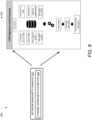
- Fig. 6D illustrates a pictorial representation 600D of an example of decomposition of the time series distribution data 210, by the baseline traffic estimator 204, to obtain the trend data component 216, the seasonal data component 218, and the irregular data component 222 as described in reference to Figs 6A-6C .
- the time series distribution data 210 represented by the plot 502
- the trend data component 216 represented by the plot 602A
- the seasonal data component 218 represented by the plot 602B
- the irregular data component 222 represented by the plot 602C, based on techniques as described earlier in reference to Figs. 6A-6C .
- Fig. 7 illustrates a pictorial representation of an example of computation of the AR data component 224 and the moving average data component 226, by the lag parameter estimator 206, according to an example embodiment of the present disclosure.
- the lag parameter estimator 206 may determine the AR data component 224 and the moving average data component 226 from the irregular data component 222.
- the lag parameter estimator 206 may access the plot 602C representing the distribution of the fourth set of data points corresponding to the irregular data component 222.
- the lag parameter estimator 206 may construct the first plot 702 and the second plot 704, in a similar manner, as described earlier in reference to Fig. 2 .
- the lag parameter estimator 206 may evaluate the first plot 702 and the second plot 704 to determine the first correlation parameter (P) 228 and the second correlation parameter (Q) 230.
- the lag parameter estimator 206 may also compute the AR data component 224 and the moving average data component 226 using the first correlation parameter (P) 228 and the second correlation parameter (Q) 230.
- the lag parameter estimator 206 may use the first correlation parameter (P) 228 and the second correlation parameter (Q) 230, to estimate future data points i.e. data points for future time point corresponding to the irregular data component 222.
- the lag parameter estimator 206 may determine the fifth set of data points corresponding to the AR data component 224 and the sixth set of data points corresponding to the moving average data component 226.
- the future data points identified in the fifth set of data points and the sixth set of data points may include such data points that may not have been captured in the baseline distribution traffic data computed by the baseline traffic estimator 204.
- these sets of data points correspond to estimation of unexplained portion of the network traffic, as described earlier.
- Y axis represents correlation values 706 and X axis represents lag intervals 708.
- the correlation values 706 represented on Y axis may be indicative of a correlation between two data points of the irregular data component 222 at a given lag time interval.
- the correlation value on Y axis is '1'.
- the correlation value is '-0.5' and at lag time interval ⁇ 6' the correlation value is '-0.5'.
- the lag parameter estimator 206 may identify that at lag time interval '0' there exists high correlation between two data points i.e. data points from amongst the fourth set of data points of the irregular data component 222. Similarly, the lag parameter estimator 206 may identify that at lag time intervals ⁇ 2' and ⁇ 6' there exists low correlation between two data points i.e. data points from amongst the fourth set of data points of the irregular data component 222. In a similar manner, the lag parameter estimator 206 may identify if two data points, from amongst the fourth set of data points, are highly correlated, moderately correlated, or not correlated at all.
- the lag parameter estimator may only select lag interval values for the data points for which a correlation exceeds the first confidence threshold, as described earlier, in Fig. 2 and further described hereinafter.
- the lag parameter estimator 206 may evaluate the first plot 702 to observe correlation values at various lag time intervals. For instance, the lag parameter estimator 702 may identify a correlation value of '1.0' at lag time interval '0'.
- the first correlation value may be indicative of a first correlation between a first data point y(t-Ig) representing the network traffic at a first time instance (t- Ig) and a second data point y (t) representing network traffic at a second time instance (t).
- the second time instance (t) may be a time instance occurring subsequently after a lag time interval 'Ig' to the first time instance (t-Ig).
- 'Ig' represents a lag time interval represented on X axis of the first plot 702.
- the lag parameter estimator 206 may determine, the first correlation parameter (P) 228 based on comparison of the first correlation value and the first confidence threshold, as described earlier, in reference to Fig. 2 .
- the first confidence threshold may correspond to pre-defined threshold value or may be a threshold value defined based on a user input.
- a horizontal line 710 along the X axis represents the first confidence threshold.
- the first confidence threshold may be indicative of a threshold value beyond which any correlation value between two data points identified on the first plot 702 can be considered as a high correlation.
- the lag parameter estimator 206 may record a high correlation existing between two data points at a corresponding lag of the time interval on X axis.
- the lag parameter estimator 206 may evaluate the first plot 702 by comparing each correlation value at a respective lag interval against the first confidence threshold. Based on this comparison, the lag parameter may identify one or more lag intervals at which correlation between two data points is observed to be high i.e. correlation value is more than the first confidence threshold. For example, as illustrated in the first plot 702, the correlation value at lag time interval 0 and 4 exceeds the confidence threshold. Thus, the lag parameter estimator 206 may establish that there exists high correlation between two data points at a lag of ⁇ 4'. Said differently, a first data point y (t) captured at point t may be highly correlated with the second data point y (t +4) captured at point t + 4. Accordingly, the lag parameter estimator 206 may use this information to determine the first correlation parameter (P) 228.
- the first correlation parameter (P) represents a lag at which a regression happens at a data point on its prior values.
- the lag parameter estimator 206 may compute the AR data component 224 using the first correlation parameter (P) 228.
- the lag parameter estimator 206 may compute data points corresponding to the fifth set of data points using the first correlation parameter (P) 228.
- the distribution of a fifth set of data points may be indicative of regression of the fourth set of data points over a first lag time interval i.e. a lag time interval at which high correlation exists between two data points.
- the lag parameter estimator 206 may estimate future data points corresponding to the irregular data component 122.
- Y axis represents correlation values 712 and X axis represents lag intervals 714.
- the correlation values 712 represented on Y axis may be indicative of a correlation between error versions of two data points of the irregular data component 222, at a defined lag time interval.
- the correlation value on Y axis is '-0.19'.
- the correlation value is '0.2'.
- the lag parameter estimator 206 may identify lag time intervals at which there exists high correlation, moderate correlation, or low correlation between error versions of two data points i.e.
- the lag parameter estimator may only select lag interval values for the data points for which a correlation exceeds the second confidence threshold, as described in Fig. 2 and further described hereinafter.
- the lag parameter estimator 206 may evaluate the second plot 704 to observe correlation values at various lag time intervals.
- the correlations value may be indicative of a first correlation between error version of a third data point z(t-Ig') representing the network traffic at a third time instance (t- Ig') and error version of a fourth data point z(t) representing network traffic at a fourth time instance (t).
- the fourth time instance (t) may be a time instance occurring subsequently after a lag time interval 'Ig" to the third time instance (t-Ig).
- 'Ig" represents a lag time interval represented on X axis of the second plot 704.
- the lag parameter estimator 206 may determine, the second correlation parameter (Q) 230 based on comparison of the second correlation value and the second confidence threshold, as described earlier, in reference to Fig. 2 .
- the second confidence threshold may correspond to pre-defined threshold value or may be a threshold value defined based on a user input.
- horizontal lines 716 and 718 along the X axis represents examples of the second confidence threshold.
- the second confidence threshold may be indicative of a threshold value beyond which any correlation value between two data points identified on the second plot 704 may be considered as a high correlation.
- the lag parameter estimator 206 may record a high correlation existing between two data points at a corresponding lag of the time interval on X axis.
- the lag parameter estimator 206 may evaluate the second plot 704 by comparing each correlation value at a respective lag interval against the second confidence threshold. Based on this comparison, the lag parameter may identify one or more lag intervals at which correlation between error versions of the two data points is observed to be high i.e. correlation value is more than the first confidence threshold. Accordingly, in a similar manner, as described for the first plot 702, the lag parameter estimator 206 may use this information to determine the second correlation parameter (Q) 230.
- the second correlation parameter (Q) represents a lag component at which a regression happens at error versions of a data point on its prior values.
- the lag parameter estimator 206 may compute the moving average data component 226 using the second correlation parameter (Q) 230. Said differently, the lag parameter estimator 206 may compute data points corresponding to the sixth set of data points using the second correlation parameter (Q) 230. Furthermore, based on the computation of the moving average data component 226, the lag parameter estimator 206 may estimate future data points corresponding to the irregular data component 122. Accordingly, based on the AR data component 224 and the moving average data component 226, the lagged covariates, i.e., the lagged covariate factor 234, may be determined.
- the lag parameter estimator 206 may also determine a parameter 'D' indicative of a degree of differencing required to convert the time series distribution data 210 to a stationary time series.
- the lag parameter estimator 206 may determine the parameter 'D' for instances where a time series processed by the lag parameter estimator 206 may not be stable.
- Fig. 8 illustrates a pictorial representation 800 of estimation of bandwidth for the server, by the dynamic bandwidth estimator 208, according to an example embodiment of the present disclosure.
- the dynamic bandwidth estimator 208 may determine an estimated network traffic for a future time point.
- view 802 depicts a pictorial representation of determination of estimated network traffic, by the dynamic bandwidth estimator 208.
- the dynamic bandwidth estimator 208 may utilize a LOESS i.e. a locally weighted scatter plot smoother model 236 to predict the estimated network traffic for the future time point and further determine the estimated bandwidth 232 based on the estimated network traffic.
- the dynamic bandwidth estimator 208 may compute one or more lagged variables based on the estimated parameters i.e. the first correlation parameter 228 and the second correlation parameter 230.
- the dynamic bandwidth estimator 208 may determine the estimated network traffic for the future time point based on various components computed by the baseline traffic estimator 204 and the lag parameter estimator 206. For instance, the dynamic bandwidth estimator 208 may determine the estimated network traffic for the future time point based on, the baseline distribution traffic data, the covariate metrics 214, and the lagged covariate factor 234.
- the lagged covariate factor 234 may be computed by the dynamic bandwidth estimator 208 may compute based on the AR data component 224 and/or the moving average data component 226.
- the lagged covariate factor 234 is indicative of lagged versions of one or more external covariate metrics i.e. the covariate metrics 214, as described in reference to Fig. 2 .
- the dynamic bandwidth estimator 208 may provide a plurality of inputs to the LOESS model.
- the inputs to the LOESS model may comprise one or more of: clickable links on a web page of a web site hosted by the server, images on the web page, audio or video content on the web page, size of the web page, non-seasonal promotional offer on the web page, computational capability or speed of the server hosting the web page, network packet count, self-lagged values, self-lagged error terms etc.
- the inputs to the LOESS model may also comprise the baseline distribution traffic data, the lagged covariate factor 234, and other such data.
- the dynamic bandwidth estimator 208 may construct the LOESS model 236 on the inputs provided to the LOESS model 236.
- the LOESS model 236 may be represent a local polynomial regression model.
- the dynamic bandwidth estimator 208 may construct the LOESS model by performing a local weighted regression on the inputs.
- the dynamic bandwidth estimator 208 may use the LOESS model based on a pre-defined smoothing parameter to construct a plot.
- the plot may represent a polynomial smooth curve that may fit between the network traffic and remaining covariates.
- the dynamic bandwidth estimator 208 may use the above equation used for constructing the plot i.e. the polynomial curve.
- An example of the polynomial curve that may be constructed by the dynamic bandwidth estimator 208 using the above equation is illustrated in Fig. 9 .
- performing the locally weighted smoothing regression may be best used in a context, when an underlying relationship of predictors and predicted variables may not seem to be following any certain pattern in the historical traffic data.
- the external covariates used for determination of the estimated network traffic may be numerical or categorical.
- the local regression technique of the LOESS model may involve locally fitting any function and providing an additional weight on each of the covariate depending on a likelihood with a point of interest.
- Fig. 9 illustrates a pictorial representation 900 of a plot 902 representing the smooth polynomial curve constructed by the dynamic bandwidth estimator 208 by using the LOESS model, in accordance with an example implementation of the present disclosure.
- the LOESS model 236 may output the estimated network traffic for the future time point, as a function of various components like, the baseline traffic distribution, lagged covariates, external covariates etc.
- the polynomial curve 904, as illustrated in Fig. 9 is representative of the afore-stated function.
- the polynomial curve 904 is representative of a curve constructed by the dynamic bandwidth estimator 208 using the polynomial equation described earlier.
- the dynamic bandwidth estimator 208 may identify smaller segments time intervals on X axis 906, based on observed values of covariates. For instance, for a range (0>x ⁇ 1000) illustrated on X axis 906 the dynamic bandwidth estimator 208 may identify smaller segments on the X axis 906 i.e. ranges 1-10, 10-20, 20-30, 30-50, 50-100... and so on. Furthermore, the dynamic bandwidth estimator 208 may fit data points using the polynomial equation, as described earlier for each of the identified segments. Furthermore, the dynamic bandwidth estimator 208 may integrate all such portions of small polynomial curves corresponding to the identified segments on the X axis 906 to construct a final curve, i.e. the polynomial curve 904. Furthermore, the dynamic bandwidth estimator 208 may predict or forecast the estimated network traffic based on the polynomial curve 904.
- the dynamic bandwidth estimator 208 may compute the bandwidth estimation 232 for the server and allocate the estimated bandwidth to the server, as described earlier in reference to Figs. 1 and 2 .
- the dynamic bandwidth estimator 208 may determine a minimum bandwidth requirement for the server based on multiplying the estimated network traffic for the future time to the size of web-pages hosted by the server. Furthermore, in some examples, the dynamic bandwidth estimator 208 may add a buffer value to the minimum bandwidth to determine the bandwidth estimation 232.
- the bandwidth estimation 232 may be used by the dynamic bandwidth allocator 140 for allocating network bandwidth to the server.
- Figs. 10-13 illustrates pictorial representations of forecasting network traffic for future time point by the system 100 according to an example use case.
- the example use case referred herein relates to forecasting network traffic for a web server hosting a website of a food ordering application.
- Fig. 10 illustrates a pictorial representation 1000 of data harmonization by the data harmonizer 202, in an example use case, according to an example embodiment of the present disclosure.
- the data harmonizer 202 may access the time series distribution data 210 representing the network traffic at the website of food ordering application.
- the time series distribution data 210 accessed by the data harmonizer 202 may include data points D 0 -Dn indicating an average count of network packets corresponding to covariates relevant at respective time instances (T1-Tn) for the food ordering application.
- the data harmonizer 202 may collect the time series distribution data 210 in a defined format, for instance, in a chronological order of day part time i.e. morning, afternoon, and evening. These data points may be recorded at pre-defined time intervals and arranged in a sequential order to represent a distribution of data values over the pre-defined time period.
- various portions or segments of the distribution of data points in the time series distribution data 210 may represent a distribution of various portions of network traffic that may have been developed due to various external factors.
- the external factors may correspond to factors applicable in context of the food ordering application.
- various portions of the network traffic represented as segments in the distribution of the time series distribution data 210 may be correlated to these external factors.
- An example of the external factors applicable for the afore-stated use case of the food ordering application is illustrated in view 1002.
- the external factors influencing development of the network traffic or its any portion thereof at the web server hosting the food ordering application may be, clickable links on a web page of a web site hosted by the server, images on the web page, audio or video content on the web page, size of the web page, non-seasonal promotional offer on the web page, computational capability or speed of the web server hosting the food ordering website, non-seasonal promotion, weekend indicator, holiday indicator, search engine optimization used for the web server, etc.
- these external factors may be represented as the covariate metrics 214 predominantly applicable at pre-defined time intervals of the pre-defined time period.
- each data point of the distribution of data points in the time series distribution data 210 accessed by the data harmonizer 202 may be identified or flagged with one or more of these external factors or the covariate metrics 214, to which it may be correlated.
- Fig. 11 illustrates a pictorial representation of baseline distribution traffic data computed by the baseline traffic estimator 204, in accordance with an example use case of the present disclosure.
- the baseline traffic estimator 204 may access the time series distribution data 210.
- the time series distribution data 210 may include a distribution of data points representative of the network traffic corresponding to the food ordering application on the server.
- the time series distribution data 210 may represent pre-stored historical network traffic data that may be used in a training phase of constructing a model for forecasting network traffic.
- Fig. 11 illustrates an example plot 1102 representing the time series distribution data 210 of the food ordering application.
- the baseline traffic estimator 204 may decompose the time series distribution data 210, into various data components. For instance, the baseline traffic estimator 204 may decompose the time series distribution data 210 to obtain the trend data component 216, the seasonal data component 218, the cyclic data component 220, and the irregular data component 222. As described earlier, breaking the time series distribution data 210 into each of these data components that may be represented as unobserved stochastic processes which enables providing an explanation or definition to dynamic features of chronological series of the data points and a manner in which the data points change over time.
- Plots 1104, 1106, and 1108 represents distribution of the trend data component 216, the seasonal data component 218, and the irregular data component 222, respectively.
- plot 1104 representing the trend data component 216 shows no increasing or decreasing trend.
- the plot 1106 representing distribution of seasonal data component 218 shows dense distribution of data points in form of rectangular blocks. In an example, it may be because the data points corresponding to the seasonal data component 218 may be recorded at frequent time intervals. For example, seasonal data may be recorded daily for each day part i.e. morning, afternoon, and evening during the day.
- the baseline traffic estimator 204 may compute the baseline distribution traffic data, as described earlier in reference to Figs. 1 , 2 , 6A-6D .
- the baseline traffic estimator 204 may perform an estimation by extending values of the trend data component 216 as represented in the plot 1102, the seasonal data component 218 as represented in the plot 1104 for a future time point, thereby constructing a baseline distribution.
- the baseline distribution traffic data may be indicative of a base count of network packets over the pre-defined time period.
- Plot 1110 illustrates the baseline distribution traffic data indicating a baseline of distribution of data points computed by the baseline traffic estimator 204.
- a first distribution 1112 on the plot 1110 represents the baseline distribution traffic data computed by the baseline traffic estimator 204 on the time series data 210 i.e. the plot 1102.
- a second distribution 1114 represents actual network traffic data that may have been observed for the pre-defined time period.
- the first distribution 1112 i.e. representing the baseline distribution traffic data overlaps some, but not all, portion of the second distribution 1114.
- the plot 1110 illustrates a manner in which the baseline distribution traffic data i.e. the first distribution 1112 may vary with the actual time series distribution i.e. the second distribution 1114 accessed during the training phase. Therefore, a further analysis on the irregular component 222 of the time series distribution data 210 may be performed by the system 100 so as to match the estimation computed by the system 100 with actual observations of the network traffic data.
- Fig. 12 illustrates a pictorial representation of an example of computation of the AR data component 224 and the moving average data 226 component from the irregular data component 222 by the lag parameter estimator 206, according to the example use case of the food ordering application.
- Plot 1202 represents the irregular data component 222 obtained after the decomposition of the time series distribution data 210, as described in Fig. 11 .
- the lag parameter estimator 206 may express the irregular data component 222 as a weak stationary process.
- the lag parameter estimator 206 may construct an auto-regressive moving average model that may provide a strict depiction of a weak stationary stochastic process in terms of polynomials viz. the AR data component 224 and the moving average data component 226.
- the lag parameter estimator 206 may identify the AR data component 224 and the moving average data component 226, from the irregular data component 222.
- the lag parameter estimator 206 may construct a plot 1204 using the ACF and a plot 1206 using the PACF, in a similar manner as described earlier in Fig. 7 .
- the plot 1206 may represent a distribution of correlation values between data points representing network traffic corresponding to the food ordering application, over lagged time intervals.
- the plot 106 may represent a distribution of correlation between error versions of the data points representing network traffic corresponding to the food ordering application, over lagged time intervals.
- the lag parameter estimator 206 may compute the first correlation parameter (P) 228 and the second correlation parameter (Q) 230, in a similar manner, as described earlier in reference to Fig. 7 .
- the lag parameter estimator 206 may compute the first correlation parameter (P) 228 as '1' and the second correlation parameter (Q) 230 as '0'.
- a value of the parameter 'D' indicative of a degree of differencing may be used as '0', as the time series distribution data 210 for the example use case is stationary in nature.
- Fig. 13 illustrates a pictorial representation 1300 of results indicating estimated network traffic computed by the network bandwidth handler 130, according to an example implementation of the present disclosure.
- a plot 1302 of Fig. 13 illustrates a first series distribution indicating estimated network traffic computed by the network bandwidth handler 130 for the pre-defined time period during a testing phase against an actual network traffic observed during the pre-defined time period.
- Illustratively X axis 1304 of the plot 1302 represents a time period starting from time instance T (0) to time instance T (n).
- Y axis 1306 of the plot 1302 represents an average count of network packets at the server.
- the plot 1302 includes two series distribution viz. a first series distribution 1308 and a second series distribution 1310.
- the first series distribution 1308 may represent actual time series distribution data 210 that may have been observed at the server.
- the second series distribution 1310 represents an estimated time series distribution, i.e. expected network traffic computed by the network bandwidth handler 130, computed during the testing phase, in accordance with the example implementation of the present disclosure.
- the time period T (0) - T (n) may include a range corresponding to a future time interval.
- the overlapping of the first series distribution 1308 and the second series distribution 1310 may indicate that the estimated network traffic matches significantly with the actual network traffic observed at the server.
- the network bandwidth handler 130 may use the estimated network traffic i.e. the second series distribution 1310 to compute a bandwidth requirement for the server.
- the network bandwidth handler 130 may compute the bandwidth estimation based on techniques as described earlier in reference to Figs. 1 and 2 .
- the network bandwidth handler 130 may identify from the estimated network traffic i.e. the second time series distribution 1310 that estimated forecasts for a next day are '47', '87', and '50'. Accordingly, the network bandwidth handler 130 may compute the bandwidth estimation i.e. bandwidth requirement for future time point based on the estimated forecasts using techniques as described earlier in reference to Figs. 1 and 2 .
- the network bandwidth handler 130 may compute a bandwidth requirement of the server for the next day as 100 MB in morning and evening, and 200MB for afternoon.
- the network bandwidth handler 130 may identify from the estimated network traffic i.e. the second time series distribution 1310 that estimated forecasts for a day of a next month are '57', '130', and '74'. Accordingly, the network bandwidth handler 130 may compute the bandwidth requirement of the server for the day of next month as 120 MB for morning, 275MB for afternoon, and 150MB for evening.
- the dynamic bandwidth allocator 140 may access bandwidth requirement computed by the network bandwidth handler 130 and accordingly, allocate network bandwidth to the server.
- Fig. 14 illustrates a pictorial representation of an example use case of dynamic bandwidth allocation based on forecasted traffic, by the dynamic bandwidth allocator 140 according to an example implementation of the present disclosure.
- a view 1402 depicts an example operation of network bandwidth management by the system 100.
- the network bandwidth operation depicts steps of load balancing and dynamic bandwidth allocation at the server.
- a cloud computing based set up for example, the web service 304 as described in Fig. 3 may include the dynamic bandwidth allocator 140 and the load balancer 150.
- the dynamic bandwidth allocator 140 may manage bandwidth allocation for multiple servers.
- the load balancer 150 may perform load balancing of the network traffic at the multiple servers.
- the multiple servers referred herein may correspond to multiple host servers hosting one or more websites.
- separate spaces may be allocated to multiple web servers and data warehouses used in a business, by the web service.
- information from different sources may flow into a data warehouse including web servers, log servers, etc. The information may be indicative of current network traffic at multiple host servers.
- the system 100 may leverage information residing in the data warehouse and output it to the web server to accommodate the network traffic.
- the load balancer 150 may distribute the network traffic to the multiple servers. For example, the load balancer 150 may distribute the network traffic to different web hosts including a website. These hosts may have a pre-defined bandwidth. Furthermore, in an instance, when concurrent traffic flow is increased, the load balancer 150 may distribute the network traffic to multiple host servers. The load balancer 150 may distribute the network traffic to multiple hosts servers based on techniques as described earlier, in reference to Figs. 1-3 . The load balancer 150 may distribute the network traffic to different host servers based on pre-defined rules specific to an environment.
- the system 100 may utilize time series data e.g. the time series distribution data 210 or historical network traffic data from the data warehouse to provide an early insight on future network traffic.
- the network bandwidth handler 130 may provide an estimation of the network traffic for future time point, in a similar manner as described in reference to Figs 1-13 .
- the dynamic bandwidth allocator 140 may use this information to dynamically allocate bandwidth to the multiple host servers.
- the bandwidth allocated to the host servers may suitably accommodate the concurrent traffic visiting the host servers or website hosted by the host servers.
- Fig. 15 illustrates a hardware platform 1500 for implementation of the system 100, according to an example embodiment of the present disclosure.
- computing machines such as but not limited to internal/external server clusters, quantum computers, desktops, laptops, smartphones, tablets and wearables which may be used to execute the system 100 or may have the structure of the hardware platform 1500.
- the hardware platform 1500 may include additional components not shown and that some of the components described may be removed and/or modified.
- a computer system with multiple GPUs can sit on external-cloud platforms including Amazon Web Services, or internal corporate cloud computing clusters, or organizational computing resources, etc.
- the hardware platform 1500 may be a computer system 1500 that may be used with the examples described herein.
- the computer system 1500 may represent a computational platform that includes components that may be in a server or another computer system.
- the computer system 1500 may execute, by a processor e.g., a single or multiple processors or other hardware processing circuit, the methods, functions and other processes described herein.
- the computer system 1500 may include a processor 1505 that executes software instructions or code stored on a non-transitory computer-readable storage medium 1510 to perform methods of the present disclosure.
- the software code includes, for example, instructions to determine an estimated network traffic for a future time point for a server, provide an estimated bandwidth based on the estimated network traffic, and allocate network bandwidth dynamically based on the estimated bandwidth.
- the network bandwidth handler 130 i.e. comprising one or more of the data harmonizer 202, the baseline traffic estimator 204, the lag parameter estimator 206, the dynamic bandwidth estimator 208, the dynamic bandwidth allocator 140, and the load balancer 150 may be software codes or components performing these steps.
- the instructions on the computer-readable storage medium 1510 are read and stored the instructions in storage 1515 or in random access memory (RAM) 1520.
- the storage 1515 provides a large space for keeping static data where at least some instructions could be stored for later execution.
- the stored instructions may be further compiled to generate other representations of the instructions and dynamically stored in the RAM 1520.
- the processor 1505 reads instructions from the RAM 1520 and performs actions as instructed.
- the computer system 1500 furthermore includes an output device 1525 to provide at least some of the results of the execution as output including, but not limited to, visual information to users, such as external agents.
- the output device can include a display on computing devices and virtual reality glasses.
- the display can be a mobile phone screen or a laptop screen. GUIs and/or text are presented as an output on the display screen.
- the computer system 1500 furthermore includes input device 1530 to provide a user or another device with mechanisms for entering data and/or otherwise interact with the computer system 1500.
- the input device 1530 may include, for example, a keyboard, a keypad, a mouse, or a touchscreen.
- the input device 1530 may be used to provide an input of a time interval, for example, the pre-defined time period by a user.
- an output of any of the network bandwidth handler 130, the dynamic bandwidth allocator 140, and the load balancer 150 may be displayed on the output device 1525.
- Each of these output devices 1525 and input devices 1530 could be joined by one or more additional peripherals.
- the output device 1525 may be used to display an estimated bandwidth of the server.
- the output device 1525 may be used to display allocated network bandwidth to the server.
- the output device 1525 may be used to display a current network traffic at the server, and a load balancing performed by the load balancer 150 based on the current network traffic and the estimated bandwidth.
- a network communicator 1535 may be provided to connect the computer system 1500 to a network and in turn to other devices connected to the network including other clients, servers, data stores, and interfaces, for instance.
- a network communicator 1535 may include, for example, a network adapter such as a LAN adapter or a wireless adapter.
- the computer system 1500 includes a data source interface 1540 to access data source 1545.
- a data source is an information resource.
- a database of exceptions and rules may be a data source.
- knowledge repositories and curated data may be other examples of data sources.
- Figs. 16-21 illustrates methods 1600, 1700, 1800, 1900, 2000, and 2100 collectively referred hereinafter as methods 1600-2100 for sake of brevity for the system 100 for network bandwidth management, according to an example embodiment of the present disclosure.
- the methods 1600-2100 may contain some steps in addition to the steps shown in Figs. 16-21 .
- the methods 1600-2100 may be performed by a component of the system 100, such as the processor 120, the network bandwidth handler 130, the dynamic bandwidth allocator 140, and the load balancer 150.
- one or more steps of the methods 1600-2100 may be performed by components such as, the data harmonizer 202, the baseline traffic estimator 204, the lag parameter estimator 206, and the dynamic bandwidth estimator 208 of the network bandwidth handler 130.
- Fig. 16 illustrates a process flowchart of a method 1600 for estimating bandwidth of a server by the system 100, in accordance with an example embodiment of the present disclosure.
- the time series distribution data 210 may be accessed.
- the time series distribution data 210 may comprise distribution of data points corresponding to an average count of network packets collected over a pre-defined time period.
- the average count of network packets may be representative of network traffic at a server at a given instance or time or a time interval.
- the time series distribution data 210 may be representative of the distribution of the average count of network packets collected in a chronological order at pre-defined time intervals of the pre-defined time period.
- the pre-defined time period may be defined by a user input or may be defined based on a business context or a pre- defined rule, for example, but not limited to, a business cycle, a quarter of a fiscal year, etc.
- the time series distribution data 210 may also represent distribution of the average count of network packets corresponding to one or more portions of network traffic developed due to various covariate metrics, applicable at various time intervals, within the pre-defined time period.
- the trend data component 216 may comprise a distribution of a first set of data points over the pre-defined time period 212.
- the first set of data points may be indicative of development or inherent trend of a first portion of the network traffic.
- the seasonal data component 218 may comprise a distribution of second set of data points.
- the second set of data points may be indicative of recurring and persistent change in a pattern of a second portion the network traffic over the pre-defined time period 212.
- the cyclical data component 220 may comprise distribution of a third set of data points.
- the third set of data points may be indicative of a third portion of the network traffic developed due to a predefined operational rule.
- the irregular data component 222 may comprise a fourth set of data points indicative of a fourth portion of the network traffic undefined by definitive external factor.
- a baseline distribution traffic data may be computed.
- the baseline distribution traffic data may be indicative of a base count of network packets over the pre-defined time period 212.
- the baseline distribution traffic data may be computed based on the trend data component 216, the cyclical data component 220, and the seasonal data component 218. For instance, in some examples, the baseline distribution traffic data may be computed in a similar manner as described in reference to Figs. 1-14 .
- the AR data component 224 and the moving average data component 226 may be identified from the irregular data component 222 to determine a lagged covariate factor.
- the AR data component 224 may comprise a distribution of a fifth set of data points.
- the fifth set of data points may be indicative of regression of the fourth set of data points over a lag time interval.
- the moving average data component 226 may comprise a distribution of a sixth set of data points.
- the sixth set of data points may be indicative of regression of error values of the fourth set of data points over the lag time interval.
- the AR data component 224 may be computed in a similar manner as described in reference to Figs. 7 and 12 .
- an estimated network traffic for a future time interval may be determined.
- the estimated network traffic for the future time interval may be determined based on (a) a lagged covariate factor 234, (b) the baseline distribution traffic data component and (c) the external covariates, i.e., the covariate metrics 214.
- a local weighted regression on various key metrics and data points may be performed. For instance, the local weighted regression may be performed on inputs such as the baseline distribution traffic data, the covariate metrics 214, and the lagged covariate factor 234 using the LOESS model to determine the estimate network traffic for the future time point.
- a LOESS model may be constructed to determine the estimated network traffic based on the local weighted regression using a pre-defined smoothing parameter.
- the LOESS model may utilize the covariate metrics 214, the baseline distribution traffic data component, and the lagged covariate factor 234 computed from the AR data component 224, and the moving average data component 226, as inputs to construct a polynomial curve which may be used to identify data points corresponding to forecasted network traffic.
- the lagged covariate factor 234 may correspond to covariate factors constructed based on modification to covariate factors existing in past over a lag time period. In some examples, the lagged covariate factor 234 may be constructed based on the AR data component 224 and the moving average data component 226 as described earlier, in reference to Figs. 1-13 .
- the estimated bandwidth for the future time interval may be provided.
- the estimated bandwidth for the future time interval may be provided based on the estimated network traffic for the future time point.
- the estimated bandwidth for the future time interval may be provided to dynamically allocate network bandwidth to the server to cater to a network traffic demand.
- the estimated bandwidth may be provided to configure network settings of the server.
- the method 1600 may further include one or more additional steps. For instance, in some examples, the method 1600 may further accessing the estimated bandwidth, i.e. the estimated bandwidth provided at the block 1612. Furthermore, a network bandwidth may be allocated to the server based on the estimated bandwidth for the future time interval and based on pre-stored network traffic data applicable for the server at a given instance of time. Further details of these additional steps as indicated by branch labelled 'A' in Fig. 16 are described in reference to Fig. 20 .
- Fig. 17 illustrates a process flowchart of a method 1700 for baseline traffic estimation from the time series distribution data 210 of network traffic, by the system 100, in accordance with an example embodiment of the present disclosure.
- the time series distribution data 210 may be decomposed to obtain (a) the trend data component 216, (b) the seasonal data component 218, (c) the cyclic data component 220, and (d) the irregular data component 222.
- the time series distribution data 210 may be decomposed in a similar manner as described in reference to Figs. 1-15 .
- the baseline distribution traffic data may be computed.
- the baseline distribution traffic data may be a function of: the trend data component 216, the seasonal data component 218, and the cyclical data component 220.
- Fig. 18 illustrates a process flowchart of a method 1800 for computing a lagged covariate factor, by the system 100, in accordance with an example embodiment of the present disclosure.
- the irregular data component 222 may be accessed.
- the irregular data component 222 may be obtained upon decomposition of the time series distribution data 210.
- the irregular data component 222 may correspond to a residual data component of the time series distribution data 210.
- the irregular data component 222 may correspond to that portion of the network traffic which may be undefined by a definitive external factor.
- the irregular data component 222 may correspond to the distribution that may include the fourth set of data points collected over the pre-defined time period 212, as described in reference to Figs. 1-15 .
- the AR data component 224 and the moving average data 226 component may be determined.
- the AR data component 224 may be determined based on the auto-correlation function (ACF).
- the moving average data component 226 may be determined based on the partial auto-correlation function (PACF).
- the determination of the AR data component 224 and the moving average data 226 component may include additional steps. Further details of these additional steps as indicated by branch labelled 'B' in Fig. 18 are described in reference to Fig. 20 .
- a lagged covariate factor 234 may be computed based on the AR data component 224 and the moving average data component 226.
- the lagged covariate factor 234 may be computed in a similar manner as described in reference to Figs. 1-15 .
- Fig. 19 illustrates a process flowchart of a method 1900 for computing the auto regression data component and the moving average data component, by the system 100, in accordance with an example embodiment of the present disclosure.
- a first plot may be constructed using an auto correlation function.
- the first plot may represent a distribution of a first correlation value.
- the first correlation value may be indicative of a first correlation between the network traffic at a first time instance and the network traffic at a second time instance subsequent to the first time instance.
- the first plot 702, as illustrated in Fig. 7 is an example of the first plot that may be constructed at the block 1902.
- the first plot 1204, as illustrated in Fig. 12 is another example of the first plot that may be constructed at the block 1902.
- a second plot may be constructed using a partial auto correlation function (PACF).
- the second plot may represent a distribution of a second correlation value.
- the second correlation value may be indicative of a partial auto correlation of network traffic residuals with itself at different lag values.
- the second correlation value indicates correlation between error versions associated with data points representing the network traffic at two different time instances.
- the second correlation value may be indicative of correlation between an error version of a first data point representing network traffic at a third time instance and error version of a second data point representing network traffic at a fourth time instance subsequent to the third time instance.
- the second plot 704 illustrated in Fig. 7 is an example of the second plot that may be constructed at the block 1902.
- the second plot 1206 illustrated in Fig. 12 is another example of the second plot that may be constructed at the block 1904.
- a first correlation parameter may be determined.
- the first correlation parameter may be determined based on evaluation of the first correlation value of the first plot, against a first confidence threshold.
- the first correlation parameter may be determined in a similar manner as described earlier in reference to Figs. 1-15 .
- a second correlation parameter may be determined.
- the second correlation parameter may be determined based on evaluation of the second correlation value of the second plot, against a second confidence threshold.
- the second correlation parameter may be determined in a similar manner as described earlier in reference to Figs. 1-15 .
- a first lagged covariate value based on the ACF and a second lagged covariate value based on the PACF for a future time instance may be computed.
- the first lagged covariate value may be computed using the first correlation parameter and based on the ACF and the second lagged covariate may be computed using the second correlation parameter and based on the PACF.
- the lagged covariate factor 234 may be determined based on the AR data component 224 and the moving average data component 226.
- Fig. 20 illustrates a process flowchart of a method 2000 for dynamically allocating network bandwidth by the system 100, in accordance with an example embodiment of the present disclosure.
- the estimated bandwidth may be accessed.
- the dynamic bandwidth allocator 140 may access the estimated bandwidth determined by the network bandwidth handler 130.
- network bandwidth may be dynamically allocated to the server.
- the allocation of the network bandwidth may be based on pre-stored network traffic data applicable for the server and the estimated bandwidth for the future time interval accessed at the block 2002.
- the network bandwidth may be dynamically allocated in a similar manner, as described earlier, in reference to Figs. 1-15 .
- the method 2000 may include additional steps of load balancing. These additional steps as indicated by branch labelled 'C' in Fig. 20 are described in reference to Fig. 21 .
- Fig. 21 illustrates a process flowchart of a method 2100 for load balancing of the network traffic by the system 100, in accordance with an example embodiment of the present disclosure.
- the network traffic at the server may be monitored.
- the load balancer 150 may monitor the network traffic at the server.
- a comparison between the network bandwidth allocated to the server against a desired network bandwidth i.e. network bandwidth required to support network traffic at a current time interval may be performed.
- a desired network bandwidth i.e. network bandwidth required to support network traffic at a current time interval.
- the method moves to the block 2106.
- the allocated network bandwidth to the server is more than the desired network bandwidth the method moves to the block 2108.
- load balancing of the network traffic at the server may be performed.
- the load balancer 130 may perform the load balancing of the server.
- the load balancer 150 may offload some of the current network traffic to another server.
- the load balancing may be performed in a similar manner as described in reference to Figs. 1-15 .
- the load balancer 150 may notify the dynamic bandwidth allocator 140 and/or the network bandwidth handler 130 about the load balancing performed at the block 2106. For instance, the load balancer 150 may send a notification to the network bandwidth allocator 130 to modify allocation of the network bandwidth to the server so as to support a current network traffic demand. In accordance with some examples, the load balancer may also notify the network bandwidth handler 130 to take into consideration recent network traffic demanded at the server for estimation of the expected network traffic in near future. Thus, in some examples, the network bandwidth handler 130 may recursively update bandwidth forecasting for the future time based on load balancing notification received from the load balancer 130 after performing the load balancing as described at the block 2106.
- load balancing of the network traffic at the server may not be performed.
- the network bandwidth allocated to the server may support the current network traffic, i.e. a current demand
- no load balancing of the network traffic at the server may be performed.
- the server may continue to operate at the allocated network bandwidth until any further load balancing action is to be performed.
- the methods 1600-2100 may be practiced using a non-transitory computer-readable medium, for example, but not limited to the computer-readable medium 1510 as described in FIG. 15 .
- the methods 1600-2100 may be computer-implemented methods.
- the network bandwidth management may involve accurately forecasting or estimating an expected network traffic in future. Furthermore, in some examples, the network bandwidth management may involve efficient planning and dynamic allocation of the network bandwidth to one or more network entities, for example, but not limited to, servers, web server, web portals, online platforms, web services, web sites hosted by one or more servers, e-commerce platforms, and/or the like.
Landscapes
- Engineering & Computer Science (AREA)
- Computer Networks & Wireless Communication (AREA)
- Signal Processing (AREA)
- Theoretical Computer Science (AREA)
- Physics & Mathematics (AREA)
- Software Systems (AREA)
- Data Mining & Analysis (AREA)
- General Physics & Mathematics (AREA)
- Mathematical Physics (AREA)
- General Engineering & Computer Science (AREA)
- Artificial Intelligence (AREA)
- Evolutionary Computation (AREA)
- Probability & Statistics with Applications (AREA)
- Computing Systems (AREA)
- Computer Vision & Pattern Recognition (AREA)
- Medical Informatics (AREA)
- Fuzzy Systems (AREA)
- Computational Linguistics (AREA)
- Databases & Information Systems (AREA)
- Environmental & Geological Engineering (AREA)
- Algebra (AREA)
- Computational Mathematics (AREA)
- Mathematical Analysis (AREA)
- Mathematical Optimization (AREA)
- Pure & Applied Mathematics (AREA)
- Data Exchanges In Wide-Area Networks (AREA)
Claims (15)
- System (100; 1500), das Folgendes aufweist:einen Prozessor (120; 1505); undeinen Netzwerkbandbreitensteuerungseinrichtung (130), die mit dem Prozessor verbunden ist, wobei der Netzwerkbandbreitensteuerungseinrichtung konfiguriert ist, um:auf Zeitreihenverteilungsdaten (210) zuzugreifen, die eine Verteilung von einem durchschnittlichen Zählwert von Netzwerkpaketen über einem vordefinierten Zeitraum entsprechenden Datenpunkten aufweisen, wobei der durchschnittliche Zählwert von Netzwerkpaketen repräsentativ für den Netzwerkverkehr an einem Server ist;Bestimmen aus den Zeitreihenverteilungsdaten:eine eine Verteilung eines ersten Satzes von Datenpunkten aufweisende Trenddatenkomponente (216), die einen inhärenten Trend eines ersten Teils des Netzwerkverkehrs über den vordefinierten Zeitraum anzeigt,eine eine Verteilung eines zweiten Satzes von Datenpunkten aufweisende saisonale Datenkomponente (218), die eine wiederkehrende und anhaltende Änderung in einem Muster eines zweiten Teils des Netzwerkverkehrs über den vordefinierten Zeitraum anzeigt,eine eine Verteilung eines dritten Satzes von Datenpunkten aufweisende zyklische Datenkomponente (220), die einen dritten Teil des Netzwerkverkehrs anzeigt, der aufgrund einer vordefinierten Betriebsregel entwickelt wird, undeine einen vierten Satz von Datenpunkten aufweisenden unregelmäßige Datenkomponente (222), die einen vierten Teil des Netzwerkverkehrs anzeigt, der nicht durch einen maßgeblichen externen Faktor definiert wird;Berechnen von Grundlinienverteilungsverkehrsdaten, die einen Basiszählwert von Netzwerkpaketen über den vordefinierten Zeitraum, basierend auf der Trenddatenkomponente, der zyklischen Datenkomponente und der saisonalen Datenkomponente;Bestimmen eines verzögerten Kovariatenfaktors (234) und Kovariatenmetriken (214), unter Verwendung einer lokalen gewichteten Regression, eines geschätzten Netzwerkverkehrs für ein zukünftiges Zeitintervall auf der Grundlage der Grundlinienverteilungsverkehrsdaten, wobei die Kovariatenmetriken einen oder mehrere externe Faktoren darstellen, die zu dem Netzwerkverkehr über den vordefinierte Zeitraum beitragen, und wobei der verzögerte Kovariatenfaktor verzögerte Versionen von einer oder mehreren der Kovariatenmetriken anzeigt; undBereitstellen einer geschätzten Bandbreite (232) für das zukünftige Zeitintervall auf der Grundlage des geschätzten Netzwerkverkehrs, um Netzwerkeinstellungen des Servers zu konfigurieren, wobei die Netzwerkeinstellungen des Servers zu konfigurieren, wobei die Konfiguration der Netzwerkeinstellungen das Konfigurieren von mindestens einem der folgenden Elemente umfasst: Datei- und Druckdiensteinstellungen, Dateiübertragungseinstellungen, Domänennamenserver-, DNS, Einstellungen, Fernzugriffseinstellungen, Webdiensteinstellungen, E-Mail-Einstellungen und dynamische Hostkonfigurationsprotokoll-, DHCP, Einstellungen.
- System nach Anspruch 1, dadurch gekennzeichnet, dass das System ferner aufweist: eine mit dem Prozessor gekoppelte dynamische Bandbreitenzuweisungseinrichtung (140), wobei die dynamische Bandbreitenzuweisungseinrichtung so konfiguriert ist, dass er dem Server Netzwerkbandbreite auf der Grundlage von vorgespeicherten Netzwerkverkehrsdaten, die für den Server anwendbar sind, und der geschätzten Bandbreite für das zukünftige Zeitintervall zuweist.
- System nach Anspruch 1 oder 2, dadurch gekennzeichnet, dass das System ferner aufweist:
eine mit dem Prozessor verbundene Lastausgleichseinrichtung (150), wobei die Lastausgleichseinrichtung konfiguriert ist, um:den aktuellen Netzwerkverkehr (242) auf dem Server zu überwachen; undeinen Lastausgleich des aktuellen Netzwerkverkehrs auf dem Server durch Verteilung eines Teils des aktuellen Netzwerkverkehrs auf einen entfernten Server durchzuführen, wenn eine zugewiesene Netzwerkbandbreite geringer ist als eine gewünschte Netzwerkbandbreite zur Unterstützung des aktuellen Netzwerkverkehrs. - System nach einem der vorhergehenden Ansprüche, dadurch gekennzeichnet, dass:die Netzwerkbandbreitensteuerungseinrichtung eine mit dem Prozessor gekoppelte Datenharmonisierungseinrichtung (202) aufweist, wobei die Datenharmonisierungseinrichtung so konfiguriert ist, dass sie die Zeitreihenverteilungsdaten in einer chronologischen Reihenfolge sammelt, die eine Verteilung der durchschnittlichen Zählwerte von Netzwerkpaketen in vordefinierten Zeitintervallen der vordefinierten Zeiträume darstellt, die den Kovariatenmetriken entsprechen; und/oderdie Netzwerkbandbreitensteuerungseinrichtung so konfiguriert ist, dass sie die Kovariatenmetriken basierend auf der Identifizierung externer Faktoren berechnet, die den Netzwerkverkehr zu einem Zeitpunkt beeinflussen, und die Kovariatenmetriken mindestens eines der folgenden Merkmale aufweisen: eine Größe einer Webseite, einer nicht saisonalen Werbung, einem Zählwert von Bildern auf der Webseite, einer Leistungsfähigkeit des Servers, eines Ladezeitintervall für das Laden der Webseite, eines Ranking der Webseite, und einer Leistung einer mit dem Server verbundenen Suchoptimierungseinrichtung.
- System nach einem der vorhergehenden Ansprüche, dadurch gekennzeichnet, dass die Netzwerkbandbreitensteuerungseinrichtung Folgendes aufweist
eine mit dem Prozessor gekoppelte Grundlinienverkehrsabschätzungseinrichtung (204), wobei die Grundlinienverkehrsabschätzungseinrichtung konfiguriert ist, um:die Zeitreihenverteilungsdaten zu zerlegen, um die Trenddatenkomponente, die saisonale Datenkomponente, die zyklische Datenkomponente und die unregelmäßige Datenkomponente zu ermitteln; undBerechnen der Grundlinienverteilungsverkehrsdaten, wobei die Grundlinienverteilungsverkehrsdaten eine Funktion der Trenddatenkomponente, der saisonalen Datenkomponente und der zyklischen Datenkomponente sind. - System nach einem der vorhergehenden Ansprüche, dadurch gekennzeichnet, dass die Netzwerkbandbreitensteuerungseinrichtung eine mit dem Prozessor gekoppelte dynamische Bandbreitenabschätzungseinrichtung (208) aufweist, wobei die Bandbreitenabschätzungseinrichtung konfiguriert ist, zum
Berechnen des verzögerten Kovariatenfaktors auf der Grundlage einer Autoregressionsdatenkomponente (224) und einer gleitenden Durchschnittsdatenkomponente (226), die aus der unregelmäßigen Datenkomponente bestimmt wird, und wobei:die Autoregressionsdatenkomponente eine Verteilung eines fünften Satzes von Datenpunkten aufweist, die eine Regression des vierten Satzes von Datenpunkten über ein erstes Verzögerungszeitintervall anzeigt; unddie gleitende Durchschnittsdatenkomponente eine Verteilung eines sechsten Satzes von Datenpunkten aufweist, die die Regression von Fehlerwerten des vierten Satzes von Datenpunkten über ein zweites Verzögerungszeitintervall anzeigt. - System nach Anspruch 6, dadurch gekennzeichnet, dass die Netzwerkbandbreitensteuerungseinrichtung einen mit dem Prozessor gekoppelte Verzögerungsparameterabschätzungseinrichtung (206) aufweist, wobei die Verzögerungsparameterabschätzungseinrichtung konfiguriert ist, um:Zugriff auf die irreguläre Datenkomponente der Zeitreihenverteilungsdaten zu haben; undaus der unregelmäßigen Datenkomponente die Autoregressionsdatenkomponente auf der Grundlage einer Autokorrelationsfunktion, ACF, und die gleitende Durchschnittsdatenkomponente auf der Grundlage einer partiellen Autokorrelationsfunktion, PACF, zu bestimmen.
- System nach Anspruch 7, dadurch gekennzeichnet, dass die Verzögerungsparameterabschätzungseinrichtung so konfiguriert ist, um:unter Verwendung der ACF ein erstes Diagramm (702) zu konstruieren, das eine Verteilung eines ersten Korrelationswertes darstellt, der eine erste Korrelation zwischen dem Netzwerkverkehr zu einem ersten Zeitpunkt und dem Netzwerkverkehr zu einem zweiten Zeitpunkt nach dem ersten Zeitpunkt angibt;unter Verwendung des PACF ein zweites Diagramm (704) zu konstruieren, das eine Verteilung eines zweiten Korrelationswertes darstellt, der eine zweite Korrelation zwischen einer Fehlerversion, die mit dem Netzwerkverkehr zu einem dritten Zeitpunkt zugeordnet ist, und der Fehlerversion, die dem Netzwerkverkehr zu einem vierten Zeitpunkt nach der dritten Zeitinstanz zugeordnet ist, angibt;Bestimmen eines ersten Korrelationsparameters (228) basierend auf dem ersten Korrelationswert des ersten Diagramms und einer ersten Vertrauensschwelle (710; 711);Bestimmen eines zweiten Korrelationsparameters (230) auf der Grundlage der Auswertung des zweiten Korrelationswerts des zweiten Diagramms gegenüber einer zweiten Vertrauensschwelle (716; 718); undBerechnen der Autoregressionsdatenkomponente basierend auf dem ersten Korrelationsparameters für einen zukünftigen Zeitpunkt und der gleitenden Durchschnittsdatenkomponente für den zukünftigen Zeitpunkt auf der Basis des zweiten Korrelationsparameters.
- Verfahren, das Folgendes aufweist:Zugreifen, durch einen mit einer Netzwerkbandbreitensteuerungseinrichtung verbundenen Prozessor (120; 1505), eine dynamische Bandbreitenzuweisungseinrichtung und eine Lastausgleichseinrichtung, auf Zeitreihenverteilungsdaten (210), die eine Verteilung von einem durchschnittlichen Zählwert von Netzwerkpaketen über einem vordefinierten Zeitraum entsprechenden Datenpunkten aufweisen, wobei der durchschnittliche Zählwert von Netzwerkpaketen repräsentativ für den Netzwerkverkehr an einem Server ist;Bestimmen aus den Zeitreihenverteilungsdaten durch den Prozessor:einer eine Verteilung eines ersten Satzes von Datenpunkten aufweisende Trenddatenkomponente (216), die einen inhärenten Trend eines ersten Teils des Netzwerkverkehrs über den vordefinierten Zeitraum anzeigt,einer eine Verteilung eines zweiten Satzes von Datenpunkten aufweisende saisonale Datenkomponente (218), die eine wiederkehrende und anhaltende Änderung in einem Muster eines zweiten Teils des Netzwerkverkehrs über den vordefinierten Zeitraum anzeigt,einer eine Verteilung eines dritten Satzes von Datenpunkten aufweisende zyklische Datenkomponente (220), die einen dritten Teil des Netzwerkverkehrs anzeigt, der aufgrund einer vordefinierten Betriebsregel entwickelt wird, undeiner einen vierten Satz von Datenpunkten aufweisenden unregelmäßige Datenkomponente (222), die einen vierten Teil des Netzwerkverkehrs anzeigt, der nicht durch einen maßgeblichen externen Faktor definiert wird;Berechnen, durch den Prozessor, von Grundlinienverteilungsverkehrsdaten, die einen Basiszählwert von Netzwerkpaketen über den vordefinierten Zeitraum, basierend auf der Trenddatenkomponente, der zyklischen Datenkomponente und der saisonalen Datenkomponente;Bestimmen eines verzögerten Kovariatenfaktors (234) und Kovariatenmetriken (214), unter Verwendung einer lokalen gewichteten Regression, eines geschätzten Netzwerkverkehrs für ein zukünftiges Zeitintervall auf der Grundlage der Grundlinienverteilungsverkehrsdaten, wobei die Kovariatenmetriken einen oder mehrere externe Faktoren darstellen, die zu dem Netzwerkverkehr über den vordefinierte Zeitraum beitragen, und wobei der verzögerte Kovariatenfaktor verzögerte Versionen von einer oder mehreren der Kovariatenmetriken anzeigt; undBereitstellen einer geschätzten Bandbreite (232) für das zukünftige Zeitintervall auf der Grundlage des geschätzten Netzwerkverkehrs, um Netzwerkeinstellungen des Servers zu konfigurieren, wobei die Netzwerkeinstellungen des Servers zu konfigurieren, wobei die Konfiguration der Netzwerkeinstellungen das Konfigurieren von mindestens einem der folgenden Elemente umfasst: Datei- und Druckdiensteinstellungen, Dateiübertragungseinstellungen, Domänennamenserver-, DNS, Einstellungen, Fernzugriffseinstellungen, Webdiensteinstellungen, E-Mail-Einstellungen und dynamische Hostkonfigurationsprotokoll-, DHCP, Einstellungen.
- Verfahren nach Anspruch 9, dadurch gekennzeichnet, dass das Verfahren ferner aufweist:Zuweisen, durch den Prozessor, von Netzwerkbandbreite für den Server auf der Grundlage von für den Server anwendbaren vorgespeicherten Netzwerkverkehrsdaten und der geschätzten Bandbreite für das zukünftige Zeitintervall; und/oderÜberwachen, durch den Prozessor, des aktuellen Netzwerkverkehrs (242) auf dem Server; undDurchführen eines Lastausgleichs des aktuellen Netzwerkverkehrs auf dem Server durch Verteilung eines Teils des aktuellen Netzwerkverkehrs auf einen entfernten Server, wenn eine zugewiesene Netzwerkbandbreite geringer ist als eine gewünschte Netzwerkbandbreite zur Unterstützung des aktuellen Netzwerkverkehrs.
- Verfahren nach Anspruch 9 oder 10, dadurch gekennzeichnet, dass das Verfahren ferner aufweist:Sammeln, durch einen Prozessor, der Zeitreihenverteilungsdaten in einer chronologischen Reihenfolge, die eine Verteilung der durchschnittlichen Zählwerte von Netzwerkpaketen in vordefinierten Zeitintervallen der vordefinierten Zeiträume darstellt, die den Kovariatenmetriken entsprechen; und/oderZerlegen, durch einen Prozessor, der Zeitreihenverteilungsdaten, um die Trenddatenkomponente, die saisonale Datenkomponente, die zyklische Datenkomponente und die unregelmäßige Datenkomponente zu ermitteln; undBerechnen, durch einen Prozessor, der Grundlinienverteilungsverkehrsdaten, wobei die Grundlinienverteilungsverkehrsdaten eine Funktion der Trenddatenkomponente, der saisonalen Datenkomponente und der zyklischen Datenkomponente sind.
- Verfahren nach einem der Ansprüche 9 bis 11, dadurch gekennzeichnet, dass das Bereitstellen der geschätzten Bandbreite das Berechnen, durch den Prozessor, des verzögerten Kovariatenfaktors auf der Grundlage einer Autoregressionsdatenkomponente (224) und einer gleitenden Durchschnittsdatenkomponente (226), die aus der unregelmäßigen Datenkomponente bestimmt wird, aufweist und wobei:die Autoregressionsdatenkomponente eine Verteilung eines fünften Satzes von Datenpunkten aufweist, die eine Regression des vierten Satzes von Datenpunkten über ein erstes Verzögerungszeitintervall anzeigt; unddie gleitende Durchschnittsdatenkomponente eine Verteilung eines sechsten Satzes von Datenpunkten aufweist, die die Regression von Fehlerwerten des vierten Satzes von Datenpunkten über ein zweites Verzögerungszeitintervall anzeigt.
- Verfahren nach Anspruch 12, dadurch gekennzeichnet, dass das Verfahren ferner aufweist:Zugreifen, durch den Prozessor, auf die irreguläre Datenkomponente der Zeitreihenverteilungsdaten; undBestimmen, durch den Prozessor, der Autoregressionsdatenkomponente auf der Grundlage einer Autokorrelationsfunktion, ACF, und der gleitende Durchschnittsdatenkomponente auf der Grundlage einer partiellen Autokorrelationsfunktion, PACF, aus der unregelmäßigen Datenkomponente.
- Verfahren nach Anspruch 13, dadurch gekennzeichnet, dass die Bestimmung der Autoregressionsdatenkomponente der gleitenden Durchschnittsdatenkomponente ferner aufweist:Konstruieren, durch den Prozessor, eines ersten Diagramms (702) unter Verwendung der ACF, das eine Verteilung eines ersten Korrelationswertes darstellt, der eine erste Korrelation zwischen dem Netzwerkverkehr zu einem ersten Zeitpunkt und dem Netzwerkverkehr zu einem zweiten Zeitpunkt nach dem ersten Zeitpunkt angibt;Konstruieren, durch den Prozessor, eines zweiten Diagramms (704) unter Verwendung des PACF, das eine Verteilung eines zweiten Korrelationswertes darstellt, der eine zweite Korrelation zwischen einer Fehlerversion, die mit dem Netzwerkverkehr zu einem dritten Zeitpunkt zugeordnet ist, und der Fehlerversion, die dem Netzwerkverkehr zu einem vierten Zeitpunkt nach der dritten Zeitinstanz zugeordnet ist, angibt;Bestimmen, durch den Prozessor, eines ersten Korrelationsparameters (228) basierend auf dem ersten Korrelationswert des ersten Diagramms und einer ersten Vertrauensschwelle (710; 711);Bestimmen, durch den Prozessor, eines zweiten Korrelationsparameters (230) auf der Grundlage der Auswertung des zweiten Korrelationswerts des zweiten Diagramms gegenüber einer zweiten Vertrauensschwelle (716; 718); undBerechnen, durch den Prozessor, der Autoregressionsdatenkomponente basierend auf dem ersten Korrelationsparameters für einen zukünftigen Zeitpunkt und der gleitenden Durchschnittsdatenkomponente für den zukünftigen Zeitpunkt auf der Basis des zweiten Korrelationsparameters.
- Nicht-transitorisches computerlesbares Medium (1510), das maschinenlesbare Anweisungen enthält, die von einem Prozessor (120; 1505) ausgeführt werden können, um zumindest das Verfahren nach mindestens einem der Ansprüche 9 bis 14 durchzuführen.
Applications Claiming Priority (1)
| Application Number | Priority Date | Filing Date | Title |
|---|---|---|---|
| US16/808,865 US11316743B2 (en) | 2020-03-04 | 2020-03-04 | Network bandwidth management |
Publications (2)
| Publication Number | Publication Date |
|---|---|
| EP3876476A1 EP3876476A1 (de) | 2021-09-08 |
| EP3876476B1 true EP3876476B1 (de) | 2023-08-30 |
Family
ID=74556775
Family Applications (1)
| Application Number | Title | Priority Date | Filing Date |
|---|---|---|---|
| EP21155523.0A Active EP3876476B1 (de) | 2020-03-04 | 2021-02-05 | Netzwerkbandbreitenverwaltung |
Country Status (2)
| Country | Link |
|---|---|
| US (1) | US11316743B2 (de) |
| EP (1) | EP3876476B1 (de) |
Families Citing this family (9)
| Publication number | Priority date | Publication date | Assignee | Title |
|---|---|---|---|---|
| US20220138642A1 (en) * | 2020-11-03 | 2022-05-05 | At&T Intellectual Property I, L.P. | Forecasting based on planning data |
| US11979325B2 (en) * | 2021-01-28 | 2024-05-07 | VMware LLC | Dynamic SD-WAN hub cluster scaling with machine learning |
| US11601478B2 (en) * | 2021-06-29 | 2023-03-07 | Microsoft Technology Licensing, Llc | Media server management for communication session |
| FI130380B (fi) * | 2021-11-09 | 2023-08-07 | Elisa Oyj | Kommunikaatioverkon toiminnan analysointi |
| CN114548543B (zh) * | 2022-02-18 | 2025-07-29 | 腾讯科技(深圳)有限公司 | 基于流量的数据处理方法、装置、设备、介质及程序产品 |
| WO2023162043A1 (ja) * | 2022-02-22 | 2023-08-31 | 日本電信電話株式会社 | トラヒックデータ収集システム、トラヒックデータ収集方法及びトラヒックデータ収集プログラム |
| US12174889B2 (en) * | 2022-06-07 | 2024-12-24 | HCL America Inc. | Method and system for analyzing and interacting with centralized telecommunication networks through multi-layer graphs |
| CN119232601B (zh) * | 2024-09-02 | 2025-06-13 | 红星美凯龙家居集团股份有限公司 | 一种用于网络分发模型的数据优化管理系统及方法 |
| CN118972260B (zh) * | 2024-10-09 | 2025-01-28 | 浙江大华技术股份有限公司 | 一种带宽预测方法、装置及电子设备 |
Family Cites Families (10)
| Publication number | Priority date | Publication date | Assignee | Title |
|---|---|---|---|---|
| US7251589B1 (en) | 2005-05-09 | 2007-07-31 | Sas Institute Inc. | Computer-implemented system and method for generating forecasts |
| US8010394B2 (en) * | 2007-11-28 | 2011-08-30 | Yahoo! Inc. | System and method to facilitate yearly inventory forecasting for network-based entities |
| US20090198559A1 (en) | 2008-02-06 | 2009-08-06 | Disney Enterprises, Inc. | Multi-resolutional forecasting system |
| KR101012863B1 (ko) * | 2008-09-25 | 2011-02-08 | 한국전력공사 | 고객기준부하 산출을 위한 부하 예측 비교 분석 시스템 |
| US10713578B2 (en) | 2015-04-29 | 2020-07-14 | Cisco Technology, Inc. | Estimating utilization of network resources using time series data |
| US10476949B2 (en) * | 2017-02-21 | 2019-11-12 | Microsoft Technology Licensing, Llc | Predictive autoscaling in computing systems |
| US10387900B2 (en) * | 2017-04-17 | 2019-08-20 | DataRobot, Inc. | Methods and apparatus for self-adaptive time series forecasting engine |
| US10635565B2 (en) | 2017-10-04 | 2020-04-28 | Servicenow, Inc. | Systems and methods for robust anomaly detection |
| CA3102846C (en) * | 2018-06-06 | 2023-04-04 | The Joan and Irwin Jacobs Technion-Cornell Institute | Telecommunications network traffic metrics evaluation and prediction |
| US11620528B2 (en) * | 2018-06-12 | 2023-04-04 | Ciena Corporation | Pattern detection in time-series data |
-
2020
- 2020-03-04 US US16/808,865 patent/US11316743B2/en active Active
-
2021
- 2021-02-05 EP EP21155523.0A patent/EP3876476B1/de active Active
Also Published As
| Publication number | Publication date |
|---|---|
| US11316743B2 (en) | 2022-04-26 |
| US20210281486A1 (en) | 2021-09-09 |
| EP3876476A1 (de) | 2021-09-08 |
Similar Documents
| Publication | Publication Date | Title |
|---|---|---|
| EP3876476B1 (de) | Netzwerkbandbreitenverwaltung | |
| US9323599B1 (en) | Time series metric data modeling and prediction | |
| US9137130B2 (en) | Dynamic network load forecasting | |
| US20200042627A1 (en) | Systems and Methods for Processing Different Data Types | |
| US10949116B2 (en) | Storage resource capacity prediction utilizing a plurality of time series forecasting models | |
| US20150244645A1 (en) | Intelligent infrastructure capacity management | |
| US10783002B1 (en) | Cost determination of a service call | |
| US11153176B2 (en) | Exponential moving maximum (EMM) filter for predictive analytics in network reporting | |
| US10909503B1 (en) | Snapshots to train prediction models and improve workflow execution | |
| Balaji et al. | Predictive Cloud resource management framework for enterprise workloads | |
| EP3129927A1 (de) | Szenariomodellierung und -visualisierung | |
| US10223397B1 (en) | Social graph based co-location of network users | |
| US20170279697A1 (en) | Control device for estimation of power consumption and energy efficiency of application containers | |
| US11003431B2 (en) | Generating predictive metrics for virtualized deployments | |
| Grosskop et al. | Identification of application-level energy optimizations | |
| CN104937613A (zh) | 量化数据质量的探试 | |
| Vanama | AI Report-Federated AIOps for Multi-Cluster OpenShift | |
| US20180218468A1 (en) | Mentor-protégé matching system and method | |
| Tirkel et al. | The relationship between yield and flow time in a production system under inspection | |
| Figalist et al. | Business as unusual: a model for continuous real-time business insights based on low level metrics | |
| McCreadie et al. | Leveraging data-driven infrastructure management to facilitate AIOps for big data applications and operations | |
| US20250013512A1 (en) | Resource scheduling for applications | |
| Siffre et al. | Demeter: An Architecture for Long-Term Monitoring of Software Power Consumption | |
| Coppolino et al. | Effective QoS monitoring in large scale social networks | |
| US12346691B2 (en) | Modernizing application components to reduce energy consumption |
Legal Events
| Date | Code | Title | Description |
|---|---|---|---|
| PUAI | Public reference made under article 153(3) epc to a published international application that has entered the european phase |
Free format text: ORIGINAL CODE: 0009012 |
|
| STAA | Information on the status of an ep patent application or granted ep patent |
Free format text: STATUS: THE APPLICATION HAS BEEN PUBLISHED |
|
| AK | Designated contracting states |
Kind code of ref document: A1 Designated state(s): AL AT BE BG CH CY CZ DE DK EE ES FI FR GB GR HR HU IE IS IT LI LT LU LV MC MK MT NL NO PL PT RO RS SE SI SK SM TR |
|
| STAA | Information on the status of an ep patent application or granted ep patent |
Free format text: STATUS: REQUEST FOR EXAMINATION WAS MADE |
|
| 17P | Request for examination filed |
Effective date: 20220308 |
|
| RBV | Designated contracting states (corrected) |
Designated state(s): AL AT BE BG CH CY CZ DE DK EE ES FI FR GB GR HR HU IE IS IT LI LT LU LV MC MK MT NL NO PL PT RO RS SE SI SK SM TR |
|
| REG | Reference to a national code |
Ref country code: DE Ref legal event code: R079 Free format text: PREVIOUS MAIN CLASS: H04L0012240000 Ipc: H04L0041089600 Ref country code: DE Ref legal event code: R079 Ref document number: 602021004585 Country of ref document: DE Free format text: PREVIOUS MAIN CLASS: H04L0012240000 Ipc: H04L0041089600 |
|
| GRAP | Despatch of communication of intention to grant a patent |
Free format text: ORIGINAL CODE: EPIDOSNIGR1 |
|
| STAA | Information on the status of an ep patent application or granted ep patent |
Free format text: STATUS: GRANT OF PATENT IS INTENDED |
|
| RIC1 | Information provided on ipc code assigned before grant |
Ipc: H04L 43/026 20220101ALN20230227BHEP Ipc: H04L 41/147 20220101ALN20230227BHEP Ipc: H04L 41/142 20220101ALN20230227BHEP Ipc: H04L 41/0823 20220101ALN20230227BHEP Ipc: H04L 41/0273 20220101ALN20230227BHEP Ipc: H04L 67/101 20220101ALI20230227BHEP Ipc: H04L 47/70 20220101ALI20230227BHEP Ipc: H04L 47/125 20220101ALI20230227BHEP Ipc: H04L 47/122 20220101ALI20230227BHEP Ipc: H04L 43/0876 20220101ALI20230227BHEP Ipc: H04L 43/04 20220101ALI20230227BHEP Ipc: H04L 41/0896 20220101AFI20230227BHEP |
|
| INTG | Intention to grant announced |
Effective date: 20230330 |
|
| RIC1 | Information provided on ipc code assigned before grant |
Ipc: H04L 43/026 20220101ALN20230320BHEP Ipc: H04L 41/147 20220101ALN20230320BHEP Ipc: H04L 41/142 20220101ALN20230320BHEP Ipc: H04L 41/0823 20220101ALN20230320BHEP Ipc: H04L 41/0273 20220101ALN20230320BHEP Ipc: H04L 67/101 20220101ALI20230320BHEP Ipc: H04L 47/70 20220101ALI20230320BHEP Ipc: H04L 47/125 20220101ALI20230320BHEP Ipc: H04L 47/122 20220101ALI20230320BHEP Ipc: H04L 43/0876 20220101ALI20230320BHEP Ipc: H04L 43/04 20220101ALI20230320BHEP Ipc: H04L 41/0896 20220101AFI20230320BHEP |
|
| GRAS | Grant fee paid |
Free format text: ORIGINAL CODE: EPIDOSNIGR3 |
|
| GRAA | (expected) grant |
Free format text: ORIGINAL CODE: 0009210 |
|
| STAA | Information on the status of an ep patent application or granted ep patent |
Free format text: STATUS: THE PATENT HAS BEEN GRANTED |
|
| AK | Designated contracting states |
Kind code of ref document: B1 Designated state(s): AL AT BE BG CH CY CZ DE DK EE ES FI FR GB GR HR HU IE IS IT LI LT LU LV MC MK MT NL NO PL PT RO RS SE SI SK SM TR |
|
| P01 | Opt-out of the competence of the unified patent court (upc) registered |
Effective date: 20230720 |
|
| REG | Reference to a national code |
Ref country code: GB Ref legal event code: FG4D |
|
| REG | Reference to a national code |
Ref country code: CH Ref legal event code: EP |
|
| REG | Reference to a national code |
Ref country code: DE Ref legal event code: R096 Ref document number: 602021004585 Country of ref document: DE |
|
| REG | Reference to a national code |
Ref country code: IE Ref legal event code: FG4D |
|
| REG | Reference to a national code |
Ref country code: LT Ref legal event code: MG9D |
|
| REG | Reference to a national code |
Ref country code: NL Ref legal event code: MP Effective date: 20230830 |
|
| REG | Reference to a national code |
Ref country code: AT Ref legal event code: MK05 Ref document number: 1606880 Country of ref document: AT Kind code of ref document: T Effective date: 20230830 |
|
| PG25 | Lapsed in a contracting state [announced via postgrant information from national office to epo] |
Ref country code: GR Free format text: LAPSE BECAUSE OF FAILURE TO SUBMIT A TRANSLATION OF THE DESCRIPTION OR TO PAY THE FEE WITHIN THE PRESCRIBED TIME-LIMIT Effective date: 20231201 |
|
| PG25 | Lapsed in a contracting state [announced via postgrant information from national office to epo] |
Ref country code: IS Free format text: LAPSE BECAUSE OF FAILURE TO SUBMIT A TRANSLATION OF THE DESCRIPTION OR TO PAY THE FEE WITHIN THE PRESCRIBED TIME-LIMIT Effective date: 20231230 |
|
| PG25 | Lapsed in a contracting state [announced via postgrant information from national office to epo] |
Ref country code: SE Free format text: LAPSE BECAUSE OF FAILURE TO SUBMIT A TRANSLATION OF THE DESCRIPTION OR TO PAY THE FEE WITHIN THE PRESCRIBED TIME-LIMIT Effective date: 20230830 Ref country code: RS Free format text: LAPSE BECAUSE OF FAILURE TO SUBMIT A TRANSLATION OF THE DESCRIPTION OR TO PAY THE FEE WITHIN THE PRESCRIBED TIME-LIMIT Effective date: 20230830 Ref country code: NO Free format text: LAPSE BECAUSE OF FAILURE TO SUBMIT A TRANSLATION OF THE DESCRIPTION OR TO PAY THE FEE WITHIN THE PRESCRIBED TIME-LIMIT Effective date: 20231130 Ref country code: LV Free format text: LAPSE BECAUSE OF FAILURE TO SUBMIT A TRANSLATION OF THE DESCRIPTION OR TO PAY THE FEE WITHIN THE PRESCRIBED TIME-LIMIT Effective date: 20230830 Ref country code: LT Free format text: LAPSE BECAUSE OF FAILURE TO SUBMIT A TRANSLATION OF THE DESCRIPTION OR TO PAY THE FEE WITHIN THE PRESCRIBED TIME-LIMIT Effective date: 20230830 Ref country code: IS Free format text: LAPSE BECAUSE OF FAILURE TO SUBMIT A TRANSLATION OF THE DESCRIPTION OR TO PAY THE FEE WITHIN THE PRESCRIBED TIME-LIMIT Effective date: 20231230 Ref country code: HR Free format text: LAPSE BECAUSE OF FAILURE TO SUBMIT A TRANSLATION OF THE DESCRIPTION OR TO PAY THE FEE WITHIN THE PRESCRIBED TIME-LIMIT Effective date: 20230830 Ref country code: GR Free format text: LAPSE BECAUSE OF FAILURE TO SUBMIT A TRANSLATION OF THE DESCRIPTION OR TO PAY THE FEE WITHIN THE PRESCRIBED TIME-LIMIT Effective date: 20231201 Ref country code: FI Free format text: LAPSE BECAUSE OF FAILURE TO SUBMIT A TRANSLATION OF THE DESCRIPTION OR TO PAY THE FEE WITHIN THE PRESCRIBED TIME-LIMIT Effective date: 20230830 Ref country code: AT Free format text: LAPSE BECAUSE OF FAILURE TO SUBMIT A TRANSLATION OF THE DESCRIPTION OR TO PAY THE FEE WITHIN THE PRESCRIBED TIME-LIMIT Effective date: 20230830 |
|
| PG25 | Lapsed in a contracting state [announced via postgrant information from national office to epo] |
Ref country code: PL Free format text: LAPSE BECAUSE OF FAILURE TO SUBMIT A TRANSLATION OF THE DESCRIPTION OR TO PAY THE FEE WITHIN THE PRESCRIBED TIME-LIMIT Effective date: 20230830 Ref country code: NL Free format text: LAPSE BECAUSE OF FAILURE TO SUBMIT A TRANSLATION OF THE DESCRIPTION OR TO PAY THE FEE WITHIN THE PRESCRIBED TIME-LIMIT Effective date: 20230830 |
|
| PG25 | Lapsed in a contracting state [announced via postgrant information from national office to epo] |
Ref country code: ES Free format text: LAPSE BECAUSE OF FAILURE TO SUBMIT A TRANSLATION OF THE DESCRIPTION OR TO PAY THE FEE WITHIN THE PRESCRIBED TIME-LIMIT Effective date: 20230830 |
|
| PG25 | Lapsed in a contracting state [announced via postgrant information from national office to epo] |
Ref country code: SM Free format text: LAPSE BECAUSE OF FAILURE TO SUBMIT A TRANSLATION OF THE DESCRIPTION OR TO PAY THE FEE WITHIN THE PRESCRIBED TIME-LIMIT Effective date: 20230830 Ref country code: RO Free format text: LAPSE BECAUSE OF FAILURE TO SUBMIT A TRANSLATION OF THE DESCRIPTION OR TO PAY THE FEE WITHIN THE PRESCRIBED TIME-LIMIT Effective date: 20230830 Ref country code: ES Free format text: LAPSE BECAUSE OF FAILURE TO SUBMIT A TRANSLATION OF THE DESCRIPTION OR TO PAY THE FEE WITHIN THE PRESCRIBED TIME-LIMIT Effective date: 20230830 Ref country code: EE Free format text: LAPSE BECAUSE OF FAILURE TO SUBMIT A TRANSLATION OF THE DESCRIPTION OR TO PAY THE FEE WITHIN THE PRESCRIBED TIME-LIMIT Effective date: 20230830 Ref country code: DK Free format text: LAPSE BECAUSE OF FAILURE TO SUBMIT A TRANSLATION OF THE DESCRIPTION OR TO PAY THE FEE WITHIN THE PRESCRIBED TIME-LIMIT Effective date: 20230830 Ref country code: CZ Free format text: LAPSE BECAUSE OF FAILURE TO SUBMIT A TRANSLATION OF THE DESCRIPTION OR TO PAY THE FEE WITHIN THE PRESCRIBED TIME-LIMIT Effective date: 20230830 Ref country code: PT Free format text: LAPSE BECAUSE OF FAILURE TO SUBMIT A TRANSLATION OF THE DESCRIPTION OR TO PAY THE FEE WITHIN THE PRESCRIBED TIME-LIMIT Effective date: 20240102 Ref country code: SK Free format text: LAPSE BECAUSE OF FAILURE TO SUBMIT A TRANSLATION OF THE DESCRIPTION OR TO PAY THE FEE WITHIN THE PRESCRIBED TIME-LIMIT Effective date: 20230830 |
|
| PG25 | Lapsed in a contracting state [announced via postgrant information from national office to epo] |
Ref country code: IT Free format text: LAPSE BECAUSE OF FAILURE TO SUBMIT A TRANSLATION OF THE DESCRIPTION OR TO PAY THE FEE WITHIN THE PRESCRIBED TIME-LIMIT Effective date: 20230830 |
|
| REG | Reference to a national code |
Ref country code: DE Ref legal event code: R097 Ref document number: 602021004585 Country of ref document: DE |
|
| PLBE | No opposition filed within time limit |
Free format text: ORIGINAL CODE: 0009261 |
|
| STAA | Information on the status of an ep patent application or granted ep patent |
Free format text: STATUS: NO OPPOSITION FILED WITHIN TIME LIMIT |
|
| PG25 | Lapsed in a contracting state [announced via postgrant information from national office to epo] |
Ref country code: SI Free format text: LAPSE BECAUSE OF FAILURE TO SUBMIT A TRANSLATION OF THE DESCRIPTION OR TO PAY THE FEE WITHIN THE PRESCRIBED TIME-LIMIT Effective date: 20230830 |
|
| 26N | No opposition filed |
Effective date: 20240603 |
|
| PG25 | Lapsed in a contracting state [announced via postgrant information from national office to epo] |
Ref country code: MC Free format text: LAPSE BECAUSE OF FAILURE TO SUBMIT A TRANSLATION OF THE DESCRIPTION OR TO PAY THE FEE WITHIN THE PRESCRIBED TIME-LIMIT Effective date: 20230830 |
|
| REG | Reference to a national code |
Ref country code: CH Ref legal event code: PL |
|
| PG25 | Lapsed in a contracting state [announced via postgrant information from national office to epo] |
Ref country code: LU Free format text: LAPSE BECAUSE OF NON-PAYMENT OF DUE FEES Effective date: 20240205 |
|
| PG25 | Lapsed in a contracting state [announced via postgrant information from national office to epo] |
Ref country code: CH Free format text: LAPSE BECAUSE OF NON-PAYMENT OF DUE FEES Effective date: 20240229 |
|
| PG25 | Lapsed in a contracting state [announced via postgrant information from national office to epo] |
Ref country code: LU Free format text: LAPSE BECAUSE OF NON-PAYMENT OF DUE FEES Effective date: 20240205 Ref country code: CH Free format text: LAPSE BECAUSE OF NON-PAYMENT OF DUE FEES Effective date: 20240229 |
|
| PG25 | Lapsed in a contracting state [announced via postgrant information from national office to epo] |
Ref country code: BG Free format text: LAPSE BECAUSE OF FAILURE TO SUBMIT A TRANSLATION OF THE DESCRIPTION OR TO PAY THE FEE WITHIN THE PRESCRIBED TIME-LIMIT Effective date: 20230830 |
|
| PG25 | Lapsed in a contracting state [announced via postgrant information from national office to epo] |
Ref country code: BG Free format text: LAPSE BECAUSE OF FAILURE TO SUBMIT A TRANSLATION OF THE DESCRIPTION OR TO PAY THE FEE WITHIN THE PRESCRIBED TIME-LIMIT Effective date: 20230830 |
|
| REG | Reference to a national code |
Ref country code: BE Ref legal event code: MM Effective date: 20240229 |
|
| PG25 | Lapsed in a contracting state [announced via postgrant information from national office to epo] |
Ref country code: BE Free format text: LAPSE BECAUSE OF NON-PAYMENT OF DUE FEES Effective date: 20240229 |
|
| PG25 | Lapsed in a contracting state [announced via postgrant information from national office to epo] |
Ref country code: BE Free format text: LAPSE BECAUSE OF NON-PAYMENT OF DUE FEES Effective date: 20240229 |
|
| PGFP | Annual fee paid to national office [announced via postgrant information from national office to epo] |
Ref country code: DE Payment date: 20241210 Year of fee payment: 5 |
|
| PG25 | Lapsed in a contracting state [announced via postgrant information from national office to epo] |
Ref country code: CY Free format text: LAPSE BECAUSE OF FAILURE TO SUBMIT A TRANSLATION OF THE DESCRIPTION OR TO PAY THE FEE WITHIN THE PRESCRIBED TIME-LIMIT; INVALID AB INITIO Effective date: 20210205 |
|
| PG25 | Lapsed in a contracting state [announced via postgrant information from national office to epo] |
Ref country code: HU Free format text: LAPSE BECAUSE OF FAILURE TO SUBMIT A TRANSLATION OF THE DESCRIPTION OR TO PAY THE FEE WITHIN THE PRESCRIBED TIME-LIMIT; INVALID AB INITIO Effective date: 20210205 |
|
| PG25 | Lapsed in a contracting state [announced via postgrant information from national office to epo] |
Ref country code: TR Free format text: LAPSE BECAUSE OF FAILURE TO SUBMIT A TRANSLATION OF THE DESCRIPTION OR TO PAY THE FEE WITHIN THE PRESCRIBED TIME-LIMIT Effective date: 20230830 |
|
| PGFP | Annual fee paid to national office [announced via postgrant information from national office to epo] |
Ref country code: GB Payment date: 20251218 Year of fee payment: 6 |
|
| PGFP | Annual fee paid to national office [announced via postgrant information from national office to epo] |
Ref country code: FR Payment date: 20251208 Year of fee payment: 6 |
|
| PGFP | Annual fee paid to national office [announced via postgrant information from national office to epo] |
Ref country code: IE Payment date: 20251209 Year of fee payment: 6 |