EP3876181B1 - Information processing device, information processing method, and program - Google Patents
Information processing device, information processing method, and program Download PDFInfo
- Publication number
- EP3876181B1 EP3876181B1 EP20803073.4A EP20803073A EP3876181B1 EP 3876181 B1 EP3876181 B1 EP 3876181B1 EP 20803073 A EP20803073 A EP 20803073A EP 3876181 B1 EP3876181 B1 EP 3876181B1
- Authority
- EP
- European Patent Office
- Prior art keywords
- model
- models
- virtual model
- fitness
- parent
- Prior art date
- Legal status (The legal status is an assumption and is not a legal conclusion. Google has not performed a legal analysis and makes no representation as to the accuracy of the status listed.)
- Active
Links
Images



Classifications
-
- G—PHYSICS
- G06—COMPUTING OR CALCULATING; COUNTING
- G06Q—INFORMATION AND COMMUNICATION TECHNOLOGY [ICT] SPECIALLY ADAPTED FOR ADMINISTRATIVE, COMMERCIAL, FINANCIAL, MANAGERIAL OR SUPERVISORY PURPOSES; SYSTEMS OR METHODS SPECIALLY ADAPTED FOR ADMINISTRATIVE, COMMERCIAL, FINANCIAL, MANAGERIAL OR SUPERVISORY PURPOSES, NOT OTHERWISE PROVIDED FOR
- G06Q30/00—Commerce
- G06Q30/02—Marketing; Price estimation or determination; Fundraising
- G06Q30/0201—Market modelling; Market analysis; Collecting market data
- G06Q30/0202—Market predictions or forecasting for commercial activities
-
- G—PHYSICS
- G06—COMPUTING OR CALCULATING; COUNTING
- G06Q—INFORMATION AND COMMUNICATION TECHNOLOGY [ICT] SPECIALLY ADAPTED FOR ADMINISTRATIVE, COMMERCIAL, FINANCIAL, MANAGERIAL OR SUPERVISORY PURPOSES; SYSTEMS OR METHODS SPECIALLY ADAPTED FOR ADMINISTRATIVE, COMMERCIAL, FINANCIAL, MANAGERIAL OR SUPERVISORY PURPOSES, NOT OTHERWISE PROVIDED FOR
- G06Q40/00—Finance; Insurance; Tax strategies; Processing of corporate or income taxes
- G06Q40/04—Trading; Exchange, e.g. stocks, commodities, derivatives or currency exchange
-
- G—PHYSICS
- G06—COMPUTING OR CALCULATING; COUNTING
- G06N—COMPUTING ARRANGEMENTS BASED ON SPECIFIC COMPUTATIONAL MODELS
- G06N3/00—Computing arrangements based on biological models
- G06N3/12—Computing arrangements based on biological models using genetic models
- G06N3/126—Evolutionary algorithms, e.g. genetic algorithms or genetic programming
Definitions
- the present invention relates to an information processing apparatus, an information processing method and a program thereof, and more particularly, to a technique for automatically extracting a learning model for machine learning.
- Machine learning models are applied to various financial instruments transactions, such as day-trading and other investments, and enable the forecasting and the like of a financial market trend through the machine learning.
- Machine learning models of this type applied to the financial instruments transactions output a trading sign that indicates any one of buying ("Buy”), selling ("Sell”) of a particular stock or the like, or doing nothing (No Action: "N/A”) using, for example, an economic trend, an interest rate level, a foreign exchange, charts, or the like, as input data.
- Patent Literature 1 International Publication of PCT International Application No. WO2006/085460 A discloses an investment model managing method for allowing a user to select an investment model to be used for actual transactions from a plurality of investment models.
- an investment model management server calculates the past and/or future hypothetical investment performance based on transaction data in the actual transaction market with respect to each of investment models registered in a database, displays the details and hypothetical investment performance (ranking information or the like) of each investment model on the user terminal from which an request is issued, and performs the necessary processing upon receipt of applications for an actual transaction from the user terminal using the investment model.
- PATENT LITERATURE 1 International Publication of PCT International Application No. WO2006/085460 A
- each of machine learning models has a different hyperparameter set, and when fusing different machine learning models, optimizing a combination of a large number of models composed of these different hyperparameter sets by a grid search requires an enormous amount of computation and is likely to occupy a large amount of computer resources for a long time.
- a financial market fluctuates constantly from time to time, and the optimal solution for executing transactions also changes constantly from time to time.
- the volume of transactions of exchange transactions to be performed on one day in the market may be, for example, tens-of-billion US dollars, and the frequency of updating the exchange rates may be very high, for example, 5ms, resulting in updates of the rate up to several million times per day.
- the present invention has been made in order to solve the above mentioned problems and an object thereof is to provide an information processing apparatus, an information processing method and a program thereof that are capable of automatically extracting a learning model with higher accuracy from a large number of learning models at higher speed while reducing a load on computer resources.
- the second fitness calculation unit may calculate the fitness of the virtual model by deriving a parameter to be substituted into the predetermined function from the output result of the virtual model and substituting the derived parameter into the predetermined function.
- the virtual model generated by the virtual model generating unit includes information on an output result and a generation of each of the plurality of parent models.
- the virtual model generating unit may constitute a subset of a plurality of models randomly selected from the plurality of models, and selects, as parent models, a plurality of models having a higher value of the fitness from the plurality of models belonging to the subset constituted.
- the virtual model generating unit may not generate the virtual model when a number of the parent models referred to by the virtual model to be generated exceeds a predetermined threshold value.
- the first fitness calculation unit and the second fitness calculation unit may calculate a utility value quantitatively indicating a utility of the model in a market as the fitness by substituting trading metrics of the model as a parameter into a utility function.
- the trading metrics may include any one or more of a return, a winning rate, a Sharpe ratio, a trading frequency, and a winning rate difference between buying and selling in a transaction using the model.
- the virtual model generated by the virtual model generating unit may output a trading sign obtained by calculating trading sign indicating an action of a transaction of the plurality of parent models.
- the trading sign may indicate either buying, selling, or no-action (N/A).
- the virtual model generating unit may generate the trading sign of the virtual model by assigning a predetermined score to each of trading signs output from the plurality of parent models and adding assigned scores.
- the virtual model generating unit may generate the virtual model by crossing over the plurality of parent models using a genetic algorithm using each of the trading signs of the plurality of parent models as a gene.
- the first fitness calculation unit and the second fitness calculation unit may calculate the fitness using a plurality of predetermined functions including combinations of different coefficients, and the model extracting unit may extract a model for each of the plurality of predetermined functions by repeating processing by the virtual model generating unit, the second fitness calculation unit, and the model replacing unit until a predetermined termination condition is reached for each of the plurality of predetermined functions.
- the information processing apparatus may further comprise a display control unit configured to display and output a plurality of models extracted by the model extracting unit as candidate models and provide a user interface for accepting an input for selecting one or more models from the candidate models.
- a display control unit configured to display and output a plurality of models extracted by the model extracting unit as candidate models and provide a user interface for accepting an input for selecting one or more models from the candidate models.
- the present invention makes it possible to automatically extract a learning model with higher accuracy from a large number of learning models at higher speed while reducing the load on computer resources.
- the learning model extraction apparatus serving as an information processing apparatus according to the present embodiment automatically extracts an optimal learned model from a plurality of learned models that output trading signs respectively indicating transaction actions with data relating to various financial instruments transactions such as securities, insurance, bonds, investment trusts, foreign exchange and the like as inputs.
- the present embodiment is not limited thereto and can be applied to extraction of learned models for all application fields.
- a learned model for machine learning which is extracted by the learning model extraction apparatus according to the present embodiment may be simply referred to as a "model” or a "learning model”.
- the learning model extraction apparatus uses a genetic algorithm (GA) to cross over parent models to generate a virtual model, which has no entity (substance) as a learning model, and compares the fitness of a given model and the virtual model so as to extract a model that has a higher fitness from a large number of models.
- GA genetic algorithm
- the learning model extraction apparatus approximates the ensemble learning, which is a technique of generating one learning model by fusing a plurality of models, with a lower load.
- a utility function for quantitatively evaluating the usefulness or utility in financial instruments transactions is used as a fitness function for evaluating genes in the genetic algorithm.
- a utility function including metrics of significance to be optimized may be used.
- Fig. 1 is a block diagram showing an exemplary functional configuration of a learning model extraction apparatus according to the present embodiment.
- the learning model extraction apparatus 1 illustrated in Fig. 1 includes a model storage unit 11, a data input unit 12, a utility value calculating unit 13, a virtual model generating unit 14, a model replacing unit 15, a model extracting unit 16, a communication unit 17, and a display control unit 18.
- the model storage unit 11 stores a plurality of learning models used in machine learning of financial instruments transactions.
- the model storage unit 11 is configured in a storage device of the learning model extraction apparatus 1.
- the storage device may be configured with a volatile memory such as a Random Access Memory (RAM), a non-volatile memory such as a Read Only Memory (ROM), a Hard Disk Drive (HDD), a Solid State Drive (SSD), a removable external memory, or the like.
- RAM Random Access Memory
- ROM Read Only Memory
- HDD Hard Disk Drive
- SSD Solid State Drive
- the storage device is a storage area that can be shared and used by each of the components 11 to 17 in the learning model extraction apparatus 1 through a system bus, and may be used as a storage for various types of data or a work memory.
- the storage device may be provided inside the learning model extraction apparatus 1 or may be provided as an external device such as a server capable of communicating with the learning model extraction apparatus 1.
- the model storage unit 11 stores a large number of models for the machine learning.
- the number of models stored in the model storage 11 is approximately 500 to 1000.
- a model according to the present embodiment uses macroeconomic data, exchange data, and the like of a financial instrument transaction as input data, and infers a trading sign indicating an action of the transaction as an optimal solution to obtain output data.
- the input data into the model is data on economic trends, interest rate levels, foreign exchange, charts, or the like, and may include, for example, macroeconomic data (TOPIX index, Nikkei index, Japanese government bonds, crude oil prices), and exchange data (USD/JPY, EUR/USD, GBP/USD, CHF/USD, CAD/USD, AUD/USD, NZD/USD, CNY/USD, KRW/USD, or the like).
- macroeconomic data TOPIX index, Nikkei index, Japanese government bonds, crude oil prices
- exchange data USD/JPY, EUR/USD, GBP/USD, CHF/USD, CAD/USD, AUD/USD, NZD/USD, CNY/USD, KRW/USD, or the like.
- a trading sign which is output data output from the model, indicates any one of transaction actions, for example, whether to buy ("Buy"), sell ("Sell"), or do nothing for (No Action: "N/A") financial instruments, such as stocks of a specified stock.
- the trading sign is used to trade various financial instruments such as stock futures, index futures (Nikkei (NK) 225, NY Dow (DJI) or the like), bond futures (Japanese Government Bond (JGB), US- dollar-denominated (USD) bonds or the like), and commodity futures.
- the above described model is a learned model that is constructed and trained in advance by using past macroeconomic data and exchange data over a predetermined period of time (e.g., five years) as input data, performing the feature extraction by the feature engineering with data relating to the performance of financial transactions corresponding to the input being labelled for training, and applying a machine learning algorithm.
- a predetermined period of time e.g., five years
- Data on the performance of financial transactions include, for example, data on the actual price fluctuations of financial instruments corresponding to input data (e.g., increases or decreases) and data on the correct answers of financial transactions corresponding to input data (e.g., data indicating a "Buy" for an increase in the price of a financial instrument).
- the feature extraction can be performed, for example, by calculating a simple moving average or an exponentially weighted moving average for a predetermined period in the past, e.g., 180 days, with respect to daily input data.
- Any machine learning algorithm can be applied to the models, such as any of Support Vector Machine (SVM), Convolutional Neural Network (CNN), Random Forests, and the like, or a combination thereof.
- SVM Support Vector Machine
- CNN Convolutional Neural Network
- Random Forests Random Forests
- the present embodiment is directed to extracting an optimized model from a plurality of given learned models, and the construction of the learned model and the training itself will not be described in detail hereinafter.
- the data input unit 12 receives input of a predetermined number of sample data used for calculating the utility value of each model stored in the model storage unit 11.
- the sample data input to the data input unit 12 is data for deriving a parameter value of a utility function for quantitatively calculating a performance or a utility in a financial instruments transaction of each model and calculating a utility value for quantitatively evaluating the utility of the model in a financial instruments transaction market.
- the sample data may include past macroeconomic data, exchange rate data, transaction results, in other words, transaction execution content and transaction execution result data for a predetermined period.
- the data input unit 12 may store the input predetermined number of sample data in the storage device in advance, and the utility value calculation unit 13 may read the sample data stored in the storage device to derive the parameter value of the utility function.
- the utility value calculation unit 13 Based on the sample data input to the data input unit 12 or stored in the storage device, the utility value calculation unit 13 derives parameter values of trading metrics, which are respective parameters of the utility function, and substitutes the derived parameter values of the trading metrics for the utility function so as to calculate a utility value.
- the utility value calculation unit 13 calculates a utility value by substituting the parameter value of each of the trading metrics of the utility function for each of the plurality of models stored in the model storage unit 11.
- the utility function has multiple trading metrics as the parameters, details of the utility function will be described below with reference to Fig. 2 .
- the virtual model generating unit 14 generates a virtual model from a plurality of models constituting a population stored in the model storage unit 11. More particularly, the virtual model generating unit 14 first uses the genetic algorithm to randomly select less number of models as a subset of the population from a plurality of models stored as the population in the model storage unit 11. The virtual model generating unit 14 then generates a virtual model, which is an offspring model, by using a plurality of models having higher utility values (for example, two models, hereinafter, an example in which two parent models are used will be described) among a plurality of models selected in the subset as a parent model and crossing over the parent models.
- a virtual model having higher utility values for example, two models, hereinafter, an example in which two parent models are used will be described
- the virtual model generated by crossing over the parent models does not have an entity as a learning model, and is a virtual model having information indicating the parent models.
- the details of the process of generating the virtual model from the parent models will be described below with reference to Figs. 2 and 3 .
- the utility value of the virtual model generated by the virtual model generating unit 14 is calculated by the utility value calculating unit 13 using the utility function.
- the model replacing unit 15 updates the models included in the population by replacing a part of the models included in the population. More particularly, the model replacing unit 15 adds the virtual model generated by the virtual model generating unit 14 to the model population, and deletes a model having the lowest utility value from the population to which the virtual model has been added, thereby maintaining the number of models in the population at a predetermined number without increasing or decreasing the number of models in the population.
- the model replacing unit 15 repeats the replacement process of models included in the population until a predetermined termination condition is reached.
- the model extracting unit 16 extracts a model having the largest utility value among the models belonging to the population as an optimized model.
- the model extracted by the model extracting unit 16 from among a large number of models is an optimized learned model.
- Input data such as macroeconomic data and exchange rate data at a time point to be predicted is then input to the extracted model so that future trading signs can be inferred and predicted with higher accuracy.
- the communication unit 17 provides an interface with a network and performs communication with an external device through the network.
- Input data, sample data, transaction performance data and the like to be input to the model may be received from the external device through the communication unit 17, and trading signs as output results of the model, output results of the utility function, information of these histories and the like are transmitted.
- the communication unit 17 may perform communication via a wired Local Area Network (LAN) conforming to a communication standard such as Ethernet (registered trademark) or a dedicated line network.
- LAN Local Area Network
- Ethernet registered trademark
- dedicated line network the network that can be used in the present embodiment is not limited to those and may be configured by a wireless network.
- the wireless network may include a wireless Personal Area Network (PAN) such as Bluetooth (registered trademark), ZigBee (registered trademark), and Ultra Wide Band (UWB). It may also include a wireless LAN such as Wi-Fi (Wireless Fidelity (registered trademark)) and a wireless Metropolitan Area Network (MAN) such as WiMAX (registered trademark). In addition, it may include a wireless Wide Area Network (WAN) such as LTE/3G, 4G, and 5G. It should be noted that any kind of network may be used as long as it may connect respective devices to each other so as to be able to communicate, and the standard, scale, and configuration thereof is not limited to those described above.
- PAN Personal Area Network
- Wi-Fi Wireless Fidelity
- MAN wireless Metropolitan Area Network
- WAN wireless Wide Area Network
- the display control unit 18 displays and outputs the result of the learning model extraction process carried out by the learning model extraction apparatus 1 via a display device.
- the display control unit 18 may also provide a Graphical User Interface (GUI) for instructing and inputting, into the learning model extraction apparatus 1, various parameters used in the learning model extraction process, communication parameters used in the communication with other devices and the like.
- GUI Graphical User Interface
- the utility value calculating unit 13 corresponds to a first fitness calculation unit and a second fitness calculation unit in the appended claims
- the virtual model generating unit 14 corresponds to a virtual model generating unit in the appended claims
- the model replacing unit 15 corresponds to a model replacing unit in the appended claims
- the model extracting unit 16 corresponds to a model extracting unit in the appended claims.
- a genetic algorithm is an optimization technique called evolutionary algorithm based on the theory of natural evolution and reflects the processes of natural selection in which the best individual for reproduction is selected to produce the next generation of offspring.
- the genetic algorithm is an algorithm that searches for an optimal solution having a higher fitness from among a plurality of solution candidates.
- an optimized model is extracted by calculating output results of a plurality of parent models using the genetic algorithm to generate an offspring model, and evaluating the initial models and the offspring model with utility values using utility functions, respectively.
- the learning model extraction apparatus 1 applies the genetic algorithm as follows.
- An initial population to which the genetic algorithm is applied is constituted with all or a part of the individual models stored in the model storage unit 11.
- the trading signs, which are output from the individual model with respect to a given period of time, are assumed to be a gene.
- n-sample models are randomly selected as a subset of the population, and from the selected sample models, two sample models are determined as parent models that are evaluated by the utility function to have the highest utility values.
- the trading signs output from the determined two parent models are combined with each other to generate a virtual model as an offspring model which outputs the combined trading signs. Details of the crossover process in the genetic algorithm according to the present embodiment will be described below with reference to Fig. 3 .
- the learning model extraction apparatus 1 of the present embodiment may apply the mutation to mutate a part of the trading signs in the offspring model.
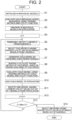
- Fig. 2 is a flowchart showing an exemplary processing procedure of a learning model extraction process carried out by the learning model extraction apparatus 1 according to the present embodiment.
- Each step shown in Fig. 2 may be performed by the CPU reading and executing a program stored in the storage device of the learning model extraction apparatus 1.
- at least a part of the flowchart shown in Fig. 2 may be carried out by a hardware.
- a dedicated circuit may be automatically generated on a Field Programmable Gate Array (FPGA) from programs for implementing the respective steps.
- FPGA Field Programmable Gate Array
- a gate array circuitry may be formed in the same manner as the FPGA and implemented as the hardware.
- it may be implemented by an Application Specific Integrated Circuit (ASIC).
- ASIC Application Specific Integrated Circuit
- step S 1 the utility value calculation unit 13 initializes all of the N-models stored in the model storage unit 11, respectively.
- the number N of learned models initialized in S1 may be, for example, 432.
- step S2 the utility value calculation unit 13 evaluates each of the N-models initialized in step S1 using the utility function represented by the following equation 1.
- utility ⁇ ⁇ R + ⁇ ⁇ WR + ⁇ ⁇ SR + ⁇ ⁇ TF + ⁇ ⁇ ⁇ WR
- Equation 1 R denotes a normalized return
- WR denotes a winning rate (%)
- SR denotes a Sharpe ratio, which is an indicator of a relation between return and risk
- TF denotes a trading frequency (%)
- ⁇ WR denotes the difference in the winning rates between "Buy” and “Sell", respectively.
- the trading frequency means a frequency at which a "Buy” or "Sell" transaction is actually performed.
- Those parameters R, WR, SR, TF, and ⁇ WR of the utility function are all trading metrics in financial instruments transactions, respectively.
- ⁇ , ⁇ , ⁇ , and ⁇ are arbitrary coefficients to be appropriately adjusted for different trading metrics, respectively.
- the utility value calculation unit 13 inputs the sample data, which is input to the data input unit 12, to each model, and calculates in advance the value of the trading metrics such as the return as described above with respect to each model. Then, the utility value calculation unit 13 calculates a utility value (in other words, usefulness value), which quantitatively indicates the performance or utility of the model in the financial instruments transaction in the predetermined period, by substituting the value of the trading metrics calculated in advance into the utility function expressed in the above Equation 1.
- a utility value in other words, usefulness value
- step S3 the virtual model generating unit 14 prepares the N-individual models evaluated in step S2 in the population.
- step S4 the virtual model generating unit 14 and the model replacing unit 15 set a counter C of the number of generations to 1, and perform the processing from steps S5 to S12 based on the genetic algorithm in a first generation.
- step S5 the virtual model generating unit 14 randomly selects n-individual models from the N-individual models prepared in the population as a subset of the population.
- the number n of randomly selected individual models may be 20, or 40.
- step S6 the virtual model generating unit 14 selects two individual models having the largest utility value among the n-individual models selected in step S5 as parent models to be crossed over in the first generation. It should be noted that the number of individual models selected as the parent models in step S6 is not limited to 2 and may be 3 or more.
- step S7 the virtual model generating unit 14 crosses over the two parent models selected in step S6 to generate an offspring model.
- the virtual model generating unit 14 may cross over the selected number of parent models.
- the virtual model generating unit 14 generates, as the offspring model, a virtual model that does not have an entity (i.e., a set of parameters) as a learning model, by combining the trading signs output by the parent models.
- crossover refers to generating an offspring model from a predetermined number (e.g., two) of parent models. More particularly, according to the present embodiment, the virtual model generating unit 14 calculates an output result obtained by performing a predetermined combination operation with respect to output results of the parent models.
- the virtual model generating unit 14 inversely generates a virtual model for outputting the output result calculated by the combination operation as an output result to be output by the virtual model.
- the virtual model is a virtual model that stores, as information indicating the parent models, an output result calculated by performing a combination operation of the output results of a predetermined number of parent models, or information on the output results of the parent models for calculating the output result obtained by performing the combination operation.
- the virtual model also stores information on the generation (lineage) of the parent models on which the output result is based, for example, in a tree structure.
- a model that outputs an output result as the basis of the combination is referred to as a parent model (i.e., ancestral model), and a model that outputs an output result obtained by performing a predetermined combination operation with respect to the output results of those parent models is referred to as a child model (i.e., offspring model).
- a parent model i.e., ancestral model
- a child model i.e., offspring model
- the processing load is reduced by generating information indicating the parent models as the child model instead of calculating the entity of the child model.
- the child model according to the present embodiment is not a model with an entity, but a virtual model as information indicating the parent models that output the output results serving as a basis of a combination.
- the learning model extraction apparatus 1 indirectly calculates the output result of the child model. More particularly, when the child model calculates an output result (output value) for a new input value, the output value for the input value is calculated from each of a plurality of parent models referred to by the child model, and the output value of the child model is then calculated by performing a combination operation with respect to the calculated output values.
- Fig. 3 is a schematic diagram illustrating an exemplary processing of generating a virtual model which is a child model by crossing over two parent models.
- the gene of each parent model are "Buy”, “Sell”, and “N/A” (no action), which are trading signs indicating the transaction actions that each parent model outputs over a predetermined time period (e.g., 365 days, 250 business days).
- a parent-1 model to be crossed over has previously output six trading signs of "Buy”, “Sell”, “N/A”, “Buy”, “Sell”, and “Buy” as the trading signs serving as an output result.
- a parent-2 model to be crossed over has previously output six trading signs of "Buy”, “N/A”, “N/A”, and “Sell”, “Sell”, “Sell” as the trading signs serving as an output result.
- Those six trading signs are trading signs that are output from the parent-1 and parent-2 models at every predetermined interval, and the predetermined interval is set to an arbitrary interval, for example, several seconds, several minutes, several hours, several days, or the like.
- the arbitrary interval may be set to, for example, four hours, according to the interval at which the transaction is performed, and the six trading signs may indicate trading signs for 24 hours.
- a sequence of such trading signs output from the parent-1 and parent-2 models is used as the gene in the crossover.
- the number of trading signs output in the past predetermined period is not limited to six as illustrated in Fig. 3 .
- the virtual model generating unit 14 assigns a score to each of those trading signs. Referring to Fig. 3 , the virtual model generating unit 14 assigns a predetermined score of, for example, +1 point to "Buy", -1 point to "Sell", and 0 point to "N/A”. Then, for each of the trading signs output from the parent-1 and the parent-2 models at the same timing, the sum of the assigned scores is calculated to generate a sequence of the trading signs of the child model.
- the virtual model generating unit 14 applies the majority voting theory, and generates "Buy” if the total score is +, "Sell” if the total score is -, and "N/A” if the total score is 0, as a trading sign which is a gene of the child model.
- the child (offspring) model in which parent-1 and parent-2 models are crossed over, has a sequence of +2, -1, 0, 0, -2, and 0 as the total scores of the trading signs, respectively, the child model is assumed to have a sequence of the trading signs of "Buy”, "Sell”, “N/A”, “N/A”, “Sell”, and "N/A” as the gene of the child model.
- the virtual model which is a child model does not necessarily have to retain the sequence itself of trading signs shown in Fig. 3 .
- the virtual model which is the child model may retain information of the trading signs, which is the output result of each of the parent models (parent-1 and parent-2) to be crossed over, and information indicating the generation (lineage) of the parent models, and may dynamically derive (calculate) the trading signs of the child model by combining the trading signs, which are the output results of the parent-1 and parent-2 models.
- the virtual model generating unit 14 refers to the transaction performance in the target period corresponding to the past predetermined period in which the trading signs have been output, based on the trading signs which are the gene output by the virtual model serving as the child model generated in step S7, and inversely calculates the trading metrics of the child model (virtual model).
- the trading signs which are the gene of the child model, are treated as the trading signs output by the child model every predetermined interval in the past predetermined period.
- the trading metrics are calculated by confirming what transaction performance would have been obtained assuming the trading signs output by the child model being actually used in the past transaction.
- the virtual model which is a child model, outputs six trading signs of "Buy”, “Sell”, “N/A”, “N/A”, “Sell”, and "N/A” as the trading signs.
- the transaction frequency TF as a trading metric for the child model is the frequency with which buying or selling trades actually occur. Therefore, out of the six trading signs of the child model, the transaction corresponding to the trading signs of the three "N/A" (no action) is not performed, so that the transaction frequency TF of the child model is calculated to be 50%.
- the return R is calculated as a total return obtained in a transaction using the trading signs output from the child model. As described above, there were no transactions corresponding to the three "N/A” trading signs of the child model, so that the return R corresponding to the three "N/A” trading signs becomes 0. On the other hand, the return R is calculated as the total return obtained from the transactions using the trading signs of "Buy" and "Sell", "Sell".
- the winning rate WR is calculated as a winning rate for a transaction using the trading signs output from the child model.
- the "N/A" trading sign does not affect the winning rate WR because transactions corresponding to the three "N/A” trading signs of the child model are assumed not to have been performed.
- the winning rate WR is calculated to be 66.7%.
- the Sharpe ratio SR, and the difference in the winning rate ⁇ WR between buying and selling can also be similarly calculated based on the transaction performance that would have been obtained if the trading signs output from the child model had been actually used in past transactions. Nevertheless, the method of calculating the trading metrics from the trading signs is not limited to the above described example, and any other calculation method may be used.
- step S9 the utility value calculating unit 13 calculates a utility value for evaluating the child model by substituting the trading metrics of the child model, which has been inversely calculated in step S8, into the utility function as the parameters.
- step S10 the model replacing unit 15 adds, to the population prepared in step S2, the child model (virtual model) generated in step S7 and whose utility value is calculated using the utility function in step S9.
- the population includes N+1-models including one child model.
- step S11 the model replacing unit 15 deletes one model having the lowest utility value out of N+1-models constituting the population. In other words, in step S 11, the number of models belonging to the population returns to N.
- step S12 the model replacing unit 15 increments the counter C of the number of generations by 1.
- step S13 the model replacing unit 15 determines whether or not the counter C of the number of generations is smaller than MaxC of the maximum number of generations, which serves as a threshold value.
- MaxC of the maximum number of generations is 5000.
- step S14 when the counter C of the number of generations reaches the maximum number of generations MaxC (S13:N), the processing proceeds to step S14.
- step S14 the model extracting unit 16 extracts, as the optimized model, one model having the highest utility value among the N models belonging to the population.
- the display control unit 18 may present the extracted model to a user via a display device. Then, the learning model extraction apparatus 1 terminates the processing.
- step S14 an initial individual model having an entity as a learning model included in the population in step S3 and an offspring model (virtual model) generated by crossover between the parent models coexist in the population.
- a model eventually selected as an optimized model having the highest utility value in step S14 is an offspring model serving as a virtual model
- the virtual model has, as the gene, information for performing the combination operation of the output results (trading signs) of the parent models to output the output result (trading signs) of the virtual model, but does not have an entity as a learning model. For this reason, it is impossible for the virtual model to infer and predict the trading signs by directly inputting data such as macroeconomic data and exchange data to the virtual model.
- the virtual model generating unit 14 stores, for example, in the above described model storage unit 11, information of at least output results (trading signs) of the ancestral models (i.e., parent models each having the entity as the initial individual model) which is the basis for generating the offspring model by crossover, in association with the virtual model (offspring model).
- the virtual model generating unit 14 stores, as information indicating which parent model has been added to crossing over for generating the offspring model (virtual model) in which generation, information of the generation (lineage) of the parent models described, for example, in a tree structure in the model storage unit 11 in association with the offspring model.
- Fig. 4 is a schematic diagram showing exemplary information of a generation (lineage) of models having such tree structure.
- a parent-1 model M[1] and a parent-2 model M[2] belong to a first generation (Generation-1), and an offspring model M[1, 2] of a second generation (Generation-2) is generated by crossing over the parent-1 model and the parent-2 model.
- offspring model M[1,2] of the second generation has been set to be the parent-1 model, and that an offspring model M[1,2,3] of a third generation (Generation-3) is generated by crossing over with the parent-2 model M[3].
- the offspring model M[1, 2, 3] of the third generation retains information of the three parent models M[1], M[2], and M[3] each having the entity, together with information of the generation to which those parent models belong.
- the entity of the offspring which is the optimized model
- the entity of the offspring is the optimized model
- the learning model extraction apparatus 1 may include a plurality of utility functions including combinations of different coefficients, select an optimized model for each of the plurality of utility functions, and present the selected plurality of models to a user.
- Fig. 5 is a flowchart showing an exemplary processing procedure of extraction processing of a plurality of learning models executed by the learning model extraction apparatus 1 according to the present modification.
- step S51 the data input unit 12 acquires combinations of coefficients to be set for a plurality of utility functions, respectively.
- the combinations of the coefficients of the utility functions input to the data input unit 12 may be input by the user through a user interface or may be stored in advance in the storage device.
- step S52 the utility value calculation unit 13 sets a plurality of utility functions including combinations of the different coefficients acquired in step S51.
- step S53 the learning model extraction apparatus 1 performs the processing of steps S2 to S 14 shown in Fig. 2 for each of the plurality of utility functions set in step S52.
- a group of individual models initialized in step S1 is common among a plurality of utility functions.
- step S2 shown in Fig. 2 evaluation of a common initial models starts for each of the utility functions of types 1 to 4.
- step S54 the display control unit 18 displays and outputs a plurality of different optimized models as candidate models through the display device to present them to the user. Furthermore, the display control unit 18 provides the user with a GUI for accepting an input for selecting one or more models to be used from among the plurality of candidate models displayed and output.
- the display device may be equipped within the learning model extraction apparatus 1 itself, or otherwise may be equipped as an external device capable of communicating with the learning model extraction apparatus 1.
- a threshold may be set to the number of ancestral models that can be crossed over to generate a single virtual model.
- the learning model extraction apparatus 1 may skip the processing of steps S7 to S11 shown in Fig. 2 .
- the virtual model generating unit 14 does not generate a virtual model
- the model replacing unit 15 does not update the groups of models constituting the population, that is, does not replace the models included in the population.
- the number of child models generated step in S7 is not limited to 1 and may be 2 or more.
- the number of individual models selected as the parent models in step S6 is three or more, two or more child models may be generated at a time from different combinations of parent models.
- the number of models deleted in step S11 may also be matched with the number of child models generated.
- the child model can be efficiently generated, and even when the maximum generation number MaxC is set to a small value, it makes it possible to extract the optimized model from the initial individual models and a large number of offspring models.
- Fig. 6 is a diagram showing an exemplary hardware configuration of the learning model extraction apparatus 1 according to the present embodiment.
- the learning model extraction apparatus 1 can be implemented on any one or more computers, mobile devices, or any other processing platform.
- the learning model extraction apparatus 1 includes a CPU 21, a ROM 22, a RAM 23, an external memory 24, an input unit 25, a display unit 26, a communication I/F 27, and a system bus 28.
- the learning model extraction apparatus 1 may also incorporate an HDD.
- the CPU 21 controls operations of the learning model extraction apparatus 1 in an integrated manner and controls the components (22 to 27) via a system bus 28 serving as a data transmission channel.
- the ROM 22 is a non-volatile memory that stores a control program or the like required for CPU21 to execute the processes. Instead, the program may be stored in the external memory 24 or a removable storage medium (not shown).
- the RAM 23 functions as a main memory or a work area or the like for the CPU 21. In other words, the CPU 21 loads a required program or the like from the ROM 22 into the RAM 23 at the time of executing the processes and executes the program or the like to realize various functional operations.
- the HDD or the external memory 24 stores, for example, various data and various information required when the CPU 21 performs a process using a program. Furthermore, the HDD or the external memory 24 stores, for example, various data and various information obtained by the CPU 21 performing a process using a program or the like.
- the input unit 25 is constituted with a keyboard or a pointing device such as a mouse.
- the display unit 26 serving as a display device is constituted with a monitor such as a liquid crystal display (LCD).
- the communication I/F 27 is an interface for controlling communication between the learning model extraction apparatus 1 and an external device.
- Functions of at least some of the elements of the learning model extraction apparatus 1 shown in Fig. 1 can be realized by the CPU 21 executing programs. Nevertheless, at least a part of the functions of the elements of the learning model extraction apparatus 1 shown in Fig. 2 may operate as a dedicated hardware. In this case, the dedicated hardware operates based on the control of the CPU 21.
- the learning model extraction apparatus calculates a utility value using a utility function for each of a plurality of models belonging to a population, selects, as parent models, a plurality of models having higher calculated utility values, generates a virtual model for outputting an output result obtained by calculating output results of the selected plurality of parent models, and calculates a utility value of the virtual model using the utility function.
- the learning model extraction apparatus adds the virtual model to the population and deletes, from the population, a model having a lower utility value from the plurality of models belonging to the population, thereby replacing models constituting the population, repeating processing of the virtual model generation, the utility value calculation, and the model replacement until a predetermined termination condition is reached, so as to extract a model having the highest utility value from the population.
- the present embodiment it makes it possible to automatically extract, from a large number of learning models, a learning model with higher accuracy at high speed while reducing the processing load on the computer resources so as to achieve a high precision inferencing with the optimized learning model.
Landscapes
- Engineering & Computer Science (AREA)
- Business, Economics & Management (AREA)
- Accounting & Taxation (AREA)
- Finance (AREA)
- Physics & Mathematics (AREA)
- Development Economics (AREA)
- Strategic Management (AREA)
- Theoretical Computer Science (AREA)
- General Physics & Mathematics (AREA)
- General Business, Economics & Management (AREA)
- Marketing (AREA)
- Economics (AREA)
- Biophysics (AREA)
- Life Sciences & Earth Sciences (AREA)
- Health & Medical Sciences (AREA)
- Entrepreneurship & Innovation (AREA)
- Technology Law (AREA)
- Data Mining & Analysis (AREA)
- Evolutionary Biology (AREA)
- Bioinformatics & Computational Biology (AREA)
- Bioinformatics & Cheminformatics (AREA)
- Game Theory and Decision Science (AREA)
- Genetics & Genomics (AREA)
- Evolutionary Computation (AREA)
- Mathematical Physics (AREA)
- General Engineering & Computer Science (AREA)
- Computing Systems (AREA)
- Molecular Biology (AREA)
- General Health & Medical Sciences (AREA)
- Software Systems (AREA)
- Computational Linguistics (AREA)
- Biomedical Technology (AREA)
- Artificial Intelligence (AREA)
- Physiology (AREA)
- Management, Administration, Business Operations System, And Electronic Commerce (AREA)
- Financial Or Insurance-Related Operations Such As Payment And Settlement (AREA)
- Communication Control (AREA)
Applications Claiming Priority (1)
| Application Number | Priority Date | Filing Date | Title |
|---|---|---|---|
| PCT/JP2020/001767 WO2021149118A1 (ja) | 2020-01-20 | 2020-01-20 | 情報処理装置、情報処理方法およびプログラム |
Publications (3)
| Publication Number | Publication Date |
|---|---|
| EP3876181A1 EP3876181A1 (en) | 2021-09-08 |
| EP3876181A4 EP3876181A4 (en) | 2021-09-08 |
| EP3876181B1 true EP3876181B1 (en) | 2023-09-06 |
Family
ID=73741003
Family Applications (1)
| Application Number | Title | Priority Date | Filing Date |
|---|---|---|---|
| EP20803073.4A Active EP3876181B1 (en) | 2020-01-20 | 2020-01-20 | Information processing device, information processing method, and program |
Country Status (5)
| Country | Link |
|---|---|
| US (1) | US11928698B2 (https=) |
| EP (1) | EP3876181B1 (https=) |
| JP (1) | JP6801149B1 (https=) |
| TW (1) | TWI781461B (https=) |
| WO (1) | WO2021149118A1 (https=) |
Families Citing this family (10)
| Publication number | Priority date | Publication date | Assignee | Title |
|---|---|---|---|---|
| WO2021149118A1 (ja) * | 2020-01-20 | 2021-07-29 | 楽天株式会社 | 情報処理装置、情報処理方法およびプログラム |
| TWI888681B (zh) * | 2020-12-25 | 2025-07-01 | 日商發那科股份有限公司 | 機械學習裝置、及機械學習方法 |
| JP7544633B2 (ja) * | 2021-03-18 | 2024-09-03 | 株式会社奥村組 | シールド掘進機の施工管理方法 |
| JP7613961B2 (ja) * | 2021-03-18 | 2025-01-15 | 株式会社奥村組 | 初期掘進用汎用学習済みモデル |
| US20240160196A1 (en) * | 2021-04-05 | 2024-05-16 | Panasonic Intellectual Property Management Co., Ltd. | Hybrid model creation method, hybrid model creation device, and recording medium |
| CN114820167A (zh) * | 2022-04-27 | 2022-07-29 | 中国农业银行股份有限公司 | 一种银行网点的运营管理方法、装置及设备 |
| JP7814236B2 (ja) | 2022-05-02 | 2026-02-16 | 三菱重工業株式会社 | 学習装置、学習方法及び学習プログラム |
| JP2024072296A (ja) * | 2022-11-16 | 2024-05-28 | 株式会社電通 | メッセージ分析装置、メッセージ分析方法及びメッセージ分析プログラム |
| US20250363410A1 (en) * | 2023-02-20 | 2025-11-27 | Hitachi High-Tech Corporation | Model generation system and model generation method |
| KR20250032378A (ko) * | 2023-08-31 | 2025-03-07 | 주식회사 스위치원 | 복수의 인공지능모델 기반의 환율예측시스템 제공방법 |
Family Cites Families (18)
| Publication number | Priority date | Publication date | Assignee | Title |
|---|---|---|---|---|
| WO2002057946A1 (en) * | 2001-01-18 | 2002-07-25 | The Board Of Trustees Of The University Of Illinois | Method for optimizing a solution set |
| US20050005261A1 (en) * | 2003-07-02 | 2005-01-06 | Severin William B. | Component integration engine |
| JPWO2006085460A1 (ja) | 2005-02-10 | 2008-06-26 | 新世代株式会社 | 投資モデル管理方法及び投資モデル管理サーバ |
| JP2008204103A (ja) | 2007-02-19 | 2008-09-04 | Yokohama National Univ | 画像認識システム |
| US8909570B1 (en) * | 2008-11-07 | 2014-12-09 | Genetic Finance (Barbados) Limited | Data mining technique with experience-layered gene pool |
| US8768811B2 (en) | 2009-04-28 | 2014-07-01 | Genetic Finance (Barbados) Limited | Class-based distributed evolutionary algorithm for asset management and trading |
| KR20100123817A (ko) * | 2007-11-08 | 2010-11-25 | 제네틱 파이넨스 (바베이도스) 리미티드 | 복잡한 알고리즘들을 수행하기 위한 분산 네트워크 |
| CN106203630A (zh) * | 2009-04-28 | 2016-12-07 | 思腾科技(巴巴多斯)有限公司 | 用于资产管理和交易的分布式进化算法 |
| US8417615B2 (en) * | 2010-01-19 | 2013-04-09 | Ronald L. Johannes | Methods and systems for computing trading strategies for use in portfolio management and computing associated probability distributions for use in option pricing |
| WO2011120200A1 (zh) * | 2010-04-01 | 2011-10-06 | 江苏六维物流设备实业有限公司 | 堆垛机的遗传优化控制技术 |
| TWI560634B (en) * | 2011-05-13 | 2016-12-01 | Univ Nat Taiwan Science Tech | Generating method for transaction modes with indicators for option |
| US9002759B2 (en) * | 2011-07-15 | 2015-04-07 | Sentient Technologies (Barbados) Limited | Data mining technique with maintenance of fitness history |
| US11055730B2 (en) * | 2017-06-05 | 2021-07-06 | International Business Machines Corporation | Optimizing predictive precision for actionable forecasts of revenue change |
| US10366322B2 (en) * | 2017-10-06 | 2019-07-30 | DeepCube LTD. | System and method for compact and efficient sparse neural networks |
| US11348032B1 (en) * | 2018-09-02 | 2022-05-31 | Meta Platforms, Inc. | Automated generation of machine learning models |
| US11386496B2 (en) * | 2019-07-26 | 2022-07-12 | International Business Machines Corporation | Generative network based probabilistic portfolio management |
| US11055783B2 (en) * | 2019-08-28 | 2021-07-06 | Ttc Holdings Inc. | Trading platforms using market sentiment and dynamic risk assessment profiles |
| WO2021149118A1 (ja) * | 2020-01-20 | 2021-07-29 | 楽天株式会社 | 情報処理装置、情報処理方法およびプログラム |
-
2020
- 2020-01-20 WO PCT/JP2020/001767 patent/WO2021149118A1/ja not_active Ceased
- 2020-01-20 US US17/056,071 patent/US11928698B2/en active Active
- 2020-01-20 EP EP20803073.4A patent/EP3876181B1/en active Active
- 2020-01-20 JP JP2020555257A patent/JP6801149B1/ja active Active
- 2020-10-14 TW TW109135501A patent/TWI781461B/zh active
Also Published As
| Publication number | Publication date |
|---|---|
| TW202129584A (zh) | 2021-08-01 |
| JPWO2021149118A1 (https=) | 2021-07-29 |
| EP3876181A1 (en) | 2021-09-08 |
| JP6801149B1 (ja) | 2020-12-16 |
| US20210406932A1 (en) | 2021-12-30 |
| WO2021149118A1 (ja) | 2021-07-29 |
| EP3876181A4 (en) | 2021-09-08 |
| US11928698B2 (en) | 2024-03-12 |
| TWI781461B (zh) | 2022-10-21 |
Similar Documents
| Publication | Publication Date | Title |
|---|---|---|
| EP3876181B1 (en) | Information processing device, information processing method, and program | |
| Kabbani et al. | Deep reinforcement learning approach for trading automation in the stock market | |
| Wiesinger et al. | Reverse engineering financial markets with majority and minority games using genetic algorithms | |
| US20200050982A1 (en) | Method and System for Predictive Modeling for Dynamically Scheduling Resource Allocation | |
| US11468352B2 (en) | Method and system for predictive modeling of geographic income distribution | |
| Sampath et al. | A generalized decision support framework for large‐scale project portfolio decisions | |
| Ansary | Machine learning for predicting the stock price direction with trading indicators | |
| Patra et al. | FinRDDL: Can AI planning be used for quantitative finance problems? | |
| Dhanalakshmi et al. | A logical investigation of stock market prediction and analysis using supervised machine learning algorithm | |
| Yang et al. | A comparison of US and Chinese financial market microstructure: heterogeneous agent-based multi-asset artificial stock markets approach | |
| Vetrin et al. | Reinforcement learning in optimisation of financial market trading strategy parameters | |
| CN116911994B (zh) | 对外贸易风险预警系统 | |
| Bulusu et al. | Near future stock market forecasting based on chaos theory, sentiment analysis, and quantum computing | |
| Brice et al. | Influence of psychological exchange rates (PER) on forex price formation: theory, empirical, and experimental evidence | |
| De Amorim et al. | Evaluation of index tracking portfolios during the covid-19 pandemic | |
| Mehta et al. | Analyzing Portfolio of biotech companies and predicting stock market using machine learning | |
| Yang et al. | A heterogeneous artificial stock market model can benefit people against another financial crisis | |
| Fugardo Cortada | High-Frequency Trading with Deep Reinforcement Learning | |
| Mohd Idris et al. | A Fuzzy Analytic Hierarchy Process (FAHP) approaches for investment decision-making in Malaysia | |
| US12248858B2 (en) | Systems and methods for intelligent generation and assessment of candidate less discriminatory alternative machine learning models | |
| Kaur et al. | Mastering the Markets: Reinforcement Learning Strategies for Finance and Trading | |
| Nguyen et al. | Multi-objective optimization for algorithmic trading in the Vietnamese stock market | |
| Nikiporenko | Time-limited Metaheuristics for Cardinality-constrained Portfolio Optimisation | |
| Madziwa et al. | Assessing the Performance of Machine Learning Methods in Forecasting Gold Prices | |
| Sumanth | Innovative Credit Risk Assessment System Using Artificial Intelligence-Based Reinforcement Learning |
Legal Events
| Date | Code | Title | Description |
|---|---|---|---|
| STAA | Information on the status of an ep patent application or granted ep patent |
Free format text: STATUS: UNKNOWN |
|
| STAA | Information on the status of an ep patent application or granted ep patent |
Free format text: STATUS: THE INTERNATIONAL PUBLICATION HAS BEEN MADE |
|
| PUAI | Public reference made under article 153(3) epc to a published international application that has entered the european phase |
Free format text: ORIGINAL CODE: 0009012 |
|
| STAA | Information on the status of an ep patent application or granted ep patent |
Free format text: STATUS: REQUEST FOR EXAMINATION WAS MADE |
|
| 17P | Request for examination filed |
Effective date: 20201116 |
|
| A4 | Supplementary search report drawn up and despatched |
Effective date: 20210420 |
|
| AK | Designated contracting states |
Kind code of ref document: A1 Designated state(s): AL AT BE BG CH CY CZ DE DK EE ES FI FR GB GR HR HU IE IS IT LI LT LU LV MC MK MT NL NO PL PT RO RS SE SI SK SM TR |
|
| STAA | Information on the status of an ep patent application or granted ep patent |
Free format text: STATUS: EXAMINATION IS IN PROGRESS |
|
| 17Q | First examination report despatched |
Effective date: 20220118 |
|
| DAV | Request for validation of the european patent (deleted) | ||
| DAX | Request for extension of the european patent (deleted) | ||
| GRAP | Despatch of communication of intention to grant a patent |
Free format text: ORIGINAL CODE: EPIDOSNIGR1 |
|
| STAA | Information on the status of an ep patent application or granted ep patent |
Free format text: STATUS: GRANT OF PATENT IS INTENDED |
|
| INTG | Intention to grant announced |
Effective date: 20230523 |
|
| RIN1 | Information on inventor provided before grant (corrected) |
Inventor name: CHARRON, BRUNO ANDRE Inventor name: DAULTANI, DINESH |
|
| GRAS | Grant fee paid |
Free format text: ORIGINAL CODE: EPIDOSNIGR3 |
|
| GRAA | (expected) grant |
Free format text: ORIGINAL CODE: 0009210 |
|
| STAA | Information on the status of an ep patent application or granted ep patent |
Free format text: STATUS: THE PATENT HAS BEEN GRANTED |
|
| AK | Designated contracting states |
Kind code of ref document: B1 Designated state(s): AL AT BE BG CH CY CZ DE DK EE ES FI FR GB GR HR HU IE IS IT LI LT LU LV MC MK MT NL NO PL PT RO RS SE SI SK SM TR |
|
| REG | Reference to a national code |
Ref country code: GB Ref legal event code: FG4D |
|
| REG | Reference to a national code |
Ref country code: CH Ref legal event code: EP |
|
| REG | Reference to a national code |
Ref country code: IE Ref legal event code: FG4D |
|
| REG | Reference to a national code |
Ref country code: DE Ref legal event code: R096 Ref document number: 602020017384 Country of ref document: DE |
|
| REG | Reference to a national code |
Ref country code: LT Ref legal event code: MG9D |
|
| REG | Reference to a national code |
Ref country code: NL Ref legal event code: MP Effective date: 20230906 |
|
| PG25 | Lapsed in a contracting state [announced via postgrant information from national office to epo] |
Ref country code: GR Free format text: LAPSE BECAUSE OF FAILURE TO SUBMIT A TRANSLATION OF THE DESCRIPTION OR TO PAY THE FEE WITHIN THE PRESCRIBED TIME-LIMIT Effective date: 20231207 |
|
| PG25 | Lapsed in a contracting state [announced via postgrant information from national office to epo] |
Ref country code: SE Free format text: LAPSE BECAUSE OF FAILURE TO SUBMIT A TRANSLATION OF THE DESCRIPTION OR TO PAY THE FEE WITHIN THE PRESCRIBED TIME-LIMIT Effective date: 20230906 Ref country code: RS Free format text: LAPSE BECAUSE OF FAILURE TO SUBMIT A TRANSLATION OF THE DESCRIPTION OR TO PAY THE FEE WITHIN THE PRESCRIBED TIME-LIMIT Effective date: 20230906 Ref country code: NO Free format text: LAPSE BECAUSE OF FAILURE TO SUBMIT A TRANSLATION OF THE DESCRIPTION OR TO PAY THE FEE WITHIN THE PRESCRIBED TIME-LIMIT Effective date: 20231206 Ref country code: LV Free format text: LAPSE BECAUSE OF FAILURE TO SUBMIT A TRANSLATION OF THE DESCRIPTION OR TO PAY THE FEE WITHIN THE PRESCRIBED TIME-LIMIT Effective date: 20230906 Ref country code: LT Free format text: LAPSE BECAUSE OF FAILURE TO SUBMIT A TRANSLATION OF THE DESCRIPTION OR TO PAY THE FEE WITHIN THE PRESCRIBED TIME-LIMIT Effective date: 20230906 Ref country code: HR Free format text: LAPSE BECAUSE OF FAILURE TO SUBMIT A TRANSLATION OF THE DESCRIPTION OR TO PAY THE FEE WITHIN THE PRESCRIBED TIME-LIMIT Effective date: 20230906 Ref country code: GR Free format text: LAPSE BECAUSE OF FAILURE TO SUBMIT A TRANSLATION OF THE DESCRIPTION OR TO PAY THE FEE WITHIN THE PRESCRIBED TIME-LIMIT Effective date: 20231207 Ref country code: FI Free format text: LAPSE BECAUSE OF FAILURE TO SUBMIT A TRANSLATION OF THE DESCRIPTION OR TO PAY THE FEE WITHIN THE PRESCRIBED TIME-LIMIT Effective date: 20230906 |
|
| REG | Reference to a national code |
Ref country code: AT Ref legal event code: MK05 Ref document number: 1609526 Country of ref document: AT Kind code of ref document: T Effective date: 20230906 |
|
| PG25 | Lapsed in a contracting state [announced via postgrant information from national office to epo] |
Ref country code: NL Free format text: LAPSE BECAUSE OF FAILURE TO SUBMIT A TRANSLATION OF THE DESCRIPTION OR TO PAY THE FEE WITHIN THE PRESCRIBED TIME-LIMIT Effective date: 20230906 |
|
| PG25 | Lapsed in a contracting state [announced via postgrant information from national office to epo] |
Ref country code: IS Free format text: LAPSE BECAUSE OF FAILURE TO SUBMIT A TRANSLATION OF THE DESCRIPTION OR TO PAY THE FEE WITHIN THE PRESCRIBED TIME-LIMIT Effective date: 20240106 |
|
| PG25 | Lapsed in a contracting state [announced via postgrant information from national office to epo] |
Ref country code: AT Free format text: LAPSE BECAUSE OF FAILURE TO SUBMIT A TRANSLATION OF THE DESCRIPTION OR TO PAY THE FEE WITHIN THE PRESCRIBED TIME-LIMIT Effective date: 20230906 |
|
| PG25 | Lapsed in a contracting state [announced via postgrant information from national office to epo] |
Ref country code: ES Free format text: LAPSE BECAUSE OF FAILURE TO SUBMIT A TRANSLATION OF THE DESCRIPTION OR TO PAY THE FEE WITHIN THE PRESCRIBED TIME-LIMIT Effective date: 20230906 |
|
| PG25 | Lapsed in a contracting state [announced via postgrant information from national office to epo] |
Ref country code: SM Free format text: LAPSE BECAUSE OF FAILURE TO SUBMIT A TRANSLATION OF THE DESCRIPTION OR TO PAY THE FEE WITHIN THE PRESCRIBED TIME-LIMIT Effective date: 20230906 Ref country code: RO Free format text: LAPSE BECAUSE OF FAILURE TO SUBMIT A TRANSLATION OF THE DESCRIPTION OR TO PAY THE FEE WITHIN THE PRESCRIBED TIME-LIMIT Effective date: 20230906 Ref country code: IS Free format text: LAPSE BECAUSE OF FAILURE TO SUBMIT A TRANSLATION OF THE DESCRIPTION OR TO PAY THE FEE WITHIN THE PRESCRIBED TIME-LIMIT Effective date: 20240106 Ref country code: ES Free format text: LAPSE BECAUSE OF FAILURE TO SUBMIT A TRANSLATION OF THE DESCRIPTION OR TO PAY THE FEE WITHIN THE PRESCRIBED TIME-LIMIT Effective date: 20230906 Ref country code: EE Free format text: LAPSE BECAUSE OF FAILURE TO SUBMIT A TRANSLATION OF THE DESCRIPTION OR TO PAY THE FEE WITHIN THE PRESCRIBED TIME-LIMIT Effective date: 20230906 Ref country code: CZ Free format text: LAPSE BECAUSE OF FAILURE TO SUBMIT A TRANSLATION OF THE DESCRIPTION OR TO PAY THE FEE WITHIN THE PRESCRIBED TIME-LIMIT Effective date: 20230906 Ref country code: AT Free format text: LAPSE BECAUSE OF FAILURE TO SUBMIT A TRANSLATION OF THE DESCRIPTION OR TO PAY THE FEE WITHIN THE PRESCRIBED TIME-LIMIT Effective date: 20230906 Ref country code: SK Free format text: LAPSE BECAUSE OF FAILURE TO SUBMIT A TRANSLATION OF THE DESCRIPTION OR TO PAY THE FEE WITHIN THE PRESCRIBED TIME-LIMIT Effective date: 20230906 Ref country code: PT Free format text: LAPSE BECAUSE OF FAILURE TO SUBMIT A TRANSLATION OF THE DESCRIPTION OR TO PAY THE FEE WITHIN THE PRESCRIBED TIME-LIMIT Effective date: 20240108 |
|
| PG25 | Lapsed in a contracting state [announced via postgrant information from national office to epo] |
Ref country code: PL Free format text: LAPSE BECAUSE OF FAILURE TO SUBMIT A TRANSLATION OF THE DESCRIPTION OR TO PAY THE FEE WITHIN THE PRESCRIBED TIME-LIMIT Effective date: 20230906 Ref country code: IT Free format text: LAPSE BECAUSE OF FAILURE TO SUBMIT A TRANSLATION OF THE DESCRIPTION OR TO PAY THE FEE WITHIN THE PRESCRIBED TIME-LIMIT Effective date: 20230906 |
|
| REG | Reference to a national code |
Ref country code: DE Ref legal event code: R097 Ref document number: 602020017384 Country of ref document: DE |
|
| PG25 | Lapsed in a contracting state [announced via postgrant information from national office to epo] |
Ref country code: DK Free format text: LAPSE BECAUSE OF FAILURE TO SUBMIT A TRANSLATION OF THE DESCRIPTION OR TO PAY THE FEE WITHIN THE PRESCRIBED TIME-LIMIT Effective date: 20230906 |
|
| PLBE | No opposition filed within time limit |
Free format text: ORIGINAL CODE: 0009261 |
|
| STAA | Information on the status of an ep patent application or granted ep patent |
Free format text: STATUS: NO OPPOSITION FILED WITHIN TIME LIMIT |
|
| PG25 | Lapsed in a contracting state [announced via postgrant information from national office to epo] |
Ref country code: DK Free format text: LAPSE BECAUSE OF FAILURE TO SUBMIT A TRANSLATION OF THE DESCRIPTION OR TO PAY THE FEE WITHIN THE PRESCRIBED TIME-LIMIT Effective date: 20230906 Ref country code: SI Free format text: LAPSE BECAUSE OF FAILURE TO SUBMIT A TRANSLATION OF THE DESCRIPTION OR TO PAY THE FEE WITHIN THE PRESCRIBED TIME-LIMIT Effective date: 20230906 |
|
| 26N | No opposition filed |
Effective date: 20240607 |
|
| PG25 | Lapsed in a contracting state [announced via postgrant information from national office to epo] |
Ref country code: MC Free format text: LAPSE BECAUSE OF FAILURE TO SUBMIT A TRANSLATION OF THE DESCRIPTION OR TO PAY THE FEE WITHIN THE PRESCRIBED TIME-LIMIT Effective date: 20230906 |
|
| PG25 | Lapsed in a contracting state [announced via postgrant information from national office to epo] |
Ref country code: MC Free format text: LAPSE BECAUSE OF FAILURE TO SUBMIT A TRANSLATION OF THE DESCRIPTION OR TO PAY THE FEE WITHIN THE PRESCRIBED TIME-LIMIT Effective date: 20230906 |
|
| REG | Reference to a national code |
Ref country code: CH Ref legal event code: PL |
|
| PG25 | Lapsed in a contracting state [announced via postgrant information from national office to epo] |
Ref country code: LU Free format text: LAPSE BECAUSE OF NON-PAYMENT OF DUE FEES Effective date: 20240120 |
|
| PG25 | Lapsed in a contracting state [announced via postgrant information from national office to epo] |
Ref country code: LU Free format text: LAPSE BECAUSE OF NON-PAYMENT OF DUE FEES Effective date: 20240120 |
|
| PG25 | Lapsed in a contracting state [announced via postgrant information from national office to epo] |
Ref country code: BE Free format text: LAPSE BECAUSE OF NON-PAYMENT OF DUE FEES Effective date: 20240131 |
|
| PG25 | Lapsed in a contracting state [announced via postgrant information from national office to epo] |
Ref country code: CH Free format text: LAPSE BECAUSE OF NON-PAYMENT OF DUE FEES Effective date: 20240131 |
|
| PG25 | Lapsed in a contracting state [announced via postgrant information from national office to epo] |
Ref country code: CH Free format text: LAPSE BECAUSE OF NON-PAYMENT OF DUE FEES Effective date: 20240131 Ref country code: BE Free format text: LAPSE BECAUSE OF NON-PAYMENT OF DUE FEES Effective date: 20240131 |
|
| REG | Reference to a national code |
Ref country code: BE Ref legal event code: MM Effective date: 20240131 |
|
| PG25 | Lapsed in a contracting state [announced via postgrant information from national office to epo] |
Ref country code: BG Free format text: LAPSE BECAUSE OF FAILURE TO SUBMIT A TRANSLATION OF THE DESCRIPTION OR TO PAY THE FEE WITHIN THE PRESCRIBED TIME-LIMIT Effective date: 20230906 |
|
| PG25 | Lapsed in a contracting state [announced via postgrant information from national office to epo] |
Ref country code: BG Free format text: LAPSE BECAUSE OF FAILURE TO SUBMIT A TRANSLATION OF THE DESCRIPTION OR TO PAY THE FEE WITHIN THE PRESCRIBED TIME-LIMIT Effective date: 20230906 |
|
| PG25 | Lapsed in a contracting state [announced via postgrant information from national office to epo] |
Ref country code: IE Free format text: LAPSE BECAUSE OF NON-PAYMENT OF DUE FEES Effective date: 20240120 |
|
| PG25 | Lapsed in a contracting state [announced via postgrant information from national office to epo] |
Ref country code: IE Free format text: LAPSE BECAUSE OF NON-PAYMENT OF DUE FEES Effective date: 20240120 |
|
| PG25 | Lapsed in a contracting state [announced via postgrant information from national office to epo] |
Ref country code: CY Free format text: LAPSE BECAUSE OF FAILURE TO SUBMIT A TRANSLATION OF THE DESCRIPTION OR TO PAY THE FEE WITHIN THE PRESCRIBED TIME-LIMIT; INVALID AB INITIO Effective date: 20200120 |
|
| PG25 | Lapsed in a contracting state [announced via postgrant information from national office to epo] |
Ref country code: HU Free format text: LAPSE BECAUSE OF FAILURE TO SUBMIT A TRANSLATION OF THE DESCRIPTION OR TO PAY THE FEE WITHIN THE PRESCRIBED TIME-LIMIT; INVALID AB INITIO Effective date: 20200120 |
|
| PG25 | Lapsed in a contracting state [announced via postgrant information from national office to epo] |
Ref country code: TR Free format text: LAPSE BECAUSE OF FAILURE TO SUBMIT A TRANSLATION OF THE DESCRIPTION OR TO PAY THE FEE WITHIN THE PRESCRIBED TIME-LIMIT Effective date: 20230906 |
|
| PGFP | Annual fee paid to national office [announced via postgrant information from national office to epo] |
Ref country code: GB Payment date: 20251219 Year of fee payment: 7 |
|
| PGFP | Annual fee paid to national office [announced via postgrant information from national office to epo] |
Ref country code: FR Payment date: 20251217 Year of fee payment: 7 |
|
| PGFP | Annual fee paid to national office [announced via postgrant information from national office to epo] |
Ref country code: DE Payment date: 20251217 Year of fee payment: 7 |