EP3874672B1 - Verfahren zum betreiben eines systems zur verwaltung von implantierbaren medizinischen geräten (imds) unter verwendung von rekonciliationsoperationen und erholungsdaten - Google Patents
Verfahren zum betreiben eines systems zur verwaltung von implantierbaren medizinischen geräten (imds) unter verwendung von rekonciliationsoperationen und erholungsdaten Download PDFInfo
- Publication number
- EP3874672B1 EP3874672B1 EP19879674.0A EP19879674A EP3874672B1 EP 3874672 B1 EP3874672 B1 EP 3874672B1 EP 19879674 A EP19879674 A EP 19879674A EP 3874672 B1 EP3874672 B1 EP 3874672B1
- Authority
- EP
- European Patent Office
- Prior art keywords
- programming
- data
- patient
- devices
- clinician programmer
- Prior art date
- Legal status (The legal status is an assumption and is not a legal conclusion. Google has not performed a legal analysis and makes no representation as to the accuracy of the status listed.)
- Active
Links
Images





Classifications
-
- A—HUMAN NECESSITIES
- A61—MEDICAL OR VETERINARY SCIENCE; HYGIENE
- A61N—ELECTROTHERAPY; MAGNETOTHERAPY; RADIATION THERAPY; ULTRASOUND THERAPY
- A61N1/00—Electrotherapy; Circuits therefor
- A61N1/18—Applying electric currents by contact electrodes
- A61N1/32—Applying electric currents by contact electrodes alternating or intermittent currents
- A61N1/36—Applying electric currents by contact electrodes alternating or intermittent currents for stimulation
- A61N1/372—Arrangements in connection with the implantation of stimulators
- A61N1/37211—Means for communicating with stimulators
- A61N1/37252—Details of algorithms or data aspects of communication system, e.g. handshaking, transmitting specific data or segmenting data
- A61N1/37276—Details of algorithms or data aspects of communication system, e.g. handshaking, transmitting specific data or segmenting data characterised by means for reducing power consumption during telemetry
-
- A—HUMAN NECESSITIES
- A61—MEDICAL OR VETERINARY SCIENCE; HYGIENE
- A61N—ELECTROTHERAPY; MAGNETOTHERAPY; RADIATION THERAPY; ULTRASOUND THERAPY
- A61N1/00—Electrotherapy; Circuits therefor
- A61N1/18—Applying electric currents by contact electrodes
- A61N1/32—Applying electric currents by contact electrodes alternating or intermittent currents
- A61N1/36—Applying electric currents by contact electrodes alternating or intermittent currents for stimulation
- A61N1/372—Arrangements in connection with the implantation of stimulators
- A61N1/37211—Means for communicating with stimulators
- A61N1/37217—Means for communicating with stimulators characterised by the communication link, e.g. acoustic or tactile
-
- A—HUMAN NECESSITIES
- A61—MEDICAL OR VETERINARY SCIENCE; HYGIENE
- A61N—ELECTROTHERAPY; MAGNETOTHERAPY; RADIATION THERAPY; ULTRASOUND THERAPY
- A61N1/00—Electrotherapy; Circuits therefor
- A61N1/18—Applying electric currents by contact electrodes
- A61N1/32—Applying electric currents by contact electrodes alternating or intermittent currents
- A61N1/36—Applying electric currents by contact electrodes alternating or intermittent currents for stimulation
- A61N1/372—Arrangements in connection with the implantation of stimulators
- A61N1/37211—Means for communicating with stimulators
- A61N1/37252—Details of algorithms or data aspects of communication system, e.g. handshaking, transmitting specific data or segmenting data
- A61N1/37258—Alerting the patient
-
- A—HUMAN NECESSITIES
- A61—MEDICAL OR VETERINARY SCIENCE; HYGIENE
- A61N—ELECTROTHERAPY; MAGNETOTHERAPY; RADIATION THERAPY; ULTRASOUND THERAPY
- A61N1/00—Electrotherapy; Circuits therefor
- A61N1/18—Applying electric currents by contact electrodes
- A61N1/32—Applying electric currents by contact electrodes alternating or intermittent currents
- A61N1/36—Applying electric currents by contact electrodes alternating or intermittent currents for stimulation
- A61N1/372—Arrangements in connection with the implantation of stimulators
- A61N1/37211—Means for communicating with stimulators
- A61N1/37252—Details of algorithms or data aspects of communication system, e.g. handshaking, transmitting specific data or segmenting data
- A61N1/37282—Details of algorithms or data aspects of communication system, e.g. handshaking, transmitting specific data or segmenting data characterised by communication with experts in remote locations using a network
-
- G—PHYSICS
- G06—COMPUTING OR CALCULATING; COUNTING
- G06F—ELECTRIC DIGITAL DATA PROCESSING
- G06F21/00—Security arrangements for protecting computers, components thereof, programs or data against unauthorised activity
- G06F21/60—Protecting data
- G06F21/62—Protecting access to data via a platform, e.g. using keys or access control rules
- G06F21/6218—Protecting access to data via a platform, e.g. using keys or access control rules to a system of files or objects, e.g. local or distributed file system or database
- G06F21/6245—Protecting personal data, e.g. for financial or medical purposes
-
- G—PHYSICS
- G16—INFORMATION AND COMMUNICATION TECHNOLOGY [ICT] SPECIALLY ADAPTED FOR SPECIFIC APPLICATION FIELDS
- G16H—HEALTHCARE INFORMATICS, i.e. INFORMATION AND COMMUNICATION TECHNOLOGY [ICT] SPECIALLY ADAPTED FOR THE HANDLING OR PROCESSING OF MEDICAL OR HEALTHCARE DATA
- G16H20/00—ICT specially adapted for therapies or health-improving plans, e.g. for handling prescriptions, for steering therapy or for monitoring patient compliance
-
- G—PHYSICS
- G16—INFORMATION AND COMMUNICATION TECHNOLOGY [ICT] SPECIALLY ADAPTED FOR SPECIFIC APPLICATION FIELDS
- G16H—HEALTHCARE INFORMATICS, i.e. INFORMATION AND COMMUNICATION TECHNOLOGY [ICT] SPECIALLY ADAPTED FOR THE HANDLING OR PROCESSING OF MEDICAL OR HEALTHCARE DATA
- G16H40/00—ICT specially adapted for the management or administration of healthcare resources or facilities; ICT specially adapted for the management or operation of medical equipment or devices
- G16H40/40—ICT specially adapted for the management or administration of healthcare resources or facilities; ICT specially adapted for the management or operation of medical equipment or devices for the management of medical equipment or devices, e.g. scheduling maintenance or upgrades
-
- G—PHYSICS
- G16—INFORMATION AND COMMUNICATION TECHNOLOGY [ICT] SPECIALLY ADAPTED FOR SPECIFIC APPLICATION FIELDS
- G16H—HEALTHCARE INFORMATICS, i.e. INFORMATION AND COMMUNICATION TECHNOLOGY [ICT] SPECIALLY ADAPTED FOR THE HANDLING OR PROCESSING OF MEDICAL OR HEALTHCARE DATA
- G16H40/00—ICT specially adapted for the management or administration of healthcare resources or facilities; ICT specially adapted for the management or operation of medical equipment or devices
- G16H40/60—ICT specially adapted for the management or administration of healthcare resources or facilities; ICT specially adapted for the management or operation of medical equipment or devices for the operation of medical equipment or devices
- G16H40/63—ICT specially adapted for the management or administration of healthcare resources or facilities; ICT specially adapted for the management or operation of medical equipment or devices for the operation of medical equipment or devices for local operation
-
- G—PHYSICS
- G16—INFORMATION AND COMMUNICATION TECHNOLOGY [ICT] SPECIALLY ADAPTED FOR SPECIFIC APPLICATION FIELDS
- G16H—HEALTHCARE INFORMATICS, i.e. INFORMATION AND COMMUNICATION TECHNOLOGY [ICT] SPECIALLY ADAPTED FOR THE HANDLING OR PROCESSING OF MEDICAL OR HEALTHCARE DATA
- G16H40/00—ICT specially adapted for the management or administration of healthcare resources or facilities; ICT specially adapted for the management or operation of medical equipment or devices
- G16H40/60—ICT specially adapted for the management or administration of healthcare resources or facilities; ICT specially adapted for the management or operation of medical equipment or devices for the operation of medical equipment or devices
- G16H40/67—ICT specially adapted for the management or administration of healthcare resources or facilities; ICT specially adapted for the management or operation of medical equipment or devices for the operation of medical equipment or devices for remote operation
-
- H—ELECTRICITY
- H04—ELECTRIC COMMUNICATION TECHNIQUE
- H04L—TRANSMISSION OF DIGITAL INFORMATION, e.g. TELEGRAPHIC COMMUNICATION
- H04L63/00—Network architectures or network communication protocols for network security
- H04L63/06—Network architectures or network communication protocols for network security for supporting key management in a packet data network
-
- H—ELECTRICITY
- H04—ELECTRIC COMMUNICATION TECHNIQUE
- H04L—TRANSMISSION OF DIGITAL INFORMATION, e.g. TELEGRAPHIC COMMUNICATION
- H04L63/00—Network architectures or network communication protocols for network security
- H04L63/10—Network architectures or network communication protocols for network security for controlling access to devices or network resources
- H04L63/104—Grouping of entities
-
- H—ELECTRICITY
- H04—ELECTRIC COMMUNICATION TECHNIQUE
- H04L—TRANSMISSION OF DIGITAL INFORMATION, e.g. TELEGRAPHIC COMMUNICATION
- H04L67/00—Network arrangements or protocols for supporting network services or applications
- H04L67/01—Protocols
- H04L67/12—Protocols specially adapted for proprietary or special-purpose networking environments, e.g. medical networks, sensor networks, networks in vehicles or remote metering networks
-
- H—ELECTRICITY
- H04—ELECTRIC COMMUNICATION TECHNIQUE
- H04L—TRANSMISSION OF DIGITAL INFORMATION, e.g. TELEGRAPHIC COMMUNICATION
- H04L67/00—Network arrangements or protocols for supporting network services or applications
- H04L67/14—Session management
-
- H—ELECTRICITY
- H04—ELECTRIC COMMUNICATION TECHNIQUE
- H04L—TRANSMISSION OF DIGITAL INFORMATION, e.g. TELEGRAPHIC COMMUNICATION
- H04L67/00—Network arrangements or protocols for supporting network services or applications
- H04L67/34—Network arrangements or protocols for supporting network services or applications involving the movement of software or configuration parameters
-
- H—ELECTRICITY
- H04—ELECTRIC COMMUNICATION TECHNIQUE
- H04L—TRANSMISSION OF DIGITAL INFORMATION, e.g. TELEGRAPHIC COMMUNICATION
- H04L9/00—Cryptographic mechanisms or cryptographic arrangements for secret or secure communications; Network security protocols
- H04L9/08—Key distribution or management, e.g. generation, sharing or updating, of cryptographic keys or passwords
- H04L9/088—Usage controlling of secret information, e.g. techniques for restricting cryptographic keys to pre-authorized uses, different access levels, validity of crypto-period, different key- or password length, or different strong and weak cryptographic algorithms
-
- H—ELECTRICITY
- H04—ELECTRIC COMMUNICATION TECHNIQUE
- H04L—TRANSMISSION OF DIGITAL INFORMATION, e.g. TELEGRAPHIC COMMUNICATION
- H04L9/00—Cryptographic mechanisms or cryptographic arrangements for secret or secure communications; Network security protocols
- H04L9/08—Key distribution or management, e.g. generation, sharing or updating, of cryptographic keys or passwords
- H04L9/0891—Revocation or update of secret information, e.g. encryption key update or rekeying
-
- H—ELECTRICITY
- H04—ELECTRIC COMMUNICATION TECHNIQUE
- H04L—TRANSMISSION OF DIGITAL INFORMATION, e.g. TELEGRAPHIC COMMUNICATION
- H04L9/00—Cryptographic mechanisms or cryptographic arrangements for secret or secure communications; Network security protocols
- H04L9/08—Key distribution or management, e.g. generation, sharing or updating, of cryptographic keys or passwords
- H04L9/0894—Escrow, recovery or storing of secret information, e.g. secret key escrow or cryptographic key storage
-
- H—ELECTRICITY
- H04—ELECTRIC COMMUNICATION TECHNIQUE
- H04L—TRANSMISSION OF DIGITAL INFORMATION, e.g. TELEGRAPHIC COMMUNICATION
- H04L9/00—Cryptographic mechanisms or cryptographic arrangements for secret or secure communications; Network security protocols
- H04L9/32—Cryptographic mechanisms or cryptographic arrangements for secret or secure communications; Network security protocols including means for verifying the identity or authority of a user of the system or for message authentication, e.g. authorization, entity authentication, data integrity or data verification, non-repudiation, key authentication or verification of credentials
- H04L9/3247—Cryptographic mechanisms or cryptographic arrangements for secret or secure communications; Network security protocols including means for verifying the identity or authority of a user of the system or for message authentication, e.g. authorization, entity authentication, data integrity or data verification, non-repudiation, key authentication or verification of credentials involving digital signatures
-
- A—HUMAN NECESSITIES
- A61—MEDICAL OR VETERINARY SCIENCE; HYGIENE
- A61N—ELECTROTHERAPY; MAGNETOTHERAPY; RADIATION THERAPY; ULTRASOUND THERAPY
- A61N1/00—Electrotherapy; Circuits therefor
- A61N1/02—Details
- A61N1/025—Digital circuitry features of electrotherapy devices, e.g. memory, clocks, processors
-
- A—HUMAN NECESSITIES
- A61—MEDICAL OR VETERINARY SCIENCE; HYGIENE
- A61N—ELECTROTHERAPY; MAGNETOTHERAPY; RADIATION THERAPY; ULTRASOUND THERAPY
- A61N1/00—Electrotherapy; Circuits therefor
- A61N1/02—Details
- A61N1/04—Electrodes
- A61N1/05—Electrodes for implantation or insertion into the body, e.g. heart electrode
- A61N1/0551—Spinal or peripheral nerve electrodes
-
- A—HUMAN NECESSITIES
- A61—MEDICAL OR VETERINARY SCIENCE; HYGIENE
- A61N—ELECTROTHERAPY; MAGNETOTHERAPY; RADIATION THERAPY; ULTRASOUND THERAPY
- A61N1/00—Electrotherapy; Circuits therefor
- A61N1/02—Details
- A61N1/04—Electrodes
- A61N1/05—Electrodes for implantation or insertion into the body, e.g. heart electrode
- A61N1/0551—Spinal or peripheral nerve electrodes
- A61N1/0553—Paddle shaped electrodes, e.g. for laminotomy
-
- A—HUMAN NECESSITIES
- A61—MEDICAL OR VETERINARY SCIENCE; HYGIENE
- A61N—ELECTROTHERAPY; MAGNETOTHERAPY; RADIATION THERAPY; ULTRASOUND THERAPY
- A61N1/00—Electrotherapy; Circuits therefor
- A61N1/18—Applying electric currents by contact electrodes
- A61N1/32—Applying electric currents by contact electrodes alternating or intermittent currents
- A61N1/36—Applying electric currents by contact electrodes alternating or intermittent currents for stimulation
- A61N1/3605—Implantable neurostimulators for stimulating central or peripheral nerve system
- A61N1/3606—Implantable neurostimulators for stimulating central or peripheral nerve system adapted for a particular treatment
- A61N1/36062—Spinal stimulation
-
- A—HUMAN NECESSITIES
- A61—MEDICAL OR VETERINARY SCIENCE; HYGIENE
- A61N—ELECTROTHERAPY; MAGNETOTHERAPY; RADIATION THERAPY; ULTRASOUND THERAPY
- A61N1/00—Electrotherapy; Circuits therefor
- A61N1/18—Applying electric currents by contact electrodes
- A61N1/32—Applying electric currents by contact electrodes alternating or intermittent currents
- A61N1/36—Applying electric currents by contact electrodes alternating or intermittent currents for stimulation
- A61N1/3605—Implantable neurostimulators for stimulating central or peripheral nerve system
- A61N1/3606—Implantable neurostimulators for stimulating central or peripheral nerve system adapted for a particular treatment
- A61N1/36067—Movement disorders, e.g. tremor or Parkinson disease
-
- A—HUMAN NECESSITIES
- A61—MEDICAL OR VETERINARY SCIENCE; HYGIENE
- A61N—ELECTROTHERAPY; MAGNETOTHERAPY; RADIATION THERAPY; ULTRASOUND THERAPY
- A61N1/00—Electrotherapy; Circuits therefor
- A61N1/18—Applying electric currents by contact electrodes
- A61N1/32—Applying electric currents by contact electrodes alternating or intermittent currents
- A61N1/36—Applying electric currents by contact electrodes alternating or intermittent currents for stimulation
- A61N1/372—Arrangements in connection with the implantation of stimulators
- A61N1/37211—Means for communicating with stimulators
- A61N1/37235—Aspects of the external programmer
- A61N1/37247—User interfaces, e.g. input or presentation means
-
- A—HUMAN NECESSITIES
- A61—MEDICAL OR VETERINARY SCIENCE; HYGIENE
- A61N—ELECTROTHERAPY; MAGNETOTHERAPY; RADIATION THERAPY; ULTRASOUND THERAPY
- A61N1/00—Electrotherapy; Circuits therefor
- A61N1/18—Applying electric currents by contact electrodes
- A61N1/32—Applying electric currents by contact electrodes alternating or intermittent currents
- A61N1/36—Applying electric currents by contact electrodes alternating or intermittent currents for stimulation
- A61N1/372—Arrangements in connection with the implantation of stimulators
- A61N1/37211—Means for communicating with stimulators
- A61N1/37252—Details of algorithms or data aspects of communication system, e.g. handshaking, transmitting specific data or segmenting data
- A61N1/37254—Pacemaker or defibrillator security, e.g. to prevent or inhibit programming alterations by hackers or unauthorised individuals
-
- A—HUMAN NECESSITIES
- A61—MEDICAL OR VETERINARY SCIENCE; HYGIENE
- A61N—ELECTROTHERAPY; MAGNETOTHERAPY; RADIATION THERAPY; ULTRASOUND THERAPY
- A61N1/00—Electrotherapy; Circuits therefor
- A61N1/18—Applying electric currents by contact electrodes
- A61N1/32—Applying electric currents by contact electrodes alternating or intermittent currents
- A61N1/36—Applying electric currents by contact electrodes alternating or intermittent currents for stimulation
- A61N1/372—Arrangements in connection with the implantation of stimulators
- A61N1/37211—Means for communicating with stimulators
- A61N1/37252—Details of algorithms or data aspects of communication system, e.g. handshaking, transmitting specific data or segmenting data
- A61N1/37264—Changing the program; Upgrading firmware
-
- H—ELECTRICITY
- H04—ELECTRIC COMMUNICATION TECHNIQUE
- H04L—TRANSMISSION OF DIGITAL INFORMATION, e.g. TELEGRAPHIC COMMUNICATION
- H04L2209/00—Additional information or applications relating to cryptographic mechanisms or cryptographic arrangements for secret or secure communication H04L9/00
- H04L2209/80—Wireless
-
- H—ELECTRICITY
- H04—ELECTRIC COMMUNICATION TECHNIQUE
- H04L—TRANSMISSION OF DIGITAL INFORMATION, e.g. TELEGRAPHIC COMMUNICATION
- H04L2209/00—Additional information or applications relating to cryptographic mechanisms or cryptographic arrangements for secret or secure communication H04L9/00
- H04L2209/88—Medical equipments
Definitions
- Implantable medical devices have changed how medical care is provided to patients with a number of chronic illnesses and disorders. For example, implantable cardiac devices improve cardiac function in patients with heart disease by improving quality of life and reducing morality rates. Respective types of implantable neurostimulators provide a reduction in pain for chronic pain patients and reduce motor difficulties in patients with Parkinson's disease and other movement disorders. A variety of other medical devices are proposed and are in development to treat other disorders in a wide range of patients.
- Implantable medical devices and other personal medical devices are programmed by a physician or other clinician to optimize the therapy provided by a respective device to an individual patient.
- the programming occurs using inductive wireless telemetry.
- An external coil is placed on a given patient's body to inductively couple to a coil in the device implanted within the patient's body.
- the program values or parameters are communicated over the telemetry connection. Since the inductive coupling requires close immediate contact, there is a very small likelihood of a third party establishing a communication session with the patient's implanted device without the patient's knowledge.
- US 2018/243573 , US 2009/281598 , US 2005/0033369 and US 2014/0185805 disclose systems for communicating with an implantable device.
- the IMD is selected from the list consisting of: a neurostimulation device, a cardiac rhythm management device, an implantable drug delivery pump, and an insulin dispensing device.
- the temporary key corresponds to a clinician or clinician device.
- the IMD stores a collection of temporary keys and the IMD searches the collection for a matching key for validation data signed with a temporary key during verification operations.
- the external device that has network access is a patient controller device adapted to communicate with the IMD.
- the external device that has network access is a clinician programmer device adapted to communicate with the IMD.
- the IMD causes a respective instance of settings data that is validated by a temporary key to become invalid after a defined period of time passes without replacement by validation data signed with a key corresponding to the IMD.
- the IMD reverts to one or more default therapeutic settings upon invalidation of the respective instance of settings data.
- a clinician programmer device for programming an implantable medical device comprises: a processor for executing instructions to control the clinician programmer device; wireless communication circuitry for communicating with the IMD and for communicating with a remote server for medical device management; and memory for storing data and executable instructions, wherein the executable comprises code for causing the processor to (1) provide one or more user interface (UI) screens to interact with a clinician to define therapeutic settings for the IMD, (2) validate the therapeutic settings with the remote server when network connectivity is established by obtaining validation data from the remote server that is signed with a key corresponding to the IMD, (3) create validation data that is signed with a temporary key when network connectivity to the remote server is not established or not available, and (4) communicate the therapeutic settings and validation data to the IMD to control therapeutic operations of the IMD.
- UI user interface
- the executable instructions of the clinician programmer device comprise code to cause the processor to (a) query the IMD to identify prior therapeutic settings with validation data signed with a temporary key, (b) communicate with the remote server when network connectivity is available to validate the prior therapeutic settings by obtaining updated validation data signed with a key corresponding to the IMD, and (c) communicate the updated validation data to the IMD.
- the communication circuitry of the clinician programmer device may comprise a first and second set of communication circuitry for providing at least two different wireless communication protocols.
- an implantable medical device comprises: therapeutic circuitry for controlling delivery of a medical therapy to a patient; a processor for controlling the IMD according to executable code; wireless communication circuitry for conducting wireless communications; and memory for storing data and executable code, wherein the executable comprises code for causing the processor to (1) communicate with an external programming device to define therapeutic settings for operation of the IMD, (2) perform validation operations on one or more instances of therapeutic settings by determining whether a respective instance of therapeutic settings is accompanied by validation data signed with a key corresponding to the IMD or by a temporary key, and (3) replace instances of validation data signed with a temporary key upon a subsequent communication session with an external device that has network access to a remote server for remote medical device management operations.
- the memory of the IMD stores a collection of temporary keys and the processor searches the collection for a matching key for validation data signed with a temporary key.
- a method for operating a system for management of implantable medical devices comprises: conducting communication sessions with a plurality of clinician programmer devices while the clinician programmer devices are engaged in respective programming sessions with IMDs; signing first validation data for first programming data with keys corresponding to respective IMDs; communicating the first signed validation data to corresponding clinician programmers for communication to respective IMDs to cause the IMDs to conduct therapeutic operations according to programming data validated by respective instances of validation data; receiving and storing second programming data from a plurality of clinician programmer devices, wherein the second programming data was created during programming sessions with IMDs without network communication to the system for management of IMDs for validation data; conducting communication sessions with patient controller devices for a plurality of IMDs that were programmed with the second programming data; reconciling programming of the plurality of IMDs that were programmed with the second programming data with data stored by the system for management of IMDs; generating second validation data for instances of the second programming data with keys corresponding to respective IMDs; and communicating the second signed validation data to
- an implantable medical device comprises: therapeutic circuitry for controlling delivery of a medical therapy to a patient; a processor for controlling the IMD according to executable code; wireless communication circuitry for conducting wireless communications; and memory for storing data and executable code, wherein the executable comprises code for causing the processor to (1) communicate with an external programming device to define therapeutic settings for operation of the IMD, (2) perform validation operations on one or more instances of therapeutic settings by determining whether a respective instance of therapeutic settings is accompanied by permanent validation data or temporary validation data, wherein the validation operations comprise analyzing temporary validation data against at least one key of a plurality of cryptographic keys stored by the IMD, and (3) communicate with an external programming device or patient controller device according to a revocation protocol for receipt of available revocation data from a remote device management system, wherein the revocation data identifies one or more cryptographical keys of the plurality of cryptographic keys that are no longer trusted.
- the executable comprises code for causing the processor to (1) communicate with an external programming device to define therapeutic settings for operation of the IMD, (2) perform validation
- a method for operating a system for management of implantable medical devices comprises: conducting communications sessions with a plurality of clinician programmer devices, wherein some of the communication sessions occur while the plurality of clinician programmer devices are engaged in respective programming sessions with IMDs and wherein the communication sessions with the plurality of clinician programmer devices include communication of data pertaining to offline programming of IMDs; conducting communications sessions with a plurality of patient controller devices, wherein the communication sessions with the patient controller devices include communication of data pertaining to offline programming of IMDs; reconciling programming session data received from the plurality of clinician programmer devices with programming session data received from patient controller devices to identify instances of unauthorized IMD programming; and distributing revocation data to patient controller devices to be downloaded to corresponding IMDs, wherein the revocation data identifies cryptographic keys that are no longer trusted.
- the method further comprises: identifying a legitimate clinician programmer device that uses a cryptographic key to be revoked; replacing the cryptographic key on the legitimate clinician programmer device during a communication session with the respective clinician programmer device.
- a method of programming an implantable medical device (IMD) to provide therapeutic operations for a patient comprises: conducting a first communication session between the IMD with an external programming device; receiving first programming data by the IMD from the external programming device to provide therapeutic operations according to at least one instance of settings data during the first communication session; receiving second programming data by the IMD from the external programming device to define limitations of reprogramming during offline programming sessions; conducting a second communication session between the IMD with an external programming device when network connectivity with a remote server of a medical device management is not established or not available for the external programming device; receiving third programming data by IMD from the external programming device to provide therapeutic operations according to at least one instance of settings data during the second communication session; determining whether the third programming data is permitted according to limitations defined by the second programming data; and conducting therapeutic operations by the IMD according to the third programming data after determining that the third programming data is permitted.
- IMD implantable medical device
- an implantable medical device comprises: therapeutic circuitry for controlling delivery of a medical therapy to a patient; a processor for controlling the IMD according to executable code; wireless communication circuitry for conducting wireless communications; and memory for storing data and executable code, wherein the executable comprises code for causing the processor to (1) communicate with a respective external programming device to define therapeutic settings for operation of the device while the respective external programming device is in online or offline communication states with a device management system, (2) communicate with an external programming device to define offline programming limitations, (3) perform validation operations on one or more instances of therapeutic settings by determining whether a respective instance of therapeutic settings is accompanied by validation data, and (4) determine whether a respective instance of therapeutic settings is consistent with previously communicated limitations for offline programming if the respective instance of therapeutic settings is not accompanied by validation data from the device management system.
- FIG. 1 depicts a system in which an implanted medical device is programmed according to some representative embodiments.
- the implanted medical device (not shown in FIG. 1 ) is implanted within patient 101.
- suitable implantable medical devices include neurostimulators such as the Protege TM , Prodigy TM , Proclaim TM , Infinity TM pulse generators available from Abbott (Plano TX).
- other example implantable medical devices include cardiac rhythm management devices and cardiac devices include Ellipse TM implantable Cardioverter/Defibrillator (ICDs), Fortify Assura TM ICDs, Assurity MRI TM pacemakers, and Endurity TM pacemakers available from Abbott (Sylmar, CA). Any suitable implantable medical device or personal medical device may operate according to embodiments described herein.
- the implanted medical device of patient 101 communicates with clinician programmer device 102 which is operated by one or more clinicians 105.
- the communication may occur through a direct communication connection between the clinician programmer device 102 and the implanted medical device (e.g., a Bluetooth wireless communication connection).
- the clinician programmer 102 may be remote to patient 101.
- the patient may be located at home or in medical facility apart from the location of the clinician.
- Clinician programmer 102 may conduct a remote programming session that is intermediated through one or more servers 104.
- the one or more servers 104 engage in communication with a patient controller device (see device 201 in FIG. 2 ) that conducts the direct communication (e.g., Bluetooth communication) with the implanted medical device.
- a patient controller device see device 201 in FIG. 2
- the direct communication e.g., Bluetooth communication
- the programming clinician 105 utilizes one or more user interface screens of device 102 to define or control a therapy provided to patient 101 by the implanted medical device.
- the clinician(s) may define or set one or more therapy parameters.
- the clinician may define pulse amplitudes, pulse frequencies, pulse patterns, pacing delays, and/or a variety of other therapy parameters depending upon the implanted device and the intended therapy for patient 101.
- Examples of programming parameters for neurostimulation devices may be found in (1) Parameters of Spinal Cord Stimulation and Their Role in Electrical Charge Delivery: A Review, Neuromodulation. 2016 Jun;19(4):373-84, Miller et al.; (2) Novel Spinal Cord Stimulation Parameters in Patients with Predominant Back Pain, Neuromodulation 2013; 16: 370-375, Jeffrey Tiede et al.; (3) Are 10 kHz Stimulation and Burst Stimulation Fundamentally the Same? Neuromodulation 2017; 20: 650-653, Dirk De Ridder et al.
- programming data is communicated from clinician programmer device 102 to one or more remote device management servers 104 via network 103.
- the set of programming data is subjected to authorization and validation processes to ensure that only programming data from authorized clinicians will accepted by the implanted medical device of patient 101.
- Suitable security algorithms may be employed to validate and authorize communication between clinician programmer device 102 and servers 104, such as communication of user/clinician identifiers, passwords, device identifiers, network identifiers, security/cryptographic keys, digital certificates, location data, and/or the like.
- this application discloses novel security algorithms for validation, authorization, and other security related operations for programming data for respective embodiments.
- Conventional security algorithms may be applied to assist portions of the communication of programming data and/or other patient data according to some embodiments.
- Conventional information technology products use "Identification" protocols to provide user identity (in the form of a user ID) to one or more relevant security systems.
- a given security system will typically search through all the security objects that it manages to identify the specific identity corresponding to the data supplied from a respective user.
- Authentication is the process of ascertaining claimed user identity by verifying user-provided evidence.
- a respective instance of evidence provided by a user in the process of user authentication is called a credential.
- Different systems may require different types of credentials to ascertain user identity and may even require more than one credential.
- the credential very often takes the form of a user password, which is a secret known only to the individual and the system. Credentials may take other forms, however, including PIN numbers, certificates, tickets, etc.
- Authorization is the process of determining whether an already identified and authenticated user is allowed to access information resources in a specific way. Authorization is often the responsibility of the service providing access to a resource. Access control lists are frequently employed to manage authorization operations.
- Servers 104 may also assist in validation and creation of the programming data. For example, servers 104 may compare the programming data submitted by a clinician for review by one or more automated validation processes created to optimize therapies based on previously determined clinical data. If there is a discrepancy or a possible improvement, servers 104 may communicate suggested changes to the clinician(s) operating device 102. Also, servers 104 may offer application services to assist the programming process. For example, servers 104 may serve user interface screens using a suitable protocol (e.g., HTML) to device 102 to permit the clinician(s) to define the therapy for patient 101.
- a suitable protocol e.g., HTML
- server(s) 104 When the given set of programming data is suitably defined, server(s) 104 generate data to permit the programming data to control the therapeutic operations of the implanted medical device of patient 101. Specifically, if server(s) 104 determine that clinician programmer 104 is being operated by a properly identified clinician with proper programming permissions, server(s) 104 may generate authorization/validation data to accompany the programming data. Server(s) 104 communicate the authorization/validation data to clinician programming device 102 or patient device 201 via network 103. Clinician programming device 102 or patient device 201 communicates the programming data and the authorization/validation data to the implanted medical device of patient 101. The implanted medical device of patient 101 analyzes the authorization/validation data.
- the implanted medical device conducts therapy operations (e.g., generating electrical pulses for application to tissue of the patient, delivery of pharmaceuticals, and/or the like) according to the programming data.
- therapy operations e.g., generating electrical pulses for application to tissue of the patient, delivery of pharmaceuticals, and/or the like
- validation data is data that provides information to ascertain the integrity of the programming data and/or whether the programming data was generated by a properly authorized clinician or other user.
- Validation data may be generated by generating a value from therapeutic settings and/or programming metadata using a checksum, digest, or other suitable function.
- the function may include application of one or more cryptographic keys or the result of the function may be varied by application of one or more cryptographic keys.
- the respective keys used for cryptographic processing may include keys selected according to public-key cryptography or asymmetric cryptography (e.g., RSA (Rivest-Shamir-Adleman) cryptography and Elliptic Curve Cryptography (ECC)). Additional details regarding generation of the validation data is discussed herein.
- FIG. 2 depicts a system in which an implanted medical device communicates with patient controller device 201 which, in turn, communicates with one or more remote device management servers 104.
- Patient 101 may utilize patient controller device 201 for one or more of a variety of tasks. For example, patient 101 may interact with patient controller device 201 to check the status of the patient's implanted medical device (battery level, current operating mode, etc.). Also, the implanted medical device may monitor physiological signal or processes of the patient. Patient controller device 201 may communicate with the implanted medical device to access stored physiological data. The patient controller device 201 may display a suitable indication of the patient's condition (e.g., heart rate, glucose level, neurological activity, etc.).
- a suitable indication of the patient's condition e.g., heart rate, glucose level, neurological activity, etc.
- the accessed physiological or other patient data may be communicated to one or more servers 104.
- the physiological data may be analyzed to monitor the patient's condition. For example, the physiological data may be analyzed to identify if the patient is experiencing undesired cardiac conditions such as episodes of tachycardia, arrhythmias, and other conditions. Automated processing may occur to identify relevant medical conditions. Alerts to the patient 101 or to the patient's medical professions may be given by patient controller 201 and/or server(s) 104 if warranted by the physiological data.
- patient 101 may interact with patient controller device 201 to control some aspects of the patient's therapy.
- neurostimulation devices frequently include multiple stimulation programs.
- the patient may switch between available programs to select the program that provides the most suitable pain relief.
- patient controller device 201 may enable patient 101 to control stimulation amplitude (for certain neurostimulation devices).
- Patient 101 may enter relevant information via one or more user interface screens to control stimulation.
- the implanted medical device may employ different therapy settings when the patient is asleep or when the patient is active. The patient may provide suitable input to switch between these therapy settings at times desired by the patient.
- the implanted medical device may modify operations depending upon the intake or ingestion of pharmaceutical agents by patient 101.
- the patient may enter relevant information via patient controller device 201 to indicate such events.
- the controller device 201 may communicate the information to the implanted medical device which controls its operations according to the communicated information.
- Controller device 201 may also intermediate communication between server(s) 104 and the implanted medical device during remote programming sessions.
- the implanted medical device may validate therapy parameters downloaded to the device before conducting therapeutic operations according to the values.
- network connectivity is required to permit the communication with one or more servers of the device management system.
- network connectivity may not be possible for a clinician. For example, many health care facilities do not provide consistent network access in all locations. If an implantable medical device management system is implemented where immediate network connectivity is required, clinicians would have significant burdens to complete required medical protocols for medical device management operations. Also, a clinician may prefer to conduct offline programming for a given patient if servers 104 are experiencing performance delays or other access limitations.
- IMDs and clinician programmers are adapted to permit device programming in an offline mode (e.g., without an available network connection to a server of a device management system). Offline programming is followed up by subsequent connection to the device management system by patient controller devices and/or clinician programmer devices. In subsequent communication sessions, validation data can be downloaded to IMDs to manage the integrity and security of programming data of the IMDs.
- patient IMDs and clinician programmers include functionality to limit or reduce the probability of a malicious individual from exploiting the offline programming to provide unauthorized programming for patient IMDs.
- a clinician programmer will generate temporary validation data that is signed with a cryptographic key assigned to the clinician programmer and/or the clinician.
- a respective IMD will check the temporary validation data against an internal store of cryptographical keys before conducting therapeutic operations according to the programming data.
- a malicious individual will need to duplicate the functionality of the clinician programmer and compromise a secret key before being able to exploit the offline programming mode.
- IMDs are adapted to communicate through clinician programmer devices and/or patient controller devices with the device management system to obtain revocation data.
- the revocation data may identify one or more cryptographic keys that are no longer trusted. Accordingly, if a malicious individual is detected using a compromised key, future programming sessions using the cryptographic key may be blocked.
- revocation data may revoke the validity of specific instances of programming data.
- the device management system may be used to audit programming data and programming metadata to identify specific instances of unauthorized programming. Identified unauthorized programming data may be reversed in addition to revoking future use of the compromised cryptographic key(s).
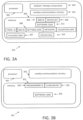
- FIG. 3A depicts implantable or personal medical device 301 according to some embodiments.
- Medical device 301 includes wireless communication circuitry 322 to conduct communication sessions with clinician programmer 351 (shown in FIG. 3B ) after implantation.
- Wireless communication circuitry 322 may support communications using one or more communication protocols including inductive communication protocols and/or the lower energy BLUETOOTH ® protocol as examples.
- Clinician programmer 351 includes processor 302, memory 353, and wireless communication circuitry 352.
- Memory 353 stores relevant data and software code 356 to control operations of programmer 351.
- Memory 353 may store an identifier (e.g., a serial number) of programmer 351 for use during programming sessions.
- memory 353 may store clinician key 355 for use during programming session as discussed herein.
- Wireless communication circuitry 352 may include complementary circuitry to conduct communications according to the protocol(s) implemented by medical device 301.
- Wireless communication circuitry 352 may also include additional wireless communication capabilities such as circuitry for 802.11 protocols ("Wi-Fi") for network communication with one or more servers of a device management system.
- Wireless communication circuitry 352 may also include wireless telephony network communication capabilities.
- Medical device 301 includes one or more processors or controllers 302 to control device operations. Medical device 301 includes medical or therapy components 303 to provide the therapy to the patient and/or to monitor or measure one or more physiological conditions of the patient. Medical device 301 includes memory 304 to store executable instructions and data. The data may include a device identifier 305 and one or more device keys 306.
- device key 306 may store one of a pair of asymmetric encryption keys with the other key stored by server 104.
- the pair of keys for a given device 301 may be used to securely create and employ validation data according to some embodiments. Although the present disclosure refers to device key 306, the specific key selected for a given device need not necessarily be unique.
- the same key may be assigned to one or more devices (whether implantable medical devices, clinician programmers, and/or patient controller devices).
- device identifier 305 is shown as stored in memory 304, device identifier 305 may be retained elsewhere in device 301.
- many device components e.g., processors, integrated circuits, wireless communication circuitry, etc.
- the identifiers of the subcomponents may be used as the medical device identifier in lieu of a value stored in conventional memory of device 301 according to some embodiments.
- Memory 304 further stores software code 321 to control operations of device 301.
- Software code 321 includes code to implement operations discussed herein.
- Device 301 includes one or more instances of programming data 308 in memory 304 that defines how device 301 conducts therapeutic or medical operations according to some embodiments.
- each instance of programming data 308 includes a program identifier.
- each instance of programming data 308 includes a field for device identifier data. The device identifier data in programming data 308 is compared against the device identifier 305 to ensure that the programming data 308 is intended for use by the specific device 301.
- memory 304 may store one or more (or a collection) of clinician keys 310.
- the clinician keys 310 may be ones of asymmetric keys used to ascertain the validity of programming data 308 when the programming data is signed with a temporary key.
- Some clinician keys 310 may be stored in device 301 at an initial stage.
- One or more clinician keys 310 may be stored in device 301 through communication with patient controller device 201.
- a clinician may establish a communication connection with the clinician's programmer device 102 (directly or through one or more remote servers 104) to request authorization for programming.
- the patient may authorize the programming status of the clinician through a user interface prompt on the patient's controller device 201.
- the one of the pair of keys for a given clinician is stored on device 301 in keys 310 for use in validating programming data 308 as discussed herein.
- Each instance of programming data 308 may include settings data (the various device parameters) that define the therapeutic or medical operations to be provided by device 301.
- the settings data may include an electrode configuration for delivery of electrical pulses, a stimulation pattern identifier (tonic stimulation, burst stimulation, noise stimulation, and/or the like), pulse parameters, one or more frequency parameters, cycling parameters, timing parameters, and/or the like.
- the metadata may include relevant data that is not directly used by device 301 to control specific device operations.
- the metadata may include data that identifies the physician or clinician that created or programmed the settings data.
- the metadata may include an identifier of the clinician programmer device that was used to create the settings data, the date of creation, the data of last modification, the physical location where programming occurred, and/or any other relevant data.
- Each instance of programming data 308 includes validation data.
- the validation data is used by device 301 to ensure that the settings data is intended for device 301 and is properly authorized to control operations of device 301.
- validation data is created using a checksum algorithm, a cryptographic hash function, and/or similar suitable processing.
- the other data in programming data 308 may be represented by characters in respective strings.
- Each character in sequence is applied to the applicable hash function or suitable function to generate an output hash value or similar value.
- Known checksum functions apply exclusive-OR (XOR) and/or modular sum operations in succession to each character or value in a sequence of characters or values.
- the UNIX command "cksum" provides a well-known implementation of checksum operations as one example.
- the checksum value or other relevant data may be encrypted with a suitable cryptographical key (e.g., the corresponding key of the key pair used for device 301).
- the encrypted data is then stored in device 301 as the validation data in some embodiments.
- device 301 When device 301 attempts to verify the validity of an instance of programming data 308, device 301 recalculates the checksum value or relevant data using the same methodology used to create the original validation data in the instance of programming data 308 and generates local comparison data. Device 301 then decrypts the encrypted data of the validation data using its device key 306. Device 301 compares the decrypted data against the local comparison data. If the two sets of data match, the settings data is valid and device 301 continues with its operations according to the settings data (assuming that there is no applicable data in revocation data 307 to indicate otherwise as discussed herein for some embodiments),
- a cryptographic hash algorithm may be employed for validation data operations according to some embodiments such as SHA-1 (Secure Hash Algorithm 1) and SHA-2 (Secure Hash Algorithm 2) as examples.
- device 301 is programmed by one or more clinicians and the programming data is signed using a private encryption key of device 301 by server 104. Since server 104 is remote from the clinician(s) and device 301, a network connection is necessary to facilitate the programming workflow.
- network connectivity is not always available at the time of programming. In many institutional facilities, network connectivity in an operating room or other clinical setting can be intermittent or non-existent. A programming methodology that requires network connectivity as a condition to create or test therapeutic operations can be quite problematic for clinicians and patients.
- an implantable medical device or personal medical device is adapted to conduct programming operations with and without network connectivity while maintaining flexibility to provide authorization and validation operations to programming data.
- FIG. 4 depicts a programming work flow according to some embodiments where network connectivity is not established or available during an initial programming session.
- a clinician uses a clinician programmer device to establish a communication connection between the clinician programmer and an implantable or personal medical device of the patient.
- the communication connection may be established using suitable communication methods such as inductive wireless communication, low energy BLUETOOTH ® communication, and medical band wireless communication as examples.
- suitable communication methods such as inductive wireless communication, low energy BLUETOOTH ® communication, and medical band wireless communication as examples.
- BLUETOOTH ® communication between an implantable medical device and a programmer device is found in U.S. Patent No. 9,894,691 .
- the clinician uses the clinician programmer device to determine suitable device and/or therapy parameters for the patient.
- the clinician may employ a neurostimulation programming methodology to identify suitable stimulation parameters to address chronic pain of the patient using the St. Jude Medical TM Clinician Programmer App with BurstDR TM Stimulation executing on an iOS TM iPhone or iPad device (Apple Corp.).
- Any suitable medical device programming may occur including programming of cardiac rhythm management therapies, deep brain stimulation therapies, cortical stimulation therapies, dorsal root ganglion stimulation therapies, and insulin, drug, pharmaceutical, or biologic delivery therapies, as examples.
- the clinician programmer device attempts to establish a network connection with one or more server(s) 104.
- the network connection is not established or not available.
- the clinician location may interfere with or block network connectivity.
- the clinician programmer signs the validation data with its local key (404).
- the clinician programmer calculates the checksum data and encrypts the data with its local key. Any suitable key signing operations may be applied.
- the clinician programmer device communicates programming data and validation data to the patient device. The patient device may then provide operations according to the programming data after completing the processing the programming data and validation data as discussed herein.
- the user/patient establishes a connection between a patient external device and the patient (implantable) medical device (406).
- the patient external device receives programming data from patient medical device that is only signed with a clinician key.
- the patient external device establishes a network connection and communicates with remote server(s) 104.
- the remote server 104 validates programming data.
- the remote server 104 upon proper validation, the remote server 104 generates validation data signed with private key corresponding to patient device 301. When the validation process determines that the programming data is improper, further operations are discussed below.
- the validation data is communicated from the server 104 to external device and then to patient device.
- the implantable or personal medical device replaces the old validation data (signed with the clinician key) with the new validation data (signed with the private key corresponding to the medical device 301).
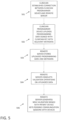
- FIGURE 5 depicts programming data validation operations according to some embodiments. As previously discussed, certain programming operations may occur between a clinician programmer device and patient medical devices without using network connectivity between the clinician programmer and one or more remote servers. FIG. 5 describes operations performed after a clinician has performed such non-networked programming sessions.
- the clinician programmer device uploads programming data signed with clinician key with relevant metadata for the non-networked programming sessions.
- the metadata may include relevant data such as patient identifier(s), patient device identifier(s), programming session time and date, the physical location of a programming session, and/or the like.
- the remote server stores uploaded programming data and metadata.
- the remote server conducts validation operations on uploaded data.
- the remote server generates new validation signed with patient device keys pending communication sessions with devices.
- the new validation may be communicated to patient devices upon subsequent connections with the patient devices to the one or more remote servers (see 406-412 in FIG. 4 ).
- the patient controller devices then, in turn, communicate the new (permanent) validation data to the respective IMDs of the patients.
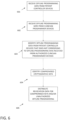
- offline programming data is received from clinician programmer devices.
- the respective clinicians may return their devices to a suitable (e.g., centralized) location for their offices.
- the clinician programmers may be connected to a wired network (e.g., an office ethernet local area network) or other network. When connected, the clinician programmers then automatically upload the programming data (therapeutic settings and/or programming metadata) to the device management system.
- the device management system identifies offline programming data from patient controller devices that does not correspond to offline programming data received from authorized clinician programmer devices. Reconciliation between the programming data received from patient controller devices and clinician programmer devices occur.
- the clinician programmer device is authenticated using transmission of clinician identifiers and credentials and other appropriate security operations.
- the authenticated clinician programmer may provide a list of all programming sessions performed since the last time that the clinician programmer connected with the device management system.
- the device management system will then possess a record of valid offline programming sessions. If the device management system has a record of an offline programming session with programming data identifying the respective clinician programmer as received from a patient controller device but the properly authenticated clinician programmer does not report the programming session, it is likely that unauthorized programming has occurred.
- reconciliations operations may be applied. For example, analysis of programming data may reveal that two clinician programming devices conducted programming sessions in disparate geographical locations in a similar time frame. Identification of such programming sessions may indicate that a clinician programming device has been cloned.
- one or more compromised cryptographic keys are identified.
- the cryptographic key for a given clinician and/or clinician device that was used in an authorized programming session is identified using the programming session metadata.
- revocation data for compromised keys and/or unauthorized offline programming is distributed. The revocation data may cause IMDs to automatically delete or otherwise render invalid any programming data identified to be unauthorized. Also, the revocation of now untrusted cryptographic keys will prevent future unauthorized offline programming sessions for IMDs associated with patient devices connecting to the device management system and receiving the download of revocation data.
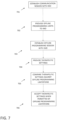
- FIG. 7 depicts programming data validation operations for offline programming according to some embodiments.
- a communication session is established with an IMD by a clinician programming device.
- the clinician programming device provides offline programming limits to IMD.
- the offlline programming limitations control the changes to therapeutic settings that may be applied in an offline mode.
- the clinician may determine that certain electrodes of a deep brain stimulation system cause undesired side effects on the patient due to their location proximate to relevant neural tissue.
- the clinician may provide limitations that prevent therapeutic settings from using such electrodes when programmed in an offline mode.
- the clinician may identify certain cardiac rhythm therapies or cardiac therapy settings that are possibly unsuitable for a given patient. The clinician may prevent use of such therapies or settings by defining suitable limitations.
- a clinician programmer establishes an offline programming session with IMD at a later time.
- the clinician programmer provides new or modified therapeutic settings to the IMD.
- the IMD compares the new or modified therapeutic settings against the previously defined offline programming limitations.
- the IMD accepts the new or modified therapeutic settings when permitted by offline programming limitations. If the changes are not permitted, the IMD may signal to the clinician programmer that the changes are not accepted (not shown) and a network connection to the device management system is necessary to program beyond the defined limitations.
- implantable medical devices such as neurostimulation devices, cardiac rhythm management devices, glucose monitoring devices, and medical agent infusion devices as examples.
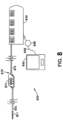
- FIG. 8 depicts a neurostimulation system that may be employed according to some embodiments.
- Neurostimulation systems are devices that generate electrical pulses and deliver the pulses to nerve tissue of a patient to treat a variety of disorders.
- Spinal cord stimulation (SCS) is the most common type of neurostimulation within the broader field of neuromodulation.
- SCS Spinal cord stimulation
- electrical pulses are delivered to nerve tissue of the spinal cord for the purpose of chronic pain control. While a precise understanding of the interaction between the applied electrical energy and the nervous tissue is not fully appreciated, it is known that application of an electrical field to spinal nervous tissue can effectively inhibit certain types of pain transmitted from regions of the body associated with the stimulated nerve tissue to the brain.
- a stimulation lead includes a lead body of insulative material that encloses wire conductors.
- the distal end of the stimulation lead includes multiple electrodes that are electrically coupled to the wire conductors.
- the proximal end of the lead body includes multiple terminals (also electrically coupled to the wire conductors) that are adapted to receive electrical pulses.
- the distal end of a respective stimulation lead is implanted within the epidural space to deliver the electrical pulses to the appropriate nerve tissue within the spinal cord.
- the stimulation leads are then tunneled to another location within the patient's body to be electrically connected with a pulse generator or, alternatively, to an "extension.”
- the pulse generator is typically implanted within a subcutaneous pocket created during the implantation procedure.
- the subcutaneous pocket is typically disposed in a lower back region, although subclavicular implantations and lower abdominal implantations are commonly employed for other types of neuromodulation therapies.
- Stimulation system 800 generates electrical pulses for application to tissue of a patient, or subject, according to one embodiment.
- Stimulation system 800 includes an implantable pulse generator (IPG) 850 that is adapted to generate electrical pulses for application to tissue of a patient.
- Implantable pulse generator 850 typically includes a metallic housing that encloses a controller 851, pulse generating circuitry 852, a battery 853, far-field and/or near field communication circuitry 854, and other appropriate circuitry and components of the device.
- Controller 851 typically includes a microcontroller or other suitable processor for controlling the various other components of the device.
- Software code is typically stored in memory of implantable pulse generator 850 for execution by the microcontroller or processor to control the various components of the device.
- the software code stored in memory of pulse generator 850 may support operations of embodiments disclosed herein.
- Implantable pulse generator 850 may comprise one or more attached extension components 870 or be connected to one or more separate extension components 870. Alternatively, one or more stimulation leads 810 may be connected directly to implantable pulse generator 850.
- electrical pulses are generated by pulse generating circuitry 852 and are provided to switching circuitry. The switching circuit connects to output wires, traces, lines, or the like (not shown) which are, in turn, electrically coupled to internal conductive wires (not shown) of a lead body 872 of extension component 870.
- the conductive wires are electrically coupled to electrical connectors (e.g., "Bal-Seal" connectors) within connector portion 871 of extension component 870.
- the terminals of one or more stimulation leads 810 are inserted within connector portion 871 for electrical connection with respective connectors.
- the pulses originating from implantable pulse generator 850 and conducted through the conductors of lead body 872 are provided to stimulation lead 810.
- the pulses are then conducted through the conductors of stimulation lead 810 and applied to tissue of a patient via electrodes 811. Any suitable known or later developed design may be employed for connector portion 871.
- Various sets of parameters may define the pulse characteristics and pulse timing for the pulses applied to various electrodes as is known in the art.
- constant current pulse generating circuitry is contemplated for some embodiments, any other suitable type of pulse generating circuitry may be employed such as constant voltage pulse generating circuitry.
- Stimulation lead(s) 810 may include a lead body of insulative material about a plurality of conductors within the material that extend from a proximal end of stimulation lead 810 to its distal end.
- the conductors electrically couple a plurality of electrodes 811 to a plurality of terminals (not shown) of stimulation lead 810.
- the terminals are adapted to receive electrical pulses and the electrodes 811 are adapted to apply stimulation pulses to tissue of the patient. Also, sensing of physiological signals may occur through electrodes 811, the conductors, and the terminals. Additionally or alternatively, various sensors (not shown) may be located near the distal end of stimulation lead 810 and electrically coupled to terminals through conductors within the lead body 872.
- Stimulation lead 810 may include any suitable number of electrodes 811, terminals, and internal conductors.
- FIGS. 9A-9C respectively depict stimulation portions 900, 925, and 950 for inclusion at the distal end of stimulation lead 110.
- Stimulation portions 900, 925, and 950 each include one or more electrodes 821.
- Stimulation portion 900 depicts a conventional stimulation portion of a "percutaneous" lead with multiple ring electrodes.
- Stimulation portion 925 depicts a stimulation portion including several "segmented electrodes.”
- the term “segmented electrode” is distinguishable from the term “ring electrode.”
- the term “segmented electrode” refers to an electrode of a group of electrodes that are positioned at the same longitudinal location along the longitudinal axis of a lead and that are angularly positioned about the longitudinal axis so they do not overlap and are electrically isolated from one another.
- Example fabrication processes are disclosed in U.S. Patent Publication No. 2011/0072657 , entitled, “METHOD OF FABRICATING STIMULATION LEAD FOR APPLYING ELECTRICAL STIMULATION TO TISSUE OF A PATIENT".
- Stimulation portion 950 includes multiple planar electrodes on a paddle structure.
- Controller device 860 may be implemented to recharge battery 853 of implantable pulse generator 850 (although a separate recharging device could alternatively be employed).
- a "wand” 865 may be electrically connected to controller device 860 through suitable electrical connectors (not shown). The electrical connectors are electrically connected to a "primary" coil 866 at the distal end of wand 865 through respective wires (not shown). Typically, primary coil 866 is connected to the wires through capacitors (not shown). Also, in some embodiments, wand 865 may comprise one or more temperature sensors for use during charging operations.
- Controller device 860 generates an AC-signal to drive current through primary coil 866 of wand 865. Assuming that primary coil 866 and secondary coil are suitably positioned relative to each other, the secondary coil is disposed within the field generated by the current driven through primary coil 866. Current is then induced in secondary coil. The current induced in the coil of the implantable pulse generator is rectified and regulated to recharge battery of implantable pulse generator 850.
- the charging circuitry may also communicate status messages to controller device 860 during charging operations using pulse-loading or any other suitable technique. For example, controller device 860 may communicate the coupling status, charging status, charge completion status, etc.
- External controller device 860 is also a device that permits the operations of implantable pulse generator 850 to be controlled by user after implantable pulse generator 850 is implanted within a patient, although in alternative embodiments separate devices are employed for charging and programming. Also, multiple controller devices may be provided for different types of users (e.g., the patient or a clinician). Controller device 860 can be implemented by utilizing a suitable handheld processor-based system that possesses wireless communication capabilities. Software is typically stored in memory of controller device 860 to control the various operations of controller device 860. The software code stored in memory of device 860 may support the operations according to embodiments disclosed herein. Also, the wireless communication functionality of controller device 860 can be integrated within the handheld device package or provided as a separate attachable device. The user interface functionality of controller device 860 is implemented using suitable software code for interacting with the user and using the wireless communication capabilities to conduct communications with implantable pulse generator 850.
- Controller device 860 preferably provides one or more user interfaces to allow the user to operate implantable pulse generator 850 according to one or more stimulation programs to treat the patient's disorder(s).
- Each stimulation program may include one or more sets of stimulation parameters including pulse amplitude, pulse width, pulse frequency or inter-pulse period, pulse repetition parameter (e.g., number of times for a given pulse to be repeated for respective stimset during execution of program), etc.
- Implantable pulse generator 850 modifies its internal parameters in response to the control signals from controller device 860 to vary the stimulation characteristics of stimulation pulses transmitted through stimulation lead 810 to the tissue of the patient. Neurostimulation systems, stimsets, and multi-stimset programs are discussed in PCT Publication No.
- Pulse generator device 850 and controller device 860 may be adapted to apply different types of neurostimulation.
- One or more stimulation sets or programs may be defined with tonic stimulation.
- these devices may support burst stimulation as disclosed in U.S. Patent No. 8934981 .
- burst stimulation groups of pulses are provided at a relatively high frequency (greater than 250 Hz) with adjacent groups of pulses separated by a quiet period. The groups are repeated at a relatively lower frequency (e.g., 40 Hz or other physiologically relevant frequencies).
- These devices may support "noise" stimulation such as described in U.S. Patent No. 9498634 .
- These devices may also support high frequency stimulation (e.g., 1500 Hz - 20,000 Hz).
- Example commercially available neurostimulation systems include the PROTEGE TM , PRODIGY TM , PROCLAIM TM , INFINITY TM pulse generators and CLINICIAN PROGRAMMER APP from Abbott Laboratories.
- Example commercially available stimulation leads include the QUATTRODE TM , OCTRODE TM , AXXESS TM , LAMITRODE TM , TRIPOLE TM , EXCLAIM TM , PENTA TM , and INFINITY TM stimulation leads from Abbott Laboratories.
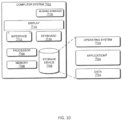
- FIG. 10 illustrates one embodiment of a computer system (e.g., a network server platform) 1002 that facilitates medical device management in accordance with some embodiments.
- Computer system 1002 includes processor 1004, memory 1006, storage device 1008, display 1010, interface components 1012, keyboard 1014.
- Computer system 1002 includes network interface 1018 for conducting network communications.
- Memory 1006 can include a volatile and non-volatile memory.
- Storage device 1008 can store operating system 1020, device management applications 1022 for management of implantable devices and provision of remote medical care, and data 1024.
- Device management applications 1022 may include applications with software code to perform operations discussed herein including communication with patient controller devices, communication with clinician programmer devices validation of therapeutic data from clinician programming, analysis of programming data, auditing operations, distribution of revocation data, and any other appropriate device management operations.
- Computer system 1002 may also store and access data through a cloud computing architecture with relevant data distributed across multiple platforms at different physical locations.
- Data 1024 can include any data relevant to patients, medical devices, physiological data, therapeutic settings, clinicians, and clinician devices for the management of medical devices, monitoring of patient status, detection of patient conditions, and any other task related to remote monitoring and management of health care for patients with medical devices.
- Data 1024 may include any of the data discussed herein.
- the data structures and code described in this detailed description are typically stored on a computer-readable storage medium, which may be any device or medium that can store code and/or data for use by a computer system.
- the computer-readable storage medium includes, but is not limited to, volatile memory, non-volatile memory, magnetic and optical storage devices such as disk drives, magnetic tape, CDs (compact discs), DVDs (digital versatile discs or digital video discs), or other media capable of storing computer-readable media now known or later developed.
- the methods and processes described in the detailed description section can be embodied as code and/or data, which can be stored in a computer-readable storage medium as described above.
- a computer system reads and executes the code and/or data stored on the computer-readable storage medium, the computer system performs the methods and processes embodied as data structures and code and stored within the computer-readable storage medium.
- the methods and processes described above can be included in hardware modules.
- the hardware modules can include, but are not limited to, application-specific integrated circuit (ASIC) chips, field-programmable gate arrays (FPGAs), and other programmable-logic devices now known or later developed.
- ASIC application-specific integrated circuit
- FPGA field-programmable gate arrays
- the hardware modules When the hardware modules are activated, the hardware modules perform the methods and processes included within the hardware modules.
- FIG. 11 depicts a collection of medical devices 1105 managed by a medical device management system according to some embodiments.
- the medical device management system includes a plurality of computer systems 1002 connected to network 1101 for management of devices 1105.
- the devices may include any number of devices and types of devices including neurostimulation devices, cardiac rhythm management devices, glucose monitoring devices, and medical agent infusion devices as examples.
- the devices may include the medical devices that provide the medical therapy and/or monitoring functionality, the patient controller devices, and clinician devices.
- the devices may monitor and communicate patient data for communication to one or more server platforms 1002.
- the patient data may include any relevant physiological data such as cardiac activity, respiration data, glucose levels, neurological activity, physical activity data, and/or the like. Communication of therapeutic settings, programming data, validation data, and revocation data between devices 1105 and one or more server platforms 1002 may occur as discussed herein.
- One or more of the operations described above in connection with the methods may be performed using one or more processors.
- the different devices in the systems described herein may represent one or more processors, and two or more of these devices may include at least one of the same processors.
- the operations described herein may represent actions performed when one or more processors (e.g., of the devices described herein) execute program instructions stored in memory (for example, software stored on a tangible and non-transitory computer readable storage medium, such as a computer hard drive, ROM, RAM, or the like).
- the processor(s) may execute a set of instructions that are stored in one or more storage elements, in order to process data.
- the storage elements may also store data or other information as desired or needed.
- the storage element may be in the form of an information source or a physical memory element within the controllers and the controller device.
- the set of instructions may include various commands that instruct the controllers and the controller device to perform specific operations such as the methods and processes of the various embodiments of the subject matter described herein.
- the set of instructions may be in the form of a software program.
- the software may be in various forms such as system software or application software, Further, the software may be in the form of a collection of separate programs or modules, a program module within a larger program or a portion of a program module.
- the software also may include modular programming in the form of object-oriented programming.
- the processing of input data by the processing machine may be in response to user commands, or in response to results of previous processing, or in response to a request made by another processing machine.
- the controller may include any processor-based or microprocessor-based system including systems using microcontrollers, reduced instruction set computers (RISC), application specific integrated circuits (ASICs), field-programmable gate arrays (FPGAs), logic circuits, and any other circuit or processor capable of executing the functions described herein.
- processor-based the controller executes program instructions stored in memory to perform the corresponding operations.
- the controllers and the controller device may represent circuits that may be implemented as hardware.
Landscapes
- Engineering & Computer Science (AREA)
- Health & Medical Sciences (AREA)
- General Health & Medical Sciences (AREA)
- Biomedical Technology (AREA)
- Public Health (AREA)
- Signal Processing (AREA)
- Computer Security & Cryptography (AREA)
- Computer Networks & Wireless Communication (AREA)
- Life Sciences & Earth Sciences (AREA)
- Animal Behavior & Ethology (AREA)
- Veterinary Medicine (AREA)
- Radiology & Medical Imaging (AREA)
- Nuclear Medicine, Radiotherapy & Molecular Imaging (AREA)
- Medical Informatics (AREA)
- Primary Health Care (AREA)
- General Business, Economics & Management (AREA)
- Epidemiology (AREA)
- Business, Economics & Management (AREA)
- General Engineering & Computer Science (AREA)
- Computer Hardware Design (AREA)
- Computing Systems (AREA)
- Physics & Mathematics (AREA)
- Bioethics (AREA)
- Theoretical Computer Science (AREA)
- Acoustics & Sound (AREA)
- Databases & Information Systems (AREA)
- Software Systems (AREA)
- General Physics & Mathematics (AREA)
- Biophysics (AREA)
- Heart & Thoracic Surgery (AREA)
- Electrotherapy Devices (AREA)
Claims (11)
- Verfahren zum Betreiben eines Systems zur Verwaltung von implantierbaren medizinischen Vorrichtungen, IMD (301), umfassend:Ausführen von Kommunikationssitzungen mit einer Vielzahl von Arzt-Programmiervorrichtungen (102, 351), wobei einige der Kommunikationssitzungen erfolgen, während die Vielzahl von Arzt-Programmiervorrichtungen an jeweiligen Programmierungssitzungen mit IMD beteiligt ist und wobei die Kommunikationssitzungen mit der Vielzahl von Arzt-Programmiervorrichtungen eine Kommunikation von Daten beinhalten, die eine Offline-Programmierung von IMD betreffen;Ausführen von Kommunikationssitzungen mit einer Vielzahl von Patient-Steuervorrichtungen (201), wobei die Kommunikationssitzungen mit den Patient-Steuervorrichtungen eine Kommunikation von Daten beinhalten, die eine Offline-Programmierung von IMD betreffen;Abstimmen von Programmierungssitzungsdaten, die von der Vielzahl von Arzt-Programmiervorrichtungen empfangen werden, mit Programmierungssitzungsdaten, die von Patient-Steuervorrichtungen empfangen werden, um Fälle einer unautorisierten IMD-Programmierung zu identifizieren;Verteilen von Annullierungsdaten (307) an Patient-Steuervorrichtungen, die auf entsprechende IMD herunterzuladen sind, wobei die Aufhebungsdaten kryptographische Schlüssel identifiziert, die nicht mehr vertrauenswürdig sind.
- Verfahren nach Anspruch 1, weiterhin umfassend:Identifizieren einer legitimen Arzt-Programmiervorrichtung (102, 351), die einen kryptographischen Schlüssel verwendet, der zu annullieren ist;Ersetzen des kryptographischen Schlüssels auf der legitimen Arzt-Programmiervorrichtung während einer Kommunikationssitzung mit der jeweiligen Arzt-Programmiervorrichtung.
- Verfahren nach Anspruch 2, wobei das Identifizieren und das Ersetzen durchgeführt werden, bevor die Annullierungsdaten (307) für den kryptographischen Schlüssel der legitimen Arzt-Programmiervorrichtung (102, 351) annulliert werden.
- Verfahren nach Anspruch 2, wobei der kryptographische Schlüssel als auf einer anderen unautorisierten Arzt-Programmiervorrichtung (102, 351) verwendet identifiziert wird.
- Verfahren nach Anspruch 1, wobei das Abstimmen eine Verwendung eines gemeinsamen kryptographischen Schlüssels auf zwei separaten Arzt-Programmiervorrichtungen (102, 351) identifiziert.
- Verfahren nach Anspruch 1, wobei das Abstimmen eine geklonte Arzt-Programmiervorrichtung (102, 351) identifiziert, die eine Programmierung gleichzeitig mit einer Programmierung durch eine entsprechende legitime Arzt-Programmiervorrichtung (102, 351) ausführt.
- Verfahren nach Anspruch 1, wobei die IMD (301) Programmierungssitzungsmetadaten zur Analyse während des Abstimmens kommunizieren, um eine unautorisierte Programmierung zu identifizieren.
- Verfahren nach Anspruch 7, wobei die Programmierungssitzungsmetadaten Einzelheiten von Arzt-Programmiervorrichtungen (102, 351) beinhalten.
- Verfahren nach Anspruch 7, wobei die Programmierungssitzungsmetadaten Arzt-Identitätsberechtigungen beinhalten.
- Verfahren nach Anspruch 7, wobei die Programmierungssitzungsmetadaten Programmierungszeitgabedaten beinhalten.
- Verfahren nach einem der vorhergehenden Ansprüche, wobei das Abstimmen eine Verwendung eines oder mehrerer kompromittierter kryptographischer Schlüssel identifiziert, um eine Offline-Programmierung einer oder mehrerer IMD (301) durchzuführen.
Applications Claiming Priority (2)
| Application Number | Priority Date | Filing Date | Title |
|---|---|---|---|
| US16/179,744 US10967190B2 (en) | 2018-11-02 | 2018-11-02 | Methods of operating a system for management of implantable medical devices (IMDs) using reconciliation operations and revocation data |
| PCT/US2019/059501 WO2020092979A1 (en) | 2018-11-02 | 2019-11-01 | Methods of operating a system for management of implantable medical devices (imds) using reconciliation operations and revocation data |
Publications (3)
| Publication Number | Publication Date |
|---|---|
| EP3874672A1 EP3874672A1 (de) | 2021-09-08 |
| EP3874672A4 EP3874672A4 (de) | 2022-08-03 |
| EP3874672B1 true EP3874672B1 (de) | 2025-03-12 |
Family
ID=70459999
Family Applications (1)
| Application Number | Title | Priority Date | Filing Date |
|---|---|---|---|
| EP19879674.0A Active EP3874672B1 (de) | 2018-11-02 | 2019-11-01 | Verfahren zum betreiben eines systems zur verwaltung von implantierbaren medizinischen geräten (imds) unter verwendung von rekonciliationsoperationen und erholungsdaten |
Country Status (4)
| Country | Link |
|---|---|
| US (4) | US10967190B2 (de) |
| EP (1) | EP3874672B1 (de) |
| AU (2) | AU2019371418A1 (de) |
| WO (1) | WO2020092979A1 (de) |
Families Citing this family (10)
| Publication number | Priority date | Publication date | Assignee | Title |
|---|---|---|---|---|
| US11090496B2 (en) * | 2018-11-02 | 2021-08-17 | Advanced Neuromodulation Systems, Inc. | Implantable medical device using permanent and temporary keys for therapeutic settings and related methods of operation |
| WO2021056069A1 (en) * | 2019-09-25 | 2021-04-01 | Commonwealth Scientific And Industrial Research Organisation | Cryptographic services for browser applications |
| EP4196209A1 (de) * | 2020-11-04 | 2023-06-21 | Boston Scientific Neuromodulation Corporation | Verfahren und systeme zur verwaltung des zugriffs auf implantierbare medizinische vorrichtungen |
| US11986663B2 (en) | 2020-12-11 | 2024-05-21 | Medtronic, Inc. | Interactive clinician reports for medical device therapy |
| EP4260328A1 (de) * | 2020-12-11 | 2023-10-18 | Advanced Neuromodulation Systems, Inc. | Systeme und verfahren zur markierung von daten in aktiven implantierbaren medizinischen vorrichtungssystemen |
| EP4140534B1 (de) | 2021-08-23 | 2025-06-25 | Pacesetter, Inc. | System und verfahren für implantierbare medizinische gerätefernprogrammierung |
| EP4173671A1 (de) | 2021-11-01 | 2023-05-03 | BIOTRONIK SE & Co. KG | Durch patienten ausgelöste programmauswahl für implantate |
| WO2023088782A1 (en) * | 2021-11-19 | 2023-05-25 | Biotronik Se & Co. Kg | Computer implemented method and system for protecting a patient critical firmware function of an implantable medical device |
| US20250023728A1 (en) * | 2021-11-19 | 2025-01-16 | Biotronik Se & Co. Kg | Secure BYOD Programmer |
| EP4299109B1 (de) * | 2022-06-27 | 2025-08-13 | Pacesetter, Inc. | System zur fernprogrammierung einer implantierbaren medizinischen vorrichtung |
Citations (1)
| Publication number | Priority date | Publication date | Assignee | Title |
|---|---|---|---|---|
| US20150089590A1 (en) * | 2013-09-20 | 2015-03-26 | Ramnarayan Krishnan | Methods for secure control of and secure data extraction from implantable medical devices using smartphones or other mobile devices |
Family Cites Families (104)
| Publication number | Priority date | Publication date | Assignee | Title |
|---|---|---|---|---|
| US6085333A (en) * | 1997-12-19 | 2000-07-04 | Lsi Logic Corporation | Method and apparatus for synchronization of code in redundant controllers in a swappable environment |
| US7555346B1 (en) * | 1999-01-07 | 2009-06-30 | Boston Scientific Neuromodulation Corporation | Implantable pulse generator having current steering means |
| US7039810B1 (en) | 1999-11-02 | 2006-05-02 | Medtronic, Inc. | Method and apparatus to secure data transfer from medical device systems |
| US20060189854A1 (en) * | 1999-12-17 | 2006-08-24 | Medtronic, Inc. | Method and apparatus for remotely programming implantable medical devices |
| US7293087B2 (en) * | 2000-01-21 | 2007-11-06 | Scriptlogic Corporation | Event-based application for performing configuration changes in a networked environment |
| US6562001B2 (en) * | 2000-01-21 | 2003-05-13 | Medtronic Minimed, Inc. | Microprocessor controlled ambulatory medical apparatus with hand held communication device |
| US6622050B2 (en) | 2000-03-31 | 2003-09-16 | Medtronic, Inc. | Variable encryption scheme for data transfer between medical devices and related data management systems |
| EP1540848B1 (de) * | 2000-08-03 | 2009-02-11 | Infineon Technologies AG | Flexible tdma systemarchitektur |
| US6880085B1 (en) | 2000-11-01 | 2005-04-12 | Cardiac Pacemakers, Inc. | Security system for implantable medical devices |
| US20020131404A1 (en) * | 2000-11-28 | 2002-09-19 | 4Thpass Inc. | Method and system for maintaining and distributing wireless applications |
| US7225029B2 (en) | 2001-10-26 | 2007-05-29 | Pacesetter, Inc. | Implantable cardiac therapy device with dual chamber can to isolate high-frequency circuitry |
| US7187978B2 (en) | 2001-11-01 | 2007-03-06 | Medtronic, Inc. | Method and apparatus for programming an implantable medical device |
| US6763269B2 (en) | 2001-11-02 | 2004-07-13 | Pacesetter, Inc. | Frequency agile telemetry system for implantable medical device |
| US6842645B2 (en) | 2001-11-09 | 2005-01-11 | Pacesetter, Inc. | Presentation architecture for network supporting implantable cardiac therapy device |
| US8817757B2 (en) * | 2001-12-12 | 2014-08-26 | At&T Intellectual Property Ii, L.P. | Zero-configuration secure mobility networking technique with web-based authentication interface for large WLAN networks |
| US7228179B2 (en) | 2002-07-26 | 2007-06-05 | Advanced Neuromodulation Systems, Inc. | Method and apparatus for providing complex tissue stimulation patterns |
| US20040117206A1 (en) * | 2002-12-13 | 2004-06-17 | Daniel Steinberger | Natural procedure labels controlled for coding |
| US8655450B2 (en) | 2009-01-13 | 2014-02-18 | Jeffrey A. Matos | Controlling a personal medical device |
| US9545520B2 (en) | 2009-01-13 | 2017-01-17 | Jeffrey A. Matos | Method and apparatus for controlling an implantable medical device |
| US7155290B2 (en) | 2003-06-23 | 2006-12-26 | Cardiac Pacemakers, Inc. | Secure long-range telemetry for implantable medical device |
| US20050033369A1 (en) | 2003-08-08 | 2005-02-10 | Badelt Steven W. | Data Feedback loop for medical therapy adjustment |
| US8332022B2 (en) | 2003-08-29 | 2012-12-11 | Medtronic, Inc. | Methods and apparatus for discriminating polymorphic tachyarrhythmias from monomorphic tachyarrhythmias facilitating detection of fibrillation |
| US7350201B2 (en) * | 2003-10-23 | 2008-03-25 | International Business Machines Corporation | Software distribution application supporting operating system installations |
| US7203540B2 (en) | 2003-12-22 | 2007-04-10 | Cardiac Pacemakers, Inc. | Method and system for setting cardiac resynchronization therapy parameters |
| US7228182B2 (en) | 2004-03-15 | 2007-06-05 | Cardiac Pacemakers, Inc. | Cryptographic authentication for telemetry with an implantable medical device |
| US7831828B2 (en) | 2004-03-15 | 2010-11-09 | Cardiac Pacemakers, Inc. | System and method for securely authenticating a data exchange session with an implantable medical device |
| US7475245B1 (en) | 2004-03-15 | 2009-01-06 | Cardiac Pacemakers, Inc. | System and method for providing secure exchange of sensitive information with an implantable medical device |
| US7571007B2 (en) | 2004-04-12 | 2009-08-04 | Advanced Neuromodulation Systems, Inc. | Systems and methods for use in pulse generation |
| US7212110B1 (en) | 2004-04-19 | 2007-05-01 | Advanced Neuromodulation Systems, Inc. | Implantable device and system and method for wireless communication |
| US7801611B2 (en) | 2004-06-03 | 2010-09-21 | Cardiac Pacemakers, Inc. | System and method for providing communications between a physically secure programmer and an external device using a cellular network |
| US7565197B2 (en) * | 2004-06-18 | 2009-07-21 | Medtronic, Inc. | Conditional requirements for remote medical device programming |
| US7840268B2 (en) | 2004-06-21 | 2010-11-23 | Advanced Neuromodulation Systems, Inc. | System and method of managing medical device historical data |
| US7890180B2 (en) | 2004-08-09 | 2011-02-15 | Cardiac Pacemakers, Inc. | Secure remote access for an implantable medical device |
| US9137115B2 (en) * | 2004-12-06 | 2015-09-15 | Bmc Software, Inc. | System and method for resource reconciliation in an enterprise management system |
| US7819812B2 (en) | 2004-12-15 | 2010-10-26 | Neuropace, Inc. | Modulation and analysis of cerebral perfusion in epilepsy and other neurological disorders |
| EP2243512A3 (de) | 2005-01-31 | 2016-01-20 | Advanced Neuromodulation Systems, Inc. | Pulsgenerator mit einem effizienten fraktionalen Konverter und Verfahren zu dessen Verwendung |
| US7664553B2 (en) | 2005-04-27 | 2010-02-16 | Cardiac Pacemakers, Inc. | System and method for enabling communications with implantable medical devices |
| US11304123B1 (en) | 2005-07-14 | 2022-04-12 | Binj Laboratories, Inc. | Systems and methods for detecting and controlling transmission devices |
| US20070136098A1 (en) | 2005-12-12 | 2007-06-14 | Smythe Alan H | System and method for providing a secure feature set distribution infrastructure for medical device management |
| US8588912B2 (en) | 2006-01-09 | 2013-11-19 | Cardiac Pacemakers, Inc. | System and method for remotely programming a patient medical device |
| US8218445B2 (en) * | 2006-06-02 | 2012-07-10 | Ciena Corporation | Smart ethernet edge networking system |
| US7706883B1 (en) | 2006-04-06 | 2010-04-27 | Pacesetter, Inc. | Efficient data retrieval for implantable medical devices |
| US8898319B2 (en) * | 2006-05-24 | 2014-11-25 | Maxsp Corporation | Applications and services as a bundle |
| US7783356B2 (en) * | 2006-06-29 | 2010-08-24 | Cardiac Pacemakers, Inc. | Automated device programming at changeout |
| US8074271B2 (en) | 2006-08-09 | 2011-12-06 | Assa Abloy Ab | Method and apparatus for making a decision on a card |
| US7930543B2 (en) | 2006-08-18 | 2011-04-19 | Medtronic, Inc. | Secure telemetric link |
| US8102999B2 (en) | 2006-08-18 | 2012-01-24 | Medtronic, Inc. | Secure telemetric link |
| US7940933B2 (en) | 2006-08-18 | 2011-05-10 | Medtronic, Inc. | Secure telemetric link |
| WO2008066424A1 (en) | 2006-11-30 | 2008-06-05 | St. Jude Medical Ab | Device and method for initiating communication with a selected implantable medical device by means of a directional antenna |
| WO2008069896A2 (en) | 2006-12-06 | 2008-06-12 | Medtronic, Inc. | Telemetry device for a medical device programmer |
| US8224453B2 (en) | 2007-03-15 | 2012-07-17 | Advanced Neuromodulation Systems, Inc. | Spinal cord stimulation to treat pain |
| DE102007033992A1 (de) | 2007-07-19 | 2009-01-22 | Biotronik Crm Patent Ag | Anordnung und Verfahren zum Management von Daten einer Mehrzahl von programmierbaren persönlichen medizinischen Geräten |
| US20090048644A1 (en) | 2007-08-14 | 2009-02-19 | Stahmann Jeffrey E | System and method for providing intrabody data security on an active implantable medical device |
| US8019410B1 (en) | 2007-08-22 | 2011-09-13 | Pacesetter, Inc. | System and method for detecting hypoglycemia using an implantable medical device based on pre-symptomatic physiological responses |
| WO2009036333A1 (en) | 2007-09-14 | 2009-03-19 | Corventis, Inc. | Dynamic pairing of patients to data collection gateways |
| US8682437B2 (en) | 2007-09-25 | 2014-03-25 | Medtronic, Inc. | Proximity signature for secure communication with implantable medical device |
| WO2009055207A2 (en) | 2007-10-24 | 2009-04-30 | Medtronic, Inc. | Remote management of therapy programming |
| US8560066B2 (en) * | 2007-12-11 | 2013-10-15 | Washington University | Method and device for three-stage atrial cardioversion therapy |
| US9054436B2 (en) | 2009-09-30 | 2015-06-09 | Advanced Neuromodulation Systems, Inc. | Method of fabricating stimulation lead for applying electrical stimulation to tissue of a patient |
| US20110145588A1 (en) | 2009-12-16 | 2011-06-16 | Cardiac Pacemakers, Inc. | System and method to authorize restricted functionality |
| US8942818B2 (en) | 2009-12-30 | 2015-01-27 | Medtronic, Inc. | Communication with an implantable medical device during implantation |
| US8649757B2 (en) | 2010-01-13 | 2014-02-11 | Medtronic, Inc. | Proximity based selection of an implantable medical device for far field communication |
| US11660392B2 (en) | 2010-02-05 | 2023-05-30 | Deka Products Limited Partnership | Devices, methods and systems for wireless control of medical devices |
| US20220362467A1 (en) | 2010-02-05 | 2022-11-17 | Deka Products Limited Partnership | Devices methods and systems for wireless control of medical devices |
| US8682441B2 (en) | 2010-08-30 | 2014-03-25 | Advanced Neurostimulation Systems, Inc. | Use of a new stimulation design to treat neurological disorder |
| US8712541B2 (en) | 2011-01-28 | 2014-04-29 | Medtronic, Inc. | Far field telemetry operations between an external device and an implantable medical device during recharge of the implantable medical device via a proximity coupling |
| US8667293B2 (en) | 2011-08-11 | 2014-03-04 | Roche Diagnostics Operations, Inc. | Cryptographic data distribution and revocation for handheld medical devices |
| US8707040B2 (en) * | 2011-10-31 | 2014-04-22 | Neuropace, Inc. | Establishing secure communication between an implantable medical device and an external device |
| DE102012201505B4 (de) * | 2012-02-02 | 2013-08-22 | Siemens Aktiengesellschaft | Authentisierungssystem für mobile Geräte zum Datenaustausch von medizinischen Daten |
| US9974108B2 (en) | 2012-02-06 | 2018-05-15 | Nuvectra Corporation | Paired communication between an implanted medical device and an external control device |
| US9027077B1 (en) * | 2012-04-30 | 2015-05-05 | Palo Alto Networks, Inc. | Deploying policy configuration across multiple security devices through hierarchical configuration templates |
| US20140185805A1 (en) | 2013-01-03 | 2014-07-03 | Neuropace, Inc. | Securely Exchanging Cipher Keys |
| US20140273824A1 (en) | 2013-03-15 | 2014-09-18 | Medtronic, Inc. | Systems, apparatus and methods facilitating secure pairing of an implantable device with a remote device using near field communication |
| US9215075B1 (en) | 2013-03-15 | 2015-12-15 | Poltorak Technologies Llc | System and method for secure relayed communications from an implantable medical device |
| US9294482B2 (en) * | 2013-07-25 | 2016-03-22 | Oracle International Corporation | External platform extensions in a multi-tenant environment |
| US9467450B2 (en) | 2013-08-21 | 2016-10-11 | Medtronic, Inc. | Data driven schema for patient data exchange system |
| US9185087B2 (en) | 2013-10-24 | 2015-11-10 | Medtronic, Inc. | Medical device communication using encryption based on correlated motion |
| US9374355B2 (en) | 2013-10-28 | 2016-06-21 | GM Global Technology Operations LLC | Programming vehicle modules from remote devices and related methods and systems |
| US11007370B2 (en) * | 2013-11-27 | 2021-05-18 | Pacesetter, Inc. | System and methods for establishing a communication session between an implantable medical device and an external device |
| PL3114884T3 (pl) | 2014-03-07 | 2020-05-18 | Ubiquiti Inc. | Uwierzytelnianie i identyfikacja urządzenia w chmurze |
| US9760681B2 (en) * | 2014-11-24 | 2017-09-12 | Practice Fusion, Inc. | Offline electronic health record management |
| US11615199B1 (en) | 2014-12-31 | 2023-03-28 | Idemia Identity & Security USA LLC | User authentication for digital identifications |
| US9984209B2 (en) * | 2015-02-13 | 2018-05-29 | Medtronic, Inc. | Graphical controls for programming medical device operation |
| US9700669B2 (en) | 2015-04-16 | 2017-07-11 | Flowonix Medical Incorporated | Patient programmer for implantable drug delivery device |
| EP3091459B1 (de) | 2015-05-07 | 2020-06-24 | Sorin CRM SAS | Systeme und verfahren zur drahtlosen kommunikation mit implantierbaren körpergetragenen vorrichtungen |
| WO2017023386A2 (en) | 2015-05-08 | 2017-02-09 | YC Wellness, Inc. | Integration platform and application interfaces for remote data management and security |
| US10306472B2 (en) | 2016-01-28 | 2019-05-28 | Cochlear Limited | Secure authorization in an implantable medical device system |
| US20230371900A1 (en) | 2016-02-16 | 2023-11-23 | Bruce Reiner | Automated operability and navigation of autonomous smart medical devices |
| US20170259072A1 (en) | 2016-03-14 | 2017-09-14 | Qualcomm Incorporated | System architecture for medical implant |
| US10674911B2 (en) | 2016-03-30 | 2020-06-09 | Zoll Medical Corporation | Systems and methods of integrating ambulatory medical devices |
| US10631744B2 (en) | 2016-04-13 | 2020-04-28 | Cardiac Pacemakers, Inc. | AF monitor and offline processing |
| US20170304636A1 (en) * | 2016-04-20 | 2017-10-26 | Boston Scientific Neuromodulation Corporation | System for increased temporal flexibility in a medical device |
| US10576290B2 (en) | 2016-07-27 | 2020-03-03 | Medtronic, Inc. | Facilitating telemetry data communication security between an implantable device and an external device |
| US9923755B2 (en) * | 2016-08-01 | 2018-03-20 | Data I/O Corporation | Device programming with system generation |
| US9894691B1 (en) | 2016-08-10 | 2018-02-13 | Pacesetter, Inc. | Systems and methods for establishing a communication link between an implantable medical device and an external instrument |
| US9722803B1 (en) | 2016-09-12 | 2017-08-01 | InfoSci, LLC | Systems and methods for device authentication |
| EP4329352A3 (de) | 2016-11-03 | 2024-05-29 | ResMed, Inc. | Sichere vernetzte atemtherapiesysteme |
| US10305692B2 (en) | 2017-02-22 | 2019-05-28 | Medtronic, Inc. | Pairing of devices for far-field wireless communication |
| US10493287B2 (en) | 2017-02-27 | 2019-12-03 | Medtronic, Inc. | Facilitating trusted pairing of an implantable device and an external device |
| US10819713B2 (en) | 2017-04-24 | 2020-10-27 | Boston Scientific Neuromodulation Corporation | Technique to ensure security for connected implantable medical devices |
| US10554632B2 (en) | 2017-05-15 | 2020-02-04 | Medtronic, Inc. | Multimodal cryptographic data communications in a remote patient monitoring environment |
| US11153076B2 (en) | 2017-07-17 | 2021-10-19 | Thirdwayv, Inc. | Secure communication for medical devices |
| EP3466484A1 (de) | 2017-09-19 | 2019-04-10 | BIOTRONIK SE & Co. KG | Verfahren, um einem patienten den zugang zu seinem elektronischen implantat durch einen vertrauenswürdigen klinikarzt zu ermöglichen |
| US11406832B2 (en) | 2018-07-27 | 2022-08-09 | Medtronic, Inc. | Patient-intermediated therapy management |
-
2018
- 2018-11-02 US US16/179,744 patent/US10967190B2/en active Active
-
2019
- 2019-11-01 WO PCT/US2019/059501 patent/WO2020092979A1/en not_active Ceased
- 2019-11-01 AU AU2019371418A patent/AU2019371418A1/en not_active Abandoned
- 2019-11-01 EP EP19879674.0A patent/EP3874672B1/de active Active
-
2021
- 2021-03-25 US US17/213,057 patent/US12070608B2/en active Active
-
2023
- 2023-12-13 US US18/538,478 patent/US12296179B2/en active Active
-
2025
- 2025-04-21 US US19/184,925 patent/US20250242164A1/en active Pending
- 2025-05-08 AU AU2025203309A patent/AU2025203309A1/en active Pending
Patent Citations (1)
| Publication number | Priority date | Publication date | Assignee | Title |
|---|---|---|---|---|
| US20150089590A1 (en) * | 2013-09-20 | 2015-03-26 | Ramnarayan Krishnan | Methods for secure control of and secure data extraction from implantable medical devices using smartphones or other mobile devices |
Also Published As
| Publication number | Publication date |
|---|---|
| US10967190B2 (en) | 2021-04-06 |
| US20250242164A1 (en) | 2025-07-31 |
| AU2019371418A1 (en) | 2021-01-07 |
| US20210213294A1 (en) | 2021-07-15 |
| EP3874672A4 (de) | 2022-08-03 |
| AU2025203309A1 (en) | 2025-05-29 |
| US20200139141A1 (en) | 2020-05-07 |
| EP3874672A1 (de) | 2021-09-08 |
| WO2020092979A1 (en) | 2020-05-07 |
| US20240108904A1 (en) | 2024-04-04 |
| US12296179B2 (en) | 2025-05-13 |
| US12070608B2 (en) | 2024-08-27 |
Similar Documents
| Publication | Publication Date | Title |
|---|---|---|
| US12397165B2 (en) | Implantable medical device using permanent and temporary keys for therapeutic settings and related methods of operation | |
| US12296179B2 (en) | Methods of operating a system for management of implantable medical devices (IMDS) using reconciliation and revocation data | |
| EP3873590B1 (de) | Verfahren zum programmieren eines implantierbaren medizinproduktes sowie zugehörige systeme und vorrichtungen | |
| EP3873586B1 (de) | Verfahren zum betreiben eines systems zur verwaltung implantierbarer medizinischer geräte | |
| US11364386B2 (en) | System, method and architecture for facilitating remote patient care | |
| US20260010604A1 (en) | Digital healthcare architecture with biometric authentication systems and methods | |
| EP4140534B1 (de) | System und verfahren für implantierbare medizinische gerätefernprogrammierung | |
| US11173313B2 (en) | Implantable medical device with offline programming limitations and related methods of operations | |
| US12177367B1 (en) | Compressed PKI methods for machine-to-machine authentication in bandwidth-constrained medical devices | |
| WO2025080864A1 (en) | Storage of information inside an implantable device used for provisioning a patient device for secure communication | |
| CN121986464A (en) | Information storage within an implantable device for deploying a patient device for secure communication |
Legal Events
| Date | Code | Title | Description |
|---|---|---|---|
| STAA | Information on the status of an ep patent application or granted ep patent |
Free format text: STATUS: THE INTERNATIONAL PUBLICATION HAS BEEN MADE |
|
| PUAI | Public reference made under article 153(3) epc to a published international application that has entered the european phase |
Free format text: ORIGINAL CODE: 0009012 |
|
| STAA | Information on the status of an ep patent application or granted ep patent |
Free format text: STATUS: REQUEST FOR EXAMINATION WAS MADE |
|
| 17P | Request for examination filed |
Effective date: 20201222 |
|
| AK | Designated contracting states |
Kind code of ref document: A1 Designated state(s): AL AT BE BG CH CY CZ DE DK EE ES FI FR GB GR HR HU IE IS IT LI LT LU LV MC MK MT NL NO PL PT RO RS SE SI SK SM TR |
|
| DAV | Request for validation of the european patent (deleted) | ||
| DAX | Request for extension of the european patent (deleted) | ||
| REG | Reference to a national code |
Ref country code: DE Ref legal event code: R079 Ipc: A61N0001372000 Ref country code: DE Ref legal event code: R079 Ref document number: 602019067308 Country of ref document: DE Free format text: PREVIOUS MAIN CLASS: H04L0009000000 Ipc: A61N0001372000 |
|
| A4 | Supplementary search report drawn up and despatched |
Effective date: 20220701 |
|
| RIC1 | Information provided on ipc code assigned before grant |
Ipc: A61N 1/05 20060101ALN20220627BHEP Ipc: H04L 9/40 20220101ALN20220627BHEP Ipc: A61N 1/36 20060101ALN20220627BHEP Ipc: H04L 67/12 20220101ALI20220627BHEP Ipc: H04L 67/14 20220101ALI20220627BHEP Ipc: H04L 9/32 20060101ALI20220627BHEP Ipc: G16H 40/67 20180101ALI20220627BHEP Ipc: G16H 40/63 20180101ALI20220627BHEP Ipc: G16H 40/40 20180101ALI20220627BHEP Ipc: H04L 9/08 20060101ALI20220627BHEP Ipc: A61N 1/372 20060101AFI20220627BHEP |
|
| P01 | Opt-out of the competence of the unified patent court (upc) registered |
Effective date: 20230530 |
|
| GRAP | Despatch of communication of intention to grant a patent |
Free format text: ORIGINAL CODE: EPIDOSNIGR1 |
|
| STAA | Information on the status of an ep patent application or granted ep patent |
Free format text: STATUS: GRANT OF PATENT IS INTENDED |
|
| RIC1 | Information provided on ipc code assigned before grant |
Ipc: A61N 1/02 20060101ALN20240917BHEP Ipc: A61N 1/05 20060101ALN20240917BHEP Ipc: H04L 9/40 20220101ALN20240917BHEP Ipc: A61N 1/36 20060101ALN20240917BHEP Ipc: G16H 20/00 20180101ALI20240917BHEP Ipc: H04L 67/00 20220101ALI20240917BHEP Ipc: G06F 21/62 20130101ALI20240917BHEP Ipc: H04L 67/12 20220101ALI20240917BHEP Ipc: H04L 67/14 20220101ALI20240917BHEP Ipc: H04L 9/32 20060101ALI20240917BHEP Ipc: G16H 40/67 20180101ALI20240917BHEP Ipc: G16H 40/63 20180101ALI20240917BHEP Ipc: G16H 40/40 20180101ALI20240917BHEP Ipc: H04L 9/08 20060101ALI20240917BHEP Ipc: A61N 1/372 20060101AFI20240917BHEP |
|
| INTG | Intention to grant announced |
Effective date: 20241004 |
|
| GRAS | Grant fee paid |
Free format text: ORIGINAL CODE: EPIDOSNIGR3 |
|
| GRAA | (expected) grant |
Free format text: ORIGINAL CODE: 0009210 |
|
| STAA | Information on the status of an ep patent application or granted ep patent |
Free format text: STATUS: THE PATENT HAS BEEN GRANTED |
|
| AK | Designated contracting states |
Kind code of ref document: B1 Designated state(s): AL AT BE BG CH CY CZ DE DK EE ES FI FR GB GR HR HU IE IS IT LI LT LU LV MC MK MT NL NO PL PT RO RS SE SI SK SM TR |
|
| REG | Reference to a national code |
Ref country code: GB Ref legal event code: FG4D |
|
| REG | Reference to a national code |
Ref country code: CH Ref legal event code: EP |
|
| REG | Reference to a national code |
Ref country code: DE Ref legal event code: R096 Ref document number: 602019067308 Country of ref document: DE |
|
| REG | Reference to a national code |
Ref country code: IE Ref legal event code: FG4D |
|
| PG25 | Lapsed in a contracting state [announced via postgrant information from national office to epo] |
Ref country code: RS Free format text: LAPSE BECAUSE OF FAILURE TO SUBMIT A TRANSLATION OF THE DESCRIPTION OR TO PAY THE FEE WITHIN THE PRESCRIBED TIME-LIMIT Effective date: 20250612 |
|
| PG25 | Lapsed in a contracting state [announced via postgrant information from national office to epo] |
Ref country code: FI Free format text: LAPSE BECAUSE OF FAILURE TO SUBMIT A TRANSLATION OF THE DESCRIPTION OR TO PAY THE FEE WITHIN THE PRESCRIBED TIME-LIMIT Effective date: 20250312 |
|
| PG25 | Lapsed in a contracting state [announced via postgrant information from national office to epo] |
Ref country code: ES Free format text: LAPSE BECAUSE OF FAILURE TO SUBMIT A TRANSLATION OF THE DESCRIPTION OR TO PAY THE FEE WITHIN THE PRESCRIBED TIME-LIMIT Effective date: 20250312 |
|
| REG | Reference to a national code |
Ref country code: LT Ref legal event code: MG9D |
|
| PG25 | Lapsed in a contracting state [announced via postgrant information from national office to epo] |
Ref country code: NO Free format text: LAPSE BECAUSE OF FAILURE TO SUBMIT A TRANSLATION OF THE DESCRIPTION OR TO PAY THE FEE WITHIN THE PRESCRIBED TIME-LIMIT Effective date: 20250612 |
|
| PG25 | Lapsed in a contracting state [announced via postgrant information from national office to epo] |
Ref country code: HR Free format text: LAPSE BECAUSE OF FAILURE TO SUBMIT A TRANSLATION OF THE DESCRIPTION OR TO PAY THE FEE WITHIN THE PRESCRIBED TIME-LIMIT Effective date: 20250312 |
|
| REG | Reference to a national code |
Ref country code: NL Ref legal event code: MP Effective date: 20250312 |
|
| PG25 | Lapsed in a contracting state [announced via postgrant information from national office to epo] |
Ref country code: LV Free format text: LAPSE BECAUSE OF FAILURE TO SUBMIT A TRANSLATION OF THE DESCRIPTION OR TO PAY THE FEE WITHIN THE PRESCRIBED TIME-LIMIT Effective date: 20250312 |
|
| PG25 | Lapsed in a contracting state [announced via postgrant information from national office to epo] |
Ref country code: GR Free format text: LAPSE BECAUSE OF FAILURE TO SUBMIT A TRANSLATION OF THE DESCRIPTION OR TO PAY THE FEE WITHIN THE PRESCRIBED TIME-LIMIT Effective date: 20250613 Ref country code: BG Free format text: LAPSE BECAUSE OF FAILURE TO SUBMIT A TRANSLATION OF THE DESCRIPTION OR TO PAY THE FEE WITHIN THE PRESCRIBED TIME-LIMIT Effective date: 20250312 |
|
| REG | Reference to a national code |
Ref country code: AT Ref legal event code: MK05 Ref document number: 1774530 Country of ref document: AT Kind code of ref document: T Effective date: 20250312 |
|
| PG25 | Lapsed in a contracting state [announced via postgrant information from national office to epo] |
Ref country code: NL Free format text: LAPSE BECAUSE OF FAILURE TO SUBMIT A TRANSLATION OF THE DESCRIPTION OR TO PAY THE FEE WITHIN THE PRESCRIBED TIME-LIMIT Effective date: 20250312 |
|
| PG25 | Lapsed in a contracting state [announced via postgrant information from national office to epo] |
Ref country code: SE Free format text: LAPSE BECAUSE OF FAILURE TO SUBMIT A TRANSLATION OF THE DESCRIPTION OR TO PAY THE FEE WITHIN THE PRESCRIBED TIME-LIMIT Effective date: 20250312 |
|
| PG25 | Lapsed in a contracting state [announced via postgrant information from national office to epo] |
Ref country code: SM Free format text: LAPSE BECAUSE OF FAILURE TO SUBMIT A TRANSLATION OF THE DESCRIPTION OR TO PAY THE FEE WITHIN THE PRESCRIBED TIME-LIMIT Effective date: 20250312 |
|
| PG25 | Lapsed in a contracting state [announced via postgrant information from national office to epo] |
Ref country code: PT Free format text: LAPSE BECAUSE OF FAILURE TO SUBMIT A TRANSLATION OF THE DESCRIPTION OR TO PAY THE FEE WITHIN THE PRESCRIBED TIME-LIMIT Effective date: 20250714 |
|
| PG25 | Lapsed in a contracting state [announced via postgrant information from national office to epo] |
Ref country code: PL Free format text: LAPSE BECAUSE OF FAILURE TO SUBMIT A TRANSLATION OF THE DESCRIPTION OR TO PAY THE FEE WITHIN THE PRESCRIBED TIME-LIMIT Effective date: 20250312 Ref country code: IT Free format text: LAPSE BECAUSE OF FAILURE TO SUBMIT A TRANSLATION OF THE DESCRIPTION OR TO PAY THE FEE WITHIN THE PRESCRIBED TIME-LIMIT Effective date: 20250312 |
|
| PG25 | Lapsed in a contracting state [announced via postgrant information from national office to epo] |
Ref country code: AT Free format text: LAPSE BECAUSE OF FAILURE TO SUBMIT A TRANSLATION OF THE DESCRIPTION OR TO PAY THE FEE WITHIN THE PRESCRIBED TIME-LIMIT Effective date: 20250312 |
|
| PG25 | Lapsed in a contracting state [announced via postgrant information from national office to epo] |
Ref country code: EE Free format text: LAPSE BECAUSE OF FAILURE TO SUBMIT A TRANSLATION OF THE DESCRIPTION OR TO PAY THE FEE WITHIN THE PRESCRIBED TIME-LIMIT Effective date: 20250312 Ref country code: CZ Free format text: LAPSE BECAUSE OF FAILURE TO SUBMIT A TRANSLATION OF THE DESCRIPTION OR TO PAY THE FEE WITHIN THE PRESCRIBED TIME-LIMIT Effective date: 20250312 |
|
| PG25 | Lapsed in a contracting state [announced via postgrant information from national office to epo] |
Ref country code: RO Free format text: LAPSE BECAUSE OF FAILURE TO SUBMIT A TRANSLATION OF THE DESCRIPTION OR TO PAY THE FEE WITHIN THE PRESCRIBED TIME-LIMIT Effective date: 20250312 |
|
| PG25 | Lapsed in a contracting state [announced via postgrant information from national office to epo] |
Ref country code: SK Free format text: LAPSE BECAUSE OF FAILURE TO SUBMIT A TRANSLATION OF THE DESCRIPTION OR TO PAY THE FEE WITHIN THE PRESCRIBED TIME-LIMIT Effective date: 20250312 |
|
| PG25 | Lapsed in a contracting state [announced via postgrant information from national office to epo] |
Ref country code: IS Free format text: LAPSE BECAUSE OF FAILURE TO SUBMIT A TRANSLATION OF THE DESCRIPTION OR TO PAY THE FEE WITHIN THE PRESCRIBED TIME-LIMIT Effective date: 20250712 |
|
| REG | Reference to a national code |
Ref country code: DE Ref legal event code: R097 Ref document number: 602019067308 Country of ref document: DE |
|
| PGFP | Annual fee paid to national office [announced via postgrant information from national office to epo] |
Ref country code: DE Payment date: 20251013 Year of fee payment: 7 |
|
| PGFP | Annual fee paid to national office [announced via postgrant information from national office to epo] |
Ref country code: GB Payment date: 20251009 Year of fee payment: 7 |
|
| PG25 | Lapsed in a contracting state [announced via postgrant information from national office to epo] |
Ref country code: DK Free format text: LAPSE BECAUSE OF FAILURE TO SUBMIT A TRANSLATION OF THE DESCRIPTION OR TO PAY THE FEE WITHIN THE PRESCRIBED TIME-LIMIT Effective date: 20250312 |
|
| PGFP | Annual fee paid to national office [announced via postgrant information from national office to epo] |
Ref country code: FR Payment date: 20251013 Year of fee payment: 7 |
|
| PLBE | No opposition filed within time limit |
Free format text: ORIGINAL CODE: 0009261 |
|
| STAA | Information on the status of an ep patent application or granted ep patent |
Free format text: STATUS: NO OPPOSITION FILED WITHIN TIME LIMIT |
|
| REG | Reference to a national code |
Ref country code: CH Ref legal event code: L10 Free format text: ST27 STATUS EVENT CODE: U-0-0-L10-L00 (AS PROVIDED BY THE NATIONAL OFFICE) Effective date: 20260121 |
|
| 26N | No opposition filed |
Effective date: 20251215 |