EP3874053B1 - Method to use industrial co2-containing gas for the production of a methane enriched gas composition - Google Patents
Method to use industrial co2-containing gas for the production of a methane enriched gas composition Download PDFInfo
- Publication number
- EP3874053B1 EP3874053B1 EP19798553.4A EP19798553A EP3874053B1 EP 3874053 B1 EP3874053 B1 EP 3874053B1 EP 19798553 A EP19798553 A EP 19798553A EP 3874053 B1 EP3874053 B1 EP 3874053B1
- Authority
- EP
- European Patent Office
- Prior art keywords
- culture
- methane
- gas
- methanogenic
- value
- Prior art date
- Legal status (The legal status is an assumption and is not a legal conclusion. Google has not performed a legal analysis and makes no representation as to the accuracy of the status listed.)
- Active
Links
Images


Classifications
-
- C—CHEMISTRY; METALLURGY
- C12—BIOCHEMISTRY; BEER; SPIRITS; WINE; VINEGAR; MICROBIOLOGY; ENZYMOLOGY; MUTATION OR GENETIC ENGINEERING
- C12P—FERMENTATION OR ENZYME-USING PROCESSES TO SYNTHESISE A DESIRED CHEMICAL COMPOUND OR COMPOSITION OR TO SEPARATE OPTICAL ISOMERS FROM A RACEMIC MIXTURE
- C12P5/00—Preparation of hydrocarbons or halogenated hydrocarbons
- C12P5/02—Preparation of hydrocarbons or halogenated hydrocarbons acyclic
-
- C—CHEMISTRY; METALLURGY
- C12—BIOCHEMISTRY; BEER; SPIRITS; WINE; VINEGAR; MICROBIOLOGY; ENZYMOLOGY; MUTATION OR GENETIC ENGINEERING
- C12P—FERMENTATION OR ENZYME-USING PROCESSES TO SYNTHESISE A DESIRED CHEMICAL COMPOUND OR COMPOSITION OR TO SEPARATE OPTICAL ISOMERS FROM A RACEMIC MIXTURE
- C12P5/00—Preparation of hydrocarbons or halogenated hydrocarbons
- C12P5/02—Preparation of hydrocarbons or halogenated hydrocarbons acyclic
- C12P5/023—Methane
-
- C—CHEMISTRY; METALLURGY
- C10—PETROLEUM, GAS OR COKE INDUSTRIES; TECHNICAL GASES CONTAINING CARBON MONOXIDE; FUELS; LUBRICANTS; PEAT
- C10L—FUELS NOT OTHERWISE PROVIDED FOR; NATURAL GAS; SYNTHETIC NATURAL GAS OBTAINED BY PROCESSES NOT COVERED BY SUBCLASSES C10G OR C10K; LIQUIFIED PETROLEUM GAS; USE OF ADDITIVES TO FUELS OR FIRES; FIRE-LIGHTERS
- C10L3/00—Gaseous fuels; Natural gas; Synthetic natural gas obtained by processes not covered by subclass C10G, C10K; Liquefied petroleum gas
- C10L3/06—Natural gas; Synthetic natural gas obtained by processes not covered by C10G, C10K3/02 or C10K3/04
- C10L3/08—Production of synthetic natural gas
-
- C—CHEMISTRY; METALLURGY
- C12—BIOCHEMISTRY; BEER; SPIRITS; WINE; VINEGAR; MICROBIOLOGY; ENZYMOLOGY; MUTATION OR GENETIC ENGINEERING
- C12N—MICROORGANISMS OR ENZYMES; COMPOSITIONS THEREOF; PROPAGATING, PRESERVING, OR MAINTAINING MICROORGANISMS; MUTATION OR GENETIC ENGINEERING; CULTURE MEDIA
- C12N1/00—Microorganisms; Compositions thereof; Processes of propagating, maintaining or preserving microorganisms or compositions thereof; Processes of preparing or isolating a composition containing a microorganism; Culture media therefor
- C12N1/20—Bacteria; Culture media therefor
-
- Y—GENERAL TAGGING OF NEW TECHNOLOGICAL DEVELOPMENTS; GENERAL TAGGING OF CROSS-SECTIONAL TECHNOLOGIES SPANNING OVER SEVERAL SECTIONS OF THE IPC; TECHNICAL SUBJECTS COVERED BY FORMER USPC CROSS-REFERENCE ART COLLECTIONS [XRACs] AND DIGESTS
- Y02—TECHNOLOGIES OR APPLICATIONS FOR MITIGATION OR ADAPTATION AGAINST CLIMATE CHANGE
- Y02E—REDUCTION OF GREENHOUSE GAS [GHG] EMISSIONS, RELATED TO ENERGY GENERATION, TRANSMISSION OR DISTRIBUTION
- Y02E50/00—Technologies for the production of fuel of non-fossil origin
- Y02E50/30—Fuel from waste, e.g. synthetic alcohol or diesel
Definitions
- the present invention refers to a method for producing biogenic methane using carbon-dioxide-containing emissions and/or waste gas.
- Methane has the highest energy density per carbon atom among fossil fuels and its potential for energy conversion is far greater than any other natural gas, obtained directly by combustion in presence of oxygen or using fuel cells to produce electricity.
- Methane as a fossil fuel derives from the metabolic activity of methanogenic microorganisms, which convert carbon dioxide, among others gases and substrates, in deep sea or deep in the earth's crust: this type of methane from geological seepage and natural activities constitutes a large percentage of natural gas; nevertheless, according to a recent upward revision of global fossil fuel methane emissions a comparably large part of the methane present in the atmosphere is of anthropogenic derivation and is liberated into the atmosphere as a result of agriculture, cattle farming, landfills and waste degradation, as well as of coal mining or petroleum drilling, and general fossil fuel handling, transportation, refinement, and combustion operated by the fossil fuel industry.
- Methane is capable of 38 times more heat storage/trapping than carbon dioxide on a molar basis over a span of 20 years (McAnulty et al., 2017).
- methane As a fuel is highly convenient in terms of energy yield and its combustion produces a low carbon footprint (low amount of mostly reusable CO 2 ), making it the cleanest among the fossil fuels; in particular, in the case of biomethane the amount of emitted carbon dioxide produced by its combustion is sufficient for feeding the above-mentioned metabolic processes in a repeating almost self-sufficient cycle; but while biomethane can be produced at the exploitation site, the methane from natural gas that can be conveniently used as fuel needs to undergo further purification processes, then transported with large expenditure of resources.
- This type of methane production happens in suitable reactors/cells and may be easily set up all over the world, in any setting poor of infrastructures, requiring raw materials generally present in the atmosphere. Most importantly, it generally yields gas compositions enriched with methane and a lower amount of contaminants, wherein such compositions are expected to require less effort until ready to be fed into energy supplying systems. Moreover, its conversion into energy, producing only carbon dioxide and water, is the cleanest among fossil fuels.
- US 2011/0165667 A1 describes a further use of aqueous suspensions containing one or more, or even mixtures, of anaerobic archaea species for the production of methane. It is to note, that the process herein described is characterized by the transformation of pure H2 gas and pure CO 2 gas sources into methane comprising gas compositions. According to this disclosure, electric power from any fossil fuel or other renewable-energy-fueled plant is converted to produce hydrogen, which subsequently is used to feed a culture of specialized methanogenic archaea to produce methane from CO 2 gas under optimized culture conditions.
- the disclosure further elaborates that typical methanogenic archaea, which are anaerobic by nature, are silenced and stop producing methane, if the culture conditions change and either air or other gas components are fed to the cultures.
- oxygen is known as inhibiting enzymes involved in both hydrogen uptake and methanogenesis, therefore reducing the net microorganism's methane production, therefore the efficiency of the technology, and necessitating of recovery times, where the activity is not completely inhibited by a high concentration of contaminants.
- Similar effects are described for the presence of carbon monoxide. Consequently, oxygen and carbon monoxide have been singled out and experimental setups have been described to illustrate and explain the effect of silencing the methane production.
- US 2014/0377830 A1 describes the deployment of the previously known process regarding the specialized methanogenic archaea in non-strictly oxygen-free environments and, thus, the attempt to adapt the methanogenic process for allowing to use as feeding gas alternative sources such as CO 2 containing emissions from industrial processes.
- the strains were adapted to effectively produce methane e.g. at atmospheric pressure, and further the production process was adjusted supporting the strains to tolerate contaminants such as oxygen, hydrogen sulfide and carbon monoxide, at different concentrations.
- US 2014/0377830 could demonstrate that methanogenesis was restorable and even sustained or maintained depending on a high rate of feeding hydrogen gas to the culture. While this teaching actually showed that it is possible to restore and maintain some methane production, unfortunately at the same time the solution provided is leading to even more problems, as reported in the following paragraph.
- ammonia is found to increase buffer capacity of methanogenic microorganisms' cultures, therefore increasing the stability of the metabolic processes causing release of methane.
- the sensitivity to ammonia is found to be dependent on the composition of the culture of methanogenic microorganisms, so that a large quantity of ammonia may inhibit methanation activity while a low amount of ammonia may inhibit acetoclastic methanogenic activity, i.e. the production of methane by conversion of acetic acid (Procházka et al., 2012).
- the present invention provides as explicitly specified in the claims teachings on how to improve methane production processes and particularly the methanogenesis of archaea to convert CO 2 containing waste gas into gas compositions enriched with methane or highly pure methane.
- gases are to be understood as CO 2 rich emissions and/or waste gas that are found or produced as a side product during activities performed in industrial processes such as fossil fuel or agricultural industries of either microbial fermentation e.g. in the ethanol production, the combustion of fossil fuels e.g. in coal burning energy plants or e.g. as side product of geothermal power plants or e.g. as a result of any human industrial activity resulting in the emission of gas compositions, otherwise dispersing into the atmosphere, such as cattle farming and other agricultural activities.
- industrial processes such as fossil fuel or agricultural industries of either microbial fermentation e.g. in the ethanol production, the combustion of fossil fuels e.g. in coal burning energy plants or e.g. as side product of geothermal power plants or e.g. as a result of any human industrial activity resulting in the emission of gas compositions, otherwise dispersing into the atmosphere, such as cattle farming and other agricultural activities.
- gas, waste gas or emission also refers to either raw or modified/treated geothermal gas, emitting from or used in geothermal plants, and it is to be further understood as comprising also raw and/or treated geothermal gases, in which e.g. the H 2 S content may be reduced.
- gas, waste gas or emission also refers to emissions of landfills, emissions of lime and cement plants, emissions from steel producing and processing power plants, emissions of garbage or renewable energy firing plants and emissions of geothermal power plants and biogas power plants. Typically, such emissions are considered waste, which need to be inactivated, recycled or purified, to avoid further CO 2 pollution in the atmosphere; therefore, waste gas is also considered to be a gas for the scopes of the present application.
- Such gases depending on their source may comprise very different gas compositions. They have primarily in common that they contain a relatively high amount of CO 2 in comparison to air. They may contain a normal (air-like) partial amount of oxygen and/or nitrogen, however depending on their origin they may also be oxygen free. Additionally, they may contain substantial amounts of at least one of the following, particularly carbon monoxide, hydrogen and hydrogen sulfide, other sulphur compounds (sulfides, disulfides, thiols), siloxanes (organic silicon compounds), halogenated compounds, ammonia, and organochlorines, i.e. pesticides and other synthetic organic compounds with chlorinated aromatic molecules.
- sulfide in the form of hydrogen sulfide proved to be more toxic than dissociated sulfide ions, due to the fact-without being bound by the hypothesis -that H2S is the only form that can cross the cellular membrane of archaea.
- typical amounts of sulfide concentrations in geothermal gases namely amounts in the range of 100 to 150 mg/L cause severe inhibition of methanogenesis (Koster et al. , 1986).
- the method for producing methane in a bioreactorfrom gases containing CO 2 comprises at least the steps of: culturing methanogenic microorganism in a continuous process; providing CO 2 containing gases, comprising additionally e.g. H2S and/or O 2 ; feeding the culture of methanogenic microorganisms with additional H 2 in a stoichiometric ratio of CO 2 :H 2 between 1:0.6 to 1:5; controlling and regulating the pH value continuously to be kept at a pH value at a given value of below or at pH 10 by adding suitable amounts of an acid and/or base; and a final step of collecting methane or methane enriched gas composition.
- a bioreactor stands for biological reactor, and is either a bioreaction vessel, or a bioreaction enclosure, or a bioreaction tank, and/or at least a bioreaction chamber, and/or a cell, or a combination thereof, as also intended in the state of the art, able to withstand variations of e.g. temperature and/or pressure, among others, and/or able to maintain whichever imparted values of e.g. temperature, and/or pressure are assigned or have to be maintained, before, after or during the reaction process, and wherein the intended reactions relevant for carrying out the invention may take place.
- Such reactions are understood as bioreactions as they pertain to the domain of reactions wherein microorganisms are involved, and herein referring to their normal physiology - such as e.g. metabolic fermentation, or aerobic or anaerobic digestion - and that, as such, require suitable environments, suitable cultures of microorganisms, suitable culture mediums and suitable reactants to occur.
- a bioreactor in the meaning of the invention performs reliably within the tolerance values of each variable in order to enable the method as disclosed, and it is expected to allow the listed steps to be carried out reliably over time.
- a suitable reactor for culturing methanogenic microorganisms may be, by means of example only, a shake tank bioreactor, a continuous stirred tank bioreactor, an intermittent stirred tank bioreactor, a hollow fiber membrane bioreactor, a bubble column bioreactor, an internal-loop airlift bioreactor, an external-loop airlift bioreactor, a fluidized bed bioreactor, a packed bed bioreactor, a photo-bioreactor, a trickle bed reactor, a microbial electrolysis cell, and/or combinations thereof.
- a reactor may be chosen that most closely addresses the specific dynamics of a culture or the convenience by which methane is hereby extracted.
- a bubble column reactor, or a variant of it, such as an airlift bioreactor, or a continuously stirred tank reactor, and/or any of the above, may be used to conveniently carry out the method as described and a continuous culture is preferred, wherein near-balanced growth, with little fluctuation of nutrients, metabolites, cell number and biomass are observed.
- gases include product and by-product (e.g. waste) gases of industrial and/or geothermal activities, wherein said activities may result in the emission of individual gases or of mixtures of gases, including e.g. raw geothermal gas, therefore including carbon dioxide, carbon monoxide, oxygen, hydrogen sulfide, nitrogen, argon, helium, acetylene, hydrogen and several others in variable amounts, depending on the industrial process.
- product and by-product gases of industrial and/or geothermal activities wherein said activities may result in the emission of individual gases or of mixtures of gases, including e.g. raw geothermal gas, therefore including carbon dioxide, carbon monoxide, oxygen, hydrogen sulfide, nitrogen, argon, helium, acetylene, hydrogen and several others in variable amounts, depending on the industrial process.
- methanogenic microorganisms are cultured in a bioreactor in orderto produce biomethane.
- Such methanogenic microorganisms, orautotrophic methanogenic microorganisms may be anaerobic archaea or even recently classified aerobic archaea, either in pure strains, or in consortia with a plurality of, i.e. two or more, strains, or in mixed cultures wherein methanation may be also encouraged by syntrophic exchange across different species.
- methanogenic archaea The activity of methanogenic archaea is usually considered strictly anaerobic, with a loss in productivity (expressed as a reduction of methane yield) and eventually death of a culture when, e.g., oxygen contamination occurs.
- Operating a culture in strictly anaerobic conditions may cause severe restrictions regarding the needed equipment; nevertheless recent findings have shown that methane yield, and therefore the activity levels of a culture, may also be maintained when the oxygen exposure, or exposure to other gas contaminants with the potential to severely reduce methanation in extreme conditions, is carefully controlled so to be regulated and when counteracting measures are taken to maintain critical parameters at operating levels.
- Autotrophic methanogenic microorganisms are herein intended as microorganisms which derive nutrition from inorganic reactions with their surrounding environment, e.g. by reducing carbon dioxide, to perform biosynthesis of methane.
- An example of autotrophic microorganisms is given by hydrogenotrophic microorganisms, which derive their nutrition from utilizing hydrogen; in particular, hydrogenotrophic methanogenic microorganisms are able to convert hydrogen and carbon dioxide into methane as part of their metabolic processes.
- the role of methanogenic microorganisms in the ecosystem is unique as it helps removing excess carbon dioxide and fermentation products in the final stage of decay of organic matter. In absence of methanogenesis large amounts of carbon bound to compounds from decaying matter would accumulate in anaerobic environments.
- the class of methanogenic archaea from the kingdom of Euryarchaeota (encompassing the methanogens and their phenotypically diverse relatives) comprises essentially unicellular microorganisms able to produce methane from a small set of substrates, including hydrogen and carbon dioxide, through their metabolic activity: such activity mainly consists in reducing carbon dioxide with hydrogen and/or other hydrogen compounds to methane.
- Cultures of methanogenic archaea suitable for carrying out the method described in the present invention are available in public collections of microorganisms and/or can be alternatively isolated from a number of environmental sources, as reported in the state of the art.
- suitable environmental sources of methanogenic microorganisms include anaerobic soils and sands, bogs, swamps, marshes, estuaries, dense algal mats, both terrestrial and marine mud and sediments, e.g. the subsurface of a tidal-flat sediment, deep ocean and deep well floors, sewage and organic waste sites and treatment facilities, and animal intestinal tracts and feces.
- Methanogenic archaea suitable for carrying out the method described in the present invention have been taxonomically described under five different classes (orders), as reported below, and namely Methanobacteria, Methanococci, Methanomicrobia, Methanonatronarchaeia, and Methanopyri, each of these classes comprising a number of genera, wherein each genus is divided into families, each family encompassing a large number of known and extensively studied, in the meaning of classified, and unknown, in the meaning of unclassified, species.
- those methanogenic archaea particularly suitable for carrying out the method described in the present invention are listed, organized according to their class; the species belonging to different families are listed in brackets after the class name, and separated by a semicolon; each species is then separated by a comma.
- suitable methanogenic archaea are selected from a list of methanogenic archaea from the class of Methanobacteria (such as, e.g., Methanobacterium aarhusense, Methanobacterium aggregans, Methanobacterium alcaliphilum, Methanobacterium arcticum, Methanobacterium beijingense, Methanobacterium bryantii, Methanobacterium congolense, Methanobacterium curvum, Methanobacterium espanolae, Methanobacterium ferruginis, Methanobacterium flexile, Methanobacterium formicicum, Methanobacterium ivanovii, Methanobacterium kanagiense, Methanobacterium locus, Methanobacterium movens, Methanobacterium movilense, Methanobacterium oryzae, Methanobacterium paludis, Methanobacterium palustre, Methanobacterium petrolearium, Methanobacteria,
- Methanothermobacter tenebrarum Methanothermobacter thermautotrophicus
- Methanothermobacter thermautotrophicus str Delta H, Methanothermobacter thermautotrophicus str. Winter, Methanothermobacter thermoflexus, Methanothermobacter thermophilus, Methanothermobacter wolfeii, Methanothermobacter sp., Methanothermus fervidus); and/or from the class of Methanococci (such as, e.g., Methanocaldococcus bathoardescens, Methanocaldococcus fervens, Methanocaldococcus indicus, Methanocaldococcus infernus, Methanocaldococcus jannaschii, Methanocaldococcus villosus, Methanocaldococcus vulcanius, Methanocaldococcus sp; Methanotorris formicicus, Methanotorris igneus, Methanot
- Methanomicrobia such as, e.g., Methanocella arvoryzae, Methanocella conradii, Methanocella paludicola, Methanocella sp.; Methanocalculus alkaliphilus, Methanocalculus chunghsingensis, Methanocalculus halotolerans, Methanocalculus natronophilus, Methanocalculus pumilus, Methanocalculus taiwanensis, Methanocalculus sp.; Methanocorpusculum aggregans, Methanocorpusculum bavaricum, Methanocorpusculum bavaricum, Methanocorpusculum labreanum, Methanocorpusculum labreanum, Methanocorpusculum parvum, Methanocorpusculum sinense, Methanocorpusculum sp.,; Candidatus Methanoculle
- Each of these distinct genera, families and species includes a number of identified and unclassified different microorganisms, or genetically modified strains and related environmental species, with an ongoing sequencing activity to isolate even more species. Further to the mentioned microorganisms suitable to carry out the present invention, a complete list of such classification is available by the Taxonomy Browser of the National Center for Biotechnological Information (NCBI) website.
- NCBI National Center for Biotechnological Information
- the final composition of the culture of the reactor may have been modified so that organisms in a particular growth phase have been privileged with respects to others, or according to the state of the reactor, whether dormant or operating/active.
- Methanobacteria e.g. Methanothermus fervidus used in Example 8 was able to perform stable and unexpected excellent methanation when cultured at a regulated pH around 7.0 or slightly above, respectively (cf. Example 8 and 9, pH 7.2 and 7.4 are shown).
- This finding is in sharp contrast to the state-of-the-art- knowledge, which taught that Methanothermus fervidus prefers " a slightly acidic pH and equal to 6.5, while no growth could be observed at pH above 7.0" (cf. Anderson et al. 2010, p. 316, right column, lines 4 - 6 and Stetter et al., 1981).
- the original culture may have undergone natural modifications in response to the particular conditions in which the culturing has been carried out.
- Culture conditions are affected by several parameters, such as temperature, pH, pressure, cell density, volume, humidity, salt content, conductivity, carbon content, nitrogen content, vitamin content, amino acid content, mineral content, or a combination thereof, and according to each of these conditions a specific adaptation process may be undertaken by any number of species within the reactor environment.
- the method herein disclosed is concerned with the culturing of methanogenic microorganisms in a continuous process, wherein such continuity is understood as continuity in the production of methane and continuity in the culture, wherein no step of separating inactive terminal biomass from active members of the colony is required.
- methane is produced by methanogenic archaea from single strains or in mixed cultures, wherein a mixed culture is either a culture where a plurality of, therefore two or more, strains may also be employed, or a culture where a plurality of additional species interact with methanogenic archaea, or any combination thereof.
- the gases provided to the culture contain CO 2 , and are furthermore characterized by additionally comprising H 2 S and/or O 2 .
- raw geothermal gas which contains suitable amounts of carbon dioxide and hydrogen sulfide, not excluding such gas compositions, which do also comprise traces or contaminations of oxygen.
- treated geothermal gas which contains suitable amounts of carbon dioxide and reduced amounts of hydrogen sulfide, not excluding such gas compositions which do also comprise traces or contaminations of oxygen.
- the gases, and in particular CO 2 , provided to the culture of methanogenic microorganisms may contain small amounts of further contaminants, without the necessity of being preliminarily purified, because said contaminants contribute to the efficiency of the method.
- the method of the present invention does comprise a step of culturing methanogenic archaea, which is based on typical culture conditions for archaea, which have been previously described and which are known to the practitioner. Such conditions are influenced and controlled - according to the skills of a practitioner by common parameters affecting the culture including temperature, pressure, volume, humidity, salt content, conductivity, carbon content, nitrogen content, vitamin content, amino acid content, mineral content, or any combination thereof.
- the step of culturing the methanogenic microorganism in the method to produce methane from gases containing CO 2 in a bioreactor comprises: keeping said methanogenic microorganism in a suitable liquid culture medium providing suitable nutrients such as e.g.
- a nitrogen source and salts keeping the culture conditions facultatively anaerobic and/or anaerobic; optionally stirring the culture, wherein the stirring of the culture can be carried out regularly, in intervals, continuously, or keeping the soluble culture at least in a certain slow and constant movement; removing metabolic water from the culture continuously; and keeping the temperatures in a range between 32°C and 90°C or between 32°C and 80°C; preferably 50-70°C or around 62°C.
- common culture or growth mediums to be provided to the culture of methanogenic organisms may include one or several common inorganic elements, in their elemental forms or in any suitable non-toxic salts thereof selected from the group of sodium, potassium, magnesium, calcium, iron, nickel, cobalt, manganese, zinc, copper, boron, aluminium , molybdenum, tungsten, selenium, chlorine, sources of sulfur, e.g. hydrogen sulfide or elemental sulfur, phosphorus sources, e.g. phosphate, nitrogen sources, e.g. ammonium, nitrate or nitrogen gas.
- sulfur e.g. hydrogen sulfide or elemental sulfur
- phosphorus sources e.g. phosphate
- nitrogen sources e.g. ammonium, nitrate or nitrogen gas.
- Typical salts utilized for culturing methanogenic organisms according to the present invention are NaCl, NaHCO 3 , Na 2 HPO 4 , NaH 2 PO 4 H 2 O, Na2S, NH 4 OH, N2, and NaO 3 , H2S, KCl, MgCl 2 , MgSO 4 , CaCl 2 , and ferrous sulfate.
- the present invention is characterized by a step of controlling the pH value continuously.
- controlling is understood in the general common meaning of keeping under constant monitoring the parameters related to the culture and essentially measuring said parameters or status indicators, using common methodologies and measuring instrumentation known in the art, since it might not be sufficient to keep under constant monitoring and therefore only control the pH of the culture; therefore a further embodiment of the present invention comprises in particular regulating the pH value continuously.
- regulating is intended as actively maintaining a given value for a parameter, e.g. the pH of the culture, by using appropriate means to do so.
- the methanogenic microorganism culture is continuously controlled and regulated, i.e. stabilized to be kept at a pH value at a given value of below or at pH 10 or alternatively at a given value of below or at pH 9, alternatively below or at pH 8 or at a given value of pH 7 by continuously adding suitable amounts of a suitable acid or base.
- regulating the pH of the culture is of particular importance for the preservation of the continuity of the methanation activity, which determines the efficiency of the claimed method.
- the methanogenic microorganism culture is continuously stabilized and/or regulated to keep the pH value by dosing suitable amounts of e.g. NaOH/HCl or NH 4 OH/HCl to the culture.
- a "given value” according to the invention may be a defined value with given tolerances, tolerances within the measurements system or tolerances due to the variability within the culture or due to the culture diversity, wherein said value is suitable for enabling methanation.
- methanation or methanogenesis or biomethanation
- methanation is understood as the production of methane or a methane enriched gas composition as carried out by methanogenic microorganisms, such as those included in a list of methanogenic microorganisms suitable to carry out the present invention as described above.
- the methanation reaction consumes H 2 and CO 2 at a stoichiometry of 4:1.
- the gases or waste gases provided as nutrients for the culture may contain H 2 and CO 2 in proportions different from 4:1.
- the raw or treated geothermal gas may still be used, although the substrate in excess might not be fully consumed by methanogenesis.
- geothermal gas may be mixed with external H2 (electrolytic, etc.) and/or CO 2 (from CO 2 containing gases, etc.), depending on which of the two is missing, or (ii) the H 2 :CO 2 ratio may be adjusted to 4:1 by separating excess H 2 or CO 2 by suited separation technologies that are well known in the art.
- the method according to the present invention proved to remain effective in terms of persistence of methanation activity when carried out using methanogenic microorganism cultures in the continuous process, which had been fed with feeding gas compositions having quite different and surprisingly distinct stoichiometric ratio of H 2 :CO 2 from 0.6:1 to ratios of up to 5:1, in particular 1:1, 2:1, 3:1, 3.5:1, 4.3:1.
- one of the main advantages of the claimed process optimization is the fact that even in case of shortage of feeding gas or interruption of feeding gas the methanation may be reduced, but is still running, or it may even remain constant and can quickly recover.
- a methane enriched gas composition produced using the method as described is intended as a gas composition mostly composed by methane, and/or wherein methane is the main component, and/or a gas composition whose methane content is of 90% in vol. and more, or up to 96% in vol., and in particular the product of the method as described is a gas composition mostly comprising methane which can be directly fed to piping systems for production of heat and power; therefore the methane enriched gas composition of the present invention has a very low content in contaminants, and unlike natural gas, that needs to undergo purification from contaminants that cannot be directly combusted, the enriched methane composition as disclosed can directly interact with oxygen for efficient heat and power generation, to be fed directly to the national energy grids.
- the methane enriched gas composition produced by the method as disclosed corresponds to the understanding of biomethane.
- Regulating in the meaning of the present application and for the purpose of enabling and stabilizing a continuous methanation activity across the culture and in time, is therefore achieved continuously or in a continuous manner, so that, at any given time, a parameter of the culture, e.g. the pH of the culture, when measured, is found to have the same value as a given value.
- a parameter of the culture e.g. the pH of the culture, when measured, is found to have the same value as a given value.
- Metabolic water according to the present invention refers to water or H 2 O molecules, which are produced by the methanogenic organisms during metabolic activity and the process of methanogenesis.
- temperatures may vary according to the presence of selected microorganism species within the culture, each of which better thrive within set ranges of temperatures, for most of the methanogenic microorganisms increased temperatures are not detrimental, and they may even assist in optimizing cellular metabolism and thus metabolic turnover or even methanation.
- a temperature must be controlled by energetic regulation; in this regard it is to be considered a valuable feature to reduce energy expenditure by enabling temperature control. Consequently, it is of substantial importance to balance the optimized culture temperature and the corresponding hydrogen solubility against the costs for energy input.
- the method of the present invention was found to be most efficient in a temperature range between 32°C and 90°C or between 32°C and 85°C, or alternatively 50 to 70°C or further alternatively around 62°C at atmospheric pressure.
- the present invention also refers to a culturing process at a high pressure, e.g. 16 bar, 20 bar, 35 bar, 40 bar or 60 bar and correspondingly, higher temperatures, which would allow the same hydrogen solubility as at a temperature range between 32°C and 90°C or between 32°C and 85°C, or alternatively 50 to 70°C or further alternatively around 62°C at atmospheric pressure.
- a high pressure e.g. 16 bar, 20 bar, 35 bar, 40 bar or 60 bar and correspondingly, higher temperatures, which would allow the same hydrogen solubility as at a temperature range between 32°C and 90°C or between 32°C and 85°C, or alternatively 50 to 70°C or further alternatively around 62°C at atmospheric pressure.
- Methanogenic microorganisms in general, may live and grow also in a plurality of other and even extreme temperature ranges up to and well above 100°C, e.g. 140°C; accordingly, the above temperature range is an indication of a preferred range, but it is notto be understood as limiting the scope of the invention.
- the methanogenic microorganism is cultured in presence of additionally added sulfide, preferably but not limited to the addition in the form of Na2S and/or additionally added ammonium as nitrogen source, preferably but not limited to the addition in the form of NH 4 OH or ammonium chloride.
- additionally added sulfide preferably but not limited to the addition in the form of Na2S and/or additionally added ammonium as nitrogen source, preferably but not limited to the addition in the form of NH 4 OH or ammonium chloride.
- Ammonium hydroxide is also known as ammonia water and is a colorless aqueous solution. Accordingly, ammonium hydroxide may be used alone or in combination with other nitrogen compounds or even gas to contribute to providing a viable nitrogen source culture medium in the several stages of growth of the colony or culture.
- the step of adding to the culture nutrients, in general, or nitrogen sources such as ammonium hydroxide, in particular, is not to be understood as limiting the present invention but should be considered as helpful to the practitioner.
- Methanogenic microorganism in general, may live and grow also in the presence of multiple nitrogen sources.
- the methanogenic microorganism are cultured up to a density of microorganisms in the culture of OD 610 (optical density at 610 nm) being at least 1 and up to 60, wherein such optical density relates to a dry weight of the microorganisms in the culture of at least 0.25 g/L and up to 20 g/L, and ranging in particular from 0.25 to 15 g/L , from 3 g/L to 10 g/L, from 4 g/L to 7 g/L, from 3 g/L to 7 g/L, or from 3 g/L to 15 g/L.
- the methanogenic microorganism are cultured up to a density of microorganisms in the culture of OD 610 (optical density at 610 nm) being at least 14 and up to 60, wherein such optical density relates to a dry weight of the microorganisms in the culture of at least 2.5 g/L and up to 20 g/L, and ranging in particular from 2.5 g/L to 15g/L,from 3 g/L to 10g/L,from 4g/L to 7g/L, from 3g/L to 7 g/L, orfrom 3 g/L to 15 g/L.
- optical density of microorganisms in a culture is a viable parameter to measure the cell count or concentration at each time point.
- a straightforward relationship between a given cell count and the efficiency of the microorganisms in a culture does not appear to have been universally established, nevertheless in the understanding of the results of the method according to the present invention, a high density culture produces advantageous results in terms of methane production and yield.
- optical density (OD) of the culture according to the present invention is measured utilizing common methods and standards known in the art.
- Optical density, or, rather, turbidity measurements as a form of cell counting are performed using a spectrophotometer, is typically operated around or at 600 nm, but accordingly other wavelengths may be suitable.
- a high count of microorganisms in the culture determining high optical density may be obtained by keeping the members of the culture in the reactor across the entire stages of their lives, from the several growth stages (active growth phase, stationary growth phase, nearly stationary growth phase) to their terminal stage, so that the remains of the inactive cellular bodies may provide nutrients to the active members of the culture.
- the culture of the methanogenic microorganisms can be guided or led into a density culture with an OD 610 of at least 1.
- the method of the present invention can thus be suitably performed in culture of one or more strains of methanogenic microorganism, having throughout the various developmental stages a measurable OD 610 between 1 - 60; further an OD 610 between 14 - 60; further an OD 610 between 20 - 60; further an OD 610 between 30 - 60; further an OD 610 between 40 - 60; further an OD 610 between 50 - 60; further an OD 610 between 1 - 60; further an OD 610 between 14 - 50; further an OD 610 between 20 - 50; further an OD 610 between 30 - 50; further an OD 610 between 40 - 50; further an OD 610 between 20 - 40; further an OD 610 between 30 - 40; further an OD 610 between 20 - 30; further an OD 610 between 14 - 20; further an OD 610 between 1 - 20.
- the inventors of the method as described in the present application did show that according to further embodiments of the present invention, the method as described worked particularly well using the methanogenic microorganisms selected from the kingdom of Archaea or archaebacteria, wherein this group comprises Methanobacterium, Methanobrevibacter, Methanothermobacter, Methanococcus, Methanosarcina, Methanopyrus, Methanothermus or mixtures thereof, and further the inventors showed that particularly Methanothermobacter sp., Methanothermus sp. or Methanobrevibacter sp. proved highly effective.
- the selected methanogenic microorganism is anaerobic, but oxygen tolerant e.g. by adaptation.
- the methanogenic archaea utilized in the present invention may include both aerobic and strictly anaerobic species, which preserve their ability for methanation in presence of contaminants, and that, when the steps of controlling and regulating the pH of the culture are performed, bypass silencing steps seen in other methods or cultures and maintain the methanation at the expected levels.
- silencing is intended as the interruption of methanation activity by methanogenic microorganisms as a reaction to a hostile environment.
- the suitable liquid culture medium of step i. is a moderately saline environment wherein the anion concentration, i.e. the Cl - concentration ranges from 12 mmol/L to 300 mmol/L.
- the suitable liquid culture medium of step i. is a moderately saline environment wherein the concentration of NaCl is in the range of 0.4 g/L to 12 g/L, preferably in the range from 3 g/L to 6 g/L and more preferably around 5.6 g/L.
- the chloride anion can be present in the saline solution as the anion of NaCl, MgCl, KCl, NH 4 Cl or any other suitable chloride salt known to the skilled person.
- the chloride anion concentration in the moderately saline environment according to the invention compares to the anion concentration provided by a NaCl concentration is in the range from 0.05 g/L, or lower, to 7 g/L, preferably in the range from 3 g/L to 6 g/L and more preferably around 5.6 g/L.
- one further factor for the growth and activity of the microorganisms may also be the amount of salts normally present in the liquid culture medium which allows for reproductivity and continuous increase of biomass, metabolic activities to be performed continuously, and therefore with a desirable conversion efficiency of the reduction of carbon dioxide into methane and a continuously high methane output.
- methanogenic microorganism according to the invention which are capable of living and fostering in moderately saline environment is particularly advantageous using modern bioreactor technology; consequences such as e.g. serious corrosion, oxidation and tarnishing damage, associated with the highly saline environments that would be needed for not adapted halophile methanogenic species and that reveal very detrimental to complex bioreactor facilities are avoided.
- the methanogenic microorganism may be selected from the group of naturally selected or natively adapted microorganisms, an adapted halophilic microorganism, a genetically engineered microorganism, all capable of living and fostering in such moderately saline environment, wherein the NaCl concentration, or salinity, is then lower than or comparable to about half of the NaCl concentration in sea water, and is typically chosen to be about 12 - 14 g/L.
- an adapted microorganism is intended as a microorganism which did not possess, in its initial state, i.e.
- attributes and/or abilities when being added to the culture, all the same attributes and/or abilities, or any extent thereof, it comes to possess after a period of permanence in the culture.
- such attributes and/or abilities might not be a character commonly found in the species of the original microorganism, and nevertheless are acquired after a period or permanence in the culture, said period being variable, depending e.g. on the microorganism and/or the culture, wherein said attributes and/or abilities or any extent thereof vary upon interaction with the population of other microorganisms present in the culture and/or in response to any other parameter and/or element of the culture environment, e.g. the concentration and/or availability of a particular nutrient and/or of a particular contaminant and/or upon interaction with any other similar source of metabolic or any other alteration of the original microorganism, including those as known to the person skilled in the art.
- CO 2 containing gas preferably CO 2 containing emission is the carbon source for the methane production and derives preferably from - but not limited to - natural geothermal gas or treated geothermal gas, landfill gas, emissions of coal or fossil-energy-firing plants, emissions of lime and cement plants, emissions from steel producing and processing power plants, emissions of garbage or renewable energy firing plants and emissions of geothermal power plants, biogas plants and fermentation facilities (e.g., breweries, beverage producers and processors).
- the CO 2 content in the gas comprises at least 20% CO 2 .
- the CO 2 containing gas may comprise up to 50.000 ppm H2S, typically the H2S content in the gas used as feeding gas should be between 200ppm and 2000ppm, alternatively between 200ppm and 10000ppm; alternatively between 300ppm and 30000ppm; alternatively between 400ppm and 40000ppm; alternatively between 500ppm and 5000ppm ; alternatively between 200ppm and 20000ppm ; alternatively between 500ppm and 20000ppm or even between 500ppm and 25000ppm and also up to 40.000 ppm H2S.
- H2S typically the H2S content in the gas used as feeding gas should be between 200ppm and 2000ppm, alternatively between 200ppm and 10000ppm; alternatively between 300ppm and 30000ppm; alternatively between 400ppm and 40000ppm; alternatively between 500ppm and 5000ppm ; alternatively between 200ppm and 20000ppm ; alternatively between 500ppm and 20000ppm or even between 500ppm and 25000ppm and
- the CO 2 containing gas may comprise up to 5000 mg/L H2S and the H 2 S content in the gas used as feeding gas should be between 1 and 100 mg/L H2S, alternatively between 10 and 250 mg/L H2S; alternatively between 150 and 750 mg/L H2S; alternatively between 100 and 1000 mg/L H2S; alternatively between 125 and 850 mg/L H2S; alternatively between 50 and 500 mg/L H2S; alternatively between 125 and 500 mg/L H2S ; alternatively between 125 and 650 mg/L H2S; alternatively between 100 and 2500 mg/L; alternatively between 500 and 1500 mg/L; alternatively between 250 and 3500 mg/L; alternatively between 750 and 3500 mg/L; alternatively between 500 and 4000 mg/L; alternatively between 550 and 4500 mg/L; alternatively between 1000 and 4500 mg/L; and also up to 5000 mg/L H2S.
- the CO 2 containing gas may comprise also traces of oxygen.
- the CO 2 containing gas may comprise 1%, 2%, 3%, 4% or even 5% of oxygen, however not more than 5% O 2 .
- the treated geothermal gas according to the present invention is obtained following the so-called Sulfix treating process of raw geothermal gas, carried out at the Hellishei ⁇ i geothermal power plant, and contains H2S at concentrations of up to 30000 ppm and oxygen (O 2 ) at concentrations of up to approx. 1% to 5%, alternatively 2%-4%, alternatively 1%-4%, alternatively 2%-4%, alternatively 2%-3%, or alternatively 1%-3%.
- a further typical composition of treated geothermal gas is given in Table 1, included in Example 6. While significantly higher levels of H2S are known to potentially be able to severely inhibit methanogenesis, such already high concentration, together with the presence of oxygen in the given amount, have instead surprisingly proven advantageous when combined with pH regulation, in enabling a continuously occurring methanogenesis activity from the archaea cultured according to the invention.
- either the entire procedure or at least one step may be carried out under atmospheric pressure conditions and/or under pressurized conditions. If according to some embodiments one or more steps of the method according to the invention are carried out in a pressurized atmosphere, then the pressure is chosen to be preferably up to 16 bar, alternatively up to 20 bar, alternatively up to 50 bar, alternatively up to 68 bar, alternatively up to 110 bar or even up to 420 bar.
- the collected methane or the methane enriched gas composition produced is essentially free of solid contaminants, small solid particles, like dust and dirt particulates, in suspension, greases, or gaseous contaminants, such as e.g. water vapor, hydrogen sulfide, siloxanes, ammonia and halogen compounds (chloride, fluoride), volatile organic compounds (VOCs), such as e.g. limonene and other terpenes, and other trace contaminants.
- Such trace components may build up in the plants and piping systems, and may cause corrosion, deposits and damage to equipment, and should therefore be removed upon collection of the effluent gas.
- filtration e.g. filtration, cryogenic separation, dehumidification, biological oxidation, chemical adsorption, physical adsorption.
- dehumidification e.g. filtration, cryogenic separation, dehumidification, biological oxidation, chemical adsorption, physical adsorption.
- the high purity of the biomethane produced according to the invention determines its immediate availability as a source of energy in a continuous production cycle, and thus demonstrates the superiority of the presently claimed method.
- the method further may reutilize the products of combustion of methane to provide further substrate to the bioculture, thus restarting the methane production cycle.
- the present invention provides a method to produce methane from CO 2 or CO 2 containing gases in a bioreactor comprising:
- the first pH value ranges from pH 5.5 to 7.0 to induce rapid replication and grow of the methanogenic microorganism and wherein the second pH value ranges from pH 7.1 to 10 to increase and optimize methane production compared to the methane production of step a, i.e. the lower pH range.
- the second pH value may range from pH 4.5 to 6.5 and optionally is lower than the first pH.
- the inventors of the present invention could demonstrate that the shift of the initial first pH range, which is an acidic to neutral pH range, and a second pH range being at an alkaline to neutral pH range, respectively, was substantial for activating the methane metabolism and, thus, caused a pronounced increase in the methane production as compared to the methane production found at the first pH range used during cultivation.
- the methanation method comprising said shift of the initial first pH range, being in an acidic to neutral pH range, to a second pH range being at an alkaline to neutral pH range, respectively, was substantially for activating the methane metabolism and thus, caused a pronounced increase in the methane production as compared to the methane production found at the first pH used for cultivation.
- iron creates a black, non-soluble salt with sulfide. If these metals are not dissolved but precipitated, they are not available to the biocatalyst and this limitation will cause an effect - as observed - of decrease in biocatalyst biomass concentration and total loss of methanation productivity.
- Example 2 pH regulation enables tolerance of high concentrations of sulfide (S 2- ) up to 24000 mg/L using cultures of Methanothermobacter thermautotrophicus
- Experiment 3 shows the results on the conversion of H2 of administering 24000 mg/L of sulfide (S 2- ) to the culture without pH regulation: the pH of the culture drifts to highly alkaline (>12) and the conversion lowers dramatically, followed by a slow rise towards normalization.
- the culture undergoing pH regulation according to the method of the present invention can not only withstand high concentrations of sulfide without loss of performance or continuity of the methanation process, but also improve on its own performance.
- Example 3 Improving the process by regulating the pH value using cultures of Methanothermobacter thermautotrophicus
- the process culture - after the experimental set up of Example 1 - was diluted with fresh culture medium by a factor of 1:2 (381 h run time in Fig. 1 ).
- the dilution approach was used, because it is an easy way to decrease the concentration of unwanted components, such as the previously precipitated metal salts, in the biocatalyst suspension, without having to completely restart the process.
- the pH value was set to a range of 7 (ca. ⁇ 0.3). In this starting phase the H2S supplied was still 60 ppm.
- the H 2 S supply was setto 2000 ppm again.
- the negative, previously observed effect of H2S addition on the culture performance and growth could be resolved.
- the pH fluctuation between approx. 500 and 630 h is due to the fact, that the pH dosing had to be manually adjusted and the new dosing rate sufficient to maintain pH 7 had to first be determined.
- Non-sufficient supply of pH-controlling base caused the pH value to drop to the pH values of around pH 6, which also showed in a loss of methane productivity.
- Example 4 Hydrogen sulfide tolerance at concentrations up to 16000 ppm of H2S using cultures of Methanothermobacter thermautotrophicus
- Example 5 Hydrogen sulfide tolerance of the methanation process under the influence of additional oxygen using cultures of Methanothermobacter thermautotrophicus
- Example 4 The results according to Example 4 were reproduced in an experimental set up using cultures of Methanothermobacter thermautotrophicus where up to 12000 ppm H2S were added. Additionally, O 2 was added in addition to H2S in this experiment, in steps of 1000 ppm/day and up to a final concentration of 5000 and 7000 ppm/day.
- Example 6 Methanation process with pretreated geothermal gas using cultures of Methanothermobacter thermautotrophicus
- Raw non-condensable fraction of geothermal gas can contain quite high amounts of H2S, in the range of up to 10 times more than the typically stated 30000 ppm H 2 S. As in some industrial settings these high amounts are decreased to 30000 ppm by pretreating the raw geothermal gas in the so-called Sulfix process (e.g. at the Hellishei ⁇ i geothermal power plant, Iceland), in this experimental set the pretreated gas was used for experiments using cultures of Methanothermobacter thermautotrophicus. This gas is named "treated geothermal gas”.
- the treated geothermal gas typically contains oxygen (O 2 ) at concentrations of up to approx. 2% which is a situation that is created by a compressor and would normally not be part of the natural environment of methanogenic archaea.
- Table 1 The typical composition of the treated geothermal gas is shown in Table 1: Table 1. Typical composition of treated geothermal gas. Gas composition of treated geothermal gas Composition (vol%) H 2 S 3.3% CO 2 51.5% H 2 36.1% N 2 6.6% O 2 1.1% CH 4 1.0% H 2 O 0.3% Sum 100.0%
- Example 7 Methanation process with treated geothermal gas only using cultures of Methanothermobacter thermautotrophicus
- the treated geothermal gas had a ratio of H 2 :CO 2 of ca. 0.67: 1 thus far below the often believed optimum ratio 4:1. Consequently, incomplete CO 2 conversion was expected. However, the process being adapted with a pH-control did run extremely successfully on the pretreated gas solely.
- Example 8 Methanation at high concentrations of sulfide using cultures of Methanobrevibacter arboriphilus
- a third experiment the methanation was analyzed when administering 12.700 mg/L of sulfide, respectively, to the culture without any pH regulation.
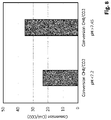
- Fig. 6 shows the results at an initial pH value of 8.7, i.e. around pH value 9 (cf. unfilled circles).
- the initial pH increased to a pH value of above 9.0 and consequently the methanation lowers dramatically during the duration of the experiment.
- Example 9 Methanation at high concentrations of sulfide using cultures of Methanothermus fervidus
Landscapes
- Chemical & Material Sciences (AREA)
- Organic Chemistry (AREA)
- Engineering & Computer Science (AREA)
- Life Sciences & Earth Sciences (AREA)
- Wood Science & Technology (AREA)
- Zoology (AREA)
- Health & Medical Sciences (AREA)
- Biotechnology (AREA)
- Genetics & Genomics (AREA)
- Bioinformatics & Cheminformatics (AREA)
- Microbiology (AREA)
- Biochemistry (AREA)
- General Chemical & Material Sciences (AREA)
- General Engineering & Computer Science (AREA)
- General Health & Medical Sciences (AREA)
- Chemical Kinetics & Catalysis (AREA)
- Oil, Petroleum & Natural Gas (AREA)
- Tropical Medicine & Parasitology (AREA)
- Virology (AREA)
- Biomedical Technology (AREA)
- Medicinal Chemistry (AREA)
- Preparation Of Compounds By Using Micro-Organisms (AREA)
- Micro-Organisms Or Cultivation Processes Thereof (AREA)
- Organic Low-Molecular-Weight Compounds And Preparation Thereof (AREA)
- Treating Waste Gases (AREA)
Applications Claiming Priority (2)
| Application Number | Priority Date | Filing Date | Title |
|---|---|---|---|
| DE102018126953.6A DE102018126953A1 (de) | 2018-10-29 | 2018-10-29 | Verfahren zur Verwendung von Industriegas zur Herstellung einer mit Methan angereicherten Gaszusammensetzung |
| PCT/EP2019/079433 WO2020089181A1 (en) | 2018-10-29 | 2019-10-28 | Method to use industrial co2 containing gas for the production of a methane enriched gas composition |
Publications (2)
| Publication Number | Publication Date |
|---|---|
| EP3874053A1 EP3874053A1 (en) | 2021-09-08 |
| EP3874053B1 true EP3874053B1 (en) | 2022-09-28 |
Family
ID=68470464
Family Applications (1)
| Application Number | Title | Priority Date | Filing Date |
|---|---|---|---|
| EP19798553.4A Active EP3874053B1 (en) | 2018-10-29 | 2019-10-28 | Method to use industrial co2-containing gas for the production of a methane enriched gas composition |
Country Status (22)
| Country | Link |
|---|---|
| US (1) | US20210403955A1 (https=) |
| EP (1) | EP3874053B1 (https=) |
| JP (1) | JP7391092B2 (https=) |
| KR (1) | KR102704919B1 (https=) |
| CN (1) | CN113227389A (https=) |
| AU (1) | AU2019370901B2 (https=) |
| BR (1) | BR112021007974A2 (https=) |
| CL (1) | CL2021001085A1 (https=) |
| DE (1) | DE102018126953A1 (https=) |
| DK (1) | DK3874053T3 (https=) |
| ES (1) | ES2932736T3 (https=) |
| FI (1) | FI3874053T3 (https=) |
| HU (1) | HUE060801T2 (https=) |
| IL (1) | IL282785B2 (https=) |
| MA (1) | MA54062A (https=) |
| MX (1) | MX2021004902A (https=) |
| MY (1) | MY206307A (https=) |
| PL (1) | PL3874053T3 (https=) |
| PT (1) | PT3874053T (https=) |
| SG (1) | SG11202103933VA (https=) |
| WO (1) | WO2020089181A1 (https=) |
| ZA (1) | ZA202102912B (https=) |
Families Citing this family (13)
| Publication number | Priority date | Publication date | Assignee | Title |
|---|---|---|---|---|
| DE102020123184A1 (de) * | 2020-09-04 | 2022-03-10 | Electrochaea GmbH | Verfahren zur Herstellung eines Syntheseproduktes, z.B. Methan, unter Verwendung von methanogenen Mikroorganismen in einer mikrobiellen Elektrolysezelle (MEC) durch Anwenden einer getrennten Nährstoffzufuhr-Strategie |
| KR20240006552A (ko) | 2021-05-10 | 2024-01-15 | 니폰 덴키 가라스 가부시키가이샤 | 무알칼리 유리판 |
| JPWO2022239741A1 (https=) | 2021-05-10 | 2022-11-17 | ||
| BR112023023974A2 (pt) * | 2021-05-18 | 2024-01-30 | Electrochaea GmbH | Sistema e método para reciclar a água e a amônia e, opcionalmente, outros nutrientes do meio celular para uma usina de transformação de energia em gás em metanação biológica utilizando biocatalisador (metanógeno) |
| TW202319363A (zh) | 2021-06-28 | 2023-05-16 | 日商日本電氣硝子股份有限公司 | 無鹼玻璃板 |
| JPWO2023084979A1 (https=) | 2021-11-10 | 2023-05-19 | ||
| CN115404088A (zh) * | 2022-07-14 | 2022-11-29 | 广州市金宝生态农业有限公司 | 一种水热炭制备和原位生物燃气提质的方法 |
| WO2024013279A1 (en) * | 2022-07-15 | 2024-01-18 | Aarhus Universitet | Conversion of carbon dioxide sources to methane |
| WO2024034541A1 (ja) * | 2022-08-08 | 2024-02-15 | 荏原実業株式会社 | 二酸化炭素除去を含むメタンガス生成装置及び方法 |
| US20260070834A1 (en) | 2022-08-10 | 2026-03-12 | Nippon Electric Glass Co., Ltd. | Alkali-free glass sheet |
| JP2024039788A (ja) | 2022-09-12 | 2024-03-25 | 日本電気硝子株式会社 | 無アルカリガラス板 |
| CN116044352B (zh) * | 2022-12-20 | 2023-12-01 | 郑州大学 | 一种枯竭油气藏循环生化转换二氧化碳及热气联产方法 |
| CN119040402B (zh) * | 2024-09-10 | 2025-06-10 | 河南农业大学 | 一种提高秸秆类原料厌氧发酵甲烷产量及纯度的方法 |
Citations (5)
| Publication number | Priority date | Publication date | Assignee | Title |
|---|---|---|---|---|
| FR2537992A1 (fr) | 1982-12-21 | 1984-06-22 | Elf Bio Rech Sa | Procede de production de methane par fermentation avec addition d'hydrogene |
| DE102010043630A1 (de) | 2009-11-11 | 2011-05-26 | GICON-Großmann Ingenieur Consult GmbH | Verfahren, Anlage und Methanreaktor zur Erhöhung der Methankonzentration des Biogases aus Biogasanlagen |
| WO2013060331A1 (en) | 2011-10-24 | 2013-05-02 | Technical University Of Denmark | Methods and apparatus for hydrogen based biogas upgrading |
| DE102012221286A1 (de) * | 2012-11-21 | 2014-05-22 | MicroPyros GmbH i.G. | Mikrobiologische Biomethan-Erzeugung mit Wasserstoff aus der thermischen Vergasung von kohlenstoffhaltigen Einsatzstoffen |
| US20140377830A1 (en) | 2006-06-13 | 2014-12-25 | The University Of Chicago | System for the Production of Methane From CO2 |
Family Cites Families (8)
| Publication number | Priority date | Publication date | Assignee | Title |
|---|---|---|---|---|
| US4386159A (en) * | 1981-01-14 | 1983-05-31 | Masakuni Kanai | Method of producing methane |
| FR2601690B1 (fr) * | 1986-07-17 | 1990-02-16 | Gaz De France | Procede de production de methane a rendement eleve par culture de methanobacterium thermoautotrophicum ou de toute bacterie methanogene ayant les memes proprietes physiologiques de croissance |
| US20100233775A1 (en) * | 2009-03-13 | 2010-09-16 | Tech V, LLC | System for the production of methane and other useful products and method of use |
| US20120115201A1 (en) * | 2009-03-13 | 2012-05-10 | Adams D Jack | Methods and Systems for Producing Biomass and/or Biotic Methane Using an Industrial Waste Stream |
| US20110165667A1 (en) | 2009-07-02 | 2011-07-07 | The University Of Chicago | Method and System for Converting Electricity Into Alternative Energy Resources |
| WO2012110256A1 (en) * | 2011-02-17 | 2012-08-23 | Krajete GmbH | Method of converting carbon dioxide and hydrogen to methane by microorganisms |
| RU2620063C2 (ru) | 2012-07-27 | 2017-05-22 | Эф-Эф-Джи-Эф Лимитед | Устройство и способ получения метана |
| GB201303156D0 (en) * | 2013-02-22 | 2013-04-10 | Krajete GmbH | Method and system for producing methane using methanogenic microorganisms and applying specific nitrogen concentrations in the liquid phase |
-
2018
- 2018-10-29 DE DE102018126953.6A patent/DE102018126953A1/de not_active Withdrawn
-
2019
- 2019-10-28 AU AU2019370901A patent/AU2019370901B2/en active Active
- 2019-10-28 MX MX2021004902A patent/MX2021004902A/es unknown
- 2019-10-28 MA MA054062A patent/MA54062A/fr unknown
- 2019-10-28 IL IL282785A patent/IL282785B2/en unknown
- 2019-10-28 FI FIEP19798553.4T patent/FI3874053T3/fi active
- 2019-10-28 PL PL19798553.4T patent/PL3874053T3/pl unknown
- 2019-10-28 BR BR112021007974-2A patent/BR112021007974A2/pt unknown
- 2019-10-28 CN CN201980074337.8A patent/CN113227389A/zh active Pending
- 2019-10-28 PT PT197985534T patent/PT3874053T/pt unknown
- 2019-10-28 US US17/289,377 patent/US20210403955A1/en active Pending
- 2019-10-28 WO PCT/EP2019/079433 patent/WO2020089181A1/en not_active Ceased
- 2019-10-28 MY MYPI2021002318A patent/MY206307A/en unknown
- 2019-10-28 EP EP19798553.4A patent/EP3874053B1/en active Active
- 2019-10-28 DK DK19798553.4T patent/DK3874053T3/da active
- 2019-10-28 JP JP2021524336A patent/JP7391092B2/ja active Active
- 2019-10-28 SG SG11202103933VA patent/SG11202103933VA/en unknown
- 2019-10-28 HU HUE19798553A patent/HUE060801T2/hu unknown
- 2019-10-28 ES ES19798553T patent/ES2932736T3/es active Active
- 2019-10-28 KR KR1020217014033A patent/KR102704919B1/ko active Active
-
2021
- 2021-04-27 CL CL2021001085A patent/CL2021001085A1/es unknown
- 2021-04-30 ZA ZA2021/02912A patent/ZA202102912B/en unknown
Patent Citations (5)
| Publication number | Priority date | Publication date | Assignee | Title |
|---|---|---|---|---|
| FR2537992A1 (fr) | 1982-12-21 | 1984-06-22 | Elf Bio Rech Sa | Procede de production de methane par fermentation avec addition d'hydrogene |
| US20140377830A1 (en) | 2006-06-13 | 2014-12-25 | The University Of Chicago | System for the Production of Methane From CO2 |
| DE102010043630A1 (de) | 2009-11-11 | 2011-05-26 | GICON-Großmann Ingenieur Consult GmbH | Verfahren, Anlage und Methanreaktor zur Erhöhung der Methankonzentration des Biogases aus Biogasanlagen |
| WO2013060331A1 (en) | 2011-10-24 | 2013-05-02 | Technical University Of Denmark | Methods and apparatus for hydrogen based biogas upgrading |
| DE102012221286A1 (de) * | 2012-11-21 | 2014-05-22 | MicroPyros GmbH i.G. | Mikrobiologische Biomethan-Erzeugung mit Wasserstoff aus der thermischen Vergasung von kohlenstoffhaltigen Einsatzstoffen |
Non-Patent Citations (11)
| Title |
|---|
| ANONYMOUS: "The Biogas - biogas composition", NASKEO ENVIRONNEMENT, 1 January 2009 (2009-01-01), pages 1 - 1, XP093121719 |
| BUGANTE E C ET AL: "Methane production from hydrogen and carbon dioxide and monoxide in a column bioreactor of thermophilic methanogens by gas recirculation", JOURNAL OF FERMENTATION AND BIOENGINEERING, SOCIETY OF FERMENTATION TECHNOLOGY, JP, vol. 67, no. 6, 1 January 1989 (1989-01-01), pages 419 - 421, XP025754675, ISSN: 0922-338X, [retrieved on 19890101], DOI: 10.1016/0922-338X(89)90148-7 * |
| EZEKOYE V A, OKEKE C E: "Design, Construction, and Performance Evaluation of Plastic Biodigester and the Storage of Biogas", THE PACIFIC JOURNAL OF SCIENCE AND TECHNOLOGY, vol. 7, no. 2, 1 November 2006 (2006-11-01), pages 176 - 184, XP093121690 |
| FACHAGENTUR NACHWACHSENDE ROHSTOFFE E.V: "Leitfaden Biogas - Von der Gewinnung zur Nutzung", 2010, FACHAGENTUR NACHWACHSENDE ROHSTOFFE E.V, ISBN: 3-00-014333-5 |
| HILKIAH IGONI, A., AYOTAMUNO, M.J., EZE, C.L. , OGAJI, S.O.T. , PROBERT, S.D.: "Designs of anaerobic digesters for producing biogas from municipal solid-waste", APPLIED ENERGY, vol. 85, no. 6, 22 October 2007 (2007-10-22), GB , pages 430 - 438, XP022496038, ISSN: 0306-2619, DOI: 10.1016/j.apenergy.2007.07.013 |
| IMAN W. KOSTER; ERNST KOOMEN: "Ammonia inhibition of the maximum growth rate (μ) of hydrogenotrophic methanogens at various pH-levels and temperat", APPLIED MICROBIOLOGY AND BIOTECHNOLOGY, vol. 28, no. 4 - 5, 1 June 1988 (1988-06-01), Berlin, DE , pages 500 - 505, XP035171963, ISSN: 1432-0614, DOI: 10.1007/BF00268222 |
| J GUSTAVSSON , B H SVENSSON, A KARLSSON: "The feasibility of trace element supplementation for stable operation of wheat stillage-fed biogas tank reactors", WATER SCI TECHNOL, vol. 64, 1 July 2011 (2011-07-01), pages 320 - 325, XP055671861, DOI: 10.2166/wst.2011.633 |
| MARTIN DWORKIN , STANLEY FALKOW , EUGENE ROSENBERG , KARL-HEINZ SCHLEIFER , ERKO STACKBRANDT: "The Prokaryotes A Handbook on the Biology of Bacteria", 2006, SPRINGER, ISBN: 978-0387-25492-0 |
| NTENGWE FELIX W, NJOVU LAURENCE, KASALI GEORGE, WITIKA LORDWELL K: "Biogas production in cone-closed floating-dome batch digester under tropical conditions ", INTERNATIONAL JOURNAL OF CHEMTECH RESEARCH, vol. 2, no. 1, 1 January 2010 (2010-01-01), India , pages 483 - 492, XP093121711, ISSN: 0974-4290 |
| RICHARD ZWEILER: "Biogas Netzeinspeisung", GÜSSING ENERGY TECHNOLOGIES GMBH, 4 July 2014 (2014-07-04), pages 1 - 1, XP093121723 |
| SOROKIN DIMITRY Y., ABBAS BEN, MERKEL ALEXANDER Y., RIJPSTRA W. IRENE C., DAMSTÉ JAAP S. SINNINGHE, SUKHACHEVA MARINA V., VAN LOOS: "Methanosalsum natronophilum sp. nov., and Methanocalculus alkaliphilus sp. nov., haloalkaliphilic methanogens from hypersaline soda lakes", INTERNATIONAL JOURNAL OF SYSTEMATIC AND EVOLUTIONARY MICROBIOLOGY, vol. 65, no. Pt_10, 1 October 2015 (2015-10-01), GB , pages 3739 - 3745, XP093121704, ISSN: 1466-5026, DOI: 10.1099/ijsem.0.000488 |
Also Published As
| Publication number | Publication date |
|---|---|
| CA3117885A1 (en) | 2020-05-07 |
| IL282785B2 (en) | 2025-04-01 |
| ES2932736T3 (es) | 2023-01-24 |
| AU2019370901A1 (en) | 2021-06-10 |
| JP2022506756A (ja) | 2022-01-17 |
| AU2019370901B2 (en) | 2025-07-17 |
| PL3874053T3 (pl) | 2023-01-09 |
| CN113227389A (zh) | 2021-08-06 |
| KR102704919B1 (ko) | 2024-09-09 |
| MY206307A (en) | 2024-12-07 |
| DE102018126953A1 (de) | 2020-04-30 |
| ZA202102912B (en) | 2022-06-29 |
| JP7391092B2 (ja) | 2023-12-04 |
| KR20210086643A (ko) | 2021-07-08 |
| DK3874053T3 (da) | 2022-12-19 |
| BR112021007974A2 (pt) | 2021-07-27 |
| WO2020089181A1 (en) | 2020-05-07 |
| PT3874053T (pt) | 2022-12-26 |
| FI3874053T3 (fi) | 2023-01-13 |
| MA54062A (fr) | 2022-05-11 |
| HUE060801T2 (hu) | 2023-04-28 |
| US20210403955A1 (en) | 2021-12-30 |
| IL282785A (en) | 2021-06-30 |
| MX2021004902A (es) | 2021-08-05 |
| EP3874053A1 (en) | 2021-09-08 |
| SG11202103933VA (en) | 2021-05-28 |
| CL2021001085A1 (es) | 2021-11-12 |
| IL282785B1 (en) | 2024-12-01 |
Similar Documents
| Publication | Publication Date | Title |
|---|---|---|
| EP3874053B1 (en) | Method to use industrial co2-containing gas for the production of a methane enriched gas composition | |
| US12416025B2 (en) | System for the production of methane from CO2 | |
| EP2032709B1 (en) | System for the production of methane from co2 | |
| Hwang et al. | Anaerobic bio-hydrogen production from ethanol fermentation: the role of pH | |
| Díaz et al. | Performance evaluation of oxygen, air and nitrate for the microaerobic removal of hydrogen sulphide in biogas from sludge digestion | |
| Kongjan et al. | Anaerobic digestion of skim latex serum (SLS) for hydrogen and methane production using a two-stage process in a series of up-flow anaerobic sludge blanket (UASB) reactor | |
| Zhao et al. | Contribution of microbial acclimation to lignite biomethanization | |
| Quinn et al. | Characterization of a microbial consortium that converts mariculture fish waste to biomethane | |
| Wang et al. | Nitrogen removal from wastewater and external waste activated sludge reutilization/reduction by simultaneous sludge fermentation, denitrification and anammox (SFDA) | |
| Savvas et al. | Methanogenic capacity and robustness of hydrogenotrophic cultures based on closed nutrient recycling via microbial catabolism: Impact of temperature and microbial attachment | |
| Fan et al. | The key step of gaseous phosphorus release in anaerobic digestion | |
| Javad Asgari et al. | Landfill biogas production process | |
| Alhraishawi et al. | Effect of salt content on biogas production and microbial activity: review study | |
| Vallero et al. | Thermophilic (55–65° C) and extreme thermophilic (70–80° C) sulfate reduction in methanol and formate‐fed UASB reactors | |
| Suraraksa et al. | Establishment of syntrophic methanogenic consortia (SMC) in different sludges from various full-scale biogas plants using sodium propionate | |
| CA3117885C (en) | Method to use industrial co2 containing gas for the production of a methane enriched gas composition | |
| Yangin-Gomec et al. | Coexistence of sulfate-reducing and methane-producing populations in upflow anaerobic sludge bed reactor treating lignocellulosic effluent with material balance | |
| HK40058206A (en) | Method to use industrial co2 containing gas for the production of a methane enriched gas composition | |
| Ravichandran et al. | The mystery of methanogenic archaea for sustainable development of environment | |
| Kassongo | Bioenergy production from the anaerobic digestion of agri-industrial residues | |
| Hudayah et al. | Improving the stability and efficiency of anaerobic hybrid reactor in treating citric acid wastewater using syntrophic methanogenic consortia | |
| van Hille et al. | AN INTEGRATED BIOPROCESS FOR ACID ROCK DRAINAGE (ARD) REMEDIATION AND RENEWABLE ENERGY GENERATION | |
| Li et al. | Start-up of a bench-scale UASB reactor treating real substitute natural gas wastewater with glucose addition | |
| Fuertez | Biogenic Methane Production from Coal Using Methanogenic Microbial Consortia | |
| Sudiartha et al. | 0.026) after the temperature was shifted to 45◦ C and 48◦ C, respectively. Methanosaeta was the most Hung, Y.-T. Effects of Stepwise prevalent methanogen during the thermal change. This finding suggests that the Methanosaeta genus Temperature Shifts in Anaerobic was a thermotolerant archaea. Anaerobaculum, Fervidobacterium, and Tepidanaerobacter were bacterial Digestion for Treating Municipal genera and grew well in shifted-up temperatures, implying heat-resistant characteristics. Wastewater Sludge: A Genomic Study |
Legal Events
| Date | Code | Title | Description |
|---|---|---|---|
| STAA | Information on the status of an ep patent application or granted ep patent |
Free format text: STATUS: UNKNOWN |
|
| STAA | Information on the status of an ep patent application or granted ep patent |
Free format text: STATUS: THE INTERNATIONAL PUBLICATION HAS BEEN MADE |
|
| PUAI | Public reference made under article 153(3) epc to a published international application that has entered the european phase |
Free format text: ORIGINAL CODE: 0009012 |
|
| STAA | Information on the status of an ep patent application or granted ep patent |
Free format text: STATUS: REQUEST FOR EXAMINATION WAS MADE |
|
| 17P | Request for examination filed |
Effective date: 20210531 |
|
| AK | Designated contracting states |
Kind code of ref document: A1 Designated state(s): AL AT BE BG CH CY CZ DE DK EE ES FI FR GB GR HR HU IE IS IT LI LT LU LV MC MK MT NL NO PL PT RO RS SE SI SK SM TR |
|
| DAX | Request for extension of the european patent (deleted) | ||
| RAV | Requested validation state of the european patent: fee paid |
Extension state: TN Effective date: 20210531 Extension state: MA Effective date: 20210531 Extension state: KH Effective date: 20210531 |
|
| RIC1 | Information provided on ipc code assigned before grant |
Ipc: C12N 1/20 20060101ALI20220304BHEP Ipc: C10L 3/08 20060101ALI20220304BHEP Ipc: C12P 5/02 20060101AFI20220304BHEP |
|
| GRAP | Despatch of communication of intention to grant a patent |
Free format text: ORIGINAL CODE: EPIDOSNIGR1 |
|
| STAA | Information on the status of an ep patent application or granted ep patent |
Free format text: STATUS: GRANT OF PATENT IS INTENDED |
|
| INTG | Intention to grant announced |
Effective date: 20220419 |
|
| GRAS | Grant fee paid |
Free format text: ORIGINAL CODE: EPIDOSNIGR3 |
|
| GRAA | (expected) grant |
Free format text: ORIGINAL CODE: 0009210 |
|
| STAA | Information on the status of an ep patent application or granted ep patent |
Free format text: STATUS: THE PATENT HAS BEEN GRANTED |
|
| AK | Designated contracting states |
Kind code of ref document: B1 Designated state(s): AL AT BE BG CH CY CZ DE DK EE ES FI FR GB GR HR HU IE IS IT LI LT LU LV MC MK MT NL NO PL PT RO RS SE SI SK SM TR |
|
| REG | Reference to a national code |
Ref country code: GB Ref legal event code: FG4D |
|
| REG | Reference to a national code |
Ref country code: CH Ref legal event code: EP |
|
| REG | Reference to a national code |
Ref country code: AT Ref legal event code: REF Ref document number: 1521263 Country of ref document: AT Kind code of ref document: T Effective date: 20221015 |
|
| REG | Reference to a national code |
Ref country code: DE Ref legal event code: R096 Ref document number: 602019020120 Country of ref document: DE |
|
| REG | Reference to a national code |
Ref country code: IE Ref legal event code: FG4D |
|
| REG | Reference to a national code |
Ref country code: RO Ref legal event code: EPE |
|
| REG | Reference to a national code |
Ref country code: DK Ref legal event code: T3 Effective date: 20221215 |
|
| REG | Reference to a national code |
Ref country code: NL Ref legal event code: FP |
|
| REG | Reference to a national code |
Ref country code: PT Ref legal event code: SC4A Ref document number: 3874053 Country of ref document: PT Date of ref document: 20221226 Kind code of ref document: T Free format text: AVAILABILITY OF NATIONAL TRANSLATION Effective date: 20221220 |
|
| REG | Reference to a national code |
Ref country code: LT Ref legal event code: MG9D |
|
| REG | Reference to a national code |
Ref country code: SE Ref legal event code: TRGR Ref country code: ES Ref legal event code: FG2A Ref document number: 2932736 Country of ref document: ES Kind code of ref document: T3 Effective date: 20230124 |
|
| PG25 | Lapsed in a contracting state [announced via postgrant information from national office to epo] |
Ref country code: RS Free format text: LAPSE BECAUSE OF FAILURE TO SUBMIT A TRANSLATION OF THE DESCRIPTION OR TO PAY THE FEE WITHIN THE PRESCRIBED TIME-LIMIT Effective date: 20220928 Ref country code: LV Free format text: LAPSE BECAUSE OF FAILURE TO SUBMIT A TRANSLATION OF THE DESCRIPTION OR TO PAY THE FEE WITHIN THE PRESCRIBED TIME-LIMIT Effective date: 20220928 Ref country code: LT Free format text: LAPSE BECAUSE OF FAILURE TO SUBMIT A TRANSLATION OF THE DESCRIPTION OR TO PAY THE FEE WITHIN THE PRESCRIBED TIME-LIMIT Effective date: 20220928 |
|
| REG | Reference to a national code |
Ref country code: NO Ref legal event code: T2 Effective date: 20220928 |
|
| PG25 | Lapsed in a contracting state [announced via postgrant information from national office to epo] |
Ref country code: HR Free format text: LAPSE BECAUSE OF FAILURE TO SUBMIT A TRANSLATION OF THE DESCRIPTION OR TO PAY THE FEE WITHIN THE PRESCRIBED TIME-LIMIT Effective date: 20220928 Ref country code: GR Free format text: LAPSE BECAUSE OF FAILURE TO SUBMIT A TRANSLATION OF THE DESCRIPTION OR TO PAY THE FEE WITHIN THE PRESCRIBED TIME-LIMIT Effective date: 20221229 |
|
| PG25 | Lapsed in a contracting state [announced via postgrant information from national office to epo] |
Ref country code: SM Free format text: LAPSE BECAUSE OF FAILURE TO SUBMIT A TRANSLATION OF THE DESCRIPTION OR TO PAY THE FEE WITHIN THE PRESCRIBED TIME-LIMIT Effective date: 20220928 |
|
| REG | Reference to a national code |
Ref country code: HU Ref legal event code: AG4A Ref document number: E060801 Country of ref document: HU |
|
| PG25 | Lapsed in a contracting state [announced via postgrant information from national office to epo] |
Ref country code: SK Free format text: LAPSE BECAUSE OF FAILURE TO SUBMIT A TRANSLATION OF THE DESCRIPTION OR TO PAY THE FEE WITHIN THE PRESCRIBED TIME-LIMIT Effective date: 20220928 Ref country code: IT Free format text: LAPSE BECAUSE OF NON-PAYMENT OF DUE FEES Effective date: 20221028 Ref country code: EE Free format text: LAPSE BECAUSE OF FAILURE TO SUBMIT A TRANSLATION OF THE DESCRIPTION OR TO PAY THE FEE WITHIN THE PRESCRIBED TIME-LIMIT Effective date: 20220928 |
|
| P01 | Opt-out of the competence of the unified patent court (upc) registered |
Effective date: 20230426 |
|
| REG | Reference to a national code |
Ref country code: DE Ref legal event code: R026 Ref document number: 602019020120 Country of ref document: DE |
|
| PG25 | Lapsed in a contracting state [announced via postgrant information from national office to epo] |
Ref country code: MC Free format text: LAPSE BECAUSE OF FAILURE TO SUBMIT A TRANSLATION OF THE DESCRIPTION OR TO PAY THE FEE WITHIN THE PRESCRIBED TIME-LIMIT Effective date: 20220928 Ref country code: LU Free format text: LAPSE BECAUSE OF NON-PAYMENT OF DUE FEES Effective date: 20221028 Ref country code: AL Free format text: LAPSE BECAUSE OF FAILURE TO SUBMIT A TRANSLATION OF THE DESCRIPTION OR TO PAY THE FEE WITHIN THE PRESCRIBED TIME-LIMIT Effective date: 20220928 |
|
| PLBI | Opposition filed |
Free format text: ORIGINAL CODE: 0009260 |
|
| PLAX | Notice of opposition and request to file observation + time limit sent |
Free format text: ORIGINAL CODE: EPIDOSNOBS2 |
|
| 26 | Opposition filed |
Opponent name: GULDE & PARTNER PATENT- UND RECHTSANWALTSKANZLEI MBB Effective date: 20230628 |
|
| REG | Reference to a national code |
Ref country code: AT Ref legal event code: UEP Ref document number: 1521263 Country of ref document: AT Kind code of ref document: T Effective date: 20220928 |
|
| PLBB | Reply of patent proprietor to notice(s) of opposition received |
Free format text: ORIGINAL CODE: EPIDOSNOBS3 |
|
| PG25 | Lapsed in a contracting state [announced via postgrant information from national office to epo] |
Ref country code: SI Free format text: LAPSE BECAUSE OF FAILURE TO SUBMIT A TRANSLATION OF THE DESCRIPTION OR TO PAY THE FEE WITHIN THE PRESCRIBED TIME-LIMIT Effective date: 20220928 |
|
| PG25 | Lapsed in a contracting state [announced via postgrant information from national office to epo] |
Ref country code: IT Free format text: LAPSE BECAUSE OF NON-PAYMENT OF DUE FEES Effective date: 20221028 |
|
| PGRI | Patent reinstated in contracting state [announced from national office to epo] |
Ref country code: IT Effective date: 20221031 |
|
| PG25 | Lapsed in a contracting state [announced via postgrant information from national office to epo] |
Ref country code: CY Free format text: LAPSE BECAUSE OF FAILURE TO SUBMIT A TRANSLATION OF THE DESCRIPTION OR TO PAY THE FEE WITHIN THE PRESCRIBED TIME-LIMIT Effective date: 20220928 |
|
| PG25 | Lapsed in a contracting state [announced via postgrant information from national office to epo] |
Ref country code: MK Free format text: LAPSE BECAUSE OF FAILURE TO SUBMIT A TRANSLATION OF THE DESCRIPTION OR TO PAY THE FEE WITHIN THE PRESCRIBED TIME-LIMIT Effective date: 20220928 |
|
| PG25 | Lapsed in a contracting state [announced via postgrant information from national office to epo] |
Ref country code: BG Free format text: LAPSE BECAUSE OF FAILURE TO SUBMIT A TRANSLATION OF THE DESCRIPTION OR TO PAY THE FEE WITHIN THE PRESCRIBED TIME-LIMIT Effective date: 20220928 |
|
| PG25 | Lapsed in a contracting state [announced via postgrant information from national office to epo] |
Ref country code: MT Free format text: LAPSE BECAUSE OF FAILURE TO SUBMIT A TRANSLATION OF THE DESCRIPTION OR TO PAY THE FEE WITHIN THE PRESCRIBED TIME-LIMIT Effective date: 20220928 |
|
| PLCK | Communication despatched that opposition was rejected |
Free format text: ORIGINAL CODE: EPIDOSNREJ1 |
|
| REG | Reference to a national code |
Ref country code: DE Ref legal event code: R100 Ref document number: 602019020120 Country of ref document: DE |
|
| PLBN | Opposition rejected |
Free format text: ORIGINAL CODE: 0009273 |
|
| STAA | Information on the status of an ep patent application or granted ep patent |
Free format text: STATUS: OPPOSITION REJECTED |
|
| 27O | Opposition rejected |
Effective date: 20250404 |
|
| VS25 | Lapsed in a validation state [announced via postgrant information from nat. office to epo] |
Ref country code: MA Free format text: FAILURE TO ELECT DOMICILE IN THE NATIONAL COUNTRY Effective date: 20221229 |
|
| REG | Reference to a national code |
Ref country code: CH Ref legal event code: U11 Free format text: ST27 STATUS EVENT CODE: U-0-0-U10-U11 (AS PROVIDED BY THE NATIONAL OFFICE) Effective date: 20251101 |
|
| PGFP | Annual fee paid to national office [announced via postgrant information from national office to epo] |
Ref country code: NL Payment date: 20251030 Year of fee payment: 7 |
|
| PGFP | Annual fee paid to national office [announced via postgrant information from national office to epo] |
Ref country code: PT Payment date: 20251021 Year of fee payment: 7 |
|
| PG25 | Lapsed in a contracting state [announced via postgrant information from national office to epo] |
Ref country code: TR Free format text: LAPSE BECAUSE OF FAILURE TO SUBMIT A TRANSLATION OF THE DESCRIPTION OR TO PAY THE FEE WITHIN THE PRESCRIBED TIME-LIMIT Effective date: 20220928 |
|
| PGFP | Annual fee paid to national office [announced via postgrant information from national office to epo] |
Ref country code: HU Payment date: 20251103 Year of fee payment: 7 |
|
| PGFP | Annual fee paid to national office [announced via postgrant information from national office to epo] |
Ref country code: IS Payment date: 20251027 Year of fee payment: 7 Ref country code: DE Payment date: 20251023 Year of fee payment: 7 |
|
| PGFP | Annual fee paid to national office [announced via postgrant information from national office to epo] |
Ref country code: GB Payment date: 20251023 Year of fee payment: 7 |
|
| PGFP | Annual fee paid to national office [announced via postgrant information from national office to epo] |
Ref country code: NO Payment date: 20251029 Year of fee payment: 7 |
|
| PGFP | Annual fee paid to national office [announced via postgrant information from national office to epo] |
Ref country code: AT Payment date: 20250930 Year of fee payment: 7 |
|
| PGFP | Annual fee paid to national office [announced via postgrant information from national office to epo] |
Ref country code: FI Payment date: 20251023 Year of fee payment: 7 Ref country code: DK Payment date: 20251030 Year of fee payment: 7 Ref country code: IT Payment date: 20251028 Year of fee payment: 7 |
|
| PGFP | Annual fee paid to national office [announced via postgrant information from national office to epo] |
Ref country code: FR Payment date: 20251023 Year of fee payment: 7 |
|
| PGFP | Annual fee paid to national office [announced via postgrant information from national office to epo] |
Ref country code: BE Payment date: 20251023 Year of fee payment: 7 |
|
| PGFP | Annual fee paid to national office [announced via postgrant information from national office to epo] |
Ref country code: CH Payment date: 20251101 Year of fee payment: 7 Ref country code: SE Payment date: 20251030 Year of fee payment: 7 |
|
| PGFP | Annual fee paid to national office [announced via postgrant information from national office to epo] |
Ref country code: CZ Payment date: 20251022 Year of fee payment: 7 Ref country code: IE Payment date: 20251017 Year of fee payment: 7 |
|
| PGFP | Annual fee paid to national office [announced via postgrant information from national office to epo] |
Ref country code: PL Payment date: 20251017 Year of fee payment: 7 |
|
| PGFP | Annual fee paid to national office [announced via postgrant information from national office to epo] |
Ref country code: RO Payment date: 20251023 Year of fee payment: 7 |
|
| PGFP | Annual fee paid to national office [announced via postgrant information from national office to epo] |
Ref country code: ES Payment date: 20251112 Year of fee payment: 7 |
|
| VS25 | Lapsed in a validation state [announced via postgrant information from nat. office to epo] |
Ref country code: MA Free format text: LAPSE BECAUSE OF FAILURE TO SUBMIT A TRANSLATION OF THE DESCRIPTION OR TO PAY THE FEE WITHIN THE PRESCRIBED TIME-LIMIT Effective date: 20220928 |