EP3873807B1 - Aircraft bench seat assembly - Google Patents
Aircraft bench seat assembly Download PDFInfo
- Publication number
- EP3873807B1 EP3873807B1 EP19879323.4A EP19879323A EP3873807B1 EP 3873807 B1 EP3873807 B1 EP 3873807B1 EP 19879323 A EP19879323 A EP 19879323A EP 3873807 B1 EP3873807 B1 EP 3873807B1
- Authority
- EP
- European Patent Office
- Prior art keywords
- seat
- aircraft
- center
- acute angle
- cargo hold
- Prior art date
- Legal status (The legal status is an assumption and is not a legal conclusion. Google has not performed a legal analysis and makes no representation as to the accuracy of the status listed.)
- Active
Links
Images


Classifications
-
- B—PERFORMING OPERATIONS; TRANSPORTING
- B64—AIRCRAFT; AVIATION; COSMONAUTICS
- B64D—EQUIPMENT FOR FITTING IN OR TO AIRCRAFT; FLIGHT SUITS; PARACHUTES; ARRANGEMENT OR MOUNTING OF POWER PLANTS OR PROPULSION TRANSMISSIONS IN AIRCRAFT
- B64D11/00—Passenger or crew accommodation; Flight-deck installations not otherwise provided for
- B64D11/06—Arrangements of seats, or adaptations or details specially adapted for aircraft seats
- B64D11/0601—Arrangement of seats for non-standard seating layouts, e.g. seats staggered horizontally or vertically, arranged in an angled or fishbone layout, or facing in other directions than the direction of flight
-
- B—PERFORMING OPERATIONS; TRANSPORTING
- B64—AIRCRAFT; AVIATION; COSMONAUTICS
- B64D—EQUIPMENT FOR FITTING IN OR TO AIRCRAFT; FLIGHT SUITS; PARACHUTES; ARRANGEMENT OR MOUNTING OF POWER PLANTS OR PROPULSION TRANSMISSIONS IN AIRCRAFT
- B64D11/00—Passenger or crew accommodation; Flight-deck installations not otherwise provided for
- B64D11/003—Stowage devices for passengers' personal luggage
-
- B—PERFORMING OPERATIONS; TRANSPORTING
- B60—VEHICLES IN GENERAL
- B60N—SEATS SPECIALLY ADAPTED FOR VEHICLES; VEHICLE PASSENGER ACCOMMODATION NOT OTHERWISE PROVIDED FOR
- B60N2/00—Seats specially adapted for vehicles; Arrangement or mounting of seats in vehicles
- B60N2/005—Arrangement or mounting of seats in vehicles, e.g. dismountable auxiliary seats
- B60N2/01—Arrangement of seats relative to one another
-
- B—PERFORMING OPERATIONS; TRANSPORTING
- B60—VEHICLES IN GENERAL
- B60N—SEATS SPECIALLY ADAPTED FOR VEHICLES; VEHICLE PASSENGER ACCOMMODATION NOT OTHERWISE PROVIDED FOR
- B60N2/00—Seats specially adapted for vehicles; Arrangement or mounting of seats in vehicles
- B60N2/24—Seats specially adapted for vehicles; Arrangement or mounting of seats in vehicles for particular purposes or particular vehicles
- B60N2/26—Seats specially adapted for vehicles; Arrangement or mounting of seats in vehicles for particular purposes or particular vehicles for children
-
- B—PERFORMING OPERATIONS; TRANSPORTING
- B60—VEHICLES IN GENERAL
- B60N—SEATS SPECIALLY ADAPTED FOR VEHICLES; VEHICLE PASSENGER ACCOMMODATION NOT OTHERWISE PROVIDED FOR
- B60N2/00—Seats specially adapted for vehicles; Arrangement or mounting of seats in vehicles
- B60N2/24—Seats specially adapted for vehicles; Arrangement or mounting of seats in vehicles for particular purposes or particular vehicles
- B60N2/26—Seats specially adapted for vehicles; Arrangement or mounting of seats in vehicles for particular purposes or particular vehicles for children
- B60N2/28—Seats readily mountable on, and dismountable from, existing seats or other parts of the vehicle
- B60N2/2857—Seats readily mountable on, and dismountable from, existing seats or other parts of the vehicle characterised by the peculiar orientation of the child
- B60N2/2863—Seats readily mountable on, and dismountable from, existing seats or other parts of the vehicle characterised by the peculiar orientation of the child backward facing
-
- B—PERFORMING OPERATIONS; TRANSPORTING
- B60—VEHICLES IN GENERAL
- B60N—SEATS SPECIALLY ADAPTED FOR VEHICLES; VEHICLE PASSENGER ACCOMMODATION NOT OTHERWISE PROVIDED FOR
- B60N2/00—Seats specially adapted for vehicles; Arrangement or mounting of seats in vehicles
- B60N2/24—Seats specially adapted for vehicles; Arrangement or mounting of seats in vehicles for particular purposes or particular vehicles
- B60N2/30—Non-dismountable or dismountable seats storable in a non-use position, e.g. foldable spare seats
- B60N2/3081—Seats convertible into parts of the seat cushion or the back-rest or disapppearing therein, e.g. for children
- B60N2/3086—Disappearing in a recess of the cushion
-
- B—PERFORMING OPERATIONS; TRANSPORTING
- B60—VEHICLES IN GENERAL
- B60R—VEHICLES, VEHICLE FITTINGS, OR VEHICLE PARTS, NOT OTHERWISE PROVIDED FOR
- B60R7/00—Stowing or holding appliances inside vehicle primarily intended for personal property smaller than suit-cases, e.g. travelling articles, or maps
- B60R7/04—Stowing or holding appliances inside vehicle primarily intended for personal property smaller than suit-cases, e.g. travelling articles, or maps in driver or passenger space, e.g. using racks
- B60R7/043—Stowing or holding appliances inside vehicle primarily intended for personal property smaller than suit-cases, e.g. travelling articles, or maps in driver or passenger space, e.g. using racks mounted on or under a seat
-
- B—PERFORMING OPERATIONS; TRANSPORTING
- B64—AIRCRAFT; AVIATION; COSMONAUTICS
- B64C—AEROPLANES; HELICOPTERS
- B64C1/00—Fuselages; Constructional features common to fuselages, wings, stabilising surfaces or the like
- B64C1/14—Windows; Doors; Hatch covers or access panels; Surrounding frame structures; Canopies; Windscreens accessories therefor, e.g. pressure sensors, water deflectors, hinges, seals, handles, latches, windscreen wipers
- B64C1/1407—Doors; surrounding frames
- B64C1/1423—Passenger doors
-
- B—PERFORMING OPERATIONS; TRANSPORTING
- B64—AIRCRAFT; AVIATION; COSMONAUTICS
- B64C—AEROPLANES; HELICOPTERS
- B64C29/00—Aircraft capable of landing or taking-off vertically, e.g. vertical take-off and landing [VTOL] aircraft
-
- B—PERFORMING OPERATIONS; TRANSPORTING
- B64—AIRCRAFT; AVIATION; COSMONAUTICS
- B64D—EQUIPMENT FOR FITTING IN OR TO AIRCRAFT; FLIGHT SUITS; PARACHUTES; ARRANGEMENT OR MOUNTING OF POWER PLANTS OR PROPULSION TRANSMISSIONS IN AIRCRAFT
- B64D11/00—Passenger or crew accommodation; Flight-deck installations not otherwise provided for
- B64D11/06—Arrangements of seats, or adaptations or details specially adapted for aircraft seats
- B64D11/0612—Arrangements of seats, or adaptations or details specially adapted for aircraft seats specially adapted for children
-
- B—PERFORMING OPERATIONS; TRANSPORTING
- B64—AIRCRAFT; AVIATION; COSMONAUTICS
- B64D—EQUIPMENT FOR FITTING IN OR TO AIRCRAFT; FLIGHT SUITS; PARACHUTES; ARRANGEMENT OR MOUNTING OF POWER PLANTS OR PROPULSION TRANSMISSIONS IN AIRCRAFT
- B64D11/00—Passenger or crew accommodation; Flight-deck installations not otherwise provided for
- B64D11/06—Arrangements of seats, or adaptations or details specially adapted for aircraft seats
- B64D11/0627—Seats combined with storage means
- B64D11/0636—Personal storage means or waste disposal bags
Definitions
- the present invention relates generally to an aircraft with a bench seat assembly having an angled seating configuration.
- the present invention provides seats that are angled away from one another.
- US2010252680 (PORTER GLEN WILSON ) relates to Vehicle Passenger Seating. According to the abstract of this document there is provided a seating arrangement for location at the longitudinal centre line of a commercial passenger vehicle that has a longitudinally extending passenger seating area.
- the seating arrangement includes a pair of seats disposed alongside and secured to each other. Each seat comprising a backrest portion, and a seat pan portion, wherein the seats face at an acute angle to each other, and wherein the backrest portions of the respective seats are nearest the vertex of the acute angle than the seat pan portions.
- the invention is defined in claim 1.
- an aircraft that includes a body that defines a cabin interior, a divider member that divides the cabin interior into a cargo hold and a passenger cabin, front and back bench seat assemblies positioned in the cabin interior, wherein the back bench seat assembly is positioned aft of the front bench seat assembly, a forward door that is pivotable between a closed position and an open position, and an aft door that is pivotable between a closed position and an open position. Pivoting one of the forward door or the aft door from the closed to the open position causes the other of the forward door or the aft door to pivot from the closed position to the open position.
- the body includes a side opening, and, in their closed positions, the forward and aft doors are positioned in the side opening.
- the side opening includes a front row access portion (where a passenger can enter the front row), a back row access portion (where a passenger can enter the back row) and a cargo hold access portion (where a passenger can reach into the cargo hold to put luggage in or remove luggage).
- the forward door blocks access to the front row access portion and the aft door blocks access to the back row access portion and the cargo hold access portion.
- the forward door pivots in one of a clockwise or a counter-clockwise direction and the aft door pivots in the other of the clockwise or the counter-clockwise direction.
- the divider member separates the passenger cabin from the cargo hold such that a passenger in the passenger cabin cannot access the cargo hold when the forward and aft doors are in the closed positions.
- the cargo hold includes a shelf therein that is pivotable between a stowed and a deployed position. When the shelf is in the deployed position the cargo hold is divided into upper and lower storage sections.
- the divider member includes a ledge, and in the deployed position the shelf rests on the ledge.
- pivoting one of the forward door or the aft door from the open position to the closed position causes the other of the forward door or the aft door to pivot from the open position to the closed position.
- the aircraft is a vertical take-off and landing aircraft and is not a helicopter.
- the center portion includes a front edge and a rear edge, and the front edge has a greater dimension than the rear edge.
- the center portion may be generally triangular or generally trapezoidal in shape.
- the aircraft includes a cockpit positioned forward of the front bench seat assembly and a first foot space is defined on a first side of the cockpit and a second foot space is defined on a second side of the cockpit.
- the front bench seat assembly includes a first seat that includes a seat portion and a back, a second seat that includes a seat portion and a back, and a center portion positioned between the first and second seats.
- the first seat is bifurcated by a first vertical plane
- the second seat is bifurcated by a second vertical plane
- the center portion is bifurcated by a center vertical plane.
- the first seat is angled outwardly such that the first plane defines a first acute angle with the center plane
- the second seat is angled outwardly such that the second plane defines a second acute angle with the center plane, and the first acute angle and the second acute angle are approximately the same.
- the back bench seat assembly includes a first seat that includes a seat portion and a back, a second seat that includes a seat portion and a back, and a center portion positioned between the first and second seats.
- the first seat is bifurcated by a third vertical plane
- the second seat is bifurcated by a fourth vertical plane
- the center portion is bifurcated by the center vertical plane.
- the first seat is angled outwardly such that the third plane defines a third acute angle with the center plane.
- the second seat is angled outwardly such that the fourth plane defines a fourth acute angle with the center plane.
- the third acute angle and the fourth acute angle are approximately the same.
- the center portion includes a drawer that is movable between an open and a closed position.
- the drawer includes a front edge and a rear edge and the front edge has a greater dimension than the rear edge.
- the center portion includes a cover that is movable between an open and a closed position.
- the cover includes a front edge and a rear edge and the front edge has a greater dimension than the rear edge.
- the center portion includes both a cover and a drawer.
- the center portion includes a cushion thereon that includes a front edge and a rear edge.
- the front edge has a greater dimension than the rear edge.
- the center portion is generally triangular or generally trapezoidal in shape.
- the center portion includes a baby seat thereon.
- the present invention provides simultaneous access to a vehicle's passenger cabin and the cargo hold when the doors are open and simultaneously closes the passenger cabin and cargo hold. It therefore enables passengers to themselves access the vehicle's cargo hold during boarding and deboarding, but not during flight or travel.
- the present invention is used in a vertical take-off and landing (VTOL) aircraft.
- VTOL vertical take-off and landing
- the VTOL is not a helicopter.
- the VTOL is an electric VTOL (referred to as an eVTOL).
- the VTOL can also be powered by gasoline or other fuel.
- the aircraft can be manned (with a pilot) or unmanned (autonomous).
- the VTOL's passenger cabin (passenger zone) and cargo hold (cargo zone) are configured to enable the capability of one door/hatch to close both zones or allow access to both zones.
- the passenger cabin is entirely accessible with two doors on one side of the vehicle.
- the forward door swings outwardly (e.g., clockwise) to allow ingress/egress to the forward passenger seat row (e.g., in a vehicle with two rows).
- the rear door swings outwardly (e.g., counterclockwise) pivoted from the aft vertical edge of the opening in the side of the vehicle, thereby exposing the rear passenger seat row and the cargo hold.
- the cargo zone holds the passenger's luggage and is preferably separated from the passenger cabin by a partition or divider member. In a preferred embodiment, no access between zones (cargo and passenger) is allowed during flight.
- the present invention enables simple passenger ingress/egress with smooth lateral sliding between two lateral seating positions, seating for two, oriented towards the outboard or outside of the vehicle, which allows the passengers to face away from one another on a single bench and provides a sense of privacy.
- the present invention provides a single seating apparatus or bench with the capability to seat one or two passengers.
- Multiple benches can be provided in a single passenger cabin.
- the bench contains two seating positions that are symmetrically angled away from the centerline of the vehicle. The angle preferably prevents the two adjacent passengers from being in each other's line of sight.
- the angled seating also aligns the passengers toward the outboard of the vehicle, which facilitate a window.
- safety harnesses or seatbelts are provided for both passengers on the bench.
- the spaces beside or either side of the pilot is used for passenger space (e.g., foot space).
- passenger space e.g., foot space.
- Enhanced outdoor views for passengers and connected services such as phone charging (e.g., inductive phone charging).
- the layout locates a "row" that contains two seat positions that are symmetrically angled away from the centerline of the vehicle.
- the angle also allows the front row passengers to use the space on the sides of the pilot or, in the case of an autonomous vehicle, the space on either side of one of the vehicle's components (e.g., engine).
- the two angled seats creates a zone or center portion that is generally triangular or trapezoidal in shape.
- triangular or trapezoidal means that when viewed from above (in plan) the center portion generally look like a triangle or trapezoid.
- the front and rear edges of the center portion may have a slight curve or may not be completely straight.
- the comers may be rounded. Therefore, if the seat or front or rear edges of the center portion have a slight curve or the comers are curved or rounded, this does not take them out of the definition of generally triangular or trapezoidal.
- This zone can be used for multiple purposes or variations.
- the zone can be used for auxiliary features, such as ancillary services, as auxiliary storage, a rear facing infant seat or third passenger (in row) seating.
- the ancillary service variant enables a platform where passengers, VTOLs and third party vendors can connect and supply desired services.
- the passenger can use a device with the appropriate software to order an item, e.g., food or drinks prior to flight.
- the third party vendor (or VTOL) can then prepare and fulfill the customer's order. For example, this can be done by the VTOL and third party vendor connecting via a vertiport rendezvous where the order is inserted into the ancillary service unit in the triangular zone (or other location) designated to the passenger that ordered the service.
- the order can be verified and accepted.
- FIGS. 1-13 show a VTOL aircraft 10 and components therefor that include a number of inventive features.
- FIGS. 1-5 include forward and aft doors 12 and 14 that open simultaneously and are positioned in a side opening 11 of the aircraft body 13.
- the forward and aft doors 12 and 14 are operatively connected such that opening the forward door 12 or moving the forward door 12 from the closed to the open position causes the aft door 14 to also move from the closed to the open position.
- opening the aft door 14 or moving the aft door 14 from the closed to the open position causes the forward door 12 to also move from the closed to the open position.
- the simultaneous opening and closing can be accomplished by mechanical mechanisms, electric mechanisms or a combination of both.
- FIGS. 2 and 3 show the closing path of the doors.
- the forward door 12 provides access to the front row of seats 16 and the aft door 14 provides access to the back row of seats 18 and the cargo hold 20.
- the cargo hold 20 is separated from the passenger cabin 22 by a divider member 24, which prevents passengers seated in the back row 18 from reaching back into the cargo hold 20.
- the cargo hold 20 includes a pivotable shelf 26 that is movable between a stowed position (see FIG. 4 ) and a deployed position (see FIG. 5 ).
- the shelf 26 is pivotably connected to the back wall 28 of the cargo hold 20 and pivots downwardly such that it rests on a ledge 30 on the divider member 24.
- the shelf 26 divides the cargo hold 20 into upper and lower storage sections. In another embodiment, more than one shelf can be induded.
- the aircraft 10 can include forward facing seats that are separate within each row, or, as shown in FIG. 4-13 , the aircraft 10 can include bench seats that are angled outwardly.
- FIGS. 6-8 show plan views of a seating arrangement that includes the front and back rows 16 and 18 with angled seats 32.
- the angle preferably prevents the two adjacent passengers from being in each other's line of sight.
- the angled seating also aligns the passengers toward the outboard of the aircraft 10.
- FIG. 6 shows an angle Q between the seat 32 (or a vertical plane PI that bifurcates the seat) and the longitudinal axis Al of the aircraft 10 (or a vertical plane that bifurcates the bench seat assembly and/or the center portion).
- the angle is symmetrical for the seats 32 on both sides of the aircraft 10.
- the seats in both rows include approximately the same outward angle.
- the angle Q can be any angle between 1° and 89°, but is preferably less than 45°.
- the embodiment shown in the drawings includes an angle of 10° off the center line for both seats.
- FIG. 7 shows passengers seated in some of the seats and gives an example of their sight lines. Approximately the same means that the angles are within at least a few degrees
- FIG. 8 shows a cockpit 34 that includes a seat for a pilot.
- the cabin 22 includes foot space 36 on opposite sides of the pilot where the front row passengers can place their feet.
- FIGS. 6-7 also show the foot space 36 on opposite sides of a forward area of the aircraft.
- the term cockpit does not necessarily mean that room or seating is provided for a pilot. Accordingly, the space in FIGS. 6-7 (a pilotless embodiment) is still referred to as cockpit 34. Foot space for the passengers in the back row can be provided on either side of the front row seats.
- FIGS. 9-13 show various configurations of bench seat assemblies 40 that include at least two seats 32 with a seat portion 42 and a back 44. The seats 32 are angled outwardly.
- the bench seat assembly 40 includes a center portion 46 that can include different components therein.
- FIGS. 9-11 show the center portion 46 with storage capabilities.
- FIG. 10 shows the center portion 46 with a drawer 48 that opens forwardly.
- FIG. 11 shows the center portion 46 with a cover 50 that opens upwardly to provide access to storage therein.
- the center portion 46, drawer 48 and cover 50 are shaped such that they fit into the center portion 46. Therefore, they each have a front edge or surface 52 that has a wider or longer dimension that a rear edge or surface 54.
- FIG. 12 shows a bench seat assembly 40 with a baby seat 56 in the center portion 46.
- the baby seat can be stowable within the center portion 46 and can deploy into the position shown in FIG. 12 .
- the center portion 46 can include the requisite attachments so that a commercially available baby seat can be connected to the center portion 46.
- FIG. 13 includes another seat 32 or cushion in the center portion 46. This can provide seating for a third person in the row or can provide overlap for a larger person seated in either of the seats. It will be appreciated that any of the bench seating assemblies discussed herein can be included in any of the aircraft embodiments discussed herein.
Landscapes
- Engineering & Computer Science (AREA)
- Aviation & Aerospace Engineering (AREA)
- Mechanical Engineering (AREA)
- Transportation (AREA)
- Health & Medical Sciences (AREA)
- Child & Adolescent Psychology (AREA)
- General Health & Medical Sciences (AREA)
- Seats For Vehicles (AREA)
Description
- This application claims the benefit of
U.S. Provisional Application Nos. 62/751,870, filed October 29, 2018 62/751,884, filed October 29, 2018 62/751,895, filed October 29, 2018 - The present invention relates generally to an aircraft with a bench seat assembly having an angled seating configuration.
- With the rise in popularity in ride sharing, small aircraft that can accommodate a small number of passengers for relatively short (e.g., intra-city) trips are contemplated. In such a situation the passengers may not know each other and privacy may be a concern.
- Accordingly, the present invention provides seats that are angled away from one another.
-
US2010252680 (PORTER GLEN WILSON ) relates to Vehicle Passenger Seating. According to the abstract of this document there is provided a seating arrangement for location at the longitudinal centre line of a commercial passenger vehicle that has a longitudinally extending passenger seating area. The seating arrangement includes a pair of seats disposed alongside and secured to each other. Each seat comprising a backrest portion, and a seat pan portion, wherein the seats face at an acute angle to each other, and wherein the backrest portions of the respective seats are nearest the vertex of the acute angle than the seat pan portions. - The invention is defined in claim 1.
- There is provided an aircraft that includes a body that defines a cabin interior, a divider member that divides the cabin interior into a cargo hold and a passenger cabin, front and back bench seat assemblies positioned in the cabin interior, wherein the back bench seat assembly is positioned aft of the front bench seat assembly, a forward door that is pivotable between a closed position and an open position, and an aft door that is pivotable between a closed position and an open position. Pivoting one of the forward door or the aft door from the closed to the open position causes the other of the forward door or the aft door to pivot from the closed position to the open position.
In a preferred embodiment, the body includes a side opening, and, in their closed positions, the forward and aft doors are positioned in the side opening. The side opening includes a front row access portion (where a passenger can enter the front row), a back row access portion (where a passenger can enter the back row) and a cargo hold access portion (where a passenger can reach into the cargo hold to put luggage in or remove luggage). Preferably, in the closed position, the forward door blocks access to the front row access portion and the aft door blocks access to the back row access portion and the cargo hold access portion. In a preferred embodiment, the forward door pivots in one of a clockwise or a counter-clockwise direction and the aft door pivots in the other of the clockwise or the counter-clockwise direction. - In a preferred embodiment, the divider member separates the passenger cabin from the cargo hold such that a passenger in the passenger cabin cannot access the cargo hold when the forward and aft doors are in the closed positions. Preferably, the cargo hold includes a shelf therein that is pivotable between a stowed and a deployed position. When the shelf is in the deployed position the cargo hold is divided into upper and lower storage sections. In a preferred embodiment, the divider member includes a ledge, and in the deployed position the shelf rests on the ledge.
- In a preferred embodiment, pivoting one of the forward door or the aft door from the open position to the closed position causes the other of the forward door or the aft door to pivot from the open position to the closed position. Preferably, the aircraft is a vertical take-off and landing aircraft and is not a helicopter.
- In a preferred embodiment, the center portion includes a front edge and a rear edge, and the front edge has a greater dimension than the rear edge. The center portion may be generally triangular or generally trapezoidal in shape.
- In a preferred embodiment, the aircraft includes a cockpit positioned forward of the front bench seat assembly and a first foot space is defined on a first side of the cockpit and a second foot space is defined on a second side of the cockpit.
- The front bench seat assembly includes a first seat that includes a seat portion and a back, a second seat that includes a seat portion and a back, and a center portion positioned between the first and second seats. The first seat is bifurcated by a first vertical plane, the second seat is bifurcated by a second vertical plane, and the center portion is bifurcated by a center vertical plane. The first seat is angled outwardly such that the first plane defines a first acute angle with the center plane, the second seat is angled outwardly such that the second plane defines a second acute angle with the center plane, and the first acute angle and the second acute angle are approximately the same.
- The back bench seat assembly includes a first seat that includes a seat portion and a back, a second seat that includes a seat portion and a back, and a center portion positioned between the first and second seats. The first seat is bifurcated by a third vertical plane The second seat is bifurcated by a fourth vertical plane, and the center portion is bifurcated by the center vertical plane. The first seat is angled outwardly such that the third plane defines a third acute angle with the center plane. The second seat is angled outwardly such that the fourth plane defines a fourth acute angle with the center plane. The third acute angle and the fourth acute angle are approximately the same.
- In a preferred embodiment, the center portion includes a drawer that is movable between an open and a closed position. The drawer includes a front edge and a rear edge and the front edge has a greater dimension than the rear edge. In a preferred embodiment, the center portion includes a cover that is movable between an open and a closed position. The cover includes a front edge and a rear edge and the front edge has a greater dimension than the rear edge. An embodiment is contemplated where the center portion includes both a cover and a drawer. In a preferred embodiment, the center portion includes a cushion thereon that includes a front edge and a rear edge. The front edge has a greater dimension than the rear edge. Preferably, the center portion is generally triangular or generally trapezoidal in shape. In a preferred embodiment, the center portion includes a baby seat thereon.
- In a preferred embodiment, the present invention provides simultaneous access to a vehicle's passenger cabin and the cargo hold when the doors are open and simultaneously closes the passenger cabin and cargo hold. It therefore enables passengers to themselves access the vehicle's cargo hold during boarding and deboarding, but not during flight or travel.
- In a preferred embodiment, the present invention is used in a vertical take-off and landing (VTOL) aircraft. However, this is not a limitation and the concepts disclosed herein can be used in other vehicles and aircraft. In a preferred embodiment, the VTOL is not a helicopter. In a preferred embodiment, the VTOL is an electric VTOL (referred to as an eVTOL). However, the VTOL can also be powered by gasoline or other fuel.
- Furthermore, the aircraft can be manned (with a pilot) or unmanned (autonomous). In a preferred embodiment, the VTOL's passenger cabin (passenger zone) and cargo hold (cargo zone) are configured to enable the capability of one door/hatch to close both zones or allow access to both zones. Preferably, the passenger cabin is entirely accessible with two doors on one side of the vehicle. The forward door swings outwardly (e.g., clockwise) to allow ingress/egress to the forward passenger seat row (e.g., in a vehicle with two rows). The rear door swings outwardly (e.g., counterclockwise) pivoted from the aft vertical edge of the opening in the side of the vehicle, thereby exposing the rear passenger seat row and the cargo hold. The cargo zone holds the passenger's luggage and is preferably separated from the passenger cabin by a partition or divider member. In a preferred embodiment, no access between zones (cargo and passenger) is allowed during flight.
- In a preferred embodiment, the present invention enables simple passenger ingress/egress with smooth lateral sliding between two lateral seating positions, seating for two, oriented towards the outboard or outside of the vehicle, which allows the passengers to face away from one another on a single bench and provides a sense of privacy.
- In a preferred embodiment, the present invention provides a single seating apparatus or bench with the capability to seat one or two passengers. Multiple benches can be provided in a single passenger cabin. The bench contains two seating positions that are symmetrically angled away from the centerline of the vehicle. The angle preferably prevents the two adjacent passengers from being in each other's line of sight. The angled seating also aligns the passengers toward the outboard of the vehicle, which facilitate a window. Preferably, safety harnesses or seatbelts are provided for both passengers on the bench.
- In a preferred embodiment, the spaces beside or either side of the pilot is used for passenger space (e.g., foot space). Enhanced outdoor views for passengers and connected services, such as phone charging (e.g., inductive phone charging).
- Angled seating to compress the seats together while maintaining comfort levels for a short flight. The layout locates a "row" that contains two seat positions that are symmetrically angled away from the centerline of the vehicle. The angle also allows the front row passengers to use the space on the sides of the pilot or, in the case of an autonomous vehicle, the space on either side of one of the vehicle's components (e.g., engine). The two angled seats creates a zone or center portion that is generally triangular or trapezoidal in shape. Generally triangular or trapezoidal means that when viewed from above (in plan) the center portion generally look like a triangle or trapezoid. Some seats have a slight curve on their outer edge. Also, the front and rear edges of the center portion may have a slight curve or may not be completely straight. Furthermore, the comers may be rounded. Therefore, if the seat or front or rear edges of the center portion have a slight curve or the comers are curved or rounded, this does not take them out of the definition of generally triangular or trapezoidal. This zone can be used for multiple purposes or variations. For example, the zone can be used for auxiliary features, such as ancillary services, as auxiliary storage, a rear facing infant seat or third passenger (in row) seating. The ancillary service variant enables a platform where passengers, VTOLs and third party vendors can connect and supply desired services. For example, the passenger can use a device with the appropriate software to order an item, e.g., food or drinks prior to flight. The third party vendor (or VTOL) can then prepare and fulfill the customer's order. For example, this can be done by the VTOL and third party vendor connecting via a vertiport rendezvous where the order is inserted into the ancillary service unit in the triangular zone (or other location) designated to the passenger that ordered the service. When the passenger arrives to the VTOL the order can be verified and accepted.
- The invention may be more readily understood by referring to the accompanying drawings in which:
-
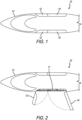
FIG. 1 is a plan view of a VTOL aircraft with forward and aft doors in accordance with a preferred embodiment of the present invention; -
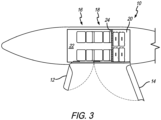
FIG. 2 is a plan view of the aircraft ofFIG. 1 with the forward and aft doors in the open position; -
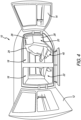
FIG. 3 is a plan view of the aircraft ofFIG. 1 with the forward and aft doors in the open position and showing the passenger area and cargo hold; -
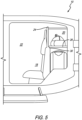
FIG. 4 is a perspective view of the aircraft with the forward and aft doors open; -
FIG. 5 is side elevational view of the rear seat row and the cargo hold; -
FIG. 6 is a top plan view of a VTOL aircraft with angled seating; -
FIG. 7 is a top plan view of the aircraft ofFIG. 6 with passengers therein and showing the passengers' lines of site; -
FIG. 8 is a top plan view of the aircraft ofFIG. 6 that includes a pilot space; -
FIG. 9 is a perspective view of a bench contains two seating positions that are symmetrically angled away from one another; -
FIG. 10 is a perspective view of the bench including a storage drawer; -
FIG. 11 is a perspective view of the bench including an openable top for storage; -
FIG. 12 is a perspective view of the bench including a child seat; and -
FIG. 13 is a perspective view of the bench including a center seat. - Like numerals refer to like parts throughout the several views of the drawings.
- The following description and drawings are illustrative and are not to be construed as limiting. Numerous specific details are described to provide a thorough understanding of the disclosure. However, in certain instances, well-known or conventional details are not described in order to avoid obscuring the description. References to one or an embodiment in the present disclosure can be, but not necessarily are references to the same embodiment; and, such references mean at least one of the embodiments.
- Reference in this specification to "one embodiment" or "an embodiment" means that a particular feature, structure, or characteristic described in connection with the embodiment is included in at least one embodiment of the disclosure. The appearances of the phrase "in one embodiment" in various places in the specification are not necessarily all referring to the same embodiment, nor are separate or alternative embodiments mutually exclusive of other embodiments. Moreover, various features are described which may be exhibited by some embodiments and not by others. Similarly, various requirements are described which may be requirements for some embodiments but not other embodiments.
- The terms used in this specification generally have their ordinary meanings in the art, within the context of the disclosure, and in the specific context where each term is used. Certain terms that are used to describe the disclosure are discussed below, or elsewhere in the specification, to provide additional guidance to the practitioner regarding the description of the disclosure. For convenience, certain terms may be highlighted, for example using italics and/or quotation marks: The use of highlighting has no influence on the scope and meaning of a term; the scope and meaning of a term is the same, in the same context, whether or not it is highlighted.
- It will be appreciated that the same thing can be said in more than one way.
- Consequently, alternative language and synonyms may be used for any one or more of the terms discussed herein. No special significance is to be placed upon whether or not a term is elaborated or discussed herein. Synonyms for certain terms are provided. A recital of one or more synonyms does not exclude the use of other synonyms. The use of examples anywhere in this specification including examples of any terms discussed herein is illustrative only, and is not intended to further limit the scope and meaning of the disclosure or of any exemplified term. Likewise, the disclosure is not limited to various embodiments given in this specification.
- Without intent to further limit the scope of the disclosure, examples of instruments, apparatus, methods and their related results according to the embodiments of the present disclosure are given below. Note that titles or subtitles may be used in the examples for convenience of a reader, which in no way should limit the scope of the disclosure. Unless otherwise defined, all technical and scientific terms used herein have the same meaning as commonly understood by one of ordinary skill in the art to which this disclosure pertains.
- In the case of conflict, the present document, including definitions, will control.
- It will be appreciated that terms such as "front," "back,""top,""bottom," "side," "short," "long," "up," "down," "aft," "forward," "inboard," "outboard" and "below" used herein are merely for ease of description and refer to the orientation of the components as shown in the figures. It should be understood that any orientation of the components described herein is within the scope of the present invention.
- Referring now to the drawings, wherein the showings are for purposes of illustrating the present invention and not for purposes of limiting the same,
FIGS. 1-13 show aVTOL aircraft 10 and components therefor that include a number of inventive features. -
FIGS. 1-5 include forward andaft doors side opening 11 of theaircraft body 13. In a preferred embodiment, the forward andaft doors forward door 12 or moving theforward door 12 from the closed to the open position causes theaft door 14 to also move from the closed to the open position. Furthermore, opening theaft door 14 or moving theaft door 14 from the closed to the open position causes theforward door 12 to also move from the closed to the open position. The simultaneous opening and closing can be accomplished by mechanical mechanisms, electric mechanisms or a combination of both. - The dashed lines in
FIGS. 2 and3 show the closing path of the doors. As shown, theforward door 12 provides access to the front row ofseats 16 and theaft door 14 provides access to the back row ofseats 18 and thecargo hold 20. Thecargo hold 20 is separated from thepassenger cabin 22 by adivider member 24, which prevents passengers seated in theback row 18 from reaching back into thecargo hold 20. - As shown in
FIGS. 4 and5 , in a preferred embodiment, thecargo hold 20 includes apivotable shelf 26 that is movable between a stowed position (seeFIG. 4 ) and a deployed position (seeFIG. 5 ). Preferably, theshelf 26 is pivotably connected to theback wall 28 of thecargo hold 20 and pivots downwardly such that it rests on aledge 30 on thedivider member 24. Theshelf 26 divides thecargo hold 20 into upper and lower storage sections. In another embodiment, more than one shelf can be induded. As shown inFIGS. 2-3 , theaircraft 10 can include forward facing seats that are separate within each row, or, as shown inFIG. 4-13 , theaircraft 10 can include bench seats that are angled outwardly. -
FIGS. 6-8 show plan views of a seating arrangement that includes the front andback rows angled seats 32. The angle preferably prevents the two adjacent passengers from being in each other's line of sight. The angled seating also aligns the passengers toward the outboard of theaircraft 10.FIG. 6 shows an angle Q between the seat 32 (or a vertical plane PI that bifurcates the seat) and the longitudinal axis Al of the aircraft 10 (or a vertical plane that bifurcates the bench seat assembly and/or the center portion). Preferably, the angle is symmetrical for theseats 32 on both sides of theaircraft 10. Also, preferably, the seats in both rows include approximately the same outward angle. The angle Q can be any angle between 1° and 89°, but is preferably less than 45°. The embodiment shown in the drawings includes an angle of 10° off the center line for both seats.FIG. 7 shows passengers seated in some of the seats and gives an example of their sight lines. Approximately the same means that the angles are within at least a few degrees of one another. -
FIG. 8 shows acockpit 34 that includes a seat for a pilot. In a preferred embodiment, thecabin 22 includesfoot space 36 on opposite sides of the pilot where the front row passengers can place their feet.FIGS. 6-7 also show thefoot space 36 on opposite sides of a forward area of the aircraft. As used herein, the term cockpit does not necessarily mean that room or seating is provided for a pilot. Accordingly, the space inFIGS. 6-7 (a pilotless embodiment) is still referred to ascockpit 34. Foot space for the passengers in the back row can be provided on either side of the front row seats. -
FIGS. 9-13 show various configurations ofbench seat assemblies 40 that include at least twoseats 32 with aseat portion 42 and a back 44. Theseats 32 are angled outwardly. In a preferred embodiment, thebench seat assembly 40 includes acenter portion 46 that can include different components therein.FIGS. 9-11 show thecenter portion 46 with storage capabilities.FIG. 10 shows thecenter portion 46 with a drawer 48 that opens forwardly.FIG. 11 shows thecenter portion 46 with a cover 50 that opens upwardly to provide access to storage therein. As is shown inFIGS. 10-11 , thecenter portion 46, drawer 48 and cover 50 are shaped such that they fit into thecenter portion 46. Therefore, they each have a front edge orsurface 52 that has a wider or longer dimension that a rear edge orsurface 54. -
FIG. 12 shows abench seat assembly 40 with ababy seat 56 in thecenter portion 46. - The baby seat can be stowable within the
center portion 46 and can deploy into the position shown inFIG. 12 . In another embodiment, thecenter portion 46 can include the requisite attachments so that a commercially available baby seat can be connected to thecenter portion 46.FIG. 13 includes anotherseat 32 or cushion in thecenter portion 46. This can provide seating for a third person in the row or can provide overlap for a larger person seated in either of the seats. It will be appreciated that any of the bench seating assemblies discussed herein can be included in any of the aircraft embodiments discussed herein. - Unless the context clearly requires otherwise, throughout the description and the claims, the words "comprise," "comprising," and the like are to be construed in an inclusive sense, as opposed to an exclusive or exhaustive sense; that is to say, in the sense of "including, but not limited to." As used herein, the terms "connected," "coupled," or any variant thereof, means any connection or coupling, either direct or indirect, between two or more elements; the coupling of connection between the elements can be physical, logical, or a combination thereof. Additionally, the words "herein," "above," "below," and words of similar import, when used in this application, shall refer to this application as a whole and not to any particular portions of this application. Where the context permits, words in the above Detailed Description of the Preferred Embodiments using the singular or plural number may also include the plural or singular number respectively. The word "or" in reference to a list of two or more items, covers all of the following interpretations of the word: any of the items in the list, all of the items in the list, and any combination of the items in the list.
- The above-detailed description of embodiments of the disclosure is not intended to be exhaustive or to limit the teachings to the precise form disclosed above. While specific embodiments of and examples for the disclosure are described above for illustrative purposes, various modifications are possible within the scope of the disclosure, as those skilled in the relevant art will recognize. Further, any specific numbers noted herein are only examples: alternative implementations may employ differing values, measurements or ranges. The scope of the invention is defined by the claims.
- The teachings of the disclosure provided herein can be applied to other systems, not necessarily the system described above. The elements and acts of the various embodiments described above can be combined to provide further embodiments. Any measurements described or used herein are merely exemplary and not a limitation on the present invention. Other measurements can be used. Further, any specific materials noted herein are only examples: alternative implementations may employ differing materials. However, the scope of the invention is defined by the claims.
- These and other changes can be made to the disclosure in light of the above Detailed Description of the Preferred Embodiments. While the above description describes certain embodiments of the disclosure, and describes the best mode contemplated, no matter how detailed the above appears in text, the teachings can be practiced in many ways. Details of the system may vary considerably in its implementation details, while still being encompassed by the subject matter disclosed herein. As noted above, particular terminology used when describing certain features or aspects of the disclosure should not be taken to imply that the terminology is being redefined herein to be restricted to any specific characteristics, features or aspects of the disclosure with which that terminology is associated. In general, the terms used in the following claims should not be construed to limit the disclosures to the specific embodiments disclosed in the specification unless the above Detailed Description of the Preferred Embodiments section explicitly defines such terms. Accordingly, the actual scope of the disclosure encompasses not only the disclosed embodiments, but also all similar ways of practicing or implementing the disclosure, provided that the scope is defined by the claims.
- Accordingly, although exemplary embodiments of the invention have been shown and described, it is to be understood that all the terms used herein are descriptive rather than limiting, and that many changes, modifications, and substitutions may be made by one having ordinary skill in the art without departing from the scope of the invention as defined by the claims.
Claims (8)
- An aircraft (10) comprising:a body (13) that defines a cabin interior and a longitudinal axis (A1), anda front bench seat assembly (40) positioned in the cabin interior; wherein the front bench seat assembly comprises:a first seat (32) that includes a seat portion (42) and a back (44), wherein the first seat is bifurcated by a first vertical plane (P1),a second seat (32) that includes a seat portion (42) and a back (44), wherein the second seat is bifurcated by a second vertical plane, anda center portion (46) positioned between the first and second seats, wherein the center portion is bifurcated by a center vertical plane,wherein the first seat is angled outwardly such that the first plane defines a first acute angle (Q) with the center vertical plane,wherein the second seat is angled outwardly such that the second plane defines a second acute angle (Q) with the center plane, andwherein the first acute angle and the second acute angle are approximately the samea back bench seat assembly (40) positioned in the cabin interior aft of the front bench seat assembly, wherein the back bench seat assembly includes:a first seat (32) that includes a seat portion (42) and a back (44), wherein the first seat is bifurcated by a third vertical plane,a second seat (32) that includes a seat portion (42) and a back (44), wherein the second seat is bifurcated by a fourth vertical plane, anda center portion (46) positioned between the first and second seats, wherein the center portion is bifurcated by the center vertical plane,wherein the first seat is angled outwardly such that the third plane defines a third acute angle (Q) with the center plane,wherein the second seat is angled outwardly such that the fourth plane defines a fourth acute angle (Q) with the center plane, andwherein the third acute angle and the fourth acute angle are approximately the same;a divider member (24) that divides the cabin interior into a cargo hold (20) and a passenger cabin (22),a forward door (12) that is pivotable between a closed position and an open position, andan aft door (14) that is pivotable between a closed position and an open position,wherein pivoting one of the forward door or the aft door from the closed to the open position causes the other of the forward door or the aft door to pivot from the closed position to the open position.
- The aircraft of claim 1 wherein the center portion (46) includes a front edge (52) and a rear edge (54), and wherein the front edge has a greater dimension than the rear edge.
- The aircraft of claim 1 wherein the body (13) includes a side opening (11), wherein in their closed positions, the forward and aft doors (12, 14) are positioned in the side opening, wherein the side opening includes a front row access portion, a back row access portion and a cargo hold access portion, wherein in the closed position, the forward door blocks access to the front row access portion, wherein in the closed position, the aft door blocks access to the back row access portion and the cargo hold access portion.
- The aircraft of claim 3 wherein the divider member (24) separates the passenger cabin (22) from the cargo hold (20) such that a passenger in the passenger cabin cannot access the cargo hold when the forward and aft doors (12, 14) are in the closed positions.
- The aircraft of claim 4 further comprising a cockpit (34) positioned forward of the front bench seat assembly (40), wherein a first foot space (36) is defined on a first side of the cockpit, and wherein a second foot space (36) is defined on a second side of the cockpit.
- The aircraft of claim 5 wherein the cargo hold (20) includes a shelf (26) therein that is pivotable between a stowed and a deployed position, wherein when the shelf is in the deployed position the cargo hold is divided into upper and lower storage sections.
- The aircraft of claim 1 wherein the aircraft (10) is a vertical take-off and landing aircraft.
- The aircraft of claim 7 wherein the aircraft is not a helicopter.
Applications Claiming Priority (4)
| Application Number | Priority Date | Filing Date | Title |
|---|---|---|---|
| US201862751870P | 2018-10-29 | 2018-10-29 | |
| US201862751884P | 2018-10-29 | 2018-10-29 | |
| US201862751895P | 2018-10-29 | 2018-10-29 | |
| PCT/US2019/049034 WO2020091887A1 (en) | 2018-10-29 | 2019-08-30 | Aircraft bench seat assembly |
Publications (3)
| Publication Number | Publication Date |
|---|---|
| EP3873807A1 EP3873807A1 (en) | 2021-09-08 |
| EP3873807A4 EP3873807A4 (en) | 2022-08-10 |
| EP3873807B1 true EP3873807B1 (en) | 2024-04-03 |
Family
ID=70462139
Family Applications (2)
| Application Number | Title | Priority Date | Filing Date |
|---|---|---|---|
| EP19879323.4A Active EP3873807B1 (en) | 2018-10-29 | 2019-08-30 | Aircraft bench seat assembly |
| EP19880009.6A Active EP3873808B1 (en) | 2018-10-29 | 2019-08-30 | Aircraft with angled seating configuration |
Family Applications After (1)
| Application Number | Title | Priority Date | Filing Date |
|---|---|---|---|
| EP19880009.6A Active EP3873808B1 (en) | 2018-10-29 | 2019-08-30 | Aircraft with angled seating configuration |
Country Status (3)
| Country | Link |
|---|---|
| US (1) | US11691735B2 (en) |
| EP (2) | EP3873807B1 (en) |
| WO (3) | WO2020091885A1 (en) |
Families Citing this family (2)
| Publication number | Priority date | Publication date | Assignee | Title |
|---|---|---|---|---|
| US11673671B2 (en) * | 2019-12-11 | 2023-06-13 | Adient Aerospace, Llc | Passenger seating arrangement |
| US11926248B2 (en) * | 2022-01-10 | 2024-03-12 | Faurecia Automotive Seating, Llc | Vehicle and occupant support for a vehicle |
Family Cites Families (30)
| Publication number | Priority date | Publication date | Assignee | Title |
|---|---|---|---|---|
| US3119441A (en) * | 1959-09-01 | 1964-01-28 | Lockheed Aircraft Corp | Multi-section aircraft door |
| US4685729A (en) * | 1986-09-18 | 1987-08-11 | Itt Corporation | Retractable console for an automotive vehicle seat |
| DE10059603B4 (en) * | 2000-11-30 | 2006-06-01 | Airbus Deutschland Gmbh | Airplane passenger cabin with an arrangement of passenger seats |
| CA2581738C (en) * | 2001-08-09 | 2009-04-14 | Virgin Atlantic Airways Limited | A seating system and a passenger accomodation unit for a vehicle |
| FR2862608B1 (en) * | 2003-11-24 | 2006-02-17 | Airbus France | AIRCRAFT PARTITION FOR SEPARATING A CARGO PORTION FROM A COCKPIT OR A PASSENGER COMPARTMENT |
| US8152096B2 (en) * | 2005-10-18 | 2012-04-10 | Smith Frick A | Apparatus and method for vertical take-off and landing aircraft |
| JP4797719B2 (en) * | 2006-03-15 | 2011-10-19 | マツダ株式会社 | Auto body structure |
| JP2007313969A (en) * | 2006-05-24 | 2007-12-06 | Mazda Motor Corp | Cabin structure |
| WO2008065654A2 (en) * | 2006-11-27 | 2008-06-05 | Urban Aeronautics Ltd. | Wall effects on vtol vehicles |
| FR2924683A1 (en) * | 2007-12-06 | 2009-06-12 | Airbus Sas | Cabin for e.g. double-aisle aircraft, has passenger seats arranged in rows that are inclined with respect to longitudinal aisles, where seats of each row are arranged side by side and oriented perpendicular to row and towards aisles |
| GB0724397D0 (en) * | 2007-12-14 | 2008-01-30 | Premium Aircraft Interiors Gro | Aircraft seat |
| PT2143633E (en) * | 2008-07-10 | 2011-02-16 | Agusta Spa | Aircraft and method of retrieving a rescue cradle into the aircraft fuselage |
| GB2469180B8 (en) * | 2009-03-23 | 2016-06-08 | Air New Zealand Ltd | Vehicle seating arrangement |
| US8800912B2 (en) * | 2009-10-09 | 2014-08-12 | Oliver Vtol, Llc | Three wing, six-tilt propulsion unit, VTOL aircraft |
| US8984811B2 (en) * | 2010-06-23 | 2015-03-24 | Greenpoint Technologies, Inc. | Door apparatus and method |
| GB2490095B (en) * | 2011-04-01 | 2017-05-10 | Zodiac Seats Uk Ltd | Aircraft seat arrangement including table |
| FR2975952B1 (en) | 2011-06-01 | 2013-07-19 | Eads Sogerma | CONVERTIBLE SEAT IN SLEEVE |
| US8528983B2 (en) * | 2011-09-28 | 2013-09-10 | Andrew E. Curto | Inflatable child airplane seat |
| DE102012020846A1 (en) * | 2012-10-24 | 2014-04-24 | Recaro Aircraft Seating Gmbh & Co. Kg | vehicle seat |
| US10144513B2 (en) * | 2012-12-06 | 2018-12-04 | Zodiac Seats France | High density full flat business class seat cabin |
| GB201400219D0 (en) * | 2014-01-07 | 2014-02-26 | British Airways Plc | Aircraft passenger seating arrangement |
| US11260975B2 (en) | 2014-10-07 | 2022-03-01 | Safran Seats GB Limited | Paired herringbone high density business class seating arrangement |
| CH710657A1 (en) * | 2015-01-28 | 2016-07-29 | Marenco Swisshelicopter Ag | Helicopter cabin. |
| ITUB20153008A1 (en) * | 2015-08-07 | 2017-02-07 | Optimares S P A | Aircraft seat assembly. |
| US10850844B2 (en) * | 2015-12-04 | 2020-12-01 | De Havilland Aircraft Of Canada Limited | Mobile platform cabin configured for passenger and cargo transport |
| US10239434B2 (en) * | 2016-01-14 | 2019-03-26 | Adient Luxembourg Holding S.a.r.l. | Vehicle seat with center seat cushion and console armrest |
| US9796303B1 (en) * | 2016-10-07 | 2017-10-24 | Lizbeth Schonfeld | Integrated child safety seat |
| US10604262B2 (en) * | 2017-01-12 | 2020-03-31 | Bell Helicopter Textron Inc. | Flexible aircraft seat configurations |
| JP7083842B2 (en) * | 2017-03-31 | 2022-06-13 | サフラン シーツ | Aircraft passenger seating equipment |
| CN112469628A (en) * | 2018-04-23 | 2021-03-09 | 瓦斯菲·阿希达法特 | City Autonomous Airport (CAA) |
-
2019
- 2019-08-30 US US17/289,699 patent/US11691735B2/en active Active
- 2019-08-30 EP EP19879323.4A patent/EP3873807B1/en active Active
- 2019-08-30 WO PCT/US2019/049022 patent/WO2020091885A1/en not_active Ceased
- 2019-08-30 WO PCT/US2019/049031 patent/WO2020091886A1/en not_active Ceased
- 2019-08-30 EP EP19880009.6A patent/EP3873808B1/en active Active
- 2019-08-30 WO PCT/US2019/049034 patent/WO2020091887A1/en not_active Ceased
Also Published As
| Publication number | Publication date |
|---|---|
| WO2020091887A1 (en) | 2020-05-07 |
| WO2020091885A1 (en) | 2020-05-07 |
| EP3873808A1 (en) | 2021-09-08 |
| EP3873808A4 (en) | 2022-08-31 |
| EP3873808B1 (en) | 2026-04-29 |
| US20220001990A1 (en) | 2022-01-06 |
| WO2020091886A1 (en) | 2020-05-07 |
| US11691735B2 (en) | 2023-07-04 |
| EP3873807A4 (en) | 2022-08-10 |
| EP3873807A1 (en) | 2021-09-08 |
Similar Documents
| Publication | Publication Date | Title |
|---|---|---|
| US10919631B2 (en) | Aircraft with multiple doors and multiple zones | |
| US10661879B2 (en) | Aircraft with selective cargo area access | |
| US11034452B2 (en) | Aircraft with staggered seating arrangement | |
| US10807717B2 (en) | Aircraft with angled seating configuration | |
| US12351314B2 (en) | Contour class divider | |
| EP2785589B1 (en) | Premium seat comprising a stowable food tray and a sliding amrest | |
| US8899801B2 (en) | PSU pod assembly and method for using same | |
| EP2865597B1 (en) | Overhead storage bin assemblies for transport vehicles, especially aircraft cabins | |
| US20130206907A1 (en) | Expandable lavatory with movable wall | |
| US11161614B2 (en) | Vehicle business class seat and stowage system | |
| EP3354569B1 (en) | Overhead bin with two substantially rigid shelves | |
| CN107949520B (en) | Cabin layout with optimized passenger and crew service areas | |
| WO2013057137A1 (en) | Cabin attendant seat, arrangement comprising a cabin attendant seat and aircraft area | |
| EP2873616A1 (en) | Toilet arrangement for a vehicle | |
| EP3873807B1 (en) | Aircraft bench seat assembly | |
| EP3873809A1 (en) | Aircraft with staggered seating arrangement | |
| WO2020092313A1 (en) | Aircraft with multiple doors and multiple zones | |
| US20240351689A1 (en) | Passenger seating system | |
| EP2900552B1 (en) | Aircraft sideboard | |
| WO2020076369A1 (en) | Double cabin attendant seat | |
| WO2020091933A1 (en) | Aircraft pilot security partition and door | |
| US20260054838A1 (en) | Vip front row business class monument | |
| JP2024110021A (en) | Mobile |
Legal Events
| Date | Code | Title | Description |
|---|---|---|---|
| STAA | Information on the status of an ep patent application or granted ep patent |
Free format text: STATUS: THE INTERNATIONAL PUBLICATION HAS BEEN MADE |
|
| PUAI | Public reference made under article 153(3) epc to a published international application that has entered the european phase |
Free format text: ORIGINAL CODE: 0009012 |
|
| STAA | Information on the status of an ep patent application or granted ep patent |
Free format text: STATUS: REQUEST FOR EXAMINATION WAS MADE |
|
| 17P | Request for examination filed |
Effective date: 20210528 |
|
| AK | Designated contracting states |
Kind code of ref document: A1 Designated state(s): AL AT BE BG CH CY CZ DE DK EE ES FI FR GB GR HR HU IE IS IT LI LT LU LV MC MK MT NL NO PL PT RO RS SE SI SK SM TR |
|
| DAV | Request for validation of the european patent (deleted) | ||
| DAX | Request for extension of the european patent (deleted) | ||
| A4 | Supplementary search report drawn up and despatched |
Effective date: 20220711 |
|
| RIC1 | Information provided on ipc code assigned before grant |
Ipc: B64C 29/00 20060101ALI20220705BHEP Ipc: B60R 7/04 20060101ALI20220705BHEP Ipc: B60N 2/30 20060101ALI20220705BHEP Ipc: B60N 2/28 20060101ALI20220705BHEP Ipc: B60N 2/26 20060101ALI20220705BHEP Ipc: B60N 2/01 20060101ALI20220705BHEP Ipc: B64D 11/00 20060101ALI20220705BHEP Ipc: B64C 1/14 20060101ALI20220705BHEP Ipc: B64D 11/06 20060101AFI20220705BHEP |
|
| GRAP | Despatch of communication of intention to grant a patent |
Free format text: ORIGINAL CODE: EPIDOSNIGR1 |
|
| STAA | Information on the status of an ep patent application or granted ep patent |
Free format text: STATUS: GRANT OF PATENT IS INTENDED |
|
| INTG | Intention to grant announced |
Effective date: 20231113 |
|
| GRAS | Grant fee paid |
Free format text: ORIGINAL CODE: EPIDOSNIGR3 |
|
| GRAA | (expected) grant |
Free format text: ORIGINAL CODE: 0009210 |
|
| STAA | Information on the status of an ep patent application or granted ep patent |
Free format text: STATUS: THE PATENT HAS BEEN GRANTED |
|
| AK | Designated contracting states |
Kind code of ref document: B1 Designated state(s): AL AT BE BG CH CY CZ DE DK EE ES FI FR GB GR HR HU IE IS IT LI LT LU LV MC MK MT NL NO PL PT RO RS SE SI SK SM TR |
|
| REG | Reference to a national code |
Ref country code: CH Ref legal event code: EP |
|
| REG | Reference to a national code |
Ref country code: DE Ref legal event code: R096 Ref document number: 602019049749 Country of ref document: DE |
|
| REG | Reference to a national code |
Ref country code: IE Ref legal event code: FG4D |
|
| REG | Reference to a national code |
Ref country code: LT Ref legal event code: MG9D |
|
| REG | Reference to a national code |
Ref country code: NL Ref legal event code: MP Effective date: 20240403 |
|
| REG | Reference to a national code |
Ref country code: AT Ref legal event code: MK05 Ref document number: 1672038 Country of ref document: AT Kind code of ref document: T Effective date: 20240403 |
|
| PG25 | Lapsed in a contracting state [announced via postgrant information from national office to epo] |
Ref country code: NL Free format text: LAPSE BECAUSE OF FAILURE TO SUBMIT A TRANSLATION OF THE DESCRIPTION OR TO PAY THE FEE WITHIN THE PRESCRIBED TIME-LIMIT Effective date: 20240403 |
|
| PG25 | Lapsed in a contracting state [announced via postgrant information from national office to epo] |
Ref country code: NL Free format text: LAPSE BECAUSE OF FAILURE TO SUBMIT A TRANSLATION OF THE DESCRIPTION OR TO PAY THE FEE WITHIN THE PRESCRIBED TIME-LIMIT Effective date: 20240403 |
|
| PG25 | Lapsed in a contracting state [announced via postgrant information from national office to epo] |
Ref country code: IS Free format text: LAPSE BECAUSE OF FAILURE TO SUBMIT A TRANSLATION OF THE DESCRIPTION OR TO PAY THE FEE WITHIN THE PRESCRIBED TIME-LIMIT Effective date: 20240803 |
|
| PG25 | Lapsed in a contracting state [announced via postgrant information from national office to epo] |
Ref country code: BG Free format text: LAPSE BECAUSE OF FAILURE TO SUBMIT A TRANSLATION OF THE DESCRIPTION OR TO PAY THE FEE WITHIN THE PRESCRIBED TIME-LIMIT Effective date: 20240403 |
|
| PG25 | Lapsed in a contracting state [announced via postgrant information from national office to epo] |
Ref country code: HR Free format text: LAPSE BECAUSE OF FAILURE TO SUBMIT A TRANSLATION OF THE DESCRIPTION OR TO PAY THE FEE WITHIN THE PRESCRIBED TIME-LIMIT Effective date: 20240403 Ref country code: FI Free format text: LAPSE BECAUSE OF FAILURE TO SUBMIT A TRANSLATION OF THE DESCRIPTION OR TO PAY THE FEE WITHIN THE PRESCRIBED TIME-LIMIT Effective date: 20240403 |
|
| PG25 | Lapsed in a contracting state [announced via postgrant information from national office to epo] |
Ref country code: GR Free format text: LAPSE BECAUSE OF FAILURE TO SUBMIT A TRANSLATION OF THE DESCRIPTION OR TO PAY THE FEE WITHIN THE PRESCRIBED TIME-LIMIT Effective date: 20240704 |
|
| PG25 | Lapsed in a contracting state [announced via postgrant information from national office to epo] |
Ref country code: PT Free format text: LAPSE BECAUSE OF FAILURE TO SUBMIT A TRANSLATION OF THE DESCRIPTION OR TO PAY THE FEE WITHIN THE PRESCRIBED TIME-LIMIT Effective date: 20240805 |
|
| PG25 | Lapsed in a contracting state [announced via postgrant information from national office to epo] |
Ref country code: ES Free format text: LAPSE BECAUSE OF FAILURE TO SUBMIT A TRANSLATION OF THE DESCRIPTION OR TO PAY THE FEE WITHIN THE PRESCRIBED TIME-LIMIT Effective date: 20240403 |
|
| PG25 | Lapsed in a contracting state [announced via postgrant information from national office to epo] |
Ref country code: CZ Free format text: LAPSE BECAUSE OF FAILURE TO SUBMIT A TRANSLATION OF THE DESCRIPTION OR TO PAY THE FEE WITHIN THE PRESCRIBED TIME-LIMIT Effective date: 20240403 |
|
| PG25 | Lapsed in a contracting state [announced via postgrant information from national office to epo] |
Ref country code: AT Free format text: LAPSE BECAUSE OF FAILURE TO SUBMIT A TRANSLATION OF THE DESCRIPTION OR TO PAY THE FEE WITHIN THE PRESCRIBED TIME-LIMIT Effective date: 20240403 |
|
| PG25 | Lapsed in a contracting state [announced via postgrant information from national office to epo] |
Ref country code: PL Free format text: LAPSE BECAUSE OF FAILURE TO SUBMIT A TRANSLATION OF THE DESCRIPTION OR TO PAY THE FEE WITHIN THE PRESCRIBED TIME-LIMIT Effective date: 20240403 |
|
| PG25 | Lapsed in a contracting state [announced via postgrant information from national office to epo] |
Ref country code: LV Free format text: LAPSE BECAUSE OF FAILURE TO SUBMIT A TRANSLATION OF THE DESCRIPTION OR TO PAY THE FEE WITHIN THE PRESCRIBED TIME-LIMIT Effective date: 20240403 |
|
| PG25 | Lapsed in a contracting state [announced via postgrant information from national office to epo] |
Ref country code: PT Free format text: LAPSE BECAUSE OF FAILURE TO SUBMIT A TRANSLATION OF THE DESCRIPTION OR TO PAY THE FEE WITHIN THE PRESCRIBED TIME-LIMIT Effective date: 20240805 Ref country code: PL Free format text: LAPSE BECAUSE OF FAILURE TO SUBMIT A TRANSLATION OF THE DESCRIPTION OR TO PAY THE FEE WITHIN THE PRESCRIBED TIME-LIMIT Effective date: 20240403 Ref country code: NO Free format text: LAPSE BECAUSE OF FAILURE TO SUBMIT A TRANSLATION OF THE DESCRIPTION OR TO PAY THE FEE WITHIN THE PRESCRIBED TIME-LIMIT Effective date: 20240703 Ref country code: LV Free format text: LAPSE BECAUSE OF FAILURE TO SUBMIT A TRANSLATION OF THE DESCRIPTION OR TO PAY THE FEE WITHIN THE PRESCRIBED TIME-LIMIT Effective date: 20240403 Ref country code: IS Free format text: LAPSE BECAUSE OF FAILURE TO SUBMIT A TRANSLATION OF THE DESCRIPTION OR TO PAY THE FEE WITHIN THE PRESCRIBED TIME-LIMIT Effective date: 20240803 Ref country code: HR Free format text: LAPSE BECAUSE OF FAILURE TO SUBMIT A TRANSLATION OF THE DESCRIPTION OR TO PAY THE FEE WITHIN THE PRESCRIBED TIME-LIMIT Effective date: 20240403 Ref country code: GR Free format text: LAPSE BECAUSE OF FAILURE TO SUBMIT A TRANSLATION OF THE DESCRIPTION OR TO PAY THE FEE WITHIN THE PRESCRIBED TIME-LIMIT Effective date: 20240704 Ref country code: FI Free format text: LAPSE BECAUSE OF FAILURE TO SUBMIT A TRANSLATION OF THE DESCRIPTION OR TO PAY THE FEE WITHIN THE PRESCRIBED TIME-LIMIT Effective date: 20240403 Ref country code: ES Free format text: LAPSE BECAUSE OF FAILURE TO SUBMIT A TRANSLATION OF THE DESCRIPTION OR TO PAY THE FEE WITHIN THE PRESCRIBED TIME-LIMIT Effective date: 20240403 Ref country code: CZ Free format text: LAPSE BECAUSE OF FAILURE TO SUBMIT A TRANSLATION OF THE DESCRIPTION OR TO PAY THE FEE WITHIN THE PRESCRIBED TIME-LIMIT Effective date: 20240403 Ref country code: BG Free format text: LAPSE BECAUSE OF FAILURE TO SUBMIT A TRANSLATION OF THE DESCRIPTION OR TO PAY THE FEE WITHIN THE PRESCRIBED TIME-LIMIT Effective date: 20240403 Ref country code: AT Free format text: LAPSE BECAUSE OF FAILURE TO SUBMIT A TRANSLATION OF THE DESCRIPTION OR TO PAY THE FEE WITHIN THE PRESCRIBED TIME-LIMIT Effective date: 20240403 Ref country code: RS Free format text: LAPSE BECAUSE OF FAILURE TO SUBMIT A TRANSLATION OF THE DESCRIPTION OR TO PAY THE FEE WITHIN THE PRESCRIBED TIME-LIMIT Effective date: 20240703 |
|
| REG | Reference to a national code |
Ref country code: DE Ref legal event code: R097 Ref document number: 602019049749 Country of ref document: DE |
|
| PG25 | Lapsed in a contracting state [announced via postgrant information from national office to epo] |
Ref country code: DK Free format text: LAPSE BECAUSE OF FAILURE TO SUBMIT A TRANSLATION OF THE DESCRIPTION OR TO PAY THE FEE WITHIN THE PRESCRIBED TIME-LIMIT Effective date: 20240403 |
|
| PG25 | Lapsed in a contracting state [announced via postgrant information from national office to epo] |
Ref country code: EE Free format text: LAPSE BECAUSE OF FAILURE TO SUBMIT A TRANSLATION OF THE DESCRIPTION OR TO PAY THE FEE WITHIN THE PRESCRIBED TIME-LIMIT Effective date: 20240403 |
|
| PG25 | Lapsed in a contracting state [announced via postgrant information from national office to epo] |
Ref country code: SK Free format text: LAPSE BECAUSE OF FAILURE TO SUBMIT A TRANSLATION OF THE DESCRIPTION OR TO PAY THE FEE WITHIN THE PRESCRIBED TIME-LIMIT Effective date: 20240403 Ref country code: RO Free format text: LAPSE BECAUSE OF FAILURE TO SUBMIT A TRANSLATION OF THE DESCRIPTION OR TO PAY THE FEE WITHIN THE PRESCRIBED TIME-LIMIT Effective date: 20240403 |
|
| PG25 | Lapsed in a contracting state [announced via postgrant information from national office to epo] |
Ref country code: SM Free format text: LAPSE BECAUSE OF FAILURE TO SUBMIT A TRANSLATION OF THE DESCRIPTION OR TO PAY THE FEE WITHIN THE PRESCRIBED TIME-LIMIT Effective date: 20240403 |
|
| PG25 | Lapsed in a contracting state [announced via postgrant information from national office to epo] |
Ref country code: SM Free format text: LAPSE BECAUSE OF FAILURE TO SUBMIT A TRANSLATION OF THE DESCRIPTION OR TO PAY THE FEE WITHIN THE PRESCRIBED TIME-LIMIT Effective date: 20240403 Ref country code: SK Free format text: LAPSE BECAUSE OF FAILURE TO SUBMIT A TRANSLATION OF THE DESCRIPTION OR TO PAY THE FEE WITHIN THE PRESCRIBED TIME-LIMIT Effective date: 20240403 Ref country code: RO Free format text: LAPSE BECAUSE OF FAILURE TO SUBMIT A TRANSLATION OF THE DESCRIPTION OR TO PAY THE FEE WITHIN THE PRESCRIBED TIME-LIMIT Effective date: 20240403 Ref country code: EE Free format text: LAPSE BECAUSE OF FAILURE TO SUBMIT A TRANSLATION OF THE DESCRIPTION OR TO PAY THE FEE WITHIN THE PRESCRIBED TIME-LIMIT Effective date: 20240403 Ref country code: DK Free format text: LAPSE BECAUSE OF FAILURE TO SUBMIT A TRANSLATION OF THE DESCRIPTION OR TO PAY THE FEE WITHIN THE PRESCRIBED TIME-LIMIT Effective date: 20240403 |
|
| PLBE | No opposition filed within time limit |
Free format text: ORIGINAL CODE: 0009261 |
|
| STAA | Information on the status of an ep patent application or granted ep patent |
Free format text: STATUS: NO OPPOSITION FILED WITHIN TIME LIMIT |
|
| 26N | No opposition filed |
Effective date: 20250106 |
|
| REG | Reference to a national code |
Ref country code: CH Ref legal event code: PL |
|
| PG25 | Lapsed in a contracting state [announced via postgrant information from national office to epo] |
Ref country code: LU Free format text: LAPSE BECAUSE OF NON-PAYMENT OF DUE FEES Effective date: 20240830 |
|
| GBPC | Gb: european patent ceased through non-payment of renewal fee |
Effective date: 20240830 |
|
| PG25 | Lapsed in a contracting state [announced via postgrant information from national office to epo] |
Ref country code: SI Free format text: LAPSE BECAUSE OF FAILURE TO SUBMIT A TRANSLATION OF THE DESCRIPTION OR TO PAY THE FEE WITHIN THE PRESCRIBED TIME-LIMIT Effective date: 20240403 Ref country code: MC Free format text: LAPSE BECAUSE OF FAILURE TO SUBMIT A TRANSLATION OF THE DESCRIPTION OR TO PAY THE FEE WITHIN THE PRESCRIBED TIME-LIMIT Effective date: 20240403 Ref country code: CH Free format text: LAPSE BECAUSE OF NON-PAYMENT OF DUE FEES Effective date: 20240831 |
|
| REG | Reference to a national code |
Ref country code: BE Ref legal event code: MM Effective date: 20240831 |
|
| PG25 | Lapsed in a contracting state [announced via postgrant information from national office to epo] |
Ref country code: GB Free format text: LAPSE BECAUSE OF NON-PAYMENT OF DUE FEES Effective date: 20240830 |
|
| PG25 | Lapsed in a contracting state [announced via postgrant information from national office to epo] |
Ref country code: BE Free format text: LAPSE BECAUSE OF NON-PAYMENT OF DUE FEES Effective date: 20240831 |
|
| PG25 | Lapsed in a contracting state [announced via postgrant information from national office to epo] |
Ref country code: IE Free format text: LAPSE BECAUSE OF NON-PAYMENT OF DUE FEES Effective date: 20240830 |
|
| PG25 | Lapsed in a contracting state [announced via postgrant information from national office to epo] |
Ref country code: SE Free format text: LAPSE BECAUSE OF FAILURE TO SUBMIT A TRANSLATION OF THE DESCRIPTION OR TO PAY THE FEE WITHIN THE PRESCRIBED TIME-LIMIT Effective date: 20240403 |
|
| PGFP | Annual fee paid to national office [announced via postgrant information from national office to epo] |
Ref country code: DE Payment date: 20250819 Year of fee payment: 7 |
|
| PGFP | Annual fee paid to national office [announced via postgrant information from national office to epo] |
Ref country code: FR Payment date: 20250821 Year of fee payment: 7 |
|
| PG25 | Lapsed in a contracting state [announced via postgrant information from national office to epo] |
Ref country code: CY Free format text: LAPSE BECAUSE OF FAILURE TO SUBMIT A TRANSLATION OF THE DESCRIPTION OR TO PAY THE FEE WITHIN THE PRESCRIBED TIME-LIMIT; INVALID AB INITIO Effective date: 20190830 Ref country code: IT Free format text: LAPSE BECAUSE OF FAILURE TO SUBMIT A TRANSLATION OF THE DESCRIPTION OR TO PAY THE FEE WITHIN THE PRESCRIBED TIME-LIMIT Effective date: 20240403 |
|
| PG25 | Lapsed in a contracting state [announced via postgrant information from national office to epo] |
Ref country code: HU Free format text: LAPSE BECAUSE OF FAILURE TO SUBMIT A TRANSLATION OF THE DESCRIPTION OR TO PAY THE FEE WITHIN THE PRESCRIBED TIME-LIMIT; INVALID AB INITIO Effective date: 20190830 |