EP3873236B1 - Powders containing a buffer salt and an amino acid, reconstitution of such a powder into a nutritional product, and methods of using such a nutritional product - Google Patents
Powders containing a buffer salt and an amino acid, reconstitution of such a powder into a nutritional product, and methods of using such a nutritional product Download PDFInfo
- Publication number
- EP3873236B1 EP3873236B1 EP19801243.7A EP19801243A EP3873236B1 EP 3873236 B1 EP3873236 B1 EP 3873236B1 EP 19801243 A EP19801243 A EP 19801243A EP 3873236 B1 EP3873236 B1 EP 3873236B1
- Authority
- EP
- European Patent Office
- Prior art keywords
- powder
- vitamin
- glycine
- amino acid
- functional derivative
- Prior art date
- Legal status (The legal status is an assumption and is not a legal conclusion. Google has not performed a legal analysis and makes no representation as to the accuracy of the status listed.)
- Active
Links
Images
Classifications
-
- A—HUMAN NECESSITIES
- A23—FOODS OR FOODSTUFFS; TREATMENT THEREOF, NOT COVERED BY OTHER CLASSES
- A23L—FOODS, FOODSTUFFS OR NON-ALCOHOLIC BEVERAGES, NOT OTHERWISE PROVIDED FOR; PREPARATION OR TREATMENT THEREOF
- A23L2/00—Non-alcoholic beverages; Dry compositions or concentrates therefor; Preparation or treatment thereof
- A23L2/52—Adding ingredients
- A23L2/66—Proteins
-
- A—HUMAN NECESSITIES
- A23—FOODS OR FOODSTUFFS; TREATMENT THEREOF, NOT COVERED BY OTHER CLASSES
- A23L—FOODS, FOODSTUFFS OR NON-ALCOHOLIC BEVERAGES, NOT OTHERWISE PROVIDED FOR; PREPARATION OR TREATMENT THEREOF
- A23L2/00—Non-alcoholic beverages; Dry compositions or concentrates therefor; Preparation or treatment thereof
- A23L2/52—Adding ingredients
- A23L2/68—Acidifying substances
-
- A—HUMAN NECESSITIES
- A23—FOODS OR FOODSTUFFS; TREATMENT THEREOF, NOT COVERED BY OTHER CLASSES
- A23L—FOODS, FOODSTUFFS OR NON-ALCOHOLIC BEVERAGES, NOT OTHERWISE PROVIDED FOR; PREPARATION OR TREATMENT THEREOF
- A23L33/00—Modifying nutritive qualities of foods; Dietetic products; Preparation or treatment thereof
- A23L33/10—Modifying nutritive qualities of foods; Dietetic products; Preparation or treatment thereof using additives
- A23L33/16—Inorganic salts, minerals or trace elements
-
- A—HUMAN NECESSITIES
- A23—FOODS OR FOODSTUFFS; TREATMENT THEREOF, NOT COVERED BY OTHER CLASSES
- A23L—FOODS, FOODSTUFFS OR NON-ALCOHOLIC BEVERAGES, NOT OTHERWISE PROVIDED FOR; PREPARATION OR TREATMENT THEREOF
- A23L33/00—Modifying nutritive qualities of foods; Dietetic products; Preparation or treatment thereof
- A23L33/10—Modifying nutritive qualities of foods; Dietetic products; Preparation or treatment thereof using additives
- A23L33/17—Amino acids, peptides or proteins
- A23L33/175—Amino acids
-
- A—HUMAN NECESSITIES
- A61—MEDICAL OR VETERINARY SCIENCE; HYGIENE
- A61K—PREPARATIONS FOR MEDICAL, DENTAL OR TOILETRY PURPOSES
- A61K31/00—Medicinal preparations containing organic active ingredients
- A61K31/185—Acids; Anhydrides, halides or salts thereof, e.g. sulfur acids, imidic, hydrazonic or hydroximic acids
- A61K31/19—Carboxylic acids, e.g. valproic acid
- A61K31/195—Carboxylic acids, e.g. valproic acid having an amino group
- A61K31/197—Carboxylic acids, e.g. valproic acid having an amino group the amino and the carboxyl groups being attached to the same acyclic carbon chain, e.g. gamma-aminobutyric acid [GABA], beta-alanine, epsilon-aminocaproic acid or pantothenic acid
- A61K31/198—Alpha-amino acids, e.g. alanine or edetic acid [EDTA]
-
- A—HUMAN NECESSITIES
- A61—MEDICAL OR VETERINARY SCIENCE; HYGIENE
- A61K—PREPARATIONS FOR MEDICAL, DENTAL OR TOILETRY PURPOSES
- A61K38/00—Medicinal preparations containing peptides
- A61K38/16—Peptides having more than 20 amino acids; Gastrins; Somatostatins; Melanotropins; Derivatives thereof
- A61K38/17—Peptides having more than 20 amino acids; Gastrins; Somatostatins; Melanotropins; Derivatives thereof from animals; from humans
- A61K38/1703—Peptides having more than 20 amino acids; Gastrins; Somatostatins; Melanotropins; Derivatives thereof from animals; from humans from vertebrates
- A61K38/1709—Peptides having more than 20 amino acids; Gastrins; Somatostatins; Melanotropins; Derivatives thereof from animals; from humans from vertebrates from mammals
-
- A—HUMAN NECESSITIES
- A61—MEDICAL OR VETERINARY SCIENCE; HYGIENE
- A61K—PREPARATIONS FOR MEDICAL, DENTAL OR TOILETRY PURPOSES
- A61K45/00—Medicinal preparations containing active ingredients not provided for in groups A61K31/00 - A61K41/00
- A61K45/06—Mixtures of active ingredients without chemical characterisation, e.g. antiphlogistics and cardiaca
-
- A—HUMAN NECESSITIES
- A61—MEDICAL OR VETERINARY SCIENCE; HYGIENE
- A61K—PREPARATIONS FOR MEDICAL, DENTAL OR TOILETRY PURPOSES
- A61K47/00—Medicinal preparations characterised by the non-active ingredients used, e.g. carriers or inert additives; Targeting or modifying agents chemically bound to the active ingredient
- A61K47/02—Inorganic compounds
-
- A—HUMAN NECESSITIES
- A23—FOODS OR FOODSTUFFS; TREATMENT THEREOF, NOT COVERED BY OTHER CLASSES
- A23V—INDEXING SCHEME RELATING TO FOODS, FOODSTUFFS OR NON-ALCOHOLIC BEVERAGES AND LACTIC OR PROPIONIC ACID BACTERIA USED IN FOODSTUFFS OR FOOD PREPARATION
- A23V2002/00—Food compositions, function of food ingredients or processes for food or foodstuffs
Definitions
- the present disclosure generally relates to compositions that use buffer salt, amino acid, and at least certain vitamins and minerals.
- the composition is a powder comprising a phosphate salt, at least one glycine or functional derivative thereof, at least one N-acetylcysteine, L-cysteine or functional derivative thereof, Vitamin E, Vitamin C, Vitamin B2 and Zinc, the powder comprising less than 1.0 wt.% of proteins of four or more amino acid residues, and the powder having at least one characteristic selected from the group consisting of (i) the amino acids in the powder are present in an amount that at least partially comprises the amino acid in a form selected from the group consisting of free form, dipeptides, tripeptides and mixtures thereof and (ii) the powder is substantially free of enzymes and antibodies.
- the powder can be reconstituted in a liquid to form a nutritional product.
- cortical volume can be attributed to a number of detrimental cellular processes involved with normal aging, such as accumulation of damage by free radicals over time leading to oxidative damage, chronic low-grade inflammation, homocysteine accumulation (which when elevated are a risk factor for cognitive impairment and dementia), and decreased mitochondrial efficiency.
- the brain is also indirectly impaired by insults to micro-vascular structures.
- cognitive decline is an early predictor or Alzheimer pathology and begins before the onset of dementia.
- the cognitive composite score represents a reliable means to assess the cognitive decline preceding dementia.
- stress refers to the consequence of the failure of a human or other animal to respond appropriately to physiological, emotional, or physical threats, whether actual or imagined.
- the psychobiological features of stress may present as manifestations of oxidative stress, i.e., an imbalance between the production and manifestation of reactive oxygen species and the ability of a biological system readily to detoxify the reactive intermediates or to repair the resulting damage.
- Disturbances in the normal redox state of tissues can cause toxic effects through the production of peroxides and free radicals that damage all of the components of the cell, including proteins, lipids, and DNA.
- Some reactive oxidative species can even act as messengers through a phenomenon called "redox signaling.”
- oxidative stress is involved in many diseases. Examples include atherosclerosis, Parkinson's disease, heart failure, myocardial infarction, Alzheimer's disease, schizophrenia, bipolar disorder, fragile X syndrome, and chronic fatigue syndrome.
- One source of reactive oxygen under normal conditions in humans is the leakage of activated oxygen from mitochondria during oxidative phosphorylation.
- Other enzymes capable of producing superoxide (O2-) are xanthine oxidase, NADPH oxidases and cytochromes P450.
- Hydrogen peroxide another strong oxidizing agent, is produced by a wide variety of enzymes including several oxidases.
- Reactive oxygen species play important roles in cell signaling, a process termed redox signaling. Thus, to maintain proper cellular homeostasis a balance must be struck between reactive oxygen production and consumption.
- Oxidative stress contributes to tissue injury following irradiation and hyperoxia. It is also suspected to be important in neurodegenerative diseases, including Alzheimer's disease, Parkinson's disease, amyotrophic lateral sclerosis (ALS), and Huntington's disease.
- ALS amyotrophic lateral sclerosis
- Oxidative stress is also thought to be linked to certain cardiovascular diseases, since oxidation of low-density lipoprotein (LDL) in the vascular endothelium is a precursor to plaque formation. Oxidative stress also plays a role in the ischemic cascade due to oxygen reperfusion injury following hypoxia. This cascade includes both strokes and heart attacks. Oxidative stress has also been implicated in chronic fatigue syndrome.
- LDL low-density lipoprotein
- GSH glutathione
- GSH a tripeptide, is synthesized from precursor amino-acids glutamate, cysteine, and glycine in two steps catalyzed by glutamate cysteine ligase (GCL, also known as gamma-glutamylcysteine synthetase, EC 6.3.2.2) and gamma-L-glutamyl-L-cysteine:glycine ligase (also known as glutathione synthetase, EC 6.3.2.3), and GSH synthesis occurs de novo in cells.
- GCL glutamate cysteine ligase
- GCL glutamate cysteine ligase
- glycine ligase also known as glutathione synthetase, EC 6.3.2.3
- WO 2004/107881 A1 relates to a nutrient composition or combination of compositions for the treatment or prophylaxis of infections, in particular HIV/AIDS, and for the enhancement of immunity, based on selenium in synergistic combinations with biologically absorbable sources of glutathione, alkalinity enhancing components, a source of sulphur, an anti-mutagenic compound and for oral use, gastro-intestinal absorption enhancers.
- US 5 629 023 A relates to a composition of an enteral nutrition product, which when taken alone, or in combination with certain conventional food sources, helps to upregulate hepatic detoxification enzyme systems thereby reducing the symptoms associated with endotoxicity and exotoxicity.
- Acidic amino acids such as N-acetyl cysteine (NAC) can denature proteins in liquid.
- N-acetyl cysteine NAC
- Existing solutions use basic additives such as potassium hydroxide and sodium hydroxide to increase the pH of protein-containing liquids.
- potassium hydroxide and sodium hydroxide to increase the pH of protein-containing liquids.
- the present inventors noted that the increase in the pH of the protein-containing solution can change the configuration of the protein structures, which can lead to denaturation or gelation before the acidic amino acids are added.
- buffering salts such as disodium phosphate and/or potassium phosphate dibasic can be blended with acidic amino acids and then added into liquids containing protein such as milk protein, plant protein, collagen or blends thereof.
- acidic amino acids such as milk protein, plant protein, collagen or blends thereof.
- proteins are sensitive to pH changes in the liquid environment, and even slight changes in the pH may cause disruption of protein structure and cause denaturation that could lead to gelation, precipitation and aggregation.
- Addition of acidic or basic components is one way that causes change in the pH of the environment.
- amino acids have a chemical structure that could create the increase or decrease in the pH. Therefore, addition of these amino acids into protein containing liquid products could lead to denaturation due to increase or decrease of the pH.
- the present inventors evaluated addition of buffering salts to avoid drastic changes in the pH of protein containing liquid. The present inventors found that these buffering salts minimized the change in the pH and decreased the protein precipitation compared to cases at which no buffering salts were used.
- the present disclosure provides a powder comprising a phosphate salt, at least one glycine or functional derivative thereof, at least one N-acetylcysteine, L-cysteine or functional derivative thereof, Vitamin E, Vitamin C, Vitamin B2 and Zinc, the powder comprising less than 1.0 wt.% of proteins of four or more amino acid residues, and the powder having at least one characteristic selected from the group consisting of (i) the amino acids in the powder are present in an amount that at least partially comprises the amino acid in a form selected from the group consisting of free form, dipeptides, tripeptides and mixtures thereof and (ii) the powder is substantially free of enzymes and antibodies.
- the powder further comprises at least one of calcium, sodium or potassium.
- the amino acids comprise L-cysteine, glycine, and L-glutamate that are provided by glutathione in the powder.
- the amino acid comprises a combination of at least one N-acetyl-cysteine or functional derivative thereof and at least one glycine or functional derivative thereof.
- a method of decreasing or preventing protein denaturation and/or protein coagulation caused by reconstitution of a powder in a liquid comprising an ingredient selected from the group consisting of a protein, an acidic component, and a mixture thereof can be provided (not part of the invention).
- Such a method comprises a step selected from the group consisting of (i) dry mixing a buffer salt with an amino acid and (ii) drying an aqueous solution comprising a buffer salt and an amino acid.
- the powder is as hereinbefore described.
- the amino acids comprise a combination of at least one N-acetyl-cysteine, L-cysteine or functional derivative thereof and at least one glycine or functional derivative thereof.
- a liquid nutritional product (not part of the invention) can comprise a buffer salt, an amino acid, and an ingredient selected from the group consisting of an acidic component, a protein and mixtures thereof.
- a nutritional product can be made by a process comprising reconstituting a powder comprising the buffer salt and the amino acid into a liquid comprising the ingredient. The powder is as hereinbefore described.
- the nutritional product can be a beverage.
- the liquid can comprise an acidic component that is at least one of juice or a polyphenol (e.g., a flavonoid).
- an acidic component that is at least one of juice or a polyphenol (e.g., a flavonoid).
- the liquid can comprise a protein selected from the group consisting of milk protein, plant protein, collagen and blends thereof.
- a method of making a powder formulated for reconstitution into a liquid to form a nutritional product can be provided (not part of the invention).
- the liquid comprises an ingredient selected from the group consisting of a protein, an acidic component, and a mixture thereof.
- Such a method comprises a step selected from the group consisting of (i) dry mixing a buffer salt with an amino acid and (ii) drying an aqueous solution comprising a buffer salt and an amino acid.
- the powder is as hereinbefore described.
- An advantage of one or more embodiments provided by the present disclosure is to facilitate reconstitution of an amino acid, such as N-acetyl cysteine, L-cysteine and/or glycine, by minimizing or preventing protein denaturation and coagulation in a liquid in which the amino acid is reconstituted, such as a liquid containing an acidic component that is at least one of juice or a polyphenol (e.g., a flavonoid) and/or containing protein such as milk protein, plant protein, collagen or blends thereof.
- an amino acid such as N-acetyl cysteine, L-cysteine and/or glycine
- Another advantage of one or more embodiments provided by the present disclosure is to facilitate reconstitution of a powder containing a vitamin and/or a mineral that can increase precipitation, such as sodium, potassium or calcium, by minimizing or preventing the negative impact of such compounds on the dissolution of the powder in a liquid.
- compositions disclosed herein may lack any element that is not specifically disclosed herein.
- a disclosure of an embodiment using the term “comprising” includes a disclosure of embodiments “consisting essentially of” and “consisting of” the components identified.
- a composition "consisting essentially of” contains at least 50 wt.% of the referenced components, preferably at least 75 wt.% of the referenced components, more preferably at least 85 wt.% of the referenced components, most preferably at least 95 wt.% of the referenced components.
- X and/or Y should be interpreted as “X,” or “Y,” or “X and Y.”
- at least one of X or Y should be interpreted as “X,” or “Y,” or “X and Y.”
- at least one glycine or functional derivative thereof should be interpreted as “glycine,” or “a functional derivative of glycine,” or “both glycine and a functional derivative of glycine.”
- a condition “associated with” or “linked with” another condition means the conditions occur concurrently, preferably means that the conditions are caused by the same underlying condition, and most preferably means that one of the identified conditions is caused by the other identified condition.
- the term "nutritional product” as used herein means a composition that is intended for ingestion by an individual such as a human and provides at least one nutrient to the individual.
- the nutritional products of the present disclosure can comprise, consist of, or consist essentially of the elements disclosed herein, as well as any additional or optional ingredients, components, or elements described herein or otherwise useful in a diet.
- isolated means removed from one or more other compounds or components with which the compound may otherwise be found, for example as found in nature.
- isolated preferably means that the identified compound is separated from at least a portion of the cellular material with which it is typically found in nature.
- an isolated compound is pure, i.e., free from any other compound.
- amino acid includes the standard (proteinogenic) amino acids and also derivatives of the standard amino acids, such as compounds resulting from reaction at an amino group, carboxy group, or side-chain functional group of the amino acid or from the replacement of any hydrogen by a heteroatom.
- suitable amino acid derivatives according to the present disclosure include amino acid esters such as methyl esters, amino acid tert-butyl esters, benzyl esters, and ethyl esters.
- An "acidic” amino acid is any amino acid or derivative thereof that is capable of donating a hydron (proton or hydrogen ion H+) or forming a covalent bond with an electron pair.
- a "powder” is a composition in which any moisture is no greater than 6 wt.% of the composition.
- An aspect of the present disclosure is a powder comprising a phosphate salt, at least one glycine or functional derivative thereof, at least one N-acetylcysteine, L-cysteine or functional derivative thereof, Vitamin E, Vitamin C, Vitamin B2 and Zinc, the powder comprising less than 1.0 wt.% of proteins of four or more amino acid residues, and the powder having at least one characteristic selected from the group consisting of (i) the amino acids in the powder are present in an amount that at least partially comprises the amino acid in a form selected from the group consisting of free form, dipeptides, tripeptides and mixtures thereof and (ii) the powder is substantially free of enzymes and antibodies.
- the powder can be formulated for reconstitution in a liquid to form a nutritional product.
- the amino acid comprises L-cysteine, L-glutamic acid, and glycine that are provided by glutathione in the powder.
- non-limiting examples of suitable vitamins which the powder can comprise include vitamin C and group B vitamins, and other non-limiting examples of suitable vitamins include ascorbic acid, ascorbyl palmitate, vitamins B1, B2, B6, B12, and Niacin (B3), or combination of thereof.
- the vitamins may also include Vitamins A, D, E and K and acid vitamins such as pantothenic acid, folic acid and biotin.
- the Vitamin A may be present as Vitamin A Palmitate and/or beta-carotene.
- Vitamin D3 is an example of a suitable form of Vitamin D, and Vitamin D2 can also be used in some embodiments.
- suitable minerals which the powder can comprise include calcium, sodium, magnesium, iron, zinc, iodine, copper, phosphorus, manganese, potassium, chromium, molybdenum, selenium, nickel, tin, silicon, vanadium and boron.
- a unit dosage form of the powder contains a predetermined portion of the RDA for the vitamin and/or mineral, for example about 50% of the RDA, about 75% of the RDA, about 100% of the RDA, or values therebetween.
- a unit dosage form of the powder can contain about 50% of the RDA for the vitamin and/or mineral such that administration of two of the unit dosage forms in one day provides approximately the entirety of the RDA for the corresponding vitamin and/or mineral.
- a unit dosage form of the powder can contain 100% of the RDA for the vitamin and/or mineral such that administration of one of the unit dosage forms provides approximately the entirety of the RDA for the corresponding vitamin and/or mineral.
- the powder comprises Vitamin E, Vitamin C, Vitamin B2 and Zinc. Therefore, a preferred embodiment of the powder comprises a buffer salt, at least one glycine or functional derivative thereof, at least one N-acetylcysteine or functional derivative thereof, Vitamin E, Vitamin C, Vitamin B2 and Zinc, most preferably with the vitamins and minerals administered in an amount within the RDA and/or present in the powder in an amount within the RDA.
- a particularly preferred embodiment of the powder comprises a buffer salt comprising at least one phosphate salt, the powder further comprising at least one glycine or functional derivative thereof, at least one N-acetylcysteine or functional derivative thereof, Vitamin E, Vitamin C, Vitamin B2 and Zinc and optionally Selenium, most preferably with the vitamins and minerals administered in an amount within the RDA and/or present in the powder in an amount within the RDA.
- a unit dosage form of the powder can comprise about 600 mg N-acetyl cysteine (NAC), about 600 mg Glycine, one or more phosphate salts (e.g., about 500 mg total phosphate salt), and the RDA of each of Vitamin E, Vitamin C, Vitamin B2 and Zinc.
- NAC N-acetyl cysteine
- Glycine Glycine
- phosphate salts e.g., about 500 mg total phosphate salt
- a unit dosage form of the powder can comprise about 485 mg N-acetyl cysteine (NAC), about 485 mg Glycine, one or more phosphate salts (e.g., about 500 mg total phosphate salt), and the RDA of each of Vitamin E, Vitamin C, Vitamin B2, Selenium and Zinc
- suitable buffer salts which the powder can comprise include citrates; phosphates such as monophosphates, diphosphates, triphosphates, and polyphosphates (e.g., magnesium phosphate and trisodium phosphate); hexametaphosphate; carbonates such as monocarbonates and bicarbonates (e.g., magnesium carbonate, sodium monocarbonate, sodium bicarbonate, potassium bicarbonate and potassium monocarbonate); and mixtures thereof.
- the buffer salt comprises at least one of dibasic sodium phosphate, monobasic potassium phosphate, dipotassium phosphate, monobasic calcium phosphate, dicalcium phosphate, or tricalcium phosphate; most preferably at least one of disodium phosphate or potassium phosphate dibasic.
- the powder can be formed by drying a liquid.
- the drying can comprise spray-drying, freeze-drying or any other procedure of drying known in the art.
- the present disclosure is not limited to a specific embodiment of the drying by which the powder is made, and the drying can be any process that decreases moisture, e.g., to form a solid composition. Additionally or alternatively, the powder can be made by dry mixing.
- the powder has at least one characteristic selected from the group consisting of (i) the amino acids are present in an amount that at least partially comprises the amino acid in a form selected from the group consisting of free form, dipeptides, tripeptides and mixtures thereof and (ii) the powder is substantially free of enzymes and antibodies.
- the amino acids can be free form, i.e., not covalently bound to any other compound.
- at least a portion of the amino acids can be present in one or more of di-peptides; tri-peptides; larger peptides (i.e., at least four amino acid residues therein) or intact proteins.
- the powder is substantially free of therapeutic proteins such as enzymes and/or antibodies, and in a particular embodiment, completely free of therapeutic proteins such as enzymes and/or antibodies.
- the powder is substantially free (or completely free) of proteins of four or more amino acid residues. "Substantially free” means less than 1.0 wt.%, preferably less than 0.5 wt.%, more preferably less than 0.2 wt.%, even more preferably less than 0.1 wt.%, most preferably less than 0.01 wt.%.
- the powder consists essentially of (or consists of) any residual water (e.g., after drying), the buffer salt, the amino acids, the vitamins and mineral.
- the powder can be reconstituted in a liquid such as water to form a nutritional product such as a beverage, preferably at room temperature and/or without applying heat.
- the powder can be reconstituted in a liquid comprising a component selected from the group consisting of an acidic component (e.g., a juice and/or a polyphenol such as a flavonoid) and a protein (e.g., milk protein such as casein and/or whey; plant protein; collagen; and blends thereof).
- the powder can be reconstituted in an oral nutrition supplement (ONS) such as the commercially available products MERITENE ® , BOOST ® , NUTREN ® and SUSTAGEN ® .
- OTS oral nutrition supplement
- the present disclosure is not limited to a specific embodiment of the liquid in which the powder is reconstituted, and the liquid can be any liquid suitable for consumption by an animal or human.
- the present disclosure is not limited to a specific embodiment of the acidic component in the liquid, and the acidic component can be any compound that provides acidity to the liquid. Still further, the present disclosure is not limited to a specific embodiment of the protein in the liquid, and the protein can be any protein, particularly those types that are subject to denaturation or gelation upon a pH increase.
- the powder can be provided to the consumer in a container (e.g., a sealed container) for reconstitution in the container and/or for allowing the user to pour the powder from the container into a drinking receptacle in which the powder is reconstituted.
- a container e.g., a sealed container
- suitable containers include bags, boxes, cartons, bottles, or combinations thereof.
- Preferred containers include a sachet/stick pack, i.e., a small disposable pouch, typically of flexible film such as cellophane or paper, preferably capable of being torn open at one or both ends, and containing one unit dosage form of the powder (i.e., one serving of the powder).
- the combination of at least one glycine or functional derivative thereof and at least one N-acetylcysteine or functional derivative thereof can be provided by any of the compositions disclosed by U.S. Patent Nos. 8,362,080 , 8,802,730 and 9,084,760 , each entitled "Increasing glutathione levels for therapy," and U.S. Patent App. Pub. No. 2018/0161297 entitled "Benefits of Supplementation with N-Acetylcysteine and Glycine to Improve Glutathione Levels".
- Methods disclosed herein can include the reconstitution step.
- the reconstitution step is preferably performed by an individual who is the recipient of the administering and/or performs the administering, and/or another individual acting under the direction of individual who is the recipient of the administering and/or performs the administering.
- the liquid in which the powder is reconstituted preferably contains an acidic component (e.g., juice and/or a polyphenol such as a flavonoid) and/or a protein (e.g., a milk protein such as whey and/or casein; plant protein; collagen; and blends thereof).
- a kit (not part of the invention) can be provided comprising at least one glycine or functional derivative thereof, at least one N-acetylcysteine, L-cysteine or functional derivative thereof, and buffer salt in one or more container.
- one or more of these compounds can be isolated compounds.
- the kit preferably includes instructions for reconstituting the mixture in a liquid comprising at least one of an acidic component (e.g., juice and/or a polyphenol such as a flavonoid) or a protein (e.g., a milk protein such as whey and/or casein; plant protein; collagen; and blends thereof).
- an acidic component e.g., juice and/or a polyphenol such as a flavonoid
- a protein e.g., a milk protein such as whey and/or casein; plant protein; collagen; and blends thereof.
- the at least one glycine or functional derivative thereof, the at least one N-acetylcysteine, L-cysteine or functional derivative thereof, and the buffer salt can be provided together in one or more prepackaged unit dosage forms, for example in separate containers that each contain a dried powder such that each container contains one prepackaged unit dosage form.
- kit can comprise a plurality of compositions for admixing together to form one or more of the powders disclosed herein.
- the kit can contain two or more dried powders in separate containers relative to each other, the separate powders each containing a portion of the final unit dosage form.
- the kit can contain one or more first containers that house the at least one glycine or functional derivative thereof and can also contain one or more second containers that house the at least one N-acetylcysteine or functional derivative thereof.
- the content of one of the first containers can be admixed with one of the second containers to form at least a portion of the unit dosage form of the composition.
- the kit can have a configuration selected from the group consisting of (i) the buffer salt is provided by the selected first container, (ii) the buffer salt is provided by the selected second container, (iii) a portion of the buffer salt is provided by the selected first container and another portion of the buffer salt is provided by the selected second container, and (iv) the buffer salt is provided by at least one of a plurality of third containers.
- a "functional derivative" of glycine is a glycine derivative that is effective in an individual in conjunction with N-acetylcysteine or a functional derivative thereof to increase intracellular GSH levels.
- a "functional derivative" of N-acetylcysteine is an N-acetylcysteine derivative that is effective in an individual in by itself or in conjunction with glycine (or a functional derivative thereof) to increase intracellular GSH levels.
- the glycine is preferably L-glycine and/or L-glycine ethyl ester.
- suitable glycine functional derivatives include D-Allylglycine; N-[Bis(methylthio)methylene]glycine methyl ester; Boc-allyl-Gly-OH (dicyclohexylammonium) salt; Boc-D-Chg-OH; Boc-Chg-OH; (R)-N-Boc-(2'-chlorophenyl)glycine; Boc-L-cyclopropylglycine; Boc-L-cyclopropylglycine; (R)-N-Boc-4-fluorophenylglycine; Boc-D-propargylglycine; Boc-(S)-3-thienylglycine; Boc-(R)-3-thienylglycine; D-a-Cyclohexylglycine; L-a-Cyclopropylglycine;
- the powder and/or the resultant nutritional product can be administered at least one day per week, preferably at least two days per week, more preferably at least three or four days per week (e.g., every other day), most preferably at least five days per week, six days per week, or seven days per week.
- the time period of administration can be at least one week, preferably at least one month, more preferably at least two months, most preferably at least three months, for example at least four months.
- dosing is at least daily; for example, a subject may receive one or more doses daily.
- the administration continues for the remaining life of the individual.
- the glycine and the N-acetylcysteine or L-cysteine or functionel derivative may be formulated in a particular ratio.
- the formulation may comprise these components in the following exemplary ratios: 1:1, 1:2, 1:3, 1:4, 1:5, 1:6, 1:7, 1:8, 1:9, 1:10, 1:12, 1:15, 1:20, 1:25, 1:30, 1:35, 1:40, 1:45, 1:50, 1:55, 1:60, 1:65, 1:70, 1:75, 1:80, 1:85, 1:90, 1:95, 1:100, 1:150, 1:200, 1:300, 1:400, 1:500, 1:600, 1:750, 1:1000, and 1:10,000, and each of these ratios can be GLY:NAC in some embodiments and NAC:GLY in other embodiments.
- the formulation may comprise these components in the following weight percentages (either the same for both glycine and the N-acetylcysteine or different weight percentages for each): 1%, 2%, 3%, 4%, 5%, 6%, 7%, 8%, 9%, 10%, 12%, 15%, 20%, 25%, 30%, 40%, 45%, 50%, 55%, 60%, 65%, 70%, 75%, 80%, 85%, 90%, 95%, 97%, or 99%, for example.
- the N-acetylcysteine or functional derivative thereof can be administered in an amount of about 0.1 - 100 milligram (mg) of N-acetylcysteine (NAC) or functional derivative thereof per kilogram (kg) of body weight of the subject.
- the glycine (GLY) or functional derivative thereof can be administered in an amount of about 0.1 - 100 milligram (mg) of glycine or functional derivative thereof per kilogram (kg) of body weight of the subject. In some embodiments, these amounts are provided at least partially by a dipeptide comprising both the N-acetylcysteine or functional derivative thereof and the glycine or functional derivative thereof.
- the daily doses for a 60 kg subject can be as follows:
- the ratio of the buffering salts to the amino acids can depend on the particular application of the resultant product (e.g., whether the reconstituted liquid is a beverage or some other composition category), the serving size of the resultant product, and the protein content of the resultant product. However, one of skill in this art will be able to use the disclosures herein to determine the appropriate ratio of the buffering salts to the amino acids by considering these factors.
- the powder and/or the resultant nutritional product (not part of the invention) disclosed herein is preferably administered to the subject orally.
- non-limiting examples of the form of the composition include natural foods, processed foods, natural juices, concentrates and extracts, liposomes, and sustained-release preparations.
- compositions can comprise appropriate pharmaceutically acceptable carriers or diluents and may be formulated into preparations in solid, semi-solid, liquid or gaseous forms.
- administration of the composition can be achieved in various ways, but preferably oral.
- the compounds may be administered as their pharmaceutically acceptable salts. They may also be used in appropriate association with other pharmaceutically active compounds.
- the following methods and excipients are merely exemplary and are in no way limiting.
- the compounds can be used alone or in combination with appropriate additives to make tablets, powders, or granules, for example, with conventional additives, such as lactose, mannitol, maltodextrin, corn starch or potato starch; with binders, such as crystalline cellulose, cellulose functional derivatives, acacia, corn starch or gelatins; with disintegrators, such as corn starch, potato starch or sodium carboxymethylcellulose; with lubricants, such as talc or magnesium stearate; and if desired, with diluents, buffering agents, moistening agents, preservatives and flavoring agents.
- conventional additives such as lactose, mannitol, maltodextrin, corn starch or potato starch
- binders such as crystalline cellulose, cellulose functional derivatives, acacia, corn starch or gelatins
- disintegrators such as corn starch, potato starch or sodium carboxymethylcellulose
- lubricants such as
- Standard protein or amino acids in powder format do not have buffer salts, except for "therapeutic/active" proteins such as enzymes or antibodies.
- therapeutic/active proteins such as enzymes or antibodies.
- these particular compounds are not stable in pure form and thus need additional salts to stabilize.
- amino acids are provided without buffer salts.
- Buffer salts are also common in many ready-to-drink protein applications with the additional use of basic solutions, such as potassium hydroxide or sodium hydroxide, because ready-to-drink beverages are typically heat-treated. Nevertheless, powder products that will be reconstituted in room temperature or cold temperature liquids immediately before consumption are not provided with buffer salts.
- the present inventors investigated a solution for a reconstitution of amino acids such as glycine and/or NAC in a liquid that is acidic and/or contains protein, e.g., for at-home reconstitution of an amino acid powder.
- the present inventors performed reconstitution of various amino acid powders at room temperature, without heat processing.
- the amino acids were blended with or without buffer salts and then poured into the drink.
- N-acetyl cysteine (NAC) and 600 mg Glycine were added into 100 ml water and mixed. Then 27.5 g of an unflavoured powder containing milk protein was added and mixed.
- 200 mg disodium phosphate and 300 mg potassium phosphate dibasic were blended with 600 mg NAC and 600mg Glycine. The blend was then added into 100 ml water and mixed. After this, 27.5 gram of the unflavoured powder containing milk protein was added and mixed.
- Use of disodium phosphate and potassium phosphate dibasic significantly decreased protein denaturation and precipitation.
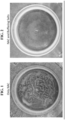
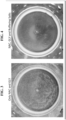
- FIGS. 1-4 show the bottom of the cup.
- FIG. 1 shows the result of reconstitution of powdered NAC without buffer salts
- FIG. 2 shows the result of reconstitution of powdered NAC with buffer salts
- FIG. 3 shows the result of reconstitution of powdered NAC and glycine without buffer salts
- FIG. 4 shows the result of reconstitution of powdered NAC and glycine with buffer salts.
- residues are present when the buffer salts are absent, and the presence of buffer salts avoids precipitation.
Landscapes
- Health & Medical Sciences (AREA)
- Life Sciences & Earth Sciences (AREA)
- Chemical & Material Sciences (AREA)
- Engineering & Computer Science (AREA)
- Polymers & Plastics (AREA)
- Food Science & Technology (AREA)
- Nutrition Science (AREA)
- Animal Behavior & Ethology (AREA)
- Public Health (AREA)
- Veterinary Medicine (AREA)
- General Health & Medical Sciences (AREA)
- Epidemiology (AREA)
- Medicinal Chemistry (AREA)
- Pharmacology & Pharmacy (AREA)
- Mycology (AREA)
- Proteomics, Peptides & Aminoacids (AREA)
- Inorganic Chemistry (AREA)
- Gastroenterology & Hepatology (AREA)
- Immunology (AREA)
- Bioinformatics & Cheminformatics (AREA)
- Zoology (AREA)
- Marine Sciences & Fisheries (AREA)
- Acyclic And Carbocyclic Compounds In Medicinal Compositions (AREA)
- Coloring Foods And Improving Nutritive Qualities (AREA)
- Medicines That Contain Protein Lipid Enzymes And Other Medicines (AREA)
- Pharmaceuticals Containing Other Organic And Inorganic Compounds (AREA)
- Non-Alcoholic Beverages (AREA)
- Medicinal Preparation (AREA)
Description
- The present disclosure generally relates to compositions that use buffer salt, amino acid, and at least certain vitamins and minerals. The composition is a powder comprising a phosphate salt, at least one glycine or functional derivative thereof, at least one N-acetylcysteine, L-cysteine or functional derivative thereof, Vitamin E, Vitamin C, Vitamin B2 and Zinc, the powder comprising less than 1.0 wt.% of proteins of four or more amino acid residues, and the powder having at least one characteristic selected from the group consisting of (i) the amino acids in the powder are present in an amount that at least partially comprises the amino acid in a form selected from the group consisting of free form, dipeptides, tripeptides and mixtures thereof and (ii) the powder is substantially free of enzymes and antibodies. The powder can be reconstituted in a liquid to form a nutritional product.
- Population aging has been a remarkable demographic event. As the growth of the older population has outpaced the total population due to increased longevity, the proportion of older persons relative to the rest of the population has increased considerably. For example, one in every twelve individuals was at least 60 years of age in 1950, and one in every ten was aged 60 years or older by the end of 2000. By the end of 2050, the number of persons worldwide that is 60 years or over is projected to be one in every five.
- Aged or aging individuals frequently suffer some degree of cognitive impairment, including decline in cognitive function, that progresses with age, and age-related changes in brain morphology and cerebrovascular function are commonly observed. Cognitive decline has been consistently reported with aging across a range of cognitive domains including processing speed, attention, episodic memory, spatial ability and executive function. Brain imaging studies have revealed that these normal age-related cognitive declines are associated with decreases in both grey and white matter volume in the brain, with the fronto-striatal system most heavily compromised with aging. These decreases in cortical volume can be attributed to a number of detrimental cellular processes involved with normal aging, such as accumulation of damage by free radicals over time leading to oxidative damage, chronic low-grade inflammation, homocysteine accumulation (which when elevated are a risk factor for cognitive impairment and dementia), and decreased mitochondrial efficiency. In addition to direct cellular damage, the brain is also indirectly impaired by insults to micro-vascular structures.
- It is evident that the pathology of aging and also dementia involves a complexity of these interacting factors which are linked together. For example, mitochondrial dysfunction leads to increased oxidative stress, and oxidative stress can trigger inflammation and vascular insults.
- Furthermore, cognitive decline is an early predictor or Alzheimer pathology and begins before the onset of dementia. In this context, the cognitive composite score represents a reliable means to assess the cognitive decline preceding dementia. Considerable evidence suggests that maintaining brain health and preventing cognitive decline with advancing age may prevent or delay development of dementia due to Alzheimer's disease and other aged related neuropathologies.
- In biology and psychology, the term "stress" refers to the consequence of the failure of a human or other animal to respond appropriately to physiological, emotional, or physical threats, whether actual or imagined. The psychobiological features of stress may present as manifestations of oxidative stress, i.e., an imbalance between the production and manifestation of reactive oxygen species and the ability of a biological system readily to detoxify the reactive intermediates or to repair the resulting damage. Disturbances in the normal redox state of tissues can cause toxic effects through the production of peroxides and free radicals that damage all of the components of the cell, including proteins, lipids, and DNA. Some reactive oxidative species can even act as messengers through a phenomenon called "redox signaling."
- In humans, oxidative stress is involved in many diseases. Examples include atherosclerosis, Parkinson's disease, heart failure, myocardial infarction, Alzheimer's disease, schizophrenia, bipolar disorder, fragile X syndrome, and chronic fatigue syndrome.
- One source of reactive oxygen under normal conditions in humans is the leakage of activated oxygen from mitochondria during oxidative phosphorylation. Other enzymes capable of producing superoxide (O2-) are xanthine oxidase, NADPH oxidases and cytochromes P450. Hydrogen peroxide, another strong oxidizing agent, is produced by a wide variety of enzymes including several oxidases. Reactive oxygen species play important roles in cell signaling, a process termed redox signaling. Thus, to maintain proper cellular homeostasis a balance must be struck between reactive oxygen production and consumption.
- Oxidative stress contributes to tissue injury following irradiation and hyperoxia. It is also suspected to be important in neurodegenerative diseases, including Alzheimer's disease, Parkinson's disease, amyotrophic lateral sclerosis (ALS), and Huntington's disease.
- Oxidative stress is also thought to be linked to certain cardiovascular diseases, since oxidation of low-density lipoprotein (LDL) in the vascular endothelium is a precursor to plaque formation. Oxidative stress also plays a role in the ischemic cascade due to oxygen reperfusion injury following hypoxia. This cascade includes both strokes and heart attacks. Oxidative stress has also been implicated in chronic fatigue syndrome.
- Moreover, the free radical theory of aging suggests that the biological process of aging results in increased oxidative stress in elderly humans. The ability of a cell to resist the damaging potential of oxidative stress is determined by a vital balance between generation of oxidant free radicals and the defensive array of antioxidants available to the cell. There are multiple antioxidant defense systems and of these, glutathione (GSH) is the most abundant intracellular component of overall antioxidant defenses. GSH, a tripeptide, is synthesized from precursor amino-acids glutamate, cysteine, and glycine in two steps catalyzed by glutamate cysteine ligase (GCL, also known as gamma-glutamylcysteine synthetase, EC 6.3.2.2) and gamma-L-glutamyl-L-cysteine:glycine ligase (also known as glutathione synthetase, EC 6.3.2.3), and GSH synthesis occurs de novo in cells.
-
WO 2004/107881 A1 relates to a nutrient composition or combination of compositions for the treatment or prophylaxis of infections, in particular HIV/AIDS, and for the enhancement of immunity, based on selenium in synergistic combinations with biologically absorbable sources of glutathione, alkalinity enhancing components, a source of sulphur, an anti-mutagenic compound and for oral use, gastro-intestinal absorption enhancers. -
US 5 629 023 A relates to a composition of an enteral nutrition product, which when taken alone, or in combination with certain conventional food sources, helps to upregulate hepatic detoxification enzyme systems thereby reducing the symptoms associated with endotoxicity and exotoxicity. - Acidic amino acids such as N-acetyl cysteine (NAC) can denature proteins in liquid. Existing solutions use basic additives such as potassium hydroxide and sodium hydroxide to increase the pH of protein-containing liquids. However, the present inventors noted that the increase in the pH of the protein-containing solution can change the configuration of the protein structures, which can lead to denaturation or gelation before the acidic amino acids are added.
- The present inventors surprisingly found that buffering salts such as disodium phosphate and/or potassium phosphate dibasic can be blended with acidic amino acids and then added into liquids containing protein such as milk protein, plant protein, collagen or blends thereof. Thus denaturation of the proteins in different concentrations and conditions can be avoided by establishing and/or maintaining a stable pH of the liquid.
- Indeed, proteins are sensitive to pH changes in the liquid environment, and even slight changes in the pH may cause disruption of protein structure and cause denaturation that could lead to gelation, precipitation and aggregation. Addition of acidic or basic components is one way that causes change in the pH of the environment. For example, amino acids have a chemical structure that could create the increase or decrease in the pH. Therefore, addition of these amino acids into protein containing liquid products could lead to denaturation due to increase or decrease of the pH. As set forth later herein, the present inventors evaluated addition of buffering salts to avoid drastic changes in the pH of protein containing liquid. The present inventors found that these buffering salts minimized the change in the pH and decreased the protein precipitation compared to cases at which no buffering salts were used.
- Accordingly, the present disclosure provides a powder comprising a phosphate salt, at least one glycine or functional derivative thereof, at least one N-acetylcysteine, L-cysteine or functional derivative thereof, Vitamin E, Vitamin C, Vitamin B2 and Zinc, the powder comprising less than 1.0 wt.% of proteins of four or more amino acid residues, and the powder having at least one characteristic selected from the group consisting of (i) the amino acids in the powder are present in an amount that at least partially comprises the amino acid in a form selected from the group consisting of free form, dipeptides, tripeptides and mixtures thereof and (ii) the powder is substantially free of enzymes and antibodies..
- In an embodiment, the powder further comprises at least one of calcium, sodium or potassium.
- In an embodiment, the amino acids comprise L-cysteine, glycine, and L-glutamate that are provided by glutathione in the powder.
- In an embodiment, the amino acid comprises a combination of at least one N-acetyl-cysteine or functional derivative thereof and at least one glycine or functional derivative thereof.
- A method of decreasing or preventing protein denaturation and/or protein coagulation caused by reconstitution of a powder in a liquid comprising an ingredient selected from the group consisting of a protein, an acidic component, and a mixture thereof can be provided (not part of the invention). Such a method comprises a step selected from the group consisting of (i) dry mixing a buffer salt with an amino acid and (ii) drying an aqueous solution comprising a buffer salt and an amino acid. The powder is as hereinbefore described.
- The amino acids comprise a combination of at least one N-acetyl-cysteine, L-cysteine or functional derivative thereof and at least one glycine or functional derivative thereof.
- A liquid nutritional product (not part of the invention) can comprise a buffer salt, an amino acid, and an ingredient selected from the group consisting of an acidic component, a protein and mixtures thereof. Such a nutritional product can be made by a process comprising reconstituting a powder comprising the buffer salt and the amino acid into a liquid comprising the ingredient. The powder is as hereinbefore described.
- The nutritional product can be a beverage.
- The liquid can comprise an acidic component that is at least one of juice or a polyphenol (e.g., a flavonoid).
- The liquid can comprise a protein selected from the group consisting of milk protein, plant protein, collagen and blends thereof.
- A method of making a powder formulated for reconstitution into a liquid to form a nutritional product can be provided (not part of the invention). The liquid comprises an ingredient selected from the group consisting of a protein, an acidic component, and a mixture thereof. Such a method comprises a step selected from the group consisting of (i) dry mixing a buffer salt with an amino acid and (ii) drying an aqueous solution comprising a buffer salt and an amino acid. The powder is as hereinbefore described.
- An advantage of one or more embodiments provided by the present disclosure is to facilitate reconstitution of an amino acid, such as N-acetyl cysteine, L-cysteine and/or glycine, by minimizing or preventing protein denaturation and coagulation in a liquid in which the amino acid is reconstituted, such as a liquid containing an acidic component that is at least one of juice or a polyphenol (e.g., a flavonoid) and/or containing protein such as milk protein, plant protein, collagen or blends thereof.
- Another advantage of one or more embodiments provided by the present disclosure is to facilitate reconstitution of a powder containing a vitamin and/or a mineral that can increase precipitation, such as sodium, potassium or calcium, by minimizing or preventing the negative impact of such compounds on the dissolution of the powder in a liquid.
- Additional features and advantages are described herein and will be apparent from the following Figures and Detailed Description.
-
-
FIG. 1 shows the experimentally tested dissolution of powdered N-acetyl-cysteine (NAC) without buffer salts in a dairy-based liquid at room temperature as disclosed herein. -
FIG. 2 shows the experimentally tested dissolution of powdered NAC with buffer salts in a dairy-based liquid at room temperature as disclosed herein. -
FIG. 3 shows the experimentally tested dissolution of powdered NAC and glycine without buffer salts in a dairy-based liquid at room temperature as disclosed herein. -
FIGS. 4 shows the experimentally tested dissolution of powdered NAC and glycine with buffer salts in a dairy-based liquid at room temperature as disclosed herein. - Some definitions are provided hereafter. Nevertheless, definitions may be located in the "Embodiments" section below, and the above header "Definitions" does not mean that such disclosures in the "Embodiments" section are not definitions.
- All percentages expressed herein are by weight of the total weight of the composition unless expressed otherwise. As used herein, "about," "approximately" and "substantially" are understood to refer to numbers in a range of numerals, for example the range of -10% to +10% of the referenced number, preferably -5% to +5% of the referenced number, more preferably -1% to +1% of the referenced number, most preferably -0.1% to +0.1% of the referenced number. All numerical ranges herein should be understood to include all integers, whole or fractions, within the range. Moreover, these numerical ranges should be construed as providing support for a claim directed to any number or subset of numbers in that range. For example, a disclosure of from 1 to 10 should be construed as supporting a range of from 1 to 8, from 3 to 7, from 1 to 9, from 3.6 to 4.6, from 3.5 to 9.9, and so forth.
- As used in this disclosure and the appended claims, the singular forms "a," "an" and "the" include plural referents unless the context clearly dictates otherwise. Thus, for example, reference to "a component" or "the component" includes two or more components.
- The words "comprise," "comprises" and "comprising" are to be interpreted inclusively rather than exclusively. Likewise, the terms "include," "including" and "or" should all be construed to be inclusive, unless such a construction is clearly prohibited from the context. Nevertheless, the compositions disclosed herein may lack any element that is not specifically disclosed herein. Thus, a disclosure of an embodiment using the term "comprising" includes a disclosure of embodiments "consisting essentially of" and "consisting of" the components identified. A composition "consisting essentially of" contains at least 50 wt.% of the referenced components, preferably at least 75 wt.% of the referenced components, more preferably at least 85 wt.% of the referenced components, most preferably at least 95 wt.% of the referenced components.
- The term "and/or" used in the context of "X and/or Y" should be interpreted as "X," or "Y," or "X and Y." Similarly, "at least one of X or Y" should be interpreted as "X," or "Y," or "X and Y." For example, "at least one glycine or functional derivative thereof" should be interpreted as "glycine," or "a functional derivative of glycine," or "both glycine and a functional derivative of glycine."
- Where used herein, the terms "example" and "such as," particularly when followed by a listing of terms, are merely exemplary and illustrative and should not be deemed to be exclusive or comprehensive. As used herein, a condition "associated with" or "linked with" another condition means the conditions occur concurrently, preferably means that the conditions are caused by the same underlying condition, and most preferably means that one of the identified conditions is caused by the other identified condition.
- The term "nutritional product" as used herein means a composition that is intended for ingestion by an individual such as a human and provides at least one nutrient to the individual. The nutritional products of the present disclosure, including the many embodiments described herein, can comprise, consist of, or consist essentially of the elements disclosed herein, as well as any additional or optional ingredients, components, or elements described herein or otherwise useful in a diet.
- As used herein, the term "isolated" means removed from one or more other compounds or components with which the compound may otherwise be found, for example as found in nature. For example, "isolated" preferably means that the identified compound is separated from at least a portion of the cellular material with which it is typically found in nature. In an embodiment, an isolated compound is pure, i.e., free from any other compound.
- As used herein, "amino acid" includes the standard (proteinogenic) amino acids and also derivatives of the standard amino acids, such as compounds resulting from reaction at an amino group, carboxy group, or side-chain functional group of the amino acid or from the replacement of any hydrogen by a heteroatom. Non-limiting examples of suitable amino acid derivatives according to the present disclosure include amino acid esters such as methyl esters, amino acid tert-butyl esters, benzyl esters, and ethyl esters. An "acidic" amino acid is any amino acid or derivative thereof that is capable of donating a hydron (proton or hydrogen ion H+) or forming a covalent bond with an electron pair.
- As used herein, a "powder" is a composition in which any moisture is no greater than 6 wt.% of the composition.
- An aspect of the present disclosure is a powder comprising a phosphate salt, at least one glycine or functional derivative thereof, at least one N-acetylcysteine, L-cysteine or functional derivative thereof, Vitamin E, Vitamin C, Vitamin B2 and Zinc, the powder comprising less than 1.0 wt.% of proteins of four or more amino acid residues, and the powder having at least one characteristic selected from the group consisting of (i) the amino acids in the powder are present in an amount that at least partially comprises the amino acid in a form selected from the group consisting of free form, dipeptides, tripeptides and mixtures thereof and (ii) the powder is substantially free of enzymes and antibodies. The powder can be formulated for reconstitution in a liquid to form a nutritional product. In an embodiment, the amino acid comprises L-cysteine, L-glutamic acid, and glycine that are provided by glutathione in the powder.
- Subject to the requirement that the powder comprises Vitamin E, Vitamin C, and Vitamin B2, non-limiting examples of suitable vitamins which the powder can comprise include vitamin C and group B vitamins, and other non-limiting examples of suitable vitamins include ascorbic acid, ascorbyl palmitate, vitamins B1, B2, B6, B12, and Niacin (B3), or combination of thereof. The vitamins may also include Vitamins A, D, E and K and acid vitamins such as pantothenic acid, folic acid and biotin. The Vitamin A may be present as Vitamin A Palmitate and/or beta-carotene. Vitamin D3 is an example of a suitable form of Vitamin D, and Vitamin D2 can also be used in some embodiments.
- Subject to the requirement that the powder comprises zinc, non-limiting examples of suitable minerals which the powder can comprise include calcium, sodium, magnesium, iron, zinc, iodine, copper, phosphorus, manganese, potassium, chromium, molybdenum, selenium, nickel, tin, silicon, vanadium and boron.
- The powder can be administered in an amount that provides the recommended daily requirement (RDA) of the vitamin and/or mineral therein. In some embodiments, a unit dosage form of the powder contains a predetermined portion of the RDA for the vitamin and/or mineral, for example about 50% of the RDA, about 75% of the RDA, about 100% of the RDA, or values therebetween. For example, a unit dosage form of the powder can contain about 50% of the RDA for the vitamin and/or mineral such that administration of two of the unit dosage forms in one day provides approximately the entirety of the RDA for the corresponding vitamin and/or mineral. As another example, a unit dosage form of the powder can contain 100% of the RDA for the vitamin and/or mineral such that administration of one of the unit dosage forms provides approximately the entirety of the RDA for the corresponding vitamin and/or mineral.
- The powder comprises Vitamin E, Vitamin C, Vitamin B2 and Zinc. Therefore, a preferred embodiment of the powder comprises a buffer salt, at least one glycine or functional derivative thereof, at least one N-acetylcysteine or functional derivative thereof, Vitamin E, Vitamin C, Vitamin B2 and Zinc, most preferably with the vitamins and minerals administered in an amount within the RDA and/or present in the powder in an amount within the RDA.
- A particularly preferred embodiment of the powder comprises a buffer salt comprising at least one phosphate salt, the powder further comprising at least one glycine or functional derivative thereof, at least one N-acetylcysteine or functional derivative thereof, Vitamin E, Vitamin C, Vitamin B2 and Zinc and optionally Selenium, most preferably with the vitamins and minerals administered in an amount within the RDA and/or present in the powder in an amount within the RDA.
- As a non-limiting example, a unit dosage form of the powder can comprise about 600 mg N-acetyl cysteine (NAC), about 600 mg Glycine, one or more phosphate salts (e.g., about 500 mg total phosphate salt), and the RDA of each of Vitamin E, Vitamin C, Vitamin B2 and Zinc.
- As another non-limiting example, a unit dosage form of the powder can comprise about 485 mg N-acetyl cysteine (NAC), about 485 mg Glycine, one or more phosphate salts (e.g., about 500 mg total phosphate salt), and the RDA of each of Vitamin E, Vitamin C, Vitamin B2, Selenium and Zinc
- Subject to the requirement that the powder comprises a phosphate salt, non-limiting examples of suitable buffer salts which the powder can comprise include citrates; phosphates such as monophosphates, diphosphates, triphosphates, and polyphosphates (e.g., magnesium phosphate and trisodium phosphate); hexametaphosphate; carbonates such as monocarbonates and bicarbonates (e.g., magnesium carbonate, sodium monocarbonate, sodium bicarbonate, potassium bicarbonate and potassium monocarbonate); and mixtures thereof. Preferably the buffer salt comprises at least one of dibasic sodium phosphate, monobasic potassium phosphate, dipotassium phosphate, monobasic calcium phosphate, dicalcium phosphate, or tricalcium phosphate; most preferably at least one of disodium phosphate or potassium phosphate dibasic.
- The powder can be formed by drying a liquid. The drying can comprise spray-drying, freeze-drying or any other procedure of drying known in the art. The present disclosure is not limited to a specific embodiment of the drying by which the powder is made, and the drying can be any process that decreases moisture, e.g., to form a solid composition. Additionally or alternatively, the powder can be made by dry mixing.
- The powder has at least one characteristic selected from the group consisting of (i) the amino acids are present in an amount that at least partially comprises the amino acid in a form selected from the group consisting of free form, dipeptides, tripeptides and mixtures thereof and (ii) the powder is substantially free of enzymes and antibodies. For example, at least a portion of the amino acids can be free form, i.e., not covalently bound to any other compound. Additionally or alternatively, at least a portion of the amino acids can be present in one or more of di-peptides; tri-peptides; larger peptides (i.e., at least four amino acid residues therein) or intact proteins. Nevertheless, in a preferred embodiment, the powder is substantially free of therapeutic proteins such as enzymes and/or antibodies, and in a particular embodiment, completely free of therapeutic proteins such as enzymes and/or antibodies. The powder is substantially free (or completely free) of proteins of four or more amino acid residues. "Substantially free" means less than 1.0 wt.%, preferably less than 0.5 wt.%, more preferably less than 0.2 wt.%, even more preferably less than 0.1 wt.%, most preferably less than 0.01 wt.%. In some embodiments, the powder consists essentially of (or consists of) any residual water (e.g., after drying), the buffer salt, the amino acids, the vitamins and mineral.
- The powder can be reconstituted in a liquid such as water to form a nutritional product such as a beverage, preferably at room temperature and/or without applying heat. In a preferred embodiment, the powder can be reconstituted in a liquid comprising a component selected from the group consisting of an acidic component (e.g., a juice and/or a polyphenol such as a flavonoid) and a protein (e.g., milk protein such as casein and/or whey; plant protein; collagen; and blends thereof). For example, the powder can be reconstituted in an oral nutrition supplement (ONS) such as the commercially available products MERITENE®, BOOST®, NUTREN® and SUSTAGEN®. Nevertheless, the present disclosure is not limited to a specific embodiment of the liquid in which the powder is reconstituted, and the liquid can be any liquid suitable for consumption by an animal or human.
- Further in this regard, the present disclosure is not limited to a specific embodiment of the acidic component in the liquid, and the acidic component can be any compound that provides acidity to the liquid. Still further, the present disclosure is not limited to a specific embodiment of the protein in the liquid, and the protein can be any protein, particularly those types that are subject to denaturation or gelation upon a pH increase.
- The powder can be provided to the consumer in a container (e.g., a sealed container) for reconstitution in the container and/or for allowing the user to pour the powder from the container into a drinking receptacle in which the powder is reconstituted. Non-limiting examples of suitable containers include bags, boxes, cartons, bottles, or combinations thereof. Preferred containers include a sachet/stick pack, i.e., a small disposable pouch, typically of flexible film such as cellophane or paper, preferably capable of being torn open at one or both ends, and containing one unit dosage form of the powder (i.e., one serving of the powder).
- The combination of at least one glycine or functional derivative thereof and at least one N-acetylcysteine or functional derivative thereof can be provided by any of the compositions disclosed by
U.S. Patent Nos. 8,362,080 ,8,802,730 and9,084,760 U.S. Patent App. Pub. No. 2018/0161297 entitled "Benefits of Supplementation with N-Acetylcysteine and Glycine to Improve Glutathione Levels". - Methods disclosed herein (not part of the invention) can include the reconstitution step. The reconstitution step is preferably performed by an individual who is the recipient of the administering and/or performs the administering, and/or another individual acting under the direction of individual who is the recipient of the administering and/or performs the administering. The liquid in which the powder is reconstituted preferably contains an acidic component (e.g., juice and/or a polyphenol such as a flavonoid) and/or a protein (e.g., a milk protein such as whey and/or casein; plant protein; collagen; and blends thereof).
- A kit (not part of the invention) can be provided comprising at least one glycine or functional derivative thereof, at least one N-acetylcysteine, L-cysteine or functional derivative thereof, and buffer salt in one or more container. In some embodiments, one or more of these compounds can be isolated compounds. The kit preferably includes instructions for reconstituting the mixture in a liquid comprising at least one of an acidic component (e.g., juice and/or a polyphenol such as a flavonoid) or a protein (e.g., a milk protein such as whey and/or casein; plant protein; collagen; and blends thereof).
- In such a kit, the at least one glycine or functional derivative thereof, the at least one N-acetylcysteine, L-cysteine or functional derivative thereof, and the buffer salt can be provided together in one or more prepackaged unit dosage forms, for example in separate containers that each contain a dried powder such that each container contains one prepackaged unit dosage form.
- Such a kit can comprise a plurality of compositions for admixing together to form one or more of the powders disclosed herein. For example, the kit can contain two or more dried powders in separate containers relative to each other, the separate powders each containing a portion of the final unit dosage form.
- As a non-limiting example of such a kit, the kit can contain one or more first containers that house the at least one glycine or functional derivative thereof and can also contain one or more second containers that house the at least one N-acetylcysteine or functional derivative thereof. The content of one of the first containers can be admixed with one of the second containers to form at least a portion of the unit dosage form of the composition. In such a case, the kit can have a configuration selected from the group consisting of (i) the buffer salt is provided by the selected first container, (ii) the buffer salt is provided by the selected second container, (iii) a portion of the buffer salt is provided by the selected first container and another portion of the buffer salt is provided by the selected second container, and (iv) the buffer salt is provided by at least one of a plurality of third containers.
- As used herein, a "functional derivative" of glycine is a glycine derivative that is effective in an individual in conjunction with N-acetylcysteine or a functional derivative thereof to increase intracellular GSH levels. A "functional derivative" of N-acetylcysteine is an N-acetylcysteine derivative that is effective in an individual in by itself or in conjunction with glycine (or a functional derivative thereof) to increase intracellular GSH levels.
- The glycine is preferably L-glycine and/or L-glycine ethyl ester. Non-limiting examples of suitable glycine functional derivatives include D-Allylglycine; N-[Bis(methylthio)methylene]glycine methyl ester; Boc-allyl-Gly-OH (dicyclohexylammonium) salt; Boc-D-Chg-OH; Boc-Chg-OH; (R)-N-Boc-(2'-chlorophenyl)glycine; Boc-L-cyclopropylglycine; Boc-L-cyclopropylglycine; (R)-N-Boc-4-fluorophenylglycine; Boc-D-propargylglycine; Boc-(S)-3-thienylglycine; Boc-(R)-3-thienylglycine; D-a-Cyclohexylglycine; L-a-Cyclopropylglycine; N-(2-fluorophenyl)-N-(methylsulfonyl)glycine; N-(4-fluorophenyl)-N-(methylsulfonyl)glycine; Fmoc-N-(2,4-dimethoxybenzyl)-Gly-OH; N-(2-Furoyl)glycine; L-a-Neopentylglycine; D-Propargylglycine; sarcosine; Z-a-Phosphonoglycine trimethyl ester, and a mixture thereof.
- The powder and/or the resultant nutritional product (not part of the invention) can be administered at least one day per week, preferably at least two days per week, more preferably at least three or four days per week (e.g., every other day), most preferably at least five days per week, six days per week, or seven days per week. The time period of administration can be at least one week, preferably at least one month, more preferably at least two months, most preferably at least three months, for example at least four months. In an embodiment, dosing is at least daily; for example, a subject may receive one or more doses daily. In some embodiments, the administration continues for the remaining life of the individual.
- The glycine and the N-acetylcysteine or L-cysteine or functionel derivative may be formulated in a particular ratio. In some embodiments, the formulation may comprise these components in the following exemplary ratios: 1:1, 1:2, 1:3, 1:4, 1:5, 1:6, 1:7, 1:8, 1:9, 1:10, 1:12, 1:15, 1:20, 1:25, 1:30, 1:35, 1:40, 1:45, 1:50, 1:55, 1:60, 1:65, 1:70, 1:75, 1:80, 1:85, 1:90, 1:95, 1:100, 1:150, 1:200, 1:300, 1:400, 1:500, 1:600, 1:750, 1:1000, and 1:10,000, and each of these ratios can be GLY:NAC in some embodiments and NAC:GLY in other embodiments. In particular embodiments, the formulation may comprise these components in the following weight percentages (either the same for both glycine and the N-acetylcysteine or different weight percentages for each): 1%, 2%, 3%, 4%, 5%, 6%, 7%, 8%, 9%, 10%, 12%, 15%, 20%, 25%, 30%, 40%, 45%, 50%, 55%, 60%, 65%, 70%, 75%, 80%, 85%, 90%, 95%, 97%, or 99%, for example.
- The N-acetylcysteine or functional derivative thereof can be administered in an amount of about 0.1 - 100 milligram (mg) of N-acetylcysteine (NAC) or functional derivative thereof per kilogram (kg) of body weight of the subject. The glycine (GLY) or functional derivative thereof can be administered in an amount of about 0.1 - 100 milligram (mg) of glycine or functional derivative thereof per kilogram (kg) of body weight of the subject. In some embodiments, these amounts are provided at least partially by a dipeptide comprising both the N-acetylcysteine or functional derivative thereof and the glycine or functional derivative thereof.
- In a particular non-limiting example, the daily doses for a 60 kg subject can be as follows:
- NAC or functional derivative thereof: 6 to 6,000 mg/day
- GLY or functional derivative thereof: 6 to 6,000 mg/day
- The ratio of the buffering salts to the amino acids can depend on the particular application of the resultant product (e.g., whether the reconstituted liquid is a beverage or some other composition category), the serving size of the resultant product, and the protein content of the resultant product. However, one of skill in this art will be able to use the disclosures herein to determine the appropriate ratio of the buffering salts to the amino acids by considering these factors.
- The powder and/or the resultant nutritional product (not part of the invention) disclosed herein is preferably administered to the subject orally. As such, non-limiting examples of the form of the composition include natural foods, processed foods, natural juices, concentrates and extracts, liposomes, and sustained-release preparations.
- The powder and/or the resultant nutritional product (not part of the invention) disclosed herein can use any of a variety of formulations for therapeutic administration. More particularly, pharmaceutical compositions can comprise appropriate pharmaceutically acceptable carriers or diluents and may be formulated into preparations in solid, semi-solid, liquid or gaseous forms. As such, administration of the composition can be achieved in various ways, but preferably oral.
- In pharmaceutical dosage forms, the compounds may be administered as their pharmaceutically acceptable salts. They may also be used in appropriate association with other pharmaceutically active compounds. The following methods and excipients are merely exemplary and are in no way limiting.
- For oral preparations, the compounds can be used alone or in combination with appropriate additives to make tablets, powders, or granules, for example, with conventional additives, such as lactose, mannitol, maltodextrin, corn starch or potato starch; with binders, such as crystalline cellulose, cellulose functional derivatives, acacia, corn starch or gelatins; with disintegrators, such as corn starch, potato starch or sodium carboxymethylcellulose; with lubricants, such as talc or magnesium stearate; and if desired, with diluents, buffering agents, moistening agents, preservatives and flavoring agents.
- The following non-limiting example conducted by the present inventors further support the compounds, compositions, and methods disclosed herein.
- Standard protein or amino acids in powder format do not have buffer salts, except for "therapeutic/active" proteins such as enzymes or antibodies. For example, these particular compounds are not stable in pure form and thus need additional salts to stabilize. In contrast, amino acids are provided without buffer salts.
- Buffer salts are also common in many ready-to-drink protein applications with the additional use of basic solutions, such as potassium hydroxide or sodium hydroxide, because ready-to-drink beverages are typically heat-treated. Nevertheless, powder products that will be reconstituted in room temperature or cold temperature liquids immediately before consumption are not provided with buffer salts.
- Therefore, the present inventors investigated a solution for a reconstitution of amino acids such as glycine and/or NAC in a liquid that is acidic and/or contains protein, e.g., for at-home reconstitution of an amino acid powder.
- The present inventors performed reconstitution of various amino acid powders at room temperature, without heat processing. The amino acids were blended with or without buffer salts and then poured into the drink.
- Specifically, 600 mg N-acetyl cysteine (NAC) and 600 mg Glycine were added into 100 ml water and mixed. Then 27.5 g of an unflavoured powder containing milk protein was added and mixed. In another sample, 200 mg disodium phosphate and 300 mg potassium phosphate dibasic were blended with 600 mg NAC and 600mg Glycine. The blend was then added into 100 ml water and mixed. After this, 27.5 gram of the unflavoured powder containing milk protein was added and mixed. Use of disodium phosphate and potassium phosphate dibasic significantly decreased protein denaturation and precipitation.
- In this regard, the photographs
FIGS. 1-4 show the bottom of the cup.FIG. 1 shows the result of reconstitution of powdered NAC without buffer salts,FIG. 2 shows the result of reconstitution of powdered NAC with buffer salts,FIG. 3 shows the result of reconstitution of powdered NAC and glycine without buffer salts, andFIG. 4 shows the result of reconstitution of powdered NAC and glycine with buffer salts. As shown in the figures, residues are present when the buffer salts are absent, and the presence of buffer salts avoids precipitation.
Claims (2)
- A powder comprising a phosphate salt, at least one glycine or functional derivative thereof, at least one N-acetylcysteine, L-cysteine or functional derivative thereof, Vitamin E, Vitamin C, Vitamin B2 and Zinc, the powder comprising less than 1.0 wt.% of proteins of four or more amino acid residues, and the powder having at least one characteristic selected from the group consisting of (i) the amino acids in the powder are present in an amount that at least partially comprises the amino acid in a form selected from the group consisting of free form, dipeptides, tripeptides and mixtures thereof and (ii) the powder is substantially free of enzymes and antibodies.
- The powder according to Claim 1, wherein the powder is in a unit dosage form comprising each of the Vitamin E, the Vitamin C, the Vitamin B2 and the Zinc in an amount within the recommended daily dietary allowance.
Applications Claiming Priority (2)
| Application Number | Priority Date | Filing Date | Title |
|---|---|---|---|
| US201862754918P | 2018-11-02 | 2018-11-02 | |
| PCT/EP2019/079947 WO2020089447A2 (en) | 2018-11-02 | 2019-11-01 | Powders containing a buffer salt and an amino acid, reconstitution of such a powder into a nutritional product, and methods of using such a nutritional product |
Publications (2)
| Publication Number | Publication Date |
|---|---|
| EP3873236A2 EP3873236A2 (en) | 2021-09-08 |
| EP3873236B1 true EP3873236B1 (en) | 2025-02-26 |
Family
ID=68503083
Family Applications (1)
| Application Number | Title | Priority Date | Filing Date |
|---|---|---|---|
| EP19801243.7A Active EP3873236B1 (en) | 2018-11-02 | 2019-11-01 | Powders containing a buffer salt and an amino acid, reconstitution of such a powder into a nutritional product, and methods of using such a nutritional product |
Country Status (8)
| Country | Link |
|---|---|
| US (2) | US20220016062A1 (en) |
| EP (1) | EP3873236B1 (en) |
| JP (1) | JP7542530B2 (en) |
| CN (1) | CN112804888A (en) |
| AU (1) | AU2019370732B2 (en) |
| CA (1) | CA3118171A1 (en) |
| ES (1) | ES3026885T3 (en) |
| WO (1) | WO2020089447A2 (en) |
Families Citing this family (5)
| Publication number | Priority date | Publication date | Assignee | Title |
|---|---|---|---|---|
| JP7542530B2 (en) | 2018-11-02 | 2024-08-30 | ソシエテ・デ・プロデュイ・ネスレ・エス・アー | Powders containing buffer salts and amino acids, reconstitution of such powders into nutritional products, and methods of using such nutritional products - Patents.com |
| FR3119093B3 (en) * | 2021-01-27 | 2023-02-10 | Nestle Sa | COMPOSITIONS AND METHODS FOR USE IN MOTIVATIONAL PERFORMANCE AUGMENT |
| WO2023016471A1 (en) * | 2021-08-10 | 2023-02-16 | 武汉远大弘元股份有限公司 | Composition, formulation, preparation method and use for glutathione precursor |
| WO2023041776A1 (en) * | 2021-09-17 | 2023-03-23 | N.V. Nutricia | Solid composition suitable as a nutritional composition or supplement for animals that suffer from brain related disorders, decline or diseases |
| PL249487B1 (en) * | 2023-11-26 | 2026-04-27 | Uniwersytet Kaliski Im. Prezydenta Stanisława Wojciechowskiego | Dietary supplement for regaining vital energy |
Citations (5)
| Publication number | Priority date | Publication date | Assignee | Title |
|---|---|---|---|---|
| US4414238A (en) | 1981-12-24 | 1983-11-08 | Cutter Laboratories, Inc. | Liquid elemental diet |
| EP0705542A1 (en) | 1994-09-21 | 1996-04-10 | Sandoz Nutrition Ltd. | Adolescent dietary composition |
| WO1999001044A1 (en) | 1997-07-02 | 1999-01-14 | Abbott Laboratories | Palatable elemental medical food |
| US20090117256A1 (en) | 2007-11-07 | 2009-05-07 | Bristol-Myers Squibb Company | Method for decreasing bitterness and improving taste of protein-free and hydrolyzed infant formulas |
| WO2020089447A2 (en) | 2018-11-02 | 2020-05-07 | Société des Produits Nestlé S.A. | Powders containing a buffer salt and an amino acid, reconstitution of such a powder into a nutritional product, and methods of using such a nutritional product |
Family Cites Families (24)
| Publication number | Priority date | Publication date | Assignee | Title |
|---|---|---|---|---|
| US4784865A (en) * | 1986-05-15 | 1988-11-15 | The Pro-Mark Companies | Low fat coffee whitener and method for making low fat coffee whitener |
| US5629023A (en) * | 1991-12-31 | 1997-05-13 | Bland; Jeffrey S. | Medical food composition for metabolic detoxification |
| US5514655A (en) * | 1993-05-28 | 1996-05-07 | Abbott Laboratories | Enteral nutritional with protein system containing soy protein hydrolysate and intact protein |
| JP2001048797A (en) | 1999-08-06 | 2001-02-20 | Ito En Ltd | Oral drug for the treatment of dementia |
| US6368617B1 (en) * | 2001-05-15 | 2002-04-09 | Reliv' International, Inc. | Dietary supplement |
| EP1643865A1 (en) * | 2003-06-04 | 2006-04-12 | Willem Jacob Serfontein | Nutritional compositions and use thereof |
| US7956031B2 (en) | 2005-05-31 | 2011-06-07 | Naidu Lp | Metallo-lactoferrin-coenzyme compositions for trigger and release of bioenergy |
| JP2007070403A (en) | 2005-09-05 | 2007-03-22 | Oji Paper Co Ltd | PH adjuster containing phosphorylated saccharide or salts thereof |
| JP2009106217A (en) | 2007-10-31 | 2009-05-21 | Ajinomoto Co Inc | Food composition containing thickener and amino acid |
| IL188681A0 (en) | 2008-01-09 | 2008-12-29 | Amino Acid Solutions Inc | Pharmaceutical compositions and methods utilizing a d-amino acid |
| US9173417B2 (en) | 2008-10-27 | 2015-11-03 | Intercontinental Great Brands Llc | Coffee and dairy liquid concentrates |
| PT2374452T (en) | 2008-12-05 | 2019-10-31 | Ajinomoto Kk | Nutrient composition |
| US8362080B2 (en) | 2008-12-18 | 2013-01-29 | Baylor College Of Medicine | Increasing glutathione levels for therapy |
| GB201012539D0 (en) * | 2010-07-27 | 2010-09-08 | Savantium Ltd | Nutritional compositions |
| FI129157B (en) | 2012-05-28 | 2021-08-13 | Biohit Oyj | Composition to reduce the incidence of or prevent severe headache |
| US20140256760A1 (en) | 2012-07-09 | 2014-09-11 | Noglo Llc | Reduction or prevention of alcohol reaction with dietary supplements |
| MX2015015116A (en) | 2013-04-30 | 2016-02-11 | Nestec Sa | Creamer composition comprising plant protein microparticles. |
| US20150132440A1 (en) | 2013-08-13 | 2015-05-14 | 4141 Holdings, Llc | Dipeptide and tripeptide compositions and uses |
| CN103976023A (en) | 2014-05-26 | 2014-08-13 | 程礼华 | Okra yogurt beverage and preparation method thereof |
| US9603830B2 (en) | 2014-05-29 | 2017-03-28 | Thriveplus Llc | Compositions and methods for preventing and recovery from detrimental effects of alcohol consumption |
| US20170281713A1 (en) * | 2014-08-29 | 2017-10-05 | Albert B. Crum | A method for side effect reduction in the use of statins via physiologically synthesized glutathione |
| CN115957294A (en) * | 2015-05-28 | 2023-04-14 | 贝勒医学院 | Beneficial effects of supplementation with N-acetylcysteine and glycine to improve glutathione levels |
| CA3141076A1 (en) | 2016-01-07 | 2017-07-13 | Ripple Foods, Pbc | Product analogs or components of such analogs and processes for making same |
| JP7025619B2 (en) | 2016-02-19 | 2022-02-25 | イート ジャスト, インコーポレイテッド | Functional composition derived from azuki beans |
-
2019
- 2019-11-01 JP JP2021519833A patent/JP7542530B2/en active Active
- 2019-11-01 WO PCT/EP2019/079947 patent/WO2020089447A2/en not_active Ceased
- 2019-11-01 CA CA3118171A patent/CA3118171A1/en active Pending
- 2019-11-01 US US17/290,517 patent/US20220016062A1/en not_active Abandoned
- 2019-11-01 ES ES19801243T patent/ES3026885T3/en active Active
- 2019-11-01 CN CN201980065822.9A patent/CN112804888A/en active Pending
- 2019-11-01 EP EP19801243.7A patent/EP3873236B1/en active Active
- 2019-11-01 AU AU2019370732A patent/AU2019370732B2/en active Active
-
2025
- 2025-06-30 US US19/254,372 patent/US20250325509A1/en active Pending
Patent Citations (5)
| Publication number | Priority date | Publication date | Assignee | Title |
|---|---|---|---|---|
| US4414238A (en) | 1981-12-24 | 1983-11-08 | Cutter Laboratories, Inc. | Liquid elemental diet |
| EP0705542A1 (en) | 1994-09-21 | 1996-04-10 | Sandoz Nutrition Ltd. | Adolescent dietary composition |
| WO1999001044A1 (en) | 1997-07-02 | 1999-01-14 | Abbott Laboratories | Palatable elemental medical food |
| US20090117256A1 (en) | 2007-11-07 | 2009-05-07 | Bristol-Myers Squibb Company | Method for decreasing bitterness and improving taste of protein-free and hydrolyzed infant formulas |
| WO2020089447A2 (en) | 2018-11-02 | 2020-05-07 | Société des Produits Nestlé S.A. | Powders containing a buffer salt and an amino acid, reconstitution of such a powder into a nutritional product, and methods of using such a nutritional product |
Non-Patent Citations (25)
| Title |
|---|
| "Dietary Reference Intakes for Thiamin, Riboflavin, Niacin, Vitamin B6, Folate, Vitamin B12, Pantothenic Acid, Biotin, and Choline (1998)", 1998, NATIONAL ACADEMY PRESS, Washington, D.C., ISBN: 978-0-309-06411-8, pages: 1 - 592, DOI: 10.17226/6015 |
| "Dietary Reference Intakes for Vitamin C, Vitamin E, Selenium, and Carotenoids", 1 January 2000, NATIONAL ACADEMY PRESS, Washington, D.C., ISBN: 0-309-06949-1, article VERNON YOUNG, CUTBERTO GARZA: "Chapter 1: INTRODUCTION TO DIETARY REFERENCE INTAKES", pages: 21 - 34, XP009565536, DOI: 10.17226/9810 |
| 1 August 2013 (2013-08-01), NEOCATE: "Neocate Advance Nutritionally Complete Powdered Elemental Formula", XP009565547 |
| 1 August 2018 (2018-08-01), ANAMIX: "Nutricia Ga1 Anamix Infant Dietary Food With LCP: Unflavored", XP009565543 |
| 1 July 2018 (2018-07-01), MILUPA: "Nutricia Milupa GA 2 Prima Lysine Free Amino Acid Powder for Children from 1 Year Old", XP009565544 |
| 1 July 2018 (2018-07-01), MILUPA: "Nutricia Milupa MSUD 3 Advanta Amino Acid Powder For Adolescents From 15 Years Old", XP009565545 |
| 1 June 2018 (2018-06-01), NUTRICIA: "Nutricia Milupa OS 2 Prima Amino Acid Powder For Infants From 1 Year Old", XP009565546 |
| 1 October 2012 (2012-10-01), NEOCATE: "Nutricia Neocate Junior with Prebiotics: Vanilla flavor", XP009565548 |
| ÅKERLUND B., JARSTRAND C., LINDEKE B., SÖNNERBORG A., ÅKERBLAD A.-C., RASOOL O.: "Effect of N -acetylcysteine(NAC) treatment on HIV-1 infection: a double-blind placebo-controlled trial", EUROPEAN JOURNAL OF CLINICAL PHARMACOLOGY, SPRINGER BERLIN HEIDELBERG, BERLIN/HEIDELBERG, vol. 50, no. 6, 30 July 1996 (1996-07-30), Berlin/Heidelberg, pages 457 - 461, XP093342345, ISSN: 0031-6970, DOI: 10.1007/s002280050140 |
| ANONYMOUS: "Natures Plus Age Loss Liver Support Capsules", NATURES PLUS, 1 January 2025 (2025-01-01), XP093342454 |
| ANONYMOUS: "Pediatric Nutritionals Product Guide", ABBOTT LABORATORIES INC., 1 February 2007 (2007-02-01), XP093340027 |
| ANONYMOUS: "Scientific Opinion on Dietary Reference Values for vitamin C", EFSA JOURNAL, EUROPEAN FOOD SAFETY AUTHORITY, PARMA, ITALY, vol. 11, no. 11, 1 November 2013 (2013-11-01), Parma, Italy, XP093342390, ISSN: 1831-4732, DOI: 10.2903/j.efsa.2013.3418 |
| ANONYMOUS: "Scientific Opinion on Dietary Reference Values for zinc : Dietary Reference Values for zinc", EFSA JOURNAL, EUROPEAN FOOD SAFETY AUTHORITY, PARMA, ITALY, vol. 12, no. 10, 1 October 2014 (2014-10-01), Parma, Italy, pages 3844, XP093342393, ISSN: 1831-4732, DOI: 10.2903/j.efsa.2014.3844 |
| ANONYMOUS: "Standard for infant formula and formulas for special medical purposes intended for infants", CODEX ALIMENTARIUS: CODEX STAN 72-1981, 1 January 2007 (2007-01-01), pages 1 - 17, XP055573768 |
| DATABASE GNPD MINTEL; "Amino Acid-Based Hypoallergenic Infant Formula Powder", XP093342428, Database accession no. 5451145 |
| DATABASE GNPD MINTEL; "Amino Acid-Based Nutritionally Complete Infant Formula Powder", XP093342434, Database accession no. 5590063 |
| DATABASE GNPD MINTEL; "Basic Formula for Infants", XP093342443, Database accession no. 2834935 |
| DATABASE GNPD MINTEL; "Infant Formula Powder", XP093342440, Database accession no. 2960399 |
| DAVID L. NELSON, MICHAEL M. COX: "Lehninger - Principles of Biochemistry Fourth edition", 1 January 2009, W.H. FREEMAN AND COMPANY, ISBN: 0716743396, article NELSON, DAVID L., COX, MICHAEL M, LEHNINGER, ALBERT L.: "Chapter 3: Amino Acids, Peptides and Proteins", pages: 75 - 115, XP009564205 |
| EFSA NDA PANEL: "Scientific Opinion on Dietary Reference Values for vitamin E as α-tocopherol : Dietary Reference Values for vitamin E as α-tocopherol", 2ND COATINGS AND INTERFACES WEB CONFERENCE 2ND COATINGS AND INTERFACES WEB CONFERENCE PART OF THE COATINGS AND INTERFACES SERIES 15–31 MAY 2020, SCIFORUM MDPI, CH, vol. 13, no. 7, 1 July 2015 (2015-07-01), CH, pages 4149 - 4149, XP055414270, DOI: 10.2903/j.efsa.2015.4149 |
| PAN, Z. PEREZ-POLO, R.: "Increased uptake ofl-cysteine andl-cystine by nerve growth factor in rat pheochromocytoma cells", BRAIN RESEARCH, ELSEVIER, AMSTERDAM, NL, vol. 740, no. 1-2, 18 November 1996 (1996-11-18), NL , pages 21 - 26, XP022247496, ISSN: 0006-8993, DOI: 10.1016/S0006-8993(96)00844-X |
| SAMUNI YUVAL; GOLDSTEIN SARA; DEAN OLIVIA M.; BERK MICHAEL: "The chemistry and biological activities of N-acetylcysteine", BIOCHIMICA ET BIOPHYSICA ACTA, ELSEVIER, AMSTERDAM, NL, vol. 1830, no. 8, 22 April 2013 (2013-04-22), AMSTERDAM, NL , pages 4117 - 4129, XP028561347, ISSN: 0304-4165, DOI: 10.1016/j.bbagen.2013.04.016 |
| TRUMBO PAULA, ALLISON A. YATES, SANDRA SCHLICKER, MARY POOS, : "Dietary reference intakes: Vitamin A, Vitamin K, Arsenic, Boron, Chromium, Copper, Iodine, Iron, Manganese, Molybdenum, Nickel, Silicon, Vanadium, and Zinc", 1 March 2001 (2001-03-01), XP093064090, Retrieved from the Internet <URL:https://pdf.sciencedirectassets.com/272865/1-s2.0-S0002822300X00211/1-s2.0-S0002822301000785/main.pdf?X-Amz-Security-Token=IQoJb3JpZ2luX2VjEIn//////////wEaCXVzLWVhc3QtMSJGMEQCIFXLARavMoUL0U8a1m+obXOZpkvQbNNVHzcTXJLWkcW+AiBKzzM5vMJFSAnx29M157Enj4fJpYbfi6hbzAEEj2AtWiqyBQgSEAUaDDA1OTAwMzU0Njg2NSIMezQMFBs7jgBBunxmKo8FxKBNsLGC6kgjQdaBIt/sZMqyBlRndMqrRZ1wFuO2KQDUWb+TUsMKyRtKVvExU7ZmBDZ45GvkReVTFifApU2xWAOnlAoZTmUQVIXB1sRkJ201he//7n+jyfiOUj/R3Y/wRaZyFcWppMdzD/2xs3MVx+AF1mtyS9XRgksmTCYMT5ItaI39oK/En6KyutC6VFYO9ArNA3OpwBaNX/Tt5atyL152fxX2uK28LnT7OT3mHuzPPSmNgUB2u8Jz4Ov+E6g5R1upUp5EagDUgVJLxk3QRkqymhnlObhgnF9+pXeriQEEH9rn3AATAEC1rw1QVK/yTBh+36FiNE/1GpBrgpjXCnep6zOJMJZjRnvWQmGqf3MCCgGPziWQSJyhNXPK0HN6LQ3iZM |
| TURCK DOMINIQUE, BRESSON JEAN‐LOUIS, BURLINGAME BARBARA, DEAN TARA, FAIRWEATHER‐TAIT SUSAN, HEINONEN MARINA, HIRSCH‐ERNST KAREN IL: "Dietary Reference Values for riboflavin", EFSA JOURNAL, EUROPEAN FOOD SAFETY AUTHORITY, PARMA, ITALY, vol. 15, no. 8, 1 August 2017 (2017-08-01), Parma, Italy, XP093342387, ISSN: 1831-4732, DOI: 10.2903/j.efsa.2017.4919 |
| YIN JIE, REN WENKAI, YANG GUAN, DUAN JIELIN, HUANG XINGGUO, FANG REJUN, LI CHONGYONG, LI TIEJUN, YIN YULONG, HOU YONGQING, KIM SUN: " L-Cysteine metabolism and its nutritional implications", MOLECULAR NUTRITION & FOOD RESEARCH, WILEY - VCH VERLAG, WEINHEIM, DE, vol. 60, no. 1, 1 January 2016 (2016-01-01), DE , pages 134 - 146, XP093342357, ISSN: 1613-4125, DOI: 10.1002/mnfr.201500031 |
Also Published As
| Publication number | Publication date |
|---|---|
| WO2020089447A3 (en) | 2020-06-11 |
| US20220016062A1 (en) | 2022-01-20 |
| BR112021004535A2 (en) | 2021-06-08 |
| AU2019370732A1 (en) | 2021-03-25 |
| EP3873236A2 (en) | 2021-09-08 |
| US20250325509A1 (en) | 2025-10-23 |
| ES3026885T3 (en) | 2025-06-12 |
| JP2022504702A (en) | 2022-01-13 |
| WO2020089447A2 (en) | 2020-05-07 |
| CN112804888A (en) | 2021-05-14 |
| JP7542530B2 (en) | 2024-08-30 |
| CA3118171A1 (en) | 2020-05-07 |
| AU2019370732B2 (en) | 2025-04-03 |
Similar Documents
| Publication | Publication Date | Title |
|---|---|---|
| ES3026885T3 (en) | Powders containing a buffer salt and an amino acid, reconstitution of such a powder into a nutritional product, and methods of using such a nutritional product | |
| US6262019B1 (en) | Method of treatment of glutathione deficient mammals | |
| JP6193229B2 (en) | Preventive or ameliorating agent for vascular endothelial function decline | |
| US11738037B2 (en) | Agent for preventing or improving decline in brain function | |
| JP6151646B2 (en) | Preventive or ameliorating agent for vascular endothelial function decline | |
| JP2005082495A (en) | Composition for protecting brain cells | |
| US6881750B2 (en) | Potassium taurate bicarbonate and ascorbate | |
| RU2810755C2 (en) | Powder containing buffer salt and amino acid, dissolution of such powder to nutrient product and methods of use of such nutrient product | |
| US20230180811A1 (en) | A nutritional product containing a buffer composition and an amino acid and methods of using such a nutritional product | |
| HK40051471A (en) | Powders containing a buffer salt and an amino acid, reconstitution of such a powder into a nutritional product, and methods of using such a nutritional product | |
| HK40083725A (en) | A nutritional product containing a buffer composition and an amino acid and methods of using such a nutritional product | |
| JP2022186086A (en) | Glutathione production enhancer | |
| JP3523248B2 (en) | Cholesterol-reducing peptide | |
| JP2022186085A (en) | Glutathione production enhancer | |
| JP2022186084A (en) | Glutathione production enhancer | |
| AU2022345465A1 (en) | Solid composition suitable as a nutritional composition or supplement for animals that suffer from brain related disorders, decline or diseases | |
| EP2914257A1 (en) | Agent for preventing or improving decline in brain function |
Legal Events
| Date | Code | Title | Description |
|---|---|---|---|
| STAA | Information on the status of an ep patent application or granted ep patent |
Free format text: STATUS: UNKNOWN |
|
| STAA | Information on the status of an ep patent application or granted ep patent |
Free format text: STATUS: THE INTERNATIONAL PUBLICATION HAS BEEN MADE |
|
| PUAI | Public reference made under article 153(3) epc to a published international application that has entered the european phase |
Free format text: ORIGINAL CODE: 0009012 |
|
| STAA | Information on the status of an ep patent application or granted ep patent |
Free format text: STATUS: REQUEST FOR EXAMINATION WAS MADE |
|
| 17P | Request for examination filed |
Effective date: 20210602 |
|
| AK | Designated contracting states |
Kind code of ref document: A2 Designated state(s): AL AT BE BG CH CY CZ DE DK EE ES FI FR GB GR HR HU IE IS IT LI LT LU LV MC MK MT NL NO PL PT RO RS SE SI SK SM TR |
|
| DAV | Request for validation of the european patent (deleted) | ||
| DAX | Request for extension of the european patent (deleted) | ||
| P01 | Opt-out of the competence of the unified patent court (upc) registered |
Effective date: 20230527 |
|
| STAA | Information on the status of an ep patent application or granted ep patent |
Free format text: STATUS: EXAMINATION IS IN PROGRESS |
|
| 17Q | First examination report despatched |
Effective date: 20231009 |
|
| RAP3 | Party data changed (applicant data changed or rights of an application transferred) |
Owner name: SOCIETE DES PRODUITS NESTLE S.A. |
|
| GRAP | Despatch of communication of intention to grant a patent |
Free format text: ORIGINAL CODE: EPIDOSNIGR1 |
|
| STAA | Information on the status of an ep patent application or granted ep patent |
Free format text: STATUS: GRANT OF PATENT IS INTENDED |
|
| INTG | Intention to grant announced |
Effective date: 20241119 |
|
| GRAS | Grant fee paid |
Free format text: ORIGINAL CODE: EPIDOSNIGR3 |
|
| GRAA | (expected) grant |
Free format text: ORIGINAL CODE: 0009210 |
|
| STAA | Information on the status of an ep patent application or granted ep patent |
Free format text: STATUS: THE PATENT HAS BEEN GRANTED |
|
| AK | Designated contracting states |
Kind code of ref document: B1 Designated state(s): AL AT BE BG CH CY CZ DE DK EE ES FI FR GB GR HR HU IE IS IT LI LT LU LV MC MK MT NL NO PL PT RO RS SE SI SK SM TR |
|
| REG | Reference to a national code |
Ref country code: GB Ref legal event code: FG4D |
|
| REG | Reference to a national code |
Ref country code: CH Ref legal event code: EP |
|
| REG | Reference to a national code |
Ref country code: DE Ref legal event code: R096 Ref document number: 602019066554 Country of ref document: DE |
|
| REG | Reference to a national code |
Ref country code: IE Ref legal event code: FG4D |
|
| REG | Reference to a national code |
Ref country code: NL Ref legal event code: FP |
|
| REG | Reference to a national code |
Ref country code: SE Ref legal event code: TRGR |
|
| REG | Reference to a national code |
Ref country code: ES Ref legal event code: FG2A Ref document number: 3026885 Country of ref document: ES Kind code of ref document: T3 Effective date: 20250612 |
|
| PG25 | Lapsed in a contracting state [announced via postgrant information from national office to epo] |
Ref country code: RS Free format text: LAPSE BECAUSE OF FAILURE TO SUBMIT A TRANSLATION OF THE DESCRIPTION OR TO PAY THE FEE WITHIN THE PRESCRIBED TIME-LIMIT Effective date: 20250526 |
|
| PG25 | Lapsed in a contracting state [announced via postgrant information from national office to epo] |
Ref country code: FI Free format text: LAPSE BECAUSE OF FAILURE TO SUBMIT A TRANSLATION OF THE DESCRIPTION OR TO PAY THE FEE WITHIN THE PRESCRIBED TIME-LIMIT Effective date: 20250226 |
|
| PG25 | Lapsed in a contracting state [announced via postgrant information from national office to epo] |
Ref country code: PL Free format text: LAPSE BECAUSE OF FAILURE TO SUBMIT A TRANSLATION OF THE DESCRIPTION OR TO PAY THE FEE WITHIN THE PRESCRIBED TIME-LIMIT Effective date: 20250226 |
|
| REG | Reference to a national code |
Ref country code: LT Ref legal event code: MG9D |
|
| PG25 | Lapsed in a contracting state [announced via postgrant information from national office to epo] |
Ref country code: IS Free format text: LAPSE BECAUSE OF FAILURE TO SUBMIT A TRANSLATION OF THE DESCRIPTION OR TO PAY THE FEE WITHIN THE PRESCRIBED TIME-LIMIT Effective date: 20250626 Ref country code: NO Free format text: LAPSE BECAUSE OF FAILURE TO SUBMIT A TRANSLATION OF THE DESCRIPTION OR TO PAY THE FEE WITHIN THE PRESCRIBED TIME-LIMIT Effective date: 20250526 |
|
| PG25 | Lapsed in a contracting state [announced via postgrant information from national office to epo] |
Ref country code: HR Free format text: LAPSE BECAUSE OF FAILURE TO SUBMIT A TRANSLATION OF THE DESCRIPTION OR TO PAY THE FEE WITHIN THE PRESCRIBED TIME-LIMIT Effective date: 20250226 |
|
| PG25 | Lapsed in a contracting state [announced via postgrant information from national office to epo] |
Ref country code: PT Free format text: LAPSE BECAUSE OF FAILURE TO SUBMIT A TRANSLATION OF THE DESCRIPTION OR TO PAY THE FEE WITHIN THE PRESCRIBED TIME-LIMIT Effective date: 20250626 Ref country code: LV Free format text: LAPSE BECAUSE OF FAILURE TO SUBMIT A TRANSLATION OF THE DESCRIPTION OR TO PAY THE FEE WITHIN THE PRESCRIBED TIME-LIMIT Effective date: 20250226 |
|
| PG25 | Lapsed in a contracting state [announced via postgrant information from national office to epo] |
Ref country code: GR Free format text: LAPSE BECAUSE OF FAILURE TO SUBMIT A TRANSLATION OF THE DESCRIPTION OR TO PAY THE FEE WITHIN THE PRESCRIBED TIME-LIMIT Effective date: 20250527 Ref country code: BG Free format text: LAPSE BECAUSE OF FAILURE TO SUBMIT A TRANSLATION OF THE DESCRIPTION OR TO PAY THE FEE WITHIN THE PRESCRIBED TIME-LIMIT Effective date: 20250226 |
|
| PG25 | Lapsed in a contracting state [announced via postgrant information from national office to epo] |
Ref country code: SM Free format text: LAPSE BECAUSE OF FAILURE TO SUBMIT A TRANSLATION OF THE DESCRIPTION OR TO PAY THE FEE WITHIN THE PRESCRIBED TIME-LIMIT Effective date: 20250226 |
|
| PG25 | Lapsed in a contracting state [announced via postgrant information from national office to epo] |
Ref country code: DK Free format text: LAPSE BECAUSE OF FAILURE TO SUBMIT A TRANSLATION OF THE DESCRIPTION OR TO PAY THE FEE WITHIN THE PRESCRIBED TIME-LIMIT Effective date: 20250226 |
|
| PGFP | Annual fee paid to national office [announced via postgrant information from national office to epo] |
Ref country code: FR Payment date: 20250930 Year of fee payment: 7 |
|
| PG25 | Lapsed in a contracting state [announced via postgrant information from national office to epo] |
Ref country code: CZ Free format text: LAPSE BECAUSE OF FAILURE TO SUBMIT A TRANSLATION OF THE DESCRIPTION OR TO PAY THE FEE WITHIN THE PRESCRIBED TIME-LIMIT Effective date: 20250226 Ref country code: EE Free format text: LAPSE BECAUSE OF FAILURE TO SUBMIT A TRANSLATION OF THE DESCRIPTION OR TO PAY THE FEE WITHIN THE PRESCRIBED TIME-LIMIT Effective date: 20250226 |
|
| PG25 | Lapsed in a contracting state [announced via postgrant information from national office to epo] |
Ref country code: RO Free format text: LAPSE BECAUSE OF FAILURE TO SUBMIT A TRANSLATION OF THE DESCRIPTION OR TO PAY THE FEE WITHIN THE PRESCRIBED TIME-LIMIT Effective date: 20250226 |
|
| PG25 | Lapsed in a contracting state [announced via postgrant information from national office to epo] |
Ref country code: SK Free format text: LAPSE BECAUSE OF FAILURE TO SUBMIT A TRANSLATION OF THE DESCRIPTION OR TO PAY THE FEE WITHIN THE PRESCRIBED TIME-LIMIT Effective date: 20250226 |
|
| REG | Reference to a national code |
Ref country code: DE Ref legal event code: R026 Ref document number: 602019066554 Country of ref document: DE |
|
| PGFP | Annual fee paid to national office [announced via postgrant information from national office to epo] |
Ref country code: NL Payment date: 20251003 Year of fee payment: 7 |
|
| PLBI | Opposition filed |
Free format text: ORIGINAL CODE: 0009260 |
|
| REG | Reference to a national code |
Ref country code: CH Ref legal event code: L10 Free format text: ST27 STATUS EVENT CODE: U-0-0-L10-L00 (AS PROVIDED BY THE NATIONAL OFFICE) Effective date: 20251126 |
|
| PLBI | Opposition filed |
Free format text: ORIGINAL CODE: 0009260 |
|
| REG | Reference to a national code |
Ref country code: CH Ref legal event code: U11 Free format text: ST27 STATUS EVENT CODE: U-0-0-U10-U11 (AS PROVIDED BY THE NATIONAL OFFICE) Effective date: 20251201 |
|
| REG | Reference to a national code |
Ref country code: CH Ref legal event code: L10 Free format text: ST27 STATUS EVENT CODE: U-0-0-L10-L00 (AS PROVIDED BY THE NATIONAL OFFICE) Effective date: 20251203 |
|
| PLAX | Notice of opposition and request to file observation + time limit sent |
Free format text: ORIGINAL CODE: EPIDOSNOBS2 |
|
| 26 | Opposition filed |
Opponent name: ABBOTT LABORATORIES Effective date: 20251114 |
|
| 26 | Opposition filed |
Opponent name: N.V. NUTRICIA Effective date: 20251125 |
|
| PGFP | Annual fee paid to national office [announced via postgrant information from national office to epo] |
Ref country code: DE Payment date: 20250930 Year of fee payment: 7 |
|
| PGFP | Annual fee paid to national office [announced via postgrant information from national office to epo] |
Ref country code: GB Payment date: 20251001 Year of fee payment: 7 |
|
| PGFP | Annual fee paid to national office [announced via postgrant information from national office to epo] |
Ref country code: AT Payment date: 20251027 Year of fee payment: 7 |
|
| PGFP | Annual fee paid to national office [announced via postgrant information from national office to epo] |
Ref country code: IT Payment date: 20251022 Year of fee payment: 7 |
|
| PGFP | Annual fee paid to national office [announced via postgrant information from national office to epo] |
Ref country code: TR Payment date: 20251024 Year of fee payment: 7 Ref country code: BE Payment date: 20251003 Year of fee payment: 7 |
|
| PGFP | Annual fee paid to national office [announced via postgrant information from national office to epo] |
Ref country code: CH Payment date: 20251201 Year of fee payment: 7 Ref country code: SE Payment date: 20251001 Year of fee payment: 7 |
|
| PGFP | Annual fee paid to national office [announced via postgrant information from national office to epo] |
Ref country code: ES Payment date: 20251210 Year of fee payment: 7 |
|
| PLBB | Reply of patent proprietor to notice(s) of opposition received |
Free format text: ORIGINAL CODE: EPIDOSNOBS3 |