EP3873131A1 - Handover method, handover device and computer readable storage medium - Google Patents
Handover method, handover device and computer readable storage medium Download PDFInfo
- Publication number
- EP3873131A1 EP3873131A1 EP19876163.7A EP19876163A EP3873131A1 EP 3873131 A1 EP3873131 A1 EP 3873131A1 EP 19876163 A EP19876163 A EP 19876163A EP 3873131 A1 EP3873131 A1 EP 3873131A1
- Authority
- EP
- European Patent Office
- Prior art keywords
- handover
- indication information
- target cell
- base station
- cell
- Prior art date
- Legal status (The legal status is an assumption and is not a legal conclusion. Google has not performed a legal analysis and makes no representation as to the accuracy of the status listed.)
- Granted
Links
Images




Classifications
-
- H—ELECTRICITY
- H04—ELECTRIC COMMUNICATION TECHNIQUE
- H04W—WIRELESS COMMUNICATION NETWORKS
- H04W36/00—Hand-off or reselection arrangements
- H04W36/0005—Control or signalling for completing the hand-off
- H04W36/0011—Control or signalling for completing the hand-off for data sessions of end-to-end connection
- H04W36/0027—Control or signalling for completing the hand-off for data sessions of end-to-end connection for a plurality of data sessions of end-to-end connections, e.g. multi-call or multi-bearer end-to-end data connections
-
- H—ELECTRICITY
- H04—ELECTRIC COMMUNICATION TECHNIQUE
- H04W—WIRELESS COMMUNICATION NETWORKS
- H04W76/00—Connection management
- H04W76/10—Connection setup
- H04W76/15—Setup of multiple wireless link connections
-
- H—ELECTRICITY
- H04—ELECTRIC COMMUNICATION TECHNIQUE
- H04W—WIRELESS COMMUNICATION NETWORKS
- H04W36/00—Hand-off or reselection arrangements
- H04W36/0005—Control or signalling for completing the hand-off
- H04W36/0055—Transmission or use of information for re-establishing the radio link
- H04W36/0058—Transmission of hand-off measurement information, e.g. measurement reports
-
- H—ELECTRICITY
- H04—ELECTRIC COMMUNICATION TECHNIQUE
- H04W—WIRELESS COMMUNICATION NETWORKS
- H04W36/00—Hand-off or reselection arrangements
- H04W36/0005—Control or signalling for completing the hand-off
- H04W36/0055—Transmission or use of information for re-establishing the radio link
- H04W36/0069—Transmission or use of information for re-establishing the radio link in case of dual connectivity, e.g. decoupled uplink/downlink
-
- H—ELECTRICITY
- H04—ELECTRIC COMMUNICATION TECHNIQUE
- H04W—WIRELESS COMMUNICATION NETWORKS
- H04W36/00—Hand-off or reselection arrangements
- H04W36/0005—Control or signalling for completing the hand-off
- H04W36/0055—Transmission or use of information for re-establishing the radio link
- H04W36/0072—Transmission or use of information for re-establishing the radio link of resource information of target access point
-
- H—ELECTRICITY
- H04—ELECTRIC COMMUNICATION TECHNIQUE
- H04W—WIRELESS COMMUNICATION NETWORKS
- H04W36/00—Hand-off or reselection arrangements
- H04W36/0005—Control or signalling for completing the hand-off
- H04W36/0055—Transmission or use of information for re-establishing the radio link
- H04W36/0079—Transmission or use of information for re-establishing the radio link in case of hand-off failure or rejection
-
- H—ELECTRICITY
- H04—ELECTRIC COMMUNICATION TECHNIQUE
- H04W—WIRELESS COMMUNICATION NETWORKS
- H04W76/00—Connection management
- H04W76/10—Connection setup
- H04W76/18—Management of setup rejection or failure
-
- H—ELECTRICITY
- H04—ELECTRIC COMMUNICATION TECHNIQUE
- H04W—WIRELESS COMMUNICATION NETWORKS
- H04W36/00—Hand-off or reselection arrangements
- H04W36/0005—Control or signalling for completing the hand-off
- H04W36/0083—Determination of parameters used for hand-off, e.g. generation or modification of neighbour cell lists
-
- H—ELECTRICITY
- H04—ELECTRIC COMMUNICATION TECHNIQUE
- H04W—WIRELESS COMMUNICATION NETWORKS
- H04W76/00—Connection management
- H04W76/10—Connection setup
- H04W76/19—Connection re-establishment
Definitions
- the present application relates to the field of communication technology, and in particular to a handover method, a handover device and a computer readable storage medium.
- the access network consists of multiple eNodebs (base stations).
- the eNodeB and Evolved Packet Core (EPC) are connected through the S1 interface, and the eNodeBs are connected through the X2 interface.
- EPC Evolved Packet Core
- UE User Equipment
- 5G Similar to the dual connectivity of the LTE system, it also supports the Tight Interworking between the eNodeB and gNB (base station) as well as the dual connectivity between UE and gNB and gNB. In the current specification, it supports the handover from dual connectivity to dual connectivity and from single connectivity to dual connectivity during the handover process.
- Embodiments of the present application provide a handover method, a handover device and a computer readable storage medium, so as to avoid the handover failure in a scenario where both the UE and the network side device (such as base station) support the dual connectivity.
- an embodiment of the present application provides a handover method, which is applicable to the source base station side and may include:
- an embodiment of the present application further provides a handover method, which is applicable to the target base station side and may include:
- an embodiment of the present application provides a first handover device, such as a source base station, including:
- an embodiment of the present application provides a second handover device, such as a source base station, including:
- an embodiment of the present application provides a third handover device, such as a target base station, including:
- an embodiment of the present application provides a fourth handover device, such as a target base station, including:
- an embodiment of the present application provides a computer readable storage medium storing computer executable instructions which are configured to cause the computer to perform any one of the above-mentioned handover methods.
- the present application has the following beneficial effects.
- Embodiments of the present application provide a handover method, a handover device and a computer readable storage medium, where the target cell can be provided with a suggestion when determining whether the target cell establishes the dual connectivity with the UE by carrying the first indication information in the handover request message sent by the source base station to the target base station.
- the target cell can be provided with a suggestion when determining whether the target cell establishes the dual connectivity with the UE by carrying the first indication information in the handover request message sent by the source base station to the target base station.
- the LTE can be used as a primary base station
- the 5G base station can be used as a secondary base station that is connected to the core network through the primary base station.
- the LTE can be used as a primary base station
- the 5G base station can be used as a secondary base station
- both the primary base station and the secondary base station are connected to the 5G core network.
- the NR-RN DC architecture is also included.
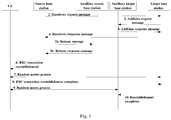
- the process can be as shown in Fig. 1 if a dual connectivity is added in the handover process when the UE is performing the cell handover.
- the target base station After receiving a handover request message sent by the source base station, the target base station decides whether to establish a dual connectivity according to the bearer information carried in the handover request message. If a dual connectivity needs to be established between the target cell and the UE, and there is a suitable secondary target base station, the target base station will initiate an SN addition (addition request message) process to the secondary target base station. After the target base station receives a response from the secondary target base station, the target base station sends a handover response message to the source base station.
- the target base station is in the CU/DU separation scene, there is also an additional F1 interface signaling that needs to be exchanged. If the processing time delay of the base station is taken into consideration, adding a secondary target base station during the handover process will cause an additional the time of nearly 100ms for the handover preparation process. If the cell handover is urgent, that is, when the signal quality of the source base station is already very poor, the establishing a dual connectivity between the target cell and the UE may cause this cell handover to fail, and affect the user experience.
- an embodiment of the present application provides a handover method so as to reduce the probability of cell handover failure and improve the user experience.
- a handover method provided by an embodiment of the present application may include the following steps.
- Step 1 a source base station determines a target cell for a UE.
- the source base station can be understood as the base station where the source cell is located.
- the source base station, the base station where the source cell is located, and the source cell all represent the source side in the cell handover process, that is, the side that sends the handover request message.
- the three of them can all represent the same meaning, and the three of them can be used interchangeably.
- the source base station may receive a measurement message sent by the UE, and the measurement message includes the identifier of the source base station and the quality information of radio links of surrounding cells. That is, the UE may measure the quality of radio links of surrounding cells and then summarize the measurement results and send them to the source base station, so that the source base station selects a target cell that meets the conditions according to the measurement results.
- the target cell that meets the conditions can be understood as: the quality of the radio link of the target cell is better, which can improve the high-quality services.
- the specific process of determining the target cell according to the measurement message can refer to the prior art, which will not be repeated here.
- Step 2 the source base station sends a handover request message to the target base station, where the target cell is located, the handover request message carries the first indication information, and the first indication information is for indicating a suggestion of not establishing a dual connectivity between the target cell and the UE.
- the target base station can be understood as the base station where the target cell is located.
- the target base station, the base station where the target cell is located, and the target cell all represent the target side in the cell handover process, that is, the side that receives the handover request message and sends the handover response message.
- the target base station, the base station where the target cell is located, and the target cell can represent the same meaning, and the three of them can be used interchangeably.
- the source base station can determine whether the cell handover process needs to be performed immediately according to the measurement message reported by the UE after the source base station determines the target cell and before sending the handover request message. Whether the cell handover process is urgent, that is, whether the quality of the service signal provided by the source base station has become relatively poor so that the long handover preparation time cannot be given.
- the source base station needs to carry the first indication information in the handover request message sent to the target base station, to give a suggestion to the target base station to suggest the target base station not to establish a dual connectivity with the UE, thereby reducing the handover preparation time, avoiding the cell handover failure, and ensuring the smooth progress of the handover.
- the source base station may not carry the first indication information in the handover request message sent to the target base station, so that the target base station judges whether a dual connectivity needs to be established according to the type of the UE and its own load; or the source base station may also carry the first indication information in the handover request message sent to the target base station, which is not limited here.
- Step 3 the target base station receives the handover request message sent by the source base station.
- Step 4 the target base station determines whether to establish the dual connectivity between the target cell and the UE at least according to the first indication information.
- the target base station when determining whether to establish the dual connectivity between the target cell and the UE, not only needs to consider the first indication information but also can consider the service type of the UE and a load condition of the target base cell to ensure the smooth progress of the cell handover.
- the target base station determines whether to establish the dual connectivity between the target cell and the UE at least according to the first indication information, which may include: the target base station determines whether to establish the dual connectivity between the target cell and the UE according to the first indication information, the type of the UE and the load of the target cell.
- the target base station determines whether to establish the dual connectivity between the target cell and the UE, there are two determination results as follows.
- the target base station may send a handover response message to the source base station, and carry second indication information in the handover response message.
- the second indication information is used to indicate that the target base station has not established a dual connectivity with the UE, to inform the source base station that the target base station does not established a dual connectivity with the UE.
- Another result is that a dual connectivity can be established between the target cell and the UE.
- the target base station needs to perform the operation of establishing a dual connectivity between the target cell and the UE. The steps are as follows:
- the UE since the target base station has established a dual connectivity, the UE will realize the dual connectivity with the target cell and the secondary target cell during this cell handover, so as to provide more services to the UE.
- the target base station may send a handover response message to the source base station, and carry the second indication information in the handover response message.
- the second indication information is used to indicate that the target base station has established the dual connectivity, to inform the source base station that the target base station has established the dual connectivity.
- the target base station when determining whether to establish the dual connectivity between the target cell and the UE, the target base station needs to perform the process of step 5 below no matter which of the above-mentioned results is the determined.
- Step 5 the target base station sends a handover response message to the source cell, the handover response message carries the second indication information that is used to indicate whether the target cell establishes a dual connectivity with the UE.
- Step 6 the source base station receives the handover response message sent by the base station.
- Step 7 the source base station sends a handover command to the UE.
- Step 8 the UE receives the handover command, and performs the cell handover according to the handover command.
- the handover command can carry the information (such as identifier, etc.) of the target cell. If a dual connectivity is required, the handover command can also carry the information (such as identifier, etc.) of the secondary target cell, so as to inform the UE of whether to perform the dual connectivity operation during this cell handover.
- the handover command may also directly carry the above-mentioned second indication information, so as to directly inform the UE of whether to perform the dual connectivity operation, which is not limited here.
- the process in which the UE performs the cell handover according to the handover command and the process in which the target base station establishes a dual connectivity can refer to the prior art, which will not be repeated here.
- the handover may succeed, but it may also fail. If this cell handover fails, the UE can send a radio link failure notification to the source base station to notify the source base station that the handover failed, so that the source base station can optimize the handover parameters; and the UE will also record the information on whether the target base station has established a dual connectivity for the UE in the failure process of this cell handover, so as to provide a reference for the subsequent optimization of the handover parameters.
- the UE may notify the source base station of the failure of this cell handover.
- the UE determines that the source base station is a reestablishment base station.
- the UE can directly send a radio link failure notification to the source base station. That is, the UE directly informs the source base station that this cell handover failed, and the source base station can determine the reason for the failure of this cell handover according to the radio link failure notification. And, the UE may perform a Radio Resource Control (RRC) connection reestablishment process with the source base station.
- RRC Radio Resource Control
- the source base station may send a radio link failure request message to the UE, so that the UE reports the recorded Radio Link Failure (RLF) related information, That is, the source base station instructs the UE to send a radio link failure message, the radio link failure message may include the third indication information that is used to indicate whether the target cell establishes a dual connectivity with the UE during the cell handover process.
- RLF Radio Link Failure
- the source base station it can optimize the handover parameters according to the received radio link failure message.
- the UE determines that the source base station is a reestablishment base station.
- the UE can directly send a radio link failure notification to the source base station. That is, the UE directly informs the source base station that this cell handover failed, and the UE and the source base station perform the RRC connection reestablishment process.
- the difference between the second way and the first way is: the source base station has received the handover response message sent by the target base station carried the second indication information, and the second indication information is used to indicate whether the target cell to establish a dual connectivity, so the source base station has already known whether the target base station has established a dual connectivity,
- the source base station can determine the cause of the failure of this cell handover, and thus the source base station does not need to send the radio link failure request message to the UE, that is, the UE does not need to report the recorded RLF related information, and the source base station can optimize the handover parameters of the UE according to the second indication information and the information of the target cell, improving the optimization processing efficiency.
- the UE determines that a base station other than the source base station is a reestablishment base station, and sends a radio link failure notification to the reestablishment base station, so that the reestablishment base station can determine the cause of the failure of this cell handover according to the radio link failure notification.
- the UE performs the RRC connection reestablishment process with the reestablishment base station, and then notifies the source base station of the failure of this cell handover and the cause of the handover failure through the reestablishment base station. That is, the UE indirectly informs the source base station of the failure of this cell handover through the reestablishment base station, so that the source base station performs the optimization of handover parameters.
- the reestablishment base station is not the source base station and does not know whether the target base station has established a dual connectivity, so the reestablishment base station sends a radio link failure request message to the UE so that the UE reports the recorded RLF related information. That is, the reestablishment base station instructs the UE to send a radio link failure message, and the radio link failure message may include the third indication information that is used to indicate whether the target cell establishes a dual connectivity during the cell handover process.
- the radio link failure message may also include the information of the source base station, so that the reestablishment base station can send a handover optimization message to the source base station, so that the source base station optimizes the handover parameters according to the received handover optimization message.
- the specific process of this method can be as shown in Fig. 2 .
- the handover request message carries the first indication information
- the target base station establishes a dual connectivity
- the cell handover fails as an example for description:
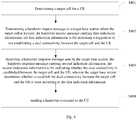
- an embodiment of the present application further provides a handover method applicable to the source base station side, as shown in Fig. 4 , which may include:
- the target cell can be provided with a suggestion when determining whether the target cell establishes a dual connectivity by carrying the first indication information in the handover request message sent by the source base station to the target base station, so that it can be beneficial to prevent the target cell from establishing a dual connectivity when this cell handover is urgent, and thus the cell handover can be performed immediately, to thereby facilitate reducing the probability of handover failure and improving the user experience.
- the method may further include: receiving a measurement message sent by the UE.
- the step S402 of sending the handover request message to the target base station where the target cell is located, the handover request message carries the first indication information in embodiments of the present application, may include: determining that this cell handover process needs to be performed immediately according to the measurement message, and then sending the handover request message to the target base station where the target cell is located, wherein the handover request message carries the first indication information.
- the target cell can be provided with a suggestion, to thereby facilitate the smooth progress of this cell handover.
- the handover method may further include: optimizing a handover parameter of the UE according to the second indication information and the information of the target cell, when a cause of failure of a cell handover process is determined according to a radio link failure notification sent by the UE.
- the handover parameters can be quickly optimized to improve the efficiency of handover optimization.
- the handover method may further include:
- the radio link failure message may further include: the information of a source cell.
- the target base station where the target cell is located determines whether to establish the dual connectivity between the target cell and the UE at least according to the first indication information, by: the target base station where the target cell is located determines whether to establish the dual connectivity between the target cell and the UE according to the first indication information, the service type of the UE and the load of the target cell.
- the base station where the target cell is located can be comprehensively measured and considered to reduce the probability of handover failure.
- an embodiment of the present application further provides a handover method applicable to the target base station side, as shown in Fig. 5 , which may include:
- the step S502 of determining whether the target cell establishes the dual connectivity with the UE at least according to the first indication information may include: determining, by the target base station, whether to establish the dual connectivity between the target cell and the UE according to the first indication information, the service type of the UE, and the load of the target base station where the target cell is located.
- the target cell can be comprehensively measured and considered to reduce the probability of handover failure.
- an embodiment of the present application further provides a handover device, such as a source base station. Since the working principle of the handover device is similar to that of the aforementioned handover method applicable to the source base station, the implementations of the handover device can refer to the embodiments of the handover method described above, and the repeated description thereof will be omitted here.
- Embodiments of the present application provide a handover device, such as a source base station, as shown in Fig. 6 , which may include:
- the receiving unit 603 is further configured to receive a measurement message sent by the UE before determining the target cell for the UE; the transmitting unit 602 is further configured to determine that a cell handover process needs to be performed immediately according to the measurement message, and then transmit the handover request message to the target base station where the target cell is located, the handover request message carrying the first indication information.
- the processing unit 601 is further configured to optimize handover parameters of the UE according to the second indication information and the information of the target cell, when the cause of failure of this cell handover is determined according to a radio link failure notification sent by the UE.
- the processing unit 601 is further configured to instruct the UE to send a radio link failure message, when the cause of failure of this cell handover is determined according to a radio link failure notification sent by the UE; and optimize handover parameters according to the radio link failure message;
- the receiving unit 603 is further configured to receive the radio link failure message sent by the UE, the radio link failure message includes the third indication information, and the third indication information is for indicating whether the dual connectivity is established between the target cell and the UE during the cell handover process.
- the radio link failure message further includes: the information of a source cell.
- an embodiment of the present application further provides a handover device, such as a target base station. Since the working principle of the handover device is similar to that of the aforementioned handover method applicable to the target base station, the specific implementations of the handover device can refer to embodiments of the handover method described above, and the repeated description thereof will be omitted here.
- Embodiments of the present application provide a handover device, such as a target base station, as shown in Fig. 7 , which may include:
- the processing unit 702 is further configured to determine whether to establish the dual connectivity between the target cell and the UE according to the first indication information, the service type of the UE, and the load situation of a target base station where the target cell is located.
- the processing unit 702 is further configured to determine a secondary target cell for the UE after determining that a dual connectivity needs to be established; the sending unit 703 is further configured to send an addition request message to the secondary target base station where the secondary target cell is located; the receiving unit 701 is further configured to receive an addition response message sent by the secondary target base station where the secondary target cell is located.
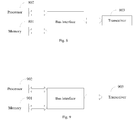
- an embodiment of the present application further provides a handover device, such as a source base station, as shown in Fig. 8 , which may include:
- the transceiver 803 may be configured to receive and send data under the control of the processor 802.
- the bus architecture may include any numbers of interconnected buses and bridges, and the interconnected buses and the bridges are linked together by various circuits of one or more processors represented by the processor 802 and the memory represented by the memory 801.
- the bus architecture may further link various other circuits such as peripheral device, voltage regulator and power management circuit, which are all well known in the art and thus will not be further described again herein.
- the bus interface provides an interface.
- the transceiver 803 can be a plurality of elements, i.e., include a transmitter and a receiver, and provide the units for communicating with various other devices over the transmission media.
- the user interface can also be an external or internal interface for connecting with the interface of the connected devices, and the connected devices include but not limited to keypad, display, loudspeaker, microphone, joystick and the like.
- the processor 802 is responsible for managing the bus architecture and general processing, and the memory 801 may store the data used by the processor 802 when performing the operations.
- the processor 802 in embodiments of the present application may be Central Processing Unit (CPU), Application Specific Integrated Circuit (ASIC), Field-Programmable Gate Array (FPGA) or Complex Programmable Logic Device (CPLD).
- CPU Central Processing Unit
- ASIC Application Specific Integrated Circuit
- FPGA Field-Programmable Gate Array
- CPLD Complex Programmable Logic Device
- an embodiment of the present application further provides a handover device, such as a target base station, as shown in Fig. 9 , which may include:
- the transceiver 903 may be configured to receive and send data under the control of the processor 902.
- the bus architecture may include any numbers of interconnected buses and bridges, and the interconnected buses and the bridges are linked together by various circuits of one or more processors represented by the processor 902 and the memory represented by the memory 901.
- the bus architecture may further link various other circuits such as peripheral device, voltage regulator and power management circuit, which are all well known in the art and thus will not be further described again herein.
- the bus interface provides an interface.
- the transceiver 903 can be a plurality of elements, i.e., include a transmitter and a receiver, and provide the units for communicating with various other devices over the transmission media.
- the user interface can also be an external or internal interface for connecting with the interface of the connected devices, and the connected devices include but not limited to keypad, display, loudspeaker, microphone, joystick and the like.
- the processor 902 is responsible for managing the bus architecture and general processing, and the memory 901 may store the data used by the processor 902 when performing the operations.
- the processor 902 in embodiments of the present application may be Central Processing Unit (CPU), Application Specific Integrated Circuit (ASIC), Field-Programmable Gate Array (FPGA) or Complex Programmable Logic Device (CPLD).
- CPU Central Processing Unit
- ASIC Application Specific Integrated Circuit
- FPGA Field-Programmable Gate Array
- CPLD Complex Programmable Logic Device
- any memory mentioned in embodiments of the present application may include Read-Only Memory (ROM) and Random Access Memory (RAM), and provide the processor with the program instructions and data stored in the memory.
- the memory may be used to store the program of any method provided by embodiments of the present application.
- the processor invokes the program instructions stored in the memory and is configured to perform any method provided by embodiments of the present application in accordance with the obtained program instructions.
- an embodiment of the present application further provides a computer readable storage medium storing computer executable instructions which are configured to cause the computer to perform any handover method described above.
- the readable storage medium may be any available media or data storage device accessible to the computer, including but not limited to magnetic memory (e.g., floppy disk, hard disk, magnetic tape, Magnetic Optical disc (MO) or the like), optical memory (e.g., CD, DVD, BD, HVD or the like), semiconductor memory (e.g., ROM, EPROM, EEPROM, non-transitory memory (NAND FLASH), Solid State Disk (SSD)) or the like.
- magnetic memory e.g., floppy disk, hard disk, magnetic tape, Magnetic Optical disc (MO) or the like
- optical memory e.g., CD, DVD, BD, HVD or the like
- semiconductor memory e.g., ROM, EPROM, EEPROM, non-transitory memory (NAND FLASH), Solid State Disk (SSD)
- the user equipment mentioned in embodiments of the present application may also referred to as terminal, Mobile Station ("MS" for short), Mobile Terminal or the like.
- the terminal can has the ability of communicating with one or more core networks via the Radio Access Network (RAN).
- RAN Radio Access Network
- the terminal can be a mobile telephone (or called "cellular" telephone), or a computer with the mobile property.
- the terminal can also be a portable, pocket, handheld, computer built-in or vehicle-carried mobile device.
- the base station may be an access network device (e.g., access point), which means the device in the access network communicating with the wireless terminal via one or more sectors over the air interface.
- the base station may be used to perform the inter-conversion between the received air frame and the IP packet, and used as the router between the wireless terminal and the rest of the access network, and the rest of the access network may include Internet Protocol (IP) networks.
- IP Internet Protocol
- the base station may further coordinate the attribute management of the air interface.
- the base station may be the Base Transceiver Station (BTS) in the GSM or CDMA, or may be the NodeB in the WCDMA, or may be the evolutional Node B (NodeB or eNB or e-NodeB) in the LTE, which is not limited in embodiments of the invention.
- BTS Base Transceiver Station
- the processing flows of the above methods may be implemented by a software program, which may be stored in a storage medium. When the stored software program is invoked, the above method steps are performed.
- embodiments of the present application can provide methods, systems and computer program products.
- the present application can take the form of hardware embodiments alone, software embodiments alone, or embodiments combining the software and hardware aspects.
- present application can take the form of computer program products implemented on one or more computer usable storage mediums (including but not limited to magnetic disk memories, optical memories and the like) containing computer usable program codes therein.
- These computer program instructions can also be stored in a computer readable memory which is capable of guiding the computer or another programmable data processing device to operate in a particular way, so that the instructions stored in the computer readable memory produce a manufacture including the instruction apparatus which implements the functions specified in one or more processes of the flow charts and/or one or more blocks of the block diagrams.
- These computer program instructions can also be loaded onto the computer or another programmable data processing device, so that a series of operation steps are performed on the computer or another programmable device to produce the computer-implemented processing.
- the instructions executed on the computer or another programmable device provide steps for implementing the functions specified in one or more processes of the flow charts and/or one or more blocks of the block diagrams.
- Embodiments of the present application provide a handover method, a handover device and a computer readable storage medium, where the target cell can be provided with a suggestion when determining whether the target cell establishes a dual connectivity with the UE by carrying the first indication information in the handover request message sent by the source base station to the base station, so that it can be beneficial to prevent the target cell from establishing a dual connectivity when this cell handover is urgent, and thus the cell handover can be performed immediately, to thereby facilitate reducing the probability of handover failure, and improving the user experience.
Landscapes
- Engineering & Computer Science (AREA)
- Computer Networks & Wireless Communication (AREA)
- Signal Processing (AREA)
- Mobile Radio Communication Systems (AREA)
Abstract
Description
- The present application claims the priority from
Chinese Patent Application No. 201811234791.9 - The present application relates to the field of communication technology, and in particular to a handover method, a handover device and a computer readable storage medium.
- In the Long Term Evolution (LTE) system, the access network consists of multiple eNodebs (base stations). The eNodeB and Evolved Packet Core (EPC) are connected through the S1 interface, and the eNodeBs are connected through the X2 interface. In order to support the higher data throughput, a User Equipment (UE) can achieve the dual connectivity through two eNodeBs. In the 5G system, similarly, similar to the dual connectivity of the LTE system, it also supports the Tight Interworking between the eNodeB and gNB (base station) as well as the dual connectivity between UE and gNB and gNB. In the current specification, it supports the handover from dual connectivity to dual connectivity and from single connectivity to dual connectivity during the handover process.
- However, if a handover from single/dual connectivity to dual connectivity occurs, it means that the preparation process for this handover is relatively long, which may cause the failure of the handover. Then, how to avoid the handover failure in a scenario where both the UE and the network side device (such as base station) support the dual connectivity is a technical problem which urgently needs to be solved by those skilled in the art.
- Embodiments of the present application provide a handover method, a handover device and a computer readable storage medium, so as to avoid the handover failure in a scenario where both the UE and the network side device (such as base station) support the dual connectivity.
- In a first aspect, an embodiment of the present application provides a handover method, which is applicable to the source base station side and may include:
- determining a target cell for a user equipment, UE;
- transmitting a handover request message to a target base station where the target cell is located, the handover request message carrying first indication information, wherein the first indication information is for indicating a suggestion of not establishing a dual connectivity between the target cell and the UE;
- receiving a handover response message sent by the target base station, the handover response message carrying second indication information, wherein the second indication information is for indicating whether the dual connectivity is established between the target cell and the UE; wherein the target base station determines whether to establish the dual connectivity between the target cell and the UE at least according to the first indication information;
- sending a handover command to the UE.
- In a second aspect, an embodiment of the present application further provides a handover method, which is applicable to the target base station side and may include:
- receiving a handover request message sent by a source base station where a source cell is located, the handover request message carrying first indication information, wherein the first indication information is for indicating a suggestion of not establishing a dual connectivity between a target cell and a user equipment, UE;
- determining whether to establish the dual connectivity between the target cell and the UE at least according to the first indication information;
- sending a handover response message to the source cell, the handover response message carrying second indication information, wherein the second indication information is for indicating whether the dual connectivity is established between the target cell and the UE.
- In a third aspect, an embodiment of the present application provides a first handover device, such as a source base station, including:
- a processing unit, configured to determine a target cell for a user equipment, UE;
- a transmitting unit, configured to transmit a handover request message to a target base station where the target cell is located, the handover request message carrying first indication information, wherein the first indication information is for indicating a suggestion of not establishing a dual connectivity between the target cell and the UE;
- a receiving unit, configured to receive a handover response message sent by the target base station, the handover response message carrying second indication information, wherein the second indication information is for indicating whether the dual connectivity is established between the target cell and the UE; wherein the target base station determines whether to establish the dual connectivity between the target cell and the UE at least according to the first indication information.
- In a fourth aspect, an embodiment of the present application provides a second handover device, such as a source base station, including:
- a memory configured to store program instructions;
- a processor configured to invoke the program instructions stored in the memory, and in accordance with the obtained program, perform the process of:
- determining a target cell for a user equipment, UE;
- transmitting a handover request message to a target base station where the target cell is located, the handover request message carrying first indication information, wherein the first indication information is for indicating a suggestion of not establishing a dual connectivity between the target cell and the UE;
- receiving a handover response message sent by the target base station, the handover response message carrying second indication information, wherein the second indication information is for indicating whether the dual connectivity is established between the target cell and the UE; wherein the target base station determines whether to establish the dual connectivity between the target cell and the UE at least according to the first indication information;
- sending a handover command to the UE.
- In a fifth aspect, an embodiment of the present application provides a third handover device, such as a target base station, including:
- a receiving unit, configured to receive a handover request message sent by a source base station where a source cell is located, the handover request message carrying first indication information, wherein the first indication information is for indicating a suggestion of not establishing a dual connectivity between a target cell and a user equipment, UE;
- a processing unit, configured to determine whether to establish the dual connectivity between the target cell and the UE at least according to the first indication information;
- a sending unit, configured to send a handover response message to the source cell, the handover response message carrying second indication information, wherein the second indication information is for indicating whether the dual connectivity is established between the target cell and the UE.
- In a sixth aspect, an embodiment of the present application provides a fourth handover device, such as a target base station, including:
- a memory configured to store program instructions;
- a processor configured to invoke the program instructions stored in the memory, and in accordance with the obtained program, perform the process of:
- receiving a handover request message sent by a source base station where a source cell is located, the handover request message carrying first indication information, wherein the first indication information is for indicating a suggestion of not establishing a dual connectivity between a target cell and a user equipment, UE;
- determining whether to establish the dual connectivity between the target cell and the UE at least according to the first indication information;
- sending a handover response message to the source cell, the handover response message carrying second indication information, wherein the second indication information is for indicating whether the dual connectivity is established between the target cell and the UE.
- In a seventh aspect, an embodiment of the present application provides a computer readable storage medium storing computer executable instructions which are configured to cause the computer to perform any one of the above-mentioned handover methods.
- The present application has the following beneficial effects.
- Embodiments of the present application provide a handover method, a handover device and a computer readable storage medium, where the target cell can be provided with a suggestion when determining whether the target cell establishes the dual connectivity with the UE by carrying the first indication information in the handover request message sent by the source base station to the target base station. Thus, it can be beneficial to prevent the target cell from establishing a dual connectivity between the target cell and the UE, when this cell handover is urgent, and thus the cell handover can be performed immediately, to thereby facilitate reducing the probability of handover failure and improving the user experience.
-
-
Fig. 1 is an interactive flow chart among user equipment, source base station and target base station, provided by the prior art; -
Fig. 2 is an interactive flow chart of notifying the source base station to optimize handover parameters after the cell handover fails, provided by an embodiment of the present application; -
Fig. 3 is an interactive flow chart of a first handover method provided by an embodiment of the present application; -
Fig. 4 is a flow chart of a second handover method provided by an embodiment of the present application; -
Fig. 5 is a flow chart of a third handover method provided by an embodiment of the present application; -
Fig. 6 is a structural schematic diagram of a first handover device provided by an embodiment of the present application; -
Fig. 7 is a structural schematic diagram of a second handover device provided by an embodiment of the present application; -
Fig. 8 is a structural schematic diagram of a third handover device provided by an embodiment of the present application; -
Fig. 9 is a structural schematic diagram of a fourth handover device provided by an embodiment of the present application. - The specific embodiments of a handover method, a handover device and a computer readable storage medium provided by embodiments of the present application will be illustrated below in details with reference to the drawings. It is necessary to note that the described embodiments are only a part of embodiments of the present application, but not all embodiments. Based upon embodiments of the present application, all of other embodiments obtained by those ordinary skilled in the art without creative work pertain to the protection scope of the present application.
- In order to facilitate understanding, the terms mentioned in the embodiments of the present application will be explained at first.
- Tight Interworking between eNodeB and gNB.
- In this scenario, there are mainly two cases as follows: in the first case, the LTE can be used as a primary base station, and the 5G base station can be used as a secondary base station that is connected to the core network through the primary base station. In the second case, the LTE can be used as a primary base station, the 5G base station can be used as a secondary base station, and both the primary base station and the secondary base station are connected to the 5G core network. And, in the second case, the NR-RN DC architecture is also included.
- The inventors found in research that the process can be as shown in
Fig. 1 if a dual connectivity is added in the handover process when the UE is performing the cell handover. Here, after receiving a handover request message sent by the source base station, the target base station decides whether to establish a dual connectivity according to the bearer information carried in the handover request message. If a dual connectivity needs to be established between the target cell and the UE, and there is a suitable secondary target base station, the target base station will initiate an SN addition (addition request message) process to the secondary target base station. After the target base station receives a response from the secondary target base station, the target base station sends a handover response message to the source base station. - Considering that the average delay of the X2/Xn interface is 10ms, if the target base station is in the CU/DU separation scene, there is also an additional F1 interface signaling that needs to be exchanged. If the processing time delay of the base station is taken into consideration, adding a secondary target base station during the handover process will cause an additional the time of nearly 100ms for the handover preparation process. If the cell handover is urgent, that is, when the signal quality of the source base station is already very poor, the establishing a dual connectivity between the target cell and the UE may cause this cell handover to fail, and affect the user experience.
- Therefore, an embodiment of the present application provides a handover method so as to reduce the probability of cell handover failure and improve the user experience.
- Specifically, a handover method provided by an embodiment of the present application may include the following steps.
- Step 1: a source base station determines a target cell for a UE.
- Here, the source base station can be understood as the base station where the source cell is located. The source base station, the base station where the source cell is located, and the source cell all represent the source side in the cell handover process, that is, the side that sends the handover request message. And, in embodiments of the present application, the three of them can all represent the same meaning, and the three of them can be used interchangeably.
- In addition, before determining the target cell, the source base station may receive a measurement message sent by the UE, and the measurement message includes the identifier of the source base station and the quality information of radio links of surrounding cells. That is, the UE may measure the quality of radio links of surrounding cells and then summarize the measurement results and send them to the source base station, so that the source base station selects a target cell that meets the conditions according to the measurement results.
- Here, the target cell that meets the conditions can be understood as: the quality of the radio link of the target cell is better, which can improve the high-quality services. The specific process of determining the target cell according to the measurement message can refer to the prior art, which will not be repeated here.
- Step 2: the source base station sends a handover request message to the target base station, where the target cell is located, the handover request message carries the first indication information, and the first indication information is for indicating a suggestion of not establishing a dual connectivity between the target cell and the UE.
- Here, the target base station can be understood as the base station where the target cell is located. The target base station, the base station where the target cell is located, and the target cell all represent the target side in the cell handover process, that is, the side that receives the handover request message and sends the handover response message. And, in embodiments of the present application, the target base station, the base station where the target cell is located, and the target cell can represent the same meaning, and the three of them can be used interchangeably.
- It should be noted that, the source base station can determine whether the cell handover process needs to be performed immediately according to the measurement message reported by the UE after the source base station determines the target cell and before sending the handover request message. Whether the cell handover process is urgent, that is, whether the quality of the service signal provided by the source base station has become relatively poor so that the long handover preparation time cannot be given.
- If so, the source base station needs to carry the first indication information in the handover request message sent to the target base station, to give a suggestion to the target base station to suggest the target base station not to establish a dual connectivity with the UE, thereby reducing the handover preparation time, avoiding the cell handover failure, and ensuring the smooth progress of the handover.
- If not, the source base station may not carry the first indication information in the handover request message sent to the target base station, so that the target base station judges whether a dual connectivity needs to be established according to the type of the UE and its own load; or the source base station may also carry the first indication information in the handover request message sent to the target base station, which is not limited here.
- Step 3: the target base station receives the handover request message sent by the source base station.
- Step 4: the target base station determines whether to establish the dual connectivity between the target cell and the UE at least according to the first indication information.
- Specifically, when determining whether to establish the dual connectivity between the target cell and the UE, the target base station not only needs to consider the first indication information but also can consider the service type of the UE and a load condition of the target base cell to ensure the smooth progress of the cell handover.
- Therefore, in an embodiment of the present application, the target base station determines whether to establish the dual connectivity between the target cell and the UE at least according to the first indication information, which may include:
the target base station determines whether to establish the dual connectivity between the target cell and the UE according to the first indication information, the type of the UE and the load of the target cell. - In some embodiments, when the target base station determines whether to establish the dual connectivity between the target cell and the UE, there are two determination results as follows.
- One result is that there is no need to establish a dual connectivity between the target cell and the UE. At this time, the target base station may send a handover response message to the source base station, and carry second indication information in the handover response message. And, the second indication information is used to indicate that the target base station has not established a dual connectivity with the UE, to inform the source base station that the target base station does not established a dual connectivity with the UE.
- Another result is that a dual connectivity can be established between the target cell and the UE. At this time, the target base station needs to perform the operation of establishing a dual connectivity between the target cell and the UE. The steps are as follows:
- determining a secondary target cell for the UE;
- sending an addition request message to the secondary target base station where the secondary target cell is located;
- receiving an addition response message sent by the secondary target base station where the secondary target cell is located.
- Here, since the target base station has established a dual connectivity, the UE will realize the dual connectivity with the target cell and the secondary target cell during this cell handover, so as to provide more services to the UE.
- After performing the operation of establishing the dual connectivity, the target base station may send a handover response message to the source base station, and carry the second indication information in the handover response message. At this time, the second indication information is used to indicate that the target base station has established the dual connectivity, to inform the source base station that the target base station has established the dual connectivity.
- Therefore, when determining whether to establish the dual connectivity between the target cell and the UE, the target base station needs to perform the process of step 5 below no matter which of the above-mentioned results is the determined.
- Step 5: the target base station sends a handover response message to the source cell, the handover response message carries the second indication information that is used to indicate whether the target cell establishes a dual connectivity with the UE.
- Step 6: the source base station receives the handover response message sent by the base station.
- Step 7: the source base station sends a handover command to the UE.
- Step 8: the UE receives the handover command, and performs the cell handover according to the handover command.
- Here, the handover command can carry the information (such as identifier, etc.) of the target cell. If a dual connectivity is required, the handover command can also carry the information (such as identifier, etc.) of the secondary target cell, so as to inform the UE of whether to perform the dual connectivity operation during this cell handover.
- Of course, the handover command may also directly carry the above-mentioned second indication information, so as to directly inform the UE of whether to perform the dual connectivity operation, which is not limited here.
- Here, the process in which the UE performs the cell handover according to the handover command and the process in which the target base station establishes a dual connectivity can refer to the prior art, which will not be repeated here.
- In some embodiments, during the cell handover process, the handover may succeed, but it may also fail. If this cell handover fails, the UE can send a radio link failure notification to the source base station to notify the source base station that the handover failed, so that the source base station can optimize the handover parameters; and the UE will also record the information on whether the target base station has established a dual connectivity for the UE in the failure process of this cell handover, so as to provide a reference for the subsequent optimization of the handover parameters.
- In some embodiments, there may be many ways for the UE to notify the source base station of the failure of this cell handover.
- In a first way, the UE determines that the source base station is a reestablishment base station. The UE can directly send a radio link failure notification to the source base station. That is, the UE directly informs the source base station that this cell handover failed, and the source base station can determine the reason for the failure of this cell handover according to the radio link failure notification. And, the UE may perform a Radio Resource Control (RRC) connection reestablishment process with the source base station.
- In some embodiments, the source base station may send a radio link failure request message to the UE, so that the UE reports the recorded Radio Link Failure (RLF) related information, That is, the source base station instructs the UE to send a radio link failure message, the radio link failure message may include the third indication information that is used to indicate whether the target cell establishes a dual connectivity with the UE during the cell handover process.
- For the source base station, it can optimize the handover parameters according to the received radio link failure message.
- In a second way, the UE determines that the source base station is a reestablishment base station. The UE can directly send a radio link failure notification to the source base station. That is, the UE directly informs the source base station that this cell handover failed, and the UE and the source base station perform the RRC connection reestablishment process.
- However, the difference between the second way and the first way is: the source base station has received the handover response message sent by the target base station carried the second indication information, and the second indication information is used to indicate whether the target cell to establish a dual connectivity, so the source base station has already known whether the target base station has established a dual connectivity, Thus, the source base station can determine the cause of the failure of this cell handover, and thus the source base station does not need to send the radio link failure request message to the UE, that is, the UE does not need to report the recorded RLF related information, and the source base station can optimize the handover parameters of the UE according to the second indication information and the information of the target cell, improving the optimization processing efficiency.
- In a third way, the UE determines that a base station other than the source base station is a reestablishment base station, and sends a radio link failure notification to the reestablishment base station, so that the reestablishment base station can determine the cause of the failure of this cell handover according to the radio link failure notification. The UE performs the RRC connection reestablishment process with the reestablishment base station, and then notifies the source base station of the failure of this cell handover and the cause of the handover failure through the reestablishment base station. That is, the UE indirectly informs the source base station of the failure of this cell handover through the reestablishment base station, so that the source base station performs the optimization of handover parameters.
- In some embodiments, in this case, the reestablishment base station is not the source base station and does not know whether the target base station has established a dual connectivity, so the reestablishment base station sends a radio link failure request message to the UE so that the UE reports the recorded RLF related information. That is, the reestablishment base station instructs the UE to send a radio link failure message, and the radio link failure message may include the third indication information that is used to indicate whether the target cell establishes a dual connectivity during the cell handover process.
- Of course, the radio link failure message may also include the information of the source base station, so that the reestablishment base station can send a handover optimization message to the source base station, so that the source base station optimizes the handover parameters according to the received handover optimization message. The specific process of this method can be as shown in
Fig. 2 . - It should be pointed out that, for the source base station, how to optimize the handover parameters can refer to the prior art, which will not be repeated here.
- The handover method provided in embodiments of the present application will be described below in combination with embodiments.
- Referring to
Fig. 3 , the handover request message carries the first indication information, the target base station establishes a dual connectivity, and the cell handover fails as an example for description: - S301: a UE sends a measurement message to a source base station;
- S302: the source base station determines a target cell for the UE according to the measurement message;
- S303: the source base station sends a handover request message carrying the first indication information to the target base station;
- S304: the target base station receives the handover request message;
- S305: the target base station determines that a dual connectivity needs to be established according to the first indication information carried in the handover request message, the type of the UE, and its own load;
- S306: the target base station determines a secondary target cell for the UE;
- S307: the target base station sends an addition request message to the secondary target base station where the secondary target cell is located;
- S308: the secondary target base station where the secondary target cell is located sends an addition response message to the target base station;
- S309: the target base station sends a handover response message carrying the second indication information to the source base station;
- S310: the source base station sends a handover command to the UE;
- S311: the UE fails in this cell handover and sends a radio link failure notification to the source base station;
- S312: the source base station optimizes the handover parameters according to the second indication information and the information of the target cell.
- Based on the same inventive concept, an embodiment of the present application further provides a handover method applicable to the source base station side, as shown in
Fig. 4 , which may include: - S401: determining a target cell for a user equipment, UE;
- S402: transmitting a handover request message to a target base station where the target cell is located, the handover request message carrying first indication information, wherein the first indication information is for indicating a suggestion of not establishing a dual connectivity between the target cell and the UE;
- S403: receiving a handover response message sent by the target base station, the handover response message carrying second indication information, wherein the second indication information is for indicating whether the dual connectivity is established between the target cell and the UE;
- Here, the target base station determines whether to establish the dual connectivity between the target cell and the UE at least according to the first indication information;
- S404: sending a handover command to the UE.
- In embodiments of the present application, the target cell can be provided with a suggestion when determining whether the target cell establishes a dual connectivity by carrying the first indication information in the handover request message sent by the source base station to the target base station, so that it can be beneficial to prevent the target cell from establishing a dual connectivity when this cell handover is urgent, and thus the cell handover can be performed immediately, to thereby facilitate reducing the probability of handover failure and improving the user experience.
- Optionally, before the step S401 of determining the target cell for the UE in embodiments of the present application, the method may further include:
receiving a measurement message sent by the UE. - The step S402 of sending the handover request message to the target base station where the target cell is located, the handover request message carries the first indication information in embodiments of the present application, may include:
determining that this cell handover process needs to be performed immediately according to the measurement message, and then sending the handover request message to the target base station where the target cell is located, wherein the handover request message carries the first indication information. - Thus, when this cell handover needs to be performed immediately, the target cell can be provided with a suggestion, to thereby facilitate the smooth progress of this cell handover.
- In some embodiments, after the step S404, the handover method may further include:
optimizing a handover parameter of the UE according to the second indication information and the information of the target cell, when a cause of failure of a cell handover process is determined according to a radio link failure notification sent by the UE. - Thus, when this cell handover fails, the handover parameters can be quickly optimized to improve the efficiency of handover optimization.
- In some embodiments, after the step S404, the handover method may further include:
- instructing the UE to send a radio link failure message, when a cause of failure of a cell handover process is determined according to a radio link failure notification sent by the UE;
- receiving the radio link failure message sent by the UE, the radio link failure message comprising third indication information, wherein the third indication information is for indicating whether the dual connectivity is established between the target cell and the UE during the cell handover process;
- optimizing a handover parameter of the UE according to the radio link failure message.
- Therefore, it is also possible to optimize the handover parameters according to the radio link failure message (that is, the aforementioned RLF related information) reported by the UE to ensure the smooth progress of the optimization process.
- In some embodiments, the radio link failure message may further include: the information of a source cell.
- In some embodiments, the target base station where the target cell is located determines whether to establish the dual connectivity between the target cell and the UE at least according to the first indication information, by:
the target base station where the target cell is located determines whether to establish the dual connectivity between the target cell and the UE according to the first indication information, the service type of the UE and the load of the target cell. - Thus, the base station where the target cell is located can be comprehensively measured and considered to reduce the probability of handover failure.
- Based on the same inventive concept, an embodiment of the present application further provides a handover method applicable to the target base station side, as shown in
Fig. 5 , which may include: - S501: receiving a handover request message sent by a source base station where a source cell is located, the handover request message carrying first indication information, wherein the first indication information is for indicating a suggestion of not establishing a dual connectivity between a target cell and a user equipment, UE;
- S502: determining whether to establish the dual connectivity between the target cell and the UE at least according to the first indication information; if not, performing step S503; if so, performing step S504;
- S503: sending a handover response message to the source cell, the handover response message carrying second indication information, wherein the second indication information is for indicating whether the dual connectivity is established between the target cell and the UE;
- S504: determining a secondary target cell for the UE;
- S505: sending an addition request message to the secondary target base station where the secondary target cell is located;
- S506: receiving an addition response message sent by the secondary target base station where the secondary target cell is located;
- S507: sending a handover response message to the source cell, the handover response message carrying second indication information, where the second indication information is for indicating the target cell has established a dual connectivity with the UE.
- In some embodiments, the step S502 of determining whether the target cell establishes the dual connectivity with the UE at least according to the first indication information may include:
determining, by the target base station, whether to establish the dual connectivity between the target cell and the UE according to the first indication information, the service type of the UE, and the load of the target base station where the target cell is located. - Thus, the target cell can be comprehensively measured and considered to reduce the probability of handover failure.
- Based on the same inventive concept, an embodiment of the present application further provides a handover device, such as a source base station. Since the working principle of the handover device is similar to that of the aforementioned handover method applicable to the source base station, the implementations of the handover device can refer to the embodiments of the handover method described above, and the repeated description thereof will be omitted here.
- Embodiments of the present application provide a handover device, such as a source base station, as shown in
Fig. 6 , which may include: - a
processing unit 601 configured to determine a target cell for a user equipment, UE; - a transmitting
unit 602 configured to transmit a handover request message to a target base station where the target cell is located, the handover request message carrying the first indication information, where the first indication information is for indicating a suggestion of not establishing a dual connectivity between the target cell and the UE; - a receiving
unit 603 configured to receive a handover response message sent by the target base station, the handover response message carrying the second indication information, where the second indication information is for indicating whether the dual connectivity is established between the target cell and the UE; wherein the target base station determines whether to establish the dual connectivity between the target cell and the UE at least according to the first indication information. - In some embodiments, the receiving
unit 603 is further configured to receive a measurement message sent by the UE before determining the target cell for the UE;
the transmittingunit 602 is further configured to determine that a cell handover process needs to be performed immediately according to the measurement message, and then transmit the handover request message to the target base station where the target cell is located, the handover request message carrying the first indication information. - In some embodiments, the
processing unit 601 is further configured to optimize handover parameters of the UE according to the second indication information and the information of the target cell, when the cause of failure of this cell handover is determined according to a radio link failure notification sent by the UE. - In some embodiments, the
processing unit 601 is further configured to instruct the UE to send a radio link failure message, when the cause of failure of this cell handover is determined according to a radio link failure notification sent by the UE; and optimize handover parameters according to the radio link failure message;
the receivingunit 603 is further configured to receive the radio link failure message sent by the UE, the radio link failure message includes the third indication information, and the third indication information is for indicating whether the dual connectivity is established between the target cell and the UE during the cell handover process. - In some embodiments, the radio link failure message further includes: the information of a source cell.
- Based on the same inventive concept, an embodiment of the present application further provides a handover device, such as a target base station. Since the working principle of the handover device is similar to that of the aforementioned handover method applicable to the target base station, the specific implementations of the handover device can refer to embodiments of the handover method described above, and the repeated description thereof will be omitted here.
- Embodiments of the present application provide a handover device, such as a target base station, as shown in
Fig. 7 , which may include: - a receiving
unit 701 configured to receive a handover request message sent by a source base station where a source cell is located, the handover request message carrying the first indication information, where the first indication information is for indicating a suggestion of not establishing a dual connectivity between a target cell and a user equipment, UE; - a
processing unit 702 configured to determine whether to establish the dual connectivity between the target cell and the UE at least according to the first indication information; - a sending
unit 703 configured to send a handover response message to the source cell, the handover response message carrying the second indication information, where the second indication information is for indicating whether the dual connectivity is established between the target cell and the UE. - In some embodiments, the
processing unit 702 is further configured to determine whether to establish the dual connectivity between the target cell and the UE according to the first indication information, the service type of the UE, and the load situation of a target base station where the target cell is located. - In some embodiments, the
processing unit 702 is further configured to determine a secondary target cell for the UE after determining that a dual connectivity needs to be established;
the sendingunit 703 is further configured to send an addition request message to the secondary target base station where the secondary target cell is located;
the receivingunit 701 is further configured to receive an addition response message sent by the secondary target base station where the secondary target cell is located. - Based on the same inventive concept, an embodiment of the present application further provides a handover device, such as a source base station, as shown in
Fig. 8 , which may include: - a
memory 801 configured to store program instructions; - a
processor 802 configured to invoke the program instructions stored in thememory 801, and in accordance with the obtained program, perform the process of:- determining a target cell for a user equipment, UE;
- transmitting a handover request message to a target base station where the target cell is located via a
transceiver 803, the handover request message carrying the first indication information, and the first indication information is for indicating a suggestion of not establishing a dual connectivity between the target cell and the UE ; - receiving a handover response message sent by the target base station via the
transceiver 803, the handover response message carrying the second indication information, where the second indication information is for indicating whether the dual connectivity is established between the target cell and the UE; wherein the target base station determines whether to establish the dual connectivity between the target cell and the UE at least according to the first indication information; - sending a handover command to the UE via the
transceiver 803.
- In some embodiments, the
transceiver 803 may be configured to receive and send data under the control of theprocessor 802. - Here, in
Fig. 8 , the bus architecture may include any numbers of interconnected buses and bridges, and the interconnected buses and the bridges are linked together by various circuits of one or more processors represented by theprocessor 802 and the memory represented by thememory 801. The bus architecture may further link various other circuits such as peripheral device, voltage regulator and power management circuit, which are all well known in the art and thus will not be further described again herein. The bus interface provides an interface. Thetransceiver 803 can be a plurality of elements, i.e., include a transmitter and a receiver, and provide the units for communicating with various other devices over the transmission media. For different user equipment, the user interface can also be an external or internal interface for connecting with the interface of the connected devices, and the connected devices include but not limited to keypad, display, loudspeaker, microphone, joystick and the like. - The
processor 802 is responsible for managing the bus architecture and general processing, and thememory 801 may store the data used by theprocessor 802 when performing the operations. - The
processor 802 in embodiments of the present application may be Central Processing Unit (CPU), Application Specific Integrated Circuit (ASIC), Field-Programmable Gate Array (FPGA) or Complex Programmable Logic Device (CPLD). - Based on the same inventive concept, an embodiment of the present application further provides a handover device, such as a target base station, as shown in
Fig. 9 , which may include: - a
memory 901 configured to store program instructions; - a
processor 902 configured to invoke the program instructions stored in thememory 901, and in accordance with the obtained program, perform the process of:- receiving a handover request message sent by a source base station where a source cell is located via a
transceiver 903, the handover request message carrying the first indication information, where the first indication information is for indicating a suggestion of not establishing a dual connectivity between a target cell and a user equipment, UE; - determining whether to establish the dual connectivity between the target cell and the UE at least according to the first indication information;
- sending a handover response message to the source cell via the
transceiver 903, the handover response message carrying the second indication information, where the second indication information is for indicating whether the dual connectivity is established between the target cell and the UE.
- receiving a handover request message sent by a source base station where a source cell is located via a
- In some embodiments, the
transceiver 903 may be configured to receive and send data under the control of theprocessor 902. - Here, in
Fig. 9 , the bus architecture may include any numbers of interconnected buses and bridges, and the interconnected buses and the bridges are linked together by various circuits of one or more processors represented by theprocessor 902 and the memory represented by thememory 901. The bus architecture may further link various other circuits such as peripheral device, voltage regulator and power management circuit, which are all well known in the art and thus will not be further described again herein. The bus interface provides an interface. Thetransceiver 903 can be a plurality of elements, i.e., include a transmitter and a receiver, and provide the units for communicating with various other devices over the transmission media. For different user equipment, the user interface can also be an external or internal interface for connecting with the interface of the connected devices, and the connected devices include but not limited to keypad, display, loudspeaker, microphone, joystick and the like. - The
processor 902 is responsible for managing the bus architecture and general processing, and thememory 901 may store the data used by theprocessor 902 when performing the operations. - The
processor 902 in embodiments of the present application may be Central Processing Unit (CPU), Application Specific Integrated Circuit (ASIC), Field-Programmable Gate Array (FPGA) or Complex Programmable Logic Device (CPLD). - It should be pointed out that, any memory mentioned in embodiments of the present application may include Read-Only Memory (ROM) and Random Access Memory (RAM), and provide the processor with the program instructions and data stored in the memory. In an embodiment of the present application, the memory may be used to store the program of any method provided by embodiments of the present application. The processor invokes the program instructions stored in the memory and is configured to perform any method provided by embodiments of the present application in accordance with the obtained program instructions.
- Based on the same concept, an embodiment of the present application further provides a computer readable storage medium storing computer executable instructions which are configured to cause the computer to perform any handover method described above.
- The readable storage medium may be any available media or data storage device accessible to the computer, including but not limited to magnetic memory (e.g., floppy disk, hard disk, magnetic tape, Magnetic Optical disc (MO) or the like), optical memory (e.g., CD, DVD, BD, HVD or the like), semiconductor memory (e.g., ROM, EPROM, EEPROM, non-transitory memory (NAND FLASH), Solid State Disk (SSD)) or the like.
- It is necessary to note that, the user equipment mentioned in embodiments of the present application may also referred to as terminal, Mobile Station ("MS" for short), Mobile Terminal or the like. In some embodiments, the terminal can has the ability of communicating with one or more core networks via the Radio Access Network (RAN). For example, the terminal can be a mobile telephone (or called "cellular" telephone), or a computer with the mobile property. For example, the terminal can also be a portable, pocket, handheld, computer built-in or vehicle-carried mobile device.
- The base station may be an access network device (e.g., access point), which means the device in the access network communicating with the wireless terminal via one or more sectors over the air interface. The base station may be used to perform the inter-conversion between the received air frame and the IP packet, and used as the router between the wireless terminal and the rest of the access network, and the rest of the access network may include Internet Protocol (IP) networks. The base station may further coordinate the attribute management of the air interface. For example, the base station may be the Base Transceiver Station (BTS) in the GSM or CDMA, or may be the NodeB in the WCDMA, or may be the evolutional Node B (NodeB or eNB or e-NodeB) in the LTE, which is not limited in embodiments of the invention.
- The processing flows of the above methods may be implemented by a software program, which may be stored in a storage medium. When the stored software program is invoked, the above method steps are performed.
- It should be understood by those skilled in the art that embodiments of the present application can provide methods, systems and computer program products. Thus the present application can take the form of hardware embodiments alone, software embodiments alone, or embodiments combining the software and hardware aspects. Also the present application can take the form of computer program products implemented on one or more computer usable storage mediums (including but not limited to magnetic disk memories, optical memories and the like) containing computer usable program codes therein.
- The present application is described by reference to the flow charts and/or the block diagrams of the methods, the devices (systems) and the computer program products according to the embodiments of the present application. It should be understood that each process and/or block in the flow charts and/or the block diagrams, and a combination of processes and/or blocks in the flow charts and/or the block diagrams can be implemented by the computer program instructions. These computer program instructions can be provided to a general-purpose computer, a dedicated computer, an embedded processor, or a processor of another programmable data processing device to produce a machine, so that an apparatus for implementing the functions specified in one or more processes of the flow charts and/or one or more blocks of the block diagrams is produced by the instructions executed by the computer or the processor of another programmable data processing device.
- These computer program instructions can also be stored in a computer readable memory which is capable of guiding the computer or another programmable data processing device to operate in a particular way, so that the instructions stored in the computer readable memory produce a manufacture including the instruction apparatus which implements the functions specified in one or more processes of the flow charts and/or one or more blocks of the block diagrams.
- These computer program instructions can also be loaded onto the computer or another programmable data processing device, so that a series of operation steps are performed on the computer or another programmable device to produce the computer-implemented processing. Thus the instructions executed on the computer or another programmable device provide steps for implementing the functions specified in one or more processes of the flow charts and/or one or more blocks of the block diagrams.
- Although embodiments of the present application have been described, those skilled in the art can make additional alterations and modifications to these embodiments once they learn about the basic creative concepts. Thus the attached claims are intended to be interpreted to include the preferred embodiments as well as all the alterations and modifications falling within the scope of the present application.
- Embodiments of the present application provide a handover method, a handover device and a computer readable storage medium, where the target cell can be provided with a suggestion when determining whether the target cell establishes a dual connectivity with the UE by carrying the first indication information in the handover request message sent by the source base station to the base station, so that it can be beneficial to prevent the target cell from establishing a dual connectivity when this cell handover is urgent, and thus the cell handover can be performed immediately, to thereby facilitate reducing the probability of handover failure, and improving the user experience.
- Evidently those skilled in the art can make various modifications and variations to the present application without departing from the spirit and scope of the present application. Thus the present application is also intended to encompass these modifications and variations therein as long as these modifications and variations to the present application come into the scope of the claims of the present application and their equivalents.
Claims (20)
- A handover method, comprising:determining a target cell for a user equipment, UE;transmitting a handover request message to a target base station where the target cell is located, the handover request message carrying first indication information, wherein the first indication information is for indicating a suggestion of not establishing a dual connectivity between the target cell and the UE;receiving a handover response message sent by the target base station, the handover response message carrying second indication information, wherein the second indication information is for indicating whether the dual connectivity is established between the target cell and the UE; wherein the target base station determines whether to establish the dual connectivity between the target cell and the UE at least according to the first indication information;sending a handover command to the UE.
- The handover method according to claim 1, wherein:before said determining the target cell for the UE, the method further comprises:
receiving a measurement message sent by the UE; andsaid transmitting the handover request message to the target base station where the target cell is located, the handover request message carrying first indication information, comprises:determining that a cell handover process needs to be performed immediately according to the measurement message; andtransmitting the handover request message to the target base station where the target cell is located, the handover request message carrying the first indication information. - The method according to claim 1 or 2, further comprising:
optimizing a handover parameter of the UE according to the second indication information and information of the target cell, when a cause of failure of a cell handover process is determined according to a radio link failure notification sent by the UE. - The method according to claim 1 or 2, further comprising:instructing the UE to send a radio link failure message, when a cause of failure of a cell handover process is determined according to a radio link failure notification sent by the UE;receiving the radio link failure message sent by the UE, the radio link failure message comprising third indication information, wherein the third indication information is for indicating whether the dual connectivity is established between the target cell and the UE during the cell handover process;optimizing a handover parameter of the UE according to the radio link failure message.
- The method according to claim 4, wherein the radio link failure message further comprises:
information of a source cell. - The method according to claim 1, wherein the target base station determines whether to establish the dual connectivity between the target cell and the UE at least according to the first indication information, by:
determining, by the target base station, whether to establish the dual connectivity between the target cell and the UE according to the first indication information, a service type of the UE and a load of the target cell. - A handover method, comprising:receiving a handover request message sent by a source base station where a source cell is located, the handover request message carrying first indication information, wherein the first indication information is for indicating a suggestion of not establishing a dual connectivity between a target cell and a user equipment, UE;determining whether to establish the dual connectivity between the target cell and the UE at least according to the first indication information;sending a handover response message to the source cell, the handover response message carrying second indication information, wherein the second indication information is for indicating whether the dual connectivity is established between the target cell and the UE.
- The method according to claim 7, wherein said determining whether to establish the dual connectivity between the target cell and the UE at least according to the first indication information, comprises:
determining whether to establish the dual connectivity between the target cell and the UE according to the first indication information, a service type of the UE, and a load of a target base station where the target cell is located. - The handover method according to claim 7 or 8, wherein after determining to establish the dual connectivity between the target cell and the UE, the method further comprises:determining a secondary target cell for the UE;sending an addition request message to the secondary target base station where the secondary target cell is located;receiving an addition response message sent by the secondary target base station where the secondary target cell is located.
- A handover device, the handover device comprises:a processing unit, configured to determine a target cell for a user equipment, UE;a transmitting unit, configured to transmit a handover request message to a target base station where the target cell is located, the handover request message carrying first indication information, wherein the first indication information is for indicating a suggestion of not establishing a dual connectivity between the target cell and the UE;a receiving unit, configured to receive a handover response message sent by the target base station, the handover response message carrying second indication information, wherein the second indication information is for indicating whether the dual connectivity is established between the target cell and the UE; wherein the target base station determines whether to establish the dual connectivity between the target cell and the UE at least according to the first indication information.
- The handover device according to claim 10, wherein the receiving unit is further configured to receive a measurement message sent by the UE before said determining the target cell for the UE;
the transmitting unit is further configured to determine that a cell handover process needs to be performed immediately according to the measurement message, and then transmit the handover request message to the target base station where the target cell is located, the handover request message carrying the first indication information. - The handover device according to claim 10 or 11, wherein the processing unit is further configured to optimize a handover parameter of the UE according to the second indication information and information of the target cell, when a cause of failure of a cell handover process is determined according to a radio link failure notification sent by the UE.
- The handover device according to claim 10 or 11, wherein the processing unit is further configured to instruct the UE to send a radio link failure message, when a cause of failure of a cell handover process is determined according to a radio link failure notification sent by the UE; and optimize a handover parameter of the UE according to the radio link failure message;
the receiving unit is further configured to receive the radio link failure message sent by the UE, the radio link failure message comprising third indication information, wherein the third indication information is for indicating whether the dual connectivity is established between the target cell and the UE during the cell handover process. - The handover device according to claim 13, wherein the radio link failure message further comprises: information of a source cell.
- A handover device, the handover device comprises:a receiving unit, configured to receive a handover request message sent by a source base station where a source cell is located, the handover request message carrying first indication information, wherein the first indication information is for indicating a suggestion of not establishing a dual connectivity between a target cell and a user equipment, UE;a processing unit, configured to determine whether to establish the dual connectivity between the target cell and the UE at least according to the first indication information;a sending unit, configured to send a handover response message to the source cell, the handover response message carrying second indication information, wherein the second indication information is for indicating whether the dual connectivity is established between the target cell and the UE.
- The handover device according to claim 15, wherein the processing unit is further configured to determine whether to establish the dual connectivity between the target cell and the UE according to the first indication information, a service type of the UE, and a load situation of a target base station where the target cell is located.
- The handover device according to claim 15 or 16, wherein the processing unit is further configured to determine a secondary target cell for the UE after determining that a dual connectivity needs to be established;
the sending unit is further configured to send an addition request message to the secondary target base station where the secondary target cell is located;
the receiving unit is further configured to receive an addition response message sent by the secondary target base station where the secondary target cell is located. - A handover device, the handover device comprises:a memory configured to store program instructions;a processor configured to invoke the program instructions stored in the memory, and in accordance with the obtained program, perform the process of:determining a target cell for a user equipment, UE;transmitting a handover request message to a target base station where the target cell is located, the handover request message carrying first indication information, wherein the first indication information is for indicating a suggestion of not establishing a dual connectivity between the target cell and the UE;receiving a handover response message sent by the target base station, the handover response message carrying second indication information, wherein the second indication information is for indicating whether the dual connectivity is established between the target cell and the UE; wherein the target base station determines whether to establish the dual connectivity between the target cell and the UE at least according to the first indication information;sending a handover command to the UE.
- A handover device, the handover device comprises:a memory configured to store program instructions;a processor configured to invoke the program instructions stored in the memory, and in accordance with the obtained program, perform the process of:receiving a handover request message sent by a source base station where a source cell is located, the handover request message carrying first indication information, wherein the first indication information is for indicating a suggestion of not establishing a dual connectivity between a target cell and a user equipment, UE;determining whether to establish the dual connectivity between the target cell and the UE at least according to the first indication information;sending a handover response message to the source cell, the handover response message carrying second indication information, wherein the second indication information is for indicating whether the dual connectivity is established between the target cell and the UE.
- A computer readable storage medium, wherein the computer readable storage medium stores computer executable instructions which are configured to cause the computer to perform the handover method according to any one of claims 1-9.
Applications Claiming Priority (2)
| Application Number | Priority Date | Filing Date | Title |
|---|---|---|---|
| CN201811234791.9A CN111093232B (en) | 2018-10-23 | 2018-10-23 | Switching method, switching device and computer readable storage medium |
| PCT/CN2019/104198 WO2020082903A1 (en) | 2018-10-23 | 2019-09-03 | Handover method, handover device and computer readable storage medium |
Publications (3)
| Publication Number | Publication Date |
|---|---|
| EP3873131A1 true EP3873131A1 (en) | 2021-09-01 |
| EP3873131A4 EP3873131A4 (en) | 2022-01-05 |
| EP3873131B1 EP3873131B1 (en) | 2022-11-02 |
Family
ID=70331243
Family Applications (1)
| Application Number | Title | Priority Date | Filing Date |
|---|---|---|---|
| EP19876163.7A Active EP3873131B1 (en) | 2018-10-23 | 2019-09-03 | Handover method, handover device and computer readable storage medium |
Country Status (4)
| Country | Link |
|---|---|
| US (1) | US12075292B2 (en) |
| EP (1) | EP3873131B1 (en) |
| CN (1) | CN111093232B (en) |
| WO (1) | WO2020082903A1 (en) |
Families Citing this family (11)
| Publication number | Priority date | Publication date | Assignee | Title |
|---|---|---|---|---|
| US20220248280A1 (en) * | 2019-11-20 | 2022-08-04 | Lg Electronics Inc. | Method and apparatus for handling handover failure in wireless communication system |
| CN113825184B (en) * | 2020-06-19 | 2022-10-11 | 大唐移动通信设备有限公司 | Cell switching method, device, electronic equipment and computer readable storage medium |
| EP4272485B1 (en) * | 2020-12-31 | 2025-06-18 | Telefonaktiebolaget LM Ericsson (publ) | Handover management in a communications network configured to support multi-rat dual connectivity |
| CN112954686B (en) * | 2021-02-09 | 2023-04-28 | 展讯半导体(南京)有限公司 | User equipment mobility management method and device and computer readable storage medium |
| CN115348620A (en) * | 2021-05-12 | 2022-11-15 | 北京小米移动软件有限公司 | Cell handover method and device, electronic equipment, storage medium |
| CN115733752B (en) * | 2021-08-27 | 2026-04-21 | 中国移动通信有限公司研究院 | Switching methods, devices, communication equipment and readable storage media |
| US12052626B2 (en) | 2021-12-23 | 2024-07-30 | T-Mobile Usa, Inc. | Steering non-mobile connected-mode user equipment to higher capacity radio cells |
| CN114301862B (en) | 2021-12-31 | 2023-08-22 | 北京字跳网络技术有限公司 | Message expediting method, device, system and storage medium |
| CN115767707B (en) * | 2022-12-07 | 2026-02-06 | 中国电信股份有限公司 | Method and device for switching base stations, communication system and nonvolatile storage medium |
| CN116170285B (en) * | 2023-03-29 | 2023-07-21 | 广州世炬网络科技有限公司 | Dual-configuration link establishment method, device, equipment and medium based on dual connection |
| CN117221967A (en) * | 2023-10-27 | 2023-12-12 | 三维通信股份有限公司 | Cell switching method and device, storage medium and electronic device |
Family Cites Families (21)
| Publication number | Priority date | Publication date | Assignee | Title |
|---|---|---|---|---|
| CN103096391B (en) * | 2011-11-02 | 2016-03-30 | 华为终端有限公司 | Many PDN connect method and the device of lower resource optimization |
| US9839060B2 (en) * | 2012-10-08 | 2017-12-05 | Avago Technologies General Ip (Singapore) Pte. Ltd. | Method and apparatus for managing dual connection establishment |
| US9730090B2 (en) * | 2012-11-15 | 2017-08-08 | Mediatek, Inc. | Radio link failure report extensions in mobile communication networks |
| JP6106423B2 (en) | 2012-12-17 | 2017-03-29 | 株式会社Nttドコモ | User terminal, radio base station, radio communication method, and control apparatus |
| WO2014142167A1 (en) * | 2013-03-13 | 2014-09-18 | シャープ株式会社 | Wireless communication system, base station device, terminal device, wireless communication method, and integrated circuit |
| US9526044B2 (en) | 2013-05-08 | 2016-12-20 | Lg Electronics Inc. | Method of configuring dual connectivity to UE in heterogeneous cell deployment |
| CN109951837B (en) * | 2013-12-18 | 2020-12-11 | 中兴通讯股份有限公司 | A method, base station and mobility management entity for exchanging information in a small base station environment |
| CN104822169B (en) * | 2014-01-30 | 2019-01-25 | 上海诺基亚贝尔股份有限公司 | Method, base station and dual connectivity system for serving handover of user equipment |
| WO2015190842A1 (en) * | 2014-06-12 | 2015-12-17 | 엘지전자 주식회사 | Method and user equipment for switching to dual connectivity in carrier aggregation |
| CN113543251B (en) | 2014-07-10 | 2024-12-17 | 北京三星通信技术研究有限公司 | Method and equipment for switching between different MeNBs in small cell system |
| CN105848222B (en) | 2015-01-16 | 2021-05-28 | 北京三星通信技术研究有限公司 | Method and base station device for handover |
| US10244444B2 (en) * | 2015-03-04 | 2019-03-26 | Qualcomm Incorporated | Dual link handover |
| CN106304218B (en) * | 2015-05-14 | 2019-05-21 | 电信科学技术研究院 | A kind of method and device switched between the base station for realizing user equipment (UE) |
| JP6886400B2 (en) * | 2015-05-28 | 2021-06-16 | 京セラ株式会社 | Communication control method, base station, and user terminal |
| MX381372B (en) * | 2015-07-31 | 2025-03-12 | Nec Corp | BASE STATION AND METHOD THEREOF. |
| JP6525357B2 (en) * | 2016-02-29 | 2019-06-05 | 三菱電機株式会社 | Beam transmitting / receiving method, base station, terminal, and wireless communication system |
| KR102456331B1 (en) * | 2016-04-08 | 2022-10-19 | 삼성전자 주식회사 | Method and Device for providing circuit switching service in wireless communication system |
| EP3944722B1 (en) * | 2016-05-26 | 2025-11-26 | NEC Corporation | Communication system, control device, communication terminal, communication device, and communication method |
| CN107872851B (en) | 2016-09-28 | 2020-10-20 | 中国电信股份有限公司 | Switching method, system and base station |
| AU2018289632A1 (en) * | 2017-06-23 | 2020-01-30 | Huawei Technologies Co., Ltd. | Unified RLF detection, multi-beam RLM, and full-diversity BFR mechanisms in NR |
| US11991532B2 (en) * | 2020-07-27 | 2024-05-21 | Qualcomm Incorporated | Techniques for modifying values transmitted in a measurement report for beam management |
-
2018
- 2018-10-23 CN CN201811234791.9A patent/CN111093232B/en active Active
-
2019
- 2019-09-03 US US17/287,995 patent/US12075292B2/en active Active
- 2019-09-03 EP EP19876163.7A patent/EP3873131B1/en active Active
- 2019-09-03 WO PCT/CN2019/104198 patent/WO2020082903A1/en not_active Ceased
Also Published As
| Publication number | Publication date |
|---|---|
| EP3873131A4 (en) | 2022-01-05 |
| US12075292B2 (en) | 2024-08-27 |
| WO2020082903A1 (en) | 2020-04-30 |
| US20210385705A1 (en) | 2021-12-09 |
| CN111093232A (en) | 2020-05-01 |
| EP3873131B1 (en) | 2022-11-02 |
| CN111093232B (en) | 2021-03-30 |
Similar Documents
| Publication | Publication Date | Title |
|---|---|---|
| EP3873131B1 (en) | Handover method, handover device and computer readable storage medium | |
| US11184886B2 (en) | Method, base station, and user equipment for implementing carrier aggregation | |
| CN114900839B (en) | Method and device for transmitting information | |
| EP3641478B1 (en) | System message notification and sending methods and apparatuses | |
| EP3661090B1 (en) | Command instruction method and device, and information interaction method and device | |
| CN109246770B (en) | Switching method, terminal equipment and network equipment | |
| EP3817451B1 (en) | Handover method and apparatus | |
| CN111246499B (en) | Method and device for transmitting information | |
| US10880943B2 (en) | Method, terminal, base station, and storage medium for handling radio link failure | |
| CN114205883B (en) | Network slice remapping method, device and storage medium | |
| US9706461B2 (en) | Method of handover in device to device communication, base station and communication system | |
| KR20250005463A (en) | Communication method and device | |
| EP4236461A1 (en) | Method and apparatus for determining mro critical scenario, and device | |
| WO2021226967A1 (en) | Handover method and device | |
| EP3136777A1 (en) | Method and apparatus for determining reason for kpi decrease | |
| CN115134949A (en) | Information transmission method, apparatus, device, and storage medium | |
| KR20250042823A (en) | Method and device for dual-connectivity conditional handover recovery | |
| WO2025171952A1 (en) | Conditional handover with target secondary node | |
| CN116828552A (en) | Communication control method, device and storage medium |
Legal Events
| Date | Code | Title | Description |
|---|---|---|---|
| STAA | Information on the status of an ep patent application or granted ep patent |
Free format text: STATUS: THE INTERNATIONAL PUBLICATION HAS BEEN MADE |
|
| PUAI | Public reference made under article 153(3) epc to a published international application that has entered the european phase |
Free format text: ORIGINAL CODE: 0009012 |
|
| STAA | Information on the status of an ep patent application or granted ep patent |
Free format text: STATUS: REQUEST FOR EXAMINATION WAS MADE |
|
| 17P | Request for examination filed |
Effective date: 20210507 |
|
| AK | Designated contracting states |
Kind code of ref document: A1 Designated state(s): AL AT BE BG CH CY CZ DE DK EE ES FI FR GB GR HR HU IE IS IT LI LT LU LV MC MK MT NL NO PL PT RO RS SE SI SK SM TR |
|
| A4 | Supplementary search report drawn up and despatched |
Effective date: 20211207 |
|
| RIC1 | Information provided on ipc code assigned before grant |
Ipc: H04W 76/19 20180101ALN20211201BHEP Ipc: H04W 76/15 20180101ALI20211201BHEP Ipc: H04W 36/00 20090101AFI20211201BHEP |
|
| DAV | Request for validation of the european patent (deleted) | ||
| DAX | Request for extension of the european patent (deleted) | ||
| GRAP | Despatch of communication of intention to grant a patent |
Free format text: ORIGINAL CODE: EPIDOSNIGR1 |
|
| STAA | Information on the status of an ep patent application or granted ep patent |
Free format text: STATUS: GRANT OF PATENT IS INTENDED |
|
| RIC1 | Information provided on ipc code assigned before grant |
Ipc: H04W 76/19 20180101ALN20220513BHEP Ipc: H04W 76/15 20180101ALI20220513BHEP Ipc: H04W 36/00 20090101AFI20220513BHEP |
|
| INTG | Intention to grant announced |
Effective date: 20220601 |
|
| GRAS | Grant fee paid |
Free format text: ORIGINAL CODE: EPIDOSNIGR3 |
|
| GRAA | (expected) grant |
Free format text: ORIGINAL CODE: 0009210 |
|
| STAA | Information on the status of an ep patent application or granted ep patent |
Free format text: STATUS: THE PATENT HAS BEEN GRANTED |
|
| AK | Designated contracting states |
Kind code of ref document: B1 Designated state(s): AL AT BE BG CH CY CZ DE DK EE ES FI FR GB GR HR HU IE IS IT LI LT LU LV MC MK MT NL NO PL PT RO RS SE SI SK SM TR |
|
| REG | Reference to a national code |
Ref country code: GB Ref legal event code: FG4D |
|
| REG | Reference to a national code |
Ref country code: CH Ref legal event code: EP Ref country code: AT Ref legal event code: REF Ref document number: 1529685 Country of ref document: AT Kind code of ref document: T Effective date: 20221115 |
|
| REG | Reference to a national code |
Ref country code: DE Ref legal event code: R096 Ref document number: 602019021568 Country of ref document: DE |
|
| REG | Reference to a national code |
Ref country code: IE Ref legal event code: FG4D |
|
| REG | Reference to a national code |
Ref country code: LT Ref legal event code: MG9D |
|
| REG | Reference to a national code |
Ref country code: NL Ref legal event code: MP Effective date: 20221102 |
|
| REG | Reference to a national code |
Ref country code: AT Ref legal event code: MK05 Ref document number: 1529685 Country of ref document: AT Kind code of ref document: T Effective date: 20221102 |
|
| PG25 | Lapsed in a contracting state [announced via postgrant information from national office to epo] |
Ref country code: SE Free format text: LAPSE BECAUSE OF FAILURE TO SUBMIT A TRANSLATION OF THE DESCRIPTION OR TO PAY THE FEE WITHIN THE PRESCRIBED TIME-LIMIT Effective date: 20221102 Ref country code: PT Free format text: LAPSE BECAUSE OF FAILURE TO SUBMIT A TRANSLATION OF THE DESCRIPTION OR TO PAY THE FEE WITHIN THE PRESCRIBED TIME-LIMIT Effective date: 20230302 Ref country code: NO Free format text: LAPSE BECAUSE OF FAILURE TO SUBMIT A TRANSLATION OF THE DESCRIPTION OR TO PAY THE FEE WITHIN THE PRESCRIBED TIME-LIMIT Effective date: 20230202 Ref country code: LT Free format text: LAPSE BECAUSE OF FAILURE TO SUBMIT A TRANSLATION OF THE DESCRIPTION OR TO PAY THE FEE WITHIN THE PRESCRIBED TIME-LIMIT Effective date: 20221102 Ref country code: FI Free format text: LAPSE BECAUSE OF FAILURE TO SUBMIT A TRANSLATION OF THE DESCRIPTION OR TO PAY THE FEE WITHIN THE PRESCRIBED TIME-LIMIT Effective date: 20221102 Ref country code: ES Free format text: LAPSE BECAUSE OF FAILURE TO SUBMIT A TRANSLATION OF THE DESCRIPTION OR TO PAY THE FEE WITHIN THE PRESCRIBED TIME-LIMIT Effective date: 20221102 Ref country code: AT Free format text: LAPSE BECAUSE OF FAILURE TO SUBMIT A TRANSLATION OF THE DESCRIPTION OR TO PAY THE FEE WITHIN THE PRESCRIBED TIME-LIMIT Effective date: 20221102 |
|
| PG25 | Lapsed in a contracting state [announced via postgrant information from national office to epo] |
Ref country code: RS Free format text: LAPSE BECAUSE OF FAILURE TO SUBMIT A TRANSLATION OF THE DESCRIPTION OR TO PAY THE FEE WITHIN THE PRESCRIBED TIME-LIMIT Effective date: 20221102 Ref country code: PL Free format text: LAPSE BECAUSE OF FAILURE TO SUBMIT A TRANSLATION OF THE DESCRIPTION OR TO PAY THE FEE WITHIN THE PRESCRIBED TIME-LIMIT Effective date: 20221102 Ref country code: LV Free format text: LAPSE BECAUSE OF FAILURE TO SUBMIT A TRANSLATION OF THE DESCRIPTION OR TO PAY THE FEE WITHIN THE PRESCRIBED TIME-LIMIT Effective date: 20221102 Ref country code: IS Free format text: LAPSE BECAUSE OF FAILURE TO SUBMIT A TRANSLATION OF THE DESCRIPTION OR TO PAY THE FEE WITHIN THE PRESCRIBED TIME-LIMIT Effective date: 20230302 Ref country code: HR Free format text: LAPSE BECAUSE OF FAILURE TO SUBMIT A TRANSLATION OF THE DESCRIPTION OR TO PAY THE FEE WITHIN THE PRESCRIBED TIME-LIMIT Effective date: 20221102 Ref country code: GR Free format text: LAPSE BECAUSE OF FAILURE TO SUBMIT A TRANSLATION OF THE DESCRIPTION OR TO PAY THE FEE WITHIN THE PRESCRIBED TIME-LIMIT Effective date: 20230203 |
|
| P01 | Opt-out of the competence of the unified patent court (upc) registered |
Effective date: 20230512 |
|
| PG25 | Lapsed in a contracting state [announced via postgrant information from national office to epo] |
Ref country code: NL Free format text: LAPSE BECAUSE OF FAILURE TO SUBMIT A TRANSLATION OF THE DESCRIPTION OR TO PAY THE FEE WITHIN THE PRESCRIBED TIME-LIMIT Effective date: 20221102 |
|
| PG25 | Lapsed in a contracting state [announced via postgrant information from national office to epo] |
Ref country code: SM Free format text: LAPSE BECAUSE OF FAILURE TO SUBMIT A TRANSLATION OF THE DESCRIPTION OR TO PAY THE FEE WITHIN THE PRESCRIBED TIME-LIMIT Effective date: 20221102 Ref country code: RO Free format text: LAPSE BECAUSE OF FAILURE TO SUBMIT A TRANSLATION OF THE DESCRIPTION OR TO PAY THE FEE WITHIN THE PRESCRIBED TIME-LIMIT Effective date: 20221102 Ref country code: EE Free format text: LAPSE BECAUSE OF FAILURE TO SUBMIT A TRANSLATION OF THE DESCRIPTION OR TO PAY THE FEE WITHIN THE PRESCRIBED TIME-LIMIT Effective date: 20221102 Ref country code: DK Free format text: LAPSE BECAUSE OF FAILURE TO SUBMIT A TRANSLATION OF THE DESCRIPTION OR TO PAY THE FEE WITHIN THE PRESCRIBED TIME-LIMIT Effective date: 20221102 Ref country code: CZ Free format text: LAPSE BECAUSE OF FAILURE TO SUBMIT A TRANSLATION OF THE DESCRIPTION OR TO PAY THE FEE WITHIN THE PRESCRIBED TIME-LIMIT Effective date: 20221102 |
|
| REG | Reference to a national code |
Ref country code: DE Ref legal event code: R097 Ref document number: 602019021568 Country of ref document: DE |
|
| PG25 | Lapsed in a contracting state [announced via postgrant information from national office to epo] |
Ref country code: SK Free format text: LAPSE BECAUSE OF FAILURE TO SUBMIT A TRANSLATION OF THE DESCRIPTION OR TO PAY THE FEE WITHIN THE PRESCRIBED TIME-LIMIT Effective date: 20221102 Ref country code: AL Free format text: LAPSE BECAUSE OF FAILURE TO SUBMIT A TRANSLATION OF THE DESCRIPTION OR TO PAY THE FEE WITHIN THE PRESCRIBED TIME-LIMIT Effective date: 20221102 |
|
| PLBE | No opposition filed within time limit |
Free format text: ORIGINAL CODE: 0009261 |
|
| STAA | Information on the status of an ep patent application or granted ep patent |
Free format text: STATUS: NO OPPOSITION FILED WITHIN TIME LIMIT |
|
| 26N | No opposition filed |
Effective date: 20230803 |
|
| PG25 | Lapsed in a contracting state [announced via postgrant information from national office to epo] |
Ref country code: SI Free format text: LAPSE BECAUSE OF FAILURE TO SUBMIT A TRANSLATION OF THE DESCRIPTION OR TO PAY THE FEE WITHIN THE PRESCRIBED TIME-LIMIT Effective date: 20221102 |
|
| REG | Reference to a national code |
Ref country code: CH Ref legal event code: PL |
|
| PG25 | Lapsed in a contracting state [announced via postgrant information from national office to epo] |
Ref country code: LU Free format text: LAPSE BECAUSE OF NON-PAYMENT OF DUE FEES Effective date: 20230903 |
|
| REG | Reference to a national code |
Ref country code: BE Ref legal event code: MM Effective date: 20230930 |
|
| PG25 | Lapsed in a contracting state [announced via postgrant information from national office to epo] |
Ref country code: LU Free format text: LAPSE BECAUSE OF NON-PAYMENT OF DUE FEES Effective date: 20230903 Ref country code: IT Free format text: LAPSE BECAUSE OF FAILURE TO SUBMIT A TRANSLATION OF THE DESCRIPTION OR TO PAY THE FEE WITHIN THE PRESCRIBED TIME-LIMIT Effective date: 20221102 Ref country code: MC Free format text: LAPSE BECAUSE OF FAILURE TO SUBMIT A TRANSLATION OF THE DESCRIPTION OR TO PAY THE FEE WITHIN THE PRESCRIBED TIME-LIMIT Effective date: 20221102 |
|
| REG | Reference to a national code |
Ref country code: IE Ref legal event code: MM4A |
|
| PG25 | Lapsed in a contracting state [announced via postgrant information from national office to epo] |
Ref country code: IE Free format text: LAPSE BECAUSE OF NON-PAYMENT OF DUE FEES Effective date: 20230903 |
|
| PG25 | Lapsed in a contracting state [announced via postgrant information from national office to epo] |
Ref country code: CH Free format text: LAPSE BECAUSE OF NON-PAYMENT OF DUE FEES Effective date: 20230930 |
|
| PG25 | Lapsed in a contracting state [announced via postgrant information from national office to epo] |
Ref country code: IE Free format text: LAPSE BECAUSE OF NON-PAYMENT OF DUE FEES Effective date: 20230903 Ref country code: CH Free format text: LAPSE BECAUSE OF NON-PAYMENT OF DUE FEES Effective date: 20230930 |
|
| PG25 | Lapsed in a contracting state [announced via postgrant information from national office to epo] |
Ref country code: BE Free format text: LAPSE BECAUSE OF NON-PAYMENT OF DUE FEES Effective date: 20230930 |
|
| PG25 | Lapsed in a contracting state [announced via postgrant information from national office to epo] |
Ref country code: BG Free format text: LAPSE BECAUSE OF FAILURE TO SUBMIT A TRANSLATION OF THE DESCRIPTION OR TO PAY THE FEE WITHIN THE PRESCRIBED TIME-LIMIT Effective date: 20221102 |
|
| PG25 | Lapsed in a contracting state [announced via postgrant information from national office to epo] |
Ref country code: BG Free format text: LAPSE BECAUSE OF FAILURE TO SUBMIT A TRANSLATION OF THE DESCRIPTION OR TO PAY THE FEE WITHIN THE PRESCRIBED TIME-LIMIT Effective date: 20221102 |
|
| PG25 | Lapsed in a contracting state [announced via postgrant information from national office to epo] |
Ref country code: CY Free format text: LAPSE BECAUSE OF FAILURE TO SUBMIT A TRANSLATION OF THE DESCRIPTION OR TO PAY THE FEE WITHIN THE PRESCRIBED TIME-LIMIT; INVALID AB INITIO Effective date: 20190903 |
|
| PG25 | Lapsed in a contracting state [announced via postgrant information from national office to epo] |
Ref country code: HU Free format text: LAPSE BECAUSE OF FAILURE TO SUBMIT A TRANSLATION OF THE DESCRIPTION OR TO PAY THE FEE WITHIN THE PRESCRIBED TIME-LIMIT; INVALID AB INITIO Effective date: 20190903 |
|
| PGFP | Annual fee paid to national office [announced via postgrant information from national office to epo] |
Ref country code: DE Payment date: 20250919 Year of fee payment: 7 |
|
| PGFP | Annual fee paid to national office [announced via postgrant information from national office to epo] |
Ref country code: GB Payment date: 20250919 Year of fee payment: 7 |
|
| PGFP | Annual fee paid to national office [announced via postgrant information from national office to epo] |
Ref country code: FR Payment date: 20250922 Year of fee payment: 7 |
|
| PG25 | Lapsed in a contracting state [announced via postgrant information from national office to epo] |
Ref country code: TR Free format text: LAPSE BECAUSE OF FAILURE TO SUBMIT A TRANSLATION OF THE DESCRIPTION OR TO PAY THE FEE WITHIN THE PRESCRIBED TIME-LIMIT Effective date: 20221102 |