EP3872949B1 - Method and control system for controlling a power converter - Google Patents
Method and control system for controlling a power converter Download PDFInfo
- Publication number
- EP3872949B1 EP3872949B1 EP21169904.6A EP21169904A EP3872949B1 EP 3872949 B1 EP3872949 B1 EP 3872949B1 EP 21169904 A EP21169904 A EP 21169904A EP 3872949 B1 EP3872949 B1 EP 3872949B1
- Authority
- EP
- European Patent Office
- Prior art keywords
- power converter
- control system
- voltage
- synchronous generator
- inertia
- Prior art date
- Legal status (The legal status is an assumption and is not a legal conclusion. Google has not performed a legal analysis and makes no representation as to the accuracy of the status listed.)
- Active
Links
Images
Classifications
-
- H—ELECTRICITY
- H02—GENERATION; CONVERSION OR DISTRIBUTION OF ELECTRIC POWER
- H02P—CONTROL OR REGULATION OF ELECTRIC MOTORS, ELECTRIC GENERATORS OR DYNAMO-ELECTRIC CONVERTERS; CONTROLLING TRANSFORMERS, REACTORS OR CHOKE COILS
- H02P9/00—Arrangements for controlling electric generators for the purpose of obtaining a desired output
- H02P9/14—Arrangements for controlling electric generators for the purpose of obtaining a desired output by variation of field
-
- H—ELECTRICITY
- H02—GENERATION; CONVERSION OR DISTRIBUTION OF ELECTRIC POWER
- H02J—ELECTRIC POWER NETWORKS; CIRCUIT ARRANGEMENTS OR SYSTEMS FOR SUPPLYING OR DISTRIBUTING ELECTRIC POWER; SYSTEMS FOR STORING ELECTRIC ENERGY
- H02J3/00—Circuit arrangements for AC mains or AC distribution networks
- H02J3/38—Arrangements for feeding a single network from two or more generators or sources in parallel; Arrangements for feeding already energised networks from additional generators or sources in parallel
-
- H—ELECTRICITY
- H02—GENERATION; CONVERSION OR DISTRIBUTION OF ELECTRIC POWER
- H02M—APPARATUS FOR CONVERSION BETWEEN AC AND AC, BETWEEN AC AND DC, OR BETWEEN DC AND DC, AND FOR USE WITH MAINS OR SIMILAR POWER SUPPLY SYSTEMS; CONVERSION OF DC OR AC INPUT POWER INTO SURGE OUTPUT POWER; CONTROL OR REGULATION THEREOF
- H02M1/00—Details of apparatus for conversion
-
- H—ELECTRICITY
- H02—GENERATION; CONVERSION OR DISTRIBUTION OF ELECTRIC POWER
- H02P—CONTROL OR REGULATION OF ELECTRIC MOTORS, ELECTRIC GENERATORS OR DYNAMO-ELECTRIC CONVERTERS; CONTROLLING TRANSFORMERS, REACTORS OR CHOKE COILS
- H02P9/00—Arrangements for controlling electric generators for the purpose of obtaining a desired output
- H02P9/02—Details of the control
-
- H—ELECTRICITY
- H02—GENERATION; CONVERSION OR DISTRIBUTION OF ELECTRIC POWER
- H02P—CONTROL OR REGULATION OF ELECTRIC MOTORS, ELECTRIC GENERATORS OR DYNAMO-ELECTRIC CONVERTERS; CONTROLLING TRANSFORMERS, REACTORS OR CHOKE COILS
- H02P9/00—Arrangements for controlling electric generators for the purpose of obtaining a desired output
- H02P9/44—Control of frequency and voltage in predetermined relation, e.g. constant ratio
-
- H—ELECTRICITY
- H02—GENERATION; CONVERSION OR DISTRIBUTION OF ELECTRIC POWER
- H02J—ELECTRIC POWER NETWORKS; CIRCUIT ARRANGEMENTS OR SYSTEMS FOR SUPPLYING OR DISTRIBUTING ELECTRIC POWER; SYSTEMS FOR STORING ELECTRIC ENERGY
- H02J2103/00—Details of circuit arrangements for mains or AC distribution networks
- H02J2103/30—Simulating, planning, modelling, reliability check or computer assisted design [CAD] of electric power networks
-
- H—ELECTRICITY
- H02—GENERATION; CONVERSION OR DISTRIBUTION OF ELECTRIC POWER
- H02M—APPARATUS FOR CONVERSION BETWEEN AC AND AC, BETWEEN AC AND DC, OR BETWEEN DC AND DC, AND FOR USE WITH MAINS OR SIMILAR POWER SUPPLY SYSTEMS; CONVERSION OF DC OR AC INPUT POWER INTO SURGE OUTPUT POWER; CONTROL OR REGULATION THEREOF
- H02M1/00—Details of apparatus for conversion
- H02M1/0003—Details of control, feedback or regulation circuits
-
- H—ELECTRICITY
- H02—GENERATION; CONVERSION OR DISTRIBUTION OF ELECTRIC POWER
- H02M—APPARATUS FOR CONVERSION BETWEEN AC AND AC, BETWEEN AC AND DC, OR BETWEEN DC AND DC, AND FOR USE WITH MAINS OR SIMILAR POWER SUPPLY SYSTEMS; CONVERSION OF DC OR AC INPUT POWER INTO SURGE OUTPUT POWER; CONTROL OR REGULATION THEREOF
- H02M1/00—Details of apparatus for conversion
- H02M1/0003—Details of control, feedback or regulation circuits
- H02M1/0012—Control circuits using digital or numerical techniques
Definitions
- the present disclosure generally relates to power converters.
- it relates to method of controlling a power converter to mimic a synchronous generator when connected to an electrical grid.
- a power converter can be used as a power conversion system (PCS).
- PCS can be used to convert electrical energy from one form to another, such as from ac to dc in which case it performs rectifier action or from dc to ac in which case it performs inverter action. If bidirectional flow is possible the PCS is usually referred to as a converter.
- a PCS can be either current controlled or voltage controlled.
- ac current controlled the current on the ac side of the converter is controlled to be at or close to a particular setpoint.
- An ac current controlled PCS can be referred to as a Current Source Inverter (CSI) since the ac current is similar to that coming from an ac current source.
- CSI Current Source Inverter
- ac voltage controlled the voltage on the ac side of the converter is controlled to be at or close to a particular setpoint.
- An ac voltage controlled PCS can be referred to as a Voltage Source Inverter (VSI) since the ac voltage is similar to that produced by an ac voltage source.
- VSI Voltage Source Inverter
- a VSI is to create an ac electrical network or grid.
- the energy can come from an energy storage device, such as a battery or flywheel or super capacitor, or an energy producing device such as a generator. Since energy storage devices can be charged and discharged and VSIs are also bidirectional, the energy from an energy storage/VSI combination can be used by a load in which case they act as a generator or consumed from some other generation device in which case they act as a load. This ability to both produce and consume energy means the storage/VSI combination can create a grid and run as the only grid-forming device on the grid, i.e. stand-alone, or be used to stabilize the frequency or voltage of a grid formed by other devices.
- a VSI is given a fixed voltage and frequency setpoint and runs stand-alone there are no problems. However, if it runs in parallel with other voltage stiff devices, such as other VSIs or synchronous generators, then there are problems with these devices running in parallel.
- a synchronous generator is the predominant power producing device in power systems. It comprises two parts: The prime mover and the synchronous machine.
- the prime mover is an energy conversion device which converts energy in some form such as steam or natural gas into rotational energy.
- the synchronous machine converts the rotational energy into ac electrical energy.
- a synchronous generator is compliant, i.e. it initially reacts softly to load changes on it. This compliant behaviour occurs for both real load changes and reactive load changes.
- An example of a real power change is when the load increases on a synchronous generator, resulting in an initial dip in frequency.
- the speed or frequency controller, or governor senses this speed decrease and responds by increasing the power output of the prime mover. This is usually done by increasing the fuel or steam flow into the prime mover. With the increased power output of the prime mover the speed and frequency is brought back to the setpoint.
- a reactive power load change when the reactive load increases on a synchronous generator there is an initial dip in voltage.
- the automatic voltage regulator senses this voltage decrease and responds by increasing the field current to the synchronous machine.
- This field current increase can be via a static or brushless excitation system. With the increased excitation the voltage output of the synchronous machine is brought back to the setpoint.
- a standard VSI doesn't have the above compliance so it can be quite stiff.
- Voltage source devices such as synchronous generators and VSIs that are operating in parallel and have the same frequency setpoint do not inherently share load; separate sharing algorithms are required.
- synchronous generators and VSIs that are operating in parallel and have the same voltage setpoint do not inherently share reactive load; separate reactive sharing algorithms are required.
- the generator and the VSI are operating in synchronism with each other with a static angle between the generator's internal emf and the VSI voltage.
- the line voltage on the network is suppressed to a lower value and the generators and VSIs connected to that line usually supply fault current.
- the active power produced by the generators connected to the system changes from their pre-fault value; the generators speed up if the active power is lower, or slow down if the active power is higher.
- a normal VSI may or may not change its frequency, so the synchronism between the generator(s) and the VSI may be lost.
- VSM virtual synchronous machine
- the storage medium 5 may for example be embodied as a memory, such as a random access memory (RAM), a read-only memory (ROM), an erasable programmable read-only memory (EPROM), or an electrically erasable programmable read-only memory (EEPROM) and more particularly as a non-volatile storage medium of a device in an external memory such as a USB (Universal Serial Bus) memory or a Flash memory, such as a compact Flash memory.
- RAM random access memory
- ROM read-only memory
- EPROM erasable programmable read-only memory
- EEPROM electrically erasable programmable read-only memory
- the control system 1 is configured to receive the actual voltage U act output by the power converter 17.
- the actual voltage U act that is output by the converter can for example be obtained by measurement at the terminals of the power converter 17.
- the control system 1 is configured to determine a voltage control error with respect to the actual voltage U act output by the power converter 17 and a setpoint voltage U set , as shown in adder block 6.
- voltage droop U droop may be used to determine the voltage control error in adder block 6, as shown in Fig. 2 .
- the PI-regulator of the automatic voltage regulator block 7 may be provided with maximum and minimum reactive power limits and built-in integrator anti-windup.
- the dynamics of the PI-regulator may be set and an optional linear voltage droop can be used.
- the automatic voltage regulator block 7 determines an exciter parameter, and regulates the output voltage U of the synchronous generator model block 9 by means of the exciter parameter.
- the exciter parameter can for example be the exciter current or the field current, i.e. the magnetisation current of the field windings of the rotor.
- the power converter may be controlled based on the output voltage U.
- the actual voltage U act that is output by the power converter 17 may be controlled, thereby providing adaptability to reactive power changes in the electrical grid.
- the frequency decreases. Conversely, if the input power is higher than the power coming out of it, the frequency increases. This is identical to a conventional synchronous generator with the prime mover providing the power, and the output power being that delivered by the synchronous generator.
- the control system 1 is configured to receive an actual frequency f act of the power converter.
- the actual frequency f act may for example be measured at the output of the power converter.
- the rotational frequency f output by the inertia model block 13 may be used as the actual frequency f act , as shown in Fig. 2 .
- the control system 1 is configured to determine a frequency control error with respect to the actual frequency f act and the setpoint frequency f set , as shown in adder block 10.
- frequency droop f droop may be used to determine the frequency control error in adder block 10, as shown in Fig. 2 .
- the frequency control error is input to the speed governor block 11.
- the speed governor block 11 is a closed-loop controller.
- the speed governor block 11 may for example comprise a PI-regulator.
- the PI-regulator of the speed governor block 11 may be provided with maximum and minimum power limits and built-in integrator anti-windup.
- the power limits are set to the energy storage limit of the power converter 17 and can be asymmetric.
- the speed governor block 11 determines an input power, and regulates the rotational frequency f of the inertia model included in the inertia model block 13 by means of the input power.
- the phase angle ⁇ is also obtained.
- the phase angle ⁇ is closely related to the rotational frequency f; it is the integral of the rotational frequency f with some modification in case the damping component in the inertia model is present.
- the input power also regulates the phase angle ⁇ .
- the rotational frequency f and the phase angle ⁇ are provided as outputs from the inertia model block 13.
- the power converter may be controlled based on the rotational frequency f.
- it is the phase angle ⁇ derived from the rotational frequency f that is used for controlling the power converter.
- the power converter can thus be controlled to provide adaptability to active power changes in the electrical grid.
- the control system 1 is configured to control the power converter 17 based on the rotational frequency f, in this example the phase angle ⁇ derived from the rotational frequency f, obtained from the inertia model block 13 and based on the output voltage U obtained from the synchronous generator model block 9.
- This control may for example be by means of PWM, i.e. by using PWM for switching the switches, for example insulated gate bipolar transistors (IBGTs) of the power converter 17.
- IBGTs insulated gate bipolar transistors
- the output of the power converter may be filtered by a sine wave filter, creating a low-harmonic sinusoidal output entirely comparable to that of a conventional synchronous generator.
- the output provided by the power converter 17 is a true voltage source.
- the real and reactive power delivered by the power converter 17 controlled by the control system 1 is related to the loads that are connected to it, if operated islanded, or its frequency setpoint and voltage setpoint relative to a macrogrid if grid-connected.
- a power meter 19 may be provided to measure and capture the actual voltage U act output from the power converter 17, the actual active power P act and actual reactive power Q act and in certain examples also the actual frequency f act , for use in the control loops described above.
- the virtual impedance block 15 includes a virtual impedance of a stator of the synchronous generator model.
- the virtual impedance may include stator leakage inductances and a stator resistance.
Landscapes
- Engineering & Computer Science (AREA)
- Power Engineering (AREA)
- Control Of Eletrric Generators (AREA)
- Supply And Distribution Of Alternating Current (AREA)
Description
- The present disclosure generally relates to power converters. In particular, it relates to method of controlling a power converter to mimic a synchronous generator when connected to an electrical grid.
- A power converter can be used as a power conversion system (PCS). A PCS can be used to convert electrical energy from one form to another, such as from ac to dc in which case it performs rectifier action or from dc to ac in which case it performs inverter action. If bidirectional flow is possible the PCS is usually referred to as a converter.
- A PCS can be either current controlled or voltage controlled. When ac current controlled the current on the ac side of the converter is controlled to be at or close to a particular setpoint. An ac current controlled PCS can be referred to as a Current Source Inverter (CSI) since the ac current is similar to that coming from an ac current source. Similarly, when ac voltage controlled, the voltage on the ac side of the converter is controlled to be at or close to a particular setpoint. An ac voltage controlled PCS can be referred to as a Voltage Source Inverter (VSI) since the ac voltage is similar to that produced by an ac voltage source.
- One use of a VSI is to create an ac electrical network or grid. The energy can come from an energy storage device, such as a battery or flywheel or super capacitor, or an energy producing device such as a generator. Since energy storage devices can be charged and discharged and VSIs are also bidirectional, the energy from an energy storage/VSI combination can be used by a load in which case they act as a generator or consumed from some other generation device in which case they act as a load. This ability to both produce and consume energy means the storage/VSI combination can create a grid and run as the only grid-forming device on the grid, i.e. stand-alone, or be used to stabilize the frequency or voltage of a grid formed by other devices.
- If a VSI is given a fixed voltage and frequency setpoint and runs stand-alone there are no problems. However, if it runs in parallel with other voltage stiff devices, such as other VSIs or synchronous generators, then there are problems with these devices running in parallel.
- A synchronous generator is the predominant power producing device in power systems. It comprises two parts: The prime mover and the synchronous machine. The prime mover is an energy conversion device which converts energy in some form such as steam or natural gas into rotational energy. The synchronous machine converts the rotational energy into ac electrical energy.
- A synchronous generator is compliant, i.e. it initially reacts softly to load changes on it. This compliant behaviour occurs for both real load changes and reactive load changes. An example of a real power change is when the load increases on a synchronous generator, resulting in an initial dip in frequency. The speed or frequency controller, or governor, senses this speed decrease and responds by increasing the power output of the prime mover. This is usually done by increasing the fuel or steam flow into the prime mover. With the increased power output of the prime mover the speed and frequency is brought back to the setpoint. In the case of a reactive power load change, when the reactive load increases on a synchronous generator there is an initial dip in voltage. The automatic voltage regulator (AVR) senses this voltage decrease and responds by increasing the field current to the synchronous machine. This field current increase can be via a static or brushless excitation system. With the increased excitation the voltage output of the synchronous machine is brought back to the setpoint.
- A standard VSI doesn't have the above compliance so it can be quite stiff.
- There are problems when a standard VSI operates in parallel with another voltage source device, like a synchronous generator, another VSI, or a normal grid. These problems occur in both steady-state and during transients.
- Voltage source devices, such as synchronous generators and VSIs that are operating in parallel and have the same frequency setpoint do not inherently share load; separate sharing algorithms are required. Similarly synchronous generators and VSIs that are operating in parallel and have the same voltage setpoint do not inherently share reactive load; separate reactive sharing algorithms are required.
- During a load step the sharing between a VSI and generator is disrupted. If the generator has inertia and the VSI is a conventional type then the VSI will pick up the majority of the change in load. This puts a lot of stress on the VSI and may cause it to be overloaded, even if the total load is within the load capability of the combined VSI and generator.
- When there is no fault and the system is at the steady-state, the generator and the VSI are operating in synchronism with each other with a static angle between the generator's internal emf and the VSI voltage. When there is a short circuit or fault on a power line, the line voltage on the network is suppressed to a lower value and the generators and VSIs connected to that line usually supply fault current. During the time that the voltage is suppressed the active power produced by the generators connected to the system changes from their pre-fault value; the generators speed up if the active power is lower, or slow down if the active power is higher. A normal VSI may or may not change its frequency, so the synchronism between the generator(s) and the VSI may be lost.
- There are two problems that can occur due to this loss of synchronism. Firstly this loss of synchronism can cause the VSI and the generators to provide fault current at different phase angles, so the net current to the fault may be reduced from the sum, or even become zero, i.e. the VSI and generator fault currents are equal but out of phase. The second problem is that when the fault is removed there may be a large angle difference between the VSI and the generator which can cause large power flow between the generator and the VSI and/or large currents to flow. This can cause over-current and/or power protection devices to trip.
- The standard conventional control methods used for VSIs don't have any mechanism to prevent the above issues.
- The paper "A virtual synchronous machine implementation for distributed control of power converters in SmartGrids" by D'Arco et al., Electric Power System Research 122 (2015), pp. 180-197, discloses an implementation of a virtual synchronous machine (VSM). The implementation is based on an internal representation of the synchronous machine inertia and damping behaviour, together with cascaded voltage and current controllers for operating a voltage source converter. The virtual synchronous machine is able to handle active load changes but provides poor voltage control, as there is no recovery mechanism in the event of a load step and it can therefore not act as a grid-forming device but only as a grid-following device.
-
CN 105 305 491 A discloses a virtual synchronous generator-based photovoltaic power control strategy, which comprises a photovoltaic power generation system, an energy storage device, and an inversion device, wherein a power supply output end of the photovoltaic power generation system is respectively connected with an energy storage end of the energy storage device and an inversion end of the inversion device. The output end of the inversion device is connected with a power grid. The inversion device carries out a power control through a virtual synchronous generator method. The output power of the inversion device is adjusted through the virtual synchronous generator method to reach a stable state. The output power is adjusted according to load fluctuation. -
CN 104 701 886 A discloses a pre-synchronization control method based on a virtual synchronous generator. -
CN 106 026 196 A discloses a multi-virtual synchronous generator parallel network control method based on inverters. -
CN 103 972 928 A discloses a microgrid and microsource control method based on a virtual synchronous electric generator. The method comprises the steps of building a mechanical equation and an electromagnetic equation of the virtual synchronous electric generator, carrying out microsource active control through active adjustment of the virtual synchronous electric generator, carrying out microsource reactive control through reactive adjustment of the virtual synchronous electric generator and achieving seamless switching between different operating modes of a microgrid. - In view of the above, an object of the present disclosure is to provide a method of controlling a power converter which solves, or at least mitigates, the problems of the prior art.
- There is hence according to a first aspect of the present disclosure provided a method of controlling a power converter, connected to an electrical grid, to mimic a synchronous generator, the method being performed by a control according to
claim 1. - An effect obtainable by being able to control active power and reactive power changes by means of the rotational frequency control and the output voltage control using closed-loop feedback is that multiple power converters, each separately controlled by means of the method, can operate in parallel and share well, during the steady state, and during transients and during faults. It also allows for paralleling with synchronous generators and/or with renewable energy generators such as solar, wind, tidal, etc.
- Furthermore, the "virtual generator" which controls the power converter can be tuned to have the same characteristics as the conventional generation so they don't lose synchronism during a line fault. Moreover, the "virtual generator" can be tuned to be as compliant or as stiff as desired, which means it can mimic synchronous generators larger or smaller than its power rating. The power converter may furthermore operate as the sole voltage source in the grid and be the voltage and frequency reference which enables renewable energy sources to be used, both inverter connected, e.g. solar, and machine connected, e.g. wind turbine generators.
- The power converter controlled by means of the method creates a positive sequence voltage source and is a good reference during line faults; the power converter can deliver fault current and maintain the rotating positive sequence voltage source.
- There is according to a second aspect of the present disclosure provided a computer program comprising computer-executable components which when executed by processing circuitry of a control system causes the control system to perform the steps of the method according to the first aspect. There is according to a third aspect of the present disclosure provided a computer program product comprising a storage medium including a computer program according to the second aspect.
- There is according to a fourth aspect of the present disclosure provided a control system for controlling a power converter configured to be connected to an electrical grid, to mimic a synchronous generator, wherein the control system comprises: processing circuitry, and a storage medium comprising computer-executable components which when run on the processing circuitry causes the control system to perform the method according to the first aspect.
- There is according to a fifth aspect of the present disclosure provided a power converter system comprising: a power converter, and a control system as according to the fourth aspect, configured to control the power converter.
- Preferred embodiments are described in the dependent claims. The invention is set out in the appended claims.
- Generally, all terms used in the claims are to be interpreted according to their ordinary meaning in the technical field, unless explicitly defined otherwise herein. All references to "a/an/the element, apparatus, component, means, etc. are to be interpreted openly as referring to at least one instance of the element, apparatus, component, means, etc., unless explicitly stated otherwise.
- The specific embodiments of the inventive concept will now be described, by way of example, with reference to the accompanying drawings, in which:
-
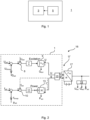
Fig. 1 schematically shows an example of a control system for controlling a power converter to mimic a synchronous generator; and -
Fig. 2 schematically depicts a block diagram with modules implemented by the control system inFig. 1 for controlling a power converter to mimic a synchronous generator. - The inventive concept will now be described more fully hereinafter with reference to the accompanying drawings, in which exemplifying embodiments are shown. The inventive concept may, however, be embodied in many different forms and should not be construed as limited to the embodiments set forth herein; rather, these embodiments are provided by way of example so that this disclosure will be thorough and complete, and will fully convey the scope of the inventive concept to those skilled in the art. Like numbers refer to like elements throughout the description.
- It is herein presented a method and control system which mimics the operation and behaviour of a synchronous generator. A "virtual generator" functionality is thus provided, which enables a power converter configured to be connected to an electrical grid parallel to, and share power with, conventional synchronous generators, but also with other power converters. Since both the power converter and the conventional generators have similar properties, sharing occurs both in the steady-state and in transients, the latter case utilising the full capabilities of all generating assets. Moreover, the "virtual generator" enables the power converter to operate as the only grid-forming component within an electric grid, being the electric grid frequency and voltage master and provides frequency and voltage regulation.
-
Fig. 1 shows an example of acontrol system 1 for controlling a power converter to mimic a synchronous generator. The power converter may in particular be a voltage source inverter. - The
control system 1 comprisesprocessing circuitry 3 and astorage medium 5 comprising computer-executable components which when executed by theprocessing circuitry 3 causes thecontrol system 1 to perform the method as will be disclosed in the following to mimic a synchronous generator. - The
processing circuitry 3 uses any combination of one or more of a suitable central processing unit (CPU), multiprocessor, microcontroller, digital signal processor (DSP), application specific integrated circuit (ASIC), field programmable gate arrays (FPGA) etc., capable of executing any herein disclosed operations concerning power converter control. - The
storage medium 5 may for example be embodied as a memory, such as a random access memory (RAM), a read-only memory (ROM), an erasable programmable read-only memory (EPROM), or an electrically erasable programmable read-only memory (EEPROM) and more particularly as a non-volatile storage medium of a device in an external memory such as a USB (Universal Serial Bus) memory or a Flash memory, such as a compact Flash memory. -
Fig. 2 shows apower control system 16 including thecontrol system 1 and apower converter 17 configured to be controlled by thecontrol system 1 and to be connected to an electrical grid. InFig. 2 , there are shown a plurality of functional blocks typically implemented by the computer-executable components, or software, included in thestorage medium 5 and configured to be executed by theprocessing circuitry 3. - The functional blocks provide both frequency control and voltage control of a power converter, with closed-loop feedback, whereby the power converter is able to act as a grid-forming device. The power converter is thus able to follow the load on the grid and adapt the output voltage and output frequency based on the actual reactive load and active load conditions.
- Among the functional blocks, there is an automatic
voltage regulator block 7 and a synchronousgenerator model block 9. The synchronousgenerator model block 9 includes a mathematical model of the excitation system of a synchronous generator. The output voltage of a synchronous generator is a function of the field current, i.e. the magnetisation current in the field windings of the rotor, and of the reactive power. - The
control system 1 is configured to receive the actual voltage Uact output by thepower converter 17. The actual voltage Uact that is output by the converter can for example be obtained by measurement at the terminals of thepower converter 17. - The
control system 1 is configured to determine a voltage control error with respect to the actual voltage Uact output by thepower converter 17 and a setpoint voltage Uset, as shown inadder block 6. - Optionally, according to one variation voltage droop Udroop may be used to determine the voltage control error in
adder block 6, as shown inFig. 2 . - The voltage control error is input to the automatic
voltage regulator block 7. The automaticvoltage regulator block 7 is a closed-loop controller. The automaticvoltage regulator block 7 may for example comprise a PI-regulator. - The PI-regulator of the automatic
voltage regulator block 7 may be provided with maximum and minimum reactive power limits and built-in integrator anti-windup. The dynamics of the PI-regulator may be set and an optional linear voltage droop can be used. - Based on the voltage control error, the automatic
voltage regulator block 7 determines an exciter parameter, and regulates the output voltage U of the synchronousgenerator model block 9 by means of the exciter parameter. The exciter parameter can for example be the exciter current or the field current, i.e. the magnetisation current of the field windings of the rotor. - In this manner, the power converter may be controlled based on the output voltage U. In particular, the actual voltage Uact that is output by the
power converter 17 may be controlled, thereby providing adaptability to reactive power changes in the electrical grid. - Among the functional blocks, there is also a speed governor, or frequency governor, block 11 and an
inertia model block 13. Theinertia model block 13 includes an inertia model which is a mathematical model of the inertia of a synchronous generator, and can thus mimic the inertia of a synchronous generator. The inertia model has an inertia constant H, which indicates the amount of the spinning mass that it is representing and has unit of seconds. The inertia model may according to one variation also include a damping component, which is present in a synchronous generator. The damping component mimics the damping that exists in a synchronous generator. The rotational frequency of the inertia model is related to the power balance, i.e. the difference between the power going into the inertia, which is the input power, and the power coming out of it, which is the actual active power. When the input power going into the inertia model is less than the power delivered by the power converter, the frequency decreases. Conversely, if the input power is higher than the power coming out of it, the frequency increases. This is identical to a conventional synchronous generator with the prime mover providing the power, and the output power being that delivered by the synchronous generator. - The
control system 1 is configured to receive an actual frequency fact of the power converter. The actual frequency fact may for example be measured at the output of the power converter. Alternatively, the rotational frequency f output by theinertia model block 13, may be used as the actual frequency fact, as shown inFig. 2 . - The
control system 1 is configured to determine a frequency control error with respect to the actual frequency fact and the setpoint frequency fset, as shown inadder block 10. - Optionally, according to one variation frequency droop fdroop may be used to determine the frequency control error in
adder block 10, as shown inFig. 2 . - The frequency control error is input to the
speed governor block 11. Thespeed governor block 11 is a closed-loop controller. Thespeed governor block 11 may for example comprise a PI-regulator. - The PI-regulator of the
speed governor block 11 may be provided with maximum and minimum power limits and built-in integrator anti-windup. Typically, the power limits are set to the energy storage limit of thepower converter 17 and can be asymmetric. - Based on the frequency control error, the
speed governor block 11 determines an input power, and regulates the rotational frequency f of the inertia model included in theinertia model block 13 by means of the input power. - The phase angle θ is also obtained. The phase angle θ is closely related to the rotational frequency f; it is the integral of the rotational frequency f with some modification in case the damping component in the inertia model is present. Hence, the input power also regulates the phase angle θ. The rotational frequency f and the phase angle θ are provided as outputs from the
inertia model block 13. - In this manner, the power converter may be controlled based on the rotational frequency f. In the present example, it is the phase angle θ derived from the rotational frequency f that is used for controlling the power converter. The power converter can thus be controlled to provide adaptability to active power changes in the electrical grid.
- The
control system 1 is configured to control thepower converter 17 based on the rotational frequency f, in this example the phase angle θ derived from the rotational frequency f, obtained from theinertia model block 13 and based on the output voltage U obtained from the synchronousgenerator model block 9. This control may for example be by means of PWM, i.e. by using PWM for switching the switches, for example insulated gate bipolar transistors (IBGTs) of thepower converter 17. - The output of the power converter may be filtered by a sine wave filter, creating a low-harmonic sinusoidal output entirely comparable to that of a conventional synchronous generator.
- The output provided by the
power converter 17 is a true voltage source. The real and reactive power delivered by thepower converter 17 controlled by thecontrol system 1 is related to the loads that are connected to it, if operated islanded, or its frequency setpoint and voltage setpoint relative to a macrogrid if grid-connected. - A
power meter 19 may be provided to measure and capture the actual voltage Uact output from thepower converter 17, the actual active power Pact and actual reactive power Qact and in certain examples also the actual frequency fact, for use in the control loops described above. - In addition to the previously described functional blocks, there may also be provided a
virtual impedance block 15. Thevirtual impedance block 15 includes a virtual impedance of a stator of the synchronous generator model. In particular, the virtual impedance may include stator leakage inductances and a stator resistance. - In a variation which includes the
virtual impedance block 15, the output from the synchronousgenerator model block 9, i.e. the output voltage U, and an output from theinertia model block 13, in the present example the phase angle θ is provided into thevirtual impedance block 15. Alternatively, the rotational frequency f could be provided as an input to thevirtual impedance block 15. In this manner, the output voltage U is adjusted to obtain an adjusted output voltage U' based on the virtual impedance, and the phase angle θ is also adjusted to obtain an adjusted phase angle θ' based on the virtual impedance. The controlling of thepower converter 17 is thus in this case based on the adjusted phase angle θ', and on the adjusted output voltage U'. If instead the rotational frequency f is input into the virtual impedance block, the rotational frequency f is adjusted based on the virtual impedance and the adjusted rotational frequency and the adjusted output voltage U' are used for controlling thepower converter 17. - It is possible to change the characteristics of the functional blocks adaptively in real time, i.e. adjust the parameters such as the inertia constant H, the gains Kp and Ki of the speed governor block and maximum and minimum limits of the speed governor block, to make the
control system 1 controlled power converter mimic the characteristics of the conventional generators to enhance the ability to maintain synchronism during line faults. - The inventive concept has mainly been described above with reference to a few examples. However, as is readily appreciated by a person skilled in the art, other embodiments than the ones disclosed above are equally possible within the scope of the inventive concept, as defined by the appended claims.
Claims (14)
- A method of controlling a power converter (17), connected to an electrical grid, to mimic a synchronous generator, the method being performed by a control system (1), wherein the method comprises:determining a frequency control error with respect to a setpoint frequency (fset) and an actual frequency (fact) of the power converter (17),determining an input power to an inertia model of a synchronous generator based on the frequency control error, which inertia model mimics the inertia of a synchronous generator,regulating by means of the input power a rotational frequency (f) of the inertia model,determining a voltage control error with respect to a setpoint voltage (Uset) and an actual voltage (Uact) output by the power converter (17),determining an exciter parameter of a synchronous generator model based on the voltage control error,regulating by means of the exciter parameter an output voltage (U) of the synchronous generator model, andcontrolling the power converter based on the rotational frequency (f) and on the output voltage (U),wherein the control system (1) includes processing circuitry (3) and a storage medium (5), wherein a plurality of functional blocks implemented by computer-executable components is included in the storage medium (5), wherein the functional blocks include a speed governor block (11), and an inertia model block (13) including the inertia model, which is a mathematical model of the inertia of a synchronous generator, and wherein the method is characterised by comprising:
changing the characteristics of the functional blocks adaptively in real time to make the control system-controlled power converter mimic the characteristics of conventional generators to enhance the ability to maintain synchronism during line faults. - The method as claimed in claim 1, wherein the functional blocks provide both frequency control and voltage control of the power converter with closed-loop feedback, whereby the power converter is able to act as a grid-forming device.
- The method as claimed in any of the preceding claims, wherein the inertia model has an inertia constant H, which indicates the amount of the spinning mass that it is representing and has unit of seconds.
- The method as claimed in any of the preceding claims, wherein the speed governor block (11) is a closed-loop controller.
- The method as claimed in claim 4, wherein the speed governor block (11) comprises a PI-regulator.
- The method as claimed in any of the preceding claims, wherein the changing of the characteristics of the functional blocks involves adjusting their parameters.
- The method as claimed in claim 5 dependent of claim 3, wherein the parameters include the inertia constant H, gains Kp and Ki of the speed governor block (11) or maximum and minimum limits of the speed governor block (11).
- The method as claimed in any of the preceding claims, comprising, prior to controlling the power converter (17), adjusting the rotational frequency (f) or a phase angle (θ) obtained from the rotational frequency (f), and the output voltage (U) based on a virtual impedance of a stator of the synchronous generator model, wherein the controlling of the power converter (17) is based on the adjusted rotational frequency or the adjusted phase angle (θ') and on the adjusted output voltage (U').
- The method as claimed in claim 8, wherein the virtual impedance includes stator leakage inductances and a stator resistance.
- The method as claimed in any of the preceding claims, wherein the exciter parameter is an exciter current.
- A computer program comprising computer-executable components which when executed by processing circuitry (3) of a control system (1) is configured to cause the control system (1) to perform the steps of the method according to any of claims 1-10.
- A computer program product comprising a storage medium (5) including a computer program as claimed in claim 11.
- A control system (1) for controlling a power converter (17) configured to be connected to an electrical grid, to mimic a synchronous generator, wherein the control system (1) comprises:processing circuitry (3), anda storage medium (5) comprising computer-executable components which when run on the processing circuitry (3) is configured to cause the control system (1) to perform the method as claimed in any of claims 1-10.
- A power converter system (16) comprising:a power converter (17), anda control system (1) as claimed in claim 13, configured to control the power converter (17).
Priority Applications (2)
| Application Number | Priority Date | Filing Date | Title |
|---|---|---|---|
| ES21169904T ES3043074T3 (en) | 2017-03-14 | 2017-03-14 | Method and control system for controlling a power converter |
| EP21169904.6A EP3872949B1 (en) | 2017-03-14 | 2017-03-14 | Method and control system for controlling a power converter |
Applications Claiming Priority (2)
| Application Number | Priority Date | Filing Date | Title |
|---|---|---|---|
| EP17160732.8A EP3376627B1 (en) | 2017-03-14 | 2017-03-14 | Method and control system for controlling a power converter |
| EP21169904.6A EP3872949B1 (en) | 2017-03-14 | 2017-03-14 | Method and control system for controlling a power converter |
Related Parent Applications (1)
| Application Number | Title | Priority Date | Filing Date |
|---|---|---|---|
| EP17160732.8A Division EP3376627B1 (en) | 2017-03-14 | 2017-03-14 | Method and control system for controlling a power converter |
Publications (2)
| Publication Number | Publication Date |
|---|---|
| EP3872949A1 EP3872949A1 (en) | 2021-09-01 |
| EP3872949B1 true EP3872949B1 (en) | 2025-07-09 |
Family
ID=58358364
Family Applications (2)
| Application Number | Title | Priority Date | Filing Date |
|---|---|---|---|
| EP17160732.8A Active EP3376627B1 (en) | 2017-03-14 | 2017-03-14 | Method and control system for controlling a power converter |
| EP21169904.6A Active EP3872949B1 (en) | 2017-03-14 | 2017-03-14 | Method and control system for controlling a power converter |
Family Applications Before (1)
| Application Number | Title | Priority Date | Filing Date |
|---|---|---|---|
| EP17160732.8A Active EP3376627B1 (en) | 2017-03-14 | 2017-03-14 | Method and control system for controlling a power converter |
Country Status (5)
| Country | Link |
|---|---|
| US (1) | US11239779B2 (en) |
| EP (2) | EP3376627B1 (en) |
| JP (1) | JP6644821B2 (en) |
| CN (2) | CN108574299A (en) |
| ES (2) | ES2874658T3 (en) |
Families Citing this family (30)
| Publication number | Priority date | Publication date | Assignee | Title |
|---|---|---|---|---|
| GB2574645B (en) * | 2018-06-14 | 2020-07-15 | Zhong Qingchang | Passive virtual synchronous machine with bounded frequency and virtual flux |
| CN108899929B (en) * | 2018-07-03 | 2021-06-25 | 上海交通大学 | Adaptive inertial control method of IIDG based on virtual synchronous motor |
| DE102018133641A1 (en) | 2018-12-27 | 2020-07-02 | Sma Solar Technology Ag | ELECTROLYSIS DEVICE WITH A CONVERTER AND METHOD FOR PROVIDING CURRENT RESERVE POWER FOR AN AC VOLTAGE NETWORK |
| CN109861280B (en) * | 2019-01-29 | 2022-07-22 | 西安许继电力电子技术有限公司 | Microgrid converter frequency control method and system based on virtual synchronous generator |
| DE102019116254B4 (en) * | 2019-06-14 | 2021-05-12 | Sma Solar Technology Ag | Method for operating a power generation plant |
| CN110705066B (en) * | 2019-09-20 | 2023-06-27 | 天津大学 | Dynamic simulation method of integrated energy system in gas-electric coupling park based on projection integral |
| EP3832829A1 (en) | 2019-12-02 | 2021-06-09 | ABB Schweiz AG | Grid forming vector current control |
| EP3836336A1 (en) * | 2019-12-10 | 2021-06-16 | Wobben Properties GmbH | Device and method for angular stabilization of a virtual synchronous machine |
| EP3836337A1 (en) * | 2019-12-10 | 2021-06-16 | Wobben Properties GmbH | Procedure for current limiting of a virtual synchronous machine, in particular during a mains fault |
| CN110994689A (en) | 2019-12-31 | 2020-04-10 | 科华恒盛股份有限公司 | Method and system for switching grid connection to off-grid and energy storage converter |
| US11177660B2 (en) | 2020-01-27 | 2021-11-16 | Mitsubishi Electric Power Products, Inc. | System and method for power converter control for virtual impedance |
| FI3869682T3 (en) * | 2020-02-24 | 2024-07-10 | Danfoss As | METHOD AND CONTROL DEVICE FOR ADJUSTING A POWER CONVERTER |
| CN111245015A (en) * | 2020-02-29 | 2020-06-05 | 贵州电网有限责任公司 | Power feedback control system and method of MGP system |
| EP4136729B1 (en) * | 2020-04-17 | 2024-04-10 | Hitachi Energy Ltd | Multi-port grid forming control for grid interties |
| DE102020121990A1 (en) | 2020-08-21 | 2022-02-24 | Hochschule Düsseldorf Körperschaft des öffentlichen Rechts | Method for providing a converter voltage of a converter-based generation and/or storage system and control device for carrying out the method |
| CN112467785B (en) * | 2020-11-18 | 2023-05-30 | 西安热工研究院有限公司 | Method for improving photovoltaic fault voltage supporting capacity by utilizing virtual impedance |
| US11456645B2 (en) | 2020-12-10 | 2022-09-27 | General Electric Renovables Espana, S.L. | System and method for operating an asynchronous inverter-based resource as a virtual synchronous machine with storage |
| US11671039B2 (en) | 2020-12-10 | 2023-06-06 | General Electric Renovables Espana, S.L. | System and method for operating an asynchronous inverter-based resource as a virtual synchronous machine to provide grid-forming control thereof |
| AU2022218696A1 (en) * | 2021-02-09 | 2023-08-24 | Georgia Tech Research Corporation | Unified control strategies for grid-connected converters |
| CN112968454A (en) * | 2021-03-31 | 2021-06-15 | 广州智光电气技术有限公司 | Parameter setting method of energy storage system and energy storage system |
| CN117321899A (en) | 2021-04-20 | 2023-12-29 | 日立能源有限公司 | Methods, converter devices and computer program products for controlling power converters |
| CN113300402B (en) * | 2021-05-26 | 2023-01-24 | 西安交通大学 | Self-adaptive virtual impedance control method and system for LCC converter station |
| EP4106174A1 (en) | 2021-06-17 | 2022-12-21 | ABB Schweiz AG | Converter system |
| CN113890065A (en) * | 2021-11-09 | 2022-01-04 | 广东志成冠军集团有限公司 | Diesel storage independent micro-grid and virtual dynamic synchronous control method and system thereof |
| US11888344B2 (en) * | 2022-04-26 | 2024-01-30 | Schneider Electric It Corporation | Reversed power and grid support with a modular approach |
| US12081162B2 (en) | 2022-08-25 | 2024-09-03 | General Electric Renovables Espana, S.L. | System and method for operating a renewable energy source in grid-forming mode (GFM) as a virtual synchronous machine (VSM) with damper winding emulation |
| CN117439122B (en) * | 2023-10-10 | 2025-10-24 | 科华数据股份有限公司 | Method and related device for improving power grid frequency characteristics of energy storage system |
| CN117614017B (en) * | 2024-01-24 | 2024-09-10 | 华北电力大学 | A method and system for supporting power grid inertia based on dual-axis excitation phase regulator |
| CN118739335B (en) * | 2024-05-30 | 2025-06-27 | 西安理工大学 | Multi-virtual synchronous machine parallel operation distributed self-adaptive virtual inertia calculation method |
| CN119691978B (en) * | 2024-11-13 | 2026-01-09 | 国网湖北省电力有限公司电力科学研究院 | SISO model building method suitable for multi-machine interaction characteristic analysis |
Citations (1)
| Publication number | Priority date | Publication date | Assignee | Title |
|---|---|---|---|---|
| CN103972928B (en) * | 2014-04-18 | 2016-05-25 | 国家电网公司 | The micro-operated control method of a kind of microgrid based on virtual synchronous generator |
Family Cites Families (18)
| Publication number | Priority date | Publication date | Assignee | Title |
|---|---|---|---|---|
| JP3629802B2 (en) * | 1996-03-25 | 2005-03-16 | 三菱電機株式会社 | Variable speed pumped storage power generation system simulator |
| JP2001112172A (en) * | 1999-10-08 | 2001-04-20 | Mitsubishi Heavy Ind Ltd | Education/training simulator for power transmission system |
| GB0820699D0 (en) | 2008-11-12 | 2008-12-17 | Ulive Entpr Ltd | Static synchronous generators |
| JP5582831B2 (en) * | 2010-03-11 | 2014-09-03 | 株式会社東芝 | Solar power system |
| EP2940826B1 (en) * | 2012-12-27 | 2018-01-31 | Kawasaki Jukogyo Kabushiki Kaisha | Combined power generation system having power converting device |
| JP6084863B2 (en) * | 2013-02-28 | 2017-02-22 | 川崎重工業株式会社 | Power converter for grid connection |
| CN104377697B (en) | 2014-11-27 | 2017-03-01 | 国家电网公司 | The control method of the voltage source converter station of simulation synchronous generator dynamics |
| WO2016157632A1 (en) * | 2015-03-30 | 2016-10-06 | 株式会社日立産機システム | Solar cell/storage cell coordination system and power conversion control apparatus |
| CN104701886A (en) * | 2015-04-02 | 2015-06-10 | 国家电网公司 | Presynchronization control method based on virtual synchronous generator |
| CN104993521B (en) | 2015-07-23 | 2017-03-01 | 国家电网公司 | Energy storage method based on virtual synchronous inversion control |
| CN105207261B (en) | 2015-09-28 | 2018-10-16 | 广东电网有限责任公司电力科学研究院 | Applied to virtual synchronous generator from grid-connected control method and system |
| CN105305491A (en) * | 2015-11-03 | 2016-02-03 | 国家电网公司 | Virtual synchronous generator-based photovoltaic power control strategy |
| CN105429174A (en) | 2015-11-27 | 2016-03-23 | 云南电网有限责任公司电力科学研究院 | A synchronous inverter controller and its pre-synchronized grid connection method |
| CN106026196A (en) * | 2016-07-28 | 2016-10-12 | 西安交通大学 | Multi-virtual synchronous generator parallel network control method based on inverter |
| GB2554954B (en) * | 2016-10-17 | 2018-11-21 | Zhong Qingchang | Operating doubly-fed induction generators as virtual synchronous generators |
| JP6764338B2 (en) * | 2016-12-27 | 2020-09-30 | 川崎重工業株式会社 | Power system |
| JP6809753B2 (en) * | 2016-12-28 | 2021-01-06 | 川崎重工業株式会社 | Combined cycle system |
| GB2570151B (en) * | 2018-01-14 | 2020-07-15 | Zhong Qingchang | Reconfiguration of inertia, damping, and fault ride-through for a virtual synchronous machine |
-
2017
- 2017-03-14 EP EP17160732.8A patent/EP3376627B1/en active Active
- 2017-03-14 ES ES17160732T patent/ES2874658T3/en active Active
- 2017-03-14 ES ES21169904T patent/ES3043074T3/en active Active
- 2017-03-14 EP EP21169904.6A patent/EP3872949B1/en active Active
-
2018
- 2018-02-19 JP JP2018026831A patent/JP6644821B2/en active Active
- 2018-02-28 US US15/908,231 patent/US11239779B2/en active Active
- 2018-03-14 CN CN201810209381.2A patent/CN108574299A/en active Pending
- 2018-03-14 CN CN202311194459.5A patent/CN117200325A/en active Pending
Patent Citations (1)
| Publication number | Priority date | Publication date | Assignee | Title |
|---|---|---|---|---|
| CN103972928B (en) * | 2014-04-18 | 2016-05-25 | 国家电网公司 | The micro-operated control method of a kind of microgrid based on virtual synchronous generator |
Also Published As
| Publication number | Publication date |
|---|---|
| CN117200325A (en) | 2023-12-08 |
| US20180269819A1 (en) | 2018-09-20 |
| JP6644821B2 (en) | 2020-02-12 |
| EP3376627B1 (en) | 2021-04-28 |
| ES3043074T3 (en) | 2025-11-24 |
| US11239779B2 (en) | 2022-02-01 |
| EP3872949A1 (en) | 2021-09-01 |
| JP2018186695A (en) | 2018-11-22 |
| EP3376627A1 (en) | 2018-09-19 |
| CN108574299A (en) | 2018-09-25 |
| ES2874658T3 (en) | 2021-11-05 |
Similar Documents
| Publication | Publication Date | Title |
|---|---|---|
| EP3872949B1 (en) | Method and control system for controlling a power converter | |
| Paquette et al. | Sharing transient loads: Causes of unequal transient load sharing in islanded microgrid operation | |
| Pradhan et al. | A composite sliding mode controller for wind power extraction in remotely located solar PV–wind hybrid system | |
| Marques et al. | Inner control method and frequency regulation of a DFIG connected to a DC link | |
| Yu et al. | A review of control methods for providing frequency response in VSC-HVDC transmission systems | |
| Liu et al. | A comparative study on damping methods of virtual synchronous generator control | |
| Saleh | Testing a unit commitment based controller for grid-connected PMG-based WECSs with generator-charged battery units | |
| Zhou et al. | Control of DFIG under unsymmetrical voltage dip | |
| Puchalapalli et al. | Synchronizing control of wind turbine driven doubly fed induction generator system with DG in remote area involving solar PV-battery energy storage | |
| Pattabiraman et al. | Short-term voltage stability of power systems with high inverter penetration under small disturbances | |
| Chikha et al. | Predictive current control of a wind energy conversion system based DFIG via direct matrix converter | |
| Roy et al. | HT-PLL-based seamless transition strategy for DFIG with power quality enhancement through fractional-order adaptive filter | |
| Narula et al. | Tuning and evaluation of grid-forming converters for grid-support | |
| Rouzbehi et al. | Generalized voltage droop control with inertia mimicry capability-step towards automation of multi-terminal HVDC grids | |
| Krismanto et al. | Dynamic droop control in microgrid for stability enhancement considering RES variation | |
| Tarrasó et al. | Synchronous power controller for distributed generation units | |
| Vijay et al. | Standalone and grid connected operations of a SynRG based WECS with BESS | |
| Rudraraju et al. | A control strategy for reliable power output from a stand-alone WRIG with battery-supported DC link | |
| Yoo et al. | Converter control of PMSG wind turbine system for inertia-free stand-alone microgrid | |
| Tiwari et al. | Design and control of autonomous wind-solar energy system with DFIG feeding 3-phase 4-wire network | |
| Zhang et al. | An emergency control strategy for isolated power system of three-phase inverter and diesel-engine generator operating in parallel | |
| Sharma et al. | Dynamic frequency control of a low inertia microgrid using virtual synchronous generator | |
| Adeyemo et al. | Sizing of energy storage for virtual inertia emulation and primary frequency control in low-inertia systems | |
| Wei et al. | Mitigation of harmonics of DFIGs in DC-microgrids | |
| Campos et al. | Control of a PMSG based wind power system using abc-frame under distorted and asymmetrical voltage conditions |
Legal Events
| Date | Code | Title | Description |
|---|---|---|---|
| PUAI | Public reference made under article 153(3) epc to a published international application that has entered the european phase |
Free format text: ORIGINAL CODE: 0009012 |
|
| STAA | Information on the status of an ep patent application or granted ep patent |
Free format text: STATUS: THE APPLICATION HAS BEEN PUBLISHED |
|
| AC | Divisional application: reference to earlier application |
Ref document number: 3376627 Country of ref document: EP Kind code of ref document: P |
|
| AK | Designated contracting states |
Kind code of ref document: A1 Designated state(s): AL AT BE BG CH CY CZ DE DK EE ES FI FR GB GR HR HU IE IS IT LI LT LU LV MC MK MT NL NO PL PT RO RS SE SI SK SM TR |
|
| STAA | Information on the status of an ep patent application or granted ep patent |
Free format text: STATUS: REQUEST FOR EXAMINATION WAS MADE |
|
| 17P | Request for examination filed |
Effective date: 20220301 |
|
| RBV | Designated contracting states (corrected) |
Designated state(s): AL AT BE BG CH CY CZ DE DK EE ES FI FR GB GR HR HU IE IS IT LI LT LU LV MC MK MT NL NO PL PT RO RS SE SI SK SM TR |
|
| RAP1 | Party data changed (applicant data changed or rights of an application transferred) |
Owner name: HITACHI ENERGY SWITZERLAND AG Owner name: ABB SCHWEIZ AG |
|
| STAA | Information on the status of an ep patent application or granted ep patent |
Free format text: STATUS: EXAMINATION IS IN PROGRESS |
|
| 17Q | First examination report despatched |
Effective date: 20220908 |
|
| GRAP | Despatch of communication of intention to grant a patent |
Free format text: ORIGINAL CODE: EPIDOSNIGR1 |
|
| STAA | Information on the status of an ep patent application or granted ep patent |
Free format text: STATUS: GRANT OF PATENT IS INTENDED |
|
| INTG | Intention to grant announced |
Effective date: 20230420 |
|
| GRAJ | Information related to disapproval of communication of intention to grant by the applicant or resumption of examination proceedings by the epo deleted |
Free format text: ORIGINAL CODE: EPIDOSDIGR1 |
|
| STAA | Information on the status of an ep patent application or granted ep patent |
Free format text: STATUS: EXAMINATION IS IN PROGRESS |
|
| INTC | Intention to grant announced (deleted) | ||
| RAP1 | Party data changed (applicant data changed or rights of an application transferred) |
Owner name: HITACHI ENERGY LTD Owner name: ABB SCHWEIZ AG |
|
| P01 | Opt-out of the competence of the unified patent court (upc) registered |
Effective date: 20231211 |
|
| GRAP | Despatch of communication of intention to grant a patent |
Free format text: ORIGINAL CODE: EPIDOSNIGR1 |
|
| STAA | Information on the status of an ep patent application or granted ep patent |
Free format text: STATUS: GRANT OF PATENT IS INTENDED |
|
| INTG | Intention to grant announced |
Effective date: 20250212 |
|
| GRAS | Grant fee paid |
Free format text: ORIGINAL CODE: EPIDOSNIGR3 |
|
| GRAA | (expected) grant |
Free format text: ORIGINAL CODE: 0009210 |
|
| STAA | Information on the status of an ep patent application or granted ep patent |
Free format text: STATUS: THE PATENT HAS BEEN GRANTED |
|
| AC | Divisional application: reference to earlier application |
Ref document number: 3376627 Country of ref document: EP Kind code of ref document: P |
|
| AK | Designated contracting states |
Kind code of ref document: B1 Designated state(s): AL AT BE BG CH CY CZ DE DK EE ES FI FR GB GR HR HU IE IS IT LI LT LU LV MC MK MT NL NO PL PT RO RS SE SI SK SM TR |
|
| REG | Reference to a national code |
Ref country code: GB Ref legal event code: FG4D |
|
| REG | Reference to a national code |
Ref country code: CH Ref legal event code: EP |
|
| REG | Reference to a national code |
Ref country code: IE Ref legal event code: FG4D |
|
| REG | Reference to a national code |
Ref country code: DE Ref legal event code: R096 Ref document number: 602017090538 Country of ref document: DE |
|
| REG | Reference to a national code |
Ref country code: NL Ref legal event code: MP Effective date: 20250709 |
|
| REG | Reference to a national code |
Ref country code: ES Ref legal event code: FG2A Ref document number: 3043074 Country of ref document: ES Kind code of ref document: T3 Effective date: 20251124 |
|
| PG25 | Lapsed in a contracting state [announced via postgrant information from national office to epo] |
Ref country code: PT Free format text: LAPSE BECAUSE OF FAILURE TO SUBMIT A TRANSLATION OF THE DESCRIPTION OR TO PAY THE FEE WITHIN THE PRESCRIBED TIME-LIMIT Effective date: 20251110 |
|
| PG25 | Lapsed in a contracting state [announced via postgrant information from national office to epo] |
Ref country code: NL Free format text: LAPSE BECAUSE OF FAILURE TO SUBMIT A TRANSLATION OF THE DESCRIPTION OR TO PAY THE FEE WITHIN THE PRESCRIBED TIME-LIMIT Effective date: 20250709 |
|
| REG | Reference to a national code |
Ref country code: AT Ref legal event code: MK05 Ref document number: 1812805 Country of ref document: AT Kind code of ref document: T Effective date: 20250709 |
|
| PG25 | Lapsed in a contracting state [announced via postgrant information from national office to epo] |
Ref country code: IS Free format text: LAPSE BECAUSE OF FAILURE TO SUBMIT A TRANSLATION OF THE DESCRIPTION OR TO PAY THE FEE WITHIN THE PRESCRIBED TIME-LIMIT Effective date: 20251109 |
|
| PG25 | Lapsed in a contracting state [announced via postgrant information from national office to epo] |
Ref country code: NO Free format text: LAPSE BECAUSE OF FAILURE TO SUBMIT A TRANSLATION OF THE DESCRIPTION OR TO PAY THE FEE WITHIN THE PRESCRIBED TIME-LIMIT Effective date: 20251009 |
|
| REG | Reference to a national code |
Ref country code: LT Ref legal event code: MG9D |
|
| PG25 | Lapsed in a contracting state [announced via postgrant information from national office to epo] |
Ref country code: AT Free format text: LAPSE BECAUSE OF FAILURE TO SUBMIT A TRANSLATION OF THE DESCRIPTION OR TO PAY THE FEE WITHIN THE PRESCRIBED TIME-LIMIT Effective date: 20250709 |
|
| PG25 | Lapsed in a contracting state [announced via postgrant information from national office to epo] |
Ref country code: FI Free format text: LAPSE BECAUSE OF FAILURE TO SUBMIT A TRANSLATION OF THE DESCRIPTION OR TO PAY THE FEE WITHIN THE PRESCRIBED TIME-LIMIT Effective date: 20250709 |
|
| PG25 | Lapsed in a contracting state [announced via postgrant information from national office to epo] |
Ref country code: HR Free format text: LAPSE BECAUSE OF FAILURE TO SUBMIT A TRANSLATION OF THE DESCRIPTION OR TO PAY THE FEE WITHIN THE PRESCRIBED TIME-LIMIT Effective date: 20250709 |
|
| PG25 | Lapsed in a contracting state [announced via postgrant information from national office to epo] |
Ref country code: GR Free format text: LAPSE BECAUSE OF FAILURE TO SUBMIT A TRANSLATION OF THE DESCRIPTION OR TO PAY THE FEE WITHIN THE PRESCRIBED TIME-LIMIT Effective date: 20251010 |
|
| PG25 | Lapsed in a contracting state [announced via postgrant information from national office to epo] |
Ref country code: SE Free format text: LAPSE BECAUSE OF FAILURE TO SUBMIT A TRANSLATION OF THE DESCRIPTION OR TO PAY THE FEE WITHIN THE PRESCRIBED TIME-LIMIT Effective date: 20250709 |
|
| PG25 | Lapsed in a contracting state [announced via postgrant information from national office to epo] |
Ref country code: LV Free format text: LAPSE BECAUSE OF FAILURE TO SUBMIT A TRANSLATION OF THE DESCRIPTION OR TO PAY THE FEE WITHIN THE PRESCRIBED TIME-LIMIT Effective date: 20250709 |
|
| PG25 | Lapsed in a contracting state [announced via postgrant information from national office to epo] |
Ref country code: PL Free format text: LAPSE BECAUSE OF FAILURE TO SUBMIT A TRANSLATION OF THE DESCRIPTION OR TO PAY THE FEE WITHIN THE PRESCRIBED TIME-LIMIT Effective date: 20250709 Ref country code: BG Free format text: LAPSE BECAUSE OF FAILURE TO SUBMIT A TRANSLATION OF THE DESCRIPTION OR TO PAY THE FEE WITHIN THE PRESCRIBED TIME-LIMIT Effective date: 20250709 |
|
| PG25 | Lapsed in a contracting state [announced via postgrant information from national office to epo] |
Ref country code: RS Free format text: LAPSE BECAUSE OF FAILURE TO SUBMIT A TRANSLATION OF THE DESCRIPTION OR TO PAY THE FEE WITHIN THE PRESCRIBED TIME-LIMIT Effective date: 20251009 |
|
| REG | Reference to a national code |
Ref country code: CH Ref legal event code: U11 Free format text: ST27 STATUS EVENT CODE: U-0-0-U10-U11 (AS PROVIDED BY THE NATIONAL OFFICE) Effective date: 20260401 |
|
| PG25 | Lapsed in a contracting state [announced via postgrant information from national office to epo] |
Ref country code: SM Free format text: LAPSE BECAUSE OF FAILURE TO SUBMIT A TRANSLATION OF THE DESCRIPTION OR TO PAY THE FEE WITHIN THE PRESCRIBED TIME-LIMIT Effective date: 20250709 |
|
| PGFP | Annual fee paid to national office [announced via postgrant information from national office to epo] |
Ref country code: GB Payment date: 20260324 Year of fee payment: 10 |
|
| PG25 | Lapsed in a contracting state [announced via postgrant information from national office to epo] |
Ref country code: DK Free format text: LAPSE BECAUSE OF FAILURE TO SUBMIT A TRANSLATION OF THE DESCRIPTION OR TO PAY THE FEE WITHIN THE PRESCRIBED TIME-LIMIT Effective date: 20250709 |
|
| PGFP | Annual fee paid to national office [announced via postgrant information from national office to epo] |
Ref country code: DE Payment date: 20260319 Year of fee payment: 10 |
|
| PGFP | Annual fee paid to national office [announced via postgrant information from national office to epo] |
Ref country code: IT Payment date: 20260324 Year of fee payment: 10 |
|
| PGFP | Annual fee paid to national office [announced via postgrant information from national office to epo] |
Ref country code: FR Payment date: 20260323 Year of fee payment: 10 |
|
| PG25 | Lapsed in a contracting state [announced via postgrant information from national office to epo] |
Ref country code: CZ Free format text: LAPSE BECAUSE OF FAILURE TO SUBMIT A TRANSLATION OF THE DESCRIPTION OR TO PAY THE FEE WITHIN THE PRESCRIBED TIME-LIMIT Effective date: 20250709 |
|
| PG25 | Lapsed in a contracting state [announced via postgrant information from national office to epo] |
Ref country code: EE Free format text: LAPSE BECAUSE OF FAILURE TO SUBMIT A TRANSLATION OF THE DESCRIPTION OR TO PAY THE FEE WITHIN THE PRESCRIBED TIME-LIMIT Effective date: 20250709 Ref country code: SK Free format text: LAPSE BECAUSE OF FAILURE TO SUBMIT A TRANSLATION OF THE DESCRIPTION OR TO PAY THE FEE WITHIN THE PRESCRIBED TIME-LIMIT Effective date: 20250709 |