EP3872324B1 - Closed loop fan inlet vane anti icing system - Google Patents
Closed loop fan inlet vane anti icing system Download PDFInfo
- Publication number
- EP3872324B1 EP3872324B1 EP21158739.9A EP21158739A EP3872324B1 EP 3872324 B1 EP3872324 B1 EP 3872324B1 EP 21158739 A EP21158739 A EP 21158739A EP 3872324 B1 EP3872324 B1 EP 3872324B1
- Authority
- EP
- European Patent Office
- Prior art keywords
- heat transfer
- transfer fluid
- inlet guide
- fan
- fluid
- Prior art date
- Legal status (The legal status is an assumption and is not a legal conclusion. Google has not performed a legal analysis and makes no representation as to the accuracy of the status listed.)
- Active
Links
Images



Classifications
-
- F—MECHANICAL ENGINEERING; LIGHTING; HEATING; WEAPONS; BLASTING
- F01—MACHINES OR ENGINES IN GENERAL; ENGINE PLANTS IN GENERAL; STEAM ENGINES
- F01D—NON-POSITIVE DISPLACEMENT MACHINES OR ENGINES, e.g. STEAM TURBINES
- F01D25/00—Component parts, details, or accessories, not provided for in, or of interest apart from, other groups
- F01D25/02—De-icing means for engines having icing phenomena
-
- F—MECHANICAL ENGINEERING; LIGHTING; HEATING; WEAPONS; BLASTING
- F01—MACHINES OR ENGINES IN GENERAL; ENGINE PLANTS IN GENERAL; STEAM ENGINES
- F01D—NON-POSITIVE DISPLACEMENT MACHINES OR ENGINES, e.g. STEAM TURBINES
- F01D9/00—Stators
- F01D9/06—Fluid supply conduits to nozzles or the like
- F01D9/065—Fluid supply or removal conduits traversing the working fluid flow, e.g. for lubrication-, cooling-, or sealing fluids
-
- F—MECHANICAL ENGINEERING; LIGHTING; HEATING; WEAPONS; BLASTING
- F02—COMBUSTION ENGINES; HOT-GAS OR COMBUSTION-PRODUCT ENGINE PLANTS
- F02C—GAS-TURBINE PLANTS; AIR INTAKES FOR JET-PROPULSION PLANTS; CONTROLLING FUEL SUPPLY IN AIR-BREATHING JET-PROPULSION PLANTS
- F02C7/00—Features, components parts, details or accessories, not provided for in, or of interest apart form groups F02C1/00 - F02C6/00; Air intakes for jet-propulsion plants
- F02C7/04—Air intakes for gas-turbine plants or jet-propulsion plants
- F02C7/047—Heating to prevent icing
-
- F—MECHANICAL ENGINEERING; LIGHTING; HEATING; WEAPONS; BLASTING
- F02—COMBUSTION ENGINES; HOT-GAS OR COMBUSTION-PRODUCT ENGINE PLANTS
- F02C—GAS-TURBINE PLANTS; AIR INTAKES FOR JET-PROPULSION PLANTS; CONTROLLING FUEL SUPPLY IN AIR-BREATHING JET-PROPULSION PLANTS
- F02C7/00—Features, components parts, details or accessories, not provided for in, or of interest apart form groups F02C1/00 - F02C6/00; Air intakes for jet-propulsion plants
- F02C7/12—Cooling of plants
- F02C7/16—Cooling of plants characterised by cooling medium
- F02C7/18—Cooling of plants characterised by cooling medium the medium being gaseous, e.g. air
-
- F—MECHANICAL ENGINEERING; LIGHTING; HEATING; WEAPONS; BLASTING
- F02—COMBUSTION ENGINES; HOT-GAS OR COMBUSTION-PRODUCT ENGINE PLANTS
- F02K—JET-PROPULSION PLANTS
- F02K3/00—Plants including a gas turbine driving a compressor or a ducted fan
- F02K3/02—Plants including a gas turbine driving a compressor or a ducted fan in which part of the working fluid by-passes the turbine and combustion chamber
- F02K3/04—Plants including a gas turbine driving a compressor or a ducted fan in which part of the working fluid by-passes the turbine and combustion chamber the plant including ducted fans, i.e. fans with high volume, low pressure outputs, for augmenting the jet thrust, e.g. of double-flow type
- F02K3/06—Plants including a gas turbine driving a compressor or a ducted fan in which part of the working fluid by-passes the turbine and combustion chamber the plant including ducted fans, i.e. fans with high volume, low pressure outputs, for augmenting the jet thrust, e.g. of double-flow type with front fan
-
- F—MECHANICAL ENGINEERING; LIGHTING; HEATING; WEAPONS; BLASTING
- F05—INDEXING SCHEMES RELATING TO ENGINES OR PUMPS IN VARIOUS SUBCLASSES OF CLASSES F01-F04
- F05D—INDEXING SCHEME FOR ASPECTS RELATING TO NON-POSITIVE-DISPLACEMENT MACHINES OR ENGINES, GAS-TURBINES OR JET-PROPULSION PLANTS
- F05D2220/00—Application
- F05D2220/30—Application in turbines
- F05D2220/32—Application in turbines in gas turbines
-
- F—MECHANICAL ENGINEERING; LIGHTING; HEATING; WEAPONS; BLASTING
- F05—INDEXING SCHEMES RELATING TO ENGINES OR PUMPS IN VARIOUS SUBCLASSES OF CLASSES F01-F04
- F05D—INDEXING SCHEME FOR ASPECTS RELATING TO NON-POSITIVE-DISPLACEMENT MACHINES OR ENGINES, GAS-TURBINES OR JET-PROPULSION PLANTS
- F05D2260/00—Function
- F05D2260/20—Heat transfer, e.g. cooling
-
- F—MECHANICAL ENGINEERING; LIGHTING; HEATING; WEAPONS; BLASTING
- F05—INDEXING SCHEMES RELATING TO ENGINES OR PUMPS IN VARIOUS SUBCLASSES OF CLASSES F01-F04
- F05D—INDEXING SCHEME FOR ASPECTS RELATING TO NON-POSITIVE-DISPLACEMENT MACHINES OR ENGINES, GAS-TURBINES OR JET-PROPULSION PLANTS
- F05D2260/00—Function
- F05D2260/20—Heat transfer, e.g. cooling
- F05D2260/201—Heat transfer, e.g. cooling by impingement of a fluid
-
- F—MECHANICAL ENGINEERING; LIGHTING; HEATING; WEAPONS; BLASTING
- F05—INDEXING SCHEMES RELATING TO ENGINES OR PUMPS IN VARIOUS SUBCLASSES OF CLASSES F01-F04
- F05D—INDEXING SCHEME FOR ASPECTS RELATING TO NON-POSITIVE-DISPLACEMENT MACHINES OR ENGINES, GAS-TURBINES OR JET-PROPULSION PLANTS
- F05D2260/00—Function
- F05D2260/20—Heat transfer, e.g. cooling
- F05D2260/213—Heat transfer, e.g. cooling by the provision of a heat exchanger within the cooling circuit
-
- Y—GENERAL TAGGING OF NEW TECHNOLOGICAL DEVELOPMENTS; GENERAL TAGGING OF CROSS-SECTIONAL TECHNOLOGIES SPANNING OVER SEVERAL SECTIONS OF THE IPC; TECHNICAL SUBJECTS COVERED BY FORMER USPC CROSS-REFERENCE ART COLLECTIONS [XRACs] AND DIGESTS
- Y02—TECHNOLOGIES OR APPLICATIONS FOR MITIGATION OR ADAPTATION AGAINST CLIMATE CHANGE
- Y02T—CLIMATE CHANGE MITIGATION TECHNOLOGIES RELATED TO TRANSPORTATION
- Y02T50/00—Aeronautics or air transport
- Y02T50/60—Efficient propulsion technologies, e.g. for aircraft
Definitions
- This disclosure relates to a gas turbine engine de-icing system used, for example, for a fan inlet structure.
- a gas turbine engine typically includes a fan section, a compressor section, a combustor section and a turbine section. Air entering the compressor section is compressed and delivered into the combustor section where it is mixed with fuel and ignited to generate a high-speed exhaust gas flow. The high-speed exhaust gas flow expands through the turbine section to drive the compressor and the fan section.
- the compressor section typically includes low and high pressure compressors, and the turbine section includes low and high pressure turbines.
- Gas turbine engine inlet components such as the fan nacelle, are subject to icing during some engine operating conditions. Ice accumulation at the engine inlet can adversely impact engine operation. To this end, de-icing systems are used to melt any ice on the engine's inlet surfaces.
- US 2005/0039435 A1 discloses coupling a semi-permeable membrane to an aircraft engine adjacent an outer surface of the engine, coupling a fluid reservoir to the aircraft engine in flow communication with the semi-permeable membrane, and supplying a fluid from the fluid reservoir to the semi-permeable membrane to facilitate preventing ice accumulation on the aircraft engine outer surface.
- US 2018/0229850 A1 discloses an anti-icing system for a gas turbine engine which comprises a closed circuit containing a change-phase fluid.
- the closed circuit has an anti-icing cavity adapted to be in heat exchange with an anti-icing surface of the gas turbine engine.
- US 2016/0160758 A1 discloses a gas turbine engine de-icing system including a heat exchanger.
- a coolant loop is in fluid communication with the heat exchanger.
- a manifold is configured to spray coolant onto a gas turbine engine inlet structure.
- the invention provides a gas turbine engine de-icing system including a heat exchanger.
- a coolant loop is in fluid communication with the heat exchanger and is configured to circulate a heat transfer fluid.
- An engine oil loop is in fluid communication with the heat exchanger and is configured to transfer heat to the heat transfer fluid.
- a gas turbine engine inlet structure has at least one fan inlet guide vane.
- a spray bar is disposed at least partially in at least one fan inlet guide vane. The spray bar is in fluid communication with the coolant loop. The spray bar is configured to spray the heat transfer fluid onto an inner surface of the at least one fan inlet guide vane to de-ice the fan inlet guide vane.
- the heat exchanger is arranged in a passageway configured to be exposed to an airflow.
- a fan nacelle and a core nacelle that provide a bypass flow path.
- the passageway is in fluid communication with the bypass flow path.
- annular manifold is arranged in the gas turbine engine inlet structure.
- the annular manifold is in fluid communication with the spray bar.
- the engine inlet structure is a fan nacelle.
- the heat transfer fluid travels radially inward through the spray bar from the fan nacelle toward a nose cone.
- the heat transfer fluid collects in the nose cone and runs towards a bottom of the fan nacelle, where it is collected and returned to the coolant loop.
- a plurality of spray bars and a plurality of fan inlet guide vanes arranged circumferentially about the nose cone.
- One of the plurality of spray bars extend into each of the plurality of fan inlet guide vanes.
- the spray bar is configured to spray the heat transfer fluid towards a leading edge of the fan inlet guide vane and a second spray bar is arranged in the fan inlet guide vane.
- the second spray bar is configured to spray the heat transfer fluid towards a trailing edge of the fan inlet guide vane.
- the coolant loop includes a reservoir and a pump configured to circulate the heat transfer fluid.
- the reservoir is arranged downstream from the manifold and is configured to collect the heat transfer fluid.
- At least one of a gearbox and bearing system is in fluid communication with the engine oil loop.
- the gearbox is configured to operatively connect a turbine section and a fan section.
- the heat transfer fluid is a phase change fluid.
- the heat transfer fluid changes phase from a liquid to a gas or saturated vapor in a range of 200°F-500°F (93°C-260°C).
- the invention provides a method of de-icing a gas turbine engine component as claimed in claim 13.
- the fluid is engine oil.
- the circulating the engine fluid step includes pumping the engine oil from at least one of a gearbox and bearing system.
- the heat transfer fluid is a phase change fluid and includes the step of spraying gaseous or saturated vapor heat transfer fluid onto the fan inlet guide vane to de-ice the fan inlet guide vane.
- the gaseous or saturated vapor heat transfer fluid is condensed to a liquid heat transfer fluid with the de-iced fan inlet guide vane.
- the method includes the step of collecting the condensed liquid heat transfer fluid in a reservoir.
- FIG. 1 schematically illustrates a gas turbine engine 20.
- the gas turbine engine 20 is disclosed herein as a two-spool turbofan that generally incorporates a fan section 22, a compressor section 24, a combustor section 26 and a turbine section 28.
- the fan section 22 drives air along a bypass flow path B in a bypass duct defined within a housing 15 such as a fan case or nacelle, and also drives air along a core flow path C for compression and communication into the combustor section 26 then expansion through the turbine section 28.
- the exemplary engine 20 generally includes a low speed spool 30 and a high speed spool 32 mounted for rotation about an engine central longitudinal axis A relative to an engine static structure 36 via several bearing systems 38. It should be understood that various bearing systems 38 at various locations may alternatively or additionally be provided, and the location of bearing systems 38 may be varied as appropriate to the application.
- the low speed spool 30 generally includes an inner shaft 40 that interconnects, a first (or low) pressure compressor 44 and a first (or low) pressure turbine 46.
- the inner shaft 40 is connected to the fan 42 through a speed change mechanism, which in the exemplary gas turbine engine 20 is illustrated as a geared architecture 48 to drive a fan 42 at a lower speed than the low speed spool 30.
- the high speed spool 32 includes an outer shaft 50 that interconnects a second (or high) pressure compressor 52 and a second (or high) pressure turbine 54.
- a combustor 56 is arranged in the exemplary gas turbine 20 between the high pressure compressor 52 and the high pressure turbine 54.
- a mid-turbine frame 57 of the engine static structure 36 may be arranged generally between the high pressure turbine 54 and the low pressure turbine 46.
- the mid-turbine frame 57 further supports bearing systems 38 in the turbine section 28.
- the inner shaft 40 and the outer shaft 50 are concentric and rotate via bearing systems 38 about the engine central longitudinal axis A which is collinear with their longitudinal axes.
- the core airflow is compressed by the low pressure compressor 44 then the high pressure compressor 52, mixed and burned with fuel in the combustor 56, then expanded through the high pressure turbine 54 and low pressure turbine 46.
- the mid-turbine frame 57 includes airfoils 59 which are in the core airflow path C.
- the turbines 46, 54 rotationally drive the respective low speed spool 30 and high speed spool 32 in response to the expansion.
- gear system 48 may be located aft of the low pressure compressor, or aft of the combustor section 26 or even aft of turbine section 28, and fan 42 may be positioned forward or aft of the location of gear system 48.
- the engine 20 in one example is a high-bypass geared aircraft engine.
- the engine 20 bypass ratio is greater than about six (6), with an example embodiment being greater than about ten (10)
- the geared architecture 48 is an epicyclic gear train, such as a planetary gear system or other gear system, with a gear reduction ratio of greater than about 2.3
- the low pressure turbine 46 has a pressure ratio that is greater than about five.
- the engine 20 bypass ratio is greater than about ten (10:1)
- the fan diameter is significantly larger than that of the low pressure compressor 44
- the low pressure turbine 46 has a pressure ratio that is greater than about five 5:1.
- Low pressure turbine 46 pressure ratio is pressure measured prior to inlet of low pressure turbine 46 as related to the pressure at the outlet of the low pressure turbine 46 prior to an exhaust nozzle.
- the geared architecture 48 may be an epicycle gear train, such as a planetary gear system or other gear system, with a gear reduction ratio of greater than about 2.3:1 and less than about 5:1. It should be understood, however, that the above parameters are only exemplary of one embodiment of a geared architecture engine and that the present invention is applicable to other gas turbine engines including direct drive turbofans.
- the fan section 22 of the engine 20 is designed for a particular flight condition -- typically cruise at about 0.8 Mach and about 35,000 feet (10,668 meters).
- the flight condition of 0.8 Mach and 35,000 ft (10,668 meters), with the engine at its best fuel consumption - also known as "bucket cruise Thrust Specific Fuel Consumption ('TSFC')" - is the industry standard parameter of lbm of fuel being burned divided by lbf of thrust the engine produces at that minimum point.
- "Low fan pressure ratio” is the pressure ratio across the fan blade alone, without a Fan Exit Guide Vane (“FEGV”) system.
- the low fan pressure ratio as disclosed herein according to one non-limiting embodiment is less than about 1.45.
- Low corrected fan tip speed is the actual fan tip speed in ft/sec divided by an industry standard temperature correction of [(Tram °R) / (518.7 °R)] 0.5 ([(Tram K)/(288.16 K)] 0.5 ).
- the "Low corrected fan tip speed" as disclosed herein according to one non-limiting embodiment is less than about 1150 ft / second (350.5 meters/second).
- the engine 20 includes a core nacelle 60 and a fan nacelle 62.
- a fan nacelle 62 provides an inlet to the engine 20.
- a plurality of fan inlet guide vanes 110 may be arranged forward of the fan 42.
- a passageway 66 is arranged in the core nacelle 60 to provide an air flow from the bypass flow path through the passageway 66.
- a heat exchanger 64 is arranged in the passageway 66.
- the heat exchanger 64 is in fluid communication with an engine oil loop 91 that includes oil lines 69, 70.
- a heat transfer loop or coolant loop 92 is also in fluid communication with the heat exchanger and includes coolant lines 71, 72.
- the coolant lines 72 extend from the heat exchanger 64 through a bifurcation 68 arranged in the bypass flow path and interconnecting the core nacelle 60 to the fan nacelle 62.
- the passageway 66 provides an inlet 74 and an exit 76. Air flow through the passageway 66 may be selectively regulated by a door 78 that opens and closes in response to an actuator 80.
- a controller 82 communicates with the actuator 80 to command a position of the door 78 in response to inputs, such as a manual input 84 from a pilot or an automatic input 86 based upon an icing algorithm, for example.
- the controller 82 communicates with various sensors 88, 90, such as temperature and pressure sensors, which can be used to predict an icing condition and desired heat transfer characteristics of the heat exchanger based upon engine operation.
- the engine oil loop 91 circulates lubrication oil from the geared architecture 48 and/or the bearings 38 to the heat exchanger 64 for cooling.
- the coolant loop 92 circulates a heat transfer fluid to a manifold 98 within the fan nacelle 62.
- the heat transfer fluid may be a coolant, for example.
- the manifold 98 is an annular manifold, arranged in a cavity of the fan nacelle 62.
- the annular manifold 98 is arranged at an axial position near the fan inlet guide vanes 110.
- the manifold 98 communicates a coolant to radially extending spray bars 99 arranged within fan inlet guide vanes 110.
- the coolant is a phase change fluid, for example, that changes phase from a liquid to a gas or saturated vapor in an operating range of the engine oil, such as a range of 200°F-500°F (93°C-260°C).
- phase change fluid is ammonia 2, 3, 3, 3-tetrafluoropropene, 2, 2-dichloro-1, 1, 1-trifluoroethane, although it should be understood that other phase change fluids may also be used.
- a fluid reservoir 96 and first and second pumps 93, 94 are arranged in the coolant loop 92.
- First and second valves 95, 97 are provided respectively between the first and second pumps 93, 94 and the reservoir 96.
- the fluid is communicated to the annular manifold 98, and then the radially extending spray bars 99 as a vapor.
- the vapor is sprayed onto a surface of the fan inlet guide vane 110.
- the vapor works to de-ice the fan nacelle 62 and fan inlet guide vanes 110. As the fluid cools, it condenses, becoming a liquid. The liquid then runs to the bottom of the fan nacelle 62, and is communicated back to the reservoir 96.
- FIG 4 schematically illustrates a front view of the fan nacelle 62.
- a plurality of fan inlet guide vanes 110 are arranged circumferentially about the nose cone 101.
- a spray bar 99 is arranged within each of the fan inlet guide vanes 110.
- Each of the spray bars 99 is in fluid communication with the annular manifold 98.
- the vapor 114 travels radially inward through the spray bars 99 from the annular manifold 98 toward the nose cone 101.
- vapor 114 is sprayed outward from the spray bars 99 to an inner surface of the vane 110 for de-icing the vane 110.
- the vapor 114 is also used to de-ice the nose cone 101. As the vapor 114 fills the volume of the nose cone 101, heat transfer between an inner surface of the nose cone 101 and the vapor 114 may de-ice the nose cone 101.
- the fan nacelle 62 has an upper half and a lower half divided by a plane 112.
- a return manifold 106 is arranged in the lower half of the fan nacelle 62 below the plane 112.
- the lower half as vapor 114 is sprayed out of the spray bars 99, it cools and turns to a liquid 116, which runs back down the vane 110 to the return manifold 106.
- the upper half as vapor 114 is sprayed out of the spray bar 99, it cools and turns to a liquid 116, and runs inward to the nose cone 101, then through a vane 110 in the lower half to the return manifold 106.
- the liquid 116 is then communicated via the return manifold 106 to the reservoir 96 via the pump 93 (shown in Figure 3 ).
- the return manifold 106 may be semi-circular in shape, for example, and extend about the fan nacelle 62 below the plane 112. Although a particular number of fan inlet guide vanes 110 are illustrated, more or fewer may be utilized.
- FIG. 5 schematically shows an example fan inlet guide vane 110.
- the fan inlet guide vane 110 is an airfoil extending between the fan nacelle 62 and the nose cone 101.
- two spray bars 99, 109 extend through the vane 110.
- the vane 110 has two cavities 118, 120 through which the spray bars 99, 109 extend.
- Vapor 114 is sprayed onto an inner surface of the vane 110 through a plurality of holes 124 in the spray bars 99, 109.
- the holes 124 may extend along an entire length of the spray bars 99, 109, for example.
- the vapor 114 heats the fan inlet guide vanes 110 to de-ice, then condenses into a liquid 116, and runs towards the nose cone 101.
- Figure 6 shows a cross-sectional view of the example fan inlet guide vane 110.
- the forward spray bar 99 sprays fluid 114 forward towards a leading edge 122.
- the fluid 114 impinges upon an inner surface of the forward cavity 118.
- the rear spray bar 109 sprays fluid 114 aftward towards a trailing edge 123.
- the fluid 114 impinges upon inner surfaces of the cavities 118, 120 to heat and de-ice the vane 110.
- This arrangement may be particularly useful for an actuated airfoil.
- the airfoil 110 has a front portion 113 that remains stationary, and an aft portion 115 that rotates relative to the front portion 113.
- the forward cavity 118 is arranged within the front portion 113, while the aft cavity 120 is arranged within the aft portion 115. As the aft portion 115 is rotated, the trailing end 123 needs to be de-iced.
- the example spray bar 109 sprays the fluid 114 aftward towards the trailing edge 123 to heat the back portion of the airfoil 110.
- two spray bars and two cavities are shown, more or fewer spray bars and cavities may be utilized. Further, in some examples, the number of spray bars and cavities may be different, such as two spray bars extending through a single cavity.
- FIG. 7 schematically illustrates another example de-icing system.
- the coolant loop 192 corresponds to the coolant loop 92 of Figures 2-6 , with like parts having reference numerals with the addition of one-hundred or multiples thereof to designate modified elements that are understood to incorporate the same features and benefits of the corresponding original elements.
- the vaporized coolant 214 enters the fan inlet guide vane 210 via a hole 211.
- the coolant 114 flows radially inward towards the nose cone 201, de-icing the vane 210 and the nose cone 201.
- the condensed liquid coolant 216 then flows to the return manifold 206 and back to the reservoir 96.
- This example may provide a simpler arrangement by removing a spray bar within the vane 210.
- the coolant at location 1 is a liquid.
- the liquid coolant is pumped from the reservoir 96 with second pump 94 to the heat exchanger 64 to location 2 where heat is transferred from the engine oil to the coolant.
- the enthalpy of the liquid coolant is increased by the engine oil and circulated to the annular manifold 98 and spray bars 99.
- the hot gaseous coolant is sprayed through holes 124 in the spray bars 99 as a saturated vapor 3 or a gas 3' onto an inner surface of the vanes 110. Ice on an exterior surface of the vanes 110 is melted as heat is transferred from the hot gaseous coolant or saturated vapor to the ice, which reduces the temperature of the gaseous coolant and condenses the coolant to a liquid at location 4.
- the condensed liquid coolant flows from the return manifold 106 back to the reservoir 96.
- a level sensor 108 communicates with the controller 82, which operates the first pump 93, which is used to maintain a desired condensate level within the reservoir 96.
- the first and second valves 95, 97 which are in communication with the controller 82, are operated to provide desired flow rates and volumes at various locations throughout the coolant loop 92.
- Some known anti-ice systems utilize electrical heating elements or heated propulsive engine air.
- the use of propulsive engine air may be less efficient, as air is directed away from propulsive function.
- the use of electrically heated inlets may require large amounts of power, and are thus a load on the engine.
- the disclosed anti-ice system utilizes heat generated by gearbox lubrication oil to heat the fan inlet guide vanes.
- the anti-ice system utilizes any heat rejection load for de-icing the nacelle, nose cone, and fan inlet guide vanes. This arrangement may improve cycle efficiency by eliminating the use of propulsive engine air for de-icing the fan inlet guide vanes.
- the disclosed system may be continuously on, which may prevent ice accretion through the entire flight envelope, as the heat source is not limited by the engine power settings. This arrangement may also simplify fabrication of the fan inlet guide vanes.
Landscapes
- Engineering & Computer Science (AREA)
- Chemical & Material Sciences (AREA)
- Combustion & Propulsion (AREA)
- Mechanical Engineering (AREA)
- General Engineering & Computer Science (AREA)
- Physics & Mathematics (AREA)
- Fluid Mechanics (AREA)
- Structures Of Non-Positive Displacement Pumps (AREA)
Description
- This disclosure relates to a gas turbine engine de-icing system used, for example, for a fan inlet structure.
- A gas turbine engine typically includes a fan section, a compressor section, a combustor section and a turbine section. Air entering the compressor section is compressed and delivered into the combustor section where it is mixed with fuel and ignited to generate a high-speed exhaust gas flow. The high-speed exhaust gas flow expands through the turbine section to drive the compressor and the fan section. The compressor section typically includes low and high pressure compressors, and the turbine section includes low and high pressure turbines.
- Gas turbine engine inlet components, such as the fan nacelle, are subject to icing during some engine operating conditions. Ice accumulation at the engine inlet can adversely impact engine operation. To this end, de-icing systems are used to melt any ice on the engine's inlet surfaces.
-
US 2005/0039435 A1 discloses coupling a semi-permeable membrane to an aircraft engine adjacent an outer surface of the engine, coupling a fluid reservoir to the aircraft engine in flow communication with the semi-permeable membrane, and supplying a fluid from the fluid reservoir to the semi-permeable membrane to facilitate preventing ice accumulation on the aircraft engine outer surface. -
US 2018/0229850 A1 discloses an anti-icing system for a gas turbine engine which comprises a closed circuit containing a change-phase fluid. The closed circuit has an anti-icing cavity adapted to be in heat exchange with an anti-icing surface of the gas turbine engine. -
US 2016/0160758 A1 discloses a gas turbine engine de-icing system including a heat exchanger. A coolant loop is in fluid communication with the heat exchanger. A manifold is configured to spray coolant onto a gas turbine engine inlet structure. -
US 2018/229850 A1 andUS2016/160758 A1 also disclose prior art anti-icing systems - From a first aspect, the invention provides a gas turbine engine de-icing system including a heat exchanger. A coolant loop is in fluid communication with the heat exchanger and is configured to circulate a heat transfer fluid. An engine oil loop is in fluid communication with the heat exchanger and is configured to transfer heat to the heat transfer fluid. A gas turbine engine inlet structure has at least one fan inlet guide vane. A spray bar is disposed at least partially in at least one fan inlet guide vane. The spray bar is in fluid communication with the coolant loop. The spray bar is configured to spray the heat transfer fluid onto an inner surface of the at least one fan inlet guide vane to de-ice the fan inlet guide vane.
- In a further embodiment of any of the above, the heat exchanger is arranged in a passageway configured to be exposed to an airflow.
- In a further embodiment of any of the above, a fan nacelle and a core nacelle that provide a bypass flow path. The passageway is in fluid communication with the bypass flow path.
- In a further embodiment of any of the above, an annular manifold is arranged in the gas turbine engine inlet structure. The annular manifold is in fluid communication with the spray bar.
- In a further embodiment of any of the above, the engine inlet structure is a fan nacelle. The heat transfer fluid travels radially inward through the spray bar from the fan nacelle toward a nose cone.
- In a further embodiment of any of the above, the heat transfer fluid collects in the nose cone and runs towards a bottom of the fan nacelle, where it is collected and returned to the coolant loop.
- In a further embodiment of any of the above, a plurality of spray bars and a plurality of fan inlet guide vanes arranged circumferentially about the nose cone. One of the plurality of spray bars extend into each of the plurality of fan inlet guide vanes.
- In a further embodiment of any of the above, the spray bar is configured to spray the heat transfer fluid towards a leading edge of the fan inlet guide vane and a second spray bar is arranged in the fan inlet guide vane. The second spray bar is configured to spray the heat transfer fluid towards a trailing edge of the fan inlet guide vane.
- In a further embodiment of any of the above, the coolant loop includes a reservoir and a pump configured to circulate the heat transfer fluid. The reservoir is arranged downstream from the manifold and is configured to collect the heat transfer fluid.
- In a further embodiment of any of the above, at least one of a gearbox and bearing system is in fluid communication with the engine oil loop.
- In a further embodiment of any of the above, the gearbox is configured to operatively connect a turbine section and a fan section.
- In a further embodiment of any of the above, the heat transfer fluid is a phase change fluid.
- In a further embodiment of any of the above, the heat transfer fluid changes phase from a liquid to a gas or saturated vapor in a range of 200°F-500°F (93°C-260°C).
- From a further aspect, the invention provides a method of de-icing a gas turbine engine component as claimed in claim 13.
- In a further embodiment of any of the above, the fluid is engine oil. The circulating the engine fluid step includes pumping the engine oil from at least one of a gearbox and bearing system.
- In a further embodiment of any of the above, the heat transfer fluid is a phase change fluid and includes the step of spraying gaseous or saturated vapor heat transfer fluid onto the fan inlet guide vane to de-ice the fan inlet guide vane. The gaseous or saturated vapor heat transfer fluid is condensed to a liquid heat transfer fluid with the de-iced fan inlet guide vane.
- In a further embodiment of any of the above, the method includes the step of collecting the condensed liquid heat transfer fluid in a reservoir.
- The disclosure can be further understood by reference to the following detailed description when considered in connection with the accompanying drawings wherein:
-
Figure 1 schematically illustrates a gas turbine engine embodiment. -
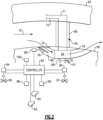
Figure 2 is a schematic view of a portion of the example de-icing system. -
Figure 3 schematically illustrates another portion of the example de-icing system. -
Figure 4 schematically illustrates a front view of the example de-icing system. -
Figure 5 illustrates an example fan inlet guide vane of the example de-icing system. -
Figure 6 schematically illustrates a cross-sectional view of the example fan inlet guide vane ofFigure 5 . -
Figure 7 schematically illustrates another example de-icing system. -
Figure 8 is a phase change diagram of the coolant used in the de-icing system. - The embodiments, examples and alternatives of the preceding paragraphs, the claims, or the following description and drawings, including any of their various aspects or respective individual features, may be taken independently or in any combination. Features described in connection with one embodiment are applicable to all embodiments, unless such features are incompatible.
-
Figure 1 schematically illustrates agas turbine engine 20. Thegas turbine engine 20 is disclosed herein as a two-spool turbofan that generally incorporates afan section 22, acompressor section 24, acombustor section 26 and aturbine section 28. Thefan section 22 drives air along a bypass flow path B in a bypass duct defined within ahousing 15 such as a fan case or nacelle, and also drives air along a core flow path C for compression and communication into thecombustor section 26 then expansion through theturbine section 28. Although depicted as a two-spool turbofan gas turbine engine in the disclosed non-limiting embodiment, it should be understood that the concepts described herein are not limited to use with two-spool turbofans as the teachings may be applied to other types of turbine engines including three-spool and single-spool architectures. - The
exemplary engine 20 generally includes alow speed spool 30 and ahigh speed spool 32 mounted for rotation about an engine central longitudinal axis A relative to an enginestatic structure 36 viaseveral bearing systems 38. It should be understood that various bearingsystems 38 at various locations may alternatively or additionally be provided, and the location of bearingsystems 38 may be varied as appropriate to the application. - The
low speed spool 30 generally includes aninner shaft 40 that interconnects, a first (or low) pressure compressor 44 and a first (or low)pressure turbine 46. Theinner shaft 40 is connected to thefan 42 through a speed change mechanism, which in the exemplarygas turbine engine 20 is illustrated as a gearedarchitecture 48 to drive afan 42 at a lower speed than thelow speed spool 30. Thehigh speed spool 32 includes anouter shaft 50 that interconnects a second (or high)pressure compressor 52 and a second (or high)pressure turbine 54. Acombustor 56 is arranged in theexemplary gas turbine 20 between thehigh pressure compressor 52 and thehigh pressure turbine 54. Amid-turbine frame 57 of the enginestatic structure 36 may be arranged generally between thehigh pressure turbine 54 and thelow pressure turbine 46. Themid-turbine frame 57 furthersupports bearing systems 38 in theturbine section 28. Theinner shaft 40 and theouter shaft 50 are concentric and rotate via bearingsystems 38 about the engine central longitudinal axis A which is collinear with their longitudinal axes. - The core airflow is compressed by the low pressure compressor 44 then the
high pressure compressor 52, mixed and burned with fuel in thecombustor 56, then expanded through thehigh pressure turbine 54 andlow pressure turbine 46. Themid-turbine frame 57 includes airfoils 59 which are in the core airflow path C. Theturbines low speed spool 30 andhigh speed spool 32 in response to the expansion. It will be appreciated that each of the positions of thefan section 22,compressor section 24,combustor section 26,turbine section 28, and fandrive gear system 48 may be varied. For example,gear system 48 may be located aft of the low pressure compressor, or aft of thecombustor section 26 or even aft ofturbine section 28, andfan 42 may be positioned forward or aft of the location ofgear system 48. - The
engine 20 in one example is a high-bypass geared aircraft engine. In a further example, theengine 20 bypass ratio is greater than about six (6), with an example embodiment being greater than about ten (10), the gearedarchitecture 48 is an epicyclic gear train, such as a planetary gear system or other gear system, with a gear reduction ratio of greater than about 2.3 and thelow pressure turbine 46 has a pressure ratio that is greater than about five. In one disclosed embodiment, theengine 20 bypass ratio is greater than about ten (10:1), the fan diameter is significantly larger than that of the low pressure compressor 44, and thelow pressure turbine 46 has a pressure ratio that is greater than about five 5:1.Low pressure turbine 46 pressure ratio is pressure measured prior to inlet oflow pressure turbine 46 as related to the pressure at the outlet of thelow pressure turbine 46 prior to an exhaust nozzle. The gearedarchitecture 48 may be an epicycle gear train, such as a planetary gear system or other gear system, with a gear reduction ratio of greater than about 2.3:1 and less than about 5:1. It should be understood, however, that the above parameters are only exemplary of one embodiment of a geared architecture engine and that the present invention is applicable to other gas turbine engines including direct drive turbofans. - A significant amount of thrust is provided by the bypass flow B due to the high bypass ratio. The
fan section 22 of theengine 20 is designed for a particular flight condition -- typically cruise at about 0.8 Mach and about 35,000 feet (10,668 meters). The flight condition of 0.8 Mach and 35,000 ft (10,668 meters), with the engine at its best fuel consumption - also known as "bucket cruise Thrust Specific Fuel Consumption ('TSFC')" - is the industry standard parameter of lbm of fuel being burned divided by lbf of thrust the engine produces at that minimum point. "Low fan pressure ratio" is the pressure ratio across the fan blade alone, without a Fan Exit Guide Vane ("FEGV") system. The low fan pressure ratio as disclosed herein according to one non-limiting embodiment is less than about 1.45. "Low corrected fan tip speed" is the actual fan tip speed in ft/sec divided by an industry standard temperature correction of [(Tram °R) / (518.7 °R)]0.5 ([(Tram K)/(288.16 K)]0.5). - The "Low corrected fan tip speed" as disclosed herein according to one non-limiting embodiment is less than about 1150 ft / second (350.5 meters/second).
- The
engine 20 includes acore nacelle 60 and afan nacelle 62. Afan nacelle 62 provides an inlet to theengine 20. A plurality of faninlet guide vanes 110 may be arranged forward of thefan 42. Apassageway 66 is arranged in thecore nacelle 60 to provide an air flow from the bypass flow path through thepassageway 66. Aheat exchanger 64 is arranged in thepassageway 66. - As shown in
Figure 2 , theheat exchanger 64 is in fluid communication with anengine oil loop 91 that includesoil lines coolant loop 92 is also in fluid communication with the heat exchanger and includescoolant lines heat exchanger 64 through abifurcation 68 arranged in the bypass flow path and interconnecting thecore nacelle 60 to thefan nacelle 62. - The
passageway 66 provides aninlet 74 and anexit 76. Air flow through thepassageway 66 may be selectively regulated by adoor 78 that opens and closes in response to anactuator 80. Acontroller 82 communicates with theactuator 80 to command a position of thedoor 78 in response to inputs, such as amanual input 84 from a pilot or an automatic input 86 based upon an icing algorithm, for example. Thecontroller 82 communicates withvarious sensors - Referring to
Figure 3 , theengine oil loop 91 circulates lubrication oil from the gearedarchitecture 48 and/or thebearings 38 to theheat exchanger 64 for cooling. Thecoolant loop 92 circulates a heat transfer fluid to a manifold 98 within thefan nacelle 62. The heat transfer fluid may be a coolant, for example. In this example, the manifold 98 is an annular manifold, arranged in a cavity of thefan nacelle 62. Theannular manifold 98 is arranged at an axial position near the fan inlet guide vanes 110. The manifold 98 communicates a coolant to radially extendingspray bars 99 arranged within fan inlet guide vanes 110. - The coolant is a phase change fluid, for example, that changes phase from a liquid to a gas or saturated vapor in an operating range of the engine oil, such as a range of 200°F-500°F (93°C-260°C). One example phase change fluid is
ammonia - A
fluid reservoir 96 and first andsecond pumps coolant loop 92. First andsecond valves second pumps reservoir 96. - The fluid is communicated to the
annular manifold 98, and then the radially extendingspray bars 99 as a vapor. The vapor is sprayed onto a surface of the faninlet guide vane 110. The vapor works to de-ice thefan nacelle 62 and fan inlet guide vanes 110. As the fluid cools, it condenses, becoming a liquid. The liquid then runs to the bottom of thefan nacelle 62, and is communicated back to thereservoir 96. -
Figure 4 schematically illustrates a front view of thefan nacelle 62. A plurality of faninlet guide vanes 110 are arranged circumferentially about thenose cone 101. Aspray bar 99 is arranged within each of the fan inlet guide vanes 110. Each of the spray bars 99 is in fluid communication with theannular manifold 98. Thevapor 114 travels radially inward through the spray bars 99 from theannular manifold 98 toward thenose cone 101. As the fluid 114 travels through the spray bars 99,vapor 114 is sprayed outward from the spray bars 99 to an inner surface of thevane 110 for de-icing thevane 110. Thevapor 114 is also used to de-ice thenose cone 101. As thevapor 114 fills the volume of thenose cone 101, heat transfer between an inner surface of thenose cone 101 and thevapor 114 may de-ice thenose cone 101. - The
fan nacelle 62 has an upper half and a lower half divided by a plane 112. Areturn manifold 106 is arranged in the lower half of thefan nacelle 62 below the plane 112. In the lower half, asvapor 114 is sprayed out of the spray bars 99, it cools and turns to a liquid 116, which runs back down thevane 110 to thereturn manifold 106. In the upper half, asvapor 114 is sprayed out of thespray bar 99, it cools and turns to a liquid 116, and runs inward to thenose cone 101, then through avane 110 in the lower half to thereturn manifold 106. The liquid 116 is then communicated via thereturn manifold 106 to thereservoir 96 via the pump 93 (shown inFigure 3 ). Thereturn manifold 106 may be semi-circular in shape, for example, and extend about thefan nacelle 62 below the plane 112. Although a particular number of faninlet guide vanes 110 are illustrated, more or fewer may be utilized. -
Figure 5 schematically shows an example faninlet guide vane 110. The faninlet guide vane 110 is an airfoil extending between thefan nacelle 62 and thenose cone 101. In this example, twospray bars vane 110. Thevane 110 has twocavities Vapor 114 is sprayed onto an inner surface of thevane 110 through a plurality ofholes 124 in the spray bars 99, 109. Theholes 124 may extend along an entire length of the spray bars 99, 109, for example. Thevapor 114 heats the faninlet guide vanes 110 to de-ice, then condenses into a liquid 116, and runs towards thenose cone 101. -
Figure 6 shows a cross-sectional view of the example faninlet guide vane 110. Theforward spray bar 99 sprays fluid 114 forward towards a leadingedge 122. The fluid 114 impinges upon an inner surface of theforward cavity 118. Therear spray bar 109 sprays fluid 114 aftward towards a trailingedge 123. The fluid 114 impinges upon inner surfaces of thecavities vane 110. This arrangement may be particularly useful for an actuated airfoil. Theairfoil 110 has afront portion 113 that remains stationary, and anaft portion 115 that rotates relative to thefront portion 113. Theforward cavity 118 is arranged within thefront portion 113, while theaft cavity 120 is arranged within theaft portion 115. As theaft portion 115 is rotated, the trailingend 123 needs to be de-iced. Theexample spray bar 109 sprays the fluid 114 aftward towards the trailingedge 123 to heat the back portion of theairfoil 110. Although two spray bars and two cavities are shown, more or fewer spray bars and cavities may be utilized. Further, in some examples, the number of spray bars and cavities may be different, such as two spray bars extending through a single cavity. -
Figure 7 schematically illustrates another example de-icing system. To the extent not otherwise described or shown, thecoolant loop 192 corresponds to thecoolant loop 92 ofFigures 2-6 , with like parts having reference numerals with the addition of one-hundred or multiples thereof to designate modified elements that are understood to incorporate the same features and benefits of the corresponding original elements. In this example, the vaporizedcoolant 214 enters the faninlet guide vane 210 via ahole 211. Thecoolant 114 flows radially inward towards thenose cone 201, de-icing thevane 210 and thenose cone 201. The condensedliquid coolant 216 then flows to thereturn manifold 206 and back to thereservoir 96. This example may provide a simpler arrangement by removing a spray bar within thevane 210. - Referring to
Figures 3 ,7 , and8 , the coolant atlocation 1 is a liquid. The liquid coolant is pumped from thereservoir 96 withsecond pump 94 to theheat exchanger 64 tolocation 2 where heat is transferred from the engine oil to the coolant. The enthalpy of the liquid coolant is increased by the engine oil and circulated to theannular manifold 98 and spray bars 99. The hot gaseous coolant is sprayed throughholes 124 in the spray bars 99 as a saturatedvapor 3 or a gas 3' onto an inner surface of thevanes 110. Ice on an exterior surface of thevanes 110 is melted as heat is transferred from the hot gaseous coolant or saturated vapor to the ice, which reduces the temperature of the gaseous coolant and condenses the coolant to a liquid atlocation 4. - The condensed liquid coolant flows from the
return manifold 106 back to thereservoir 96. A level sensor 108 communicates with thecontroller 82, which operates thefirst pump 93, which is used to maintain a desired condensate level within thereservoir 96. The first andsecond valves controller 82, are operated to provide desired flow rates and volumes at various locations throughout thecoolant loop 92. - Some known anti-ice systems utilize electrical heating elements or heated propulsive engine air. The use of propulsive engine air may be less efficient, as air is directed away from propulsive function. The use of electrically heated inlets may require large amounts of power, and are thus a load on the engine. In one example, the disclosed anti-ice system utilizes heat generated by gearbox lubrication oil to heat the fan inlet guide vanes. In other examples, the anti-ice system utilizes any heat rejection load for de-icing the nacelle, nose cone, and fan inlet guide vanes. This arrangement may improve cycle efficiency by eliminating the use of propulsive engine air for de-icing the fan inlet guide vanes. The disclosed system may be continuously on, which may prevent ice accretion through the entire flight envelope, as the heat source is not limited by the engine power settings. This arrangement may also simplify fabrication of the fan inlet guide vanes.
Claims (14)
- A gas turbine engine de-icing system comprising:a heat exchanger (64);a coolant loop (92) in fluid communication with the heat exchanger and configured to circulate a heat transfer fluid;an engine oil loop (91) in fluid communication with the heat exchanger and configured to transfer heat to the heat transfer fluid; and characterized in that the system further comprisesa gas turbine engine inlet structure having at least one fan inlet guide vane (110), a spray bar (99) disposed at least partially in at least one fan inlet guide vane, the spray bar is in fluid communication with the coolant loop, the spray bar configured to spray the heat transfer fluid onto an inner surface of the at least one fan inlet guide vane to de-ice the fan inlet guide vane.
- The system according to claim 1, wherein the heat exchanger (64) is adapted to be arranged in a passageway (66) configured to be exposed to an airflow.
- The system according to claim 2, comprising a fan nacelle (62) and a core nacelle (60) that provide a bypass flow path (B), the passageway (66) in fluid communication with the bypass flow path.
- The system according to claim 1, 2 or 3, wherein an annular manifold (98) is arranged in the gas turbine engine inlet structure, the annular manifold in fluid communication with the spray bar (99).
- The system according to any preceding claim, wherein the engine inlet structure is a fan nacelle (62) and the heat transfer fluid travels radially inward through the spray bar (99) from the fan nacelle toward a nose cone (101).
- The system according to claim 5, wherein the heat transfer fluid collects in the nose cone (101) and runs towards a bottom of the fan nacelle (62), where it is collected and returned to the coolant loop (92).
- The system according to claim 5 or 6, comprising a plurality of spray bars (99) and a plurality of fan inlet guide vanes (110) arranged circumferentially about the nose cone (101), one of the plurality of spray bars extending into each of the plurality of fan inlet guide vanes.
- The system according to any preceding claim, wherein the spray bar (99) is configured to spray the heat transfer fluid towards a leading edge (122) of the fan inlet guide vane (110) and a second spray bar is arranged in the fan inlet guide vane, the second spray bar is configured to spray the heat transfer fluid towards a trailing edge (123) of the fan inlet guide vane, and /or
wherein the coolant loop (92) includes a reservoir (96) and a pump (93, 94) configured to circulate the heat transfer fluid, the reservoir arranged downstream from the manifold (98) and configured to collect the heat transfer fluid. - The system according to any preceding claim, comprising at least one of a gearbox and bearing system in fluid communication with the engine oil loop (91).
- The system according to claim 9, wherein the gearbox is configured to operatively connect a turbine section (28) and a fan section (22).
- The system according to any preceding claim, wherein the heat transfer fluid is a phase change fluid.
- The system according to claim 11, wherein the heat transfer fluid changes phase from a liquid to a gas or saturated vapor in a range of 200°F-500°F (93°C-260°C).
- A method of de-icing a gas turbine engine component comprising the steps of:circulating an engine fluid to a heat exchanger (64);rejecting heat from the engine fluid to a heat transfer fluid;characterized by circulating the heat transfer fluid to a spray bar (99) disposed at least partially in a fan inlet guide vane (110),wherein circulating the heat transfer fluid comprises spraying the heat transfer fluid onto an inner surface of the fan inlet guide vane; andde-icing the fan inlet guide vane with the heat transfer fluid.
- The method according to claim 13, wherein the fluid is engine oil, and the circulating the engine fluid step includes pumping the engine oil from at least one of a gearbox and bearing system, and / or
wherein the heat transfer fluid is a phase change fluid, and comprising the step of spraying gaseous or saturated vapor heat transfer fluid onto the fan inlet guide vane (110) to de-ice the fan inlet guide vane, and condensing the gaseous or saturated vapor heat transfer fluid to a liquid heat transfer fluid with the de-iced fan inlet guide vane, optionally comprising the step of collecting the condensed liquid heat transfer fluid in a reservoir (96).
Applications Claiming Priority (1)
| Application Number | Priority Date | Filing Date | Title |
|---|---|---|---|
| US16/804,905 US11365647B2 (en) | 2020-02-28 | 2020-02-28 | Closed loop fan inlet vane anti icing system |
Publications (2)
| Publication Number | Publication Date |
|---|---|
| EP3872324A1 EP3872324A1 (en) | 2021-09-01 |
| EP3872324B1 true EP3872324B1 (en) | 2024-08-14 |
Family
ID=74732629
Family Applications (1)
| Application Number | Title | Priority Date | Filing Date |
|---|---|---|---|
| EP21158739.9A Active EP3872324B1 (en) | 2020-02-28 | 2021-02-23 | Closed loop fan inlet vane anti icing system |
Country Status (2)
| Country | Link |
|---|---|
| US (1) | US11365647B2 (en) |
| EP (1) | EP3872324B1 (en) |
Families Citing this family (25)
| Publication number | Priority date | Publication date | Assignee | Title |
|---|---|---|---|---|
| GB2599687A (en) * | 2020-10-09 | 2022-04-13 | Rolls Royce Plc | An improved turbofan gas turbine engine |
| GB2599686A (en) * | 2020-10-09 | 2022-04-13 | Rolls Royce Plc | An improved turbofan gas turbine engine |
| BE1029381B1 (en) * | 2021-05-06 | 2022-12-05 | Safran Aero Boosters | HEAT EXCHANGE DEVICE AND AIRCRAFT TURBOMACHINE WITH DEVICE |
| GB202108550D0 (en) * | 2021-06-16 | 2021-07-28 | Rolls Royce Plc | Gas turbine engine |
| GB2610568A (en) | 2021-09-08 | 2023-03-15 | Rolls Royce Plc | An improved gas turbine engine |
| GB2610565A (en) | 2021-09-08 | 2023-03-15 | Rolls Royce Plc | An improved gas turbine engine |
| GB2610567A (en) | 2021-09-08 | 2023-03-15 | Rolls Royce Plc | An improved gas turbine engine |
| EP4148250B1 (en) | 2021-09-08 | 2025-08-06 | Rolls-Royce plc | An improved gas turbine engine |
| EP4148263A1 (en) | 2021-09-08 | 2023-03-15 | Rolls-Royce plc | An improved gas turbine engine |
| GB2610572A (en) | 2021-09-08 | 2023-03-15 | Rolls Royce Plc | An improved gas turbine engine |
| GB2610569A (en) * | 2021-09-08 | 2023-03-15 | Rolls Royce Plc | An improved gas turbine engine |
| GB2610571A (en) | 2021-09-08 | 2023-03-15 | Rolls Royce Plc | An improved gas turbine engine |
| EP4148265A1 (en) * | 2021-09-08 | 2023-03-15 | Rolls-Royce plc | An improved gas turbine engine |
| CN116950772A (en) * | 2022-04-27 | 2023-10-27 | 通用电气公司 | Heat transfer system for a gas turbine engine |
| US11728532B1 (en) * | 2022-05-27 | 2023-08-15 | Beta Air, Llc | Electric aircraft and method of cooling a battery pack |
| CN115234374B (en) * | 2022-07-26 | 2025-06-17 | 中国航发沈阳发动机研究所 | A jet precooling structure for the inlet of an aerospace aircraft engine |
| GB2622209B (en) | 2022-09-06 | 2024-12-04 | Rolls Royce Plc | A thermal management system for an aircraft |
| GB2622212B (en) | 2022-09-06 | 2024-11-20 | Rolls Royce Plc | A thermal management system for an aircraft |
| GB2622214A (en) | 2022-09-06 | 2024-03-13 | Rolls Royce Plc | A thermal management system for an aircraft |
| GB2622215B (en) * | 2022-09-06 | 2024-12-04 | Rolls Royce Plc | A thermal management system for an aircraft |
| US12173624B2 (en) | 2023-05-19 | 2024-12-24 | Rtx Corporation | Axially offset vane arrays in turbine engine bypass |
| US12258874B2 (en) * | 2023-07-06 | 2025-03-25 | Rolls-Royce North American Technologies Inc. | Anti-ice system for gas turbine engine and inlet guide vane |
| FR3154980A1 (en) * | 2023-11-08 | 2025-05-09 | Safran Aircraft Engines | Turbomachine monitoring process |
| US12253025B1 (en) | 2024-02-27 | 2025-03-18 | General Electric Company | De-ice system and apparatus for turbine engines |
| US12516607B1 (en) | 2024-07-08 | 2026-01-06 | Rtx Corporation | Fan load tension structural guide vane with bypass cooling cavities |
Family Cites Families (5)
| Publication number | Priority date | Publication date | Assignee | Title |
|---|---|---|---|---|
| US6920748B2 (en) | 2002-07-03 | 2005-07-26 | General Electric Company | Methods and apparatus for operating gas turbine engines |
| US10113444B2 (en) | 2014-05-12 | 2018-10-30 | United Technologies Corporation | Heated inlet guide vane |
| US20160160758A1 (en) | 2014-12-08 | 2016-06-09 | United Technologies Corporation | Gas turbine engine nacelle anti-icing system |
| US10060350B2 (en) | 2015-04-13 | 2018-08-28 | United Technologies Corporation | Nose cone assembly and method of circulating air in a gas turbine engine |
| US20180229850A1 (en) | 2017-02-15 | 2018-08-16 | Pratt & Whitney Canada Corp. | Anti-icing system for gas turbine engine |
-
2020
- 2020-02-28 US US16/804,905 patent/US11365647B2/en active Active
-
2021
- 2021-02-23 EP EP21158739.9A patent/EP3872324B1/en active Active
Also Published As
| Publication number | Publication date |
|---|---|
| US20210270148A1 (en) | 2021-09-02 |
| US11365647B2 (en) | 2022-06-21 |
| EP3872324A1 (en) | 2021-09-01 |
Similar Documents
| Publication | Publication Date | Title |
|---|---|---|
| EP3872324B1 (en) | Closed loop fan inlet vane anti icing system | |
| EP3032045B1 (en) | Gas turbine engine nacelle anti-icing system | |
| EP3018304B1 (en) | Thermal management system for a gas turbine engine | |
| EP3594590B1 (en) | Gas turbine engine with transcritical vapor cycle cooling | |
| US9038397B2 (en) | Gas turbine engine thermal management system | |
| EP2809915B1 (en) | Gas turbine engine with geared turbofan and oil thermal management system | |
| EP2961962B1 (en) | Geared architecture gas turbine engine and method of thermal management | |
| EP2834497B1 (en) | Turbomachine thermal management | |
| US20130284398A1 (en) | Gas turbine engine thermal management system | |
| EP3084136B1 (en) | Rotor blade and corresponding method of cooling a platform of a rotor blade | |
| EP3584427B1 (en) | Intercooled cooling air with low temperature bearing compartment air | |
| EP3348810B1 (en) | Injection cooled cooling air system for a gas turbine engine and a corresponding method | |
| WO2014047022A1 (en) | Gas turbine engine component cooling circuit | |
| EP3330524B1 (en) | Heat exchanger mounted at rear of gas turbine engine for challenging temperature applications | |
| EP3239493B1 (en) | Simple heat exchanger using super alloy materials | |
| US11674438B1 (en) | Thermal management system | |
| EP3357631B1 (en) | Heat pipe cooling of geared architecture | |
| EP3444435B1 (en) | Expansion seal for airfoil for gas turbine engine | |
| EP3112596A1 (en) | Gas turbine engine airfoil with bi-axial skin cooling passage and corresponding gas turbine engine | |
| EP3287620B1 (en) | Boost compressor for engine cooling circuit driven by low spool | |
| EP2977557B1 (en) | Cooled airfoil structure and corresponding cooling method | |
| EP3581762B1 (en) | Platform cooling arrangement for a gas turbine engine | |
| WO2014164397A1 (en) | Gas turbine engine thermal management system |
Legal Events
| Date | Code | Title | Description |
|---|---|---|---|
| PUAI | Public reference made under article 153(3) epc to a published international application that has entered the european phase |
Free format text: ORIGINAL CODE: 0009012 |
|
| STAA | Information on the status of an ep patent application or granted ep patent |
Free format text: STATUS: THE APPLICATION HAS BEEN PUBLISHED |
|
| AK | Designated contracting states |
Kind code of ref document: A1 Designated state(s): AL AT BE BG CH CY CZ DE DK EE ES FI FR GB GR HR HU IE IS IT LI LT LU LV MC MK MT NL NO PL PT RO RS SE SI SK SM TR |
|
| STAA | Information on the status of an ep patent application or granted ep patent |
Free format text: STATUS: REQUEST FOR EXAMINATION WAS MADE |
|
| 17P | Request for examination filed |
Effective date: 20220301 |
|
| RBV | Designated contracting states (corrected) |
Designated state(s): AL AT BE BG CH CY CZ DE DK EE ES FI FR GB GR HR HU IE IS IT LI LT LU LV MC MK MT NL NO PL PT RO RS SE SI SK SM TR |
|
| RAP3 | Party data changed (applicant data changed or rights of an application transferred) |
Owner name: RTX CORPORATION |
|
| GRAP | Despatch of communication of intention to grant a patent |
Free format text: ORIGINAL CODE: EPIDOSNIGR1 |
|
| STAA | Information on the status of an ep patent application or granted ep patent |
Free format text: STATUS: GRANT OF PATENT IS INTENDED |
|
| INTG | Intention to grant announced |
Effective date: 20231109 |
|
| GRAS | Grant fee paid |
Free format text: ORIGINAL CODE: EPIDOSNIGR3 |
|
| GRAJ | Information related to disapproval of communication of intention to grant by the applicant or resumption of examination proceedings by the epo deleted |
Free format text: ORIGINAL CODE: EPIDOSDIGR1 |
|
| GRAL | Information related to payment of fee for publishing/printing deleted |
Free format text: ORIGINAL CODE: EPIDOSDIGR3 |
|
| STAA | Information on the status of an ep patent application or granted ep patent |
Free format text: STATUS: REQUEST FOR EXAMINATION WAS MADE |
|
| GRAP | Despatch of communication of intention to grant a patent |
Free format text: ORIGINAL CODE: EPIDOSNIGR1 |
|
| STAA | Information on the status of an ep patent application or granted ep patent |
Free format text: STATUS: GRANT OF PATENT IS INTENDED |
|
| INTC | Intention to grant announced (deleted) | ||
| INTG | Intention to grant announced |
Effective date: 20240325 |
|
| GRAA | (expected) grant |
Free format text: ORIGINAL CODE: 0009210 |
|
| STAA | Information on the status of an ep patent application or granted ep patent |
Free format text: STATUS: THE PATENT HAS BEEN GRANTED |
|
| AK | Designated contracting states |
Kind code of ref document: B1 Designated state(s): AL AT BE BG CH CY CZ DE DK EE ES FI FR GB GR HR HU IE IS IT LI LT LU LV MC MK MT NL NO PL PT RO RS SE SI SK SM TR |
|
| REG | Reference to a national code |
Ref country code: GB Ref legal event code: FG4D |
|
| REG | Reference to a national code |
Ref country code: CH Ref legal event code: EP |
|
| REG | Reference to a national code |
Ref country code: DE Ref legal event code: R096 Ref document number: 602021017046 Country of ref document: DE |
|
| REG | Reference to a national code |
Ref country code: IE Ref legal event code: FG4D |
|
| REG | Reference to a national code |
Ref country code: LT Ref legal event code: MG9D |
|
| REG | Reference to a national code |
Ref country code: NL Ref legal event code: MP Effective date: 20240814 |
|
| PG25 | Lapsed in a contracting state [announced via postgrant information from national office to epo] |
Ref country code: NO Free format text: LAPSE BECAUSE OF FAILURE TO SUBMIT A TRANSLATION OF THE DESCRIPTION OR TO PAY THE FEE WITHIN THE PRESCRIBED TIME-LIMIT Effective date: 20241114 |
|
| REG | Reference to a national code |
Ref country code: AT Ref legal event code: MK05 Ref document number: 1713497 Country of ref document: AT Kind code of ref document: T Effective date: 20240814 |
|
| PG25 | Lapsed in a contracting state [announced via postgrant information from national office to epo] |
Ref country code: NL Free format text: LAPSE BECAUSE OF FAILURE TO SUBMIT A TRANSLATION OF THE DESCRIPTION OR TO PAY THE FEE WITHIN THE PRESCRIBED TIME-LIMIT Effective date: 20240814 Ref country code: GR Free format text: LAPSE BECAUSE OF FAILURE TO SUBMIT A TRANSLATION OF THE DESCRIPTION OR TO PAY THE FEE WITHIN THE PRESCRIBED TIME-LIMIT Effective date: 20241115 Ref country code: PL Free format text: LAPSE BECAUSE OF FAILURE TO SUBMIT A TRANSLATION OF THE DESCRIPTION OR TO PAY THE FEE WITHIN THE PRESCRIBED TIME-LIMIT Effective date: 20240814 Ref country code: FI Free format text: LAPSE BECAUSE OF FAILURE TO SUBMIT A TRANSLATION OF THE DESCRIPTION OR TO PAY THE FEE WITHIN THE PRESCRIBED TIME-LIMIT Effective date: 20240814 Ref country code: PT Free format text: LAPSE BECAUSE OF FAILURE TO SUBMIT A TRANSLATION OF THE DESCRIPTION OR TO PAY THE FEE WITHIN THE PRESCRIBED TIME-LIMIT Effective date: 20241216 |
|
| PG25 | Lapsed in a contracting state [announced via postgrant information from national office to epo] |
Ref country code: BG Free format text: LAPSE BECAUSE OF FAILURE TO SUBMIT A TRANSLATION OF THE DESCRIPTION OR TO PAY THE FEE WITHIN THE PRESCRIBED TIME-LIMIT Effective date: 20240814 |
|
| PG25 | Lapsed in a contracting state [announced via postgrant information from national office to epo] |
Ref country code: LV Free format text: LAPSE BECAUSE OF FAILURE TO SUBMIT A TRANSLATION OF THE DESCRIPTION OR TO PAY THE FEE WITHIN THE PRESCRIBED TIME-LIMIT Effective date: 20240814 |
|
| PG25 | Lapsed in a contracting state [announced via postgrant information from national office to epo] |
Ref country code: IS Free format text: LAPSE BECAUSE OF FAILURE TO SUBMIT A TRANSLATION OF THE DESCRIPTION OR TO PAY THE FEE WITHIN THE PRESCRIBED TIME-LIMIT Effective date: 20241214 Ref country code: AT Free format text: LAPSE BECAUSE OF FAILURE TO SUBMIT A TRANSLATION OF THE DESCRIPTION OR TO PAY THE FEE WITHIN THE PRESCRIBED TIME-LIMIT Effective date: 20240814 |
|
| PG25 | Lapsed in a contracting state [announced via postgrant information from national office to epo] |
Ref country code: HR Free format text: LAPSE BECAUSE OF FAILURE TO SUBMIT A TRANSLATION OF THE DESCRIPTION OR TO PAY THE FEE WITHIN THE PRESCRIBED TIME-LIMIT Effective date: 20240814 |
|
| PG25 | Lapsed in a contracting state [announced via postgrant information from national office to epo] |
Ref country code: RS Free format text: LAPSE BECAUSE OF FAILURE TO SUBMIT A TRANSLATION OF THE DESCRIPTION OR TO PAY THE FEE WITHIN THE PRESCRIBED TIME-LIMIT Effective date: 20241114 Ref country code: ES Free format text: LAPSE BECAUSE OF FAILURE TO SUBMIT A TRANSLATION OF THE DESCRIPTION OR TO PAY THE FEE WITHIN THE PRESCRIBED TIME-LIMIT Effective date: 20240814 |
|
| PG25 | Lapsed in a contracting state [announced via postgrant information from national office to epo] |
Ref country code: RS Free format text: LAPSE BECAUSE OF FAILURE TO SUBMIT A TRANSLATION OF THE DESCRIPTION OR TO PAY THE FEE WITHIN THE PRESCRIBED TIME-LIMIT Effective date: 20241114 Ref country code: PT Free format text: LAPSE BECAUSE OF FAILURE TO SUBMIT A TRANSLATION OF THE DESCRIPTION OR TO PAY THE FEE WITHIN THE PRESCRIBED TIME-LIMIT Effective date: 20241216 Ref country code: PL Free format text: LAPSE BECAUSE OF FAILURE TO SUBMIT A TRANSLATION OF THE DESCRIPTION OR TO PAY THE FEE WITHIN THE PRESCRIBED TIME-LIMIT Effective date: 20240814 Ref country code: NO Free format text: LAPSE BECAUSE OF FAILURE TO SUBMIT A TRANSLATION OF THE DESCRIPTION OR TO PAY THE FEE WITHIN THE PRESCRIBED TIME-LIMIT Effective date: 20241114 Ref country code: NL Free format text: LAPSE BECAUSE OF FAILURE TO SUBMIT A TRANSLATION OF THE DESCRIPTION OR TO PAY THE FEE WITHIN THE PRESCRIBED TIME-LIMIT Effective date: 20240814 Ref country code: LV Free format text: LAPSE BECAUSE OF FAILURE TO SUBMIT A TRANSLATION OF THE DESCRIPTION OR TO PAY THE FEE WITHIN THE PRESCRIBED TIME-LIMIT Effective date: 20240814 Ref country code: IS Free format text: LAPSE BECAUSE OF FAILURE TO SUBMIT A TRANSLATION OF THE DESCRIPTION OR TO PAY THE FEE WITHIN THE PRESCRIBED TIME-LIMIT Effective date: 20241214 Ref country code: HR Free format text: LAPSE BECAUSE OF FAILURE TO SUBMIT A TRANSLATION OF THE DESCRIPTION OR TO PAY THE FEE WITHIN THE PRESCRIBED TIME-LIMIT Effective date: 20240814 Ref country code: GR Free format text: LAPSE BECAUSE OF FAILURE TO SUBMIT A TRANSLATION OF THE DESCRIPTION OR TO PAY THE FEE WITHIN THE PRESCRIBED TIME-LIMIT Effective date: 20241115 Ref country code: FI Free format text: LAPSE BECAUSE OF FAILURE TO SUBMIT A TRANSLATION OF THE DESCRIPTION OR TO PAY THE FEE WITHIN THE PRESCRIBED TIME-LIMIT Effective date: 20240814 Ref country code: ES Free format text: LAPSE BECAUSE OF FAILURE TO SUBMIT A TRANSLATION OF THE DESCRIPTION OR TO PAY THE FEE WITHIN THE PRESCRIBED TIME-LIMIT Effective date: 20240814 Ref country code: BG Free format text: LAPSE BECAUSE OF FAILURE TO SUBMIT A TRANSLATION OF THE DESCRIPTION OR TO PAY THE FEE WITHIN THE PRESCRIBED TIME-LIMIT Effective date: 20240814 Ref country code: AT Free format text: LAPSE BECAUSE OF FAILURE TO SUBMIT A TRANSLATION OF THE DESCRIPTION OR TO PAY THE FEE WITHIN THE PRESCRIBED TIME-LIMIT Effective date: 20240814 |
|
| PG25 | Lapsed in a contracting state [announced via postgrant information from national office to epo] |
Ref country code: DK Free format text: LAPSE BECAUSE OF FAILURE TO SUBMIT A TRANSLATION OF THE DESCRIPTION OR TO PAY THE FEE WITHIN THE PRESCRIBED TIME-LIMIT Effective date: 20240814 Ref country code: RO Free format text: LAPSE BECAUSE OF FAILURE TO SUBMIT A TRANSLATION OF THE DESCRIPTION OR TO PAY THE FEE WITHIN THE PRESCRIBED TIME-LIMIT Effective date: 20240814 Ref country code: SM Free format text: LAPSE BECAUSE OF FAILURE TO SUBMIT A TRANSLATION OF THE DESCRIPTION OR TO PAY THE FEE WITHIN THE PRESCRIBED TIME-LIMIT Effective date: 20240814 |
|
| PG25 | Lapsed in a contracting state [announced via postgrant information from national office to epo] |
Ref country code: EE Free format text: LAPSE BECAUSE OF FAILURE TO SUBMIT A TRANSLATION OF THE DESCRIPTION OR TO PAY THE FEE WITHIN THE PRESCRIBED TIME-LIMIT Effective date: 20240814 |
|
| PG25 | Lapsed in a contracting state [announced via postgrant information from national office to epo] |
Ref country code: CZ Free format text: LAPSE BECAUSE OF FAILURE TO SUBMIT A TRANSLATION OF THE DESCRIPTION OR TO PAY THE FEE WITHIN THE PRESCRIBED TIME-LIMIT Effective date: 20240814 |
|
| PG25 | Lapsed in a contracting state [announced via postgrant information from national office to epo] |
Ref country code: SK Free format text: LAPSE BECAUSE OF FAILURE TO SUBMIT A TRANSLATION OF THE DESCRIPTION OR TO PAY THE FEE WITHIN THE PRESCRIBED TIME-LIMIT Effective date: 20240814 Ref country code: IT Free format text: LAPSE BECAUSE OF FAILURE TO SUBMIT A TRANSLATION OF THE DESCRIPTION OR TO PAY THE FEE WITHIN THE PRESCRIBED TIME-LIMIT Effective date: 20240814 |
|
| REG | Reference to a national code |
Ref country code: DE Ref legal event code: R097 Ref document number: 602021017046 Country of ref document: DE |
|
| PLBE | No opposition filed within time limit |
Free format text: ORIGINAL CODE: 0009261 |
|
| STAA | Information on the status of an ep patent application or granted ep patent |
Free format text: STATUS: NO OPPOSITION FILED WITHIN TIME LIMIT |
|
| 26N | No opposition filed |
Effective date: 20250515 |
|
| PG25 | Lapsed in a contracting state [announced via postgrant information from national office to epo] |
Ref country code: SE Free format text: LAPSE BECAUSE OF FAILURE TO SUBMIT A TRANSLATION OF THE DESCRIPTION OR TO PAY THE FEE WITHIN THE PRESCRIBED TIME-LIMIT Effective date: 20240814 |
|
| PG25 | Lapsed in a contracting state [announced via postgrant information from national office to epo] |
Ref country code: MC Free format text: LAPSE BECAUSE OF FAILURE TO SUBMIT A TRANSLATION OF THE DESCRIPTION OR TO PAY THE FEE WITHIN THE PRESCRIBED TIME-LIMIT Effective date: 20240814 |
|
| REG | Reference to a national code |
Ref country code: CH Ref legal event code: PL |
|
| PG25 | Lapsed in a contracting state [announced via postgrant information from national office to epo] |
Ref country code: LU Free format text: LAPSE BECAUSE OF NON-PAYMENT OF DUE FEES Effective date: 20250223 |
|
| PG25 | Lapsed in a contracting state [announced via postgrant information from national office to epo] |
Ref country code: CH Free format text: LAPSE BECAUSE OF NON-PAYMENT OF DUE FEES Effective date: 20250228 |
|
| REG | Reference to a national code |
Ref country code: BE Ref legal event code: MM Effective date: 20250228 |
|
| PG25 | Lapsed in a contracting state [announced via postgrant information from national office to epo] |
Ref country code: BE Free format text: LAPSE BECAUSE OF NON-PAYMENT OF DUE FEES Effective date: 20250228 |
|
| PG25 | Lapsed in a contracting state [announced via postgrant information from national office to epo] |
Ref country code: IE Free format text: LAPSE BECAUSE OF NON-PAYMENT OF DUE FEES Effective date: 20250223 |
|
| PGFP | Annual fee paid to national office [announced via postgrant information from national office to epo] |
Ref country code: GB Payment date: 20260121 Year of fee payment: 6 |
|
| PGFP | Annual fee paid to national office [announced via postgrant information from national office to epo] |
Ref country code: DE Payment date: 20260121 Year of fee payment: 6 |
|
| PGFP | Annual fee paid to national office [announced via postgrant information from national office to epo] |
Ref country code: FR Payment date: 20260121 Year of fee payment: 6 |