EP3871912B1 - Vehicle body member having charging and discharging function - Google Patents
Vehicle body member having charging and discharging function Download PDFInfo
- Publication number
- EP3871912B1 EP3871912B1 EP20197435.9A EP20197435A EP3871912B1 EP 3871912 B1 EP3871912 B1 EP 3871912B1 EP 20197435 A EP20197435 A EP 20197435A EP 3871912 B1 EP3871912 B1 EP 3871912B1
- Authority
- EP
- European Patent Office
- Prior art keywords
- negative electrode
- positive electrode
- electrode current
- vehicle body
- electrode part
- Prior art date
- Legal status (The legal status is an assumption and is not a legal conclusion. Google has not performed a legal analysis and makes no representation as to the accuracy of the status listed.)
- Active
Links
Images



Classifications
-
- H—ELECTRICITY
- H01—ELECTRIC ELEMENTS
- H01M—PROCESSES OR MEANS, e.g. BATTERIES, FOR THE DIRECT CONVERSION OF CHEMICAL ENERGY INTO ELECTRICAL ENERGY
- H01M50/00—Constructional details or processes of manufacture of the non-active parts of electrochemical cells other than fuel cells, e.g. hybrid cells
- H01M50/20—Mountings; Secondary casings or frames; Racks, modules or packs; Suspension devices; Shock absorbers; Transport or carrying devices; Holders
-
- H—ELECTRICITY
- H01—ELECTRIC ELEMENTS
- H01M—PROCESSES OR MEANS, e.g. BATTERIES, FOR THE DIRECT CONVERSION OF CHEMICAL ENERGY INTO ELECTRICAL ENERGY
- H01M10/00—Secondary cells; Manufacture thereof
- H01M10/05—Accumulators with non-aqueous electrolyte
- H01M10/058—Construction or manufacture
-
- H—ELECTRICITY
- H01—ELECTRIC ELEMENTS
- H01M—PROCESSES OR MEANS, e.g. BATTERIES, FOR THE DIRECT CONVERSION OF CHEMICAL ENERGY INTO ELECTRICAL ENERGY
- H01M4/00—Electrodes
- H01M4/02—Electrodes composed of, or comprising, active material
- H01M4/36—Selection of substances as active materials, active masses, active liquids
- H01M4/58—Selection of substances as active materials, active masses, active liquids of inorganic compounds other than oxides or hydroxides, e.g. sulfides, selenides, tellurides, halogenides or LiCoFy; of polyanionic structures, e.g. phosphates, silicates or borates
- H01M4/583—Carbonaceous material, e.g. graphite-intercalation compounds or CFx
- H01M4/587—Carbonaceous material, e.g. graphite-intercalation compounds or CFx for inserting or intercalating light metals
-
- B—PERFORMING OPERATIONS; TRANSPORTING
- B62—LAND VEHICLES FOR TRAVELLING OTHERWISE THAN ON RAILS
- B62D—MOTOR VEHICLES; TRAILERS
- B62D25/00—Superstructure or monocoque structure sub-units; Parts or details thereof not otherwise provided for
- B62D25/06—Fixed roofs
-
- B—PERFORMING OPERATIONS; TRANSPORTING
- B60—VEHICLES IN GENERAL
- B60K—ARRANGEMENT OR MOUNTING OF PROPULSION UNITS OR OF TRANSMISSIONS IN VEHICLES; ARRANGEMENT OR MOUNTING OF PLURAL DIVERSE PRIME-MOVERS IN VEHICLES; AUXILIARY DRIVES FOR VEHICLES; INSTRUMENTATION OR DASHBOARDS FOR VEHICLES; ARRANGEMENTS IN CONNECTION WITH COOLING, AIR INTAKE, GAS EXHAUST OR FUEL SUPPLY OF PROPULSION UNITS IN VEHICLES
- B60K1/00—Arrangement or mounting of electrical propulsion units
- B60K1/04—Arrangement or mounting of electrical propulsion units of the electric storage means for propulsion
-
- B—PERFORMING OPERATIONS; TRANSPORTING
- B60—VEHICLES IN GENERAL
- B60L—PROPULSION OF ELECTRICALLY-PROPELLED VEHICLES; SUPPLYING ELECTRIC POWER FOR AUXILIARY EQUIPMENT OF ELECTRICALLY-PROPELLED VEHICLES; ELECTRODYNAMIC BRAKE SYSTEMS FOR VEHICLES IN GENERAL; MAGNETIC SUSPENSION OR LEVITATION FOR VEHICLES; MONITORING OPERATING VARIABLES OF ELECTRICALLY-PROPELLED VEHICLES; ELECTRIC SAFETY DEVICES FOR ELECTRICALLY-PROPELLED VEHICLES
- B60L50/00—Electric propulsion with power supplied within the vehicle
- B60L50/50—Electric propulsion with power supplied within the vehicle using propulsion power supplied by batteries or fuel cells
- B60L50/60—Electric propulsion with power supplied within the vehicle using propulsion power supplied by batteries or fuel cells using power supplied by batteries
- B60L50/64—Constructional details of batteries specially adapted for electric vehicles
-
- B—PERFORMING OPERATIONS; TRANSPORTING
- B60—VEHICLES IN GENERAL
- B60R—VEHICLES, VEHICLE FITTINGS, OR VEHICLE PARTS, NOT OTHERWISE PROVIDED FOR
- B60R16/00—Electric or fluid circuits specially adapted for vehicles and not otherwise provided for; Arrangement of elements of electric or fluid circuits specially adapted for vehicles and not otherwise provided for
- B60R16/02—Electric or fluid circuits specially adapted for vehicles and not otherwise provided for; Arrangement of elements of electric or fluid circuits specially adapted for vehicles and not otherwise provided for electric constitutive elements
- B60R16/03—Electric or fluid circuits specially adapted for vehicles and not otherwise provided for; Arrangement of elements of electric or fluid circuits specially adapted for vehicles and not otherwise provided for electric constitutive elements for supply of electrical power to vehicle subsystems or for
- B60R16/0307—Electric or fluid circuits specially adapted for vehicles and not otherwise provided for; Arrangement of elements of electric or fluid circuits specially adapted for vehicles and not otherwise provided for electric constitutive elements for supply of electrical power to vehicle subsystems or for using generators driven by a machine different from the vehicle motor
-
- B—PERFORMING OPERATIONS; TRANSPORTING
- B60—VEHICLES IN GENERAL
- B60R—VEHICLES, VEHICLE FITTINGS, OR VEHICLE PARTS, NOT OTHERWISE PROVIDED FOR
- B60R16/00—Electric or fluid circuits specially adapted for vehicles and not otherwise provided for; Arrangement of elements of electric or fluid circuits specially adapted for vehicles and not otherwise provided for
- B60R16/02—Electric or fluid circuits specially adapted for vehicles and not otherwise provided for; Arrangement of elements of electric or fluid circuits specially adapted for vehicles and not otherwise provided for electric constitutive elements
- B60R16/03—Electric or fluid circuits specially adapted for vehicles and not otherwise provided for; Arrangement of elements of electric or fluid circuits specially adapted for vehicles and not otherwise provided for electric constitutive elements for supply of electrical power to vehicle subsystems or for
- B60R16/033—Electric or fluid circuits specially adapted for vehicles and not otherwise provided for; Arrangement of elements of electric or fluid circuits specially adapted for vehicles and not otherwise provided for electric constitutive elements for supply of electrical power to vehicle subsystems or for characterised by the use of electrical cells or batteries
-
- B—PERFORMING OPERATIONS; TRANSPORTING
- B60—VEHICLES IN GENERAL
- B60R—VEHICLES, VEHICLE FITTINGS, OR VEHICLE PARTS, NOT OTHERWISE PROVIDED FOR
- B60R16/00—Electric or fluid circuits specially adapted for vehicles and not otherwise provided for; Arrangement of elements of electric or fluid circuits specially adapted for vehicles and not otherwise provided for
- B60R16/02—Electric or fluid circuits specially adapted for vehicles and not otherwise provided for; Arrangement of elements of electric or fluid circuits specially adapted for vehicles and not otherwise provided for electric constitutive elements
- B60R16/04—Arrangement of batteries
-
- B—PERFORMING OPERATIONS; TRANSPORTING
- B62—LAND VEHICLES FOR TRAVELLING OTHERWISE THAN ON RAILS
- B62D—MOTOR VEHICLES; TRAILERS
- B62D29/00—Superstructures, understructures, or sub-units thereof, characterised by the material thereof
- B62D29/001—Superstructures, understructures, or sub-units thereof, characterised by the material thereof characterised by combining metal and synthetic material
-
- H—ELECTRICITY
- H01—ELECTRIC ELEMENTS
- H01M—PROCESSES OR MEANS, e.g. BATTERIES, FOR THE DIRECT CONVERSION OF CHEMICAL ENERGY INTO ELECTRICAL ENERGY
- H01M10/00—Secondary cells; Manufacture thereof
- H01M10/05—Accumulators with non-aqueous electrolyte
- H01M10/052—Li-accumulators
- H01M10/0525—Rocking-chair batteries, i.e. batteries with lithium insertion or intercalation in both electrodes; Lithium-ion batteries
-
- H—ELECTRICITY
- H01—ELECTRIC ELEMENTS
- H01M—PROCESSES OR MEANS, e.g. BATTERIES, FOR THE DIRECT CONVERSION OF CHEMICAL ENERGY INTO ELECTRICAL ENERGY
- H01M10/00—Secondary cells; Manufacture thereof
- H01M10/05—Accumulators with non-aqueous electrolyte
- H01M10/056—Accumulators with non-aqueous electrolyte characterised by the materials used as electrolytes, e.g. mixed inorganic/organic electrolytes
- H01M10/0561—Accumulators with non-aqueous electrolyte characterised by the materials used as electrolytes, e.g. mixed inorganic/organic electrolytes the electrolyte being constituted of inorganic materials only
- H01M10/0562—Solid materials
-
- H—ELECTRICITY
- H01—ELECTRIC ELEMENTS
- H01M—PROCESSES OR MEANS, e.g. BATTERIES, FOR THE DIRECT CONVERSION OF CHEMICAL ENERGY INTO ELECTRICAL ENERGY
- H01M10/00—Secondary cells; Manufacture thereof
- H01M10/05—Accumulators with non-aqueous electrolyte
- H01M10/056—Accumulators with non-aqueous electrolyte characterised by the materials used as electrolytes, e.g. mixed inorganic/organic electrolytes
- H01M10/0564—Accumulators with non-aqueous electrolyte characterised by the materials used as electrolytes, e.g. mixed inorganic/organic electrolytes the electrolyte being constituted of organic materials only
- H01M10/0565—Polymeric materials, e.g. gel-type or solid-type
-
- H—ELECTRICITY
- H01—ELECTRIC ELEMENTS
- H01M—PROCESSES OR MEANS, e.g. BATTERIES, FOR THE DIRECT CONVERSION OF CHEMICAL ENERGY INTO ELECTRICAL ENERGY
- H01M10/00—Secondary cells; Manufacture thereof
- H01M10/05—Accumulators with non-aqueous electrolyte
- H01M10/058—Construction or manufacture
- H01M10/0585—Construction or manufacture of accumulators having only flat construction elements, i.e. flat positive electrodes, flat negative electrodes and flat separators
-
- H—ELECTRICITY
- H01—ELECTRIC ELEMENTS
- H01M—PROCESSES OR MEANS, e.g. BATTERIES, FOR THE DIRECT CONVERSION OF CHEMICAL ENERGY INTO ELECTRICAL ENERGY
- H01M4/00—Electrodes
- H01M4/02—Electrodes composed of, or comprising, active material
- H01M4/13—Electrodes for accumulators with non-aqueous electrolyte, e.g. for lithium-accumulators; Processes of manufacture thereof
- H01M4/131—Electrodes based on mixed oxides or hydroxides, or on mixtures of oxides or hydroxides, e.g. LiCoOx
-
- H—ELECTRICITY
- H01—ELECTRIC ELEMENTS
- H01M—PROCESSES OR MEANS, e.g. BATTERIES, FOR THE DIRECT CONVERSION OF CHEMICAL ENERGY INTO ELECTRICAL ENERGY
- H01M4/00—Electrodes
- H01M4/02—Electrodes composed of, or comprising, active material
- H01M4/13—Electrodes for accumulators with non-aqueous electrolyte, e.g. for lithium-accumulators; Processes of manufacture thereof
- H01M4/133—Electrodes based on carbonaceous material, e.g. graphite-intercalation compounds or CFx
-
- H—ELECTRICITY
- H01—ELECTRIC ELEMENTS
- H01M—PROCESSES OR MEANS, e.g. BATTERIES, FOR THE DIRECT CONVERSION OF CHEMICAL ENERGY INTO ELECTRICAL ENERGY
- H01M4/00—Electrodes
- H01M4/02—Electrodes composed of, or comprising, active material
- H01M4/62—Selection of inactive substances as ingredients for active masses, e.g. binders, fillers
-
- H—ELECTRICITY
- H01—ELECTRIC ELEMENTS
- H01M—PROCESSES OR MEANS, e.g. BATTERIES, FOR THE DIRECT CONVERSION OF CHEMICAL ENERGY INTO ELECTRICAL ENERGY
- H01M4/00—Electrodes
- H01M4/02—Electrodes composed of, or comprising, active material
- H01M4/64—Carriers or collectors
- H01M4/66—Selection of materials
- H01M4/663—Selection of materials containing carbon or carbonaceous materials as conductive part, e.g. graphite, carbon fibres
-
- H—ELECTRICITY
- H01—ELECTRIC ELEMENTS
- H01M—PROCESSES OR MEANS, e.g. BATTERIES, FOR THE DIRECT CONVERSION OF CHEMICAL ENERGY INTO ELECTRICAL ENERGY
- H01M4/00—Electrodes
- H01M4/02—Electrodes composed of, or comprising, active material
- H01M4/64—Carriers or collectors
- H01M4/70—Carriers or collectors characterised by shape or form
- H01M4/72—Grids
-
- H—ELECTRICITY
- H01—ELECTRIC ELEMENTS
- H01M—PROCESSES OR MEANS, e.g. BATTERIES, FOR THE DIRECT CONVERSION OF CHEMICAL ENERGY INTO ELECTRICAL ENERGY
- H01M50/00—Constructional details or processes of manufacture of the non-active parts of electrochemical cells other than fuel cells, e.g. hybrid cells
- H01M50/10—Primary casings; Jackets or wrappings
- H01M50/102—Primary casings; Jackets or wrappings characterised by their shape or physical structure
-
- H—ELECTRICITY
- H01—ELECTRIC ELEMENTS
- H01M—PROCESSES OR MEANS, e.g. BATTERIES, FOR THE DIRECT CONVERSION OF CHEMICAL ENERGY INTO ELECTRICAL ENERGY
- H01M50/00—Constructional details or processes of manufacture of the non-active parts of electrochemical cells other than fuel cells, e.g. hybrid cells
- H01M50/10—Primary casings; Jackets or wrappings
- H01M50/102—Primary casings; Jackets or wrappings characterised by their shape or physical structure
- H01M50/112—Monobloc comprising multiple compartments
-
- H—ELECTRICITY
- H01—ELECTRIC ELEMENTS
- H01M—PROCESSES OR MEANS, e.g. BATTERIES, FOR THE DIRECT CONVERSION OF CHEMICAL ENERGY INTO ELECTRICAL ENERGY
- H01M50/00—Constructional details or processes of manufacture of the non-active parts of electrochemical cells other than fuel cells, e.g. hybrid cells
- H01M50/10—Primary casings; Jackets or wrappings
- H01M50/116—Primary casings; Jackets or wrappings characterised by the material
- H01M50/121—Organic material
-
- H—ELECTRICITY
- H01—ELECTRIC ELEMENTS
- H01M—PROCESSES OR MEANS, e.g. BATTERIES, FOR THE DIRECT CONVERSION OF CHEMICAL ENERGY INTO ELECTRICAL ENERGY
- H01M50/00—Constructional details or processes of manufacture of the non-active parts of electrochemical cells other than fuel cells, e.g. hybrid cells
- H01M50/10—Primary casings; Jackets or wrappings
- H01M50/116—Primary casings; Jackets or wrappings characterised by the material
- H01M50/122—Composite material consisting of a mixture of organic and inorganic materials
-
- H—ELECTRICITY
- H01—ELECTRIC ELEMENTS
- H01M—PROCESSES OR MEANS, e.g. BATTERIES, FOR THE DIRECT CONVERSION OF CHEMICAL ENERGY INTO ELECTRICAL ENERGY
- H01M50/00—Constructional details or processes of manufacture of the non-active parts of electrochemical cells other than fuel cells, e.g. hybrid cells
- H01M50/20—Mountings; Secondary casings or frames; Racks, modules or packs; Suspension devices; Shock absorbers; Transport or carrying devices; Holders
- H01M50/233—Mountings; Secondary casings or frames; Racks, modules or packs; Suspension devices; Shock absorbers; Transport or carrying devices; Holders characterised by physical properties of casings or racks, e.g. dimensions
- H01M50/24—Mountings; Secondary casings or frames; Racks, modules or packs; Suspension devices; Shock absorbers; Transport or carrying devices; Holders characterised by physical properties of casings or racks, e.g. dimensions adapted for protecting batteries from their environment, e.g. from corrosion
-
- H—ELECTRICITY
- H01—ELECTRIC ELEMENTS
- H01M—PROCESSES OR MEANS, e.g. BATTERIES, FOR THE DIRECT CONVERSION OF CHEMICAL ENERGY INTO ELECTRICAL ENERGY
- H01M50/00—Constructional details or processes of manufacture of the non-active parts of electrochemical cells other than fuel cells, e.g. hybrid cells
- H01M50/20—Mountings; Secondary casings or frames; Racks, modules or packs; Suspension devices; Shock absorbers; Transport or carrying devices; Holders
- H01M50/249—Mountings; Secondary casings or frames; Racks, modules or packs; Suspension devices; Shock absorbers; Transport or carrying devices; Holders specially adapted for aircraft or vehicles, e.g. cars or trains
-
- H—ELECTRICITY
- H01—ELECTRIC ELEMENTS
- H01M—PROCESSES OR MEANS, e.g. BATTERIES, FOR THE DIRECT CONVERSION OF CHEMICAL ENERGY INTO ELECTRICAL ENERGY
- H01M50/00—Constructional details or processes of manufacture of the non-active parts of electrochemical cells other than fuel cells, e.g. hybrid cells
- H01M50/40—Separators; Membranes; Diaphragms; Spacing elements inside cells
-
- H—ELECTRICITY
- H01—ELECTRIC ELEMENTS
- H01M—PROCESSES OR MEANS, e.g. BATTERIES, FOR THE DIRECT CONVERSION OF CHEMICAL ENERGY INTO ELECTRICAL ENERGY
- H01M2220/00—Batteries for particular applications
- H01M2220/20—Batteries in motive systems, e.g. vehicle, ship, plane
-
- H—ELECTRICITY
- H01—ELECTRIC ELEMENTS
- H01M—PROCESSES OR MEANS, e.g. BATTERIES, FOR THE DIRECT CONVERSION OF CHEMICAL ENERGY INTO ELECTRICAL ENERGY
- H01M2300/00—Electrolytes
- H01M2300/0017—Non-aqueous electrolytes
- H01M2300/0065—Solid electrolytes
-
- Y—GENERAL TAGGING OF NEW TECHNOLOGICAL DEVELOPMENTS; GENERAL TAGGING OF CROSS-SECTIONAL TECHNOLOGIES SPANNING OVER SEVERAL SECTIONS OF THE IPC; TECHNICAL SUBJECTS COVERED BY FORMER USPC CROSS-REFERENCE ART COLLECTIONS [XRACs] AND DIGESTS
- Y02—TECHNOLOGIES OR APPLICATIONS FOR MITIGATION OR ADAPTATION AGAINST CLIMATE CHANGE
- Y02E—REDUCTION OF GREENHOUSE GAS [GHG] EMISSIONS, RELATED TO ENERGY GENERATION, TRANSMISSION OR DISTRIBUTION
- Y02E60/00—Enabling technologies; Technologies with a potential or indirect contribution to GHG emissions mitigation
- Y02E60/10—Energy storage using batteries
-
- Y—GENERAL TAGGING OF NEW TECHNOLOGICAL DEVELOPMENTS; GENERAL TAGGING OF CROSS-SECTIONAL TECHNOLOGIES SPANNING OVER SEVERAL SECTIONS OF THE IPC; TECHNICAL SUBJECTS COVERED BY FORMER USPC CROSS-REFERENCE ART COLLECTIONS [XRACs] AND DIGESTS
- Y02—TECHNOLOGIES OR APPLICATIONS FOR MITIGATION OR ADAPTATION AGAINST CLIMATE CHANGE
- Y02P—CLIMATE CHANGE MITIGATION TECHNOLOGIES IN THE PRODUCTION OR PROCESSING OF GOODS
- Y02P70/00—Climate change mitigation technologies in the production process for final industrial or consumer products
- Y02P70/50—Manufacturing or production processes characterised by the final manufactured product
-
- Y—GENERAL TAGGING OF NEW TECHNOLOGICAL DEVELOPMENTS; GENERAL TAGGING OF CROSS-SECTIONAL TECHNOLOGIES SPANNING OVER SEVERAL SECTIONS OF THE IPC; TECHNICAL SUBJECTS COVERED BY FORMER USPC CROSS-REFERENCE ART COLLECTIONS [XRACs] AND DIGESTS
- Y02—TECHNOLOGIES OR APPLICATIONS FOR MITIGATION OR ADAPTATION AGAINST CLIMATE CHANGE
- Y02T—CLIMATE CHANGE MITIGATION TECHNOLOGIES RELATED TO TRANSPORTATION
- Y02T10/00—Road transport of goods or passengers
- Y02T10/60—Other road transportation technologies with climate change mitigation effect
- Y02T10/70—Energy storage systems for electromobility, e.g. batteries
Definitions
- the present invention relates to a vehicle body member having a charging and discharging function.
- WO 2008/023255 A2 discloses a power storage device comprising: a first cell unit comprised of a first negative electrode part and a first positive electrode part disposed in contact with a first surface of the first negative electrode part, the first positive electrode part including a first positive electrode active material and a first solid electrolyte, wherein at least one first via hole passes through the first negative electrode part and the first positive electrode part; a second cell unit comprised of a second negative electrode part and a second positive electrode part disposed in contact with a first surface of the second negative electrode part the second positive electrode part including a second positive electrode active material and a second solid electrolyte, wherein at least one second via hole passes through the second negative electrode part and the second positive electrode part; a positioning member made of an insulating material, a first positive electrode current collector connected to the first positive electrode part of the first cell unit; a second positive electrode current collector connected to the second positive electrode part of the second cell unit; a first negative electrode current collector connected to the first negative electrode part of the first cell unit;
- the fiber-reinforced resin composite material has a basic structure composed of a reinforcing material that plays a role as a load applied to a material and a base material that combines with the reinforcing material to realize the overall shape of the material and transmits the load applied to the material to the reinforcing material.
- a fiber-type reinforcing material such as carbon fiber, glass fiber, and aramid fiber
- the base material a resin-based base material such as a thermosetting resin including phenol resin, epoxy resin, and the like or a thermoplastic resin including polyvinyl chloride (PVC), polyethylene (PE), polypropylene (PP) resin, and the like is commonly used.
- the present invention provides a vehicle body member having a charging and discharging function according to independent claim 1.
- the dependent claims 2-12 show further embodiments of the said vehicle body member.
- Claim 13 discloses a vehicle comprising the vehicle body member of claim 1.
- Particular the present invention provides a vehicle body member having a charging and discharging function, wherein carbon fiber used for weight reduction and reinforcement purposes is used.
- Embodiments of the present invention make use of the fact that carbon fiber used as the reinforcing material of the fiber-reinforced resin composite material can be used as a negative electrode constituting a secondary battery, and provide a back beam for a vehicle that can be charged and discharged by using the reinforcing material used for weight reduction and strength reinforcement of a vehicle.
- an embodiment of the present invention provides a vehicle body member having a charging and discharging function, wherein carbon fiber used as a reinforcement material in a roof panel and a roof rail of a vehicle body is used as a negative electrode of a secondary battery.
- a vehicle body member having a charging and discharging function
- the vehicle body member being a roof member of a vehicle body, and including a first cell unit comprised of a first negative electrode part including carbon fiber, and a first positive electrode part disposed in contact with a first surface of the first negative electrode part and formed while including a positive electrode active material and a solid electrolyte, with at least one first via hole passing through the first negative electrode part and the first positive electrode part, a second cell unit comprised of a second negative electrode part including carbon fiber, and a second positive electrode part disposed in contact with a second surface of the second negative electrode part and formed while including a positive electrode active material and a solid electrolyte, with at least one second via hole passing through the second negative electrode part and the second positive electrode part, a reinforcing insulating layer formed in a honeycomb structure, having opposite surfaces each of which is provided with at least one insertion protrusion inserted into each of the first via hole and the second via hole, and
- the first negative electrode current collector may be stacked on a second surface of the first cell unit, the second negative electrode current collector may be stacked on a first surface of the second cell unit, and a skin layer made of a composite material may be further stacked on each of a second surface of the first negative electrode current collector and a first surface of the second negative electrode current collector.
- the skin layer may be made of a glass fiber-reinforced sheet.
- the skin layer and the insertion protrusion of the reinforcing insulating layer may be directly adhered to each other.
- the reinforcing insulating layer may be made of a plastic polymer, and in the adhesion region, the skin layer and the reinforcing insulating layer may be adhered to each other by an adhesive, or a resin forming the skin layer and a resin forming the reinforcing insulating layer may be fused and adhered to each other.
- Each of the first negative electrode part and the second negative electrode part may be formed by stacking a plurality of reinforcing fiber sheets in which carbon fibers may be provided in different arrangement directions.
- the first positive electrode part may be comprised of a first positive electrode layer disposed opposite to the first surface of the first negative electrode part and in which the positive electrode active material is distributed, and a first solid electrolyte layer made of the solid electrolyte and disposed between the first negative electrode part and the first positive electrode layer so as to be in contact with each of the first negative electrode part and the first positive electrode layer
- the second positive electrode part may be comprised of a second positive electrode layer disposed opposite to the second surface of the second negative electrode part and in which the positive electrode active material is distributed, and a second solid electrolyte layer made of the solid electrolyte and disposed between the second negative electrode part and the second positive electrode layer so as to be in contact with each of the second negative electrode part and the second positive electrode layer
- the first positive electrode layer and the second positive electrode layer may be electrically insulated from each other by the reinforcing insulating layer.
- the roof member may be provided as a plurality of roof members, first positive electrode current collectors and second positive electrode current collectors constituting respective vehicle body members may be connected to each other in parallel, first negative electrode current collectors and second negative electrode current collectors constituting the respective vehicle body members may be connected to each other in parallel, and the first positive electrode current collectors, the second positive electrode current collectors, the first negative electrode current collectors, and the second negative electrode current collectors may be connected selectively to an alternator or an electronic device means of a vehicle by a switch, wherein while the first positive electrode current collectors, the second positive electrode current collectors, the first negative electrode current collectors, and the second negative electrode current collectors are electrically connected to the alternator of the vehicle, charging may be made through the vehicle body members, and while the first positive electrode current collectors, the second positive electrode current collectors, the first negative electrode current collectors, and the second negative electrode current collectors are connected to the electronic device means of the vehicle, power generated by discharging through the vehicle body members may be supplied to the electronic device means of the vehicle.
- the plurality of roof members may be configured such that at least one thereof forms a roof panel of the vehicle, and a remaining roof member forms a roof rail of the vehicle.
- carbon fiber used for increasing the rigidity of the roof panel and the roof rail of the vehicle body is used as a negative electrode of a secondary battery, and each of the roof panel and the roof rail is equipped with a means to serve as a solid electrolyte and a positive electrode. This makes it possible to expect an effect of adding a secondary battery function capable of charging and discharging to the roof panel and the roof rail.
- each of the roof panel and the roof rail is manufactured as a secondary battery capable of charging and discharging, and the respective roof panel and roof rail are connected to each other in parallel. This makes it possible to expect an effect of increasing the capacity of the secondary battery.
- the reinforced insulating layer of a honeycomb structure with the insertion protrusions is disposed between the first cell unit and the second cell unit where the via holes are formed, thereby making it possible to expect an effect of improving the interlayer shear strength due to the insertion protrusions inserted into the via holes, while increasing the rigidity due to the honeycomb structure.
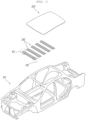
- FIG. 1 is a view illustrating a vehicle in which a vehicle body member having a charging and discharging function according to an embodiment of the present invention is used
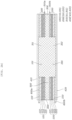
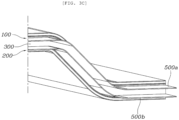
- FIGS. 2A and 2B are sectional views illustrating a vehicle body member having a charging and discharging function according to an embodiment of the present invention
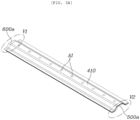
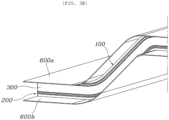
- FIGS. 3A to 3C are respectively a perspective view and main-part enlarged perspective views illustrating a vehicle body member having a charging and discharging function according to an embodiment of the present invention
- FIGS. 4A to 4C are respectively a perspective view and main-part enlarged perspective views illustrating main components of the vehicle body member having a charging and discharging function according to an embodiment of the present invention
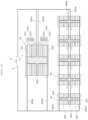
- FIG. 5 is a circuit diagram illustrating a vehicle body member having a charging and discharging function according to an embodiment of the present invention.
- FIG. 2A is a sectional view illustrating a state before each component is pressure-molded after being stacked
- FIG. 2B is a sectional view illustrating a state after each component is pressure-molded after being stacked.
- FIG. 3B is an enlarged view illustrating a portion "V1" illustrated in FIG. 3A
- FIG. 3C is an enlarged view illustrating a portion "V2" illustrated in FIG. 3A .
- FIG. 4A is a view illustrating a first cell unit
- FIG. 4B is a view illustrating a reinforcing insulating layer
- FIG. 4C is a view illustrating a second cell unit.
- the vehicle body member having the charging and discharging function can find application in various components of a vehicle.
- a roof member of the vehicle body i.e., a roof panel and a roof rail, will be described.
- the vehicle body member having the charging and discharging function is provided as a plurality of vehicle body members configured such that at least one vehicle body member forms a roof panel 20 of a vehicle body 10, and a remaining vehicle body member forms a roof rail 30 of the vehicle body 10.
- each of the vehicle body members 20 and 30 that form the roof panel 20 and the roof rail 30 serves as a secondary battery having a charging and discharging function.
- each of the vehicle body members 20 and 30 includes a first cell unit 100, a second cell unit 200, a reinforcing insulating layer 300, a skin layer 400, a positive electrode current collector 500, and a negative electrode current collector 600.
- the first cell unit 100 is a means for forming one unit cell, and is comprised of a first negative electrode part 110 including carbon fiber, and a first positive electrode part 120 disposed in contact with a first surface of the first negative electrode part 110 and formed while including a positive electrode active material and a solid electrolyte.
- the first negative electrode part 110 is a reinforcement means for increasing rigidity while realizing the shape of the roof panel 20 and the roof rail 30.
- the first negative electrode part 110 also serves as a negative electrode for performing the charging and discharging function.
- the first negative electrode part 110 is made of a composite material including carbon fiber made of a carbon material that facilitates oxidation and reduction of lithium ions.
- the first cell unit 100 may be provided by stacking a plurality of reinforcing fiber sheets provided in different arrangement directions.
- the first positive electrode part 120 is a means for performing a role of a solid-state separator as well as a role of a positive electrode for performing the charging and discharging function, and may be implemented by including a positive electrode active material used as a positive electrode in a typical secondary battery.
- the first positive electrode part 120 may include lithium metal oxide.
- the first positive electrode part 120 is implemented by the use of a material used as a solid-state electrolyte, i.e. a first solid electrolyte, e.g. a solid electrolyte in a typical secondary battery.
- the first positive electrode part 120 may be comprised of a first positive electrode layer 121 disposed opposite to the first surface of the first negative electrode part 110 and in which the positive electrode active material is distributed, and a first solid electrolyte layer 122 made of a solid electrolyte and disposed between the first negative electrode part 110 and the first positive electrode layer 121 so as to be in contact with each of the first negative electrode part 110 and the first positive electrode layer 121.
- a first separator 123 separating the first negative electrode part 110 and the first positive electrode layer 121 from each other may be further interposed between the respective first solid electrolyte layers 122.
- the first cell unit 100 is configured such that the first via hole 101 is formed to sequentially pass through the first negative electrode part 110, the first solid electrolyte layers 122 having the first separator 123 interposed therebetween, and the first positive electrode layer 121.
- the second cell unit 200 is also a means for forming one unit cell, and is comprised of a second negative electrode part 210 including carbon fiber, and a second positive electrode part 220 disposed in contact with a second surface of the second negative electrode part 210 and formed while including a positive electrode active material and a solid electrolyte.
- the second negative electrode part 210 is a reinforcement means for increasing rigidity while realizing the shape of the roof panel 20 and the roof rail 30.
- the second negative electrode part 210 also serves as a negative electrode for performing the charging and discharging function.
- the second negative electrode part 210 is made of a composite material including carbon fiber made of a carbon material that facilitates oxidation and reduction of lithium ions.
- the second cell unit 200 may also be provided by stacking a plurality of reinforcing fiber sheets provided in different arrangement directions for increasing rigidity.
- the second positive electrode part 220 is a means for performing a role of a solid-state separator as well as a role of a positive electrode for performing the charging and discharging function, and is implemented by including a positive electrode active material used as a positive electrode in a typical secondary battery.
- the second positive electrode part 220 may include lithium metal oxide.
- the second positive electrode part 220 is implemented by the use of a material used as a solid-state electrolyte, i.e. a second solid electrolyte, e.g. a solid electrolyte in a typical secondary battery.
- the second positive electrode part 220 may be comprised of a second positive electrode layer 221 disposed opposite to the second surface of the second negative electrode part 210 and in which the positive electrode active material is distributed, and a second solid electrolyte layer 222 made of a solid electrolyte and disposed between the second negative electrode part 210 and the second positive electrode layer 221 so as to be in contact with each of the second negative electrode part 210 and the second positive electrode layer 221.
- a second separator 223 separating the second negative electrode part 210 and the second positive electrode layer 221 from each other may be further interposed between the respective second solid electrolyte layers 222.
- At least one second via hole 201 passing through the second negative electrode part 210 and the second positive electrode part 220 in a predetermined region is formed in the second cell unit 200.
- the second cell unit 200 may be configured such that the second via hole 201 is formed to sequentially pass through the second negative electrode part 210, the second solid electrolyte layers 222 having the second separator 223 interposed therebetween, and the second positive electrode layer 221.
- the second via hole 201 is formed at a position corresponding to a position where the first via hole 101 is formed so that the first via hole 101 and the second via hole 201 are in communication with each other.
- the reinforcing insulating layer 300 is disposed between the first positive electrode layer 121 and the second positive electrode layer 221 to electrically insulate the first and second positive electrode layers 121 and 221 from each other.
- the first cell unit 100 and the second cell unit 200 are disposed to be symmetrical to each other with respect to the reinforcing insulating layer 300.
- the reinforcing insulating layer 300 serves to electrically insulate the first cell unit 100 and the second cell unit 200 from each other, while maintaining the first cell unit 100 and the second cell unit 200 structurally and firmly. To this end, the reinforcing insulating layer 300 is formed in a panel form having a honeycomb structure.
- the reinforcing insulating layer 300 has opposite surfaces each of which is provided with at least one insertion protrusion 310 inserted into each of the first via hole 101 and the second via hole 201.
- a first insertion protrusion 311 inserted into the first via hole 101 may be formed on a second surface of the reinforcing insulating layer 300 facing the first cell unit 100
- a second insertion protrusion 312 inserted into the second via hole 201 may be formed on a first surface of the reinforcing insulating layer 300 facing the second cell unit 200.
- first cell unit 100 and the second cell unit 200 each of which constitutes one unit cell are electrically connected to each other in parallel to increase the charge/discharge capacity.
- a first positive electrode current collector 500a connected to the first positive electrode part 120 of the first cell unit 100 is provided, and a second positive electrode current collector 500b connected to the second positive electrode part 220 of the second cell unit 200 is provided, so that the first positive electrode current collector 500a and the second positive electrode current collector 500b are connected to each other in parallel.
- a first negative electrode current collector 600a connected to the first negative electrode part 110 of the first cell unit 100 is provided, and a second negative electrode current collector 600b connected to the second negative electrode part 210 of the second cell unit 200 is provided, so that the first negative electrode current collector 600a and the second negative electrode current collector 600b are connected to each other in parallel.
- the first positive electrode current collector 500a and the first negative electrode current collector 600a are configured such that the first via hole 101 formed in the first cell unit 100 passes therethrough, and the second positive electrode current collector 500b and the second negative electrode current collector 600b are configured such that the second via hole 201 formed in the second cell unit 200 passes therethrough.
- the skin layer 400 is stacked on each of the outermost layers of each of the vehicle body members 20 and 30 to electrically insulate the vehicle body members 20 and 30 from other vehicle body members 20 and 30, while stably maintaining the stacked structure of the components constituting the vehicle body members 20 and 30.
- a first skin layer 410 is stacked on a second surface of the first negative electrode current collector 600a
- a second skin layer 420 is stacked on a first surface of the second negative electrode current collector 600b.
- the first skin layer 410 and the second skin layer 420 are made of a glass fiber-reinforced sheet made of glass fiber and resin which are electrically nonconductive.
- the skin layer 400 and the insertion protrusion 310 of the reinforcing insulating layer 300 are directly adhered to each other.
- the first insertion protrusion 310 of the reinforcing insulating layer 300 may pass through the first via hole 101, with an end thereof directly adhered to the first skin layer 410
- the second insertion protrusion 320 of the reinforcing insulating layer 300 may pass through the second via hole 201, with an end thereof directly adhered to the second skin layer 420.
- an adhesion region A1 a region where the skin layer 400 and the insertion protrusion 310 of the reinforcing insulating layer 300 are directly adhered to each other.
- the skin layer 400 and the reinforcing insulating layer 300 may be adhered to each other by an adhesive.
- the first cell unit 100, the second cell unit 200, the reinforcing insulating layer 300, the skin layer 400, the positive electrode current collector 500, and the negative electrode current collector 600 may be formed by hot pressing (see FIG. 2B ).
- a resin forming the skin layer 400 and a resin forming the reinforcing insulating layer 300 may be fused and adhered to each other.
- an overlap region A2 where the first cell unit 100, the second cell unit 200, the first negative electrode current collector 600a, and the second negative electrode current collector 600b are deformed to be compressed by compression molding.
- the first negative electrode current collector 600a and the second negative electrode current collector 600b are deformed in a shape inclined in the direction of the adhesion region A1, and due to this deformation, stacking strength of the vehicle body members 20 and 30 is improved, and the shear strength is also improved.
- the vehicle body member 20 and 30 of the vehicle body 10 is usually comprised of one roof panel 20 and a plurality of roof rails 30.
- first positive electrode current collector 500a and a second positive electrode current collector 500b constituting the roof panel 20 are connected to each other in parallel, while a first negative electrode current collector 600a and a second negative electrode current collector 600b are connected to each other in parallel.
- first positive electrode current collectors 500a constituting the respective roof rails 30 are connected to each other in parallel
- first negative electrode current collectors 600a are connected to each other in parallel
- second positive electrode current collectors 500b are connected to each other in parallel
- second negative electrode current collectors 600b are connected to each other in parallel.
- the first positive electrode current collectors 500a, the second positive electrode current collectors 500b, the first negative electrode current collectors 600a, and the second negative electrode current collectors 600b configured as described above are connected selectively to an alternator 1 or an electronic device 2 of the vehicle by a switch 3.
- first positive electrode current collectors 500a, the second positive electrode current collectors 500b, the first negative electrode current collectors 600a, and the second negative electrode current collectors 600b are electrically connected to the alternator ⁇ of the vehicle, charging is made through the roof panel 20 and the roof rails 30.
- first positive electrode current collectors 500a, the second positive electrode current collectors 500b, the first negative electrode current collectors 600a, and the second negative electrode current collectors 600b are connected to the electronic device 2 of the vehicle, power generated by discharging through the roof panel 20 and the roof rails 30 is supplied to the electronic device 2 of the vehicle.
- the electronic device 2 denotes a component provided in the vehicle and operated by supply of power.
- various lamps such as room lamps provided in the interior of the vehicle may be used.
- the vehicle body members comprised of the roof panel 20 and the plurality of roof rails 30 are configured such that due to the structure of the vehicle body 10, the plurality of roof rails 30 are arranged spaced apart from each other at an equal interval, and the roof panel 20 is disposed on top thereof.
- the plurality of roof rails 30 and the roof panel 20 are electrically insulated from each other by skin layers 400.
Landscapes
- Chemical & Material Sciences (AREA)
- Engineering & Computer Science (AREA)
- Chemical Kinetics & Catalysis (AREA)
- Electrochemistry (AREA)
- General Chemical & Material Sciences (AREA)
- Mechanical Engineering (AREA)
- Manufacturing & Machinery (AREA)
- Materials Engineering (AREA)
- Inorganic Chemistry (AREA)
- Transportation (AREA)
- Combustion & Propulsion (AREA)
- Physics & Mathematics (AREA)
- Condensed Matter Physics & Semiconductors (AREA)
- General Physics & Mathematics (AREA)
- Dispersion Chemistry (AREA)
- Sustainable Development (AREA)
- Sustainable Energy (AREA)
- Life Sciences & Earth Sciences (AREA)
- Power Engineering (AREA)
- Composite Materials (AREA)
- Architecture (AREA)
- Structural Engineering (AREA)
- Secondary Cells (AREA)
- Aviation & Aerospace Engineering (AREA)
- Battery Mounting, Suspending (AREA)
- Connection Of Batteries Or Terminals (AREA)
- Battery Electrode And Active Subsutance (AREA)
- Body Structure For Vehicles (AREA)
- Sealing Battery Cases Or Jackets (AREA)
- Cell Separators (AREA)
Description
- The present invention relates to a vehicle body member having a charging and discharging function.
-
WO 2008/023255 A2 discloses a power storage device comprising: a first cell unit comprised of a first negative electrode part and a first positive electrode part disposed in contact with a first surface of the first negative electrode part, the first positive electrode part including a first positive electrode active material and a first solid electrolyte, wherein at least one first via hole passes through the first negative electrode part and the first positive electrode part; a second cell unit comprised of a second negative electrode part and a second positive electrode part disposed in contact with a first surface of the second negative electrode part the second positive electrode part including a second positive electrode active material and a second solid electrolyte, wherein at least one second via hole passes through the second negative electrode part and the second positive electrode part; a positioning member made of an insulating material, a first positive electrode current collector connected to the first positive electrode part of the first cell unit; a second positive electrode current collector connected to the second positive electrode part of the second cell unit; a first negative electrode current collector connected to the first negative electrode part of the first cell unit; and a second negative electrode current collector connected to the second negative electrode part of the second cell unit.
Conventionally, it has been common to manufacture a vehicle body structure and various components using a steel material, but recently, a composite material such as a fiber-reinforced resin composite material has been used as a replacement for the steel material to improve fuel efficiency due to weight reduction. - In general, the fiber-reinforced resin composite material has a basic structure composed of a reinforcing material that plays a role as a load applied to a material and a base material that combines with the reinforcing material to realize the overall shape of the material and transmits the load applied to the material to the reinforcing material. Here, as the reinforcing material, a fiber-type reinforcing material such as carbon fiber, glass fiber, and aramid fiber is commonly used, and as the base material, a resin-based base material such as a thermosetting resin including phenol resin, epoxy resin, and the like or a thermoplastic resin including polyvinyl chloride (PVC), polyethylene (PE), polypropylene (PP) resin, and the like is commonly used.
- Meanwhile, many of the components constituting a vehicle are electronic device means operated by power supplied from a battery. Recently, research on increasing the capacity of a battery in a vehicle has been continuously conducted due to an increase in the electronic device means.
- The foregoing is intended merely to aid in the understanding of the background of the present invention, and is not intended to mean that the present invention falls within the purview of the related art that is already known to those skilled in the art.
- The present invention provides a vehicle body member having a charging and discharging function according to
independent claim 1. The dependent claims 2-12 show further embodiments of the said vehicle body member. Claim 13 discloses a vehicle comprising the vehicle body member ofclaim 1. Particular the present invention provides a vehicle body member having a charging and discharging function, wherein carbon fiber used for weight reduction and reinforcement purposes is used. - Embodiments of the present invention make use of the fact that carbon fiber used as the reinforcing material of the fiber-reinforced resin composite material can be used as a negative electrode constituting a secondary battery, and provide a back beam for a vehicle that can be charged and discharged by using the reinforcing material used for weight reduction and strength reinforcement of a vehicle.
- Accordingly, embodiments of the present invention have been made keeping in mind problems occurring in the related art, and an embodiment of the present invention provides a vehicle body member having a charging and discharging function, wherein carbon fiber used as a reinforcement material in a roof panel and a roof rail of a vehicle body is used as a negative electrode of a secondary battery.
- According to one embodiment of the present invention, there is provided a vehicle body member having a charging and discharging function, the vehicle body member being a roof member of a vehicle body, and including a first cell unit comprised of a first negative electrode part including carbon fiber, and a first positive electrode part disposed in contact with a first surface of the first negative electrode part and formed while including a positive electrode active material and a solid electrolyte, with at least one first via hole passing through the first negative electrode part and the first positive electrode part, a second cell unit comprised of a second negative electrode part including carbon fiber, and a second positive electrode part disposed in contact with a second surface of the second negative electrode part and formed while including a positive electrode active material and a solid electrolyte, with at least one second via hole passing through the second negative electrode part and the second positive electrode part, a reinforcing insulating layer formed in a honeycomb structure, having opposite surfaces each of which is provided with at least one insertion protrusion inserted into each of the first via hole and the second via hole, and interposed between a first surface of the first cell unit and a second surface of the second cell unit to electrically insulate the first and second cell units from each other, a first positive electrode current collector connected to the first positive electrode part of the first cell unit, a second positive electrode current collector connected to the second positive electrode part of the second cell unit while being connected in parallel to the first positive electrode current collector, a first negative electrode current collector connected to the first negative electrode part of the first cell unit, and a second negative electrode current collector connected to the second negative electrode part of the second cell unit while being connected in parallel to the first negative electrode current collector.
- The first negative electrode current collector may be stacked on a second surface of the first cell unit, the second negative electrode current collector may be stacked on a first surface of the second cell unit, and a skin layer made of a composite material may be further stacked on each of a second surface of the first negative electrode current collector and a first surface of the second negative electrode current collector.
- The skin layer may be made of a glass fiber-reinforced sheet.
- The skin layer and the insertion protrusion of the reinforcing insulating layer may be directly adhered to each other.
- Around an adhesion region where the skin layer and the insertion protrusion of the reinforcing insulating layer are directly adhered to each other, there may be formed an overlap region where the first cell unit, the second cell unit, the first negative electrode current collector, and the second negative electrode current collector may be deformed to be compressed by compression molding.
- The reinforcing insulating layer may be made of a plastic polymer, and in the adhesion region, the skin layer and the reinforcing insulating layer may be adhered to each other by an adhesive, or a resin forming the skin layer and a resin forming the reinforcing insulating layer may be fused and adhered to each other.
- Each of the first negative electrode part and the second negative electrode part may be formed by stacking a plurality of reinforcing fiber sheets in which carbon fibers may be provided in different arrangement directions.
- The first positive electrode part may be comprised of a first positive electrode layer disposed opposite to the first surface of the first negative electrode part and in which the positive electrode active material is distributed, and a first solid electrolyte layer made of the solid electrolyte and disposed between the first negative electrode part and the first positive electrode layer so as to be in contact with each of the first negative electrode part and the first positive electrode layer, the second positive electrode part may be comprised of a second positive electrode layer disposed opposite to the second surface of the second negative electrode part and in which the positive electrode active material is distributed, and a second solid electrolyte layer made of the solid electrolyte and disposed between the second negative electrode part and the second positive electrode layer so as to be in contact with each of the second negative electrode part and the second positive electrode layer, and the first positive electrode layer and the second positive electrode layer may be electrically insulated from each other by the reinforcing insulating layer.
- The roof member may be provided as a plurality of roof members, first positive electrode current collectors and second positive electrode current collectors constituting respective vehicle body members may be connected to each other in parallel, first negative electrode current collectors and second negative electrode current collectors constituting the respective vehicle body members may be connected to each other in parallel, and the first positive electrode current collectors, the second positive electrode current collectors, the first negative electrode current collectors, and the second negative electrode current collectors may be connected selectively to an alternator or an electronic device means of a vehicle by a switch, wherein while the first positive electrode current collectors, the second positive electrode current collectors, the first negative electrode current collectors, and the second negative electrode current collectors are electrically connected to the alternator of the vehicle, charging may be made through the vehicle body members, and while the first positive electrode current collectors, the second positive electrode current collectors, the first negative electrode current collectors, and the second negative electrode current collectors are connected to the electronic device means of the vehicle, power generated by discharging through the vehicle body members may be supplied to the electronic device means of the vehicle.
- The plurality of roof members may be configured such that at least one thereof forms a roof panel of the vehicle, and a remaining roof member forms a roof rail of the vehicle.
- According to an embodiment of the present invention, carbon fiber used for increasing the rigidity of the roof panel and the roof rail of the vehicle body is used as a negative electrode of a secondary battery, and each of the roof panel and the roof rail is equipped with a means to serve as a solid electrolyte and a positive electrode. This makes it possible to expect an effect of adding a secondary battery function capable of charging and discharging to the roof panel and the roof rail.
- Furthermore, each of the roof panel and the roof rail is manufactured as a secondary battery capable of charging and discharging, and the respective roof panel and roof rail are connected to each other in parallel. This makes it possible to expect an effect of increasing the capacity of the secondary battery.
- Furthermore, the reinforced insulating layer of a honeycomb structure with the insertion protrusions is disposed between the first cell unit and the second cell unit where the via holes are formed, thereby making it possible to expect an effect of improving the interlayer shear strength due to the insertion protrusions inserted into the via holes, while increasing the rigidity due to the honeycomb structure.
- The above and other objectives, features, and other advantages of embodiments of the present invention will be more clearly understood from the following detailed description when taken in conjunction with the accompanying drawings, in which:
-
FIG. 1 is a view illustrating a vehicle in which a vehicle body member having a charging and discharging function according to an embodiment of the present invention is used; -
FIGS. 2A and2B are sectional views illustrating a vehicle body member having a charging and discharging function according to an embodiment of the present invention; -
FIGS. 3A to 3C are respectively a perspective view and main-part enlarged perspective views illustrating a vehicle body member having a charging and discharging function according to an embodiment of the present invention; -
FIGS. 4A to 4C are respectively a perspective view and main-part enlarged perspective views illustrating main components constituting a vehicle body member having a charging and discharging function according to an embodiment of the present invention; and -
FIG. 5 is a circuit diagram illustrating a vehicle body member having a charging and discharging function according to an embodiment of the present invention. - Hereinafter, exemplary embodiments of the present invention will be described in more detail with reference to the accompanying drawings. However, the present invention is not limited to the embodiments disclosed below, but will be implemented in various different forms, and the embodiments of the present invention are presented to make complete disclosure of the present invention and help those who are ordinarily skilled in the art best understand the invention. The same reference numerals are used throughout the different drawings to designate the same or similar components.
-
FIG. 1 is a view illustrating a vehicle in which a vehicle body member having a charging and discharging function according to an embodiment of the present invention is used,FIGS. 2A and2B are sectional views illustrating a vehicle body member having a charging and discharging function according to an embodiment of the present invention,FIGS. 3A to 3C are respectively a perspective view and main-part enlarged perspective views illustrating a vehicle body member having a charging and discharging function according to an embodiment of the present invention,FIGS. 4A to 4C are respectively a perspective view and main-part enlarged perspective views illustrating main components of the vehicle body member having a charging and discharging function according to an embodiment of the present invention, andFIG. 5 is a circuit diagram illustrating a vehicle body member having a charging and discharging function according to an embodiment of the present invention. - Here,
FIG. 2A is a sectional view illustrating a state before each component is pressure-molded after being stacked, andFIG. 2B is a sectional view illustrating a state after each component is pressure-molded after being stacked. Furthermore,FIG. 3B is an enlarged view illustrating a portion "V1" illustrated inFIG. 3A , andFIG. 3C is an enlarged view illustrating a portion "V2" illustrated inFIG. 3A .FIG. 4A is a view illustrating a first cell unit,FIG. 4B is a view illustrating a reinforcing insulating layer, andFIG. 4C is a view illustrating a second cell unit. - First, the vehicle body member having the charging and discharging function according to an embodiment of the present invention can find application in various components of a vehicle. Hereinafter, as an example of the vehicle body member, a roof member of the vehicle body, i.e., a roof panel and a roof rail, will be described.
- As illustrated in the drawings, the vehicle body member having the charging and discharging function according to embodiments of the present invention is provided as a plurality of vehicle body members configured such that at least one vehicle body member forms a
roof panel 20 of avehicle body 10, and a remaining vehicle body member forms aroof rail 30 of thevehicle body 10. Here, each of thevehicle body members roof panel 20 and theroof rail 30 serves as a secondary battery having a charging and discharging function. - To this end, each of the
vehicle body members first cell unit 100, asecond cell unit 200, a reinforcing insulatinglayer 300, a skin layer 400, a positive electrode current collector 500, and a negative electrode current collector 600. - The
first cell unit 100 is a means for forming one unit cell, and is comprised of a firstnegative electrode part 110 including carbon fiber, and a firstpositive electrode part 120 disposed in contact with a first surface of the firstnegative electrode part 110 and formed while including a positive electrode active material and a solid electrolyte. - Here, the first
negative electrode part 110 is a reinforcement means for increasing rigidity while realizing the shape of theroof panel 20 and theroof rail 30. In the present embodiment, the firstnegative electrode part 110 also serves as a negative electrode for performing the charging and discharging function. To this end, the firstnegative electrode part 110 is made of a composite material including carbon fiber made of a carbon material that facilitates oxidation and reduction of lithium ions. - Here, in order to increase rigidity, the
first cell unit 100 may be provided by stacking a plurality of reinforcing fiber sheets provided in different arrangement directions. - The first
positive electrode part 120 is a means for performing a role of a solid-state separator as well as a role of a positive electrode for performing the charging and discharging function, and may be implemented by including a positive electrode active material used as a positive electrode in a typical secondary battery. For example, the firstpositive electrode part 120 may include lithium metal oxide. Furthermore, the firstpositive electrode part 120 is implemented by the use of a material used as a solid-state electrolyte, i.e. a first solid electrolyte, e.g. a solid electrolyte in a typical secondary battery. - For example, the first
positive electrode part 120 may be comprised of a firstpositive electrode layer 121 disposed opposite to the first surface of the firstnegative electrode part 110 and in which the positive electrode active material is distributed, and a firstsolid electrolyte layer 122 made of a solid electrolyte and disposed between the firstnegative electrode part 110 and the firstpositive electrode layer 121 so as to be in contact with each of the firstnegative electrode part 110 and the firstpositive electrode layer 121. Here, afirst separator 123 separating the firstnegative electrode part 110 and the firstpositive electrode layer 121 from each other may be further interposed between the respective first solid electrolyte layers 122. - Meanwhile, at least one first via
hole 101 passing through the firstnegative electrode part 110 and the firstpositive electrode part 120 is formed in thefirst cell unit 100. In detail, thefirst cell unit 100 is configured such that the first viahole 101 is formed to sequentially pass through the firstnegative electrode part 110, the firstsolid electrolyte layers 122 having thefirst separator 123 interposed therebetween, and the firstpositive electrode layer 121. - Furthermore, the
second cell unit 200 is also a means for forming one unit cell, and is comprised of a secondnegative electrode part 210 including carbon fiber, and a secondpositive electrode part 220 disposed in contact with a second surface of the secondnegative electrode part 210 and formed while including a positive electrode active material and a solid electrolyte. - Here, the second
negative electrode part 210 is a reinforcement means for increasing rigidity while realizing the shape of theroof panel 20 and theroof rail 30. In the present embodiment, the secondnegative electrode part 210 also serves as a negative electrode for performing the charging and discharging function. To this end, the secondnegative electrode part 210 is made of a composite material including carbon fiber made of a carbon material that facilitates oxidation and reduction of lithium ions. - Here, in order to increase rigidity, the
second cell unit 200 may also be provided by stacking a plurality of reinforcing fiber sheets provided in different arrangement directions for increasing rigidity. - The second
positive electrode part 220 is a means for performing a role of a solid-state separator as well as a role of a positive electrode for performing the charging and discharging function, and is implemented by including a positive electrode active material used as a positive electrode in a typical secondary battery. For example, the secondpositive electrode part 220 may include lithium metal oxide. Furthermore, the secondpositive electrode part 220 is implemented by the use of a material used as a solid-state electrolyte, i.e. a second solid electrolyte, e.g. a solid electrolyte in a typical secondary battery. - For example, the second
positive electrode part 220 may be comprised of a secondpositive electrode layer 221 disposed opposite to the second surface of the secondnegative electrode part 210 and in which the positive electrode active material is distributed, and a secondsolid electrolyte layer 222 made of a solid electrolyte and disposed between the secondnegative electrode part 210 and the secondpositive electrode layer 221 so as to be in contact with each of the secondnegative electrode part 210 and the secondpositive electrode layer 221. Here, asecond separator 223 separating the secondnegative electrode part 210 and the secondpositive electrode layer 221 from each other may be further interposed between the respective second solid electrolyte layers 222. - Furthermore, at least one second via
hole 201 passing through the secondnegative electrode part 210 and the secondpositive electrode part 220 in a predetermined region is formed in thesecond cell unit 200. In detail, thesecond cell unit 200 may be configured such that the second viahole 201 is formed to sequentially pass through the secondnegative electrode part 210, the secondsolid electrolyte layers 222 having thesecond separator 223 interposed therebetween, and the secondpositive electrode layer 221. - Here, it is preferable that the second via
hole 201 is formed at a position corresponding to a position where the first viahole 101 is formed so that the first viahole 101 and the second viahole 201 are in communication with each other. - Furthermore, the reinforcing insulating
layer 300 is disposed between the firstpositive electrode layer 121 and the secondpositive electrode layer 221 to electrically insulate the first and secondpositive electrode layers first cell unit 100 and thesecond cell unit 200 are disposed to be symmetrical to each other with respect to the reinforcing insulatinglayer 300. - The reinforcing insulating
layer 300 serves to electrically insulate thefirst cell unit 100 and thesecond cell unit 200 from each other, while maintaining thefirst cell unit 100 and thesecond cell unit 200 structurally and firmly. To this end, the reinforcing insulatinglayer 300 is formed in a panel form having a honeycomb structure. - Furthermore, the reinforcing insulating
layer 300 has opposite surfaces each of which is provided with at least one insertion protrusion 310 inserted into each of the first viahole 101 and the second viahole 201. For example, afirst insertion protrusion 311 inserted into the first viahole 101 may be formed on a second surface of the reinforcing insulatinglayer 300 facing thefirst cell unit 100, and asecond insertion protrusion 312 inserted into the second viahole 201 may be formed on a first surface of the reinforcing insulatinglayer 300 facing thesecond cell unit 200. - Meanwhile, the
first cell unit 100 and thesecond cell unit 200 each of which constitutes one unit cell are electrically connected to each other in parallel to increase the charge/discharge capacity. - To this end, a first positive electrode
current collector 500a connected to the firstpositive electrode part 120 of thefirst cell unit 100 is provided, and a second positive electrodecurrent collector 500b connected to the secondpositive electrode part 220 of thesecond cell unit 200 is provided, so that the first positive electrodecurrent collector 500a and the second positive electrodecurrent collector 500b are connected to each other in parallel. - Furthermore, a first negative electrode
current collector 600a connected to the firstnegative electrode part 110 of thefirst cell unit 100 is provided, and a second negative electrodecurrent collector 600b connected to the secondnegative electrode part 210 of thesecond cell unit 200 is provided, so that the first negative electrodecurrent collector 600a and the second negative electrodecurrent collector 600b are connected to each other in parallel. - Here, it is preferable that the first positive electrode
current collector 500a and the first negative electrodecurrent collector 600a are configured such that the first viahole 101 formed in thefirst cell unit 100 passes therethrough, and the second positive electrodecurrent collector 500b and the second negative electrodecurrent collector 600b are configured such that the second viahole 201 formed in thesecond cell unit 200 passes therethrough. - Meanwhile, the skin layer 400 is stacked on each of the outermost layers of each of the
vehicle body members vehicle body members vehicle body members vehicle body members - For example, a
first skin layer 410 is stacked on a second surface of the first negative electrodecurrent collector 600a, and asecond skin layer 420 is stacked on a first surface of the second negative electrodecurrent collector 600b. - Here, it is preferable that the
first skin layer 410 and thesecond skin layer 420 are made of a glass fiber-reinforced sheet made of glass fiber and resin which are electrically nonconductive. - Meanwhile, it is preferable that the skin layer 400 and the insertion protrusion 310 of the reinforcing insulating
layer 300 are directly adhered to each other. For example, the first insertion protrusion 310 of the reinforcing insulatinglayer 300 may pass through the first viahole 101, with an end thereof directly adhered to thefirst skin layer 410, and the second insertion protrusion 320 of the reinforcing insulatinglayer 300 may pass through the second viahole 201, with an end thereof directly adhered to thesecond skin layer 420. Here, a region where the skin layer 400 and the insertion protrusion 310 of the reinforcing insulatinglayer 300 are directly adhered to each other is referred to as an adhesion region A1. - Thus, in the adhesion region A1, the skin layer 400 and the reinforcing insulating
layer 300 may be adhered to each other by an adhesive. - Furthermore, in order to improve stacking strength of each of the
vehicle body members first cell unit 100, thesecond cell unit 200, the reinforcing insulatinglayer 300, the skin layer 400, the positive electrode current collector 500, and the negative electrode current collector 600 may be formed by hot pressing (seeFIG. 2B ). - Here, in the adhesion region A1, a resin forming the skin layer 400 and a resin forming the reinforcing insulating
layer 300 may be fused and adhered to each other. - Furthermore, around the adhesion region A1, there is formed an overlap region A2 where the
first cell unit 100, thesecond cell unit 200, the first negative electrodecurrent collector 600a, and the second negative electrodecurrent collector 600b are deformed to be compressed by compression molding. In the overlap region A2, the first negative electrodecurrent collector 600a and the second negative electrodecurrent collector 600b are deformed in a shape inclined in the direction of the adhesion region A1, and due to this deformation, stacking strength of thevehicle body members - Meanwhile, the
vehicle body member vehicle body 10 is usually comprised of oneroof panel 20 and a plurality of roof rails 30. - Thus, as illustrated in
FIG. 5 , when thevehicle body members roof panel 20 and the plurality of roof rails 30, a first positive electrodecurrent collector 500a and a second positive electrodecurrent collector 500b constituting theroof panel 20 are connected to each other in parallel, while a first negative electrodecurrent collector 600a and a second negative electrodecurrent collector 600b are connected to each other in parallel. Furthermore, first positive electrodecurrent collectors 500a constituting the respective roof rails 30 are connected to each other in parallel, first negative electrodecurrent collectors 600a are connected to each other in parallel, second positive electrodecurrent collectors 500b are connected to each other in parallel, and second negative electrodecurrent collectors 600b are connected to each other in parallel. - The first positive electrode
current collectors 500a, the second positive electrodecurrent collectors 500b, the first negative electrodecurrent collectors 600a, and the second negative electrodecurrent collectors 600b configured as described above are connected selectively to analternator 1 or anelectronic device 2 of the vehicle by a switch 3. - Thus, while the first positive electrode
current collectors 500a, the second positive electrodecurrent collectors 500b, the first negative electrodecurrent collectors 600a, and the second negative electrodecurrent collectors 600b are electrically connected to the alternator ι of the vehicle, charging is made through theroof panel 20 and the roof rails 30. - Furthermore, while the first positive electrode
current collectors 500a, the second positive electrodecurrent collectors 500b, the first negative electrodecurrent collectors 600a, and the second negative electrodecurrent collectors 600b are connected to theelectronic device 2 of the vehicle, power generated by discharging through theroof panel 20 and the roof rails 30 is supplied to theelectronic device 2 of the vehicle. - Here, the
electronic device 2 denotes a component provided in the vehicle and operated by supply of power. For example, various lamps such as room lamps provided in the interior of the vehicle may be used. - Furthermore, the vehicle body members comprised of the
roof panel 20 and the plurality of roof rails 30 are configured such that due to the structure of thevehicle body 10, the plurality of roof rails 30 are arranged spaced apart from each other at an equal interval, and theroof panel 20 is disposed on top thereof. Here, the plurality of roof rails 30 and theroof panel 20 are electrically insulated from each other by skin layers 400. - Although the present invention has been described with reference to the accompanying drawings and the exemplary embodiments described above, the scope of the present invention should not be limited to the described embodiments, but should be determined by the accompanying claims. Therefore, those skilled in the art will appreciate that various modifications, additions and substitutions are possible, without departing from the scope of the invention as disclosed in the accompanying claims.
Claims (13)
- A vehicle body member (20, 30) having a charging and discharging function, the vehicle body member (20, 30) comprising:a first cell unit (100) comprised of a first negative electrode part (110) and a first positive electrode part (120) disposed in contact with a first surface of the first negative electrode part (110) , the first negative electrode part (110) including carbon fiber and the first positive electrode part (120) including a first positive electrode active material and a first solid electrolyte, wherein at least one first via hole (101) passes through the first negative electrode part (110) and the first positive electrode part (120);a second cell unit (200) comprised of a second negative electrode part (210) and a second positive electrode part (220) disposed in contact with a first surface of the second negative electrode part (210), the second negative electrode part (210) including carbon fiber and the second positive electrode part (220) including a second positive electrode active material and a second solid electrolyte, wherein at least one second via hole (201) passes through the second negative electrode part (210) and the second positive electrode part(220);a reinforcing insulating layer (300) formed in a honeycomb structure and having opposite surfaces, each of the opposite surfaces provided with at least one insertion protrusion(310) inserted into each of the first via hole (101) and the second via hole (201) respectively, the reinforcing insulating layer (300) interposed between a first surface of the first cell unit (100) and a second surface of the second cell unit (200) to electrically insulate the first and second cell units (100, 200) from each other;a first positive electrode current collector (500a) connected to the first positive electrode part (120) of the first cell unit (100);a second positive electrode current collector (500b) connected to the second positive electrode part (220) of the second cell unit (200) and connected in parallel to the first positive electrode current collector (500a);a first negative electrode current collector (600a) connected to the first negative electrode part (110) of the first cell unit (100); anda second negative electrode current collector (600b) connected to the second negative electrode part (210) of the second cell unit (200) and connected in parallel to the first negative electrode current collector (600a).
- The vehicle body member (20, 30) of claim 1, wherein:the first negative electrode current collector (600a) is stacked on a second surface of the first cell unit (100);the second negative electrode current collector (600b) is stacked on a first surface of the second cell unit (200); anda skin layer (400) made of a composite material is stacked on each of a second surface of the first negative electrode current collector (600a) and a first surface of the second negative electrode current collector (600b).
- The vehicle body member (20, 30) of claim 2, wherein the skin layer (400) comprises a glass fiber-reinforced sheet.
- The vehicle body member (20, 30) of claim 2 or 3, wherein the skin layer (400) and the insertion protrusion (310) of the reinforcing insulating layer (300) are directly adhered to each other.
- The vehicle body member (20, 30) of claim 4, further comprising:an adhesion region (A1) where the skin layer (400) and the insertion protrusion (310) of the reinforcing insulating layer (300) are directly adhered to each other; andan overlap region (A2) around the adhesion region (A1), wherein the first cell unit (100), the second cell unit (200), the first negative electrode current collector (600a), and the second negative electrode current collector (600b) are deformed to be compressed by compression molding in the overlap region (A2).
- The vehicle body member (20, 30) of claim 5, wherein:the reinforcing insulating layer (300) comprises a plastic polymer; andin the adhesion region (A1), the skin layer (400) and the reinforcing insulating layer (300) are adhered to each other by an adhesive.
- The vehicle body member (20, 30) of claim 5, wherein:the reinforcing insulating layer (300) comprises a plastic polymer; anda resin forming the skin layer (400) and a resin forming the reinforcing insulating layer (300) are fused and adhered to each other in the adhesion region (A1).
- The vehicle body member (20, 30) of one of claims 1-7, wherein each of the first negative electrode part (110) and the second negative electrode part (210) is formed by stacking a plurality of reinforcing fiber sheets in which carbon fibers are provided in different arrangement directions.
- The vehicle body member (20, 30) of one of claims 1-8, wherein:the first positive electrode part (120) comprises a first positive electrode layer (121) disposed opposite to the first surface of the first negative electrode part (110) and in which the first positive electrode active material is distributed, and a first solid electrolyte layer (122) made of the first solid electrolyte and disposed between the first negative electrode part (no) and the first positive electrode layer (121) so as to be in contact with each of the first negative electrode part (no) and the first positive electrode layer (121);the second positive electrode part (220) comprises a second positive electrode layer (221) disposed opposite to the second surface of the second negative electrode part (210) and in which the second positive electrode active material is distributed, and a second solid electrolyte layer (222) made of the second solid electrolyte and disposed between the second negative electrode part (210) and the second positive electrode layer (221) so as to be in contact with each of the second negative electrode part (210) and the second positive electrode layer (221); andthe first positive electrode layer (121) and the second positive electrode layer (221) are electrically insulated from each other by the reinforcing insulating layer (300).
- The vehicle body member (20, 30) of one of claims 1-9, wherein:the vehicle body member (20, 30) comprises a plurality of roof members; first positive electrode current collectors (500a) and second positive electrode current collectors (500b) constituting respective roof members are connected to each other in parallel;first negative electrode current collectors (600a) and second negative electrode current collectors (600b) constituting the respective roof members are connected to each other in parallel; andthe first positive electrode current collectors (500a), the second positive electrode current collectors (500b), the first negative electrode current collectors (600a), and the second negative electrode current collectors (600b) are connected selectively to an alternator (1) or an electronic device (2) of a vehicle by a switch.
- The vehicle body member (20, 30) of claim 10, wherein:while the first positive electrode current collectors (500a), the second positive electrode current collectors (500b), the first negative electrode current collectors (600a), and the second negative electrode current collectors (600b) are electrically connected to the alternator (1) of the vehicle, charging is to be made through the plurality of roof members; andwhile the first positive electrode current collectors (500a), the second positive electrode current collectors (500b), the first negative electrode current collectors (600a), and the second negative electrode current collectors (600b) are connected to the electronic device (2) of the vehicle, power generated by discharging through the plurality of roof members is to be supplied to the electronic device (2) of the vehicle.
- The vehicle body member (20, 30) of claim 10 or 11, wherein the plurality of roof members is configured such that at least one of the roof members forms a roof panel (20) of the vehicle, and at least a remaining one of the roof members forms a roof rail (30) of the vehicle.
- A vehicle comprising:a vehicle body (10); andan electric device within the vehicle body (10);wherein the vehicle body (10) includes a vehicle body member (20, 30) according to one of claims 1-12, wherein the vehicle body member (20, 30) is a vehicle roof member electrically connected to the electric device.
Applications Claiming Priority (1)
| Application Number | Priority Date | Filing Date | Title |
|---|---|---|---|
| KR1020200024671A KR102939187B1 (en) | 2020-02-27 | 2020-02-27 | Vehicle body member having charger and discharger function |
Publications (2)
| Publication Number | Publication Date |
|---|---|
| EP3871912A1 EP3871912A1 (en) | 2021-09-01 |
| EP3871912B1 true EP3871912B1 (en) | 2023-11-01 |
Family
ID=72615574
Family Applications (1)
| Application Number | Title | Priority Date | Filing Date |
|---|---|---|---|
| EP20197435.9A Active EP3871912B1 (en) | 2020-02-27 | 2020-09-22 | Vehicle body member having charging and discharging function |
Country Status (5)
| Country | Link |
|---|---|
| US (1) | US11456506B2 (en) |
| EP (1) | EP3871912B1 (en) |
| JP (1) | JP7532155B2 (en) |
| KR (1) | KR102939187B1 (en) |
| CN (1) | CN113386864B (en) |
Families Citing this family (5)
| Publication number | Priority date | Publication date | Assignee | Title |
|---|---|---|---|---|
| US12094654B2 (en) * | 2020-11-04 | 2024-09-17 | University Of Central Florida Research Foundation, Inc. | Storing energy in carbon fiber-based electric vehicle body panels |
| US20240079656A1 (en) * | 2021-12-06 | 2024-03-07 | Lg Energy Solution, Ltd. | Electrode Assembly, Manufacturing Method Thereof, and Lithium Secondary Battery Comprising the Same |
| CN115084735B (en) * | 2022-07-01 | 2024-04-19 | 重庆大学 | High-strength lithium ion battery composite material with honeycomb sandwich structure |
| US12479172B2 (en) | 2023-03-14 | 2025-11-25 | LTA Manufacturing LLC | Truck cap and method of making a truck cap using a closed-cavity bag molding process |
| US12565089B2 (en) | 2023-03-14 | 2026-03-03 | Lta Ii Manufacturing Llc | Truck cap and closed-cavity bag molding process for a truck cap |
Family Cites Families (24)
| Publication number | Priority date | Publication date | Assignee | Title |
|---|---|---|---|---|
| DE69837838T2 (en) * | 1997-01-27 | 2008-01-31 | Fuji Jukogyo K.K. | ORGANIC, ELECTROLYTIC BATTERY |
| JP2002216846A (en) * | 2001-01-18 | 2002-08-02 | Nissan Motor Co Ltd | Sheet battery |
| JP4522107B2 (en) * | 2003-03-20 | 2010-08-11 | パナソニック株式会社 | Battery |
| JP4238645B2 (en) * | 2003-06-12 | 2009-03-18 | 日産自動車株式会社 | Bipolar battery |
| KR100841144B1 (en) | 2005-12-08 | 2008-06-24 | 엘에스전선 주식회사 | Lithium-ion Secondary Battery with Short Circuit Protection |
| JP4438784B2 (en) | 2006-08-25 | 2010-03-24 | トヨタ自動車株式会社 | Power storage device |
| US20110226312A1 (en) * | 2008-08-12 | 2011-09-22 | Webasto Ag | Vehicle surface component having a solar cell arrangement |
| WO2011033702A1 (en) * | 2009-09-17 | 2011-03-24 | 株式会社村田製作所 | Intercellular separation structure and stacked solid secondary battery comprising same |
| KR101125362B1 (en) | 2009-11-13 | 2012-03-27 | 현대자동차주식회사 | Roof of vehicle and method for manufacturing roof |
| JP2011154900A (en) * | 2010-01-27 | 2011-08-11 | Toyota Motor Corp | All-solid battery |
| JP2012022933A (en) * | 2010-07-15 | 2012-02-02 | Jfe Chemical Corp | Negative electrode material for secondary battery, negative electrode for lithium ion secondary battery and lithium ion secondary battery |
| EP2852990B1 (en) * | 2012-05-08 | 2018-01-31 | Battelle Memorial Institute | Multifunctional cell for structural applications |
| EP2973829B1 (en) | 2013-03-15 | 2022-05-04 | Watt Fuel Cell Corp. | Solid oxide fuel cell bundles with flexible power transmission system |
| JP2016115395A (en) * | 2013-04-01 | 2016-06-23 | パナソニック株式会社 | Battery pack structure |
| KR101836581B1 (en) * | 2015-12-10 | 2018-03-08 | 현대자동차주식회사 | A solid-state battery and preparation thereof |
| KR102841002B1 (en) * | 2016-02-01 | 2025-07-30 | 더 리젠츠 오브 더 유니버시티 오브 미시건 | Segmented cell architecture for solid-state batteries |
| EP3222514B1 (en) * | 2016-03-21 | 2019-05-22 | Airbus Operations GmbH | Skin panel with an energy-storing layer for an aircraft or spacecraft and method for manufacturing an energy-storing layer for a skin panel |
| CN206374545U (en) | 2016-12-23 | 2017-08-04 | 比亚迪股份有限公司 | Electric car top girth battery pack assembly and the electric car with it |
| US10559792B1 (en) * | 2017-05-19 | 2020-02-11 | Ampaire, Inc. | Structurally-integrated battery pack |
| KR102560559B1 (en) * | 2018-03-12 | 2023-07-28 | 에스케이온 주식회사 | Lithium ion secondary cell having multiple substrates |
| US10991935B2 (en) | 2018-03-27 | 2021-04-27 | The Mitre Corporation | Structural lithium-ion batteries with carbon fiber electrodes |
| DE102018110164A1 (en) * | 2018-04-27 | 2019-10-31 | Airbus Defence and Space GmbH | Structural component with an integrated battery structure |
| KR102497030B1 (en) * | 2018-05-17 | 2023-02-07 | 현대자동차주식회사 | Back beam for vehicle having charger and discharger function and manufacturing method thereof and operating system of vehicle |
| KR102916834B1 (en) * | 2019-12-13 | 2026-01-22 | 현대자동차주식회사 | Vehicle body member having charger and discharger function |
-
2020
- 2020-02-27 KR KR1020200024671A patent/KR102939187B1/en active Active
- 2020-09-08 US US17/014,091 patent/US11456506B2/en active Active
- 2020-09-08 JP JP2020150231A patent/JP7532155B2/en active Active
- 2020-09-22 EP EP20197435.9A patent/EP3871912B1/en active Active
- 2020-09-27 CN CN202011031616.7A patent/CN113386864B/en active Active
Also Published As
| Publication number | Publication date |
|---|---|
| CN113386864A (en) | 2021-09-14 |
| JP2021136230A (en) | 2021-09-13 |
| US20210273209A1 (en) | 2021-09-02 |
| KR102939187B1 (en) | 2026-03-13 |
| CN113386864B (en) | 2025-02-07 |
| KR20210109730A (en) | 2021-09-07 |
| JP7532155B2 (en) | 2024-08-13 |
| US11456506B2 (en) | 2022-09-27 |
| EP3871912A1 (en) | 2021-09-01 |
Similar Documents
| Publication | Publication Date | Title |
|---|---|---|
| EP3871912B1 (en) | Vehicle body member having charging and discharging function | |
| JP2011142007A (en) | Method of producing solid electrolyte-electrode assembly | |
| KR20200126767A (en) | Electrode assembly manufacturing method, electrode assembly manufactured from thereof and rechargeable battery | |
| EP3835112B1 (en) | Vehicle body member having charging and discharging function | |
| JP7525332B2 (en) | Body parts with charge/discharge functions | |
| JP7525329B2 (en) | Body parts with charge/discharge functions | |
| KR20180104953A (en) | Pouch type secondary battery | |
| US20260124934A1 (en) | Structural battery for vehicle | |
| KR100669337B1 (en) | Secondary Battery and Manufacturing Method Thereof | |
| WO2025204423A1 (en) | Battery module and method for manufacturing battery module | |
| JP2024141501A (en) | Battery Module | |
| CN122000483A (en) | Vehicle structural batteries | |
| CN121172223A (en) | Solid-state battery and method for manufacturing solid-state battery | |
| KR20160131476A (en) | An electrode assembly for a electrochemical device |
Legal Events
| Date | Code | Title | Description |
|---|---|---|---|
| PUAI | Public reference made under article 153(3) epc to a published international application that has entered the european phase |
Free format text: ORIGINAL CODE: 0009012 |
|
| STAA | Information on the status of an ep patent application or granted ep patent |
Free format text: STATUS: THE APPLICATION HAS BEEN PUBLISHED |
|
| AK | Designated contracting states |
Kind code of ref document: A1 Designated state(s): AL AT BE BG CH CY CZ DE DK EE ES FI FR GB GR HR HU IE IS IT LI LT LU LV MC MK MT NL NO PL PT RO RS SE SI SK SM TR |
|
| STAA | Information on the status of an ep patent application or granted ep patent |
Free format text: STATUS: REQUEST FOR EXAMINATION WAS MADE |
|
| 17P | Request for examination filed |
Effective date: 20220221 |
|
| RBV | Designated contracting states (corrected) |
Designated state(s): AL AT BE BG CH CY CZ DE DK EE ES FI FR GB GR HR HU IE IS IT LI LT LU LV MC MK MT NL NO PL PT RO RS SE SI SK SM TR |
|
| GRAP | Despatch of communication of intention to grant a patent |
Free format text: ORIGINAL CODE: EPIDOSNIGR1 |
|
| STAA | Information on the status of an ep patent application or granted ep patent |
Free format text: STATUS: GRANT OF PATENT IS INTENDED |
|
| RIC1 | Information provided on ipc code assigned before grant |
Ipc: H01M 4/587 20100101ALN20230427BHEP Ipc: H01M 4/131 20100101ALI20230427BHEP Ipc: H01M 50/122 20210101ALI20230427BHEP Ipc: H01M 50/121 20210101ALI20230427BHEP Ipc: H01M 50/112 20210101ALI20230427BHEP Ipc: H01M 10/0585 20100101ALI20230427BHEP Ipc: H01M 50/291 20210101ALI20230427BHEP Ipc: H01M 50/229 20210101ALI20230427BHEP Ipc: H01M 4/133 20100101ALI20230427BHEP Ipc: H01M 50/40 20210101ALI20230427BHEP Ipc: H01M 50/249 20210101ALI20230427BHEP Ipc: H01M 10/0565 20100101ALI20230427BHEP Ipc: H01M 10/0562 20100101ALI20230427BHEP Ipc: H01M 10/0525 20100101ALI20230427BHEP Ipc: B60L 50/00 20190101ALI20230427BHEP Ipc: B60K 1/00 20060101AFI20230427BHEP |
|
| P01 | Opt-out of the competence of the unified patent court (upc) registered |
Effective date: 20230505 |
|
| INTG | Intention to grant announced |
Effective date: 20230526 |
|
| GRAS | Grant fee paid |
Free format text: ORIGINAL CODE: EPIDOSNIGR3 |
|
| GRAA | (expected) grant |
Free format text: ORIGINAL CODE: 0009210 |
|
| STAA | Information on the status of an ep patent application or granted ep patent |
Free format text: STATUS: THE PATENT HAS BEEN GRANTED |
|
| AK | Designated contracting states |
Kind code of ref document: B1 Designated state(s): AL AT BE BG CH CY CZ DE DK EE ES FI FR GB GR HR HU IE IS IT LI LT LU LV MC MK MT NL NO PL PT RO RS SE SI SK SM TR |
|
| REG | Reference to a national code |
Ref country code: GB Ref legal event code: FG4D |
|
| REG | Reference to a national code |
Ref country code: CH Ref legal event code: EP |
|
| REG | Reference to a national code |
Ref country code: DE Ref legal event code: R096 Ref document number: 602020020156 Country of ref document: DE |
|
| REG | Reference to a national code |
Ref country code: IE Ref legal event code: FG4D |
|
| REG | Reference to a national code |
Ref country code: LT Ref legal event code: MG9D |
|
| REG | Reference to a national code |
Ref country code: NL Ref legal event code: MP Effective date: 20231101 |
|
| PG25 | Lapsed in a contracting state [announced via postgrant information from national office to epo] |
Ref country code: GR Free format text: LAPSE BECAUSE OF FAILURE TO SUBMIT A TRANSLATION OF THE DESCRIPTION OR TO PAY THE FEE WITHIN THE PRESCRIBED TIME-LIMIT Effective date: 20240202 |
|
| PG25 | Lapsed in a contracting state [announced via postgrant information from national office to epo] |
Ref country code: IS Free format text: LAPSE BECAUSE OF FAILURE TO SUBMIT A TRANSLATION OF THE DESCRIPTION OR TO PAY THE FEE WITHIN THE PRESCRIBED TIME-LIMIT Effective date: 20240301 |
|
| PG25 | Lapsed in a contracting state [announced via postgrant information from national office to epo] |
Ref country code: LT Free format text: LAPSE BECAUSE OF FAILURE TO SUBMIT A TRANSLATION OF THE DESCRIPTION OR TO PAY THE FEE WITHIN THE PRESCRIBED TIME-LIMIT Effective date: 20231101 |
|
| REG | Reference to a national code |
Ref country code: AT Ref legal event code: MK05 Ref document number: 1626833 Country of ref document: AT Kind code of ref document: T Effective date: 20231101 |
|
| PG25 | Lapsed in a contracting state [announced via postgrant information from national office to epo] |
Ref country code: NL Free format text: LAPSE BECAUSE OF FAILURE TO SUBMIT A TRANSLATION OF THE DESCRIPTION OR TO PAY THE FEE WITHIN THE PRESCRIBED TIME-LIMIT Effective date: 20231101 |
|
| PG25 | Lapsed in a contracting state [announced via postgrant information from national office to epo] |
Ref country code: AT Free format text: LAPSE BECAUSE OF FAILURE TO SUBMIT A TRANSLATION OF THE DESCRIPTION OR TO PAY THE FEE WITHIN THE PRESCRIBED TIME-LIMIT Effective date: 20231101 |
|
| PG25 | Lapsed in a contracting state [announced via postgrant information from national office to epo] |
Ref country code: ES Free format text: LAPSE BECAUSE OF FAILURE TO SUBMIT A TRANSLATION OF THE DESCRIPTION OR TO PAY THE FEE WITHIN THE PRESCRIBED TIME-LIMIT Effective date: 20231101 |
|
| PG25 | Lapsed in a contracting state [announced via postgrant information from national office to epo] |
Ref country code: NL Free format text: LAPSE BECAUSE OF FAILURE TO SUBMIT A TRANSLATION OF THE DESCRIPTION OR TO PAY THE FEE WITHIN THE PRESCRIBED TIME-LIMIT Effective date: 20231101 Ref country code: LT Free format text: LAPSE BECAUSE OF FAILURE TO SUBMIT A TRANSLATION OF THE DESCRIPTION OR TO PAY THE FEE WITHIN THE PRESCRIBED TIME-LIMIT Effective date: 20231101 Ref country code: IS Free format text: LAPSE BECAUSE OF FAILURE TO SUBMIT A TRANSLATION OF THE DESCRIPTION OR TO PAY THE FEE WITHIN THE PRESCRIBED TIME-LIMIT Effective date: 20240301 Ref country code: GR Free format text: LAPSE BECAUSE OF FAILURE TO SUBMIT A TRANSLATION OF THE DESCRIPTION OR TO PAY THE FEE WITHIN THE PRESCRIBED TIME-LIMIT Effective date: 20240202 Ref country code: ES Free format text: LAPSE BECAUSE OF FAILURE TO SUBMIT A TRANSLATION OF THE DESCRIPTION OR TO PAY THE FEE WITHIN THE PRESCRIBED TIME-LIMIT Effective date: 20231101 Ref country code: BG Free format text: LAPSE BECAUSE OF FAILURE TO SUBMIT A TRANSLATION OF THE DESCRIPTION OR TO PAY THE FEE WITHIN THE PRESCRIBED TIME-LIMIT Effective date: 20240201 Ref country code: AT Free format text: LAPSE BECAUSE OF FAILURE TO SUBMIT A TRANSLATION OF THE DESCRIPTION OR TO PAY THE FEE WITHIN THE PRESCRIBED TIME-LIMIT Effective date: 20231101 Ref country code: PT Free format text: LAPSE BECAUSE OF FAILURE TO SUBMIT A TRANSLATION OF THE DESCRIPTION OR TO PAY THE FEE WITHIN THE PRESCRIBED TIME-LIMIT Effective date: 20240301 |
|
| PG25 | Lapsed in a contracting state [announced via postgrant information from national office to epo] |
Ref country code: SE Free format text: LAPSE BECAUSE OF FAILURE TO SUBMIT A TRANSLATION OF THE DESCRIPTION OR TO PAY THE FEE WITHIN THE PRESCRIBED TIME-LIMIT Effective date: 20231101 Ref country code: RS Free format text: LAPSE BECAUSE OF FAILURE TO SUBMIT A TRANSLATION OF THE DESCRIPTION OR TO PAY THE FEE WITHIN THE PRESCRIBED TIME-LIMIT Effective date: 20231101 Ref country code: PL Free format text: LAPSE BECAUSE OF FAILURE TO SUBMIT A TRANSLATION OF THE DESCRIPTION OR TO PAY THE FEE WITHIN THE PRESCRIBED TIME-LIMIT Effective date: 20231101 Ref country code: NO Free format text: LAPSE BECAUSE OF FAILURE TO SUBMIT A TRANSLATION OF THE DESCRIPTION OR TO PAY THE FEE WITHIN THE PRESCRIBED TIME-LIMIT Effective date: 20240201 Ref country code: LV Free format text: LAPSE BECAUSE OF FAILURE TO SUBMIT A TRANSLATION OF THE DESCRIPTION OR TO PAY THE FEE WITHIN THE PRESCRIBED TIME-LIMIT Effective date: 20231101 Ref country code: HR Free format text: LAPSE BECAUSE OF FAILURE TO SUBMIT A TRANSLATION OF THE DESCRIPTION OR TO PAY THE FEE WITHIN THE PRESCRIBED TIME-LIMIT Effective date: 20231101 |
|
| PG25 | Lapsed in a contracting state [announced via postgrant information from national office to epo] |
Ref country code: DK Free format text: LAPSE BECAUSE OF FAILURE TO SUBMIT A TRANSLATION OF THE DESCRIPTION OR TO PAY THE FEE WITHIN THE PRESCRIBED TIME-LIMIT Effective date: 20231101 |
|
| PG25 | Lapsed in a contracting state [announced via postgrant information from national office to epo] |
Ref country code: CZ Free format text: LAPSE BECAUSE OF FAILURE TO SUBMIT A TRANSLATION OF THE DESCRIPTION OR TO PAY THE FEE WITHIN THE PRESCRIBED TIME-LIMIT Effective date: 20231101 |
|
| PG25 | Lapsed in a contracting state [announced via postgrant information from national office to epo] |
Ref country code: SK Free format text: LAPSE BECAUSE OF FAILURE TO SUBMIT A TRANSLATION OF THE DESCRIPTION OR TO PAY THE FEE WITHIN THE PRESCRIBED TIME-LIMIT Effective date: 20231101 |
|
| PG25 | Lapsed in a contracting state [announced via postgrant information from national office to epo] |
Ref country code: SM Free format text: LAPSE BECAUSE OF FAILURE TO SUBMIT A TRANSLATION OF THE DESCRIPTION OR TO PAY THE FEE WITHIN THE PRESCRIBED TIME-LIMIT Effective date: 20231101 Ref country code: SK Free format text: LAPSE BECAUSE OF FAILURE TO SUBMIT A TRANSLATION OF THE DESCRIPTION OR TO PAY THE FEE WITHIN THE PRESCRIBED TIME-LIMIT Effective date: 20231101 Ref country code: IT Free format text: LAPSE BECAUSE OF FAILURE TO SUBMIT A TRANSLATION OF THE DESCRIPTION OR TO PAY THE FEE WITHIN THE PRESCRIBED TIME-LIMIT Effective date: 20231101 Ref country code: EE Free format text: LAPSE BECAUSE OF FAILURE TO SUBMIT A TRANSLATION OF THE DESCRIPTION OR TO PAY THE FEE WITHIN THE PRESCRIBED TIME-LIMIT Effective date: 20231101 Ref country code: DK Free format text: LAPSE BECAUSE OF FAILURE TO SUBMIT A TRANSLATION OF THE DESCRIPTION OR TO PAY THE FEE WITHIN THE PRESCRIBED TIME-LIMIT Effective date: 20231101 Ref country code: CZ Free format text: LAPSE BECAUSE OF FAILURE TO SUBMIT A TRANSLATION OF THE DESCRIPTION OR TO PAY THE FEE WITHIN THE PRESCRIBED TIME-LIMIT Effective date: 20231101 |
|
| REG | Reference to a national code |
Ref country code: DE Ref legal event code: R097 Ref document number: 602020020156 Country of ref document: DE |
|
| PLBE | No opposition filed within time limit |
Free format text: ORIGINAL CODE: 0009261 |
|
| STAA | Information on the status of an ep patent application or granted ep patent |
Free format text: STATUS: NO OPPOSITION FILED WITHIN TIME LIMIT |
|
| 26N | No opposition filed |
Effective date: 20240802 |
|
| PG25 | Lapsed in a contracting state [announced via postgrant information from national office to epo] |
Ref country code: SI Free format text: LAPSE BECAUSE OF FAILURE TO SUBMIT A TRANSLATION OF THE DESCRIPTION OR TO PAY THE FEE WITHIN THE PRESCRIBED TIME-LIMIT Effective date: 20231101 |
|
| PG25 | Lapsed in a contracting state [announced via postgrant information from national office to epo] |
Ref country code: SI Free format text: LAPSE BECAUSE OF FAILURE TO SUBMIT A TRANSLATION OF THE DESCRIPTION OR TO PAY THE FEE WITHIN THE PRESCRIBED TIME-LIMIT Effective date: 20231101 |
|
| PG25 | Lapsed in a contracting state [announced via postgrant information from national office to epo] |
Ref country code: MC Free format text: LAPSE BECAUSE OF FAILURE TO SUBMIT A TRANSLATION OF THE DESCRIPTION OR TO PAY THE FEE WITHIN THE PRESCRIBED TIME-LIMIT Effective date: 20231101 |
|
| REG | Reference to a national code |
Ref country code: CH Ref legal event code: PL |
|
| PG25 | Lapsed in a contracting state [announced via postgrant information from national office to epo] |
Ref country code: LU Free format text: LAPSE BECAUSE OF NON-PAYMENT OF DUE FEES Effective date: 20240922 |
|
| REG | Reference to a national code |
Ref country code: BE Ref legal event code: MM Effective date: 20240930 |
|
| PG25 | Lapsed in a contracting state [announced via postgrant information from national office to epo] |
Ref country code: BE Free format text: LAPSE BECAUSE OF NON-PAYMENT OF DUE FEES Effective date: 20240930 |
|
| PG25 | Lapsed in a contracting state [announced via postgrant information from national office to epo] |
Ref country code: CH Free format text: LAPSE BECAUSE OF NON-PAYMENT OF DUE FEES Effective date: 20240930 |
|
| PG25 | Lapsed in a contracting state [announced via postgrant information from national office to epo] |
Ref country code: IE Free format text: LAPSE BECAUSE OF NON-PAYMENT OF DUE FEES Effective date: 20240922 |
|
| PG25 | Lapsed in a contracting state [announced via postgrant information from national office to epo] |
Ref country code: FI Free format text: LAPSE BECAUSE OF FAILURE TO SUBMIT A TRANSLATION OF THE DESCRIPTION OR TO PAY THE FEE WITHIN THE PRESCRIBED TIME-LIMIT Effective date: 20231101 |
|
| PGFP | Annual fee paid to national office [announced via postgrant information from national office to epo] |
Ref country code: DE Payment date: 20250820 Year of fee payment: 6 |
|
| PGFP | Annual fee paid to national office [announced via postgrant information from national office to epo] |
Ref country code: GB Payment date: 20250820 Year of fee payment: 6 |
|
| PGFP | Annual fee paid to national office [announced via postgrant information from national office to epo] |
Ref country code: FR Payment date: 20250821 Year of fee payment: 6 |
|
| PG25 | Lapsed in a contracting state [announced via postgrant information from national office to epo] |
Ref country code: RO Free format text: LAPSE BECAUSE OF FAILURE TO SUBMIT A TRANSLATION OF THE DESCRIPTION OR TO PAY THE FEE WITHIN THE PRESCRIBED TIME-LIMIT Effective date: 20231101 |
|
| PG25 | Lapsed in a contracting state [announced via postgrant information from national office to epo] |
Ref country code: CY Free format text: LAPSE BECAUSE OF FAILURE TO SUBMIT A TRANSLATION OF THE DESCRIPTION OR TO PAY THE FEE WITHIN THE PRESCRIBED TIME-LIMIT; INVALID AB INITIO Effective date: 20200922 |
|
| PG25 | Lapsed in a contracting state [announced via postgrant information from national office to epo] |
Ref country code: HU Free format text: LAPSE BECAUSE OF FAILURE TO SUBMIT A TRANSLATION OF THE DESCRIPTION OR TO PAY THE FEE WITHIN THE PRESCRIBED TIME-LIMIT; INVALID AB INITIO Effective date: 20200922 |