EP3871515B1 - Nicotine salts, co-crystals, and salt co-crystal complexes - Google Patents
Nicotine salts, co-crystals, and salt co-crystal complexes Download PDFInfo
- Publication number
- EP3871515B1 EP3871515B1 EP21154408.5A EP21154408A EP3871515B1 EP 3871515 B1 EP3871515 B1 EP 3871515B1 EP 21154408 A EP21154408 A EP 21154408A EP 3871515 B1 EP3871515 B1 EP 3871515B1
- Authority
- EP
- European Patent Office
- Prior art keywords
- nicotine
- acid
- salt
- crystals
- crystal
- Prior art date
- Legal status (The legal status is an assumption and is not a legal conclusion. Google has not performed a legal analysis and makes no representation as to the accuracy of the status listed.)
- Active
Links
Images









Classifications
-
- C—CHEMISTRY; METALLURGY
- C07—ORGANIC CHEMISTRY
- C07D—HETEROCYCLIC COMPOUNDS
- C07D401/00—Heterocyclic compounds containing two or more hetero rings, having nitrogen atoms as the only ring hetero atoms, at least one ring being a six-membered ring with only one nitrogen atom
- C07D401/02—Heterocyclic compounds containing two or more hetero rings, having nitrogen atoms as the only ring hetero atoms, at least one ring being a six-membered ring with only one nitrogen atom containing two hetero rings
- C07D401/04—Heterocyclic compounds containing two or more hetero rings, having nitrogen atoms as the only ring hetero atoms, at least one ring being a six-membered ring with only one nitrogen atom containing two hetero rings directly linked by a ring-member-to-ring-member bond
-
- A—HUMAN NECESSITIES
- A24—TOBACCO; CIGARS; CIGARETTES; SIMULATED SMOKING DEVICES; SMOKERS' REQUISITES
- A24B—MANUFACTURE OR PREPARATION OF TOBACCO FOR SMOKING OR CHEWING; TOBACCO; SNUFF
- A24B13/00—Tobacco for pipes, for cigars, e.g. cigar inserts, or for cigarettes; Chewing tobacco; Snuff
-
- A—HUMAN NECESSITIES
- A24—TOBACCO; CIGARS; CIGARETTES; SIMULATED SMOKING DEVICES; SMOKERS' REQUISITES
- A24B—MANUFACTURE OR PREPARATION OF TOBACCO FOR SMOKING OR CHEWING; TOBACCO; SNUFF
- A24B15/00—Chemical features or treatment of tobacco; Tobacco substitutes, e.g. in liquid form
- A24B15/10—Chemical features of tobacco products or tobacco substitutes
- A24B15/16—Chemical features of tobacco products or tobacco substitutes of tobacco substitutes
- A24B15/167—Chemical features of tobacco products or tobacco substitutes of tobacco substitutes in liquid or vaporisable form, e.g. liquid compositions for electronic cigarettes
-
- A—HUMAN NECESSITIES
- A24—TOBACCO; CIGARS; CIGARETTES; SIMULATED SMOKING DEVICES; SMOKERS' REQUISITES
- A24B—MANUFACTURE OR PREPARATION OF TOBACCO FOR SMOKING OR CHEWING; TOBACCO; SNUFF
- A24B15/00—Chemical features or treatment of tobacco; Tobacco substitutes, e.g. in liquid form
- A24B15/18—Treatment of tobacco products or tobacco substitutes
- A24B15/28—Treatment of tobacco products or tobacco substitutes by chemical substances
- A24B15/30—Treatment of tobacco products or tobacco substitutes by chemical substances by organic substances
-
- A—HUMAN NECESSITIES
- A24—TOBACCO; CIGARS; CIGARETTES; SIMULATED SMOKING DEVICES; SMOKERS' REQUISITES
- A24B—MANUFACTURE OR PREPARATION OF TOBACCO FOR SMOKING OR CHEWING; TOBACCO; SNUFF
- A24B15/00—Chemical features or treatment of tobacco; Tobacco substitutes, e.g. in liquid form
- A24B15/18—Treatment of tobacco products or tobacco substitutes
- A24B15/28—Treatment of tobacco products or tobacco substitutes by chemical substances
- A24B15/30—Treatment of tobacco products or tobacco substitutes by chemical substances by organic substances
- A24B15/36—Treatment of tobacco products or tobacco substitutes by chemical substances by organic substances containing a heterocyclic ring
- A24B15/38—Treatment of tobacco products or tobacco substitutes by chemical substances by organic substances containing a heterocyclic ring having only nitrogen as hetero atom
-
- A—HUMAN NECESSITIES
- A61—MEDICAL OR VETERINARY SCIENCE; HYGIENE
- A61K—PREPARATIONS FOR MEDICAL, DENTAL OR TOILETRY PURPOSES
- A61K9/00—Medicinal preparations characterised by special physical form
- A61K9/0012—Galenical forms characterised by the site of application
- A61K9/0053—Mouth and digestive tract, i.e. intraoral and peroral administration
- A61K9/0056—Mouth soluble or dispersible forms; Suckable, eatable, chewable coherent forms; Forms rapidly disintegrating in the mouth; Lozenges; Lollipops; Bite capsules; Baked products; Baits or other oral forms for animals
-
- A—HUMAN NECESSITIES
- A61—MEDICAL OR VETERINARY SCIENCE; HYGIENE
- A61P—SPECIFIC THERAPEUTIC ACTIVITY OF CHEMICAL COMPOUNDS OR MEDICINAL PREPARATIONS
- A61P1/00—Drugs for disorders of the alimentary tract or the digestive system
- A61P1/04—Drugs for disorders of the alimentary tract or the digestive system for ulcers, gastritis or reflux esophagitis, e.g. antacids, inhibitors of acid secretion, mucosal protectants
-
- A—HUMAN NECESSITIES
- A61—MEDICAL OR VETERINARY SCIENCE; HYGIENE
- A61P—SPECIFIC THERAPEUTIC ACTIVITY OF CHEMICAL COMPOUNDS OR MEDICINAL PREPARATIONS
- A61P13/00—Drugs for disorders of the urinary system
- A61P13/10—Drugs for disorders of the urinary system of the bladder
-
- A—HUMAN NECESSITIES
- A61—MEDICAL OR VETERINARY SCIENCE; HYGIENE
- A61P—SPECIFIC THERAPEUTIC ACTIVITY OF CHEMICAL COMPOUNDS OR MEDICINAL PREPARATIONS
- A61P17/00—Drugs for dermatological disorders
-
- A—HUMAN NECESSITIES
- A61—MEDICAL OR VETERINARY SCIENCE; HYGIENE
- A61P—SPECIFIC THERAPEUTIC ACTIVITY OF CHEMICAL COMPOUNDS OR MEDICINAL PREPARATIONS
- A61P17/00—Drugs for dermatological disorders
- A61P17/02—Drugs for dermatological disorders for treating wounds, ulcers, burns, scars, keloids, or the like
-
- A—HUMAN NECESSITIES
- A61—MEDICAL OR VETERINARY SCIENCE; HYGIENE
- A61P—SPECIFIC THERAPEUTIC ACTIVITY OF CHEMICAL COMPOUNDS OR MEDICINAL PREPARATIONS
- A61P25/00—Drugs for disorders of the nervous system
-
- A—HUMAN NECESSITIES
- A61—MEDICAL OR VETERINARY SCIENCE; HYGIENE
- A61P—SPECIFIC THERAPEUTIC ACTIVITY OF CHEMICAL COMPOUNDS OR MEDICINAL PREPARATIONS
- A61P25/00—Drugs for disorders of the nervous system
- A61P25/14—Drugs for disorders of the nervous system for treating abnormal movements, e.g. chorea, dyskinesia
- A61P25/16—Anti-Parkinson drugs
-
- A—HUMAN NECESSITIES
- A61—MEDICAL OR VETERINARY SCIENCE; HYGIENE
- A61P—SPECIFIC THERAPEUTIC ACTIVITY OF CHEMICAL COMPOUNDS OR MEDICINAL PREPARATIONS
- A61P25/00—Drugs for disorders of the nervous system
- A61P25/18—Antipsychotics, i.e. neuroleptics; Drugs for mania or schizophrenia
-
- A—HUMAN NECESSITIES
- A61—MEDICAL OR VETERINARY SCIENCE; HYGIENE
- A61P—SPECIFIC THERAPEUTIC ACTIVITY OF CHEMICAL COMPOUNDS OR MEDICINAL PREPARATIONS
- A61P25/00—Drugs for disorders of the nervous system
- A61P25/24—Antidepressants
-
- A—HUMAN NECESSITIES
- A61—MEDICAL OR VETERINARY SCIENCE; HYGIENE
- A61P—SPECIFIC THERAPEUTIC ACTIVITY OF CHEMICAL COMPOUNDS OR MEDICINAL PREPARATIONS
- A61P25/00—Drugs for disorders of the nervous system
- A61P25/26—Psychostimulants, e.g. nicotine, cocaine
-
- A—HUMAN NECESSITIES
- A61—MEDICAL OR VETERINARY SCIENCE; HYGIENE
- A61P—SPECIFIC THERAPEUTIC ACTIVITY OF CHEMICAL COMPOUNDS OR MEDICINAL PREPARATIONS
- A61P25/00—Drugs for disorders of the nervous system
- A61P25/28—Drugs for disorders of the nervous system for treating neurodegenerative disorders of the central nervous system, e.g. nootropic agents, cognition enhancers, drugs for treating Alzheimer's disease or other forms of dementia
-
- A—HUMAN NECESSITIES
- A61—MEDICAL OR VETERINARY SCIENCE; HYGIENE
- A61P—SPECIFIC THERAPEUTIC ACTIVITY OF CHEMICAL COMPOUNDS OR MEDICINAL PREPARATIONS
- A61P25/00—Drugs for disorders of the nervous system
- A61P25/30—Drugs for disorders of the nervous system for treating abuse or dependence
- A61P25/34—Tobacco-abuse
-
- A—HUMAN NECESSITIES
- A61—MEDICAL OR VETERINARY SCIENCE; HYGIENE
- A61P—SPECIFIC THERAPEUTIC ACTIVITY OF CHEMICAL COMPOUNDS OR MEDICINAL PREPARATIONS
- A61P27/00—Drugs for disorders of the senses
- A61P27/02—Ophthalmic agents
- A61P27/04—Artificial tears; Irrigation solutions
-
- A—HUMAN NECESSITIES
- A61—MEDICAL OR VETERINARY SCIENCE; HYGIENE
- A61P—SPECIFIC THERAPEUTIC ACTIVITY OF CHEMICAL COMPOUNDS OR MEDICINAL PREPARATIONS
- A61P3/00—Drugs for disorders of the metabolism
- A61P3/04—Anorexiants; Antiobesity agents
-
- A—HUMAN NECESSITIES
- A61—MEDICAL OR VETERINARY SCIENCE; HYGIENE
- A61P—SPECIFIC THERAPEUTIC ACTIVITY OF CHEMICAL COMPOUNDS OR MEDICINAL PREPARATIONS
- A61P9/00—Drugs for disorders of the cardiovascular system
- A61P9/12—Antihypertensives
-
- C—CHEMISTRY; METALLURGY
- C07—ORGANIC CHEMISTRY
- C07C—ACYCLIC OR CARBOCYCLIC COMPOUNDS
- C07C65/00—Compounds having carboxyl groups bound to carbon atoms of six—membered aromatic rings and containing any of the groups OH, O—metal, —CHO, keto, ether, groups, groups, or groups
- C07C65/01—Compounds having carboxyl groups bound to carbon atoms of six—membered aromatic rings and containing any of the groups OH, O—metal, —CHO, keto, ether, groups, groups, or groups containing hydroxy or O-metal groups
- C07C65/03—Compounds having carboxyl groups bound to carbon atoms of six—membered aromatic rings and containing any of the groups OH, O—metal, —CHO, keto, ether, groups, groups, or groups containing hydroxy or O-metal groups monocyclic and having all hydroxy or O-metal groups bound to the ring
-
- C—CHEMISTRY; METALLURGY
- C07—ORGANIC CHEMISTRY
- C07C—ACYCLIC OR CARBOCYCLIC COMPOUNDS
- C07C65/00—Compounds having carboxyl groups bound to carbon atoms of six—membered aromatic rings and containing any of the groups OH, O—metal, —CHO, keto, ether, groups, groups, or groups
- C07C65/01—Compounds having carboxyl groups bound to carbon atoms of six—membered aromatic rings and containing any of the groups OH, O—metal, —CHO, keto, ether, groups, groups, or groups containing hydroxy or O-metal groups
- C07C65/105—Compounds having carboxyl groups bound to carbon atoms of six—membered aromatic rings and containing any of the groups OH, O—metal, —CHO, keto, ether, groups, groups, or groups containing hydroxy or O-metal groups polycyclic
- C07C65/11—Compounds having carboxyl groups bound to carbon atoms of six—membered aromatic rings and containing any of the groups OH, O—metal, —CHO, keto, ether, groups, groups, or groups containing hydroxy or O-metal groups polycyclic with carboxyl groups on a condensed ring system containing two rings
-
- A—HUMAN NECESSITIES
- A24—TOBACCO; CIGARS; CIGARETTES; SIMULATED SMOKING DEVICES; SMOKERS' REQUISITES
- A24F—SMOKERS' REQUISITES; MATCH BOXES; SIMULATED SMOKING DEVICES
- A24F40/00—Electrically operated smoking devices; Component parts thereof; Manufacture thereof; Maintenance or testing thereof; Charging means specially adapted therefor
- A24F40/10—Devices using liquid inhalable precursors
-
- A—HUMAN NECESSITIES
- A24—TOBACCO; CIGARS; CIGARETTES; SIMULATED SMOKING DEVICES; SMOKERS' REQUISITES
- A24F—SMOKERS' REQUISITES; MATCH BOXES; SIMULATED SMOKING DEVICES
- A24F40/00—Electrically operated smoking devices; Component parts thereof; Manufacture thereof; Maintenance or testing thereof; Charging means specially adapted therefor
- A24F40/20—Devices using solid inhalable precursors
-
- A—HUMAN NECESSITIES
- A61—MEDICAL OR VETERINARY SCIENCE; HYGIENE
- A61M—DEVICES FOR INTRODUCING MEDIA INTO, OR ONTO, THE BODY; DEVICES FOR TRANSDUCING BODY MEDIA OR FOR TAKING MEDIA FROM THE BODY; DEVICES FOR PRODUCING OR ENDING SLEEP OR STUPOR
- A61M11/00—Sprayers or atomisers specially adapted for therapeutic purposes
- A61M11/04—Sprayers or atomisers specially adapted for therapeutic purposes operated by the vapour pressure of the liquid to be sprayed or atomised
- A61M11/041—Sprayers or atomisers specially adapted for therapeutic purposes operated by the vapour pressure of the liquid to be sprayed or atomised using heaters
- A61M11/042—Sprayers or atomisers specially adapted for therapeutic purposes operated by the vapour pressure of the liquid to be sprayed or atomised using heaters electrical
-
- A—HUMAN NECESSITIES
- A61—MEDICAL OR VETERINARY SCIENCE; HYGIENE
- A61M—DEVICES FOR INTRODUCING MEDIA INTO, OR ONTO, THE BODY; DEVICES FOR TRANSDUCING BODY MEDIA OR FOR TAKING MEDIA FROM THE BODY; DEVICES FOR PRODUCING OR ENDING SLEEP OR STUPOR
- A61M15/00—Inhalators
- A61M15/06—Inhaling appliances shaped like cigars, cigarettes or pipes
-
- A—HUMAN NECESSITIES
- A61—MEDICAL OR VETERINARY SCIENCE; HYGIENE
- A61M—DEVICES FOR INTRODUCING MEDIA INTO, OR ONTO, THE BODY; DEVICES FOR TRANSDUCING BODY MEDIA OR FOR TAKING MEDIA FROM THE BODY; DEVICES FOR PRODUCING OR ENDING SLEEP OR STUPOR
- A61M2205/00—General characteristics of the apparatus
- A61M2205/82—Internal energy supply devices
- A61M2205/8206—Internal energy supply devices battery-operated
-
- C—CHEMISTRY; METALLURGY
- C07—ORGANIC CHEMISTRY
- C07B—GENERAL METHODS OF ORGANIC CHEMISTRY; APPARATUS THEREFOR
- C07B2200/00—Indexing scheme relating to specific properties of organic compounds
- C07B2200/13—Crystalline forms, e.g. polymorphs
Definitions
- the present invention relates to electronic smoking articles comprising various salts of nicotine.
- Cigarettes, cigars and pipes are popular smoking articles that employ tobacco in various forms. Such smoking articles are used by heating or burning tobacco, and aerosol (e.g., smoke) is inhaled by the smoker.
- Electronic smoking articles are a further type of tobacco product, which comprise a reservoir and heating system for the delivery of aerosolizable materials. Tobacco also may be enjoyed in a so-called "smokeless" form. Particularly popular smokeless tobacco products are employed by inserting some form of processed tobacco or tobacco-containing formulation into the mouth of the user.
- Various types of cigarette components including tobacco types, tobacco blends, top dressing and casing materials, blend packing densities and types of paper wrapping materials for tobacco rods, are set forth in the art. See, for example, the various representative types of cigarette components, as well as the various cigarette designs, formats, configurations and characteristics, that are set forth in Johnson, Development of Cigarette Components to Meet Industry Needs, 52nd T.S.R.C. (September 1998 ); U.S. Pat. No. 5,101,839 to Jakob et al. ; U.S. Pat. No. 5,159,944 to Arzonico et al. ; U.S. Pat. No. 5,220,930 to Gentry and U.S. Pat. No.
- Exemplary smokeless tobacco formulations, ingredients, and processing methodologies are set forth in US Pat. Nos. 1,376,586 to Schwartz ; 3,696,917 to Levi ; 4,513,756 to Pittman et al. ; 4,528,993 to Sensabaugh, Jr. et al. ; 4,624,269 to Story et al. ; 4,991,599 to Tibbetts ; 4,987,907 to Townsend ; 5,092,352 to Sprinkle, III et al. ; 5,387,416 to White et al. ; 6,668,839 to Williams ; 6,834,654 to Williams ; 6,953,040 to Atchley et al.
- Exemplary smokeless tobacco products include those referred to as CAMEL Snus, CAMEL Orbs, CAMEL Strips and CAMEL Sticks by R. J.
- the invention provides an electronic smoking article comprising an inhalable substance medium contained within a cartridge body and a heating member positioned to provide heat to at least a portion of the inhalable substance medium, wherein the inhalable substance medium comprises a nicotine salt formed between nicotine and one or more organic acids, wherein the inhalable substance medium comprises one or more organic acids selected from the group consisting of tartaric acid, malic acid, lactic acid, salicylic acid, levulinic acid, and mucic acid, or a combination of two or more such organic acids, wherein the amount of nicotine salt is sufficient to provide free nicotine in an amount of 0.01 mg to 0.5 mg, about 0.05 mg to about 0.3 mg, or about 0.1 mg to about 0.2 mg per puff on the article, and wherein the operating temperature of the electronic smoking article ranges from about 100°C to about 500°C.
- the one or more organic acids are selected from the group consisting of tartaric acid, malic acid, salicylic acid or combinations of two or more of the organic acids.
- the organic acids relative to the nicotine are present in an amount greater than equimolar.
- the organic acids relative to the nicotine are present in an amount less than equimolar.
- the present invention relates to an electronic smoking article comprising an inhalable substance medium contained within a cartridge body and a heating member positioned to provide heat to at least a portion of the inhalable substance medium, wherein the inhalable substance medium comprises a nicotine salt formed between nicotine and one or more organic acids, wherein the inhalable substance medium comprises one or more organic acids selected from the group consisting of tartaric acid, malic acid, lactic acid, salicylic acid, levulinic acid, and mucic acid, or a combination of two or more such organic acids, wherein the amount of nicotine salt is sufficient to provide free nicotine in an amount of 0.01 mg to 0.5 mg per puff on the article, and wherein the operating temperature of the electronic smoking article ranges from about 100°C to about 500°C..
- Nicotine provided in one or more such forms can advantageously be isolated in a physical form that is an improvement over neat nicotine, which is a hygroscopic, oily liquid.
- nicotine salts, co-crystals, and/or salt co-crystals as described herein can be in an easier to handle form than neat nicotine (e.g., a solid or semi-solid form), can be provided in a higher purity form than neat nicotine, and/or can exhibit greater thermodynamic, physical, and/or chemical stability (e.g., a higher resistance to oxidation, reduced risk of hydrate formation, and/or a longer shelf life) than neat nicotine.
- Nicotine itself can be isolated and/or treated such that it is in one of two enantiomeric forms or it may be provided in racemic form. Nicotine is naturally occurring in levorotatory, (L)-nicotine form (also known as (-)-nicotine or S-nicotine). In the salts, co-crystals, and salt co-crystals described herein, the nicotine is generally in the form of (L)-nicotine, although this disclosure is not intended to preclude the preparation and application of dextrorotatory ((D)-nicotine) salts, co-crystals, and salt co-crystals or racemic forms of nicotine in the disclosed salts, co-crystals, and salt co-crystals. Accordingly, nicotine salts, co-crystals, and salt co-crystals can be in an enantiomerically highly pure form (i.e., (L)- or (D)- form) or in racemic form as described herein.
- a “nicotine salt” is a form of nicotine characterized by the interaction between nicotine in ionic form and a coformer in ionic form (e.g., an acid) via the transfer of one or more protons from the coformer donor to the nicotine acceptor.
- the structure of nicotine is such that it comprises two nitrogen atoms that are capable of accepting protons from a coformer and, accordingly, it can be present in non-protonated, mono-protonated, and/or di-protonated form in a given sample.
- nicotine salts are presently known.
- nicotine sulfate has been sold as a pesticide and nicotine bitartrate dihydrate (also known as nicotine hydrogen tartrate) is a commercially available, water-soluble nicotine salt.
- nicotine bitartrate dihydrate also known as nicotine hydrogen tartrate
- Various other salts have been studied, including a nicotine acetic acid salt (which forms a viscous oil) as well as, for example, nicotine citrates and nicotine malates. See, for example, the types of ingredients and techniques set forth in U.S. Pat. No. 2,033,909 to Cox et al. and Perfetti, Beitrage Tabak Kau Kau Kau Kausch Int., 12, 43-54 (1983 ).
- certain salts of nicotine have been available from sources such as Pfaltz and Bauer, Inc.
- Exemplary known nicotine salts include nicotine salts such as nicotine tartrate and nicotine bitartrate, nicotine chloride (e.g., nicotine hydrochloride and nicotine dihydrochloride), nicotine sulfate, nicotine perchlorate, nicotine ascorbate, nicotine fumarate, nicotine citrate, nicotine malate, nicotine lactate, nicotine aspartate, nicotine salicylate, nicotine tosylate, nicotine succinate, nicotine pyruvate, and nicotine salt hydrates (e.g., nicotine zinc chloride monohydrate).
- nicotine salt with levulinic acid is discussed in US Pat. App. Pub. No. 2011/0268809 and Int. App. Pub. No.
- a “nicotine co-crystal” is a form of nicotine comprising nicotine and at least one other component ("coformer”), both in neutral form.
- Co-crystals are typically characterized by a crystalline structure, which is generally held together by freely reversible, non-covalent interactions.
- Co-crystals are typically made up of nicotine and at least one other component in a defined stoichiometric ratio.
- Co-crystals can encompass hydrates, solvates, and clathrates.
- Co-crystals can comprise nicotine in combination with an organic and/or an inorganic component.
- Co-crystals can generally be distinguished from salts by the absence of a proton transfer between the components (i.e., the nicotine and the one or more coformers) in a co-crystal.
- a co-crystal is defined as a solid that is a crystalline material composed of two or more molecules in the same crystal lattice, where the components are in a neutral state and interact via nonionic interactions. See U.S. Department of Health and Human Services, Food and Drug Administration, Guidance for Industry: Regulatory Classification of Pharmaceutical Co-Crystals (April 2013 ).
- a “nicotine salt co-crystal” is a type of hybrid structure with both salt and co-crystal characteristics.
- a nicotine molecule within a salt co-crystal is associated with at least two coformers (which may be the same or different), wherein one coformer is in ionic form (e.g., an acid) and transfers a proton to the nicotine molecule and wherein a second coformer does not transfer a proton to the nicotine molecule.
- the salts, co-crystals, and salt co-crystals described herein can exist in various polymorphic and pseudopolymorphic forms.
- Polymorphism is the ability of a crystalline material to exist in more than one form or crystal structure. Polymorphism can result, e.g., from the existence of different crystal packing structures (packing polymorphism) or from the existence of different conformers of the same molecule (conformational polymorphism).
- Pseudopolymorphism is the result of hydration or solvation of a material and is also referred to as solvomorphism.
- the salts, co-crystals, and salt co-crystals described herein can incorporate nicotine derived from some form of a plant of the Nicotiana species (e.g., some form of tobacco).
- the nicotine can be, for example, in the form of a highly purified tobacco extract.
- Various methods are known for the isolation and purification of nicotine from tobacco (including, but not limited to, extraction from tobacco with water; extraction from tobacco with organic solvents; steam distillation from tobacco; or pyrolytic degradation of tobacco and distillation of nicotine therefrom).
- extraction methods see for example, U.S. Patent Nos. 2,822,306 and 4,153,063 to Roselius et al. and US Pat. App. Pub. No. 2008/0302377 to Kauryzbaev et al. .
- the selection of the plant from the Nicotiana species can vary; and in particular, the types of tobacco or tobaccos may vary.
- the portion or portions of the plant of the Nicotiana species used can vary. For example, virtually all of the plant (e.g., the whole plant) can be harvested, and employed as such. Alternatively, various parts or pieces of the plant can be harvested or separated for further use after harvest. For example, the leaves, stem, stalk, roots, lamina, flowers, seed, and various portions and combinations thereof, can be isolated for further use or treatment.
- the plant material may thus comprise an entire plant or any portion of a plant of the Nicotiana species. See, for example, the portions of tobacco plants set forth in US Pat. App. Pub. Nos. 2011/0174323 to Coleman, III et al. and 2012/0192880 to Dube et al. .
- the plant of the Nicotiana species can be employed in either an immature or mature form, and can be used in either a green form or a cured form, as described in 2012/0192880 to Dube et al. .
- the tobacco material can be subjected to various treatment processes such as, refrigeration, freezing, drying (e.g., freeze-drying or spray-drying), irradiation, yellowing, heating, cooking (e.g., roasting, frying or boiling), fermentation, bleaching or otherwise subjected to storage or treatment for later use.
- Exemplary processing techniques are described, for example, in US Pat. App. Pub. Nos. 2009/0025739 to Brinkley et al . and 2011/0174323 to Coleman, III et al. .
- At least a portion of the plant of the Nicotiana species can be treated with enzymes and/or probiotics before or after harvest, as discussed in US Pat. App. Pub. Nos. 2013/0269719 to Marshall et al. and 2014/0020694 to Moldoveanu .
- a harvested portion or portions of the plant of the Nicotiana species can be physically processed.
- a portion or portions of the plant can be separated into individual parts or pieces (e.g., roots can be removed from stalks, stems can be removed from stalks, leaves can be removed from stalks and/or stems, petals can be removed from the remaining portion of the flower).
- the harvested portion or portions of the plant can be further subdivided into parts or pieces (e.g., shredded, cut, comminuted, pulverized, milled or ground into pieces or parts that can be characterized as filler-type pieces, granules, particulates or fine powders).
- the harvested portion or portions of the plant can be subjected to external forces or pressure (e.g ., by being pressed or subjected to roll treatment).
- the harvested portion or portions of the plant can have a moisture content that approximates its natural moisture content (e.g., its moisture content immediately upon harvest), a moisture content achieved by adding moisture to the harvested portion or portions of the plant, or a moisture content that results from the drying of the harvested portion or portions of the plant.
- harvested portion or portions of the plant can be used as such as components of tobacco products, or processed further.
- Typical separation processes can include one or more process steps (e.g. , solvent extraction using polar solvents, organic solvents, and/or supercritical fluids), chromatography, distillation, filtration, recrystallization, and/or solvent-solvent partitioning.
- the source of the nicotine is not limited thereto.
- nicotine may be provided synthetically.
- nicotine may be obtained from another source (e.g ., another type of plant).
- Nicotine is typically isolated (e.g., as described above) in neat (liquid) form. As described herein, nicotine is modified such that it is provided in other forms by incorporating the nicotine as a component of a salt, co-crystal, or salt co-crystal e.g. , in the form of an oil, solid, semi-solid, etc. Certain salts, co-crystals, and salt co-crystals are desirably provided in solid form, e.g., solid, crystalline form.
- coformers including acids
- coformers including acids
- the nicotine salt is nicotine mucate (also called nicotine galactarate). Nicotine mucate is formed from nicotine and mucic acid (also known as (2 S ,3 R ,4 S ,5 R )-2,3,4,5-tetrahydroxyhexanedioic acid, hexaric acid, galactaric acid, meso-galactaric acid, saccharolactic acid, tetrahydroxyadipic acid, tetrahydroxyhexanedioic acid).
- the nicotine mucate salt has a stoichiometry of from about 2:1 nicotine: acid to about 1:2 nicotine to acid. In certain embodiments, the nicotine mucate salt has a stoichiometry of between about 2:1 nicotine: acid and about 1:1 nicotine: acid (i.e., having no more than 1 equivalent of acid per nicotine).
- nicotine mucate is provided in solid form and may be in crystalline and/or amorphous form.
- An exemplary x-ray powder diffraction (XRPD) pattern of a sample comprising crystalline and amorphous forms of nicotine mucate is provided in FIG. 1 .
- the nicotine mucate can be described as exhibiting an XRPD pattern having peaks at one or more of the following 2-theta diffraction angles: 14.289°, 15,449°, 19.66°, and 20.412°.
- Full characterization data including a table of all relevant peaks in the x-ray diffraction pattern, is provided in Example 1.
- a 1 H NMR spectrum of this material is provided in FIG. 2 .
- a sample of nicotine mucate wherein at least a particular percentage comprises the form described herein.
- nicotine mucate comprising at least about 70%, at least about 75%, at least about 80%, at least about 85%, at least about 90%, at least about 95%, at least about 97%, at least about 98%, or at least about 99% of the form described herein by weight is provided
- nicotine mucate may, in some embodiments, exhibit a relatively sharp melting point.
- nicotine mucate can exhibit a discrete melting point with an onset between about 120°C and about 125°C (e.g., about 123°C).
- nicotine mucate may, in certain embodiments, lack a discrete melting point.
- Amorphous nicotine mucate may exhibit a broad melting range.
- nicotine mucate can exhibit a melting range with an onset of about 133°C.
- Samples that exist as a mixture of amorphous and crystalline nicotine mucate may exhibit both a relatively sharp melting point and a broad melting range.
- the ratio of crystalline to amorphous nicotine mucate can vary and may be, for example, between about 10:90 and about 90:10.
- polarized light microscopy (PLM) of nicotine mucate displays irregular birefringent particles, typically less than about 10 ⁇ m.
- the particles may exhibit different sizes and/or shapes, which may be dependent upon the method of preparation and/or the ratio of amorphous to crystalline solid present in the analyzed sample.
- This crystalline form of nicotine 4-acetamidobenzoate can, in some cases, be characterized by the x-ray powder diffraction (XRPD) pattern, as shown in FIG. 3 . Agreement is good between the experimental pattern from the bulk sample and the pattern calculated from the single crystal x-ray structure. The XRPD patterns are obtained as described in the Experimental section of the present disclosure.
- Example 2 Full characterization data for nicotine 4-acetamidobenzoate, including a table of all relevant peaks in the x-ray diffraction pattern of nicotine 4-acetamidobenzoate, is provided in Example 2.
- the nicotine 4-acetamidobenzoate can be described as exhibiting an XRPD pattern having peaks at one or more of the following 2-theta diffraction angles: 16.839°, 17.854°, 20.134°, and 23.265°. Consistent with a crystalline form, this nicotine 4-acetamidobenzoate form exhibits a discrete melting point with an onset between about 130°C and about 135°C (e.g., about 134°C).
- the x-ray structure further indicates that the nicotine is the S enantiomer.
- the SCXRD structure of the nicotine 4-acetamidobenzoate further indicates a hydrogen bonded head to tail arrangement of the acid molecules (with the acid carbonyl of one molecule hydrogen bonding to an NH functionality in a second), with nicotine molecules attached at regular intervals.
- This form of nicotine 4-acetamidobenzoate can be described has having a monoclinic crystal system.
- nicotine 2,5-dihydroxybenzoate i.e., nicotine gentisate
- Salts of nicotine gentisate have been previously described. See, e.g., Perfetti, Beitraege zur Tabakforschung International (1983), 12(2), 43-54 ; Dezelic et al., Spectrochimica Acta, Part A: Molecular and Biomolecular Spectroscopy (1967), 23(4), 1149-53 ; Nikolin et al., Arhiv za Higijenu Rada i Toksikologiju (1966), 17(3), 303-8 ; Dezelic et al., Glasnik Hemicara Technol. Bosne Hercegovine et al. (1965), 13-14, 27-36 ; and Dezelic et al., Glasnik Drustva Hem. Technol. NR Bosne Hercegovine (1961), 10, 55-62
- the SCXRD structure of the nicotine gentisate further indicates a hydrogen bonded head to tail arrangement of the acid molecules (with one molecule hydrogen bonding to a second molecule), with nicotine molecules attached at regular intervals.
- This form of nicotine gentisate can be described as having a monoclinic crystal system.
- Nicotine 3-hydroxybenzoate and nicotine malate are also described.
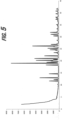
- XRPD patterns for these salts are provided at FIGS. 7 and 8 , respectively. Additional data for these salts is provided in Examples 4 and 5.
- Nicotine 3,5-dihydroxybenzoate is formed from nicotine and 3,5-dihydroxybenzoic acid. Nicotine 3,5-dihydroxybenzoate salt may have a stoichiometry of about 1:1 nicotine: acid. Nicotine 3,5-dihydroxybenzoate may be in solid form and may be in crystalline and/or amorphous form.
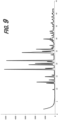
- the anhydrous nicotine 3,5-dihydroxybenzoate can be described as exhibiting an XRPD pattern having peaks at one or more of the following 2-theta diffraction angles: 12.7°, 17.8°, 19.7°, 20.2°, 21.3°, 24.5°, 24.9°, 25.8°, and 29.8°.
- Full characterization data including a table of all relevant peaks in the x-ray diffraction pattern, is provided in Example 6.
- a 1 H NMR spectrum of the anhydrous form of this material is provided in FIG. 10 .
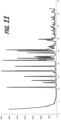
- a 1 H NMR spectrum of the dihydrate form of this material is provided in FIG. 12 . It is noted that VH-XRPD experiments confirmed the existence of this dihydrate form (exhibiting the same XRPD diffractogram as the material resulting from storage of the anhydrous form at 25°C/96% relative humidity). The dihydrate form can be converted back to the anhydrous form referenced above upon heating.
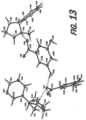
- a single crystal x-ray diffraction (SCXRD) structure has been obtained for the crystalline form of anhydrous nicotine 3,5-hydroxybenzoate, as shown in FIG. 13 .
- the SCXRD structure was obtained as described in the Experimental section of the present disclosure.
- Anisotropic atomic displacement ellipsoids for the non-hydrogen atoms are shown at the 50% probability level.
- Hydrogen bonds are shown as dashed lines.
- Hydrogen atoms are displayed with an arbitrarily small radius. At least a given percentage of the crystalline nicotine 3,5-dihydroxybenzoate may be a single crystalline form.
- At least about 50%, at least about 60%, at least about 70%, at least about 80%, or at least about 90% by weight of the crystalline 3,5-dihydroxybenzoate may be in a single crystalline form.
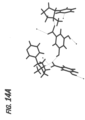
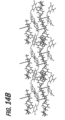
- a plot showing hydrogen bonding in the asymmetric unit of anhydrous nicotine 3,5-dihyroxybenzoate is presented in FIG. 14A and the crystal packing of the anhydrous nicotine 3,5-dihydroxybenzoate obtained is provided in FIG. 14B .
- Nicotine 2,3-dihydroxybenzoate is formed from nicotine and 2,3-dihydroxybenzoic acid. Nicotine 2,3-dihydroxybenzoate salt may have a stoichiometry of about 1:1 nicotine: acid. Nicotine 2,3-dihydroxybenzoate may be in solid form and may be in crystalline and/or amorphous form.
- Nicotine 2,3-dihydroxybenzoate may be provided in solid form and may be in crystalline and/or amorphous form.
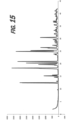
- An exemplary x-ray powder diffraction (XRPD) pattern of a sample comprising nicotine 2,3-dihydroxybenzoate is provided in FIG. 15 .
- the nicotine 2,3-dihydroxybenzoate can be described as exhibiting an XRPD pattern having peaks at one or more of the following 2-theta diffraction angles: 12.4°, 12.5°, 15.2°, 18.3°, 19.7°, 20.3°, 20.9°, 24.9°, 25.2°, 26.5°, and 30.4°.
- Full characterization data, including a table of all relevant peaks in the x-ray diffraction pattern, is provided in Example 7.
- a 1 H NMR spectrum of this material is provided in FIG. 16 .
- a specific crystalline form of nicotine 1-hydroxy-2-naphthoate i.e., nicotine xinafoate
- a salt of nicotine 1-hydroxy-2-naphthoate has been previously described. See Dezelic et al., Glasnik Drustva Hemicara Technol. Bosne Hercegoveni et al. (1961), 10:55-62 .
- the crystalline form of nicotine 1-hydroxy-2-naphthoate can be characterized by the x-ray powder diffraction (XRPD) pattern, as shown in FIG. 17 .
- the nicotine 1-hydroxy-2-naphthoate can be described as exhibiting an XRPD pattern having peaks at one or more of the following 2-theta diffraction angles: 11.2°, 14.4°, 15.6 °, 16.1°,17.0°, 19.2°, 20.5°, 22.2°, 22.5°, 25.4°, 25.7°, and 27.1°.
- Full characterization data including a table of all relevant peaks in the x-ray diffraction pattern, is provided in Example 8.
- a 1 H NMR spectrum of the disclosed nicotine 1-hydroxy-2-naphthoate is provided in FIG. 18 .
- This nicotine 1-hydroxy-2-napthoate form has certain desirable physical characteristics.
- the nicotine 1-hydroxy-2-napthoate form disclosed herein exhibited low hygroscopicity and no change of form when exposed to humidity, properties desirable for easy handling.
- diffraction pattern data should not be construed as absolute and, accordingly, the nicotine salts, co-crystals, and salt co-crystals described herein are not limited to particles having XRPD patterns identical to FIGs. 1 , 3 , 5 , 7 , 8 , 9 , 11 , 15 , and 17 but may also include those having XRPD patterns substantially the same as those of FIGs. 1 , 3 , 5 , 7 , 8 , 9 , 11 , 15 , and 17 .
- a person skilled in the art of X-ray powder diffraction is able to judge the substantial identity of X-ray powder diffraction patterns.
- the peaks in FIGs. 1 , 3 , 5 , 7 , 8 , 9 , 11 , 15 , and 17 and the peak values given throughout the specification can be viewed as being +/- 0.5° or +/- 0.2°.
- certain coformers useful for reaction with the nicotine which may result in the formation of a salt, co-crystal, or salt co-crystal include, but are not limited to: acetic acid; adipic acid; ascorbic acid; capric (decanoic) acid; citric acid; D-glucuronic acid; D-gluconic acid; DL-lactic acid; L-lactic acid; galactaric (mucic) acid; hippuric (N-benzoylglycine) acid; hydrochloric acid; L-aspartic acid; L-glutamic acid; L-glutaric acid; glycerophosphoric acid; glycolic acid; lauric acid; DL-malic acid; L-malic acid; DL-tartaric acid; L-tartaric acid; palmitic acid; phosphoric acid; sebacic (1,8-octanedicarboxylic) acid; stearic (octadecanoic) acid; succinic acid; sulfuric acid; sulfur
- exemplary coformers for reaction with the nicotine which may result in the formation of a salt, co-crystal, or salt co-crystal include, but are not limited to, (+)-camphoric acid; 1,5-naphthalenedisulfonic acid; 1-hydroxy-2-naphthoic (xinafoic) acid; 2,5-dihydroxybenzoic (gentisic) acid; benzenesulfonic acid; benzoic acid; caprylic (octanoic) acid; cyclamic acid; ethanesulfonic acid; fumaric acid; D-glucoheptonic acid; 4-hydroxybenzoic acid; isobutyric acid; ketoglutaric (2-oxo-glutaric) acid; 2-ketobutyric acid; lactobionic acid; maleic acid; malonic acid; methanesulfonic acid; naphthalene-2-sulfonic acid; nicotinic acid; oleic (Z-octadece
- coformers are generally associated with pharmacological effects and are not typically preferred for the preparation of salts, co-crystals, and salt co-crystals. Although complexes of nicotine with such coformers may not be preferred, they may be reacted with nicotine to form salts, co-crystals, and/or salt co-crystals.
- Such coformers include, but are not limited to, (1S)-camphor-10-sulfonic acid; 4-acetamidobenzoic acid; 4-aminosalicylic acid, N-acetyl-4-aminosalicylic acid; caproic (hexanoic) acid; dichloroacetic acid; hydrobromic acid; DL-mandelic acid; L-mandelic acid; nitric acid; formic acid; salicylic acid; cinnamic (e.g., trans-cinnamic) acid; and undecylenic acid.
- (1S)-camphor-10-sulfonic acid 4-acetamidobenzoic acid
- 4-aminosalicylic acid N-acetyl-4-aminosalicylic acid
- caproic (hexanoic) acid caproic (hexanoic) acid
- dichloroacetic acid hydrobromic acid
- DL-mandelic acid L-mandelic acid
- nitric acid formic acid
- exemplary coformers that may form salts, co-crystals, and/or salt co-crystals with nicotine include, but are not limited to, isothionic acid; lauric (dodecanoic) acid; 2-hydroxybenzoic acid; trans-2-hexanoic acid; trimesic acid; and 5-nitroisophthalic acid.
- coformers can be used to provide nicotine in the form of a salt, co-crystal, or co-crystal salt.
- exemplary co-formers include, but are not limited to, L-proline, tromethamine; urea, xylitol; caffeine; glycine/glycine anhydride; vanillin; methyl 4-hydroxybenzoate (methylparaben); succinamide; L-alanine; mannitol; L-phenylalanine; saccharin; propylparaben; N-methylglucamine; L-tyrosine; gentisic acid; sorbic acid; benzoic acid; L-methionine; maltol; L-lysine, tromethamine; nicotinamide; isonicotinamide; phenylalanine; benzoquinone; terephthalaldehyde; 2,4-dihydroxybenzoic acid; and 4-hydroxybenzoic acid.
- sugar-based acids i.e., monosaccharides with a carboxyl group.
- sugar acids include aldonic acids (e.g., glyceric acid, xylonic acid, gluconic acid, and ascorbic acid), ulosonic acids (e.g., neuraminic acid and ketodeoxyoctulosonic acid), uronic acids (e.g., glucuronic acid, galacturonic acid, and iduronic acid), and aldaric acids (e.g., tartaric acid, meso-galactaric acid/mucic acid, and D-glucaric acid/saccharic acid).
- aldonic acids e.g., glyceric acid, xylonic acid, gluconic acid, and ascorbic acid
- ulosonic acids e.g., neuraminic acid and ketodeoxyoctulosonic acid
- uronic acids e.g., glucuronic acid, galacturonic
- the coformer or coformers used to provide a nicotine salt, co-crystal, or salt co-crystal according to the present disclosure is an aldaric acid, and in a particular preferred embodiment, the aldaric acid is mucic acid ((2S,3R,4S,5R)-2,3,4,5-tetrahydroxyhexanedioic acid, also referred to as galactaric or meso-galactaric acid).
- alkyl halogenated alkyl (e.g. , CF 3 , 2-Br-ethyl, CH 2 F, CH 2 Cl, CH 2 CF 3 , or CF 2 CF 3 ); alkenyl, hydroxyl; amino; carboxylate; carboxamido; alkylamino; arylamino; alkoxy; aryloxy; nitro; azido; cyano; thio; sulfonic acid; sulfate; phosphonic acid; phosphate; and phosphonate groups.
- Exemplary polyfunctional aromatic acids can be, for example:
- the inhalable smoking medium comprises a nicotine salt formed between nicotine and one or more organic acids, wherein the inhalable smoking medium comprises one or more organic acids selected from the group consisting of tartaric acid, malic acid, lactic acid, salicylic acid, levulinic acid, and mucic acid, or a combination of two or more such organic acids.
- certain coformers as described herein may contain one or more chiral centers, which may be either of the (R) or (S) configuration, or which may comprise a mixture thereof.
- various diasteromeric nicotine salts, co-crystals and salt co-crystals may be provided.
- the invention includes such diastereomers, either individually, or admixed in any proportions.
- Certain coformers as described herein may be geometric isomers, including but not limited to cis and trans isomers across a double bond.
- the invention includes all nicotine salts, co-crystals, and salt co-crystals prepared with such isomers, which may be provided in the form of pure isomers or in admixture with other isomers.
- the method(s) by which the nicotine salts, co-crystals, and salt co-crystals described herein can be produced can vary. In some cases, no solvent (or a minimal amount of solvent) is used to prepare the nicotine salts, co-crystals, and salt co-crystals. Although in so-called “solventless” methods, a solvent is commonly not used, it is noted that one or more solvents may optionally be added (typically in a small amount) to the mixture to facilitate the formation of a nicotine salt, co-crystal, or salt co-crystal. In certain cases, the components (i.e., the nicotine and the one or more coformers) are combined in the absence of a solvent to form a slurry.
- Solids comprising nicotine salts, co-crystals, and/or salt co-crystals may be isolated therefrom via common methods (e.g. , filtration).
- the slurry may be optionally heated such that the nicotine and one or more coformers interact in melted form to produce a salt, co-crystal, or salt co-crystal.
- physical methods are used to combine the components (i.e., the nicotine and the one or more coformers).
- the nicotine and the coformer(s) can be ground together mechanically ( e.g ., using a mortar and pestle, ball mill, or vibratory mill).
- a combination of nicotine and a coformer in a given solvent (or solvents) and evaporation of that solvent can provide the desired nicotine salt, co-crystal, or salt co-crystal.
- the nicotine and coformer are provided in stoichiometric amounts (i.e., no excess nicotine or coformer is added).
- selection of solvent is important, as the solvent (or solvents) in which the reaction is conducted can impact the intermolecular interactions.
- the evaporation of solvent can be done at a controlled rate (e.g ., slowly) to encourage the preparation of a single nicotine salt, co-crystal, or salt co-crystal crystal for characterization.
- the evaporation of solvent may be effected over the course of hours, days, weeks, or months.
- a combination of nicotine and a coformer in a given solvent (or solvents) and addition of a non-solvent can provide the desired nicotine salt, co-crystal, or salt co-crystal.
- exemplary solvents and non-solvents that can be used for the preparation of nicotine salts, co-crystals, and salt co-crystals include, but are not limited to, water, alcohols (e.g ., methanol, ethanol, n-butanol, isopropanol), ethers ( e.g ., diethyl ether, petroleum ether), ethyl acetate, acetone, tetrahydrofuran, methylene chloride, chloroform, alkanes ( e.g ., pentane, hexane, heptane, octane, nonane, cyclohexane), benzene, toluene, 1,4-dioxan
- the desired nicotine salt, co-crystal, or salt co-crystal can be prepared by freeze drying and subsequent maturation of a solution of nicotine and one or more coformers.
- a solution may be prepared, frozen, and lyophilized to remove the solvent.
- a maturation solvent can then be added and the resulting solids can be obtained by common methods ( e.g ., filtration).
- Maturation solvents include, but are not limited, the types of solvents noted above.
- the salt is provided by combining the acid and nicotine in the absence of solvent.
- an excess of nicotine is added to the reaction mixture and, advantageously, excess nicotine is removed (e.g., by vacuum and/or by washing/filtration, such as with THF, heptane, and/or EtOAc).
- single crystal x-ray diffraction can be used to determine the makeup of the solids (i.e., the nicotine salts, co-crystals, and salt co-crystals).
- suitable, x-ray quality crystals cannot always be readily produced. Therefore, a variety of other solid state spectroscopic techniques can be used including, but not limited to, x-ray powder diffraction (XRPD), Raman spectroscopy, FTIR spectroscopy, vibrational spectroscopy, polarized light microscopy (PLM), and solid state NMR.
- novel compositions described herein are described as salts, it is noted that in some embodiments, it may not be known whether a given product exists in salt, co-crystal, or salt co-crystal form or in some type of intermediate form (e.g., wherein the proton has not been transferred to a basic site, but may reside in space between the donor coformer and acceptor).
- the amount of nicotine salt, co-crystal, or salt co-crystal incorporated into a smoking article is that amount sufficient to provide the desired amount of free nicotine in the mainstream smoke produced therefrom.
- the smoking article may provide nicotine in an amount of about 0.1 mg to about 10 mg, about 0.5 mg to about 9 mg, or about 1 mg to about 8 mg.
- the amount of nicotine salt, co-crystal, or salt co-crystal incorporated into the smoking article can be, for example, that amount sufficient to produce these amounts of nicotine when the article is used.
- the cigarette 10 includes a generally cylindrical rod 12 of a charge or roll of smokable filler material (e.g., about 0.3 g to about 1.0 g of smokable filler material such as tobacco material) contained in a circumscribing wrapping material 16.
- the rod 12 is conventionally referred to as a "tobacco rod.”
- the ends of the tobacco rod 12 are open to expose the smokable filler material.
- the salts described herein can be incorporated within any of the components of a smoking article, including but not limited to, as a component of the tobacco charge, as a component of the wrapping paper (e.g., included within the paper or coated on the interior or exterior of the paper), as an adhesive, as a filter element component, and/or within a capsule located in any region of the smoking article.
- the temperature at which nicotine, the coformer component (or components), and any degradation products thereof are released from a nicotine salt, co-crystal, or salt co-crystal can be a relevant consideration in the context of smoking articles. It is typically important that nicotine is released from the salt, co-crystal, or salt co-crystal (i.e., that the nicotine transfers to the mainstream smoke and is delivered to the user) at the burn temperature of the smoking article. It can also be important to ensure that certain undesirable coformers and/or degradation products thereof are not transferred to the mainstream smoke (and delivered to the user).
- the relevant temperature may vary slightly, depending upon the specific location(s) of the salt, co-crystal, or salt co-crystal within the smoking article.
- the temperature at which a smoking article burns can be between at least about 100°C, at least about 200°C, or at least about 500°C, including between about 100°C and about 500°C in certain regions of a smoking article and between about 600°C and about 900°C in other regions of a smoking article.
- these considerations can impact selection of the salts, co-crystals, or salt co-crystals that are suitable for a particular application.
- the nicotine salts, co-crystals, and salt co-crystals disclosed herein can be incorporated within smokeless tobacco products (not encompassed by the present invention).
- Representative smokeless tobacco compositions according to the present invention can have various types of formats and configurations, and as a result, the character, nature, behavior, consistency, shape, form, size and weight of the composition can vary.
- the shape of a representative composition can be generally spherical, cylindrical (e.g., ranging from the general shape of a flattened disc to the general shape of a relatively long, slender stick), helical, obloid, square, or rectangular; or the composition can have the form of a bead, granular powder, crystalline powder, capsule, film, strip, or gel.
- the shape of the composition can resemble a wide variety of pill, tablet, lozenge, capsule, and caplet types of products.
- Various types of smokeless tobacco products are described or referenced in US Pat. Pub. Nos. 2013/0206150 to Duggins et al. ; 2013/0074855 to Holton, Jr.
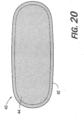
- FIG. 20 a representative snus type of tobacco product (not encompassed by the present invention) comprising one or more nicotine salts, co-crystals, or salt co-crystals as described herein is shown.
- FIG. 20 illustrates a smokeless tobacco product 40 having a water-permeable outer pouch 42 containing a smokeless tobacco composition 44.
- Any of the components of the tobacco product can comprise one or more nicotine salts, co-crystals, or salt co-crystals, as described herein (e.g., the interior or exterior of the pouch lining or a portion of the smokeless tobacco composition contained therein).
- Such lozenges can comprise, in addition to one or more nicotine salts, co-crystals, or salt-co-crystals, a majority of one or more sugar alcohols (e.g., isomalt and maltitol syrup), e.g., in an amount of at least about 50% by weight, at least about 70% by weight, at least about 80% by weight, or at least about 90% by weight.
- sugar alcohols e.g., isomalt and maltitol syrup
- Other ingredients of particular interest in such lozenge products include, but are not limited to, salts (e.g., NaCl), sweeteners (e.g., sucralose), and one or more flavorings.
- the amount of nicotine salt, co-crystal, or salt co-crystal incorporated within a smokeless tobacco composition can vary and can be dependent, in part, on the specific type of smokeless tobacco composition.
- the amount of a given nicotine salt, co-crystal, or salt co-crystal to be incorporated within a product will depend on the desired nicotine content of that product, and can be calculated based on the mass of the coformer and the stoichiometry of the salt, co-crystal, or salt co-crystal.
- Exemplary amounts include from about 0.1% by weight of the consumable material to about 10% by weight of the consumable or inhalable material.
- excipients such as fillers or carriers for active ingredients (e.g., calcium polycarbophil, microcrystalline cellulose, hydroxypropylcellulose, sodium carboxymethylcellulose, cornstarch, silicon dioxide, calcium carbonate, lactose, and starches including potato starch, maize starch, etc.), thickeners, film formers and binders (e.g., hydroxypropyl cellulose, hydroxypropyl methylcellulose, acacia, sodium alginate, gum arabic, lecithin, xanthan gum and gelatin), antiadherents (e.g., talc), glidants (e.g., colloidal silica), humectants (e.g., glycerin), preservatives and antioxidants (e.g., sodium benzoate and ascorbyl palmitate),
- active ingredients e.g., calcium polycarbophil, microcrystalline cellulose, hydroxypropylcellulose, sodium carboxymethylcellulose, cornstarch, silicon dioxide, calcium
- the smokeless tobacco composition can include lipid components that provide a meltable composition that melts (as opposed to merely dissolving) in the oral cavity, such as compositions set forth in US Pat. Pub. No. 2012/0037175 to Cantrell et al. .
- Exemplary encapsulated additives that can be included within the smokeless tobacco products disclosed herein are described, for example, in WO 2010/132444 to Atchley . See also, the smokeless tobacco ingredients set forth in US Pat. Pub. Nos. 2012/0055494 to Hunt et al. and 2012/0199145 to Byrd et al. .
- the manners and methods used to formulate and manufacture the smokeless tobacco product can vary. Ingredients, including the nicotine salts, co-crystals, or salt co-crystals described herein, can be combined and processed into the desired composition by techniques such as extrusion, compression, molding, and spraying. It is noted that certain considerations noted above for electronic smoking articles are not relevant in the context of a smokeless tobacco product. For example, nicotine salts, co-crystals, or salt co-crystals that are useful in smokeless tobacco products need not transfer to aerosol form at a given temperature.
- the main consideration is that the nicotine salt, co-crystal, or salt co-crystal contained therein can provide nicotine when the smokeless tobacco product is placed in the mouth of the user (i.e., at some point during residence of the smokeless tobacco product in the mouth of the user). Accordingly, certain nicotine salts, co-crystals, or salt co-crystals that are useful for one type of tobacco product may not be useful for others.
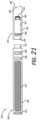
- a cartridge 204 that can be formed of a housing 203 enclosing a reservoir 244 that is in fluid communication with a transport element 236 adapted to wick or otherwise transport an aerosol precursor composition stored in the reservoir to a heater 234 (e.g., a resistive heating wire that may be coiled around at least a portion of the transport element).
- a heater 234 e.g., a resistive heating wire that may be coiled around at least a portion of the transport element.
- An opening 228 may be present in the cartridge housing 203 at a mouthend 205 thereof to allow for egress of formed aerosol from the cartridge 204.
- Such components are representative of the components that may be present in a control body and/or cartridge and are not intended to limit the scope of components that are encompassed by the present disclosure.
- the cartridge 204 may be adapted to engage the control body 202 through a press-fit engagement between the control body projection 224 and the cartridge receptacle 240. Such engagement can facilitate a stable connection between the control body 202 and the cartridge 204 as well as establish an electrical connection between the battery 210 and control component 206 in the control body and the heater 234 in the cartridge. Other types of connections (e.g., a screw thread connection) also are encompassed.
- the electronic smoking article 200 may be adapted for air intake, which may be provided in a coupler as described, for example, in US Pat. Pub. No. 2014/0261408 to DePiano et al. .
- the cartridge 204 also may include one or more electronic components 250, which may include an IC, a memory component, or a sensor.
- the electronic component 250 may be adapted to communicate with the control component 206 so as to provide an input. See, for example, US Pat. Pub. Nos. 2014/0096781 to Sears et al . and 2014/0096782 to Ampolini et al. .
- the electronic smoking article can encompass a variety of combinations of components useful in forming an electronic aerosol delivery device.
- Aerosol precursor components and formulations also are set forth and characterized in U.S. Pat. No. 7,217,320 to Robinson et al. and U.S. Pat. Pub. Nos. 2013/0008457 to Zheng et al .; 2013/0213417 to Chong et al. ; 2014/0060554 to Collett et al. ; 2015/0020823 to Lipowicz et al. ; and 2015/0020830 to Koller , as well as WO 2014/182736 to Bowen et al.
- Other aerosol precursors that may be employed include the aerosol precursors that have been incorporated in the VUSE ® product by R. J.
- the electronic smoking article of the present invention includes an inhalable substance medium with a nicotine salt formed between nicotine and one or more organic acids.
- the inhalable substance medium can comprise, for example, a polyhydric alcohol (e.g., glycerin, propylene glycol, or a combination thereof), water, the nicotine salt, and a flavorant (e.g., menthol).
- Exemplary flavoring agents include vanillin, ethyl vanillin, cream, tea, coffee, fruit (e.g., apple, cherry, strawberry, peach and citrus flavors, including lime and lemon), maple, menthol, mint, peppermint, spearmint, wintergreen, nutmeg, clove, lavender, cardamom, ginger, honey, anise, sage, cinnamon, sandalwood, jasmine, cascarilla, cocoa, licorice, and flavorings and flavor packages of the type and character traditionally used for the flavoring of cigarette, cigar, and pipe tobaccos.
- Syrups such as high fructose corn syrup, also can be employed.
- One or more acid components are included within the aerosol precursor, e.g., to modify the sensory characteristics of the aerosol precursor and the aerosol produced therefrom.
- Organic acids particularly are incorporated into the aerosol precursor to affect the flavor, sensation, and/or organoleptic properties of nicotine.
- Such organic acids can be included in the aerosol precursor with nicotine in varying amounts ranging from greater than equimolar to less than equimolar (based on total organic acid content) with the nicotine.
- a range of organic acids can be used, e.g., as set forth in Perfetti, Beitrage Tabak Kausch. Int., 12, 43-54 (1983 .
- Certain exemplary organic acids that include, but are not limited to, such acids as tartaric acid, ascorbic acid, fumaric acid, citric acid, malic acid, lactic acid, aspartic acid, salicylic acid, 4-amino salicylic acid, N-acetyl-4-aminosalicylic acid, p-toluenesulfonic acid, succinic acid, pyruvic acid, formic acid, acetic acid, propionic acid, isobutyric acid, butyric acid, alpha-methylbutyric acid, 2-ketobutyric acid, isovaleric acid, beta-methylvaleric acid, caproic acid, 2-furoic acid, phenylacetic acid, heptanoic acid, octanoic acid, nonanoic acid, oxalic acid, malonic acid, glycolic acid, levulinic acid, 4-aminobenzoic acid, 4-acetamidobenzoic acid, 3-hydroxybenzoic acid, 2,5-di
- the inhalable substance medium of the present invention comprises one or more organic acids selected from the group consisting of tartaric acid, malic acid, lactic acid, salicylic acid, levulinic acid, and mucic acid, or a combination of two or more such organic acids.
- organic acids selected from the group consisting of tartaric acid, malic acid, lactic acid, salicylic acid, levulinic acid, and mucic acid, or a combination of two or more such organic acids.
- the amount of aerosol precursor composition that is used within the smoking article is such that the article exhibits acceptable sensory and organoleptic properties, and desirable performance characteristics.
- sufficient aerosol precursor composition components such as glycerin and/or propylene glycol, be employed in order to provide for the generation of a visible mainstream aerosol that in many regards resembles the appearance of tobacco smoke.
- the amount of aerosol-generating material incorporated into the smoking article is in the range of about 1.5 g or less, about 1 g or less, or about 0.5 g or less.
- the amount of aerosol precursor composition can be dependent upon factors such as the number of puffs desired per cartridge used with the smoking article.
- the aerosol-generating composition not to introduce significant degrees of unacceptable off-taste, filmy mouth-feel, or an overall sensory experience that is significantly different from that of a traditional type of cigarette that generates mainstream smoke by burning tobacco cut filler.
- the selection of the particular aerosol-generating material and reservoir material, the amounts of those components used, and the types of tobacco material used, can be altered in order to control the overall chemical composition of the mainstream aerosol produced by the smoking article.
- the amount of nicotine salt incorporated into the aerosol precursor of the electronic smoking article is that amount sufficient to provide the desired amount of free nicotine in the aerosol produced therefrom.
- the article provides nicotine in an amount of 0.01 mg to 0.5 mg, or about 0.08 mg to about 0.5 mg, about 0.1 mg to about 0.3 mg, or about 0.15 mg to about 0.25 mg per puff on the article.
- the amount of nicotine salt, co-crystal, or salt co-crystal incorporated into the aerosol precursor is that amount sufficient to produce these amounts of nicotine when the article is used.
- selection of an appropriate nicotine salt, co-crystal, or salt co-crystal for incorporation into such products can depend, in part, on the characteristics of the bond between the nicotine and the coformer and the volatility of the salt, co-crystal, or salt co-crystal.
- nicotine citrate may not be a good salt for an electronic smoking article because it is not sufficiently volatile.
- any degradation products produced via heating nicotine salts, co-crystals, or salt co-crystals to the relevant temperature should also be evaluated and taken into consideration during product preparation and selection for a particular application.
- acid degradation products produced via heating nicotine salts, co-crystals, or salt co-crystals to the relevant temperature should be evaluated and taken into consideration.
- the nicotine salts, co-crystals, or salt co-crystals described herein may be analyzed to evaluate whether the nicotine and/or coformer and/or degradation products thereof transfer from the aerosol precursor to the aerosol.
- Such analysis can be conducted, for example, by high performance liquid chromatography and/or gas chromatography of the condensate collected from the aerosol. Both the presence and amount of nicotine and/or coformer and/or degradation products thereof is evaluated to determine whether a given salt, co-crystal, or salt co-crystal is a good candidate for incorporation within an electronic smoking article.
- the nicotine salts, co-crystals, and/or salt co-crystals disclosed herein may be incorporated within pharmaceutical products (not encompassed by the present invention).
- a nicotine salt, co-crystal, or salt co-crystal can be used as a replacement for, or in addition to, the nicotine in nicotine-containing pharmaceutical products.
- Such products can be used for treatment of a wide variety of conditions, diseases, and disorders responsive to stimulation of one or more types of nicotinic acetylcholinergic receptors (nAChRs).
- nAChRs nicotinic acetylcholinergic receptors
- the products can be used to treat those types of conditions, diseases, and disorders that have been reported to be treatable through the use or administration of nicotine as an agonist of nAChRs.
- the shape of the pharmaceutical products can resemble a wide variety of pill, tablet, lozenge, capsule, caplet, pouch and gum types of products that traditionally have been employed for the administration of pharmaceutical types of products.
- the general nature of a representative composition can be soft or hard to the feel, or of intermediate softness or hardness; and as such, the composition can be considered to be malleable, flexible, chewy, resilient, or brittle.
- Pharmaceutical products containing nicotine salts, co-crystals, or salt co-crystals as described herein are not limited to oral products, and include such compositions as creams (including salves, ointments, and pastes), liquids ( e.g ., sprays or enemas).
- nicotine 2,5-dihydroxybenzoic acid CAS RN 6012-21-1
- nicotine 4-aminosalicylic acid salt (1-hydroxy-4-amino benzoic acid salt)
- nicotine salicylic acid salt (2-hydroxybenzoic acid salt)
- nicotine phthalic acid salt (1,2-benzene dicarboxylic acid salt)
- nicotine N-acetyl-4-aminosalicylic acid salt N-acetyl-2-hydroxy-4-aminobenzoic acid salt
- nicotine di-L-(+)-tartrate dihydrate CAS RN 6019-06-3
- nicotine di-L-(+)-tartrate dihydrate CAS RN 6019-06-3
- nicotine salts, co-crystals, and salt co-crystals are formed in situ.
- nicotine can be combined with one or more coformers as broadly described herein, and optionally, other components (e.g., those types of components typically contained in the product to be formed), and a nicotine salt, co-crystal, or salt co-crystal is formed in situ.
- coformers as broadly described herein, and optionally, other components (e.g., those types of components typically contained in the product to be formed)
- a nicotine salt, co-crystal, or salt co-crystal is formed in situ.
- isolation and/or purification of the nicotine salt, co-crystal, or salt co-crystal is not required in all embodiments prior to introduction into a product.
- an aerosol precursor of an electronic smoking article can be prepared by mixing a nicotine salt, co-crystal, or salt co-crystal with desired aerosol precursor components (e.g., carriers and flavorants) or can be prepared by mixing nicotine, a coformer (e.g., an acid), and desired aerosol precursor components.
- desired aerosol precursor components e.g., carriers and flavorants
- coformer e.g., an acid
- a ⁇ - ⁇ continuous scan mode is employed with a sample - detector distance of 20 cm which gives an effective 2 ⁇ range of 3.2 ° - 29.7 °. Typically the sample is exposed to the X-ray beam for 120 seconds.
- the software used for data collection is GADDS for XP/2000 4.1.43 and the data are analyzed and presented using Diffrac Plus EVA v13.0.0.2 or v15.0.0.0.
- Samples run under ambient conditions are prepared as flat plate specimens of powder, without grinding. Approximately 1 - 2 mg of the sample is lightly pressed on a glass slide to obtain a flat surface. Samples run under non-ambient conditions are mounted on a silicon wafer with heat-conducting compound. The sample is heated to the appropriate temperature at 20 °C/min and subsequently held isothermally for 1 minute before data collection was initiated.
- a screening experiment is first conducted to evaluate a solvent free method for the formation of a salt of mucic acid.
- the required amount of mucic acid (relative to 100 ⁇ L nicotine) is weighed into HPLC vials.
- (S)-Nicotine is dispensed into each vial and the vials are shaken at room temperature for three days. Solids are sampled and characterized by XRPD. As indicated in Table 1, the XRPD analysis results indicate that the solid formed in the vial includes a new crystalline phase form, indicative of the formation of a mucic acid salt. Table 1.
- a screening experiment is first conducted to evaluate a solvent free method for the formation of a salt of 4-acetamidobenzoic acid.
- 4-Acetamidobenzoic acid (111 mg) is suspended in the minimum amount of (S)-nicotine required to produce a mobile slurry (400 ⁇ L). The slurry is shaken at room temperature for 48 hours. Resulting white, powdery solids are isolated by filtration and are sampled and characterized by XRPD, which indicates a new crystalline form.
- FIG. 3 compares the experimental XRPD data, obtained at room temperature, against an XRPD pattern calculated from single crystal x-ray data at 100K. Representative peak listings for the (experimental) XPRD of nicotine 4-acetamidobenzoate are provided in Table 3. Table 3.
- Crystallographic parameters for the isolated form are provided in Table 4.
- Absolute structure parameter 0.04(16) (Also known as the Flack parameter, this should be approximately zero for the correct absolute stereochemistry, and approximately unity for the inverted absolute structure (within the standard uncertainty).
- a screening experiment is first conducted to evaluate a solvent free method for the formation of a salt of gentisic acid.
- Gentisic acid 95 mg is suspended in the minimum amount of (S)-nicotine required to produce a mobile slurry (200 ⁇ L). The slurry is shaken at room temperature for 48 hours. Resulting pinkish solids are isolated by filtration and are sampled and characterized by XRPD, which indicates a new crystalline form.
- gentisic acid (4.75 g, 31 mmol) is dissolved in THF (50 mL) at room temperature.
- (S)-Nicotine (5 mL, 31 mmol) is added in 1 mL aliquots and the resulting clear solution is stirred at room temperature for 10 minutes.
- the solution is seeded with 2 mg of previously prepared nicotine gentisate, causing rapid crystallization to occur and the mixture is stirred at room temperature for 10 minutes.
- the solid is isolated by filtration, washed with cold THF and heptane, and dried to give 7.20 g white solid (74% yield).
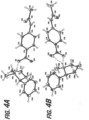
- FIG. 6A A crystal structure obtained for a molecule of nicotine gentisate is shown in FIG. 6A .
- the crystal packing of the nicotine gentisate obtained is provided in FIG. 6B , wherein nicotine molecules are shown in grey and acid molecules are shown in black.
- the solid is analyzed by XRPD, the pattern of which is shown in FIG. 7 .
- Representative peak listings for the XPRD of nicotine 3-hydroxybenzoate are provided in Table 7.
- Table 7. XPRD peak listings for nicotine 3-hydroxybenzoate Caption Angle (2-Theta °) d value (Angstrom) Intensity (Count) Intensity (%) 12.655 ° 12.655 6.98936 3944 68.2 12.994 ° 12.994 6.80778 459 7.9 14.792 ° 14.792 5.98419 332 5.7 15.143 ° 15.143 5.84607 860 14.9 15.394 ° 15.394 5.75143 1564 27.1 18.324 ° 18.324 4.8377 4891 84.6 18.591 ° 18.591 4.76894 2301 39.8 19.304 ° 19.304 4.59425 417 7.2 20.186 ° 20.186 4.39555 5781 100 20.814° 20.814 4.26426 5235 90.6 21.150 ° 21
- the solid is further analyzed by various techniques, including 1 H NMR (indicating that the solid consists of 1.03 equivalents of acid); PLM (indicating irregular sharp edged particles); TGA (indicating 89% mass loss from 25-360°C in two unresolved steps); DSC (indicating a sharp endotherm onset at 123°C (131 J/g)); and GVS (indicating water uptake of 0.5% from 0-80% RH and 5% from 80-90% RH).
- 1 H NMR indicating that the solid consists of 1.03 equivalents of acid
- PLM indicating irregular sharp edged particles
- TGA indicating 89% mass loss from 25-360°C in two unresolved steps
- DSC indicating a sharp endotherm onset at 123°C (131 J/g)
- GVS indicating water uptake of 0.5% from 0-80% RH and 5% from 80-90% RH.
- XRPD analysis following GVS indicates that the solid is unchanged.
- a screening experiment is first conducted to evaluate a solvent free method for the formation of a salt of L-malic acid.
- the required amount of L-malic acid (relative to 100 ⁇ L nicotine) is weighed into HPLC vials in 2:1, 1:1, and 1:2 ratios of nicotine:acid.
- (S)-Nicotine is dispensed into each vial and the vials are shaken at room temperature for three days. Solids are sampled and characterized by XRPD.
- the mixture was placed at 4°C overnight and, after this time, was observed to be a sticky gum.
- the mixture was then placed at -18°C for a week and, after this time, was observed to be a sticky gum.
- the gum was placed in an incubator and maturated between ambient temperature and 50°C at 8h intervals for a period of 1 week, after which time the mixture appeared to be a viscous solution.
- the solid is analyzed by XRPD, the pattern of which is shown in FIG. 8 .
- Representative peak listings for the XPRD of nicotine L-malate are provided in Table 8.
- Table 8. XPRD peak listings for nicotine L-malate Caption Angle (2-Theta °) d value (Angstrom) Intensity (Count) Intensity (%) 6.128 ° 6.128 14.41077 546 6.6 7.343 ° 7.343 12.0284 2526 30.4 12.147 ° 12.147 7.28016 1328 16 13.082 ° 13.082 6.76194 197 2.4 14.671 ° 14.671 6.0332 8306 100 15.444 ° 15.444 5.73289 2296 27.6 15.957 ° 15.957 5.54959 1551 18.7 16.238 ° 16.238 5.45436 1243 15 17.237° 17.237 5.1402 937 11.3 17.462 ° 17.462 5.0747 2565 30.9 18.243 ° 18.243 4.85897 3377
- This preparation from acetone is repeated to explore maturation as a method to induce crystallization by mixing 50 mg 3,5-dihydroxybenzoic acid, 10 volumes of acetone, and 1 equivalent nicotine in a vial.
- the resulting mixture is cycled between room temperature and 50°C at 8 hour intervals for a period of 2 weeks.
- a solid is obtained and analyzed by XPRD (indicating a new form) and 1 H NMR (indicating a 1:1 salt).
- This material is further analyzed, as the crystals obtained allowed an SCXRD structure to be collected (indicating that the material is an anhydrous salt).
- the crystal structure is provided at FIG. 13 .
- the dihydrate form (nicotine 3,5-dihydroxybenzoate dihydrate) is prepared by placing anhydrous nicotine 3,5-dihydroxybenzoate (100 mg) into an open glass vial and exposing the nicotine 3,5-dihydroxybenzoate to an atmosphere of 96% RH at 25°C for 16 h. The sample is removed from the vial and characterized by XRPD to confirm that the dihydrated form has been obtained.
- the dihydrate was subsequently prepared by exposure of the anhydrous form to humidity (converted during storage at 40 °C and 75% relative humidity and at 25 °C and 96% relative humidity). Thermal analysis of this (converted) form show that it can convert back to the known anhydrate upon heating. No events thought to represent phase transitions were observed in the DSC thermogram for any of the salts, the only events being apparent melts. Specifically, the anhydrous form exhibited a melt onset at 138 °C and the dihydrate form exhibited endotherms from 50 - 100 °C and a melt onset at 137 °C.
- Crystallographic parameters for the isolated form are provided below in Table 11.
- Absolute structure parameter 0.02(7).
- a screening experiment is first conducted to evaluate the formation of a nicotine salt with 2,3-dihydroxybenzoic acid by crystallization from neat nicotine.
- 2,3-Dihydroxybenzoic acid ⁇ 25 mg
- (S)-nicotine 100 ⁇ L
- the resulting solid material is sampled and characterized by XPRD (showing a new form).
- the study is repeated on a 100 mg scale, with the solids produced being isolated by filtration, washed with heptane (2 ⁇ 1 mL) and characterized by XPRD and 1 H NMR (which indicated a 1:1 stoichiometry).
- the solid is analyzed by XRPD, the pattern of which is shown in FIG. 12 .
- Representative peak listings for the XPRD of nicotine 2,3-dihydroxybenzoate are provided in Table 12.
- Table 12. XRPD peak listings for nicotine 2,3-dihydroxybenzoate Angle (2-Theta °) Intensity (Count) Intensity (%) 9.7 87 2.4 12.4 2824 77.9 12.5 3002 82.8 13.1 172 4.7 14.7 338 9.3 15.2 1117 30.8 15.5 475 13.1 18.3 3625 100.0 19.4 297 8.2 19.7 1542 42.5 19.9 209 5.8 20.3 2486 68.6 20.9 3179 87.7 23.7 268 7.4 23.9 360 9.9 24.9 3298 91.0 25.2 2149 59.3 26.2 820 22.6 26.5 1350 37.2 26.7 148 4.1 27.4 447 12.3 27.8 118 3.3 28.4 271 7.5 28.9 297 8.2 29.3 258
- a screening experiment is first conducted to evaluate the formation of a nicotine salt with 2,3-dihydroxybenzoic acid by crystallization from neat nicotine.
- 1-Hydroxy-2-naphthoic acid ⁇ 25 mg
- S -nicotine
- the resulting solid material is sampled and characterized by XPRD (showing a new form).
- the study is repeated on a 100 mg scale, with the solids produced being isolated by filtration, washed with heptane (2 ⁇ 1 mL) and characterized by XPRD and 1 H NMR (which indicated a 1:1 stoichiometry).
- This preparation from ethanol was repeated to explore maturation as a method to induce crystallization by mixing 50 mg 1-hydroxy-2-naphthoic acid, 10 volumes of ethanol, and 1 equivalent nicotine in a vial.
- the resulting mixture was cycled between room temperature and 50°C at 8 hour intervals for a period of 2 weeks. Only a clear solution was obtained.
- lozenges can generally comprise components disclosed in U.S. Pat. App. Pub. No. 2013/0078307 to Holton, Jr. .
- representative lozenges can comprise isomalt, maltitol syrup, flavorant(s), water, and a nicotinic compound (with one or more of the nicotine salts, co-crystals, or salt co-crystals disclosed herein used in place of the nicotinic compounds disclosed in the reference).
- the amount of nicotine salt, co-crystal, or salt co-crystal included in each lozenge is that amount sufficient to provide 2 mg nicotine (adjusted based on the weight of the particular coformer).
- the sensory (e.g., taste and mouthfeel) characteristics and/or the stability of lozenges can, in some cases, be affected by the selection of nicotine salt, co-crystal, or salt co-crystal.
Landscapes
- Health & Medical Sciences (AREA)
- Chemical & Material Sciences (AREA)
- Organic Chemistry (AREA)
- General Health & Medical Sciences (AREA)
- Life Sciences & Earth Sciences (AREA)
- Veterinary Medicine (AREA)
- Chemical Kinetics & Catalysis (AREA)
- General Chemical & Material Sciences (AREA)
- Animal Behavior & Ethology (AREA)
- Pharmacology & Pharmacy (AREA)
- Medicinal Chemistry (AREA)
- Public Health (AREA)
- Bioinformatics & Cheminformatics (AREA)
- Engineering & Computer Science (AREA)
- Nuclear Medicine, Radiotherapy & Molecular Imaging (AREA)
- Neurosurgery (AREA)
- Neurology (AREA)
- Biomedical Technology (AREA)
- Psychiatry (AREA)
- Toxicology (AREA)
- Epidemiology (AREA)
- Physiology (AREA)
- Nutrition Science (AREA)
- Zoology (AREA)
- Dermatology (AREA)
- Addiction (AREA)
- Child & Adolescent Psychology (AREA)
- Obesity (AREA)
- Pain & Pain Management (AREA)
- Heart & Thoracic Surgery (AREA)
- Cardiology (AREA)
- Diabetes (AREA)
- Hematology (AREA)
- Hospice & Palliative Care (AREA)
- Psychology (AREA)
- Ophthalmology & Optometry (AREA)
- Urology & Nephrology (AREA)
- Manufacture Of Tobacco Products (AREA)
- Pharmaceuticals Containing Other Organic And Inorganic Compounds (AREA)
- Plural Heterocyclic Compounds (AREA)
Description
- The present invention relates to electronic smoking articles comprising various salts of nicotine.
- Cigarettes, cigars and pipes are popular smoking articles that employ tobacco in various forms. Such smoking articles are used by heating or burning tobacco, and aerosol (e.g., smoke) is inhaled by the smoker. Electronic smoking articles are a further type of tobacco product, which comprise a reservoir and heating system for the delivery of aerosolizable materials. Tobacco also may be enjoyed in a so-called "smokeless" form. Particularly popular smokeless tobacco products are employed by inserting some form of processed tobacco or tobacco-containing formulation into the mouth of the user.
- Various types of cigarette components, including tobacco types, tobacco blends, top dressing and casing materials, blend packing densities and types of paper wrapping materials for tobacco rods, are set forth in the art. See, for example, the various representative types of cigarette components, as well as the various cigarette designs, formats, configurations and characteristics, that are set forth in Johnson, Development of Cigarette Components to Meet Industry Needs, 52nd T.S.R.C. (September 1998);
U.S. Pat. No. 5,101,839 to Jakob et al. ;U.S. Pat. No. 5,159,944 to Arzonico et al. ;U.S. Pat. No. 5,220,930 to Gentry andU.S. Pat. No. 6,779,530 to Kraker ;US Pat. App. Pub. Nos. 2005/0016556 to Ashcraft et al. ;2005/0066986 to Nestor et al. ;2005/0076929 to Fitzgerald et al. ;2006/0272655 to Thomas et al. ;2007/0056600 to Coleman, III et al. ; and2007/0246055 to Oglesby . - Exemplary smokeless tobacco formulations, ingredients, and processing methodologies are set forth in
US Pat. Nos. 1,376,586 to Schwartz ;3,696,917 to Levi ;4,513,756 to Pittman et al. ;4,528,993 to Sensabaugh, Jr. et al. ;4,624,269 to Story et al. ;4,991,599 to Tibbetts ;4,987,907 to Townsend ;5,092,352 to Sprinkle, III et al. ;5,387,416 to White et al. ;6,668,839 to Williams ;6,834,654 to Williams ;6,953,040 to Atchley et al. ;7,032,601 to Atchley et al. ; and7,694,686 to Atchley et al. ;US Pat. Pub. Nos. 2004/0020503 to Williams ;2005/0115580 to Quinter et al. ;2006/0191548 to Strickland et al. ;2007/0062549 to Holton, Jr. et al. ;2007/0186941 to Holton, Jr. et al. ;2007/0186942 to Strickland et al. ;2008/0029110 to Dube et al. ;2008/0029116 to Robinson et al. ;2008/0173317 to Robinson et al. ;2008/0196730 to Engstrom et al. ;2008/0209586 to Neilsen et al. ;2008/0305216 to Crawford et al. ;2009/0065013 to Essen et al. ;2009/0293889 to Kumar et al. ;2010/0291245 to Gao et al. 2011/0139164 to Mua et al. PCT WO 04/095959 to Arnarp et al. WO 2010/132444 A2 to Atchley . Exemplary smokeless tobacco products that have been marketed include those referred to as CAMEL Snus, CAMEL Orbs, CAMEL Strips and CAMEL Sticks by R. J. Reynolds Tobacco Company; GRIZZLY moist tobacco, KODIAK moist tobacco, LEVI GARRETT loose tobacco and TAYLOR'S PRIDE loose tobacco by American Snuff Company, LLC; KAYAK moist snuff and CHATTANOOGA CHEW chewing tobacco by Swisher International, Inc.; REDMAN chewing tobacco by Pinkerton Tobacco Co. LP; COPENHAGEN moist tobacco, COPENHAGEN Pouches, SKOAL Bandits, SKOAL Pouches, RED SEAL long cut and REVEL Mint Tobacco Packs by U.S. Smokeless Tobacco Company; and MARLBORO Snus and Taboka by Philip Morris USA. - Many smoking devices have been proposed through the years as improvements upon, or alternatives to, smoking products that require combusting tobacco for use. Many of those devices purportedly have been designed to provide the sensations associated with cigarette, cigar, or pipe smoking, but without delivering considerable quantities of incomplete combustion and pyrolysis products that result from the burning of tobacco. To this end, there have been proposed numerous smoking products, flavor generators, and medicinal inhalers that utilize electrical energy to vaporize or heat a volatile material, or attempt to provide the sensations of cigarette, cigar, or pipe smoking without burning tobacco to a significant degree. See, for example, the various alternative smoking articles, aerosol delivery devices and heat generating sources set forth in the background art described in
U.S. Pat. No. 7,726,320 to Robinson et al. ,U.S. Pat. Pub. No. 2013/0255702 to Griffith Jr. et al. ,U.S. Pat. Pub. Nos. 2014/0000638 to Sebastian et al. ,2014/0060554 to Collett et al. ,2014/0060555 to Chang et al. ,2014/0096781 to Sears et al. ,2014/0096782 to Ampolini et al. , and2015/0059780 to Davis et al. . - Certain of these types of smoking articles, smokeless tobacco products, and electronic smoking articles comprise a tobacco extract, which in some products may be purified such that the extract is comprised primarily of nicotine. However, tobacco extracts comprising a high percentage of nicotine (including extracts comprising at least about 90%, at least about 95%, and at least about 99% nicotine by weight) are typically in oil form. As such, nicotine extracts can be difficult to handle and incorporate into certain tobacco products.
- It would be desirable to provide such nicotine-based extracts in a form that is amenable to incorporation in tobacco products. It would further be desirable to incorporate such extracts into an enjoyable form of a tobacco product and to provide processes for preparing such forms of nicotine-based extracts as well as for preparing various types of compositions and products incorporating such forms of nicotine-based extracts.
- The present invention is defined by the appended claims.
- The invention provides an electronic smoking article comprising an inhalable substance medium contained within a cartridge body and a heating member positioned to provide heat to at least a portion of the inhalable substance medium, wherein the inhalable substance medium comprises a nicotine salt formed between nicotine and one or more organic acids, wherein the inhalable substance medium comprises one or more organic acids selected from the group consisting of tartaric acid, malic acid, lactic acid, salicylic acid, levulinic acid, and mucic acid, or a combination of two or more such organic acids, wherein the amount of nicotine salt is sufficient to provide free nicotine in an amount of 0.01 mg to 0.5 mg, about 0.05 mg to about 0.3 mg, or about 0.1 mg to about 0.2 mg per puff on the article, and wherein the operating temperature of the electronic smoking article ranges from about 100°C to about 500°C.
- In some embodiments, the one or more organic acids are selected from the group consisting of tartaric acid, malic acid, salicylic acid or combinations of two or more of the organic acids.
- In some embodiments, the inhalable substance medium further comprises glycerin and/or propylene glycol.
- In some embodiments, the organic acids relative to the nicotine are present in an amount greater than equimolar.
- In some embodiments, the organic acids relative to the nicotine are present in an amount less than equimolar.
- In some embodiments, the nicotine salt is mono-protonated and/or di-protonated.
- These and other features, aspects, and advantages of the disclosure will be apparent from a reading of the following detailed description together with the accompanying drawings, which are briefly described below. The invention includes any combination of two, three, four, or more of the above-noted embodiments as well as combinations of any two, three, four, or more features or elements set forth in this disclosure, regardless of whether such features or elements are expressly combined in a specific embodiment description herein. This disclosure is intended to be read holistically such that any separable features or elements of the disclosed invention, in any of its various aspects and embodiments, should be viewed as intended to be combinable unless the context clearly dictates otherwise.
- In order to provide an understanding of the present disclosure, reference is made to the appended drawings, which are not necessarily drawn to scale, and in which reference numerals refer to components of exemplary embodiments of the invention. The drawings are exemplary only, and should not be construed as limiting the invention.
-
FIG. 1 is an x-ray powder diffraction pattern of nicotine mucate; -
FIG. 2 is a 1H NMR spectrum of nicotine mucate; -
FIG. 3 is an x-ray powder diffraction pattern of crystalline nicotine 4-acetamidobenzoate, showing the experimental pattern and the pattern calculated from the single crystal x-ray structure; -
FIGS. 4A and 4B are views of crystal structures obtained for two independent molecules of nicotine 4-acetamidobenzoate andFIG. 4C is a view of the crystal packing of nicotine 4-acetamidobenzoate; -
FIG. 5 is an x-ray powder diffraction pattern of crystalline nicotine gentisate, showing the experimental pattern and the pattern calculated from the single crystal x-ray structure; -
FIG. 6A is a view of a crystal structure obtained for nicotine gentisate andFIG. 6B is a view of the crystal packing of nicotine gentisate; -
FIG. 7 is an x-ray powder diffraction pattern of nicotine 3-hydroxybenzoate; -
FIG. 8 is an x-ray powder diffraction pattern of nicotine malate; -
FIG. 9 is an x-ray powder diffraction pattern ofanhydrous nicotine 3,5-dihydroxybenzoate, showing the experimental pattern and the pattern calculated from the single crystal x-ray structure; -
FIG. 10 is a 1H NMR spectrum ofanhydrous nicotine 3,5-dihydroxybenzoate; -
FIG. 11 is an x-ray powder diffraction pattern ofnicotine 3,5-dihydroxybenzoate dihydrate; -
FIG. 12 is a 1H NMR spectrum ofnicotine 3,5-dihydroxybenzoate dihydrate; -
FIG. 13 is a view of a crystal structure obtained foranhydrous nicotine 3,5-dihydroxybenzoate; -
FIG. 14A is a plot showing hydrogen bonding in the asymmetric unit ofanhydrous nicotine 3,5-dihyroxybenzoate andFIG. 14B is a view of the crystal packing ofanhydrous nicotine 3,5-dihydroxybenzoate; -
FIG. 15 is an x-ray powder diffraction pattern ofnicotine 2,3-dihydroxybenzoate; -
FIG. 16 is a 1H NMR spectrum ofnicotine 2,3-dihydroxybenzoate; -
FIG. 17 is an x-ray powder diffraction pattern of nicotine 1-hydroxy-2-naphthoate; -
FIG. 18 is a 1H NMR spectrum of nicotine 1-hydroxy-2-naphthoate; -
FIG. 19 is an exploded perspective view of a smoking article (not encompassed by the present invention) having the form of a cigarette, showing the smokable material, the wrapping material components, and the filter element of the cigarette; -
FIG. 20 is a cross-sectional view of a smokeless tobacco product (not encompassed by the present invention), taken across the width of the product, showing an outer pouch filled with a smokeless tobacco composition; and -
FIG. 21 is a cross-sectional view of an electronic smoking article, which can encompass a variety of combinations of components useful in forming an electronic aerosol delivery device. - The present invention now will be described more fully hereinafter. This invention may, however, be embodied in many different forms and should not be construed as limited to the embodiments set forth herein; rather, these embodiments are provided so that this disclosure will be thorough and complete, and will fully convey the scope of the invention to those skilled in the art. As used in this specification and the claims, the singular forms "a," "an," and "the" include plural referents unless the context clearly dictates otherwise. Reference to "dry weight percent" or "dry weight basis" refers to weight on the basis of dry ingredients (i.e., all ingredients except water).
- The present invention relates to an electronic smoking article comprising an inhalable substance medium contained within a cartridge body and a heating member positioned to provide heat to at least a portion of the inhalable substance medium, wherein the inhalable substance medium comprises a nicotine salt formed between nicotine and one or more organic acids, wherein the inhalable substance medium comprises one or more organic acids selected from the group consisting of tartaric acid, malic acid, lactic acid, salicylic acid, levulinic acid, and mucic acid, or a combination of two or more such organic acids, wherein the amount of nicotine salt is sufficient to provide free nicotine in an amount of 0.01 mg to 0.5 mg per puff on the article, and wherein the operating temperature of the electronic smoking article ranges from about 100°C to about 500°C.. Nicotine provided in one or more such forms can advantageously be isolated in a physical form that is an improvement over neat nicotine, which is a hygroscopic, oily liquid. For example, in certain cases, nicotine salts, co-crystals, and/or salt co-crystals as described herein can be in an easier to handle form than neat nicotine (e.g., a solid or semi-solid form), can be provided in a higher purity form than neat nicotine, and/or can exhibit greater thermodynamic, physical, and/or chemical stability (e.g., a higher resistance to oxidation, reduced risk of hydrate formation, and/or a longer shelf life) than neat nicotine. In some cases, nicotine salts, co-crystals, and/or salt co-crystals can provide increased stability in the presence of relevant excipients in the product into which the salt, co-crystal, and/or salt co-crystal will be incorporated, as compared to neat nicotine. In some cases, nicotine salts, co-crystals, and salt co-crystals can exhibit a significant degree of water-solubility, rendering them applicable for incorporation within a wide range of compositions and products.
- Nicotine itself can be isolated and/or treated such that it is in one of two enantiomeric forms or it may be provided in racemic form. Nicotine is naturally occurring in levorotatory, (L)-nicotine form (also known as (-)-nicotine or S-nicotine). In the salts, co-crystals, and salt co-crystals described herein, the nicotine is generally in the form of (L)-nicotine, although this disclosure is not intended to preclude the preparation and application of dextrorotatory ((D)-nicotine) salts, co-crystals, and salt co-crystals or racemic forms of nicotine in the disclosed salts, co-crystals, and salt co-crystals. Accordingly, nicotine salts, co-crystals, and salt co-crystals can be in an enantiomerically highly pure form (i.e., (L)- or (D)- form) or in racemic form as described herein.
- A "nicotine salt" is a form of nicotine characterized by the interaction between nicotine in ionic form and a coformer in ionic form (e.g., an acid) via the transfer of one or more protons from the coformer donor to the nicotine acceptor. The structure of nicotine is such that it comprises two nitrogen atoms that are capable of accepting protons from a coformer and, accordingly, it can be present in non-protonated, mono-protonated, and/or di-protonated form in a given sample.
- Certain nicotine salts are presently known. For example, nicotine sulfate has been sold as a pesticide and nicotine bitartrate dihydrate (also known as nicotine hydrogen tartrate) is a commercially available, water-soluble nicotine salt. Various other salts have been studied, including a nicotine acetic acid salt (which forms a viscous oil) as well as, for example, nicotine citrates and nicotine malates. See, for example, the types of ingredients and techniques set forth in
U.S. Pat. No. 2,033,909 to Cox et al. and Perfetti, Beitrage Tabakforschung Int., 12, 43-54 (1983). Additionally, certain salts of nicotine have been available from sources such as Pfaltz and Bauer, Inc. and K&K Laboratories, Division of ICN Biochemicals, Inc. Exemplary known nicotine salts include nicotine salts such as nicotine tartrate and nicotine bitartrate, nicotine chloride (e.g., nicotine hydrochloride and nicotine dihydrochloride), nicotine sulfate, nicotine perchlorate, nicotine ascorbate, nicotine fumarate, nicotine citrate, nicotine malate, nicotine lactate, nicotine aspartate, nicotine salicylate, nicotine tosylate, nicotine succinate, nicotine pyruvate, and nicotine salt hydrates (e.g., nicotine zinc chloride monohydrate). A nicotine salt with levulinic acid is discussed inUS Pat. App. Pub. No. 2011/0268809 and Int. App. Pub. No.PCT/US2011/033928, both to Brinkley et al. . See also, for example,US Pat. No. 4,830,028 to Lawson et al. and5,031,646 to Lippiello et al. and Leonard, Ind. Eng. Chem. 48: 1331-1341 (1956). However, certain previously disclosed nicotine salts of organic acids are not commonly crystalline and can exhibit a range of stoichiometries, which may make them unsuitable for use in certain applications. - A "nicotine co-crystal" is a form of nicotine comprising nicotine and at least one other component ("coformer"), both in neutral form. Co-crystals are typically characterized by a crystalline structure, which is generally held together by freely reversible, non-covalent interactions. Co-crystals are typically made up of nicotine and at least one other component in a defined stoichiometric ratio. Co-crystals can encompass hydrates, solvates, and clathrates. Co-crystals can comprise nicotine in combination with an organic and/or an inorganic component. Co-crystals can generally be distinguished from salts by the absence of a proton transfer between the components (i.e., the nicotine and the one or more coformers) in a co-crystal. According to the U.S. Food and Drug Administration's Guidance for Industry (April 2013), a co-crystal is defined as a solid that is a crystalline material composed of two or more molecules in the same crystal lattice, where the components are in a neutral state and interact via nonionic interactions. See U.S. Department of Health and Human Services, Food and Drug Administration, Guidance for Industry: Regulatory Classification of Pharmaceutical Co-Crystals (April 2013).
- A "nicotine salt co-crystal" is a type of hybrid structure with both salt and co-crystal characteristics. Typically, a nicotine molecule within a salt co-crystal is associated with at least two coformers (which may be the same or different), wherein one coformer is in ionic form (e.g., an acid) and transfers a proton to the nicotine molecule and wherein a second coformer does not transfer a proton to the nicotine molecule.
- The stoichiometry of the salts, co-crystals, and salt co-crystals described herein can vary. For example, where two components (i.e., nicotine and one coformer) are present, the nicotine: coformer stoichiometry can range from about 5:1 to about 1:5 nicotine: coformer. Where more than one coformer is used to form a nicotine salt, co-crystal, or salt co-crystal, the ratios of the coformers with respect to both the nicotine and to one another can also vary. Preferably, a given sample of the salts, co-crystals, and salt co-crystals described herein exhibit substantially one single stoichiometry.
- The salts, co-crystals, and salt co-crystals described herein can exist in various polymorphic and pseudopolymorphic forms. Polymorphism is the ability of a crystalline material to exist in more than one form or crystal structure. Polymorphism can result, e.g., from the existence of different crystal packing structures (packing polymorphism) or from the existence of different conformers of the same molecule (conformational polymorphism). Pseudopolymorphism is the result of hydration or solvation of a material and is also referred to as solvomorphism.
- The salts, co-crystals, and salt co-crystals described herein can incorporate nicotine derived from some form of a plant of the Nicotiana species (e.g., some form of tobacco). The nicotine can be, for example, in the form of a highly purified tobacco extract. Various methods are known for the isolation and purification of nicotine from tobacco (including, but not limited to, extraction from tobacco with water; extraction from tobacco with organic solvents; steam distillation from tobacco; or pyrolytic degradation of tobacco and distillation of nicotine therefrom). For exemplary extraction methods, see for example,
U.S. Patent Nos. 2,822,306 and4,153,063 to Roselius et al. andUS Pat. App. Pub. No. 2008/0302377 to Kauryzbaev et al. . - The selection of the plant from the Nicotiana species (from which such extracts and other tobacco materials that can be combined with the salts, co-crystals, and/or salt co-crystals described herein are obtained) can vary; and in particular, the types of tobacco or tobaccos may vary. Tobaccos that can be employed include flue-cured or Virginia (e.g., K326), burley, sun-cured (e.g., Indian Kurnool and Oriental tobaccos, including Katerini, Prelip, Komotini, Xanthi and Yambol tobaccos), Maryland, dark, dark-fired, dark air cured (e.g., Passanda, Cubano, Jatin and Bezuki tobaccos), light air cured (e.g., North Wisconsin and Galpao tobaccos), Indian air cured, Red Russian and Rustica tobaccos, as well as various other rare or specialty tobaccos. Descriptions of various types of tobaccos, growing practices and harvesting practices are set forth in Tobacco Production, Chemistry and Technology, Davis et al. (Eds.) (1999). Nicotiana species can be derived using genetic-modification or crossbreeding techniques (e.g., tobacco plants can be genetically engineered or crossbred to increase or decrease production of or to other change certain components, characteristics or attributes). Additional information on suitable types of Nicotiana species can be found in
US Pat. App. Pub. No. 2012/0192880 to Dube et al. Tobacco plants can be grown in greenhouses, growth chambers, or outdoors in fields, or grown hydroponically. - The portion or portions of the plant of the Nicotiana species used can vary. For example, virtually all of the plant (e.g., the whole plant) can be harvested, and employed as such. Alternatively, various parts or pieces of the plant can be harvested or separated for further use after harvest. For example, the leaves, stem, stalk, roots, lamina, flowers, seed, and various portions and combinations thereof, can be isolated for further use or treatment. The plant material may thus comprise an entire plant or any portion of a plant of the Nicotiana species. See, for example, the portions of tobacco plants set forth in
US Pat. App. Pub. Nos. 2011/0174323 to Coleman, III et al. and2012/0192880 to Dube et al. . - The plant of the Nicotiana species can be employed in either an immature or mature form, and can be used in either a green form or a cured form, as described in
2012/0192880 to Dube et al. . The tobacco material can be subjected to various treatment processes such as, refrigeration, freezing, drying (e.g., freeze-drying or spray-drying), irradiation, yellowing, heating, cooking (e.g., roasting, frying or boiling), fermentation, bleaching or otherwise subjected to storage or treatment for later use. Exemplary processing techniques are described, for example, inUS Pat. App. Pub. Nos. 2009/0025739 to Brinkley et al . and2011/0174323 to Coleman, III et al. . At least a portion of the plant of the Nicotiana species can be treated with enzymes and/or probiotics before or after harvest, as discussed inUS Pat. App. Pub. Nos. 2013/0269719 to Marshall et al. and2014/0020694 to Moldoveanu . - A harvested portion or portions of the plant of the Nicotiana species can be physically processed. A portion or portions of the plant can be separated into individual parts or pieces (e.g., roots can be removed from stalks, stems can be removed from stalks, leaves can be removed from stalks and/or stems, petals can be removed from the remaining portion of the flower). The harvested portion or portions of the plant can be further subdivided into parts or pieces (e.g., shredded, cut, comminuted, pulverized, milled or ground into pieces or parts that can be characterized as filler-type pieces, granules, particulates or fine powders). The harvested portion or portions of the plant can be subjected to external forces or pressure (e.g., by being pressed or subjected to roll treatment). When carrying out such processing conditions, the harvested portion or portions of the plant can have a moisture content that approximates its natural moisture content (e.g., its moisture content immediately upon harvest), a moisture content achieved by adding moisture to the harvested portion or portions of the plant, or a moisture content that results from the drying of the harvested portion or portions of the plant. As such, harvested portion or portions of the plant can be used as such as components of tobacco products, or processed further.
- To provide a nicotine extract, the plant of the Nicotiana species or portions thereof is typically subjected to one or more types of processing conditions. Typical separation processes can include one or more process steps (e.g., solvent extraction using polar solvents, organic solvents, and/or supercritical fluids), chromatography, distillation, filtration, recrystallization, and/or solvent-solvent partitioning. Exemplary extraction and separation solvents or carriers include water, alcohols (e.g., methanol or ethanol), hydrocarbons (e.g., heptane and hexane), halogenated hydrocarbons (e.g., monofluorotrichloromethane (Freon 11), dichlorotrifluoroethane (Freon 123)), diethyl ether, methylene chloride, and supercritical carbon dioxide. See, for example, the description of isolated tobacco components and techniques for isolation in
US Pat. No. 4,967,771 to Fagg et al. ,US Pat. App. Pub. Nos. 2011/0174323 to Coleman, III et al. ;2011/0259353 to Coleman, III et al. ;2012/0192880 to Dube et al. ;2012/0192882 to Dube et al. ; and2012/0211016 to Byrd, Jr. et al. . - Although the nicotine incorporated within the salts, co-crystals, and salt co-crystals described herein are commonly derived from some form of a plant of the Nicotiana species as outlined above, the source of the nicotine is not limited thereto. For example, in some embodiments, nicotine may be provided synthetically. In some embodiments, nicotine may be obtained from another source (e.g., another type of plant).
- Nicotine is typically isolated (e.g., as described above) in neat (liquid) form. As described herein, nicotine is modified such that it is provided in other forms by incorporating the nicotine as a component of a salt, co-crystal, or salt co-crystal e.g., in the form of an oil, solid, semi-solid, etc. Certain salts, co-crystals, and salt co-crystals are desirably provided in solid form, e.g., solid, crystalline form. Advantageously (although not necessarily), coformers (including acids) that are combined with nicotine to form such nicotine salts, co-crystals, or salt co-crystals are "GRAS" (Generally Regarded As Safe) according to the U.S. Food and Drug Administration. Furthermore, it is beneficial (although again, not necessary) for the nicotine salts, co-crystals, and/or salt co-crystals produced thereby to also be GRAS.
- In one embodiment, the nicotine salt is nicotine mucate (also called nicotine galactarate). Nicotine mucate is formed from nicotine and mucic acid (also known as (2S,3R,4S,5R)-2,3,4,5-tetrahydroxyhexanedioic acid, hexaric acid, galactaric acid, meso-galactaric acid, saccharolactic acid, tetrahydroxyadipic acid, tetrahydroxyhexanedioic acid). In one aspect, the nicotine mucate salt has a stoichiometry of from about 2:1 nicotine: acid to about 1:2 nicotine to acid. In certain embodiments, the nicotine mucate salt has a stoichiometry of between about 2:1 nicotine: acid and about 1:1 nicotine: acid (i.e., having no more than 1 equivalent of acid per nicotine).
- It is noted that, in some embodiments, the exact form of nicotine mucate prepared according to the present disclosure may not be known. As described in Example 1, in one embodiment, nicotine mucate was prepared and analyzed by 1H NMR, which indicated that the solid consisted of 0.72 equivalents of acid. Although not intending to be limited, this determination may be consistent with a nicotine mucate salt co-crystal, e.g.i, having a hemi mucate salt structure with additional mucic acid molecules associated therewith (by hydrogen bonding). However, it is possible that the nicotine mucate prepared and reported herein is, in fact, a hemi mucate salt (i.e., consisting of 0.5 equivalents of acid).
- In certain embodiments, nicotine mucate is provided in solid form and may be in crystalline and/or amorphous form. An exemplary x-ray powder diffraction (XRPD) pattern of a sample comprising crystalline and amorphous forms of nicotine mucate is provided in
FIG. 1 . The nicotine mucate can be described as exhibiting an XRPD pattern having peaks at one or more of the following 2-theta diffraction angles: 14.289°, 15,449°, 19.66°, and 20.412°. Full characterization data, including a table of all relevant peaks in the x-ray diffraction pattern, is provided in Example 1. A 1H NMR spectrum of this material is provided inFIG. 2 . - Advantageously, in certain embodiments, a sample of nicotine mucate is provided wherein at least a particular percentage comprises the form described herein. For example, in some embodiments, nicotine mucate comprising at least about 70%, at least about 75%, at least about 80%, at least about 85%, at least about 90%, at least about 95%, at least about 97%, at least about 98%, or at least about 99% of the form described herein by weight is provided
- Consistent with a crystalline form, nicotine mucate may, in some embodiments, exhibit a relatively sharp melting point. For example, in certain embodiments, nicotine mucate can exhibit a discrete melting point with an onset between about 120°C and about 125°C (e.g., about 123°C). Consistent with an amorphous form, nicotine mucate may, in certain embodiments, lack a discrete melting point. Amorphous nicotine mucate may exhibit a broad melting range. In certain embodiments, nicotine mucate can exhibit a melting range with an onset of about 133°C. Samples that exist as a mixture of amorphous and crystalline nicotine mucate may exhibit both a relatively sharp melting point and a broad melting range. The ratio of crystalline to amorphous nicotine mucate can vary and may be, for example, between about 10:90 and about 90:10.
- In certain embodiments, polarized light microscopy (PLM) of nicotine mucate displays irregular birefringent particles, typically less than about 10 µm. However, it is noted that the particles may exhibit different sizes and/or shapes, which may be dependent upon the method of preparation and/or the ratio of amorphous to crystalline solid present in the analyzed sample.
- As described herein, a specific crystalline form of nicotine 4-acetamidobenzoate has been isolated and identified. Salts of acetamidobenzoic acid have been previously described. See, e.g., Lasslo et al., J. Amer. Pharm. Assoc. (1912-1977) (1959), 48, 345-7 and Gialdi et al., Farmaco, Edizione Scientifica (1959), 14, 15-24
- This crystalline form of nicotine 4-acetamidobenzoate can, in some cases, be characterized by the x-ray powder diffraction (XRPD) pattern, as shown in
FIG. 3 . Agreement is good between the experimental pattern from the bulk sample and the pattern calculated from the single crystal x-ray structure. The XRPD patterns are obtained as described in the Experimental section of the present disclosure. - Full characterization data for nicotine 4-acetamidobenzoate, including a table of all relevant peaks in the x-ray diffraction pattern of nicotine 4-acetamidobenzoate, is provided in Example 2. The nicotine 4-acetamidobenzoate can be described as exhibiting an XRPD pattern having peaks at one or more of the following 2-theta diffraction angles: 16.839°, 17.854°, 20.134°, and 23.265°. Consistent with a crystalline form, this nicotine 4-acetamidobenzoate form exhibits a discrete melting point with an onset between about 130°C and about 135°C (e.g., about 134°C).
- Advantageously, a sample of nicotine 4-acetamidobenzoate may be provided wherein at least a particular percentage comprises the crystalline polymorphic form described herein. For example, nicotine 4-acetamidobenzoate comprising at least about 70%, at least about 75%, at least about 80%, at least about 85%, at least about 90%, at least about 95%, at least about 97%, at least about 98%, or at least about 99% of the polymorphic form described herein by weight.
- A single crystal x-ray diffraction (SCXRD) structure has been obtained for this crystalline form of nicotine 4-acetamidobenzoate, as shown in
FIGS. 4A and 4B (showing two independent molecules of nicotine 4-acetamidobenzoate). The SCXRD structure was obtained as described in the Experimental section of the present disclosure. Anisotropic atomic displacement ellipsoids for the non-hydrogen atoms are shown at the 50% probability level. Hydrogen bonds are shown as dashed lines. Hydrogen atoms are displayed with an arbitrarily small radius. At least a given percentage of the crystalline nicotine 4-acetamidobenzoate as described herein may be a single crystalline form. For example, at least about 50%, at least about 60%, at least about 70%, at least about 80%, or at least about 90% of the crystalline 4-acetamidobenzoate may be in a single crystalline form. - It is apparent from the x-ray structure that a proton has been transferred, confirming that the form is a salt. The x-ray structure further indicates that the nicotine is the S enantiomer. The SCXRD structure of the nicotine 4-acetamidobenzoate further indicates a hydrogen bonded head to tail arrangement of the acid molecules (with the acid carbonyl of one molecule hydrogen bonding to an NH functionality in a second), with nicotine molecules attached at regular intervals. This form of nicotine 4-acetamidobenzoate can be described has having a monoclinic crystal system.
- The disclosed nicotine 4-acetamidobenzoate exhibits physical properties that may render it suitable for incorporation into various products. For example, the disclosed form is not significantly hygroscopic, with the bulk of its observed water uptake coming in the 80-90% relative humidity range. Accordingly, storage of this form is possible, given appropriate controls on the relative humidity level of the environment in which it is stored.
- Also described herein is a specific crystalline form of
nicotine 2,5-dihydroxybenzoate (i.e., nicotine gentisate) that has been isolated and identified. Salts of nicotine gentisate have been previously described. See, e.g., Perfetti, Beitraege zur Tabakforschung International (1983), 12(2), 43-54; Dezelic et al., Spectrochimica Acta, Part A: Molecular and Biomolecular Spectroscopy (1967), 23(4), 1149-53; Nikolin et al., Arhiv za Higijenu Rada i Toksikologiju (1966), 17(3), 303-8; Dezelic et al., Glasnik Hemicara Technol. Bosne Hercegovine et al. (1965), 13-14, 27-36; and Dezelic et al., Glasnik Drustva Hem. Technol. NR Bosne Hercegovine (1961), 10, 55-62 - This crystalline form of nicotine gentisate can be characterized by the x-ray powder diffraction (XRPD) pattern, as shown in
FIG. 5 . Agreement is good between the experimental pattern from the bulk sample and the pattern calculated from the single crystal x-ray structure. The XRPD patterns are obtained as described in the Experimental section of the present disclosure. Full characterization data, including a table of all relevant peaks in the x-ray diffraction pattern, is provided in Example 3. The nicotine gentisate can be described as exhibiting an XRPD pattern having peaks at one or more of the following 2-theta diffraction angles: 13.000°, 19.017°, 20.194°, and 21.000°. Consistent with a crystalline form, thisnicotine 2,5-hydroxybenzoate form exhibits a discrete melting point with an onset between about 145°C and about 150°C (e.g., about 149°C). - Advantageously, a sample of nicotine gentisate is described wherein at least a particular percentage comprises the crystalline polymorphic form described herein. For example, nicotine gentisate comprising at least about 70%, at least about 75%, at least about 80%, at least about 85%, at least about 90%, at least about 95%, at least about 97%, at least about 98%, or at least about 99% of the polymorphic form described herein by weight.
- A single crystal x-ray diffraction (SCXRD) structure has been obtained for this crystalline form of nicotine gentisate, as shown in
FIG. 6A . The SCXRD structure was obtained as described in the Experimental section of the present disclosure. Anisotropic atomic displacement ellipsoids for the non-hydrogen atoms are shown at the 50% probability level. Hydrogen bonds are shown as dashed lines. Hydrogen atoms are displayed with an arbitrarily small radius. At least a given percentage of the crystalline nicotine gentisate as described herein may be a single crystalline form. For example, at least about 50%, at least about 60%, at least about 70%, at least about 80%, or at least about 90% of the crystalline gentisate may be in a single crystalline form. The crystal packing of the nicotine gentisate obtained is provided inFIG. 6B . - It is apparent from the x-ray structure of nicotine gentisate that a proton has been transferred, confirming that the form is a salt. The SCXRD structure of the nicotine gentisate further indicates a hydrogen bonded head to tail arrangement of the acid molecules (with one molecule hydrogen bonding to a second molecule), with nicotine molecules attached at regular intervals. This form of nicotine gentisate can be described as having a monoclinic crystal system.
- The described nicotine gentisate may exhibit physical properties that render it suitable for incorporation into various products. In fact, the described form of nicotine gentisate exhibits lower hygroscopicity and better thermal stability than the commercially available ditartrate dihydrate, e.g., as evidenced by the thermogravimetric analysis (TGA) and differential scanning calorimetry (DSC) studies described herein.
- Nicotine 3-hydroxybenzoate and nicotine malate are also described. XRPD patterns for these salts are provided at
FIGS. 7 and8 , respectively. Additional data for these salts is provided in Examples 4 and 5. -
Nicotine 3,5-dihydroxybenzoate is formed from nicotine and 3,5-dihydroxybenzoic acid.Nicotine 3,5-dihydroxybenzoate salt may have a stoichiometry of about 1:1 nicotine: acid.Nicotine 3,5-dihydroxybenzoate may be in solid form and may be in crystalline and/or amorphous form. -
Nicotine 3,5-dihydroxybenzoate can exist in anhydrous and/or one or more hydrated (e.g., dihydrate) forms. Accordingly,nicotine 3,5-dihydroxybenzoate salts can undergo form changes when exposed to varying humidity levels. An exemplary powder diffraction (XRPD) pattern of a sample ofanhydrous nicotine 3,5-dihydroxybenzoate is provided inFIG. 9 . Agreement is good between the experimental pattern from the bulk sample and the pattern calculated from the single crystal x-ray structure. Theanhydrous nicotine 3,5-dihydroxybenzoate can be described as exhibiting an XRPD pattern having peaks at one or more of the following 2-theta diffraction angles: 12.7°, 17.8°, 19.7°, 20.2°, 21.3°, 24.5°, 24.9°, 25.8°, and 29.8°. Full characterization data, including a table of all relevant peaks in the x-ray diffraction pattern, is provided in Example 6. A 1H NMR spectrum of the anhydrous form of this material is provided inFIG. 10 . - An XRPD pattern of
nicotine 3,5-dihydroxybenzoate dihydrate (prepared by exposure of the anhydrous form to humidity) is provided inFIG. 11 . Thenicotine 3,5-dihydroxybenzoate dihydrate can be described as exhibiting an XRPD pattern having peaks at one or more of the following 2-theta diffraction angles: 10.7°, 13.4°, 15.0°, 17.2°, 17.3°, 19.0°, 21.4°, 21.6°, 22.2°, 22.6°, 22.9°, 24.3°, 25.1°, 25.5°, and 29.7°. Full characterization data, including a table of all relevant peaks in the x-ray diffraction pattern, is provided in Example 6. A 1H NMR spectrum of the dihydrate form of this material is provided inFIG. 12 . It is noted that VH-XRPD experiments confirmed the existence of this dihydrate form (exhibiting the same XRPD diffractogram as the material resulting from storage of the anhydrous form at 25°C/96% relative humidity). The dihydrate form can be converted back to the anhydrous form referenced above upon heating. - A single crystal x-ray diffraction (SCXRD) structure has been obtained for the crystalline form of
anhydrous nicotine 3,5-hydroxybenzoate, as shown inFIG. 13 . The SCXRD structure was obtained as described in the Experimental section of the present disclosure. Anisotropic atomic displacement ellipsoids for the non-hydrogen atoms are shown at the 50% probability level. Hydrogen bonds are shown as dashed lines. Hydrogen atoms are displayed with an arbitrarily small radius. At least a given percentage of thecrystalline nicotine 3,5-dihydroxybenzoate may be a single crystalline form. For example, at least about 50%, at least about 60%, at least about 70%, at least about 80%, or at least about 90% by weight of thecrystalline 3,5-dihydroxybenzoate may be in a single crystalline form. A plot showing hydrogen bonding in the asymmetric unit ofanhydrous nicotine 3,5-dihyroxybenzoate is presented inFIG. 14A and the crystal packing of theanhydrous nicotine 3,5-dihydroxybenzoate obtained is provided inFIG. 14B . - Consistent with a crystalline form,
nicotine 3,5-dihydroxybenzoate may, exhibit a relatively sharp melting point. For example,nicotine 3,5-dihydroxybenzoate can exhibit a discrete melting point with an onset of about 138°C for the anhydrous form. The dihydrate form appears to melt at about 137°C (with endotherms from 50-100°C) and, although not intending to be limited by theory, it is believed that the dihydrate is being converted to the anhydrous form over the temperature range of 50-100°C and the converted anhydrous form then melts at about 137°C. Polarized light microscopy ofnicotine 3,5-dihydroxybenzoate may in some cases reveal irregular particles, typically less than about 10 µm. However, it is noted that the particles may exhibit different sizes and/or shapes, which may be dependent upon the method of preparation and/or the ratio of amorphous to crystalline solid present in the analyzed sample. -
Nicotine 2,3-dihydroxybenzoate is formed from nicotine and 2,3-dihydroxybenzoic acid.Nicotine 2,3-dihydroxybenzoate salt may have a stoichiometry of about 1:1 nicotine: acid.Nicotine 2,3-dihydroxybenzoate may be in solid form and may be in crystalline and/or amorphous form. -
Nicotine 2,3-dihydroxybenzoate may be provided in solid form and may be in crystalline and/or amorphous form. An exemplary x-ray powder diffraction (XRPD) pattern of asample comprising nicotine 2,3-dihydroxybenzoate is provided inFIG. 15 . Thenicotine 2,3-dihydroxybenzoate can be described as exhibiting an XRPD pattern having peaks at one or more of the following 2-theta diffraction angles: 12.4°, 12.5°, 15.2°, 18.3°, 19.7°, 20.3°, 20.9°, 24.9°, 25.2°, 26.5°, and 30.4°. Full characterization data, including a table of all relevant peaks in the x-ray diffraction pattern, is provided in Example 7. A 1H NMR spectrum of this material is provided inFIG. 16 . - Consistent with a crystalline form,
nicotine 2,3-dihydroxybenzoate may, exhibit a relatively sharp melting point. For example,nicotine 2,3-dihydroxybenzoate can exhibit a discrete melting point with an onset of about 157°C for the anhydrous form. Polarized light microscopy ofnicotine 3,5-dihydroxybenzoate may reveal irregular particles, typically less than about 10 µm. However, it is noted that the particles may exhibit different sizes and/or shapes, which may be dependent upon the method of preparation and/or the ratio of amorphous to crystalline solid present in the analyzed sample. Generally, thenicotine 2,3-dihydroxybenzoate exhibited low hygroscopicity and no change of form when exposed to humidity, properties desirable for easy handling. - A specific crystalline form of nicotine 1-hydroxy-2-naphthoate (i.e., nicotine xinafoate) has also been isolated and identified. A salt of nicotine 1-hydroxy-2-naphthoate has been previously described. See Dezelic et al., Glasnik Drustva Hemicara Technol. Bosne Hercegoveni et al. (1961), 10:55-62. The crystalline form of nicotine 1-hydroxy-2-naphthoate can be characterized by the x-ray powder diffraction (XRPD) pattern, as shown in
FIG. 17 . The nicotine 1-hydroxy-2-naphthoate can be described as exhibiting an XRPD pattern having peaks at one or more of the following 2-theta diffraction angles: 11.2°, 14.4°, 15.6 °, 16.1°,17.0°, 19.2°, 20.5°, 22.2°, 22.5°, 25.4°, 25.7°, and 27.1°. Full characterization data, including a table of all relevant peaks in the x-ray diffraction pattern, is provided in Example 8. The nicotine 1-hydroxy-2-naphthoate form can be described as exhibiting an XRPD pattern having peaks at one or more of the following 2-theta diffraction angles: 15.6°, 16.1°, 20.5°, 22.5°, and 27.1°. Consistent with a crystalline form, this nicotine 1-hydroxy-2-naphthoate form exhibits a discrete melting point, with an onset between about 110°C and about 115°C (e.g., about 111°C). - Advantageously in a sample of nicotine 1-hydroxy-2-naphthoate at least a particular percentage comprises the crystalline polymorphic form described herein. For example, nicotine 1-hydroxy-2-naphthoate comprising at least about 70%, at least about 75%, at least about 80%, at least about 85%, at least about 90%, at least about 95%, at least about 97%, at least about 98%, or at least about 99% of the polymorphic form described herein
- A 1H NMR spectrum of the disclosed nicotine 1-hydroxy-2-naphthoate is provided in
FIG. 18 . This nicotine 1-hydroxy-2-napthoate form has certain desirable physical characteristics. For example, the nicotine 1-hydroxy-2-napthoate form disclosed herein exhibited low hygroscopicity and no change of form when exposed to humidity, properties desirable for easy handling. - One skilled in the art will understand that all diffraction pattern data provided herein should not be construed as absolute and, accordingly, the nicotine salts, co-crystals, and salt co-crystals described herein are not limited to particles having XRPD patterns identical to
FIGs. 1 ,3 ,5 ,7 ,8 ,9 ,11 ,15 , and17 but may also include those having XRPD patterns substantially the same as those ofFIGs. 1 ,3 ,5 ,7 ,8 ,9 ,11 ,15 , and17 . A person skilled in the art of X-ray powder diffraction is able to judge the substantial identity of X-ray powder diffraction patterns. Generally, a measurement error of a diffraction angle in an X-ray powder diffractogram is about 2-theta=0.5° or less (more suitably, about 2-theta=0.2° or less) and such degree of a measurement error should be taken into account when considering the X-ray powder diffraction pattern inFIGs. 1 ,3 ,5 ,7 ,8 ,9 ,11 ,15 , and17 or the peak values provided herein. In other words, the peaks inFIGs. 1 ,3 ,5 ,7 ,8 ,9 ,11 ,15 , and17 and the peak values given throughout the specification can be viewed as being +/- 0.5° or +/- 0.2°. See Fundamentals of Powder Diffraction and Structural Characterization, Pecharsky and Zavalij, Kluwer Academic Publishers, 2003. - Other nicotine salts, co-crystals, and salt co-crystals are also described herein. For a list of pharmaceutically acceptable counter-ions, see Handbook of Pharmaceutical Salts - Properties, Selection, and Use, P. Heinrich Stahl, Camille G. Wermuth (Eds.) VHCA (Verlag Helvetica Chemica Acta -Zürich), Wiley-VCH (New York) 2002. For example, certain coformers useful for reaction with the nicotine, which may result in the formation of a salt, co-crystal, or salt co-crystal include, but are not limited to: acetic acid; adipic acid; ascorbic acid; capric (decanoic) acid; citric acid; D-glucuronic acid; D-gluconic acid; DL-lactic acid; L-lactic acid; galactaric (mucic) acid; hippuric (N-benzoylglycine) acid; hydrochloric acid; L-aspartic acid; L-glutamic acid; L-glutaric acid; glycerophosphoric acid; glycolic acid; lauric acid; DL-malic acid; L-malic acid; DL-tartaric acid; L-tartaric acid; palmitic acid; phosphoric acid; sebacic (1,8-octanedicarboxylic) acid; stearic (octadecanoic) acid; succinic acid; sulfuric acid; and thiocyanic acid (HS-CN). Other exemplary coformers for reaction with the nicotine, which may result in the formation of a salt, co-crystal, or salt co-crystal include, but are not limited to, (+)-camphoric acid; 1,5-naphthalenedisulfonic acid; 1-hydroxy-2-naphthoic (xinafoic) acid; 2,5-dihydroxybenzoic (gentisic) acid; benzenesulfonic acid; benzoic acid; caprylic (octanoic) acid; cyclamic acid; ethanesulfonic acid; fumaric acid; D-glucoheptonic acid; 4-hydroxybenzoic acid; isobutyric acid; ketoglutaric (2-oxo-glutaric) acid; 2-ketobutyric acid; lactobionic acid; maleic acid; malonic acid; methanesulfonic acid; naphthalene-2-sulfonic acid; nicotinic acid; oleic (Z-octadecenoic) acid; orotic acid; oxalic acid; pamoic acid; pivalic acid; propionic acid; L-pyroglutamic acid; and p-toluenesulfonic acid.
- Certain other types of coformers are generally associated with pharmacological effects and are not typically preferred for the preparation of salts, co-crystals, and salt co-crystals. Although complexes of nicotine with such coformers may not be preferred, they may be reacted with nicotine to form salts, co-crystals, and/or salt co-crystals. Such coformers include, but are not limited to, (1S)-camphor-10-sulfonic acid; 4-acetamidobenzoic acid; 4-aminosalicylic acid, N-acetyl-4-aminosalicylic acid; caproic (hexanoic) acid; dichloroacetic acid; hydrobromic acid; DL-mandelic acid; L-mandelic acid; nitric acid; formic acid; salicylic acid; cinnamic (e.g., trans-cinnamic) acid; and undecylenic acid. Other exemplary coformers that may form salts, co-crystals, and/or salt co-crystals with nicotine include, but are not limited to, isothionic acid; lauric (dodecanoic) acid; 2-hydroxybenzoic acid; trans-2-hexanoic acid; trimesic acid; and 5-nitroisophthalic acid.
- Various other coformers can be used to provide nicotine in the form of a salt, co-crystal, or co-crystal salt. Exemplary co-formers include, but are not limited to, L-proline, tromethamine; urea, xylitol; caffeine; glycine/glycine anhydride; vanillin; methyl 4-hydroxybenzoate (methylparaben); succinamide; L-alanine; mannitol; L-phenylalanine; saccharin; propylparaben; N-methylglucamine; L-tyrosine; gentisic acid; sorbic acid; benzoic acid; L-methionine; maltol; L-lysine, tromethamine; nicotinamide; isonicotinamide; phenylalanine; benzoquinone; terephthalaldehyde; 2,4-dihydroxybenzoic acid; and 4-hydroxybenzoic acid.
- Additional coformers include pyruvic acid, 1-hydroxy-2-naphthoic acid, 4-aminobenzoic acid, 3,5-dihydroxybenzoic acid, 2,3-dihydroxybenzoic acid, 3,4-dihydroxybenzoic acid, 2,4-dihydroxybenzoic acid, vanillic acid, ethyl vanillin, isonicotinic acid, gallic acid, menthol (e.g., racemic menthol or (-)-menthol), paracetamol, aspirin, ibuprofen, naproxen, ketoprofen, flurbiprofen, glucose, serine, malic acid, acetamide, sulfacetamide, benzoic acid, 4-aminobenzoic acid, creatine, 2-hydroxyethanesulfonic acid, clofibric acid, taurine (tauric acid), iproniazid, L-histadine, L-arginine, L-asparagine, glutamine, L-cysteine, alanine, valine, isoleucine, leucine, morpholine, theronine, and N-methylglucamine.
- Certain exemplary coformers that can provide a nicotine salt, co-crystal, or co-crystal salt are sugar-based acids (i.e., monosaccharides with a carboxyl group). Representative types of sugar acids include aldonic acids (e.g., glyceric acid, xylonic acid, gluconic acid, and ascorbic acid), ulosonic acids (e.g., neuraminic acid and ketodeoxyoctulosonic acid), uronic acids (e.g., glucuronic acid, galacturonic acid, and iduronic acid), and aldaric acids (e.g., tartaric acid, meso-galactaric acid/mucic acid, and D-glucaric acid/saccharic acid). In one preferred embodiment, the coformer or coformers used to provide a nicotine salt, co-crystal, or salt co-crystal according to the present disclosure is an aldaric acid, and in a particular preferred embodiment, the aldaric acid is mucic acid ((2S,3R,4S,5R)-2,3,4,5-tetrahydroxyhexanedioic acid, also referred to as galactaric or meso-galactaric acid).
- Other exemplary coformers that can provide a nicotine co-crystal, salt, or co-crystal salt are polyfunctional aromatic acids. Polyfunctional aromatic acids often comprise a substituted or unsubstituted phenyl group as the aromatic component, but can alternatively comprise another aromatic moiety, e.g., pyridine, pyrazine, imidazole, pyrazole, oxazole, thiophene, naphthalene, anthracene, and phenanthrene. Substituents on the optionally substituted aromatic acids may be any type of substituent, including, but not limited to, halo (e.g., Cl, F, Br, and I); alkyl, halogenated alkyl (e.g., CF3, 2-Br-ethyl, CH2F, CH2Cl, CH2CF3, or CF2CF3); alkenyl, hydroxyl; amino; carboxylate; carboxamido; alkylamino; arylamino; alkoxy; aryloxy; nitro; azido; cyano; thio; sulfonic acid; sulfate; phosphonic acid; phosphate; and phosphonate groups. Exemplary polyfunctional aromatic acids can be, for example:
- substituted and unsubstituted aromatic dicarboxylic acids (e.g., 1,2-benzenedicarboxylic acid (phthalic acid), 1,3-benzenedicarboxylic acid (isophthalic acid), 1,4-benzenedicarboxylic acid (terephthalic acid), 2-iodo-1,3-benzenedicarboxylic acid, 2-hydroxy-1,4-benzenedicarboxylic acid, 2-nitro-1,4-benzenedicarboxylic acid, 3-fluoro-1,2-benzenedicarboxylic acid, 3-amino-1,2-benzenedicarboxylic acid, 3-nitro-1,2-benzenedicarboxylic acid, 4-bromo-1,3-benzenedicarboxylic acid, 4-hydroxy-1,3-benzenedicarboxylic acid, 4-amino-1,2-benzenedicarboxylic acid, 4-nitro-1,2-benzenedicarboxylic acid, 4-sulfo-1,2-benzenedicarboxylic acid, 4-amino-1,3-benzenedicarboxylic acid, 5-bromo-1,3-benzenedicarboxylic acid, 5-hydroxy-1,3-benzenedicarboxylic acid, 5-amino-1,3-benzenedicarboxylic acid, 5-nitro-1,3-benzenedicarboxylic acid, 5-ethynyl-1,3-benzenedicarboxylic acid, 5-cyano-1,3-benzenedicarboxylic acid, 5-nitro-1,3-benzenedicarboxylic acid, 2,5-hydroxy-1,4-benzenedicarboxylic acid, and 2,3,5,6-tetrafluoro-1,4-benzenedicarboxylic acid;
- substituted and unsubstituted hydroxybenzoic acids (e.g., 2-hydroxybenzoic acid (salicylic acid), 3-hydroxybenzoic acid, 4-hydroxybenzoic acid, 2-methyl-4-hydroxybenzoic acid, 3-tert-butyl-4-hydroxybenzoic acid, 4-ethoxy-2-hydroxybenzoic acid, 3-chloro-5-hydroxybenzoic acid, 5-chloro-2-hydroxybenzoic acid, 3-bromo-4-hydroxybenzoic acid, 3-bromo-5-hydroxybenzoic acid, 4-bromo-2-hydroxybenzoic acid, 5-bromo-2-hydroxybenzoic acid, 2-fluoro-5-hydroxybenzoic acid,3-fluoro-4-hydroxybenzoic acid, 3-fluoro-2-hydroxybenzoic acid, 3-fluoro-5-hydroxybenzoic acid, 2-fluoro-6-hydroxybenzoic acid, 4-fluoro-3-hydroxybenzoic acid, 2-fluoro-4-hydroxybenzoic acid, 5-fluoro-2-hydroxybenzoic acid, 2-amino-3-hydroxybenzoic acid, 2-amino-5-hydroxybenzoic acid, 3-amino-2-hydroxybenzoic acid, 3-amino-4-hydroxybenzoic acid, 3-amino-5-hydroxybenzoic acid, 4-amino-2-hydroxybenzoic acid, 4-amino-3-hydroxybenzoic acid, 5-amino-2-hydroxybenzoic acid (mesalamine), 5-aminomethyl-2-hydroxybenzoic acid, 4-formyl-3-hydroxybenzoic acid, 3-formyl-4-hydroxybenzoic acid, 5-(acetylamino)-2-hydroxybenzoic acid), 4-nitro-2-hydroxybenzoic acid, 3,5-diethyl-4-hydroxybenzoic acid, 3,5-di-tert-butyl-4-hydroxybenzoic acid, 3,5-diisopropyl-2-hydroxybenzoic acid, 3,4-dimethoxy-4-hydroxybenzoic acid (syringic acid), 3,5-dichloro-2-hydroxybenzoic acid, 3,5-dichloro-4-hydroxybenzoic acid, 3,6-dichloro-2-hydroxybenzoic acid, 2,3-difluoro-4-hydroxybenzoic acid, 3,4-difluoro-2-hydroxybenzoic acid, 3,5-dibromo-2-hydroxybenzoic acid, 3,5-diodo-2-hydroxybenzoic acid, 4-amino-5-chloro-2-hydroxybenzoic acid, 3,5-dinitro-2-hydroxybenzoic acid, 2,4,6-tribromo-2-hydroxybenzoic acid, 2,3,5,6-tetrafluoro-4-hydroxybenzoic acid, and 2,3,4,5-tetrafluoro-6-hydroxybenzoic acid);
- substituted and unsubstituted dihydroxybenzoic acids (e.g., 2,3-dihydroxybenzoic acid (pyrocatechuic acid/hypogallic acid), 2,4-dihydroxybenzoic acid (β-resorcylic acid), 2,5-dihydroxybenzoic acid (gentisic acid/hydroquinonecarboxylic acid), 2,6-dihydroxybenzoic acid (γ-resorcylic acid), 3,4-dihydroxybenzoic acid (protocatechuic acid), 3,5-dihydroxybenzoic acid (α-resorcylic acid), 4-hydroxy-3-methoxybenzoic acid (vanillic acid), 6-methyl-2,4-dihdroxybenzoic acid (orsellenic acid), 4-bromo-3,5-dihydroxybenzoic acid, 5-bromo-2,4-dihydroxybenzoic acid, 5-bromo-3,4-dihydroxybenzoic acid, 6-carboxymethyl-2,3-dihydroxybenzoic acid, 3,5-dibromo-2,4-dihydroxybenzoic acid, 3,5-dichloro-2,6-dihydroxybenzoic acid, and 5-amino-3-chloro-2,4-dihydroxybenzoic acid); and
- substituted and unsubstituted trihydroxybenzoic acids (e.g., 2,3,4-trihydroxybenzoic acid, 2,4,5-trihydroxybenzoic acid, 2,4,6-trihydroxybenzoic acid (phloroglucinol carboxylic acid), and 3,4,5-trihydroxybenzoic acid (gallic acid)).
- substituted and unsubstituted aromatic tricarboxylic acids (e.g., 1,2,3-benzenetricarboxylic acid, 1,2,4-benzenetricarboxylic acid (trimellitic acid); and
- substituted and unsubstituted aromatic tetracarboxylic acids (e.g., 1,2,3,4-benzenetetracarboxylic acid (mellophanic acid) and 1,2,4,5-benzenetetracarboxylic acid (pyromellitic acid).
- Other useful coformers are flavor acids, including but not limited to, 3-hydroxy-2-oxopropionic acid; 2-oxobutyric acid (2-ketobutyric acid), 3-methyl-2-oxobutanoic acid; 3-methyl-2-oxopentanoic acid; 4-methyl-2-oxopentanoic acid; and 2-oxopentanedioic acid. Additional coformers can have higher molecular weights, such as 2-oxo-3-phenylpropionic acid; 5-oxooctanoic acid; and 5-oxodecanoic acid.
- In the electronic smoking article of the present invention, the inhalable smoking medium comprises a nicotine salt formed between nicotine and one or more organic acids, wherein the inhalable smoking medium comprises one or more organic acids selected from the group consisting of tartaric acid, malic acid, lactic acid, salicylic acid, levulinic acid, and mucic acid, or a combination of two or more such organic acids.
- It is noted that certain coformers as described herein may contain one or more chiral centers, which may be either of the (R) or (S) configuration, or which may comprise a mixture thereof. As a result, various diasteromeric nicotine salts, co-crystals and salt co-crystals may be provided. The invention includes such diastereomers, either individually, or admixed in any proportions. Certain coformers as described herein may be geometric isomers, including but not limited to cis and trans isomers across a double bond. The invention includes all nicotine salts, co-crystals, and salt co-crystals prepared with such isomers, which may be provided in the form of pure isomers or in admixture with other isomers.
- The method(s) by which the nicotine salts, co-crystals, and salt co-crystals described herein can be produced can vary. In some cases, no solvent (or a minimal amount of solvent) is used to prepare the nicotine salts, co-crystals, and salt co-crystals. Although in so-called "solventless" methods, a solvent is commonly not used, it is noted that one or more solvents may optionally be added (typically in a small amount) to the mixture to facilitate the formation of a nicotine salt, co-crystal, or salt co-crystal. In certain cases, the components (i.e., the nicotine and the one or more coformers) are combined in the absence of a solvent to form a slurry. Solids comprising nicotine salts, co-crystals, and/or salt co-crystals may be isolated therefrom via common methods (e.g., filtration). The slurry may be optionally heated such that the nicotine and one or more coformers interact in melted form to produce a salt, co-crystal, or salt co-crystal. In certain cases, physical methods are used to combine the components (i.e., the nicotine and the one or more coformers). For example, the nicotine and the coformer(s) can be ground together mechanically (e.g., using a mortar and pestle, ball mill, or vibratory mill).
- In certain cases, a combination of nicotine and a coformer in a given solvent (or solvents) and evaporation of that solvent can provide the desired nicotine salt, co-crystal, or salt co-crystal. Typically, in such methods, the nicotine and coformer are provided in stoichiometric amounts (i.e., no excess nicotine or coformer is added). In such methods, selection of solvent is important, as the solvent (or solvents) in which the reaction is conducted can impact the intermolecular interactions. The evaporation of solvent can be done at a controlled rate (e.g., slowly) to encourage the preparation of a single nicotine salt, co-crystal, or salt co-crystal crystal for characterization. For example, the evaporation of solvent may be effected over the course of hours, days, weeks, or months.
- In some cases, a combination of nicotine and a coformer in a given solvent (or solvents) and addition of a non-solvent can provide the desired nicotine salt, co-crystal, or salt co-crystal. Exemplary solvents and non-solvents that can be used for the preparation of nicotine salts, co-crystals, and salt co-crystals include, but are not limited to, water, alcohols (e.g., methanol, ethanol, n-butanol, isopropanol), ethers (e.g., diethyl ether, petroleum ether), ethyl acetate, acetone, tetrahydrofuran, methylene chloride, chloroform, alkanes (e.g., pentane, hexane, heptane, octane, nonane, cyclohexane), benzene, toluene, 1,4-dioxane, and combinations thereof. In some cases, nicotine salts, co-crystals, and salt co-crystals can be prepared in supercritical fluids.
- In other cases, the desired nicotine salt, co-crystal, or salt co-crystal can be prepared by freeze drying and subsequent maturation of a solution of nicotine and one or more coformers. For example, a solution may be prepared, frozen, and lyophilized to remove the solvent. A maturation solvent can then be added and the resulting solids can be obtained by common methods (e.g., filtration). Maturation solvents include, but are not limited, the types of solvents noted above.
- The method of production of nicotine salts, co-crystals, and salt co-crystals as described herein may, in some cases, employ an excess of the coformer component. In such cases, it can advantageously be possible to purify the resulting salt, co-crystal, or salt co-crystal by removing excess coformer therefrom (i.e., that coformer which is not part of the structure of the salt, co-crystal, or salt co-crystal).
- Exemplary means for salt, co-crystal, or salt co-crystal formation that may be applicable for the preparation of the nicotine salts, co-crystals, and salt co-crystals described herein are disclosed, for example, in
U.S. Pat. Nos. 8,513,236 to Schultheiss et al. ;8,470,832 to George et al. ;8,466,280 to Grunenberg et al. ;8,415,507 to Schultheiss et al. ;8,350,085 to Childs ;8,241,371 to Hanna et al. ;8,212,079 to Childs ;8,173,625 to Brittain et al ;8,163,790 to Childs ;8,197,592 to Imamura et al. ;8,058,437 to Bauer et al. ;7,935,817 to Blazecka et al. ;7,927,613 to Almarsson et al. ;7,452,555 to Childs ;7,008,742 to Molaire ;U.S. Pat. App. Pub. Nos. 2013/0203806 to Chorlton et al. ;2013/0072440 to Dokou et al. ;2013/0040970 to Cosgrove et al. ;2012/0258170 to Kruthiventi et al. ;2012/0028998 to Sansone et al. ;2012/0028930 to Kalofonos et al. ;2012/0022117 to Gruss et al. ;2011/0257340 to Childs ;2011/0251426 to Hanna et al. ;2011/0236478 to Dokou et al. ;2011/0152266 to Grunenberg et al. ;2010/0204204 to Zaworotko et al ;2008/0280858 to Hanna et al. ,2007/0287194 to Childs et al. ;2003/0224006 to Zaworotko et al. ; and2002/0048610 to Cima et al. Other references that provide exemplary means for the formation of certain nicotine salts include M. Dezelic and B. Nikolin, "Nicotine Compounds with Aromatic Acids. Part II.," Glasnik Drustva Hemicara Technol. N. R. Bosne I Hercegovine, Sarajevo, 10 (1961) 55-62 and M. Dezelic and D. Tomic, "Nicotine Compounds with Aromatic Acids," Kem. Vjestnik 17 (1943):39-57. - For the preparation of nicotine mucate, in one embodiment, the salt is provided by combining the acid and nicotine in the absence of solvent. In some embodiments, an excess of nicotine is added to the reaction mixture and, advantageously, excess nicotine is removed (e.g., by vacuum and/or by washing/filtration, such as with THF, heptane, and/or EtOAc).
- For the preparation of the polymorphic form of nicotine 4-acetamidobenzoate described herein, the salt may be provided by combining the acid and nicotine in the absence of solvent. For example, 4-acetamidobenzoic acid may be suspended in the minimum amount of nicotine required to produce a mobile slurry, which is stirred/shaken to form the nicotine salt. In another example, a solvent (e.g., THF) is used to facilitate salt formation. For example, 4-acetamidobenzoic acid can be dissolved in THF, nicotine can be added thereto, and the resulting mixture can be stirred/shaken to produce the salt. The solvent can be removed (e.g., by evaporation) to provide the desired nicotine 4-acetamidobenzoate form. The solid may be washed, e.g., with THF, heptane, and/or EtOAc.
- For the preparation of the polymorphic form of nicotine gentisate described herein, the salt may be provided by combining the acid and nicotine in the absence of solvent. For example, gentisic acid may be suspended in the minimum amount of nicotine required to produce a mobile slurry, which is stirred/shaken to form the nicotine salt. In another example, a solvent (e.g., THF) is used to facilitate salt formation. For example, 4-acetamidobenzoic acid can be dissolved in THF, nicotine can be added thereto, and the resulting mixture can be stirred/shaken to produce the salt. The solvent can be removed (e.g., by evaporation) to provide the desired nicotine 4-acetamidobenzoate. The solid may be washed, e.g., with THF and/or heptane.
- For the preparation of the
nicotine 3,5-dihydroxybenzoate described herein, the salt may be provided by combining the acid and nicotine in a solvent (e.g., THF or acetone). For example, 3,5-dihydroxybenzoic acid can be dissolved in THF or acetone, followed by nicotine; the resulting mixture can be stirred/shaken to give the solid salt. The solvent can be removed (e.g., by evaporation) and optionally washed as described above (e.g., with heptane) to provide the desired 3,5-dihydroxybenzoate. In certain cases, this method provides the anhydrous form, which can readily be converted to a hydrated form, such as the dihydrate form described herein (e.g., by exposing the anhydrous form to elevated humidity levels, e.g., 96% relative humidity at 25°C for 16h). It is understood that varying amounts of humidity, temperature, and time may provide the hydrated (e.g., dihydrate) form. - For the preparation of
nicotine 2,3-dihydroxybenzoate as described herein, the salt can be prepared in neat nicotine (in the absence of solvent). Alternatively, a solvent can be employed. For example, 2,3-dihydroxybenzoic acid can be dissolved in THF, followed by nicotine; the resulting mixture can be stirred/shaken to give the solid salt. The solvent can be removed (e.g., by evaporation) and optionally washed as described above (e.g., with heptane) to provide the desirednicotine 2,3-dihydroxybenzoate. - For the preparation of the nicotine 1-hydroxy-2-naphthoate form described herein, the salt can be prepared in neat nicotine (in the absence of solvent). Alternatively, a solvent can be employed. For example, 1-hydroxy-2-naphthoic acid can be dissolved in THF, followed by nicotine; the resulting mixture can be stirred/shaken to give the solid salt. The solvent can be removed (e.g., by evaporation) and optionally washed as described above (e.g., with heptane) to provide the desired polymorphic crystalline form of nicotine 1-hydroxy-2-naphthoate.
- Desirably, single crystal x-ray diffraction (SCXRD) can be used to determine the makeup of the solids (i.e., the nicotine salts, co-crystals, and salt co-crystals). However, suitable, x-ray quality crystals cannot always be readily produced. Therefore, a variety of other solid state spectroscopic techniques can be used including, but not limited to, x-ray powder diffraction (XRPD), Raman spectroscopy, FTIR spectroscopy, vibrational spectroscopy, polarized light microscopy (PLM), and solid state NMR. The nicotine salts, co-crystals, and salt co-crystals described herein may be further characterized, for example, using such techniques as 13C NMR and 1H NMR (in a suitable solvent, e.g., in D2O or DMSO-d6 ) to evaluate the chemical structure, Gravimetric Vapor Sorption (GVS) to evaluate the hygroscopicity, thermogravimetric analysis (TGA) and differential scanning calorimetry (DSC) to evaluate the thermal properties, and/or chromatography (e.g., HPLC) in a suitable solvent to evaluate the purity. Products as described herein can be further analyzed via Karl Fischer Titration (KF) to determine the water content.
- It is noted that, in certain cases, it is difficult to distinguish between co-crystals and salts. Typically, distinguishing a salt from a co-crystal requires evidence of proton transfer, which may not be straightforward to identify even with single crystal x-ray diffraction. In other terms, distinguishing a salt from a co-crystal generally requires evidence of ionic interactions, as opposed to merely non-ionic interactions. Accordingly, although the novel compositions described herein are described as salts, it is noted that in some embodiments, it may not be known whether a given product exists in salt, co-crystal, or salt co-crystal form or in some type of intermediate form (e.g., wherein the proton has not been transferred to a basic site, but may reside in space between the donor coformer and acceptor).
- The nicotine salts, co-crystals, and salt co-crystals described herein can be incorporated into various products, including tobacco-containing products. The important characteristics of nicotine salts, co-crystals, and salt co-crystals for use in different types of products vary, as will be discussed in detail below.
- The nicotine salts, co-crystals, and salt co-crystals described herein can be used as compositions in the manufacture of smoking articles. For example, salts, co-crystals, and salt co-crystals prepared as described herein can be mixed with casing materials and applied to tobacco as a casing ingredient or as a top dressing (not encompassed by the present invention). Still further, salts, co-crystals, and salt co-crystals described herein can be incorporated into a cigarette filter (e.g., in the filter plug, plug wrap, or tipping paper) or incorporated into cigarette wrapping paper, preferably on the inside surface, during the cigarette manufacturing process (not encompassed by the present invention). See, for example, the description and references related to tobacco isolates used in smoking articles set forth in
US Pat. Pub. No. 2012/0192880 to Dube et al. . Representative tobacco blends, non-tobacco components, and representative cigarettes manufactured therefrom are also set forth in the Dube et al. reference noted above. - The amount of nicotine salt, co-crystal, or salt co-crystal incorporated into a smoking article is that amount sufficient to provide the desired amount of free nicotine in the mainstream smoke produced therefrom. For example, the smoking article may provide nicotine in an amount of about 0.1 mg to about 10 mg, about 0.5 mg to about 9 mg, or about 1 mg to about 8 mg. Accordingly, the amount of nicotine salt, co-crystal, or salt co-crystal incorporated into the smoking article can be, for example, that amount sufficient to produce these amounts of nicotine when the article is used.
- Referring to
FIG. 19 , there is shown asmoking article 10 in the form of a cigarette (not encompassed by the present invention) and possessing certain representative components of a smoking article that can contain the formulation described herein. Thecigarette 10 includes a generallycylindrical rod 12 of a charge or roll of smokable filler material (e.g., about 0.3 g to about 1.0 g of smokable filler material such as tobacco material) contained in acircumscribing wrapping material 16. Therod 12 is conventionally referred to as a "tobacco rod." The ends of thetobacco rod 12 are open to expose the smokable filler material. Thecigarette 10 is shown as having one optional band 22 (e.g., a printed coating including a film-forming agent, such as starch, ethylcellulose, or sodium alginate) applied to the wrappingmaterial 16, and that band circumscribes the cigarette rod in a direction transverse to the longitudinal axis of the cigarette. Theband 22 can be printed on the inner surface of the wrapping material (i.e., facing the smokable filler material), or less preferably, on the outer surface of the wrapping material. - At one end of the
tobacco rod 12 is thelighting end 18, and at themouth end 20 is positioned afilter element 26. Thefilter element 26 positioned adjacent one end of thetobacco rod 12 such that the filter element and tobacco rod are axially aligned in an end-to-end relationship, preferably abutting one another.Filter element 26 may have a generally cylindrical shape, and the diameter thereof may be essentially equal to the diameter of the tobacco rod. The ends of thefilter element 26 permit the passage of air and smoke therethrough. - A ventilated or air diluted smoking article can be provided with an optional air dilution means, such as a series of
perforations 30, each of which extend through the tipping material and plug wrap. Theoptional perforations 30 can be made by various techniques known to those of ordinary skill in the art, such as laser perforation techniques. Alternatively, so-called off-line air dilution techniques can be used (e.g., through the use of porous paper plug wrap and pre-perforated tipping paper). The salts described herein can be incorporated within any of the components of a smoking article, including but not limited to, as a component of the tobacco charge, as a component of the wrapping paper (e.g., included within the paper or coated on the interior or exterior of the paper), as an adhesive, as a filter element component, and/or within a capsule located in any region of the smoking article. - The temperature at which nicotine, the coformer component (or components), and any degradation products thereof are released from a nicotine salt, co-crystal, or salt co-crystal can be a relevant consideration in the context of smoking articles. It is typically important that nicotine is released from the salt, co-crystal, or salt co-crystal (i.e., that the nicotine transfers to the mainstream smoke and is delivered to the user) at the burn temperature of the smoking article. It can also be important to ensure that certain undesirable coformers and/or degradation products thereof are not transferred to the mainstream smoke (and delivered to the user). The relevant temperature may vary slightly, depending upon the specific location(s) of the salt, co-crystal, or salt co-crystal within the smoking article. For example, the temperature at which a smoking article burns (and thus the temperature to which the salt is exposed) can be between at least about 100°C, at least about 200°C, or at least about 500°C, including between about 100°C and about 500°C in certain regions of a smoking article and between about 600°C and about 900°C in other regions of a smoking article. These considerations can impact selection of the salts, co-crystals, or salt co-crystals that are suitable for a particular application.
- The nicotine salts, co-crystals, and salt co-crystals disclosed herein can be incorporated within smokeless tobacco products (not encompassed by the present invention). Representative smokeless tobacco compositions according to the present invention can have various types of formats and configurations, and as a result, the character, nature, behavior, consistency, shape, form, size and weight of the composition can vary. The nicotine salts, co-crystals, and salt co-crystals disclosed herein can be incorporated into smokeless tobacco products, such as loose moist snuff (e.g., snus); loose dry snuff; chewing tobacco; pelletized tobacco pieces; extruded or formed tobacco strips, pieces, rods, cylinders or sticks; finely divided ground powders; finely divided or milled agglomerates of powdered pieces and components; flake-like pieces; molded tobacco pieces; gums; rolls of tape-like films; readily water-dissolvable or water-dispersible films or strips; meltable compositions; lozenges; pastilles; or capsule-like materials possessing an outer shell and an inner region. The shape of a representative composition can be generally spherical, cylindrical (e.g., ranging from the general shape of a flattened disc to the general shape of a relatively long, slender stick), helical, obloid, square, or rectangular; or the composition can have the form of a bead, granular powder, crystalline powder, capsule, film, strip, or gel. The shape of the composition can resemble a wide variety of pill, tablet, lozenge, capsule, and caplet types of products. Various types of smokeless tobacco products are described or referenced in
US Pat. Pub. Nos. 2013/0206150 to Duggins et al. ;2013/0074855 to Holton, Jr. ;2012/0118310 to Cantrell et al. ;2012/0138073 to Cantrell et al. ;2012/0138074 to Cantrell et al. ; and2012/0152265 to Dube et al. . - Referring to
FIG. 20 , a representative snus type of tobacco product (not encompassed by the present invention) comprising one or more nicotine salts, co-crystals, or salt co-crystals as described herein is shown. In particular,FIG. 20 illustrates asmokeless tobacco product 40 having a water-permeableouter pouch 42 containing asmokeless tobacco composition 44. Any of the components of the tobacco product can comprise one or more nicotine salts, co-crystals, or salt co-crystals, as described herein (e.g., the interior or exterior of the pouch lining or a portion of the smokeless tobacco composition contained therein). - Other exemplary smokeless tobacco products into which the salts, co-crystals, and salt co-crystals described herein can be incorporated can have the form of a gum, lozenge, tablet, microtab, or other tablet-type product (not encompassed by the present invention). See, for example, the types of nicotine-containing lozenges, lozenge formulations, lozenge formats and configurations, lozenge characteristics and techniques for formulating or manufacturing lozenges set forth in
US Pat. Nos. 4,967,773 to Shaw ;5,110,605 to Acharya ;5,733,574 to Dam ;6,280,761 to Santus ;6,676,959 to Andersson et al. ;6,248,760 to Wilhelmsen ; and7,374,779 ;US Pat. Pub. Nos. 2013/0074855 and2013/0078307 to Holton, Jr. ;2001/0016593 to Wilhelmsen ;2004/0101543 to Liu et al. ;2006/0120974 to Mcneight ;2008/0020050 to Chau et al. ;2009/0081291 to Gin et al. ; and2010/0004294 to Axelsson et al. ; and2013/0312774 to Holton, Jr. . - One representative type of smokeless tobacco product comprising one or more of the nicotine salts, co-crystals, or salt co-crystals described herein is a lozenge, e.g., as substantially described in
US Pat. App. Pub. Nos. 2013/0312774 ,2013/0074856 , and2013/0074855, all to Holton, Jr. . Such lozenges can comprise, in addition to one or more nicotine salts, co-crystals, or salt-co-crystals, a majority of one or more sugar alcohols (e.g., isomalt and maltitol syrup), e.g., in an amount of at least about 50% by weight, at least about 70% by weight, at least about 80% by weight, or at least about 90% by weight. Other ingredients of particular interest in such lozenge products include, but are not limited to, salts (e.g., NaCl), sweeteners (e.g., sucralose), and one or more flavorings. - The amount of nicotine salt, co-crystal, or salt co-crystal incorporated within a smokeless tobacco composition can vary and can be dependent, in part, on the specific type of smokeless tobacco composition. Clearly, the amount of a given nicotine salt, co-crystal, or salt co-crystal to be incorporated within a product will depend on the desired nicotine content of that product, and can be calculated based on the mass of the coformer and the stoichiometry of the salt, co-crystal, or salt co-crystal. Exemplary amounts include from about 0.1% by weight of the consumable material to about 10% by weight of the consumable or inhalable material. For example, for a lozenge, the amount of nicotine salt, co-crystal, or salt co-crystal is at least about 0.5%, generally at least about 1%, often at least about 1.5 %, often at least about 2%, often at least about 2.5%, and frequently at least about 3 % by weight of the product, e.g., about 0.5% to about 10%, including about 1% to about 5% by weight of the product. The amount of nicotine salt, co-crystal, or salt co-crystal can be determined based on the desired nicotine content in the lozenge.
- Various other substances can be added to the smokeless tobacco compositions comprising the nicotine salts, co-crystals, or salt co-crystals described herein. For example, excipients such as fillers or carriers for active ingredients (e.g., calcium polycarbophil, microcrystalline cellulose, hydroxypropylcellulose, sodium carboxymethylcellulose, cornstarch, silicon dioxide, calcium carbonate, lactose, and starches including potato starch, maize starch, etc.), thickeners, film formers and binders (e.g., hydroxypropyl cellulose, hydroxypropyl methylcellulose, acacia, sodium alginate, gum arabic, lecithin, xanthan gum and gelatin), antiadherents (e.g., talc), glidants (e.g., colloidal silica), humectants (e.g., glycerin), preservatives and antioxidants (e.g., sodium benzoate and ascorbyl palmitate), surfactants (e.g., polysorbate 80), dyes or pigments (e.g., titanium dioxide or D&C Yellow No. 10), and lubricants or processing aids (e.g., calcium stearate or magnesium stearate) are added to the compositions in certain embodiments. Other exemplary types of ingredients include salts (e.g., sodium chloride, potassium chloride, sodium citrate, potassium citrate, sodium acetate, and potassium acetate), natural sweeteners (e.g., fructose, sucrose, glucose, maltose, vanillin, ethylvanillin glucoside, mannose, galactose, and lactose), artificial sweeteners (e.g., sucralose, saccharin, aspartame, acesulfame K, and neotame), pH adjusters or buffering agents (e.g., metal hydroxides, preferably alkali metal hydroxides such as sodium hydroxide and potassium hydroxide, and other alkali metal buffers such as metal carbonates, preferably potassium carbonate or sodium carbonate, or metal bicarbonates such as sodium bicarbonate), effervescing materials such as certain acid/base combinations, oral care additives (e.g., thyme oil, eucalyptus oil, and zinc), preservatives (e.g., potassium sorbate), syrups (e.g., honey, high fructose corn syrup), and mixtures thereof. The smokeless tobacco composition can include lipid components that provide a meltable composition that melts (as opposed to merely dissolving) in the oral cavity, such as compositions set forth in
US Pat. Pub. No. 2012/0037175 to Cantrell et al. . Exemplary encapsulated additives that can be included within the smokeless tobacco products disclosed herein are described, for example, inWO 2010/132444 to Atchley . See also, the smokeless tobacco ingredients set forth inUS Pat. Pub. Nos. 2012/0055494 to Hunt et al. and2012/0199145 to Byrd et al. . - The manners and methods used to formulate and manufacture the smokeless tobacco product can vary. Ingredients, including the nicotine salts, co-crystals, or salt co-crystals described herein, can be combined and processed into the desired composition by techniques such as extrusion, compression, molding, and spraying. It is noted that certain considerations noted above for electronic smoking articles are not relevant in the context of a smokeless tobacco product. For example, nicotine salts, co-crystals, or salt co-crystals that are useful in smokeless tobacco products need not transfer to aerosol form at a given temperature. In smokeless tobacco products, the main consideration is that the nicotine salt, co-crystal, or salt co-crystal contained therein can provide nicotine when the smokeless tobacco product is placed in the mouth of the user (i.e., at some point during residence of the smokeless tobacco product in the mouth of the user). Accordingly, certain nicotine salts, co-crystals, or salt co-crystals that are useful for one type of tobacco product may not be useful for others.
- In the present invention, the nicotine salts, co-crystals, and salt co-crystals provided are incorporated within electronic smoking articles. The electronic smoking article of the present invention is defined in
Claim 1. An exemplary embodiment of anelectronic smoking article 200 according to the present disclosure is shown inFIG. 21 . As illustrated therein, acontrol body 202 can be formed of ahousing 201 that can include acontrol component 206, aflow sensor 208, abattery 210, and anLED 212. The electronic smoking article ofFIG. 21 also comprises acartridge 204 that can be formed of ahousing 203 enclosing areservoir 244 that is in fluid communication with atransport element 236 adapted to wick or otherwise transport an aerosol precursor composition stored in the reservoir to a heater 234 (e.g., a resistive heating wire that may be coiled around at least a portion of the transport element). Exemplary reservoirs and transport elements are disclosed inUS Pat. Pub. No. 2014/0261487 to Chapman et al. , and exemplary heaters are disclosed inUS Pat. Pub. No. 2014/0157583 to Ward et al. . Anopening 228 may be present in thecartridge housing 203 at amouthend 205 thereof to allow for egress of formed aerosol from thecartridge 204. Such components are representative of the components that may be present in a control body and/or cartridge and are not intended to limit the scope of components that are encompassed by the present disclosure. - The
cartridge 204 may be adapted to engage thecontrol body 202 through a press-fit engagement between thecontrol body projection 224 and thecartridge receptacle 240. Such engagement can facilitate a stable connection between thecontrol body 202 and thecartridge 204 as well as establish an electrical connection between thebattery 210 andcontrol component 206 in the control body and theheater 234 in the cartridge. Other types of connections (e.g., a screw thread connection) also are encompassed. Theelectronic smoking article 200 may be adapted for air intake, which may be provided in a coupler as described, for example, inUS Pat. Pub. No. 2014/0261408 to DePiano et al. . Thecartridge 204 also may include one or moreelectronic components 250, which may include an IC, a memory component, or a sensor. Theelectronic component 250 may be adapted to communicate with thecontrol component 206 so as to provide an input. See, for example,US Pat. Pub. Nos. 2014/0096781 to Sears et al . and2014/0096782 to Ampolini et al. . - The electronic smoking article can encompass a variety of combinations of components useful in forming an electronic aerosol delivery device. Reference is made for example to the following: a reservoir and heater system for controllable delivery of multiple aerosolizable materials disclosed in
US Pat. Pub. No. 2014/0000638 to Sebastian et al. ; microheaters as disclosed inUS Pat. Pub. No. 2014/0060554 to Collett et al. ; carbon-based cartridges and components thereof, as disclosedUS Pat. Pub. No. 2013/0255702 to Griffith, Jr. et al. ; single-use cartridges as disclosed inUS Pat. Pub. No. 2014/0060555 to Chang et al. ; aerosol precursor transport elements, such as disclosed inUS Pat. Pub. No. 2014/0209105 to Sears et al. ; charging components, such as an adaptor disclosed inUS Pat. Pub. No. 2014/0261495 to Novak, III et al. ; vibration components, such as disclosed inUS Pat. Pub. No. 2015/0020825 to Galloway et al. ; and batteries, such as disclosed inU.S. Pat. Pub. No. 2010/0028766 to Peckerar et al. . - Representative types of aerosol precursor components and formulations also are set forth and characterized in
U.S. Pat. No. 7,217,320 to Robinson et al. andU.S. Pat. Pub. Nos. 2013/0008457 to Zheng et al .;2013/0213417 to Chong et al. ;2014/0060554 to Collett et al. ;2015/0020823 to Lipowicz et al. ; and2015/0020830 to Koller , as well asWO 2014/182736 to Bowen et al. Other aerosol precursors that may be employed include the aerosol precursors that have been incorporated in the VUSE® product by R. J. Reynolds Vapor Company, the BLU™ product by Lorillard Technologies, the MISTIC MENTHOL product by Mistic Ecigs, and the VYPE product by CN Creative Ltd. Also desirable are the so-called "smoke juices" for electronic cigarettes that have been available from Johnson Creek Enterprises LLC. - The electronic smoking article of the present invention includes an inhalable substance medium with a nicotine salt formed between nicotine and one or more organic acids. In one embodiment, the inhalable substance medium (aerosol precursor composition) can comprise, for example, a polyhydric alcohol (e.g., glycerin, propylene glycol, or a combination thereof), water, the nicotine salt, and a flavorant (e.g., menthol). Exemplary flavoring agents include vanillin, ethyl vanillin, cream, tea, coffee, fruit (e.g., apple, cherry, strawberry, peach and citrus flavors, including lime and lemon), maple, menthol, mint, peppermint, spearmint, wintergreen, nutmeg, clove, lavender, cardamom, ginger, honey, anise, sage, cinnamon, sandalwood, jasmine, cascarilla, cocoa, licorice, and flavorings and flavor packages of the type and character traditionally used for the flavoring of cigarette, cigar, and pipe tobaccos. Syrups, such as high fructose corn syrup, also can be employed. Flavoring agents also can include acidic or basic characteristics (e.g., organic acids, such as levulinic acid, succinic acid, and pyruvic acid). Representative types of aerosol precursor compositions are set forth in
U.S. Pat. No. 4,793,365 to Sensabaugh, Jr. et al. ;U.S. Pat. No. 5,101,839 to Jakob et al. ;U.S. Pat. Pub. No. 2013/0008457 to Zheng et al. ; and Chemical and Biological Studies on New Cigarette Prototypes that Heat Instead of Burn Tobacco, R. J. Reynolds Tobacco Company Monograph (1988). - One or more acid components are included within the aerosol precursor, e.g., to modify the sensory characteristics of the aerosol precursor and the aerosol produced therefrom. Organic acids particularly are incorporated into the aerosol precursor to affect the flavor, sensation, and/or organoleptic properties of nicotine. Such organic acids can be included in the aerosol precursor with nicotine in varying amounts ranging from greater than equimolar to less than equimolar (based on total organic acid content) with the nicotine. A range of organic acids can be used, e.g., as set forth in Perfetti, Beitrage Tabakforschung Int., 12, 43-54 (1983. Certain exemplary organic acids that include, but are not limited to, such acids as tartaric acid, ascorbic acid, fumaric acid, citric acid, malic acid, lactic acid, aspartic acid, salicylic acid, 4-amino salicylic acid, N-acetyl-4-aminosalicylic acid, p-toluenesulfonic acid, succinic acid, pyruvic acid, formic acid, acetic acid, propionic acid, isobutyric acid, butyric acid, alpha-methylbutyric acid, 2-ketobutyric acid, isovaleric acid, beta-methylvaleric acid, caproic acid, 2-furoic acid, phenylacetic acid, heptanoic acid, octanoic acid, nonanoic acid, oxalic acid, malonic acid, glycolic acid, levulinic acid, 4-aminobenzoic acid, 4-acetamidobenzoic acid, 3-hydroxybenzoic acid, 2,5-dihydroxybenzoic acid, 2,3-dihydroxybenzoic acid, 2,4-dihydroxybenzoic acid, 3,4-dihydroxybenzoic acid, vanillic acid, mucic acid, cyclamic acid, benzenesulfonic acid, 2-hydroxyethanesulfonic acid, 1-hydroxy-2-naphthoic acid, ketoglutaric acid, D-glucuronic acid, maleic acid, glutamic acid, L-pyroglutamic acid, nicotinic acid, isonicotinic acid, gallic acid, phthalic acid, mandelic acid, hippuric acid, cinnamic acid, adipic acid, orotic acid, sorbic acid, clofibric acid, tauric acid, and combinations of two or more such organic acids. The inhalable substance medium of the present invention comprises one or more organic acids selected from the group consisting of tartaric acid, malic acid, lactic acid, salicylic acid, levulinic acid, and mucic acid, or a combination of two or more such organic acids. By using a nicotine salt, co-crystal, or salt co-crystal in place of nicotine, it may be possible in certain embodiments to reduce and or eliminate the amount of acid advantageously incorporated within the aerosol precursor.
- The amount of aerosol precursor composition that is used within the smoking article is such that the article exhibits acceptable sensory and organoleptic properties, and desirable performance characteristics. For example, it is highly preferred that sufficient aerosol precursor composition components, such as glycerin and/or propylene glycol, be employed in order to provide for the generation of a visible mainstream aerosol that in many regards resembles the appearance of tobacco smoke. Typically, the amount of aerosol-generating material incorporated into the smoking article is in the range of about 1.5 g or less, about 1 g or less, or about 0.5 g or less. The amount of aerosol precursor composition can be dependent upon factors such as the number of puffs desired per cartridge used with the smoking article. It is desirable for the aerosol-generating composition not to introduce significant degrees of unacceptable off-taste, filmy mouth-feel, or an overall sensory experience that is significantly different from that of a traditional type of cigarette that generates mainstream smoke by burning tobacco cut filler. The selection of the particular aerosol-generating material and reservoir material, the amounts of those components used, and the types of tobacco material used, can be altered in order to control the overall chemical composition of the mainstream aerosol produced by the smoking article.
- The amount of nicotine salt incorporated into the aerosol precursor of the electronic smoking article is that amount sufficient to provide the desired amount of free nicotine in the aerosol produced therefrom. In particular, the article provides nicotine in an amount of 0.01 mg to 0.5 mg, or about 0.08 mg to about 0.5 mg, about 0.1 mg to about 0.3 mg, or about 0.15 mg to about 0.25 mg per puff on the article. Accordingly, the amount of nicotine salt, co-crystal, or salt co-crystal incorporated into the aerosol precursor is that amount sufficient to produce these amounts of nicotine when the article is used.
- When the nicotine salts, co-crystals, or salt co-crystals described herein are used in electronic smoking articles, the temperature at which nicotine is released into aerosol form from the salt, co-crystal, or salt co-crystal is an important consideration. It is typically important that nicotine is released from the salt, co-crystal, or salt co-crystal (i.e., that the nicotine transfers to aerosol form) at the operating temperature of the electronic smoking articles. In the present invention, the operating temperature of the electronic smoking article ranges from about 100°C to about 500°C (e.g., about 120°C to about 300°C). Accordingly, selection of an appropriate nicotine salt, co-crystal, or salt co-crystal for incorporation into such products can depend, in part, on the characteristics of the bond between the nicotine and the coformer and the volatility of the salt, co-crystal, or salt co-crystal. For example, nicotine citrate may not be a good salt for an electronic smoking article because it is not sufficiently volatile.
- Furthermore, in some embodiments, the temperature at which the coformer component (or components) is released from a nicotine salt, co-crystal, or salt co-crystal can be a relevant consideration. As it may not be advantageous for certain coformers (e.g., certain acids) to be present in the aerosol (and delivered to the user), it can be important to consider the temperature at which not only the nicotine, but also the coformer of the nicotine salt, co-crystal, or salt co-crystal transfers to aerosol form. In other embodiments, the coformer(s) of a given nicotine salt, co-crystal, or salt co-crystal may be desirably contained in the aerosol and desirably delivered to the user. In such cases, it may be advantageous to ensure that such coformer(s) are sufficiently volatile at the temperature of use of the electronic smoking article. Additionally, any degradation products produced via heating nicotine salts, co-crystals, or salt co-crystals to the relevant temperature (i.e., the typical operation temperature of an electronic smoking article) should also be evaluated and taken into consideration during product preparation and selection for a particular application. In particular, in certain embodiments, acid degradation products produced via heating nicotine salts, co-crystals, or salt co-crystals to the relevant temperature should be evaluated and taken into consideration.
- Accordingly, in certain embodiments, following preparation of the nicotine salts, co-crystals, or salt co-crystals described herein, they may be analyzed to evaluate whether the nicotine and/or coformer and/or degradation products thereof transfer from the aerosol precursor to the aerosol. Such analysis can be conducted, for example, by high performance liquid chromatography and/or gas chromatography of the condensate collected from the aerosol. Both the presence and amount of nicotine and/or coformer and/or degradation products thereof is evaluated to determine whether a given salt, co-crystal, or salt co-crystal is a good candidate for incorporation within an electronic smoking article.
- The nicotine salts, co-crystals, and/or salt co-crystals disclosed herein may be incorporated within pharmaceutical products (not encompassed by the present invention). For example, a nicotine salt, co-crystal, or salt co-crystal can be used as a replacement for, or in addition to, the nicotine in nicotine-containing pharmaceutical products. Such products can be used for treatment of a wide variety of conditions, diseases, and disorders responsive to stimulation of one or more types of nicotinic acetylcholinergic receptors (nAChRs). The products can be used to treat those types of conditions, diseases, and disorders that have been reported to be treatable through the use or administration of nicotine as an agonist of nAChRs. As such, the products can be used to treat various CNS conditions, diseases, and disorders, and the compositions also can be used as smoking cessation aids (i.e., as components of NRT). The combined amount of nicotine present (including nicotine present as the salt, co-crystal, and/or salt co-crystal form and, optionally, any one or more other forms of nicotine) is preferably that amount effective to treat some symptoms of, or prevent occurrence of the symptoms of, a condition, disease, or disorder from which the subject or patient suffers. Exemplary conditions, diseases or disorders that can be treated include cognitive disorders such as Alzheimer's disease and attention deficit disorder, schizophrenia, Parkinson's disease, Tourette's syndrome, ulcerative colitis, dry eye disease, hypertension, depression, overactive bladder, obesity, seven year itch/scabies, and hemorrhoids. Such products may also find use as a treatment to reduce stress or pain and/or as a smoking cessation aid.
- The shape of the pharmaceutical products can resemble a wide variety of pill, tablet, lozenge, capsule, caplet, pouch and gum types of products that traditionally have been employed for the administration of pharmaceutical types of products. The general nature of a representative composition can be soft or hard to the feel, or of intermediate softness or hardness; and as such, the composition can be considered to be malleable, flexible, chewy, resilient, or brittle. Pharmaceutical products containing nicotine salts, co-crystals, or salt co-crystals as described herein are not limited to oral products, and include such compositions as creams (including salves, ointments, and pastes), liquids (e.g., sprays or enemas). In addition, the nicotine salts, co-crystals, and salt co-crystals disclosed herein can also be incorporated within various devices for delivery, such as inhalers (e.g., metered dose inhalers, dry powder inhalers, and nebulizers). Pharmaceutical products can contain, in addition to a nicotine salt, co-crystal, and/or salt co-crystal as described herein, one or more pharmaceutically acceptable components, e.g., excipients (e.g., salts, sweeteners, fillers, flavorants, antiadherents, glidants, preservatives and antioxidants, surfactants, dyes or pigments, lubricants, and/or processing aids).
- The application as written focuses on the incorporation of novel nicotine salts, co-crystals, and salt co-crystals. However, it is noted that, in some embodiments, known nicotine salts can be employed in compositions disclosed herein to provide novel compositions and/or novel products incorporating such compositions. For example, although not intended to be limiting, known salts such as nicotine L-malate (CAS RN 253180-13-1), nicotine 4-acetamidobenzoic acid salt (CAS RN 110441-65-1), nicotine 3-hydroxybenzoic acid (CAS RN 1644394-41-1, disclosed, for example, in Int. App. Pub. No.
WO2015/006652 ),nicotine 2,5-dihydroxybenzoic acid (CAS RN 6012-21-1), nicotine 4-aminosalicylic acid salt (1-hydroxy-4-amino benzoic acid salt) (CAS RN 20334-41-2), nicotine salicylic acid salt (2-hydroxybenzoic acid salt) (CAS RN 29790-52-1), nicotine phthalic acid salt (1,2-benzene dicarboxylic acid salt) (CAS RN 88660-55-3), nicotine N-acetyl-4-aminosalicylic acid salt (N-acetyl-2-hydroxy-4-aminobenzoic acid salt) (CAS RN 900789-26-6), and/or nicotine di-L-(+)-tartrate dihydrate (CAS RN 6019-06-3) can be used in the compositions and products disclosed herein. - It is further noted that, although the application as written focuses on the formation of nicotine salts, co-crystals, and salt co-crystals and on the incorporation of such formed nicotine salts, co-crystals, and salt co-crystals into various products, it may be possible, in some embodiments, to form such nicotine salts, co-crystals, and salt co-crystals in situ. For example, nicotine can be combined with one or more coformers as broadly described herein, and optionally, other components (e.g., those types of components typically contained in the product to be formed), and a nicotine salt, co-crystal, or salt co-crystal is formed in situ. In other words, although it is often advantageous for reasons disclosed herein, isolation and/or purification of the nicotine salt, co-crystal, or salt co-crystal is not required in all embodiments prior to introduction into a product.
- For example, in one embodiment, an aerosol precursor of an electronic smoking article can be prepared by mixing a nicotine salt, co-crystal, or salt co-crystal with desired aerosol precursor components (e.g., carriers and flavorants) or can be prepared by mixing nicotine, a coformer (e.g., an acid), and desired aerosol precursor components. See, for example, the methods of incorporating certain salts into aerosol devices in Int. App. Pub. No.
WO2014/182736 to Ploom, Inc. . - Aspects of the present invention are more fully illustrated by the following examples, which are set forth to illustrate certain aspects of the present invention and are not to be construed as limiting thereof.
- X-Ray Powder Diffraction patterns are collected on a Bruker AXS C2 GADDS diffractometer using Cu Kα radiation (40 kV, 40 mA), automated XYZ stage, laser video microscope for auto-sample positioning and a HiStar 2-dimensional area detector. X-ray optics consists of a single Göbel multilayer mirror coupled with a pinhole collimator of 0.3 mm. A weekly performance check is carried out using a certified standard NIST 1976 Corundum (flat plate). The beam divergence, i.e., the effective size of the X-ray beam on the sample, is approximately 4 mm. A θ-θ continuous scan mode is employed with a sample - detector distance of 20 cm which gives an effective 2θ range of 3.2 ° - 29.7 °. Typically the sample is exposed to the X-ray beam for 120 seconds. The software used for data collection is GADDS for XP/2000 4.1.43 and the data are analyzed and presented using Diffrac Plus EVA v13.0.0.2 or v15.0.0.0.
- Samples run under ambient conditions are prepared as flat plate specimens of powder, without grinding. Approximately 1 - 2 mg of the sample is lightly pressed on a glass slide to obtain a flat surface. Samples run under non-ambient conditions are mounted on a silicon wafer with heat-conducting compound. The sample is heated to the appropriate temperature at 20 °C/min and subsequently held isothermally for 1 minute before data collection was initiated.
- Data are collected on an Oxford Diffraction Supernova Dual Source, Cu at Zero, Atlas CCD diffractometer equipped with an Oxford Cryosystems Cobra cooling device. The data are collected using CuKα radiation. Structures are typically solved using either the SHELXS or SHELXD programs and refined with the SHELXL program as part of the Bruker AXS SHELXTL suite (V6.10). Unless otherwise stated, hydrogen atoms attached to carbon atoms are placed geometrically and allowed to refine with a riding isotropic displacement parameter. Hydrogen atoms attached to a heteroatom are located in a difference Fourier synthesis and are allowed to refine freely with an isotropic displacement parameter.
- A screening experiment is first conducted to evaluate a solvent free method for the formation of a salt of mucic acid. The required amount of mucic acid (relative to 100 µL nicotine) is weighed into HPLC vials. (S)-Nicotine is dispensed into each vial and the vials are shaken at room temperature for three days. Solids are sampled and characterized by XRPD. As indicated in Table 1, the XRPD analysis results indicate that the solid formed in the vial includes a new crystalline phase form, indicative of the formation of a mucic acid salt.
Table 1. XRPD analysis of nicotine mucate Stoichiometry (Nicotine: mucic acid) Form of Product Results of XRPD Analysis 2 : 1 Solid Input acid + new peaks 1 : 1 Solid Input acid + new peaks 1 : 2 Solid Input acid + new peaks - Various screening experiments were next conducted to evaluate alternative means for the preparation of mucate salts of nicotine, as the slurrying method in neat nicotine was found to be challenging for repetition on a larger scale.
- An experiment is conducted to evaluate the preparation of a mucate salt via slow evaporation from water. (S)-Nicotine (100 µL) is dispensed into an HPLC vial along with enough mucic acid to make salts having a 2:1, 1: 1, and 1:2 ratio nicotine: mucic acid. Water is added in 100 µL aliquots until a clear solution is obtained or after 2000 µL has been added. The mixture of 2:1 nicotine: mucic acid produced a clear solution after 100 µL of water was added; however, no solid was isolated. The mixtures of 1: 1 and 1:2 nicotine:mucic acid are poorly soluble in water and did not produce a clear solution even after the addition of 2000 µL water and these experiments were abandoned.
- An experiment is conducted to evaluate the preparation of a mucate salt via antisolvent-mediated salt formation. One equivalent of mucic acid (relative to 100 µL nicotine) is added to an HPLC vial and (S)-nicotine (100 µL) is dispensed into the vial. Ethanol is added in 1 mL aliquots until a clear solution is obtained or after 5 mL has been added. The mixture did not produce a clear solution even after the addition of 5 mL ethanol and this experiment was abandoned.
- An experiment is conducted to evaluate the preparation of a mucate salt in tetrahydrofuran (THF). A saturated solution of mucic acid in THF is prepared and filtered prior to use. A portion (2 mL) of this stock solution is added to each of three separate HPLC vials and a given amount of (S)-nicotine is dispensed into each vial (25 µL, 50 µL, or 100 µL). The vials are shaken at room temperature for three days and all three vials contain clear solutions. The solutions are cooled to 4 °C for 24 hours and allowed to evaporate. No solids are formed.
- Additional attempts to prepare the mucate salt from ethanol/water and isopropyl alcohol/water systems failed, again due to poor solubility of the acid. An attempt to prepare the mucate salt from DMSO/antisolvent systems also failed to produce the solid mucate salt.
- Therefore, to prepare nicotine mucate on a larger scale, mucic acid (5.2 g, 25 mmol) is suspended in (S)-nicotine (10 mL) and stirred at room temperature under argon overnight. To the resulting gummy mixture is added a further 10 mL nicotine and the mixture is stirred for a further 60 h. The solids formed in the mixture are isolated by filtration, washed with cold THF and heptane, and dried. The solid is further slurried in ethyl acetate for 50 hours at room temperature under argon, isolated by filtration, washed with ethyl acetate and heptane, and dried to give a pink solid (7.21 g, 94.2% yield).
- The solid is analyzed by various techniques, including XRPD, the pattern of which is shown in
FIG. 1 . Representative peak listings for the XPRD of nicotine mucate are provided in Table 2.Table 2. XPRD peak listings for nicotine mucate Caption Angle (2-Theta °) d value (Angstrom) Intensity (Count) Intensity (%) 7.072 ° 7.072 12.48977 140 3.2 7.985 ° 7.985 11.0628 1106 25.5 10.879 ° 10.879 8.12588 1340 30.9 12.543 ° 12.543 7.05143 106 2.4 13.028 ° 13.028 6.78977 234 5.4 13.807 ° 13.807 6.4084 349 8.1 14.289 ° 14.289 6.19336 2315 53.4 15.009 ° 15.009 5.89798 2642 61 15.449 ° 15.449 5.73081 2974 68.6 15.851 ° 15.851 5.5866 1487 34.3 16.834° 16.834 5.26237 1121 25.9 17.237 ° 17.237 5.14037 811 18.7 18.163 ° 18.163 4.88041 426 9.8 19.660 ° 19.66 4.51189 4333 100 19.930° 19.93 4.45142 1130 26.1 20.412 ° 20.412 4.34734 3905 90.1 21.287 ° 21.287 4.17062 404 9.3 21.714° 21.714 4.08949 1391 32.1 22.141 ° 22.141 4.01166 1737 40.1 22.455 ° 22.455 3.95618 1021 23.6 22.796 ° 22.796 3.89791 805 18.6 22.986 ° 22.986 3.86611 920 21.2 23.870 ° 23.87 3.72488 1759 40.6 24.614 ° 24.614 3.61396 437 10.1 25.149 ° 25.149 3.53815 130 3 25.642 ° 25.642 3.47127 209 4.8 26.135 ° 26.135 3.4069 714 16.5 26.874 ° 26.874 3.31492 554 12.8 27.212 ° 27.212 3.27449 417 9.6 27.558° 27.558 3.23418 707 16.3 27.833 ° 27.833 3.20282 423 9.8 28.202 ° 28.202 3.16177 598 13.8 28.657 ° 28.657 3.11256 256 5.9 29.237 ° 29.237 3.05217 1221 28.2 29.498 ° 29.498 3.02568 739 17.1 30.001 ° 30.001 2.9761 1233 28.5 30.800 ° 30.8 2.90074 1841 42.5 31.855 ° 31.855 2.807 551 12.7 32.525 ° 32.525 2.75068 185 4.3 32.810 ° 32.81 2.72747 265 6.1 33.216 ° 33.216 2.69505 306 7.1 33.611 ° 33.611 2.66427 243 5.6 34.144 ° 34.144 2.62388 504 11.6 34.499 ° 34.499 2.59766 597 13.8 34.999 ° 34.999 2.56169 629 14.5 35.577 ° 35.577 2.52142 290 6.7 36.132 ° 36.132 2.48392 282 6.5 36.724 ° 36.724 2.44524 506 11.7 37.341 ° 37.341 2.40627 533 12.3 37.756 ° 37.756 2.38072 1127 26 39.373 ° 39.373 2.28663 353 8.1 39.853 ° 39.853 2.26015 379 8.7 40.383 ° 40.383 2.23171 311 7.2 41.002 ° 41.002 2.19948 344 7.9 41.326 ° 41.326 2.18297 291 6.7 41.681 ° 41.681 2.1652 275 6.3 41.873 ° 41.873 2.15568 315 7.3 - The sample is further analyzed by methods including 1H NMR, as shown in
FIG. 2 , (indicating that the solid consists of 0.72 equivalents of acid - true stoichiometry of this form is unknown); PLM (indicating irregular birefringent particles, typically < 10 µm); TGA (indicating 91% mass loss from 25-260°C in multiple unresolved steps; DSC (indicating a sharp endotherm onset at 123°C (73 J/g) and a broad endotherm onset at 133°C (27 J/g)); and GVS (indicating water uptake of 60% from 0-90% RH, although the actual water uptake is likely higher, as equilibrium was not reached at 90% RH). The solid is rather hygroscopic. - A screening experiment is first conducted to evaluate a solvent free method for the formation of a salt of 4-acetamidobenzoic acid. 4-Acetamidobenzoic acid (111 mg) is suspended in the minimum amount of (S)-nicotine required to produce a mobile slurry (400 µL). The slurry is shaken at room temperature for 48 hours. Resulting white, powdery solids are isolated by filtration and are sampled and characterized by XRPD, which indicates a new crystalline form.
- Screening is next conducted to evaluate alternative means for the preparation of 4-acetamidobenzoate salts of nicotine, as the slurrying method in neat nicotine was found to be challenging for repetition on a larger scale.
- An experiment is conducted to evaluate a solvent-based method for the formation of a salt of 4-acetamidobenzoic acid. The 4-acetamidobenzoic acid is dissolved in the minimum amount of THF (400 µL) and (S)-nicotine (1 eq.) is added. The solution is covered and left to stand at room temperature overnight, then at 4°C for 24 hours and -18°C for 24 hours. Only trace solids were present in the mixture at each point. The cover is removed and the solvent is allowed to evaporate, giving a crystalline solid. The solid is sampled and characterized by XRPD as a crystalline solid, and the results thereof are consistent with those calculated based on the single crystal structure of nicotine 4-acetamidobenzoate salt (see
FIG. 3 ). - On a larger scale, 4-acetamidobenzoic acid (5.55 g, 31 mmol) is dissolved in THF (280 mL) at room temperature. The slightly cloudy solution is passed through a 0.45 µm PTFE filter and then (S)-nicotine (5 mL, 31 mmol) is added in 1 mL aliquots. The resulting clear solution is stirred at room temperature for 10 minutes and then concentrated to approximately 1/3 its original volume. The solution is seeded with 2 mg of previously prepared nicotine 4-acetamidobenzoate, causing rapid crystallization to occur. The mixture is shaken at room temperature for 5 minutes and allowed to stand for 1 hour. The solid is isolated by filtration, washed with ethyl acetate and heptane, and dried to give 5.42 g white solid (51% yield).
- The solid is analyzed by XRPD, the pattern of which is shown in
FIG. 3. FIG. 3 compares the experimental XRPD data, obtained at room temperature, against an XRPD pattern calculated from single crystal x-ray data at 100K. Representative peak listings for the (experimental) XPRD of nicotine 4-acetamidobenzoate are provided in Table 3.Table 3. XPRD peak listings for nicotine 4-acetamidobenzoate Caption Angle (2-Theta °) d value (Angstrom) Intensity (Count) Intensity (%) 4.648 ° 4.648 18.99512 671 8.7 8.876 ° 8.876 9.95463 983 12.8 10.034 ° 10.034 8.80827 903 11.7 13.964 ° 13.964 6.33687 526 6.8 14.472 ° 14.472 6.11543 2032 26.4 15.049 ° 15.049 5.88254 1779 23.1 15.741 ° 15.741 5.62534 305 4 15.945 ° 15.945 5.55387 481 6.3 16.839° 16.839 5.26087 3749 48.7 17.346 ° 17.346 5.10841 289 3.8 17.854 ° 17.854 4.96415 7695 100 18.628 ° 18.628 4.7595 928 12.1 20.134 ° 20.134 4.40667 6451 83.8 20.438 ° 20.438 4.34193 1282 16.7 20.733 ° 20.733 4.28088 1033 13.4 21.288 ° 21.288 4.17039 1956 25.4 22.516° 22.516 3.94566 329 4.3 22.739° 22.739 3.90742 530 6.9 23.265 ° 23.265 3.82026 3867 50.3 23.661 ° 23.661 3.75728 1622 21.1 24.268 ° 24.268 3.66459 373 4.8 24.798 ° 24.798 3.58754 786 10.2 25.408 ° 25.408 3.50272 616 8 25.720 ° 25.72 3.46098 420 5.5 26.077 ° 26.077 3.41442 216 2.8 26.864 ° 26.864 3.31606 1298 16.9 27.322 ° 27.322 3.26157 212 2.8 27.633 ° 27.633 3.22553 233 3 27.878 ° 27.878 3.1977 730 9.5 28.228 ° 28.228 3.15892 1077 14 28.544 ° 28.544 3.12464 683 8.9 28.882 ° 28.882 3.0888 299 3.9 29.189 ° 29.189 3.05699 839 10.9 30.051 ° 30.051 2.97131 168 2.2 30.473 ° 30.473 2.93113 606 7.9 30.818 ° 30.818 2.89909 677 8.8 31.745 ° 31.745 2.81647 321 4.2 32.221 ° 32.221 2.77598 281 3.7 32.501 ° 32.501 2.75266 419 5.4 33.466 ° 33.466 2.67545 261 3.4 33.909 ° 33.909 2.64149 257 3.3 34.456 ° 34.456 2.60081 265 3.4 34.995 ° 34.995 2.56197 246 3.2 35.655 ° 35.655 2.51608 150 1.9 36.128 ° 36.128 2.48423 190 2.5 36.527 ° 36.527 2.45796 235 3.1 37.342 ° 37.342 2.40618 194 2.5 37.766 ° 37.766 2.38014 359 4.7 38.199 ° 38.199 2.35413 361 4.7 39.177 ° 39.177 2.2976 445 5.8 39.579° 39.579 2.27516 415 5.4 40.298 ° 40.298 2.23621 485 6.3 41.539° 41.539 2.17224 189 2.5 - The solid is further analyzed by various techniques, including 1H NMR (indicating that the solid consists of 1.04 equivalents of acid); PLM (indicating irregular birefringent laths up to 75 µm in length); TGA (indicating 64% mass loss from 25-360°C in two unresolved steps); DSC (indicating a sharp endotherm onset at 134°C (151 J/g) and a broad endotherm onset at 143°C (43 J/g)); and GVS (indicating water uptake of 5% from 0-80% RH and 20% from 80-90%RH). XRPD analysis following GVS indicates that the solid is unchanged.
- Crystal structures obtained for two independent molecules of nicotine 4-acetamidobenzoate are shown in
FIGS. 4A and 4B . The crystal packing of the nicotine 4-acetamidobenzoate obtained is provided inFIG. 4C , wherein nicotine molecules are shown in grey and acid molecules are shown in black. - Crystallographic parameters for the isolated form are provided in Table 4. The structure solution was obtained by direct methods, full-matrix least-squares refinement on F 2 with weighting w -1 = σ2(Fo 2) + (0.0575P)2 + (1.5000P), where P = (Fo 2+2Fc 2)/3, anisotropic displacement parameters. Empirical absorption correction using spherical harmonics, implemented in SCALE3 ABSPACK scaling algorithm. Absolute structure parameter = 0.04(16) (Also known as the Flack parameter, this should be approximately zero for the correct absolute stereochemistry, and approximately unity for the inverted absolute structure (within the standard uncertainty). Cf. Flack H D (1983), Acta Cryst. A39, 876-881). The SCXRD structure provided confirmation that the nicotine has S absolute stereochemistry. Final wR2 = {Σ[w(Fo 2-Fc 2)2]/Σ[w(Fo 2)2]1/2} = 0.0976 for all data, conventional R 1 = 0.0356 on F values of 6624 reflections with F o > 4σ( Fo ), S = 1.001 for all data and 471 parameters. Final Δ/σ(max) 0.000, Δ/σ(mean), 0.000. Final difference map between +0.193 and -0.207 e Å-3.
Table 4. Crystallographic parameters for nicotine 4-acetamidobenzoate Molecular formula C19H23N3O3 Molecular weight 341.4 Crystal system Monoclinic Space group C2 a 19.6640(10)Å, α 90°, b 12.6374(8)Å, β 96.063(5)°, c 14.2489(8)Å, γ 90° V 3521.1(3)Å3 Z 8 Dc 1.288g.cm-3 µ 0.717mm-1 Source, λ Cu-K(alpha), 1.54178Å F(000) 1456 T 100(1)K Crystal Colorless prism, 0.18 x 0.1x 0.07mm Data truncated to 0.80 Å θmax 74.47° Completeness 99.5% Reflections 17816 Unique reflections 7005 Rint 0.0227 Abs. Struct. Para. 0.04(16) - A screening experiment is first conducted to evaluate a solvent free method for the formation of a salt of gentisic acid. Gentisic acid (95 mg) is suspended in the minimum amount of (S)-nicotine required to produce a mobile slurry (200 µL). The slurry is shaken at room temperature for 48 hours. Resulting pinkish solids are isolated by filtration and are sampled and characterized by XRPD, which indicates a new crystalline form.
- An experiment is conducted to evaluate a solvent-based method for the formation of a salt of gentisic acid. The gentisic acid is dissolved in the minimum amount of THF (200 µL) and (S)-nicotine (1 eq.) is added. The solution is covered and left to stand at room temperature overnight, then at 4°C for 24 hours and -18°C for 24 hours. A clear solution was present in the mixture at each point. The cover is removed and the solvent is allowed to evaporate, but resulted in no isolated solid.
- On a larger scale, gentisic acid (4.75 g, 31 mmol) is dissolved in THF (50 mL) at room temperature. (S)-Nicotine (5 mL, 31 mmol) is added in 1 mL aliquots and the resulting clear solution is stirred at room temperature for 10 minutes. The solution is seeded with 2 mg of previously prepared nicotine gentisate, causing rapid crystallization to occur and the mixture is stirred at room temperature for 10 minutes. The solid is isolated by filtration, washed with cold THF and heptane, and dried to give 7.20 g white solid (74% yield).
- The solid is analyzed by XRPD, the pattern of which is shown in
FIG. 5. FIG. 5 compares the experimental XRPD data, obtained at room temperature, against an XRPD pattern calculated from single crystal x-ray data at 100K. Representative peak listings for the (experimental) XPRD of nicotine gentisate are provided in Table 5.Table 5. XPRD peak listings for nicotine gentisate Caption Angle (2-Theta °) d value (Angstrom) Intensity (Count) Intensity (%) 10.212 ° 10.212 8.65523 277 3.4 11.663 ° 11.663 7.58125 1668 20.4 12.243 ° 12.243 7.22334 902 11 13.000 ° 13 6.80452 3280 40 14.127 ° 14.127 6.26419 178 2.2 14.608 ° 14.608 6.05916 1682 20.5 18.273 ° 18.273 4.85113 2192 26.7 19.017 ° 19.017 4.66305 8195 100 19.393 ° 19.393 4.57338 2090 25.5 19.968 ° 19.968 4.44301 1368 16.7 20.194 ° 20.194 4.39387 3896 47.5 20.551 ° 20.551 4.3183 952 11.6 21.000 ° 21 4.22689 4159 50.8 22.096 ° 22.096 4.01964 2474 30.2 23.080 ° 23.08 3.85046 275 3.4 23.407 ° 23.407 3.79738 867 10.6 24.385 ° 24.385 3.64735 573 7 24.615 ° 24.615 3.61376 1518 18.5 25.231 ° 25.231 3.52691 1904 23.2 25.884 ° 25.884 3.43935 902 11 26.191 ° 26.191 3.39982 4509 55 26.837 ° 26.837 3.31935 1327 16.2 27.133 ° 27.133 3.28378 390 4.8 28.545 ° 28.545 3.12455 362 4.4 30.390 ° 30.39 2.93891 897 10.9 31.056 ° 31.056 2.87737 1361 16.6 31.855 ° 31.855 2.80696 1458 17.8 32.241 ° 32.241 2.77428 303 3.7 33.375 ° 33.375 2.68254 368 4.5 33.825 ° 33.825 2.64785 187 2.3 34.452 ° 34.452 2.60111 205 2.5 34.712 ° 34.712 2.58224 257 3.1 35.111 ° 35.111 2.55381 417 5.1 36.392 ° 36.392 2.46677 198 2.4 36.742° 36.742 2.44411 215 2.6 37.007° 37.007 2.42721 174 2.1 37.349 ° 37.349 2.40576 524 6.4 37.869° 37.869 2.37391 375 4.6 38.193 ° 38.193 2.35451 541 6.6 38.592 ° 38.592 2.33106 143 1.7 39.651 ° 39.651 2.27124 501 6.1 40.271 ° 40.271 2.23769 190 2.3 40.793 ° 40.793 2.21022 510 6.2 41.644 ° 41.644 2.16701 404 4.9 - The solid is further analyzed by various techniques, including 1H NMR (indicating that the solid consists of 1.00 equivalents of acid); PLM (indicating irregular birefringent laths up to 100 µm in length); TGA (indicating 95% mass loss from 25-280°C); DSC (indicating a sharp endotherm onset at 149°C (102 J/g)); and GVS (indicating water uptake of 0.3% from 0-90% RH). XRPD analysis following GVS indicates that the solid is unchanged. The gentisic acid salt compares well to commercially available nicotine ditartrate dihydrate in terms of thermal stability.
- A crystal structure obtained for a molecule of nicotine gentisate is shown in
FIG. 6A . The crystal packing of the nicotine gentisate obtained is provided inFIG. 6B , wherein nicotine molecules are shown in grey and acid molecules are shown in black. - Crystallographic parameters for the isolated form are provided below in Table 6. The structure solution was obtained by direct methods, full-matrix least-squares refinement on F 2 with weighting w -1 = s2(Fo 2) + (0.0720P)2 + (0.0060P), where P = (Fo 2+2Fc 2)/3, anisotropic displacement parameters. Empirical absorption correction using spherical harmonics, implemented in SCALE3 ABSPACK scaling algorithm. Absolute structure parameter = 0.4(3). Final wR2 = {S[w(Fo 2-Fc 2)2]/S[w(Fo 2)2]1/2} = 0.1342 for all data, conventional R 1 = 0.0472 on F values of 2025 reflections with Fo > 4s( Fo ), S = 1.004 for all data and 221 parameters. Final D/s(max) 0.000, D/s(mean), 0.000. Final difference map between +0.173 and -0.219 e Å-3.
- Collected data was not suitable for determination of the absolute configuration, so the stereochemistry of the nicotine moiety was fixed as per the input material and as per the structure determined in Example 2 (i.e., with the S enantiomer of nicotine).
Table 6. Crystallographic parameters for nicotine 2,5-dihydroxybenzoateMolecular formula C17H20 N2 O4 Molecular weight 316.35 Crystal system Monoclinic Space group P21 A 8.1984(7) Å, α 90°, B 10.9394(9) Å, β 112.589(11)°, C 9.2257(9) Å γ 90°, V 763.94(13) Å3 Z 2 Dc 1.375 g.cm-3 µ 0.812 mm-1 Source, λ Cu-K(alpha), 1.54178Å F(000) 336 T 100(1) K Crystal colorless plate, 0.10 × 0.05 × 0.02 mm, Data truncated to 0.80 Å θmax 26.37 ° Completeness 99.5% Reflections 12079 Unique reflections 6914 Rint 0.0778 Abs. Struct. Para. 0.4(3) - A screening experiment is first conducted to evaluate a solvent free method for the formation of a salt of 3-hydroxybenzoic acid. 3-Hydroxybenzoic acid (85 mg) is suspended in the minimum amount of (S)-nicotine required to produce a mobile slurry (200 µL). The slurry is shaken at room temperature for 48 hours. The resulting gum is sampled and characterized by XRPD (showing that the sample deliquesced).
- On a larger scale, 3-hydroxybenzoic acid (4.25 g, 31 mmol) is dissolved in THF (50 mL) at room temperature by stirring for 10 minutes. (S)-Nicotine (5 mL, 31 mmol) is added in 1 mL aliquots with constant stirring and the resulting clear solution is stirred at room temperature for 10 minutes. The solution is seeded with 2 mg of previously prepared nicotine 3-hydroxybenzoate, causing rapid crystallization to occur and the mixture is stirred at room temperature for 1 hour. The solid is isolated by filtration, washed with cold THF and heptane, and dried to give 4.81 g white solid (52% yield).
- The solid is analyzed by XRPD, the pattern of which is shown in
FIG. 7 . Representative peak listings for the XPRD of nicotine 3-hydroxybenzoate are provided in Table 7.Table 7. XPRD peak listings for nicotine 3-hydroxybenzoate Caption Angle (2-Theta °) d value (Angstrom) Intensity (Count) Intensity (%) 12.655 ° 12.655 6.98936 3944 68.2 12.994 ° 12.994 6.80778 459 7.9 14.792 ° 14.792 5.98419 332 5.7 15.143 ° 15.143 5.84607 860 14.9 15.394 ° 15.394 5.75143 1564 27.1 18.324 ° 18.324 4.8377 4891 84.6 18.591 ° 18.591 4.76894 2301 39.8 19.304 ° 19.304 4.59425 417 7.2 20.186 ° 20.186 4.39555 5781 100 20.814° 20.814 4.26426 5235 90.6 21.150 ° 21.15 4.1974 967 16.7 23.810 ° 23.81 3.73403 686 11.9 24.265° 24.265 3.66505 273 4.7 24.796 ° 24.796 3.58772 2158 37.3 25.216 ° 25.216 3.52901 3287 56.9 26.155 ° 26.155 3.4044 576 10 26.494 ° 26.494 3.36162 2164 37.4 27.303 ° 27.303 3.26382 562 9.7 27.865 ° 27.865 3.19919 221 3.8 28.466 ° 28.466 3.13305 261 4.5 28.967 ° 28.967 3.07994 418 7.2 29.874° 29.874 2.9885 556 9.6 30.331 ° 30.331 2.94445 786 13.6 30.604 ° 30.604 2.91886 1324 22.9 31.235 ° 31.235 2.86129 263 4.5 31.678° 31.678 2.82231 549 9.5 32.000° 32 2.79461 464 8 32.650 ° 32.65 2.74042 255 4.4 33.667° 33.667 2.65992 466 8.1 34.283 ° 34.283 2.61358 258 4.5 34.700 ° 34.7 2.58309 229 4 35.367 ° 35.367 2.53587 380 6.6 35.868 ° 35.868 2.50164 167 2.9 36.176 ° 36.176 2.48103 176 3 36.547° 36.547 2.45667 183 3.2 36.885 ° 36.885 2.43495 402 7 37.377 ° 37.377 2.40403 187 3.2 37.654 ° 37.654 2.38696 164 2.8 38.101 ° 38.101 2.35996 171 3 38.509 ° 38.509 2.3359 203 3.5 39.080 ° 39.08 2.3031 128 2.2 39.625 ° 39.625 2.27266 327 5.7 39.960 ° 39.96 2.25439 217 3.8 40.481 ° 40.481 2.22654 193 3.3 41.024 ° 41.024 2.1983 198 3.4 41.425 ° 41.425 2.17798 146 2.5 41.762 ° 41.762 2.16119 234 4 - The solid is further analyzed by various techniques, including 1H NMR (indicating that the solid consists of 1.03 equivalents of acid); PLM (indicating irregular sharp edged particles); TGA (indicating 89% mass loss from 25-360°C in two unresolved steps); DSC (indicating a sharp endotherm onset at 123°C (131 J/g)); and GVS (indicating water uptake of 0.5% from 0-80% RH and 5% from 80-90% RH). XRPD analysis following GVS indicates that the solid is unchanged.
- A screening experiment is first conducted to evaluate a solvent free method for the formation of a salt of L-malic acid. The required amount of L-malic acid (relative to 100 µL nicotine) is weighed into HPLC vials in 2:1, 1:1, and 1:2 ratios of nicotine:acid. (S)-Nicotine is dispensed into each vial and the vials are shaken at room temperature for three days. Solids are sampled and characterized by XRPD.
- An experiment is conducted to evaluate the preparation of a L-malic acid salt via slow evaporation from water. (S)-Nicotine (100 µL) is dispensed into an HPLC vial along with enough mucic acid to make salts having a 2:1, 1:1, and 1:2 ratio nicotine: L-malic acid. Water is added in 100 µL aliquots until a clear solution is obtained or after 2000 µL has been added. All mixtures of nicotine and L-malic acid produced a clear solution after 200 µL of water was added; however, no solid was isolated.
- An experiment is conducted to evaluate the preparation of a L-malate salt via antisolvent-mediated salt formation. One equivalent of L-malic acid (relative to 100 µL nicotine) is added to an HPLC vial and (S)-nicotine (100 µL) is dispensed into the vial. Ethanol is added in 1 mL aliquots until a clear solution is obtained or after 5 mL has been added. After the addition of 2000µL of ethanol, a clear solution was afforded. EtOAc was then added in 1 mL portions until either persistent cloudiness was noted or 10 mL had been added. After the addition of 3000µL, a material was noted to be oiling out. The mixture was placed at 4°C overnight and, after this time, was observed to be a sticky gum. The mixture was then placed at -18°C for a week and, after this time, was observed to be a sticky gum. The gum was placed in an incubator and maturated between ambient temperature and 50°C at 8h intervals for a period of 1 week, after which time the mixture appeared to be a viscous solution.
- An experiment is conducted to evaluate the preparation of an L-malate salt by freeze drying and subsequent maturation. Stock solutions are prepared by combining (S)-nicotine (120 µL) with one equivalent of the acid in water (12 mL). The solution is shaken at room temperature to give a clear homogenous phase. A portion of the relevant stock solution (1 mL) is dispensed into each of 10 vials, which are frozen and lyophilized overnight to remove water. An aliquot of maturation solvent (100 µL of acetone, EtOH, IPA, toluene, dioxane, IPAc, TBME, acetone + 5% water, EtOH + 5% water, IPA + 5% water) is added to each vial and the vials are shaken at room temperature for 4 days. The vial containing IPA provided a solid malate salt as determined by XRPD. The vials containing IPAc and TBME were observed to comprise an oil/gum; all other vials were observed to comprise clear solutions.
- To prepare nicotine L-malate on a larger scale, malic acid (2.84g, 21 mmol) is dissolved in THF (30 mL) by stirring for 10 minutes at room temperature. (S)-Nicotine (5.0 mL, 31 mmol) is added, causing instant precipitation of a white solid. The slurry is seeded with 2 mg previously-prepared nicotine L-malate and stirred at room temperature overnight. The solids formed in the mixture are isolated by filtration, washed with cold THF and heptane, and dried to give a white solid (5.78 g, 92% yield).
- The solid is analyzed by XRPD, the pattern of which is shown in
FIG. 8 . Representative peak listings for the XPRD of nicotine L-malate are provided in Table 8.Table 8. XPRD peak listings for nicotine L-malate Caption Angle (2-Theta °) d value (Angstrom) Intensity (Count) Intensity (%) 6.128 ° 6.128 14.41077 546 6.6 7.343 ° 7.343 12.0284 2526 30.4 12.147 ° 12.147 7.28016 1328 16 13.082 ° 13.082 6.76194 197 2.4 14.671 ° 14.671 6.0332 8306 100 15.444 ° 15.444 5.73289 2296 27.6 15.957 ° 15.957 5.54959 1551 18.7 16.238 ° 16.238 5.45436 1243 15 17.237° 17.237 5.1402 937 11.3 17.462 ° 17.462 5.0747 2565 30.9 18.243 ° 18.243 4.85897 3377 40.7 18.594 ° 18.594 4.7681 843.8 10.2 18.710 ° 18.71 4.73894 912 11 19.326 ° 19.326 4.58921 5039 60.7 19.736 ° 19.736 4.49465 528 6.4 20.308 ° 20.308 4.36932 269 3.2 21.395 ° 21.395 4.14979 406 4.9 21.713 ° 21.713 4.08969 3481 41.9 22.049 ° 22.049 4.0282 6470 77.9 23.256 ° 23.256 3.82176 655 7.9 23.586 ° 23.586 3.76907 260 3.1 24.404 ° 24.404 3.6445 1566 18.9 24.652 ° 24.652 3.6084 2414 29.1 24.999 ° 24.999 3.55907 2912 35.1 25.759 ° 25.759 3.45584 2057 24.8 26.302 ° 26.302 3.38568 1188 14.3 26.764 ° 26.764 3.32829 340 4.1 27.303 ° 27.303 3.26373 281 3.4 27.632 ° 27.632 3.22571 419 5 28.097 ° 28.097 3.17334 259 3.1 28.636 ° 28.636 3.11478 724 8.7 28.830 ° 28.83 3.09429 1045 12.6 29.712 ° 29.712 3.00437 731 8.8 30.476 ° 30.476 2.93084 1466 17.6 30.965 ° 30.965 2.88562 533 6.4 31.231 ° 31.231 2.86168 395 4.8 31.928 ° 31.928 2.80076 310 3.7 32.266 ° 32.266 2.77221 296 3.6 32.901 ° 32.901 2.72014 261 3.1 33.362 ° 33.362 2.68357 379 4.6 33.784° 33.784 2.65102 587 7.1 34.096 ° 34.096 2.62746 358 4.3 34.928 ° 34.928 2.56677 375 4.5 35.394 ° 35.394 2.534 943 11.4 35.778 ° 35.778 2.50772 320 3.9 36.037° 36.037 2.49025 224 2.7 36.762 ° 36.762 2.44282 469 5.6 37.168 ° 37.168 2.41704 654 7.9 37.677 ° 37.677 2.38558 622 7.5 37.960 ° 37.96 2.36839 439 5.3 38.625 ° 38.625 2.32916 468 5.6 39.599° 39.599 2.27409 315 3.8 39.951 ° 39.951 2.25488 226 2.7 40.808 ° 40.808 2.20948 237 2.9 41.183 ° 41.183 2.19021 193 2.3 41.591 ° 41.591 2.16965 279 3.4 - The solid is further analyzed by various techniques, including 1H NMR (indicating that the solid consists of 1.07 equivalents of acid); PLM (indicating irregular birefringent particles typically < 25 µm); TGA (indicating 91% mass loss from 25-260°C); DSC (indicating a small endotherm onset at 107°C (1 J/g), a sharp endotherm onset at 120°C (120 J/g), and a broad endotherm onset at 168°C (452 J/g)); and GVS (indicating water uptake of 70% from 0-90% RH, although the actual water uptake was likely actually higher, as equilibrium was not reached at 90% RH). The small endotherm onset may be possible evidence of the existence of a second polymorph. XRPD analysis following GVS indicates that the solid deliquesced.
- A screening experiment is first conducted to evaluate the formation of a nicotine salt with 3,5-dihydroxybenzoic acid by crystallization from neat nicotine. 3,5-Dihydroxybenzoic acid (25 mg) is combined with (S)-nicotine (100 µL) and the mixture is shaken at room temperature overnight. The 3,5-dihydroxybenzoic acid dissolves in the nicotine; no solid is observed.
- An experiment is conducted to evaluate the preparation of a 3,5-dihydroxybenzoic acid salt via crystallization from THF. 3,5-Dihydroxybenzoic acid (~40 mg) is dispensed into a vial and THF is added in aliquots, with brief vortexing after each addition. Addition was stopped when 10 volumes have been added, as a clear solution was obtained. (S)-Nicotine (1 molar equivalent) is then added to the vial and the vial is shaken at room temperature overnight. The resulting mixture is a clear solution; no solid is isolated.
- An experiment is conducted to evaluate the preparation of a 3,5-dihydroxybenzoic acid salt via crystallization from water. 3,5-Dihydroxybenzoic acid (~50 mg) is dispensed into a vial and water is added in aliquots, with 10 minutes of stirring at 80°C after each addition. Addition was stopped when 3 volumes have been added, as a clear solution was obtained. (S)-Nicotine (1 molar equivalent, 52.6 mg) is then added to the vial and the vial is left to stand at room temperature overnight. After 24 hours, the mixture is still a clear solution and is placed at 5°C; however, no solid is observed even after evaporation of the liquid.
- An experiment is conducted to evaluate the preparation of a 3,5-dihydroxybenzoic acid salt via crystallization from ethanol. 3,5-Dihydroxybenzoic acid (~50 mg) is dispensed into a vial and ethanol is added in aliquots, with 10 minutes of stirring at 70°C after each addition. Addition is stopped when 3 volumes have been added, as a clear solution was obtained. (S)-Nicotine (1 molar equivalent, 52.6 mg) is then added to the vial and the vial is left to stand at room temperature overnight. After 24 hours, the mixture was still a clear solution and is placed at 5°C; however, no solid is observed even after evaporation of the liquid.
- An experiment is conducted to evaluate the preparation of a 3,5-dihydroxybenzoic acid salt via crystallization from acetone. 3,5-Dihydroxybenzoic acid (~50 mg) is dispensed into a vial and acetone is added in aliquots, with 10 minutes of stirring at 50°C after each addition. Addition is stopped when 10 volumes have been added, as a clear solution was obtained. (S)-Nicotine (1 molar equivalent, 52.6 mg) is then added to the vial and the vial is left to stand at room temperature overnight. A solid formed in the vial at room temperature following evaporation; however, attempts to characterize the solid by XPRD failed, as the solid turned to a gum. This preparation from acetone is repeated to explore maturation as a method to induce crystallization by mixing 50
mg 3,5-dihydroxybenzoic acid, 10 volumes of acetone, and 1 equivalent nicotine in a vial. The resulting mixture is cycled between room temperature and 50°C at 8 hour intervals for a period of 2 weeks. A solid is obtained and analyzed by XPRD (indicating a new form) and 1H NMR (indicating a 1:1 salt). This material is further analyzed, as the crystals obtained allowed an SCXRD structure to be collected (indicating that the material is an anhydrous salt). The crystal structure is provided atFIG. 13 . - On a larger scale, 3,5-dihydroxybenzoic acid (5.66 g) is dissolved in THF (56 mL) at 50°C. (S)-Nicotine (5.9 mL, 1 eq.) is added, followed by seeds of previously
prepared nicotine 3,5-dihydroxybenzoate (about 1 mg). After cooling to 25 °C and stirring for about 16 h, the solid is isolated by filtration, washed with heptane (2 × 2 mL) and dried under vacuum at room temperature for about 16 h to give 7.55 g (65% yield) of white solid. The dihydrate form (nicotine 3,5-dihydroxybenzoate dihydrate) is prepared by placinganhydrous nicotine 3,5-dihydroxybenzoate (100 mg) into an open glass vial and exposing thenicotine 3,5-dihydroxybenzoate to an atmosphere of 96% RH at 25°C for 16 h. The sample is removed from the vial and characterized by XRPD to confirm that the dihydrated form has been obtained. - The change in form of the anhydrous 3,5-dihydroxybenzoate salt upon exposure to varying humidity levels is indicative of an ability for this salt to exist in one or more hydrated forms. A GVS experiment appeared to show conversion to mono- and di-hydrated forms as well as suggesting the existence of another anhydrous form (with GVS water uptake 0-90% RH of 10% for the anhydrous form). While VH-XRPD experiments confirmed the existence of the dihydrate (exhibiting the same XRPD diffractogram as material resulting from storage of
Form 1 at 25°C/96%RH), it was not possible to observe the putative monohydrate and alternative anhydrous form. The dihydrate was subsequently prepared by exposure of the anhydrous form to humidity (converted during storage at 40 °C and 75% relative humidity and at 25 °C and 96% relative humidity). Thermal analysis of this (converted) form show that it can convert back to the known anhydrate upon heating. No events thought to represent phase transitions were observed in the DSC thermogram for any of the salts, the only events being apparent melts. Specifically, the anhydrous form exhibited a melt onset at 138 °C and the dihydrate form exhibited endotherms from 50 - 100 °C and a melt onset at 137 °C. - The anhydrous form is further analyzed by PLM (indicating irregular particles typically < 10 µm), and both the anhydrous and dihydrate forms are analyzed by 1H NMR (indicating a 1:1 stoichiometry for both forms). A single crystal x-ray diffraction study is performed on the
anhydrous nicotine 3,5-dihydroxybenzoate and the structure solved as shown in the ellipsoid plot ofFIG. 13 (this is the form made during the small-scale screening study, which is a different form than that obtained during the larger-scale production). A plot showing hydrogen bonding in the asymmetric unit ofanhydrous nicotine 3,5-dihydroxybenzoate is provided inFIG. 14A and a plot showing crystal packing for this salt is provided inFIG. 14B . - Both solids (the anhydrous form and the dihydrate form) are analyzed by XRPD, the patterns of which are shown in
FIGs. 9 and11 , respectively. Representative peak listings for the XRPD ofanhydrous nicotine 3,5-dihydroxybenzoate are provided in Table 9 and representative peak listings for the XRPD ofnicotine 3,5-dhydroxybenzoate dihydrate are provided in Table 10.Table 9. XRPD peak listings for anhydrous nicotine 3,5-dihydroxybenzoateAngle (2-Theta °) Intensity (Count) Intensity (%) 9.8 238 4.6 12.3 850 16.6 12.7 1831 35.7 13.6 588 11.5 14.9 988 19.3 15.5 303 5.9 17.8 5125 100.0 18.2 962 18.8 19.7 2631 51.3 20.2 1983 38.7 20.9 758 14.8 21.3 4907 95.7 23.6 394 7.7 24.5 3311 64.6 24.9 1274 24.9 25.8 1870 36.5 26.2 362 7.1 26.6 244 4.8 27.3 503 9.8 28.4 159 3.1 29.0 298 5.8 29.4 477 9.3 29.8 1136 22.2 30.1 441 8.6 30.4 219 4.3 31.2 323 6.3 31.5 166 3.2 32.2 452 8.8 32.6 202 3.9 32.9 489 9.5 33.8 194 3.8 34.8 218 4.3 35.5 227 4.4 36.0 253 4.9 36.3 378 7.4 37.0 135 2.6 37.6 261 5.1 38.7 300 5.9 39.9 250 4.9 40.2 266 5.2 Table 10. XRPD peak listings for nicotine 3,5-dihydroxybenzoate dihydrateAngle (2-Theta °) Intensity (Count) Intensity (%) 10.7 3131 92.9 12.5 884 26.2 12.7 274 8.1 13.4 1575 46.7 15.0 2036 60.4 16.5 203 6.0 17.2 3518 104.3 17.3 2575 76.4 19.0 2608 77.3 21.4 3372 100.0 21.6 1152 34.2 22.2 2475 73.4 22.6 1210 35.9 22.9 1392 41.3 24.3 1835 54.4 25.1 2470 73.3 25.5 3201 94.9 25.8 618 18.3 26.2 278 8.2 26.5 442 13.1 26.8 542 16.1 27.1 357 10.6 27.8 195 5.8 29.2 539 16.0 29.4 629 18.7 29.7 1144 33.9 30.2 331 9.8 31.4 159 4.7 31.9 265 7.9 32.2 125 3.7 32.6 180 5.3 33.2 338 10.0 33.9 195 5.8 34.4 260 7.7 34.9 379 11.2 35.3 148 4.4 35.7 265 7.9 36.1 138 4.1 36.4 169 5.0 37.4 158 4.7 37.7 275 8.2 38.1 163 4.8 38.5 351 10.4 38.9 131 3.9 40.4 209 6,2 40.9 315 9.3 41.5 170 5.0 42.0 451 13.4 - The anhydrous form and the dihydrate form of
nicotine 3,5-dihydroxybenzoate are further analyzed by various techniques, including 1H NMR, as shown inFIGS. 10 and12 , respectively. Note that the broad resonance at about 9.6 ppm in both of these NMR spectra is believed to arise from the COOH acidic proton and reflects its environment in the DMSO solution in which it was analyzed, which is not necessarily the same as in the solid. In the solid state, the proton is expected to be on the nitrogen atom of the nicotine, as proton transfer will have occurred, but in the DMSO solution, the salt is understood to be in equilibrium with the dissociated species. - Crystallographic parameters for the isolated form are provided below in Table 11. The structure solution was obtained by direct methods, full-matrix least-squares refinement on F 2 with weighting w -1 = 1 / [σ2 (Fo 2)+(0.0659P)2+0.2704P], where P = (Fo 2+2Fc 2)/3, anisotropic displacement parameters. Semi-empirical absorption correction using direct methods, implemented in SHELXTL. Absolute structure parameter = 0.02(7). Final wR2 = 0.0992 for all data, conventional R 1 = 0.0383 on F values of 6431 reflections with Fo > 4s( Fo ), S = 1.050 for all data. Final difference map between +0.186 and -0.224 e Å-3.
Table 11. Crystallographic parameters for nicotine 3,5-dihydroxybenzoateMolecular formula C17H20 N2 O4 Molecular weight 316.35 Crystallization solvent Tetrahydrofuran Crystallization method Maturation Crystal system Monoclinic Space group P21 a 7.84902(9) Å α 90° b 13.74501(18) Å β 96.0438(11)° c 15.03350(17) Å γ 90° V 1612.87(3) Å3 Z 4 Dc 1.303 Mg/m-3 µ 0.770 mm-1 Source, λ Cu-K(alpha), 1.54178Å F(000) 672 T 100(2) K Crystal colorless prism, 0.200 × 0.200 × 0.160 mm Abs. Struct. Para. 0.02(7) - A screening experiment is first conducted to evaluate the formation of a nicotine salt with 2,3-dihydroxybenzoic acid by crystallization from neat nicotine. 2,3-Dihydroxybenzoic acid (~25 mg) is combined with (S)-nicotine (100 µL) and the mixture is shaken at room temperature overnight. The resulting solid material is sampled and characterized by XPRD (showing a new form). The study is repeated on a 100 mg scale, with the solids produced being isolated by filtration, washed with heptane (2 × 1 mL) and characterized by XPRD and 1H NMR (which indicated a 1:1 stoichiometry).
- An experiment is conducted to evaluate the preparation of a 2,3-dihydroxybenzoic acid salt via crystallization from THF. 2,3-Dihydroxybenzoic acid (~40 mg) is dispensed into a vial and THF is added in aliquots, with brief vortexing after each addition. Addition is stopped when 10 volumes have been added, as a clear solution is obtained. (S)-Nicotine (1 molar equivalent) is then added to the vial and the vial is shaken at room temperature overnight. The resulting mixture is a clear solution; no solid is observed.
- An experiment is conducted to evaluate the preparation of a 2,3-dihydroxybenzoic acid salt via crystallization from water. 2,3-Dihydroxybenzoic acid (~50 mg) is dispensed into a vial and water is added in aliquots, with 10 minutes of stirring at 80°C after each addition. Addition is stopped when 20 volumes have been added, as a clear solution is obtained. (S)-Nicotine (1 molar equivalent, 52.6 mg) is then added to the vial and the vial was left to stand at room temperature overnight. After 24 hours, the mixture is still a clear solution and is placed at 5°C; however, no solid is observed even after evaporation of the liquid.
- An experiment is conducted to evaluate the preparation of a 2,3-dihydroxybenzoic acid salt via crystallization from ethanol. 2,3-Dihydroxybenzoic acid (~50 mg) is dispensed into a vial and ethanol is added in aliquots, with 10 minutes of stirring at 70°C after each addition. Addition is stopped when 3 volumes have been added, as a clear solution is obtained. (S)-Nicotine (1 molar equivalent, 52.6 mg) is then added to the vial and the vial was left to stand at room temperature overnight. After 24 hours, the mixture is still a clear solution and is placed at 5°C; however, no solid is observed, even after evaporation of the liquid.
- An experiment is conducted to evaluate the preparation of a 2,3-dihydroxybenzoic acid salt via crystallization from acetone. 2,3-Dihydroxybenzoic acid (~50 mg) is dispensed into a vial and acetone is added in aliquots, with 10 minutes of stirring at 50°C after each addition. Addition is stopped when 10 volumes have been added, as a clear solution is obtained. (S)-Nicotine (1 molar equivalent, 52.6 mg) is then added to the vial and the vial is left to stand at room temperature overnight. No solid is observed and the solvent is allowed to evaporate; however, no solid is observed even after evaporation.
- To prepare
nicotine 2,3-dihydroxybenzoate on a larger scale, 2,3-dihydroxybenzoic acid (4.47 g) is dissolved in THF (8.9 mL) at room temperature. Although unsuccessful on a smaller scale (as noted above), (S)-nicotine (4.7 mL) is added, causing instant precipitation of a crystalline solid. The slurry is diluted with further THF (3 mL) and stirred at room temperature for 1 hour. The solid present is isolated by filtration, washed with heptane (2 × 3 mL), and dried under vacuum at room temperature for about 60 hours to give an off-white solid (7.90 g, 86% yield). Although not intended to be limiting, it is believed that the failed attempt at salt crystallization from THF on a small scale (with success of salt preparation from THF on a larger scale) is due to dilution effects. The small scale crystallization attempt was performed using an excess of THF and it is believed that, under such conditions, the solid remained solubilized and no precipitate was observed due to the presence of this excess of THF. However, with less THF relative to the 2,3-dihydroxybenzoid acid in the large scale method, a solid was formed. - The solid is analyzed by XRPD, the pattern of which is shown in
FIG. 12 . Representative peak listings for the XPRD ofnicotine 2,3-dihydroxybenzoate are provided in Table 12.Table 12. XRPD peak listings for nicotine 2,3-dihydroxybenzoateAngle (2-Theta °) Intensity (Count) Intensity (%) 9.7 87 2.4 12.4 2824 77.9 12.5 3002 82.8 13.1 172 4.7 14.7 338 9.3 15.2 1117 30.8 15.5 475 13.1 18.3 3625 100.0 19.4 297 8.2 19.7 1542 42.5 19.9 209 5.8 20.3 2486 68.6 20.9 3179 87.7 23.7 268 7.4 23.9 360 9.9 24.9 3298 91.0 25.2 2149 59.3 26.2 820 22.6 26.5 1350 37.2 26.7 148 4.1 27.4 447 12.3 27.8 118 3.3 28.4 271 7.5 28.9 297 8.2 29.3 258 7.1 29.5 339 9.4 29.6 410 11.3 30.4 1392 38.4 31.2 179 4.9 31.8 321 8.9 32.0 314 8.7 32.7 217 6.0 33.3 347 9.6 33.6 234 6.5 34.4 197 5.4 35.6 332 9.2 36.6 384 10.6 37.0 396 10.9 37.5 182 5.0 37.7 161 4.4 38.1 145 4.0 38.6 156 4.3 39.0 230 6.3 39.8 290 8.0 40.6 181 5.0 41.1 273 7.5 - The
nicotine 2,3-dihydroxybenzoate solid is further analyzed by various techniques, including 1H NMR (indicating that the salt has a 1:1 stoichiometry); PLM (indicating irregular plates up to about 150 µm); TGA (indicating a 2-stage mass loss from 150°C); DSC (indicating a melt onset at 157°C); and GVS (indicating water uptake of 0.12% from 0-90% RH). - A screening experiment is first conducted to evaluate the formation of a nicotine salt with 2,3-dihydroxybenzoic acid by crystallization from neat nicotine. 1-Hydroxy-2-naphthoic acid (~25 mg) is combined with (S)-nicotine (100 µL) and the mixture is shaken at room temperature overnight. The resulting solid material is sampled and characterized by XPRD (showing a new form). The study is repeated on a 100 mg scale, with the solids produced being isolated by filtration, washed with heptane (2 × 1 mL) and characterized by XPRD and 1H NMR (which indicated a 1:1 stoichiometry).
- An experiment is conducted to evaluate the preparation of a 1-hydroxy-2-naphthoic acid salt via crystallization from THF. 1-Hydroxy-2-naphthoic acid (~40 mg) is dispensed into a vial and THF is added in aliquots, with brief vortexing after each addition. Addition is stopped when 10 volumes have been added, as a clear solution is obtained. (S)-Nicotine (1 molar equivalent) is then added to the vial and the vial is shaken at room temperature overnight. The resulting mixture is a clear solution and a solid salt is obtained after evaporation (providing the same XPRD pattern as obtained by preparation in neat nicotine).
- An experiment is conducted to evaluate the preparation of a 1-hydroxy-2-naphthoic acid salt via crystallization from water. 1-Hydroxy-2-naphthoic acid (~50 mg) is dispensed into a vial and water is added in aliquots, with 10 minutes of stirring at 80°C after each addition. A solution of the acid in water was never obtained (after 20 volumes of water were added). (S)-Nicotine (1 mol. eq.) was added and the slurry was stirred at 80 °C overnight. No change in XRPD pattern as compared with the acid was observed, indicating no formation of a salt form.
- An experiment is conducted to evaluate the preparation of a 1-hydroxy-2-naphthoic acid salt via crystallization from ethanol. 1-hydroxy-2-naphthoic acid (~50 mg) is dispensed into a vial and ethanol is added in aliquots, with 10 minutes of stirring at 70°C after each addition. Addition is stopped when 10 volumes have been added, as a clear solution is obtained. (S)-Nicotine (1 molar equivalent, 52.6 mg) is then added to the vial and the vial is left to stand at room temperature overnight. A solid is observed in the vial at room temperature; however, attempts to characterize the solid by XPRD failed, as the solid turned to a gum. This preparation from ethanol was repeated to explore maturation as a method to induce crystallization by mixing 50 mg 1-hydroxy-2-naphthoic acid, 10 volumes of ethanol, and 1 equivalent nicotine in a vial. The resulting mixture was cycled between room temperature and 50°C at 8 hour intervals for a period of 2 weeks. Only a clear solution was obtained.
- An experiment is conducted to evaluate the preparation of a 1-hydroxy-2-naphthoic acid salt via crystallization from acetone. 1-Hydroxy-2-naphthoic acid (~50 mg) is dispensed into a vial and acetone is added in aliquots, with 10 minutes of stirring at 50°C after each addition. Addition is stopped when 10 volumes have been added, as a clear solution is obtained. (S)-Nicotine (1 molar equivalent, 52.6 mg) is then added to the vial and the vial is left to stand at room temperature overnight. No solid is observed and the solvent was allowed to evaporate; however, no solid was isolated even after evaporation.
- To prepare nicotine 1-hydroxy-2-naphthoate on a larger scale, 1-hydroxy-2-naphthoic acid (5.02 g) is dissolved in THF (10.0 mL) at room temperature. (S)-Nicotine (4.3 mL) is added, followed by seeds of the desired salt form (~ 1 mg), causing instant precipitation of a crystalline solid. The slurry is stirred at room temperature for 30 minutes and the solid present is then isolated by filtration, washed with heptane (2 × 2 mL), and dried under vacuum at room temperature for about 16 hours to give a buff-colored solid (6.49 g, 69% yield).
- The solid is analyzed by XRPD, the pattern of which is shown in
FIG. 17 . Representative peak listings for the XPRD of nicotine 1-hydroxy-2-naphthoate are provided in Table 13.Table 13. XRPD peak listings for nicotine 1-hydroxy-2-naphthoate Angle (2-Theta °) Intensity (Count) Intensity (%) 9.0 604 11.0 11.2 1708 31.3 14.4 1937 35.3 15.6 5486 100.0 16.1 2911 53.1 17.0 1309 23.9 18.0 262 4.8 18.5 842 15.3 19.2 1469 26.8 20.5 6843 124.7 22.2 1125 20.5 22.5 5337 97.3 22.9 339 6.2 23.8 211 3.8 25.4 1251 22.8 25.7 1637 29.8 26.3 606 11.0 27.1 3128 57.0 27.8 433 7.9 28.4 274 5.0 28.9 495 9.0 29.9 633 11.5 30.2 375 6.8 30.6 435 7.9 31.0 98 1.8 31.3 218 4.0 32.3 185 3.4 32.6 407 7.4 32.7 297 5.4 33.0 165 3.0 34.0 416 7.6 34.9 493 9.0 36.2 547 10.0 36.5 300 5.5 37.1 90 1.6 37.4 307 5.6 37.8 215 3.9 38.5 693 12.6 38.8 437 8.0 - The nicotine 1-hydroxy-2-naphthoate solid is further analyzed by various techniques, including 1H NMR (indicating that the salt has a 1:1 stoichiometry); PLM (indicating irregular particles up to about 100 µm); TGA (indicating a 2-stage mass loss from 130°C); DSC (indicating a melt onset at 111°C); and GVS (indicating water uptake of 0.16% from 0-90% RH).
- Several salts of nicotine, including nicotine mucate, nicotine 4-acetamidobenzoate, nicotine gentisate, nicotine 3-hydroxybenzoate, nicotine L-malate,
nicotine 3,5-dihydroxybenzoate,nicotine 2,3-dihydroxybenzoate, and nicotine 1-hydroxy-2-naphthoate are pyrolyzed at 650°C in helium to evaluate pyrolysis products generated from each salt upon heating. In all samples, high yields of nicotine are generated, indicating that nicotine is liberated from the salt at this elevated temperature. - The instrumentation used in the experiment was a filament pyrolyzer in line with a GC/MS instrument. During the pyrolysis process, compounds typically released (in addition to nicotine) were the decarboxylated molecules corresponding to the analyzed acid, free carbon dioxide, and water. For most salts, no decomposition of nicotine is observed.
- Several salts of nicotine, including nicotine mucate, nicotine salicylate, nicotine 4-acetamidobenzoate, nicotine gentisate, nicotine 3-hydroxybenzoate, nicotine L-malate,
nicotine 3,5-dihydroxybenzoate,nicotine 2,3-dihydroxybenzoate, and nicotine 1-hydroxy-2-naphthoate are incorporated into smokeless tobacco products in the form of lozenges. The lozenges can generally comprise components disclosed inU.S. Pat. App. Pub. No. 2013/0078307 to Holton, Jr. . For example, representative lozenges can comprise isomalt, maltitol syrup, flavorant(s), water, and a nicotinic compound (with one or more of the nicotine salts, co-crystals, or salt co-crystals disclosed herein used in place of the nicotinic compounds disclosed in the reference). The amount of nicotine salt, co-crystal, or salt co-crystal included in each lozenge is that amount sufficient to provide 2 mg nicotine (adjusted based on the weight of the particular coformer). The sensory (e.g., taste and mouthfeel) characteristics and/or the stability of lozenges can, in some cases, be affected by the selection of nicotine salt, co-crystal, or salt co-crystal. - It is noted that, in some cases, one or more components are commonly introduced in nicotine-containing lozenges to preclude volatilization of the nicotine therein (e.g., including, but not limited to, citric acid). The nicotine salts, co-crystals, and salt co-crystals disclosed herein may be incorporated into a lozenge without such a component, as providing nicotine in this form may, itself, prevent volatilization of the nicotine.
- Many modifications and other embodiments of the invention will come to mind to one skilled in the art to which this invention pertains having the benefit of the teachings presented in the foregoing description. Therefore, it is to be understood that the invention is not to be limited to the specific embodiments disclosed and that modifications and other embodiments are intended to be included within the scope of the appended claims.
Claims (10)
- An electronic smoking article comprising an inhalable substance medium contained within a cartridge body and a heating member positioned to provide heat to at least a portion of the inhalable substance medium, wherein the inhalable substance medium comprises a nicotine salt formed between nicotine and one or more organic acids, wherein the inhalable substance medium comprises one or more organic acids selected from the group consisting of tartaric acid, malic acid, lactic acid, salicylic acid, levulinic acid, and mucic acid, or a combination of two or more such organic acids, wherein the amount of nicotine salt is sufficient to provide free nicotine in an amount of 0.01 mg to 0.5 mg per puff on the article, and wherein the operating temperature of the electronic smoking article ranges from about 100°C to about 500°C.
- The electronic smoking article of claim 1, wherein the one or more organic acids are selected from the group consisting of tartaric acid, malic acid, salicylic acid or combinations of two or more of the organic acids.
- The electronic smoking article of any one of the preceding claims, wherein the inhalable substance medium further comprises glycerin and/or propylene glycol.
- The electronic smoking article of any one of the preceding claims, wherein the organic acids relative to the nicotine are present in an amount greater than equimolar.
- The electronic smoking article of any one of claims 1 to 3, wherein the organic acids relative to the nicotine are present in an amount less than equimolar.
- The electronic smoking article of any one of the preceding claims, wherein the nicotine salt is mono-protonated and/or di-protonated.
- The electronic smoking article of claim 6, wherein the nicotine salt is mono-protonated.
- The electronic smoking article of claim 6, wherein the nicotine salt is di-protonated.
- The electronic smoking article of claim 1, wherein the operating temperature of the electronic smoking article ranges from about 120°C to about 300°C.
- The electronic smoking article of claim 1, wherein the one or more organic acid is mucic acid.
Priority Applications (1)
| Application Number | Priority Date | Filing Date | Title |
|---|---|---|---|
| EP25170747.7A EP4603486A3 (en) | 2014-05-27 | 2015-05-26 | Nicotine salts, co-crystals, and salt co-crystal complexes |
Applications Claiming Priority (3)
| Application Number | Priority Date | Filing Date | Title |
|---|---|---|---|
| US201462003295P | 2014-05-27 | 2014-05-27 | |
| PCT/US2015/032416 WO2015183801A1 (en) | 2014-05-27 | 2015-05-26 | Nicotine salts, co-crystals, and salt co-crystal complexes |
| EP15727237.8A EP3148982A1 (en) | 2014-05-27 | 2015-05-26 | Nicotine salts, co-crystals, and salt co-crystal complexes |
Related Parent Applications (1)
| Application Number | Title | Priority Date | Filing Date |
|---|---|---|---|
| EP15727237.8A Division EP3148982A1 (en) | 2014-05-27 | 2015-05-26 | Nicotine salts, co-crystals, and salt co-crystal complexes |
Related Child Applications (1)
| Application Number | Title | Priority Date | Filing Date |
|---|---|---|---|
| EP25170747.7A Division EP4603486A3 (en) | 2014-05-27 | 2015-05-26 | Nicotine salts, co-crystals, and salt co-crystal complexes |
Publications (2)
| Publication Number | Publication Date |
|---|---|
| EP3871515A1 EP3871515A1 (en) | 2021-09-01 |
| EP3871515B1 true EP3871515B1 (en) | 2025-04-16 |
Family
ID=53284639
Family Applications (3)
| Application Number | Title | Priority Date | Filing Date |
|---|---|---|---|
| EP21154408.5A Active EP3871515B1 (en) | 2014-05-27 | 2015-05-26 | Nicotine salts, co-crystals, and salt co-crystal complexes |
| EP15727237.8A Ceased EP3148982A1 (en) | 2014-05-27 | 2015-05-26 | Nicotine salts, co-crystals, and salt co-crystal complexes |
| EP25170747.7A Pending EP4603486A3 (en) | 2014-05-27 | 2015-05-26 | Nicotine salts, co-crystals, and salt co-crystal complexes |
Family Applications After (2)
| Application Number | Title | Priority Date | Filing Date |
|---|---|---|---|
| EP15727237.8A Ceased EP3148982A1 (en) | 2014-05-27 | 2015-05-26 | Nicotine salts, co-crystals, and salt co-crystal complexes |
| EP25170747.7A Pending EP4603486A3 (en) | 2014-05-27 | 2015-05-26 | Nicotine salts, co-crystals, and salt co-crystal complexes |
Country Status (6)
| Country | Link |
|---|---|
| US (6) | US9738622B2 (en) |
| EP (3) | EP3871515B1 (en) |
| JP (4) | JP6745728B2 (en) |
| CN (3) | CN113754634A (en) |
| PL (1) | PL3871515T3 (en) |
| WO (1) | WO2015183801A1 (en) |
Families Citing this family (134)
| Publication number | Priority date | Publication date | Assignee | Title |
|---|---|---|---|---|
| US10244793B2 (en) | 2005-07-19 | 2019-04-02 | Juul Labs, Inc. | Devices for vaporization of a substance |
| US10039321B2 (en) | 2013-11-12 | 2018-08-07 | Vmr Products Llc | Vaporizer |
| USD825102S1 (en) | 2016-07-28 | 2018-08-07 | Juul Labs, Inc. | Vaporizer device with cartridge |
| US10159282B2 (en) | 2013-12-23 | 2018-12-25 | Juul Labs, Inc. | Cartridge for use with a vaporizer device |
| US20160366947A1 (en) | 2013-12-23 | 2016-12-22 | James Monsees | Vaporizer apparatus |
| US10076139B2 (en) | 2013-12-23 | 2018-09-18 | Juul Labs, Inc. | Vaporizer apparatus |
| KR102721939B1 (en) | 2013-12-23 | 2024-10-25 | 쥴 랩스, 인크. | Vaporization device systems and methods |
| US10058129B2 (en) | 2013-12-23 | 2018-08-28 | Juul Labs, Inc. | Vaporization device systems and methods |
| USD842536S1 (en) | 2016-07-28 | 2019-03-05 | Juul Labs, Inc. | Vaporizer cartridge |
| US10508096B2 (en) | 2014-05-27 | 2019-12-17 | R.J. Reynolds Tobacco Company | Nicotine salts, co-crystals, and salt co-crystal complexes |
| WO2015183801A1 (en) | 2014-05-27 | 2015-12-03 | R. J. Reynolds Tobacco Company | Nicotine salts, co-crystals, and salt co-crystal complexes |
| US9896429B2 (en) | 2014-05-27 | 2018-02-20 | R.J. Reynolds Tobacco Company | Nicotine salts, co-crystals, and salt co-crystal complexes |
| KR20250012730A (en) | 2014-12-05 | 2025-01-24 | 쥴 랩스, 인크. | Calibrated dose control |
| US11224594B2 (en) * | 2015-09-16 | 2022-01-18 | Philip Morris Products S.A. | Nicotine formulations and methods of making and using the same |
| PL4338735T3 (en) * | 2015-11-25 | 2026-05-11 | R. J. Reynolds Tobacco Company | Nicotine salts, co-crystals, and salt co-crystal complexes |
| MX388616B (en) | 2016-02-11 | 2025-03-20 | Juul Labs Inc | SECURE FITTING CARTRIDGES FOR VAPORIZING DEVICES |
| FR3047641B1 (en) * | 2016-02-12 | 2021-10-29 | Laboratoires Ceres | FORMULATION INCLUDING AEROSOLISATION SUPPORT AND NICOTINE R |
| US10405582B2 (en) | 2016-03-10 | 2019-09-10 | Pax Labs, Inc. | Vaporization device with lip sensing |
| US10329068B2 (en) | 2016-05-23 | 2019-06-25 | R.J. Reynolds Tobacco Company | Flavoring mechanism for a tobacco related material |
| KR102388942B1 (en) * | 2016-05-27 | 2022-04-20 | 니뽄 다바코 산교 가부시키가이샤 | Tobacco filling for non-combustion-type heating smoking article |
| JP6649476B2 (en) | 2016-05-27 | 2020-02-19 | 日本たばこ産業株式会社 | Tobacco filler for non-combustible heated smoking articles |
| KR102403048B1 (en) * | 2016-06-13 | 2022-05-26 | 신유알엑스 인터내셔널 (타이완) 코포레이션 | Co-crystals of sodium benzoate and uses thereof |
| USD849996S1 (en) | 2016-06-16 | 2019-05-28 | Pax Labs, Inc. | Vaporizer cartridge |
| USD836541S1 (en) | 2016-06-23 | 2018-12-25 | Pax Labs, Inc. | Charging device |
| USD851830S1 (en) | 2016-06-23 | 2019-06-18 | Pax Labs, Inc. | Combined vaporizer tamp and pick tool |
| US10080387B2 (en) | 2016-09-23 | 2018-09-25 | Rai Strategic Holdings, Inc. | Aerosol delivery device with replaceable wick and heater assembly |
| HUE069731T2 (en) | 2016-12-30 | 2025-04-28 | Philip Morris Products Sa | Method of making a nicotine containing sheet |
| GB201706778D0 (en) * | 2017-04-28 | 2017-06-14 | British American Tobacco Investments Ltd | Method |
| WO2018217926A1 (en) | 2017-05-24 | 2018-11-29 | Vmr Products Llc | Flavor disk |
| CN111212576A (en) * | 2017-06-26 | 2020-05-29 | 纳德尼古丁公司 | Nicotine salts and methods of making and using the same |
| US10575562B2 (en) | 2017-06-30 | 2020-03-03 | Rai Strategic Holdings, Inc. | Smoking article for identifying an attribute of an aerosol-generating element for adaptive power output and an associated method |
| WO2019049049A1 (en) | 2017-09-05 | 2019-03-14 | R. J. Reynolds Tobacco Company | Nicotine salts, co-crystals, and salt co-crystal complexes |
| USD887632S1 (en) | 2017-09-14 | 2020-06-16 | Pax Labs, Inc. | Vaporizer cartridge |
| US10667554B2 (en) | 2017-09-18 | 2020-06-02 | Rai Strategic Holdings, Inc. | Smoking articles |
| WO2019071254A1 (en) * | 2017-10-06 | 2019-04-11 | Cargill, Incorporated | Steviol glycoside solubility enhancers |
| WO2019071220A1 (en) | 2017-10-06 | 2019-04-11 | Cargill, Incorporated | Sensory modifier compounds |
| US12114688B2 (en) | 2017-10-24 | 2024-10-15 | Rai Strategic Holdings, Inc. | Method for formulating aerosol precursor for aerosol delivery device |
| GB2569368A (en) * | 2017-12-15 | 2019-06-19 | Nerudia Ltd | A substitute smoking consumable |
| GB2569365A (en) * | 2017-12-15 | 2019-06-19 | Nerudia Ltd | A substitute smoking consumable |
| GB2569367A (en) * | 2017-12-15 | 2019-06-19 | Nerudia Ltd | A substitute smoking consumable |
| GB2569363A (en) * | 2017-12-15 | 2019-06-19 | Nerudia Ltd | A substitute smoking consumable |
| US12349725B2 (en) | 2017-12-15 | 2025-07-08 | Imperial Tobacco Limited | Substitute smoking consumable |
| CN108323792B (en) * | 2018-01-03 | 2021-05-07 | 云南中烟工业有限责任公司 | A kind of nicotine-gentisate complex crystal, its preparation method and tobacco product comprising the same |
| CN108285441A (en) * | 2018-01-03 | 2018-07-17 | 云南中烟工业有限责任公司 | A kind of nicotine-mandelate compound crystal, preparation method and the tobacco product comprising it |
| CN108323791B (en) * | 2018-01-03 | 2021-02-12 | 云南中烟工业有限责任公司 | Nicotine-zinc oxide compound, preparation method thereof and tobacco product containing nicotine-zinc oxide compound |
| CN108329296A (en) * | 2018-01-03 | 2018-07-27 | 云南中烟工业有限责任公司 | A kind of nicotine-tartrate compound crystal, preparation method and the tobacco product comprising it |
| US11388924B2 (en) * | 2018-02-02 | 2022-07-19 | 10150703 Canada Inc. | Nicotine ion pair formulation neutralized with CO2 and process therefor |
| JP6371928B1 (en) * | 2018-02-23 | 2018-08-08 | 株式会社 東亜産業 | Electronic cigarette filling and electronic cigarette cartridge using the same |
| US11191298B2 (en) | 2018-06-22 | 2021-12-07 | Rai Strategic Holdings, Inc. | Aerosol source member having combined susceptor and aerosol precursor material |
| US11723399B2 (en) | 2018-07-13 | 2023-08-15 | R.J. Reynolds Tobacco Company | Smoking article with detachable cartridge |
| US10897925B2 (en) | 2018-07-27 | 2021-01-26 | Joseph Pandolfino | Articles and formulations for smoking products and vaporizers |
| CN108774211A (en) * | 2018-08-24 | 2018-11-09 | 云南中烟工业有限责任公司 | A kind of nicotine eutectic, preparation method and the usage |
| US11413409B2 (en) | 2018-09-12 | 2022-08-16 | Juul Labs, Inc. | Vaporizer including positive temperature coefficient of resistivity (PTCR) heating element |
| US20200093181A1 (en) | 2018-09-20 | 2020-03-26 | Rai Strategic Holdings, Inc. | Flavorants |
| US11247005B2 (en) | 2018-09-26 | 2022-02-15 | Rai Strategic Holdings, Inc. | Aerosol delivery device with conductive inserts |
| CN109288115A (en) * | 2018-10-16 | 2019-02-01 | 云南拓宝科技有限公司 | A kind of nicotine salt and preparation method thereof of solventless method preparation |
| GB201817861D0 (en) * | 2018-11-01 | 2018-12-19 | Nicoventures Trading Ltd | Gel and crystalline powder |
| US20200154785A1 (en) | 2018-11-20 | 2020-05-21 | R.J. Reynolds Tobacco Company | Overwrap material containing aerosol former for aerosol source member |
| US12628247B2 (en) | 2019-01-29 | 2026-05-12 | Rai Strategic Holdings, Inc. | Susceptor arrangement for induction-heated aerosol delivery device |
| EP3714873A1 (en) * | 2019-03-29 | 2020-09-30 | VitaSalts AG | Base liquid for evaporation compositions for inhalation |
| EP3714876A1 (en) * | 2019-03-29 | 2020-09-30 | VitaSalts AG | Evaporation compounds for inhalation |
| CN113727614B (en) | 2019-04-06 | 2024-06-04 | 嘉吉公司 | Sensory modifier |
| US20220248744A1 (en) * | 2019-07-15 | 2022-08-11 | The Research Foundation For The State University Of New York | Nicotine materials, methods of making same, and uses thereof |
| US12075819B2 (en) | 2019-07-18 | 2024-09-03 | R.J. Reynolds Tobacco Company | Aerosol delivery device with consumable cartridge |
| US11395510B2 (en) | 2019-07-19 | 2022-07-26 | R.J. Reynolds Tobacco Company | Aerosol delivery device with rotatable enclosure for cartridge |
| US11330838B2 (en) | 2019-07-19 | 2022-05-17 | R. J. Reynolds Tobacco Company | Holder for aerosol delivery device with detachable cartridge |
| US12569004B2 (en) | 2019-07-19 | 2026-03-10 | R.J. Reynolds Tobacco Company | Aerosol delivery device with separable heat source and substrate |
| US12232542B2 (en) | 2019-07-19 | 2025-02-25 | R.J. Reynolds Tobacco Company | Aerosol delivery device with sliding sleeve |
| US12082607B2 (en) | 2019-07-19 | 2024-09-10 | R.J. Reynolds Tobacco Company | Aerosol delivery device with clamshell holder for cartridge |
| CN110447948A (en) * | 2019-08-20 | 2019-11-15 | 深圳多客技术有限公司 | The novel acid of electronic cigarette liquid, preparation method and preparation nicotine salt, electronic cigarette |
| CN110483479A (en) * | 2019-09-05 | 2019-11-22 | 深圳市真味生物科技有限公司 | High stability nicotine salt, preparation method and electronics tobacco tar |
| US20220071984A1 (en) * | 2019-09-11 | 2022-03-10 | Nicoventures Trading Limited | Oral product with nicotine and ion pairing agent |
| US12213510B2 (en) | 2019-09-11 | 2025-02-04 | Nicoventures Trading Limited | Pouched products with enhanced flavor stability |
| ES2956536T3 (en) | 2019-09-12 | 2023-12-22 | Cabbacis Llc | Articles and formulations for smoking and vaporizer products |
| CN110590741A (en) * | 2019-10-10 | 2019-12-20 | 云南中烟工业有限责任公司 | Nicotine-malic acid composite crystal and preparation method and application thereof |
| CN111084410A (en) * | 2019-11-22 | 2020-05-01 | 云南中烟工业有限责任公司 | A kind of preparation method and application of nicotine-oxalate complex crystal |
| CN111072629A (en) * | 2019-11-22 | 2020-04-28 | 云南中烟工业有限责任公司 | A kind of nicotine-oxalate complex crystal and application thereof |
| WO2021116895A2 (en) | 2019-12-09 | 2021-06-17 | Nicoventures Trading Limited | Stimulus-responsive pouch |
| WO2021116824A1 (en) | 2019-12-09 | 2021-06-17 | Nicoventures Trading Limited | Oral product comprising a cannabinoid |
| EP4072329A1 (en) | 2019-12-09 | 2022-10-19 | Nicoventures Trading Limited | Process |
| EP4072301B1 (en) | 2019-12-09 | 2024-11-06 | Nicoventures Trading Limited | A pouch for oral use comprising a nanoemulsion |
| WO2021116823A1 (en) | 2019-12-09 | 2021-06-17 | Nicoventures Trading Limited | Oral product |
| US12491250B2 (en) | 2019-12-09 | 2025-12-09 | Nicoventures Trading Limited | Oral composition with nanocrystalline cellulose |
| WO2021116825A1 (en) | 2019-12-09 | 2021-06-17 | Nicoventures Trading Limited | Oral product |
| US20210204593A1 (en) | 2020-01-02 | 2021-07-08 | R.J. Reynolds Tobacco Company | Smoking article with downstream flavor addition |
| US11607511B2 (en) | 2020-01-08 | 2023-03-21 | Nicoventures Trading Limited | Inductively-heated substrate tablet for aerosol delivery device |
| US11457665B2 (en) | 2020-01-16 | 2022-10-04 | Nicoventures Trading Limited | Susceptor arrangement for an inductively-heated aerosol delivery device |
| US11589616B2 (en) | 2020-04-29 | 2023-02-28 | R.J. Reynolds Tobacco Company | Aerosol delivery device with sliding and axially rotating locking mechanism |
| US11439185B2 (en) | 2020-04-29 | 2022-09-13 | R. J. Reynolds Tobacco Company | Aerosol delivery device with sliding and transversely rotating locking mechanism |
| CN111528516A (en) * | 2020-04-30 | 2020-08-14 | 云南中烟工业有限责任公司 | Nicotine-3, 5-dihydroxybenzoate compound crystal and application thereof in smokeless tobacco products |
| CN111393410B (en) * | 2020-04-30 | 2023-09-01 | 云南中烟工业有限责任公司 | A kind of preparation method of nicotine-3,5-dihydroxybenzoate and its application in electronic cigarette |
| CN111528515A (en) * | 2020-04-30 | 2020-08-14 | 云南中烟工业有限责任公司 | A kind of tobacco reconstituted tobacco leaf containing nicotine-3,5-dihydroxybenzoate and application thereof |
| WO2021224878A1 (en) | 2020-05-08 | 2021-11-11 | R.J. Reynolds Tobacco Company | Aerosol delivery device |
| US11533946B2 (en) | 2020-06-22 | 2022-12-27 | R. J. Reynolds Tobacco Co. | Systems and methods for determining a characteristic of a smoking article |
| US12514294B2 (en) | 2020-07-01 | 2026-01-06 | Nicoventures Trading Limited | 3D-printed substrate for aerosol delivery device |
| GB202013489D0 (en) | 2020-08-27 | 2020-10-14 | Nicoventures Holdings Ltd | Consumable |
| GB202013491D0 (en) | 2020-08-27 | 2020-10-14 | Nicoventures Holdings Ltd | Oral Product |
| EP4210512A1 (en) | 2020-09-11 | 2023-07-19 | Nicoventures Trading Limited | Alginate-based substrates |
| DE102020133733B4 (en) * | 2020-12-16 | 2022-07-07 | Hauni Maschinenbau Gmbh | Method of adjusting the nicotine level in an e-cigarette aerosol |
| CN112979614B (en) * | 2021-02-09 | 2022-09-13 | 西北大学 | Nicotine-phthalic acid composite crystal, preparation method and application thereof |
| JP7087136B2 (en) * | 2021-02-10 | 2022-06-20 | 日本たばこ産業株式会社 | Tobacco filling for non-combustible heated smoking articles |
| US12426633B2 (en) | 2021-04-02 | 2025-09-30 | R. J. Reynolds Tobacco Company | Aerosol delivery device with integrated inductive heater |
| US12426634B2 (en) | 2021-04-02 | 2025-09-30 | R. J. Reynolds Tobacco Company | Aerosol delivery device with integrated lighter |
| US12433340B2 (en) | 2021-04-02 | 2025-10-07 | R. J. Reynolds Tobacco Company | Aerosol delivery device consumable unit |
| US11825872B2 (en) | 2021-04-02 | 2023-11-28 | R.J. Reynolds Tobacco Company | Aerosol delivery device with protective sleeve |
| US20220313614A1 (en) * | 2021-04-06 | 2022-10-06 | Altria Client Services Llc | Encapsulated nicotine granules and methods of preparation thereof |
| CN113087698B (en) * | 2021-04-13 | 2023-02-24 | 西北大学 | A kind of preparation method of nicotine benzoate solid and antifungal application |
| EP4326097A1 (en) * | 2021-04-22 | 2024-02-28 | Nicoventures Trading Limited | Oral compositions and methods of manufacture |
| US20220354785A1 (en) * | 2021-04-22 | 2022-11-10 | Nicoventures Trading Limited | Oral lozenge products |
| CN113208149B (en) * | 2021-05-24 | 2022-11-11 | 中烟施伟策(云南)再造烟叶有限公司 | Method suitable for retaining fragrance and improving quality of paper-making reconstituted tobacco |
| CN118369004A (en) | 2021-07-15 | 2024-07-19 | 莱战略控股公司 | Non-flammable aerosol supply system with no nebulizer consumables |
| US12426637B2 (en) | 2021-08-17 | 2025-09-30 | Rai Strategic Holdings, Inc. | Inductively heated aerosol delivery device consumable |
| CN113861163B (en) * | 2021-10-27 | 2023-06-23 | 深圳市真味生物科技有限公司 | Method for preparing nicotine salt convenient for transportation and storage |
| CN113861164B (en) * | 2021-10-29 | 2022-09-20 | 迪嘉药业集团有限公司 | Crystallization preparation method of nicotine |
| US20230148652A1 (en) | 2021-11-15 | 2023-05-18 | Nicoventures Trading Limited | Oral products with nicotine-polymer complex |
| US12279648B2 (en) | 2021-12-20 | 2025-04-22 | Rai Strategic Holdings, Inc. | Aerosol delivery device with improved sealing arrangement |
| CN114343229B (en) * | 2022-01-24 | 2023-03-10 | 深圳市真味生物科技有限公司 | Preparation method of novel nicotine salt |
| US20230303572A1 (en) * | 2022-03-08 | 2023-09-28 | Mind Medicine, Inc. | 18-mc salt forms |
| CN114868955B (en) * | 2022-05-09 | 2023-08-18 | 东莞市吉纯生物技术有限公司 | A kind of preparation method of nicotine salt, nicotine salt and aerosol product |
| CN114957208A (en) * | 2022-05-22 | 2022-08-30 | 南京科技职业学院 | Organic salt of nicotine and preparation method thereof |
| US12357024B2 (en) | 2022-08-30 | 2025-07-15 | R. J. Reynolds Tobacco Company | Aerosol delivery device with static ignitor contacts |
| US20240065337A1 (en) | 2022-08-30 | 2024-02-29 | R.J. Reynolds Tobacco Company | Aerosol delivery device with actuatable ignitor contacts and dual-purpose slider actuator |
| US12329199B2 (en) | 2022-08-30 | 2025-06-17 | R.J. Reynolds Tobaco Company | Aerosol delivery device with improved mouthpieces |
| US20240065322A1 (en) | 2022-08-30 | 2024-02-29 | R.J. Reynolds Tobacco Company | Aerosol delivery device with alternative consumable loading and ejection configurations |
| CN115413809B (en) * | 2022-09-30 | 2023-10-27 | 深圳梵活生命科学股份有限公司 | Preparation method and application of nicotine salt with strong throat feeling |
| CN115594661A (en) * | 2022-10-08 | 2023-01-13 | 深圳正和生物科技有限公司(Cn) | Nicotine bitartrate salt and its preparation method, smoke oil and reaction kettle |
| US12564221B2 (en) | 2022-12-14 | 2026-03-03 | R.J. Reynolds Tobacco Company | Aerosol delivery device with deflectable or collapsible housing |
| US12564220B2 (en) | 2022-12-14 | 2026-03-03 | R.J. Reynolds Tobacco Company | Aerosol delivery device with automatic consumable loading and ejecting |
| US12471639B2 (en) | 2022-12-14 | 2025-11-18 | R.J. Reynolds Tobacco Company | Aerosol delivery device with improved cartridge loading |
| CN116268538A (en) * | 2023-04-11 | 2023-06-23 | 东莞市吉纯生物技术有限公司 | A kind of preparation method of solid nicotine malate salt |
| CN117383998A (en) * | 2023-09-28 | 2024-01-12 | 天津理工大学 | Preparation method of eutectic |
| EP4659594A1 (en) | 2024-06-06 | 2025-12-10 | Nicoventures Trading Limited | Oral products containing modified nicotine-polymer complex |
| EP4659596A1 (en) | 2024-06-06 | 2025-12-10 | Nicoventures Trading Limited | Oral products with low free-base nicotine content |
| EP4659595A1 (en) | 2024-06-06 | 2025-12-10 | Nicoventures Trading Limited | Nicotine-polymer complex comprising multiple nicotine forms |
Citations (22)
| Publication number | Priority date | Publication date | Assignee | Title |
|---|---|---|---|---|
| EP0148749A2 (en) | 1984-01-09 | 1985-07-17 | Advanced Tobacco Products, Inc. | Nicotine preparation |
| US4830028A (en) | 1987-02-10 | 1989-05-16 | R. J. Reynolds Tobacco Company | Salts provided from nicotine and organic acid as cigarette additives |
| WO2003101454A1 (en) | 2002-06-03 | 2003-12-11 | Pfizer Health Ab | A buffered, liquid nicotine composition for pulmonary administration |
| WO2006004646A1 (en) | 2004-06-28 | 2006-01-12 | Nektar Therapeutics | Aerosol formulation comprising nicotine salt |
| WO2007054167A1 (en) | 2005-11-11 | 2007-05-18 | Hauni Maschinenbau Ag | Smoke-free cigarette |
| US20080286340A1 (en) | 2007-05-16 | 2008-11-20 | Sven-Borje Andersson | Buffered nicotine containing products |
| WO2009001085A2 (en) | 2007-06-25 | 2008-12-31 | Kind Consumer Limited | An inhalable composition comprising nicotine |
| WO2010107613A1 (en) | 2009-03-17 | 2010-09-23 | Duke University | Tobacco-based nicotine aerosol generation system |
| WO2011034723A1 (en) | 2009-09-16 | 2011-03-24 | Duke University | Improved device and method for delivery of a medicament |
| US20110226236A1 (en) | 2008-10-23 | 2011-09-22 | Helmut Buchberger | Inhaler |
| WO2011139811A1 (en) | 2010-05-07 | 2011-11-10 | Niconovum Usa, Inc. | Nicotine-containing pharmaceutical compositions |
| WO2013013808A1 (en) | 2011-07-27 | 2013-01-31 | Batmark Limited | Inhaler component |
| US20130192620A1 (en) | 2012-01-31 | 2013-08-01 | Altria Client Services Inc. | Electronic cigarette |
| WO2013148810A1 (en) | 2012-03-28 | 2013-10-03 | R. J. Reynolds Tobacco Company | Smoking article incorporating a conductive substrate |
| WO2014004648A1 (en) | 2012-06-28 | 2014-01-03 | R. J. Reynolds Tobacco Company | Reservoir and heater system for controllable delivery of multiple aerosolizable materials in an electronic smoking article |
| WO2014033437A2 (en) | 2012-08-28 | 2014-03-06 | Kind Consumer Limited | Nicotine composition |
| US20140060552A1 (en) | 2012-08-28 | 2014-03-06 | Ploom, Inc. | Methods and devices for delivery and monitoring of tobacco, nicotine, or other substances |
| US20140060554A1 (en) | 2012-09-04 | 2014-03-06 | R.J. Reynolds Tobacco Company | Electronic smoking article comprising one or more microheaters |
| US20140088044A1 (en) | 2012-09-21 | 2014-03-27 | Basil Rigas | Product comprising a nicotine-containing material and an anti-cancer agent |
| WO2014182736A1 (en) | 2013-05-06 | 2014-11-13 | Ploom, Inc. | Nicotine salt formulations for aerosol devices and methods thereof |
| US20140345635A1 (en) | 2013-05-22 | 2014-11-27 | Njoy, Inc. | Compositions, devices, and methods for nicotine aerosol delivery |
| WO2015009862A2 (en) | 2013-07-19 | 2015-01-22 | Altria Client Services Inc. | Liquid aerosol formulation of an electronic smoking article |
Family Cites Families (149)
| Publication number | Priority date | Publication date | Assignee | Title |
|---|---|---|---|---|
| US1376586A (en) | 1918-04-06 | 1921-05-03 | Schwartz Francis | Tobacco-tablet |
| US2033909A (en) | 1934-12-19 | 1936-03-17 | Niacet Chemicals Corp | Manufacture of calcium levulinate |
| US2822306A (en) | 1955-07-01 | 1958-02-04 | Plate Gmbh Dr | Aromatic and pleasant tasting de-nicotinized tobacco and method of producing same |
| US4153063A (en) | 1970-09-02 | 1979-05-08 | Studiengesellschaft Kohle Mbh | Process for the extraction of nicotine from tobacco |
| US3696917A (en) | 1970-09-10 | 1972-10-10 | Elaine G Levi | Tobacco pouch closure |
| DE3112479A1 (en) | 1981-03-26 | 1982-11-25 | Josef Dipl.-Chem. Dr.Rer.Nat. 1000 Berlin Klosa | NICOTINIC ACID OROTATE |
| DE3210669A1 (en) | 1982-03-23 | 1983-09-29 | Hrvoje Dr. Zagreb Krnjević | Pharmaceutical composition for the treatment of disorders of the skin and mucous membranes and of nail growth |
| US4528993A (en) | 1982-08-20 | 1985-07-16 | R. J. Reynolds Tobacco Company | Process for producing moist snuff |
| US4513756A (en) | 1983-04-28 | 1985-04-30 | The Pinkerton Tobacco Company | Process of making tobacco pellets |
| US5092352A (en) | 1983-12-14 | 1992-03-03 | American Brands, Inc. | Chewing tobacco product |
| US4793365A (en) | 1984-09-14 | 1988-12-27 | R. J. Reynolds Tobacco Company | Smoking article |
| US4624269A (en) | 1984-09-17 | 1986-11-25 | The Pinkerton Tobacco Company | Chewable tobacco based product |
| GB8615676D0 (en) | 1986-06-26 | 1986-07-30 | Stoppers Co Ltd | Nicotine containing lozenge |
| US4987907A (en) | 1988-06-29 | 1991-01-29 | Helme Tobacco Company | Chewing tobacco composition and process for producing same |
| US4967771A (en) | 1988-12-07 | 1990-11-06 | R. J. Reynolds Tobacco Company | Process for extracting tobacco |
| US5101839A (en) | 1990-08-15 | 1992-04-07 | R. J. Reynolds Tobacco Company | Cigarette and smokable filler material therefor |
| US5525351A (en) | 1989-11-07 | 1996-06-11 | Dam; Anders | Nicotine containing stimulant unit |
| US4991599A (en) | 1989-12-20 | 1991-02-12 | Tibbetts Hubert M | Fiberless tobacco product for smoking and chewing |
| US5031646A (en) | 1990-01-16 | 1991-07-16 | R. J. Reynolds Tobacco Company | Cigarette |
| US5159944A (en) | 1990-05-24 | 1992-11-03 | R. J. Reynolds Tobacco Company | Cigarette |
| US5110605A (en) | 1990-08-21 | 1992-05-05 | Oramed, Inc. | Calcium polycarbophil-alginate controlled release composition and method |
| US5220930A (en) | 1992-02-26 | 1993-06-22 | R. J. Reynolds Tobacco Company | Cigarette with wrapper having additive package |
| US5387416A (en) | 1993-07-23 | 1995-02-07 | R. J. Reynolds Tobacco Company | Tobacco composition |
| US5549906A (en) | 1993-07-26 | 1996-08-27 | Pharmacia Ab | Nicotine lozenge and therapeutic method for smoking cessation |
| SE9803986D0 (en) | 1998-11-23 | 1998-11-23 | Pharmacia & Upjohn Ab | New compositions |
| US7374779B2 (en) | 1999-02-26 | 2008-05-20 | Lipocine, Inc. | Pharmaceutical formulations and systems for improved absorption and multistage release of active agents |
| US20010016593A1 (en) | 1999-04-14 | 2001-08-23 | Wilhelmsen Paul C. | Element giving rapid release of nicotine for transmucosal administration |
| US6248760B1 (en) | 1999-04-14 | 2001-06-19 | Paul C Wilhelmsen | Tablet giving rapid release of nicotine for transmucosal administration |
| GB9911037D0 (en) | 1999-05-13 | 1999-07-14 | Micap Limited | Nicotine delivery service |
| SK9742002A3 (en) | 2000-01-07 | 2003-02-04 | Transform Pharmaceuticals Inc | High-throughput formation, identification, and analysis of diverse solid-forms |
| EP2295619B1 (en) | 2001-01-26 | 2014-04-23 | MEMC Electronic Materials, Inc. | Process for producing Low Defect Density Silicon Having a Vacancy-Dominated Core Substantially Free of Oxidation Induced Stacking Faults |
| US20040020503A1 (en) | 2001-05-01 | 2004-02-05 | Williams Jonnie R. | Smokeless tobacco product |
| JP4017526B2 (en) | 2001-05-01 | 2007-12-05 | リージェント コート テクノロジーズ エルエルシー | Smokeless tobacco products |
| US6668839B2 (en) | 2001-05-01 | 2003-12-30 | Jonnie R. Williams | Smokeless tobacco product |
| US7237559B2 (en) | 2001-08-14 | 2007-07-03 | R.J. Reynolds Tobacco Company | Wrapping materials for smoking articles |
| US6953040B2 (en) | 2001-09-28 | 2005-10-11 | U.S. Smokeless Tobacco Company | Tobacco mint plant material product |
| US7032601B2 (en) | 2001-09-28 | 2006-04-25 | U.S. Smokeless Tobacco Company | Encapsulated materials |
| US6779530B2 (en) | 2002-01-23 | 2004-08-24 | Schweitzer-Mauduit International, Inc. | Smoking articles with reduced ignition proclivity characteristics |
| WO2003074474A2 (en) | 2002-03-01 | 2003-09-12 | University Of South Florida | Multiple-component solid phases containing at least one active pharmaceutical ingredient |
| US7927613B2 (en) | 2002-02-15 | 2011-04-19 | University Of South Florida | Pharmaceutical co-crystal compositions |
| US20040101543A1 (en) | 2002-03-22 | 2004-05-27 | John Liu | Nicotine-containing oral dosage form |
| US7234471B2 (en) | 2003-10-09 | 2007-06-26 | R. J. Reynolds Tobacco Company | Cigarette and wrapping materials therefor |
| DK1803443T3 (en) | 2002-12-20 | 2019-02-25 | Niconovum Ab | Nicotine-containing particulate material with a crystalline cellulose |
| JP5069905B2 (en) | 2003-01-21 | 2012-11-07 | アプテュイト (ウエスト ラファイエット)、エルエルシー | Novel co-crystallization |
| SE0301244D0 (en) | 2003-04-29 | 2003-04-29 | Swedish Match North Europe Ab | Smokeless tobacco product user package |
| ES2321721T3 (en) | 2003-09-08 | 2009-06-10 | Mcneil Ab | NICOTINE FORMULATIONS AND USE OF THE SAME. |
| US20050066986A1 (en) | 2003-09-30 | 2005-03-31 | Nestor Timothy Brian | Smokable rod for a cigarette |
| EP1681949A2 (en) | 2003-11-03 | 2006-07-26 | U.S. Smokeless Tobacco Company | Flavored smokeless tabacco and methods of making |
| US8627828B2 (en) | 2003-11-07 | 2014-01-14 | U.S. Smokeless Tobacco Company Llc | Tobacco compositions |
| US7694686B2 (en) | 2003-12-22 | 2010-04-13 | U.S. Smokeless Tobacco Company | Conditioning process for tobacco and/or snuff compositions |
| US7008742B2 (en) | 2003-12-24 | 2006-03-07 | Eastman Kodak Company | Heat-induced formation of co-crystalline composition containing titanyl phthalocyanine and titanyl fluorophthalocyanine |
| WO2005089375A2 (en) | 2004-03-12 | 2005-09-29 | S.S.C.I., Inc. | Screening for solid forms by ultrasound crystallization and cocrystallization using ultrasound |
| EP1765309B1 (en) | 2004-07-02 | 2009-08-05 | Radi Medical Biodegradable AB | Smokeless toabacco product |
| US7650891B1 (en) | 2004-09-03 | 2010-01-26 | Rosswil Llc Ltd. | Tobacco precursor product |
| UA88792C2 (en) | 2004-11-10 | 2009-11-25 | Таргасепт, Інк. | Hydroxybenzoate salts of metanicotine compounds |
| US7565818B2 (en) | 2005-06-01 | 2009-07-28 | R.J. Reynolds Tobacco Company | Apparatus and methods for manufacturing cigarettes |
| US20070056600A1 (en) | 2005-09-14 | 2007-03-15 | R. J. Reynolds Tobacco Company | Filtered smoking article |
| US20070062549A1 (en) | 2005-09-22 | 2007-03-22 | Holton Darrell E Jr | Smokeless tobacco composition |
| US7861728B2 (en) | 2006-02-10 | 2011-01-04 | R.J. Reynolds Tobacco Company | Smokeless tobacco composition having an outer and inner pouch |
| ES2412357T3 (en) | 2005-12-08 | 2013-07-11 | New Form Pharmaceuticals Inc. | Metronidazole co-crystals |
| US7819124B2 (en) | 2006-01-31 | 2010-10-26 | U.S. Smokeless Tobacco Company | Tobacco articles and methods |
| US7810507B2 (en) | 2006-02-10 | 2010-10-12 | R. J. Reynolds Tobacco Company | Smokeless tobacco composition |
| JP2009529561A (en) | 2006-03-16 | 2009-08-20 | ニコノヴァム エービー | Stable lozenge composition providing rapid release of nicotine |
| CA2646942C (en) | 2006-03-16 | 2014-07-29 | Modoral Brands Inc. | Improved snuff composition |
| US20070246055A1 (en) | 2006-04-21 | 2007-10-25 | Oglesby Robert L | Smoking articles and wrapping materials therefor |
| SE529886C2 (en) | 2006-04-28 | 2007-12-18 | Swedish Match North Europe Ab | A new method for preparing a moisturizing snuff composition that does not contain tobacco |
| US8642016B2 (en) | 2006-07-21 | 2014-02-04 | Jsrnti, Llc | Medicinal delivery system, and related methods |
| US20080029116A1 (en) | 2006-08-01 | 2008-02-07 | John Howard Robinson | Smokeless tobacco |
| US20080173317A1 (en) | 2006-08-01 | 2008-07-24 | John Howard Robinson | Smokeless tobacco |
| US7726320B2 (en) | 2006-10-18 | 2010-06-01 | R. J. Reynolds Tobacco Company | Tobacco-containing smoking article |
| GB0702402D0 (en) | 2007-02-08 | 2007-03-21 | Thar Pharmaceuticals Inc | Method of creating crystalline substances |
| CN101686731B (en) | 2007-02-23 | 2013-05-08 | 美国无烟烟草有限责任公司 | Novel tobacco composition and preparation method |
| US20110033928A1 (en) | 2007-03-09 | 2011-02-10 | The Regents Of The University Of Michigan | Methods and compositions for growth of cells and embryonic tissue on a synthetic polymer matrix |
| GB0706044D0 (en) | 2007-03-28 | 2007-05-09 | Syngenta Ltd | C0-Crystals |
| US9004074B2 (en) | 2007-06-05 | 2015-04-14 | Al-Farabi Kazakh National University | Method for extraction of nicotine from tobacco raw material |
| US20100204204A1 (en) | 2007-06-06 | 2010-08-12 | University Of South Florida | Nutraceutical co-crystal compositions |
| WO2009004488A2 (en) | 2007-06-08 | 2009-01-08 | Philip Morris Products S.A. | Capsule clusters for oral consumption |
| US7946295B2 (en) | 2007-07-23 | 2011-05-24 | R. J. Reynolds Tobacco Company | Smokeless tobacco composition |
| US20090081291A1 (en) | 2007-09-26 | 2009-03-26 | Gin Jerry B | Sustained Release Dosage Forms For Delivery of Agents to an Oral Cavity of a User |
| US8336557B2 (en) | 2007-11-28 | 2012-12-25 | Philip Morris Usa Inc. | Smokeless compressed tobacco product for oral consumption |
| US7935817B2 (en) | 2008-03-31 | 2011-05-03 | Apotex Pharmachem Inc. | Salt form and cocrystals of adefovir dipivoxil and processes for preparation thereof |
| CA2721031A1 (en) | 2008-04-08 | 2009-10-15 | Novelix Pharmaceuticals, Inc. | Novel (pyrroloquinoxalinyl) pyrazinecarbohydrazide-oxalic acid co-crystal for treatment of cancer and other diseases |
| WO2009132293A1 (en) | 2008-04-25 | 2009-10-29 | Sun Chemical Corporation | Novel crystal forms of quinacridones made from 2,9-dimethoxyquinacridone and 2,9-dichloroquinacridone |
| DE102008028071A1 (en) | 2008-06-12 | 2009-12-17 | Bayer Schering Pharma Aktiengesellschaft | New cocrystal compound of rivaroxaban and malonic acid |
| EP2304834A4 (en) | 2008-07-18 | 2014-03-19 | Flexel Llc | Thin flexible rechargeable electrochemical energy cell and method of fabrication |
| KR20110050549A (en) | 2008-09-03 | 2011-05-13 | 버텍스 파마슈티칼스 인코포레이티드 | Co-crystals and pharmaceutical formulations comprising the same |
| AU2009303979A1 (en) * | 2008-10-14 | 2010-04-22 | Mcneil Ab | Multi portion intra-oral dosage form and use thereof |
| US9155772B2 (en) | 2008-12-08 | 2015-10-13 | Philip Morris Usa Inc. | Soft, chewable and orally dissolvable and/or disintegrable products |
| BRPI1012666B8 (en) | 2009-03-30 | 2021-05-25 | Janssen R&D Ireland | cocrystal of etravirine and nicotinamide, pharmaceutical composition, combination comprising the same, its process for preparation and use |
| US8173625B2 (en) | 2009-05-08 | 2012-05-08 | Theaprin Pharmaceuticals Inc. | Intravenous formulation with water-soluble cocrystals of acetylsalicylic acid and theanine |
| US11246334B2 (en) | 2009-05-11 | 2022-02-15 | Altria Client Services Llc | Method and device for flavoring smokeless tobacco |
| US20120258170A1 (en) | 2009-05-20 | 2012-10-11 | Nutracryst Therapeutics Private Limited | Pharmaceutical co-crystals of quercetin |
| AR077692A1 (en) * | 2009-08-06 | 2011-09-14 | Vitae Pharmaceuticals Inc | SALTS OF 2 - ((R) - (3-CHLOROPHENYL) ((R) -1 - ((S) -2- (METHYLAMINE) -3 - ((R) -TETRAHYDRO-2H-PIRAN-3-IL) PROPILCARBAMOIL ) PIPERIDIN -3-IL) METOXI) METHYL ETILCARBAMATE |
| US9254002B2 (en) | 2009-08-17 | 2016-02-09 | Chong Corporation | Tobacco solution for vaporized inhalation |
| CN102770434A (en) | 2009-12-03 | 2012-11-07 | 阿斯利康(瑞典)有限公司 | Co-crystals of Triazolo[4,5-D]pyrimidine Platelet Aggregation Inhibitors |
| US20110139164A1 (en) | 2009-12-15 | 2011-06-16 | R. J. Reynolds Tobacco Company | Tobacco Product And Method For Manufacture |
| US8955523B2 (en) | 2010-01-15 | 2015-02-17 | R.J. Reynolds Tobacco Company | Tobacco-derived components and materials |
| US8399712B2 (en) | 2010-02-03 | 2013-03-19 | Laurus Labs Private Limited | Pterostilbene cocrystals |
| US20120028930A1 (en) | 2010-02-26 | 2012-02-02 | Bionevia Pharmaceuticals Inc. | Flupirtine salts and polymorphs |
| WO2011112922A2 (en) | 2010-03-11 | 2011-09-15 | Vertex Pharmaceuticals Incorporated | Co-crystals and pharmaceutical formulations comprising the same |
| WO2011131526A1 (en) | 2010-04-19 | 2011-10-27 | Basf Se | Method for producing water-absorbing polymer particles |
| US9402415B2 (en) | 2010-04-21 | 2016-08-02 | R. J. Reynolds Tobacco Company | Tobacco seed-derived components and materials |
| US20110268809A1 (en) * | 2010-04-28 | 2011-11-03 | Paul Andrew Brinkley | Nicotine-Containing Pharmaceutical Compositions |
| US8779146B2 (en) | 2010-04-28 | 2014-07-15 | Nuformix Limited | Cilostazol cocrystals and compositions |
| ES2860676T3 (en) | 2010-07-23 | 2021-10-05 | Gruenenthal Gmbh | Salts or cocrystals of 3- (3-dimethylamino-1-ethyl-2-methyl-propyl) -phenol |
| US9155321B2 (en) | 2010-08-11 | 2015-10-13 | R.J. Reynolds Tobacco Company | Meltable smokeless tobacco composition |
| US11116237B2 (en) | 2010-08-11 | 2021-09-14 | R.J. Reynolds Tobacco Company | Meltable smokeless tobacco composition |
| US9675102B2 (en) | 2010-09-07 | 2017-06-13 | R. J. Reynolds Tobacco Company | Smokeless tobacco product comprising effervescent composition |
| US20120199145A1 (en) | 2010-11-18 | 2012-08-09 | R.J. Reynolds Tobacco Company | Method for treating an extracted tobacco pulp and tobacco products made therefrom |
| US9204667B2 (en) | 2010-12-01 | 2015-12-08 | R.J. Reynolds Tobacco Company | Smokeless tobacco pastille and injection molding process for forming smokeless tobacco products |
| US9775376B2 (en) | 2010-12-01 | 2017-10-03 | R.J. Reynolds Tobacco Company | Smokeless tobacco pastille and moulding process for forming smokeless tobacco products |
| US20120152265A1 (en) | 2010-12-17 | 2012-06-21 | R.J. Reynolds Tobacco Company | Tobacco-Derived Syrup Composition |
| US9107453B2 (en) | 2011-01-28 | 2015-08-18 | R.J. Reynolds Tobacco Company | Tobacco-derived casing composition |
| US8893725B2 (en) | 2011-01-28 | 2014-11-25 | R. J. Reynolds Tobacco Company | Polymeric materials derived from tobacco |
| US20120211016A1 (en) | 2011-02-18 | 2012-08-23 | Byrd Jr Medwick Vaughan | Plastic from tobacco biomass |
| CN102349699B (en) | 2011-07-04 | 2013-07-03 | 郑俊祥 | Preparation method for electronic cigarette liquid |
| US9629392B2 (en) | 2011-09-22 | 2017-04-25 | R.J. Reynolds Tobacco Company | Translucent smokeless tobacco product |
| US9474303B2 (en) | 2011-09-22 | 2016-10-25 | R.J. Reynolds Tobacco Company | Translucent smokeless tobacco product |
| US20130078307A1 (en) | 2011-09-22 | 2013-03-28 | Niconovum Usa, Inc. | Nicotine-containing pharmaceutical composition |
| US9084439B2 (en) | 2011-09-22 | 2015-07-21 | R.J. Reynolds Tobacco Company | Translucent smokeless tobacco product |
| US12285025B2 (en) | 2012-02-10 | 2025-04-29 | R.J. Reynolds Tobacco Company | Multi-layer smokeless tobacco composition |
| US20130269719A1 (en) | 2012-04-11 | 2013-10-17 | R.J. Reynolds Tobacco Company | Method for treating plants with probiotics |
| US9044035B2 (en) * | 2012-04-17 | 2015-06-02 | R.J. Reynolds Tobacco Company | Remelted ingestible products |
| MX357741B (en) * | 2012-07-06 | 2018-07-23 | Laboratorios Senosiain S A De C V Star | Novel solid forms of phosphodiesterase type 5 inhibitors. |
| US9485953B2 (en) | 2012-07-19 | 2016-11-08 | R.J. Reynolds Tobacco Company | Method for treating tobacco plants with enzymes |
| US8910639B2 (en) | 2012-09-05 | 2014-12-16 | R. J. Reynolds Tobacco Company | Single-use connector and cartridge for a smoking article and related method |
| US9854841B2 (en) | 2012-10-08 | 2018-01-02 | Rai Strategic Holdings, Inc. | Electronic smoking article and associated method |
| US10117460B2 (en) | 2012-10-08 | 2018-11-06 | Rai Strategic Holdings, Inc. | Electronic smoking article and associated method |
| US9210738B2 (en) | 2012-12-07 | 2015-12-08 | R.J. Reynolds Tobacco Company | Apparatus and method for winding a substantially continuous heating element about a substantially continuous wick |
| US8999405B1 (en) | 2013-01-25 | 2015-04-07 | Stephen E. Bachman | Smokeless tobacco substitute |
| US8910640B2 (en) | 2013-01-30 | 2014-12-16 | R.J. Reynolds Tobacco Company | Wick suitable for use in an electronic smoking article |
| US20140261487A1 (en) | 2013-03-14 | 2014-09-18 | R. J. Reynolds Tobacco Company | Electronic smoking article with improved storage and transport of aerosol precursor compositions |
| US9609893B2 (en) | 2013-03-15 | 2017-04-04 | Rai Strategic Holdings, Inc. | Cartridge and control body of an aerosol delivery device including anti-rotation mechanism and related method |
| US9220302B2 (en) | 2013-03-15 | 2015-12-29 | R.J. Reynolds Tobacco Company | Cartridge for an aerosol delivery device and method for assembling a cartridge for a smoking article |
| CA3061122C (en) | 2013-07-11 | 2023-10-17 | Alexza Pharmaceuticals, Inc. | Nicotine salt with meta-salicylic acid |
| US11229239B2 (en) | 2013-07-19 | 2022-01-25 | Rai Strategic Holdings, Inc. | Electronic smoking article with haptic feedback |
| US10251422B2 (en) | 2013-07-22 | 2019-04-09 | Altria Client Services Llc | Electronic smoking article |
| US10172387B2 (en) | 2013-08-28 | 2019-01-08 | Rai Strategic Holdings, Inc. | Carbon conductive substrate for electronic smoking article |
| CN106170313B (en) | 2014-04-28 | 2020-11-10 | 菲利普莫里斯生产公司 | Flavored nicotine powder inhaler |
| US9896429B2 (en) | 2014-05-27 | 2018-02-20 | R.J. Reynolds Tobacco Company | Nicotine salts, co-crystals, and salt co-crystal complexes |
| US10508096B2 (en) | 2014-05-27 | 2019-12-17 | R.J. Reynolds Tobacco Company | Nicotine salts, co-crystals, and salt co-crystal complexes |
| WO2015183801A1 (en) | 2014-05-27 | 2015-12-03 | R. J. Reynolds Tobacco Company | Nicotine salts, co-crystals, and salt co-crystal complexes |
| GB2535427A (en) | 2014-11-07 | 2016-08-24 | Nicoventures Holdings Ltd | Solution |
| GB2532062A (en) | 2014-11-07 | 2016-05-11 | Nicoventures Holdings Ltd | Container |
| GB201516729D0 (en) | 2015-09-22 | 2015-11-04 | The Technology Partnership Plc | Liquid nicotine formulation |
| GB2542838B (en) | 2015-10-01 | 2022-01-12 | Nicoventures Trading Ltd | Aerosol provision system |
| BR112018010507B1 (en) * | 2015-11-24 | 2022-12-06 | R. J. Reynolds Tobacco Company | ELECTRICALLY POWERED AEROSOL DISTRIBUTION SYSTEM |
| PL4338735T3 (en) | 2015-11-25 | 2026-05-11 | R. J. Reynolds Tobacco Company | Nicotine salts, co-crystals, and salt co-crystal complexes |
| CN110062586B (en) * | 2016-12-30 | 2022-07-05 | 菲利普莫里斯生产公司 | Sheet material containing nicotine and adhesive |
-
2015
- 2015-05-26 WO PCT/US2015/032416 patent/WO2015183801A1/en not_active Ceased
- 2015-05-26 US US14/721,283 patent/US9738622B2/en active Active
- 2015-05-26 EP EP21154408.5A patent/EP3871515B1/en active Active
- 2015-05-26 EP EP15727237.8A patent/EP3148982A1/en not_active Ceased
- 2015-05-26 PL PL21154408.5T patent/PL3871515T3/en unknown
- 2015-05-26 CN CN202111170538.3A patent/CN113754634A/en active Pending
- 2015-05-26 JP JP2016569810A patent/JP6745728B2/en active Active
- 2015-05-26 CN CN202111170817.XA patent/CN113816940A/en active Pending
- 2015-05-26 EP EP25170747.7A patent/EP4603486A3/en active Pending
- 2015-05-26 CN CN201580038462.5A patent/CN106536501A/en active Pending
-
2017
- 2017-08-08 US US15/671,722 patent/US10556880B2/en active Active
-
2020
- 2020-01-10 US US16/739,427 patent/US11136305B2/en active Active
- 2020-04-10 JP JP2020070760A patent/JP7168609B2/en active Active
-
2021
- 2021-09-02 US US17/465,436 patent/US12454517B2/en active Active
-
2022
- 2022-07-14 JP JP2022112935A patent/JP2022160452A/en active Pending
-
2024
- 2024-07-03 JP JP2024107228A patent/JP2024156667A/en active Pending
-
2025
- 2025-01-15 US US19/023,042 patent/US20250163019A1/en active Pending
- 2025-10-15 US US19/359,577 patent/US20260042744A1/en active Pending
Patent Citations (23)
| Publication number | Priority date | Publication date | Assignee | Title |
|---|---|---|---|---|
| EP0148749A2 (en) | 1984-01-09 | 1985-07-17 | Advanced Tobacco Products, Inc. | Nicotine preparation |
| US4830028A (en) | 1987-02-10 | 1989-05-16 | R. J. Reynolds Tobacco Company | Salts provided from nicotine and organic acid as cigarette additives |
| WO2003101454A1 (en) | 2002-06-03 | 2003-12-11 | Pfizer Health Ab | A buffered, liquid nicotine composition for pulmonary administration |
| WO2006004646A1 (en) | 2004-06-28 | 2006-01-12 | Nektar Therapeutics | Aerosol formulation comprising nicotine salt |
| WO2007054167A1 (en) | 2005-11-11 | 2007-05-18 | Hauni Maschinenbau Ag | Smoke-free cigarette |
| US20080286340A1 (en) | 2007-05-16 | 2008-11-20 | Sven-Borje Andersson | Buffered nicotine containing products |
| WO2009001085A2 (en) | 2007-06-25 | 2008-12-31 | Kind Consumer Limited | An inhalable composition comprising nicotine |
| US20110226236A1 (en) | 2008-10-23 | 2011-09-22 | Helmut Buchberger | Inhaler |
| WO2010107613A1 (en) | 2009-03-17 | 2010-09-23 | Duke University | Tobacco-based nicotine aerosol generation system |
| WO2011034723A1 (en) | 2009-09-16 | 2011-03-24 | Duke University | Improved device and method for delivery of a medicament |
| WO2011139811A1 (en) | 2010-05-07 | 2011-11-10 | Niconovum Usa, Inc. | Nicotine-containing pharmaceutical compositions |
| WO2013013808A1 (en) | 2011-07-27 | 2013-01-31 | Batmark Limited | Inhaler component |
| US20130192620A1 (en) | 2012-01-31 | 2013-08-01 | Altria Client Services Inc. | Electronic cigarette |
| WO2013148810A1 (en) | 2012-03-28 | 2013-10-03 | R. J. Reynolds Tobacco Company | Smoking article incorporating a conductive substrate |
| US20130255702A1 (en) | 2012-03-28 | 2013-10-03 | R.J. Reynolds Tobacco Company | Smoking article incorporating a conductive substrate |
| WO2014004648A1 (en) | 2012-06-28 | 2014-01-03 | R. J. Reynolds Tobacco Company | Reservoir and heater system for controllable delivery of multiple aerosolizable materials in an electronic smoking article |
| WO2014033437A2 (en) | 2012-08-28 | 2014-03-06 | Kind Consumer Limited | Nicotine composition |
| US20140060552A1 (en) | 2012-08-28 | 2014-03-06 | Ploom, Inc. | Methods and devices for delivery and monitoring of tobacco, nicotine, or other substances |
| US20140060554A1 (en) | 2012-09-04 | 2014-03-06 | R.J. Reynolds Tobacco Company | Electronic smoking article comprising one or more microheaters |
| US20140088044A1 (en) | 2012-09-21 | 2014-03-27 | Basil Rigas | Product comprising a nicotine-containing material and an anti-cancer agent |
| WO2014182736A1 (en) | 2013-05-06 | 2014-11-13 | Ploom, Inc. | Nicotine salt formulations for aerosol devices and methods thereof |
| US20140345635A1 (en) | 2013-05-22 | 2014-11-27 | Njoy, Inc. | Compositions, devices, and methods for nicotine aerosol delivery |
| WO2015009862A2 (en) | 2013-07-19 | 2015-01-22 | Altria Client Services Inc. | Liquid aerosol formulation of an electronic smoking article |
Non-Patent Citations (5)
| Title |
|---|
| ANONYMOUS: "Music acid", WIKIPEDIA, 14 March 2013 (2013-03-14), XP093362039, Retrieved from the Internet <URL:https://en.wikipedia.org/w/index.php?title=Mucic_acid&oldid=544102536> |
| GAMER CHARLES, ROBERT STEVENS: "E-Cigarette Task Force, Reference Report, A Brief Description of History, operation and Regulation", CORESTA, 1 February 2014 (2014-02-01), XP093362047 |
| KREBS NICOLLE M., CHEN ALLSHINE, ZHU JUNJIA, SUN DONGXIAO, LIAO JASON, STENNETT ANDREA L., MUSCAT JOSHUA E.: "Comparison of Puff Volume With Cigarettes per Day in Predicting Nicotine Uptake Among Daily Smokers", AMERICAN JOURNAL OF EPIDEMIOLOGY, OXFORD UNIVERSITY PRESS, US, vol. 184, no. 1, 1 July 2016 (2016-07-01), US , pages 48 - 57, XP093227496, ISSN: 0002-9262, DOI: 10.1093/aje/kwv341 |
| PERFETTI T A: "Structural Study of Nicotine Salts", BEITRAEGE ZUR TABAKFORSCHUNG INTERNATIONAL, HAMBURG, DE, vol. 12, no. 2, 1 June 1983 (1983-06-01), DE , pages 43 - 54, XP009185158, ISSN: 0173-783X, DOI: 10.2478/cttr-2013-0524 |
| THOMAS D. DARBY, JAMES E. MCNAMEE & JAQUES M. VAN ROSSUM: "Cigarette smoking pharmacokinetics and its relationship to smoking behaviour", CLINICAL PHARMACOKINETICS., ADIS INTERNATIONAL LTD., AUCKLAND, NZ, vol. 9, no. 5, 1 January 1984 (1984-01-01), NZ , pages 435 - 449, XP009565107, ISSN: 0312-5963, DOI: 10.2165/00003088-198409050-00003 |
Also Published As
| Publication number | Publication date |
|---|---|
| US20200148664A1 (en) | 2020-05-14 |
| PL3871515T3 (en) | 2025-06-16 |
| CN113816940A (en) | 2021-12-21 |
| JP2020128376A (en) | 2020-08-27 |
| US9738622B2 (en) | 2017-08-22 |
| US20210395219A1 (en) | 2021-12-23 |
| EP4603486A2 (en) | 2025-08-20 |
| EP4603486A3 (en) | 2025-10-15 |
| US20250163019A1 (en) | 2025-05-22 |
| JP7168609B2 (en) | 2022-11-09 |
| CN106536501A (en) | 2017-03-22 |
| US20170334881A1 (en) | 2017-11-23 |
| JP2024156667A (en) | 2024-11-06 |
| WO2015183801A1 (en) | 2015-12-03 |
| CN113754634A (en) | 2021-12-07 |
| JP2017523133A (en) | 2017-08-17 |
| JP2022160452A (en) | 2022-10-19 |
| EP3871515A1 (en) | 2021-09-01 |
| JP6745728B2 (en) | 2020-08-26 |
| US12454517B2 (en) | 2025-10-28 |
| US11136305B2 (en) | 2021-10-05 |
| EP3148982A1 (en) | 2017-04-05 |
| US20260042744A1 (en) | 2026-02-12 |
| US10556880B2 (en) | 2020-02-11 |
| US20150344456A1 (en) | 2015-12-03 |
Similar Documents
| Publication | Publication Date | Title |
|---|---|---|
| US12454517B2 (en) | Nicotine salts, co-crystals, and salt co-crystal complexes | |
| US12180179B2 (en) | Nicotine salts, co-crystals, and salt co-crystal complexes | |
| US12077518B2 (en) | Nicotine salts, co-crystals, and salt co-crystal complexes | |
| EP3379952B1 (en) | Nicotine salts, co-crystals, and salt co-crystal complexes | |
| EP3681865B1 (en) | Nicotine salts, co-crystals, and salt co-crystal complexes |
Legal Events
| Date | Code | Title | Description |
|---|---|---|---|
| PUAI | Public reference made under article 153(3) epc to a published international application that has entered the european phase |
Free format text: ORIGINAL CODE: 0009012 |
|
| STAA | Information on the status of an ep patent application or granted ep patent |
Free format text: STATUS: THE APPLICATION HAS BEEN PUBLISHED |
|
| AC | Divisional application: reference to earlier application |
Ref document number: 3148982 Country of ref document: EP Kind code of ref document: P |
|
| AK | Designated contracting states |
Kind code of ref document: A1 Designated state(s): AL AT BE BG CH CY CZ DE DK EE ES FI FR GB GR HR HU IE IS IT LI LT LU LV MC MK MT NL NO PL PT RO RS SE SI SK SM TR |
|
| STAA | Information on the status of an ep patent application or granted ep patent |
Free format text: STATUS: REQUEST FOR EXAMINATION WAS MADE |
|
| 17P | Request for examination filed |
Effective date: 20220228 |
|
| RBV | Designated contracting states (corrected) |
Designated state(s): AL AT BE BG CH CY CZ DE DK EE ES FI FR GB GR HR HU IE IS IT LI LT LU LV MC MK MT NL NO PL PT RO RS SE SI SK SM TR |
|
| P01 | Opt-out of the competence of the unified patent court (upc) registered |
Effective date: 20230504 |
|
| P02 | Opt-out of the competence of the unified patent court (upc) changed |
Effective date: 20230621 |
|
| STAA | Information on the status of an ep patent application or granted ep patent |
Free format text: STATUS: EXAMINATION IS IN PROGRESS |
|
| 17Q | First examination report despatched |
Effective date: 20231004 |
|
| GRAP | Despatch of communication of intention to grant a patent |
Free format text: ORIGINAL CODE: EPIDOSNIGR1 |
|
| STAA | Information on the status of an ep patent application or granted ep patent |
Free format text: STATUS: GRANT OF PATENT IS INTENDED |
|
| INTG | Intention to grant announced |
Effective date: 20241112 |
|
| GRAS | Grant fee paid |
Free format text: ORIGINAL CODE: EPIDOSNIGR3 |
|
| GRAA | (expected) grant |
Free format text: ORIGINAL CODE: 0009210 |
|
| STAA | Information on the status of an ep patent application or granted ep patent |
Free format text: STATUS: THE PATENT HAS BEEN GRANTED |
|
| AC | Divisional application: reference to earlier application |
Ref document number: 3148982 Country of ref document: EP Kind code of ref document: P |
|
| AK | Designated contracting states |
Kind code of ref document: B1 Designated state(s): AL AT BE BG CH CY CZ DE DK EE ES FI FR GB GR HR HU IE IS IT LI LT LU LV MC MK MT NL NO PL PT RO RS SE SI SK SM TR |
|
| REG | Reference to a national code |
Ref country code: GB Ref legal event code: FG4D |
|
| REG | Reference to a national code |
Ref country code: CH Ref legal event code: EP Ref country code: DE Ref legal event code: R096 Ref document number: 602015091477 Country of ref document: DE |
|
| REG | Reference to a national code |
Ref country code: IE Ref legal event code: FG4D |
|
| PGFP | Annual fee paid to national office [announced via postgrant information from national office to epo] |
Ref country code: DE Payment date: 20250402 Year of fee payment: 11 |
|
| PGFP | Annual fee paid to national office [announced via postgrant information from national office to epo] |
Ref country code: IT Payment date: 20250523 Year of fee payment: 11 |
|
| PGFP | Annual fee paid to national office [announced via postgrant information from national office to epo] |
Ref country code: FR Payment date: 20250401 Year of fee payment: 11 |
|
| REG | Reference to a national code |
Ref country code: NL Ref legal event code: MP Effective date: 20250416 |
|
| PG25 | Lapsed in a contracting state [announced via postgrant information from national office to epo] |
Ref country code: NL Free format text: LAPSE BECAUSE OF FAILURE TO SUBMIT A TRANSLATION OF THE DESCRIPTION OR TO PAY THE FEE WITHIN THE PRESCRIBED TIME-LIMIT Effective date: 20250416 |
|
| REG | Reference to a national code |
Ref country code: AT Ref legal event code: MK05 Ref document number: 1784874 Country of ref document: AT Kind code of ref document: T Effective date: 20250416 |
|
| PG25 | Lapsed in a contracting state [announced via postgrant information from national office to epo] |
Ref country code: ES Free format text: LAPSE BECAUSE OF FAILURE TO SUBMIT A TRANSLATION OF THE DESCRIPTION OR TO PAY THE FEE WITHIN THE PRESCRIBED TIME-LIMIT Effective date: 20250416 Ref country code: FI Free format text: LAPSE BECAUSE OF FAILURE TO SUBMIT A TRANSLATION OF THE DESCRIPTION OR TO PAY THE FEE WITHIN THE PRESCRIBED TIME-LIMIT Effective date: 20250416 Ref country code: PT Free format text: LAPSE BECAUSE OF FAILURE TO SUBMIT A TRANSLATION OF THE DESCRIPTION OR TO PAY THE FEE WITHIN THE PRESCRIBED TIME-LIMIT Effective date: 20250818 |
|
| REG | Reference to a national code |
Ref country code: LT Ref legal event code: MG9D |
|
| PG25 | Lapsed in a contracting state [announced via postgrant information from national office to epo] |
Ref country code: NO Free format text: LAPSE BECAUSE OF FAILURE TO SUBMIT A TRANSLATION OF THE DESCRIPTION OR TO PAY THE FEE WITHIN THE PRESCRIBED TIME-LIMIT Effective date: 20250716 Ref country code: GR Free format text: LAPSE BECAUSE OF FAILURE TO SUBMIT A TRANSLATION OF THE DESCRIPTION OR TO PAY THE FEE WITHIN THE PRESCRIBED TIME-LIMIT Effective date: 20250717 |
|
| PG25 | Lapsed in a contracting state [announced via postgrant information from national office to epo] |
Ref country code: BG Free format text: LAPSE BECAUSE OF FAILURE TO SUBMIT A TRANSLATION OF THE DESCRIPTION OR TO PAY THE FEE WITHIN THE PRESCRIBED TIME-LIMIT Effective date: 20250416 |
|
| PG25 | Lapsed in a contracting state [announced via postgrant information from national office to epo] |
Ref country code: HR Free format text: LAPSE BECAUSE OF FAILURE TO SUBMIT A TRANSLATION OF THE DESCRIPTION OR TO PAY THE FEE WITHIN THE PRESCRIBED TIME-LIMIT Effective date: 20250416 |
|
| PG25 | Lapsed in a contracting state [announced via postgrant information from national office to epo] |
Ref country code: AT Free format text: LAPSE BECAUSE OF FAILURE TO SUBMIT A TRANSLATION OF THE DESCRIPTION OR TO PAY THE FEE WITHIN THE PRESCRIBED TIME-LIMIT Effective date: 20250416 |
|
| PG25 | Lapsed in a contracting state [announced via postgrant information from national office to epo] |
Ref country code: RS Free format text: LAPSE BECAUSE OF FAILURE TO SUBMIT A TRANSLATION OF THE DESCRIPTION OR TO PAY THE FEE WITHIN THE PRESCRIBED TIME-LIMIT Effective date: 20250716 |
|
| PG25 | Lapsed in a contracting state [announced via postgrant information from national office to epo] |
Ref country code: IS Free format text: LAPSE BECAUSE OF FAILURE TO SUBMIT A TRANSLATION OF THE DESCRIPTION OR TO PAY THE FEE WITHIN THE PRESCRIBED TIME-LIMIT Effective date: 20250816 |
|
| PG25 | Lapsed in a contracting state [announced via postgrant information from national office to epo] |
Ref country code: LV Free format text: LAPSE BECAUSE OF FAILURE TO SUBMIT A TRANSLATION OF THE DESCRIPTION OR TO PAY THE FEE WITHIN THE PRESCRIBED TIME-LIMIT Effective date: 20250416 |
|
| REG | Reference to a national code |
Ref country code: CH Ref legal event code: H13 Free format text: ST27 STATUS EVENT CODE: U-0-0-H10-H13 (AS PROVIDED BY THE NATIONAL OFFICE) Effective date: 20251223 |
|
| PG25 | Lapsed in a contracting state [announced via postgrant information from national office to epo] |
Ref country code: SM Free format text: LAPSE BECAUSE OF FAILURE TO SUBMIT A TRANSLATION OF THE DESCRIPTION OR TO PAY THE FEE WITHIN THE PRESCRIBED TIME-LIMIT Effective date: 20250416 Ref country code: DK Free format text: LAPSE BECAUSE OF FAILURE TO SUBMIT A TRANSLATION OF THE DESCRIPTION OR TO PAY THE FEE WITHIN THE PRESCRIBED TIME-LIMIT Effective date: 20250416 |
|
| PG25 | Lapsed in a contracting state [announced via postgrant information from national office to epo] |
Ref country code: LU Free format text: LAPSE BECAUSE OF NON-PAYMENT OF DUE FEES Effective date: 20250526 |
|
| REG | Reference to a national code |
Ref country code: DE Ref legal event code: R026 Ref document number: 602015091477 Country of ref document: DE |
|
| PG25 | Lapsed in a contracting state [announced via postgrant information from national office to epo] |
Ref country code: CH Free format text: LAPSE BECAUSE OF NON-PAYMENT OF DUE FEES Effective date: 20250531 |
|
| PG25 | Lapsed in a contracting state [announced via postgrant information from national office to epo] |
Ref country code: CZ Free format text: LAPSE BECAUSE OF FAILURE TO SUBMIT A TRANSLATION OF THE DESCRIPTION OR TO PAY THE FEE WITHIN THE PRESCRIBED TIME-LIMIT Effective date: 20250416 |
|
| PLBI | Opposition filed |
Free format text: ORIGINAL CODE: 0009260 |
|
| PG25 | Lapsed in a contracting state [announced via postgrant information from national office to epo] |
Ref country code: EE Free format text: LAPSE BECAUSE OF FAILURE TO SUBMIT A TRANSLATION OF THE DESCRIPTION OR TO PAY THE FEE WITHIN THE PRESCRIBED TIME-LIMIT Effective date: 20250416 |
|
| PG25 | Lapsed in a contracting state [announced via postgrant information from national office to epo] |
Ref country code: RO Free format text: LAPSE BECAUSE OF FAILURE TO SUBMIT A TRANSLATION OF THE DESCRIPTION OR TO PAY THE FEE WITHIN THE PRESCRIBED TIME-LIMIT Effective date: 20250416 Ref country code: SK Free format text: LAPSE BECAUSE OF FAILURE TO SUBMIT A TRANSLATION OF THE DESCRIPTION OR TO PAY THE FEE WITHIN THE PRESCRIBED TIME-LIMIT Effective date: 20250416 |
|
| REG | Reference to a national code |
Ref country code: CH Ref legal event code: L10 Free format text: ST27 STATUS EVENT CODE: U-0-0-L10-L00 (AS PROVIDED BY THE NATIONAL OFFICE) Effective date: 20260128 |
|
| REG | Reference to a national code |
Ref country code: BE Ref legal event code: MM Effective date: 20250531 |
|
| PG25 | Lapsed in a contracting state [announced via postgrant information from national office to epo] |
Ref country code: MC Free format text: LAPSE BECAUSE OF FAILURE TO SUBMIT A TRANSLATION OF THE DESCRIPTION OR TO PAY THE FEE WITHIN THE PRESCRIBED TIME-LIMIT Effective date: 20250416 |
|
| PLAX | Notice of opposition and request to file observation + time limit sent |
Free format text: ORIGINAL CODE: EPIDOSNOBS2 |
|
| 26 | Opposition filed |
Opponent name: JT INTERNATIONAL S.A. Effective date: 20260116 Opponent name: PHILIP MORRIS PRODUCTS S.A. Effective date: 20260116 Opponent name: KARLHUBER, MATHIAS Effective date: 20260116 |
|
| PGFP | Annual fee paid to national office [announced via postgrant information from national office to epo] |
Ref country code: GB Payment date: 20260310 Year of fee payment: 12 |
|
| PG25 | Lapsed in a contracting state [announced via postgrant information from national office to epo] |
Ref country code: IE Free format text: LAPSE BECAUSE OF NON-PAYMENT OF DUE FEES Effective date: 20250526 |
|
| PG25 | Lapsed in a contracting state [announced via postgrant information from national office to epo] |
Ref country code: BE Free format text: LAPSE BECAUSE OF NON-PAYMENT OF DUE FEES Effective date: 20250531 |
|
| PGFP | Annual fee paid to national office [announced via postgrant information from national office to epo] |
Ref country code: PL Payment date: 20260316 Year of fee payment: 12 |