EP3869764A1 - Überwachungssystem für intelligentes fernsehgerät - Google Patents
Überwachungssystem für intelligentes fernsehgerät Download PDFInfo
- Publication number
- EP3869764A1 EP3869764A1 EP20829170.8A EP20829170A EP3869764A1 EP 3869764 A1 EP3869764 A1 EP 3869764A1 EP 20829170 A EP20829170 A EP 20829170A EP 3869764 A1 EP3869764 A1 EP 3869764A1
- Authority
- EP
- European Patent Office
- Prior art keywords
- terminal
- mobile phone
- server
- monitoring service
- smart
- Prior art date
- Legal status (The legal status is an assumption and is not a legal conclusion. Google has not performed a legal analysis and makes no representation as to the accuracy of the status listed.)
- Withdrawn
Links
Images
Classifications
-
- H—ELECTRICITY
- H04—ELECTRIC COMMUNICATION TECHNIQUE
- H04N—PICTORIAL COMMUNICATION, e.g. TELEVISION
- H04N21/00—Selective content distribution, e.g. interactive television or video on demand [VOD]
- H04N21/40—Client devices specifically adapted for the reception of or interaction with content, e.g. set-top-box [STB]; Operations thereof
- H04N21/43—Processing of content or additional data, e.g. demultiplexing additional data from a digital video stream; Elementary client operations, e.g. monitoring of home network or synchronising decoder's clock; Client middleware
- H04N21/431—Generation of visual interfaces for content selection or interaction; Content or additional data rendering
-
- H—ELECTRICITY
- H04—ELECTRIC COMMUNICATION TECHNIQUE
- H04N—PICTORIAL COMMUNICATION, e.g. TELEVISION
- H04N21/00—Selective content distribution, e.g. interactive television or video on demand [VOD]
- H04N21/40—Client devices specifically adapted for the reception of or interaction with content, e.g. set-top-box [STB]; Operations thereof
- H04N21/43—Processing of content or additional data, e.g. demultiplexing additional data from a digital video stream; Elementary client operations, e.g. monitoring of home network or synchronising decoder's clock; Client middleware
- H04N21/442—Monitoring of processes or resources, e.g. detecting the failure of a recording device, monitoring the downstream bandwidth, the number of times a movie has been viewed, the storage space available from the internal hard disk
- H04N21/44204—Monitoring of content usage, e.g. the number of times a movie has been viewed, copied or the amount which has been watched
-
- G—PHYSICS
- G06—COMPUTING OR CALCULATING; COUNTING
- G06K—GRAPHICAL DATA READING; PRESENTATION OF DATA; RECORD CARRIERS; HANDLING RECORD CARRIERS
- G06K7/00—Methods or arrangements for sensing record carriers, e.g. for reading patterns
- G06K7/10—Methods or arrangements for sensing record carriers, e.g. for reading patterns by electromagnetic radiation, e.g. optical sensing; by corpuscular radiation
- G06K7/14—Methods or arrangements for sensing record carriers, e.g. for reading patterns by electromagnetic radiation, e.g. optical sensing; by corpuscular radiation using light without selection of wavelength, e.g. sensing reflected white light
- G06K7/1404—Methods for optical code recognition
- G06K7/1408—Methods for optical code recognition the method being specifically adapted for the type of code
- G06K7/1417—2D bar codes
-
- H—ELECTRICITY
- H04—ELECTRIC COMMUNICATION TECHNIQUE
- H04L—TRANSMISSION OF DIGITAL INFORMATION, e.g. TELEGRAPHIC COMMUNICATION
- H04L63/00—Network architectures or network communication protocols for network security
- H04L63/08—Network architectures or network communication protocols for network security for authentication of entities
-
- H—ELECTRICITY
- H04—ELECTRIC COMMUNICATION TECHNIQUE
- H04L—TRANSMISSION OF DIGITAL INFORMATION, e.g. TELEGRAPHIC COMMUNICATION
- H04L69/00—Network arrangements, protocols or services independent of the application payload and not provided for in the other groups of this subclass
- H04L69/16—Implementation or adaptation of Internet protocol [IP], of transmission control protocol [TCP] or of user datagram protocol [UDP]
- H04L69/161—Implementation details of TCP/IP or UDP/IP stack architecture; Specification of modified or new header fields
-
- H—ELECTRICITY
- H04—ELECTRIC COMMUNICATION TECHNIQUE
- H04M—TELEPHONIC COMMUNICATION
- H04M1/00—Substation equipment, e.g. for use by subscribers
- H04M1/72—Mobile telephones; Cordless telephones, i.e. devices for establishing wireless links to base stations without route selection
- H04M1/724—User interfaces specially adapted for cordless or mobile telephones
- H04M1/72403—User interfaces specially adapted for cordless or mobile telephones with means for local support of applications that increase the functionality
- H04M1/72409—User interfaces specially adapted for cordless or mobile telephones with means for local support of applications that increase the functionality by interfacing with external accessories
- H04M1/72415—User interfaces specially adapted for cordless or mobile telephones with means for local support of applications that increase the functionality by interfacing with external accessories for remote control of appliances
-
- H—ELECTRICITY
- H04—ELECTRIC COMMUNICATION TECHNIQUE
- H04N—PICTORIAL COMMUNICATION, e.g. TELEVISION
- H04N21/00—Selective content distribution, e.g. interactive television or video on demand [VOD]
- H04N21/40—Client devices specifically adapted for the reception of or interaction with content, e.g. set-top-box [STB]; Operations thereof
- H04N21/43—Processing of content or additional data, e.g. demultiplexing additional data from a digital video stream; Elementary client operations, e.g. monitoring of home network or synchronising decoder's clock; Client middleware
- H04N21/443—OS processes, e.g. booting an STB, implementing a Java virtual machine in an STB or power management in an STB
-
- H—ELECTRICITY
- H04—ELECTRIC COMMUNICATION TECHNIQUE
- H04N—PICTORIAL COMMUNICATION, e.g. TELEVISION
- H04N21/00—Selective content distribution, e.g. interactive television or video on demand [VOD]
- H04N21/40—Client devices specifically adapted for the reception of or interaction with content, e.g. set-top-box [STB]; Operations thereof
- H04N21/45—Management operations performed by the client for facilitating the reception of or the interaction with the content or administrating data related to the end-user or to the client device itself, e.g. learning user preferences for recommending movies, resolving scheduling conflicts
- H04N21/462—Content or additional data management e.g. creating a master electronic programme guide from data received from the Internet and a Head-end or controlling the complexity of a video stream by scaling the resolution or bit-rate based on the client capabilities
- H04N21/4627—Rights management associated to the content
-
- H—ELECTRICITY
- H04—ELECTRIC COMMUNICATION TECHNIQUE
- H04N—PICTORIAL COMMUNICATION, e.g. TELEVISION
- H04N21/00—Selective content distribution, e.g. interactive television or video on demand [VOD]
- H04N21/40—Client devices specifically adapted for the reception of or interaction with content, e.g. set-top-box [STB]; Operations thereof
- H04N21/47—End-user applications
- H04N21/475—End-user interface for inputting end-user data, e.g. personal identification number [PIN], preference data
- H04N21/4753—End-user interface for inputting end-user data, e.g. personal identification number [PIN], preference data for user identification, e.g. by entering a PIN or password
-
- H—ELECTRICITY
- H04—ELECTRIC COMMUNICATION TECHNIQUE
- H04N—PICTORIAL COMMUNICATION, e.g. TELEVISION
- H04N21/00—Selective content distribution, e.g. interactive television or video on demand [VOD]
- H04N21/60—Network structure or processes for video distribution between server and client or between remote clients; Control signalling between clients, server and network components; Transmission of management data between server and client, e.g. sending from server to client commands for recording incoming content stream; Communication details between server and client
- H04N21/65—Transmission of management data between client and server
- H04N21/658—Transmission by the client directed to the server
- H04N21/6582—Data stored in the client, e.g. viewing habits, hardware capabilities, credit card number
Definitions
- the present invention relates to the field of smart TVs, and in particular to a smart TV monitoring system.
- the present invention provides a smart TV monitoring system.
- the present invention is implemented by the following technical solutions.
- the present invention provides a smart TV monitoring system, including: a mobile phone terminal, a server, and a TV terminal, wherein the mobile phone terminal communicates with the server through a TCP/IP protocol; the TV terminal communicates with the server through the TCP/IP protocol; all operations performed by the mobile phone terminal to the TV terminal are completed in such a way that the server sends a network request to the TV terminal; the TV terminal is provided with a background monitoring service that is responsible for processing the network request from the server; when the TV terminal is turned on, the background monitoring service is initiated and kept running in background, and starts to record the total running time of the TV terminal; the TV terminal provides a two-dimensional code or digital code, and the mobile phone terminal is bound to the TV terminal through the two-dimensional code or the digital code; and the TV terminal can only be operated through the mobile phone terminal when the mobile phone terminal is bound to the TV terminal.
- a startup password can be set for the TV terminal, and when the startup password is set, the background monitoring service sends a verification code to the mobile phone terminal and the startup password is activated after the verification code is entered on the TV terminal.
- the background monitoring service can record data of applications running in a foreground of the TV terminal, and the data includes names of the applications and running times of the applications in the foreground.
- the background monitoring service can record duration and a video interface of a video played by the TV terminal through an ATV/DTV/AV/HDMI video interface.
- the TV terminal can take a screenshot, and after taking the screenshot, the TV terminal packages the screenshot into picture data in a bmp/jpeg/png format, and then sends the picture data to the mobile phone terminal through the background monitoring service.
- the TV terminal can record the screen, and the TV terminal packages osd+video data into a TS stream, and directly transmits the TS stream to the mobile phone terminal by communicating with the mobile phone terminal through a UDP protocol.
- the background monitoring service can draw a full-screen warning prompt box in the foreground of the TV terminal according to the network request from the server, and content input by the mobile phone terminal is displayed in the warning prompt box.
- the background monitoring service can restrict startup of a certain application in the TV terminal according to the network request from the server.
- the background monitoring service can draw a locking box in the foreground of the TV terminal according to the network request from the server and send an unlocking password to the mobile phone terminal, so that the background monitoring service intercepts all button actions except for a power button on the TV terminal before the unlocking password is entered correctly.
- the background monitoring service can directly shut down the TV terminal or set a shutdown timer according to the network request from the server, and the TV terminal is shut down when the shutdown timer counts to a preset value.
- the present invention has following advantageous effect.
- the remote control of the TV terminal can be realized by the mobile phone terminal, which makes it convenient for parents to monitor the smart TV when they are out, thereby creating a better growth environment for children.
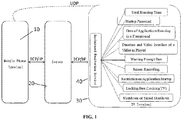
- FIG. 1 is a schematic diagram showing a principle of a smart TV monitoring system according to the present invention.
- the present invention provides a smart TV monitoring system.
- the smart TV monitoring system includes a mobile phone terminal 10, a server 20, and a TV terminal 30.
- the mobile phone terminal 10 communicates with the server 20 through a TCP/IP protocol
- the TV terminal 30 communicates with the server 20 through the TCP/IP protocol. All operations performed by the mobile phone terminal 10 to the TV terminal 30 are completed in such a way that the server 20 sends a network request to the TV terminal 30.
- the TV terminal 30 is provided with a background monitoring service 40 that is responsible for processing the network request from the server 20. When the TV terminal 30 is turned on, the background monitoring service 40 is initiated and kept running in background, and starts to record the total running time of the TV terminal 30.
- the TV terminal 30 provides a two-dimensional code or a digital code, and the mobile phone terminal 10 is bound to the TV terminal 30 through the two-dimensional code or the digital code.
- the TV terminal 30 can only be operated through the mobile phone terminal 10 when the mobile phone terminal 10 is bound to the TV terminal 30.
- the background monitoring service 40 is initiated and kept running in the background, and will not be killed by other applications in the TV terminal 30.
- the TV terminal 30 accesses the Internet, the TV terminal 30 communicates with the server 20 through the TCP/IP protocol.
- the TV terminal 30 receives the two-dimensional code or digital code sent from the server 20, through a setting application, and the mobile phone 10 is bound to the TV terminal 30 by scanning the two-dimensional code or entering the digital code through an APP, so that the mobile phone terminal 10 communicates with the server 20 through the TCP/IP protocol at this point.
- the TV terminal 30 is controlled by sending a network request to the TV terminal 30 through the APP of the mobile phone terminal 10.
- the smart TV monitoring system can realize remote control of the TV terminal 30 by the mobile phone terminal 10, which makes it convenient for parents to monitor the smart TV when they are out, thereby creating a better growth environment for children.
- the background monitoring service 40 starts to record the total running time of the TV terminal 30.
- the total running time querying network request is sent to the background monitoring service 40 through the server 20, and then the background monitoring service 40 sends the total running time to the mobile phone terminal 10 through the server 20, so that the total running time is displayed in the APP of the mobile phone terminal 10.
- a startup password can be set for the TV terminal 30, and when the startup password is set, the background monitoring service 40 sends a verification code to the mobile phone terminal 10 when the startup password is set and the startup password is activated after the verification code is entered on the TV terminal 30.
- the background monitoring service 40 sends a verification code to the mobile phone terminal 10 when a startup password needs to be set for the TV terminal 30, and the startup password is activated after the verification code that is displayed in the APP of the mobile phone terminal 10 is entered on the TV terminal 30.
- the background monitoring service 40 sends a verification code to the mobile phone terminal 10, and the startup password is cancelled after the verification code that is displayed in the APP of the mobile phone terminal 10 is entered on the TV terminal 30.
- the background monitoring service 40 can record data of applications running in a foreground of the TV terminal 30, and the data includes names of the applications and running times of the applications in the foreground.
- the code of the framework needs to be modified.
- variables are added to an ActivityManager to enable the background monitoring service 40 to record data of applications running in the foreground of the TV terminal 30.
- the background monitoring service 40 can also send the data to the mobile phone terminal 10 through the server 20.
- the background monitoring service 40 can record duration and a video interface of a video played by the TV terminal 30 through an ATV/DTV/AV/HDMI video interface.
- the background monitoring service 40 can still record the duration and the video interface of the video played by the TV terminal 30 through the ATV/DTV/AV/HDMI video interface.
- the background monitoring service 40 can send the data to the mobile phone terminal 10 through the server 20.
- the TV terminal 30 can take a screenshot, and after taking the screenshot, the TV terminal 30 packages the screenshot into picture data in a bmp/jpeg/png format, and then sends the picture data to the mobile phone terminal 10 through the background monitoring service 40.
- the TV terminal 30 when a screenshot-taking network request is sent to the TV terminal 30 through the APP of the mobile phone terminal 10, the TV terminal 30 takes the screenshot and packages the screenshot into picture data in the bmp/jpeg/png format. Then, the background monitoring service 40 sends the picture data to the APP of the mobile phone terminal 10 through the server 20.
- the TV terminal 30 can record the screen, and the TV terminal 30 packages osd+video data into a TS stream, and directly transmits the TS stream to the mobile phone terminal 10 by communicating with the mobile phone terminal 10 through a UDP protocol.
- the TV terminal 30 when a screen-recording network request is sent to the TV terminal 30 through the APP of the mobile phone terminal 10, the TV terminal 30 communicates with the mobile phone terminal 10 through the UDP protocol, and packages the osd+video data into a TS stream. Then, the background monitoring service 40 directly sends the TS stream to the APP of the mobile phone terminal 10 through the UDP protocol communication. In addition, the background monitoring service 40 can follow network conditions of the mobile phone terminal 10 and the TV terminal 30 to adjust the resolution of the TS stream, and thus the TS stream can switch among several different resolutions of 480P/720P/1080P.
- the background monitoring service 40 can draw a full-screen warning prompt box in the foreground of the TV terminal 30 according to the network request from the server 20, and content input by the mobile phone terminal 10 is displayed in the warning prompt box.
- a warning prompt box network request is sent to the TV terminal 30 through the APP of the mobile phone terminal 10
- a user can edit the content displayed in the warning prompt box through the APP of the mobile phone terminal.
- the background monitoring service 40 can restrict startup of a certain application in the TV terminal 30 according to the network request from the server 20.
- the code of the framework is modified and restrictions on startup of the application are added in the ActivityManager.
- the background monitoring service 40 receives an application locking network request sent by the server 20, the background monitoring service 40 will update an application blacklist maintained in the ActivityMananger, and the application in the blacklist cannot be started up on the TV by clicking the application icon.
- the background monitoring service 40 can draw a locking box in the foreground of the TV terminal 30 according to the network request from the server 20 and send an unlocking password to the mobile phone terminal 10, so that the background monitoring service 40 intercepts all button actions except for the power button of the TV terminal 30 before the unlocking password is entered correctly.
- the background monitoring service 40 may still restore the locking box after the restart until the user enters the correct unlocking password in the locking box.
- the background monitoring service 40 can directly shut down the TV terminal 30 or set a shutdown timer according to the network request from the server 20, and the TV terminal 30 is shut down when the shutdown timer counts to a preset value.
- the background monitoring service 40 when a direct shutdown network request is sent to the TV terminal 30 through the APP of the mobile phone terminal 10, the background monitoring service 40 directly shuts down the TV terminal 30 according to the network request from the server 20.
- the background monitoring service 40 receives a direct shutdown or timed shutdown network request from the server 20, the background monitoring service 40 directly calls shutdown of Powermanager to directly shut down the TV or uses a handler as a shutdown timer to realize the timed shutdown.
- the present invention may further have many other embodiments. Based on this embodiment, other embodiments obtained by a person of ordinary skills in the art without any creative work fall within the protection scope of the present invention.
Landscapes
- Engineering & Computer Science (AREA)
- Signal Processing (AREA)
- Multimedia (AREA)
- Databases & Information Systems (AREA)
- Computer Networks & Wireless Communication (AREA)
- Computer Security & Cryptography (AREA)
- Physics & Mathematics (AREA)
- Human Computer Interaction (AREA)
- General Health & Medical Sciences (AREA)
- Theoretical Computer Science (AREA)
- Health & Medical Sciences (AREA)
- Toxicology (AREA)
- Artificial Intelligence (AREA)
- Computer Vision & Pattern Recognition (AREA)
- General Physics & Mathematics (AREA)
- Electromagnetism (AREA)
- General Engineering & Computer Science (AREA)
- Computing Systems (AREA)
- Software Systems (AREA)
- Computer Hardware Design (AREA)
- Telephonic Communication Services (AREA)
- Two-Way Televisions, Distribution Of Moving Picture Or The Like (AREA)
- Information Transfer Between Computers (AREA)
Applications Claiming Priority (2)
| Application Number | Priority Date | Filing Date | Title |
|---|---|---|---|
| CN201910667596.3A CN110519230A (zh) | 2019-07-23 | 2019-07-23 | 一种智能电视的监控系统 |
| PCT/CN2020/102527 WO2021013054A1 (zh) | 2019-07-23 | 2020-07-17 | 一种智能电视的监控系统 |
Publications (2)
| Publication Number | Publication Date |
|---|---|
| EP3869764A1 true EP3869764A1 (de) | 2021-08-25 |
| EP3869764A4 EP3869764A4 (de) | 2022-11-16 |
Family
ID=68623141
Family Applications (1)
| Application Number | Title | Priority Date | Filing Date |
|---|---|---|---|
| EP20829170.8A Withdrawn EP3869764A4 (de) | 2019-07-23 | 2020-07-17 | Überwachungssystem für intelligentes fernsehgerät |
Country Status (4)
| Country | Link |
|---|---|
| US (1) | US20210127156A1 (de) |
| EP (1) | EP3869764A4 (de) |
| CN (1) | CN110519230A (de) |
| WO (1) | WO2021013054A1 (de) |
Cited By (1)
| Publication number | Priority date | Publication date | Assignee | Title |
|---|---|---|---|---|
| EP4296844A4 (de) * | 2021-03-15 | 2024-07-31 | Huawei Technologies Co., Ltd. | Auf mehreren vorrichtungen basierendes online-interaktionsverfahren, chip, elektronische vorrichtung und speichermedium |
Families Citing this family (4)
| Publication number | Priority date | Publication date | Assignee | Title |
|---|---|---|---|---|
| CN110519230A (zh) * | 2019-07-23 | 2019-11-29 | 晶晨半导体(深圳)有限公司 | 一种智能电视的监控系统 |
| CN112135178A (zh) * | 2020-09-25 | 2020-12-25 | 深圳市酷开软件技术有限公司 | 一种基于电视机实现双向通讯的方法、系统及存储介质 |
| CN112511806A (zh) * | 2020-12-03 | 2021-03-16 | 深圳创维-Rgb电子有限公司 | 监控电子设备显示的方法、装置、电子设备及存储介质 |
| CN114845172A (zh) * | 2022-04-11 | 2022-08-02 | 冠捷显示科技(厦门)有限公司 | 一种基于移动端远程控制智能电视童锁方法 |
Family Cites Families (14)
| Publication number | Priority date | Publication date | Assignee | Title |
|---|---|---|---|---|
| US20110321107A1 (en) * | 2010-03-04 | 2011-12-29 | Clayton Banks | System and Method for Interactive Use of Cable Television Devices and Other Devices |
| CN102469368B (zh) * | 2010-11-18 | 2014-06-18 | 深圳Tcl数字技术有限公司 | 电视机远程控制的方法及电视机 |
| KR101579603B1 (ko) * | 2012-06-27 | 2016-01-04 | 네이버 주식회사 | 이미지 인증키를 이용한 tv와 스마트폰의 연동 시스템, 방법 및 컴퓨터 판독 가능한 기록 매체 |
| CN104038817A (zh) * | 2014-05-09 | 2014-09-10 | 海信集团有限公司 | 远程监控智能电视的方法、移动终端、智能电视及服务器 |
| CN104080004A (zh) * | 2014-06-30 | 2014-10-01 | 广州视源电子科技股份有限公司 | 一种远程控制智能电视童锁功能的方法及系统 |
| CN105306242B (zh) * | 2014-07-16 | 2020-02-07 | 腾讯科技(深圳)有限公司 | 客户端监控方法、客户端及监控系统 |
| CN105635756A (zh) * | 2015-12-29 | 2016-06-01 | Tcl海外电子(惠州)有限公司 | 远程控制智能电视的方法及系统 |
| CN106101828B (zh) * | 2016-06-17 | 2019-09-20 | Tcl海外电子(惠州)有限公司 | 电视机播放控制方法及装置 |
| CN106254862A (zh) * | 2016-08-02 | 2016-12-21 | 四川长虹电器股份有限公司 | 远程可视化在线服务系统及方法 |
| CN107580250A (zh) * | 2017-09-05 | 2018-01-12 | 深圳Tcl新技术有限公司 | 一种电视的控制方法、遥控端及计算机可读存储介质 |
| CN109587529B (zh) * | 2017-09-29 | 2021-08-31 | 青岛海尔多媒体有限公司 | 一种电视机功能项的授权方法及授权装置 |
| CN108769811A (zh) * | 2018-06-01 | 2018-11-06 | 四川长虹电器股份有限公司 | 一种通过移动控制端控制智能播放终端的系统及方法 |
| CN109874035A (zh) * | 2019-02-28 | 2019-06-11 | 四川长虹电器股份有限公司 | 一种通过智能终端控制电视播放的方法 |
| CN110519230A (zh) * | 2019-07-23 | 2019-11-29 | 晶晨半导体(深圳)有限公司 | 一种智能电视的监控系统 |
-
2019
- 2019-07-23 CN CN201910667596.3A patent/CN110519230A/zh active Pending
-
2020
- 2020-07-17 EP EP20829170.8A patent/EP3869764A4/de not_active Withdrawn
- 2020-07-17 WO PCT/CN2020/102527 patent/WO2021013054A1/zh not_active Ceased
- 2020-12-30 US US17/138,774 patent/US20210127156A1/en not_active Abandoned
Cited By (1)
| Publication number | Priority date | Publication date | Assignee | Title |
|---|---|---|---|---|
| EP4296844A4 (de) * | 2021-03-15 | 2024-07-31 | Huawei Technologies Co., Ltd. | Auf mehreren vorrichtungen basierendes online-interaktionsverfahren, chip, elektronische vorrichtung und speichermedium |
Also Published As
| Publication number | Publication date |
|---|---|
| EP3869764A4 (de) | 2022-11-16 |
| CN110519230A (zh) | 2019-11-29 |
| WO2021013054A1 (zh) | 2021-01-28 |
| US20210127156A1 (en) | 2021-04-29 |
Similar Documents
| Publication | Publication Date | Title |
|---|---|---|
| EP3869764A1 (de) | Überwachungssystem für intelligentes fernsehgerät | |
| US10701435B2 (en) | Television video interception method and device | |
| KR102105169B1 (ko) | 디스플레이장치 및 그 제어방법 | |
| CN104080004A (zh) | 一种远程控制智能电视童锁功能的方法及系统 | |
| CN103686292A (zh) | 一种智能电子设备的开关机方法、装置 | |
| CN103796067A (zh) | 电视呈现模式的切换方法及系统 | |
| EP2477395A1 (de) | Verfahren und server für elektronische programmführer zur steuerung der kindersicherung eines iptv-systems | |
| CN110636378A (zh) | 电视远程控制方法、智能电视及可读存储介质 | |
| CN107426598B (zh) | 一种弹幕信息处理方法及注入模块 | |
| WO2018041002A1 (zh) | 管控机顶盒的方法、机顶盒、服务器和智能终端 | |
| EP3484163A1 (de) | Verfahren und system zur erzeugung von interaktivität zwischen einer hauptempfangsvorrichtung und mindestens einer sekundären vorrichtung | |
| CN108174256B (zh) | 视频播放方法、装置及计算机可读存储介质 | |
| US11706465B2 (en) | ATSC 3.0 advertising notification using event streams | |
| CN106101836A (zh) | 智能电视的播放方法及装置 | |
| CN109218779A (zh) | 一种基于智能手机的控制儿童观看电视节目的方法 | |
| WO2017181966A1 (zh) | 一种交互式网络电视业务的访问方法及装置、存储介质 | |
| WO2018086477A1 (zh) | 数字电视解扰的方法和装置 | |
| CN107580250A (zh) | 一种电视的控制方法、遥控端及计算机可读存储介质 | |
| WO2026067568A1 (zh) | 显示设备与投屏内容续播方法 | |
| CN108540844B (zh) | 远程控制电视的方法及装置 | |
| CN106028132A (zh) | 通过智能移动终端在电视上观看全景视频的系统及方法 | |
| US20250199747A1 (en) | Display apparatus and processing method for display apparatus | |
| CN110740381A (zh) | 智能电视观看状态的监控方法、智能电视及存储介质 | |
| CN105282592A (zh) | 一种对iptv电视实现屏保的方法及装置 | |
| CN116095374B (zh) | 图像处理方法、装置、设备及计算机可读存储介质 |
Legal Events
| Date | Code | Title | Description |
|---|---|---|---|
| STAA | Information on the status of an ep patent application or granted ep patent |
Free format text: STATUS: UNKNOWN |
|
| STAA | Information on the status of an ep patent application or granted ep patent |
Free format text: STATUS: THE INTERNATIONAL PUBLICATION HAS BEEN MADE |
|
| PUAI | Public reference made under article 153(3) epc to a published international application that has entered the european phase |
Free format text: ORIGINAL CODE: 0009012 |
|
| STAA | Information on the status of an ep patent application or granted ep patent |
Free format text: STATUS: REQUEST FOR EXAMINATION WAS MADE |
|
| 17P | Request for examination filed |
Effective date: 20210518 |
|
| AK | Designated contracting states |
Kind code of ref document: A1 Designated state(s): AL AT BE BG CH CY CZ DE DK EE ES FI FR GB GR HR HU IE IS IT LI LT LU LV MC MK MT NL NO PL PT RO RS SE SI SK SM TR |
|
| REG | Reference to a national code |
Ref country code: DE Ref legal event code: R079 Free format text: PREVIOUS MAIN CLASS: H04L0029060000 Ipc: H04N0021443000 |
|
| DAV | Request for validation of the european patent (deleted) | ||
| DAX | Request for extension of the european patent (deleted) | ||
| A4 | Supplementary search report drawn up and despatched |
Effective date: 20221019 |
|
| RIC1 | Information provided on ipc code assigned before grant |
Ipc: H04M 1/725 20210101ALI20221013BHEP Ipc: H04N 21/443 20110101AFI20221013BHEP |
|
| STAA | Information on the status of an ep patent application or granted ep patent |
Free format text: STATUS: THE APPLICATION IS DEEMED TO BE WITHDRAWN |
|
| 18D | Application deemed to be withdrawn |
Effective date: 20230520 |