EP3869736A1 - Verfahren und vorrichtung zur identifizierung des bandbreitenbedarfbursts - Google Patents
Verfahren und vorrichtung zur identifizierung des bandbreitenbedarfbursts Download PDFInfo
- Publication number
- EP3869736A1 EP3869736A1 EP18938206.2A EP18938206A EP3869736A1 EP 3869736 A1 EP3869736 A1 EP 3869736A1 EP 18938206 A EP18938206 A EP 18938206A EP 3869736 A1 EP3869736 A1 EP 3869736A1
- Authority
- EP
- European Patent Office
- Prior art keywords
- bandwidth
- bandwidth data
- real time
- surge
- historic
- Prior art date
- Legal status (The legal status is an assumption and is not a legal conclusion. Google has not performed a legal analysis and makes no representation as to the accuracy of the status listed.)
- Withdrawn
Links
Images


Classifications
-
- H—ELECTRICITY
- H04—ELECTRIC COMMUNICATION TECHNIQUE
- H04L—TRANSMISSION OF DIGITAL INFORMATION, e.g. TELEGRAPHIC COMMUNICATION
- H04L41/00—Arrangements for maintenance, administration or management of data switching networks, e.g. of packet switching networks
- H04L41/08—Configuration management of networks or network elements
- H04L41/0803—Configuration setting
- H04L41/0823—Configuration setting characterised by the purposes of a change of settings, e.g. optimising configuration for enhancing reliability
-
- H—ELECTRICITY
- H04—ELECTRIC COMMUNICATION TECHNIQUE
- H04L—TRANSMISSION OF DIGITAL INFORMATION, e.g. TELEGRAPHIC COMMUNICATION
- H04L41/00—Arrangements for maintenance, administration or management of data switching networks, e.g. of packet switching networks
- H04L41/50—Network service management, e.g. ensuring proper service fulfilment according to agreements
- H04L41/5003—Managing SLA; Interaction between SLA and QoS
- H04L41/5019—Ensuring fulfilment of SLA
-
- H—ELECTRICITY
- H04—ELECTRIC COMMUNICATION TECHNIQUE
- H04L—TRANSMISSION OF DIGITAL INFORMATION, e.g. TELEGRAPHIC COMMUNICATION
- H04L41/00—Arrangements for maintenance, administration or management of data switching networks, e.g. of packet switching networks
- H04L41/50—Network service management, e.g. ensuring proper service fulfilment according to agreements
- H04L41/5003—Managing SLA; Interaction between SLA and QoS
- H04L41/5009—Determining service level performance parameters or violations of service level contracts, e.g. violations of agreed response time or mean time between failures [MTBF]
-
- H—ELECTRICITY
- H04—ELECTRIC COMMUNICATION TECHNIQUE
- H04L—TRANSMISSION OF DIGITAL INFORMATION, e.g. TELEGRAPHIC COMMUNICATION
- H04L41/00—Arrangements for maintenance, administration or management of data switching networks, e.g. of packet switching networks
- H04L41/50—Network service management, e.g. ensuring proper service fulfilment according to agreements
- H04L41/5041—Network service management, e.g. ensuring proper service fulfilment according to agreements characterised by the time relationship between creation and deployment of a service
- H04L41/5048—Automatic or semi-automatic definitions, e.g. definition templates
-
- H—ELECTRICITY
- H04—ELECTRIC COMMUNICATION TECHNIQUE
- H04L—TRANSMISSION OF DIGITAL INFORMATION, e.g. TELEGRAPHIC COMMUNICATION
- H04L43/00—Arrangements for monitoring or testing data switching networks
- H04L43/04—Processing captured monitoring data, e.g. for logfile generation
-
- H—ELECTRICITY
- H04—ELECTRIC COMMUNICATION TECHNIQUE
- H04L—TRANSMISSION OF DIGITAL INFORMATION, e.g. TELEGRAPHIC COMMUNICATION
- H04L43/00—Arrangements for monitoring or testing data switching networks
- H04L43/08—Monitoring or testing based on specific metrics, e.g. QoS, energy consumption or environmental parameters
- H04L43/0876—Network utilisation, e.g. volume of load or congestion level
- H04L43/0888—Throughput
-
- H—ELECTRICITY
- H04—ELECTRIC COMMUNICATION TECHNIQUE
- H04L—TRANSMISSION OF DIGITAL INFORMATION, e.g. TELEGRAPHIC COMMUNICATION
- H04L43/00—Arrangements for monitoring or testing data switching networks
- H04L43/08—Monitoring or testing based on specific metrics, e.g. QoS, energy consumption or environmental parameters
- H04L43/0876—Network utilisation, e.g. volume of load or congestion level
- H04L43/0894—Packet rate
-
- H—ELECTRICITY
- H04—ELECTRIC COMMUNICATION TECHNIQUE
- H04L—TRANSMISSION OF DIGITAL INFORMATION, e.g. TELEGRAPHIC COMMUNICATION
- H04L43/00—Arrangements for monitoring or testing data switching networks
- H04L43/16—Threshold monitoring
-
- H—ELECTRICITY
- H04—ELECTRIC COMMUNICATION TECHNIQUE
- H04L—TRANSMISSION OF DIGITAL INFORMATION, e.g. TELEGRAPHIC COMMUNICATION
- H04L41/00—Arrangements for maintenance, administration or management of data switching networks, e.g. of packet switching networks
- H04L41/08—Configuration management of networks or network elements
- H04L41/0896—Bandwidth or capacity management, i.e. automatically increasing or decreasing capacities
Definitions
- the present disclosure relates to the field of Internet technology, and more particularly, relates to a method and an apparatus for recognizing a surge in bandwidth demand.
- CDN content delivery network
- bandwidth demand of the client substantially increases.
- pre-allocated bandwidth resources are unable to satisfy the surge in bandwidth demand. It is likely that network delays increase substantially, and response speeds substantially decrease.
- client's service quality deteriorates, causing loss of customers.
- a method for accurately and timely recognizing the surge in bandwidth demand is needed, such that the CDN providers may effectively allocate bandwidth resources based on the surge in bandwidth demand to ensure an overall service quality of the client.
- the present disclosure provides a method and an apparatus for recognizing a surge in bandwidth demand.
- the technical solution includes the following aspects.
- One aspect of the present disclosure provides a method for recognizing a surge in bandwidth demand.
- the method includes: periodically obtaining historic bandwidth data of a target client at each standard time point in a plurality of historic cycles; generating a regular bandwidth template corresponding to each standard time point based on the historic bandwidth data; obtaining real time bandwidth data of the target client in every pre-set time interval; and based on the real time bandwidth data at each standard time point in a specified time interval and template bandwidth data of the regular bandwidth template in the specified time interval, determining whether the target client has the surge in bandwidth demand.
- the method further includes: if the real time bandwidth data obtained in any pre-set time interval misses the real time bandwidth data at a target time point, using a linear interpolation algorithm to calculate the real time bandwidth data at the target time point based on the real time bandwidth data at time points adjacent to the target time point.
- the method further includes: determining a bandwidth change rate of the real time bandwidth data obtained in a latest pre-set time interval based on the real time bandwidth data obtained in a preceding pre-set time interval; if the bandwidth change rate is greater than a pre-set change threshold and a count of consecutive abrupt bandwidth changes is smaller than a pre-set count threshold, updating the real time bandwidth data obtained in the latest pre-set time interval with the real time bandwidth data obtained in the preceding pre-set time interval and incrementing the count of the consecutive abrupt bandwidth changes by one; and if the bandwidth change rate is not greater than the pre-set change threshold or the count of the consecutive abrupt bandwidth changes is not smaller than the pre-set count threshold, adjusting the real time bandwidth data obtained in the latest pre-set time interval according to the real time bandwidth data obtained in the preceding pre-set time interval and resetting the count of the consecutive abrupt bandwidth changes to zero.
- generating the regular bandwidth template corresponding to each standard time point based on the historic bandwidth data includes: for every two historic cycles in the plurality of historic cycles, determining a sum of differences between the historic bandwidth data in the two historic cycles of all standard time points to be a distance between the two historic cycles; each historic cycle being an initial cluster, using a single-linkage Hierarchical Clustering algorithm to gradually merge two clusters having a smallest distance; a target cluster being a merged cluster when the number of the historic cycles included in the merged cluster exceeds a pre-set number, determining all the historic cycles included in the target cluster to be target historic cycles; and based on averages of the historic bandwidth data in the target historic cycles at each standard time point, creating the regular bandwidth template corresponding to each standard time point.
- determining whether the target client has the surge in bandwidth demand based on the real time bandwidth data in the specified time interval at each standard time point and template bandwidth data of the regular bandwidth template in the specified time interval includes: calculating a sum of the real time bandwidth data at all the standard time points in the specified time interval, and calculating a sum of the template bandwidth data of the regular bandwidth template in the specified time interval; and based on a ratio of the sum of the real time bandwidth data over the sum of the template bandwidth data and a pre-set surge warning ratio or proportion, determining whether the client has the surge in bandwidth demand.
- determining whether the client has the surge in bandwidth demand based on the ratio of the sum of the real time bandwidth data over the sum of the template bandwidth data and the pre-set surge warning ratio includes: obtaining peak template bandwidth data of the template bandwidth data and current bandwidth data at a current time point; establishing a surge standard ratio through a ratio of the current bandwidth data over the peak template bandwidth data and the pre-set surge warning ratio or proportion; and if the ratio of the sum of the real time bandwidth data over the sum of the template bandwidth data is greater than the surge standard ratio, and the current bandwidth data is greater than a pre-set surge bandwidth minimum value, determining that the target client currently has the surge in bandwidth demand.
- the method further includes: after it is determined last time that the target client has the surge in bandwidth demand, if the ratio of the sum of the real time bandwidth data over the sum of the template bandwidth data is smaller than a pre-set surge warning dismissal ratio or porportion, or the current bandwidth data is smaller than the pre-set surge bandwidth minimum value, or the current bandwidth data is smaller than one half of the peak template bandwidth data, determining that the surge in bandwidth demand of the target client is over.
- the method further includes: dividing the real time bandwidth data according to each standard time point; and updating and storing the real time bandwidth data at each standard time point in an ascending order by accumulating the real time bandwidth data at a preceding standard time point to the real time bandwidth data at the standard time point.
- the apparatus includes: a first acquisition module configured to periodically obtain historic bandwidth data at each standard time point in a plurality of historic cycles; a generation module configured to generate a regular bandwidth template corresponding to each standard time point based on the historic bandwidth data; a second acquisition module configured to obtain the real time bandwidth data of the target client in every pre-set time interval; and a determination module configured to determine whether the target client has the surge in bandwidth demand based on the real time bandwidth data at each standard time point in a specified time interval and template bandwidth data of the regular bandwidth template in the specified time interval.
- the apparatus further includes a data interpolation module configured to: if the real time bandwidth data obtained in any pre-set time interval misses the real time bandwidth data at a target time point, use a linear interpolation algorithm to calculate the real time bandwidth data at the target time point based on the real time bandwidth data at time points adjacent to the target time point.
- a data interpolation module configured to: if the real time bandwidth data obtained in any pre-set time interval misses the real time bandwidth data at a target time point, use a linear interpolation algorithm to calculate the real time bandwidth data at the target time point based on the real time bandwidth data at time points adjacent to the target time point.
- the apparatus further includes a data smoothing module configured to: determine a bandwidth change rate of the real time bandwidth data obtained in a latest pre-set time interval based on the real time bandwidth data obtained in a preceding pre-set time interval,; if the bandwidth change rate is greater than a pre-set change threshold and a count of consecutive abrupt bandwidth changes is smaller than a pre-set count threshold, update the real time bandwidth data obtained in the latest pre-set time interval with the real time bandwidth data obtained in the preceding pre-set time interval and increment the count of the consecutive abrupt bandwidth changes by one; and if the bandwidth change rate is not greater than the pre-set change threshold or the count of the consecutive abrupt bandwidth changes is not smaller than the pre-set count threshold, adjust the real time bandwidth data obtained in the latest pre-set time interval according to the real time bandwidth data obtained in the preceding pre-set time interval, and reset the count of the consecutive abrupt bandwidth changes to zero.
- a data smoothing module configured to: determine a bandwidth change rate of the real time bandwidth data obtained in a latest pre-set time interval based
- the generation module is further configured to: for every two historic cycles in the plurality of historic cycles, determine a sum of differences between the historic bandwidth data in the two historic cycles of all standard time points to be a distance between the two historic cycles; each historic cycle being an initial cluster, use a single-linkage Hierarchical Clustering algorithm to gradually merge two clusters having a smallest distance; a target cluster being a merged cluster when the number of the historic cycles included in the merged cluster exceeds a pre-set number, determine all the historic cycles included in the target cluster to be target historic cycles; and based on averages of the historic bandwidth data in the target historic cycles at each standard time point, create the regular bandwidth template corresponding to each standard time point.
- the determination module is further configured to: calculate a sum of the real time bandwidth data at all the standard time points in the specified time interval, and calculate a sum of the template bandwidth data of the regular bandwidth template in the specified time interval; and based on a ratio of the sum of the real time bandwidth data over the sum of the template bandwidth data and a pre-set surge warning ratio or proportion, determine whether the client has the surge in bandwidth demand.
- the determination module is further configured to: obtain peak template bandwidth data of the template bandwidth data and current bandwidth data at a current time point; establish a surge standard ratio through a ratio of the current bandwidth data over the peak template bandwidth data and the pre-set surge warning ratio or proportion; and if the ratio of the sum of the real time bandwidth data over the sum of the template bandwidth data is greater than the surge standard ratio, and the current bandwidth data is greater than a pre-set surge bandwidth minimum value, determine that the target client currently has the surge in bandwidth demand.
- the apparatus further includes an auxiliary determination module configured to: after it is determined last time that the target client has the surge in bandwidth demand, if the ratio of the sum of the real time bandwidth data over the sum of the template bandwidth data is smaller than a pre-set surge warning dismissal ratio or proportion, or the current bandwidth data is smaller than the pre-set surge bandwidth minimum value, or the current bandwidth data is smaller than one half of the peak template bandwidth data, determine that the surge in bandwidth demand of the target client is over.
- the apparatus further includes an updating module configured to: divide the real time bandwidth data according to each standard time point; and update and store the real time bandwidth data at each standard time point in an ascending order by accumulating the real time bandwidth data at a preceding standard time point to the real time bandwidth data at the standard time point.
- an updating module configured to: divide the real time bandwidth data according to each standard time point; and update and store the real time bandwidth data at each standard time point in an ascending order by accumulating the real time bandwidth data at a preceding standard time point to the real time bandwidth data at the standard time point.
- the client management device includes: a processor; and a memory configured to store at least one instruction, at least one section of program, a code set, or an instruction set.
- the at least one instruction, the at least one section of program, the code set, or the instruction set stored in the memory are loaded and executed by the processor to implement the disclosed method for recognizing the surge in bandwidth demand.
- the storage medium stores at least one instruction, at least one section of program, a code set, or an instruction set.
- the at least one instruction, the at least one section of program, the code set, or the instruction set are loaded and executed by a processor to implement the disclosed method for recognizing the surge in bandwidth demand.
- the historic bandwidth data of the target client is periodically obtained at each standard time point in a plurality of historic cycles.
- the regular bandwidth template corresponding to each standard time point is generated based on the historic bandwidth data.
- the real time bandwidth data of the target client in every pre-set time interval is obtained.
- Based on the real time bandwidth data at each standard time point in the specified time interval and the template bandwidth data of the regular bandwidth template in the specified time interval whether the target client has the surge in bandwidth demand is determined. As such, cyclical characteristics of the bandwidth usage of the target client is mined based on the big data analysis.
- the regular bandwidth templates are created for different clients at different time points.
- the latest real time bandwidth data in combination with the regular bandwidth templates are used to timelier and more accurately recognize the surges in bandwidth demand of the clients.
- the bandwidth resources are scheduled more effectively in response to the surges in bandwidth demand, and the overall service quality for the clients is ensured.
- the present disclosure provides a method for recognizing a surge in bandwidth demand.
- the method may be applied to a CDN system and may be implemented by a client management device in the CDN system.
- the client management device may be a device in the CDN system, that manages bandwidth demands for clients subscribing a CDN acceleration service.
- the client management device obtains client's bandwidth data to recognize whether a surge in bandwidth demand occurs and guides a resource scheduling subsystem in the CDN system to schedule bandwidth resources.
- the CDN system also includes a bandwidth data collection subsystem.
- the client management device obtains the client's bandwidth data in real time from the bandwidth data collection subsystem.
- the CDN system also includes a bandwidth data storage subsystem.
- the bandwidth data storage subsystem is configured to store the client's bandwidth data collected by the bandwidth data collection subsystem and to provide the stored bandwidth data to the client management device.
- FIG. 1 illustrates a block diagram of an exemplary CDN system architecture according to disclosed embodiments of the present disclosure.
- the bandwidth data collection subsystem and the bandwidth data storage subsystem are deployed in the CDN system in a distributed architecture to facilitate the collection and storage of the bandwidth data.
- the client management device may include a processor, a memory, and a transceiver.
- the processor is configured to perform a process of recognizing the surge in bandwidth demand.
- the memory is configured to store data required in the process and data generated in the process.
- the transceiver is configured to receive and transmit data related to the process.
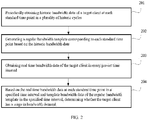
- FIG. 2 illustrates a flowchart of an exemplary method for recognizing a surge in bandwidth demand according to disclosed embodiments of the present disclosure. As shown in FIG. 2 , the method includes the following steps.
- Step 201 periodically obtaining historic bandwidth data of a target client at each standard time point in a plurality of historic cycles.
- the bandwidth data collection subsystem collects bandwidth data of the target client in real time at an interface between the target client and the CDN system and stores the collected real time bandwidth data in the bandwidth data storage subsystem.
- the client management device periodically obtains the historic bandwidth data of the target client at each standard time point in the plurality of historic cycles from the bandwidth data storage subsystem.
- the plurality of historic cycles and the standard time points are configured in advance by CDN system administrators.
- the cyele may be 1 day and the standard time points may be time points corresponding to 5-minute marks.
- One cycle may include 288 standard time points, that is, 00:00, 00:05, 00:10, ..., 23:50, 23:55.
- the bandwidth data collection subsystem may collect in collection cycles at the standard time points or may collect in shorter collection cycles.
- the bandwidth data collection system may store only the bandwidth data in each cycle at the standard time points or may store all collected bandwidth data.
- the cycle is 1 day
- the standard time points are the time points corresponding to 5-minute marks.
- the client management device may collect daily in early morning the historic bandwidth data of N preceding days including 288 standard time points per day.
- Step 202 generating a regular bandwidth template corresponding to each standard time point based on the historic bandwidth data.
- the client management device may generate the regular bandwidth template corresponding to each standard time point based on the historic bandwidth data.
- a time length of the regular bandwidth template is a length of one historic cycle mentioned in step 201.
- the regular bandwidth template practically includes a plurality of template bandwidth data corresponding to each standard time point.
- the plurality of template bandwidth data are generated based on the historic bandwidth data in a plurality of historic cycles at each standard time point.
- each regular bandwidth template is applicable to one cycle. Different cycles may have different regular bandwidth templates.
- generating the regular bandwidth template may include the following process. For two historic cycles in the plurality of historic cycles, a sum of differences between the historic bandwidth data at all standard time points in the two historic cycles is determined to be a distance between the two historic cycles. Each historic cycle is considered as an initial cluster. A single-linkage clustering algorithm is used to gradually merge two clusters with the smallest distance. When the number of the historic cycles included in a merged cluster exceeds a pre-set number, the merged cluster is determined to be a target cluster and all the historic cycles included in the target cluster are target historic cycles. Based on the averages of the historic bandwidth data in the target historic cycles at each standard time point, the regular bandwidth template corresponding to each standard time point is created.
- the client management device may calculate the differences between the historic bandwidth data in the two historic cycles at the standard time points and sum the differences.
- the count identifier for "00:05" is 2. So on so forth.
- p is equal to 288.
- x k and y k are historic bandwidth data in the two historic cycles at k-th standard time point.
- d(x,y) is the distance between the two historic cycles x,y.
- the client management device may apply a single-linkage Hierarchical Clustering algorithm to the initial clusters of each historic cycle to gradually merge two clusters having a smallest distance.
- 5 historic cycles are A, B, C, D, and E.
- the distances between any two historic cycles are listed in the following table.
- a B C D E A 0 1 2 4 6 B 1 0 3 2 5 C 2 3 0 4 4 D 4 2 4 0 3 E 6 5 4 3 0
- the initial clusters are d(A), d(B), d(C), d(D), and d(E).
- two clusters having the distance 1 are merged. That is, d(A) and d(B) are merged.
- the remaining clusters are d(A,B), d(C), d(D), and d(E).
- two clusters having the distance 2 are merged. That is, d(A,B), d(C), and d(D) are merged.
- the remaining clusters are d(A,B,C,D) and d(E).
- the distance between d(A,B) and d(C) is the smallest of the distance 2 between d(A) and d(C) and the distance 3 between d(B) and d(C).
- the distance between d(A,B) and d(D) is the smallest of the distance 4 between d(A) and d(D) and the distance 2 between d(B) and d(D).
- the merged cluster is determined to be the target cluster and all the historic cycles included in the target cluster are determined to be the target historic cycles. Then, the averages of the historic bandwidth data in the target historic cycles are calculated at the standard time points. Based on the averages, the regular bandwidth template corresponding to each standard time point is created.
- Step 203 obtaining real time bandwidth data of the target client in every pre-set time interval.
- the client management device may obtain the real time bandwidth data of the target client from the bandwidth data collection subsystem in the pre-set time interval.
- the pre-set time interval may be determined by the CDN administrators.
- the pre-set time interval may coincide with the standard time points or may be set to other time intervals. For example, the time interval at the standard time points is 5 minutes.
- the pre-set time may be 5 minutes or may be 3 minutes or 7 minutes.
- the real time bandwidth data may be obtained directly from the bandwidth data collection subsystem without waiting for the bandwidth data being stored in the bandwidth data storage subsystem and then obtaining from the bandwidth data storage subsystem.
- the real time bandwidth data obtained in this step may only include the real time bandwidth data in the pre-set time interval at the standard time points or may also include the real time bandwidth data at other time points.
- the client management device may perform a data adjustment process to the obtained real time bandwidth data to more accurately recognize the surge in bandwidth demand.
- the present disclosure provides two processes for supplementing missing data process and smoothing noisy data.
- the process of supplementing missing data includes the following steps. If the real time bandwidth data obtained in the pre-set time interval misses the real time bandwidth data at a target time point, a linear interpolation algorithm is used to calculate the real time bandwidth data at the target time point based on the real time bandwidth data at time points adjacent to the target time point.
- the client management device may traverse all obtained real time bandwidth data to determine whether missing data occurs. If the bandwidth data at the target time point is missing, the real time bandwidth data at the time points adjacent to the target time point is obtained. Then, the linear interpolation algorithm is used to calculate the real time bandwidth data at the target time point.
- s s 0 t 1 ⁇ t + s 1 t ⁇ t 0 t 1 ⁇ t 0
- t is the target time point between the adjacent time points t 0 and t 1
- s 0 is the real time bandwidth data at the time point t 0
- s 1 is the real time bandwidth data at the time point t 1
- s is the missing real time bandwidth data.
- the process of smoothing noisy data includes the following steps.
- the real time bandwidth data obtained in a preceding pre-set time interval is used to determine a bandwidth change rate of the real time bandwidth data obtained in a latest pre-set time interval. If the bandwidth change rate of the real time bandwidth data is greater than a pre-set change threshold and a count of consecutive abrupt bandwidth changes is smaller than a pre-set count threshold, the real time bandwidth data obtained in the latest pre-set time interval is updated to the real time bandwidth data obtained in the preceding pre-set time interval and the count of the consecutive abrupt bandwidth changes is incremented by one.
- the real time bandwidth data obtained in the latest pre-set time interval is adjusted according to the real time bandwidth data obtained in the preceding pre-set time interval and the count of the consecutive abrupt bandwidth changes is reset to zero.
- the abrupt bandwidth data change is caused by the substantial noise and the real time bandwidth data obtained in the latest pre-set time interval is updated to the real time bandwidth data obtained in the preceding pre-set time interval. At the same time, the recorded count of the consecutive abrupt bandwidth changes is incremented by one. If the count of the consecutive abrupt bandwidth change is not smaller than the pre-set count threshold, it is believed that the abrupt bandwidth data change is caused by the surge in bandwidth demand.
- the real time bandwidth data obtained in the latest pre-set time interval is adjusted according to the real time bandwidth data obtained in the preceding pre-set time interval and the count of the consecutive abrupt bandwidth changes is reset to zero.
- the bandwidth data obtained in the latest pre-set time interval is directly subject to the smoothing process to eliminate the influence of potential insignificant noise. That is, the real time bandwidth data obtained in the latest pre-set time interval is adjusted according to the real time bandwidth data obtained in the preceding pre-set time interval and the count of the consecutive abrupt bandwidth changes is reset to zero.
- S t ⁇ ⁇ Y t + 1 ⁇ ⁇ ⁇ S t ⁇ 1
- Y t is the real time bandwidth data at the time point t
- the real time bandwidth data after the smooth adjustment is S t , which is determined by the pre-set weight coefficient ⁇ , the real time bandwidth data in the preceding pre-set time interval S t -1 and Y t .
- the same data adjustment process may be performed on the historic bandwidth data stored in the bandwidth data storage subsystem.
- the client management device may store the adjusted real time bandwidth data in the bandwidth data storage subsystem.
- the data adjustment process may be performed on the historic bandwidth data.
- the data adjustment process may be performed on the historic bandwidth data after the bandwidth data collection subsystem collects the bandwidth data and before the bandwidth data is stored in the bandwidth data storage subsystem.
- the data adjustment process may be performed by the bandwidth data storage subsystem after the bandwidth data is stored in the bandwidth data storage subsystem.
- Step 204 based on the real time bandwidth data at each standard time point in a specified time interval and template bandwidth data of the regular bandwidth template in the specified time interval, determining whether the target client has the surge in bandwidth demand.
- the client management device may invoke the regular bandwidth template corresponding to each standard time point generated in step 202. Then, the client management device may determine the real time bandwidth data at each standard time point in the specified time interval and the template bandwidth data of the regular bandwidth template in the specified time interval.
- the specified time interval may be pre-configured by the CDN administrators to the time interval starting from the current time point and moving forward for a specified duration. The duration of the specified time interval is at least equal to the time interval of the standard time points.
- the client management device may determine whether the target client has a bandwidth demand based on the determined real time bandwidth data at each standard time point and the template bandwidth data. Further, based on the determination result, the client management device may instruct the resource scheduling subsystem to allocate the bandwidth resources.
- the process of determining the surge in bandwidth demand in step 204 may include: calculating a sum of the real time bandwidth data at all the standard time points in the specified time interval, and calculating a sum of the template bandwidth data of the regular bandwidth template in the specified time interval; and based on a ratio of the sum of the real time bandwidth data over the sum of the template bandwidth data and a pre-set surge warning ratio or proportion, determining whether the client has the surge in bandwidth demand.
- the client management device may calculate the sum of the real time bandwidth data at all the standard time points in the specified time interval and calculate the sum of the template bandwidth data of the regular bandwidth template in the specified time interval.
- the regular bandwidth template only includes the template bandwidth data at the standard time points.
- the sum of the real time bandwidth data and the sum of the template bandwidth data have a same amount of the data.
- the client management device may determine whether the target client has the surge in bandwidth demand.
- determining the surge in bandwidth demand may include multiple aspects such as current bandwidth data and peak template bandwidth data. Accordingly, the process may include: obtaining the peak template bandwidth data of the template bandwidth data and the current bandwidth data at the current time point; establishing a surge standard ratio through a ratio of the current bandwidth data over the peak template bandwidth data and the pre-set surge warning ratio or proportion; and if the ratio of the sum of the real time bandwidth data over the sum of the template bandwidth data is greater than the surge standard ratio and the current bandwidth data is greater than a pre-set surge bandwidth minimum value, determining that the target client currently has the surge in bandwidth demand.
- the client management device may obtain the peak template bandwidth data of the template bandwidth data and the current bandwidth data at the current time point. Then, the client management device may calculate the ratio of the current bandwidth data over the peak template bandwidth data and based on the proportion of the calculated ratio in the pre-set surge warning ratio, may establish the surge standard ratio. As such, the client management device may first determine whether the current bandwidth data is greater than the pre-set surge bandwidth minimum value. If true, the client management device may further determine whether the ratio of the sum of the real time bandwidth data over the sum of the template bandwidth data is greater than the surge standard ratio. If true, the client management device may determine that the target client currently has the surge in bandwidth demand.
- the determination formula is given as: ⁇ S t 0 > initialValue S T > 0.5 ⁇ 1 ⁇ S t 0 peakbw + alpha
- S t 0 is the current bandwidth data
- initialValue is the surge bandwidth minimum value
- S T is the ratio of the sum of the real time bandwidth data S over the sum of the template bandwidth data T
- peakbw is the peak template bandwidth data
- alpha is the surge warning ratio
- the bandwidth data may be used to determine whether the surge in bandwidth demand is over.
- the process may include: after it is determined last time that the target client has the surge in bandwidth demand, if the ratio of the sum of the real time bandwidth data over the sum of the template bandwidth data is smaller than a pre-set surge warning dismissal ratio or proportion, or the current bandwidth data is smaller than the surge bandwidth minimum value, or the current bandwidth data is smaller than one half of the peak template bandwidth data, determining that the surge in bandwidth demand of the target client is over.
- the client management device may use one of the following three approaches to determine whether the surge in bandwidth demand is over.
- the ratio of the sum of the real time bandwidth data over the sum of the template bandwidth data is compared with the pre-set surge warning dismissal ratio. If the ratio of the sum of the real time bandwidth data over the sum of the template bandwidth data is smaller than the pre-set surge warning dismissal ratio, it indicates that the surge in bandwidth demand is over.
- the current bandwidth data is compared with the surge bandwidth minimum value. If the current bandwidth data is smaller than the surge bandwidth minimum value, it indicates that the surge in bandwidth demand is over. In another approach, the current bandwidth data is compared with the peak template bandwidth data.
- all obtained real time bandwidth data may be simultaneously considered in determining the surge in bandwidth demand. Accordingly, after step 203 and before step 204, a following process may be added. The process includes: dividing the real time bandwidth data according to each standard time point; and updating and storing the real time bandwidth data at each standard time point in an ascending order by accumulating the real time bandwidth data at a preceding standard time point to the real time bandwidth data at the standard time point.
- the client management device may divide the real time bandwidth data according to each standard time point. Then, the real time bandwidth data at a preceding standard time point is accumulated to the real time bandwidth data at the standard time point to update the real time bandwidth data at the standard time point. The real time bandwidth data at each standard time point will be updated to include the real time bandwidth data at the preceding standard time point. As such, not only the real time bandwidth data at the current standard time point, but also all obtained real time bandwidth data may be included in determining the surge in bandwidth demand to timelier and more accurately recognize the surge in bandwidth demand. The same aggregation process may be performed on the historic bandwidth data stored in the bandwidth data storage subsystem.
- the client management device may store the updated real time bandwidth data in the bandwidth data storage subsystem.
- the aggregation process may be performed on the historic bandwidth data after the bandwidth data is collected by the bandwidth data collection subsystem and before the bandwidth data is stored in the bandwidth data storage subsystem.
- the aggregation process may be performed by the bandwidth data storage subsystem after the bandwidth data is stored in the bandwidth data storage subsystem.
- the historic bandwidth data of the target client is periodically obtained at each standard time point in a plurality of historic cycles.
- the regular bandwidth template corresponding to each standard time point is generated based on the historic bandwidth data.
- the real time bandwidth data of the target client in every pre-set time interval is obtained.
- Based on the real time bandwidth data at each standard time point in the specified time interval and the template bandwidth data of the regular bandwidth template in the specified time interval whether the target client has the surge in bandwidth demand is determined. As such, cyclical characteristics of the bandwidth usage of the target client is mined based on the big data analysis.
- the regular bandwidth templates are created for different clients at different time points.
- the latest real time bandwidth data in combination with the regular bandwidth templates are used to timelier and more accurately recognize the surges in bandwidth demand of the clients.
- the bandwidth resources are scheduled more effectively in response to the surges in bandwidth demand, and the overall service quality for the clients is ensured.
- the present disclosure also provides an apparatus for recognizing a surge in bandwidth demand.
- the apparatus includes: a first acquisition module 301 configured to periodically obtain historic bandwidth data of a target client at each standard time point in a plurality of historic cycles; a generation module 302 configured to generate a regular bandwidth template corresponding to each standard time point based on the historic bandwidth data; a second acquisition module 303 configured to obtain the real time bandwidth data of the target client in every pre-set time interval; and a determination module 304 configured to determine whether the target client has a surge in bandwidth demand based on the real time bandwidth data at each standard time point in the specified time interval and template bandwidth data of the regular bandwidth template in the specified time interval.
- the apparatus also includes a data interpolation module. If the real time bandwidth data obtained in any pre-set time interval misses the real time bandwidth data at a target time point, the data interpolation module is configured to use a linear interpolation algorithm to calculate the real time bandwidth data at the target time point based on the real time bandwidth data at time points adjacent to the target time point.
- the apparatus also includes a data smoothing module. Based on the real time bandwidth data obtained in a preceding pre-set time interval, the data smoothing module is configured to determine a bandwidth change rate of the real time bandwidth data obtained in a latest pre-set time interval. If the bandwidth change rate is greater than a pre-set change threshold and a count of consecutive abrupt bandwidth changes is smaller than a pre-set count threshold, the real time bandwidth data obtained in the latest pre-set time interval is updated to the real time bandwidth data obtained in the preceding pre-set time interval, and the count of the consecutive abrupt bandwidth changes is incremented by one.
- the data smoothing module Based on the real time bandwidth data obtained in a preceding pre-set time interval, the data smoothing module is configured to determine a bandwidth change rate of the real time bandwidth data obtained in a latest pre-set time interval. If the bandwidth change rate is greater than a pre-set change threshold and a count of consecutive abrupt bandwidth changes is smaller than a pre-set count threshold, the real time bandwidth data obtained in the latest pre-set time interval is updated to
- the real time bandwidth data obtained in the latest pre-set time interval is adjusted according to the real time bandwidth data obtained in the preceding pre-set time interval, and the count of the consecutive abrupt bandwidth changes is reset to zero.
- the generation module 302 is further configured to perform the following process. For every two historic cycles in the plurality of historic cycles, a sum of differences between the historic bandwidth data in the two historic cycles at all standard time points is determined to be a distance between the two historic cycles. Each historic cycle is an initial cluster. A single-linkage Hierarchical Clustering algorithm is used to gradually merge two clusters having a smallest distance. When the number of the historic cycles included in the merged cluster exceeds a pre-set number, the merged cluster is determined to be a target cluster and all the historic cycles included in the target cluster are determined to be target historic cycles. Based on averages of the historic bandwidth data in the target historic cycles at each standard time point, the regular bandwidth template corresponding to each standard time point is created.
- the determination module 304 is further configured to perform the following process. A sum of the real time bandwidth data at all the standard time points in the specified time interval and a sum of the template bandwidth data of the regular bandwidth template in the specified time interval are calculated. Based on a ratio of the sum of the real time bandwidth data over the sum of the template bandwidth data and a pre-set surge warning ratio or proportion, whether the target client has the surge in bandwidth demand is determined.
- the determination module 304 is further configured to perform the following process. Peak template bandwidth data of the template bandwidth data and current bandwidth data at a current time point are obtained. A ratio of the current bandwidth data over the peak template bandwidth data and the pre-set surge warning ratio or proportion are used to establish a surge standard ratio. If the ratio of the sum of the real time bandwidth data over the sum of the template bandwidth data is greater than the surge standard ratio and the current bandwidth data is greater than a pre-set surge bandwidth minimum value, the target client is determined to have the surge in bandwidth demand.
- the apparatus further includes an auxiliary determination module configured to perform the following process. After the target client is determined in the last time to have the surge in bandwidth demand, if the ratio of the sum of the real time bandwidth data over the sum of the template bandwidth data is smaller than a pre-set surge warning dismissal ratio or proportion, or the current bandwidth data is smaller than the pre-set surge bandwidth minimum value, or the current bandwidth data is smaller than one half of the peak template bandwidth data, the surge in bandwidth demand of the target client is determined to be over.
- the apparatus further includes an updating module configured to perform the following process.
- the real time bandwidth data is divided according to each standard time point.
- the real time bandwidth data at a preceding standard time point is accumulated to the real time bandwidth data at the standard time point to update and store the real time bandwidth data at each standard time point in an ascending order.
- the historic bandwidth data of the target client is periodically obtained at each standard time point in a plurality of historic cycles.
- the regular bandwidth template corresponding to each standard time point is generated based on the historic bandwidth data.
- the real time bandwidth data of the target client in every pre-set time interval is obtained.
- Based on the real time bandwidth data at each standard time point in the specified time interval and the template bandwidth data of the regular bandwidth template in the specified time interval whether the target client has the surge in bandwidth demand is determined. As such, cyclical characteristics of the bandwidth usage of the target client is mined based on the big data analysis.
- the regular bandwidth templates are created for different clients at different time points.
- the latest real time bandwidth data in combination with the regular bandwidth templates are used to timelier and more accurately recognize the surges in bandwidth demand of the clients.
- the bandwidth resources are scheduled more effectively in response to the surges in bandwidth demand, and the overall service quality for the clients is ensured.
- the functional modules of the apparatus for recognizing the surge in bandwidth demand provided in the embodiments of the present disclosure are divided for illustrative purposes. In practical applications, the function allocations may be achieved by different functional modules according to actual requirements. That is, the internal structures of the apparatus may be divided into different functional modules to achieve all or part of the functions.
- the apparatus for recognizing the surge in bandwidth demand provided by the embodiments of the present disclosure and the method for recognizing the surge in bandwidth demand provided by the embodiments of the present disclosure are sharing the same technical concept. The implementation process of the apparatus may refer to the method embodiments and will not be repeated hereinafter.
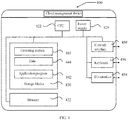
- FIG. 4 illustrates a schematic diagram of an exemplary client management device according to disclosed embodiments of the present disclosure.
- the client management device 400 may be considerably different depending on configuration or performance.
- the client management device 400 may include one or more central processing units (CPU) 422 (e.g., one or more processors) and memories 432, and one or more storage media 430 (e.g., one or more massive storage devices) configured to store application programs 442 or data 444.
- the memory 432 and the storage media 430 may be a volatile memory or a non-volatile memory.
- the application programs 442 stored in the storage media 430 may include one or more modules (not shown). Each module may include a plurality of instructions for the client management device 400.
- the CPU 422 may be configured to communicate with the storage media 430 to execute the plurality of instructions stored in the storage media 430.
- the client management device 400 may further include one or more power supplies 426, one or more wired or wireless network interfaces 450, one or more input output interfaces 458, one or more keyboards 456, and/or one or more operating systems 441, such as Windows Server, Mac OS X, Unix, Linux, FreeBSD, etc.
- the client management device 400 may include the memory and one or more programs stored in the memory.
- the one or more programs configured to be executed by one or more processors include the instructions for recognizing the surge in bandwidth demand.
- the program may be stored in a computer readable storage medium.
- the storage medium may include a read-only memory (ROM), a magnetic disk, or an optical disk.
Landscapes
- Engineering & Computer Science (AREA)
- Computer Networks & Wireless Communication (AREA)
- Signal Processing (AREA)
- Environmental & Geological Engineering (AREA)
- Data Mining & Analysis (AREA)
- Data Exchanges In Wide-Area Networks (AREA)
Applications Claiming Priority (2)
| Application Number | Priority Date | Filing Date | Title |
|---|---|---|---|
| CN201811232186.8A CN109450672B (zh) | 2018-10-22 | 2018-10-22 | 一种识别带宽需求突发的方法和装置 |
| PCT/CN2018/119599 WO2020082518A1 (zh) | 2018-10-22 | 2018-12-06 | 一种识别带宽需求突发的方法和装置 |
Publications (2)
| Publication Number | Publication Date |
|---|---|
| EP3869736A1 true EP3869736A1 (de) | 2021-08-25 |
| EP3869736A4 EP3869736A4 (de) | 2021-12-01 |
Family
ID=65547834
Family Applications (1)
| Application Number | Title | Priority Date | Filing Date |
|---|---|---|---|
| EP18938206.2A Withdrawn EP3869736A4 (de) | 2018-10-22 | 2018-12-06 | Verfahren und vorrichtung zur identifizierung des bandbreitenbedarfbursts |
Country Status (4)
| Country | Link |
|---|---|
| US (1) | US20210083947A1 (de) |
| EP (1) | EP3869736A4 (de) |
| CN (1) | CN109450672B (de) |
| WO (1) | WO2020082518A1 (de) |
Cited By (1)
| Publication number | Priority date | Publication date | Assignee | Title |
|---|---|---|---|---|
| EP4131976A4 (de) * | 2020-03-31 | 2023-10-25 | Beijing Dajia Internet Information Technology Co., Ltd. | Bandbreitenbestimmungsverfahren und -vorrichtung sowie elektronische vorrichtung und speichermedium |
Families Citing this family (3)
| Publication number | Priority date | Publication date | Assignee | Title |
|---|---|---|---|---|
| CN111988332B (zh) * | 2020-08-31 | 2022-11-29 | 上海船舶运输科学研究所 | 一种航运卫星通信平台中卫星服务商的运行与控制域系统 |
| CN114698120B (zh) * | 2022-04-01 | 2025-08-08 | 南京大鱼半导体有限公司 | 带宽分配方法、装置、存储介质及电子设备 |
| CN116233028B (zh) * | 2023-03-10 | 2026-01-30 | 阿里巴巴(中国)有限公司 | 带宽流量控制方法及装置、存储介质 |
Family Cites Families (15)
| Publication number | Priority date | Publication date | Assignee | Title |
|---|---|---|---|---|
| US7499453B2 (en) * | 2000-05-19 | 2009-03-03 | Cisco Technology, Inc. | Apparatus and methods for incorporating bandwidth forecasting and dynamic bandwidth allocation into a broadband communication system |
| US7415038B2 (en) * | 2001-03-29 | 2008-08-19 | International Business Machines Corporation | Method and system for network management providing access to application bandwidth usage calculations |
| US6862540B1 (en) * | 2003-03-25 | 2005-03-01 | Johnson Controls Technology Company | System and method for filling gaps of missing data using source specified data |
| CN101155085B (zh) * | 2006-09-29 | 2011-05-11 | 中兴通讯股份有限公司 | 实时流量预测方法及装置和实时流量监测预警方法及装置 |
| GB2456026A (en) * | 2007-12-26 | 2009-07-01 | Contendo Inc | CDN balancing and sharing platform |
| CN101448321B (zh) * | 2008-10-28 | 2010-09-08 | 北京邮电大学 | 异构无线网络频谱资源共享的方法及装置 |
| CN103256859B (zh) * | 2013-04-17 | 2015-04-08 | 上海航天测控通信研究所 | 以通用化软件模式判读运载火箭全箭信息的系统及方法 |
| CN105827472B (zh) * | 2015-01-04 | 2019-08-20 | 华为技术有限公司 | 网络数据流类型检测方法及装置 |
| US10241725B2 (en) * | 2015-10-30 | 2019-03-26 | International Business Machines Corporation | Workload balancing in a distributed storage system |
| US10491754B2 (en) * | 2016-07-22 | 2019-11-26 | Level 3 Communications, Llc | Visualizing predicted customer bandwidth utilization based on utilization history |
| CN107786351B (zh) * | 2016-08-24 | 2021-02-12 | 中国电信股份有限公司 | 业务带宽自适应调整方法、系统和sdn控制器 |
| CN106557401A (zh) * | 2016-10-13 | 2017-04-05 | 中国铁道科学研究院电子计算技术研究所 | 一种it设备监控指标的动态阈值设定方法及系统 |
| US20180123901A1 (en) * | 2016-10-31 | 2018-05-03 | Level 3 Communication, Llc | Distributed calculation of customer bandwidth utilization models |
| CN107070683A (zh) * | 2016-12-12 | 2017-08-18 | 国网北京市电力公司 | 数据预测的方法和装置 |
| CN108650218B (zh) * | 2018-03-22 | 2019-10-08 | 平安科技(深圳)有限公司 | 网络流量监测方法、装置、计算机设备及存储介质 |
-
2018
- 2018-10-22 CN CN201811232186.8A patent/CN109450672B/zh active Active
- 2018-12-06 WO PCT/CN2018/119599 patent/WO2020082518A1/zh not_active Ceased
- 2018-12-06 EP EP18938206.2A patent/EP3869736A4/de not_active Withdrawn
- 2018-12-06 US US17/044,304 patent/US20210083947A1/en not_active Abandoned
Cited By (1)
| Publication number | Priority date | Publication date | Assignee | Title |
|---|---|---|---|---|
| EP4131976A4 (de) * | 2020-03-31 | 2023-10-25 | Beijing Dajia Internet Information Technology Co., Ltd. | Bandbreitenbestimmungsverfahren und -vorrichtung sowie elektronische vorrichtung und speichermedium |
Also Published As
| Publication number | Publication date |
|---|---|
| WO2020082518A1 (zh) | 2020-04-30 |
| EP3869736A4 (de) | 2021-12-01 |
| CN109450672B (zh) | 2020-09-18 |
| CN109450672A (zh) | 2019-03-08 |
| US20210083947A1 (en) | 2021-03-18 |
Similar Documents
| Publication | Publication Date | Title |
|---|---|---|
| US11573804B2 (en) | Systems and methods for optimized cluster resource utilization | |
| EP3869736A1 (de) | Verfahren und vorrichtung zur identifizierung des bandbreitenbedarfbursts | |
| CN108776934B (zh) | 分布式数据计算方法、装置、计算机设备及可读存储介质 | |
| WO2017166803A1 (zh) | 一种资源调度方法及装置 | |
| US20130080617A1 (en) | Dynamic network load forecasting | |
| EP3758325A1 (de) | Verfahren und system zur verkehrsbegrenzung | |
| WO2023104192A1 (zh) | 一种集群系统的管理方法及装置 | |
| US10565085B2 (en) | Two-stage distributed estimation system | |
| WO2020119060A1 (zh) | 容器资源调度方法和系统、服务器及计算机可读存储介质 | |
| US10009416B2 (en) | Perfect application capacity analysis for elastic capacity management of cloud-based applications | |
| CN103533023B (zh) | 基于云服务特征的云服务应用集群同步系统及同步方法 | |
| Tadakamalla et al. | Characterization of IoT workloads | |
| WO2017107456A1 (zh) | 确定任务消耗资源的方法及装置 | |
| WO2015085969A1 (zh) | 推荐算法优化方法、装置及系统 | |
| US20120324466A1 (en) | Scheduling Execution Requests to Allow Partial Results | |
| US20050038800A1 (en) | Calculation of sevice performance grades in a multi-node environment that hosts the services | |
| CN113079062A (zh) | 一种资源调整方法、装置、计算机设备和存储介质 | |
| WO2019245786A1 (en) | Volatile account identification and isolation and resource management in distributed data storage systems | |
| CN119011504A (zh) | 一种云边融合下基于并行算力动态分配的计算方法 | |
| Martin et al. | Predicting energy consumption with streammine3g | |
| CN115689002A (zh) | 基于消息积压量的自动平衡去重方法、系统、设备及介质 | |
| CN117539401A (zh) | 数据存储方法、装置、设备和存储介质 | |
| US8285752B1 (en) | System and method for maintaining a plurality of summary levels in a single table | |
| CN114546649A (zh) | 一种电力数据文件的处理系统和方法 | |
| CN113660298B (zh) | 一种数据迁移方法和装置 |
Legal Events
| Date | Code | Title | Description |
|---|---|---|---|
| STAA | Information on the status of an ep patent application or granted ep patent |
Free format text: STATUS: THE INTERNATIONAL PUBLICATION HAS BEEN MADE |
|
| PUAI | Public reference made under article 153(3) epc to a published international application that has entered the european phase |
Free format text: ORIGINAL CODE: 0009012 |
|
| STAA | Information on the status of an ep patent application or granted ep patent |
Free format text: STATUS: REQUEST FOR EXAMINATION WAS MADE |
|
| 17P | Request for examination filed |
Effective date: 20210520 |
|
| AK | Designated contracting states |
Kind code of ref document: A1 Designated state(s): AL AT BE BG CH CY CZ DE DK EE ES FI FR GB GR HR HU IE IS IT LI LT LU LV MC MK MT NL NO PL PT RO RS SE SI SK SM TR |
|
| A4 | Supplementary search report drawn up and despatched |
Effective date: 20211104 |
|
| RIC1 | Information provided on ipc code assigned before grant |
Ipc: H04L 12/26 20060101ALN20211028BHEP Ipc: H04L 12/24 20060101AFI20211028BHEP |
|
| DAV | Request for validation of the european patent (deleted) | ||
| DAX | Request for extension of the european patent (deleted) | ||
| STAA | Information on the status of an ep patent application or granted ep patent |
Free format text: STATUS: THE APPLICATION HAS BEEN WITHDRAWN |
|
| 18W | Application withdrawn |
Effective date: 20220424 |