EP3869718B1 - Procédé de transmission, dispositif, système et support de stockage lisible par ordinateur - Google Patents
Procédé de transmission, dispositif, système et support de stockage lisible par ordinateur Download PDFInfo
- Publication number
- EP3869718B1 EP3869718B1 EP19873171.3A EP19873171A EP3869718B1 EP 3869718 B1 EP3869718 B1 EP 3869718B1 EP 19873171 A EP19873171 A EP 19873171A EP 3869718 B1 EP3869718 B1 EP 3869718B1
- Authority
- EP
- European Patent Office
- Prior art keywords
- packet
- lifetime
- repeat request
- automatic repeat
- request process
- Prior art date
- Legal status (The legal status is an assumption and is not a legal conclusion. Google has not performed a legal analysis and makes no representation as to the accuracy of the status listed.)
- Active
Links
Images

Classifications
-
- H—ELECTRICITY
- H04—ELECTRIC COMMUNICATION TECHNIQUE
- H04L—TRANSMISSION OF DIGITAL INFORMATION, e.g. TELEGRAPHIC COMMUNICATION
- H04L1/00—Arrangements for detecting or preventing errors in the information received
- H04L1/12—Arrangements for detecting or preventing errors in the information received by using return channel
- H04L1/16—Arrangements for detecting or preventing errors in the information received by using return channel in which the return channel carries supervisory signals, e.g. repetition request signals
- H04L1/18—Automatic repetition systems, e.g. Van Duuren systems
- H04L1/1806—Go-back-N protocols
-
- H—ELECTRICITY
- H04—ELECTRIC COMMUNICATION TECHNIQUE
- H04L—TRANSMISSION OF DIGITAL INFORMATION, e.g. TELEGRAPHIC COMMUNICATION
- H04L1/00—Arrangements for detecting or preventing errors in the information received
- H04L1/12—Arrangements for detecting or preventing errors in the information received by using return channel
- H04L1/16—Arrangements for detecting or preventing errors in the information received by using return channel in which the return channel carries supervisory signals, e.g. repetition request signals
- H04L1/18—Automatic repetition systems, e.g. Van Duuren systems
- H04L1/1867—Arrangements specially adapted for the transmitter end
- H04L1/188—Time-out mechanisms
-
- H—ELECTRICITY
- H04—ELECTRIC COMMUNICATION TECHNIQUE
- H04L—TRANSMISSION OF DIGITAL INFORMATION, e.g. TELEGRAPHIC COMMUNICATION
- H04L1/00—Arrangements for detecting or preventing errors in the information received
- H04L1/12—Arrangements for detecting or preventing errors in the information received by using return channel
- H04L1/16—Arrangements for detecting or preventing errors in the information received by using return channel in which the return channel carries supervisory signals, e.g. repetition request signals
- H04L1/18—Automatic repetition systems, e.g. Van Duuren systems
- H04L1/1812—Hybrid protocols; Hybrid automatic repeat request [HARQ]
- H04L1/1816—Hybrid protocols; Hybrid automatic repeat request [HARQ] with retransmission of the same, encoded, message
-
- H—ELECTRICITY
- H04—ELECTRIC COMMUNICATION TECHNIQUE
- H04L—TRANSMISSION OF DIGITAL INFORMATION, e.g. TELEGRAPHIC COMMUNICATION
- H04L1/00—Arrangements for detecting or preventing errors in the information received
- H04L1/12—Arrangements for detecting or preventing errors in the information received by using return channel
- H04L1/16—Arrangements for detecting or preventing errors in the information received by using return channel in which the return channel carries supervisory signals, e.g. repetition request signals
- H04L1/18—Automatic repetition systems, e.g. Van Duuren systems
- H04L1/1829—Arrangements specially adapted for the receiver end
-
- H—ELECTRICITY
- H04—ELECTRIC COMMUNICATION TECHNIQUE
- H04L—TRANSMISSION OF DIGITAL INFORMATION, e.g. TELEGRAPHIC COMMUNICATION
- H04L1/00—Arrangements for detecting or preventing errors in the information received
- H04L1/12—Arrangements for detecting or preventing errors in the information received by using return channel
- H04L1/16—Arrangements for detecting or preventing errors in the information received by using return channel in which the return channel carries supervisory signals, e.g. repetition request signals
- H04L1/18—Automatic repetition systems, e.g. Van Duuren systems
- H04L1/1829—Arrangements specially adapted for the receiver end
- H04L1/1835—Buffer management
-
- H—ELECTRICITY
- H04—ELECTRIC COMMUNICATION TECHNIQUE
- H04L—TRANSMISSION OF DIGITAL INFORMATION, e.g. TELEGRAPHIC COMMUNICATION
- H04L1/00—Arrangements for detecting or preventing errors in the information received
- H04L1/12—Arrangements for detecting or preventing errors in the information received by using return channel
- H04L1/16—Arrangements for detecting or preventing errors in the information received by using return channel in which the return channel carries supervisory signals, e.g. repetition request signals
- H04L1/18—Automatic repetition systems, e.g. Van Duuren systems
- H04L1/1867—Arrangements specially adapted for the transmitter end
- H04L1/1896—ARQ related signaling
-
- H—ELECTRICITY
- H04—ELECTRIC COMMUNICATION TECHNIQUE
- H04L—TRANSMISSION OF DIGITAL INFORMATION, e.g. TELEGRAPHIC COMMUNICATION
- H04L5/00—Arrangements affording multiple use of the transmission path
- H04L5/003—Arrangements for allocating sub-channels of the transmission path
- H04L5/0053—Allocation of signalling, i.e. of overhead other than pilot signals
- H04L5/0055—Physical resource allocation for ACK/NACK
-
- H—ELECTRICITY
- H04—ELECTRIC COMMUNICATION TECHNIQUE
- H04L—TRANSMISSION OF DIGITAL INFORMATION, e.g. TELEGRAPHIC COMMUNICATION
- H04L1/00—Arrangements for detecting or preventing errors in the information received
- H04L1/12—Arrangements for detecting or preventing errors in the information received by using return channel
- H04L1/16—Arrangements for detecting or preventing errors in the information received by using return channel in which the return channel carries supervisory signals, e.g. repetition request signals
- H04L1/18—Automatic repetition systems, e.g. Van Duuren systems
- H04L1/1867—Arrangements specially adapted for the transmitter end
- H04L1/1874—Buffer management
-
- H—ELECTRICITY
- H04—ELECTRIC COMMUNICATION TECHNIQUE
- H04L—TRANSMISSION OF DIGITAL INFORMATION, e.g. TELEGRAPHIC COMMUNICATION
- H04L5/00—Arrangements affording multiple use of the transmission path
- H04L5/003—Arrangements for allocating sub-channels of the transmission path
- H04L5/0078—Timing of allocation
Definitions
- Embodiments of the present invention relate to a transmission method, apparatus and system and a computer-readable storage medium.
- LBT Listen Before Talk
- a wireless local area network for example, a wireless local area network operating in an unlicensed frequency band
- STAs stations
- APs access points
- non-APs non-access points
- BSS basic service set
- a non-AP associates with an AP through a scanning, authentication and association process.
- the non-AP communicates with the AP or communicates with other STAs through the AP.
- IBSS independent BSS
- a station needs to access a propagation medium by contending for a channel.
- the packet acknowledgment mechanism currently used in a wireless local area network is as follows: A sender sends a packet.
- the packet carries a response policy.
- the response policy is used for indicating whether a receiver needs to return a correctness acknowledgment frame.
- the receiver receives the packet, and when determining that the reception is incorrect, the receiver does not make any response and discards the packet.
- the discarded packet still contains valid information.
- an automatic repeat request mechanism is introduced to the wireless local area network. That is, when it is determined that the received packet is incorrect, the receiver buffers the packet and uses the packet for combination processing, and the sender retransmits the packet or a different redundancy version of the packet.
- a sender In a wireless network operating in an unlicensed frequency band, in the process of executing an automatic repeat request mechanism, a sender needs to listen to a channel first each time a packet is retransmitted or a different redundancy version of the packet is retransmitted. Due to factors such as uncertainty of an access time, an automatic repeat request process corresponding to the packet occupies corresponding management and storage resources too long a time. Moreover, the maximum number of automatic repeat request processes concurrently supported by a device is limited by the capability of the device. As a result, if resources are not released in time, a new automatic repeat request process cannot be created. Thus, the transmission efficiency is reduced.
- EP 1 821 446 A2 SAMSUNG ELECTRONICS CO LTD [KR] 22 August 2007 (2007-08-22).
- Embodiments of the present invention provide a transmission method, apparatus and system and a computer-readable storage medium.
- an embodiment of the present invention provides a transmission method.
- the transmission method includes step 100.
- step 100 an automatic repeat request process is created for a first packet; a lifetime is set for the automatic repeat request process; and the first packet is sent.
- the automatic repeat request process may be created for the first packet before, when or after the first packet is sent. That is, the time when the automatic repeat request process of the first packet is created is acceptable as long as the absolute value of the difference between the time when the first packet is sent and the time when the automatic repeat request process of the first packet is created is within a predetermined time threshold.
- the first packet may be a newly transmitted packet or a retransmitted packet, which is not limited in this embodiment of the present invention.
- the method further includes step 101.
- step 101 the lifetime of the automatic repeat request process starts to be maintained.
- the lifetime of the automatic repeat request process may be maintained through a timer or a counter.
- the lifetime includes at least one of: a time length, an end time instant of the lifetime, or a number of times.
- the time length includes one of: an effective-time length or a remaining-time length.
- the number of times includes one of: a total number of times of a newly transmitted packet and a retransmitted packet carrying the same first predetermined number as the newly transmitted packet, a total number of remaining times of the newly transmitted packet and the retransmitted packet carrying the same first predetermined number as the newly transmitted packet, a total number of times of the retransmitted packet, or a total number of remaining times of the retransmitted packet.
- the effective-time length refers to a time interval from the time when the automatic repeat request process is created or configured to the time when the automatic repeat request process is removed.
- the remaining-time length refers to a time interval from the current time to the time when the automatic repeat request process is removed.
- the end time instant of the lifetime refers to a time instant when the automatic repeat request process is removed.
- the lifetime of automatic repeat request process can be maintained through a timer, specifically through a timing manner or a countdown timing manner.
- the lifetime of automatic repeat request process can be maintained through a counter, specifically through a counting manner or a backward counting manner.
- the time instant when the lifetime of the automatic repeat request process starts to be maintained is not limited.
- the lifetime of the automatic repeat request process may start to be maintained when the lifetime of the automatic repeat request process is set.
- the lifetime is obtained in one of the manners below.
- the lifetime is obtained according to a second predetermined number of the packet and a mapping relationship between the lifetime and the second predetermined number of the packet.
- the lifetime is obtained according to the second predetermined number of the packet and a mapping between the second predetermined number of the packet and one of the end time of the lifetime, a remaining-time length, or the number of remaining times.
- the lifetime is obtained according to a notified lifetime.
- the lifetime is obtained according to a negotiated lifetime.
- the lifetime is obtained according to a preset lifetime.
- the second predetermined number may be a redundancy version number.
- the method further includes step 102.
- step 102 in response to satisfying a preset retransmission condition in the lifetime of the automatic repeat request process, a second packet is retransmitted, where the first packet and the second packet carry a same first predetermined number.
- the lifetime of the automatic repeat request process continues being maintained.
- the first predetermined number includes at least one of a process number or a packet number.
- the preset retransmission condition includes at least one of the conditions below.
- the second packet may be retransmitted using one of the methods below.
- the second packet is retransmitted following the first predetermined time interval (for example, Short Interframe Space (SIFS)) after the incorrect-reception acknowledgement frame returned by the receiver is received.
- SIFS Short Interframe Space
- the second packet is retransmitted after the incorrect-reception acknowledgement frame returned by the receiver is received, within the lifetime, and when the channel is obtained through the contention access mechanism.
- the second packet is retransmitted after the first predetermined time interval after the incorrect-reception acknowledgement frame returned by the receiver is received; when some or all of the time instant within the first predetermined time interval after the incorrect-reception acknowledgement frame returned by the receiver is received are beyond the lifetime of the automatic repeat request process, the lifetime of the automatic repeat request process is extended to a third predetermined time interval that is after the first predetermined time interval after the incorrect-reception acknowledgement frame returned by the receiver is received.
- the third predetermined time interval is at least a time required period for retransmitting the second packet.
- the second packet is retransmitted after the first predetermined time interval after the incorrect-reception acknowledgement frame returned by the receiver is received.
- the second packet is retransmitted after the first predetermined time interval after the incorrect-reception acknowledgement frame returned by the receiver is received; when some or all of the time instants within the first predetermined time interval after the incorrect-reception acknowledgement frame returned by the receiver is received are beyond the lifetime of the automatic repeat request process, the automatic repeat request process is removed when the lifetime of the automatic repeat request process expires, that is, the second packet is no longer retransmitted after the first predetermined time interval after the incorrect-reception acknowledgement frame returned by the receiver is received.
- the first packet or the second packet further carries at least one of: a lifetime, an end time instant of the lifetime, a remaining-time length, or a number of remaining times.
- the second packet is the same as the first packet, or the redundancy version of the second packet is different from the redundancy version of the first packet.
- the method further includes step 103.
- step 103 the automatic repeat request process is removed or ended when the lifetime of the automatic repeat request process expires or a correct-reception acknowledgement frame returned by a receiver is received.
- expiration of the lifetime means that the timer reaches the time length indicted by the lifetime.
- expiration of the lifetime means that the timer reaches the end time instant.
- expiration of the lifetime means that the counter reaches the number of times indicted by the lifetime.
- expiration of the lifetime means that one of the following conditions is satisfied: The timer reaches the time length indicted by the lifetime, or the counter reaches the number of times indicted by the lifetime.
- expiration of the lifetime means that one of the following conditions is satisfied: the timer reaches the end time of the lifetime, or the counter reaches the number of times indicted by the lifetime.
- expiration of the lifetime means that one of the following conditions is satisfied: the timer reaches 0, or the counter reaches 0.
- the automatic repeat request process is removed or ended in at least one of the states below.
- a first state is stopping sending the first packet or stopping retransmitting the second packet.
- a second state is stopping sending a packet carrying the first predetermined number.
- a third state is stopping sending the first packet or stopping retransmitting the second packet through an automatic repeat request mechanism.
- the automatic repeat request process corresponding to the first packet or the second packet is removed or ended when the lifetime of the automatic repeat request process expires or the correct-reception acknowledgement frame returned by the receiver is received, so that the automatic repeat request process can be removed in time.
- a new automatic repeat request process can be created for a newly transmitted packet in time, and thus the transmission efficiency is improved.
- the transmission method includes steps 200 and 201.
- step 200 a packet is received.
- step 201 in response to determining that reception of the packet is incorrect and obtaining a first predetermined number carried in the packet, the lifetime of an automatic repeat request process corresponding to the first predetermined number is maintained.
- the first predetermined number includes at least one of: a process number or a packet number.
- an incorrect-reception acknowledgement frame when it is determined that reception of the packet is incorrect, an incorrect-reception acknowledgement frame may be returned or no information is returned; when it is determined that reception of the packet is correct, a correct-reception acknowledgement frame is returned.
- the lifetime of the automatic repeat request process corresponding to the first predetermined number is maintained in at least one of the manners below.
- the lifetime of the automatic repeat request process corresponding to the first predetermined number starts to be maintained.
- the timer may be caused to start timing or countdown timing.
- the counter may be caused to start counting or backward counting.
- the lifetime of the automatic repeat request process corresponding to the first predetermined number continues being maintained and used.
- the timer may be caused to continue timing or countdown timing or may be caused to perform timing or countdown timing according to a regained lifetime.
- the counter may be caused to start counting or backward counting or may be caused to perform counting or backward counting according to a regained lifetime.
- the first predetermined condition includes one of the following: the received packet is a newly transmitted packet; or the first predetermined number of the received packet is different from first predetermined numbers corresponding to all currently maintained automatic repeat request processes.
- the second predetermined condition includes one of the following:
- the received packet is a retransmitted packet; or an automatic repeat request process that is the same as the first predetermined number of the packet exists among currently maintained automatic repeat request processes.
- whether the received packet is a newly transmitted packet or a retransmitted packet is determined in one of the manners below.
- a first manner it is determined whether the received packet is a newly transmitted packet or a retransmitted packet according to new-transmission indication information carried in the received packet. In one embodiment, when a newly transmitted packet is indicated in the new-transmission indication information, it is determined that the received packet is a newly transmitted packet; when a retransmitted packet is indicated in the new-transmission indication information, it is determined that the received packet is a retransmitted packet.
- a second manner it is determined whether the process number carried in the packet is the same as the process number corresponding to an automatic repeat request process which is created or configured. In some embodiments, when the process number carried in the packet is different from the process number corresponding to the automatic repeat request process which is created or configured, it is determined that the received packet is a newly transmitted packet; when the process number carried in the packet is the same as the process number corresponding to the automatic repeat request process which is created or configured, it is determined that the received packet is a retransmitted packet.
- a third manner it is determined whether the packet number carried in the packet is the same as the packet number corresponding to an automatic repeat request process which is created or configured. In some embodiments, when the packet number carried in the packet is different from the packet number corresponding to the automatic repeat request process which is created or configured, it is determined that the received packet is a newly transmitted packet; when the packet number carried in the packet is the same as the packet number corresponding to the automatic repeat request process which is created or configured, it is determined that the received packet is a retransmitted packet.
- the lifetime of the automatic repeat request process may be maintained through a timer or a counter.
- the lifetime includes at least one of: a time length, an end time instant of the lifetime, or a number of times.
- the time length includes one of: an effective-time length or a remaining-time length.
- the number of times includes one of: a total number of times of a newly transmitted packet and a retransmitted packet carrying the same first predetermined number as the newly transmitted packet, a total number of remaining times of the newly transmitted packet and the retransmitted packet carrying the same first predetermined number as the newly transmitted packet, a total number of times of the retransmitted packet, or a total number of remaining times of the retransmitted packet.
- the effective-time length refers to a time interval from the time when the automatic repeat request process is created or configured to the time when the automatic repeat request process is removed.
- the remaining-time length refers to a time interval from the current time to the time when the automatic repeat request process is removed.
- the end time instant of the lifetime refers to the time when the automatic repeat request process is removed.
- the lifetime of the automatic repeat request process can be maintained through a timer, specifically through by a timing manner or a countdown timing manner. That is, the timer is caused to start timing or countdown timing after the automatic repeat request process is created or configured for the received packet.
- the lifetime of the automatic repeat request process can be maintained through a timer, specifically through by a timing manner or a countdown timing manner. That is, the counter is caused to start counting or backward counting after the automatic repeat request process is created or configured for the received packet.
- the lifetime is obtained in one of the manners below.
- the lifetime is obtained according to a second predetermined number of the packet and a mapping between the lifetime and the second predetermined number of the packet.
- the lifetime is obtained according to the second predetermined number of the packet and a mapping relationship between the second predetermined number of the packet and one of: the end time instant of the lifetime, the remaining-time length, or the number of remaining times.
- the lifetime is obtained according to a lifetime carried in the packet.
- the lifetime is obtained according to a notified lifetime.
- the lifetime is obtained according to a negotiated lifetime.
- the lifetime is obtained according to a preset lifetime.
- the second predetermined number may be a redundancy version number.
- the packet is discarded when it is determined that reception of the packet is incorrect, the received packet is a newly transmitted packet, and the first predetermined number carried in the packet cannot be obtained, or when it is determined that reception of the packet is incorrect, the received packet is a retransmitted packet, and the first predetermined number carried in the packet cannot be obtained.
- the method further includes step 202.
- step 202 the automatic repeat request process is removed or ended when the lifetime of the automatic repeat request process expires.
- expiration of the lifetime means that the timer reaches the time length indicted by the lifetime.
- expiration of the lifetime means that the timer reaches the end time.
- expiration of the lifetime means that the counter reaches the number of times indicted by the lifetime.
- expiration of the lifetime means that one of the following conditions is satisfied: the timer reaches the time length indicted by the lifetime, or the counter reaches the number of times indicted by the lifetime.
- expiration of the lifetime means that one of the following conditions is satisfied: the timer reaches the end time of the lifetime, or the counter reaches the number of times indicted by the lifetime.
- expiration of the lifetime means that one of the following conditions is satisfied: the timer reaches 0, or the counter reaches 0.
- the automatic repeat request process corresponding to the first packet or the second packet is removed or ended when the lifetime of the automatic repeat request process expires, so that the automatic repeat request process can be removed in time.
- a new automatic repeat request process can be created for a newly transmitted packet in time, and thus the transmission efficiency is improved.
- the transmission method includes steps 400 and 401.
- step 400 a packet is received.
- step 401 in response to determining that reception of the packet is incorrect, the lifetime of a first automatic retransmission buffer block corresponding to the packet is maintained.
- an incorrect-reception acknowledgement frame when it is determined that reception of the packet is incorrect, an incorrect-reception acknowledgement frame may be returned or no information is returned; when it is determined that reception of the packet is correct, a correct-reception acknowledgement frame is returned.
- the lifetime of the first automatic retransmission buffer block corresponding to the packet is maintained in at least one of the manners below.
- the lifetime of the first automatic retransmission buffer block corresponding to the packet starts to be maintained.
- the lifetime of the first automatic retransmission buffer block corresponding to the packet continues being maintained.
- the method further includes configuring the lifetime of the first automatic retransmission buffer block for the packet.
- the third predetermined number includes one of the conditions below.
- the case where the third predetermined number carried in the packet is different from third predetermined numbers carried in packets buffered in all automatic retransmission buffer blocks in the automatic retransmission buffer may include the two cases below.
- the fourth predetermined number includes one of the conditions below.
- a third predetermined number carried in a packet buffered in the second automatic retransmission buffer block is the same as a third predetermined number carried in the received packet.
- the third predetermined number includes one of: a packet number or an identifier for a station sending the packet.
- the identifier for the station includes one of: an association identifier, a partial association identifier, or a media access control (MAC) address.
- MAC media access control
- the partial association identifier may be a part of the association identifier or may be calculated from the association identifier.
- the lifetime of an automatic retransmission buffer block may be maintained by a timing manner or a countdown timing manner.
- whether the received packet is a newly transmitted packet or a retransmitted packet is determined in one of the manners below.
- a first manner it is determined whether the received packet is a newly transmitted packet or a retransmitted packet according to new-transmission indication information carried in the received packet. In one embodiment, when a newly transmitted packet is indicated in the new-transmission indication information, it is determined that the received packet is a newly transmitted packet; when a retransmitted packet is indicated in the new-transmission indication information, it is determined that the received packet is a retransmitted packet.
- a second manner it is determined whether the third predetermined number carried in the received packet is the same as third predetermined numbers carried in packets buffered in automatic retransmission buffer blocks. In some embodiments, when the third predetermined number carried in the packet is different from third predetermined numbers carried in packets buffered in all automatic retransmission buffer blocks, it is determined that the received packet is a newly transmitted packet; when a second automatic retransmission buffer block exists in the automatic retransmission buffer, it is determined that the received packet is a retransmitted packet.
- the method further includes step 402.
- step 402 the first automatic retransmission buffer block corresponding to the packet is cleared or overridden when the lifetime of the first automatic retransmission buffer block corresponding to the packet expires.
- an automatic retransmission buffer block is cleared or overridden when the lifetime of the automatic retransmission buffer block expires so that the automatic retransmission buffer block is released in time.
- a new packet can be buffered in time, and thus the transmission efficiency is improved.
- An intra-BSS station may support one or more automatic repeat request processes simultaneously.
- the station maintains one lifetime for each automatic repeat request process.
- the lifetimes of different automatic repeat request processes may be the same or different.
- the lifetime may be an effective-time length T, that is, a time interval from the time when the automatic repeat request process is created or configured to the time when the automatic repeat request process is removed.
- T may be a value notified by an access point, a value negotiated between a non-access point and the access point, a value determined by the non-access point, or a value predefined by a system.
- the station may maintain the lifetime by a timing manner or a countdown timing manner.
- the station maintains the lifetime by timing, and the transmission method includes the steps below.
- sender STA1 When sender STA1 sends newly transmitted packet 1, STA1 creates or configures an automatic repeat request process for packet 1, and timer t2 corresponding to the automatic repeat request process starts timing.
- STA1 Before t2 reaches T, when receiving an incorrect-reception acknowledgement frame returned by the receiver of packet 1, STA1 retransmits packet 1 or retransmits packet 2 in one of the manners below.
- the redundancy version of packet 2 is different from the redundancy version of packet 1.
- packet 1 or packet 2 having a different redundancy version than packet 1 is retransmitted when a channel is obtained through a contention access mechanism.
- packet 1 or packet 2 having a different redundancy version than packet 1 is retransmitted following a first predetermined time interval after the incorrect-reception acknowledgement frame returned by the receiver is received.
- the third predetermined time interval is at least a time period required for retransmitting packet 1 or packet 2 having a different redundancy version than packet 1. Packet 1 or packet 2 having a different redundancy version than packet 1 is retransmitted after the first predetermined time interval after the incorrect-reception acknowledgement frame returned by the receiver is received.
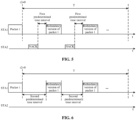
- the frame interaction process is as shown in FIG. 5 .
- a packet retransmitted one time may have the same redundancy version as or a different redundancy version than a packet retransmitted another time.
- STA1 stops retransmitting packet 1 or packet 2 having a different redundancy version than packet 1.
- STA1 transmits redundancy version 1 of packet 1 after an interval of SIFS.
- STA1 transmits redundancy version 2 of packet 1 after an interval of SIFS. The rest is done in the same manner until one of the conditions below is satisfied. When one of the conditions below is satisfied, STA1 stops retransmitting packet 1 or packet 2 having a different redundancy version than packet 1.
- An intra-BSS station may support one or more automatic repeat request processes simultaneously.
- the station maintains one lifetime for each automatic repeat request process.
- the lifetimes of different automatic repeat request processes may be the same or different.
- the lifetime may be an effective-time length T.
- T may be a value notified by an access point, a value negotiated between a non-access point and the access point, a value determined by the non-access point, or a value predefined by a system.
- the station may maintain the lifetime by a timing manner or a countdown timing manner.
- the station maintains the lifetime by timing, and the transmission method includes the steps below.
- sender STA1 When sender STA1 sends newly transmitted packet 1, STA1 creates or configures an automatic repeat request process for packet 1, and timer t2 corresponding to the automatic repeat request process starts timing.
- t2 Before t2 reaches T, when, within a second predetermined time interval, not receiving a correct-reception acknowledgement frame returned by the receiver of packet 1, STA1 retransmits packet 1 or retransmits packet 2 having a different redundancy version than packet 1. If t2 still does not reach T, when, within the second predetermined time interval, not receiving the correct-reception acknowledgement frame returned by the receiver, STA1 retransmits packet 1 or retransmits packet 2 having a different redundancy version than packet 1 and repeats the preceding process before t2 reaches T.
- the frame interaction process is as shown in FIG. 6 .
- STA1 stops retransmitting packet 1 or packet 2 having a different redundancy version than packet 1.
- An intra-BSS station may support one or more automatic repeat request processes simultaneously.
- the station maintains one lifetime for each automatic repeat request process.
- the lifetimes of different automatic repeat request processes may be the same or different.
- the lifetime may be an effective-time length T.
- T may be a value notified by an access point, a value negotiated between a non-access point and the access point, a value determined by the non-access point, or a value predefined by a system.
- the station may maintain the lifetime by a timing manner or a countdown timing manner.
- the station maintains the lifetime by timing, and the transmission method includes the steps below.
- Receiver STA2 receives a packet and determines that the packet is a newly transmitted packet received incorrectly. STA2 obtains a first predetermined number carried in the packet and starts timer t3 of an automatic repeat request process corresponding to the first predetermined number. When timer t3 reaches T, STA2 removes or ends the automatic repeat request process.
- the first predetermined number includes at least one of a process number or a packet number.
- STA2 determines whether the packet is a newly transmitted packet in, but not limited to, one of the manners below.
- An intra-BSS station may support one or more automatic repeat request processes simultaneously.
- the station maintains one lifetime for each automatic repeat request process.
- the lifetimes of different automatic repeat request processes may be the same or different.
- a mapping relationship between a lifetime and a second predetermined number include one of:
- receiver STA2 receives a packet and obtains a second predetermined number of the packet; according to a mapping relationship between the predefined second predetermined number and the remaining-time length or the end time instant of the lifetime of an automatic repeat request process, when the remaining-time length ends or the end time instant reaches, STA2 removes or ends the automatic repeat request process.
- the remaining-time length or the end time instant of the lifetime of the automatic repeat request process may be obtained according to the second predetermined number of the packet.
- receiver STA2 receives a packet and obtains a second predetermined number of the packet; according to a mapping relationship between the predefined second predetermined number and the number of remaining times of the lifetime of an automatic repeat request process, when the total number of times of the received packet or a packet having a different redundancy number than the received packet reaches the number of remaining times, STA2 removes or ends the automatic repeat request process.
- the number of remaining times of the lifetime of the automatic repeat request process may be obtained according to the second predetermined number of the packet.
- a mapping relationship between a second predetermined number and the lifetime of an automatic repeat request process is as listed in Table 1.
- STA2 receives a packet.
- STA2 obtains redundancy version number n2 of the packet.
- STA2 determines that the lifetime of the automatic repeat request process is V2.
- STA2 starts timing from 0 when receiving the packet and removes or ends the automatic repeat request process corresponding to the packet when the timer reaches V2.
- Table 1 Mapping relationship between a second predetermined number and the lifetime of an automatic repeat request process Second Predetermined Number Lifetime n1 V1 n2 V2 n3 V3 ... ... nk V4
- An intra-BSS station may support one or more automatic repeat request processes simultaneously.
- the station maintains one lifetime for each automatic repeat request process.
- the lifetimes of different automatic repeat request processes may be the same or different.
- the lifetime may be an effective-time length T.
- a sender or a receiver maintains one timer for each automatic repeat request process separately.
- the transmission method includes the steps below.
- STA1 When STA1 newly transmits packet 1, STA1 creates or configures an automatic repeat request process for packet 1 and starts timer t1 corresponding to the automatic repeat request process. When t1 reaches T, STA1 removes the automatic repeat request process corresponding to packet 1.
- the preceding process includes, but is not limited to the following operation:
- STA1 When reception of packet 1 is incorrect while the automatic repeat request process is being executed, STA1 retransmits packet 1 or packet 2 having a different redundancy version than packet 1.
- Packet 2 having a different redundancy version than packet 1 and packet 1 have the same packet number and carry the same valid information but different redundancy information.
- the valid information is information bits to be transmitted before coding.
- Packet 1 or packet 2 having a different redundancy version than packet 1 sent by STA1 in the automatic repeat request process further carry time length information.
- the time length information is used for indicating the remaining-time length of the lifetime of the automatic repeat request process corresponding to packet 1 or packet 2 having a different redundancy version than packet 1 or indicating the end time of the lifetime of the automatic repeat request process corresponding to packet 1 or packet 2 having a different redundancy version than packet 1.
- Receiver STA2 can obtain the remaining-time length upon receiving the preceding packet sent by STA1 or another packet sent by STA1 and having a different redundancy version than the packet. STA2 removes or ends the automatic repeat request process when the remaining-time length is 0.
- STA2 can obtain the end time of the lifetime of the automatic repeat request process upon receiving the preceding packet sent by STA1 or another packet sent by STA1 and having a different redundancy version than the packet. STA2 removes or ends the automatic repeat request process when the end time comes.
- An intra-BSS station may support one or more automatic repeat request processes simultaneously.
- the station maintains one lifetime for each automatic repeat request process.
- the lifetimes of different automatic repeat request processes may be the same or different.
- the lifetime may be the total number of times of a newly transmitted packet and a retransmitted packet.
- the newly transmitted packet and the retransmitted packet of the newly transmitted packet have the same packet number, carry the same valid information and carry the same or different redundancy information.
- the valid information is information bits to be transmitted before coding.
- STA1 maintains a lifetime of N times for each automatic repeat request process. That is, the total number of times STA1 receives a packet and a retransmitted packet of the packet is N.
- STA1 receives a packet and determines whether the packet is a newly transmitted packet.
- STA1 causes the counter corresponding to the automatic repeat request process corresponding to the first predetermined number of the packet to start counting.
- STA1 determines whether the packet is the same as the process number or the packet number corresponding to a certain current automatic repeat request process. When the packet is the same as the process number or the packet number corresponding to the certain current automatic repeat request process, the counter is increased by 1. When the packet is different from the process numbers or the packet numbers corresponding to all current automatic repeat request processes, STA1 causes the counter corresponding to the automatic repeat request process corresponding to the first predetermined number of the packet to start counting.
- STA1 removes the corresponding automatic repeat request process.
- STA1 determines whether the packet is a newly transmitted packet in, but not limited to, one of the manners below.
- An intra-BSS station may support one or more automatic repeat request processes simultaneously.
- the station maintains one lifetime for each automatic repeat request process.
- the lifetimes of different automatic repeat request processes may be the same or different.
- the lifetime may be the number of remaining times of transmission of a packet and a retransmitted packet of the packet.
- the packet and the retransmitted packet of the packet carries the same valid information and the same or different redundancy information.
- the valid information is information bits to be transmitted before coding.
- sender STA1 carries a lifetime in a sent packet.
- the lifetime indicates the number of remaining times of a current packet and a retransmitted packet of the packet.
- STA1 carries, in a newly transmitted packet, a lifetime indicating that the number of remaining times is N and carries, in a packet transmitted the second time and having the same packet number or a retransmitted packet of the packet, a lifetime indicating that the number of remaining times is (N - 1).
- STA2 can carry a lifetime in some or all sent packets having the same packet number or retransmitted packets of the packet.
- Receiver STA2 can obtain the lifetime of the automatic repeat request process of a current packet upon receiving one or more of the preceding packets.
- multiple stations form one basic service set (BSS).
- BSS basic service set
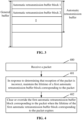
- the general buffer of a station as a receiver contains an automatic retransmission request buffer.
- the automatic retransmission request buffer is divided into one or more automatic retransmission buffer blocks.
- the station maintains one timer for each automatic retransmission buffer block.
- the automatic retransmission request buffer is as shown in FIG. 3 .
- the station stores packets having the same packet number in the same automatic retransmission buffer block and starts timing from the first packet having a certain packet number in a certain automatic retransmission buffer block.
- the longest station-supported duration T of a buffered packet having the same packet number is T.
- T denotes the lifetime of a buffered packet corresponding to a certain packet number in the automatic retransmission buffer block.
- STA1 receives a packet, determines that reception of the packet is incorrect and learns that the packet number of the packet is M.
- an automatic retransmission buffer block denoted by B1 is configured for buffering the packet, and timer t1 corresponding to B1 starts timing.
- the packet is buffered in the automatic retransmission buffer block (denoted by B2) corresponding to a packet having the same packet number M; or the packet is combined with a packet buffered in B2, and then the combined packet is buffered in B2.
- B2 corresponds to timer t2.
- STA1 may, but not necessarily, determine whether a current packet is a newly transmitted packet according to whether there is an automatic retransmission buffer block containing a packet having the same packet number as the current packet: When no automatic retransmission buffer block containing a packet whose packet number is M is in the automatic retransmission request buffer, it is determined that the current packet is a newly transmitted packet. When an automatic retransmission buffer block containing a packet whose packet number is M is in the automatic retransmission request buffer, it is determined that the current packet is a non-newly transmitted packet.
- STA1 clears the corresponding automatic retransmission buffer block in the automatic retransmission request buffer and resets the timer.
- STA1 clears B 1 and resets t1; when t2 reaches T, STA1 clears B2 and resets t2.
- STA1 When STA1 receives a packet incorrectly, if STA1 does not learn that the packet number of the packet is M, STA1 discards the packet.
- STA1 When receiving a packet correctly and learning that the packet number of the packet is N, STA1 performs the operations below.
- B When it is determined that the packet is not a newly transmitted packet, that is, when a packet whose packet number is N is buffered in the automatic retransmission request buffer, STA1 clears B3 and resets the timer corresponding to B3.
- B3 denotes the automatic retransmission buffer block containing the packet whose packet number is N in the automatic retransmission request buffer.
- the general buffer of an intra-BSS station as a receiver contains an automatic retransmission request buffer.
- the automatic retransmission request buffer is divided into one or more automatic retransmission buffer blocks.
- the station maintains one timer for each automatic retransmission buffer block.
- the station places packets from the same sender in the same buffer block.
- the sender is identified by an association identifier, a partial association identifier, or a MAC address carried in a packet.
- association identifier, the partial association identifier, or the MAC address is referred to as a station identifier (STA identifier (SID)).
- the station starts timing from the first packet having an SID in a certain automatic retransmission buffer block.
- the longest station-supported duration T of a buffered packet having the same SID is T.
- T denotes the lifetime of a buffered packet corresponding to an SID in the automatic retransmission buffer block.
- STA1 receives multiple packets from multiple stations simultaneously.
- the SIDs of the multiple stations are k1, k2, ..., and kn, respectively.
- STA1 determines whether each packet is received correctly separately. When a packet is received incorrectly, STA1 buffers the incorrectly received packet in the automatic retransmission buffer block corresponding to the SID of the station sending the packet.
- STA1 when receiving a packet sent by the station whose station identifier is k1 and determining that reception of the packet is incorrect, STA1 performs the operations below.
- STA1 clears or overrides the corresponding automatic retransmission buffer block in the automatic retransmission request buffer and resets the timer.
- the station maintains one lifetime for each automatic repeat request process.
- the lifetimes of different automatic repeat request processes may be the same or different.
- the lifetime is jointly indicated by time length information and the number of times of transmission. That is, the automatic repeat request process is removed or ended when one of the conditions below is satisfied.
- a packet or a different redundancy version of the packet sent by a sender carries lifetime information that includes the remaining-time length T and the number of remaining times of transmission of a current automatic repeat request process.
- a receiver receives the packet, obtains T and N, and performs counting and timing through a counter and a timer respectively. When either the counter or the timer expires, the receiver removes the automatic repeat request process. For example, when the backward counting reaches 0, but the countdown timing does not reach 0, the receiver removes the automatic repeat request process. Alternatively, when the countdown timing reaches 0, but the backward counting does not reach 0, the receiver removes the automatic repeat request process.
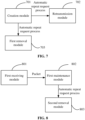
- the transmission apparatus includes a creation module 701.
- the creation module 701 is configured to create an automatic repeat request process for a first packet, set a lifetime for the automatic repeat request process and send the first packet.
- the creation module 701 may create the automatic repeat request process for the first packet before, when or after the first packet is sent. That is, the time when the automatic repeat request process of the first packet is created is acceptable as long as the absolute value of the difference between the time when the first packet is sent and the time when the automatic repeat request process of the first packet is created is within a predetermined time threshold.
- the first packet may be a newly transmitted packet or a retransmitted packet. This is not limited in this embodiment of the present invention.
- the creation module 701 is further configured to start to maintain the lifetime of the automatic repeat request process.
- the creation module 701 may maintain the lifetime of the automatic repeat request process through a timer or a counter.
- the lifetime includes at least one of: a time length, an end time instant of the lifetime, or a number of times.
- the time length includes one of: an effective-time length or a remaining-time length.
- the number of times includes one of: a total number of times of a newly transmitted packet and a retransmitted packet carrying the same first predetermined number as the newly transmitted packet, a total number of remaining times of the newly transmitted packet and the retransmitted packet carrying the same first predetermined number as the newly transmitted packet, a total number of times of the retransmitted packet, or a number of remaining times of the retransmitted packet.
- the effective-time length refers to a time interval from the time when the automatic repeat request process is created or configured to the time when the automatic repeat request process is removed.
- the remaining-time length refers to a time interval from the current time to the time when the automatic repeat request process is removed.
- the end time instant of the lifetime refers to the time when the automatic repeat request process is removed.
- the lifetime is the effective-time length or the remaining-time length, it is feasible to maintain the lifetime of the automatic repeat request process by timing or countdown timing through a timer.
- the lifetime is the total number of times of the newly transmitted packet and the retransmitted packet, the total number of remaining times of the newly transmitted packet and the retransmitted packet, the total number of times of the retransmitted packet, or the number of remaining times of the retransmitted packet, it is feasible to maintain the lifetime of the automatic repeat request process by timing or countdown timing through a timer.
- the time when the creation module 701 starts to maintain the lifetime of the automatic repeat request process is not limited.
- the creation module 701 may start to maintain the lifetime of the automatic repeat request process when the lifetime of the automatic repeat request process is set.
- the transmission apparatus further includes a retransmission module 702.
- the retransmission module 702 is configured to, in response to satisfying a preset retransmission condition in the lifetime of the automatic repeat request process, retransmit a second packet, where the first packet and the second packet carry the same first predetermined number.
- the creation module 701 continues maintaining the lifetime of the automatic repeat request process.
- the first predetermined number includes at least one of: a process number or a packet number.
- the creation module 701, the retransmission module 702, and a first removal module 703 may obtain the lifetime in one of the manners below.
- the lifetime is obtained according to a second predetermined number of the packet and a mapping relationship between the lifetime and the second predetermined number of the packet.
- the lifetime is obtained according to the second predetermined number of the packet and a mapping between the second predetermined number of the packet and one of the end time instant of the lifetime, a remaining-time length, or the number of remaining times.
- the lifetime is obtained according to a notified lifetime.
- the lifetime is obtained according to a negotiated lifetime.
- the lifetime is obtained according to a preset lifetime.
- the second predetermined number is a redundancy version number.
- the preset retransmission condition includes at least one of the conditions below.
- the retransmission module 702 may retransmit the second packet using one of the methods below.
- the second packet is retransmitted after the first predetermined time interval (for example, Short Interframe Space (SIFS)) after the incorrect-reception acknowledgement frame returned by the receiver is received.
- SIFS Short Interframe Space
- the second packet is retransmitted after the incorrect-reception acknowledgement frame returned by the receiver is received, within the lifetime, and when the channel is obtained through the contention access mechanism.
- the second packet is retransmitted following the first predetermined time interval after the incorrect-reception acknowledgement frame returned by the receiver is received; when some or all of the time instants within the first predetermined time interval after the incorrect-reception acknowledgement frame returned by the receiver is received are beyond the lifetime of the automatic repeat request process, the lifetime of the automatic repeat request process is extended to a third predetermined time interval that is after the first predetermined time interval after the incorrect-reception acknowledgement frame returned by the receiver is received.
- the third predetermined time interval is at least a time required for retransmitting the second packet.
- the second packet is retransmitted after the first predetermined time interval after the incorrect-reception acknowledgement frame returned by the receiver is received.
- the second packet is retransmitted after the first predetermined time interval after the incorrect-reception acknowledgement frame returned by the receiver is received; when some or all of the time instants within the first predetermined time interval after the incorrect-reception acknowledgement frame returned by the receiver is received are beyond the lifetime of the automatic repeat request process, the automatic repeat request process is removed when the lifetime of the automatic repeat request process expires, that is, the second packet is no longer retransmitted after the first predetermined time interval after the incorrect-reception acknowledgement frame returned by the receiver is received.
- the first packet or the second packet further carries at least one of: a lifetime, an end time of instant the lifetime, a remaining-time length, or a number of remaining times.
- the second packet is the same as the first packet, or the redundancy version of the second packet is different from the redundancy version of the first packet.
- the transmission apparatus further includes a first removal module 703.
- the first removal module 703 is configured to remove or end the automatic repeat request process when the lifetime of the automatic repeat request process expires or a correct-reception acknowledgement frame returned by a receiver is received.
- expiration of the lifetime means that the timer reaches the time length indicted by the lifetime.
- expiration of the lifetime means that the timer reaches the end time.
- expiration of the lifetime means that the counter reaches the number of times indicted by the lifetime.
- expiration of the lifetime means that one of the following conditions is satisfied: the timer reaches the time length indicted by the lifetime, or the counter reaches the number of times indicted by the lifetime.
- expiration of the lifetime means that one of the following conditions is satisfied: the timer reaches the end time of the lifetime, or the counter reaches the number of times indicted by the lifetime.
- expiration of the lifetime means that one of the following conditions is satisfied: The timer reaches 0, or the counter reaches 0.
- the first removal module 703 is used for removing or ending the automatic repeat request process in at least one of the manners below.
- the automatic repeat request process corresponding to the first packet or the second packet is removed or ended when the lifetime of the automatic repeat request process expires or the correct-reception acknowledgement frame returned by the receiver is received.
- a new automatic repeat request process can be created for a newly transmitted packet in time, and thus the transmission efficiency is improved.
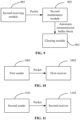
- the transmission apparatus includes a first receiving module 801 and a first maintenance module 802.
- the first receiving module 801 is configured to receive a packet.
- the first maintenance module 802 is configured to, in response to determining that reception of the packet is incorrect and obtaining a first predetermined number carried in the packet, maintain the lifetime of an automatic repeat request process corresponding to the first predetermined number.
- the transmission apparatus further includes a second removal module 803.
- the second removal module 803 is configured to remove or end the automatic repeat request process when the lifetime of the automatic repeat request process expires.
- the first predetermined number includes at least one of: a process number or a packet number.
- an incorrect-reception acknowledgement frame when it is determined that reception of the packet is incorrect, an incorrect-reception acknowledgement frame may be returned or no information is returned; when it is determined that reception of the packet is correct, a correct-reception acknowledgement frame is returned.
- the first maintenance module 802 is configured to maintain the lifetime of the automatic repeat request process corresponding to the first predetermined number in at least one of the manners below.
- the lifetime of the automatic repeat request process corresponding to the first predetermined number starts to be maintained.
- the timer may be caused to start timing or countdown timing.
- the counter may be caused to start counting or backward counting.
- the lifetime of the automatic repeat request process corresponding to the first predetermined number continues being maintained and used.
- the timer may be caused to continue timing or countdown timing or may be caused to perform timing or countdown timing according to a regained lifetime.
- the counter may be caused to start counting or backward counting or may be caused to perform counting or backward counting according to a regained lifetime.
- the first predetermined condition includes one of the following: The received packet is a newly transmitted packet; or the first predetermined number of the received packet is different from first predetermined numbers corresponding to all currently maintained automatic repeat request processes.
- the second predetermined condition includes one of the following: the received packet is a retransmitted packet; or an automatic repeat request process that is the same as the first predetermined number of the packet exists among currently maintained automatic repeat request processes.
- the first maintenance module 802 is used for determining whether the received packet is a newly transmitted packet or a retransmitted packet in one of the manners below.
- a first manner it is determined whether the received packet is a newly transmitted packet or a retransmitted packet according to new-transmission indication information carried in the received packet. In some embodiments, when a newly transmitted packet is indicated in the new-transmission indication information, it is determined that the received packet is a newly transmitted packet; when a retransmitted packet is indicated in the new-transmission indication information, it is determined that the received packet is a retransmitted packet.
- a second manner it is determined whether the process number carried in the packet is the same as the process number corresponding to a automatic repeat request process which is created or configured. In some embodiments, when the process number carried in the packet is different from the process number corresponding to the automatic repeat request process which is created or configured, it is determined that the received packet is a newly transmitted packet; when the process number carried in the packet is the same as the process number corresponding to the automatic repeat request process which is created or configured, it is determined that the received packet is a retransmitted packet.
- a third manner it is determined whether the packet number carried in the packet is the same as the packet number corresponding to an automatic repeat request process which is created or configured. In some embodiments, when the packet number carried in the packet is different from the packet number corresponding to the automatic repeat request process which is created or configured, it is determined that the received packet is a newly transmitted packet; when the packet number carried in the packet is the same as the packet number corresponding to the automatic repeat request process which is created or configured, it is determined that the received packet is a retransmitted packet.
- the first maintenance module 802 may maintain the lifetime of the automatic repeat request process through a timer or a counter.
- the lifetime includes at least one of: a time length, an end time instant of the lifetime, or a number of times.
- the time length includes one of: an effective-time length or a remaining-time length.
- the number of times includes one of: a total number of times of a newly transmitted packet and a retransmitted packet carrying the same first predetermined number as the newly transmitted packet, a total number of remaining times of the newly transmitted packet and the retransmitted packet carrying the same first predetermined number as the newly transmitted packet, a total number of times of the retransmitted packet, or a number of remaining times of the retransmitted packet.
- the effective-time length refers to the time interval from the time when the automatic repeat request process is created or configured to the time when the automatic repeat request process is removed.
- the remaining-time length refers to the time interval from the current time to the time when the automatic repeat request process is removed.
- the end time instant of the lifetime refers to the time when the automatic repeat request process is removed.
- the lifetime is the effective-time length or the remaining-time length
- the lifetime is the total number of times of the newly transmitted packet and the retransmitted packet, the total number of remaining times of the newly transmitted packet and the retransmitted packet, the total number of times of the retransmitted packet, or the number of remaining times of the retransmitted packet.
- the first maintenance module 802 and the second removal module 803 may obtain the lifetime in one of the manners below.
- the lifetime is obtained according to a second predetermined number of the packet and a mapping relationship between the lifetime and the second predetermined number of the packet.
- the lifetime is obtained according to the second predetermined number of the packet and a mapping relationship between the second predetermined number of the packet and one of: an end time instant of the lifetime, a remaining-time length, or a number of remaining times.
- the lifetime is obtained according to a lifetime carried in the packet.
- the lifetime is obtained according to a notified lifetime.
- the lifetime is obtained according to a negotiated lifetime.
- the lifetime is obtained according to a preset lifetime.
- the second predetermined number may be a redundancy version number.
- expiration of the lifetime means that the timer reaches the time length indicted by the lifetime.
- expiration of the lifetime means that the timer reaches the end time.
- expiration of the lifetime means that the counter reaches the number of times indicted by the lifetime.
- expiration of the lifetime means that one of the following conditions is satisfied: the timer reaches the time length indicted by the lifetime, or the counter reaches the number of times indicted by the lifetime.
- expiration of the lifetime means that one of the following conditions is satisfied: the timer reaches the end time of the lifetime, or the counter reaches the number of times indicted by the lifetime.
- expiration of the lifetime means that one of the following conditions is satisfied: the timer reaches 0, or the counter reaches 0.
- the first maintenance module 802 is further used for discarding the packet when it is determined that reception of the packet is incorrect, the received packet is a newly transmitted packet, and the first predetermined number carried in the packet cannot be obtained; or when it is determined that reception of the packet is incorrect, the received packet is a retransmitted packet, and the first predetermined number carried in the packet cannot be obtained.
- the automatic repeat request process corresponding to the first packet or the second packet is removed or ended when the lifetime of the automatic repeat request process expires.
- a new automatic repeat request process can be created for a newly transmitted packet in time, and thus the transmission efficiency is improved.
- the transmission apparatus includes a second receiving module 901 and a second maintenance module 902.
- the second receiving module 901 is configured to receive a packet.
- the second maintenance module 902 is configured to, in response to determining that reception of the packet is incorrect, maintain the lifetime of a first automatic retransmission buffer block corresponding to the packet.
- the second maintenance module 902 is further configured to buffer the received packet in the first automatic retransmission buffer block or configured to combine the received packet with a packet buffered in the first automatic retransmission buffer block and then buffer the combined packet in the first automatic retransmission buffer block.
- an incorrect-reception acknowledgement frame may be returned or no information is returned; when it is determined that reception of the packet is correct, a correct-reception acknowledgement frame is returned.
- the second maintenance module 902 is configured to maintain the lifetime of the first automatic retransmission buffer block corresponding to the packet in at least one of the manners below.
- the lifetime of the first automatic retransmission buffer block corresponding to the packet starts to be maintained.
- the method further includes configuring the lifetime of the first automatic retransmission buffer block for the packet.
- the third predetermined number includes one of the following conditions: A newly transmitted packet is indicated in new-transmission indication information carried in the packet; or a third predetermined number carried in the packet is different from third predetermined numbers carried in packets buffered in all automatic retransmission buffer blocks in an automatic retransmission buffer.
- the case where the third predetermined number carried in the packet is different from third predetermined numbers carried in packets buffered in all automatic retransmission buffer blocks in the automatic retransmission buffer may include the two cases below.
- the fourth predetermined number includes one of the conditions below.
- a third predetermined number carried in a packet buffered in the second automatic retransmission buffer block is the same as a third predetermined number carried in the received packet.
- the third predetermined number includes one of a packet number or a identifier for a station sending the packet.
- the identifier for a station includes one of an association identifier, a partial association identifier, or a MAC address.
- the second maintenance module 902 is configured to determine whether the received packet is a newly transmitted packet or a retransmitted packet in one of the manners below.
- a first manner it is determined whether the received packet is a newly transmitted packet or a retransmitted packet according to new-transmission indication information carried in the received packet. In one embodiment, when a newly transmitted packet is indicated in the new-transmission indication information, it is determined that the received packet is a newly transmitted packet; when a retransmitted packet is indicated in the new-transmission indication information, it is determined that the received packet is a retransmitted packet.
- a second manner it is determined whether the third predetermined number carried in the received packet is the same as third predetermined numbers carried in packets buffered in automatic retransmission buffer blocks. In some embodiments, when the third predetermined number carried in the packet is different from third predetermined numbers carried in packets buffered in all automatic retransmission buffer blocks, it is determined that the received packet is a newly transmitted packet; when a second automatic retransmission buffer block exists in the automatic retransmission buffer, it is determined that the received packet is a retransmitted packet.
- the second maintenance module 902 may maintain the lifetime of an automatic retransmission buffer block by a timing manner or a countdown timing manner.
- the transmission apparatus further includes a clearing module 903.
- the clearing module 903 is configured to clear or override the first automatic retransmission buffer block corresponding to the packet when the lifetime of the first automatic retransmission buffer block corresponding to the packet expires.
- an automatic retransmission buffer block is cleared or overridden when the lifetime of the automatic retransmission buffer block expires so that the automatic retransmission buffer block is released in time.
- a new packet can be buffered in time, and thus the transmission efficiency is improved.
- the transmission apparatus includes a processor and a computer-readable storage medium storing instructions.
- the processor executes the instructions to perform any preceding transmission method.
- Another embodiment of the present invention provides a computer-readable storage medium storing a computer program.
- the computer program is executed by a processor, any preceding transmission method is performed.
- the transmission system includes a first sender 1001 and a first receiver 1002.
- the first sender 1001 is configured to create an automatic repeat request process for a first packet, set a lifetime for the automatic repeat request process and send the first packet.
- the first receiver 1002 is configured to receive a packet, and in response to determining that reception of the packet is incorrect and obtaining a first predetermined number carried in the packet, maintain the lifetime of an automatic repeat request process corresponding to the first predetermined number.
- the first sender 1001 may create the automatic repeat request process for the first packet before, when or after the first packet is sent. That is, the time when the first sender 1001 creates the automatic repeat request process of the first packet is acceptable as long as the absolute value of the difference between the time when the first sender 1001 sends the automatic repeat request process of the first packet and the time when the first sender 1001 creates the automatic repeat request process of the first packet is within a predetermined time threshold.
- the first packet may be a newly transmitted packet or a retransmitted packet. This is not limited in this embodiment of the present invention.
- the first sender 1001 is further configured to start to maintain the lifetime of the automatic repeat request process.
- the first sender 1001 and the first receiver 1002 may maintain the lifetime of the automatic repeat request process through a timer or a counter.
- the lifetime includes at least one of: a time length, an end time instant of the lifetime, or a number of times.
- the time length includes one of an effective-time length or a remaining-time length.
- the number of times includes one of: a total number of times of a newly transmitted packet and a retransmitted packet carrying the same first predetermined number as the newly transmitted packet, a total number of remaining times of the newly transmitted packet and the retransmitted packet carrying the same first predetermined number as the newly transmitted packet, a total number of times of the retransmitted packet, or a number of remaining times of the retransmitted packet.
- the effective-time length refers to the time interval from the time when the automatic repeat request process is created or configured to the time when the automatic repeat request process is removed.
- the remaining-time length refers to the time interval from the current time to the time when the automatic repeat request process is removed.
- the end time instant of the lifetime refers to the time when the automatic repeat request process is removed.
- the lifetime is the effective-time length or the remaining-time length, it is feasible to maintain the lifetime of the automatic repeat request process by timing or countdown timing through a timer.
- the lifetime is the total number of times of the newly transmitted packet and the retransmitted packet, the total number of remaining times of the newly transmitted packet and the retransmitted packet, the total number of times of the retransmitted packet, or the number of remaining times of the retransmitted packet, it is feasible to maintain the lifetime of the automatic repeat request process by timing or countdown timing through a timer.
- the time when the lifetime of the automatic repeat request process starts to be maintained is not limited.
- the lifetime of the automatic repeat request process may start to be maintained when the lifetime of the automatic repeat request process is set.
- the first sender 1001 may obtain the lifetime in one of the manners below.
- the lifetime is obtained according to a second predetermined number of the packet and a mapping relationship between the lifetime and the second predetermined number of the packet.
- the lifetime is obtained according to the second predetermined number of the packet and a mapping relationship between the second predetermined number of the packet and one of the end time instant of the lifetime, a remaining-time length, or the number of remaining times.
- the lifetime is obtained according to a notified lifetime.
- the lifetime is obtained according to a negotiated lifetime.
- the lifetime is obtained according to a preset lifetime.
- the second predetermined number may be a redundancy version number.
- the first sender 1001 is further configured to, in response to satisfying a preset retransmission condition in the lifetime of the automatic repeat request process, retransmit a second packet, where the first packet and the second packet carry the same first predetermined number.
- the first sender 1001 in the process of determining whether the preset retransmission condition is satisfied within the lifetime of the automatic repeat request process and the process of retransmitting the second packet, the first sender 1001 continues maintaining the lifetime of the automatic repeat request process.
- the first predetermined number includes at least one of: a process number or a packet number.
- the preset retransmission condition includes at least one of the conditions below.
- the first sender 1001 may retransmit the second packet using one of the methods below.
- the second packet is retransmitted after the first predetermined time interval (for example, Short Interframe Space (SIFS)) after the incorrect-reception acknowledgement frame returned by the receiver is received.
- SIFS Short Interframe Space
- the second packet is retransmitted after the incorrect-reception acknowledgement frame returned by the receiver is received, within the lifetime, and when the channel is obtained through the contention access mechanism.
- the second packet is retransmitted after the first predetermined time interval after the incorrect-reception acknowledgement frame returned by the receiver is received; when some or all of the time instants within the first predetermined time interval after the incorrect-reception acknowledgement frame returned by the receiver is received are beyond the lifetime of the automatic repeat request process, the lifetime of the automatic repeat request process is extended to a third predetermined time interval that is following the first predetermined time interval after the incorrect-reception acknowledgement frame returned by the receiver is received.
- the third predetermined time interval is at least a time required for retransmitting the second packet.
- the second packet is retransmitted after the first predetermined time interval after the incorrect-reception acknowledgement frame returned by the receiver is received.
- the second packet is retransmitted after the first predetermined time interval after the incorrect-reception acknowledgement frame returned by the receiver is received; when some or all of the time instants within the first predetermined time interval after the incorrect-reception acknowledgement frame returned by the receiver is received are beyond the lifetime of the automatic repeat request process, the automatic repeat request process is removed when the lifetime of the automatic repeat request process expires, that is, the second packet is no longer retransmitted after the first predetermined time interval after the incorrect-reception acknowledgement frame returned by the receiver is received.
- the first packet or the second packet further carries at least one of: a lifetime, an end time instant of the lifetime, a remaining-time length, or a number of remaining times.
- the second packet is the same as the first packet, or the redundancy version of the second packet is different from the redundancy version of the first packet.
- the first sender 1001 is further configured to remove or end the automatic repeat request process when the lifetime of the automatic repeat request process expires or a correct-reception acknowledgement frame returned by a receiver is received.
- expiration of the lifetime means that the timer reaches the time length indicted by the lifetime.
- expiration of the lifetime means that the timer reaches the end time.
- expiration of the lifetime means that the counter reaches the number of times indicted by the lifetime.
- expiration of the lifetime means that one of the following conditions is satisfied: The timer reaches the time length indicted by the lifetime, or the counter reaches the number of times indicted by the lifetime.
- expiration of the lifetime means that one of the following conditions is satisfied: The timer reaches the end time of the lifetime, or the counter reaches the number of times indicted by the lifetime.
- expiration of the lifetime means that one of the following conditions is satisfied: The timer reaches 0, or the counter reaches 0.
- the first sender 1001 is configured to remove or end the automatic repeat request process in at least one of the manners below.
- the automatic repeat request process corresponding to the first packet or the second packet is removed or ended when the lifetime of the automatic repeat request process expires or the correct-reception acknowledgement frame returned by the receiver is received.
- a new automatic repeat request process can be created for a newly transmitted packet in time, and thus the transmission efficiency is improved.
- the first predetermined number includes at least one of: a process number or a packet number.
- the first receiver 1002 when determining that reception of the packet is incorrect, may return an incorrect-reception acknowledgement frame or return no information; when determining that reception of the packet is correct, the first receiver 1002 may return a correct-reception acknowledgement frame.
- the first receiver 1002 is configured to maintain the lifetime of the automatic repeat request process corresponding to the first predetermined number in at least one of the manners below.
- the lifetime of the automatic repeat request process corresponding to the first predetermined number starts to be maintained.
- the timer may be caused to start timing or countdown timing.
- the counter may be caused to start counting or backward counting.
- the lifetime of the automatic repeat request process corresponding to the first predetermined number continues being maintained and used.
- the timer may be caused to continue timing or countdown timing or may be caused to perform timing or countdown timing according to a regained lifetime.
- the counter may be caused to start counting or backward counting or may be caused to perform counting or backward counting according to a regained lifetime.
- the first predetermined condition includes one of the following: the received packet is a newly transmitted packet; or the first predetermined number of the received packet is different from first predetermined numbers corresponding to all currently maintained automatic repeat request processes.
- the second predetermined condition includes one of the following: the received packet is a retransmitted packet; or an automatic repeat request process that is the same as the first predetermined number of the packet exists among currently maintained automatic repeat request processes.
- the first receiver 1002 may determine whether the received packet is a newly transmitted packet or a retransmitted packet in one of the manners below.
- a first manner it is determined whether the received packet is a newly transmitted packet or a retransmitted packet according to new-transmission indication information carried in the received packet. In some embodiments, when a newly transmitted packet is indicated in the new-transmission indication information, it is determined that the received packet is a newly transmitted packet; when a retransmitted packet is indicated in the new-transmission indication information, it is determined that the received packet is a retransmitted packet.
- a second manner it is determined whether the process number carried in the packet is the same as the process number corresponding to a created or configured automatic repeat request process. In some embodiments, when the process number carried in the packet is different from the process number corresponding to the created or configured automatic repeat request process, it is determined that the received packet is a newly transmitted packet; when the process number carried in the packet is the same as the process number corresponding to the created or configured automatic repeat request process, it is determined that the received packet is a retransmitted packet.
- a third manner it is determined whether the packet number carried in the packet is the same as the packet number corresponding to a created or configured automatic repeat request process. In some embodiments, when the packet number carried in the packet is different from the packet number corresponding to the created or configured automatic repeat request process, it is determined that the received packet is a newly transmitted packet; when the packet number carried in the packet is the same as the packet number corresponding to the created or configured automatic repeat request process, it is determined that the received packet is a retransmitted packet.
- the first receiver 1002 may obtain the lifetime in one of the manners below.
- the lifetime is obtained according to a second predetermined number of the packet and a mapping between the lifetime and the second predetermined number of the packet.
- the lifetime is obtained according to the second predetermined number of the packet and a mapping relationship between the second predetermined number of the packet and one of an end time instant of the lifetime, a remaining-time length, or a number of remaining times.
- the lifetime is obtained according to a lifetime carried in the packet.
- the lifetime is obtained according to a notified lifetime.
- the lifetime is obtained according to a negotiated lifetime.
- the lifetime is obtained according to a preset lifetime.
- the second predetermined number may be a redundancy version number.
- the packet is discarded when it is determined that reception of the packet is incorrect, the received packet is a newly transmitted packet, and the first predetermined number carried in the packet cannot be obtained; or when it is determined that reception of the packet is incorrect, the received packet is a retransmitted packet, and the first predetermined number carried in the packet cannot be obtained.
- the first receiver 1002 is further configured to remove or end the automatic repeat request process when the lifetime of the automatic repeat request process expires.
- the automatic repeat request process corresponding to the first packet or the second packet is removed or ended when the lifetime of the automatic repeat request process expires.
- a new automatic repeat request process can be created for a newly transmitted packet in time, and thus the transmission efficiency is improved.
- the transmission system includes a second sender 1101 and a second receiver 1102.
- the second sender 1101 is configured to create an automatic repeat request process for a first packet, set a lifetime for the automatic repeat request process and send the first packet.
- the second receiver 1102 is configured to receive a packet, and in response to determining that reception of the packet is incorrect, maintain the lifetime of a first automatic repeat buffer block corresponding to the packet.
- the implementation process of the second sender 1101 is the same as that of the first sender 1001. The details are not repeated here.
- the second receiver 1102 is further configured to buffer the received packet in the first automatic retransmission buffer block or configured to combine the received packet with a packet buffered in the first automatic retransmission buffer block and then buffer the combined packet in the first automatic retransmission buffer block.
- the second receiver 1102 when determining that reception of the packet is incorrect, may return an incorrect-reception acknowledgement frame or return no information; when determining that reception of the packet is correct, the second receiver 1102 may return a correct-reception acknowledgement frame.
- the second receiver 1102 is used for maintaining the lifetime of the first automatic retransmission buffer block corresponding to the packet in at least one of the manners below.
- the lifetime of the first automatic retransmission buffer block corresponding to the packet starts to be maintained.
- the method further includes configuring the lifetime of the first automatic retransmission buffer block for the packet.
- the third predetermined number includes one of the following conditions: a newly transmitted packet is indicated in new-transmission indication information carried in the packet; or a third predetermined number carried in the packet is different from third predetermined numbers carried in packets buffered in all automatic retransmission buffer blocks in an automatic retransmission buffer.
- the case where the third predetermined number carried in the packet is different from third predetermined numbers carried in packets buffered in all automatic retransmission buffer blocks in the automatic retransmission buffer may include the two cases below.
- the fourth predetermined number includes one of the following conditions: A retransmitted packet is indicated in new-transmission indication information carried in the packet; or a second automatic retransmission buffer block exists in the automatic retransmission buffer.
- a third predetermined number carried in a packet buffered in the second automatic retransmission buffer block is the same as a third predetermined number carried in the received packet.
- the third predetermined number includes one of a packet number or a identifier for a station sending the packet.
- the identifier for a station includes one of: an association identifier, a partial association identifier, or a MAC address.
- the partial association identifier may be a part of the association identifier or may be calculated from the association identifier.
- the lifetime of an automatic retransmission buffer block may be maintained by timing or countdown timing.
- the second receiver 1102 may determine whether the received packet is a newly transmitted packet or a retransmitted packet in one of the manners below.
- a first manner it is determined whether the received packet is a newly transmitted packet or a retransmitted packet according to new-transmission indication information carried in the received packet. In one embodiment, when a newly transmitted packet is indicated in the new-transmission indication information, it is determined that the received packet is a newly transmitted packet; when a retransmitted packet is indicated in the new-transmission indication information, it is determined that the received packet is a retransmitted packet.
- a second manner it is determined whether the third predetermined number carried in the received packet is the same as third predetermined numbers carried in packets buffered in automatic retransmission buffer blocks. In some embodiments, when the third predetermined number carried in the packet is different from third predetermined numbers carried in packets buffered in all automatic retransmission buffer blocks, it is determined that the received packet is a newly transmitted packet; when a second automatic repeat buffer block exists in the automatic repeat buffer, it is determined that the received packet is a retransmitted packet.
- the second receiver 1102 is further configured to clear or override the first automatic repeat buffer block corresponding to the packet when the lifetime of the first automatic repeat buffer block corresponding to the packet expires.
- an automatic retransmission buffer block is cleared or overridden when the lifetime of the automatic retransmission buffer block expires so that the automatic retransmission buffer block is released in time.
- a new packet can be buffered in time, and thus the transmission efficiency is improved.
- the division of the preceding function modules/units may not correspond to the division of physical components.
- one physical component may have multiple functions, or one function or step may be performed jointly by several physical components.
- Some or all physical components may be implemented as software executed by a processor such as a digital signal processor or a microprocessor, may be implemented as hardware, or may be implemented as integrated circuits such as application-specific integrated circuits. Such software may be distributed over computer-readable media.
- the computer-readable media may include computer storage media (or non-transitory media) and communication media (or transitory media).
- computer storage media include volatile and non-volatile as well as removable and non-removable media implemented in any method or technology for storing information (such as computer-readable instructions, data structures, program modules or other data).
- the storage media include, but are not limited to, a RAM, a ROM, an EEPROM, a flash memory or other memory technologies, a CD-ROM, a DVD or other optical storages, a magnetic cassette, a magnetic tape, a magnetic disk or other magnetic storage devices, or any other medium that can be used for storing desired information and that can be accessed by a computer.
- communication media generally include computer-readable instructions, data structures, program modules, or other data in carriers or in modulated data signals transported in other transport mechanisms and may include any information delivery medium.
Landscapes
- Engineering & Computer Science (AREA)
- Signal Processing (AREA)
- Computer Networks & Wireless Communication (AREA)
- Detection And Prevention Of Errors In Transmission (AREA)
- Communication Control (AREA)
- Mobile Radio Communication Systems (AREA)
Claims (13)
- Procédé de transmission comprenant:la création (100) d'un processus de demande de répétition automatique pour un premier paquet; la définition (100) d'une durée de vie pour le processus de demande de répétition automatique; et l'envoi (100) du premier paquet;caractérisé en ce que la durée de vie est obtenue de l'une des manières suivantes:obtenue en fonction d'un second nombre prédéterminé du premier paquet et d'une relation de correspondance entre une durée effective du processus de demande de répétition automatique ou un nombre total de transmissions et le second nombre prédéterminé du premier paquet;obtenue en fonction du second nombre prédéterminé du premier paquet et d'une relation de correspondance entre le second nombre prédéterminé du paquet et l'un des éléments suivants: un instant de fin de la durée de vie, une durée restante du processus de demande de répétition automatique ou un nombre de transmissions restantes;dans lequel le second nombre prédéterminé est un nombre de version de redondance.
- Procédé de transmission selon la revendication 1, dans lequel le nombre total de transmissions comprend l'un des éléments suivants: un nombre total de transmissions d'un paquet nouvellement transmis et d'un paquet retransmis portant le même premier nombre prédéterminé que le paquet nouvellement transmis ou un nombre total de transmissions du paquet retransmis, et le nombre de transmissions restantes comprend l'un des éléments suivants: un nombre total de transmissions restantes du paquet nouvellement transmis et du paquet retransmis portant le même premier paquet prédéterminé que le paquet nouvellement transmis ou un nombre de transmissions restantes du paquet retransmis,
le premier nombre prédéterminé comprend au moins un nombre de processus ou un nombre de paquet. - Procédé de transmission selon la revendication 1, comprenant en outre:
le maintien (101) de la durée de vie du processus de demande de répétition automatique jusqu'à l'expiration de la durée de vie du processus de demande de répétition automatique. - Procédé de transmission selon la revendication 3, comprenant en outre:en réponse à la satisfaction d'une condition de retransmission prédéfinie pendant la durée de vie du processus de demande de répétition automatique, la retransmission (102) d'un second paquet, dans lequel le premier paquet et le second paquet portent le même premier nombre prédéterminé;le premier nombre prédéterminé comprend au moins un nombre de processus ou un nombre de paquet.
- Procédé de transmission selon la revendication 1 ou 4, dans lequel le premier paquet ou le second paquet porte en outre au moins l'un des éléments suivants:
la durée effective du processus de demande de répétition automatique ou un nombre total de transmissions, un instant de fin de la durée de vie, une durée restante du processus de demande de répétition automatique ou un nombre de transmissions restantes. - Procédé de transmission selon la revendication 1 ou 4, dans lequel le second paquet est identique au premier paquet, ou une version de redondance du second paquet est différente d'une version de redondance du premier paquet.
- Procédé de transmission selon la revendication 1 ou 4, comprenant en outre:
la suppression ou la fin (103) du processus de demande de répétition automatique lorsque la durée de vie du processus de demande de répétition automatique expire ou qu'une trame d'accusé de réception correcte renvoyée par un récepteur est reçue. - Procédé de réception comprenant:la réception (200) d'un paquet; eten réponse à la détermination que la réception du paquet est incorrecte et à l'obtention d'un premier nombre prédéterminé contenu dans le paquet, le maintien (201) d'une durée de vie d'un processus de demande de répétition automatique correspondant au premier nombre prédéterminé;caractérisé en ce que la durée de vie est obtenue de l'une des manières suivantes:obtenue en fonction d'un second nombre prédéterminé du premier paquet et d'une relation de correspondance entre une durée effective du processus de demande de répétition automatique ou un nombre total de transmissions et le second nombre prédéterminé du premier paquet;obtenue en fonction du second nombre prédéterminé du premier paquet et d'une relation de correspondance entre le second nombre prédéterminé du paquet et l'un des éléments suivants : un instant de fin de la durée de vie, une durée restante du processus de demande de répétition automatique ou un nombre de transmissions restantes;le premier nombre prédéterminé comprend au moins un nombre de processus ou un nombre de paquet et le second nombre prédéterminé est un nombre de version de redondance.
- Procédé de réception selon la revendication 8, comprenant en outre:
la suppression ou la fin (202) du processus de demande de répétition automatique lorsque la durée de vie du processus de demande de répétition automatique expire. - Procédé de réception selon la revendication 8 ou 9, dans lequel le maintien de la durée de vie du processus de demande de répétition automatique correspondant au premier nombre prédéterminé comprend au moins l'un des éléments suivants:en réponse au paquet reçu satisfaisant à une première condition prédéterminée, commencer à maintenir la durée de vie du processus de demande de répétition automatique correspondant au premier nombre prédéterminé; ouen réponse au paquet reçu satisfaisant à une seconde condition prédéterminée, continuer à maintenir et à utiliser la durée de vie du processus de demande de répétition automatique correspondant au premier nombre prédéterminé.
- Procédé de réception selon la revendication 8, dans lequel le nombre total de transmissions comprend l'un des éléments suivants : un nombre total de transmissions d'un paquet nouvellement transmis et d'un paquet retransmis portant le même premier nombre prédéterminé que le paquet nouvellement transmis ou un nombre total de transmissions du paquet retransmis, et le nombre de transmissions restantes comprend l'un des éléments suivants : un nombre total de transmissions restantes du paquet nouvellement transmis et du paquet retransmis portant le même premier paquet prédéterminé que le paquet nouvellement transmis ou un nombre de transmissions restantes du paquet retransmis.
- Procédé de réception comprenant:la réception (400) d'un paquet; eten réponse à la détermination que la réception du paquet est incorrecte, le maintien (401) d'une durée de vie d'un premier bloc de tampon de retransmission automatique correspondant au paquet;caractérisé en ce que la durée de vie est obtenue de l'une des manières suivantes:obtenue en fonction d'un second nombre prédéterminé du premier paquet et d'une relation de correspondance entre une durée effective du processus de demande de répétition automatique ou un nombre total de transmissions et le second nombre prédéterminé du premier paquet;obtenue en fonction du second nombre prédéterminé du premier paquet et d'une relation de correspondance entre le second nombre prédéterminé du paquet et l'un des éléments suivants: un instant de fin de la durée de vie, une durée restante du processus de demande de répétition automatique ou un nombre de transmissions restantes;dans lequel le second nombre prédéterminé est un nombre de version de redondance.
- Procédé de réception selon la revendication 12, comprenant en outre:
l'effacement ou le remplacement (402) du premier bloc tampon de retransmission automatique correspondant au paquet lorsque la durée de vie du premier bloc tampon de retransmission automatique correspondant au paquet expire.
Applications Claiming Priority (2)
| Application Number | Priority Date | Filing Date | Title |
|---|---|---|---|
| CN201811221633.XA CN111082899A (zh) | 2018-10-19 | 2018-10-19 | 一种传输方法、装置和系统 |
| PCT/CN2019/110574 WO2020078271A1 (fr) | 2018-10-19 | 2019-10-11 | Procédé de transmission, dispositif, système et support de stockage lisible par ordinateur |
Publications (3)
| Publication Number | Publication Date |
|---|---|
| EP3869718A1 EP3869718A1 (fr) | 2021-08-25 |
| EP3869718A4 EP3869718A4 (fr) | 2022-07-27 |
| EP3869718B1 true EP3869718B1 (fr) | 2025-01-01 |
Family
ID=70283672
Family Applications (1)
| Application Number | Title | Priority Date | Filing Date |
|---|---|---|---|
| EP19873171.3A Active EP3869718B1 (fr) | 2018-10-19 | 2019-10-11 | Procédé de transmission, dispositif, système et support de stockage lisible par ordinateur |
Country Status (5)
| Country | Link |
|---|---|
| US (3) | US11671211B2 (fr) |
| EP (1) | EP3869718B1 (fr) |
| CN (2) | CN118590193A (fr) |
| ES (1) | ES3009535T3 (fr) |
| WO (1) | WO2020078271A1 (fr) |
Families Citing this family (4)
| Publication number | Priority date | Publication date | Assignee | Title |
|---|---|---|---|---|
| CN118590193A (zh) * | 2018-10-19 | 2024-09-03 | 中兴通讯股份有限公司 | 一种传输方法、装置和系统 |
| WO2020220285A1 (fr) | 2019-04-30 | 2020-11-05 | Nokia Shanghai Bell Co., Ltd. | Opération d'autorisation configurée |
| US11856451B2 (en) | 2020-03-02 | 2023-12-26 | Qualcomm Incorporated | Avoiding packet data convergence protocol holes for bearer in dual connectivity mode across multiple radio access technologies |
| US11811671B2 (en) * | 2021-07-02 | 2023-11-07 | Qualcomm Incorporated | Techniques for reducing a feedback time for communications over multiple wireless connections |
Family Cites Families (24)
| Publication number | Priority date | Publication date | Assignee | Title |
|---|---|---|---|---|
| US6907005B1 (en) * | 2000-07-24 | 2005-06-14 | Telefonaktiebolaget L M Ericsson (Publ) | Flexible ARQ for packet data transmission |
| US6522650B1 (en) * | 2000-08-04 | 2003-02-18 | Intellon Corporation | Multicast and broadcast transmission with partial ARQ |
| US7570656B2 (en) * | 2001-06-18 | 2009-08-04 | Yitran Communications Ltd. | Channel access method for powerline carrier based media access control protocol |
| US20030103459A1 (en) * | 2001-11-16 | 2003-06-05 | Connors Dennis P. | Method and implementation for a flow specific modified selective-repeat ARQ communication system |
| US7028094B2 (en) * | 2002-08-07 | 2006-04-11 | Nokia Corporation | Data communication method, system, and transmitter and receiver constituting the system |
| EP2787673B1 (fr) * | 2004-04-01 | 2018-03-21 | Optis Wireless Technology, LLC | Limitation d'interférence pour retransmissions |
| KR100827969B1 (ko) | 2006-02-17 | 2008-05-08 | 삼성전자주식회사 | 광대역 무선접속 통신시스템에서 자동재전송요구 운용 장치및 방법 |
| CN101060386A (zh) * | 2006-04-17 | 2007-10-24 | 华为技术有限公司 | 混合自动重传请求实体及其数据块的上报方法 |
| US7848287B2 (en) | 2006-05-16 | 2010-12-07 | Telefonaktiebolaget Lm Ericsson | Bi-directional RLC non-persistent mode for low delay services |
| CN101162978A (zh) * | 2006-10-13 | 2008-04-16 | 华为技术有限公司 | 数据混合自动重传方法及装置 |
| US20080270866A1 (en) * | 2007-04-26 | 2008-10-30 | Infineon Technologies Ag | Transmission with automatic repeat request process |
| JP5066606B2 (ja) * | 2007-06-18 | 2012-11-07 | テレフオンアクチーボラゲット エル エム エリクソン(パブル) | Ttiバンドリングによるアップリンク送信の強化 |
| KR101690552B1 (ko) * | 2009-12-30 | 2016-12-29 | 삼성전자주식회사 | 무선통신시스템에서 에러제어를 위한 데이터 생성 장치 및 방법 |
| CN103078721B (zh) * | 2011-10-25 | 2016-03-30 | 联芯科技有限公司 | 混合自适应重传请求方法及终端 |
| CN103269260A (zh) * | 2013-06-03 | 2013-08-28 | 腾讯科技(深圳)有限公司 | 数据传输方法、数据接收端、数据发送端和数据传输系统 |
| CN104836648B (zh) * | 2014-02-12 | 2018-03-23 | 普天信息技术研究院有限公司 | 一种rlc am模式的快速重传和反馈的方法 |
| KR102198701B1 (ko) * | 2014-07-03 | 2021-01-05 | 삼성전자주식회사 | 멀티미디어 시스템에서 정보를 송수신하는 방법 및 장치 |
| EP3228038B1 (fr) | 2014-12-01 | 2023-01-25 | Sony Group Corporation | Protection de transmission |
| CN107683578B (zh) * | 2015-12-01 | 2019-11-26 | 华为技术有限公司 | 无线通信的方法和装置 |
| JP2020036051A (ja) | 2016-12-28 | 2020-03-05 | 株式会社Nttドコモ | ユーザ装置、及びデータ送信方法 |
| CN108419275B (zh) * | 2017-02-10 | 2022-01-14 | 华为技术有限公司 | 一种数据传输方法、通信设备、终端和基站 |
| CN108540273B (zh) * | 2017-03-01 | 2021-08-13 | 杭州海康威视数字技术股份有限公司 | 一种数据包重传的方法和装置 |
| CN107257270B (zh) * | 2017-05-31 | 2020-03-10 | 张超 | 基于混合自动重传请求的数据传输方法及系统 |
| CN118590193A (zh) * | 2018-10-19 | 2024-09-03 | 中兴通讯股份有限公司 | 一种传输方法、装置和系统 |
-
2018
- 2018-10-19 CN CN202410770323.2A patent/CN118590193A/zh active Pending
- 2018-10-19 CN CN201811221633.XA patent/CN111082899A/zh active Pending
-
2019
- 2019-10-11 US US17/286,394 patent/US11671211B2/en active Active
- 2019-10-11 ES ES19873171T patent/ES3009535T3/es active Active
- 2019-10-11 EP EP19873171.3A patent/EP3869718B1/fr active Active
- 2019-10-11 WO PCT/CN2019/110574 patent/WO2020078271A1/fr not_active Ceased
-
2023
- 2023-04-25 US US18/306,563 patent/US11979242B2/en active Active
-
2024
- 2024-03-28 US US18/620,071 patent/US20240243858A1/en not_active Abandoned
Also Published As
| Publication number | Publication date |
|---|---|
| US20230261806A1 (en) | 2023-08-17 |
| EP3869718A4 (fr) | 2022-07-27 |
| US20210359794A1 (en) | 2021-11-18 |
| CN111082899A (zh) | 2020-04-28 |
| EP3869718A1 (fr) | 2021-08-25 |
| WO2020078271A1 (fr) | 2020-04-23 |
| US11671211B2 (en) | 2023-06-06 |
| US11979242B2 (en) | 2024-05-07 |
| US20240243858A1 (en) | 2024-07-18 |
| ES3009535T3 (en) | 2025-03-27 |
| CN118590193A (zh) | 2024-09-03 |
Similar Documents
| Publication | Publication Date | Title |
|---|---|---|
| US11979242B2 (en) | Transmission method, apparatus, and computer-readable storage medium | |
| CN114467348B (zh) | 用于处理在配置上行链路授权资源上的重传的方法和装置 | |
| US7801063B2 (en) | Method and apparatus for rate fallback in a wireless communication system | |
| US10135517B2 (en) | Relay link HARQ operation | |
| US10516509B2 (en) | Methods and devices for updating an uplink contention window size in a wireless communication system | |
| EP3317992B1 (fr) | Systèmes et procédés pour des procédures de réduction de charge pour l'accès assisté par présence de licence | |
| EP2523520B1 (fr) | Procédé et dispositif pour ordonnancer des requêtes | |
| KR102078980B1 (ko) | 랜덤 액세스 성능 개선을 돕는 기지국 | |
| JP5396466B2 (ja) | ワイヤレスコミュニケーションシステムにおけるファーストフィードバック競合型レンジング手順 | |
| US20200021402A1 (en) | Data transmission method and related device | |
| CN111601385B (zh) | 在未授权带中发送上行链路的方法和设备 | |
| KR20180008462A (ko) | 리슨 비포 토크 시스템에서의 하이브리드 자동 재송 요구 | |
| US20100111029A1 (en) | Fast feedback contention-based data transmission in wireless communications systems | |
| JP5052549B2 (ja) | 無線通信装置及び無線通信方法 | |
| CN102461048A (zh) | 用于mac消息可靠性的方法和设备 | |
| US7676721B2 (en) | Auto re-transmission request method in a wireless communication system | |
| EP2647153B1 (fr) | Procédé et dispositif pour contrôler une aggrégation de porteuses composantes | |
| US11178688B2 (en) | Method, base station and user equipment for uplink transmission and control thereof | |
| EP3098995B1 (fr) | Procédé de transmission de données, dispositif émetteur et dispositif récepteur | |
| EP3852293B1 (fr) | Procédé pour l'implémentation d'une fonction de retransmission automatique, et station associée | |
| US20230102086A1 (en) | Transmitting a Frame | |
| US11375553B2 (en) | Wireless communication devices, systems and methods for establishing latency-critical services | |
| JPH11127158A (ja) | 無線パケット多元接続方法 | |
| WO2025161434A1 (fr) | Procédé de transmission, appareil de communication et support de stockage | |
| KR101626116B1 (ko) | 무선 통신 장치 및 방법 |
Legal Events
| Date | Code | Title | Description |
|---|---|---|---|
| STAA | Information on the status of an ep patent application or granted ep patent |
Free format text: STATUS: THE INTERNATIONAL PUBLICATION HAS BEEN MADE |
|
| PUAI | Public reference made under article 153(3) epc to a published international application that has entered the european phase |
Free format text: ORIGINAL CODE: 0009012 |
|
| STAA | Information on the status of an ep patent application or granted ep patent |
Free format text: STATUS: REQUEST FOR EXAMINATION WAS MADE |
|
| 17P | Request for examination filed |
Effective date: 20210518 |
|
| AK | Designated contracting states |
Kind code of ref document: A1 Designated state(s): AL AT BE BG CH CY CZ DE DK EE ES FI FR GB GR HR HU IE IS IT LI LT LU LV MC MK MT NL NO PL PT RO RS SE SI SK SM TR |
|
| DAV | Request for validation of the european patent (deleted) | ||
| DAX | Request for extension of the european patent (deleted) | ||
| A4 | Supplementary search report drawn up and despatched |
Effective date: 20220624 |
|
| RIC1 | Information provided on ipc code assigned before grant |
Ipc: H04L 5/00 20060101ALI20220620BHEP Ipc: H04L 1/18 20060101AFI20220620BHEP |
|
| GRAP | Despatch of communication of intention to grant a patent |
Free format text: ORIGINAL CODE: EPIDOSNIGR1 |
|
| STAA | Information on the status of an ep patent application or granted ep patent |
Free format text: STATUS: GRANT OF PATENT IS INTENDED |
|
| INTG | Intention to grant announced |
Effective date: 20240920 |
|
| GRAS | Grant fee paid |
Free format text: ORIGINAL CODE: EPIDOSNIGR3 |
|
| GRAA | (expected) grant |
Free format text: ORIGINAL CODE: 0009210 |
|
| STAA | Information on the status of an ep patent application or granted ep patent |
Free format text: STATUS: THE PATENT HAS BEEN GRANTED |
|
| AK | Designated contracting states |
Kind code of ref document: B1 Designated state(s): AL AT BE BG CH CY CZ DE DK EE ES FI FR GB GR HR HU IE IS IT LI LT LU LV MC MK MT NL NO PL PT RO RS SE SI SK SM TR |
|
| REG | Reference to a national code |
Ref country code: GB Ref legal event code: FG4D |
|
| REG | Reference to a national code |
Ref country code: DE Ref legal event code: R096 Ref document number: 602019064402 Country of ref document: DE |
|
| REG | Reference to a national code |
Ref country code: CH Ref legal event code: EP |
|
| REG | Reference to a national code |
Ref country code: IE Ref legal event code: FG4D |
|
| REG | Reference to a national code |
Ref country code: NL Ref legal event code: FP |
|
| REG | Reference to a national code |
Ref country code: ES Ref legal event code: FG2A Ref document number: 3009535 Country of ref document: ES Kind code of ref document: T3 Effective date: 20250327 |
|
| REG | Reference to a national code |
Ref country code: LT Ref legal event code: MG9D |
|
| REG | Reference to a national code |
Ref country code: AT Ref legal event code: MK05 Ref document number: 1757385 Country of ref document: AT Kind code of ref document: T Effective date: 20250101 |
|
| PG25 | Lapsed in a contracting state [announced via postgrant information from national office to epo] |
Ref country code: FI Free format text: LAPSE BECAUSE OF FAILURE TO SUBMIT A TRANSLATION OF THE DESCRIPTION OR TO PAY THE FEE WITHIN THE PRESCRIBED TIME-LIMIT Effective date: 20250101 |
|
| PG25 | Lapsed in a contracting state [announced via postgrant information from national office to epo] |
Ref country code: PL Free format text: LAPSE BECAUSE OF FAILURE TO SUBMIT A TRANSLATION OF THE DESCRIPTION OR TO PAY THE FEE WITHIN THE PRESCRIBED TIME-LIMIT Effective date: 20250101 |
|
| PG25 | Lapsed in a contracting state [announced via postgrant information from national office to epo] |
Ref country code: NO Free format text: LAPSE BECAUSE OF FAILURE TO SUBMIT A TRANSLATION OF THE DESCRIPTION OR TO PAY THE FEE WITHIN THE PRESCRIBED TIME-LIMIT Effective date: 20250401 Ref country code: IS Free format text: LAPSE BECAUSE OF FAILURE TO SUBMIT A TRANSLATION OF THE DESCRIPTION OR TO PAY THE FEE WITHIN THE PRESCRIBED TIME-LIMIT Effective date: 20250501 |
|
| PG25 | Lapsed in a contracting state [announced via postgrant information from national office to epo] |
Ref country code: HR Free format text: LAPSE BECAUSE OF FAILURE TO SUBMIT A TRANSLATION OF THE DESCRIPTION OR TO PAY THE FEE WITHIN THE PRESCRIBED TIME-LIMIT Effective date: 20250101 |
|
| PG25 | Lapsed in a contracting state [announced via postgrant information from national office to epo] |
Ref country code: PT Free format text: LAPSE BECAUSE OF FAILURE TO SUBMIT A TRANSLATION OF THE DESCRIPTION OR TO PAY THE FEE WITHIN THE PRESCRIBED TIME-LIMIT Effective date: 20250502 Ref country code: LV Free format text: LAPSE BECAUSE OF FAILURE TO SUBMIT A TRANSLATION OF THE DESCRIPTION OR TO PAY THE FEE WITHIN THE PRESCRIBED TIME-LIMIT Effective date: 20250101 |
|
| PG25 | Lapsed in a contracting state [announced via postgrant information from national office to epo] |
Ref country code: GR Free format text: LAPSE BECAUSE OF FAILURE TO SUBMIT A TRANSLATION OF THE DESCRIPTION OR TO PAY THE FEE WITHIN THE PRESCRIBED TIME-LIMIT Effective date: 20250402 Ref country code: BG Free format text: LAPSE BECAUSE OF FAILURE TO SUBMIT A TRANSLATION OF THE DESCRIPTION OR TO PAY THE FEE WITHIN THE PRESCRIBED TIME-LIMIT Effective date: 20250101 |
|
| PG25 | Lapsed in a contracting state [announced via postgrant information from national office to epo] |
Ref country code: AT Free format text: LAPSE BECAUSE OF FAILURE TO SUBMIT A TRANSLATION OF THE DESCRIPTION OR TO PAY THE FEE WITHIN THE PRESCRIBED TIME-LIMIT Effective date: 20250101 |
|
| PG25 | Lapsed in a contracting state [announced via postgrant information from national office to epo] |
Ref country code: CZ Free format text: LAPSE BECAUSE OF FAILURE TO SUBMIT A TRANSLATION OF THE DESCRIPTION OR TO PAY THE FEE WITHIN THE PRESCRIBED TIME-LIMIT Effective date: 20250101 |
|
| PG25 | Lapsed in a contracting state [announced via postgrant information from national office to epo] |
Ref country code: SE Free format text: LAPSE BECAUSE OF FAILURE TO SUBMIT A TRANSLATION OF THE DESCRIPTION OR TO PAY THE FEE WITHIN THE PRESCRIBED TIME-LIMIT Effective date: 20250101 |
|
| REG | Reference to a national code |
Ref country code: DE Ref legal event code: R097 Ref document number: 602019064402 Country of ref document: DE |
|
| PG25 | Lapsed in a contracting state [announced via postgrant information from national office to epo] |
Ref country code: SM Free format text: LAPSE BECAUSE OF FAILURE TO SUBMIT A TRANSLATION OF THE DESCRIPTION OR TO PAY THE FEE WITHIN THE PRESCRIBED TIME-LIMIT Effective date: 20250101 |
|
| PG25 | Lapsed in a contracting state [announced via postgrant information from national office to epo] |
Ref country code: DK Free format text: LAPSE BECAUSE OF FAILURE TO SUBMIT A TRANSLATION OF THE DESCRIPTION OR TO PAY THE FEE WITHIN THE PRESCRIBED TIME-LIMIT Effective date: 20250101 |
|
| PG25 | Lapsed in a contracting state [announced via postgrant information from national office to epo] |
Ref country code: EE Free format text: LAPSE BECAUSE OF FAILURE TO SUBMIT A TRANSLATION OF THE DESCRIPTION OR TO PAY THE FEE WITHIN THE PRESCRIBED TIME-LIMIT Effective date: 20250101 |
|
| PG25 | Lapsed in a contracting state [announced via postgrant information from national office to epo] |
Ref country code: RO Free format text: LAPSE BECAUSE OF FAILURE TO SUBMIT A TRANSLATION OF THE DESCRIPTION OR TO PAY THE FEE WITHIN THE PRESCRIBED TIME-LIMIT Effective date: 20250101 |
|
| PG25 | Lapsed in a contracting state [announced via postgrant information from national office to epo] |
Ref country code: SK Free format text: LAPSE BECAUSE OF FAILURE TO SUBMIT A TRANSLATION OF THE DESCRIPTION OR TO PAY THE FEE WITHIN THE PRESCRIBED TIME-LIMIT Effective date: 20250101 |
|
| PLBE | No opposition filed within time limit |
Free format text: ORIGINAL CODE: 0009261 |
|
| STAA | Information on the status of an ep patent application or granted ep patent |
Free format text: STATUS: NO OPPOSITION FILED WITHIN TIME LIMIT |
|
| PGFP | Annual fee paid to national office [announced via postgrant information from national office to epo] |
Ref country code: NL Payment date: 20251021 Year of fee payment: 7 |
|
| 26N | No opposition filed |
Effective date: 20251002 |
|
| PGFP | Annual fee paid to national office [announced via postgrant information from national office to epo] |
Ref country code: DE Payment date: 20251021 Year of fee payment: 7 |
|
| PGFP | Annual fee paid to national office [announced via postgrant information from national office to epo] |
Ref country code: GB Payment date: 20251022 Year of fee payment: 7 |
|
| PGFP | Annual fee paid to national office [announced via postgrant information from national office to epo] |
Ref country code: IT Payment date: 20251024 Year of fee payment: 7 |
|
| PGFP | Annual fee paid to national office [announced via postgrant information from national office to epo] |
Ref country code: FR Payment date: 20251030 Year of fee payment: 7 |
|
| PGFP | Annual fee paid to national office [announced via postgrant information from national office to epo] |
Ref country code: ES Payment date: 20251216 Year of fee payment: 7 |