EP3869071B1 - Control apparatus for transmission of agricultural work vehicle and control method for transmission of agricultural work vehicle - Google Patents
Control apparatus for transmission of agricultural work vehicle and control method for transmission of agricultural work vehicle Download PDFInfo
- Publication number
- EP3869071B1 EP3869071B1 EP19874051.6A EP19874051A EP3869071B1 EP 3869071 B1 EP3869071 B1 EP 3869071B1 EP 19874051 A EP19874051 A EP 19874051A EP 3869071 B1 EP3869071 B1 EP 3869071B1
- Authority
- EP
- European Patent Office
- Prior art keywords
- traveling
- state
- transmission
- clutch
- acceleration
- Prior art date
- Legal status (The legal status is an assumption and is not a legal conclusion. Google has not performed a legal analysis and makes no representation as to the accuracy of the status listed.)
- Active
Links
Images




Classifications
-
- F—MECHANICAL ENGINEERING; LIGHTING; HEATING; WEAPONS; BLASTING
- F16—ENGINEERING ELEMENTS AND UNITS; GENERAL MEASURES FOR PRODUCING AND MAINTAINING EFFECTIVE FUNCTIONING OF MACHINES OR INSTALLATIONS; THERMAL INSULATION IN GENERAL
- F16H—GEARING
- F16H59/00—Control inputs to control units of change-speed- or reversing-gearings for conveying rotary motion
- F16H59/50—Inputs being a function of the status of the machine, e.g. position of doors or safety belts
- F16H59/54—Inputs being a function of the status of the machine, e.g. position of doors or safety belts dependent on signals from the brakes, e.g. parking brakes
-
- F—MECHANICAL ENGINEERING; LIGHTING; HEATING; WEAPONS; BLASTING
- F16—ENGINEERING ELEMENTS AND UNITS; GENERAL MEASURES FOR PRODUCING AND MAINTAINING EFFECTIVE FUNCTIONING OF MACHINES OR INSTALLATIONS; THERMAL INSULATION IN GENERAL
- F16H—GEARING
- F16H59/00—Control inputs to control units of change-speed- or reversing-gearings for conveying rotary motion
- F16H59/50—Inputs being a function of the status of the machine, e.g. position of doors or safety belts
- F16H59/56—Inputs being a function of the status of the machine, e.g. position of doors or safety belts dependent on signals from the main clutch
-
- F—MECHANICAL ENGINEERING; LIGHTING; HEATING; WEAPONS; BLASTING
- F16—ENGINEERING ELEMENTS AND UNITS; GENERAL MEASURES FOR PRODUCING AND MAINTAINING EFFECTIVE FUNCTIONING OF MACHINES OR INSTALLATIONS; THERMAL INSULATION IN GENERAL
- F16H—GEARING
- F16H61/00—Control functions within control units of change-speed- or reversing-gearings for conveying rotary motion ; Control of exclusively fluid gearing, friction gearing, gearings with endless flexible members or other particular types of gearing
- F16H61/26—Generation or transmission of movements for final actuating mechanisms
- F16H61/28—Generation or transmission of movements for final actuating mechanisms with at least one movement of the final actuating mechanism being caused by a non-mechanical force, e.g. power-assisted
-
- F—MECHANICAL ENGINEERING; LIGHTING; HEATING; WEAPONS; BLASTING
- F16—ENGINEERING ELEMENTS AND UNITS; GENERAL MEASURES FOR PRODUCING AND MAINTAINING EFFECTIVE FUNCTIONING OF MACHINES OR INSTALLATIONS; THERMAL INSULATION IN GENERAL
- F16H—GEARING
- F16H59/00—Control inputs to control units of change-speed- or reversing-gearings for conveying rotary motion
- F16H59/02—Selector apparatus
- F16H59/08—Range selector apparatus
- F16H59/10—Range selector apparatus comprising levers
-
- F—MECHANICAL ENGINEERING; LIGHTING; HEATING; WEAPONS; BLASTING
- F16—ENGINEERING ELEMENTS AND UNITS; GENERAL MEASURES FOR PRODUCING AND MAINTAINING EFFECTIVE FUNCTIONING OF MACHINES OR INSTALLATIONS; THERMAL INSULATION IN GENERAL
- F16H—GEARING
- F16H59/00—Control inputs to control units of change-speed- or reversing-gearings for conveying rotary motion
- F16H59/48—Inputs being a function of acceleration
-
- F—MECHANICAL ENGINEERING; LIGHTING; HEATING; WEAPONS; BLASTING
- F16—ENGINEERING ELEMENTS AND UNITS; GENERAL MEASURES FOR PRODUCING AND MAINTAINING EFFECTIVE FUNCTIONING OF MACHINES OR INSTALLATIONS; THERMAL INSULATION IN GENERAL
- F16H—GEARING
- F16H59/00—Control inputs to control units of change-speed- or reversing-gearings for conveying rotary motion
- F16H59/68—Inputs being a function of gearing status
-
- F—MECHANICAL ENGINEERING; LIGHTING; HEATING; WEAPONS; BLASTING
- F16—ENGINEERING ELEMENTS AND UNITS; GENERAL MEASURES FOR PRODUCING AND MAINTAINING EFFECTIVE FUNCTIONING OF MACHINES OR INSTALLATIONS; THERMAL INSULATION IN GENERAL
- F16H—GEARING
- F16H59/00—Control inputs to control units of change-speed- or reversing-gearings for conveying rotary motion
- F16H59/74—Inputs being a function of engine parameters
-
- F—MECHANICAL ENGINEERING; LIGHTING; HEATING; WEAPONS; BLASTING
- F16—ENGINEERING ELEMENTS AND UNITS; GENERAL MEASURES FOR PRODUCING AND MAINTAINING EFFECTIVE FUNCTIONING OF MACHINES OR INSTALLATIONS; THERMAL INSULATION IN GENERAL
- F16H—GEARING
- F16H61/00—Control functions within control units of change-speed- or reversing-gearings for conveying rotary motion ; Control of exclusively fluid gearing, friction gearing, gearings with endless flexible members or other particular types of gearing
- F16H61/02—Control functions within control units of change-speed- or reversing-gearings for conveying rotary motion ; Control of exclusively fluid gearing, friction gearing, gearings with endless flexible members or other particular types of gearing characterised by the signals used
-
- F—MECHANICAL ENGINEERING; LIGHTING; HEATING; WEAPONS; BLASTING
- F16—ENGINEERING ELEMENTS AND UNITS; GENERAL MEASURES FOR PRODUCING AND MAINTAINING EFFECTIVE FUNCTIONING OF MACHINES OR INSTALLATIONS; THERMAL INSULATION IN GENERAL
- F16H—GEARING
- F16H61/00—Control functions within control units of change-speed- or reversing-gearings for conveying rotary motion ; Control of exclusively fluid gearing, friction gearing, gearings with endless flexible members or other particular types of gearing
- F16H61/02—Control functions within control units of change-speed- or reversing-gearings for conveying rotary motion ; Control of exclusively fluid gearing, friction gearing, gearings with endless flexible members or other particular types of gearing characterised by the signals used
- F16H61/0202—Control functions within control units of change-speed- or reversing-gearings for conveying rotary motion ; Control of exclusively fluid gearing, friction gearing, gearings with endless flexible members or other particular types of gearing characterised by the signals used the signals being electric
- F16H61/0204—Control functions within control units of change-speed- or reversing-gearings for conveying rotary motion ; Control of exclusively fluid gearing, friction gearing, gearings with endless flexible members or other particular types of gearing characterised by the signals used the signals being electric for gearshift control, e.g. control functions for performing shifting or generation of shift signal
-
- F—MECHANICAL ENGINEERING; LIGHTING; HEATING; WEAPONS; BLASTING
- F16—ENGINEERING ELEMENTS AND UNITS; GENERAL MEASURES FOR PRODUCING AND MAINTAINING EFFECTIVE FUNCTIONING OF MACHINES OR INSTALLATIONS; THERMAL INSULATION IN GENERAL
- F16H—GEARING
- F16H63/00—Control outputs from the control unit to change-speed- or reversing-gearings for conveying rotary motion or to other devices than the final output mechanism
- F16H63/40—Control outputs from the control unit to change-speed- or reversing-gearings for conveying rotary motion or to other devices than the final output mechanism comprising signals other than signals for actuating the final output mechanisms
- F16H63/46—Signals to a clutch outside the gearbox
-
- A—HUMAN NECESSITIES
- A01—AGRICULTURE; FORESTRY; ANIMAL HUSBANDRY; HUNTING; TRAPPING; FISHING
- A01B—SOIL WORKING IN AGRICULTURE OR FORESTRY; PARTS, DETAILS, OR ACCESSORIES OF AGRICULTURAL MACHINES OR IMPLEMENTS, IN GENERAL
- A01B33/00—Tilling implements with rotary driven tools, e.g. in combination with fertiliser distributors or seeders, with grubbing chains, with sloping axles, with driven discs
- A01B33/08—Tools; Details, e.g. adaptations of transmissions or gearings
- A01B33/082—Transmissions; Gearings; Power distribution
-
- B—PERFORMING OPERATIONS; TRANSPORTING
- B60—VEHICLES IN GENERAL
- B60Y—INDEXING SCHEME RELATING TO ASPECTS CROSS-CUTTING VEHICLE TECHNOLOGY
- B60Y2200/00—Type of vehicle
- B60Y2200/20—Off-Road Vehicles
- B60Y2200/22—Agricultural vehicles
-
- F—MECHANICAL ENGINEERING; LIGHTING; HEATING; WEAPONS; BLASTING
- F16—ENGINEERING ELEMENTS AND UNITS; GENERAL MEASURES FOR PRODUCING AND MAINTAINING EFFECTIVE FUNCTIONING OF MACHINES OR INSTALLATIONS; THERMAL INSULATION IN GENERAL
- F16H—GEARING
- F16H59/00—Control inputs to control units of change-speed- or reversing-gearings for conveying rotary motion
- F16H59/02—Selector apparatus
- F16H2059/0256—Levers for forward-reverse selection only, e.g. for working machines having a separate lever for switching between forward and reverse mode
-
- F—MECHANICAL ENGINEERING; LIGHTING; HEATING; WEAPONS; BLASTING
- F16—ENGINEERING ELEMENTS AND UNITS; GENERAL MEASURES FOR PRODUCING AND MAINTAINING EFFECTIVE FUNCTIONING OF MACHINES OR INSTALLATIONS; THERMAL INSULATION IN GENERAL
- F16H—GEARING
- F16H59/00—Control inputs to control units of change-speed- or reversing-gearings for conveying rotary motion
- F16H59/68—Inputs being a function of gearing status
- F16H2059/6807—Status of gear-change operation, e.g. clutch fully engaged
-
- F—MECHANICAL ENGINEERING; LIGHTING; HEATING; WEAPONS; BLASTING
- F16—ENGINEERING ELEMENTS AND UNITS; GENERAL MEASURES FOR PRODUCING AND MAINTAINING EFFECTIVE FUNCTIONING OF MACHINES OR INSTALLATIONS; THERMAL INSULATION IN GENERAL
- F16H—GEARING
- F16H59/00—Control inputs to control units of change-speed- or reversing-gearings for conveying rotary motion
- F16H59/74—Inputs being a function of engine parameters
- F16H2059/746—Engine running state, e.g. on-off of ignition switch
-
- F—MECHANICAL ENGINEERING; LIGHTING; HEATING; WEAPONS; BLASTING
- F16—ENGINEERING ELEMENTS AND UNITS; GENERAL MEASURES FOR PRODUCING AND MAINTAINING EFFECTIVE FUNCTIONING OF MACHINES OR INSTALLATIONS; THERMAL INSULATION IN GENERAL
- F16H—GEARING
- F16H61/00—Control functions within control units of change-speed- or reversing-gearings for conveying rotary motion ; Control of exclusively fluid gearing, friction gearing, gearings with endless flexible members or other particular types of gearing
- F16H2061/0075—Control functions within control units of change-speed- or reversing-gearings for conveying rotary motion ; Control of exclusively fluid gearing, friction gearing, gearings with endless flexible members or other particular types of gearing characterised by a particular control method
-
- F—MECHANICAL ENGINEERING; LIGHTING; HEATING; WEAPONS; BLASTING
- F16—ENGINEERING ELEMENTS AND UNITS; GENERAL MEASURES FOR PRODUCING AND MAINTAINING EFFECTIVE FUNCTIONING OF MACHINES OR INSTALLATIONS; THERMAL INSULATION IN GENERAL
- F16H—GEARING
- F16H61/00—Control functions within control units of change-speed- or reversing-gearings for conveying rotary motion ; Control of exclusively fluid gearing, friction gearing, gearings with endless flexible members or other particular types of gearing
- F16H61/26—Generation or transmission of movements for final actuating mechanisms
- F16H61/28—Generation or transmission of movements for final actuating mechanisms with at least one movement of the final actuating mechanism being caused by a non-mechanical force, e.g. power-assisted
- F16H2061/2823—Controlling actuator force way characteristic, i.e. controlling force or movement depending on the actuator position, e.g. for adapting force to synchronisation and engagement of gear clutch
-
- F—MECHANICAL ENGINEERING; LIGHTING; HEATING; WEAPONS; BLASTING
- F16—ENGINEERING ELEMENTS AND UNITS; GENERAL MEASURES FOR PRODUCING AND MAINTAINING EFFECTIVE FUNCTIONING OF MACHINES OR INSTALLATIONS; THERMAL INSULATION IN GENERAL
- F16H—GEARING
- F16H2312/00—Driving activities
- F16H2312/04—Holding or hillholding
-
- F—MECHANICAL ENGINEERING; LIGHTING; HEATING; WEAPONS; BLASTING
- F16—ENGINEERING ELEMENTS AND UNITS; GENERAL MEASURES FOR PRODUCING AND MAINTAINING EFFECTIVE FUNCTIONING OF MACHINES OR INSTALLATIONS; THERMAL INSULATION IN GENERAL
- F16H—GEARING
- F16H2312/00—Driving activities
- F16H2312/16—Coming to a halt
Definitions
- the present invention relates to a control apparatus and control method for controlling a transmission of an agricultural work vehicle.
- Agricultural work vehicles are used for cultivating crops necessary for human life using the land.
- combines, tractors, and the like correspond to the agricultural work vehicles.
- the combines harvest and thresh crops such as rice, barley, wheat, and soybeans.
- the tractors perform work necessary for growing crops using a tractive force.
- Such an agricultural work vehicle includes a transmission for adjusting a torque, a speed, and the like as needed in a work process.
- the transmission of a general vehicle implements an idling travel mode in which the vehicle slowly travels at a preset traveling stage using a torque converter even in a state in which a driver does not operation on an accelerator pedal. Even when the transmission is controlled in the idling travel mode, the vehicle may not travel and remain in a stopped state due to the torque converter when the driver is applying the brake.
- the transmission of an agricultural work vehicle according to the related art does not use a torque converter. Accordingly, when the agricultural work vehicle that has been started is switched from the stopped state to the idling travel mode just by operating a shuttle lever forward or rearward, even when the driver applies the brake, the agricultural work vehicle may not maintain the stopped state and travels due to a large traveling power (torque) of the agricultural work vehicle. Thus, since the transmission of the agricultural work vehicle according to the related art is switched to the idling travel mode even in a situation in which the driver does not intend to drive the agricultural work vehicle, the driving difficulty of the agricultural work vehicle increases, and a risk of increasing accidents is high.
- US 5 662 548 A discloses an automatic transmission control unit switching on and off operations for a plurality of solenoids in response to combinations of throttle openings estimated on the basis of an output of a throttle sensor and vehicle speeds estimated on the basis of an output of a vehicle speed sensor to set a proper speed change gear, according to the preamble of independent claims 1 and 10.
- KR 2012 0001370 A discloses a method for controlling the sudden starting prevention device of an automatic transmission vehicle to control a vehicle by sensing the operating state of a brake and manually controlling the brake.
- JP 2018 017295 A discloses a controller of a vehicle capable of attaining restoration operation from an idling stop state and switching operation to a parking range at excellent timing, with consumption of battery voltage suppressed.
- the present invention is designed to solve the problems and is for providing a transmission control device for an agricultural work vehicle and a transmission control method of an agricultural work vehicle that can prevent a transmission from being switched to an idling travel mode just by operating a shuttle lever forward or rearward.
- a transmission control device for an agricultural work vehicle including a transmission which includes a front-rear shifting part and a travel shifting part, and a front-rear clutch of the front-rear shifting part performs front-rear shifting with respect to driving generated from an engine and a traveling clutch of the travel shifting part performs travel shifting with respect to the driving generated by the engine according to the present invention includes: a reception module configured to receive operation information of a shuttle lever, operation information of a traveling operation mechanism, and operation information of a clutch operation mechanism from an operation unit including the shuttle lever for front-rear shifting control, the traveling operation mechanism for traveling control, and the clutch operation mechanism for release control of a main clutch among the front-rear clutch and the traveling clutch; an identification module configured to identify, on the basis of the operation information of the shuttle lever, whether the shuttle lever is in a front-rear operation state in which the agricultural work vehicle moves forward or rearward or a neutral operation state in which the agricultural work vehicle does not move forward or rearward, identify, on the basis of the operation information of the traveling operation mechanism, whether the
- the control module is configured to control the transmission in the traveling standby mode when it is identified that the shuttle lever is in the front-rear operation state, the traveling operation mechanism is in the traveling release state, and the clutch operation mechanism is in a state in which the agricultural work vehicle, the engine of which is started, is stopped in the fastening operation state.
- a transmission control method of an agricultural work vehicle including a transmission, which includes a front-rear shifting part and a travel shifting part, and a front-rear clutch of the front-rear shifting part performs front-rear shifting with respect to driving generated from an engine and a traveling clutch of the travel shifting part performs travel shifting with respect to the driving generated by the engine according to the present invention includes: identifying an operation state of an operation unit including a shuttle lever for front-rear shifting control, a traveling operation mechanism for traveling control, and a clutch operation mechanism for release control of a main clutch among the front-rear clutch and the traveling clutch in a state in which the agricultural work vehicle, the engine of which is started, is stopped; in a stopped state of the agricultural work vehicle the engine of which is started, controlling the transmission in a traveling standby mode in which the agricultural work vehicle is maintained in the stopped state depending on a result obtained by identifying the operation state of the operation unit; and identifying an operation state of the traveling operation mechanism in the traveling standby mode; and controlling the transmission in a traveling mode in which
- the identifying of the operation state of the operation unit includes identifying whether the shuttle lever is in a front-rear operation state in which the agricultural work vehicle moves forward or rearward or in a neutral operation state in which the agricultural work vehicle does not move forward or rearward, identifying whether the traveling operation mechanism is in the traveling operation state or in a traveling release state in which the agricultural work vehicle does not travel, and identifying whether the clutch operation mechanism is in a release operation state in which the main clutch is to be released or in a fastening operation state in which the main clutch is to be fastened,
- the controlling of the transmission in the traveling standby mode includes switching the transmission to the traveling standby mode as releasing of the main clutch is maintained when it is identified that the shuttle lever is in the front-rear operation state, the traveling operation mechanism is in the traveling release state, and the clutch operation mechanism is in the fastening operation state,
- the identifying of the operation state of the traveling operation mechanism in the traveling standby mode includes identifying whether the traveling operation mechanism is in the traveling operation state or the traveling release state in the traveling standby mode.
- the controlling of the transmission in the traveling mode includes: controlling the transmission in a normal traveling mode in which the agricultural work vehicle travels according to a degree of operation of an acceleration operation mechanism when it is identified that the acceleration operation mechanism of the traveling operation mechanism is in an acceleration operation state in which the agricultural work vehicle is accelerated; and controlling the transmission in an idling travel mode in which the agricultural work vehicle travels in a state in which the engine is in an idle state when it is identified that the acceleration operation mechanism is in an acceleration release state in which the agricultural work vehicle is not accelerated.
- a transmission can be controlled so that an agricultural work vehicle does not travel just by operating a shuttle lever forward or rearward in a state in which an agricultural work vehicle of which an engine is started is stopped, the agricultural work vehicle is prevented from traveling in a situation in which travel is not intended by a driver.
- the driving difficulty of the agricultural work vehicle can be reduced, and the occurrence of accidents can be prevented.
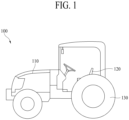
- a transmission control device 1 of an agricultural work vehicle is applied to an agricultural work vehicle 100.
- the agricultural work vehicle 100 is used for cultivating crops necessary for human life by using the land.
- the agricultural work vehicle 100 may be a tractor, a combine, or the like.
- the agricultural work vehicle 100 Prior to describing the transmission control device 1 of the agricultural work vehicle according to the present invention, the agricultural work vehicle 100 will be described below.
- the agricultural work vehicle 100 may include a vehicle body 110 to which an engine (not illustrated) is coupled, a driver seat 120 provided in the vehicle body 110, wheels 130 coupled to the vehicle body 110, an operation unit 140 provided at the driver seat 120, and a transmission 150 coupled to the vehicle body 110.
- the operation unit 140 includes a shuttle lever 141, a traveling operation mechanism 142, and a clutch operation mechanism 143.
- the shuttle lever 141 is for front-rear shift control.
- the shuttle lever 141 may be in a front-rear operation state for moving the agricultural work vehicle 100 forward or rearward.
- the shuttle lever 141 may be in a neutral operation state to prevent the agricultural work vehicle 100 from being moved forward or rearward.
- the shuttle lever 141 may be in the front-rear operation state or the neutral operation state according to operation by a driver.
- the traveling operation mechanism 142 is for traveling control.
- the traveling operation mechanism 142 may be in a traveling operation state in which the agricultural work vehicle 100 travels.
- the traveling operation mechanism 142 may be in a traveling release state in which the agricultural work vehicle 100 does not travel.
- the traveling operation mechanism 142 may be in the traveling operation state or the traveling release state according to the operation by the driver.
- the traveling operation mechanism 142 may include an acceleration operation mechanism 1421 and a brake pedal 1422.
- the acceleration operation mechanism 1421 is for acceleration control.
- the acceleration operation mechanism 1421 may be in an acceleration operation state in which the agricultural work vehicle 100 is accelerated.
- the acceleration operation mechanism 1421 may be in an acceleration release state in which the agricultural work vehicle 100 is not accelerated.
- the acceleration operation mechanism 1421 may be in the acceleration operation state or the acceleration release state according to the operation by the driver.
- the acceleration operation mechanism 1421 may include a hand throttle 14211 that the driver may operate with his/her hand, and an accelerator pedal 14212 that the driver may operate with his/her foot.
- the brake pedal 1422 is for deceleration control.
- the brake pedal 1422 may be in a braking state in which a traveling speed of the agricultural work vehicle 100 is reduced.
- the brake pedal 1422 may be in a non-braking state in which the traveling speed of the agricultural work vehicle 100 is not reduced.
- the brake pedal 1422 may be in the braking state or in the non-braking state according to the operation by the driver.
- the brake pedal 1422 may be operated by the driver's foot.
- the clutch operation mechanism 143 is for release control of a main clutch 150a (see FIG. 2 ) of the transmission 150.
- the main clutch 150a selectively transmits driving according to whether or not the main clutch 150a is fastened. When the main clutch 150a is fastened, the main clutch 150a may transmit the driving. When the main clutch 150a is released, the main clutch 150a may not transmit the driving.
- the clutch operation mechanism 143 may be in a release operation state for releasing the main clutch 150a.
- the clutch operation mechanism 143 may be in a fastening operation state for fastening the main clutch 150a.
- the clutch operation mechanism 143 may be in the release operation state or the fastening operation state according to the operation by the driver.
- the clutch operation mechanism 143 may include a clutch pedal 1431 which the driver may operate with his/her foot and a hand clutch 1432 which the driver may operate with his/her hand.
- the hand clutch 1432 may be a clutch switch (not illustrated).
- the transmission 150 is for performing gear shifting with respect to the driving generated by the engine.
- the transmission control device 1 of the agricultural work vehicle according to the present invention may control the transmission 150 to identify an operation state of the operation unit 140 and to correspond to the operation state of the operation unit 140.
- the transmission 150 may include a front-rear shifting part 151 and a travel shifting part 152.
- the front-rear shifting part 151 performs front-rear shifting with respect to the driving generated from the engine.
- the transmission control device 1 of the agricultural work vehicle according to the present invention may control the front-rear shifting part 151 to identify an operation state of the shuttle lever 141 and to correspond to the operation state of the shuttle lever 141.
- the front-rear shifting part 151 may include a front-rear clutch 1511.
- the front-rear shifting part 151 may transmit the driving, in which the front-rear shifting is performed, to the travel shifting part 152. When the front-rear clutch 1511 is fastened, the driving generated from the engine may be transmitted to the travel shifting part 152 after the front-rear shifting is performed.
- the front-rear clutch 1511 When the front-rear clutch 1511 is unfastened, the driving generated from the engine is not transmitted to the travel shifting part 152.
- the front-rear clutch 1511 may be implemented as a multiple disc clutch that selectively transmits the driving using friction. In this case, as the plurality of friction members come into contact with each other, the front-rear clutch 1511 may be fastened to transmit the driving. As the plurality of friction members are spaced apart from each other, the front-rear clutch 1511 may be unfastened so as not to transmit the driving.
- the front-rear shifting part 151 may include at least one gear and at least one sleeve for the front-rear shifting.
- the front-rear shifting part 151 may perform the front-rear shifting with respect to the driving in which the travel shifting is performed by the travel shifting part 152.
- the travel shifting part 152 may perform the travel shifting with respect to the driving generated from the engine, and the front-rear shifting part 151 may perform the front-rear shifting with respect to the driving in which the travel shifting is performed by the travel shifting part 152, and then the driving may be transmitted to an axle (not illustrated).
- the travel shifting part 152 may perform the travel shifting with respect to the driving transmitted from the engine.
- the transmission control device 1 of the agricultural work vehicle according to the present invention may control the travel shifting part 152 to identify an operation state of the traveling operation mechanism 142 and to correspond to the operation state of the traveling operation mechanism 142.
- the travel shifting part 152 may include a traveling clutch 1521.
- the travel shifting part 152 may perform the travel shifting with respect to the driving transmitted from the front-rear shifting part 151. When the traveling clutch 1521 is fastened, the driving transmitted from the front-rear shifting part 151 may be transmitted to the axle after the travel shifting is performed. When the traveling clutch 1521 is unfastened, the driving transmitted from the front-rear shifting part 151 is not transmitted to the axle.
- the traveling clutch 1521 may be implemented as a multiple disc clutch that selectively transmits the driving using friction. In this case, as the plurality of friction members come into contact with each other, the traveling clutch 1521 may be fastened to transmit the driving. As the plurality of friction members are spaced apart from each other, the traveling clutch 1521 may be unfastened so as not to transmit the driving.
- the travel shifting part 152 may include a plurality of traveling clutches 1521. Meanwhile, the travel shifting part 152 may include at least one gear and at least one sleeve for the travel shifting.
- the travel shifting part 152 may transmit the driving, in which the travel shifting is performed, to the front-rear shifting part 151.
- the travel shifting part 152 may perform the travel shifting with respect to the driving generated from the engine, and the front-rear shifting part 151 may perform the front-rear shifting with respect to the driving in which the travel shifting is performed by the travel shifting part 152, and then the driving may be transmitted to an axle.
- the travel shifting part 152 performs the travel shifting with respect to the driving transmitted from the front-rear shifting part 151, and then the driving is transmitted to the axle. From this, those skilled in the art to which the present invention belongs can easily understand the embodiment in which the travel shifting part 152 performs the travel shifting with respect to the driving generated from the engine, the front-rear shifting part 151 performs the front-rear shifting with respect to the driving transmitted from the travel shifting part 152, and then the driving is transmitted to the axle.
- one of the front-rear clutch 1511 and the traveling clutch 1521 may correspond to the main clutch 150a.
- the clutch operation mechanism 143 may be in the release operation state in which the front-rear clutch 1511 is to be unfastened or in the fastening operation state in which the front-rear clutch 1511 is to be fastened.
- the traveling clutch 1521 corresponds to the main clutch 150a
- the clutch operation mechanism 143 may be in the release operation state in which the traveling clutch 1521 is to be unfastened or in the fastening operation state in which the traveling clutch 1521 is to be fastened.
- Which of the front-rear clutch 1511 and the traveling clutch 1521 corresponds to the main clutch 150a is determined according to an arrangement relationship, a connection relationship, and the like between the shifting parts and peripheral devices of the transmission 150.
- the transmission control device 1 of the agricultural work vehicle according to the present invention includes a reception module 2, an identification module 3, and a control module 4.
- the transmission control device 1 of an agricultural work vehicle according to the present invention may be coupled to the vehicle body 110 (see FIG. 1 ).
- the reception module 2 is for receiving operation information from the agricultural work vehicle 100.
- the reception module 2 receives the operation information from the operation unit 140.
- the reception module 2 may receive the operation information from the operation unit 140 using wired communication, wireless communication, or the like.
- the reception module 2 receives the operation information of the shuttle lever 141.
- the operation information of the shuttle lever 141 is information on which of the front-rear operation state and the neutral operation state the shuttle lever 141 belongs to.
- the reception module 2 may provide the operation information of the shuttle lever 141 to the identification module 3.
- the reception module 2 receives the operation information of traveling operation mechanism 142.
- the operation information of the traveling operation mechanism 142 is information on which of the traveling operation state and the traveling release state the traveling operation mechanism 142 belongs to.
- the reception module 2 may provide the operation information of the traveling operation mechanism 142 to the identification module 3.
- the reception module 2 may receive the operation information of the acceleration operation mechanism 1421.
- the operation information of the acceleration operation mechanism 1421 is information on which of the acceleration operation state and the acceleration release state the acceleration operation mechanism 1421 belongs to.
- the reception module 2 may receive operation information of the hand throttle 14211 and operation information of the accelerator pedal 14212.
- the reception module 2 may receive operation information of the brake pedal 1422.
- the operation information of the brake pedal 1422 is information on which of the braking state and the non-braking state the brake pedal 1422 belongs to.
- the reception module 2 receives operation information of the clutch operation mechanism 143.
- the operation information of the clutch operation mechanism 143 is information on which of the release operation state and the fastening operation state the clutch operation mechanism 143 belongs to.
- the reception module 2 may provide the operation information of the clutch operation mechanism 143 to the identification module 3.
- the reception module 2 may receive operation information of the clutch pedal 1431 and operation information of the hand clutch 1432.
- the identification module 3 is for identifying the operation information received by the reception module 2.
- the identification module 3 identifies, on the basis of the operation information of the shuttle lever 141, whether the shuttle lever belongs to the front-rear operation state or the neutral operation state. When it is identified that the shuttle lever 141 is in the front-rear operation state, the identification module 3 provides a front-rear operation signal to the control module 4. When it is determined that the shuttle lever 141 is in the neutral operation state, the identification module 3 provides a neutral operation signal to the control module 4.
- the identification module 3 identifies whether the traveling operation mechanism 142 is in the traveling operation state or the traveling release state on the basis of the operation information of the traveling operation mechanism 142. When it is identified that the traveling operation mechanism 142 is in the traveling operation state, the identification module 3 provides a traveling operation signal to the control module 4. When it is identified that the traveling operation mechanism 142 is in the traveling release state, the identification module 3 provides a traveling release signal to the control module 4.
- the identification module 3 identifies whether the acceleration operation mechanism 1421 is in the acceleration operation state or the acceleration release state on the basis of the operation information of the acceleration operation mechanism 1421. When it is identified that the acceleration operation mechanism 1421 is in the acceleration operation state, the identification module 3 provides an acceleration operation signal to the control module 4. When it is identified that the acceleration operation mechanism 1421 is in the acceleration release state, the identification module 3 provides an acceleration release signal to the control module 4.
- the identification module 3 may identify whether the brake pedal 1422 is in the braking state or the non-braking state on the basis of the operation information of the brake pedal 1422. When it is identified that the brake pedal 1422 is in the braking state, the identification module 3 may provide a braking signal to the control module 4. When it is identified that the brake pedal 1422 is in the non-braking state, the identification module 3 may provide a non-braking signal to the control module 4.
- the traveling operation mechanism 142 may correspond to the traveling release state when the acceleration operation mechanism 1421 is in the acceleration release state. In this case, when the acceleration operation mechanism 1421 is in the acceleration operation state, the traveling operation mechanism 142 may correspond to the traveling operation state.
- the traveling operation mechanism 142 may correspond to the traveling release state when the acceleration operation mechanism 1421 is in the acceleration release state and when the brake pedal 1422 is in the braking state. In this case, the traveling operation mechanism 142 may correspond to the traveling operation state when the brake pedal 1422 is in the non-braking state regardless of the operation state of the acceleration operation mechanism 1421.
- the identification module 3 identifies whether the clutch operation mechanism 143 is in the release operation state or the fastening operation state on the basis of the operation information of the clutch operation mechanism 143. When it is identified that the clutch operation mechanism 143 is in the release operation state, the identification module 3 may provide a release operation signal to the control module 4. When it is identified that the clutch operation mechanism 143 is in the fastening operation state, the identification module 3 may provide a fastening operation signal to the control module 4.
- the control module 4 controls the transmission 150 according to the result identified by the identification module 3.
- the control module 4 controls the transmission 150 in one of a traveling standby mode, an idling travel mode, and a normal traveling mode.
- the traveling standby mode the agricultural work vehicle 100, the engine of which is started, is maintained in a stopped state.
- the idling travel mode the agricultural work vehicle 100 travels in a state in which the engine is in an idle state.
- the agricultural work vehicle 100 may travel at a preset low traveling speed in a state in which the acceleration operation mechanism 1421 is not operated. Accordingly, the driver may allow the agricultural work vehicle 100 to travel at the present low traveling speed even without operating the hand throttle 14211 and the accelerator pedal 14212.
- the agricultural work vehicle 100 travels to correspond to the operation of the acceleration operation mechanism 1421.
- the agricultural work vehicle 100 may travel by driving of the engine and a travel shifting stage corresponding to a degree to which the acceleration operation mechanism 1421 is operated. Accordingly, the driver may allow the agricultural work vehicle 100 to travel at a desired traveling speed by operating at least one of the hand throttle 14211 and the accelerator pedal 14212.
- the control module 4 controls the transmission 150 in the traveling standby mode when it is identified that the shuttle lever 141 is in the front-rear operation state, the traveling operation mechanism 142 is in the traveling release state, and the clutch operation mechanism 143 is in a state in which the agricultural work vehicle 100, the engine of which is started, is stopped in the fastening operation state. Accordingly, the transmission control device 1 of the agricultural work vehicle according to the present invention controls the transmission 150 so that the agricultural work vehicle 100 does not travel only by operating the shuttle lever 141 forward or rearward in a state in which the agricultural work vehicle 100, the engine of which is started, is stopped.
- the transmission control device 1 of the agricultural work vehicle according to the present invention controls the transmission 150 so that the agricultural work vehicle 100 does not travel only by operating the clutch operation mechanism 143 in a state in which the agricultural work vehicle 100, the engine of which is started, is stopped in the fastening operation state.
- the transmission control device 1 of the agricultural work vehicle according to the present invention since the agricultural work vehicle 100 may be prevented from traveling in a situation in which travel is not intended by the driver, the driving difficulty in the agricultural work vehicle 100 can be lowered, and the occurrence of accidents can be prevented.
- the control module 4 controls the transmission 150 in the traveling standby mode when the front-rear operation signal, the traveling release signal, and the fastening operation signal are received from the identification module 3 in a state in which the agricultural work vehicle 100, the engine of which is started, is stopped.
- the control module 4 controls the transmission 150 so that releasing of the main clutch 150a is maintained. That is, the control module 4 maintains the releasing of the main clutch 150a even when the clutch operation mechanism 143 is in the fastening operation state in the traveling standby mode.
- the control module 4 maintains a state in which the agricultural work vehicle 100, the engine of which is started, is stopped.
- the control module 4 controls the transmission 150 so that the releasing of the traveling clutch 1521 is maintained.
- the control module 4 may control the front-rear clutch 1511 in a fastened state. Accordingly, immediately after the traveling clutch 1521 is fastened, the control module 4 may control the front-rear shifting part 151 to wait in a state in which the driving is receivable from the front-rear shifting part 151. Thus, the control module 4 may shorten a time for which the traveling standby mode is switched to the idling travel mode or the normal traveling mode.
- the control module 4 may control the transmission 150 so that the releasing of the front-rear clutch 1511 is maintained.
- the control module 4 may control the transmission 150 so that the traveling clutch 1521 is fastened or the fastening with the traveling clutch 1521 is maintained. That is, in the traveling standby mode, the control module 4 may control the traveling clutch 1521 in a fastened state. Accordingly, immediately after the front-rear clutch 1511 is fastened, the control module 4 may control the travel shifting part 152 to wait in a state in which the travel shifting part 152 may transmit the driving. Thus, the control module 4 may shorten a time for which the traveling standby mode is switched to the idling travel mode or the normal traveling mode.
- the control module 4 controls the transmission 150 so that the releasing of the front-rear clutch 1511 is maintained and the traveling clutch 1521 is fastened.
- the traveling clutch 1521 is fastened when the agricultural work vehicle 100 is started and is maintained in a fastened state in the traveling standby mode.
- the control module 4 controls the transmission 150 so that the releasing of the front-rear clutch 1511 is maintained, and the fastening of the traveling clutch 1521 is maintained.
- the control module 4 controls the transmission 150 in the traveling standby mode by controlling the travel shifting part 152 so that one of a first traveling clutch 1521a and a second traveling clutch 1521b is fastened or fastening of one of the first traveling clutch 1521a and the second traveling clutch 1521b is maintained.
- the first traveling clutch 1521a and the second traveling clutch 1521b will be described in detail below.
- the first traveling clutch 1521a is connected to at least one of a first leading shifting mechanism 1522a and a trailing shifting mechanism 1523a.
- the driving may be transmitted from the first leading shifting mechanism 1522a via the first traveling clutch 1521a to the first trailing shifting mechanism 1523a.
- the driving may not be transmitted from the first leading shifting mechanism 1522a via the first traveling clutch 1521a to the first trailing shifting mechanism 1523a.
- the first leading shifting mechanism 1522a may correspond to a main shifting part
- the first trailing shifting mechanism 1523a may correspond to a sub-shifting part.
- the first leading shifting mechanism 1522a may correspond to a sub-shifting part, and the first trailing shifting mechanism 1523a may correspond to a main shifting part. Meanwhile, the first traveling clutch 1521a may be connected to only at least one of the first leading shifting mechanism 1522a and the first trailing shifting mechanism 1523a. The first traveling clutch 1521a may be connected to only one of the first leading shifting mechanism 1522a and the first trailing shifting mechanism 1523a and thus may be implemented so that the driving generated by the engine is transmitted to or is not transmitted to the axle through the first leading shifting mechanism 1522a and the first trailing shifting mechanism 1523a.
- the second traveling clutch 1521b is connected to at least one of a second leading shifting mechanism 1522b and a second trailing shifting mechanism 1523b.
- the driving may be transmitted from the second leading shifting mechanism 1522b via the second traveling clutch 1521b to the second trailing shifting mechanism 1523b.
- the driving may not be transmitted from the second leading shifting mechanism 1522b via the second traveling clutch 1521b to the second trailing shifting mechanism 1523b.
- the second leading shifting mechanism 1522b may correspond to a main shifting part
- the second trailing shifting mechanism 1523b may correspond to a sub-shifting part.
- the second leading shifting mechanism 1522b may correspond to a sub-shifting part, and the second trailing shifting mechanism 1523b may correspond to a main shifting part.
- the second traveling clutch 1521b may be connected to only at least one of the second leading shifting mechanism 1522b and the second trailing shifting mechanism 1523b.
- the second traveling clutch 1521b may be connected to only one of the second leading shifting mechanism 1522b and the second trailing shifting mechanism 1523b and thus may be implemented so that the driving generated by the engine is transmitted to or is not transmitted to the axle through the second leading shifting mechanism 1522b and the second trailing shifting mechanism 1523b.
- the control module 4 may control the travel shifting part 152 so that the releasing of the front-rear clutch 1511 is maintained, any one of the first traveling clutch 1521a and the second traveling clutch 1521b is fastened, or the fastening of any one of the first traveling clutch 1521a and the second traveling clutch 1521b is maintained. Accordingly, immediately after the front-rear clutch 1511 is fastened, the control module 4 may control the travel shifting part 152 to wait in a state in which the driving may be transmitted through any one of the first traveling clutch 1521a and the second traveling clutch 1521b. Thus, even when the transmission 150 is implemented as the DCT, the control module 4 may shorten a time for which the traveling standby mode is switched to the idling travel mode or the normal traveling mode.
- the control module 4 controls the transmission 150 so that the main clutch 150a is fastened. Accordingly, the transmission 150 may transmit the driving generated from the engine to the axle.
- the agricultural work vehicle 100 may start and travel.
- an operation of identifying whether the acceleration operation mechanism 1421 is in the acceleration operation state or the acceleration release state may be performed by the identification module 3.
- the identification module 3 may provide the acceleration operation signal to the control module 4.
- the control module 4 may fasten the main clutch 150a. Meanwhile, in the traveling standby mode, when it is identified that the acceleration operation mechanism 1421 is in the acceleration release state, the control module 4 may maintain the releasing of the main clutch 150a.
- the control module 4 controls the transmission 150 in the normal traveling mode. In the normal traveling mode, the control module 4 controls the transmission 150 so that the agricultural work vehicle 100 travels according to the degree of operation of the acceleration operation mechanism 1421.
- An operation of identifying whether the acceleration operation mechanism 1421 is in a state in which the main clutch 150a is fastened is performed by the identification module 3 in the acceleration operation state or the acceleration release state.
- the identification module 3 may provide the acceleration operation signal to the control module 4.
- the control module 4 When receiving the acceleration operation signal from the identification module 3 in a state in which the main clutch 150a is fastened, the control module 4 controls the transmission 150 in the normal traveling mode. Meanwhile, in the traveling standby mode, as it is identified that the acceleration operation mechanism 1421 is in the acceleration operation state, the main clutch 150a is fastened. Thus, when it is identified that the acceleration operation mechanism 1421 is maintained in a state in which the main clutch 150a is fastened in the acceleration operation state, the control module 4 controls the transmission 150 in the normal traveling mode.
- the control module 4 controls the transmission 150 in the idling travel mode.
- the control module 4 controls the transmission 150 so that the agricultural work vehicle 100 travels at the preset low traveling speed in a state in which the engine is in an idle state. In this case, the control module 4 controls the transmission 150 so that both the front-rear clutch 1511 and the traveling clutch 1521 are maintained in a fastened state.
- the identification module 3 may provide the acceleration release signal to the control module 4.
- the control module 4 controls the transmission 150 in the idling travel mode.
- the transmission control device 1 of an agricultural work vehicle is implemented to control the transmission 150 so that the main clutch 150a is fastened according to the operation state of the traveling operation mechanism 142, and to control the transmission 150 in the normal traveling mode or the idling travel mode according to the operation state of the acceleration operation mechanism 1421 in a state in which the main clutch 150a is fastened.
- the transmission control device 1 of an agricultural work vehicle may control the transmission 150 in the traveling standby mode, the normal traveling mode, and the idling travel mode additionally in consideration of whether the brake pedal 1422 is in the braking state or the non-braking state. Detailed description thereof will be described below.
- the reception module 2 may additionally receive the operation information of the brake pedal 1422 from the operation unit 140. Accordingly, the reception module 2 may receive, from the operation unit 140, the operation information of the shuttle lever 141, the operation information of the acceleration operation mechanism 1421, the operation information of the brake pedal 1422, and the operation information of the clutch operation mechanism 143.
- the identification module 3 may additionally identify whether the brake pedal 1422 is in the braking state or the non-braking state. Accordingly, the identification module 3 identifies whether the shuttle lever 141 is in the front-rear operation state or the neutral operation state, identifies whether the acceleration operation mechanism 1421 is in the acceleration operation state or the acceleration release state, may identify whether the brake pedal 1422 is in the braking state or the non-braking state, and identifies whether the clutch operation mechanism 143 is in the release operation state or the fastening operation state.
- the control module 4 controls the transmission in the traveling standby mode as the releasing of the main clutch 150a is maintained.
- the control module 4 controls the transmission 150 so that the main clutch 150a is fastened.
- the fact that the brake pedal 1422 is in the non-braking state may be identified by the identification module 3.
- the control module 4 controls the transmission 150 in the normal traveling mode or the idling travel mode according to whether the acceleration operation mechanism 1421 is in the acceleration operation state or the acceleration release state. Whether the acceleration operation mechanism 1421 is in a state in which the main clutch 150a is fastened in the acceleration operation state or the acceleration release state may be identified by the identification module 3.
- control module 4 may control the transmission 150 in the normal traveling mode.
- the control module 4 controls the transmission 150 in the idling travel mode. Meanwhile, since the acceleration operation mechanism 1421 has been maintained in the acceleration release state from the traveling standby mode, the control module 4 controls the transmission 150 in the idling travel mode when it is identified that the acceleration operation mechanism 1421 is maintained in a state in which the main clutch 150a is fastened in the acceleration release state.
- the transmission control device 1 of an agricultural work vehicle may be implemented to control the transmission 150 so that the main clutch 150a is fastened according to the operation state of the brake pedal 1422, and to control the transmission 150 in the normal traveling mode or the idling travel mode according to the operation state of the acceleration operation mechanism 1421 in a state in which the main clutch 150a is fastened.
- the transmission control method of the agricultural work vehicle according to the present invention relates to controlling the transmission 150 of the agricultural work vehicle 100.
- the transmission control method of the agricultural work vehicle according to the present invention is performed by the above-described transmission control device 1 of the agricultural work vehicle according to the present invention.
- the transmission control method of the agricultural work vehicle according to the present invention includes the following operation.
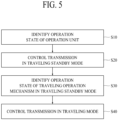
- the operation state of the operation unit 140 is identified (S10).
- Operation S10 is performed by identifying the operation state of the shuttle lever 141, the operation state of the traveling operation mechanism 142, and the operation state of the clutch operation mechanism 143 in a state in which the agricultural work vehicle 100, the engine of which is started, is stopped.
- Operation S10 of identifying the operation state of the operation unit is performed by the identification module 3.
- the identification module 3 identifies the operation state of the operation unit 140 by using the operation information provided from the reception module 2.
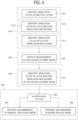
- Operation S 10 of identifying the operation state of the operation unit includes operation S11 of identifying whether the shuttle lever 141 is in the front-rear operation state or the neutral operation state, operation S12 of identifying whether the traveling operation mechanism 142 is in the traveling operation state or the traveling release state, and operation S13 of identifying whether the clutch operation mechanism 143 is in the release operation state or the fastening operation state.
- Operation S20 is performed by controlling the transmission 150 in the traveling standby mode according to the result obtained by identifying the operation state of the operation unit 140 in a state in which the agricultural work vehicle, the engine of which is started, is stopped.
- Operation S20 of controlling the transmission 150 in the traveling standby mode is performed by controlling the transmission 150 in the traveling standby mode when it is identified that the shuttle lever 141 is in the front-rear operation state, the traveling operation mechanism 142 is in the traveling release state, and the clutch operation mechanism 143 is in a state in which the agricultural work vehicle 100, the engine of which is started, is stopped in the fastening operation state.
- operation S20 of controlling the transmission in the traveling standby mode is performed, the agricultural work vehicle 100 may be maintained in a stopped state even when the shuttle lever 141 is in the front-rear operation state and the clutch operation mechanism 143 is in the fastening operation state.
- the transmission 150 is controlled so that the agricultural work vehicle 100 does not travel only due to operating the shuttle lever 141 forward or rearward in a state in which the agricultural work vehicle 100, the engine of which is started, is stopped. Further, in the transmission control method of the agricultural work vehicle according to the present invention, the transmission 150 is controlled so that the agricultural work vehicle 100 does not travel only due to operating the clutch operation mechanism 143 in a state in which the agricultural work vehicle 100, the engine of which is started, is stopped in the fastening operation state.
- the agricultural work vehicle 100 since the agricultural work vehicle 100 is prevented from traveling in a situation in which travel is not intended by the driver, the driving difficulty in the agricultural work vehicle 100 can be lowered, and the occurrence of accidents can be prevented.
- Operation S20 of controlling the transmission in the traveling standby mode is performed by the control module 4.
- the control module 4 controls the transmission 150 in the traveling standby mode.
- the operation state of the traveling operation mechanism 142 is identified (S30).
- operation S30 is performed by identifying whether the traveling operation mechanism 142 is in the traveling operation state or the traveling release state.
- operation S30 of identifying the operation state of the traveling operation mechanism is performed by the identification module 3.
- the transmission 150 is controlled in a traveling mode (S40).
- operation S40 is performed by controlling the transmission 150 in the traveling mode in which the agricultural work vehicle travels when it is determined that the traveling operation mechanism 142 in the traveling operation state.
- Operation S40 of controlling the transmission in the traveling mode is performed by the control module 4.
- Operation S40 of controlling the transmission in the traveling mode includes operation S41 of controlling the transmission in the normal traveling mode and operation S42 of controlling the transmission in the idling travel mode.
- Operation S41 of controlling the transmission in the normal traveling mode is performed by controlling the transmission 150 in the normal traveling mode when it is identified that the acceleration operation mechanism 1421 is in the acceleration operation state. Operation S41 of controlling the transmission 150 in the normal traveling mode is performed by the control module 4. When receiving the acceleration operation signal, the control module 4 controls the transmission 150 in the normal traveling mode. When operation S41 of controlling the transmission in the normal traveling mode is performed, the agricultural work vehicle 100 travels according to the degree of operation of the acceleration operation mechanism 1421 after starting. Accordingly, the driver may allow the agricultural work vehicle 100 to travel at a desired traveling speed by operating the acceleration operation mechanism 1421.
- Operation S42 of controlling the transmission in the idling travel mode is performed by controlling the transmission 150 in the idling travel mode when it is identified that the acceleration operation mechanism 1421 is in the acceleration release state. Operation S42 of controlling the transmission 150 in the idling travel mode is performed by the control module 4. When receiving the acceleration release signal, the control module 4 controls the transmission 150 in the idling travel mode. When operation S42 of controlling the transmission in the idling travel mode is performed, the agricultural work vehicle 100 may travel at the preset low traveling speed in a state in which the acceleration operation mechanism 1421 is not operated. Accordingly, the driver may allow the agricultural work vehicle 100 to travel at the present low traveling speed even without operating the hand throttle 14211 and the accelerator pedal 14212.
- operation S20 of controlling the transmission in the traveling standby mode includes operation S21 of switching the transmission in the traveling standby mode.
- Operation S21 of switching the transmission 150 in the traveling standby mode is performed by switching the transmission 150 in the traveling standby mode as the releasing of the main clutch 150a is maintained.
- operation S21 of switching the transmission 150 in the traveling standby mode even when it is identified that the clutch operation mechanism 143 is in a state in which the agricultural work vehicle 100, the engine of which is started, is stopped in the fastening operation state, the releasing of the main clutch 150a is maintained.
- Operation S21 of switching the transmission 150 in the traveling standby mode is performed by the control module 4.
- operation S21 of switching the transmission 150 in the traveling standby mode is performed by the transmission 150 in the traveling standby mode by fastening any one of the first traveling clutch 1521a and the second traveling clutch 1521b or by maintaining the fastening of any one of the first traveling clutch 1521a and the second traveling clutch 1521b.
- the front-rear clutch 1511 may correspond to the main clutch 150a.
- control module 4 may control the transmission 150 so that the releasing of the front-rear clutch 1511 is maintained, any one of the first traveling clutch 1521a and the second traveling clutch 1521b is fastened, or the fastening of any one of the first traveling clutch 1521a and the second traveling clutch 1521b is maintained.
- the transmission control method of the agricultural work vehicle may roughly include a first embodiment and a second embodiment according to a method of changing a control manner of controlling the transmission 150 in the normal traveling mode and the idling travel mode.
- a first embodiment and a second embodiment will be sequentially described below in detail with reference to the accompanying drawings.
- a transmission control method of an agricultural work vehicle will be implemented as follows.
- operation S10 of identifying an operation state of the operation unit may be performed by identifying the operation state of the shuttle lever 141, the operation state of the acceleration operation mechanism 1421, and the operation state of the clutch operation mechanism 143 in a state in which the agricultural work vehicle 100, the engine of which is started, is stopped.
- operation S12 of identifying the operation state of the traveling operation mechanism may include operation S121 of identifying the operation state of the acceleration operation mechanism.
- Operation S121 of identifying the operation state of the acceleration operation mechanism may be performed by identifying whether the acceleration operation mechanism 1421 is in a state in which the agricultural work vehicle 100, the engine of which is started, is stopped in the acceleration operation state or the acceleration release state.
- Operation S121 of identifying the operation state of the acceleration operation mechanism may be performed by the identification module 3.
- operation S20 of controlling the transmission 150 in the traveling standby mode may be performed by controlling the transmission 150 in the traveling standby mode when it is identified that the shuttle lever 141 is in the front-rear operation state, the acceleration operation mechanism 1421 is in the acceleration release state, and the clutch operation mechanism 143 is in a state in which the agricultural work vehicle 100, the engine of which is started, is stopped in the fastening operation state.
- operation S30 of identifying the operation state of the traveling operation mechanism in the traveling standby mode may include operation S31 of identifying the operation state of the acceleration operation mechanism in the traveling standby mode.
- operation S31 of identifying the operation state of the acceleration operation mechanism may be performed by identifying whether the acceleration operation mechanism 1421 is in the acceleration operation state or the acceleration release state.
- operation S31 of identifying the operation state of the acceleration operation mechanism may be performed by the identification module 3.
- operation S40 of controlling the transmission 150 in the traveling mode may include operation S43 of fastening the main clutch, operation S41 of controlling the transmission 150 in the normal traveling mode, and operation s42 of controlling the transmission 150 in the idling travel mode.
- operation S43 of fastening the main clutch may be performed by fastening the main clutch 150a.
- Operation S43 of fastening the main clutch may be performed by the control module 4.
- the control module 4 may control the transmission 150 so that the main clutch 150a is fastened.
- the agricultural work vehicle 100 may travel at a traveling speed corresponding to the degree of operation of the acceleration operation mechanism 1421.
- operation S40 of controlling the transmission in the traveling mode may include operation S44 of identifying the operation state of the acceleration operation mechanism in a state in which the main clutch is fastened.
- Operation S44 of identifying the operation state of the acceleration operation mechanism in a state in which the main clutch is fastened may be performed by identifying whether the acceleration operation mechanism 1421 is in a state in which the main clutch 150a is fastened in the acceleration operation state or the acceleration release state. Operation S44 of identifying the operation state of the acceleration operation mechanism in a state in which the main clutch is fastened may be performed by the identification module 3. The identification module 3 may identify whether the acceleration operation mechanism 1421 is in the acceleration operation state or the acceleration release state on the basis of the operation information of the acceleration operation mechanism 1421 in a state in which the main clutch 150a is fastened.
- operation S41 of controlling the transmission in the normal traveling mode and operation S42 of controlling the transmission in the idling travel mode may be implemented as follows.
- Operation S41 of controlling the transmission in the normal traveling mode may be performed by controlling the transmission 150 in the normal traveling mode when it is identified that the acceleration operation mechanism 1421 is in a state in which the main clutch 150a is fastened in the acceleration operation state.
- the main clutch 150a In the traveling standby mode, as it is identified that the acceleration operation mechanism 1421 is in the acceleration operation state, the main clutch 150a may be in a fastened state.
- operation S41 of controlling the transmission in the normal traveling mode may be performed by controlling the transmission in the normal traveling mode when it is identified that the acceleration operation mechanism 1421 is in a state in which the main clutch 150a is fastened in the acceleration operation state.
- Operation S42 of controlling the transmission in the idling travel mode may be performed by controlling the transmission 150 in the idling travel mode when it is identified that the acceleration operation mechanism 1421 is in a state in which the main clutch 150a is fastened in the acceleration release state.
- the transmission control method of an agricultural work vehicle may be implemented to control the transmission 150 so that the main clutch 150a is fastened according to the operation state of the acceleration operation mechanism 1421 and to control the transmission 150 in the normal traveling mode or the idling travel mode according to the operation state of the acceleration operation mechanism 1421 in a state in which the main clutch 150a is fastened.
- a transmission control method of an agricultural work vehicle according to a second embodiment of the present invention will be implemented as follows.
- operation S 10 of identifying an operation state of the operation unit 140 may be performed by identifying the operation state of the shuttle lever 141, the operation state of the acceleration operation mechanism 1421, the operation state of the brake pedal 1422, and the operation state of the clutch operation mechanism 143 in a state in which the agricultural work vehicle 100, the engine of which is started, is stopped.
- operation S12 of identifying the operation state of the traveling operation mechanism may include operation S121 of identifying the operation state of the acceleration operation mechanism, and operation S122 of identifying the operation state of the brake pedal.
- Operation S121 of identifying the operation state of the acceleration operation mechanism 1421 may be performed by identifying whether the acceleration operation mechanism 1421 is in a state in which the agricultural work vehicle 100, the engine of which is started, is stopped in the acceleration operation state or the acceleration release state.
- Operation S122 of identifying the operation state of the brake pedal 1422 may be performed by identifying whether the brake pedal 1422 is in a state in which the agricultural work vehicle 100, the engine of which is started, is stopped in the braking state or the non-braking state.
- Operation S121 of identifying the operation state of the acceleration operation mechanism and operation S 122 of identifying the operation state of the brake pedal may be performed by the identification module 3.
- operation S20 of controlling the transmission 150 in the traveling standby mode may be performed by controlling the transmission 150 in the traveling standby mode when it is identified that the shuttle lever 141 is in the front-rear operation state, the acceleration operation mechanism 1421 is in the acceleration release state, the brake pedal 1422 is in the braking state, and the clutch operation mechanism 143 is in a state in which the agricultural work vehicle 100, the engine of which is started, is stopped in the fastening operation state.
- operation S30 of identifying the operation state of the traveling operation mechanism in the traveling standby mode may include operation S32 of identifying the operation state of the brake pedal in the traveling standby mode.
- Operation S32 of identifying the operation state of the brake pedal in the traveling standby mode may be performed by identifying whether the brake pedal 1422 is in the braking state or the non-braking state in the traveling standby mode.
- operation S32 of identifying the operation state of the brake pedal may be performed by the identification module 3.
- operation S40 of controlling the transmission in the traveling mode may include operation S43 of fastening the main clutch, operation S41 of controlling the transmission in the normal traveling mode, and operation s42 of controlling the transmission in the idling travel mode.
- operation S43 of fastening the main clutch may be performed by fastening the main clutch 150a.
- Operation S43 of fastening the main clutch may be performed by the control module 4.
- the control module 4 may control the transmission 150 so that the main clutch 150a is fastened.
- the agricultural work vehicle 100 may start traveling at the preset low traveling speed.
- operation S40 of controlling the transmission in the traveling mode may include operation S44 of identifying the operation state of the acceleration operation mechanism in a state in which the main clutch is fastened.
- Operation S44 of identifying the operation state of the acceleration operation mechanism in a state in which the main clutch is fastened may be performed by identifying whether the acceleration operation mechanism 1421 is in a state in which the main clutch 150a is fastened in the acceleration operation state or the acceleration release state. Operation S44 of identifying the operation state of the acceleration operation mechanism in a state in which the main clutch is fastened may be performed by the identification module 3. The identification module 3 may identify whether the acceleration operation mechanism 1421 is in the acceleration operation state or the acceleration release state on the basis of the operation information of the acceleration operation mechanism 1421 in a state in which the main clutch 150a is fastened.
- operation S41 of controlling the transmission in the normal traveling mode and operation S42 of controlling the transmission in the idling travel mode may be implemented as follows.
- Operation S41 of controlling the transmission in the normal traveling mode may be performed by controlling the transmission 150 in the normal traveling mode when it is identified that the acceleration operation mechanism 1421 is in a state in which the main clutch 150a is fastened in the acceleration operation state.
- Operation S42 of controlling the transmission in the idling travel mode may be performed by controlling the transmission 150 in the idling travel mode when it is identified that the acceleration operation mechanism 1421 is in a state in which the main clutch 150a is fastened in the acceleration release state. Meanwhile, since the acceleration operation mechanism 1421 has been maintained in the acceleration release state from the traveling standby mode, operation S42 of controlling the transmission in the idling travel mode may be performed by controlling the transmission 150 in the idling travel mode when it is identified that the acceleration operation mechanism 1421 is maintained in a state in which the main clutch 150a is fastened in the acceleration release state.
- the transmission control method of an agricultural work vehicle may be implemented to control the transmission 150 so that the main clutch 150a is fastened according to the operation state of the brake pedal 1422, and to control the transmission 150 in the normal traveling mode or the idling travel mode according to the operation state of the acceleration operation mechanism 1421 in a state in which the main clutch 150a is fastened.
Landscapes
- Engineering & Computer Science (AREA)
- General Engineering & Computer Science (AREA)
- Mechanical Engineering (AREA)
- Life Sciences & Earth Sciences (AREA)
- Power Engineering (AREA)
- Soil Sciences (AREA)
- Environmental Sciences (AREA)
- Control Of Transmission Device (AREA)
- Control Of Vehicle Engines Or Engines For Specific Uses (AREA)
- Control Of Driving Devices And Active Controlling Of Vehicle (AREA)
Description
- The present invention relates to a control apparatus and control method for controlling a transmission of an agricultural work vehicle.
- Agricultural work vehicles are used for cultivating crops necessary for human life using the land. For example, combines, tractors, and the like correspond to the agricultural work vehicles. The combines harvest and thresh crops such as rice, barley, wheat, and soybeans. The tractors perform work necessary for growing crops using a tractive force. Such an agricultural work vehicle includes a transmission for adjusting a torque, a speed, and the like as needed in a work process.
- The transmission of a general vehicle implements an idling travel mode in which the vehicle slowly travels at a preset traveling stage using a torque converter even in a state in which a driver does not operation on an accelerator pedal. Even when the transmission is controlled in the idling travel mode, the vehicle may not travel and remain in a stopped state due to the torque converter when the driver is applying the brake.
- However, the transmission of an agricultural work vehicle according to the related art does not use a torque converter. Accordingly, when the agricultural work vehicle that has been started is switched from the stopped state to the idling travel mode just by operating a shuttle lever forward or rearward, even when the driver applies the brake, the agricultural work vehicle may not maintain the stopped state and travels due to a large traveling power (torque) of the agricultural work vehicle. Thus, since the transmission of the agricultural work vehicle according to the related art is switched to the idling travel mode even in a situation in which the driver does not intend to drive the agricultural work vehicle, the driving difficulty of the agricultural work vehicle increases, and a risk of increasing accidents is high.
-
US 5 662 548 A discloses an automatic transmission control unit switching on and off operations for a plurality of solenoids in response to combinations of throttle openings estimated on the basis of an output of a throttle sensor and vehicle speeds estimated on the basis of an output of a vehicle speed sensor to set a proper speed change gear, according to the preamble ofindependent claims -
KR 2012 0001370 A -
JP 2018 017295 A - The present invention is designed to solve the problems and is for providing a transmission control device for an agricultural work vehicle and a transmission control method of an agricultural work vehicle that can prevent a transmission from being switched to an idling travel mode just by operating a shuttle lever forward or rearward.
- In order to solve the above problems, the present invention is defined by the appended claims and includes the following configurations.
- A transmission control device for an agricultural work vehicle including a transmission, which includes a front-rear shifting part and a travel shifting part, and a front-rear clutch of the front-rear shifting part performs front-rear shifting with respect to driving generated from an engine and a traveling clutch of the travel shifting part performs travel shifting with respect to the driving generated by the engine according to the present invention includes: a reception module configured to receive operation information of a shuttle lever, operation information of a traveling operation mechanism, and operation information of a clutch operation mechanism from an operation unit including the shuttle lever for front-rear shifting control, the traveling operation mechanism for traveling control, and the clutch operation mechanism for release control of a main clutch among the front-rear clutch and the traveling clutch; an identification module configured to identify, on the basis of the operation information of the shuttle lever, whether the shuttle lever is in a front-rear operation state in which the agricultural work vehicle moves forward or rearward or a neutral operation state in which the agricultural work vehicle does not move forward or rearward, identify, on the basis of the operation information of the traveling operation mechanism, whether the traveling operation mechanism is in a traveling operation state in which the agricultural work vehicle travels or a traveling release state in which the agricultural work vehicle does not travel, and identify, on the basis of the operation information of the clutch operation mechanism, whether the clutch operation mechanism is in a release operation state in which the main clutch is to be unfastened or a fastening operation state in which the main clutch is to be fastened; and a control module configured to control, according to a result of the identification by the identification module, the transmission in any one of a traveling standby mode in which a traveling standby mode in which the agricultural work vehicle, the engine of which is started, is maintained in a stopped state, a normal traveling mode in which the agricultural work vehicle travels to correspond to operation of an acceleration operation mechanism of the traveling operation mechanism, and an idling travel mode in which the agricultural work vehicle travels in a state in which the engine is in an idle state.
- The control module is configured to control the transmission in the traveling standby mode when it is identified that the shuttle lever is in the front-rear operation state, the traveling operation mechanism is in the traveling release state, and the clutch operation mechanism is in a state in which the agricultural work vehicle, the engine of which is started, is stopped in the fastening operation state.
- A transmission control method of an agricultural work vehicle including a transmission, which includes a front-rear shifting part and a travel shifting part, and a front-rear clutch of the front-rear shifting part performs front-rear shifting with respect to driving generated from an engine and a traveling clutch of the travel shifting part performs travel shifting with respect to the driving generated by the engine according to the present invention includes: identifying an operation state of an operation unit including a shuttle lever for front-rear shifting control, a traveling operation mechanism for traveling control, and a clutch operation mechanism for release control of a main clutch among the front-rear clutch and the traveling clutch in a state in which the agricultural work vehicle, the engine of which is started, is stopped; in a stopped state of the agricultural work vehicle the engine of which is started, controlling the transmission in a traveling standby mode in which the agricultural work vehicle is maintained in the stopped state depending on a result obtained by identifying the operation state of the operation unit; and identifying an operation state of the traveling operation mechanism in the traveling standby mode; and controlling the transmission in a traveling mode in which the agricultural work vehicle travels when it is identified in the traveling standby mode that the traveling operation mechanism is in a traveling operation state in which the agricultural work vehicle travels.
- The identifying of the operation state of the operation unit includes identifying whether the shuttle lever is in a front-rear operation state in which the agricultural work vehicle moves forward or rearward or in a neutral operation state in which the agricultural work vehicle does not move forward or rearward, identifying whether the traveling operation mechanism is in the traveling operation state or in a traveling release state in which the agricultural work vehicle does not travel, and identifying whether the clutch operation mechanism is in a release operation state in which the main clutch is to be released or in a fastening operation state in which the main clutch is to be fastened,
- The controlling of the transmission in the traveling standby mode includes switching the transmission to the traveling standby mode as releasing of the main clutch is maintained when it is identified that the shuttle lever is in the front-rear operation state, the traveling operation mechanism is in the traveling release state, and the clutch operation mechanism is in the fastening operation state,
- The identifying of the operation state of the traveling operation mechanism in the traveling standby mode includes identifying whether the traveling operation mechanism is in the traveling operation state or the traveling release state in the traveling standby mode.
- The controlling of the transmission in the traveling mode includes: controlling the transmission in a normal traveling mode in which the agricultural work vehicle travels according to a degree of operation of an acceleration operation mechanism when it is identified that the acceleration operation mechanism of the traveling operation mechanism is in an acceleration operation state in which the agricultural work vehicle is accelerated; and controlling the transmission in an idling travel mode in which the agricultural work vehicle travels in a state in which the engine is in an idle state when it is identified that the acceleration operation mechanism is in an acceleration release state in which the agricultural work vehicle is not accelerated.
- According to preferred embodiment of the present invention, since a transmission can be controlled so that an agricultural work vehicle does not travel just by operating a shuttle lever forward or rearward in a state in which an agricultural work vehicle of which an engine is started is stopped, the agricultural work vehicle is prevented from traveling in a situation in which travel is not intended by a driver. Thus, the driving difficulty of the agricultural work vehicle can be reduced, and the occurrence of accidents can be prevented.
-
-
FIG. 1 is a schematic side view illustrating an example of an agricultural work vehicle. -
FIGS. 2 to 4 are schematic block diagrams of transmission control devices of an agricultural work vehicle according to the present invention. -
FIGS. 5 to 9 are schematic flowcharts of a transmission control method of the agricultural work vehicle according to the present invention. - Hereinafter, embodiments of a transmission control device of an agricultural work vehicle according to the present invention will be described in detail with reference to the accompanying drawings.
- Referring to
FIGS. 1 to 3 , atransmission control device 1 of an agricultural work vehicle according to the present invention is applied to anagricultural work vehicle 100. Theagricultural work vehicle 100 is used for cultivating crops necessary for human life by using the land. For example, theagricultural work vehicle 100 may be a tractor, a combine, or the like. - Prior to describing the
transmission control device 1 of the agricultural work vehicle according to the present invention, theagricultural work vehicle 100 will be described below. - The
agricultural work vehicle 100 may include avehicle body 110 to which an engine (not illustrated) is coupled, adriver seat 120 provided in thevehicle body 110,wheels 130 coupled to thevehicle body 110, anoperation unit 140 provided at thedriver seat 120, and atransmission 150 coupled to thevehicle body 110. - The
operation unit 140 includes ashuttle lever 141, a travelingoperation mechanism 142, and aclutch operation mechanism 143. - The
shuttle lever 141 is for front-rear shift control. Theshuttle lever 141 may be in a front-rear operation state for moving theagricultural work vehicle 100 forward or rearward. Theshuttle lever 141 may be in a neutral operation state to prevent theagricultural work vehicle 100 from being moved forward or rearward. Theshuttle lever 141 may be in the front-rear operation state or the neutral operation state according to operation by a driver. - The traveling
operation mechanism 142 is for traveling control. The travelingoperation mechanism 142 may be in a traveling operation state in which theagricultural work vehicle 100 travels. The travelingoperation mechanism 142 may be in a traveling release state in which theagricultural work vehicle 100 does not travel. The travelingoperation mechanism 142 may be in the traveling operation state or the traveling release state according to the operation by the driver. - The traveling
operation mechanism 142 may include anacceleration operation mechanism 1421 and abrake pedal 1422. - The
acceleration operation mechanism 1421 is for acceleration control. Theacceleration operation mechanism 1421 may be in an acceleration operation state in which theagricultural work vehicle 100 is accelerated. When theacceleration operation mechanism 1421 is in the acceleration operation state, thus accelerating theagricultural work vehicle 100, the driving of the engine is changed according to the degree of operation of theacceleration operation mechanism 1421, and thus theagricultural work vehicle 100 may be accelerated. Theacceleration operation mechanism 1421 may be in an acceleration release state in which theagricultural work vehicle 100 is not accelerated. Theacceleration operation mechanism 1421 may be in the acceleration operation state or the acceleration release state according to the operation by the driver. Theacceleration operation mechanism 1421 may include ahand throttle 14211 that the driver may operate with his/her hand, and anaccelerator pedal 14212 that the driver may operate with his/her foot. - The
brake pedal 1422 is for deceleration control. Thebrake pedal 1422 may be in a braking state in which a traveling speed of theagricultural work vehicle 100 is reduced. Thebrake pedal 1422 may be in a non-braking state in which the traveling speed of theagricultural work vehicle 100 is not reduced. Thebrake pedal 1422 may be in the braking state or in the non-braking state according to the operation by the driver. Thebrake pedal 1422 may be operated by the driver's foot. - The
clutch operation mechanism 143 is for release control of amain clutch 150a (seeFIG. 2 ) of thetransmission 150. Themain clutch 150a selectively transmits driving according to whether or not themain clutch 150a is fastened. When themain clutch 150a is fastened, themain clutch 150a may transmit the driving. When the main clutch 150a is released, the main clutch 150a may not transmit the driving. Theclutch operation mechanism 143 may be in a release operation state for releasing the main clutch 150a. Theclutch operation mechanism 143 may be in a fastening operation state for fastening the main clutch 150a. Theclutch operation mechanism 143 may be in the release operation state or the fastening operation state according to the operation by the driver. Theclutch operation mechanism 143 may include aclutch pedal 1431 which the driver may operate with his/her foot and a hand clutch 1432 which the driver may operate with his/her hand. Thehand clutch 1432 may be a clutch switch (not illustrated). - The
transmission 150 is for performing gear shifting with respect to the driving generated by the engine. Thetransmission control device 1 of the agricultural work vehicle according to the present invention may control thetransmission 150 to identify an operation state of theoperation unit 140 and to correspond to the operation state of theoperation unit 140. Thetransmission 150 may include a front-rear shifting part 151 and atravel shifting part 152. - The front-
rear shifting part 151 performs front-rear shifting with respect to the driving generated from the engine. Thetransmission control device 1 of the agricultural work vehicle according to the present invention may control the front-rear shifting part 151 to identify an operation state of theshuttle lever 141 and to correspond to the operation state of theshuttle lever 141. The front-rear shifting part 151 may include a front-rear clutch 1511. The front-rear shifting part 151 may transmit the driving, in which the front-rear shifting is performed, to thetravel shifting part 152. When the front-rear clutch 1511 is fastened, the driving generated from the engine may be transmitted to thetravel shifting part 152 after the front-rear shifting is performed. When the front-rear clutch 1511 is unfastened, the driving generated from the engine is not transmitted to thetravel shifting part 152. The front-rear clutch 1511 may be implemented as a multiple disc clutch that selectively transmits the driving using friction. In this case, as the plurality of friction members come into contact with each other, the front-rear clutch 1511 may be fastened to transmit the driving. As the plurality of friction members are spaced apart from each other, the front-rear clutch 1511 may be unfastened so as not to transmit the driving. Meanwhile, the front-rear shifting part 151 may include at least one gear and at least one sleeve for the front-rear shifting. - The front-
rear shifting part 151 may perform the front-rear shifting with respect to the driving in which the travel shifting is performed by thetravel shifting part 152. In this case, thetravel shifting part 152 may perform the travel shifting with respect to the driving generated from the engine, and the front-rear shifting part 151 may perform the front-rear shifting with respect to the driving in which the travel shifting is performed by thetravel shifting part 152, and then the driving may be transmitted to an axle (not illustrated). - The
travel shifting part 152 may perform the travel shifting with respect to the driving transmitted from the engine. Thetransmission control device 1 of the agricultural work vehicle according to the present invention may control thetravel shifting part 152 to identify an operation state of the travelingoperation mechanism 142 and to correspond to the operation state of the travelingoperation mechanism 142. Thetravel shifting part 152 may include a traveling clutch 1521. Thetravel shifting part 152 may perform the travel shifting with respect to the driving transmitted from the front-rear shifting part 151. When the traveling clutch 1521 is fastened, the driving transmitted from the front-rear shifting part 151 may be transmitted to the axle after the travel shifting is performed. When the traveling clutch 1521 is unfastened, the driving transmitted from the front-rear shifting part 151 is not transmitted to the axle. The traveling clutch 1521 may be implemented as a multiple disc clutch that selectively transmits the driving using friction. In this case, as the plurality of friction members come into contact with each other, the traveling clutch 1521 may be fastened to transmit the driving. As the plurality of friction members are spaced apart from each other, the traveling clutch 1521 may be unfastened so as not to transmit the driving. Thetravel shifting part 152 may include a plurality of travelingclutches 1521. Meanwhile, thetravel shifting part 152 may include at least one gear and at least one sleeve for the travel shifting. - The
travel shifting part 152 may transmit the driving, in which the travel shifting is performed, to the front-rear shifting part 151. In this case, thetravel shifting part 152 may perform the travel shifting with respect to the driving generated from the engine, and the front-rear shifting part 151 may perform the front-rear shifting with respect to the driving in which the travel shifting is performed by thetravel shifting part 152, and then the driving may be transmitted to an axle. - Hereinafter, the description will be made based on an embodiment in which the front-
rear shifting part 151 performs the front-rear shifting with respect to the driving generated from the engine, thetravel shifting part 152 performs the travel shifting with respect to the driving transmitted from the front-rear shifting part 151, and then the driving is transmitted to the axle. From this, those skilled in the art to which the present invention belongs can easily understand the embodiment in which thetravel shifting part 152 performs the travel shifting with respect to the driving generated from the engine, the front-rear shifting part 151 performs the front-rear shifting with respect to the driving transmitted from thetravel shifting part 152, and then the driving is transmitted to the axle. - Here, one of the front-
rear clutch 1511 and the traveling clutch 1521 may correspond to the main clutch 150a. When the front-rear clutch 1511 corresponds to the main clutch 150a, theclutch operation mechanism 143 may be in the release operation state in which the front-rear clutch 1511 is to be unfastened or in the fastening operation state in which the front-rear clutch 1511 is to be fastened. When the traveling clutch 1521 corresponds to the main clutch 150a, theclutch operation mechanism 143 may be in the release operation state in which the traveling clutch 1521 is to be unfastened or in the fastening operation state in which the traveling clutch 1521 is to be fastened. Which of the front-rear clutch 1511 and the traveling clutch 1521 corresponds to the main clutch 150a is determined according to an arrangement relationship, a connection relationship, and the like between the shifting parts and peripheral devices of thetransmission 150. - In order to control the
transmission 150 of theagricultural work vehicle 100, thetransmission control device 1 of the agricultural work vehicle according to the present invention includes areception module 2, anidentification module 3, and acontrol module 4. Thetransmission control device 1 of an agricultural work vehicle according to the present invention may be coupled to the vehicle body 110 (seeFIG. 1 ). - Referring to
FIGS. 2 and3 , thereception module 2 is for receiving operation information from theagricultural work vehicle 100. Thereception module 2 receives the operation information from theoperation unit 140. Thereception module 2 may receive the operation information from theoperation unit 140 using wired communication, wireless communication, or the like. - The
reception module 2 receives the operation information of theshuttle lever 141. The operation information of theshuttle lever 141 is information on which of the front-rear operation state and the neutral operation state theshuttle lever 141 belongs to. Thereception module 2 may provide the operation information of theshuttle lever 141 to theidentification module 3. - The
reception module 2 receives the operation information of travelingoperation mechanism 142. The operation information of the travelingoperation mechanism 142 is information on which of the traveling operation state and the traveling release state the travelingoperation mechanism 142 belongs to. Thereception module 2 may provide the operation information of the travelingoperation mechanism 142 to theidentification module 3. - When the traveling
operation mechanism 142 includes theacceleration operation mechanism 1421, thereception module 2 may receive the operation information of theacceleration operation mechanism 1421. The operation information of theacceleration operation mechanism 1421 is information on which of the acceleration operation state and the acceleration release state theacceleration operation mechanism 1421 belongs to. When theacceleration operation mechanism 1421 includes thehand throttle 14211 and theaccelerator pedal 14212, thereception module 2 may receive operation information of thehand throttle 14211 and operation information of theaccelerator pedal 14212. - When the traveling
operation mechanism 142 includes thebrake pedal 1422, thereception module 2 may receive operation information of thebrake pedal 1422. The operation information of thebrake pedal 1422 is information on which of the braking state and the non-braking state thebrake pedal 1422 belongs to. - The
reception module 2 receives operation information of theclutch operation mechanism 143. The operation information of theclutch operation mechanism 143 is information on which of the release operation state and the fastening operation state theclutch operation mechanism 143 belongs to. Thereception module 2 may provide the operation information of theclutch operation mechanism 143 to theidentification module 3. When theclutch operation mechanism 143 includes theclutch pedal 1431 and thehand clutch 1432, thereception module 2 may receive operation information of theclutch pedal 1431 and operation information of thehand clutch 1432. - Referring to
FIGS. 2 and3 , theidentification module 3 is for identifying the operation information received by thereception module 2. - The
identification module 3 identifies, on the basis of the operation information of theshuttle lever 141, whether the shuttle lever belongs to the front-rear operation state or the neutral operation state. When it is identified that theshuttle lever 141 is in the front-rear operation state, theidentification module 3 provides a front-rear operation signal to thecontrol module 4. When it is determined that theshuttle lever 141 is in the neutral operation state, theidentification module 3 provides a neutral operation signal to thecontrol module 4. - The
identification module 3 identifies whether the travelingoperation mechanism 142 is in the traveling operation state or the traveling release state on the basis of the operation information of the travelingoperation mechanism 142. When it is identified that the travelingoperation mechanism 142 is in the traveling operation state, theidentification module 3 provides a traveling operation signal to thecontrol module 4. When it is identified that the travelingoperation mechanism 142 is in the traveling release state, theidentification module 3 provides a traveling release signal to thecontrol module 4. - When the traveling
operation mechanism 142 includes theacceleration operation mechanism 1421, theidentification module 3 identifies whether theacceleration operation mechanism 1421 is in the acceleration operation state or the acceleration release state on the basis of the operation information of theacceleration operation mechanism 1421. When it is identified that theacceleration operation mechanism 1421 is in the acceleration operation state, theidentification module 3 provides an acceleration operation signal to thecontrol module 4. When it is identified that theacceleration operation mechanism 1421 is in the acceleration release state, theidentification module 3 provides an acceleration release signal to thecontrol module 4. - When the traveling
operation mechanism 142 includes thebrake pedal 1422, theidentification module 3 may identify whether thebrake pedal 1422 is in the braking state or the non-braking state on the basis of the operation information of thebrake pedal 1422. When it is identified that thebrake pedal 1422 is in the braking state, theidentification module 3 may provide a braking signal to thecontrol module 4. When it is identified that thebrake pedal 1422 is in the non-braking state, theidentification module 3 may provide a non-braking signal to thecontrol module 4. - When the
identification module 3 identifies only the operation state of theacceleration operation mechanism 1421 without identifying the operation state of thebrake pedal 1422, the travelingoperation mechanism 142 may correspond to the traveling release state when theacceleration operation mechanism 1421 is in the acceleration release state. In this case, when theacceleration operation mechanism 1421 is in the acceleration operation state, the travelingoperation mechanism 142 may correspond to the traveling operation state. - When the
identification module 3 identifies both the operation state of theacceleration operation mechanism 1421 and the operation state of thebrake pedal 1422, the travelingoperation mechanism 142 may correspond to the traveling release state when theacceleration operation mechanism 1421 is in the acceleration release state and when thebrake pedal 1422 is in the braking state. In this case, the travelingoperation mechanism 142 may correspond to the traveling operation state when thebrake pedal 1422 is in the non-braking state regardless of the operation state of theacceleration operation mechanism 1421. - The
identification module 3 identifies whether theclutch operation mechanism 143 is in the release operation state or the fastening operation state on the basis of the operation information of theclutch operation mechanism 143. When it is identified that theclutch operation mechanism 143 is in the release operation state, theidentification module 3 may provide a release operation signal to thecontrol module 4. When it is identified that theclutch operation mechanism 143 is in the fastening operation state, theidentification module 3 may provide a fastening operation signal to thecontrol module 4. - Referring to
FIGS. 2 and3 , thecontrol module 4 controls thetransmission 150 according to the result identified by theidentification module 3. Thecontrol module 4 controls thetransmission 150 in one of a traveling standby mode, an idling travel mode, and a normal traveling mode. In the traveling standby mode, theagricultural work vehicle 100, the engine of which is started, is maintained in a stopped state. In the idling travel mode, theagricultural work vehicle 100 travels in a state in which the engine is in an idle state. In this case, theagricultural work vehicle 100 may travel at a preset low traveling speed in a state in which theacceleration operation mechanism 1421 is not operated. Accordingly, the driver may allow theagricultural work vehicle 100 to travel at the present low traveling speed even without operating thehand throttle 14211 and theaccelerator pedal 14212. In the normal traveling mode, theagricultural work vehicle 100 travels to correspond to the operation of theacceleration operation mechanism 1421. In this case, theagricultural work vehicle 100 may travel by driving of the engine and a travel shifting stage corresponding to a degree to which theacceleration operation mechanism 1421 is operated. Accordingly, the driver may allow theagricultural work vehicle 100 to travel at a desired traveling speed by operating at least one of thehand throttle 14211 and theaccelerator pedal 14212. - The
control module 4 controls thetransmission 150 in the traveling standby mode when it is identified that theshuttle lever 141 is in the front-rear operation state, the travelingoperation mechanism 142 is in the traveling release state, and theclutch operation mechanism 143 is in a state in which theagricultural work vehicle 100, the engine of which is started, is stopped in the fastening operation state. Accordingly, thetransmission control device 1 of the agricultural work vehicle according to the present invention controls thetransmission 150 so that theagricultural work vehicle 100 does not travel only by operating theshuttle lever 141 forward or rearward in a state in which theagricultural work vehicle 100, the engine of which is started, is stopped. Further, thetransmission control device 1 of the agricultural work vehicle according to the present invention controls thetransmission 150 so that theagricultural work vehicle 100 does not travel only by operating theclutch operation mechanism 143 in a state in which theagricultural work vehicle 100, the engine of which is started, is stopped in the fastening operation state. Thus, in thetransmission control device 1 of the agricultural work vehicle according to the present invention, since theagricultural work vehicle 100 may be prevented from traveling in a situation in which travel is not intended by the driver, the driving difficulty in theagricultural work vehicle 100 can be lowered, and the occurrence of accidents can be prevented. Thecontrol module 4 controls thetransmission 150 in the traveling standby mode when the front-rear operation signal, the traveling release signal, and the fastening operation signal are received from theidentification module 3 in a state in which theagricultural work vehicle 100, the engine of which is started, is stopped. - When controlling the
transmission 150 in the traveling standby mode, thecontrol module 4 controls thetransmission 150 so that releasing of the main clutch 150a is maintained. That is, thecontrol module 4 maintains the releasing of the main clutch 150a even when theclutch operation mechanism 143 is in the fastening operation state in the traveling standby mode. Thus, in the traveling standby mode, thecontrol module 4 maintains a state in which theagricultural work vehicle 100, the engine of which is started, is stopped. - For example, when the traveling clutch 1521 corresponds to the main clutch 150a, in the traveling standby mode, the
control module 4 controls thetransmission 150 so that the releasing of the traveling clutch 1521 is maintained. In this case, in the traveling standby mode, since theshuttle lever 141 is in the front-rear operation state, thecontrol module 4 may control the front-rear clutch 1511 in a fastened state. Accordingly, immediately after the traveling clutch 1521 is fastened, thecontrol module 4 may control the front-rear shifting part 151 to wait in a state in which the driving is receivable from the front-rear shifting part 151. Thus, thecontrol module 4 may shorten a time for which the traveling standby mode is switched to the idling travel mode or the normal traveling mode. - For example, when the front-
rear clutch 1511 corresponds to the main clutch 150a, in the traveling standby mode, thecontrol module 4 may control thetransmission 150 so that the releasing of the front-rear clutch 1511 is maintained. In this case, thecontrol module 4 may control thetransmission 150 so that the traveling clutch 1521 is fastened or the fastening with the traveling clutch 1521 is maintained. That is, in the traveling standby mode, thecontrol module 4 may control the traveling clutch 1521 in a fastened state. Accordingly, immediately after the front-rear clutch 1511 is fastened, thecontrol module 4 may control thetravel shifting part 152 to wait in a state in which thetravel shifting part 152 may transmit the driving. Thus, thecontrol module 4 may shorten a time for which the traveling standby mode is switched to the idling travel mode or the normal traveling mode. - When the front-
rear clutch 1511 corresponds to the main clutch 150a, the releasing of the traveling clutch 1521 when theagricultural work vehicle 100 is started is maintained, and the traveling clutch 1521 is fastened in the traveling standby mode. When controlling thetransmission 150 in the traveling standby mode, thecontrol module 4 controls thetransmission 150 so that the releasing of the front-rear clutch 1511 is maintained and the traveling clutch 1521 is fastened. - When the front-
rear clutch 1511 corresponds to the main clutch 150a, the traveling clutch 1521 is fastened when theagricultural work vehicle 100 is started and is maintained in a fastened state in the traveling standby mode. When controlling thetransmission 150 in the traveling standby mode, thecontrol module 4 controls thetransmission 150 so that the releasing of the front-rear clutch 1511 is maintained, and the fastening of the traveling clutch 1521 is maintained. - Referring to
FIGS. 2 to 4 , when thetransmission 150 is implemented as a dual clutch transmission (DCT) and the front-rear clutch 1511 is implemented as the main clutch 150a, thecontrol module 4 controls thetransmission 150 in the traveling standby mode by controlling thetravel shifting part 152 so that one of a first traveling clutch 1521a and a second traveling clutch 1521b is fastened or fastening of one of the first traveling clutch 1521a and the second traveling clutch 1521b is maintained. - The first traveling clutch 1521a and the second traveling clutch 1521b will be described in detail below.
- First, the first traveling clutch 1521a is connected to at least one of a first
leading shifting mechanism 1522a and a trailingshifting mechanism 1523a. When the first traveling clutch 1521a is fastened, the driving may be transmitted from the firstleading shifting mechanism 1522a via the first traveling clutch 1521a to the firsttrailing shifting mechanism 1523a. When the first traveling clutch 1521a is unfastened, the driving may not be transmitted from the firstleading shifting mechanism 1522a via the first traveling clutch 1521a to the firsttrailing shifting mechanism 1523a. The firstleading shifting mechanism 1522a may correspond to a main shifting part, and the firsttrailing shifting mechanism 1523a may correspond to a sub-shifting part. The firstleading shifting mechanism 1522a may correspond to a sub-shifting part, and the firsttrailing shifting mechanism 1523a may correspond to a main shifting part. Meanwhile, the first traveling clutch 1521a may be connected to only at least one of the firstleading shifting mechanism 1522a and the firsttrailing shifting mechanism 1523a. The first traveling clutch 1521a may be connected to only one of the firstleading shifting mechanism 1522a and the firsttrailing shifting mechanism 1523a and thus may be implemented so that the driving generated by the engine is transmitted to or is not transmitted to the axle through the firstleading shifting mechanism 1522a and the firsttrailing shifting mechanism 1523a. - Next, the second traveling clutch 1521b is connected to at least one of a second
leading shifting mechanism 1522b and a secondtrailing shifting mechanism 1523b. When the second traveling clutch 1521b is fastened, the driving may be transmitted from the secondleading shifting mechanism 1522b via the second traveling clutch 1521b to the secondtrailing shifting mechanism 1523b. When the second traveling clutch 1521b is unfastened, the driving may not be transmitted from the secondleading shifting mechanism 1522b via the second traveling clutch 1521b to the secondtrailing shifting mechanism 1523b. The secondleading shifting mechanism 1522b may correspond to a main shifting part, and the secondtrailing shifting mechanism 1523b may correspond to a sub-shifting part. The secondleading shifting mechanism 1522b may correspond to a sub-shifting part, and the secondtrailing shifting mechanism 1523b may correspond to a main shifting part. Meanwhile, the second traveling clutch 1521b may be connected to only at least one of the secondleading shifting mechanism 1522b and the secondtrailing shifting mechanism 1523b. The second traveling clutch 1521b may be connected to only one of the secondleading shifting mechanism 1522b and the secondtrailing shifting mechanism 1523b and thus may be implemented so that the driving generated by the engine is transmitted to or is not transmitted to the axle through the secondleading shifting mechanism 1522b and the secondtrailing shifting mechanism 1523b. - When the front-
rear clutch 1511 is implemented as the main clutch 150a, in the traveling standby mode, thecontrol module 4 may control thetravel shifting part 152 so that the releasing of the front-rear clutch 1511 is maintained, any one of the first traveling clutch 1521a and the second traveling clutch 1521b is fastened, or the fastening of any one of the first traveling clutch 1521a and the second traveling clutch 1521b is maintained. Accordingly, immediately after the front-rear clutch 1511 is fastened, thecontrol module 4 may control thetravel shifting part 152 to wait in a state in which the driving may be transmitted through any one of the first traveling clutch 1521a and the second traveling clutch 1521b. Thus, even when thetransmission 150 is implemented as the DCT, thecontrol module 4 may shorten a time for which the traveling standby mode is switched to the idling travel mode or the normal traveling mode. - When it is identified that in the traveling standby mode, the
acceleration operation mechanism 1421 is in the acceleration operation state, thecontrol module 4 controls thetransmission 150 so that the main clutch 150a is fastened. Accordingly, thetransmission 150 may transmit the driving generated from the engine to the axle. Thus, theagricultural work vehicle 100 may start and travel. In the traveling standby mode, an operation of identifying whether theacceleration operation mechanism 1421 is in the acceleration operation state or the acceleration release state may be performed by theidentification module 3. In the traveling standby mode, when it is identified that theacceleration operation mechanism 1421 is in the acceleration operation state, theidentification module 3 may provide the acceleration operation signal to thecontrol module 4. In the traveling standby mode, when receiving the acceleration operation signal from theidentification module 3, thecontrol module 4 may fasten the main clutch 150a. Meanwhile, in the traveling standby mode, when it is identified that theacceleration operation mechanism 1421 is in the acceleration release state, thecontrol module 4 may maintain the releasing of the main clutch 150a. - When it is identified that the
acceleration operation mechanism 1421 is in a state in which the main clutch 150a is fastened in the acceleration operation state, thecontrol module 4 controls thetransmission 150 in the normal traveling mode. In the normal traveling mode, thecontrol module 4 controls thetransmission 150 so that theagricultural work vehicle 100 travels according to the degree of operation of theacceleration operation mechanism 1421. An operation of identifying whether theacceleration operation mechanism 1421 is in a state in which the main clutch 150a is fastened is performed by theidentification module 3 in the acceleration operation state or the acceleration release state. When it is identified that theacceleration operation mechanism 1421 is in a state in which the main clutch 150a is fastened in the acceleration operation state, theidentification module 3 may provide the acceleration operation signal to thecontrol module 4. When receiving the acceleration operation signal from theidentification module 3 in a state in which the main clutch 150a is fastened, thecontrol module 4 controls thetransmission 150 in the normal traveling mode. Meanwhile, in the traveling standby mode, as it is identified that theacceleration operation mechanism 1421 is in the acceleration operation state, the main clutch 150a is fastened. Thus, when it is identified that theacceleration operation mechanism 1421 is maintained in a state in which the main clutch 150a is fastened in the acceleration operation state, thecontrol module 4 controls thetransmission 150 in the normal traveling mode. - When it is identified that the
acceleration operation mechanism 1421 is in a state in which the main clutch 150a is fastened in the acceleration release state, thecontrol module 4 controls thetransmission 150 in the idling travel mode. In the idling travel mode, thecontrol module 4 controls thetransmission 150 so that theagricultural work vehicle 100 travels at the preset low traveling speed in a state in which the engine is in an idle state. In this case, thecontrol module 4 controls thetransmission 150 so that both the front-rear clutch 1511 and the traveling clutch 1521 are maintained in a fastened state. When it is identified that theacceleration operation mechanism 1421 is in a state in which the main clutch 150a is fastened in the acceleration release state, theidentification module 3 may provide the acceleration release signal to thecontrol module 4. When receiving the acceleration release signal from theidentification module 3 in a state in which the main clutch 150a is fastened, thecontrol module 4 controls thetransmission 150 in the idling travel mode. - In this way, in the traveling standby mode, the
transmission control device 1 of an agricultural work vehicle according to the present invention is implemented to control thetransmission 150 so that the main clutch 150a is fastened according to the operation state of the travelingoperation mechanism 142, and to control thetransmission 150 in the normal traveling mode or the idling travel mode according to the operation state of theacceleration operation mechanism 1421 in a state in which the main clutch 150a is fastened. - Here, the
transmission control device 1 of an agricultural work vehicle according to a modified embodiment of the present invention may control thetransmission 150 in the traveling standby mode, the normal traveling mode, and the idling travel mode additionally in consideration of whether thebrake pedal 1422 is in the braking state or the non-braking state. Detailed description thereof will be described below. - First, the
reception module 2 may additionally receive the operation information of thebrake pedal 1422 from theoperation unit 140. Accordingly, thereception module 2 may receive, from theoperation unit 140, the operation information of theshuttle lever 141, the operation information of theacceleration operation mechanism 1421, the operation information of thebrake pedal 1422, and the operation information of theclutch operation mechanism 143. - Next, the
identification module 3 may additionally identify whether thebrake pedal 1422 is in the braking state or the non-braking state. Accordingly, theidentification module 3 identifies whether theshuttle lever 141 is in the front-rear operation state or the neutral operation state, identifies whether theacceleration operation mechanism 1421 is in the acceleration operation state or the acceleration release state, may identify whether thebrake pedal 1422 is in the braking state or the non-braking state, and identifies whether theclutch operation mechanism 143 is in the release operation state or the fastening operation state. - Next, in a state in which the
agricultural work vehicle 100, the engine of which is started, is stopped, when it is identified that theshuttle lever 141 is in the front-rear operation state, the travelingoperation mechanism 142 is in the acceleration release state, thebrake pedal 1422 is in the braking state, and theclutch operation mechanism 143 is in the fastening operation state, thecontrol module 4 controls the transmission in the traveling standby mode as the releasing of the main clutch 150a is maintained. - Next, in the traveling standby mode, when it is identified that the
brake pedal 1422 is in the non-braking state, thecontrol module 4 controls thetransmission 150 so that the main clutch 150a is fastened. In the traveling standby mode, the fact that thebrake pedal 1422 is in the non-braking state may be identified by theidentification module 3. - Next, in a state in which the main clutch 150a is fastened, the
control module 4 controls thetransmission 150 in the normal traveling mode or the idling travel mode according to whether theacceleration operation mechanism 1421 is in the acceleration operation state or the acceleration release state. Whether theacceleration operation mechanism 1421 is in a state in which the main clutch 150a is fastened in the acceleration operation state or the acceleration release state may be identified by theidentification module 3. - When it is identified that the
acceleration operation mechanism 1421 is in a state in which the main clutch 150a is fastened in the acceleration operation state, thecontrol module 4 may control thetransmission 150 in the normal traveling mode. - When it is identified that the
acceleration operation mechanism 1421 is in a state in which the main clutch 150a is fastened in the acceleration release state, thecontrol module 4 controls thetransmission 150 in the idling travel mode. Meanwhile, since theacceleration operation mechanism 1421 has been maintained in the acceleration release state from the traveling standby mode, thecontrol module 4 controls thetransmission 150 in the idling travel mode when it is identified that theacceleration operation mechanism 1421 is maintained in a state in which the main clutch 150a is fastened in the acceleration release state. - In this way, in the traveling standby mode, the
transmission control device 1 of an agricultural work vehicle according to the modified embodiment of the present invention may be implemented to control thetransmission 150 so that the main clutch 150a is fastened according to the operation state of thebrake pedal 1422, and to control thetransmission 150 in the normal traveling mode or the idling travel mode according to the operation state of theacceleration operation mechanism 1421 in a state in which the main clutch 150a is fastened. - Hereinafter, embodiments of a transmission control method of an agricultural work vehicle according to the present invention will be described in detail with reference to the accompanying drawings.
- Referring to
FIGS. 1 to 6 and8 , the transmission control method of the agricultural work vehicle according to the present invention relates to controlling thetransmission 150 of theagricultural work vehicle 100. The transmission control method of the agricultural work vehicle according to the present invention is performed by the above-describedtransmission control device 1 of the agricultural work vehicle according to the present invention. The transmission control method of the agricultural work vehicle according to the present invention includes the following operation. - First, the operation state of the
operation unit 140 is identified (S10). Operation S10 is performed by identifying the operation state of theshuttle lever 141, the operation state of the travelingoperation mechanism 142, and the operation state of theclutch operation mechanism 143 in a state in which theagricultural work vehicle 100, the engine of which is started, is stopped. Operation S10 of identifying the operation state of the operation unit is performed by theidentification module 3. Theidentification module 3 identifies the operation state of theoperation unit 140 by using the operation information provided from thereception module 2.Operation S 10 of identifying the operation state of the operation unit includes operation S11 of identifying whether theshuttle lever 141 is in the front-rear operation state or the neutral operation state, operation S12 of identifying whether the travelingoperation mechanism 142 is in the traveling operation state or the traveling release state, and operation S13 of identifying whether theclutch operation mechanism 143 is in the release operation state or the fastening operation state. - Next, the
transmission 150 is controlled in the traveling standby mode (S20). Operation S20 is performed by controlling thetransmission 150 in the traveling standby mode according to the result obtained by identifying the operation state of theoperation unit 140 in a state in which the agricultural work vehicle, the engine of which is started, is stopped. Operation S20 of controlling thetransmission 150 in the traveling standby mode is performed by controlling thetransmission 150 in the traveling standby mode when it is identified that theshuttle lever 141 is in the front-rear operation state, the travelingoperation mechanism 142 is in the traveling release state, and theclutch operation mechanism 143 is in a state in which theagricultural work vehicle 100, the engine of which is started, is stopped in the fastening operation state. When operation S20 of controlling the transmission in the traveling standby mode is performed, theagricultural work vehicle 100 may be maintained in a stopped state even when theshuttle lever 141 is in the front-rear operation state and theclutch operation mechanism 143 is in the fastening operation state. - Accordingly, in the transmission control method of the agricultural work vehicle according to the present invention, the
transmission 150 is controlled so that theagricultural work vehicle 100 does not travel only due to operating theshuttle lever 141 forward or rearward in a state in which theagricultural work vehicle 100, the engine of which is started, is stopped. Further, in the transmission control method of the agricultural work vehicle according to the present invention, thetransmission 150 is controlled so that theagricultural work vehicle 100 does not travel only due to operating theclutch operation mechanism 143 in a state in which theagricultural work vehicle 100, the engine of which is started, is stopped in the fastening operation state. Thus, in the transmission control method of the agricultural work vehicle according to the present invention, since theagricultural work vehicle 100 is prevented from traveling in a situation in which travel is not intended by the driver, the driving difficulty in theagricultural work vehicle 100 can be lowered, and the occurrence of accidents can be prevented. - Operation S20 of controlling the transmission in the traveling standby mode is performed by the
control module 4. When receiving the front-rear operation signal, the traveling release signal, and the fastening operation signal from theidentification module 3, thecontrol module 4 controls thetransmission 150 in the traveling standby mode. - Next, in the traveling standby mode, the operation state of the traveling
operation mechanism 142 is identified (S30). In the traveling standby mode, operation S30 is performed by identifying whether the travelingoperation mechanism 142 is in the traveling operation state or the traveling release state. In the traveling standby mode, operation S30 of identifying the operation state of the traveling operation mechanism is performed by theidentification module 3. - Next, the
transmission 150 is controlled in a traveling mode (S40). In the traveling standby mode, operation S40 is performed by controlling thetransmission 150 in the traveling mode in which the agricultural work vehicle travels when it is determined that the travelingoperation mechanism 142 in the traveling operation state. Operation S40 of controlling the transmission in the traveling mode is performed by thecontrol module 4. - Operation S40 of controlling the transmission in the traveling mode includes operation S41 of controlling the transmission in the normal traveling mode and operation S42 of controlling the transmission in the idling travel mode.
- Operation S41 of controlling the transmission in the normal traveling mode is performed by controlling the
transmission 150 in the normal traveling mode when it is identified that theacceleration operation mechanism 1421 is in the acceleration operation state. Operation S41 of controlling thetransmission 150 in the normal traveling mode is performed by thecontrol module 4. When receiving the acceleration operation signal, thecontrol module 4 controls thetransmission 150 in the normal traveling mode. When operation S41 of controlling the transmission in the normal traveling mode is performed, theagricultural work vehicle 100 travels according to the degree of operation of theacceleration operation mechanism 1421 after starting. Accordingly, the driver may allow theagricultural work vehicle 100 to travel at a desired traveling speed by operating theacceleration operation mechanism 1421. - Operation S42 of controlling the transmission in the idling travel mode is performed by controlling the
transmission 150 in the idling travel mode when it is identified that theacceleration operation mechanism 1421 is in the acceleration release state. Operation S42 of controlling thetransmission 150 in the idling travel mode is performed by thecontrol module 4. When receiving the acceleration release signal, thecontrol module 4 controls thetransmission 150 in the idling travel mode. When operation S42 of controlling the transmission in the idling travel mode is performed, theagricultural work vehicle 100 may travel at the preset low traveling speed in a state in which theacceleration operation mechanism 1421 is not operated. Accordingly, the driver may allow theagricultural work vehicle 100 to travel at the present low traveling speed even without operating thehand throttle 14211 and theaccelerator pedal 14212. - Referring to
FIGS. 1 to 6 and8 , operation S20 of controlling the transmission in the traveling standby mode includes operation S21 of switching the transmission in the traveling standby mode. - Operation S21 of switching the
transmission 150 in the traveling standby mode is performed by switching thetransmission 150 in the traveling standby mode as the releasing of the main clutch 150a is maintained. In this case, in operation S21 of switching thetransmission 150 in the traveling standby mode, even when it is identified that theclutch operation mechanism 143 is in a state in which theagricultural work vehicle 100, the engine of which is started, is stopped in the fastening operation state, the releasing of the main clutch 150a is maintained. Operation S21 of switching thetransmission 150 in the traveling standby mode is performed by thecontrol module 4. When the front-rear clutch 1511 corresponds to the main clutch 150a, in operation S21 of switching thetransmission 150 in the traveling standby mode, the releasing of the front-rear clutch 1511 is maintained even when theshuttle lever 141 is in the front-rear operation state and theclutch operation mechanism 143 is in the fastening operation state. When the traveling clutch 1521 corresponds to the main clutch 150a, in operation S21 of switching thetransmission 150 in the traveling standby mode, the releasing of the traveling clutch 1521 is maintained even when theclutch operation mechanism 143 is in the fastening operation state. In this case, in operation S21 of switching the transmission in the traveling standby mode, as theshuttle lever 141 is in the front-rear operation state, the front-rear clutch 1511 are fastened. - When the
transmission 150 is implemented as the DCM, operation S21 of switching thetransmission 150 in the traveling standby mode is performed by thetransmission 150 in the traveling standby mode by fastening any one of the first traveling clutch 1521a and the second traveling clutch 1521b or by maintaining the fastening of any one of the first traveling clutch 1521a and the second traveling clutch 1521b. In this case, the front-rear clutch 1511 may correspond to the main clutch 150a. When the front-rear clutch 1511 corresponds to the main clutch 150a, thecontrol module 4 may control thetransmission 150 so that the releasing of the front-rear clutch 1511 is maintained, any one of the first traveling clutch 1521a and the second traveling clutch 1521b is fastened, or the fastening of any one of the first traveling clutch 1521a and the second traveling clutch 1521b is maintained. - Referring to
FIGS. 1 to 9 , the transmission control method of the agricultural work vehicle according to the present invention may roughly include a first embodiment and a second embodiment according to a method of changing a control manner of controlling thetransmission 150 in the normal traveling mode and the idling travel mode. Such a first embodiment and a second embodiment will be sequentially described below in detail with reference to the accompanying drawings. - Referring to
FIGS. 1 to 7 , a transmission control method of an agricultural work vehicle according to a first embodiment of the present invention will be implemented as follows. - First, operation S10 of identifying an operation state of the operation unit may be performed by identifying the operation state of the
shuttle lever 141, the operation state of theacceleration operation mechanism 1421, and the operation state of theclutch operation mechanism 143 in a state in which theagricultural work vehicle 100, the engine of which is started, is stopped. - In operation S10 of identifying the operation state of the operation unit, operation S12 of identifying the operation state of the traveling operation mechanism may include operation S121 of identifying the operation state of the acceleration operation mechanism. Operation S121 of identifying the operation state of the acceleration operation mechanism may be performed by identifying whether the
acceleration operation mechanism 1421 is in a state in which theagricultural work vehicle 100, the engine of which is started, is stopped in the acceleration operation state or the acceleration release state. Operation S121 of identifying the operation state of the acceleration operation mechanism may be performed by theidentification module 3. - Next, operation S20 of controlling the
transmission 150 in the traveling standby mode may be performed by controlling thetransmission 150 in the traveling standby mode when it is identified that theshuttle lever 141 is in the front-rear operation state, theacceleration operation mechanism 1421 is in the acceleration release state, and theclutch operation mechanism 143 is in a state in which theagricultural work vehicle 100, the engine of which is started, is stopped in the fastening operation state. In this case, in operation S21 of switching thetransmission 150 in the traveling standby mode, when it is identified that theshuttle lever 141 is in the front-rear operation state, theacceleration operation mechanism 1421 is in the acceleration release state, and theclutch operation mechanism 143 is in the fastening operation state, the releasing of the main clutch 150a is maintained, and thus thetransmission 150 may be switched to the traveling standby mode. - Next, operation S30 of identifying the operation state of the traveling operation mechanism in the traveling standby mode may include operation S31 of identifying the operation state of the acceleration operation mechanism in the traveling standby mode. In the traveling standby mode, operation S31 of identifying the operation state of the acceleration operation mechanism may be performed by identifying whether the
acceleration operation mechanism 1421 is in the acceleration operation state or the acceleration release state. In the traveling standby mode, operation S31 of identifying the operation state of the acceleration operation mechanism may be performed by theidentification module 3. - Next, operation S40 of controlling the
transmission 150 in the traveling mode may include operation S43 of fastening the main clutch, operation S41 of controlling thetransmission 150 in the normal traveling mode, and operation s42 of controlling thetransmission 150 in the idling travel mode. - In the traveling standby mode, when it is identified that the
acceleration operation mechanism 1421 is in the acceleration operation state (S31), operation S43 of fastening the main clutch may be performed by fastening the main clutch 150a. Operation S43 of fastening the main clutch may be performed by thecontrol module 4. In the traveling standby mode, when receiving the acceleration operation signal from theidentification module 3, thecontrol module 4 may control thetransmission 150 so that the main clutch 150a is fastened. When the main clutch is fastened, theagricultural work vehicle 100 may travel at a traveling speed corresponding to the degree of operation of theacceleration operation mechanism 1421. - Operation S43 of fastening the main clutch may be performed before operation S41 of controlling the transmission in the normal traveling mode and operation S42 of controlling the transmission in the idling travel mode are performed. Operation S43 of fastening the main clutch may be performed after operation S31 of identifying the operation state of the acceleration operation mechanism is performed in the traveling standby mode.
- Next, operation S40 of controlling the transmission in the traveling mode may include operation S44 of identifying the operation state of the acceleration operation mechanism in a state in which the main clutch is fastened.
- Operation S44 of identifying the operation state of the acceleration operation mechanism in a state in which the main clutch is fastened may be performed by identifying whether the
acceleration operation mechanism 1421 is in a state in which the main clutch 150a is fastened in the acceleration operation state or the acceleration release state. Operation S44 of identifying the operation state of the acceleration operation mechanism in a state in which the main clutch is fastened may be performed by theidentification module 3. Theidentification module 3 may identify whether theacceleration operation mechanism 1421 is in the acceleration operation state or the acceleration release state on the basis of the operation information of theacceleration operation mechanism 1421 in a state in which the main clutch 150a is fastened. - Operation S44 of identifying the operation state of the acceleration operation mechanism in a state in which the main clutch is fastened may be performed before operation S41 of controlling the transmission in the normal traveling mode and operation S42 of controlling the transmission in the idling travel mode are performed. Operation S44 of identifying the operation state of the acceleration operation mechanism in a state in which the main clutch is fastened may be performed after operation S43 of fastening the main clutch is performed.
- In the transmission control method of an agricultural work vehicle according to the first embodiment of the present invention, operation S41 of controlling the transmission in the normal traveling mode and operation S42 of controlling the transmission in the idling travel mode may be implemented as follows.
- Operation S41 of controlling the transmission in the normal traveling mode may be performed by controlling the
transmission 150 in the normal traveling mode when it is identified that theacceleration operation mechanism 1421 is in a state in which the main clutch 150a is fastened in the acceleration operation state. In the traveling standby mode, as it is identified that theacceleration operation mechanism 1421 is in the acceleration operation state, the main clutch 150a may be in a fastened state. In this case, operation S41 of controlling the transmission in the normal traveling mode may be performed by controlling the transmission in the normal traveling mode when it is identified that theacceleration operation mechanism 1421 is in a state in which the main clutch 150a is fastened in the acceleration operation state. - Operation S42 of controlling the transmission in the idling travel mode may be performed by controlling the
transmission 150 in the idling travel mode when it is identified that theacceleration operation mechanism 1421 is in a state in which the main clutch 150a is fastened in the acceleration release state. - In this way, in the traveling standby mode, the transmission control method of an agricultural work vehicle according to the first embodiment of the present invention may be implemented to control the
transmission 150 so that the main clutch 150a is fastened according to the operation state of theacceleration operation mechanism 1421 and to control thetransmission 150 in the normal traveling mode or the idling travel mode according to the operation state of theacceleration operation mechanism 1421 in a state in which the main clutch 150a is fastened. - Referring to
FIGS. 1 to 5 ,8 , and9 , a transmission control method of an agricultural work vehicle according to a second embodiment of the present invention will be implemented as follows. - First,
operation S 10 of identifying an operation state of theoperation unit 140 may be performed by identifying the operation state of theshuttle lever 141, the operation state of theacceleration operation mechanism 1421, the operation state of thebrake pedal 1422, and the operation state of theclutch operation mechanism 143 in a state in which theagricultural work vehicle 100, the engine of which is started, is stopped. - In operation S10 of identifying the operation state of the operation unit, operation S12 of identifying the operation state of the traveling operation mechanism may include operation S121 of identifying the operation state of the acceleration operation mechanism, and operation S122 of identifying the operation state of the brake pedal. Operation S121 of identifying the operation state of the
acceleration operation mechanism 1421 may be performed by identifying whether theacceleration operation mechanism 1421 is in a state in which theagricultural work vehicle 100, the engine of which is started, is stopped in the acceleration operation state or the acceleration release state. Operation S122 of identifying the operation state of thebrake pedal 1422 may be performed by identifying whether thebrake pedal 1422 is in a state in which theagricultural work vehicle 100, the engine of which is started, is stopped in the braking state or the non-braking state. Operation S121 of identifying the operation state of the acceleration operation mechanism and operation S 122 of identifying the operation state of the brake pedal may be performed by theidentification module 3. - Next, operation S20 of controlling the
transmission 150 in the traveling standby mode may be performed by controlling thetransmission 150 in the traveling standby mode when it is identified that theshuttle lever 141 is in the front-rear operation state, theacceleration operation mechanism 1421 is in the acceleration release state, thebrake pedal 1422 is in the braking state, and theclutch operation mechanism 143 is in a state in which theagricultural work vehicle 100, the engine of which is started, is stopped in the fastening operation state. In this case, in operation S21 of switching thetransmission 150 in the traveling standby mode, when it is identified that theshuttle lever 141 is in the front-rear operation state, theacceleration operation mechanism 1421 is in the acceleration release state, thebrake pedal 1422 is in the braking state, and theclutch operation mechanism 143 is in the fastening operation state, the releasing of the main clutch 150a is maintained, and thus thetransmission 150 may be switched to the traveling standby mode. - Next, operation S30 of identifying the operation state of the traveling operation mechanism in the traveling standby mode may include operation S32 of identifying the operation state of the brake pedal in the traveling standby mode. Operation S32 of identifying the operation state of the brake pedal in the traveling standby mode may be performed by identifying whether the
brake pedal 1422 is in the braking state or the non-braking state in the traveling standby mode. In the traveling standby mode, operation S32 of identifying the operation state of the brake pedal may be performed by theidentification module 3. - Next, operation S40 of controlling the transmission in the traveling mode may include operation S43 of fastening the main clutch, operation S41 of controlling the transmission in the normal traveling mode, and operation s42 of controlling the transmission in the idling travel mode.
- In the traveling standby mode, when it is identified that the
brake pedal 1422 is in the non-braking state (S32), operation S43 of fastening the main clutch may be performed by fastening the main clutch 150a. Operation S43 of fastening the main clutch may be performed by thecontrol module 4. In the traveling standby mode, when receiving the non-braking signal from theidentification module 3, thecontrol module 4 may control thetransmission 150 so that the main clutch 150a is fastened. When the main clutch is fastened, theagricultural work vehicle 100 may start traveling at the preset low traveling speed. - Operation S43 of fastening the main clutch may be performed before operation S41 of controlling the transmission in the normal traveling mode and operation S42 of controlling the transmission in the idling travel mode are performed. Operation S43 of fastening the main clutch may be performed after operation S31 of identifying the operation state of the acceleration operation mechanism is performed in the traveling standby mode.
- Next, operation S40 of controlling the transmission in the traveling mode may include operation S44 of identifying the operation state of the acceleration operation mechanism in a state in which the main clutch is fastened.
- Operation S44 of identifying the operation state of the acceleration operation mechanism in a state in which the main clutch is fastened may be performed by identifying whether the
acceleration operation mechanism 1421 is in a state in which the main clutch 150a is fastened in the acceleration operation state or the acceleration release state. Operation S44 of identifying the operation state of the acceleration operation mechanism in a state in which the main clutch is fastened may be performed by theidentification module 3. Theidentification module 3 may identify whether theacceleration operation mechanism 1421 is in the acceleration operation state or the acceleration release state on the basis of the operation information of theacceleration operation mechanism 1421 in a state in which the main clutch 150a is fastened. - Operation S44 of identifying the operation state of the acceleration operation mechanism in a state in which the main clutch is fastened may be performed before operation S41 of controlling the transmission in the normal traveling mode and operation S42 of controlling the transmission in the idling travel mode are performed. Operation S44 of identifying the operation state of the acceleration operation mechanism in a state in which the main clutch is fastened may be performed after operation S43 of fastening the main clutch is performed.
- In the transmission control method of an agricultural work vehicle according to a second embodiment of the present invention, operation S41 of controlling the transmission in the normal traveling mode and operation S42 of controlling the transmission in the idling travel mode may be implemented as follows.
- Operation S41 of controlling the transmission in the normal traveling mode may be performed by controlling the
transmission 150 in the normal traveling mode when it is identified that theacceleration operation mechanism 1421 is in a state in which the main clutch 150a is fastened in the acceleration operation state. - Operation S42 of controlling the transmission in the idling travel mode may be performed by controlling the
transmission 150 in the idling travel mode when it is identified that theacceleration operation mechanism 1421 is in a state in which the main clutch 150a is fastened in the acceleration release state. Meanwhile, since theacceleration operation mechanism 1421 has been maintained in the acceleration release state from the traveling standby mode, operation S42 of controlling the transmission in the idling travel mode may be performed by controlling thetransmission 150 in the idling travel mode when it is identified that theacceleration operation mechanism 1421 is maintained in a state in which the main clutch 150a is fastened in the acceleration release state. - In this way, in the traveling standby mode, the transmission control method of an agricultural work vehicle according to the first embodiment of the present invention may be implemented to control the
transmission 150 so that the main clutch 150a is fastened according to the operation state of thebrake pedal 1422, and to control thetransmission 150 in the normal traveling mode or the idling travel mode according to the operation state of theacceleration operation mechanism 1421 in a state in which the main clutch 150a is fastened.
Claims (15)
- A transmission control method of an agricultural work vehicle (100) including a transmission (150), which includes a front-rear shifting part (151) and a travel shifting part (152), and a front-rear clutch (1511) of the front-rear shifting part (151) performs front-rear shifting with respect to driving generated from an engine and a traveling clutch (1521) of the travel shifting part (152) performs travel shifting with respect to the driving generated by the engine, the method comprising:
identifying an operation state of an operation unit (140) including a shuttle lever (141) for front-rear shifting control, a traveling operation mechanism (142) for traveling control, and a clutch operation mechanism (143) for release control of a main clutch (150a) among the front-rear clutch (1511) and the traveling clutch (1521) in a state in which the agricultural work vehicle (100), the engine of which is started, is stopped, characterized in further comprising:in a stopped state of the agricultural work vehicle (100), the engine of which is started, controlling the transmission (150) in a traveling standby mode in which the agricultural work vehicle (100) is maintained in the stopped state depending on a result obtained by identifying the operation state of the operation unit (140);identifying an operation state of the traveling operation mechanism (142) in the traveling standby mode; andcontrolling the transmission (150) in a traveling mode in which the agricultural work vehicle (100) travels when it is identified in the traveling standby mode that the traveling operation mechanism (142) is in a traveling operation state in which the agricultural work vehicle (100) travels,wherein the identifying of the operation state of the operation unit (140) includes identifying whether the shuttle lever (141) is in a front-rear operation state in which the agricultural work vehicle (100) moves forward or rearward or in a neutral operation state in which the agricultural work vehicle (100) does not move forward or rearward, identifying whether the traveling operation mechanism (142) is in the traveling operation state or in a traveling release state in which the agricultural work vehicle (100) does not travel, and identifying whether the clutch operation mechanism (143) is in a release operation state in which the main clutch (150a) is to be released or in a fastening operation state in which the main clutch (150a) is to be fastened,the controlling of the transmission (150) in the traveling standby mode includes switching the transmission (150) to the traveling standby mode while maintaining releasing of the main clutch (150a) when it is identified that the shuttle lever (141) is in the front-rear operation state, the traveling operation mechanism (142) is in the traveling release state, and the clutch operation mechanism (143) is in the fastening operation state,the identifying of the operation state of the traveling operation mechanism (142) in the traveling standby mode includes identifying whether the traveling operation mechanism (142) is in the traveling operation state or the traveling release state in the traveling standby mode, andthe controlling of the transmission (150) in the traveling mode includes:controlling the transmission (150) in a normal traveling mode in which the agricultural work vehicle (100) travels according to a degree of operation of an acceleration operation mechanism (1421) when it is identified that the acceleration operation mechanism (1421) of the traveling operation mechanism (142) is in an acceleration operation state in which the agricultural work vehicle (100) is accelerated; andcontrolling the transmission (150) in an idling travel mode in which the agricultural work vehicle (100) travels in a state in which the engine is in an idle state when it is identified that the acceleration operation mechanism (1421) is in an acceleration release state in which the agricultural work vehicle (100) is not accelerated. - The transmission control method of claim 1, wherein the switching of the transmission (150) to the traveling standby mode includes:switching the transmission (150) to the traveling standby mode as releasing of the front-rear clutch (1511) is maintained when the front-rear clutch (1511) corresponds to the main clutch (150a); andswitching the transmission (150) to the traveling standby mode as releasing of the traveling clutch (1521) is maintained when the traveling clutch (1521) corresponds to the main clutch (150a).
- The transmission control method of claim 1, wherein the identifying of whether the traveling operation mechanism (142) is in the traveling operation state or the traveling release state includes identifying whether the acceleration operation mechanism (1421) is in the acceleration operation state or the acceleration release state, and
the switching of the transmission (150) to the traveling standby mode includes switching the transmission (150) to the traveling standby mode when it is identified that the shuttle lever (141) is in the front-rear operation state, the acceleration operation mechanism (1421) is in the acceleration release state, and the clutch operation mechanism (143) is in the fastening operation state. - The transmission control method of claim 3, wherein the identifying of the operation state of the traveling operation mechanism (142) in the traveling standby mode includes identifying whether the acceleration operation mechanism (1421) is in the acceleration operation state or the acceleration release state in the traveling standby mode, and
the controlling of the transmission (150) in the traveling mode includes fastening the main clutch (150a) when it is identified that the acceleration operation mechanism (1421) is in the acceleration operation state in the traveling standby mode. - The transmission control method of claim 4, wherein the controlling of the transmission (150) in the normal traveling mode includes controlling the transmission (150) in the normal traveling mode when it is identified that the acceleration operation mechanism (1421) is in the acceleration operation state when the main clutch (150a) is fastened, and
the controlling of the transmission (150) in the idling travel mode includes controlling the transmission (150) in the idling travel mode when it is identified that the acceleration operation mechanism (1421) is in a state in which the main clutch (150a) is fastened in the acceleration release state. - The transmission control method of claim 1, wherein the identifying of whether the traveling operation mechanism (142) is in the traveling operation state or the traveling release state includes identifying whether the acceleration operation mechanism (1421) is in the acceleration operation state or the acceleration release state and identifying whether a brake pedal (1422) of the traveling operation mechanism (142) is in a braking state in which a traveling speed of the agricultural work vehicle (100) is decreased or a non-braking state in which the traveling speed of the agricultural work vehicle (100) is not decreased, and
the switching of the transmission (150) to the traveling standby mode includes switching the transmission (150) to the traveling standby mode when it is identified that the shuttle lever (141) is in the front-rear operation state, the acceleration operation mechanism (1421) is in the acceleration release state, the brake pedal (1422) is in the braking state, and the clutch operation mechanism (143) is in the fastening operation state. - The transmission control method of claim 6, wherein the identifying of the operation state of the traveling operation mechanism (142) in the traveling standby mode includes identifying whether the brake pedal (1422) is in the braking state or the non-braking state in the traveling standby mode, and
the controlling of the transmission (150) in the traveling mode includes fastening the main clutch (150a) when it is identified that the brake pedal (1422) is in the non-braking state in the traveling mode. - The transmission control method of claim 7, wherein the controlling of the transmission (150) in the normal traveling mode includes controlling the transmission (150) in the normal traveling mode when it is identified that the acceleration operation mechanism (1421) is in a state in which the main clutch (150a) is fastened in the acceleration operation state, and
the controlling of the transmission (150) in the idling travel mode includes controlling the transmission (150) in the idling travel mode when it is identified that the acceleration operation mechanism (1421) is in a state in which the main clutch (150a) is fastened in the acceleration release state. - The transmission control method of claim 7, wherein the switching of the transmission (150) to the traveling standby mode includesfastening any one of a first traveling clutch (1521a) connected to at least one of a first leading shifting mechanism (1522a) and a first trailing shifting mechanism (1523a) of the travel shifting part (152) and a second traveling clutch (1521b) connected to at least one of a second leading shifting mechanism (1522b) and a second trailing shifting mechanism (1523b) of the travel shifting part (152) or maintaining the fastening of any one of the first traveling clutch (1521a) and the second traveling clutch (1521b), andswitching the transmission (150) to the traveling standby mode as releasing of the front-rear clutch (1511) corresponding to the main clutch (150a) is maintained.
- A transmission control device (1) for an agricultural work vehicle (100) including a transmission (150), which includes a front-rear shifting part (151) and a travel shifting part (152), and a front-rear clutch (1511) of the front-rear shifting part (151) performs front-rear shifting with respect to driving generated from an engine and a traveling clutch (1521) of the travel shifting part (152) performs travel shifting with respect to the driving generated by the engine, the device (1) comprising:a reception module (2) configured to receive operation information of a shuttle lever (141), operation information of a traveling operation mechanism (142), and operation information of a clutch operation mechanism (143) from an operation unit (140) including the shuttle lever (141) for front-rear shifting control, the traveling operation mechanism (142) for traveling control, and the clutch operation mechanism (143) for release control of a main clutch (150a) among the front-rear clutch (1511) and the traveling clutch (1521);an identification module (3) configured to identify, on the basis of the operation information of the shuttle lever (141), whether the shuttle lever (141) is in a front-rear operation state in which the agricultural work vehicle (100) moves forward or rearward or a neutral operation state in which the agricultural work vehicle (100) does not move forward or rearward, identify, on the basis of the operation information of the traveling operation mechanism (142), whether the traveling operation mechanism (142) is in a traveling operation state in which the agricultural work vehicle (100) travels or a traveling release state in which the agricultural work vehicle (100) does not travel, and identify, on the basis of the operation information of the clutch operation mechanism (143), whether the clutch operation mechanism (143) is in a release operation state in which the main clutch (150a) is to be unfastened or a fastening operation state in which the main clutch (150a) is to be fastened, characterized in further comprising:a control module (4) configured to control, according to a result of the identification by the identification module (3), the transmission (150) in any one of a traveling standby mode in which a traveling standby mode in which the agricultural work vehicle (100), the engine of which is started, is maintained in a stopped state, a normal traveling mode in which the agricultural work vehicle (100) travels to correspond to operation of an acceleration operation mechanism (1421) of the traveling operation mechanism (142), and an idling travel mode in which the agricultural work vehicle (100) travels in a state in which the engine is in an idle state,wherein the control module (4) is configured to control the transmission (150) in the traveling standby mode when it is identified that the shuttle lever (141) is in the front-rear operation state, the traveling operation mechanism (142) is in the traveling release state, and the clutch operation mechanism (143) is in a state in which the agricultural work vehicle (100), the engine of which is started, is stopped in the fastening operation state.
- The transmission control device (1) of claim 10, wherein the reception module (2) is configured to receive operation information of the acceleration operation mechanism (1421),the identification module (3) is configured to identify whether the acceleration operation mechanism (1421) is in an acceleration operation state in which the agricultural work vehicle (100) is accelerated and an acceleration release state in which the agricultural work vehicle (100) is not accelerated, andthe control module (4) is configured to control the transmission (150) in the traveling standby mode as releasing of the main clutch (150a) is maintained when it is identified that the shuttle lever (141) is in the front-rear operation state, the acceleration operation mechanism (1421) is in the acceleration release state, and the clutch operation mechanism (143) is in a state in which the agricultural work vehicle (100), the engine of which is started, is stopped in the fastening operation state.
- The transmission control device (1) of claim 11, wherein the control module (4) is configured to control the transmission (150) so that the main clutch (150a) is fastened when it is identified that the acceleration operation mechanism (1421) is in the acceleration operation state in the traveling standby mode,control the transmission (150) in the normal traveling mode when it is identified that the acceleration operation mechanism (1421) is in a state in which the main clutch (150a) is fastened in the acceleration operation state, andcontrol the transmission (150) in the idling travel mode when it is identified that the acceleration operation mechanism (1421) is in a state in which the main clutch (150a) is fastened in the acceleration release state.
- The transmission control device (1) of claim 10, wherein the reception module (2) is configured to receive operation information of a brake pedal (1422) of the traveling operation mechanism (142),the identification module (3) is configured to identify whether the brake pedal (1422) is in a braking state in which a traveling speed of the agricultural work vehicle (100) is reduced or a non-braking state in which the traveling speed of the agricultural work vehicle (100) is not reduced,the identification module (3) is configured to identify whether the acceleration operation mechanism (1421) is in an acceleration operation state in which the agricultural work vehicle (100) is accelerated and an acceleration release state in which the agricultural work vehicle (100) is not accelerated, andthe control module (4) is configured to control the transmission (150) in the traveling standby mode as releasing of the main clutch (150a) is maintained when it is identified that the shuttle lever (141) is in the front-rear operation state, the acceleration operation mechanism (1421) is in the acceleration release state, the brake pedal (1422) is in the braking state, and the clutch operation mechanism (143) is in a state in which the agricultural work vehicle (100), the engine of which is started, is stopped in the fastening operation state.
- The transmission control device (1) of claim 13, wherein the control module (4) is configured to control the transmission (150) so that the main clutch (150a) is fastened when it is identified that the brake pedal (1422) is in the non-braking state in the traveling standby mode,control the transmission (150) in the normal traveling mode when it is identified that the acceleration operation mechanism (1421) is in a state in which the main clutch (150a) is fastened in the acceleration operation state, andcontrol the transmission (150) in the idling travel mode when it is identified that the acceleration operation mechanism (1421) is in a state in which the main clutch (150a) is fastened in the acceleration release state.
- The transmission control device (1) of claim 10, wherein, when controlling the transmission (150) in the traveling standby mode, the control module (4) is configured to control the transmission (150) so that any one among a first traveling clutch (1521a) connected to at least one of a first leading shifting mechanism (1522a) and a first trailing shifting mechanism (1523a) of the travel shifting part (152) and a second traveling clutch (1521b) connected to at least one of a second leading shifting mechanism (1522b) and a second trailing shifting mechanism (1523b) is fastened or fastening of any one of the first traveling clutch (1521a) and the second traveling clutch (1521b) is maintained, and releasing of the front-rear clutch (1511) corresponding to the main clutch (150a) is maintained.
Applications Claiming Priority (3)
| Application Number | Priority Date | Filing Date | Title |
|---|---|---|---|
| KR20180124485 | 2018-10-18 | ||
| KR1020190108182A KR102080816B1 (en) | 2018-10-18 | 2019-09-02 | Apparatus and Method for Controlling Transmission of Agricultural Vehicle |
| PCT/KR2019/012187 WO2020080686A1 (en) | 2018-10-18 | 2019-09-20 | Control apparatus for transmission of agricultural work vehicle and control method for transmission of agricultural work vehicle |
Publications (3)
| Publication Number | Publication Date |
|---|---|
| EP3869071A1 EP3869071A1 (en) | 2021-08-25 |
| EP3869071A4 EP3869071A4 (en) | 2022-05-18 |
| EP3869071B1 true EP3869071B1 (en) | 2023-09-13 |
Family
ID=69637157
Family Applications (1)
| Application Number | Title | Priority Date | Filing Date |
|---|---|---|---|
| EP19874051.6A Active EP3869071B1 (en) | 2018-10-18 | 2019-09-20 | Control apparatus for transmission of agricultural work vehicle and control method for transmission of agricultural work vehicle |
Country Status (6)
| Country | Link |
|---|---|
| US (1) | US12416357B2 (en) |
| EP (1) | EP3869071B1 (en) |
| JP (1) | JP7254173B2 (en) |
| KR (1) | KR102080816B1 (en) |
| CN (1) | CN112805491B (en) |
| WO (1) | WO2020080686A1 (en) |
Families Citing this family (2)
| Publication number | Priority date | Publication date | Assignee | Title |
|---|---|---|---|---|
| EP4389544A4 (en) * | 2021-08-17 | 2025-08-27 | Ls Mtron Ltd | AGRICULTURAL WORK VEHICLE |
| CN117345855A (en) * | 2023-11-10 | 2024-01-05 | 湖北汽车工业学院 | A gear selection and control method in agricultural machinery operation mode |
Family Cites Families (23)
| Publication number | Priority date | Publication date | Assignee | Title |
|---|---|---|---|---|
| KR940009464B1 (en) * | 1989-01-09 | 1994-10-13 | 구보다 뎃꼬오 가부시끼가이샤 | Working car |
| JPH0361726A (en) | 1989-07-28 | 1991-03-18 | Zexel Corp | Control method for transmission for vehicle |
| JPH03200431A (en) | 1989-12-28 | 1991-09-02 | Isuzu Motors Ltd | Crawling travel motion control device of automobile |
| KR950013692B1 (en) | 1992-10-21 | 1995-11-13 | 주식회사대오패션 | Drainage limiter of toilet seat |
| JP3495459B2 (en) | 1995-05-16 | 2004-02-09 | ジヤトコ株式会社 | Start control device for automatic transmission |
| KR20000006297U (en) * | 1998-09-09 | 2000-04-15 | 이관기 | Idle state departure prevention device of automatic transmission vehicle |
| KR200169745Y1 (en) * | 1999-08-23 | 2000-02-15 | 조현석 | A preventiv device by a sudden departure of a auto gearbox |
| KR20010095602A (en) * | 2000-04-11 | 2001-11-07 | 정주호 | Sudden starting thwarting apparatus for vehicle |
| EP1555461B1 (en) | 2002-10-21 | 2011-11-16 | Nissan Diesel Motor Co., Ltd. | Controller for automatic speed changer |
| JP2005003193A (en) * | 2003-05-16 | 2005-01-06 | Toyota Motor Corp | Control device for vehicle lock-up clutch |
| JP4517597B2 (en) * | 2003-05-23 | 2010-08-04 | トヨタ自動車株式会社 | Vehicle start control device |
| US7390282B2 (en) * | 2005-01-12 | 2008-06-24 | Caterpillar Inc. | Directional shift in hydrostatic drive work machine |
| US8262540B2 (en) | 2005-07-22 | 2012-09-11 | Hitachi Construction Machinery Co., Ltd. | Shift control device for work vehicle |
| ES2450045T3 (en) * | 2005-09-07 | 2014-03-21 | Volvo Lastvagnar Ab | Procedure to exit the driving mode with the engine running empty in a heavy land vehicle |
| GB2478352A (en) * | 2010-03-05 | 2011-09-07 | Gm Global Tech Operations Inc | A method of preselecting a gear in a double-clutch transmission |
| KR101172303B1 (en) * | 2010-06-29 | 2012-08-14 | 현대 파워텍 주식회사 | Control method of apparatus for preventing unexpected start of auto transmission vehicle |
| KR101271477B1 (en) | 2010-07-08 | 2013-06-05 | 한국체인공업 주식회사 | load sensing type automatic transmission system of electric vehicle for agricultural |
| US8577563B2 (en) * | 2011-11-09 | 2013-11-05 | Cnh America Llc | Initiating tractor stop and bale wrap function |
| JP5857985B2 (en) | 2013-02-18 | 2016-02-10 | 井関農機株式会社 | vehicle |
| US9650047B2 (en) * | 2015-04-23 | 2017-05-16 | Ford Global Technologies, Llc | Method of operating a transmission clutch |
| KR20170091937A (en) * | 2016-02-02 | 2017-08-10 | 현대건설기계 주식회사 | System and Method for Preventing Moving Backward on Slope of Working Equipment |
| JP6414133B2 (en) | 2016-04-28 | 2018-10-31 | トヨタ自動車株式会社 | Vehicle control device |
| JP6404279B2 (en) | 2016-07-27 | 2018-10-10 | 本田技研工業株式会社 | Vehicle control device |
-
2019
- 2019-09-02 KR KR1020190108182A patent/KR102080816B1/en active Active
- 2019-09-20 EP EP19874051.6A patent/EP3869071B1/en active Active
- 2019-09-20 CN CN201980065462.2A patent/CN112805491B/en active Active
- 2019-09-20 US US17/284,646 patent/US12416357B2/en active Active
- 2019-09-20 JP JP2021521180A patent/JP7254173B2/en active Active
- 2019-09-20 WO PCT/KR2019/012187 patent/WO2020080686A1/en not_active Ceased
Also Published As
| Publication number | Publication date |
|---|---|
| JP7254173B2 (en) | 2023-04-07 |
| CN112805491B (en) | 2022-06-17 |
| EP3869071A1 (en) | 2021-08-25 |
| EP3869071A4 (en) | 2022-05-18 |
| KR102080816B1 (en) | 2020-02-24 |
| US12416357B2 (en) | 2025-09-16 |
| JP2022505225A (en) | 2022-01-14 |
| US20210396308A1 (en) | 2021-12-23 |
| CN112805491A (en) | 2021-05-14 |
| WO2020080686A1 (en) | 2020-04-23 |
Similar Documents
| Publication | Publication Date | Title |
|---|---|---|
| US7198335B2 (en) | Method and system for controlling regenerative braking of a four wheel drive electric vehicle | |
| US10421456B2 (en) | Customized electric parking brake response to maintain engine auto-stop with brake released | |
| CN112776796A (en) | Regenerative braking control system and method for all-wheel drive hybrid vehicle | |
| KR102120174B1 (en) | Working machine power assist system for use in electric driven platform | |
| US8103420B2 (en) | Method and system for controlling a vehicle provided with a servo mechanical gear-change | |
| US11007879B2 (en) | Method for operating a motor vehicle and motor vehicle | |
| US11993243B2 (en) | Control apparatus for all-wheel drive vehicle | |
| US20120203433A1 (en) | Vehicle | |
| EP3869071B1 (en) | Control apparatus for transmission of agricultural work vehicle and control method for transmission of agricultural work vehicle | |
| CN114590234A (en) | Vehicle brake system | |
| US9694808B2 (en) | Method for a vehicle having an electric machine | |
| JP2011189891A (en) | Travel controller for vehicle | |
| EP2186701B1 (en) | Vehicle start auxiliary system | |
| JP2009299878A (en) | Vehicle control device and control method | |
| JP5669842B2 (en) | Method and apparatus for distributing engine torque between front end and rear end of a motor vehicle having four drive wheels | |
| EP3085592B1 (en) | Driver assistance during tailbacks or slow traffic | |
| US5516200A (en) | Controller for tractor trailer braking devices | |
| US20190135245A1 (en) | Method of operating the power train of a vehicle | |
| US6848549B2 (en) | Method and apparatus for operating an automated change-speed gearbox | |
| JP3965996B2 (en) | Vehicle control device | |
| US12384338B2 (en) | Agricultural work vehicle | |
| CN110094436A (en) | Clutch control method, device, computer readable storage medium and vehicle | |
| KR20140039667A (en) | Method and apparatus for transmitting neutral of vehicle | |
| JP2005042814A (en) | Automatic driving-force connecting and disconnecting device | |
| CN106687707B (en) | System and method for controlling clutch |
Legal Events
| Date | Code | Title | Description |
|---|---|---|---|
| STAA | Information on the status of an ep patent application or granted ep patent |
Free format text: STATUS: THE INTERNATIONAL PUBLICATION HAS BEEN MADE |
|
| PUAI | Public reference made under article 153(3) epc to a published international application that has entered the european phase |
Free format text: ORIGINAL CODE: 0009012 |
|
| STAA | Information on the status of an ep patent application or granted ep patent |
Free format text: STATUS: REQUEST FOR EXAMINATION WAS MADE |
|
| 17P | Request for examination filed |
Effective date: 20210429 |
|
| AK | Designated contracting states |
Kind code of ref document: A1 Designated state(s): AL AT BE BG CH CY CZ DE DK EE ES FI FR GB GR HR HU IE IS IT LI LT LU LV MC MK MT NL NO PL PT RO RS SE SI SK SM TR |
|
| DAV | Request for validation of the european patent (deleted) | ||
| DAX | Request for extension of the european patent (deleted) | ||
| A4 | Supplementary search report drawn up and despatched |
Effective date: 20220420 |
|
| RIC1 | Information provided on ipc code assigned before grant |
Ipc: F16H 59/68 20060101ALI20220412BHEP Ipc: A01B 33/08 20060101ALI20220412BHEP Ipc: F16H 59/10 20060101ALI20220412BHEP Ipc: F16H 61/28 20060101AFI20220412BHEP |
|
| STAA | Information on the status of an ep patent application or granted ep patent |
Free format text: STATUS: EXAMINATION IS IN PROGRESS |
|
| 17Q | First examination report despatched |
Effective date: 20230118 |
|
| REG | Reference to a national code |
Ref legal event code: R079 Ref country code: DE Ref legal event code: R079 Ref document number: 602019037606 Country of ref document: DE Free format text: PREVIOUS MAIN CLASS: F16H0061280000 Ipc: F16H0061020000 |
|
| RIC1 | Information provided on ipc code assigned before grant |
Ipc: F16H 59/54 20060101ALN20230317BHEP Ipc: A01B 33/08 20060101ALN20230317BHEP Ipc: F16H 59/02 20060101ALN20230317BHEP Ipc: F16H 63/46 20060101ALN20230317BHEP Ipc: F16H 59/68 20060101ALN20230317BHEP Ipc: F16H 61/02 20060101AFI20230317BHEP |
|
| GRAP | Despatch of communication of intention to grant a patent |
Free format text: ORIGINAL CODE: EPIDOSNIGR1 |
|
| STAA | Information on the status of an ep patent application or granted ep patent |
Free format text: STATUS: GRANT OF PATENT IS INTENDED |
|
| INTG | Intention to grant announced |
Effective date: 20230508 |
|
| GRAS | Grant fee paid |
Free format text: ORIGINAL CODE: EPIDOSNIGR3 |
|
| GRAA | (expected) grant |
Free format text: ORIGINAL CODE: 0009210 |
|
| STAA | Information on the status of an ep patent application or granted ep patent |
Free format text: STATUS: THE PATENT HAS BEEN GRANTED |
|
| P01 | Opt-out of the competence of the unified patent court (upc) registered |
Effective date: 20230711 |
|
| AK | Designated contracting states |
Kind code of ref document: B1 Designated state(s): AL AT BE BG CH CY CZ DE DK EE ES FI FR GB GR HR HU IE IS IT LI LT LU LV MC MK MT NL NO PL PT RO RS SE SI SK SM TR |
|
| REG | Reference to a national code |
Ref country code: CH Ref legal event code: EP |
|
| REG | Reference to a national code |
Ref country code: DE Ref legal event code: R096 Ref document number: 602019037606 Country of ref document: DE |
|
| REG | Reference to a national code |
Ref country code: IE Ref legal event code: FG4D |
|
| REG | Reference to a national code |
Ref country code: LT Ref legal event code: MG9D |
|
| REG | Reference to a national code |
Ref country code: NL Ref legal event code: MP Effective date: 20230913 |
|
| PG25 | Lapsed in a contracting state [announced via postgrant information from national office to epo] |
Ref country code: GR Free format text: LAPSE BECAUSE OF FAILURE TO SUBMIT A TRANSLATION OF THE DESCRIPTION OR TO PAY THE FEE WITHIN THE PRESCRIBED TIME-LIMIT Effective date: 20231214 |
|
| PG25 | Lapsed in a contracting state [announced via postgrant information from national office to epo] |
Ref country code: SE Free format text: LAPSE BECAUSE OF FAILURE TO SUBMIT A TRANSLATION OF THE DESCRIPTION OR TO PAY THE FEE WITHIN THE PRESCRIBED TIME-LIMIT Effective date: 20230913 Ref country code: RS Free format text: LAPSE BECAUSE OF FAILURE TO SUBMIT A TRANSLATION OF THE DESCRIPTION OR TO PAY THE FEE WITHIN THE PRESCRIBED TIME-LIMIT Effective date: 20230913 Ref country code: NO Free format text: LAPSE BECAUSE OF FAILURE TO SUBMIT A TRANSLATION OF THE DESCRIPTION OR TO PAY THE FEE WITHIN THE PRESCRIBED TIME-LIMIT Effective date: 20231213 Ref country code: LV Free format text: LAPSE BECAUSE OF FAILURE TO SUBMIT A TRANSLATION OF THE DESCRIPTION OR TO PAY THE FEE WITHIN THE PRESCRIBED TIME-LIMIT Effective date: 20230913 Ref country code: LT Free format text: LAPSE BECAUSE OF FAILURE TO SUBMIT A TRANSLATION OF THE DESCRIPTION OR TO PAY THE FEE WITHIN THE PRESCRIBED TIME-LIMIT Effective date: 20230913 Ref country code: HR Free format text: LAPSE BECAUSE OF FAILURE TO SUBMIT A TRANSLATION OF THE DESCRIPTION OR TO PAY THE FEE WITHIN THE PRESCRIBED TIME-LIMIT Effective date: 20230913 Ref country code: GR Free format text: LAPSE BECAUSE OF FAILURE TO SUBMIT A TRANSLATION OF THE DESCRIPTION OR TO PAY THE FEE WITHIN THE PRESCRIBED TIME-LIMIT Effective date: 20231214 Ref country code: FI Free format text: LAPSE BECAUSE OF FAILURE TO SUBMIT A TRANSLATION OF THE DESCRIPTION OR TO PAY THE FEE WITHIN THE PRESCRIBED TIME-LIMIT Effective date: 20230913 |
|
| REG | Reference to a national code |
Ref country code: AT Ref legal event code: MK05 Ref document number: 1611590 Country of ref document: AT Kind code of ref document: T Effective date: 20230913 |
|
| PG25 | Lapsed in a contracting state [announced via postgrant information from national office to epo] |
Ref country code: NL Free format text: LAPSE BECAUSE OF FAILURE TO SUBMIT A TRANSLATION OF THE DESCRIPTION OR TO PAY THE FEE WITHIN THE PRESCRIBED TIME-LIMIT Effective date: 20230913 |
|
| PG25 | Lapsed in a contracting state [announced via postgrant information from national office to epo] |
Ref country code: IS Free format text: LAPSE BECAUSE OF FAILURE TO SUBMIT A TRANSLATION OF THE DESCRIPTION OR TO PAY THE FEE WITHIN THE PRESCRIBED TIME-LIMIT Effective date: 20240113 |
|
| PG25 | Lapsed in a contracting state [announced via postgrant information from national office to epo] |
Ref country code: AT Free format text: LAPSE BECAUSE OF FAILURE TO SUBMIT A TRANSLATION OF THE DESCRIPTION OR TO PAY THE FEE WITHIN THE PRESCRIBED TIME-LIMIT Effective date: 20230913 |
|
| PG25 | Lapsed in a contracting state [announced via postgrant information from national office to epo] |
Ref country code: ES Free format text: LAPSE BECAUSE OF FAILURE TO SUBMIT A TRANSLATION OF THE DESCRIPTION OR TO PAY THE FEE WITHIN THE PRESCRIBED TIME-LIMIT Effective date: 20230913 |
|
| PG25 | Lapsed in a contracting state [announced via postgrant information from national office to epo] |
Ref country code: SM Free format text: LAPSE BECAUSE OF FAILURE TO SUBMIT A TRANSLATION OF THE DESCRIPTION OR TO PAY THE FEE WITHIN THE PRESCRIBED TIME-LIMIT Effective date: 20230913 Ref country code: RO Free format text: LAPSE BECAUSE OF FAILURE TO SUBMIT A TRANSLATION OF THE DESCRIPTION OR TO PAY THE FEE WITHIN THE PRESCRIBED TIME-LIMIT Effective date: 20230913 Ref country code: IS Free format text: LAPSE BECAUSE OF FAILURE TO SUBMIT A TRANSLATION OF THE DESCRIPTION OR TO PAY THE FEE WITHIN THE PRESCRIBED TIME-LIMIT Effective date: 20240113 Ref country code: ES Free format text: LAPSE BECAUSE OF FAILURE TO SUBMIT A TRANSLATION OF THE DESCRIPTION OR TO PAY THE FEE WITHIN THE PRESCRIBED TIME-LIMIT Effective date: 20230913 Ref country code: EE Free format text: LAPSE BECAUSE OF FAILURE TO SUBMIT A TRANSLATION OF THE DESCRIPTION OR TO PAY THE FEE WITHIN THE PRESCRIBED TIME-LIMIT Effective date: 20230913 Ref country code: CZ Free format text: LAPSE BECAUSE OF FAILURE TO SUBMIT A TRANSLATION OF THE DESCRIPTION OR TO PAY THE FEE WITHIN THE PRESCRIBED TIME-LIMIT Effective date: 20230913 Ref country code: AT Free format text: LAPSE BECAUSE OF FAILURE TO SUBMIT A TRANSLATION OF THE DESCRIPTION OR TO PAY THE FEE WITHIN THE PRESCRIBED TIME-LIMIT Effective date: 20230913 Ref country code: PT Free format text: LAPSE BECAUSE OF FAILURE TO SUBMIT A TRANSLATION OF THE DESCRIPTION OR TO PAY THE FEE WITHIN THE PRESCRIBED TIME-LIMIT Effective date: 20240115 Ref country code: SK Free format text: LAPSE BECAUSE OF FAILURE TO SUBMIT A TRANSLATION OF THE DESCRIPTION OR TO PAY THE FEE WITHIN THE PRESCRIBED TIME-LIMIT Effective date: 20230913 |
|
| REG | Reference to a national code |
Ref country code: CH Ref legal event code: PL |
|
| PG25 | Lapsed in a contracting state [announced via postgrant information from national office to epo] |
Ref country code: LU Free format text: LAPSE BECAUSE OF NON-PAYMENT OF DUE FEES Effective date: 20230920 |
|
| REG | Reference to a national code |
Ref country code: BE Ref legal event code: MM Effective date: 20230930 |
|
| PG25 | Lapsed in a contracting state [announced via postgrant information from national office to epo] |
Ref country code: PL Free format text: LAPSE BECAUSE OF FAILURE TO SUBMIT A TRANSLATION OF THE DESCRIPTION OR TO PAY THE FEE WITHIN THE PRESCRIBED TIME-LIMIT Effective date: 20230913 Ref country code: LU Free format text: LAPSE BECAUSE OF NON-PAYMENT OF DUE FEES Effective date: 20230920 |
|
| REG | Reference to a national code |
Ref country code: DE Ref legal event code: R097 Ref document number: 602019037606 Country of ref document: DE |
|
| PG25 | Lapsed in a contracting state [announced via postgrant information from national office to epo] |
Ref country code: MC Free format text: LAPSE BECAUSE OF FAILURE TO SUBMIT A TRANSLATION OF THE DESCRIPTION OR TO PAY THE FEE WITHIN THE PRESCRIBED TIME-LIMIT Effective date: 20230913 |
|
| REG | Reference to a national code |
Ref country code: IE Ref legal event code: MM4A |
|
| PG25 | Lapsed in a contracting state [announced via postgrant information from national office to epo] |
Ref country code: IE Free format text: LAPSE BECAUSE OF NON-PAYMENT OF DUE FEES Effective date: 20230920 |
|
| PG25 | Lapsed in a contracting state [announced via postgrant information from national office to epo] |
Ref country code: DK Free format text: LAPSE BECAUSE OF FAILURE TO SUBMIT A TRANSLATION OF THE DESCRIPTION OR TO PAY THE FEE WITHIN THE PRESCRIBED TIME-LIMIT Effective date: 20230913 |
|
| PG25 | Lapsed in a contracting state [announced via postgrant information from national office to epo] |
Ref country code: CH Free format text: LAPSE BECAUSE OF NON-PAYMENT OF DUE FEES Effective date: 20230930 |
|
| PLBE | No opposition filed within time limit |
Free format text: ORIGINAL CODE: 0009261 |
|
| STAA | Information on the status of an ep patent application or granted ep patent |
Free format text: STATUS: NO OPPOSITION FILED WITHIN TIME LIMIT |
|
| PG25 | Lapsed in a contracting state [announced via postgrant information from national office to epo] |
Ref country code: MC Free format text: LAPSE BECAUSE OF FAILURE TO SUBMIT A TRANSLATION OF THE DESCRIPTION OR TO PAY THE FEE WITHIN THE PRESCRIBED TIME-LIMIT Effective date: 20230913 Ref country code: IE Free format text: LAPSE BECAUSE OF NON-PAYMENT OF DUE FEES Effective date: 20230920 Ref country code: DK Free format text: LAPSE BECAUSE OF FAILURE TO SUBMIT A TRANSLATION OF THE DESCRIPTION OR TO PAY THE FEE WITHIN THE PRESCRIBED TIME-LIMIT Effective date: 20230913 Ref country code: CH Free format text: LAPSE BECAUSE OF NON-PAYMENT OF DUE FEES Effective date: 20230930 |
|
| 26N | No opposition filed |
Effective date: 20240614 |
|
| PG25 | Lapsed in a contracting state [announced via postgrant information from national office to epo] |
Ref country code: BE Free format text: LAPSE BECAUSE OF NON-PAYMENT OF DUE FEES Effective date: 20230930 |
|
| PG25 | Lapsed in a contracting state [announced via postgrant information from national office to epo] |
Ref country code: FR Free format text: LAPSE BECAUSE OF NON-PAYMENT OF DUE FEES Effective date: 20231113 |
|
| PG25 | Lapsed in a contracting state [announced via postgrant information from national office to epo] |
Ref country code: SI Free format text: LAPSE BECAUSE OF FAILURE TO SUBMIT A TRANSLATION OF THE DESCRIPTION OR TO PAY THE FEE WITHIN THE PRESCRIBED TIME-LIMIT Effective date: 20230913 |
|
| PG25 | Lapsed in a contracting state [announced via postgrant information from national office to epo] |
Ref country code: SI Free format text: LAPSE BECAUSE OF FAILURE TO SUBMIT A TRANSLATION OF THE DESCRIPTION OR TO PAY THE FEE WITHIN THE PRESCRIBED TIME-LIMIT Effective date: 20230913 Ref country code: FR Free format text: LAPSE BECAUSE OF NON-PAYMENT OF DUE FEES Effective date: 20231113 |
|
| PG25 | Lapsed in a contracting state [announced via postgrant information from national office to epo] |
Ref country code: BG Free format text: LAPSE BECAUSE OF FAILURE TO SUBMIT A TRANSLATION OF THE DESCRIPTION OR TO PAY THE FEE WITHIN THE PRESCRIBED TIME-LIMIT Effective date: 20230913 |
|
| PG25 | Lapsed in a contracting state [announced via postgrant information from national office to epo] |
Ref country code: BG Free format text: LAPSE BECAUSE OF FAILURE TO SUBMIT A TRANSLATION OF THE DESCRIPTION OR TO PAY THE FEE WITHIN THE PRESCRIBED TIME-LIMIT Effective date: 20230913 |
|
| PG25 | Lapsed in a contracting state [announced via postgrant information from national office to epo] |
Ref country code: CY Free format text: LAPSE BECAUSE OF FAILURE TO SUBMIT A TRANSLATION OF THE DESCRIPTION OR TO PAY THE FEE WITHIN THE PRESCRIBED TIME-LIMIT; INVALID AB INITIO Effective date: 20190920 |
|
| PG25 | Lapsed in a contracting state [announced via postgrant information from national office to epo] |
Ref country code: HU Free format text: LAPSE BECAUSE OF FAILURE TO SUBMIT A TRANSLATION OF THE DESCRIPTION OR TO PAY THE FEE WITHIN THE PRESCRIBED TIME-LIMIT; INVALID AB INITIO Effective date: 20190920 |
|
| PGFP | Annual fee paid to national office [announced via postgrant information from national office to epo] |
Ref country code: DE Payment date: 20250721 Year of fee payment: 7 |
|
| PGFP | Annual fee paid to national office [announced via postgrant information from national office to epo] |
Ref country code: TR Payment date: 20250723 Year of fee payment: 7 Ref country code: IT Payment date: 20250722 Year of fee payment: 7 |
|
| PGFP | Annual fee paid to national office [announced via postgrant information from national office to epo] |
Ref country code: GB Payment date: 20250722 Year of fee payment: 7 |