EP3868770A1 - Transition metal compound and catalyst composition comprising same - Google Patents
Transition metal compound and catalyst composition comprising same Download PDFInfo
- Publication number
- EP3868770A1 EP3868770A1 EP19887735.9A EP19887735A EP3868770A1 EP 3868770 A1 EP3868770 A1 EP 3868770A1 EP 19887735 A EP19887735 A EP 19887735A EP 3868770 A1 EP3868770 A1 EP 3868770A1
- Authority
- EP
- European Patent Office
- Prior art keywords
- carbon atoms
- alkyl
- transition metal
- formula
- metal compound
- Prior art date
- Legal status (The legal status is an assumption and is not a legal conclusion. Google has not performed a legal analysis and makes no representation as to the accuracy of the status listed.)
- Granted
Links
- 0 CC(C)(CCC1)c2c1cc(CC1=C3C=*C(CCCC4(C)C)*4=C1)c3c2 Chemical compound CC(C)(CCC1)c2c1cc(CC1=C3C=*C(CCCC4(C)C)*4=C1)c3c2 0.000 description 1
Classifications
-
- C—CHEMISTRY; METALLURGY
- C07—ORGANIC CHEMISTRY
- C07F—ACYCLIC, CARBOCYCLIC OR HETEROCYCLIC COMPOUNDS CONTAINING ELEMENTS OTHER THAN CARBON, HYDROGEN, HALOGEN, OXYGEN, NITROGEN, SULFUR, SELENIUM OR TELLURIUM
- C07F7/00—Compounds containing elements of Groups 4 or 14 of the Periodic Table
-
- C—CHEMISTRY; METALLURGY
- C07—ORGANIC CHEMISTRY
- C07F—ACYCLIC, CARBOCYCLIC OR HETEROCYCLIC COMPOUNDS CONTAINING ELEMENTS OTHER THAN CARBON, HYDROGEN, HALOGEN, OXYGEN, NITROGEN, SULFUR, SELENIUM OR TELLURIUM
- C07F17/00—Metallocenes
-
- C—CHEMISTRY; METALLURGY
- C08—ORGANIC MACROMOLECULAR COMPOUNDS; THEIR PREPARATION OR CHEMICAL WORKING-UP; COMPOSITIONS BASED THEREON
- C08F—MACROMOLECULAR COMPOUNDS OBTAINED BY REACTIONS ONLY INVOLVING CARBON-TO-CARBON UNSATURATED BONDS
- C08F2/00—Processes of polymerisation
- C08F2/38—Polymerisation using regulators, e.g. chain terminating agents, e.g. telomerisation
-
- C—CHEMISTRY; METALLURGY
- C08—ORGANIC MACROMOLECULAR COMPOUNDS; THEIR PREPARATION OR CHEMICAL WORKING-UP; COMPOSITIONS BASED THEREON
- C08F—MACROMOLECULAR COMPOUNDS OBTAINED BY REACTIONS ONLY INVOLVING CARBON-TO-CARBON UNSATURATED BONDS
- C08F210/00—Copolymers of unsaturated aliphatic hydrocarbons having only one carbon-to-carbon double bond
- C08F210/16—Copolymers of ethene with alpha-alkenes, e.g. EP rubbers
-
- C—CHEMISTRY; METALLURGY
- C08—ORGANIC MACROMOLECULAR COMPOUNDS; THEIR PREPARATION OR CHEMICAL WORKING-UP; COMPOSITIONS BASED THEREON
- C08F—MACROMOLECULAR COMPOUNDS OBTAINED BY REACTIONS ONLY INVOLVING CARBON-TO-CARBON UNSATURATED BONDS
- C08F4/00—Polymerisation catalysts
- C08F4/42—Metals; Metal hydrides; Metallo-organic compounds; Use thereof as catalyst precursors
- C08F4/44—Metals; Metal hydrides; Metallo-organic compounds; Use thereof as catalyst precursors selected from light metals, zinc, cadmium, mercury, copper, silver, gold, boron, gallium, indium, thallium, rare earths or actinides
- C08F4/52—Metals; Metal hydrides; Metallo-organic compounds; Use thereof as catalyst precursors selected from light metals, zinc, cadmium, mercury, copper, silver, gold, boron, gallium, indium, thallium, rare earths or actinides selected from boron, aluminium, gallium, indium, thallium or rare earths
-
- C—CHEMISTRY; METALLURGY
- C08—ORGANIC MACROMOLECULAR COMPOUNDS; THEIR PREPARATION OR CHEMICAL WORKING-UP; COMPOSITIONS BASED THEREON
- C08F—MACROMOLECULAR COMPOUNDS OBTAINED BY REACTIONS ONLY INVOLVING CARBON-TO-CARBON UNSATURATED BONDS
- C08F4/00—Polymerisation catalysts
- C08F4/42—Metals; Metal hydrides; Metallo-organic compounds; Use thereof as catalyst precursors
- C08F4/44—Metals; Metal hydrides; Metallo-organic compounds; Use thereof as catalyst precursors selected from light metals, zinc, cadmium, mercury, copper, silver, gold, boron, gallium, indium, thallium, rare earths or actinides
- C08F4/60—Metals; Metal hydrides; Metallo-organic compounds; Use thereof as catalyst precursors selected from light metals, zinc, cadmium, mercury, copper, silver, gold, boron, gallium, indium, thallium, rare earths or actinides together with refractory metals, iron group metals, platinum group metals, manganese, rhenium technetium or compounds thereof
- C08F4/62—Refractory metals or compounds thereof
- C08F4/64—Titanium, zirconium, hafnium or compounds thereof
- C08F4/659—Component covered by group C08F4/64 containing a transition metal-carbon bond
- C08F4/65912—Component covered by group C08F4/64 containing a transition metal-carbon bond in combination with an organoaluminium compound
-
- C—CHEMISTRY; METALLURGY
- C08—ORGANIC MACROMOLECULAR COMPOUNDS; THEIR PREPARATION OR CHEMICAL WORKING-UP; COMPOSITIONS BASED THEREON
- C08F—MACROMOLECULAR COMPOUNDS OBTAINED BY REACTIONS ONLY INVOLVING CARBON-TO-CARBON UNSATURATED BONDS
- C08F4/00—Polymerisation catalysts
- C08F4/42—Metals; Metal hydrides; Metallo-organic compounds; Use thereof as catalyst precursors
- C08F4/44—Metals; Metal hydrides; Metallo-organic compounds; Use thereof as catalyst precursors selected from light metals, zinc, cadmium, mercury, copper, silver, gold, boron, gallium, indium, thallium, rare earths or actinides
- C08F4/60—Metals; Metal hydrides; Metallo-organic compounds; Use thereof as catalyst precursors selected from light metals, zinc, cadmium, mercury, copper, silver, gold, boron, gallium, indium, thallium, rare earths or actinides together with refractory metals, iron group metals, platinum group metals, manganese, rhenium technetium or compounds thereof
- C08F4/62—Refractory metals or compounds thereof
- C08F4/64—Titanium, zirconium, hafnium or compounds thereof
- C08F4/659—Component covered by group C08F4/64 containing a transition metal-carbon bond
- C08F4/6592—Component covered by group C08F4/64 containing a transition metal-carbon bond containing at least one cyclopentadienyl ring, condensed or not, e.g. an indenyl or a fluorenyl ring
- C08F4/65922—Component covered by group C08F4/64 containing a transition metal-carbon bond containing at least one cyclopentadienyl ring, condensed or not, e.g. an indenyl or a fluorenyl ring containing at least two cyclopentadienyl rings, fused or not
-
- C—CHEMISTRY; METALLURGY
- C08—ORGANIC MACROMOLECULAR COMPOUNDS; THEIR PREPARATION OR CHEMICAL WORKING-UP; COMPOSITIONS BASED THEREON
- C08F—MACROMOLECULAR COMPOUNDS OBTAINED BY REACTIONS ONLY INVOLVING CARBON-TO-CARBON UNSATURATED BONDS
- C08F4/00—Polymerisation catalysts
- C08F4/42—Metals; Metal hydrides; Metallo-organic compounds; Use thereof as catalyst precursors
- C08F4/44—Metals; Metal hydrides; Metallo-organic compounds; Use thereof as catalyst precursors selected from light metals, zinc, cadmium, mercury, copper, silver, gold, boron, gallium, indium, thallium, rare earths or actinides
- C08F4/60—Metals; Metal hydrides; Metallo-organic compounds; Use thereof as catalyst precursors selected from light metals, zinc, cadmium, mercury, copper, silver, gold, boron, gallium, indium, thallium, rare earths or actinides together with refractory metals, iron group metals, platinum group metals, manganese, rhenium technetium or compounds thereof
- C08F4/62—Refractory metals or compounds thereof
- C08F4/64—Titanium, zirconium, hafnium or compounds thereof
- C08F4/659—Component covered by group C08F4/64 containing a transition metal-carbon bond
- C08F4/6592—Component covered by group C08F4/64 containing a transition metal-carbon bond containing at least one cyclopentadienyl ring, condensed or not, e.g. an indenyl or a fluorenyl ring
- C08F4/65922—Component covered by group C08F4/64 containing a transition metal-carbon bond containing at least one cyclopentadienyl ring, condensed or not, e.g. an indenyl or a fluorenyl ring containing at least two cyclopentadienyl rings, fused or not
- C08F4/65927—Component covered by group C08F4/64 containing a transition metal-carbon bond containing at least one cyclopentadienyl ring, condensed or not, e.g. an indenyl or a fluorenyl ring containing at least two cyclopentadienyl rings, fused or not two cyclopentadienyl rings being mutually bridged
-
- C—CHEMISTRY; METALLURGY
- C08—ORGANIC MACROMOLECULAR COMPOUNDS; THEIR PREPARATION OR CHEMICAL WORKING-UP; COMPOSITIONS BASED THEREON
- C08F—MACROMOLECULAR COMPOUNDS OBTAINED BY REACTIONS ONLY INVOLVING CARBON-TO-CARBON UNSATURATED BONDS
- C08F2410/00—Features related to the catalyst preparation, the catalyst use or to the deactivation of the catalyst
- C08F2410/03—Multinuclear procatalyst, i.e. containing two or more metals, being different or not
-
- C—CHEMISTRY; METALLURGY
- C08—ORGANIC MACROMOLECULAR COMPOUNDS; THEIR PREPARATION OR CHEMICAL WORKING-UP; COMPOSITIONS BASED THEREON
- C08F—MACROMOLECULAR COMPOUNDS OBTAINED BY REACTIONS ONLY INVOLVING CARBON-TO-CARBON UNSATURATED BONDS
- C08F2420/00—Metallocene catalysts
- C08F2420/10—Heteroatom-substituted bridge, i.e. Cp or analog where the bridge linking the two Cps or analogs is substituted by at least one group that contains a heteroatom
-
- C—CHEMISTRY; METALLURGY
- C08—ORGANIC MACROMOLECULAR COMPOUNDS; THEIR PREPARATION OR CHEMICAL WORKING-UP; COMPOSITIONS BASED THEREON
- C08F—MACROMOLECULAR COMPOUNDS OBTAINED BY REACTIONS ONLY INVOLVING CARBON-TO-CARBON UNSATURATED BONDS
- C08F4/00—Polymerisation catalysts
- C08F4/42—Metals; Metal hydrides; Metallo-organic compounds; Use thereof as catalyst precursors
- C08F4/44—Metals; Metal hydrides; Metallo-organic compounds; Use thereof as catalyst precursors selected from light metals, zinc, cadmium, mercury, copper, silver, gold, boron, gallium, indium, thallium, rare earths or actinides
- C08F4/60—Metals; Metal hydrides; Metallo-organic compounds; Use thereof as catalyst precursors selected from light metals, zinc, cadmium, mercury, copper, silver, gold, boron, gallium, indium, thallium, rare earths or actinides together with refractory metals, iron group metals, platinum group metals, manganese, rhenium technetium or compounds thereof
- C08F4/62—Refractory metals or compounds thereof
- C08F4/64—Titanium, zirconium, hafnium or compounds thereof
- C08F4/659—Component covered by group C08F4/64 containing a transition metal-carbon bond
- C08F4/65908—Component covered by group C08F4/64 containing a transition metal-carbon bond in combination with an ionising compound other than alumoxane, e.g. (C6F5)4B-X+
Definitions
- the present invention relates to a transition metal compound having a novel structure and a catalyst composition including same.
- olefin polymers such as an ethylene copolymer are useful polymer materials used as the material for hollow molded product, an extrusion molded product, a film, a sheet, etc., and have been prepared in the presence of a Ziegler-Natta catalyst system.
- the Ziegler-Natta catalyst is a heterogeneous catalyst and is a catalyst used in a system in which the phase of a reactant and the phase of a catalyst are not the same, for example, a system of liquid reactant-solid catalyst, or the like.
- a Ziegler-Natta catalyst is composed of two components and is generally composed of a halogen compound of a transition metal including titanium (Ti), vanadium (V), chromium (Cr), molybdenum (Mo), and zirconium (Zr) (for example, TiCl 4 ), alkyllithium, alkylaluminum, etc.
- the Ziegler-Natta catalyst has the concentration of active species of a few % to tens of % with respect to a transition metal atom, and most transition metal atoms may not demonstrate their function and have defects of not overcoming the limitations as a heterogeneous catalyst.
- the metallocene compounds are homogeneous catalysts including a metal in group 4 and are known to show desirable polymerization activity in olefin polymerization.
- CGC Constrained-Geometry Catalyst
- metallocene catalysts used for polymerization include a metal element in group 4 such as titanium, zirconium, and hafnium (Hf) and a supporting ligand as a precursor, and are composed of two aromatic five-member rings and two halogen compounds which are leaving groups. Among them, an aromatic cyclopentadienyl group is generally used as the supporting ligand which is coordinated in a central metal.
- Such a metallocene catalyst is used in a variety of applications including an olefin polymerization process, however, the catalyst activity showed some limitations (particularly in a solution process at temperature conditions of 100°C or higher), and it is known that, for example, due to relatively rapid terminal termination reaction (or chain reaction) such as beta-hydride elimination reaction, an olefin polymer with a low molecular weight showing a molecular weight (Mn) of 20,000 or less at a temperature of 100°C or higher may be prepared.
- the active species of the metallocene catalyst is known to be deactivated at a temperature of 100°C or higher. Accordingly, in order to increase the applicability of the metallocene catalyst, methods for overcoming the above-mentioned limitations are necessary.
- a first task to solve in the present invention is to provide a novel transition metal compound.
- a second task to solve in the present invention is to provide a catalyst composition including the transition metal compound.
- a catalyst composition including the transition metal compound of Formula 1 above.
- the transition metal compound of the present invention may be useful as a catalyst of polymerization reaction for preparing an olefin-based polymer having a high molecular weight in a low density region, and may be useful for preparing an olefin-based polymer having a low melt index (MI) in high temperature conditions and a high molecular weight.
- MI melt index
- halogen used in the present description means fluorine, chlorine, bromine or iodine unless otherwise noted.
- alkyl used in the present description means linear, cyclic or branched hydrocarbon residue unless otherwise noted, and nonlimiting examples include methyl, ethyl, n-propyl, isopropyl, n-butyl, isobutyl, t-butyl, n-pentyl, isopentyl and hexyl.
- cycloalkyl used in the present description means nonaromatic cyclic hydrocarbon radical composed of carbon atoms unless otherwise noted.
- Nonlimiting examples of the “cycloalkyl” include cyclopropyl, cyclobutyl, cyclopentyl, cyclohexyl and cycloheptyl.
- aryl used in the present description refers to an optionally substituted benzene ring, or a ring system which may be formed by fusing one or more optional substituents, unless otherwise noted.
- exemplary optional substituent includes substituted C 1-3 alkyl, substituted C 2-3 alkenyl, substituted C 2-3 alkynyl, heteroaryl, heterocyclic, aryl, alkoxy optionally having 1 to 3 fluorine substituents, aryloxy, aralkoxy, acyl, aroyl, heteroaroyl, acyloxy, aroyloxy, heteroaroyloxy, sulfanyl, sulfinyl, sulfonyl, aminosulfonyl, sulfonylamino, carboxyamide, aminocarbonyl, carboxy, oxo, hydroxyl, mercapto, amino, nitro, cyano, halogen or ureido.
- Such a ring or ring system may be optionally fused to an aryl ring (for example, benzene ring), carbon ring or heterocyclic ring, optionally having one or more substituents.
- aryl for example, benzene ring
- Nonlimiting examples of the "aryl” group include phenyl, naphthyl, tetrahydronaphthyl, biphenyl, indanyl, anthracyl or phenanthryl, and substituted derivatives thereof.
- alkenyl used in the present description means linear or branched hydrocarbon radical having one or more carbon-carbon double bonds. Examples of the “alkenyl” used in the present application include ethenyl and propenyl, without limitation.
- alkoxy used in the present description refers to a -OR a group, where R a is the alkyl defined above.
- R a is the alkyl defined above.
- Nonlimiting examples of the “alkoxy” include methoxy, difluoromethoxy, trifluoromethoxy, ethoxy, n-propoxy, isopropoxy, n-butoxy and t-butoxy.
- sil means an unsubstituted silyl, or a silyl group which is substituted with one or more substituents.
- Nonlimiting examples of the “silyl” include silyl, trimethylsilyl, triethylsilyl, isopropyldimethylsilyl, t-butyldimethylsilyl, t-butyldiphenylsilyl, hexyldimethylsilyl, methoxymethylsilyl, (2-methoxyethoxy)methylsilyl, trimethoxysilyl and triethoxysilyl.
- the transition metal compound of the present invention is represented by the following Formula 1:
- a polyolefin showing high activity at a high polymerization temperature, a high copolymerization degree and a high molecular weight may be prepared.
- a linear polyethylene having a high molecular weight and a low density to a degree of 0.860 g/cc to 0.930 g/cc may be prepared.
- R 1 to R 12 may be each independently hydrogen; halogen; alkyl of 1 to 20 carbon atoms; cycloalkyl of 3 to 20 carbon atoms; alkenyl of 2 to 20 carbon atoms; alkoxy of 1 to 20 carbon atoms; silyl; or silyl having one to three substituents selected from the group consisting of alkyl of 1 to 12 carbon atoms and alkoxy of 1 to 12 carbon atoms, where adjacent two or more groups among R 1 to R 12 may be connected with each other to form a ring,
- R 1 to R 12 may be each independently hydrogen; alkyl of 1 to 12 carbon atoms; cycloalkyl of 3 to 12 carbon atoms; silyl; or silyl having one to three substituents selected from the group consisting of alkyl of 1 to 12 carbon atoms and alkoxy of 1 to 12 carbon atoms, where adjacent two or more groups among R 1 to R 12 may be connected with each other to form a ring,
- the transition metal compound of Formula 1 may be a transition metal compound represented by the following Formula 1a: in Formula 1a, R 1 to R 13 , X, X', M, Y and Q are the same as defined in Formula 1, and n is an integer of 1, 2 or 3.
- the transition metal compound of Formula 1 may be a compound represented by the following Formula 2: in Formula 2,
- the transition metal compound of Formula 2 may be a transition metal compound represented by the following Formula 2a: in Formula 2a, R 1 to R 13 , X, X', M, Y and Q are the same as defined in Formula 1, and n is an integer of 1, 2 or 3. In addition, n may be 1.
- the compound represented by Formula 1 may particularly be a compound represented by any one among the following Formulae 1-1 and 1-2:
- the transition metal compound of Formula 1 may particularly be used for preparing a catalyst for polymerizing an olefin monomer, and may be used in all other fields in which the transition metal compound may be used, without limitation.
- the present invention also provides a catalyst composition including the compound of Formula 1.
- the catalyst composition may further include a cocatalyst.
- the cocatalyst may use any one known in this art.
- the catalyst composition may further include at least one of the following Formulae 3 to 5 as a cocatalyst: [Formula 3] -[Al(R 22 )-O] a -
- R 22 is each independently a halogen radical; a hydrocarbyl radical of 1 to 20 carbon atoms; or a halogen substituted hydrocarbyl radical of 1 to 20 carbon atoms; and a is an integer of 2 or more; [Formula 4] D(R 22 ) 3
- D is aluminum or boron
- R 22 is each independently a halogen radical; a hydrocarbyl radical of 1 to 20 carbon atoms; or a halogen substituted hydrocarbyl radical of 1 to 20 carbon atoms; and a is an integer of 2 or more; and [Formula 5] [L-H] + [Z(A) 4 ] - or [L] + [Z(A) 4 ] -
- L is a neutral or a cationic Lewis base
- H is a hydrogen atom
- Z is an element in group 13
- A is each independently aryl of 6 to 20 carbon atoms or alkyl of 1 to 20 carbon atoms, where one or more hydrogen atoms may be substituted with substituents; and the substituent is halogen, hydrocarbyl of 1 to 20 carbon atoms, alkoxy of 1 to 20 carbon atoms or aryloxy of 6 to 20 carbon atoms.
- a first preparation method including a step of obtaining a mixture by contacting the transition metal compound represented by Formula 1 with the compound represented by Formula 3 or Formula 4; and a step of adding the compound represented by Formula 5 to the mixture.
- a second preparation method of the catalyst composition including contacting the transition metal compound represented by Formula 1 with the compound represented by Formula 5.
- the molar ratio of the compound represented by Formula 3 or Formula 4 with respect to the transition metal compound of Formula 1 may be, from 1:2 to 1:5,000, particularly, from 1:10 to 1:1,000, more particularly, from 1:20 to 1:500, respectively.
- the molar ratio of the compound represented by Formula 5 with respect to the transition metal compound of Formula 1 may be from 1:1 to 1:25, particularly, from 1:1 to 1:10, more particularly, from 1:1 to 1:5.
- the molar ratio of the compound represented by Formula 3 or Formula 4 with respect to the transition metal compound of Formula 1 is less than 1:2, the amount of an alkylating agent is very small, and the alkylation of the metal compound may be incompletely achieved, and if the molar ratio is greater than 1:5,000, the alkylation of the metal compound may be achieved, but side reactions between the remaining excessive alkylating agent and the activating agent of Formula 5 may be carried out, and the activation of the alkylated metal compound may be incompletely achieved.
- the molar ratio of the compound represented by Formula 5 with respect to the transition metal compound of Formula 1 is less than 1:1, the amount of the activating agent is relatively small, and the activation of the metal compound may be incompletely achieved, and thus, the activity of the catalyst composition may be reduced, and if the molar ratio is greater than 1:25, the activation of the metal compound may be completely achieved, but the excessive amount of the activating agent remained may increase the production cost of the catalyst composition, or the purity of the polymer thus prepared may decrease.
- the molar ratio of the compound represented by Formula 5 with respect to the transition metal compound of Formula 1 may be from 1:1 to 1:500, particularly, from 1:1 to 1:50, more particularly, from 1:2 to 1:25. If the molar ratio is less than 1:1, the amount of the activating agent is relatively small, the activation of the metal compound may be incompletely achieved, and the activity of the catalyst composition thus prepared may be reduced, and if the molar ratio is greater than 1:500, the activation of the metal compound may be completely achieved, but the excessive amount of activating agent remained may increase the unit cost of the catalyst composition, or the purity of the polymer thus prepared may decrease.
- reaction solvent used during the preparation of the composition a hydrocarbon-based solvent such as pentane, hexane, and heptane, or an aromatic solvent such as benzene, and toluene may be used, but the present invention is not limited thereto, and all solvents used in this technical field may be used.
- transition metal compound of Formula 1 and the cocatalyst may be used in a supported type by a support.
- Silica or alumina may be used as the support.
- the compound represented by Formula 3 is not specifically limited as long as it is alkylaluminoxane. Particular examples thereof may include methylaluminoxane, ethylaluminoxane, isobutylaluminoxane, butylaluminoxane, etc., more particularly, methylaluminoxane.
- the compound represented by Formula 4 is not specifically limited, and particular examples thereof may include trimethylaluminum, triethylaluminum, triisobutylaluminum, tripropylaluminum, tributylaluminum, dimethylchloroaluminum, triisopropylaluminum, tri-s-butylaluminum, tricyclopentylaluminum, tripentylaluminum, triisopentylaluminum, trihexylaluminum, trioctylaluminum, ethyldimethylaluminum, methyldiethylaluminum, triphenylaluminum, tri-p-tolylaluminum, dimethylaluminummethoxide, dimethylaluminumethoxide, trimethylboron, triethylboron, triisobutylboron, tripropylboron, tributylboron, etc., and more particularly, the compound is selected from trimethylalum
- Examples of the compound represented by Formula 5 may include triethylammoniumtetraphenylboron, tributylammoniumtetraphenylboron, trimethylammoniumtetraphenylboron, tripropylammoniumtetraphenylboron, trimethylammoniumtetra(p-tolyl)boron, trimethylammoniumtetra(o,p-dimethylphenyl)boron, tributylammoniumtetra(p-trifluoromethylphenyl)boron, trimethylammoniumtetra(p-trifluoromethylphenyl)boron, tributylammoniumtetrapentafluorophenylboron, N,N-diethylaniliniumtetraphenylboron, N,N-diethylaniliniumtetraphenylboron, N,N-diethylaniliniumtetrapentafluorophenylboron, diethy
- a polyolefin homopolymer or copolymer may be prepared by contacting a catalyst composition including the transition metal compound of Formula 1; and one or more compounds selected from the compounds represented by Formula 3 to Formula 5, with one or more olefin monomers.
- the particular preparation process using the catalyst composition is a solution process. If the composition is used together with an inorganic support such as silica, it may also be applied to a slurry process or a gas phase process.
- the activating catalyst composition may be injected after being dissolved or diluted in an aliphatic hydrocarbon solvent of 5 to 12 carbon atoms such as pentane, hexane, heptane, nonane, decane and an isomer thereof, an aromatic hydrocarbon solvent such as toluene and benzene, or a hydrocarbon solvent substituted with a chlorine atom, such as dichloromethane and chlorobenzene, which are appropriate for an olefin polymerization process.
- the solvent used may preferably be used after removing a small amount of water or air, which functions as a catalyst poison, by treating with a small amount of alkylaluminum, and may be used by further using a cocatalyst.
- the olefin monomer which is polymerizable using the metal compound and the cocatalyst may include, for example, ethylene, an alpha-olefin, a cyclic olefin, etc., and a diene olefin-based monomer, a triene olefin-based monomer, etc. having two or more double bonds may also be polymerized.
- the monomer may include ethylene, propylene, 1-butene, 1-pentene, 4-methyl-1-pentene, 1-hexene, 1-heptene, 1-octene, 1-decene, 1-undecene, 1-dodecene, 1-tetradecene, 1-hexadecene, 1-icocene, norbornene, norbornadiene, ethylidenenorbornene, phenylnorbornene, vinylnorbornene, dicyclopentadiene, 1,4-butadiene, 1,5-pentadiene, 1,6-hexadiene, styrene, alpha-methylstyrene, divinylbenzene, 3-chloromethylstyrene, etc. Two or more of the monomers may be mixed and copolymerized.
- the catalyst composition has characteristics of preparing a copolymer having a high molecular weight and very low density including a polymer density of 0.890 g/cc or less, in a copolymerization reaction of ethylene and a monomer having large steric hindrance such as 1-octene even at a high reaction temperature of 90°C or higher, particularly, at a high reaction temperature of 150°C or higher.
- the polymer prepared by the preparation method of the present invention has a density of 0.890 g/cc or less.
- the polymer prepared by the preparation method of the present invention has a density of 0.880 g/cc or less.
- the peak of a melting temperature (Tm) may have a single phase or two peaks.
- Tm may be obtained by using a differential scanning calorimeter (DSC; Differential Scanning calorimeter 6000) manufactured by PerkinElmer Co., and may be obtained by increasing the polymer temperature to 100°C, maintaining the temperature for 1 minute, then decreasing the temperature to -100°C, and then, increasing the temperature again and measuring the apex of a DSC curve as a melting point (melting temperature).
- DSC differential scanning calorimeter
- the polymer prepared by the preparation method of the present invention has Tm of 100°C or less.
- Tm of the polymer prepared by the preparation method of the present invention may show one peak or two peaks.
- the polymer prepared by the preparation method of the present invention may have a weight average molecular weight of 200,000 g/mol or more.
- the polymer prepared by the preparation method of the present invention may have a weight average molecular weight of 250,000 g/mol or more, and the polymer prepared by the preparation method of the present invention may have a weight average molecular weight of 600,000 g/mol or less, particularly, 500,000 g/mol or less.
- the weight average molecular weight (Mw) is a converted numerical with respect to standard polystyrene measured using gel permeation chromatography (GPC, manufactured by Waters Co.). However, the weight average molecular weight may be measured by other methods known in the art, without limitation.
- the polymer prepared by the preparation method of the present invention has a MI 10 value of 3 g/10 min or less, particularly, a MI 10 value of 0.01 g/10 min to 2 g/10 min, more particularly, a MI 10 value of 0.1 g/10 min to 0.5 g/10 min.
- the MI 10 value is a melt index under a load of 10 kg and 190°C and is a numerical reflecting the number of long chain branches (LCB) in the main chain of the polymer.
- the fact that the polymer prepared by the preparation method of the present invention has a MI 10 value in the above-described range implies that the catalyst composition including the transition metal compound of the present invention may control the production of the long chain branches in the main chain of the polyolefin-based polymer thus prepared.
- the polymer prepared by the preparation method of the present invention has a MI 2.16 value of 0.005 g/10 min to 0.5 g/10 min, particularly, a MI 2.16 value of 0.01 g/10 min to 0.1 g/10 min, more particularly, a MI 2.16 value of 0.01 g/10 min to 0.02 g/10 min.
- the polymer prepared by the preparation method of the present invention has a molten flow rate ratio (MFRR) of 1 to 20, particularly, a molten flow rate ratio (MFRR) of 5 to 15, more particularly, 7 to 12.
- the molten flow rate ratio (MFRR) means a ratio obtained through dividing MI 10 (melt index under a load of 10 kg and 190°C) by MI 2.16 (melt index under a load of 2.16 kg and 190°C).
- a low MFRR value may be shown according to the decrease of the number of the long chain branches (LCB) of the polymer, thereby improving the mechanical properties of the polymer.
- Step 1 Preparation of ((ethane-1,2-diylbis(oxy))bis(4,1-phenylene))bis(phenylmethanone)
- Step 2 Preparation of 1,2-bis(4-(cyclopenta-2,4-diene-1-ylidene(phenyl)methyl)phenoxy)ethane
- Step 3 Preparation of 1,2-bis(4-(cyclopenta-2,4-diene-1-yl(1,1,4,4,7,7,10,10-octamethyl-2,3,4,7,8,9,10,12-octahydro-1H-dibenzo[b,h]fluorene-12-yl)(phenyl)methyl)phenoxy)ethane
- Step 4 Preparation of 1,2-bis(4-(cyclopenta-2,4-diene-1-yl(1,1,4,4,7,7,10,10-octamethyl-2,3,4,7,8,9,10,12-octahydro-1H-dibenzo[b,h]florene-12-yl)(phenyl)methyl)phenoxy)ethane-hafnium chloride
- Step 1 Preparation of ethane-1,2-diylbis(4,1-phenylene)bis(phenylmethanone)
- Step 2 Preparation of 1,2-bis(4-(cyclopenta-2,4-diene-1-ylidene(phenyl)methyl)phenyl)ethane
- Step 3 Preparation of 1,2-bis(4-(cyclopenta-2,4-diene-1-yl(1,1,4,4,7,7,10,10-octamethyl-2,3,4,7,8,9,10,12-octahydro-1H-dibenzo[b,h]fluorene-12-yl(phenyl)methyl)phenyl)ethane
- Step 4 Preparation of 1,2-bis(4-(cyclopenta-2,4-diene-1-yl(1,1,4,4,7,7,10,10-octamethyl-2,3,4,7,8,9,10,12-octahydro-1H-dibenzo[b,h]florene-12-yl)(phenyl)methyl)phenyl)ethane-hafnium chloride
- 1,2,3,4-tetrahydroquinolin 13.08 g, 98.24 mmol
- diethyl ether 150 ml
- the Schlenk flask was immersed in a low temperature bath of -78°C made using dry ice and acetone and stirred for 30 minutes.
- n-BuLi 39.3 ml, 2.5 M, 98.24 mmol
- the flask was stirred for 2 hours, and the temperature of the flask was elevated to room temperature while removing butane gas produced.
- the flask was immersed in the low temperature bath of -78°C again to decrease the temperature, and a CO 2 gas was injected. According to the injection of the carbon dioxide gas, the slurry disappeared, and a transparent solution was obtained.
- the flask was connected with a bubbler, and the temperature was elevated to room temperature while removing the carbon dioxide gas. Then, redundant CO 2 gas and solvent were removed in vacuum.
- the flask was transported to a dry box, and pentane was added thereto. The resultant mixture was vigorously stirred and filtered to obtain lithium carbamate as a while solid compound. Diethyl ether made a coordination bond in the white solid compound. Yield was 100%.
- the lithium carbamate compound (8.47 g, 42.60 mmol) prepared in step (i) was put in a Schlenk flask. Then, tetrahydrofuran (4.6 g, 63.9 mmol) and 45 ml of diethyl ether were put in order.
- the Schlenk flask was immersed in a low temperature bath of -20°C made using acetone and a small amount of dry ice and stirred for 30 minutes, and t-BuLi (25.1 ml, 1.7 M, 42.60 mmol) was put. In this case, the color of the reaction mixture was changed to red. Stirring was performed for 6 hours while maintaining -20°C.
- the filtrate was transported to a separating funnel, and hydrochloric acid (2 N, 80 ml) was added thereto, followed by shaking for 12 minutes. Then, a saturated sodium bicarbonate aqueous solution (160 ml) was added to neutralize, and an organic layer was extracted. Anhydrous magnesium sulfate was added to the organic layer to remove moisture, and filtering was performed. A filtrate was obtained, and solvent was removed. The filtrate thus obtained was separated by column chromatography using a solvent of hexane and ethyl acetate (v/v, 10:1) to obtain a yellow oil. Yield was 40%.
- 8-(2,3,4,5-tetramethyl-1,3-cyclopentadienyl)-1,2,3,4-tetrahydroquinoline (8.07 g, 32.0 mmol) prepared through step (1) and 140 ml of diethyl ether were put in a round flask, followed by decreasing the temperature to -30°C. Then, n-BuLi (17.7 g, 2.5 M, 64.0 mmol) was slowly added thereto while stirring. The reaction was performed for 6 hours while elevating the temperature to room temperature. After that, a solid was obtained by washing with diethyl ether several times and filtering. Remaining solvent was removed by applying vacuum to obtain a dilithium compound (9.83 g) as a yellow solid.
- the precipitated polymer was washed with ethanol twice or three times, and dried in a vacuum oven at 90°C for 12 hours or more, and the physical properties thereof were measured.
- MI Melt index
- the density of a polymer was obtained by manufacturing a sheet having a thickness of 3 mm and a radius of 2 cm using a press mold at 190°C, annealing thereof at room temperature for 24 hours, and conducting measurement using a Mettler balance.
- the crystallization temperature (Tc) of a polymer and melting temperature (Tm) of a polymer were obtained using a differential scanning calorimeter (DSC: Differential Scanning Calorimeter 6000) manufactured by PerkinElmer Co. Particularly, by using DSC, the temperature of a copolymer was increased to 200°C under a nitrogen atmosphere and kept for 5 minutes. Then, the temperature was decreased to 30°C and then, a DSC curve was observed while increasing the temperature again. In this case, the temperature increasing rate and decreasing rate were 10°C/min, respectively. In the measured DCS curve, the crystallization temperature was the maximum position of heating peak during cooling, and the melting temperature was the maximum position of heat absorption peak during secondly increasing the temperature. [Table 1] Cat.
Landscapes
- Chemical & Material Sciences (AREA)
- Organic Chemistry (AREA)
- Health & Medical Sciences (AREA)
- Chemical Kinetics & Catalysis (AREA)
- Medicinal Chemistry (AREA)
- Polymers & Plastics (AREA)
- Engineering & Computer Science (AREA)
- Materials Engineering (AREA)
- Crystallography & Structural Chemistry (AREA)
- Transition And Organic Metals Composition Catalysts For Addition Polymerization (AREA)
Abstract
Description
- The present application claims the benefit of priority based on
Korean Patent Application Nos. 10-2018-0145546, filed on November 22, 2018 10-2019-0149757, filed on November 20, 2019 - The present invention relates to a transition metal compound having a novel structure and a catalyst composition including same.
- Generally, olefin polymers such as an ethylene copolymer are useful polymer materials used as the material for hollow molded product, an extrusion molded product, a film, a sheet, etc., and have been prepared in the presence of a Ziegler-Natta catalyst system.
- The Ziegler-Natta catalyst is a heterogeneous catalyst and is a catalyst used in a system in which the phase of a reactant and the phase of a catalyst are not the same, for example, a system of liquid reactant-solid catalyst, or the like. Such a Ziegler-Natta catalyst is composed of two components and is generally composed of a halogen compound of a transition metal including titanium (Ti), vanadium (V), chromium (Cr), molybdenum (Mo), and zirconium (Zr) (for example, TiCl4), alkyllithium, alkylaluminum, etc.
- However, the Ziegler-Natta catalyst has the concentration of active species of a few % to tens of % with respect to a transition metal atom, and most transition metal atoms may not demonstrate their function and have defects of not overcoming the limitations as a heterogeneous catalyst.
- Recently, as a next generation catalyst which may overcome such defects, metallocene compounds have received the attention. The metallocene compounds are homogeneous catalysts including a metal in group 4 and are known to show desirable polymerization activity in olefin polymerization.
- [Me2Si(Me4C5)NtBu]TiCl2 (Constrained-Geometry Catalyst, hereinafter, will be abbreviated as CGC) was reported by Dow Co. in the early 1990s (
US Patent No. 5,064,802 ), and excellent aspects of the CGC in the copolymerization reaction of ethylene and alpha-olefin may be summarized in the following two points when compared to commonly known metallocene catalysts: (1) at a high polymerization temperature, high activity is shown and a polymer having high molecular weight is produced, and (2) the copolymerization degree of alpha-olefin having large steric hindrance such as 1-hexene and 1-octene is excellent. In addition, as various properties of the CGC during performing a polymerization reaction are gradually known, efforts of synthesizing the derivatives thereof and using as a polymerization catalyst have been actively conducted in academy and industry. - Most metallocene catalysts used for polymerization include a metal element in group 4 such as titanium, zirconium, and hafnium (Hf) and a supporting ligand as a precursor, and are composed of two aromatic five-member rings and two halogen compounds which are leaving groups. Among them, an aromatic cyclopentadienyl group is generally used as the supporting ligand which is coordinated in a central metal.
- Such a metallocene catalyst is used in a variety of applications including an olefin polymerization process, however, the catalyst activity showed some limitations (particularly in a solution process at temperature conditions of 100°C or higher), and it is known that, for example, due to relatively rapid terminal termination reaction (or chain reaction) such as beta-hydride elimination reaction, an olefin polymer with a low molecular weight showing a molecular weight (Mn) of 20,000 or less at a temperature of 100°C or higher may be prepared. In addition, the active species of the metallocene catalyst is known to be deactivated at a temperature of 100°C or higher. Accordingly, in order to increase the applicability of the metallocene catalyst, methods for overcoming the above-mentioned limitations are necessary.
- A first task to solve in the present invention is to provide a novel transition metal compound.
- A second task to solve in the present invention is to provide a catalyst composition including the transition metal compound.
- To solve the above-described first task, there is provided in the present invention a transition metal compound represented by the following Formula 1:

- R1 to R13 are each independently hydrogen; halogen; alkyl of 1 to 20 carbon atoms; cycloalkyl of 3 to 20 carbon atoms; alkenyl of 2 to 20 carbon atoms; alkoxy of 1 to 20 carbon atoms; aryl of 6 to 20 carbon atoms; arylalkoxy of 7 to 20 carbon atoms; alkylaryl of 7 to 20 carbon atoms; arylalkyl of 7 to 20 carbon atoms; silyl; or silyl having one to three substituents selected from the group consisting of alkyl of 1 to 12 carbon atoms and alkoxy of 1 to 12 carbon atoms, where adjacent two or more groups among R1 to R12 may be connected with each other to form a ring,
- X and X' are each independently O, S or a connecting group,
- A is alkylene of 1 to 6 carbon atoms,
- Y is C or Si,
- M is a transition metal in group 4, and
- Q is hydrogen; halogen; alkyl of 1 to 20 carbon atoms; cycloalkyl of 3 to 20 carbon atoms; alkenyl of 2 to 20 carbon atoms; aryl of 6 to 20 carbon atoms; alkylaryl of 7 to 20 carbon atoms; arylalkyl of 7 to 20 carbon atoms; alkylamino of 1 to 20 carbon atoms; or arylamino of 6 to 20 carbon atoms.
- To solve the above-described second task, there is provided in the present invention a catalyst composition including the transition metal compound of Formula 1 above.
- The transition metal compound of the present invention may be useful as a catalyst of polymerization reaction for preparing an olefin-based polymer having a high molecular weight in a low density region, and may be useful for preparing an olefin-based polymer having a low melt index (MI) in high temperature conditions and a high molecular weight.
- Hereinafter, the present invention will be described in more detail in order to assist the understanding of the present invention.
- It will be understood that words or terms used in the description and claims of the present invention shall not be interpreted as the meaning defined in commonly used dictionaries. It will be further understood that the words or terms should be interpreted as having a meaning that is consistent with their meaning of the technical idea of the invention, based on the principle that an inventor may properly define the meaning of the words or terms to best explain the invention.
- The term "halogen" used in the present description means fluorine, chlorine, bromine or iodine unless otherwise noted.
- The term "alkyl" used in the present description means linear, cyclic or branched hydrocarbon residue unless otherwise noted, and nonlimiting examples include methyl, ethyl, n-propyl, isopropyl, n-butyl, isobutyl, t-butyl, n-pentyl, isopentyl and hexyl.
- The term "cycloalkyl" used in the present description means nonaromatic cyclic hydrocarbon radical composed of carbon atoms unless otherwise noted. Nonlimiting examples of the "cycloalkyl" include cyclopropyl, cyclobutyl, cyclopentyl, cyclohexyl and cycloheptyl.
- The term "aryl" used in the present description refers to an optionally substituted benzene ring, or a ring system which may be formed by fusing one or more optional substituents, unless otherwise noted. Exemplary optional substituent includes substituted C1-3 alkyl, substituted C2-3 alkenyl, substituted C2-3 alkynyl, heteroaryl, heterocyclic, aryl, alkoxy optionally having 1 to 3 fluorine substituents, aryloxy, aralkoxy, acyl, aroyl, heteroaroyl, acyloxy, aroyloxy, heteroaroyloxy, sulfanyl, sulfinyl, sulfonyl, aminosulfonyl, sulfonylamino, carboxyamide, aminocarbonyl, carboxy, oxo, hydroxyl, mercapto, amino, nitro, cyano, halogen or ureido. Such a ring or ring system may be optionally fused to an aryl ring (for example, benzene ring), carbon ring or heterocyclic ring, optionally having one or more substituents. Nonlimiting examples of the "aryl" group include phenyl, naphthyl, tetrahydronaphthyl, biphenyl, indanyl, anthracyl or phenanthryl, and substituted derivatives thereof.
- The term "alkenyl" used in the present description means linear or branched hydrocarbon radical having one or more carbon-carbon double bonds. Examples of the "alkenyl" used in the present application include ethenyl and propenyl, without limitation.
- The term "alkoxy" used in the present description refers to a -ORa group, where Ra is the alkyl defined above. Nonlimiting examples of the "alkoxy" include methoxy, difluoromethoxy, trifluoromethoxy, ethoxy, n-propoxy, isopropoxy, n-butoxy and t-butoxy.
- In the present description, "silyl" means an unsubstituted silyl, or a silyl group which is substituted with one or more substituents. Nonlimiting examples of the "silyl" include silyl, trimethylsilyl, triethylsilyl, isopropyldimethylsilyl, t-butyldimethylsilyl, t-butyldiphenylsilyl, hexyldimethylsilyl, methoxymethylsilyl, (2-methoxyethoxy)methylsilyl, trimethoxysilyl and triethoxysilyl.
- The transition metal compound of the present invention is represented by the following Formula 1:

- R1 to R13 are each independently hydrogen; halogen; alkyl of 1 to 20 carbon atoms; cycloalkyl of 3 to 20 carbon atoms; alkenyl of 2 to 20 carbon atoms; alkoxy of 1 to 20 carbon atoms; aryl of 6 to 20 carbon atoms; arylalkoxy of 7 to 20 carbon atoms; alkylaryl of 7 to 20 carbon atoms; arylalkyl of 7 to 20 carbon atoms; silyl; or silyl having one to three substituents selected from the group consisting of alkyl of 1 to 12 carbon atoms and alkoxy of 1 to 12 carbon atoms, where adjacent two or more groups among R1 to R12 may be connected with each other to form a ring,
- X and X' are each independently O, S or a connecting group,
- A is alkylene of 1 to 6 carbon atoms,
- Y is C or Si,
- M is a transition metal in group 4, and
- Q is hydrogen; halogen; alkyl of 1 to 20 carbon atoms; cycloalkyl of 3 to 20 carbon atoms; alkenyl of 2 to 20 carbon atoms; aryl of 6 to 20 carbon atoms; alkylaryl of 7 to 20 carbon atoms; arylalkyl of 7 to 20 carbon atoms; alkylamino of 1 to 20 carbon atoms; or arylamino of 6 to 20 carbon atoms.
- In case of applying the transition metal compound as a catalyst in olefin polymerization, a polyolefin showing high activity at a high polymerization temperature, a high copolymerization degree and a high molecular weight may be prepared. Particularly, due to the structural characteristics of the catalyst, a linear polyethylene having a high molecular weight and a low density to a degree of 0.860 g/cc to 0.930 g/cc may be prepared.
- In addition, in the transition metal compound of Formula 1 according to an embodiment of the present invention, R1 to R12 may be each independently hydrogen; halogen; alkyl of 1 to 20 carbon atoms; cycloalkyl of 3 to 20 carbon atoms; alkenyl of 2 to 20 carbon atoms; alkoxy of 1 to 20 carbon atoms; silyl; or silyl having one to three substituents selected from the group consisting of alkyl of 1 to 12 carbon atoms and alkoxy of 1 to 12 carbon atoms, where adjacent two or more groups among R1 to R12 may be connected with each other to form a ring,
- R13 may be hydrogen; halogen; alkyl of 1 to 12 carbon atoms; cycloalkyl of 3 to 12 carbon atoms; aryl of 6 to 12 carbon atoms; alkylaryl of 7 to 12 carbon atoms; or arylalkyl of 7 to 12 carbon atoms,
- X and X' may be each independently O, S or a connecting group,
- A is alkylene of 1 to 6 carbon atoms,
- Y may be C or Si,
- M may be Ti, Zr or Hf, and
- Q may be hydrogen; halogen; alkyl of 1 to 20 carbon atoms; cycloalkyl of 3 to 20 carbon atoms; aryl of 6 to 20 carbon atoms; alkylaryl of 7 to 20 carbon atoms; or arylalkyl of 7 to 20 carbon atoms.
- In addition, in the transition metal compound of Formula 1 according to another embodiment of the present invention, R1 to R12 may be each independently hydrogen; alkyl of 1 to 12 carbon atoms; cycloalkyl of 3 to 12 carbon atoms; silyl; or silyl having one to three substituents selected from the group consisting of alkyl of 1 to 12 carbon atoms and alkoxy of 1 to 12 carbon atoms, where adjacent two or more groups among R1 to R12 may be connected with each other to form a ring,
- R13 may be hydrogen; alkyl of 1 to 12 carbon atoms; aryl of 6 to 12 carbon atoms; alkylaryl of 7 to 12 carbon atoms; or arylalkyl of 7 to 12 carbon atoms,
- X and X' may be each independently O, S or a connecting group,
- A may be alkylene of 1 to 6 carbon atoms,
- Y may be C or Si,
- M may be Ti, Zr or Hf, and
- Q may be hydrogen; halogen; alkyl of 1 to 12 carbon atoms; or cycloalkyl of 3 to 12 carbon atoms.
- In an embodiment of the present invention, the transition metal compound of Formula 1 may be a transition metal compound represented by the following Formula 1a:

- In addition, in an embodiment of the present invention, the transition metal compound of Formula 1 may be a compound represented by the following Formula 2:


- R1 to R4, R5, R8, R9 and R12 may be each independently hydrogen or alkyl of 1 to 12 carbon atoms,
- R13 may be hydrogen, alkyl of 1 to 12 carbon atoms, aryl of 6 to 12 carbon atoms; or alkylaryl of 7 to 12 carbon atoms,
- R14 to R21 may be each independently hydrogen or alkyl of 1 to 6 carbon atoms,
- X and X' may be each independently O, S or a connecting group,
- A may be alkylene of 1 to 6 carbon atoms,
- Y may be C or Si,
- M may be Hf,
- Q may be halogen or alkyl of 1 to 12 carbon atoms, and
- n may be 1, 2 or 3.
- In addition, in the transition metal compound of Formula 2,
- R1 to R4, R5, R8, R9 and R12 may be hydrogen,
- R13 may be aryl of 6 to 12 carbon atoms,
- X and X' may be each independently O, S or a connecting group,
- A may be ethylene,
- Y may be C,
- M may be Hf,
- Q may be alkyl of 1 to 6 carbon atoms, and
- n may be 1.
- In an embodiment of the present invention, the transition metal compound of Formula 2 may be a transition metal compound represented by the following Formula 2a:

- The compound represented by Formula 1 may particularly be a compound represented by any one among the following Formulae 1-1 and 1-2:


- The transition metal compound of Formula 1 may particularly be used for preparing a catalyst for polymerizing an olefin monomer, and may be used in all other fields in which the transition metal compound may be used, without limitation.
- The present invention also provides a catalyst composition including the compound of Formula 1.
- The catalyst composition may further include a cocatalyst. The cocatalyst may use any one known in this art.
- For example, the catalyst composition may further include at least one of the following Formulae 3 to 5 as a cocatalyst:
[Formula 3] -[Al(R22)-O]a-
- in the above formula, R22 is each independently a halogen radical; a hydrocarbyl radical of 1 to 20 carbon atoms; or a halogen substituted hydrocarbyl radical of 1 to 20 carbon atoms; and a is an integer of 2 or more;
[Formula 4] D(R22)3
- in the above formula, D is aluminum or boron; R22 is each independently a halogen radical; a hydrocarbyl radical of 1 to 20 carbon atoms; or a halogen substituted hydrocarbyl radical of 1 to 20 carbon atoms; and a is an integer of 2 or more; and
[Formula 5] [L-H]+[Z(A)4]- or [L]+[Z(A)4]-
- in the above formula, L is a neutral or a cationic Lewis base; H is a hydrogen atom; Z is an element in group 13; A is each independently aryl of 6 to 20 carbon atoms or alkyl of 1 to 20 carbon atoms, where one or more hydrogen atoms may be substituted with substituents; and the substituent is halogen, hydrocarbyl of 1 to 20 carbon atoms, alkoxy of 1 to 20 carbon atoms or aryloxy of 6 to 20 carbon atoms.
- As a preparation method of the catalyst composition, there is provided a first preparation method including a step of obtaining a mixture by contacting the transition metal compound represented by Formula 1 with the compound represented by Formula 3 or Formula 4; and a step of adding the compound represented by Formula 5 to the mixture.
- Also, there is provided a second preparation method of the catalyst composition including contacting the transition metal compound represented by Formula 1 with the compound represented by Formula 5.
- In the first method among the preparation methods of the catalyst composition, the molar ratio of the compound represented by Formula 3 or Formula 4 with respect to the transition metal compound of Formula 1 may be, from 1:2 to 1:5,000, particularly, from 1:10 to 1:1,000, more particularly, from 1:20 to 1:500, respectively.
- Meanwhile, the molar ratio of the compound represented by Formula 5 with respect to the transition metal compound of Formula 1 may be from 1:1 to 1:25, particularly, from 1:1 to 1:10, more particularly, from 1:1 to 1:5.
- If the molar ratio of the compound represented by Formula 3 or Formula 4 with respect to the transition metal compound of Formula 1 is less than 1:2, the amount of an alkylating agent is very small, and the alkylation of the metal compound may be incompletely achieved, and if the molar ratio is greater than 1:5,000, the alkylation of the metal compound may be achieved, but side reactions between the remaining excessive alkylating agent and the activating agent of Formula 5 may be carried out, and the activation of the alkylated metal compound may be incompletely achieved. In addition, if the molar ratio of the compound represented by Formula 5 with respect to the transition metal compound of Formula 1 is less than 1:1, the amount of the activating agent is relatively small, and the activation of the metal compound may be incompletely achieved, and thus, the activity of the catalyst composition may be reduced, and if the molar ratio is greater than 1:25, the activation of the metal compound may be completely achieved, but the excessive amount of the activating agent remained may increase the production cost of the catalyst composition, or the purity of the polymer thus prepared may decrease.
- In the second method among the preparation methods of the catalyst composition, the molar ratio of the compound represented by Formula 5 with respect to the transition metal compound of Formula 1 may be from 1:1 to 1:500, particularly, from 1:1 to 1:50, more particularly, from 1:2 to 1:25. If the molar ratio is less than 1:1, the amount of the activating agent is relatively small, the activation of the metal compound may be incompletely achieved, and the activity of the catalyst composition thus prepared may be reduced, and if the molar ratio is greater than 1:500, the activation of the metal compound may be completely achieved, but the excessive amount of activating agent remained may increase the unit cost of the catalyst composition, or the purity of the polymer thus prepared may decrease.
- As the reaction solvent used during the preparation of the composition, a hydrocarbon-based solvent such as pentane, hexane, and heptane, or an aromatic solvent such as benzene, and toluene may be used, but the present invention is not limited thereto, and all solvents used in this technical field may be used.
- In addition, the transition metal compound of Formula 1 and the cocatalyst may be used in a supported type by a support. Silica or alumina may be used as the support.
- The compound represented by Formula 3 is not specifically limited as long as it is alkylaluminoxane. Particular examples thereof may include methylaluminoxane, ethylaluminoxane, isobutylaluminoxane, butylaluminoxane, etc., more particularly, methylaluminoxane.
- The compound represented by Formula 4 is not specifically limited, and particular examples thereof may include trimethylaluminum, triethylaluminum, triisobutylaluminum, tripropylaluminum, tributylaluminum, dimethylchloroaluminum, triisopropylaluminum, tri-s-butylaluminum, tricyclopentylaluminum, tripentylaluminum, triisopentylaluminum, trihexylaluminum, trioctylaluminum, ethyldimethylaluminum, methyldiethylaluminum, triphenylaluminum, tri-p-tolylaluminum, dimethylaluminummethoxide, dimethylaluminumethoxide, trimethylboron, triethylboron, triisobutylboron, tripropylboron, tributylboron, etc., and more particularly, the compound is selected from trimethylaluminum, triethylaluminum, and triisobutylaluminum.
- Examples of the compound represented by Formula 5 may include triethylammoniumtetraphenylboron, tributylammoniumtetraphenylboron,
trimethylammoniumtetraphenylboron,
tripropylammoniumtetraphenylboron, trimethylammoniumtetra(p-tolyl)boron, trimethylammoniumtetra(o,p-dimethylphenyl)boron, tributylammoniumtetra(p-trifluoromethylphenyl)boron, trimethylammoniumtetra(p-trifluoromethylphenyl)boron, tributylammoniumtetrapentafluorophenylboron, N,N-diethylaniliniumtetraphenylboron, N,N-diethylaniliniumtetraphenylboron, N,N-diethylaniliniumtetrapentafluorophenylboron,
diethylammoniumtetrapentafluorophenylboron,
triphenylphosphoniumtetraphenylboron,
trimethylphosphoniumtetraphenylboron,
triethylammoniumtetraphenylaluminum,
tributylammoniumtetraphenylaluminum,
trimethylammoniumtetraphenylaluminum,
tripropylammoniumtetraphenylaluminum,
trimethylammoniumtetra(p-tolyl)aluminum,
tripropylammoniumtetra(p-tolyl)aluminum,
triethylammoniumtetra(o,p-dimethylphenyl)aluminum, tributylammoniumtetra(p-trifluoromethylphenyl)aluminum,
trimethylammoniumtetra(p-trifluoromethylphenyl) aluminum, tributylammoniumtetrapentafluorophenylaluminum, N,N-diethylaniliniumtetraphenylaluminum, N,N-diethylaniliniumtetraphenylaluminum, N,N-diethylaniliniumtetrapentafluorophenylaluminum,
diethylammoniumtetrapentatetraphenylaluminum, triphenylphosphoniumtetraphenylaluminum,
trimethylphosphoniumtetraphenylaluminum,
triethylammoniumtetraphenylaluminum,
tributylammoniumtetraphenylaluminum,
trimethylammoniumtetraphenylboron,
tripropylammoniumtetraphenylboron, trimethylammoniumtetra(p-tolyl)boron, tripropylammoniumtetra(p-tolyl)boron, triethylammoniumtetra(o,p-dimethylphenyl)boron, trimethylammoniumtetra(o,p-dimethylphenyl)boron, tributylammoniumtetra(p-trifluoromethylphenyl)boron, trimethylammoniumtetra(p-trifluoromethylphenyl)boron, tributylammoniumtetrapentafluorophenylboron, N,N-diethylaniliniumtetraphenylboron, N,N-diethylaniliniumtetraphenylboron, N,N-diethylaniliniumtetrapentafluorophenylboron,
diethylammoniumtetrapentafluorophenylboron,
triphenylphosphoniumtetraphenylboron,
triphenylcarboniumtetra(p-trifluoromethylphenyl)boron, triphenylcarboniumtetrapentafluorophenylboron, etc. - A polyolefin homopolymer or copolymer may be prepared by contacting a catalyst composition including the transition metal compound of Formula 1; and one or more compounds selected from the compounds represented by Formula 3 to Formula 5, with one or more olefin monomers.
- The particular preparation process using the catalyst composition is a solution process. If the composition is used together with an inorganic support such as silica, it may also be applied to a slurry process or a gas phase process.
- In the preparation process, the activating catalyst composition may be injected after being dissolved or diluted in an aliphatic hydrocarbon solvent of 5 to 12 carbon atoms such as pentane, hexane, heptane, nonane, decane and an isomer thereof, an aromatic hydrocarbon solvent such as toluene and benzene, or a hydrocarbon solvent substituted with a chlorine atom, such as dichloromethane and chlorobenzene, which are appropriate for an olefin polymerization process. The solvent used may preferably be used after removing a small amount of water or air, which functions as a catalyst poison, by treating with a small amount of alkylaluminum, and may be used by further using a cocatalyst.
- The olefin monomer which is polymerizable using the metal compound and the cocatalyst may include, for example, ethylene, an alpha-olefin, a cyclic olefin, etc., and a diene olefin-based monomer, a triene olefin-based monomer, etc. having two or more double bonds may also be polymerized. Particular examples of the monomer may include ethylene, propylene, 1-butene, 1-pentene, 4-methyl-1-pentene, 1-hexene, 1-heptene, 1-octene, 1-decene, 1-undecene, 1-dodecene, 1-tetradecene, 1-hexadecene, 1-icocene, norbornene, norbornadiene, ethylidenenorbornene, phenylnorbornene, vinylnorbornene, dicyclopentadiene, 1,4-butadiene, 1,5-pentadiene, 1,6-hexadiene, styrene, alpha-methylstyrene, divinylbenzene, 3-chloromethylstyrene, etc. Two or more of the monomers may be mixed and copolymerized.
- Particularly, in the preparation method of the present invention, the catalyst composition has characteristics of preparing a copolymer having a high molecular weight and very low density including a polymer density of 0.890 g/cc or less, in a copolymerization reaction of ethylene and a monomer having large steric hindrance such as 1-octene even at a high reaction temperature of 90°C or higher, particularly, at a high reaction temperature of 150°C or higher.
- According to an embodiment of the present invention, the polymer prepared by the preparation method of the present invention has a density of 0.890 g/cc or less.
- According to an embodiment of the present invention, the polymer prepared by the preparation method of the present invention has a density of 0.880 g/cc or less.
- In addition, according to an embodiment of the present invention, if a polymer is formed using the transition metal catalyst of Formula 1, the peak of a melting temperature (Tm) may have a single phase or two peaks.
- Tm may be obtained by using a differential scanning calorimeter (DSC; Differential Scanning calorimeter 6000) manufactured by PerkinElmer Co., and may be obtained by increasing the polymer temperature to 100°C, maintaining the temperature for 1 minute, then decreasing the temperature to -100°C, and then, increasing the temperature again and measuring the apex of a DSC curve as a melting point (melting temperature).
- According to an embodiment of the present invention, the polymer prepared by the preparation method of the present invention has Tm of 100°C or less.
- According to an embodiment of the present invention, Tm of the polymer prepared by the preparation method of the present invention may show one peak or two peaks.
- According to an embodiment of the present invention, the polymer prepared by the preparation method of the present invention may have a weight average molecular weight of 200,000 g/mol or more.
- According to an embodiment of the present invention, the polymer prepared by the preparation method of the present invention may have a weight average molecular weight of 250,000 g/mol or more, and the polymer prepared by the preparation method of the present invention may have a weight average molecular weight of 600,000 g/mol or less, particularly, 500,000 g/mol or less.
- The weight average molecular weight (Mw) is a converted numerical with respect to standard polystyrene measured using gel permeation chromatography (GPC, manufactured by Waters Co.). However, the weight average molecular weight may be measured by other methods known in the art, without limitation.
- According to an embodiment of the present invention, the polymer prepared by the preparation method of the present invention has a MI10 value of 3 g/10 min or less, particularly, a MI10 value of 0.01 g/10 min to 2 g/10 min, more particularly, a MI10 value of 0.1 g/10 min to 0.5 g/10 min. The MI10 value is a melt index under a load of 10 kg and 190°C and is a numerical reflecting the number of long chain branches (LCB) in the main chain of the polymer. The fact that the polymer prepared by the preparation method of the present invention has a MI10 value in the above-described range implies that the catalyst composition including the transition metal compound of the present invention may control the production of the long chain branches in the main chain of the polyolefin-based polymer thus prepared.
- In addition, according to an embodiment of the present invention, the polymer prepared by the preparation method of the present invention has a MI2.16 value of 0.005 g/10 min to 0.5 g/10 min, particularly, a MI2.16 value of 0.01 g/10 min to 0.1 g/10 min, more particularly, a MI2.16 value of 0.01 g/10 min to 0.02 g/10 min.
- Meanwhile, according to an embodiment of the present invention, the polymer prepared by the preparation method of the present invention has a molten flow rate ratio (MFRR) of 1 to 20, particularly, a molten flow rate ratio (MFRR) of 5 to 15, more particularly, 7 to 12. The molten flow rate ratio (MFRR) means a ratio obtained through dividing MI10 (melt index under a load of 10 kg and 190°C) by MI2.16 (melt index under a load of 2.16 kg and 190°C). A low MFRR value may be shown according to the decrease of the number of the long chain branches (LCB) of the polymer, thereby improving the mechanical properties of the polymer.
- Hereinafter, the present invention will be explained more particularly referring to the following examples. However, the examples are for assisting the understanding of the present invention, and the scope of the present invention is not limited thereto.
- Organic reagents and solvents were purchased from Aldrich Co. and used after purifying by a standard method unless otherwise noted. In all steps of syntheses, air and humidity were blocked to increase the reproducibility of experiments.
-
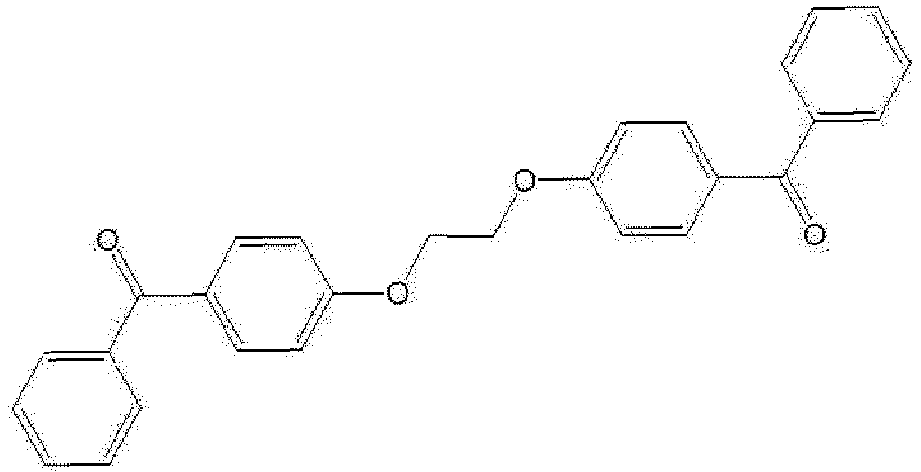
- To a 100 mL Schlenk flask, 1,2-diphenoxyethane (5.25 g, 24.5 mmol), AlCl3 (7.20 g) and 1,2-dichloroethane (87.5 ml) were put. Benzoyl chloride (2.05 eq, 7.06 g) was slowly added thereto dropwisely at room temperature. Stirring was performed at 65°C overnight. After that, the reaction product was extracted with ice water, 10% HCl, and distilled water to obtain a final compound.
1H NMR (CDCl3) : 7.86 (d, 4H), 7.77 (d, 4H), 7.58 (m, 2H), 7.50 (m, 4H), 7.04 (d, 4H), 4.56 (s, 4H) -

- To a 100 mL Schlenk flask, ((ethane-1,2-diylbis(oxy))bis(4,1-phenylene))bis(phenylmethanone) (4.0 g, 7.47 mmol) prepared in step 1, pyrrolidine (2.4 ml) and THF (8.9 ml) were put. Sodium cyclopentadienide (sodium Cp) (2.0 M, 28.4 ml) was slowly added thereto dropwisely at room temperature. Stirring was performed at room temperature overnight. After that, the reaction product was extracted with distilled water and diethyl ether and recrystallized with methanol to obtain a final compound.
1H NMR (CDCl3) : 7.41 (m, 6H), 7.34 (m, 8H), 6.99 (d, 4H), 6.63 (d, 4H), 6.37 (s, 2H), 6.28 (s, 2H), 4.42 (s, 4H) -

- To a 100 mL Schlenk flask, 1,2-bis(4-(cyclopenta-2,4-diene-1-ylidene(phenyl)methyl)phenoxy)ethane (1.48 g, 2.85 mmol) prepared in step 2, and MTBE (13.0 ml) were put. To another 100 mL Schlenk flask, octahydro octa methylfluorene lithium (2.0 g), and MTBE (26.0 ml) were put, and the contents containing 1,2-bis(4-(cyclopenta-2,4-diene-1-ylidene(phenyl)methyl)phenoxy)ethane was added thereto dropwisely at room temperature. Stirring was performed at 50°C overnight. After that, the reaction product was extracted with distilled water and diethyl ether and recrystallized with methanol to obtain a final compound.
1H NMR (CDCl3) : 7.65-6.26 (m, 34H), 5.35 (m, 4H), 4.24 (m, 4H), 1.72 (m, 16H), 1.26 (m, 48H) -

- To a 100 mL Schlenk flask, 1,2-bis(4-(cyclopenta-2,4-diene-1-yl(1,1,4,4,7,7,10,10-octamethyl-2,3,4,7,8,9,10,12-octahydro-1H-dibenzo[b,h]fluorene-12-yl(phenyl)methyl)phenoxy)ethane (2.44 g, 1.89 mmol), toluene (18.2 ml) and THF (1.8 ml) were put. n-BuLi (3.1 ml) was slowly added thereto dropwisely at -20°C and stirred at room temperature overnight. HfCl (1.21 g) was slowly added thereto dropwisely at -20°C, and stirring was performed at 60°C overnight. Solvents were vacuum dried, and the crude product was extracted with hexane and methylene chloride (MC) to obtain a final compound.
1H NMR (CDCl3) : 8.04-7.00 (m, 34H), 4.32 (m, 4H), 1.67-0.84 (m, 64H) -

- To a 100 mL Schlenk flask, 1,2-diphenylethane (5.0 g, 27.4 mmol), AlCl3 (8.05 g) and 1,2-dichloroethane (98.0 ml) were put. Benzoyl chloride (2.05 eq, 7.90 g) was slowly added thereto dropwisely at room temperature. Stirring was performed at 65°C overnight. After that, the reaction product was extracted with ice water, 10% HCl, and distilled water to obtain a final compound.
1H NMR (CDCl3) : 7.80 (m, 18H), 3.73 (s, 4H) -

- To a 100 mL Schlenk flask, ethane-1,2-diylbis(4,1-phenylene)bis(phenylmethanone) (6.36 g, 16.3 mmol) prepared in step 1, pyrrolidine (4.1 ml) and THF (15.4 ml) were put. Cyclopentadienide (sodium Cp) (2.0 M, 48.8 ml) was slowly added thereto dropwisely at room temperature, and stirring was performed at room temperature overnight. After that, the reaction product was extracted with distilled water and diethyl ether and recrystallized with methanol to obtain a final compound.
1H NMR (CDCl3) : 7.39-7.20 (m, 18H), 6.60 (m, 4H), 6.33 (m, 4H), 3.48 (s, 4H) -

- To a 100 mL Schlenk flask, 1,2-bis(4-(cyclopenta-2,4-diene-1-ylidene(phenyl)methyl)phenyl)ethane (1.38 g, 2.83 mmol) prepared in step 2, and MTBE (13.0 ml) were put. To another 100 mL Schlenk flask, octahydro octa methylfluorene lithium (2.0 g), and MTBE (26.0 ml) were put, and the contents containing 1,2-bis(4-(cyclopenta-2,4-diene-1-ylidene(phenyl)methyl)phenyl)ethane was added thereto dropwisely at room temperature. Stirring was performed at 50°C overnight. After that, the reaction product was extracted with distilled water and diethyl ether and recrystallized with methanol to obtain a final compound.
1H NMR (CDCl3) : 7.69-6.30 (m, 34H), 5.41 (m, 4H), 3.78 (m, 4H), 1.64 (m, 16H), 1.28 (m, 48H) -

- To a 100 mL Schlenk flask, 1,2-bis(4-(cyclopenta-2,4-diene-1-yl(1,1,4,4,7,7,10,10-octamethyl-2,3,4,7,8,9,10,12-octahydro-1H-dibenzo[b,h]fluorene-12-yl(phenyl)methyl)phenyl)ethane (2.05 g, 1.63 mmol), toluene (29.6 ml) and THF (3.0 ml) were put. n-BuLi (2.67 ml) was slowly added thereto dropwisely at -20°C, and stirring was performed at room temperature overnight. HfCl (1.04 g) was slowly added thereto dropwisely at -20°C, and stirring was performed at 60°C overnight. After that, solvents were vacuum dried, and the crude product was extracted with hexane and methylene chloride to obtain a final compound.
1H NMR (CDCl3) : 8.05-7.17 (m, 34H), 3.76 (m, 4H), 1.72-0.85 (m, 64H) -
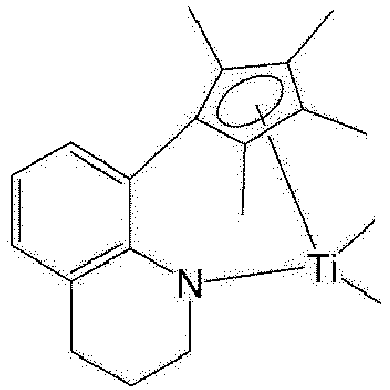
- 1,2,3,4-tetrahydroquinolin (13.08 g, 98.24 mmol) and diethyl ether (150 ml) were put in a Schlenk flask. The Schlenk flask was immersed in a low temperature bath of -78°C made using dry ice and acetone and stirred for 30 minutes. Then, n-BuLi (39.3 ml, 2.5 M, 98.24 mmol) was injected under a nitrogen atmosphere using a syringe, and a pale yellow slurry was formed. Then, the flask was stirred for 2 hours, and the temperature of the flask was elevated to room temperature while removing butane gas produced. The flask was immersed in the low temperature bath of -78°C again to decrease the temperature, and a CO2 gas was injected. According to the injection of the carbon dioxide gas, the slurry disappeared, and a transparent solution was obtained. The flask was connected with a bubbler, and the temperature was elevated to room temperature while removing the carbon dioxide gas. Then, redundant CO2 gas and solvent were removed in vacuum. The flask was transported to a dry box, and pentane was added thereto. The resultant mixture was vigorously stirred and filtered to obtain lithium carbamate as a while solid compound. Diethyl ether made a coordination bond in the white solid compound. Yield was 100%.
1H NMR(C6D6, C5D5N) : δ 1.90 (t, J = 7.2 Hz, 6H, ether), 1.50 (br s, 2H, quin-CH2), 2.34 (br s, 2H, quin-CH2), 3.25 (q, J = 7.2 Hz, 4H, ether), 3.87 (br, s, 2H, quin-CH2), 6.76 (br d, J = 5.6 Hz, 1H, quin-CH) ppm
13C NMR(C6D6): δ 24.24, 28.54, 45.37, 65.95, 121.17, 125.34, 125.57, 142.04, 163.09(C=O) ppm -

- The lithium carbamate compound (8.47 g, 42.60 mmol) prepared in step (i) was put in a Schlenk flask. Then, tetrahydrofuran (4.6 g, 63.9 mmol) and 45 ml of diethyl ether were put in order. The Schlenk flask was immersed in a low temperature bath of -20°C made using acetone and a small amount of dry ice and stirred for 30 minutes, and t-BuLi (25.1 ml, 1.7 M, 42.60 mmol) was put. In this case, the color of the reaction mixture was changed to red. Stirring was performed for 6 hours while maintaining -20°C. A solution of CeCl3·2LiCl (129 ml, 0.33 M, 42.60 mmol) dissolved in tetrahydrofuran and tetramethylcyclopentenone (5.89 g, 42.60 mmol) were mixed in a syringe and then injected into the flask under a nitrogen atmosphere. The temperature of the flask was slowly elevated to room temperature, and after 1 hour, a thermostat was removed, and the temperature was maintained at the room temperature. Then, water (15 ml) was added to the flask, and ethyl acetate was added. Then, the resultant product was filtered, and a filtrate was obtained. The filtrate was transported to a separating funnel, and hydrochloric acid (2 N, 80 ml) was added thereto, followed by shaking for 12 minutes. Then, a saturated sodium bicarbonate aqueous solution (160 ml) was added to neutralize, and an organic layer was extracted. Anhydrous magnesium sulfate was added to the organic layer to remove moisture, and filtering was performed. A filtrate was obtained, and solvent was removed. The filtrate thus obtained was separated by column chromatography using a solvent of hexane and ethyl acetate (v/v, 10:1) to obtain a yellow oil. Yield was 40%.
1H NMR(C6D6): δ 1.00 (br d, 3H, Cp-CH3), 1.63-1.73 (m, 2H, quin-CH2), 1.80 (s, 3H, Cp-CH3), 1.81 (s, 3H, Cp-CH3), 1.85 (s, 3H, Cp-CH3), 2.64 (t, J = 6.0 Hz, 2H, quin-CH2), 2.84-2.90 (br, 2H, quin-CH2), 3.06 (br s, 1H, Cp-H), 3.76 (br s, 1H, N-H), 6.77 (t, J = 7.2 Hz, 1H, quin-CH), 6.92 (d, J = 2.4 Hz, 1H, quin-CH), 6.94 (d, J = 2.4 Hz, 1H, quin-CH) ppm -

- In a dry box, 8-(2,3,4,5-tetramethyl-1,3-cyclopentadienyl)-1,2,3,4-tetrahydroquinoline (8.07 g, 32.0 mmol) prepared through step (1) and 140 ml of diethyl ether were put in a round flask, followed by decreasing the temperature to -30°C. Then, n-BuLi (17.7 g, 2.5 M, 64.0 mmol) was slowly added thereto while stirring. The reaction was performed for 6 hours while elevating the temperature to room temperature. After that, a solid was obtained by washing with diethyl ether several times and filtering. Remaining solvent was removed by applying vacuum to obtain a dilithium compound (9.83 g) as a yellow solid. Yield was 95%.
1H NMR(C6D6, C5D5N): δ 2.38 (br s, 2H, quin-CH2), 2.53 (br s, 12H, Cp-CH3), 3.48 (br s, 2H, quin-CH2), 4.19 (br s, 2H, quin-CH2), 6.77 (t, J = 6.8 Hz, 2H, quin-CH), 7.28 (br s, 1H, quin-CH), 7.75 (brs, 1H, quin-CH) ppm - In a dry box, TiCl4·DME (4.41 g, 15.76 mmol) and diethyl ether (150 ml) were put in a round flask, and MeLi (21.7 ml, 31.52 mmol, 1.4 M) was slowly added thereto while stirring at -30°C. After stirring for 15 minutes, the (1,2,3,4-tetrahydroquinolin-8-yl)tetramethylcyclopentadienyl-η 5,κ-N]dilithium compound (5.30 g, 15.76 mmol) prepared in step (i) was added to the flask. Stirring was performed for 3 hours while elevating the temperature to room temperature. After finishing the reaction, vacuum was applied to remove solvent, and the resultant product was dissolved in pentane and filtered. A filtrate was taken. By removing pentane by applying vacuum, a concentrated brown compound (3.70 g) was obtained. Yield was 71.3%.
1H NMR(C6D6): δ 0.59 (s, 6H, Ti-CH3), 1.66 (s, 6H, Cp-CH3), 1.69 (br t, J = 6.4 Hz, 2H, quin-CH2), 2.05 (s, 6H, Cp-CH3), 2.47 (t, J = 6.0 Hz, 2H, quin-CH2), 4.53 (m, 2H, quin-CH2), 6.84 (t, J = 7.2 Hz, 1H, quin-CH), 6.93 (d, J =7.6 Hz, quin-CH), 7.01 (d, J =6.8 Hz, quin-CH) ppm
13C NMR(C6D6): δ 12.12, 23.08, 27.30, 48.84, 51.01, 119.70, 119.96, 120.95, 126.99, 128.73, 131.67, 136.21 ppm - To a 2 L Buchi reactor, a hexane solvent (1.0 L) and 1-octene (in an amount shown in Table 1 below) were added, and the reactor was pre-heated to 150°C. At the same time, the pressure of the reactor was charged with ethylene (35 bars) in advance. A catalyst in a corresponding amount and 10 eq of a dimethylanilinium tetrakis(pentafluorophenyl) borate (AB) cocatalyst of the catalyst were injected to the reactor in order by applying argon with a high pressure. Then, a copolymerization reaction was performed for 8 minutes. After that, the remaining ethylene gas was exhausted out, and a polymer solution was added to an excessive amount of ethanol to induce precipitation. The precipitated polymer was washed with ethanol twice or three times, and dried in a vacuum oven at 90°C for 12 hours or more, and the physical properties thereof were measured.
- Various polymers were prepared in accordance with the polymerization temperature, a main catalyst and a catalyst listed in Table 1 below, and the results are shown in Table 1 below.
- Calculated by dividing the weight (kg) of the polymer obtained by the amount used (mmol) of the transition metal compound (main catalyst) used.
- Measured according to ASTM D1238 [condition E, MI10 (190°C, 10 kg load), MI2.16 (190°C, 2.16 kg load], and a molten flow rate ratio (MFRR) was calculated by dividing MI10 by MI2.16.
- The density of a polymer was obtained by manufacturing a sheet having a thickness of 3 mm and a radius of 2 cm using a press mold at 190°C, annealing thereof at room temperature for 24 hours, and conducting measurement using a Mettler balance.
- Shown as converted numerical with respect to standard polystyrene of which weight average molecular weight (Mw) was measured using gel permeation chromatography (GPC, manufactured by Water Co.).
- column: PL Olexis
- solvent: trichlorobenzene (TCB)
- flow rate: 1.0 ml/min
- specimen concentration: 1.0 mg/ml
- injection amount: 200 µl
- column temperature: 160°C
- detector: Agilent high temperature IR detector
- The crystallization temperature (Tc) of a polymer and melting temperature (Tm) of a polymer were obtained using a differential scanning calorimeter (DSC: Differential Scanning Calorimeter 6000) manufactured by PerkinElmer Co. Particularly, by using DSC, the temperature of a copolymer was increased to 200°C under a nitrogen atmosphere and kept for 5 minutes. Then, the temperature was decreased to 30°C and then, a DSC curve was observed while increasing the temperature again. In this case, the temperature increasing rate and decreasing rate were 10°C/min, respectively. In the measured DCS curve, the crystallization temperature was the maximum position of heating peak during cooling, and the melting temperature was the maximum position of heat absorption peak during secondly increasing the temperature.
[Table 1] Cat. Cat compound (injection amount mmol) Octene (mL) Amount obtain ed (g) Activity (kgPE/mm ol) Density (g/cc) MI2.16 MI10 MFRR Mw (g/mol ) Tc (°C) Tm (°C) Comparative Experimental Example 1 Comparative Example 1 2 170 40.7 20.4 0.871 2.61 21.0 8.05 93786 46.8 57.2 Experimental Example 1 Example 1 0.75 250 40.1 26.7 0.870 0.017 0.16 9.41 295674 46.9 56.3 Experimental Example 2 Example 2 0.75 250 45.6 30.4 0.871 0.018 0.20 11.11 283234 44.6 55.6 AB: dimethylanilinium tetrakis(pentafluorophenyl) borate cocatalyst - When comparing Comparative Experimental Example 1 with Experimental Examples 1 and 2, it could be confirmed that the catalyst compositions including the compounds of Examples 1 and 2 of the present invention showed higher catalyst activity and could prepare a polymer having a higher molecular weight in a similar density.
Claims (11)
- A transition metal compound represented by the following Formula 1:
 R1 to R13 are each independently hydrogen; halogen; alkyl of 1 to 20 carbon atoms; cycloalkyl of 3 to 20 carbon atoms; alkenyl of 2 to 20 carbon atoms; alkoxy of 1 to 20 carbon atoms; aryl of 6 to 20 carbon atoms; arylalkoxy of 7 to 20 carbon atoms; alkylaryl of 7 to 20 carbon atoms; arylalkyl of 7 to 20 carbon atoms; silyl; or silyl having one to three substituents selected from the group consisting of alkyl of 1 to 12 carbon atoms and alkoxy of 1 to 12 carbon atoms, where adjacent two or more groups among R1 to R12 may be connected with each other to form a ring,X and X' are each independently O, S or a connecting group,A is alkylene of 1 to 6 carbon atoms,Y is C or Si,M is a transition metal of group 4, andQ is hydrogen; halogen; alkyl of 1 to 20 carbon atoms; cycloalkyl of 3 to 20 carbon atoms; alkenyl of 2 to 20 carbon atoms; aryl of 6 to 20 carbon atoms; alkylaryl of 7 to 20 carbon atoms; arylalkyl of 7 to 20 carbon atoms; alkylamino of 1 to 20 carbon atoms; or arylamino of 6 to 20 carbon atoms.
 - The transition metal compound according to claim 1, whereinR1 to R12 are each independently hydrogen; halogen; alkyl of 1 to 20 carbon atoms; cycloalkyl of 3 to 20 carbon atoms; alkenyl of 2 to 20 carbon atoms; alkoxy of 1 to 20 carbon atoms; silyl; or silyl having one to three substituents selected from the group consisting of alkyl of 1 to 12 carbon atoms and alkoxy of 1 to 12 carbon atoms, where adjacent two or more groups among R1 to R12 may be connected with each other to form a ring,R13 is hydrogen; halogen; alkyl of 1 to 12 carbon atoms; cycloalkyl of 3 to 12 carbon atoms; aryl of 6 to 12 carbon atoms; alkylaryl of 7 to 12 carbon atoms; or arylalkyl of 7 to 12 carbon atoms,X and X' are each independently O, S or a connecting group,A is alkylene of 1 to 6 carbon atoms,Y is C or Si,M is Ti, Zr or Hf, andQ is hydrogen; halogen; alkyl of 1 to 20 carbon atoms; cycloalkyl of 3 to 20 carbon atoms; aryl of 6 to 20 carbon atoms; alkylaryl of 7 to 20 carbon atoms; or arylalkyl of 7 to 20 carbon atoms.
- The transition metal compound according to claim 1, whereinR1 to R12 are each independently hydrogen; alkyl of 1 to 12 carbon atoms; cycloalkyl of 3 to 12 carbon atoms; silyl; or silyl having one to three substituents selected from the group consisting of alkyl of 1 to 12 carbon atoms, and alkoxy of 1 to 12 carbon atoms, where adjacent two or more groups among R1 to R12 may be connected with each other to form a ring,R13 is hydrogen; alkyl of 1 to 12 carbon atoms; aryl of 6 to 12 carbon atoms; alkylaryl of 7 to 12 carbon atoms; or arylalkyl of 7 to 12 carbon atoms,X and X' are each independently O, S or a connecting group,A is alkylene of 1 to 6 carbon atoms,Y is C or Si,M is Ti, Zr or Hf, andQ is hydrogen; halogen; alkyl of 1 to 12 carbon atoms; or cycloalkyl of 3 to 12 carbon atoms.
- The transition metal compound according to claim 1, wherein the transition metal compound of Formula 1 is represented by the following Formula 2:
 R1 to R4, R5, R8, R9 and R12 are each independently hydrogen or alkyl of 1 to 12 carbon atoms,R13 is hydrogen, alkyl of 1 to 12 carbon atoms, aryl of 6 to 12 carbon atoms; or alkylaryl of 7 to 12 carbon atoms,R14 to R21 are each independently hydrogen or alkyl of 1 to 6 carbon atoms,X and X' are each independently O, S or a connecting group,A is alkylene of 1 to 6 carbon atoms,Y is C or Si,M is Hf, andQ is halogen or alkyl of 1 to 12 carbon atoms.
 - The transition metal compound according to claim 4, whereinR1 to R4, R5, R8, R9 and R12 are hydrogen,R13 is aryl of 6 to 12 carbon atoms,X and X' are each independently O, S or a connecting group,A is ethylene,Y is C,M is Hf, andQ is alkyl of 1 to 6 carbon atoms.
- The transition metal compound according to claim 1, wherein the compound represented by Formula 1 is a compound represented by any one among the following Formulae 1-1 and 1-2:


- A catalyst composition comprising the transition metal compound of claim 1, wherein the catalyst composition is a polymerization catalyst for polyolefin.
- The catalyst composition according to claim 7, further comprising one or more cocatalysts.
- The catalyst composition according to claim 8, wherein the cocatalyst comprises one or more compounds selected from the following Formulae 3 to 5:
[Formula 3] -[Al(R22)-O]a-
where R22 is each independently a halogen radical; a hydrocarbyl radical of 1 to 20 carbon atoms; or a halogen substituted hydrocarbyl radical of 1 to 20 carbon atoms; and a is an integer of 2 or more;
[Formula 4] D(R22)3
where D is aluminum or boron; and R22 is each independently the same as defined above;
[Formula 5] [L-H]+[Z(A)4]- or [L]+[Z(A)4]-
where L is a neutral or a cationic Lewis acid; H is a hydrogen atom; Z is an element in group 13; and A is each independently aryl of 6 to 20 carbon atoms or alkyl of 1 to 20 carbon atoms, where one or more hydrogen atoms may be substituted with a halogen, hydrocarbyl of 1 to 20 carbon atoms, alkoxy of 1 to 20 carbon atoms, or aryloxy of 6 to 20 carbon atoms. - The catalyst composition according to claim 7, wherein the catalyst composition further comprises a reaction solvent.
- A method for preparing a polymer using the catalyst composition of claim 7.
Applications Claiming Priority (3)
| Application Number | Priority Date | Filing Date | Title |
|---|---|---|---|
| KR20180145546 | 2018-11-22 | ||
| KR1020190149757A KR102531561B1 (en) | 2018-11-22 | 2019-11-20 | Transition metal compound, and catalystic composition comprising the same |
| PCT/KR2019/016167 WO2020106107A1 (en) | 2018-11-22 | 2019-11-22 | Transition metal compound and catalyst composition comprising same |
Publications (3)
| Publication Number | Publication Date |
|---|---|
| EP3868770A1 true EP3868770A1 (en) | 2021-08-25 |
| EP3868770A4 EP3868770A4 (en) | 2022-01-05 |
| EP3868770B1 EP3868770B1 (en) | 2022-11-09 |
Family
ID=70912105
Family Applications (1)
| Application Number | Title | Priority Date | Filing Date |
|---|---|---|---|
| EP19887735.9A Active EP3868770B1 (en) | 2018-11-22 | 2019-11-22 | Transition metal compound and catalyst composition comprising same |
Country Status (4)
| Country | Link |
|---|---|
| US (1) | US12234252B2 (en) |
| EP (1) | EP3868770B1 (en) |
| KR (1) | KR102531561B1 (en) |
| CN (1) | CN113039190B (en) |
Families Citing this family (1)
| Publication number | Priority date | Publication date | Assignee | Title |
|---|---|---|---|---|
| CN114763392B (en) * | 2021-01-15 | 2023-07-14 | 万华化学集团股份有限公司 | A metallocene-supported catalyst and its preparation method, and a preparation method of ethylene and alpha olefin copolymerized elastomer |
Family Cites Families (15)
| Publication number | Priority date | Publication date | Assignee | Title |
|---|---|---|---|---|
| US5064802A (en) | 1989-09-14 | 1991-11-12 | The Dow Chemical Company | Metal complex compounds |
| ES2379243T3 (en) | 1999-12-10 | 2012-04-24 | Dow Global Technologies Llc | Substituted group 4 metal complexes, catalysts and olefin polymerization process |
| JP2002206006A (en) * | 2000-11-13 | 2002-07-26 | Basell Technology Co Bv | Method for producing olefin polymer |
| DE10357374A1 (en) | 2003-12-09 | 2005-07-14 | Knorr-Bremse Systeme für Nutzfahrzeuge GmbH | Disc brake, in particular with electromotive adjusting device, and method for controlling such disc brakes |
| JP2005200453A (en) * | 2004-01-13 | 2005-07-28 | Mitsui Chemicals Inc | METHOD FOR PRODUCING alpha-OLEFIN (CO)POLYMER |
| US7064225B2 (en) * | 2004-06-25 | 2006-06-20 | Chevron Phillips Chemical Company, L.P. | Synthesis of ansa-metallocenes and their parent ligands in high yield |
| US7863210B2 (en) * | 2007-12-28 | 2011-01-04 | Chevron Phillips Chemical Company Lp | Nano-linked metallocene catalyst compositions and their polymer products |
| US8932975B2 (en) | 2010-09-07 | 2015-01-13 | Chevron Phillips Chemical Company Lp | Catalyst systems and methods of making and using same |
| US20120071615A1 (en) * | 2010-09-14 | 2012-03-22 | Lg Chem, Ltd. | Bi-Nuclear Metallocene Compound and the Preparation Method of Polyolefin Using the Same |
| US8877672B2 (en) | 2013-01-29 | 2014-11-04 | Chevron Phillips Chemical Company Lp | Catalyst compositions and methods of making and using same |
| KR101785705B1 (en) | 2015-02-05 | 2017-10-16 | 주식회사 엘지화학 | Catalyst composition and method for preparing polyolefin using the same |
| EP3510037A1 (en) | 2016-09-08 | 2019-07-17 | Total Research & Technology Feluy | Bis(metallocene) compounds and catalyst compositions employing such compounds |
| DE102016116815A1 (en) | 2016-09-08 | 2018-03-08 | Dr. Ing. H.C. F. Porsche Aktiengesellschaft | Process for coating a cylinder of an internal combustion engine and cylinder for an internal combustion engine |
| CN108530492B (en) | 2018-05-17 | 2021-03-30 | 中国石油天然气股份有限公司 | Bridged dinuclear metallocene compound and preparation method and application thereof |
| CN108530490A (en) * | 2018-06-05 | 2018-09-14 | 长春海谱润斯科技有限公司 | A kind of metal complex and its organic luminescent device |
-
2019
- 2019-11-20 KR KR1020190149757A patent/KR102531561B1/en active Active
- 2019-11-22 EP EP19887735.9A patent/EP3868770B1/en active Active
- 2019-11-22 CN CN201980075794.9A patent/CN113039190B/en active Active
- 2019-11-22 US US17/294,522 patent/US12234252B2/en active Active
Also Published As
| Publication number | Publication date |
|---|---|
| CN113039190A (en) | 2021-06-25 |
| KR20200060279A (en) | 2020-05-29 |
| EP3868770B1 (en) | 2022-11-09 |
| CN113039190B (en) | 2023-11-24 |
| KR102531561B1 (en) | 2023-05-15 |
| US20220024951A1 (en) | 2022-01-27 |
| US12234252B2 (en) | 2025-02-25 |
| EP3868770A4 (en) | 2022-01-05 |
Similar Documents
| Publication | Publication Date | Title |
|---|---|---|
| US10280236B2 (en) | Ligand compound, transition metal compound and catalyst composition including the transition metal compound | |
| EP2873671B1 (en) | Transition metal compound, catalyst composition containing same, and method for preparing polymer by using same | |
| JP6469832B2 (en) | Ligand compound, transition metal compound and catalyst composition containing the same | |
| EP3456724B1 (en) | Ligand compound, transition metal compound, and catalyst composition containing same | |
| KR20080065868A (en) | Method for producing a transition metal compound, a transition metal compound prepared by the method and a catalyst composition comprising the transition metal compound | |
| EP2905285B1 (en) | Transition metal compound having heteroatom, a catalyst composition comprising same, and method for preparing polymer using same | |
| KR102423660B1 (en) | Transition metal compound, and catalystic composition comprising the same | |
| KR100843603B1 (en) | Transition metal compound, catalyst composition comprising the same and olefin polymerization using the same | |
| EP3868770B1 (en) | Transition metal compound and catalyst composition comprising same | |
| EP3783004B1 (en) | Transition metal compound, catalyst composition comprising same, and polymer preparation method using same | |
| KR102778393B1 (en) | Transition metal compound, and catalystic composition comprising the same | |
| KR102765735B1 (en) | Transition metal compound, ligand compound and catalystic composition comprising the same | |
| US11572376B2 (en) | Ligand compound, transition metal compound, and catalyst composition comprising the transition metal compound | |
| EP3239159B1 (en) | Transition metal compound having heteroatom, catalyst composition including the same and preparation method of polymer using the catalyst composition | |
| EP3663306A1 (en) | Ligand compound, transition metal compound, and catalyst composition containing same | |
| EP4606805A1 (en) | Transition metal compound and catalyst composition comprising same | |
| CN116261572A (en) | Metal-ligand complex, catalyst composition comprising same for producing ethylene-based polymer, and method for producing ethylene-based polymer using same | |
| KR20220101482A (en) | Novel metallocene compound, catalyst composition comprising the same, and method for preparing olefin polymer using the same | |
| KR20200028762A (en) | Ligand compound, transition metal compound, and catalystic composition comprising the same |
Legal Events
| Date | Code | Title | Description |
|---|---|---|---|
| STAA | Information on the status of an ep patent application or granted ep patent |
Free format text: STATUS: THE INTERNATIONAL PUBLICATION HAS BEEN MADE |
|
| PUAI | Public reference made under article 153(3) epc to a published international application that has entered the european phase |
Free format text: ORIGINAL CODE: 0009012 |
|
| STAA | Information on the status of an ep patent application or granted ep patent |
Free format text: STATUS: REQUEST FOR EXAMINATION WAS MADE |
|
| 17P | Request for examination filed |
Effective date: 20210517 |
|
| AK | Designated contracting states |
Kind code of ref document: A1 Designated state(s): AL AT BE BG CH CY CZ DE DK EE ES FI FR GB GR HR HU IE IS IT LI LT LU LV MC MK MT NL NO PL PT RO RS SE SI SK SM TR |
|
| A4 | Supplementary search report drawn up and despatched |
Effective date: 20211202 |
|
| RIC1 | Information provided on ipc code assigned before grant |
Ipc: C08F 2/38 20060101ALI20211126BHEP Ipc: C08F 4/52 20060101ALI20211126BHEP Ipc: C08F 4/659 20060101ALI20211126BHEP Ipc: C08F 4/6592 20060101ALI20211126BHEP Ipc: C07F 17/00 20060101AFI20211126BHEP |
|
| DAV | Request for validation of the european patent (deleted) | ||
| DAX | Request for extension of the european patent (deleted) | ||
| GRAP | Despatch of communication of intention to grant a patent |
Free format text: ORIGINAL CODE: EPIDOSNIGR1 |
|
| STAA | Information on the status of an ep patent application or granted ep patent |
Free format text: STATUS: GRANT OF PATENT IS INTENDED |
|
| INTG | Intention to grant announced |
Effective date: 20220706 |
|
| GRAS | Grant fee paid |
Free format text: ORIGINAL CODE: EPIDOSNIGR3 |
|
| GRAA | (expected) grant |
Free format text: ORIGINAL CODE: 0009210 |
|
| STAA | Information on the status of an ep patent application or granted ep patent |
Free format text: STATUS: THE PATENT HAS BEEN GRANTED |
|
| AK | Designated contracting states |
Kind code of ref document: B1 Designated state(s): AL AT BE BG CH CY CZ DE DK EE ES FI FR GB GR HR HU IE IS IT LI LT LU LV MC MK MT NL NO PL PT RO RS SE SI SK SM TR |
|
| REG | Reference to a national code |
Ref country code: GB Ref legal event code: FG4D |
|
| REG | Reference to a national code |
Ref country code: CH Ref legal event code: EP Ref country code: AT Ref legal event code: REF Ref document number: 1530306 Country of ref document: AT Kind code of ref document: T Effective date: 20221115 |
|
| REG | Reference to a national code |
Ref country code: DE Ref legal event code: R096 Ref document number: 602019021847 Country of ref document: DE |
|
| REG | Reference to a national code |
Ref country code: IE Ref legal event code: FG4D |
|
| REG | Reference to a national code |
Ref country code: LT Ref legal event code: MG9D |
|
| REG | Reference to a national code |
Ref country code: NL Ref legal event code: MP Effective date: 20221109 |
|
| REG | Reference to a national code |
Ref country code: AT Ref legal event code: MK05 Ref document number: 1530306 Country of ref document: AT Kind code of ref document: T Effective date: 20221109 |
|
| PG25 | Lapsed in a contracting state [announced via postgrant information from national office to epo] |
Ref country code: SE Free format text: LAPSE BECAUSE OF FAILURE TO SUBMIT A TRANSLATION OF THE DESCRIPTION OR TO PAY THE FEE WITHIN THE PRESCRIBED TIME-LIMIT Effective date: 20221109 Ref country code: PT Free format text: LAPSE BECAUSE OF FAILURE TO SUBMIT A TRANSLATION OF THE DESCRIPTION OR TO PAY THE FEE WITHIN THE PRESCRIBED TIME-LIMIT Effective date: 20230309 Ref country code: NO Free format text: LAPSE BECAUSE OF FAILURE TO SUBMIT A TRANSLATION OF THE DESCRIPTION OR TO PAY THE FEE WITHIN THE PRESCRIBED TIME-LIMIT Effective date: 20230209 Ref country code: LT Free format text: LAPSE BECAUSE OF FAILURE TO SUBMIT A TRANSLATION OF THE DESCRIPTION OR TO PAY THE FEE WITHIN THE PRESCRIBED TIME-LIMIT Effective date: 20221109 Ref country code: FI Free format text: LAPSE BECAUSE OF FAILURE TO SUBMIT A TRANSLATION OF THE DESCRIPTION OR TO PAY THE FEE WITHIN THE PRESCRIBED TIME-LIMIT Effective date: 20221109 Ref country code: ES Free format text: LAPSE BECAUSE OF FAILURE TO SUBMIT A TRANSLATION OF THE DESCRIPTION OR TO PAY THE FEE WITHIN THE PRESCRIBED TIME-LIMIT Effective date: 20221109 Ref country code: AT Free format text: LAPSE BECAUSE OF FAILURE TO SUBMIT A TRANSLATION OF THE DESCRIPTION OR TO PAY THE FEE WITHIN THE PRESCRIBED TIME-LIMIT Effective date: 20221109 |
|
| PG25 | Lapsed in a contracting state [announced via postgrant information from national office to epo] |
Ref country code: RS Free format text: LAPSE BECAUSE OF FAILURE TO SUBMIT A TRANSLATION OF THE DESCRIPTION OR TO PAY THE FEE WITHIN THE PRESCRIBED TIME-LIMIT Effective date: 20221109 Ref country code: PL Free format text: LAPSE BECAUSE OF FAILURE TO SUBMIT A TRANSLATION OF THE DESCRIPTION OR TO PAY THE FEE WITHIN THE PRESCRIBED TIME-LIMIT Effective date: 20221109 Ref country code: LV Free format text: LAPSE BECAUSE OF FAILURE TO SUBMIT A TRANSLATION OF THE DESCRIPTION OR TO PAY THE FEE WITHIN THE PRESCRIBED TIME-LIMIT Effective date: 20221109 Ref country code: IS Free format text: LAPSE BECAUSE OF FAILURE TO SUBMIT A TRANSLATION OF THE DESCRIPTION OR TO PAY THE FEE WITHIN THE PRESCRIBED TIME-LIMIT Effective date: 20230309 Ref country code: HR Free format text: LAPSE BECAUSE OF FAILURE TO SUBMIT A TRANSLATION OF THE DESCRIPTION OR TO PAY THE FEE WITHIN THE PRESCRIBED TIME-LIMIT Effective date: 20221109 Ref country code: GR Free format text: LAPSE BECAUSE OF FAILURE TO SUBMIT A TRANSLATION OF THE DESCRIPTION OR TO PAY THE FEE WITHIN THE PRESCRIBED TIME-LIMIT Effective date: 20230210 |
|
| PG25 | Lapsed in a contracting state [announced via postgrant information from national office to epo] |
Ref country code: NL Free format text: LAPSE BECAUSE OF FAILURE TO SUBMIT A TRANSLATION OF THE DESCRIPTION OR TO PAY THE FEE WITHIN THE PRESCRIBED TIME-LIMIT Effective date: 20221109 |
|
| REG | Reference to a national code |
Ref country code: CH Ref legal event code: PL |
|
| REG | Reference to a national code |
Ref country code: BE Ref legal event code: MM Effective date: 20221130 |
|
| PG25 | Lapsed in a contracting state [announced via postgrant information from national office to epo] |
Ref country code: SM Free format text: LAPSE BECAUSE OF FAILURE TO SUBMIT A TRANSLATION OF THE DESCRIPTION OR TO PAY THE FEE WITHIN THE PRESCRIBED TIME-LIMIT Effective date: 20221109 Ref country code: RO Free format text: LAPSE BECAUSE OF FAILURE TO SUBMIT A TRANSLATION OF THE DESCRIPTION OR TO PAY THE FEE WITHIN THE PRESCRIBED TIME-LIMIT Effective date: 20221109 Ref country code: LI Free format text: LAPSE BECAUSE OF NON-PAYMENT OF DUE FEES Effective date: 20221130 Ref country code: EE Free format text: LAPSE BECAUSE OF FAILURE TO SUBMIT A TRANSLATION OF THE DESCRIPTION OR TO PAY THE FEE WITHIN THE PRESCRIBED TIME-LIMIT Effective date: 20221109 Ref country code: DK Free format text: LAPSE BECAUSE OF FAILURE TO SUBMIT A TRANSLATION OF THE DESCRIPTION OR TO PAY THE FEE WITHIN THE PRESCRIBED TIME-LIMIT Effective date: 20221109 Ref country code: CZ Free format text: LAPSE BECAUSE OF FAILURE TO SUBMIT A TRANSLATION OF THE DESCRIPTION OR TO PAY THE FEE WITHIN THE PRESCRIBED TIME-LIMIT Effective date: 20221109 Ref country code: CH Free format text: LAPSE BECAUSE OF NON-PAYMENT OF DUE FEES Effective date: 20221130 |
|
| REG | Reference to a national code |
Ref country code: DE Ref legal event code: R097 Ref document number: 602019021847 Country of ref document: DE |
|
| PG25 | Lapsed in a contracting state [announced via postgrant information from national office to epo] |
Ref country code: SK Free format text: LAPSE BECAUSE OF FAILURE TO SUBMIT A TRANSLATION OF THE DESCRIPTION OR TO PAY THE FEE WITHIN THE PRESCRIBED TIME-LIMIT Effective date: 20221109 Ref country code: LU Free format text: LAPSE BECAUSE OF NON-PAYMENT OF DUE FEES Effective date: 20221122 Ref country code: AL Free format text: LAPSE BECAUSE OF FAILURE TO SUBMIT A TRANSLATION OF THE DESCRIPTION OR TO PAY THE FEE WITHIN THE PRESCRIBED TIME-LIMIT Effective date: 20221109 |
|
| PLBE | No opposition filed within time limit |
Free format text: ORIGINAL CODE: 0009261 |
|
| STAA | Information on the status of an ep patent application or granted ep patent |
Free format text: STATUS: NO OPPOSITION FILED WITHIN TIME LIMIT |
|
| 26N | No opposition filed |
Effective date: 20230810 |
|
| PG25 | Lapsed in a contracting state [announced via postgrant information from national office to epo] |
Ref country code: IE Free format text: LAPSE BECAUSE OF NON-PAYMENT OF DUE FEES Effective date: 20221122 |
|
| PG25 | Lapsed in a contracting state [announced via postgrant information from national office to epo] |
Ref country code: SI Free format text: LAPSE BECAUSE OF FAILURE TO SUBMIT A TRANSLATION OF THE DESCRIPTION OR TO PAY THE FEE WITHIN THE PRESCRIBED TIME-LIMIT Effective date: 20221109 Ref country code: BE Free format text: LAPSE BECAUSE OF NON-PAYMENT OF DUE FEES Effective date: 20221130 |
|
| PG25 | Lapsed in a contracting state [announced via postgrant information from national office to epo] |
Ref country code: CY Free format text: LAPSE BECAUSE OF FAILURE TO SUBMIT A TRANSLATION OF THE DESCRIPTION OR TO PAY THE FEE WITHIN THE PRESCRIBED TIME-LIMIT Effective date: 20221109 |
|
| PG25 | Lapsed in a contracting state [announced via postgrant information from national office to epo] |
Ref country code: MK Free format text: LAPSE BECAUSE OF FAILURE TO SUBMIT A TRANSLATION OF THE DESCRIPTION OR TO PAY THE FEE WITHIN THE PRESCRIBED TIME-LIMIT Effective date: 20221109 Ref country code: IT Free format text: LAPSE BECAUSE OF FAILURE TO SUBMIT A TRANSLATION OF THE DESCRIPTION OR TO PAY THE FEE WITHIN THE PRESCRIBED TIME-LIMIT Effective date: 20221109 Ref country code: HU Free format text: LAPSE BECAUSE OF FAILURE TO SUBMIT A TRANSLATION OF THE DESCRIPTION OR TO PAY THE FEE WITHIN THE PRESCRIBED TIME-LIMIT; INVALID AB INITIO Effective date: 20191122 |
|
| PG25 | Lapsed in a contracting state [announced via postgrant information from national office to epo] |
Ref country code: MC Free format text: LAPSE BECAUSE OF FAILURE TO SUBMIT A TRANSLATION OF THE DESCRIPTION OR TO PAY THE FEE WITHIN THE PRESCRIBED TIME-LIMIT Effective date: 20221109 |
|
| PG25 | Lapsed in a contracting state [announced via postgrant information from national office to epo] |
Ref country code: TR Free format text: LAPSE BECAUSE OF FAILURE TO SUBMIT A TRANSLATION OF THE DESCRIPTION OR TO PAY THE FEE WITHIN THE PRESCRIBED TIME-LIMIT Effective date: 20221109 Ref country code: MC Free format text: LAPSE BECAUSE OF FAILURE TO SUBMIT A TRANSLATION OF THE DESCRIPTION OR TO PAY THE FEE WITHIN THE PRESCRIBED TIME-LIMIT Effective date: 20221109 |
|
| PG25 | Lapsed in a contracting state [announced via postgrant information from national office to epo] |
Ref country code: BG Free format text: LAPSE BECAUSE OF FAILURE TO SUBMIT A TRANSLATION OF THE DESCRIPTION OR TO PAY THE FEE WITHIN THE PRESCRIBED TIME-LIMIT Effective date: 20221109 |
|
| PG25 | Lapsed in a contracting state [announced via postgrant information from national office to epo] |
Ref country code: MT Free format text: LAPSE BECAUSE OF FAILURE TO SUBMIT A TRANSLATION OF THE DESCRIPTION OR TO PAY THE FEE WITHIN THE PRESCRIBED TIME-LIMIT Effective date: 20221109 |
|
| PGFP | Annual fee paid to national office [announced via postgrant information from national office to epo] |
Ref country code: DE Payment date: 20251020 Year of fee payment: 7 |
|
| PGFP | Annual fee paid to national office [announced via postgrant information from national office to epo] |
Ref country code: GB Payment date: 20251023 Year of fee payment: 7 |
|
| PGFP | Annual fee paid to national office [announced via postgrant information from national office to epo] |
Ref country code: FR Payment date: 20251021 Year of fee payment: 7 |