EP3868758A1 - Thiadiazole derivative and uses thereof as a gls1 inhibitor - Google Patents
Thiadiazole derivative and uses thereof as a gls1 inhibitor Download PDFInfo
- Publication number
- EP3868758A1 EP3868758A1 EP19874268.6A EP19874268A EP3868758A1 EP 3868758 A1 EP3868758 A1 EP 3868758A1 EP 19874268 A EP19874268 A EP 19874268A EP 3868758 A1 EP3868758 A1 EP 3868758A1
- Authority
- EP
- European Patent Office
- Prior art keywords
- compound
- isomer
- pharmaceutically acceptable
- acceptable salt
- alkyl
- Prior art date
- Legal status (The legal status is an assumption and is not a legal conclusion. Google has not performed a legal analysis and makes no representation as to the accuracy of the status listed.)
- Granted
Links
- 0 *=C(N)SC(Br)=[N-] Chemical compound *=C(N)SC(Br)=[N-] 0.000 description 5
- RLEWRCNFTWMBLK-LXIYXOSZSA-N CO[C@H](C(Nc1nnc(N[C@H](CC2)CC[C@@H]2c2cccnn2)[s]1)=O)c(cc(cc1)OC(F)(F)F)c1F Chemical compound CO[C@H](C(Nc1nnc(N[C@H](CC2)CC[C@@H]2c2cccnn2)[s]1)=O)c(cc(cc1)OC(F)(F)F)c1F RLEWRCNFTWMBLK-LXIYXOSZSA-N 0.000 description 2
- RLEWRCNFTWMBLK-JCGVRSQUSA-N CO[C@H](C(Nc1nnc(N[C@H](CC2)CC[C@H]2c2nnccc2)[s]1)=O)c(cc(cc1)OC(F)(F)F)c1F Chemical compound CO[C@H](C(Nc1nnc(N[C@H](CC2)CC[C@H]2c2nnccc2)[s]1)=O)c(cc(cc1)OC(F)(F)F)c1F RLEWRCNFTWMBLK-JCGVRSQUSA-N 0.000 description 2
- PYCWSPHSXHTRQT-UHFFFAOYSA-N OC(Cc(cc(cc1)OC(F)(F)F)c1F)=O Chemical compound OC(Cc(cc(cc1)OC(F)(F)F)c1F)=O PYCWSPHSXHTRQT-UHFFFAOYSA-N 0.000 description 2
- OLTLTRVBKVYBGE-UHFFFAOYSA-N C/[O]=C\C(C(Nc1nnc(NC(CC2)CC=C2c2cc(cc[nH]3)c3nn2)[s]1)=O)c(cc(cc1)OC(F)(F)F)c1F Chemical compound C/[O]=C\C(C(Nc1nnc(NC(CC2)CC=C2c2cc(cc[nH]3)c3nn2)[s]1)=O)c(cc(cc1)OC(F)(F)F)c1F OLTLTRVBKVYBGE-UHFFFAOYSA-N 0.000 description 1
- XGMFDXHTLYOVJR-UHFFFAOYSA-N C/[O]=C\C(C(Nc1nnc(NC(CC2)CC=C2c2cc(cc[n]3S(c4ccccc4)(=O)=O)c3nn2)[s]1)=O)c(cc(cc1)OC(F)(F)F)c1F Chemical compound C/[O]=C\C(C(Nc1nnc(NC(CC2)CC=C2c2cc(cc[n]3S(c4ccccc4)(=O)=O)c3nn2)[s]1)=O)c(cc(cc1)OC(F)(F)F)c1F XGMFDXHTLYOVJR-UHFFFAOYSA-N 0.000 description 1
- CYXNBJAYJQHMLT-UHFFFAOYSA-N CC(C)(C)OC(NC(CC1)CC=C1c(cc1cc2)nnc1[n]2S(C1=CCCC=C1)(=O)=O)=O Chemical compound CC(C)(C)OC(NC(CC1)CC=C1c(cc1cc2)nnc1[n]2S(C1=CCCC=C1)(=O)=O)=O CYXNBJAYJQHMLT-UHFFFAOYSA-N 0.000 description 1
- ANCYMSXBCUHROL-IMPFDJJSSA-N CC[C@H](C(C)N(/C=C\CC)S(c1ccccc1)(=O)=O)N Chemical compound CC[C@H](C(C)N(/C=C\CC)S(c1ccccc1)(=O)=O)N ANCYMSXBCUHROL-IMPFDJJSSA-N 0.000 description 1
- MVIHBBNPOPBCKE-WIPHBYQHSA-N COC(C(Nc1nnc(N[C@H](CC2)CC[C@H]2c2nnccc2)[s]1)=O)c(cc1OC)ccc1F Chemical compound COC(C(Nc1nnc(N[C@H](CC2)CC[C@H]2c2nnccc2)[s]1)=O)c(cc1OC)ccc1F MVIHBBNPOPBCKE-WIPHBYQHSA-N 0.000 description 1
- QNMSIJGOPCCYPV-UHFFFAOYSA-N COC(Cc1c(N)nnc(Cl)c1)OC Chemical compound COC(Cc1c(N)nnc(Cl)c1)OC QNMSIJGOPCCYPV-UHFFFAOYSA-N 0.000 description 1
- UYTNKIYFEUVHRV-AEDCBLDQSA-N CO[C@@H](C(Nc1nnc(N[C@H](CC2)CC[C@@H]2c2cc(C(O)=O)cnn2)[s]1)=O)c(cc(cc1)OC(F)(F)F)c1F Chemical compound CO[C@@H](C(Nc1nnc(N[C@H](CC2)CC[C@@H]2c2cc(C(O)=O)cnn2)[s]1)=O)c(cc(cc1)OC(F)(F)F)c1F UYTNKIYFEUVHRV-AEDCBLDQSA-N 0.000 description 1
- RLEWRCNFTWMBLK-SNUQEOBHSA-N CO[C@@H](C(Nc1nnc(N[C@H](CC2)CC[C@@H]2c2cccnn2)[s]1)=O)c(cc(cc1)OC(F)(F)F)c1F Chemical compound CO[C@@H](C(Nc1nnc(N[C@H](CC2)CC[C@@H]2c2cccnn2)[s]1)=O)c(cc(cc1)OC(F)(F)F)c1F RLEWRCNFTWMBLK-SNUQEOBHSA-N 0.000 description 1
- RLEWRCNFTWMBLK-FHSNZYRGSA-N CO[C@@H](C(Nc1nnc(N[C@H](CC2)CC[C@H]2c2nnccc2)[s]1)=O)c(cc(cc1)OC(F)(F)F)c1F Chemical compound CO[C@@H](C(Nc1nnc(N[C@H](CC2)CC[C@H]2c2nnccc2)[s]1)=O)c(cc(cc1)OC(F)(F)F)c1F RLEWRCNFTWMBLK-FHSNZYRGSA-N 0.000 description 1
- IZJCRTQRQZZWCP-ZJFPTPTDSA-N CO[C@H](C(Nc1nnc(NC(CC2)CC=C2c2ccc(N)nn2)[s]1)=O)c(cc(cc1)OC(F)(F)F)c1F Chemical compound CO[C@H](C(Nc1nnc(NC(CC2)CC=C2c2ccc(N)nn2)[s]1)=O)c(cc(cc1)OC(F)(F)F)c1F IZJCRTQRQZZWCP-ZJFPTPTDSA-N 0.000 description 1
- JIXDOBAQOWOUPA-UHFFFAOYSA-N COc(cccc1)c1F Chemical compound COc(cccc1)c1F JIXDOBAQOWOUPA-UHFFFAOYSA-N 0.000 description 1
- QDOFILQZQKSQKM-UHFFFAOYSA-N C[Si+](C)(C)C#Cc1cc(Cl)nnc1N Chemical compound C[Si+](C)(C)C#Cc1cc(Cl)nnc1N QDOFILQZQKSQKM-UHFFFAOYSA-N 0.000 description 1
- ABZZOKSFQKTLHJ-UHFFFAOYSA-N Clc1cc(cc[nH]2)c2nn1 Chemical compound Clc1cc(cc[nH]2)c2nn1 ABZZOKSFQKTLHJ-UHFFFAOYSA-N 0.000 description 1
- FGOWNGCSUSKHQI-UHFFFAOYSA-N Nc(nnc(Cl)c1)c1Br Chemical compound Nc(nnc(Cl)c1)c1Br FGOWNGCSUSKHQI-UHFFFAOYSA-N 0.000 description 1
- FMDGCHMPSCBYFX-UHFFFAOYSA-N O=Cc(cc(cc1)OC(F)(F)F)c1F Chemical compound O=Cc(cc(cc1)OC(F)(F)F)c1F FMDGCHMPSCBYFX-UHFFFAOYSA-N 0.000 description 1
- SDGABPQUAUUNAQ-UHFFFAOYSA-N O=S(C1C=CC=CC1)(Cl)=O Chemical compound O=S(C1C=CC=CC1)(Cl)=O SDGABPQUAUUNAQ-UHFFFAOYSA-N 0.000 description 1
- SYYZFKUBYXYQMS-UHFFFAOYSA-N O=S(c1ccccc1)([n](cc1)c(nn2)c1cc2Cl)=O Chemical compound O=S(c1ccccc1)([n](cc1)c(nn2)c1cc2Cl)=O SYYZFKUBYXYQMS-UHFFFAOYSA-N 0.000 description 1
- CIDNVWYWONPQTH-UHFFFAOYSA-O [BH+]C(CC1)=CCC1NC(OC(C)(C)C)=O Chemical compound [BH+]C(CC1)=CCC1NC(OC(C)(C)C)=O CIDNVWYWONPQTH-UHFFFAOYSA-O 0.000 description 1
Images
Classifications
-
- C—CHEMISTRY; METALLURGY
- C07—ORGANIC CHEMISTRY
- C07D—HETEROCYCLIC COMPOUNDS
- C07D417/00—Heterocyclic compounds containing two or more hetero rings, at least one ring having nitrogen and sulfur atoms as the only ring hetero atoms, not provided for by group C07D415/00
- C07D417/14—Heterocyclic compounds containing two or more hetero rings, at least one ring having nitrogen and sulfur atoms as the only ring hetero atoms, not provided for by group C07D415/00 containing three or more hetero rings
-
- A—HUMAN NECESSITIES
- A61—MEDICAL OR VETERINARY SCIENCE; HYGIENE
- A61K—PREPARATIONS FOR MEDICAL, DENTAL OR TOILETRY PURPOSES
- A61K31/00—Medicinal preparations containing organic active ingredients
- A61K31/33—Heterocyclic compounds
- A61K31/335—Heterocyclic compounds having oxygen as the only ring hetero atom, e.g. fungichromin
- A61K31/337—Heterocyclic compounds having oxygen as the only ring hetero atom, e.g. fungichromin having four-membered rings, e.g. taxol
-
- A—HUMAN NECESSITIES
- A61—MEDICAL OR VETERINARY SCIENCE; HYGIENE
- A61K—PREPARATIONS FOR MEDICAL, DENTAL OR TOILETRY PURPOSES
- A61K31/00—Medicinal preparations containing organic active ingredients
- A61K31/33—Heterocyclic compounds
- A61K31/395—Heterocyclic compounds having nitrogen as a ring hetero atom, e.g. guanethidine or rifamycins
- A61K31/495—Heterocyclic compounds having nitrogen as a ring hetero atom, e.g. guanethidine or rifamycins having six-membered rings with two or more nitrogen atoms as the only ring heteroatoms, e.g. piperazine or tetrazines
- A61K31/50—Pyridazines; Hydrogenated pyridazines
- A61K31/501—Pyridazines; Hydrogenated pyridazines not condensed and containing further heterocyclic rings
-
- A—HUMAN NECESSITIES
- A61—MEDICAL OR VETERINARY SCIENCE; HYGIENE
- A61K—PREPARATIONS FOR MEDICAL, DENTAL OR TOILETRY PURPOSES
- A61K31/00—Medicinal preparations containing organic active ingredients
- A61K31/33—Heterocyclic compounds
- A61K31/555—Heterocyclic compounds containing heavy metals, e.g. hemin, hematin, melarsoprol
-
- A—HUMAN NECESSITIES
- A61—MEDICAL OR VETERINARY SCIENCE; HYGIENE
- A61K—PREPARATIONS FOR MEDICAL, DENTAL OR TOILETRY PURPOSES
- A61K31/00—Medicinal preparations containing organic active ingredients
- A61K31/70—Carbohydrates; Sugars; Derivatives thereof
- A61K31/7028—Compounds having saccharide radicals attached to non-saccharide compounds by glycosidic linkages
- A61K31/7034—Compounds having saccharide radicals attached to non-saccharide compounds by glycosidic linkages attached to a carbocyclic compound, e.g. phloridzin
- A61K31/704—Compounds having saccharide radicals attached to non-saccharide compounds by glycosidic linkages attached to a carbocyclic compound, e.g. phloridzin attached to a condensed carbocyclic ring system, e.g. sennosides, thiocolchicosides, escin, daunorubicin
-
- A—HUMAN NECESSITIES
- A61—MEDICAL OR VETERINARY SCIENCE; HYGIENE
- A61P—SPECIFIC THERAPEUTIC ACTIVITY OF CHEMICAL COMPOUNDS OR MEDICINAL PREPARATIONS
- A61P35/00—Antineoplastic agents
-
- C—CHEMISTRY; METALLURGY
- C07—ORGANIC CHEMISTRY
- C07D—HETEROCYCLIC COMPOUNDS
- C07D417/00—Heterocyclic compounds containing two or more hetero rings, at least one ring having nitrogen and sulfur atoms as the only ring hetero atoms, not provided for by group C07D415/00
- C07D417/02—Heterocyclic compounds containing two or more hetero rings, at least one ring having nitrogen and sulfur atoms as the only ring hetero atoms, not provided for by group C07D415/00 containing two hetero rings
- C07D417/12—Heterocyclic compounds containing two or more hetero rings, at least one ring having nitrogen and sulfur atoms as the only ring hetero atoms, not provided for by group C07D415/00 containing two hetero rings linked by a chain containing hetero atoms as chain links
-
- C—CHEMISTRY; METALLURGY
- C07—ORGANIC CHEMISTRY
- C07D—HETEROCYCLIC COMPOUNDS
- C07D487/00—Heterocyclic compounds containing nitrogen atoms as the only ring hetero atoms in the condensed system, not provided for by groups C07D451/00 - C07D477/00
- C07D487/02—Heterocyclic compounds containing nitrogen atoms as the only ring hetero atoms in the condensed system, not provided for by groups C07D451/00 - C07D477/00 in which the condensed system contains two hetero rings
- C07D487/04—Ortho-condensed systems
Definitions
- the present disclosure relates to a thiadiazole derivative and the uses thereof in the manufacture of a drug for treating GLS1-associated diseases. Specifically, the present disclosure relates to a derivative compound of formula (I), a tautomer thereof or a pharmaceutically acceptable compound thereof.
- Glutamine is the most abundant amino acid in the human body, and is a non-essential amino acid. Some glutamines are taken up from the circulation by the amidation of glutamate and ammonia derived from purine metabolism, and other glutamines are produced by the transamination of ⁇ -ketoglutarate derived from glucose and subsequent amidation. Glutaminase (GLS) can promote the decomposition of glutamine into glutamate and ammonium ions, and then the glutamate is converted to ⁇ -KG (a-ketoglutarate) by a glutamate dehydrogenase, and then the ⁇ -KG enters the TCA cycle (tricarboxylic acid cycle) to provide energy and a source of macromolecular materials.
- Glutaminase Glutaminase
- the carbon source produced by glutamine metabolism supports the synthesis of OAA (oxaloacetic acid), acetyl coenzyme A and citric acid, and lipogenesis; at the same time, the nitrogen source produced by glutamine metabolism supports the synthesis of purines, pyrimidines, DNA, NADPH (nicotinamide adenine dinucleotide phosphate) and GSH (glutathione) to maintain redox homeostasis.
- Glutamine acts as a precursor for the synthesis of many amino acids, proteins, nucleotides and other biologically important molecules.
- ATP adenosine triphosphate
- GLS GLS-like growth factor
- the present disclosure provides a compound of formula (I), an isomer thereof or a pharmaceutically acceptable salt thereof, wherein is selected from a single bond and a double bond;
- R 1 is independently selected from H, F, Cl, Br, I, OH, NH 2 , CN, COOH, C 1-6 alkyl or C 1-6 heteroalkyl, wherein the C 1-6 alkyl and C 1-6 heteroalkyl are optionally substituted with 1, 2, or 3 R a .
- R 2 is independently selected from H, F, Cl, Br, I, OH, NH 2 , CN, COOH, C 1-6 alkyl or C 1-6 heteroalkyl, wherein the C 1-6 alkyl or C 1-6 heteroalkyl is optionally substituted with 1, 2, or 3 R b .
- R 1 is independently selected from H, F, Cl, Br, I, OH, NH 2 , CN, COOH, C 1-3 alkyl and C 1-3 alkoxy, wherein the C 1-3 alkyl and C 1-3 alkoxy are optionally substituted with 1, 2, or 3 R a , and other variables are as defined in the present disclosure.
- R 1 is selected from H, F, Cl, Br, I, OH, NH 2 , CN, COOH, C 1-3 alkyl and C 1-3 alkoxy, wherein the C 1-3 alkyl and C 1-3 alkoxy are optionally substituted with 1, 2, or 3 R a , and other variables are as defined in the present disclosure.
- R 1 is independently selected from H, F, Cl, Br, I, OH, NH 2 , CN, COOH, CH 3 , CH 2 CH 3 and wherein the CH 3 , CH 2 CH 3 and are optionally substituted with 1, 2, or 3 R a , and other variables are as defined in the present disclosure.
- R 1 is independently selected from H, F, Cl, Br, I, OH, NH 2 , CN, COOH, CH 3 , CH 2 F, CHF 2 , CF 3 , CH 2 CH 3 , and other variables are as defined in the present disclosure.
- the above-mentioned R 2 is independently selected from H, F, Cl, Br, I, OH, NH 2 , CN, COOH, C 1-3 alkyl and C 1-3 alkoxy, wherein the C 1-3 alkyl and C 1-3 alkoxy are optionally substituted with 1, 2, or 3 R b , and other variables are as defined in the present disclosure.
- R 2 is independently selected from H, F, Cl, Br, I, OH, NH 2 , CN, COOH, CH 3 , CH 2 CH 3 and wherein the CH 3 , CH 2 CH 3 and are optionally substituted with 1, 2, or 3 R b , and other variables are as defined in the present disclosure.
- R 2 is independently selected from H, F, Cl, Br, I, OH, NH 2 , CN, COOH, CH 3 , CH 2 F, CHF 2 , CF 3 , CH 2 CH 3 , and other variables are as defined in the present disclosure.
- R c and R d are each independently selected from H, F, Cl, Br, I, OH, NH 2 , CN, COOH, C 1-3 alkyl and C 1-3 alkoxy, wherein the C 1-3 alkyl and C 1-3 alkoxy are optionally substituted with 1, 2, or 3 R, and other variables are as defined in the present disclosure.
- R c and R d are each independently selected from H, F, Cl, Br, I, OH, NH 2 , CN, COOH, CH 3 , CF 3 , CH 2 CH 3 and and other variables are as defined in the present disclosure.
- the above-mentioned L is selected from -CH 2 - and and other variables are as defined in the present disclosure.
- the above-mentioned L is selected from and other variables are as defined in the present disclosure.
- the above-mentioned ring A is selected from pyridinyl, pyridazinyl, pyrazinyl and 7H-pyrrolo[2,3-c]pyridazinyl, and other variables are as defined in the present disclosure.
- the above-mentioned moiety is selected from and other variables are as defined in the present disclosure.
- the above-mentioned moiety is selected from and and other variables are as defined in the present disclosure.
- the above-mentioned ring B is selected from phenyl, pyrazolyl and pyridyl, and other variables are as defined in the present disclosure.
- the above-mentioned moiety is selected from and other variables are as defined in the present disclosure.
- the above-mentioned moiety is selected from and and other variables are as defined in the present disclosure.
- the above-mentioned compound, isomer thereof or pharmaceutically acceptable salt thereof is selected from wherein R 1 , R 2 , L, m and n are as defined in the present disclosure.
- the above-mentioned compound, isomer thereof or pharmaceutically acceptable salt thereof is selected from wherein R 1 , R 2 , m and n are as defined in the present disclosure.
- the present disclosure also provides a compound of the following formulas, an isomer thereof or a pharmaceutically acceptable salt thereof, wherein the compound is selected from
- the above-mentioned compound is selected from
- the present disclosure also provides use of the above-mentioned compound, isomer thereof or pharmaceutically acceptable salt thereof in the manufacture of a drug for treating GLS1-associated diseases.
- pharmaceutically acceptable refers to those compounds, materials, compositions and/or dosage forms, which are, within the scope of sound medical judgment, suitable for use in contact with human and animal tissues, without excessive toxicity, irritation, allergic reactions or other problems or complications, which is commensurate with a reasonable benefit/risk ratio.
- pharmaceutically acceptable salt refers to a salt of the compound of the present disclosure, which is prepared from the compound having specific substituents found in the present disclosure with relatively non-toxic acids or bases.
- base addition salts can be obtained by contacting the neutral form of such compounds with a sufficient amount of base, either in pure solution or a suitable inert solvent.
- Pharmaceutically acceptable base addition salts include sodium, potassium, calcium, ammonium, organic amine or magnesium salts or similar salts.
- acid addition salts can be obtained by contacting the neutral form of such compounds with a sufficient amount of acid, either in pure solution or a suitable inert solvent.
- Examples of pharmaceutically acceptable acid addition salts include salts of inorganic acids, which include, for example, hydrochloric acid, hydrobromic acid, nitric acid, carbonic acid, bicarbonate, phosphoric acid, monohydrogen phosphate, dihydrogen phosphate, sulfuric acid, hydrogen sulfate, hydroiodic acid and phosphorous acid; and salts of organic acids, which include, for example, acetic acid, propionic acid, isobutyric acid, maleic acid, malonic acid, benzoic acid, succinic acid, suberic acid, fumaric acid, lactic acid, mandelic acid, phthalic acid, benzenesulfonic acid, p-toluenesulfonic acid, citric acid, tartaric acid, and methanesulfonic acid; and also include salts of amino acids (such as arginine), and salts of organic acids such as glucuronic acid.
- Certain specific compounds of the present disclosure contain basic and acidic functional groups and thus can
- the pharmaceutically acceptable salts of the present disclosure can be synthesized from a parent compound containing acid radicals or base radicals by conventional chemical methods.
- the method for preparing such salts comprises: in water or an organic solvent or a mixture of both, reacting these compounds in free acid or base forms with a stoichiometric amount of a suitable base or acid to prepare the salts.
- the compounds of the present disclosure may exist in specific geometric or stereoisomeric forms.
- the present disclosure contemplates all such compounds, including cis and trans isomers, (-)- and (+)-enantiomers, ( R )- and ( S )-enantiomers, diastereomers, ( D )-isomers, ( L )-isomers, and racemic mixtures and other mixtures thereof, such as enantiomerically or diastereomerically enriched mixtures, all of which fall within the scope of the present disclosure.
- Additional asymmetric carbon atoms may be present in a substituent such as an alkyl group. All these isomers and mixtures thereof are included in the scope of the present disclosure.
- enantiomer or “optical isomers” refers to stereoisomers that are mirror images of each other.
- cis-trans isomer or “geometric isomer” is caused by the fact that double bonds or single bonds of ring-forming carbon atoms cannot rotate freely.
- diastereomers refers to stereoisomers in which molecules have two or more chiral centers and are not mirror images of each other.
- the wedge-shaped solid bond and the wedge-shaped dotted bond represent the absolute configuration of a stereoscopic center; the straight solid bond and the straight dotted bond represent the relative configuration of a stereoscopic center; the wavy line represents the wedge-shaped solid bond or the wedge-shaped dotted bond or the wavy line represents the straight solid bond and the straight dotted bond
- tautomer or “tautomeric form” means that at room temperature, isomers with different functional groups are in dynamic equilibrium and can be quickly converted to each other. Where tautomerization is possible (such as in solution), a chemical equilibrium of tautomers can be achieved.
- proton tautomers also known as prototropic tautomers
- prototropic tautomers include interconversion via migration of a proton, such as keto-enol isomerization and imine-enamine isomerization.
- Valence tautomers include some interconversions by recombination of some of bond-forming electrons.
- keto-enol tautomerization is the interconversion between two tautomers, pentane-2,4-dione and 4-hydroxypent-3-en-2-one.
- the term “rich in one isomer”, “isomer enriched”, “rich in one enantiomer” or “enantiomerically enriched” refers to the content of one of the isomers or enantiomers is less than 100%, and the content of the isomer or enantiomer is greater than or equal to 60%, or greater than or equal to 70%, or greater than or equal to 80%, or greater than or equal to 90%, or greater than or equal to 95%, or greater than or equal to 96%, or greater than or equal to 97%, or greater than or equal to 98%, or greater than or equal to 99%, or greater than or equal to 99.5%, or greater than or equal to 99.6%, or greater than or equal to 99.7%, or greater than or equal to 99.8%, or greater than or equal to 99.9%.
- the term “isomer excess” or “enantiomeric excess” refers to the difference between the relative percentages of two isomers or two enantiomers. For example, if the content of one isomer or enantiomer is 90%, and the content of the other isomer or enantiomer is 10%, the isomer or enantiomer excess (ee value) is 80%.
- Optically active (R)- and ( S )-isomers and D and L isomers can be prepared using chiral synthesis or chiral reagents or other conventional techniques. If a particular enantiomer of a compound of the present disclosure is desired, it can be prepared by asymmetric synthesis or derivatization with a chiral auxiliary, wherein the resulting diastereomeric mixture is separated and the auxiliary groups are cleaved to provide pure desired enantiomers.
- diastereomeric salts can be formed with an appropriate optically active acid or base, followed by resolution of the diastereomers using conventional methods well known in the art, and subsequent recovery of the pure enantiomers.
- separation of enantiomers and diastereomers is frequently accomplished using chromatography, which uses chiral stationary phases, optionally in combination with chemical derivatization methods (e.g., formation of carbamates from amines).
- the compounds of the present disclosure may contain unnatural proportions of atomic isotopes at one or more of the atoms constituting the compound.
- the compounds may be radiolabeled with radioactive isotopes, such as tritium ( 3 H), iodine-125 ( 125 I) or C-14 ( 14 C).
- the hydrogen can be substituted by heavy hydrogen to form deuterated drugs.
- the bond formed by deuterium and carbon is stronger than the bond formed by ordinary hydrogen and carbon.
- deuterated drugs have reduced toxic side effects, increased drug stability, enhanced efficacy, prolonged biological half-life of drugs and other advantages. All isotopic variations of the compounds of the present disclosure, whether radioactive or not, are intended to be encompassed within the scope of the present disclosure.
- substituted means that any one or more hydrogen atoms on the designated atom are substituted by a substituent, which may include heavy hydrogen and hydrogen variants, provided that the valence state of the designated atom is normal, and the substituted compound is stable.
- Oxygen substitution does not occur on aromatic groups.
- optionally substituted means that it may or may not be substituted. Unless otherwise specified, the type and number of substituents may be arbitrary on the basis that they can be achieved in chemistry.
- any variable (such as R) appears more than once in the composition or structure of a compound, its definition in each case is independent.
- R in each case has independent options.
- substituents and/or variants thereof are permissible only if such combinations result in stable compounds.
- linking group When the number of a linking group is 0, such as -(CRR) 0 -, it means that the linking group is a single bond.
- one of the variables When one of the variables is selected from a single bond, it means that the two groups to which it is connected are directly connected. For example, when L represents a single bond in A-L-Z, it means that the structure is actually A-Z.
- substituents listed do not indicate through which atom they are connected to the substituted group, such substituents can be bonded through any of the atoms thereof, for example, pyridyl as a substituent can be attached to the substituted group via any carbon atom on the pyridine ring.
- the linking direction is arbitrary, for example, the linking group L is -M-W- in at this situation, -M-W- can connect ring A and ring B in the same direction as the reading order from left to right to form and can also connect ring A and ring B in the opposite direction as the reading order from left to right to form
- Combinations of the linking groups, substituents, and/or variants thereof are permissible only if such combinations result in stable compounds.
- hydrocarbyl or its subordinate concept (such as alkyl, alkenyl, alkynyl and aryl) by itself or as part of another substituent means linear, branched or cyclic hydrocarbon atomic groups or combinations thereof, which may be fully saturated (such as alkyl), mono-unsaturated or poly-unsaturated (such as alkenyl, alkynyl and aryl), may be mono-substituted or poly-substituted, may be monovalent (such as methyl), divalent (such as methylene) or polyvalent (such as methine), and may include divalent or polyvalent atomic groups, with a specified number of carbon atoms (for example, C 1 -C 12 means 1 to 12 carbons; C 1-12 is selected from C 1 , C 2 , C 3 , C 4 , C 5 , C 6 , C 7 , C 8 , C 9 , C 10 , C 11 and C 12 ; C 3-12 is
- Hydrocarbyl includes, but is not limited to, aliphatic hydrocarbyl and aromatic hydrocarbyl, wherein the aliphatic hydrocarbyl includes a chain structure and a cyclic structure, specifically including but not limited to alkyl, alkenyl and alkynyl, and the aromatic hydrocarbyl includes, but is not limited to 6-12 membered aromatic hydrocarbyl such as benzene and naphthalene.
- the term “hydrocarbyl” refers to a linear or branched atomic group or a combination thereof, which may be fully saturated, mono-unsaturated or poly-unsaturated, and may include divalent and polyvalent atomic groups.
- saturated hydrocarbon atomic groups include, but are not limited to, methyl, ethyl, n-propyl, isopropyl, n-butyl, tert-butyl, isobutyl, sec-butyl, isobutyl, cyclohexyl, (cyclohexyl)methyl, cyclopropylmethyl, and homologs or isomers of atomic groups such as n-pentyl, n-hexyl, n-heptyl and n-octyl.
- Unsaturated hydrocarbyl has one or more double bonds or triple bonds, and examples thereof include, but are not limited to, vinyl, 2-propenyl, butenyl, crotyl, 2-isopentenyl, 2-(butadienyl), 2,4-pentadienyl, 3-(1,4-pentadienyl), ethynyl, 1- and 3-propynyl, 3-butynyl, and higher homologs and isomers.
- heterohydrocarbyl or its subordinate concept (such as heteroalkyl, heteroalkenyl, heteroalkynyl and heteroaryl) by itself or in combination with another term means a stable linear, branched or cyclic hydrocarbon atomic group consisting of a certain number of carbon atoms and at least one heteroatom, or a combination thereof.
- heteroalkyl by itself or in combination with another term means a stable linear or branched alkyl atomic group consisting of a certain number of carbon atoms and at least one heteroatom, or a combination thereof.
- the heteroatom is selected from B, O, N and S, wherein the nitrogen and sulfur atoms are optionally oxidized, and the nitrogen heteroatom is optionally quaternized.
- Heteroatom or heteroatomic group may be located at any internal position of heterohydrocarbyl, including the connection positions of the hydrocarbyl to the remainder of the molecule.
- the terms "alkoxy”, “alkylamino” and “alkylthio” (or thioalkoxy) are used in their conventional sense and refer to those alkyl groups attached to the remainder of the molecule via an oxygen atom, an amino group, or a sulfur atom, respectively.
- Up to two heteroatoms can be consecutive, such as -CH 2 -NH-OCH 3 .
- cyclohydrocarbyl "heterocyclohydrocarbyl” or its subordinate concept (such as aryl, heteroaryl, cycloalkyl, heterocycloalkyl, cycloalkenyl, heterocycloalkenyl, cycloalkynyl and heterocycloalkynyl) by itself or in combination with other terms means cyclized “hydrocarbyl” and “heterohydrocarbyl", respectively.
- heterohydrocarbyl or heterocyclohydrocarbyl such as heteroalkyl and heterocycloalkyl
- heteroatoms can occupy the position where the heterocycle is attached to the remainder of the molecule.
- cyclohydrocarbyl examples include, but are not limited to, cyclopentyl, cyclohexyl, 1-cyclohexenyl, 3-cyclohexenyl, cycloheptyl, etc.
- heterocyclyl examples include 1-(1,2,5,6-tetrahydropyridyl), 1-piperidyl, 2-piperidyl, 3-piperidyl, 4-morpholinyl, 3-morpholinyl, tetrahydrofuran-2-yl, tetrahydrofuran indol-3-yl, tetrahydrothiophen-2-yl, tetrahydrothiophen-3-yl, 1-piperazinyl and 2-piperazinyl.
- alkyl is used to represent a linear or branched saturated hydrocarbyl, which may be mono-substituted (such as -CH 2 F) or poly-substituted (such as -CF 3 ), and may be monovalent (such as methyl), divalent (such as methylene) or polyvalent (such as methine).
- alkyl examples include methyl (Me), ethyl (Et), propyl (e.g., n-propyl and isopropyl), butyl (e.g., n-butyl, isobutyl, s-butyl and t-butyl), pentyl (e.g., n-pentyl, isopentyl and neopentyl), etc.
- alkenyl refers to alkyl having one or more carbon-carbon double bonds at any position on the chain, which may be mono-substituted or poly-substituted, and may be monovalent, divalent, or polyvalent.
- alkenyl include vinyl, propenyl, butenyl, pentenyl, hexenyl, butadienyl, pentadienyl, hexadienyl, etc.
- cycloalkyl includes any stable cyclic or polycyclic hydrocarbyl, in which any carbon atom is saturated, and may be mono-substituted or poly-substituted, and may be monovalent, divalent, or polyvalent.
- examples of the cycloalkyl include, but are not limited to, cyclopropyl, norbornyl, [2.2.2] bicyclooctane, [4.4.0] bicyclodecane etc.
- cycloalkenyl includes any stable cyclic or polycyclic hydrocarbyl containing one or more unsaturated carbon-carbon double bonds at any position on the ring, which may be mono-substituted or poly-substituted, and may be monovalent, divalent, or polyvalent.
- examples of the cycloalkenyl include, but are not limited to, cyclopentenyl, cyclohexenyl, etc.
- halo or “halogen” by itself or as part of another substituent means a fluorine, chlorine, bromine or iodine atom.
- haloalkyl is intended to include monohaloalkyl and polyhaloalkyl.
- halo(C 1 -C 4 )alkyl is intended to include, but is not limited to, trifluoromethyl, 2,2,2-trifluoroethyl, 4-chlorobutyl, 3-bromopropyl, etc.
- examples of haloalkyl include, but are not limited to: trifluoromethyl, trichloromethyl, pentafluoroethyl and pentachloroethyl.
- alkoxy represents the above-mentioned alkyl having a specific number of carbon atoms connected via an oxygen bridge.
- C 1-6 alkoxy includes C 1 , C 2 , C 3 , C 4 , C 5 and C 6 alkoxy.
- Examples of alkoxy include, but are not limited to: methoxy, ethoxy, n-propoxy, isopropoxy, n-butoxy, sec-butoxy, tert-butoxy, n-pentoxy and S -pentoxy.
- aryl means a poly-unsaturated aromatic hydrocarbon substituent, which may be mono-substituted or poly-substituted, may be monovalent, divalent or polyvalent, and may be monocyclic or polycyclic (e.g., 1 to 3 rings, wherein at least one of the rings is aromatic), which are fused together or covalently linked.
- heteroaryl refers to aryl (or ring) containing one to four heteroatoms. In an exemplary example, the heteroatom is selected from B, N, O, and S, wherein the nitrogen and sulfur atoms are optionally oxidized, and the nitrogen atom is optionally quaternized.
- Heteroaryl can be connected to the remainder of the molecule via a heteroatom.
- aryl or heteroaryl include phenyl, naphthyl, biphenyl, pyrrolyl, pyrazolyl, imidazolyl, pyrazinyl, oxazolyl, phenyl-oxazolyl, isoxazolyl, thiazolyl, furyl, thienyl, pyridyl, pyrimidinyl, benzothiazolyl, purinyl, benzimidazolyl, indolyl, isoquinolinyl, quinoxalinyl, quinolinyl, 1-naphthyl, 2-naphthyl, 4-biphenyl, 1-pyrrolyl, 2-pyrrolyl, 3-pyrrolyl, 3-pyrazolyl, 2-imidazolyl, 4-imidazolyl, pyrazinyl, 2-oxazolyl, 4-o
- aryl when used in combination with other terms (e.g., aryloxy, arylthio and aralkyl) includes aryl and heteroaryl rings as defined above. Therefore, the term “aralkyl” is intended to include those atomic groups where aryl is attached to alkyl (e.g., benzyl, phenethyl, pyridylmethyl, etc.), including those alkyl groups in which carbon atoms (such as methylene) have been replaced by, for example, oxygen atoms, such as phenoxymethyl and 2-pyridyloxymethyl 3-(1-naphthyloxy)propyl.
- alkyl e.g., benzyl, phenethyl, pyridylmethyl, etc.
- carbon atoms such as methylene
- oxygen atoms such as phenoxymethyl and 2-pyridyloxymethyl 3-(1-naphthyloxy)propyl.
- protecting group includes, but is not limited to, "amino protecting group", “hydroxy protecting group” or “mercapto protecting group”.
- amino protecting group refers to a protecting group suitable for preventing side reactions occurring at the nitrogen atom of an amino group.
- Representative amino protecting groups include, but are not limited to: formyl; acyl, such as alkanoyl (e.g., acetyl, trichloroacetyl or trifluoroacetyl); alkoxycarbonyl, such as tert-butoxycarbonyl (Boc); aryl methoxycarbonyl, such as benzyloxycarbonyl (Cbz) and 9-fluorenylmethoxycarbonyl (Fmoc); aryl methyl, such as benzyl (Bn), triphenyl methyl (Tr), 1,1-bis-(4'-methoxyphenyl)methyl; silyl, such as trimethylsilyl (TMS) and tert-butyldimethylsilyl (TBS).
- alkanoyl e.g., acetyl, trichloroacetyl or trifluoroacetyl
- alkoxycarbonyl such as tert-
- hydroxyl protecting group refers to a protecting group suitable for preventing side reactions of a hydroxyl group.
- Representative hydroxyl protecting groups include, but are not limited to: alkyl, such as methyl, ethyl and tert-butyl; acyl, such as alkanoyl (e.g., acetyl); arylmethyl, such as benzyl (Bn), p-methoxybenzyl (PMB), 9-fluorenylmethyl (Fm) and diphenylmethyl (DPM); silyl, such as trimethylsilyl (TMS) and tert-butyldimethylsilyl (TBS).
- alkyl such as methyl, ethyl and tert-butyl
- acyl such as alkanoyl (e.g., acetyl)
- arylmethyl such as benzyl (Bn), p-methoxybenzyl (PMB), 9-fluorenyl
- post-treatment means that the formate, hydrochloride or trifluoroacetate salt of the compound of the present disclosure is dissolved in an organic solvent such as ethyl acetate, dichloromethane or methanol, washed with 1 N sodium bicarbonate solution, and subjected to the organic phase concentration method to obtain the free state of the compound.
- organic solvent such as ethyl acetate, dichloromethane or methanol
- the compounds of the present disclosure can be prepared by various synthetic methods well known to a person skilled in the art, including the specific embodiments listed below, the embodiments formed by the combination with other chemical synthesis methods, and equivalent alternative embodiments well known to a person skilled in the art, wherein the preferred embodiments include but are not limited to the examples of the present disclosure.
- aq represents water
- T3P represents 1-n-propyl phosphoric anhydride
- eq represents equivalent
- DCM dichloromethane
- PE represents petroleum ether
- DMF represents N,N -dimethylformamide
- DMSO represents dimethyl sulfoxide
- EtOAc represents ethyl acetate
- EtOH represents ethanol
- MeOH represents methanol
- ACN represents acetonitrile
- CBz represents benzyloxycarbonyl, which is an amine protecting group
- BOC represents tert-butoxycarbonyl, which is an amine protecting group
- r.t is water
- the compounds of the present disclosure have good GLS1 enzyme inhibitory activity, significant anti-tumor effect, and potential application value in the treatment of diseases related to cell proliferation.
- the compounds of the present disclosure have good solubility and permeability, good in vivo metabolic stability, high in vivo exposure and high bioavailability, and are potential pharmaceutical compounds.
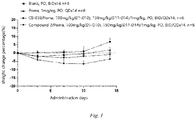
- Fig. 1 shows the relative weight change (%) of the test substance in a female CB-17 SCID subcutaneously transplanted tumor model of human myeloma RPMI-8226 cells.
- IP Intraperitoneal injection
- PO Oral administration
- QW Once a week
- QD Once a day
- BID Twice a day.
- the relative weight change is calculated based on the weight of the animal at the beginning of the administration.
- the data points represent the average weight change percentage within the group, and the error bars represent the standard error (SEM).
- Step 1 Compound 1-1 (1.50 g, 10.07 mmol), compound 1-2 (3.25 g, 10.07 mmol), Pd(dppf)Cl 2 (822.24 mg, 1.01 mmol) and potassium carbonate (4.17 g, 30.21 mmol) were added to 1,4-dioxane (30 mL) and water (12 mL), and the reaction solution was stirred at 80°C for 2 hours under nitrogen protection. After completion of the reaction, the reaction solution was extracted with ethyl acetate (30 mL*3), and the organic phase was dried over anhydrous sodium sulfate, filtered and then evaporated to dryness.
- Step 2 Compound 1-3 (3.0 g, 9.68 mmol) was added to HCl/MeOH (30 mL, 4 M), and the mixture was stirred at 25°C for 1 hour. After completion of the reaction, the reaction solution was evaporated to remove the solvent to obtain compound 1-4, which was directly used in the next reaction. MS ESI calculated value for C 10 H 12 ClN 3 [M + H] + 210, measured value 210.
- Step 5 Compound 1-8 (0.5 g, 0.89 mmol) was added to methanol (50 mL), and then dry palladium on carbon (10% purity, 0.05 g) and ammonium formate (0.34 g, 5.37 mmol) were added thereto. The reaction solution was stirred at 40°C for 1 hour under nitrogen protection. The reaction solution was filtered, and the filtrate was concentrated to obtain a residue.
- Step 2 Compound 3-2 (0.2 g, 721.08 ⁇ mol) was added to HCl/MeOH (10 mL, 4 M), and the mixture was stirred at 25°C for 0.5 hours. After completion of the reaction, the reaction solution was evaporated to dryness to obtain compound 3-3. MS ESI calculated value for C 10 H 15 N 3 [M + H] + 178, measured value 178.
- Step 4 Compound 3-5 (0.15 g, 542.77 ⁇ mol) and compound 1-7 (145.55 mg, 542.77 ⁇ mol) were dissolved in DMF (5 mL), and then DIEA (105.22 mg, 814.16 ⁇ mol) and T3P (518.10 mg, 814.16 ⁇ mol, 484.20, 50% solution in ethyl acetate) were added thereto successively.
- the reaction solution was stirred at 25°C for 2 hours.
- Step 1 Compound 1-2 (4.77 g, 14.77 mmol), compound 5-2 (2 g, 13.42 mmol) and potassium carbonate (5.57 g, 40.27 mmol) were added to dioxane (35 mL) and water (14 mL). Then Pd(dppf)Cl 2 (982.30 mg, 1.34 mmol) was added, and the reaction solution was heated to 80 °C and stirred for 1 hour under nitrogen protection. After completion of the reaction, the reaction solution was filtered, and the filtrate was evaporated to dryness. Water (100 mL) was added, and then the solution was extracted with ethyl acetate (100 mL*3).
- Step 2 Compound 5-3 (0.2 g, 645.60 ⁇ mol) and compound 5-4 (154.58 g, 2.58 mmol) were added to dioxane (2.5 mL) and water (1 mL). Then Pd(dppf)Cl 2 (23.62 mg, 32.28 ⁇ mol), cesium carbonate (420.70 mg, 1.29 mmol) and 2-dicyclohexylphosphino-2,4,6-triisopropylbiphenyl (307.77 mg, 645.60 ⁇ mol) were added, and the reaction solution was heated to 80 °C and stirred for 16 hours under nitrogen protection. After completion of the reaction, the reaction solution was filtered, and the filtrate was evaporated to dryness.
- Step 3 Compound 5-5 (0.1 g, 345.58 ⁇ mol) was added to MeOH (5 mL), and then palladium on carbon (0.02 g, 10% purity) was added thereto under nitrogen. The reaction was carried out at 40 °C for 30 minutes under 15 psi hydrogen. The reaction solution was filtered, and the filtrate was evaporated to dryness to obtain compound 5-6, which was directly used in the next reaction. MS ESI calculated value for C 16 H 25 N 3 O 2 [M + H] + 292, measured value 292.
- Step 4 Compound 5-6 (0.04 g, 137.27 ⁇ mol) was dissolved in TFA (5 mL) and DCM (5 mL), and the reaction solution was stirred at 25 °C for 5 minutes. The reaction solution was evaporated to remove the solvent to obtain compound 5-7. MS ESI calculated value for C 11 H 17 N 3 [M + H] + 192, measured value 192.
- Step 5 Compound 5-7 (27.90 g, 141.16 ⁇ mol) and compound 1-5 (25.41 g, 141.16 ⁇ mol) were dissolved in ethanol (5 mL), and sodium bicarbonate (71.15 g, 846.96 ⁇ mol) was added thereto. The reaction solution was stirred at 90 °C for 16 hours. The reaction solution was filtered, and the filtrate was evaporated to dryness to obtain compound 5-9, and the crude product was directly used in the next reaction. MS ESI calculated value for C 13 Hl 8 N 6 S[M + H] + 291, measured value 291.
- Step 6 Compound 5-9 (0.05 g, 172.18 ⁇ mol) and compound 1-7 (0.03 g, 111.87 ⁇ mol) were dissolved in DMF (5 mL), and then T3P (106.79 mg, 167.81 ⁇ mol, 99.80 ⁇ L, 50% purity) and DIEA (167.81 ⁇ mol, 29.23 ⁇ L) were added thereto successively.
- the reaction solution was stirred at 40 °C for 1 hour. After completion of the reaction, a saturated sodium bicarbonate aqueous solution (50 mL) was added, and the solution was then extracted with ethyl acetate (50 mL*3).
- Step 1 Compound 5-3 (0.2 g, 645.60 ⁇ mol) was dissolved in dimethyl sulfoxide (8 mL) and methanol (2 mL), and then palladium acetate (7.25 mg, 32.28 ⁇ mol), 1,3-bisdiphenylphosphine propane (26.63 mg, 64.56 ⁇ mol) and triethylamine (97.99 mg, 968.40 ⁇ mol, 134.79 ⁇ L) were added thereto. The reaction solution was stirred at 80 °C for 16 hours under 50 psi carbon monoxide. After completion of the reaction, the reaction solution was filtered, and the filtrate was evaporated to dryness.
- Step 2 Compound 6-2 (0.1 g, 299.96 ⁇ mol) was dissolved in TFA (5 mL) and DCM (5 mL), and the mixture was stirred at 25 °C for 5 minutes. After completion of the reaction, the reaction solution was evaporated to remove the solvent to obtain compound 6-3. MS ESI calculated value for C 12 H 15 N 3 O 2 [M + H] + 234, measured value 234.
- Step 3 Compound 6-3 (0.07 g, 300.09 ⁇ mol) and compound 1-5 (54.02 g, 300.09 ⁇ mol) were dissolved in ethanol (5 mL), and sodium bicarbonate (151.26 mg, 1.80 mmol, 70.03 ⁇ L) was added thereto. The reaction solution was stirred at 90 °C for 16 hours. The reaction solution was filtered, and evaporated to remove the solvent to obtain a crude product of compound 6-5. MS ESI calculated value for C 15 H 18 N 6 S [M + H] + 347, measured value 347.
- Step 4 Compound 6-5 (100 mg, crude) and compound 1-7 (478.66 mg, 1.78 mmol) were dissolved in DMF (5 mL), and then T3P (1.70 g, 2.68 mmol, 1.59 mL, 50% purity) and diisopropylethylamine (346.04 mg, 2.68 mmol, 466.35 ⁇ L) were added thereto.
- the reaction solution was stirred at 40 °C for 1 hour. After completion of the reaction, a saturated sodium bicarbonate aqueous solution (10 mL) was added, and the solution was then extracted with ethyl acetate (50 mL*3).
- Step 5 Compound 6-7 (0.02 g, 33.53 ⁇ mol) was added to MeOH (5 mL), and then palladium on carbon (0.02 g, 10% purity) was added thereto under nitrogen. The reaction was carried out at 40 °C for 10 minutes under 15 psi hydrogen. The reaction solution was filtered, and the filtrate was evaporated to dryness to obtain compound 6-8. MS ESI calculated value for C 25 H 26 F 4 N 6 O 5 S[M + H] + 599, measured value 599.
- Step 6 Compound 6-8 (0.01 g, 16.71 ⁇ mol) was dissolved in tetrahydrofuran (2 mL), methanol (2 mL) and water (1 mL), and lithium hydroxide monohydrate (12.33 mg, 293.83 ⁇ mol) was added thereto. The reaction solution was stirred at 25 °C for 1 hour. The reaction solution was filtered, and the filtrate was evaporated to dryness. The residue was separated by preparative high performance liquid chromatography (chromatographic column: YMC-Actus Triart C18 100*30 mm*5 ⁇ m; mobile phase: [water (0.05% HCl)-ACN]; B (acetonitrile)%: 30%-60%, 10 min) to obtain the hydrochloride salt of compound 6. MS ESI calculated value for C 23 H 22 F 4 N 6 O 5 S [M + H] + 571, measured value 571. The hydrochloride salt of compound 6 was subjected to post-processing to obtain compound 6.
- Step 1 Compound 7-1 (0.9 g, 137.27 ⁇ mol) was dissolved in TFA (2 mL) and DCM (5 mL), and the reaction solution was stirred at 30 °C for 15 minutes. The reaction solution was evaporated to remove the solvent to obtain compound 7-2. MS ESI calculated value for C 12 H 22 BNO 2 [M + H] + 224, measured value 224.
- Step 2 Compound 7-2 (0.94 g, 2.79 mmol) and compound 1-5 (0.53 g, 2.93 mmol) were dissolved in DMF (10 mL), and DIEA (0.72 g, 5.58 mmol) was added thereto. The reaction solution was stirred at 100 °C for 1 hour, which was used directly in the next step. Compound 7-4. MS ESI calculated value for C 14 H 23 BN 4 O 2 S[M + H] + 323, measured value 323.
- Step 3 To a solution of compound 7-4 in DMF (10 mL) were added compound 1-7 (0.20 g, 0.75 mmol) and diisopropylethylamine (0.19 g, 1.49 mmol), and then T3P (0.44 mL, 1.49 mmol, 50% purity) was added thereto. The reaction solution was stirred at 40 °C for 1 hour. After completion of the reaction, the reaction solution was evaporated under reduced pressure to remove the solvent. The residue was dissolved in ethyl acetate (100 mL), and washed with a saturated sodium bicarbonate aqueous solution (20 mL), water (20 mL), and saturated brine (20 mL) successively.
- Step 4 Compound 7-6 (331.37 mg, 0.58 mmol), compound 7-7 (0.15 g, 1.16 mmol) and potassium carbonate (160.03 mg, 1.16 mmol) were added to dioxane (6 mL) and water (1.5 mL). Then Pd(dppf)Cl 2 (84.72 mg, 0.12 mmol) was added, and the reaction solution was heated to 90 °C and stirred for 10 minutes under nitrogen protection. After completion of the reaction, water (20 mL) was added, and the solution was then extracted with ethyl acetate (50 mL*2).
- Step 1 Compound 3-5 was resolved by supercritical fluid chromatography (chromatographic column: DAICEL CHIRALPAK AS (250 mm*50 mm, 10 ⁇ m; mobile phase: A: CO 2 B: ethanol (0.1% ammonia); gradient: 35%; flow rate: 100 mL/min; column temperature: 40 °C; elution time: 10.0 min) to obtain compound 8-4 with the retention time of 4.21 min.
- MS ESI calculated value for C 12 H 16 N 6 S [M + H] + 277, measured value 277.
- Step 2 Compound 8-1 (5 g, 36.72 mmol) and compound 8-2 (11.14 g, 44.07 mmol) were dissolved in methanol (50 mL), and a solution of potassium hydroxide (11.33 g, 201.99 mmol) in methanol (100 mL) was added dropwise thereto at 0 °C. After completion of the dropwise addition, the reaction solution was stirred at 25 °C for 24 hours. The reaction solution was filtered, and the filtrate was evaporated to dryness. Water (300 mL) was added to the residue, and then the mixture was washed with methyl tert-butyl ether (300 mL).
- Step 3 Compound 8-3 (21.30 mg, 108.55 ⁇ mol) and compound 8-4 (30.00 mg, 108.55 ⁇ mol) were dissolved in DMF (5 mL), and then T3P (48.42 ⁇ L, 162.82 ⁇ mol, 50% solution in ethyl acetate) and DIEA (21.04 mg, 162.82 ⁇ mol) were added thereto.
- the reaction solution was stirred at 40 °C for 1 hour. After completion of the reaction, a sodium bicarbonate aqueous solution (5 mL) was added, and the solution was then extracted with ethyl acetate (20 mL*3).
- the compounds shown in Table 1 can be prepared by a method similar to that for preparing compound 8, wherein Example 10 was prepared using commercial chiral carboxylic acid.
- the hydrochloride salt or trifluoroacetate salt of a compound was subjected to post-processing to obtain the compound: Table 1
- Step 2 To a solution of compound 13-3 (5.5 g, 24.36 mmol) in methanol (200 mL) was added potassium carbonate (540 mg, 3.91 mmol), and the reaction solution was stirred at 60 °C for 3 hours. The reaction solution was filtered and concentrated to obtain compound 13-4. MS ESI calculated value for C 8 H 12 ClN 3 O 2 [M + H] + 218, measured value 218.
- Step 6 Compound 13-9 (120.0 mg, 0.26 mmol) was added to TFA/DCM (10 mL, 1:1), and the mixture was stirred at 25 °C for 10 minutes. After completion of the reaction, the reaction solution was evaporated to remove the solvent to obtain compound 13-10, which was directly used in the next reaction.
- Step 8 Compound 13-12 (0.1 g, 0.22 mmol) and compound 1-7 (59 mg, 0.22 mmol) were dissolved in DMF (2 mL), and T3P (168 mg, 0.26 mmol, 50% solution in ethyl acetate), and DIEA (34 mg, 0.26 mmol) were added thereto successively.
- MS ESI calculated value for C 30 H 25 F 4 N 7 O 5 S 2 [M + H] + 704, measured value 704.
- Step 9 Compound 13-14 (80.0 mg, 0.113 mmol) and lithium hydroxide (5.4 mg, 0.22 mmol) were added to anhydrous methanol (5.00 mL), and the mixture was stirred at 60 °C for 2 hours. After completion of the reaction, the reaction solution was directly concentrated to obtain the crude product of compound 8, which was separated and purified by preparative high performance liquid chromatography (chromatographic column: Boston Green ODS 150*30 mm; 5 ⁇ m; mobile phase: [water (0.1% TFA)-ACN]; B (acetonitrile)%: 25%-55%, 8 min) to obtain the trifluoroacetate salt of compound 13.
- the final concentration of each component in the final experimental buffer was 50 mM Tris-HCl pH 8.0, 0.25 mM EDTA, 150 mM K 2 HP0 4 , 0.1 mg/mL BSA, 1 mM DTT, and 0.01% Triton X-100.
- the experiment plate was the plate prepared by Labcyte's ECHO that contained the gradient concentration of the compound and the corresponding DMSO solution before the experiment:
- the compounds of the present disclosure have good oral bioavailability and higher exposure, which are beneficial to produce good in vivo efficacy.
- Pomalidomide is used to treat multiple myeloma, and this experiment is used to study and evaluate the in vivo efficacy of the test compound combined with pomalidomide in the CB-17 SCID nude mouse subcutaneous xenograft model of human myeloma RPMI-8226 cell.
- RPMI 8226 cells Human myeloma RPMI 8226 cells were cultured in a monolayer in vitro.
- the culture conditions were: RPMI 1640 medium (brand: gibco -22400089, batch: 1894220) supplemented with 10% fetal bovine serum, 100 U/mL penicillin and 100 ⁇ g/mL streptomycin, at 37°C and 5% CO 2 .
- Conventional digestion treatment with pancreatin-EDTA for passage was carried out twice a week. When the cell confluence reached 80% to 90%, the cells were harvested, counted and inoculated.
- RPMI 8226 cells supplied with matrigel in a volume ratio of 1:1
- the grouping and administration were started when the average tumor volume reached 374 mm 3 .
- Pomalidomide (Poma) was formulated into a clear solution of 0.1 mg/mL, and the solvent was 20% PEG400 + 80% (20% hydroxypropyl- ⁇ -cyclodextrin).
- the experimental index was to investigate whether the tumor growth was inhibited, delayed or cured.
- Tumor diameter was measured twice a week with a vernier caliper.
- TGI (%) [1- (average tumor volume at the end of administration in a treatment group - average tumor volume at the beginning of administration in this treatment group)/(average tumor volume at the end of administration in the solvent control group - average tumor volume at the beginning of administration in the solvent control group)] ⁇ 100%.
- the relative tumor volume (RTV) was calculated according to the results of the tumor measurement.
- T RTV and C RTV were obtained from the data on the same day.
- Statistical analysis included mean value and standard error (SEM) of the tumor volume of each group at each time point (see Table 4 for specific data).
- the treatment group showed the best treatment effect on day 14 after the administration at the end of the test, so the statistical analysis was performed based on this data to evaluate the differences between the groups.
- the comparison between two groups was analyzed by T-test, and the comparison between three or more groups was analyzed by one-way ANOVA. If the F value was significantly different, the Games-Howell test was applied. If the F value was not significantly different, the Dunnet (2-sided) test was used for analysis. All data analysis was performed with SPSS 17.0. p ⁇ 0.05 was considered significantly different.
- Q TGIA+B/(TGIA+ TGIB-TGIAx TGIB).
- TGIA, TGIB and TGIA+B were the tumor inhibition rates when drug A was used alone, drug B was used alone, and drug A and drug B were used in combination, respectively.
- the effect of the test compound on the weight of the animal was investigated.
- the animal's daily behavior and activities, food and water intake (visual inspection), physical signs or other abnormal conditions were routinely checked.
- the number of animal deaths and side effects in each group were recorded based on the number of animals in the group.
- the weight of the experiment animals was used as a reference index for indirect determination of drug toxicity. In this model, none of the administration groups showed significant weight loss, morbidity or death.
- the effect of the test substance on the body weight in the female CB-17 SCID subcutaneously implanted tumor model of human myeloma RPMI-8226 cell was shown in Fig. 1 .
- TGI (%) [1 - (T 21 - T 0 )/(V 21 - V 0 )] ⁇ 100).
- TGI (%) [1 - (T 21 - T 0 )/(V 21 - V 0 )] ⁇ 100).
- TGI (%) [1 - (T 21 - T 0 )/(V 21 - V 0 )] ⁇ 100).
- TGI (%) [1 - (T 21 - T 0 )/(V 21 - V 0 )] ⁇ 100).
- the p value was calculated based on the tumor volume.
- the Q value of CB-839/Poma was less than 1.15, indicating that there was no synergy; using the Q value analysis method, the Q value of compound 2/Poma was greater than 1.15, indicating that there was a synergistic effect.
Landscapes
- Chemical & Material Sciences (AREA)
- Organic Chemistry (AREA)
- Health & Medical Sciences (AREA)
- Life Sciences & Earth Sciences (AREA)
- General Health & Medical Sciences (AREA)
- Pharmacology & Pharmacy (AREA)
- Animal Behavior & Ethology (AREA)
- Medicinal Chemistry (AREA)
- Public Health (AREA)
- Veterinary Medicine (AREA)
- Epidemiology (AREA)
- Nuclear Medicine, Radiotherapy & Molecular Imaging (AREA)
- Chemical Kinetics & Catalysis (AREA)
- General Chemical & Material Sciences (AREA)
- Molecular Biology (AREA)
- Pharmaceuticals Containing Other Organic And Inorganic Compounds (AREA)
- Nitrogen Condensed Heterocyclic Rings (AREA)
- Plural Heterocyclic Compounds (AREA)
Abstract
Description
-
CN 201811202713.0 - The present disclosure relates to a thiadiazole derivative and the uses thereof in the manufacture of a drug for treating GLS1-associated diseases. Specifically, the present disclosure relates to a derivative compound of formula (I), a tautomer thereof or a pharmaceutically acceptable compound thereof.
- Glutamine is the most abundant amino acid in the human body, and is a non-essential amino acid. Some glutamines are taken up from the circulation by the amidation of glutamate and ammonia derived from purine metabolism, and other glutamines are produced by the transamination of α-ketoglutarate derived from glucose and subsequent amidation. Glutaminase (GLS) can promote the decomposition of glutamine into glutamate and ammonium ions, and then the glutamate is converted to α-KG (a-ketoglutarate) by a glutamate dehydrogenase, and then the α-KG enters the TCA cycle (tricarboxylic acid cycle) to provide energy and a source of macromolecular materials. More importantly, the carbon source produced by glutamine metabolism supports the synthesis of OAA (oxaloacetic acid), acetyl coenzyme A and citric acid, and lipogenesis; at the same time, the nitrogen source produced by glutamine metabolism supports the synthesis of purines, pyrimidines, DNA, NADPH (nicotinamide adenine dinucleotide phosphate) and GSH (glutathione) to maintain redox homeostasis. Glutamine acts as a precursor for the synthesis of many amino acids, proteins, nucleotides and other biologically important molecules.
- Glutamine plays a key role in cell growth and proliferation. It is well known that cancer cells use glucose to produce ATP (adenosine triphosphate) through aerobic glycolysis in a dissipative way; at the same time, in order to meet rapid proliferation, cancer cells must use another energy source glutamine to produce ATP through oxidative phosphorylation. Due to the continuous loss of citrate from the TCA cycle in proliferative cells, especially cancer cells, it is necessary to replenish a large amount of TCA intermediates to increase glutamine consumption for anabolic needs. Compared with normal tissues, glutamine has increased demand and accelerated consumption in most cancer cells, and the GLS activity in cancer cells is much higher than that in normal cells. Elevated glutamine metabolism not only provides energy and substrates for the growth and proliferation of cancer cells, but also makes glutamine an effective candidate in cancer treatment.
- Restriction on glutamine metabolism can effectively inhibit the growth of cancer cells. As the first key enzyme in glutamine metabolism, specific inhibitors for GLS can induce cell death in cancer cells. There are two reported glutaminase inhibitors, one is CB-839 developed by Calithera Biosciences and the other is a compound called 968, which is developed by Cornell University and is undergoing clinical trials.

- At present, there is still a need to develop new glutaminase inhibitors for the treatment of diseases related to cell proliferation.
- The present disclosure provides a compound of formula (I), an isomer thereof or a pharmaceutically acceptable salt thereof,


- R1 is independently selected from H, F, Cl, Br, I, OH, NH2, CN, COOH, C1-6 alkyl and C1-6 heteroalkyl, wherein the C1-6 alkyl and C1-6 heteroalkyl are optionally substituted with 1, 2, or 3 Ra;
- R2 is independently selected from H, F, Cl, Br, I, OH, NH2, CN, COOH, C1-6 alkyl and C1-6 heteroalkyl, wherein the C1-6 alkyl and C1-6 heteroalkyl are optionally substituted with 1, 2, or 3 Rb;
- L is selected form -C(Rc)(Rd)-;
- ring A is selected from 5- to 10-membered heteroaryl;
- ring B is selected from phenyl and 5- to 6-membered heteroaryl;
- m is selected from 1, 2 and 3;
- n is selected from 1, 2 and 3;
- Ra and Rb are each independently selected from F, Cl, Br, I, OH, NH2, CN and COOH;
- Rc and Rd are each independently selected from H, F, Cl, Br, I, OH, NH2, CN, COOH, C1-6 alkyl and C1-6 heteroalkyl, wherein the C1-3 alkyl and C1-3 alkoxy are optionally substituted with 1, 2, or 3 R;
- R is selected from F, Cl, Br, I, OH, NH2, CN, COOH and CH3;
- the C1-6 heteroalkyl, 5- to 6-membered heteroaryl and 5- to 10-membered heteroaryl each independently comprise 1, 2, 3 or 4 heteroatoms or heteroatomic groups independently selected from -NH-, -O-, -S- and N.
- In some embodiments of the present disclosure, the above-mentioned R1 is independently selected from H, F, Cl, Br, I, OH, NH2, CN, COOH, C1-6 alkyl or C1-6 heteroalkyl, wherein the C1-6 alkyl and C1-6 heteroalkyl are optionally substituted with 1, 2, or 3 Ra.
- In some embodiments of the present disclosure, the above-mentioned R2 is independently selected from H, F, Cl, Br, I, OH, NH2, CN, COOH, C1-6 alkyl or C1-6 heteroalkyl, wherein the C1-6 alkyl or C1-6 heteroalkyl is optionally substituted with 1, 2, or 3 Rb.
- In some embodiments of the present disclosure, the above-mentioned R1 is independently selected from H, F, Cl, Br, I, OH, NH2, CN, COOH, C1-3 alkyl and C1-3 alkoxy, wherein the C1-3 alkyl and C1-3 alkoxy are optionally substituted with 1, 2, or 3 Ra, and other variables are as defined in the present disclosure.
- In some embodiments of the present disclosure, the above-mentioned R1 is selected from H, F, Cl, Br, I, OH, NH2, CN, COOH, C1-3 alkyl and C1-3 alkoxy, wherein the C1-3 alkyl and C1-3 alkoxy are optionally substituted with 1, 2, or 3 Ra, and other variables are as defined in the present disclosure.
- In some embodiments of the present disclosure, the above-mentioned R1 is independently selected from H, F, Cl, Br, I, OH, NH2, CN, COOH, CH3, CH2CH3 and

- In some embodiments of the present disclosure, the above-mentioned R1 is independently selected from H, F, Cl, Br, I, OH, NH2, CN, COOH, CH3, CH2F, CHF2, CF3, CH2CH3,

- In some embodiments of the present disclosure, the above-mentioned R2 is independently selected from H, F, Cl, Br, I, OH, NH2, CN, COOH, C1-3 alkyl and C1-3 alkoxy, wherein the C1-3 alkyl and C1-3 alkoxy are optionally substituted with 1, 2, or 3 Rb, and other variables are as defined in the present disclosure.
- In some embodiments of the present disclosure, the above-mentioned R2 is independently selected from H, F, Cl, Br, I, OH, NH2, CN, COOH, CH3, CH2CH3 and


- In some embodiments of the present disclosure, the above-mentioned R2 is independently selected from H, F, Cl, Br, I, OH, NH2, CN, COOH, CH3, CH2F, CHF2, CF3, CH2CH3,

- In some embodiments of the present disclosure, the above-mentioned Rc and Rd are each independently selected from H, F, Cl, Br, I, OH, NH2, CN, COOH, C1-3 alkyl and C1-3 alkoxy, wherein the C1-3 alkyl and C1-3 alkoxy are optionally substituted with 1, 2, or 3 R, and other variables are as defined in the present disclosure.
- In some embodiments of the present disclosure, the above-mentioned Rc and Rd are each independently selected from H, F, Cl, Br, I, OH, NH2, CN, COOH, CH3, CF3, CH2CH3 and

- In some embodiments of the present disclosure, the above-mentioned L is selected from -CH2- and

- In some embodiments of the present disclosure, the above-mentioned L is selected from

- In some embodiments of the present disclosure, the above-mentioned ring A is selected from pyridinyl, pyridazinyl, pyrazinyl and 7H-pyrrolo[2,3-c]pyridazinyl, and other variables are as defined in the present disclosure.
- In some embodiments of the present disclosure, the above-mentioned moiety


- In some embodiments of the present disclosure, the above-mentioned moiety


- In some embodiments of the present disclosure, the above-mentioned ring B is selected from phenyl, pyrazolyl and pyridyl, and other variables are as defined in the present disclosure.
- In some embodiments of the present disclosure, the above-mentioned moiety


- In some embodiments of the present disclosure, the above-mentioned moiety


- Other embodiments of the present disclosure are generated by any combination of the above-mentioned variables.
- In some embodiments of the present disclosure, the above-mentioned compound, isomer thereof or pharmaceutically acceptable salt thereof is selected from

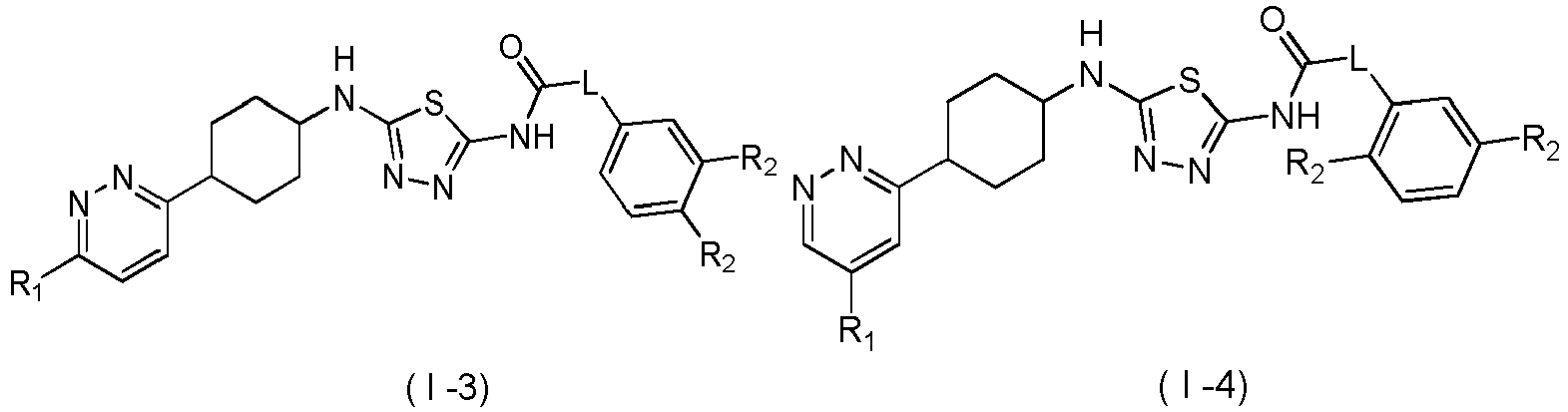


R1, R2, L, m and n are as defined in the present disclosure. - In some embodiments of the present disclosure, the above-mentioned compound, isomer thereof or pharmaceutically acceptable salt thereof is selected from


R1, R2, m and n are as defined in the present disclosure. - The present disclosure also provides a compound of the following formulas, an isomer thereof or a pharmaceutically acceptable salt thereof, wherein the compound is selected from





- In some embodiments of the present disclosure, the above-mentioned compound is selected from








- The present disclosure also provides use of the above-mentioned compound, isomer thereof or pharmaceutically acceptable salt thereof in the manufacture of a drug for treating GLS1-associated diseases.
- Unless otherwise stated, the following terms and phrases used herein are intended to have the following meanings. A specific term or phrase should not be considered uncertain or unclear unless specifically defined, but should be understood in its ordinary meaning. When a trade name appears herein, it is intended to refer to the corresponding commodity or an active ingredient thereof.
- The term "pharmaceutically acceptable" as used herein refers to those compounds, materials, compositions and/or dosage forms, which are, within the scope of sound medical judgment, suitable for use in contact with human and animal tissues, without excessive toxicity, irritation, allergic reactions or other problems or complications, which is commensurate with a reasonable benefit/risk ratio.
- The term "pharmaceutically acceptable salt" refers to a salt of the compound of the present disclosure, which is prepared from the compound having specific substituents found in the present disclosure with relatively non-toxic acids or bases. When compounds of the present disclosure contain relatively acidic functional groups, base addition salts can be obtained by contacting the neutral form of such compounds with a sufficient amount of base, either in pure solution or a suitable inert solvent. Pharmaceutically acceptable base addition salts include sodium, potassium, calcium, ammonium, organic amine or magnesium salts or similar salts. When compounds of the present disclosure contain relatively basic functional groups, acid addition salts can be obtained by contacting the neutral form of such compounds with a sufficient amount of acid, either in pure solution or a suitable inert solvent. Examples of pharmaceutically acceptable acid addition salts include salts of inorganic acids, which include, for example, hydrochloric acid, hydrobromic acid, nitric acid, carbonic acid, bicarbonate, phosphoric acid, monohydrogen phosphate, dihydrogen phosphate, sulfuric acid, hydrogen sulfate, hydroiodic acid and phosphorous acid; and salts of organic acids, which include, for example, acetic acid, propionic acid, isobutyric acid, maleic acid, malonic acid, benzoic acid, succinic acid, suberic acid, fumaric acid, lactic acid, mandelic acid, phthalic acid, benzenesulfonic acid, p-toluenesulfonic acid, citric acid, tartaric acid, and methanesulfonic acid; and also include salts of amino acids (such as arginine), and salts of organic acids such as glucuronic acid. Certain specific compounds of the present disclosure contain basic and acidic functional groups and thus can be converted to any base or acid addition salt.
- The pharmaceutically acceptable salts of the present disclosure can be synthesized from a parent compound containing acid radicals or base radicals by conventional chemical methods. In general, the method for preparing such salts comprises: in water or an organic solvent or a mixture of both, reacting these compounds in free acid or base forms with a stoichiometric amount of a suitable base or acid to prepare the salts.
- The compounds of the present disclosure may exist in specific geometric or stereoisomeric forms. The present disclosure contemplates all such compounds, including cis and trans isomers, (-)- and (+)-enantiomers, (R)- and (S)-enantiomers, diastereomers, (D)-isomers, (L)-isomers, and racemic mixtures and other mixtures thereof, such as enantiomerically or diastereomerically enriched mixtures, all of which fall within the scope of the present disclosure. Additional asymmetric carbon atoms may be present in a substituent such as an alkyl group. All these isomers and mixtures thereof are included in the scope of the present disclosure.
- Unless otherwise stated, the term "enantiomer" or "optical isomers" refers to stereoisomers that are mirror images of each other.
- Unless otherwise stated, the term "cis-trans isomer" or "geometric isomer" is caused by the fact that double bonds or single bonds of ring-forming carbon atoms cannot rotate freely.
- Unless otherwise stated, the term "diastereomers" refers to stereoisomers in which molecules have two or more chiral centers and are not mirror images of each other.
- Unless otherwise stated, "(D)" or "(+)" means dextrorotatory, "(L)" or "(-)" means levorotatory, and "(DL)" or "(±)" means racemic.
- Unless otherwise stated, the wedge-shaped solid bond


- The compounds of the present disclosure may exist in specific. Unless otherwise stated, the term "tautomer" or "tautomeric form" means that at room temperature, isomers with different functional groups are in dynamic equilibrium and can be quickly converted to each other. Where tautomerization is possible (such as in solution), a chemical equilibrium of tautomers can be achieved. For example, proton tautomers (also known as prototropic tautomers) include interconversion via migration of a proton, such as keto-enol isomerization and imine-enamine isomerization. Valence tautomers include some interconversions by recombination of some of bond-forming electrons. A specific example of keto-enol tautomerization is the interconversion between two tautomers, pentane-2,4-dione and 4-hydroxypent-3-en-2-one.
- Unless otherwise stated, the term "rich in one isomer", "isomer enriched", "rich in one enantiomer" or "enantiomerically enriched" refers to the content of one of the isomers or enantiomers is less than 100%, and the content of the isomer or enantiomer is greater than or equal to 60%, or greater than or equal to 70%, or greater than or equal to 80%, or greater than or equal to 90%, or greater than or equal to 95%, or greater than or equal to 96%, or greater than or equal to 97%, or greater than or equal to 98%, or greater than or equal to 99%, or greater than or equal to 99.5%, or greater than or equal to 99.6%, or greater than or equal to 99.7%, or greater than or equal to 99.8%, or greater than or equal to 99.9%.
- Unless otherwise stated, the term "isomer excess" or "enantiomeric excess" refers to the difference between the relative percentages of two isomers or two enantiomers. For example, if the content of one isomer or enantiomer is 90%, and the content of the other isomer or enantiomer is 10%, the isomer or enantiomer excess (ee value) is 80%.
- Optically active (R)- and (S)-isomers and D and L isomers can be prepared using chiral synthesis or chiral reagents or other conventional techniques. If a particular enantiomer of a compound of the present disclosure is desired, it can be prepared by asymmetric synthesis or derivatization with a chiral auxiliary, wherein the resulting diastereomeric mixture is separated and the auxiliary groups are cleaved to provide pure desired enantiomers. Alternatively, where the molecule contains a basic functional group (such as an amino group) or an acidic functional group (such as a carboxyl group), diastereomeric salts can be formed with an appropriate optically active acid or base, followed by resolution of the diastereomers using conventional methods well known in the art, and subsequent recovery of the pure enantiomers. In addition, separation of enantiomers and diastereomers is frequently accomplished using chromatography, which uses chiral stationary phases, optionally in combination with chemical derivatization methods (e.g., formation of carbamates from amines). The compounds of the present disclosure may contain unnatural proportions of atomic isotopes at one or more of the atoms constituting the compound. For example, the compounds may be radiolabeled with radioactive isotopes, such as tritium (3H), iodine-125 (125I) or C-14 (14C). For another example, the hydrogen can be substituted by heavy hydrogen to form deuterated drugs. The bond formed by deuterium and carbon is stronger than the bond formed by ordinary hydrogen and carbon. Compared with undeuterated drugs, deuterated drugs have reduced toxic side effects, increased drug stability, enhanced efficacy, prolonged biological half-life of drugs and other advantages. All isotopic variations of the compounds of the present disclosure, whether radioactive or not, are intended to be encompassed within the scope of the present disclosure.
- "Optional" or "optionally" means that the subsequently described event or circumstance may, but not necessarily occur, and that the description includes instances where said event or circumstance occurs and instances where said event or circumstance does not occur.
- The term "substituted" means that any one or more hydrogen atoms on the designated atom are substituted by a substituent, which may include heavy hydrogen and hydrogen variants, provided that the valence state of the designated atom is normal, and the substituted compound is stable. Where the substituent is oxygen (i.e., =O), it means that two hydrogen atoms are substituted. Oxygen substitution does not occur on aromatic groups. The term "optionally substituted" means that it may or may not be substituted. Unless otherwise specified, the type and number of substituents may be arbitrary on the basis that they can be achieved in chemistry.
- Where any variable (such as R) appears more than once in the composition or structure of a compound, its definition in each case is independent. Thus, for example, if a group is substituted with 0-2 R, the group can optionally be substituted with up to two R, and R in each case has independent options. In addition, combinations of substituents and/or variants thereof are permissible only if such combinations result in stable compounds.
- When the number of a linking group is 0, such as -(CRR)0-, it means that the linking group is a single bond.
- When one of the variables is selected from a single bond, it means that the two groups to which it is connected are directly connected. For example, when L represents a single bond in A-L-Z, it means that the structure is actually A-Z.
- When a substituent is vacant, it means that the substituent does not exist. For example, when X is vacant in A-X, it means that the structure is actually A. When the substituents listed do not indicate through which atom they are connected to the substituted group, such substituents can be bonded through any of the atoms thereof, for example, pyridyl as a substituent can be attached to the substituted group via any carbon atom on the pyridine ring. When the linking group listed does not indicate the linking direction thereof, the linking direction is arbitrary, for example, the linking group L is -M-W- in


- Unless otherwise specified, the term "hetero" means heteroatoms or heteroatomic groups (i.e., atomic groups containing heteroatoms), including atoms other than carbon (C) and hydrogen (H) and atomic groups containing these heteroatoms, such as oxygen (O), nitrogen (N), sulfur (S), silicon (Si), germanium (Ge), aluminum (Al), boron (B), -O-, -S-, =O, =S, - C(=O)O-, -C(=O)-, -C(=S)-, -S(=O), -S(=O)2-, and optionally substituted -C(=O)N(H)-, - N(H)-, -C(=NH)-, -S(=O)2 N(H)- or -S(=O)N(H)-.
- Unless otherwise specified, the term "hydrocarbyl" or its subordinate concept (such as alkyl, alkenyl, alkynyl and aryl) by itself or as part of another substituent means linear, branched or cyclic hydrocarbon atomic groups or combinations thereof, which may be fully saturated (such as alkyl), mono-unsaturated or poly-unsaturated (such as alkenyl, alkynyl and aryl), may be mono-substituted or poly-substituted, may be monovalent (such as methyl), divalent (such as methylene) or polyvalent (such as methine), and may include divalent or polyvalent atomic groups, with a specified number of carbon atoms (for example, C1-C12 means 1 to 12 carbons; C1-12 is selected from C1, C2, C3, C4, C5, C6, C7, C8, C9, C10, C11 and C12; C3-12 is selected from C3, C4, C5, C6, C7, C8, C9, C10, C11 and C12). "Hydrocarbyl" includes, but is not limited to, aliphatic hydrocarbyl and aromatic hydrocarbyl, wherein the aliphatic hydrocarbyl includes a chain structure and a cyclic structure, specifically including but not limited to alkyl, alkenyl and alkynyl, and the aromatic hydrocarbyl includes, but is not limited to 6-12 membered aromatic hydrocarbyl such as benzene and naphthalene. In some embodiments, the term "hydrocarbyl" refers to a linear or branched atomic group or a combination thereof, which may be fully saturated, mono-unsaturated or poly-unsaturated, and may include divalent and polyvalent atomic groups. Examples of saturated hydrocarbon atomic groups include, but are not limited to, methyl, ethyl, n-propyl, isopropyl, n-butyl, tert-butyl, isobutyl, sec-butyl, isobutyl, cyclohexyl, (cyclohexyl)methyl, cyclopropylmethyl, and homologs or isomers of atomic groups such as n-pentyl, n-hexyl, n-heptyl and n-octyl. Unsaturated hydrocarbyl has one or more double bonds or triple bonds, and examples thereof include, but are not limited to, vinyl, 2-propenyl, butenyl, crotyl, 2-isopentenyl, 2-(butadienyl), 2,4-pentadienyl, 3-(1,4-pentadienyl), ethynyl, 1- and 3-propynyl, 3-butynyl, and higher homologs and isomers.
- Unless otherwise specified, the term "heterohydrocarbyl" or its subordinate concept (such as heteroalkyl, heteroalkenyl, heteroalkynyl and heteroaryl) by itself or in combination with another term means a stable linear, branched or cyclic hydrocarbon atomic group consisting of a certain number of carbon atoms and at least one heteroatom, or a combination thereof. In some embodiments, the term "heteroalkyl" by itself or in combination with another term means a stable linear or branched alkyl atomic group consisting of a certain number of carbon atoms and at least one heteroatom, or a combination thereof. In a typical embodiment, the heteroatom is selected from B, O, N and S, wherein the nitrogen and sulfur atoms are optionally oxidized, and the nitrogen heteroatom is optionally quaternized. Heteroatom or heteroatomic group may be located at any internal position of heterohydrocarbyl, including the connection positions of the hydrocarbyl to the remainder of the molecule. However, the terms "alkoxy", "alkylamino" and "alkylthio" (or thioalkoxy) are used in their conventional sense and refer to those alkyl groups attached to the remainder of the molecule via an oxygen atom, an amino group, or a sulfur atom, respectively. Examples include, but are not limited to, CH2-CH2-O-CH3, -CH2-CH2-NH-CH3, -CH2-CH2-N(CH3)-CH3, -CH2-S-CH2-CH3, -CH2-CH2, -S(O)-CH3, -CH2-CH2-S(O)2-CH3, -CH=CH-O-CH3, -CH2-CH=N-OCH3 and -CH=CH-N(CH3)-CH3. Up to two heteroatoms can be consecutive, such as -CH2-NH-OCH3.
- Unless otherwise specified, the term "cyclohydrocarbyl", "heterocyclohydrocarbyl" or its subordinate concept (such as aryl, heteroaryl, cycloalkyl, heterocycloalkyl, cycloalkenyl, heterocycloalkenyl, cycloalkynyl and heterocycloalkynyl) by itself or in combination with other terms means cyclized "hydrocarbyl" and "heterohydrocarbyl", respectively. In addition, as far as heterohydrocarbyl or heterocyclohydrocarbyl (such as heteroalkyl and heterocycloalkyl), heteroatoms can occupy the position where the heterocycle is attached to the remainder of the molecule. Examples of cyclohydrocarbyl include, but are not limited to, cyclopentyl, cyclohexyl, 1-cyclohexenyl, 3-cyclohexenyl, cycloheptyl, etc. Non-limiting examples of heterocyclyl include 1-(1,2,5,6-tetrahydropyridyl), 1-piperidyl, 2-piperidyl, 3-piperidyl, 4-morpholinyl, 3-morpholinyl, tetrahydrofuran-2-yl, tetrahydrofuran indol-3-yl, tetrahydrothiophen-2-yl, tetrahydrothiophen-3-yl, 1-piperazinyl and 2-piperazinyl.
- Unless otherwise specified, the term "alkyl" is used to represent a linear or branched saturated hydrocarbyl, which may be mono-substituted (such as -CH2F) or poly-substituted (such as -CF3), and may be monovalent (such as methyl), divalent (such as methylene) or polyvalent (such as methine). Examples of alkyl include methyl (Me), ethyl (Et), propyl (e.g., n-propyl and isopropyl), butyl (e.g., n-butyl, isobutyl, s-butyl and t-butyl), pentyl (e.g., n-pentyl, isopentyl and neopentyl), etc.
- Unless otherwise specified, "alkenyl" refers to alkyl having one or more carbon-carbon double bonds at any position on the chain, which may be mono-substituted or poly-substituted, and may be monovalent, divalent, or polyvalent. Examples of alkenyl include vinyl, propenyl, butenyl, pentenyl, hexenyl, butadienyl, pentadienyl, hexadienyl, etc.
- Unless otherwise specified, cycloalkyl includes any stable cyclic or polycyclic hydrocarbyl, in which any carbon atom is saturated, and may be mono-substituted or poly-substituted, and may be monovalent, divalent, or polyvalent. Examples of the cycloalkyl include, but are not limited to, cyclopropyl, norbornyl, [2.2.2] bicyclooctane, [4.4.0] bicyclodecane etc.
- Unless otherwise specified, cycloalkenyl includes any stable cyclic or polycyclic hydrocarbyl containing one or more unsaturated carbon-carbon double bonds at any position on the ring, which may be mono-substituted or poly-substituted, and may be monovalent, divalent, or polyvalent. Examples of the cycloalkenyl include, but are not limited to, cyclopentenyl, cyclohexenyl, etc.
- Unless otherwise specified, the term "halo" or "halogen" by itself or as part of another substituent means a fluorine, chlorine, bromine or iodine atom. In addition, the term "haloalkyl" is intended to include monohaloalkyl and polyhaloalkyl. For example, the term "halo(C1-C4)alkyl" is intended to include, but is not limited to, trifluoromethyl, 2,2,2-trifluoroethyl, 4-chlorobutyl, 3-bromopropyl, etc. Unless otherwise specified, examples of haloalkyl include, but are not limited to: trifluoromethyl, trichloromethyl, pentafluoroethyl and pentachloroethyl.
- Unless otherwise specified, the term "alkoxy" represents the above-mentioned alkyl having a specific number of carbon atoms connected via an oxygen bridge. Unless otherwise specified, C1-6 alkoxy includes C1, C2, C3, C4, C5 and C6 alkoxy. Examples of alkoxy include, but are not limited to: methoxy, ethoxy, n-propoxy, isopropoxy, n-butoxy, sec-butoxy, tert-butoxy, n-pentoxy and S-pentoxy.
- Unless otherwise specified, the term "aryl" means a poly-unsaturated aromatic hydrocarbon substituent, which may be mono-substituted or poly-substituted, may be monovalent, divalent or polyvalent, and may be monocyclic or polycyclic (e.g., 1 to 3 rings, wherein at least one of the rings is aromatic), which are fused together or covalently linked. The term "heteroaryl" refers to aryl (or ring) containing one to four heteroatoms. In an exemplary example, the heteroatom is selected from B, N, O, and S, wherein the nitrogen and sulfur atoms are optionally oxidized, and the nitrogen atom is optionally quaternized. Heteroaryl can be connected to the remainder of the molecule via a heteroatom. Non-limiting examples of aryl or heteroaryl include phenyl, naphthyl, biphenyl, pyrrolyl, pyrazolyl, imidazolyl, pyrazinyl, oxazolyl, phenyl-oxazolyl, isoxazolyl, thiazolyl, furyl, thienyl, pyridyl, pyrimidinyl, benzothiazolyl, purinyl, benzimidazolyl, indolyl, isoquinolinyl, quinoxalinyl, quinolinyl, 1-naphthyl, 2-naphthyl, 4-biphenyl, 1-pyrrolyl, 2-pyrrolyl, 3-pyrrolyl, 3-pyrazolyl, 2-imidazolyl, 4-imidazolyl, pyrazinyl, 2-oxazolyl, 4-oxazolyl, 2-phenyl-4-oxazolyl, 5-oxazolyl, 3-isoxazolyl, 4-isoxazolyl, 5-isoxazolyl, 2-thiazolyl, 4-thiazolyl, 5-thiazolyl, 2-furyl, 3-furyl, 2-thienyl, 3-thienyl, 2-pyridyl, 3-pyridyl, 4-pyridyl, 2-pyrimidinyl, 4-pyrimidinyl, 5-benzothiazolyl, purinyl, 2-benzimidazolyl, 5-indolyl, 1-isoquinolinyl, 5-isoquinolinyl, 2-quinoxalinyl, 5-quinoxalinyl, 3-quinolinyl and 6-quinolinyl. The substituent of any one of the above-mentioned aryl and heteroaryl ring systems is selected from the acceptable substituents described below.
- Unless otherwise specified, aryl when used in combination with other terms (e.g., aryloxy, arylthio and aralkyl) includes aryl and heteroaryl rings as defined above. Therefore, the term "aralkyl" is intended to include those atomic groups where aryl is attached to alkyl (e.g., benzyl, phenethyl, pyridylmethyl, etc.), including those alkyl groups in which carbon atoms (such as methylene) have been replaced by, for example, oxygen atoms, such as phenoxymethyl and 2-pyridyloxymethyl 3-(1-naphthyloxy)propyl.
- The term "protecting group" includes, but is not limited to, "amino protecting group", "hydroxy protecting group" or "mercapto protecting group". The term "amino protecting group" refers to a protecting group suitable for preventing side reactions occurring at the nitrogen atom of an amino group. Representative amino protecting groups include, but are not limited to: formyl; acyl, such as alkanoyl (e.g., acetyl, trichloroacetyl or trifluoroacetyl); alkoxycarbonyl, such as tert-butoxycarbonyl (Boc); aryl methoxycarbonyl, such as benzyloxycarbonyl (Cbz) and 9-fluorenylmethoxycarbonyl (Fmoc); aryl methyl, such as benzyl (Bn), triphenyl methyl (Tr), 1,1-bis-(4'-methoxyphenyl)methyl; silyl, such as trimethylsilyl (TMS) and tert-butyldimethylsilyl (TBS). The term "hydroxyl protecting group" refers to a protecting group suitable for preventing side reactions of a hydroxyl group. Representative hydroxyl protecting groups include, but are not limited to: alkyl, such as methyl, ethyl and tert-butyl; acyl, such as alkanoyl (e.g., acetyl); arylmethyl, such as benzyl (Bn), p-methoxybenzyl (PMB), 9-fluorenylmethyl (Fm) and diphenylmethyl (DPM); silyl, such as trimethylsilyl (TMS) and tert-butyldimethylsilyl (TBS).
- The term "post-treatment" means that the formate, hydrochloride or trifluoroacetate salt of the compound of the present disclosure is dissolved in an organic solvent such as ethyl acetate, dichloromethane or methanol, washed with 1 N sodium bicarbonate solution, and subjected to the organic phase concentration method to obtain the free state of the compound.
- The compounds of the present disclosure can be prepared by various synthetic methods well known to a person skilled in the art, including the specific embodiments listed below, the embodiments formed by the combination with other chemical synthesis methods, and equivalent alternative embodiments well known to a person skilled in the art, wherein the preferred embodiments include but are not limited to the examples of the present disclosure.
- The solvents used in the present disclosure are commercially available. The present disclosure uses the following abbreviations: aq represents water; T3P represents 1-n-propyl phosphoric anhydride; eq represents equivalent; DCM represents dichloromethane; PE represents petroleum ether; DMF represents N,N-dimethylformamide; DMSO represents dimethyl sulfoxide; EtOAc represents ethyl acetate; EtOH represents ethanol; MeOH represents methanol; ACN represents acetonitrile; CBz represents benzyloxycarbonyl, which is an amine protecting group; BOC represents tert-butoxycarbonyl, which is an amine protecting group; r.t. represents room temperature; O/N represents overnight; THF represents tetrahydrofuran; BoC2O represents di-tert-butyl dicarbonate; TFA represents trifluoroacetic acid; HCl represents hydrochloric acid; DIPEA represents diisopropylethylamine; mp represents melting point; Pd(PPh3)2Cl2 represents bis(triphenylphosphine)palladium dichloride; pd(dppf)Cl2 represents [1,1'-bis(diphenylphosphino)ferrocene]palladium dichloride.
- Compounds are named by hand or ChemDraw® software, and commercially available compounds are named by the supplier catalog names.
- The compounds of the present disclosure have good GLS1 enzyme inhibitory activity, significant anti-tumor effect, and potential application value in the treatment of diseases related to cell proliferation. The compounds of the present disclosure have good solubility and permeability, good in vivo metabolic stability, high in vivo exposure and high bioavailability, and are potential pharmaceutical compounds.
-
Fig. 1 shows the relative weight change (%) of the test substance in a female CB-17 SCID subcutaneously transplanted tumor model of human myeloma RPMI-8226 cells. - IP: Intraperitoneal injection; PO: Oral administration; QW: Once a week; QD: Once a day; BID: Twice a day.
- The relative weight change is calculated based on the weight of the animal at the beginning of the administration. The data points represent the average weight change percentage within the group, and the error bars represent the standard error (SEM).
- The present disclosure will be described in detail with the following examples, but not imply any adverse limitation to the present disclosure. The present disclosure has been described in detail herein, and the specific embodiments thereof are also disclosed therein. For a person skilled in the art, without departing from the spirit and scope of the present disclosure, all the variations and improvements made to the specific embodiments of the present disclosure would have been obvious.
-
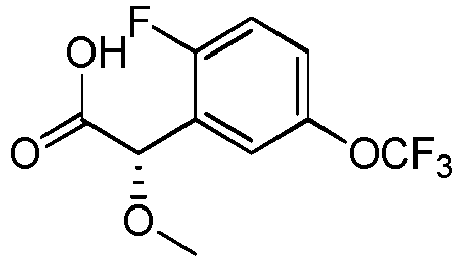
- Synthetic route:

- Step 1: Compound potassium hydroxide (3.25 g, 57.86 mmol) was added to methanol (30 mL), and then the mixture was slowly added dropwise to a mixed solution of compound 1-7-1 (2 g, 9.61 mmol) and compound 1-7-2 (3.19 g, 12.62 mmol) in methanol (20 mL) at 0 °C, and the reaction solution was stirred at 25°C for 19 hours. After completion of the reaction, the reaction solution was extracted with tert-butyl methyl ether (100 mL) and water (100 mL). The aqueous phase was acidified with dilute hydrochloric acid to pH=5, and then extracted with ethyl acetate (20 mL*3). The organic phase was washed with saturated brine (80 mL), dried over anhydrous sodium sulfate, concentrated, and then subjected to resolution by column chromatography (dichloromethane:methanol = 10:1), followed by supercritical fluid chromatography (chromatographic column: ChiralPak IC-3 150 × 4.6 mm I.D., 5 µm; mobile phase: A: CO2 B: isopropanol (0.05% DEA); gradient: 5%-40%; flow rate: 2.5 mL/min; column temperature: 40°C; elution time: 10.0 min) to obtain compound 1-7 with the retention time of 3.28 min. 1H NMR (400 MHz, CDCl3) δ ppm 3.43 (s, 3 H), 5.03 (s, 1 H), 7.02-7.10 (m, 1 H), 7.12-7.18 (m, 1 H), 7.26 (dd, J=2.89, 5.14 Hz, 1H), 10.38 (brs, 1 H).
-

- Synthetic route:

- Step 1: Compound 1-1 (1.50 g, 10.07 mmol), compound 1-2 (3.25 g, 10.07 mmol), Pd(dppf)Cl2 (822.24 mg, 1.01 mmol) and potassium carbonate (4.17 g, 30.21 mmol) were added to 1,4-dioxane (30 mL) and water (12 mL), and the reaction solution was stirred at 80°C for 2 hours under nitrogen protection. After completion of the reaction, the reaction solution was extracted with ethyl acetate (30 mL*3), and the organic phase was dried over anhydrous sodium sulfate, filtered and then evaporated to dryness. The residue was purified by silica gel column chromatography (ethyl acetate/petroleum ether = 1:5) to obtain compound 1-3. MS ESI calculated value for C15H20ClN3O2 [M + H]+310, measured value 310.
- Step 2: Compound 1-3 (3.0 g, 9.68 mmol) was added to HCl/MeOH (30 mL, 4 M), and the mixture was stirred at 25°C for 1 hour. After completion of the reaction, the reaction solution was evaporated to remove the solvent to obtain compound 1-4, which was directly used in the next reaction. MS ESI calculated value for C10H12ClN3 [M + H]+210, measured value 210.
- Step 3: Compound 1-4 (2.0 g, 9.54 mmol) and compound 1-5 (1.72 g, 9.54 mmol) were dissolved in ethanol (30 mL), and sodium bicarbonate (4.81 g, 57.23 mmol) was added thereto. The reaction solution was stirred at 80°C for 6 hours. The reaction solution was filtered and evaporated to dryness, and the residue was purified by silica gel column chromatography (DCM/MeOH = 10:1) to obtain compound 1-6. MS ESI calculated value for C12H13ClN6S [M + H]+309, measured value 309.
- Step 4: Compound 1-6 (0.8 g, 2.59 mmol) and compound 1-7 (0.69 g, 2.59 mmol) were dissolved in DMF (20 mL), and then diisopropylethylamine (502.25 mg, 3.89 mmol) and 1-n-propyl phosphoric anhydride-(2.47 g, 3.89 mmol, 50% solution in ethyl acetate) were added thereto successively. The reaction solution was stirred at 25°C for 4 hours. The reaction solution was distilled under reduced pressure to remove the solvent, and the residue was purified by silica gel column chromatography (DCM/MeOH = 10:1) to obtain compound 1-8. MS ESI calculated value for C22H19ClF4N6O3S [M + H]+559, measured value 559.
- Step 5: Compound 1-8 (0.5 g, 0.89 mmol) was added to methanol (50 mL), and then dry palladium on carbon (10% purity, 0.05 g) and ammonium formate (0.34 g, 5.37 mmol) were added thereto. The reaction solution was stirred at 40°C for 1 hour under nitrogen protection. The reaction solution was filtered, and the filtrate was concentrated to obtain a residue. The residue was purified by silica gel column chromatography (DCM/MeOH = 10:1) and then resolved by supercritical fluid chromatography (chromatographic column: Chiralcel OJ-H 150*4.6 mm I.D., 5 µm; mobile phase: A: CO2 B: ethanol (0.05% DEA); gradient: 5% to 40%; flow rate: 3 mL/min; column temperature: 40°C; elution time: 8.0 min) to obtain compound 1 and compound 2.
- The retention time of compound 1 was 3.52 min; MS ESI calculated value for C22H2OF4N6O3S [M + H]+ 525, measured value 525.
- The retention time of compound 2 was 3.94 min; MS ESI calculated value for C22H2OF4N6O3S[M+H]+ 525, measured value 525. 1HNMR (400 MHz, MeOD) δ ppm 1.80 - 1.93 (m, 1 H), 2.24 - 2.38 (m, 2 H), 2.80 - 2.86 (m, 3 H), 3.46 (s, 3 H), 4.02 - 4.05 (m, 1 H), 5.22 (s, 1 H), 6.75 (d, J= 18.80 Hz, 1 H), 7.30 - 7.48 (m, 3 H), 7.66 (dd, J= 8.80 Hz & 4.80 Hz, 1 H), 7.97 - 8.02 (m, 1 H), 9.03 (d, J=4.02 Hz, 1 H).
-

- Synthetic route:

- Step 1: Compound 1-3 (1.7 g, 5.49 mmol) was added to methanol (30 mL), and then dry palladium on carbon (10% purity, 0.2 g) was added thereto. The reaction solution was replaced with hydrogen twice and stirred at 25°C for 12 hours under 15 psi hydrogen. The reaction solution was filtered, and evaporated to remove the solvent. The residue was purified by preparative thin layer chromatography sheet (petroleum ether: ethyl acetate = 1:1) to obtain compound 3-2. MS ESI calculated value for C15H23N3O2 [M + H]+278, measured value 278.
- Step 2: Compound 3-2 (0.2 g, 721.08 µmol) was added to HCl/MeOH (10 mL, 4 M), and the mixture was stirred at 25°C for 0.5 hours. After completion of the reaction, the reaction solution was evaporated to dryness to obtain compound 3-3. MS ESI calculated value for C10H15N3 [M + H]+178, measured value 178.
- Step 3: Compound 3-3 (0.127 g, 0.72 mmol), and compound 1-5 (0.129 g, 0.72 mmol) were dissolved in ethanol (5 mL), and sodium bicarbonate (0.361 g, 4.3 mmol) was added thereto. The reaction solution was stirred at 80°C for 6 hours. The reaction solution was filtered, and evaporated to remove the solvent. The residue was purified by preparative thin layer chromatography sheet (DCM/MeOH = 10:1) to obtain compound 3-5. MS ESI calculated value for C12H16N6S [M + H]+277, measured value 277.
- Step 4: Compound 3-5 (0.15 g, 542.77 µmol) and compound 1-7 (145.55 mg, 542.77 µmol) were dissolved in DMF (5 mL), and then DIEA (105.22 mg, 814.16 µmol) and T3P (518.10 mg, 814.16 µmol, 484.20, 50% solution in ethyl acetate) were added thereto successively. The reaction solution was stirred at 25°C for 2 hours. The reaction solution was evaporated under reduced pressure to remove the solvent, and the residue was purified by preparative thin layer chromatography (DCM/MeOH = 10:1) to obtain compound 3 and compound 4.
- The Rf of compound 3 was 0.45; MS ESI calculated value for C26H25F3N8O3 [M + H]+527, measured value 527. 1HNMR (400 MHz, MeOD) δ ppm 1.82 - 1.89 (m, 4 H), 2.00 - 2.14 (m, 4 H), 3.05 - 3.16 (m, 1 H), 3.48 (s, 3 H), 4.07 - 4.11 (m, 1 H), 5.28 (s, 1 H), 7.28 - 7.38 (m, 2 H), 7.47 (d, J= 5.20 Hz, 1 H), 7.69 - 7.71 (m, 2 H), 9.03 (dd, J=5.20 Hz & 2.02 Hz, 1 H)
- The Rf of compound 4 was 0.38; MS ESI calculated value for C26H25F3N8O3 [M + H]+527, measured value 527.
-

- Synthetic route:

- Step 1: Compound 1-2 (4.77 g, 14.77 mmol), compound 5-2 (2 g, 13.42 mmol) and potassium carbonate (5.57 g, 40.27 mmol) were added to dioxane (35 mL) and water (14 mL). Then Pd(dppf)Cl2 (982.30 mg, 1.34 mmol) was added, and the reaction solution was heated to 80 °C and stirred for 1 hour under nitrogen protection. After completion of the reaction, the reaction solution was filtered, and the filtrate was evaporated to dryness. Water (100 mL) was added, and then the solution was extracted with ethyl acetate (100 mL*3). The organic phase was washed with saturated brine (80 mL) and dried over anhydrous sodium sulfate, filtered and evaporated to remove the solvent. The residue was purified by column chromatography (petroleum ether/ethyl acetate = 1:1) to obtain compound 5-3. MS ESI calculated value for C15H20ClN3O2 [M + H]+310, measured value 310.
- Step 2: Compound 5-3 (0.2 g, 645.60 µmol) and compound 5-4 (154.58 g, 2.58 mmol) were added to dioxane (2.5 mL) and water (1 mL). Then Pd(dppf)Cl2 (23.62 mg, 32.28 µmol), cesium carbonate (420.70 mg, 1.29 mmol) and 2-dicyclohexylphosphino-2,4,6-triisopropylbiphenyl (307.77 mg, 645.60 µmol) were added, and the reaction solution was heated to 80 °C and stirred for 16 hours under nitrogen protection. After completion of the reaction, the reaction solution was filtered, and the filtrate was evaporated to dryness. Water (100 mL) was added, and then the solution was extracted with ethyl acetate (100 mL*3). The organic phase was washed with saturated brine (80 mL) and dried over anhydrous sodium sulfate, filtered and evaporated to remove the solvent. The residue was separated by column chromatography (petroleum ether/ethyl acetate = 1:1) to obtain compound 5-5. MS ESI calculated value for C16H23N3O2 [M + H]+290, measured value 290.
- Step 3: Compound 5-5 (0.1 g, 345.58 µmol) was added to MeOH (5 mL), and then palladium on carbon (0.02 g, 10% purity) was added thereto under nitrogen. The reaction was carried out at 40 °C for 30 minutes under 15 psi hydrogen. The reaction solution was filtered, and the filtrate was evaporated to dryness to obtain compound 5-6, which was directly used in the next reaction. MS ESI calculated value for C16H25N3O2 [M + H]+292, measured value 292.
- Step 4: Compound 5-6 (0.04 g, 137.27 µmol) was dissolved in TFA (5 mL) and DCM (5 mL), and the reaction solution was stirred at 25 °C for 5 minutes. The reaction solution was evaporated to remove the solvent to obtain compound 5-7. MS ESI calculated value for C11H17N3 [M + H]+192, measured value 192.
- Step 5: Compound 5-7 (27.90 g, 141.16 µmol) and compound 1-5 (25.41 g, 141.16 µmol) were dissolved in ethanol (5 mL), and sodium bicarbonate (71.15 g, 846.96 µmol) was added thereto. The reaction solution was stirred at 90 °C for 16 hours. The reaction solution was filtered, and the filtrate was evaporated to dryness to obtain compound 5-9, and the crude product was directly used in the next reaction. MS ESI calculated value for C13Hl8N6S[M + H]+291, measured value 291.
- Step 6: Compound 5-9 (0.05 g, 172.18 µmol) and compound 1-7 (0.03 g, 111.87 µmol) were dissolved in DMF (5 mL), and then T3P (106.79 mg, 167.81 µmol, 99.80 µL, 50% purity) and DIEA (167.81 µmol, 29.23 µL) were added thereto successively. The reaction solution was stirred at 40 °C for 1 hour. After completion of the reaction, a saturated sodium bicarbonate aqueous solution (50 mL) was added, and the solution was then extracted with ethyl acetate (50 mL*3). The organic phase was washed with saturated brine (30 mL), dried over anhydrous sodium sulfate, filtered and evaporated to remove the solvent. The residue was separated by preparative high performance liquid chromatography (chromatographic column: YMC-Actus Triart C18 100*30 mm*5 µm; mobile phase: water (0.05% HCl)-ACN; B (acetonitrile)%: 40%-70%, 10 min) to obtain the hydrochloride salt of
compound 5. MS ESI calculated value for C23H24F4N6O3S[M + H]+541, measured value 541. The hydrochloride salt ofcompound 5 was subjected to post-processing to obtaincompound 5. -

- Synthetic route:

- Step 1: Compound 5-3 (0.2 g, 645.60 µmol) was dissolved in dimethyl sulfoxide (8 mL) and methanol (2 mL), and then palladium acetate (7.25 mg, 32.28 µmol), 1,3-bisdiphenylphosphine propane (26.63 mg, 64.56 µmol) and triethylamine (97.99 mg, 968.40 µmol, 134.79 µL) were added thereto. The reaction solution was stirred at 80 °C for 16 hours under 50 psi carbon monoxide. After completion of the reaction, the reaction solution was filtered, and the filtrate was evaporated to dryness. Water (10 mL) was added, and then the solution was extracted with ethyl acetate (15 mL*3). The organic phase was washed with saturated brine (5 mL), dried over anhydrous sodium sulfate, filtered and evaporated to remove the solvent. The residue was separated by preparative thin layer chromatography sheet (petroleum ether/ethyl acetate = 1:1) to obtain compound 6-2. MS ESI calculated value for C17H23N3O4 [M + H]+334, measured value 334.
- Step 2: Compound 6-2 (0.1 g, 299.96 µmol) was dissolved in TFA (5 mL) and DCM (5 mL), and the mixture was stirred at 25 °C for 5 minutes. After completion of the reaction, the reaction solution was evaporated to remove the solvent to obtain compound 6-3. MS ESI calculated value for C12H15N3O2 [M + H]+234, measured value 234.
- Step 3: Compound 6-3 (0.07 g, 300.09 µmol) and compound 1-5 (54.02 g, 300.09 µmol) were dissolved in ethanol (5 mL), and sodium bicarbonate (151.26 mg, 1.80 mmol, 70.03 µL) was added thereto. The reaction solution was stirred at 90 °C for 16 hours. The reaction solution was filtered, and evaporated to remove the solvent to obtain a crude product of compound 6-5. MS ESI calculated value for C15H18N6S [M + H]+347, measured value 347.
- Step 4: Compound 6-5 (100 mg, crude) and compound 1-7 (478.66 mg, 1.78 mmol) were dissolved in DMF (5 mL), and then T3P (1.70 g, 2.68 mmol, 1.59 mL, 50% purity) and diisopropylethylamine (346.04 mg, 2.68 mmol, 466.35 µL) were added thereto. The reaction solution was stirred at 40 °C for 1 hour. After completion of the reaction, a saturated sodium bicarbonate aqueous solution (10 mL) was added, and the solution was then extracted with ethyl acetate (50 mL*3). The organic phase was washed with saturated brine (20 mL), dried over anhydrous sodium sulfate, filtered and evaporated to remove the solvent. The residue was separated by preparative thin layer chromatography sheet (dichloromethane/methanol = 10:1) to obtain compound 6-7. MS ESI calculated value for C25H24F4N6O5S[M+ H]+597, measured value 597.
- Step 5: Compound 6-7 (0.02 g, 33.53 µmol) was added to MeOH (5 mL), and then palladium on carbon (0.02 g, 10% purity) was added thereto under nitrogen. The reaction was carried out at 40 °C for 10 minutes under 15 psi hydrogen. The reaction solution was filtered, and the filtrate was evaporated to dryness to obtain compound 6-8. MS ESI calculated value for C25H26F4N6O5S[M + H]+599, measured value 599.
- Step 6: Compound 6-8 (0.01 g, 16.71 µmol) was dissolved in tetrahydrofuran (2 mL), methanol (2 mL) and water (1 mL), and lithium hydroxide monohydrate (12.33 mg, 293.83 µmol) was added thereto. The reaction solution was stirred at 25 °C for 1 hour. The reaction solution was filtered, and the filtrate was evaporated to dryness. The residue was separated by preparative high performance liquid chromatography (chromatographic column: YMC-Actus Triart C18 100*30 mm*5 µm; mobile phase: [water (0.05% HCl)-ACN]; B (acetonitrile)%: 30%-60%, 10 min) to obtain the hydrochloride salt of
compound 6. MS ESI calculated value for C23H22F4N6O5S [M + H]+571, measured value 571. The hydrochloride salt ofcompound 6 was subjected to post-processing to obtaincompound 6. -

- Synthetic route:

- Step 1: Compound 7-1 (0.9 g, 137.27 µmol) was dissolved in TFA (2 mL) and DCM (5 mL), and the reaction solution was stirred at 30 °C for 15 minutes. The reaction solution was evaporated to remove the solvent to obtain compound 7-2. MS ESI calculated value for C12H22BNO2 [M + H]+224, measured value 224.
- Step 2: Compound 7-2 (0.94 g, 2.79 mmol) and compound 1-5 (0.53 g, 2.93 mmol) were dissolved in DMF (10 mL), and DIEA (0.72 g, 5.58 mmol) was added thereto. The reaction solution was stirred at 100 °C for 1 hour, which was used directly in the next step. Compound 7-4. MS ESI calculated value for C14H23BN4O2S[M + H]+323, measured value 323.
- Step 3: To a solution of compound 7-4 in DMF (10 mL) were added compound 1-7 (0.20 g, 0.75 mmol) and diisopropylethylamine (0.19 g, 1.49 mmol), and then T3P (0.44 mL, 1.49 mmol, 50% purity) was added thereto. The reaction solution was stirred at 40 °C for 1 hour. After completion of the reaction, the reaction solution was evaporated under reduced pressure to remove the solvent. The residue was dissolved in ethyl acetate (100 mL), and washed with a saturated sodium bicarbonate aqueous solution (20 mL), water (20 mL), and saturated brine (20 mL) successively. The organic phase was dried over anhydrous sodium sulfate, filtered and evaporated to remove the solvent. The residue was separated by preparative thin layer chromatography (dichloromethane/methanol = 10:1) to obtain compound 7-6. MS ESI calculated value for C24H29BF4N4O5S [M + H]+573, measured value 573.
- Step 4: Compound 7-6 (331.37 mg, 0.58 mmol), compound 7-7 (0.15 g, 1.16 mmol) and potassium carbonate (160.03 mg, 1.16 mmol) were added to dioxane (6 mL) and water (1.5 mL). Then Pd(dppf)Cl2 (84.72 mg, 0.12 mmol) was added, and the reaction solution was heated to 90 °C and stirred for 10 minutes under nitrogen protection. After completion of the reaction, water (20 mL) was added, and the solution was then extracted with ethyl acetate (50 mL*2). The organic phase was washed with saturated brine (10 mL), dried over anhydrous sodium sulfate, filtered and evaporated to remove the solvent. The residue was purified by preparative thin layer chromatography sheet (dichloromethane/methanol = 20:1) and preparative high performance liquid chromatography (chromatographic column: YMC-Actus Triart C18 100*30 mm*5 µm; mobile phase: [water (0.05% HCl)-ACN]; B (acetonitrile)%: 35%-54%, 7 min) successively to obtain the hydrochloride salt of compound 7. MS ESI calculated value for C22H21F4N7O3S [M + H]+540, measured value 540. 1HNMR (400 MHz, MeOD) δppm 1.93 - 2.14 (m, 1 H), 2.45 - 2.48 (m, 1 H), 2.50 - 2.57 (m, 1 H), 2.65 - 2.76 (m, 3 H), 3.48 (s, 3 H), 3.97 - 4.02 (m, 1 H), 5.34 (s, 1 H), 6.76 (d, J=11.6 Hz, 1 H), 7.12 (d, J=9.6 Hz, 1 H), 7.30 (d, J=9.6 Hz, 1 H), 7.39 -7.50 (m, 3 H), 8.22 (d, J= 9.6 Hz, 1 H). The hydrochloride salt of compound 7 was subjected to post-processing to obtain compound 7.
-

- Synthetic route:

- Step 1: Compound 3-5 was resolved by supercritical fluid chromatography (chromatographic column: DAICEL CHIRALPAK AS (250 mm*50 mm, 10 µm; mobile phase: A: CO2 B: ethanol (0.1% ammonia); gradient: 35%; flow rate: 100 mL/min; column temperature: 40 °C; elution time: 10.0 min) to obtain compound 8-4 with the retention time of 4.21 min. MS ESI calculated value for C12H16N6S [M + H]+277, measured value 277.
- Step 2: Compound 8-1 (5 g, 36.72 mmol) and compound 8-2 (11.14 g, 44.07 mmol) were dissolved in methanol (50 mL), and a solution of potassium hydroxide (11.33 g, 201.99 mmol) in methanol (100 mL) was added dropwise thereto at 0 °C. After completion of the dropwise addition, the reaction solution was stirred at 25 °C for 24 hours. The reaction solution was filtered, and the filtrate was evaporated to dryness. Water (300 mL) was added to the residue, and then the mixture was washed with methyl tert-butyl ether (300 mL). The aqueous phase was adjusted to pH = 6 with 1 N hydrochloric acid to precipitate a solid, which was filtered and dried to obtain compound 8-3. 1HNMR (400 MHz, CDCl3) δ ppm 3.39 (s, 3 H), 3.79 (s, 3 H), 4.74 (s, 1 H), 6.89 (dd, J=8.16, 2.13 Hz, 1 H), 6.95 - 7.04 (m, 2 H), 7.24 - 7.31 (m, 1 H), 9.88 - 10.16 (m, 1 H).
- Step 3: Compound 8-3 (21.30 mg, 108.55 µmol) and compound 8-4 (30.00 mg, 108.55 µmol) were dissolved in DMF (5 mL), and then T3P (48.42 µL, 162.82 µmol, 50% solution in ethyl acetate) and DIEA (21.04 mg, 162.82 µmol) were added thereto. The reaction solution was stirred at 40 °C for 1 hour. After completion of the reaction, a sodium bicarbonate aqueous solution (5 mL) was added, and the solution was then extracted with ethyl acetate (20 mL*3). The organic phase was washed with saturated brine (10 mL), dried over anhydrous sodium sulfate, filtered and evaporated to remove the solvent. The residue was separated by preparative high performance liquid chromatography (chromatographic column: Boston Green ODS 150*30 mm, 5 µm; mobile phase: water (0.1% TFA)-ACN; B (acetonitrile)%: 25%-47.5%, 7 min) to obtain the trifluoroacetate salt of compound 8. MS ESI calculated value for C22H26N6O3S [M + H]+ 455, measured value 455. 1HNMR (400 MHz, MeOD) δ ppm 1.93 - 2.14 (m, 9 H), 3.46 (s, 3 H), 3.82 (s, 3 H), 3.97 - 4.02 (m, 1 H), 4.97 (s, 1 H), 6.93 - 6.97 (m, 1 H), 7.04 - 7.08 (m, 2 H), 7.32 (t, J=8.03 Hz, 1 H), 7.97 - 8.02 (m, 1 H), 8.04 - 8.09 (m, 1 H), 9.24 (d, J=4.02 Hz, 1 H). The hydrochloride salt of compound 8 was subjected to post-processing to obtain compound 8.
- The compounds shown in Table 1 can be prepared by a method similar to that for preparing compound 8, wherein Example 10 was prepared using commercial chiral carboxylic acid. The hydrochloride salt or trifluoroacetate salt of a compound was subjected to post-processing to obtain the compound:
Table 1 Example Structural formula Separation method, LCMS and 1HNMR Compound 9 (hydrochloride salt) 
Chromatographic column: Agela DuraShell 150 mm_25 mm_5 µm; mobile phase: [water (0.05% HCl)-ACN]; B (acetonitrile)%: 26%-56%, 8.5 min; MS ESI calculated value for C20H23F3N6O3S [M + H]+ 509, measured value 509. 1HNMR (400 MHz, MeOD) δ ppm 1.93 - 2.21 (m, 9 H) 3.51 (s, 3 H) 4.05 (br s, 1 H) 5.11 (s, 1 H) 7.32 (br d, J=6.78 Hz, 1 H) 7.45 (s, 1 H) 7.48 - 7.56 (m, 2 H) 8.55 (dd, J=8.53, 5.27 Hz, 1 H) 8.73 (d, J=8.53 Hz, 1 H) 9.53 (d, J=5.02 Hz, 1 H) Compound 10 (hydrochloride salt) 
Chromatographic column: Agela DuraShell 150 mm_25 mm_5 µm; mobile phase: [water (0.05% HCl)-ACN]; B (acetonitrile)%: 12%-42%, 11.3 min; MS ESI calculated value for C21H24N6O2S [M + H]+ 425, measured value 425. 1HNMR (400 MHz,MeOD) δ ppm 1.93 - 2.25 (m, 9 H) 3.46 (s, 3 H) 4.06 (br s, 1 H) 5.01 (s, 1 H) 7.33 - 7.44 (m, 4 H) 7.46 - 7.52 (m, 2 H) 8.54 (br s, 1 H) 8.75 (br d, J=6.78 Hz, 1 H) 9.53 (br s, 1 H) Compound 11 (trifluoroacetate salt) 
Chromatographic column: Boston Green ODS 150*30 mm; 5 µm; mobile phase: [water (0.1% TFA)-ACN]; B (acetonitrile)%: 17%-47%, 8 min; MS ESI calculated value for C22H24F2N6O3S [M + H]+ 491, measured value 491. 1HNMR (400 MHz,MeOD) δ ppm 1.93 - 2.21 (m, 9 H), 3.48 (s, 3 H), 4.01 (br s, 1 H), 5.03 (s, 1 H), 6.86 (t, J=74.4 Hz, 1 H), 7.16 (dd, J=7.60 Hz & 1.60 Hz, 1 H), 7.30 (s, 1 H), 7.31 - 7.43 (m, 2 H), 8.03 - 8.13 (m, 2 H), 9.26 (br s, 1 H) Compound 12 (trifluoroacetate salt) 
Chromatographic column: Boston Green ODS 150*30 mm; 5 µm; mobile phase: [water (0.1% TFA)-ACN]; B (acetonitrile)%: 17%-47%, 8 min; MS ESI calculated value for C22H25FN6O3S [M + H]+ 473, measured value 473. 1HNMR (400 MHz,MeOD) δ ppm 1.85 - 2.25 (m, 9 H) 3.46 (s, 3 H), 3.90 (s, 3 H), 4.06 (brs, 1 H), 5.01 (s, 1 H), 7.05 - 7.25 (m, 3 H), 8.02 (d, J=8.40 Hz, 1 H), 8.04 - 8.11 (m, 1 H), 9.25 (d, J=4.40 Hz, 1 H). -

- Synthetic route:

- Step 1: Compound 13-1 (6.0 g, 28.78 mmol), compound 13-2 (3.11 g, 31.66 mmol), triethylamine (7.28 g, 71.96 mmol), cuprous iodide (548 mg, 2.88 mmol), and Pd(PPh3)2Cl2 (2.02 g, 2.88 mmol) were added to toluene (200 mL), and the reaction solution was stirred at 25 °C for 12 hours under nitrogen protection. After completion of the reaction, water (50 mL) was added, and the reaction solution was extracted with ethyl acetate (50 mL*3), dried and concentrated. The residue was purified by column chromatography (petroleum ether/ethyl acetate = 1:1) to obtain compound 13-3. MS ESI calculated value for C9H12ClN3Si [M + H]+ 226, measured value 226.
- Step 2: To a solution of compound 13-3 (5.5 g, 24.36 mmol) in methanol (200 mL) was added potassium carbonate (540 mg, 3.91 mmol), and the reaction solution was stirred at 60 °C for 3 hours. The reaction solution was filtered and concentrated to obtain compound 13-4. MS ESI calculated value for C8H12ClN3O2 [M + H]+218, measured value 218.
- Step 3: To a solution of compound 13-4 (5.3 g, 24.35 mmol) in ethanol (100 mL) was added hydrochloric acid (35.33 mL, 1 N), and the reaction solution was stirred at 60 °C for 2 hours. The reaction solution was filtered and concentrated. The residue was purified by column chromatography (petroleum ether/ethyl acetate = 1:1) to obtain compound 13-5. MS ESI calculated value for C6H4ClN3 [M + H]+154, measured value 154.
- Step 4: To a solution of compound 13-5 (0.5 g, 3.26 mmol) in acetonitrile (20 mL) were added compound 13-6 (690 mg, 3.91 mmol) and potassium carbonate (540 mg, 3.91 mmol), and the reaction solution was stirred at 25 °C for 2 hours. The reaction solution was filtered and concentrated. The residue was purified by column chromatography (petroleum ether/ethyl acetate = 3:1) to obtain compound 13-7. MS ESI calculated value for C12H8ClN3O2S [M + H]+294, measured value 294.
- Step 5: To a solution of compound 13-7 (0.10 g, 0.34 mmol) in 1,4-dioxane (4 mL) and water (1 mL) were added compound 1-2 (0.11 mg, 0.34 mmol), potassium phosphate (144 mg, 0.68 mmol) and Pd(dppf)Cl2 (25 mg, 0.034 mmol), and the reaction solution was stirred at 80 °C for 2 hours under nitrogen protection. The reaction solution was filtered and concentrated. The residue was purified by preparative thin layer chromatography sheet (petroleum ether/ethyl acetate = 2:1) to obtain compound 13-9. MS ESI calculated value for C23H26N4O4S [M + H]+455, measured value 455.
- Step 6: Compound 13-9 (120.0 mg, 0.26 mmol) was added to TFA/DCM (10 mL, 1:1), and the mixture was stirred at 25 °C for 10 minutes. After completion of the reaction, the reaction solution was evaporated to remove the solvent to obtain compound 13-10, which was directly used in the next reaction. MS ESI calculated value for C18H18N4O2S [M + H]+355, measured value 355.
- Step 7: Compound 13-10 (0.1 g, 0.28 mmol) and compound 1-5 (50.7 mg, 0.28 mmol) were dissolved in DMF (2 mL), and DIEA (72.93 mg, 0.56 mmol) was added thereto. The reaction solution was stirred at 80 °C for 12 hours. The reaction solution was filtered and evaporated to dryness. The residue was purified by preparative thin layer chromatography sheet (DCM/MeOH = 10:1) to obtain compound 13-12. MS ESI calculated value for C20H19N7O2S2 [M + H]+ 454, measured value 454.
- Step 8: Compound 13-12 (0.1 g, 0.22 mmol) and compound 1-7 (59 mg, 0.22 mmol) were dissolved in DMF (2 mL), and T3P (168 mg, 0.26 mmol, 50% solution in ethyl acetate), and DIEA (34 mg, 0.26 mmol) were added thereto successively. The reaction solution was stirred at 25 °C for 2 hours. After completion of the reaction, the reaction solution was concentrated, and the residue was purified by preparative thin layer chromatography sheet (DCM/MeOH = 10:1) to obtain compound 13-14. MS ESI calculated value for C30H25F4N7O5S2 [M + H]+ 704, measured value 704.
- Step 9: Compound 13-14 (80.0 mg, 0.113 mmol) and lithium hydroxide (5.4 mg, 0.22 mmol) were added to anhydrous methanol (5.00 mL), and the mixture was stirred at 60 °C for 2 hours. After completion of the reaction, the reaction solution was directly concentrated to obtain the crude product of compound 8, which was separated and purified by preparative high performance liquid chromatography (chromatographic column: Boston Green ODS 150*30 mm; 5 µm; mobile phase: [water (0.1% TFA)-ACN]; B (acetonitrile)%: 25%-55%, 8 min) to obtain the trifluoroacetate salt of compound 13. MS ESI calculated value for C24H21F4N7O3S [M + H]+564, measured value 564. 1H NMR (400 NMz,CDCl3) δ ppm 1.93-2.26 (m, 2 H), 2.36-2.91 (m, 4 H), 3.42 (s, 3 H), 3.67-3.86 (m, 1 H), 5.16 (s, 1 H), 6.31 (brs, 1 H), 6.76 (d, J=3.26 Hz, 1 H), 7.08-7.15 (m, 1 H), 8.21 (s, 2 H), 10.85 (brs, 1 H), 13.37 (brs, 1 H). The hydrochloride salt of compound 13 was subjected to post-processing to obtain compound 13.
-

- Synthetic route:

- Step 1: Compound 13 (30.0 mg, 0.053 mmol) was added to methanol (3 mL), and then dry palladium on carbon (10% purity, 3 mg) was added thereto. The reaction solution was replaced with hydrogen three times and stirred at 25 °C for 1 hour under 15 psi hydrogen. The reaction solution was filtered and concentrated. The residue was purified by preparative thin layer chromatography sheet (DCM: MeOH = 10:1) to obtain compound 14. MS ESI calculated value for C24H23F4N7O3S [M + H]+566, measured value 566.
-
Reagents and instruments: Use Name Brand Catalog No Buffer Tris-HCl (pH 8.0) Invitrogen-15568025 EDTA Sigma E6758 K2HPO4 Sigma-60353-250G BSA Amresco-0332-100G DTT Sigma-43815 Triton X-100 Sigma-T9284-500 ml Biochemical experiment NAD+ Sigma-N1636 L-glutamine Sigma-49419 Glutamate Dehydrogenase (GIDH) Roche-10197734001 GLS-1, His-tag BPS (BPS Bioscience)-71102 Adenosine diphosphate Sigma-01905-250MG-F DMSO Sigma-D2650 Experiment plate Grenier Bio-one microclear 384 well Grenier-781091 Grenier-781090 ECHO compound plate Labcyte Echo rated 384 well polypropylene plate Labcyte- LP0200 Labcyte-LP05525 Instrument Labcyte ECHO 550 acoustic dispenser Labcyte Multidrop Combi (Thermo) Thermo Standard plastic tip dispensing cassette (Thermo) Thermo-24072670 SpectraMax 340PC / - Relevant reaction reagents should be prepared on the day of the experiment:
- Preparation of IX assay buffer
- The final concentration of each component in the final experimental buffer was 50 mM Tris-HCl pH 8.0, 0.25 mM EDTA, 150 mM K2HP04, 0.1 mg/mL BSA, 1 mM DTT, and 0.01% Triton X-100.
- Preparation of 2X experimental component solution:
- The reagent was taken out and put on ice to melt naturally for use;
the IX assay buffer was used to prepare "solution A" in the experiment (solution A contained L-glutamine, NAD+ and GLDH), and the final concentration of each component in the final experimental reaction system was 4.5 mM L-glutamine, 2 mM NAD+, and 4 U/mL GLDH;
the IX assay buffer was used to prepare "solution B" in the experiment ----2X enzyme solution (solution B contained enzyme GLS1), and the final concentration of GLS1 in the final experimental reaction system was 2 nM. - The experiment plate was the plate prepared by Labcyte's ECHO that contained the gradient concentration of the compound and the corresponding DMSO solution before the experiment:
- The experiment plate was taken out, and 20 µL of solution B (an enzyme GLS1 solution) was add to the 2nd to 23rd columns of the experiment plate, and then 20 µL of assay buffer was added to the 1st and 24th columns of the experiment plate, wherein the 1st and 24th columns were used as control groups of the experimental system;
the plate was centrifuged at 1000 rpm for 30 seconds;
the plate was sealed and incubated at 23 °C for 1 hour;
I after 1 hour incubation, 20 µL of solution A was added to columns 1 to 24 of the experiment plate (i.e., addition of samples to the whole plate);
the plate was centrifuged at 1000 rpm per second for 30 seconds;
the experiment plate was placed on SpectraMax 340PC, and read continuously for 20 minutes in the dynamic mode (the reading interval was set to 1 minute). - The inhibitory activity results of the compounds were shown in Table 2.
Table 2 Inhibitory activity results of the compounds on enzyme GLS1 Compound No. IC50 (µM) for GLS1 Compound 1 0.13159 Compound 2 0.09653 Compound 3 0.16959 Compound 4 4.89696 Compound 5 (hydrochloride salt) 0.46890 Compound 6 (hydrochloride salt) 1.69324 Compound 7 (hydrochloride salt) 0.13320 Compound 8 (trifluoroacetate salt) 0.57678 Compound 9 (hydrochloride salt) 0.50163 Compound 10 (hydrochloride salt) 1.59079 Compound 11 (trifluoroacetate salt) 0.72024 Compound 12 (trifluoroacetate salt) 4.71123 Compound 13 (trifluoroacetate salt) 0.17976 14 0.75690 - Experiment conclusion:
- The compounds designed in the present disclosure exhibit good GLS1 enzyme inhibitory activity, and have potential application value in the treatment of diseases related to cell proliferation.
- Objective: To test the in vivo pharmacokinetics of the compounds in mice
Experiment materials: - C57BL/6 mice (female, 7-9 weeks old, Shanghai SLAC)
- Experiment operations: The clear solution obtained by dissolving the test compound was administered to female C57BL/6 mice (overnight fasting, 7-9 weeks old) via tail intravenous injection and gavage, respectively. After administration of the test compound or the control compound, blood was collected from the mandibular vein of the intravenous injection group at 0.0833, 0.25, 0.5, 1, 2, 4, 6, 8 and 24 hours, and of the gavage group at 0.0833, 0.25, 0.5, 1, 2, 4, 6, 8 and 24 hours, respectively, and centrifuged to obtain plasma. The LC-MS/MS method was used to determine the blood drug concentration, and the WinNonlin™ Version 6.3 pharmacokinetic software was used to calculate the relevant pharmacokinetic parameters by the non-compartmental model linear logarithmic trapezoidal method. The test results were shown below:
Table 3 PK test results of the compounds in mice PK parameter Compound 2 CB-839 (control compound) T1/2 (hr) 3.93 4.69 Cmax (nM) 36800 18105 AUC0-inf (nM.hr) 134054 27741 Bioavailability (%) 34.8 27.1 Note: T1/2: half-life; Cmax: Peak concentration;
AUC0-inf: the area under the plasma concentration-time curve from time zero extrapolated to infinity;
Bioavailability: the extent to which the drug is bioavailable. - Conclusion: The compounds of the present disclosure have good oral bioavailability and higher exposure, which are beneficial to produce good in vivo efficacy.
- Objective: Pomalidomide is used to treat multiple myeloma, and this experiment is used to study and evaluate the in vivo efficacy of the test compound combined with pomalidomide in the CB-17 SCID nude mouse subcutaneous xenograft model of human myeloma RPMI-8226 cell.
- Experiment animals: female CB-17 SCID nude mice, 6 to 8 weeks old, with the body weigh of 18 to 22 grams; Supplier: Shanghai Lingchang Biological Technology Co., Ltd.
- Human myeloma RPMI 8226 cells were cultured in a monolayer in vitro. The culture conditions were: RPMI 1640 medium (brand: gibco -22400089, batch: 1894220) supplemented with 10% fetal bovine serum, 100 U/mL penicillin and 100 µg/mL streptomycin, at 37°C and 5% CO2. Conventional digestion treatment with pancreatin-EDTA for passage was carried out twice a week. When the cell confluence reached 80% to 90%, the cells were harvested, counted and inoculated.
- 0.2 mL (6×10⁶ cells) of RPMI 8226 cells (supplemented with matrigel in a volume ratio of 1:1) were subcutaneously inoculated on the right back of each mouse. The grouping and administration were started when the average tumor volume reached 374 mm3.
- The test compound (compound 2) was formulated into a clear solution of 10 mg/mL, and the solvent was a 10 mM citric acid buffer containing 0.2% Tween-80 and 25% hydroxypropyl-β-cyclodextrin, pH = 4. CB-839 was formulated into a clear solution of 10 mg/mL, and the solvent was a 10 mM citric acid buffer containing 25% hydroxypropyl-β-cyclodextrin, pH = 2.2. Pomalidomide (Poma) was formulated into a clear solution of 0.1 mg/mL, and the solvent was 20% PEG400 + 80% (20% hydroxypropyl-β-cyclodextrin).
- The experimental index was to investigate whether the tumor growth was inhibited, delayed or cured. Tumor diameter was measured twice a week with a vernier caliper. The calculation formula of tumor volume was V = 0.5a × b 2, wherein a and b represented the long and short diameters of the tumor, respectively.
- The anti-tumor efficacy of the compound was evaluated by TGI (%) or relative tumor proliferation rate T/C (%). TGI (%) reflected the tumor growth inhibition rate. Calculation of TGI (%): TGI (%) = [1- (average tumor volume at the end of administration in a treatment group - average tumor volume at the beginning of administration in this treatment group)/(average tumor volume at the end of administration in the solvent control group - average tumor volume at the beginning of administration in the solvent control group)] × 100%.
- Relative tumor proliferation rate T/C (%): the calculation formula was as follows: T/C % = TRTV /CRTV × 100 % (TRTV: mean RTV of the treatment group; CRTV: mean RTV of the negative control group). The relative tumor volume (RTV) was calculated according to the results of the tumor measurement. The calculation formula was RTV = Vt/Vo, where Vo was the tumor volume measured at beginning of the grouping and administration (i.e., do), and Vt was the tumor volume at the time of a certain measurement. TRTV and CRTV were obtained from the data on the same day.
- Statistical analysis included mean value and standard error (SEM) of the tumor volume of each group at each time point (see Table 4 for specific data). The treatment group showed the best treatment effect on day 14 after the administration at the end of the test, so the statistical analysis was performed based on this data to evaluate the differences between the groups. The comparison between two groups was analyzed by T-test, and the comparison between three or more groups was analyzed by one-way ANOVA. If the F value was significantly different, the Games-Howell test was applied. If the F value was not significantly different, the Dunnet (2-sided) test was used for analysis. All data analysis was performed with SPSS 17.0. p < 0.05 was considered significantly different.
- Statistical analysis of synergy: method for calculating Q value (also known as King's formula method) was as follows: Q = TGIA+B/(TGIA+ TGIB-TGIAx TGIB). TGIA, TGIB and TGIA+B were the tumor inhibition rates when drug A was used alone, drug B was used alone, and drug A and drug B were used in combination, respectively.
- In the experiment, the effect of the test compound on the weight of the animal was investigated. At the same time, the animal's daily behavior and activities, food and water intake (visual inspection), physical signs or other abnormal conditions were routinely checked. The number of animal deaths and side effects in each group were recorded based on the number of animals in the group.
- The weight of the experiment animals was used as a reference index for indirect determination of drug toxicity. In this model, none of the administration groups showed significant weight loss, morbidity or death. The effect of the test substance on the body weight in the female CB-17 SCID subcutaneously implanted tumor model of human myeloma RPMI-8226 cell was shown in
Fig. 1 . - The changes in tumor volume of each group after the administration of compound 2 in the female CB-17 SCID subcutaneously implanted tumor model of human myeloma RPMI-8226 cell were shown in Table 4.
Table 4 Evaluation of anti-tumor efficacy of compound 2 and CB-839 combined with pomalidomide (Poma) on a model of human myeloma RPMI-8226 transplantation tumor (calculated based on tumor volume on day 14 after administration) Groups Tumor volume (mm3)a (Day 14) RTV (Day 14) T/Cb (%) TGIb (%) p valuec Blank (solvent control group), PO, BID 2145± 308 6.13 ± 1.13 -- -- -- Poma (1 mg/kg), PO, QD 1542± 259 4.22 ± 0.50 68.8 34.0 0.465 CB-839/Poma 100 mg/kg (D1-D10) 150 mg/kg (D11-D14)/1 mg/kg, PO, BID/QD 1151± 264 2.89 ± 0.39 47.3 56.2 0.068 Compound 2/Poma 100 mg/kg (D1-D10) 150 mg/kg (D11-D14)/1 mg/kg, PO, BID/QD 1062± 166 2.83 ± 0.27 46.3 61.1 0.040 Note: "--" no calculation; PO: Oral administration; BID: Twice a day; QD: Once a day.
a. Mean ± SEM.
b. Tumor growth inhibition was calculated by T/C and TGI (TGI (%) = [1 - (T21 - T0)/(V21 - V0)] × 100).
c. The p value was calculated based on the tumor volume. - In the model of human myeloma RPMI-8226 cell transplantation tumor, on day 14 after administration, the tumor volume of the tumor-bearing mice in the solvent control group reached 2,145 mm3, while the test substance pomalidomide (Poma), 1 mg/kg had no significant anti-tumor effect compared with the solvent control group (T/C = 68.8%, TGI = 34.0%, p = 0.465) with the tumor volume of 1,542 mm3. Compared with the solvent control group, CB-839/Poma, 100/1 mg/kg had no significant anti-tumor effect (T/C = 47.3%, TGI = 56.2%, p = 0.068) with the tumor volume of 1,151 mm3; compared with the solvent control group, compound 2/Poma 100/1 mg/kg had no significant anti-tumor effect (T/C = 46.3%, TGI = 61.1%, p = 0.040) with the tumor volume of 1,062 mm3.
- Using the Q value analysis method, the Q value of CB-839/Poma was less than 1.15, indicating that there was no synergy; using the Q value analysis method, the Q value of compound 2/Poma was greater than 1.15, indicating that there was a synergistic effect.
Claims (22)
- A compound of formula (I), an isomer thereof or a pharmaceutically acceptable salt thereof,

 R1 is independently selected from H, F, Cl, Br, I, OH, NH2, CN, COOH, C1-6 alkyl and C1-6 heteroalkyl, wherein the C1-6 alkyl and C1-6 heteroalkyl are optionally substituted with 1, 2, or 3 Ra;R2 is independently selected from H, F, Cl, Br, I, OH, NH2, CN, COOH, C1-6 alkyl and C1-6 heteroalkyl, wherein the C1-6 alkyl and C1-6 heteroalkyl are optionally substituted with 1, 2, or 3 Rb;L is selected form -C(Rc)(Rd)-;ring A is selected from 5- to 10-membered heteroaryl;ring B is selected from phenyl and 5- to 6-membered heteroaryl;m is selected from 1, 2 and 3;n is selected from 1, 2 and 3;Ra and Rb are each independently selected from F, Cl, Br, I, OH, NH2, CN and COOH;Rc and Rd are each independently selected from H, F, Cl, Br, I, OH, NH2, CN, COOH, C1-6 alkyl and C1-6 heteroalkyl, wherein the C1-3 alkyl and C1-3 alkoxy are optionally substituted with 1, 2, or 3 R;R is selected from F, Cl, Br, I, OH, NH2, CN, COOH and CH3;the C1-6 heteroalkyl, 5- to 6-membered heteroaryl and 5- to 10-membered heteroaryl each independently comprise 1, 2, 3 or 4 heteroatoms or heteroatomic groups independently selected from -NH-, -O-, -S- and N.
 - The compound, the isomer thereof or the pharmaceutically acceptable salt thereof as defined in claim 1, wherein R1 is independently selected from H, F, Cl, Br, I, OH, NH2, CN, COOH, C1-3 alkyl and C1-3 alkoxy, and wherein the C1-3 alkyl and C1-3 alkoxy are optionally substituted with 1, 2, or 3 Ra.
- The compound, the isomer thereof or the pharmaceutically acceptable salt thereof as defined in claim 2, wherein R1 is independently selected from H, F, Cl, Br, I, OH, NH2, CN, COOH, CH3, CH2CH3 and


- The compound, the isomer thereof or the pharmaceutically acceptable salt thereof as defined in claim 3, wherein R1 is independently selected from H, F, Cl, Br, I, OH, NH2, CN, COOH, CH3, CH2F, CHF2, CF3, CH2CH3,

- The compound, the isomer thereof or the pharmaceutically acceptable salt thereof as defined in any one of claims 1 to 4, wherein R2 is independently selected from H, F, Cl, Br, I, OH, NH2, CN, COOH, C1-3 alkyl and C1-3 alkoxy, and wherein the C1-3 alkyl and C1-3 alkoxy are optionally substituted with 1, 2, or 3 Rb.
- The compound, the isomer thereof or the pharmaceutically acceptable salt thereof as defined in claim 5, wherein R2 is independently selected from H, F, Cl, Br, I, OH, NH2, CN, COOH, CH3, CH2CH3 and


- The compound, the isomer thereof or the pharmaceutically acceptable salt thereof as defined in claim 6, wherein R2 is independently selected from H, F, Cl, Br, I, OH, NH2, CN, COOH, CH3, CH2F, CHF2, CF3, CH2CH3,

- The compound, the isomer thereof or the pharmaceutically acceptable salt thereof as defined in any one of claims 1 to 4, wherein Rc and Rd are each independently selected from H, F, Cl, Br, I, OH, NH2, CN, COOH, C1-3 alkyl and C1-3 alkoxy, and wherein the C1-3 alkyl and C1-3 alkoxy are optionally substituted with 1, 2, or 3 R.
- The compound, the isomer thereof or the pharmaceutically acceptable salt thereof as defined in claim 8, wherein Rc and Rd are each independently selected from H, F, Cl, Br, I, OH, NH2, CN, COOH, CH3, CF3, CH2CH3 and

- The compound, the isomer thereof or the pharmaceutically acceptable salt thereof as defined in claim 1 or 9, wherein L is selected from -CH2- and

- The compound, the isomer thereof or the pharmaceutically acceptable salt thereof as defined in claim 10, wherein L is selected from

- The compound, the isomer thereof or the pharmaceutically acceptable salt thereof as defined in claim 1, wherein ring A is selected from pyridinyl, pyridazinyl, pyrazinyl and 7H-pyrrolo[2,3-c]pyridazinyl.
- The compound, the isomer thereof or the pharmaceutically acceptable salt thereof as defined in claim 4 or 12, wherein moiety


- The compound, the isomer thereof or the pharmaceutically acceptable salt thereof as defined in claim 13, wherein moiety


- The compound, the isomer thereof or the pharmaceutically acceptable salt thereof as defined in claim 1, wherein ring B is selected from phenyl, pyrazolyl and pyridyl.
- The compound, the isomer thereof or the pharmaceutically acceptable salt thereof as defined in claim 7 or 15, wherein moiety

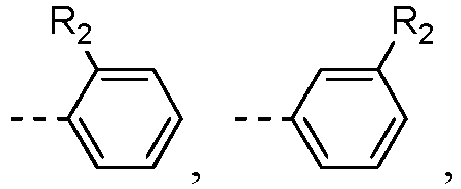

- The compound, the isomer thereof or the pharmaceutically acceptable salt thereof as defined in claim 16, wherein moiety


- The compound, the isomer thereof or the pharmaceutically acceptable salt thereof as defined in any one of claims 1 to 11, which is selected from


 R1 is as defined in any one of claims 1 to 4;R2 is as defined in any one of claims 1 and 5 to 7;L is as defined in any one of claims 1 and 8 to 11;and m and n are as defined in claim 1.
 - The compound, the isomer thereof or the pharmaceutically acceptable salt thereof as defined in claim 18, which is selected from


R1, R2, L, m and n are as defined in claim 18. - A compound of the following formula, an isomer thereof or a pharmaceutically acceptable salt thereof, wherein the compound is selected from:



- The compound as defined in claim 20, which is selected from







- Use of the compound, the isomer thereof or the pharmaceutically acceptable salt thereof as defined in any one of claims 1 to 21 in the manufacture of a drug for treating GLS1-associated diseases.
Applications Claiming Priority (2)
| Application Number | Priority Date | Filing Date | Title |
|---|---|---|---|
| CN201811202713 | 2018-10-16 | ||
| PCT/CN2019/111232 WO2020078350A1 (en) | 2018-10-16 | 2019-10-15 | Thiadiazole derivative and uses thereof as a gls1 inhibitor |
Publications (3)
| Publication Number | Publication Date |
|---|---|
| EP3868758A1 true EP3868758A1 (en) | 2021-08-25 |
| EP3868758A4 EP3868758A4 (en) | 2021-11-03 |
| EP3868758B1 EP3868758B1 (en) | 2023-01-04 |
Family
ID=70284303
Family Applications (1)
| Application Number | Title | Priority Date | Filing Date |
|---|---|---|---|
| EP19874268.6A Active EP3868758B1 (en) | 2018-10-16 | 2019-10-15 | Thiadiazole derivatives and use thereof as a gls1 inhibitors for the treatment of cancer |
Country Status (10)
| Country | Link |
|---|---|
| US (1) | US11230544B1 (en) |
| EP (1) | EP3868758B1 (en) |
| JP (1) | JP7026852B2 (en) |
| KR (1) | KR102379226B1 (en) |
| CN (1) | CN112888686B (en) |
| AU (1) | AU2019363115B2 (en) |
| CA (1) | CA3116440C (en) |
| ES (1) | ES2939506T3 (en) |
| PT (1) | PT3868758T (en) |
| WO (1) | WO2020078350A1 (en) |
Families Citing this family (1)
| Publication number | Priority date | Publication date | Assignee | Title |
|---|---|---|---|---|
| CN115594683B (en) * | 2021-11-02 | 2023-06-16 | 杭州禹胜医药科技有限公司 | Glutaminase GLS1 inhibitor and preparation method and application thereof |
Family Cites Families (8)
| Publication number | Priority date | Publication date | Assignee | Title |
|---|---|---|---|---|
| EA026656B1 (en) * | 2011-11-21 | 2017-05-31 | Калитера Байосайенсиз Инк. | Heterocyclic inhibitors of glutaminase |
| US8604016B2 (en) | 2011-11-21 | 2013-12-10 | Calithera Biosciences Inc. | Heterocyclic inhibitors of glutaminase |
| GB201409624D0 (en) | 2014-05-30 | 2014-07-16 | Astrazeneca Ab | 1,3,4-thiadiazole compounds and their use in treating cancer |
| ES2794868T3 (en) | 2015-06-30 | 2020-11-19 | Univ Texas | GLS1 inhibitors for the treatment of diseases |
| US10323028B2 (en) | 2015-11-30 | 2019-06-18 | Astrazeneca Ab | 1,3,4-thiadiazole compounds and their use in treating cancer |
| US10040789B2 (en) * | 2015-11-30 | 2018-08-07 | Astrazeneca Ab | 1,3,4-thiadiazole compounds and their use in treating cancer |
| US9938265B2 (en) | 2015-11-30 | 2018-04-10 | Astrazeneca Ab | 1,3,4-thiadiazole compounds and their use in treating cancer |
| CN109503570B (en) * | 2015-12-18 | 2020-08-25 | 诺言医药科技(上海)有限公司 | Pharmaceutical composition containing sorafenib and application thereof |
-
2019
- 2019-10-15 AU AU2019363115A patent/AU2019363115B2/en not_active Ceased
- 2019-10-15 WO PCT/CN2019/111232 patent/WO2020078350A1/en not_active Ceased
- 2019-10-15 ES ES19874268T patent/ES2939506T3/en active Active
- 2019-10-15 CA CA3116440A patent/CA3116440C/en active Active
- 2019-10-15 US US17/284,806 patent/US11230544B1/en not_active Expired - Fee Related
- 2019-10-15 CN CN201980066987.8A patent/CN112888686B/en active Active
- 2019-10-15 EP EP19874268.6A patent/EP3868758B1/en active Active
- 2019-10-15 PT PT198742686T patent/PT3868758T/en unknown
- 2019-10-15 JP JP2021521183A patent/JP7026852B2/en not_active Expired - Fee Related
- 2019-10-15 KR KR1020217014579A patent/KR102379226B1/en not_active Expired - Fee Related
Also Published As
| Publication number | Publication date |
|---|---|
| AU2019363115B2 (en) | 2021-12-09 |
| CA3116440C (en) | 2022-03-08 |
| EP3868758A4 (en) | 2021-11-03 |
| CN112888686B (en) | 2022-04-19 |
| CN112888686A (en) | 2021-06-01 |
| JP7026852B2 (en) | 2022-02-28 |
| ES2939506T3 (en) | 2023-04-24 |
| KR102379226B1 (en) | 2022-03-25 |
| AU2019363115A1 (en) | 2021-05-27 |
| WO2020078350A1 (en) | 2020-04-23 |
| PT3868758T (en) | 2023-02-16 |
| EP3868758B1 (en) | 2023-01-04 |
| CA3116440A1 (en) | 2020-04-23 |
| JP2021531331A (en) | 2021-11-18 |
| KR20210066010A (en) | 2021-06-04 |
| US11230544B1 (en) | 2022-01-25 |
Similar Documents
| Publication | Publication Date | Title |
|---|---|---|
| CN112442030B (en) | Pyridinopyrimidine derivatives as KRASG12C mutant protein inhibitors | |
| EP3750880B1 (en) | Pyrazine-2(1h)-ketone compound acting as fgfr inhibitor | |
| JP2022071072A (en) | (S) -7- (1-acryloylpiperidin-4-yl) -2- (4-phenoxyphenyl) -4,5,6,7-tetra-hydropyrazolo [1,5-A] pyrimidine-3-carboxamide Crystal form, its preparation, and its use | |
| JP7797486B2 (en) | Process for preparing novel rhos-associated protein kinase inhibitors and intermediates therein | |
| US12570607B2 (en) | Compound as cyclin-dependent kinase 9 inhibitor and use thereof | |
| WO2024216008A1 (en) | Synthesis of ras inhibitors | |
| EP3738961B1 (en) | Heterocyclic compound as csf-1r inhibitor and use thereof | |
| EP3868758B1 (en) | Thiadiazole derivatives and use thereof as a gls1 inhibitors for the treatment of cancer | |
| CA3128419A1 (en) | Dezocine derivative and medical use thereof | |
| EP3640250B1 (en) | Compound as gls1 inhibitor | |
| US12065441B2 (en) | Pyrazolopyrimidine derivative, use thereof and pharmaceutical composition | |
| HK40044836B (en) | Thiadiazole derivative and use thereof as a gls1 inhibitor | |
| HK40044836A (en) | Thiadiazole derivative and use thereof as a gls1 inhibitor | |
| CA3245978A1 (en) | Deuterated analogs of pyrrole inhibitors of erk, synthesis thereof and intermediates thereto | |
| RU2819762C1 (en) | Compound as cyclin-dependent kinase 9 inhibitor and use thereof | |
| CN114127077B (en) | Tetracyclic compounds used as Cdc7 inhibitors | |
| HK40057161A (en) | Dezocine derivative and medical use thereof | |
| JPS6254403B2 (en) |
Legal Events
| Date | Code | Title | Description |
|---|---|---|---|
| STAA | Information on the status of an ep patent application or granted ep patent |
Free format text: STATUS: THE INTERNATIONAL PUBLICATION HAS BEEN MADE |
|
| PUAI | Public reference made under article 153(3) epc to a published international application that has entered the european phase |
Free format text: ORIGINAL CODE: 0009012 |
|
| STAA | Information on the status of an ep patent application or granted ep patent |
Free format text: STATUS: REQUEST FOR EXAMINATION WAS MADE |
|
| 17P | Request for examination filed |
Effective date: 20210514 |
|
| AK | Designated contracting states |
Kind code of ref document: A1 Designated state(s): AL AT BE BG CH CY CZ DE DK EE ES FI FR GB GR HR HU IE IS IT LI LT LU LV MC MK MT NL NO PL PT RO RS SE SI SK SM TR |
|
| A4 | Supplementary search report drawn up and despatched |
Effective date: 20211005 |
|
| RIC1 | Information provided on ipc code assigned before grant |
Ipc: A61P 35/00 20060101ALI20210929BHEP Ipc: A61K 31/433 20060101ALI20210929BHEP Ipc: C07D 487/04 20060101ALI20210929BHEP Ipc: C07D 417/12 20060101AFI20210929BHEP |
|
| DAV | Request for validation of the european patent (deleted) | ||
| DAX | Request for extension of the european patent (deleted) | ||
| REG | Reference to a national code |
Ref country code: DE Ref legal event code: R079 Ref document number: 602019024135 Country of ref document: DE Free format text: PREVIOUS MAIN CLASS: C07D0417140000 Ipc: C07D0417120000 |
|
| GRAP | Despatch of communication of intention to grant a patent |
Free format text: ORIGINAL CODE: EPIDOSNIGR1 |
|
| RIC1 | Information provided on ipc code assigned before grant |
Ipc: A61P 35/00 20060101ALI20220706BHEP Ipc: A61K 31/433 20060101ALI20220706BHEP Ipc: C07D 487/04 20060101ALI20220706BHEP Ipc: C07D 417/12 20060101AFI20220706BHEP |
|
| STAA | Information on the status of an ep patent application or granted ep patent |
Free format text: STATUS: GRANT OF PATENT IS INTENDED |
|
| INTG | Intention to grant announced |
Effective date: 20220811 |
|
| GRAS | Grant fee paid |
Free format text: ORIGINAL CODE: EPIDOSNIGR3 |
|
| GRAA | (expected) grant |
Free format text: ORIGINAL CODE: 0009210 |
|
| STAA | Information on the status of an ep patent application or granted ep patent |
Free format text: STATUS: THE PATENT HAS BEEN GRANTED |
|
| AK | Designated contracting states |
Kind code of ref document: B1 Designated state(s): AL AT BE BG CH CY CZ DE DK EE ES FI FR GB GR HR HU IE IS IT LI LT LU LV MC MK MT NL NO PL PT RO RS SE SI SK SM TR |
|
| REG | Reference to a national code |
Ref country code: GB Ref legal event code: FG4D |
|
| REG | Reference to a national code |
Ref country code: DE Ref legal event code: R096 Ref document number: 602019024135 Country of ref document: DE |
|
| REG | Reference to a national code |
Ref country code: CH Ref legal event code: EP |
|
| REG | Reference to a national code |
Ref country code: AT Ref legal event code: REF Ref document number: 1541863 Country of ref document: AT Kind code of ref document: T Effective date: 20230115 |
|
| REG | Reference to a national code |
Ref country code: IE Ref legal event code: FG4D |
|
| REG | Reference to a national code |
Ref country code: NL Ref legal event code: FP |
|
| REG | Reference to a national code |
Ref country code: PT Ref legal event code: SC4A Ref document number: 3868758 Country of ref document: PT Date of ref document: 20230216 Kind code of ref document: T Free format text: AVAILABILITY OF NATIONAL TRANSLATION Effective date: 20230209 |
|
| REG | Reference to a national code |
Ref country code: SE Ref legal event code: TRGR |
|
| REG | Reference to a national code |
Ref country code: ES Ref legal event code: FG2A Ref document number: 2939506 Country of ref document: ES Kind code of ref document: T3 Effective date: 20230424 |
|
| REG | Reference to a national code |
Ref country code: LT Ref legal event code: MG9D |
|
| REG | Reference to a national code |
Ref country code: AT Ref legal event code: MK05 Ref document number: 1541863 Country of ref document: AT Kind code of ref document: T Effective date: 20230104 |
|
| PG25 | Lapsed in a contracting state [announced via postgrant information from national office to epo] |
Ref country code: RS Free format text: LAPSE BECAUSE OF FAILURE TO SUBMIT A TRANSLATION OF THE DESCRIPTION OR TO PAY THE FEE WITHIN THE PRESCRIBED TIME-LIMIT Effective date: 20230104 Ref country code: NO Free format text: LAPSE BECAUSE OF FAILURE TO SUBMIT A TRANSLATION OF THE DESCRIPTION OR TO PAY THE FEE WITHIN THE PRESCRIBED TIME-LIMIT Effective date: 20230404 Ref country code: LV Free format text: LAPSE BECAUSE OF FAILURE TO SUBMIT A TRANSLATION OF THE DESCRIPTION OR TO PAY THE FEE WITHIN THE PRESCRIBED TIME-LIMIT Effective date: 20230104 Ref country code: LT Free format text: LAPSE BECAUSE OF FAILURE TO SUBMIT A TRANSLATION OF THE DESCRIPTION OR TO PAY THE FEE WITHIN THE PRESCRIBED TIME-LIMIT Effective date: 20230104 Ref country code: HR Free format text: LAPSE BECAUSE OF FAILURE TO SUBMIT A TRANSLATION OF THE DESCRIPTION OR TO PAY THE FEE WITHIN THE PRESCRIBED TIME-LIMIT Effective date: 20230104 Ref country code: AT Free format text: LAPSE BECAUSE OF FAILURE TO SUBMIT A TRANSLATION OF THE DESCRIPTION OR TO PAY THE FEE WITHIN THE PRESCRIBED TIME-LIMIT Effective date: 20230104 |
|
| P01 | Opt-out of the competence of the unified patent court (upc) registered |
Effective date: 20230630 |
|
| PG25 | Lapsed in a contracting state [announced via postgrant information from national office to epo] |
Ref country code: PL Free format text: LAPSE BECAUSE OF FAILURE TO SUBMIT A TRANSLATION OF THE DESCRIPTION OR TO PAY THE FEE WITHIN THE PRESCRIBED TIME-LIMIT Effective date: 20230104 Ref country code: IS Free format text: LAPSE BECAUSE OF FAILURE TO SUBMIT A TRANSLATION OF THE DESCRIPTION OR TO PAY THE FEE WITHIN THE PRESCRIBED TIME-LIMIT Effective date: 20230504 Ref country code: GR Free format text: LAPSE BECAUSE OF FAILURE TO SUBMIT A TRANSLATION OF THE DESCRIPTION OR TO PAY THE FEE WITHIN THE PRESCRIBED TIME-LIMIT Effective date: 20230405 Ref country code: FI Free format text: LAPSE BECAUSE OF FAILURE TO SUBMIT A TRANSLATION OF THE DESCRIPTION OR TO PAY THE FEE WITHIN THE PRESCRIBED TIME-LIMIT Effective date: 20230104 |
|
| REG | Reference to a national code |
Ref country code: DE Ref legal event code: R097 Ref document number: 602019024135 Country of ref document: DE |
|
| PG25 | Lapsed in a contracting state [announced via postgrant information from national office to epo] |
Ref country code: SM Free format text: LAPSE BECAUSE OF FAILURE TO SUBMIT A TRANSLATION OF THE DESCRIPTION OR TO PAY THE FEE WITHIN THE PRESCRIBED TIME-LIMIT Effective date: 20230104 Ref country code: RO Free format text: LAPSE BECAUSE OF FAILURE TO SUBMIT A TRANSLATION OF THE DESCRIPTION OR TO PAY THE FEE WITHIN THE PRESCRIBED TIME-LIMIT Effective date: 20230104 Ref country code: EE Free format text: LAPSE BECAUSE OF FAILURE TO SUBMIT A TRANSLATION OF THE DESCRIPTION OR TO PAY THE FEE WITHIN THE PRESCRIBED TIME-LIMIT Effective date: 20230104 Ref country code: DK Free format text: LAPSE BECAUSE OF FAILURE TO SUBMIT A TRANSLATION OF THE DESCRIPTION OR TO PAY THE FEE WITHIN THE PRESCRIBED TIME-LIMIT Effective date: 20230104 Ref country code: CZ Free format text: LAPSE BECAUSE OF FAILURE TO SUBMIT A TRANSLATION OF THE DESCRIPTION OR TO PAY THE FEE WITHIN THE PRESCRIBED TIME-LIMIT Effective date: 20230104 |
|
| PLBE | No opposition filed within time limit |
Free format text: ORIGINAL CODE: 0009261 |
|
| STAA | Information on the status of an ep patent application or granted ep patent |
Free format text: STATUS: NO OPPOSITION FILED WITHIN TIME LIMIT |
|
| PG25 | Lapsed in a contracting state [announced via postgrant information from national office to epo] |
Ref country code: SK Free format text: LAPSE BECAUSE OF FAILURE TO SUBMIT A TRANSLATION OF THE DESCRIPTION OR TO PAY THE FEE WITHIN THE PRESCRIBED TIME-LIMIT Effective date: 20230104 |
|
| 26N | No opposition filed |
Effective date: 20231005 |
|
| PG25 | Lapsed in a contracting state [announced via postgrant information from national office to epo] |
Ref country code: SI Free format text: LAPSE BECAUSE OF FAILURE TO SUBMIT A TRANSLATION OF THE DESCRIPTION OR TO PAY THE FEE WITHIN THE PRESCRIBED TIME-LIMIT Effective date: 20230104 |
|
| PG25 | Lapsed in a contracting state [announced via postgrant information from national office to epo] |
Ref country code: MC Free format text: LAPSE BECAUSE OF FAILURE TO SUBMIT A TRANSLATION OF THE DESCRIPTION OR TO PAY THE FEE WITHIN THE PRESCRIBED TIME-LIMIT Effective date: 20230104 |
|
| REG | Reference to a national code |
Ref country code: CH Ref legal event code: PL |
|
| REG | Reference to a national code |
Ref country code: BE Ref legal event code: MM Effective date: 20231031 |
|
| PG25 | Lapsed in a contracting state [announced via postgrant information from national office to epo] |
Ref country code: LU Free format text: LAPSE BECAUSE OF NON-PAYMENT OF DUE FEES Effective date: 20231015 |
|
| PG25 | Lapsed in a contracting state [announced via postgrant information from national office to epo] |
Ref country code: LU Free format text: LAPSE BECAUSE OF NON-PAYMENT OF DUE FEES Effective date: 20231015 |
|
| PG25 | Lapsed in a contracting state [announced via postgrant information from national office to epo] |
Ref country code: CH Free format text: LAPSE BECAUSE OF NON-PAYMENT OF DUE FEES Effective date: 20231031 |
|
| PG25 | Lapsed in a contracting state [announced via postgrant information from national office to epo] |
Ref country code: CH Free format text: LAPSE BECAUSE OF NON-PAYMENT OF DUE FEES Effective date: 20231031 |
|
| PG25 | Lapsed in a contracting state [announced via postgrant information from national office to epo] |
Ref country code: BE Free format text: LAPSE BECAUSE OF NON-PAYMENT OF DUE FEES Effective date: 20231031 |
|
| PG25 | Lapsed in a contracting state [announced via postgrant information from national office to epo] |
Ref country code: IE Free format text: LAPSE BECAUSE OF NON-PAYMENT OF DUE FEES Effective date: 20231015 |
|
| PGFP | Annual fee paid to national office [announced via postgrant information from national office to epo] |
Ref country code: PT Payment date: 20240918 Year of fee payment: 6 |
|
| PGFP | Annual fee paid to national office [announced via postgrant information from national office to epo] |
Ref country code: NL Payment date: 20240925 Year of fee payment: 6 |
|
| PG25 | Lapsed in a contracting state [announced via postgrant information from national office to epo] |
Ref country code: IE Free format text: LAPSE BECAUSE OF NON-PAYMENT OF DUE FEES Effective date: 20231015 |
|
| PG25 | Lapsed in a contracting state [announced via postgrant information from national office to epo] |
Ref country code: BG Free format text: LAPSE BECAUSE OF FAILURE TO SUBMIT A TRANSLATION OF THE DESCRIPTION OR TO PAY THE FEE WITHIN THE PRESCRIBED TIME-LIMIT Effective date: 20230104 |
|
| PG25 | Lapsed in a contracting state [announced via postgrant information from national office to epo] |
Ref country code: BG Free format text: LAPSE BECAUSE OF FAILURE TO SUBMIT A TRANSLATION OF THE DESCRIPTION OR TO PAY THE FEE WITHIN THE PRESCRIBED TIME-LIMIT Effective date: 20230104 |
|
| PGFP | Annual fee paid to national office [announced via postgrant information from national office to epo] |
Ref country code: DE Payment date: 20241010 Year of fee payment: 6 |
|
| PGFP | Annual fee paid to national office [announced via postgrant information from national office to epo] |
Ref country code: GB Payment date: 20241028 Year of fee payment: 6 |
|
| PGFP | Annual fee paid to national office [announced via postgrant information from national office to epo] |
Ref country code: FR Payment date: 20241024 Year of fee payment: 6 |
|
| PGFP | Annual fee paid to national office [announced via postgrant information from national office to epo] |
Ref country code: IT Payment date: 20241009 Year of fee payment: 6 Ref country code: ES Payment date: 20241108 Year of fee payment: 6 |
|
| PGFP | Annual fee paid to national office [announced via postgrant information from national office to epo] |
Ref country code: SE Payment date: 20241023 Year of fee payment: 6 |
|
| PGFP | Annual fee paid to national office [announced via postgrant information from national office to epo] |
Ref country code: TR Payment date: 20241004 Year of fee payment: 6 |
|
| PG25 | Lapsed in a contracting state [announced via postgrant information from national office to epo] |
Ref country code: CY Free format text: LAPSE BECAUSE OF FAILURE TO SUBMIT A TRANSLATION OF THE DESCRIPTION OR TO PAY THE FEE WITHIN THE PRESCRIBED TIME-LIMIT; INVALID AB INITIO Effective date: 20191015 |
|
| PG25 | Lapsed in a contracting state [announced via postgrant information from national office to epo] |
Ref country code: HU Free format text: LAPSE BECAUSE OF FAILURE TO SUBMIT A TRANSLATION OF THE DESCRIPTION OR TO PAY THE FEE WITHIN THE PRESCRIBED TIME-LIMIT; INVALID AB INITIO Effective date: 20191015 |