EP3868366B1 - Coated solid preparation - Google Patents
Coated solid preparation Download PDFInfo
- Publication number
- EP3868366B1 EP3868366B1 EP19872834.7A EP19872834A EP3868366B1 EP 3868366 B1 EP3868366 B1 EP 3868366B1 EP 19872834 A EP19872834 A EP 19872834A EP 3868366 B1 EP3868366 B1 EP 3868366B1
- Authority
- EP
- European Patent Office
- Prior art keywords
- solid preparation
- coating
- present
- tablet
- metal oxide
- Prior art date
- Legal status (The legal status is an assumption and is not a legal conclusion. Google has not performed a legal analysis and makes no representation as to the accuracy of the status listed.)
- Active
Links
Images
Classifications
-
- A—HUMAN NECESSITIES
- A61—MEDICAL OR VETERINARY SCIENCE; HYGIENE
- A61K—PREPARATIONS FOR MEDICAL, DENTAL OR TOILETRY PURPOSES
- A61K9/00—Medicinal preparations characterised by special physical form
- A61K9/20—Pills, tablets, discs, rods
- A61K9/28—Dragees; Coated pills or tablets, e.g. with film or compression coating
- A61K9/2806—Coating materials
- A61K9/2813—Inorganic compounds
-
- A—HUMAN NECESSITIES
- A61—MEDICAL OR VETERINARY SCIENCE; HYGIENE
- A61K—PREPARATIONS FOR MEDICAL, DENTAL OR TOILETRY PURPOSES
- A61K45/00—Medicinal preparations containing active ingredients not provided for in groups A61K31/00 - A61K41/00
- A61K45/06—Mixtures of active ingredients without chemical characterisation, e.g. antiphlogistics and cardiaca
-
- A—HUMAN NECESSITIES
- A61—MEDICAL OR VETERINARY SCIENCE; HYGIENE
- A61K—PREPARATIONS FOR MEDICAL, DENTAL OR TOILETRY PURPOSES
- A61K9/00—Medicinal preparations characterised by special physical form
- A61K9/20—Pills, tablets, discs, rods
- A61K9/28—Dragees; Coated pills or tablets, e.g. with film or compression coating
- A61K9/2893—Tablet coating processes
-
- A—HUMAN NECESSITIES
- A61—MEDICAL OR VETERINARY SCIENCE; HYGIENE
- A61K—PREPARATIONS FOR MEDICAL, DENTAL OR TOILETRY PURPOSES
- A61K9/00—Medicinal preparations characterised by special physical form
- A61K9/20—Pills, tablets, discs, rods
- A61K9/2072—Pills, tablets, discs, rods characterised by shape, structure or size; Tablets with holes, special break lines or identification marks; Partially coated tablets; Disintegrating flat shaped forms
- A61K9/2077—Tablets comprising drug-containing microparticles in a substantial amount of supporting matrix; Multiparticulate tablets
Definitions
- the present invention belongs to the technical field of pharmaceutical preparations containing a pharmaceutical active ingredient.
- the present invention relates to, for example, a coated solid preparation containing at least one pharmaceutically active ingredient, which is excellent in disintegration properties while ensuring photostability of the medicine.
- compositions are coated, for example, to protect a drug from moisture, oxygen, carbon dioxide, light, etc. in the atmosphere, to control the release or modulate the onset of action of a drug, to mask taste or smell of a drug and make it easier to take a drug, to increase commercial value of a drug, or to increase distinctiveness of a drug.
- the above coating has been conventionally performed mainly by film coating or sugar coating.
- a film coating is one in which an aqueous solution or an organic solvent solution containing a polymer (coating agent) of a coating base is sprayed continuously or discontinuously on the surface of a solid preparation, and a moisture or an organic solvent of a droplet adhering to and spreading on the surface of the solid preparation is evaporated, whereby the coating agent particles aggregate and form a film.
- the layer is applied to the periphery of a solid preparation at a micro-order thickness, the disintegration time tends to be longer than that of an uncoated plain tablet or the like. Thus, the elution of the drug from the solid preparation may be delayed.
- the film coating must be executed with a polymer compound such as hypromellose or hydroxypropyl cellulose.
- Patent Document 1 As a technique for coating a pharmaceutical solid preparation, in addition to the above, a method called an atomic layer deposition method (ALD) is known (Patent Document 1). Such an atomic layer deposition method is a method in which a functional group present on the surface of a pharmaceutical preparation reacts with a coating material, and a film of a monomolecular layer is laminated by vapor deposition. In Patent Document 1, using such an atomic layer deposition method, a metal oxide layer is formed on a pharmaceutical solid preparation containing an active ingredient with a nano-order thickness of about 0.1 nm to about 100 nm to coat the pharmaceutical solid preparation.
- sputtering is one of the metal film-forming techniques also called dry plating or vacuum plating.
- This is a technology to form a thin film, in which an inert gas (e.g., argon) is introduced in a vacuum, a negative voltage is applied to the target (plate-shaped film forming material) to generate a glow discharge, the inert gas atom is ionized, the gas ions are made to collide with the surface of the target at a high speed and hit it violently, and the particles (atoms and molecules) of the film-forming material constituting the target are vigorously ejected and vigorously adhered and deposited on the surface of the base material/substrate. It is applied to antireflection and surface protection of displays such as televisions and smartphones, transparent electrodes of solar cells and liquid crystal devices, conferring of abrasion resistance, and suppression of permeation of water vapor and oxygen.
- an inert gas e.g., argon
- sputtering is characterized in that the adhesion force of the film is strong and the film stress is large.
- the sputtering technique has an advantage that the film forming material is hardly changed in quality and heat is hardly applied to the object.
- Patent Document 2 discloses that a metal film made of an edible metal such as gold, silver, or platinum is formed on the surface of a granular shape, a tablet shape or the like, and a medicine or the like having excellent decorativeness is provided.
- the invention of Patent Document 2 is not carried out from the viewpoint of shielding a pharmaceutical solid preparation from light and imparting functionality.
- the present invention as defined by the appended claims is primarily directed to providing a novel solid preparation containing a pharmaceutically active ingredient, wherein the solid preparation is coated with a metal oxide in a nano-order thickness.
- the present invention resides in
- a pharmaceutical solid preparation according to the present invention is a solid preparation containing at least one pharmaceutically active ingredient, wherein the surface of the solid preparation is coated with a metal oxide to a thickness in a range of 1 nm to 500 nm to form a coating layer.
- the present invention preparation is also a solid preparation containing at least one pharmaceutically active ingredient, wherein the surface of the solid preparation is coated with a light shielding agent or a metal oxide which is present in a range of 5 ⁇ 10 -6 mg/mm 2 to 3 ⁇ 10 -3 mg/mm 2 to form a coating layer.
- the pharmaceutically active ingredient is not particularly limited, as long as it is a medicine having pharmacological activity, but photolabile pharmaceutically active ingredients are preferred.
- active ingredients may include, for example, calcium antagonists such as Nifedipine, Amlodipine, Nicardipine, and Azelnidipine, and HMG-CoA reductase inhibitors such as vitamins, Atorvastatin, Pitavastatin, and Rosuvastatin.
- the metal oxide is not particularly limited, as long as it is pharmaceutically acceptable and can be sputtered, but metal oxides are suitable.
- the metal oxide used in the present invention can include iron oxides such as red ferric oxide, yellow ferric oxide, yellow iron oxide, and black iron oxide; silicon dioxide; and titanium oxide. Among them, yellow ferric oxide, red ferric oxide, and titanium oxide are preferred.
- the metal oxide is coated (nanocoated) on the surface of the solid preparation with a thickness in a range of 1 nm to 500 nm to form a coating layer, and the thickness is preferably in a range of 5 nm to 400 nm, and more preferably in a range of 10 nm to 300 nm. If it is thinner than 1 nm, a sufficient light shielding effect may not be obtained, and if it is thicker than 500 nm, the manufacturing time may extend for a long time.
- the metal oxide is coated (nanocoated) on the surface of the solid preparation so as to be present in a range of 5 ⁇ 10 -6 mg/mm 2 to 3 ⁇ 10 -3 mg/mm 2 to form a coating layer, and the amount is preferably in a range of 2 ⁇ 10 -5 mg/mm 2 to 2 ⁇ 10 -3 mg/mm 2 , and more preferably in a range of 5 ⁇ 10 -5 mg/mm 2 to 1.5 ⁇ 10 -3 mg/mm 2 . If it is less than 5 ⁇ 10 -6 mg/mm 2 , a sufficient light-shielding effect may not be obtained, and if it is more than 3 ⁇ 10 -3 mg/mm 2 , the manufacturing time may extend for a long time.
- the disintegration time of the tablet before the coating can be substantially the same.
- the term "substantially the same” as to the disintegration time herein means that the disintegration time of the nanocoated tablet after the coating is in a range of 0.5 to 1.5 times that of the tablet before the coating. It is preferably in a range of 0.8 to 1.2 times.
- the disintegration time can be measured according to the test method described in the Japanese Pharmacopoeia.
- the dosage form of the present invention preparation is not particularly limited, as long as it is a pharmaceutical solid preparation, and examples thereof can include tablets, granules, powders, pellets, capsules, chewable tablets, troches, and film preparations. Among them, tablets are preferred. Tablets may be not only conventional tablets, but also multilayer tablets such as bilayer tablets and trilayer tablets, enteric coated tablets, sustained release tablets, so-called OD tablets such as orally disintegrating tablets, and OD films.
- the nanocoating of the metal oxide is performed by sputtering
- Sputtering itself is a known method, and the sputtering can be performed by the known method in the present invention, too.
- a strong magnetic field is applied in a vacuum having a light shielding agent, argon is introduced into the vacuum, and ionized (Ar+) by the magnetic field, and atoms and molecules on the surface of the light shielding agent are ejected by causing the ionized argon to collide with the light shielding agent, and thereby the atoms and molecules reach the surface of the pharmaceutical solid preparation to be coated and are formed into a film.
- Apparatus for performing the sputtering is commercially available, and it is possible to perform the sputtering using them.
- the process for producing a solid pharmaceutical preparation according to the present invention is a process for producing a pharmaceutical solid preparation containing at least one pharmaceutically active ingredient, characterized by comprising a step of coating a metal oxide by sputtering on the surface of the solid preparation to a thickness in a range of 1 nm to 500 nm.
- the present invention process is also characterized by comprising a step of coating a metal oxide by sputtering on the surface of the solid preparation so as to be present in a range of 5 ⁇ 10 -6 mg/mm 2 to 3 ⁇ 10 -3 mg/mm 2 .
- a pharmaceutical solid preparation before the coating (uncoated plain tablets, film-coated tablets, or the like) is produced.
- a pharmaceutical solid preparation before the coating e.g., uncoated plain tablets and film-coated tablets
- additives such as an excipient, a binder, a disintegrant, a stabilizer, and a colorant depending on the dosage form and the like, granulating, drying, sizing, adding a lubricant and the like, and tableting them, and if necessary, a step of film coating them with a coating agent containing a polymer, and other steps.
- the present invention process can be carried out by coating a metal oxide by sputtering on the surface of the pharmaceutical solid preparation before the coating (uncoated plain tablets, film-coated tablets, etc.) to a thickness in a range of 1 nm to 500 nm (preferably 5 nm to 400 nm, and more preferably 10 nm to 300 nm), or so as to be present in a range of 5 ⁇ 10 -6 mg/mm 2 to 3 ⁇ 10 -3 mg/mm 2 (preferably 2 ⁇ 10 -5 mg/mm 2 to 2 ⁇ 10 -3 mg/mm 2 , and more preferably 5 ⁇ 10 -5 mg/mm 2 to 1.5 ⁇ 10 -3 mg/mm 2 ).
- Excipients used in the present invention can include lactose, starch (e.g., corn starch, potato starch, rice starch, and wheat starch), crystalline cellulose, D-mannitol, dextrin, sorbitol, calcium phosphate anhydride, white sugar, talc (natural hydrous magnesium silicate), kaolin, precipitated calcium carbonate, sodium chloride, titanium oxide, and light anhydrous silicic acid, for example.
- starch e.g., corn starch, potato starch, rice starch, and wheat starch
- crystalline cellulose e.g., D-mannitol, dextrin
- sorbitol e.g., calcium phosphate anhydride
- white sugar e.g., talc (natural hydrous magnesium silicate), kaolin, precipitated calcium carbonate, sodium chloride, titanium oxide, and light anhydrous silicic acid, for example.
- Binding agents used in the present invention can include hydroxypropyl cellulose, hypromellose (hydroxypropyl methylcellulose, HPMC), microcrystalline cellulose, dextrin, tragacanth, gelatin, alphaized starch, gum arabic, acacia, alginic acid, carboxymethyl cellulose, ethyl cellulose, methylcellulose, hydroxyethyl cellulose, ethyl hydroxyethyl cellulose, polyvinylpyrrolidone, polyvinyl alcohol, polyacrylate, carboxymethyl cellulose calcium, and sodium carboxymethyl cellulose, for example.
- Stabilizing agents used in the present invention can include butylhydroxytoluene (BHT), propyl gallate, butylhydroxyanisole (BHA), lecithin, ⁇ -tocopherol, hydroquinone, octyl gallate, dodecyl gallate, isoamyl gallate, nordihydroguaiaretic acid, guaiac fat, ⁇ -naphthylamine, ascorbate palmitate, cysteine hydrochloride, sodium stearate ascorbate, thioglycerol, and thiosorbitol, for example.
- BHT butylhydroxytoluene
- BHA butylhydroxyanisole
- lecithin ⁇ -tocopherol
- hydroquinone octyl gallate
- dodecyl gallate dodecyl gallate
- isoamyl gallate nordihydroguaiaretic acid
- guaiac fat
- Disintegrants used in the present invention can include croscarmellose sodium, crospovidone, alginic acid, carboxymethyl cellulose calcium, sodium carboxymethyl cellulose, microcrystalline cellulose, hydroxypropyl cellulose, low substituted hydroxypropyl cellulose, crosslinked polyvinylpyrrolidone, sodium alginate, sodium starch glycolate, partially hydrolyzed starch, and an agar powder, for example.
- Lubricants used in the present invention can include magnesium stearate, calcium stearate, talc, mineral oil, stearic acid, fumaric acid, polyethylene glycol, calcium, boric acid, paraffin, and cocoa butter, for example.
- Pigments used in the present invention can include tar dye, red ferric oxide, red iron oxide, yellow iron oxide, titanium dioxide, inorganic dye, red No. 3, red No. 20, yellow No. 6, blue No. 2, green No. 5, orange No. 5, red No. 8, and caramel which can be used in pharmaceuticals and the like, as stipulated by the Ministry of Health, Labor and Welfare ordinance, for example.
- Each of the above additives may be used either alone or in combination of one or any two or more kinds thereof. Further, each of them can be used in an appropriate amount as needed.
- the light shielding agent or the metal oxide is coated in the nano-order on the tablet before the coating (uncoated plain tablets, film-coated tablets, or the like), it is possible to produce the tablet having substantially the same disintegration time as that of the tablet before the coating.
- the method for photostabilizing a pharmaceutical solid preparation according to the present invention is a method for photostabilizing a solid preparation containing at least one pharmaceutically active ingredient, characterized by comprising a step of coating a metal oxide by sputtering on the surface of the solid preparation to a thickness in a range of 1 nm to 500 nm.
- the photostabilization method of the present invention is also characterized by comprising a step of coating a metal oxide by sputtering on the surface of the solid preparation so as to be present in a range of 5 ⁇ 10 -6 mg/mm 2 to 3 ⁇ 10 -3 mg/mm 2 .
- the photostabilization method of the present invention can be carried out at least by coating a metal oxide by sputtering on the surface of the pharmaceutical solid preparation such as tablets to a thickness in a range of 1 nm to 500 nm (preferably 5 nm to 400 nm, and more preferably 10 nm to 300 nm), or so as to be present in a range of 5 ⁇ 10 -6 mg/mm 2 to 3 ⁇ 10 -3 mg/mm 2 (preferably 2 ⁇ 10 -5 mg/mm 2 to 2 ⁇ 10 -3 mg/mm 2 , and more preferably 5 ⁇ 10 -5 mg/mm 2 to 1.5 ⁇ 10 -3 mg/mm 2 ).
- the uncoated plain tablet of Comparative Example 1 and the tablets of Examples 1 to 3, the present invention preparations were prepared by being nanocoated with red ferric oxide to a thickness of about 10 nm to 300 nm or so that the red ferric oxide is present in 5.23 ⁇ 10 -5 mg/mm 2 to 1.57 ⁇ 10 -3 mg/mm 2 .
- Composition Ingredient Blending amount (mg) Comp.
- Example 1 Examples 1 to 3 (A) active granules Amlodipine besilate 6.93 excipient 52.87 pigment 0.2 (A) active granules total 60 (B) fast disintegrating granules excipient 130.8 disintegrant 3.6 pigment 0.2 (B) fast disintegrating granules total 134.6 (C) flavoring granules excipient 1.7 taste modifier 0.5 (C) flavoring granules total 2.2 [Table 2] Composition Ingredient Blending amount (mg) Comp.
- Example 1 Examples 1 to 3 Tablet (A) active granules 60 60 (B) fast disintegrating granules 134.6 134.6 (C) flavoring granules 2.2 2.2 lubricant 1.9 1.9 sweeting agent 5.3 5.3 perfume 1 1 Tablet total 205 205 Coating red ferric oxide - trace (*) Total 205 205 *
- Example 1 (10 nm in film thickness): 0.009 mg/tablet, 5.23 ⁇ 10 -5 mg/mm 2
- Example 2 (30 nm in film thickness): 0.027 mg/tablet, 1.57 ⁇ 10 -4 mg/mm 2
- Example 3 (300 nm in film thickness): 0.27 mg/tablet, 1.57 ⁇ 10 -3 mg/mm 2
- the uncoated plain tablet of Comparative Example 1 and the red ferric oxide-nanocoated tablets of Examples 1 to 3 were produced as follows.
- A Active granules
- B fast disintegrating granules
- C sweetening agent granulated into flavoring granules, and perfume were placed in a diffusion type mixer and mixed, and then a granulated lubricant was added and further mixed to obtain a tablet powder.
- the tablet of Comparative Example 1 was obtained by tableting the tablet powder so as to have a punch diameter of 8.5 mm and a tablet mass of 205 mg.
- the tablet (uncoated plain tablet) of Comparative Example 1 was coated with a predetermined amount of red ferric oxide using a magnetron type sputtering apparatus (product number: L560, manufactured by Leybold Co.) to produce the nanocoated tablets of Examples 1 to 3 of the present invention preparation.
- a magnetron type sputtering apparatus product number: L560, manufactured by Leybold Co.
- a mixture of TC-5 (hypromellose, 5.7 mg/tablet) and red ferric oxide (0.027 mg/tablet) was prepared, with which the tablet of Comparative Example 1 was film-coated by a conventional method to produce the film-coated tablet of Comparative Example 2.
- Example 1 Example 2
- Example 3 Comp.
- Example 1 Comp.
- Example 2 Coating method sputtering sputtering sputtering - film coating Thickness of layer 10 nm 30 nm 300 nm - 0.12 mm Coating amount of Fe 2 O 3 (mg/tablet) 0.009 0.027 0.27 0 0.027 Hardness (N) 59 63 63 73 131 Disintegration time (s) 20 18 21 19 86
- the tablets of Examples 1 to 3 and Comparative Examples 1 and 2 were placed in a photostability tester, and a photostability test was performed by a xenon lamp irradiation with 0.3 to 1.2 million Ix hr under a condition of 70% RH at 25 °C. The results are shown in Table 5 and Fig. 1 .
- the amount of the decomposition product I having the following structural formula was measured by high performance liquid chromatography (HPLC). The measurement conditions are as follows.
- the uncoated plain tablet of Comparative Example 1, and the tablets of Examples 4 and 5, the present invention preparations, nanocoated with titanium oxide to a thickness of about 30 nm or 300 nm or so that titanium oxide is present in 1.2 ⁇ 10 -4 mg/mm 2 or 1.2 ⁇ 10 -3 mg/mm 2 were prepared according to the formulation of Table 6 below.
- the uncoated plain tablet of Comparative Example 1 was coated with a predetermined amount of titanium oxide using a magnetron type sputtering apparatus (product number: L560, manufactured by Leybold Co.) to produce the nanocoated tablets of Examples 4 and 5 of the present invention preparation.
- a magnetron type sputtering apparatus product number: L560, manufactured by Leybold Co.
- Example 4 Comp.
- Example 1 Thickness of layer 30 nm 300 nm - Coating amount of TiO 2 (mg/tablet) 0.0205 0.205 0 Hardness (N) 51 52 73 Disintegration time (s) 20 20 19
- the tablets of Examples 4 and 5 were placed in a photostability tester, and a photostability test was performed by a xenon lamp irradiation with 0.3 to 1.2 million lx ⁇ hr under 70% RH conditions at 25 °C. The results are shown in Table 8 and Fig. 2 . Under the same measurement conditions as in Test Example 2 described above, the amount of the decomposition product I was measured by high performance liquid chromatography (HPLC).
- the present invention for example, it is possible to provide a pharmaceutical solid preparation having excellent disintegration properties while ensuring photostability of a medicine, and therefore the present invention is useful in a pharmaceutical solid preparation containing an active ingredient which is unstable to light, or useful in the production thereof.
Landscapes
- Health & Medical Sciences (AREA)
- Chemical & Material Sciences (AREA)
- Animal Behavior & Ethology (AREA)
- Medicinal Chemistry (AREA)
- Pharmacology & Pharmacy (AREA)
- Epidemiology (AREA)
- Life Sciences & Earth Sciences (AREA)
- General Health & Medical Sciences (AREA)
- Public Health (AREA)
- Veterinary Medicine (AREA)
- Bioinformatics & Cheminformatics (AREA)
- Engineering & Computer Science (AREA)
- Inorganic Chemistry (AREA)
- Medicinal Preparation (AREA)
- Pharmaceuticals Containing Other Organic And Inorganic Compounds (AREA)
Description
- The present invention belongs to the technical field of pharmaceutical preparations containing a pharmaceutical active ingredient. The present invention relates to, for example, a coated solid preparation containing at least one pharmaceutically active ingredient, which is excellent in disintegration properties while ensuring photostability of the medicine.
- Pharmaceutical solid preparations are coated, for example, to protect a drug from moisture, oxygen, carbon dioxide, light, etc. in the atmosphere, to control the release or modulate the onset of action of a drug, to mask taste or smell of a drug and make it easier to take a drug, to increase commercial value of a drug, or to increase distinctiveness of a drug. In pharmaceuticals, the above coating has been conventionally performed mainly by film coating or sugar coating. A film coating is one in which an aqueous solution or an organic solvent solution containing a polymer (coating agent) of a coating base is sprayed continuously or discontinuously on the surface of a solid preparation, and a moisture or an organic solvent of a droplet adhering to and spreading on the surface of the solid preparation is evaporated, whereby the coating agent particles aggregate and form a film.
- In particular, in the case of a film coating, since the layer is applied to the periphery of a solid preparation at a micro-order thickness, the disintegration time tends to be longer than that of an uncoated plain tablet or the like. Thus, the elution of the drug from the solid preparation may be delayed. Also, for example, when a light shielding agent is coated to protect a drug from light, the film coating must be executed with a polymer compound such as hypromellose or hydroxypropyl cellulose.
- As a technique for coating a pharmaceutical solid preparation, in addition to the above, a method called an atomic layer deposition method (ALD) is known (Patent Document 1). Such an atomic layer deposition method is a method in which a functional group present on the surface of a pharmaceutical preparation reacts with a coating material, and a film of a monomolecular layer is laminated by vapor deposition. In
Patent Document 1, using such an atomic layer deposition method, a metal oxide layer is formed on a pharmaceutical solid preparation containing an active ingredient with a nano-order thickness of about 0.1 nm to about 100 nm to coat the pharmaceutical solid preparation. - On the other hand, sputtering is one of the metal film-forming techniques also called dry plating or vacuum plating. This is a technology to form a thin film, in which an inert gas (e.g., argon) is introduced in a vacuum, a negative voltage is applied to the target (plate-shaped film forming material) to generate a glow discharge, the inert gas atom is ionized, the gas ions are made to collide with the surface of the target at a high speed and hit it violently, and the particles (atoms and molecules) of the film-forming material constituting the target are vigorously ejected and vigorously adhered and deposited on the surface of the base material/substrate. It is applied to antireflection and surface protection of displays such as televisions and smartphones, transparent electrodes of solar cells and liquid crystal devices, conferring of abrasion resistance, and suppression of permeation of water vapor and oxygen.
- As compared with the atomic layer deposition method (ALD), sputtering is characterized in that the adhesion force of the film is strong and the film stress is large. In addition, the sputtering technique has an advantage that the film forming material is hardly changed in quality and heat is hardly applied to the object.
- Sputtering techniques have also been applied in the field of pharmaceuticals or foods. For example, Patent Document 2 discloses that a metal film made of an edible metal such as gold, silver, or platinum is formed on the surface of a granular shape, a tablet shape or the like, and a medicine or the like having excellent decorativeness is provided. However, the invention of Patent Document 2 is not carried out from the viewpoint of shielding a pharmaceutical solid preparation from light and imparting functionality.
-
- Patent Document 1:
JP, 2014-510066, A - Patent Document 2:
JP, 2004-43316, A - The present invention as defined by the appended claims is primarily directed to providing a novel solid preparation containing a pharmaceutically active ingredient, wherein the solid preparation is coated with a metal oxide in a nano-order thickness.
- As a result of intensive studies, the present inventors have found that the above problem can be solved by using a sputtering technique for coating a pharmaceutical solid preparation, and the present invention was completed.
- The present invention resides in
- [1] A pharmaceutical solid preparation containing at least one pharmaceutically active ingredient, wherein the surface of the solid preparation is coated with a metal oxide to a thickness in a range of 1 nm to 500 nm to form a coating layer or the surface of the solid preparation is coated with a metal oxide which is present in a range of 5 × 10⁻⁶ mg/mm2to 3 × 10⁻³ mg/mm2 to form a coating layer wherein the coating is performed by sputtering.
- [2] The pharmaceutical solid preparation according to above, wherein the coating layer comprises no polymer compound.
- [3] The pharmaceutical solid preparation according to any one of [1] or [2] above, wherein the metal oxide is iron oxide or titanium oxide.
- [4] The pharmaceutical solid preparation according to any one of [1] to [3] above, wherein the solid preparation is a tablet.
- [5] A process for producing a solid preparation containing at least one pharmaceutically active ingredient, comprising a step of coating a metal oxide by sputtering on the surface of the solid preparation to a thickness in a range of 1 nm to 500 nm. or a step of coating a metal oxide by sputtering on the surface of the solid preparation so as to be present in a range of 5 × 10⁻⁶ mg/mm2 to 3 × 10⁻³ mg/mm2.
- [6] The process for producing a pharmaceutical solid preparation according to [5] above, wherein the metal oxide is iron oxide or titanium oxide.
- [7] The process for producing a pharmaceutical solid preparation according to any one of [5] or [6] above, wherein the solid preparation is a tablet.
- [8] A method for photostabilizing a pharmaceutical solid preparation containing at least one pharmaceutically active ingredient, comprising a step of coating a metal oxide by sputtering on the surface of the solid preparation to a thickness in a range of 1 nm to 500 nm. or a metal oxide by sputtering on the surface of the solid preparation so as to be present in a range of 5 × 10⁻⁶ mg/mm2 to 3 × 10⁻³ mg/mm2.
- [9] The method for photostabilizing a pharmaceutical solid preparation according to [8] above, wherein the metal oxide is iron oxide or titanium oxide.
- [10] The method for photostabilizing a pharmaceutical solid preparation according to any one of [8] or [9] above, wherein the solid preparation is a tablet.
- According to the present invention, for example, it is possible to provide pharmaceutical solid preparations excellent in disintegration properties while ensuring photostability of medicines.
-
- [
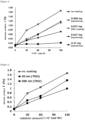
Fig. 1] Figure 1 represents the results of photostability. The vertical axis indicates the amount generated (%) of the decomposition product I (described later), and the horizontal axis indicates the light irradiation amount (×10,000 Lux·hr), respectively. Black triangles indicate the result of Example 1, black circles indicate the result of Example 2, black squares indicate the result of Example 3, cross marks indicate the result of Comparative Example 1 (uncoated plain tablets), and white circles indicate the result of Comparative Example 2 (film-coated tablets), respectively. - [
Fig. 2] Figure 2 represents the results of photostability. The vertical axis indicates the amount of decomposition product I generated (%) and the horizontal axis indicates the light irradiation amount (×10,000 Lux·hr). Black squares indicate the result of Example 4, black circles indicate the result of Example 5, and cross marks indicate the result of Comparative Example 1 (uncoated plain tablets), respectively. - A pharmaceutical solid preparation according to the present invention (hereinafter, referred to as the "present invention preparation") is a solid preparation containing at least one pharmaceutically active ingredient, wherein the surface of the solid preparation is coated with a metal oxide to a thickness in a range of 1 nm to 500 nm to form a coating layer. The present invention preparation is also a solid preparation containing at least one pharmaceutically active ingredient, wherein the surface of the solid preparation is coated with a light shielding agent or a metal oxide which is present in a range of 5 × 10⁻⁶ mg/mm2 to 3 × 10⁻³ mg/mm2 to form a coating layer.
- In the present invention preparation, the pharmaceutically active ingredient is not particularly limited, as long as it is a medicine having pharmacological activity, but photolabile pharmaceutically active ingredients are preferred. Such active ingredients may include, for example, calcium antagonists such as Nifedipine, Amlodipine, Nicardipine, and Azelnidipine, and HMG-CoA reductase inhibitors such as vitamins, Atorvastatin, Pitavastatin, and Rosuvastatin.
- In the present invention preparation, the metal oxide is not particularly limited, as long as it is pharmaceutically acceptable and can be sputtered, but metal oxides are suitable. The metal oxide used in the present invention can include iron oxides such as red ferric oxide, yellow ferric oxide, yellow iron oxide, and black iron oxide; silicon dioxide; and titanium oxide. Among them, yellow ferric oxide, red ferric oxide, and titanium oxide are preferred.
- In the present invention, the metal oxide is coated (nanocoated) on the surface of the solid preparation with a thickness in a range of 1 nm to 500 nm to form a coating layer, and the thickness is preferably in a range of 5 nm to 400 nm, and more preferably in a range of 10 nm to 300 nm. If it is thinner than 1 nm, a sufficient light shielding effect may not be obtained, and if it is thicker than 500 nm, the manufacturing time may extend for a long time. Alternatively, in the present invention, the metal oxide is coated (nanocoated) on the surface of the solid preparation so as to be present in a range of 5 × 10⁻⁶ mg/mm2 to 3 × 10⁻³ mg/mm2 to form a coating layer, and the amount is preferably in a range of 2 × 10⁻⁵ mg/mm2 to 2 × 10⁻³ mg/mm2, and more preferably in a range of 5 × 10⁻⁵ mg/mm2 to 1.5 × 10⁻³ mg/mm2. If it is less than 5 × 10⁻⁶ mg/mm2, a sufficient light-shielding effect may not be obtained, and if it is more than 3 × 10⁻³ mg/mm2, the manufacturing time may extend for a long time.
- As described above, since the metal oxide is coated on the nano-order in the present invention, for example, the disintegration time of the tablet before the coating (uncoated plain tablets, film-coated tablets, or the like) and the nanocoated tablet after the coating can be substantially the same. The term "substantially the same" as to the disintegration time herein means that the disintegration time of the nanocoated tablet after the coating is in a range of 0.5 to 1.5 times that of the tablet before the coating. It is preferably in a range of 0.8 to 1.2 times. The disintegration time can be measured according to the test method described in the Japanese Pharmacopoeia.
- The dosage form of the present invention preparation is not particularly limited, as long as it is a pharmaceutical solid preparation, and examples thereof can include tablets, granules, powders, pellets, capsules, chewable tablets, troches, and film preparations. Among them, tablets are preferred. Tablets may be not only conventional tablets, but also multilayer tablets such as bilayer tablets and trilayer tablets, enteric coated tablets, sustained release tablets, so-called OD tablets such as orally disintegrating tablets, and OD films.
- The nanocoating of the metal oxide is performed by sputtering Sputtering itself is a known method, and the sputtering can be performed by the known method in the present invention, too. For example, a strong magnetic field is applied in a vacuum having a light shielding agent, argon is introduced into the vacuum, and ionized (Ar+) by the magnetic field, and atoms and molecules on the surface of the light shielding agent are ejected by causing the ionized argon to collide with the light shielding agent, and thereby the atoms and molecules reach the surface of the pharmaceutical solid preparation to be coated and are formed into a film. Apparatus for performing the sputtering is commercially available, and it is possible to perform the sputtering using them.
- The process for producing a solid pharmaceutical preparation according to the present invention (hereinafter referred to as the "present invention process") is a process for producing a pharmaceutical solid preparation containing at least one pharmaceutically active ingredient, characterized by comprising a step of coating a metal oxide by sputtering on the surface of the solid preparation to a thickness in a range of 1 nm to 500 nm. The present invention process is also characterized by comprising a step of coating a metal oxide by sputtering on the surface of the solid preparation so as to be present in a range of 5 × 10⁻⁶ mg/mm2 to 3 × 10⁻³ mg/mm2.
- In the present invention process, first, a pharmaceutical solid preparation before the coating (uncoated plain tablets, film-coated tablets, or the like) is produced. Specifically, for example, a pharmaceutical solid preparation before the coating (e.g., uncoated plain tablets and film-coated tablets) is produced through steps of mixing at least one kind of pharmaceutically active ingredient with additives such as an excipient, a binder, a disintegrant, a stabilizer, and a colorant depending on the dosage form and the like, granulating, drying, sizing, adding a lubricant and the like, and tableting them, and if necessary, a step of film coating them with a coating agent containing a polymer, and other steps. Thereafter, the present invention process can be carried out by coating a metal oxide by sputtering on the surface of the pharmaceutical solid preparation before the coating (uncoated plain tablets, film-coated tablets, etc.) to a thickness in a range of 1 nm to 500 nm (preferably 5 nm to 400 nm, and more preferably 10 nm to 300 nm), or so as to be present in a range of 5 × 10⁻⁶ mg/mm2 to 3 × 10⁻³ mg/mm2 (preferably 2 × 10⁻⁵ mg/mm2 to 2 × 10⁻³ mg/mm2, and more preferably 5 × 10⁻⁵ mg/mm2 to 1.5 × 10⁻³ mg/mm2).
- The meanings of the pharmaceutically active ingredient, the solid preparation, the sputtering, the metal oxide, and the like in the present invention process are the same as described above.
- Excipients used in the present invention can include lactose, starch (e.g., corn starch, potato starch, rice starch, and wheat starch), crystalline cellulose, D-mannitol, dextrin, sorbitol, calcium phosphate anhydride, white sugar, talc (natural hydrous magnesium silicate), kaolin, precipitated calcium carbonate, sodium chloride, titanium oxide, and light anhydrous silicic acid, for example.
- Binding agents used in the present invention can include hydroxypropyl cellulose, hypromellose (hydroxypropyl methylcellulose, HPMC), microcrystalline cellulose, dextrin, tragacanth, gelatin, alphaized starch, gum arabic, acacia, alginic acid, carboxymethyl cellulose, ethyl cellulose, methylcellulose, hydroxyethyl cellulose, ethyl hydroxyethyl cellulose, polyvinylpyrrolidone, polyvinyl alcohol, polyacrylate, carboxymethyl cellulose calcium, and sodium carboxymethyl cellulose, for example.
- Stabilizing agents used in the present invention can include butylhydroxytoluene (BHT), propyl gallate, butylhydroxyanisole (BHA), lecithin, α-tocopherol, hydroquinone, octyl gallate, dodecyl gallate, isoamyl gallate, nordihydroguaiaretic acid, guaiac fat, α-naphthylamine, ascorbate palmitate, cysteine hydrochloride, sodium stearate ascorbate, thioglycerol, and thiosorbitol, for example.
- Disintegrants used in the present invention can include croscarmellose sodium, crospovidone, alginic acid, carboxymethyl cellulose calcium, sodium carboxymethyl cellulose, microcrystalline cellulose, hydroxypropyl cellulose, low substituted hydroxypropyl cellulose, crosslinked polyvinylpyrrolidone, sodium alginate, sodium starch glycolate, partially hydrolyzed starch, and an agar powder, for example.
- Lubricants used in the present invention can include magnesium stearate, calcium stearate, talc, mineral oil, stearic acid, fumaric acid, polyethylene glycol, calcium, boric acid, paraffin, and cocoa butter, for example.
- Pigments used in the present invention can include tar dye, red ferric oxide, red iron oxide, yellow iron oxide, titanium dioxide, inorganic dye, red No. 3, red No. 20, yellow No. 6, blue No. 2, green No. 5, orange No. 5, red No. 8, and caramel which can be used in pharmaceuticals and the like, as stipulated by the Ministry of Health, Labor and Welfare ordinance, for example.
- Each of the above additives may be used either alone or in combination of one or any two or more kinds thereof. Further, each of them can be used in an appropriate amount as needed.
- According to the present invention process, since the light shielding agent or the metal oxide is coated in the nano-order on the tablet before the coating (uncoated plain tablets, film-coated tablets, or the like), it is possible to produce the tablet having substantially the same disintegration time as that of the tablet before the coating.
- The method for photostabilizing a pharmaceutical solid preparation according to the present invention (hereinafter referred to as the "photostabilization method of the present invention") is a method for photostabilizing a solid preparation containing at least one pharmaceutically active ingredient, characterized by comprising a step of coating a metal oxide by sputtering on the surface of the solid preparation to a thickness in a range of 1 nm to 500 nm. The photostabilization method of the present invention is also characterized by comprising a step of coating a metal oxide by sputtering on the surface of the solid preparation so as to be present in a range of 5 × 10⁻⁶ mg/mm2 to 3 × 10⁻³ mg/mm2.
- The photostabilization method of the present invention can be carried out at least by coating a metal oxide by sputtering on the surface of the pharmaceutical solid preparation such as tablets to a thickness in a range of 1 nm to 500 nm (preferably 5 nm to 400 nm, and more preferably 10 nm to 300 nm), or so as to be present in a range of 5 × 10⁻⁶ mg/mm2 to 3 × 10⁻³ mg/mm2 (preferably 2 × 10⁻⁵ mg/mm2 to 2 × 10⁻³ mg/mm2, and more preferably 5 × 10⁻⁵ mg/mm2 to 1.5 × 10⁻³ mg/mm2).
- The meanings of the pharmaceutically active ingredient, the solid preparation, the sputtering, the metal oxide, and the like in the photostabilization method of the present invention are the same as described above.
- Hereinafter, the present invention will be described with reference to Examples, Comparative Examples, Test Examples, and the like, but the present invention is not limited by these Examples and the like in any way.
- In accordance with the formulations in Tables 1 and 2 below, the uncoated plain tablet of Comparative Example 1 and the tablets of Examples 1 to 3, the present invention preparations, were prepared by being nanocoated with red ferric oxide to a thickness of about 10 nm to 300 nm or so that the red ferric oxide is present in 5.23 × 10⁻⁵ mg/mm2 to 1.57 × 10⁻³ mg/mm2.
[Table 1] Composition Ingredient Blending amount (mg) Comp. Example 1, Examples 1 to 3 (A) active granules Amlodipine besilate 6.93 excipient 52.87 pigment 0.2 (A) active granules total 60 (B) fast disintegrating granules excipient 130.8 disintegrant 3.6 pigment 0.2 (B) fast disintegrating granules total 134.6 (C) flavoring granules excipient 1.7 taste modifier 0.5 (C) flavoring granules total 2.2 [Table 2] Composition Ingredient Blending amount (mg) Comp. Example 1 Examples 1 to 3 Tablet (A) active granules 60 60 (B) fast disintegrating granules 134.6 134.6 (C) flavoring granules 2.2 2.2 lubricant 1.9 1.9 sweeting agent 5.3 5.3 perfume 1 1 Tablet total 205 205 Coating red ferric oxide - trace (*) Total 205 205 * Example 1 (10 nm in film thickness): 0.009 mg/tablet, 5.23 × 10⁻⁵ mg/mm2
Example 2 (30 nm in film thickness): 0.027 mg/tablet, 1.57 × 10⁻⁴ mg/mm2
Example 3 (300 nm in film thickness): 0.27 mg/tablet, 1.57 × 10⁻³ mg/mm2 - Specifically, the uncoated plain tablet of Comparative Example 1 and the red ferric oxide-nanocoated tablets of Examples 1 to 3 were produced as follows.
- (A) Active granules, (B) fast disintegrating granules, (C) sweetening agent granulated into flavoring granules, and perfume were placed in a diffusion type mixer and mixed, and then a granulated lubricant was added and further mixed to obtain a tablet powder. The tablet of Comparative Example 1 was obtained by tableting the tablet powder so as to have a punch diameter of 8.5 mm and a tablet mass of 205 mg.
- The tablet (uncoated plain tablet) of Comparative Example 1 was coated with a predetermined amount of red ferric oxide using a magnetron type sputtering apparatus (product number: L560, manufactured by Leybold Co.) to produce the nanocoated tablets of Examples 1 to 3 of the present invention preparation.
- A mixture of TC-5 (hypromellose, 5.7 mg/tablet) and red ferric oxide (0.027 mg/tablet) was prepared, with which the tablet of Comparative Example 1 was film-coated by a conventional method to produce the film-coated tablet of Comparative Example 2.
- Physical properties of the obtained tablets of Examples 1 to 3 and Comparative Examples 1 and 2 were measured by a conventional method (n=3). The results are shown in Table 3 below.
[Table 3] Example 1 Example 2 Example 3 Comp. Example 1 Comp. Example 2 Coating method sputtering sputtering sputtering - film coating Thickness of layer 10 nm 30 nm 300 nm - 0.12 mm Coating amount of Fe2O3 (mg/tablet) 0.009 0.027 0.27 0 0.027 Hardness (N) 59 63 63 73 131 Disintegration time (s) 20 18 21 19 86 - As is apparent from Table 3, all of the present invention preparations of Examples 1 to 3 had a disintegration time faster than that of a conventional film-coated tablet (Comparative Example 2) and almost equivalent to that of an uncoated plain tablet (Comparative Example 1), and had excellent disintegration properties.
- The tablets of Examples 1 to 3 and Comparative Examples 1 and 2 were placed in a photostability tester, and a photostability test was performed by a xenon lamp irradiation with 0.3 to 1.2 million Ix hr under a condition of 70% RH at 25 °C. The results are shown in Table 5 and
Fig. 1 . The amount of the decomposition product I having the following structural formula was measured by high performance liquid chromatography (HPLC). The measurement conditions are as follows.
-
- Detector: Waters2487, ultraviolet absorption photometer (measured at 237 nm)
- Column: Cadenza CD C18, A stainless steel column having an inner diameter of 4.6 mm and a length of 15 cm, packed with octylsilanized silica gel for liquid chromatography (3 µm in particle diameter).
- Column temperature: A constant temperature around 35 °C.
- Sample temperature: A constant temperature around 4 °C
- Mobile phase: A mixed solution of potassium dihydrogen phosphate aqueous solution and acetonitrile
-
- Flow rate: 1.0 mL/min
- Analysis time: 30 minutes
- As is apparent from Table 5 and
Fig. 1 , all of the present invention preparations of Examples 1 to 3 were excellent in photostability, which was superior to that of the uncoated plain tablet of Comparative Example 1, and equivalent to or higher than that of the conventional film-coated tablet of Comparative Example 2. With only a 30 nm coating of red ferric oxide (Example 2), the increase in the photodecomposition product was halved from that of the uncoated plain tablet of Comparative Example 1. In addition, as is apparent from the comparison of Example 2 and Comparative Example 2, in which the coating amount of red ferric oxide is the same, the present invention has a smaller amount of increase in photolysate than a conventional film coating and is excellent in photostability. - The uncoated plain tablet of Comparative Example 1, and the tablets of Examples 4 and 5, the present invention preparations, nanocoated with titanium oxide to a thickness of about 30 nm or 300 nm or so that titanium oxide is present in 1.2 × 10⁻⁴ mg/mm2 or 1.2 × 10⁻³ mg/mm2 were prepared according to the formulation of Table 6 below.
[Table 6] Composition Ingredient Blending amount (mg) Examples 4, 5 Tablet (A) active granules 60 (B) fast disintegrating granules 134.6 (C) flavoring granules 2.2 lubricant 1.9 sweeting agent 5.3 perfume 1 Tablet total 205 Coating titanium oxide trace (**) Total 205 ** Example 4 (30 nm in film thickness): 0.0205 mg/tablet, 1.2 × 10⁻⁴ mg/mm2
Example 5 (300 nm in film thickness): 0.205 mg/tablet, 1.2 × 10⁻³ mg/mm2 - Specifically, the uncoated plain tablet of Comparative Example 1 was coated with a predetermined amount of titanium oxide using a magnetron type sputtering apparatus (product number: L560, manufactured by Leybold Co.) to produce the nanocoated tablets of Examples 4 and 5 of the present invention preparation.
- Physical properties of the obtained tablets of Examples 4 and 5, and Comparative Example 1 were measured by a conventional method (n=3). The results are shown in Table 7 below.
[Table 7] Example 4 Example 5 Comp. Example 1 Thickness of layer 30 nm 300 nm - Coating amount of TiO2 (mg/tablet) 0.0205 0.205 0 Hardness (N) 51 52 73 Disintegration time (s) 20 20 19 - As is apparent from Table 7, all of the present invention preparations of Examples 4 and 5 had almost the same disintegration time as that of the uncoated plain tablet (Comparative Example 1), and were excellent in disintegration properties.
- The tablets of Examples 4 and 5 were placed in a photostability tester, and a photostability test was performed by a xenon lamp irradiation with 0.3 to 1.2 million lx·hr under 70% RH conditions at 25 °C. The results are shown in Table 8 and
Fig. 2 . Under the same measurement conditions as in Test Example 2 described above, the amount of the decomposition product I was measured by high performance liquid chromatography (HPLC).
- As is apparent from Table 8 and
Fig. 2 , all of the present invention preparations of Examples 4 and 5 exhibited higher photostability than that of the uncoated plain tablet of Comparative Example 1. Even with only a 30 nm coating of titanium oxide (Example 4), the increase of the photolysate amount is greatly suppressed as compared with the uncoated plain tablet of Comparative Example 1. - According to the present invention, for example, it is possible to provide a pharmaceutical solid preparation having excellent disintegration properties while ensuring photostability of a medicine, and therefore the present invention is useful in a pharmaceutical solid preparation containing an active ingredient which is unstable to light, or useful in the production thereof.
| Time (min) | Potassium dihydrogen phosphate aqueous solution (%) | Acetonitrile (%) |
| 0 to 15 | 80 → 50 | 20 → 50 |
| 15 to 20 | 50 → 20 | 50 → 80 |
| 20 to 25 | 20 | 80 |
| 25 to 26 | 20 → 80 | 80 → 20 |
| 26 to 30 | 80 | 20 |

Claims (10)
- A pharmaceutical solid preparation containing at least one pharmaceutically active ingredient, wherein(a) the surface of the solid preparation is coated with a metal oxide which is present in a range of 5 × 10⁻⁶ mg/mm2 to 3 × 10⁻³ mg/mm2 to form a coating layer;
or(b) the surface of the solid preparation is coated with a metal oxide to a thickness in a range of 1 nm to 500 nm to form a coating layer;wherein the coating is performed by sputtering. - The pharmaceutical solid preparation according to claim 1, wherein the coating layer comprises no polymer compound.
- The pharmaceutical solid preparation according to any one of claims 1 or 2, wherein the metal oxide is iron oxide or titanium oxide.
- The pharmaceutical solid preparation according to any one of claims 1 to 3, wherein the solid preparation is a tablet.
- A process for producing a solid preparation containing at least one pharmaceutically active ingredient, comprising(a) a step of coating a metal oxide by sputtering on the surface of the solid preparation so as to be present in a range of 5 × 10⁻⁶ mg/mm2 to 3 × 10⁻³ mg/mm2;
or(b) a step of coating a metal oxide by sputtering on the surface of the solid preparation to a thickness in a range of 1 nm to 500 nm. - The process for producing a pharmaceutical solid preparation according to claim 5, wherein the metal oxide is iron oxide or titanium oxide.
- The process for producing a pharmaceutical solid preparation according to claim 5 or 6, wherein the solid preparation is a tablet.
- A method for photostabilizing a pharmaceutical solid preparation containing at least one pharmaceutically active ingredient, comprising(a) a step of coating a metal oxide by sputtering on the surface of the solid preparation so as to be present in a range of 5 × 10⁻⁶ mg/mm2 to 3 × 10⁻³ mg/mm2;
or(b) a step of coating a metal oxide by sputtering on the surface of the solid preparation to a thickness in a range of 1 nm to 500 nm. - The method for photostabilizing a pharmaceutical solid preparation according to claim 8, wherein the metal oxide is iron oxide or titanium oxide.
- The method for photostabilizing a pharmaceutical solid preparation according to claim 8 or 9, wherein the solid preparation is a tablet.
Applications Claiming Priority (2)
| Application Number | Priority Date | Filing Date | Title |
|---|---|---|---|
| JP2018197154 | 2018-10-19 | ||
| PCT/JP2019/040556 WO2020080380A1 (en) | 2018-10-19 | 2019-10-16 | Coated solid preparation |
Publications (3)
| Publication Number | Publication Date |
|---|---|
| EP3868366A1 EP3868366A1 (en) | 2021-08-25 |
| EP3868366A4 EP3868366A4 (en) | 2022-07-20 |
| EP3868366B1 true EP3868366B1 (en) | 2024-02-28 |
Family
ID=70283770
Family Applications (1)
| Application Number | Title | Priority Date | Filing Date |
|---|---|---|---|
| EP19872834.7A Active EP3868366B1 (en) | 2018-10-19 | 2019-10-16 | Coated solid preparation |
Country Status (6)
| Country | Link |
|---|---|
| US (1) | US12691073B2 (en) |
| EP (1) | EP3868366B1 (en) |
| JP (1) | JP7432209B2 (en) |
| ES (1) | ES2975213T3 (en) |
| PT (1) | PT3868366T (en) |
| WO (1) | WO2020080380A1 (en) |
Families Citing this family (1)
| Publication number | Priority date | Publication date | Assignee | Title |
|---|---|---|---|---|
| US20240398753A1 (en) * | 2021-10-11 | 2024-12-05 | Towa Pharmaceutical Co., Ltd. | Method for producing liquid mixture, liquid mixture, and solid composition |
Family Cites Families (7)
| Publication number | Priority date | Publication date | Assignee | Title |
|---|---|---|---|---|
| JP2004043316A (en) * | 2002-07-09 | 2004-02-12 | Tsukioka:Kk | Medicine or food product having metal film, sputtering, vacuum deposition or ion plating apparatus for producing the same medicine or food |
| JP5466379B2 (en) * | 2008-06-30 | 2014-04-09 | ツキオカフィルム製薬株式会社 | Film-form preparation and method for producing film-form preparation |
| WO2010087462A1 (en) * | 2009-01-29 | 2010-08-05 | 大日本住友製薬株式会社 | Orally disintegrating tablet having inner core |
| KR20140011358A (en) | 2011-03-03 | 2014-01-28 | 메르크 파텐트 게엠베하 | Coated solid pharmaceutical preparation |
| FI126168B (en) * | 2012-09-18 | 2016-07-29 | Novaldmedical Ltd Oy | Process for coating pharmaceutical substrates |
| TWI658842B (en) * | 2014-03-31 | 2019-05-11 | 日商東麗股份有限公司 | Coating agent for solid preparation, coating and coated solid preparation formed by the same |
| JP6359151B1 (en) | 2017-05-24 | 2018-07-18 | 株式会社美方 | Web material winding method |
-
2019
- 2019-10-16 PT PT198728347T patent/PT3868366T/en unknown
- 2019-10-16 EP EP19872834.7A patent/EP3868366B1/en active Active
- 2019-10-16 ES ES19872834T patent/ES2975213T3/en active Active
- 2019-10-16 JP JP2020553211A patent/JP7432209B2/en active Active
- 2019-10-16 WO PCT/JP2019/040556 patent/WO2020080380A1/en not_active Ceased
- 2019-10-16 US US17/277,312 patent/US12691073B2/en active Active
Also Published As
| Publication number | Publication date |
|---|---|
| PT3868366T (en) | 2024-03-25 |
| EP3868366A1 (en) | 2021-08-25 |
| JPWO2020080380A1 (en) | 2021-09-24 |
| US12691073B2 (en) | 2026-07-28 |
| JP7432209B2 (en) | 2024-02-16 |
| US20210346301A1 (en) | 2021-11-11 |
| WO2020080380A1 (en) | 2020-04-23 |
| ES2975213T3 (en) | 2024-07-04 |
| EP3868366A4 (en) | 2022-07-20 |
Similar Documents
| Publication | Publication Date | Title |
|---|---|---|
| EP3305292B1 (en) | Pharmaceutical composition of mek inhibitor and preparation method thereof | |
| EP2464337B1 (en) | Tablet formulation of N-[2,4-bis(1,1-dimethylethyl)-5-hydroxyphenyl]-1,4-dihydro-4-oxoquinoline-3-carboxamide for use in the treatment of cystic fibrosis | |
| JP2025143513A (en) | Coated drug substance particles | |
| EP2826477B1 (en) | Solid composition of amino carboxylate salt | |
| US11938130B2 (en) | Stable pharmaceutical composition for oral administration | |
| US20100047349A1 (en) | Stabilized solid preparation | |
| JP6133009B2 (en) | Topiramate granules | |
| WO2010087462A1 (en) | Orally disintegrating tablet having inner core | |
| EP4151219A1 (en) | Impurity production-inhibited drug composition | |
| EP3290037A1 (en) | Pharmaceutical composition for oral administration | |
| EP3646867B1 (en) | Pharmaceutical composition | |
| EP3257511A1 (en) | Intraoral rapid disintegration tablet and method for manufacturing same | |
| EP3868366A1 (en) | Coated solid preparation | |
| CN112999181B (en) | Vonoprazan fumarate tablet | |
| EP1891952B1 (en) | Pharmaceutical composition of olmesartan medoxomil | |
| RU2730521C2 (en) | Vinorelbine monotartrate and its pharmaceutical application | |
| JP5198001B2 (en) | Stabilized solid formulation | |
| EP1676578B1 (en) | Method of stabilizing diarylvinylene compound | |
| CN109562109A (en) | The solid pharmaceutical preparation that photostability improves | |
| WO2008152598A1 (en) | Stabilized pharmaceutical compositions comprising atorvastatin |
Legal Events
| Date | Code | Title | Description |
|---|---|---|---|
| STAA | Information on the status of an ep patent application or granted ep patent |
Free format text: STATUS: THE INTERNATIONAL PUBLICATION HAS BEEN MADE |
|
| PUAI | Public reference made under article 153(3) epc to a published international application that has entered the european phase |
Free format text: ORIGINAL CODE: 0009012 |
|
| STAA | Information on the status of an ep patent application or granted ep patent |
Free format text: STATUS: REQUEST FOR EXAMINATION WAS MADE |
|
| 17P | Request for examination filed |
Effective date: 20210429 |
|
| AK | Designated contracting states |
Kind code of ref document: A1 Designated state(s): AL AT BE BG CH CY CZ DE DK EE ES FI FR GB GR HR HU IE IS IT LI LT LU LV MC MK MT NL NO PL PT RO RS SE SI SK SM TR |
|
| DAV | Request for validation of the european patent (deleted) | ||
| DAX | Request for extension of the european patent (deleted) | ||
| A4 | Supplementary search report drawn up and despatched |
Effective date: 20220622 |
|
| RIC1 | Information provided on ipc code assigned before grant |
Ipc: A61K 9/20 20060101ALN20220616BHEP Ipc: A61K 9/28 20060101AFI20220616BHEP |
|
| RIC1 | Information provided on ipc code assigned before grant |
Ipc: A61K 9/20 20060101ALN20230509BHEP Ipc: A61K 9/28 20060101AFI20230509BHEP |
|
| GRAP | Despatch of communication of intention to grant a patent |
Free format text: ORIGINAL CODE: EPIDOSNIGR1 |
|
| STAA | Information on the status of an ep patent application or granted ep patent |
Free format text: STATUS: GRANT OF PATENT IS INTENDED |
|
| RIC1 | Information provided on ipc code assigned before grant |
Ipc: A61K 9/20 20060101ALN20230602BHEP Ipc: A61K 9/28 20060101AFI20230602BHEP |
|
| INTG | Intention to grant announced |
Effective date: 20230622 |
|
| GRAJ | Information related to disapproval of communication of intention to grant by the applicant or resumption of examination proceedings by the epo deleted |
Free format text: ORIGINAL CODE: EPIDOSDIGR1 |
|
| STAA | Information on the status of an ep patent application or granted ep patent |
Free format text: STATUS: REQUEST FOR EXAMINATION WAS MADE |
|
| GRAP | Despatch of communication of intention to grant a patent |
Free format text: ORIGINAL CODE: EPIDOSNIGR1 |
|
| STAA | Information on the status of an ep patent application or granted ep patent |
Free format text: STATUS: GRANT OF PATENT IS INTENDED |
|
| INTC | Intention to grant announced (deleted) | ||
| RIC1 | Information provided on ipc code assigned before grant |
Ipc: A61K 9/20 20060101ALN20230811BHEP Ipc: A61K 9/28 20060101AFI20230811BHEP |
|
| INTG | Intention to grant announced |
Effective date: 20230920 |
|
| GRAS | Grant fee paid |
Free format text: ORIGINAL CODE: EPIDOSNIGR3 |
|
| GRAA | (expected) grant |
Free format text: ORIGINAL CODE: 0009210 |
|
| STAA | Information on the status of an ep patent application or granted ep patent |
Free format text: STATUS: THE PATENT HAS BEEN GRANTED |
|
| AK | Designated contracting states |
Kind code of ref document: B1 Designated state(s): AL AT BE BG CH CY CZ DE DK EE ES FI FR GB GR HR HU IE IS IT LI LT LU LV MC MK MT NL NO PL PT RO RS SE SI SK SM TR |
|
| REG | Reference to a national code |
Ref country code: GB Ref legal event code: FG4D |
|
| REG | Reference to a national code |
Ref country code: CH Ref legal event code: EP |
|
| REG | Reference to a national code |
Ref country code: DE Ref legal event code: R096 Ref document number: 602019047517 Country of ref document: DE |
|
| REG | Reference to a national code |
Ref country code: PT Ref legal event code: SC4A Ref document number: 3868366 Country of ref document: PT Date of ref document: 20240325 Kind code of ref document: T Free format text: AVAILABILITY OF NATIONAL TRANSLATION Effective date: 20240320 |
|
| REG | Reference to a national code |
Ref country code: IE Ref legal event code: FG4D |
|
| REG | Reference to a national code |
Ref country code: LT Ref legal event code: MG9D |
|
| PG25 | Lapsed in a contracting state [announced via postgrant information from national office to epo] |
Ref country code: IS Free format text: LAPSE BECAUSE OF FAILURE TO SUBMIT A TRANSLATION OF THE DESCRIPTION OR TO PAY THE FEE WITHIN THE PRESCRIBED TIME-LIMIT Effective date: 20240628 |
|
| REG | Reference to a national code |
Ref country code: NL Ref legal event code: MP Effective date: 20240228 |
|
| REG | Reference to a national code |
Ref country code: ES Ref legal event code: FG2A Ref document number: 2975213 Country of ref document: ES Kind code of ref document: T3 Effective date: 20240704 |
|
| PG25 | Lapsed in a contracting state [announced via postgrant information from national office to epo] |
Ref country code: LT Free format text: LAPSE BECAUSE OF FAILURE TO SUBMIT A TRANSLATION OF THE DESCRIPTION OR TO PAY THE FEE WITHIN THE PRESCRIBED TIME-LIMIT Effective date: 20240228 |
|
| PG25 | Lapsed in a contracting state [announced via postgrant information from national office to epo] |
Ref country code: GR Free format text: LAPSE BECAUSE OF FAILURE TO SUBMIT A TRANSLATION OF THE DESCRIPTION OR TO PAY THE FEE WITHIN THE PRESCRIBED TIME-LIMIT Effective date: 20240529 |
|
| PG25 | Lapsed in a contracting state [announced via postgrant information from national office to epo] |
Ref country code: HR Free format text: LAPSE BECAUSE OF FAILURE TO SUBMIT A TRANSLATION OF THE DESCRIPTION OR TO PAY THE FEE WITHIN THE PRESCRIBED TIME-LIMIT Effective date: 20240228 Ref country code: NL Free format text: LAPSE BECAUSE OF FAILURE TO SUBMIT A TRANSLATION OF THE DESCRIPTION OR TO PAY THE FEE WITHIN THE PRESCRIBED TIME-LIMIT Effective date: 20240228 Ref country code: RS Free format text: LAPSE BECAUSE OF FAILURE TO SUBMIT A TRANSLATION OF THE DESCRIPTION OR TO PAY THE FEE WITHIN THE PRESCRIBED TIME-LIMIT Effective date: 20240528 |
|
| PG25 | Lapsed in a contracting state [announced via postgrant information from national office to epo] |
Ref country code: RS Free format text: LAPSE BECAUSE OF FAILURE TO SUBMIT A TRANSLATION OF THE DESCRIPTION OR TO PAY THE FEE WITHIN THE PRESCRIBED TIME-LIMIT Effective date: 20240528 Ref country code: NO Free format text: LAPSE BECAUSE OF FAILURE TO SUBMIT A TRANSLATION OF THE DESCRIPTION OR TO PAY THE FEE WITHIN THE PRESCRIBED TIME-LIMIT Effective date: 20240528 Ref country code: NL Free format text: LAPSE BECAUSE OF FAILURE TO SUBMIT A TRANSLATION OF THE DESCRIPTION OR TO PAY THE FEE WITHIN THE PRESCRIBED TIME-LIMIT Effective date: 20240228 Ref country code: LT Free format text: LAPSE BECAUSE OF FAILURE TO SUBMIT A TRANSLATION OF THE DESCRIPTION OR TO PAY THE FEE WITHIN THE PRESCRIBED TIME-LIMIT Effective date: 20240228 Ref country code: IS Free format text: LAPSE BECAUSE OF FAILURE TO SUBMIT A TRANSLATION OF THE DESCRIPTION OR TO PAY THE FEE WITHIN THE PRESCRIBED TIME-LIMIT Effective date: 20240628 Ref country code: HR Free format text: LAPSE BECAUSE OF FAILURE TO SUBMIT A TRANSLATION OF THE DESCRIPTION OR TO PAY THE FEE WITHIN THE PRESCRIBED TIME-LIMIT Effective date: 20240228 Ref country code: GR Free format text: LAPSE BECAUSE OF FAILURE TO SUBMIT A TRANSLATION OF THE DESCRIPTION OR TO PAY THE FEE WITHIN THE PRESCRIBED TIME-LIMIT Effective date: 20240529 Ref country code: FI Free format text: LAPSE BECAUSE OF FAILURE TO SUBMIT A TRANSLATION OF THE DESCRIPTION OR TO PAY THE FEE WITHIN THE PRESCRIBED TIME-LIMIT Effective date: 20240228 Ref country code: BG Free format text: LAPSE BECAUSE OF FAILURE TO SUBMIT A TRANSLATION OF THE DESCRIPTION OR TO PAY THE FEE WITHIN THE PRESCRIBED TIME-LIMIT Effective date: 20240228 |
|
| PG25 | Lapsed in a contracting state [announced via postgrant information from national office to epo] |
Ref country code: PL Free format text: LAPSE BECAUSE OF FAILURE TO SUBMIT A TRANSLATION OF THE DESCRIPTION OR TO PAY THE FEE WITHIN THE PRESCRIBED TIME-LIMIT Effective date: 20240228 |
|
| REG | Reference to a national code |
Ref country code: AT Ref legal event code: MK05 Ref document number: 1660584 Country of ref document: AT Kind code of ref document: T Effective date: 20240228 |
|
| PG25 | Lapsed in a contracting state [announced via postgrant information from national office to epo] |
Ref country code: SE Free format text: LAPSE BECAUSE OF FAILURE TO SUBMIT A TRANSLATION OF THE DESCRIPTION OR TO PAY THE FEE WITHIN THE PRESCRIBED TIME-LIMIT Effective date: 20240228 Ref country code: PL Free format text: LAPSE BECAUSE OF FAILURE TO SUBMIT A TRANSLATION OF THE DESCRIPTION OR TO PAY THE FEE WITHIN THE PRESCRIBED TIME-LIMIT Effective date: 20240228 Ref country code: LV Free format text: LAPSE BECAUSE OF FAILURE TO SUBMIT A TRANSLATION OF THE DESCRIPTION OR TO PAY THE FEE WITHIN THE PRESCRIBED TIME-LIMIT Effective date: 20240228 |
|
| PG25 | Lapsed in a contracting state [announced via postgrant information from national office to epo] |
Ref country code: DK Free format text: LAPSE BECAUSE OF FAILURE TO SUBMIT A TRANSLATION OF THE DESCRIPTION OR TO PAY THE FEE WITHIN THE PRESCRIBED TIME-LIMIT Effective date: 20240228 |
|
| PG25 | Lapsed in a contracting state [announced via postgrant information from national office to epo] |
Ref country code: SM Free format text: LAPSE BECAUSE OF FAILURE TO SUBMIT A TRANSLATION OF THE DESCRIPTION OR TO PAY THE FEE WITHIN THE PRESCRIBED TIME-LIMIT Effective date: 20240228 |
|
| PG25 | Lapsed in a contracting state [announced via postgrant information from national office to epo] |
Ref country code: EE Free format text: LAPSE BECAUSE OF FAILURE TO SUBMIT A TRANSLATION OF THE DESCRIPTION OR TO PAY THE FEE WITHIN THE PRESCRIBED TIME-LIMIT Effective date: 20240228 Ref country code: CZ Free format text: LAPSE BECAUSE OF FAILURE TO SUBMIT A TRANSLATION OF THE DESCRIPTION OR TO PAY THE FEE WITHIN THE PRESCRIBED TIME-LIMIT Effective date: 20240228 |
|
| PG25 | Lapsed in a contracting state [announced via postgrant information from national office to epo] |
Ref country code: AT Free format text: LAPSE BECAUSE OF FAILURE TO SUBMIT A TRANSLATION OF THE DESCRIPTION OR TO PAY THE FEE WITHIN THE PRESCRIBED TIME-LIMIT Effective date: 20240228 |
|
| PG25 | Lapsed in a contracting state [announced via postgrant information from national office to epo] |
Ref country code: SK Free format text: LAPSE BECAUSE OF FAILURE TO SUBMIT A TRANSLATION OF THE DESCRIPTION OR TO PAY THE FEE WITHIN THE PRESCRIBED TIME-LIMIT Effective date: 20240228 |
|
| PG25 | Lapsed in a contracting state [announced via postgrant information from national office to epo] |
Ref country code: SM Free format text: LAPSE BECAUSE OF FAILURE TO SUBMIT A TRANSLATION OF THE DESCRIPTION OR TO PAY THE FEE WITHIN THE PRESCRIBED TIME-LIMIT Effective date: 20240228 Ref country code: SK Free format text: LAPSE BECAUSE OF FAILURE TO SUBMIT A TRANSLATION OF THE DESCRIPTION OR TO PAY THE FEE WITHIN THE PRESCRIBED TIME-LIMIT Effective date: 20240228 Ref country code: RO Free format text: LAPSE BECAUSE OF FAILURE TO SUBMIT A TRANSLATION OF THE DESCRIPTION OR TO PAY THE FEE WITHIN THE PRESCRIBED TIME-LIMIT Effective date: 20240228 Ref country code: EE Free format text: LAPSE BECAUSE OF FAILURE TO SUBMIT A TRANSLATION OF THE DESCRIPTION OR TO PAY THE FEE WITHIN THE PRESCRIBED TIME-LIMIT Effective date: 20240228 Ref country code: DK Free format text: LAPSE BECAUSE OF FAILURE TO SUBMIT A TRANSLATION OF THE DESCRIPTION OR TO PAY THE FEE WITHIN THE PRESCRIBED TIME-LIMIT Effective date: 20240228 Ref country code: CZ Free format text: LAPSE BECAUSE OF FAILURE TO SUBMIT A TRANSLATION OF THE DESCRIPTION OR TO PAY THE FEE WITHIN THE PRESCRIBED TIME-LIMIT Effective date: 20240228 Ref country code: AT Free format text: LAPSE BECAUSE OF FAILURE TO SUBMIT A TRANSLATION OF THE DESCRIPTION OR TO PAY THE FEE WITHIN THE PRESCRIBED TIME-LIMIT Effective date: 20240228 |
|
| REG | Reference to a national code |
Ref country code: DE Ref legal event code: R097 Ref document number: 602019047517 Country of ref document: DE |
|
| PLBE | No opposition filed within time limit |
Free format text: ORIGINAL CODE: 0009261 |
|
| STAA | Information on the status of an ep patent application or granted ep patent |
Free format text: STATUS: NO OPPOSITION FILED WITHIN TIME LIMIT |
|
| 26N | No opposition filed |
Effective date: 20241129 |
|
| PG25 | Lapsed in a contracting state [announced via postgrant information from national office to epo] |
Ref country code: SI Free format text: LAPSE BECAUSE OF FAILURE TO SUBMIT A TRANSLATION OF THE DESCRIPTION OR TO PAY THE FEE WITHIN THE PRESCRIBED TIME-LIMIT Effective date: 20240228 |
|
| REG | Reference to a national code |
Ref country code: CH Ref legal event code: PL |
|
| PG25 | Lapsed in a contracting state [announced via postgrant information from national office to epo] |
Ref country code: MC Free format text: LAPSE BECAUSE OF FAILURE TO SUBMIT A TRANSLATION OF THE DESCRIPTION OR TO PAY THE FEE WITHIN THE PRESCRIBED TIME-LIMIT Effective date: 20240228 |
|
| PG25 | Lapsed in a contracting state [announced via postgrant information from national office to epo] |
Ref country code: LU Free format text: LAPSE BECAUSE OF NON-PAYMENT OF DUE FEES Effective date: 20241016 Ref country code: BE Free format text: LAPSE BECAUSE OF NON-PAYMENT OF DUE FEES Effective date: 20241031 |
|
| PG25 | Lapsed in a contracting state [announced via postgrant information from national office to epo] |
Ref country code: CH Free format text: LAPSE BECAUSE OF NON-PAYMENT OF DUE FEES Effective date: 20241031 |
|
| REG | Reference to a national code |
Ref country code: BE Ref legal event code: MM Effective date: 20241031 |
|
| PG25 | Lapsed in a contracting state [announced via postgrant information from national office to epo] |
Ref country code: IE Free format text: LAPSE BECAUSE OF NON-PAYMENT OF DUE FEES Effective date: 20241016 |
|
| PGFP | Annual fee paid to national office [announced via postgrant information from national office to epo] |
Ref country code: PT Payment date: 20251003 Year of fee payment: 7 |
|
| PGFP | Annual fee paid to national office [announced via postgrant information from national office to epo] |
Ref country code: DE Payment date: 20250915 Year of fee payment: 7 |
|
| PGFP | Annual fee paid to national office [announced via postgrant information from national office to epo] |
Ref country code: GB Payment date: 20251024 Year of fee payment: 7 |
|
| PGFP | Annual fee paid to national office [announced via postgrant information from national office to epo] |
Ref country code: IT Payment date: 20251031 Year of fee payment: 7 |
|
| PGFP | Annual fee paid to national office [announced via postgrant information from national office to epo] |
Ref country code: FR Payment date: 20251024 Year of fee payment: 7 |
|
| PG25 | Lapsed in a contracting state [announced via postgrant information from national office to epo] |
Ref country code: CY Free format text: LAPSE BECAUSE OF FAILURE TO SUBMIT A TRANSLATION OF THE DESCRIPTION OR TO PAY THE FEE WITHIN THE PRESCRIBED TIME-LIMIT; INVALID AB INITIO Effective date: 20191016 |
|
| PGFP | Annual fee paid to national office [announced via postgrant information from national office to epo] |
Ref country code: ES Payment date: 20251114 Year of fee payment: 7 |
|
| PG25 | Lapsed in a contracting state [announced via postgrant information from national office to epo] |
Ref country code: HU Free format text: LAPSE BECAUSE OF FAILURE TO SUBMIT A TRANSLATION OF THE DESCRIPTION OR TO PAY THE FEE WITHIN THE PRESCRIBED TIME-LIMIT; INVALID AB INITIO Effective date: 20191016 |
|
| PG25 | Lapsed in a contracting state [announced via postgrant information from national office to epo] |
Ref country code: TR Free format text: LAPSE BECAUSE OF FAILURE TO SUBMIT A TRANSLATION OF THE DESCRIPTION OR TO PAY THE FEE WITHIN THE PRESCRIBED TIME-LIMIT Effective date: 20240228 |