EP3867964B1 - Battery cell interconnect system - Google Patents
Battery cell interconnect system Download PDFInfo
- Publication number
- EP3867964B1 EP3867964B1 EP19874649.7A EP19874649A EP3867964B1 EP 3867964 B1 EP3867964 B1 EP 3867964B1 EP 19874649 A EP19874649 A EP 19874649A EP 3867964 B1 EP3867964 B1 EP 3867964B1
- Authority
- EP
- European Patent Office
- Prior art keywords
- contacts
- battery module
- panel
- carrier
- connector
- Prior art date
- Legal status (The legal status is an assumption and is not a legal conclusion. Google has not performed a legal analysis and makes no representation as to the accuracy of the status listed.)
- Active
Links
Images













Classifications
-
- H—ELECTRICITY
- H01—ELECTRIC ELEMENTS
- H01M—PROCESSES OR MEANS, e.g. BATTERIES, FOR THE DIRECT CONVERSION OF CHEMICAL ENERGY INTO ELECTRICAL ENERGY
- H01M50/00—Constructional details or processes of manufacture of the non-active parts of electrochemical cells other than fuel cells, e.g. hybrid cells
- H01M50/50—Current conducting connections for cells or batteries
- H01M50/502—Interconnectors for connecting terminals of adjacent batteries; Interconnectors for connecting cells outside a battery casing
-
- H—ELECTRICITY
- H01—ELECTRIC ELEMENTS
- H01M—PROCESSES OR MEANS, e.g. BATTERIES, FOR THE DIRECT CONVERSION OF CHEMICAL ENERGY INTO ELECTRICAL ENERGY
- H01M10/00—Secondary cells; Manufacture thereof
- H01M10/42—Methods or arrangements for servicing or maintenance of secondary cells or secondary half-cells
- H01M10/425—Structural combination with electronic components, e.g. electronic circuits integrated to the outside of the casing
-
- H—ELECTRICITY
- H01—ELECTRIC ELEMENTS
- H01M—PROCESSES OR MEANS, e.g. BATTERIES, FOR THE DIRECT CONVERSION OF CHEMICAL ENERGY INTO ELECTRICAL ENERGY
- H01M10/00—Secondary cells; Manufacture thereof
- H01M10/42—Methods or arrangements for servicing or maintenance of secondary cells or secondary half-cells
- H01M10/48—Accumulators combined with arrangements for measuring, testing or indicating the condition of cells, e.g. the level or density of the electrolyte
- H01M10/482—Accumulators combined with arrangements for measuring, testing or indicating the condition of cells, e.g. the level or density of the electrolyte for several batteries or cells simultaneously or sequentially
-
- H—ELECTRICITY
- H01—ELECTRIC ELEMENTS
- H01M—PROCESSES OR MEANS, e.g. BATTERIES, FOR THE DIRECT CONVERSION OF CHEMICAL ENERGY INTO ELECTRICAL ENERGY
- H01M10/00—Secondary cells; Manufacture thereof
- H01M10/42—Methods or arrangements for servicing or maintenance of secondary cells or secondary half-cells
- H01M10/48—Accumulators combined with arrangements for measuring, testing or indicating the condition of cells, e.g. the level or density of the electrolyte
- H01M10/486—Accumulators combined with arrangements for measuring, testing or indicating the condition of cells, e.g. the level or density of the electrolyte for measuring temperature
-
- H—ELECTRICITY
- H01—ELECTRIC ELEMENTS
- H01M—PROCESSES OR MEANS, e.g. BATTERIES, FOR THE DIRECT CONVERSION OF CHEMICAL ENERGY INTO ELECTRICAL ENERGY
- H01M50/00—Constructional details or processes of manufacture of the non-active parts of electrochemical cells other than fuel cells, e.g. hybrid cells
- H01M50/20—Mountings; Secondary casings or frames; Racks, modules or packs; Suspension devices; Shock absorbers; Transport or carrying devices; Holders
-
- H—ELECTRICITY
- H01—ELECTRIC ELEMENTS
- H01M—PROCESSES OR MEANS, e.g. BATTERIES, FOR THE DIRECT CONVERSION OF CHEMICAL ENERGY INTO ELECTRICAL ENERGY
- H01M50/00—Constructional details or processes of manufacture of the non-active parts of electrochemical cells other than fuel cells, e.g. hybrid cells
- H01M50/50—Current conducting connections for cells or batteries
-
- H—ELECTRICITY
- H01—ELECTRIC ELEMENTS
- H01M—PROCESSES OR MEANS, e.g. BATTERIES, FOR THE DIRECT CONVERSION OF CHEMICAL ENERGY INTO ELECTRICAL ENERGY
- H01M50/00—Constructional details or processes of manufacture of the non-active parts of electrochemical cells other than fuel cells, e.g. hybrid cells
- H01M50/50—Current conducting connections for cells or batteries
- H01M50/502—Interconnectors for connecting terminals of adjacent batteries; Interconnectors for connecting cells outside a battery casing
- H01M50/503—Interconnectors for connecting terminals of adjacent batteries; Interconnectors for connecting cells outside a battery casing characterised by the shape of the interconnectors
-
- H—ELECTRICITY
- H01—ELECTRIC ELEMENTS
- H01M—PROCESSES OR MEANS, e.g. BATTERIES, FOR THE DIRECT CONVERSION OF CHEMICAL ENERGY INTO ELECTRICAL ENERGY
- H01M50/00—Constructional details or processes of manufacture of the non-active parts of electrochemical cells other than fuel cells, e.g. hybrid cells
- H01M50/50—Current conducting connections for cells or batteries
- H01M50/502—Interconnectors for connecting terminals of adjacent batteries; Interconnectors for connecting cells outside a battery casing
- H01M50/507—Interconnectors for connecting terminals of adjacent batteries; Interconnectors for connecting cells outside a battery casing comprising an arrangement of two or more busbars within a container structure, e.g. busbar modules
-
- H—ELECTRICITY
- H01—ELECTRIC ELEMENTS
- H01M—PROCESSES OR MEANS, e.g. BATTERIES, FOR THE DIRECT CONVERSION OF CHEMICAL ENERGY INTO ELECTRICAL ENERGY
- H01M50/00—Constructional details or processes of manufacture of the non-active parts of electrochemical cells other than fuel cells, e.g. hybrid cells
- H01M50/50—Current conducting connections for cells or batteries
- H01M50/502—Interconnectors for connecting terminals of adjacent batteries; Interconnectors for connecting cells outside a battery casing
- H01M50/519—Interconnectors for connecting terminals of adjacent batteries; Interconnectors for connecting cells outside a battery casing comprising printed circuit boards [PCB]
-
- H—ELECTRICITY
- H01—ELECTRIC ELEMENTS
- H01M—PROCESSES OR MEANS, e.g. BATTERIES, FOR THE DIRECT CONVERSION OF CHEMICAL ENERGY INTO ELECTRICAL ENERGY
- H01M50/00—Constructional details or processes of manufacture of the non-active parts of electrochemical cells other than fuel cells, e.g. hybrid cells
- H01M50/50—Current conducting connections for cells or batteries
- H01M50/502—Interconnectors for connecting terminals of adjacent batteries; Interconnectors for connecting cells outside a battery casing
- H01M50/521—Interconnectors for connecting terminals of adjacent batteries; Interconnectors for connecting cells outside a battery casing characterised by the material
- H01M50/522—Inorganic material
-
- H—ELECTRICITY
- H01—ELECTRIC ELEMENTS
- H01M—PROCESSES OR MEANS, e.g. BATTERIES, FOR THE DIRECT CONVERSION OF CHEMICAL ENERGY INTO ELECTRICAL ENERGY
- H01M50/00—Constructional details or processes of manufacture of the non-active parts of electrochemical cells other than fuel cells, e.g. hybrid cells
- H01M50/50—Current conducting connections for cells or batteries
- H01M50/569—Constructional details of current conducting connections for detecting conditions inside cells or batteries, e.g. details of voltage sensing terminals
-
- H—ELECTRICITY
- H01—ELECTRIC ELEMENTS
- H01M—PROCESSES OR MEANS, e.g. BATTERIES, FOR THE DIRECT CONVERSION OF CHEMICAL ENERGY INTO ELECTRICAL ENERGY
- H01M2220/00—Batteries for particular applications
- H01M2220/20—Batteries in motive systems, e.g. vehicle, ship, plane
-
- Y—GENERAL TAGGING OF NEW TECHNOLOGICAL DEVELOPMENTS; GENERAL TAGGING OF CROSS-SECTIONAL TECHNOLOGIES SPANNING OVER SEVERAL SECTIONS OF THE IPC; TECHNICAL SUBJECTS COVERED BY FORMER USPC CROSS-REFERENCE ART COLLECTIONS [XRACs] AND DIGESTS
- Y02—TECHNOLOGIES OR APPLICATIONS FOR MITIGATION OR ADAPTATION AGAINST CLIMATE CHANGE
- Y02E—REDUCTION OF GREENHOUSE GAS [GHG] EMISSIONS, RELATED TO ENERGY GENERATION, TRANSMISSION OR DISTRIBUTION
- Y02E60/00—Enabling technologies; Technologies with a potential or indirect contribution to GHG emissions mitigation
- Y02E60/10—Energy storage using batteries
Definitions
- the present disclosure relates to a battery module and more particularly to a battery cell interconnect system for a battery module.
- a battery module that includes a plurality of battery cells mounted in a housing and connected together so as to have a predetermined capacity and voltage output.
- a battery module is widely used as a power source for vehicles and various types of other devices and equipment.
- a plurality of the battery modules are often connected together to form a battery system, also having a predetermined capacity and voltage output.
- the battery cells may be connected together in parallel and/or in series to provide a desired capacity and voltage output.
- the battery cells are arranged closely together and are individually fused to to avoid damage or excessive heating of adjacent battery cells and/or other components.
- the battery cells may be monitored to quickly detect problems, such as short circuits.
- a battery module having the construction described above is conventionally difficult to manufacture and typically requires complicated procedures and specialized machinery. As such, there is a need for a battery module having an improved interconnect system that makes the manufacture of the battery module simpler and less expensive.
- US 2018/190960 A1 describes a battery interconnection system according to the preamble of claim 1.
- the housing has a body 18 and a lid 20, one or both of which may be formed from a thermoplastic resin.
- the thermoplastic resin has good electrical insulating properties and is heat resistant.
- thermoplastic resins include polypropylene, polyphenylene ether, polyamide, polyester, polyphenylene sulfide, liquid crystal polymer, polystyrene, polycarbonate and polybutylene terephthalate.
- the body 18 and the lid 20 may be constructed to engage each other so as to form a seal therebetween, whereby the interior of the body 18 is sealed from the outside environment.
- the body 18 includes a plurality of exterior walls 24.
- An opposing pair of the exterior walls 24c,d may include projections 26 for receipt in mounting rails, which are used to mount a plurality of battery modules 10 to a structure, such as a chassis of a vehicle.
- An opening 27 may extend through the exterior wall wall 24c.
- a slot 28 may be formed in the (front) exterior wall 24a, while a hole 29 may be formed in the (posterior) exterior wall 24b.
- the housing body 18 may be generally cuboidal in shape and defines an interior holding space 30 for holding the battery cells 14, which are connected together by the first BIS 16.
- the housing body 18 may include one or more interior flanges 32 with posts 34 extending upwardly therefrom for mounting the first BIS 16.
- the housing body 18 further includes one or more interior walls 36 (e.g., three) defining an inner chamber 38, which is delimited from the interior holding space 30.
- a plurality of mounts 37 are secured to inner surfaces of the interior walls 36.
- the mounts 37 include slots for holding edges of a printed circuit board (PCB) 39 of the monitoring module 15 (shown in Fig. 15 ). While the inner chamber 38 (with the monitoring module 15) is shown as being located in the housing body 18, about midway between the exterior walls 24a,b, it should be appreciated that the inner chamber 38 (with the monitoring module 15) may be located elsewhere and may have a different configuration.
- PCB printed circuit board
- each cell holder 40 is disposed in the interior holding space 30 of the housing body 18 and hold(s) the battery cells 14.
- Each cell holder 40 may be composed of plastic and includes a substrate 42 having a plurality of openings 44 extending therethrough.
- Each opening 44 snugly holds one of the battery cells 14 and, as such, may be formed by an interior surface of the substrate 42 that has a configuration corresponding to the exterior configuration of a battery cell 14.
- the openings 44 may be circular.
- Upper and lower cell holders 40a,b may be provided, with the upper cell holder 40a retaining upper portions of the battery cells 14 and the lower cell holder 40b retaining lower portions of the battery cells 14.
- One or both of the upper and lower cell holders 40a,b may be integrally joined to the housing body 18 so as to form a unitary or monolithic structure therewith.
- the lower cell holder 40b may be part of a bottom wall of the housing body 18. In some embodiments, only a single cell holder 40 may be provided.
- an upper cell holder 40a is separate from the housing body 18 and adjoins the first BIS 16, while a lower cell holder 40b is integrally joined to the housing body 18.
- the upper and lower cell holders 40a,b have enlarged slots 46 formed therein, respectively.
- the slot 46 in the lower cell holder 40b is disposed around the interior walls 36 defining the inner chamber 38, while the slot 46 in the upper cell holder 40a overlays the inner chamber 38.
- the battery cells 14 are disposed around interior walls 36 defining the inner chamber 38.
- the monitoring module 15 is disposed in the inner chamber 38.
- the battery cells 14 may be rechargeable lithium ion (LI-ION) batteries or other type of rechargeable battery.
- LI-ION lithium ion
- An example of a rechargeable LI-ION battery that may be used is an 18650 type LI-ION battery, having a cylindrical shape with a diameter of about 18 mm and a length of about 65 mm.
- other rechargeable battery form factors and/or chemistries may be used.
- each battery cell 14 has a cylindrical case 50 with first and second ends. A center positive terminal 52 and a surrounding annular negative terminal 54 are located at the first end.
- the first BIS 16 generally includes an upper interconnect layer or panel 58, a lower interconnect layer or panel 60 and a carrier 62.
- the first BIS 16 may further include one or more electrical insulating layers 64.
- the first BIS 16 may include an upper insulating layer 64a and a lower insulating layer 64b, as is shown in Fig. 1 .
- the insulating layers 64 may be composed of an insulating plastic, such as polyimide, polyethylene terephthalate, polyether ether ketone, and/or polycarbonate.
- Each of the insulating layers 64 has a plurality of openings, gaps and/or recesses therein, such as the rectangular openings 68 shown in Fig. 6 . Portions of the insulating layers 64 located toward a first side thereof have been removed such that the openings 68 are not fully circumscribed by edges of the layers 64.
- the upper insulating layer 64a may be disposed between the upper interconnect panel 58 and the lower interconnect panel 60, while the lower insulating layer 64b may be disposed between the lower interconnect panel 60 and the upper cell holder 40a. In this manner, the lower interconnect panel 60 is disposed between the upper insulating layer 64a and the lower insulating layer 64b.
- the upper insulating layer 64a may be secured to a bottom side of the upper interconnect panel 58 by adhesive, and the lower insulating layer 64b may be secured to a bottom side of the lower interconnect panel 60 by adhesive.
- the upper and lower interconnect panels 58,60 and the upper and lower insulating layers 64a,b may all be secured together by physical connectors to make the first BIS 16 an integral assembly.
- the upper cell holder 40a may also be secured to the first BIS 16 by the same or different connectors.
- the upper and lower interconnect panels 58,60 may each be one unitary or monolithic structure, or may comprise a plurality of sections, which are separated from each other by gaps or spaces.
- the interconnect panel 58,60 may be formed so as to be interconnected by sacrificial tie bars to maintain the interconnect panel 58,60 as a monolithic or unitary structure for ease of handling.
- the sacrificial tie bars may be severed later, such as during or after the assembly of the first BIS 16.
- the upper interconnect panel 58 includes a plurality of positive contacts 74 and a plurality of negative contacts 76
- the lower interconnect panel 60 includes a plurality of positive contacts 80 and a plurality of negative contacts 82.
- the positive contacts 74, 80 and the negative contacts 76, 82 are formed from the substrate 70 and are disposed in and/or extend through openings, gaps and/or recesses therein.
- the positive contacts 74, 76 and the negative contacts 76, 82 may be disposed in and/or extend through enlarged irregular-shaped openings 78.
- Portions of the substrates 70 of the upper and lower interconnect panels 58, 60 located toward a first side thereof have been removed such that the openings 78 are not fully circumscribed by edges of the substrates 70.
- the openings 78 in the upper and lower interconnect panels 58, 60 are aligned with the openings 68 in the insulating layers 64.
- the number of openings 78 in the upper and lower interconnect panels 58, 60 is equal to the number of battery cells 14.
- Each positive contact 74, 80 has a pad portion 74a, 80a and a connector portion 74b, 80b that connects the pad portion 74a, 80a to the remainder of the substrate 70.
- the connector portion 74b, 80b is thicker than the pad portion 74a, 80a.
- the positive contact 74, 80 forms a peninsula that extends into and/or through its associated opening 78.
- the pad portion 74a, 80a may be may be wider than the connector portion 74b, 80b, with the latter functioning as a fuse. In the shown embodiment, however, the pad portion 74a, 80a and the connector portion 74b, 80b have about the same width so as to appear (in a top plan view) as a single substantially rectangular strip with a rounded outer end.
- each negative contact 76, 82 has a pad portion 76a, 82a and a connector portion 76, 82b that connects the pad portion 76a, 82a o the remainder of the substrate 70.
- the pad portion 76a, 82a is thinner than the connector portion 76b, 82b.
- the negative contact 76, 82 forms a peninsula that extends into and/or through its associated opening 78.
- the pad portion 76a, 82a may be wider than the connector portion 76b, 82b, with the latter functioning as a fuse.
- the pad portion 76a, 82a and the connector portion 76b, 82b may have a similar configuration so as to appear as a single substantially rectangular strip with a rounded outer end, such as in the shown embodiment.
- the negative contacts 76, 80 are narrower than the positive contacts 74, 80.
- bends may be formed in the connector portions 74b, 76b during the stamping operation to permit the pad portions 74a, 76a to be disposed below the substrate 70 where they are secured to the positive and negative terminals 52, 54 of the battery cells 14, respectively.
- the connector portions 80b, 82b may simply slope or curve into the pad portions 82a, 82a.
- the pad portions 74a, 76a, 80a, 80b of the positive and negative contacts may be thinner than the connector portions 74b, 76b, 80b, 82b of the positive and negative contacts, as shown in Figs. 7 and 8 .
- the pad portions 74a, 76a, 80a, 80a may be thinned, for example, by coining, milling or other means.
- each section may include a plurality of the positive contacts 74, 80 and a plurality of the negative contacts 76, 82.
- the upper and lower interconnect panels 58, 60 are configured for connecting together the battery cells 14 in a desired circuit arrangement for the first battery module 10.
- the circuit arrangement may have the battery cells 14 connected together in series, parallel and/or combinations thereof.
- a plurality of groups of battery cells 14 may be electrically connected in series, wherein in each group, the battery cells 14 are electrically connected in parallel.
- a given battery cell 14 may have one of its terminals 52, 54 connected to the upper interconnect panel 58 and the other one of its terminals 52,54 connected to the lower interconnect panel 60.
- This type of connection is illustrated in the shown embodiments, wherein the upper and lower interconnect panels 58,60 are configured to have the openings 78 in the upper interconnect panel 58 correspond with the openings 78 in the lower interconnect panel 60 such that in each opening 78 in the upper interconnect panel 58 having a positive contact 74, the corresponding opening 78 in the lower interconnect panel 60 has a negative contact 82, and vice versa.
- openings 68 in the insulating layers 64 are aligned with the corresponding openings 78 in the upper and lower interconnect panels 58, 60 so as to form openings 88 (shown in Fig. 9 ) in the first BIS 16, which are associated with the battery cells 14, respectively.
- each battery cell 14 is associated with an opening 88 in the first BIS 16 and an opening 44 in the upper cell holder 40a.
- Each battery cell 14 extends into an opening 44 of the upper cell holder 40a such that an upper portion of the battery cell 14 is surrounded by the interior surface of the substrate 42 defining the opening 44.
- Top surfaces of the center positive terminals 52 and the surrounding annular negative terminals 54 of the battery cells 14 are disposed about flush with a top surface of the upper cell holder 40.
- the positive terminal 52 of the battery cell 14 is connected to a positive contact 74, 80 of one of the upper and lower interconnect panels 58,60 and the negative terminal 54 of the battery cell 14 is connected to a negative contact 76, 82 of the other one of the upper and lower interconnect panels 58,60.
- battery cell 14a has its positive terminal 52 connected to a positive contact 74 of the upper interconnect panel 58 and its negative terminal 54 connected to a negative contact 82 of the lower interconnect panel 60.
- the connector portion 74b of the positive contact 74 is bent downward, over the upper insulating layer 64a and the lower interconnect panel 60 to place the pad portion 74a of the positive contact 74 in physical contact with the positive terminal 52, where they are secured together.
- the terminals 52, 54 of the battery cells 14 may be connected to the contact pads 74, 76, 80, 82 of the upper and lower interconnect panels 58, 60 by electron beam welding or laser beam welding.
- the contacts 74, 76, 80, 82 are arranged in the openings 88 in the first BIS 16 such that in each opening 88, the negative contact 76, 82 is disposed toward a first side portion 88a of the opening 88, while the positive contact 74, 80 is disposed toward an opposing second side portion 88b of the opening 88.
- both the positive and negative contacts 80, 82 extend into the openings 88 from first (front) edges 70a of the substrate 70 of the lower interconnect panel 60, respectively, whereas, in the upper interconnect panel 58, both the positive and negative contacts 74, 76 extend into the openings 88 from second (posterior) edges 70b of the substrate 70 of the upper interconnect panel 58, respectively, with the first edges 70a and the second edges 70b being disposed on opposing sides of the openings 88.
- the lower interconnect panel 60 includes first (front) and second (posterior) power tabs 90, 92 disposed on opposite sides of the lower interconnect panel 60.
- the first and second power tabs 90, 92 are bent downward and, thus, are disposed out-of-plane with the rest of the substrate 70. Planar surfaces of the first and second power tabs 90, 92 face outward and are disposed at about a right angle to the substrate 70.
- the first and second power tabs 90, 92 are positive and negative contacts for the circuit arrangement of the first battery module 10. As will be described more fully below, the first and second power tabs 90, 92 are electrically connected to the carrier 62.
- the upper and lower interconnect panels 58, 60 and the insulating layers 64 have enlarged slots 94, 96 formed therein, respectively, which correspond to the enlarged slots 46 in the cell holders 40.
- the slots 94, 96 are aligned so as to form a slot 98 (shown in Fig. 9 ) for receiving the carrier 62.
- a plurality of sensing contacts 100 extend from each of the upper and lower interconnect panels 58, 60 and project into the slot 98.
- the sensing contacts 100 enable various measurements (such as current, voltage and temperature) to be made by the monitoring module 15 of various portions of the circuit arrangement for the first battery module 10. For example, the voltages and/or temperatures at the outputs of groups of parallel-connected battery cells 14 may be measured by the monitoring module 15 at the sensing contacts 100, respectively.
- the carrier 62 includes a plastic body 104 and a stamped lead frame 106 composed of conductive metal, such as copper.
- the body 104 is formed by overmolding the lead frame 106 with a thermoplastic resin.
- the thermoplastic resin has good electrical insulating properties and is heat resistant. Examples of thermoplastic resins that may be used include polypropylene, polyphenylene ether, polyamide, polyester, polyphenylene sulfide, liquid crystal polymer, polystyrene, polycarbonate and polybutylene terephthalate.
- thermoplastics include syndiotactic polystyrene (SPS) with glass or carbon fiber, which is commercially available from Indemitsu Kosan Co., Ltd., under the brand Xarec ® ; and a blend of polyphenylene oxide (PPO) and polystyrene (PS), which is commercially available from SABIC Innovative Plastics under the brand Noryl ® .
- SPS syndiotactic polystyrene
- PPO polyphenylene oxide
- PS polystyrene
- the body 104 of the carrier 62 is generally T-shaped and includes a bar-shaped main portion 108 joined to a pair of outwardly-extending first and second arm portions 110, 112.
- the main portion 108 fits into the slot 98 of the first BIS 16, while the arm portions 110,112 help form a first side edge of the first BIS 16.
- a first connector housing 114 is joined to a bottom side of the main portion 108 and has a plurality of openings facing downward, toward the inner chamber 38 of the housing body 18.
- a second connector housing 117 is also joined to a bottom side of the main portion 108 and has a pair of openings that face outward. As best shown in Fig.
- a portion (e.g., the main portion 108) of the carrier body 104 is disposed above the upper interconnect panel 58 and a portion (e.g., the connector housing 114) of the carrier body 104 is disposed below the lower interconnect panel 60.
- the lead frame 106 is molded into the main portion 108.
- An upper portion of the lead frame 106 may be mostly exposed, as shown, or may be completely covered with polymer of the body 104, except for the pads 115, which are exposed either way and are disposed in recesses spaced inward from side edges of the main portion 108.
- the pads 115 are electrically and mechanically connected to the sensing contacts 100 of the upper and lower interconnect panels 58, 60, respectively, such as by electron beam welding or laser beam welding.
- Components 117 such as fuses and/or thermistors, may also be welded between the pads 115, as shown in Fig. 13 .
- the pads 115 are connected by leads 116 to connector pins 120, most of which are arranged in a row or matrix that projects downward into the first connector housing 114 to form a female connector 118, which couples with a connector 122 of the monitoring module 15. Some of the connector pins 120, however, are connected to connector blades 124 that extend into the second connector housing 117 to form a connector 126, which may be used for connecting the monitoring module 15 to a master controller for the vehicle battery system.
- the connector 126 is accessible through the opening 27 in the exterior wall 24c of the housing body 18.
- the first and second arm portions 110,112 include downwardly-extending first and second mounts 128,130, respectively.
- a first power connector 132 is molded into the first mount 128 of the first arm portion 110, while a second power connector 134 is molded into the second mount 130 of the second arm portion 112.
- the first and second power connectors 132,134 permit a plurality of the battery modules 10 to be connected together.
- the first and second power connectors 132,134 are electrically isolated from the lead frame 106 by the insulating plastic of the carrier body 104.
- the first power connector 132 is pin-shaped and includes a solid cylindrical body 138 joined to an enlarged circular head 140.
- the body 138 extends from an outer side of the first mount 128, while the head 140 is disposed against an inner side of the first mount 128.
- the head 140 may be physically and electrically connected to the first power tab 90 of the lower interconnect panel 60, such as by electron beam welding or laser beam welding.
- the second power connector 134 includes a hollow cylindrical body joined to an enlarged circular head 144.
- An open end of the body forms a socket 146, which is disposed adjacent to an outer side of the second mount 130, while the head 144 is disposed against an inner side of the second mount 130.
- the head 144 may be physically and electrically connected to the second power tab 92 of the lower interconnect panel 60, such as by electron beam welding or laser beam welding.
- the body 138 of the first power connector 132 extends through the slot 28 in the exterior wall 24a of the housing body 18, while the socket 146 of the second power connector 134 is aligned with the hole 29 in the exterior wall 24b.
- the body 138 of the first power connector 132 is sized to be received in the socket 146 of the second power connector 134.
- a first first battery module 10 can be electrically connected to a second first battery module 10 by inserting the body 138 of the first power connector 132 of the first first battery module 10 into the socket 146 of the second power connector 134 of the second first battery module 10.
- the carrier 62, together with the other components of the first BIS 16 are supported on the upper cell holder 40a, which, in turn, is supported on the interior flange 32 of the housing body 18.
- the posts 34 of the housing body 18 may extend through aligned openings in the upper cell holder 40a and the BIS 16 to help secure and maintain the alignment of these components within the housing body 18.
- the monitoring module 15 includes the PCB 39, which has the connector 122 secured thereto.
- the connector 122 fits into the connector 118 of the carrier 62 to establish an electrical connection between the PCB 39 and the lead frame 106.
- the PCB 39 has monitoring circuitry that may include include one or more processors and memory.
- the one or more processors may include one or more application specific integrated circuits (ASICs), one or more field programmable gate arrays (FPGAs), one or more general purpose processors, or any combination thereof.
- the memory may include volatile memory, such as random access memory (RAM), and/or non-volatile memory, such as read-only memory (ROM).
- the monitoring module 15 is operable to monitor the operation of the first battery module 10.
- the monitoring circuitry may monitor the voltage across each battery cell 14 and/or each group of battery cells 14.
- the monitoring circuitry may monitor the current flowing into or out of the first battery module 10 through the first and second power connectors 132,134.
- the monitoring circuitry may monitor temperatures at various locations within the first battery module 10. If any of the monitored voltages, currents or temperatures exceed a predetermined level, the monitoring circuitry may generate an alarm to notify the master controller for the vehicle battery system. Values for the monitored voltages, currents and temperatures, as well as any generated alarms may be transmitted to the master controller over a Controller Area Network (CAN) bus connected between the monitoring module 15 and the master controller.
- CAN Controller Area Network
- the monitoring module 15 is disposed in the inner chamber 38 of the housing body 18, with the PCB 39 held in the slots of the mounts 37.
- the connectors 118, 122 are coupled together, with the socket contacts of the connector 122 receiving the connector pins 120 of the connector 18, thereby making a connection between the sensing contacts 100 of the first BIS 16 and the monitoring circuitry of the monitoring module 15.
- the second battery module 160 which is constructed in accordance with a second embodiment of the disclosure.
- the second battery module 160 has the same construction as the first battery module 10, except the second battery module 160 has the second BIS 162, instead of the first BIS 16.
- the second BIS 162 has the same construction as, and interconnects the battery cells 14 in the the same manner as, the first BIS 16, except for the differences described below.
- the second BIS 162 generally includes a top interconnect layer or panel 164, a bottom interconnect layer or panel 166 and a carrier 170.
- the second BIS 162 may further include one or more electrical insulating layers 168.
- the second BIS 162 may include an upper insulating layer 168a and a lower insulating layer 168b, as is shown in Fig. 17 .
- the insulating layers 168 have the same construction as the insulating layers 64, except the insulating layers 168 do not have side portions removed like the insulating layers 64. As such, all of the openings 68 in the insulating layers 168 are fully circumscribed by interior edges of the layers 168.
- the lower insulating layer 168b of the second BIS 162 is disposed between the lower interconnect panel 166 and the upper cell holder 40a.
- the upper insulating layer 168a of the second BIS 162 is disposed between the lid 20 and the upper interconnect panel 164.
- the upper insulating layer 168a may be secured to a top side of the upper interconnect panel 164 by adhesive, and the bottom insulating layer 168b may be secured to a bottom side of the bottom interconnect panel 166 by adhesive.
- the upper and lower interconnect panels 164,166, the carrier 170 and the insulating layers 168 may all be secured together by physical connectors to make the second BIS 162 an integral assembly.
- the upper cell holder 40a may also be secured to the second BIS 162 by the same or different connectors.
- the second BIS 162 is disposed on top of the upper cell holder 40a and the battery cells 14. As with the first BIS 16 of the first battery module 10, the second BIS 162 connects together the battery cells 14 in a desired circuit arrangement for the second battery module 160.
- the circuit arrangement may have the battery cells 14 connected together in series, parallel and/or combinations thereof. For example, a plurality of groups of battery cells 14 may be electrically connected in series, wherein in each group, the battery cells 14 are electrically connected in parallel.
- the upper and lower interconnect panels 164, 166 are generally rectangular and are composed of a substrate 172 of conductive metal, such as aluminum, an aluminum alloy, copper, or a copper alloy. Each of the upper and lower interconnect panels 164, 166 is formed in a stamping operation from a sheet of the conductive metal.
- the second embodiment is especially suited to having the upper and lower interconnect panels 164, 166 being composed of copper, with the substrate 172 having a thickness of from about 0.005 inches (0.127 mm) to about 0.020 inches (0.508 mm) and more preferably about 0.010 inches (0.254 mm).
- the upper and lower interconnect panels 164, 166 may each be one unitary or monolithic structure, or may comprise a plurality of sections separated from each other by gaps or spaces, which may be formed by severing sacrificial tie bars.
- the upper and lower interconnect panels 164, 166 of the second BIS 162 have the same construction as the upper and lower interconnect panels 58, 60 of the first BIS 16. Unlike the upper and lower interconnect panels 58, 60 of the first BIS 16, the upper and lower interconnect panels 164, 166 do not have side portions removed. Thus, all of the openings 78 are fully circumscribed by edges of the substrates 172.
- the substrate 172 of the upper interconnect panel 164 is thinner than the substrate 70 of the upper interconnect panel 58.
- the upper interconnect panel 164 has a plurality of positive contacts 174, instead of positive contacts 74, and a plurality of negative contacts 176, instead of negative contacts 76.
- the positive and negative contacts 174, 176 are similarly constructed and arranged as the positive and negative contacts 74, 76 of the upper interconnect panel 58, with the difference therebetween being described below.
- the positive contacts 174 each have a pad portion 174a and a connector portion 174b
- the negative contacts 176 each have a pad portion 176a and a connector portion 176b.
- the connector portions 174b, 176b are thinner than the connector portions 74b, 76b in the upper interconnect panel 58.
- the connector portions 174b, 176b are about the same thickness as the pad portions 174a, 176a.
- the connector portions 180b, 182b are thinner than the connector portions 80b, 82b in the lower interconnect panel 60.
- the connector portions 180b, 182b are about the same thickness as the pad portions 180a, 182a such that the connector portions 180b, 182b are substantially flat and merge seamlessly with the pad portions 180a, 182a, respectively.
- the pad portions 180a, 182a of the lower interconnect panel 166 are secured to the terminals 52, 54 of the battery cells 14, such as by electron beam welding or laser beam welding.
- thermoplastics include syndiotactic polystyrene (SPS) with glass or carbon fiber, which is commercially available from Indemitsu Kosan Co., Ltd., under the brand Xarec ® ; and a blend of polyphenylene oxide (PPO) and polystyrene (PS), which is commercially available from SABIC Innovative Plastics under the brand Noryl ® .
- SPS syndiotactic polystyrene
- PPO polyphenylene oxide
- PS polystyrene
- the body 184 of the carrier 170 is rectangular in shape and has dimensions (length and width) slightly larger than the upper and lower interconnect panels 164,166 and the insulating layers 168.
- the body 184 has an upper surface 185 delimited by an overmold portion 192 and a peripheral upper flange 186.
- the body 184 has a lower surface 187 delimited by the overmold portion 192 and a peripheral lower flange 188.
- the thickness of the body 184, between the upper and lower surfaces 185, 187, is from about 0.039 inches (1 mm) to about 0.188 inches (3mm) and more preferably about 0.079 inches (2mm).
- the body 184 is from about 2 to about 24 times the thickness and more preferably about 6 to 8 times the thickness of each of the upper and lower interconnect panels 164,166.
- the body 184 has a plurality of enlarged rectangular openings 190 extending through the upper and lower surfaces 185,187, with the number of openings 190 being equal to the number of battery cells 14.
- the carrier 170 is disposed between the upper and lower interconnect panels 164,166 and adjoins them. More specifically, the upper interconnect panel 164 adjoins the upper surface 185 of the carrier body 184 and its outer edges are surrounded by the upper flange 186, while the lower interconnect panel 166 adjoins the lower surface 187 of the carrier body 184 and its outer edges are surrounded by the lower flange 188.
- the openings 190 in the carrier body 184 are aligned with the openings 78 in the upper and lower interconnect panels 164,166, as well as the openings 68 in the insulating layers 168 so so as to form openings 194 in the second BIS 162 (shown best in Fig. 24 ).
- the upper flange 186 surrounds the outer edges of the first insulating layer 168a, while the lower flange 188 surrounds the outer edges of the second insulating layer 168b.
- the upper and lower flanges 186,188 help maintain the alignment of the upper and lower interconnect panels 164,166 and the insulating layers 168 with the carrier 170.
- the insulating layers 168, the upper and lower interconnect panels 164,166 and the carrier 170 may be secured together by physical connectors, thereby forming a single, multi-component structure.
- the body 184 of the carrier 170 may further include windows or holes 183 that are aligned with tie bars in the upper interconnect panel 164 and/or the lower interconnect panel 166. As described above, in each of the upper and lower interconnect panels 164,166, tie bars may temporarily connect together sections of the substrate 172 to facilitate manufacture and/or subsequent handling. These tie bars, however, have to later be severed or removed to permit the second BIS 162 to connect together the battery cells 14 in a desired manner.
- the holes 183 in the body 184 of the carrier 170 permit the tie bars to be accessed by a laser or a punch to sever or remove the tie bars after the upper and lower interconnect panels 164,166 have been mounted to the carrier 170, i.e., the holes 183 permit the BIS 162 to be debussed.
- the tie bars may be severed or removed (by laser or punching) from the upper and lower interconnect panels 164,166 before they are mounted to the carrier 170.
- the overmold portion 192 of the carrier body 184 contains the lead frame 106, as well as the first and second connector housings 114, 117.
- the overmold portion 192 is located in the carrier 170 so as to be aligned with the slot 98 of the second BIS 162 and the inner chamber 38.
- An upper portion of the lead frame 106 is completely covered with polymer of the carrier body 184, except for the pads 115, which are exposed and disposed in recesses spaced inward from side edges of the overmold portion 192.
- the pads 115 are electrically and mechanically connected to the sensing contacts 100 of the upper and lower interconnect panels 164,166, respectively, such as by electron beam welding or laser beam welding.
- the pads 115 are connected by leads 116 to connector pins 120 that are arranged in a row or matrix that projects downward into the first connector housing 114 to form the connector 118, which couples with the connector 122 of the monitoring module 15. Some of the connector pins 120, however, are connected to connector blades 124 that extend into the second connector housing 117 to form the connector 126, which may be used for connecting the monitoring module 15 to a master controller for the vehicle battery system.
- the connector 126 is accessible through the opening 27 in the exterior wall 24c of the housing body 18.
- a portion (e.g., the overmold portion 192) of the carrier body 184 is disposed above the upper interconnect panel 164 and a portion (e.g., the connector housing 114) of the carrier body 184 is disposed below the lower interconnect panel 166.
- the carrier 170 includes the first and second mounts 128,130, which project downwardly from opposing front and posterior sides of the carrier 170.
- the first and second mounts 128,130 include the first and second power connectors 132,134, which are secured to the first and second power tabs 90,92 of the lower interconnect panel 166.
- the first and second power connectors 132,134 are electrically isolated from the lead frame 106 by the insulating plastic of the carrier body 184.
- the second BIS 162 is disposed on top of the upper cell holder 40a such that the openings 194 in the second BIS 162 are aligned with the openings 44 in the upper cell holder 40a, respectively.
- the upper cell holder 40a and the second BIS 162 are supported on the interior flange 32 of the housing body 18.
- the posts 34 of the housing body 18 may extend through aligned opening in the upper cell holder 40a and the second BIS 162 to help secure and maintain the alignment of these components within the housing body 18.
- each battery cell 14 is associated with an opening 44 in the upper cell holder 40a. More specifically, each battery cell 14 extends into an opening 44 of the upper cell holder 40a such that an upper portion of the battery cell 14 is surrounded by the interior surface of the substrate 42 defining the opening 44. As shown, top surfaces of the center positive terminals 52 and the surrounding annular negative terminals 54 of the battery cells 14 are disposed about flush with a top surface of the upper cell holder 40a.
- each of the battery modules 10, 160 may be arranged differently. More specifically, the lead frame 106, the connector 118, the inner chamber 38 and the monitoring module 15 may have a different location and/or orientation. For example, instead of having the inner chamber 38 (with the monitoring module 15 disposed therein) located in the housing body 18, midway between the exterior walls 24a,b, the inner chamber 38 (with the monitoring module 15) may be located along one of the exterior walls 24, or elsewhere. Other components of the battery modules 10, 160 may also have to be reconfigured and/or relocated to permit or facilitate the foregoing change in location and/or orientation.
Landscapes
- Chemical & Material Sciences (AREA)
- Chemical Kinetics & Catalysis (AREA)
- Electrochemistry (AREA)
- General Chemical & Material Sciences (AREA)
- Engineering & Computer Science (AREA)
- Manufacturing & Machinery (AREA)
- Microelectronics & Electronic Packaging (AREA)
- Inorganic Chemistry (AREA)
- Battery Mounting, Suspending (AREA)
- Connection Of Batteries Or Terminals (AREA)
Description
- The present disclosure relates to a battery module and more particularly to a battery cell interconnect system for a battery module.
- It is known to have a battery module that includes a plurality of battery cells mounted in a housing and connected together so as to have a predetermined capacity and voltage output. Such a battery module is widely used as a power source for vehicles and various types of other devices and equipment. A plurality of the battery modules are often connected together to form a battery system, also having a predetermined capacity and voltage output. In a particular battery module, the battery cells may be connected together in parallel and/or in series to provide a desired capacity and voltage output. Often, the battery cells are arranged closely together and are individually fused to to avoid damage or excessive heating of adjacent battery cells and/or other components. In addition, the battery cells may be monitored to quickly detect problems, such as short circuits.
- A battery module having the construction described above is conventionally difficult to manufacture and typically requires complicated procedures and specialized machinery. As such, there is a need for a battery module having an improved interconnect system that makes the manufacture of the battery module simpler and less expensive.
-
US 2018/190960 A1 describes a battery interconnection system according to the preamble of claim 1. - In accordance with the present invention, there is provided a battery module as defined in the appended claims.
- The features, aspects, and advantages of the present invention will become better understood with regard to the following description, appended claims, and accompanying drawings where:
-
Fig. 1 shows an exploded perspective view of a first battery module constructed in accordance with a first embodiment of the disclosure; -
Fig. 2 shows a top perspective view of a housing body of the first battery module ofFig. 1 and a second battery module shown inFig. 17 ; -
Fig. 3 shows a sectional view of the housing body ofFig. 2 ; -
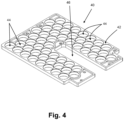
Fig. 4 shows a top perspective view of a cell holder of the first battery module and the second battery module; -
Fig. 5 shows a perspective view of a battery cell of the first battery module and the second battery module; -
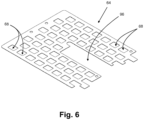
Fig. 6 shows a top perspective view of an insulating layer of the first battery module; -
Fig. 7 shows a top perspective view of an upper interconnect panel of the first battery module; -
Fig. 8 shows a top perspective view of a lower interconnect panel of the first battery module; -
Fig. 9 shows a top perspective view of a first battery interconnect system of the first battery module, with a carrier of the first battery interconnect system moved out of position; -
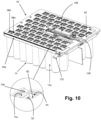
Fig. 10 shows a top perspective view of the first battery module with its housing removed; -
Fig. 11 shows a bottom perspective view of the carrier shown inFig. 9 ; -
Fig. 12 shows a top perspective view of a lead frame of the carrier shown inFig. 9 and inFig.11 ; -
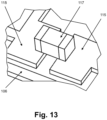
Fig. 13 shows a close-up top perspective view of a portion of the lead frame ofFig. 12 , showing a component secured between pads of the lead frame; -
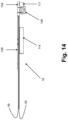
Fig. 14 shows a front elevational view of the first battery interconnect system of the first battery module; -
Fig. 15 shows a perspective view of a monitoring module of the first and second battery modules; -
Fig. 16 shows a perspective sectional view of the first battery module with its housing lid and battery cells removed; -
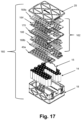
Fig. 17 shows an exploded perspective view of the second battery module, which is constructed in accordance with a second embodiment of the disclosure; -
Fig. 18 shows a top perspective view of the second battery module with its housing removed; -
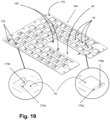
Fig. 19 shows a top perspective view of an upper interconnect panel of the second battery module; -
Fig. 20 shows a top perspective view of a lower interconnect panel of the second battery module; -
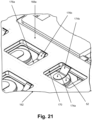
Fig. 21 shows a close-up view of a portion ofFig. 18 ; -
Fig. 22 shows a bottom perspective view of a carrier of the second battery module; -
Fig. 23 shows a top perspective view of the carrier of the second battery module; and -
Fig. 24 shows a close-up sectional view of a portion ofFig. 18 . - It should be noted that in the detailed descriptions that follow, identical components have the same reference numerals, regardless of whether they are shown in different embodiments of the present disclosure. It should also be noted that for purposes of clarity and conciseness, the drawings may not necessarily be to scale and certain features of the disclosure may be shown in somewhat schematic form.
- Spatially relative terms, such as "top", "bottom", "lower", "above", "upper", and the like, are used herein merely for ease of description to describe one element or feature's relationship to another element(s) or feature(s) as they are illustrated in (a) drawing figure(s) being referred to. It will be understood that the spatially relative terms are not meant to be limiting and are intended to encompass different orientations of the device in use or operation in addition to the orientation depicted in the drawings.
- The present disclosure is directed to a battery module, which may be used in a battery system for a vehicle, such as an electric vehicle ("EV") or a hybrid electric vehicle ("HEV"). The battery module generally includes a housing, a plurality of
battery cells 14, amonitoring module 15 and a battery interconnect system (BIS). In a first embodiment of the disclosure, afirst battery module 10 has afirst BIS 16, while in a second embodiment of the disclosure, asecond battery module 160 has asecond BIS 162. - Referring now to
Figs. 2 and3 , the housing has abody 18 and alid 20, one or both of which may be formed from a thermoplastic resin. Preferably, the thermoplastic resin has good electrical insulating properties and is heat resistant. Examples of thermoplastic resins that may be used include polypropylene, polyphenylene ether, polyamide, polyester, polyphenylene sulfide, liquid crystal polymer, polystyrene, polycarbonate and polybutylene terephthalate. Thebody 18 and thelid 20 may be constructed to engage each other so as to form a seal therebetween, whereby the interior of thebody 18 is sealed from the outside environment. Thebody 18 includes a plurality ofexterior walls 24. An opposing pair of theexterior walls 24c,d may includeprojections 26 for receipt in mounting rails, which are used to mount a plurality ofbattery modules 10 to a structure, such as a chassis of a vehicle. An opening 27 may extend through theexterior wall wall 24c. In the other pair of opposingexterior walls 24a,b, aslot 28 may be formed in the (front)exterior wall 24a, while ahole 29 may be formed in the (posterior)exterior wall 24b. - The
housing body 18 may be generally cuboidal in shape and defines aninterior holding space 30 for holding thebattery cells 14, which are connected together by thefirst BIS 16. Thehousing body 18 may include one or moreinterior flanges 32 withposts 34 extending upwardly therefrom for mounting thefirst BIS 16. In the shown embodiments, thehousing body 18 further includes one or more interior walls 36 (e.g., three) defining aninner chamber 38, which is delimited from theinterior holding space 30. Inside theinner chamber 38, a plurality ofmounts 37 are secured to inner surfaces of theinterior walls 36. Themounts 37 include slots for holding edges of a printed circuit board (PCB) 39 of the monitoring module 15 (shown inFig. 15 ). While the inner chamber 38 (with the monitoring module 15) is shown as being located in thehousing body 18, about midway between theexterior walls 24a,b, it should be appreciated that the inner chamber 38 (with the monitoring module 15) may be located elsewhere and may have a different configuration. - Referring now also to
Fig. 4 , one ormore cell holders 40 are disposed in theinterior holding space 30 of thehousing body 18 and hold(s) thebattery cells 14. Eachcell holder 40 may be composed of plastic and includes asubstrate 42 having a plurality ofopenings 44 extending therethrough. Each opening 44 snugly holds one of thebattery cells 14 and, as such, may be formed by an interior surface of thesubstrate 42 that has a configuration corresponding to the exterior configuration of abattery cell 14. Thus, if thebattery cells 14 are cylindrical (such as shown), theopenings 44 may be circular. Upper andlower cell holders 40a,b may be provided, with theupper cell holder 40a retaining upper portions of thebattery cells 14 and thelower cell holder 40b retaining lower portions of thebattery cells 14. One or both of the upper andlower cell holders 40a,b may be integrally joined to thehousing body 18 so as to form a unitary or monolithic structure therewith. For example, thelower cell holder 40b may be part of a bottom wall of thehousing body 18. In some embodiments, only asingle cell holder 40 may be provided. - In the shown embodiments, an
upper cell holder 40a is separate from thehousing body 18 and adjoins thefirst BIS 16, while alower cell holder 40b is integrally joined to thehousing body 18. The upper andlower cell holders 40a,b have enlargedslots 46 formed therein, respectively. Theslot 46 in thelower cell holder 40b is disposed around theinterior walls 36 defining theinner chamber 38, while theslot 46 in theupper cell holder 40a overlays theinner chamber 38. Thebattery cells 14 are disposed aroundinterior walls 36 defining theinner chamber 38. As will be described more fully below, themonitoring module 15 is disposed in theinner chamber 38. - Referring now to
Figs 1 and5 , thebattery cells 14 may be rechargeable lithium ion (LI-ION) batteries or other type of rechargeable battery. An example of a rechargeable LI-ION battery that may be used is an 18650 type LI-ION battery, having a cylindrical shape with a diameter of about 18 mm and a length of about 65 mm. Alternatively, other rechargeable battery form factors and/or chemistries may be used. In or more embodiments, including the one shown, eachbattery cell 14 has acylindrical case 50 with first and second ends. A centerpositive terminal 52 and a surrounding annularnegative terminal 54 are located at the first end. - Referring now to
Figs. 1 and6 , in a first embodiment of the disclosure, thefirst BIS 16 generally includes an upper interconnect layer orpanel 58, a lower interconnect layer orpanel 60 and acarrier 62. Thefirst BIS 16 may further include one or more electrical insulating layers 64. For example, thefirst BIS 16 may include an upper insulatinglayer 64a and a lower insulatinglayer 64b, as is shown inFig. 1 . The insulating layers 64 may be composed of an insulating plastic, such as polyimide, polyethylene terephthalate, polyether ether ketone, and/or polycarbonate. Each of the insulatinglayers 64 has a plurality of openings, gaps and/or recesses therein, such as therectangular openings 68 shown inFig. 6 . Portions of the insulatinglayers 64 located toward a first side thereof have been removed such that theopenings 68 are not fully circumscribed by edges of thelayers 64. - The upper insulating
layer 64a may be disposed between theupper interconnect panel 58 and thelower interconnect panel 60, while the lower insulatinglayer 64b may be disposed between thelower interconnect panel 60 and theupper cell holder 40a. In this manner, thelower interconnect panel 60 is disposed between the upper insulatinglayer 64a and the lower insulatinglayer 64b. The upper insulatinglayer 64a may be secured to a bottom side of theupper interconnect panel 58 by adhesive, and the lower insulatinglayer 64b may be secured to a bottom side of thelower interconnect panel 60 by adhesive. Alternately, the upper andlower interconnect panels layers 64a,b may all be secured together by physical connectors to make thefirst BIS 16 an integral assembly. In some embodiments, theupper cell holder 40a may also be secured to thefirst BIS 16 by the same or different connectors. - Referring now to
Figs. 7 and8 , the upper andlower interconnect panels substrate 70 of conductive metal, such as aluminum, an aluminum alloy, copper or a copper alloy. Each of the upper andlower interconnect panels lower interconnect panels substrate 70 having a thickness of from about 0.007 inches (0.178 mm) to about 0.090 inches (2.286 mm) and more preferably about 0.012 inches (0.305mm). The upper andlower interconnect panels interconnect panel interconnect panel first BIS 16. - The
upper interconnect panel 58 includes a plurality ofpositive contacts 74 and a plurality ofnegative contacts 76, while thelower interconnect panel 60 includes a plurality ofpositive contacts 80 and a plurality ofnegative contacts 82. In each of the upper andlower interconnect panels positive contacts negative contacts substrate 70 and are disposed in and/or extend through openings, gaps and/or recesses therein. For example, thepositive contacts negative contacts openings 78. Portions of thesubstrates 70 of the upper andlower interconnect panels openings 78 are not fully circumscribed by edges of thesubstrates 70. Theopenings 78 in the upper andlower interconnect panels openings 68 in the insulating layers 64. The number ofopenings 78 in the upper andlower interconnect panels battery cells 14. - Each
positive contact pad portion connector portion pad portion substrate 70. In some embodiments, including the first embodiment, theconnector portion pad portion positive contact opening 78. Thepad portion connector portion pad portion connector portion - Similar to the
positive contacts negative contact pad portion connector portion pad portion substrate 70. In some embodiments, including the first embodiment, thepad portion connector portion negative contact opening 78. In some embodiments, thepad portion connector portion pad portion connector portion negative contacts positive contacts - In the
upper interconnect panel 58, bends may be formed in theconnector portions pad portions substrate 70 where they are secured to the positive andnegative terminals battery cells 14, respectively. In thelower interconnect panel 60, theconnector portions pad portions connector portions pad portions terminals battery cells 14. - In both the upper and
lower interconnect panels pad portions connector portions Figs. 7 and8 . Thepad portions - In the embodiments where the upper and
lower interconnect panels positive contacts negative contacts - The upper and
lower interconnect panels battery cells 14 in a desired circuit arrangement for thefirst battery module 10. The circuit arrangement may have thebattery cells 14 connected together in series, parallel and/or combinations thereof. For example, a plurality of groups ofbattery cells 14 may be electrically connected in series, wherein in each group, thebattery cells 14 are electrically connected in parallel. - In order to make the electrical connections between
battery cells 14, a givenbattery cell 14 may have one of itsterminals upper interconnect panel 58 and the other one of itsterminals lower interconnect panel 60. This type of connection is illustrated in the shown embodiments, wherein the upper andlower interconnect panels openings 78 in theupper interconnect panel 58 correspond with theopenings 78 in thelower interconnect panel 60 such that in eachopening 78 in theupper interconnect panel 58 having apositive contact 74, the correspondingopening 78 in thelower interconnect panel 60 has anegative contact 82, and vice versa. In addition,openings 68 in the insulatinglayers 64 are aligned with the correspondingopenings 78 in the upper andlower interconnect panels Fig. 9 ) in thefirst BIS 16, which are associated with thebattery cells 14, respectively. - Referring now to
Fig. 10 , eachbattery cell 14 is associated with anopening 88 in thefirst BIS 16 and anopening 44 in theupper cell holder 40a. Eachbattery cell 14 extends into anopening 44 of theupper cell holder 40a such that an upper portion of thebattery cell 14 is surrounded by the interior surface of thesubstrate 42 defining theopening 44. Top surfaces of the centerpositive terminals 52 and the surrounding annularnegative terminals 54 of thebattery cells 14 are disposed about flush with a top surface of theupper cell holder 40. With regard to eachbattery cell 14, thepositive terminal 52 of thebattery cell 14 is connected to apositive contact lower interconnect panels negative terminal 54 of thebattery cell 14 is connected to anegative contact lower interconnect panels battery cell 14a has itspositive terminal 52 connected to apositive contact 74 of theupper interconnect panel 58 and itsnegative terminal 54 connected to anegative contact 82 of thelower interconnect panel 60. As shown, theconnector portion 74b of thepositive contact 74 is bent downward, over the upper insulatinglayer 64a and thelower interconnect panel 60 to place thepad portion 74a of thepositive contact 74 in physical contact with thepositive terminal 52, where they are secured together. Theterminals battery cells 14 may be connected to thecontact pads lower interconnect panels - In order to facilitate the connection of the
terminals battery cells 14 to the upper andlower interconnect panels contacts openings 88 in thefirst BIS 16 such that in eachopening 88, thenegative contact first side portion 88a of theopening 88, while thepositive contact second side portion 88b of theopening 88. In thelower interconnect panel 60, both the positive andnegative contacts openings 88 from first (front) edges 70a of thesubstrate 70 of thelower interconnect panel 60, respectively, whereas, in theupper interconnect panel 58, both the positive andnegative contacts openings 88 from second (posterior) edges 70b of thesubstrate 70 of theupper interconnect panel 58, respectively, with thefirst edges 70a and thesecond edges 70b being disposed on opposing sides of theopenings 88. - The
lower interconnect panel 60 includes first (front) and second (posterior)power tabs lower interconnect panel 60. The first andsecond power tabs substrate 70. Planar surfaces of the first andsecond power tabs substrate 70. The first andsecond power tabs first battery module 10. As will be described more fully below, the first andsecond power tabs carrier 62. - In the shown embodiments, the upper and
lower interconnect panels layers 64 have enlargedslots enlarged slots 46 in thecell holders 40. Theslots Fig. 9 ) for receiving thecarrier 62. A plurality ofsensing contacts 100 extend from each of the upper andlower interconnect panels slot 98. Thesensing contacts 100 enable various measurements (such as current, voltage and temperature) to be made by themonitoring module 15 of various portions of the circuit arrangement for thefirst battery module 10. For example, the voltages and/or temperatures at the outputs of groups of parallel-connectedbattery cells 14 may be measured by themonitoring module 15 at thesensing contacts 100, respectively. - Referring now to
Figs. 9 and11-14 , thecarrier 62 includes aplastic body 104 and a stampedlead frame 106 composed of conductive metal, such as copper. Thebody 104 is formed by overmolding thelead frame 106 with a thermoplastic resin. Preferably, the thermoplastic resin has good electrical insulating properties and is heat resistant. Examples of thermoplastic resins that may be used include polypropylene, polyphenylene ether, polyamide, polyester, polyphenylene sulfide, liquid crystal polymer, polystyrene, polycarbonate and polybutylene terephthalate. Particularly suitable commercially-available thermoplastics include syndiotactic polystyrene (SPS) with glass or carbon fiber, which is commercially available from Indemitsu Kosan Co., Ltd., under the brand Xarec®; and a blend of polyphenylene oxide (PPO) and polystyrene (PS), which is commercially available from SABIC Innovative Plastics under the brand Noryl®. - The
body 104 of thecarrier 62 is generally T-shaped and includes a bar-shapedmain portion 108 joined to a pair of outwardly-extending first andsecond arm portions main portion 108 fits into theslot 98 of thefirst BIS 16, while the arm portions 110,112 help form a first side edge of thefirst BIS 16. Afirst connector housing 114 is joined to a bottom side of themain portion 108 and has a plurality of openings facing downward, toward theinner chamber 38 of thehousing body 18. Asecond connector housing 117 is also joined to a bottom side of themain portion 108 and has a pair of openings that face outward. As best shown inFig. 14 , a portion (e.g., the main portion 108) of thecarrier body 104 is disposed above theupper interconnect panel 58 and a portion (e.g., the connector housing 114) of thecarrier body 104 is disposed below thelower interconnect panel 60. - The
lead frame 106 is molded into themain portion 108. An upper portion of thelead frame 106 may be mostly exposed, as shown, or may be completely covered with polymer of thebody 104, except for thepads 115, which are exposed either way and are disposed in recesses spaced inward from side edges of themain portion 108. Thepads 115 are electrically and mechanically connected to thesensing contacts 100 of the upper andlower interconnect panels Components 117, such as fuses and/or thermistors, may also be welded between thepads 115, as shown inFig. 13 . Thepads 115 are connected byleads 116 to connector pins 120, most of which are arranged in a row or matrix that projects downward into thefirst connector housing 114 to form afemale connector 118, which couples with aconnector 122 of themonitoring module 15. Some of the connector pins 120, however, are connected toconnector blades 124 that extend into thesecond connector housing 117 to form aconnector 126, which may be used for connecting themonitoring module 15 to a master controller for the vehicle battery system. Theconnector 126 is accessible through theopening 27 in theexterior wall 24c of thehousing body 18. - The first and second arm portions 110,112 include downwardly-extending first and second mounts 128,130, respectively. A
first power connector 132 is molded into thefirst mount 128 of thefirst arm portion 110, while asecond power connector 134 is molded into thesecond mount 130 of thesecond arm portion 112. The first and second power connectors 132,134 permit a plurality of thebattery modules 10 to be connected together. The first and second power connectors 132,134 are electrically isolated from thelead frame 106 by the insulating plastic of thecarrier body 104. - The
first power connector 132 is pin-shaped and includes a solidcylindrical body 138 joined to an enlargedcircular head 140. Thebody 138 extends from an outer side of thefirst mount 128, while thehead 140 is disposed against an inner side of thefirst mount 128. Thehead 140 may be physically and electrically connected to thefirst power tab 90 of thelower interconnect panel 60, such as by electron beam welding or laser beam welding. - The
second power connector 134 includes a hollow cylindrical body joined to an enlargedcircular head 144. An open end of the body forms asocket 146, which is disposed adjacent to an outer side of thesecond mount 130, while thehead 144 is disposed against an inner side of thesecond mount 130. Thehead 144 may be physically and electrically connected to thesecond power tab 92 of thelower interconnect panel 60, such as by electron beam welding or laser beam welding. - The
body 138 of thefirst power connector 132 extends through theslot 28 in theexterior wall 24a of thehousing body 18, while thesocket 146 of thesecond power connector 134 is aligned with thehole 29 in theexterior wall 24b. Thebody 138 of thefirst power connector 132 is sized to be received in thesocket 146 of thesecond power connector 134. In this manner, a firstfirst battery module 10 can be electrically connected to a secondfirst battery module 10 by inserting thebody 138 of thefirst power connector 132 of the firstfirst battery module 10 into thesocket 146 of thesecond power connector 134 of the secondfirst battery module 10. - The
carrier 62, together with the other components of thefirst BIS 16 are supported on theupper cell holder 40a, which, in turn, is supported on theinterior flange 32 of thehousing body 18. Theposts 34 of thehousing body 18 may extend through aligned openings in theupper cell holder 40a and theBIS 16 to help secure and maintain the alignment of these components within thehousing body 18. With thefirst BIS 16 so positioned, themain portion 108 of thecarrier 62 is positioned over theinner chamber 38 of thehousing body 18 such that theconnector 118 of thecarrier 62 extends into theinner chamber 38, where it is connected to theconnector 122 of themonitoring module 15. - Referring now to
Figs. 15 and16 , themonitoring module 15 includes thePCB 39, which has theconnector 122 secured thereto. Theconnector 122 fits into theconnector 118 of thecarrier 62 to establish an electrical connection between thePCB 39 and thelead frame 106. ThePCB 39 has monitoring circuitry that may include include one or more processors and memory. The one or more processors may include one or more application specific integrated circuits (ASICs), one or more field programmable gate arrays (FPGAs), one or more general purpose processors, or any combination thereof. The memory may include volatile memory, such as random access memory (RAM), and/or non-volatile memory, such as read-only memory (ROM). - The
monitoring module 15 is operable to monitor the operation of thefirst battery module 10. For example, the monitoring circuitry may monitor the voltage across eachbattery cell 14 and/or each group ofbattery cells 14. In addition, the monitoring circuitry may monitor the current flowing into or out of thefirst battery module 10 through the first and second power connectors 132,134. Further, the monitoring circuitry may monitor temperatures at various locations within thefirst battery module 10. If any of the monitored voltages, currents or temperatures exceed a predetermined level, the monitoring circuitry may generate an alarm to notify the master controller for the vehicle battery system. Values for the monitored voltages, currents and temperatures, as well as any generated alarms may be transmitted to the master controller over a Controller Area Network (CAN) bus connected between themonitoring module 15 and the master controller. - As shown in
Fig. 16 , themonitoring module 15 is disposed in theinner chamber 38 of thehousing body 18, with thePCB 39 held in the slots of themounts 37. Theconnectors connector 122 receiving the connector pins 120 of theconnector 18, thereby making a connection between the sensingcontacts 100 of thefirst BIS 16 and the monitoring circuitry of themonitoring module 15. - Referring now to
Fig. 17 , there is shown thesecond battery module 160, which is constructed in accordance with a second embodiment of the disclosure. Thesecond battery module 160 has the same construction as thefirst battery module 10, except thesecond battery module 160 has thesecond BIS 162, instead of thefirst BIS 16. - The
second BIS 162 has the same construction as, and interconnects thebattery cells 14 in the the same manner as, thefirst BIS 16, except for the differences described below. Thesecond BIS 162 generally includes a top interconnect layer orpanel 164, a bottom interconnect layer orpanel 166 and acarrier 170. Thesecond BIS 162 may further include one or more electrical insulating layers 168. For example, thesecond BIS 162 may include an upper insulatinglayer 168a and a lower insulatinglayer 168b, as is shown inFig. 17 . The insulating layers 168 have the same construction as the insulatinglayers 64, except the insulating layers 168 do not have side portions removed like the insulating layers 64. As such, all of theopenings 68 in the insulating layers 168 are fully circumscribed by interior edges of the layers 168. - As with the lower insulating
layer 64b in thefirst BIS 16, the lower insulatinglayer 168b of thesecond BIS 162 is disposed between thelower interconnect panel 166 and theupper cell holder 40a. However, unlike the upper insulatinglayer 64a of thefirst BIS 16, the upper insulatinglayer 168a of thesecond BIS 162 is disposed between thelid 20 and theupper interconnect panel 164. The upper insulatinglayer 168a may be secured to a top side of theupper interconnect panel 164 by adhesive, and the bottom insulatinglayer 168b may be secured to a bottom side of thebottom interconnect panel 166 by adhesive. Alternately, the upper and lower interconnect panels 164,166, thecarrier 170 and the insulating layers 168 may all be secured together by physical connectors to make thesecond BIS 162 an integral assembly. In some embodiments, theupper cell holder 40a may also be secured to thesecond BIS 162 by the same or different connectors. - As shown in
Fig. 18 , thesecond BIS 162 is disposed on top of theupper cell holder 40a and thebattery cells 14. As with thefirst BIS 16 of thefirst battery module 10, thesecond BIS 162 connects together thebattery cells 14 in a desired circuit arrangement for thesecond battery module 160. The circuit arrangement may have thebattery cells 14 connected together in series, parallel and/or combinations thereof. For example, a plurality of groups ofbattery cells 14 may be electrically connected in series, wherein in each group, thebattery cells 14 are electrically connected in parallel. - Referring now also to
Figs. 19-21 , the upper andlower interconnect panels substrate 172 of conductive metal, such as aluminum, an aluminum alloy, copper, or a copper alloy. Each of the upper andlower interconnect panels lower interconnect panels substrate 172 having a thickness of from about 0.005 inches (0.127 mm) to about 0.020 inches (0.508 mm) and more preferably about 0.010 inches (0.254 mm). The upper andlower interconnect panels - Except as noted above and below, the upper and
lower interconnect panels second BIS 162 have the same construction as the upper andlower interconnect panels first BIS 16. Unlike the upper andlower interconnect panels first BIS 16, the upper andlower interconnect panels openings 78 are fully circumscribed by edges of thesubstrates 172. - As best shown in
Fig. 19 , thesubstrate 172 of theupper interconnect panel 164 is thinner than thesubstrate 70 of theupper interconnect panel 58. In addition, theupper interconnect panel 164 has a plurality of positive contacts 174, instead ofpositive contacts 74, and a plurality of negative contacts 176, instead ofnegative contacts 76. The positive and negative contacts 174, 176, however, are similarly constructed and arranged as the positive andnegative contacts upper interconnect panel 58, with the difference therebetween being described below. The positive contacts 174 each have apad portion 174a and aconnector portion 174b, and the negative contacts 176 each have apad portion 176a and aconnector portion 176b. Theconnector portions connector portions upper interconnect panel 58. Theconnector portions pad portions - In addition to the foregoing, the bends in the
connector portions upper interconnect panel 164 are more pronounced (i.e., larger) than the bends in theconnector portions negative contacts upper interconnect panel 58. The bends are larger in order to allow theconnector portions carrier 170 to enable thepad portions terminals battery cells 14, such as by electron beam welding or laser beam welding. - As best shown in
Fig. 20 , thesubstrate 172 of thelower interconnect panel 166 is thinner than thesubstrate 70 of thelower interconnect panel 60. In addition, thelower interconnect panel 166 has a plurality ofpositive contacts 180, instead ofpositive contacts 80, and a plurality ofnegative contacts 182, instead ofnegative contacts 82. The positive andnegative contacts negative contacts lower interconnect panel 60, with the difference therebetween being described below. Thepositive contacts 180 each have apad portion 180a and aconnector portion 180b, and thenegative contacts 182 each have apad portion 182a and aconnector portion 182b. Theconnector portions connector portions lower interconnect panel 60. Theconnector portions pad portions connector portions pad portions upper interconnect panel 164, thepad portions lower interconnect panel 166 are secured to theterminals battery cells 14, such as by electron beam welding or laser beam welding. - Referring now to
Figs. 22 and23 , thecarrier 170 includes aplastic body 184 and thelead frame 106. Thebody 184 is formed by overmolding thelead frame 106 with a thermoplastic resin. Preferably, the thermoplastic resin has good electrical insulating properties and is heat resistant. Examples of thermoplastic resins that may be used include polypropylene, polyphenylene ether, polyamide, polyester, polyphenylene sulfide, liquid crystal polymer, polystyrene, polycarbonate and polybutylene terephthalate. Particularly suitable commercially-available thermoplastics include syndiotactic polystyrene (SPS) with glass or carbon fiber, which is commercially available from Indemitsu Kosan Co., Ltd., under the brand Xarec®; and a blend of polyphenylene oxide (PPO) and polystyrene (PS), which is commercially available from SABIC Innovative Plastics under the brand Noryl®. - The
body 184 of thecarrier 170 is rectangular in shape and has dimensions (length and width) slightly larger than the upper and lower interconnect panels 164,166 and the insulating layers 168. Thebody 184 has anupper surface 185 delimited by anovermold portion 192 and a peripheralupper flange 186. Similarly, thebody 184 has alower surface 187 delimited by theovermold portion 192 and a peripherallower flange 188. The thickness of thebody 184, between the upper andlower surfaces body 184 is from about 2 to about 24 times the thickness and more preferably about 6 to 8 times the thickness of each of the upper and lower interconnect panels 164,166. Thebody 184 has a plurality of enlargedrectangular openings 190 extending through the upper and lower surfaces 185,187, with the number ofopenings 190 being equal to the number ofbattery cells 14. Thecarrier 170 is disposed between the upper and lower interconnect panels 164,166 and adjoins them. More specifically, theupper interconnect panel 164 adjoins theupper surface 185 of thecarrier body 184 and its outer edges are surrounded by theupper flange 186, while thelower interconnect panel 166 adjoins thelower surface 187 of thecarrier body 184 and its outer edges are surrounded by thelower flange 188. Theopenings 190 in thecarrier body 184 are aligned with theopenings 78 in the upper and lower interconnect panels 164,166, as well as theopenings 68 in the insulating layers 168 so so as to formopenings 194 in the second BIS 162 (shown best inFig. 24 ). Theupper flange 186 surrounds the outer edges of the first insulatinglayer 168a, while thelower flange 188 surrounds the outer edges of the second insulatinglayer 168b. The upper and lower flanges 186,188 help maintain the alignment of the upper and lower interconnect panels 164,166 and the insulating layers 168 with thecarrier 170. As set forth above, the insulating layers 168, the upper and lower interconnect panels 164,166 and thecarrier 170 may be secured together by physical connectors, thereby forming a single, multi-component structure. - The
body 184 of thecarrier 170 may further include windows orholes 183 that are aligned with tie bars in theupper interconnect panel 164 and/or thelower interconnect panel 166. As described above, in each of the upper and lower interconnect panels 164,166, tie bars may temporarily connect together sections of thesubstrate 172 to facilitate manufacture and/or subsequent handling. These tie bars, however, have to later be severed or removed to permit thesecond BIS 162 to connect together thebattery cells 14 in a desired manner. Theholes 183 in thebody 184 of thecarrier 170 permit the tie bars to be accessed by a laser or a punch to sever or remove the tie bars after the upper and lower interconnect panels 164,166 have been mounted to thecarrier 170, i.e., theholes 183 permit theBIS 162 to be debussed. Of course, the tie bars may be severed or removed (by laser or punching) from the upper and lower interconnect panels 164,166 before they are mounted to thecarrier 170. - The
overmold portion 192 of thecarrier body 184 contains thelead frame 106, as well as the first andsecond connector housings overmold portion 192 is located in thecarrier 170 so as to be aligned with theslot 98 of thesecond BIS 162 and theinner chamber 38. An upper portion of thelead frame 106 is completely covered with polymer of thecarrier body 184, except for thepads 115, which are exposed and disposed in recesses spaced inward from side edges of theovermold portion 192. Thepads 115 are electrically and mechanically connected to thesensing contacts 100 of the upper and lower interconnect panels 164,166, respectively, such as by electron beam welding or laser beam welding. Thepads 115 are connected byleads 116 toconnector pins 120 that are arranged in a row or matrix that projects downward into thefirst connector housing 114 to form theconnector 118, which couples with theconnector 122 of themonitoring module 15. Some of the connector pins 120, however, are connected toconnector blades 124 that extend into thesecond connector housing 117 to form theconnector 126, which may be used for connecting themonitoring module 15 to a master controller for the vehicle battery system. Theconnector 126 is accessible through theopening 27 in theexterior wall 24c of thehousing body 18. - As in the
carrier 62, a portion (e.g., the overmold portion 192) of thecarrier body 184 is disposed above theupper interconnect panel 164 and a portion (e.g., the connector housing 114) of thecarrier body 184 is disposed below thelower interconnect panel 166. - The
carrier 170 includes the first and second mounts 128,130, which project downwardly from opposing front and posterior sides of thecarrier 170. As in thecarrier 62 of thefirst battery module 10, the first and second mounts 128,130 include the first and second power connectors 132,134, which are secured to the first andsecond power tabs lower interconnect panel 166. The first and second power connectors 132,134 are electrically isolated from thelead frame 106 by the insulating plastic of thecarrier body 184. - The
second BIS 162 is disposed on top of theupper cell holder 40a such that theopenings 194 in thesecond BIS 162 are aligned with theopenings 44 in theupper cell holder 40a, respectively. Theupper cell holder 40a and thesecond BIS 162 are supported on theinterior flange 32 of thehousing body 18. Theposts 34 of thehousing body 18 may extend through aligned opening in theupper cell holder 40a and thesecond BIS 162 to help secure and maintain the alignment of these components within thehousing body 18. With thesecond BIS 162 so positioned, theovermold portion 192 of thecarrier 170 is positioned over theinner chamber 38 of thehousing body 18 such that theconnector 118 of thecarrier 170 extends into theinner chamber 38, where it is connected to theconnector 122 of themonitoring module 15. - Referring now to
Fig. 24 , thesecond BIS 162 is shown interfacing with thebattery cells 14. Eachbattery cell 14 is associated with anopening 44 in theupper cell holder 40a. More specifically, eachbattery cell 14 extends into anopening 44 of theupper cell holder 40a such that an upper portion of thebattery cell 14 is surrounded by the interior surface of thesubstrate 42 defining theopening 44. As shown, top surfaces of the centerpositive terminals 52 and the surrounding annularnegative terminals 54 of thebattery cells 14 are disposed about flush with a top surface of theupper cell holder 40a. - Each
battery cell 14 is also associated with anopening 194 in thesecond BIS 162. With regard to eachopening 194 and its associatedbattery cell 14, thepositive terminal 52 of thebattery cell 14 is connected to a positive contact 174,180 of one of the upper and lower interconnect panels 164,166 and thenegative terminal 54 of thebattery cell 14 is connected to anegative contact 176, 182 of the other one of the upper and lower interconnect panels 164,166. For example,battery cell 14a has itspositive terminal 52 connected to a positive contact 174 of theupper interconnect panel 164 and itsnegative terminal 54 connected to anegative contact 182 of thelower interconnect panel 166. As shown, theconnector portion 174b for the positive contact 174 is bent downward, over thecarrier 170, thelower interconnect panel 166 and the lower insulatinglayer 168b to place thepad portion 174a of the positive contact 174 in physical contact with thepositive terminal 52, where they are secured together. Theterminals battery cells 14 may be connected to thecontacts - It is to be understood that the foregoing description of the first and
second battery modules battery module battery module upper interconnect panel negative terminals battery cell 14 are connected to separate positive and negative sections, respectively. - Another example is that in some embodiments, the various components of each of the
battery modules lead frame 106, theconnector 118, theinner chamber 38 and themonitoring module 15 may have a different location and/or orientation. For example, instead of having the inner chamber 38 (with themonitoring module 15 disposed therein) located in thehousing body 18, midway between theexterior walls 24a,b, the inner chamber 38 (with the monitoring module 15) may be located along one of theexterior walls 24, or elsewhere. Other components of thebattery modules - Other modifications that may be made to the first and second battery modules 10,160 include changing the locations and/or orientations of the first and second power connectors 132,134. For example, in some embodiments, the first and
second power connectors corresponding slot 28 andhole 29 may be moved so as to be located toward the center of theexterior walls 24a,b. In other embodiments, the first and second power connectors 132,134 and theircorresponding slot 28 andhole 29 may be moved to theexterior walls 24c,d, respectively.
Claims (14)
- A battery module (160) comprising:a housing having a cover (20) attachable to a body (18);a plurality of battery cells (14) disposed in the housing, each of the battery cells (14) comprising a pair of terminals (52, 54);an upper interconnect panel (164) stamped from a sheet of conductive metal, the upper interconnect panel (164) having a plurality of first panel openings (78) extending therethrough and including a plurality of first contacts (74, 76) that are secured to the terminals (52, 54) of the battery cells (14), respectively, the first contacts (74, 76) being at least partially disposed in the first panel openings (78), respectively;a lower interconnect panel (60, 166) stamped from another sheet of conductive metal, the lower interconnect panel (60, 166) having a plurality of second panel openings (78) extending therethrough and including a plurality of second contacts (80, 82) that are secured to the terminals (52, 54) of the battery cells (14), respectively, the second contacts (80, 82) being at least partially disposed in the second panel openings (78), respectively;a monitoring module (15) connected to the lead frame (106); andwherein the upper and lower interconnect panels (164, 166) are connected to the battery cells (14) to form a circuit arrangement, and wherein the monitoring module (15) is operable to measure electrical properties of the circuit arrangement;characterized by the battery module (160) further comprising a carrier (170) comprising a lead frame (106) molded into a body (184) of thermoplastic resin, wherein the lead frame (106) is connected to a plurality of locations on the upper and lower interconnect panels (164, 166), and wherein at least an upper portion of the body (184) of the carrier (170) is disposed above the upper interconnect panel (164) and at least a lower portion of the body (184) of the carrier (170) is disposed below the lower interconnect panel (166); andwherein the body of the carrier (170) has an upper surface (185) at least partially surrounded by an upper flange (186) and a lower surface (187) at least partially surrounded by a lower flange (188), and wherein the upper interconnect panel (164) adjoins the upper surface (185) of the body (184) and is disposed inward from the upper flange (186), and the lower interconnect panel (166) adjoins the lower surface (187) of the body (184) and is disposed inward from the lower flange (188).
- The battery module (160) of claim 1, wherein the carrier (170) includes a lead connector (118) for connecting the lead frame (106) to the monitoring module (15), the lead connector (118) including a connector housing (114) formed in the body of the carrier (170), the connector housing (114) defining an interior in which contacts (120) of the lead frame (106) are disposed and having an opening through which the contacts (120) are accessible.
- The battery module (160) of claim 1, wherein the conductive metal of the upper and lower interconnect panels (164, 166) is copper or a copper alloy.
- The battery module (160) of claim 2, wherein the monitoring module (15) includes a circuit board (39) having a board connector (122) secured thereto, the board connector (122) and the lead connector (118) having a plug-in engagement that connects the lead connector (118) of the carrier (170) to the circuit board (39).
- The battery module (160) of claim 4, wherein the board connector (122) comprises a pin header that is at least partially disposed in the connector housing (114) of the lead connector (118), and wherein the contacts (120) of the lead frame (106) are pins that are received in the pin header.
- The battery module (160) of claim 1, further comprising a thermistor or a fuse secured between portions of the lead frame (106).
- The battery module (160) of claim 1, wherein the body (18) of the housing defines an interior holding space (30) in which the battery cells (14) are disposed, and wherein the body (18) includes at least one interior wall (36) that at least partially defines an inner chamber (38) that is delimited from the interior holding space (30).
- The battery module (160) of claim 7, wherein the monitoring module (15) is disposed in the inner chamber (38).
- The battery module (160) of claim 1, wherein each battery cell (14) is connected to one of the first contacts (174, 176) of the upper interconnect panel (58, 164) and one of the second contacts (180, 182) of the lower interconnect panel (166).
- The battery module (160) of claim 9, wherein some of the first contacts (174) are connected to positive terminals (52) of the batteries (14), respectively, and some of the first contacts (176) are connected to negative terminals (54) of the batteries (14), respectively; and wherein some of the second contacts (180) are connected to positive terminals (52) of the batteries (14), respectively, and some of the second contacts (182) are connected to negative terminals (54) of the batteries (14), respectively.
- The battery module (160) of claim 1, wherein the carrier (170) is disposed between the upper interconnect panel (164) and the lower interconnect panel (166); and
wherein the carrier (170) has a plurality of enlarged carrier openings (190) formed therein, wherein each one of the carrier openings (190) is associated with one of the battery cells (14). - The battery module (160) of claim 11, wherein a thickness of the body (184) between the upper and lower surfaces (185, 187) is from about 2 to about 24 times the thickness of each of the upper and lower interconnect panels (164, 166).
- The battery module (160) of claim 2, wherein the body (184) of the carrier (170) has an overmold portion (192) that contains the lead frame (106), the first connector housing (114) and a second connector housing (117).
- The battery module (160) of claim 13, wherein the overmold portion (192) of the body (184) is disposed above the upper interconnect panel (164), and wherein the first connector housing (114) of the body (184) is disposed below the lower interconnect panel (166).
Applications Claiming Priority (2)
| Application Number | Priority Date | Filing Date | Title |
|---|---|---|---|
| US201862746758P | 2018-10-17 | 2018-10-17 | |
| PCT/US2019/056202 WO2020081492A2 (en) | 2018-10-17 | 2019-10-15 | Battery cell interconnect system |
Publications (4)
| Publication Number | Publication Date |
|---|---|
| EP3867964A2 EP3867964A2 (en) | 2021-08-25 |
| EP3867964A4 EP3867964A4 (en) | 2021-12-15 |
| EP3867964C0 EP3867964C0 (en) | 2025-07-09 |
| EP3867964B1 true EP3867964B1 (en) | 2025-07-09 |
Family
ID=70283603
Family Applications (1)
| Application Number | Title | Priority Date | Filing Date |
|---|---|---|---|
| EP19874649.7A Active EP3867964B1 (en) | 2018-10-17 | 2019-10-15 | Battery cell interconnect system |
Country Status (5)
| Country | Link |
|---|---|
| US (1) | US11901524B2 (en) |
| EP (1) | EP3867964B1 (en) |
| KR (1) | KR102922792B1 (en) |
| CN (1) | CN113169422B (en) |
| WO (1) | WO2020081492A2 (en) |
Families Citing this family (6)
| Publication number | Priority date | Publication date | Assignee | Title |
|---|---|---|---|---|
| US10211443B2 (en) | 2014-09-10 | 2019-02-19 | Cellink Corporation | Battery interconnects |
| WO2016133861A1 (en) | 2015-02-18 | 2016-08-25 | Interplex Industries, Inc. | Multilayer bus board |
| AT523340B1 (en) * | 2020-01-09 | 2022-12-15 | Miba Battery Systems Gmbh | clamping device |
| KR20230160239A (en) * | 2021-03-24 | 2023-11-23 | 셀링크 코포레이션 | Multilayer flexible battery interconnect and method of manufacturing same |
| US12569944B2 (en) | 2023-01-27 | 2026-03-10 | Bae Systems Controls Inc. | Laser welding tooling and laser welding systems |
| US20260005414A1 (en) * | 2024-06-27 | 2026-01-01 | Kyma Batteries LLC | Battery cells with stacked electrical conductors |
Family Cites Families (27)
| Publication number | Priority date | Publication date | Assignee | Title |
|---|---|---|---|---|
| US4133101A (en) * | 1972-09-18 | 1979-01-09 | Amp Incorporated | Method of fabricating a laminated bus bar |
| US6972544B2 (en) | 2003-10-14 | 2005-12-06 | Black & Decker Inc. | Apparatus for interconnecting battery cells in a battery pack and method thereof |
| CN102197509B (en) * | 2008-09-09 | 2014-11-26 | 江森自控帅福得先进能源动力系统有限责任公司 | Interconnect Gasket Assemblies for Battery Assemblies |
| JP5358251B2 (en) | 2009-03-31 | 2013-12-04 | 日立ビークルエナジー株式会社 | Power storage module and power storage device |
| JP2011216401A (en) | 2010-04-01 | 2011-10-27 | Hitachi Vehicle Energy Ltd | Power storage module and power storage device |
| JPWO2012029235A1 (en) | 2010-08-31 | 2013-10-28 | パナソニック株式会社 | Assembled battery |
| WO2012135052A1 (en) | 2011-03-25 | 2012-10-04 | Kevin Michael Coakley | Foil-based interconnect for rear-contact solar cells |
| JPWO2014038184A1 (en) | 2012-09-05 | 2016-08-08 | パナソニックIpマネジメント株式会社 | Battery module |
| DE102012223566A1 (en) | 2012-12-18 | 2014-06-18 | Robert Bosch Gmbh | Method for transforming several battery cells of battery for motor vehicle, involves arranging portion of elastically deformable balancing element prior to compression between battery cells and pressing in battery cells |
| US20140212695A1 (en) | 2013-01-30 | 2014-07-31 | Tesla Motors, Inc. | Flexible printed circuit as high voltage interconnect in battery modules |
| US10347894B2 (en) * | 2017-01-20 | 2019-07-09 | Tesla, Inc. | Energy storage system |
| CN106415882A (en) | 2014-05-08 | 2017-02-15 | 高科技股份公司 | Battery pack and method of assembling the battery pack |
| US9705121B2 (en) | 2014-08-18 | 2017-07-11 | Johnson Controls Technology Company | Lead frame for a battery module |
| US9147875B1 (en) | 2014-09-10 | 2015-09-29 | Cellink Corporation | Interconnect for battery packs |
| EP3215862B1 (en) * | 2014-11-04 | 2021-01-06 | CPS Technology Holdings LLC | Scalable modular design of 48-volt li-ion battery management system |
| DE102014118188A1 (en) | 2014-12-09 | 2016-06-09 | Elringklinger Ag | Cell contacting system for an electrochemical device |
| WO2016133861A1 (en) * | 2015-02-18 | 2016-08-25 | Interplex Industries, Inc. | Multilayer bus board |
| JP2016162737A (en) * | 2015-03-05 | 2016-09-05 | トヨタ自動車株式会社 | Power storage device |
| US11258104B2 (en) | 2015-06-30 | 2022-02-22 | Faraday & Future Inc. | Vehicle energy-storage systems |
| US10826042B2 (en) | 2015-06-30 | 2020-11-03 | Faraday & Future Inc. | Current carrier for vehicle energy-storage systems |
| US9793530B2 (en) * | 2015-07-17 | 2017-10-17 | Atieva, Inc. | Battery assembly with linear bus bar configuration |
| WO2017152140A1 (en) | 2016-03-03 | 2017-09-08 | Faraday & Future Inc. | Electric vehicle battery |
| US20170256771A1 (en) | 2016-03-03 | 2017-09-07 | Faraday&Future Inc. | Flexible circuit for vehicle battery |
| US20170288202A1 (en) | 2016-03-30 | 2017-10-05 | Faraday&Future Inc. | Battery circuit contactors |
| US10541403B2 (en) | 2016-10-14 | 2020-01-21 | Tiveni Mergeco, Inc. | Cylindrical battery cell configured with insulation component, and battery module containing the same |
| CN110178244B (en) | 2016-12-29 | 2023-01-03 | 罗密欧系统公司 | System and method for cell structure, interconnection, sensing and balancing |
| KR101892116B1 (en) | 2017-11-06 | 2018-08-28 | 한국에너지기술연구원 | Battery package module, battery package and manufacturing method thereof |
-
2019
- 2019-10-15 CN CN201980068642.6A patent/CN113169422B/en active Active
- 2019-10-15 WO PCT/US2019/056202 patent/WO2020081492A2/en not_active Ceased
- 2019-10-15 EP EP19874649.7A patent/EP3867964B1/en active Active
- 2019-10-15 KR KR1020217014550A patent/KR102922792B1/en active Active
- 2019-10-15 US US17/284,466 patent/US11901524B2/en active Active
Also Published As
| Publication number | Publication date |
|---|---|
| US20210391602A1 (en) | 2021-12-16 |
| WO2020081492A3 (en) | 2020-05-28 |
| EP3867964C0 (en) | 2025-07-09 |
| KR20210060640A (en) | 2021-05-26 |
| EP3867964A2 (en) | 2021-08-25 |
| EP3867964A4 (en) | 2021-12-15 |
| CN113169422B (en) | 2023-10-03 |
| WO2020081492A2 (en) | 2020-04-23 |
| CN113169422A (en) | 2021-07-23 |
| US11901524B2 (en) | 2024-02-13 |
| KR102922792B1 (en) | 2026-02-03 |
Similar Documents
| Publication | Publication Date | Title |
|---|---|---|
| EP3867964B1 (en) | Battery cell interconnect system | |
| US11862774B2 (en) | Systems and methods for battery structure, interconnects, sensing, and balancing | |
| CN107710450B (en) | Battery module and battery pack including battery module | |
| US10096867B2 (en) | Compact secondary battery module integrated with BMS | |
| KR101240822B1 (en) | Battery assembly | |
| EP4053989B1 (en) | Battery module having busbar, battery pack and vehicle | |
| CN112602163B (en) | Car battery conductor plate with fusible link | |
| US10615394B2 (en) | Energy storage apparatus | |
| KR20150003866A (en) | Boltless battery cell connection | |
| US20170352851A1 (en) | Electricity storage module | |
| CN107636858A (en) | Battery module and battery pack including the battery module | |
| EP3561907B1 (en) | Battery module and manufacturing method therefor | |
| CN110832670A (en) | Battery pack and method of making the same | |
| JP5030499B2 (en) | Pack battery | |
| US20230231277A1 (en) | Battery pack | |
| EP4416796A1 (en) | Battery module | |
| EP3116046B1 (en) | Connection member and electricity storage module | |
| EP4303991A1 (en) | Battery pack | |
| EP4593176A1 (en) | Battery pack | |
| JP5161526B2 (en) | Battery pack | |
| EP4379969A1 (en) | Waterproof connector and battery module comprising same | |
| CN119054143A (en) | Battery module, battery pack and vehicle including the battery module |
Legal Events
| Date | Code | Title | Description |
|---|---|---|---|
| STAA | Information on the status of an ep patent application or granted ep patent |
Free format text: STATUS: THE INTERNATIONAL PUBLICATION HAS BEEN MADE |
|
| PUAI | Public reference made under article 153(3) epc to a published international application that has entered the european phase |
Free format text: ORIGINAL CODE: 0009012 |
|
| STAA | Information on the status of an ep patent application or granted ep patent |
Free format text: STATUS: REQUEST FOR EXAMINATION WAS MADE |
|
| 17P | Request for examination filed |
Effective date: 20210419 |
|
| AK | Designated contracting states |
Kind code of ref document: A2 Designated state(s): AL AT BE BG CH CY CZ DE DK EE ES FI FR GB GR HR HU IE IS IT LI LT LU LV MC MK MT NL NO PL PT RO RS SE SI SK SM TR |
|
| REG | Reference to a national code |
Ref country code: DE Ref legal event code: R079 Ipc: H01M0010420000 Ref country code: DE Ref legal event code: R079 Ref document number: 602019072434 Country of ref document: DE Free format text: PREVIOUS MAIN CLASS: H01M0002200000 Ipc: H01M0010420000 |
|
| A4 | Supplementary search report drawn up and despatched |
Effective date: 20211116 |
|
| RIC1 | Information provided on ipc code assigned before grant |
Ipc: H01M 50/50 20210101ALI20211110BHEP Ipc: H01M 50/519 20210101ALI20211110BHEP Ipc: H01M 50/507 20210101ALI20211110BHEP Ipc: H01M 50/503 20210101ALI20211110BHEP Ipc: H01M 10/48 20060101ALI20211110BHEP Ipc: H01M 10/42 20060101AFI20211110BHEP |
|
| DAV | Request for validation of the european patent (deleted) | ||
| DAX | Request for extension of the european patent (deleted) | ||
| STAA | Information on the status of an ep patent application or granted ep patent |
Free format text: STATUS: EXAMINATION IS IN PROGRESS |
|
| 17Q | First examination report despatched |
Effective date: 20230315 |
|
| GRAP | Despatch of communication of intention to grant a patent |
Free format text: ORIGINAL CODE: EPIDOSNIGR1 |
|
| STAA | Information on the status of an ep patent application or granted ep patent |
Free format text: STATUS: GRANT OF PATENT IS INTENDED |
|
| INTG | Intention to grant announced |
Effective date: 20250205 |
|
| GRAS | Grant fee paid |
Free format text: ORIGINAL CODE: EPIDOSNIGR3 |
|
| GRAA | (expected) grant |
Free format text: ORIGINAL CODE: 0009210 |
|
| STAA | Information on the status of an ep patent application or granted ep patent |
Free format text: STATUS: THE PATENT HAS BEEN GRANTED |
|
| AK | Designated contracting states |
Kind code of ref document: B1 Designated state(s): AL AT BE BG CH CY CZ DE DK EE ES FI FR GB GR HR HU IE IS IT LI LT LU LV MC MK MT NL NO PL PT RO RS SE SI SK SM TR |
|
| RAP3 | Party data changed (applicant data changed or rights of an application transferred) |
Owner name: ENNOVI INDUSTRIES, INC. |
|
| REG | Reference to a national code |
Ref country code: GB Ref legal event code: FG4D |
|
| REG | Reference to a national code |
Ref country code: CH Ref legal event code: EP |
|
| REG | Reference to a national code |
Ref country code: IE Ref legal event code: FG4D |
|
| REG | Reference to a national code |
Ref country code: DE Ref legal event code: R096 Ref document number: 602019072434 Country of ref document: DE |
|
| U01 | Request for unitary effect filed |
Effective date: 20250807 |
|
| U07 | Unitary effect registered |
Designated state(s): AT BE BG DE DK EE FI FR IT LT LU LV MT NL PT RO SE SI Effective date: 20250820 |
|
| U20 | Renewal fee for the european patent with unitary effect paid |
Year of fee payment: 7 Effective date: 20251023 |
|
| PG25 | Lapsed in a contracting state [announced via postgrant information from national office to epo] |
Ref country code: IS Free format text: LAPSE BECAUSE OF FAILURE TO SUBMIT A TRANSLATION OF THE DESCRIPTION OR TO PAY THE FEE WITHIN THE PRESCRIBED TIME-LIMIT Effective date: 20251109 |
|
| PGFP | Annual fee paid to national office [announced via postgrant information from national office to epo] |
Ref country code: GB Payment date: 20251016 Year of fee payment: 7 |
|
| PG25 | Lapsed in a contracting state [announced via postgrant information from national office to epo] |
Ref country code: NO Free format text: LAPSE BECAUSE OF FAILURE TO SUBMIT A TRANSLATION OF THE DESCRIPTION OR TO PAY THE FEE WITHIN THE PRESCRIBED TIME-LIMIT Effective date: 20251009 |
|
| PG25 | Lapsed in a contracting state [announced via postgrant information from national office to epo] |
Ref country code: HR Free format text: LAPSE BECAUSE OF FAILURE TO SUBMIT A TRANSLATION OF THE DESCRIPTION OR TO PAY THE FEE WITHIN THE PRESCRIBED TIME-LIMIT Effective date: 20250709 |
|
| PG25 | Lapsed in a contracting state [announced via postgrant information from national office to epo] |
Ref country code: GR Free format text: LAPSE BECAUSE OF FAILURE TO SUBMIT A TRANSLATION OF THE DESCRIPTION OR TO PAY THE FEE WITHIN THE PRESCRIBED TIME-LIMIT Effective date: 20251010 |
|
| PG25 | Lapsed in a contracting state [announced via postgrant information from national office to epo] |
Ref country code: PL Free format text: LAPSE BECAUSE OF FAILURE TO SUBMIT A TRANSLATION OF THE DESCRIPTION OR TO PAY THE FEE WITHIN THE PRESCRIBED TIME-LIMIT Effective date: 20250709 |
|
| PG25 | Lapsed in a contracting state [announced via postgrant information from national office to epo] |
Ref country code: RS Free format text: LAPSE BECAUSE OF FAILURE TO SUBMIT A TRANSLATION OF THE DESCRIPTION OR TO PAY THE FEE WITHIN THE PRESCRIBED TIME-LIMIT Effective date: 20251009 |
|
| PG25 | Lapsed in a contracting state [announced via postgrant information from national office to epo] |
Ref country code: ES Free format text: LAPSE BECAUSE OF FAILURE TO SUBMIT A TRANSLATION OF THE DESCRIPTION OR TO PAY THE FEE WITHIN THE PRESCRIBED TIME-LIMIT Effective date: 20250709 |
|
| PG25 | Lapsed in a contracting state [announced via postgrant information from national office to epo] |
Ref country code: SM Free format text: LAPSE BECAUSE OF FAILURE TO SUBMIT A TRANSLATION OF THE DESCRIPTION OR TO PAY THE FEE WITHIN THE PRESCRIBED TIME-LIMIT Effective date: 20250709 |
|
| PG25 | Lapsed in a contracting state [announced via postgrant information from national office to epo] |
Ref country code: CZ Free format text: LAPSE BECAUSE OF FAILURE TO SUBMIT A TRANSLATION OF THE DESCRIPTION OR TO PAY THE FEE WITHIN THE PRESCRIBED TIME-LIMIT Effective date: 20250709 |
|
| PG25 | Lapsed in a contracting state [announced via postgrant information from national office to epo] |
Ref country code: SK Free format text: LAPSE BECAUSE OF FAILURE TO SUBMIT A TRANSLATION OF THE DESCRIPTION OR TO PAY THE FEE WITHIN THE PRESCRIBED TIME-LIMIT Effective date: 20250709 |