EP3867960B1 - Pouchzelle - Google Patents
Pouchzelle Download PDFInfo
- Publication number
- EP3867960B1 EP3867960B1 EP19783331.2A EP19783331A EP3867960B1 EP 3867960 B1 EP3867960 B1 EP 3867960B1 EP 19783331 A EP19783331 A EP 19783331A EP 3867960 B1 EP3867960 B1 EP 3867960B1
- Authority
- EP
- European Patent Office
- Prior art keywords
- pouch cell
- connection electrode
- current
- pouch
- current interrupter
- Prior art date
- Legal status (The legal status is an assumption and is not a legal conclusion. Google has not performed a legal analysis and makes no representation as to the accuracy of the status listed.)
- Active
Links
Images


Classifications
-
- H—ELECTRICITY
- H01—ELECTRIC ELEMENTS
- H01M—PROCESSES OR MEANS, e.g. BATTERIES, FOR THE DIRECT CONVERSION OF CHEMICAL ENERGY INTO ELECTRICAL ENERGY
- H01M50/00—Constructional details or processes of manufacture of the non-active parts of electrochemical cells other than fuel cells, e.g. hybrid cells
- H01M50/50—Current conducting connections for cells or batteries
- H01M50/528—Fixed electrical connections, i.e. not intended for disconnection
-
- H—ELECTRICITY
- H01—ELECTRIC ELEMENTS
- H01M—PROCESSES OR MEANS, e.g. BATTERIES, FOR THE DIRECT CONVERSION OF CHEMICAL ENERGY INTO ELECTRICAL ENERGY
- H01M50/00—Constructional details or processes of manufacture of the non-active parts of electrochemical cells other than fuel cells, e.g. hybrid cells
- H01M50/50—Current conducting connections for cells or batteries
- H01M50/572—Means for preventing undesired use or discharge
- H01M50/574—Devices or arrangements for the interruption of current
- H01M50/581—Devices or arrangements for the interruption of current in response to temperature
-
- H—ELECTRICITY
- H01—ELECTRIC ELEMENTS
- H01M—PROCESSES OR MEANS, e.g. BATTERIES, FOR THE DIRECT CONVERSION OF CHEMICAL ENERGY INTO ELECTRICAL ENERGY
- H01M2200/00—Safety devices for primary or secondary batteries
- H01M2200/10—Temperature sensitive devices
- H01M2200/105—NTC
-
- H—ELECTRICITY
- H01—ELECTRIC ELEMENTS
- H01M—PROCESSES OR MEANS, e.g. BATTERIES, FOR THE DIRECT CONVERSION OF CHEMICAL ENERGY INTO ELECTRICAL ENERGY
- H01M2220/00—Batteries for particular applications
- H01M2220/30—Batteries in portable systems, e.g. mobile phone, laptop
-
- Y—GENERAL TAGGING OF NEW TECHNOLOGICAL DEVELOPMENTS; GENERAL TAGGING OF CROSS-SECTIONAL TECHNOLOGIES SPANNING OVER SEVERAL SECTIONS OF THE IPC; TECHNICAL SUBJECTS COVERED BY FORMER USPC CROSS-REFERENCE ART COLLECTIONS [XRACs] AND DIGESTS
- Y02—TECHNOLOGIES OR APPLICATIONS FOR MITIGATION OR ADAPTATION AGAINST CLIMATE CHANGE
- Y02E—REDUCTION OF GREENHOUSE GAS [GHG] EMISSIONS, RELATED TO ENERGY GENERATION, TRANSMISSION OR DISTRIBUTION
- Y02E60/00—Enabling technologies; Technologies with a potential or indirect contribution to GHG emissions mitigation
- Y02E60/10—Energy storage using batteries
Definitions
- the present invention relates to a pouch cell with at least one connection electrode, via which the pouch cell can be electrically contacted. Furthermore, the present invention relates to a battery pack with a pouch cell with at least one connection electrode, via which the pouch cell can be electrically contacted. In addition, the present invention relates to an electric handheld power tool with a battery pack with a pouch cell with at least one connection electrode, via which the pouch cell can be electrically contacted.
- Pouch cells per se and as part of an accumulator (also called rechargeable battery) of the type mentioned at the outset are known in principle from the prior art.
- the patent application U.S. 2010/047674 A1 discloses a pouch cell with an overheat protector that includes a material with a negative coefficient of thermal expansion.
- the patent application EP 3 258 520 A1 discloses a pouch cell with overheating protection, which includes a bimetallic strip and interrupts the current drain via the terminal electrode. Also known from the prior art is the phenomenon of an increased pouch cell temperature during power supply and during power drain.
- the process of supplying electricity can also be referred to as charging or charging.
- the process of drawing current can also be referred to as discharging in the course of a device supply.
- an outer shell of the pouch cell can burst open—typically due to so-called swelling.
- the swelling can also be referred to as swelling or bloating of the pouch cell.
- the invention is achieved by a pouch cell according to claim 1, wherein the pouch cell has a current interrupter which is designed to at least temporarily interrupt a current drain via the connection electrode by a thermally induced change in its geometric dimensions.
- the invention includes the knowledge that battery-powered hand-held power tools are becoming more and more powerful and, for approval reasons, the voltage of hand-held power tools is currently generally limited to a maximum of 60V. In order to still be able to achieve high performance, the current of a supply battery must be increased.
- pouch cells offer due to their significantly lower internal resistance compared to cylindrical cells great advantages. In principle, pouch cells enable significantly higher currents with less heating of the cells.
- a disadvantage of pouch cells compared to cylindrical cells is that no intrinsic safety can be built in.
- the power supply cup provided in the pouch cell according to the invention creates a basis for avoiding or at least reducing these disadvantages of the prior art.
- a thermally induced change in the geometric dimensions of the current interrupter interrupts current draw via the connection electrode at least temporarily, as a result of which further charging or overcharging of the pouch cell is prevented. Due to the circuit breaker provided according to the invention, a battery pack based on pouch cells can be particularly reliable in operation.
- the circuit breaker has a material with a negative coefficient of thermal expansion.
- the thermally induced change in the geometric dimensions of the current interrupter is brought about by a change in a pouch cell temperature, with the current interrupter preferably being thermally coupled to the pouch cell.
- the circuit breaker can only be thermally coupled to the pouch cell at times.
- the circuit breaker is arranged on the connection electrode or is part of the connection electrode.
- a circuit breaker may be provided on each terminal electrode. It has turned out to be advantageous if the circuit breaker itself is part of the connection electrode.
- connection electrode has an inner part and an outer part, the inner part being surrounded by an outer shell of the pouch cell and the outer part being located at least in sections outside of this outer shell.
- the inner part and the outer part are fixed in position with respect to the outer shell and/or in a fixed position to each other.
- the inner part can be completely surrounded by the outer shell.
- the outer part can at least partially and / or to a small extent from the be surrounded by the outer shell.
- the circuit breaker is completely surrounded by the outer shell, most preferably regardless of its condition.
- the inner part and the outer part are preferably electrically conductive, for example with an electrical conductivity greater than 1 ⁇ 10 5 Siemens per meter.
- the inner part and the outer part consist of metal or have one.
- the pouch cell particularly preferably has an active layer which is thermally coupled to the circuit breaker.
- the circuit breaker is arranged in the sense of a mechanical and/or electrical series connection between the inner part and the outer part.
- a geometric shortening of the circuit breaker in the case of a material with a negative coefficient of thermal expansion and an increasing pouch cell temperature, then advantageously leads to a mechanical and/or electrical separation between the inner part and the outer part.
- the circuit breaker can be part of a circuit in which the pouch cell itself is electrically integrated, preferably in a series connection.
- the circuit breaker is designed in such a way that a current interruption is brought about by heat shrinkage of the material, in particular when the pouch cell temperature exceeds a predetermined temperature threshold.
- the predefined temperature threshold can be 60 degrees Celsius, for example.
- the material with a negative coefficient of thermal expansion contains zirconium tungstate (ZrW 2 O 8 ).
- the material can contain metal particles, such as nickel or copper.
- Composite materials are known, for example based on zirconium tungstate and nickel in nanoform, which have a negative coefficient of thermal expansion with a comparatively high electrical conductivity. It has turned out to be advantageous if the material has an electrical conductivity greater than 1 ⁇ 10 5 Siemens per meter.
- the current lower cup is designed to reversibly interrupt the connection electrode, ie the current lower cup allows current to flow through the connection electrode again when the pouch cell temperature falls below the predetermined temperature threshold.
- the current lower cup can be designed to permanently interrupt the current draw via the connection electrode when the temperature threshold is exceeded for the first time, for example by mechanically tearing the current lower cup from the inner part and/or from the outer part of the electrode.
- the invention is also achieved by a battery pack with one or more Poch cells of the type described above.
- the invention is also achieved by an electric hand tool with a battery pack of the type described above.
- a first preferred exemplary embodiment of a pouch cell 10 according to the invention is Figure 1a shown.
- the pouch cell 10 has a connection electrode 1 via which the pouch cell 10 can be electrically contacted.
- the connection electrode 1 is electrically connected to an active layer 8 of the pouch cell 10 .
- the active layer 8 is completely surrounded by an outer shell 9 of the pouch cell 10 .
- connection electrode 1 has an inner part 2 and an outer part 3 , with the inner part 2 being completely surrounded by the outer shell 9 of the pouch cell 10 and the outer part 3 being predominantly located outside this outer shell 9 .
- the pouch cell 10 has a current interrupter 5 which is designed to at least temporarily interrupt a current drain via the connection electrode 1 by a thermally induced change in its geometric dimensions.
- the circuit breaker 5 is part of the connection electrode 1, with the circuit breaker 5 being located between the inner part 2 and the outer part 3 in the sense of a mechanical and electrical series connection.
- the inner part 2 and the outer part 3 are each fixed in position with respect to the outer shell 9 in the outer shell, for example by welding. Furthermore, the inner part 2 and the outer part 3 are arranged in a fixed position relative to one another. This applies in particular to the sections of the inner part 2 and the outer part 3 that are closest to one another.
- the term “fixed in position” takes into account a certain inherent flexibility of the pouch cell 10.
- the circuit breaker 5 has a material with a negative coefficient of thermal expansion, for example zirconium tungstate. Nickel components are embedded in the material, so that in addition to a negative coefficient of thermal expansion, the material also has an electrical conductivity greater than 1 ⁇ 10 5 Siemens per meter.
- a pouch cell temperature PT falls below a predefined temperature threshold TS, the predefined temperature threshold being 60 degrees Celsius, for example.
- the inner part 2 and the outer part 3 are electrically contacted via the circuit breaker 5, so that the pouch cell 10 can be charged or discharged.
- an electric hand tool 1000 is shown schematically, which is supplied via a battery pack 100, wherein the battery pack is equipped with at least one pouch cell 10.
- Figure 2A shows a section of the pouch cell Figure 1a , where as in Figure 1a the pouch cell temperature PT falls below the specified temperature threshold TS.
- the inner part 2 and the outer part 3 are thus electrically contacted via the circuit breaker 5 .
- the circuit breaker 5 has a material with a negative coefficient of thermal expansion.
- a change in the pouch cell temperature PT causes a change in the geometric dimensions of the circuit breaker 5 .
- the inner part 2 consists of metal, the inner part 2 and the current interrupter 5 are thermally coupled, so that the current interrupter 5 experiences an increase in temperature of the active layer 8 via the inner part 2 .
- the current interruption is caused by heat shrinkage of the material when the pouch cell temperature PT exceeds a predetermined temperature threshold TS.
- the change in the geometric dimensions of the material is a shortening of the material of the circuit breaker 5 in the longitudinal direction L. Since the inner part 2 and the outer part 3 are in a fixed position with respect to the outer shell 9 and in relation to one another, shrinking of the circuit breaker 5 in the longitudinal direction L - indicated here by a gap SP formed - causes the outer part 3 to be electrically separated from the inner part 2.
- the pouch cell 10 'in an excessive temperature state can therefore neither be charged nor discharged.
- the current interrupter 5 is designed here to reversibly interrupt a current drain via the connection electrode 1 . If the pouch cell temperature PT exceeds a predetermined temperature threshold TS, a current flow is possible again, cf. Figure 2B .
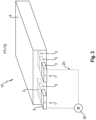
- FIG 3 shows a second preferred embodiment of a pouch cell 10 according to the invention in a perspective view.
- the pouch cell 10 has two connection electrodes 1 in the form of a positive electrode and a negative electrode, via which the pouch cell 10 can be electrically contacted in each case.
- connection electrodes 1 each have an inner part 2 and an outer part 3, the inner part 2 being completely surrounded by the outer shell 9 of the pouch cell 10 (dashed representation).
- the respective outer parts 3 are predominantly outside of this outer shell 9.
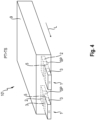
- connection electrodes 1 has a circuit breaker 5 made of a material with a negative coefficient of thermal expansion, so that when the pouch cell temperature PT exceeds a predetermined temperature threshold TS (cf. figure 4 ) current interruption is caused by heat shrinkage of the material.
- TS predetermined temperature threshold
- the current interrupters 5 are part of a circuit 20 in which the pouch cell 10 itself is electrically connected in series.
- the circuit is used to supply electricity to an electric motor 30 of a hand-held power tool that is not shown in any more detail here.
- circuit breakers 5 have a material with a negative coefficient of thermal expansion.
- a change in the pouch cell temperature PT causes a change in the geometric dimensions of the circuit breaker 5 .
- the change in the geometric dimensions of the material is a shortening of the material of the circuit breaker 5 in the longitudinal direction L. Since the inner part 2 and the outer part 3 are each in a fixed position with respect to the outer shell 9 and each in a fixed position relative to one another, shrinking the circuit breaker 5 in the longitudinal direction L - indicated here by a gap SP formed in each case - causes the respective outer part 3 to be electrically separated from the respective inner part 2.
- the pouch cell 10 'in excessive temperature status can therefore neither be loaded nor unloaded.
Landscapes
- Chemical & Material Sciences (AREA)
- Chemical Kinetics & Catalysis (AREA)
- Electrochemistry (AREA)
- General Chemical & Material Sciences (AREA)
- Battery Mounting, Suspending (AREA)
- Connection Of Batteries Or Terminals (AREA)
- Battery Electrode And Active Subsutance (AREA)
Description
- Die vorliegende Erfindung betrifft eine Pouchzelle mit wenigstens einer Anschlusselektrode, über die die Pouchzelle elektrisch kontaktiert werden kann. Des Weiteren betrifft die vorliegende Erfindung einen Akkupack mit einer Pouchzelle mit wenigstens einer Anschlusselektrode, über die die Pouchzelle elektrisch kontaktiert werden kann. Darüber hinaus betrifft die vorliegende Erfindung eine elektrische Handwerkzeugmaschine mit einem Akkupack mit einer Pouchzelle mit wenigstens einer Anschlusselektrode, über die die Pouchzelle elektrisch kontaktiert werden kann.
- Pouchzellen an sich sowie als Bestandteil eines Akkumulators (auch Akku genannt) der eingangs genannten Art sind grundsätzlich aus dem Stand der Technik bekannt. Die Patentanmeldung
US 2010/047674 A1 offenbart eine Pouchzelle mit einem Überhitzungsschutz, welcher ein Material mit negativem Wärmeausdehnungskoeffizienten beinhaltet. Die PatentanmeldungEP 3 258 520 A1 offenbart eine Pouchzelle mit einem Überhitzungsschutz, welcher einen Bimetallstreifen beinhaltet und die Stromentnahme über die Anschlusselektrode unterbricht. Ebenfalls aus dem Stand der Technik bekannt ist das Phänomen einer erhöhten Pouchzellentemperatur während einer Stromzufuhr sowie während einer Stromentnahme. Der Vorgang der Stromzufuhr kann auch als Laden bzw. Ladevorgang bezeichnet werden. Der Vorgang der Stromentnahme kann auch als Entladen im Zuge einer Geräteversorgung bezeichnet werden. - Wenn die Pouchzellentemperatur eine kritische Temperaturschwelle überschreitet, kann es - typischerweise bedingt durch das sogenannte Swelling - zu einem Aufplatzen einer Außenhülle der Pouchzelle kommen. Das Swelling kann auch als Aufquellen bzw. Aufblähen der Pouchzelle bezeichnet werden.
- Es ist Aufgabe der vorliegenden Erfindung eine Pouchzelle, einen Akkupack mit eine Pouchzelle sowie eine elektrische Handwerkzeugmaschine mit einem Akkupack mit einer Pouchzelle zu schaffen, der die Grundlage für eine erhöhte Betriebssicherheit bietet.
- Die Erfindung wird durch eine Pouchzelle entsprechend dem Anspruch 1 gelöst, wobei die Pouchzelle einen Stromunterbrecher aufweist, der ausgebildet ist, durch eine thermisch induzierte Änderung seiner geometrischen Abmessung eine Stromentnahme über die Anschlusselektrode zumindest zeitweise zu unterbrechen.
- Dier Erfindung schließt die Erkenntnis ein, dass akkubetriebene Handwerkzeugmaschinen immer leistungsstärker leistungsfähiger werden und aus Zulassungsgründen die Spannung von Handwerkzeugmaschinen derzeit i. d. R. auf maximal 60V begrenzt sind. Um dennoch hohe Leistungen realisieren zu können, muss der Strom eines Versorgungsakkus erhöht werden. Hier bieten Pouchzellen aufgrund ihres deutlich geringeren internen Widerstands gegenüber zylindrischen Zellen große Vorteile. Pouchzellen ermöglichen prinzipbedingt deutlich höhere Ströme bei geringerer Erwärmung der Zellen. Ein Nachteil der Pouchzellen gegenüber zylindrischer Zellen ist, dass bisher keine Eigensicherheit eingebaut werden kann.
- Mit anderen Worten sind keine zufriedenstellenden passiven Sicherheitssysteme für Pouchzellen bekannt, die im Falle einer Störung (d.h. Aufquellen der Außenhülle der Pouchzelle) ein Aufplatzen der Außenhülle verhindern. Es wurde in diesem Zusammenhang beobachtet, dass selbst bei einer aufgeplatzten Außenhülle immer noch eine gewisse ionische Leitfähigkeit sowie ein Elektronenfluss an den Pouchzellen besteht. Somit kann es mit einer geplatzten Außenhülle zu einem weiteren Laden bzw. Überladen der Pouchzelle kommen, wodurch ein weiteres Erhitzen der Pouchzelle bedingt wird.
- Durch den bereitgestellten Stromunterbecher in der erfindungsgemäßen Pouchzelle wird eine Grundlage geschaffen diese Nachteile des Standes der Technik zu vermeiden oder zumindest zu verringern. Durch eine thermisch induzierte Änderung der geometrischen Abmessung des Stromunterbrechers wird eine Stromentnahme über die Anschlusselektrode zumindest zeitweise unterbrochen, wodurch ein weiteres Laden bzw. Überladen der Pouchzelle verhindert wird. Durch den erfindungsgemäß vorgesehenen Stromunterbrecher, kann ist ein auf Pouchzellen basierender Akkupack besonders betriebssicher.
- Erfindungsgemäß weist der Stromunterbrecher ein Material mit negativen Wärmeausdehnungskoeffizienten auf. Die thermisch induzierte Änderung der geometrischen Abmessung des Stromunterbrechers wird erfindungsgemäß durch eine Änderung einer Pouchzellentemperatur bewirkt, wobei der Stromunterbrecher vorzugsweise thermisch mit der Pouchzelle gekoppelt ist. Der Stromunterbrecher kann lediglich zeitweise mit thermisch mit der Pouchzelle gekoppelt sein.
- Erfindungsgemäß ist der Stromunterbrecher an der Anschlusselektrode angeordnet oder ist Teil der Anschlusselektrode.
- An jeder Anschlusselektrode kann ein Stromunterbrecher vorgesehen sein. Es hat sich als vorteilhaft herausgestellt, wenn der Stromunterbrecher selbst ein Teil der Anschlusselektrode ist.
- Erfindungsgemäß weist die Anschlusselektrode einen Innenanteil und einen Außenanteil auf, wobei der Innenanteil von einer Außenhülle der Pouchzelle umgeben ist und der Außenanteil zumindest abschnittsweise außerhalb dieser Außenhülle befindlich ist. Erfindungsgemäß sind der Innenanteil und der Außenanteil lagefest bezüglich der Außenhülle und/oder lagefest zueinander. Der Innenanteil kann vollständig von der Außenhülle umgeben sein. Der Außenanteil kann zumindest abschnittsweise und/oder zu einem geringen Anteil von der Außenhülle umgeben sein. Vorzugweise ist der Stromunterbrecher vollständig von der Außenhülle umgeben, besonders bevorzugt unabhängig von seinem Zustand. Vorzugsweise sind der Innenanteil und der Außenanteil elektrisch leitfähig, beispielsweise mit einer elektrischen Leifähigkeit größer als 1×10⁵ Siemens pro Meter. Besonders bevorzugt bestehen der Innenanteil und der Außenanteil aus Metall oder weisen ein solches auf. Besonders bevorzugt weist die Pouchzelle eine Aktivschicht auf, die mit dem Stromunterbrecher thermisch gekoppelt ist.
- In einer weiteren bevorzugten Ausgestaltung ist der Stromunterbrecher im Sinne einer mechanischen und/oder elektrischen Reihenschaltung zwischen dem Innenanteil und dem Außenanteil angeordnet. Eine geometrische Verkürzung des Stromunterbrechers, bei einem Material mit negativen Wärme-ausdehnungskoeffizienten und steigender Pouchzellentemperatur, führt dann vorteilhafterweise zu einer mechanischen und/oder elektrischen Trennung zwischen dem Innenanteil und dem Außenanteil. Der Stromunterbrecher kann Teil eines Stromkreises sein, in den die Pouchzelle selbst elektrisch eingebunden ist, vorzugsweise in Reihenschaltung.
- Erfindungsgemäß ist der Stromunterbrecher derart ausgebildet, dass eine Stromunterbrechung durch eine Wärmeschrumpfung des Materials bewirkt wird, insbesondere, wenn die Pouchzellentemperatur eine vorgegebene Temperaturschwelle überschreitet. Die vorgegebene Temperaturschwelle kann beispielsweise 60 Grad Celsius betragen.
- In einer In einer weiteren bevorzugten Ausgestaltung weist das Material mit negativen Wärmeausdehnungskoeffizienten Zirconiumwolframat (ZrW2O8). Zur Erhöhung der elektrischen Leitfähigkeit kann das Material Metallpartikel enthalten, wie beispielsweise Nickel oder Kupfer. Es sind Composite-Materialien bekannt, beispielsweise auf Basis von Zirconiumwolframat und Nickel in Nanoform, die bei vergleichsweise hoher elektrischer Leitfähigkeit einen negativen Wärmeausdehnungskoeffizienten aufweisen. Es hat sich als vorteilhaft herausgestellt, wenn dass das Material eine elektrische Leifähigkeit größer als 1×10⁵ Siemens pro Meter aufweist.
- In einer weiteren bevorzugten Ausgestaltung ist der Stromunterbecher ausgebildet die Anschlusselektrode reversibel zu unterbrechen, d.h. der Stromunterbecher lässt einen Stromfluss durch die Anschlusselektrode erneut zu, wenn die Pouchzellentemperatur die vorgegebene Temperaturschwelle unterschreitet. Alternativ der Stromunterbecher ausgebildet sein bei erstmaligem Überschreiten der Temperaturschwelle die Stromentnahme über die Anschlusselektrode dauerhaft zu unterbrechen, beispielsweise durch ein mechanisches Abreißen des Stromunterbechers vom Innenanteil und/oder vom Außenanteil der Elektrode.
- Die Erfindung wird ebenfalls gelöst durch ein Akkupack mit einer oder mehreren Pochzellen der vorbeschriebenen Art. Die Erfindung wird ebenfalls gelöst durch eine elektrische Handwerkzeugmaschine mit einem Akkupack der vorbeschriebenen Art. Der Akkupack des Systems aus Handwerkzeugmaschine und Akkupack kann mit Bezug auf die vorbeschriebenen Merkmale vorteilhaft weitergebildet sein.
- Weitere Vorteile ergeben sich aus der folgenden Figurenbeschreibung. In den Figuren sind verschiedene Ausführungsbeispiele der vorliegenden Erfindung dargestellt. Die Figuren, die Beschreibung und die Ansprüche enthalten zahlreiche Merkmale in Kombination. Der Fachmann wird die Merkmale zweckmäßigerweise auch einzeln betrachten und zu sinnvollen weiteren Kombinationen zusammenfassen.
- In den Figuren sind gleiche und gleichartige Komponenten mit gleichen Bezugszeichen beziffert. Es zeigen:
- Figur 1a
- ein erstes bevorzugtes Ausführungsbeispiel einer erfindungsgemäßen Pouchzelle mit Stromunterbecher;
- Figur 1b
- eine schematische Darstellung einer Handwerkzeugmaschine mit einem Akkupack und einer Pouchzelle;
- Figur 2
- die Pouchzelle der
Figur 1 bei unterschrittener Temperaturschwelle (A) und überschrittener Temperaturschwelle (B); - Figur 3
- ein zweites bevorzugtes Ausführungsbeispiel einer erfindungsgemäßen Pouchzelle bei unterschrittener Temperaturschwelle; und
- Figur 4
- das Ausführungsbeispiel der
Figur 3 bei überschrittener Temperaturschwelle. - Ein erstes bevorzugtes Ausführungsbeispiel einer erfindungsgemäßen Pouchzelle 10 ist in
Figur 1a dargestellt. Die Pouchzelle 10 verfügt über eine Anschlusselektrode 1 über die die Pouchzelle 10 elektrisch kontaktiert werden kann. Genauer gesagt ist die Anschlusselektrode 1 elektrisch mit einer Aktivschicht 8 der Pouchzelle 10 verbunden. Die Aktivschicht 8 ist vollständig von einer Außenhülle 9 der Pouchzelle 10 umgeben. - Die Anschlusselektrode 1 weist einen Innenanteil 2 und einen Außenanteil 3 auf, wobei der Innenanteil 2 vollständig von der Außenhülle 9 der Pouchzelle 10 umgeben ist und der Außenanteil 3 überwiegend außerhalb dieser Außenhülle 9 befindlich ist.
- Die Pouchzelle 10 weist einen Stromunterbrecher 5 aufweist, der ausgebildet ist, durch eine thermisch induzierte Änderung seiner geometrischen Abmessung eine Stromentnahme über die Anschlusselektrode 1 zumindest zeitweise zu unterbrechen. Im vorliegend dargestellten Ausführungsbeispiel ist der Stromunterbrecher 5 Teil der Anschlusselektrode 1, wobei der Stromunterbrecher 5 im Sinne einer mechanischen und elektrischen Reihenschaltung zwischen dem Innenanteil 2 und dem Außenanteil 3 befindlich ist.
- Der Innenanteil 2 und der Außenanteil 3 sind jeweils lagefest bezüglich der Außenhülle 9 in die Außenhülle eingebunden, beispielsweise durch einschweißen. Weiterhin sind der Innenanteil 2 und der Außenanteil 3 lagefest zueinander angeordnet. Dies gilt insbesondere für die einander nächstliegenden Abschnitte des Innenanteils 2 und des Außenanteil 3. Der Begriff "lagefest" berücksichtigt eine gewisse Eigenflexibilität der Pouchzelle 10.
- Im vorliegend dargestellten Ausführungsbeispiel weist der Stromunterbrecher 5 ein Material mit negativen Wärmeausdehnungskoeffizienten aufweist, beispielhaft Zirconiumwolframat. Im Material sind Nickelkomponenten eingelagert, so dass das Material neben einem negativen Wärmeausdehnungskoeffizienten auch eine elektrische Leifähigkeit größer als 1×10⁵ Siemens pro Meter aufweist.
- In
Figur 1a unterschreitet eine Pouchzellentemperatur PT eine vorgegebene Temperaturschwelle TS, wobei die vorgegebene Temperaturschwelle beispielhaft 60 Grad Celsius beträgt. In diesem Zustand sind der Innenanteil 2 und der Außenanteil 3 über den Stromunterbrecher 5 elektrisch kontaktiert, so dass die Pouchzelle 10 geladen oder entladen werden kann. - In
Figur 1b ist schematisch eine elektrische Handwerkzeugmaschine 1000 dargestellt, die über einen Akkupack 100 versorgt wird, wobei der Akkupack mit wenigstens einer Pouchzelle 10 ausgestattet ist. -
Figur 2 A zeigt einen Ausschnitt der Pouchzelle derFigur 1a , wobei wie inFigur 1a die Pouchzellentemperatur PT die vorgegebene Temperaturschwelle TS unterschreitet. Somit sind der Innenanteil 2 und der Außenanteil 3 über den Stromunterbrecher 5 elektrisch kontaktiert. - Eine Stromunterbrechung soll nun mit Bezug auf
Figur 2 B genauer erläutert werden. Der Stromunterbrecher 5 weist wie bereits erwähnt ein Material mit negativen Wärmeausdehnungskoeffizienten auf. Durch eine Änderung der Pouchzellentemperatur PT wird eine Änderung der geometrischen Abmessung des Stromunterbrecher 5 bewirkt. Dadurch, dass der Innenanteil 2 aus Metall besteht, sind der Innenanteil 2 und der Stromunterbrecher 5 thermisch gekoppelt, so dass der Stromunterbrecher 5 über den Innenanteil 2 eine Temperaturerhöhung der Aktivschicht 8 erfährt. - Im dargestellten Ausführungsbeispiel wird die Stromunterbrechung durch eine Wärmeschrumpfung des Materials bewirkt, wenn die Pouchzellentemperatur PT eine vorgegebene Temperaturschwelle TS überschreitet. Wie aus der
Figur 2B ) ersichtlich ist, handelt es sich bei der Änderung der geometrischen Abmessung des Materials um eine Verkürzung des Materials des Stromunterbrechers 5 in Längsrichtung L. Da der Innenanteil 2 und der Außenanteil 3 lagefest bezüglich der Außenhülle 9 und lagefest zueinander sind, bewirkt ein Schrumpfen des Stromunterbrechers 5 in Längsrichtung L - hier angedeutet durch einen gebildeten Spalt SP - ein elektrisches Trennen des Außenanteil 3 vom Innenanteil 2. Die Pouchzelle 10' in überhöhtem Temperaturzustand kann somit weder weiter geladen noch entladen werden. - Der Stromunterbrecher 5 ist vorliegend ausgebildet ist, du eine Stromentnahme über die Anschlusselektrode 1 reversibel zu unterbrechen. Wenn die Pouchzellentemperatur PT eine vorgegebene Temperaturschwelle TS überschreitet ist ein Stromfluss erneut möglich, vgl.
Figur 2B . -
Figur 3 zeigt ein zweites bevorzugtes Ausführungsbeispiel einer erfindungsgemäßen Pouchzelle 10 in perspektivischer Darstellung. Die Pouchzelle 10 weist zwei Anschlusselektroden 1 in Form eine Pluselektrode und einer Minuselektrode auf, über die die Pouchzelle 10 jeweils elektrisch kontaktiert werden kann. - Die Anschlusselektroden 1 weisen jeweils einen Innenanteil 2 und jeweils einen Außenanteil 3 auf, wobei die Innenanteil 2 vollständig von der Außenhülle 9 der Pouchzelle 10 umgeben sind (gestrichelte Darstellung). Die jeweiligen Außenanteile 3 liegen überwiegend außerhalb dieser Außenhülle 9.
- Jede der Anschlusselektroden 1 weist einen Stromunterbrecher 5 mit einem Material mit negativen Wärmeausdehnungskoeffizienten aufweist, so dass, wenn die Pouchzellentemperatur PT eine vorgegebene Temperaturschwelle TS überschreitet (vgl.
Figur 4 ) eine Stromunterbrechung durch eine Wärmeschrumpfung des Materials bewirkt wird. - Wie der
Figur 3 entnommen werden kann, sind die Stromunterbrecher 5 Teil eines Stromkreises 20 ist, in den die Pouchzelle 10 selbst elektrisch in Reihenschaltung eingebunden. Der Stromkreis dient zu elektrischen Versorgung eines Elektromotors 30 einer hier nicht weiter dargestellten Handwerkzeugmaschine. - Eine Stromunterbrechung soll nun mit Bezug auf
Figur 4 genauer erläutert werden. Die Stromunterbrecher 5 weisen wie bereits erwähnt ein Material mit negativen Wärmeausdehnungskoeffizienten auf. Durch eine Änderung der Pouchzellentemperatur PT wird eine Änderung der geometrischen Abmessung des Stromunterbrecher 5 bewirkt. - Wie aus der
Figur 4 ersichtlich ist, handelt es sich bei der Änderung der geometrischen Abmessung des Materials um eine Verkürzung des Materials der Stromunterbrecher 5 in Längsrichtung L. Da der Innenanteil 2 und der Außenanteil 3 jeweils lagefest bezüglich der Außenhülle 9 und jeweils lagefest zueinander sind, bewirkt ein Schrumpfen der Stromunterbrecher 5 in Längsrichtung L - hier angedeutet durch einen jeweils gebildeten Spalt SP - ein elektrisches Trennen des jeweiligen Außenanteils 3 vom jeweiligen Innenanteil 2. Die Pouchzelle 10' in überhöhtem Temperaturzustand kann somit weder weiter geladen noch entladen werden. -
- 1
- Anschlusselektrode
- 2
- Innanteil
- 3
- Außenanteil
- 5
- Stromunterbrecher
- 8
- Aktivschicht
- 9
- Außenhülle
- 10
- Pouchzelle (Normaltemperatur)
- 10'
- Pouchzelle (Temperaturschwelle überschritten)
- 20
- Stromkreis
- 30
- Elektromotor
- 100
- Akkupack
- 1000
- Handwerkzeugmaschine
- L
- Längsrichtung
- PT
- Pouchzellentemperatur
- SP
- Spalt
- TS
- Temperaturschwelle
Claims (7)
- Pouchzelle (10) mit wenigstens einer Anschlusselektrode (1) über die die Pouchzelle (10) elektrisch kontaktiert werden kann,
dadurch gekennzeichnet, dass die Pouchzelle (10) einen Stromunterbrecher (5) aufweist, der ausgebildet ist, durch eine thermisch induzierte Änderung seiner geometrischen Abmessung eine Stromentnahme über die Anschlusselektrode (1) zumindest zeitweise zu unterbrechen, wobei der Stromunterbrecher (5) ein Material mit negativen Wärmeausdehnungskoeffizienten aufweist und die thermisch induzierte Änderung seiner geometrischen Abmessung durch eine Änderung einer Pouchzellentemperatur (PT) bewirkt wird, wobei der Stromunterbrecher (5) an der Anschlusselektrode (1) angeordnet ist oder Teil der Anschlusselektrode ist, wobei der Stromunterbrecher (5) derart ausgebildet ist, dass eine Stromunterbrechung durch eine Wärmeschrumpfung des Materials bewirkt wird, insbesondere, wenn die Pouchzellentemperatur (PT) eine vorgegebene Temperaturschwelle (TS) überschreitet, wobei Anschlusselektrode (1) einen Innenanteil (2) und einen Außenanteil (3) aufweist, wobei der Innenanteil (2) vorzugsweise vollständig von einer Außenhülle (9) der Pouchzelle (10) umgeben ist und der Außenanteil (3) zumindest abschnittsweise außerhalb dieser Außenhülle (9) befindlich ist, und wobei der Innenanteil (2) und der Außenanteil (3) lagefest bezüglich der Außenhülle (9) und/oder lagefest zueinander sind. - Pouchzelle (10) nach Anspruch 1,
dadurch gekennzeichnet, dass der Stromunterbrecher (5) Teil eines Stromkreises (20) ist, in den die Pouchzelle (10) selbst elektrisch eingebunden ist, vorzugsweise in Reihenschaltung. - Pouchzelle (10) nach einem der vorangehenden Ansprüche,
dadurch gekennzeichnet, dass das Material Zirconiumwolframat aufweist. - Pouchzelle (10) nach einem der vorangehenden Ansprüche,
dadurch gekennzeichnet, dass das Material eine elektrische Leitfähigkeit größer als 1×10^5 Siemens pro Meter aufweist. - Pouchzelle (10) nach einem der vorangehenden Ansprüche,
dadurch gekennzeichnet, dass Stromunterbrecher (5) ausgebildet ist, eine Stromentnahme über die Anschlusselektrode (1) reversibel zu unterbrechen. - Akkupack (100) mit einer Pouchzelle (10) nach einem der vorangehenden Ansprüche.
- Elektrische Handwerkzeugmaschine (1000) mit einem Akkupack (100) nach Anspruch 6.
Applications Claiming Priority (2)
| Application Number | Priority Date | Filing Date | Title |
|---|---|---|---|
| EP18200867.2A EP3641003A1 (de) | 2018-10-17 | 2018-10-17 | Pouchzelle |
| PCT/EP2019/077467 WO2020078819A1 (de) | 2018-10-17 | 2019-10-10 | Pouchzelle |
Publications (2)
| Publication Number | Publication Date |
|---|---|
| EP3867960A1 EP3867960A1 (de) | 2021-08-25 |
| EP3867960B1 true EP3867960B1 (de) | 2023-07-26 |
Family
ID=63878482
Family Applications (2)
| Application Number | Title | Priority Date | Filing Date |
|---|---|---|---|
| EP18200867.2A Withdrawn EP3641003A1 (de) | 2018-10-17 | 2018-10-17 | Pouchzelle |
| EP19783331.2A Active EP3867960B1 (de) | 2018-10-17 | 2019-10-10 | Pouchzelle |
Family Applications Before (1)
| Application Number | Title | Priority Date | Filing Date |
|---|---|---|---|
| EP18200867.2A Withdrawn EP3641003A1 (de) | 2018-10-17 | 2018-10-17 | Pouchzelle |
Country Status (4)
| Country | Link |
|---|---|
| US (1) | US20220077547A1 (de) |
| EP (2) | EP3641003A1 (de) |
| CN (1) | CN112673514B (de) |
| WO (1) | WO2020078819A1 (de) |
Family Cites Families (7)
| Publication number | Priority date | Publication date | Assignee | Title |
|---|---|---|---|---|
| US5008161A (en) * | 1989-02-01 | 1991-04-16 | Johnston Lowell E | Battery assembly |
| JP2004517440A (ja) * | 2000-10-20 | 2004-06-10 | レイオバック コーポレイション | 電気化学セルの充電を調整する方法及び装置 |
| KR100899282B1 (ko) * | 2006-07-18 | 2009-05-27 | 주식회사 엘지화학 | 열수축 튜브를 이용한 안전 스위치 및 이를 포함하고 있는이차전지 |
| KR20130042954A (ko) * | 2011-10-19 | 2013-04-29 | 주식회사 엘지화학 | 안전성이 향상된 이차전지 및 그 제조 방법 |
| KR101912004B1 (ko) * | 2015-04-30 | 2018-10-25 | 주식회사 엘지화학 | 바이메탈 탭을 이용하여 안전성을 개선시킨 리튬 이차전지 |
| JP7037873B2 (ja) * | 2016-02-03 | 2022-03-17 | Jx金属株式会社 | リチウムイオン電池用正極活物質、リチウムイオン電池用正極及びリチウムイオン電池 |
| EP3619761B1 (de) * | 2017-05-01 | 2021-03-03 | American Lithium Energy Corporation | Stromunterbrecher mit negativer wärmeausdehnung |
-
2018
- 2018-10-17 EP EP18200867.2A patent/EP3641003A1/de not_active Withdrawn
-
2019
- 2019-10-10 WO PCT/EP2019/077467 patent/WO2020078819A1/de not_active Ceased
- 2019-10-10 EP EP19783331.2A patent/EP3867960B1/de active Active
- 2019-10-10 CN CN201980058665.9A patent/CN112673514B/zh active Active
- 2019-10-10 US US17/276,031 patent/US20220077547A1/en active Pending
Also Published As
| Publication number | Publication date |
|---|---|
| US20220077547A1 (en) | 2022-03-10 |
| CN112673514B (zh) | 2023-06-23 |
| EP3867960A1 (de) | 2021-08-25 |
| EP3641003A1 (de) | 2020-04-22 |
| CN112673514A (zh) | 2021-04-16 |
| WO2020078819A1 (de) | 2020-04-23 |
Similar Documents
| Publication | Publication Date | Title |
|---|---|---|
| EP3259792B1 (de) | Batteriezelle für eine batterie eines kraftfahrzeugs, batterie und kraftfahrzeug | |
| EP2779271B1 (de) | Sicherheitselement für Batteriezelle | |
| EP3948913B1 (de) | Elektrische sicherung, verfahren zum betreiben einer elektrischen sicherung und elektrisches traktionsnetz | |
| EP2162933B1 (de) | Anordnung mit wenigstens einer batterie | |
| DE102009023801A1 (de) | Sicherungsvorrichtung mit pyrotechnischer Sicherung | |
| DE10328862B4 (de) | Lithiumbatterie mit Überladeschutz | |
| EP3818577A1 (de) | Sicherheitseinrichtung für batteriepacks mit pouchzellen durch mechanische stromunterbrecher | |
| DE10081191B4 (de) | Überhitzungsschutzeinrichtung | |
| EP3664179A1 (de) | Akkupackvorrichtung und verfahren zum betreiben der akkupackvorrichtung | |
| DE102012017190A1 (de) | Elektrochemische Energiespeicherzelle und elektrochemische Energiespeichervorrichtung mit wenigstens einer solchen elektrochemischen Energiespeicherzelle | |
| EP3142165A1 (de) | Batteriesystem mit einem überladungs- und/oder tiefentladungsschutz | |
| DE102012215058A1 (de) | Batteriezelle, Batterie und Kraftfahrzeug | |
| EP3142172A1 (de) | Batteriesystem mit einem überladungs- und/oder tiefentladungsschutz | |
| DE102013205062A1 (de) | Batteriezelle mit einem auf leitfähigem Material basierenden Gehäuse und Verfahren zum sicheren Entladen einer Batteriezelle | |
| DE102007020905B4 (de) | Galvanisches Element mit Sicherungsmittel | |
| DE102013204538A1 (de) | Batteriezellmodul und Verfahren zum Betreiben eines Batteriezellmoduls | |
| DE102012001150B4 (de) | Vorrichtung mit Batterie, Elektromotor und einem die Batterie und den Elektromotor elektrisch verbindenden Stromkabel | |
| DE102015200316B4 (de) | Batterie und Batteriesystem aufweisend eine Batterie | |
| WO2020078819A1 (de) | Pouchzelle | |
| EP3279982B1 (de) | Stromabnehmer mit verbessertem sicherheitsverhalten und batteriezelle damit | |
| DE102024111506B3 (de) | Anschlussvorrichtung zum Anschluss einer Batteriezelle einer Hochvoltbatterie an eine Stromschiene und Batteriezellenanordnung | |
| DE102016013048A1 (de) | Niedergleichspannungssystem zur Speicherung von elektrischer Energie und Verfahren | |
| EP2417665A1 (de) | Batteriesystem mit externem stromkreis | |
| DE102024129903A1 (de) | Trennschalter für elektrische Schaltung | |
| DE102020112852A1 (de) | Elektrochemische Zelle mit einer Schutzvorrichtung zum Unterbrechen eines elektrischen Leistungspfades und Verfahren zum Unterbrechen eines elektrischen Leistungspfades durch eine elektrochemische Zelle |
Legal Events
| Date | Code | Title | Description |
|---|---|---|---|
| STAA | Information on the status of an ep patent application or granted ep patent |
Free format text: STATUS: UNKNOWN |
|
| STAA | Information on the status of an ep patent application or granted ep patent |
Free format text: STATUS: THE INTERNATIONAL PUBLICATION HAS BEEN MADE |
|
| PUAI | Public reference made under article 153(3) epc to a published international application that has entered the european phase |
Free format text: ORIGINAL CODE: 0009012 |
|
| STAA | Information on the status of an ep patent application or granted ep patent |
Free format text: STATUS: REQUEST FOR EXAMINATION WAS MADE |
|
| 17P | Request for examination filed |
Effective date: 20210517 |
|
| AK | Designated contracting states |
Kind code of ref document: A1 Designated state(s): AL AT BE BG CH CY CZ DE DK EE ES FI FR GB GR HR HU IE IS IT LI LT LU LV MC MK MT NL NO PL PT RO RS SE SI SK SM TR |
|
| DAV | Request for validation of the european patent (deleted) | ||
| DAX | Request for extension of the european patent (deleted) | ||
| REG | Reference to a national code |
Ref country code: DE Ref legal event code: R079 Free format text: PREVIOUS MAIN CLASS: H01M0002020000 Ipc: H01M0050528000 Ref country code: DE Ref legal event code: R079 Ref document number: 502019008695 Country of ref document: DE Free format text: PREVIOUS MAIN CLASS: H01M0002020000 Ipc: H01M0050528000 |
|
| GRAP | Despatch of communication of intention to grant a patent |
Free format text: ORIGINAL CODE: EPIDOSNIGR1 |
|
| STAA | Information on the status of an ep patent application or granted ep patent |
Free format text: STATUS: GRANT OF PATENT IS INTENDED |
|
| RIC1 | Information provided on ipc code assigned before grant |
Ipc: H01M 50/581 20210101ALI20230420BHEP Ipc: H01M 50/528 20210101AFI20230420BHEP |
|
| INTG | Intention to grant announced |
Effective date: 20230511 |
|
| GRAS | Grant fee paid |
Free format text: ORIGINAL CODE: EPIDOSNIGR3 |
|
| GRAA | (expected) grant |
Free format text: ORIGINAL CODE: 0009210 |
|
| STAA | Information on the status of an ep patent application or granted ep patent |
Free format text: STATUS: THE PATENT HAS BEEN GRANTED |
|
| AK | Designated contracting states |
Kind code of ref document: B1 Designated state(s): AL AT BE BG CH CY CZ DE DK EE ES FI FR GB GR HR HU IE IS IT LI LT LU LV MC MK MT NL NO PL PT RO RS SE SI SK SM TR |
|
| REG | Reference to a national code |
Ref country code: CH Ref legal event code: EP |
|
| REG | Reference to a national code |
Ref country code: DE Ref legal event code: R096 Ref document number: 502019008695 Country of ref document: DE |
|
| REG | Reference to a national code |
Ref country code: IE Ref legal event code: FG4D Free format text: LANGUAGE OF EP DOCUMENT: GERMAN |
|
| REG | Reference to a national code |
Ref country code: LT Ref legal event code: MG9D |
|
| REG | Reference to a national code |
Ref country code: NL Ref legal event code: MP Effective date: 20230726 |
|
| PG25 | Lapsed in a contracting state [announced via postgrant information from national office to epo] |
Ref country code: NL Free format text: LAPSE BECAUSE OF FAILURE TO SUBMIT A TRANSLATION OF THE DESCRIPTION OR TO PAY THE FEE WITHIN THE PRESCRIBED TIME-LIMIT Effective date: 20230726 |
|
| PG25 | Lapsed in a contracting state [announced via postgrant information from national office to epo] |
Ref country code: GR Free format text: LAPSE BECAUSE OF FAILURE TO SUBMIT A TRANSLATION OF THE DESCRIPTION OR TO PAY THE FEE WITHIN THE PRESCRIBED TIME-LIMIT Effective date: 20231027 |
|
| PG25 | Lapsed in a contracting state [announced via postgrant information from national office to epo] |
Ref country code: IS Free format text: LAPSE BECAUSE OF FAILURE TO SUBMIT A TRANSLATION OF THE DESCRIPTION OR TO PAY THE FEE WITHIN THE PRESCRIBED TIME-LIMIT Effective date: 20231126 |
|
| PG25 | Lapsed in a contracting state [announced via postgrant information from national office to epo] |
Ref country code: SE Free format text: LAPSE BECAUSE OF FAILURE TO SUBMIT A TRANSLATION OF THE DESCRIPTION OR TO PAY THE FEE WITHIN THE PRESCRIBED TIME-LIMIT Effective date: 20230726 Ref country code: RS Free format text: LAPSE BECAUSE OF FAILURE TO SUBMIT A TRANSLATION OF THE DESCRIPTION OR TO PAY THE FEE WITHIN THE PRESCRIBED TIME-LIMIT Effective date: 20230726 Ref country code: PT Free format text: LAPSE BECAUSE OF FAILURE TO SUBMIT A TRANSLATION OF THE DESCRIPTION OR TO PAY THE FEE WITHIN THE PRESCRIBED TIME-LIMIT Effective date: 20231127 Ref country code: NO Free format text: LAPSE BECAUSE OF FAILURE TO SUBMIT A TRANSLATION OF THE DESCRIPTION OR TO PAY THE FEE WITHIN THE PRESCRIBED TIME-LIMIT Effective date: 20231026 Ref country code: LV Free format text: LAPSE BECAUSE OF FAILURE TO SUBMIT A TRANSLATION OF THE DESCRIPTION OR TO PAY THE FEE WITHIN THE PRESCRIBED TIME-LIMIT Effective date: 20230726 Ref country code: LT Free format text: LAPSE BECAUSE OF FAILURE TO SUBMIT A TRANSLATION OF THE DESCRIPTION OR TO PAY THE FEE WITHIN THE PRESCRIBED TIME-LIMIT Effective date: 20230726 Ref country code: IS Free format text: LAPSE BECAUSE OF FAILURE TO SUBMIT A TRANSLATION OF THE DESCRIPTION OR TO PAY THE FEE WITHIN THE PRESCRIBED TIME-LIMIT Effective date: 20231126 Ref country code: HR Free format text: LAPSE BECAUSE OF FAILURE TO SUBMIT A TRANSLATION OF THE DESCRIPTION OR TO PAY THE FEE WITHIN THE PRESCRIBED TIME-LIMIT Effective date: 20230726 Ref country code: GR Free format text: LAPSE BECAUSE OF FAILURE TO SUBMIT A TRANSLATION OF THE DESCRIPTION OR TO PAY THE FEE WITHIN THE PRESCRIBED TIME-LIMIT Effective date: 20231027 Ref country code: FI Free format text: LAPSE BECAUSE OF FAILURE TO SUBMIT A TRANSLATION OF THE DESCRIPTION OR TO PAY THE FEE WITHIN THE PRESCRIBED TIME-LIMIT Effective date: 20230726 |
|
| PG25 | Lapsed in a contracting state [announced via postgrant information from national office to epo] |
Ref country code: PL Free format text: LAPSE BECAUSE OF FAILURE TO SUBMIT A TRANSLATION OF THE DESCRIPTION OR TO PAY THE FEE WITHIN THE PRESCRIBED TIME-LIMIT Effective date: 20230726 |
|
| PG25 | Lapsed in a contracting state [announced via postgrant information from national office to epo] |
Ref country code: ES Free format text: LAPSE BECAUSE OF FAILURE TO SUBMIT A TRANSLATION OF THE DESCRIPTION OR TO PAY THE FEE WITHIN THE PRESCRIBED TIME-LIMIT Effective date: 20230726 |
|
| REG | Reference to a national code |
Ref country code: DE Ref legal event code: R097 Ref document number: 502019008695 Country of ref document: DE |
|
| PG25 | Lapsed in a contracting state [announced via postgrant information from national office to epo] |
Ref country code: SM Free format text: LAPSE BECAUSE OF FAILURE TO SUBMIT A TRANSLATION OF THE DESCRIPTION OR TO PAY THE FEE WITHIN THE PRESCRIBED TIME-LIMIT Effective date: 20230726 Ref country code: RO Free format text: LAPSE BECAUSE OF FAILURE TO SUBMIT A TRANSLATION OF THE DESCRIPTION OR TO PAY THE FEE WITHIN THE PRESCRIBED TIME-LIMIT Effective date: 20230726 Ref country code: ES Free format text: LAPSE BECAUSE OF FAILURE TO SUBMIT A TRANSLATION OF THE DESCRIPTION OR TO PAY THE FEE WITHIN THE PRESCRIBED TIME-LIMIT Effective date: 20230726 Ref country code: EE Free format text: LAPSE BECAUSE OF FAILURE TO SUBMIT A TRANSLATION OF THE DESCRIPTION OR TO PAY THE FEE WITHIN THE PRESCRIBED TIME-LIMIT Effective date: 20230726 Ref country code: DK Free format text: LAPSE BECAUSE OF FAILURE TO SUBMIT A TRANSLATION OF THE DESCRIPTION OR TO PAY THE FEE WITHIN THE PRESCRIBED TIME-LIMIT Effective date: 20230726 Ref country code: CZ Free format text: LAPSE BECAUSE OF FAILURE TO SUBMIT A TRANSLATION OF THE DESCRIPTION OR TO PAY THE FEE WITHIN THE PRESCRIBED TIME-LIMIT Effective date: 20230726 Ref country code: SK Free format text: LAPSE BECAUSE OF FAILURE TO SUBMIT A TRANSLATION OF THE DESCRIPTION OR TO PAY THE FEE WITHIN THE PRESCRIBED TIME-LIMIT Effective date: 20230726 |
|
| PG25 | Lapsed in a contracting state [announced via postgrant information from national office to epo] |
Ref country code: IT Free format text: LAPSE BECAUSE OF FAILURE TO SUBMIT A TRANSLATION OF THE DESCRIPTION OR TO PAY THE FEE WITHIN THE PRESCRIBED TIME-LIMIT Effective date: 20230726 Ref country code: MC Free format text: LAPSE BECAUSE OF FAILURE TO SUBMIT A TRANSLATION OF THE DESCRIPTION OR TO PAY THE FEE WITHIN THE PRESCRIBED TIME-LIMIT Effective date: 20230726 |
|
| PLBE | No opposition filed within time limit |
Free format text: ORIGINAL CODE: 0009261 |
|
| REG | Reference to a national code |
Ref country code: CH Ref legal event code: PL |
|
| STAA | Information on the status of an ep patent application or granted ep patent |
Free format text: STATUS: NO OPPOSITION FILED WITHIN TIME LIMIT |
|
| REG | Reference to a national code |
Ref country code: BE Ref legal event code: MM Effective date: 20231031 |
|
| PG25 | Lapsed in a contracting state [announced via postgrant information from national office to epo] |
Ref country code: LU Free format text: LAPSE BECAUSE OF NON-PAYMENT OF DUE FEES Effective date: 20231010 |
|
| PG25 | Lapsed in a contracting state [announced via postgrant information from national office to epo] |
Ref country code: LU Free format text: LAPSE BECAUSE OF NON-PAYMENT OF DUE FEES Effective date: 20231010 |
|
| 26N | No opposition filed |
Effective date: 20240429 |
|
| PG25 | Lapsed in a contracting state [announced via postgrant information from national office to epo] |
Ref country code: CH Free format text: LAPSE BECAUSE OF NON-PAYMENT OF DUE FEES Effective date: 20231031 |
|
| PG25 | Lapsed in a contracting state [announced via postgrant information from national office to epo] |
Ref country code: CH Free format text: LAPSE BECAUSE OF NON-PAYMENT OF DUE FEES Effective date: 20231031 Ref country code: SI Free format text: LAPSE BECAUSE OF FAILURE TO SUBMIT A TRANSLATION OF THE DESCRIPTION OR TO PAY THE FEE WITHIN THE PRESCRIBED TIME-LIMIT Effective date: 20230726 |
|
| P01 | Opt-out of the competence of the unified patent court (upc) registered |
Free format text: CASE NUMBER: APP_41785/2024 Effective date: 20240716 |
|
| PG25 | Lapsed in a contracting state [announced via postgrant information from national office to epo] |
Ref country code: BE Free format text: LAPSE BECAUSE OF NON-PAYMENT OF DUE FEES Effective date: 20231031 |
|
| PG25 | Lapsed in a contracting state [announced via postgrant information from national office to epo] |
Ref country code: IE Free format text: LAPSE BECAUSE OF NON-PAYMENT OF DUE FEES Effective date: 20231010 |
|
| PG25 | Lapsed in a contracting state [announced via postgrant information from national office to epo] |
Ref country code: IE Free format text: LAPSE BECAUSE OF NON-PAYMENT OF DUE FEES Effective date: 20231010 |
|
| PG25 | Lapsed in a contracting state [announced via postgrant information from national office to epo] |
Ref country code: BG Free format text: LAPSE BECAUSE OF FAILURE TO SUBMIT A TRANSLATION OF THE DESCRIPTION OR TO PAY THE FEE WITHIN THE PRESCRIBED TIME-LIMIT Effective date: 20230726 |
|
| PG25 | Lapsed in a contracting state [announced via postgrant information from national office to epo] |
Ref country code: BG Free format text: LAPSE BECAUSE OF FAILURE TO SUBMIT A TRANSLATION OF THE DESCRIPTION OR TO PAY THE FEE WITHIN THE PRESCRIBED TIME-LIMIT Effective date: 20230726 |
|
| PG25 | Lapsed in a contracting state [announced via postgrant information from national office to epo] |
Ref country code: CY Free format text: LAPSE BECAUSE OF FAILURE TO SUBMIT A TRANSLATION OF THE DESCRIPTION OR TO PAY THE FEE WITHIN THE PRESCRIBED TIME-LIMIT; INVALID AB INITIO Effective date: 20191010 |
|
| PG25 | Lapsed in a contracting state [announced via postgrant information from national office to epo] |
Ref country code: HU Free format text: LAPSE BECAUSE OF FAILURE TO SUBMIT A TRANSLATION OF THE DESCRIPTION OR TO PAY THE FEE WITHIN THE PRESCRIBED TIME-LIMIT; INVALID AB INITIO Effective date: 20191010 |
|
| PG25 | Lapsed in a contracting state [announced via postgrant information from national office to epo] |
Ref country code: TR Free format text: LAPSE BECAUSE OF FAILURE TO SUBMIT A TRANSLATION OF THE DESCRIPTION OR TO PAY THE FEE WITHIN THE PRESCRIBED TIME-LIMIT Effective date: 20230726 |
|
| REG | Reference to a national code |
Ref country code: AT Ref legal event code: MM01 Ref document number: 1593006 Country of ref document: AT Kind code of ref document: T Effective date: 20241010 |
|
| PGFP | Annual fee paid to national office [announced via postgrant information from national office to epo] |
Ref country code: DE Payment date: 20251021 Year of fee payment: 7 |
|
| PGFP | Annual fee paid to national office [announced via postgrant information from national office to epo] |
Ref country code: GB Payment date: 20251022 Year of fee payment: 7 |
|
| PG25 | Lapsed in a contracting state [announced via postgrant information from national office to epo] |
Ref country code: AT Free format text: LAPSE BECAUSE OF NON-PAYMENT OF DUE FEES Effective date: 20241010 |
|
| PGFP | Annual fee paid to national office [announced via postgrant information from national office to epo] |
Ref country code: FR Payment date: 20251030 Year of fee payment: 7 |
|
| PGFP | Annual fee paid to national office [announced via postgrant information from national office to epo] |
Ref country code: AT Payment date: 20260410 Year of fee payment: 5 |