EP3867739B1 - Vorrichtungen, system und verfahren zur deduplizierung - Google Patents
Vorrichtungen, system und verfahren zur deduplizierung Download PDFInfo
- Publication number
- EP3867739B1 EP3867739B1 EP19745088.5A EP19745088A EP3867739B1 EP 3867739 B1 EP3867739 B1 EP 3867739B1 EP 19745088 A EP19745088 A EP 19745088A EP 3867739 B1 EP3867739 B1 EP 3867739B1
- Authority
- EP
- European Patent Office
- Prior art keywords
- server
- data chunk
- global server
- storage
- data
- Prior art date
- Legal status (The legal status is an assumption and is not a legal conclusion. Google has not performed a legal analysis and makes no representation as to the accuracy of the status listed.)
- Active
Links
Images









Classifications
-
- G—PHYSICS
- G06—COMPUTING OR CALCULATING; COUNTING
- G06F—ELECTRIC DIGITAL DATA PROCESSING
- G06F3/00—Input arrangements for transferring data to be processed into a form capable of being handled by the computer; Output arrangements for transferring data from processing unit to output unit, e.g. interface arrangements
- G06F3/06—Digital input from, or digital output to, record carriers, e.g. RAID, emulated record carriers or networked record carriers
- G06F3/0601—Interfaces specially adapted for storage systems
- G06F3/0602—Interfaces specially adapted for storage systems specifically adapted to achieve a particular effect
- G06F3/061—Improving I/O performance
- G06F3/0611—Improving I/O performance in relation to response time
-
- G—PHYSICS
- G06—COMPUTING OR CALCULATING; COUNTING
- G06F—ELECTRIC DIGITAL DATA PROCESSING
- G06F16/00—Information retrieval; Database structures therefor; File system structures therefor
- G06F16/10—File systems; File servers
- G06F16/14—Details of searching files based on file metadata
- G06F16/148—File search processing
- G06F16/152—File search processing using file content signatures, e.g. hash values
-
- G—PHYSICS
- G06—COMPUTING OR CALCULATING; COUNTING
- G06F—ELECTRIC DIGITAL DATA PROCESSING
- G06F16/00—Information retrieval; Database structures therefor; File system structures therefor
- G06F16/10—File systems; File servers
- G06F16/17—Details of further file system functions
- G06F16/174—Redundancy elimination performed by the file system
- G06F16/1748—De-duplication implemented within the file system, e.g. based on file segments
- G06F16/1752—De-duplication implemented within the file system, e.g. based on file segments based on file chunks
-
- G—PHYSICS
- G06—COMPUTING OR CALCULATING; COUNTING
- G06F—ELECTRIC DIGITAL DATA PROCESSING
- G06F16/00—Information retrieval; Database structures therefor; File system structures therefor
- G06F16/10—File systems; File servers
- G06F16/18—File system types
- G06F16/185—Hierarchical storage management [HSM] systems, e.g. file migration or policies thereof
-
- G—PHYSICS
- G06—COMPUTING OR CALCULATING; COUNTING
- G06F—ELECTRIC DIGITAL DATA PROCESSING
- G06F3/00—Input arrangements for transferring data to be processed into a form capable of being handled by the computer; Output arrangements for transferring data from processing unit to output unit, e.g. interface arrangements
- G06F3/06—Digital input from, or digital output to, record carriers, e.g. RAID, emulated record carriers or networked record carriers
- G06F3/0601—Interfaces specially adapted for storage systems
- G06F3/0628—Interfaces specially adapted for storage systems making use of a particular technique
- G06F3/0638—Organizing or formatting or addressing of data
- G06F3/064—Management of blocks
- G06F3/0641—De-duplication techniques
-
- G—PHYSICS
- G06—COMPUTING OR CALCULATING; COUNTING
- G06F—ELECTRIC DIGITAL DATA PROCESSING
- G06F3/00—Input arrangements for transferring data to be processed into a form capable of being handled by the computer; Output arrangements for transferring data from processing unit to output unit, e.g. interface arrangements
- G06F3/06—Digital input from, or digital output to, record carriers, e.g. RAID, emulated record carriers or networked record carriers
- G06F3/0601—Interfaces specially adapted for storage systems
- G06F3/0668—Interfaces specially adapted for storage systems adopting a particular infrastructure
- G06F3/067—Distributed or networked storage systems, e.g. storage area networks [SAN], network attached storage [NAS]
-
- H—ELECTRICITY
- H04—ELECTRIC COMMUNICATION TECHNIQUE
- H04L—TRANSMISSION OF DIGITAL INFORMATION, e.g. TELEGRAPHIC COMMUNICATION
- H04L67/00—Network arrangements or protocols for supporting network services or applications
- H04L67/01—Protocols
- H04L67/10—Protocols in which an application is distributed across nodes in the network
- H04L67/1001—Protocols in which an application is distributed across nodes in the network for accessing one among a plurality of replicated servers
Definitions
- the present disclosure relates to a data storage deduplication method, in particular, to a deduplication method of multiple deduplication servers.
- the disclosure thus introduces an advanced deduplication method allowing easy deployment of storage servers, in which a global server stores highly-duplicate data among multiple storage servers.
- the global server can be a centralized server, or a distributed server.
- Data deduplication (also referred to as data optimization) refers to reducing the physical amount of bytes of data that need to be stored on disk or transmitted across a network, without compromising the fidelity or integrity of the original data, i.e., the reduction in bytes is lossless and the original data can be completely recovered.
- data deduplication thus leads to savings in hardware costs (for storage and network transmission) and data-managements costs (e.g., backup). As the amount of digitally stored data grows, these cost savings become significant.
- Data deduplication typically uses a combination of techniques to eliminate redundancy within and between persistently stored files.
- One technique operates to identify identical regions of data in one or multiple files, and physically storing only one unique region (referred to as chunk), while maintaining a pointer to that chunk in association with the file.
- Another technique is to mix data deduplication with compression, e.g., by storing compressed chunks.
- deduplication which is storing only unique data up to a certain granularity, by using hashes to identify duplicates.
- deduplication is performed in the granularity of a specific single storage server.
- a distributed data deduplication is often used.
- one problem of the distributed deduplication is a possible high latency between deduplication servers, which results in a possible read performance degradation.
- Another problem is a strong dependency between the deduplication nodes. In one example, if one deduplication node is taken out from the cluster, data stored in this node needs to be distributed across other nodes in the cluster. In another example, when adding a new deduplication node, data currently in the cluster may need to be re-distributed between nodes of the cluster, in order to balance the load.
- embodiments of the present invention aim to provide an advanced deduplication method, in particular, with an additional deduplication tier.
- An objective is to avoid a high latency of the conventional distributed deduplication.
- One aim is to provide a simple and flexible deployment of multiple independent storage servers.
- a first aspect of the invention provides a global server for deduplicating multiple storage servers, wherein the global server is configured to: receive, from a storage server, a request to store a data chunk on the global server; determine whether the data chunk is highly-duplicated among the storage servers; if the data chunk is highly-duplicated, accept the request; and if the data chunk is not highly-duplicated, reject the request.
- This invention presents a concept of deduplication of deduplication (nested deduplication), including an additional dedupication tier (performing deduplication of multiple deduplication servers).
- a global deduplication server (GDS) is proposed, which will store highly-duplicated data.
- GDS global deduplication server
- the term “global server” is an abbreviation of “global deduplication server”, and refers to a server for handling the highly-duplicated data in a storage system comprising multiple deduplication servers.
- the term “global” refers to the network topology and can be synonymously used for "master”, “overall” or "central”.
- an embodiment/example may refer to other embodiments/examples.
- any description including but not limited to terminology, element, process, explanation and/or technical advantage mentioned in one embodiment/example is applicative to the other embodiments/examples.
- FIG. 1 shows a global server (also referred to as global deduplication server) 100 according to an embodiment of the invention.
- the global server 100 may comprise processing circuitry (not shown) configured to perform, conduct or initiate the various operations of the global server 100 described herein.
- the processing circuitry may comprise hardware and software.
- the hardware may comprise analog circuitry or digital circuitry, or both analog and digital circuitry.
- the digital circuitry may comprise components such as application-specific integrated circuits (ASICs), field-programmable arrays (FPGAs), digital signal processors (DSPs), or multi-purpose processors.
- the processing circuitry comprises one or more processors and a non-transitory memory connected to the one or more processors.
- the non-transitory memory may carry executable program code which, when executed by the one or more processors, causes the global server 100 to perform, conduct or initiate the operations or methods described herein.
- the global server 100 can be implemented as a separated device (e.g. a server), or implemented as a module deployed in one storage server 110.
- the global server 100 or the storage server 110 can be implemented as a chipset which comprises one or more processors, and storage modules. The embodiments of the invention should not be interpreted to restrict the scope of the protection.
- the global server 100 is adapted for deduplicating multiple storage servers 110 (one of which is illustrated).
- the global server 100 is configured to receive, from a storage server 110, a request 101 to store a data chunk 102.
- the global server 100 is further configured to determine whether the data chunk 102 is highly-duplicated among the storage servers 110. Accordingly, if the data chunk 102 is highly-duplicated, the global server 100 is configured to accept the request 101. Otherwise, if the data chunk 102 is not highly-duplicated, the global server 100 is configured to reject the request 101.
- FIG. 2 shows a topology of a GDS and storage servers A, B and C, according to an embodiment of the invention.
- the storage servers according to an embodiment of the invention are independent of each other.
- a number of application servers have access to the respective storage server.
- a user could write/read data to the storage server through the application server.
- the GDS shown in FIG. 2 is the global server 100 according to an embodiment of the invention, as shown in FIG. 1 .
- Each of the storage servers A, B and C shown in FIG. 2 is the storage server 100 according to an embodiment of the invention, as shown in FIG. 1 .
- the GDS aims to store the highly-duplicated data of the storage servers. In particular, the determination of a highly-duplicated data is done by the GDS, according to some configurable thresholds.
- the storage servers communicate with the GDS and send requests to store data, which the GDS may accept or reject according to the configured thresholds.
- the global server 100 is configured to determine that the data chunk 102 is highly-duplicated among the storage servers 110, if a hash value of the data chunk 102 is associated at the global server 100 with a water mark equal to or higher than a determined value.
- a hash value of a data chunk is obtained by performing a hash function or hash algorithm on the data chunk.
- the hash value can be used to uniquely identify respective data chunk. It should be understood that, different types of hash algorithms or functions may be applied to obtain the hash value in this invention. This is not specific limited in embodiments of the invention.
- the request 101 sent by the storage server 110 may comprise the hash value of the data chunk 102.
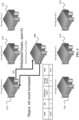
- FIG. 3 shows another topology of a GDS and storage servers A - F, according to an embodiment of the invention.
- the GDS shown in FIG. 3 may be the same global server 100 according to an embodiment of the invention, as shown in FIG. 1 .
- Each of the storage servers A - F shown in FIG. 3 may be the same storage server 100 according to an embodiment of the invention, as shown in FIG. 1 .
- the global server 100 is configured to create or increase a water mark associated with the hash value, upon receiving the request 101. Accordingly, the global server 100 according to an embodiment of the invention is further configured to register the storage server 110, which sent the request 101, for that hash value.
- the water mark associated with the hash value may be a reference counter.
- the creating or increasing of the water mark and also the registration of the storage server 110 are triggered only by the receiving of the request 101. Regardless of whether the request 101 to store a data is accepted or rejected by the global server 100, these steps will be performed. That means, even upon rejection of the request 101, the global server 100 still increases the reference count and register the storage server 110.
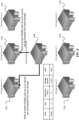
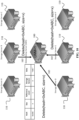
- FIG. 4 - 12 show the same topology of the servers as shown in FIG. 3 , according to an embodiment of the invention.
- storage server A sends a request to write a data, where a hash value of this data is "0 ⁇ abc". For instance, this is the first time that the GDS receives the storing data request comprising hash value "0 ⁇ abc".
- the GDS create a water mark associate with this hash value, and register storage server A for hash value "0 ⁇ abc", as shown in FIG. 4 . Since the GDS receives one request to store the data with hash value "0 ⁇ abc", the reference counter associate with hash value "0 ⁇ abc" is set to be 1. In this embodiment, the water mark is still below a determined value, thus this data is determined to be not highly-duplicated. Therefore, the GDS rejects the request to store the data according to an embodiment of the invention.
- storage server B may also send a request to write a data to the GDS as shown in FIG. 5 .
- storage server B wants to store the same data as storage server A, as shown in FIG. 4 , i.e. the data with hash value "0 ⁇ abc".
- the GDS increases the water mark associate with this hash value, and register storage server B for hash value "0 ⁇ abc", as shown in FIG. 5 .
- the reference counter associate with hash value "0 ⁇ abc” is set to be 2. Since the water mark is still below the determined value according to an embodiment of the invention, this data is still determined to be not highly-duplicated. Therefore, the GDS again rejects the request to store the data according to an embodiment of the invention.
- storage server D may also send a request to write a data to the GDS as shown in FIG. 6 .
- storage server D wants to store the same data as storage servers A and B, as shown in FIG. 4 and FIG. 5 , i.e. the data with hash value "0 ⁇ abc".
- the GDS increases the water mark associate with this hash value, and register storage server D for hash value "0 ⁇ abc", as shown in FIG. 6 .
- the reference counter associate with hash value "0 ⁇ abc" is set to be 3.
- a HWM is predefined to be 3, i.e.
- the determined value according to an embodiment of the invention, used to decide whether the data is highly-duplicated is 3. Since now the water mark/reference counter associated with hash value "0 ⁇ abc" is equal to the determined value according to an embodiment of the invention, this data is determined to be highly-duplicated. Therefore, the GDS accepts the request to store the data according to an embodiment of the invention, as shown in FIG. 6 .
- the GDS i.e. the global server 100 as shown in FIG. 1 , aims to store the highly-duplicated data.
- the global server 100 may be configured to instruct the storage server 110 to send the data chunk 102 to the global server 100.
- the global server 100 is further configured to store the data chunk 102.
- the GDS further instructs storage server D to send the data.
- storage server D sends the data, i.e. "ABC", to the GDS, as shown in FIG. 7 .
- the data "ABC” is stored in the GDS, according to the table shown in FIG. 7 .
- the corresponding parts in the table shown in FIG. 4-6 display "NULL", which means that no data is stored.
- the global server 100 may be configured to notify the storage server 110 registered for the hash value of the data chunk 102 that the data chunk 102 has been stored.
- the GDS sends a notification according to an embodiment of the invention, to storage server A and B respectively, since storage server A and B are registered for the hash value "0 ⁇ abc".
- Storage server A and B can then choose to remove this data from their local storage, and instead rely on the GDS.
- storage server A and B can also decide to keep the data locally, for instance in order to improve read performance.
- FIG. 9 shows an embodiment of the invention after the data is stored in the GDS.
- storage server E sends a request to write a data to the GDS as shown in FIG. 9 .
- the data that storage server E needs to store has the hash value "0 ⁇ abc". That means this data has been stored in GDS.
- the GDS increases the water mark associate with this hash value, and register storage server E for hash value "0 ⁇ abc", as shown in FIG. 9 .
- the reference counter associate with hash value "0 ⁇ abc" is set to be 4.
- the GDS notifies storage server E that the data is already stored in the GDS. Then accordingly storage server E can decide to remove the data or keep the data locally.
- the global server 100 is further configured to receive a request 103 to remove a data chunk 102 from the storage server 110. Accordingly, the global server 100 is configured to decrease a value of a water mark associated with the hash value of the data chunk 102 and unregister the storage server 110 for that hash value.
- storage B, D and E all send a request to delete the data with hash value "0 ⁇ abc".
- the GDS decreases the value of the water mark associated with this hash value.
- the reference counter associate with hash value "0 ⁇ abc" is decreased from 4 to 1. It can be seen that, only storage server A is still registered for hash value "0 ⁇ abc", as shown in FIG. 10 .
- the global server 100 is configured to instruct each storage server 110 registered for the hash value of that data chunk 102, to copy the data chunk 102 from the global server 100. After all storage servers 110 registered for the hash value store the data chunk 102 locally, the global server 100 is configured to remove the data chunk 102.
- a second value i.e. a low-water mark (LWM)
- the GDS can choose different methods to distribute the instructions to storage servers to read data, in order to prevent a burst of traffic in a short window of time. For example, the GDS may split the storage servers that need to read the data into N groups (N depending on total number of storage servers that need to read the data). Possibly, the GDS may only instruct group X to read the data after all storage servers in group X-1 read the data.
- the second value namely the LWM is 1, according to an embodiment of the invention as shown in FIG. 10 and FIG. 11 .
- the reference counter associated with hash value "0 ⁇ abc" is now 1, the data with hash value "0 ⁇ abc" is considered to be not highly-duplicated.
- the GDS sends an instruction to storage server A, which is still registered for the hash value "0 ⁇ abc". This is to instruct storage server A to copy the data from the GDS, since this data will be deleted soon.
- storage server A copies the data with hash value "0 ⁇ abc" from the GDS, as shown in FIG. 12 .
- the GDS can remove this data as shown in FIG. 12 .
- the part used to store the data "ABC” now displays "NULL", which means that no data is stored.
- storage server A is still registered for the data with hash value "0 ⁇ abc", and the corresponding reference counter is still 1.
- the GDS will continue to update the reference counter for this data when new request arrives. In case the corresponding reference counter exceeds again the HWM, the GDS will update all relevant storage servers. This may include storing the data and notifying all relevant storage servers.
- the first value and second value according to embodiments of the invention satisfy a condition that the first value is higher than the second value. That means, the HWM is higher that the LWM.
- LWM should be set less than HWM.
- an LWM per chunk might be stored. Then the LWM of this specific chunk may be decreased.
- ref_count 8 (data stored at the GDS), if the ref_count is decreased to 5, resulting in deletion of the chunk A. Then if ref_count of chunk A is increased to 7 again, the data will be re-written to the GDS. Thus, the GDS can then decrease LWM to 3 for chunk A only, to avoid the continuous deleting and re-writing.
- the HWM and the LWM can be defined based on percentages of the number of storage servers communicating with the GDS. It should be noted that, if free storage space of the GDS decreases below a certain threshold, the GDS is allowed to dynamically change its HWM and/or LWM.
- the global server 100 may be configured to adjust the first and/or second values dynamically, particularly based on free storage space left in the global server 100.
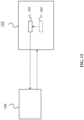
- FIG. 13 shows a storage server 110 according to an embodiment of the invention.
- the storage server 110 may comprise processing circuitry (not shown) configured to perform, conduct or initiate the various operations of the storage server 110 described herein.
- the processing circuitry may comprise hardware and software.
- the hardware may comprise analog circuitry or digital circuitry, or both analog and digital circuitry.
- the digital circuitry may comprise components such as application-specific integrated circuits (ASICs), field-programmable arrays (FPGAs), digital signal processors (DSPs), or multi-purpose processors.
- the processing circuitry comprises one or more processors and a non-transitory memory connected to the one or more processors.
- the non-transitory memory may carry executable program code which, when executed by the one or more processors, causes the storage server 110 to perform, conduct or initiate the operations or methods described herein.
- the storage server 110 is adapted for deduplicating at a global servers.
- the storage server 110 shown in FIG. 13 is the same storage server 110 as shown in FIG. 1 - 12 .
- the global server 100 shown in FIG. 13 is the same global server 100 as shown in FIG. 1 - 12 .
- the storage server 110 is configured to send, to the global server 100, a request 101 to store a data chunk 102. Further, the storage server 110 is configured to receive, from the global server 100, an information indicating that the global server 100 accepts the request 101 or rejects the request 101.
- the storage server may request to store some data in a GDS.
- the request 101 sent to the global server 100 may comprise a hash value of the data chunk 102.
- the storage server 110 may perform chunking and hashing of the data, to obtain a hash value of the data chunk. Therefore, the storage server 110, according to an embodiment of the invention, may be further configured to receive, from a user, a request to write the data chunk 102. Subsequently, the storage server 110 may be configured to store the hash value of the data chunk 102, based on the user's request.
- a storage server will not send duplicate add or remove requests for the same data to the GDS. It is the responsibility of the storage server to identify duplicate requests for data from an end-user. This might be achieved by each storage server locally storing the hashes of data (including those data stored in the GDS), and reference counting for them (local deduplication). Thus, according to an embodiment of the invention, the storage server 110 may be configured to create or increase a local counter associated with the hash value.
- the storage server may also decide whether to send the hashes of the data chunks to the GDS. Therefore, according to an embodiment of the invention, the storage server 110 may be configured to determine, whether to send to the global server 100, the request 101 to store the data chunk 102, if the local counter is equal to or greater than 1.
- storage servers can decide which data to try to offload to the GDS. For instance, frequently accessed data might remain in the local storage server to allow for a low read latency.
- storage servers can also decide to cache some data locally (in addition to storing it in GDS), to improve read performance. Further, storage servers can also decide to not offload certain data to the GDS, e.g. some private data, or for security reasons.
- the storage server 110 After the storage server 110 requests to store a data chunk in the global server 100, if the information received from the global server 100 indicates that the global server 100 accepts the request 101, the storage server 110, according to an embodiment of the invention, is configured to receive, from the global server 100, an instruction to send the data chunk 102 to the global server 100. In such case, it means that the data chunk 102 is highly-duplicated. In particular, this is the same step as shown in FIG. 6 . And same as FIG. 7 , the storage server 110 is further configured to send the data chunk 102 to the global server 100.
- the storage server 110 is configured to store the data chunk 102 locally. In such case, it means that the data chunk 102 is not highly-duplicated, then the storage server 110 needs to locally store the data chunk 102.
- the global server 100 may inform the storage server 110 which has sent a request to store that data, that the data chunk 102 has been stored in the global server 100.
- the storage server 110 according to an embodiment of the invention, is configured to receive, from the global server 100, a notification that the data chunk 102 has been stored in the global server 100.
- the storage server 110 may be configured to remove the locally stored data chunk 102.
- the storage server 110 may check if it is stored locally or if it is in the GDS. If the data is in the GDS, the storage server 110 requests the data from the GDS.
- the storage server 110 is further configured to request the data chunk 102 from the global server 100, if a user requests to read the data chunk 102.
- the storage server 110 can also decide to cache some data locally, even the data has been stored in the GDS.
- the storage server 110 may be further configured to additionally store the data chunk 102 locally.
- the storage server 110 may be further configured to decrease a local counter associated with the hash value of the data chunk 102.
- the storage server 110 is configured to delete the data chunk 102 if it is locally stored. If the data chunk 102 is stored in the global server 100, the storage server 110 is configured to send, to the global server 100, a request 103 to remove that data chunk 102. In case the data chunk 102 is locally stored in the storage server 110 and also stored in the global server 100, the storage server 110 may delete the data chunk 102, and also request the global server 100 to remove the data chunk 102.
- the storage server 110 may be configured to receive, from the global server 100, an instruction to copy a data chunk 102 from the global server 100. This may be happened when the data chunk 102 is not highly-duplicated anymore. Accordingly, the storage server 110 may be configured to copy the data chunk 102 from the global server 100, and store the data chunk 102 locally.
- storage servers can start or stop communicating with the GDS without affecting other storage servers.
- the storage server 110 may be configured to determine to stop communicating with the global server 100. Then the storage server 110 may be configured to copy, from the global server 100, all data chunks 102 previously requested to be stored in the global server 100, and store the data chunks 102 locally. After that, the storage server 110 may be configured to stop communicating with the global server 100. Since all storage servers are independent with each other, one storage server leaving the topology will not affect other remaining storage servers.
- This invention also provides a system comprising a global server 100 and multiple storage servers 110.
- the system according to an embodiment of the invention may be a system as shown in FIG. 2 , or as shown in FIG. 3 - 12 .
- the GDS is connected to all of its storage servers, but the storage servers do not need to be connected to each other (as opposed to distributed deduplication topology).
- the GDS will be highly-available using known high availability (HA) techniques, such as mirroring, clustering or using redundant array of inexpensive disks (RAID), to prevent the GDS from being a single point of failure.
- HA high availability
- RAID redundant array of inexpensive disks
- GDS may contain only highly cross-server deduplication data, particularly through the following means:
- storage servers are independent of each other, including the following advantages:
- a structure of servers proposed by embodiments of the invention can apply to situations such as: not all storage servers have the same high availability level, and/or not all storage servers have the same latency.
- any storage server can have different high availability level as the storage servers do not depend on each other.
- a high latency of one storage server affecting other storage servers, is effectively avoided, as it will exist in distributed deduplication architecture.
- the latency for reading a data from a storage server is only affected by the latency between itself and the GDS. This is a benefit over distributed deduplication deployment, where the latency of read depends on the latency between the different storage servers belonging to one deduplication cluster.
- the storage server can decide which data to offload to the GDS and which to continue storing locally, also allowing it to decrease latency.
- This solution is also scalable, since storage servers can be added and removed easily, also the GDS can be dynamically configured to support the amount of data allowed by its resources, by modifying the HWM and/or the LWM (e.g. by employing AI).
- FIG. 14 shows a method 1400 performed by a global server 100 for deduplicating multiple storage servers 110 according to an embodiment of the present invention.
- the global server 100 is the global server 100 of FIG. 1 .
- the method 1400 comprises: a step 1401 of receiving, from a storage server 110, a request 101 to store a data chunk 102; a step 1402 of determining whether the data chunk 102 is highly-duplicated among the storage servers 110; a step 1403 of accepting the request 101, if the data chunk 102 is highly-duplicated; a step 1404 of rejecting the request 101, if the data chunk 102 is not highly-duplicated.
- the storage server 110 are the storage device 110 of FIG. 1 .
- FIG. 15 shows a method 1500 performed by a storage server 110 for deduplicating at a global server 100, according to an embodiment of the present invention.
- the global server 100 is the global server 100 of FIG. 13
- the storage server 110 is the other storage server 110 of FIG. 13 .
- the method 1500 comprises: a step 1501 of sending, to the global server 100, a request 101 to store a data chunk 102; and a step 1502 of receiving, from the global server 100, an information indicating that the global server 100 accepts the request 101 or rejects the request 101.
- embodiments of the global server 100 and the storage server 110 comprises the necessary communication capabilities in the form of e.g., functions, means, units, elements, etc., for performing the solution.
- Examples of 21 other such means, units, elements and functions are: processors, memory, buffers, control logic, encoders, decoders, mapping units, multipliers, decision units, selecting units, switches, inputs, outputs, antennas, amplifiers, receiver units, transmitter units, power supply units, power feeders, communication interfaces, etc. which are suitably arranged together for performing the solution.
- the processor(s) of the global server 100 and the storage server 110 may comprise, e.g., one or more instances of a Central Processing Unit (CPU), a processing unit, a processing circuit, a processor, an Application Specific Integrated Circuit (ASIC), a microprocessor, or other processing logic that may interpret and execute instructions.
- CPU Central Processing Unit
- ASIC Application Specific Integrated Circuit
- the expression "processor” may thus represent a processing circuitry comprising a plurality of processing circuits, such as, e.g., any, some or all of the ones mentioned above.
- the processing circuitry may further perform data processing functions for inputting, outputting, and processing of data comprising data buffering and device control functions, such as call processing control, user interface control, or the like.
Landscapes
- Engineering & Computer Science (AREA)
- Theoretical Computer Science (AREA)
- Physics & Mathematics (AREA)
- General Engineering & Computer Science (AREA)
- General Physics & Mathematics (AREA)
- Data Mining & Analysis (AREA)
- Databases & Information Systems (AREA)
- Human Computer Interaction (AREA)
- Library & Information Science (AREA)
- Computer Networks & Wireless Communication (AREA)
- Signal Processing (AREA)
- Information Retrieval, Db Structures And Fs Structures Therefor (AREA)
Claims (13)
- Globaler Server (100) zur Deduplizierung mehrerer Speicherserver (110), wobei der globale Server (100) zu Folgendem konfiguriert ist:Empfangen einer Anfrage (101) von einem Speicherserver (110) zum Speichern eines Datenblocks (102) auf dem globalen Server (100);Bestimmen, ob der Datenblock (102) unter den mehreren Speicherservern (110) stark dupliziert ist, wobei der Datenblock (102) als stark dupliziert unter den mehreren Speicherservern (110) bestimmt wird, wenn ein Hash-Wert des Datenblocks (102) auf dem globalen Server (100) einer Wassermarke gleich oder höher als ein bestimmter Wert zugeordnet ist;wenn der Datenblock (102) stark dupliziert ist, Annehmen der Anfrage (101); undwenn der Datenblock (102) nicht stark dupliziert ist, Ablehnen der Anfrage (101);dadurch gekennzeichnet, dass der globale Server (100) ferner zu Folgendem konfiguriert ist:Empfangen einer Anfrage (103) von dem Speicherserver (110) zum Entfernen des Datenblocks (102);Verringern eines Werts eines Wasserzeichens, das dem Hash-Wert des Datenblocks zugeordnet ist (102); undAufheben der Registrierung des Speicherservers (110) für diesen Hash-Wert;wobei, wenn ein einem Hash-Wert eines Datenblocks (102) zugeordnetes Wasserzeichen gleich oder kleiner einem zweiten Wert ist, der globale Server (100) zu Folgendem konfiguriert ist:Anweisen jedes Speicherservers (110), der für den Hash-Wert dieses Datenblocks (102) registriert ist, das Datenstück (102) von dem globalen Server (100) zu kopieren; undEntfernen des Datenblocks (102) von dem globalen Server (100), nachdem alle für den Hash-Wert registrierten Speicherserver (110) den Datenblock (102) lokal gespeichert haben.
- Globaler Server (100) nach Anspruch 1, wobei die durch den Speicherserver (110) gesendete Anfrage (101) den Hash-Wert des Datenblocks (102) umfasst.
- Globaler Server (100) nach Anspruch 2, der zu Folgendem konfiguriert ist:Erstellen oder Erhöhen eines Wasserzeichens, das dem Hash-Wert zugeordnet ist, nach Empfangen der Anfrage (101); undRegistrieren des Speicherservers (110), der die Anfrage (101) gesendet hat, für diesen Hash-Wert.
- Globaler Server (100) nach Anspruch 3, wobei, wenn das Wasserzeichen gleich einem ersten Wert ist, der globale Server (100) zu Folgendem konfiguriert ist:Anweisen des Speicherservers (110), den Datenblock (102) an den globalen Server (100) zu senden; undSpeichern des Datenblocks (102).
- Globaler Server (100) nach Anspruch 4, wobei, nachdem der Datenblock (102) gespeichert ist, der globale Server (100) zu Folgendem konfiguriert ist:
Benachrichtigen des Speicherservers (110), der für den Hash-Wert des Datenblocks (102) registriert ist, dass der Datenblock (102) gespeichert wurde. - Speicherserver (110) zur Deduplizierung auf einem globalen Server (100), wobei der Speicherserver (110) zu Folgendem konfiguriert ist:Senden einer Anfrage (101) zum Speichern eines Datenblocks (102) auf dem globalen Server (100) an den globalen Server (100); undEmpfangen von Informationen von dem globalen Server (100) die angeben, dass der globale Server (100) die Anfrage (101) annimmt oder die Anfrage (101) ablehnt;dadurch gekennzeichnet, dasswenn die von dem globalen Server (100) empfangenen Informationen angeben, dass der globale Server (100) die Anfrage (101) ablehnt, der Speicherserver (110) zu Folgendem konfiguriert ist:lokales Speichern des Datenblocks (102);wobei der Speicherserver (110) ferner zu Folgendem konfiguriert ist:Empfangen einer Benachrichtigung von dem globalen Server (100), dass der Datenblock (102) in dem globalen Server (100) gespeichert wurde;Entfernen des lokal gespeicherten Datenblocks (102); undAnfragen des Datenblocks (102) von dem globalen Server (100), wenn ein Benutzer anfragt, den Datenblock (102) zu lesen.
- Speicherserver (110) nach Anspruch 6, wobei:
die an den globalen Server (100) gesendete Anfrage (101) einen Hash-Wert des Datenblocks (102) umfasst. - Speicherserver (110) nach Anspruch 6 oder 7, der zu Folgendem konfiguriert ist:Empfangen einer Anfrage von einem Benutzer, den Datenblock (102) zu schreiben;Speichern des Hash-Werts des Datenblocks (102); undErstellen oder erhöhen eines lokalen Zählers, der dem Hash-Wert zugeordnet ist.
- Speicherserver (110) nach Anspruch 8, der zu Folgendem konfiguriert ist:
Bestimmen, ob die Anfrage (101) zum Speichern des Datenblocks (102) an den globalen Server (100) zu senden ist, wenn der lokale Zähler gleich oder größer als 1 ist. - Speicherserver (110) nach einem der Ansprüche 6 bis 9, wobei, wenn die von dem globalen Server (100) empfangenen Informationen angeben, dass der globale Server (100) die Anfrage (101) annimmt, der Speicherserver (110) zu Folgendem konfiguriert ist:Empfangen einer Anweisung zum Senden eines Datenblocks (102) an den globalen Server (100) von dem globalen Server (100); undSenden des Datenblocks (102) an den globalen Server (100).
- System (200) zur Deduplizierung mehrerer Speicherserver (110), umfassend einen globalen Server (100) nach einem der Ansprüche 1 bis 5 und mehrere Speicherserver (110) nach einem der Ansprüche 6 bis 10.
- Verfahren (1400), das durch einen globalen Server (100) durchgeführt wird, zur Deduplizierung mehrerer Speicherserver (110), wobei das Verfahren Folgendes umfasst:Empfangen (1401) einer Anfrage (101) von einem Speicherserver (110) zum Speichern eines Datenblocks (102) auf dem globalen Server (100);Bestimmen (1402), ob der Datenblock (102) unter den Speicherservern (110) stark dupliziert ist, wobei der Datenblock (102) als stark dupliziert unter den mehreren Speicherservern (110) bestimmt wird, wenn ein Hash-Wert des Datenblocks (102) auf dem globalen Server (100) einer Wassermarke gleich oder höher als ein bestimmter Wert zugeordnet ist;wenn der Datenblock (102) stark dupliziert ist, Annehmen (1403) der Anfrage (101); undwenn der Datenblock (102) nicht stark dupliziert ist, Ablehnen (1404) der Anfrage (101);dadurch gekennzeichnet, dass der globale Server (100) ferner zu Folgendem konfiguriert ist:Empfangen einer Anfrage (103) von dem Speicherserver (110) zum Entfernen des Datenblocks (102);Verringern eines Werts eines Wasserzeichens, das dem Hash-Wert des Datenblocks zugeordnet ist (102); undAufheben der Registrierung des Speicherservers (110) für diesen Hash-Wert;wobei, wenn ein einem Hash-Wert eines Datenblocks (102) zugeordnetes Wasserzeichen gleich oder kleiner einem zweiten Wert ist, der globale Server (100) zu Folgendem konfiguriert ist:Anweisen jedes Speicherservers (110), der für den Hash-Wert dieses Datenblocks (102) registriert ist, das Datenstück (102) von dem globalen Server (100) zu kopieren; undEntfernen des Datenblocks (102) von dem globalen Server (100), nachdem alle für den Hash-Wert registrierten Speicherserver (110) den Datenblock (102) lokal gespeichert haben.
- Verfahren (1500) zur Deduplizierung auf einem globalen Server (100), wobei das Verfahren Folgendes umfasst:Senden (1501) einer Anfrage (101) zum Speichern eines Datenblocks (102) an den globalen Server (100); undEmpfangen (1502) von Informationen von dem globalen Server (100) die angeben, dass der globale Server (100) die Anfrage (101) annimmt oder die Anfrage (101) ablehnt;dadurch gekennzeichnet, dasswenn die von dem globalen Server (100) empfangenen Informationen angeben, dass der globale Server (100) die Anfrage (101) ablehnt, das Verfahren ferner Folgendes umfasst:lokales Speichern des Datenblocks (102);wobei das Verfahren ferner umfasst:Empfangen einer Benachrichtigung von dem globalen Server (100), dass der Datenblock (102) in dem globalen Server (100) gespeichert wurde;Entfernen des lokal gespeicherten Datenblocks (102); undAnfragen des Datenblocks (102) von dem globalen Server (100), wenn ein Benutzer anfragt, den Datenblock (102) zu lesen.
Applications Claiming Priority (1)
| Application Number | Priority Date | Filing Date | Title |
|---|---|---|---|
| PCT/EP2019/069753 WO2021013335A1 (en) | 2019-07-23 | 2019-07-23 | Devices, system and methods for deduplication |
Publications (2)
| Publication Number | Publication Date |
|---|---|
| EP3867739A1 EP3867739A1 (de) | 2021-08-25 |
| EP3867739B1 true EP3867739B1 (de) | 2024-06-19 |
Family
ID=67441104
Family Applications (1)
| Application Number | Title | Priority Date | Filing Date |
|---|---|---|---|
| EP19745088.5A Active EP3867739B1 (de) | 2019-07-23 | 2019-07-23 | Vorrichtungen, system und verfahren zur deduplizierung |
Country Status (4)
| Country | Link |
|---|---|
| US (1) | US20210279210A1 (de) |
| EP (1) | EP3867739B1 (de) |
| CN (1) | CN112889021B (de) |
| WO (1) | WO2021013335A1 (de) |
Family Cites Families (9)
| Publication number | Priority date | Publication date | Assignee | Title |
|---|---|---|---|---|
| US8190835B1 (en) * | 2007-12-31 | 2012-05-29 | Emc Corporation | Global de-duplication in shared architectures |
| CN103873506A (zh) * | 2012-12-12 | 2014-06-18 | 鸿富锦精密工业(深圳)有限公司 | 存储集群中的数据块去重系统及方法 |
| GB2514555A (en) * | 2013-05-28 | 2014-12-03 | Ibm | Deduplication for a storage system |
| CN103530201B (zh) * | 2013-07-17 | 2016-03-02 | 华中科技大学 | 一种适用于备份系统的安全数据去重方法和系统 |
| US20150213049A1 (en) * | 2014-01-30 | 2015-07-30 | Netapp, Inc. | Asynchronous backend global deduplication |
| CN104268099B (zh) * | 2014-08-29 | 2017-06-13 | 浪潮(北京)电子信息产业有限公司 | 一种管理数据读写的方法及装置 |
| CN104239518B (zh) * | 2014-09-17 | 2017-09-29 | 华为技术有限公司 | 重复数据删除方法和装置 |
| CN107025218B (zh) * | 2017-04-07 | 2021-03-02 | 腾讯科技(深圳)有限公司 | 一种文本去重方法和装置 |
| CN107391761B (zh) * | 2017-08-28 | 2020-03-06 | 苏州浪潮智能科技有限公司 | 一种基于重复数据删除技术的数据管理方法及装置 |
-
2019
- 2019-07-23 WO PCT/EP2019/069753 patent/WO2021013335A1/en not_active Ceased
- 2019-07-23 CN CN201980069610.8A patent/CN112889021B/zh active Active
- 2019-07-23 EP EP19745088.5A patent/EP3867739B1/de active Active
-
2021
- 2021-05-21 US US17/326,890 patent/US20210279210A1/en not_active Abandoned
Also Published As
| Publication number | Publication date |
|---|---|
| EP3867739A1 (de) | 2021-08-25 |
| CN112889021A (zh) | 2021-06-01 |
| US20210279210A1 (en) | 2021-09-09 |
| WO2021013335A1 (en) | 2021-01-28 |
| CN112889021B (zh) | 2023-11-28 |
Similar Documents
| Publication | Publication Date | Title |
|---|---|---|
| US11068199B2 (en) | System and method for aggregating metadata changes in a storage system | |
| US10467246B2 (en) | Content-based replication of data in scale out system | |
| US9405684B1 (en) | System and method for cache management | |
| US8010485B1 (en) | Background movement of data between nodes in a storage cluster | |
| US7778960B1 (en) | Background movement of data between nodes in a storage cluster | |
| US10223023B1 (en) | Bandwidth reduction for multi-level data replication | |
| US20160139849A1 (en) | Non-volatile buffering for deduplicaton | |
| US10146786B2 (en) | Managing deduplication in a data storage system using a Bloomier filter data dictionary | |
| US11245774B2 (en) | Cache storage for streaming data | |
| US11615028B2 (en) | System and method for lockless destaging of metadata pages | |
| US9779103B2 (en) | Preserving redundancy in data deduplication systems | |
| US20110066666A1 (en) | File management method and storage system | |
| US12073118B2 (en) | System and method for multi-node storage system flushing | |
| US10242021B2 (en) | Storing data deduplication metadata in a grid of processors | |
| US11599460B2 (en) | System and method for lockless reading of metadata pages | |
| US11194501B2 (en) | Standby copies withstand cascading fails | |
| US12379862B2 (en) | Devices, system and methods for optimization in deduplication | |
| US11494089B2 (en) | Distributed storage system, data control method and storage medium | |
| US11216204B2 (en) | Degraded redundant metadata, DRuM, technique | |
| US20240028251A1 (en) | Maintaining smooth metadata log destaging and burst tolerance | |
| US11709609B2 (en) | Data storage system and global deduplication method thereof | |
| US20210279210A1 (en) | Devices, System and Methods for Deduplication | |
| US10728035B1 (en) | Using double hashing schema to reduce short hash handle collisions and improve memory allocation in content-addressable storage systems | |
| US20180321867A1 (en) | Storage management system and method | |
| US11740803B2 (en) | System and method for stretching storage protection configurations in a storage cluster |
Legal Events
| Date | Code | Title | Description |
|---|---|---|---|
| STAA | Information on the status of an ep patent application or granted ep patent |
Free format text: STATUS: UNKNOWN |
|
| STAA | Information on the status of an ep patent application or granted ep patent |
Free format text: STATUS: THE INTERNATIONAL PUBLICATION HAS BEEN MADE |
|
| PUAI | Public reference made under article 153(3) epc to a published international application that has entered the european phase |
Free format text: ORIGINAL CODE: 0009012 |
|
| STAA | Information on the status of an ep patent application or granted ep patent |
Free format text: STATUS: REQUEST FOR EXAMINATION WAS MADE |
|
| 17P | Request for examination filed |
Effective date: 20210520 |
|
| AK | Designated contracting states |
Kind code of ref document: A1 Designated state(s): AL AT BE BG CH CY CZ DE DK EE ES FI FR GB GR HR HU IE IS IT LI LT LU LV MC MK MT NL NO PL PT RO RS SE SI SK SM TR |
|
| DAV | Request for validation of the european patent (deleted) | ||
| DAX | Request for extension of the european patent (deleted) | ||
| STAA | Information on the status of an ep patent application or granted ep patent |
Free format text: STATUS: EXAMINATION IS IN PROGRESS |
|
| 17Q | First examination report despatched |
Effective date: 20230102 |
|
| GRAP | Despatch of communication of intention to grant a patent |
Free format text: ORIGINAL CODE: EPIDOSNIGR1 |
|
| STAA | Information on the status of an ep patent application or granted ep patent |
Free format text: STATUS: GRANT OF PATENT IS INTENDED |
|
| INTG | Intention to grant announced |
Effective date: 20240207 |
|
| GRAS | Grant fee paid |
Free format text: ORIGINAL CODE: EPIDOSNIGR3 |
|
| GRAA | (expected) grant |
Free format text: ORIGINAL CODE: 0009210 |
|
| STAA | Information on the status of an ep patent application or granted ep patent |
Free format text: STATUS: THE PATENT HAS BEEN GRANTED |
|
| AK | Designated contracting states |
Kind code of ref document: B1 Designated state(s): AL AT BE BG CH CY CZ DE DK EE ES FI FR GB GR HR HU IE IS IT LI LT LU LV MC MK MT NL NO PL PT RO RS SE SI SK SM TR |
|
| REG | Reference to a national code |
Ref country code: GB Ref legal event code: FG4D |
|
| REG | Reference to a national code |
Ref country code: CH Ref legal event code: EP |
|
| REG | Reference to a national code |
Ref country code: DE Ref legal event code: R096 Ref document number: 602019053885 Country of ref document: DE |
|
| PG25 | Lapsed in a contracting state [announced via postgrant information from national office to epo] |
Ref country code: BG Free format text: LAPSE BECAUSE OF FAILURE TO SUBMIT A TRANSLATION OF THE DESCRIPTION OR TO PAY THE FEE WITHIN THE PRESCRIBED TIME-LIMIT Effective date: 20240619 |
|
| PG25 | Lapsed in a contracting state [announced via postgrant information from national office to epo] |
Ref country code: FI Free format text: LAPSE BECAUSE OF FAILURE TO SUBMIT A TRANSLATION OF THE DESCRIPTION OR TO PAY THE FEE WITHIN THE PRESCRIBED TIME-LIMIT Effective date: 20240619 Ref country code: HR Free format text: LAPSE BECAUSE OF FAILURE TO SUBMIT A TRANSLATION OF THE DESCRIPTION OR TO PAY THE FEE WITHIN THE PRESCRIBED TIME-LIMIT Effective date: 20240619 |
|
| REG | Reference to a national code |
Ref country code: LT Ref legal event code: MG9D |
|
| PG25 | Lapsed in a contracting state [announced via postgrant information from national office to epo] |
Ref country code: GR Free format text: LAPSE BECAUSE OF FAILURE TO SUBMIT A TRANSLATION OF THE DESCRIPTION OR TO PAY THE FEE WITHIN THE PRESCRIBED TIME-LIMIT Effective date: 20240920 |
|
| REG | Reference to a national code |
Ref country code: NL Ref legal event code: MP Effective date: 20240619 |
|
| PG25 | Lapsed in a contracting state [announced via postgrant information from national office to epo] |
Ref country code: LV Free format text: LAPSE BECAUSE OF FAILURE TO SUBMIT A TRANSLATION OF THE DESCRIPTION OR TO PAY THE FEE WITHIN THE PRESCRIBED TIME-LIMIT Effective date: 20240619 |
|
| PG25 | Lapsed in a contracting state [announced via postgrant information from national office to epo] |
Ref country code: NO Free format text: LAPSE BECAUSE OF FAILURE TO SUBMIT A TRANSLATION OF THE DESCRIPTION OR TO PAY THE FEE WITHIN THE PRESCRIBED TIME-LIMIT Effective date: 20240919 Ref country code: LV Free format text: LAPSE BECAUSE OF FAILURE TO SUBMIT A TRANSLATION OF THE DESCRIPTION OR TO PAY THE FEE WITHIN THE PRESCRIBED TIME-LIMIT Effective date: 20240619 Ref country code: HR Free format text: LAPSE BECAUSE OF FAILURE TO SUBMIT A TRANSLATION OF THE DESCRIPTION OR TO PAY THE FEE WITHIN THE PRESCRIBED TIME-LIMIT Effective date: 20240619 Ref country code: GR Free format text: LAPSE BECAUSE OF FAILURE TO SUBMIT A TRANSLATION OF THE DESCRIPTION OR TO PAY THE FEE WITHIN THE PRESCRIBED TIME-LIMIT Effective date: 20240920 Ref country code: FI Free format text: LAPSE BECAUSE OF FAILURE TO SUBMIT A TRANSLATION OF THE DESCRIPTION OR TO PAY THE FEE WITHIN THE PRESCRIBED TIME-LIMIT Effective date: 20240619 Ref country code: BG Free format text: LAPSE BECAUSE OF FAILURE TO SUBMIT A TRANSLATION OF THE DESCRIPTION OR TO PAY THE FEE WITHIN THE PRESCRIBED TIME-LIMIT Effective date: 20240619 Ref country code: RS Free format text: LAPSE BECAUSE OF FAILURE TO SUBMIT A TRANSLATION OF THE DESCRIPTION OR TO PAY THE FEE WITHIN THE PRESCRIBED TIME-LIMIT Effective date: 20240919 |
|
| PG25 | Lapsed in a contracting state [announced via postgrant information from national office to epo] |
Ref country code: NL Free format text: LAPSE BECAUSE OF FAILURE TO SUBMIT A TRANSLATION OF THE DESCRIPTION OR TO PAY THE FEE WITHIN THE PRESCRIBED TIME-LIMIT Effective date: 20240619 |
|
| REG | Reference to a national code |
Ref country code: AT Ref legal event code: MK05 Ref document number: 1696332 Country of ref document: AT Kind code of ref document: T Effective date: 20240619 |
|
| PG25 | Lapsed in a contracting state [announced via postgrant information from national office to epo] |
Ref country code: NL Free format text: LAPSE BECAUSE OF FAILURE TO SUBMIT A TRANSLATION OF THE DESCRIPTION OR TO PAY THE FEE WITHIN THE PRESCRIBED TIME-LIMIT Effective date: 20240619 |
|
| PG25 | Lapsed in a contracting state [announced via postgrant information from national office to epo] |
Ref country code: PT Free format text: LAPSE BECAUSE OF FAILURE TO SUBMIT A TRANSLATION OF THE DESCRIPTION OR TO PAY THE FEE WITHIN THE PRESCRIBED TIME-LIMIT Effective date: 20241021 |
|
| PG25 | Lapsed in a contracting state [announced via postgrant information from national office to epo] |
Ref country code: PT Free format text: LAPSE BECAUSE OF FAILURE TO SUBMIT A TRANSLATION OF THE DESCRIPTION OR TO PAY THE FEE WITHIN THE PRESCRIBED TIME-LIMIT Effective date: 20241021 |
|
| PG25 | Lapsed in a contracting state [announced via postgrant information from national office to epo] |
Ref country code: PL Free format text: LAPSE BECAUSE OF FAILURE TO SUBMIT A TRANSLATION OF THE DESCRIPTION OR TO PAY THE FEE WITHIN THE PRESCRIBED TIME-LIMIT Effective date: 20240619 |
|
| PG25 | Lapsed in a contracting state [announced via postgrant information from national office to epo] |
Ref country code: EE Free format text: LAPSE BECAUSE OF FAILURE TO SUBMIT A TRANSLATION OF THE DESCRIPTION OR TO PAY THE FEE WITHIN THE PRESCRIBED TIME-LIMIT Effective date: 20240619 |
|
| PG25 | Lapsed in a contracting state [announced via postgrant information from national office to epo] |
Ref country code: AT Free format text: LAPSE BECAUSE OF FAILURE TO SUBMIT A TRANSLATION OF THE DESCRIPTION OR TO PAY THE FEE WITHIN THE PRESCRIBED TIME-LIMIT Effective date: 20240619 Ref country code: IS Free format text: LAPSE BECAUSE OF FAILURE TO SUBMIT A TRANSLATION OF THE DESCRIPTION OR TO PAY THE FEE WITHIN THE PRESCRIBED TIME-LIMIT Effective date: 20241019 |
|
| PG25 | Lapsed in a contracting state [announced via postgrant information from national office to epo] |
Ref country code: CZ Free format text: LAPSE BECAUSE OF FAILURE TO SUBMIT A TRANSLATION OF THE DESCRIPTION OR TO PAY THE FEE WITHIN THE PRESCRIBED TIME-LIMIT Effective date: 20240619 |
|
| PG25 | Lapsed in a contracting state [announced via postgrant information from national office to epo] |
Ref country code: RO Free format text: LAPSE BECAUSE OF FAILURE TO SUBMIT A TRANSLATION OF THE DESCRIPTION OR TO PAY THE FEE WITHIN THE PRESCRIBED TIME-LIMIT Effective date: 20240619 Ref country code: SK Free format text: LAPSE BECAUSE OF FAILURE TO SUBMIT A TRANSLATION OF THE DESCRIPTION OR TO PAY THE FEE WITHIN THE PRESCRIBED TIME-LIMIT Effective date: 20240619 |
|
| PG25 | Lapsed in a contracting state [announced via postgrant information from national office to epo] |
Ref country code: SM Free format text: LAPSE BECAUSE OF FAILURE TO SUBMIT A TRANSLATION OF THE DESCRIPTION OR TO PAY THE FEE WITHIN THE PRESCRIBED TIME-LIMIT Effective date: 20240619 Ref country code: ES Free format text: LAPSE BECAUSE OF FAILURE TO SUBMIT A TRANSLATION OF THE DESCRIPTION OR TO PAY THE FEE WITHIN THE PRESCRIBED TIME-LIMIT Effective date: 20240619 |
|
| PG25 | Lapsed in a contracting state [announced via postgrant information from national office to epo] |
Ref country code: SM Free format text: LAPSE BECAUSE OF FAILURE TO SUBMIT A TRANSLATION OF THE DESCRIPTION OR TO PAY THE FEE WITHIN THE PRESCRIBED TIME-LIMIT Effective date: 20240619 Ref country code: SK Free format text: LAPSE BECAUSE OF FAILURE TO SUBMIT A TRANSLATION OF THE DESCRIPTION OR TO PAY THE FEE WITHIN THE PRESCRIBED TIME-LIMIT Effective date: 20240619 Ref country code: RO Free format text: LAPSE BECAUSE OF FAILURE TO SUBMIT A TRANSLATION OF THE DESCRIPTION OR TO PAY THE FEE WITHIN THE PRESCRIBED TIME-LIMIT Effective date: 20240619 Ref country code: PL Free format text: LAPSE BECAUSE OF FAILURE TO SUBMIT A TRANSLATION OF THE DESCRIPTION OR TO PAY THE FEE WITHIN THE PRESCRIBED TIME-LIMIT Effective date: 20240619 Ref country code: IS Free format text: LAPSE BECAUSE OF FAILURE TO SUBMIT A TRANSLATION OF THE DESCRIPTION OR TO PAY THE FEE WITHIN THE PRESCRIBED TIME-LIMIT Effective date: 20241019 Ref country code: ES Free format text: LAPSE BECAUSE OF FAILURE TO SUBMIT A TRANSLATION OF THE DESCRIPTION OR TO PAY THE FEE WITHIN THE PRESCRIBED TIME-LIMIT Effective date: 20240619 Ref country code: EE Free format text: LAPSE BECAUSE OF FAILURE TO SUBMIT A TRANSLATION OF THE DESCRIPTION OR TO PAY THE FEE WITHIN THE PRESCRIBED TIME-LIMIT Effective date: 20240619 Ref country code: CZ Free format text: LAPSE BECAUSE OF FAILURE TO SUBMIT A TRANSLATION OF THE DESCRIPTION OR TO PAY THE FEE WITHIN THE PRESCRIBED TIME-LIMIT Effective date: 20240619 Ref country code: AT Free format text: LAPSE BECAUSE OF FAILURE TO SUBMIT A TRANSLATION OF THE DESCRIPTION OR TO PAY THE FEE WITHIN THE PRESCRIBED TIME-LIMIT Effective date: 20240619 |
|
| PG25 | Lapsed in a contracting state [announced via postgrant information from national office to epo] |
Ref country code: IT Free format text: LAPSE BECAUSE OF FAILURE TO SUBMIT A TRANSLATION OF THE DESCRIPTION OR TO PAY THE FEE WITHIN THE PRESCRIBED TIME-LIMIT Effective date: 20240619 |
|
| REG | Reference to a national code |
Ref country code: CH Ref legal event code: PL |
|
| PG25 | Lapsed in a contracting state [announced via postgrant information from national office to epo] |
Ref country code: LU Free format text: LAPSE BECAUSE OF NON-PAYMENT OF DUE FEES Effective date: 20240723 |
|
| PG25 | Lapsed in a contracting state [announced via postgrant information from national office to epo] |
Ref country code: MC Free format text: LAPSE BECAUSE OF FAILURE TO SUBMIT A TRANSLATION OF THE DESCRIPTION OR TO PAY THE FEE WITHIN THE PRESCRIBED TIME-LIMIT Effective date: 20240619 |
|
| REG | Reference to a national code |
Ref country code: DE Ref legal event code: R097 Ref document number: 602019053885 Country of ref document: DE |
|
| PG25 | Lapsed in a contracting state [announced via postgrant information from national office to epo] |
Ref country code: MC Free format text: LAPSE BECAUSE OF FAILURE TO SUBMIT A TRANSLATION OF THE DESCRIPTION OR TO PAY THE FEE WITHIN THE PRESCRIBED TIME-LIMIT Effective date: 20240619 Ref country code: LU Free format text: LAPSE BECAUSE OF NON-PAYMENT OF DUE FEES Effective date: 20240723 |
|
| PG25 | Lapsed in a contracting state [announced via postgrant information from national office to epo] |
Ref country code: DK Free format text: LAPSE BECAUSE OF FAILURE TO SUBMIT A TRANSLATION OF THE DESCRIPTION OR TO PAY THE FEE WITHIN THE PRESCRIBED TIME-LIMIT Effective date: 20240619 |
|
| PG25 | Lapsed in a contracting state [announced via postgrant information from national office to epo] |
Ref country code: CH Free format text: LAPSE BECAUSE OF NON-PAYMENT OF DUE FEES Effective date: 20240731 Ref country code: BE Free format text: LAPSE BECAUSE OF NON-PAYMENT OF DUE FEES Effective date: 20240731 |
|
| PLBE | No opposition filed within time limit |
Free format text: ORIGINAL CODE: 0009261 |
|
| STAA | Information on the status of an ep patent application or granted ep patent |
Free format text: STATUS: NO OPPOSITION FILED WITHIN TIME LIMIT |
|
| 26N | No opposition filed |
Effective date: 20250320 |
|
| GBPC | Gb: european patent ceased through non-payment of renewal fee |
Effective date: 20240919 |
|
| REG | Reference to a national code |
Ref country code: BE Ref legal event code: MM Effective date: 20240731 |
|
| PG25 | Lapsed in a contracting state [announced via postgrant information from national office to epo] |
Ref country code: GB Free format text: LAPSE BECAUSE OF NON-PAYMENT OF DUE FEES Effective date: 20240919 |
|
| PG25 | Lapsed in a contracting state [announced via postgrant information from national office to epo] |
Ref country code: FR Free format text: LAPSE BECAUSE OF NON-PAYMENT OF DUE FEES Effective date: 20240819 |
|
| PG25 | Lapsed in a contracting state [announced via postgrant information from national office to epo] |
Ref country code: IE Free format text: LAPSE BECAUSE OF NON-PAYMENT OF DUE FEES Effective date: 20240723 |
|
| PG25 | Lapsed in a contracting state [announced via postgrant information from national office to epo] |
Ref country code: SE Free format text: LAPSE BECAUSE OF FAILURE TO SUBMIT A TRANSLATION OF THE DESCRIPTION OR TO PAY THE FEE WITHIN THE PRESCRIBED TIME-LIMIT Effective date: 20240619 |
|
| PGFP | Annual fee paid to national office [announced via postgrant information from national office to epo] |
Ref country code: DE Payment date: 20250604 Year of fee payment: 7 |
|
| PG25 | Lapsed in a contracting state [announced via postgrant information from national office to epo] |
Ref country code: CY Free format text: LAPSE BECAUSE OF FAILURE TO SUBMIT A TRANSLATION OF THE DESCRIPTION OR TO PAY THE FEE WITHIN THE PRESCRIBED TIME-LIMIT; INVALID AB INITIO Effective date: 20190723 |
|
| PG25 | Lapsed in a contracting state [announced via postgrant information from national office to epo] |
Ref country code: HU Free format text: LAPSE BECAUSE OF FAILURE TO SUBMIT A TRANSLATION OF THE DESCRIPTION OR TO PAY THE FEE WITHIN THE PRESCRIBED TIME-LIMIT; INVALID AB INITIO Effective date: 20190723 |