EP3866406B1 - Communication system - Google Patents
Communication system Download PDFInfo
- Publication number
- EP3866406B1 EP3866406B1 EP21157636.8A EP21157636A EP3866406B1 EP 3866406 B1 EP3866406 B1 EP 3866406B1 EP 21157636 A EP21157636 A EP 21157636A EP 3866406 B1 EP3866406 B1 EP 3866406B1
- Authority
- EP
- European Patent Office
- Prior art keywords
- communication
- disconnection
- path
- line
- joint connector
- Prior art date
- Legal status (The legal status is an assumption and is not a legal conclusion. Google has not performed a legal analysis and makes no representation as to the accuracy of the status listed.)
- Active
Links
Images



Classifications
-
- H—ELECTRICITY
- H04—ELECTRIC COMMUNICATION TECHNIQUE
- H04L—TRANSMISSION OF DIGITAL INFORMATION, e.g. TELEGRAPHIC COMMUNICATION
- H04L12/00—Data switching networks
- H04L12/28—Data switching networks characterised by path configuration, e.g. LAN [Local Area Networks] or WAN [Wide Area Networks]
- H04L12/40—Bus networks
-
- B—PERFORMING OPERATIONS; TRANSPORTING
- B60—VEHICLES IN GENERAL
- B60R—VEHICLES, VEHICLE FITTINGS, OR VEHICLE PARTS, NOT OTHERWISE PROVIDED FOR
- B60R16/00—Electric or fluid circuits specially adapted for vehicles and not otherwise provided for; Arrangement of elements of electric or fluid circuits specially adapted for vehicles and not otherwise provided for
- B60R16/02—Electric or fluid circuits specially adapted for vehicles and not otherwise provided for; Arrangement of elements of electric or fluid circuits specially adapted for vehicles and not otherwise provided for electric constitutive elements
- B60R16/023—Electric or fluid circuits specially adapted for vehicles and not otherwise provided for; Arrangement of elements of electric or fluid circuits specially adapted for vehicles and not otherwise provided for electric constitutive elements for transmission of signals between vehicle parts or subsystems
-
- B—PERFORMING OPERATIONS; TRANSPORTING
- B60—VEHICLES IN GENERAL
- B60R—VEHICLES, VEHICLE FITTINGS, OR VEHICLE PARTS, NOT OTHERWISE PROVIDED FOR
- B60R16/00—Electric or fluid circuits specially adapted for vehicles and not otherwise provided for; Arrangement of elements of electric or fluid circuits specially adapted for vehicles and not otherwise provided for
- B60R16/02—Electric or fluid circuits specially adapted for vehicles and not otherwise provided for; Arrangement of elements of electric or fluid circuits specially adapted for vehicles and not otherwise provided for electric constitutive elements
- B60R16/03—Electric or fluid circuits specially adapted for vehicles and not otherwise provided for; Arrangement of elements of electric or fluid circuits specially adapted for vehicles and not otherwise provided for electric constitutive elements for supply of electrical power to vehicle subsystems or for
-
- H—ELECTRICITY
- H04—ELECTRIC COMMUNICATION TECHNIQUE
- H04L—TRANSMISSION OF DIGITAL INFORMATION, e.g. TELEGRAPHIC COMMUNICATION
- H04L12/00—Data switching networks
- H04L12/28—Data switching networks characterised by path configuration, e.g. LAN [Local Area Networks] or WAN [Wide Area Networks]
- H04L12/40—Bus networks
- H04L12/40169—Flexible bus arrangements
- H04L12/40176—Flexible bus arrangements involving redundancy
-
- H—ELECTRICITY
- H04—ELECTRIC COMMUNICATION TECHNIQUE
- H04L—TRANSMISSION OF DIGITAL INFORMATION, e.g. TELEGRAPHIC COMMUNICATION
- H04L12/00—Data switching networks
- H04L12/28—Data switching networks characterised by path configuration, e.g. LAN [Local Area Networks] or WAN [Wide Area Networks]
- H04L12/40—Bus networks
- H04L12/40169—Flexible bus arrangements
- H04L12/40176—Flexible bus arrangements involving redundancy
- H04L12/40182—Flexible bus arrangements involving redundancy by using a plurality of communication lines
-
- H—ELECTRICITY
- H04—ELECTRIC COMMUNICATION TECHNIQUE
- H04L—TRANSMISSION OF DIGITAL INFORMATION, e.g. TELEGRAPHIC COMMUNICATION
- H04L12/00—Data switching networks
- H04L12/28—Data switching networks characterised by path configuration, e.g. LAN [Local Area Networks] or WAN [Wide Area Networks]
- H04L12/40—Bus networks
- H04L12/40169—Flexible bus arrangements
- H04L12/40176—Flexible bus arrangements involving redundancy
- H04L12/40189—Flexible bus arrangements involving redundancy by using a plurality of bus systems
-
- H—ELECTRICITY
- H04—ELECTRIC COMMUNICATION TECHNIQUE
- H04L—TRANSMISSION OF DIGITAL INFORMATION, e.g. TELEGRAPHIC COMMUNICATION
- H04L12/00—Data switching networks
- H04L12/28—Data switching networks characterised by path configuration, e.g. LAN [Local Area Networks] or WAN [Wide Area Networks]
- H04L12/40—Bus networks
- H04L12/40169—Flexible bus arrangements
- H04L12/40176—Flexible bus arrangements involving redundancy
- H04L12/40202—Flexible bus arrangements involving redundancy by using a plurality of master stations
-
- H—ELECTRICITY
- H04—ELECTRIC COMMUNICATION TECHNIQUE
- H04L—TRANSMISSION OF DIGITAL INFORMATION, e.g. TELEGRAPHIC COMMUNICATION
- H04L45/00—Routing or path finding of packets in data switching networks
- H04L45/22—Alternate routing
-
- H—ELECTRICITY
- H04—ELECTRIC COMMUNICATION TECHNIQUE
- H04L—TRANSMISSION OF DIGITAL INFORMATION, e.g. TELEGRAPHIC COMMUNICATION
- H04L45/00—Routing or path finding of packets in data switching networks
- H04L45/24—Multipath
- H04L45/247—Multipath using M:N active or standby paths
-
- H—ELECTRICITY
- H04—ELECTRIC COMMUNICATION TECHNIQUE
- H04L—TRANSMISSION OF DIGITAL INFORMATION, e.g. TELEGRAPHIC COMMUNICATION
- H04L45/00—Routing or path finding of packets in data switching networks
- H04L45/28—Routing or path finding of packets in data switching networks using route fault recovery
-
- H—ELECTRICITY
- H04—ELECTRIC COMMUNICATION TECHNIQUE
- H04L—TRANSMISSION OF DIGITAL INFORMATION, e.g. TELEGRAPHIC COMMUNICATION
- H04L12/00—Data switching networks
- H04L12/28—Data switching networks characterised by path configuration, e.g. LAN [Local Area Networks] or WAN [Wide Area Networks]
- H04L12/40—Bus networks
- H04L2012/40208—Bus networks characterized by the use of a particular bus standard
- H04L2012/40215—Controller Area Network CAN
-
- H—ELECTRICITY
- H04—ELECTRIC COMMUNICATION TECHNIQUE
- H04L—TRANSMISSION OF DIGITAL INFORMATION, e.g. TELEGRAPHIC COMMUNICATION
- H04L12/00—Data switching networks
- H04L12/28—Data switching networks characterised by path configuration, e.g. LAN [Local Area Networks] or WAN [Wide Area Networks]
- H04L12/40—Bus networks
- H04L2012/40267—Bus for use in transportation systems
- H04L2012/40273—Bus for use in transportation systems the transportation system being a vehicle
Definitions
- the present invention relates to, for example, a communication system that can be used for communication between a plurality of electrical components via a transmission path of a wire harness on a vehicle, and particularly relates to a technique for coping with a failure such as disconnection of a communication path.
- a technique for simplifying a wiring path of a wire harness on a vehicle and shortening an electric wire length is applied to a wiring structure of wire harness. Further, it is disclosed that the technique is implemented with: a power supply that supplies power in the vehicle; a plurality of power supply distributors; a power supply trunk line that is wired between the plurality of power supply distributors along a front-rear direction of the vehicle or a width direction of the vehicle; a power supply line that is wired between the power supply and at least one of the plurality of power supply distributors; a plurality of communication control parts that control the plurality of power supply distributors; and a communication trunk line that is wired between the plurality of communication control parts.
- one loop is formed including a first communication control part 21a, a first communication trunk line 22a, a second communication control part 21b, a second communication trunk line 22b, a third communication control part 21c, a third communication trunk line 22c, a fourth communication control part 21d, and a fourth communication trunk line 22d.
- a communication control part detects disconnection of a communication trunk line connected to the communication control part, the communication control part cuts off electrical connection with the disconnected communication trunk line. Then, a current can be supplied to the communication control part via a communication trunk line of another path.
- the second communication control part 21b detects disconnection of the first communication trunk line 22a, electrical connection with the first communication trunk line 22a can be cut off and a current from the second communication trunk line 22b can be supplied to the second communication control part 21b.
- a loop with a plurality of communication control parts and communication trunk lines in this manner, malfunction and failure of each part of the vehicle can be effectively prevented.
- US 2003/0043750 A1 discloses an active network for use in vehicles.
- a mesh of communication lines connects active elements in the network.
- the active elements may be gateways, bridges, routers or switches. More than one communication path exists between the active elements and the devices connected thereto. In the event of a disruption occurring on a particular communication path, a different (predetermined) path can be used. Portions of the network may be reserved for communication between particular devices, so called No-Go zones.
- a single ring of interconnected active elements is described. A plurality of devices are connected to the ring via communication lines.
- US 2008/201491 A1 describes a network with built-in redundancy.
- Two coupling devices are connected via a standard link and a redundant link for backup.
- the coupling devices monitor the two links for a link failure. In normal operation, communication is performed via the standard link and information received via the redundant link is blocked. If a link failure of the standard link is detected, the standard link is blocked and the redundant link is used for communication.
- a plurality of terminal devices are connected in star topology to the coupling devices.
- US 2018/097721 A1 discloses an on-board network with gateway devices connected in a loop.
- One of the gateways includes a management routing table that specifies the physical communication routes between the gateways.
- the parent gateway is informed.
- the parent gateway then creates an alternative communication route based on the management routing table. Based on the alternative communication route, the other gateway devices are instructed to update their routing tables.
- EP 3 476 661 A1 describes a wire harness for a vehicle including several control boxes.
- the control boxes are connected via a trunk line and distributed throughout the vehicle.
- the trunk line includes a communication line and two power source lines for backup.
- the control boxes include gateways for wired and wireless communication. In the event that a wired communication line is disconnected, wireless communication is performed.
- the present invention has been made in view of the above circumstances, and an object of the present invention is to provide a communication system capable of, when a failure such as disconnection of a communication path occurs, enabling use of another communication path that is not disconnected, and reducing communication delay.
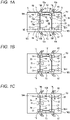
- FIG. 1A shows a configuration in a normal state
- Fig. 1B shows a communication path in a normal state
- Fig. 1C shows the communication path at the time when disconnection occurs.
- Figs. 1A, 1B, and 1C show a layout of components in a plane as viewing a vehicle body 10 from above.
- a left side represents a front side of the vehicle body 10
- a right side represents a rear side of the vehicle body 10.
- Four doors 10a, 10b, 10c, and 10d are arranged on left and right sides of the vehicle body 10.
- each of the electrical components 18A to 18L includes an electronic control unit (ECU) having a communication function of a CAN standard, and is capable of performing wired communication via the communication system 100.
- ECU electronice control unit
- a wire harness of the communication system 100 shown in Fig. 1A includes a plurality of trunk lines 12 and 13, and a backup line 21. Accordingly, a communication path of the communication system 100 shown in Fig. 1A is generally formed in a loop form.
- a switch 22 is connected in the middle of a path of the backup line 21.
- the switch 22 is a normally-off type switch that opens a circuit in a steady state, and is, for example, a switch capable of on-off control, such as a relay. Therefore, in the steady state, a part of the loop of the communication path is opened.
- Each of the trunk lines 12, 13, and the backup line 21 is a communication transmission path corresponding to the CAN communication standard, and includes, for example, two communication lines, a power supply line, and a ground line. It is needless to say that the power supply line and the ground line may be prepared separately.
- another communication standard such as a CAN flexible data rate (CANFD) using a bus-type network similar to a CAN may be adopted instead of the CAN standard.
- CANFD CAN flexible data rate
- the communication system 100 includes a central gateway (G/W) 11 for controlling the communication path.
- G/W central gateway
- a tip 12a of the trunk line 12 is connected to one communication port of the CAN standard of the central gateway 11, and a tip 13a of the trunk line 13 is connected to another communication port of the central gateway 11.
- the central gateway 11 is an electronic control unit having a plurality of communication interfaces corresponding to the CAN standard, a routing map, and a control part. Communication paths for communication of the electrical components 18A to 18L and the like are usually determined based on content of the routing map in the central gateway 11.
- the content assigned to the routing map indicate communication paths from the central gateway 11 to the electrical components 18A to 18L and the like, via the trunk line 12 or 13, one or more of joint connectors 14 to 17, a branch line 19, and the like, and a path is separately assigned to each communication node.
- one joint connector (J/C) 14 is connected in the middle of the trunk line 12, and the joint connector 16 is connected to an end 12b of the trunk line 12.
- the electrical components 18A, 18B and 18K are connected to the joint connector 14 via the branch lines 19 respectively.
- Each branch line 19 includes two communication lines, a power supply line, and a ground line.
- the electrical components 181, 18J and 18L are connected to the joint connector 16 via the branch lines 19 respectively.
- one joint connector 15 is connected in the middle of the trunk line 13 and the joint connector 17 is connected to an end 13b of the trunk line 13.
- the electrical components 18C, 18D and 18E are connected to the joint connector 15 via the branch lines 19 respectively.
- the electrical components 18F, 18G and 18H are connected to the joint connector 17 via the branch lines 19 respectively.
- the joint connectors 14 to 17 are intermediate components for physically and electrically coupling the branch lines 19, which are configured to connect the electrical components 18A to 18L, to the trunk lines 12 and 13. At least the joint connectors 16 and 17 connected to the respective ends 12b and 13b further have a particular function to be described later.
- communication using communication paths 23 and 24 as shown in Fig. 1B can be performed.
- the communication can be performed using the communication path 23, which connects the joint connector 16 and the central gateway 11, and the communication path 24, which connects the central gateway 11 and the joint connector 17.
- the central gateway 11 can determine the communication path immediately when the communication is started.
- path switching is performed so as to start communication immediately using the communication paths 25 and 26. That is, the electrical component 18A and the electrical component 18J are connected via the joint connector 14, the trunk line 12, the central gateway 11, the trunk line 13, the joint connector 17, the backup line 21, the switch 22 and the joint connector 16. Since the disconnection portion 12X is not used in the communication paths 25 and 26, occurrence of delay can be avoided. Since the content of the routing map on the central gateway 11 is rewritten so as to use the communication paths 25 and 26, in communication between the electrical components 18A and 18J, the communication paths 25 and 26 can be used immediately after the start of the communication.
- FIG. 2A shows a normal state
- Fig. 2B shows a connected state at the time when disconnection occurs.
- the end 12b of the trunk line 12 is connected to the joint connector 16, and the end 13b of the trunk line 13 is connected to the joint connector 17.
- the backup line 21 is connected between the two joint connectors 16 and 17 constantly, and switches 22A and 22B that establish and cut off the connection of the backup line 21 are built in the respective joint connectors 16 and 17.
- a disconnection information transmission circuit (electric wire) 21B for transmitting a dedicated signal between the two joint connectors 16 and 17 is provided in parallel with the backup line 21.
- the end 12b of the trunk line 12 and a plurality of the branch lines 19 are electrically connected by a connection portion 29 inside the joint connector 16.
- the end 13b of the trunk line 13 and a plurality of the branch lines 19 are electrically connected by the connection portion 29 inside the joint connector 17.
- Each of the switches 22A and 22B establishes and cuts off the connection between the backup line 21 and the connection portion 29.
- a disconnection detection unit 27 for detecting disconnection of the trunk line 12 is provided inside the joint connector 16, and a disconnection detection unit 28 for detecting disconnection of the trunk line 13 is provided inside the joint connector 17.
- the disconnection detection unit 27 controls opening and closing of the switch 22A.
- the disconnection detection unit 28 controls opening and closing of the switch 22B.
- the disconnection detection unit 27 transmits information on the disconnection to the disconnection detection unit 28 via the disconnection information transmission circuit 21B.
- the disconnection detection unit 28 transmits information on the disconnection to the disconnection detection unit 27 via the disconnection information transmission circuit 21B.
- the switch 22A in the joint connector 16 is opened and the switch 22B in the joint connector 17 is also opened as shown in Fig. 2A , so that the backup line 21 is disconnected from the communication path of a CAN bus.
- the switch 22A in the joint connector 16 is closed and the switch 22B in the joint connector 17 is also closed as illustrated in Fig. 2B , so that the backup line 21 can be used as a communication path between the two joint connectors 16 and 17.
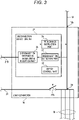
- FIG. 3 A specific example of an internal configuration of one joint connector 16 at a trunk line end is shown in Fig. 3 .
- the disconnection detection unit 27 in the joint connector 16 includes a disconnection detection part 31, a switch control part 32, a disconnection information transmission/reception part 33, and a path change instruction part 34.
- the disconnection detection unit 28 in the joint connector 17 has the same configuration as the disconnection detection unit 27.
- the disconnection detection part 31 can detect presence or absence of disconnection in the trunk line 12. For example, the disconnection detection part 31 can detect the presence or absence of disconnection by monitoring any one or a combination of a potential difference between two communication lines, a potential of each communication line, presence or absence of change in the potential or potential difference, and impedance between communication lines.
- the switch control part 32 Normally, the switch control part 32 performs control so that contacts of the switch 22A are open, and when disconnection is detected by the disconnection detection part 31, the switch control part 32 switches the switch 22A to a state where the contacts thereof are closed.
- the disconnection information transmission/reception part 33 transmits disconnection information to the disconnection detection unit 28 on the other side via the disconnection information transmission circuit 21B.
- the disconnection information transmission/reception part 33 in the disconnection detection unit 27 receives disconnection information transmitted to the disconnection information transmission circuit 21B by the disconnection detection unit 28 and transmits the disconnection information to the path change instruction part 34 thereof.
- the path change instruction part 34 includes a communication interface of the CAN standard, and transmits information for instructing change of path to the central gateway 11 by using a communication path of the trunk line 12, in which no disconnection occurs, in accordance with the disconnection information received by the disconnection information transmission/reception part 33.
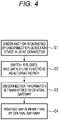
- a state change of the communication system 100 at the time when disconnection occurs is shown in Fig. 4 .
- a state C1 in Fig. 4 is established. That is, the disconnection detection part 31 detects the disconnection of the trunk line 12 by the disconnection detection unit 27 in the joint connector 16.
- the state is transitioned to a state C2, and the contacts of the switch 22A are closed under control of the switch control part 32. Further, since contacts of the switch 22B are also closed on the disconnection detection unit 28 side, the backup line 21 is available as an alternative path.
- the disconnection detection unit 28 that receives disconnection information transmits the disconnection information to the central gateway 11 by using a communication path passing through the trunk line 13 in which no disconnection occurs.
- a next state C4 by control in the central gateway 11 that receives the disconnection information, that is, a path change instruction from the disconnection detection unit 28, the routing map of the central gateway 11 is automatically rewritten so as to use the path of the backup line 21.
- Control operations of the communication system 100 for coping with occurrence of disconnection are shown in Fig. 5 .
- the disconnection detection unit 27 or 28 existing in each of the joint connectors 14 to 17 constantly or periodically monitors and checks whether communication paths to the other joint connectors can be used (electrically connected) (S11).
- the disconnection detection unit 27 or 28 in each of the joint connectors 14 to 17 performs communication of the CAN standard with the central gateway 11 by using a communication path determined by the central gateway 11 (S12).
- the disconnection detection unit 27 or 28 in each of the joint connectors 14 to 17 uses the communication of the CAN standard to notify the central gateway 11 that there is no problem in the current communication path (S13).
- disconnection detection unit 27 or 28 in any of the joint connectors 14 to 17 detects disconnection
- disconnection information generated by the disconnection detection unit 27 or 28 that detects the disconnection is transmitted to the central gateway 11 (S14).
- the gateway 11 When the central gateway 11 receives the disconnection information transmitted from the disconnection detection unit 27 or 28 in any of the joint connectors 14 to 17, the gateway 11 rewrites the routing map therein (S15). Accordingly, for example, the path passing through the disconnection portion 12X is excluded, and assignment of the communication path is changed so as to use the path of the backup line 21 instead.
- FIG. 6 A configuration of a communication system 100B of a second embodiment is shown in Fig. 6 .
- a central gateway 51 In the communication system 100B shown in Fig. 6 , a central gateway 51, a switching hub (HUB) 52, zone ECUs 53 and 54, high-order communication buses 63A and 63B, joint connectors 14A to 14C and 15A to 15C, zone trunk lines 61A, 61B, 61C, 62A, 62B and 62C, and backup lines 21-1 and 21-2 are connected on communication paths.
- a switching hub (HUB) 52 In the communication system 100B shown in Fig. 6 , a central gateway 51, a switching hub (HUB) 52, zone ECUs 53 and 54, high-order communication buses 63A and 63B, joint connectors 14A to 14C and 15A to 15C, zone trunk lines 61A, 61B, 61C, 62A, 62B and 62C, and backup lines 21-1 and 21-2 are connected on communication paths.
- a switching hub (HUB) 52 In the communication system 100B shown in Fig. 6
- the zone trunk lines 61A, 61B and 61C, and the backup line 21-1 are connected so as to form one closed loop.
- the zone ECU 53 controls a communication path of this zone.
- a switch 22-1 is connected in the middle of a path of the backup line 21-1.
- the switch 22-1 is a normally-off type switch that opens a circuit in a steady state, and is, for example, a switch capable of on-off control, such as a relay. Therefore, in the steady state, a part of the loop of an in-zone communication path is opened, and the backup line 21-1 is disconnected from a CAN bus.
- the zone trunk lines 62A, 62B and 62C, and the backup line 21-2 are connected so as to form one closed loop.
- the zone ECU 54 controls a communication path of this zone.
- a switch 22-2 is connected in the middle of a path of the backup line 21-2.
- the switch 22-2 is a normally-off type switch that opens a circuit in a steady state, and is, for example, a switch capable of on-off control, such as a relay. Therefore, in the steady state, a part of the loop of an in-zone communication path is opened, and the backup line 21-2 is disconnected from a CAN bus.
- an ECU having a function of the central gateway (G/W) 51 is connected to one communication port of the switching hub (HUB) 52 via a high-order communication bus 57.
- One communication port of the switching hub 52 is connected to the zone ECU 53 via the high-order communication bus 63A, and another communication port of the switching hub 52 is connected to the zone ECU 54 via the high-order communication bus 63B.
- a communication network connecting the central gateway 51, the switching hub 52, the high-order communication buses 63A, 63B, and 57, and the zone ECUs 53 and 54 forms a transmission path of the Ethernet (registered trademark) standard. Accordingly, the central gateway 51 and each of the zone ECUs 53 and 54 incorporate a communication interface corresponding to the Ethernet.
- a path passing through the backup line 21-1 and the zone trunk lines 61C and 61B can be used as a communication path connecting the zone ECU 53 and the joint connector 14A, instead of the zone trunk line 61A.
- a disconnection detection unit in the zone ECU 53 or the joint connector 14A detects the disconnection and rewrites a routing map in the zone ECU 53, it is possible to avoid an increase in delay time without being affected by a disconnected portion.
- the zone ECU 53 transmits information indicating the rewriting of the routing map to the central gateway 51 via the switching hub 52.
- the central gateway 51 transmits a control signal to the zone ECU 54 as necessary. The same applies to the zone on the left side of the vehicle body.
- the communication paths are switched only when the wire harness of the communication line is disconnected, it is conceivable to switch the paths even in a condition other than disconnection.
- a condition other than disconnection For example, in cases such as one where a communication load is increased, one where impedance of the communication line is changed, or one where communication noise is increased, communication quality decreases. That is, since occurrence frequency of an error is increased, and a decrease in communication speed and an increase in delay time are predicted, it is desirable to switch the communication paths in the same manner as in the case of disconnection. Therefore, the decrease in communication quality can be treated equivalently to the occurrence of disconnection.
- the backup line 21 can be used as an alternative path for communication by closing the switch 22.
- the central gateway 11 rewrites the content of the routing map and preferentially switches to a path using the backup line 21, and thus an increase in delay time of communication can be avoided.
- the switch since the switch is provided, a part of the loop of the communication path can be controlled to be opened, and a routing map having appropriate content can be created even when a bus-type communication network such as a CAN is configured.
- a communication system has a communication line (trunk lines 12 and 13) configured in a loop form and a transmission path having a coupling connector (joint connectors 14 to 17) provided at each of a plurality of connection positions on the communication line.
- the communication system includes:
- the path switch is controllable to cut off a part of the communication line in a steady state is provided inside or near one or a plurality of the coupling connectors.
- the disconnection detection part detects presence or absence of disconnection in one or more paths included in the communication line is provided inside or near one or a plurality of the coupling connectors.
- the gateway has a routing map for controlling a communication path is connected to the communication line.
- the communication path control part switches one or a plurality of the path switches to a connected state, and changes content of the routing map to enable use of a path passing through the path switch.
- the communication line is formed in a loop form, when a failure such as disconnection occurs on the communication line, another path can be used.
- the path switch cuts off a part of the communication line in a steady state, a part of the loop is opened in an actual path. Therefore, even when the communication line is a bus-type communication network such as a CAN, the routing map can be created without any problem.
- a path different from the disconnected path can be secured by closing the path switch, so that communication is possible.
- the communication path control part changes the content of the routing map and enables use of the path passing through the path switch, so that communication delay can be reduced. That is, since the communication can be started by selecting from the beginning a backup path different from the disconnected path, it is possible to prevent an increase in delay time.
- the communication line may include a first trunk line (trunk line 12), a second trunk line (trunk line 13), and a backup line (21).
- a first coupling connector (joint connector 16) may be connected to an end of the first trunk line.
- a second coupling connector (joint connector 17) may be connected to an end of the second trunk line.
- the backup line may be connected between the first coupling connector and the second coupling connector.
- the path switch (switches 22A and 22B) that turns on and off a connected state of the backup line may be provided in at least one of the first coupling connector and the second coupling connector.
- a communication path in a loop form can be formed.
- the path switch cuts off the connection of the backup line in the steady state, the actual path does not form a loop.
- an entire communication path including the path switch is in a loop form, for example, when disconnection occurs on the first trunk line, communication can be performed by using a path that passes both the backup line and the second trunk line.
- communication can be performed by using a path that passes both the backup line and the first trunk line.
- the first coupling connector (joint connector 16) may be provided with a first path switch (switch 22A) and a first disconnection detection part (disconnection detection unit 27).
- the second coupling connector may be provided with a second path switch (switch 22B) and a second disconnection detection part (disconnection detection unit 28).
- the communication path control part may switch both the first path switch and the second path switch to a state in which the backup line is connected.
- disconnection in the first trunk line can be detected by the first disconnection detection part, and disconnection in the second trunk line can be detected by the second disconnection detection part. Further, it is possible to switch on and off the connection between the first trunk line and the backup line by using the first path switch, and to switch on and off the connection between the second trunk line and the backup line by using the second path switch.
- the backup line can be connected to the end of the first trunk line or to the end of the second trunk line.
- the first disconnection detection part may include a first disconnection transmission part (disconnection information transmission/reception part 33) that transmits disconnection detection information to both the second coupling connector and the gateway, and
- the second disconnection detection part may include a second disconnection transmission part (disconnection information transmission/reception part 33) that transmits disconnection detection information to both the first coupling connector and the gateway.
- the second path switch when the first trunk line is disconnected, the second path switch can be closed in response to the disconnection detection information transmitted by the first disconnection transmission part, and further the routing map of the gateway can be automatically changed. Further, when the second trunk line is disconnected, the first path switch can be closed in response to the disconnection detection information transmitted by the second disconnection transmission part, and further the routing map of the gateway can be automatically changed.
- the communication system may further include:
- the disconnection detection information can be transmitted between the first coupling connector and the second coupling connector all the time regardless of states of the first path switch and the second path switch.
- the vehicle communication system of the present invention when a failure such as disconnection of one communication path occurs, another communication path that is not disconnected can be used, and thus communication reliability can be improved. Further, communication delay can be reduced by change of the routing map.
Landscapes
- Engineering & Computer Science (AREA)
- Computer Networks & Wireless Communication (AREA)
- Signal Processing (AREA)
- Mechanical Engineering (AREA)
- Small-Scale Networks (AREA)
Description
- The present invention relates to, for example, a communication system that can be used for communication between a plurality of electrical components via a transmission path of a wire harness on a vehicle, and particularly relates to a technique for coping with a failure such as disconnection of a communication path.
- For example, as disclosed in
JP-A-2019-137394 - Further, as shown in Fig. 8 and disclosed in [0033] of
JP-A-2019-137394 -
US 2003/0043750 A1 discloses an active network for use in vehicles. A mesh of communication lines connects active elements in the network. The active elements may be gateways, bridges, routers or switches. More than one communication path exists between the active elements and the devices connected thereto. In the event of a disruption occurring on a particular communication path, a different (predetermined) path can be used. Portions of the network may be reserved for communication between particular devices, so called No-Go zones. In another embodiment, a single ring of interconnected active elements is described. A plurality of devices are connected to the ring via communication lines. -
US 2008/201491 A1 describes a network with built-in redundancy. Two coupling devices are connected via a standard link and a redundant link for backup. The coupling devices monitor the two links for a link failure. In normal operation, communication is performed via the standard link and information received via the redundant link is blocked. If a link failure of the standard link is detected, the standard link is blocked and the redundant link is used for communication. A plurality of terminal devices are connected in star topology to the coupling devices. -
US 2018/097721 A1 discloses an on-board network with gateway devices connected in a loop. One of the gateways (parent) includes a management routing table that specifies the physical communication routes between the gateways. In the event that a gateway detects a disruption of a communication paths, the parent gateway is informed. The parent gateway then creates an alternative communication route based on the management routing table. Based on the alternative communication route, the other gateway devices are instructed to update their routing tables. -
EP 3 476 661 A1 describes a wire harness for a vehicle including several control boxes. The control boxes are connected via a trunk line and distributed throughout the vehicle. The trunk line includes a communication line and two power source lines for backup. The control boxes include gateways for wired and wireless communication. In the event that a wired communication line is disconnected, wireless communication is performed. - In a case where a communication path is formed in a loop type as shown in Fig. 8 of
JP-A-2019-137394 - However, with respect to a typical on-vehicle system in the related art, in a case where a bus-type communication network such as a controller area network (CAN) is used therein, an initial communication path is determined according to a routing map determined in advance. But when a plurality of communication paths are connected in a loop form in order to back up for disconnection, a problem occurs that the routing map cannot be created.
- Even if the on-vehicle system has a plurality of communication paths for backup, when it is found that communication via a certain communication path is not possible due to disconnection or the like, it is necessary to search for and switch to another communication path that can be used. Therefore, there is possibility that a relatively long time is required before normal communication can be started.
- The present invention has been made in view of the above circumstances, and an object of the present invention is to provide a communication system capable of, when a failure such as disconnection of a communication path occurs, enabling use of another communication path that is not disconnected, and reducing communication delay.
- This is achieved by the features of claim 1 for a communication system.
-
-
Fig. 1A is a block diagram showing a configuration of a communication system according to an embodiment that is mounted on a vehicle, specifically showing the configuration in a normal state. -
Fig. 1B is a block diagram showing the configuration of the communication system according to the embodiment that is mounted on a vehicle, specifically showing a communication path in a normal state. -
Fig. 1C is a block diagram showing the configuration of the communication system according to the embodiment that is mounted on a vehicle, specifically showing the communication path at the time when disconnection occurs. -
Fig. 2A is an electric circuit diagram showing a connection state of a plurality of trunk line ends included in the communication system, specifically showing a normal state thereof. -
Fig. 2B is an electric circuit diagram showing a connection state of the plurality of trunk line ends included in the communication system, specifically showing a connected state at the time when disconnection occurs. -
Fig. 3 is a block diagram showing a specific example of an internal configuration of a joint connector at one trunk line end. -
Fig. 4 is a state transition flowchart showing a state change of the communication system at the time when disconnection occurs. -
Fig. 5 is a flowchart showing control operations of the communication system for coping with occurrence of disconnection. -
Fig. 6 is a block diagram showing a modification of the configuration of the communication system. - A specific embodiment of the present invention will be described below with reference to the drawings.
- An outline of a configuration of a
communication system 100 according to an embodiment of the present invention is shown inFigs. 1A, 1B, and 1C. Fig. 1A shows a configuration in a normal state,Fig. 1B shows a communication path in a normal state, andFig. 1C shows the communication path at the time when disconnection occurs. - It is assumed that the
communication system 100 of the present embodiment is used in a state of being mounted on a vehicle such as an automobile.Figs. 1A, 1B, and 1C show a layout of components in a plane as viewing avehicle body 10 from above. InFigs. 1A, 1B, and 1C , a left side represents a front side of thevehicle body 10 and a right side represents a rear side of thevehicle body 10. Fourdoors vehicle body 10. - As shown in
Fig. 1A , various types ofelectrical components vehicle body 10. Each of theelectrical components 18A to 18L includes an electronic control unit (ECU) having a communication function of a CAN standard, and is capable of performing wired communication via thecommunication system 100. - A wire harness of the
communication system 100 shown inFig. 1A includes a plurality oftrunk lines backup line 21. Accordingly, a communication path of thecommunication system 100 shown inFig. 1A is generally formed in a loop form. Aswitch 22 is connected in the middle of a path of thebackup line 21. Theswitch 22 is a normally-off type switch that opens a circuit in a steady state, and is, for example, a switch capable of on-off control, such as a relay. Therefore, in the steady state, a part of the loop of the communication path is opened. - Each of the
trunk lines backup line 21 is a communication transmission path corresponding to the CAN communication standard, and includes, for example, two communication lines, a power supply line, and a ground line. It is needless to say that the power supply line and the ground line may be prepared separately. In addition, another communication standard such as a CAN flexible data rate (CANFD) using a bus-type network similar to a CAN may be adopted instead of the CAN standard. - As shown in
Fig. 1A , thecommunication system 100 includes a central gateway (G/W) 11 for controlling the communication path. In the configuration ofFig. 1A , atip 12a of thetrunk line 12 is connected to one communication port of the CAN standard of thecentral gateway 11, and atip 13a of thetrunk line 13 is connected to another communication port of thecentral gateway 11. - Although not shown, the
central gateway 11 is an electronic control unit having a plurality of communication interfaces corresponding to the CAN standard, a routing map, and a control part. Communication paths for communication of theelectrical components 18A to 18L and the like are usually determined based on content of the routing map in thecentral gateway 11. - The content assigned to the routing map indicate communication paths from the
central gateway 11 to theelectrical components 18A to 18L and the like, via thetrunk line joint connectors 14 to 17, abranch line 19, and the like, and a path is separately assigned to each communication node. - In the configuration of
Fig. 1A , one joint connector (J/C) 14 is connected in the middle of thetrunk line 12, and thejoint connector 16 is connected to anend 12b of thetrunk line 12. Theelectrical components joint connector 14 via thebranch lines 19 respectively. Eachbranch line 19 includes two communication lines, a power supply line, and a ground line. Theelectrical components joint connector 16 via thebranch lines 19 respectively. - In addition, one
joint connector 15 is connected in the middle of thetrunk line 13, and thejoint connector 17 is connected to anend 13b of thetrunk line 13. Theelectrical components joint connector 15 via thebranch lines 19 respectively. Theelectrical components joint connector 17 via thebranch lines 19 respectively. - The
joint connectors 14 to 17 are intermediate components for physically and electrically coupling thebranch lines 19, which are configured to connect theelectrical components 18A to 18L, to thetrunk lines joint connectors - In a state where no failure such as disconnection occurs in the
trunk lines communication paths Fig. 1B can be performed. For example, when communication is to be performed between theelectrical component 18J connected to theend 12b of thetrunk line 12 and theelectrical component 18G connected to theend 13b of thetrunk line 13, the communication can be performed using thecommunication path 23, which connects thejoint connector 16 and thecentral gateway 11, and thecommunication path 24, which connects thecentral gateway 11 and thejoint connector 17. - Since such information on available communication paths is usually determined in advance and registered in advance in the routing map on the
central gateway 11, thecentral gateway 11 can determine the communication path immediately when the communication is started. - On the other hand, in a state shown in
Fig. 1C , it is assumed that disconnection occurs at adisconnection portion 12X in the middle of thetrunk line 12 connecting the twojoint connectors Fig. 1C , communication cannot be performed in thecommunication path 23 ofFig. 1B . Therefore, thecommunication system 100 closes theswitch 22 to enable use of anew communication path 26 in which the twojoint connectors backup line 21. Further, the content of the routing map on thecentral gateway 11 is automatically rewritten so that thecommunication path 26 can be used immediately. - As a result, for example, when communication is to be performed between the
electrical component 18A and theelectrical component 18J in the state shown inFig. 1C , path switching is performed so as to start communication immediately using thecommunication paths electrical component 18A and theelectrical component 18J are connected via thejoint connector 14, thetrunk line 12, thecentral gateway 11, thetrunk line 13, thejoint connector 17, thebackup line 21, theswitch 22 and thejoint connector 16. Since thedisconnection portion 12X is not used in thecommunication paths central gateway 11 is rewritten so as to use thecommunication paths electrical components communication paths - In the state shown in
Fig. 1C , since thedisconnection portion 12X exists, an entire loop of a path passing through thetrunk lines joint connectors backup line 21 and theswitch 22, and a correct routing map can be created without any problem in the CAN communication standard. A new and appropriate communication path that is to be used when disconnection occurs can be determined in advance for each disconnection position. Accordingly, a plurality of types of path information determined in advance for each disconnection position can be held in advance on the routing map. Therefore, after a disconnection position is identified, the routing map can be rewritten simply by selecting appropriate path information corresponding to the disconnection position. - A specific example of connection states of the
ends trunk lines communication system 100 is shown inFigs. 2A and 2B. Fig. 2A shows a normal state andFig. 2B shows a connected state at the time when disconnection occurs. - In the
communication system 100, as shown inFigs. 2A and 2B , theend 12b of thetrunk line 12 is connected to thejoint connector 16, and theend 13b of thetrunk line 13 is connected to thejoint connector 17. Further, in the example ofFigs. 2A and 2B , thebackup line 21 is connected between the twojoint connectors backup line 21 are built in the respectivejoint connectors joint connectors backup line 21. - The
end 12b of thetrunk line 12 and a plurality of thebranch lines 19 are electrically connected by aconnection portion 29 inside thejoint connector 16. Similarly, theend 13b of thetrunk line 13 and a plurality of thebranch lines 19 are electrically connected by theconnection portion 29 inside thejoint connector 17. Each of theswitches backup line 21 and theconnection portion 29. - A
disconnection detection unit 27 for detecting disconnection of thetrunk line 12 is provided inside thejoint connector 16, and adisconnection detection unit 28 for detecting disconnection of thetrunk line 13 is provided inside thejoint connector 17. Thedisconnection detection unit 27 controls opening and closing of theswitch 22A. Thedisconnection detection unit 28 controls opening and closing of theswitch 22B. Upon detecting disconnection, thedisconnection detection unit 27 transmits information on the disconnection to thedisconnection detection unit 28 via the disconnectioninformation transmission circuit 21B. Similarly, upon detecting disconnection, thedisconnection detection unit 28 transmits information on the disconnection to thedisconnection detection unit 27 via the disconnectioninformation transmission circuit 21B. - In a state where no disconnection occurs in any of the
trunk lines switch 22A in thejoint connector 16 is opened and theswitch 22B in thejoint connector 17 is also opened as shown inFig. 2A , so that thebackup line 21 is disconnected from the communication path of a CAN bus. On the other hand, when disconnection occurs at thedisconnection portion 12X of thetrunk line 12, theswitch 22A in thejoint connector 16 is closed and theswitch 22B in thejoint connector 17 is also closed as illustrated inFig. 2B , so that thebackup line 21 can be used as a communication path between the twojoint connectors - A specific example of an internal configuration of one
joint connector 16 at a trunk line end is shown inFig. 3 . - As shown in
Fig. 3 , thedisconnection detection unit 27 in thejoint connector 16 includes adisconnection detection part 31, aswitch control part 32, a disconnection information transmission/reception part 33, and a pathchange instruction part 34. Thedisconnection detection unit 28 in thejoint connector 17 has the same configuration as thedisconnection detection unit 27. - The
disconnection detection part 31 can detect presence or absence of disconnection in thetrunk line 12. For example, thedisconnection detection part 31 can detect the presence or absence of disconnection by monitoring any one or a combination of a potential difference between two communication lines, a potential of each communication line, presence or absence of change in the potential or potential difference, and impedance between communication lines. - Normally, the
switch control part 32 performs control so that contacts of theswitch 22A are open, and when disconnection is detected by thedisconnection detection part 31, theswitch control part 32 switches theswitch 22A to a state where the contacts thereof are closed. - When disconnection is detected by the
disconnection detection part 31 in thedisconnection detection unit 27, the disconnection information transmission/reception part 33 transmits disconnection information to thedisconnection detection unit 28 on the other side via the disconnectioninformation transmission circuit 21B. In addition, when disconnection is detected by thedisconnection detection unit 28 on the other side, the disconnection information transmission/reception part 33 in thedisconnection detection unit 27 receives disconnection information transmitted to the disconnectioninformation transmission circuit 21B by thedisconnection detection unit 28 and transmits the disconnection information to the path changeinstruction part 34 thereof. - The path change
instruction part 34 includes a communication interface of the CAN standard, and transmits information for instructing change of path to thecentral gateway 11 by using a communication path of thetrunk line 12, in which no disconnection occurs, in accordance with the disconnection information received by the disconnection information transmission/reception part 33. - A state change of the
communication system 100 at the time when disconnection occurs is shown inFig. 4 . - For example, when disconnection occurs at the
disconnection portion 12X of thetrunk line 12, a state C1 inFig. 4 is established. That is, thedisconnection detection part 31 detects the disconnection of thetrunk line 12 by thedisconnection detection unit 27 in thejoint connector 16. - Then, the state is transitioned to a state C2, and the contacts of the
switch 22A are closed under control of theswitch control part 32. Further, since contacts of theswitch 22B are also closed on thedisconnection detection unit 28 side, thebackup line 21 is available as an alternative path. - In a next state C3, the
disconnection detection unit 28 that receives disconnection information transmits the disconnection information to thecentral gateway 11 by using a communication path passing through thetrunk line 13 in which no disconnection occurs. - In a next state C4, by control in the
central gateway 11 that receives the disconnection information, that is, a path change instruction from thedisconnection detection unit 28, the routing map of thecentral gateway 11 is automatically rewritten so as to use the path of thebackup line 21. - Control operations of the
communication system 100 for coping with occurrence of disconnection are shown inFig. 5 . - The
disconnection detection unit joint connectors 14 to 17 constantly or periodically monitors and checks whether communication paths to the other joint connectors can be used (electrically connected) (S11). - When the communication paths can be used without any problem, according to the routing map of the
central gateway 11, thedisconnection detection unit joint connectors 14 to 17 performs communication of the CAN standard with thecentral gateway 11 by using a communication path determined by the central gateway 11 (S12). - The
disconnection detection unit joint connectors 14 to 17 uses the communication of the CAN standard to notify thecentral gateway 11 that there is no problem in the current communication path (S13). - When the
disconnection detection unit joint connectors 14 to 17 detects disconnection, disconnection information generated by thedisconnection detection unit - When the
central gateway 11 receives the disconnection information transmitted from thedisconnection detection unit joint connectors 14 to 17, thegateway 11 rewrites the routing map therein (S15). Accordingly, for example, the path passing through thedisconnection portion 12X is excluded, and assignment of the communication path is changed so as to use the path of thebackup line 21 instead. - Therefore, in the
communication system 100 that performs the control as shown inFig. 5 , when a failure such as disconnection at thedisconnection portion 12X occurs, the content of the routing map of thecentral gateway 11 is switched so as to use an alternative path other than the disconnected path. Therefore, even when disconnection occurs, it is possible to avoid an increase in delay time of communication. - A configuration of a
communication system 100B of a second embodiment is shown inFig. 6 . - In the
communication system 100B shown inFig. 6 , acentral gateway 51, a switching hub (HUB) 52,zone ECUs order communication buses joint connectors 14A to 14C and 15A to 15C,zone trunk lines - In a zone on the right side of a vehicle body, the
zone trunk lines zone ECU 53 controls a communication path of this zone. A switch 22-1 is connected in the middle of a path of the backup line 21-1. The switch 22-1 is a normally-off type switch that opens a circuit in a steady state, and is, for example, a switch capable of on-off control, such as a relay. Therefore, in the steady state, a part of the loop of an in-zone communication path is opened, and the backup line 21-1 is disconnected from a CAN bus. - In a zone on the left side of the vehicle body, the
zone trunk lines zone ECU 54 controls a communication path of this zone. A switch 22-2 is connected in the middle of a path of the backup line 21-2. The switch 22-2 is a normally-off type switch that opens a circuit in a steady state, and is, for example, a switch capable of on-off control, such as a relay. Therefore, in the steady state, a part of the loop of an in-zone communication path is opened, and the backup line 21-2 is disconnected from a CAN bus. - Meanwhile, an ECU having a function of the central gateway (G/W) 51 is connected to one communication port of the switching hub (HUB) 52 via a high-
order communication bus 57. One communication port of the switchinghub 52 is connected to thezone ECU 53 via the high-order communication bus 63A, and another communication port of the switchinghub 52 is connected to thezone ECU 54 via the high-order communication bus 63B. - Here, a communication network connecting the
central gateway 51, the switchinghub 52, the high-order communication buses zone ECUs central gateway 51 and each of thezone ECUs - In the
communication system 100B ofFig. 6 , for example, when disconnection occurs in the middle of thezone trunk line 61A in the zone on the right side of the vehicle body, a path passing through the backup line 21-1 and thezone trunk lines zone ECU 53 and thejoint connector 14A, instead of thezone trunk line 61A. In this case, since a disconnection detection unit in thezone ECU 53 or thejoint connector 14A detects the disconnection and rewrites a routing map in thezone ECU 53, it is possible to avoid an increase in delay time without being affected by a disconnected portion. In addition, thezone ECU 53 transmits information indicating the rewriting of the routing map to thecentral gateway 51 via the switchinghub 52. Thecentral gateway 51 transmits a control signal to thezone ECU 54 as necessary. The same applies to the zone on the left side of the vehicle body. - Although it is assumed in any of the above-described embodiments that the communication paths are switched only when the wire harness of the communication line is disconnected, it is conceivable to switch the paths even in a condition other than disconnection. For example, in cases such as one where a communication load is increased, one where impedance of the communication line is changed, or one where communication noise is increased, communication quality decreases. That is, since occurrence frequency of an error is increased, and a decrease in communication speed and an increase in delay time are predicted, it is desirable to switch the communication paths in the same manner as in the case of disconnection. Therefore, the decrease in communication quality can be treated equivalently to the occurrence of disconnection.
- With the
communication system 100 shown inFigs. 1A to 1C , even when disconnection occurs at thedisconnection portion 12X, for example, thebackup line 21 can be used as an alternative path for communication by closing theswitch 22. Moreover, when disconnection is detected, thecentral gateway 11 rewrites the content of the routing map and preferentially switches to a path using thebackup line 21, and thus an increase in delay time of communication can be avoided. Further, since the switch is provided, a part of the loop of the communication path can be controlled to be opened, and a routing map having appropriate content can be created even when a bus-type communication network such as a CAN is configured. - A communication system has a communication line (
trunk lines 12 and 13) configured in a loop form and a transmission path having a coupling connector (joint connectors 14 to 17) provided at each of a plurality of connection positions on the communication line. The communication system includes: - a path switch (switch 22);
- a disconnection detection part (disconnection detection unit 27);
- a gateway (central gateway 11); and
- a communication path control part (
disconnection detection unit 27 or central gateway 11). - The path switch is controllable to cut off a part of the communication line in a steady state is provided inside or near one or a plurality of the coupling connectors.
- The disconnection detection part detects presence or absence of disconnection in one or more paths included in the communication line is provided inside or near one or a plurality of the coupling connectors.
- The gateway has a routing map for controlling a communication path is connected to the communication line.
- When the disconnection detection part detects presence of disconnection, the communication path control part switches one or a plurality of the path switches to a connected state, and changes content of the routing map to enable use of a path passing through the path switch.
- According to the communication system having the above configuration, since the communication line is formed in a loop form, when a failure such as disconnection occurs on the communication line, another path can be used. At this time, since the path switch cuts off a part of the communication line in a steady state, a part of the loop is opened in an actual path. Therefore, even when the communication line is a bus-type communication network such as a CAN, the routing map can be created without any problem. In addition, when disconnection occurs, a path different from the disconnected path can be secured by closing the path switch, so that communication is possible. Further, when the disconnection detection part detects the disconnection, the communication path control part changes the content of the routing map and enables use of the path passing through the path switch, so that communication delay can be reduced. That is, since the communication can be started by selecting from the beginning a backup path different from the disconnected path, it is possible to prevent an increase in delay time.
- In the communication system, the communication line may include a first trunk line (trunk line 12), a second trunk line (trunk line 13), and a backup line (21).
- A first coupling connector (joint connector 16) may be connected to an end of the first trunk line.
- A second coupling connector (joint connector 17) may be connected to an end of the second trunk line.
- The backup line may be connected between the first coupling connector and the second coupling connector.
- The path switch (
switches - According to the communication system having the above configuration, since a path connecting the first trunk line, the first coupling connector, the backup line, the second coupling connector, and the second trunk line is formed, a communication path in a loop form can be formed. At this time, since the path switch cuts off the connection of the backup line in the steady state, the actual path does not form a loop. However, since an entire communication path including the path switch is in a loop form, for example, when disconnection occurs on the first trunk line, communication can be performed by using a path that passes both the backup line and the second trunk line. When disconnection occurs on the second trunk line, communication can be performed by using a path that passes both the backup line and the first trunk line.
- In the communication system, the first coupling connector (joint connector 16) may be provided with a first path switch (switch 22A) and a first disconnection detection part (disconnection detection unit 27).
- The second coupling connector (joint connector 17) may be provided with a second path switch (switch 22B) and a second disconnection detection part (disconnection detection unit 28).
- When one of the first disconnection detection part and the second disconnection detection part detects disconnection of the first trunk line or disconnection of the second trunk line, the communication path control part may switch both the first path switch and the second path switch to a state in which the backup line is connected.
- According to the communication system having the above configuration, disconnection in the first trunk line can be detected by the first disconnection detection part, and disconnection in the second trunk line can be detected by the second disconnection detection part. Further, it is possible to switch on and off the connection between the first trunk line and the backup line by using the first path switch, and to switch on and off the connection between the second trunk line and the backup line by using the second path switch. In addition, since there are two path switches, the backup line can be connected to the end of the first trunk line or to the end of the second trunk line.
- In the communication system, the first disconnection detection part may include a first disconnection transmission part (disconnection information transmission/reception part 33) that transmits disconnection detection information to both the second coupling connector and the gateway, and
- The second disconnection detection part may include a second disconnection transmission part (disconnection information transmission/reception part 33) that transmits disconnection detection information to both the first coupling connector and the gateway.
- According to the communication system having the above configuration, when the first trunk line is disconnected, the second path switch can be closed in response to the disconnection detection information transmitted by the first disconnection transmission part, and further the routing map of the gateway can be automatically changed. Further, when the second trunk line is disconnected, the first path switch can be closed in response to the disconnection detection information transmitted by the second disconnection transmission part, and further the routing map of the gateway can be automatically changed.
- The communication system may further include:
- a disconnection information transmission circuit (21B) that is provided in parallel with the backup line,
- in which the first disconnection transmission part and the second disconnection transmission part may transmit the disconnection detection information between the first coupling connector and the second coupling connector by using the disconnection information transmission circuit.
- According to the communication system having the above configuration, the disconnection detection information can be transmitted between the first coupling connector and the second coupling connector all the time regardless of states of the first path switch and the second path switch.
- According to the vehicle communication system of the present invention, when a failure such as disconnection of one communication path occurs, another communication path that is not disconnected can be used, and thus communication reliability can be improved. Further, communication delay can be reduced by change of the routing map.
Claims (5)
- A communication system for a vehicle that has a communication line (12, 13, 21) configured in a loop form having a joint connector (14, 15, 16, 17) provided at each of a plurality of connection positions on the communication line (12, 13, 21) providing a communication transmission path corresponding to the CAN communication standard, the communication system comprising:a disconnection detection part (27);a central gateway (11); anda communication path control part (27 ; 11),wherein the disconnection detection part (27) detects presence or absence of disconnection in one or more communication lines (12, 13, 21);the communication system characterized by comprising:a path switch (22);wherein the path switch (22) that is controllable to cut off a part of the communication line (12, 13, 21) in a steady state is provided inside or near one or a plurality of the joint connectors (14, 15, 16, 17); and in thatthe disconnection detection part (27) is provided inside or near one or a plurality of the joint connectors (14, 15, 16, 17);the central gateway (11) that has a routing map for controlling a communication path is connected to the communication line (12, 13, 21); andwhen the disconnection detection part (27) detects presence of disconnection, the communication path control part (27 ; 11) switches one or a plurality of the path switches (22) to a connected state, and changes content of the routing map to enable use of a path passing through the path switch (22).
- The communication system for a vehicle according to claim 1,wherein the communication line (12, 13, 21) includes a first trunk line (12), a second trunk line (13), and a backup line (21),wherein a first joint connector (16) is connected to an end of the first trunk line (12),wherein a second joint connector (17) is connected to an end of the second trunk line (13),wherein the backup line (21) is connected between the first joint connector (16) and the second joint connector (17), andwherein the path switch (22) that turns on and off a connected state of the backup line (21) is provided in at least one of the first joint connector (16) and the second joint connector (17).
- The communication system for a vehicle according to claim 2,wherein the first joint connector (16) is provided with a first path switch (22A) and a first disconnection detection part (27),wherein the second joint connector (17) is provided with a second path switch (22B) and a second disconnection detection part (28), andwherein when one of the first disconnection detection part (27) and the second disconnection detection part (28) detects disconnection of the first trunk line (12) or disconnection of the second trunk line (13), the communication path control part (27 ; 11) switches both the first path switch (22A) and the second path switch (22B) to a state in which the backup line (21) is connected.
- The communication system for a vehicle according to claim 3,wherein the first disconnection detection part (27) includes a first disconnection transmission part (33) that transmits disconnection detection information to both the second joint connector (17) and the central gateway (11), andwherein the second disconnection detection part (28) includes a second disconnection transmission part (33) that transmits disconnection detection information to both the first joint connector (16) and the central gateway (11).
- The communication system for a vehicle according to claim 4, further comprising:a disconnection information transmission circuit (21B) that is provided in parallel with the backup line (21),wherein the first disconnection transmission part (33) and the second disconnection transmission part (33) transmit the disconnection detection information between the first joint connector (16) and the second joint connector (17) by using the disconnection information transmission circuit (21B).
Applications Claiming Priority (1)
| Application Number | Priority Date | Filing Date | Title |
|---|---|---|---|
| JP2020024612A JP7063926B2 (en) | 2020-02-17 | 2020-02-17 | Communications system |
Publications (2)
| Publication Number | Publication Date |
|---|---|
| EP3866406A1 EP3866406A1 (en) | 2021-08-18 |
| EP3866406B1 true EP3866406B1 (en) | 2022-07-06 |
Family
ID=74666598
Family Applications (1)
| Application Number | Title | Priority Date | Filing Date |
|---|---|---|---|
| EP21157636.8A Active EP3866406B1 (en) | 2020-02-17 | 2021-02-17 | Communication system |
Country Status (4)
| Country | Link |
|---|---|
| US (1) | US11516047B2 (en) |
| EP (1) | EP3866406B1 (en) |
| JP (1) | JP7063926B2 (en) |
| CN (1) | CN113271243B (en) |
Cited By (1)
| Publication number | Priority date | Publication date | Assignee | Title |
|---|---|---|---|---|
| US12483438B2 (en) | 2023-06-08 | 2025-11-25 | Ford Global Technologies, Llc | Vehicular multiplex bus system with backup powerline communication |
Families Citing this family (1)
| Publication number | Priority date | Publication date | Assignee | Title |
|---|---|---|---|---|
| CN113655708B (en) | 2021-10-21 | 2022-03-25 | 北京理工大学深圳汽车研究院(电动车辆国家工程实验室深圳研究院) | Intelligent vehicle diagonal equal-hop heterogeneous composite redundancy domain architecture |
Family Cites Families (29)
| Publication number | Priority date | Publication date | Assignee | Title |
|---|---|---|---|---|
| JP3285138B2 (en) * | 1997-10-20 | 2002-05-27 | 富士通株式会社 | Transmission device in ring network |
| JP3679944B2 (en) * | 1999-03-24 | 2005-08-03 | 東日本旅客鉄道株式会社 | Information transmission equipment |
| US7046929B1 (en) * | 1999-08-24 | 2006-05-16 | Ciena Corporation | Fault detection and isolation in an optical network |
| US6934248B1 (en) * | 2000-07-20 | 2005-08-23 | Nortel Networks Limited | Apparatus and method for optical communication protection |
| US7173903B2 (en) * | 2001-08-31 | 2007-02-06 | Temic Automotive Of North America, Inc. | Vehicle active network with communication path redundancy |
| US7170853B2 (en) | 2001-08-31 | 2007-01-30 | Temic Automotive Of North America, Inc. | Vehicle active network topologies |
| JP2003273810A (en) * | 2002-03-19 | 2003-09-26 | Clarion Co Ltd | Optical connector and optical network system |
| US7307948B2 (en) * | 2002-10-21 | 2007-12-11 | Emulex Design & Manufacturing Corporation | System with multiple path fail over, fail back and load balancing |
| JP2004179773A (en) * | 2002-11-25 | 2004-06-24 | Sumitomo Electric Ind Ltd | In-vehicle communication system and in-vehicle communication cutoff device |
| CN101015176B (en) * | 2004-08-31 | 2011-04-20 | 日本电气株式会社 | Failure recovery method and network device |
| JP2006164706A (en) | 2004-12-06 | 2006-06-22 | Auto Network Gijutsu Kenkyusho:Kk | Connector and automotive connector system |
| ATE412291T1 (en) * | 2005-06-24 | 2008-11-15 | Koninkl Philips Electronics Nv | COMMUNICATION NETWORK SYSTEM |
| US7944815B2 (en) * | 2008-02-14 | 2011-05-17 | Allied Telesis Holdings K.K. | System and method for network recovery from multiple link failures |
| CN101544215B (en) * | 2009-05-12 | 2011-09-21 | 奇瑞汽车股份有限公司 | High-voltage double-loop safety system of electric vehicle and method thereof |
| JP5549570B2 (en) * | 2010-12-17 | 2014-07-16 | 富士電機株式会社 | Data transmission apparatus and data transmission method |
| CN102694720B (en) * | 2011-03-24 | 2015-07-29 | 日电(中国)有限公司 | Addressing method, addressing device, architecture management device, switch and data routing method |
| CN102281178A (en) * | 2011-08-01 | 2011-12-14 | 上海海得控制系统股份有限公司 | Ring network link redundancy control system and control method thereof |
| JP5741480B2 (en) | 2012-02-17 | 2015-07-01 | 株式会社オートネットワーク技術研究所 | Communication system, relay device, and power supply control method |
| JP6269088B2 (en) * | 2014-01-16 | 2018-01-31 | 富士通株式会社 | Redundant path providing method and transmission apparatus |
| US9363585B2 (en) * | 2014-04-17 | 2016-06-07 | Alcatel Lucent | Operations administration and management service for an optical layer of a communication network |
| KR101572940B1 (en) * | 2014-12-08 | 2015-11-30 | 현대자동차주식회사 | Method and system for restoring communication disruption using gateway |
| JP2017041336A (en) * | 2015-08-19 | 2017-02-23 | 株式会社オートネットワーク技術研究所 | On-vehicle connector and on-vehicle connector pair |
| JP6889716B2 (en) * | 2016-06-24 | 2021-06-18 | 矢崎総業株式会社 | Vehicle circuit |
| JP6747361B2 (en) * | 2016-09-02 | 2020-08-26 | 株式会社オートネットワーク技術研究所 | Communication system, communication device, relay device, communication IC (Integrated Circuit), control IC, and communication method |
| JP6597578B2 (en) * | 2016-10-04 | 2019-10-30 | トヨタ自動車株式会社 | In-vehicle network system, gateway device, communication restoration method |
| DE102017122771A1 (en) | 2016-10-04 | 2018-04-05 | Toyota Jidosha Kabushiki Kaisha | On-board network system |
| US11214273B2 (en) * | 2017-06-23 | 2022-01-04 | Nvidia Corporation | Method of using a single controller (ECU) for a fault-tolerant/fail-operational self-driving system |
| JP2019137394A (en) | 2018-02-09 | 2019-08-22 | 古河電気工業株式会社 | Wiring harness routing structure |
| US11438192B2 (en) * | 2020-05-17 | 2022-09-06 | William W. Weinstein | Managed switch with physically distributed ports |
-
2020
- 2020-02-17 JP JP2020024612A patent/JP7063926B2/en active Active
-
2021
- 2021-02-16 US US17/177,184 patent/US11516047B2/en active Active
- 2021-02-17 EP EP21157636.8A patent/EP3866406B1/en active Active
- 2021-02-18 CN CN202110190376.3A patent/CN113271243B/en active Active
Cited By (1)
| Publication number | Priority date | Publication date | Assignee | Title |
|---|---|---|---|---|
| US12483438B2 (en) | 2023-06-08 | 2025-11-25 | Ford Global Technologies, Llc | Vehicular multiplex bus system with backup powerline communication |
Also Published As
| Publication number | Publication date |
|---|---|
| US20210258188A1 (en) | 2021-08-19 |
| CN113271243B (en) | 2022-11-08 |
| JP7063926B2 (en) | 2022-05-09 |
| EP3866406A1 (en) | 2021-08-18 |
| US11516047B2 (en) | 2022-11-29 |
| CN113271243A (en) | 2021-08-17 |
| JP2021129277A (en) | 2021-09-02 |
Similar Documents
| Publication | Publication Date | Title |
|---|---|---|
| EP3866405B1 (en) | Communication system | |
| EP3866404B1 (en) | On-vehicle communication system | |
| US5675189A (en) | Vehicle multiplex transmission apparatus | |
| US11223191B2 (en) | Redundant and fault-tolerant power distribution system having an integrated communication network | |
| EP3866406B1 (en) | Communication system | |
| US8867184B2 (en) | Electrical circuit with redundant trunk | |
| JP2008278403A (en) | Monitoring apparatus and method of network system | |
| EP0507428B1 (en) | Multipath transmission system | |
| JPH08186880A (en) | In-vehicle multiplex transmission system | |
| EP1359057B1 (en) | Vehicle data transmission system with link redundancy | |
| JP4455946B2 (en) | On-board information control system | |
| WO2005046139A1 (en) | Software configurable dual cable redundant ethernet star or bus configuration | |
| EP1282273B1 (en) | A system for the controlled exclusion of branches of a serial communication network in an electronic control system for onboard devices of motor vehicles | |
| JP4472535B2 (en) | Information transmission system, railway vehicle information transmission system, and vehicle information transmission terminal device | |
| JP7420623B2 (en) | In-vehicle communication system and communication control method | |
| KR101694457B1 (en) | Vehicle network control system and vehicel network control method | |
| JP7376257B2 (en) | In-vehicle communication system | |
| JP7346172B2 (en) | communication equipment | |
| JP2005014783A (en) | Signal security system |
Legal Events
| Date | Code | Title | Description |
|---|---|---|---|
| PUAI | Public reference made under article 153(3) epc to a published international application that has entered the european phase |
Free format text: ORIGINAL CODE: 0009012 |
|
| STAA | Information on the status of an ep patent application or granted ep patent |
Free format text: STATUS: REQUEST FOR EXAMINATION WAS MADE |
|
| 17P | Request for examination filed |
Effective date: 20210217 |
|
| AK | Designated contracting states |
Kind code of ref document: A1 Designated state(s): AL AT BE BG CH CY CZ DE DK EE ES FI FR GB GR HR HU IE IS IT LI LT LU LV MC MK MT NL NO PL PT RO RS SE SI SK SM TR |
|
| STAA | Information on the status of an ep patent application or granted ep patent |
Free format text: STATUS: EXAMINATION IS IN PROGRESS |
|
| 17Q | First examination report despatched |
Effective date: 20211126 |
|
| GRAP | Despatch of communication of intention to grant a patent |
Free format text: ORIGINAL CODE: EPIDOSNIGR1 |
|
| STAA | Information on the status of an ep patent application or granted ep patent |
Free format text: STATUS: GRANT OF PATENT IS INTENDED |
|
| RIC1 | Information provided on ipc code assigned before grant |
Ipc: B60R 16/03 20060101ALI20220317BHEP Ipc: B60R 16/023 20060101ALI20220317BHEP Ipc: H04L 12/40 20060101AFI20220317BHEP |
|
| INTG | Intention to grant announced |
Effective date: 20220404 |
|
| GRAS | Grant fee paid |
Free format text: ORIGINAL CODE: EPIDOSNIGR3 |
|
| GRAA | (expected) grant |
Free format text: ORIGINAL CODE: 0009210 |
|
| STAA | Information on the status of an ep patent application or granted ep patent |
Free format text: STATUS: THE PATENT HAS BEEN GRANTED |
|
| AK | Designated contracting states |
Kind code of ref document: B1 Designated state(s): AL AT BE BG CH CY CZ DE DK EE ES FI FR GB GR HR HU IE IS IT LI LT LU LV MC MK MT NL NO PL PT RO RS SE SI SK SM TR |
|
| REG | Reference to a national code |
Ref country code: AT Ref legal event code: REF Ref document number: 1503673 Country of ref document: AT Kind code of ref document: T Effective date: 20220715 Ref country code: CH Ref legal event code: EP |
|
| REG | Reference to a national code |
Ref country code: DE Ref legal event code: R096 Ref document number: 602021000180 Country of ref document: DE |
|
| REG | Reference to a national code |
Ref country code: IE Ref legal event code: FG4D |
|
| REG | Reference to a national code |
Ref country code: LT Ref legal event code: MG9D |
|
| REG | Reference to a national code |
Ref country code: NL Ref legal event code: MP Effective date: 20220706 |
|
| PG25 | Lapsed in a contracting state [announced via postgrant information from national office to epo] |
Ref country code: SE Free format text: LAPSE BECAUSE OF FAILURE TO SUBMIT A TRANSLATION OF THE DESCRIPTION OR TO PAY THE FEE WITHIN THE PRESCRIBED TIME-LIMIT Effective date: 20220706 Ref country code: RS Free format text: LAPSE BECAUSE OF FAILURE TO SUBMIT A TRANSLATION OF THE DESCRIPTION OR TO PAY THE FEE WITHIN THE PRESCRIBED TIME-LIMIT Effective date: 20220706 Ref country code: PT Free format text: LAPSE BECAUSE OF FAILURE TO SUBMIT A TRANSLATION OF THE DESCRIPTION OR TO PAY THE FEE WITHIN THE PRESCRIBED TIME-LIMIT Effective date: 20221107 Ref country code: NO Free format text: LAPSE BECAUSE OF FAILURE TO SUBMIT A TRANSLATION OF THE DESCRIPTION OR TO PAY THE FEE WITHIN THE PRESCRIBED TIME-LIMIT Effective date: 20221006 Ref country code: NL Free format text: LAPSE BECAUSE OF FAILURE TO SUBMIT A TRANSLATION OF THE DESCRIPTION OR TO PAY THE FEE WITHIN THE PRESCRIBED TIME-LIMIT Effective date: 20220706 Ref country code: LV Free format text: LAPSE BECAUSE OF FAILURE TO SUBMIT A TRANSLATION OF THE DESCRIPTION OR TO PAY THE FEE WITHIN THE PRESCRIBED TIME-LIMIT Effective date: 20220706 Ref country code: LT Free format text: LAPSE BECAUSE OF FAILURE TO SUBMIT A TRANSLATION OF THE DESCRIPTION OR TO PAY THE FEE WITHIN THE PRESCRIBED TIME-LIMIT Effective date: 20220706 Ref country code: FI Free format text: LAPSE BECAUSE OF FAILURE TO SUBMIT A TRANSLATION OF THE DESCRIPTION OR TO PAY THE FEE WITHIN THE PRESCRIBED TIME-LIMIT Effective date: 20220706 Ref country code: ES Free format text: LAPSE BECAUSE OF FAILURE TO SUBMIT A TRANSLATION OF THE DESCRIPTION OR TO PAY THE FEE WITHIN THE PRESCRIBED TIME-LIMIT Effective date: 20220706 |
|
| REG | Reference to a national code |
Ref country code: AT Ref legal event code: MK05 Ref document number: 1503673 Country of ref document: AT Kind code of ref document: T Effective date: 20220706 |
|
| PG25 | Lapsed in a contracting state [announced via postgrant information from national office to epo] |
Ref country code: PL Free format text: LAPSE BECAUSE OF FAILURE TO SUBMIT A TRANSLATION OF THE DESCRIPTION OR TO PAY THE FEE WITHIN THE PRESCRIBED TIME-LIMIT Effective date: 20220706 Ref country code: IS Free format text: LAPSE BECAUSE OF FAILURE TO SUBMIT A TRANSLATION OF THE DESCRIPTION OR TO PAY THE FEE WITHIN THE PRESCRIBED TIME-LIMIT Effective date: 20221106 Ref country code: HR Free format text: LAPSE BECAUSE OF FAILURE TO SUBMIT A TRANSLATION OF THE DESCRIPTION OR TO PAY THE FEE WITHIN THE PRESCRIBED TIME-LIMIT Effective date: 20220706 Ref country code: GR Free format text: LAPSE BECAUSE OF FAILURE TO SUBMIT A TRANSLATION OF THE DESCRIPTION OR TO PAY THE FEE WITHIN THE PRESCRIBED TIME-LIMIT Effective date: 20221007 |
|
| REG | Reference to a national code |
Ref country code: DE Ref legal event code: R097 Ref document number: 602021000180 Country of ref document: DE |
|
| PG25 | Lapsed in a contracting state [announced via postgrant information from national office to epo] |
Ref country code: SM Free format text: LAPSE BECAUSE OF FAILURE TO SUBMIT A TRANSLATION OF THE DESCRIPTION OR TO PAY THE FEE WITHIN THE PRESCRIBED TIME-LIMIT Effective date: 20220706 Ref country code: RO Free format text: LAPSE BECAUSE OF FAILURE TO SUBMIT A TRANSLATION OF THE DESCRIPTION OR TO PAY THE FEE WITHIN THE PRESCRIBED TIME-LIMIT Effective date: 20220706 Ref country code: DK Free format text: LAPSE BECAUSE OF FAILURE TO SUBMIT A TRANSLATION OF THE DESCRIPTION OR TO PAY THE FEE WITHIN THE PRESCRIBED TIME-LIMIT Effective date: 20220706 Ref country code: CZ Free format text: LAPSE BECAUSE OF FAILURE TO SUBMIT A TRANSLATION OF THE DESCRIPTION OR TO PAY THE FEE WITHIN THE PRESCRIBED TIME-LIMIT Effective date: 20220706 Ref country code: AT Free format text: LAPSE BECAUSE OF FAILURE TO SUBMIT A TRANSLATION OF THE DESCRIPTION OR TO PAY THE FEE WITHIN THE PRESCRIBED TIME-LIMIT Effective date: 20220706 |
|
| PLBE | No opposition filed within time limit |
Free format text: ORIGINAL CODE: 0009261 |
|
| STAA | Information on the status of an ep patent application or granted ep patent |
Free format text: STATUS: NO OPPOSITION FILED WITHIN TIME LIMIT |
|
| PG25 | Lapsed in a contracting state [announced via postgrant information from national office to epo] |
Ref country code: SK Free format text: LAPSE BECAUSE OF FAILURE TO SUBMIT A TRANSLATION OF THE DESCRIPTION OR TO PAY THE FEE WITHIN THE PRESCRIBED TIME-LIMIT Effective date: 20220706 Ref country code: EE Free format text: LAPSE BECAUSE OF FAILURE TO SUBMIT A TRANSLATION OF THE DESCRIPTION OR TO PAY THE FEE WITHIN THE PRESCRIBED TIME-LIMIT Effective date: 20220706 |
|
| 26N | No opposition filed |
Effective date: 20230411 |
|
| PG25 | Lapsed in a contracting state [announced via postgrant information from national office to epo] |
Ref country code: AL Free format text: LAPSE BECAUSE OF FAILURE TO SUBMIT A TRANSLATION OF THE DESCRIPTION OR TO PAY THE FEE WITHIN THE PRESCRIBED TIME-LIMIT Effective date: 20220706 |
|
| PG25 | Lapsed in a contracting state [announced via postgrant information from national office to epo] |
Ref country code: SI Free format text: LAPSE BECAUSE OF FAILURE TO SUBMIT A TRANSLATION OF THE DESCRIPTION OR TO PAY THE FEE WITHIN THE PRESCRIBED TIME-LIMIT Effective date: 20220706 |
|
| PG25 | Lapsed in a contracting state [announced via postgrant information from national office to epo] |
Ref country code: MC Free format text: LAPSE BECAUSE OF FAILURE TO SUBMIT A TRANSLATION OF THE DESCRIPTION OR TO PAY THE FEE WITHIN THE PRESCRIBED TIME-LIMIT Effective date: 20220706 |
|
| REG | Reference to a national code |
Ref country code: BE Ref legal event code: MM Effective date: 20230228 |
|
| PG25 | Lapsed in a contracting state [announced via postgrant information from national office to epo] |
Ref country code: LU Free format text: LAPSE BECAUSE OF NON-PAYMENT OF DUE FEES Effective date: 20230217 |
|
| REG | Reference to a national code |
Ref country code: IE Ref legal event code: MM4A |
|
| PG25 | Lapsed in a contracting state [announced via postgrant information from national office to epo] |
Ref country code: IT Free format text: LAPSE BECAUSE OF FAILURE TO SUBMIT A TRANSLATION OF THE DESCRIPTION OR TO PAY THE FEE WITHIN THE PRESCRIBED TIME-LIMIT Effective date: 20220706 Ref country code: IE Free format text: LAPSE BECAUSE OF NON-PAYMENT OF DUE FEES Effective date: 20230217 Ref country code: FR Free format text: LAPSE BECAUSE OF NON-PAYMENT OF DUE FEES Effective date: 20230228 |
|
| PG25 | Lapsed in a contracting state [announced via postgrant information from national office to epo] |
Ref country code: BE Free format text: LAPSE BECAUSE OF NON-PAYMENT OF DUE FEES Effective date: 20230228 |
|
| REG | Reference to a national code |
Ref country code: CH Ref legal event code: PL |
|
| PG25 | Lapsed in a contracting state [announced via postgrant information from national office to epo] |
Ref country code: CH Free format text: LAPSE BECAUSE OF NON-PAYMENT OF DUE FEES Effective date: 20240229 |
|
| PG25 | Lapsed in a contracting state [announced via postgrant information from national office to epo] |
Ref country code: CH Free format text: LAPSE BECAUSE OF NON-PAYMENT OF DUE FEES Effective date: 20240229 |
|
| PG25 | Lapsed in a contracting state [announced via postgrant information from national office to epo] |
Ref country code: BG Free format text: LAPSE BECAUSE OF FAILURE TO SUBMIT A TRANSLATION OF THE DESCRIPTION OR TO PAY THE FEE WITHIN THE PRESCRIBED TIME-LIMIT Effective date: 20220706 |
|
| PG25 | Lapsed in a contracting state [announced via postgrant information from national office to epo] |
Ref country code: BG Free format text: LAPSE BECAUSE OF FAILURE TO SUBMIT A TRANSLATION OF THE DESCRIPTION OR TO PAY THE FEE WITHIN THE PRESCRIBED TIME-LIMIT Effective date: 20220706 |
|
| PG25 | Lapsed in a contracting state [announced via postgrant information from national office to epo] |
Ref country code: CY Free format text: LAPSE BECAUSE OF FAILURE TO SUBMIT A TRANSLATION OF THE DESCRIPTION OR TO PAY THE FEE WITHIN THE PRESCRIBED TIME-LIMIT; INVALID AB INITIO Effective date: 20210217 |
|
| PG25 | Lapsed in a contracting state [announced via postgrant information from national office to epo] |
Ref country code: HU Free format text: LAPSE BECAUSE OF FAILURE TO SUBMIT A TRANSLATION OF THE DESCRIPTION OR TO PAY THE FEE WITHIN THE PRESCRIBED TIME-LIMIT; INVALID AB INITIO Effective date: 20210217 |
|
| GBPC | Gb: european patent ceased through non-payment of renewal fee |
Effective date: 20250217 |
|
| PG25 | Lapsed in a contracting state [announced via postgrant information from national office to epo] |
Ref country code: TR Free format text: LAPSE BECAUSE OF FAILURE TO SUBMIT A TRANSLATION OF THE DESCRIPTION OR TO PAY THE FEE WITHIN THE PRESCRIBED TIME-LIMIT Effective date: 20220706 |
|
| PG25 | Lapsed in a contracting state [announced via postgrant information from national office to epo] |
Ref country code: GB Free format text: LAPSE BECAUSE OF NON-PAYMENT OF DUE FEES Effective date: 20250217 |
|
| PGFP | Annual fee paid to national office [announced via postgrant information from national office to epo] |
Ref country code: DE Payment date: 20251230 Year of fee payment: 6 |