EP3864274B1 - Unique block rib geometry for reducing liner distortion - Google Patents
Unique block rib geometry for reducing liner distortion Download PDFInfo
- Publication number
- EP3864274B1 EP3864274B1 EP19899832.0A EP19899832A EP3864274B1 EP 3864274 B1 EP3864274 B1 EP 3864274B1 EP 19899832 A EP19899832 A EP 19899832A EP 3864274 B1 EP3864274 B1 EP 3864274B1
- Authority
- EP
- European Patent Office
- Prior art keywords
- rib
- liner
- cylinder bore
- stop mechanism
- cylinder
- Prior art date
- Legal status (The legal status is an assumption and is not a legal conclusion. Google has not performed a legal analysis and makes no representation as to the accuracy of the status listed.)
- Active
Links
Images


Classifications
-
- F—MECHANICAL ENGINEERING; LIGHTING; HEATING; WEAPONS; BLASTING
- F02—COMBUSTION ENGINES; HOT-GAS OR COMBUSTION-PRODUCT ENGINE PLANTS
- F02F—CYLINDERS, PISTONS OR CASINGS, FOR COMBUSTION ENGINES; ARRANGEMENTS OF SEALINGS IN COMBUSTION ENGINES
- F02F1/00—Cylinders; Cylinder heads
- F02F1/02—Cylinders; Cylinder heads having cooling means
- F02F1/10—Cylinders; Cylinder heads having cooling means for liquid cooling
- F02F1/16—Cylinder liners of wet type
- F02F1/163—Cylinder liners of wet type the liner being midsupported
-
- F—MECHANICAL ENGINEERING; LIGHTING; HEATING; WEAPONS; BLASTING
- F02—COMBUSTION ENGINES; HOT-GAS OR COMBUSTION-PRODUCT ENGINE PLANTS
- F02F—CYLINDERS, PISTONS OR CASINGS, FOR COMBUSTION ENGINES; ARRANGEMENTS OF SEALINGS IN COMBUSTION ENGINES
- F02F7/00—Casings, e.g. crankcases
- F02F7/0021—Construction
-
- F—MECHANICAL ENGINEERING; LIGHTING; HEATING; WEAPONS; BLASTING
- F02—COMBUSTION ENGINES; HOT-GAS OR COMBUSTION-PRODUCT ENGINE PLANTS
- F02F—CYLINDERS, PISTONS OR CASINGS, FOR COMBUSTION ENGINES; ARRANGEMENTS OF SEALINGS IN COMBUSTION ENGINES
- F02F1/00—Cylinders; Cylinder heads
- F02F1/004—Cylinder liners
-
- F—MECHANICAL ENGINEERING; LIGHTING; HEATING; WEAPONS; BLASTING
- F02—COMBUSTION ENGINES; HOT-GAS OR COMBUSTION-PRODUCT ENGINE PLANTS
- F02F—CYLINDERS, PISTONS OR CASINGS, FOR COMBUSTION ENGINES; ARRANGEMENTS OF SEALINGS IN COMBUSTION ENGINES
- F02F7/00—Casings, e.g. crankcases
- F02F7/0065—Shape of casings for other machine parts and purposes, e.g. utilisation purposes, safety
-
- F—MECHANICAL ENGINEERING; LIGHTING; HEATING; WEAPONS; BLASTING
- F02—COMBUSTION ENGINES; HOT-GAS OR COMBUSTION-PRODUCT ENGINE PLANTS
- F02F—CYLINDERS, PISTONS OR CASINGS, FOR COMBUSTION ENGINES; ARRANGEMENTS OF SEALINGS IN COMBUSTION ENGINES
- F02F1/00—Cylinders; Cylinder heads
- F02F2001/008—Stress problems, especially related to thermal stress
Definitions
- the present application relates generally to cylinder block walls for an internal combustion engine, and more particularly to a feature on the cylinder block walls partially surrounding a cylinder liner.
- Internal combustion engines include one or more cylinders wherein each cylinder includes a piston in the cylinder bore.
- the piston moves in an upstroke direction and a downstroke direction relative to the cylinder bore.
- Cylinder walls of the cylinder bore can become very worn or damaged from use. If the engine is not equipped with replaceable sleeves, there is a limit to how far the cylinder walls can be bored or worn before the block must be sleeved or replaced.
- Cylinder wall thickness is important to efficient thermal conductivity in the engine.
- engines When choosing sleeves, engines have specifications to how thick the cylinder walls should be to prevent overworking the coolant system. Each engine's needs are different, dependent on designed work load duty cycle and energy produced.
- a cylinder liner is a cylindrical part to be fitted into an engine block to form a cylinder.
- the cylinder liner serving as the inner wall of a cylinder, forms a sliding surface for the piston rings while retaining the lubricant within.
- the cylinder liner receives combustion heat through the piston and piston rings and transmits the heat to the coolant.
- the cylinder liner prevents the compressed gas and combustion gas from escaping outside.
- the cylinder liner should be designed such that it is hard to transform by high pressure and high temperature in the cylinder bore.
- a liner seat of the cylinder liner can rotate which can cause the liner to buckle under load in the direction of the liner axis. Moreover, the liner can buckle due to loads from cylinder pressure or thermal expansion. If the liner is installed using press-fit or transitional fit techniques which can close under thermal or pressure related expansion, then the liner may rotate about the cylinder axis or expand which decreases the durability of the liner.
- a cylinder block with mid-supported cylinder liner is known for example from DE102005048537 A1 .
- One embodiment is a unique apparatus that includes an engine block for an internal combustion engine.
- the engine block includes one or more cylinder bores wherein each cylinder bore is surrounded by a cylinder bore wall.
- the cylinder bore wall includes a liner stop mechanism configured to locate a liner in the cylinder bore.
- the cylinder bore includes a mid-portion that spans between an upper end and a lower end, wherein the liner stop mechanism can be located near the upper end, near the lower end, or in the mid-portion of the cylinder bore.
- the engine block has an outer cylinder block wall that is exterior to the cylinder bore wall.
- the outer cylinder block wall includes a first rib positioned above the liner stop mechanism and a second rib positioned below the liner stop mechanism relative to a cylindrical axis of the cylinder bore.
- the first and second ribs straddle the liner stop mechanism and reduce rotation of the liner seat hence reducing the propensity of the liner to buckle under load in the direction of the cylindrical axis of the cylinder bore, or due to loads from cylinder pressure or thermal expansion.
- the first and second ribs also act to reduce rotation or expansion of the liner wall where the liner is in contact with the engine block due to press-fit, or transitional fits which tend to close under thermal or pressure related expansion.
- the reduction or suppression of the liner by the first and second ribs improves the piston ring conformability wherein ring conformability is a function of the distortion of the cylinder bore and piston ring's ability to bend to these distortions.
- the reduction or suppression of the liner by the first and second ribs also improves the oil consumption of the engine.
- a cylinder liner is a cylindrical part to be fitted into an engine block to form a cylinder.
- the cylinder liner serving as the inner wall of a cylinder, forms a sliding surface for the piston rings while retaining the lubricant within.
- Some important functions of cylinder liners include an excellent sliding surface as well as high anti-galling properties, less wear on the cylinder liner itself, less wear on the partner piston ring, and less consumption of lubricant.
- a cylinder liner or sleeve is installed by boring the cylinder to a size that is larger than normal inserted with an interference fit.
- the liners can be pressed into place, or they can be held in by a shrink fit.
- Cylinder wall thickness is important to efficient thermal conductivity in an internal combustion engine. When choosing sleeves, engines have specifications to how thick the cylinder walls should be to prevent overworking the coolant system. Each engine's needs are different, dependent on designed work load duty cycle and energy produced.
- the cylinder liner receives combustion heat through the piston and piston rings and transmits the heat to the coolant.
- the cylinder liner prevents the compressed gas and combustion gas from escaping outside.
- liners such as the engine will have a bore in the base block or cylinder material, a dry liner which is a liner assembled into base block or cylinder without direct contact between coolant and liner, or wet liner which is a liner assembled into base block or cylinder with direct contact between coolant and liner.
- top, mid and bottom stop there are three liner types including top, mid and bottom stop.
- the cylinder head sealing surface is called the top end of the engine.
- the top-stop liner concept includes a flange on the top of the liner with which it is located into the cylinder block.
- the mid-stop has a similar flange at or near the middle of the liner, and the bottom stop has its locating flange near the lower end of the liner.
- the cylinder bore of the engine block includes a liner stop mechanism that is configured to receive the liner.
- an engine block 10 for an internal combustion engine (not illustrated).
- the engine is an internal combustion engine of any type, and can include a stoichiometric engine, a gasoline engine, alcohol engine (e.g. ethanol or methanol), or a natural gas engine.
- the engine block 10 includes and at least partially defines six cylinder bores 20a, 20b, 20c, 20d, 20e, and 20f, in an in-line arrangement.
- the number of cylinders may be any number, and the arrangement of cylinders may be any arrangement, and is not limited to the number and arrangement shown in Fig. 1 .
- Each of the cylinder bores 20a-20f is surrounded by a cylinder bore wall 22a-22f, respectively.
- Each of the cylinder bore walls 22a-22f includes a liner stop mechanism 24a-24f configured to locate a liner or sleeve (not illustrated) in the cylinder bores 20a-20f.
- the liner stop mechanism 24a-24f in the illustrated embodiment is a lip, ledge, flange, rim, projecting edge, ridge or other configuration in the cylinder bore wall 22a-22f.
- the liner stop mechanism 24a-24f can be configured differently to engage and retain the liner in the cylinder bores 20a-20f.
- the cylinder bore wall 22a-22f includes a mid-portion 26a-26f that spans between an upper end 28a-28f and a lower end 30a-30f.
- a cylindrical axis Y spans between the upper and lower ends 28a-28f and 30a-30f.
- the liner stop mechanism 24c is located in the mid-portion 26c of the cylinder bore wall 22c.
- the liner stop mechanism 24a-24f is located at or near either the upper end 28a-28f or the lower end 30a-30f of the cylinder bore wall 22a-22f.
- Each of the cylinder bores 20a-20f is configured to receive a cylinder liner (not illustrated) to define a combustion chamber.
- a piston (not shown) may be slidably disposed within each of the liners in the cylinder bores 20a-20f to reciprocate between a top-dead-center position and a bottom-dead-center position, and a cylinder head (not shown) may be associated with each of the cylinder bores 20a-20f.
- Each of the cylinder bores 20a-20f, its respective piston, and the cylinder head form a combustion chamber.
- engine block 10 includes six such combustion chambers.
- engine block 10 may include a greater or lesser number of cylinders and combustion chambers and that the cylinders and combustion chambers may be disposed in an "in-line” configuration, a "V" configuration, or in any other suitable configuration.
- Cylinder liners may be inserted into cylinder bores 20a-20f under a variety of conditions.
- One such condition is a press fit, also known as an interference fit or friction fit, for example, creates an axial hold where adjoining parts share the same space by creating a slight elastic deformation and a compression force between the adjoining parts. Compression from the press fit increases the friction between the adjoining parts to a point where independent movement of the adjoining parts is not possible under normal operating conditions.
- Press fits between the cylinder liner and engine block 10 may be created using physical presses, principles of thermal expansion or other suitable method.
- the engine block 10 includes a first outer cylinder block wall 40 opposite a second outer cylinder block wall 42 with the cylinders bores 20a-20f between the first and second outer cylindrical block walls 40 and 42.
- Each of the first and second outer cylinder block walls 40 and 42 surround at least a portion of the cylinder bore walls 22a-22f.
- the first outer cylinder block wall 40 includes a first rib 46a positioned above the liner stop mechanism 24a and a second rib 48a positioned below the liner stop mechanism 24a relative to the cylindrical axis Y of the cylinder bore 20a.
- the first outer cylinder block wall 40 also includes a third rib 50a positioned above the liner stop mechanism 24 and a fourth rib 52a positioned below the liner stop mechanism 24a relative to the cylindrical axis Y of the cylinder bore 20a.
- a head boss 54a is positioned between the first and third ribs 46a and 50a and the second and fourth ribs 48a and 52a.
- the second outer cylinder block wall 42 also includes similar first and second ribs as described with respect to the first outer cylinder block wall 40 therefore for the sake of brevity these will not be described again.
- the first outer cylindrical block wall 40 includes additional first and second ribs similar to first and second ribs 46a and 48a for each of the remaining cylinder bores 20b-20f.
- the first outer cylindrical block wall 40 includes additional third and fourth ribs similar to third and fourth ribs 50a and 52a for each of the remaining cylinder bores 20b-20f.
- the additional first, second, third and fourth ribs will not be described for the sake of brevity.
- the first, second, third, and fourth ribs 46a, 48a, 50a, and 52a generally follow the circumference of cylinder bore 20a or the liner that would be installed therein.
- the first rib 46a is placed above the liner stop mechanism 24a and the second rib 48a is positioned below the liner stop mechanism 24a, with a space there between in the direction of the cylindrical axis Y.
- the first and second ribs 46a and 48a act to reduce rotation of a liner seat of a liner installed in the cylinder bore 20a and reduce the propensity of the liner to buckle under loads in the direction of a liner axis, or due to loads from cylinder pressure or thermal expansion.
- the first and second ribs 46a and 48a also act to reduce rotation or expansion of a liner wall of the liner, where the liner is in contact with the engine block 10 due to press-fit, or transitional fits which typically close under thermal or pressure related expansion.
- first rib 46a and the third rib 50a are positioned closer to the liner stop mechanism 24a than the second rib 48a and the fourth rib 52a as measured relative to the cylindrical axis Y.
- the second rib 48a and fourth rib 52a are positioned closer to the liner stop mechanism 24a than the first rib 46a and the third rib 50a as measured relative to the cylindrical axis Y.
- the first, second, third, and fourth ribs 46a, 48a, 50a, and 52a are positioned equidistant from the liner stop mechanism 24a as measured relative to the cylindrical axis Y.
- the first rib 46a has a first width W1 and the second rib 48a has a second width W2 wherein the first rib 46a and the second rib 48a extend in a direction of the cylindrical axis Y of the cylinder bore 20a.
- the first width W1 and the second width W2 are the same, in other forms they are different.
- the first rib 46a has a first height H1 and the second rib 48a has a second height H2 such that the first and the second ribs 46a and 48a extend in a direction perpendicular to the cylindrical axis Y of the cylinder bore 20a.
- the third rib 50a is similar to the first rib 46a
- the fourth rib 52a is similar to the second rib 48a.
- first, second, third, and fourth ribs 46a, 48a, 50a, and 52a of the first outer cylinder block wall 40 and the corresponding ribs on the second outer cylinder block wall 42 that surround or partially surround the wet cylinder liner in the cylinder bore 20a beneficially reduce deformation or distortion of the wet cylinder liner under installation and operating conditions.
- the first, second, third, and fourth ribs 46a, 48a, 50a, and 52a of the first outer cylinder block wall 40 and the corresponding ribs on the second outer cylinder block wall 42 also reduce engine oil consumption and can apply on top, mid or bottom stop liner configurations.
- first, second, third, and fourth ribs 46a, 48a, 50a, and 52a do not add too much weight or cost to manufacture.
- the first, second, third, and fourth ribs 46a, 48a, 50a, and 52a are also easy to manufacture for gray iron block casting.
Landscapes
- Engineering & Computer Science (AREA)
- Chemical & Material Sciences (AREA)
- Combustion & Propulsion (AREA)
- Mechanical Engineering (AREA)
- General Engineering & Computer Science (AREA)
- Cylinder Crankcases Of Internal Combustion Engines (AREA)
Description
- The present application relates generally to cylinder block walls for an internal combustion engine, and more particularly to a feature on the cylinder block walls partially surrounding a cylinder liner.
- Internal combustion engines include one or more cylinders wherein each cylinder includes a piston in the cylinder bore. During the combustion cycle, the piston moves in an upstroke direction and a downstroke direction relative to the cylinder bore. Cylinder walls of the cylinder bore can become very worn or damaged from use. If the engine is not equipped with replaceable sleeves, there is a limit to how far the cylinder walls can be bored or worn before the block must be sleeved or replaced.
- Cylinder wall thickness is important to efficient thermal conductivity in the engine. When choosing sleeves, engines have specifications to how thick the cylinder walls should be to prevent overworking the coolant system. Each engine's needs are different, dependent on designed work load duty cycle and energy produced.
- A cylinder liner is a cylindrical part to be fitted into an engine block to form a cylinder. The cylinder liner, serving as the inner wall of a cylinder, forms a sliding surface for the piston rings while retaining the lubricant within. The cylinder liner receives combustion heat through the piston and piston rings and transmits the heat to the coolant. The cylinder liner prevents the compressed gas and combustion gas from escaping outside. The cylinder liner should be designed such that it is hard to transform by high pressure and high temperature in the cylinder bore.
- During operation of the piston in the combustion cycle, a liner seat of the cylinder liner can rotate which can cause the liner to buckle under load in the direction of the liner axis. Moreover, the liner can buckle due to loads from cylinder pressure or thermal expansion. If the liner is installed using press-fit or transitional fit techniques which can close under thermal or pressure related expansion, then the liner may rotate about the cylinder axis or expand which decreases the durability of the liner. A cylinder block with mid-supported cylinder liner is known for example from
DE102005048537 A1 . - Therefore, further contributions in this area of technology are needed to improve the durability of the cylinder block walls of the engine. Therefore, there remains a significant need for the apparatuses, methods and systems disclosed herein.
- One embodiment is a unique apparatus that includes an engine block for an internal combustion engine. The engine block includes one or more cylinder bores wherein each cylinder bore is surrounded by a cylinder bore wall. The cylinder bore wall includes a liner stop mechanism configured to locate a liner in the cylinder bore. The cylinder bore includes a mid-portion that spans between an upper end and a lower end, wherein the liner stop mechanism can be located near the upper end, near the lower end, or in the mid-portion of the cylinder bore. The engine block has an outer cylinder block wall that is exterior to the cylinder bore wall. The outer cylinder block wall includes a first rib positioned above the liner stop mechanism and a second rib positioned below the liner stop mechanism relative to a cylindrical axis of the cylinder bore. The first and second ribs straddle the liner stop mechanism and reduce rotation of the liner seat hence reducing the propensity of the liner to buckle under load in the direction of the cylindrical axis of the cylinder bore, or due to loads from cylinder pressure or thermal expansion. The first and second ribs also act to reduce rotation or expansion of the liner wall where the liner is in contact with the engine block due to press-fit, or transitional fits which tend to close under thermal or pressure related expansion. The reduction or suppression of the liner by the first and second ribs improves the piston ring conformability wherein ring conformability is a function of the distortion of the cylinder bore and piston ring's ability to bend to these distortions. The reduction or suppression of the liner by the first and second ribs also improves the oil consumption of the engine.
- This summary is provided to introduce a selection of concepts that are further described below in the illustrative embodiments. This summary is not intended to identify key or essential features of the claimed subject matter, nor is it intended to be used as an aid in limiting the scope of the claimed subject matter. Further embodiments, forms, objects, features, advantages, aspects, and benefits shall become apparent from the following description and drawings.
- The concepts described herein are illustrative by way of example and not by way of limitation in the accompanying figures. For simplicity and clarity of illustration, elements illustrated in the figures are not necessarily drawn to scale. Where considered appropriate, references labels have been repeated among the figures to indicate corresponding or analogous elements.
-
Fig. 1 is a perspective view of an engine assembly of the present disclosure. -
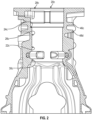
Fig. 2 is a cross-sectional view of the engine assembly ofFig. 1 of the present disclosure. -
Fig. 3 is a right side view of the engine assembly ofFig. 1 of the present disclosure. -
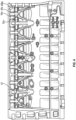
Fig. 4 is a left side view of the engine assembly ofFig. 1 of the present disclosure. - For the purposes of promoting an understanding of the principles of the invention, reference will now be made to the embodiments illustrated in the drawings and specific language will be used to describe the same. It will nevertheless be understood that no limitation of the scope of the invention is thereby intended, any alterations and further modifications in the illustrated embodiments, and any further applications of the principles of the invention as illustrated therein as would normally occur to one skilled in the art to which the invention relates are contemplated herein.
- A cylinder liner is a cylindrical part to be fitted into an engine block to form a cylinder. The cylinder liner, serving as the inner wall of a cylinder, forms a sliding surface for the piston rings while retaining the lubricant within. Some important functions of cylinder liners include an excellent sliding surface as well as high anti-galling properties, less wear on the cylinder liner itself, less wear on the partner piston ring, and less consumption of lubricant.
- A cylinder liner or sleeve is installed by boring the cylinder to a size that is larger than normal inserted with an interference fit. Alternatively, the liners can be pressed into place, or they can be held in by a shrink fit. Cylinder wall thickness is important to efficient thermal conductivity in an internal combustion engine. When choosing sleeves, engines have specifications to how thick the cylinder walls should be to prevent overworking the coolant system. Each engine's needs are different, dependent on designed work load duty cycle and energy produced.
- The cylinder liner receives combustion heat through the piston and piston rings and transmits the heat to the coolant. The cylinder liner prevents the compressed gas and combustion gas from escaping outside.
- There are three types of liners such as the engine will have a bore in the base block or cylinder material, a dry liner which is a liner assembled into base block or cylinder without direct contact between coolant and liner, or wet liner which is a liner assembled into base block or cylinder with direct contact between coolant and liner.
- Moreover, there are three liner types including top, mid and bottom stop. Generally, the cylinder head sealing surface is called the top end of the engine. The top-stop liner concept includes a flange on the top of the liner with which it is located into the cylinder block. The mid-stop has a similar flange at or near the middle of the liner, and the bottom stop has its locating flange near the lower end of the liner. In any of the top, mid, and bottom stop liner configurations, the cylinder bore of the engine block includes a liner stop mechanism that is configured to receive the liner.
- Turning now to the present application with reference to
Fig. 1 , anengine block 10 for an internal combustion engine (not illustrated). The engine is an internal combustion engine of any type, and can include a stoichiometric engine, a gasoline engine, alcohol engine (e.g. ethanol or methanol), or a natural gas engine. In the illustrated embodiment, theengine block 10 includes and at least partially defines sixcylinder bores Fig. 1 . - Each of the cylinder bores 20a-20f is surrounded by a cylinder bore wall 22a-22f, respectively. Each of the cylinder bore walls 22a-22f includes a liner stop mechanism 24a-24f configured to locate a liner or sleeve (not illustrated) in the cylinder bores 20a-20f. The liner stop mechanism 24a-24f in the illustrated embodiment is a lip, ledge, flange, rim, projecting edge, ridge or other configuration in the cylinder bore wall 22a-22f. In other embodiments, the liner stop mechanism 24a-24f can be configured differently to engage and retain the liner in the cylinder bores 20a-20f. The cylinder bore wall 22a-22f includes a mid-portion 26a-26f that spans between an upper end 28a-28f and a lower end 30a-30f. A cylindrical axis Y spans between the upper and lower ends 28a-28f and 30a-30f. In the illustrated embodiment in
Fig. 2 , theliner stop mechanism 24c is located in the mid-portion 26c of the cylinder borewall 22c. In other embodiments, the liner stop mechanism 24a-24f is located at or near either the upper end 28a-28f or the lower end 30a-30f of the cylinder bore wall 22a-22f. - Each of the cylinder bores 20a-20f is configured to receive a cylinder liner (not illustrated) to define a combustion chamber. A piston (not shown) may be slidably disposed within each of the liners in the cylinder bores 20a-20f to reciprocate between a top-dead-center position and a bottom-dead-center position, and a cylinder head (not shown) may be associated with each of the cylinder bores 20a-20f. Each of the cylinder bores 20a-20f, its respective piston, and the cylinder head form a combustion chamber. In the illustrated embodiment,
engine block 10 includes six such combustion chambers. However, it is contemplated thatengine block 10 may include a greater or lesser number of cylinders and combustion chambers and that the cylinders and combustion chambers may be disposed in an "in-line" configuration, a "V" configuration, or in any other suitable configuration. - Cylinder liners may be inserted into cylinder bores 20a-20f under a variety of conditions. One such condition is a press fit, also known as an interference fit or friction fit, for example, creates an axial hold where adjoining parts share the same space by creating a slight elastic deformation and a compression force between the adjoining parts. Compression from the press fit increases the friction between the adjoining parts to a point where independent movement of the adjoining parts is not possible under normal operating conditions. Press fits between the cylinder liner and
engine block 10 may be created using physical presses, principles of thermal expansion or other suitable method. - As illustrated in
Figs. 3 and4 , theengine block 10 includes a first outercylinder block wall 40 opposite a second outercylinder block wall 42 with the cylinders bores 20a-20f between the first and second outercylindrical block walls cylinder block walls cylinder block wall 40 includes afirst rib 46a positioned above the liner stop mechanism 24a and asecond rib 48a positioned below the liner stop mechanism 24a relative to the cylindrical axis Y of thecylinder bore 20a. According to the invention, the first outercylinder block wall 40 also includes athird rib 50a positioned above the liner stop mechanism 24 and afourth rib 52a positioned below the liner stop mechanism 24a relative to the cylindrical axis Y of thecylinder bore 20a. Ahead boss 54a is positioned between the first andthird ribs fourth ribs - The second outer
cylinder block wall 42 also includes similar first and second ribs as described with respect to the first outercylinder block wall 40 therefore for the sake of brevity these will not be described again. - The first outer
cylindrical block wall 40 includes additional first and second ribs similar to first andsecond ribs cylindrical block wall 40 includes additional third and fourth ribs similar to third andfourth ribs - The first, second, third, and
fourth ribs cylinder bore 20a or the liner that would be installed therein. Thefirst rib 46a is placed above the liner stop mechanism 24a and thesecond rib 48a is positioned below the liner stop mechanism 24a, with a space there between in the direction of the cylindrical axis Y. The first andsecond ribs cylinder bore 20a and reduce the propensity of the liner to buckle under loads in the direction of a liner axis, or due to loads from cylinder pressure or thermal expansion. The first andsecond ribs engine block 10 due to press-fit, or transitional fits which typically close under thermal or pressure related expansion. - In one form, the
first rib 46a and thethird rib 50a are positioned closer to the liner stop mechanism 24a than thesecond rib 48a and thefourth rib 52a as measured relative to the cylindrical axis Y. In another form, thesecond rib 48a andfourth rib 52a are positioned closer to the liner stop mechanism 24a than thefirst rib 46a and thethird rib 50a as measured relative to the cylindrical axis Y. In yet another embodiment, the first, second, third, andfourth ribs - The
first rib 46a has a first width W1 and thesecond rib 48a has a second width W2 wherein thefirst rib 46a and thesecond rib 48a extend in a direction of the cylindrical axis Y of thecylinder bore 20a. In one form, the first width W1 and the second width W2 are the same, in other forms they are different. Thefirst rib 46a has a first height H1 and thesecond rib 48a has a second height H2 such that the first and thesecond ribs cylinder bore 20a. Thethird rib 50a is similar to thefirst rib 46a, and thefourth rib 52a is similar to thesecond rib 48a. - The unique configuration of the first, second, third, and
fourth ribs cylinder block wall 40 and the corresponding ribs on the second outercylinder block wall 42 that surround or partially surround the wet cylinder liner in the cylinder bore 20a beneficially reduce deformation or distortion of the wet cylinder liner under installation and operating conditions. The first, second, third, andfourth ribs cylinder block wall 40 and the corresponding ribs on the second outercylinder block wall 42 also reduce engine oil consumption and can apply on top, mid or bottom stop liner configurations. Moreover the first, second, third, andfourth ribs fourth ribs - In the above description, certain relative terms may be used such as "up," "down," "upper," "lower," "horizontal," "vertical," "left," "right," "proximal," "distal," and the like. These terms are used, where applicable, to provide some clarity of description when dealing with relative relationships. But, these terms are not intended to imply absolute relationships, positions, and/or orientations. For example, with respect to an object, an "upper" surface can become a "lower" surface simply by turning the object over. Nevertheless, it is still the same object.
- Reference throughout this specification to "one embodiment," "an embodiment," or similar language means that a particular feature, structure, or characteristic described in connection with the embodiment is included in at least one embodiment of the present disclosure. Appearances of the phrases "in one embodiment," "in an embodiment," and similar language throughout this specification may, but do not necessarily, all refer to the same embodiment. Similarly, the use of the term "implementation" means an implementation having a particular feature, structure, or characteristic described in connection with one or more embodiments of the present disclosure, however, absent an express correlation to indicate otherwise, an implementation may be associated with one or more embodiments.
- The described features, structures, advantages, and/or characteristics of the subject matter of the present disclosure may be combined in any suitable manner in one or more embodiments and/or implementations. In the following description, numerous specific details are provided to impart a thorough understanding of embodiments of the subject matter of the present disclosure. One skilled in the relevant art will recognize that the subject matter of the present disclosure may be practiced without one or more of the specific features, details, components, materials, and/or methods of a particular embodiment or implementation. In some instances, the benefit of simplicity may provide operational and economic benefits and exclusion of certain elements described herein is contemplated as within the scope of the invention herein by the inventors to achieve such benefits. In other instances, additional features and advantages may be recognized in certain embodiments and/or implementations that may not be present in all embodiments or implementations. Further, in some instances, well-known structures, materials, or operations are not shown or described in detail to avoid obscuring aspects of the subject matter of the present disclosure. The features and advantages of the subject matter of the present disclosure will become more fully apparent from the following description and appended claims, or may be learned by the practice of the subject matter as set forth hereinafter.
Claims (14)
- An engine block (10) for an internal combustion engine, the engine block (10) having a cylinder bore (20a-20f) surrounded by a cylinder bore wall (22a-22f), the cylinder bore wall having a mid-portion (26a-26f) that spans between an upper end (28a-28f) and a lower end (30a-30f) of the cylinder bore wall, the mid-portion including a liner stop mechanism (24a-24f) positioned a distance from the upper end of the cylinder bore wall, the liner stop mechanism locates and supports a liner in the cylinder bore, the engine block having an outer cylinder block wall (40, 42) that surrounds at least a portion of the cylinder bore wall, the outer cylinder block wall including a first rib (46a-46f) positioned above the liner stop mechanism and a second rib (48a-48f) positioned below the liner stop mechanism relative to a cylindrical axis of the cylinder bore, the outer cylinder block wall including a third rib (50a-50f) positioned above the liner stop mechanism and a fourth rib (52a-52f) positioned below the liner stop mechanism, characterized in the outer cylinder block wall including a head boss (54a-54f) positioned between the first and third ribs, the head boss positioned between the second and fourth ribs, wherein the first and third ribs are located below the upper end of the cylinder bore wall and the second and fourth ribs are located above the lower end of the cylinder bore wall.
- The apparatus of claim 1, wherein the first rib is positioned closer to the liner stop mechanism than the second rib.
- The apparatus of claim 1, wherein the second rib is positioned closer to the liner stop mechanism than the first rib.
- The apparatus of claim 1, wherein the first rib and the second rib are positioned equidistant from the liner stop mechanism.
- The apparatus of claim 1, wherein the first rib has a first width and the second rib has a second width, the widths of the first and the second ribs extend in a direction of the cylindrical axis of the cylinder bore, and the first width and the second width are the same; and
wherein the first rib has a first height and the second rib has a second height, the heights of the first and the second ribs extend in a direction perpendicular to the cylindrical axis of the cylinder bore. - The apparatus of claim 1, wherein the liner stop mechanism being located near the upper end of the cylinder bore wall.
- The apparatus of claim 1, wherein the liner stop mechanism located in the mid-portion of the cylinder bore wall.
- The apparatus of claim 1, wherein the liner stop mechanism being located near the lower end of the cylinder bore wall.
- The apparatus of claim 1, further comprising:
a liner assembled in the cylinder bore wherein a portion of the liner is engaged and retained on the liner stop mechanism. - The apparatus of claim 1, wherein the first rib and the second rib are arranged to straddle the liner stop mechanism exteriorly of the cylinder bore wall with the first rib located on the outer cylinder block wall below the upper end of the cylinder bore wall and the second rib is located on the outer cylinder block wall above the lower end of the cylinder bore wall.
- The apparatus of claim 10, wherein the first rib is positioned closer to the liner stop mechanism than the second rib; orwherein the second rib is positioned closer to the liner stop mechanism than the first rib; orwherein the first rib and the second rib are positioned equidistant from the liner stop mechanism.
- The apparatus of claim 10, wherein the first rib has a first width and the second rib has a second width, the widths of the first and the second ribs extend in a direction of the cylindrical axis of the cylinder bore, and the first width and the second width are the same; and
wherein the first rib has a first height and the second rib has a second height, the heights of the first and the second ribs extend in a direction perpendicular to the cylindrical axis of the cylinder bore. - The apparatus of claim 10, wherein the at least one cylinder bore includes a plurality of cylinder bores arranged in line, each of the cylinder bores having a set of the first and second ribs wherein a first set of the first and second ribs extend towards an adjacent set of the first and second ribs.
- The apparatus of claim 10, further comprising:
a liner assembled in the cylinder bore wherein the liner stop mechanism engages with the liner to retain the liner in the cylinder bore.
Applications Claiming Priority (2)
| Application Number | Priority Date | Filing Date | Title |
|---|---|---|---|
| US201862781943P | 2018-12-19 | 2018-12-19 | |
| PCT/US2019/066271 WO2020131625A1 (en) | 2018-12-19 | 2019-12-13 | Unique block rib geometry for reducing liner distortion |
Publications (3)
| Publication Number | Publication Date |
|---|---|
| EP3864274A1 EP3864274A1 (en) | 2021-08-18 |
| EP3864274A4 EP3864274A4 (en) | 2022-07-06 |
| EP3864274B1 true EP3864274B1 (en) | 2025-05-07 |
Family
ID=71102276
Family Applications (1)
| Application Number | Title | Priority Date | Filing Date |
|---|---|---|---|
| EP19899832.0A Active EP3864274B1 (en) | 2018-12-19 | 2019-12-13 | Unique block rib geometry for reducing liner distortion |
Country Status (4)
| Country | Link |
|---|---|
| US (2) | US11698042B2 (en) |
| EP (1) | EP3864274B1 (en) |
| CN (1) | CN113167190B (en) |
| WO (1) | WO2020131625A1 (en) |
Families Citing this family (4)
| Publication number | Priority date | Publication date | Assignee | Title |
|---|---|---|---|---|
| CN113167190B (en) | 2018-12-19 | 2024-07-30 | 卡明斯公司 | Unique cylinder rib geometry for reducing liner deformation |
| CN115726898A (en) * | 2021-08-26 | 2023-03-03 | 康明斯公司 | Rib structure on the cylinder block |
| USD1107757S1 (en) * | 2024-10-16 | 2025-12-30 | Speedway Motors, Inc. | Mock engine block |
| USD1111055S1 (en) * | 2024-10-16 | 2026-02-03 | Speedway Motors, Inc. | Mock engine block |
Family Cites Families (29)
| Publication number | Priority date | Publication date | Assignee | Title |
|---|---|---|---|---|
| US3568573A (en) * | 1969-06-25 | 1971-03-09 | Caterpillar Tractor Co | Cylinder liner support |
| US3977385A (en) | 1973-06-21 | 1976-08-31 | National Research Development Corporation | Internal combustion engines with straight line reinforcing members between cylinder heads and main bearings |
| US4016850A (en) * | 1974-02-22 | 1977-04-12 | Brunswick Corporation | Ported cylinder construction for a two-cycle engine |
| US4244330A (en) | 1978-11-13 | 1981-01-13 | Cummins Engine Company, Inc. | Engine cylinder liner having a mid stop |
| US4440118A (en) | 1980-05-13 | 1984-04-03 | Cummins Engine Company, Inc. | Oil cooled internal combustion engine |
| DE3326320C2 (en) * | 1983-07-21 | 1990-10-04 | Dr.Ing.H.C. F. Porsche Ag, 7000 Stuttgart | Piston internal combustion engine with a wet cylinder liner inserted into a cylinder crankcase |
| SE470055B (en) * | 1991-03-05 | 1993-11-01 | Volvo Ab | Methods and tools for molding |
| EP0554575B1 (en) * | 1992-01-06 | 1997-03-19 | Honda Giken Kogyo Kabushiki Kaisha | Cylinder block |
| KR100285438B1 (en) | 1993-11-01 | 2001-04-02 | 정몽규 | Internal combustion engine |
| DE9319055U1 (en) | 1993-12-11 | 1995-04-13 | FEV Motorentechnik GmbH & Co. KG, 52078 Aachen | Piston machine, in particular piston internal combustion engine with stiffened engine block by means of interrupted ribs |
| DE4436969C2 (en) | 1994-10-15 | 1996-08-22 | Hatz Motoren | Cylinder liner |
| DE19511864C1 (en) | 1995-03-31 | 1996-07-25 | Daimler Benz Ag | Internal combustion engine for simplified assembly |
| US5979374A (en) * | 1998-06-12 | 1999-11-09 | Cummins Engine Company, Inc. | Control cooled cylinder liner |
| US6044821A (en) * | 1998-11-19 | 2000-04-04 | Cummins Engine Company, Inc. | Durable cylinder liner and method of making the liner |
| DE10112132A1 (en) | 2001-03-14 | 2002-09-19 | Bayerische Motoren Werke Ag | Cylinder crankcase for a liquid-cooled internal combustion engine |
| US20040244758A1 (en) * | 2003-06-06 | 2004-12-09 | Cummins Inc. | Method for increasing the displacement of an internal combustion engine and engine having increased displacement thereby |
| JP2005155600A (en) | 2003-10-31 | 2005-06-16 | Toyota Motor Corp | Water-cooled engine and its cylinder block |
| JP2005201084A (en) * | 2004-01-13 | 2005-07-28 | Toyota Motor Corp | Cylinder block |
| JP2006002602A (en) | 2004-06-16 | 2006-01-05 | Nissan Motor Co Ltd | Internal combustion engine cylinder block |
| JP4367288B2 (en) * | 2004-08-17 | 2009-11-18 | トヨタ自動車株式会社 | Engine cylinder block |
| DE102005048537A1 (en) * | 2005-10-11 | 2007-04-19 | Daimlerchrysler Ag | Internal combustion engine, has cylinder with cylinder sleeve that is supported at side on circular balcony in cylinder housing, where sleeve contacts contact surface of balcony in cylinder housing only in sections in non-deformed condition |
| JP4532430B2 (en) * | 2006-03-31 | 2010-08-25 | 富士重工業株式会社 | Engine crankcase |
| JP2010138779A (en) * | 2008-12-11 | 2010-06-24 | Mitsubishi Heavy Ind Ltd | Structure of crankcase |
| US8408178B2 (en) | 2009-08-04 | 2013-04-02 | International Engine Intellectual Property Company, Llc | Engine crankcase firing deck having anti-distortion projections |
| DE102012006852A1 (en) | 2012-04-04 | 2013-10-10 | Andreas Stihl Ag & Co. Kg | internal combustion engine |
| DE112013005725T5 (en) * | 2012-11-30 | 2015-08-13 | Cummins Ip, Inc. | Engine cylinder and bushing assembly |
| US9856817B2 (en) * | 2015-03-31 | 2018-01-02 | Harley-Davidson Motor Company Group, LLC | Bolt-on cylinder kit and method for increasing the displacement of an engine |
| WO2016159970A1 (en) * | 2015-03-31 | 2016-10-06 | Cummins Inc. | Internal combustion engine cylinder liner flange with non-circular profile |
| CN113167190B (en) | 2018-12-19 | 2024-07-30 | 卡明斯公司 | Unique cylinder rib geometry for reducing liner deformation |
-
2019
- 2019-12-13 CN CN201980076496.1A patent/CN113167190B/en active Active
- 2019-12-13 WO PCT/US2019/066271 patent/WO2020131625A1/en not_active Ceased
- 2019-12-13 EP EP19899832.0A patent/EP3864274B1/en active Active
-
2021
- 2021-06-18 US US17/351,438 patent/US11698042B2/en active Active
- 2021-06-18 US US17/351,639 patent/US11536222B2/en active Active
Also Published As
| Publication number | Publication date |
|---|---|
| US20210310439A1 (en) | 2021-10-07 |
| EP3864274A1 (en) | 2021-08-18 |
| EP3864274A4 (en) | 2022-07-06 |
| US11698042B2 (en) | 2023-07-11 |
| WO2020131625A1 (en) | 2020-06-25 |
| CN113167190A (en) | 2021-07-23 |
| US20210324816A1 (en) | 2021-10-21 |
| US11536222B2 (en) | 2022-12-27 |
| CN113167190B (en) | 2024-07-30 |
Similar Documents
| Publication | Publication Date | Title |
|---|---|---|
| US11698042B2 (en) | Unique block rib geometry for reducing liner distortion | |
| EP4077901B1 (en) | Profiled cylinder liner for bore distortion control | |
| WO2016159970A1 (en) | Internal combustion engine cylinder liner flange with non-circular profile | |
| US10309535B2 (en) | Piston ring for an internal combustion engine | |
| EP2815155B1 (en) | Piston ring for an internal combustion engine | |
| US7975601B2 (en) | Engine cylinder liner | |
| US6196179B1 (en) | Internal combustion engine | |
| CN112969874A (en) | Piston and cylinder for internal combustion engine | |
| JP6337058B2 (en) | Top piston ring for crosshead turbocharged large two-stroke compression ignition internal combustion engine | |
| US9057341B2 (en) | Engine cylinder mid-stop | |
| CN113090407B (en) | Cylinder block load path geometry | |
| EP1943444B2 (en) | Piston | |
| US20170299056A1 (en) | Oil Ring for a Piston Assembly | |
| US20050028779A1 (en) | Piston for an internal combustion engine | |
| US20200284344A1 (en) | Piston ring with inlaid dlc coating and method of manufacturing | |
| WO2004109083A1 (en) | Gas seal for an internal combustion engine | |
| EP2216534A1 (en) | Method of lining a cylinder and a cylinder liner therefor | |
| KR20190106737A (en) | Piston assembly of an internal combustion engine | |
| JP2009257478A (en) | Piston ring structure of internal combustion engine | |
| US20130213221A1 (en) | Piston ring for an internal combustion engine |
Legal Events
| Date | Code | Title | Description |
|---|---|---|---|
| STAA | Information on the status of an ep patent application or granted ep patent |
Free format text: STATUS: THE INTERNATIONAL PUBLICATION HAS BEEN MADE |
|
| PUAI | Public reference made under article 153(3) epc to a published international application that has entered the european phase |
Free format text: ORIGINAL CODE: 0009012 |
|
| STAA | Information on the status of an ep patent application or granted ep patent |
Free format text: STATUS: REQUEST FOR EXAMINATION WAS MADE |
|
| 17P | Request for examination filed |
Effective date: 20210513 |
|
| AK | Designated contracting states |
Kind code of ref document: A1 Designated state(s): AL AT BE BG CH CY CZ DE DK EE ES FI FR GB GR HR HU IE IS IT LI LT LU LV MC MK MT NL NO PL PT RO RS SE SI SK SM TR |
|
| RIN1 | Information on inventor provided before grant (corrected) |
Inventor name: ZHOU, XILING Inventor name: KUMARESHAN, VIJAYSAI KARUPPIAH Inventor name: PURCELL III, JOHN JERL Inventor name: CLARK, MATHEW A. |
|
| DAV | Request for validation of the european patent (deleted) | ||
| DAX | Request for extension of the european patent (deleted) | ||
| A4 | Supplementary search report drawn up and despatched |
Effective date: 20220603 |
|
| RIC1 | Information provided on ipc code assigned before grant |
Ipc: F02F 1/16 20060101ALI20220530BHEP Ipc: F02F 1/08 20060101ALI20220530BHEP Ipc: F02F 1/00 20060101AFI20220530BHEP |
|
| P01 | Opt-out of the competence of the unified patent court (upc) registered |
Effective date: 20230510 |
|
| GRAP | Despatch of communication of intention to grant a patent |
Free format text: ORIGINAL CODE: EPIDOSNIGR1 |
|
| STAA | Information on the status of an ep patent application or granted ep patent |
Free format text: STATUS: GRANT OF PATENT IS INTENDED |
|
| INTG | Intention to grant announced |
Effective date: 20241210 |
|
| GRAS | Grant fee paid |
Free format text: ORIGINAL CODE: EPIDOSNIGR3 |
|
| GRAA | (expected) grant |
Free format text: ORIGINAL CODE: 0009210 |
|
| STAA | Information on the status of an ep patent application or granted ep patent |
Free format text: STATUS: THE PATENT HAS BEEN GRANTED |
|
| AK | Designated contracting states |
Kind code of ref document: B1 Designated state(s): AL AT BE BG CH CY CZ DE DK EE ES FI FR GB GR HR HU IE IS IT LI LT LU LV MC MK MT NL NO PL PT RO RS SE SI SK SM TR |
|
| REG | Reference to a national code |
Ref country code: GB Ref legal event code: FG4D |
|
| REG | Reference to a national code |
Ref country code: CH Ref legal event code: EP |
|
| REG | Reference to a national code |
Ref country code: DE Ref legal event code: R096 Ref document number: 602019069799 Country of ref document: DE |
|
| REG | Reference to a national code |
Ref country code: IE Ref legal event code: FG4D |
|
| REG | Reference to a national code |
Ref country code: NL Ref legal event code: MP Effective date: 20250507 |
|
| PG25 | Lapsed in a contracting state [announced via postgrant information from national office to epo] |
Ref country code: PT Free format text: LAPSE BECAUSE OF FAILURE TO SUBMIT A TRANSLATION OF THE DESCRIPTION OR TO PAY THE FEE WITHIN THE PRESCRIBED TIME-LIMIT Effective date: 20250908 Ref country code: ES Free format text: LAPSE BECAUSE OF FAILURE TO SUBMIT A TRANSLATION OF THE DESCRIPTION OR TO PAY THE FEE WITHIN THE PRESCRIBED TIME-LIMIT Effective date: 20250507 Ref country code: FI Free format text: LAPSE BECAUSE OF FAILURE TO SUBMIT A TRANSLATION OF THE DESCRIPTION OR TO PAY THE FEE WITHIN THE PRESCRIBED TIME-LIMIT Effective date: 20250507 |
|
| REG | Reference to a national code |
Ref country code: LT Ref legal event code: MG9D |
|
| PG25 | Lapsed in a contracting state [announced via postgrant information from national office to epo] |
Ref country code: NO Free format text: LAPSE BECAUSE OF FAILURE TO SUBMIT A TRANSLATION OF THE DESCRIPTION OR TO PAY THE FEE WITHIN THE PRESCRIBED TIME-LIMIT Effective date: 20250807 Ref country code: GR Free format text: LAPSE BECAUSE OF FAILURE TO SUBMIT A TRANSLATION OF THE DESCRIPTION OR TO PAY THE FEE WITHIN THE PRESCRIBED TIME-LIMIT Effective date: 20250808 |
|
| PG25 | Lapsed in a contracting state [announced via postgrant information from national office to epo] |
Ref country code: PL Free format text: LAPSE BECAUSE OF FAILURE TO SUBMIT A TRANSLATION OF THE DESCRIPTION OR TO PAY THE FEE WITHIN THE PRESCRIBED TIME-LIMIT Effective date: 20250507 Ref country code: NL Free format text: LAPSE BECAUSE OF FAILURE TO SUBMIT A TRANSLATION OF THE DESCRIPTION OR TO PAY THE FEE WITHIN THE PRESCRIBED TIME-LIMIT Effective date: 20250507 |
|
| REG | Reference to a national code |
Ref country code: AT Ref legal event code: MK05 Ref document number: 1792695 Country of ref document: AT Kind code of ref document: T Effective date: 20250507 |
|
| PG25 | Lapsed in a contracting state [announced via postgrant information from national office to epo] |
Ref country code: BG Free format text: LAPSE BECAUSE OF FAILURE TO SUBMIT A TRANSLATION OF THE DESCRIPTION OR TO PAY THE FEE WITHIN THE PRESCRIBED TIME-LIMIT Effective date: 20250507 |
|
| PG25 | Lapsed in a contracting state [announced via postgrant information from national office to epo] |
Ref country code: HR Free format text: LAPSE BECAUSE OF FAILURE TO SUBMIT A TRANSLATION OF THE DESCRIPTION OR TO PAY THE FEE WITHIN THE PRESCRIBED TIME-LIMIT Effective date: 20250507 |
|
| PG25 | Lapsed in a contracting state [announced via postgrant information from national office to epo] |
Ref country code: AT Free format text: LAPSE BECAUSE OF FAILURE TO SUBMIT A TRANSLATION OF THE DESCRIPTION OR TO PAY THE FEE WITHIN THE PRESCRIBED TIME-LIMIT Effective date: 20250507 |
|
| PG25 | Lapsed in a contracting state [announced via postgrant information from national office to epo] |
Ref country code: RS Free format text: LAPSE BECAUSE OF FAILURE TO SUBMIT A TRANSLATION OF THE DESCRIPTION OR TO PAY THE FEE WITHIN THE PRESCRIBED TIME-LIMIT Effective date: 20250807 |
|
| PG25 | Lapsed in a contracting state [announced via postgrant information from national office to epo] |
Ref country code: IS Free format text: LAPSE BECAUSE OF FAILURE TO SUBMIT A TRANSLATION OF THE DESCRIPTION OR TO PAY THE FEE WITHIN THE PRESCRIBED TIME-LIMIT Effective date: 20250907 |
|
| PG25 | Lapsed in a contracting state [announced via postgrant information from national office to epo] |
Ref country code: LV Free format text: LAPSE BECAUSE OF FAILURE TO SUBMIT A TRANSLATION OF THE DESCRIPTION OR TO PAY THE FEE WITHIN THE PRESCRIBED TIME-LIMIT Effective date: 20250507 |
|
| PGFP | Annual fee paid to national office [announced via postgrant information from national office to epo] |
Ref country code: GB Payment date: 20251229 Year of fee payment: 7 |
|
| PG25 | Lapsed in a contracting state [announced via postgrant information from national office to epo] |
Ref country code: SM Free format text: LAPSE BECAUSE OF FAILURE TO SUBMIT A TRANSLATION OF THE DESCRIPTION OR TO PAY THE FEE WITHIN THE PRESCRIBED TIME-LIMIT Effective date: 20250507 Ref country code: DK Free format text: LAPSE BECAUSE OF FAILURE TO SUBMIT A TRANSLATION OF THE DESCRIPTION OR TO PAY THE FEE WITHIN THE PRESCRIBED TIME-LIMIT Effective date: 20250507 |
|
| PG25 | Lapsed in a contracting state [announced via postgrant information from national office to epo] |
Ref country code: CZ Free format text: LAPSE BECAUSE OF FAILURE TO SUBMIT A TRANSLATION OF THE DESCRIPTION OR TO PAY THE FEE WITHIN THE PRESCRIBED TIME-LIMIT Effective date: 20250507 |
|
| PG25 | Lapsed in a contracting state [announced via postgrant information from national office to epo] |
Ref country code: EE Free format text: LAPSE BECAUSE OF FAILURE TO SUBMIT A TRANSLATION OF THE DESCRIPTION OR TO PAY THE FEE WITHIN THE PRESCRIBED TIME-LIMIT Effective date: 20250507 |
|
| PG25 | Lapsed in a contracting state [announced via postgrant information from national office to epo] |
Ref country code: RO Free format text: LAPSE BECAUSE OF FAILURE TO SUBMIT A TRANSLATION OF THE DESCRIPTION OR TO PAY THE FEE WITHIN THE PRESCRIBED TIME-LIMIT Effective date: 20250507 Ref country code: SK Free format text: LAPSE BECAUSE OF FAILURE TO SUBMIT A TRANSLATION OF THE DESCRIPTION OR TO PAY THE FEE WITHIN THE PRESCRIBED TIME-LIMIT Effective date: 20250507 |
|
| PG25 | Lapsed in a contracting state [announced via postgrant information from national office to epo] |
Ref country code: IT Free format text: LAPSE BECAUSE OF FAILURE TO SUBMIT A TRANSLATION OF THE DESCRIPTION OR TO PAY THE FEE WITHIN THE PRESCRIBED TIME-LIMIT Effective date: 20250507 |
|
| REG | Reference to a national code |
Ref country code: DE Ref legal event code: R097 Ref document number: 602019069799 Country of ref document: DE |
|
| PLBE | No opposition filed within time limit |
Free format text: ORIGINAL CODE: 0009261 |
|
| STAA | Information on the status of an ep patent application or granted ep patent |
Free format text: STATUS: NO OPPOSITION FILED WITHIN TIME LIMIT |
|
| REG | Reference to a national code |
Ref country code: CH Ref legal event code: L10 Free format text: ST27 STATUS EVENT CODE: U-0-0-L10-L00 (AS PROVIDED BY THE NATIONAL OFFICE) Effective date: 20260318 |
|
| PGFP | Annual fee paid to national office [announced via postgrant information from national office to epo] |
Ref country code: DE Payment date: 20251229 Year of fee payment: 7 |
|
| 26N | No opposition filed |
Effective date: 20260210 |