EP3861846B1 - Control system, operation method of a control system and computer program - Google Patents
Control system, operation method of a control system and computer program Download PDFInfo
- Publication number
- EP3861846B1 EP3861846B1 EP18941660.5A EP18941660A EP3861846B1 EP 3861846 B1 EP3861846 B1 EP 3861846B1 EP 18941660 A EP18941660 A EP 18941660A EP 3861846 B1 EP3861846 B1 EP 3861846B1
- Authority
- EP
- European Patent Office
- Prior art keywords
- autonomous work
- work machine
- work
- charging
- autonomous
- Prior art date
- Legal status (The legal status is an assumption and is not a legal conclusion. Google has not performed a legal analysis and makes no representation as to the accuracy of the status listed.)
- Active
Links
Images




Classifications
-
- A—HUMAN NECESSITIES
- A01—AGRICULTURE; FORESTRY; ANIMAL HUSBANDRY; HUNTING; TRAPPING; FISHING
- A01D—HARVESTING; MOWING
- A01D34/00—Mowers; Mowing apparatus of harvesters
- A01D34/006—Control or measuring arrangements
- A01D34/008—Control or measuring arrangements for automated or remotely controlled operation
-
- G—PHYSICS
- G05—CONTROLLING; REGULATING
- G05D—SYSTEMS FOR CONTROLLING OR REGULATING NON-ELECTRIC VARIABLES
- G05D1/00—Control of position, course, altitude or attitude of land, water, air or space vehicles, e.g. using automatic pilots
- G05D1/02—Control of position or course in two dimensions
- G05D1/021—Control of position or course in two dimensions specially adapted to land vehicles
- G05D1/0287—Control of position or course in two dimensions specially adapted to land vehicles involving a plurality of land vehicles, e.g. fleet or convoy travelling
- G05D1/0291—Fleet control
-
- A—HUMAN NECESSITIES
- A01—AGRICULTURE; FORESTRY; ANIMAL HUSBANDRY; HUNTING; TRAPPING; FISHING
- A01B—SOIL WORKING IN AGRICULTURE OR FORESTRY; PARTS, DETAILS, OR ACCESSORIES OF AGRICULTURAL MACHINES OR IMPLEMENTS, IN GENERAL
- A01B69/00—Steering of agricultural machines or implements; Guiding agricultural machines or implements on a desired track
-
- B—PERFORMING OPERATIONS; TRANSPORTING
- B60—VEHICLES IN GENERAL
- B60L—PROPULSION OF ELECTRICALLY-PROPELLED VEHICLES; SUPPLYING ELECTRIC POWER FOR AUXILIARY EQUIPMENT OF ELECTRICALLY-PROPELLED VEHICLES; ELECTRODYNAMIC BRAKE SYSTEMS FOR VEHICLES IN GENERAL; MAGNETIC SUSPENSION OR LEVITATION FOR VEHICLES; MONITORING OPERATING VARIABLES OF ELECTRICALLY-PROPELLED VEHICLES; ELECTRIC SAFETY DEVICES FOR ELECTRICALLY-PROPELLED VEHICLES
- B60L53/00—Methods of charging batteries, specially adapted for electric vehicles; Charging stations or on-board charging equipment therefor; Exchange of energy storage elements in electric vehicles
- B60L53/60—Monitoring or controlling charging stations
- B60L53/66—Data transfer between charging stations and vehicles
- B60L53/665—Methods related to measuring, billing or payment
-
- B—PERFORMING OPERATIONS; TRANSPORTING
- B60—VEHICLES IN GENERAL
- B60L—PROPULSION OF ELECTRICALLY-PROPELLED VEHICLES; SUPPLYING ELECTRIC POWER FOR AUXILIARY EQUIPMENT OF ELECTRICALLY-PROPELLED VEHICLES; ELECTRODYNAMIC BRAKE SYSTEMS FOR VEHICLES IN GENERAL; MAGNETIC SUSPENSION OR LEVITATION FOR VEHICLES; MONITORING OPERATING VARIABLES OF ELECTRICALLY-PROPELLED VEHICLES; ELECTRIC SAFETY DEVICES FOR ELECTRICALLY-PROPELLED VEHICLES
- B60L58/00—Methods or circuit arrangements for monitoring or controlling batteries or fuel cells, specially adapted for electric vehicles
- B60L58/10—Methods or circuit arrangements for monitoring or controlling batteries or fuel cells, specially adapted for electric vehicles for monitoring or controlling batteries
- B60L58/12—Methods or circuit arrangements for monitoring or controlling batteries or fuel cells, specially adapted for electric vehicles for monitoring or controlling batteries responding to state of charge [SoC]
-
- G—PHYSICS
- G05—CONTROLLING; REGULATING
- G05D—SYSTEMS FOR CONTROLLING OR REGULATING NON-ELECTRIC VARIABLES
- G05D1/00—Control of position, course, altitude or attitude of land, water, air or space vehicles, e.g. using automatic pilots
- G05D1/0088—Control of position, course, altitude or attitude of land, water, air or space vehicles, e.g. using automatic pilots characterized by the autonomous decision making process, e.g. artificial intelligence, predefined behaviours
-
- G—PHYSICS
- G05—CONTROLLING; REGULATING
- G05D—SYSTEMS FOR CONTROLLING OR REGULATING NON-ELECTRIC VARIABLES
- G05D1/00—Control of position, course, altitude or attitude of land, water, air or space vehicles, e.g. using automatic pilots
- G05D1/02—Control of position or course in two dimensions
- G05D1/021—Control of position or course in two dimensions specially adapted to land vehicles
- G05D1/0287—Control of position or course in two dimensions specially adapted to land vehicles involving a plurality of land vehicles, e.g. fleet or convoy travelling
- G05D1/0291—Fleet control
- G05D1/0297—Fleet control by controlling means in a control room
-
- G—PHYSICS
- G05—CONTROLLING; REGULATING
- G05D—SYSTEMS FOR CONTROLLING OR REGULATING NON-ELECTRIC VARIABLES
- G05D1/00—Control of position, course, altitude or attitude of land, water, air or space vehicles, e.g. using automatic pilots
- G05D1/20—Control system inputs
- G05D1/22—Command input arrangements
- G05D1/221—Remote-control arrangements
- G05D1/227—Handing over between remote control and on-board control; Handing over between remote control arrangements
-
- G—PHYSICS
- G05—CONTROLLING; REGULATING
- G05D—SYSTEMS FOR CONTROLLING OR REGULATING NON-ELECTRIC VARIABLES
- G05D1/00—Control of position, course, altitude or attitude of land, water, air or space vehicles, e.g. using automatic pilots
- G05D1/60—Intended control result
- G05D1/69—Coordinated control of the position or course of two or more vehicles
-
- H—ELECTRICITY
- H02—GENERATION; CONVERSION OR DISTRIBUTION OF ELECTRIC POWER
- H02J—ELECTRIC POWER NETWORKS; CIRCUIT ARRANGEMENTS OR SYSTEMS FOR SUPPLYING OR DISTRIBUTING ELECTRIC POWER; SYSTEMS FOR STORING ELECTRIC ENERGY
- H02J7/00—Circuit arrangements for charging or discharging batteries or for supplying loads from batteries
- H02J7/50—Circuit arrangements for charging or discharging batteries or for supplying loads from batteries acting upon multiple batteries simultaneously or sequentially
-
- H—ELECTRICITY
- H02—GENERATION; CONVERSION OR DISTRIBUTION OF ELECTRIC POWER
- H02J—ELECTRIC POWER NETWORKS; CIRCUIT ARRANGEMENTS OR SYSTEMS FOR SUPPLYING OR DISTRIBUTING ELECTRIC POWER; SYSTEMS FOR STORING ELECTRIC ENERGY
- H02J7/00—Circuit arrangements for charging or discharging batteries or for supplying loads from batteries
- H02J7/90—Regulation of charging or discharging current or voltage
- H02J7/92—Regulation of charging or discharging current or voltage with prioritisation of loads or sources
-
- B—PERFORMING OPERATIONS; TRANSPORTING
- B60—VEHICLES IN GENERAL
- B60L—PROPULSION OF ELECTRICALLY-PROPELLED VEHICLES; SUPPLYING ELECTRIC POWER FOR AUXILIARY EQUIPMENT OF ELECTRICALLY-PROPELLED VEHICLES; ELECTRODYNAMIC BRAKE SYSTEMS FOR VEHICLES IN GENERAL; MAGNETIC SUSPENSION OR LEVITATION FOR VEHICLES; MONITORING OPERATING VARIABLES OF ELECTRICALLY-PROPELLED VEHICLES; ELECTRIC SAFETY DEVICES FOR ELECTRICALLY-PROPELLED VEHICLES
- B60L2200/00—Type of vehicles
- B60L2200/40—Working vehicles
-
- H—ELECTRICITY
- H02—GENERATION; CONVERSION OR DISTRIBUTION OF ELECTRIC POWER
- H02J—ELECTRIC POWER NETWORKS; CIRCUIT ARRANGEMENTS OR SYSTEMS FOR SUPPLYING OR DISTRIBUTING ELECTRIC POWER; SYSTEMS FOR STORING ELECTRIC ENERGY
- H02J7/00—Circuit arrangements for charging or discharging batteries or for supplying loads from batteries
- H02J7/80—Circuit arrangements for charging or discharging batteries or for supplying loads from batteries including monitoring or indicating arrangements
- H02J7/82—Control of state of charge [SOC]
-
- Y—GENERAL TAGGING OF NEW TECHNOLOGICAL DEVELOPMENTS; GENERAL TAGGING OF CROSS-SECTIONAL TECHNOLOGIES SPANNING OVER SEVERAL SECTIONS OF THE IPC; TECHNICAL SUBJECTS COVERED BY FORMER USPC CROSS-REFERENCE ART COLLECTIONS [XRACs] AND DIGESTS
- Y02—TECHNOLOGIES OR APPLICATIONS FOR MITIGATION OR ADAPTATION AGAINST CLIMATE CHANGE
- Y02T—CLIMATE CHANGE MITIGATION TECHNOLOGIES RELATED TO TRANSPORTATION
- Y02T10/00—Road transport of goods or passengers
- Y02T10/60—Other road transportation technologies with climate change mitigation effect
- Y02T10/70—Energy storage systems for electromobility, e.g. batteries
-
- Y—GENERAL TAGGING OF NEW TECHNOLOGICAL DEVELOPMENTS; GENERAL TAGGING OF CROSS-SECTIONAL TECHNOLOGIES SPANNING OVER SEVERAL SECTIONS OF THE IPC; TECHNICAL SUBJECTS COVERED BY FORMER USPC CROSS-REFERENCE ART COLLECTIONS [XRACs] AND DIGESTS
- Y02—TECHNOLOGIES OR APPLICATIONS FOR MITIGATION OR ADAPTATION AGAINST CLIMATE CHANGE
- Y02T—CLIMATE CHANGE MITIGATION TECHNOLOGIES RELATED TO TRANSPORTATION
- Y02T10/00—Road transport of goods or passengers
- Y02T10/60—Other road transportation technologies with climate change mitigation effect
- Y02T10/7072—Electromobility specific charging systems or methods for batteries, ultracapacitors, supercapacitors or double-layer capacitors
-
- Y—GENERAL TAGGING OF NEW TECHNOLOGICAL DEVELOPMENTS; GENERAL TAGGING OF CROSS-SECTIONAL TECHNOLOGIES SPANNING OVER SEVERAL SECTIONS OF THE IPC; TECHNICAL SUBJECTS COVERED BY FORMER USPC CROSS-REFERENCE ART COLLECTIONS [XRACs] AND DIGESTS
- Y02—TECHNOLOGIES OR APPLICATIONS FOR MITIGATION OR ADAPTATION AGAINST CLIMATE CHANGE
- Y02T—CLIMATE CHANGE MITIGATION TECHNOLOGIES RELATED TO TRANSPORTATION
- Y02T90/00—Enabling technologies or technologies with a potential or indirect contribution to GHG emissions mitigation
- Y02T90/10—Technologies relating to charging of electric vehicles
- Y02T90/12—Electric charging stations
-
- Y—GENERAL TAGGING OF NEW TECHNOLOGICAL DEVELOPMENTS; GENERAL TAGGING OF CROSS-SECTIONAL TECHNOLOGIES SPANNING OVER SEVERAL SECTIONS OF THE IPC; TECHNICAL SUBJECTS COVERED BY FORMER USPC CROSS-REFERENCE ART COLLECTIONS [XRACs] AND DIGESTS
- Y02—TECHNOLOGIES OR APPLICATIONS FOR MITIGATION OR ADAPTATION AGAINST CLIMATE CHANGE
- Y02T—CLIMATE CHANGE MITIGATION TECHNOLOGIES RELATED TO TRANSPORTATION
- Y02T90/00—Enabling technologies or technologies with a potential or indirect contribution to GHG emissions mitigation
- Y02T90/10—Technologies relating to charging of electric vehicles
- Y02T90/16—Information or communication technologies improving the operation of electric vehicles
Definitions
- the present invention relates to a control system, an operation method of the control system and a computer program.
- one autonomous work machine for example, a lawn mower or a snow remover
- PTL 1 discloses a work machine that, when the remaining power amount of the work machine decreases, automatically returns to a charging station to charge its battery.
- PTL 2 discloses a plurality of robots with a plurality of charging points, whereby the coordination between robots is based on market economy.
- PTL 3 discloses a plurality of lawn mower robots in combination with a charging station.
- control system as defined by appended claim 1.
- the control system according to the invention includes a charging station, a plurality of autonomous work machines, and a control apparatus configured to control the plurality of autonomous work machines, characterized in that the control apparatus comprises:
- the present invention also provides a method as defined in claim 7 and a computer program as defined in claim 8.
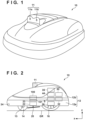
- Fig. 1 is a view showing the outer appearance of an autonomous work machine capable of autonomous traveling according to an embodiment of the present invention.
- the traveling direction (vehicle longitudinal direction) of the autonomous work machine in a side view a lateral direction (vehicle width direction) perpendicular to the traveling direction, and a perpendicular direction perpendicular to the traveling direction and the lateral direction are respectively defined as a front-and-rear direction, a left-and-right direction, and a vertical direction, and the arrangement of each component will be explained in accordance with these directions.
- reference numeral 10 denotes an autonomous work machine (to be referred to as "a work vehicle” hereinafter). More specifically, the work vehicle 10 functions as an autonomous traveling lawn mower. However, the lawn mower is merely an example, and the present invention is also applicable to other types of work machines.
- the work vehicle 10 has a camera unit 11 including a plurality of cameras (a first camera 11a and a second camera 11b), and can calculate and obtain information of the distance between the work vehicle 10 and an object existing in front of the work vehicle 10 by using images captured by the first and second cameras 11a and 1 1b having a parallax. The operation of the work vehicle 10 is controlled based on the captured image and an object recognition model held in advance.
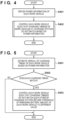
- Fig. 2 is a view observing the work vehicle 10 in the lateral direction (vehicle width direction).
- the work vehicle 10 includes the camera unit 11, a vehicle body 12, a stay 13, front wheels 14, rear wheels 16, a blade 20, a work motor 22, a motor holding member 23, a blade height adjusting motor 100, and a translation mechanism 101.
- the work vehicle 10 also includes traveling motors 26, various sensors S, an ECU (Electronic Control Unit) 44, a charging unit 30, a battery 32, a charging terminal 34, and a communication unit 35.
- ECU Electronic Control Unit
- the vehicle body 12 of the work vehicle 10 includes a chassis 12a and a frame 12b attached to the chassis 12a.
- the front wheels 14 are two, left and right small-diameter wheels fixed to the front part of the chassis 12a via the stay 13.
- the rear wheels 16 are two, left and right large-diameter wheels attached to the rear part of the chassis 12a.
- the blade 20 is a lawn mowing rotary blade attached near the central position of the chassis 12a.
- the work motor 22 is an electric motor arranged above the blade 20.
- the blade 20 is connected to and rotated by the work motor 22.
- the motor holding member 23 holds the work motor 22.
- the rotation of the motor holding member 23 is regulated with respect to the chassis 12a.
- the vertical movement of the motor holding member 23 is permitted by a combination of a guide rail and a slider capable of vertically moving by being guided by the guide rail.
- the blade height adjusting motor 100 is a motor for adjusting the height of the blade 20 in the vertical direction from a ground surface GR.
- the translation mechanism 101 is connected to the blade height adjusting motor 100, and converts the rotation of the blade height adjusting motor 100 into a vertical translational movement.
- the translation mechanism 101 is also connected to the motor holding member 23 for holding the work motor 22.
- the rotation of the blade height adjusting motor 100 is converted into the translational movement (vertical movement) by the translation mechanism 101, and this translational movement is transmitted to the motor holding member 23.
- the translational movement (vertical movement) of the motor holding member 23 causes the work motor 22 held by the motor holding member 23 to translationally move (vertically move).
- the height of the blade 20 from the ground surface GR can be adjusted by the vertical movement of the work motor 22.
- the traveling motors 26 are two electric motors (motors) attached to the chassis 12a of the work vehicle 10.
- the two electric motors are connected to the left and right rear wheels 16.
- the left and right wheels are independently rotated forward (rotated in an advancing direction) or rotated backward (rotated in a retreating direction) by using the front wheels 14 as driven wheels and the rear wheels 16 as driving wheels. This allows the work vehicle 10 to move in various directions.
- the charging terminal 34 is a charging terminal installed in the front end position of the frame 12b in the front-and-rear direction.
- the charging terminal 34 can receive power from a charging station (a charging station 300 to be described later with reference to Fig. 3 ) when connected to a corresponding terminal of the charging station.
- the charging terminal 34 is connected to the charging unit 30 by a line, and the charging unit 30 is connected to the battery 32.
- the work motor 22, the traveling motors 26, and the blade height adjusting motor 100 are also connected to the battery 32, and receive power from the battery 32.
- the ECU 44 is an electronic control unit including a microcomputer formed on a circuit board, and controls the operation of the work vehicle 10. Details of the ECU 44 will be described later.
- the communication unit 35 can transmit/receive information to/from an external device (for example, another work vehicle, a control apparatus, a charging station, or the like to be described later) connected to the work vehicle 10 by a wire or wirelessly.
- FIG. 3 is a block diagram showing an example of the arrangement of a control system according to the embodiment of the present invention.
- a control system 1 is configured to include a plurality of work vehicles (one work vehicle 10 is shown in Fig. 3 ), a control apparatus (server) 200, and the charging station 300. Other work vehicles have the same arrangement as the work vehicle 10.
- the ECU 44 provided in the work vehicle 10 includes a CPU 44a, an I/O 44b, and a memory 44c.
- the I/O 44b inputs/outputs various kinds of information.
- the memory 44c is, for example, a ROM (Read Only Memory), an EEPROM (Electrically Erasable Programmable Read Only Memory), or a RAM (Random Access Memory).
- the memory 44c stores the work schedule of the work vehicle 10, information on the work area, and various programs for controlling the operation of the work vehicle 10.
- the ECU 44 can operate as each processing unit for implementing the present invention by reading out and executing a program stored in the memory 44c.
- the ECU 44 is connected to the various sensors S.
- the sensors S include an azimuth sensor 46, a GPS sensor 48, a wheel speed sensor 50, an angular velocity sensor 52, an acceleration sensor 54, a current sensor 62, and a blade height sensor 64.
- the azimuth sensor 46 and the GPS sensor 48 are sensors for obtaining information of the direction and the position of the work vehicle 10.
- the azimuth sensor 46 detects the azimuth corresponding to the terrestrial magnetism.
- the GPS sensor 48 receives radio waves from GPS satellites and detects information indicating the current position (the latitude and the longitude) of the work vehicle 10.
- the wheel speed sensor 50, the angular velocity sensor 52, and the acceleration sensor 54 are sensors for obtaining information on the moving state of the work vehicle 10.
- the wheel speed sensor 50 detects the wheel speeds of the left and right wheels 16.
- the angular velocity sensor 52 detects the angular velocity around the vertical axis (the z-axis in the perpendicular direction) in the barycentric position of the work vehicle 10.
- the acceleration sensor 54 detects accelerations in the directions of three perpendicular axes, that is, the x-, y-, and z-axes, which act on the work vehicle 10.
- the current sensor 62 detects the current consumption (power consumption) of the battery 32.
- the detection result of the current consumption (power consumption) is saved in the memory 44c of the ECU 44.
- the ECU 44 performs return control for returning the work vehicle 10 to the charging station 300 in order to charge the work vehicle 10.
- the blade height sensor 64 detects the height of the blade 20 from the ground surface GR.
- the blade height sensor 64 outputs the detection result to the ECU 44.
- the blade height adjusting motor 100 is driven, and the blade 20 vertically moves, thereby adjusting the height from the ground surface GR.
- the outputs from the various sensors S are input to the ECU 44 via the I/O 44b. Based on the outputs from the various sensors S, the ECU 44 supplies power from the battery 32 to the traveling motor 26, the work motor 22, and the height adjusting motor 100.
- the ECU 44 controls the traveling motor 26 by outputting a control value via the I/O 44b, thereby controlling traveling of the work vehicle 10.
- the ECU 44 also controls the height adjusting motor 100 by outputting a control value via the I/O 44b, thereby controlling the height of the blade 20.
- the ECU 44 controls the work motor 22 by outputting a control value via the I/O 44b, thereby controlling the rotation of the blade 20.
- the I/O 44b can function as a communication interface, and can be connected to the control apparatus 200 or another apparatus via a network 150 by a wire or wirelessly.
- the control apparatus 200 functions as a server configured to control each work vehicle.
- the control apparatus 200 includes a CPU 200a, an I/O 200b, a memory 200c, and a communication unit 200d.
- the memory 200c is a ROM (Read Only Memory), an EEPROM (Electrically Erasable Programmable Read Only Memory), a RAM (Random Access Memory), or the like.
- the I/O 200b inputs/outputs various kinds of information.
- the memory 200c stores the work schedule of each work vehicle, information on the work area, power information such as the remaining battery amount of each work vehicle, and various programs for controlling the operation of each work vehicle. Also, the memory 200c may store the information of a work load in each work area.
- the CPU 200a reads out a program stored in the memory 200c and executes it, thereby operating as processing units for implementing the present invention.
- the communication unit 200d communicates with an apparatus (for example, the work vehicle 10 or the charging station 300) existing outside the control apparatus 200 and transmits/receives various kinds of information.
- the charging station 300 functions as a charging apparatus configured to charge the battery (battery 32) of the work vehicle 10.
- the charging station 300 is installed in a work area, and the work vehicle 10 can perform charging by returning to the charging station 300 and connecting the charging terminal 34 to the charging station 300. Note that the charging station 300 can charge only one work vehicle at once.
- step S401 the CPU 200a controls the communication unit 200d to communicate with each work vehicle, thereby obtaining power information of each work vehicle.
- the power information is, for example, the information of the remaining battery amount of each work vehicle.
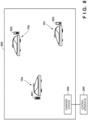
- Fig. 7 is a schematic view showing work vehicles 10a and 10b in a work area 700, battery information 701 of the work vehicle 10a, and battery information 702 of the work vehicle 10b.
- the work vehicle 10a and the work vehicle 10b have the same arrangement as the work vehicle 10 described with reference to Fig. 3 .
- the work area 700 is, for example, an area where a lawn mowing work is executed on a lawn.
- Each of the work vehicles 10a and 10b performs the work while autonomously traveling in the work area 700.
- the control apparatus 200 wirelessly communicates with each of the work vehicles 10a and 10b and obtains the information of the remaining battery amount of each of the work vehicles 10a and 10b. Note that in the example shown in Fig. 7 , two work vehicles are illustrated. However, three or more work vehicles may exist.
- step S402 the CPU 200a controls each work vehicle based on the power information obtained in step S401 such that the charging timings of the work vehicles at the charging station 300 do not match. Details of this processing will be described later. The series of processes shown in Fig. 4 thus ends.
- step S501 the CPU 200a estimates the arrival of the charging timing of each work vehicle based on the power information obtained in step S401. For example, it is estimated that the charging timing of the work vehicle 10a arrives at 14:00, and the charging timing of the work vehicle 10b arrives at 14:30.
- each of the work vehicles 10a and 10b is configured to determine whether the remaining battery amount of the self-vehicle is equal to or smaller than a threshold, and upon determining that the remaining battery amount is equal to or smaller than the threshold, determine that the charging timing at the charging station 300 has arrived.
- Each work vehicle is configured to control the self-vehicle to return to the charging station 300 upon determining that the charging timing has arrived.
- a state in which the charging timings match includes, for example, a state in which another work vehicle is charging at the charging station 300, and a charging wait state occurs until the charging ends, in addition to a state in which a plurality of work vehicles simultaneously return to the charging station 300.
- a predetermined time is needed after a work vehicle starts charging until the charging is completed, and the work vehicle leaves the charging station 300.
- step S503 If it is determined that the charging timings of the work vehicles match, the process advances to step S503. On the other hand, if it is determined that the charging timings of the work vehicles do not match, the processing is ended. Note that in the example shown in Fig. 7 , the remaining battery amount 701 of the work vehicle 10a is 100%, and the remaining battery amount 702 of the work vehicle 10b is 100%, too. Since the charge amount of the work vehicle 10a and that of the work vehicle 10b simultaneously decrease, the charging timings match.
- the CPU 200a changes the threshold set for the work vehicles to a value different for each work vehicle, thereby controlling each work vehicle such that the charging timings do not match each other.
- the threshold of the remaining battery amount for the work vehicle 10a may be changed from an initial value of 20% to 50%
- the threshold of the remaining battery amount for the work vehicle 10b may be changed from an initial value of 20% to 10%. This can advance the arrival of the charging timing of the work vehicle 10a and also delay the arrival of the charging timing of the work vehicle 10b, and matching of the charging timings can be avoided.
- power information is obtained from each work vehicle, and control is performed based on the obtained power information such that the charging timings of the work vehicles at the charging station do not match. This makes it possible to avoid occurrence of a charging wait state of a work vehicle and improve work efficiency.
- the threshold set for the work vehicles and used to return to the charging station is changed to a value different for each work vehicle, thereby performing control such that the charging timings do not match each other.
- the power consumption of each work vehicle is changed, thereby performing control such that the charging timings do not match each other will be described.
- step S402 in Fig. 4 Details of the processing of step S402 in Fig. 4 according to this embodiment will be described below with reference to the flowchart of Fig. 6 .
- steps S601 and S602 are the same as steps S501 and S502 in Fig. 5 , respectively, and a description thereof will be omitted.
- a CPU 200a controls a communication unit 200d to communicate with each work vehicle and change the power consumption of each work vehicle, thereby controlling each work vehicle such that charging timings do not match each other.
- the power consumption is changed, the decrease speed of the remaining battery amount of each work vehicle changes, and therefore, matching of the charging timings can be avoided.
- the CPU 200a can control traveling motors 26 of each work vehicle to change the traveling speed, thereby changing the power consumption of each work vehicle.
- the traveling speed of each work vehicle may be changed by selectively setting the traveling speed from three patterns: 0.55 m/s, 0.45 m/s, and 0.35 m/s.
- the CPU 200a controls a blade height adjusting motor 100 of each work vehicle to change the height of a blade 20 provided in each work vehicle, thereby changing the power consumption of each work vehicle.
- the blade 20 When the height of the blade 20 is reduced, the blade 20 readily contacts the lawn and grasses. Since the load increases, the power consumption increases. Hence, the decrease of the remaining battery amount can be accelerated.
- the blade height of each work vehicle may be changed by selectively setting the blade height from three patterns: 8 cm, 7 cm, and 6 cm.
- the CPU 200a controls a work motor 22 provided in each work vehicle to change the rotation speed of the blade 20 provided in each work vehicle, thereby changing the power consumption of each work vehicle.
- the rotation speed of the blade 20 is increased, the power consumption increases. Hence, the decrease of the remaining battery amount can be accelerated.
- the rotation speed of the blade 20 is reduced, the power consumption decreases. Hence, the decrease of the remaining battery amount can be decelerated.
- the power consumption of each work vehicle is changed, thereby performing control such that the charging timings do not match each other. This makes it possible to avoid occurrence of a charging wait state of a work vehicle and improve work efficiency.
- Fig. 8 is a schematic view showing work vehicles 10a, 10b, and 10c in a work area 800, battery information 801 of the work vehicle 10a, battery information 802 of the work vehicle 10b, and battery information 803 of the work vehicle 10c.
- the work vehicle 10a, the work vehicle 10b, and the work vehicle 10c have the same arrangement as the work vehicle 10 described with reference to Fig. 3 .
- the work area 800 is, for example, an area where a lawn mowing work is executed on a lawn.
- Each of the work vehicles 10a, 10b, and 10c performs the work while autonomously traveling in the work area 800.
- the power consumption of each work vehicle may be changed such that the ratio of the remaining battery amount 801 of the work vehicle 10a becomes 90% of full charge, the ratio of the remaining battery amount 802 of the work vehicle 10b becomes 60% of full charge, and the ratio of the remaining battery amount 803 of the work vehicle 10c becomes 30% of full charge, that is, the ratios of the remaining battery amounts have an equal interval of 30%.
- the remaining battery amount of the work vehicle 10a is 95%
- the remaining battery amount of the work vehicle 10b is 92%
- the remaining battery amount of the work vehicle 10c is 90%
- the CPU 200a reduces the power consumption of the work vehicle 10a, increases the power consumption of the work vehicle 10b, and makes the power consumption of the work vehicle 10c larger than that of the work vehicle 10b, thereby controlling such that the ratios of the remaining battery amounts of the work vehicles become 90%, 60%, and 30% at an equal interval.
- the interval is not limited to 30%, and another interval (20%, 40%, or the like) may be set if matching of the charging timings can be avoided. Also, not an equal interval but different intervals may be set such that the interval between the work vehicle 10a and the work vehicle 10b becomes 30%, and the interval between the work vehicle 10b and the work vehicle 10c becomes 35%.
- the CPU 200a can change a work area assigned to each work vehicle to a work area different for each work vehicle, thereby changing the power consumption of each work vehicle. For example, a large work area is assigned to a work vehicle whose power consumption should be increased, and a small work area is assigned to a work vehicle whose power consumption should be reduced.
- Fig. 9 is a schematic view showing the work vehicles 10a, 10b, and 10c in a work area 900, battery information 901 of the work vehicle 10a, battery information 902 of the work vehicle 10b, and battery information 903 of the work vehicle 10c.
- the work area 900 is, for example, an area where a lawn mowing work is executed on a lawn.
- a work area 951 is assigned to the work vehicle 10a
- a work area 952 is assigned to the work vehicle 10b
- a work area 953 is assigned to the work vehicle 10c.
- the remaining battery amounts of the work vehicles are initially almost equal. If it is determined that the charging timings match, work areas of different areas are assigned to the work vehicles, thereby changing the power consumption between the work vehicles. It is therefore possible to avoid matching of the charging timings.
- the CPU 200a may change the work area assigned to each work vehicle based on the information of the work load of each work area stored in a memory 200c in advance, thereby changing the power consumption of each work vehicle. For example, using the fact that the power consumption is large in a work area with a large work load (a place with a large height difference, a place where grasses have grown, or the like), a work vehicle whose work load should be increased is assigned to a work area with a large work load, thereby adjusting the power consumption.
- control apparatus 200 executes the processing according to the present invention.
- the function of the control apparatus 200 may be imparted to the charging station 300, and the charging station 300 may execute the processing according to the present invention. Since matching of the charging timings can be avoided without providing the control apparatus 200, the product cost can be reduced.
- the control apparatus 200 executes the processing according to the present invention.
- the function of the control apparatus 200 may be imparted to any one of the work vehicles, and the work vehicle may execute the processing according to the present invention.
- the ECU 44 communicates with another work vehicle using the communication unit 35 and obtains the power information of the other work vehicle. Based on the power information of the self-vehicle and the obtained power information of the other work vehicle, the self-vehicle and the other work vehicle are controlled such that the charging timings of the work vehicles at the charging station 300 do not match. Since matching of the charging timings can be avoided without providing the control apparatus 200, the product cost can be reduced.
- the description has been made using the combination of a plurality of work vehicles and one charging station as an example.
- the present invention can also be applied to a combination of a plurality of work vehicles and a plurality of charging stations.
- the description has been made using an example in which the number of work vehicles is two or three.
- the present invention can also be applied to a case in which four or more work vehicles exist.
- the autonomous work machine is not limited to a lawn mower.
- the present invention can also be applied to an autonomous work machine of another type such as an autonomous snow remover or a golf ball retriever.
- an example in which the work machine is autonomously controlled based on images obtained from a plurality of cameras has been described.
- the work machine to which the present invention is applicable is not limited to a work machine that uses camera images.
- the present invention can also be applied to a work machine that performs autonomous control using an obstacle sensor (distance measuring sensor) such as an ultrasonic sensor or an infrared sensor.
- an obstacle sensor distance measuring sensor
Landscapes
- Engineering & Computer Science (AREA)
- Aviation & Aerospace Engineering (AREA)
- Radar, Positioning & Navigation (AREA)
- Remote Sensing (AREA)
- Physics & Mathematics (AREA)
- General Physics & Mathematics (AREA)
- Automation & Control Theory (AREA)
- Power Engineering (AREA)
- Life Sciences & Earth Sciences (AREA)
- Mechanical Engineering (AREA)
- Transportation (AREA)
- Environmental Sciences (AREA)
- Artificial Intelligence (AREA)
- Game Theory and Decision Science (AREA)
- Sustainable Energy (AREA)
- Business, Economics & Management (AREA)
- Health & Medical Sciences (AREA)
- Medical Informatics (AREA)
- Evolutionary Computation (AREA)
- Sustainable Development (AREA)
- Soil Sciences (AREA)
- Control Of Position, Course, Altitude, Or Attitude Of Moving Bodies (AREA)
- Harvester Elements (AREA)
- Guiding Agricultural Machines (AREA)
- Electric Vacuum Cleaner (AREA)
- Charge And Discharge Circuits For Batteries Or The Like (AREA)
Description
- The present invention relates to a control system, an operation method of the control system and a computer program.
- Conventionally, one autonomous work machine (for example, a lawn mower or a snow remover) is operated in combination with one charging station. PTL 1 discloses a work machine that, when the remaining power amount of the work machine decreases, automatically returns to a charging station to charge its battery.
PTL 2 discloses a plurality of robots with a plurality of charging points, whereby the coordination between robots is based on market economy. PTL 3 discloses a plurality of lawn mower robots in combination with a charging station. -
- PTL 1:
Japanese Patent Laid-Open No. 2017-40076 - PTL 2: RAPPAPORT MICHA ET AL: "Coordinated recharging of mobile robots during exploration", 2017 IEEE/RSJ INTERNATIONAL CONFERENCE ON INTELLIGENT ROBOTS AND SYSTEMS (IROS), IEEE, 24 September 2017 (2017-09-24), pages 6809-6816, XP033266751, DOI: 10.1109/IROS.2017.8206600 [retrieved on 2017-12-13],
- PTL 3:
US 2011/142099 A1 . - If a plurality of autonomous work machines operate in a single work area and share one charging station, timings at which these need charging may overlap. As a result, some autonomous work machines are set in a charging wait state, and the work efficiency lowers.
- It is an object of the present invention to provide a technique for avoiding occurrence of a charging wait state of an autonomous work machine and improving work efficiency.
- In order to solve the above-described problem and achieve the object, according to the present invention, there is provided a control system as defined by appended claim 1. The control system according to the invention includes a charging station, a plurality of autonomous work machines, and a control apparatus configured to control the plurality of autonomous work machines, characterized in that
the control apparatus comprises: - obtaining means for obtaining power information of each autonomous work machine
- estimation means for estimating the arrival of the charging timing of each autonomous work machine based on the power information; and
- control means for controlling each autonomous work machine based on the power information such that charging timings of the autonomous work machines at the charging station do not match each other, by changing power consumption of each autonomous work machine if the estimated charging timing match,
each autonomous work machine comprises a blade for a work,
and - the control means changes the power consumption of each autonomous work machine by changing a height of the blade for each autonomous work machine) or by changing a rotation speed of the blade for each autonomous work machine.
- The present invention also provides a method as defined in claim 7 and a computer program as defined in claim 8.
- According to the present invention, it is possible to avoid occurrence of a charging wait state of an autonomous work machine and improve work efficiency.
- Other features and advantages of the present invention will be apparent from the following description taken in conjunction with the accompanying drawings. Note that the same reference numerals denote the same or like components throughout the accompanying drawings.
- The accompanying drawings, which are incorporated in and constitute a part of the specification, illustrate embodiments of the invention and, together with the description, serve to explain principles of the invention.
-
Fig. 1 is a view showing the outer appearance of a work machine capable of autonomous traveling according to an embodiment of the present invention; -
Fig. 2 is a view observing the work machine according to the embodiment of the present invention sideways; -
Fig. 3 is a block diagram showing an example of the arrangement of a control system according to the embodiment of the present invention; -
Fig. 4 is a flowchart showing a processing procedure executed by a control apparatus according to the embodiment of the present invention; -
Fig. 5 is a flowchart showing a detailed procedure of control processing according to the first embodiment; -
Fig. 6 is a flowchart showing a detailed procedure of control processing according to the second embodiment; -
Fig. 7 is an explanatory view of control according to the embodiment of the present invention; -
Fig. 8 is an explanatory view of control according to the embodiment of the present invention; and -
Fig. 9 is an explanatory view of control according to the embodiment of the present invention. - Hereinafter, the embodiments of the present invention will be described with reference to the accompanying drawings. It should be noted that the same reference numerals denote the same constituent elements throughout the drawings.
-
Fig. 1 is a view showing the outer appearance of an autonomous work machine capable of autonomous traveling according to an embodiment of the present invention. In the following description, the traveling direction (vehicle longitudinal direction) of the autonomous work machine in a side view, a lateral direction (vehicle width direction) perpendicular to the traveling direction, and a perpendicular direction perpendicular to the traveling direction and the lateral direction are respectively defined as a front-and-rear direction, a left-and-right direction, and a vertical direction, and the arrangement of each component will be explained in accordance with these directions. - In
Fig. 1 ,reference numeral 10 denotes an autonomous work machine (to be referred to as "a work vehicle" hereinafter). More specifically, thework vehicle 10 functions as an autonomous traveling lawn mower. However, the lawn mower is merely an example, and the present invention is also applicable to other types of work machines. Thework vehicle 10 has acamera unit 11 including a plurality of cameras (afirst camera 11a and asecond camera 11b), and can calculate and obtain information of the distance between thework vehicle 10 and an object existing in front of thework vehicle 10 by using images captured by the first andsecond cameras 11a and 1 1b having a parallax. The operation of thework vehicle 10 is controlled based on the captured image and an object recognition model held in advance. -
Fig. 2 is a view observing thework vehicle 10 in the lateral direction (vehicle width direction). As shown inFig. 2 , thework vehicle 10 includes thecamera unit 11, avehicle body 12, astay 13,front wheels 14,rear wheels 16, ablade 20, awork motor 22, amotor holding member 23, a bladeheight adjusting motor 100, and a translation mechanism 101. Thework vehicle 10 also includestraveling motors 26, various sensors S, an ECU (Electronic Control Unit) 44, acharging unit 30, abattery 32, acharging terminal 34, and acommunication unit 35. - The
vehicle body 12 of thework vehicle 10 includes achassis 12a and aframe 12b attached to thechassis 12a. Thefront wheels 14 are two, left and right small-diameter wheels fixed to the front part of thechassis 12a via thestay 13. Therear wheels 16 are two, left and right large-diameter wheels attached to the rear part of thechassis 12a. - The
blade 20 is a lawn mowing rotary blade attached near the central position of thechassis 12a. Thework motor 22 is an electric motor arranged above theblade 20. Theblade 20 is connected to and rotated by thework motor 22. Themotor holding member 23 holds thework motor 22. The rotation of themotor holding member 23 is regulated with respect to thechassis 12a. In addition, the vertical movement of themotor holding member 23 is permitted by a combination of a guide rail and a slider capable of vertically moving by being guided by the guide rail. - The blade
height adjusting motor 100 is a motor for adjusting the height of theblade 20 in the vertical direction from a ground surface GR. The translation mechanism 101 is connected to the bladeheight adjusting motor 100, and converts the rotation of the bladeheight adjusting motor 100 into a vertical translational movement. The translation mechanism 101 is also connected to themotor holding member 23 for holding thework motor 22. - The rotation of the blade
height adjusting motor 100 is converted into the translational movement (vertical movement) by the translation mechanism 101, and this translational movement is transmitted to themotor holding member 23. The translational movement (vertical movement) of themotor holding member 23 causes thework motor 22 held by themotor holding member 23 to translationally move (vertically move). The height of theblade 20 from the ground surface GR can be adjusted by the vertical movement of thework motor 22. - The traveling
motors 26 are two electric motors (motors) attached to thechassis 12a of thework vehicle 10. The two electric motors are connected to the left and rightrear wheels 16. The left and right wheels are independently rotated forward (rotated in an advancing direction) or rotated backward (rotated in a retreating direction) by using thefront wheels 14 as driven wheels and therear wheels 16 as driving wheels. This allows thework vehicle 10 to move in various directions. - The charging
terminal 34 is a charging terminal installed in the front end position of theframe 12b in the front-and-rear direction. The chargingterminal 34 can receive power from a charging station (a chargingstation 300 to be described later with reference toFig. 3 ) when connected to a corresponding terminal of the charging station. The chargingterminal 34 is connected to the chargingunit 30 by a line, and the chargingunit 30 is connected to thebattery 32. Thework motor 22, the travelingmotors 26, and the bladeheight adjusting motor 100 are also connected to thebattery 32, and receive power from thebattery 32. - The
ECU 44 is an electronic control unit including a microcomputer formed on a circuit board, and controls the operation of thework vehicle 10. Details of theECU 44 will be described later. Thecommunication unit 35 can transmit/receive information to/from an external device (for example, another work vehicle, a control apparatus, a charging station, or the like to be described later) connected to thework vehicle 10 by a wire or wirelessly. -
Fig. 3 is a block diagram showing an example of the arrangement of a control system according to the embodiment of the present invention. A control system 1 is configured to include a plurality of work vehicles (onework vehicle 10 is shown inFig. 3 ), a control apparatus (server) 200, and the chargingstation 300. Other work vehicles have the same arrangement as thework vehicle 10. - As shown in
Fig. 3 , theECU 44 provided in thework vehicle 10 includes aCPU 44a, an I/O 44b, and amemory 44c. The I/O 44b inputs/outputs various kinds of information. Thememory 44c is, for example, a ROM (Read Only Memory), an EEPROM (Electrically Erasable Programmable Read Only Memory), or a RAM (Random Access Memory). Thememory 44c stores the work schedule of thework vehicle 10, information on the work area, and various programs for controlling the operation of thework vehicle 10. TheECU 44 can operate as each processing unit for implementing the present invention by reading out and executing a program stored in thememory 44c. - The
ECU 44 is connected to the various sensors S. The sensors S include anazimuth sensor 46, aGPS sensor 48, awheel speed sensor 50, anangular velocity sensor 52, anacceleration sensor 54, acurrent sensor 62, and ablade height sensor 64. - The
azimuth sensor 46 and theGPS sensor 48 are sensors for obtaining information of the direction and the position of thework vehicle 10. Theazimuth sensor 46 detects the azimuth corresponding to the terrestrial magnetism. TheGPS sensor 48 receives radio waves from GPS satellites and detects information indicating the current position (the latitude and the longitude) of thework vehicle 10. - The
wheel speed sensor 50, theangular velocity sensor 52, and theacceleration sensor 54 are sensors for obtaining information on the moving state of thework vehicle 10. Thewheel speed sensor 50 detects the wheel speeds of the left andright wheels 16. Theangular velocity sensor 52 detects the angular velocity around the vertical axis (the z-axis in the perpendicular direction) in the barycentric position of thework vehicle 10. Theacceleration sensor 54 detects accelerations in the directions of three perpendicular axes, that is, the x-, y-, and z-axes, which act on thework vehicle 10. - The
current sensor 62 detects the current consumption (power consumption) of thebattery 32. The detection result of the current consumption (power consumption) is saved in thememory 44c of theECU 44. When a predetermined power amount is consumed, and the power amount stored in thebattery 32 becomes equal to or lower than a threshold value, theECU 44 performs return control for returning thework vehicle 10 to the chargingstation 300 in order to charge thework vehicle 10. - The
blade height sensor 64 detects the height of theblade 20 from the ground surface GR. Theblade height sensor 64 outputs the detection result to theECU 44. Under the control of theECU 44, the bladeheight adjusting motor 100 is driven, and theblade 20 vertically moves, thereby adjusting the height from the ground surface GR. - The outputs from the various sensors S are input to the
ECU 44 via the I/O 44b. Based on the outputs from the various sensors S, theECU 44 supplies power from thebattery 32 to the travelingmotor 26, thework motor 22, and theheight adjusting motor 100. TheECU 44 controls the travelingmotor 26 by outputting a control value via the I/O 44b, thereby controlling traveling of thework vehicle 10. TheECU 44 also controls theheight adjusting motor 100 by outputting a control value via the I/O 44b, thereby controlling the height of theblade 20. Furthermore, theECU 44 controls thework motor 22 by outputting a control value via the I/O 44b, thereby controlling the rotation of theblade 20. The I/O 44b can function as a communication interface, and can be connected to thecontrol apparatus 200 or another apparatus via anetwork 150 by a wire or wirelessly. - The
control apparatus 200 functions as a server configured to control each work vehicle. Thecontrol apparatus 200 includes aCPU 200a, an I/O 200b, amemory 200c, and acommunication unit 200d. Thememory 200c is a ROM (Read Only Memory), an EEPROM (Electrically Erasable Programmable Read Only Memory), a RAM (Random Access Memory), or the like. The I/O 200b inputs/outputs various kinds of information. Thememory 200c stores the work schedule of each work vehicle, information on the work area, power information such as the remaining battery amount of each work vehicle, and various programs for controlling the operation of each work vehicle. Also, thememory 200c may store the information of a work load in each work area. For example, since power consumption is large in a work area with a large work load (a place with a large height difference, a place where grasses have grown, or the like), large power consumption is stored in association with such a work area. TheCPU 200a reads out a program stored in thememory 200c and executes it, thereby operating as processing units for implementing the present invention. Thecommunication unit 200d communicates with an apparatus (for example, thework vehicle 10 or the charging station 300) existing outside thecontrol apparatus 200 and transmits/receives various kinds of information. - The charging
station 300 functions as a charging apparatus configured to charge the battery (battery 32) of thework vehicle 10. The chargingstation 300 is installed in a work area, and thework vehicle 10 can perform charging by returning to the chargingstation 300 and connecting the chargingterminal 34 to the chargingstation 300. Note that the chargingstation 300 can charge only one work vehicle at once. - The procedure of processing executed by the
control apparatus 200 of the control system 1 according to this embodiment will be described next with reference to the flowchart ofFig. 4 . In step S401, theCPU 200a controls thecommunication unit 200d to communicate with each work vehicle, thereby obtaining power information of each work vehicle. The power information is, for example, the information of the remaining battery amount of each work vehicle.Fig. 7 is a schematic view showingwork vehicles work area 700,battery information 701 of thework vehicle 10a, andbattery information 702 of thework vehicle 10b. Thework vehicle 10a and thework vehicle 10b have the same arrangement as thework vehicle 10 described with reference toFig. 3 . Thework area 700 is, for example, an area where a lawn mowing work is executed on a lawn. Each of thework vehicles work area 700. Thecontrol apparatus 200 wirelessly communicates with each of thework vehicles work vehicles Fig. 7 , two work vehicles are illustrated. However, three or more work vehicles may exist. - In step S402, the
CPU 200a controls each work vehicle based on the power information obtained in step S401 such that the charging timings of the work vehicles at the chargingstation 300 do not match. Details of this processing will be described later. The series of processes shown inFig. 4 thus ends. - Details of the processing of step S402 in
Fig. 4 according to this embodiment will be described next with reference to the flowchart ofFig. 5 . In step S501, theCPU 200a estimates the arrival of the charging timing of each work vehicle based on the power information obtained in step S401. For example, it is estimated that the charging timing of thework vehicle 10a arrives at 14:00, and the charging timing of thework vehicle 10b arrives at 14:30. Note that each of thework vehicles station 300 has arrived. Each work vehicle is configured to control the self-vehicle to return to the chargingstation 300 upon determining that the charging timing has arrived. - In step S502, the
CPU 200a determines whether the estimated charging timings of the work vehicles match. Here, a state in which the charging timings match includes, for example, a state in which another work vehicle is charging at the chargingstation 300, and a charging wait state occurs until the charging ends, in addition to a state in which a plurality of work vehicles simultaneously return to the chargingstation 300. A predetermined time is needed after a work vehicle starts charging until the charging is completed, and the work vehicle leaves the chargingstation 300. For example, in a case in which 1 hr is needed until full charge, and it is estimated that the charging timing of thework vehicle 10a arrives at 14:00, and the charging timing of thework vehicle 10b arrives at 14:30, if thework vehicle 10a starts charging at 14:00, charging continues util 15:00. Hence, thework vehicle 10b cannot perform charging at the chargingstation 300 from 14:30 to 15:00, and a charging wait state occurs. Even in this case, it can be determined that the charging timings match. Hence, if the remaining battery amount difference falls within a predetermined range, it can be determined that the charging timings match. If the remaining battery amount difference is zero, the work vehicles return to the chargingstation 300 at the same charging timing. - If it is determined that the charging timings of the work vehicles match, the process advances to step S503. On the other hand, if it is determined that the charging timings of the work vehicles do not match, the processing is ended. Note that in the example shown in
Fig. 7 , the remainingbattery amount 701 of thework vehicle 10a is 100%, and the remainingbattery amount 702 of thework vehicle 10b is 100%, too. Since the charge amount of thework vehicle 10a and that of thework vehicle 10b simultaneously decrease, the charging timings match. - In step S503, the
CPU 200a changes the threshold set for the work vehicles to a value different for each work vehicle, thereby controlling each work vehicle such that the charging timings do not match each other. For example, the threshold of the remaining battery amount for thework vehicle 10a may be changed from an initial value of 20% to 50%, and the threshold of the remaining battery amount for thework vehicle 10b may be changed from an initial value of 20% to 10%. This can advance the arrival of the charging timing of thework vehicle 10a and also delay the arrival of the charging timing of thework vehicle 10b, and matching of the charging timings can be avoided. - As described above, in this embodiment, power information is obtained from each work vehicle, and control is performed based on the obtained power information such that the charging timings of the work vehicles at the charging station do not match. This makes it possible to avoid occurrence of a charging wait state of a work vehicle and improve work efficiency.
- In the first embodiment, an example has been described in which the threshold set for the work vehicles and used to return to the charging station is changed to a value different for each work vehicle, thereby performing control such that the charging timings do not match each other. In the second embodiment, an example in which the power consumption of each work vehicle is changed, thereby performing control such that the charging timings do not match each other will be described.
- Note that the arrangement of a control system according to this embodiment is the same as the arrangement of the control system 1 described in the first embodiment, and a description thereof will be omitted. Processing according to this embodiment is different from the first embodiment in details of the processing of step S402 in
Fig. 4 . Details of the processing of step S402 inFig. 4 according to this embodiment will be described below with reference to the flowchart ofFig. 6 . The processes of steps S601 and S602 are the same as steps S501 and S502 inFig. 5 , respectively, and a description thereof will be omitted. - In step S603, a
CPU 200a controls acommunication unit 200d to communicate with each work vehicle and change the power consumption of each work vehicle, thereby controlling each work vehicle such that charging timings do not match each other. When the power consumption is changed, the decrease speed of the remaining battery amount of each work vehicle changes, and therefore, matching of the charging timings can be avoided. - According to a preferred aspect that can be used in combination with the subsequently described first or second alternatives of the invention, the
CPU 200a can control travelingmotors 26 of each work vehicle to change the traveling speed, thereby changing the power consumption of each work vehicle. When the traveling speed is increased, power consumption increases. Hence, the decrease of the remaining battery amount can be accelerated. On the other hand, when the traveling speed is reduced, power consumption decreases. Hence, the decrease of the remaining battery amount can be decelerated. As an example, the traveling speed of each work vehicle may be changed by selectively setting the traveling speed from three patterns: 0.55 m/s, 0.45 m/s, and 0.35 m/s. - According to a first alternative of the invention, the
CPU 200a controls a bladeheight adjusting motor 100 of each work vehicle to change the height of ablade 20 provided in each work vehicle, thereby changing the power consumption of each work vehicle. When the height of theblade 20 is reduced, theblade 20 readily contacts the lawn and grasses. Since the load increases, the power consumption increases. Hence, the decrease of the remaining battery amount can be accelerated. On the other hand, when the height of theblade 20 is increased, theblade 20 hardly contacts the lawn and grasses. Since the load decreases, the power consumption decreases. Hence, the decrease of the remaining battery amount can be decelerated. As an example, the blade height of each work vehicle may be changed by selectively setting the blade height from three patterns: 8 cm, 7 cm, and 6 cm. - According to a second alternative of the invention, the
CPU 200a controls awork motor 22 provided in each work vehicle to change the rotation speed of theblade 20 provided in each work vehicle, thereby changing the power consumption of each work vehicle. When the rotation speed of theblade 20 is increased, the power consumption increases. Hence, the decrease of the remaining battery amount can be accelerated. On the other hand, when the rotation speed of theblade 20 is reduced, the power consumption decreases. Hence, the decrease of the remaining battery amount can be decelerated. - The processing shown in
Fig. 6 thus ends. - As described above, in this embodiment, the power consumption of each work vehicle is changed, thereby performing control such that the charging timings do not match each other. This makes it possible to avoid occurrence of a charging wait state of a work vehicle and improve work efficiency.
- Note that in step S603, the
CPU 200a may change the power consumption of each work vehicle such that the remaining battery amounts of the work vehicles have an equal interval.Fig. 8 is a schematic view showingwork vehicles work area 800,battery information 801 of thework vehicle 10a,battery information 802 of thework vehicle 10b, andbattery information 803 of thework vehicle 10c. Thework vehicle 10a, thework vehicle 10b, and thework vehicle 10c have the same arrangement as thework vehicle 10 described with reference toFig. 3 . Thework area 800 is, for example, an area where a lawn mowing work is executed on a lawn. Each of thework vehicles work area 800. - For example, as shown in
Fig. 8 , the power consumption of each work vehicle may be changed such that the ratio of the remainingbattery amount 801 of thework vehicle 10a becomes 90% of full charge, the ratio of the remainingbattery amount 802 of thework vehicle 10b becomes 60% of full charge, and the ratio of the remainingbattery amount 803 of thework vehicle 10c becomes 30% of full charge, that is, the ratios of the remaining battery amounts have an equal interval of 30%. - For example, consider a case in which before execution of control processing according to the present invention, the remaining battery amount of the
work vehicle 10a is 95%, the remaining battery amount of thework vehicle 10b is 92%, and the remaining battery amount of thework vehicle 10c is 90%, and if the power consumption is not changed, it is determined that the charging timings of the three work vehicles match. In this case, for example, theCPU 200a reduces the power consumption of thework vehicle 10a, increases the power consumption of thework vehicle 10b, and makes the power consumption of thework vehicle 10c larger than that of thework vehicle 10b, thereby controlling such that the ratios of the remaining battery amounts of the work vehicles become 90%, 60%, and 30% at an equal interval. Note that the interval is not limited to 30%, and another interval (20%, 40%, or the like) may be set if matching of the charging timings can be avoided. Also, not an equal interval but different intervals may be set such that the interval between thework vehicle 10a and thework vehicle 10b becomes 30%, and the interval between thework vehicle 10b and thework vehicle 10c becomes 35%. - Also, in step S603, the
CPU 200a can change a work area assigned to each work vehicle to a work area different for each work vehicle, thereby changing the power consumption of each work vehicle. For example, a large work area is assigned to a work vehicle whose power consumption should be increased, and a small work area is assigned to a work vehicle whose power consumption should be reduced. - For a work vehicle assigned a work area with a large area, since the distance to travel straight becomes long, and occurrence of deceleration control or a turn operation on the periphery of the work area decreases, time loss caused by the deceleration or turn operation decreases. Hence, the work amount (for example, the amount of lawn or grasses that can be mown) per unit time increases, and the load thus increases. As a result, the power consumption increases.
- On the other hand, for a work vehicle assigned a work area with a small area, since the distance to travel straight becomes short, and deceleration control or a turn operation on the periphery of the work area frequently occurs, time loss caused by the deceleration or turn operation increases. During traveling at a low speed or during a turn operation, the work load of the
blade 20 on the lawn or grasses is small. That is, the lawn or grasses are not mown even if theblade 20 is rotated. Hence, the work amount (for example, the amount of lawn or grasses that can be mown) per unit time decreases, and the load thus decreases. As a result, the power consumption decreases. -
Fig. 9 is a schematic view showing thework vehicles work area 900,battery information 901 of thework vehicle 10a,battery information 902 of thework vehicle 10b, andbattery information 903 of thework vehicle 10c. Thework area 900 is, for example, an area where a lawn mowing work is executed on a lawn. For example, awork area 951 is assigned to thework vehicle 10a, awork area 952 is assigned to thework vehicle 10b, and awork area 953 is assigned to thework vehicle 10c. The remaining battery amounts of the work vehicles are initially almost equal. If it is determined that the charging timings match, work areas of different areas are assigned to the work vehicles, thereby changing the power consumption between the work vehicles. It is therefore possible to avoid matching of the charging timings. - The
CPU 200a may change the work area assigned to each work vehicle based on the information of the work load of each work area stored in amemory 200c in advance, thereby changing the power consumption of each work vehicle. For example, using the fact that the power consumption is large in a work area with a large work load (a place with a large height difference, a place where grasses have grown, or the like), a work vehicle whose work load should be increased is assigned to a work area with a large work load, thereby adjusting the power consumption. - In the above-described embodiments, the description has been made assuming that the
control apparatus 200 executes the processing according to the present invention. For example, the function of thecontrol apparatus 200 may be imparted to the chargingstation 300, and the chargingstation 300 may execute the processing according to the present invention. Since matching of the charging timings can be avoided without providing thecontrol apparatus 200, the product cost can be reduced. - Also, in the above-described embodiments, the description has been made assuming that the
control apparatus 200 executes the processing according to the present invention. However, the function of thecontrol apparatus 200 may be imparted to any one of the work vehicles, and the work vehicle may execute the processing according to the present invention. In this case, theECU 44 communicates with another work vehicle using thecommunication unit 35 and obtains the power information of the other work vehicle. Based on the power information of the self-vehicle and the obtained power information of the other work vehicle, the self-vehicle and the other work vehicle are controlled such that the charging timings of the work vehicles at the chargingstation 300 do not match. Since matching of the charging timings can be avoided without providing thecontrol apparatus 200, the product cost can be reduced. - Also, in the above-described embodiments, the description has been made using the combination of a plurality of work vehicles and one charging station as an example. However, the present invention can also be applied to a combination of a plurality of work vehicles and a plurality of charging stations. In the above-described embodiments, the description has been made using an example in which the number of work vehicles is two or three. However, the present invention can also be applied to a case in which four or more work vehicles exist.
- Also, in the above-described embodiments, the description has been made using a lawn mower as an example of the autonomous work machine. However, the autonomous work machine is not limited to a lawn mower. For example, the present invention can also be applied to an autonomous work machine of another type such as an autonomous snow remover or a golf ball retriever. In the above-described embodiments, an example in which the work machine is autonomously controlled based on images obtained from a plurality of cameras has been described. However, the work machine to which the present invention is applicable is not limited to a work machine that uses camera images. For example, the present invention can also be applied to a work machine that performs autonomous control using an obstacle sensor (distance measuring sensor) such as an ultrasonic sensor or an infrared sensor.
- The present invention is not limited to the above embodiments and various changes and modifications can be made within the scope of the present invention, which is defined by the appended claims.
Claims (8)
- A control system (1) including a charging station (300), a plurality of autonomous work machines (10, 10a, 10b, 10c), and a control apparatus (200) configured to control the plurality of autonomous work machines (10, 10a, 10b, 10c) each autonomous work machine (10, 10a, 10b, 10c) comprises a blade (20) for a work,
characterized in that
the control apparatus (200) comprises:obtaining means (200a) for obtaining power information of each autonomous work machineestimation means (200a) for estimating the arrival of the charging timing of each autonomous work machine (10, 10a, 10b, 10c) based on the power information; andcontrol means (200a) for controlling each autonomous work machine (10, 10a, 10b, 10c) based on the power information such that charging timings of the autonomous work machines (10, 10a, 10b, 10c) at the charging station (300) do not match each other, by changing power consumption of each autonomous work machine (10, 10a, 10b, 10c) if the estimated charging timings match, andthe control means (200a) being configured to change the power consumption of each autonomous work machine (10, 10a, 10b, 10c) by changing a height of the blade (20) for each autonomous work machine (10, 10a, 10b, 10c) or by changing a rotation speed of the blade (20) for each autonomous work machine. - The control system (1) according to claim 1, characterized in that
each autonomous work machine (10, 10a, 10b, 10c) comprises:determination means (44) for determining whether a remaining battery amount (701, 702, 801. 802, 803, 901, 902, 903) is not more than a threshold;timing determination means (44) for, if it is determined that the remaining battery amount (701, 702, 801. 802, 803, 901, 902, 903) is not more than the threshold, determining that the charging timing at the charging station (300) has arrived; andreturn control means (44) for, if it is determined that the charging timing has arrived, controlling the autonomous work machine (10, 10a, 10b, 10c) to return to the charging station (300),if the estimated charging timings match, the control means (200a) changes the threshold to a value different for each autonomous work machine (10, 10a, 10b, 10c), thereby controlling each autonomous work machine (10, 10a, 10b, 10c) such that the charging timings do not match each other. - The control system (1) according to claim 1 or 2, characterized in that the control means (200a) changes the power consumption of each autonomous work machine (10, 10a, 10b, 10c) by changing a traveling speed of each autonomous work machine (10, 10a, 10b, 10c).
- The control system (1) according to any one of claims 1 to 3, characterized in that the control means (200a) changes the power consumption of each autonomous work machine (10, 10a, 10b, 10c) such that the remaining battery amounts (701, 702, 801. 802, 803, 901, 902, 903) of the autonomous work machines (10, 10a, 10b, 10c) have an equal interval.
- The control system (1) according to any one of claims 1 to 4, characterized in that the control means (200a) changes the power consumption of each autonomous work machine (10, 10a, 10b, 10c) by changing a work area (700, 800, 900, 951, 952, 953) assigned to each autonomous work machine (10, 10a, 10b, 10c) to an area different for each autonomous work machine (10, 10a, 10b, 10c).
- The control system (1) according to any one of claims 1 to 5, characterized in thatthe control apparatus (200) further comprisesstorage means (200c) for storing information of a work load of each work area (700, 800, 900, 951, 952, 953), andthe control means (200a) changes the power consumption of each autonomous work machine (10, 10a, 10b, 10c) by changing the work area (700, 800, 900, 951, 952, 953) assigned to each autonomous work machine (10, 10a, 10b, 10c) in accordance with the work load.
- An operation method of a control system (1) including a charging station (300), a plurality of autonomous work machines (10, 10a, 10b, 10c), and a control apparatus (200) configured to control the plurality of autonomous work machines (10, 10a, 10b, 10c), each autonomous work machine (10, 10a, 10b, 10c) comprises a blade (20) for a work the operation method characterized by comprising:obtaining power information of each autonomous work machine (10, 10a, 10b, 10c);estimating the arrival of the charging timing of each autonomous work machine (10, 10a, 10b, 10c) based on the power information; andcontrolling each autonomous work machine (10, 10a, 10b, 10c) such that charging timings of the autonomous work machines (10, 10a, 10b, 10c) at the charging station (300) do not match each other, by changing power consumption of each autonomous work machine (10, 10a, 10b, 10c) if the estimated charging timings match, andin the controlling, the power consumption of each autonomous work machine (10, 10a, 10b, 10c) is changed by changing a height of the blade (20) for each autonomous work machine (10, 10a, 10b, 10c) or by changing a rotation speed of the blade (20) for each autonomous work machine (10, 10a, 10b, 10c).
- A computer program comprising instructions which, when the program is executed by a control apparatus of a control system according to claim 1, cause the control system to carry out the method of claim 7.
Applications Claiming Priority (1)
| Application Number | Priority Date | Filing Date | Title |
|---|---|---|---|
| PCT/JP2018/043889 WO2020110247A1 (en) | 2018-11-29 | 2018-11-29 | Control system, control device, autonomous working machine, method for operating control device, method for controlling autonomous working machine, and program |
Publications (3)
| Publication Number | Publication Date |
|---|---|
| EP3861846A1 EP3861846A1 (en) | 2021-08-11 |
| EP3861846A4 EP3861846A4 (en) | 2021-10-27 |
| EP3861846B1 true EP3861846B1 (en) | 2023-07-12 |
Family
ID=70853276
Family Applications (1)
| Application Number | Title | Priority Date | Filing Date |
|---|---|---|---|
| EP18941660.5A Active EP3861846B1 (en) | 2018-11-29 | 2018-11-29 | Control system, operation method of a control system and computer program |
Country Status (4)
| Country | Link |
|---|---|
| US (1) | US12093059B2 (en) |
| EP (1) | EP3861846B1 (en) |
| JP (1) | JP7203120B2 (en) |
| WO (1) | WO2020110247A1 (en) |
Families Citing this family (12)
| Publication number | Priority date | Publication date | Assignee | Title |
|---|---|---|---|---|
| WO2020110247A1 (en) | 2018-11-29 | 2020-06-04 | 本田技研工業株式会社 | Control system, control device, autonomous working machine, method for operating control device, method for controlling autonomous working machine, and program |
| USD1016860S1 (en) * | 2020-03-27 | 2024-03-05 | The Toro Company | Lawnmower shell |
| CN111612342B (en) * | 2020-05-22 | 2024-03-15 | 格力博(江苏)股份有限公司 | Lawn mower fleet management device, management method and management system |
| US20220294242A1 (en) * | 2021-03-10 | 2022-09-15 | Techtronic Cordless Gp | Lawnmowers |
| US12296694B2 (en) | 2021-03-10 | 2025-05-13 | Techtronic Cordless Gp | Lawnmowers |
| IT202100009017A1 (en) * | 2021-04-09 | 2022-10-09 | Stiga S P A In Breve Anche St S P A | GROUND MAINTENANCE SYSTEM, IN PARTICULAR CONFIGURED TO ENABLE A RECHARGING OPERATION OF A MOBILE DEVICE AT A PREFERENTIAL TIME SLOT |
| IT202100009023A1 (en) * | 2021-04-09 | 2022-10-09 | Stiga S P A In Breve Anche St S P A | GROUND MAINTENANCE SYSTEM, IN PARTICULAR CONFIGURED TO ACTIVATE AN ENERGY SAVING MODE OF A MOBILE DEVICE AFTER COMPARISON BETWEEN CHARGE LEVELS |
| CN113729583A (en) * | 2021-09-26 | 2021-12-03 | 汇智机器人科技(深圳)有限公司 | Method, system and equipment for supplying floor washing machine |
| CA3181592A1 (en) | 2021-11-10 | 2023-05-10 | Techtronic Cordless Gp | Robotic lawn mowers |
| US12443180B2 (en) | 2021-11-10 | 2025-10-14 | Techtronic Cordless Gp | Robotic lawn mowers |
| EP4555391A1 (en) * | 2022-07-13 | 2025-05-21 | Hydro-Gear Limited Partnership | Utility vehicle with battery management and autonomous control systems |
| JP2024071183A (en) * | 2022-11-14 | 2024-05-24 | 住友建機株式会社 | Charging management system and electric work machine |
Family Cites Families (9)
| Publication number | Priority date | Publication date | Assignee | Title |
|---|---|---|---|---|
| JP4474569B2 (en) * | 2007-11-07 | 2010-06-09 | Necアクセステクニカ株式会社 | CHARGE CONTROL DEVICE, CHARGE CONTROL SYSTEM, CHARGE CONTROL METHOD USED FOR THEM, AND PROGRAM THEREOF |
| FR2931957B1 (en) * | 2008-06-02 | 2010-07-30 | Nav On Time | DEVICE FOR CONTROLLING MOBILE DEVICE (S) AUTOPROPULSE (S) |
| WO2014021412A1 (en) * | 2012-08-02 | 2014-02-06 | 日産自動車株式会社 | Charging management system for unpiloted conveyance vehicles |
| JP2014187766A (en) * | 2013-03-22 | 2014-10-02 | Toyota Industries Corp | Charger |
| DE202013101894U1 (en) * | 2013-04-30 | 2014-08-07 | Al-Ko Kober Ag | Base station for and mowing system with several robotic lawnmowers |
| JP2017040076A (en) | 2015-08-19 | 2017-02-23 | 東洋パーツ株式会社 | Self-propelled work machine |
| JP6763210B2 (en) * | 2016-06-28 | 2020-09-30 | 工機ホールディングス株式会社 | Self-propelled work machine |
| EP3571561B1 (en) | 2017-01-19 | 2022-03-02 | Husqvarna AB | Improved work scheduling for a robotic lawnmower |
| WO2020110247A1 (en) | 2018-11-29 | 2020-06-04 | 本田技研工業株式会社 | Control system, control device, autonomous working machine, method for operating control device, method for controlling autonomous working machine, and program |
-
2018
- 2018-11-29 WO PCT/JP2018/043889 patent/WO2020110247A1/en not_active Ceased
- 2018-11-29 JP JP2020557473A patent/JP7203120B2/en active Active
- 2018-11-29 EP EP18941660.5A patent/EP3861846B1/en active Active
-
2021
- 2021-05-21 US US17/326,882 patent/US12093059B2/en active Active
Also Published As
| Publication number | Publication date |
|---|---|
| JP7203120B2 (en) | 2023-01-12 |
| WO2020110247A1 (en) | 2020-06-04 |
| EP3861846A1 (en) | 2021-08-11 |
| US12093059B2 (en) | 2024-09-17 |
| EP3861846A4 (en) | 2021-10-27 |
| US20210286376A1 (en) | 2021-09-16 |
| JPWO2020110247A1 (en) | 2021-10-14 |
Similar Documents
| Publication | Publication Date | Title |
|---|---|---|
| EP3861846B1 (en) | Control system, operation method of a control system and computer program | |
| EP3884749B1 (en) | Autonomous work machine, autonomous work machine control method, and program | |
| EP3056960B1 (en) | Control apparatus for autonomously navigating utility vehicle | |
| KR102597830B1 (en) | Charging robot for electric vehicle and control method thereof | |
| EP4006682B1 (en) | Autonomous work machine, autonomous work machine control method and program | |
| EP4109197A1 (en) | Control apparatus for autonomously navigating utility vehicle | |
| KR20190057880A (en) | Golf cart system capable of autonomous travel based on accurate position information and golf cart control method using the system | |
| EP4006681B1 (en) | Autonomous work machine, method for controlling autonomous work machine | |
| EP3874924B1 (en) | Autonomous work machine, autonomous work machine control method, and program | |
| CN106774318A (en) | Multiple agent interactive environment is perceived and path planning kinematic system | |
| CN109814550A (en) | It is a kind of for closing the unmanned transport vehicle of garden | |
| US20210085143A1 (en) | Work system, autonomous work machine, method of controlling autonomous work machine, and non-transitory computer-readable storage medium | |
| US11892850B2 (en) | Autonomous work machine, method of controlling the same, and storage medium | |
| EP3874925B1 (en) | Autonomous work machine, autonomous work machine control method, and program | |
| TWI722652B (en) | Automatic driving cooperative control system and control method | |
| US20200242861A1 (en) | Management apparatus, control method for management apparatus, and non-transitory computer-readable storage medium | |
| US11853078B2 (en) | Autonomous work system | |
| EP3889720B1 (en) | Work machine, work machine control method, and program | |
| US10311736B2 (en) | Road shape information generator, road shape information distribution system and road shape information generation program | |
| US20260026429A1 (en) | Utility vehicle with battery management and autonomous control systems | |
| CN112859825A (en) | Automatic driving coordination system and control method | |
| JP2021162349A (en) | Driving support method and driving support device for electric vehicles |
Legal Events
| Date | Code | Title | Description |
|---|---|---|---|
| STAA | Information on the status of an ep patent application or granted ep patent |
Free format text: STATUS: THE INTERNATIONAL PUBLICATION HAS BEEN MADE |
|
| PUAI | Public reference made under article 153(3) epc to a published international application that has entered the european phase |
Free format text: ORIGINAL CODE: 0009012 |
|
| STAA | Information on the status of an ep patent application or granted ep patent |
Free format text: STATUS: REQUEST FOR EXAMINATION WAS MADE |
|
| 17P | Request for examination filed |
Effective date: 20210505 |
|
| AK | Designated contracting states |
Kind code of ref document: A1 Designated state(s): AL AT BE BG CH CY CZ DE DK EE ES FI FR GB GR HR HU IE IS IT LI LT LU LV MC MK MT NL NO PL PT RO RS SE SI SK SM TR |
|
| A4 | Supplementary search report drawn up and despatched |
Effective date: 20210927 |
|
| RIC1 | Information provided on ipc code assigned before grant |
Ipc: A01D 34/00 20060101ALI20210921BHEP Ipc: H02J 7/00 20060101ALI20210921BHEP Ipc: G05D 1/02 20200101ALI20210921BHEP Ipc: A47L 9/28 20060101ALI20210921BHEP Ipc: A01D 69/00 20060101ALI20210921BHEP Ipc: A01D 34/68 20060101ALI20210921BHEP Ipc: A01B 69/00 20060101ALI20210921BHEP Ipc: A01D 34/64 20060101AFI20210921BHEP |
|
| DAV | Request for validation of the european patent (deleted) | ||
| DAX | Request for extension of the european patent (deleted) | ||
| GRAP | Despatch of communication of intention to grant a patent |
Free format text: ORIGINAL CODE: EPIDOSNIGR1 |
|
| STAA | Information on the status of an ep patent application or granted ep patent |
Free format text: STATUS: GRANT OF PATENT IS INTENDED |
|
| INTG | Intention to grant announced |
Effective date: 20230419 |
|
| GRAS | Grant fee paid |
Free format text: ORIGINAL CODE: EPIDOSNIGR3 |
|
| GRAA | (expected) grant |
Free format text: ORIGINAL CODE: 0009210 |
|
| STAA | Information on the status of an ep patent application or granted ep patent |
Free format text: STATUS: THE PATENT HAS BEEN GRANTED |
|
| AK | Designated contracting states |
Kind code of ref document: B1 Designated state(s): AL AT BE BG CH CY CZ DE DK EE ES FI FR GB GR HR HU IE IS IT LI LT LU LV MC MK MT NL NO PL PT RO RS SE SI SK SM TR |
|
| REG | Reference to a national code |
Ref country code: CH Ref legal event code: EP |
|
| REG | Reference to a national code |
Ref country code: IE Ref legal event code: FG4D |
|
| REG | Reference to a national code |
Ref country code: DE Ref legal event code: R096 Ref document number: 602018053457 Country of ref document: DE |
|
| REG | Reference to a national code |
Ref country code: LT Ref legal event code: MG9D |
|
| REG | Reference to a national code |
Ref country code: NL Ref legal event code: MP Effective date: 20230712 |
|
| REG | Reference to a national code |
Ref country code: AT Ref legal event code: MK05 Ref document number: 1586049 Country of ref document: AT Kind code of ref document: T Effective date: 20230712 |
|
| PG25 | Lapsed in a contracting state [announced via postgrant information from national office to epo] |
Ref country code: NL Free format text: LAPSE BECAUSE OF FAILURE TO SUBMIT A TRANSLATION OF THE DESCRIPTION OR TO PAY THE FEE WITHIN THE PRESCRIBED TIME-LIMIT Effective date: 20230712 |
|
| PG25 | Lapsed in a contracting state [announced via postgrant information from national office to epo] |
Ref country code: GR Free format text: LAPSE BECAUSE OF FAILURE TO SUBMIT A TRANSLATION OF THE DESCRIPTION OR TO PAY THE FEE WITHIN THE PRESCRIBED TIME-LIMIT Effective date: 20231013 |
|
| PG25 | Lapsed in a contracting state [announced via postgrant information from national office to epo] |
Ref country code: ES Free format text: LAPSE BECAUSE OF FAILURE TO SUBMIT A TRANSLATION OF THE DESCRIPTION OR TO PAY THE FEE WITHIN THE PRESCRIBED TIME-LIMIT Effective date: 20230712 |
|
| PG25 | Lapsed in a contracting state [announced via postgrant information from national office to epo] |
Ref country code: IS Free format text: LAPSE BECAUSE OF FAILURE TO SUBMIT A TRANSLATION OF THE DESCRIPTION OR TO PAY THE FEE WITHIN THE PRESCRIBED TIME-LIMIT Effective date: 20231112 |
|
| PG25 | Lapsed in a contracting state [announced via postgrant information from national office to epo] |
Ref country code: SE Free format text: LAPSE BECAUSE OF FAILURE TO SUBMIT A TRANSLATION OF THE DESCRIPTION OR TO PAY THE FEE WITHIN THE PRESCRIBED TIME-LIMIT Effective date: 20230712 Ref country code: RS Free format text: LAPSE BECAUSE OF FAILURE TO SUBMIT A TRANSLATION OF THE DESCRIPTION OR TO PAY THE FEE WITHIN THE PRESCRIBED TIME-LIMIT Effective date: 20230712 Ref country code: PT Free format text: LAPSE BECAUSE OF FAILURE TO SUBMIT A TRANSLATION OF THE DESCRIPTION OR TO PAY THE FEE WITHIN THE PRESCRIBED TIME-LIMIT Effective date: 20231113 Ref country code: NO Free format text: LAPSE BECAUSE OF FAILURE TO SUBMIT A TRANSLATION OF THE DESCRIPTION OR TO PAY THE FEE WITHIN THE PRESCRIBED TIME-LIMIT Effective date: 20231012 Ref country code: LV Free format text: LAPSE BECAUSE OF FAILURE TO SUBMIT A TRANSLATION OF THE DESCRIPTION OR TO PAY THE FEE WITHIN THE PRESCRIBED TIME-LIMIT Effective date: 20230712 Ref country code: LT Free format text: LAPSE BECAUSE OF FAILURE TO SUBMIT A TRANSLATION OF THE DESCRIPTION OR TO PAY THE FEE WITHIN THE PRESCRIBED TIME-LIMIT Effective date: 20230712 Ref country code: IS Free format text: LAPSE BECAUSE OF FAILURE TO SUBMIT A TRANSLATION OF THE DESCRIPTION OR TO PAY THE FEE WITHIN THE PRESCRIBED TIME-LIMIT Effective date: 20231112 Ref country code: HR Free format text: LAPSE BECAUSE OF FAILURE TO SUBMIT A TRANSLATION OF THE DESCRIPTION OR TO PAY THE FEE WITHIN THE PRESCRIBED TIME-LIMIT Effective date: 20230712 Ref country code: GR Free format text: LAPSE BECAUSE OF FAILURE TO SUBMIT A TRANSLATION OF THE DESCRIPTION OR TO PAY THE FEE WITHIN THE PRESCRIBED TIME-LIMIT Effective date: 20231013 Ref country code: FI Free format text: LAPSE BECAUSE OF FAILURE TO SUBMIT A TRANSLATION OF THE DESCRIPTION OR TO PAY THE FEE WITHIN THE PRESCRIBED TIME-LIMIT Effective date: 20230712 Ref country code: ES Free format text: LAPSE BECAUSE OF FAILURE TO SUBMIT A TRANSLATION OF THE DESCRIPTION OR TO PAY THE FEE WITHIN THE PRESCRIBED TIME-LIMIT Effective date: 20230712 Ref country code: AT Free format text: LAPSE BECAUSE OF FAILURE TO SUBMIT A TRANSLATION OF THE DESCRIPTION OR TO PAY THE FEE WITHIN THE PRESCRIBED TIME-LIMIT Effective date: 20230712 |
|
| PGFP | Annual fee paid to national office [announced via postgrant information from national office to epo] |
Ref country code: FR Payment date: 20231123 Year of fee payment: 6 |
|
| PG25 | Lapsed in a contracting state [announced via postgrant information from national office to epo] |
Ref country code: PL Free format text: LAPSE BECAUSE OF FAILURE TO SUBMIT A TRANSLATION OF THE DESCRIPTION OR TO PAY THE FEE WITHIN THE PRESCRIBED TIME-LIMIT Effective date: 20230712 |
|
| REG | Reference to a national code |
Ref country code: DE Ref legal event code: R097 Ref document number: 602018053457 Country of ref document: DE |
|
| PG25 | Lapsed in a contracting state [announced via postgrant information from national office to epo] |
Ref country code: SM Free format text: LAPSE BECAUSE OF FAILURE TO SUBMIT A TRANSLATION OF THE DESCRIPTION OR TO PAY THE FEE WITHIN THE PRESCRIBED TIME-LIMIT Effective date: 20230712 Ref country code: RO Free format text: LAPSE BECAUSE OF FAILURE TO SUBMIT A TRANSLATION OF THE DESCRIPTION OR TO PAY THE FEE WITHIN THE PRESCRIBED TIME-LIMIT Effective date: 20230712 Ref country code: EE Free format text: LAPSE BECAUSE OF FAILURE TO SUBMIT A TRANSLATION OF THE DESCRIPTION OR TO PAY THE FEE WITHIN THE PRESCRIBED TIME-LIMIT Effective date: 20230712 Ref country code: DK Free format text: LAPSE BECAUSE OF FAILURE TO SUBMIT A TRANSLATION OF THE DESCRIPTION OR TO PAY THE FEE WITHIN THE PRESCRIBED TIME-LIMIT Effective date: 20230712 Ref country code: CZ Free format text: LAPSE BECAUSE OF FAILURE TO SUBMIT A TRANSLATION OF THE DESCRIPTION OR TO PAY THE FEE WITHIN THE PRESCRIBED TIME-LIMIT Effective date: 20230712 Ref country code: SK Free format text: LAPSE BECAUSE OF FAILURE TO SUBMIT A TRANSLATION OF THE DESCRIPTION OR TO PAY THE FEE WITHIN THE PRESCRIBED TIME-LIMIT Effective date: 20230712 |
|
| PLBE | No opposition filed within time limit |
Free format text: ORIGINAL CODE: 0009261 |
|
| STAA | Information on the status of an ep patent application or granted ep patent |
Free format text: STATUS: NO OPPOSITION FILED WITHIN TIME LIMIT |
|
| PG25 | Lapsed in a contracting state [announced via postgrant information from national office to epo] |
Ref country code: IT Free format text: LAPSE BECAUSE OF FAILURE TO SUBMIT A TRANSLATION OF THE DESCRIPTION OR TO PAY THE FEE WITHIN THE PRESCRIBED TIME-LIMIT Effective date: 20230712 |
|
| 26N | No opposition filed |
Effective date: 20240415 |
|
| REG | Reference to a national code |
Ref country code: CH Ref legal event code: PL |
|
| PG25 | Lapsed in a contracting state [announced via postgrant information from national office to epo] |
Ref country code: MC Free format text: LAPSE BECAUSE OF FAILURE TO SUBMIT A TRANSLATION OF THE DESCRIPTION OR TO PAY THE FEE WITHIN THE PRESCRIBED TIME-LIMIT Effective date: 20230712 |
|
| PG25 | Lapsed in a contracting state [announced via postgrant information from national office to epo] |
Ref country code: LU Free format text: LAPSE BECAUSE OF NON-PAYMENT OF DUE FEES Effective date: 20231129 |
|
| PG25 | Lapsed in a contracting state [announced via postgrant information from national office to epo] |
Ref country code: CH Free format text: LAPSE BECAUSE OF NON-PAYMENT OF DUE FEES Effective date: 20231130 |
|
| GBPC | Gb: european patent ceased through non-payment of renewal fee |
Effective date: 20231129 |
|
| PG25 | Lapsed in a contracting state [announced via postgrant information from national office to epo] |
Ref country code: MC Free format text: LAPSE BECAUSE OF FAILURE TO SUBMIT A TRANSLATION OF THE DESCRIPTION OR TO PAY THE FEE WITHIN THE PRESCRIBED TIME-LIMIT Effective date: 20230712 Ref country code: LU Free format text: LAPSE BECAUSE OF NON-PAYMENT OF DUE FEES Effective date: 20231129 Ref country code: CH Free format text: LAPSE BECAUSE OF NON-PAYMENT OF DUE FEES Effective date: 20231130 Ref country code: SI Free format text: LAPSE BECAUSE OF FAILURE TO SUBMIT A TRANSLATION OF THE DESCRIPTION OR TO PAY THE FEE WITHIN THE PRESCRIBED TIME-LIMIT Effective date: 20230712 |
|
| REG | Reference to a national code |
Ref country code: BE Ref legal event code: MM Effective date: 20231130 |
|
| REG | Reference to a national code |
Ref country code: IE Ref legal event code: MM4A |
|
| PG25 | Lapsed in a contracting state [announced via postgrant information from national office to epo] |
Ref country code: IE Free format text: LAPSE BECAUSE OF NON-PAYMENT OF DUE FEES Effective date: 20231129 |
|
| PG25 | Lapsed in a contracting state [announced via postgrant information from national office to epo] |
Ref country code: GB Free format text: LAPSE BECAUSE OF NON-PAYMENT OF DUE FEES Effective date: 20231129 |
|
| PG25 | Lapsed in a contracting state [announced via postgrant information from national office to epo] |
Ref country code: BE Free format text: LAPSE BECAUSE OF NON-PAYMENT OF DUE FEES Effective date: 20231130 |
|
| PG25 | Lapsed in a contracting state [announced via postgrant information from national office to epo] |
Ref country code: IE Free format text: LAPSE BECAUSE OF NON-PAYMENT OF DUE FEES Effective date: 20231129 Ref country code: GB Free format text: LAPSE BECAUSE OF NON-PAYMENT OF DUE FEES Effective date: 20231129 Ref country code: BE Free format text: LAPSE BECAUSE OF NON-PAYMENT OF DUE FEES Effective date: 20231130 |
|
| PG25 | Lapsed in a contracting state [announced via postgrant information from national office to epo] |
Ref country code: BG Free format text: LAPSE BECAUSE OF FAILURE TO SUBMIT A TRANSLATION OF THE DESCRIPTION OR TO PAY THE FEE WITHIN THE PRESCRIBED TIME-LIMIT Effective date: 20230712 |
|
| PG25 | Lapsed in a contracting state [announced via postgrant information from national office to epo] |
Ref country code: BG Free format text: LAPSE BECAUSE OF FAILURE TO SUBMIT A TRANSLATION OF THE DESCRIPTION OR TO PAY THE FEE WITHIN THE PRESCRIBED TIME-LIMIT Effective date: 20230712 |
|
| PG25 | Lapsed in a contracting state [announced via postgrant information from national office to epo] |
Ref country code: CY Free format text: LAPSE BECAUSE OF FAILURE TO SUBMIT A TRANSLATION OF THE DESCRIPTION OR TO PAY THE FEE WITHIN THE PRESCRIBED TIME-LIMIT; INVALID AB INITIO Effective date: 20181129 |
|
| PG25 | Lapsed in a contracting state [announced via postgrant information from national office to epo] |
Ref country code: HU Free format text: LAPSE BECAUSE OF FAILURE TO SUBMIT A TRANSLATION OF THE DESCRIPTION OR TO PAY THE FEE WITHIN THE PRESCRIBED TIME-LIMIT; INVALID AB INITIO Effective date: 20181129 |
|
| PG25 | Lapsed in a contracting state [announced via postgrant information from national office to epo] |
Ref country code: FR Free format text: LAPSE BECAUSE OF NON-PAYMENT OF DUE FEES Effective date: 20241130 |
|
| PG25 | Lapsed in a contracting state [announced via postgrant information from national office to epo] |
Ref country code: TR Free format text: LAPSE BECAUSE OF FAILURE TO SUBMIT A TRANSLATION OF THE DESCRIPTION OR TO PAY THE FEE WITHIN THE PRESCRIBED TIME-LIMIT Effective date: 20230712 |
|
| PGFP | Annual fee paid to national office [announced via postgrant information from national office to epo] |
Ref country code: DE Payment date: 20251022 Year of fee payment: 8 |