EP3859847B1 - Einsatz von festoxidbrennstoffzellen bei prozesswärmegenerierung - Google Patents
Einsatz von festoxidbrennstoffzellen bei prozesswärmegenerierung Download PDFInfo
- Publication number
- EP3859847B1 EP3859847B1 EP20210188.7A EP20210188A EP3859847B1 EP 3859847 B1 EP3859847 B1 EP 3859847B1 EP 20210188 A EP20210188 A EP 20210188A EP 3859847 B1 EP3859847 B1 EP 3859847B1
- Authority
- EP
- European Patent Office
- Prior art keywords
- burner
- heat
- fuel cell
- cell system
- temperature
- Prior art date
- Legal status (The legal status is an assumption and is not a legal conclusion. Google has not performed a legal analysis and makes no representation as to the accuracy of the status listed.)
- Active
Links
Images


Classifications
-
- H—ELECTRICITY
- H01—ELECTRIC ELEMENTS
- H01M—PROCESSES OR MEANS, e.g. BATTERIES, FOR THE DIRECT CONVERSION OF CHEMICAL ENERGY INTO ELECTRICAL ENERGY
- H01M8/00—Fuel cells; Manufacture thereof
- H01M8/04—Auxiliary arrangements, e.g. for control of pressure or for circulation of fluids
- H01M8/04007—Auxiliary arrangements, e.g. for control of pressure or for circulation of fluids related to heat exchange
- H01M8/04014—Heat exchange using gaseous fluids; Heat exchange by combustion of reactants
- H01M8/04022—Heating by combustion
-
- H—ELECTRICITY
- H01—ELECTRIC ELEMENTS
- H01M—PROCESSES OR MEANS, e.g. BATTERIES, FOR THE DIRECT CONVERSION OF CHEMICAL ENERGY INTO ELECTRICAL ENERGY
- H01M8/00—Fuel cells; Manufacture thereof
- H01M8/10—Fuel cells with solid electrolytes
- H01M8/12—Fuel cells with solid electrolytes operating at high temperature, e.g. with stabilised ZrO2 electrolyte
- H01M2008/1293—Fuel cells with solid oxide electrolytes
-
- H—ELECTRICITY
- H01—ELECTRIC ELEMENTS
- H01M—PROCESSES OR MEANS, e.g. BATTERIES, FOR THE DIRECT CONVERSION OF CHEMICAL ENERGY INTO ELECTRICAL ENERGY
- H01M2250/00—Fuel cells for particular applications; Specific features of fuel cell system
- H01M2250/40—Combination of fuel cells with other energy production systems
- H01M2250/405—Cogeneration of heat or hot water
-
- Y—GENERAL TAGGING OF NEW TECHNOLOGICAL DEVELOPMENTS; GENERAL TAGGING OF CROSS-SECTIONAL TECHNOLOGIES SPANNING OVER SEVERAL SECTIONS OF THE IPC; TECHNICAL SUBJECTS COVERED BY FORMER USPC CROSS-REFERENCE ART COLLECTIONS [XRACs] AND DIGESTS
- Y02—TECHNOLOGIES OR APPLICATIONS FOR MITIGATION OR ADAPTATION AGAINST CLIMATE CHANGE
- Y02B—CLIMATE CHANGE MITIGATION TECHNOLOGIES RELATED TO BUILDINGS, e.g. HOUSING, HOUSE APPLIANCES OR RELATED END-USER APPLICATIONS
- Y02B90/00—Enabling technologies or technologies with a potential or indirect contribution to GHG emissions mitigation
- Y02B90/10—Applications of fuel cells in buildings
-
- Y—GENERAL TAGGING OF NEW TECHNOLOGICAL DEVELOPMENTS; GENERAL TAGGING OF CROSS-SECTIONAL TECHNOLOGIES SPANNING OVER SEVERAL SECTIONS OF THE IPC; TECHNICAL SUBJECTS COVERED BY FORMER USPC CROSS-REFERENCE ART COLLECTIONS [XRACs] AND DIGESTS
- Y02—TECHNOLOGIES OR APPLICATIONS FOR MITIGATION OR ADAPTATION AGAINST CLIMATE CHANGE
- Y02E—REDUCTION OF GREENHOUSE GAS [GHG] EMISSIONS, RELATED TO ENERGY GENERATION, TRANSMISSION OR DISTRIBUTION
- Y02E60/00—Enabling technologies; Technologies with a potential or indirect contribution to GHG emissions mitigation
- Y02E60/30—Hydrogen technology
- Y02E60/50—Fuel cells
Definitions
- the invention relates to a system for using process heat for at least one heating process, having a burner, in particular a gas burner, for generating heat, having at least one process unit for utilizing a first part of the heat generated by the burner and having at least one heat exchanger for transporting the first part of the heat generated by the burner to the process unit.
- the invention further relates to a method.
- Fuel cell systems are used to directly convert chemically bound energy into electrical energy.
- Fuel cell systems usually consist of several fuel cells, which are coupled to one another through heat exchangers, supply lines and electrical contacts.
- high-temperature fuel cells offer the possibility of energy conversion without the use of costly electrodes.
- Various industrial processes require process heat in the form of thermal energy.
- Such industrial processes can be, for example, melting processes and drying processes.
- the energy consumption of such processes usually consists of energy consumption by the respective process and energy losses.
- the main energy sink is usually formed by energy losses to the outside.
- the amount of heat or heat energy required to carry out the industrial processes is usually achieved through the use of Gas burners produced. To reduce losses, gas burners are used in which the combustion air is preheated by exhaust gas heat exchangers.
- JP 2003132903 discloses a system and method for utilizing heat from a burner in a process unit and heating a high temperature fuel cell.
- the object underlying the invention can be seen in proposing a system that uses process heat with reduced energy losses.
- a system for using process heat for at least one heating process has a burner, in particular a gas burner, for generating heat, and at least one process unit for utilizing a first part of the heat generated by the burner. Furthermore, the system has at least one heat exchanger for transporting the first part of the heat generated by the burner to the process unit.
- the system has at least one high-temperature fuel cell system, which can be heated to an operating temperature by a second part of the heat generated by the burner.
- a method for using heat from a burner wherein heat generated by a burner is supplied to at least one process unit for carrying out a heating process.
- An operating air of a high-temperature fuel cell system is heated by waste heat from the process unit and/or waste heat from the burner and supplied to the high-temperature fuel cell system to generate electrical energy.
- the heat loss or energy losses of the burner used and/or the at least one process unit can be used optimally for energy purposes.
- the high-temperature fuel cell system can be thermally adjusted to an optimal operating temperature.
- the overall efficiency of the system can be improved by making fuel cell systems more efficient than a heat engine.
- the electrical energy generated by the high-temperature fuel cell system can be used for various tasks and work processes without restrictions.
- converting the mechanical work of a heat engine, such as a turbine, into electrical energy can be eliminated by using a generator. Due to the reduced number of components, the system can be designed to be more robust and cost-effective.
- the heat loss can be utilized within a wide temperature range.
- so-called SOFC - high-temperature fuel cells can convert chemical energy into electrical energy at an operating temperature of 600 - 850 °C.
- the gases supplied to the fuel cells in particular natural gas and air, are heated with exhaust air from the burner and/or the process unit for optimal operation of the fuel cells used.
- the exhaust gas from the high-temperature fuel cell system is therefore at a lower temperature level than the supplied air, since the energy required for reforming the fuel supplied to the fuel cells is greater than the power loss during the electrochemical conversion of the gas.
- the high-temperature fuel cell system may, for example, include a plurality of high-temperature fuel cells, an integrated or external reformer, and an integrated heat exchanger.
- the high-temperature fuel cell system is configured as a solid oxide fuel cell system.
- SOF Solid Oxide Fuel
- an efficiency of up to 60% can be achieved.
- the thermal losses of the high-temperature fuel cell system largely arise at a higher temperature of over 600°C and can therefore be used efficiently for the process heat requirement.
- An alternative embodiment can be provided in which waste heat from the high-temperature fuel cell system is used to provide process heat for the process unit.
- the heat generated by the burner can be transferred to the process unit and to the high-temperature fuel cell system via a heat exchanger.
- a heat exchanger can therefore thermally couple three circuits with one another.
- an air supply to the high-temperature fuel cell system, a circuit heated directly by the burner and a circuit of the process unit can be coupled with one another.
- the heat generated by the burner is transferable through a first heat exchanger to the process unit, through a second heat exchanger to the high-temperature fuel cell system and through a third heat exchanger to an intake air of the burner.
- a first heat exchanger to the process unit
- a second heat exchanger to the high-temperature fuel cell system
- a third heat exchanger to an intake air of the burner.
- three separate heat exchangers with division of the burner exhaust gas can be used instead of one heat exchanger.
- the respective heat exchangers can be different be designed to be efficient in order to specifically control heat transfer between the respective components of the system.
- operating air can be supplied to the high-temperature fuel cell system via an operating air supply, which can be heated to an operating temperature of the high-temperature fuel cell system by the at least one heat exchanger.
- the high-temperature fuel cell system can be heated indirectly, in particular by the heat loss from the burner or, analogously, by the process heat provided by the burner, in order to generate electrical energy.
- the operating air of the high-temperature fuel cell system can be heated by waste heat from the burner and/or the process unit. This measure enables direct heating of the operating air of the high-temperature fuel cell system. Depending on the design, exhaust air from the burner can be used directly as operating air for the fuel cells.
- the high-temperature fuel cell system is set up to generate electrical energy based on a gas from the burner and the operating air heated by waste heat.
- the increased efficiency of fuel cells compared to a combined heat and power machine can thereby be exploited particularly efficiently.
- the number of moving and therefore maintenance-intensive components can be minimized.
- the regenerative use of the heat energy generated by the burner separate heating of the high-temperature fuel cells can be eliminated.
- the at least one process unit is designed as a furnace, a melting device or a sintering device.
- the process unit can therefore use the process heat generated by the burner for the production or treatment of components.
- FIG. 1 a schematic representation of a system 1 according to a first embodiment is shown. Enthalpy flows H and material flows S are illustrated. This energetic consideration of system 1 is illustrated using an example of a heat process at a process temperature of 400 °C.
- One or more heat processes can be designed, for example, in the form of drying, debinding, pyrolysis, sintering, melt infiltration, but also in the form of various processes from the field of melt metallurgy.
- the at least one heating process can be carried out by at least one process unit 2.
- the system 1 is used to use process heat which is generated by a burner 4.
- the burner 4 is designed, for example, as a gas burner.
- the burner 4 generates thermal energy 6, which is supplied to a heat exchanger 8 directly or via a transfer fluid.
- the heat energy 6 can be transported to the process unit 2 as process heat 10 via the heat exchanger.
- the process heat 10 can also be transported via an unnumbered transfer fluid.
- the heat exchanger 8 is designed as a one-piece heat exchanger 8 for four fluid streams 6, 7, 10, 12 and can work according to a countercurrent principle.
- the heat exchanger 8 can also heat an operating air supply 12 of a fuel cell system 14 and supply the burner 4 with air.
- the fuel cell system 14 is designed as a high-temperature fuel cell system and has a plurality of fuel cells, a reformer and an integrated heat exchanger.
- the fuel cell system 14 can be brought to and maintained at an operating temperature by the preheated operating air supply 12.
- the burner 4 can be designed as a regenerative burner, which uses the exhaust air 7 of the burner 4 to preheat supplied air.
- the fuel cell system 14 uses the waste heat 11 of the process unit 2 and the waste heat 7 and/or the burner exhaust gas 6 of the burner 4 to heat the operating air supply 12. As a result, the fuel cell system 14 can generate electrical energy E and the losses or energy losses V of the system 1 to reduce. Exhaust gases from the fuel cell system 14 can also be supplied to the burner 4.
- Natural gas for example, can be used as the source Q of the burner 4 and the fuel cell system 14.
- the enthalpy flows H between the losses V, the sources Q and the components of the system 1 are shown as a percentage.
- the material flows S serve in particular to illustrate the exemplary temperature levels at a process heat 10 of 400 ° C.
- the burner 4 and the SOFC system or the fuel cell system 14 can be varied in terms of performance as required.
- the heat exchanger 8 As an alternative to the integrated solution, it can also be designed as three separate heat exchangers with division of the burner exhaust gas 6.
- the individual components of the fuel cell system 14 are not shown; only the external interfaces are considered.
- the exhaust gas 13 of the fuel cell system 14 is at a lower temperature level than the operating air supply 12. The reason for this is that the energy required for reforming the supplied fuel is greater than the power loss during the electrochemical conversion of 60% of the gas.
- the efficiency of the additionally integrated fuel cell system 14 is defined by a quotient of electrical power output P el and the additional effort compared to a reference configuration without an SOFC or a fuel cell system 14 with a recuperation burner.
- ⁇ SOFC _ reku P el H in
- a dynamic variation of the gas distribution between the burner 4 and the fuel cell system 14 can be implemented. This allows the efficiency ⁇ of the system 1 to be adjusted.
- the material flows S of the respective media have a width which is proportional to the flow rate.
- the respective temperatures of the gases and exhaust gases used are in the Figure 1 noted.
- the Figure 2 shows a diagram of an exemplary efficiency calculation with different proportions of the SOFC input line in the form of a specific enthalpy of a gas distribution h tot .
- the electrical power output P el and the temperature T HE2 of the operating air supply 12 of the fuel cell system 14 heated by the heat exchanger 8 are shown as a function of the quotient h SOFC / h total.
- the efficiency of the fuel cell system 14 integrated into the system 1 can be increased from 60% to over 80%.
- the efficiency essentially depends on the nominal power of the fuel cell system 14 in relation to the required heat output. These calculations were based on a fuel cell system 14 with an overall efficiency of 50%.
- the specified temperature data for the heating process are chosen arbitrarily in order to clarify the relationships of system 1.
- the process temperature 10 can be set higher or lower.
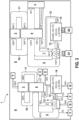
- FIG 3 is a schematic representation of the system 1 according to a second embodiment.
- the system has a process temperature of 800°C.
- a process temperature of over 500°C is advantageous as the efficiency increases.
- the efficiency of the integrated fuel cell system 14 can be increased from 72% to 89% (45% / ((90% + 90%) - 130%)). increase.
- the process temperature There is no limiting lower limit for the process temperature.
- the upper limit of the process temperature is limited by the possible burner outlet temperature. The smaller the difference between the process temperature and the burner outlet temperature, the higher the requirement for the heat exchanger's power transmission.
Landscapes
- Chemical & Material Sciences (AREA)
- Engineering & Computer Science (AREA)
- Combustion & Propulsion (AREA)
- Life Sciences & Earth Sciences (AREA)
- Manufacturing & Machinery (AREA)
- Sustainable Development (AREA)
- Sustainable Energy (AREA)
- Chemical Kinetics & Catalysis (AREA)
- Electrochemistry (AREA)
- General Chemical & Material Sciences (AREA)
- Fuel Cell (AREA)
Description
- Die Erfindung betrifft ein System zum Nutzen von Prozesswärme für mindestens einen Wärmeprozess, aufweisend einen Brenner, insbesondere einen Gasbrenner, zum Erzeugen von Wärme, aufweisend mindestens eine Prozesseinheit zum Verwerten eines ersten Teils der von dem Brenner erzeugten Wärme und aufweisend mindestens einen Wärmetauscher zum Transportieren des ersten Teils der von dem Brenner erzeugten Wärme zu der Prozesseinheit. Des Weiteren betrifft die Erfindung ein Verfahren.
- Zum direkten Umwandeln von chemisch gebundener Energie in elektrische Energie werden Brennstoffzellensysteme eingesetzt. Brennstoffzellensysteme bestehen üblicherweise aus mehreren Brennstoffzellen, welche durch Wärmetauscher, Zuleitungen und elektrische Kontaktierungen miteinander gekoppelt sind. Insbesondere bieten Hochtemperaturbrennstoffzellen die Möglichkeit der Energieumwandlung ohne den Einsatz von kostenintensiven Elektroden umzusetzen.
- Bei unterschiedlichen industriellen Prozessen wird Prozesswärme in Form von Wärmeenergie benötigt. Derartige industrielle Prozesse können beispielsweise Schmelzprozess und Trocknungsprozesse sein. Der Energieverbrauch derartiger Prozesse setzt sich üblicherweise aus einer Energieaufnahme des jeweiligen Vorgangs und aus Energieverlusten zusammen. Bei industriellen Prozessen wird die Hauptenergiesenke üblicherweise durch Energieverluste nach Außen gebildet. Die zum Durchführen der industriellen Prozesse benötigte Wärmemenge bzw. Wärmeenergie wird in der Regel durch den Einsatz von Gasbrennern erzeugt. Zum Reduzieren von Verlusten werden Gasbrenner eingesetzt, bei welchen die Verbrennungszuluft durch Abgaswärmetauscher vorgewärmt wird.
- Alternativ sind Verfahren bekannt, bei welchen die Energieverluste durch nachgelagerte Prozesse bzw. sogenannte Wärmekaskaden genutzt werden. Derartige Verfahren zum Reduzieren von Energieverlusten eines industriellen Prozesses sind kostenintensiv und können die entstehenden Energieverluste nur begrenzt kompensieren.
-
JP 2003132903 - Die der Erfindung zugrundeliegende Aufgabe kann darin gesehen werden, ein System, welches Prozesswärme nutzt, mit reduzierten Energieverlusten vorzuschlagen.
- Diese Aufgabe wird mittels des jeweiligen Gegenstands der unabhängigen Ansprüche gelöst. Vorteilhafte Ausgestaltungen der Erfindung sind Gegenstand von jeweils abhängigen Unteransprüchen.
- Nach einem Aspekt der Erfindung wird ein System zum Nutzen von Prozesswärme für mindestens einen Wärmeprozess bereitgestellt. Das System weist einen Brenner, insbesondere einen Gasbrenner, zum Erzeugen von Wärme, und mindestens eine Prozesseinheit zum Verwerten eines ersten Teils der von dem Brenner erzeugten Wärme auf. Des Weiteren weist das System mindestens einen Wärmetauscher zum Transportieren des ersten Teils der von dem Brenner erzeugten Wärme zu der Prozesseinheit. Erfindungsgemäß weist das System mindestens ein Hochtemperaturbrennstoffzellensystem auf, welches durch einen zweiten Teil der von dem Brenner erzeugten Wärme auf eine Betriebstemperatur aufheizbar ist.
- Nach einem weiteren Aspekt der Erfindung wird ein Verfahren zum Nutzen von Wärme eines Brenners bereitgestellt, wobei eine durch einen Brenner erzeugte Wärme mindestens einer Prozesseinheit zum Durchführen eines Wärmeprozesses zugeführt wird. Eine Betriebsluft eines Hochtemperaturbrennstoffzellensystems wird durch eine Abwärme der Prozesseinheit und/oder eine Abwärme des Brenners erwärmt und dem Hochtemperaturbrennstoffzellensystem zum Erzeugen von elektrischer Energie zugeführt.
- Durch das System und das Verfahren kann die Verlustwärme bzw. Energieverluste des eingesetzten Brenners und/oder der mindestens einen Prozesseinheit optimal energetisch nutzen. Hierbei kann das Hochtemperaturbrennstoffzellensystem auf einer optimalen Betriebstemperatur thermisch eingestellt werden. Durch einen gegenüber einer Wärme-Kraft-Maschine höheren Wirkungsgrad von Brennstoffzellensystemen kann die Gesamteffizienz des Systems verbessert werden. Die durch das Hochtemperaturbrennstoffzellensystem erzeugte elektrische Energie kann für unterschiedliche Aufgaben und Arbeitsvorgänge ohne Einschränkungen eingesetzt werden. Darüber hinaus kann ein Umwandeln von mechanischer Arbeit einer Wärme-Kraft-Maschine, wie beispielsweise einer Turbine, in elektrische Energie durch den Einsatz eines Generators entfallen. Aufgrund der reduzierten Anzahl der Komponenten kann das System robuster und kosteneffizienter ausgestaltet sein.
- Des Weiteren kann durch den Einsatz des Hochtemperaturbrennstoffzellensystems die Verlustwärme innerhalb eines breiten Temperaturbereichs verwertet werden. Beispielsweise können sogenannte SOFC - Hochtemperaturbrennstoffzellen bei einer Betriebstemperatur von 600 - 850 °C chemische Energie in elektrische Energie umwandeln. Durch den mindestens einen Wärmetauscher werden die den Brennstoffzellen zugeführten Gase, insbesondere Erdgas und Luft, mit einer Abluft des Brenners und/oder der Prozesseinheit für den optimalen Betrieb der verwendeten Brennstoffzellen erwärmt.
- Das Abgas des Hochtemperaturbrennstoffzellensystems ist somit auf einem niedrigeren Temperaturniveau als die zugeführte Luft, da die benötigte Energie für die Reformierung des zugeführten Brennstoffs der Brennstoffzellen größer ist als die Verlustleistung bei der elektrochemischen Wandlung des Gases.
- Das Hochtemperaturbrennstoffzellensystem kann beispielsweise eine Vielzahl von Hochtemperaturbrennstoffzellen, einen integrierten oder externen Reformer und einen integrierten Wärmetauscher aufweisen.
- Bei einem Ausführungsbeispiel ist das Hochtemperaturbrennstoffzellensystem als ein Festoxidbrennstoffzellensystem ausgestaltet. Durch die Ausführung der Brennstoffzellen des Hochtemperaturbrennstoffzellensystems als sogenannte SOF (Solid Oxide Fuel)-Zellen kann ein Wirkungsgrad von bis zu 60% realisiert werden. Hierbei entstehen die thermischen Verluste des Hochtemperaturbrennstoffzellensystems zum wesentlichen Teil bei einer höheren Temperatur von über 600°C und können deshalb effizient für den Prozesswärmebedarf eingesetzt werden.
- Es kann eine alternative Ausgestaltung bereitgestellt werden, bei der Abwärme des Hochtemperaturbrennstoffzellensystems zum Bereitstellen von Prozesswärme für die Prozesseinheit eingesetzt wird.
- Nach einer weiteren Ausführungsform ist die von dem Brenner erzeugte Wärme über einen Wärmetauscher zu der Prozesseinheit und zu dem Hochtemperaturbrennstoffzellensystem übertragbar. Ein derartiger Wärmetauscher kann somit drei Kreisläufe thermisch miteinander koppeln. Beispielsweise können eine Luftzufuhr zum Hochtemperaturbrennstoffzellensystem, ein durch den Brenner direkt erhitzter Kreislauf und ein Kreislauf der Prozesseinheit miteinander gekoppelt werden. Durch die Verwendung von einem Wärmetauscher kann die Anzahl der für das System benötigten Komponenten reduziert werden.
- Gemäß einem weiteren Ausführungsbeispiel ist die von dem Brenner erzeugte Wärme durch einen ersten Wärmetauscher zu der Prozesseinheit, durch einen zweiten Wärmetauscher zu dem Hochtemperaturbrennstoffzellensystem und durch einen dritten Wärmetauscher zu einer Ansaugluft des Brenners übertragbar. Hierdurch können anstelle eines Wärmetauschers drei separate Wärmetauscher mit Aufteilung des Brennerabgases eingesetzt werden. Insbesondere können die jeweiligen Wärmetauscher unterschiedlich leistungsfähig ausgestaltet sein, um gezielt Wärmeübergänge zwischen den jeweiligen Komponenten des Systems zu steuern.
- Nach einer weiteren Ausführungsform ist dem Hochtemperaturbrennstoffzellensystem eine Betriebsluft über eine Betriebsluftzufuhr zuführbar, welche durch den mindestens einen Wärmetauscher auf eine Betriebstemperatur des Hochtemperaturbrennstoffzellensystems aufheizbar ist. Hierdurch kann das Hochtemperaturbrennstoffzellensystem insbesondere durch die Verlustwärme des Brenners oder analog über die durch den Brenner bereitgestellte Prozesswärme indirekt erhitzt werden, um die Erzeugung von elektrischer Energie auszuführen.
- Gemäß einem weiteren Ausführungsbeispiel ist die Betriebsluft des Hochtemperaturbrennstoffzellensystems durch eine Abwärme des Brenners und/oder der Prozesseinheit aufheizbar. Durch diese Maßnahme kann eine direkte Erhitzung der Betriebsluft des Hochtemperaturbrennstoffzellensystems ermöglicht werden. Je nach Ausgestaltung kann eine Abluft des Brenners unmittelbar als Betriebsluft für die Brennstoffzellen genutzt werden.
- Nach einer weiteren Ausführungsform ist das Hochtemperaturbrennstoffzellensystem dazu eingerichtet, basierend auf einem Gas des Brenners und der durch Abwärme aufgeheizten Betriebsluft elektrische Energie zu erzeugen. Der gegenüber einer Kraft-Wärme-Maschine erhöhte Wirkungsgrad von Brennstoffzellen kann hierdurch besonders effizient ausgenutzt werden. Des Weiteren kann durch den Einsatz der Brennstoffzellen die Anzahl von beweglichen und somit wartungsintensiven Komponenten minimiert werden. Durch die regenerative Nutzung der durch den Brenner erzeugten Wärmeenergie kann darüber hinaus eine separate Aufheizung der Hochtemperaturbrennstoffzellen entfallen.
- Gemäß einem weiteren Ausführungsbeispiel ist die mindestens eine Prozesseinheit als ein Ofen, eine Schmelzvorrichtung oder eine Sintervorrichtung ausgestaltet. Die Prozesseinheit kann somit die durch den Brenner erzeugte Prozesswärme für die Herstellung oder Behandlung von Bauteilen nutzen.
- Im Folgenden werden anhand von stark vereinfachten schematischen Darstellungen bevorzugte Ausführungsbeispiele der Erfindung näher erläutert.
- Hierbei zeigen
- Fig. 1
- eine schematische Darstellung eines Systems gemäß einer ersten Ausführungsform,
- Fig. 2
- ein Diagramm zum Veranschaulichen einer Änderung einer Effizienz des Systems in Abhängigkeit von einer Leistung eines Hochtemperaturbrennstoffzellensystems und
- Fig. 3
- eine schematische Darstellung des Systems gemäß einer weiteren Ausführungsform.
- In der
Figur 1 ist eine schematische Darstellung eines Systems 1 gemäß einer ersten Ausführungsform gezeigt. Es sind Enthalpieflüsse H und Stoffflüsse S veranschaulicht. Diese energetische Betrachtung des Systems 1 wird beispielhaft mit einem Wärmeprozess bei einer Prozesstemperatur von 400 °C veranschaulicht. - Ein oder mehrere Wärmeprozesse können beispielsweise in Form einer Trocknung, eines Entbinderns, einer Pyrolyse, einer Sinterung, einer Schmelzinfiltration, aber auch in Form von verschiedenen Verfahren aus dem Bereich der Schmelzmetallurgie ausgestaltet sein. Der mindestens eine Wärmeprozess kann durch mindestens eine Prozesseinheit 2 ausgeführt werden.
- Das System 1 dient zum Nutzen von Prozesswärme, welche durch einen Brenner 4 erzeugt wird. Der Brenner 4 ist beispielhaft als ein Gasbrenner ausgestaltet. Der Brenner 4 erzeugt Wärmeenergie 6, welche direkt oder über ein Übertragungsfluid einem Wärmetauscher 8 zugeführt wird. Über den Wärmetauscher kann die Wärmeenergie 6 als Prozesswärme 10 zu der Prozesseinheit 2 transportiert werden. Der Transport der Prozesswärme 10 kann ebenfalls über ein nicht beziffertes Übertragungsfluid erfolgen.
- Der Wärmetauscher 8 ist im dargestellten Ausführungsbeispiel als ein einteiliger Wärmetauscher 8 für vier Fluidströme 6, 7, 10, 12 ausgeführt und kann nach einem Gegenstromprinzip arbeiten.
- Neben der Wärmeenergie 6 und der Prozesswärme 10 kann der Wärmetauscher 8 auch eine Betriebsluftzufuhr 12 eines Brennstoffzellensystems 14 erwärmen und den Brenner 4 mit Luft versorgen.
- Das Brennstoffzellensystem 14 ist als ein Hochtemperaturbrennstoffzellensystem ausgestaltet und weist eine Vielzahl von Brennstoffzellen, einen Reformer und einen integrierten Wärmetauscher auf.
- Durch die vorgeheizte Betriebsluftzufuhr 12 kann das Brennstoffzellensystem 14 auf eine Betriebstemperatur gebracht und gehalten werden. Der Brenner 4 kann hierbei als ein regenerativer Brenner ausgestaltet sein, welcher die Abluft 7 des Brenners 4 zum Vorheizen von zugeführter Luft nutzt.
- Das Brennstoffzellensystem 14 nutzt die Abwärme 11 des der Prozesseinheit 2 und die Abwärme 7 und/oder das Brennerabgas 6 des Brenners 4 zum Heizen der Betriebsluftzufuhr 12. Als Ergebnis kann das Brennstoffzellensystem 14 elektrische Energie E erzeugen und die Verluste bzw. Energieverluste V des Systems 1 reduzieren. Abgase des Brennstoffzellensystems 14 können dem Brenner 4 ebenfalls zugeführt werden.
- Als Quelle Q des Brenners 4 und des Brennstoffzellensystems 14 kann beispielsweise Erdgas eingesetzt werden.
- Die Enthalpieflüsse H zwischen den Verlusten V, den Quellen Q und den Komponenten des Systems 1 prozentual dargestellt.
- Die Stoffflüsse S dienen insbesondere der Veranschaulichung der beispielhaften Temperaturniveaus bei einer Prozesswärme 10 von 400°C.
- Der Brenner 4 und das SOFC-System bzw. das Brennstoffzellensystem 14 können je nach Bedarf in der Leistung variiert werden. Der Wärmetauscher 8 kann alternativ zu der integrierten Lösung auch als drei separate Wärmetauscher mit Aufteilung des Brennerabgases 6 ausgeführt werden.
- Außer dem Brenner 4 werden die einzelnen Komponenten des Brennstoffzellensystems 14 nicht dargestellt, es werden nur die Schnittstellen nach außen betrachtet. Das Abgas 13 des Brennstoffzellensystems 14 ist auf einem niedrigeren Temperaturniveau als die Betriebsluftzufuhr 12. Der Grund dafür ist, dass die benötigte Energie für die Reformierung des zugeführten Brennstoffs größer ist als die Verlustleistung bei der elektrochemischen Wandlung von 60 % des Gases.
- Die Betrachtung der Energieflüsse bzw. Enthalpieflüsse H führt zu einem beispielhaften Gesamtwirkungsgrad von 82 %.
- Die Effizienz des zusätzlich integrierten Brennstoffzellensystems 14 ist definiert durch einen Quotient aus elektrischen Leistungsabgabe Pel und dem Zusatzaufwand gegenüber einer Referenzkonfiguration ohne ein SOFC- bzw. ein Brennstoffzellensystem 14 mit einem Rekuperationsbrenner.

- Im vorliegenden Beispiel:

- Dies bedeutet, dass nach Integration des Brennstoffzellensystems 14 in einen Rekuperationsbrenner der Mehraufwand an Gas zu 72 % zu elektrischer Energie gewandelt werden kann. Durch diese Integration kann ein beispielhafter derzeitig verfügbarer elektrischer Wirkungsgrad von Brennstoffzellensystemen von 50% um über 40% verbessert werden.
- Diese Berechnungen gilt für die Aufteilung des Erdgases als Energiequelle Q zu gleichen Teilen bei der Zuführung zum Brenner 4 und zu dem Brennstoffzellensystem 14.
- Bei einer vorteilhaften Ausgestaltung kann eine dynamische Variation der Gasaufteilung zwischen dem Brenner 4 und zu dem Brennstoffzellensystem 14 umgesetzt werden. Hierdurch kann der Wirkungsgrad λ des Systems 1 angepasst werden.
- Die Stoffflüsse S der jeweiligen Medien weisen eine Breite auf, welche proportional zu der Durchflussmenge ist. Die jeweiligen Temperaturen der verwendeten Gase und Abgase sind in der
Figur 1 vermerkt. - Die
Figur 2 zeigt ein Diagramm einer beispielhaften Effizienzberechnung bei unterschiedlichem Anteil der SOFC-Eingangsleitung in Form einer spezifischen Enthalpie einer Gasaufteilung hges. Die Gasaufteilung hges wird hier aus einem Quotienten der spezifischen Enthalpien
- Neben dem Wirkungsgrad λ des Systems 1 wird die elektrische Leistungsabgabe Pel und die Temperatur THE2 der durch den Wärmetauscher 8 geheizten Betriebsluftzufuhr 12 des Brennstoffzellensystems 14 in Abhängigkeit von dem Quotient hSOFC/ hges dargestellt.
- Die Effizienz des in das System 1 integrierten Brennstoffzellensystems 14 kann von 60 % auf bis über 80 % erhöht werden. Die Effizienz hängt im Wesentlichen von der Nennleistung des Brennstoffzellensystems 14 im Verhältnis zur benötigten Wärmeleistung ab. Für diese Berechnungen wurde ein Brennstoffzellensystems 14 mit einem Gesamtwirkungsgrad von 50 % zu Grunde gelegt.
- Die Berechnung der Effizienz in
Figur 2 bezieht sich auf eine konstante Brennerausgangstemperatur 6 von 950 °C. Die Erhöhung der Brennerausgangstemperatur 6 führt ebenfalls zu einer Erhöhung der Effizienz. - Die angegebenen Temperaturdaten für den Wärmeprozess sind willkürlich gewählt, um die Zusammenhänge des Systems 1 zu verdeutlichen. Beispielsweise kann die Prozesstemperatur 10 höher oder niedriger eingestellt werden.
- In der
Figur 3 ist eine schematische Darstellung des Systems 1 gemäß einer zweiten Ausführungsform dargestellt. Im zweiten Ausführungsbeispiel weist das System eine Prozesstemperatur von 800°C auf. Durch dieFigur 3 wird verdeutlicht, dass eine Prozesstemperatur von über 500°C vorteilhaft ist, da die Effizienz steigt. Beispielsweise kann durch das Erhöhen der benötigten Prozesstemperatur und damit auch der Brennertemperatur die Effizienz des integrierten Brennstoffzellensystems 14 von 72% auf 89% (45% / ((90% + 90%) - 130%)). erhöht werden. - Dabei existiert für die Prozesstemperatur keine limitierende Untergrenze. Die Obergrenze der Prozesstemperatur wird durch die mögliche Brenneraustrittstemperatur begrenzt. Je geringer die Differenz zwischen der Prozesstemperatur und der Brenneraustrittstemperatur ist, desto höher ist die Anforderung an die Leistungsübertragung des Wärmetauschers.
Claims (9)
- System (1) zum Nutzen von Prozesswärme (10) für mindestens einen Wärmeprozess, aufweisend einen Brenner (4), insbesondere einen Gasbrenner, zum Erzeugen von Wärme, aufweisend mindestens eine Prozesseinheit (2) zum Verwerten eines ersten Teils (10) der von dem Brenner (4) erzeugten Wärme und aufweisend mindestens einen Wärmetauscher (8) zum Transportieren des ersten Teils (10) der von dem Brenner erzeugten Wärme zu der Prozesseinheit (2), dadurch gekennzeichnet, dass das System (1) mindestens ein Hochtemperaturbrennstoffzellensystem (14) aufweist, welches durch einen zweiten Teil (12) der von dem Brenner (4) erzeugten Wärme auf eine Betriebstemperatur aufheizbar ist.
- System nach Anspruch 1, wobei das Hochtemperaturbrennstoffzellensystem (14) als ein Festoxidbrennstoffzellensystem ausgestaltet ist.
- System nach Anspruch 1 oder 2, wobei die von dem Brenner (4) erzeugte Wärme über einen Wärmetauscher (8) zu der Prozesseinheit (2) und zu dem Hochtemperaturbrennstoffzellensystem (14) übertragbar ist.
- System nach Anspruch 1 oder 2, wobei die von dem Brenner (4) erzeugte Wärme durch einen ersten Wärmetauscher zu der Prozesseinheit (2), durch einen zweiten Wärmetauscher zu dem Hochtemperaturbrennstoffzellensystem (14) und durch einen dritten Wärmetauscher zu einer Ansaugluft des Brenners (4) übertragbar ist.
- System nach einem der Ansprüche 1 bis 4, wobei dem Hochtemperaturbrennstoffzellensystem (14) eine Betriebsluft über eine Betriebsluftzufuhr (12) zuführbar ist, welche durch den mindestens einen Wärmetauscher (8) auf eine Betriebstemperatur des Hochtemperaturbrennstoffzellensystems (14) aufheizbar ist.
- System nach Anspruch 5, wobei die Betriebsluft durch eine Abwärme des Brenners (4) und/oder der Prozesseinheit (2) aufheizbar ist.
- System nach Anspruch 5 oder 6, wobei das Hochtemperaturbrennstoffzellensystem (14) dazu eingerichtet ist, basierend auf einem Gas des Brenners (4) und der durch Abwärme aufgeheizten Betriebsluft elektrische Energie zu erzeugen.
- System nach einem der Ansprüche 1 bis 7, wobei die mindestens eine Prozesseinheit (2) als ein Ofen, eine Schmelzvorrichtung oder eine Sintervorrichtung ausgestaltet ist.
- Verfahren zum Nutzen von Wärme eines Brenners (4), wobei eine durch einen Brenner (4) erzeugte Wärme mindestens einer Prozesseinheit (2) zum Durchführen eines Wärmeprozesses zugeführt wird, eine Betriebsluft eines Hochtemperaturbrennstoffzellensystems (14) durch eine Abwärme der Prozesseinheit (2) und/oder eine Abwärme des Brenners (4) erwärmt und dem Hochtemperaturbrennstoffzellensystem (14) zum Erzeugen von elektrischer Energie zugeführt wird, dadurch gekennzeichnet, dass der Brenner (4) Wärmeenergie erzeugt, welche einem Wärmetauscher (8) zugeführt wird und über den Wärmetauscher (8) als Prozesswärme (10) zu der Prozesseinheit (2) transportiert wird.
Applications Claiming Priority (1)
| Application Number | Priority Date | Filing Date | Title |
|---|---|---|---|
| DE102020201095.1A DE102020201095A1 (de) | 2020-01-30 | 2020-01-30 | Einsatz von Festoxidbrennstoffzellen bei Prozesswärmegenerierung |
Publications (2)
| Publication Number | Publication Date |
|---|---|
| EP3859847A1 EP3859847A1 (de) | 2021-08-04 |
| EP3859847B1 true EP3859847B1 (de) | 2024-01-10 |
Family
ID=73642587
Family Applications (1)
| Application Number | Title | Priority Date | Filing Date |
|---|---|---|---|
| EP20210188.7A Active EP3859847B1 (de) | 2020-01-30 | 2020-11-27 | Einsatz von festoxidbrennstoffzellen bei prozesswärmegenerierung |
Country Status (2)
| Country | Link |
|---|---|
| EP (1) | EP3859847B1 (de) |
| DE (1) | DE102020201095A1 (de) |
Family Cites Families (7)
| Publication number | Priority date | Publication date | Assignee | Title |
|---|---|---|---|---|
| JP2003132903A (ja) * | 2001-10-22 | 2003-05-09 | Nippon Steel Corp | 工業炉と固体酸化物形燃料電池とのコンバインドシステム |
| EP1542301B1 (de) * | 2002-09-20 | 2015-05-06 | Panasonic Corporation | Brennstoffzellen-Blockheizsystem |
| DE10349090A1 (de) * | 2003-10-22 | 2005-06-16 | Eisenmann Maschinenbau Gmbh & Co. Kg | Anlage und Verfahren zum Trocknen von Gegenständen |
| US20120111386A1 (en) | 2010-11-05 | 2012-05-10 | Bell Lon E | Energy management systems and methods with thermoelectric generators |
| JP6425574B2 (ja) | 2015-02-09 | 2018-11-21 | トリニティ工業株式会社 | 塗装設備 |
| ITUB20160492A1 (it) * | 2016-01-25 | 2016-04-25 | Egg Tech Di Fabiani Fabio | Sistema in isola per la produzione di energia elettrica e termica. |
| NO345296B1 (en) | 2016-07-14 | 2020-11-30 | Zeg Power As | Method and power plant comprising a Solid Oxide Fuel Cell (SOFC) for production of electrical energy and H2 gas |
-
2020
- 2020-01-30 DE DE102020201095.1A patent/DE102020201095A1/de active Pending
- 2020-11-27 EP EP20210188.7A patent/EP3859847B1/de active Active
Also Published As
| Publication number | Publication date |
|---|---|
| DE102020201095A1 (de) | 2021-08-05 |
| EP3859847A1 (de) | 2021-08-04 |
Similar Documents
| Publication | Publication Date | Title |
|---|---|---|
| EP2821628B1 (de) | Verfahren und Vorrichtung zur Behandlung von Abgaskondensaten eines Verbrennungsmotors | |
| EP1915518B1 (de) | Vorrichtung, reaktor und verfahren zur reduktion von stickoxyden im abgasstrom von verbrennungskraftmaschinen | |
| EP0787367B1 (de) | Brennstoffzellenanlage mit wärmenutzung des kathodengases und verfahren zu ihrem betrieb | |
| EP3336430A1 (de) | Verfahren zur wärmerückgewinnung aus einem von einem brenner erzeugten rauchgas | |
| EP2865045A1 (de) | Kraftwerksanordnung mit hochtemperatur-speichereinheit | |
| EP0613588B1 (de) | Verfahren zur auskopplung von wärme aus brennstoffzellen und wärmeauskopplungseinrichtung zur durchführung des verfahrens | |
| AT519834B1 (de) | Brennstoffzelleneinheit mit gestapelten Hilfsvorrichtungen | |
| AT521065A1 (de) | Brennstoffzellensystem und Verfahren zum Aufheizen eines Brennstoffzellensystems | |
| DE10142578A1 (de) | System zum Erzeugen elektrischer Energie und Verfahren zum Betreiben eines Systems zum Erzeugen elektrischer Energie | |
| EP1921703A1 (de) | Brennstoffzellensystem mit Einrichtung zur Kathoden-Zuluft-Vorwärmung | |
| DE102009009673A1 (de) | Brennstoffzellensystem mit wenigstens einer Brennstoffzelle | |
| EP3859847B1 (de) | Einsatz von festoxidbrennstoffzellen bei prozesswärmegenerierung | |
| EP1038094A2 (de) | Mehrstufiger dampfkraft-/arbeitsprozess für die elektroenergiegewinnung im kreisprozess sowie anordnung zu seiner durchführung | |
| EP1845578B1 (de) | Brennstoffzellensystem | |
| DE102010034271A1 (de) | Festoxid-Brennstoffzelle (Solid Oxide Fuel Cell, SOFC) sowie Verfahren zum Betreiben derselben | |
| DE112023001716T5 (de) | Wasserstofferzeugungssystem und wasserstofferzeugungsverfahren | |
| EP1845576B1 (de) | Brennstoffzellensystem | |
| DE102004004914B4 (de) | Verfahren zur Erzeugung von Strom und Wärme | |
| DE102007012762A1 (de) | Brennstoffzellensystem mit Rezirkulationsstrang | |
| WO2023020665A1 (de) | Produktionssystem und verfahren zur herstellung von metallischen dosen | |
| DE10355494A1 (de) | System und Verfahren zum Umsetzen von Brennstoff und Oxidationsmittel zu Reformat | |
| EP1617499B1 (de) | Brennstoffzellensystem | |
| DE102016201974A1 (de) | Verfahren zum Betreiben einer Wärmekraftmaschine und Wärmekraftmaschine | |
| DE102014218726A1 (de) | Brennstoffzellenvorrichtung mit verbessertem Anodengasprozessor | |
| DE102017125345B4 (de) | Verfahren zum Betrieb eines Abgasreinigungssystems |
Legal Events
| Date | Code | Title | Description |
|---|---|---|---|
| PUAI | Public reference made under article 153(3) epc to a published international application that has entered the european phase |
Free format text: ORIGINAL CODE: 0009012 |
|
| STAA | Information on the status of an ep patent application or granted ep patent |
Free format text: STATUS: THE APPLICATION HAS BEEN PUBLISHED |
|
| AK | Designated contracting states |
Kind code of ref document: A1 Designated state(s): AL AT BE BG CH CY CZ DE DK EE ES FI FR GB GR HR HU IE IS IT LI LT LU LV MC MK MT NL NO PL PT RO RS SE SI SK SM TR |
|
| STAA | Information on the status of an ep patent application or granted ep patent |
Free format text: STATUS: REQUEST FOR EXAMINATION WAS MADE |
|
| 17P | Request for examination filed |
Effective date: 20220204 |
|
| RBV | Designated contracting states (corrected) |
Designated state(s): AL AT BE BG CH CY CZ DE DK EE ES FI FR GB GR HR HU IE IS IT LI LT LU LV MC MK MT NL NO PL PT RO RS SE SI SK SM TR |
|
| GRAP | Despatch of communication of intention to grant a patent |
Free format text: ORIGINAL CODE: EPIDOSNIGR1 |
|
| STAA | Information on the status of an ep patent application or granted ep patent |
Free format text: STATUS: GRANT OF PATENT IS INTENDED |
|
| INTG | Intention to grant announced |
Effective date: 20230628 |
|
| GRAS | Grant fee paid |
Free format text: ORIGINAL CODE: EPIDOSNIGR3 |
|
| GRAA | (expected) grant |
Free format text: ORIGINAL CODE: 0009210 |
|
| STAA | Information on the status of an ep patent application or granted ep patent |
Free format text: STATUS: THE PATENT HAS BEEN GRANTED |
|
| AK | Designated contracting states |
Kind code of ref document: B1 Designated state(s): AL AT BE BG CH CY CZ DE DK EE ES FI FR GB GR HR HU IE IS IT LI LT LU LV MC MK MT NL NO PL PT RO RS SE SI SK SM TR |
|
| REG | Reference to a national code |
Ref country code: GB Ref legal event code: FG4D Free format text: NOT ENGLISH |
|
| REG | Reference to a national code |
Ref country code: CH Ref legal event code: EP |
|
| REG | Reference to a national code |
Ref country code: DE Ref legal event code: R096 Ref document number: 502020006679 Country of ref document: DE |
|
| REG | Reference to a national code |
Ref country code: IE Ref legal event code: FG4D Free format text: LANGUAGE OF EP DOCUMENT: GERMAN |
|
| REG | Reference to a national code |
Ref country code: LT Ref legal event code: MG9D |
|
| REG | Reference to a national code |
Ref country code: NL Ref legal event code: MP Effective date: 20240110 |
|
| PG25 | Lapsed in a contracting state [announced via postgrant information from national office to epo] |
Ref country code: NL Free format text: LAPSE BECAUSE OF FAILURE TO SUBMIT A TRANSLATION OF THE DESCRIPTION OR TO PAY THE FEE WITHIN THE PRESCRIBED TIME-LIMIT Effective date: 20240110 |
|
| PG25 | Lapsed in a contracting state [announced via postgrant information from national office to epo] |
Ref country code: NL Free format text: LAPSE BECAUSE OF FAILURE TO SUBMIT A TRANSLATION OF THE DESCRIPTION OR TO PAY THE FEE WITHIN THE PRESCRIBED TIME-LIMIT Effective date: 20240110 |
|
| PG25 | Lapsed in a contracting state [announced via postgrant information from national office to epo] |
Ref country code: IS Free format text: LAPSE BECAUSE OF FAILURE TO SUBMIT A TRANSLATION OF THE DESCRIPTION OR TO PAY THE FEE WITHIN THE PRESCRIBED TIME-LIMIT Effective date: 20240510 |
|
| PG25 | Lapsed in a contracting state [announced via postgrant information from national office to epo] |
Ref country code: LT Free format text: LAPSE BECAUSE OF FAILURE TO SUBMIT A TRANSLATION OF THE DESCRIPTION OR TO PAY THE FEE WITHIN THE PRESCRIBED TIME-LIMIT Effective date: 20240110 |
|
| PG25 | Lapsed in a contracting state [announced via postgrant information from national office to epo] |
Ref country code: GR Free format text: LAPSE BECAUSE OF FAILURE TO SUBMIT A TRANSLATION OF THE DESCRIPTION OR TO PAY THE FEE WITHIN THE PRESCRIBED TIME-LIMIT Effective date: 20240411 |
|
| PG25 | Lapsed in a contracting state [announced via postgrant information from national office to epo] |
Ref country code: RS Free format text: LAPSE BECAUSE OF FAILURE TO SUBMIT A TRANSLATION OF THE DESCRIPTION OR TO PAY THE FEE WITHIN THE PRESCRIBED TIME-LIMIT Effective date: 20240410 Ref country code: HR Free format text: LAPSE BECAUSE OF FAILURE TO SUBMIT A TRANSLATION OF THE DESCRIPTION OR TO PAY THE FEE WITHIN THE PRESCRIBED TIME-LIMIT Effective date: 20240110 |
|
| PG25 | Lapsed in a contracting state [announced via postgrant information from national office to epo] |
Ref country code: ES Free format text: LAPSE BECAUSE OF FAILURE TO SUBMIT A TRANSLATION OF THE DESCRIPTION OR TO PAY THE FEE WITHIN THE PRESCRIBED TIME-LIMIT Effective date: 20240110 |
|
| PG25 | Lapsed in a contracting state [announced via postgrant information from national office to epo] |
Ref country code: RS Free format text: LAPSE BECAUSE OF FAILURE TO SUBMIT A TRANSLATION OF THE DESCRIPTION OR TO PAY THE FEE WITHIN THE PRESCRIBED TIME-LIMIT Effective date: 20240410 Ref country code: NO Free format text: LAPSE BECAUSE OF FAILURE TO SUBMIT A TRANSLATION OF THE DESCRIPTION OR TO PAY THE FEE WITHIN THE PRESCRIBED TIME-LIMIT Effective date: 20240410 Ref country code: LT Free format text: LAPSE BECAUSE OF FAILURE TO SUBMIT A TRANSLATION OF THE DESCRIPTION OR TO PAY THE FEE WITHIN THE PRESCRIBED TIME-LIMIT Effective date: 20240110 Ref country code: IS Free format text: LAPSE BECAUSE OF FAILURE TO SUBMIT A TRANSLATION OF THE DESCRIPTION OR TO PAY THE FEE WITHIN THE PRESCRIBED TIME-LIMIT Effective date: 20240510 Ref country code: HR Free format text: LAPSE BECAUSE OF FAILURE TO SUBMIT A TRANSLATION OF THE DESCRIPTION OR TO PAY THE FEE WITHIN THE PRESCRIBED TIME-LIMIT Effective date: 20240110 Ref country code: GR Free format text: LAPSE BECAUSE OF FAILURE TO SUBMIT A TRANSLATION OF THE DESCRIPTION OR TO PAY THE FEE WITHIN THE PRESCRIBED TIME-LIMIT Effective date: 20240411 Ref country code: ES Free format text: LAPSE BECAUSE OF FAILURE TO SUBMIT A TRANSLATION OF THE DESCRIPTION OR TO PAY THE FEE WITHIN THE PRESCRIBED TIME-LIMIT Effective date: 20240110 Ref country code: BG Free format text: LAPSE BECAUSE OF FAILURE TO SUBMIT A TRANSLATION OF THE DESCRIPTION OR TO PAY THE FEE WITHIN THE PRESCRIBED TIME-LIMIT Effective date: 20240110 |
|
| PG25 | Lapsed in a contracting state [announced via postgrant information from national office to epo] |
Ref country code: PL Free format text: LAPSE BECAUSE OF FAILURE TO SUBMIT A TRANSLATION OF THE DESCRIPTION OR TO PAY THE FEE WITHIN THE PRESCRIBED TIME-LIMIT Effective date: 20240110 Ref country code: PT Free format text: LAPSE BECAUSE OF FAILURE TO SUBMIT A TRANSLATION OF THE DESCRIPTION OR TO PAY THE FEE WITHIN THE PRESCRIBED TIME-LIMIT Effective date: 20240510 |
|
| PG25 | Lapsed in a contracting state [announced via postgrant information from national office to epo] |
Ref country code: SE Free format text: LAPSE BECAUSE OF FAILURE TO SUBMIT A TRANSLATION OF THE DESCRIPTION OR TO PAY THE FEE WITHIN THE PRESCRIBED TIME-LIMIT Effective date: 20240110 Ref country code: PT Free format text: LAPSE BECAUSE OF FAILURE TO SUBMIT A TRANSLATION OF THE DESCRIPTION OR TO PAY THE FEE WITHIN THE PRESCRIBED TIME-LIMIT Effective date: 20240510 Ref country code: PL Free format text: LAPSE BECAUSE OF FAILURE TO SUBMIT A TRANSLATION OF THE DESCRIPTION OR TO PAY THE FEE WITHIN THE PRESCRIBED TIME-LIMIT Effective date: 20240110 Ref country code: LV Free format text: LAPSE BECAUSE OF FAILURE TO SUBMIT A TRANSLATION OF THE DESCRIPTION OR TO PAY THE FEE WITHIN THE PRESCRIBED TIME-LIMIT Effective date: 20240110 |
|
| PG25 | Lapsed in a contracting state [announced via postgrant information from national office to epo] |
Ref country code: DK Free format text: LAPSE BECAUSE OF FAILURE TO SUBMIT A TRANSLATION OF THE DESCRIPTION OR TO PAY THE FEE WITHIN THE PRESCRIBED TIME-LIMIT Effective date: 20240110 |
|
| REG | Reference to a national code |
Ref country code: DE Ref legal event code: R097 Ref document number: 502020006679 Country of ref document: DE |
|
| PG25 | Lapsed in a contracting state [announced via postgrant information from national office to epo] |
Ref country code: SM Free format text: LAPSE BECAUSE OF FAILURE TO SUBMIT A TRANSLATION OF THE DESCRIPTION OR TO PAY THE FEE WITHIN THE PRESCRIBED TIME-LIMIT Effective date: 20240110 |
|
| PG25 | Lapsed in a contracting state [announced via postgrant information from national office to epo] |
Ref country code: CZ Free format text: LAPSE BECAUSE OF FAILURE TO SUBMIT A TRANSLATION OF THE DESCRIPTION OR TO PAY THE FEE WITHIN THE PRESCRIBED TIME-LIMIT Effective date: 20240110 Ref country code: EE Free format text: LAPSE BECAUSE OF FAILURE TO SUBMIT A TRANSLATION OF THE DESCRIPTION OR TO PAY THE FEE WITHIN THE PRESCRIBED TIME-LIMIT Effective date: 20240110 |
|
| PG25 | Lapsed in a contracting state [announced via postgrant information from national office to epo] |
Ref country code: SK Free format text: LAPSE BECAUSE OF FAILURE TO SUBMIT A TRANSLATION OF THE DESCRIPTION OR TO PAY THE FEE WITHIN THE PRESCRIBED TIME-LIMIT Effective date: 20240110 |
|
| PG25 | Lapsed in a contracting state [announced via postgrant information from national office to epo] |
Ref country code: SM Free format text: LAPSE BECAUSE OF FAILURE TO SUBMIT A TRANSLATION OF THE DESCRIPTION OR TO PAY THE FEE WITHIN THE PRESCRIBED TIME-LIMIT Effective date: 20240110 Ref country code: SK Free format text: LAPSE BECAUSE OF FAILURE TO SUBMIT A TRANSLATION OF THE DESCRIPTION OR TO PAY THE FEE WITHIN THE PRESCRIBED TIME-LIMIT Effective date: 20240110 Ref country code: RO Free format text: LAPSE BECAUSE OF FAILURE TO SUBMIT A TRANSLATION OF THE DESCRIPTION OR TO PAY THE FEE WITHIN THE PRESCRIBED TIME-LIMIT Effective date: 20240110 Ref country code: EE Free format text: LAPSE BECAUSE OF FAILURE TO SUBMIT A TRANSLATION OF THE DESCRIPTION OR TO PAY THE FEE WITHIN THE PRESCRIBED TIME-LIMIT Effective date: 20240110 Ref country code: DK Free format text: LAPSE BECAUSE OF FAILURE TO SUBMIT A TRANSLATION OF THE DESCRIPTION OR TO PAY THE FEE WITHIN THE PRESCRIBED TIME-LIMIT Effective date: 20240110 Ref country code: CZ Free format text: LAPSE BECAUSE OF FAILURE TO SUBMIT A TRANSLATION OF THE DESCRIPTION OR TO PAY THE FEE WITHIN THE PRESCRIBED TIME-LIMIT Effective date: 20240110 |
|
| PLBE | No opposition filed within time limit |
Free format text: ORIGINAL CODE: 0009261 |
|
| STAA | Information on the status of an ep patent application or granted ep patent |
Free format text: STATUS: NO OPPOSITION FILED WITHIN TIME LIMIT |
|
| 26N | No opposition filed |
Effective date: 20241011 |
|
| PG25 | Lapsed in a contracting state [announced via postgrant information from national office to epo] |
Ref country code: SI Free format text: LAPSE BECAUSE OF FAILURE TO SUBMIT A TRANSLATION OF THE DESCRIPTION OR TO PAY THE FEE WITHIN THE PRESCRIBED TIME-LIMIT Effective date: 20240110 |
|
| REG | Reference to a national code |
Ref country code: CH Ref legal event code: PL |
|
| PG25 | Lapsed in a contracting state [announced via postgrant information from national office to epo] |
Ref country code: MC Free format text: LAPSE BECAUSE OF FAILURE TO SUBMIT A TRANSLATION OF THE DESCRIPTION OR TO PAY THE FEE WITHIN THE PRESCRIBED TIME-LIMIT Effective date: 20240110 |
|
| PG25 | Lapsed in a contracting state [announced via postgrant information from national office to epo] |
Ref country code: LU Free format text: LAPSE BECAUSE OF NON-PAYMENT OF DUE FEES Effective date: 20241127 |
|
| REG | Reference to a national code |
Ref country code: CH Ref legal event code: PL |
|
| PG25 | Lapsed in a contracting state [announced via postgrant information from national office to epo] |
Ref country code: CH Free format text: LAPSE BECAUSE OF NON-PAYMENT OF DUE FEES Effective date: 20241130 |
|
| REG | Reference to a national code |
Ref country code: BE Ref legal event code: MM Effective date: 20241130 |
|
| PG25 | Lapsed in a contracting state [announced via postgrant information from national office to epo] |
Ref country code: FI Free format text: LAPSE BECAUSE OF FAILURE TO SUBMIT A TRANSLATION OF THE DESCRIPTION OR TO PAY THE FEE WITHIN THE PRESCRIBED TIME-LIMIT Effective date: 20240110 |
|
| PG25 | Lapsed in a contracting state [announced via postgrant information from national office to epo] |
Ref country code: BE Free format text: LAPSE BECAUSE OF NON-PAYMENT OF DUE FEES Effective date: 20241130 |
|
| PG25 | Lapsed in a contracting state [announced via postgrant information from national office to epo] |
Ref country code: IE Free format text: LAPSE BECAUSE OF NON-PAYMENT OF DUE FEES Effective date: 20241127 |
|
| PGFP | Annual fee paid to national office [announced via postgrant information from national office to epo] |
Ref country code: GB Payment date: 20251120 Year of fee payment: 6 |
|
| PGFP | Annual fee paid to national office [announced via postgrant information from national office to epo] |
Ref country code: AT Payment date: 20260113 Year of fee payment: 5 |
|
| PGFP | Annual fee paid to national office [announced via postgrant information from national office to epo] |
Ref country code: IT Payment date: 20251128 Year of fee payment: 6 |
|
| PGFP | Annual fee paid to national office [announced via postgrant information from national office to epo] |
Ref country code: FR Payment date: 20251125 Year of fee payment: 6 |
|
| PG25 | Lapsed in a contracting state [announced via postgrant information from national office to epo] |
Ref country code: HU Free format text: LAPSE BECAUSE OF FAILURE TO SUBMIT A TRANSLATION OF THE DESCRIPTION OR TO PAY THE FEE WITHIN THE PRESCRIBED TIME-LIMIT; INVALID AB INITIO Effective date: 20201127 |
|
| PG25 | Lapsed in a contracting state [announced via postgrant information from national office to epo] |
Ref country code: CY Free format text: LAPSE BECAUSE OF FAILURE TO SUBMIT A TRANSLATION OF THE DESCRIPTION OR TO PAY THE FEE WITHIN THE PRESCRIBED TIME-LIMIT; INVALID AB INITIO Effective date: 20201127 |
|
| PGFP | Annual fee paid to national office [announced via postgrant information from national office to epo] |
Ref country code: DE Payment date: 20260126 Year of fee payment: 6 |