EP3859611B1 - Verfahren, gerät und vorrichtung zur aktualisierung eines neuronalen faltungsnetzes unter verwendung eines gpu-clusters - Google Patents
Verfahren, gerät und vorrichtung zur aktualisierung eines neuronalen faltungsnetzes unter verwendung eines gpu-clusters Download PDFInfo
- Publication number
- EP3859611B1 EP3859611B1 EP20755618.4A EP20755618A EP3859611B1 EP 3859611 B1 EP3859611 B1 EP 3859611B1 EP 20755618 A EP20755618 A EP 20755618A EP 3859611 B1 EP3859611 B1 EP 3859611B1
- Authority
- EP
- European Patent Office
- Prior art keywords
- gpu
- layer
- sample
- parameters
- gpus
- Prior art date
- Legal status (The legal status is an assumption and is not a legal conclusion. Google has not performed a legal analysis and makes no representation as to the accuracy of the status listed.)
- Active
Links
Images




Classifications
-
- G—PHYSICS
- G06—COMPUTING OR CALCULATING; COUNTING
- G06N—COMPUTING ARRANGEMENTS BASED ON SPECIFIC COMPUTATIONAL MODELS
- G06N3/00—Computing arrangements based on biological models
- G06N3/02—Neural networks
- G06N3/04—Architecture, e.g. interconnection topology
-
- G—PHYSICS
- G06—COMPUTING OR CALCULATING; COUNTING
- G06N—COMPUTING ARRANGEMENTS BASED ON SPECIFIC COMPUTATIONAL MODELS
- G06N3/00—Computing arrangements based on biological models
- G06N3/02—Neural networks
- G06N3/04—Architecture, e.g. interconnection topology
- G06N3/045—Combinations of networks
-
- G—PHYSICS
- G06—COMPUTING OR CALCULATING; COUNTING
- G06N—COMPUTING ARRANGEMENTS BASED ON SPECIFIC COMPUTATIONAL MODELS
- G06N3/00—Computing arrangements based on biological models
- G06N3/02—Neural networks
- G06N3/04—Architecture, e.g. interconnection topology
- G06N3/0464—Convolutional networks [CNN, ConvNet]
-
- G—PHYSICS
- G06—COMPUTING OR CALCULATING; COUNTING
- G06N—COMPUTING ARRANGEMENTS BASED ON SPECIFIC COMPUTATIONAL MODELS
- G06N3/00—Computing arrangements based on biological models
- G06N3/02—Neural networks
- G06N3/06—Physical realisation, i.e. hardware implementation of neural networks, neurons or parts of neurons
- G06N3/063—Physical realisation, i.e. hardware implementation of neural networks, neurons or parts of neurons using electronic means
-
- G—PHYSICS
- G06—COMPUTING OR CALCULATING; COUNTING
- G06N—COMPUTING ARRANGEMENTS BASED ON SPECIFIC COMPUTATIONAL MODELS
- G06N3/00—Computing arrangements based on biological models
- G06N3/02—Neural networks
- G06N3/08—Learning methods
- G06N3/09—Supervised learning
-
- G—PHYSICS
- G06—COMPUTING OR CALCULATING; COUNTING
- G06N—COMPUTING ARRANGEMENTS BASED ON SPECIFIC COMPUTATIONAL MODELS
- G06N3/00—Computing arrangements based on biological models
- G06N3/02—Neural networks
- G06N3/08—Learning methods
- G06N3/098—Distributed learning, e.g. federated learning
-
- G—PHYSICS
- G06—COMPUTING OR CALCULATING; COUNTING
- G06N—COMPUTING ARRANGEMENTS BASED ON SPECIFIC COMPUTATIONAL MODELS
- G06N3/00—Computing arrangements based on biological models
- G06N3/02—Neural networks
- G06N3/08—Learning methods
Definitions
- One or more implementations of the present specification relate to the field of image processing technologies, and in particular, to a method, an apparatus, and a device for updating a convolutional neural network by using a GPU cluster.
- Image classification is to distinguish between different types of images based on semantic information of the images, and is one of the most important research topics of computer vision.
- image classification algorithms have made unprecedented progress.
- a convolutional neural network (CNN) enables machines to better recognize images than humans for the first time.
- a graphics processing unit (GPU) is usually needed to update (also known as "to train") the convolutional neural network based on a large number of training samples.
- GPU graphics processing unit
- much memory of the GPU usually needs to be consumed to store parameters and output results of each layer of network of the convolutional neural network.
- FC fully connected
- Each node of the FC layer is connected to all the nodes of an upper layer, and is used to combine features extracted before. Therefore, much memory usually needs to be consumed for parameters and an output result corresponding to this layer of network. Therefore, some GPUs with a relatively small memory capacity are usually unable to complete the update to the convolutional neural network.
- CN 107 292 385 A discloses embodiments that provide a method and a device for training a model of an Alexnet-like network.
- the method includes the following steps: using a first graphics processing unit GPU to calculate a first gradient value and a second gradient value under an Alexnet-like network; receiving a third gradient value under the Alexnet-like network sent by a second graphics processing unit GPU; calculating a first model parameter of the Alexnet-like network according to the first gradient value and the third gradient value; receiving a fourth gradient value under the Alexnet-like network sent by the second graphics processing unit GPU; calculating a second model parameter of the Alexnet-like network according to the second gradient value and the fourth gradient value; and using the first model parameter and the second model parameter to train a model of the Alexnet-like network.
- Calculation and communication are carried out separately. Convolution layer calculation and fully-connected parameter communication in the Alexnet-like network are carried out in parallel. The time consumed for model training is reduced. The operation efficiency of model training is improved.
- US 2015/294219 A1 discloses: Methods, systems, and apparatus, including computer programs encoded on computer storage media, for training a convolutional neural network (CNN).
- the system includes a plurality of workers, wherein each worker is configured to maintain a respective replica of each of the convolutional layers of the CNN and a respective disjoint partition of each of the fully-connected layers of the CNN, wherein each replica of a convolutional layer includes all of the nodes in the convolutional layer, and wherein each disjoint partition of a fully-connected layer includes a portion of the nodes of the fully-connected layer.
- One or more implementations of the present specification describe a method, an apparatus, and a device for updating a convolutional neural network by using a GPU cluster, so that the convolutional neural network can be updated effectively and accurately.
- a method for updating a convolutional neural network by using a GPU cluster includes a first GPU and several other GPUs, wherein the convolutional neural network comprises at least one convolutional layer, CONV, a batch normalization layer and another layer in a front-end network and at least one fully connected layer, FC, in a back-end network, the first GPU has parameters of each layer of front-end network of the convolutional neural network, wherein parameters of each layer of the back-end network of the convolutional neural network are distributed among the first GPU and the other GPUs, and the method is performed by the first GPU and includes: obtaining a sample with a classification label; performing a first operation corresponding to each layer of front-end network on the first sample based on the parameters of each layer of front-end network, to obtain a first operation result of the first sample, which includes; performing a convolution operation on the first sample based on parameters of the convolutional layer, to obtain a first intermediate result; obtaining second intermediate results that are
- a method for updating a convolutional neural network by using a GPU cluster includes a first GPU and several other GPUs, wherein the convolutional neural network comprises at least one convolutional layer, CONV, a batch normalization layer and another layer in a front-end network and at least one fully connected layer, FC, in a back-end network, the other GPUs have parameters of each layer of front-end network of the convolutional neural network, wherein parameters of each layer of the back-end network of the convolutional neural network are distributed among the first GPU and the other GPUs, and the method is performed by any second GPU in the other GPUs and includes: obtaining a second sample with a classification label; performing a convolution operation on the second sample based on parameters of a convolutional layer, to obtain a second intermediate result; sending the second intermediate result to the first GPU that performs normalization processing on a first intermediate result based on the second intermediate results of the other GPUs including the second GPU, wherein the first intermediate result is obtained after
- a method for classifying images by using a GPU cluster includes a first GPU and several other GPUs, the first GPU has parameters of each layer of front-end network of a convolutional neural network, wherein the convolutional neural network comprises at least one convolutional layer, CONV, a batch normalization layer and another layer in a front-end network and at least one fully connected, FC, in a back-end network, wherein parameters of each layer of the back-end network of the convolutional neural network are distributed among the first GPU and the other GPUs, and the method is performed by the first GPU and includes: obtaining a to-be-classified image; performing a first operation corresponding to each layer of front-end network on the to-be-classified image based on the parameters of each layer of front-end network, to obtain a first operation result of the to-be-classified image, which includes; performing a convolution operation on the first sample based on parameters of the convolutional layer, to obtain a first intermediate result;
- an apparatus comprising a plurality of units configured to perform a method according to any one of the preceding aspects.
- a system comprising an apparatus according to the fourth aspect.
- one or more computer-readable media storing instructions thereon are provided that, when executed by a computing device, configure the computing device to perform a method according to any one of the aspects one to three.
- Convolutional neural networks of AlexNet, Inception, VGG, and ResNet have excellent performance. It has been found that these convolutional neural networks basically use a softmax layer for output of the final classification.
- An input layer of the softmax layer is usually a fully connected (FC) layer or a convolutional (CONV) layer.
- the total number of parameters of the FC layer is H*W*I*O.
- H is a height of an image input by the FC layer
- W is a width of the image
- N is the number of images
- I is the number of feature maps input by the FC layer
- O is a size of a feature map output by the FC layer (i.e., the number of classifications at the softmax layer).
- the input layer of the softmax layer is the CONV layer, assuming that a size of data input by the CONV layer is [ N, H, W, I ], a size of output data is [ N, O ], and a size of a convolution kernel is K * K (herein, K is usually a relatively small odd number such as 1, 3, or 5), the total number of parameters of the CONV layer is K*K*I*O.
- the softmax layer and its input layer FC layer are referred to as an FC-softmax combination
- the softmax layer and its input layer CONV layer are referred to as a Conv-softmax combination.
- parameters of each layer of network of a CNN and corresponding output results are stored in a form of bytes.
- H*W*I*O*B bytes are needed to store parameters of the layer
- N*O*B bytes are needed to store an output result of the softmax layer.
- K*K*I*O*B bytes are needed to store parameters of the layer
- N*O*B bytes are needed to store an output result of the softmax layer.
- the number of face images may be equal to the total number of to-be-classified people.
- O in the above expression is 1 billion.
- N 1 billion
- the FC-softmax combination requires memory of at least 4 ( H*W*I +1) GB
- the Conv-softmax combination requires
- FIG. 1 is a schematic diagram illustrating a method for updating a convolutional neural network by using a GPU cluster according to the present specification
- FIG. 2 is a flowchart illustrating a method for updating a convolutional neural network by using a GPU cluster according to an implementation of the present specification; memory of at least 4 ( K*K*I+ 1) GB.
- 4 is used to indicate that a stored parameter or an output result is represented as a single-precision floating-point number.
- I is 16, 32, 64, 128, 512, 1024, etc.
- memory of a currently mainstream graphics processing unit (GPU) device is only 16 GB, which is far less than the memory needed by the FC-softmax combination or the Conv-softmax combination. In this case, a single GPU is unable to complete the task of training the convolutional neural network.
- GPU graphics processing unit
- the applicant of the present application considers evenly distributing parameters of the FC-softmax combination or the Conv-softmax combination to multiple GPUs and then completing training by using distributed memory of the multiple GPUs.
- the multiple GPUs can also be referred to as a distributed GPU cluster.
- each layer of front-end network for ease of discussion
- a convolutional layer or a pooling layer hereinafter referred to as each layer of front-end network, for ease of discussion
- each layer of front-end network occupy less memory; therefore, if parameters of each layer of front-end network are evenly distributed to multiple GPUs, the utilization of the GPUs is reduced, and computing resources are wasted.
- a mini-batch based data parallel mode is still used to complete training for each layer of front-end network, to be specific, all the parameters of each layer of front-end network are stored in each GPU.
- a batch size of whole network training is N*P.
- P and N are positive integers.
- all the GPUs process N*P images.
- all the GPUs process the same image.
- the P GPUs can run simultaneously in theory, for some layers (e.g., a batch normalization (BN) layer), corresponding operations can be completed based on data in the whole batch. Therefore, the P GPUs usually further need to communicate with each other.
- P GPUs process an image in cooperation, and therefore, the GPUs also need to communicate with each other.
- the P GPUs can communicate with each other based on an application programming interface function library supporting distributed communication and computing.
- the function library can be a message passing interface (MPI) library or a Rabit library.
- one GPU can be specified as a coordinator to coordinate and maintain the whole processing process.
- the one GPU is also commonly referred to as a GPU with a coordination and/or management function.
- the GPU can specify an image currently being processed, and is finally responsible for combining classification results of a batch of images for output, etc.
- FIG. 1 is a schematic diagram illustrating a method for updating a convolutional neural network according to the present specification.
- a distributed GPU cluster can include P GPUs: GPU 0, GPU 1, ..., and GPU P -1, and GPU 0 is a GPU with a coordination and/or management function.
- GPU 0 can have all the parameters of each layer of front-end network of the CNN and a first part of parameters of each layer of back-end network
- GPU 1 can have all the parameters of each layer of front-end network of the CNN and a second part of parameters of each layer of back-end network, etc.
- a certain layer of back-end network is an FC layer.
- parameters corresponding to the FC layer can form a matrix of n*m
- the number of parameters of the layer that each GPU has can be represented as ( n*m )/ P.
- each GPU can initialize only one column or one row of parameters in the matrix, which is not limited in the present specification.
- the P GPUs can independently initialize the parameters of each layer of front-end network, or can uniformly initialize the parameters. If the P GPUs independently initialize the parameters, the P GPUs do not need to communicate with each other. If the P GPUs uniformly initialize the parameters, one GPU (e.g., GPU 0) can broadcast parameters initialized by the GPU to the other GPUs after completing initialization, so that uniform initialization can be completed between the GPUs. Because each GPU stores only some parameters of each layer of back-end network, each GPU can independently complete initialization.
- each layer of front-end network can include a convolutional layer, a BN layer, and another layer.
- the BN layer is located behind the convolutional layer, and is used to perform normalization processing on an intermediate result output by the convolutional layer.
- the intermediate result is usually normalized based on a batch of samples (i.e., P*N images). Therefore, the GPUs usually need to communicate with each other. Specific communication content is described later.
- FIG. 1 further shows that GPUs at an FC layer and a softmax layer usually also need to communicate with each other. Specific communication content is also described later.
- FIG. 2 assuming that the method is performed by GPU 0 (also called a first GPU), i.e., the above GPU with a coordination and management function, the method can include the following steps.
- GPU 0 also called a first GPU
- the method can include the following steps.
- Step 202 Obtain a sample with a classification label.
- Samples obtained by P GPUs form a batch of samples.
- the sample can be an image, and therefore, the classification label can be a pre-calibrated image type.
- Step 204 Perform a first operation corresponding to each layer of front-end network on the sample based on parameters of each layer of front-end network, to obtain a first operation result of the sample.
- each other GPU can also perform the first operation corresponding to each layer of front-end network on another sample obtained by the GPU based on their parameters of each layer of front-end network, to obtain a first operation result of the another sample.
- each layer of front-end network herein can include a convolutional layer, a BN layer, another layer, etc.
- a certain layer of network is the convolutional layer.
- That GPU 0 performs a first operation corresponding to the convolutional layer on the sample based on stored parameters of the convolutional layer can include: GPU 0 performs a convolution operation on the sample based on multiple convolution kernels corresponding to the convolutional layer, to obtain a first intermediate result. Then GPU 0 inputs the first intermediate result to the BN layer.
- GPU 0 can wait for the other GPUs to complete a convolution operation on the other samples obtained by the other GPUs.
- GPU 0 can read second intermediate results obtained after the other GPUs complete a convolution operation on the other samples obtained by the other GPUs. Finally, GPU 0 performs normalization processing on the first intermediate result based on the first intermediate result and the second intermediate results. GPU 0 performs scale transformation and shift on the normalized first intermediate result based on a scale factor and a shift factor corresponding to the BN layer. GPU 0 inputs the first intermediate result obtained after the scale transformation and shift to the another layer, and performs another corresponding operation on the sample based on parameters of the another layer, until the first operation result of the sample is obtained.
- the P GPUs can simultaneously perform the above first operation on the samples obtained by the P GPUs.
- each GPU stores only some parameters of each layer of back-end network of the CNN. Therefore, the P GPUs can jointly perform a second operation and a third operation corresponding to each layer of back-end network on a current sample of which the first operation is completed. The following describes the process of jointly performing operations.
- Step 206 Perform the corresponding second operation on the sample based on the first operation result and the parameters of each layer of back-end network that the first GPU has, to obtain a second operation result.
- the first operation result of the sample can be understood as multiple feature maps extracted by each layer of front-end network from the image.
- each layer of back-end network is an FC-softmax combination.
- GPU 0 performs a second operation corresponding to the FC layer on the image can mean performing the following matrix operation: separately multiplying the extracted multiple feature maps by the column of parameters. Then GPU 0 inputs a matrix operation result to a softmax layer, and performs a second operation corresponding to the softmax layer, to obtain a second operation result of the image.
- the second operation corresponding to the softmax layer is a process of further processing the matrix operation result, so that a value of the result ranges from 0 to 1.
- the further processing process usually involves a matrix operation result corresponding to each column of parameters. Therefore, GPU 0 can further communicate with each other GPU, to obtain a matrix operation result that corresponds to a certain column of parameters and is obtained by each other GPU.
- the second operation result of the image is a matrix operation result that is obtained after further processing and corresponds to a column of parameters stored in GPU 0.
- Step 208 Separately send the first operation result to the other GPUs, so that each other GPU performs the corresponding third operation on the sample based on their parameters of each layer of back-end network and the first operation result.
- GPU 1 performs a third operation corresponding to the FC layer on the image can mean performing the following matrix operation: separately multiplying the extracted multiple feature maps by the another column of parameters. Then GPU 1 inputs a matrix operation result to the softmax layer, and performs a third operation corresponding to the softmax layer, to obtain a third operation result of the image corresponding to GPU 1.
- Step 210 Receive a third operation result obtained after each other GPU performs the corresponding third operation.
- GPU 0 can receive matrix operation results of further processing that are separately obtained by the other P -1 GPUs, to obtain P matrix operation results of further processing.
- the number of GPUs can be arbitrarily set.
- the number of GPUs can be less than the number of columns of parameters of the FC layer.
- parameters can be allocated to each GPU by using the following expression: The total number of parameters/ P , where P is the number of GPUs.
- the number of GPUs can be more than the number of columns of parameters of the FC layer.
- operation results returned by the remaining GPUs can be empty, i.e., the remaining GPUs do not participate in the operation.
- Step 212 Combine the second operation result and the third operation result to obtain a classification result of the sample.
- GPU 0 combines the matrix operation results of further processing of the P GPUs, to obtain the classification result.
- Step 214 Determine a prediction error based on the classification result and the classification label of the sample.
- the prediction error can be determined based on classification results and classification labels of a batch of samples.
- GPU 0 can obtain classification results of the other samples obtained by the other GPUs.
- GPU 0 combines the classification results of the samples obtained by the P GPUs, to obtain a combined classification result.
- GPU 0 determines the prediction error based on the combined classification result and classification labels of a batch of samples (including the sample and the other samples).
- each of P GPUs can obtain multiple samples in practice.
- a process in which each GPU performs the first operation and the second operation or the third operation on the multiple samples obtained by the GPU is similar, and details are omitted herein for simplicity.
- Step 216 Update the convolutional neural network based on the prediction error.
- the update process can be specifically as follows: GPU 0 determines first update parameters of each layer of front-end network and second update parameters of each layer of back-end network based on the prediction error. GPU 0 updates the parameters of each layer of front-end network that the first GPU has based on the first update parameters. GPU 0 updates the parameters of each layer of back-end network that the first GPU has based on update parameters in the second update parameters that correspond to the parameters of each layer of back-end network that the first GPU has. GPU 0 sends the first update parameters and corresponding second update parameters to the other GPUs, so that the other GPUs update their parameters of each layer of back-end network based on the corresponding second update parameters.
- GPU 0 can send the corresponding second update parameters to the other GPUs. It should be noted that the reason why GPU 0 can send the corresponding second update parameters to the other GPUs is that in the process of processing a batch of samples, GPU 0 can learn of the parameters of each layer of back-end network that are respectively stored in the other GPUs.
- step 206 to step 214 is the process in which the P GPUs jointly perform the second operation or the third operation corresponding to each layer of back-end network on the sample obtained by GPU 0.
- step 206 to step 214 can be replaced with the following steps.
- Step a Receive a first operation result of the another sample from the second GPU.
- the first operation result herein can be obtained after the second GPU performs the first operation corresponding to each layer of front-end network on the another sample based on the parameters of each layer of front-end network that the second GPU has.
- Step b Perform the corresponding second operation on the another sample based on the first operation result of the another sample and the parameters of each layer of back-end network that the first GPU has, to obtain a second operation result.
- GPU 0 performs the second operation on another sample received by any second GPU in the other GPUs. It should be noted that the other GPUs can also perform the corresponding third operation on the another sample.
- Step c Receive a third operation result obtained after each other GPU performs the corresponding third operation on the another sample.
- each GPU other than GPU 0 can send the third operation result of the another sample that is obtained by each other GPU to GPU 0.
- Step d Combine the second operation result of the another sample and the third operation result of the another sample to obtain a classification result of the another sample.
- Step e Determine the prediction error based on the classification result and the classification label of the sample and the classification result and a classification label of the another sample.
- GPU 0 when further obtaining classification results of other samples, GPU 0 can determine the prediction error based on classification results and classification labels of a batch of samples, so that accuracy of the determined error can be improved.
- the convolutional neural network can be updated based on a large number of training samples, so that accuracy of updating the convolutional neural network can be improved.
- multiple GPUs in this implementation of the present specification can simultaneously perform the first operation corresponding to each layer of front-end network on respectively obtained samples, so that utilization of GPU resources can be greatly improved.
- the above is the process of updating the convolutional neural network by using GPU 0 (i.e., a coordinator) in the P GPUs as an execution body.
- the following describes a process of updating a convolutional neural network by using any GPU (hereinafter referred to as a second GPU) other than GPU 0 in the P GPUs as an example.
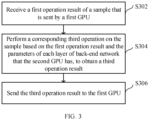
- FIG. 3 is a flowchart illustrating a method for updating a convolutional neural network by using a GPU cluster according to another implementation of the present specification. The method is performed by a second GPU. As shown in FIG. 3 , the method can include the following steps.
- Step 302 Receive a first operation result of a sample that is sent by a first GPU.
- the sample has a classification label.
- the first operation result of the same is obtained after the first GPU performs a first operation corresponding to each layer of front-end network on the sample based on the parameters of each layer of front-end network that the first GPU has.
- Step 304 Perform a corresponding third operation on the sample based on the first operation result and the parameters of each layer of back-end network that the second GPU has, to obtain a third operation result.
- the first GPU can perform a corresponding second operation on the sample, and a GPU other than the second GPU in other GPUs can also perform the corresponding third operation on the sample.
- Step 306 Send the third operation result to the first GPU.
- the first GPU After obtaining a third operation result sent by each other GPU, the first GPU combines a second operation result and the third operation result of the sample to obtain a classification result of the sample.
- the second operation result of the sample herein is obtained after the first GPU performs the corresponding second operation on the sample based on the first operation result and the parameters of each layer of back-end network that the first GPU has.
- the first GPU can further determine a prediction error based on the classification result and the classification label of the sample, and updates the convolutional neural network based on the prediction error.
- the prediction error can be determined based on classification results of a batch of samples and corresponding classification labels.
- a specific determining method is described above, and details are omitted herein for simplicity.
- references can also be made to step 216. Details are omitted herein for simplicity.
- step 302 to step 306 is a process in which P GPUs jointly perform the second operation or the third operation corresponding to each layer of back-end network on the sample obtained by the first GPU.
- step 302 to step 306 can be replaced with the following steps.
- Step A Obtain another sample with a classification label.
- Step B Perform the first operation corresponding to each layer of front-end network on the another sample based on the parameters of each layer of front-end network, to obtain a first operation result of the another sample.
- each layer of front-end network herein can include a convolutional layer, a BN layer, another layer, etc.
- the process of performing the corresponding first operation by the second GPU is similar to that of the first GPU (GPU 0), and details are omitted herein for simplicity.
- the first operation result of the another sample can be understood as multiple feature maps extracted by each layer of front-end network from the image.
- Step C Perform the corresponding third operation on the another sample based on the first operation result of the another sample and the parameters of each layer of back-end network that the second GPU has, to obtain a third operation result.
- Step D Send the first operation result of the another sample to the first GPU and a GPU other than the second GPU in the other GPUs.
- the first GPU performs the corresponding second operation on the another sample based on the first operation result of the another sample and the parameters of each layer of back-end network that the first GPU has, to obtain a second operation result.
- the GPU other than the second GPU in the other GPUs performs the corresponding third operation on the another sample based on the first operation result of the another sample and the parameters of each layer of back-end network that the GPU other than the second GPU has, to obtain a third operation result.
- Step E Send the third operation result of the another sample to the first GPU.
- the GPU other than the second GPU in the other GPUs can also send a third operation result to the first GPU.
- the first GPU After receiving third operation results sent by the other GPUs, the first GPU combines the second operation result and the third operation results sent by the other GPUs to obtain a classification result of the another sample, and determines the prediction error based on the classification result and the classification label of the sample and the classification result and the classification label of the another sample.
- step 216 After the prediction error is determined, for the process of updating the convolutional neural network, references can also be made to step 216, and details are omitted herein for simplicity.
- the convolutional neural network can be updated based on a large number of training samples, so that accuracy of updating the convolutional neural network can be improved.
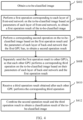
- image classification can be completed in the following way: A first GPU in a distributed GPU cluster performs a first operation corresponding to each layer of front-end network on a to-be-classified image, and then multiple GPUs jointly perform a second operation or a third operation corresponding to each layer of back-end network on the to-be-classified image, to obtain a corresponding classification result.
- a specific classification process can be shown in FIG. 4 .
- FIG. 4 is a flowchart illustrating a method for classifying images by using a GPU cluster according to the present specification.
- the method can be performed by a first GPU. As shown in FIG. 4 , the method can include the following steps:
- an implementation of the present specification further provides an apparatus for updating a convolutional neural network by using a GPU cluster.
- the GPU cluster includes a first GPU and several other GPUs, the first GPU has parameters of each layer of front-end network of the convolutional neural network, and the first GPU and the other GPUs share parameters of each layer of back-end network of the convolutional neural network. As shown in FIG.
- the apparatus can include: an acquisition unit 502, configured to obtain a sample with a classification label; a first operation unit 504, configured to perform a first operation corresponding to each layer of front-end network on the sample obtained by the acquisition unit 502 based on the parameters of each layer of front-end network, to obtain a first operation result of the sample; a second operation unit 506, configured to perform a corresponding second operation on the sample based on the first operation result and the parameters of each layer of back-end network that the first GPU has, to obtain a second operation result; a sending unit 508, configured to separately send the first operation result to the other GPUs, so that each other GPU performs a corresponding third operation on the sample based on their parameters of each layer of back-end network and the first operation result; a receiving unit 510, configured to receive a third operation result obtained after each other GPU performs the corresponding third operation; a combining unit 512, configured to combine the second operation result and the third operation result to obtain a classification result of the sample; a determining unit 514
- the receiving unit 510 is further configured to receive a first operation result of another sample from a second GPU, where the second GPU is any one of the other GPUs, and the another sample has a classification label.
- the second operation unit 506 is further configured to perform the corresponding second operation on the another sample based on the first operation result of the another sample that is received by the receiving unit 510 and the parameters of each layer of back-end network that the first GPU has, to obtain a second operation result.
- the receiving unit 510 is further configured to receive a third operation result obtained after each other GPU performs the corresponding third operation on the another sample.
- the combining unit 512 is further configured to combine the second operation result of the another sample and the third operation result of the another sample to obtain a classification result of the another sample.
- the determining unit 514 is specifically configured to determine the prediction error based on the classification result and the classification label of the sample and the classification result and the classification label of the another sample.
- the updating unit 516 can be specifically configured to: determine first update parameters of each layer of front-end network and second update parameters of each layer of back-end network based on the prediction error; update the parameters of each layer of front-end network that the first GPU has based on the first update parameters, and update the parameters of each layer of back-end network that the first GPU has based on update parameters in the second update parameters that correspond to the parameters of each layer of back-end network that the first GPU has; and send the first update parameters and corresponding second update parameters to the other GPUs, so that the other GPUs update their parameters of each layer of back-end network based on the corresponding second update parameters.
- each layer of front-end network includes a convolutional layer and another layer.
- the first operation unit 504 can be specifically configured to: perform a convolution operation on the sample based on parameters of the convolutional layer, to obtain a first intermediate result; obtain second intermediate results that are acquired by the other GPUs performing a convolution operation on other samples obtained by the other GPUs based on parameters of the convolutional layer that the other GPUs have; perform normalization processing on the first intermediate result based on the second intermediate results of the other GPUs; and perform another operation on the sample based on parameters of the another layer and the first intermediate result obtained after normalization processing, to obtain the first operation result of the sample.
- the first GPU communicates with the other GPUs based on an application programming interface function library supporting distributed communication and computing.
- the apparatus for updating a convolutional neural network by using a GPU cluster provided in this implementation of the present specification can update the convolutional neural network based on multiple GPUs, so that the convolutional neural network can be updated effectively and accurately.
- the apparatus for updating a convolutional neural network by using a GPU cluster provided in this implementation of the present specification can be a module or a unit in GPU 0 in FIG. 1 .
- an implementation of the present specification further provides an apparatus for updating a convolutional neural network by using a GPU cluster.
- the GPU cluster includes a first GPU and several other GPUs, the other GPUs have parameters of each layer of front-end network of the convolutional neural network, and the first GPU and the other GPUs share parameters of each layer of back-end network of the convolutional neural network. As shown in FIG.
- the apparatus can include: a receiving unit 602, configured to receive a first operation result of a sample that is sent by a first GPU, where the sample has a classification label; a third operation unit 604, configured to perform a corresponding third operation on the sample based on the first operation result received by the receiving unit 602 and the parameters of each layer of back-end network that the second GPU has, to obtain a third operation result; and a sending unit 606, configured to send the third operation result to the first GPU, so that after obtaining a third operation result sent by each other GPU, the first GPU combines a second operation result and the third operation result of the sample to obtain a classification result of the sample, where the second operation result of the sample is obtained after the first GPU performs a corresponding second operation on the sample based on the first operation result and the parameters of each layer of back-end network that the first GPU has, and the first GPU further determines a prediction error based on the classification result and the classification label of the sample, and updates the convolutional neural network based on the prediction error.
- the apparatus can further include: an acquisition unit, configured to obtain another sample with a classification label; and a first operation unit, configured to perform a first operation corresponding to each layer of front-end network on the another sample based on the parameters of each layer of front-end network, to obtain a first operation result of the another sample.
- an acquisition unit configured to obtain another sample with a classification label
- a first operation unit configured to perform a first operation corresponding to each layer of front-end network on the another sample based on the parameters of each layer of front-end network, to obtain a first operation result of the another sample.
- the third operation unit 604 is further configured to perform the corresponding third operation on the another sample based on the first operation result of the another sample and the parameters of each layer of back-end network that the second GPU has, to obtain a third operation result.
- the sending unit 606 is further configured to send the first operation result of the another sample to the first GPU and a GPU other than the second GPU in the other GPUs, so that the first GPU performs the corresponding second operation on the another sample based on the parameters of each layer of back-end network that the first GPU has and the first operation result of the another sample, to obtain a second operation result, and the GPU other than the second GPU in the other GPUs performs the corresponding third operation on the another sample based on the parameters of each layer of back-end network that the GPU other than the second GPU has and the first operation result of the another sample, to obtain a third operation result.
- the sending unit 606 is further configured to send the third operation result of the another sample to the first GPU, so that the first GPU combines the second operation result and third operation results sent by the other GPUs, to obtain a classification result of the another sample, and determines the prediction error based on the classification result and the classification label of the sample and the classification result and the classification label of the another sample.
- the apparatus for updating a convolutional neural network by using a GPU cluster provided in this implementation of the present specification can update the convolutional neural network based on multiple GPUs, so that the convolutional neural network can be updated effectively and accurately.
- the apparatus for updating a convolutional neural network by using a GPU cluster can be a module or a unit in any one of GPU 1 to GPU P-1 in FIG. 1 .
- an implementation of the present specification further provides an apparatus for classifying images by using a GPU cluster.
- the GPU cluster includes a first GPU and several other GPUs, the first GPU has parameters of each layer of front-end network of a convolutional neural network, and the first GPU and the other GPUs share parameters of each layer of back-end network of the convolutional neural network. As shown in FIG.
- the apparatus can include: an acquisition unit 702, configured to obtain a to-be-classified image; a first operation unit 704, configured to perform a first operation corresponding to each layer of front-end network on the to-be-classified image obtained by the acquisition unit 702 based on the parameters of each layer of front-end network, to obtain a first operation result of the to-be-classified image; a second operation unit 706, configured to perform a corresponding second operation on the to-be-classified image based on the first operation result and the parameters of each layer of back-end network that the first GPU has, to obtain a second operation result; a sending unit 708, configured to separately send the first operation result to the other GPUs, so that each other GPU performs a corresponding third operation on the to-be-classified image based on their parameters of each layer of back-end network and the first operation result; a receiving unit 710, configured to receive a third operation result obtained after each other GPU performs the corresponding third operation; and a combining unit 712, configured to combine
- the apparatus for classifying images by using a GPU cluster provided in this implementation of the present specification can classify images accurately and effectively.
- the apparatus for classifying images by using a GPU cluster provided in this implementation of the present specification can be a module or a unit in GPU 0 in FIG. 1 .
- an implementation of the present specification further provides a device for updating a convolutional neural network.
- the device can include a first GPU 802 and several other GPUs (GPU 804 to GPU P), the first GPU 802 has parameters of each layer of front-end network of the convolutional neural network, the first GPU 802 and the other GPUs share parameters of each layer of back-end network of the convolutional neural network, and the first GPU 802 implements the following steps when running: obtaining a sample with a classification label; performing a first operation corresponding to each layer of front-end network on the sample based on the parameters of each layer of front-end network, to obtain a first operation result of the sample; performing a corresponding second operation on the sample based on the first operation result and the parameters of each layer of back-end network that the first GPU has, to obtain a second operation result; separately sending the first operation result to the other GPUs, so that each other GPU perform
- the device for updating a convolutional neural network provided in this implementation of the present specification can update the convolutional neural network based on multiple GPUs, so that the convolutional neural network can be updated effectively and accurately.
- the device can include a first GPU 902 and several other GPUs (GPU 904 to GPU P), the other GPUs have parameters of each layer of front-end network of the convolutional neural network, the first GPU and the other GPUs share parameters of each layer of back-end network of the convolutional neural network, and any second GPU 904 in the other GPUs implements the following steps when running: receiving a first operation result, which is sent by the first GPU, of a sample with a classification label; performing a corresponding third operation on the sample based on the first operation result and the parameters of each layer of back-end network that the second GPU has, to obtain a third operation result; and sending the third operation result to the first GPU, so that after obtaining a third operation result sent by each other GPU, the first GPU combines a second operation result and the third operation result of the sample
- the device for updating a convolutional neural network provided in this implementation of the present specification can update the convolutional neural network based on multiple GPUs, so that the convolutional neural network can be updated effectively and accurately.
- the present specification further provides an image classification device.
- the device can include a first GPU 1002 and several other GPUs (GPU 1004 to GPU P ), the first GPU 1002 has parameters of each layer of front-end network of a convolutional neural network, the first GPU 1002 and the other GPUs share parameters of each layer of back-end network of the convolutional neural network, and the first GPU 1002 implements the following steps when running: obtaining a to-be-classified image; performing a first operation corresponding to each layer of front-end network on the to-be-classified image based on the parameters of each layer of front-end network, to obtain a first operation result of the to-be-classified image; performing a corresponding second operation on the to-be-classified image based on the first operation result and the parameters of each layer of back-end network that the first GPU has, to obtain a second operation result; separately sending the first operation result to the other GPUs, so
- the image classification device provided in the present specification can classify images accurately and effectively.
- Steps of methods or algorithms described with reference to the content disclosed in the present specification can be implemented by hardware or can be implemented by a processor executing a software instruction.
- the software instruction can include a corresponding software module, and the software module can be stored in a RAM memory, a flash memory, a ROM memory, an EPROM memory, an EEPROM memory, a register, a hard disk drive, a removable hard disk, a CD-ROM, or any other form of storage medium known in the art.
- An example storage medium is coupled to a processor, so that the processor can read information from the storage medium and can write information to the storage medium.
- the storage medium can be an integral part of the processor.
- the processor and the storage medium can be located in an ASIC.
- the ASIC can be located in a server.
- the processor and the storage medium can exist in the server as discrete components.
- the computer-readable medium includes a computer storage medium and a communications medium, where the communications medium includes any medium that enables a computer program to be transmitted from one place to another.
- the storage medium can be any available medium accessible to a general-purpose or dedicated computer.
Landscapes
- Engineering & Computer Science (AREA)
- Physics & Mathematics (AREA)
- Theoretical Computer Science (AREA)
- Health & Medical Sciences (AREA)
- Life Sciences & Earth Sciences (AREA)
- Biomedical Technology (AREA)
- Biophysics (AREA)
- General Health & Medical Sciences (AREA)
- General Physics & Mathematics (AREA)
- Evolutionary Computation (AREA)
- Computational Linguistics (AREA)
- Molecular Biology (AREA)
- Computing Systems (AREA)
- General Engineering & Computer Science (AREA)
- Data Mining & Analysis (AREA)
- Mathematical Physics (AREA)
- Software Systems (AREA)
- Artificial Intelligence (AREA)
- Neurology (AREA)
- Image Analysis (AREA)
- Information Retrieval, Db Structures And Fs Structures Therefor (AREA)
Claims (10)
- Verfahren zum Aktualisieren eines faltenden neuronalen Netzwerks unter Verwendung eines GPU-Clusters, wobei das GPU-Cluster eine erste GPU (802) und mehrere andere GPUs aufweist, wobei das faltende neuronale Netzwerk mindestens eine Faltungsschicht, CONV, eine Stapelnormalisierungsschicht und eine andere Schicht in einem Front-End-Netzwerk und mindestens eine vollständig verbundene Schicht, FC, in einem Back-End-Netzwerk umfasst, wobei die erste GPU (802) Parameter jeder Schicht des Front-End-Netzwerks des faltenden neuronalen Netzwerks hat, wobei Parameter jeder Schicht des Back-End-Netzwerks des faltenden neuronalen Netzwerks unter der ersten GPU (802) und den anderen GPUs verteilt sind, und wobei das Verfahren durch die erste GPU (802) durchgeführt wird und umfasst:Erhalten (S202) eines ersten Samples mit einem Klassifizierungslabel;Durchführen (S204) einer ersten Operation, die jeder Schicht des Front-End-Netzwerks entspricht, an dem ersten Sample basierend auf den Parametern jeder Schicht des Front-End-Netzwerks, um ein erstes Operationsergebnis des ersten Samples zu erhalten, das aufweist:Durchführen einer Faltungsoperation an dem ersten Sample basierend auf Parametern der Faltungsschicht, um ein erstes Zwischenergebnis zu erhalten;Erhalten von zweiten Zwischenergebnissen, die von den anderen GPUs erfasst werden, Durchführen einer Faltungsoperation an anderen Samples, die von den anderen GPUs erhalten werden, basierend auf Parametern der Faltungsschicht, die die anderen GPUs haben;Durchführen einer Normalisierungsverarbeitung an dem ersten Zwischenergebnis basierend auf den zweiten Zwischenergebnissen der anderen GPUs; undDurchführen einer anderen Operation an dem ersten Sample basierend auf Parametern der anderen Schicht und dem ersten Zwischenergebnis, das nach der Normalisierungsverarbeitung erhalten wird, um das erste Operationsergebnis des ersten Samples zu erhalten;Durchführen (S206) einer entsprechenden zweiten Operation an dem ersten Sample basierend auf dem ersten Operationsergebnis und den Parametern jeder Schicht des Back-End-Netzwerks, die die erste GPU (802) hat, um ein zweites Operationsergebnis zu erhalten;separates Senden (S208) des ersten Operationsergebnisses an die anderen GPUs, so dass jede andere GPU eine entsprechende dritte Operation an dem ersten Sample basierend auf ihren Parametern jeder Schicht des Back-End-Netzwerks und dem ersten Operationsergebnis durchführt;Empfangen (S210) eines dritten Operationsergebnisses, das erhalten wird, nachdem jede andere GPU die entsprechende dritte Operation durchführt;Kombinieren (S212) des zweiten Operationsergebnisses und des dritten Operationsergebnisses, um ein Klassifizierungsergebnis des ersten Samples zu erhalten;Bestimmen (S214) eines Vorhersagefehlers basierend auf dem Klassifizierungsergebnis und dem Klassifizierungslabel des ersten Samples; undAktualisieren (S216) des faltenden neuronalen Netzwerks basierend auf dem Vorhersagefehler.
- Verfahren nach Anspruch 1, ferner umfassend:Empfangen eines ersten Operationsergebnisses eines zweiten Samples von einer zweiten GPU (804), wobei die zweite GPU (804) eine der anderen GPUs ist und das zweite Sample ein Klassifizierungslabel hat;Durchführen (S206) der entsprechenden zweiten Operation an dem zweiten Sample basierend auf dem ersten Operationsergebnis des zweiten Samples und den Parametern jeder Schicht des Back-End-Netzwerks, die die erste GPU (802) hat, um ein zweites Operationsergebnis zu erhalten;Empfangen eines dritten Operationsergebnisses (S210), das erhalten wird, nachdem jede andere GPU die entsprechende dritte Operation an dem zweiten Sample durchführt; undKombinieren (S212) des zweiten Operationsergebnisses des zweiten Samples und des dritten Operationsergebnisses des zweiten Samples, um ein Klassifizierungsergebnis des zweiten Samples zu erhalten, wobeidas Bestimmen (S214) des Vorhersagefehlers aufweist: Bestimmen (S214) des Vorhersagefehlers basierend auf dem Klassifizierungsergebnis und dem Klassifizierungslabel des ersten Samples und dem Klassifizierungsergebnis und dem Klassifizierungslabel des zweiten Samples.
- Verfahren nach Anspruch 1, wobei das Aktualisieren (S216) des faltenden neuronalen Netzwerks basierend auf dem Vorhersagefehler aufweist:Bestimmen erster Aktualisierungsparameter jeder Schicht des Front-End-Netzwerks und zweiter Aktualisierungsparameter jeder Schicht des Back-End-Netzwerks basierend auf dem Vorhersagefehler;Aktualisieren der Parameter jeder Schicht des Back-End-Netzwerks, die die erste GPU (802) hat, basierend auf Aktualisierungsparametern in den zweiten Aktualisierungsparametern, die den Parametern jeder Schicht des Back-End-Netzwerks entsprechen, die die erste GPU (802) hat; undSenden der ersten Aktualisierungsparameter und entsprechender zweiter Aktualisierungsparameter an die anderen GPUs, so dass die anderen GPUs ihre Parameter jeder Schicht des Back-End-Netzwerks basierend auf den entsprechenden zweiten Aktualisierungsparametern aktualisieren.
- Verfahren nach Anspruch 1, wobei die erste GPU (802) mit den anderen GPUs basierend auf einer Anwendungsprogrammierschnittstellenfunktionsbibliothek kommuniziert, die verteilte Kommunikation und Berechnung unterstützt.
- Verfahren zum Aktualisieren eines faltenden neuronalen Netzwerks unter Verwendung eines GPU-Clusters, wobei das GPU-Cluster eine erste GPU (902) und mehrere andere GPUs aufweist, wobei das faltende neuronale Netzwerk mindestens eine Faltungsschicht, CONV, eine Stapelnormalisierungsschicht und eine andere Schicht in einem Front-End-Netzwerk und mindestens eine vollständig verbundene Schicht, FC, in einem Back-End-Netzwerk umfasst, wobei die anderen GPUs Parameter jeder Schicht des Front-End-Netzwerks des faltenden neuronalen Netzwerks haben, wobei Parameter jeder Schicht des Back-End-Netzwerks des faltenden neuronalen Netzwerks unter der ersten GPU (802) und den anderen GPUs verteilt sind, und wobei das Verfahren durch eine beliebige zweite GPU (904) in den anderen GPUs durchgeführt wird und umfasst:Erhalten (202) eines zweiten Samples mit einem Klassifizierungslabel;Durchführen einer Faltungsoperation an dem zweiten Sample basierend auf Parametern einer Faltungsschicht, um ein zweites Zwischenergebnis zu erhalten;Senden des zweiten Zwischenergebnisses an die erste GPU, die eine Normalisierungsverarbeitung an einem ersten Zwischenergebnis basierend auf den zweiten Zwischenergebnissen der anderen GPUs einschließlich der zweiten GPU durchführt, wobei das erste Zwischenergebnis erhalten wird, nachdem die erste GPU eine Faltungsoperation an dem ersten Sample basierend auf Parametern der Faltungsschicht, die die erste GPU hat, durchführt;Empfangen (S302) eines ersten Operationsergebnisses, das durch die erste GPU (902) gesendet wird, eines ersten Samples mit einem Klassifizierungslabel;Durchführen (S304) einer entsprechenden dritten Operation an dem ersten Sample basierend auf dem ersten Operationsergebnis und den Parametern jeder Schicht des Back-End-Netzwerks, die die zweite GPU (904) hat, um ein drittes Operationsergebnis zu erhalten; undSenden (S306) des dritten Operationsergebnisses an die erste GPU (902), so dass nach dem Erhalten eines dritten Operationsergebnisses, das durch jede andere GPU gesendet wird, die erste GPU (902) ein zweites Operationsergebnis und das dritte Operationsergebnis des ersten Samples kombiniert (S212), um ein Klassifizierungsergebnis des ersten Samples zu erhalten, wobei das zweite Operationsergebnis des ersten Samples erhalten wird, nachdem die erste GPU (902) eine entsprechende zweite Operation an dem ersten Sample basierend auf dem ersten Operationsergebnis und den Parametern jeder Schicht des Back-End-Netzwerks, die die erste GPU (902) hat, durchführt (S206), und die erste GPU (902) ferner einen Vorhersagefehler basierend auf dem Klassifizierungsergebnis und dem Klassifizierungslabel des ersten Samples bestimmt (S214) und das faltende neuronale Netzwerk basierend auf dem Vorhersagefehler aktualisiert (S216).
- Verfahren nach Anspruch 5, ferner umfassend:Durchführen (S204) einer ersten Operation, die jeder Schicht des Front-End-Netzwerks entspricht, an dem zweiten Sample basierend auf den Parametern jeder Schicht des Front-End-Netzwerks, um ein erstes Operationsergebnis des zweiten Samples zu erhalten, und Durchführen (S304) der entsprechenden dritten Operation an dem zweiten Sample basierend auf dem ersten Operationsergebnis des zweiten Samples und den Parametern jeder Schicht des Back-End-Netzwerks, die die zweite GPU (904) hat, um ein drittes Operationsergebnis zu erhalten;Senden des ersten Operationsergebnisses des zweiten Samples an die erste GPU (902) und eine andere GPU als die zweite GPU (904) in den anderen GPUs, so dass die erste GPU (902) die entsprechende zweite Operation an dem zweiten Sample basierend auf den Parametern jeder Schicht des Back-End-Netzwerks, die die erste GPU (902) hat, und dem ersten Operationsergebnis des zweiten Samples durchführt (S206), um ein zweites Operationsergebnis zu erhalten, und die andere GPU als die zweite GPU (904) in den anderen GPUs die entsprechende dritte Operation an dem zweiten Sample basierend auf den Parametern jeder Schicht des Back-End-Netzwerks, die die andere GPU als die zweite GPU (904) hat, und dem ersten Operationsergebnis des zweiten Samples durchführt, um ein drittes Operationsergebnis zu erhalten; undSenden (S306) des dritten Operationsergebnisses des zweiten Samples an die erste GPU (902), so dass die erste GPU (902) das zweite Operationsergebnis und dritte Operationsergebnisse, die von den anderen GPUs gesendet werden, kombiniert (S212), um ein Klassifizierungsergebnis des zweiten Samples zu erhalten, und den Vorhersagefehler basierend auf dem Klassifizierungsergebnis und dem Klassifizierungslabel des ersten Samples und dem Klassifizierungsergebnis und dem Klassifizierungslabel des zweiten Samples bestimmt (S214).
- Verfahren zum Klassifizieren von Bildern unter Verwendung eines GPU-Clusters, wobei das GPU-Cluster eine erste GPU (1002) und mehrere andere GPUs aufweist, wobei die erste GPU (1002) Parameter jeder Schicht des Front-End-Netzwerks eines faltenden neuronalen Netzwerks hat, wobei das faltende neuronale Netzwerk mindestens eine Faltungsschicht, CONV, eine Stapelnormalisierungsschicht und eine andere Schicht in einem Front-End-Netzwerk und mindestens eine vollständig verbundene Schicht, FC, in einem Back-End-Netzwerk umfasst, wobei Parameter jeder Schicht des Back-End-Netzwerks des faltenden neuronalen Netzwerks unter der ersten GPU (1002) und den anderen GPUs verteilt sind, und wobei das Verfahren durch die erste GPU (1002) durchgeführt wird und umfasst:Erhalten (S402) eines zu klassifizierenden Bildes;Durchführen (S404) einer ersten Operation, die jeder Schicht des Front-End-Netzwerks entspricht, an dem zu klassifizierenden Bild basierend auf den Parametern jeder Schicht des Front-End-Netzwerks, um ein erstes Operationsergebnis des zu klassifizierenden Bildes zu erhalten, das aufweist:Durchführen einer Faltungsoperation an dem ersten Sample basierend auf Parametern der Faltungsschicht, um ein erstes Zwischenergebnis zu erhalten;Erhalten von zweiten Zwischenergebnissen, die von den anderen GPUs erfasst werden, Durchführen einer Faltungsoperation an anderen Samples, die von den anderen GPUs erhalten werden, basierend auf Parametern der Faltungsschicht, die die anderen GPUs haben;Durchführen einer Normalisierungsverarbeitung an dem ersten Zwischenergebnis basierend auf den zweiten Zwischenergebnissen der anderen GPUs; undDurchführen einer anderen Operation an dem ersten Sample basierend auf Parametern der anderen Schicht und dem ersten Zwischenergebnis, das nach der Normalisierungsverarbeitung erhalten wird, um das erste Operationsergebnis des ersten Samples zu erhalten;Durchführen (S406) einer entsprechenden zweiten Operation an dem zu klassifizierenden Bild basierend auf dem ersten Operationsergebnis und den Parametern jeder Schicht des Back-End-Netzwerks, die eine zweite GPU (1004) hat, um ein zweites Operationsergebnis zu erhalten;separates Senden (S408) des ersten Operationsergebnisses an die anderen GPUs, so dass jede andere GPU eine entsprechende dritte Operation an dem zu klassifizierenden Bild basierend auf ihren Parametern jeder Schicht des Back-End-Netzwerks und dem ersten Operationsergebnis durchführt;Empfangen (S410) eines dritten Operationsergebnisses, das erhalten wird, nachdem jede andere GPU die entsprechende dritte Operation durchführt; undKombinieren (S412) des zweiten Operationsergebnisses und des dritten Operationsergebnisses, um ein Klassifizierungsergebnis des zu klassifizierenden Bildes zu erhalten.
- Vorrichtung, umfassend eine Vielzahl von GPUs, die eingerichtet sind, ein Verfahren nach einem der vorhergehenden Ansprüche durchzuführen.
- System, umfassend eine Vorrichtung nach Anspruch 8.
- Ein oder mehrere computerlesbare Medien, die Befehle darauf speichern, die, wenn sie von einer Vielzahl von GPUs ausgeführt werden, die Vielzahl von GPUs einrichten, ein Verfahren nach einem der Ansprüche 1 bis 7 durchzuführen.
Applications Claiming Priority (2)
| Application Number | Priority Date | Filing Date | Title |
|---|---|---|---|
| CN201910116468.XA CN110059813B (zh) | 2019-02-13 | 2019-02-13 | 利用gpu集群更新卷积神经网络的方法、装置及设备 |
| PCT/CN2020/070253 WO2020164338A1 (zh) | 2019-02-13 | 2020-01-03 | 利用gpu集群更新卷积神经网络的方法、装置及设备 |
Publications (3)
| Publication Number | Publication Date |
|---|---|
| EP3859611A1 EP3859611A1 (de) | 2021-08-04 |
| EP3859611A4 EP3859611A4 (de) | 2022-02-09 |
| EP3859611B1 true EP3859611B1 (de) | 2024-08-07 |
Family
ID=67316031
Family Applications (1)
| Application Number | Title | Priority Date | Filing Date |
|---|---|---|---|
| EP20755618.4A Active EP3859611B1 (de) | 2019-02-13 | 2020-01-03 | Verfahren, gerät und vorrichtung zur aktualisierung eines neuronalen faltungsnetzes unter verwendung eines gpu-clusters |
Country Status (5)
| Country | Link |
|---|---|
| US (1) | US11640531B2 (de) |
| EP (1) | EP3859611B1 (de) |
| CN (1) | CN110059813B (de) |
| TW (1) | TWI716102B (de) |
| WO (1) | WO2020164338A1 (de) |
Families Citing this family (3)
| Publication number | Priority date | Publication date | Assignee | Title |
|---|---|---|---|---|
| CN110059813B (zh) | 2019-02-13 | 2021-04-06 | 创新先进技术有限公司 | 利用gpu集群更新卷积神经网络的方法、装置及设备 |
| CN114463158B (zh) * | 2020-11-10 | 2025-06-13 | 阿里巴巴集团控股有限公司 | 模型训练方法及系统、非易失性存储介质和计算机终端 |
| CN112560936B (zh) * | 2020-12-11 | 2024-06-25 | 深圳市帮联科技有限公司 | 模型并行训练方法、装置、设备、存储介质和程序产品 |
Citations (1)
| Publication number | Priority date | Publication date | Assignee | Title |
|---|---|---|---|---|
| US20150294219A1 (en) * | 2014-04-11 | 2015-10-15 | Google Inc. | Parallelizing the training of convolutional neural networks |
Family Cites Families (21)
| Publication number | Priority date | Publication date | Assignee | Title |
|---|---|---|---|---|
| US6819790B2 (en) * | 2002-04-12 | 2004-11-16 | The University Of Chicago | Massive training artificial neural network (MTANN) for detecting abnormalities in medical images |
| US7747070B2 (en) * | 2005-08-31 | 2010-06-29 | Microsoft Corporation | Training convolutional neural networks on graphics processing units |
| CN104035751B (zh) * | 2014-06-20 | 2016-10-12 | 深圳市腾讯计算机系统有限公司 | 基于多图形处理器的数据并行处理方法及装置 |
| CN104463324A (zh) * | 2014-11-21 | 2015-03-25 | 长沙马沙电子科技有限公司 | 一种基于大规模高性能集群的卷积神经网络并行处理方法 |
| CN105894087A (zh) * | 2015-01-26 | 2016-08-24 | 华为技术有限公司 | 用于神经网络中训练参数集的系统和方法 |
| US10002402B2 (en) * | 2015-07-23 | 2018-06-19 | Sony Corporation | Learning convolution neural networks on heterogeneous CPU-GPU platform |
| US10319374B2 (en) * | 2015-11-25 | 2019-06-11 | Baidu USA, LLC | Deployed end-to-end speech recognition |
| CN107292385A (zh) * | 2016-03-31 | 2017-10-24 | 阿里巴巴集团控股有限公司 | 一种类Alexnet网络的模型训练方法和装置 |
| JP6635265B2 (ja) * | 2016-07-29 | 2020-01-22 | 株式会社デンソーアイティーラボラトリ | 予測装置、予測方法および予測プログラム |
| CN106339753A (zh) * | 2016-08-17 | 2017-01-18 | 中国科学技术大学 | 一种有效提升卷积神经网络稳健性的方法 |
| US10949746B2 (en) * | 2016-10-27 | 2021-03-16 | International Business Machines Corporation | Efficient parallel training of a network model on multiple graphics processing units |
| US10528848B2 (en) * | 2016-11-04 | 2020-01-07 | Case Western Reserve University | Histomorphometric classifier to predict cardiac failure from whole-slide hematoxylin and eosin stained images |
| CN108229687B (zh) * | 2016-12-14 | 2021-08-24 | 腾讯科技(深圳)有限公司 | 数据处理方法、数据处理装置及电子设备 |
| US20180341871A1 (en) * | 2017-05-25 | 2018-11-29 | Accenture Global Solutions Limited | Utilizing deep learning with an information retrieval mechanism to provide question answering in restricted domains |
| CN111052129B (zh) * | 2017-07-28 | 2024-03-08 | 美国西门子医学诊断股份有限公司 | 深度学习体积定量方法和设备 |
| CN108108813A (zh) * | 2017-12-01 | 2018-06-01 | 中国科学院重庆绿色智能技术研究院 | 一种大类别深度学习gpu并行加速的方法 |
| CN108021395B (zh) * | 2017-12-27 | 2022-04-29 | 北京金山安全软件有限公司 | 一种面向神经网络的数据并行处理方法及系统 |
| CN108304918B (zh) * | 2018-01-18 | 2020-08-28 | 中兴飞流信息科技有限公司 | 一种数据并行的深度学习的参数交换方法和系统 |
| CN108460457A (zh) * | 2018-03-30 | 2018-08-28 | 苏州纳智天地智能科技有限公司 | 一种面向卷积神经网络的多机多卡混合并行异步训练方法 |
| CN109241139B (zh) * | 2018-08-31 | 2023-05-26 | 联想(北京)有限公司 | 数据处理方法、逻辑模型系统以及数据处理系统 |
| CN110059813B (zh) * | 2019-02-13 | 2021-04-06 | 创新先进技术有限公司 | 利用gpu集群更新卷积神经网络的方法、装置及设备 |
-
2019
- 2019-02-13 CN CN201910116468.XA patent/CN110059813B/zh not_active Expired - Fee Related
- 2019-09-09 TW TW108132432A patent/TWI716102B/zh not_active IP Right Cessation
-
2020
- 2020-01-03 WO PCT/CN2020/070253 patent/WO2020164338A1/zh not_active Ceased
- 2020-01-03 EP EP20755618.4A patent/EP3859611B1/de active Active
-
2021
- 2021-05-17 US US17/322,626 patent/US11640531B2/en active Active
Patent Citations (1)
| Publication number | Priority date | Publication date | Assignee | Title |
|---|---|---|---|---|
| US20150294219A1 (en) * | 2014-04-11 | 2015-10-15 | Google Inc. | Parallelizing the training of convolutional neural networks |
Also Published As
| Publication number | Publication date |
|---|---|
| TW202101305A (zh) | 2021-01-01 |
| EP3859611A4 (de) | 2022-02-09 |
| CN110059813B (zh) | 2021-04-06 |
| TWI716102B (zh) | 2021-01-11 |
| CN110059813A (zh) | 2019-07-26 |
| US20210271976A1 (en) | 2021-09-02 |
| WO2020164338A1 (zh) | 2020-08-20 |
| EP3859611A1 (de) | 2021-08-04 |
| US11640531B2 (en) | 2023-05-02 |
Similar Documents
| Publication | Publication Date | Title |
|---|---|---|
| CN111898733B (zh) | 一种深度可分离卷积神经网络加速器架构 | |
| CN108875955B (zh) | 基于参数服务器的梯度提升决策树的实现方法及相关设备 | |
| US12443835B2 (en) | Hardware architecture for processing data in sparse neural network | |
| CN112906865B (zh) | 神经网络架构搜索方法、装置、电子设备及存储介质 | |
| US11640531B2 (en) | Method, apparatus and device for updating convolutional neural network using GPU cluster | |
| CN113449859A (zh) | 一种数据处理方法及其装置 | |
| CN109657794B (zh) | 一种基于指令队列的分布式深度神经网络性能建模方法 | |
| CN119311414B (zh) | 基于异构gpu负载均衡的图神经网络分区方法 | |
| US20230334289A1 (en) | Deep neural network accelerator with memory having two-level topology | |
| CN114399653A (zh) | 一种基于锚点图的快速多视图离散聚类方法及系统 | |
| US20240394280A1 (en) | System and method for identifying approximate k-nearest neighbors in web scale clustering | |
| US11615320B1 (en) | Method, product, and apparatus for variable precision weight management for neural networks | |
| CN108399105A (zh) | 一种基于改进头脑风暴算法的软硬件划分方法 | |
| US11687831B1 (en) | Method, product, and apparatus for a multidimensional processing array for hardware acceleration of convolutional neural network inference | |
| CN114724103A (zh) | 神经网络处理系统、指令生成方法、装置及电子设备 | |
| CN111191774A (zh) | 面向精简卷积神经网络的低代价加速器架构及其处理方法 | |
| CN108733739B (zh) | 支持集束搜索的运算装置和方法 | |
| CN118095343A (zh) | 一种基于增量聚合策略的分布式图神经网络训练方法 | |
| WO2021059527A1 (ja) | 学習装置、学習方法、及び、記録媒体 | |
| KR20240022957A (ko) | Gnn 기반으로 그래프 데이터를 군집화하는 전자 장치 및 그의 제어 방법 | |
| CN114118210A (zh) | 基于分布式机器学习的分组训练方法、服务器及客户端 | |
| CN119861974B (zh) | 基于数据流核心架构的任务处理方法、装置、设备及介质 | |
| US20240256901A1 (en) | Information processing apparatus, information processing method and non-transitory computer-readable storage medium | |
| CN116796815B (zh) | 一种基于多面体变换表示的神经网络架构搜索方法及系统 | |
| CN115879531B (zh) | 压缩分类神经网络的方法和装置 |
Legal Events
| Date | Code | Title | Description |
|---|---|---|---|
| STAA | Information on the status of an ep patent application or granted ep patent |
Free format text: STATUS: THE INTERNATIONAL PUBLICATION HAS BEEN MADE |
|
| PUAI | Public reference made under article 153(3) epc to a published international application that has entered the european phase |
Free format text: ORIGINAL CODE: 0009012 |
|
| STAA | Information on the status of an ep patent application or granted ep patent |
Free format text: STATUS: REQUEST FOR EXAMINATION WAS MADE |
|
| 17P | Request for examination filed |
Effective date: 20210426 |
|
| AK | Designated contracting states |
Kind code of ref document: A1 Designated state(s): AL AT BE BG CH CY CZ DE DK EE ES FI FR GB GR HR HU IE IS IT LI LT LU LV MC MK MT NL NO PL PT RO RS SE SI SK SM TR |
|
| A4 | Supplementary search report drawn up and despatched |
Effective date: 20220111 |
|
| RIC1 | Information provided on ipc code assigned before grant |
Ipc: G06N 3/04 20060101ALI20220104BHEP Ipc: G06N 3/08 20060101ALI20220104BHEP Ipc: G06N 3/063 20060101AFI20220104BHEP |
|
| DAV | Request for validation of the european patent (deleted) | ||
| DAX | Request for extension of the european patent (deleted) | ||
| STAA | Information on the status of an ep patent application or granted ep patent |
Free format text: STATUS: EXAMINATION IS IN PROGRESS |
|
| 17Q | First examination report despatched |
Effective date: 20230614 |
|
| GRAP | Despatch of communication of intention to grant a patent |
Free format text: ORIGINAL CODE: EPIDOSNIGR1 |
|
| STAA | Information on the status of an ep patent application or granted ep patent |
Free format text: STATUS: GRANT OF PATENT IS INTENDED |
|
| INTG | Intention to grant announced |
Effective date: 20240227 |
|
| GRAS | Grant fee paid |
Free format text: ORIGINAL CODE: EPIDOSNIGR3 |
|
| GRAA | (expected) grant |
Free format text: ORIGINAL CODE: 0009210 |
|
| STAA | Information on the status of an ep patent application or granted ep patent |
Free format text: STATUS: THE PATENT HAS BEEN GRANTED |
|
| P01 | Opt-out of the competence of the unified patent court (upc) registered |
Free format text: CASE NUMBER: APP_37656/2024 Effective date: 20240624 |
|
| AK | Designated contracting states |
Kind code of ref document: B1 Designated state(s): AL AT BE BG CH CY CZ DE DK EE ES FI FR GB GR HR HU IE IS IT LI LT LU LV MC MK MT NL NO PL PT RO RS SE SI SK SM TR |
|
| REG | Reference to a national code |
Ref country code: GB Ref legal event code: FG4D |
|
| REG | Reference to a national code |
Ref country code: CH Ref legal event code: EP |
|
| REG | Reference to a national code |
Ref country code: DE Ref legal event code: R096 Ref document number: 602020035361 Country of ref document: DE |
|
| REG | Reference to a national code |
Ref country code: IE Ref legal event code: FG4D |
|
| REG | Reference to a national code |
Ref country code: LT Ref legal event code: MG9D |
|
| REG | Reference to a national code |
Ref country code: NL Ref legal event code: MP Effective date: 20240807 |
|
| PG25 | Lapsed in a contracting state [announced via postgrant information from national office to epo] |
Ref country code: NO Free format text: LAPSE BECAUSE OF FAILURE TO SUBMIT A TRANSLATION OF THE DESCRIPTION OR TO PAY THE FEE WITHIN THE PRESCRIBED TIME-LIMIT Effective date: 20241107 |
|
| REG | Reference to a national code |
Ref country code: AT Ref legal event code: MK05 Ref document number: 1711758 Country of ref document: AT Kind code of ref document: T Effective date: 20240807 |
|
| PG25 | Lapsed in a contracting state [announced via postgrant information from national office to epo] |
Ref country code: GR Free format text: LAPSE BECAUSE OF FAILURE TO SUBMIT A TRANSLATION OF THE DESCRIPTION OR TO PAY THE FEE WITHIN THE PRESCRIBED TIME-LIMIT Effective date: 20241108 Ref country code: NL Free format text: LAPSE BECAUSE OF FAILURE TO SUBMIT A TRANSLATION OF THE DESCRIPTION OR TO PAY THE FEE WITHIN THE PRESCRIBED TIME-LIMIT Effective date: 20240807 Ref country code: FI Free format text: LAPSE BECAUSE OF FAILURE TO SUBMIT A TRANSLATION OF THE DESCRIPTION OR TO PAY THE FEE WITHIN THE PRESCRIBED TIME-LIMIT Effective date: 20240807 Ref country code: PL Free format text: LAPSE BECAUSE OF FAILURE TO SUBMIT A TRANSLATION OF THE DESCRIPTION OR TO PAY THE FEE WITHIN THE PRESCRIBED TIME-LIMIT Effective date: 20240807 Ref country code: PT Free format text: LAPSE BECAUSE OF FAILURE TO SUBMIT A TRANSLATION OF THE DESCRIPTION OR TO PAY THE FEE WITHIN THE PRESCRIBED TIME-LIMIT Effective date: 20241209 |
|
| PG25 | Lapsed in a contracting state [announced via postgrant information from national office to epo] |
Ref country code: BG Free format text: LAPSE BECAUSE OF FAILURE TO SUBMIT A TRANSLATION OF THE DESCRIPTION OR TO PAY THE FEE WITHIN THE PRESCRIBED TIME-LIMIT Effective date: 20240807 |
|
| PG25 | Lapsed in a contracting state [announced via postgrant information from national office to epo] |
Ref country code: LV Free format text: LAPSE BECAUSE OF FAILURE TO SUBMIT A TRANSLATION OF THE DESCRIPTION OR TO PAY THE FEE WITHIN THE PRESCRIBED TIME-LIMIT Effective date: 20240807 |
|
| PG25 | Lapsed in a contracting state [announced via postgrant information from national office to epo] |
Ref country code: AT Free format text: LAPSE BECAUSE OF FAILURE TO SUBMIT A TRANSLATION OF THE DESCRIPTION OR TO PAY THE FEE WITHIN THE PRESCRIBED TIME-LIMIT Effective date: 20240807 Ref country code: IS Free format text: LAPSE BECAUSE OF FAILURE TO SUBMIT A TRANSLATION OF THE DESCRIPTION OR TO PAY THE FEE WITHIN THE PRESCRIBED TIME-LIMIT Effective date: 20241207 |
|
| PG25 | Lapsed in a contracting state [announced via postgrant information from national office to epo] |
Ref country code: HR Free format text: LAPSE BECAUSE OF FAILURE TO SUBMIT A TRANSLATION OF THE DESCRIPTION OR TO PAY THE FEE WITHIN THE PRESCRIBED TIME-LIMIT Effective date: 20240807 |
|
| PG25 | Lapsed in a contracting state [announced via postgrant information from national office to epo] |
Ref country code: RS Free format text: LAPSE BECAUSE OF FAILURE TO SUBMIT A TRANSLATION OF THE DESCRIPTION OR TO PAY THE FEE WITHIN THE PRESCRIBED TIME-LIMIT Effective date: 20241107 Ref country code: ES Free format text: LAPSE BECAUSE OF FAILURE TO SUBMIT A TRANSLATION OF THE DESCRIPTION OR TO PAY THE FEE WITHIN THE PRESCRIBED TIME-LIMIT Effective date: 20240807 |
|
| PG25 | Lapsed in a contracting state [announced via postgrant information from national office to epo] |
Ref country code: RS Free format text: LAPSE BECAUSE OF FAILURE TO SUBMIT A TRANSLATION OF THE DESCRIPTION OR TO PAY THE FEE WITHIN THE PRESCRIBED TIME-LIMIT Effective date: 20241107 Ref country code: PT Free format text: LAPSE BECAUSE OF FAILURE TO SUBMIT A TRANSLATION OF THE DESCRIPTION OR TO PAY THE FEE WITHIN THE PRESCRIBED TIME-LIMIT Effective date: 20241209 Ref country code: PL Free format text: LAPSE BECAUSE OF FAILURE TO SUBMIT A TRANSLATION OF THE DESCRIPTION OR TO PAY THE FEE WITHIN THE PRESCRIBED TIME-LIMIT Effective date: 20240807 Ref country code: NO Free format text: LAPSE BECAUSE OF FAILURE TO SUBMIT A TRANSLATION OF THE DESCRIPTION OR TO PAY THE FEE WITHIN THE PRESCRIBED TIME-LIMIT Effective date: 20241107 Ref country code: NL Free format text: LAPSE BECAUSE OF FAILURE TO SUBMIT A TRANSLATION OF THE DESCRIPTION OR TO PAY THE FEE WITHIN THE PRESCRIBED TIME-LIMIT Effective date: 20240807 Ref country code: LV Free format text: LAPSE BECAUSE OF FAILURE TO SUBMIT A TRANSLATION OF THE DESCRIPTION OR TO PAY THE FEE WITHIN THE PRESCRIBED TIME-LIMIT Effective date: 20240807 Ref country code: IS Free format text: LAPSE BECAUSE OF FAILURE TO SUBMIT A TRANSLATION OF THE DESCRIPTION OR TO PAY THE FEE WITHIN THE PRESCRIBED TIME-LIMIT Effective date: 20241207 Ref country code: HR Free format text: LAPSE BECAUSE OF FAILURE TO SUBMIT A TRANSLATION OF THE DESCRIPTION OR TO PAY THE FEE WITHIN THE PRESCRIBED TIME-LIMIT Effective date: 20240807 Ref country code: GR Free format text: LAPSE BECAUSE OF FAILURE TO SUBMIT A TRANSLATION OF THE DESCRIPTION OR TO PAY THE FEE WITHIN THE PRESCRIBED TIME-LIMIT Effective date: 20241108 Ref country code: FI Free format text: LAPSE BECAUSE OF FAILURE TO SUBMIT A TRANSLATION OF THE DESCRIPTION OR TO PAY THE FEE WITHIN THE PRESCRIBED TIME-LIMIT Effective date: 20240807 Ref country code: ES Free format text: LAPSE BECAUSE OF FAILURE TO SUBMIT A TRANSLATION OF THE DESCRIPTION OR TO PAY THE FEE WITHIN THE PRESCRIBED TIME-LIMIT Effective date: 20240807 Ref country code: BG Free format text: LAPSE BECAUSE OF FAILURE TO SUBMIT A TRANSLATION OF THE DESCRIPTION OR TO PAY THE FEE WITHIN THE PRESCRIBED TIME-LIMIT Effective date: 20240807 Ref country code: AT Free format text: LAPSE BECAUSE OF FAILURE TO SUBMIT A TRANSLATION OF THE DESCRIPTION OR TO PAY THE FEE WITHIN THE PRESCRIBED TIME-LIMIT Effective date: 20240807 |
|
| PG25 | Lapsed in a contracting state [announced via postgrant information from national office to epo] |
Ref country code: DK Free format text: LAPSE BECAUSE OF FAILURE TO SUBMIT A TRANSLATION OF THE DESCRIPTION OR TO PAY THE FEE WITHIN THE PRESCRIBED TIME-LIMIT Effective date: 20240807 Ref country code: SM Free format text: LAPSE BECAUSE OF FAILURE TO SUBMIT A TRANSLATION OF THE DESCRIPTION OR TO PAY THE FEE WITHIN THE PRESCRIBED TIME-LIMIT Effective date: 20240807 |
|
| PG25 | Lapsed in a contracting state [announced via postgrant information from national office to epo] |
Ref country code: EE Free format text: LAPSE BECAUSE OF FAILURE TO SUBMIT A TRANSLATION OF THE DESCRIPTION OR TO PAY THE FEE WITHIN THE PRESCRIBED TIME-LIMIT Effective date: 20240807 |
|
| PG25 | Lapsed in a contracting state [announced via postgrant information from national office to epo] |
Ref country code: CZ Free format text: LAPSE BECAUSE OF FAILURE TO SUBMIT A TRANSLATION OF THE DESCRIPTION OR TO PAY THE FEE WITHIN THE PRESCRIBED TIME-LIMIT Effective date: 20240807 |
|
| PG25 | Lapsed in a contracting state [announced via postgrant information from national office to epo] |
Ref country code: SK Free format text: LAPSE BECAUSE OF FAILURE TO SUBMIT A TRANSLATION OF THE DESCRIPTION OR TO PAY THE FEE WITHIN THE PRESCRIBED TIME-LIMIT Effective date: 20240807 |
|
| REG | Reference to a national code |
Ref country code: DE Ref legal event code: R097 Ref document number: 602020035361 Country of ref document: DE |
|
| PLBE | No opposition filed within time limit |
Free format text: ORIGINAL CODE: 0009261 |
|
| STAA | Information on the status of an ep patent application or granted ep patent |
Free format text: STATUS: NO OPPOSITION FILED WITHIN TIME LIMIT |
|
| 26N | No opposition filed |
Effective date: 20250508 |
|
| REG | Reference to a national code |
Ref country code: CH Ref legal event code: PL |
|
| PG25 | Lapsed in a contracting state [announced via postgrant information from national office to epo] |
Ref country code: SE Free format text: LAPSE BECAUSE OF FAILURE TO SUBMIT A TRANSLATION OF THE DESCRIPTION OR TO PAY THE FEE WITHIN THE PRESCRIBED TIME-LIMIT Effective date: 20240807 |
|
| PG25 | Lapsed in a contracting state [announced via postgrant information from national office to epo] |
Ref country code: MC Free format text: LAPSE BECAUSE OF FAILURE TO SUBMIT A TRANSLATION OF THE DESCRIPTION OR TO PAY THE FEE WITHIN THE PRESCRIBED TIME-LIMIT Effective date: 20240807 Ref country code: LU Free format text: LAPSE BECAUSE OF NON-PAYMENT OF DUE FEES Effective date: 20250103 |
|
| GBPC | Gb: european patent ceased through non-payment of renewal fee |
Effective date: 20250103 |
|
| PG25 | Lapsed in a contracting state [announced via postgrant information from national office to epo] |
Ref country code: BE Free format text: LAPSE BECAUSE OF NON-PAYMENT OF DUE FEES Effective date: 20250131 Ref country code: GB Free format text: LAPSE BECAUSE OF NON-PAYMENT OF DUE FEES Effective date: 20250103 |
|
| PG25 | Lapsed in a contracting state [announced via postgrant information from national office to epo] |
Ref country code: FR Free format text: LAPSE BECAUSE OF NON-PAYMENT OF DUE FEES Effective date: 20250131 |
|
| PG25 | Lapsed in a contracting state [announced via postgrant information from national office to epo] |
Ref country code: CH Free format text: LAPSE BECAUSE OF NON-PAYMENT OF DUE FEES Effective date: 20250131 |
|
| REG | Reference to a national code |
Ref country code: BE Ref legal event code: MM Effective date: 20250131 |
|
| PG25 | Lapsed in a contracting state [announced via postgrant information from national office to epo] |
Ref country code: IE Free format text: LAPSE BECAUSE OF NON-PAYMENT OF DUE FEES Effective date: 20250103 |
|
| PG25 | Lapsed in a contracting state [announced via postgrant information from national office to epo] |
Ref country code: IT Free format text: LAPSE BECAUSE OF FAILURE TO SUBMIT A TRANSLATION OF THE DESCRIPTION OR TO PAY THE FEE WITHIN THE PRESCRIBED TIME-LIMIT Effective date: 20240807 |
|
| PGFP | Annual fee paid to national office [announced via postgrant information from national office to epo] |
Ref country code: DE Payment date: 20251119 Year of fee payment: 7 |
|
| PG25 | Lapsed in a contracting state [announced via postgrant information from national office to epo] |
Ref country code: RO Free format text: LAPSE BECAUSE OF FAILURE TO SUBMIT A TRANSLATION OF THE DESCRIPTION OR TO PAY THE FEE WITHIN THE PRESCRIBED TIME-LIMIT Effective date: 20240807 |