EP3858236B1 - Verfahren zur überwachung der herzfrequenz für toxizitätstest mittels digitaler hochgeschwindigkeitsholographie - Google Patents
Verfahren zur überwachung der herzfrequenz für toxizitätstest mittels digitaler hochgeschwindigkeitsholographie Download PDFInfo
- Publication number
- EP3858236B1 EP3858236B1 EP21154778.1A EP21154778A EP3858236B1 EP 3858236 B1 EP3858236 B1 EP 3858236B1 EP 21154778 A EP21154778 A EP 21154778A EP 3858236 B1 EP3858236 B1 EP 3858236B1
- Authority
- EP
- European Patent Office
- Prior art keywords
- individual
- fixing unit
- heart rate
- unit
- upper fixing
- Prior art date
- Legal status (The legal status is an assumption and is not a legal conclusion. Google has not performed a legal analysis and makes no representation as to the accuracy of the status listed.)
- Active
Links
Images




Classifications
-
- A—HUMAN NECESSITIES
- A61—MEDICAL OR VETERINARY SCIENCE; HYGIENE
- A61B—DIAGNOSIS; SURGERY; IDENTIFICATION
- A61B5/00—Measuring for diagnostic purposes; Identification of persons
- A61B5/103—Measuring devices for testing the shape, pattern, colour, size or movement of the body or parts thereof, for diagnostic purposes
- A61B5/11—Measuring movement of the entire body or parts thereof, e.g. head or hand tremor or mobility of a limb
- A61B5/1104—Measuring movement of the entire body or parts thereof, e.g. head or hand tremor or mobility of a limb induced by stimuli or drugs
- A61B5/1105—Measuring movement of the entire body or parts thereof, e.g. head or hand tremor or mobility of a limb induced by stimuli or drugs of laboratory animals, e.g. activity
-
- A—HUMAN NECESSITIES
- A61—MEDICAL OR VETERINARY SCIENCE; HYGIENE
- A61B—DIAGNOSIS; SURGERY; IDENTIFICATION
- A61B5/00—Measuring for diagnostic purposes; Identification of persons
- A61B5/02—Detecting, measuring or recording for evaluating the cardiovascular system, e.g. pulse, heart rate, blood pressure or blood flow
- A61B5/024—Measuring pulse rate or heart rate
-
- A—HUMAN NECESSITIES
- A01—AGRICULTURE; FORESTRY; ANIMAL HUSBANDRY; HUNTING; TRAPPING; FISHING
- A01K—ANIMAL HUSBANDRY; AVICULTURE; APICULTURE; PISCICULTURE; FISHING; REARING OR BREEDING ANIMALS, NOT OTHERWISE PROVIDED FOR; NEW BREEDS OF ANIMALS
- A01K1/00—Housing animals; Equipment therefor
- A01K1/02—Pigsties; Dog-kennels; Rabbit-hutches or the like
- A01K1/03—Housing for domestic or laboratory animals
- A01K1/031—Cages for laboratory animals; Cages for measuring metabolism of animals
-
- A—HUMAN NECESSITIES
- A01—AGRICULTURE; FORESTRY; ANIMAL HUSBANDRY; HUNTING; TRAPPING; FISHING
- A01K—ANIMAL HUSBANDRY; AVICULTURE; APICULTURE; PISCICULTURE; FISHING; REARING OR BREEDING ANIMALS, NOT OTHERWISE PROVIDED FOR; NEW BREEDS OF ANIMALS
- A01K61/00—Culture of aquatic animals
-
- A—HUMAN NECESSITIES
- A61—MEDICAL OR VETERINARY SCIENCE; HYGIENE
- A61B—DIAGNOSIS; SURGERY; IDENTIFICATION
- A61B5/00—Measuring for diagnostic purposes; Identification of persons
- A61B5/0059—Measuring for diagnostic purposes; Identification of persons using light, e.g. diagnosis by transillumination, diascopy, fluorescence
- A61B5/0082—Measuring for diagnostic purposes; Identification of persons using light, e.g. diagnosis by transillumination, diascopy, fluorescence adapted for particular medical purposes
-
- A—HUMAN NECESSITIES
- A61—MEDICAL OR VETERINARY SCIENCE; HYGIENE
- A61B—DIAGNOSIS; SURGERY; IDENTIFICATION
- A61B5/00—Measuring for diagnostic purposes; Identification of persons
- A61B5/02—Detecting, measuring or recording for evaluating the cardiovascular system, e.g. pulse, heart rate, blood pressure or blood flow
- A61B5/024—Measuring pulse rate or heart rate
- A61B5/02444—Details of sensor
-
- A—HUMAN NECESSITIES
- A61—MEDICAL OR VETERINARY SCIENCE; HYGIENE
- A61D—VETERINARY INSTRUMENTS, IMPLEMENTS, TOOLS, OR METHODS
- A61D3/00—Arrangements for supporting or fettering animals for veterinary purposes
-
- G—PHYSICS
- G02—OPTICS
- G02B—OPTICAL ELEMENTS, SYSTEMS OR APPARATUS
- G02B21/00—Microscopes
- G02B21/32—Micromanipulators structurally combined with microscopes
-
- G—PHYSICS
- G02—OPTICS
- G02B—OPTICAL ELEMENTS, SYSTEMS OR APPARATUS
- G02B21/00—Microscopes
- G02B21/34—Microscope slides, e.g. mounting specimens on microscope slides
-
- G—PHYSICS
- G06—COMPUTING OR CALCULATING; COUNTING
- G06N—COMPUTING ARRANGEMENTS BASED ON SPECIFIC COMPUTATIONAL MODELS
- G06N20/00—Machine learning
-
- A—HUMAN NECESSITIES
- A61—MEDICAL OR VETERINARY SCIENCE; HYGIENE
- A61B—DIAGNOSIS; SURGERY; IDENTIFICATION
- A61B2503/00—Evaluating a particular growth phase or type of persons or animals
- A61B2503/40—Animals
-
- A—HUMAN NECESSITIES
- A61—MEDICAL OR VETERINARY SCIENCE; HYGIENE
- A61B—DIAGNOSIS; SURGERY; IDENTIFICATION
- A61B5/00—Measuring for diagnostic purposes; Identification of persons
- A61B5/72—Signal processing specially adapted for physiological signals or for diagnostic purposes
- A61B5/7235—Details of waveform analysis
- A61B5/7253—Details of waveform analysis characterised by using transforms
- A61B5/7257—Details of waveform analysis characterised by using transforms using Fourier transforms
-
- A—HUMAN NECESSITIES
- A61—MEDICAL OR VETERINARY SCIENCE; HYGIENE
- A61B—DIAGNOSIS; SURGERY; IDENTIFICATION
- A61B5/00—Measuring for diagnostic purposes; Identification of persons
- A61B5/72—Signal processing specially adapted for physiological signals or for diagnostic purposes
- A61B5/7235—Details of waveform analysis
- A61B5/7264—Classification of physiological signals or data, e.g. using neural networks, statistical classifiers, expert systems or fuzzy systems
- A61B5/7267—Classification of physiological signals or data, e.g. using neural networks, statistical classifiers, expert systems or fuzzy systems involving training the classification device
-
- G—PHYSICS
- G02—OPTICS
- G02B—OPTICAL ELEMENTS, SYSTEMS OR APPARATUS
- G02B21/00—Microscopes
- G02B21/24—Base structure
- G02B21/26—Stages; Adjusting means therefor
-
- G—PHYSICS
- G03—PHOTOGRAPHY; CINEMATOGRAPHY; ANALOGOUS TECHNIQUES USING WAVES OTHER THAN OPTICAL WAVES; ELECTROGRAPHY; HOLOGRAPHY
- G03H—HOLOGRAPHIC PROCESSES OR APPARATUS
- G03H1/00—Holographic processes or apparatus using light, infrared or ultraviolet waves for obtaining holograms or for obtaining an image from them; Details peculiar thereto
- G03H1/04—Processes or apparatus for producing holograms
- G03H1/0443—Digital holography, i.e. recording holograms with digital recording means
-
- G—PHYSICS
- G03—PHOTOGRAPHY; CINEMATOGRAPHY; ANALOGOUS TECHNIQUES USING WAVES OTHER THAN OPTICAL WAVES; ELECTROGRAPHY; HOLOGRAPHY
- G03H—HOLOGRAPHIC PROCESSES OR APPARATUS
- G03H1/00—Holographic processes or apparatus using light, infrared or ultraviolet waves for obtaining holograms or for obtaining an image from them; Details peculiar thereto
- G03H1/04—Processes or apparatus for producing holograms
- G03H1/08—Synthesising holograms, i.e. holograms synthesized from objects or objects from holograms
- G03H1/0866—Digital holographic imaging, i.e. synthesizing holobjects from holograms
-
- G—PHYSICS
- G03—PHOTOGRAPHY; CINEMATOGRAPHY; ANALOGOUS TECHNIQUES USING WAVES OTHER THAN OPTICAL WAVES; ELECTROGRAPHY; HOLOGRAPHY
- G03H—HOLOGRAPHIC PROCESSES OR APPARATUS
- G03H1/00—Holographic processes or apparatus using light, infrared or ultraviolet waves for obtaining holograms or for obtaining an image from them; Details peculiar thereto
- G03H1/0005—Adaptation of holography to specific applications
- G03H2001/005—Adaptation of holography to specific applications in microscopy, e.g. digital holographic microscope [DHM]
Definitions
- the following disclosure relates to a method of monitoring a heart rate for a toxicity test using high-speed digital holography, and more particularly, to a method of monitoring a heart rate of an open circulatory system aquatic organism in terms of water fleas, and brine shrimp.
- Dynamic behavior change of aquatic organisms such as zebrafish or a water flea has been widely studied in the field of ecotoxicology, environmental safety, nanodynamics, and the like.
- a water flea is appropriate in a micro-sized biotest, due to a possibility of cultivation in a large number in a small place and a short growth time.
- the water flea since their culture environment is indicated in international standard aquatic toxicity assessment guidelines, the water flea has also served as an advantage for cooperative studies.
- Cardiac toxicity assessment using water fleas has had an interesting result for nanoparticles or reactive oxygen species, and a heart rate change using water fleas may not be the same as that of humans, but an effect of a compound or nanoparticles on a general metabolic process such as an antioxidation drug test may be confirmed.
- the heart rate of water fleas disposed in a medium immersed in a small amount on a Petri dish or a well plate was usually observed by the naked eye through a microscope, and is still widely used. Since the method has a problem of low accuracy depending on the experimenter's dynamic vision, improvement therefor is needed. Recently, a phase microscope is used to solve the problem, but which is inappropriate since images produced during a long-term experiment occupy computer memory and data storage on a vast scale, and thus, there is a desperate need for improvement therefor.
- DARIO DONNARUMMA ET AL “Blood flow imaging in zebrafish by laser doppler digital holography, microscopy research and technique, vol. 81, no. 2, 2018-02-01, pages 153 to 161, XP055568712, GB ISSN: 1059-910X, DOI: 10.1002/jemt.22678 " discloses an individual response evaluation apparatus by real time measurement of a heart rate of an aquatic organism in terms of a zebrafish, using digital holography.
- the present invention provides for a method and an apparatus for evaluating an individual response by real time measurement of a heart rate of water fleas, or brine shrimp, as defined by claim 1 and claim 10, wherein preferred embodiments of the invention are laid down in the dependent claims. More particularly, an embodiment of the present invention is directed to providing a method of evaluating an individual response by real time measurement of a heart rate, which allows real time measurement of a heart rate of an aquatic organism for a long time and monitoring thereof.
- first and second may be used to describe various constitutional elements, but the constitutional elements are not limited by the terms. The terms are used only to distinguish one constitutional element from another constitutional element.
- a first constitutional element may be named a second constitutional element and the second constitutional element may also be similarly named the first constitutional element.
- units used in the specification of the present invention without particular mention are based on weights, and as an example, a unit of % or ratio refers to a wt% or a weight ratio.
- the expression “comprise” is an open-ended description having a meaning equivalent to the expression such as “provided”, “contain”, “have”, or “is/are characterized”, and does not exclude elements, materials or processes which are not further listed.
- the expression “substantially consisting of" means that other elements, materials, or processes which are not listed together with specified elements, materials, or processes may be present in an amount which does not have an unacceptable significant influence on at least one basic and novel technical idea of the invention.
- the expression “consisting of” means that only the described elements, materials, or processes are present.
- composition component
- composition component of a compound
- compound compound
- drug pharmaceutical activator
- cure treatment
- medicine is interchangeably used for meaning a compound or a composition of a compound(s) or a material inducing a desired pharmaceutical and/or physiological effect by a topical and/or systemic action when administrating it to a subject (human or animal).
- sample or “specimen” represents a subject to be analyzed, and is used in the same sense throughout the specification.
- the method of evaluating an individual response by real time measurement of a heart rate of an aquatic organism which, according to the invention, must either be a brine shrimp or a water flea
- the method of evaluating an individual response using digital holography includes: (a) disposing a measurement individual between a lower fixing unit fixed to a lower end inside a chamber and an upper fixing unit which is spaced apart from the lower fixing unit and is movable in a direction of the lower fixing unit or in an opposite direction thereof so that the measurement individual is immersed in a culture fluid to which a compound for inducing an individual response is added, closely adhering the upper fixing unit to the individual to measure a height of the individual, and then adjusting a position of the upper fixing unit to fix the individual; (b) continuously measuring a digital hologram for the individual; and (c) restoring the digital hologram obtained by the measurement to calculate a heart rate change, and determining therefrom whether the individual response is caused by the compound for inducing an individual response.
- the step (a) may include disposing an individual to be measured between a lower fixing unit fixed to a lower end inside a chamber carrying a culture fluid and an upper fixing unit which is spaced apart from the lower fixing unit and is movable in a direction of the lower fixing unit or in an opposite direction thereof so that the individual to be measured is immersed in the fluid, closely adhering the upper fixing unit to the individual to measure a height of the individual, and then adjusting a position of the upper fixing unit to fix the individual; and adding a compound for inducing the individual response to the chamber
- the step (a) may include disposing an individual to be measured between a lower fixing unit fixed to a lower end inside a chamber carrying a culture fluid to which a compound for inducing an individual response is added and an upper fixing unit which is spaced apart from the lower fixing unit and is movable in a direction of the lower fixing unit or in an opposite direction thereof so that the individual to be measured is immersed in the fluid, closely adhering the upper fixing unit to the individual to measure a height
- a distance between the lower fixing unit and the upper fixing unit may be a ratio of 0.87 to 0.95, preferably 0.89 to 0.95, and more preferably 0.92 to 0.95 relative to the height of the individual to be measured.
- the compound may be an organic compound, a metal, acid-alkali, gas, a medicine, or a nanoparticle, and according to a more specific exemplary embodiment, may be selected from dimethylformamide, methanol, methylisobutylketone, benzene, carbon tetrachloride, styrene, cyclohexane, acetone, acetaldehyde, isobutylalcohol, methyl chloride, ethylene glycol, xylene, toluene, toluene-2,4-diisocyanate, trichloroethylene, n-hexane, lead, nickel, manganese, mercury, zinc, aluminum, iron, cadmium, chromium, hydrogen peroxide, acetic acid, sodium hydroxide, hydrochloric acid, sulfuric acid, nitric acid, phosphoric acid, ammonia, chlorine, ozone, hydrogen sulfide, carbon monoxide, sulfur dioxide,
- a concentration of the compound at the time of treatment is not particularly limited, but as a specific example, the individual may be treated with the compound at a concentration of 0.001 to 0.50 mM, preferably 0.005 to 0.40 mM, and more preferably 0.01 to 0.10 mM.
- the algorithm for restoration may further include displaying a 2D-time-resolved relative phase map in real time and storing the heart rate at the same time.
- the heart rate may be obtained by an analysis method including a) selecting pixels corresponding to a heart area in the secured digital hologram; b) applying a Fourier spectrum method to each refreshing interval; c) searching a most frequent heart rate in each refreshing interval; and d) calculating a heart rate per minute from the most frequent heart rate.
- the secured digital hologram I(x,y) represents an optical interference signal between an object beam and an interference.
- an object wave-field by a two-dimensional fast Fourier transform (FFT) method of a hologram image is defined.
- U o and U r represent a wave-field of an object and an interference, respectively, and an asterisk (*) is related to a complex conjugate value.
- Equation 1 the former two terms represent autocorrelation terms, the third term represents a real image term, and the fourth term represents a virtual image term, respectively.
- the application of the method is described in (b) of FIG. 4 according to an exemplary embodiment of the present invention.
- the object wave-field depending on a distance z in the hologram may be mathematically calculated using an angular spectrum method, and the method may be obtained by a wave propagation technique by a hologram plane H and a phase propagation factor exp[ikz] obtained by Fourier transform.
- digital holographic microscopy may reconstruct geographic information expressed in a complicated amplitude including an amplitude and phase information of an object wave field in an interference image. Since an ability of a digital holographic microscope may produce reconstructed phase information for a refractive index distribution present in a biological sample given by a high-speed camera.
- FIG. 1 illustrates a schematic flow chart of the method of evaluating an individual response by real time measurement of an aquatic organism.
- the method of evaluating an individual response by real time measurement of an aquatic organism includes an installation step (S101), an image secure step (S102), a data arithmetic operation step (S103), a display step (S104), and a heart rate analysis step (S105).
- the installation step (S101) is a step of disposing an aquatic organism to be tested between a lower fixing unit inside a chamber and an upper fixing unit and fixing the aquatic organism. After completing the installation step (S101), continuous images of the aquatic organism is obtained by digital holographic microscopy to create a hologram.
- the image secure step (S102) includes taking an optical interference signal produced from an object beam passing through an individual and a reference beam irradiated from a light source unit with a unit such as a CCD camera, thereby producing a hologram.
- the light source unit is operated to produce the object beam and the reference beam and the optical interference signal produced by a beam splitter is taken to obtain a hologram image.
- the obtained hologram image is restored to obtain a complex amplitude value.
- a method of calculating an amplitude and a phase angle of the complex amplitude is not particularly limited, but as an example, an angular spectrum method may be applied.
- a time difference phase value for the data restored by the method is calculated.
- the data restored in the data arithmetic operation step is received and displayed on a display screen in real time, and when it corresponds to a heart area, the data transferred to a heart rate analysis step to be utilized in calculation of the heart rate per minute.
- a data determined as corresponding to the heart area in the display step (S104) is received to calculate the heart rate per minute.
- the individual response evaluation apparatus by real time measurement of a heart rate of an aquatic organism is an individual response evaluation apparatus by real time measurement of a heart rate of an aquatic organism using a digital hologram including: a chamber carrying a culture fluid; a lower fixing unit; an upper fixing unit spaced apart from the lower fixing unit; and a control unit controlling a position of the upper fixing unit, wherein the lower fixing unit is fixed to a lower end inside the chamber, an individual to be measured is disposed between the lower fixing unit and the upper fixing unit, the upper fixing unit is fixed to one side surface of the chamber and movable up and down, and the control unit adjusts the position of the upper fixing unit to fix the individual, after the upper fixing unit is closely adhered to the individual to measure the height the individual.
- the individual response evaluation apparatus may further include: a light source unit; a reference beam generating unit which produces a reference beam; an object beam generating unit which produces an object beam; a CCD which combines the reference beam and the object beam to record a hologram; an arithmetic unit which numerically analyzes an interference fringe of the recorded hologram; a display unit which displays the digital hologram numerically analyzed by the arithmetic unit; and a heart rate analysis unit which carries out heart rate analysis from the analyzed digital hologram, wherein the arithmetic unit may obtain a plurality of phase reproduction phases for the hologram recorded in the CCD, and calculate an amplitude and an angle therefrom and transfer calculations to the display unit, the display unit may select and display the corresponding digital hologram until analysis of all holograms recorded in the CCD is completed and then transfer the digital hologram to the heart rate analysis unit, and in the heart rate analysis, a heart rate per minute may be calculated from the most frequent heart rate.
- the control unit adjusts a distance between the lower fixing unit and the upper fixing unit to a ratio of 0.87 to 0.95, preferably 0.92 to 0.95 relative to a height of the individual to be measured.
- the individual may be efficiently fixed between the lower fixing unit and the upper fixing unit, without affecting metabolism such as blood circulation of the individual.
- the individual response evaluation apparatus may measure one or more data selected from the group consisting of a real time heart rate of an aquatic organism, a spaced distance between the lower fixing unit and the upper fixing unit, a real time display of a heart rate phase, and a relaxation heart rate at the same time.
- the data measured at the same time by the individual response evaluation apparatus may be accumulated by iterative learning by applying an artificial intelligence method.
- It may be used for predicting a heart rate change in a higher organism by the iterative learning.
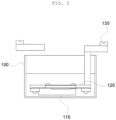
- the individual response evaluation apparatus of FIG. 2 allows an aquatic organism to be fixed between a lower structure unit 110 and an upper structure unit 120 in a chamber 100, and the upper structure unit is fixed in a form of being closely adhered to the aquatic organism by being moved up and down so that the aquatic organism is not moved within a range of not affecting heart rate measurement of the aquatic organism by a control unit 130.
- the lower structure unit 110 and the upper structure unit 120 are formed of a material which an object beam may transmit and light transmission for hologram production is performed.
- the light source unit is, though it is not shown in the drawing, installed in a lower region of the chamber or a lower region of the lower structure unit to provide an object beam generating unit (first light source) which irradiates the fixed individual with the object beam and a reference beam generating unit (second light source) which irradiates an optical path of the object beam with the reference beam.
- first light source an object beam generating unit
- second light source a reference beam generating unit which irradiates an optical path of the object beam with the reference beam.
- a laser may be used as an example, but the present invention is not limited thereto, and a range of the wavelength of the laser is not limited as long as a normal hologram is formed and as an example, a laser of 633.2 nm may be used.
- a beam splitter is installed, thereby producing an optical interference signal from the object beam and the reference beam which transmits the individual and an objective lens. Since the beam splitter is a beam splitter which was conventionally used in a digital holography microscope for producing the optical interference signal between the object beam and the reference beam, the detailed description thereof will be omitted.
- a unit for taking the optical interference signal is installed, and as an example, a CCD camera may be used, but the present invention is not limited thereto.
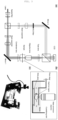
- FIG. 3 is illustrative of the individual response evaluation apparatus according to the present invention, and represents a real time heart rate monitoring system using extra-axial digital holography.
- (a) represents a schematic diagram of an extra-axial digital holography setting based on a Mach-Zehnder interometer, and as a light source, a wavelength of 633.2 nm helium-neon (He-Ne) laser (Thorlabs) having a power of 5 mW is used.
- the objective lens (micro objective lens; 10x/N.A. 0.30, Olympus, UMPLFLN 10XW) is used in an underwater immersion form and has an operation distance of 3.5 mm.
- a CCD camera (aca2040-180km, Basler) taking the optical interference signal of the object beam and the interference beam is set to a resolution of 2048x2048 and a pixel size of 5.5 um ⁇ 5.5 um as a factory setting, and is connected to a data acquisition device and used for taking for an exposure time of 2.5 ms.
- a chamber having a schematic diagram like (b) of FIG. 3 and a digital holography device were connected and the individual response evaluation apparatus according to the present invention which was implemented as in (c) was used to test a toxic reaction for a water flea.
- a water flea was carefully disposed between a lower structure unit 110 and an upper structure unit 120 of a chamber 100 carrying agarose gel (Sigma-Aldrich) (or other media may be replaced), a control unit 130 was operated to measure the height of the water flea, and the height of the upper structure unit was controlled to be positioned so as to be 0.95% of the height of the water flea.
- the height of the water flea was measured as 538 um.
- an extra-axial digital holography method was used to take a hologram of the water flea with a CCD camera.
- the image was set to a pixel size of 0.5 um ⁇ 0.5 um and a 8-bit resolution of 1024 ⁇ 1024 and taken.
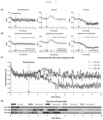
- a maximum signal intensity ratio of the heart area represented by an orange dotted circle was measured as 0.047 (SR ⁇ 5%).
- a k-space image by 2D Fourier transform of an interference image was obtained ((b) of FIG. 4 ), and an object wave-field intensity distribution which was numerically reconstructed at 7.6 um from the hologram was secured.
- the reconstructed algorithm used an angle spectrum method ((c) of FIG. 4 ).
- (d) of FIG. 4 represents object wave-field intensity distributions of a numerically reconstructed object (above) and a reference taken without a water flea (below).
- a phase distribution of the water flea was obtained after combining an object wave-field in the reference wave field ((e) of FIG. 4 ).
- the phase at this time covered a range from - ⁇ to +n. Since a spatial phase is proportional to a specimen thickness and a refractive index, the time-resolved relative phase distribution of a water flea heart area was obtained therefrom and is represented by an orange rectangle ((f) to (h) of FIG. 4 ).
- the heart rate of the water flea was analyzed by the reconstructed time-resolved phase distributions, from the heart rate signal obtained by the method.
- Time-resolved image sets were compared from intensity (above), phase (middle), and relative phase (below) distributions at 25 frame intervals ((a) of FIG. 5 ). According to the results, the appearance of the water flea may be more clearly recognized in a space phase map than in the hologram, but it is more difficult to divide a heart area in the space phase map than in the hologram.
- a Fourier spectrum method was used for evaluating periodic characteristics in heart rate analysis.
- (c) of FIG. 5 a one-dimensional Fourier spectrum method was used for each pixel of 1000 frame sets to calculate a two-dimensional frequency distribution of the water flea.
- the drawing included inside is a Fourier spectrum plot at a point having 7.8 Hz (white arrow), and the heart rate for 5 seconds was 38.
- a high performance computing system to allow observation of a real time digital holography was constructed, so as to be consistent with the frame rate of the heart rate processing device as in Example 1.
- a digital holography reconstruction algorithm was developed by a convolution method based on a fast Fourier transform (FFT) arithmetic operation performed in three steps.
- FFT fast Fourier transform
- GUI graphical user interface
- the arithmetic operation using GPU maximized a processing time by a parallel computing arithmetic operation method using a CUDA FFT library (cuFFT) supported by NVIDIA. This allowed real time display of the processed time-resolved relative phase map.
- CUDA FFT library (cuFFT) supported by NVIDIA.
- a time-resolved heart beat signal is needed, thereby achieving a surprising space saving effect that a size per hour of a data storage area required for storing the same heart rate signal of the heart area having a size of 10 ⁇ 10 pixels is decreased from 703 GB/hr to 3.43 MB/hr by 200,000 times or more, from which a new effect to allow digital holography to be monitored in real time for a long time was obtained.
- Example 2 a water flea was fixed to a chamber 100 carrying a 90 mL of M4 medium in the manner described above, and then observed.
- the heart rate analysis was performed by dividing the section into those before and after exposure to hydrogen peroxide.
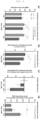
- FIG. 7 illustrates the results.
- (c) of FIG. 7 is results of performing normalization for initial RHR, which are the results of measuring the heart rate change depending on the exposure to a toxic substance for evaluating toxicity to the heart.
- initial RHR the results of measuring the heart rate change depending on the exposure to a toxic substance for evaluating toxicity to the heart.
- the heart rate relative to the original heart rate (OHR) was decreased to 3.3% (-13 BPM) and 22.7% (-109 BPM).
- the negative control group had the same final RHR as OHR, while in the two test groups treated with hydrogen peroxide, a decrease in the heart rate was confirmed.
- the test group treated with 0.03 mM hydrogen peroxide represented a F value of 0.89, thereby representing heteroscedasticity of variance and a significance probability more than 0.05. It was confirmed therefrom that the t-test results in which uneven variance is presumed was less than 0.01 and the final RHR showed a significant difference as compared with OHR when treated with 0.03 mM hydrogen peroxide.
- FIG. 8 illustrates results of analyzing average RHR for the exposure groups of Table 2.
- FIG. 8 illustrates results of analyzing average RHR for the exposure groups of Table 2.
- FIG. 8 is a result of measuring a reactive oxygen species (ROS) level following hydrogen peroxide treatment.
- ROS reactive oxygen species
- the method of evaluating an individual response by real time measurement of a heart rate of an aquatic organism and the individual response evaluation apparatus by real time measurement of a heart rate of an aquatic organism may effectively fix the aquatic organism so that it does not move without affecting the living body of an aquatic organism, for real time measurement of the heart rate of an aquatic organism, and may measure the heart rate using digital holography to display the heart rate while configuring a data format to allow the corresponding data to be stored for a long time, whereby after the individual is treated with a compound for inducing an individual response and a heart rate change is secured in real time by image processing, the presence or absence of harmfulness due to induction of the individual response may be effectively determined.
Landscapes
- Life Sciences & Earth Sciences (AREA)
- Health & Medical Sciences (AREA)
- Engineering & Computer Science (AREA)
- Physics & Mathematics (AREA)
- Veterinary Medicine (AREA)
- General Health & Medical Sciences (AREA)
- Animal Behavior & Ethology (AREA)
- Public Health (AREA)
- Zoology (AREA)
- Environmental Sciences (AREA)
- Medical Informatics (AREA)
- Cardiology (AREA)
- Heart & Thoracic Surgery (AREA)
- Biomedical Technology (AREA)
- Molecular Biology (AREA)
- Surgery (AREA)
- Pathology (AREA)
- Biophysics (AREA)
- General Physics & Mathematics (AREA)
- Animal Husbandry (AREA)
- Physiology (AREA)
- Theoretical Computer Science (AREA)
- Chemical & Material Sciences (AREA)
- Biodiversity & Conservation Biology (AREA)
- Clinical Laboratory Science (AREA)
- Computing Systems (AREA)
- Analytical Chemistry (AREA)
- Optics & Photonics (AREA)
- Software Systems (AREA)
- Marine Sciences & Fisheries (AREA)
- Wood Science & Technology (AREA)
- Mathematical Physics (AREA)
- Computer Vision & Pattern Recognition (AREA)
- Artificial Intelligence (AREA)
- Data Mining & Analysis (AREA)
- General Engineering & Computer Science (AREA)
- Evolutionary Computation (AREA)
- Bioinformatics & Cheminformatics (AREA)
- Medicinal Chemistry (AREA)
- Dentistry (AREA)
Claims (14)
- Verfahren zum Auswerten einer individuellen Reaktion durch Echtzeitmessung einer Herzfrequenz von Wasserflöhen oder Salinenkrebsen, welches ein Verfahren zum Auswerten einer individuellen Reaktion unter Verwendung digitaler Holographie ist, wobei das Verfahren umfasst:(a) Anordnen (S101) eines Messindividuums, welches ein Wasserfloh oder ein Salinenkrebs ist, zwischen einer unteren Fixiereinheit (110), die an einem unteren Ende innerhalb einer Kammer (100) fixiert ist, und einer oberen Fixiereinheit (120), die von der unteren Fixiereinheit beabstandet ist und in einer Richtung der unteren Fixiereinheit (110) oder in einer entgegengesetzten Richtung davon beweglich ist, so dass das Messindividuum in eine Kulturflüssigkeit eingetaucht wird, zu der eine Verbindung zum Induzieren einer individuellen Reaktion hinzugefügt wird, genaues Anhaften der oberen Fixiereinheit (120) an dem Individuum, um eine Höhe des Individuums zu messen, und dann Einstellen einer Position der oberen Fixiereinheit (120), um das Individuum zu fixieren;(b) kontinuierliches Messen (S102) eines digitalen Hologramms für das Individuum; und(c) Wiederherstellen des digitalen Hologramms (S103), das durch die Messung erhalten wurde, um eine Herzfrequenzveränderung zu berechnen, und daraus Bestimmen, ob die individuelle Reaktion durch die Verbindung zum Induzieren einer individuellen Reaktion verursacht wird,wobei (a) das Anordnen eines zu messenden Individuums zwischen der unteren Fixiereinheit (110), die am unteren Ende innerhalb der die Kulturflüssigkeit führenden Kammer fixiert ist, und der oberen Fixiereinheit (120), die von der unteren Fixiereinheit (110) beabstandet ist und in Richtung der unteren Fixiereinheit (110) oder in die entgegengesetzte Richtung davon beweglich ist, so dass das zu messende Individuum in die Flüssigkeit eingetaucht ist, das genaue Anhaften der oberen Fixiereinheit (120) an dem Individuum, um die Höhe des Individuums zu messen, und dann das Einstellen der Position der oberen Fixiereinheit (120), um das Individuum zu fixieren, beinhaltet; und das Hinzufügen der Verbindung zum Induzieren der individuellen Reaktion in die Kammer (100), oderwobei (a) das Anordnen das zu messende Individuum zwischen der unteren Fixiereinheit (110), die am unteren Ende innerhalb der die Kulturflüssigkeit führenden Kammer (100) fixiert ist, und der oberen Fixiereinheit (120), die von der unteren Fixiereinheit (110) beabstandet ist und in Richtung der unteren Fixiereinheit (110) oder in die entgegengesetzte Richtung davon beweglich ist, so dass das zu messende Individuum in die Flüssigkeit eingetaucht ist, das Anbringen der oberen Fixiereinheit (120) an dem Individuum, um die Höhe des Individuums zu messen, und dann das Einstellen einer Position der oberen Fixiereinheit (120), um das Individuum zu fixieren, beinhaltet, undwobei die Schritte (b) und (c) unter Verwendung einer individuellen Reaktionsauswertungsvorrichtung nach Anspruch 10 durchgeführt werden, umfassend: eine Lichtquelleneinheit; eine Referenzstrahl-Erzeugungseinheit, die einen Referenzstrahl erzeugt; eine Objektstrahl-Erzeugungseinheit, die einen Objektstrahl erzeugt; eine CCD, die den Referenzstrahl und den Objektstrahl kombiniert, um ein Hologramm aufzuzeichnen; eine Recheneinheit, die einen Interferenzstreifen des aufgezeichneten Hologramms numerisch analysiert; eine Anzeigeeinheit, die das durch die Recheneinheit numerisch analysierte digitale Hologramm anzeigt; und eine Herzfrequenz-Analyseeinheit, die eine Herzfrequenzanalyse anhand des analysierten digitalen Hologramms durchführt,wobei die Recheneinheit eine Vielzahl von Phasenwiederherstellungsphasen für Anzeigen (S104) des entsprechenden digitalen Hologramms erhält, bis die Analyse für alle in der CCD aufgezeichneten Hologramme abgeschlossen ist, und dann das digitale Hologramm an die Herzfrequenz-Analyseeinheit überträgt, und in der Herzfrequenzanalyse eine Herzfrequenz pro Minute aus der häufigsten Herzfrequenz berechnet wird,wobei nach dem Einstellen und Fixieren der Position der oberen Fixiereinheit (120) ein Abstand zwischen der unteren Fixiereinheit (110) und der oberen Fixiereinheit (120) ein Verhältnis von 0,87 bis 0,95 relativ zur Höhe des zu messenden Individuums ist.
- Verfahren nach Anspruch 1, wobei nach dem Einstellen und Fixieren der Position der oberen Fixiereinheit (120) ein Abstand zwischen der unteren Fixiereinheit (110) und der oberen Fixiereinheit (120) ein Verhältnis von 0,92 bis 0,95 relativ zur Höhe des zu messenden Individuums ist.
- Verfahren nach Anspruch 1, wobei es sich bei der Verbindung um eine organische Verbindung, ein Metall, eine Säure-Alkali-Verbindung, ein Gas, ein Medikament oder ein Nanopartikel handelt.
- Verfahren nach Anspruch 3, wobei die Verbindung ausgewählt ist aus Dimethylformamid, Methanol, Methylisobutylketon, Benzol, Tetrachlorkohlenstoff, Styrol, Cyclohexan, Aceton, Acetaldehyd, Isobutylalkohol, Methylchlorid, Ethylenglykol, Xylol, Toluol, 2,4-Toluoldiisocyanat, Trichlorethylen, n-Hexan, Blei, Nickel, Mangan, Quecksilber, Zink, Aluminium, Eisen, Cadmium, Chrom, Wasserstoffperoxid, Essigsäure, Natriumhydroxid, Salzsäure, Schwefelsäure, Salpetersäure, Phosphorsäure, Ammoniak, Chlor, Ozon, Schwefelwasserstoff, Kohlenmonoxid, Schwefeldioxid, Stickstoffdioxid, Medikamente, Gold-Nano, Silber-Nano, einwandige Kohlenstoffnanoröhren (SWCNT, single-walled carbon nanotubes), mehrwandige Kohlenstoffnanoröhren (MWCNT, multi-walled carbon nanotube), Fulleren (C60), Eisen-Nanopartikel, Ruß, Titandioxid, Aluminiumoxid, Ceroxid, Zinkoxid, Siliziumdioxid, Polystyrol, Dendrimere und Nanoton.
- Verfahren nach Anspruch 3, wobei das Individuum mit der Verbindung in einer Konzentration von 0,01 bis 0,10 mM behandelt wird.
- Verfahren nach Anspruch 1, wobei ein Algorithmus für die Wiederherstellung ferner das Anzeigen einer 2D-zeitaufgelösten relativen Phasenkarte in Echtzeit und das gleichzeitige Speichern der Herzfrequenz beinhaltet.
- Verfahren nach Anspruch 6, wobei die Herzfrequenz durch ein Analyseverfahren erhalten wird, das Folgendes beinhaltet:a) Auswählen von Pixeln, die einem Herzbereich in dem gesicherten digitalen Hologramm entsprechen;b) Anwenden eines Fourierspektrumverfahrens auf jedes Aktualisierungsintervall;c) Suchen nach der häufigsten Herzfrequenz in jedem Aktualisierungsintervall; undd) Berechnen der Herzfrequenz pro Minute anhand der häufigsten Herzfrequenz.
- Verfahren nach Anspruch 7, wobei der Prozess das Anwenden des Fourierspektrumverfahrens anhand eines Wertes durch ein k-Raum-Winkelspektrumverfahren durch die folgenden Gleichungen erhält:


- Verfahren nach Anspruch 1, wobei die Herzfrequenzveränderung durch Berechnen einer ursprünglichen Herzfrequenz (OHR, original heart rate) und einer Entspannungsherzfrequenz (RHR, relaxation heart rate) durch die folgende Gleichung 1 erhalten wird:

- Individuelle Reaktionsauswertungsvorrichtung durch Echtzeitmessung der Herzfrequenz von Wasserflöhen oder Salinenkrebsen unter Verwendung digitaler Holographie, wobei die Vorrichtung Folgendes umfasst:eine Kammer (100), die eine Kulturflüssigkeit führt;eine untere Fixiereinheit (110);eine obere Fixiereinheit (120), die von der unteren Fixiereinheit (120) beabstandet ist; undeine Steuereinheit (130), die so konfiguriert ist, dass sie eine Position der oberen Fixiereinheit (120) steuert, wobei die untere Fixiereinheit (110) an einem unteren Ende innerhalb der Kammer (100) fixiert ist und ein zu messendes Individuum, das ein Wasserfloh oder ein Salinenkrebs ist, zwischen der unteren Fixiereinheit (110) und der oberen Fixiereinheit (120) angeordnet werden kann, wobei die obere Fixiereinheit (120) an einer Seitenfläche der Kammer (100) fixiert ist und nach oben und unten bewegt werden kann, und die Steuereinheit (130) so konfiguriert ist, dass sie die Position der oberen Fixiereinheit (120) einstellt, um das Individuum zu fixieren, nachdem die obere Fixiereinheit (120) mit dem Individuum angebracht ist, um die Höhe des Individuums zu messen, ferner umfassend: eine Lichtquelleneinheit;eine Referenzstrahl-Erzeugungseinheit, die so konfiguriert ist, dass sie einen Referenzstrahl erzeugt;eine Objektstrahl-Erzeugungseinheit, die so konfiguriert ist, dass sie einen Objektstrahl erzeugt;eine CCD, die so konfiguriert ist, dass sie den Referenzstrahl und den Objektstrahl kombiniert, um ein Hologramm aufzuzeichnen;eine Recheneinheit, die so konfiguriert ist, dass sie einen Interferenzstreifen des aufgezeichneten Hologramms numerisch analysiert;eine Anzeigeeinheit, die so konfiguriert ist, dass sie das digitale Hologramm anzeigt, das von der Recheneinheit numerisch analysiert wurde; undeine Herzfrequenz-Analyseeinheit, die so konfiguriert ist, dass sie eine Herzfrequenz-Analyse aus dem analysierten digitalen Hologramm ausführt, wobei die Recheneinheit so konfiguriert ist, dass sie eine Vielzahl von Phasenwiederherstellungsphasen für das in der CCD aufgezeichnete Hologramm erhält und daraus eine Amplitude und einen Winkel berechnet und Berechnungen an die Anzeigeeinheit überträgt, wobei die Anzeigeeinheit so konfiguriert ist, dass sie das entsprechende digitale Hologramm auswählt und anzeigt, bis die Analyse für alle in der CCD aufgezeichneten Hologramme abgeschlossen ist, und dann das digitale Hologramm an die Herzfrequenz-Analyseeinheit überträgt, und bei der Herzfrequenzanalyse eine Herzfrequenz pro Minute aus der häufigsten Herzfrequenz berechnet wird,wobei die Steuereinheit (130) so konfiguriert ist, dass sie betrieben wird, um die Höhe des Wasserflohs oder des Salinenkrebses zu messen, und so konfiguriert ist, dass sie den Abstand zwischen der unteren Fixiereinheit (110) und der oberen Fixiereinheit (120) auf ein Verhältnis von 0,87 bis 0,95 relativ zu einer Höhe des zu messenden Individuums einstellt.
- Individuelle Reaktionsauswertungsvorrichtung nach Anspruch 10, wobei die Steuereinheit (130) so konfiguriert ist, dass sie den Abstand zwischen der unteren Fixiereinheit (110) und der oberen Fixiereinheit (120) auf ein Verhältnis von 0,92 bis 0,95 relativ zur Größe des zu messenden Individuums einstellt.
- Individuelle Reaktionsauswertungsvorrichtung nach Anspruch 10, unter Verwendung der digitalen Holographie, wobei die individuelle Reaktionsauswertungsvorrichtung die Messung einer oder mehrerer Daten ermöglicht, die ausgewählt sind aus der Gruppe bestehend aus Echtzeit-Herzfrequenz des Wasserorganismus, einem Abstand zwischen der unteren Fixiereinheit und der oberen Fixiereinheit, einer Echtzeit-Anzeige einer Herzfrequenzphase und einer gleichzeitigen Entspannungsherzfrequenz.
- Individuelle Reaktionsauswertungsvorrichtung nach Anspruch 12, wobei die gleichzeitig von der individuellen Reaktionsauswertungsvorrichtung gemessenen Daten durch iteratives Lernen durch Anwenden eines Verfahrens der künstlichen Intelligenz akkumuliert werden.
- Individuelle Reaktionsauswertungsvorrichtung nach Anspruch 13, wobei die individuelle Reaktionsauswertungsvorrichtung zum Prognostizieren einer Herzfrequenzveränderung in einem höheren Organismus durch das iterative Lernen verwendet wird.
Applications Claiming Priority (2)
| Application Number | Priority Date | Filing Date | Title |
|---|---|---|---|
| KR20200012385 | 2020-02-03 | ||
| KR1020200144571A KR102427969B1 (ko) | 2020-02-03 | 2020-11-02 | 고속 디지털 홀로그래피를 이용한 독성 테스트를 위한 심박수 모니터링 방법 |
Publications (3)
| Publication Number | Publication Date |
|---|---|
| EP3858236A1 EP3858236A1 (de) | 2021-08-04 |
| EP3858236C0 EP3858236C0 (de) | 2023-12-27 |
| EP3858236B1 true EP3858236B1 (de) | 2023-12-27 |
Family
ID=74505107
Family Applications (1)
| Application Number | Title | Priority Date | Filing Date |
|---|---|---|---|
| EP21154778.1A Active EP3858236B1 (de) | 2020-02-03 | 2021-02-02 | Verfahren zur überwachung der herzfrequenz für toxizitätstest mittels digitaler hochgeschwindigkeitsholographie |
Country Status (2)
| Country | Link |
|---|---|
| US (1) | US11992297B2 (de) |
| EP (1) | EP3858236B1 (de) |
Families Citing this family (1)
| Publication number | Priority date | Publication date | Assignee | Title |
|---|---|---|---|---|
| CN114010176B (zh) * | 2021-12-01 | 2026-04-17 | 山东省科学院生物研究所 | 一种实时检测和分析斑马鱼心率的光纤装置和方法 |
Family Cites Families (7)
| Publication number | Priority date | Publication date | Assignee | Title |
|---|---|---|---|---|
| EP2489437A1 (de) | 2003-09-09 | 2012-08-22 | BioGenex Laboratories | Probenverarbeitungssystem |
| EP2115462B1 (de) * | 2007-01-08 | 2011-07-13 | City University of Hong Kong | Verfahren zur in-vivo-suche nach kardiotoxischen substanzen mit teleost |
| EP3136079B1 (de) * | 2009-10-20 | 2020-02-12 | The Regents of The University of California | Inkohärente linsenlose zellenholographie und -mikroskopie auf einem chip |
| US9719842B2 (en) * | 2010-07-06 | 2017-08-01 | Norman A. Paradis | Method for the discovery, validation and clinical application of multiplex biomarker algorithms based on optical, physical and/or electromagnetic patterns |
| CN102716501A (zh) * | 2011-03-29 | 2012-10-10 | 上海佰年诗丹德检测技术有限公司 | 一种用模式生物斑马鱼筛选中药毒性的方法 |
| CN105121657A (zh) * | 2012-12-02 | 2015-12-02 | 生物医学核心有限公司 | 有关癌症发展及对治疗的反应的快速预测 |
| CN109556487B (zh) * | 2018-11-26 | 2020-09-18 | 中国水产科学研究院南海水产研究所 | 一种用于渔具选择性研究的鱼体轮廓测量装置及测量方法 |
-
2021
- 2021-02-01 US US17/164,686 patent/US11992297B2/en active Active
- 2021-02-02 EP EP21154778.1A patent/EP3858236B1/de active Active
Also Published As
| Publication number | Publication date |
|---|---|
| EP3858236C0 (de) | 2023-12-27 |
| EP3858236A1 (de) | 2021-08-04 |
| US11992297B2 (en) | 2024-05-28 |
| US20210251183A1 (en) | 2021-08-19 |
Similar Documents
| Publication | Publication Date | Title |
|---|---|---|
| Mzyk et al. | Relaxometry with nitrogen vacancy (NV) centers in diamond | |
| Nie et al. | Quantum sensing of free radicals in primary human dendritic cells | |
| Gao et al. | Lysosome targeting carbon dots-based fluorescent probe for monitoring pH changes in vitro and in vivo | |
| JP4358631B2 (ja) | ディジタル・ホログラフィック・イメージングの装置及び方法 | |
| Lee et al. | Magnetic nanoparticles for ultrafast mechanical control of inner ear hair cells | |
| Wang et al. | Advanced biophotonics: tissue optical sectioning | |
| KR20170003533A (ko) | 궤도 각운동량을 이용한 샘플 농도 측정 | |
| Kwon et al. | Real-time heart rate monitoring system for cardiotoxicity assessment of Daphnia magna using high-speed digital holographic microscopy | |
| Lee et al. | Visually driven neuropil activity and information encoding in mouse primary visual cortex | |
| Dumitrescu et al. | Real time electrochemical investigation of the release, distribution and modulation of nitric oxide in the intestine of individual zebrafish embryos | |
| US11992297B2 (en) | Monitoring method of heart rate for toxicity test using high-speed digital holography | |
| Cabrera-Alonso et al. | Surface-enhanced Raman scattering of hydroquinone assisted by gold nanorods | |
| Lu et al. | Unraveling eumelanin radical formation by nanodiamond optical relaxometry in a living cell | |
| EP4538383A1 (de) | Verfahren zur bestimmung der region einer zelle mit programmiertem zelltod, vorrichtung mit bestimmungseinheit und informationsverarbeitungsprogramm mit bestimmungsschritt | |
| Mir et al. | Label-free observation of three-dimensional morphology change of a single PC12 cell by digital holographic microscopy | |
| Li et al. | Magnetic field-modulated plasmonic scattering of hybrid nanorods for FFT-weighted OCT imaging in NIR-II | |
| Butt et al. | Quantitative phase imaging for characterization of single cell growth dynamics | |
| Tang et al. | Plasmonic nanoprobe of (gold triangular nanoprism core)/(polyaniline shell) for real-time three-dimensional pH imaging of anterior chamber | |
| KR102427969B1 (ko) | 고속 디지털 홀로그래피를 이용한 독성 테스트를 위한 심박수 모니터링 방법 | |
| Caponi et al. | Raman micro-spectroscopy study of living SH-SY5Y cells adhering on different substrates | |
| Jiang et al. | Gold Nanoprobe-Enabled Three-Dimensional Ozone Imaging by Optical Coherence Tomography | |
| KR100698956B1 (ko) | 생체 표피 조직의 특성 및 기능과 생체의 표피조직을 이용한 전자기 시그널 감응용(感應用) 고형생체소재 및 그 제조방법 | |
| Rajagopalan et al. | Ultrahigh accurate statistical interferometric technique utilizing uniformity of speckle phase in the study of plant physiology | |
| Tishko et al. | Holographic microscopy. Methods, devices, applications | |
| Tanin et al. | Holographic microscopy of phase and diffuse objects under the influence of laser radiation, magnetic fields, hyperbary |
Legal Events
| Date | Code | Title | Description |
|---|---|---|---|
| PUAI | Public reference made under article 153(3) epc to a published international application that has entered the european phase |
Free format text: ORIGINAL CODE: 0009012 |
|
| STAA | Information on the status of an ep patent application or granted ep patent |
Free format text: STATUS: REQUEST FOR EXAMINATION WAS MADE |
|
| 17P | Request for examination filed |
Effective date: 20210218 |
|
| AK | Designated contracting states |
Kind code of ref document: A1 Designated state(s): AL AT BE BG CH CY CZ DE DK EE ES FI FR GB GR HR HU IE IS IT LI LT LU LV MC MK MT NL NO PL PT RO RS SE SI SK SM TR |
|
| STAA | Information on the status of an ep patent application or granted ep patent |
Free format text: STATUS: EXAMINATION IS IN PROGRESS |
|
| RBV | Designated contracting states (corrected) |
Designated state(s): AL AT BE BG CH CY CZ DE DK EE ES FI FR GB GR HR HU IE IS IT LI LT LU LV MC MK MT NL NO PL PT RO RS SE SI SK SM TR |
|
| 17Q | First examination report despatched |
Effective date: 20220228 |
|
| GRAP | Despatch of communication of intention to grant a patent |
Free format text: ORIGINAL CODE: EPIDOSNIGR1 |
|
| STAA | Information on the status of an ep patent application or granted ep patent |
Free format text: STATUS: GRANT OF PATENT IS INTENDED |
|
| INTG | Intention to grant announced |
Effective date: 20230721 |
|
| GRAS | Grant fee paid |
Free format text: ORIGINAL CODE: EPIDOSNIGR3 |
|
| GRAA | (expected) grant |
Free format text: ORIGINAL CODE: 0009210 |
|
| STAA | Information on the status of an ep patent application or granted ep patent |
Free format text: STATUS: THE PATENT HAS BEEN GRANTED |
|
| AK | Designated contracting states |
Kind code of ref document: B1 Designated state(s): AL AT BE BG CH CY CZ DE DK EE ES FI FR GB GR HR HU IE IS IT LI LT LU LV MC MK MT NL NO PL PT RO RS SE SI SK SM TR |
|
| REG | Reference to a national code |
Ref country code: GB Ref legal event code: FG4D |
|
| REG | Reference to a national code |
Ref country code: CH Ref legal event code: EP |
|
| REG | Reference to a national code |
Ref country code: DE Ref legal event code: R096 Ref document number: 602021007961 Country of ref document: DE |
|
| REG | Reference to a national code |
Ref country code: IE Ref legal event code: FG4D |
|
| U01 | Request for unitary effect filed |
Effective date: 20231227 |
|
| U07 | Unitary effect registered |
Designated state(s): AT BE BG DE DK EE FI FR IT LT LU LV MT NL PT SE SI Effective date: 20240108 |
|
| U20 | Renewal fee for the european patent with unitary effect paid |
Year of fee payment: 4 Effective date: 20240227 |
|
| PG25 | Lapsed in a contracting state [announced via postgrant information from national office to epo] |
Ref country code: GR Free format text: LAPSE BECAUSE OF FAILURE TO SUBMIT A TRANSLATION OF THE DESCRIPTION OR TO PAY THE FEE WITHIN THE PRESCRIBED TIME-LIMIT Effective date: 20240328 |
|
| PG25 | Lapsed in a contracting state [announced via postgrant information from national office to epo] |
Ref country code: ES Free format text: LAPSE BECAUSE OF FAILURE TO SUBMIT A TRANSLATION OF THE DESCRIPTION OR TO PAY THE FEE WITHIN THE PRESCRIBED TIME-LIMIT Effective date: 20231227 |
|
| PG25 | Lapsed in a contracting state [announced via postgrant information from national office to epo] |
Ref country code: GR Free format text: LAPSE BECAUSE OF FAILURE TO SUBMIT A TRANSLATION OF THE DESCRIPTION OR TO PAY THE FEE WITHIN THE PRESCRIBED TIME-LIMIT Effective date: 20240328 Ref country code: ES Free format text: LAPSE BECAUSE OF FAILURE TO SUBMIT A TRANSLATION OF THE DESCRIPTION OR TO PAY THE FEE WITHIN THE PRESCRIBED TIME-LIMIT Effective date: 20231227 |
|
| PG25 | Lapsed in a contracting state [announced via postgrant information from national office to epo] |
Ref country code: RS Free format text: LAPSE BECAUSE OF FAILURE TO SUBMIT A TRANSLATION OF THE DESCRIPTION OR TO PAY THE FEE WITHIN THE PRESCRIBED TIME-LIMIT Effective date: 20231227 Ref country code: NO Free format text: LAPSE BECAUSE OF FAILURE TO SUBMIT A TRANSLATION OF THE DESCRIPTION OR TO PAY THE FEE WITHIN THE PRESCRIBED TIME-LIMIT Effective date: 20240327 Ref country code: HR Free format text: LAPSE BECAUSE OF FAILURE TO SUBMIT A TRANSLATION OF THE DESCRIPTION OR TO PAY THE FEE WITHIN THE PRESCRIBED TIME-LIMIT Effective date: 20231227 |
|
| PG25 | Lapsed in a contracting state [announced via postgrant information from national office to epo] |
Ref country code: IS Free format text: LAPSE BECAUSE OF FAILURE TO SUBMIT A TRANSLATION OF THE DESCRIPTION OR TO PAY THE FEE WITHIN THE PRESCRIBED TIME-LIMIT Effective date: 20240427 |
|
| PG25 | Lapsed in a contracting state [announced via postgrant information from national office to epo] |
Ref country code: CZ Free format text: LAPSE BECAUSE OF FAILURE TO SUBMIT A TRANSLATION OF THE DESCRIPTION OR TO PAY THE FEE WITHIN THE PRESCRIBED TIME-LIMIT Effective date: 20231227 |
|
| PG25 | Lapsed in a contracting state [announced via postgrant information from national office to epo] |
Ref country code: SK Free format text: LAPSE BECAUSE OF FAILURE TO SUBMIT A TRANSLATION OF THE DESCRIPTION OR TO PAY THE FEE WITHIN THE PRESCRIBED TIME-LIMIT Effective date: 20231227 |
|
| PG25 | Lapsed in a contracting state [announced via postgrant information from national office to epo] |
Ref country code: SM Free format text: LAPSE BECAUSE OF FAILURE TO SUBMIT A TRANSLATION OF THE DESCRIPTION OR TO PAY THE FEE WITHIN THE PRESCRIBED TIME-LIMIT Effective date: 20231227 Ref country code: SK Free format text: LAPSE BECAUSE OF FAILURE TO SUBMIT A TRANSLATION OF THE DESCRIPTION OR TO PAY THE FEE WITHIN THE PRESCRIBED TIME-LIMIT Effective date: 20231227 Ref country code: RO Free format text: LAPSE BECAUSE OF FAILURE TO SUBMIT A TRANSLATION OF THE DESCRIPTION OR TO PAY THE FEE WITHIN THE PRESCRIBED TIME-LIMIT Effective date: 20231227 Ref country code: IS Free format text: LAPSE BECAUSE OF FAILURE TO SUBMIT A TRANSLATION OF THE DESCRIPTION OR TO PAY THE FEE WITHIN THE PRESCRIBED TIME-LIMIT Effective date: 20240427 Ref country code: CZ Free format text: LAPSE BECAUSE OF FAILURE TO SUBMIT A TRANSLATION OF THE DESCRIPTION OR TO PAY THE FEE WITHIN THE PRESCRIBED TIME-LIMIT Effective date: 20231227 |
|
| PG25 | Lapsed in a contracting state [announced via postgrant information from national office to epo] |
Ref country code: PL Free format text: LAPSE BECAUSE OF FAILURE TO SUBMIT A TRANSLATION OF THE DESCRIPTION OR TO PAY THE FEE WITHIN THE PRESCRIBED TIME-LIMIT Effective date: 20231227 |
|
| PG25 | Lapsed in a contracting state [announced via postgrant information from national office to epo] |
Ref country code: PL Free format text: LAPSE BECAUSE OF FAILURE TO SUBMIT A TRANSLATION OF THE DESCRIPTION OR TO PAY THE FEE WITHIN THE PRESCRIBED TIME-LIMIT Effective date: 20231227 |
|
| PG25 | Lapsed in a contracting state [announced via postgrant information from national office to epo] |
Ref country code: MC Free format text: LAPSE BECAUSE OF FAILURE TO SUBMIT A TRANSLATION OF THE DESCRIPTION OR TO PAY THE FEE WITHIN THE PRESCRIBED TIME-LIMIT Effective date: 20231227 |
|
| REG | Reference to a national code |
Ref country code: DE Ref legal event code: R097 Ref document number: 602021007961 Country of ref document: DE Ref country code: CH Ref legal event code: PL |
|
| PG25 | Lapsed in a contracting state [announced via postgrant information from national office to epo] |
Ref country code: CH Free format text: LAPSE BECAUSE OF NON-PAYMENT OF DUE FEES Effective date: 20240229 |
|
| PG25 | Lapsed in a contracting state [announced via postgrant information from national office to epo] |
Ref country code: CH Free format text: LAPSE BECAUSE OF NON-PAYMENT OF DUE FEES Effective date: 20240229 |
|
| PLBE | No opposition filed within time limit |
Free format text: ORIGINAL CODE: 0009261 |
|
| STAA | Information on the status of an ep patent application or granted ep patent |
Free format text: STATUS: NO OPPOSITION FILED WITHIN TIME LIMIT |
|
| 26N | No opposition filed |
Effective date: 20240930 |
|
| PG25 | Lapsed in a contracting state [announced via postgrant information from national office to epo] |
Ref country code: IE Free format text: LAPSE BECAUSE OF NON-PAYMENT OF DUE FEES Effective date: 20240202 |
|
| PG25 | Lapsed in a contracting state [announced via postgrant information from national office to epo] |
Ref country code: IE Free format text: LAPSE BECAUSE OF NON-PAYMENT OF DUE FEES Effective date: 20240202 |
|
| U20 | Renewal fee for the european patent with unitary effect paid |
Year of fee payment: 5 Effective date: 20250221 |
|
| PG25 | Lapsed in a contracting state [announced via postgrant information from national office to epo] |
Ref country code: CY Free format text: LAPSE BECAUSE OF FAILURE TO SUBMIT A TRANSLATION OF THE DESCRIPTION OR TO PAY THE FEE WITHIN THE PRESCRIBED TIME-LIMIT; INVALID AB INITIO Effective date: 20210202 |
|
| PG25 | Lapsed in a contracting state [announced via postgrant information from national office to epo] |
Ref country code: HU Free format text: LAPSE BECAUSE OF FAILURE TO SUBMIT A TRANSLATION OF THE DESCRIPTION OR TO PAY THE FEE WITHIN THE PRESCRIBED TIME-LIMIT; INVALID AB INITIO Effective date: 20210202 |
|
| GBPC | Gb: european patent ceased through non-payment of renewal fee |
Effective date: 20250202 |
|
| U1N | Appointed representative for the unitary patent procedure changed after the registration of the unitary effect |
Representative=s name: LORENZ SEIDLER GOSSEL PART. MBB; DE |
|
| PG25 | Lapsed in a contracting state [announced via postgrant information from national office to epo] |
Ref country code: TR Free format text: LAPSE BECAUSE OF FAILURE TO SUBMIT A TRANSLATION OF THE DESCRIPTION OR TO PAY THE FEE WITHIN THE PRESCRIBED TIME-LIMIT Effective date: 20231227 |
|
| PG25 | Lapsed in a contracting state [announced via postgrant information from national office to epo] |
Ref country code: GB Free format text: LAPSE BECAUSE OF NON-PAYMENT OF DUE FEES Effective date: 20250202 |
|
| U20 | Renewal fee for the european patent with unitary effect paid |
Year of fee payment: 6 Effective date: 20260223 |