EP3858176B1 - Output control circuit - Google Patents
Output control circuit Download PDFInfo
- Publication number
- EP3858176B1 EP3858176B1 EP19866215.7A EP19866215A EP3858176B1 EP 3858176 B1 EP3858176 B1 EP 3858176B1 EP 19866215 A EP19866215 A EP 19866215A EP 3858176 B1 EP3858176 B1 EP 3858176B1
- Authority
- EP
- European Patent Office
- Prior art keywords
- circuit
- electrically connected
- resistor
- controller
- atomizer
- Prior art date
- Legal status (The legal status is an assumption and is not a legal conclusion. Google has not performed a legal analysis and makes no representation as to the accuracy of the status listed.)
- Active
Links
Images


Classifications
-
- A—HUMAN NECESSITIES
- A24—TOBACCO; CIGARS; CIGARETTES; SIMULATED SMOKING DEVICES; SMOKERS' REQUISITES
- A24F—SMOKERS' REQUISITES; MATCH BOXES; SIMULATED SMOKING DEVICES
- A24F40/00—Electrically operated smoking devices; Component parts thereof; Manufacture thereof; Maintenance or testing thereof; Charging means specially adapted therefor
- A24F40/50—Control or monitoring
-
- A—HUMAN NECESSITIES
- A24—TOBACCO; CIGARS; CIGARETTES; SIMULATED SMOKING DEVICES; SMOKERS' REQUISITES
- A24F—SMOKERS' REQUISITES; MATCH BOXES; SIMULATED SMOKING DEVICES
- A24F40/00—Electrically operated smoking devices; Component parts thereof; Manufacture thereof; Maintenance or testing thereof; Charging means specially adapted therefor
- A24F40/90—Arrangements or methods specially adapted for charging batteries thereof
-
- A—HUMAN NECESSITIES
- A61—MEDICAL OR VETERINARY SCIENCE; HYGIENE
- A61M—DEVICES FOR INTRODUCING MEDIA INTO, OR ONTO, THE BODY; DEVICES FOR TRANSDUCING BODY MEDIA OR FOR TAKING MEDIA FROM THE BODY; DEVICES FOR PRODUCING OR ENDING SLEEP OR STUPOR
- A61M11/00—Sprayers or atomisers specially adapted for therapeutic purposes
- A61M11/04—Sprayers or atomisers specially adapted for therapeutic purposes operated by the vapour pressure of the liquid to be sprayed or atomised
- A61M11/041—Sprayers or atomisers specially adapted for therapeutic purposes operated by the vapour pressure of the liquid to be sprayed or atomised using heaters
- A61M11/042—Sprayers or atomisers specially adapted for therapeutic purposes operated by the vapour pressure of the liquid to be sprayed or atomised using heaters electrical
-
- H—ELECTRICITY
- H02—GENERATION; CONVERSION OR DISTRIBUTION OF ELECTRIC POWER
- H02J—ELECTRIC POWER NETWORKS; CIRCUIT ARRANGEMENTS OR SYSTEMS FOR SUPPLYING OR DISTRIBUTING ELECTRIC POWER; SYSTEMS FOR STORING ELECTRIC ENERGY
- H02J7/00—Circuit arrangements for charging or discharging batteries or for supplying loads from batteries
- H02J7/60—Circuit arrangements for charging or discharging batteries or for supplying loads from batteries including safety or protection arrangements
-
- H—ELECTRICITY
- H02—GENERATION; CONVERSION OR DISTRIBUTION OF ELECTRIC POWER
- H02J—ELECTRIC POWER NETWORKS; CIRCUIT ARRANGEMENTS OR SYSTEMS FOR SUPPLYING OR DISTRIBUTING ELECTRIC POWER; SYSTEMS FOR STORING ELECTRIC ENERGY
- H02J7/00—Circuit arrangements for charging or discharging batteries or for supplying loads from batteries
- H02J7/70—Circuit arrangements for charging or discharging batteries or for supplying loads from batteries characterised by the mechanical construction
-
- H—ELECTRICITY
- H02—GENERATION; CONVERSION OR DISTRIBUTION OF ELECTRIC POWER
- H02M—APPARATUS FOR CONVERSION BETWEEN AC AND AC, BETWEEN AC AND DC, OR BETWEEN DC AND DC, AND FOR USE WITH MAINS OR SIMILAR POWER SUPPLY SYSTEMS; CONVERSION OF DC OR AC INPUT POWER INTO SURGE OUTPUT POWER; CONTROL OR REGULATION THEREOF
- H02M3/00—Conversion of DC power input into DC power output
- H02M3/02—Conversion of DC power input into DC power output without intermediate conversion into AC
- H02M3/04—Conversion of DC power input into DC power output without intermediate conversion into AC by static converters
- H02M3/10—Conversion of DC power input into DC power output without intermediate conversion into AC by static converters using discharge tubes with control electrode or semiconductor devices with control electrode
- H02M3/145—Conversion of DC power input into DC power output without intermediate conversion into AC by static converters using discharge tubes with control electrode or semiconductor devices with control electrode using devices of a triode or transistor type requiring continuous application of a control signal
- H02M3/155—Conversion of DC power input into DC power output without intermediate conversion into AC by static converters using discharge tubes with control electrode or semiconductor devices with control electrode using devices of a triode or transistor type requiring continuous application of a control signal using semiconductor devices only
-
- H—ELECTRICITY
- H02—GENERATION; CONVERSION OR DISTRIBUTION OF ELECTRIC POWER
- H02M—APPARATUS FOR CONVERSION BETWEEN AC AND AC, BETWEEN AC AND DC, OR BETWEEN DC AND DC, AND FOR USE WITH MAINS OR SIMILAR POWER SUPPLY SYSTEMS; CONVERSION OF DC OR AC INPUT POWER INTO SURGE OUTPUT POWER; CONTROL OR REGULATION THEREOF
- H02M3/00—Conversion of DC power input into DC power output
- H02M3/02—Conversion of DC power input into DC power output without intermediate conversion into AC
- H02M3/04—Conversion of DC power input into DC power output without intermediate conversion into AC by static converters
- H02M3/10—Conversion of DC power input into DC power output without intermediate conversion into AC by static converters using discharge tubes with control electrode or semiconductor devices with control electrode
- H02M3/145—Conversion of DC power input into DC power output without intermediate conversion into AC by static converters using discharge tubes with control electrode or semiconductor devices with control electrode using devices of a triode or transistor type requiring continuous application of a control signal
- H02M3/155—Conversion of DC power input into DC power output without intermediate conversion into AC by static converters using discharge tubes with control electrode or semiconductor devices with control electrode using devices of a triode or transistor type requiring continuous application of a control signal using semiconductor devices only
- H02M3/156—Conversion of DC power input into DC power output without intermediate conversion into AC by static converters using discharge tubes with control electrode or semiconductor devices with control electrode using devices of a triode or transistor type requiring continuous application of a control signal using semiconductor devices only with automatic control of output voltage or current, e.g. switching regulators
- H02M3/158—Conversion of DC power input into DC power output without intermediate conversion into AC by static converters using discharge tubes with control electrode or semiconductor devices with control electrode using devices of a triode or transistor type requiring continuous application of a control signal using semiconductor devices only with automatic control of output voltage or current, e.g. switching regulators including plural semiconductor devices as final control devices for a single load
-
- H—ELECTRICITY
- H05—ELECTRIC TECHNIQUES NOT OTHERWISE PROVIDED FOR
- H05B—ELECTRIC HEATING; ELECTRIC LIGHT SOURCES NOT OTHERWISE PROVIDED FOR; CIRCUIT ARRANGEMENTS FOR ELECTRIC LIGHT SOURCES, IN GENERAL
- H05B1/00—Details of electric heating devices
- H05B1/02—Automatic switching arrangements specially adapted to apparatus ; Control of heating devices
- H05B1/0227—Applications
Definitions
- the present invention relates to a technical field of electronic cigarettes, particularly relates to an output control circuit thereof.
- Electronic cigarettes are a kind of relatively common simulative electronic-cigarette electronic products.
- the electronic cigarettes are mainly used for quitting cigarettes and substituting cigarettes.
- Main structures of an electronic cigarette include a battery rod and an atomizer.
- the battery rod supplies power to the atomizer to turn on the atomizer.
- the atomizer is turned on, heating wires of the atomizer heat up, and tobacco liquid is heated and atomized to form an aerosol that simulates cigarette smoke.
- smokers have a similar experience for smoking electronic cigarettes to experience for smoking cigarettes.
- the named inventor found that the related technology as described above has the following problem.
- the existing electronic cigarette controls power output of the atomizer through a single switch circuit.
- a controller controls to turn on the single switch circuit, and further turn on the atomizer.
- the controller controls to turn off the single switch circuit, and the atomizer is therefore turned off.
- Such output control circuit of the above mentioned electronic cigarette has a simple structure and a better cost advantage.
- the controller fails or is in an abnormal state, or when the single switch circuit fails, the atomizer of the electronic cigarette is hence led to turn on and continue to output power. As a result, safety risks such as fire, etc., may be caused.
- patent document US 2018/0132530 A1 discloses an aerosol delivery device that includes a control body having a first switching circuit, and a cartridge having a heating element, an authentication device and a second switching circuit.
- the first and second switching circuits are coupled to manage the exchange of authentication signals and the supply of power to the heating element.
- an output control circuit is provided in accordance with a preferred embodiment of the present invention, and reliability and safety of products related to the output control circuit are therefore enhanced.
- an output control circuit applied in an electronic cigarette is provided in accordance with a preferred embodiment of the present invention.
- the electronic cigarette includes a battery assembly and an atomizer.
- the output control circuit includes a controller, a first switching circuit, a driving circuit and a second switching circuit.
- the controller is used to control switching-on or switching-off of the first switching circuit, and to provide pulse-width modulation (PWM) signals to the driving circuit.
- PWM pulse-width modulation
- the first switching circuit is respectively electrically connected with the battery assembly, the controller and the atomizer.
- the driving circuit is electrically connected with the controller.
- the driving circuit is used for driving to switch on or switch off the second switching circuit according to the PWM signals.
- the second switching circuit is respectively electrically connected with the battery assembly, the driving circuit and the atomizer.
- the controller is electrically connected with the battery assembly.
- the first switching circuit, the atomizer and the second switching circuit are electrically connected in series.
- the atomizer is switched on when the first switching circuit and the second switching circuit are switched on simultaneously.
- the driving circuit includes a trigger circuit, a monostable circuit and a pulse width modulation (PWM) circuit.
- PWM pulse width modulation
- the trigger circuit is respectively electrically connected with the battery assembly, the controller, the monostable circuit and the PWM circuit.
- the trigger circuit is used for triggering the controller to decide whether or not the monostable circuit is provided with PWM signals.
- the monostable circuit is respectively electrically connected with the battery assembly, the controller, the second switching circuit and the PWM circuit.
- the monostable circuit includes an input and an output.
- the input of the monostable circuit is used to receive PWM signals, and the output of the monostable circuit is used to output high voltage level signals or low voltage level signals in order to control switching on or switching off of the second switching circuit based on the received PWM signals.
- the PWM circuit is further electrically connected with the battery assembly.
- the PWM circuit is used to regulate pulse widths of the high voltage level signals or low voltage level signals.
- the trigger circuit includes a first resistor and a switch.
- a first end of the first resistor is electrically connected with the controller, and a second end of the first resistor is electrically connected with the monostable circuit.
- a first end of the switch is electrically connected with the first end of the first resistor, and a second end of the switch is electrically connected with ground.
- the PWM circuit includes a second resistor and a first capacitor.
- a first end of the second resistor is respectively electrically connected with the battery assembly and the second end of the first resistor.
- a second end of the second resistor is respectively electrically connected with a first end of the first capacitor and the monostable circuit.
- a second end of the first capacitor is electrically connected with ground.
- the first switching circuit includes a second capacitor, a third resistor, a fourth resistor and a first metal oxide semiconductor field effect transistor (MOS) tube.
- MOS metal oxide semiconductor field effect transistor
- a first end of the second capacitor is electrically connected with the battery assembly, and a second end of the second capacitor is electrically connected with ground.
- a first end of the third resistor is respectively electrically connected with the first end of the second capacitor and a source electrode of the first MOS tube.
- a second end of the third resistor is respectively electrically connected with the controller and a first end of the fourth resistor.
- a second end of the fourth resistor is electrically connected with a gate electrode of the first MOS tube.
- a drain electrode of the first MOS tube is electrically connected with a positive electrode of the atomizer.
- the second switching circuit includes a second MOS tube.
- a gate electrode of the second MOS tube is electrically connected with an output of a monostable circuit of the driving circuit.
- a source electrode of the second MOS tube is electrically connected with ground.
- a drain electrode of the second MOS tube is electrically connected with a negative electrode of the atomizer.
- the output control circuit further includes a current-limiting circuit.
- the current-limiting circuit is parallel electrically connected between the positive electrode of the atomizer and the negative electrode of the atomizer.
- the current-limiting circuit includes a fifth resistor.
- the fifth resistor is used for restricting a quantity of electrical currents flowing into the atomizer.
- the battery assembly includes the following.
- a charging circuit is included.
- a protective circuit is included.
- the protective circuit is electrically connected with the charging circuit.
- a lithium battery is included.
- the lithium battery is electrically connected with the protective circuit.
- a voltage stabilizing buck circuit is included.
- the voltage stabilizing buck circuit is respectively electrically connected with the lithium battery, the controller and the driving circuit.
- the output control circuit further includes a prompt circuit.
- the prompt circuit is respectively electrically connected with the charging circuit and the controller.
- the prompt circuit includes a sixth resistor and a light-emitting diode (LED) tube.
- a first end of the sixth resistor is electrically connected with the charging circuit, and a second end of the sixth resistor is electrically connected with a positive electrode of the LED tube.
- a negative electrode of the LED tube is electrically connected with the controller.
- the atomizer includes a heating assembly and a temperature detecting circuit connected with the heating assembly.
- the temperature detecting circuit is electrically connected with the controller, and is used to detect temperature values of the heating assembly and to transmit the temperature values to the controller.
- the output control circuit is provided in accordance with a preferred embodiment of the present invention. Switching on of the atomizer is simultaneously controlled by the first switching circuit and the second switching circuit. Safety risk such as fire incidents is accordingly avoided when the atomizer of the electronic cigarette continuously outputs power due to the controller being out of order, either one of the first and second switching circuits being out of order, or the controller being in the malfunctioned status. Reliability and safety of products related to the electronic cigarette are therefore enhanced.
- FIG 1 is schematic structural view of an electronic cigarette in accordance with a preferred embodiment of the present invention.
- an electronic cigarette 400 includes an output control circuit 100, a battery assembly 200 and an atomizer 300. Understandably, the output control circuit 100, the battery assembly 200 and the atomizer 300 are all disposed in an outer shell of the electronic cigarette 400.
- the output control circuit 100 is disposed between the battery assembly 200 and the atomizer 300 in order to control power supply connection of the battery assembly 200 with the atomizer 300.
- the output control circuit 100 includes a controller 10, a first switching circuit 20, a driving circuit 30 and a second switching circuit 40.
- the controller 10 is respectively electrically connected with the battery assembly 200, the first switching circuit 20 and the driving circuit 30.
- the controller 10 includes a single-chip microcomputer, a microprocessor or a digital signal processor (DSP).
- the battery assembly 200 supplies a direct current power to the controller 10, and a voltage value of the direct current power is usually 1.8V (Volt), 3.3V or 5V
- a required voltage for its normal working is available by looking up a data manual of the controller 10.
- the controller 10 is used to control switching-on or switching-off of the first switching circuit 20, and to provide pulse-width modulation (PWM) signals to the driving circuit 30.
- PWM pulse-width modulation
- the first switching circuit 20 is respectively electrically connected with the battery assembly 200, the controller 10 and the atomizer 300.
- the first switching circuit 20 works as a switch serially electrically connected between the battery assembly 200 and the atomizer 300.
- the controller 10 controls the first switching circuit 20 to switch on, i.e., switch closed for electrical connection, the battery assembly 200 supplies power to the atomizer 300.
- the atomizer 300 is then switched on to normally output power. Liquid tobacco in the atomizer 300 is accordingly heated to be atomized.
- the controller 10 controls the first switching circuit 20 to switch off, i.e., switch opened for disconnection, a power supply feeding circuit of the atomizer 300 is cut off.
- the atomizer 300 stops working, and heating of the liquid tobacco in the atomizer 300 is stopped to terminate atomization of the liquid tobacco.
- the first switching circuit 20, the atomizer 300 and the second switching circuit 40 are electrically connected in series. Understandably, the first switching circuit 20 can be firstly electrically connected with the atomizer 300 in series, and then be electrically connected with the second switching circuit 40 in series. Of course, the first switching circuit 20 can alternatively be firstly electrically connected with the second switching circuit 40 in series, and then be electrically connected with the atomizer 300 in series.
- the first switching circuit 20 is firstly electrically connected with the atomizer 300 in series, and then is electrically connected with the second switching circuit 40 in series.
- the power supply feeding circuit of the atomizer 300 is a circuit formed by starting from a positive electrode of the battery assembly 200, passing the first switching circuit 20, the atomizer 300 and the second switching circuit 40 in sequence, and then returning to a negative electrode of the battery assembly 200.
- a flowing direction of an electrical current i of the power supply feeding circuit of the atomizer 300 is shown in FIG 1 .
- the power supply feeding circuit of the atomizer 300 is a circuit formed by starting from a positive electrode of the battery assembly 200, passing the first switching circuit 20, the second switching circuit 40 and the atomizer 300 in sequence, and then returning to a negative electrode of the battery assembly 200.
- the first switching circuit 20 includes a second capacitor C2, a third resistor R3, a fourth resistor R4 and a first metal oxide semiconductor field effect transistor (MOSFET, short for "MOS”) tube Q1.
- MOSFET metal oxide semiconductor field effect transistor
- a first end of the second capacitor C2 is electrically connected with the battery assembly 200.
- a second end of the second capacitor C2 is electrically connected with ground.
- a first end of the third resistor R3 is respectively electrically connected with the first end of the second capacitor C2 and a source electrode of the first MOS tube Q1.
- a second end of the third resistor R3 is respectively electrically connected with the controller 10 and a first end of the fourth resistor R4.
- a second end of the fourth resistor R4 is electrically connected with a gate electrode of the first MOS tube Q1.
- a drain electrode of the first MOS tube Q1 is electrically connected with a positive electrode of the atomizer 300.
- the first switching circuit 20 can be a switching MOS tube circuit provided as a preferred embodiment of the present invention.
- the first switching circuit 20 is not limited to a form of physical circuits provided in the preferred embodiment.
- the first switching circuit 20 is provided to include only the first MOS tube Q1, or to include a transistor and its peripheral circuits.
- the first switching circuit 20 can further be other forms of switching circuits, such as relays, contact switches, etc. Switching-on or switching-off of the first switching circuit 20 is controlled based on the control signals from the controller 10.
- the control signals include electrical current signals or voltage signals.
- the driving circuit 30 includes a trigger circuit 301, a monostable circuit 302 and a pulse width modulation (PWM) circuit 303.
- PWM pulse width modulation
- the trigger circuit 301 is respectively electrically connected with the battery assembly 200, the controller 10, the monostable circuit 302 and the PWM circuit 303.
- the trigger circuit 301 is used for triggering the controller 10 to decide whether or not the monostable circuit 302 is provided with PWM signals.
- the trigger circuit 301 includes a first resistor R1 and a switch S 1.
- a first end of the first resistor R1 is electrically connected with the controller 10, and a second end of the first resistor R1 is electrically connected with the monostable circuit 302.
- a first end of the switch S1 is electrically connected with the first end of the first resistor R1, and a second end of the switch S1 is electrically connected with ground.
- the switch S1 is switched on or switched off based on smoke inhaling operation of users.
- a physical form of the switch S1 can be a mechanical push-button switch or a pneumatic sensor.
- voltage at the PB4 port of the controller 10 is a dividing voltage of the first resistor R1 when VCC voltage passes through the first resistor R1, i.e., the voltage at the PB4 port of the controller 10 is at a high voltage level, and the controller 10 is triggered to terminate provision of PWM signals to the monostable circuit 302.
- the monostable circuit 302 is further respectively electrically connected with the battery assembly 200, the controller 10, the second switching circuit 40 and the PWM circuit 303.
- the monostable circuit 302 includes an input and an output. The input is used to receive PWM signals, and the output is used to output high voltage level signals or low voltage level signals in order to control switching on or switching off of the second switching circuit 40 based on the PWM signals.
- the monostable circuit 302 is a basic pulse elementary circuit having two working states including a steady state and a transient state. Without externally applied signals (i.e., the PWM signals), the monostable circuit 302 is in the steady state. With triggering of the externally applied signals, the monostable circuit 302 is turned from the steady state to the transient state. After a period of time, the monostable circuit 302 is automatically turned to the steady state. The period of time for being in the transient state is decided based on parameters of the monostable circuit 302 itself, and is irrelevant to a working time of the PWM signals.
- the monostable circuit 302 can be further used to generate positive/negative pulse signals with a preset time interval, i.e., to output high voltage level signals or low voltage level signals with a preset time interval.
- the monostable circuit 302 includes a 74LVC1G123 integrated circuit chip.
- the monostable circuit 302 can be constituted by discrete components and logical gating circuits.
- the monostable circuit 302 can be realized by using a 555 timer integrated circuit chip (555 timer IC).
- the PWM circuit 303 is further electrically connected with the battery assembly 200.
- the PWM circuit 303 is used to regulate pulse widths of high voltage level signals or low voltage level signals.
- the PWM circuit 303 includes a second resistor R2 and a first capacitor C1.
- a first end of the second resistor R2 is respectively electrically connected with the battery assembly 200 and the second end of the first resistor R1.
- a second end of the second resistor R2 is respectively electrically connected with a first end of the first capacitor C1 and the monostable circuit 302.
- a second end of the first capacitor C1 is electrically connected with ground.
- a ratio between the second resistor R2 and the first capacitor C1 is used to set up pulse widths of output pulses of the monostable circuit 302, i.e., pulse widths of high voltage level signals or low voltage level signals.
- the PWM circuit 303 adopts a simulative control method, and is able to regulate a base electrode of a transistor or a gate electrode of a MOS tube based on variation of corresponding loads (i.e., pulse widths of high voltage level signals or low voltage level signals) in order to realize change of a turn-on time of the transistor or the MOS tube.
- the monostable circuit 302 is electrically connected with a gate electrode of a second MOS tube Q2.
- the PWM circuit 303 adopts, but does not limit to, the performing method published according to the preferred embodiment.
- the second switching circuit 40 is respectively electrically connected with the battery assembly 200, the driving circuit 30 and the atomizer 300.
- the second switching circuit 40 includes a second MOS tube Q2.
- Agate electrode of the second MOS tube Q2 is electrically connected with the output of the monostable circuit 302.
- a source electrode of the second MOS tube Q2 is electrically connected with ground.
- a drain electrode of the second MOS tube Q2 is electrically connected with a negative electrode of the atomizer 300.
- the second switching circuit 40 adopts, but does not limit to, the performing method illustrated according to the preferred embodiment.
- the battery assembly 200 includes a charging circuit 21, a protective circuit 22, a lithium battery 23 and a voltage stabilizing buck circuit 24.
- the protective circuit 22 is electrically connected with the charging circuit 21.
- the lithium battery 23 and the controller 10 are electrically connected with the driving circuit 30.
- the charging circuit 21 includes a universal serial bus (USB) port circuit, a filter circuit, a power management chip and their peripheral circuits.
- the protective circuit 22 includes lithium ion/lithium polymer battery protective chip and its peripheral circuits. The protective circuit 22 has functions of voltage and electric current protection against overcharge, voltage and electric current protection against overdischarge, protection against overheating, protection against short circuits, protection against reverse connection of battery cells and protection against reverse connection of chargers, etc.
- the lithium battery 23 Since the lithium battery 23 has advantages of high average voltage for a single cell, high energy density, light weight for battery bodies, long lives, strong adaption to high and low temperatures and green environmental protection, etc., in a preferred embodiment, the lithium battery 23 is a priority choice as energy storage equipment for the electronic cigarette 400.
- the lithium battery 23 is constituted by three parts of battery cells, a protective plate and a plastic shell.
- the lithium battery 23 is mainly classified as two types, lithium metal batteries and lithium ion batteries.
- a lithium ion battery does not contain lithium metal, and is chargeable.
- the lithium ion battery works mainly by movement of lithium ions between a positive electrode and a negative electrode.
- lithium ions move back and forth between the positive electrode and the negative electrode for intercalation and/or deintercalation.
- the lithium ions (Li + ) are deintercalated from the positive electrode, and are intercalated into the negative electrode through electrolytes.
- the negative electrode is in a high lithium concentration state. Discharging of the lithium ion battery is just the other way around.
- the lithium battery 23 has two processes of a charging process and a discharging process.
- the lithium battery 23 is charged, the lithium battery 23 is in an energy storage process.
- the lithium battery 23 supplies power to the controller 10, the first switching circuit 20 and the driving circuit 30.
- the voltage stabilizing buck circuit 24 is a resistance capacitance step-down circuit.
- the voltage stabilizing buck circuit 24 is used to lower direct current voltages at two ends of the lithium battery 23 down to a normal working voltage for the controller 10 and the monostable circuit 302.
- the atomizer 300 includes a heating assembly 31 and a temperature detecting circuit 32 connected with the heating assembly 31.
- the temperature detecting circuit 32 is electrically connected with the controller 10, and is used to detect temperature values of the heating assembly 31 and to transmit the temperature values to the controller 10.
- the heating assembly 31 includes a wire coil, a coil-winding part and a liquid absorbing part.
- the liquid absorbing part is contacted with the wire coil in order to conduct absorbed tobacco liquid or tobacco oil toward the wire coil.
- the tobacco liquid or tobacco oil is vaporized by the wire coil to generate smoke. If the wire coil has a higher heating quantity, a using life of the wire coil may be caused to be shortened, and the wire coil is therefore required to be replaced. Besides, excess heating may also lead to overheating of an outer shell of the electronic cigarette 400, and may cause shortening a using life of the electronic cigarette 400, etc., and further affect use of the electronic cigarette 400 for its users.
- the temperature detecting circuit 32 is added in the electronic cigarette 400 for use of detecting temperature values of the heating assembly 31.
- the controller 10 controls to shut down the first switching circuit 20 and/or the second switching circuit 40 in order to further cut off the power supply feeding circuit of the atomizer 300.
- the heating assembly 31 is then stopped to heat and to avoid extremely high temperature of the heating assembly 31.
- the first switching circuit 20 is controlled to be switched on (i.e., the first MOS tube Q1 is turned on) according to control signals of the controller 10.
- the trigger circuit 301 triggers the controller 10 to decide whether or not the monostable circuit 302 is provided with PWM signals.
- the monostable circuit 302 outputs high voltage level signals or low voltage level signals to switch on the second switching circuit 40 (i.e., the second MOS tube Q2 is turned on) based on the PWM signals after the monostable circuit 302 detects the PWM signals.
- the battery assembly 200, the first switching circuit 20, the atomizer 300 and the second switching circuit 40 together form an electric current circuit, i.e., the power supply feeding circuit of the atomizer 300 is electrically connected and the atomizer 300 is switched on.
- the atomizer 300 stops working due to no power supply.
- the controller 10 stops providing the PWM signals to the monostable circuit 302.
- the monostable circuit 302 reverses its output high voltage level signals or low voltage level signals when no PWM signals are detected (For example, the gate electrode of the second MOS tube Q2 is set to receive high voltage level signals for turning on the second MOS tube Q2, then the high voltage level signals are reversed to low voltage level signals when the controller 10 is out of order or in the malfunctioned status).
- the second switching circuit 40 i.e., the above mentioned electric current circuit, is disconnected (i.e., the second MOS tube Q2 stops being turned on).
- the atomizer 300 stops working due to no power supply.
- the first switching circuit 20 and the second switching circuit 40 cannot be switched on simultaneously either when the first switching circuit 20 is out of order or when the controller 10 is out of order or in the malfunctioned status.
- a complete electric current circuit between the atomizer 300 and the battery assembly 200 cannot be formed (i.e., the power supply feeding circuit of the atomizer 300 is caused to be disconnected).
- Safety risk such as fire incidents is avoided when the atomizer 300 of the electronic cigarette 400 continuously outputs power due to the controller 10 being out of order, either one of switching circuits (the first switching circuit 20 or the second switching circuit 40) being out of order, or the controller 10 being in the malfunctioned status. Reliability and safety of products related to the electronic cigarette 400 are therefore enhanced.
- the output control circuit 100 further includes a current-limiting circuit 50 and a prompt circuit 60.
- the current-limiting circuit 50 is parallel electrically connected between the positive electrode of the atomizer 300 and the negative electrode of the atomizer 300.
- the atomizer 300 is electrically connected between a port UOT+ and a port UOT- of the current-limiting circuit 50.
- the current-limiting circuit 50 includes a fifth resistor R5.
- the fifth resistor R5 is used for restricting a quantity of electrical currents flowing into the atomizer 300.
- the prompt circuit 60 is respectively electrically connected with the charging circuit 21 and the controller 10.
- the prompt circuit 60 is used to indicate a power output status of the atomizer 300.
- the power output status includes switching on or switching off of the atomizer 300, and power output ranks of the atomizer 300.
- the prompt circuit 60 includes a display for displaying the power output status of the atomizer 300.
- the prompt circuit 60 includes a sixth resistor R6 and a light-emitting diode (LED) tube D1.
- a first end of the sixth resistor R6 is electrically connected with the charging circuit 21, and a second end of the sixth resistor R6 is electrically connected with a positive electrode of the LED tube D1.
- a negative electrode of the LED tube D1 is electrically connected with the controller 10.
- a number of the LED tube D1 can be plural.
- the LED tube D1 can displays at least two kinds of colors. Alternatively, brightness of displayed color of the LED tube D1 can be gradually varied from being bright to dark.
- the number of the LED tube D1 is 4.
- an output power of the atomizer 300 is set to be 20W, i.e., the atomizer 300 works in a higher power rank.
- the output power of the atomizer 300 is set to be 5W, i.e., the atomizer 300 works in a lower power rank.
- the output control circuit 100 is provided in accordance with a preferred embodiment of the present invention. Switching on of the atomizer 300 is simultaneously controlled by the first switching circuit 20 and the second switching circuit 40. Safety risk such as fire incidents is accordingly avoided when the atomizer 300 of the electronic cigarette 400 continuously outputs power due to the controller 10 being out of order, either one of the first and second switching circuits 20, 40 being out of order, or the controller 10 being in the malfunctioned status. Reliability and safety of products related to the electronic cigarette 400 are therefore enhanced.
Landscapes
- Engineering & Computer Science (AREA)
- Power Engineering (AREA)
- Health & Medical Sciences (AREA)
- Anesthesiology (AREA)
- Biomedical Technology (AREA)
- Heart & Thoracic Surgery (AREA)
- Hematology (AREA)
- Life Sciences & Earth Sciences (AREA)
- Animal Behavior & Ethology (AREA)
- General Health & Medical Sciences (AREA)
- Public Health (AREA)
- Veterinary Medicine (AREA)
- Charge And Discharge Circuits For Batteries Or The Like (AREA)
- Secondary Cells (AREA)
Description
- The present invention relates to a technical field of electronic cigarettes, particularly relates to an output control circuit thereof.
- Electronic cigarettes are a kind of relatively common simulative electronic-cigarette electronic products. The electronic cigarettes are mainly used for quitting cigarettes and substituting cigarettes. Main structures of an electronic cigarette include a battery rod and an atomizer. When a smoke inhaling action from smokers is detected, the battery rod supplies power to the atomizer to turn on the atomizer. When the atomizer is turned on, heating wires of the atomizer heat up, and tobacco liquid is heated and atomized to form an aerosol that simulates cigarette smoke. As a result, smokers have a similar experience for smoking electronic cigarettes to experience for smoking cigarettes.
- In the process of realizing the present application, the named inventor found that the related technology as described above has the following problem. Currently, the existing electronic cigarette controls power output of the atomizer through a single switch circuit. When smoking, a controller controls to turn on the single switch circuit, and further turn on the atomizer. When smoking is finished, the controller controls to turn off the single switch circuit, and the atomizer is therefore turned off. Such output control circuit of the above mentioned electronic cigarette has a simple structure and a better cost advantage. However, when the controller fails or is in an abnormal state, or when the single switch circuit fails, the atomizer of the electronic cigarette is hence led to turn on and continue to output power. As a result, safety risks such as fire, etc., may be caused.
- Of note is patent document
US 2018/0132530 A1 which discloses an aerosol delivery device that includes a control body having a first switching circuit, and a cartridge having a heating element, an authentication device and a second switching circuit. The first and second switching circuits are coupled to manage the exchange of authentication signals and the supply of power to the heating element. - In order to solve the aforementioned technical problem, an output control circuit is provided in accordance with a preferred embodiment of the present invention, and reliability and safety of products related to the output control circuit are therefore enhanced.
- In order to solve the aforementioned technical problem, an output control circuit applied in an electronic cigarette is provided in accordance with a preferred embodiment of the present invention. The electronic cigarette includes a battery assembly and an atomizer. The output control circuit includes a controller, a first switching circuit, a driving circuit and a second switching circuit. The controller is used to control switching-on or switching-off of the first switching circuit, and to provide pulse-width modulation (PWM) signals to the driving circuit.
- The first switching circuit is respectively electrically connected with the battery assembly, the controller and the atomizer.
- The driving circuit is electrically connected with the controller. The driving circuit is used for driving to switch on or switch off the second switching circuit according to the PWM signals.
- The second switching circuit is respectively electrically connected with the battery assembly, the driving circuit and the atomizer.
- The controller is electrically connected with the battery assembly.
- The first switching circuit, the atomizer and the second switching circuit are electrically connected in series. The atomizer is switched on when the first switching circuit and the second switching circuit are switched on simultaneously.
- The driving circuit includes a trigger circuit, a monostable circuit and a pulse width modulation (PWM) circuit.
- The trigger circuit is respectively electrically connected with the battery assembly, the controller, the monostable circuit and the PWM circuit. The trigger circuit is used for triggering the controller to decide whether or not the monostable circuit is provided with PWM signals.
- The monostable circuit is respectively electrically connected with the battery assembly, the controller, the second switching circuit and the PWM circuit. The monostable circuit includes an input and an output. The input of the monostable circuit is used to receive PWM signals, and the output of the monostable circuit is used to output high voltage level signals or low voltage level signals in order to control switching on or switching off of the second switching circuit based on the received PWM signals.
- The PWM circuit is further electrically connected with the battery assembly. The PWM circuit is used to regulate pulse widths of the high voltage level signals or low voltage level signals.
- Alternatively, the trigger circuit includes a first resistor and a switch.
- A first end of the first resistor is electrically connected with the controller, and a second end of the first resistor is electrically connected with the monostable circuit.
- A first end of the switch is electrically connected with the first end of the first resistor, and a second end of the switch is electrically connected with ground.
- Alternatively, the PWM circuit includes a second resistor and a first capacitor.
- A first end of the second resistor is respectively electrically connected with the battery assembly and the second end of the first resistor. A second end of the second resistor is respectively electrically connected with a first end of the first capacitor and the monostable circuit.
- A second end of the first capacitor is electrically connected with ground.
- Alternatively, the first switching circuit includes a second capacitor, a third resistor, a fourth resistor and a first metal oxide semiconductor field effect transistor (MOS) tube.
- A first end of the second capacitor is electrically connected with the battery assembly, and a second end of the second capacitor is electrically connected with ground.
- A first end of the third resistor is respectively electrically connected with the first end of the second capacitor and a source electrode of the first MOS tube. A second end of the third resistor is respectively electrically connected with the controller and a first end of the fourth resistor.
- A second end of the fourth resistor is electrically connected with a gate electrode of the first MOS tube.
- A drain electrode of the first MOS tube is electrically connected with a positive electrode of the atomizer.
- Alternatively, the second switching circuit includes a second MOS tube. A gate electrode of the second MOS tube is electrically connected with an output of a monostable circuit of the driving circuit. A source electrode of the second MOS tube is electrically connected with ground. A drain electrode of the second MOS tube is electrically connected with a negative electrode of the atomizer.
- Alternatively, the output control circuit further includes a current-limiting circuit. The current-limiting circuit is parallel electrically connected between the positive electrode of the atomizer and the negative electrode of the atomizer.
- The current-limiting circuit includes a fifth resistor. The fifth resistor is used for restricting a quantity of electrical currents flowing into the atomizer.
- Alternatively, the battery assembly includes the following.
- A charging circuit is included.
- A protective circuit is included. The protective circuit is electrically connected with the charging circuit.
- A lithium battery is included. The lithium battery is electrically connected with the protective circuit.
- A voltage stabilizing buck circuit is included. The voltage stabilizing buck circuit is respectively electrically connected with the lithium battery, the controller and the driving circuit.
- Alternatively, the output control circuit further includes a prompt circuit. The prompt circuit is respectively electrically connected with the charging circuit and the controller.
- The prompt circuit includes a sixth resistor and a light-emitting diode (LED) tube. A first end of the sixth resistor is electrically connected with the charging circuit, and a second end of the sixth resistor is electrically connected with a positive electrode of the LED tube. A negative electrode of the LED tube is electrically connected with the controller.
- Alternatively, the atomizer includes a heating assembly and a temperature detecting circuit connected with the heating assembly. The temperature detecting circuit is electrically connected with the controller, and is used to detect temperature values of the heating assembly and to transmit the temperature values to the controller.
- Beneficial advantages of the present invention include the following. In comparison with existing technology, the output control circuit is provided in accordance with a preferred embodiment of the present invention. Switching on of the atomizer is simultaneously controlled by the first switching circuit and the second switching circuit. Safety risk such as fire incidents is accordingly avoided when the atomizer of the electronic cigarette continuously outputs power due to the controller being out of order, either one of the first and second switching circuits being out of order, or the controller being in the malfunctioned status. Reliability and safety of products related to the electronic cigarette are therefore enhanced.
- One or more embodiments in accordance with the present invention are illustratively exemplified for explanation through figures shown in the corresponding attached drawings. These exemplified descriptions do not constitute any limitation on the embodiments. The elements with the same reference numerals in the attached drawings are denoted as similar elements. Unless otherwise stated, the figures in the attached drawings do not constitute any scale limitation.
-
FIG 1 shows a schematic structural view of an electronic cigarette in accordance with a preferred embodiment of the present invention. -
FIG 2 shows a schematic structural view of a driving circuit in accordance with a preferred embodiment of the present invention. -
FIG 3 shows a schematic structural view of a battery assembly in accordance with a preferred embodiment of the present invention. -
FIG 4 shows a schematic structural view of an atomizer in accordance with a preferred embodiment of the present invention. -
FIG 5 shows a schematic structural view of an electronic cigarette in accordance with another preferred embodiment of the present invention. -
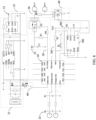
FIG 6 shows a schematic circuit connection diagram of an output control circuit in accordance with a preferred embodiment of the present invention. - In order to facilitate best understanding of the present invention, the present invention will be illustrated in more detail below in conjunction with the attached drawings and preferred embodiments. It should be noted that when an element is expressed as "being fixed to" another element, this element may be directly on the another element, or there may be one or more intervening elements between this element and the another element. When an element is expressed as "being connected to" another element, this element can be directly connected to the another element, or there may be one or more intervening elements between this element and the another element. In addition, terminology such as "first", "second", etc., is only used for descriptive purposes, and cannot be understood as indicating or implying relative importance.
- Unless otherwise defined, any technical and scientific terminology used in this specification has the same meaning as commonly understood by those skilled in the technical field of the present invention. Terminology used in this specification of the present invention is only for a purpose of describing specific embodiments, and is not used to limit the present invention. Terminology such as "and/or" used in this specification includes any and all combinations of one or more related listed items.
- In addition, technical features involved in different embodiments of the present invention described below can be mutually combined as long as they do not conflict with one another.
- Please refer to
FIG 1, FIG 1 is schematic structural view of an electronic cigarette in accordance with a preferred embodiment of the present invention. As shown inFIG 1 , anelectronic cigarette 400 includes anoutput control circuit 100, abattery assembly 200 and anatomizer 300. Understandably, theoutput control circuit 100, thebattery assembly 200 and theatomizer 300 are all disposed in an outer shell of theelectronic cigarette 400. In particular, theoutput control circuit 100 is disposed between thebattery assembly 200 and theatomizer 300 in order to control power supply connection of thebattery assembly 200 with theatomizer 300. - The
output control circuit 100 includes acontroller 10, afirst switching circuit 20, a drivingcircuit 30 and asecond switching circuit 40. - The
controller 10 is respectively electrically connected with thebattery assembly 200, thefirst switching circuit 20 and the drivingcircuit 30. In particular, thecontroller 10 includes a single-chip microcomputer, a microprocessor or a digital signal processor (DSP). Thebattery assembly 200 supplies a direct current power to thecontroller 10, and a voltage value of the direct current power is usually 1.8V (Volt), 3.3V or 5V When thecontroller 10 is an integrated circuit, a required voltage for its normal working is available by looking up a data manual of thecontroller 10. - According to the claimed invention, the
controller 10 is used to control switching-on or switching-off of thefirst switching circuit 20, and to provide pulse-width modulation (PWM) signals to the drivingcircuit 30. - The
first switching circuit 20 is respectively electrically connected with thebattery assembly 200, thecontroller 10 and theatomizer 300. Thefirst switching circuit 20 works as a switch serially electrically connected between thebattery assembly 200 and theatomizer 300. When a smoker starts smoking, thecontroller 10 controls thefirst switching circuit 20 to switch on, i.e., switch closed for electrical connection, thebattery assembly 200 supplies power to theatomizer 300. Theatomizer 300 is then switched on to normally output power. Liquid tobacco in theatomizer 300 is accordingly heated to be atomized. When the smoker quits smoking, thecontroller 10 controls thefirst switching circuit 20 to switch off, i.e., switch opened for disconnection, a power supply feeding circuit of theatomizer 300 is cut off. Theatomizer 300 stops working, and heating of the liquid tobacco in theatomizer 300 is stopped to terminate atomization of the liquid tobacco. - In particular, the
first switching circuit 20, theatomizer 300 and thesecond switching circuit 40 are electrically connected in series. Understandably, thefirst switching circuit 20 can be firstly electrically connected with theatomizer 300 in series, and then be electrically connected with thesecond switching circuit 40 in series. Of course, thefirst switching circuit 20 can alternatively be firstly electrically connected with thesecond switching circuit 40 in series, and then be electrically connected with theatomizer 300 in series. - It is required to be explained that, in a preferred embodiment in accordance with the present invention, the
first switching circuit 20 is firstly electrically connected with theatomizer 300 in series, and then is electrically connected with thesecond switching circuit 40 in series. At the moment, the power supply feeding circuit of theatomizer 300 is a circuit formed by starting from a positive electrode of thebattery assembly 200, passing thefirst switching circuit 20, theatomizer 300 and thesecond switching circuit 40 in sequence, and then returning to a negative electrode of thebattery assembly 200. A flowing direction of an electrical current i of the power supply feeding circuit of theatomizer 300 is shown inFIG 1 . If thefirst switching circuit 20 is firstly electrically connected with thesecond switching circuit 40 in series and then is electrically connected with theatomizer 300 in series, the power supply feeding circuit of theatomizer 300 is a circuit formed by starting from a positive electrode of thebattery assembly 200, passing thefirst switching circuit 20, thesecond switching circuit 40 and theatomizer 300 in sequence, and then returning to a negative electrode of thebattery assembly 200. - Please refer to
FIG 6 cooperatively. In a preferred embodiment, thefirst switching circuit 20 includes a second capacitor C2, a third resistor R3, a fourth resistor R4 and a first metal oxide semiconductor field effect transistor (MOSFET, short for "MOS") tube Q1. - In particular, a first end of the second capacitor C2 is electrically connected with the
battery assembly 200. A second end of the second capacitor C2 is electrically connected with ground. A first end of the third resistor R3 is respectively electrically connected with the first end of the second capacitor C2 and a source electrode of the first MOS tube Q1. A second end of the third resistor R3 is respectively electrically connected with thecontroller 10 and a first end of the fourth resistor R4. A second end of the fourth resistor R4 is electrically connected with a gate electrode of the first MOS tube Q1. A drain electrode of the first MOS tube Q1 is electrically connected with a positive electrode of theatomizer 300. - Switching-on or switching-off of the
first switching circuit 20 is controlled based on control signals from thecontroller 10. Thefirst switching circuit 20 can be a switching MOS tube circuit provided as a preferred embodiment of the present invention. Of course, thefirst switching circuit 20 is not limited to a form of physical circuits provided in the preferred embodiment. For example, thefirst switching circuit 20 is provided to include only the first MOS tube Q1, or to include a transistor and its peripheral circuits. Thefirst switching circuit 20 can further be other forms of switching circuits, such as relays, contact switches, etc. Switching-on or switching-off of thefirst switching circuit 20 is controlled based on the control signals from thecontroller 10. Correspondingly, the control signals include electrical current signals or voltage signals. - Please refer to
FIG 2 . The drivingcircuit 30 includes atrigger circuit 301, amonostable circuit 302 and a pulse width modulation (PWM)circuit 303. - In particular, the
trigger circuit 301 is respectively electrically connected with thebattery assembly 200, thecontroller 10, themonostable circuit 302 and thePWM circuit 303. Thetrigger circuit 301 is used for triggering thecontroller 10 to decide whether or not themonostable circuit 302 is provided with PWM signals. - As shown in
FIG 6 , thetrigger circuit 301 includes a first resistor R1 and aswitch S 1. A first end of the first resistor R1 is electrically connected with thecontroller 10, and a second end of the first resistor R1 is electrically connected with themonostable circuit 302. A first end of the switch S1 is electrically connected with the first end of the first resistor R1, and a second end of the switch S1 is electrically connected with ground. - In particular, the switch S1 is switched on or switched off based on smoke inhaling operation of users. A physical form of the switch S1 can be a mechanical push-button switch or a pneumatic sensor. When the switch S1 is switched on, a sub-circuit of the first resistor R1 is short circuited, voltage at a PB4 port of the
controller 10 is 0, and thecontroller 10 is triggered to provide PWM signals to themonostable circuit 302. When the switch S1 is switched off, voltage at the PB4 port of thecontroller 10 is a dividing voltage of the first resistor R1 when VCC voltage passes through the first resistor R1, i.e., the voltage at the PB4 port of thecontroller 10 is at a high voltage level, and thecontroller 10 is triggered to terminate provision of PWM signals to themonostable circuit 302. - The
monostable circuit 302 is further respectively electrically connected with thebattery assembly 200, thecontroller 10, thesecond switching circuit 40 and thePWM circuit 303. Themonostable circuit 302 includes an input and an output. The input is used to receive PWM signals, and the output is used to output high voltage level signals or low voltage level signals in order to control switching on or switching off of thesecond switching circuit 40 based on the PWM signals. - The
monostable circuit 302 is a basic pulse elementary circuit having two working states including a steady state and a transient state. Without externally applied signals (i.e., the PWM signals), themonostable circuit 302 is in the steady state. With triggering of the externally applied signals, themonostable circuit 302 is turned from the steady state to the transient state. After a period of time, themonostable circuit 302 is automatically turned to the steady state. The period of time for being in the transient state is decided based on parameters of themonostable circuit 302 itself, and is irrelevant to a working time of the PWM signals. Themonostable circuit 302 can be further used to generate positive/negative pulse signals with a preset time interval, i.e., to output high voltage level signals or low voltage level signals with a preset time interval. - In a preferred embodiment, the
monostable circuit 302 includes a 74LVC1G123 integrated circuit chip. In other embodiments, themonostable circuit 302 can be constituted by discrete components and logical gating circuits. Alternatively, themonostable circuit 302 can be realized by using a 555 timer integrated circuit chip (555 timer IC). - The
PWM circuit 303 is further electrically connected with thebattery assembly 200. ThePWM circuit 303 is used to regulate pulse widths of high voltage level signals or low voltage level signals. As shown inFIG 6 , thePWM circuit 303 includes a second resistor R2 and a first capacitor C1. A first end of the second resistor R2 is respectively electrically connected with thebattery assembly 200 and the second end of the first resistor R1. A second end of the second resistor R2 is respectively electrically connected with a first end of the first capacitor C1 and themonostable circuit 302. A second end of the first capacitor C1 is electrically connected with ground. - In particular, a ratio between the second resistor R2 and the first capacitor C1 is used to set up pulse widths of output pulses of the
monostable circuit 302, i.e., pulse widths of high voltage level signals or low voltage level signals. ThePWM circuit 303 adopts a simulative control method, and is able to regulate a base electrode of a transistor or a gate electrode of a MOS tube based on variation of corresponding loads (i.e., pulse widths of high voltage level signals or low voltage level signals) in order to realize change of a turn-on time of the transistor or the MOS tube. As shown inFIG 6 , themonostable circuit 302 is electrically connected with a gate electrode of a second MOS tube Q2. In other embodiments, thePWM circuit 303 adopts, but does not limit to, the performing method published according to the preferred embodiment. - The
second switching circuit 40 is respectively electrically connected with thebattery assembly 200, the drivingcircuit 30 and theatomizer 300. - In a preferred embodiment, the
second switching circuit 40 includes a second MOS tube Q2. Agate electrode of the second MOS tube Q2 is electrically connected with the output of themonostable circuit 302. A source electrode of the second MOS tube Q2 is electrically connected with ground. A drain electrode of the second MOS tube Q2 is electrically connected with a negative electrode of theatomizer 300. Understandably, in other embodiments, thesecond switching circuit 40 adopts, but does not limit to, the performing method illustrated according to the preferred embodiment. - Please refer to
FIG 3 . Thebattery assembly 200 includes a chargingcircuit 21, aprotective circuit 22, alithium battery 23 and a voltage stabilizingbuck circuit 24. In particular, theprotective circuit 22 is electrically connected with the chargingcircuit 21. Thelithium battery 23 and thecontroller 10 are electrically connected with the drivingcircuit 30. - In a preferred embodiment, the charging
circuit 21 includes a universal serial bus (USB) port circuit, a filter circuit, a power management chip and their peripheral circuits. Theprotective circuit 22 includes lithium ion/lithium polymer battery protective chip and its peripheral circuits. Theprotective circuit 22 has functions of voltage and electric current protection against overcharge, voltage and electric current protection against overdischarge, protection against overheating, protection against short circuits, protection against reverse connection of battery cells and protection against reverse connection of chargers, etc. - Since the
lithium battery 23 has advantages of high average voltage for a single cell, high energy density, light weight for battery bodies, long lives, strong adaption to high and low temperatures and green environmental protection, etc., in a preferred embodiment, thelithium battery 23 is a priority choice as energy storage equipment for theelectronic cigarette 400. Thelithium battery 23 is constituted by three parts of battery cells, a protective plate and a plastic shell. Thelithium battery 23 is mainly classified as two types, lithium metal batteries and lithium ion batteries. A lithium ion battery does not contain lithium metal, and is chargeable. The lithium ion battery works mainly by movement of lithium ions between a positive electrode and a negative electrode. In a charging/discharging process thereof, lithium ions (Li+) move back and forth between the positive electrode and the negative electrode for intercalation and/or deintercalation. When the lithium ion battery is charged, the lithium ions (Li+) are deintercalated from the positive electrode, and are intercalated into the negative electrode through electrolytes. The negative electrode is in a high lithium concentration state. Discharging of the lithium ion battery is just the other way around. - Understandably, the
lithium battery 23 has two processes of a charging process and a discharging process. When thelithium battery 23 is charged, thelithium battery 23 is in an energy storage process. When thelithium battery 23 is discharged, thelithium battery 23 supplies power to thecontroller 10, thefirst switching circuit 20 and the drivingcircuit 30. - In a preferred embodiment, the voltage stabilizing
buck circuit 24 is a resistance capacitance step-down circuit. The voltage stabilizingbuck circuit 24 is used to lower direct current voltages at two ends of thelithium battery 23 down to a normal working voltage for thecontroller 10 and themonostable circuit 302. - Please refer to
FIG 4 . Theatomizer 300 includes aheating assembly 31 and a temperature detecting circuit 32 connected with theheating assembly 31. The temperature detecting circuit 32 is electrically connected with thecontroller 10, and is used to detect temperature values of theheating assembly 31 and to transmit the temperature values to thecontroller 10. - In other embodiments, the
heating assembly 31 includes a wire coil, a coil-winding part and a liquid absorbing part. The liquid absorbing part is contacted with the wire coil in order to conduct absorbed tobacco liquid or tobacco oil toward the wire coil. When theatomizer 300 works normally, the tobacco liquid or tobacco oil is vaporized by the wire coil to generate smoke. If the wire coil has a higher heating quantity, a using life of the wire coil may be caused to be shortened, and the wire coil is therefore required to be replaced. Besides, excess heating may also lead to overheating of an outer shell of theelectronic cigarette 400, and may cause shortening a using life of theelectronic cigarette 400, etc., and further affect use of theelectronic cigarette 400 for its users. Hence, the temperature detecting circuit 32 is added in theelectronic cigarette 400 for use of detecting temperature values of theheating assembly 31. When temperature of theheating assembly 31 exceeds a preset temperature threshold, thecontroller 10 controls to shut down thefirst switching circuit 20 and/or thesecond switching circuit 40 in order to further cut off the power supply feeding circuit of theatomizer 300. Theheating assembly 31 is then stopped to heat and to avoid extremely high temperature of theheating assembly 31. - As previously mentioned, a physical working process for the
electronic cigarette 400 is depicted as follows. - When there is an inhaling action from users, the
first switching circuit 20 is controlled to be switched on (i.e., the first MOS tube Q1 is turned on) according to control signals of thecontroller 10. In the meantime, thetrigger circuit 301 triggers thecontroller 10 to decide whether or not themonostable circuit 302 is provided with PWM signals. Themonostable circuit 302 outputs high voltage level signals or low voltage level signals to switch on the second switching circuit 40 (i.e., the second MOS tube Q2 is turned on) based on the PWM signals after themonostable circuit 302 detects the PWM signals. At this moment, thebattery assembly 200, thefirst switching circuit 20, theatomizer 300 and thesecond switching circuit 40 together form an electric current circuit, i.e., the power supply feeding circuit of theatomizer 300 is electrically connected and theatomizer 300 is switched on. - When the
first switching circuit 20 is out of order (i.e., the first MOS tube Q1 stops being turned on), in other words, the above mentioned electric current circuit is disconnected, theatomizer 300 stops working due to no power supply. When thecontroller 10 is out of order or in a malfunctioned status, thecontroller 10 stops providing the PWM signals to themonostable circuit 302. Themonostable circuit 302 reverses its output high voltage level signals or low voltage level signals when no PWM signals are detected (For example, the gate electrode of the second MOS tube Q2 is set to receive high voltage level signals for turning on the second MOS tube Q2, then the high voltage level signals are reversed to low voltage level signals when thecontroller 10 is out of order or in the malfunctioned status). Thesecond switching circuit 40, i.e., the above mentioned electric current circuit, is disconnected (i.e., the second MOS tube Q2 stops being turned on). Theatomizer 300 stops working due to no power supply. - In conclusion, the
first switching circuit 20 and thesecond switching circuit 40 cannot be switched on simultaneously either when thefirst switching circuit 20 is out of order or when thecontroller 10 is out of order or in the malfunctioned status. As a result, a complete electric current circuit between theatomizer 300 and thebattery assembly 200 cannot be formed (i.e., the power supply feeding circuit of theatomizer 300 is caused to be disconnected). Safety risk such as fire incidents is avoided when theatomizer 300 of theelectronic cigarette 400 continuously outputs power due to thecontroller 10 being out of order, either one of switching circuits (thefirst switching circuit 20 or the second switching circuit 40) being out of order, or thecontroller 10 being in the malfunctioned status. Reliability and safety of products related to theelectronic cigarette 400 are therefore enhanced. - Please refer to
FIGS. 5-6 . Theoutput control circuit 100 further includes a current-limitingcircuit 50 and aprompt circuit 60. - The current-limiting
circuit 50 is parallel electrically connected between the positive electrode of theatomizer 300 and the negative electrode of theatomizer 300. Theatomizer 300 is electrically connected between a port UOT+ and a port UOT- of the current-limitingcircuit 50. The current-limitingcircuit 50 includes a fifth resistor R5. The fifth resistor R5 is used for restricting a quantity of electrical currents flowing into theatomizer 300. - The
prompt circuit 60 is respectively electrically connected with the chargingcircuit 21 and thecontroller 10. Theprompt circuit 60 is used to indicate a power output status of theatomizer 300. The power output status includes switching on or switching off of theatomizer 300, and power output ranks of theatomizer 300. In some embodiment, theprompt circuit 60 includes a display for displaying the power output status of theatomizer 300. - In practice, the
prompt circuit 60 includes a sixth resistor R6 and a light-emitting diode (LED) tube D1. A first end of the sixth resistor R6 is electrically connected with the chargingcircuit 21, and a second end of the sixth resistor R6 is electrically connected with a positive electrode of the LED tube D1. A negative electrode of the LED tube D1 is electrically connected with thecontroller 10. - In some embodiment, a number of the LED tube D1 can be plural. The LED tube D1 can displays at least two kinds of colors. Alternatively, brightness of displayed color of the LED tube D1 can be gradually varied from being bright to dark. For example, the number of the LED tube D1 is 4. When all of the four LED tubes D1 light up, an output power of the
atomizer 300 is set to be 20W, i.e., theatomizer 300 works in a higher power rank. When only one of the four LED tubes D1 counting from a side of the four LED tubes D1 lights up, the output power of theatomizer 300 is set to be 5W, i.e., theatomizer 300 works in a lower power rank. - The
output control circuit 100 is provided in accordance with a preferred embodiment of the present invention. Switching on of theatomizer 300 is simultaneously controlled by thefirst switching circuit 20 and thesecond switching circuit 40. Safety risk such as fire incidents is accordingly avoided when theatomizer 300 of theelectronic cigarette 400 continuously outputs power due to thecontroller 10 being out of order, either one of the first andsecond switching circuits controller 10 being in the malfunctioned status. Reliability and safety of products related to theelectronic cigarette 400 are therefore enhanced. - Finally, it should be noted that the above embodiments are only used to illustrate technical solutions of the present invention, but not to limit them. Technical features of the above embodiments or different embodiments can also be combined. Steps can be implemented in any order, and there are many other variations in different aspects described above. For the sake of brevity, those variations are not provided in details. Although the present invention has been described in detail with reference to the foregoing embodiments, it should be understood by the ordinary skilled in the art that they can still modify technical solutions recorded in the foregoing embodiments within the scope of the invention which is defined in the appended claims.
Claims (10)
- An output control circuit (100) for an electronic cigarette (400) comprising a battery assembly (200) and anatomizer (300), wherein the output control circuit further comprises a controller (10), a first switching circuit (20), a driving circuit (30) and a second switching circuit (40),wherein the first switching circuit is electrically connected with the battery assembly, the controller and the atomizer; wherein the controller is electrically connected with the battery assembly; wherein the second switching circuit is electrically connected with the battery assembly, the driving circuit and the atomizer;wherein the first switching circuit, the atomizer and the second switching circuit are electrically connected in series and are configured such that the atomizer is switched on when the first switching circuit and the second switching circuit are switched on simultaneously; wherein the controller is adapted to control switching-on or switching-off the first switching circuit and to provide pulse-width modulation, PWM, signals to the driving circuit;and wherein the driving circuit is electrically connected with the controller and is configured for driving to switch on or switch off the second switching circuit based on the PWM signals;characterised in that the driving circuit comprises a trigger circuit (301), a monostable circuit (302) and a PWM circuit (303); the trigger circuit is electrically connected with the battery assembly, the controller, the monostable circuit and the PWM circuit; and the trigger circuit is configured for triggering the controller to decide whether or not the monostable circuit is provided with PWM signals.
- The output control circuit as claimed in Claim 1, wherein the monostable circuit is electrically connected with the battery assembly, the controller, the second switching circuit and the PWM circuit, the monostable circuit comprising an input and an output, the input of the monostable circuit adapted to receive PWM signals, and the output of the monostable circuit is adapted to output high voltage level signals or low voltage level signals in order to control switching on or switching off of the second switching circuit based on the received PWM signals; and
the PWM circuit is electrically connected with the battery assembly, the PWM circuit adapted to regulate pulse widths of the high voltage level signals or low voltage level signals. - The output control circuit according to any one of claims 1 or 2, wherein the trigger circuit (301)comprises a first resistor (R1) and a switch (S1);wherein a first end of the first resistor is electrically connected with the controller, and a second end of the first resistor is electrically connected with the monostable circuit; and a first end of the switch is electrically connected with the first end of the first resistor, and a second end of the switch is electrically connected with ground.
- The output control circuit according to any one of claims 1- 3, wherein the PWM circuit (303)comprises a second resistor (R2) and a first capacitor (C1);wherein a first end of the second resistor is electrically connected with the battery assembly and the second end of the first resistor, a second end of the second resistor is electrically connected with a first end of the first capacitor and the monostable circuit; anda second end of the first capacitor is electrically connected with ground.
- The output control circuit according to claim 1, wherein the first switching circuit (20) comprises asecond capacitor (C2), a third resistor (R3), a fourth resistor (R4) and a first metal oxide semiconductor field effect transistor (MOS) tube (Q1); whereina first end of the second capacitor is electrically connected with the battery assembly, and a second end of the second capacitor is electrically connected with ground;a first end of the third resistor is electrically connected with the first end of the second capacitor anda source electrode of the first MOS tube, and a second end of the third resistor is electrically connected with the controller and a first end of the fourth resistor;a second end of the fourth resistor is electrically connected with a gate electrode of the first MOS tube; anda drain electrode of the first MOS tube is electrically connected with a positive electrode of the atomizer.
- The output control circuit according to claim 5, wherein the second switching circuit comprises a second MOS tube (Q2), wherein a gate electrode of the second MOS tube is electrically connected with an output of the monostable circuit of the driving circuit, a source electrode of the second MOS tube is electrically connected with ground, and a drain electrode of the second MOS tube is electrically connected with a negative electrode of the atomizer.
- The output control circuit according to claim 6, wherein the output control circuit further comprises a current-limiting circuit (50), wherein the current-limiting circuit is parallel electrically connected between the positive electrode of the atomizer and the negative electrode of the atomizer; and the current-limiting circuit comprises a fifth resistor (R5), the fifth resistor configured for restricting a quantity of electrical currents flowing into the atomizer.
- The output control circuit according to claim 7, wherein the battery assembly comprises: a charging circuit (21); a protective circuit (22), the protective circuit electrically connected with the charging circuit; a lithium battery (23), the lithium battery electrically connected with the protective circuit; and a voltage stabilizing buck circuit (24), the voltage stabilizing buck circuit electrically connected with the lithium battery, the controller and the driving circuit.
- The output control circuit in according to any one of claims 1-8, wherein the output control circuit further comprises a prompt circuit (60), the prompt circuit electrically connected with the charging circuit and the controller; the prompt circuit comprises a sixth resistor (R6) and a light-emitting diode, LED, tube (D1), a first end of the sixth resistor electrically connected with the charging circuit, and a second end of the sixth resistor electrically connected with a positive electrode of the LED tube, and a negative electrode of the LED tube electrically connected with the controller.
- The output control circuit in according to claim 1, wherein the atomizer comprises a heating assembly (31) and a temperature detecting circuit (32) connected with the heating assembly, wherein the temperature detecting circuit is electrically connected with the controller and is adapted to detect temperature values of the heating assembly and to transmit the temperature values to the controller.
Applications Claiming Priority (2)
| Application Number | Priority Date | Filing Date | Title |
|---|---|---|---|
| CN201811152024.3A CN109497615B (en) | 2018-09-29 | 2018-09-29 | an output control circuit |
| PCT/CN2019/108554 WO2020063869A1 (en) | 2018-09-29 | 2019-09-27 | Output control circuit |
Publications (3)
| Publication Number | Publication Date |
|---|---|
| EP3858176A1 EP3858176A1 (en) | 2021-08-04 |
| EP3858176A4 EP3858176A4 (en) | 2021-12-01 |
| EP3858176B1 true EP3858176B1 (en) | 2025-01-01 |
Family
ID=65746216
Family Applications (1)
| Application Number | Title | Priority Date | Filing Date |
|---|---|---|---|
| EP19866215.7A Active EP3858176B1 (en) | 2018-09-29 | 2019-09-27 | Output control circuit |
Country Status (4)
| Country | Link |
|---|---|
| US (1) | US11925213B2 (en) |
| EP (1) | EP3858176B1 (en) |
| CN (1) | CN109497615B (en) |
| WO (1) | WO2020063869A1 (en) |
Families Citing this family (7)
| Publication number | Priority date | Publication date | Assignee | Title |
|---|---|---|---|---|
| CN109497615B (en) | 2018-09-29 | 2021-07-09 | 深圳市合元科技有限公司 | an output control circuit |
| CN110037356B (en) * | 2019-05-24 | 2024-01-23 | 深圳达钿科技有限公司 | Control system and encryption method of split electronic cigarette |
| CN110279157A (en) * | 2019-06-27 | 2019-09-27 | 深圳雾芯科技有限公司 | Electronic atomizer device, electronic atomizer device main body, and operation method |
| CN112617266B (en) * | 2020-12-17 | 2022-03-01 | 西南大学 | Interface circuit and control method of tobacco leaf curing controller compatible with two sensors |
| CN116530739A (en) * | 2021-07-29 | 2023-08-04 | 深圳麦克韦尔科技有限公司 | Atomizer, battery pack and electronic atomization device |
| CN216959833U (en) * | 2021-11-19 | 2022-07-12 | 深圳摩尔雾化健康医疗科技有限公司 | Startup and shutdown circuit and electronic atomization device |
| KR102785134B1 (en) * | 2021-12-31 | 2025-03-20 | 주식회사 케이티앤지 | Aerosol generating device |
Family Cites Families (23)
| Publication number | Priority date | Publication date | Assignee | Title |
|---|---|---|---|---|
| IT1298729B1 (en) * | 1997-03-13 | 2000-02-02 | Digital Appliance Controls Inc | SYSTEM OF CONTROL OF APPLIANCES IN GENERAL WITH STOP PROCESSORS IN THE EVENT OF FAILURE |
| CN102790375B (en) * | 2012-08-06 | 2015-04-22 | 上海诺雅克电气有限公司 | Direct current undervoltage release and circuit breaker |
| EP3085256A4 (en) * | 2013-12-16 | 2017-09-27 | Kimree Hi-Tech Inc | Electronic cigarette control circuit, electronic cigarette, and control method for electronic cigarette |
| CN104055224B (en) * | 2014-06-09 | 2017-01-11 | 矽力杰半导体技术(杭州)有限公司 | Integrated circuit for electronic cigarette and electronic cigarette |
| GB2531415B (en) | 2014-08-28 | 2021-03-03 | E I Tech Unlimited Company | An alarm device drive circuit |
| KR101570876B1 (en) * | 2014-10-28 | 2015-11-20 | 이충언 | Electronic cigarette |
| CN204759079U (en) * | 2014-12-01 | 2015-11-11 | 西安拓尔微电子有限责任公司 | Novel have out an electron cigarette controller that short circuit detected function |
| CN204742630U (en) * | 2015-03-25 | 2015-11-11 | 深圳市劲嘉科技有限公司 | Accuse warm electron cigarette |
| CN204907921U (en) * | 2015-07-22 | 2015-12-30 | 深圳麦克韦尔股份有限公司 | Electronic cigarette |
| JP2017050275A (en) * | 2015-09-02 | 2017-03-09 | カルソニックカンセイ株式会社 | Heating apparatus |
| CN105686087B (en) * | 2016-03-17 | 2019-03-26 | 深圳麦克韦尔股份有限公司 | Electronic cigarette control circuit and control method, electronic cigarette |
| US10765146B2 (en) * | 2016-08-08 | 2020-09-08 | Rai Strategic Holdings, Inc. | Boost converter for an aerosol delivery device |
| US10492530B2 (en) * | 2016-11-15 | 2019-12-03 | Rai Strategic Holdings, Inc. | Two-wire authentication system for an aerosol delivery device |
| CN108244707B (en) * | 2016-12-29 | 2023-12-26 | 上海烟草集团有限责任公司 | Electrically heated non-burning smoking device and its low power consumption management circuit |
| CN107647477B (en) * | 2016-12-30 | 2023-06-16 | 深圳市华芯邦科技有限公司 | NMOS tube driving control circuit, chip, device and driving method |
| CN206714086U (en) * | 2017-04-13 | 2017-12-08 | 湖南中烟工业有限责任公司 | A kind of ultrasonic electronic cigarette circuit |
| CN110430768A (en) * | 2017-04-24 | 2019-11-08 | 日本烟草产业株式会社 | Aerosol generating device and control method and program for aerosol generating device |
| EA201991564A1 (en) * | 2017-04-24 | 2019-09-30 | Джапан Тобакко Инк. | AEROSOL-GENERATING DEVICE, METHOD FOR MANAGING AEROSOL-GENERATING DEVICE AND PROGRAM |
| WO2018198154A1 (en) * | 2017-04-24 | 2018-11-01 | 日本たばこ産業株式会社 | Aerosol generation apparatus, method for controlling aerosol generation apparatus, and program |
| CN207561379U (en) * | 2017-09-27 | 2018-07-03 | 上海德麦电子科技有限公司 | Electronic cigarette |
| CN207319008U (en) | 2017-10-27 | 2018-05-04 | 湖南中烟工业有限责任公司 | A kind of ultrasonic atomizatio piece oscillation control circuit and ultrasonic electronic cigarette |
| CN109497615B (en) | 2018-09-29 | 2021-07-09 | 深圳市合元科技有限公司 | an output control circuit |
| CN110083194A (en) * | 2019-06-06 | 2019-08-02 | 西安拓尔微电子有限责任公司 | A kind of circuit and its implementation of the electronic cigarette of achievable constant power output |
-
2018
- 2018-09-29 CN CN201811152024.3A patent/CN109497615B/en active Active
-
2019
- 2019-09-27 US US17/280,817 patent/US11925213B2/en active Active
- 2019-09-27 WO PCT/CN2019/108554 patent/WO2020063869A1/en not_active Ceased
- 2019-09-27 EP EP19866215.7A patent/EP3858176B1/en active Active
Also Published As
| Publication number | Publication date |
|---|---|
| WO2020063869A1 (en) | 2020-04-02 |
| EP3858176A1 (en) | 2021-08-04 |
| CN109497615B (en) | 2021-07-09 |
| CN109497615A (en) | 2019-03-22 |
| EP3858176A4 (en) | 2021-12-01 |
| US20210401058A1 (en) | 2021-12-30 |
| US11925213B2 (en) | 2024-03-12 |
Similar Documents
| Publication | Publication Date | Title |
|---|---|---|
| EP3858176B1 (en) | Output control circuit | |
| EP3051622B1 (en) | Universal rechargeable battery constituted by employing lithium-ion battery and control method | |
| US7816889B2 (en) | Method of charging rechargeable battery and protection circuit for rechargeable battery | |
| WO2019029069A1 (en) | Battery protection chip, power supply device, and electronic cigarette | |
| KR20180050960A (en) | The battery pack and a vacuum cleaner including the same | |
| WO2020057474A1 (en) | Voltage output circuit and electronic cigarette | |
| CN103683439A (en) | System and method for controlling charge of lithium battery pack | |
| CN112398204B (en) | An intelligent auxiliary heating method, equipment and storage medium for lithium batteries | |
| CN202014087U (en) | Lithium battery charging protection circuit for portable system | |
| WO2021083149A1 (en) | Charging method and charging system | |
| CN105449312B (en) | A kind of heating control circuit for lithium ion battery | |
| CN218678488U (en) | Charging circuit and electronic atomization device | |
| CN105262192A (en) | Vehicle-mounted direct current system capable of stabilizing power supply and charging batteries | |
| WO2020063390A1 (en) | Quick charge circuit and electronic cigarette | |
| CN205489485U (en) | Solar charging power with control by temperature change, short circuit and overcharge protection | |
| CN205123301U (en) | General type intelligence battery charger | |
| CN218635310U (en) | Electronic atomization device | |
| CN103107520A (en) | System and method for lithium ion battery over-temperature protection | |
| CN213185553U (en) | Battery pack protection circuit and battery device | |
| CN101936247B (en) | Ignition device for electric heating engine of instrumental model airplane | |
| CN201810453U (en) | Electrothermic type engine ignition device for tool type model airplane | |
| CN208224754U (en) | ASIC integrated circuit, the control circuit of electronic cigarette and electronic cigarette | |
| CN224110934U (en) | Charging management circuit and earphone charging case | |
| CN218330389U (en) | Airflow sensing circuit and electronic atomization device | |
| CN218273144U (en) | Heating control circuit and electronic atomization device |
Legal Events
| Date | Code | Title | Description |
|---|---|---|---|
| STAA | Information on the status of an ep patent application or granted ep patent |
Free format text: STATUS: THE INTERNATIONAL PUBLICATION HAS BEEN MADE |
|
| PUAI | Public reference made under article 153(3) epc to a published international application that has entered the european phase |
Free format text: ORIGINAL CODE: 0009012 |
|
| STAA | Information on the status of an ep patent application or granted ep patent |
Free format text: STATUS: REQUEST FOR EXAMINATION WAS MADE |
|
| 17P | Request for examination filed |
Effective date: 20210428 |
|
| AK | Designated contracting states |
Kind code of ref document: A1 Designated state(s): AL AT BE BG CH CY CZ DE DK EE ES FI FR GB GR HR HU IE IS IT LI LT LU LV MC MK MT NL NO PL PT RO RS SE SI SK SM TR |
|
| STAA | Information on the status of an ep patent application or granted ep patent |
Free format text: STATUS: EXAMINATION IS IN PROGRESS |
|
| A4 | Supplementary search report drawn up and despatched |
Effective date: 20211028 |
|
| RIC1 | Information provided on ipc code assigned before grant |
Ipc: A24F 40/50 20200101ALI20211022BHEP Ipc: A61M 15/06 20060101ALI20211022BHEP Ipc: A61M 11/04 20060101ALI20211022BHEP Ipc: H02H 3/05 20060101ALI20211022BHEP Ipc: H05B 1/02 20060101ALI20211022BHEP Ipc: H02M 3/145 20060101AFI20211022BHEP |
|
| 17Q | First examination report despatched |
Effective date: 20211109 |
|
| DAV | Request for validation of the european patent (deleted) | ||
| DAX | Request for extension of the european patent (deleted) | ||
| REG | Reference to a national code |
Ref country code: DE Free format text: PREVIOUS MAIN CLASS: A24F0047000000 Ipc: H02M0003145000 Ref legal event code: R079 Ref document number: 602019064395 Country of ref document: DE |
|
| GRAP | Despatch of communication of intention to grant a patent |
Free format text: ORIGINAL CODE: EPIDOSNIGR1 |
|
| STAA | Information on the status of an ep patent application or granted ep patent |
Free format text: STATUS: GRANT OF PATENT IS INTENDED |
|
| RIC1 | Information provided on ipc code assigned before grant |
Ipc: H02M 3/158 20060101ALI20240625BHEP Ipc: A24F 40/50 20200101ALI20240625BHEP Ipc: A61M 15/06 20060101ALI20240625BHEP Ipc: A61M 11/04 20060101ALI20240625BHEP Ipc: H02H 3/05 20060101ALI20240625BHEP Ipc: H05B 1/02 20060101ALI20240625BHEP Ipc: H02M 3/145 20060101AFI20240625BHEP |
|
| RIC1 | Information provided on ipc code assigned before grant |
Ipc: H02M 3/158 20060101ALI20240711BHEP Ipc: A24F 40/50 20200101ALI20240711BHEP Ipc: H02H 3/05 20060101ALI20240711BHEP Ipc: H05B 1/02 20060101ALI20240711BHEP Ipc: H02M 3/145 20060101AFI20240711BHEP |
|
| INTG | Intention to grant announced |
Effective date: 20240723 |
|
| GRAS | Grant fee paid |
Free format text: ORIGINAL CODE: EPIDOSNIGR3 |
|
| GRAA | (expected) grant |
Free format text: ORIGINAL CODE: 0009210 |
|
| STAA | Information on the status of an ep patent application or granted ep patent |
Free format text: STATUS: THE PATENT HAS BEEN GRANTED |
|
| AK | Designated contracting states |
Kind code of ref document: B1 Designated state(s): AL AT BE BG CH CY CZ DE DK EE ES FI FR GB GR HR HU IE IS IT LI LT LU LV MC MK MT NL NO PL PT RO RS SE SI SK SM TR |
|
| REG | Reference to a national code |
Ref country code: GB Ref legal event code: FG4D |
|
| REG | Reference to a national code |
Ref country code: CH Ref legal event code: EP |
|
| REG | Reference to a national code |
Ref country code: DE Ref legal event code: R096 Ref document number: 602019064395 Country of ref document: DE |
|
| REG | Reference to a national code |
Ref country code: IE Ref legal event code: FG4D |
|
| P01 | Opt-out of the competence of the unified patent court (upc) registered |
Free format text: CASE NUMBER: APP_11077/2025 Effective date: 20250306 |
|
| REG | Reference to a national code |
Ref country code: LT Ref legal event code: MG9D |
|
| REG | Reference to a national code |
Ref country code: NL Ref legal event code: MP Effective date: 20250101 |
|
| REG | Reference to a national code |
Ref country code: AT Ref legal event code: MK05 Ref document number: 1757323 Country of ref document: AT Kind code of ref document: T Effective date: 20250101 |
|
| PG25 | Lapsed in a contracting state [announced via postgrant information from national office to epo] |
Ref country code: NL Free format text: LAPSE BECAUSE OF FAILURE TO SUBMIT A TRANSLATION OF THE DESCRIPTION OR TO PAY THE FEE WITHIN THE PRESCRIBED TIME-LIMIT Effective date: 20250101 |
|
| PG25 | Lapsed in a contracting state [announced via postgrant information from national office to epo] |
Ref country code: FI Free format text: LAPSE BECAUSE OF FAILURE TO SUBMIT A TRANSLATION OF THE DESCRIPTION OR TO PAY THE FEE WITHIN THE PRESCRIBED TIME-LIMIT Effective date: 20250101 |
|
| PG25 | Lapsed in a contracting state [announced via postgrant information from national office to epo] |
Ref country code: PL Free format text: LAPSE BECAUSE OF FAILURE TO SUBMIT A TRANSLATION OF THE DESCRIPTION OR TO PAY THE FEE WITHIN THE PRESCRIBED TIME-LIMIT Effective date: 20250101 |
|
| PG25 | Lapsed in a contracting state [announced via postgrant information from national office to epo] |
Ref country code: ES Free format text: LAPSE BECAUSE OF FAILURE TO SUBMIT A TRANSLATION OF THE DESCRIPTION OR TO PAY THE FEE WITHIN THE PRESCRIBED TIME-LIMIT Effective date: 20250101 |
|
| PG25 | Lapsed in a contracting state [announced via postgrant information from national office to epo] |
Ref country code: NO Free format text: LAPSE BECAUSE OF FAILURE TO SUBMIT A TRANSLATION OF THE DESCRIPTION OR TO PAY THE FEE WITHIN THE PRESCRIBED TIME-LIMIT Effective date: 20250401 Ref country code: IS Free format text: LAPSE BECAUSE OF FAILURE TO SUBMIT A TRANSLATION OF THE DESCRIPTION OR TO PAY THE FEE WITHIN THE PRESCRIBED TIME-LIMIT Effective date: 20250501 |
|
| PG25 | Lapsed in a contracting state [announced via postgrant information from national office to epo] |
Ref country code: HR Free format text: LAPSE BECAUSE OF FAILURE TO SUBMIT A TRANSLATION OF THE DESCRIPTION OR TO PAY THE FEE WITHIN THE PRESCRIBED TIME-LIMIT Effective date: 20250101 |
|
| PG25 | Lapsed in a contracting state [announced via postgrant information from national office to epo] |
Ref country code: LV Free format text: LAPSE BECAUSE OF FAILURE TO SUBMIT A TRANSLATION OF THE DESCRIPTION OR TO PAY THE FEE WITHIN THE PRESCRIBED TIME-LIMIT Effective date: 20250101 Ref country code: PT Free format text: LAPSE BECAUSE OF FAILURE TO SUBMIT A TRANSLATION OF THE DESCRIPTION OR TO PAY THE FEE WITHIN THE PRESCRIBED TIME-LIMIT Effective date: 20250502 |
|
| PG25 | Lapsed in a contracting state [announced via postgrant information from national office to epo] |
Ref country code: GR Free format text: LAPSE BECAUSE OF FAILURE TO SUBMIT A TRANSLATION OF THE DESCRIPTION OR TO PAY THE FEE WITHIN THE PRESCRIBED TIME-LIMIT Effective date: 20250402 Ref country code: BG Free format text: LAPSE BECAUSE OF FAILURE TO SUBMIT A TRANSLATION OF THE DESCRIPTION OR TO PAY THE FEE WITHIN THE PRESCRIBED TIME-LIMIT Effective date: 20250101 |
|
| PG25 | Lapsed in a contracting state [announced via postgrant information from national office to epo] |
Ref country code: AT Free format text: LAPSE BECAUSE OF FAILURE TO SUBMIT A TRANSLATION OF THE DESCRIPTION OR TO PAY THE FEE WITHIN THE PRESCRIBED TIME-LIMIT Effective date: 20250101 |
|
| PG25 | Lapsed in a contracting state [announced via postgrant information from national office to epo] |
Ref country code: CZ Free format text: LAPSE BECAUSE OF FAILURE TO SUBMIT A TRANSLATION OF THE DESCRIPTION OR TO PAY THE FEE WITHIN THE PRESCRIBED TIME-LIMIT Effective date: 20250101 |
|
| PG25 | Lapsed in a contracting state [announced via postgrant information from national office to epo] |
Ref country code: SE Free format text: LAPSE BECAUSE OF FAILURE TO SUBMIT A TRANSLATION OF THE DESCRIPTION OR TO PAY THE FEE WITHIN THE PRESCRIBED TIME-LIMIT Effective date: 20250101 |
|
| REG | Reference to a national code |
Ref country code: DE Ref legal event code: R097 Ref document number: 602019064395 Country of ref document: DE |
|
| PG25 | Lapsed in a contracting state [announced via postgrant information from national office to epo] |
Ref country code: SM Free format text: LAPSE BECAUSE OF FAILURE TO SUBMIT A TRANSLATION OF THE DESCRIPTION OR TO PAY THE FEE WITHIN THE PRESCRIBED TIME-LIMIT Effective date: 20250101 |
|
| PG25 | Lapsed in a contracting state [announced via postgrant information from national office to epo] |
Ref country code: DK Free format text: LAPSE BECAUSE OF FAILURE TO SUBMIT A TRANSLATION OF THE DESCRIPTION OR TO PAY THE FEE WITHIN THE PRESCRIBED TIME-LIMIT Effective date: 20250101 |
|
| PGFP | Annual fee paid to national office [announced via postgrant information from national office to epo] |
Ref country code: DE Payment date: 20250916 Year of fee payment: 7 |
|
| PG25 | Lapsed in a contracting state [announced via postgrant information from national office to epo] |
Ref country code: IT Free format text: LAPSE BECAUSE OF FAILURE TO SUBMIT A TRANSLATION OF THE DESCRIPTION OR TO PAY THE FEE WITHIN THE PRESCRIBED TIME-LIMIT Effective date: 20250101 |
|
| PGFP | Annual fee paid to national office [announced via postgrant information from national office to epo] |
Ref country code: GB Payment date: 20250919 Year of fee payment: 7 |
|
| PGFP | Annual fee paid to national office [announced via postgrant information from national office to epo] |
Ref country code: FR Payment date: 20250929 Year of fee payment: 7 |
|
| PG25 | Lapsed in a contracting state [announced via postgrant information from national office to epo] |
Ref country code: EE Free format text: LAPSE BECAUSE OF FAILURE TO SUBMIT A TRANSLATION OF THE DESCRIPTION OR TO PAY THE FEE WITHIN THE PRESCRIBED TIME-LIMIT Effective date: 20250101 |
|
| PG25 | Lapsed in a contracting state [announced via postgrant information from national office to epo] |
Ref country code: RO Free format text: LAPSE BECAUSE OF FAILURE TO SUBMIT A TRANSLATION OF THE DESCRIPTION OR TO PAY THE FEE WITHIN THE PRESCRIBED TIME-LIMIT Effective date: 20250101 |
|
| PG25 | Lapsed in a contracting state [announced via postgrant information from national office to epo] |
Ref country code: SK Free format text: LAPSE BECAUSE OF FAILURE TO SUBMIT A TRANSLATION OF THE DESCRIPTION OR TO PAY THE FEE WITHIN THE PRESCRIBED TIME-LIMIT Effective date: 20250101 |
|
| PLBE | No opposition filed within time limit |
Free format text: ORIGINAL CODE: 0009261 |
|
| STAA | Information on the status of an ep patent application or granted ep patent |
Free format text: STATUS: NO OPPOSITION FILED WITHIN TIME LIMIT |
|
| 26N | No opposition filed |
Effective date: 20251002 |