EP3857957B1 - Sendeparameterregelung - Google Patents
Sendeparameterregelung Download PDFInfo
- Publication number
- EP3857957B1 EP3857957B1 EP19790927.8A EP19790927A EP3857957B1 EP 3857957 B1 EP3857957 B1 EP 3857957B1 EP 19790927 A EP19790927 A EP 19790927A EP 3857957 B1 EP3857957 B1 EP 3857957B1
- Authority
- EP
- European Patent Office
- Prior art keywords
- group
- dci message
- common dci
- communication parameter
- communication
- Prior art date
- Legal status (The legal status is an assumption and is not a legal conclusion. Google has not performed a legal analysis and makes no representation as to the accuracy of the status listed.)
- Active
Links
Images



Classifications
-
- H—ELECTRICITY
- H04—ELECTRIC COMMUNICATION TECHNIQUE
- H04L—TRANSMISSION OF DIGITAL INFORMATION, e.g. TELEGRAPHIC COMMUNICATION
- H04L1/00—Arrangements for detecting or preventing errors in the information received
- H04L1/0001—Systems modifying transmission characteristics according to link quality, e.g. power backoff
- H04L1/0023—Systems modifying transmission characteristics according to link quality, e.g. power backoff characterised by the signalling
- H04L1/0025—Transmission of mode-switching indication
-
- H—ELECTRICITY
- H04—ELECTRIC COMMUNICATION TECHNIQUE
- H04W—WIRELESS COMMUNICATION NETWORKS
- H04W72/00—Local resource management
- H04W72/12—Wireless traffic scheduling
- H04W72/121—Wireless traffic scheduling for groups of terminals or users
-
- H—ELECTRICITY
- H04—ELECTRIC COMMUNICATION TECHNIQUE
- H04L—TRANSMISSION OF DIGITAL INFORMATION, e.g. TELEGRAPHIC COMMUNICATION
- H04L1/00—Arrangements for detecting or preventing errors in the information received
- H04L1/004—Arrangements for detecting or preventing errors in the information received by using forward error control
- H04L1/0075—Transmission of coding parameters to receiver
-
- H—ELECTRICITY
- H04—ELECTRIC COMMUNICATION TECHNIQUE
- H04W—WIRELESS COMMUNICATION NETWORKS
- H04W72/00—Local resource management
- H04W72/20—Control channels or signalling for resource management
- H04W72/23—Control channels or signalling for resource management in the downlink direction of a wireless link, i.e. towards a terminal
-
- H—ELECTRICITY
- H04—ELECTRIC COMMUNICATION TECHNIQUE
- H04L—TRANSMISSION OF DIGITAL INFORMATION, e.g. TELEGRAPHIC COMMUNICATION
- H04L1/00—Arrangements for detecting or preventing errors in the information received
- H04L1/0001—Systems modifying transmission characteristics according to link quality, e.g. power backoff
-
- H—ELECTRICITY
- H04—ELECTRIC COMMUNICATION TECHNIQUE
- H04L—TRANSMISSION OF DIGITAL INFORMATION, e.g. TELEGRAPHIC COMMUNICATION
- H04L5/00—Arrangements affording multiple use of the transmission path
- H04L5/003—Arrangements for allocating sub-channels of the transmission path
- H04L5/0053—Allocation of signalling, i.e. of overhead other than pilot signals
Definitions
- aspects of the present disclosure generally relate to wireless communication, and more particularly to techniques and apparatuses for transmit parameter control.
- Wireless communication systems are widely deployed to provide various telecommunication services such as telephony, video, data, messaging, and broadcasts.
- Typical wireless communication systems may employ multiple-access technologies capable of supporting communication with multiple users by sharing available system resources (e.g., bandwidth, transmit power, and/or the like).
- multiple-access technologies include code division multiple access (CDMA) systems, time division multiple access (TDMA) systems, frequency-division multiple access (FDMA) systems, orthogonal frequency-division multiple access (OFDMA) systems, single-carrier frequency-division multiple access (SC-FDMA) systems, time division synchronous code division multiple access (TD-SCDMA) systems, and Long Term Evolution (LTE).
- LTE/LTE-Advanced is a set of enhancements to the Universal Mobile Telecommunications System (UMTS) mobile standard promulgated by the Third Generation Partnership Project (3GPP).
- UMTS Universal Mobile Telecommunications System
- a wireless communication network may include a number of base stations (BSs) that can support communication for a number of user equipment (UEs).
- a user equipment (UE) may communicate with a base station (BS) via the downlink and uplink.
- the downlink (or forward link) refers to the communication link from the BS to the UE
- the uplink (or reverse link) refers to the communication link from the UE to the BS.
- a BS may be referred to as a Node B, a gNB, an access point (AP), a radio head, a transmit receive point (TRP), a New Radio (NR) BS, a 5G Node B, and/or the like.
- New Radio which may also be referred to as 5G, is a set of enhancements to the LTE mobile standard promulgated by the Third Generation Partnership Project (3GPP).
- 3GPP Third Generation Partnership Project
- NR is designed to better support mobile broadband Internet access by improving spectral efficiency, lowering costs, improving services, making use of new spectrum, and better integrating with other open standards using orthogonal frequency division multiplexing (OFDM) with a cyclic prefix (CP) (CP-OFDM) on the downlink (DL), using CP-OFDM and/or SC-FDM (e.g., also known as discrete Fourier transform spread OFDM (DFT-s-OFDM)) on the uplink (UL), as well as supporting beamforming, multiple-input multiple-output (MIMO) antenna technology, and carrier aggregation.
- OFDM orthogonal frequency division multiplexing
- SC-FDM e.g., also known as discrete Fourier transform spread OFDM (DFT-s-OFDM)
- MIMO multiple-input multiple-output
- LG Electronics (“Summary of Email discussion about UL data transmission without UL grant", 3GPP Draft: R1-1710328 ) is directed to the view of companies on remaining issues for UL data transmission without UL grant, especially for resource configuration, UE identification, physical channel structure and related procedures.
- US2017/290046 A1 relates to wireless communication, and more specifically to a downlink control information (DCI) design for multilayer transmission,
- DCI downlink control information
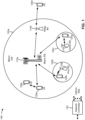
- Fig. 1 is a diagram illustrating a network 100 in which aspects of the present disclosure may be practiced.
- the network 100 may be an LTE network or some other wireless network, such as a 5G or NR network.
- Wireless network 100 may include a number of BSs 110 (shown as BS 110a, BS 110b, BS 110c, and BS 110d) and other network entities.
- a BS is an entity that communicates with user equipment (UEs) and may also be referred to as a base station, a NR BS, a Node B, a gNB, a 5G node B (NB), an access point, a transmit receive point (TRP), and/or the like.
- Each BS may provide communication coverage for a particular geographic area.
- the term "cell" can refer to a coverage area of a BS and/or a BS subsystem serving this coverage area, depending on the context in which the term is used.
- a BS may provide communication coverage for a macro cell, a pico cell, a femto cell, and/or another type of cell.
- a macro cell may cover a relatively large geographic area (e.g., several kilometers in radius) and may allow unrestricted access by UEs with service subscription.
- a pico cell may cover a relatively small geographic area and may allow unrestricted access by UEs with service subscription.
- a femto cell may cover a relatively small geographic area (e.g., a home) and may allow restricted access by UEs having association with the femto cell (e.g., UEs in a closed subscriber group (CSG)).
- a BS for a macro cell may be referred to as a macro BS.
- a BS for a pico cell may be referred to as a pico BS.
- a BS for a femto cell may be referred to as a femto BS or a home BS.
- a BS 110a may be a macro BS for a macro cell 102a
- a BS 110b may be a pico BS for a pico cell 102b
- a BS 110c may be a femto BS for a femto cell 102c.
- a BS may support one or multiple (e.g., three) cells.
- the terms "eNB”, “base station”, “NR BS”, “gNB”, “TRP”, “AP”, “node B", “5G NB”, and “cell” may be used interchangeably herein.
- a cell may not necessarily be stationary, and the geographic area of the cell may move according to the location of a mobile BS.
- the BSs may be interconnected to one another and/or to one or more other BSs or network nodes (not shown) in the access network 100 through various types of backhaul interfaces such as a direct physical connection, a virtual network, and/or the like using any suitable transport network.
- Wireless network 100 may also include relay stations.
- a relay station is an entity that can receive a transmission of data from an upstream station (e.g., a BS or a UE) and send a transmission of the data to a downstream station (e.g., a UE or a BS).
- a relay station may also be a UE that can relay transmissions for other UEs.
- a relay station 110d may communicate with macro BS 110a and a UE 120d in order to facilitate communication between BS 110a and UE 120d.
- a relay station may also be referred to as a relay BS, a relay base station, a relay, and/or the like.
- Wireless network 100 may be a heterogeneous network that includes BSs of different types, e.g., macro BSs, pico BSs, femto BSs, relay BSs, and/or the like. These different types of BSs may have different transmit power levels, different coverage areas, and different impact on interference in wireless network 100.
- macro BSs may have a high transmit power level (e.g., 5 to 40 Watts) whereas pico BSs, femto BSs, and relay BSs may have lower transmit power levels (e.g., 0.1 to 2 Watts).
- a network controller 130 may couple to a set of BSs and may provide coordination and control for these BSs.
- Network controller 130 may communicate with the BSs via a backhaul.
- the BSs may also communicate with one another, e.g., directly or indirectly via a wireless or wireline backhaul.
- UEs 120 may be dispersed throughout wireless network 100, and each UE may be stationary or mobile.
- a UE may also be referred to as an access terminal, a terminal, a mobile station, a subscriber unit, a station, and/or the like.
- a UE may be a cellular phone (e.g., a smart phone), a personal digital assistant (PDA), a wireless modem, a wireless communication device, a handheld device, a laptop computer, a cordless phone, a wireless local loop (WLL) station, a tablet, a camera, a gaming device, a netbook, a smartbook, an ultrabook, a medical device or equipment, biometric sensors/devices, wearable devices (smart watches, smart clothing, smart glasses, smart wrist bands, smart jewelry (e.g., smart ring, smart bracelet)), an entertainment device (e.g., a music or video device, or a satellite radio), a vehicular component or sensor, smart meters/sensors, industrial manufacturing equipment, a global positioning system device, or any other suitable device that is configured to communicate via a wireless or wired medium.
- a cellular phone e.g., a smart phone
- PDA personal digital assistant
- WLL wireless local loop
- MTC and eMTC UEs include, for example, robots, drones, remote devices, sensors, meters, monitors, location tags, and/or the like, that may communicate with a base station, another device (e.g., remote device), or some other entity.
- a wireless node may provide, for example, connectivity for or to a network (e.g., a wide area network such as Internet or a cellular network) via a wired or wireless communication link.
- Some UEs may be considered Internet-of-Things (IoT) devices, and/or may be implemented as NB-IoT (narrowband internet of things) devices.
- Some UEs may be considered a Customer Premises Equipment (CPE).
- UE 120 may be included inside a housing that houses components of UE 120, such as processor components, memory components, and/or the like.
- any number of wireless networks may be deployed in a given geographic area.
- Each wireless network may support a particular RAT and may operate on one or more frequencies.
- a RAT may also be referred to as a radio technology, an air interface, and/or the like.
- a frequency may also be referred to as a carrier, a frequency channel, and/or the like.
- Each frequency may support a single RAT in a given geographic area in order to avoid interference between wireless networks of different RATs.
- NR or 5G RAT networks may be deployed.
- two or more UEs 120 may communicate directly using one or more sidelink channels (e.g., without using a base station 110 as an intermediary to communicate with one another).
- the UEs 120 may communicate using peer-to-peer (P2P) communications, device-to-device (D2D) communications, a vehicle-to-everything (V2X) protocol (e.g., which may include a vehicle-to-vehicle (V2V) protocol, a vehicle-to-infrastructure (V2I) protocol, and/or the like), a mesh network, and/or the like).
- V2X vehicle-to-everything
- the UE 120 may perform scheduling operations, resource selection operations, and/or other operations described elsewhere herein as being performed by the base station 110.
- Fig. 1 is provided merely as an example. Other examples may differ from what is described with regard to Fig. 1 .
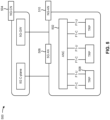
- Fig. 2 shows a block diagram of a design 200 of base station 110 and UE 120, which may be one of the base stations and one of the UEs in Fig. 1 .
- Base station 110 may be equipped with T antennas 234a through 234t
- UE 120 may be equipped with R antennas 252a through 252r, where in general T ⁇ 1 and R ⁇ 1.
- a transmit processor 220 may receive data from a data source 212 for one or more UEs, select one or more modulation and coding schemes (MCS) for each UE based at least in part on channel quality indicators (CQIs) received from the UE, process (e.g., encode and modulate) the data for each UE based at least in part on the MCS selected for the UE, and provide data symbols for all UEs. Transmit processor 220 may also process system information (e.g., for semi-static resource partitioning information (SRPI) and/or the like) and control information (e.g., CQI requests, grants, upper layer signaling, and/or the like) and provide overhead symbols and control symbols.
- MCS modulation and coding schemes
- CQIs channel quality indicators
- Transmit processor 220 may also process system information (e.g., for semi-static resource partitioning information (SRPI) and/or the like) and control information (e.g., CQI requests, grants, upper layer signaling, and
- Transmit processor 220 may also generate reference symbols for reference signals (e.g., the cell-specific reference signal (CRS)) and synchronization signals (e.g., the primary synchronization signal (PSS) and secondary synchronization signal (SSS)).
- a transmit (TX) multiple-input multiple-output (MIMO) processor 230 may perform spatial processing (e.g., precoding) on the data symbols, the control symbols, the overhead symbols, and/or the reference symbols, if applicable, and may provide T output symbol streams to T modulators (MODs) 232a through 232t. Each modulator 232 may process a respective output symbol stream (e.g., for OFDM and/or the like) to obtain an output sample stream.
- Each modulator 232 may further process (e.g., convert to analog, amplify, filter, and upconvert) the output sample stream to obtain a downlink signal.
- T downlink signals from modulators 232a through 232t may be transmitted via T antennas 234a through 234t, respectively.
- the synchronization signals can be generated with location encoding to convey additional information.
- antennas 252a through 252r may receive the downlink signals from base station 110 and/or other base stations and may provide received signals to demodulators (DEMODs) 254a through 254r, respectively.
- Each demodulator 254 may condition (e.g., filter, amplify, downconvert, and digitize) a received signal to obtain input samples.
- Each demodulator 254 may further process the input samples (e.g., for OFDM and/or the like) to obtain received symbols.
- a MIMO detector 256 may obtain received symbols from all R demodulators 254a through 254r, perform MIMO detection on the received symbols if applicable, and provide detected symbols.
- a receive processor 258 may process (e.g., demodulate and decode) the detected symbols, provide decoded data for UE 120 to a data sink 260, and provide decoded control information and system information to a controller/processor 280.
- a channel processor may determine reference signal received power (RSRP), received signal strength indicator (RSSI), reference signal received quality (RSRQ), channel quality indicator (CQI), and/or the like.
- RSRP reference signal received power
- RSSI received signal strength indicator
- RSRQ reference signal received quality indicator
- CQI channel quality indicator
- one or more components of UE 120 may be included in a housing.
- a transmit processor 264 may receive and process data from a data source 262 and control information (e.g., for reports comprising RSRP, RSSI, RSRQ, CQI, and/or the like) from controller/processor 280. Transmit processor 264 may also generate reference symbols for one or more reference signals. The symbols from transmit processor 264 may be precoded by a TX MIMO processor 266 if applicable, further processed by modulators 254a through 254r (e.g., for DFT-s-OFDM, CP-OFDM, and/or the like), and transmitted to base station 110.
- control information e.g., for reports comprising RSRP, RSSI, RSRQ, CQI, and/or the like
- Transmit processor 264 may also generate reference symbols for one or more reference signals.
- the symbols from transmit processor 264 may be precoded by a TX MIMO processor 266 if applicable, further processed by modulators 254a through 254r (e.g., for DFT-
- the uplink signals from UE 120 and other UEs may be received by antennas 234, processed by demodulators 232, detected by a MIMO detector 236 if applicable, and further processed by a receive processor 238 to obtain decoded data and control information sent by UE 120.
- Receive processor 238 may provide the decoded data to a data sink 239 and the decoded control information to controller/processor 240.
- Base station 110 may include communication unit 244 and communicate to network controller 130 via communication unit 244.
- Network controller 130 may include communication unit 294, controller/processor 290, and memory 292.
- Controller/processor 240 of base station 110, controller/processor 280 of UE 120, and/or any other component(s) of Fig. 2 may perform one or more techniques associated with transmit parameter control, as described in more detail elsewhere herein.
- controller/processor 240 of base station 110, controller/processor 280 of UE 120, and/or any other component(s) of Fig. 2 may perform or direct operations of, for example, process 800 of Fig. 8 , process 900 of Fig. 9 , and/or other processes as described herein.
- Memories 242 and 282 may store data and program codes for base station 110 and UE 120, respectively.
- a scheduler 246 may schedule UEs for data transmission on the downlink and/or uplink.
- UE 120 may include means for receiving, from a base station (BS), a group-common downlink control information (DCI) message transmitted to a plurality of user equipment (UEs), wherein the group-common DCI message includes information identifying at least one communication parameter for the UE, means for communicating with the BS in accordance with the at least one communication parameter based at least in part on receiving the group-common DCI message transmitted to the plurality of UEs, and/or the like.
- DCI downlink control information
- UEs user equipment
- such means may include one or more components of UE 120 described in connection with Fig. 2 .
- base station 110 may include means for transmitting a group-common downlink control information (DCI) message to a plurality of user equipment (UEs), wherein the group-common DCI message includes information identifying at least one communication parameter, means for communicating with at least one of the plurality of UEs in accordance with the at least one communication parameter based at least in part on transmitting the group-common DCI message to the plurality of UEs and/or the like.
- DCI downlink control information
- UEs user equipment
- such means may include one or more components of base station 110 described in connection with Fig. 2 .
- Fig. 2 is provided merely as an example. Other examples may differ from what is described with regard to Fig. 2 .
- Fig. 3A shows an example frame structure 300 for frequency division duplexing (FDD) in a telecommunications system (e.g., NR).
- the transmission timeline for each of the downlink and uplink may be partitioned into units of radio frames (sometimes referred to as frames).
- Each radio frame may have a predetermined duration (e.g., 10 milliseconds (ms)) and may be partitioned into a set of Z (Z ⁇ 1) subframes (e.g., with indices of 0 through Z-1).
- Each subframe may have a predetermined duration (e.g., 1ms) and may include a set of slots (e.g., 2 m slots per subframe are shown in Fig.
- Each slot may include a set of L symbol periods.
- each slot may include fourteen symbol periods (e.g., as shown in Fig. 3A ), seven symbol periods, or another number of symbol periods.
- the subframe may include 2L symbol periods, where the 2L symbol periods in each subframe may be assigned indices of 0 through 2L-1.
- a scheduling unit for the FDD may frame-based, subframe-based, slot-based, symbol-based, and/or the like.
- a wireless communication structure may refer to a periodic time-bounded communication unit defined by a wireless communication standard and/or protocol. Additionally, or alternatively, different configurations of wireless communication structures than those shown in Fig. 3A may be used.
- a base station may transmit synchronization signals.
- a base station may transmit a primary synchronization signal (PSS), a secondary synchronization signal (SSS), and/or the like, on the downlink for each cell supported by the base station.
- PSS and SSS may be used by UEs for cell search and acquisition.
- the PSS may be used by UEs to determine symbol timing
- the SSS may be used by UEs to determine a physical cell identifier, associated with the base station, and frame timing.
- the base station may also transmit a physical broadcast channel (PBCH).
- the PBCH may carry some system information, such as system information that supports initial access by UEs.
- the base station may transmit the PSS, the SSS, and/or the PBCH in accordance with a synchronization communication hierarchy (e.g., a synchronization signal (SS) hierarchy) including multiple synchronization communications (e.g., SS blocks), as described below in connection with Fig. 3B .
- a synchronization communication hierarchy e.g., a synchronization signal (SS) hierarchy
- multiple synchronization communications e.g., SS blocks
- Fig. 3B is a block diagram conceptually illustrating an example SS hierarchy, which is an example of a synchronization communication hierarchy.
- the SS hierarchy may include an SS burst set, which may include a plurality of SS bursts (identified as SS burst 0 through SS burst B-1, where B is a maximum number of repetitions of the SS burst that may be transmitted by the base station).
- each SS burst may include one or more SS blocks (identified as SS block 0 through SS block (b max_SS -1), where b max_SS -1 is a maximum number of SS blocks that can be carried by an SS burst).
- An SS burst set may be periodically transmitted by a wireless node, such as every X milliseconds, as shown in Fig. 3B .
- an SS burst set may have a fixed or dynamic length, shown as Y milliseconds in Fig. 3B .
- the SS burst set shown in Fig. 3B is an example of a synchronization communication set, and other synchronization communication sets may be used in connection with the techniques described herein.
- the SS block shown in Fig. 3B is an example of a synchronization communication, and other synchronization communications may be used in connection with the techniques described herein.
- an SS block includes resources that carry the PSS, the SSS, the PBCH, and/or other synchronization signals (e.g., a tertiary synchronization signal (TSS)) and/or synchronization channels.
- synchronization signals e.g., a tertiary synchronization signal (TSS)
- multiple SS blocks are included in an SS burst, and the PSS, the SSS, and/or the PBCH may be the same across each SS block of the SS burst.
- a single SS block may be included in an SS burst.
- the SS block may be at least four symbol periods in length, where each symbol carries one or more of the PSS (e.g., occupying one symbol), the SSS (e.g., occupying one symbol), and/or the PBCH (e.g., occupying two symbols).
- the symbols of an SS block are consecutive, as shown in Fig. 3B .
- the symbols of an SS block are non-consecutive.
- one or more SS blocks of the SS burst may be transmitted in consecutive radio resources (e.g., consecutive symbol periods) during one or more slots. Additionally, or alternatively, one or more SS blocks of the SS burst may be transmitted in non-consecutive radio resources.
- the SS bursts may have a burst period, whereby the SS blocks of the SS burst are transmitted by the base station according to the burst period. In other words, the SS blocks may be repeated during each SS burst.
- the SS burst set may have a burst set periodicity, whereby the SS bursts of the SS burst set are transmitted by the base station according to the fixed burst set periodicity. In other words, the SS bursts may be repeated during each SS burst set.
- the base station may transmit system information, such as system information blocks (SIBs) on a physical downlink shared channel (PDSCH) in certain slots.
- SIBs system information blocks
- the base station may transmit control information/data on a physical downlink control channel (PDCCH) in C symbol periods of a slot, where B may be configurable for each slot.
- the base station may transmit traffic data and/or other data on the PDSCH in the remaining symbol periods of each slot.
- FIGS. 3A and 3B are provided as examples. Other examples may differ from what is described with regard to Figs. 3A and 3B .
- Fig. 4 shows an example slot format 410 with a normal cyclic prefix.
- the available time frequency resources may be partitioned into resource blocks.
- Each resource block may cover a set to of subcarriers (e.g., 12 subcarriers) in one slot and may include a number of resource elements.
- Each resource element may cover one subcarrier in one symbol period (e.g., in time) and may be used to send one modulation symbol, which may be a real or complex value.
- An interlace structure may be used for each of the downlink and uplink for FDD in certain telecommunications systems (e.g., NR).
- Q interlaces with indices of 0 through Q - 1 may be defined, where Q may be equal to 4, 6, 8, 10, or some other value.
- Each interlace may include slots that are spaced apart by Q frames.
- interlace q may include slots q, q + Q, q + 2Q, etc., where q ⁇ ⁇ 0, ..., Q - 1 ⁇ .
- a UE may be located within the coverage of multiple BSs. One of these BSs may be selected to serve the UE. The serving BS may be selected based at least in part on various criteria such as received signal strength, received signal quality, path loss, and/or the like. Received signal quality may be quantified by a signal-to-noise-and-interference ratio (SNIR), or a reference signal received quality (RSRQ), or some other metric.
- SNIR signal-to-noise-and-interference ratio
- RSRQ reference signal received quality
- the UE may operate in a dominant interference scenario in which the UE may observe high interference from one or more interfering BSs.
- New Radio may refer to radios configured to operate according to a new air interface (e.g., other than Orthogonal Frequency Divisional Multiple Access (OFDMA)-based air interfaces) or fixed transport layer (e.g., other than Internet Protocol (IP)).
- OFDM Orthogonal Frequency Divisional Multiple Access
- IP Internet Protocol
- NR may utilize OFDM with a CP (herein referred to as cyclic prefix OFDM or CP-OFDM) and/or SC-FDM on the uplink, may utilize CP-OFDM on the downlink and include support for half-duplex operation using TDD.
- NR may, for example, utilize OFDM with a CP (herein referred to as CP-OFDM) and/or discrete Fourier transform spread orthogonal frequency-division multiplexing (DFT-s-OFDM) on the uplink, may utilize CP-OFDM on the downlink and include support for half-duplex operation using time division duplexing (TDD).
- CP-OFDM OFDM with a CP
- DFT-s-OFDM discrete Fourier transform spread orthogonal frequency-division multiplexing
- TDD time division duplexing
- NR may include Enhanced Mobile Broadband (eMBB) service targeting wide bandwidth (e.g., 80 megahertz (MHz) and beyond), millimeter wave (mmW) targeting high carrier frequency (e.g., 60 gigahertz (GHz)), massive MTC (mMTC) targeting non-backward compatible MTC techniques, and/or mission critical targeting ultra-reliable low latency communications (URLLC) service.
- eMBB Enhanced Mobile Broadband
- mmW millimeter wave
- mMTC massive MTC
- URLLC ultra-reliable low latency communications
- NR resource blocks may span 12 sub-carriers with a sub-carrier bandwidth of 60 or 120 kilohertz (kHz) over a 0.1 ms duration.
- Each radio frame may include 40 slots and may have a length of 10 ms. Consequently, each slot may have a length of 0.25 ms.
- Each slot may indicate a link direction (e.g., DL or UL) for data transmission and the link direction for each slot may be dynamically switched.
- Each slot may include DL/UL data as well as DL/UL control data.
- NR may support a different air interface, other than an OFDM-based interface.
- NR networks may include entities such central units or distributed units.
- Fig. 4 is provided as an example. Other examples may differ from what is described with regard to Fig. 4 .
- a 5G access node 506 may include an access node controller (ANC) 502.
- the ANC may be a central unit (CU) of the distributed RAN 500.
- the backhaul interface to the next generation core network (NG-CN) 504 may terminate at the ANC.
- the backhaul interface to neighboring next generation access nodes (NG-ANs) may terminate at the ANC.
- the ANC may include one or more TRPs 508 (which may also be referred to as BSs, NR BSs, Node Bs, 5G NBs, APs, gNB, or some other term).
- TRPs 508 which may also be referred to as BSs, NR BSs, Node Bs, 5G NBs, APs, gNB, or some other term.
- TRP may be used interchangeably with "cell.”
- the TRPs 508 may be a distributed unit (DU).
- the TRPs may be connected to one ANC (ANC 502) or more than one ANC (not illustrated).
- ANC 502 ANC 502
- RaaS radio as a service
- a TRP may include one or more antenna ports.
- the TRPs may be configured to individually (e.g., dynamic selection) or jointly (e.g., joint transmission) serve traffic to a UE.
- the local architecture of RAN 500 may be used to illustrate fronthaul definition.
- the architecture may be defined that support fronthauling solutions across different deployment types.
- the architecture may be based at least in part on transmit network capabilities (e.g., bandwidth, latency, and/or jitter).
- the architecture may share features and/or components with LTE.
- the next generation AN (NG-AN) 510 may support dual connectivity with NR.
- the NG-AN may share a common fronthaul for LTE and NR.
- the architecture may enable cooperation between and among TRPs 508. For example, cooperation may be preset within a TRP and/or across TRPs via the ANC 502. According to aspects, no inter-TRP interface may be needed/present.
- a dynamic configuration of split logical functions may be present within the architecture of RAN 500.
- the packet data convergence protocol (PDCP), radio link control (RLC), media access control (MAC) protocol may be adaptably placed at the ANC or TRP.
- PDCP packet data convergence protocol
- RLC radio link control
- MAC media access control
- a BS may include a central unit (CU) (e.g., ANC 502) and/or one or more distributed units (e.g., one or more TRPs 508).
- CU central unit
- distributed units e.g., one or more TRPs 508
- Fig. 5 is provided merely as an example. Other examples may differ from what is described with regard to Fig. 5 .
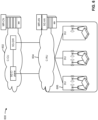
- Fig. 6 illustrates an example physical architecture of a distributed RAN 600, according to aspects of the present disclosure.
- a centralized core network unit (C-CU) 602 may host core network functions.
- the C-CU may be centrally deployed.
- C-CU functionality may be offloaded (e.g., to advanced wireless services (AWS)), in an effort to handle peak capacity.
- AWS advanced wireless services
- a centralized RAN unit (C-RU) 604 may host one or more ANC functions.
- the C-RU may host core network functions locally.
- the C-RU may have distributed deployment.
- the C-RU may be closer to the network edge.
- a distributed unit (DU) 606 may host one or more TRPs.
- the DU may be located at edges of the network with radio frequency (RF) functionality.
- RF radio frequency
- Fig. 6 is provided merely as an example. Other examples may differ from what is described with regard to Fig. 6 .
- a BS may signal communication parameters to a UE to enable communication with the UE.
- the BS may lack signaling to signal the communication parameters efficiently and in a timely manner. For example, when the BS is to receive a PUSCH transmission in connection with providing a radio resource control (RRC) configured grant, the BS may be configured to use RRC signaling to indicate an adjustment to a communication parameter for the PUSCH transmission, which may result in an excessive delay to indicate the adjustment.
- RRC radio resource control
- the BS may be configured to use the DCI activation message to signal an adjustment to a communication parameter for each UE of a plurality of UEs.
- DCI downlink control information
- DL SPS downlink semi-persistent scheduling
- Some aspects described herein may enable signaling of a group-common DCI message to signal communication parameters for a plurality of UEs.
- the BS may determine a change to at least one communication parameter, and may transmit the group-common DCI message to a plurality of UEs to indicate the change to the at least one communication parameter.
- the BS may communicate with at least one of the plurality of UEs, such as by transmitting a DL SPS transmission, receiving a PUSCH transmission, and/or the like.
- the BS may reduce a delay in adjusting a communication parameter relative to using RRC signaling, and may reduce a utilization of network resources and BS resources relative to transmitting a plurality of UE-specific activation DCIs. Furthermore, based at least in part on signaling a change to a communication parameter rather than an absolute value for a communication parameter, the BS may reduce a utilization of network resources to transmit the group-common DCI message.
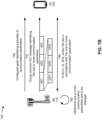
- Figs. 7A and 7B are diagrams illustrating examples 700 of transmit parameter control, in accordance with various aspects of the present disclosure.
- example 700 includes a BS 110 and a plurality of UEs 120 (e.g., a first UE 120, a second UE 120, a third UE 120, and/or the like).
- UEs 120 e.g., a first UE 120, a second UE 120, a third UE 120, and/or the like.
- BS 110 may determine one or more communication parameters. For example, BS 110 may determine that a current communication parameter value is to be changed relative to a previously signaled at least one communication parameter value. In this case, the BS 110 may have previously signaled a plurality of communication parameters using a configured grant (e.g., the configured grant may be signaled using radio resource control (RRC) signaling or is activated using an activation DCI), and may determine that the at least one communication parameter is to be changed from a previously signaled value to another value.
- RRC radio resource control
- BS 110 may determine a plurality of UEs 120 for which the one or more communication parameters are to be applied. For example, BS 110 may determine that, of a plurality of UEs 120 that are communicating with BS 110, a particular subset of the plurality of UEs 120 are to have a current communication parameter value changed to a different communication parameter value.
- BS 110 may determine a particular type of communication parameter value, such as a modulation and coding scheme (MCS) parameter. Additionally, or alternatively, BS 110 may determine a resource allocation type of communication parameter, such as a starting resource block for a communication, a quantity of resource blocks allocated for the communication, a frequency hopping position for the communication, a starting orthogonal frequency division multiplexing (OFDM) symbol for the communication, a quantity of OFDM symbols to use for the communication, and/or the like. Additionally, or alternatively, BS 110 may determine a precoder type of communication parameter, such as which precoder to use for precoding.
- MCS modulation and coding scheme
- BS 110 may determine a resource allocation type of communication parameter, such as a starting resource block for a communication, a quantity of resource blocks allocated for the communication, a frequency hopping position for the communication, a starting orthogonal frequency division multiplexing (OFDM) symbol for the communication, a quantity of OFDM symbols to use for the communication, and/or the like
- BS 110 may determine a repetition parameter type of communication parameter, such as a quantity of repetitions of the communication to transmit, a slot bundling value for the communication, a mini-slot bundling value for the communication, and/or the like.
- BS 110 may transmit, and one or more UEs 120 may receive, a group-common DCI message identifying one or more communication parameters.
- BS 110 may transmit the group-common DCI message to a plurality of UEs 120, such as a first UE 120, a second UE 120, a third UE 120, and/or the like, to adjust a communication parameter of the first UE 120, the second UE 120, the third UE 120, and/or the like.
- the group-common DCI message may include information for the plurality of UEs 120 (e.g., setting a communication parameter in common for the plurality of UEs 120) and/or UE-specific information (e.g., identifying a particular communication parameter for first UE 120, another particular communication parameter for second UE 120, and/or the like).
- information for the plurality of UEs 120 e.g., setting a communication parameter in common for the plurality of UEs 120
- UE-specific information e.g., identifying a particular communication parameter for first UE 120, another particular communication parameter for second UE 120, and/or the like.
- BS 110 may indicate a change to the communication parameter.
- BS 110 may provide, using the group-common DCI message, an indicator that the communication parameter is to change from a first value to a second value, without providing information explicitly signaling the first value or the second value.
- BS 110 may provide a bit indicator indicating that a starting resource block is to be increased by a delta value to a new starting resource block, rather than signaling an absolute value of the new starting resource block.
- BS 110 may provide a bit indicator indicating that an MCS is to be increased by a delta value to a new MCS (e.g., based on an ordered set of MCSs), rather than signaling the MCS explicitly. In this way, BS 110 may decrease a size of the DCI message relative to signaling the absolute value, thereby reducing a utilization of network resources.
- BS 110 may transmit information identifying an accumulative delta value. In this case, BS 110 may transmit an indicator identifying a change to the communication parameter value relative to a sequentially last value for the communication parameter. In some aspects, BS 110 may transmit information identifying an absolute delta value. In this case, BS 110 may transmit an indicator identifying a change to the communication parameter value relative to a sequentially first communication parameter value (e.g., an initial communication parameter value that may be configured based at least in part on an RRC configuration message or a DCI activation message).
- a sequentially first communication parameter value e.g., an initial communication parameter value that may be configured based at least in part on an RRC configuration message or a DCI activation message.
- BS 110 may signal an absolute value for a communication parameter. For example, when a size of an indicator to signal an absolute value for the communication parameter is less than a threshold, thereby obviating a reduction in a message size from using a delta value as an indicator, BS 110 may include an indicator of the absolute value in the group-common DCI message. In some aspects, BS 110 may implicitly signal a communication parameter value using the group-common DCI message.
- BS 110 may include an indicator of an MCS, based at least in part on which UE 120 may derive an allocated quantity of resource blocks (e.g., without BS 110 explicitly signaling the allocated quantity of resource blocks), thereby reducing a size of the group-common DCI message and reducing a utilization of network resources.
- BS 110 may include an indicator of when a change to a communication parameter is to become effective.
- BS 110 may include a k0 indicator identifying a quantity of slots between reception of a downlink group-common DCI message and when a communication parameter value change is to become effective.
- BS 110 may include a k2 indicator identifying a quantity of slots between reception of an uplink group-common DCI message and when a communication parameter value change is to become effective.
- UE 120 may apply the communication parameter value change and communicate in accordance with the communication parameter value change after the time at which the communication parameter value change is to become effective.
- UE 120 may communicate using an original communication parameter before applying the communication parameter value change based at least in part on the indicator of when the change to the communication parameter is to become effective.
- the time is a UE-specific time indicated by a field of the group-common DCI message (e.g., each of the plurality of UEs is associated with a corresponding time field) that indicates when the parameter value change is to become effective.
- the time is non-UE-specific (e.g., the time is a group-common time field applicable to each UE of the plurality of UEs).
- UE 120 may apply the communication parameter value change based at least in part on a timing of receiving the group-common DCI message. For example, UE 120 may determine to apply the communication parameter value change based at least in part on receiving the group-common DCI message a threshold quantity of symbols before a PUSCH transmission is scheduled. In contrast, if the group-common DCI message is not received the threshold quantity of symbols before the PUSCH transmission is scheduled, UE 120 may determine to apply a same communication parameter as was used for a previous transmission using a same configured grant as for the transmission of the PUSCH. This may occur as a result of insufficient processing time at the UE to apply the communication parameter value change between the reception of the DCI and the transmission of the PUSCH. In this case, UE 120 may apply the communication parameter indicated by the group-common DCI message after a PUSCH transmission and for another PUSCH transmission.
- UE 120 may monitor for the group-common DCI message based at least in part on a monitoring parameter. For example, before BS 110 transmits and UE 120 receives the group-common DCI message, BS 110 may transmit RRC signaling to UE 120 to configure one or more monitoring parameters for UE 120, such as a radio network temporary identifier (RNTI), a size of the group-common DCI message, a resource location of control information for UE 120, and/or the like. In some aspects, UE 120 may monitor for different group-common DCI messages.
- RNTI radio network temporary identifier
- UE 120 may monitor for different group-common DCI messages.
- UE 120 may monitor for a first type of group-common DCI message (e.g., a downlink group-common DCI message) for a DL SPS transmission with a first size or a first RNTI, and may monitor for a second type of group-common DCI message (e.g., an uplink group-common DCI message) for a PUSCH transmission with a configured grant with a second size or a second RNTI.
- the first type of group-common DCI message and the second type of group-common DCI message may be associated with a common size (e.g., based at least in part on adding padding bits) and a common RNTI.
- UE 120 may determine whether a received group-common DCI message is the first type (e.g., a DL group-common DCI for a DL SPS) or the second type (e.g., a UL group-common DCI for a PUSCH with a configured grant) based at least in part on a bit indicator included in the received group-common DCI message.
- the first type e.g., a DL group-common DCI for a DL SPS
- the second type e.g., a UL group-common DCI for a PUSCH with a configured grant
- UE 120 may determine that the group-common DCI message is a group-common DCI message and not a re-activation DCI. For example, UE 120 may parse the group-common DCI message to determine that the group-common DCI message is a group-common DCI message based at least in part on an RNTI of the group-common DCI message, a DCI format of the group-common DCI message, a bit indicator included in the group-common DCI message, and/or the like.
- UE 120 may determine a bandwidth part switching command included in the group-common DCI message. For example, UE 120 may process the group-common DCI message to identify a UE-specific bandwidth part switch indicator, a bandwidth part switch indicator for, and common to, the plurality of UEs 120, and/or the like. Additionally, or alternatively, UE 120 may identify a starting resource block, a quantity of resource blocks, a frequency hopping offset, and/or the like for an active bandwidth part, a previous bandwidth part, and/or the like.
- a reference point for applying a communication parameter change may be reception of the group-common DCI message by UE 120, a completion of a bandwidth part switch, the later one of the reception and the completion, and/or the like. Further, a change to a communication parameter value may be relative to a communication parameter value for a bandwidth part to which UE 120 switches.
- BS 110 and UE 120 may communicate in accordance with the one or more communication parameters.
- BS 110 may transmit a DL SPS transmission to UE 120 in accordance with the one or more communication parameters, and UE 120 may receive the DL SPS transmission.
- UE 120 may transmit a PUSCH transmission in accordance with the one or more communication parameters, and BS 110 may receive the PUSCH transmission.
- the one or more communication parameters may be applied to the DL SPS transmission and/or the PUSCH transmission, and may not be applied to other transmissions, such as dynamically scheduled uplink transmissions or downlink transmissions.
- BS 110 may communicate with the plurality of UEs 120 in accordance with the one or more communication parameters. For example, based at least in part on setting the one or more communication parameters using the group-common DCI message, BS 110 may transmit to and/or receive from the plurality of UEs 120, thereby reducing a delay in setting a communication parameter and/or reducing a utilization of network resources to set a communication parameter.
- BS 110 may transmit a configured grant to UE 120.
- BS 110 may transmit the configured grant, which may identify a sequence of communication opportunities between the BS 110 and the UE120, and may identify a plurality of communication parameters relating to the sequence of communication opportunities.
- the configured grant may correspond to a downlink semi-persistent scheduling transmission.
- one or more of the plurality of communication parameters may be transmitted from the BS 110 to the UE 120 via the activation DCI of the downlink semi-persistent scheduling transmission.
- the configured grant may correspond to a sequence of physical uplink shared channel transmissions, which do not need to be activated.
- the plurality of communication parameters may be included in the configured grant configuration.
- BS 110 may determine that one or more communication parameters are to be changes. For example, BS 110 may determine that a value for a communication parameter, of the plurality of communication parameters indicated in the configured grant, is to be changed to a different value.
- BS 110 may transmit a group-common DCI message identifying the one or more communication parameters.
- BS 110 may indicate a change to a value of at least one communication parameter of the plurality of communication parameters using a group-common DCI message transmitted to UE 120.
- the group-common DCI message may include a UE specific region ( UE1 ) that may include one or more fields to update one or more communication parameters.
- a first field ( CP1 ) may indicate an update to a first communication parameter indicated in the configured grant
- a second field ( CP2 ) may indicate an update to a second communication parameter indicated in the configured grant
- a third field ( CP3 ) may indicate an update to a third communication parameter indicated in the configured grant, and/or the like.
- BS 110 and UE 120 may communicate (e.g., using a PUSCH transmission) in accordance with the one or more communication parameters.
- Figs. 7A and 7B are provided as examples. Other examples may differ from what is described with respect to Figs. 7A and 7B .
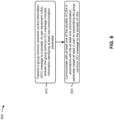
- Fig. 8 is a diagram illustrating an example process 800 performed, for example, by a BS, in accordance with various aspects of the present disclosure.
- Example process 800 is an example where a BS (e.g., BS 110) performs transmit parameter control.
- a BS e.g., BS 110
- process 800 may include transmitting a group-common downlink control information (DCI) message to a plurality of user equipment (UEs), wherein the group-common DCI message includes information identifying at least one communication parameter (block 810).
- the BS e.g., using controller/processor 240, transmit processor 220, TX MIMO processor 230, MOD 232, antenna 234, and/or the like
- the group-common DCI message relates to communications associated with at least one of a downlink semi-persistent scheduling transmission or a physical uplink shared channel transmission with a configured grant.
- process 800 may include communicating with at least one of the plurality of UEs in accordance with the at least one communication parameter based at least in part on transmitting the group-common DCI message to the plurality of UEs (block 820).
- the BS e.g., using antenna 234, DEMOD 232, MIMO detector 236, receive processor 238, controller/processor 240, transmit processor 220, TX MIMO processor 230, MOD 232, antenna 234, and/or the like
- Process 800 may include additional aspects, such as any single aspect or any combination of aspects described below and/or in connection with one or more other processes described elsewhere herein.
- the group-common DCI message includes first information relating to the plurality of UEs and second information that is UE-specific.
- the group-common DCI message relates to communications associated with at least one of a downlink semi-persistent scheduling transmission or a physical uplink shared channel transmission with a configured grant.
- the BS may transmit a configured grant including a plurality of communication parameters, wherein the BS is configured to modify one or more of the plurality of communication parameters in accordance with the at least one communication parameter.
- the at least one communication parameter is at least one of a modulation and coding scheme parameter, a resource allocation parameter, a starting resource block parameter, a quantity of resource blocks parameter, a frequency hopping position parameter, a starting orthogonal frequency division multiplexing (OFDM) parameter, a quantity of OFDM symbols parameter, a repetition parameter, a repetition quantity parameter, an uplink precoder parameter, a slot bundling parameter, or a mini-slot bundling parameter.
- the group-common DCI message indicates a change of the at least one communication parameter relative to a previously signaled at least one communication parameter.
- the BS is configured to indicate the at least one communication parameter to enable a determination of at least one other communication parameter.
- the group-common DCI message indicates a change of the at least one communication parameter relative to an initial value for the at least one communication parameter.
- the group-common DCI message indicates a time at which the at least one communication parameter becomes effective; and the BS is configured to communicate with the at least one of the plurality of UEs after the time at which the at least one communication parameter becomes effective.
- the BS is configured to communicate with the at least one of the plurality of UEs using a previously signaled at least one communication parameter after transmitting the group-common DCI message and before the at least one communication parameter becomes effective.
- the BS is configured to transmit a radio resource control (RRC) message identifying a set of monitoring parameters for the plurality of UEs to monitor for the group-common DCI message; and the BS is configured to transmit the group-common DCI message in accordance with the set of monitoring parameters.
- RRC radio resource control
- the group-common DCI message is one of a first type of group-common DCI message with a first size or a first radio network temporary identifier (RNTI) for a first type of communication, or a second type of group-common DCI message with a second size, different from the first size, or a second RNTI different from the first RNTI for a second type of communication.
- RNTI radio network temporary identifier
- the first type of communication is a downlink communication and the second type of communication is an uplink communication.
- the group-common DCI message includes a bit indicator to indicate whether the group-common DCI message is to apply to uplink communications or downlink communications.
- the group-common DCI message includes an indication of a type of the group-common DCI message.
- the group-common DCI message includes a bandwidth part switching indicator.
- the bandwidth part switching indicator is associated with the at least one of the plurality of UEs or with all of the plurality of UEs.
- the at least one communication parameter is applicable to communications using one or more bandwidth parts, of a plurality of bandwidth parts, associated with the bandwidth part switching indicator.
- process 800 may include additional blocks, fewer blocks, different blocks, or differently arranged blocks than those depicted in Fig. 8 . Additionally, or alternatively, two or more of the blocks of process 800 may be performed in parallel.
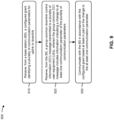
- Fig. 9 is a diagram illustrating an example process 900 performed, for example, by a UE, in accordance with various aspects of the present disclosure.
- Example process 900 is an example where a UE (e.g., UE 120) performs transmit parameter control.
- a UE e.g., UE 120
- process 900 may include receiving, from a base station (BS), a configured grant identifying a plurality of communication parameters for uplink or downlink (block 910).
- the UE e.g., using antenna 252, DEMOD 254, MIMO detector 256, receive processor 258, controller/processor 280, and/or the like
- process 900 may include receiving, from the BS, a group-common downlink control information (DCI) message transmitted to a plurality of user equipment (UEs), wherein the group-common DCI message includes information indicating a change to at least one communication parameter in the plurality of communication parameters, wherein the group-common DCI message relates to communications associated with at least one of a downlink semi-persistent scheduling transmission or a physical uplink shared channel transmission with a configured grant (block 920).
- DCI downlink control information
- the UE may receive, from the BS, a group-common downlink control information (DCI) message transmitted to a plurality of user equipment (UEs), wherein the group-common DCI message includes information indicating a change to at least one communication parameter in the plurality of communication parameters, as described in more detail above.
- DCI downlink control information
- the group-common DCI message relates to communications associated with at least one of a downlink semi-persistent scheduling transmission or a physical uplink shared channel transmission with a configured grant.
- process 900 may include communicating with the BS in accordance with the configured grant based at least in part on the change to the at least one communication parameter (block 930).
- the UE e.g., using antenna 252, DEMOD 254, MIMO detector 256, receive processor 258, controller/processor 280, transmit processor 264, TX MIMO processor 266, MOD 254, antenna 252, and/or the like
- Process 900 may include additional aspects, such as any single aspect or any combination of aspects described below and/or in connection with one or more other processes described elsewhere herein.
- the group-common DCI message includes first information relating to the plurality of UEs and second information specific to the UE, and wherein the UE is configured to identify the first information and the second information based at least in part on receiving the group-common DCI message.
- the group-common DCI message relates to communications associated with at least one of a downlink semi-persistent scheduling transmission or a physical uplink shared channel transmission with a configured grant.
- the at least one communication parameter is at least one of a modulation and coding scheme parameter, a resource allocation parameter, a starting resource block parameter, a quantity of resource blocks parameter, a frequency hopping position parameter, a starting orthogonal frequency division multiplexing (OFDM) parameter, a quantity of OFDM symbols parameter, a repetition parameter, a repetition quantity parameter, an uplink precoder parameter, a slot bundling parameter, or a mini-slot bundling parameter.
- the group-common DCI message indicates a change of the at least one communication parameter relative to a previously signaled at least one communication parameter.
- the UE is configured to determine at least one other communication parameter based at least in part on the at least one communication parameter.
- the group-common DCI message indicates a change of the at least one communication parameter relative to an initial value for the at least one communication parameter.
- the group-common DCI message indicates a time at which the at least one communication parameter becomes effective; and UE is configured to communicate with the BS after the time at which the at least one communication parameter becomes effective.
- the UE is configured to communicate with the BS using a different communication parameter than the at least one communication parameter after receiving the group-common DCI message and before the at least one communication parameter becomes effective.
- the UE is configured to receive a radio resource control (RRC) message identifying a set of monitoring parameters for the UE to monitor for the group-common DCI message; and the UE is configured to monitor for the group-common DCI message in accordance with the set of monitoring parameters.
- RRC radio resource control
- the group-common DCI message is one of a first type of group-common DCI message with a first size or a first radio network temporary identifier (RNTI) for a first type of communication, or a second type of group-common DCI message with a second size, different from the first size, or a second RNTI different from the first RNTI for a second type of communication.
- RNTI radio network temporary identifier
- the first type of communication is a downlink communication and the second type of communication is an uplink communication.
- the group-common DCI message includes a bit indicator to indicate whether the group-common DCI message is to apply to uplink communications or downlink communications.
- the group-common DCI message includes an indication of a type of the group-common DCI message.
- the group-common DCI message includes a bandwidth part switching indicator.
- the bandwidth part switching indicator is associated with the UE or with all of the plurality of UEs.
- the at least one communication parameter may be applicable to communications using one or more bandwidth parts, of a plurality of bandwidth parts, associated with the bandwidth part switching indicator.
- the at least one communication parameter is applied based at least in part on a timing of the group-common DCI message.
- the time is a UE-specific time for the UE or a non-UE-specific time common to the plurality of UEs.
- process 900 may include additional blocks, fewer blocks, different blocks, or differently arranged blocks than those depicted in Fig. 9 . Additionally, or alternatively, two or more of the blocks of process 900 may be performed in parallel.
- ком ⁇ онент is intended to be broadly construed as hardware, firmware, or a combination of hardware and software.
- a processor is implemented in hardware, firmware, or a combination of hardware and software.
- satisfying a threshold may, depending on the context, refer to a value being greater than the threshold, greater than or equal to the threshold, less than the threshold, less than or equal to the threshold, equal to the threshold, not equal to the threshold, and/or the like.
Landscapes
- Engineering & Computer Science (AREA)
- Computer Networks & Wireless Communication (AREA)
- Signal Processing (AREA)
- Quality & Reliability (AREA)
- Mobile Radio Communication Systems (AREA)
Claims (11)
- Ein Verfahren (800) zur drahtlosen Kommunikation, das von einer Basisstation, BS, ausgeführt wird, aufweisend:Übertragen (810) einer gruppenweiten Abwärtsverbindungs-Steuerungsinformations-, DCI, Nachricht an eine Vielzahl von Benutzergeräten, UEs, wobei die gruppenweite DCI-Nachricht Informationen enthält, die einen Zeitpunkt identifizieren, zu dem zumindest ein Kommunikationsparameter für Aufwärts- oder Abwärtsverbindungsübertragungen wirksam wird; undKommunizieren (820) mit zumindest einer der Vielzahl von UEs unter Verwendung eines anderen Kommunikationsparameters als dem zumindest einen Kommunikationsparameter nach dem Übertragen der gruppenweiten DCI-Nachricht und bevor der zumindest eine Kommunikationsparameter wirksam wird.
- Ein Verfahren (900) zur drahtlosen Kommunikation, das von einem Benutzergerät, UE, ausgeführt wird, aufweisend:Empfangen (920) einer gruppenweiten Abwärtsverbindungs-Steuerungsinformations-, DCI, Nachricht die an eine Vielzahl von Benutzergeräten, UE, übertragen wird, von der BS, wobei die gruppenweite DCI-Nachricht Informationen enthält, die einen Zeitpunkt identifizieren, zu dem zumindest ein Kommunikationsparameter für Aufwärts- oder Abwärtsverbindungsübertragungen wirksam wird; undKommunizieren (930) mit der BS unter Verwendung eines zuvor signalisierten zumindest einen Kommunikationsparameters nach dem Empfangen der gruppenweiten DCI-Nachricht und bevor der zumindest eine Kommunikationsparameter basierend auf der in der gruppenweiten DCI-Nachricht angegebenen Zeit wirksam wird.
- Das Verfahren (900) nach Anspruch 2, wobei die gruppenweite DCI-Nachricht erste Informationen, die der Vielzahl von UEs gemeinsam sind, und zweite Informationen, die für die UE spezifisch sind, enthält, und wobei die UE so konfiguriert ist, dass sie die ersten Informationen und die zweiten Informationen zumindest teilweise auf der Grundlage des Empfangs der gruppenweiten DCI-Nachricht identifiziert.
- Das Verfahren (900) nach Anspruch 2, wobei der zumindest eine Kommunikationsparameter zumindest teilweise auf der Grundlage eines Zeitpunkts angewendet wird, zu dem die gruppenweite DCI-Nachricht empfangen wird.
- Das Verfahren (900) nach Anspruch 2, wobei der Zeitpunkt in einem UEspezifischen Zeitfeld, das für das UE bestimmt ist, oder in einem nicht-UEspezifischen Zeitfeld, das für die Vielzahl von UEs bestimmt ist, angegeben wird.
- Das Verfahren (900) nach Anspruch 2, wobei das UE so konfiguriert ist, dass es eine Funkressourcensteuerungs-, RRC, Nachricht empfängt, die einen Satz von Überwachungsparametern identifiziert, die das UE für die gruppenweite DCI-Nachricht überwachen soll; und
wobei das UE so konfiguriert ist, dass es die gruppenweite DCI-Nachricht gemäß dem Satz von Überwachungsparametern überwacht. - Das Verfahren (900) nach Anspruch 2, wobei die gruppenweite DCI-Nachricht eine der folgenden ist:eine erste Art von gruppenweiter DCI-Nachricht mit einer ersten Größe odereiner ersten temporären Funknetzkennung, RNTI, für eine erste Art von Kommunikation, odereine zweite Art von gruppenweiter DCI-Nachricht mit einer zweiten Größe, die sich von der ersten Größe unterscheidet, oder eine zweite RNTI, die sich von der ersten RNTI unterscheidet, für eine zweite Art von Kommunikation.
- Eine Basisstation, BS, für drahtlose Kommunikation, aufweisend:Mittel zum Übertragen einer gruppenweiten Abwärtsverbindungs-Steuerinformations- , DCI, Nachricht an eine Vielzahl von Benutzergeräten, UEs, wobei die gruppenweite DCI-Nachricht Informationen enthält, die einen Zeitpunkt identifizieren, zu dem zumindest ein Kommunikationsparameter für Aufwärts- oder Abwärtsverbindungsübertragungen wirksam wird; undMittel zum Kommunizieren mit zumindest einer aus der Vielzahl von UEs unter Verwendung eines anderen Kommunikationsparameters als dem zumindest einen Kommunikationsparameter nach dem Übertragen der gruppenweiten DCI-Nachricht und bevor der zumindest eine Kommunikationsparameter wirksam wird.
- Ein Benutzergerät, UE, für drahtlose Kommunikation, aufweisend:Mittel zum Empfangen einer gruppenweiten Abwärtsverbindungs-Steuerungsinformations-, DCI, Nachricht die an eine Vielzahl von Benutzergeräten, UEs, übertragen wird, von der BS, wobei die gruppenweite DCI-Nachricht Informationen enthält, die einen Zeitpunkt identifizieren, zu dem zumindest ein Kommunikationsparameter für Aufwärts- oder Abwärtsverbindungsübertragungen wirksam wird; undMittel zum Kommunizieren mit der Basisstation unter Verwendung eines zuvor signalisierten zumindest einen Kommunikationsparameters nach dem Empfangen der gruppenweiten DCI-Nachricht und bevor der zumindest eine Kommunikationsparameter basierend auf der in der gruppenweiten DCI-Nachricht angegebenen Zeit wirksam wird.
- Ein computerlesbares Medium, das eine oder mehrere Anweisungen speichert, die, wenn sie von zumindest einem Prozessor einer Basisstation ausgeführt werden, den zumindest einen Prozessor veranlassen, ein Verfahren gemäß Anspruch 1 auszuführen.
- Ein computerlesbares Medium, das eine oder mehrere Anweisungen speichert, die, wenn sie von zumindest einem Prozessor eines Benutzergeräts, UE, ausgeführt werden, den zumindest einen Prozessor veranlassen, ein Verfahren gemäß den Ansprüchen 2 bis 7 auszuführen.
Applications Claiming Priority (3)
| Application Number | Priority Date | Filing Date | Title |
|---|---|---|---|
| US201862738528P | 2018-09-28 | 2018-09-28 | |
| US16/584,087 US11234253B2 (en) | 2018-09-28 | 2019-09-26 | Transmit parameter control |
| PCT/US2019/053466 WO2020069321A1 (en) | 2018-09-28 | 2019-09-27 | Transmit parameter control |
Publications (2)
| Publication Number | Publication Date |
|---|---|
| EP3857957A1 EP3857957A1 (de) | 2021-08-04 |
| EP3857957B1 true EP3857957B1 (de) | 2024-11-06 |
Family
ID=69946809
Family Applications (1)
| Application Number | Title | Priority Date | Filing Date |
|---|---|---|---|
| EP19790927.8A Active EP3857957B1 (de) | 2018-09-28 | 2019-09-27 | Sendeparameterregelung |
Country Status (5)
| Country | Link |
|---|---|
| US (1) | US11234253B2 (de) |
| EP (1) | EP3857957B1 (de) |
| CN (1) | CN112753245B (de) |
| TW (1) | TWI827690B (de) |
| WO (1) | WO2020069321A1 (de) |
Families Citing this family (14)
| Publication number | Priority date | Publication date | Assignee | Title |
|---|---|---|---|---|
| US11411779B2 (en) | 2020-03-31 | 2022-08-09 | XCOM Labs, Inc. | Reference signal channel estimation |
| CA3123760A1 (en) | 2020-06-30 | 2021-12-30 | Comcast Cable Communications, Llc | Beam indication for wireless devices |
| US11770234B2 (en) * | 2020-07-07 | 2023-09-26 | Qualcomm Incorporated | Resource format indicators in bandwidth part management for full-duplex resource allocation |
| US12069674B2 (en) * | 2020-07-31 | 2024-08-20 | Qualcomm Incorporated | Downlink and uplink scheduling using resource configurations |
| US12004177B2 (en) * | 2020-08-04 | 2024-06-04 | Qualcomm Incorporated | Group common full-duplex (FD) beam |
| EP4201144A1 (de) * | 2020-08-18 | 2023-06-28 | Qualcomm Incorporated | Begrenzung des räumlichen bereichs der kanalbelegungsteilung in einem unlizenzierten spektrum mittels hop-zählung |
| CA3195885A1 (en) | 2020-10-19 | 2022-04-28 | XCOM Labs, Inc. | Reference signal for wireless communication systems |
| US11997692B2 (en) * | 2020-10-30 | 2024-05-28 | Qualcomm Incorporated | Multicast signaling with forward compatibility |
| WO2022093988A1 (en) | 2020-10-30 | 2022-05-05 | XCOM Labs, Inc. | Clustering and/or rate selection in multiple-input multiple-output communication systems |
| WO2022241436A1 (en) | 2021-05-14 | 2022-11-17 | XCOM Labs, Inc. | Scrambling identifiers for wireless communication systems |
| US11856584B2 (en) * | 2021-05-21 | 2023-12-26 | Qualcomm Incorporated | Downlink control information for scheduling communications using differential information |
| US20250133520A1 (en) * | 2021-09-24 | 2025-04-24 | Qualcomm Incorporated | Communication timing for sidelink relay between ground ue and aerial device |
| CN118175643A (zh) * | 2022-12-09 | 2024-06-11 | 华为技术有限公司 | 一种通信方法及装置 |
| US20240430906A1 (en) * | 2023-06-21 | 2024-12-26 | Qualcomm Incorporated | Switch of activity in common frequency resource |
Family Cites Families (11)
| Publication number | Priority date | Publication date | Assignee | Title |
|---|---|---|---|---|
| CN103427970B (zh) * | 2012-05-23 | 2017-04-26 | 华为技术有限公司 | 传输下行控制信息的方法、用户设备和基站 |
| US9380599B2 (en) * | 2013-07-03 | 2016-06-28 | Electronics And Telecommunications Research Institute | Method for scheduling control information in mobile communication system and method for receiving the scheduled control information |
| US10201006B2 (en) | 2016-04-01 | 2019-02-05 | Qualcomm Incorporated | Downlink control information for multi-layer transmissions |
| CN110301110B (zh) * | 2017-02-06 | 2022-09-02 | 三星电子株式会社 | 用于管理多个数字参数配置的harq过程的方法和用户设备ue |
| EP3596966A4 (de) * | 2017-03-15 | 2020-11-18 | Qualcomm Incorporated | Verfahren zur anzeige von pdsch/pusch-ressourcenelement-mapping |
| US11483810B2 (en) * | 2017-04-03 | 2022-10-25 | Huawei Technologies Co., Ltd. | Methods and systems for resource configuration of wireless communication systems |
| US10645730B2 (en) * | 2017-04-06 | 2020-05-05 | Huawei Technologies Co., Ltd. | Flexible grant-free resource configuration signaling |
| US10728002B2 (en) * | 2017-08-10 | 2020-07-28 | Huawei Technologies Co., Ltd. | System and method for enabling reliable and low latency communication |
| KR102425072B1 (ko) * | 2017-08-18 | 2022-07-27 | 삼성전자 주식회사 | 무선 통신 시스템에서 단말의 전력 소모 감소를 위한 하향링크 제어채널 설정 방법 및 장치 |
| CA3022244C (en) | 2017-10-27 | 2025-10-14 | Ofinno, Llc | COMMON GROUP DOWNLINK ORDER INFORMATION FOR WIRELESS RESOURCES |
| CN111656852B (zh) * | 2017-11-30 | 2023-10-17 | 诺基亚技术有限公司 | 用于5g网络中的回程的方法和装置 |
-
2019
- 2019-09-26 US US16/584,087 patent/US11234253B2/en active Active
- 2019-09-27 EP EP19790927.8A patent/EP3857957B1/de active Active
- 2019-09-27 CN CN201980059633.0A patent/CN112753245B/zh active Active
- 2019-09-27 TW TW108135098A patent/TWI827690B/zh active
- 2019-09-27 WO PCT/US2019/053466 patent/WO2020069321A1/en not_active Ceased
Also Published As
| Publication number | Publication date |
|---|---|
| EP3857957A1 (de) | 2021-08-04 |
| CN112753245A (zh) | 2021-05-04 |
| US20200107336A1 (en) | 2020-04-02 |
| US11234253B2 (en) | 2022-01-25 |
| CN112753245B (zh) | 2024-03-19 |
| TWI827690B (zh) | 2024-01-01 |
| WO2020069321A1 (en) | 2020-04-02 |
| TW202025694A (zh) | 2020-07-01 |
Similar Documents
| Publication | Publication Date | Title |
|---|---|---|
| EP3824584B1 (de) | Steuerkanalwiederholung einer physikalischen aufwärtsstrecke | |
| EP3857957B1 (de) | Sendeparameterregelung | |
| US12171013B2 (en) | Physical uplink control channel resource configuration | |
| US11516814B2 (en) | Beam selection for communication in a multi-transmit-receive point deployment | |
| US11974296B2 (en) | Transmission configuration indicator determination for mixed mode operation | |
| US20190387532A1 (en) | System information block transmission scheduling | |
| AU2019221649B2 (en) | Physical resource block bundle size selection | |
| US11425702B2 (en) | Repetition configuration determination | |
| US11026223B2 (en) | Bandwidth part (BWP) selection | |
| US10785656B2 (en) | Bandwidth part switch management | |
| US11101967B2 (en) | Techniques for control resource set (CORESET) configuration for shared radio frequency spectrum | |
| EP3858036B1 (de) | Konfigurieren einer aggregationsebene und von physikalischen downlink-steuerkanalkandidaten an einem benutzergerät | |
| US11758478B2 (en) | Power saving based on a combined timing indication and search space set group indication | |
| EP3925364A1 (de) | Dynamische konfigurierung von gemeinsam genutztem physikalischem uplink-kanal | |
| US10886995B2 (en) | Beam management signaling | |
| EP3811712B1 (de) | Kollisionsverwaltung | |
| WO2019200608A1 (en) | Techniques and apparatuses for numerology signaling |
Legal Events
| Date | Code | Title | Description |
|---|---|---|---|
| STAA | Information on the status of an ep patent application or granted ep patent |
Free format text: STATUS: UNKNOWN |
|
| STAA | Information on the status of an ep patent application or granted ep patent |
Free format text: STATUS: THE INTERNATIONAL PUBLICATION HAS BEEN MADE |
|
| PUAI | Public reference made under article 153(3) epc to a published international application that has entered the european phase |
Free format text: ORIGINAL CODE: 0009012 |
|
| STAA | Information on the status of an ep patent application or granted ep patent |
Free format text: STATUS: REQUEST FOR EXAMINATION WAS MADE |
|
| 17P | Request for examination filed |
Effective date: 20210304 |
|
| AK | Designated contracting states |
Kind code of ref document: A1 Designated state(s): AL AT BE BG CH CY CZ DE DK EE ES FI FR GB GR HR HU IE IS IT LI LT LU LV MC MK MT NL NO PL PT RO RS SE SI SK SM TR |
|
| DAV | Request for validation of the european patent (deleted) | ||
| DAX | Request for extension of the european patent (deleted) | ||
| STAA | Information on the status of an ep patent application or granted ep patent |
Free format text: STATUS: EXAMINATION IS IN PROGRESS |
|
| 17Q | First examination report despatched |
Effective date: 20230216 |
|
| REG | Reference to a national code |
Ref country code: DE Ref legal event code: R079 Free format text: PREVIOUS MAIN CLASS: H04W0028180000 Ref country code: DE Ref legal event code: R079 Ref document number: 602019061581 Country of ref document: DE Free format text: PREVIOUS MAIN CLASS: H04W0028180000 Ipc: H04L0001000000 |
|
| GRAP | Despatch of communication of intention to grant a patent |
Free format text: ORIGINAL CODE: EPIDOSNIGR1 |
|
| STAA | Information on the status of an ep patent application or granted ep patent |
Free format text: STATUS: GRANT OF PATENT IS INTENDED |
|
| RIC1 | Information provided on ipc code assigned before grant |
Ipc: H04L 5/00 20060101ALN20240521BHEP Ipc: H04W 72/23 20230101ALI20240521BHEP Ipc: H04L 1/00 20060101AFI20240521BHEP |
|
| RIC1 | Information provided on ipc code assigned before grant |
Ipc: H04L 5/00 20060101ALN20240610BHEP Ipc: H04W 72/23 20230101ALI20240610BHEP Ipc: H04L 1/00 20060101AFI20240610BHEP |
|
| INTG | Intention to grant announced |
Effective date: 20240626 |
|
| GRAS | Grant fee paid |
Free format text: ORIGINAL CODE: EPIDOSNIGR3 |
|
| GRAA | (expected) grant |
Free format text: ORIGINAL CODE: 0009210 |
|
| STAA | Information on the status of an ep patent application or granted ep patent |
Free format text: STATUS: THE PATENT HAS BEEN GRANTED |
|
| AK | Designated contracting states |
Kind code of ref document: B1 Designated state(s): AL AT BE BG CH CY CZ DE DK EE ES FI FR GB GR HR HU IE IS IT LI LT LU LV MC MK MT NL NO PL PT RO RS SE SI SK SM TR |
|
| REG | Reference to a national code |
Ref country code: GB Ref legal event code: FG4D |
|
| REG | Reference to a national code |
Ref country code: CH Ref legal event code: EP |
|
| REG | Reference to a national code |
Ref country code: DE Ref legal event code: R096 Ref document number: 602019061581 Country of ref document: DE |
|
| REG | Reference to a national code |
Ref country code: IE Ref legal event code: FG4D |
|
| REG | Reference to a national code |
Ref country code: LT Ref legal event code: MG9D |
|
| REG | Reference to a national code |
Ref country code: NL Ref legal event code: MP Effective date: 20241106 |
|
| PG25 | Lapsed in a contracting state [announced via postgrant information from national office to epo] |
Ref country code: IS Free format text: LAPSE BECAUSE OF FAILURE TO SUBMIT A TRANSLATION OF THE DESCRIPTION OR TO PAY THE FEE WITHIN THE PRESCRIBED TIME-LIMIT Effective date: 20250306 Ref country code: PT Free format text: LAPSE BECAUSE OF FAILURE TO SUBMIT A TRANSLATION OF THE DESCRIPTION OR TO PAY THE FEE WITHIN THE PRESCRIBED TIME-LIMIT Effective date: 20250306 Ref country code: HR Free format text: LAPSE BECAUSE OF FAILURE TO SUBMIT A TRANSLATION OF THE DESCRIPTION OR TO PAY THE FEE WITHIN THE PRESCRIBED TIME-LIMIT Effective date: 20241106 |
|
| PG25 | Lapsed in a contracting state [announced via postgrant information from national office to epo] |
Ref country code: FI Free format text: LAPSE BECAUSE OF FAILURE TO SUBMIT A TRANSLATION OF THE DESCRIPTION OR TO PAY THE FEE WITHIN THE PRESCRIBED TIME-LIMIT Effective date: 20241106 Ref country code: NL Free format text: LAPSE BECAUSE OF FAILURE TO SUBMIT A TRANSLATION OF THE DESCRIPTION OR TO PAY THE FEE WITHIN THE PRESCRIBED TIME-LIMIT Effective date: 20241106 |
|
| REG | Reference to a national code |
Ref country code: AT Ref legal event code: MK05 Ref document number: 1740544 Country of ref document: AT Kind code of ref document: T Effective date: 20241106 |
|
| PG25 | Lapsed in a contracting state [announced via postgrant information from national office to epo] |
Ref country code: BG Free format text: LAPSE BECAUSE OF FAILURE TO SUBMIT A TRANSLATION OF THE DESCRIPTION OR TO PAY THE FEE WITHIN THE PRESCRIBED TIME-LIMIT Effective date: 20241106 |
|
| PG25 | Lapsed in a contracting state [announced via postgrant information from national office to epo] |
Ref country code: ES Free format text: LAPSE BECAUSE OF FAILURE TO SUBMIT A TRANSLATION OF THE DESCRIPTION OR TO PAY THE FEE WITHIN THE PRESCRIBED TIME-LIMIT Effective date: 20241106 |
|
| PG25 | Lapsed in a contracting state [announced via postgrant information from national office to epo] |
Ref country code: NO Free format text: LAPSE BECAUSE OF FAILURE TO SUBMIT A TRANSLATION OF THE DESCRIPTION OR TO PAY THE FEE WITHIN THE PRESCRIBED TIME-LIMIT Effective date: 20250206 |
|
| PG25 | Lapsed in a contracting state [announced via postgrant information from national office to epo] |
Ref country code: LV Free format text: LAPSE BECAUSE OF FAILURE TO SUBMIT A TRANSLATION OF THE DESCRIPTION OR TO PAY THE FEE WITHIN THE PRESCRIBED TIME-LIMIT Effective date: 20241106 Ref country code: GR Free format text: LAPSE BECAUSE OF FAILURE TO SUBMIT A TRANSLATION OF THE DESCRIPTION OR TO PAY THE FEE WITHIN THE PRESCRIBED TIME-LIMIT Effective date: 20250207 Ref country code: AT Free format text: LAPSE BECAUSE OF FAILURE TO SUBMIT A TRANSLATION OF THE DESCRIPTION OR TO PAY THE FEE WITHIN THE PRESCRIBED TIME-LIMIT Effective date: 20241106 |
|
| PG25 | Lapsed in a contracting state [announced via postgrant information from national office to epo] |
Ref country code: PL Free format text: LAPSE BECAUSE OF FAILURE TO SUBMIT A TRANSLATION OF THE DESCRIPTION OR TO PAY THE FEE WITHIN THE PRESCRIBED TIME-LIMIT Effective date: 20241106 |
|
| PG25 | Lapsed in a contracting state [announced via postgrant information from national office to epo] |
Ref country code: RS Free format text: LAPSE BECAUSE OF FAILURE TO SUBMIT A TRANSLATION OF THE DESCRIPTION OR TO PAY THE FEE WITHIN THE PRESCRIBED TIME-LIMIT Effective date: 20250206 |
|
| PG25 | Lapsed in a contracting state [announced via postgrant information from national office to epo] |
Ref country code: SM Free format text: LAPSE BECAUSE OF FAILURE TO SUBMIT A TRANSLATION OF THE DESCRIPTION OR TO PAY THE FEE WITHIN THE PRESCRIBED TIME-LIMIT Effective date: 20241106 |
|
| PG25 | Lapsed in a contracting state [announced via postgrant information from national office to epo] |
Ref country code: DK Free format text: LAPSE BECAUSE OF FAILURE TO SUBMIT A TRANSLATION OF THE DESCRIPTION OR TO PAY THE FEE WITHIN THE PRESCRIBED TIME-LIMIT Effective date: 20241106 |
|
| PG25 | Lapsed in a contracting state [announced via postgrant information from national office to epo] |
Ref country code: EE Free format text: LAPSE BECAUSE OF FAILURE TO SUBMIT A TRANSLATION OF THE DESCRIPTION OR TO PAY THE FEE WITHIN THE PRESCRIBED TIME-LIMIT Effective date: 20241106 |
|
| PG25 | Lapsed in a contracting state [announced via postgrant information from national office to epo] |
Ref country code: RO Free format text: LAPSE BECAUSE OF FAILURE TO SUBMIT A TRANSLATION OF THE DESCRIPTION OR TO PAY THE FEE WITHIN THE PRESCRIBED TIME-LIMIT Effective date: 20241106 |
|
| PG25 | Lapsed in a contracting state [announced via postgrant information from national office to epo] |
Ref country code: SK Free format text: LAPSE BECAUSE OF FAILURE TO SUBMIT A TRANSLATION OF THE DESCRIPTION OR TO PAY THE FEE WITHIN THE PRESCRIBED TIME-LIMIT Effective date: 20241106 |
|
| PG25 | Lapsed in a contracting state [announced via postgrant information from national office to epo] |
Ref country code: CZ Free format text: LAPSE BECAUSE OF FAILURE TO SUBMIT A TRANSLATION OF THE DESCRIPTION OR TO PAY THE FEE WITHIN THE PRESCRIBED TIME-LIMIT Effective date: 20241106 |
|
| PG25 | Lapsed in a contracting state [announced via postgrant information from national office to epo] |
Ref country code: IT Free format text: LAPSE BECAUSE OF FAILURE TO SUBMIT A TRANSLATION OF THE DESCRIPTION OR TO PAY THE FEE WITHIN THE PRESCRIBED TIME-LIMIT Effective date: 20241106 |
|
| REG | Reference to a national code |
Ref country code: DE Ref legal event code: R097 Ref document number: 602019061581 Country of ref document: DE |
|
| PG25 | Lapsed in a contracting state [announced via postgrant information from national office to epo] |
Ref country code: SE Free format text: LAPSE BECAUSE OF FAILURE TO SUBMIT A TRANSLATION OF THE DESCRIPTION OR TO PAY THE FEE WITHIN THE PRESCRIBED TIME-LIMIT Effective date: 20241106 |
|
| PLBE | No opposition filed within time limit |
Free format text: ORIGINAL CODE: 0009261 |
|
| STAA | Information on the status of an ep patent application or granted ep patent |
Free format text: STATUS: NO OPPOSITION FILED WITHIN TIME LIMIT |
|
| PGFP | Annual fee paid to national office [announced via postgrant information from national office to epo] |
Ref country code: DE Payment date: 20250808 Year of fee payment: 7 |
|
| 26N | No opposition filed |
Effective date: 20250807 |
|
| PGFP | Annual fee paid to national office [announced via postgrant information from national office to epo] |
Ref country code: GB Payment date: 20250814 Year of fee payment: 7 |
|
| PGFP | Annual fee paid to national office [announced via postgrant information from national office to epo] |
Ref country code: FR Payment date: 20250808 Year of fee payment: 7 |