EP3857539B1 - Instrument und verfahren zur echtzeit-musikerzeugung - Google Patents
Instrument und verfahren zur echtzeit-musikerzeugung Download PDFInfo
- Publication number
- EP3857539B1 EP3857539B1 EP19866655.4A EP19866655A EP3857539B1 EP 3857539 B1 EP3857539 B1 EP 3857539B1 EP 19866655 A EP19866655 A EP 19866655A EP 3857539 B1 EP3857539 B1 EP 3857539B1
- Authority
- EP
- European Patent Office
- Prior art keywords
- real
- signal
- pitch
- control signal
- input
- Prior art date
- Legal status (The legal status is an assumption and is not a legal conclusion. Google has not performed a legal analysis and makes no representation as to the accuracy of the status listed.)
- Active
Links
Images


Classifications
-
- G—PHYSICS
- G10—MUSICAL INSTRUMENTS; ACOUSTICS
- G10H—ELECTROPHONIC MUSICAL INSTRUMENTS; INSTRUMENTS IN WHICH THE TONES ARE GENERATED BY ELECTROMECHANICAL MEANS OR ELECTRONIC GENERATORS, OR IN WHICH THE TONES ARE SYNTHESISED FROM A DATA STORE
- G10H1/00—Details of electrophonic musical instruments
- G10H1/0008—Associated control or indicating means
- G10H1/0025—Automatic or semi-automatic music composition, e.g. producing random music, applying rules from music theory or modifying a musical piece
-
- G—PHYSICS
- G10—MUSICAL INSTRUMENTS; ACOUSTICS
- G10H—ELECTROPHONIC MUSICAL INSTRUMENTS; INSTRUMENTS IN WHICH THE TONES ARE GENERATED BY ELECTROMECHANICAL MEANS OR ELECTRONIC GENERATORS, OR IN WHICH THE TONES ARE SYNTHESISED FROM A DATA STORE
- G10H1/00—Details of electrophonic musical instruments
- G10H1/0033—Recording/reproducing or transmission of music for electrophonic musical instruments
-
- G—PHYSICS
- G10—MUSICAL INSTRUMENTS; ACOUSTICS
- G10H—ELECTROPHONIC MUSICAL INSTRUMENTS; INSTRUMENTS IN WHICH THE TONES ARE GENERATED BY ELECTROMECHANICAL MEANS OR ELECTRONIC GENERATORS, OR IN WHICH THE TONES ARE SYNTHESISED FROM A DATA STORE
- G10H1/00—Details of electrophonic musical instruments
- G10H1/18—Selecting circuits
- G10H1/26—Selecting circuits for automatically producing a series of tones
-
- G—PHYSICS
- G10—MUSICAL INSTRUMENTS; ACOUSTICS
- G10H—ELECTROPHONIC MUSICAL INSTRUMENTS; INSTRUMENTS IN WHICH THE TONES ARE GENERATED BY ELECTROMECHANICAL MEANS OR ELECTRONIC GENERATORS, OR IN WHICH THE TONES ARE SYNTHESISED FROM A DATA STORE
- G10H1/00—Details of electrophonic musical instruments
- G10H1/0033—Recording/reproducing or transmission of music for electrophonic musical instruments
- G10H1/0041—Recording/reproducing or transmission of music for electrophonic musical instruments in coded form
- G10H1/0058—Transmission between separate instruments or between individual components of a musical system
- G10H1/0066—Transmission between separate instruments or between individual components of a musical system using a MIDI interface
-
- G—PHYSICS
- G10—MUSICAL INSTRUMENTS; ACOUSTICS
- G10H—ELECTROPHONIC MUSICAL INSTRUMENTS; INSTRUMENTS IN WHICH THE TONES ARE GENERATED BY ELECTROMECHANICAL MEANS OR ELECTRONIC GENERATORS, OR IN WHICH THE TONES ARE SYNTHESISED FROM A DATA STORE
- G10H1/00—Details of electrophonic musical instruments
- G10H1/36—Accompaniment arrangements
- G10H1/361—Recording/reproducing of accompaniment for use with an external source, e.g. karaoke systems
- G10H1/365—Recording/reproducing of accompaniment for use with an external source, e.g. karaoke systems the accompaniment information being stored on a host computer and transmitted to a reproducing terminal by means of a network, e.g. public telephone lines
-
- G—PHYSICS
- G10—MUSICAL INSTRUMENTS; ACOUSTICS
- G10H—ELECTROPHONIC MUSICAL INSTRUMENTS; INSTRUMENTS IN WHICH THE TONES ARE GENERATED BY ELECTROMECHANICAL MEANS OR ELECTRONIC GENERATORS, OR IN WHICH THE TONES ARE SYNTHESISED FROM A DATA STORE
- G10H2210/00—Aspects or methods of musical processing having intrinsic musical character, i.e. involving musical theory or musical parameters or relying on musical knowledge, as applied in electrophonic musical tools or instruments
- G10H2210/021—Background music, e.g. for video sequences or elevator music
- G10H2210/026—Background music, e.g. for video sequences or elevator music for games, e.g. videogames
-
- G—PHYSICS
- G10—MUSICAL INSTRUMENTS; ACOUSTICS
- G10H—ELECTROPHONIC MUSICAL INSTRUMENTS; INSTRUMENTS IN WHICH THE TONES ARE GENERATED BY ELECTROMECHANICAL MEANS OR ELECTRONIC GENERATORS, OR IN WHICH THE TONES ARE SYNTHESISED FROM A DATA STORE
- G10H2210/00—Aspects or methods of musical processing having intrinsic musical character, i.e. involving musical theory or musical parameters or relying on musical knowledge, as applied in electrophonic musical tools or instruments
- G10H2210/101—Music Composition or musical creation; Tools or processes therefor
- G10H2210/111—Automatic composing, i.e. using predefined musical rules
-
- G—PHYSICS
- G10—MUSICAL INSTRUMENTS; ACOUSTICS
- G10H—ELECTROPHONIC MUSICAL INSTRUMENTS; INSTRUMENTS IN WHICH THE TONES ARE GENERATED BY ELECTROMECHANICAL MEANS OR ELECTRONIC GENERATORS, OR IN WHICH THE TONES ARE SYNTHESISED FROM A DATA STORE
- G10H2210/00—Aspects or methods of musical processing having intrinsic musical character, i.e. involving musical theory or musical parameters or relying on musical knowledge, as applied in electrophonic musical tools or instruments
- G10H2210/101—Music Composition or musical creation; Tools or processes therefor
- G10H2210/145—Composing rules, e.g. harmonic or musical rules, for use in automatic composition; Rule generation algorithms therefor
-
- G—PHYSICS
- G10—MUSICAL INSTRUMENTS; ACOUSTICS
- G10H—ELECTROPHONIC MUSICAL INSTRUMENTS; INSTRUMENTS IN WHICH THE TONES ARE GENERATED BY ELECTROMECHANICAL MEANS OR ELECTRONIC GENERATORS, OR IN WHICH THE TONES ARE SYNTHESISED FROM A DATA STORE
- G10H2220/00—Input/output interfacing specifically adapted for electrophonic musical tools or instruments
- G10H2220/091—Graphical user interface [GUI] specifically adapted for electrophonic musical instruments, e.g. interactive musical displays, musical instrument icons or menus; Details of user interactions therewith
- G10H2220/096—Graphical user interface [GUI] specifically adapted for electrophonic musical instruments, e.g. interactive musical displays, musical instrument icons or menus; Details of user interactions therewith using a touch screen
-
- G—PHYSICS
- G10—MUSICAL INSTRUMENTS; ACOUSTICS
- G10H—ELECTROPHONIC MUSICAL INSTRUMENTS; INSTRUMENTS IN WHICH THE TONES ARE GENERATED BY ELECTROMECHANICAL MEANS OR ELECTRONIC GENERATORS, OR IN WHICH THE TONES ARE SYNTHESISED FROM A DATA STORE
- G10H2220/00—Input/output interfacing specifically adapted for electrophonic musical tools or instruments
- G10H2220/155—User input interfaces for electrophonic musical instruments
- G10H2220/161—User input interfaces for electrophonic musical instruments with 2D or x/y surface coordinates sensing
-
- G—PHYSICS
- G10—MUSICAL INSTRUMENTS; ACOUSTICS
- G10H—ELECTROPHONIC MUSICAL INSTRUMENTS; INSTRUMENTS IN WHICH THE TONES ARE GENERATED BY ELECTROMECHANICAL MEANS OR ELECTRONIC GENERATORS, OR IN WHICH THE TONES ARE SYNTHESISED FROM A DATA STORE
- G10H2220/00—Input/output interfacing specifically adapted for electrophonic musical tools or instruments
- G10H2220/155—User input interfaces for electrophonic musical instruments
- G10H2220/315—User input interfaces for electrophonic musical instruments for joystick-like proportional control of musical input; Videogame input devices used for musical input or control, e.g. gamepad, joysticks
-
- G—PHYSICS
- G10—MUSICAL INSTRUMENTS; ACOUSTICS
- G10H—ELECTROPHONIC MUSICAL INSTRUMENTS; INSTRUMENTS IN WHICH THE TONES ARE GENERATED BY ELECTROMECHANICAL MEANS OR ELECTRONIC GENERATORS, OR IN WHICH THE TONES ARE SYNTHESISED FROM A DATA STORE
- G10H2220/00—Input/output interfacing specifically adapted for electrophonic musical tools or instruments
- G10H2220/155—User input interfaces for electrophonic musical instruments
- G10H2220/441—Image sensing, i.e. capturing images or optical patterns for musical purposes or musical control purposes
- G10H2220/455—Camera input, e.g. analyzing pictures from a video camera and using the analysis results as control data
-
- G—PHYSICS
- G10—MUSICAL INSTRUMENTS; ACOUSTICS
- G10H—ELECTROPHONIC MUSICAL INSTRUMENTS; INSTRUMENTS IN WHICH THE TONES ARE GENERATED BY ELECTROMECHANICAL MEANS OR ELECTRONIC GENERATORS, OR IN WHICH THE TONES ARE SYNTHESISED FROM A DATA STORE
- G10H2230/00—General physical, ergonomic or hardware implementation of electrophonic musical tools or instruments, e.g. shape or architecture
- G10H2230/005—Device type or category
- G10H2230/015—PDA [personal digital assistant] or palmtop computing devices used for musical purposes, e.g. portable music players, tablet computers, e-readers or smart phones in which mobile telephony functions need not be used
-
- G—PHYSICS
- G10—MUSICAL INSTRUMENTS; ACOUSTICS
- G10H—ELECTROPHONIC MUSICAL INSTRUMENTS; INSTRUMENTS IN WHICH THE TONES ARE GENERATED BY ELECTROMECHANICAL MEANS OR ELECTRONIC GENERATORS, OR IN WHICH THE TONES ARE SYNTHESISED FROM A DATA STORE
- G10H2240/00—Data organisation or data communication aspects, specifically adapted for electrophonic musical tools or instruments
- G10H2240/011—Files or data streams containing coded musical information, e.g. for transmission
- G10H2240/046—File format, i.e. specific or non-standard musical file format used in or adapted for electrophonic musical instruments, e.g. in wavetables
- G10H2240/056—MIDI or other note-oriented file format
-
- G—PHYSICS
- G10—MUSICAL INSTRUMENTS; ACOUSTICS
- G10H—ELECTROPHONIC MUSICAL INSTRUMENTS; INSTRUMENTS IN WHICH THE TONES ARE GENERATED BY ELECTROMECHANICAL MEANS OR ELECTRONIC GENERATORS, OR IN WHICH THE TONES ARE SYNTHESISED FROM A DATA STORE
- G10H2240/00—Data organisation or data communication aspects, specifically adapted for electrophonic musical tools or instruments
- G10H2240/171—Transmission of musical instrument data, control or status information; Transmission, remote access or control of music data for electrophonic musical instruments
- G10H2240/175—Transmission of musical instrument data, control or status information; Transmission, remote access or control of music data for electrophonic musical instruments for jam sessions or musical collaboration through a network, e.g. for composition, ensemble playing or repeating; Compensation of network or internet delays therefor
-
- G—PHYSICS
- G10—MUSICAL INSTRUMENTS; ACOUSTICS
- G10H—ELECTROPHONIC MUSICAL INSTRUMENTS; INSTRUMENTS IN WHICH THE TONES ARE GENERATED BY ELECTROMECHANICAL MEANS OR ELECTRONIC GENERATORS, OR IN WHICH THE TONES ARE SYNTHESISED FROM A DATA STORE
- G10H2250/00—Aspects of algorithms or signal processing methods without intrinsic musical character, yet specifically adapted for or used in electrophonic musical processing
- G10H2250/311—Neural networks for electrophonic musical instruments or musical processing, e.g. for musical recognition or control, automatic composition or improvisation
Definitions
- the present disclosure is directed to music generation in consumer products as well as professional music equipment and software. More particularly, the invention relates to virtual instruments and methods for real-time music generation.
- US 2017/186411 discloses an apparatus, system, and method that allow non-musicians to compose and perform a musical composition using a platform that facilitates the creation of a musical composition without software expertise or knowledge of music theory.
- the platform models a musical composition as a simultaneous playback of one or more musical contents.
- the platform allows players to control or modify one or more of the plurality of musical contents to generate or synthesize a musical composition.
- WO0186625 discloses generative sound system that has a generative audio engine which is controlled or influenced by means of messages received from a plurality of individual articles or units.
- the articles may, in a variety of embodiments include collectable cards, building blocks, articles of furniture, ornaments and so on, portable electronic devices such as mobile phones, and toys, models or figures.
- the individual articles or units manipulate prestored generative pattern sequencies to create sound.
- Morreale Fabio ET AL "Robin: An Algorithmic Composer for Interactive Scenarios", 2013, pages 1-6, DOI: 10.5281/zenodo.850375 discloses audio generation based on a musical rule set comprising a predefined composer input and adaptable rule definitions based on the composer input.
- One objective of the present disclosure is to provide a virtual instrument and method for enabling truly interactive music experiences while maintaining a very low threshold in terms of musical training of the end user.
- a virtual instrument is defined by independent claim 1 and such a method is defined by independent claim 6.
- Preferred embodiments of the virtual instrument are defined by the dependent claims 2 to 5 and preferred embodiments of the method are defined by dependent claims 7 to 10.
- Another objective is to provide a computer program product comprising instructions for enabling truly interactive music experiences while maintaining a very low threshold in terms of musical training of the end user.
- Such a computer program product is defined by independent claim 11.
- the present invention it is possible to interpret user actions interpreted through a structure of musical rules, pitch and rhythm generators.
- the present disclosure can act anywhere between a fully playable musical instrument and a fully pre-composed piece of music.
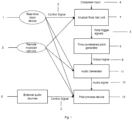
- Fig. 1 shows a system overview representing one embodiment of the present disclosure.
- real-time input device (RID) 1 is meant a device to be used by the intended musician providing input aimed at directly controlling the music currently being generated by the system.
- term real-time is a relative term referencing something responding very quickly within a system. In a digital system there is no such thing as instant, since there is always a latency through gates, flip-flops, sub-system clocking, firmware and software.
- the term real-time within the scope of this disclosure is describing events that appear instantly or very quickly when compared to musical time-scales such as bars or sub bars.
- Such real-time input devices could be, but are not limited to, one or more touch-screens, gesture sensors such as cameras or laser based sensors, gyroscopes, and other motion tracking systems, eye-tracking devices, vocal input systems such as pitch detectors, auto-tuners and the like, dedicated hardware mimicking musical instruments or forming new kinds of musical instruments, virtual parameters such as parameters in a video game, network commands, artificial intelligence input and the like.
- the RID-block may be configured to run asynchronous with other blocks in the system and the control signal 2 generated by the RID block may thereby be asynchronous with the musical time-scale.
- musician is meant anyone or anything affecting the music being generated by the disclosed system in real-time by manipulating the input to the RID 1.
- control signal 2 corresponds to a cursor status received from the RID 1 in the form of a musician using a touch screen.
- Said cursor status could contain information about position on a screen as X and Y coordinates and a Z coordinate could be corresponding to the amount of pressure applied on the screen.
- These control signal values (X, Y, Z) can be transmitted to the musical rule set (MRS) and re-transmitted whenever updated.
- the MRS can synchronize the timing of said control signal according to the system timing and the pre-defined musical rules.
- One way of mapping said control signal 2 to musical rules within the MRS is to let X control the rhythmical intensity, such as but not limited to, pulse density and let Y control the tonal pitch, such as but not limited to, pitches or chords and let Z control the velocity of that pitch, chord or the like.
- Said velocity could, but is not limited to, control the attack, loudness, envelope, sustain, audio sample selection, effect or the like of the corresponding virtual instrument being played by an audio generator 11.
- the RID 1 may consist of a motion sensor, such as but not limited to a Microsoft Kinect gaming controller, a virtual reality or augmented reality interface, a gyroscopic motion sensor, a camera based motion sensor, a facial recognition device, a 3D-camera, range camera, stereo camera, laser scanner, beacon based spatial tracking such as the Lighthouse technology from Valve or other means of providing a spatial reading of the musician and optionally also the environment surrounding the musician.
- a control signal 2 may be interpreted as X, Y and Z coordinates according to the above description when mapped to musical parameters by the MRS 7.
- Such spatial tracking may also be established by less complex 2-dimensional input devices, such as but not limited to digital cameras, by means of computer vision through methods such as centroid tracking of pixel clusters, Haar cascade image analysis, neural networks trained on visual input, or similar approaches and thereby generate one or more cursor positions to be used as control signal 2.
- a mobile device having a camera acts as a RID
- the person sitting in front of the camera can move his hands
- the mobile device will capture the hand gestures and be interpreted as a control signal in the system.
- the camera can be any type of camera, such as but not limited to 2D, 3D and depth cameras.
- the RID 1 could be a piece of dedicated hardware, such as but not limited to, new types of musical instruments, replicas of traditional musical instruments, DJ-equipment, live music mixing equipment or similar devices generating the corresponding X, Y, Z, cursor data used as the control signal 2.
- the RID 1 is a sub-system receiving input from one or more virtual musicians, such as but not limited to, parameters in a video game, an artificial intelligence (AI) algorithm or entity, a network of remote musicians, a loop handler, a multi-dimensional loop handler, one or more random generators and any combinations thereof.
- Said multi-dimensional loop handler may be configured to record a cursor movement and repeat it continuously in or out of sync with the musical tempo.
- said loop handler may be smoothed by means of interpolation, ramping, low-pass filtering, splines, averaging and the like.
- the network of remote musicians and instances of the present disclosed system as described above is built on 5G or other future communication standards or network technologies focused on low latency rather than high bandwidth.
- the RID could be connected to a musically trained AI (Artificial Intelligence Assistant Composer, or AIAC for short).
- AI acting as a musician may be based on a certain deep learning and/or artificial neural network implementation such as, but not limited to, Deep Feed Forward, Recurrent Neural Network, Deep Convolutional Network, Liquid State Machine and the likes.
- Said AI may also be based on other structures such as, but not limited to, Finite State Machines, Markov Chains, Boltzmann Machines and the likes.
- the fundamental knowledge that these autonomous processes are based upon may be a mixture of conventional musical rules, such as the studies of counterpoint, Schenkerian analysis and similar musical processes, as well as community driven voting per generation or other means of human quality assurance.
- any number of additional cursor values above the three (X, Y, Z) used in the examples can also be embedded in the control signal 2.
- additional cursor values is to manipulate other musical rules within the MRS 7.
- Such additional musical rules could be, but is not limited to, legato, randomness, effects, transposition, pitch, rhythm probabilities and the like.
- Additional cursor values in the control signal 2 can also be used to control other system blocks directly.
- One example of such direct control of other system blocks could be, but is not limited to, control of the audio generator 11 for adding direct vibrato, bypassing the musical time scale synchronization performed by the MRS 7.
- the AG 11 may be configured to take additional real-time control signals 2 such as vibrato, pitch bend and the likes that has not been synchronized with the musical tempo within the MRS or TCPG.
- the AG 11 may be internal or external to the music generating system and may even be connected in a remote location or at a later time to a recorded version of the output signal 8.
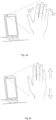
- Fig. 2 shows an example of a Real Time Input Device 1.
- the Real Time Input Device 1 can be, but not limited to, a mobile device, a computer etc. with a camera.
- the camera can be, but is not limited to, a 2D, 3D or depth camera.
- the camera may be configured to capture the gestures of the user sitting in front of the camera and interpret the gestures into a control signal of the real time music generation by means of computer vision techniques.
- Fig. 3 shows an example schematic of a musical rule set (MRS) 7.
- the MRS 7 can be configured to contain musical rule definitions 701 pre-defined by a composer input.
- the composer input may be an exported file format from a digital audio workstation (DAW) or music composition software which is translated into musical rule definitions (RD) compatible with the structure of the musical rule set (MRS).
- said composer input may originate from an artificial intelligence (AI) composer, randomizations or mutations of other existing musical elements and the like.
- AI artificial intelligence
- the MRS may use the rule definitions with any or all additions made through either real-time user input, previous user input, real time AI processing through musical neurons, offline AI processing from knowledge sourced by static and fluid data, or through various stages of loopback from performance parameters or any public variables originating from an interactive system.
- a loopback to the AI may be used for both iterative training purposes and as directions for the real time music generation.
- the musical neurons generate signals based on the output of Musical DNA which uses musical characteristics from the MRS unit.
- the MRS Unit may have core blocks 301, pitch blocks 303, beat blocks 305 and file blocks 307 to define the musical characteristics.
- Each such musical rule definition 701 may contain the rule set for part of or an entire piece of music such as, but not limited to, instrumentation, key, scale, tempo, time signature, phrases, grooves, rhythmic patterns, motifs, harmonies, and the like.
- Musical rule definitions 701 may also contain miscellaneous information not directly tied to musical traits such as, but not limited to, a block-chain implementation, change-log, cover art, composer info and the like.
- Said block-chain implementation may be configured to handle copyrights of musical rule definitions 701.
- said block-chain implementation may enable crowd sourced musical content in the form of musical rule sets, conventional musical phrases, lyrics, additional control data sets for alternative outputs and the like.
- Said instrumentation of a musical rule definition 701 may be mapped to multiple separate virtual instruments each containing unique per instrument rules such as, but not limited to, a rhythm translator 7051, a pitch translator 7053, an instrument sound definition7055, an effect synthesis setting 7057, an override 7059, an external control 7061 etc.
- the pitch translator 7053 may be configured to translate a musical description of frequencies, such as, but not limited to, scales, chords, MIDI-files, algorithms such as fractals, spectral analysis, Markov chains, granular techniques, windowing, transient detection, or combinations thereof, as defined in the musical rule definition 701 and optionally manipulated by a control input 2.
- the resulting choice of frequencies may be further processed by random or pre-defined variations of different aspects such as, but not limited to, fluid pitch offset, quantized pitch offset, vibrato, low frequency oscillators, sweeps, volume, decay, envelopes, attacks, harmonics, timbre and the like.
- the resulting set of frequency signals may be used to control a TCPG 9.
- the TCPG may be bypassed by directly using a signal describing both time and frequency parameters such as, but not limited to, a MIDI-signal connecting the MRS directly to the Audio Generator
- mapping may be to use the X-axis cursor to describe current note length in a playable MIDI-file or matrix and Y-axis cursor to control the selection of note in said MIDI-file or matrix where a higher value on the Y-axis cursor plays a later note within said MIDI-file or matrix.
- mappings may be to use the cursors to vary the MIDI-file or matrix by adding or subtracting pitch and rhythm material by means of fractals, Markov chains, granular techniques, Euclidian rhythms, windowing, transient detection, or combinations thereof depending on said cursor values wherein the X-axis cursor may add or subtract rhythmic material based on its offset from the middle value and the Y-axis cursor may add or subtract tonal material based on its offset from the middle value.
- Yet another example of said mapping may be to use the X-axis cursor to slow down or speed up the music (either by percentage or by discreet steps) and let the Y-axis cursor transpose the pitch material (either in absolute steps or within a pre-defined scale).
- the effects synthesis settings 7057 may be configured to specify certain effects settings to be applied on each instrument. Such effects settings may be, but is not limited to, reverb, chorus, panning, EQ, delay and combinations thereof.
- the override block 7059 may be configured to override certain global parameters such as a global scale, key, tempo or the likes as defined by the overall rule definition currently being played. This way, a certain instrument can play something independently of said global rules for a certain piece of music.
- each virtual instrument may be linked to one or more other virtual instruments regarding any parameter therein.
- a musical transition handler 703 is configured to have the top-level control of the musical form, by gradually morphing between multiple musical rule definitions 701 and/or adding new musical content that ties together the musical piece as a whole.
- the musical transition handler is configured to make a transition for one or more instruments by musically coherent means (that are perceived as musical to a human listener with knowledge of the current genre or style). Such transitions may be needed between different settings in a video game, between the verse and chorus of a song, between different moods in a story line of a game, movie, theatre, virtual reality experience or the like.
- the musical transition handler 703 uses one or more musical techniques for each instrument transitioning between musical rule definitions 701 according to the composer input, and a control signal 2, or internal sequencer or the like.
- Such musical transition techniques may be, but are not limited to, crossfading, linear morphing, logarithmic morphing, sinusoidal morphing, exponential morphing, windowed morphing, pre-defined musical phrases, retrograde, inversion, other canonic utilities, fractal composition, Markov chains, Euclidian rhythms, granular techniques, intermediate musical rule definitions 701 created specifically for morphing purposes, and combinations thereof.
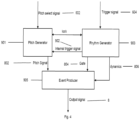
- the pitch generator 901 can be locked to the rhythm generator 903 by a lock signal resulting in synchronous playback of the selected pitch with pre-defined note durations. For example, this could be used to play a pre-defined melody where notes and pauses need to have a certain duration and pitch in order for said melody to be performed as intended.
- the event producer 905 is configured to generate an output signal 8 based on an incoming pitch signal 802, a gate signal 804 and a dynamic signal 806.
- Said output signal 8 can but is not limited to follow standards such as MIDI, General MIDI, MIDICENT, General Midi Level 2, Scalable Polyphony MIDI, Roland GS, Yamaha XG and the like.
- the inputs to the event producer 905 are mapped to the "Channel Voice" messages of the MIDI standard, where the pitch signal 802 controls the timing of the "note-on” and “note-off” messages transmitted by the event producer 905.
- the tonal pitch can be mapped to the "MIDI Note Number” value and the dynamics signal 906 to the "Velocity” value of said "note-on” messages.
- the gate input 804 can be used to transmit additional "note-off” messages in such example embodiment.
- the event producer 905 may be configured to output music in textual form such as, but not limited to, notes, musical scores, tabs and the like
- the Audio Generator 11 may be configured to take an output signal and generate the corresponding audio signal by means of playing back the corresponding samples from a sample library, generating the corresponding audio signal by real-time synthesis (i.e.by using a synthesizer) or the like.
- the resulting audio signal may be output in formats such as, but not limited to, Raw samples, WAV, Core Audio, JACK, PulseAudio, GStreamer, MPEG audio, AC3, DTS, FLAC, AAC, OggVorbis, SPDIF, I2S, AES/EBU, Dante, Ravenna, and the likes.
- the Post process device 13 may be configured to mix multiple audio streams such as but not limited to vocal audio, game audio, acoustic instrument audio, pre-recorded audio and the likes. Furthermore, the PPD 13 may add effects to each incoming audio stream being mixed as well as the outgoing final audio stream as a means of real-time mastering in order to obtain a production quality audio stream in real-time.
- Fig. 5 shows an example of the method for real-time music generation.
- the MRS unit 7 retrieves a composer input at S101, a set of adaptable rule definitions 701 will be obtained based on the composer input and stored in a memory of the MRS unit 7 at S103. Then the MRS selects a set of rule definitions from the memory at S105.
- the MRS receives a real-time control signal 2 from the RID 1 and combines the control signal 2 and the selected rule definitions at S109.
- the output note trigger signals 6 comprising a pitch select signal 602 and a trigger signal 604, are outputted to the TCPG 9.
- the TCPG 9 will synchronize the music in time and frequency domains at S113 and the output signal of the TCPG 9 will be an input of the AG 11.
- the MRS selects instrument properties at S111 and output them to the AG 11.
- the AG 11 combines the output signal of the TCPG 9 and the selected instrument properties to obtain an audio signal at S115.
- the audio signal can be forwarded to a post process device 13 for further processing to adapt the music to the environment or outputted directly.
Landscapes
- Engineering & Computer Science (AREA)
- Physics & Mathematics (AREA)
- Acoustics & Sound (AREA)
- Multimedia (AREA)
- Theoretical Computer Science (AREA)
- Auxiliary Devices For Music (AREA)
- Electrophonic Musical Instruments (AREA)
Claims (11)
- Virtuelles Instrument zur Echtzeit-Musikerzeugung, das Folgendes umfasst:eine Musikregelsatz (Musical Rule Set (MRS))-Einheit (7), die eine vordefinierte Komponisteneingabe (4) umfasst, wobei die MRS-Einheit (7) dazu ausgelegt ist, einen Satz von Instrumenteneigenschaften und mindestens einen Satz von anpassbarer Regeldefinition (701) basierend auf der vordefinierten Komponisteneingabe auszuwählen und den ausgewählten Satz von anpassbarer Regeldefinition mit einem Echtzeit-Steuersignal (2) zu Noten-Triggersignalen (6) zu kombinieren, die mit Zeit- und Frequenzbereichseigenschaften assoziiert sind, wobei die Noten-Triggersignale an einen Zeitvorgabe-Tonhöhengenerator (Timing Constrained Pitch Generator (TCPG)) (9), ausgegeben werden, wobei die Noten-Triggersignale ein Tonhöhenauswahlsignal (602) und ein Eingangs-Triggersignal (604) umfassen;TCPG (9), der dazu ausgelegt ist, ein Ausgangssignal (8) zu erzeugen, das die Musik repräsentiert; wobei der TCPG dazu ausgelegt ist, die neuen erzeugten Töne in Zeit- und Frequenzbereichen basierend auf den Noten-Triggersignalen (6) zu synchronisieren, wobei der TCPG (9) einen Rhythmusgenerator (903), einen Tonhöhengenerator (901) und einen Ereigniserzeuger (905) umfasst, wobei der Rhythmusgenerator (903) dazu ausgelegt ist, den Tonhöhengenerator (901) durch ein internes Triggersignal (902) zu steuern, wobei der Tonhöhengenerator (901) dazu ausgelegt ist, auf das Tonhöhenauswahlsignal (602) von der MRS-Einheit (7) zu reagieren, um eine richtige Tonhöhe zu wählen und eine solche Note als ein Tonhöhensignal (802) zu übertragen, wann immer sie durch das interne Triggersignal (902) ausgelöst wird, wobei der Ereigniserzeuger (905) dazu ausgelegt ist, das Ausgangssignal (8) basierend auf dem eingehenden Tonhöhensignal (802), einem Gate-Signal (804) und einem dynamischen Signal (806) zu erzeugen;einen Audiogenerator (11), der dazu ausgelegt ist, das Ausgangssignal (8) von dem TCPG (9) umzuwandeln und es mit dem ausgewählten Satz von Instrumenteneigenschaften in ein Audiosignal (10) zu kombinieren; undwobei der mindestens eine Satz anpassbarer Regeldefinitionen in Echtzeit morphbare Musikparameter beschreibt und die morphbaren Musikparameter direkt durch das Echtzeit-Steuersignal (2) steuerbar sind und das virtuelle Instrument ferner einen Musikübergangshandler (703) umfasst, der dazu ausgelegt ist, das Echtzeit-Steuersignal (2) zu interpretieren und Übergänge zwischen verschiedenen Abschnitten in der erzeugten Musik basierend auf Musikeigenschaften gemäß der vordefinierten Komponisteneingabe (4) zu handhaben, so dass die Übergänge musikalisch kohärent mit den anpassbaren Regeldefinitionen sind, die derzeit gemorpht werden, wobei musikalisch kohärente Mittel für einen menschlichen Zuhörer mit Kenntnis eines aktuellen Genres oder Stils als musikalisch wahrgenommen werden.
- Instrument nach Anspruch 1, wobei das Echtzeit-Steuersignal (2) von einer Echtzeit-Eingabevorrichtung (RID) (1) empfangen wird, die dazu ausgelegt ist, eine Eingabe von einem Touchscreen, wie etwa X- und Y-Koordinaten einer berührten Position, zu empfangen und die Eingabe in das Echtzeit-Steuersignal (2) zu übersetzen.
- Instrument nach Anspruch 2, wobei der Touchscreen dazu ausgelegt ist, zusätzliche Informationen bezüglich des Drucks bereitzustellen, der sich auf die Berührungskraft bezieht, die durch den Touchscreen an der berührten Position empfangen wird, und solche zusätzlichen Informationen zusammen mit den X- und Y-Koordinaten für jeden Punkt zu verwenden und dieses Eingangssignal in das Echtzeit-Steuersignal (2) zu übersetzen.
- Instrument nach Anspruch 1, wobei das Echtzeit-Steuersignal (2) von einer Echtzeit-Eingabevorrichtung (RID) (1) empfangen wird, die dazu ausgelegt ist, eine Eingabe von einer räumlichen Kamera und/oder einem Videospielparameter und/oder einer digitalen Kamera zu empfangen und die Eingabe in das Echtzeit-Steuersignal (2) zu übersetzen.
- Instrument nach Anspruch 1, wobei das Echtzeit-Steuersignal (2) von einem entfernten Musikernetzwerk (3) empfangen wird.
- Verfahren zum Erzeugen von Echtzeitmusik in einem virtuellen Instrument, das eine Musikregelsatz (Musical Rule Set (MRS))-Einheit (7), einen Zeitvorgabe-Tonhöhengenerator (Timing Constrained Pitch Generator (TCPG)) (9) und einen Audiogenerator (11) umfasst, wobei das Verfahren Folgendes umfasst:- Abrufen einer vordefinierten Komponisteneingabe (4) in der MRS-Einheit (S101);- Speichern einer Vielzahl von anpassbaren Regeldefinitionen (701) in einem Speicher der MRS-Einheit (S103);- Empfangen eines Echtzeit-Steuersignals (2) in der MRS-Einheit (S107);- Auswählen eines Satzes anpassbarer Regeldefinitionen (S105) der gespeicherten Vielzahl anpassbarer Regeldefinitionen;- Auswählen eines Satzes von Instrumenteneigenschaften (S111);- Kombinieren der ausgewählten anpassbaren Regeldefinitionen mit dem Echtzeit-Steuersignal (2) in Noten-Triggersignale (6), die mit Zeit- und Frequenzbereichseigenschaften (S109) assoziiert sind, wobei die Noten-Triggersignale an den Zeitvorgabe-Tonhöhengenerator (Timing Constrained Pitch Generator (TCPG)) (9), ausgegeben werden, wobei die Noten-Triggersignale ein Tonhöhenauswahlsignal (602) und ein Eingangs-Triggersignal (604) umfassen;- Synchronisieren, in dem TCPG (9), neuer erzeugter Töne in Zeit- und Frequenzbereichen basierend auf den Noten-Triggersignalen (S113), wobei der TCPG (9) einen Rhythmusgenerator (903), einen Tonhöhengenerator (901) und einen Ereigniserzeuger (905) umfasst, wobei der Rhythmusgenerator (903) den Tonhöhengenerator (901) durch ein internes Triggersignal (902) steuert,
wobei der Tonhöhengenerator (901) auf das Tonhöhenauswahlsignal (602) von der MRS-Einheit (7) reagiert, um eine richtige Tonhöhe zu wählen und eine solche Note als ein Tonhöhensignal (802) zu übertragen, wann immer sie durch das interne Triggersignal (902) ausgelöst wird, wobei der Ereigniserzeuger (905) ein Ausgangssignal (8) basierend auf dem eingehenden Tonhöhensignal (802), einem Gate-Signal (804) und einem dynamischen Signal (806) erzeugt; und- Kombinieren des Ausgangssignals (8) mit dem ausgewählten Satz von Instrumenteneigenschaften zu einem Audiosignal (10) in dem Audiogenerator (S115), wobei, die Vielzahl von anpassbaren Regeldefinitionen in Echtzeit morphbare Musikparameter beschreiben und die morphbaren Musikparameter direkt durch das Echtzeit-Steuersignal (2) steuerbar sind, und das Verfahren ferner einen Schritt des Interpretierens des Echtzeit-Steuersignals (2) und des Handhabens von Übergängen zwischen verschiedenen Abschnitten in der erzeugten Musik basierend auf Musikeigenschaften gemäß der vordefinierten Komponisteneingabe (4) umfasst,so dass die Übergänge musikalisch kohärent mit den anpassbaren Regeldefinitionen sind, die derzeit gemorpht werden, wobei musikalisch kohärente Mittel für einen menschlichen Zuhörer mit Kenntnis eines aktuellen Genres oder Stils als musikalisch wahrgenommen werden. - Verfahren nach Anspruch 6, wobei das Echtzeit-Steuersignal (2) von einer Echtzeit-Eingabevorrichtung (RID) (1) empfangen wird, die dazu ausgelegt ist, eine Eingabe von einem Touchscreen, wie etwa X- und Y-Koordinaten einer berührten Position, zu empfangen und die Eingabe in das Echtzeit-Steuersignal (2) zu übersetzen.
- Verfahren nach Anspruch 7, wobei der Touchscreen dazu ausgelegt ist, zusätzliche Informationen bezüglich des Drucks bereitzustellen, der sich auf die Berührungskraft bezieht, die durch den Touchscreen an der berührten Position empfangen wird, und solche zusätzlichen Informationen zusammen mit den X- und Y-Koordinaten für jeden Punkt zu verwenden und dieses Eingangssignal in das Echtzeit-Steuersignal (2) zu übersetzen.
- Verfahren nach Anspruch 6, wobei das Echtzeit-Steuersignal (2) von einer Echtzeit-Eingabevorrichtung (RID) (1) empfangen wird, die dazu ausgelegt ist, eine Eingabe von einer räumlichen Kamera und/oder einem Videospielparameter und/oder einer digitalen Kamera zu empfangen und die Eingabe in das Echtzeit-Steuersignal (2) zu übersetzen.
- Verfahren nach Anspruch 6, wobei das Echtzeit-Steuersignal (2) von einem entfernten Musikernetzwerk (3) empfangen wird.
- Computerprogrammprodukt, das computerlesbare Anweisungen umfasst, die, wenn sie auf einem Computer ausgeführt werden, bewirken, dass ein Verfahren nach einem der Ansprüche 6-10 durchgeführt wird.
Applications Claiming Priority (2)
| Application Number | Priority Date | Filing Date | Title |
|---|---|---|---|
| SE1851144A SE542890C2 (en) | 2018-09-25 | 2018-09-25 | Instrument and method for real-time music generation |
| PCT/SE2019/050909 WO2020067972A1 (en) | 2018-09-25 | 2019-09-24 | Instrument and method for real-time music generation |
Publications (4)
| Publication Number | Publication Date |
|---|---|
| EP3857539A1 EP3857539A1 (de) | 2021-08-04 |
| EP3857539A4 EP3857539A4 (de) | 2022-06-29 |
| EP3857539C0 EP3857539C0 (de) | 2025-04-16 |
| EP3857539B1 true EP3857539B1 (de) | 2025-04-16 |
Family
ID=69952351
Family Applications (1)
| Application Number | Title | Priority Date | Filing Date |
|---|---|---|---|
| EP19866655.4A Active EP3857539B1 (de) | 2018-09-25 | 2019-09-24 | Instrument und verfahren zur echtzeit-musikerzeugung |
Country Status (7)
| Country | Link |
|---|---|
| US (1) | US12027146B2 (de) |
| EP (1) | EP3857539B1 (de) |
| CN (1) | CN112955948B (de) |
| CA (1) | CA3113775A1 (de) |
| ES (1) | ES3033465T3 (de) |
| SE (1) | SE542890C2 (de) |
| WO (1) | WO2020067972A1 (de) |
Families Citing this family (12)
| Publication number | Priority date | Publication date | Assignee | Title |
|---|---|---|---|---|
| SE542890C2 (en) * | 2018-09-25 | 2020-08-18 | Gestrument Ab | Instrument and method for real-time music generation |
| US11328700B2 (en) * | 2018-11-15 | 2022-05-10 | Sony Interactive Entertainment LLC | Dynamic music modification |
| US11742973B2 (en) * | 2020-09-25 | 2023-08-29 | Apple Inc. | Multi-protocol synchronization |
| US11929051B2 (en) * | 2020-10-01 | 2024-03-12 | General Motors Llc | Environment awareness system for experiencing an environment through music |
| US11244032B1 (en) * | 2021-03-24 | 2022-02-08 | Oraichain Pte. Ltd. | System and method for the creation and the exchange of a copyright for each AI-generated multimedia via a blockchain |
| US11978426B2 (en) | 2021-03-31 | 2024-05-07 | DAACI Limited | System and methods for automatically generating a musical composition having audibly correct form |
| US11514877B2 (en) | 2021-03-31 | 2022-11-29 | DAACI Limited | System and methods for automatically generating a musical composition having audibly correct form |
| CN114913873B (zh) * | 2022-05-30 | 2023-09-01 | 四川大学 | 一种耳鸣康复音乐合成方法及系统 |
| WO2023235448A1 (en) * | 2022-06-01 | 2023-12-07 | Library X Music Inc. | Automated original track generation engine |
| US12266330B2 (en) | 2022-12-20 | 2025-04-01 | Macdougal Street Technology, Inc. | Generating music accompaniment |
| GB2627540B (en) * | 2023-04-12 | 2025-04-16 | Bonza Music Ltd | A system and method for immersive musical performance between at least two remote locations over a network |
| US12051393B1 (en) * | 2023-11-16 | 2024-07-30 | Macdougal Street Technology, Inc. | Real-time audio to digital music note conversion |
Family Cites Families (35)
| Publication number | Priority date | Publication date | Assignee | Title |
|---|---|---|---|---|
| US5753843A (en) | 1995-02-06 | 1998-05-19 | Microsoft Corporation | System and process for composing musical sections |
| JP3384314B2 (ja) * | 1997-12-02 | 2003-03-10 | ヤマハ株式会社 | 楽音応答画像生成システム、方法、装置、及び、そのための記録媒体 |
| AU5852901A (en) * | 2000-05-05 | 2001-11-20 | Sseyo Limited | Automated generation of sound sequences |
| US6822153B2 (en) * | 2001-05-15 | 2004-11-23 | Nintendo Co., Ltd. | Method and apparatus for interactive real time music composition |
| WO2003036587A1 (en) * | 2001-10-20 | 2003-05-01 | Salter Hal C | An interactive game providing instruction in musical notation and in learning an instrument |
| US7928310B2 (en) * | 2002-11-12 | 2011-04-19 | MediaLab Solutions Inc. | Systems and methods for portable audio synthesis |
| US7169996B2 (en) * | 2002-11-12 | 2007-01-30 | Medialab Solutions Llc | Systems and methods for generating music using data/music data file transmitted/received via a network |
| US20140000440A1 (en) * | 2003-01-07 | 2014-01-02 | Alaine Georges | Systems and methods for creating, modifying, interacting with and playing musical compositions |
| CA2569804A1 (en) * | 2004-06-14 | 2005-12-22 | Condition30 Inc. | Cellular automata music generator |
| US7491878B2 (en) * | 2006-03-10 | 2009-02-17 | Sony Corporation | Method and apparatus for automatically creating musical compositions |
| JP4826508B2 (ja) * | 2007-02-27 | 2011-11-30 | ヤマハ株式会社 | 再生装置および自動演奏装置 |
| US7674970B2 (en) * | 2007-05-17 | 2010-03-09 | Brian Siu-Fung Ma | Multifunctional digital music display device |
| US8058544B2 (en) * | 2007-09-21 | 2011-11-15 | The University Of Western Ontario | Flexible music composition engine |
| US7754955B2 (en) * | 2007-11-02 | 2010-07-13 | Mark Patrick Egan | Virtual reality composer platform system |
| WO2010013752A1 (ja) * | 2008-07-29 | 2010-02-04 | ヤマハ株式会社 | 演奏関連情報出力装置、演奏関連情報出力装置を備えるシステム、及び電子楽器 |
| US20100322042A1 (en) * | 2009-06-01 | 2010-12-23 | Music Mastermind, LLC | System and Method for Generating Musical Tracks Within a Continuously Looping Recording Session |
| US8566258B2 (en) * | 2009-07-10 | 2013-10-22 | Sony Corporation | Markovian-sequence generator and new methods of generating Markovian sequences |
| US8330033B2 (en) * | 2010-09-13 | 2012-12-11 | Apple Inc. | Graphical user interface for music sequence programming |
| CN106023969B (zh) * | 2011-07-29 | 2020-02-18 | 音乐策划公司 | 用于将音频效果应用于音乐合辑的一个或多个音轨的方法 |
| US20130125732A1 (en) * | 2011-11-21 | 2013-05-23 | Paul Nho Nguyen | Methods to Create New Melodies and Music From Existing Source |
| CN104380371B (zh) * | 2012-06-04 | 2020-03-20 | 索尼公司 | 用于生成输入音乐数据的伴奏的装置、系统和方法 |
| CN103258529B (zh) * | 2013-04-16 | 2015-09-16 | 初绍军 | 一种电子乐器、音乐演奏方法 |
| WO2015066204A1 (en) * | 2013-10-30 | 2015-05-07 | Music Mastermind, Inc. | System and method for enhancing audio, conforming an audio input to a musical key, and creating harmonizing tracks for an audio input |
| US9773483B2 (en) * | 2015-01-20 | 2017-09-26 | Harman International Industries, Incorporated | Automatic transcription of musical content and real-time musical accompaniment |
| US10854180B2 (en) * | 2015-09-29 | 2020-12-01 | Amper Music, Inc. | Method of and system for controlling the qualities of musical energy embodied in and expressed by digital music to be automatically composed and generated by an automated music composition and generation engine |
| US9721551B2 (en) * | 2015-09-29 | 2017-08-01 | Amper Music, Inc. | Machines, systems, processes for automated music composition and generation employing linguistic and/or graphical icon based musical experience descriptions |
| US10102836B2 (en) * | 2015-12-23 | 2018-10-16 | Harmonix Music Systems, Inc. | Apparatus, systems, and methods for music generation |
| US9799312B1 (en) * | 2016-06-10 | 2017-10-24 | International Business Machines Corporation | Composing music using foresight and planning |
| US9542919B1 (en) * | 2016-07-20 | 2017-01-10 | Beamz Interactive, Inc. | Cyber reality musical instrument and device |
| US10008188B1 (en) * | 2017-01-31 | 2018-06-26 | Kyocera Document Solutions Inc. | Musical score generator |
| CN108492817B (zh) * | 2018-02-11 | 2020-11-10 | 北京光年无限科技有限公司 | 一种基于虚拟偶像的歌曲数据处理方法及演唱交互系统 |
| SE542890C2 (en) * | 2018-09-25 | 2020-08-18 | Gestrument Ab | Instrument and method for real-time music generation |
| SE543532C2 (en) * | 2018-09-25 | 2021-03-23 | Gestrument Ab | Real-time music generation engine for interactive systems |
| US11183160B1 (en) * | 2021-02-16 | 2021-11-23 | Wonder Inventions, Llc | Musical composition file generation and management system |
| US12427419B2 (en) * | 2021-10-08 | 2025-09-30 | Alvaro Eduardo Lopez Duarte | Methods and systems for facilitating generating music in real-time using progressive parameters |
-
2018
- 2018-09-25 SE SE1851144A patent/SE542890C2/en unknown
-
2019
- 2019-09-24 WO PCT/SE2019/050909 patent/WO2020067972A1/en not_active Ceased
- 2019-09-24 US US17/277,817 patent/US12027146B2/en active Active
- 2019-09-24 ES ES19866655T patent/ES3033465T3/es active Active
- 2019-09-24 EP EP19866655.4A patent/EP3857539B1/de active Active
- 2019-09-24 CN CN201980061907.XA patent/CN112955948B/zh active Active
- 2019-09-24 CA CA3113775A patent/CA3113775A1/en active Pending
Non-Patent Citations (6)
| Title |
|---|
| ASPROMALLISNICOLAS CHRISTODOULOS ET AL: "FORM-AWARE, REAL-TIME ADAPTIVE MUSIC GENERATION FOR INTERACTIVE EXPERIENCES", SOUND AND MUSIC COMPUTING CONFERENCE 2016 (SMC 2016), 1 January 2016 (2016-01-01), pages 1 - 8, XP093085781 * |
| BROWN ANDREW R ET AL: "The Morph Table: A collaborative interface for musical interaction", PROCEEDINGS OF THE AUSTRALASIAN COMPUTER MUSIC CONFERENCE 2007, 1 January 2007 (2007-01-01), pages 34 - 39, XP093085774 * |
| MORREALE FABIO ET AL: "Robin: An Algorithmic Composer for Interactive Scenarios", OPEN ACCESS ARTICLE, 1 January 2013 (2013-01-01), pages 1 - 6, XP093085795, DOI: 10.5281/zenodo.850375 * |
| WALLIS ISAAC ET AL: "A RULE-BASED GENERATIVE MUSIC SYSTEM CONTROLLED BY DESIRED VALENCE AND AROUSAL", PROCEEDINGS OF 8TH INTERNATIONAL SOUND AND MUSIC COMPUTING, 1 January 2011 (2011-01-01), pages 1 - 8, XP093085830 * |
| WALLIS ISAAC ET AL: "COMPUTER-GENERATING EMOTIONAL MUSIC: THE DESIGN OF AN AFFECTIVE MUSIC ALGORITHM", PROC, OF THE 11* INT. CONFERENCE ON DIGITAL AUDIO EFFECTS (DAFX-08), ESPOO, FINLAND, SEPTEMBER 1-4, 2008, 1 September 2008 (2008-09-01), pages 1 - 6, XP093085585 * |
| WOOLLER RENÉ WILLIAM: "Techniques for automated and interactive note sequence morphing of mainstream electronic music", THESIS, QUEENSLAND UNIVERSITY OF TECHNOLOGY, 1 January 2007 (2007-01-01), pages 1 - 355, XP093085766 * |
Also Published As
| Publication number | Publication date |
|---|---|
| CN112955948B (zh) | 2024-07-02 |
| WO2020067972A1 (en) | 2020-04-02 |
| EP3857539A1 (de) | 2021-08-04 |
| SE542890C2 (en) | 2020-08-18 |
| EP3857539C0 (de) | 2025-04-16 |
| US12027146B2 (en) | 2024-07-02 |
| CN112955948A (zh) | 2021-06-11 |
| CA3113775A1 (en) | 2020-04-02 |
| EP3857539A4 (de) | 2022-06-29 |
| US20220114993A1 (en) | 2022-04-14 |
| ES3033465T3 (en) | 2025-08-04 |
| SE1851144A1 (en) | 2020-03-26 |
Similar Documents
| Publication | Publication Date | Title |
|---|---|---|
| EP3857539B1 (de) | Instrument und verfahren zur echtzeit-musikerzeugung | |
| US10854180B2 (en) | Method of and system for controlling the qualities of musical energy embodied in and expressed by digital music to be automatically composed and generated by an automated music composition and generation engine | |
| US12412551B2 (en) | Real-time music generation engine for interactive systems | |
| US7589727B2 (en) | Method and apparatus for generating visual images based on musical compositions | |
| Moreira et al. | Virtualband: Interacting with Stylistically Consistent Agents. | |
| Bell | Networked music performance in patchxr and flucoma | |
| Dixon et al. | The" Air Worm": an Interface for Real-Time manipulation of Expressive Music Performance. | |
| Sullivan et al. | Gestural control of augmented instrumental performance: A case study of the concert harp | |
| Waite | Liveness and Interactivity in Popular Music | |
| Yee-King et al. | Studio report: Sound synthesis with DDSP and network bending techniques | |
| de Oliveira et al. | Map, Trigger, Score, Procedure: machine-listening paradigms in live-electronics | |
| Venkatesh et al. | Designing brain-computer interfaces for sonic expression | |
| Bryan-Kinns | Computers in support of musical expression | |
| Stockmann et al. | A musical instrument based on 3d data and volume sonification techniques | |
| Litke et al. | A score-based interface for interactive computer music | |
| Young et al. | FFT analysis as a creative tool in live performance | |
| Dannenberg | Human computer music performance | |
| Oliveira et al. | Mapping, Triggering, Scoring, and Procedural Paradigms of Machine Listening Application in Live-Electronics Compositions | |
| Collins | 15 Machine Listening in SuperCollider | |
| Collins | Beat induction and rhythm analysis for live audio processing: 1st year phd report | |
| Oliver | The Singing Tree: a novel interactive musical experience | |
| Perrotta | Modelling the Live-Electronics in Electroacoustic Music Using Particle Systems | |
| Ferretti et al. | On SPAWC: discussion on a musical signal parser and well-formed composer | |
| de Oliveira | Live Interface for Generative Rhythm Sequencing | |
| Murray-Rust | Virtualatin-agent based percussive accompaniment |
Legal Events
| Date | Code | Title | Description |
|---|---|---|---|
| STAA | Information on the status of an ep patent application or granted ep patent |
Free format text: STATUS: THE INTERNATIONAL PUBLICATION HAS BEEN MADE |
|
| PUAI | Public reference made under article 153(3) epc to a published international application that has entered the european phase |
Free format text: ORIGINAL CODE: 0009012 |
|
| STAA | Information on the status of an ep patent application or granted ep patent |
Free format text: STATUS: REQUEST FOR EXAMINATION WAS MADE |
|
| 17P | Request for examination filed |
Effective date: 20210423 |
|
| AK | Designated contracting states |
Kind code of ref document: A1 Designated state(s): AL AT BE BG CH CY CZ DE DK EE ES FI FR GB GR HR HU IE IS IT LI LT LU LV MC MK MT NL NO PL PT RO RS SE SI SK SM TR |
|
| DAV | Request for validation of the european patent (deleted) | ||
| DAX | Request for extension of the european patent (deleted) | ||
| RAP3 | Party data changed (applicant data changed or rights of an application transferred) |
Owner name: REACTIONAL MUSIC GROUP AB |
|
| A4 | Supplementary search report drawn up and despatched |
Effective date: 20220601 |
|
| RIC1 | Information provided on ipc code assigned before grant |
Ipc: G10H 1/36 20060101ALI20220525BHEP Ipc: G10H 1/26 20060101ALI20220525BHEP Ipc: G10H 1/02 20060101AFI20220525BHEP |
|
| TPAC | Observations filed by third parties |
Free format text: ORIGINAL CODE: EPIDOSNTIPA |
|
| STAA | Information on the status of an ep patent application or granted ep patent |
Free format text: STATUS: EXAMINATION IS IN PROGRESS |
|
| 17Q | First examination report despatched |
Effective date: 20231220 |
|
| GRAP | Despatch of communication of intention to grant a patent |
Free format text: ORIGINAL CODE: EPIDOSNIGR1 |
|
| STAA | Information on the status of an ep patent application or granted ep patent |
Free format text: STATUS: GRANT OF PATENT IS INTENDED |
|
| INTG | Intention to grant announced |
Effective date: 20241213 |
|
| GRAS | Grant fee paid |
Free format text: ORIGINAL CODE: EPIDOSNIGR3 |
|
| GRAA | (expected) grant |
Free format text: ORIGINAL CODE: 0009210 |
|
| STAA | Information on the status of an ep patent application or granted ep patent |
Free format text: STATUS: THE PATENT HAS BEEN GRANTED |
|
| AK | Designated contracting states |
Kind code of ref document: B1 Designated state(s): AL AT BE BG CH CY CZ DE DK EE ES FI FR GB GR HR HU IE IS IT LI LT LU LV MC MK MT NL NO PL PT RO RS SE SI SK SM TR |
|
| REG | Reference to a national code |
Ref country code: GB Ref legal event code: FG4D |
|
| REG | Reference to a national code |
Ref country code: CH Ref legal event code: EP |
|
| REG | Reference to a national code |
Ref country code: IE Ref legal event code: FG4D |
|
| U01 | Request for unitary effect filed |
Effective date: 20250422 |
|
| U07 | Unitary effect registered |
Designated state(s): AT BE BG DE DK EE FI FR IT LT LU LV MT NL PT RO SE SI Effective date: 20250428 |
|
| REG | Reference to a national code |
Ref country code: ES Ref legal event code: FG2A Ref document number: 3033465 Country of ref document: ES Kind code of ref document: T3 Effective date: 20250804 |
|
| PG25 | Lapsed in a contracting state [announced via postgrant information from national office to epo] |
Ref country code: GR Free format text: LAPSE BECAUSE OF FAILURE TO SUBMIT A TRANSLATION OF THE DESCRIPTION OR TO PAY THE FEE WITHIN THE PRESCRIBED TIME-LIMIT Effective date: 20250717 Ref country code: NO Free format text: LAPSE BECAUSE OF FAILURE TO SUBMIT A TRANSLATION OF THE DESCRIPTION OR TO PAY THE FEE WITHIN THE PRESCRIBED TIME-LIMIT Effective date: 20250716 |
|
| PG25 | Lapsed in a contracting state [announced via postgrant information from national office to epo] |
Ref country code: PL Free format text: LAPSE BECAUSE OF FAILURE TO SUBMIT A TRANSLATION OF THE DESCRIPTION OR TO PAY THE FEE WITHIN THE PRESCRIBED TIME-LIMIT Effective date: 20250416 |
|
| PGFP | Annual fee paid to national office [announced via postgrant information from national office to epo] |
Ref country code: GB Payment date: 20250916 Year of fee payment: 7 |
|
| PG25 | Lapsed in a contracting state [announced via postgrant information from national office to epo] |
Ref country code: HR Free format text: LAPSE BECAUSE OF FAILURE TO SUBMIT A TRANSLATION OF THE DESCRIPTION OR TO PAY THE FEE WITHIN THE PRESCRIBED TIME-LIMIT Effective date: 20250416 |
|
| PG25 | Lapsed in a contracting state [announced via postgrant information from national office to epo] |
Ref country code: RS Free format text: LAPSE BECAUSE OF FAILURE TO SUBMIT A TRANSLATION OF THE DESCRIPTION OR TO PAY THE FEE WITHIN THE PRESCRIBED TIME-LIMIT Effective date: 20250716 |
|
| U20 | Renewal fee for the european patent with unitary effect paid |
Year of fee payment: 7 Effective date: 20250916 |
|
| PG25 | Lapsed in a contracting state [announced via postgrant information from national office to epo] |
Ref country code: IS Free format text: LAPSE BECAUSE OF FAILURE TO SUBMIT A TRANSLATION OF THE DESCRIPTION OR TO PAY THE FEE WITHIN THE PRESCRIBED TIME-LIMIT Effective date: 20250816 |