EP3857415B1 - Validierung und installation eines dateisystems in eine transiente, nicht-persistente speicherschaltung - Google Patents
Validierung und installation eines dateisystems in eine transiente, nicht-persistente speicherschaltung Download PDFInfo
- Publication number
- EP3857415B1 EP3857415B1 EP19783947.5A EP19783947A EP3857415B1 EP 3857415 B1 EP3857415 B1 EP 3857415B1 EP 19783947 A EP19783947 A EP 19783947A EP 3857415 B1 EP3857415 B1 EP 3857415B1
- Authority
- EP
- European Patent Office
- Prior art keywords
- file
- file system
- transient
- persistent storage
- storage circuit
- Prior art date
- Legal status (The legal status is an assumption and is not a legal conclusion. Google has not performed a legal analysis and makes no representation as to the accuracy of the status listed.)
- Active
Links
Images


Classifications
-
- G—PHYSICS
- G06—COMPUTING OR CALCULATING; COUNTING
- G06F—ELECTRIC DIGITAL DATA PROCESSING
- G06F21/00—Security arrangements for protecting computers, components thereof, programs or data against unauthorised activity
- G06F21/60—Protecting data
- G06F21/64—Protecting data integrity, e.g. using checksums, certificates or signatures
-
- G—PHYSICS
- G06—COMPUTING OR CALCULATING; COUNTING
- G06F—ELECTRIC DIGITAL DATA PROCESSING
- G06F21/00—Security arrangements for protecting computers, components thereof, programs or data against unauthorised activity
- G06F21/50—Monitoring users, programs or devices to maintain the integrity of platforms, e.g. of processors, firmware or operating systems
- G06F21/55—Detecting local intrusion or implementing counter-measures
- G06F21/56—Computer malware detection or handling, e.g. anti-virus arrangements
- G06F21/562—Static detection
- G06F21/565—Static detection by checking file integrity
-
- G—PHYSICS
- G06—COMPUTING OR CALCULATING; COUNTING
- G06F—ELECTRIC DIGITAL DATA PROCESSING
- G06F21/00—Security arrangements for protecting computers, components thereof, programs or data against unauthorised activity
- G06F21/50—Monitoring users, programs or devices to maintain the integrity of platforms, e.g. of processors, firmware or operating systems
- G06F21/51—Monitoring users, programs or devices to maintain the integrity of platforms, e.g. of processors, firmware or operating systems at application loading time, e.g. accepting, rejecting, starting or inhibiting executable software based on integrity or source reliability
-
- G—PHYSICS
- G06—COMPUTING OR CALCULATING; COUNTING
- G06F—ELECTRIC DIGITAL DATA PROCESSING
- G06F21/00—Security arrangements for protecting computers, components thereof, programs or data against unauthorised activity
- G06F21/50—Monitoring users, programs or devices to maintain the integrity of platforms, e.g. of processors, firmware or operating systems
- G06F21/57—Certifying or maintaining trusted computer platforms, e.g. secure boots or power-downs, version controls, system software checks, secure updates or assessing vulnerabilities
- G06F21/572—Secure firmware programming, e.g. of basic input output system [BIOS]
-
- G—PHYSICS
- G06—COMPUTING OR CALCULATING; COUNTING
- G06F—ELECTRIC DIGITAL DATA PROCESSING
- G06F21/00—Security arrangements for protecting computers, components thereof, programs or data against unauthorised activity
- G06F21/50—Monitoring users, programs or devices to maintain the integrity of platforms, e.g. of processors, firmware or operating systems
- G06F21/57—Certifying or maintaining trusted computer platforms, e.g. secure boots or power-downs, version controls, system software checks, secure updates or assessing vulnerabilities
- G06F21/575—Secure boot
-
- G—PHYSICS
- G06—COMPUTING OR CALCULATING; COUNTING
- G06F—ELECTRIC DIGITAL DATA PROCESSING
- G06F21/00—Security arrangements for protecting computers, components thereof, programs or data against unauthorised activity
- G06F21/60—Protecting data
- G06F21/602—Providing cryptographic facilities or services
-
- H—ELECTRICITY
- H04—ELECTRIC COMMUNICATION TECHNIQUE
- H04L—TRANSMISSION OF DIGITAL INFORMATION, e.g. TELEGRAPHIC COMMUNICATION
- H04L9/00—Cryptographic mechanisms or cryptographic arrangements for secret or secure communications; Network security protocols
- H04L9/06—Cryptographic mechanisms or cryptographic arrangements for secret or secure communications; Network security protocols the encryption apparatus using shift registers or memories for block-wise or stream coding, e.g. DES systems or RC4; Hash functions; Pseudorandom sequence generators
- H04L9/0643—Hash functions, e.g. MD5, SHA, HMAC or f9 MAC
-
- H—ELECTRICITY
- H04—ELECTRIC COMMUNICATION TECHNIQUE
- H04L—TRANSMISSION OF DIGITAL INFORMATION, e.g. TELEGRAPHIC COMMUNICATION
- H04L9/00—Cryptographic mechanisms or cryptographic arrangements for secret or secure communications; Network security protocols
- H04L9/32—Cryptographic mechanisms or cryptographic arrangements for secret or secure communications; Network security protocols including means for verifying the identity or authority of a user of the system or for message authentication, e.g. authorization, entity authentication, data integrity or data verification, non-repudiation, key authentication or verification of credentials
- H04L9/3247—Cryptographic mechanisms or cryptographic arrangements for secret or secure communications; Network security protocols including means for verifying the identity or authority of a user of the system or for message authentication, e.g. authorization, entity authentication, data integrity or data verification, non-repudiation, key authentication or verification of credentials involving digital signatures
-
- G—PHYSICS
- G06—COMPUTING OR CALCULATING; COUNTING
- G06F—ELECTRIC DIGITAL DATA PROCESSING
- G06F2221/00—Indexing scheme relating to security arrangements for protecting computers, components thereof, programs or data against unauthorised activity
- G06F2221/03—Indexing scheme relating to G06F21/50, monitoring users, programs or devices to maintain the integrity of platforms
- G06F2221/034—Test or assess a computer or a system
-
- G—PHYSICS
- G06—COMPUTING OR CALCULATING; COUNTING
- G06F—ELECTRIC DIGITAL DATA PROCESSING
- G06F2221/00—Indexing scheme relating to security arrangements for protecting computers, components thereof, programs or data against unauthorised activity
- G06F2221/21—Indexing scheme relating to G06F21/00 and subgroups addressing additional information or applications relating to security arrangements for protecting computers, components thereof, programs or data against unauthorised activity
- G06F2221/2107—File encryption
Definitions
- a processor-based system may boot using firmware stored on the processor-based system.
- the boot up process may be implemented with basic input/output system (BIOS) firmware.
- BIOS basic input/output system
- this firmware needs to be updated to accommodate new features or other variations including new hardware and software components
- Scott Jones ET AL "The Fundamentals of Secure Boot and Secure Download: How to Protect Firmware and Data within Embedded Devices", (20170519), URL: https://www.maximintegrated.com/en/design/technical-documents/app-notes/6/6426.html
- XP055638825 refers to embedded devices that should run only authorized firmware or use only authorized configuration data to verify both authenticity and integrity of the information. This means to confirm that the data is trusted and not subsequently modified. Utilizing cryptographic digital signature, like putting a seal or a manual signature at the bottom of a letter, enables this integrity.
- the file synchronization method comprises the steps of: synchronizing files in a flash of a LINUX embedded system to a RAMDISK, and carrying out inotify registration or dnotify registration on files in the RAMDISK; and carrying out operation on the files in the RAMDISK, which are subjected to the inotify registration or the dnotify registration, by an application program of the LINUX embedded system, and synchronizing changed files in the RAMDISK to the flash when the files in the RAMDISK, which are subjected to the inotify registration or the dnotify registration, are changed.
- the application program of the LINUX embedded system only needs to read/write the files in the RAMDISK, thus, the reading/writing speed of the embedded system is increased, and the response speed of the system is accelerated.
- Various example embodiments are directed to issues such as those addressed above or others which may become apparent from the following disclosure concerning validation and installation of a file system.
- concerns may arise that the file system of the computing device may be compromised and system files can be corrupted or modified, and extraneous software or firmware may be added to the system by an unauthorized individual.
- Various example embodiments described herein include systems, devices, and methods for mitigating the risk of corruption of such file systems by abstracting the file system into encrypted and cryptographically signed components.
- a non-persistent file system such as a random access memory (RAM) based non-persistent file system may be created.
- the operating system, software, and firmware of the file system may be unencrypted and the signature used on the cryptographically signed components may be validated to validate the authenticity of such components.
- the operating system, software, and firmware are installed into the non-persistent (e.g., RAM) file system.
- the various example embodiments described herein ensure that the firmware running on file system is authorized, and such embodiments mitigate the risk of file system tampering.
- the non-persistent based file system may ensure, because of its transient and non-persistent nature, that files that were inadvertently or surreptitiously added will be purged during the next boot cycle.
- security breaches for a circuit platform subject to compromise by unauthorized changes to a file system may be mitigated by abstracting the file system into an encrypted file with cryptographically signed components.
- the file system may have data such as instruction code for an operating system.
- an unencrypted version of the operating system may be accessed and used by validating a signature that is associated with the file system and, in particular, is relative to (i.e., related to) the signed components in that the signature was used to sign the signed components.
- the file system may be installed into a transient, non-persistent storage circuit.
- the operating system may execute instruction code via a central processing unit (CPU) circuit under authorization via (i.e., based on) the validated signature.
- validation of the signature may authorize the operating system to execute the instruction code.
- a system for validating a file system includes a processor including a CPU circuit and further includes a memory circuit.
- the memory circuit includes instructions that, when executed by the processor cause the processor, during boot time of a file system having instruction code or other data, to boot a transient, non-persistent storage circuit with a minimal number of modules loaded (e.g., a number less than those needed for a fully functional operating system).
- the processor may execute instructions stored in the memory circuit to read and validate a signature of the file system.
- the processor In response to validation of the file system (i.e., validation of the signature of the file system), the processor installs packages of the file system into the transient, non-persistent storage circuit, and the packages of the file system are encrypted. In response to installation of the file system packages, configuration and running-state files of the file system are decrypted and loaded.
- security breaches for a circuit platform subject to compromise by unauthorized changes to a file system may be mitigated by a non-transitory computer readable medium storing instructions executable by a processor, including a CPU circuit.
- the file system includes instruction code or other data for an operating system and is stored by or on behalf of the circuit platform.
- the instructions when executed by the processor, cause the processor to abstract the file system into an encrypted file with cryptographically signed components.
- the instructions cause the processor to boot a kernel of the operating system with a minimal number of modules loaded (e.g., fewer modules than needed for a fully functioning operating system) and to read and validate a signature of the file system.
- the instructions In response to validation of the file system, the instructions cause the processor to install packages of the file system into a transient, non-persistent storage circuit and encrypt the file system packages in response to installation. In response to installation of the file system packages, the instructions cause the processor to update the transient, non-persistent storage circuit to include additional modules to run as a fully functional operating system.
- One method for gaining unauthorized access to media content transmitted from a remote location is to replace the firmware or software in devices used for accessing the media content remotely, such as that in a cable modem. This may be done by finding development or diagnostic backdoors or by replacing or reprogramming non-volatile memory chips that store the firmware or software image. While secure methods of downloading firmware for updates or other purposes, such as those from multi-system operators (MSOs), are available for remote provisioning, the integrity of the firmware or software usually is not checked after the installation. It is thus possible for a hacker to replace the firmware installed on the system with unauthorized code, thereby enabling the hacker to control the behavior of the compromised system.
- MSOs multi-system operators
- Various types of media delivery systems or power management systems may face this threat of a hacker replacing firmware installed on a system with unauthorized code.
- a hacker may also be able to replace the firmware or software in devices used for accessing media content from internet protocol television (IPTV) systems, or still other types of media delivery systems or power management systems.
- IPTV internet protocol television
- the file system of the computing device may be compromised and system files may be corrupted or otherwise modified, and extraneous software or firmware can be added by an unauthorized individual.
- Such corrupted, modified, or extraneous code may alter the operation of the computing device or otherwise result in improper operation of the computing device. It is therefore desirable to provide a solution whereby such fraudulent access can be prevented or reduced.
- aspects of the present disclosure are believed to be applicable to a variety of different types of apparatuses, systems and methods involving validation and installation of a file system.
- aspects of the present disclosure have been shown to be beneficial when used in the context of mitigating the risk of compromise to deployed computing devices, from corrupted and/or modified, and extraneous software and/or firmware added to the file system of the computing device by an unauthorized individual. While not necessarily so limited, various aspects may be appreciated through the following discussion of non-limiting examples which use exemplary contexts.
- Cloud computing in general, is an approach to providing access to electronic resources through services, such as Web services, where the hardware and/or software used to support those services is dynamically scalable to meet the needs of the services at any given time.
- a user or customer typically will rent, lease, or otherwise pay for access to resources through the cloud, and thus does not have to purchase and maintain the hardware and/or software needed.
- users may want special hardware or full access to specific hardware resources. Such access comes with risks for providers of those resources, however, as in a cloud or other shared environment there typically will be other users sharing those resources at various times, and a modification of the resource by one user can potentially be detrimental to subsequent users. It can be useful to ensure that one user does not alter the hardware configuration, firmware, or software in an inappropriate way that will affect other users, such as by altering firmware to inject malicious code.
- the file system on a deployed device may be protected against unauthorized file system alterations.
- the file system may first be abstracted into encrypted and cryptographically signed components.
- a non-persistent RAM based file system is created.
- the system operating system, software, and the firmware are unencrypted and the signature is validated.
- the operating system, software, and the firmware are installed into the RAM file system. This ensures that the firmware running on the single board is authorized and mitigates the risk of file system tampering.
- the RAM based file system may ensure that files that were inadvertently or surreptitiously added will be purged during the next boot cycle.
- Embodiments of the present disclosure minimize the use of resources to scan through each file on boot up and allow system level instructions to remain encrypted at all times on the file system, which protects the system from physical attack vectors (such as extracting the flash from the board and reading on an external flash reader). Additionally, embodiments of the present disclosure provide performance gains at boot time and automatically purge rogue files during system reboots.
- methods for mitigating security breaches for a circuit platform, such as a computing device, subject to compromise by unauthorized changes to a file system include abstracting the file system into an encrypted file with cryptographically signed components.
- the file system may have instruction code or other data for an operating system, the file system being stored by or on behalf of the circuit platform for use by the circuit platform.
- an unencrypted version of the operating system may be accessed and used by validating a signature associated with the file system, relative to the signed components.
- the file system may be installed into a transient, non-persistent storage circuit, such as a RAM-based storage circuit. Accordingly, the operating system may execute instruction code via a CPU circuit under authorization via the validated signature.
- the transient, non-persistent storage circuit may perform an integrity check of the file system using one of an error-detecting algorithm and a cryptographic hash function.
- exemplary and non-limiting integrity check processes include, for instance, CRC 32, SHA-1, and MD5SUM.
- CRC32 refers to or includes an error-detecting function that uses a CRC32 algorithm to detect changes between source and target data.
- the CRC32 function converts a variable-length string into an 8-character string that is a text representation of the hexadecimal value of a 32-bit binary sequence.
- SHA-1 Secure Hash Algorithm 1
- MD5SUM refers to or includes a computer program that calculates and verifies 128-bit MD5 hashes. The MD5 hash functions as a compact digital fingerprint of a file, where changes to a file will cause its MD5 hash to change.
- the transient, non-persistent (e.g., RAM based) storage circuit may abstract the file system into the encrypted file with cryptographically signed components by signing and encrypting a portion of the file system, such as a log-structured portion of the file system, where that portion is configured and arranged for use with flash memory components of the circuit platform.
- a portion of the file system such as a log-structured portion of the file system, where that portion is configured and arranged for use with flash memory components of the circuit platform.
- log-structure may include a Journaling Flash File System version 2 (JFFS2) file system blob.
- JFFS2 refers to or includes a log-structured file system for use with flash memory devices.
- an embodiment of the file system ensures that files or other data, such as code, compromised by unauthorized changes is purged during a subsequent boot cycle of the operating system.
- the transient, non-persistent storage circuit is configured and arranged to boot at run time, a kernel including a binary application to read and validate the signatures of the firmware packages.
- the binary application reads and validates the signatures of the firmware packages by executing a digital signature algorithm, such as an elliptic curve digital signature algorithm (ECDSA).
- EDSA elliptic curve digital signature algorithm
- the CPU updates the transient, non-persistent storage circuit with additional modules to run as a fully functional operating system.
- the transient, non-persistent storage circuit may monitor changes to profile and configuration files in the file system using the log-structured portion of the file system (e.g., the JFFS2 blob). As such, the transient, non-persistent storage circuit is configured and arranged to synchronize to flash file components of a log-structured portion of the file system.
- the log-structured portion of the file system e.g., the JFFS2 blob
- Additional example embodiments are directed toward a system for validating a file system, the system including a processor with a CPU circuit, and the system further including a memory circuit having instructions that, when executed by the processor, cause the processor to perform a number of functions.
- the memory circuit may include instructions that cause the processor, during boot time of a file system having instruction code or other data, to boot a transient, non-persistent (e.g., RAM based) storage circuit with a minimal number of modules loaded.
- the file system is validated and launched using a primary boot loader, and the transient, non-persistent storage circuit is accessed responsive to validation and launch of the file system using the primary boot loader.
- the memory circuit may include instructions that cause the processor to read and validate a signature of the file system and, in response to validation of the file system, install packages of the file system into the transient, non-persistent storage circuit. In response to installation of the file system packages, the processor updates the transient, non-persistent storage circuit to include additional modules to run as a fully functional operating system. Additionally, the memory circuit may include instructions that cause the processor to encrypt the packages of the file system and, in response to installation of the file system packages, decrypt and load configuration and running-state files of the file system.
- the memory circuit includes instructions that, when executed by the processor, cause the processor to monitor the load configuration and running-state files of the file system during run time. In response to identification of a change in the load configuration or running-state files, the memory circuit may instruct the processor to update the changed files on the encrypted file system.
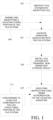
- FIG. 1 is a flow chart illustrating an exemplary method for validation and installation of a file system, in accordance with the present disclosure.
- the method begins at 101 with abstracting the file system into an encrypted file with cryptographically signed components.
- the transient, non-persistent (e.g., RAM based) storage circuit may abstract the file system into the encrypted file with cryptographically signed components by signing and encrypting a log-structured portion of the file system at 109, configured and arranged for use with flash memory components of the circuit platform (such as a JFFS2 file system blob).
- the method includes validating a signature associated with the file system and relative to the signed components.
- the transient, non-persistent storage circuit may boot at run time a kernel including a binary application to read and validate the signatures of the firmware packages.
- the binary application reads and validates the signatures of the firmware packages (i.e., validates the signatures of the signed components) by executing a digital signature algorithm, such as an elliptic curve digital signature algorithm (ECDSA).
- EDSA elliptic curve digital signature algorithm
- the method includes installing the file system into the transient, non-persistent storage circuit, and at 107, instruction code is executed under authorization via the validated signature.
- the method includes causing the transient, non-persistent storage circuit to synchronize to flash file components of the log-structured portion of the file system at 113.
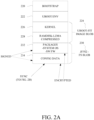
- FIG. 2A is a portion of a flow chart illustrating an exemplary method for validation and installation of a file system, in accordance with the present disclosure.
- the method includes execution of bootstrap instructions, such as by a bootstrap loader (also referred to as a boot loader).
- a bootstrap loader refers to or includes the first piece of code that runs when a machine starts, and is responsible for loading the rest of the operating system.
- the bootstrap instructions may be stored in read only memory (ROM).
- Das U-Boot (also referred to as "the Universal Boot Loader” or U-Boot) refers to an open source, primary boot loader used in embedded devices to package the instructions to boot the device's operating system kernel, and in some embodiments, U-Boot is used as the boot loader as described herein. However, it will be understood that alternative boot loaders may be used, and thus, references herein to the use of U-Boot are for illustrative purposes only.
- the kernel is booted with a minimal number of modules loaded. For instance, the modules loaded in the kernel may be only those required to read and process packages to install the remainder of the file system later.
- the modules in the minimal number of modules may include, for example, flash drivers and encryption facilities.
- U-boot environment instructions are executed.
- the U-boot environment refers to or includes a small amount of space used by U-boot on the flash storage to store some configuration parameters.
- the U-boot environment include values including the IP address of the TFTP server to which the TFTP client (part of U-Boot) will try to connect.
- a set of instructions is executed. More specifically, for instance, a U-boot flattened image tree (FIT) image set of instructions (e.g., blob) is executed.
- the FIT image format works as a tree structure, like the device-tree, where an image source file (.its) and a set of data files are used as an input, and an image tree blob (.itb) is generated as an output.
- the U-boot-FIT image blob includes execution of a kernel at 226 and execution of a RAMDisk Lempel-Ziv-Markov chain algorithm (LZMA) compressed file at 228.
- LZMA refers to or includes is an algorithm used to perform lossless data compression.
- LZMA uses a dictionary compression scheme and features a high compression ratio and a variable compression-dictionary size (up to 4 GB), while still maintaining decompression speed similar to other compression algorithms. It will be understood that embodiments described herein are not limited to the use of RAMDisk; rather, additionally or alternatively, another technique to utilize system memory as a disk drive may be used. Analogously, it will be understood that embodiments described herein are not limited to the LZMA chain algorithm; rather, other compression algorithms may be used additionally or alternatively to the LZMA algorithm.
- CRC 32 refers to or includes an error-detecting function that uses a CRC32 algorithm to detect changes between source and target data.
- the CRC32 function converts a variable-length string into an 8-character string that is a text representation of the hexadecimal value of a 32 bit-binary sequence.
- SHA-1 Secure Hash Algorithm 1
- SHA-1 Secure Hash Algorithm 1
- MD5SUM refers to or includes a computer program that calculates and verifies 128-bit MD5 hashes, as described in RFC 1321.
- the MD5 hash functions as a compact digital fingerprint of a file, and MD5SUM is used to verify the integrity of files, as changes to a file will cause its MD5 hash to change.
- a JFFS2 file system blob refers to or includes a set of log-structured file system instructions for use with flash memory devices.
- one or more packages 232 which may include the operating system, software, and firmware, as well as the configuration data 234 of the file system are signed and encrypted, as described herein.
- the packages 232 are signed using Landis+Gyr Packages (Signed) (LGPS) or some other signing technique.
- LGPS Landis+Gyr Packages
- the signed and encrypted files are synchronized with a file monitor, as discussed with relation to FIG. 2B .
- FIG. 2B is another portion of the flow chart illustrating an exemplary method for validation and installation of a file system, in accordance with the present disclosure.
- the signed and encrypted files are synchronized with a file monitor.
- the method continues at 236 with power up of the computing device.
- the bootstrap instructions e.g., U-boot
- the kernel accesses the transient, non-persistent storage circuit (e.g., RAMDisk).
- an encryption key is generated, and at 244 the packages 232 are read and validated.
- a binary application that is part of this RAMDisk may utilize ECDSA to read and validate the signature of the file system packages. Once the signature has been validated the file system packages are installed at 246 into the RAMDisk 252, one at a time, thus insuring file system integrity.
- the kernel is updated to include additional modules to enable the kernel to run as a fully functional operating system at 250.
- the additional modules may include, for example, networking and communication modules as well as other modules required to provide an operating system.
- FIG. 3 is a block diagram illustrating an exemplary system for validation and installation of a file system, in accordance with the present disclosure.
- the system facilitates the validation and installation of a file system via a computer system (e.g., one or more cloud computing systems, grid computing systems, virtualized computer systems, mainframe computers, servers, clients, nodes, desktops, mobile devices such as smart phones, cellular phones, tablets, personal digital assistants (PDAs), and/or the like, embedded computers, dedicated computers, a system on a chip (SOC)).
- a computer system e.g., one or more cloud computing systems, grid computing systems, virtualized computer systems, mainframe computers, servers, clients, nodes, desktops, mobile devices such as smart phones, cellular phones, tablets, personal digital assistants (PDAs), and/or the like, embedded computers, dedicated computers, a system on a chip (SOC)).
- a computer system e.g., one or more cloud computing systems, grid computing systems, virtualized computer systems, mainframe computers,
- the system may receive, obtain, aggregate, process, generate, store, retrieve, send, delete, input, output, and/or the like data (including program data and program instructions); may execute program instructions; and may communicate with computer systems, nodes, users, and/or the like.
- the system may comprise a standalone computer system, a distributed computer system, a node in a computer network (i.e., a network of computer systems organized in a topology), and/or the like.
- system and/or the various system elements may be organized in any number of ways (i.e., using any number and configuration of computer systems, computer networks, nodes, system elements, and/or the like) to validate and install a file system in accordance with the disclosure.
- the system includes a processor 201 that executes program instructions (e.g., system program instructions).
- the processor may be implemented using integrated circuits (ICs), application-specific integrated circuits (ASICs), field-programmable gate arrays (FPGAs), and/or the like.
- the processor may be connected to system memory 205 via a system bus 203.
- the system bus may interconnect these and/or other elements of the system via electrical, electronic, optical, wireless, and/or the like communication links.
- the system bus may comprise one or more control buses, address buses, data buses, memory buses, peripheral buses, and/or the like.
- the processor may access, read from, write to, store in, erase, modify, and/or the like, the system memory in accordance with program instructions executed by the processor.
- the system memory may facilitate accessing, storing, retrieving, modifying, deleting, and/or the like data by the processor.
- input/output devices 210 may be connected to the processor and/or to the system memory, and/or to one another via the system bus.
- the input/output devices may include one or more graphics devices 211.
- the processor may make use of the one or more graphic devices in accordance with program instructions (e.g., system program instructions) executed by the processor.
- the graphics device may be discreet, external, embedded, integrated into a CPU, and/or the like.
- a graphics device may operate in combination with other graphics devices (e.g., in parallel) to provide improved capabilities, data throughput, color depth, and/or the like.
- the input/output devices may include one or more audio devices 213.
- the processor may make use of the one or more audio devices in accordance with program instructions (e.g., system program instructions) executed by the processor.
- an audio device may be a sound card that may obtain (e.g., via a connected microphone), process, output (e.g., via connected speakers), and/or the like audio data (e.g., system data).
- the audio device may be discreet, external, embedded, integrated into a motherboard, and/or the like.
- An audio device may operate in combination with other audio devices (e.g., in parallel) to provide improved capabilities, data throughput, audio quality, and/or the like.
- the input/output devices may include one or more network devices 215.
- the processor may make use of the one or more network devices in accordance with program instructions (e.g., system program instructions) executed by the processor.
- a network device may be a network card that may obtain, process, output, and/or the like network data (e.g., system data).
- the network device may be discreet, external, embedded, integrated into a motherboard, and/or the like.
- the network device may operate in combination with other network devices (e.g., in parallel) to provide improved data throughput, redundancy, and/or the like.
- the input/output devices may include one or more storage devices 219.
- the processor may access, read from, write to, store in, erase, modify, and/or the like a storage device in accordance with program instructions (e.g., system program instructions) executed by the processor.
- a storage device may facilitate accessing, storing, retrieving, modifying, deleting, and/or the like data (e.g., system data) by the processor.
- the processor may access data from the storage device directly via the system bus.
- the processor may access data from the storage device by instructing the storage device to transfer the data to the system memory and accessing the data from the system memory.
- the storage device 219 may be discreet, external, embedded, integrated (e.g., into a motherboard, into another storage device), and/or the like.
- a storage device 219 may operate in combination with other storage devices to provide improved capacity, data throughput, data redundancy, and/or the like.
- the system memory 205 and the one or more storage devices 219 may be referred to as memory 220 (i.e., physical memory).
- System memory 220 contains processor-operable (e.g., accessible) system data stores 230.
- Data stores 230 comprise data that may be used (e.g., by the system) via the system. Such data may be organized using one or more data formats such as a database (e.g., a relational database with database tables, an object-oriented database, a graph database, a hierarchical database), a flat file (e.g., organized into a tabular format), a binary file (e.g., a GIF file, an MPEG-4 file), a structured file (e.g., an HTML file, an XML file), a text file, and/or the like.
- a database e.g., a relational database with database tables, an object-oriented database, a graph database, a hierarchical database
- a flat file e.g., organized into a tabular format
- a binary file e.g., a GIF file, an MPEG-4 file
- a structured file
- Data stores 230 may comprise a non-transitory machine readable medium storing instructions executable by processor 201 to perform a specified function related to the generation and display of an improved real-estate user interface, as discussed herein. Accordingly, each of the respective data stores 230a-230c include programmatic instructions which, when executed by processor 201, provide for to validation and installation of a file system in accordance with the present disclosure.
- the data stores 230 may include programmatic instructions which, when executed by processor 201, mitigate security breach for a circuit platform subject to compromise by unauthorized changes to a file system, the file system having instruction code or other data for an operating system and being stored by or on behalf of the circuit platform.
- the data stores 230 may include programmatic instructions which, when executed by processor 201, cause the processor 201 to abstract the file system into an encrypted file with cryptographically signed components, and at boot time of the operating system, boot a kernel of the operating system with a minimal number of modules loaded.
- the data stores 230 may further include programmatic instructions which, when executed by processor 201, read and validate a signature of the file system, and install packages of the file system into a transient, non-persistent storage circuit.
- the processor 201 may encrypt the file system packages, and in response to installation of the file system packages, the processor 201 may update the transient, non-persistent storage circuit to include additional modules to run as a fully functional operating system.
- the data stores 230 may include programmatic instructions which, when executed by processor 201, cause the processor to validate and launch the kernel using a primary boot loader, and access the transient, non-persistent storage circuit responsive to validation and launch of the kernel.
- the processor 201 may decrypt and load configuration and running-state files of the operating system.
- the processor 201 may monitor the load configuration and running-state files of the operating system, and in response to identification of a change in the load configuration or running-state files, the processor 201 may update the changed load configuration or running-state files on the encrypted file system.
- the data stores 230 may include programmatic instructions which, when executed by processor 201, cause the processor to generate an encryption key using the transient, non-persistent storage circuit, and validate the file system using the generated encryption key.
- the processor 201 may decrypt and load configuration and running-state files of the operating system, as discussed herein.
- one or more modules are discrete logic circuits or programmable logic circuits configured and arranged for implementing these operations, as may be carried out in the approaches shown in FIGs. 2A and 2B .
- a programmable circuit is one or more computer circuits, including memory circuitry for storing and accessing a program to be executed as a set (or sets) of instructions (and/or to be used as configuration data to define how the programmable circuit is to perform), and an algorithm or process as described with regards to FIGs. 1 , 2A and 2B is used by the programmable circuit to perform the related steps, functions, operations, activities, etc .
- the instructions (and/or configuration data) can be configured for implementation in logic circuitry, with the instructions (whether characterized in the form of object code, firmware or software) stored in and accessible from a memory (circuit).
- a memory accessible from a memory (circuit).
- the adjectives "first” and “second” are not used to connote any description of the structure or to provide any substantive meaning; rather, such adjectives are merely used for English-language antecedence to differentiate one such similarly-named structure from another similarly-named structure (e.g., "first circuit configured to convert " is interpreted as “circuit configured to convert ").
Landscapes
- Engineering & Computer Science (AREA)
- Computer Security & Cryptography (AREA)
- Theoretical Computer Science (AREA)
- Software Systems (AREA)
- General Engineering & Computer Science (AREA)
- Computer Hardware Design (AREA)
- General Physics & Mathematics (AREA)
- Physics & Mathematics (AREA)
- General Health & Medical Sciences (AREA)
- Health & Medical Sciences (AREA)
- Computer Networks & Wireless Communication (AREA)
- Signal Processing (AREA)
- Bioethics (AREA)
- Power Engineering (AREA)
- Virology (AREA)
- Storage Device Security (AREA)
Claims (13)
- Verfahren zum Entschärfen einer Sicherheitslücke für einen Schaltungsträger, der einer Kompromittierung durch unbefugte Änderung eines Dateisystems unterliegt, wobei das Dateisystem Daten für ein Betriebssystem aufweist und zur Verwendung durch den Schaltungsträger gespeichert ist, wobei das Verfahren Folgendes umfasst:Abstrahieren (101) des Dateisystems zu einer verschlüsselten Datei mit kryptographisch signierten Komponenten;während einer Boot-Zeit des Betriebssystems, Zugreifen auf eine unverschlüsselte Version des Betriebssystems und der verschlüsselten Datei und Verwenden dieser durch Validieren (103) einer Signatur, die dem Dateisystem zugeordnet ist und mit den kryptographisch signierten Komponenten zusammenhängt; undals Reaktion auf das Validieren (103) der Signatur des Dateisystems, Installieren (105) des Dateisystems in eine flüchtige, nichtpersistente Speicherschaltung, wobei das Betriebssystem einen Befehlscode über eine Zentralverarbeitungseinheitsschaltung (CPU-Schaltung) unter Befugnis auf der Basis davon, dass die Signatur validiert wird, ausführt (107), um eine Ausführungszustandsdatei des Dateisystems zu entschlüsseln und zu laden;Erkennen einer Dateiänderung der Ausführungszustandsdatei des Dateisystems;Aktualisieren der verschlüsselten Datei, um eine aktualisierte verschlüsselte Datei zu produzieren, die die Dateiänderung der Ausführungszustandsdatei des Dateisystems integriert, um den Zustand des Dateisystems über einen Neustart hinweg zu bewahren;während einer zweiten Boot-Zeit des Betriebssystems, Neuinstallieren und Starten des Dateisystems in der flüchtigen, nichtpersistenten Speicherschaltung;als Reaktion auf das Starten des Dateisystems in der flüchtigen, nichtpersistenten Speicherschaltung, Entschlüsseln der aktualisierten verschlüsselten Datei, einschließlich der Ausführungszustandsdatei, die die Dateiänderung integriert; undLaden der Ausführungszustandsdatei in die flüchtige, nichtpersistente Speicherschaltung.
- Verfahren nach Anspruch 1, ferner umfassend ein Bewirken, dass die flüchtige, nichtpersistente Speicherschaltung eine Integritätsprüfung des Dateisystems unter Verwendung mindestens eines von einem Fehlererkennungsalgorithmus und einer kryptographischen Hashfunktion durchführt.
- Verfahren nach Anspruch 1, wobei die flüchtige, nichtpersistente Speicherschaltung unbefugte Änderungen während eines anschließenden Boot-Zyklus des Betriebssystems löscht.
- Verfahren nach Anspruch 1, umfassend das Bewirken, dass die flüchtige, nichtpersistente Speicherschaltung das Dateisystem zu der verschlüsselten Datei mit den kryptographisch signierten Komponenten durch Signieren und Verschlüsseln (230) eines protokoll strukturierten Teils des Dateisystems abstrahiert, wobei der protokollstrukturierte Teil zur Verwendung mit einer Flash-Speicherkomponente des Schaltungsträgers konfiguriert und angeordnet ist.
- Verfahren nach Anspruch 1, Folgendes umfassend:Bewirken, dass die flüchtige, nichtpersistente Speicherschaltung einen Kernel, einschließlich einer binären Anwendung, zu einer Laufzeit bootet, um die kryptographisch signierten Komponenten des Dateisystems zu lesen und zu validieren (244);wobei die binäre Anwendung die kryptographisch signierten Komponenten des Dateisystems durch Ausführen eines digitalen Signaturalgorithmus liest und validiert (244).
- Verfahren nach Anspruch 1, Folgendes umfassend:
Bewirken, dass sich die flüchtige, nichtpersistente Speicherschaltung mit Flash-Dateikomponenten des protokoll strukturierten Teils des Dateisystems synchronisiert (113). - Verfahren nach Anspruch 1, umfassend das Bewirken, dass das Betriebssystem als Reaktion auf das Validieren der Signatur die flüchtige, nichtpersistente Speicherschaltung mit zusätzlichen Modulen aktualisiert, um als ein voll funktionsfähiges Betriebssystem ausgeführt zu werden (250).
- System zum Validieren eines Dateisystems, wobei das System Folgendes umfasst:einen Prozessor, einschließlich einer Zentralverarbeitungseinheitsschaltung (CPU-Schaltung); undeine Speicherschaltung, einschließlich Befehle, die bei Ausführung durch den Prozessor den Prozessor veranlassen zum:Booten, während einer Boot-Zeit eines Dateisystems mit Daten, einer flüchtigen, nichtpersistenten Speicherschaltung mit einem Satz von geladenen anfänglichen Modulen;Lesen und Validieren (103) einer Signatur des Dateisystems;Installieren (105), als Reaktion auf eine Validierung (103) der Signatur des Dateisystems, von Paketen (232) des Dateisystems in die flüchtige, nichtpersistente Speicherschaltung;Verschlüsseln der Pakete (232) des Dateisystems, um eine verschlüsselte Datei zu produzieren;Entschlüsseln und Laden, als Reaktion auf eine Installation der Pakete (232) des Dateisystems, von Konfigurations- und Ausführungszustandsdateien des Dateisystems;Erkennen einer Dateiänderung der Konfigurations- und Ausführungszustandsdatei des Dateisystems;Aktualisieren der verschlüsselten Datei, um eine aktualisierte verschlüsselte Datei zu produzieren, die die Dateiänderung der Konfigurations- und Ausführungszustandsdateien des Dateisystems integriert; undEntschlüsseln, während einer zweiten Boot-Zeit des Dateisystems, der aktualisierten verschlüsselten Datei, um die Konfigurations- und Ausführungszustandsdateien zu laden, die die Dateiänderung der Konfigurations- und Ausführungszustandsdateien integrieren.
- System nach Anspruch 8, ferner umfassend Befehle, die bei Ausführung durch den Prozessor den Prozessor veranlassen zum:
Aktualisieren, als Reaktion auf eine Installation der Pakete (232) des Dateisystems, der flüchtigen, nichtpersistenten Speicherschaltung zum Einschließen zusätzlicher Module, die mit den geladenen anfänglichen Modulen zu kombinieren sind, um als ein voll funktionsfähiges Betriebssystem ausgeführt zu werden. - System nach Anspruch 8, ferner umfassend Befehle, die bei Ausführung durch den Prozessor den Prozessor veranlassen zum:Validieren und Starten des Dateisystems unter Verwendung eines primären Bootloaders; undZugreifen auf die flüchtige, nichtpersistente Speicherschaltung als Reaktion auf Validierung und Start des Dateisystems unter Verwendung des primären Bootloaders.
- Nichtflüchtiges computerlesbares Medium, das Befehle zum Entschärfen einer Sicherheitslücke für einen Schaltungsträger, der einer Kompromittierung durch unbefugte Änderung eines Dateisystems unterliegt, speichert, wobei das Dateisystem Daten für ein Betriebssystem aufweist und zur Verwendung durch den Schaltungsträger gespeichert ist, wobei die Befehle bei Ausführung durch einen Prozessor, einschließlich einer Zentralverarbeitungseinheitsschaltung (CPU-Schaltung), den Prozessor veranlassen zum:Abstrahieren (101) des Dateisystems zu einer verschlüsselten Datei mit kryptographisch signierten Komponenten;Booten (238), zu einer Boot-Zeit des Betriebssystems, eines Kernels des Betriebssystems mit einem Satz von geladenen anfänglichen Modulen;Lesen und Validieren einer Signatur des Dateisystems;Installieren (105), als Reaktion auf eine Validierung des Dateisystems, von Paketen (232) des Dateisystems in eine flüchtige, nichtpersistente Speicherschaltung;Verschlüsseln (230), als Reaktion auf eine Installation der Pakete (232) des Dateisystems, der Pakete (232) des Dateisystems, um eine verschlüsselte Datei zu produzieren;Aktualisieren, als Reaktion auf eine Installation der Pakete (232) des Dateisystems, der flüchtigen, nichtpersistenten Speicherschaltung zum Einschließen zusätzlicher Module, um zu ermöglichen, dass das Betriebssystem als ein voll funktionsfähiges Betriebssystem ausgeführt wird;Entschlüsseln und Laden, als Reaktion auf eine Installation der Pakete des Dateisystems, von Konfigurations- und Ausführungszustandsdateien des Dateisystems;Erkennen einer Dateiänderung der Konfigurations- und Ausführungszustandsdatei des Dateisystems;Aktualisieren der verschlüsselten Datei, um eine aktualisierte verschlüsselte Datei zu produzieren, die die Dateiänderung der Konfigurations- und Ausführungszustandsdateien des Dateisystems integriert; undEntschlüsseln, während einer zweiten Boot-Zeit des Dateisystems, der aktualisierten verschlüsselten Datei, um die Konfigurations- und Ausführungszustandsdateien zu laden, die die Dateiänderung der Konfigurations- und Ausführungszustandsdateien integrieren.
- Nichtflüchtiges computerlesbares Medium nach Anspruch 11, ferner umfassend Befehle zum:Validieren und Starten (238) des Kernels unter Verwendung eines primären Bootloaders; undZugreifen (240) auf die flüchtige, nichtpersistente Speicherschaltung als Reaktion auf Validierung und Start des Kernels.
- Nichtflüchtiges computerlesbares Medium nach Anspruch 12, ferner umfassend Befehle zum:Erzeugen (242) eines Verschlüsselungsschlüssels unter Verwendung der flüchtigen, nichtpersistenten Speicherschaltung; undValidieren (244) des Dateisystems unter Verwendung des erzeugten Verschlüsselungsschlüssels.
Applications Claiming Priority (2)
| Application Number | Priority Date | Filing Date | Title |
|---|---|---|---|
| US201862737336P | 2018-09-27 | 2018-09-27 | |
| PCT/US2019/053214 WO2020069168A1 (en) | 2018-09-27 | 2019-09-26 | Validation and installation of a file system into a transient, non-persistent storage circuit |
Publications (2)
| Publication Number | Publication Date |
|---|---|
| EP3857415A1 EP3857415A1 (de) | 2021-08-04 |
| EP3857415B1 true EP3857415B1 (de) | 2025-04-30 |
Family
ID=68165887
Family Applications (1)
| Application Number | Title | Priority Date | Filing Date |
|---|---|---|---|
| EP19783947.5A Active EP3857415B1 (de) | 2018-09-27 | 2019-09-26 | Validierung und installation eines dateisystems in eine transiente, nicht-persistente speicherschaltung |
Country Status (6)
| Country | Link |
|---|---|
| US (1) | US11574055B2 (de) |
| EP (1) | EP3857415B1 (de) |
| JP (1) | JP7439067B2 (de) |
| CN (1) | CN113056739B (de) |
| AU (1) | AU2019346606B2 (de) |
| WO (1) | WO2020069168A1 (de) |
Families Citing this family (4)
| Publication number | Priority date | Publication date | Assignee | Title |
|---|---|---|---|---|
| US11423153B2 (en) * | 2020-08-18 | 2022-08-23 | Raytheon Company | Detection of malicious operating system booting and operating system loading |
| US11941109B2 (en) * | 2021-12-21 | 2024-03-26 | Cyberark Software Ltd. | Customizable and dynamically mutable operating systems |
| CN114816261B (zh) * | 2022-05-19 | 2026-02-27 | 杭州联吉技术有限公司 | 指令响应方法、装置及电子设备 |
| US20250013751A1 (en) * | 2023-07-05 | 2025-01-09 | Forcepoint Federal Holdings Llc | Fully encrypted operating system installation media |
Family Cites Families (13)
| Publication number | Priority date | Publication date | Assignee | Title |
|---|---|---|---|---|
| US8639625B1 (en) * | 1995-02-13 | 2014-01-28 | Intertrust Technologies Corporation | Systems and methods for secure transaction management and electronic rights protection |
| US7860246B2 (en) * | 2006-11-01 | 2010-12-28 | International Business Machines Corporation | System and method for protecting data in a secure system |
| US8254568B2 (en) | 2007-01-07 | 2012-08-28 | Apple Inc. | Secure booting a computing device |
| US8555410B2 (en) * | 2007-04-10 | 2013-10-08 | Abbott Medical Optics Inc. | External interface access control |
| US8375440B2 (en) * | 2007-10-15 | 2013-02-12 | Microsoft Corporation | Secure bait and switch resume |
| US20120310983A1 (en) * | 2010-02-11 | 2012-12-06 | Hemant Mittal | Executable identity based file access |
| WO2012061678A1 (en) | 2010-11-05 | 2012-05-10 | Interdigital Patent Holdings, Inc. | Device validation, distress indication, and remediation |
| CN102521289B (zh) * | 2011-11-29 | 2013-12-04 | 华为技术有限公司 | 一种文件同步方法、装置及系统 |
| GB2508895A (en) * | 2012-12-14 | 2014-06-18 | Ibm | Bootloader for booting a computer into a second operating system that is hidden from a first host operating system |
| US9165143B1 (en) * | 2013-03-15 | 2015-10-20 | Xilinx, Inc. | Image file generation and loading |
| EP2884692B1 (de) * | 2013-12-13 | 2020-05-20 | Nxp B.V. | Aktualisieren von software auf einem sicheren element |
| US10061594B2 (en) * | 2016-02-06 | 2018-08-28 | Verizon Patent And Licensing Inc. | Protecting and verifying contents of files on mobile computing devices |
| US10331892B2 (en) * | 2017-02-24 | 2019-06-25 | Dell Products L.P. | Systems and methods for secure boot and runtime tamper detection |
-
2019
- 2019-09-26 JP JP2021517222A patent/JP7439067B2/ja active Active
- 2019-09-26 US US16/584,101 patent/US11574055B2/en active Active
- 2019-09-26 AU AU2019346606A patent/AU2019346606B2/en active Active
- 2019-09-26 CN CN201980077802.3A patent/CN113056739B/zh active Active
- 2019-09-26 WO PCT/US2019/053214 patent/WO2020069168A1/en not_active Ceased
- 2019-09-26 EP EP19783947.5A patent/EP3857415B1/de active Active
Also Published As
| Publication number | Publication date |
|---|---|
| JP2022502769A (ja) | 2022-01-11 |
| JP7439067B2 (ja) | 2024-02-27 |
| US11574055B2 (en) | 2023-02-07 |
| AU2019346606B2 (en) | 2024-04-04 |
| WO2020069168A1 (en) | 2020-04-02 |
| CN113056739A (zh) | 2021-06-29 |
| CN113056739B (zh) | 2024-06-11 |
| US20200104495A1 (en) | 2020-04-02 |
| AU2019346606A1 (en) | 2021-04-15 |
| EP3857415A1 (de) | 2021-08-04 |
Similar Documents
| Publication | Publication Date | Title |
|---|---|---|
| US10931451B2 (en) | Securely recovering a computing device | |
| US8254568B2 (en) | Secure booting a computing device | |
| EP3479283B1 (de) | Bewahrung von betriebssystemgeheimnissen bei rücksetzungen | |
| KR101190479B1 (ko) | 티켓 인증 보안 설치 및 부트 | |
| US8230412B2 (en) | Compatible trust in a computing device | |
| US20220124122A1 (en) | Attestation service for enforcing payload security policies in a data center | |
| US8291480B2 (en) | Trusting an unverified code image in a computing device | |
| US11574055B2 (en) | Validation and installation of a file system | |
| US10942750B2 (en) | System and method to securely load non-UEFI based file format as OEM based UEFI custom capsule format in UEFI loader | |
| HK40055663A (en) | Method and computer readable medium for mitigating security vulnerabilities and system for verifying file systems | |
| HK40055663B (zh) | 用於减轻安全漏洞的方法和计算机可读介质及验证文件系统的系统 | |
| US20250342255A1 (en) | Automatic system for dynamic attestation for device firmware | |
| CN113918975A (zh) | 一种可信计算软件白名单管理方法及系统 | |
| CN121456917A (zh) | 受硬件保护的系统测量值 |
Legal Events
| Date | Code | Title | Description |
|---|---|---|---|
| STAA | Information on the status of an ep patent application or granted ep patent |
Free format text: STATUS: UNKNOWN |
|
| STAA | Information on the status of an ep patent application or granted ep patent |
Free format text: STATUS: THE INTERNATIONAL PUBLICATION HAS BEEN MADE |
|
| PUAI | Public reference made under article 153(3) epc to a published international application that has entered the european phase |
Free format text: ORIGINAL CODE: 0009012 |
|
| STAA | Information on the status of an ep patent application or granted ep patent |
Free format text: STATUS: REQUEST FOR EXAMINATION WAS MADE |
|
| 17P | Request for examination filed |
Effective date: 20210423 |
|
| AK | Designated contracting states |
Kind code of ref document: A1 Designated state(s): AL AT BE BG CH CY CZ DE DK EE ES FI FR GB GR HR HU IE IS IT LI LT LU LV MC MK MT NL NO PL PT RO RS SE SI SK SM TR |
|
| DAV | Request for validation of the european patent (deleted) | ||
| DAX | Request for extension of the european patent (deleted) | ||
| P01 | Opt-out of the competence of the unified patent court (upc) registered |
Effective date: 20230517 |
|
| STAA | Information on the status of an ep patent application or granted ep patent |
Free format text: STATUS: EXAMINATION IS IN PROGRESS |
|
| 17Q | First examination report despatched |
Effective date: 20231016 |
|
| RAP1 | Party data changed (applicant data changed or rights of an application transferred) |
Owner name: LANDIS+GYR TECHNOLOGY, INC. |
|
| GRAP | Despatch of communication of intention to grant a patent |
Free format text: ORIGINAL CODE: EPIDOSNIGR1 |
|
| STAA | Information on the status of an ep patent application or granted ep patent |
Free format text: STATUS: GRANT OF PATENT IS INTENDED |
|
| RIC1 | Information provided on ipc code assigned before grant |
Ipc: G06F 21/57 20130101ALI20240720BHEP Ipc: G06F 16/178 20190101ALI20240720BHEP Ipc: G06F 21/64 20130101ALI20240720BHEP Ipc: G06F 3/06 20060101ALI20240720BHEP Ipc: G06F 21/51 20130101AFI20240720BHEP |
|
| INTG | Intention to grant announced |
Effective date: 20240820 |
|
| GRAS | Grant fee paid |
Free format text: ORIGINAL CODE: EPIDOSNIGR3 |
|
| GRAJ | Information related to disapproval of communication of intention to grant by the applicant or resumption of examination proceedings by the epo deleted |
Free format text: ORIGINAL CODE: EPIDOSDIGR1 |
|
| GRAL | Information related to payment of fee for publishing/printing deleted |
Free format text: ORIGINAL CODE: EPIDOSDIGR3 |
|
| STAA | Information on the status of an ep patent application or granted ep patent |
Free format text: STATUS: EXAMINATION IS IN PROGRESS |
|
| GRAP | Despatch of communication of intention to grant a patent |
Free format text: ORIGINAL CODE: EPIDOSNIGR1 |
|
| STAA | Information on the status of an ep patent application or granted ep patent |
Free format text: STATUS: GRANT OF PATENT IS INTENDED |
|
| INTC | Intention to grant announced (deleted) | ||
| INTG | Intention to grant announced |
Effective date: 20250113 |
|
| GRAA | (expected) grant |
Free format text: ORIGINAL CODE: 0009210 |
|
| STAA | Information on the status of an ep patent application or granted ep patent |
Free format text: STATUS: THE PATENT HAS BEEN GRANTED |
|
| AK | Designated contracting states |
Kind code of ref document: B1 Designated state(s): AL AT BE BG CH CY CZ DE DK EE ES FI FR GB GR HR HU IE IS IT LI LT LU LV MC MK MT NL NO PL PT RO RS SE SI SK SM TR |
|
| REG | Reference to a national code |
Ref country code: CH Ref legal event code: EP Ref country code: GB Ref legal event code: FG4D |
|
| REG | Reference to a national code |
Ref country code: IE Ref legal event code: FG4D |
|
| REG | Reference to a national code |
Ref country code: DE Ref legal event code: R096 Ref document number: 602019069368 Country of ref document: DE |
|
| REG | Reference to a national code |
Ref country code: NL Ref legal event code: FP |
|
| REG | Reference to a national code |
Ref country code: AT Ref legal event code: MK05 Ref document number: 1790692 Country of ref document: AT Kind code of ref document: T Effective date: 20250430 |
|
| REG | Reference to a national code |
Ref country code: CH Ref legal event code: U11 Free format text: ST27 STATUS EVENT CODE: U-0-0-U10-U11 (AS PROVIDED BY THE NATIONAL OFFICE) Effective date: 20251001 |
|
| PG25 | Lapsed in a contracting state [announced via postgrant information from national office to epo] |
Ref country code: PT Free format text: LAPSE BECAUSE OF FAILURE TO SUBMIT A TRANSLATION OF THE DESCRIPTION OR TO PAY THE FEE WITHIN THE PRESCRIBED TIME-LIMIT Effective date: 20250901 Ref country code: FI Free format text: LAPSE BECAUSE OF FAILURE TO SUBMIT A TRANSLATION OF THE DESCRIPTION OR TO PAY THE FEE WITHIN THE PRESCRIBED TIME-LIMIT Effective date: 20250430 Ref country code: ES Free format text: LAPSE BECAUSE OF FAILURE TO SUBMIT A TRANSLATION OF THE DESCRIPTION OR TO PAY THE FEE WITHIN THE PRESCRIBED TIME-LIMIT Effective date: 20250430 |
|
| PGFP | Annual fee paid to national office [announced via postgrant information from national office to epo] |
Ref country code: DE Payment date: 20250919 Year of fee payment: 7 |
|
| REG | Reference to a national code |
Ref country code: LT Ref legal event code: MG9D |
|
| PG25 | Lapsed in a contracting state [announced via postgrant information from national office to epo] |
Ref country code: NO Free format text: LAPSE BECAUSE OF FAILURE TO SUBMIT A TRANSLATION OF THE DESCRIPTION OR TO PAY THE FEE WITHIN THE PRESCRIBED TIME-LIMIT Effective date: 20250730 Ref country code: GR Free format text: LAPSE BECAUSE OF FAILURE TO SUBMIT A TRANSLATION OF THE DESCRIPTION OR TO PAY THE FEE WITHIN THE PRESCRIBED TIME-LIMIT Effective date: 20250731 |
|
| PG25 | Lapsed in a contracting state [announced via postgrant information from national office to epo] |
Ref country code: PL Free format text: LAPSE BECAUSE OF FAILURE TO SUBMIT A TRANSLATION OF THE DESCRIPTION OR TO PAY THE FEE WITHIN THE PRESCRIBED TIME-LIMIT Effective date: 20250430 |
|
| PGFP | Annual fee paid to national office [announced via postgrant information from national office to epo] |
Ref country code: TR Payment date: 20250922 Year of fee payment: 7 Ref country code: NL Payment date: 20250918 Year of fee payment: 7 |
|
| PG25 | Lapsed in a contracting state [announced via postgrant information from national office to epo] |
Ref country code: BG Free format text: LAPSE BECAUSE OF FAILURE TO SUBMIT A TRANSLATION OF THE DESCRIPTION OR TO PAY THE FEE WITHIN THE PRESCRIBED TIME-LIMIT Effective date: 20250430 |
|
| PGFP | Annual fee paid to national office [announced via postgrant information from national office to epo] |
Ref country code: GB Payment date: 20250919 Year of fee payment: 7 |
|
| PG25 | Lapsed in a contracting state [announced via postgrant information from national office to epo] |
Ref country code: HR Free format text: LAPSE BECAUSE OF FAILURE TO SUBMIT A TRANSLATION OF THE DESCRIPTION OR TO PAY THE FEE WITHIN THE PRESCRIBED TIME-LIMIT Effective date: 20250430 |
|
| PG25 | Lapsed in a contracting state [announced via postgrant information from national office to epo] |
Ref country code: AT Free format text: LAPSE BECAUSE OF FAILURE TO SUBMIT A TRANSLATION OF THE DESCRIPTION OR TO PAY THE FEE WITHIN THE PRESCRIBED TIME-LIMIT Effective date: 20250430 |
|
| PGFP | Annual fee paid to national office [announced via postgrant information from national office to epo] |
Ref country code: FR Payment date: 20250922 Year of fee payment: 7 |
|
| PG25 | Lapsed in a contracting state [announced via postgrant information from national office to epo] |
Ref country code: RS Free format text: LAPSE BECAUSE OF FAILURE TO SUBMIT A TRANSLATION OF THE DESCRIPTION OR TO PAY THE FEE WITHIN THE PRESCRIBED TIME-LIMIT Effective date: 20250731 |
|
| PG25 | Lapsed in a contracting state [announced via postgrant information from national office to epo] |
Ref country code: IS Free format text: LAPSE BECAUSE OF FAILURE TO SUBMIT A TRANSLATION OF THE DESCRIPTION OR TO PAY THE FEE WITHIN THE PRESCRIBED TIME-LIMIT Effective date: 20250830 |
|
| PG25 | Lapsed in a contracting state [announced via postgrant information from national office to epo] |
Ref country code: LV Free format text: LAPSE BECAUSE OF FAILURE TO SUBMIT A TRANSLATION OF THE DESCRIPTION OR TO PAY THE FEE WITHIN THE PRESCRIBED TIME-LIMIT Effective date: 20250430 |
|
| PG25 | Lapsed in a contracting state [announced via postgrant information from national office to epo] |
Ref country code: DK Free format text: LAPSE BECAUSE OF FAILURE TO SUBMIT A TRANSLATION OF THE DESCRIPTION OR TO PAY THE FEE WITHIN THE PRESCRIBED TIME-LIMIT Effective date: 20250430 Ref country code: SM Free format text: LAPSE BECAUSE OF FAILURE TO SUBMIT A TRANSLATION OF THE DESCRIPTION OR TO PAY THE FEE WITHIN THE PRESCRIBED TIME-LIMIT Effective date: 20250430 |
|
| PGFP | Annual fee paid to national office [announced via postgrant information from national office to epo] |
Ref country code: CH Payment date: 20251001 Year of fee payment: 7 |
|
| PG25 | Lapsed in a contracting state [announced via postgrant information from national office to epo] |
Ref country code: CZ Free format text: LAPSE BECAUSE OF FAILURE TO SUBMIT A TRANSLATION OF THE DESCRIPTION OR TO PAY THE FEE WITHIN THE PRESCRIBED TIME-LIMIT Effective date: 20250430 |
|
| PG25 | Lapsed in a contracting state [announced via postgrant information from national office to epo] |
Ref country code: EE Free format text: LAPSE BECAUSE OF FAILURE TO SUBMIT A TRANSLATION OF THE DESCRIPTION OR TO PAY THE FEE WITHIN THE PRESCRIBED TIME-LIMIT Effective date: 20250430 |
|
| PG25 | Lapsed in a contracting state [announced via postgrant information from national office to epo] |
Ref country code: SK Free format text: LAPSE BECAUSE OF FAILURE TO SUBMIT A TRANSLATION OF THE DESCRIPTION OR TO PAY THE FEE WITHIN THE PRESCRIBED TIME-LIMIT Effective date: 20250430 Ref country code: RO Free format text: LAPSE BECAUSE OF FAILURE TO SUBMIT A TRANSLATION OF THE DESCRIPTION OR TO PAY THE FEE WITHIN THE PRESCRIBED TIME-LIMIT Effective date: 20250430 |
|
| PG25 | Lapsed in a contracting state [announced via postgrant information from national office to epo] |
Ref country code: IT Free format text: LAPSE BECAUSE OF FAILURE TO SUBMIT A TRANSLATION OF THE DESCRIPTION OR TO PAY THE FEE WITHIN THE PRESCRIBED TIME-LIMIT Effective date: 20250430 |
|
| REG | Reference to a national code |
Ref country code: DE Ref legal event code: R097 Ref document number: 602019069368 Country of ref document: DE |
|
| PLBE | No opposition filed within time limit |
Free format text: ORIGINAL CODE: 0009261 |
|
| STAA | Information on the status of an ep patent application or granted ep patent |
Free format text: STATUS: NO OPPOSITION FILED WITHIN TIME LIMIT |
|
| REG | Reference to a national code |
Ref country code: CH Ref legal event code: L10 Free format text: ST27 STATUS EVENT CODE: U-0-0-L10-L00 (AS PROVIDED BY THE NATIONAL OFFICE) Effective date: 20260311 |
|
| 26N | No opposition filed |
Effective date: 20260202 |