EP3857413B1 - Verfahren zur verarbeitung einer transaktion, vorrichtung, system und zugehöriges programm - Google Patents
Verfahren zur verarbeitung einer transaktion, vorrichtung, system und zugehöriges programm Download PDFInfo
- Publication number
- EP3857413B1 EP3857413B1 EP19772772.0A EP19772772A EP3857413B1 EP 3857413 B1 EP3857413 B1 EP 3857413B1 EP 19772772 A EP19772772 A EP 19772772A EP 3857413 B1 EP3857413 B1 EP 3857413B1
- Authority
- EP
- European Patent Office
- Prior art keywords
- cryptographic fingerprint
- contextual
- fingerprint
- transaction
- contextual cryptographic
- Prior art date
- Legal status (The legal status is an assumption and is not a legal conclusion. Google has not performed a legal analysis and makes no representation as to the accuracy of the status listed.)
- Active
Links
Images

Classifications
-
- G—PHYSICS
- G06—COMPUTING OR CALCULATING; COUNTING
- G06F—ELECTRIC DIGITAL DATA PROCESSING
- G06F21/00—Security arrangements for protecting computers, components thereof, programs or data against unauthorised activity
- G06F21/30—Authentication, i.e. establishing the identity or authorisation of security principals
- G06F21/31—User authentication
-
- G—PHYSICS
- G06—COMPUTING OR CALCULATING; COUNTING
- G06Q—INFORMATION AND COMMUNICATION TECHNOLOGY [ICT] SPECIALLY ADAPTED FOR ADMINISTRATIVE, COMMERCIAL, FINANCIAL, MANAGERIAL OR SUPERVISORY PURPOSES; SYSTEMS OR METHODS SPECIALLY ADAPTED FOR ADMINISTRATIVE, COMMERCIAL, FINANCIAL, MANAGERIAL OR SUPERVISORY PURPOSES, NOT OTHERWISE PROVIDED FOR
- G06Q20/00—Payment architectures, schemes or protocols
- G06Q20/38—Payment protocols; Details thereof
- G06Q20/382—Payment protocols; Details thereof insuring higher security of transaction
- G06Q20/3827—Use of message hashing
-
- H—ELECTRICITY
- H04—ELECTRIC COMMUNICATION TECHNIQUE
- H04L—TRANSMISSION OF DIGITAL INFORMATION, e.g. TELEGRAPHIC COMMUNICATION
- H04L9/00—Cryptographic mechanisms or cryptographic arrangements for secret or secure communications; Network security protocols
- H04L9/32—Cryptographic mechanisms or cryptographic arrangements for secret or secure communications; Network security protocols including means for verifying the identity or authority of a user of the system or for message authentication, e.g. authorization, entity authentication, data integrity or data verification, non-repudiation, key authentication or verification of credentials
-
- H—ELECTRICITY
- H04—ELECTRIC COMMUNICATION TECHNIQUE
- H04L—TRANSMISSION OF DIGITAL INFORMATION, e.g. TELEGRAPHIC COMMUNICATION
- H04L9/00—Cryptographic mechanisms or cryptographic arrangements for secret or secure communications; Network security protocols
- H04L9/32—Cryptographic mechanisms or cryptographic arrangements for secret or secure communications; Network security protocols including means for verifying the identity or authority of a user of the system or for message authentication, e.g. authorization, entity authentication, data integrity or data verification, non-repudiation, key authentication or verification of credentials
- H04L9/3236—Cryptographic mechanisms or cryptographic arrangements for secret or secure communications; Network security protocols including means for verifying the identity or authority of a user of the system or for message authentication, e.g. authorization, entity authentication, data integrity or data verification, non-repudiation, key authentication or verification of credentials using cryptographic hash functions
- H04L9/3239—Cryptographic mechanisms or cryptographic arrangements for secret or secure communications; Network security protocols including means for verifying the identity or authority of a user of the system or for message authentication, e.g. authorization, entity authentication, data integrity or data verification, non-repudiation, key authentication or verification of credentials using cryptographic hash functions involving non-keyed hash functions, e.g. modification detection codes [MDCs], MD5, SHA or RIPEMD
-
- H—ELECTRICITY
- H04—ELECTRIC COMMUNICATION TECHNIQUE
- H04L—TRANSMISSION OF DIGITAL INFORMATION, e.g. TELEGRAPHIC COMMUNICATION
- H04L9/00—Cryptographic mechanisms or cryptographic arrangements for secret or secure communications; Network security protocols
- H04L9/32—Cryptographic mechanisms or cryptographic arrangements for secret or secure communications; Network security protocols including means for verifying the identity or authority of a user of the system or for message authentication, e.g. authorization, entity authentication, data integrity or data verification, non-repudiation, key authentication or verification of credentials
- H04L9/3247—Cryptographic mechanisms or cryptographic arrangements for secret or secure communications; Network security protocols including means for verifying the identity or authority of a user of the system or for message authentication, e.g. authorization, entity authentication, data integrity or data verification, non-repudiation, key authentication or verification of credentials involving digital signatures
-
- H—ELECTRICITY
- H04—ELECTRIC COMMUNICATION TECHNIQUE
- H04L—TRANSMISSION OF DIGITAL INFORMATION, e.g. TELEGRAPHIC COMMUNICATION
- H04L9/00—Cryptographic mechanisms or cryptographic arrangements for secret or secure communications; Network security protocols
- H04L9/50—Cryptographic mechanisms or cryptographic arrangements for secret or secure communications; Network security protocols using hash chains, e.g. blockchains or hash trees
-
- G—PHYSICS
- G06—COMPUTING OR CALCULATING; COUNTING
- G06F—ELECTRIC DIGITAL DATA PROCESSING
- G06F2221/00—Indexing scheme relating to security arrangements for protecting computers, components thereof, programs or data against unauthorised activity
- G06F2221/21—Indexing scheme relating to G06F21/00 and subgroups addressing additional information or applications relating to security arrangements for protecting computers, components thereof, programs or data against unauthorised activity
- G06F2221/2101—Auditing as a secondary aspect
Definitions
- Mobile payments represent a particular type of online payments and a growing share of them. They can be made through payment providers, such as Paypal TM , or by using traditional banking organizations, using a payment card.
- CNP card not present
- the payment card is not used to carry out the transaction. Only the data written on the card is. This data can be stolen to carry out transactions by fraudsters, possibly using other merchant applications, as part of other mobile payments.
- the user's communication terminal (which includes all the data of the payment cards used by it), can also be stolen, giving the thief access to all of the user's data and allowing the thief to carry out fraudulent transactions.
- This method has two disadvantages: first, it requires the user to provide their phone number to the bank before any transaction and in a secure manner; second, and most importantly, this method only works if the customer's bank is also the bank handling the transaction on behalf of the merchant, which is not necessarily the case, especially abroad, precisely where most fraud occurs. So, the above-mentioned method is not very effective in this case.
- a method for securing the transaction is proposed based on the recording, within a distributed database, of the user's authentications with his communication terminal. More particularly, the present technique delivers, within a distributed database, user authentications on his communication terminal, these authentications being subsequently used to validate a transaction carried out by the user.
- the problems of the prior art are at least partially resolved by ensuring that a transaction, for example a mobile payment transaction, can be validated via successful authentication of the user on his communication terminal and the validation (and not repudiation) of this authentication within a blockchain.
- CE contextual cryptographic fingerprint
- the step of verifying the validity of the contextual cryptographic fingerprint comprises a step of verifying the validity of the block of the blockchain within which the contextual cryptographic fingerprint is inserted.
- the step of verifying the validity of the contextual cryptographic fingerprint comprises a step of determining that the contextual cryptographic fingerprint is the latest contextual cryptographic fingerprint to date for said user and/or said communication terminal within the blockchain.
- the step of verifying the validity of the contextual cryptographic fingerprint comprises a step of comparing at least one piece of data constituting the contextual cryptographic fingerprint with at least one corresponding piece of data provided by the communication terminal.
- a step of transmitting information and/or a message from a first device to a second device corresponds at least partially, for this second device to a step of receiving the information and/or the message transmitted, whether this reception and this transmission is direct or whether it is carried out by means of other transport, gateway or intermediation devices, including the devices described herein according to the invention.
- the different steps of the methods according to the invention are implemented by one or more software or computer programs, comprising software instructions intended to be executed by a data processor of a relay module according to the invention and being designed to control the execution of the different steps of the methods, implemented at the level of the communication terminal, the authentication server and the merchant server.
- the invention also relates to programs, capable of being executed by a computer or by a data processor, these programs comprising instructions for controlling the execution of the steps of the methods as mentioned above.
- a program may use any programming language, and may be in the form of source code, object code, or code intermediate between source code and object code, such as in a partially compiled form, or in any other desirable form.
- the invention also relates to an information medium readable by a data processor, and comprising instructions of a program as mentioned above.
- the information carrier may be any entity or device capable of storing the program.
- the carrier may include a storage medium, such as a ROM, for example a CD-ROM or a microelectronic circuit ROM, or a magnetic recording medium, for example a mobile medium (memory card) or a hard disk or an SSD.
- the information carrier may be a transmissible medium such as an electrical or optical signal, which may be conveyed via an electrical or optical cable, by radio or by other means.
- the program according to the invention can in particular be downloaded from an Internet-type network.
- the information carrier may be an integrated circuit in which the program is incorporated, the circuit being adapted to perform or to be used in performing the method in question.
- the invention is implemented by means of software and/or hardware components.
- module may correspond in this document to a software component, a hardware component or a set of hardware and software components.
- a software component corresponds to one or more computer programs, one or more sub-programs of a program, or more generally to any element of a program or software capable of implementing a function or a set of functions, as described below for the module concerned.
- Such a software component is executed by a data processor of a physical entity (terminal, server, gateway, set-top-box, router, etc.) and is likely to access the hardware resources of this physical entity (memories, recording media, communication buses, electronic input/output cards, user interfaces, etc.).
- a hardware component is any element of a hardware assembly capable of implementing a function or set of functions, as described below for the module in question. It may be a programmable hardware component or one with an integrated processor for running software, for example an integrated circuit, a smart card, a memory card, an electronic card for running firmware, etc.
- the purpose of the present technique is to remedy, at least in part, certain disadvantages of transactions in " card not present” mode by introducing an identity verification mechanism, making it possible to provide the merchant (holder of an online sales service, via a -set- of- merchant- servers-) with confirmation (with reasonable certainty) of the identity of the user (and of his legitimacy to carry out the purchase and the resulting payment transaction).
- an identity verification mechanism making it possible to provide the merchant (holder of an online sales service, via a -set- of- merchant- servers-) with confirmation (with reasonable certainty) of the identity of the user (and of his legitimacy to carry out the purchase and the resulting payment transaction).
- a blockchain is implemented, the blockchain recording characteristics of successive user authentications (these characteristics being called contextual cryptographic fingerprints).
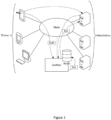
- These servers and terminals exchange data via one or more communications networks (Ntwk) to which they are connected.
- Ntwk communications networks
- the general principle of the technique consists in transmitting, to the merchant server, a contextual cryptographic fingerprint (Ecc), representative of an authentication (auth) of a user on his communication terminal, this contextual cryptographic fingerprint (Ecc) being able to be verified by the authentication server before validation of the payment transaction by the merchant server and/or a transactional server (banking server, payment data issuer server).
- the authentication server is able to validate the contextual cryptographic fingerprint transmitted by the (or on behalf of the) communication terminal to the merchant server, thanks to the blockchain (BIcCh) that it implements.
- the authentication server is able to calculate the contextual cryptographic fingerprint of the communication terminal, then transmit it to the merchant server, still thanks to the blockchain (BlcCh) that it implements. This provides a certain assurance of user authentication when the transaction is validated, which significantly reduces the rate of payment fraud.
- the fingerprint itself is an identification string (cryptographic fingerprint identifier), resulting from a calculation carried out on the data used to create the cryptographic fingerprint listed above.
- This cryptographic fingerprint (identification string) can once this calculation has been carried out, be integrated into the data structure previously described.
- This data structure can, depending on the case, be kept by the authentication server in a database specifically dedicated to this purpose, be integrated into the blockchain, or even be deleted, if it is not necessary to have access to this data.
- a reference cryptographic fingerprint may also include (and/or be derived from) data relating to user authentication (biometric signatures, identifier signature, password signature, etc.).
- a contextual cryptographic fingerprint may include (and/or be derived from) a reference (for example in the form of an identification string) to a previous cryptographic fingerprint.
- ChIEC F G d 0 , ... , dn
- the calculation function F and the mixing function G are not specifically detailed and depend on the operational implementation conditions of the blockchain at the authentication servers.
- the function G is a data mixing function of the type concatenation function, hexadecimal addition, multiplication, decimal modulo, hexadecimal modulo or binary modulo, rotation (decimal, hexadecimal, binary), etc.
- the function F can for example be a hash function (for example the MD5 function or the SHA1 function) of the result of the function G.
- the hash fingerprint (or "hash value”) obtained thus forms a cryptographic condensate representative of the constituent data, without it being possible to find these constituent data from this hash fingerprint.
- CI cryptographic fingerprint
- the proposed technique is based on several phases of creation and processing of authentication data.
- a user has completed the necessary steps to register online for a service, which service can manage the user's authentication. For example, this registration may take place when the user activates his communication terminal for the first time.
- the user provides, to the entity acting as authentication server, the data necessary for registration (surname, first name) and future authentication (password and/or fingerprints and/or iris and/or other biometric or other data).
- the authentication server stores these elements securely.
- the authentication server can calculate, from these elements, a reference cryptographic fingerprint.
- This reference cryptographic fingerprint calculated by the authentication server (according to methods identical to those presented previously), can be inserted into a blockchain (and transmitted, in return to the communication terminal which records it in a secure memory space).
- This is normally the same blockchain as that which is used to globalize the successive authentications of users with respect to the authentication server (or the farm of authentication servers).
- the blockchain is not, normally, a public blockchain, but rather a private blockchain, reserved for the use of the authentication server (or all the authentication servers) and optionally of certain merchant servers (online sales servers) having access to this blockchain.
- the reference cryptographic fingerprint can be calculated by the communication terminal itself and transmitted to the authentication server (optionally with the data constituting it).
- the authentication server(s) have the elements necessary for user authentication.
- the user starts or uses his mobile terminal, he performs an authentication action with respect to the authentication server.
- This authentication action is either explicit (an authentication service explicitly requires the authentication of the user on his terminal) or implicit (during the use or startup of the terminal, authentication to the service has been carried out, for example when unlocking the communication terminal or during a default connection to a given service, via the communication terminal, for example electronic mail service, centralized authentication service).
- Implicit authentication is performed, for example, when the communication terminal is started when the user enters a password or provides biometric data: the authentication server, through a message it receives from the communication terminal, is informed that the user has been correctly authenticated on the communication terminal.
- Other explicit or implicit authentication methods can also be implemented: this involves confirming or informing the server that authentication on the communication terminal or with an online service has been carried out correctly.
- these methods have in common the fact that the communication terminal performs an authentication of the user, locally or in cooperation with the authentication server(s), with respect to a certain number of authenticated data (and/or characteristics). More particularly, the terminal and/or the server compares the data (and/or characteristics) provided by the user with reference data.
- the reference data are obtained during the registration phase (see previously) and stored in secure memory (on the communication terminal and/or on the authentication server).
- the fact of having performed a valid authentication is recorded within the authentication server, after the reception of a message by the authentication server.
- the message received by the authentication server contains, on the one hand, authentication validation data (for example, password hash or fingerprint or iris signature, or even cryptographic fingerprint) which are accompanied or associated with contextual data (for example, the date, time of authentication, a possible identification of the communication terminal, serial number, IMEI, etc. and/or other relevant contextual data).
- authentication validation data for example, password hash or fingerprint or iris signature, or even cryptographic fingerprint
- contextual data for example, the date, time of authentication, a possible identification of the communication terminal, serial number, IMEI, etc. and/or other relevant contextual data.
- This data is used by the authentication server to calculate a "contextual" cryptographic fingerprint, as explained above.
- This contextual cryptographic fingerprint (potentially different from the reference cryptographic fingerprint) is inserted into the blockchain (and is optionally linked to a previous cryptographic fingerprint of the user).
- the contextual cryptographic fingerprint (or a reference to the contextual cryptographic fingerprint, for example, a URL) is then returned to the communication terminal, which stores it in
- a link or reference to the contextual fingerprint may be transmitted to the communication terminal.
- This contextual fingerprint constitutes proof of successful authentication of the communication terminal. Receipt of this proof by the communication terminal (having this contextual fingerprint recorded on the communication terminal, or having a link or reference to this contextual fingerprint), validates the fact (the state), of being correctly authenticated by the authentication server and validates the state of the recording of this authentication within the blockchain.
- the contextual cryptographic fingerprint is only transmitted to the communication terminal when the current block of the blockchain (in which the contextual cryptographic fingerprint is recorded) is validated (i.e. complete and the closure of this current block is cryptographically validated and verified), and a new block (at least) is created in the blockchain. More particularly, in these implementations, the contextual cryptographic fingerprint is only delivered to the communication terminal when it is assured that it is no longer modifiable within the blockchain. This lack of possibility of modification is only provided, from the point of view of the blockchain, when the current block is complete and validated, and a new block is “opened” to record the following authentications (and/or registrations).
- the transmission to the communication terminal of the contextual cryptographic fingerprint is not immediate and essentially depends on the time taken by the system as a whole to close the current block of the blockchain (a relatively short time, moreover, if we refer to the number of authentications carried out each day).
- the contextual cryptographic fingerprint (or its link or reference) is received by the communication terminal, it can be used in the context of implementing transactions between the communication terminal and one or more providers of goods and/or services with whom the user (of the communication terminal) wishes to carry out transactions.
- the contextual cryptographic fingerprint is used to prove the presence of the user, or even to validate the transaction itself. More specifically, the contextual cryptographic fingerprint is transmitted in addition to (or instead of) the payment data.
- the communication terminal transmits the contextual cryptographic fingerprint to the merchant server (the transmission method can be direct or indirect, as explained later).
- the merchant server receives this cryptographic fingerprint and transmits it to the authentication server (the authentication server can be the transaction server in this case, although this is not mandatory).
- the method of transmitting the contextual cryptographic fingerprint may be direct or indirect.
- the communication terminal transmits this contextual cryptographic fingerprint in a message to the merchant server.
- the merchant server therefore comes into possession of the contextual cryptographic fingerprint via the communication terminal itself.
- This method has the advantage of limiting the interactions between the merchant server and, for example, the authentication server or another server.
- the contextual cryptographic fingerprint of the communication terminal is (initially) received directly from the authentication server and stored securely on the communication terminal, it is reasonably assumed that it cannot be compromised and that it retains its value as proof of authentication.
- the communication terminal transmits to the merchant server a link (for example a URL or a URI) pointing to this contextual cryptographic fingerprint.
- the communication terminal does not have the contextual cryptographic fingerprint. Even if the communication terminal is compromised, the contextual cryptographic fingerprint is secure at the authentication server.
- the merchant server receives the link to the contextual cryptographic fingerprint (link that directs it to the authentication server (or the transactional server or other and/or to the blockchain)), it is possible for it to verify the validity of the contextual cryptographic fingerprint within the blockchain.
- this second possibility is advantageous when the blockchain is accessible to several identified actors (such as for example the authentication server, the merchant server and/or the transactional server).
- the transmitted link allows access to the blockchain, managed by the transactional server(s).
- the merchant server verifies the validity of the contextual cryptographic fingerprint provided, within the blockchain, in particular by verifying whether the contextual cryptographic fingerprint provided is valid given the block in which it is inserted (first verification) and optionally whether the contextual cryptographic fingerprint provided is the user's latest contextual cryptographic fingerprint (second verification).
- the server that performs the verification obtains from the contextual cryptographic fingerprint provided, data relating to the authentication: timestamp, issuer (for example communication terminal identifier), receiver (for example identifier of an authentication service), and a number of blocks having confirmed the contextual cryptographic fingerprint provided (number of validation blocks) and possibly other contextual information: IP address, geographical position, previous cryptographic fingerprint (of the user), etc.).
- the server is able, from this data, to verify that it provides (after calculation) a fingerprint identical to the contextual cryptographic fingerprint provided.
- the contextual fingerprint is linked to a previous fingerprint (i.e., either the previous contextual fingerprint or the reference fingerprint).
- the different contextual cryptographic fingerprints of a user are chained together within the blockchain, thus forming, as such, a chain within the blockchain: the successive contextual cryptographic fingerprints are used to create a current contextual cryptographic fingerprint.
- the reference contextual cryptographic fingerprint is considered to be the fingerprint at time t0 (i.e. at user registration).
- the contextual cryptographic fingerprint calculated at time t2 (t2>t1>t0), during user authentication, takes into account the previous cryptographic fingerprint (for example by integrating the contextual cryptographic fingerprint calculated at time t1) and so on.
- This chain is called a contextual cryptographic fingerprint chain. It is unitary and associated with a single user/communication terminal pair. It is representative of a timeline (time line) of successive authentications carried out by the user for his communication terminal and ensures that at a given time, a single contextual cryptographic fingerprint can be used to validate a transaction (i.e. the last one, in the sense of the latest contextual cryptographic fingerprint). As a result, it is very difficult (or even impossible) to attempt to reuse an old contextual cryptographic fingerprint of the user (by a replay attack for example).
- the contextual cryptographic fingerprint is systematically linked to the reference cryptographic fingerprint. More particularly, the contextual cryptographic fingerprint is calculated from the user's reference cryptographic fingerprint.
- the verification entity authentication server, server merchant, transaction server
- the verification entity is also able to verify the authenticity of the reference cryptographic fingerprint, using the registration data it possesses.
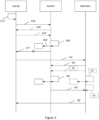
- the first embodiment is explained in relation to the Figure 2 It includes a first phase called authentication and a second phase called transaction processing.
- this authentication phase has a contextual cryptographic fingerprint (or an address to it) and the authentication server has this contextual cryptographic fingerprint as well.
- this authentication phase can be iterated several times before the communication terminal does not initiate the transaction processing phase (in which case the communication terminal has the latest contextual cryptographic fingerprint, i.e. the last one created).
- the contextual cryptographic fingerprint is used to prove the user's authentication (and their "recent” presence at the same time).
- the communication terminal transmits the contextual cryptographic fingerprint to the merchant server which uses it to verify its validity with the authentication server.
- the verification step T30 of the validity of the contextual cryptographic fingerprint may be limited to ascertaining the validity of the block in which the contextual cryptographic fingerprint is recorded and thus be based on the trustworthiness of the blockchain, without any other more complex form of verification.
- This verification may also include the calculation, using the data transmitted by the communication terminal (in addition to the contextual cryptographic fingerprint), of a verification cryptographic fingerprint and the comparison of this verification cryptographic fingerprint with the contextual cryptographic fingerprint provided.
- the validity verification includes a verification of the fact that the fingerprint contextual cryptographic fingerprint is the latest for the user and/or the communication terminal.
- the verification includes the verification of the identity of at least one of the data used to create the contextual cryptographic fingerprint with a data in the possession of the server that performs this verification (such as for example a hash of a bank card data and/or a hash of a biometric data and/or a hash of a password and/or a login).
- a data in the possession of the server that performs this verification (such as for example a hash of a bank card data and/or a hash of a biometric data and/or a hash of a password and/or a login).
- the effective implementation of this verification is dependent on the operational conditions of implementation.
- the fingerprint is validated (that is to say that a data, for example a boolean) validates the authenticity of the fingerprint (and/or the block in which it is inserted).
- the contextual cryptographic fingerprint is used to prove the user's authentication, indirectly, without using the authentication server, which retains its sole function of authenticating users on their terminals.
- the communication terminal transmits the address of the contextual cryptographic fingerprint to the merchant server which uses it to verify its validity (either directly or using the transaction server).
- This embodiment has the advantage of not making the contextual cryptographic fingerprint available to the communication terminal, thus increasing security (because it reduces the risk of theft of this contextual cryptographic fingerprint).
- the step of verifying the validity of the contextual cryptographic fingerprint is the same as for the first embodiment and may be single or multiple, depending on whether or not this contextual cryptographic fingerprint is chained with a previous cryptographic fingerprint (reference or contextual).
- these means are in the form of a specific software application, or in the form of dedicated hardware components, such as a security element (SE) or a secure execution environment.
- SE security element
- the security element may be in the form of a SIM card, USim, UICC, or a specific security component, grafted onto the motherboard of the communication terminal.
- these means are in the form of several hardware components to which several software components are added.
- the transmission means are for example included in a secure component which includes for example more or less direct access to a transmission/reception controller, making it possible to directly interrogate a server. This secure component is responsible for at least partially determining a parameter for calculating the certification code.
- the other components of the communication terminal have been described in connection with the proposed embodiment.
Landscapes
- Engineering & Computer Science (AREA)
- Computer Security & Cryptography (AREA)
- Computer Networks & Wireless Communication (AREA)
- Signal Processing (AREA)
- Business, Economics & Management (AREA)
- Theoretical Computer Science (AREA)
- Accounting & Taxation (AREA)
- Physics & Mathematics (AREA)
- General Physics & Mathematics (AREA)
- Strategic Management (AREA)
- General Business, Economics & Management (AREA)
- Finance (AREA)
- Computer Hardware Design (AREA)
- Software Systems (AREA)
- General Engineering & Computer Science (AREA)
- Financial Or Insurance-Related Operations Such As Payment And Settlement (AREA)
- Management, Administration, Business Operations System, And Electronic Commerce (AREA)
- Debugging And Monitoring (AREA)
Claims (10)
- Verfahren zur Verarbeitung einer Transaktion, wobei das Verfahren durch eine elektronische Vorrichtung zur Verarbeitung von Transaktionen ausgeführt wird, die über ein Kommunikationsnetz zugänglich ist, wobei das Verfahren eine Phase der Verarbeitung der Transaktion umfasst, dadurch gekennzeichnet, dass es Folgendes umfasst- einen Schritt (T10, T20, I10, I20, I21) des Erhalts eines kontextbezogenen kryptographischen Fingerabdrucks, der zuvor während einer Authentifizierung eines Benutzers an einem Kommunikationsendgerät erzeugt wurde- einen Schritt (T30, I30) des Verifizierens der Gültigkeit des kontextbezogenen kryptographischen Fingerabdrucks in einer Blockchain, die einen Satz kryptographischer Fingerabdrücke umfasst, wobei der Schritt (T30, I30) des Verifizierens der Gültigkeit des kontextbezogenen kryptographischen Fingerabdrucks einen Schritt des Bestimmens umfasst, dass der kontextbezogene kryptographische Fingerabdruck der neueste kontextbezogene kryptographische Fingerabdruck für den Benutzer und/oder das Kommunikationsendgerät in der Blockchain ist;- einen Schritt (T40, I40) der Validierung einer Transaktion, wenn der Schritt (T30, I30) der Überprüfung der Gültigkeit des kontextbezogenen kryptografischen Fingerabdrucks in der Blockchain positiv ist.
- Verfahren zur Verarbeitung einer Transaktion nach Anspruch 1, dadurch gekennzeichnet, dass ein kontextbezogener kryptographischer Fingerabdruck (EC) aus einer Menge von kryptographischen Fingerabdrücken durch eine Kette ChIEC zur Identifizierung des kryptographischen Fingerabdrucks EC verkörpert wird, die auf der Grundlage einer Menge D von konstituierenden Daten (d0,...,dn) auf folgende Weise erhalten wird:
 - G ist eine Datenvermischungsfunktion;- F ist eine kryptographische Funktion zur Berechnung der Identifikationskette.
 - Verfahren zur Verarbeitung einer Transaktion nach Anspruch 1, dadurch gekennzeichnet, dass der Schritt der Gewinnung des kontextbezogenen kryptographischen Fingerabdrucks umfasst:- einen Schritt des Empfangens einer Adresse des Speicherorts des kontextbezogenen kryptografischen Fingerabdrucks in der Blockchain;- einen Schritt zur Gewinnung des kontextbezogenen kryptografischen Fingerabdrucks an der zuvor empfangenen Adresse.
- Verfahren zur Verarbeitung einer Transaktion nach Anspruch 1, dadurch gekennzeichnet, dass der Schritt (T30, I30) der Überprüfung der Gültigkeit des kontextbezogenen kryptografischen Fingerabdrucks einen Schritt der Überprüfung der Gültigkeit des Blocks der Blockchain umfasst, in den der kontextbezogene kryptografische Fingerabdruck eingefügt ist.
- Verfahren zur Verarbeitung einer Transaktion nach Anspruch 1, dadurch gekennzeichnet, dass der Schritt (T30, I30) der Überprüfung der Gültigkeit des kontextuellen kryptographischen Fingerabdrucks umfasst:- einen Schritt des Erhalts von Transaktionsdaten, die vom Kommunikationsterminal stammen;- einen Schritt, bei dem auf der Grundlage dieser Transaktionsdaten eine kryptografische Verifizierung berechnet wird
Fingerabdruck- einen Schritt des Vergleichs des kryptografischen Verifikations-Fingerabdrucks mit dem kryptografischen Kontext-Fingerabdruck; und- einen Schritt zur Validierung des kontextbezogenen kryptografischen Fingerabdrucks, wenn der Vergleich positiv ausfällt. - Verfahren zur Verarbeitung einer Transaktion nach Anspruch 1, dadurch gekennzeichnet, dass der Schritt (T30, I30) der Überprüfung der Gültigkeit des kontextbezogenen kryptographischen Fingerabdrucks einen Schritt des Vergleichs mindestens eines Datenelements zur Bildung des kontextbezogenen kryptographischen Fingerabdrucks mit mindestens einem entsprechenden Datenelement umfasst, das vom Kommunikationsendgerät bereitgestellt wird.
- Verfahren zur Verarbeitung einer Transaktion nach Anspruch 1, dadurch gekennzeichnet, dass es außerdem eine vorläufige Authentifizierungsphase umfasst, während der der kontextbezogene kryptografische Fingerabdruck erstellt wird, wobei die vorläufige Authentifizierungsphase umfasst:- einen Schritt E10 zur Authentifizierung des Benutzers;- einen Schritt E20 des Erhalts einer Authentifizierungsnachricht, die die Bestätigung der Authentifizierung des Benutzers und einen Satz D von konstituierenden Daten (d0,...,dn) umfasst;- einen Schritt E50 zur Berechnung des kontextbezogenen kryptografischen Fingerabdrucks unter Verwendung der empfangenen Daten
- Verfahren zur Verarbeitung einer Transaktion nach Anspruch 7, dadurch gekennzeichnet, dass die vorläufige Authentifizierungsphase ferner umfasst- einen Schritt E60 des Einfügens des kontextbezogenen kryptografischen Fingerabdrucks in die Blockchain; und- wenn der Block der Blockchain, in den der kontextbezogene kryptografische Fingerabdruck eingefügt wurde, validiert ist, einen Schritt E70 der Übertragung des kontextbezogenen kryptografischen Fingerabdrucks an das Kommunikationsendgerät.
- Elektronische Vorrichtung zur Verarbeitung von Transaktionen, die über ein Kommunikationsnetz zugänglich ist, wobei die Vorrichtung Mittel zur Verarbeitung einer Transaktion umfasst und dadurch gekennzeichnet ist, dass sie umfasst- Mittel zum Erhalt eines kontextbezogenen kryptografischen Fingerabdrucks, der zuvor während einer Authentifizierung eines Benutzers an einem Kommunikationsendgerät erzeugt wurde;- Mittel zum Überprüfen der Gültigkeit des kontextbezogenen kryptographischen Fingerabdrucks in einer Blockchain, die einen Satz kryptographischer Fingerabdrücke umfasst; wobei das Überprüfen der Gültigkeit des kontextbezogenen kryptographischen Fingerabdrucks das Bestimmen umfasst, dass der kontextbezogene kryptographische Fingerabdruck der neueste kontextbezogene kryptographische Fingerabdruck für den Benutzer und/oder das Kommunikationsendgerät in der Blockchain ist;- Mittel zur Validierung einer Transaktion, die implementiert werden, wenn die Mittel (T30, I30) zur Überprüfung der Gültigkeit des kontextbezogenen kryptografischen Fingerabdrucks in der Blockchain eine positive Information liefern.
- Computerprogrammprodukt, das von einem Kommunikationsnetz heruntergeladen werden kann und/oder auf einem Träger gespeichert ist, der von einem Computer gelesen und/oder von einem Mikroprozessor ausgeführt werden kann, dadurch gekennzeichnet, dass es Programmcodeanweisungen für die Ausführung eines Verfahrens nach Anspruch 1 umfasst, wenn es auf einem Computer ausgeführt wird
Applications Claiming Priority (2)
| Application Number | Priority Date | Filing Date | Title |
|---|---|---|---|
| FR1858754A FR3086414B1 (fr) | 2018-09-25 | 2018-09-25 | Procede de traitement d'une transaction, dispositif, systeme et programme correspondant |
| PCT/EP2019/075953 WO2020064890A1 (fr) | 2018-09-25 | 2019-09-25 | Procede de traitement d'une transaction, dispositif, systeme et programme correspondant |
Publications (2)
| Publication Number | Publication Date |
|---|---|
| EP3857413A1 EP3857413A1 (de) | 2021-08-04 |
| EP3857413B1 true EP3857413B1 (de) | 2025-05-07 |
Family
ID=65861349
Family Applications (1)
| Application Number | Title | Priority Date | Filing Date |
|---|---|---|---|
| EP19772772.0A Active EP3857413B1 (de) | 2018-09-25 | 2019-09-25 | Verfahren zur verarbeitung einer transaktion, vorrichtung, system und zugehöriges programm |
Country Status (6)
| Country | Link |
|---|---|
| US (1) | US12107975B2 (de) |
| EP (1) | EP3857413B1 (de) |
| CA (1) | CA3113881A1 (de) |
| ES (1) | ES3040206T3 (de) |
| FR (1) | FR3086414B1 (de) |
| WO (1) | WO2020064890A1 (de) |
Families Citing this family (5)
| Publication number | Priority date | Publication date | Assignee | Title |
|---|---|---|---|---|
| FR3091941B1 (fr) * | 2019-01-22 | 2023-01-13 | Idemia Identity & Security France | Procédé de vérification d’une authentification biométrique |
| FR3092927B1 (fr) * | 2019-02-19 | 2021-12-03 | Ingenico Group | Procédé de traitement d'une transaction de paiement, dispositif, système et programmes correspondants |
| CN114006716A (zh) * | 2021-01-04 | 2022-02-01 | 北京八分量信息科技有限公司 | 一种区块链权限管理方法及系统 |
| US12450596B1 (en) | 2022-02-18 | 2025-10-21 | Halborn Inc. | Persistent remote procedure calls for smart contract security via blockchain cybersecurity authentication services |
| US12218927B2 (en) * | 2022-10-11 | 2025-02-04 | Jpmorgan Chase Bank, N.A. | Method and system for frictionless application authentication |
Family Cites Families (4)
| Publication number | Priority date | Publication date | Assignee | Title |
|---|---|---|---|---|
| KR101327434B1 (ko) | 2010-10-20 | 2013-11-20 | 비씨카드(주) | 고객 단말기의 맥 어드레스 정보를 이용한 결제 방법 및 시스템 |
| US11398915B2 (en) * | 2016-08-26 | 2022-07-26 | Samsung Electronics Co., Ltd. | Apparatus and method for two-way authentication |
| US20170132621A1 (en) * | 2015-11-06 | 2017-05-11 | SWFL, Inc., d/b/a "Filament" | Systems and methods for autonomous device transacting |
| EP3491605A1 (de) * | 2016-08-01 | 2019-06-05 | Cryptowerk Corp. | Computerimplementiertes verfahren und system zur manipulationssicheren aufzeichnung einer vielzahl von dienstdatenelementen |
-
2018
- 2018-09-25 FR FR1858754A patent/FR3086414B1/fr active Active
-
2019
- 2019-09-25 WO PCT/EP2019/075953 patent/WO2020064890A1/fr not_active Ceased
- 2019-09-25 ES ES19772772T patent/ES3040206T3/es active Active
- 2019-09-25 CA CA3113881A patent/CA3113881A1/en active Pending
- 2019-09-25 US US17/279,287 patent/US12107975B2/en active Active
- 2019-09-25 EP EP19772772.0A patent/EP3857413B1/de active Active
Also Published As
| Publication number | Publication date |
|---|---|
| FR3086414B1 (fr) | 2021-09-17 |
| FR3086414A1 (fr) | 2020-03-27 |
| WO2020064890A1 (fr) | 2020-04-02 |
| EP3857413A1 (de) | 2021-08-04 |
| US20210406866A1 (en) | 2021-12-30 |
| US12107975B2 (en) | 2024-10-01 |
| CA3113881A1 (en) | 2020-04-02 |
| ES3040206T3 (en) | 2025-10-29 |
Similar Documents
| Publication | Publication Date | Title |
|---|---|---|
| EP3857413B1 (de) | Verfahren zur verarbeitung einer transaktion, vorrichtung, system und zugehöriges programm | |
| EP3032799B1 (de) | Authentifizierungsverfahren eines benutzers, entsprechender server, entsprechendes kommunikationsendgerät und entsprechende programme | |
| FR3038429A1 (fr) | Conteneur de paiement, procede de creation, procede de traitement, dispositifs et programmes correspondants | |
| FR3031613A1 (fr) | Procede de traitement d'une transaction a partir d'un terminal de communication. | |
| EP3168769A1 (de) | Hilfsverfahren zur authentifizierung eines nutzers, entsprechender server und entsprechendes computerprogramm | |
| FR3021799A1 (fr) | Methode d'identification, dispositif et programme correspondant | |
| EP3568965B1 (de) | Zweistufiges authentifizierungsverfahren, vorrichtung und zugehöriges computerprogramm | |
| EP2824625A1 (de) | Methode zur Ausführung einer Transaktion, Endgerät und entsprechendes Computerprogramm | |
| WO2015059389A1 (fr) | Procede d'execution d'une transaction entre un premier terminal et un deuxieme terminal | |
| EP3928272B1 (de) | Verfahren zur verarbeitung einer zahlungstransaktion und entsprechende vorrichtung, system und programme | |
| FR3042894A1 (fr) | Procede de securisation de traitement de donnees transactionnelles, terminal et programme d'ordinateur correspondant | |
| EP3588418A1 (de) | Verfahren zur durchführung einer transaktion, endgerät, server und entsprechendes computerprogramm | |
| EP1911194A1 (de) | Verfahren zur kontrolle sicherer transaktionen anhand eines einzelnen physikalischen geräts, entsprechendes physikalisches gerät, system und computerprogramm | |
| WO2017109405A1 (fr) | Procédé d'authentification | |
| EP3262553B1 (de) | Verfahren zur transaktion ohne körperliche unterstützung eines sicherheitsidentifikators und ohne token, abgesichert durch strukturelle entkopplung der persönlichen und dienstidentifikatoren | |
| EP3479325B1 (de) | Verfahren zur authentifizierung von zahlungsdaten, zugehörige vorrichtungen und programme | |
| WO2019129937A1 (fr) | Contrôle d'intégrité d'un dispositif électronique | |
| EP3095223B1 (de) | Verfahren zur übertragung von verschlüsselten daten, empfangsverfahren, vorrichtungen und computerprogramme im zusammenhang damit | |
| EP3570238B1 (de) | Verfahren zur durchführung einer transaktion, endgerät, server und entsprechendes computerprogramm | |
| EP3029878B1 (de) | Verfahren zur übertragung eines geheimnisses mit begrenzter lebensdauer, um eine transaktion zwischen einem mobilen endgerät und einer ausstattung durchzuführen | |
| EP3113094B1 (de) | Verarbeitungsverfahren von transaktionellen daten, vorrichtung und entsprechendes programm | |
| FR3025631A1 (fr) | Selection securisee d'une application dans une carte a puce ou equivalent | |
| WO2017077210A1 (fr) | Procédé de verification d'identité lors d'une virtualisation | |
| WO2017005644A1 (fr) | Procédé et système de contrôle d'accès à un service via un média mobile sans intermediaire de confiance | |
| FR3031608A1 (fr) | Methode de traitement d'une autorisation de mise en œuvre d'un service, dispositifs et programme d'ordinateur correspondant |
Legal Events
| Date | Code | Title | Description |
|---|---|---|---|
| STAA | Information on the status of an ep patent application or granted ep patent |
Free format text: STATUS: UNKNOWN |
|
| STAA | Information on the status of an ep patent application or granted ep patent |
Free format text: STATUS: THE INTERNATIONAL PUBLICATION HAS BEEN MADE |
|
| PUAI | Public reference made under article 153(3) epc to a published international application that has entered the european phase |
Free format text: ORIGINAL CODE: 0009012 |
|
| STAA | Information on the status of an ep patent application or granted ep patent |
Free format text: STATUS: REQUEST FOR EXAMINATION WAS MADE |
|
| 17P | Request for examination filed |
Effective date: 20210322 |
|
| AK | Designated contracting states |
Kind code of ref document: A1 Designated state(s): AL AT BE BG CH CY CZ DE DK EE ES FI FR GB GR HR HU IE IS IT LI LT LU LV MC MK MT NL NO PL PT RO RS SE SI SK SM TR |
|
| DAV | Request for validation of the european patent (deleted) | ||
| DAX | Request for extension of the european patent (deleted) | ||
| GRAP | Despatch of communication of intention to grant a patent |
Free format text: ORIGINAL CODE: EPIDOSNIGR1 |
|
| STAA | Information on the status of an ep patent application or granted ep patent |
Free format text: STATUS: GRANT OF PATENT IS INTENDED |
|
| RIC1 | Information provided on ipc code assigned before grant |
Ipc: H04L 9/00 20060101ALI20241203BHEP Ipc: H04L 9/32 20060101ALI20241203BHEP Ipc: G06F 21/31 20130101AFI20241203BHEP |
|
| INTG | Intention to grant announced |
Effective date: 20241212 |
|
| GRAS | Grant fee paid |
Free format text: ORIGINAL CODE: EPIDOSNIGR3 |
|
| GRAA | (expected) grant |
Free format text: ORIGINAL CODE: 0009210 |
|
| STAA | Information on the status of an ep patent application or granted ep patent |
Free format text: STATUS: THE PATENT HAS BEEN GRANTED |
|
| AK | Designated contracting states |
Kind code of ref document: B1 Designated state(s): AL AT BE BG CH CY CZ DE DK EE ES FI FR GB GR HR HU IE IS IT LI LT LU LV MC MK MT NL NO PL PT RO RS SE SI SK SM TR |
|
| REG | Reference to a national code |
Ref country code: GB Ref legal event code: FG4D Free format text: NOT ENGLISH |
|
| REG | Reference to a national code |
Ref country code: CH Ref legal event code: EP |
|
| REG | Reference to a national code |
Ref country code: DE Ref legal event code: R096 Ref document number: 602019069670 Country of ref document: DE |
|
| REG | Reference to a national code |
Ref country code: IE Ref legal event code: FG4D Free format text: LANGUAGE OF EP DOCUMENT: FRENCH |
|
| REG | Reference to a national code |
Ref country code: DE Ref legal event code: R081 Ref document number: 602019069670 Country of ref document: DE Owner name: BANKS AND ACQUIRERS INTERNATIONAL HOLDING, FR Free format text: FORMER OWNER: BANKS AND ACQUIRERS INTERNATIONAL HOLDING, PARIS, FR |
|
| RAP4 | Party data changed (patent owner data changed or rights of a patent transferred) |
Owner name: BANKS AND ACQUIRERS INTERNATIONAL HOLDING |
|
| REG | Reference to a national code |
Ref country code: NL Ref legal event code: FP |
|
| REG | Reference to a national code |
Ref country code: CH Ref legal event code: U11 Free format text: ST27 STATUS EVENT CODE: U-0-0-U10-U11 (AS PROVIDED BY THE NATIONAL OFFICE) Effective date: 20251001 |
|
| PG25 | Lapsed in a contracting state [announced via postgrant information from national office to epo] |
Ref country code: PT Free format text: LAPSE BECAUSE OF FAILURE TO SUBMIT A TRANSLATION OF THE DESCRIPTION OR TO PAY THE FEE WITHIN THE PRESCRIBED TIME-LIMIT Effective date: 20250908 Ref country code: FI Free format text: LAPSE BECAUSE OF FAILURE TO SUBMIT A TRANSLATION OF THE DESCRIPTION OR TO PAY THE FEE WITHIN THE PRESCRIBED TIME-LIMIT Effective date: 20250507 |
|
| PGFP | Annual fee paid to national office [announced via postgrant information from national office to epo] |
Ref country code: DE Payment date: 20250919 Year of fee payment: 7 |
|
| REG | Reference to a national code |
Ref country code: LT Ref legal event code: MG9D |
|
| PG25 | Lapsed in a contracting state [announced via postgrant information from national office to epo] |
Ref country code: NO Free format text: LAPSE BECAUSE OF FAILURE TO SUBMIT A TRANSLATION OF THE DESCRIPTION OR TO PAY THE FEE WITHIN THE PRESCRIBED TIME-LIMIT Effective date: 20250807 Ref country code: GR Free format text: LAPSE BECAUSE OF FAILURE TO SUBMIT A TRANSLATION OF THE DESCRIPTION OR TO PAY THE FEE WITHIN THE PRESCRIBED TIME-LIMIT Effective date: 20250808 |
|
| PG25 | Lapsed in a contracting state [announced via postgrant information from national office to epo] |
Ref country code: PL Free format text: LAPSE BECAUSE OF FAILURE TO SUBMIT A TRANSLATION OF THE DESCRIPTION OR TO PAY THE FEE WITHIN THE PRESCRIBED TIME-LIMIT Effective date: 20250507 |
|
| PGFP | Annual fee paid to national office [announced via postgrant information from national office to epo] |
Ref country code: NL Payment date: 20250918 Year of fee payment: 7 |
|
| REG | Reference to a national code |
Ref country code: AT Ref legal event code: MK05 Ref document number: 1793260 Country of ref document: AT Kind code of ref document: T Effective date: 20250507 |
|
| PG25 | Lapsed in a contracting state [announced via postgrant information from national office to epo] |
Ref country code: BG Free format text: LAPSE BECAUSE OF FAILURE TO SUBMIT A TRANSLATION OF THE DESCRIPTION OR TO PAY THE FEE WITHIN THE PRESCRIBED TIME-LIMIT Effective date: 20250507 |
|
| PGFP | Annual fee paid to national office [announced via postgrant information from national office to epo] |
Ref country code: BE Payment date: 20250918 Year of fee payment: 7 Ref country code: GB Payment date: 20250919 Year of fee payment: 7 |
|
| PG25 | Lapsed in a contracting state [announced via postgrant information from national office to epo] |
Ref country code: HR Free format text: LAPSE BECAUSE OF FAILURE TO SUBMIT A TRANSLATION OF THE DESCRIPTION OR TO PAY THE FEE WITHIN THE PRESCRIBED TIME-LIMIT Effective date: 20250507 |
|
| PG25 | Lapsed in a contracting state [announced via postgrant information from national office to epo] |
Ref country code: AT Free format text: LAPSE BECAUSE OF FAILURE TO SUBMIT A TRANSLATION OF THE DESCRIPTION OR TO PAY THE FEE WITHIN THE PRESCRIBED TIME-LIMIT Effective date: 20250507 |
|
| PGFP | Annual fee paid to national office [announced via postgrant information from national office to epo] |
Ref country code: FR Payment date: 20250926 Year of fee payment: 7 |
|
| PG25 | Lapsed in a contracting state [announced via postgrant information from national office to epo] |
Ref country code: RS Free format text: LAPSE BECAUSE OF FAILURE TO SUBMIT A TRANSLATION OF THE DESCRIPTION OR TO PAY THE FEE WITHIN THE PRESCRIBED TIME-LIMIT Effective date: 20250807 |
|
| PG25 | Lapsed in a contracting state [announced via postgrant information from national office to epo] |
Ref country code: IS Free format text: LAPSE BECAUSE OF FAILURE TO SUBMIT A TRANSLATION OF THE DESCRIPTION OR TO PAY THE FEE WITHIN THE PRESCRIBED TIME-LIMIT Effective date: 20250907 |
|
| PG25 | Lapsed in a contracting state [announced via postgrant information from national office to epo] |
Ref country code: LV Free format text: LAPSE BECAUSE OF FAILURE TO SUBMIT A TRANSLATION OF THE DESCRIPTION OR TO PAY THE FEE WITHIN THE PRESCRIBED TIME-LIMIT Effective date: 20250507 |
|
| REG | Reference to a national code |
Ref country code: ES Ref legal event code: FG2A Ref document number: 3040206 Country of ref document: ES Kind code of ref document: T3 Effective date: 20251029 |
|
| PG25 | Lapsed in a contracting state [announced via postgrant information from national office to epo] |
Ref country code: SM Free format text: LAPSE BECAUSE OF FAILURE TO SUBMIT A TRANSLATION OF THE DESCRIPTION OR TO PAY THE FEE WITHIN THE PRESCRIBED TIME-LIMIT Effective date: 20250507 Ref country code: DK Free format text: LAPSE BECAUSE OF FAILURE TO SUBMIT A TRANSLATION OF THE DESCRIPTION OR TO PAY THE FEE WITHIN THE PRESCRIBED TIME-LIMIT Effective date: 20250507 |
|
| PGFP | Annual fee paid to national office [announced via postgrant information from national office to epo] |
Ref country code: CH Payment date: 20251001 Year of fee payment: 7 |
|
| PG25 | Lapsed in a contracting state [announced via postgrant information from national office to epo] |
Ref country code: CZ Free format text: LAPSE BECAUSE OF FAILURE TO SUBMIT A TRANSLATION OF THE DESCRIPTION OR TO PAY THE FEE WITHIN THE PRESCRIBED TIME-LIMIT Effective date: 20250507 |
|
| PG25 | Lapsed in a contracting state [announced via postgrant information from national office to epo] |
Ref country code: EE Free format text: LAPSE BECAUSE OF FAILURE TO SUBMIT A TRANSLATION OF THE DESCRIPTION OR TO PAY THE FEE WITHIN THE PRESCRIBED TIME-LIMIT Effective date: 20250507 |
|
| PG25 | Lapsed in a contracting state [announced via postgrant information from national office to epo] |
Ref country code: SK Free format text: LAPSE BECAUSE OF FAILURE TO SUBMIT A TRANSLATION OF THE DESCRIPTION OR TO PAY THE FEE WITHIN THE PRESCRIBED TIME-LIMIT Effective date: 20250507 Ref country code: RO Free format text: LAPSE BECAUSE OF FAILURE TO SUBMIT A TRANSLATION OF THE DESCRIPTION OR TO PAY THE FEE WITHIN THE PRESCRIBED TIME-LIMIT Effective date: 20250507 |
|
| PG25 | Lapsed in a contracting state [announced via postgrant information from national office to epo] |
Ref country code: IT Free format text: LAPSE BECAUSE OF FAILURE TO SUBMIT A TRANSLATION OF THE DESCRIPTION OR TO PAY THE FEE WITHIN THE PRESCRIBED TIME-LIMIT Effective date: 20250507 |
|
| PGFP | Annual fee paid to national office [announced via postgrant information from national office to epo] |
Ref country code: ES Payment date: 20251030 Year of fee payment: 7 |