EP3856897B1 - Rekombinantes glutathion-s-transferase-mu34-enzym (ttgstm34-8xhis) aus tetrahymena thermophila und dessen verwendungen - Google Patents
Rekombinantes glutathion-s-transferase-mu34-enzym (ttgstm34-8xhis) aus tetrahymena thermophila und dessen verwendungen Download PDFInfo
- Publication number
- EP3856897B1 EP3856897B1 EP19835559.6A EP19835559A EP3856897B1 EP 3856897 B1 EP3856897 B1 EP 3856897B1 EP 19835559 A EP19835559 A EP 19835559A EP 3856897 B1 EP3856897 B1 EP 3856897B1
- Authority
- EP
- European Patent Office
- Prior art keywords
- enzyme
- 8xhis
- ttgstm34
- recombinant
- affinity
- Prior art date
- Legal status (The legal status is an assumption and is not a legal conclusion. Google has not performed a legal analysis and makes no representation as to the accuracy of the status listed.)
- Active
Links
Images


Classifications
-
- C—CHEMISTRY; METALLURGY
- C12—BIOCHEMISTRY; BEER; SPIRITS; WINE; VINEGAR; MICROBIOLOGY; ENZYMOLOGY; MUTATION OR GENETIC ENGINEERING
- C12N—MICROORGANISMS OR ENZYMES; COMPOSITIONS THEREOF; PROPAGATING, PRESERVING, OR MAINTAINING MICROORGANISMS; MUTATION OR GENETIC ENGINEERING; CULTURE MEDIA
- C12N9/00—Enzymes; Proenzymes; Compositions thereof; Processes for preparing, activating, inhibiting, separating or purifying enzymes
- C12N9/10—Transferases (2.)
- C12N9/1085—Transferases (2.) transferring alkyl or aryl groups other than methyl groups (2.5)
- C12N9/1088—Glutathione transferase (2.5.1.18)
-
- C—CHEMISTRY; METALLURGY
- C07—ORGANIC CHEMISTRY
- C07K—PEPTIDES
- C07K1/00—General methods for the preparation of peptides, i.e. processes for the organic chemical preparation of peptides or proteins of any length
- C07K1/14—Extraction; Separation; Purification
- C07K1/16—Extraction; Separation; Purification by chromatography
- C07K1/22—Affinity chromatography or related techniques based upon selective absorption processes
-
- C—CHEMISTRY; METALLURGY
- C12—BIOCHEMISTRY; BEER; SPIRITS; WINE; VINEGAR; MICROBIOLOGY; ENZYMOLOGY; MUTATION OR GENETIC ENGINEERING
- C12Q—MEASURING OR TESTING PROCESSES INVOLVING ENZYMES, NUCLEIC ACIDS OR MICROORGANISMS; COMPOSITIONS OR TEST PAPERS THEREFOR; PROCESSES OF PREPARING SUCH COMPOSITIONS; CONDITION-RESPONSIVE CONTROL IN MICROBIOLOGICAL OR ENZYMOLOGICAL PROCESSES
- C12Q1/00—Measuring or testing processes involving enzymes, nucleic acids or microorganisms; Compositions therefor; Processes of preparing such compositions
- C12Q1/48—Measuring or testing processes involving enzymes, nucleic acids or microorganisms; Compositions therefor; Processes of preparing such compositions involving transferase
-
- C—CHEMISTRY; METALLURGY
- C12—BIOCHEMISTRY; BEER; SPIRITS; WINE; VINEGAR; MICROBIOLOGY; ENZYMOLOGY; MUTATION OR GENETIC ENGINEERING
- C12Y—ENZYMES
- C12Y205/00—Transferases transferring alkyl or aryl groups, other than methyl groups (2.5)
- C12Y205/01—Transferases transferring alkyl or aryl groups, other than methyl groups (2.5) transferring alkyl or aryl groups, other than methyl groups (2.5.1)
- C12Y205/01018—Glutathione transferase (2.5.1.18)
-
- C—CHEMISTRY; METALLURGY
- C07—ORGANIC CHEMISTRY
- C07K—PEPTIDES
- C07K2319/00—Fusion polypeptide
- C07K2319/20—Fusion polypeptide containing a tag with affinity for a non-protein ligand
- C07K2319/21—Fusion polypeptide containing a tag with affinity for a non-protein ligand containing a His-tag
Definitions
- the present invention relates to the recombinant GST enzyme that is produced in the organism Tetrahymena thermophila. More specifically, the present invention relates to TtGSTm34-8xHis enzyme and uses thereof.
- Tetrahymena thermophila is a ciliated eukaryotic unicellular organism and it is one of the best-characterized unicellular eukaryotes. Tetrahymena thermophila bears two nuclei: a transcriptionally inactive, diploid germline nucleus (MIC) and a transcriptionally active, polypiloid somatic macronucleus (MAC). Use of Tetrahymena thermophila as a model organism in the fields of molecular, cell and developmental biology has been known for many years. The organism has been on the focus based on its advantages in the field.
- Glutathione S-transferases are an abundant family of dimeric proteins. They represent a group of detoxification enzymes. GSTs catalyze the reaction of substrate glutathione with electrophiles of both endogenous and xenobiotic origins. The main biological roles of GSTs can be summed up as detoxification and protection against oxidative stress. By conjugating glutathione with toxic electrophilic substrates, GSTs give rise to less reactive and more soluble products, which can be excreted from the cells or organisms more easily. This way, GSTs can eliminate the negative effects of various xenobiotics or metabolic by-products that otherwise could be harmful to the cells and damage DNA.
- Glutathione and CDNB (1-Chloro-2,4-dinitrobenzene) are among the substrates of the GST enzyme.
- GST isoenzymes are widely distributed in nature, being found in organisms as diverse as bacteria, insects, plants, fish, birds, and mammals.
- Tetrahymena thermophila sequenced macronuclear genome revealed a number of GST genes. Since Tetrahymena thermophila is a eukaryotic organism, the GST enzymes coded by these genes undergo post-translational modifications in order to become fully functional.
- US 5866792 A document relates to the chemically-inducible 27 kD subunit of the enzyme glutathione-S-transferase isoform II (GST-II-27) and sequences encoding it. Said patent application aims to provide transgenic plants with herbicide resistance.
- Enzyme kinetics is the study of the chemical reactions that are catalysed by enzymes. Measuring the reaction rate and investigating the effects of various conditions on the enzymatic reaction are in the field of interest of enzyme kinetics. The results obtained by this way can reveal the catalytic mechanism of an enzyme, it's role in the metabolism, and cofactors, inducers and inhibitors of the enzyme.
- V max is the maximum velocity or rate at which an enzyme catalyzes a reaction. The rate of an enzyme-catalyzed reaction does not exceed beyond a certain point even though substrate concentration is increased. This point is reached when there are enough substrate to completely saturate all of the enzyme active sites. V max is the rate of the reaction under these conditions. Higher the V max , faster the reaction takes place.
- K m can be defined as the substrate concentration at which half of the enzyme's active sites are filled by substrate. A high K m value means that the enzyme has low affinity for the substrate, since a high amount of substrate must be present to saturate the enzyme.
- a low K m value means a small amount of substrate is necessary to saturate the enzyme, pointing towards a high affinity for substrate.
- said GST enzyme RpGST ⁇ is isolated from the organism Ruditapes philippinarum.
- K m values of the enzyme for substrates glutathione and CDNB are calculated as 1.03 mM and 0.56 mM, respectively ( Bathige et al., "A mu class glutathione S-transferase from Manila clam Ruditapes philippinarum (RpGST ⁇ ): Cloning, mRNA expression, and conjugation assays", 2014 ).
- Enzyme kinetics test kits enable students and researchers to understand the practical implication of enzyme activity and factors affecting its rate of reaction. Users can be informed about the most important factors which affect the enzyme activity such as enzyme concentration, substrate concentration, pH and temperature of reaction by testing and calculating the conversion rate of the substrate. Measuring the activity of an enzyme over time and under different environmental parameters (temperature, pH, inhibitors, etc) give the users of the kit a practical insight on the kinetics of enzymes.
- KR 20080041961 A relates to a test kit, which comprises urease enzyme.
- urease enzyme which is extracted from soybean is characterized including enzyme kinetics properties.
- Affinity chromatography is a separation method based on binding of a molecule in a biochemical mixture to another molecule or ion to which it shows a specific affinity and interaction.
- the method is based on binding and separation of molecules in solution (mobile phase) from a stationary material (solid phase) due to differences in chemical or physical interaction.
- a particular ligand is immobilized to a solid support, thus when a mixture of molecules is passed over the column, those molecules which have specific affinity to the ligand bind to the column. This process is followed by washing away the unbound sample components, leaving the molecule of interest bound to the column. Said bound molecule is then purified from the column by the utilization of a solvent that disrupts the ligand interaction.
- GST is a commonly used affinity tag to aid in the purification of recombinant proteins.
- GST moiety which is added at the any end of the protein of interest which is desired to be produced, binds to glutathione fixed to the column with high affinity. This binding is dearranged by the addition of reduced glutathione to the elution buffer, therefore the elution of the GST-tagged target protein can occur.
- a specific protease site can be located between the GST moiety and the protein of interest, by this way separation of GST moiety from the protein can occur effectively in the presence of a certain protease.
- the more affinity GST has for glutathione means more effectively purification can be achieved.
- His-tag Polyhistidine-tag is another widely used affinity tag. It can be defined as an amino acid motif in proteins that consists of at least six histidine (His) amino acids. Polyhistidine-tagged recombinant proteins can be purified from a mixture based on His-tag's affinity for certain metal ions such as Ni 2+ , Co 2+ , or Zn 2+ . Among these ions, Ni is the most preferable since His-tag shows high affinity towards Ni. Ni-NTA (nitrilotriacetic acid) beads can be immobilized on a column in order to obtain relatively pure protein (NTA is acting as a chelating group). Bound proteins can be released from the matrix using imidazole.
- a GST enzyme that has high affinity for its substrates, and has mild optimum enzyme activity conditions would be an improvement in the fields of enzyme kinetics and affinity purification.
- the present invention relates to a recombinant Tetrahymena thermophila Glutathione S Transferase Mu34 (TtGSTm34-8xHis) enzyme encoded by nucleic acid sequence comprising 8xHis tag which is at least 95% homologous to SEQ ID NO: 1.
- the TtGSTm34-8xHis enzyme according to the current invention comprises the GST enzyme base sequence encoded by the nucleic acid sequence as given in SEQ ID NO: 3.
- said recombinant TtGSTm34-8xHis enzyme encoded by a nucleotide sequence which is identical to SEQ ID NO: 1.
- the present invention relates to a test kit for practising enzyme kinetics comprising the TtGSTm34-8xHis enzyme.
- the present invention relates to a vector comprising the TtGSTm34-8xHis enzyme mentioned above.
- Said vector preferably comprises pIGF-1 base vector.
- the present invention provides the use of the recombinant TtGSTm34-8xHis enzyme disclosed herein for determining the enzyme kinetics or for enzyme kinetics practise.
- the present invention provides the use of the recombinant TtGSTm34-8xHis enzyme disclosed herein as an affinity tag for the purification of proteins. Said use can be dual affinity purification of proteins.
- the present invention provides the use of fusion proteins that are tagged with TtGSTm34-8xHis by the injection of the protein as an antigen to the animals like mouse or rabbit, in the production of monoclonal and polyclonal primary antibody that are needed in the Western Blotting analyses.
- the present invention also provides a method for purifying proteins with the use of recombinant TtGSTm34-8xHis enzyme as an affinity tag, comprising the steps of:
- the recombinant enzyme of the invention is produced by using the pIGF-I vector.
- the vector is constructed to comprise TtGSTm34 gene sequence, enterokinase site and 8xHis-tag sequence. Said vector is then transformed into host Tetrahymena thermophila cells by electroporation, in order for the recombinant enzyme to be expressed.
- the GST enzyme of the present invention can be useful for the enzyme kinetics kits. This enzyme can also be used in affinity purification of recombinant proteins. Said enzyme can also be used for dual affinity purification of proteins. The enzyme may further be used as a positive control in SDS-PAGE and Western Blot analyses.
- Said GST enzyme sequence was derived from unicellular eukaryotic organism Tetrahymena thermophila and was produced in this organism as well as recombinant TtGSTm34-8xHis. The aim is to obtain a recombinant GST enzyme that shows high affinity towards its substrates. Moreover, said GST enzyme's effectivity and stability should be high in order to provide an advantage over commercially available GST enzymes.
- Vector is added with protein sequence of interest in order to be further modified with insertions of tags, signals and restriction sites.
- the constructed vector is then transferred to the host organism for production of protein of interest.
- vector of choice is preferably pIGF-I.
- the original vector contains a sequence coding for GFP ( Y lmaz G. ve Arslanyolu M., 2015. "Efficient expression of codon-adapted affinity tagged super folder green fluorescent protein for synchronous protein localization and affinity purification studies in Tetrahymena thermophila", BMC Biotechnology, 15:22).
- the said sequence was released and TtGSTm34 sequence was inserted to the vector instead.
- 8xHis sequence was added to the vector with an enterokinase site between these two sequences.
- Tetrahymena thermophila is a well-studied organism in the field of molecular biology. Ability for multiplying to high cell densities with short generation times, being able to be grown in laboratory easily and cost-effectively, ability to modify produced proteins with post-translational modifications are some of the reasons this organism is widely used. Since the recombinant enzyme of the invention (TtGSTm34-8xHis) was both derived from and produced in Tetrahymena thermophila, the protein is expected to be functional.
- Glutathione S-transferases are a family of detoxification enzymes. They protect the cells/organisms against toxic substances and oxidative stress. They catalyze the reactions involving substrate glutathione and/or xenobiotic substrates. As a result, less reactive products are obtained and the DNA is protected against the negative effects of xenobiotics.
- GSTs Glutathione S-transferases
- Tetrahymena thermophila macronuclear genome a certain number of GST genes is found. These genes code for the proteins that undergo post-translational modifications in order to become fully functional.
- GSTs are also used in molecular biology as affinity purification tags.
- Affinity purification can be defined as use of specific interactions between molecules as a way to resolve mixture of biochemicals.
- the biochemical mixture is called mobile phase, and the ligand to be bound is found as immobilized (stationary phase).
- Affinity tags are sequences that are attached to the protein of interest prior to the chromatography. They assure the interaction of recombinant protein with the stationary phase.
- GSTs are one of the most commonly used tags for this purpose. GST-tagged recombinant protein is separated from the rest of the mixture with the help of GST's affinity to substrate glutathione, which is found affixed in the column.
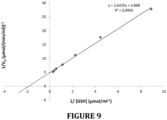
- TtGSTm34-8xHis of the invention has a K m value of 0,54 mM for glutathione. This low K m value indicates that the TtGSTm34-8xHis has high affinity towards glutathione.
- His-tag is also widely used as an affinity purification tag.
- the efficiency of polyhistidine-tag as an affinity tag is based on His-tag's affinity for certain metal ions.
- Ni 2+ is used in the form of Ni-NTA beads, and immobilized to the column.
- dual affinity purification is performed during the purification of TtGSTm34-8xHis. Ultrafiltration is performed durind dual affinity purification after the first affinity purification in order to change the elution buffer used in the chromatography.
- Enzyme kinetics is the study of enzyme-catalyzed reactions. The rate of reactions between enzymes and substrates, and the parameters (pH, temperature, ionic strength) that affect the reaction are within the scope of enzyme kinetics. V max and K m values are calculated in order to determine the efficiency of enzyme's catalytic activity.
- enzyme kinetics tests of TtGSTm34-8xHis for two different substrates have been performed.
- An enzyme's stability is the extent to which an enzyme retains its activity when subjected to storage, purification and various other physical or chemical manipulations.
- the stability of TtGSTm34-8xHis is tested for different periods of time, and at various temperatures.
- the results of specific activity measurements (Table 4) indicate the long-term shelf life of the recombinant enzyme according to the present invention at different temperatures.
- GST enzyme of Tetrahymena thermophila is modified with 8xHis tag, and the resulting recombinant enzyme TtGSTm34-8xHis (which is at least 95% homologous to SEQ ID NO: 1) is produced in the same organism.
- Recombinant TtGSTm34-8xHis enzyme encoded by a nucleotide sequence which is at least 95% homologous to SEQ ID. NO: 1.
- recombinant TtGSTm34-8xHis enzyme encoded by nucleic acid sequence which is identical to SEQ ID NO: 1.
- TtGSTm34-8xHis enzyme comprises the nucleotide sequence of GST enzyme as given in SEQ ID NO: 3.
- test kit comprising TtGSTm34-8xHis for the practise of an enzyme kinetics.
- Said enzyme kinetics test kit can make use of the decrease in the amount of substrate as a way for the measurement of the reaction rate.
- the present invention provides the use of TtGSTm34-8xHis as an affinity tag for the purification of proteins.
- the protein coding gene sequence (660 bp) and the nucleic acid sequence of TtGSTm34 gene derived from the TGD (Tetrahymena Genome Database) is given in SEQ ID NO: 3 (Gene ID: 7835917).
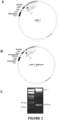
- the cDNA ORF of the GSTm34 gene in the pIGF-1-GSTm34 vector was designed as a 722 bp recombinant DNA sequence, which was added restriction enzymes, enterokinase and 8xHis tag. The cloning can be carried out using restrictions with Pmel and Apal. Thus if desired, the 8xHis affinity tag of the purified TtGSTm34 can be removed by restriction with the entrokinase protease enzyme.
- the first parenthetical represents Pmel restriction site
- the second parenthetical represents XhoI restriction site
- the third parenthetical represents enterokinase restriction site
- the fourth parenthetical represents 8xHis tag
- the fifth parenthetical represents Apal restriction site.
- plGF-1 expression vector and pIGF-1-GSTm34 vector that is contstructed upon this vector are given in Figure 1 ( Figure 1-A and Figure 1-B ).
- RNA isolation from Tetrahymena thermophila was performed with the Qiagen RNeasy Mini Kit (Cat No. / ID: 74104). Total RNA was then treated with DNase (Promega RQ1 RNase-Free DNase Cat No: M6101). In a reaction that was carried out using RevertAid First Strand cDNA synthesis kit (Cat No: K1621, Fermentas), ⁇ 2,5 ⁇ g mRNA was used and cDNA is synthesized. Subsequently, PCR was performed with the following gene primers and the target TtGSTm34 protein-encoding region was amplified from the cDNA obtained. The sequence information of the primers used is given below;
- Enterokinase restriction site and 8xHis tag can be inserted by performing two consecutive PCR reactions with reverse primers R1GSTmu34pV2 and R2GSTmu34pV2.
- First PCR reaction was carried out using FGSTmu34pV2 and R1GSTmu34pV2 primers and obtained DNA was purified from the gel (Thermo, GeneJet Gel Extraction Kit, #K0691). By using this DNA sequence as a template second PCR reaction in which FGSTmu34pV2 and R2GSTmu34pV2 primers were used is performed.
- Sticky end TtGSTm34 gene and pIGF-1 vector were ligated with T4 DNA ligase enzyme (NEB, M0202S), and transformed to E. coli XL1-Blue competent cells using the heat shock. Upon transformation, positive colonies were selected from the Amp plates using Colony PCR method. The plasmids that were isolated from the positive colonies were confirmed using the restrictions with Pmel and Apal.
- Tetrahymena B2086 - CU428 cells that were freshly evoked from liquid nitrogen with BioRad Gene Pulser device.
- Tetrahymena cells were transformed and modified by electroporation based on the method of J. Gaertig and M. Gorovsky. Tetrahymena cells that were grown to late log pahse were washed with 10 mM Tris-HCl (pH 7.5). Then the cells were taken to 18-24 hours starvation and the cell numbers were adjusted as 3 ⁇ 10 5 per ml. It was then taken up in equal volumes from both cell types, blended into a erlenmeyer flask and taken to conjugation in a static incubator at 30°C to start the conjugation.
- Conjugation efficiency at the 3rd hour of the conjugation was checked on a light microscope. When the efficiency reached to 80%, the conjugates which were in the "Macronucleus Growth 1" phase were washed with 10 mM HEPES. On the 7th hour of the conjugation, the nuclei of the cells were dyed with Hoechst dye and the cells were observed under the fluorescence microscope. On the 9th hour of the conjugation, 100 ml of cells was centrifuged at 6.500 g for 7 minutes, and the pellet was washed with 10 mM HEPES (pH 7.5). Then the conjugates were pelleted and dissolved with 10 mM HEPES to reach final concentration of 1.7 ⁇ 10 7 cells/ml.
- Amount of paromomycin was increased to 100 ⁇ g/ml on the third day of the conjugation, and to 120 ⁇ g/ml on the fifth day of the conjugation.
- Positive transformant cells were selected and frozen in tubes of liquid nitrogen that contain DMSO.
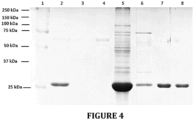
- Transformant cells were induced with CdCl 2 (Sigma, 439800) to the final concentration of 5 ⁇ g/ml for 36 hours. The samples were collected at different intervals and total protein isolation was performed. SDS-PAGE images of the isolates are given in Figure 2 .
- T100B was used as lysis buffer in protein isolation (Final of 1% TritonX100, 2.5 mM Tris-HCl pH 7.5, 150 mM EDTA, 2 mM PMSF, 1X Protease inhibitor Cocktail Cat no: 04693159001 ROCHE).
- TtGSTm34 protein's affinity towards glutathione total protein that were obtained from transformant cells were purified using GSH Sepharose 4B beads (GE Healthcare Cat No: 52-2303-00 AK). In this procedure, PBS pH 7.3 (140 mM NaCl, 2.7 mM KCl, 10 mM Na 2 HPO 4 , 1.8 mM KH 2 PO 4 , pH 7.3) was used as binding buffer. Elution buffer on the other hand was selected as 50 mM Tris-HCl, 10 mM reduced glutathione, pH 8.0. Unbound proteins, washed-off proteins, and the final elutions were loaded onto the 12,5% SDS-PAGE gel.
- the enzyme activities were first calculated in terms of U/ml. Then these values were divided by protein concentrations that were determined by Bradford method (Pierce TM Coomassie Plus Bradford Assay Reagent Cat no: 23238). This way specific activities were calculated in terms of U/mg.
- Table 1 shows the spesific GST activities and purification yields of the proteins that were obtained by Ni-NTA purification, Ultrafiltration, and GSH affinity purification (these values are calculated under non-optimized reaction conditions).
- the purification fold of the recombinant enzyme is at a high value of 3.166.
- potassium phosphate buffers were prepared to determine the ionic strength at which the recombinant TtGSTm34-8xHis enzyme shows optimum activity.
- the pH values of these solutions were adjusted to the optimal pH of 7.0, and the activity measurements were made for each solution. The results are shown in Figure 6 .
- the optimum ionic strength of the enzyme was found to be 200 mM.
- 0.2M potassium phosphate buffer pH: 7.0 was used.
- the buffer contained the cofactors and substrates (final 1 mM CDNB and 1mM GSH) required for activity measurement.
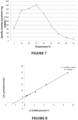
- the mixture was kept for 5 minutes in a well that was adjusted to a desired temperature. Measurements of activity at temperatures 5°C, 15°C, 20°C, 25°C, 30°C, 35°C, 40°C, 50°C and 60°C were carried out and the results are given in Figure 7 .
- the optimum temperature of the enzyme was found to be 25°C.
- V 0 k cat /k m
- the next step of the experiments focused on the comparison of the specific activity of TtGSTm34-8xHis of present invention with the specific activities of GST enzymes that are commercially available.
- the enzyme reaction was carried out under optimum conditions that are determined earlier: 200 mM phosphate buffer concentration, pH 7.0, and 25°C temperature. Under these conditions, the activity of TtGSTm34-8xHis reached to 453 U/mg. Table 3 shows this value compared to specific activities of commercially available GST enzymes.
- Table 3 GST Specific Activity ( ⁇ molmin -1 mg protein -1 ) Origin Schistosoma japonicum GST (LSBio, Cat no: LS-G627) 2.8 - 3.3 E.
- E. coli Schistosoma japonicum GST (MyBioSource, Cat no: MBS203158) >20 E. coli Recombinant human Glutathione S Transferase alpha 1 protein (Abcam, Cat no: ab167981) 5-8 E. coli Recombinant human GSTM2 protein (Abcam, Cat no: ab168017) ⁇ 25 E. coli Recombinant mouse Glutathione S Transferase mu protein (Abcam, Cat no: ab168035) ⁇ 11 E. coli GSTM1 glutathione S-transferase (Creative Biomart, Catno: GSTM1-2473H) 68.9 E.
- TtGSTm34-8xHis The stability of TtGSTm34-8xHis was also tested within the scope of experiments. Shelf life analyses of the enzyme were performed under various conditions and intervals. When kept in glycerol and phosphate buffer at -20°C, TtGSTm34-8xHis enzyme stocks lost only 39% of the enzyme activity in a year. When TtGSTm34-8xHis enzyme is kept for 10 days at +4°C, the loss of activity is determined to be 33%. At the room temperature, the enzyme loses 82% of its activity in 2 days. However, the specific activity is kept at 78 U/mg. The results of the enzyme stability tests for TtGSTm34-8xHis are given in Table 4.
Landscapes
- Chemical & Material Sciences (AREA)
- Organic Chemistry (AREA)
- Life Sciences & Earth Sciences (AREA)
- Health & Medical Sciences (AREA)
- Genetics & Genomics (AREA)
- Engineering & Computer Science (AREA)
- Zoology (AREA)
- Wood Science & Technology (AREA)
- General Health & Medical Sciences (AREA)
- Bioinformatics & Cheminformatics (AREA)
- Biochemistry (AREA)
- Molecular Biology (AREA)
- General Engineering & Computer Science (AREA)
- Proteomics, Peptides & Aminoacids (AREA)
- Microbiology (AREA)
- Biotechnology (AREA)
- Medicinal Chemistry (AREA)
- Analytical Chemistry (AREA)
- Biophysics (AREA)
- Biomedical Technology (AREA)
- Physics & Mathematics (AREA)
- Immunology (AREA)
- Enzymes And Modification Thereof (AREA)
Claims (11)
- Rekombinantes Tetrahymena thermophila-Glutathion-S-Transferase-Mu34 (TtGSTm34)-Enzym, für das die Nukleinsäuresequenz mit 8xHis-Tag (TtGSTm34-8xHis) kodiert, die zu mindestens 95% homolog zu SEQ ID NO: 1 ist.
- TtGSTm34-8xHis-Enzym nach Anspruch 1, umfassend die GST-Enzym-Basensequenz, die durch die Nukleinsäuresequenz gemäß SEQ ID NO: 3 codiert wird.
- Rekombinantes TtGSTm34-8xHis-Enzym nach Anspruch 1 oder 2, codiert durch die Nukleinsäuresequenz, die mit SEQ ID NO: 1 identisch ist.
- Testkit zum Üben der Enzymkinetik, umfassend ein TtGSTm34-8xHis-Enzym nach Anspruch 1.
- Vektor, umfassend eine TtGSTm34-8xHis-Insertion nach Anspruch 1.
- Vektor nach Anspruch 5, der ferner einen plGF-1-Vektor umfasst.
- Verwendung des rekombinanten TtGSTm34-8xHis-Enzyms nach Anspruch 1 zur Bestimmung einer Enzymkinetik oder zur Durchführung von Enzymkinetiken.
- Verwendung des rekombinanten TtGSTm34-8xHis-Enzyms nach Anspruch 1 als Affinitätstag für die Reinigung von Proteinen.
- Verwendung nach Anspruch 8, wobei das TtGSTm34-8xHis-Enzym für die Dual-Affinitäts-Reinigung von Proteinen verwendet wird.
- Verwendung des rekombinanten TtGSTm34-8xHis-Enzyms nach Anspruch 1 als Positivkontrolle in SDS-PAGE- und Western-Blot-Analysen oder als Antigenprotein bei der Herstellung von monoklonalen und polyklonalen Antikörpern.
- Verfahren zur Reinigung von Proteinen unter Verwendung von rekombinantem TtGSTm34-8xHis-Enzym nach Anspruch 1 als Affinitätsmarkierung, umfassend die folgenden Schritte:- Markierung des zu reinigenden Proteins mit dem rekombinanten TtGSTm34-8xHis-Enzym,- Durchführung von Affinitätschromatographie unter Verwendung von His-Tag als Affinitätsmarkierung, und- Verwendung von GST-Tag-Affinitätschromatographie zur weiteren Reinigung.
Applications Claiming Priority (2)
| Application Number | Priority Date | Filing Date | Title |
|---|---|---|---|
| TR201816554 | 2018-11-05 | ||
| PCT/TR2019/050839 WO2020096550A1 (en) | 2018-11-05 | 2019-10-08 | Recombinant tetrahymena thermophila glutathione s transferase mu34 enzyme (ttgstm34-8xhis) and uses thereof |
Publications (2)
| Publication Number | Publication Date |
|---|---|
| EP3856897A1 EP3856897A1 (de) | 2021-08-04 |
| EP3856897B1 true EP3856897B1 (de) | 2025-01-22 |
Family
ID=69158295
Family Applications (1)
| Application Number | Title | Priority Date | Filing Date |
|---|---|---|---|
| EP19835559.6A Active EP3856897B1 (de) | 2018-11-05 | 2019-10-08 | Rekombinantes glutathion-s-transferase-mu34-enzym (ttgstm34-8xhis) aus tetrahymena thermophila und dessen verwendungen |
Country Status (2)
| Country | Link |
|---|---|
| EP (1) | EP3856897B1 (de) |
| WO (1) | WO2020096550A1 (de) |
Family Cites Families (2)
| Publication number | Priority date | Publication date | Assignee | Title |
|---|---|---|---|---|
| GB9114259D0 (en) | 1991-07-02 | 1991-08-21 | Ici Plc | Plant derived enzyme and dna sequences |
| KR20080041961A (ko) | 2006-11-08 | 2008-05-14 | 하민수 | 우레아제 특성 측정 방법 및 측정 키트 |
-
2019
- 2019-10-08 EP EP19835559.6A patent/EP3856897B1/de active Active
- 2019-10-08 WO PCT/TR2019/050839 patent/WO2020096550A1/en not_active Ceased
Also Published As
| Publication number | Publication date |
|---|---|
| EP3856897A1 (de) | 2021-08-04 |
| WO2020096550A1 (en) | 2020-05-14 |
Similar Documents
| Publication | Publication Date | Title |
|---|---|---|
| Sawasaki et al. | A bilayer cell‐free protein synthesis system for high‐throughput screening of gene products | |
| Taira et al. | Arabidopsis thaliana GLN2-encoded glutamine synthetase is dual targeted to leaf mitochondria and chloroplasts | |
| Xu et al. | Assignment of a yeast protein necessary for mitochondrial transcription initiation | |
| Venkat et al. | Characterizing lysine acetylation of isocitrate dehydrogenase in Escherichia coli | |
| Xue et al. | Functional expression of an Arabidopsis p450 enzyme, p-coumarate-3-hydroxylase, in the cyanobacterium Synechocystis PCC 6803 for the biosynthesis of caffeic acid | |
| Mayer et al. | AMP-forming acetyl coenzyme A synthetase in the outermost membrane of the hyperthermophilic crenarchaeon Ignicoccus hospitalis | |
| EP0793729B1 (de) | Bioluminiscente lyophilisierte bakterien-reagenz zur giftstoff nachweit | |
| Wargo et al. | Identification of genes required for Pseudomonas aeruginosa carnitine catabolism | |
| Brandes et al. | Efficient expression of the gene for spinach phosphoribulokinase in Pichia pastoris and utilization of the recombinant enzyme to explore the role of regulatory cysteinyl residues by site-directed mutagenesis | |
| Jäger et al. | Transfer RNA bound to MnmH protein is enriched with geranylated tRNA–A possible intermediate in its selenation? | |
| Thanh et al. | Regulation of acetoin and 2, 3-butanediol utilization in Bacillus licheniformis | |
| EP3856897B1 (de) | Rekombinantes glutathion-s-transferase-mu34-enzym (ttgstm34-8xhis) aus tetrahymena thermophila und dessen verwendungen | |
| Kremp et al. | Non-AUG translation initiation generates peroxisomal isoforms of 6-phosphogluconate dehydrogenase in fungi | |
| Mondorf et al. | A novel inducible protein production system and neomycin resistance as selection marker for Methanosarcina mazei | |
| Roth et al. | His-357 of β-galactosidase (Escherichia coli) interacts with the C3 hydroxyl in the transition state and helps to mediate catalysis | |
| Kristensen et al. | Purification of Poly (ADP‐ribose) Polymerase from Ehrlich Ascites Tumor Cells by Chromatography on DNA‐Agarose | |
| VanNice et al. | Expression in Haloferax volcanii of 3-hydroxy-3-methylglutaryl coenzyme A synthase facilitates isolation and characterization of the active form of a key enzyme required for polyisoprenoid cell membrane biosynthesis in halophilic archaea | |
| Li et al. | A Sir2-like protein participates in mycobacterial NHEJ | |
| Ordaz et al. | Covalent and metal‐chelate immobilization of a modified 2‐haloacid dehalogenase for the enzymatic resolution of optically active chloropropionic acid | |
| Hoyt et al. | Polyamine regulation of ornithine decarboxylase synthesis in Neurospora crassa | |
| D'Ordine et al. | N 1-(5 ‘-Phosphoribosyl) adenosine− 5 ‘-Monophosphate Cyclohydrolase: Purification and Characterization of a Unique Metalloenzyme | |
| Chan et al. | Construction of inducible expression vector pDNLS-22n containing P. aeruginosa PAO1 ChiC | |
| Anthony et al. | Purification of Rhodobacter sphaeroides RNA polymerase and its sigma factors | |
| Lewis et al. | Tricarballylate catabolism in Salmonella enterica. The TcuB protein uses 4Fe-4S clusters and heme to transfer electrons from FADH2 in the tricarballylate dehydrogenase (TcuA) enzyme to electron acceptors in the cell membrane | |
| Yesland et al. | Anticodon bases C34 and C35 are major, positive, identity elements in Saccharomyces cerevisiae tRNA Trp |
Legal Events
| Date | Code | Title | Description |
|---|---|---|---|
| STAA | Information on the status of an ep patent application or granted ep patent |
Free format text: STATUS: UNKNOWN |
|
| STAA | Information on the status of an ep patent application or granted ep patent |
Free format text: STATUS: THE INTERNATIONAL PUBLICATION HAS BEEN MADE |
|
| PUAI | Public reference made under article 153(3) epc to a published international application that has entered the european phase |
Free format text: ORIGINAL CODE: 0009012 |
|
| STAA | Information on the status of an ep patent application or granted ep patent |
Free format text: STATUS: REQUEST FOR EXAMINATION WAS MADE |
|
| 17P | Request for examination filed |
Effective date: 20210426 |
|
| AK | Designated contracting states |
Kind code of ref document: A1 Designated state(s): AL AT BE BG CH CY CZ DE DK EE ES FI FR GB GR HR HU IE IS IT LI LT LU LV MC MK MT NL NO PL PT RO RS SE SI SK SM TR |
|
| DAV | Request for validation of the european patent (deleted) | ||
| DAX | Request for extension of the european patent (deleted) | ||
| STAA | Information on the status of an ep patent application or granted ep patent |
Free format text: STATUS: EXAMINATION IS IN PROGRESS |
|
| 17Q | First examination report despatched |
Effective date: 20220907 |
|
| GRAJ | Information related to disapproval of communication of intention to grant by the applicant or resumption of examination proceedings by the epo deleted |
Free format text: ORIGINAL CODE: EPIDOSDIGR1 |
|
| STAA | Information on the status of an ep patent application or granted ep patent |
Free format text: STATUS: GRANT OF PATENT IS INTENDED |
|
| GRAP | Despatch of communication of intention to grant a patent |
Free format text: ORIGINAL CODE: EPIDOSNIGR1 |
|
| INTG | Intention to grant announced |
Effective date: 20240619 |
|
| GRAS | Grant fee paid |
Free format text: ORIGINAL CODE: EPIDOSNIGR3 |
|
| GRAA | (expected) grant |
Free format text: ORIGINAL CODE: 0009210 |
|
| STAA | Information on the status of an ep patent application or granted ep patent |
Free format text: STATUS: THE PATENT HAS BEEN GRANTED |
|
| AK | Designated contracting states |
Kind code of ref document: B1 Designated state(s): AL AT BE BG CH CY CZ DE DK EE ES FI FR GB GR HR HU IE IS IT LI LT LU LV MC MK MT NL NO PL PT RO RS SE SI SK SM TR |
|
| REG | Reference to a national code |
Ref country code: GB Ref legal event code: FG4D |
|
| REG | Reference to a national code |
Ref country code: CH Ref legal event code: EP |
|
| REG | Reference to a national code |
Ref country code: IE Ref legal event code: FG4D |
|
| REG | Reference to a national code |
Ref country code: DE Ref legal event code: R096 Ref document number: 602019065187 Country of ref document: DE |
|
| REG | Reference to a national code |
Ref country code: NL Ref legal event code: MP Effective date: 20250122 |
|
| PG25 | Lapsed in a contracting state [announced via postgrant information from national office to epo] |
Ref country code: NL Free format text: LAPSE BECAUSE OF FAILURE TO SUBMIT A TRANSLATION OF THE DESCRIPTION OR TO PAY THE FEE WITHIN THE PRESCRIBED TIME-LIMIT Effective date: 20250122 |
|
| PG25 | Lapsed in a contracting state [announced via postgrant information from national office to epo] |
Ref country code: RS Free format text: LAPSE BECAUSE OF FAILURE TO SUBMIT A TRANSLATION OF THE DESCRIPTION OR TO PAY THE FEE WITHIN THE PRESCRIBED TIME-LIMIT Effective date: 20250422 |
|
| PG25 | Lapsed in a contracting state [announced via postgrant information from national office to epo] |
Ref country code: FI Free format text: LAPSE BECAUSE OF FAILURE TO SUBMIT A TRANSLATION OF THE DESCRIPTION OR TO PAY THE FEE WITHIN THE PRESCRIBED TIME-LIMIT Effective date: 20250122 |
|
| PG25 | Lapsed in a contracting state [announced via postgrant information from national office to epo] |
Ref country code: PL Free format text: LAPSE BECAUSE OF FAILURE TO SUBMIT A TRANSLATION OF THE DESCRIPTION OR TO PAY THE FEE WITHIN THE PRESCRIBED TIME-LIMIT Effective date: 20250122 |
|
| PG25 | Lapsed in a contracting state [announced via postgrant information from national office to epo] |
Ref country code: ES Free format text: LAPSE BECAUSE OF FAILURE TO SUBMIT A TRANSLATION OF THE DESCRIPTION OR TO PAY THE FEE WITHIN THE PRESCRIBED TIME-LIMIT Effective date: 20250122 |
|
| REG | Reference to a national code |
Ref country code: LT Ref legal event code: MG9D |
|
| PG25 | Lapsed in a contracting state [announced via postgrant information from national office to epo] |
Ref country code: IS Free format text: LAPSE BECAUSE OF FAILURE TO SUBMIT A TRANSLATION OF THE DESCRIPTION OR TO PAY THE FEE WITHIN THE PRESCRIBED TIME-LIMIT Effective date: 20250522 Ref country code: NO Free format text: LAPSE BECAUSE OF FAILURE TO SUBMIT A TRANSLATION OF THE DESCRIPTION OR TO PAY THE FEE WITHIN THE PRESCRIBED TIME-LIMIT Effective date: 20250422 |
|
| REG | Reference to a national code |
Ref country code: AT Ref legal event code: MK05 Ref document number: 1761504 Country of ref document: AT Kind code of ref document: T Effective date: 20250122 |
|
| PG25 | Lapsed in a contracting state [announced via postgrant information from national office to epo] |
Ref country code: HR Free format text: LAPSE BECAUSE OF FAILURE TO SUBMIT A TRANSLATION OF THE DESCRIPTION OR TO PAY THE FEE WITHIN THE PRESCRIBED TIME-LIMIT Effective date: 20250122 |
|
| PG25 | Lapsed in a contracting state [announced via postgrant information from national office to epo] |
Ref country code: LV Free format text: LAPSE BECAUSE OF FAILURE TO SUBMIT A TRANSLATION OF THE DESCRIPTION OR TO PAY THE FEE WITHIN THE PRESCRIBED TIME-LIMIT Effective date: 20250122 Ref country code: PT Free format text: LAPSE BECAUSE OF FAILURE TO SUBMIT A TRANSLATION OF THE DESCRIPTION OR TO PAY THE FEE WITHIN THE PRESCRIBED TIME-LIMIT Effective date: 20250522 |
|
| PG25 | Lapsed in a contracting state [announced via postgrant information from national office to epo] |
Ref country code: GR Free format text: LAPSE BECAUSE OF FAILURE TO SUBMIT A TRANSLATION OF THE DESCRIPTION OR TO PAY THE FEE WITHIN THE PRESCRIBED TIME-LIMIT Effective date: 20250423 Ref country code: BG Free format text: LAPSE BECAUSE OF FAILURE TO SUBMIT A TRANSLATION OF THE DESCRIPTION OR TO PAY THE FEE WITHIN THE PRESCRIBED TIME-LIMIT Effective date: 20250122 |
|
| PG25 | Lapsed in a contracting state [announced via postgrant information from national office to epo] |
Ref country code: AT Free format text: LAPSE BECAUSE OF FAILURE TO SUBMIT A TRANSLATION OF THE DESCRIPTION OR TO PAY THE FEE WITHIN THE PRESCRIBED TIME-LIMIT Effective date: 20250122 |
|
| PG25 | Lapsed in a contracting state [announced via postgrant information from national office to epo] |
Ref country code: SE Free format text: LAPSE BECAUSE OF FAILURE TO SUBMIT A TRANSLATION OF THE DESCRIPTION OR TO PAY THE FEE WITHIN THE PRESCRIBED TIME-LIMIT Effective date: 20250122 |
|
| PG25 | Lapsed in a contracting state [announced via postgrant information from national office to epo] |
Ref country code: SM Free format text: LAPSE BECAUSE OF FAILURE TO SUBMIT A TRANSLATION OF THE DESCRIPTION OR TO PAY THE FEE WITHIN THE PRESCRIBED TIME-LIMIT Effective date: 20250122 |
|
| PG25 | Lapsed in a contracting state [announced via postgrant information from national office to epo] |
Ref country code: DK Free format text: LAPSE BECAUSE OF FAILURE TO SUBMIT A TRANSLATION OF THE DESCRIPTION OR TO PAY THE FEE WITHIN THE PRESCRIBED TIME-LIMIT Effective date: 20250122 |
|
| PG25 | Lapsed in a contracting state [announced via postgrant information from national office to epo] |
Ref country code: IT Free format text: LAPSE BECAUSE OF FAILURE TO SUBMIT A TRANSLATION OF THE DESCRIPTION OR TO PAY THE FEE WITHIN THE PRESCRIBED TIME-LIMIT Effective date: 20250122 |
|
| PG25 | Lapsed in a contracting state [announced via postgrant information from national office to epo] |
Ref country code: CZ Free format text: LAPSE BECAUSE OF FAILURE TO SUBMIT A TRANSLATION OF THE DESCRIPTION OR TO PAY THE FEE WITHIN THE PRESCRIBED TIME-LIMIT Effective date: 20250122 Ref country code: EE Free format text: LAPSE BECAUSE OF FAILURE TO SUBMIT A TRANSLATION OF THE DESCRIPTION OR TO PAY THE FEE WITHIN THE PRESCRIBED TIME-LIMIT Effective date: 20250122 |
|
| REG | Reference to a national code |
Ref country code: DE Ref legal event code: R097 Ref document number: 602019065187 Country of ref document: DE |
|
| PG25 | Lapsed in a contracting state [announced via postgrant information from national office to epo] |
Ref country code: RO Free format text: LAPSE BECAUSE OF FAILURE TO SUBMIT A TRANSLATION OF THE DESCRIPTION OR TO PAY THE FEE WITHIN THE PRESCRIBED TIME-LIMIT Effective date: 20250122 |
|
| PG25 | Lapsed in a contracting state [announced via postgrant information from national office to epo] |
Ref country code: SK Free format text: LAPSE BECAUSE OF FAILURE TO SUBMIT A TRANSLATION OF THE DESCRIPTION OR TO PAY THE FEE WITHIN THE PRESCRIBED TIME-LIMIT Effective date: 20250122 |
|
| PLBE | No opposition filed within time limit |
Free format text: ORIGINAL CODE: 0009261 |
|
| STAA | Information on the status of an ep patent application or granted ep patent |
Free format text: STATUS: NO OPPOSITION FILED WITHIN TIME LIMIT |
|
| 26N | No opposition filed |
Effective date: 20251023 |
|
| PGFP | Annual fee paid to national office [announced via postgrant information from national office to epo] |
Ref country code: DE Payment date: 20251031 Year of fee payment: 7 |