EP3854614B1 - Device for supporting cables for articulated vehicles - Google Patents
Device for supporting cables for articulated vehicles Download PDFInfo
- Publication number
- EP3854614B1 EP3854614B1 EP21152466.5A EP21152466A EP3854614B1 EP 3854614 B1 EP3854614 B1 EP 3854614B1 EP 21152466 A EP21152466 A EP 21152466A EP 3854614 B1 EP3854614 B1 EP 3854614B1
- Authority
- EP
- European Patent Office
- Prior art keywords
- cable
- holder element
- articulated
- holder
- joint
- Prior art date
- Legal status (The legal status is an assumption and is not a legal conclusion. Google has not performed a legal analysis and makes no representation as to the accuracy of the status listed.)
- Active
Links
Images



Classifications
-
- B—PERFORMING OPERATIONS; TRANSPORTING
- B60—VEHICLES IN GENERAL
- B60R—VEHICLES, VEHICLE FITTINGS, OR VEHICLE PARTS, NOT OTHERWISE PROVIDED FOR
- B60R16/00—Electric or fluid circuits specially adapted for vehicles and not otherwise provided for; Arrangement of elements of electric or fluid circuits specially adapted for vehicles and not otherwise provided for
- B60R16/02—Electric or fluid circuits specially adapted for vehicles and not otherwise provided for; Arrangement of elements of electric or fluid circuits specially adapted for vehicles and not otherwise provided for electric constitutive elements
- B60R16/0207—Wire harnesses
- B60R16/0215—Protecting, fastening and routing means therefor
-
- B—PERFORMING OPERATIONS; TRANSPORTING
- B60—VEHICLES IN GENERAL
- B60D—VEHICLE CONNECTIONS
- B60D5/00—Gangways for coupled vehicles, e.g. of concertina type
-
- B—PERFORMING OPERATIONS; TRANSPORTING
- B60—VEHICLES IN GENERAL
- B60D—VEHICLE CONNECTIONS
- B60D1/00—Traction couplings; Hitches; Draw-gear; Towing devices
- B60D1/58—Auxiliary devices
- B60D1/62—Auxiliary devices involving supply lines, electric circuits or the like
- B60D1/64—Couplings or joints therefor
-
- B—PERFORMING OPERATIONS; TRANSPORTING
- B62—LAND VEHICLES FOR TRAVELLING OTHERWISE THAN ON RAILS
- B62D—MOTOR VEHICLES; TRAILERS
- B62D47/00—Motor vehicles or trailers predominantly for carrying passengers
- B62D47/02—Motor vehicles or trailers predominantly for carrying passengers for large numbers of passengers, e.g. omnibus
- B62D47/025—Motor vehicles or trailers predominantly for carrying passengers for large numbers of passengers, e.g. omnibus articulated buses with interconnecting passageway, e.g. bellows
-
- F—MECHANICAL ENGINEERING; LIGHTING; HEATING; WEAPONS; BLASTING
- F16—ENGINEERING ELEMENTS AND UNITS; GENERAL MEASURES FOR PRODUCING AND MAINTAINING EFFECTIVE FUNCTIONING OF MACHINES OR INSTALLATIONS; THERMAL INSULATION IN GENERAL
- F16G—BELTS, CABLES, OR ROPES, PREDOMINANTLY USED FOR DRIVING PURPOSES; CHAINS; FITTINGS PREDOMINANTLY USED THEREFOR
- F16G13/00—Chains
- F16G13/12—Hauling- or hoisting-chains so called ornamental chains
- F16G13/16—Hauling- or hoisting-chains so called ornamental chains with arrangements for holding electric cables, hoses, or the like
-
- H—ELECTRICITY
- H02—GENERATION; CONVERSION OR DISTRIBUTION OF ELECTRIC POWER
- H02G—INSTALLATION OF ELECTRIC CABLES OR LINES, OR OF COMBINED OPTICAL AND ELECTRIC CABLES OR LINES
- H02G11/00—Arrangements of electric cables or lines between relatively-movable parts
- H02G11/006—Arrangements of electric cables or lines between relatively-movable parts using extensible carrier for the cable, e.g. self-coiling spring
Definitions
- This invention relates to a device for supporting cables for articulated vehicles, in particular articulated buses, as well as an articulated vehicle fitted with the cable supporting device.
- the invention can be advantageously applied in the road sector, where the cable supporting device may be installed in an intercommunicating compartment between two cabins, that is, carriages used for adjacent passenger transport of an articulated bus.
- This intercommunicating compartment must inevitably guarantee the passage between the two cabins of the cables which make it possible to connect the various user outlets present on the rear cabin (for example, lights, information systems, air conditioning systems, control systems) with the central panel usually located in the front cabin.
- these devices must be structured in such a way as to guarantee a rigidity which is adequate for supporting the weight force exerted by the cables in such a way as to keep them in position without letting them fall into the cabin.
- the cable-holder device flexible in a plane lying substantially parallel to the plane of travel of the vehicle in such a way that it can adapt to the various configurations adopted by the intercommunicating compartment during a misalignment in a horizontal direction of the cabins.
- these cable-holder devices are anchored to end portions of the frame of the cabin, using typically rigid anchoring systems which securely constrain the ends of the cable-holder device to the respective cabin.
- the middle hoop system comprises a middle hoop, which is oriented in a transverse direction, and a cable strand which extends between sections of the vehicle.
- the middle hoop surrounds a passage intended for passengers.
- the cable strand is arranged above the passage.
- the middle hoop system comprises a guide lever which is connected to the middle hoop by means of a first pivot joint and which is connected to the cable strand by means of a second pivot joint, the axis of the first pivot joint and the axis of the second pivot joint intersecting a vertical longitudinal plane.
- the aim of the invention is to meet the above-mentioned needs by providing a cable-holder device which is able to overcome the drawbacks of the prior art.
- the aim of the invention is to provide a cable-holder device which is able to mechanically withstand the stresses caused by the movement of the vehicle, in particular the stresses caused by the misalignment of the cabins of the articulated vehicle, irrespective of the type of misalignment which occurs.
- the numeral 1 denotes in its entirety a device for supporting cables for articulated vehicles which, for simplicity of description, will hereafter be referred to as device 1.
- articulated vehicles is used to mean a road vehicle, similar to normal buses, but having a greater capacity for passengers as it consists of two cabins connected in a flexible fashion (preferably by a fifth wheel).
- Figure 1 shows a detail of an articulated vehicle 100 having two cabins, that is to say, two units used for transporting passengers 200, 300 which are adjacent to each other and wherein an intercommunicating compartment 400 is interposed, designed for the installation of the device 1 and for the passage of the passengers.
- the device 1 is designed to be installed in an upper portion of the intercommunicating compartment 400.
- the device 1 comprises at least one cable-holder element 2, two anchoring plates 3 and on each of said plates a connecting element 4.
- the cable-holder element 2 shown in detail in Figures 2A-2C , has an elongate structure extending along a line of extension substantially lying in a lying plane "XY".
- the lying plane “XY" is horizontal or in any case parallel to the ground on which the articulated vehicle 100 moves on which the device 1 is installed.
- the cable-holder element 2 is flexible on the lying plane "XY".
- the cable-holder element 2 has a structure such as to allow the cable-holder element 2 to bend (within predetermined limits), without damage, so as to adapt to various configurations adopted by the intercommunicating compartment 400 during the normal operations for moving the articulated vehicle 100.
- the two cabins 200, 300 might move relative to each other, becoming misaligned.
- the cable-holder element 2 is substantially rigid in a plane "YZ" perpendicular to the lying plane "XY".
- the flexibility of the cable-holder element 2 is not zero but greatly limited, such as to be considered negligible, in such a way as to guarantee at any time the correct support of the cables.
- the cable-holder element 2 is defined by a chain with articulated links.
- the chain is defined by a series of links, inside of which there is a channel V for housing at least one cable (cable not illustrated in the accompanying drawings).
- the cable-holder element 2 comprises a plurality of links 2a connected in succession along the line of extension by joining pins 2b, which define axes of rotation perpendicular to the lying plane "XY".
- the cable-holder element 2 defines at least one channel "V" for housing at least one cable (cable not illustrated in the accompanying drawings).
- the cable-holder element 2 is installed in such a way that its line of extension is curved, preferably arched.
- the links of the chain are positioned in use to define, in their entirety, an arc.
- the cable-holder element can adapt to the relative movements between the cabins 200 and 300 during the normal operations of the articulated vehicle 100, as illustrated in Figure 2C .
- the device 1 may also comprise two or more cable-holder elements 2, each defining internally at least one channel "V" for housing at least one cable and each extending along a respective line of extension lying substantially on a respective lying plane, on which the cable-holder element is flexible.
- the two or more cable-holder elements 2 lie in the same lying plane "XY" in such a way as to be flexible in the same lying plane.
- each cable-holder element 2 is connected or connectable to the two anchoring plates 3 by respective ends 2c of the cable-holder elements 2.
- the cable passing inside the V-shaped housing channel may be an electrical cable or any cable designed to convey a fluid, liquid or air.
- each of the ends 2c of each cable-holder element 2 is connected or connectable to a respective anchoring plate 3.
- the anchoring plates 3 are configured for securely mounting on an end portion 200a, 300a of a respective structure (frame) of the articulated vehicle in such a way that a first anchoring plate 3 is mounted on the cabin 200 whilst a second anchoring plate 3 is mounted on the cabin 300.
- the end portions 200a, 300a of the two cabins 200 and 300 face each other.
- the end portions 200a, 300a are preferably made at the same height.
- the two cabins 200 and 300 are connected to each other by an articulated joint, preferably a fifth wheel.
- end portions 200a, 300a may be made at different heights.
- the anchoring plates 3 are connected to each of the at least one end 2c of the cable-holder element 2 by a connecting element 4.
- both the anchoring plates 3 are connected to the respective ends 2c of the at least one cable-holder element 2 by a connecting element 4.
- the connecting element 4 comprises at least one joint 5 and is configured to allow a reciprocal movement, between the respective end 2c of the cable-holder element 2 and the respective anchoring plate 3, at least about two axes of rotation "A", "B" (which are not parallel and preferably perpendicular to each other).
- said joint 5 is an articulated joint.
- said joint 5 is an elastic joint.
- the elastic joint is made of an elastically compliant material.
- each articulated joint 5 allows a rotation of at least ⁇ 20° about each of the at least two axes of rotation "A", "B".
- each articulated joint 5 allows a rotation of at least ⁇ 30° about each of the at least two axes of rotation "A", "B".
- each articulated joint 5 allows a rotation of at least ⁇ 45° about each of the at least two axes of rotation "A", "B".
- each articulated joint 5 allows a rotation of less than ⁇ 70° about each of the at least two axes of rotation "A", "B".
- each articulated joint 5 allows a rotation of less than ⁇ 60° about each of the at least two axes of rotation "A", "B".
- each articulated joint 5 allows a rotation of less than ⁇ 50° about each of the at least two axes of rotation "A", "B".
- the articulated joint 5 may comprise at least one spherical hinge 6.
- the connecting element 4 comprises two articulated joints 5 connected to each other by a connecting bar 7.
- both of the two articulated joints 5 are defined by respective spherical hinges 6.
- each of the two articulated joints 5 comprises a respective spherical hinge 6.
- the connecting element 4 comprises a first connecting portion 8a, fixed to the respective anchoring plate 3 and a second connecting portion 8b, fixed or integrally connected to the respective at least one end 2c of the cable-holder element 2, where the first and second connecting portions 8a, 8b are connected to each other by the connecting bar 7.
- first and second connecting portions 8a, 8b are defined by respective brackets.
- the connecting element 4 comprising, according to a non-limiting example embodiment, two spherical hinges 6, allows the respective end 2c to move relative to the respective anchoring plate 3 along a portion of spherical surface.
- the use of two connecting elements 4, both comprising two spherical hinges 6, allows the cable-holder element 2 to translate vertically and horizontally, thus avoiding tensioning (which could result in breakage) at the point of connection with the structures (frame) of the cabins 200, 300.
- Figure 4A shows an example of vertical translation of the cable-holder element 2 relative to the cabin 300 whilst Figure 4B shows an example of horizontal translation of the cable-holder element 2 relative to the same cabin 300.
- Figure 4C shows an example of a mutual inclination between the cabins 200 and the lying plane "XY" of the cable-holder elements 2.
- the device 1 can absorb (reduce) the stresses (tensions) deriving from the misalignment of the cabins 200, 300 irrespective of the plane in which they occur and adapt without damage to the various reciprocal configurations adopted by the cabins 200, 300.
- the connecting element 4 comprises two articulated joints 5, one for each end, defined by two respective hinges 6 which allow the rotation each about its respective axis of rotation.
- the hinges are structured and oriented in such a way that their axes of rotation are distinct and perpendicular to each other.
- the connecting element 4 allows equally the cable-holder element 2, and in particular its end 2c, to move on two axes of rotation relative to the anchoring plate 3 to which it is connected.
- Each supporting plate 9 is interposed between the end 2c of the cable-holder element 2 and the respective connecting element 4 to which the supporting plate 9 is rigidly connected in an integral fashion.
- each supporting plate 9 is oriented parallel to the respective anchoring plate 3 in an alignment configuration between the two cabins 200, 300 of the articulated vehicle 100.
- the device 1 may also comprise an intermediate supporting frame 500 configured for supporting, in particular by sliding, an intermediate portion of the cable-holder element 2.
- the intermediate support frame 500 installed in the intercommunicating compartment 400, is connected or connectable to a respective structure of the articulated vehicle, in particular to the connecting structure of the cabins 200 and 300.
- the intermediate support frame 500 is connected or connectable to the fifth wheel.
- the intermediate support frame 500 has (comprises) an element 500a for installing a flat support 500b suitable for receiving an intermediate portion of the cable-holder element 2.
- the flat support 500b only has the supporting function: it does not guide in any way the cable-holder element 2.
- the flat support 500b is configured to allow a low friction sliding of the cable-holder element 2.
- the flat support 500b is defined by a plate.
- the intermediate support frame 500 makes it possible to support at least partly the weight force of the cable-holder element 2 and of the cables, reducing the overall load which acts on the connecting elements 4 and also the weight force which must be directly supported by the cable-holder element 2.
- the invention also relates to an articulated vehicle 100, in particular a bus, comprising two adjacent cabins 200, 300 separated from each other by an intercommunicating compartment 400 and comprising the cable supporting device 1.
- the articulated vehicle 100 also comprises cables (electrical or designed to allow the passage of a fluid, air or liquid).
- each end of the at least one cable-holder element 2, forming part of the device 1 is applied to an end portion 200a, 300a of a respective cabin 200, 300, preferably at a top portion of the respective cabin 200, 300.
- the device 1 and the articulated vehicle 100 described above are able to overcome the drawbacks of the prior art.
- the cable supporting device 1 is able to withstand the mechanical stresses caused by the movement of the articulated vehicle 100 thanks to the structure of the connecting elements 4 which allow the at least one cable-holder element 2 to be oriented relative to cabins 200, 300 (in this way reducing stresses).
Landscapes
- Engineering & Computer Science (AREA)
- Mechanical Engineering (AREA)
- Transportation (AREA)
- General Engineering & Computer Science (AREA)
- Chemical & Material Sciences (AREA)
- Combustion & Propulsion (AREA)
- Body Structure For Vehicles (AREA)
- Electric Cable Arrangement Between Relatively Moving Parts (AREA)
Description
- This invention relates to a device for supporting cables for articulated vehicles, in particular articulated buses, as well as an articulated vehicle fitted with the cable supporting device.
- In particular, the invention can be advantageously applied in the road sector, where the cable supporting device may be installed in an intercommunicating compartment between two cabins, that is, carriages used for adjacent passenger transport of an articulated bus.
- This intercommunicating compartment must inevitably guarantee the passage between the two cabins of the cables which make it possible to connect the various user outlets present on the rear cabin (for example, lights, information systems, air conditioning systems, control systems) with the central panel usually located in the front cabin.
- As is known, these cables run in an upper portion of the intercommunicating compartment, housed in special cable-holder devices, which support the cables and protect them from mechanical stresses.
- Firstly, these devices must be structured in such a way as to guarantee a rigidity which is adequate for supporting the weight force exerted by the cables in such a way as to keep them in position without letting them fall into the cabin.
- Moreover, since there is a relative movement between the cabins during the driving operations of the vehicle, especially when a steering must be performed, it is advantageous to make the cable-holder device flexible in a plane lying substantially parallel to the plane of travel of the vehicle in such a way that it can adapt to the various configurations adopted by the intercommunicating compartment during a misalignment in a horizontal direction of the cabins.
- Moreover, these cable-holder devices are anchored to end portions of the frame of the cabin, using typically rigid anchoring systems which securely constrain the ends of the cable-holder device to the respective cabin.
- However, this solution has drawbacks.
- Since the road surface is not perfectly uniform, having, for example, dips and bumps, and since during driving the vehicle may have to rise up and move down slopes, it is impossible to prevent cabins from becoming subject to misalignment in a vertical direction and to changes of reciprocal orientation.
- These reciprocal movements cause a series of mechanical stresses to which the cable-holder device cannot adapt due to the substantially rigid arrangement on a plane perpendicular to the ground which is necessary in order to guarantee the correct support of the cables.
- These mechanical stresses, not absorbed by the cable-holder device, directly affect the anchors which, consequently, deteriorate and become damaged.
- Document
US2018215219 relates to a middle hoop system for a vehicle joint arranged between a first vehicle section and a second vehicle section of a multi-unit vehicle. The middle hoop system comprises a middle hoop, which is oriented in a transverse direction, and a cable strand which extends between sections of the vehicle. The middle hoop surrounds a passage intended for passengers. The cable strand is arranged above the passage. The middle hoop system comprises a guide lever which is connected to the middle hoop by means of a first pivot joint and which is connected to the cable strand by means of a second pivot joint, the axis of the first pivot joint and the axis of the second pivot joint intersecting a vertical longitudinal plane. In this context, the aim of the invention is to meet the above-mentioned needs by providing a cable-holder device which is able to overcome the drawbacks of the prior art. - In particular, the aim of the invention is to provide a cable-holder device which is able to mechanically withstand the stresses caused by the movement of the vehicle, in particular the stresses caused by the misalignment of the cabins of the articulated vehicle, irrespective of the type of misalignment which occurs.
- These and other aims which will become more apparent in the description below are substantially achieved by a cable supporting device for articulated vehicles as well as by an articulated vehicle mounting the cable supporting device according to the appended claims.
- The features and advantages of the invention will emerge more clearly from the detailed description of preferred, but not exclusive embodiments of the device.
- The device is described below with reference to the accompanying drawings which are provided solely for purposes of illustration and in which:
-
Figure 1 schematically illustrates of an outer view of an articulated vehicle mounting the cable supporting device according to the invention; -
Figures 2A-2C schematically illustrate a detail of the articulated vehicle ofFigure 1 ; -
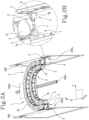
Figure 3 schematic illustrates a detail of the cable supporting device ofFigure 1 ; -
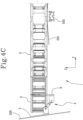
Figures 4A-4C schematically illustrate different configurations of use which can be adopted by the cable supporting device. - With reference to the accompanying drawings, the
numeral 1 denotes in its entirety a device for supporting cables for articulated vehicles which, for simplicity of description, will hereafter be referred to asdevice 1. - In this description, the term "articulated vehicles" is used to mean a road vehicle, similar to normal buses, but having a greater capacity for passengers as it consists of two cabins connected in a flexible fashion (preferably by a fifth wheel).
-
Figure 1 shows a detail of an articulatedvehicle 100 having two cabins, that is to say, two units used for transportingpassengers intercommunicating compartment 400 is interposed, designed for the installation of thedevice 1 and for the passage of the passengers. - In particular, the
device 1 is designed to be installed in an upper portion of theintercommunicating compartment 400. - Substantially, the
device 1 comprises at least one cable-holder element 2, twoanchoring plates 3 and on each of said plates a connectingelement 4. The cable-holder element 2, shown in detail inFigures 2A-2C , has an elongate structure extending along a line of extension substantially lying in a lying plane "XY". - Preferably, in use the lying plane "XY" is horizontal or in any case parallel to the ground on which the articulated
vehicle 100 moves on which thedevice 1 is installed. - Moreover, the cable-
holder element 2 is flexible on the lying plane "XY". - In other words, the cable-
holder element 2 has a structure such as to allow the cable-holder element 2 to bend (within predetermined limits), without damage, so as to adapt to various configurations adopted by theintercommunicating compartment 400 during the normal operations for moving the articulatedvehicle 100. - In other words, in use, the two
cabins - Generally speaking, it is seen that there is a misalignment between the two cabins every time the head cabin changes its direction of travel, especially on account of the shape of the ground.
- Moreover, the cable-
holder element 2 is substantially rigid in a plane "YZ" perpendicular to the lying plane "XY". - In this plane "YZ", the flexibility of the cable-
holder element 2 is not zero but greatly limited, such as to be considered negligible, in such a way as to guarantee at any time the correct support of the cables. - According to the preferred embodiment, the cable-
holder element 2 is defined by a chain with articulated links. - In other words, the chain is defined by a series of links, inside of which there is a channel V for housing at least one cable (cable not illustrated in the accompanying drawings).
- According to this embodiment, the cable-
holder element 2 comprises a plurality oflinks 2a connected in succession along the line of extension by joiningpins 2b, which define axes of rotation perpendicular to the lying plane "XY". - Internally, the cable-
holder element 2 defines at least one channel "V" for housing at least one cable (cable not illustrated in the accompanying drawings). - In use, the cable-
holder element 2 is installed in such a way that its line of extension is curved, preferably arched. - In other words, the links of the chain are positioned in use to define, in their entirety, an arc.
- This geometry directly and substantially influences the performance of the cable-
holder element 2. - Advantageously, in fact, thanks to this curvature, the cable-holder element can adapt to the relative movements between the
cabins vehicle 100, as illustrated inFigure 2C . - The
device 1 may also comprise two or more cable-holder elements 2, each defining internally at least one channel "V" for housing at least one cable and each extending along a respective line of extension lying substantially on a respective lying plane, on which the cable-holder element is flexible. - Preferably, the two or more cable-
holder elements 2 lie in the same lying plane "XY" in such a way as to be flexible in the same lying plane. - In general, each cable-
holder element 2 is connected or connectable to the twoanchoring plates 3 byrespective ends 2c of the cable-holder elements 2. - It should be noted that the cable passing inside the V-shaped housing channel may be an electrical cable or any cable designed to convey a fluid, liquid or air.
- In other words, each of the
ends 2c of each cable-holder element 2 is connected or connectable to arespective anchoring plate 3. - The
anchoring plates 3, in turn, are configured for securely mounting on anend portion first anchoring plate 3 is mounted on thecabin 200 whilst asecond anchoring plate 3 is mounted on thecabin 300. - The
end portions cabins - Moreover, preferably, the
end portions - The two
cabins - However, as will become clearer from the following description, the
end portions - The
anchoring plates 3 are connected to each of the at least oneend 2c of the cable-holder element 2 by a connectingelement 4. - Preferably, both the
anchoring plates 3 are connected to therespective ends 2c of the at least one cable-holder element 2 by a connectingelement 4. - The connecting
element 4 comprises at least onejoint 5 and is configured to allow a reciprocal movement, between therespective end 2c of the cable-holder element 2 and therespective anchoring plate 3, at least about two axes of rotation "A", "B" (which are not parallel and preferably perpendicular to each other). - Preferably, according to the embodiment illustrated, said
joint 5 is an articulated joint. - According to an embodiment not illustrated, said
joint 5 is an elastic joint. The elastic joint is made of an elastically compliant material. - In that case, it should be noted that said at least about two axes of rotation "A", "B" could be any two axes of rotation about which a mutual rotation is permitted between the
respective end 2c of the cable-holder element 2 and therespective anchoring plate 3 following elastic deformation of thejoint 5. Reference will be made below to the (articulated)joint 5, meaning that the technical features described can also be applied to the elastic joint, where possible. Preferably, each articulatedjoint 5 allows a rotation of at least ±20° about each of the at least two axes of rotation "A", "B". - Preferably, each articulated joint 5 allows a rotation of at least ±30° about each of the at least two axes of rotation "A", "B".
- Preferably, each articulated joint 5 allows a rotation of at least ±45° about each of the at least two axes of rotation "A", "B".
- Preferably, each articulated joint 5 allows a rotation of less than ±70° about each of the at least two axes of rotation "A", "B".
- Preferably, each articulated joint 5 allows a rotation of less than ±60° about each of the at least two axes of rotation "A", "B".
- Preferably, each articulated joint 5 allows a rotation of less than ±50° about each of the at least two axes of rotation "A", "B".
- The articulated joint 5 may comprise at least one
spherical hinge 6. Preferably, the connectingelement 4 comprises two articulatedjoints 5 connected to each other by a connecting bar 7. - Preferably, both of the two articulated
joints 5 are defined by respective spherical hinges 6. - According to the preferred embodiment, illustrated in particular in
Figures 3 ,4A and 4B , each of the two articulatedjoints 5 comprises a respectivespherical hinge 6. - More specifically, the connecting
element 4 comprises a first connectingportion 8a, fixed to therespective anchoring plate 3 and a second connectingportion 8b, fixed or integrally connected to the respective at least oneend 2c of the cable-holder element 2, where the first and second connectingportions - Preferably, the first and second connecting
portions - Advantageously, the connecting
element 4, comprising, according to a non-limiting example embodiment, twospherical hinges 6, allows therespective end 2c to move relative to therespective anchoring plate 3 along a portion of spherical surface. - Moreover, the use of two connecting
elements 4, both comprising twospherical hinges 6, allows the cable-holder element 2 to translate vertically and horizontally, thus avoiding tensioning (which could result in breakage) at the point of connection with the structures (frame) of thecabins -
Figure 4A shows an example of vertical translation of the cable-holder element 2 relative to thecabin 300 whilstFigure 4B shows an example of horizontal translation of the cable-holder element 2 relative to thesame cabin 300. - Further,
Figure 4C shows an example of a mutual inclination between thecabins 200 and the lying plane "XY" of the cable-holder elements 2. - As may be clearly inferred from the drawings, the
device 1 can absorb (reduce) the stresses (tensions) deriving from the misalignment of thecabins cabins - According to a further embodiment not illustrated, the connecting
element 4 comprises two articulatedjoints 5, one for each end, defined by tworespective hinges 6 which allow the rotation each about its respective axis of rotation. - The hinges are structured and oriented in such a way that their axes of rotation are distinct and perpendicular to each other.
- In this way, the connecting
element 4 allows equally the cable-holder element 2, and in particular itsend 2c, to move on two axes of rotation relative to theanchoring plate 3 to which it is connected. - In order to make the constraint between the
end 2c of the cable-holder element 2 and the respective connecting element 4 (more specifically the joint 5) more efficient, use is also made of supportingplates 9. - Each supporting
plate 9 is interposed between theend 2c of the cable-holder element 2 and the respective connectingelement 4 to which the supportingplate 9 is rigidly connected in an integral fashion. - Moreover, preferably, each supporting
plate 9 is oriented parallel to therespective anchoring plate 3 in an alignment configuration between the twocabins vehicle 100. - Advantageously, it is possible to fix integrally to the same connecting
plate 9 theends 2c of several cable-holder elements 2, when present in thedevice 1. - The
device 1 may also comprise an intermediate supportingframe 500 configured for supporting, in particular by sliding, an intermediate portion of the cable-holder element 2. - Preferably, the
intermediate support frame 500, installed in theintercommunicating compartment 400, is connected or connectable to a respective structure of the articulated vehicle, in particular to the connecting structure of thecabins - In particular, the
intermediate support frame 500 is connected or connectable to the fifth wheel. - Preferably, the
intermediate support frame 500 has (comprises) anelement 500a for installing aflat support 500b suitable for receiving an intermediate portion of the cable-holder element 2. - It should be noted that the
flat support 500b only has the supporting function: it does not guide in any way the cable-holder element 2. - The
flat support 500b is configured to allow a low friction sliding of the cable-holder element 2. - The
flat support 500b is defined by a plate. - Advantageously, the
intermediate support frame 500 makes it possible to support at least partly the weight force of the cable-holder element 2 and of the cables, reducing the overall load which acts on the connectingelements 4 and also the weight force which must be directly supported by the cable-holder element 2. - The invention also relates to an articulated
vehicle 100, in particular a bus, comprising twoadjacent cabins intercommunicating compartment 400 and comprising thecable supporting device 1. - The articulated
vehicle 100 also comprises cables (electrical or designed to allow the passage of a fluid, air or liquid). - In particular, each end of the at least one cable-
holder element 2, forming part of thedevice 1, is applied to anend portion respective cabin respective cabin - Advantageously, the
device 1 and the articulatedvehicle 100 described above are able to overcome the drawbacks of the prior art. - In fact, the
cable supporting device 1 is able to withstand the mechanical stresses caused by the movement of the articulatedvehicle 100 thanks to the structure of the connectingelements 4 which allow the at least one cable-holder element 2 to be oriented relative tocabins 200, 300 (in this way reducing stresses).
Claims (11)
- A device (1) for supporting cables for articulated vehicles (100), in particular articulated buses, designed for installation in an intercommunicating compartment (400) between two adjacent cabins (200, 300) of an articulated vehicle (100), comprising at least one cable-holder element (2) defining internally at least one channel (V) for housing at least one cable, said cable-holder element (2) extending along a line of extension lying substantially in a plane (XY) and being flexible on said plane (XY); said device (1) further comprisin:- two anchoring plates (3) connected or connectable to respective ends (2c) of the cable-holder element (2) and each configured for the stable mounting to an end portion (200a, 300a) of a respective frame structure of said articulated vehicle (100), in particular of a respective cabin (200, 300);- at least one connecting element (4), positioned for connecting between at least one of said ends (2c) of the cable-holder element (2) and the respective anchoring plate (3), comprising at least one joint (5) configured to allow a reciprocal movement, between the respective end of the cable-holder element (2) and the respective anchoring plate (3), at least about two axes of rotation (A, B) which are not parallel and preferably perpendicular,the device (1) being characterized in that said at least one cable-holder element (2) is defined by a chain with articulated links, comprising a plurality of links (2a) connected in succession along said line of extension by means of joining pins (2b) defining axes of rotation perpendicular to said lying plane (XY).
- The device (1) according to claim 1, wherein said joint (5) is an articulated joint.
- The device (1) according to claim 1, wherein said joint (5) is an elastic joint.
- The device (1) according to any one of the preceding claims, wherein said at least one joint (5) comprises at least one spherical hinge (6).
- The device (1) according to any one of claims 1 to 4, wherein said connecting element (4) comprises two joints (5) connected to each other by a connecting bar (7), in particular said connecting element (4) comprising a first connecting portion (8a), fixed to the respective anchoring plate (3), and a second connecting portion (8b), fixed to the respective end (2c) of the cable-holder element (2), said connecting portions (8a, 8b) being connected to opposite ends of said connecting bar (7) by respective articulated joints (5).
- The device (1) according to any one of the preceding claims, wherein said at least one joint (5) allows a rotation of at least ±30° about each of said at least two axes of rotation (A, B).
- The device (1) according to any one of the preceding claims, comprising two connecting elements (4) each interposed between a respective end (2c) of the cable-holder element (2) and the respective anchoring plate (3).
- The device (1) according to any one of the preceding claims, comprising an intermediate supporting frame (500) configured for supporting, in particular by sliding, an intermediate portion of said cable-holder element (2) and connected or connectable to a respective structure of said articulated vehicle (100), in particular of a respective cabin (200, 300).
- The device (1) according to any one of the preceding claims, wherein each connecting element (4) is connected to the respective end (2c) of the cable-holder element (2) by a supporting plate (9) rigidly fixed to said respective end (2c) of the cable-holder element (2) and preferably oriented parallel to the respective anchoring plate (3) in an alignment configuration between the two cabins (200, 300) of the articulated vehicle (100).
- The device (1) according to any one of the preceding claims, comprising two or more cable-holder elements (2) each forming internally at least one channel (V) for housing at least one cable and extending along a respective line of extension substantially lying in a plane (XY) and flexible on the plane (XY), and wherein said cable-holder elements (2) have relative first and/or second ends (2c) connected to a same connecting element (4), in particular by fixing to a same supporting plate (9).
- An articulated vehicle (100), in particular a bus, comprising two cabins (200, 300) adjacent to each other separated by an intercommunicating compartment (400) and also comprising a cable support device (1) according to any one of the preceding claims, wherein each end (2c) of said at least one cable-holder element (2) is applied to an end portion (200a, 300a) of a respective cabin (200, 300), preferably at a top portion of said cabin (200, 300).
Applications Claiming Priority (1)
| Application Number | Priority Date | Filing Date | Title |
|---|---|---|---|
| IT102020000001165A IT202000001165A1 (en) | 2020-01-22 | 2020-01-22 | CABLE SUPPORT DEVICE FOR ARTICULATED VEHICLES. |
Publications (2)
| Publication Number | Publication Date |
|---|---|
| EP3854614A1 EP3854614A1 (en) | 2021-07-28 |
| EP3854614B1 true EP3854614B1 (en) | 2023-11-01 |
Family
ID=70480394
Family Applications (1)
| Application Number | Title | Priority Date | Filing Date |
|---|---|---|---|
| EP21152466.5A Active EP3854614B1 (en) | 2020-01-22 | 2021-01-20 | Device for supporting cables for articulated vehicles |
Country Status (6)
| Country | Link |
|---|---|
| US (1) | US11351938B2 (en) |
| EP (1) | EP3854614B1 (en) |
| BR (1) | BR102021001134A2 (en) |
| CA (1) | CA3104976A1 (en) |
| IT (1) | IT202000001165A1 (en) |
| PT (1) | PT3854614T (en) |
Families Citing this family (1)
| Publication number | Priority date | Publication date | Assignee | Title |
|---|---|---|---|---|
| DE202023106209U1 (en) * | 2023-10-26 | 2025-01-31 | Igus Gmbh | System for cable routing in a multi-unit vehicle, in particular in an articulated bus |
Family Cites Families (4)
| Publication number | Priority date | Publication date | Assignee | Title |
|---|---|---|---|---|
| JP4721043B2 (en) * | 2005-06-14 | 2011-07-13 | 住友電装株式会社 | Sliding door harness guide |
| DE102010011903B4 (en) * | 2010-03-18 | 2014-05-08 | Man Truck & Bus Ag | Holding device for cables on an articulated vehicle. |
| PL3354495T3 (en) * | 2017-01-30 | 2021-06-14 | Atg Autotechnik Gmbh | Center rim system for a multi-unit vehicle |
| JP2019100513A (en) * | 2017-12-07 | 2019-06-24 | 矢崎総業株式会社 | Corrugate tube holder |
-
2020
- 2020-01-22 IT IT102020000001165A patent/IT202000001165A1/en unknown
-
2021
- 2021-01-04 CA CA3104976A patent/CA3104976A1/en active Pending
- 2021-01-13 US US17/147,757 patent/US11351938B2/en active Active
- 2021-01-20 PT PT211524665T patent/PT3854614T/en unknown
- 2021-01-20 EP EP21152466.5A patent/EP3854614B1/en active Active
- 2021-01-21 BR BR102021001134-3A patent/BR102021001134A2/en unknown
Also Published As
| Publication number | Publication date |
|---|---|
| CA3104976A1 (en) | 2021-07-22 |
| US20210221307A1 (en) | 2021-07-22 |
| BR102021001134A2 (en) | 2021-08-03 |
| EP3854614A1 (en) | 2021-07-28 |
| IT202000001165A1 (en) | 2021-07-22 |
| PT3854614T (en) | 2023-11-23 |
| US11351938B2 (en) | 2022-06-07 |
Similar Documents
| Publication | Publication Date | Title |
|---|---|---|
| US11697557B2 (en) | Running track and carrier for diagnostic system of carrier rollers on conveyors | |
| EP3854614B1 (en) | Device for supporting cables for articulated vehicles | |
| US10576800B2 (en) | Middle hoop system for a multi-unit vehicle | |
| US9315198B2 (en) | Cable transportation system bogie, and cable transportation system comprising such a bogie | |
| CN115891594A (en) | Openable roof with cover element and trailing cable assembly | |
| JP5568024B2 (en) | Wiring structure between vehicle bodies of railway vehicles and wiring support device used therefor | |
| CN110504654B (en) | System for guiding cables in vehicles | |
| CA3107251C (en) | Aircraft pressure deck | |
| US12434778B2 (en) | Device for supporting cables for articulated vehicles | |
| US20230044298A1 (en) | Device for supporting cables for articulated vehicles | |
| CN105555635B (en) | Transition platform with warped regions | |
| US11970219B2 (en) | Trim assembly for a vehicle | |
| CN113752850A (en) | Sliding table device, magnetic suspension train traveling system and magnetic suspension train | |
| US6250231B1 (en) | Connection between two vehicle parts of an articulated vehicle | |
| US20250162622A1 (en) | Cable guide assembly and vehicle having the cable guide assembly | |
| US20120261224A1 (en) | Auxiliary and motive electric power pick-up structure for land vehicles | |
| KR100799379B1 (en) | Passenger Carrier from High Station to Jersey Station | |
| US4131297A (en) | Double axle suspension | |
| KR100853571B1 (en) | Aisle between two vehicles connected together in the form of a joint | |
| EP4570596A1 (en) | Cable retraction device | |
| KR102436276B1 (en) | Connecting apparauts of rigid bar and rigid bar system having the same | |
| KR20220000294U (en) | Support Clamp For Conductor Rail | |
| KR102816862B1 (en) | Vehicle system | |
| CN214989921U (en) | Steering wheel set for endless rope winch | |
| CZ78296A3 (en) | Device for roof guide of sliding walls of wagons with sliding walls and wagons with a cowling |
Legal Events
| Date | Code | Title | Description |
|---|---|---|---|
| PUAI | Public reference made under article 153(3) epc to a published international application that has entered the european phase |
Free format text: ORIGINAL CODE: 0009012 |
|
| STAA | Information on the status of an ep patent application or granted ep patent |
Free format text: STATUS: THE APPLICATION HAS BEEN PUBLISHED |
|
| AK | Designated contracting states |
Kind code of ref document: A1 Designated state(s): AL AT BE BG CH CY CZ DE DK EE ES FI FR GB GR HR HU IE IS IT LI LT LU LV MC MK MT NL NO PL PT RO RS SE SI SK SM TR |
|
| STAA | Information on the status of an ep patent application or granted ep patent |
Free format text: STATUS: REQUEST FOR EXAMINATION WAS MADE |
|
| 17P | Request for examination filed |
Effective date: 20220111 |
|
| RBV | Designated contracting states (corrected) |
Designated state(s): AL AT BE BG CH CY CZ DE DK EE ES FI FR GB GR HR HU IE IS IT LI LT LU LV MC MK MT NL NO PL PT RO RS SE SI SK SM TR |
|
| GRAP | Despatch of communication of intention to grant a patent |
Free format text: ORIGINAL CODE: EPIDOSNIGR1 |
|
| STAA | Information on the status of an ep patent application or granted ep patent |
Free format text: STATUS: GRANT OF PATENT IS INTENDED |
|
| INTG | Intention to grant announced |
Effective date: 20230525 |
|
| P01 | Opt-out of the competence of the unified patent court (upc) registered |
Effective date: 20230513 |
|
| GRAS | Grant fee paid |
Free format text: ORIGINAL CODE: EPIDOSNIGR3 |
|
| GRAA | (expected) grant |
Free format text: ORIGINAL CODE: 0009210 |
|
| STAA | Information on the status of an ep patent application or granted ep patent |
Free format text: STATUS: THE PATENT HAS BEEN GRANTED |
|
| AK | Designated contracting states |
Kind code of ref document: B1 Designated state(s): AL AT BE BG CH CY CZ DE DK EE ES FI FR GB GR HR HU IE IS IT LI LT LU LV MC MK MT NL NO PL PT RO RS SE SI SK SM TR |
|
| REG | Reference to a national code |
Ref country code: GB Ref legal event code: FG4D |
|
| REG | Reference to a national code |
Ref country code: CH Ref legal event code: EP |
|
| REG | Reference to a national code |
Ref country code: DE Ref legal event code: R096 Ref document number: 602021006275 Country of ref document: DE |
|
| REG | Reference to a national code |
Ref country code: IE Ref legal event code: FG4D |
|
| REG | Reference to a national code |
Ref country code: PT Ref legal event code: SC4A Ref document number: 3854614 Country of ref document: PT Date of ref document: 20231123 Kind code of ref document: T Free format text: AVAILABILITY OF NATIONAL TRANSLATION Effective date: 20231117 |
|
| REG | Reference to a national code |
Ref country code: SE Ref legal event code: TRGR |
|
| REG | Reference to a national code |
Ref country code: NL Ref legal event code: FP |
|
| REG | Reference to a national code |
Ref country code: LT Ref legal event code: MG9D |
|
| PG25 | Lapsed in a contracting state [announced via postgrant information from national office to epo] |
Ref country code: GR Free format text: LAPSE BECAUSE OF FAILURE TO SUBMIT A TRANSLATION OF THE DESCRIPTION OR TO PAY THE FEE WITHIN THE PRESCRIBED TIME-LIMIT Effective date: 20240202 |
|
| PG25 | Lapsed in a contracting state [announced via postgrant information from national office to epo] |
Ref country code: IS Free format text: LAPSE BECAUSE OF FAILURE TO SUBMIT A TRANSLATION OF THE DESCRIPTION OR TO PAY THE FEE WITHIN THE PRESCRIBED TIME-LIMIT Effective date: 20240301 |
|
| PG25 | Lapsed in a contracting state [announced via postgrant information from national office to epo] |
Ref country code: LT Free format text: LAPSE BECAUSE OF FAILURE TO SUBMIT A TRANSLATION OF THE DESCRIPTION OR TO PAY THE FEE WITHIN THE PRESCRIBED TIME-LIMIT Effective date: 20231101 |
|
| REG | Reference to a national code |
Ref country code: AT Ref legal event code: MK05 Ref document number: 1626817 Country of ref document: AT Kind code of ref document: T Effective date: 20231101 |
|
| PG25 | Lapsed in a contracting state [announced via postgrant information from national office to epo] |
Ref country code: AT Free format text: LAPSE BECAUSE OF FAILURE TO SUBMIT A TRANSLATION OF THE DESCRIPTION OR TO PAY THE FEE WITHIN THE PRESCRIBED TIME-LIMIT Effective date: 20231101 |
|
| PG25 | Lapsed in a contracting state [announced via postgrant information from national office to epo] |
Ref country code: ES Free format text: LAPSE BECAUSE OF FAILURE TO SUBMIT A TRANSLATION OF THE DESCRIPTION OR TO PAY THE FEE WITHIN THE PRESCRIBED TIME-LIMIT Effective date: 20231101 |
|
| PG25 | Lapsed in a contracting state [announced via postgrant information from national office to epo] |
Ref country code: LT Free format text: LAPSE BECAUSE OF FAILURE TO SUBMIT A TRANSLATION OF THE DESCRIPTION OR TO PAY THE FEE WITHIN THE PRESCRIBED TIME-LIMIT Effective date: 20231101 Ref country code: IS Free format text: LAPSE BECAUSE OF FAILURE TO SUBMIT A TRANSLATION OF THE DESCRIPTION OR TO PAY THE FEE WITHIN THE PRESCRIBED TIME-LIMIT Effective date: 20240301 Ref country code: GR Free format text: LAPSE BECAUSE OF FAILURE TO SUBMIT A TRANSLATION OF THE DESCRIPTION OR TO PAY THE FEE WITHIN THE PRESCRIBED TIME-LIMIT Effective date: 20240202 Ref country code: ES Free format text: LAPSE BECAUSE OF FAILURE TO SUBMIT A TRANSLATION OF THE DESCRIPTION OR TO PAY THE FEE WITHIN THE PRESCRIBED TIME-LIMIT Effective date: 20231101 Ref country code: BG Free format text: LAPSE BECAUSE OF FAILURE TO SUBMIT A TRANSLATION OF THE DESCRIPTION OR TO PAY THE FEE WITHIN THE PRESCRIBED TIME-LIMIT Effective date: 20240201 Ref country code: AT Free format text: LAPSE BECAUSE OF FAILURE TO SUBMIT A TRANSLATION OF THE DESCRIPTION OR TO PAY THE FEE WITHIN THE PRESCRIBED TIME-LIMIT Effective date: 20231101 |
|
| PG25 | Lapsed in a contracting state [announced via postgrant information from national office to epo] |
Ref country code: RS Free format text: LAPSE BECAUSE OF FAILURE TO SUBMIT A TRANSLATION OF THE DESCRIPTION OR TO PAY THE FEE WITHIN THE PRESCRIBED TIME-LIMIT Effective date: 20231101 Ref country code: PL Free format text: LAPSE BECAUSE OF FAILURE TO SUBMIT A TRANSLATION OF THE DESCRIPTION OR TO PAY THE FEE WITHIN THE PRESCRIBED TIME-LIMIT Effective date: 20231101 Ref country code: NO Free format text: LAPSE BECAUSE OF FAILURE TO SUBMIT A TRANSLATION OF THE DESCRIPTION OR TO PAY THE FEE WITHIN THE PRESCRIBED TIME-LIMIT Effective date: 20240201 Ref country code: LV Free format text: LAPSE BECAUSE OF FAILURE TO SUBMIT A TRANSLATION OF THE DESCRIPTION OR TO PAY THE FEE WITHIN THE PRESCRIBED TIME-LIMIT Effective date: 20231101 Ref country code: HR Free format text: LAPSE BECAUSE OF FAILURE TO SUBMIT A TRANSLATION OF THE DESCRIPTION OR TO PAY THE FEE WITHIN THE PRESCRIBED TIME-LIMIT Effective date: 20231101 |
|
| PG25 | Lapsed in a contracting state [announced via postgrant information from national office to epo] |
Ref country code: DK Free format text: LAPSE BECAUSE OF FAILURE TO SUBMIT A TRANSLATION OF THE DESCRIPTION OR TO PAY THE FEE WITHIN THE PRESCRIBED TIME-LIMIT Effective date: 20231101 |
|
| PG25 | Lapsed in a contracting state [announced via postgrant information from national office to epo] |
Ref country code: CZ Free format text: LAPSE BECAUSE OF FAILURE TO SUBMIT A TRANSLATION OF THE DESCRIPTION OR TO PAY THE FEE WITHIN THE PRESCRIBED TIME-LIMIT Effective date: 20231101 |
|
| PG25 | Lapsed in a contracting state [announced via postgrant information from national office to epo] |
Ref country code: SK Free format text: LAPSE BECAUSE OF FAILURE TO SUBMIT A TRANSLATION OF THE DESCRIPTION OR TO PAY THE FEE WITHIN THE PRESCRIBED TIME-LIMIT Effective date: 20231101 |
|
| PG25 | Lapsed in a contracting state [announced via postgrant information from national office to epo] |
Ref country code: SM Free format text: LAPSE BECAUSE OF FAILURE TO SUBMIT A TRANSLATION OF THE DESCRIPTION OR TO PAY THE FEE WITHIN THE PRESCRIBED TIME-LIMIT Effective date: 20231101 Ref country code: SK Free format text: LAPSE BECAUSE OF FAILURE TO SUBMIT A TRANSLATION OF THE DESCRIPTION OR TO PAY THE FEE WITHIN THE PRESCRIBED TIME-LIMIT Effective date: 20231101 Ref country code: EE Free format text: LAPSE BECAUSE OF FAILURE TO SUBMIT A TRANSLATION OF THE DESCRIPTION OR TO PAY THE FEE WITHIN THE PRESCRIBED TIME-LIMIT Effective date: 20231101 Ref country code: DK Free format text: LAPSE BECAUSE OF FAILURE TO SUBMIT A TRANSLATION OF THE DESCRIPTION OR TO PAY THE FEE WITHIN THE PRESCRIBED TIME-LIMIT Effective date: 20231101 Ref country code: CZ Free format text: LAPSE BECAUSE OF FAILURE TO SUBMIT A TRANSLATION OF THE DESCRIPTION OR TO PAY THE FEE WITHIN THE PRESCRIBED TIME-LIMIT Effective date: 20231101 |
|
| REG | Reference to a national code |
Ref country code: DE Ref legal event code: R097 Ref document number: 602021006275 Country of ref document: DE |
|
| PG25 | Lapsed in a contracting state [announced via postgrant information from national office to epo] |
Ref country code: MC Free format text: LAPSE BECAUSE OF FAILURE TO SUBMIT A TRANSLATION OF THE DESCRIPTION OR TO PAY THE FEE WITHIN THE PRESCRIBED TIME-LIMIT Effective date: 20231101 |
|
| PG25 | Lapsed in a contracting state [announced via postgrant information from national office to epo] |
Ref country code: MC Free format text: LAPSE BECAUSE OF FAILURE TO SUBMIT A TRANSLATION OF THE DESCRIPTION OR TO PAY THE FEE WITHIN THE PRESCRIBED TIME-LIMIT Effective date: 20231101 |
|
| REG | Reference to a national code |
Ref country code: CH Ref legal event code: PL |
|
| PLBE | No opposition filed within time limit |
Free format text: ORIGINAL CODE: 0009261 |
|
| STAA | Information on the status of an ep patent application or granted ep patent |
Free format text: STATUS: NO OPPOSITION FILED WITHIN TIME LIMIT |
|
| PG25 | Lapsed in a contracting state [announced via postgrant information from national office to epo] |
Ref country code: LU Free format text: LAPSE BECAUSE OF NON-PAYMENT OF DUE FEES Effective date: 20240120 |
|
| PG25 | Lapsed in a contracting state [announced via postgrant information from national office to epo] |
Ref country code: LU Free format text: LAPSE BECAUSE OF NON-PAYMENT OF DUE FEES Effective date: 20240120 |
|
| 26N | No opposition filed |
Effective date: 20240802 |
|
| PG25 | Lapsed in a contracting state [announced via postgrant information from national office to epo] |
Ref country code: CH Free format text: LAPSE BECAUSE OF NON-PAYMENT OF DUE FEES Effective date: 20240131 |
|
| PG25 | Lapsed in a contracting state [announced via postgrant information from national office to epo] |
Ref country code: SI Free format text: LAPSE BECAUSE OF FAILURE TO SUBMIT A TRANSLATION OF THE DESCRIPTION OR TO PAY THE FEE WITHIN THE PRESCRIBED TIME-LIMIT Effective date: 20231101 |
|
| PG25 | Lapsed in a contracting state [announced via postgrant information from national office to epo] |
Ref country code: SI Free format text: LAPSE BECAUSE OF FAILURE TO SUBMIT A TRANSLATION OF THE DESCRIPTION OR TO PAY THE FEE WITHIN THE PRESCRIBED TIME-LIMIT Effective date: 20231101 Ref country code: CH Free format text: LAPSE BECAUSE OF NON-PAYMENT OF DUE FEES Effective date: 20240131 |
|
| PG25 | Lapsed in a contracting state [announced via postgrant information from national office to epo] |
Ref country code: IE Free format text: LAPSE BECAUSE OF NON-PAYMENT OF DUE FEES Effective date: 20240120 |
|
| PG25 | Lapsed in a contracting state [announced via postgrant information from national office to epo] |
Ref country code: IE Free format text: LAPSE BECAUSE OF NON-PAYMENT OF DUE FEES Effective date: 20240120 |
|
| PG25 | Lapsed in a contracting state [announced via postgrant information from national office to epo] |
Ref country code: RO Free format text: LAPSE BECAUSE OF FAILURE TO SUBMIT A TRANSLATION OF THE DESCRIPTION OR TO PAY THE FEE WITHIN THE PRESCRIBED TIME-LIMIT Effective date: 20231101 |
|
| PG25 | Lapsed in a contracting state [announced via postgrant information from national office to epo] |
Ref country code: CY Free format text: LAPSE BECAUSE OF FAILURE TO SUBMIT A TRANSLATION OF THE DESCRIPTION OR TO PAY THE FEE WITHIN THE PRESCRIBED TIME-LIMIT; INVALID AB INITIO Effective date: 20210120 |
|
| PG25 | Lapsed in a contracting state [announced via postgrant information from national office to epo] |
Ref country code: HU Free format text: LAPSE BECAUSE OF FAILURE TO SUBMIT A TRANSLATION OF THE DESCRIPTION OR TO PAY THE FEE WITHIN THE PRESCRIBED TIME-LIMIT; INVALID AB INITIO Effective date: 20210120 |
|
| GBPC | Gb: european patent ceased through non-payment of renewal fee |
Effective date: 20250120 |
|
| PG25 | Lapsed in a contracting state [announced via postgrant information from national office to epo] |
Ref country code: FI Free format text: LAPSE BECAUSE OF FAILURE TO SUBMIT A TRANSLATION OF THE DESCRIPTION OR TO PAY THE FEE WITHIN THE PRESCRIBED TIME-LIMIT Effective date: 20231101 |
|
| PG25 | Lapsed in a contracting state [announced via postgrant information from national office to epo] |
Ref country code: GB Free format text: LAPSE BECAUSE OF NON-PAYMENT OF DUE FEES Effective date: 20250120 |
|
| PG25 | Lapsed in a contracting state [announced via postgrant information from national office to epo] |
Ref country code: TR Free format text: LAPSE BECAUSE OF FAILURE TO SUBMIT A TRANSLATION OF THE DESCRIPTION OR TO PAY THE FEE WITHIN THE PRESCRIBED TIME-LIMIT Effective date: 20231101 |
|
| PGFP | Annual fee paid to national office [announced via postgrant information from national office to epo] |
Ref country code: NL Payment date: 20260122 Year of fee payment: 6 |
|
| PGFP | Annual fee paid to national office [announced via postgrant information from national office to epo] |
Ref country code: SE Payment date: 20260126 Year of fee payment: 6 |
|
| PGFP | Annual fee paid to national office [announced via postgrant information from national office to epo] |
Ref country code: DE Payment date: 20260127 Year of fee payment: 6 |
|
| PGFP | Annual fee paid to national office [announced via postgrant information from national office to epo] |
Ref country code: BE Payment date: 20260123 Year of fee payment: 6 Ref country code: IT Payment date: 20260128 Year of fee payment: 6 |
|
| PGFP | Annual fee paid to national office [announced via postgrant information from national office to epo] |
Ref country code: FR Payment date: 20260126 Year of fee payment: 6 |
|
| PGFP | Annual fee paid to national office [announced via postgrant information from national office to epo] |
Ref country code: PT Payment date: 20251231 Year of fee payment: 6 |