EP3852224B1 - Wireless charger - Google Patents
Wireless charger Download PDFInfo
- Publication number
- EP3852224B1 EP3852224B1 EP21151353.6A EP21151353A EP3852224B1 EP 3852224 B1 EP3852224 B1 EP 3852224B1 EP 21151353 A EP21151353 A EP 21151353A EP 3852224 B1 EP3852224 B1 EP 3852224B1
- Authority
- EP
- European Patent Office
- Prior art keywords
- vent
- chamber
- wireless charger
- fan
- coil module
- Prior art date
- Legal status (The legal status is an assumption and is not a legal conclusion. Google has not performed a legal analysis and makes no representation as to the accuracy of the status listed.)
- Active
Links
Images



Classifications
-
- H—ELECTRICITY
- H02—GENERATION; CONVERSION OR DISTRIBUTION OF ELECTRIC POWER
- H02J—ELECTRIC POWER NETWORKS; CIRCUIT ARRANGEMENTS OR SYSTEMS FOR SUPPLYING OR DISTRIBUTING ELECTRIC POWER; SYSTEMS FOR STORING ELECTRIC ENERGY
- H02J7/00—Circuit arrangements for charging or discharging batteries or for supplying loads from batteries
- H02J7/70—Circuit arrangements for charging or discharging batteries or for supplying loads from batteries characterised by the mechanical construction
- H02J7/731—Circuit arrangements for charging or discharging batteries or for supplying loads from batteries characterised by the mechanical construction specially adapted for holding portable devices containing batteries
-
- H—ELECTRICITY
- H02—GENERATION; CONVERSION OR DISTRIBUTION OF ELECTRIC POWER
- H02J—ELECTRIC POWER NETWORKS; CIRCUIT ARRANGEMENTS OR SYSTEMS FOR SUPPLYING OR DISTRIBUTING ELECTRIC POWER; SYSTEMS FOR STORING ELECTRIC ENERGY
- H02J7/00—Circuit arrangements for charging or discharging batteries or for supplying loads from batteries
- H02J7/70—Circuit arrangements for charging or discharging batteries or for supplying loads from batteries characterised by the mechanical construction
-
- H—ELECTRICITY
- H01—ELECTRIC ELEMENTS
- H01F—MAGNETS; INDUCTANCES; TRANSFORMERS; SELECTION OF MATERIALS FOR THEIR MAGNETIC PROPERTIES
- H01F27/00—Details of transformers or inductances, in general
- H01F27/08—Cooling; Ventilating
- H01F27/085—Cooling by ambient air
-
- H—ELECTRICITY
- H01—ELECTRIC ELEMENTS
- H01F—MAGNETS; INDUCTANCES; TRANSFORMERS; SELECTION OF MATERIALS FOR THEIR MAGNETIC PROPERTIES
- H01F38/00—Adaptations of transformers or inductances for specific applications or functions
- H01F38/14—Inductive couplings
-
- H—ELECTRICITY
- H02—GENERATION; CONVERSION OR DISTRIBUTION OF ELECTRIC POWER
- H02J—ELECTRIC POWER NETWORKS; CIRCUIT ARRANGEMENTS OR SYSTEMS FOR SUPPLYING OR DISTRIBUTING ELECTRIC POWER; SYSTEMS FOR STORING ELECTRIC ENERGY
- H02J50/00—Circuit arrangements or systems for wireless supply or distribution of electric power
- H02J50/005—Mechanical details of housing or structure aiming to accommodate the power transfer means, e.g. mechanical integration of coils, antennas or transducers into emitting or receiving devices
-
- H—ELECTRICITY
- H02—GENERATION; CONVERSION OR DISTRIBUTION OF ELECTRIC POWER
- H02J—ELECTRIC POWER NETWORKS; CIRCUIT ARRANGEMENTS OR SYSTEMS FOR SUPPLYING OR DISTRIBUTING ELECTRIC POWER; SYSTEMS FOR STORING ELECTRIC ENERGY
- H02J50/00—Circuit arrangements or systems for wireless supply or distribution of electric power
- H02J50/10—Circuit arrangements or systems for wireless supply or distribution of electric power using inductive coupling
Definitions
- the described embodiments relate to the field of chargers.
- Wireless chargers may be configured to charge electronic devices such as mobile terminals.
- the wireless chargers may be divided into two categories: vertical wireless chargers and horizontal wireless chargers.
- the electronic devices are generally obliquely placed on the wireless chargers during the charging. Since coils of the wireless chargers are relatively fixed in designed positions, the vertical wireless chargers may adapt to relatively limited models.
- the electronic devices are generally rested flat on the wireless chargers during charging. Heat-dissipation air channels of the horizontal wireless chargers are more complicated and the heat dissipation effect is poor.
- the Chinese patent application NO. CN 209 627 022 U discloses a wireless charger, which comprises: a housing;a wireless charging module disposed in the housing, and includeing a coil module;aheat pipe, the first end of the heat pipe being in contact with the coil module; a fan,disposed in the housing, and arranged opposite to the second end of the heat pipe.
- the PCT NO. WO 2019/085839 A1 discloses a wireless charging device.
- the wireless charging device comprises: a casing, a sensing coil, ferrite, a printed circuit board (PCB) and a fan; the sensing coil adheres to the ferrite, and the ferrite, the PCB and the fan are accommodated within the casing; the casing comprises a first surface and a second surface, the first surface being provided with a protrusion, and the protrusion being used for supporting a device to be charged, while a gap is preserved between the device to be charged and the first surface when the device to be charged is installed on the wireless charging device; the ferrite is disposed close to the first surface; the casing is provided with at least one first ventilating opening and at least one second ventilating opening; when the fan is operating, the first ventilating opening, the fan, and the second ventilating opening form an air duct that flows through the ferrite and the PCB; and the gap constitutes a part of the air duct or the gap constitutes
- the PCT patent application NO. WO 2019/101621 A1 discloses a charging device for wirelessly charging a mobile terminal, said charging device cooling as effectively as possible a mobile terminal placed onto the charging device, it is provided that the charging device has a supporting region (10) for supporting the mobile terminal, wherein the supporting region (10) forms at least one partial region of an upper side (11) of the charging device (100), a cooling apparatus comprising a fan, at least one suction duct (13) with at least one suction opening (13a) for sucking up air (27) from the surroundings of the charging device (100) to the cooling apparatus by means of the fan, wherein the at least one suction opening (13a) is arranged in such a manner that air (27) can be sucked up from above the upper side (11) of the charging device (100), and at least one outlet duct (14) with at least one outlet opening (14a), which is assigned to the supporting region (10), for guiding air from the cooling apparatus to the mobile terminal, which is arranged on the supporting region (10), for cooling the mobile terminal.
- the DE patent application NO. DE 10 2016 216900 B3 discloses a charging apparatus (1) for wirelessly charging a rechargeable electrical energy store of a mobile terminal having a housing (5), having a primary coil device (2) and having a first control device (3) operatively connected thereto, wherein the first control device (3) is arranged in the housing (5), which has at least one air entry opening (4) and at least one air exit opening (6).
- the housing (5) further has a heat sink (8) arranged in it that has an associated active air supply device (9) that is set up to actively supply the heat sink (8) with ambient air that can flow in, at least also through the at least one air entry opening (4).
- the heat sink has an associated temperature sensor device (10) for sensing the temperature of the heat sink (8).
- the charging apparatus (1) further has a second control device (11) that has a signal connection to the temperature sensor device (10) and is operatively coupled to the active air supply device (9), and that is set up to be able to activate the active air supply device (9) as soon as and for as long as a prescribable first limit temperature of the heat sink (8) has been reached or exceeded. Furthermore, the second control device (11) also has a signal connection to the first control device (3) and is set up to activate the active air supply device (9) only if, when or after the first limit temperature of the heat sink (8) is reached or exceeded, wireless charging of an electrical energy store of a mobile terminal is also performed.
- a wireless charger is provided, and the wireless charger may adapt to different types of electronic devices and may have a better heat dissipation effect.
- a wireless charger includes: a housing, defining a mounting cavity, a first vent, and a second vent, wherein the housing is configured to hold an electronic device with the second vent facing the electronic device; a baffle, disposed in the mounting cavity and dividing the mounting cavity into a first chamber and a second chamber, wherein both the first vent and the second vent are fluidly coupled to the first chamber; a coil module, disposed in the second chamber; a circuit board, disposed in the mounting cavity and electrically connected to the coil module; and a fan, disposed in the first chamber and configured to guide air to flow into the first chamber from one of the first vent and the second vent and guide the air to flow out of the first chamber from the other of the first vent and the second vent, such that the air at the second vent exchanges heat with the electronic device.
- the fan has: a third vent, fluidly coupled to the first chamber and isolated from the second chamber by the baffle; and a fourth vent, fluidly coupled to the second vent and isolated from the second chamber.
- the fan is configured to guide the air to flow in the fan from one of the third vent and the fourth vent, and further guide the air to flow out of the fan from the other of the third vent and the fourth vent.
- the fan has a third vent and a fourth vent, and the housing defines a fifth vent fluidly coupled to the second chamber.
- the third vent is fluidly coupled to the first chamber and is isolated from the second chamber by the baffle, the fourth vent is fluidly coupled to the second chamber.
- the fan is further configured to guide the air to flow in the fan from one of the third vent and the fourth vent, and further guide the air to flow out of the fan from the other of the third vent and the fourth vent, and the fan is further configured to guide the air to flow in the mounting cavity from one of the first vent and the fifth vent and guide the air to flow out of the mounting cavity from the other of the first vent and the fifth vent.
- the wireless charger comprises a plurality of electronic components, and the plurality of electronic components are arranged on the circuit board at one side away from the coil module.
- the circuit board is completely received in the second chamber.
- the wireless charger comprises a magnetic isolation member arranged in the second chamber, and the coil module is stacked on the magnetic isolation member.
- a distance between a surface of the circuit board facing the coil module and a surface of the magnetic isolation member away from the coil module is greater than or equal to 3 mm.
- a heat conductor is disposed at the side of the circuit board facing away from the coil module, and the heat conductor is configured to conduct heat generated by the circuit board to the housing.
- the wireless charger comprises a bracket connected to the housing, and the magnetic isolation member is connected to the bracket.
- the housing comprises an upper shell and a lower shell, and the upper shell is connected to the lower shell to cooperatively define the mounting cavity; the first vent is defined in the lower shell, the second vent is defined in the upper shell, an orthographic projection of the first vent projected on a datum plane is located in an orthographic projection of the upper shell projected on the datum plane, and the datum plane is a geometric plane substantially perpendicular to a thickness direction of the wireless charger.
- a cross-sectional area of a region enclosed by an outer contour of the lower shell gradually decreases from one end close to the upper shell to an end away from the upper shell.
- a boss is arranged at one side of the lower shell at which the first vent is defined, the first vent is defined along an outer periphery of the boss, and one side of the boss facing away the upper shell protrudes out of the first vent.
- the wireless charger comprises a gasket
- the gasket is arranged at one side of the boss facing away from the upper shell outside the lower shell and further disposed around the outer periphery of the boss.
- the upper shell comprises a shell body and a pad
- the shell body defines a first recessed portion covering the coil module
- the pad is arranged in the first recessed portion
- the second vent extends from the first chamber to the first recessed portion.
- the pad covers the first recessed portion and the pad further has a second recessed portion; the second vent is fluidly coupled to the second recessed portion and the first chamber, and the electronic device is able to be disposed on the pad for wireless charging.
- the second recessed portion extends to one end of the pad away from the second vent.
- a rotation axis of the fan is substantially parallel to a thickness direction of the housing.
- An orthographic projection of the fan projected on a reference plane and an orthographic projection of the coil module projected on the reference plane are spaced apart from each other, and the reference plane is a geometric plane substantially perpendicular to the thickness direction of the housing.
- a thickness direction of the coil module is substantially parallel to a thickness direction of the circuit board; or the thickness direction of the coil module is substantially perpendicular to the thickness direction of the circuit board, and the circuit board is offset from the coil module in a horizontal direction substantially perpendicular to the thickness direction of the wireless charger.
- a wireless charger includes: a housing, defining a mounting cavity, a first vent, and a second vent, wherein the housing is configured to hold an electronic device with the second vent facing the electronic device; the first vent penetrates through the housing along a first direction, the second vent penetrates through the housing along a second direction, and the first direction is inclined to or substantially perpendicular to the second direction; a baffle, disposed in the mounting cavity and dividing the mounting cavity into a first chamber and a second chamber, wherein both the first vent and second vent are fluidly coupled to the first chamber; and a fan, disposed in the first chamber and configured to guide air to flow into the first chamber from one of the first vent and the second vent and guide the air to flow out of the first chamber from the other of the first vent and the second vent, such that the air at the second vent exchanges heat with the electronic device.
- a wireless charger includes: a lower shell, defining a first vent; an upper shell, defining a second vent, connected to the lower shell, and cooperatively defining a mounting cavity with the lower shell; wherein the upper shell comprises a recessed portion configured to hold an electronic device with the second vent facing the electronic device, and the first vent is shielded by the upper shell in a thickness direction of the wireless charger; a baffle, disposed in the mounting cavity and dividing the mounting cavity into a first chamber and a second chamber, wherein both the first vent and second vent are fluidly coupled to the first chamber; a coil module, disposed in the second chamber; a circuit board, disposed in the second chamber and electrically connected to the coil module; a plurality of electronic components, arranged on the circuit board at one side away from the coil module; and a fan, disposed in the first chamber and configured to guide air to flow into the first chamber from one of the first vent and the second vent and guide the air to flow out of the first chamber from the other of
- the wireless charger 10 may include a housing 100, a coil module 200, a circuit board 300, a fan 400, and a baffle 500.
- the coil module 200, the circuit board 300, and the fan 400 may be respectively disposed in the housing 100 and supported and positioned by the housing 100.
- the housing 100 may define a mounting cavity 101 (see FIG. 5 ), a first vent 103, and a second vent 105.
- the housing 100 may be configured to hold an electronic device having a wireless charging function, such that it is possible to use the wireless charger 10 to wirelessly charge the electronic device, and the second vent 105 may face the electronic device.
- the baffle500 may be disposed in the mounting cavity 101 and divide the mounting cavity 101 into a first chamber 101a and a second chamber 101b. Both the first vent 103 and the second vent 105 may be respectively fluidly connected to or fluidly coupled to the first chamber 101a.
- the baffle 500 may completely separate or isolate the first chamber 101a from the second chamber 101b, that is, the first chamber 101a may not be fluidly connected to or fluidly coupled to the second chamber 101b.
- the baffle 500 may define a through hole in a partial position to enable the first chamber 101a to be partially fluidly coupled to the second chamber 101b. The through hole may be further configured for a circuit-connecting line or the like to pass there through.
- the coil module 200 may be disposed in the second chamber 101b, and the circuit board 300 may be disposed in the mounting cavity 101 and may be electrically connected to the coil module 200. More specifically, the circuit board 300 may be completely located in the second chamber 101b. Or in some embodiments, the circuit board 300may be partially located in the second chamber 101b. Of course, the circuit board 300 may also be completely located in the first chamber 101a.
- the fan 400 may be disposed in the first chamber 101a.
- the fan 400 may be configured to guide ambient air or the air outside the wireless charger 10 to flow into the first chamber 101a via one of the first vent 103 and the second vent 105, and further guide the air to flow out of the first chamber 101a via the other of the first vent 103 and second vent 105. In this way, the air near the second vent 105 may exchange heat with the electronic device. More specifically, in some embodiments of the present disclosure, the fan400 may guide the air to flow into the first chamber 101a from the first vent 103, and guide the air to flow out of the first chamber 101a via the second vent 105 and further flow to the electronic device, so as to exchange heat with the air in space near the electronic device.
- the fan 400 may guide the air in the space near the electronic device to flow into the first chamber 101a from the second vent 105, and guide the air to flow out of the wireless charger 10 from the first vent 103. In this way, it may also dissipate the heat of the electronic device during the wireless charging process, thereby improving the heat dissipation performance of the wireless charger 10.
- the first vent 103 penetrates through the housing 100 along a first direction
- the second vent 105 penetrates through the housing100 along a second direction
- the first direction is inclined to or substantially perpendicular to the second direction.
- the first direction may be substantially parallel to the thickness direction of the wireless charger
- the second direction may be substantially perpendicular to the first direction.
- the extension directions of the first vent 103 and the second vent 105 may not be limited thereto.
- the housing 100 may be substantially in shape of an ellipse
- the fan 400 may be a centrifugal fan 400
- a rotation axis of the fan 400 may be substantially parallel to a thickness direction of the housing 100.
- the arrangement of the centrifugal fan 400 may facilitate a lightweight and thin design of the wireless charger 10.
- a geometric plane substantially perpendicular to the thickness direction of the housing 100 may be made or drawn, and the geometric plane may be used as a reference plane.
- An orthographic projection of the fan 400 projected on the reference plane and an orthographic projection of the coil module 200 projected on the reference plane may be spaced apart from each other, as shown in FIG. 5 .
- the housing 100 may have other shapes, such as a rounded rectangle, a racetrack shape, or the like.
- the racetrack shape may refer to a shape formed by connecting two semicircular arcs with two opposite edges of a rectangle.
- the housing 100 may include an upper shell 110 and a lower shell 120.
- the upper shell 110 may be connected to the lower shell 120to define the mounting cavity 101.
- the upper shell 110 may be substantially in shape of a plate, and a main part of the mounting cavity 101 may be defined in the lower shell 120.
- the lower shell 120 may have a side wall 121.
- the side wall 121 may be connected to the upper shell 110, and thus the upper shell 110 and the lower shell 120 may cooperatively define the mounting cavity 101.
- the first vent 103 may be defined in the lower shell 120, and the second vent 105 may be defined in the upper shell 110.
- the lower shell 120 may also be in shape of a plate, and the side wall 121 may be located on the upper shell 110.
- the fan 400 may be disposed in the upper shell 110 or the lower shell 120. More specifically, the fan 400 may be connected to the upper shell 110 or the lower shell 120 by screwing, welding, bonding, or the like.
- the lower shell 120 may be made of a metal material such as aluminum alloy, magnesium alloy, stainless steel, or the like. The lower shell 120 made of metal may facilitate the heat dissipation of the housing 100. For example, parts of the heat in the mounting cavity 101 may be dissipated into the ambience through the lower shell 120 to improve the heat dissipation performance of the wireless charger 10.
- the lower shell 120 may also be made of non-metallic material.
- the baffle 500 may be fixedly connected to the upper shell 110 or the lower shell 120 by welding, bonding, screwing, or the like.
- the baffle 500 may also be integrated with the upper shell 110, or the baffle 500 may also be integrated with the lower shell 120.
- the lower shell 120 may have an electrical interface disposed therein, and the electrical interface may be electrically connected to the circuit board 300.
- the electrical interface may be configured to connect to an external power source to supply power to the wireless charger 10, thereby enabling the wireless charger 10 to charge the electronic device.
- the electrical interface may be a USB (Universal Serial Bus) interface, a cable with a plug, or the like.
- the electrical interface may also be located in the upper shell 110.
- an indicator light may be arranged in the upper shell 110 or the lower shell 120 of the housing 100. The indicator light may be configured to prompt a working status of the wireless charger 10.
- an orthographic projection of the first vent 103 projected on a datum plane may be located in an orthographic projection of the upper shell 110 projected on the datum plane.
- the datum plane may be the geometric plane substantially perpendicular to the thickness direction of the wireless charger 10. That is to say, when the user faces a top of the wireless charger 10, the first vent 103 may be covered or shielded by the upper shell 110 and may be not visible.
- the first vent 103 when the wireless charger 10isplaced on a flat support such as a desktop, if the user faces the upper shell 110 in the thickness direction of the wireless charger 10, the first vent 103 may be shielded by the housing 100. In this way, it is possible to reduce the risk that foreign matters such as water or dust easily enter the wireless charger 10, thereby improving waterproof and dustproof performance of the wireless charger 10.
- a cross-sectional area of a part of the lower shell 120 may gradually decrease from one end close to the upper shell 110 to an end away from the upper shell 110, that is to say, a cross-sectional area of a region enclosed by an outer contour of the lower shell 120 or the side wall 121 may gradually decrease from one end close to the upper shell 110 to an end away from the upper shell 110. That is, in the thickness direction of the wireless charger 10, the wireless charger 10 may have a configuration having an upper end larger than a lower end.
- the upper end being larger than the lower end means that a size of the upper end is greater than that of the lower end.
- This structural arrangement may improve an appearance characteristics of the wireless charger 10, and may use the larger upper end of the housing 100 to shield the first vent 103.
- the housing 100 may also be in the shape of a rectangular block, that is, the cross-sectional area of the housing 100 may be approximately equal in the thickness direction of the wireless charger 10.
- the first vent 103 may also be shielded by the upper shell 110 by arranging a step at a local position of the housing 100.
- the first vent 103 may face a surface of the support.
- a boss 123 may be arranged at one side of the lower shell 120 at which the first vent 103is defined.
- the first vent 103 may be defined along or surrounding an outer periphery of the boss 123.
- One side of the boss 123 facing away the upper shell 110 may protrude out of the first vent 103.
- the side of the boss 123 facing away the upper shell 110 maybe further located at a level lower thanthe first vent103. More specifically, the boss 123 may be connected to the side wall 121 at one side of the side wall 121 away from the upper shell 110.
- the first vent 103 may be defined in the side wall 121 and further surround or defined around the outer periphery of the boss 123.
- the first vent 103 may be defined on a first bottom surface of the side wall 121, and the boss 123 may have a second bottom surface away from the upper shell 110 and further exposed outside.
- a distance between first bottom surface and the upper shell 110 is less than a distance between the second bottom surface and the upper shell 110, such that the first bottom surface is located at a level higher than the second bottom surface.
- This structure may facilitate the processing of the lower shell 120, and the first vent 103 may be better shielded by the upper shell 110 and an upper end of the lower shell 120.
- the boss 123 may effectively support the wireless charger 10, such that the wireless charger 10 may be stably placed on the support.
- the boss 123 may be substantially in shape of a racetrack. In other embodiments, the boss 123 may have other shapes such as a rectangle, a rounded rectangle, an ellipse, or the like.
- the wireless charger 10 may include a gasket 600.
- the gasket 600 may be substantially annular and may match with the boss 123 in shape.
- the gasket 600 may be substantially in shape of a racetrack.
- the gasket 600 may be arranged around the outer periphery of the boss 123 and protrude out of one side of the boss 123 facing away from the upper shell 110. That is, the gasket 600 may be disposed at one side of the boss 123 facing away from the upper shell 110 and further disposed outside the lower shell 120.
- the gasket 600 may be made of silicone, rubber, plastic, or the like.
- the gasket 600 When the wireless charger 10is placed on the support, the gasket 600 may be configured to increase a coefficient of friction between the lower shell 120 and the support, thereby reducing the possibility that the wireless charger 10easily slides along on the support.
- the upper shell 110 may include a shell body 111 and a pad 113.
- the shell body 111 may have a first recessed portion 111a disposed corresponding to the coil module 200 and further covering the coil module 200. That is, the shell body 111 of the upper shell 110 may have a first side higher than the second side opposite to the first side.
- the lower side (second side) of the shell body 111 may be configured to hold the electronic device.
- the higher side (first side) of the shell body 111 of the upper shell 110 may be configured to dispose the fan 400 correspondingly. In this way, it is possible to improve a space utilization of the wireless charger 10.
- the upper shell 110 may include a decorative cover 115.
- a mounting hole may be defined at the slightly higher side (first side) of the shell body 111 of the upper shell 110.
- the decorative cover 115 may be disposed in the mounting hole.
- a pattern or the like may be arranged on an exposed surface of the decorative cover 115, in order to provide a better decorative effect to the wireless charger 10, thereby improving the appearance characteristics of the wireless charger 10.
- the exposed surface of the decorative cover 115 is exposed to the outside.
- the decorative cover115 may be not necessary.
- the pad 113 may be disposed on the first recessed portion 111a.
- the second vent105 may extend from the first chamber101a to the first recessed portion111a, such that the first chamber101amay be fluidly coupled to the first recessed portionllla via the second vent 105. Furthermore, the pad 113may cover the first recessed portion 111a.
- the pad 113 may further have a second recessed portion 113a.
- the second recessed portion 113a may be fluidly coupled to the first chamber 101a via the second vent 105, and the electronic device may be placed on the pad 113 for wireless charging. More specifically, combining with FIG. 9 , in some embodiments, the pad 113may have a middle slightly lower than two sides thereof, in order to form the second recessed portion 113a.
- the electronic device When placing the electronic device having a slightly larger size on the pad 113, the electronic device may be supported by the pad 113.
- the second recessed portion 113a may extend to one end of the pad 113 away from the second vent 105.
- the ambient air may flow relative to the air in the second recessed portion 113a and exchange heat with the electronic device, so as to improve the heat dissipation performance of the wireless charger 10.
- the air after the heat exchange process may flow out from one end of the second recessed portion 113a away from the second vent 105, and thus the heat generated by the electronic device may be effectively dissipated into the air.
- the pad 113 may in shape of a sheet, and the shape of the pad 113 may match with a shape of a contour of the first recessed portion 111a.
- the pad 113 may be made of a flexible material such as silicone or rubber, and the pad 113may be configured to support the electronic device. In this way, the electronic device may be placed in the second recessed portion 113a for wireless charging.
- the pad 113 may improve a heat-insulating property between the electronic device and the shell body 111, and reduce the possibility that the heat generated by the electronic device may be easily transferred to the shell body 111 of the upper shell 110.
- the arrangement of the pad 113 and the second recessed portion 113a may also enable the user to accurately place the electronic device on the upper shell 110 at the position corresponding to the coil module 200, thereby improving the convenience of use.
- the pad 113 may also reduce the possibility that the electronic device is scratched by the shell body 111 of the upper shell 110.
- the pad 113 may have other shapes.
- the pad 113 may be in shape of a strip and arranged at two opposite edges of the first recessed portion 111a, in order to support a large-sized electronic device for wireless charging and facilitate the heat dissipation of the electronic device.
- the pad 113 may be not necessary.
- the pad 113 may be configured to support the electronic device.
- a gas channel may be defined or formed between the electronic device and the pad 113through the second recessed portion 113a.
- the fan 400 may guide the air to flow into the gas channel via the second vent 105. The air may further flow through the second recessed portion 113a for heat exchange, and may be further flow out from one end of the second recessed portion 113a away from the second vent105, thereby improving the heat dissipation efficiency of the wireless charger 10.
- the electronic device when the electronic device is placed on the upper shell 110 for charging, the electronic device may be placed in the second recessed portion 113a and contact with an outer surface of the pad 113.
- a gas channel may be formed or defined between an outer periphery of the electronic device and the pad 113.
- the fan 400 may guide the air to flow into the gas channel from the second vent 105.
- the air may flow around the outer periphery of the electronic device for heat exchange and may be further dissipated into the ambience. In this way, it may also possible to improve the heat dissipation efficiency of the wireless charger 10.
- the wireless charger 10 may include a magnetic isolation member 700 arranged in the second chamber 101b.
- the magnetic isolation member 700 may be in shape of a sheet.
- the coil module 200 may be disposed and further stacked on the magnetic isolation member 700.
- the magnetic isolation member 700 may be made of ferrite wave-absorbing material, and may have excellent magnetic properties.
- the magnetic isolation member 700 may be configured to increase a magnetic flux of the coil module 200 and to reduce a loss of the coil module 200. In this way, magnetic field lines may be disposed tightly around a peripheral region centered on the magnetic isolation member 700, to increase an electromagnetic induction intensity and improve an electromagnetic conversion efficiency.
- the wireless charger 10 may include a bracket 800 connected to the lower shell 120.
- the magnetic isolation member 700 may be disposed on the bracket 800 and supported by the bracket 800.
- the bracket 800 may conduct the heat generated by the coil module 200 to the lower shell 120.
- this arrangement may facilitate the conduction of the heat generated by the coil module 200 to the lower shell 120 made of metal, and the heat generated by the coil module 200 may be further dissipated to the ambient air through the lower shell 120.
- the bracket 800 may also improve a stability of the mounting of the coil module 200 and the magnetic isolation member 700.
- the bracket 800 may also be connected to the upper shell 110 and supported and positioned by the upper shell 110.
- the circuit board 300 may be completely received in the second chamber 101b and may be spaced apart from the magnetic isolation member 700.
- the magnetic isolation member 700 may be arranged between the circuit board 300 and the coil module 200.
- the circuit board 300 may be fixedly connected to the lower shell 120 or the upper shell 110 by means of threaded connection, bonding, or the like, which will not be repeated here.
- the circuit board 300 may be substantially parallel to the coil module200, that is, a thickness direction of the coil module 200 may be substantially parallel to a thickness direction of the circuit board300.
- the wireless charger 10 may include a plurality of electronic components310 disposed on the circuit board 300, such as a control chip, a resistor, a capacitor, or the like.
- the number of the plurality of electronic components 310 may be two or more.
- the plurality of electronic components 310 may be disposed on the circuit board 300 at one side facing away from the coil module 200.
- this arrangement may reduce an influence of the heat generated by the coil module 200 on the electronic components 310 of the circuit board 300, thereby improving the heat dissipation performance of the wireless charger 10. Furthermore, a distance between a surface of the circuit board 300 facing the coil module 200 and a surface of the magnetic isolation member 700 facing away from the coil module 200 may be greater than or equal to 3 mm. This arrangement may not only reduce the influence of the heat generated by the coil module 200 on the electronic components 310 of the circuit board 300, but also reduce the thickness of the wireless charger 10, which may facilitate the lightweight and thin design of the wireless charger 10. The heat dissipation performance of the wireless charger 10 may also be improved.
- the circuit board300 may be arranged obliquely to the coil module 200. That is, the thickness direction of the circuit board 300 may be arranged at an acute angle from the thickness direction of the coil module 200.
- the circuit board 300 may also be substantially perpendicular to the coil module 200. That is, the thickness direction of the circuit board 300 may be substantially perpendicular to the thickness direction of the coil module 200.
- the thickness direction of the circuit board 300 may be substantially perpendicular to the thickness direction of the coil module 200
- an orthographic projection of the circuit board 300 protected in the thickness direction of the wireless charger 10(also called as "protected in the datum plane") may better not fall into the coil module 200, in order to reduce the thickness of the wireless charging 10, and reduce the influence of the heat generated by the coil module 200 to the electronic components 310 on the circuit board 300.
- the circuit board 300 may be offset from or misaligned with the coil module 20 in the horizontal direction.
- the horizontal direction may be substantially perpendicular to the thickness direction of the wireless charger.
- the plurality of electronic components 310 may also be arranged at one side of the circuit board 300 facing away from the coil module 200, in order to reduce the influence of the heat generated by the coil module 200 to the electronic components 310 on the circuit board 300.
- a heat conductor 330 may be disposed at one side of the circuit board 300 facing away from the coil module 200.
- the heat conductor 330 may be configured to conduct the heat generated by the circuit board 300 to the lower shell 120. More specifically, the heat conductor 330 may be made of silicone grease, may be a metal thermal-conductive sheet, or the like.
- the heat conductor 330 may be configured to conduct the heat generated by the circuit board 300 to the lower shell 120 made of metal, and then the heat generated by the circuit board 300 may be further dissipated into the ambient air through the lower shell 120. The heat dissipation performance of the wireless charger 10 may be further improved.
- the fan 400 may define a third vent 410 and a fourth vent 420.
- the third vent 410 maybe fluidly coupled to the first chamber 101a and may be isolated from the second chamber 101b by the baffle 500.
- the four vent 420 may be fluidly coupled to the second vent 105 and may be isolated from the second chamber 101b.
- the fan 400 may be configured to guide the air to flow in the fan 400from one of the third vent 410 and the fourth vent 420 and guide the air to flow out of the fan 400 from the other of the third vent 410 and the fourth vent 420.
- the housing 100 may define a fifth vent 107.
- the fifth vent 107 maybe fluidly coupled to the second chamber 101b.
- the fifth vent 107 may have a configuration similar to that of the first vent 103 and may be arranged along or around the outer periphery of the boss 123.
- the fifth vent107 may be fluidly coupled to the second chamber 101band the outside, such that the air in the second chamber 101b may exchange heat with the ambient air, thereby improving the heat dissipation performance of the wireless charger 10.
- the baffle 500 may reduce the possibility that hot air in the second chamber 101b may flow to the first chamber 101a and be further guided to the electronic device, thereby increasing the heat dissipation efficiency of the wireless charger 10.
- the housing 100 defines the fifth vent107 fluidly coupled to the second chamber 101b.
- the fifth vent 107 may have a configuration similar to that of the first vent 103 and may be arranged along or around the outer periphery of the boss 123.
- the third vent 410 is fluidly coupled to the first chamber 101a and is isolated from the second chamber 101b via the baffle 500.
- the fourth vent 420 is fluidly coupled to the second chamber 101b and the fifth vent 107.
- the fan 400 guides the air to flow from the first chamber 101a to the second vent 105 and further flow out of the wireless charger 10 from the second vent 105, the air in the first chamber 101a is guided into the second chamber 101b by the fan 400 and exchanges heat with the coil module 200 and the circuit board 300.
- the air after the heat exchange further flows out of the wireless charger 10 via the fifth vent 107, in order to improve the heat dissipation performance of the wireless charger 10.
- the fan 400 guides the air to flow into the first chamber 101a from the second vent 105 and flow out of the wireless charger 10 from the first vent 103, the ambient air is guided into the second chamber 101b from the fifth vent 107 and exchanges heat with the coil module 200 and the circuit board 300.
- the air after the heat exchange is further guided into the first chamber 101a by the fan 400, and then flows out of the wireless charger 10 from the first chamber 101a via the first vent 103, thereby improving the heat dissipation performance of the wireless charger 10.
- the baffle 500 reduces the possibility that the hot air in the second chamber 101b enters the first chamber 101a and then flows back to the second chamber101b, thereby improving the heat dissipation efficiency of the wireless charger 10.
- the electronic device such as the smart phone, the smart watch, the wireless earphone, and other electronic devices with the wireless charging function may be placed in the charging region for wireless charging.
- the wireless charger 10 may be adapted to a variety of models, which improves the convenience of use. Since the wireless charger 10 includes the fan 400 and defines the first vent 103 and the second vent 105, during the wireless charging process of the electronic device, the fan 400 may cause the air around the electronic device to flow, so as to facilitate the heat dissipation of the electronic device.
- the baffle 500 may reduce the possibility that the hot air in the second chamber 101b flows to the first chamber 101a and is further guided to the electronic device, thereby improving the heat dissipation efficiency of the wireless charger 10.
- the baffle500 may reduce the possibility that the hot air in the second chamber 101b flows back to the second chamber 101b, thereby improving the heat dissipation efficiency of the wireless charger 10.
- the heat-dissipation air channel of the wireless charger 10 may be easy to design, may have a better heat dissipation effect, and may meet the requirements of high-power wireless charging, and the wireless charging time may be shortened.
Landscapes
- Engineering & Computer Science (AREA)
- Power Engineering (AREA)
- Computer Networks & Wireless Communication (AREA)
- Charge And Discharge Circuits For Batteries Or The Like (AREA)
Description
- This application claims priorities to
Chinese Patent Application No. 202010037378.4 filed on January 14, 2020 Chinese Patent Application No. 202020074708.2, filed on January 14, 2020 - The described embodiments relate to the field of chargers.
- Wireless chargers may be configured to charge electronic devices such as mobile terminals. The wireless chargers may be divided into two categories: vertical wireless chargers and horizontal wireless chargers. For the vertical wireless chargers, the electronic devices are generally obliquely placed on the wireless chargers during the charging. Since coils of the wireless chargers are relatively fixed in designed positions, the vertical wireless chargers may adapt to relatively limited models. For the horizontal wireless chargers, the electronic devices are generally rested flat on the wireless chargers during charging. Heat-dissipation air channels of the horizontal wireless chargers are more complicated and the heat dissipation effect is poor.
- The Chinese patent application NO.
CN 209 627 022 U discloses a wireless charger, which comprises: a housing;a wireless charging module disposed in the housing, and includeing a coil module;aheat pipe, the first end of the heat pipe being in contact with the coil module; a fan,disposed in the housing, and arranged opposite to the second end of the heat pipe. - The PCT NO.
WO 2019/085839 A1 discloses a wireless charging device. The wireless charging device comprises: a casing, a sensing coil, ferrite, a printed circuit board (PCB) and a fan; the sensing coil adheres to the ferrite, and the ferrite, the PCB and the fan are accommodated within the casing; the casing comprises a first surface and a second surface, the first surface being provided with a protrusion, and the protrusion being used for supporting a device to be charged, while a gap is preserved between the device to be charged and the first surface when the device to be charged is installed on the wireless charging device; the ferrite is disposed close to the first surface; the casing is provided with at least one first ventilating opening and at least one second ventilating opening; when the fan is operating, the first ventilating opening, the fan, and the second ventilating opening form an air duct that flows through the ferrite and the PCB; and the gap constitutes a part of the air duct or the gap constitutes an auxiliary air duct of the air duct. - The PCT patent application NO.
WO 2019/101621 A1 discloses a charging device for wirelessly charging a mobile terminal, said charging device cooling as effectively as possible a mobile terminal placed onto the charging device, it is provided that the charging device has a supporting region (10) for supporting the mobile terminal, wherein the supporting region (10) forms at least one partial region of an upper side (11) of the charging device (100), a cooling apparatus comprising a fan, at least one suction duct (13) with at least one suction opening (13a) for sucking up air (27) from the surroundings of the charging device (100) to the cooling apparatus by means of the fan, wherein the at least one suction opening (13a) is arranged in such a manner that air (27) can be sucked up from above the upper side (11) of the charging device (100), and at least one outlet duct (14) with at least one outlet opening (14a), which is assigned to the supporting region (10), for guiding air from the cooling apparatus to the mobile terminal, which is arranged on the supporting region (10), for cooling the mobile terminal. - The DE patent application NO.
DE 10 2016 216900 B3 discloses a charging apparatus (1) for wirelessly charging a rechargeable electrical energy store of a mobile terminal having a housing (5), having a primary coil device (2) and having a first control device (3) operatively connected thereto, wherein the first control device (3) is arranged in the housing (5), which has at least one air entry opening (4) and at least one air exit opening (6). The housing (5) further has a heat sink (8) arranged in it that has an associated active air supply device (9) that is set up to actively supply the heat sink (8) with ambient air that can flow in, at least also through the at least one air entry opening (4). The heat sink has an associated temperature sensor device (10) for sensing the temperature of the heat sink (8). The charging apparatus (1) further has a second control device (11) that has a signal connection to the temperature sensor device (10) and is operatively coupled to the active air supply device (9), and that is set up to be able to activate the active air supply device (9) as soon as and for as long as a prescribable first limit temperature of the heat sink (8) has been reached or exceeded. Furthermore, the second control device (11) also has a signal connection to the first control device (3) and is set up to activate the active air supply device (9) only if, when or after the first limit temperature of the heat sink (8) is reached or exceeded, wireless charging of an electrical energy store of a mobile terminal is also performed. - In some embodiments of the present disclosure, a wireless charger is provided, and the wireless charger may adapt to different types of electronic devices and may have a better heat dissipation effect.
- In some aspects, a wireless charger as set out in appended claims is provided.
- In order to more clearly describe technical solutions in some embodiments of the present disclosure or the related art, the following will briefly introduce the drawings that are used in the description of some embodiments or the related art. Apparently, the drawings in the following description are only some embodiments of the present disclosure. For those skilled in the art, other drawings may be acquired based on these drawings without creative work.
-
FIG. 1 is a schematic view of a wireless charger according to some embodiments of the present disclosure. -
FIG. 2 is a schematic view of the wireless charger shown inFIG. 1 viewed from another perspective. -
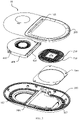
FIG. 3 is an exploded view of the wireless charger shown inFIG. 1 . -
FIG. 4 is a top view of the wireless charger shown inFIG. 1 . -
FIG. 5 is a cross-sectional view of the wireless charger along line A-A shown inFIG. 4 . -
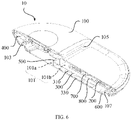
FIG. 6 is a cross-sectional perspective view of the wireless charger shown inFIG. 5 viewed from another perspective. -
FIG. 7 is another exploded view of the wireless charger shown inFIG. 1 . -
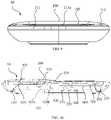
FIG. 8 is a front view of the wireless charger shown inFIG. 1 . -
FIG. 9 is a right view of the wireless charger shown inFIG. 1 . -
FIG. 10 is a cross-sectional view of a wireless charger according to some embodiments of the present disclosure. - For better understanding of the present disclosure, the present disclosure will be described in a more comprehensive manner with reference to the relevant drawings. The drawings show some embodiments of the present disclosure. However, the present disclosure may be implemented in many different forms and is not limited to the embodiments described herein. On the contrary, the purpose of providing these embodiments is to make the present disclosure be understood more thoroughly and comprehensively.
- A wireless charger is provided. The wireless charger includes: a housing, defining a mounting cavity, a first vent, and a second vent, wherein the housing is configured to hold an electronic device with the second vent facing the electronic device; a baffle, disposed in the mounting cavity and dividing the mounting cavity into a first chamber and a second chamber, wherein both the first vent and the second vent are fluidly coupled to the first chamber; a coil module, disposed in the second chamber; a circuit board, disposed in the mounting cavity and electrically connected to the coil module; and a fan, disposed in the first chamber and configured to guide air to flow into the first chamber from one of the first vent and the second vent and guide the air to flow out of the first chamber from the other of the first vent and the second vent, such that the air at the second vent exchanges heat with the electronic device.
- The fan has: a third vent, fluidly coupled to the first chamber and isolated from the second chamber by the baffle; and a fourth vent, fluidly coupled to the second vent and isolated from the second chamber. The fan is configured to guide the air to flow in the fan from one of the third vent and the fourth vent, and further guide the air to flow out of the fan from the other of the third vent and the fourth vent.
- The fan has a third vent and a fourth vent, and the housing defines a fifth vent fluidly coupled to the second chamber. The third vent is fluidly coupled to the first chamber and is isolated from the second chamber by the baffle, the fourth vent is fluidly coupled to the second chamber. The fan is further configured to guide the air to flow in the fan from one of the third vent and the fourth vent, and further guide the air to flow out of the fan from the other of the third vent and the fourth vent, and the fan is further configured to guide the air to flow in the mounting cavity from one of the first vent and the fifth vent and guide the air to flow out of the mounting cavity from the other of the first vent and the fifth vent.
- In some embodiments, the wireless charger comprises a plurality of electronic components, and the plurality of electronic components are arranged on the circuit board at one side away from the coil module.
- In some embodiments, the circuit board is completely received in the second chamber.
- In some embodiments, the wireless charger comprises a magnetic isolation member arranged in the second chamber, and the coil module is stacked on the magnetic isolation member.
- In some embodiments, a distance between a surface of the circuit board facing the coil module and a surface of the magnetic isolation member away from the coil module is greater than or equal to 3 mm.
- In some embodiments, a heat conductor is disposed at the side of the circuit board facing away from the coil module, and the heat conductor is configured to conduct heat generated by the circuit board to the housing.
- In some embodiments, the wireless charger comprises a bracket connected to the housing, and the magnetic isolation member is connected to the bracket.
- In some embodiments, the housing comprises an upper shell and a lower shell, and the upper shell is connected to the lower shell to cooperatively define the mounting cavity; the first vent is defined in the lower shell, the second vent is defined in the upper shell, an orthographic projection of the first vent projected on a datum plane is located in an orthographic projection of the upper shell projected on the datum plane, and the datum plane is a geometric plane substantially perpendicular to a thickness direction of the wireless charger.
- In some embodiments, in the thickness direction of the wireless charger, a cross-sectional area of a region enclosed by an outer contour of the lower shell gradually decreases from one end close to the upper shell to an end away from the upper shell.
- In some embodiments, a boss is arranged at one side of the lower shell at which the first vent is defined, the first vent is defined along an outer periphery of the boss, and one side of the boss facing away the upper shell protrudes out of the first vent.
- In some embodiments, the wireless charger comprises a gasket, and the gasket is arranged at one side of the boss facing away from the upper shell outside the lower shell and further disposed around the outer periphery of the boss.
- In some embodiments, the upper shell comprises a shell body and a pad, the shell body defines a first recessed portion covering the coil module, the pad is arranged in the first recessed portion, and the second vent extends from the first chamber to the first recessed portion.
- In some embodiments, the pad covers the first recessed portion and the pad further has a second recessed portion; the second vent is fluidly coupled to the second recessed portion and the first chamber, and the electronic device is able to be disposed on the pad for wireless charging.
- In some embodiments, the second recessed portion extends to one end of the pad away from the second vent.
- In some embodiments, a rotation axis of the fan is substantially parallel to a thickness direction of the housing. An orthographic projection of the fan projected on a reference plane and an orthographic projection of the coil module projected on the reference plane are spaced apart from each other, and the reference plane is a geometric plane substantially perpendicular to the thickness direction of the housing.
- In some embodiments, a thickness direction of the coil module is substantially parallel to a thickness direction of the circuit board; or the thickness direction of the coil module is substantially perpendicular to the thickness direction of the circuit board, and the circuit board is offset from the coil module in a horizontal direction substantially perpendicular to the thickness direction of the wireless charger.
- In some aspects, a wireless charger is provided. The wireless charger includes: a housing, defining a mounting cavity, a first vent, and a second vent, wherein the housing is configured to hold an electronic device with the second vent facing the electronic device; the first vent penetrates through the housing along a first direction, the second vent penetrates through the housing along a second direction, and the first direction is inclined to or substantially perpendicular to the second direction; a baffle, disposed in the mounting cavity and dividing the mounting cavity into a first chamber and a second chamber, wherein both the first vent and second vent are fluidly coupled to the first chamber; and a fan, disposed in the first chamber and configured to guide air to flow into the first chamber from one of the first vent and the second vent and guide the air to flow out of the first chamber from the other of the first vent and the second vent, such that the air at the second vent exchanges heat with the electronic device.
- In some aspects, a wireless charger is provided. The wireless charger includes: a lower shell, defining a first vent; an upper shell, defining a second vent, connected to the lower shell, and cooperatively defining a mounting cavity with the lower shell; wherein the upper shell comprises a recessed portion configured to hold an electronic device with the second vent facing the electronic device, and the first vent is shielded by the upper shell in a thickness direction of the wireless charger; a baffle, disposed in the mounting cavity and dividing the mounting cavity into a first chamber and a second chamber, wherein both the first vent and second vent are fluidly coupled to the first chamber; a coil module, disposed in the second chamber; a circuit board, disposed in the second chamber and electrically connected to the coil module; a plurality of electronic components, arranged on the circuit board at one side away from the coil module; and a fan, disposed in the first chamber and configured to guide air to flow into the first chamber from one of the first vent and the second vent and guide the air to flow out of the first chamber from the other of the first vent and the second vent.
- As shown in
FIG. 1, FIG. 2 , andFIG. 3 , thewireless charger 10 may include ahousing 100, acoil module 200, acircuit board 300, afan 400, and abaffle 500. Thecoil module 200, thecircuit board 300, and thefan 400 may be respectively disposed in thehousing 100 and supported and positioned by thehousing 100. Thehousing 100 may define a mounting cavity 101 (seeFIG. 5 ), afirst vent 103, and asecond vent 105. Thehousing 100 may be configured to hold an electronic device having a wireless charging function, such that it is possible to use thewireless charger 10 to wirelessly charge the electronic device, and thesecond vent 105 may face the electronic device. As shown inFIG. 4, FIG. 5 andFIG. 6 at the same time, the baffle500 may be disposed in the mountingcavity 101 and divide the mountingcavity 101 into afirst chamber 101a and asecond chamber 101b. Both thefirst vent 103 and thesecond vent 105 may be respectively fluidly connected to or fluidly coupled to thefirst chamber 101a. In some embodiments, thebaffle 500 may completely separate or isolate thefirst chamber 101a from thesecond chamber 101b, that is, thefirst chamber 101a may not be fluidly connected to or fluidly coupled to thesecond chamber 101b. In other embodiments, thebaffle 500 may define a through hole in a partial position to enable thefirst chamber 101a to be partially fluidly coupled to thesecond chamber 101b. The through hole may be further configured for a circuit-connecting line or the like to pass there through. - As shown in
FIGS. 5 and6 , thecoil module 200 may be disposed in thesecond chamber 101b, and thecircuit board 300 may be disposed in the mountingcavity 101 and may be electrically connected to thecoil module 200. More specifically, thecircuit board 300 may be completely located in thesecond chamber 101b. Or in some embodiments, the circuit board 300may be partially located in thesecond chamber 101b. Of course, thecircuit board 300 may also be completely located in thefirst chamber 101a. Thefan 400 may be disposed in thefirst chamber 101a. Thefan 400 may be configured to guide ambient air or the air outside thewireless charger 10 to flow into thefirst chamber 101a via one of thefirst vent 103 and thesecond vent 105, and further guide the air to flow out of thefirst chamber 101a via the other of thefirst vent 103 andsecond vent 105. In this way, the air near thesecond vent 105 may exchange heat with the electronic device. More specifically, in some embodiments of the present disclosure, the fan400 may guide the air to flow into thefirst chamber 101a from thefirst vent 103, and guide the air to flow out of thefirst chamber 101a via thesecond vent 105 and further flow to the electronic device, so as to exchange heat with the air in space near the electronic device. In other embodiments, thefan 400 may guide the air in the space near the electronic device to flow into thefirst chamber 101a from thesecond vent 105, and guide the air to flow out of thewireless charger 10 from thefirst vent 103. In this way, it may also dissipate the heat of the electronic device during the wireless charging process, thereby improving the heat dissipation performance of thewireless charger 10. - In some embodiments, the first vent 103penetrates through the
housing 100 along a first direction, the second vent 105penetrates through the housing100 along a second direction, and the first direction is inclined to or substantially perpendicular to the second direction. In some embodiments, the first direction may be substantially parallel to the thickness direction of the wireless charger, and the second direction may be substantially perpendicular to the first direction. However, the extension directions of thefirst vent 103 and thesecond vent 105 may not be limited thereto. - In some embodiments, the
housing 100 may be substantially in shape of an ellipse, thefan 400 may be acentrifugal fan 400, and a rotation axis of thefan 400 may be substantially parallel to a thickness direction of thehousing 100. The arrangement of thecentrifugal fan 400 may facilitate a lightweight and thin design of thewireless charger 10. Furthermore, a geometric plane substantially perpendicular to the thickness direction of thehousing 100 may be made or drawn, and the geometric plane may be used as a reference plane. An orthographic projection of thefan 400 projected on the reference plane and an orthographic projection of thecoil module 200 projected on the reference plane may be spaced apart from each other, as shown inFIG. 5 . In this way, it is possible to reduce the probability that thefan 400 is stacked on thecoil module 200, and facilitate the lightweight and thin design of thewireless charger 10. Of course, in other embodiments, thehousing 100 may have other shapes, such as a rounded rectangle, a racetrack shape, or the like. In some embodiments, the racetrack shape may refer to a shape formed by connecting two semicircular arcs with two opposite edges of a rectangle. - As shown in
FIG. 7 , thehousing 100 may include anupper shell 110 and alower shell 120. Theupper shell 110 may be connected to the lower shell 120to define the mountingcavity 101. In some embodiments, theupper shell 110 may be substantially in shape of a plate, and a main part of the mountingcavity 101 may be defined in thelower shell 120. More specifically, as shown inFIG. 7 , thelower shell 120 may have aside wall 121. Theside wall 121 may be connected to theupper shell 110, and thus theupper shell 110 and thelower shell 120 may cooperatively define the mountingcavity 101. Thefirst vent 103 may be defined in thelower shell 120, and thesecond vent 105 may be defined in theupper shell 110. In other embodiments, thelower shell 120 may also be in shape of a plate, and theside wall 121 may be located on theupper shell 110. Thefan 400 may be disposed in theupper shell 110 or thelower shell 120. More specifically, thefan 400 may be connected to theupper shell 110 or thelower shell 120 by screwing, welding, bonding, or the like. Furthermore, in some embodiments, thelower shell 120 may be made of a metal material such as aluminum alloy, magnesium alloy, stainless steel, or the like. Thelower shell 120 made of metal may facilitate the heat dissipation of thehousing 100. For example, parts of the heat in the mountingcavity 101 may be dissipated into the ambience through thelower shell 120 to improve the heat dissipation performance of thewireless charger 10. Of course, in other embodiments, thelower shell 120 may also be made of non-metallic material. Thebaffle 500 may be fixedly connected to theupper shell 110 or thelower shell 120 by welding, bonding, screwing, or the like. Of course, thebaffle 500 may also be integrated with theupper shell 110, or thebaffle 500 may also be integrated with thelower shell 120. - Furthermore, in some embodiments of the present disclosure, the
lower shell 120 may have an electrical interface disposed therein, and the electrical interface may be electrically connected to thecircuit board 300. The electrical interface may be configured to connect to an external power source to supply power to thewireless charger 10, thereby enabling thewireless charger 10 to charge the electronic device. The electrical interface may be a USB (Universal Serial Bus) interface, a cable with a plug, or the like. Of course, in other embodiments, the electrical interface may also be located in theupper shell 110. Furthermore, an indicator light may be arranged in theupper shell 110 or thelower shell 120 of thehousing 100. The indicator light may be configured to prompt a working status of thewireless charger 10. - Furthermore, as shown in
FIGS. 4 and 5 , an orthographic projection of thefirst vent 103 projected on a datum plane may be located in an orthographic projection of theupper shell 110 projected on the datum plane. The datum plane may be the geometric plane substantially perpendicular to the thickness direction of thewireless charger 10. That is to say, when the user faces a top of thewireless charger 10, thefirst vent 103 may be covered or shielded by theupper shell 110 and may be not visible. With this arrangement of thefirst vent 103, when the wireless charger 10isplaced on a flat support such as a desktop, if the user faces theupper shell 110 in the thickness direction of thewireless charger 10, thefirst vent 103 may be shielded by thehousing 100. In this way, it is possible to reduce the risk that foreign matters such as water or dust easily enter thewireless charger 10, thereby improving waterproof and dustproof performance of thewireless charger 10. - Furthermore, combining with
FIG. 8 , in the thickness direction of thewireless charger 10, a cross-sectional area of a part of thelower shell 120 may gradually decrease from one end close to theupper shell 110 to an end away from theupper shell 110, that is to say, a cross-sectional area of a region enclosed by an outer contour of thelower shell 120 or theside wall 121 may gradually decrease from one end close to theupper shell 110 to an end away from theupper shell 110. That is, in the thickness direction of thewireless charger 10, thewireless charger 10 may have a configuration having an upper end larger than a lower end. Herein, "the upper end being larger than the lower end" means that a size of the upper end is greater than that of the lower end. This structural arrangement may improve an appearance characteristics of thewireless charger 10, and may use the larger upper end of thehousing 100 to shield thefirst vent 103. Of course, in other embodiments, thehousing 100 may also be in the shape of a rectangular block, that is, the cross-sectional area of thehousing 100 may be approximately equal in the thickness direction of thewireless charger 10. In this case, thefirst vent 103 may also be shielded by theupper shell 110 by arranging a step at a local position of thehousing 100. - Furthermore, as shown in
FIG. 5 , when the wireless charger 10is placed on the flat support such as a desktop, thefirst vent 103 may face a surface of the support. Aboss 123 may be arranged at one side of thelower shell 120 at which the first vent 103is defined. Thefirst vent 103 may be defined along or surrounding an outer periphery of theboss 123. One side of theboss 123 facing away theupper shell 110 may protrude out of thefirst vent 103. In some embodiments, the side of theboss 123 facing away theupper shell 110 maybe further located at a level lower thanthe first vent103. More specifically, theboss 123 may be connected to theside wall 121 at one side of theside wall 121 away from theupper shell 110. Thefirst vent 103 may be defined in theside wall 121 and further surround or defined around the outer periphery of theboss 123. Thefirst vent 103 may be defined on a first bottom surface of theside wall 121, and theboss 123 may have a second bottom surface away from theupper shell 110 and further exposed outside. A distance between first bottom surface and theupper shell 110 is less than a distance between the second bottom surface and theupper shell 110, such that the first bottom surface is located at a level higher than the second bottom surface. This structure may facilitate the processing of thelower shell 120, and thefirst vent 103 may be better shielded by theupper shell 110 and an upper end of thelower shell 120. Besides, theboss 123 may effectively support thewireless charger 10, such that thewireless charger 10 may be stably placed on the support. Furthermore, combining withFIG. 2 , in some embodiments of the present disclosure, theboss 123 may be substantially in shape of a racetrack. In other embodiments, theboss 123 may have other shapes such as a rectangle, a rounded rectangle, an ellipse, or the like. - Furthermore, the
wireless charger 10 may include agasket 600. Thegasket 600 may be substantially annular and may match with theboss 123 in shape. For example,in some embodiments of the present disclosure, thegasket 600 may be substantially in shape of a racetrack. Thegasket 600 may be arranged around the outer periphery of theboss 123 and protrude out of one side of theboss 123 facing away from theupper shell 110. That is, thegasket 600 may be disposed at one side of theboss 123 facing away from theupper shell 110 and further disposed outside thelower shell 120. Thegasket 600 may be made of silicone, rubber, plastic, or the like. When the wireless charger 10is placed on the support, thegasket 600 may be configured to increase a coefficient of friction between thelower shell 120 and the support, thereby reducing the possibility that the wireless charger 10easily slides along on the support. - As shown in
FIG. 7 , theupper shell 110 may include ashell body 111 and apad 113. The shell body 111may have a first recessedportion 111a disposed corresponding to thecoil module 200 and further covering thecoil module 200. That is, theshell body 111 of theupper shell 110 may have a first side higher than the second side opposite to the first side. The lower side (second side) of theshell body 111 may be configured to hold the electronic device. The higher side (first side) of theshell body 111 of theupper shell 110 may be configured to dispose thefan 400 correspondingly. In this way, it is possible to improve a space utilization of thewireless charger 10. Furthermore, theupper shell 110 may include adecorative cover 115. A mounting hole may be defined at the slightly higher side (first side) of theshell body 111 of theupper shell 110. Thedecorative cover 115 may be disposed in the mounting hole. A pattern or the like may be arranged on an exposed surface of thedecorative cover 115, in order to provide a better decorative effect to thewireless charger 10, thereby improving the appearance characteristics of thewireless charger 10. Herein, the exposed surface of thedecorative cover 115 is exposed to the outside. Of course, it's understandable that, the decorative cover115 may be not necessary. - The
pad 113 may be disposed on the first recessedportion 111a. The second vent105 may extend from the first chamber101a to the first recessed portion111a, such that the first chamber101amay be fluidly coupled to the first recessed portionllla via thesecond vent 105. Furthermore, the pad 113may cover the first recessedportion 111a. Thepad 113 may further have a second recessed portion 113a.The second recessedportion 113a may be fluidly coupled to thefirst chamber 101a via thesecond vent 105, and the electronic device may be placed on thepad 113 for wireless charging. More specifically, combining withFIG. 9 , in some embodiments, the pad 113may have a middle slightly lower than two sides thereof, in order to form the second recessedportion 113a. When placing the electronic device having a slightly larger size on thepad 113, the electronic device may be supported by thepad 113. The second recessedportion 113a may extend to one end of thepad 113 away from thesecond vent 105. The ambient air may flow relative to the air in the second recessedportion 113a and exchange heat with the electronic device, so as to improve the heat dissipation performance of thewireless charger 10. For example, in some embodiments in which thefan 400 guides the air to flow out of thesecond vent 105 and flow to the electronic device, the air after the heat exchange process may flow out from one end of the second recessedportion 113a away from thesecond vent 105, and thus the heat generated by the electronic device may be effectively dissipated into the air. - In some embodiments, the pad 113may in shape of a sheet, and the shape of the
pad 113 may match with a shape of a contour of the first recessedportion 111a. Thepad 113 may be made of a flexible material such as silicone or rubber, and the pad 113may be configured to support the electronic device. In this way, the electronic device may be placed in the second recessedportion 113a for wireless charging. Thepad 113 may improve a heat-insulating property between the electronic device and theshell body 111, and reduce the possibility that the heat generated by the electronic device may be easily transferred to theshell body 111 of theupper shell 110. The arrangement of thepad 113 and the second recessedportion 113a may also enable the user to accurately place the electronic device on theupper shell 110 at the position corresponding to thecoil module 200, thereby improving the convenience of use. Besides, thepad 113 may also reduce the possibility that the electronic device is scratched by theshell body 111 of theupper shell 110. In other embodiments, thepad 113 may have other shapes. For example, thepad 113 may be in shape of a strip and arranged at two opposite edges of the first recessedportion 111a, in order to support a large-sized electronic device for wireless charging and facilitate the heat dissipation of the electronic device. Of course, it may be understandable that the pad 113may be not necessary. - For the electronic device such as a smart phone and a tablet compute having a wireless charging function and a larger size, when the electronic device is placed on the
upper shell 110 for charging, the pad 113may be configured to support the electronic device. A gas channel may be defined or formed between the electronic device and the pad 113through the second recessedportion 113a. With reference toFIG. 5 , during the wireless charging of the electronic device, thefan 400 may guide the air to flow into the gas channel via the second vent 105.The air may further flow through the second recessedportion 113a for heat exchange, and may be further flow out from one end of the second recessedportion 113a away from the second vent105, thereby improving the heat dissipation efficiency of thewireless charger 10. - For the electronic device having the wireless charging function and a smaller size, such as a smart watch, a wireless earphone, or the like, when the electronic device is placed on the
upper shell 110 for charging, the electronic device may be placed in the second recessedportion 113a and contact with an outer surface of thepad 113. A gas channel may be formed or defined between an outer periphery of the electronic device and thepad 113. Thefan 400 may guide the air to flow into the gas channel from thesecond vent 105. The air may flow around the outer periphery of the electronic device for heat exchange and may be further dissipated into the ambience. In this way, it may also possible to improve the heat dissipation efficiency of thewireless charger 10. - Furthermore, as shown in
FIG. 3 , thewireless charger 10 may include amagnetic isolation member 700 arranged in thesecond chamber 101b. In some embodiments, themagnetic isolation member 700 may be in shape of a sheet. Thecoil module 200 may be disposed and further stacked on themagnetic isolation member 700. Themagnetic isolation member 700 may be made of ferrite wave-absorbing material, and may have excellent magnetic properties. Themagnetic isolation member 700 may be configured to increase a magnetic flux of thecoil module 200 and to reduce a loss of thecoil module 200. In this way, magnetic field lines may be disposed tightly around a peripheral region centered on themagnetic isolation member 700, to increase an electromagnetic induction intensity and improve an electromagnetic conversion efficiency. - Furthermore, the
wireless charger 10 may include abracket 800 connected to thelower shell 120. Themagnetic isolation member 700 may be disposed on thebracket 800 and supported by thebracket 800. In some embodiments, thebracket 800 may conduct the heat generated by thecoil module 200 to thelower shell 120. During the wireless charging process of the electronic device, this arrangement may facilitate the conduction of the heat generated by thecoil module 200 to thelower shell 120 made of metal, and the heat generated by thecoil module 200 may be further dissipated to the ambient air through thelower shell 120. In some embodiments in which thelower shell 120 is made of the non-metallic material, thebracket 800 may also improve a stability of the mounting of thecoil module 200 and themagnetic isolation member 700. Of course, thebracket 800 may also be connected to theupper shell 110 and supported and positioned by theupper shell 110. - Furthermore, in some embodiments of the present disclosure, the
circuit board 300 may be completely received in thesecond chamber 101b and may be spaced apart from themagnetic isolation member 700. In some embodiments, themagnetic isolation member 700 may be arranged between thecircuit board 300 and thecoil module 200. Thecircuit board 300 may be fixedly connected to thelower shell 120 or theupper shell 110 by means of threaded connection, bonding, or the like, which will not be repeated here. Furthermore, in some embodiments of the present disclosure, thecircuit board 300 may be substantially parallel to the coil module200, that is, a thickness direction of thecoil module 200 may be substantially parallel to a thickness direction of the circuit board300.Thewireless charger 10 may include a plurality of electronic components310 disposed on thecircuit board 300, such as a control chip, a resistor, a capacitor, or the like. The number of the plurality ofelectronic components 310 may be two or more. The plurality ofelectronic components 310 may be disposed on thecircuit board 300 at one side facing away from thecoil module 200. During the wireless charging process of the electronic device by thewireless charger 10, this arrangement may reduce an influence of the heat generated by thecoil module 200 on theelectronic components 310 of thecircuit board 300, thereby improving the heat dissipation performance of thewireless charger 10. Furthermore, a distance between a surface of thecircuit board 300 facing thecoil module 200 and a surface of themagnetic isolation member 700 facing away from thecoil module 200 may be greater than or equal to 3 mm. This arrangement may not only reduce the influence of the heat generated by thecoil module 200 on theelectronic components 310 of thecircuit board 300, but also reduce the thickness of thewireless charger 10, which may facilitate the lightweight and thin design of thewireless charger 10. The heat dissipation performance of thewireless charger 10 may also be improved. - In other embodiments, the circuit board300 may be arranged obliquely to the
coil module 200. That is, the thickness direction of thecircuit board 300 may be arranged at an acute angle from the thickness direction of thecoil module 200. Of course, in other embodiments, thecircuit board 300 may also be substantially perpendicular to thecoil module 200. That is, the thickness direction of thecircuit board 300 may be substantially perpendicular to the thickness direction of thecoil module 200. In the embodiments in which the thickness direction of thecircuit board 300 may be substantially perpendicular to the thickness direction of thecoil module 200, an orthographic projection of thecircuit board 300 protected in the thickness direction of the wireless charger 10(also called as "protected in the datum plane") may better not fall into thecoil module 200, in order to reduce the thickness of the wireless charging 10, and reduce the influence of the heat generated by thecoil module 200 to theelectronic components 310 on the circuit board 300.For example, in the embodiments in which the thickness direction of thecircuit board 300 may be substantially perpendicular to the thickness direction of thecoil module 200, thecircuit board 300 may be offset from or misaligned with the coil module 20 in the horizontal direction. The horizontal direction may be substantially perpendicular to the thickness direction of the wireless charger. The plurality ofelectronic components 310 may also be arranged at one side of thecircuit board 300 facing away from thecoil module 200, in order to reduce the influence of the heat generated by thecoil module 200 to theelectronic components 310 on thecircuit board 300. - Furthermore, in some embodiments, a
heat conductor 330 may be disposed at one side of thecircuit board 300 facing away from thecoil module 200. Theheat conductor 330 may be configured to conduct the heat generated by thecircuit board 300 to thelower shell 120. More specifically, theheat conductor 330 may be made of silicone grease, may be a metal thermal-conductive sheet, or the like. Theheat conductor 330 may be configured to conduct the heat generated by thecircuit board 300 to thelower shell 120 made of metal, and then the heat generated by thecircuit board 300 may be further dissipated into the ambient air through thelower shell 120. The heat dissipation performance of thewireless charger 10 may be further improved. - Furthermore, as shown in
FIG. 5 , in some embodiments, thefan 400 may define athird vent 410 and afourth vent 420. Thethird vent 410 maybe fluidly coupled to thefirst chamber 101a and may be isolated from thesecond chamber 101b by thebaffle 500. The fourvent 420 may be fluidly coupled to thesecond vent 105 and may be isolated from thesecond chamber 101b. Thefan 400 may be configured to guide the air to flow in the fan 400from one of thethird vent 410 and thefourth vent 420 and guide the air to flow out of thefan 400 from the other of thethird vent 410 and thefourth vent 420. In some embodiments, thehousing 100 may define afifth vent 107. Thefifth vent 107 maybe fluidly coupled to thesecond chamber 101b. Thefifth vent 107 may have a configuration similar to that of thefirst vent 103 and may be arranged along or around the outer periphery of theboss 123. The fifth vent107 may be fluidly coupled to the second chamber 101band the outside, such that the air in thesecond chamber 101b may exchange heat with the ambient air, thereby improving the heat dissipation performance of thewireless charger 10. In some embodiments, thebaffle 500 may reduce the possibility that hot air in thesecond chamber 101b may flow to thefirst chamber 101a and be further guided to the electronic device, thereby increasing the heat dissipation efficiency of thewireless charger 10. - As shown in
FIG 10 , thehousing 100 defines the fifth vent107 fluidly coupled to thesecond chamber 101b. Thefifth vent 107 may have a configuration similar to that of thefirst vent 103 and may be arranged along or around the outer periphery of theboss 123. Thethird vent 410 is fluidly coupled to thefirst chamber 101a and is isolated from thesecond chamber 101b via thebaffle 500. Thefourth vent 420 is fluidly coupled to thesecond chamber 101b and thefifth vent 107. Thefan 400 guides the air to flow from thefirst chamber 101a to thesecond vent 105 and further flow out of thewireless charger 10 from thesecond vent 105, the air in thefirst chamber 101a is guided into thesecond chamber 101b by thefan 400 and exchanges heat with thecoil module 200 and thecircuit board 300. The air after the heat exchange further flows out of thewireless charger 10 via thefifth vent 107, in order to improve the heat dissipation performance of thewireless charger 10. Similarly, thefan 400 guides the air to flow into thefirst chamber 101a from thesecond vent 105 and flow out of thewireless charger 10 from thefirst vent 103, the ambient air is guided into thesecond chamber 101b from thefifth vent 107 and exchanges heat with thecoil module 200 and thecircuit board 300. The air after the heat exchange is further guided into thefirst chamber 101a by thefan 400, and then flows out of thewireless charger 10 from thefirst chamber 101a via thefirst vent 103, thereby improving the heat dissipation performance of thewireless charger 10. In some embodiments, thebaffle 500 reduces the possibility that the hot air in thesecond chamber 101b enters thefirst chamber 101a and then flows back to the second chamber101b, thereby improving the heat dissipation efficiency of thewireless charger 10. - For the above-mentioned
wireless charger 10, the electronic device such as the smart phone, the smart watch, the wireless earphone, and other electronic devices with the wireless charging function may be placed in the charging region for wireless charging. Thewireless charger 10 may be adapted to a variety of models, which improves the convenience of use. Since thewireless charger 10 includes thefan 400 and defines thefirst vent 103 and thesecond vent 105, during the wireless charging process of the electronic device, thefan 400 may cause the air around the electronic device to flow, so as to facilitate the heat dissipation of the electronic device. Since thefan 400 and thecoil module 200 may be separated or spaced apart from each other in thefirst chamber 101a and thesecond chamber 101b by thebaffle 500, in some embodiments in which thefan 400 guides the air to flow out of thewireless charger 10 from thesecond vent 105, thebaffle 500 may reduce the possibility that the hot air in thesecond chamber 101b flows to thefirst chamber 101a and is further guided to the electronic device, thereby improving the heat dissipation efficiency of thewireless charger 10. In some embodiments in which thefan 400 guides the air to flow into thewireless charger 10 from thesecond vent 105, the baffle500 may reduce the possibility that the hot air in thesecond chamber 101b flows back to thesecond chamber 101b, thereby improving the heat dissipation efficiency of thewireless charger 10. The heat-dissipation air channel of thewireless charger 10 may be easy to design, may have a better heat dissipation effect, and may meet the requirements of high-power wireless charging, and the wireless charging time may be shortened. - The technical features of the above-mentioned embodiments may be combined arbitrarily. For conciseness of description, all possible combinations of the technical features in the above-mentioned embodiments may be not described. However, all should be covered in the scope of the present disclosure, as long as there is no contradiction in the combination of these technical features. Therefore, the protection scope of the present disclosure shall be subject to the appended claims.
Claims (13)
- A wireless charger, comprising:a housing (100), defining a mounting cavity (101), a first vent (103), and a second vent (105), wherein the housing (100) is configured to hold an electronic device with the second vent (105) facing the electronic device;a baffle (500), disposed in the mounting cavity (101) and dividing the mounting cavity (101) into a first chamber (101a) and a second chamber (101b), wherein both the first vent (103) and the second vent (105) are fluidly coupled to the first chamber (101a), a part of the housing (100) defining the first chamber (101a) defines the first vent (103);a coil module (200), disposed in the second chamber (101b);a circuit board (300), disposed in the mounting cavity (101) and electrically connected to the coil module (200); anda fan (400), disposed in the first chamber (101a), the fan (400) having a third vent (410) and a fourth vent (420), the third vent (410) being fluidly coupled to the first chamber (101a) and being isolated from the second chamber (101b) by the baffle (500), the fourth vent (420) being fluidly coupled to the second vent (105), the fan (400) being configured to guide the air to flow in the fan (400) from one of the third vent (410) and the fourth vent (420), and further guide the air to flow out of the fan (400) from the other of the third vent (410) and the fourth vent (420), to guide air to flow into the first chamber (101a) from one of the first vent (103) and the second vent (105) and guide the air to flow out of the first chamber (101a) from the other of the first vent (103) and the second vent (105), such that the air at the second vent (105) exchanges heat with the electronic device;characterized in that:the fourth vent (420) is fluidly coupled to the second chamber (101b), a part of the housing (100) defining the second chamber (101b) defines a fifth vent (107) fluidly coupled to the second chamber (101b);the fan (400) is further configured to guide the air to flow in the first chamber (101a) and the second chamber (101b) from one of the first vent (103) and the fifth vent (107) and guide the air to flow out of the mounting cavity (101) from the other of the first vent (103) and the fifth vent (107).
- The wireless charger as claimed in claim 1, wherein the wireless charger comprises a plurality of electronic components (310), and the plurality of electronic components (310) are arranged on the circuit board (300) at one side away from the coil module (200).
- The wireless charger as claimed in claim 2, wherein the circuit board (300) is completely received in the second chamber (101b).
- The wireless charger as claimed in claim 2, wherein the wireless charger comprises a bracket (800) connected to the housing (100)and a magnetic isolation member (700) arranged in the second chamber (101b) and connected to the bracket (800), and the coil module (200) is stacked on the magnetic isolation member (700).
- The wireless charger as claimed in claim 4, wherein a distance between a surface of the circuit board (300) facing the coil module (200) and a surface of the magnetic isolation member (700) away from the coil module (200) is greater than or equal to 3 mm.
- The wireless charger as claimed in claim 5, wherein a heat conductor (330) is disposed at the side of the circuit board (300) facing away from the coil module (200), and the heat conductor (330) is configured to conduct heat generated by the circuit board (300)to the housing (100).
- The wireless charger as claimed in any one of claims 1-6, wherein the housing (100) comprises an upper shell (110) and a lower shell (120), and the upper shell (110) is connected to the lower shell (120) to cooperatively define the mounting cavity (101);
the first vent (103) is defined in the lower shell (120), the second vent (105) is defined in the upper shell (110), an orthographic projection of the first vent (103) projected on a datum plane is located in an orthographic projection of the upper shell (110) projected on the datum plane, and the datum plane is a geometric plane substantiallyperpendicular to a thickness direction of the wireless charger. - The wireless charger as claimed in claim 7, wherein in the thickness direction of the wireless charger, a cross-sectional area of a region enclosed by an outer contour of the lower shell (120) gradually decreases from one end close to the upper shell (110) to an end away from the upper shell (110).
- The wireless charger as claimed in claim 7, wherein a boss (123) is arranged at one side of the lower shell (120) at which the first vent (103) is defined, the first vent (103) is defined along an outer periphery of the boss (123), and one side of the boss (123) facing away the upper shell (110) protrudes out of the first vent (103).
- The wireless charger as claimed in claim 9, wherein the wireless charger comprises a gasket (600), and thegasket (600) is arranged at one side of the boss (123) facing away from the upper shell (110) outside the lower shell (120) and disposed around the outer periphery of the boss (123).
- The wireless charger as claimed in claim 7, wherein the upper shell (110) comprises a shell body(111) and a pad (113), the shell body(111) defines a first recessed portion (111a) covering the coil module (200), the pad (113) is arranged in the first recessed portion (111a), and the second vent (105) extends from the first chamber (101a) to the first recessed portion (111a).
- The wireless charger as claimed in claim 11, wherein the pad (113) covers the first recessed portion (111a) and the pad (113) further has a second recessed portion (113a);
the second vent (105) is fluidly coupled to the second recessed portion (113a) and the first chamber (101a), and the electronic device isable to be disposed on the pad (113) for wireless charging. - The wireless charger as claimed in any one of claims 1-12, wherein a rotation axis of the fan (400)is substantially parallel to a thickness direction of the housing (100);
an orthographic projection of the fan (400) projected on a reference plane and an orthographic projection of the coil module (200)projected on the reference plane are spaced apart from each other, and the reference plane is a geometric plane substantially perpendicular to the thickness direction of the housing (100).
Applications Claiming Priority (2)
| Application Number | Priority Date | Filing Date | Title |
|---|---|---|---|
| CN202020074708.2U CN211606140U (en) | 2020-01-14 | 2020-01-14 | wireless charging stand |
| CN202010037378.4A CN113193609B (en) | 2020-01-14 | 2020-01-14 | Wireless charging station |
Publications (2)
| Publication Number | Publication Date |
|---|---|
| EP3852224A1 EP3852224A1 (en) | 2021-07-21 |
| EP3852224B1 true EP3852224B1 (en) | 2022-06-22 |
Family
ID=74181003
Family Applications (1)
| Application Number | Title | Priority Date | Filing Date |
|---|---|---|---|
| EP21151353.6A Active EP3852224B1 (en) | 2020-01-14 | 2021-01-13 | Wireless charger |
Country Status (2)
| Country | Link |
|---|---|
| US (1) | US11689035B2 (en) |
| EP (1) | EP3852224B1 (en) |
Cited By (1)
| Publication number | Priority date | Publication date | Assignee | Title |
|---|---|---|---|---|
| US20240088708A1 (en) * | 2022-09-12 | 2024-03-14 | Primax Electronics Ltd. | Wireless charging device |
Families Citing this family (40)
| Publication number | Priority date | Publication date | Assignee | Title |
|---|---|---|---|---|
| CN212543377U (en) * | 2020-03-19 | 2021-02-12 | 华为技术有限公司 | Wireless charger |
| USD960830S1 (en) * | 2020-09-08 | 2022-08-16 | Samsung Electronics Co., Ltd. | Wireless charger |
| USD952562S1 (en) * | 2020-09-21 | 2022-05-24 | Apple Inc. | Charging bridge module |
| USD937280S1 (en) * | 2021-01-15 | 2021-11-30 | elago CO. LTD | Stand for electronic devices |
| USD938434S1 (en) * | 2021-01-15 | 2021-12-14 | elago CO. LTD | Stand for electronic devices |
| USD991167S1 (en) * | 2021-04-05 | 2023-07-04 | Sariana Llc | Foldable charger |
| USD1024947S1 (en) * | 2021-08-06 | 2024-04-30 | Shenzhen Jiajiatong Plastic Mould Co., Ltd. | Wireless charger |
| US12126199B2 (en) * | 2021-08-09 | 2024-10-22 | National Products, Inc. | Cradles for a mobile device including a cavity for a wireless device and methods of making and using |
| CN113725967B (en) * | 2021-08-26 | 2024-05-28 | 维沃移动通信有限公司 | Wireless charger |
| USD1022891S1 (en) * | 2021-11-29 | 2024-04-16 | Samsung Electronics Co., Ltd. | Wireless charger |
| USD1022892S1 (en) * | 2021-11-29 | 2024-04-16 | Samsung Electronics Co., Ltd. | Wireless charger |
| CN217159308U (en) * | 2021-12-14 | 2022-08-09 | 荣耀终端有限公司 | Wireless charging equipment |
| USD1074585S1 (en) * | 2022-02-07 | 2025-05-13 | Nomad Goods, Inc. | Dual wireless charger case |
| USD1016747S1 (en) * | 2022-05-27 | 2024-03-05 | Zechin Communication Co., Ltd. | Wireless charger |
| US12573878B2 (en) * | 2022-07-26 | 2026-03-10 | Aptiv Technologies AG | Wireless charging apparatus |
| TWI826064B (en) * | 2022-08-01 | 2023-12-11 | 英業達股份有限公司 | Wireless charging device |
| USD984376S1 (en) * | 2022-09-28 | 2023-04-25 | Yameng WEI | Wireless charger |
| USD994598S1 (en) * | 2022-10-04 | 2023-08-08 | Yan Wu | Wireless charger |
| USD1018456S1 (en) * | 2022-11-21 | 2024-03-19 | Sci Merchant Llc | Wireless charger |
| USD995453S1 (en) * | 2022-12-02 | 2023-08-15 | Min Kang | Switch button |
| CN115817369B (en) * | 2022-12-15 | 2023-06-13 | 黑龙江天有为电子股份有限公司 | Vehicle-mounted wireless charging support and automobile driver's cab |
| USD1011282S1 (en) * | 2023-03-02 | 2024-01-16 | Guangdong Xizhongxi Technology Co., Ltd. | Wireless charger |
| USD1084996S1 (en) * | 2023-04-23 | 2025-07-22 | Shenzhen Yifeng Intelligent Technology Co., Ltd. | Wireless charger |
| USD1005232S1 (en) * | 2023-04-28 | 2023-11-21 | Bo Yan | Wireless charger |
| USD1018458S1 (en) * | 2023-05-08 | 2024-03-19 | Shuting Deng | Wireless charger |
| USD1023946S1 (en) * | 2023-05-08 | 2024-04-23 | Hongbo Chen | Wireless charger |
| USD1024952S1 (en) * | 2023-05-09 | 2024-04-30 | Bin Yao | Wireless charging station |
| USD999735S1 (en) * | 2023-05-10 | 2023-09-26 | Bo Yan | Wireless charger |
| USD1067863S1 (en) * | 2023-06-01 | 2025-03-25 | Shenzhen Waweis Technology Co., Ltd. | Wireless charger |
| USD1028882S1 (en) * | 2023-06-12 | 2024-05-28 | Bingbing Li | Wireless charger |
| USD1019558S1 (en) * | 2023-08-07 | 2024-03-26 | Shuting Deng | Wireless charger |
| USD1019557S1 (en) * | 2023-08-07 | 2024-03-26 | Shuting Deng | Wireless charger |
| US20250088032A1 (en) * | 2023-09-08 | 2025-03-13 | Cyntec Co., Ltd. | Wireless charging module |
| USD1043569S1 (en) * | 2023-10-27 | 2024-09-24 | Jinbin Huang | Wireless charging stand |
| USD1042333S1 (en) * | 2023-11-03 | 2024-09-17 | Jinbin Huang | Wireless charging stand |
| USD1040097S1 (en) * | 2023-11-29 | 2024-08-27 | Shuangquan Li | Wireless charger |
| USD1053805S1 (en) * | 2024-01-02 | 2024-12-10 | Xiaoqin Xiang | Wireless charger |
| USD1117015S1 (en) * | 2024-07-25 | 2026-03-10 | Delta Electronics, Inc. | Wireless charger |
| US12439548B1 (en) * | 2024-12-20 | 2025-10-07 | Righ, Inc. | Systems and methods for cooling circuit board components in a compact signal hub |
| CN120377429B (en) * | 2025-04-27 | 2026-02-13 | 苏州摩贝斯电子科技有限公司 | An EPP and MPP selectable configuration wireless charging device |
Family Cites Families (7)
| Publication number | Priority date | Publication date | Assignee | Title |
|---|---|---|---|---|
| DE102016216900B3 (en) | 2016-09-06 | 2017-10-26 | Audi Ag | Charging device for wireless charging of a rechargeable electrical energy storage of a mobile terminal and vehicle with the charging device |
| CN112054570B (en) | 2017-10-30 | 2022-05-31 | 华为终端有限公司 | Wireless charging equipment |
| DE202017107183U1 (en) | 2017-11-27 | 2017-12-07 | Elektrosil Systeme Der Elektronik Gmbh | Charger for wireless charging of a mobile terminal |
| CN207166199U (en) | 2017-11-29 | 2018-03-30 | 深圳市蓝禾技术有限公司 | Heat radiating type wireless charger |
| CN107947384A (en) | 2017-12-12 | 2018-04-20 | 桑堇馨 | Wireless charger |
| CN209627009U (en) | 2019-03-28 | 2019-11-12 | 深圳市蓝禾技术有限公司 | A kind of wireless charger |
| CN209627022U (en) | 2019-04-19 | 2019-11-12 | 深圳市蓝禾技术有限公司 | Wireless charger |
-
2021
- 2021-01-13 US US17/148,331 patent/US11689035B2/en active Active
- 2021-01-13 EP EP21151353.6A patent/EP3852224B1/en active Active
Cited By (2)
| Publication number | Priority date | Publication date | Assignee | Title |
|---|---|---|---|---|
| US20240088708A1 (en) * | 2022-09-12 | 2024-03-14 | Primax Electronics Ltd. | Wireless charging device |
| US12374920B2 (en) * | 2022-09-12 | 2025-07-29 | Primax Electronics Ltd. | Wireless charging device |
Also Published As
| Publication number | Publication date |
|---|---|
| US20210218256A1 (en) | 2021-07-15 |
| EP3852224A1 (en) | 2021-07-21 |
| US11689035B2 (en) | 2023-06-27 |
Similar Documents
| Publication | Publication Date | Title |
|---|---|---|
| EP3852224B1 (en) | Wireless charger | |
| US11698536B2 (en) | Thermal management system for electronic device | |
| WO2019114175A1 (en) | Wireless charger | |
| JP5627392B2 (en) | Portable information terminal | |
| US20230030748A1 (en) | Thermal management system for electronic device | |
| CN209913543U (en) | Wireless charger with fan heat radiation structure | |
| CN113764774B (en) | Radiator box, battery pack system and electrical equipment | |
| CN113258622B (en) | Wireless charging equipment | |
| CN211629895U (en) | wireless charging stand | |
| CN113193609B (en) | Wireless charging station | |
| CN113852144A (en) | wireless charging device | |
| CN204741482U (en) | Wireless cell -phone shell that charges | |
| CN109921498B (en) | Wireless charger for mobile phone | |
| CN113131552A (en) | Wireless charging seat | |
| CN211606140U (en) | wireless charging stand | |
| CN117498476A (en) | Wireless charging assembly | |
| CN211556914U (en) | Wireless charging seat | |
| CN220985345U (en) | Wireless charging device | |
| CN211908394U (en) | wireless charging stand | |
| CN218336867U (en) | Radiator with atmosphere lamp function | |
| CN211556912U (en) | Wireless charging seat | |
| CN113258623A (en) | Wireless charging seat | |
| CN113193611A (en) | Wireless charging seat | |
| CN218569921U (en) | Wireless charging module | |
| US12374920B2 (en) | Wireless charging device |
Legal Events
| Date | Code | Title | Description |
|---|---|---|---|
| PUAI | Public reference made under article 153(3) epc to a published international application that has entered the european phase |
Free format text: ORIGINAL CODE: 0009012 |
|
| STAA | Information on the status of an ep patent application or granted ep patent |
Free format text: STATUS: THE APPLICATION HAS BEEN PUBLISHED |
|
| AK | Designated contracting states |
Kind code of ref document: A1 Designated state(s): AL AT BE BG CH CY CZ DE DK EE ES FI FR GB GR HR HU IE IS IT LI LT LU LV MC MK MT NL NO PL PT RO RS SE SI SK SM TR |
|
| STAA | Information on the status of an ep patent application or granted ep patent |
Free format text: STATUS: REQUEST FOR EXAMINATION WAS MADE |
|
| 17P | Request for examination filed |
Effective date: 20210909 |
|
| RBV | Designated contracting states (corrected) |
Designated state(s): AL AT BE BG CH CY CZ DE DK EE ES FI FR GB GR HR HU IE IS IT LI LT LU LV MC MK MT NL NO PL PT RO RS SE SI SK SM TR |
|
| GRAP | Despatch of communication of intention to grant a patent |
Free format text: ORIGINAL CODE: EPIDOSNIGR1 |
|
| STAA | Information on the status of an ep patent application or granted ep patent |
Free format text: STATUS: GRANT OF PATENT IS INTENDED |
|
| INTG | Intention to grant announced |
Effective date: 20220405 |
|
| GRAS | Grant fee paid |
Free format text: ORIGINAL CODE: EPIDOSNIGR3 |
|
| GRAA | (expected) grant |
Free format text: ORIGINAL CODE: 0009210 |
|
| STAA | Information on the status of an ep patent application or granted ep patent |
Free format text: STATUS: THE PATENT HAS BEEN GRANTED |
|
| AK | Designated contracting states |
Kind code of ref document: B1 Designated state(s): AL AT BE BG CH CY CZ DE DK EE ES FI FR GB GR HR HU IE IS IT LI LT LU LV MC MK MT NL NO PL PT RO RS SE SI SK SM TR |
|
| REG | Reference to a national code |
Ref country code: GB Ref legal event code: FG4D |
|
| REG | Reference to a national code |
Ref country code: CH Ref legal event code: EP |
|
| REG | Reference to a national code |
Ref country code: DE Ref legal event code: R096 Ref document number: 602021000144 Country of ref document: DE |
|
| REG | Reference to a national code |
Ref country code: AT Ref legal event code: REF Ref document number: 1500419 Country of ref document: AT Kind code of ref document: T Effective date: 20220715 |
|
| REG | Reference to a national code |
Ref country code: IE Ref legal event code: FG4D |
|
| REG | Reference to a national code |
Ref country code: LT Ref legal event code: MG9D |
|
| REG | Reference to a national code |
Ref country code: NL Ref legal event code: MP Effective date: 20220622 |
|
| PG25 | Lapsed in a contracting state [announced via postgrant information from national office to epo] |
Ref country code: SE Free format text: LAPSE BECAUSE OF FAILURE TO SUBMIT A TRANSLATION OF THE DESCRIPTION OR TO PAY THE FEE WITHIN THE PRESCRIBED TIME-LIMIT Effective date: 20220622 Ref country code: NO Free format text: LAPSE BECAUSE OF FAILURE TO SUBMIT A TRANSLATION OF THE DESCRIPTION OR TO PAY THE FEE WITHIN THE PRESCRIBED TIME-LIMIT Effective date: 20220922 Ref country code: LT Free format text: LAPSE BECAUSE OF FAILURE TO SUBMIT A TRANSLATION OF THE DESCRIPTION OR TO PAY THE FEE WITHIN THE PRESCRIBED TIME-LIMIT Effective date: 20220622 Ref country code: HR Free format text: LAPSE BECAUSE OF FAILURE TO SUBMIT A TRANSLATION OF THE DESCRIPTION OR TO PAY THE FEE WITHIN THE PRESCRIBED TIME-LIMIT Effective date: 20220622 Ref country code: GR Free format text: LAPSE BECAUSE OF FAILURE TO SUBMIT A TRANSLATION OF THE DESCRIPTION OR TO PAY THE FEE WITHIN THE PRESCRIBED TIME-LIMIT Effective date: 20220923 Ref country code: FI Free format text: LAPSE BECAUSE OF FAILURE TO SUBMIT A TRANSLATION OF THE DESCRIPTION OR TO PAY THE FEE WITHIN THE PRESCRIBED TIME-LIMIT Effective date: 20220622 Ref country code: BG Free format text: LAPSE BECAUSE OF FAILURE TO SUBMIT A TRANSLATION OF THE DESCRIPTION OR TO PAY THE FEE WITHIN THE PRESCRIBED TIME-LIMIT Effective date: 20220922 |
|
| REG | Reference to a national code |
Ref country code: AT Ref legal event code: MK05 Ref document number: 1500419 Country of ref document: AT Kind code of ref document: T Effective date: 20220622 |
|
| PG25 | Lapsed in a contracting state [announced via postgrant information from national office to epo] |
Ref country code: RS Free format text: LAPSE BECAUSE OF FAILURE TO SUBMIT A TRANSLATION OF THE DESCRIPTION OR TO PAY THE FEE WITHIN THE PRESCRIBED TIME-LIMIT Effective date: 20220622 Ref country code: LV Free format text: LAPSE BECAUSE OF FAILURE TO SUBMIT A TRANSLATION OF THE DESCRIPTION OR TO PAY THE FEE WITHIN THE PRESCRIBED TIME-LIMIT Effective date: 20220622 |
|
| PG25 | Lapsed in a contracting state [announced via postgrant information from national office to epo] |
Ref country code: NL Free format text: LAPSE BECAUSE OF FAILURE TO SUBMIT A TRANSLATION OF THE DESCRIPTION OR TO PAY THE FEE WITHIN THE PRESCRIBED TIME-LIMIT Effective date: 20220622 |
|
| PG25 | Lapsed in a contracting state [announced via postgrant information from national office to epo] |
Ref country code: SM Free format text: LAPSE BECAUSE OF FAILURE TO SUBMIT A TRANSLATION OF THE DESCRIPTION OR TO PAY THE FEE WITHIN THE PRESCRIBED TIME-LIMIT Effective date: 20220622 Ref country code: SK Free format text: LAPSE BECAUSE OF FAILURE TO SUBMIT A TRANSLATION OF THE DESCRIPTION OR TO PAY THE FEE WITHIN THE PRESCRIBED TIME-LIMIT Effective date: 20220622 Ref country code: RO Free format text: LAPSE BECAUSE OF FAILURE TO SUBMIT A TRANSLATION OF THE DESCRIPTION OR TO PAY THE FEE WITHIN THE PRESCRIBED TIME-LIMIT Effective date: 20220622 Ref country code: PT Free format text: LAPSE BECAUSE OF FAILURE TO SUBMIT A TRANSLATION OF THE DESCRIPTION OR TO PAY THE FEE WITHIN THE PRESCRIBED TIME-LIMIT Effective date: 20221024 Ref country code: ES Free format text: LAPSE BECAUSE OF FAILURE TO SUBMIT A TRANSLATION OF THE DESCRIPTION OR TO PAY THE FEE WITHIN THE PRESCRIBED TIME-LIMIT Effective date: 20220622 Ref country code: EE Free format text: LAPSE BECAUSE OF FAILURE TO SUBMIT A TRANSLATION OF THE DESCRIPTION OR TO PAY THE FEE WITHIN THE PRESCRIBED TIME-LIMIT Effective date: 20220622 Ref country code: CZ Free format text: LAPSE BECAUSE OF FAILURE TO SUBMIT A TRANSLATION OF THE DESCRIPTION OR TO PAY THE FEE WITHIN THE PRESCRIBED TIME-LIMIT Effective date: 20220622 Ref country code: AT Free format text: LAPSE BECAUSE OF FAILURE TO SUBMIT A TRANSLATION OF THE DESCRIPTION OR TO PAY THE FEE WITHIN THE PRESCRIBED TIME-LIMIT Effective date: 20220622 |
|
| PG25 | Lapsed in a contracting state [announced via postgrant information from national office to epo] |
Ref country code: PL Free format text: LAPSE BECAUSE OF FAILURE TO SUBMIT A TRANSLATION OF THE DESCRIPTION OR TO PAY THE FEE WITHIN THE PRESCRIBED TIME-LIMIT Effective date: 20220622 Ref country code: IS Free format text: LAPSE BECAUSE OF FAILURE TO SUBMIT A TRANSLATION OF THE DESCRIPTION OR TO PAY THE FEE WITHIN THE PRESCRIBED TIME-LIMIT Effective date: 20221022 |
|
| REG | Reference to a national code |
Ref country code: DE Ref legal event code: R097 Ref document number: 602021000144 Country of ref document: DE |
|
| PG25 | Lapsed in a contracting state [announced via postgrant information from national office to epo] |
Ref country code: AL Free format text: LAPSE BECAUSE OF FAILURE TO SUBMIT A TRANSLATION OF THE DESCRIPTION OR TO PAY THE FEE WITHIN THE PRESCRIBED TIME-LIMIT Effective date: 20220622 |
|
| PG25 | Lapsed in a contracting state [announced via postgrant information from national office to epo] |
Ref country code: DK Free format text: LAPSE BECAUSE OF FAILURE TO SUBMIT A TRANSLATION OF THE DESCRIPTION OR TO PAY THE FEE WITHIN THE PRESCRIBED TIME-LIMIT Effective date: 20220622 |
|
| PLBE | No opposition filed within time limit |
Free format text: ORIGINAL CODE: 0009261 |
|
| STAA | Information on the status of an ep patent application or granted ep patent |
Free format text: STATUS: NO OPPOSITION FILED WITHIN TIME LIMIT |
|
| 26N | No opposition filed |
Effective date: 20230323 |
|
| P01 | Opt-out of the competence of the unified patent court (upc) registered |
Effective date: 20230412 |
|
| PG25 | Lapsed in a contracting state [announced via postgrant information from national office to epo] |
Ref country code: SI Free format text: LAPSE BECAUSE OF FAILURE TO SUBMIT A TRANSLATION OF THE DESCRIPTION OR TO PAY THE FEE WITHIN THE PRESCRIBED TIME-LIMIT Effective date: 20220622 |
|
| PG25 | Lapsed in a contracting state [announced via postgrant information from national office to epo] |
Ref country code: LU Free format text: LAPSE BECAUSE OF NON-PAYMENT OF DUE FEES Effective date: 20230113 |
|
| REG | Reference to a national code |
Ref country code: BE Ref legal event code: MM Effective date: 20230131 |
|
| PG25 | Lapsed in a contracting state [announced via postgrant information from national office to epo] |
Ref country code: BE Free format text: LAPSE BECAUSE OF NON-PAYMENT OF DUE FEES Effective date: 20230131 |
|
| PG25 | Lapsed in a contracting state [announced via postgrant information from national office to epo] |
Ref country code: IT Free format text: LAPSE BECAUSE OF FAILURE TO SUBMIT A TRANSLATION OF THE DESCRIPTION OR TO PAY THE FEE WITHIN THE PRESCRIBED TIME-LIMIT Effective date: 20220622 Ref country code: IE Free format text: LAPSE BECAUSE OF NON-PAYMENT OF DUE FEES Effective date: 20230113 |
|
| PGFP | Annual fee paid to national office [announced via postgrant information from national office to epo] |
Ref country code: FR Payment date: 20240118 Year of fee payment: 4 |
|
| PG25 | Lapsed in a contracting state [announced via postgrant information from national office to epo] |
Ref country code: MC Free format text: LAPSE BECAUSE OF FAILURE TO SUBMIT A TRANSLATION OF THE DESCRIPTION OR TO PAY THE FEE WITHIN THE PRESCRIBED TIME-LIMIT Effective date: 20220622 |
|
| PG25 | Lapsed in a contracting state [announced via postgrant information from national office to epo] |
Ref country code: MC Free format text: LAPSE BECAUSE OF FAILURE TO SUBMIT A TRANSLATION OF THE DESCRIPTION OR TO PAY THE FEE WITHIN THE PRESCRIBED TIME-LIMIT Effective date: 20220622 |
|
| REG | Reference to a national code |
Ref country code: CH Ref legal event code: PL |
|
| PG25 | Lapsed in a contracting state [announced via postgrant information from national office to epo] |
Ref country code: CH Free format text: LAPSE BECAUSE OF NON-PAYMENT OF DUE FEES Effective date: 20240131 |
|
| PG25 | Lapsed in a contracting state [announced via postgrant information from national office to epo] |
Ref country code: CH Free format text: LAPSE BECAUSE OF NON-PAYMENT OF DUE FEES Effective date: 20240131 |
|
| PG25 | Lapsed in a contracting state [announced via postgrant information from national office to epo] |
Ref country code: BG Free format text: LAPSE BECAUSE OF FAILURE TO SUBMIT A TRANSLATION OF THE DESCRIPTION OR TO PAY THE FEE WITHIN THE PRESCRIBED TIME-LIMIT Effective date: 20220622 |
|
| PG25 | Lapsed in a contracting state [announced via postgrant information from national office to epo] |
Ref country code: BG Free format text: LAPSE BECAUSE OF FAILURE TO SUBMIT A TRANSLATION OF THE DESCRIPTION OR TO PAY THE FEE WITHIN THE PRESCRIBED TIME-LIMIT Effective date: 20220622 |
|
| PG25 | Lapsed in a contracting state [announced via postgrant information from national office to epo] |
Ref country code: CY Free format text: LAPSE BECAUSE OF FAILURE TO SUBMIT A TRANSLATION OF THE DESCRIPTION OR TO PAY THE FEE WITHIN THE PRESCRIBED TIME-LIMIT; INVALID AB INITIO Effective date: 20210113 |
|
| PG25 | Lapsed in a contracting state [announced via postgrant information from national office to epo] |
Ref country code: HU Free format text: LAPSE BECAUSE OF FAILURE TO SUBMIT A TRANSLATION OF THE DESCRIPTION OR TO PAY THE FEE WITHIN THE PRESCRIBED TIME-LIMIT; INVALID AB INITIO Effective date: 20210113 |
|
| PG25 | Lapsed in a contracting state [announced via postgrant information from national office to epo] |
Ref country code: FR Free format text: LAPSE BECAUSE OF NON-PAYMENT OF DUE FEES Effective date: 20250131 |
|
| PG25 | Lapsed in a contracting state [announced via postgrant information from national office to epo] |
Ref country code: TR Free format text: LAPSE BECAUSE OF FAILURE TO SUBMIT A TRANSLATION OF THE DESCRIPTION OR TO PAY THE FEE WITHIN THE PRESCRIBED TIME-LIMIT Effective date: 20220622 |
|
| PGFP | Annual fee paid to national office [announced via postgrant information from national office to epo] |
Ref country code: GB Payment date: 20251204 Year of fee payment: 6 |
|
| PGFP | Annual fee paid to national office [announced via postgrant information from national office to epo] |
Ref country code: DE Payment date: 20251203 Year of fee payment: 6 |