EP3852188B1 - Battery pack and transport equipment - Google Patents
Battery pack and transport equipment Download PDFInfo
- Publication number
- EP3852188B1 EP3852188B1 EP19910917.4A EP19910917A EP3852188B1 EP 3852188 B1 EP3852188 B1 EP 3852188B1 EP 19910917 A EP19910917 A EP 19910917A EP 3852188 B1 EP3852188 B1 EP 3852188B1
- Authority
- EP
- European Patent Office
- Prior art keywords
- restraint
- assembly
- battery
- battery pack
- exhaust passage
- Prior art date
- Legal status (The legal status is an assumption and is not a legal conclusion. Google has not performed a legal analysis and makes no representation as to the accuracy of the status listed.)
- Active
Links
Images



Classifications
-
- B—PERFORMING OPERATIONS; TRANSPORTING
- B60—VEHICLES IN GENERAL
- B60L—PROPULSION OF ELECTRICALLY-PROPELLED VEHICLES; SUPPLYING ELECTRIC POWER FOR AUXILIARY EQUIPMENT OF ELECTRICALLY-PROPELLED VEHICLES; ELECTRODYNAMIC BRAKE SYSTEMS FOR VEHICLES IN GENERAL; MAGNETIC SUSPENSION OR LEVITATION FOR VEHICLES; MONITORING OPERATING VARIABLES OF ELECTRICALLY-PROPELLED VEHICLES; ELECTRIC SAFETY DEVICES FOR ELECTRICALLY-PROPELLED VEHICLES
- B60L50/00—Electric propulsion with power supplied within the vehicle
- B60L50/50—Electric propulsion with power supplied within the vehicle using propulsion power supplied by batteries or fuel cells
- B60L50/60—Electric propulsion with power supplied within the vehicle using propulsion power supplied by batteries or fuel cells using power supplied by batteries
-
- B—PERFORMING OPERATIONS; TRANSPORTING
- B60—VEHICLES IN GENERAL
- B60L—PROPULSION OF ELECTRICALLY-PROPELLED VEHICLES; SUPPLYING ELECTRIC POWER FOR AUXILIARY EQUIPMENT OF ELECTRICALLY-PROPELLED VEHICLES; ELECTRODYNAMIC BRAKE SYSTEMS FOR VEHICLES IN GENERAL; MAGNETIC SUSPENSION OR LEVITATION FOR VEHICLES; MONITORING OPERATING VARIABLES OF ELECTRICALLY-PROPELLED VEHICLES; ELECTRIC SAFETY DEVICES FOR ELECTRICALLY-PROPELLED VEHICLES
- B60L50/00—Electric propulsion with power supplied within the vehicle
- B60L50/50—Electric propulsion with power supplied within the vehicle using propulsion power supplied by batteries or fuel cells
- B60L50/60—Electric propulsion with power supplied within the vehicle using propulsion power supplied by batteries or fuel cells using power supplied by batteries
- B60L50/64—Constructional details of batteries specially adapted for electric vehicles
-
- B—PERFORMING OPERATIONS; TRANSPORTING
- B60—VEHICLES IN GENERAL
- B60L—PROPULSION OF ELECTRICALLY-PROPELLED VEHICLES; SUPPLYING ELECTRIC POWER FOR AUXILIARY EQUIPMENT OF ELECTRICALLY-PROPELLED VEHICLES; ELECTRODYNAMIC BRAKE SYSTEMS FOR VEHICLES IN GENERAL; MAGNETIC SUSPENSION OR LEVITATION FOR VEHICLES; MONITORING OPERATING VARIABLES OF ELECTRICALLY-PROPELLED VEHICLES; ELECTRIC SAFETY DEVICES FOR ELECTRICALLY-PROPELLED VEHICLES
- B60L58/00—Methods or circuit arrangements for monitoring or controlling batteries or fuel cells, specially adapted for electric vehicles
- B60L58/10—Methods or circuit arrangements for monitoring or controlling batteries or fuel cells, specially adapted for electric vehicles for monitoring or controlling batteries
- B60L58/24—Methods or circuit arrangements for monitoring or controlling batteries or fuel cells, specially adapted for electric vehicles for monitoring or controlling batteries for controlling the temperature of batteries
- B60L58/26—Methods or circuit arrangements for monitoring or controlling batteries or fuel cells, specially adapted for electric vehicles for monitoring or controlling batteries for controlling the temperature of batteries by cooling
-
- H—ELECTRICITY
- H01—ELECTRIC ELEMENTS
- H01M—PROCESSES OR MEANS, e.g. BATTERIES, FOR THE DIRECT CONVERSION OF CHEMICAL ENERGY INTO ELECTRICAL ENERGY
- H01M10/00—Secondary cells; Manufacture thereof
- H01M10/04—Construction or manufacture in general
- H01M10/0481—Compression means other than compression means for stacks of electrodes and separators
-
- H—ELECTRICITY
- H01—ELECTRIC ELEMENTS
- H01M—PROCESSES OR MEANS, e.g. BATTERIES, FOR THE DIRECT CONVERSION OF CHEMICAL ENERGY INTO ELECTRICAL ENERGY
- H01M50/00—Constructional details or processes of manufacture of the non-active parts of electrochemical cells other than fuel cells, e.g. hybrid cells
- H01M50/20—Mountings; Secondary casings or frames; Racks, modules or packs; Suspension devices; Shock absorbers; Transport or carrying devices; Holders
- H01M50/204—Racks, modules or packs for multiple batteries or multiple cells
- H01M50/207—Racks, modules or packs for multiple batteries or multiple cells characterised by their shape
- H01M50/209—Racks, modules or packs for multiple batteries or multiple cells characterised by their shape adapted for prismatic or rectangular cells
-
- H—ELECTRICITY
- H01—ELECTRIC ELEMENTS
- H01M—PROCESSES OR MEANS, e.g. BATTERIES, FOR THE DIRECT CONVERSION OF CHEMICAL ENERGY INTO ELECTRICAL ENERGY
- H01M50/00—Constructional details or processes of manufacture of the non-active parts of electrochemical cells other than fuel cells, e.g. hybrid cells
- H01M50/20—Mountings; Secondary casings or frames; Racks, modules or packs; Suspension devices; Shock absorbers; Transport or carrying devices; Holders
- H01M50/249—Mountings; Secondary casings or frames; Racks, modules or packs; Suspension devices; Shock absorbers; Transport or carrying devices; Holders specially adapted for aircraft or vehicles, e.g. cars or trains
-
- H—ELECTRICITY
- H01—ELECTRIC ELEMENTS
- H01M—PROCESSES OR MEANS, e.g. BATTERIES, FOR THE DIRECT CONVERSION OF CHEMICAL ENERGY INTO ELECTRICAL ENERGY
- H01M50/00—Constructional details or processes of manufacture of the non-active parts of electrochemical cells other than fuel cells, e.g. hybrid cells
- H01M50/20—Mountings; Secondary casings or frames; Racks, modules or packs; Suspension devices; Shock absorbers; Transport or carrying devices; Holders
- H01M50/262—Mountings; Secondary casings or frames; Racks, modules or packs; Suspension devices; Shock absorbers; Transport or carrying devices; Holders with fastening means, e.g. locks
- H01M50/264—Mountings; Secondary casings or frames; Racks, modules or packs; Suspension devices; Shock absorbers; Transport or carrying devices; Holders with fastening means, e.g. locks for cells or batteries, e.g. straps, tie rods or peripheral frames
-
- H—ELECTRICITY
- H01—ELECTRIC ELEMENTS
- H01M—PROCESSES OR MEANS, e.g. BATTERIES, FOR THE DIRECT CONVERSION OF CHEMICAL ENERGY INTO ELECTRICAL ENERGY
- H01M50/00—Constructional details or processes of manufacture of the non-active parts of electrochemical cells other than fuel cells, e.g. hybrid cells
- H01M50/20—Mountings; Secondary casings or frames; Racks, modules or packs; Suspension devices; Shock absorbers; Transport or carrying devices; Holders
- H01M50/289—Mountings; Secondary casings or frames; Racks, modules or packs; Suspension devices; Shock absorbers; Transport or carrying devices; Holders characterised by spacing elements or positioning means within frames, racks or packs
- H01M50/293—Mountings; Secondary casings or frames; Racks, modules or packs; Suspension devices; Shock absorbers; Transport or carrying devices; Holders characterised by spacing elements or positioning means within frames, racks or packs characterised by the material
-
- H—ELECTRICITY
- H01—ELECTRIC ELEMENTS
- H01M—PROCESSES OR MEANS, e.g. BATTERIES, FOR THE DIRECT CONVERSION OF CHEMICAL ENERGY INTO ELECTRICAL ENERGY
- H01M50/00—Constructional details or processes of manufacture of the non-active parts of electrochemical cells other than fuel cells, e.g. hybrid cells
- H01M50/30—Arrangements for facilitating escape of gases
- H01M50/342—Non-re-sealable arrangements
- H01M50/3425—Non-re-sealable arrangements in the form of rupturable membranes or weakened parts, e.g. pierced with the aid of a sharp member
-
- H—ELECTRICITY
- H01—ELECTRIC ELEMENTS
- H01M—PROCESSES OR MEANS, e.g. BATTERIES, FOR THE DIRECT CONVERSION OF CHEMICAL ENERGY INTO ELECTRICAL ENERGY
- H01M50/00—Constructional details or processes of manufacture of the non-active parts of electrochemical cells other than fuel cells, e.g. hybrid cells
- H01M50/30—Arrangements for facilitating escape of gases
- H01M50/383—Flame arresting or ignition-preventing means
-
- B—PERFORMING OPERATIONS; TRANSPORTING
- B60—VEHICLES IN GENERAL
- B60L—PROPULSION OF ELECTRICALLY-PROPELLED VEHICLES; SUPPLYING ELECTRIC POWER FOR AUXILIARY EQUIPMENT OF ELECTRICALLY-PROPELLED VEHICLES; ELECTRODYNAMIC BRAKE SYSTEMS FOR VEHICLES IN GENERAL; MAGNETIC SUSPENSION OR LEVITATION FOR VEHICLES; MONITORING OPERATING VARIABLES OF ELECTRICALLY-PROPELLED VEHICLES; ELECTRIC SAFETY DEVICES FOR ELECTRICALLY-PROPELLED VEHICLES
- B60L2240/00—Control parameters of input or output; Target parameters
- B60L2240/40—Drive Train control parameters
- B60L2240/54—Drive Train control parameters related to batteries
- B60L2240/545—Temperature
-
- H—ELECTRICITY
- H01—ELECTRIC ELEMENTS
- H01M—PROCESSES OR MEANS, e.g. BATTERIES, FOR THE DIRECT CONVERSION OF CHEMICAL ENERGY INTO ELECTRICAL ENERGY
- H01M2220/00—Batteries for particular applications
- H01M2220/20—Batteries in motive systems, e.g. vehicle, ship, plane
-
- Y—GENERAL TAGGING OF NEW TECHNOLOGICAL DEVELOPMENTS; GENERAL TAGGING OF CROSS-SECTIONAL TECHNOLOGIES SPANNING OVER SEVERAL SECTIONS OF THE IPC; TECHNICAL SUBJECTS COVERED BY FORMER USPC CROSS-REFERENCE ART COLLECTIONS [XRACs] AND DIGESTS
- Y02—TECHNOLOGIES OR APPLICATIONS FOR MITIGATION OR ADAPTATION AGAINST CLIMATE CHANGE
- Y02E—REDUCTION OF GREENHOUSE GAS [GHG] EMISSIONS, RELATED TO ENERGY GENERATION, TRANSMISSION OR DISTRIBUTION
- Y02E60/00—Enabling technologies; Technologies with a potential or indirect contribution to GHG emissions mitigation
- Y02E60/10—Energy storage using batteries
-
- Y—GENERAL TAGGING OF NEW TECHNOLOGICAL DEVELOPMENTS; GENERAL TAGGING OF CROSS-SECTIONAL TECHNOLOGIES SPANNING OVER SEVERAL SECTIONS OF THE IPC; TECHNICAL SUBJECTS COVERED BY FORMER USPC CROSS-REFERENCE ART COLLECTIONS [XRACs] AND DIGESTS
- Y02—TECHNOLOGIES OR APPLICATIONS FOR MITIGATION OR ADAPTATION AGAINST CLIMATE CHANGE
- Y02P—CLIMATE CHANGE MITIGATION TECHNOLOGIES IN THE PRODUCTION OR PROCESSING OF GOODS
- Y02P70/00—Climate change mitigation technologies in the production process for final industrial or consumer products
- Y02P70/50—Manufacturing or production processes characterised by the final manufactured product
-
- Y—GENERAL TAGGING OF NEW TECHNOLOGICAL DEVELOPMENTS; GENERAL TAGGING OF CROSS-SECTIONAL TECHNOLOGIES SPANNING OVER SEVERAL SECTIONS OF THE IPC; TECHNICAL SUBJECTS COVERED BY FORMER USPC CROSS-REFERENCE ART COLLECTIONS [XRACs] AND DIGESTS
- Y02—TECHNOLOGIES OR APPLICATIONS FOR MITIGATION OR ADAPTATION AGAINST CLIMATE CHANGE
- Y02T—CLIMATE CHANGE MITIGATION TECHNOLOGIES RELATED TO TRANSPORTATION
- Y02T10/00—Road transport of goods or passengers
- Y02T10/60—Other road transportation technologies with climate change mitigation effect
- Y02T10/70—Energy storage systems for electromobility, e.g. batteries
-
- Y—GENERAL TAGGING OF NEW TECHNOLOGICAL DEVELOPMENTS; GENERAL TAGGING OF CROSS-SECTIONAL TECHNOLOGIES SPANNING OVER SEVERAL SECTIONS OF THE IPC; TECHNICAL SUBJECTS COVERED BY FORMER USPC CROSS-REFERENCE ART COLLECTIONS [XRACs] AND DIGESTS
- Y02—TECHNOLOGIES OR APPLICATIONS FOR MITIGATION OR ADAPTATION AGAINST CLIMATE CHANGE
- Y02T—CLIMATE CHANGE MITIGATION TECHNOLOGIES RELATED TO TRANSPORTATION
- Y02T90/00—Enabling technologies or technologies with a potential or indirect contribution to GHG emissions mitigation
- Y02T90/10—Technologies relating to charging of electric vehicles
- Y02T90/16—Information or communication technologies improving the operation of electric vehicles
Definitions
- the present disclosure relates to the field of battery technology, and in particular, to a battery pack and a transportation vehicle.
- a rechargeable battery pack has been widely applied to power vehicles.
- a plurality of battery units in a battery pack are connected in a series, parallel, or hybrid manner to achieve a greater capacity or power.
- the battery units in a current battery are in a space isolated from the outside, when the battery units suffer from thermal runway, the ejected sparks and hot air are both diffused in the compartment where the battery units are located. Since the battery units are in a limited compartment space, the ejected sparks and hot air after thermal runaway of the battery unit will rapidly raise the temperature within the compartment, especially at a position near the battery units suffering from thermal runaway, and the temperature often exceeds a triggering temperature upon thermal runaway of the battery units. At the same time, the sparks ejected from the battery units suffering from thermal runaway might splash to the surrounding battery units, which is likely to cause that the surrounding batteries successively suffer from thermal runaway, thereby creating a chain reaction so that there is a great potential safety hazard.
- a battery pack comprising a box assembly a plurality of restraint assemblies, disposed within the box assembly, wherein each of the plurality of restraint assemblies is internally provided with an accommodating cavity, a exhaust passage is provided between the restraint assembly and the box assembly and the restraint assembly is provided with a communication hole which communicates the accommodating cavity with the exhaust passage and a plurality of battery modules, respectively disposed within the accommodating cavities of the plurality of restraint assemblies.
- a battery pack as defined in claim 1 is provided.
- the battery pack including:
- the box assembly is internally provided with a plurality of fixed beams, the restraint assembly is fixed to two adjacent fixed beams, and the first exhaust passage is formed among the restraint assembly, the box assembly and the two adjacent fixed beams.
- the battery module includes a plurality of battery units, each of the plurality of battery units is provided with a first explosion-proof valve; and a second exhaust passages is provided between the restraint assembly and the battery module, each of the first explosion-proof valves faces the second exhaust passage, and the communication hole communicates the second exhaust passage with the first exhaust passage.
- the battery pack further including: a fireproof member disposed between the restraint assembly and the battery module and covering the first explosion-proof valve of each of the plurality of battery units, wherein a second exhaust passage is formed between the fireproof member and the battery module.
- the restraint assembly is provided with a plurality of the communication holes, each of which is in one-to-one correspondence with each of the first explosion-proof valves.
- a first gap is provided between an outer side of the restraint assembly and an inner side of the box assembly, the outer side of the restraint assembly and the inner side of the box assembly face each other along a height direction of the battery pack, and the first gap forms the first exhaust passage.
- the battery module includes a plurality of battery units, a first surface of each of the plurality of battery units is opposite to a top side or a bottom side of the restraint assembly, the first surface is the largest side of each of the plurality of battery units, and a second surface of each of the plurality of battery units is provided with a first explosion-proof valve, the second surface is perpendicular to the first surface; wherein the communication hole is disposed on the top side or the bottom side of the restraint assembly.
- the second surface of each of the plurality of battery units is disposed toward a side wall of the restraint assembly, and there is a second gap between the second surface and an inner surface of a side wall of the restraint assembly on the corresponding side, the second gap forms a second exhaust passage, and the communication hole is disposed on the restraint assembly at a position corresponding to the second gap, and communicates the second exhaust passage with the first exhaust passage.
- the battery pack further including a fireproof member, the fireproof member including:
- the box assembly includes: a box and a cover which are snap-fit with each other in a height direction of the battery pack, and the box is internally provided with a plurality of fixed beams;
- the first restraint member includes: a first limiting portion and two first mounting portions, the first limiting portion covers a portion of the battery module close to the box, and the two first mounting portions are respectively connected to both sides of the first limiting portion along an arrangement direction of the plurality of fixed beams;
- the first limiting portion entirely protrudes relative to the two first mounting portions toward a bottom side of the box; and/or the second limiting portion entirely protrudes relative to the two second mounting portions toward a top side of the cover.
- the battery pack further including: a second explosion-proof valve disposed on the box assembly and communicating with the first exhaust passage.
- a transportation vehicle includes the battery pack according to the above-described embodiments, which is configured to supply electrical energy.
- a restraint assembly is provided within a box assembly, and an accommodating cavity for accommodating a battery module is provided inside the restraint assembly. Since the battery module is provided within the restraint assembly, when the battery module suffers from thermal runaway, fluids such as sparks and hot air ejected from the accommodating cavity into the first exhaust passage directly through the communication hole, to facilitate the discharge of fluid, and it is possible to prevent the fluid from entering other restraint assemblies to affect normal battery modules, thereby improving the operational safety of the battery pack.
- first and second recited in the present disclosure are merely for ease of description, to distinguish different constituent parts having the same name, rather than indicating a sequential or primary-secondary relationship.
- an element when referred to as being “on” another element, it may be directly on another element, or one element or may be indirectly on another element with one or more intermediate elements therebetween.
- an element when an element is referred to as being “connected to” another element, the element may be directly connected to another element, or may be indirectly connected to another element with one or more intermediate elements therebetween.
- the same reference numerals present the same elements.
- a plurality of refers to two or more (including two), and similarly, “a plurality of groups” refers to two or more groups (including two groups), and “a plurality of pieces” refers to two or more pieces (including two pieces).
- the coordinate system in Fig. 1 defines each direction of the battery pack, wherein an x direction represents a length direction of the battery pack (hereinafter referred to as a length direction for short); a y direction represents a width direction of the battery pack (hereinafter referred to as a width direction for short); a z direction which is perpendicular to a plane formed by the x and y directions, represents a height direction of the battery pack (hereinafter referred to as a height direction for short). Based on such orientation definition, “up”, “down”, “top”, and “bottom” are all relative to a height direction.
- the embodiments of the present disclosure provide a battery pack and a vehicle, which can improve the operation safety of the battery pack.
- Figs. 1 to 10 are schematic structural views of a battery pack according to some embodiments of the present disclosure.
- the battery pack may be used in a transportation vehicle to supply electrical energy for operation of the device.
- the transportation includes a vehicle or a ship.
- the battery pack may include a box assembly 1, a restraint assembly 3 and a battery module 2.
- the restraint assembly 3 is disposed within the box assembly 1, and an accommodating cavity 6 is formed inside the restraint assembly 3.
- a first exhaust passage 7 is provided between the restraint assembly 3 and the box assembly 1.
- the restraint assembly 3 is provided with a communication hole 33.
- the communication hole 33 communicates the accommodating cavity 6 with the first exhaust passage 7.
- the battery module 2 is disposed within the accommodating cavity 6.
- a plurality of battery modules 2 may be provided in the battery pack, and a plurality of restraint assemblies 3 may be provided accordingly.
- the battery modules 2 are respectively disposed within the accommodating cavities 6 of the restraint assemblies 3.
- Each of the accommodation cavities 6 is provided with one battery module 2.
- the size of the accommodating cavity 6 is adapted to the overall external dimensions of the corresponding battery module 2.
- the battery module 2 includes a plurality of battery units 20, for example, the battery module 2 may be provided with one layer or stacked with a plurality of layers of battery units 20 along the height direction.
- the battery module 2 is disposed within the restraint assembly 3, and the restraint assembly 3 encloses the battery module 2 in an area beyond the communication hole 33.
- Each of the restraint assemblies 3 is independent of each other.
- fluid may be ejected, for example, the fluid includes hot air and sparks and mist-like electrolyte mingled in the hot air.
- the fluid can only enter from the accommodating cavity 6 into the first exhaust passage 7 directly through the communication hole 33, to facilitate the discharge of fluid, and it is possible to prevent the fluid from entering other restraint assemblies 3 to affect normal battery modules 2, thereby improving the operational safety of the battery pack.
- a plurality of fixed beams 12 are provided inside the box assembly 1, and the fixed beams 12 may be disposed at intervals inside the box assembly 1 along the length direction (x direction) or the width direction (y direction).
- the restraint assembly 3 is fixed to two adjacent fixed beams 12, and a first exhaust passage 7 is formed among the restraint assembly 3, the box assembly 1 and the two adjacent fixed beams 12. Therefore, the first exhaust passage 7 may be directly formed by the box assembly 1, the restraint assembly 3, and the fixed beam 12, without adding additional structural members, which may simplify the structure and reduce the machining difficulty.
- the box 11 is located at the bottom of the cover 13, and the plurality of fixed beams 12 may be fixed to the box 11.
- the fixed beam 12 may be fixed on the inner bottom surface or the sidewall of the box 11.
- a solid or hollow structure may be used for the specific structure of the fixed beam 12.
- a lightening slot 122 is provided inside the fixed beam 12.
- the cross section of the fixed beam 12 may be rectangular, trapezoidal or C-shaped and the like, and the upper surface thereof may be provided as a flat surface, so as to fix the restraint assembly 3 on the upper surface of the fixed beam 12.
- the restraint assembly 3 may also be fixed on the side of the fixed beam 12.
- the fireproof member 4 when the battery unit 20 suffering from thermal runaway releases a fluid such as hot air and sparks through the first explosion-proof valve 25, the fluid may be prevented from directly impacting the restraint assembly 3. Since the restraint assembly 3 is generally formed by bending a sheet, when the fluid has a high temperature or a fast speed, it is likely to cause the restraint assembly 3 to deform or break through the restraint assembly 3, so that the fluid safely enters the first exhaust passage 7 through the communication hole 33, thereby improving the safety and the operational reliability of the battery pack structure, The specific structure that may be used by the above-described members will be specifically described below with the battery pack shown in Fig. 1 as an example.
- the battery units 20 in the battery module 2 forms at least one battery unit assembly 2A.
- the electrical connection manners among each of the battery unit assemblies 2A is provided to be in series, parallel, or both in series and parallel.
- An end plate 26 is provided at an end of the fixed beam 12 along the extending direction thereof.
- two adjacent battery unit assemblies 2A may be mounted in such a manner that the electrode terminals face each other, and it is necessary to leave a safe distance between the electrode terminals of adjacent battery unit assemblies 2A.
- two adjacent battery unit assemblies 2A may be mounted in such a manner that the electrode terminals face away from each other, which may save the installation space, and a cooling plate may be provided between two adjacent battery unit assemblies 2A to achieve cooling, so that two adjacent battery unit assemblies 2A are cooled at the same time by a cooling plate.
- the battery unit assembly 2A includes a plurality of battery units 20 disposed side by side along the length direction or width direction of the battery pack. As shown in Fig. 5 , each of the plurality of battery units 20 includes a first surface S1, a second surface S2, and a third surface S3, wherein the first surface S1 is the largest side surface of each of the plurality of battery units 20; the second surface S2 is perpendicular to the first surface S1, and provided with a first explosion-proof valve 25, a first electrode terminal 242, and a second electrode terminal 243; the third surface S3 and the second surface S2 are oppositely disposed.
- the fireproof member 4 includes: a first portion 42 and two second portions 43.
- the first portion 42 abuts against the inner surface of the side wall of the restraint assembly 3, and forms a second gap L2 between the first portion 42 and the second surface S2 of each of the battery units 20 on the corresponding side.
- the two second portions 43 are respectively connected to both ends of the first portion 42 along the height direction and extending toward the second surface S2 until abutting against the second surface S2.
- the second portion 43 is provided with an avoidance hole 41 at a position corresponding to the communication hole 33.
- the first explosion-proof valve 25 is located between the two second portions 43. Further, the two second portions 43 may abut against the top side and the bottom side of the restraint assembly 3 respectively.
- the avoidance hole 41 may be provided on one of the two second portions 43 at the bottom.
- the communication hole 33 is a rectangular slot.
- the avoidance hole 41 may be a rectangular hole which is open on a side of the second portion 43 away from the side of the first portion 42.
- a plurality of avoidance holes 41 are provided at intervals in the second portion 43 along the extending direction of the fixed beam 12. Such structure is easily machined and can enhance the structural stability of the fireproof member 4 whilst not affecting the discharge of fluid.
- the fireproof member 4 integrally forms a space surrounding the first explosion-proof valves 25, and forms a second exhaust passage 8 between the fireproof member 4 and the second surface S2 of each of the battery units 20, which may prevent fluid from directly impacting the restraint assembly 3 when the battery unit 20 suffering from thermal runaway releases fluids such as hot air and sparks through the first explosion-proof valve 25.
- the fireproof member 4 abuts against the restraint assembly 3, so that the fireproof member 4 may be reliably positioned to prevent shaking.
- the second restraint member 32 includes: a second limiting portion 321 and two second mounting portions 322.
- the second limiting portion 321 covers a portion of the battery module 2 close to the cover 13.
- the two second mounting portions 322 are respectively connected to both sides of the second limiting portion 321 along the arrangement direction of the plurality of fixed beams 12.
- the accommodating cavity 6 is formed between the first limiting portion 311 and the second limiting portion 321.
- One of the two second mounting portions 322 and one of the two first mounting portions 312 located on the same side of the battery module 2 are stacked in the height direction, and fixed to the same one of the plurality of fixed beams 12 by a group of fasteners 5.
- the second limiting portion 321 entirely protrudes relative to the two second mounting portion 322 toward a top side of the cover 13.
- the first mounting portion 312 is provided with a plurality of first mounting holes 313 at intervals along the extending direction of the fixed beam 12, and the second mounting portion 322 is provided with a plurality of second mounting holes 323 at intervals along the extending direction of the fixed beam 12.
- the fixed beam 12 is provided with a plurality of third mounting holes 121 along the extending direction thereof.
- the fastener 5 sequentially passes through the second mounting hole 323, the first mounting hole 313, and the third mounting hole 121 from the top, so as to fix the first restraint member 31 and the second restraint member 32 to the fixed beam 12.
- the battery pack further includes: a second explosion-proof valve 9 provided on the box assembly 1 and communicating with the first exhaust passage 7, which is configured to open to discharge an internal fluid when a difference between the internal and external pressures of the box assembly 1 exceeds a second preset pressure value.
- the second explosion-proof valve 9 may be provided on a side of the cover 13 located at one end of the fixed beam 12.
- a first flanging 111 is provided around the opening end of the box 11, and a second flanging 131 is provided around the cover 13.
- the first flanging 111 and the second flanging 131 may be fixed therebetween in a manner of adhesive or a fastener.
- each of the battery units 20 includes: a housing 21 and an electrode assembly 22 disposed within the housing 21.
- the housing 21 may have a hexahedron shape or other shapes and include an opening.
- the electrode assembly 22 is accommodated within the housing 21.
- the opening of the housing 21 is covered with a cover plate assembly 24.
- the cover plate assembly 24 includes a cover plate 241 and two electrode terminals provided on the cover plate.
- the two electrode terminals are a first electrode terminal 242 and a second electrode terminal 243 respectively.
- the first electrode terminal 242 may be a positive electrode terminal
- the second electrode terminal 243 may be a negative electrode terminal.
- the first electrode terminal 242 may be a negative electrode terminal
- the second electrode terminal 243 may be a positive electrode terminal.
- An adapter piece 23 is provided between the cover plate assembly 24 and the electrode assembly 22. The tabs of the electrode assembly 22 are electrically connected to the electrode terminals on the cover plate 241 through the adapter piece 23.
- the electrode assembly 22 includes a first pole piece 221, a second pole piece 222, and a diaphragm 223 disposed between the first pole piece 221 and the second pole piece 222.
- the first pole piece 221 may be a positive pole piece
- the second pole piece 222 may be a negative pole piece.
- the first pole piece 221 may also be a negative pole piece
- the second pole piece 222 may be a positive pole piece.
- the diaphragm 223 is an insulator between the first pole piece 221 and the second pole piece 222.
- the electrode assembly 22 has a wound structure.
- the first pole piece 221, the diaphragm 223, and the second pole piece 222 are all strip-like structures.
- the first pole piece 221, the diaphragm 223, and the second pole piece 222 are sequentially stacked and wound more than two turns to form the electrode assembly 22, and the electrode assembly 22 is flat-shaped.
- the electrode assembly 22 may be directly wound into a flat shape, or may also be wound into a hollow cylindrical structure first, and then flattened into a flat shape after being wound.
- Fig. 9 is a schematic view of an outer contour of the electrode assembly 22.
- the electrode assembly 22 may inevitably expand along the thickness direction of the pole pieces during the charging and discharging processes.
- the expansion amounts of the respective pole pieces are superimposed, and the accumulated expansion amount in the height direction is greater than that in other directions.
- the direction of the battery unit 20 at a maximum expansion may be restrained by increasing the fixing points between the restraint assembly 3 and the box 11, thereby preventing deformation of the battery pack, and raising the service life of the battery pack.
Landscapes
- Engineering & Computer Science (AREA)
- General Chemical & Material Sciences (AREA)
- Chemical & Material Sciences (AREA)
- Chemical Kinetics & Catalysis (AREA)
- Electrochemistry (AREA)
- Life Sciences & Earth Sciences (AREA)
- Sustainable Development (AREA)
- Sustainable Energy (AREA)
- Power Engineering (AREA)
- Transportation (AREA)
- Mechanical Engineering (AREA)
- Aviation & Aerospace Engineering (AREA)
- Manufacturing & Machinery (AREA)
- Battery Mounting, Suspending (AREA)
- Gas Exhaust Devices For Batteries (AREA)
Description
- The present disclosure relates to the field of battery technology, and in particular, to a battery pack and a transportation vehicle.
- In recent years, a rechargeable battery pack has been widely applied to power vehicles. A plurality of battery units in a battery pack are connected in a series, parallel, or hybrid manner to achieve a greater capacity or power.
- The battery units in a current battery are in a space isolated from the outside, when the battery units suffer from thermal runway, the ejected sparks and hot air are both diffused in the compartment where the battery units are located. Since the battery units are in a limited compartment space, the ejected sparks and hot air after thermal runaway of the battery unit will rapidly raise the temperature within the compartment, especially at a position near the battery units suffering from thermal runaway, and the temperature often exceeds a triggering temperature upon thermal runaway of the battery units. At the same time, the sparks ejected from the battery units suffering from thermal runaway might splash to the surrounding battery units, which is likely to cause that the surrounding batteries successively suffer from thermal runaway, thereby creating a chain reaction so that there is a great potential safety hazard.
- From
CN 209 561 492 U there is known a battery pack, comprising a box assembly a plurality of restraint assemblies, disposed within the box assembly, wherein each of the plurality of restraint assemblies is internally provided with an accommodating cavity, a exhaust passage is provided between the restraint assembly and the box assembly and the restraint assembly is provided with a communication hole which communicates the accommodating cavity with the exhaust passage and a plurality of battery modules, respectively disposed within the accommodating cavities of the plurality of restraint assemblies. - According to one aspect of the embodiments of the present disclosure, a battery pack as defined in claim 1 is provided. The battery pack including:
- a box assembly;
- a restraint assembly, disposed within the box assembly, wherein the restraint assembly is internally provided with an accommodating cavity, a first exhaust passage is provided between the restraint assembly and the box assembly, and the restraint assembly is provided with a communication hole which communicates the accommodating cavity with the first exhaust passage; and
- a battery module, disposed within the accommodating cavity.
- The box assembly is internally provided with a plurality of fixed beams, the restraint assembly is fixed to two adjacent fixed beams, and the first exhaust passage is formed among the restraint assembly, the box assembly and the two adjacent fixed beams.
- In some embodiments, the battery module includes a plurality of battery units, each of the plurality of battery units is provided with a first explosion-proof valve; and
a second exhaust passages is provided between the restraint assembly and the battery module, each of the first explosion-proof valves faces the second exhaust passage, and the communication hole communicates the second exhaust passage with the first exhaust passage. - In some embodiments, the battery pack further including: a fireproof member disposed between the restraint assembly and the battery module and covering the first explosion-proof valve of each of the plurality of battery units, wherein a second exhaust passage is formed between the fireproof member and the battery module.
- In some embodiments, the restraint assembly is provided with a plurality of the communication holes, each of which is in one-to-one correspondence with each of the first explosion-proof valves.
- In some embodiments, a first gap is provided between an outer side of the restraint assembly and an inner side of the box assembly, the outer side of the restraint assembly and the inner side of the box assembly face each other along a height direction of the battery pack, and the first gap forms the first exhaust passage.
- In some embodiments, the battery module includes a plurality of battery units, a first surface of each of the plurality of battery units is opposite to a top side or a bottom side of the restraint assembly, the first surface is the largest side of each of the plurality of battery units, and a second surface of each of the plurality of battery units is provided with a first explosion-proof valve, the second surface is perpendicular to the first surface; wherein the communication hole is disposed on the top side or the bottom side of the restraint assembly.
- In some embodiments, the second surface of each of the plurality of battery units is disposed toward a side wall of the restraint assembly, and there is a second gap between the second surface and an inner surface of a side wall of the restraint assembly on the corresponding side, the second gap forms a second exhaust passage, and the communication hole is disposed on the restraint assembly at a position corresponding to the second gap, and communicates the second exhaust passage with the first exhaust passage.
- In some embodiments, the battery pack further including a fireproof member, the fireproof member including:
- a first portion abutting against the inner surface of the side wall of the restraint assembly, wherein a gap is formed between the first portion and the second surface of each of the battery units on the corresponding side; and
- two second portions respectively connected to both ends of the first portion along the height direction, and extending toward the second surface until abutting against the second surface, wherein an avoidance hole is provided on one of the two second portions at a position corresponding to the communication hole; and
- wherein the first explosion-proof valve is located between the two second portions.
- In some embodiments, the box assembly includes: a box and a cover which are snap-fit with each other in a height direction of the battery pack, and the box is internally provided with a plurality of fixed beams;
- the restraint assembly includes: a first restraint member and a second restraint member, which are snap-fit with each other in the height direction to form the accommodating cavity;
- wherein the communication hole is disposed on the first restraint member, there is a first gap between the box and the first restraint member along the height direction, and the first gap forms the first exhaust passage.
- In some embodiments, the first restraint member includes: a first limiting portion and two first mounting portions, the first limiting portion covers a portion of the battery module close to the box, and the two first mounting portions are respectively connected to both sides of the first limiting portion along an arrangement direction of the plurality of fixed beams;
- the second restraint member includes: a second limiting portion and two second mounting portions, wherein the second limiting portion covers a portion of the battery module close to the cover, and the two second mounting portions are respectively connected to both sides of the second limiting portion along the arrangement direction of the plurality of fixed beams; and
- wherein an accommodating cavity is formed between the first limiting portion and the second limiting portion, and one of the two second mounting portions and one of the two first mounting portions located on the same side of the battery module are stacked in the height direction and fixed to the same one of the plurality of fixed beams.
- In some embodiments, the first limiting portion entirely protrudes relative to the two first mounting portions toward a bottom side of the box; and/or
the second limiting portion entirely protrudes relative to the two second mounting portions toward a top side of the cover. - In some embodiments, the battery pack further including:
a second explosion-proof valve disposed on the box assembly and communicating with the first exhaust passage. - According to another aspect of the embodiments of the present disclosure, a transportation vehicle is provided. The transportation vehicle includes the battery pack according to the above-described embodiments, which is configured to supply electrical energy.
- In the battery pack according to the embodiments of the present disclosure, a restraint assembly is provided within a box assembly, and an accommodating cavity for accommodating a battery module is provided inside the restraint assembly. Since the battery module is provided within the restraint assembly, when the battery module suffers from thermal runaway, fluids such as sparks and hot air ejected from the accommodating cavity into the first exhaust passage directly through the communication hole, to facilitate the discharge of fluid, and it is possible to prevent the fluid from entering other restraint assemblies to affect normal battery modules, thereby improving the operational safety of the battery pack.
- The drawings described herein are used to provide a further understanding of the present disclosure and constitute a part of the present application. The illustrative embodiments of the present disclosure as well as the descriptions thereof, which are used for explaining the present disclosure, do not constitute improper definitions on the present disclosure. In the accompanying drawings:
-
Fig. 1 is an exploded schematic view of a battery pack according to some embodiments of the present disclosure; -
Fig. 2 is a schematic view showing a state in which the battery pack shown inFig. 1 entirely removes the battery module and the restraint assembly out of the box; -
Fig. 3 is a schematic view of a state in which the battery pack shown inFig. 1 opens the cover; -
Fig. 4 is a cross-sectional view of the battery pack shown inFig. 1 along an xz plane; -
Fig. 5 is a cross-sectional view of the battery pack shown inFig. 1 along a yz plane; -
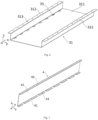
Fig. 6 is a schematic structural view of a first restraint member in the battery pack shown inFig. 1 ; -
Fig. 7 is a schematic structural view of a fireproof member in the battery pack shown inFig. 1 ; -
Fig. 8 is an exploded schematic view of battery units in a battery pack according to some embodiments; -
Fig. 9 is a cross-sectional view of battery units using a wound electrode assembly along the xz plane; -
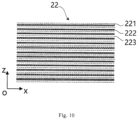
Fig. 10 is a cross-sectional view of battery units using a laminated electrode assembly along the xz plane. -
- 1. box assembly; 11.box; 111. first flanging; 12. fixed beam; 121. third mounting hole; 122. lightening slot; 13. cover; 131. second flanging;
- 2. battery module; 2A. battery unit assembly; 20. battery unit; 21. housing; 22. electrode assembly; 221. first pole piece; 222. second pole piece; 223. diaphragm; 224. flat surface; 23. adapter piece; 24. cover plate assembly; 241. cover plate; 242. first electrode terminal; 243. second electrode terminal; 25. first explosion-proof valve; 26. end plate; S1. first surface; S2. second side; S3. third side;
- 3. restraint assembly; 31. first restraint member; 311. first limiting portion; 312. first mounting portion; 313. first mounting hole; 32. second restraint member; 321. second limiting portion; 322. second mounting portion; 323. second mounting hole; 33. communication hole;
- 4. fireproof member; 41. avoidance hole; 42. first portion; 43. second portion;
- 5. fastener; 6. accommodating cavity; 7. first exhaust passage; 8. second exhaust passage; 9. second explosion-proof valve; 10. thermal insulation layer.
- The present disclosure will be explained in detail below. In the following paragraphs, different aspects of the embodiments will be defined in more detail.
- The terms "first" and "second" recited in the present disclosure are merely for ease of description, to distinguish different constituent parts having the same name, rather than indicating a sequential or primary-secondary relationship.
- In addition, when an element is referred to as being "on" another element, it may be directly on another element, or one element or may be indirectly on another element with one or more intermediate elements therebetween. In addition, when an element is referred to as being "connected to" another element, the element may be directly connected to another element, or may be indirectly connected to another element with one or more intermediate elements therebetween. In the following, the same reference numerals present the same elements.
- In the present disclosure, "a plurality of" refers to two or more (including two), and similarly, "a plurality of groups" refers to two or more groups (including two groups), and "a plurality of pieces" refers to two or more pieces (including two pieces).
- In order to clearly describe each orientation in the following embodiments, for example, the coordinate system in
Fig. 1 defines each direction of the battery pack, wherein an x direction represents a length direction of the battery pack (hereinafter referred to as a length direction for short); a y direction represents a width direction of the battery pack (hereinafter referred to as a width direction for short); a z direction which is perpendicular to a plane formed by the x and y directions, represents a height direction of the battery pack (hereinafter referred to as a height direction for short). Based on such orientation definition, "up", "down", "top", and "bottom" are all relative to a height direction. - The embodiments of the present disclosure provide a battery pack and a vehicle, which can improve the operation safety of the battery pack.
-
Figs. 1 to 10 are schematic structural views of a battery pack according to some embodiments of the present disclosure. The battery pack may be used in a transportation vehicle to supply electrical energy for operation of the device. For example, the transportation includes a vehicle or a ship. The battery pack may include a box assembly 1, arestraint assembly 3 and abattery module 2. - The
restraint assembly 3 is disposed within the box assembly 1, and anaccommodating cavity 6 is formed inside therestraint assembly 3. Afirst exhaust passage 7 is provided between therestraint assembly 3 and the box assembly 1. Therestraint assembly 3 is provided with acommunication hole 33. Thecommunication hole 33 communicates theaccommodating cavity 6 with thefirst exhaust passage 7. - The
battery module 2 is disposed within theaccommodating cavity 6. A plurality ofbattery modules 2 may be provided in the battery pack, and a plurality ofrestraint assemblies 3 may be provided accordingly. Thebattery modules 2 are respectively disposed within theaccommodating cavities 6 of therestraint assemblies 3. Each of theaccommodation cavities 6 is provided with onebattery module 2. For example, the size of theaccommodating cavity 6 is adapted to the overall external dimensions of thecorresponding battery module 2. Thebattery module 2 includes a plurality ofbattery units 20, for example, thebattery module 2 may be provided with one layer or stacked with a plurality of layers ofbattery units 20 along the height direction. - In this embodiment, the
battery module 2 is disposed within therestraint assembly 3, and therestraint assembly 3 encloses thebattery module 2 in an area beyond thecommunication hole 33. Each of therestraint assemblies 3 is independent of each other. When thebattery module 2 suffers from thermal runaway, fluid may be ejected, for example, the fluid includes hot air and sparks and mist-like electrolyte mingled in the hot air. The fluid can only enter from theaccommodating cavity 6 into thefirst exhaust passage 7 directly through thecommunication hole 33, to facilitate the discharge of fluid, and it is possible to prevent the fluid from enteringother restraint assemblies 3 to affectnormal battery modules 2, thereby improving the operational safety of the battery pack. - As shown in
Fig. 1 , a plurality of fixedbeams 12 are provided inside the box assembly 1, and the fixedbeams 12 may be disposed at intervals inside the box assembly 1 along the length direction (x direction) or the width direction (y direction). Therestraint assembly 3 is fixed to two adjacentfixed beams 12, and afirst exhaust passage 7 is formed among therestraint assembly 3, the box assembly 1 and the two adjacent fixed beams 12. Therefore, thefirst exhaust passage 7 may be directly formed by the box assembly 1, therestraint assembly 3, and the fixedbeam 12, without adding additional structural members, which may simplify the structure and reduce the machining difficulty. - The box assembly 1 may include: a
box 11 and acover 13 which are snap-fit to each other in the height direction. Thecover 13 encloses the opening end of thebox 11. Here, the word "enclose" refers to a sealed connection between thebox 11 and thecover 13, which may prevent external liquid and water vapor from entering the battery pack, and improve the safety performance of the battery pack. - The
box 11 is located at the bottom of thecover 13, and the plurality of fixedbeams 12 may be fixed to thebox 11. For example, the fixedbeam 12 may be fixed on the inner bottom surface or the sidewall of thebox 11. For the specific structure of the fixedbeam 12, a solid or hollow structure may be used. For example, a lighteningslot 122 is provided inside the fixedbeam 12. The cross section of the fixedbeam 12 may be rectangular, trapezoidal or C-shaped and the like, and the upper surface thereof may be provided as a flat surface, so as to fix therestraint assembly 3 on the upper surface of the fixedbeam 12. Alternatively, therestraint assembly 3 may also be fixed on the side of the fixedbeam 12. - As shown in
Figs. 1 and8 , each of the plurality ofbattery units 20 is provided with a first explosion-proof valve 25, which is configured to open when a difference between the internal and external pressures of thebattery unit 20 exceeds a first preset pressure value, so as to discharge the gas in 20 within thebattery unit 20. As shown inFig. 5 , asecond exhaust passage 8 is formed between therestraint assembly 3 and thebattery module 2 inside, and each of the first explosion-proof valves 25 faces thesecond exhaust passage 8, and thecommunication hole 33 communicates thesecond exhaust passage 8 with thefirst exhaust passage 7. - In some embodiments, the volume of the
second exhaust passage 8 is smaller than that of thefirst exhaust passage 7, so that the pressure within thesecond exhaust passage 8 is greater than the pressure within thefirst exhaust passage 7, which can allow the fluid released by thebattery unit 20 to smoothly enter thefirst exhaust passage 7 from thesecond exhaust passage 8 through the first explosion-proof valve 25 so as to ensure that the fluid is rapidly guided to the outside of the battery pack according to a predetermined discharge path, thereby lowering the risk of thermal runway inother battery modules 2, and further improving the operational safety of the battery pack. - As shown in
Figs. 1 and5 , the battery pack of the present disclosure may further include afireproof member 4, thefireproof member 4 is provided between therestraint assembly 3 and thebattery module 2 and covering the first explosionproof valve 25 of each of the plurality ofbattery units 20, and asecond exhaust passage 8 is formed between thefireproof member 4 and thebattery module 2. For example, thefireproof member 4 may be made from a fireproof material, such as a mica board or the like, or a fireproof coating may be externally applied to the metal structure. - By providing the
fireproof member 4, when thebattery unit 20 suffering from thermal runaway releases a fluid such as hot air and sparks through the first explosion-proof valve 25, the fluid may be prevented from directly impacting therestraint assembly 3. Since therestraint assembly 3 is generally formed by bending a sheet, when the fluid has a high temperature or a fast speed, it is likely to cause therestraint assembly 3 to deform or break through therestraint assembly 3, so that the fluid safely enters thefirst exhaust passage 7 through thecommunication hole 33, thereby improving the safety and the operational reliability of the battery pack structure,
The specific structure that may be used by the above-described members will be specifically described below with the battery pack shown inFig. 1 as an example. - The
battery units 20 in thebattery module 2 forms at least onebattery unit assembly 2A. The electrical connection manners among each of thebattery unit assemblies 2A is provided to be in series, parallel, or both in series and parallel. Anend plate 26 is provided at an end of the fixedbeam 12 along the extending direction thereof. - Within the horizontal plane, two adjacent
battery unit assemblies 2A may be mounted in such a manner that the electrode terminals face each other, and it is necessary to leave a safe distance between the electrode terminals of adjacentbattery unit assemblies 2A. Alternatively, two adjacentbattery unit assemblies 2A may be mounted in such a manner that the electrode terminals face away from each other, which may save the installation space, and a cooling plate may be provided between two adjacentbattery unit assemblies 2A to achieve cooling, so that two adjacentbattery unit assemblies 2A are cooled at the same time by a cooling plate. - The
battery unit assembly 2A includes a plurality ofbattery units 20 disposed side by side along the length direction or width direction of the battery pack. As shown inFig. 5 , each of the plurality ofbattery units 20 includes a first surface S1, a second surface S2, and a third surface S3, wherein the first surface S1 is the largest side surface of each of the plurality ofbattery units 20; the second surface S2 is perpendicular to the first surface S1, and provided with a first explosion-proof valve 25, afirst electrode terminal 242, and asecond electrode terminal 243; the third surface S3 and the second surface S2 are oppositely disposed. - The first surface S1 of each of the
battery units 20 is opposite to the top side or the bottom side of therestraint assembly 3. Such arrangement manner is also referred to as flat arrangement, which may improve the space utilization rate inside the battery pack. Since the height of thebattery unit assembly 2A is relatively short in the height direction, the overall height of the battery pack may be reduced in a flat arrangement manner, which is more suitable for vehicles with a relatively short installation space for the battery pack. Moreover, for a flat arrangement manner of each of thebattery units 20, the positive and negative pole pieces of theelectrode assembly 22 are stacked along the height direction of the battery pack, and the expansion force of thebattery unit 20 may be transferred along the height direction, so that it is possible to suppress the expansion force produced by theelectrode assembly 22 by way of therestraint assembly 3. Even if therestraint assembly 3 is deformed under the effect of the expansion force, thefirst exhaust passage 7 may also provide an expansion space for therestraint assembly 3. - Alternatively, the second surface S2 of each of the plurality of
battery units 20 may also be opposite to the top side of therestraint assembly 3. - In
Fig. 1 , thebattery units 20 in the samebattery unit assembly 2A are disposed side by side along the length direction (x direction). Two rows ofbattery unit assemblies 2A are disposed along the width direction (x direction). In practical applications, three rows or more may also be provided. In the height direction (z direction), one or more layers ofbattery unit assemblies 2A may also be provided, and each layer ofbattery unit assemblies 2A may be stacked along the height direction. - In order to avoid heat transfer from the
battery units 20 suffering from thermal runaway toadjacent battery units 20, the battery pack may include athermal insulation layer 10 provided between twoadjacent battery units 20. For example, athermal insulation layer 10 is provided between twoadjacent battery units 20 in the height direction, or athermal insulation layer 10 is provided betweenadjacent battery units 20 within a horizontal plane. Thethermal insulation layer 10 may be a thermal insulation glue, which may fix therespective battery units 20 to each other while producing a thermal insulation effect. - On such basis, as shown in
Fig. 6 , therestraint assembly 3 is provided with a plurality of communication holes 33, each of which is provided in one-to-one correspondence with each of the first explosion-proof valves 25 in one layer. For the embodiment in which the second surfaces S2 of thebattery units 20 in two groups ofbattery unit assemblies 2A are disposed towards a direction facing away from each other, a column of communication holes 33 are provided at areas on both sides of therestraint assembly 3 along the arrangement direction of the plurality of fixed beams 12. Each column of communication holes 33 includes a plurality of communication holes 33 disposed at intervals along the extending direction of the fixedbeam 12, and are in one-to-one correspondence with the first explosion-proof valves 25 of the single-layer battery units 20 in thebattery unit assembly 2A respectively. For example, thecommunication hole 33 may be circular, oval, polygonal, or other irregular shapes. - With such structure, when any of the
battery units 20 in thebattery module 2 suffers from thermal runaway, it is possible to allow the released fluid to enter thefirst exhaust passage 7 through thecommunication hole 33 at the corresponding position in the shortest path, and to discharge through a plurality of communication holes 33 at the same time, which may lessen the fluid discharge time and reduce the risk of thermal runaway inother battery units 20 of thebattery module 2 or inother battery modules 2. - As shown in
Figs. 4 and 5 , there is a first gap L1 between the outer side of therestraint assembly 3 and the inner side of the box assembly 1. The outer side of therestraint assembly 3 and the inner side of the box assembly 1 face each other along the height direction. The first gap L1 forms thefirst exhaust passage 7. - With such structure, it is possible to allow the space between the
restraint assembly 3 and the box assembly 1 to serve as thefirst exhaust passage 7 with a larger area, when thebattery module 2 suffers from thermal runaway, the air pressure within thefirst exhaust passage 7 is lower, the fluid released during thermal runaway may be discharged more smoothly, thereby preventing more fluid accumulated within theaccommodating cavity 6, and the air pressure and temperature within theaccommodating cavity 6 may be rapidly reduced, thereby improving the safety of the battery pack. - As shown in
Figs. 1 and6 , thecommunication hole 33 is provided on the top side or bottom side of therestraint assembly 3, and located on the same side as thefirst exhaust passage 7 in the height direction. In this way, the fluid released when thebattery module 2 suffers from thermal runaway may enter thefirst exhaust passage 7 directly through thecommunication hole 33 from thesecond exhaust passage 8 without passing through an additional guide path, which may improve the fluid discharge efficiency. Moreover, after the fluid directly enters thefirst exhaust passage 7, since thefirst exhaust passage 7 has a large volume, the pressure of the fluid may be instantaneously reduced, and the temperature may also be reduced accordingly, which may prevent a continuous increase in the pressure and temperature within the battery pack and improve the operational safety. - In some embodiments, the
communication hole 33 is provided in the bottom side of therestraint assembly 3, and a first gap L1 between the outer side at the bottom of therestraint assembly 3 and the inner side at the bottom of the box assembly 1 forms afirst exhaust passage 7. When the battery pack is installed in the vehicle, when thebattery module 2 suffers from thermal runaway, the airflow having a high temperature is concentrated and discharged in the bottom area of the battery pack, thereby preventing the impact on personnel and articles within the vehicle body and improving the safety within the vehicle body. - As shown in
Fig. 5 , the second surface S2 of each of the plurality ofbattery units 20 is disposed toward the side wall of therestraint assembly 3, and a second gap L2 is provided between the second surface S2 of therestraint assembly 3 and an inner surface of a side wall of therestraint assembly 3 on the corresponding side. The second gap L2 forms asecond exhaust passage 8. Thecommunication hole 33 is provided on therestraint assembly 3 at a position corresponding to the second gap L2, and communicates thesecond exhaust passage 8 with thefirst exhaust passage 7. - By providing the second gap L2, a space may be reserved for the
first electrode terminal 242, thesecond electrode terminal 243, and a busbar connecting thefirst electrode terminal 242 and thesecond electrode terminal 243, and also for between the first explosion-proof valve 25 and the side wall of therestraint member 3. During thermal runaway in thebattery unit 20, the fluid released through the first explosion-proof valve 25 diffuses into thesecond exhaust passage 8, and flows rapidly into thefirst exhaust passage 7 through a plurality of communication holes 33. Moreover, since the volume of thesecond exhaust passage 8 is smaller than that of thefirst exhaust passage 7, the pressure within thesecond exhaust passage 8 is higher than that within thefirst exhaust passage 7, so that the fluid may be smoothly discharged according to a preset path. - As shown in
Fig. 4 , the extending direction of thefireproof member 4 is consistent with the same of the fixedbeam 12. Thefireproof member 4 includes: afirst portion 42 and twosecond portions 43. Thefirst portion 42 abuts against the inner surface of the side wall of therestraint assembly 3, and forms a second gap L2 between thefirst portion 42 and the second surface S2 of each of thebattery units 20 on the corresponding side. The twosecond portions 43 are respectively connected to both ends of thefirst portion 42 along the height direction and extending toward the second surface S2 until abutting against the second surface S2. Thesecond portion 43 is provided with anavoidance hole 41 at a position corresponding to thecommunication hole 33. Wherein, the first explosion-proof valve 25 is located between the twosecond portions 43. Further, the twosecond portions 43 may abut against the top side and the bottom side of therestraint assembly 3 respectively. - As shown in
Fig. 7 , theavoidance hole 41 may be provided on one of the twosecond portions 43 at the bottom. As shown inFig. 6 , thecommunication hole 33 is a rectangular slot. Accordingly, theavoidance hole 41 may be a rectangular hole which is open on a side of thesecond portion 43 away from the side of thefirst portion 42. As a result, a plurality of avoidance holes 41 are provided at intervals in thesecond portion 43 along the extending direction of the fixedbeam 12. Such structure is easily machined and can enhance the structural stability of thefireproof member 4 whilst not affecting the discharge of fluid. - The
fireproof member 4 integrally forms a space surrounding the first explosion-proof valves 25, and forms asecond exhaust passage 8 between thefireproof member 4 and the second surface S2 of each of thebattery units 20, which may prevent fluid from directly impacting therestraint assembly 3 when thebattery unit 20 suffering from thermal runaway releases fluids such as hot air and sparks through the first explosion-proof valve 25. Thefireproof member 4 abuts against therestraint assembly 3, so that thefireproof member 4 may be reliably positioned to prevent shaking. - As shown in
Fig. 5 , therestraint assembly 3 includes: afirst restraint member 31 and asecond restraint member 32. Thefirst restraint member 31 and thesecond restraint member 32 are snap-fit with each other in the height direction to form anaccommodating cavity 6. Thefirst restraint member 31 is configured to limit the freedom of movement of thebattery module 2 toward thebox 11 along the height direction, and thesecond constraint member 32 is configured to limit the freedom of movement of thebattery module 2 toward thecover 13 along the height direction. Wherein, thecommunication hole 33 is disposed on thefirst restraint member 31, and there is a first gap L1 between thebox 11 and thefirst restraint member 31 along the height direction. The first gap L1 forms thefirst exhaust passage 7. - In this embodiment, the
communication hole 33 is disposed in thefirst restraint member 31 at the bottom side, and the first gap L1 between thefirst restraint member 31 and thebox 11 forms thefirst exhaust passage 7. When the battery pack is installed on the vehicle, upon thermal runaway in thebattery module 2, the airflow having a high temperature is concentrated and discharged in the bottom area of the battery pack, thereby preventing the impact on personnel and articles within the vehicle body and improving the safety within the vehicle body. - Specifically, as shown in
Fig. 5 , thefirst restraint member 31 includes a first limitingportion 311 and two first mountingportions 312. The first limitingportion 311 covers a portion of thebattery module 2 close to thebox 11. The two first mountingportions 312 are respectively connected to both sides of the first limitingportion 311 along the arrangement direction of the plurality of fixed beams 12. The first limitingportion 311 entirely protrudes relative to the two first mountingportion 312 toward a bottom side of thebox 11. - The
second restraint member 32 includes: a second limitingportion 321 and two second mountingportions 322. The second limitingportion 321 covers a portion of thebattery module 2 close to thecover 13. The two second mountingportions 322 are respectively connected to both sides of the second limitingportion 321 along the arrangement direction of the plurality of fixed beams 12. - Wherein, the
accommodating cavity 6 is formed between the first limitingportion 311 and the second limitingportion 321. One of the two second mountingportions 322 and one of the two first mountingportions 312 located on the same side of thebattery module 2 are stacked in the height direction, and fixed to the same one of the plurality of fixedbeams 12 by a group offasteners 5. The second limitingportion 321 entirely protrudes relative to the two second mountingportion 322 toward a top side of thecover 13. - As shown in
Fig. 1 , the first mountingportion 312 is provided with a plurality of first mountingholes 313 at intervals along the extending direction of the fixedbeam 12, and the second mountingportion 322 is provided with a plurality of second mountingholes 323 at intervals along the extending direction of the fixedbeam 12. The fixedbeam 12 is provided with a plurality of third mountingholes 121 along the extending direction thereof. Thefastener 5 sequentially passes through thesecond mounting hole 323, the first mountinghole 313, and the third mountinghole 121 from the top, so as to fix thefirst restraint member 31 and thesecond restraint member 32 to the fixedbeam 12. - As shown in
Fig. 3 , the battery pack further includes: a second explosion-proof valve 9 provided on the box assembly 1 and communicating with thefirst exhaust passage 7, which is configured to open to discharge an internal fluid when a difference between the internal and external pressures of the box assembly 1 exceeds a second preset pressure value. Specifically, the second explosion-proof valve 9 may be provided on a side of thecover 13 located at one end of the fixedbeam 12. - Still referring to
Fig. 3 , in order to fix thecover 13 with thebox 11, afirst flanging 111 is provided around the opening end of thebox 11, and asecond flanging 131 is provided around thecover 13. Thefirst flanging 111 and thesecond flanging 131 may be fixed therebetween in a manner of adhesive or a fastener. - The battery packs of the above-described embodiments respectively cover
different battery modules 2 through a plurality ofsecond restraint members 32, and are fixed to the corresponding fixed beams 12 (that is, the fixing points between thesecond restraint member 32 and thebox 11 are increased), so that the span between the fixing points is reduced, which may improve the deformation resistance of thesecond restraint member 32. When thebattery unit 20 expands, thesecond restraint member 32 is not easily deformed, which may further provide a stable pressing force to thebattery module 2 so as to prevent an increased size of the battery pack in the height direction, and it is also not likely to extrude thecover 13 due to the deformation of therestraint member 32, which may improve the service life of the battery pack. - As shown in
Fig. 4 , there is a third gap L3 between the inner surface of the top wall of the box assembly 1 and the outer surface of the top wall of therestraint assembly 3, that is, there is a third gap L3 between the inner surface of thecover 13 and the outer surface of thesecond restraint member 32. By providing the first gap L1 and the third gap L3, even if therestraint assembly 3 is deformed due to the expansion of thebattery unit 20, it is also possible to prevent deformation of the box assembly 1. - The fluid discharge manner of the battery pack of the present disclosure upon thermal runaway will be described below in conjunction with
Figs. 4 and 5 . As shown inFig. 5 , when thebattery module 2 has abattery unit 20 suffering from thermal runaway, fluids such as hot air and sparks may be released by the first explosion-proof valve 25 inside thebattery unit 20 into thesecond exhaust passage 8 to circulate, and enter thefirst exhaust passage 7 through the plurality of communication holes 33 in the first limitingportion 311 during the flow. Referring toFig. 4 , the fluid flows within thefirst exhaust passage 7 and flows upwards in a space formed between therestraint assembly 3 and the side of the box assembly 1, such as to be discharged out of the battery pack through the second explosion-proof valve 9. Such battery pack may prevent sparks from splashing intoother battery modules 2 with normal performance, and at the same time may prevent hot air from bakingother battery modules 2 and reduce the risk of thermal runaway inmultiple battery modules 2 after thermal diffusion. - The specific structure of the
battery unit 20 in each of the above-described embodiments will be described below in conjunction withFigs. 8 to 10 . - As shown in the exploded schematic view in
Fig. 8 , each of thebattery units 20 includes: ahousing 21 and anelectrode assembly 22 disposed within thehousing 21. Thehousing 21 may have a hexahedron shape or other shapes and include an opening. Theelectrode assembly 22 is accommodated within thehousing 21. The opening of thehousing 21 is covered with acover plate assembly 24. Thecover plate assembly 24 includes acover plate 241 and two electrode terminals provided on the cover plate. The two electrode terminals are afirst electrode terminal 242 and asecond electrode terminal 243 respectively. Thefirst electrode terminal 242 may be a positive electrode terminal, and thesecond electrode terminal 243 may be a negative electrode terminal. In other embodiments, thefirst electrode terminal 242 may be a negative electrode terminal, and thesecond electrode terminal 243 may be a positive electrode terminal. Anadapter piece 23 is provided between thecover plate assembly 24 and theelectrode assembly 22. The tabs of theelectrode assembly 22 are electrically connected to the electrode terminals on thecover plate 241 through theadapter piece 23. In the present embodiment, there are twoadapter pieces 23, that is, a positive adapter piece and a negative adapter piece respectively. - As shown in
Fig. 8 , thehousing 21 is internally provided with twoelectrode assemblies 22, which are stacked along the height direction (z direction) of thebattery units 20, wherein the height direction of thebattery units 20 conforms to that of the battery pack. Of course, in other embodiments, thehousing 21 may be also be internally provided with oneelectrode assembly 22, or three ormore electrode assemblies 22 The plurality ofelectrode assemblies 22 are stacked along the height direction (z direction) of thebattery units 20. - As shown in
Figs. 9 and10 , theelectrode assembly 22 includes afirst pole piece 221, asecond pole piece 222, and adiaphragm 223 disposed between thefirst pole piece 221 and thesecond pole piece 222. Thefirst pole piece 221 may be a positive pole piece, and thesecond pole piece 222 may be a negative pole piece. In other embodiments, thefirst pole piece 221 may also be a negative pole piece, and thesecond pole piece 222 may be a positive pole piece. Wherein, thediaphragm 223 is an insulator between thefirst pole piece 221 and thesecond pole piece 222. The active substance of the positive pole piece may be coated on the coating area of the positive pole piece, and the active substance of the negative pole piece may be coated on the coating area of the negative pole piece. The portion extending from the coating area of the positive pole piece serves as the positive electrode tab; the portion extending from the coating area of the negative pole piece serves as the negative electrode tab. The positive electrode tab is connected to the positive electrode terminal on thecover plate assembly 24 through the positive electrode adapter plate. Similarly, the negative electrode tab is connected to the negative electrode terminal on thecover plate assembly 24 through the negative electrode adapter plate. - As shown in
Fig. 9 , theelectrode assembly 22 has a wound structure. Wherein, thefirst pole piece 221, thediaphragm 223, and thesecond pole piece 222 are all strip-like structures. Thefirst pole piece 221, thediaphragm 223, and thesecond pole piece 222 are sequentially stacked and wound more than two turns to form theelectrode assembly 22, and theelectrode assembly 22 is flat-shaped. When theelectrode assembly 22 is manufactured, theelectrode assembly 22 may be directly wound into a flat shape, or may also be wound into a hollow cylindrical structure first, and then flattened into a flat shape after being wound.Fig. 9 is a schematic view of an outer contour of theelectrode assembly 22. The outer surface of theelectrode assembly 22 includes twoflat surfaces 224, which are oppositely disposed along the height direction (z direction) of thebattery unit 20. Wherein, theelectrode assembly 22 is substantially a hexahedron structure, and theflat surface 224 is substantially parallel to the winding axis, and is the outer surface with a maximum area. Theflat surface 224 may be a relatively flat surface, and is not required to be a pure plane. - As shown in
Fig. 10 , theelectrode assembly 22 has a laminated structure, that is, theelectrode assembly 22 includes a plurality offirst pole pieces 221 and a plurality ofsecond pole pieces 222, anddiaphragms 223 are disposed between thefirst pole pieces 221 and thesecond pole pieces 222. Thefirst pole pieces 221 and thesecond pole pieces 222 are stacked along the height direction (z direction) of thebattery unit 20. - The
electrode assembly 22 may inevitably expand along the thickness direction of the pole pieces during the charging and discharging processes. The expansion amounts of the respective pole pieces are superimposed, and the accumulated expansion amount in the height direction is greater than that in other directions. In the embodiments of the present disclosure, the direction of thebattery unit 20 at a maximum expansion may be restrained by increasing the fixing points between therestraint assembly 3 and thebox 11, thereby preventing deformation of the battery pack, and raising the service life of the battery pack. - The battery pack and the vehicle provided by the present disclosure have been introduced in detail above. Specific examples are applied herein to explain the principles and implementations of the present disclosure. The descriptions of the above embodiments are only intended to help understand the methods and core ideas of the present disclosure.
Claims (13)
- A battery pack, comprising:a box assembly (1), internally provided with a plurality of fixed beams (12) at intervals;a plurality of restraint assemblies (3), disposed within the box assembly (1), wherein each of the plurality of restraint assemblies (3) is fixed to two adjacent fixed beams (12) and internally provided with an accommodating cavity (6), a first exhaust passage (7) is provided between the restraint assembly (3) and the box assembly (1), and the restraint assembly (3) is provided with a communication hole (33) which communicates the accommodating cavity (6) with the first exhaust passage (7), and the first exhaust passage (7) is formed among the restraint assembly (3), the box assembly (1) and the two adjacent fixed beams (12); anda plurality of battery modules (2), respectively disposed within the accommodating cavities (6) of the plurality of restraint assemblies (3).
- The battery pack according to claim 1, wherein the battery module (2) comprises a plurality of battery units (20), each of the plurality of battery units (20) is provided with a first explosion-proof valve (25); and
a second exhaust passages (8) is provided between the restraint assembly (3) and the battery module (2), each of the first explosion-proof valves (25) faces the second exhaust passage (8), and the communication hole (33) communicates the second exhaust passage (8) with the first exhaust passage (7). - The battery pack according to claim 2, further comprising: a fireproof member (4) disposed between the restraint assembly (3) and the battery module (2) and covering the first explosion-proof valve (25) of each of the plurality of battery units (20), wherein a second exhaust passage (8) is formed between the fireproof member (4) and the battery module (2).
- The battery pack according to claim 2 or 3, wherein the restraint assembly (3) is provided with a plurality of the communication holes (33), each of which is in one-to-one correspondence with each of the first explosion-proof valves (25).
- The battery pack according to any one of claims 1 to 4, wherein a first gap (L1) is provided between an outer side of the restraint assembly (3) and an inner side of the box assembly (1), the outer side of the restraint assembly (3) and the inner side of the box assembly (1) face each other along a height direction of the battery pack, and the first gap (L1) forms the first exhaust passage (7).
- The battery pack according to claim 5, wherein the battery module (2) comprises a plurality of battery units (20), a first surface (S1) of each of the plurality of battery units (20) is opposite to a top side or a bottom side of the restraint assembly (3), the first surface (S1) is the largest side of each of the plurality of battery units (20), and a second surface (S2) of each of the plurality of battery units (20) is provided with a first explosion-proof valve (25), the second surface (S2) is perpendicular to the first surface (S1); wherein the communication hole (33) is disposed on the top side or the bottom side of the restraint assembly (3).
- The battery pack according to claim 6, wherein the second surface (S2) of each of the plurality of battery units (20) is disposed toward a side wall of the restraint assembly (3), and there is a second gap (L2) between the second surface (S2) and an inner surface of a side wall of the restraint assembly (3) on the corresponding side, the second gap (L2) forms a second exhaust passage (8), and the communication hole (33) is disposed on the restraint assembly (3) at a position corresponding to the second gap (L2), and communicates the second exhaust passage (8) with the first exhaust passage (7).
- The battery pack according to claim 7, further comprising a fireproof member (4), the fireproof member (4) comprising:a first portion (42) abutting against the inner surface of the side wall of the restraint assembly (3), wherein a gap (L2) is formed between the first portion (42) and the second surface (S2) of each of the battery units (20) on the corresponding side; andtwo second portions (43) respectively connected to both ends of the first portion (42) along the height direction, and extending toward the second surface (S2) until abutting against the second surface (S2), wherein an avoidance hole (41) is provided on one of the two second portions (43) at a position corresponding to the communication hole (33); andwherein the first explosion-proof valve (25) is located between the two second portions (43).
- The battery pack according to any one of claims 1 to 8, wherein the box assembly (1) comprises: a box (11) and a cover (13) which are snap-fit with each other in a height direction of the battery pack, and the box (11) is internally provided with a plurality of fixed beams (12);the restraint assembly (3) comprises: a first restraint member (31) and a second restraint member (32), which are snap-fit with each other in the height direction to form the accommodating cavity (6);wherein the communication hole (33) is disposed on the first restraint member (31), there is a first gap (L1) between the box (11) and the first restraint member (31) along the height direction, and the first gap (L1) forms the first exhaust passage (7).
- The battery pack according to claim 9, wherein:the first restraint member (31) comprises: a first limiting portion (311) and two first mounting portions (312), the first limiting portion (311) covers a portion of the battery module (2) close to the box (11), and the two first mounting portions (312) are respectively connected to both sides of the first limiting portion (311) along an arrangement direction of the plurality of fixed beams (12);the second restraint member (32) comprises: a second limiting portion (321) and two second mounting portions (322), wherein the second limiting portion (321) covers a portion of the battery module (2) close to the cover (13), and the two second mounting portions (322) are respectively connected to both sides of the second limiting portion (321) along the arrangement direction of the plurality of fixed beams (12); andwherein an accommodating cavity (6) is formed between the first limiting portion (311) and the second limiting portion (321), and one of the two second mounting portions (322) and one of the two first mounting portions (312) located on the same side of the battery module (2) are stacked in the height direction and fixed to the same one of the plurality of fixed beams (12).
- The battery pack according to claim 10, wherein:the first limiting portion (311) entirely protrudes relative to the two first mounting portions (312) toward a bottom side of the box (11); and/orthe second limiting portion (321) entirely protrudes relative to the two second mounting portions (322) toward a top side of the cover (13).
- The battery pack according to any one of claims 1 to 11, further comprising:
a second explosion-proof valve (9) disposed on the box assembly (1) and communicating with the first exhaust passage (7). - A transportation vehicle, comprising:
the battery pack according to any one of claims 1 to 12, which is configured to supply electrical energy.
Priority Applications (1)
| Application Number | Priority Date | Filing Date | Title |
|---|---|---|---|
| HUE19910917A HUE072900T2 (en) | 2019-11-19 | 2019-11-19 | Battery pack and transport equipment |
Applications Claiming Priority (1)
| Application Number | Priority Date | Filing Date | Title |
|---|---|---|---|
| PCT/CN2019/119354 WO2021097644A1 (en) | 2019-11-19 | 2019-11-19 | Battery pack and transport equipment |
Publications (3)
| Publication Number | Publication Date |
|---|---|
| EP3852188A4 EP3852188A4 (en) | 2021-07-21 |
| EP3852188A1 EP3852188A1 (en) | 2021-07-21 |
| EP3852188B1 true EP3852188B1 (en) | 2025-07-09 |
Family
ID=75981143
Family Applications (1)
| Application Number | Title | Priority Date | Filing Date |
|---|---|---|---|
| EP19910917.4A Active EP3852188B1 (en) | 2019-11-19 | 2019-11-19 | Battery pack and transport equipment |
Country Status (9)
| Country | Link |
|---|---|
| US (1) | US12074337B2 (en) |
| EP (1) | EP3852188B1 (en) |
| JP (1) | JP7417725B2 (en) |
| KR (1) | KR102821598B1 (en) |
| CN (1) | CN113966565B (en) |
| ES (1) | ES3041769T3 (en) |
| HU (1) | HUE072900T2 (en) |
| PL (1) | PL3852188T3 (en) |
| WO (1) | WO2021097644A1 (en) |
Families Citing this family (23)
| Publication number | Priority date | Publication date | Assignee | Title |
|---|---|---|---|---|
| CN112151709B (en) * | 2019-06-27 | 2025-02-28 | 宁德时代新能源科技股份有限公司 | Battery pack and vehicle |
| CN112331997B (en) * | 2019-10-15 | 2021-11-12 | 宁德时代新能源科技股份有限公司 | Battery packs and vehicles |
| CN112331983B (en) * | 2019-11-29 | 2021-10-08 | 宁德时代新能源科技股份有限公司 | Battery module, device and failure treatment method for failed battery cells |
| DE112021000593T5 (en) * | 2020-01-17 | 2022-12-08 | Gs Yuasa International Ltd. | energy storage device |
| JP7358323B2 (en) * | 2020-11-27 | 2023-10-10 | ダイムラー トラック エージー | electric truck |
| KR102929568B1 (en) * | 2021-06-17 | 2026-02-20 | 주식회사 엘지에너지솔루션 | Battery module and battery pack including the same and vehicle including the same |
| EP4145603A4 (en) * | 2021-07-15 | 2024-01-24 | Contemporary Amperex Technology Co., Limited | BATTERY AND POWER CONSUMING DEVICE |
| CN216054972U (en) * | 2021-08-10 | 2022-03-15 | 比亚迪股份有限公司 | Battery module and battery pack |
| CN117096526A (en) * | 2022-05-11 | 2023-11-21 | 上汽通用汽车有限公司 | Protective panels, battery packs and vehicles |
| CN115101822A (en) * | 2022-06-13 | 2022-09-23 | 宁德新能源科技有限公司 | Electrochemical device and electric equipment |
| KR20240028583A (en) * | 2022-08-24 | 2024-03-05 | 주식회사 엘지에너지솔루션 | Battery module and battery pack including the same |
| CN115312938B (en) * | 2022-09-01 | 2023-10-31 | 奇瑞汽车股份有限公司 | Power battery structure and vehicle |
| EP4510353A4 (en) * | 2022-10-14 | 2025-07-30 | Contemporary Amperex Technology Co Ltd | BATTERY AND ELECTRICAL APPLIANCE |
| CN115810839A (en) * | 2022-12-09 | 2023-03-17 | 东莞市信准检测技术服务有限公司 | Power battery pack |
| US12132218B2 (en) * | 2022-12-29 | 2024-10-29 | Rivian Ip Holdings, Llc | Structural module |
| CN116190864A (en) * | 2023-03-29 | 2023-05-30 | 厦门新能达科技有限公司 | A battery pack and electrical equipment |
| WO2024199037A1 (en) * | 2023-03-31 | 2024-10-03 | 惠州亿纬锂能股份有限公司 | Battery mounting box and battery pack |
| US20240339719A1 (en) * | 2023-04-10 | 2024-10-10 | GM Global Technology Operations LLC | Battery system enclosure with venting channel(s) for thermal runaway mitigation |
| CN116231200B (en) * | 2023-05-06 | 2023-09-01 | 宁德时代新能源科技股份有限公司 | Battery and electricity utilization device |
| CN221327956U (en) * | 2023-10-31 | 2024-07-12 | 欣旺达动力科技股份有限公司 | Battery packs and electrical equipment |
| CN221304831U (en) * | 2024-04-18 | 2024-07-09 | 宁德时代新能源科技股份有限公司 | Battery cell, battery and electricity utilization device |
| WO2026025382A1 (en) * | 2024-07-31 | 2026-02-05 | 宁德时代新能源科技股份有限公司 | Battery device and electric apparatus |
| CN119742529B (en) * | 2024-12-25 | 2025-10-28 | 蜂巢能源科技股份有限公司 | Single battery, battery pack and electricity utilization device |
Family Cites Families (15)
| Publication number | Priority date | Publication date | Assignee | Title |
|---|---|---|---|---|
| EP1744383B1 (en) | 2004-03-31 | 2014-05-07 | NEC Corporation | Electrical device with film covering and frame member |
| JP2008192551A (en) * | 2007-02-07 | 2008-08-21 | Toyota Motor Corp | Battery pack structure |
| JP5466906B2 (en) * | 2009-09-18 | 2014-04-09 | パナソニック株式会社 | Battery module |
| WO2014065110A1 (en) * | 2012-10-25 | 2014-05-01 | 日産自動車株式会社 | Gas discharge structure for battery module |
| DE102013204087A1 (en) | 2013-03-11 | 2014-09-11 | Robert Bosch Gmbh | Degassing system for battery modules |
| JP6208238B2 (en) * | 2013-07-01 | 2017-10-04 | 三洋電機株式会社 | Nonaqueous electrolyte secondary battery |
| JP6299513B2 (en) * | 2014-07-31 | 2018-03-28 | 株式会社Gsユアサ | Power pack |
| JP6463974B2 (en) * | 2015-01-16 | 2019-02-06 | 株式会社Subaru | Automotive battery |
| CN108604653B (en) * | 2016-01-26 | 2021-11-12 | 三洋电机株式会社 | Battery pack |
| JP6540628B2 (en) | 2016-07-29 | 2019-07-10 | 株式会社デンソー | Battery pack |
| CN108428826B (en) * | 2018-01-18 | 2023-12-29 | 宁德时代新能源科技股份有限公司 | Secondary battery top cover components, secondary batteries, and automobiles |
| JP2019145245A (en) * | 2018-02-16 | 2019-08-29 | 株式会社東芝 | Battery device |
| CN209447890U (en) * | 2019-03-07 | 2019-09-27 | 宁德时代新能源科技股份有限公司 | A kind of battery module and battery pack |
| CN209561492U (en) | 2019-03-28 | 2019-10-29 | 宁德时代新能源科技股份有限公司 | Battery modules and battery packs |
| CN209401710U (en) * | 2019-03-28 | 2019-09-17 | 宁德时代新能源科技股份有限公司 | Battery modules and battery packs |
-
2019
- 2019-11-19 WO PCT/CN2019/119354 patent/WO2021097644A1/en not_active Ceased
- 2019-11-19 HU HUE19910917A patent/HUE072900T2/en unknown
- 2019-11-19 CN CN201980097284.1A patent/CN113966565B/en active Active
- 2019-11-19 PL PL19910917.4T patent/PL3852188T3/en unknown
- 2019-11-19 EP EP19910917.4A patent/EP3852188B1/en active Active
- 2019-11-19 JP JP2022526106A patent/JP7417725B2/en active Active
- 2019-11-19 US US16/980,316 patent/US12074337B2/en active Active
- 2019-11-19 KR KR1020227014805A patent/KR102821598B1/en active Active
- 2019-11-19 ES ES19910917T patent/ES3041769T3/en active Active
Also Published As
| Publication number | Publication date |
|---|---|
| PL3852188T3 (en) | 2025-11-03 |
| CN113966565A (en) | 2022-01-21 |
| JP2023500911A (en) | 2023-01-11 |
| WO2021097644A1 (en) | 2021-05-27 |
| KR20220078641A (en) | 2022-06-10 |
| US12074337B2 (en) | 2024-08-27 |
| EP3852188A4 (en) | 2021-07-21 |
| ES3041769T3 (en) | 2025-11-14 |
| US20210249731A1 (en) | 2021-08-12 |
| JP7417725B2 (en) | 2024-01-18 |
| HUE072900T2 (en) | 2025-12-28 |
| CN113966565B (en) | 2024-05-07 |
| KR102821598B1 (en) | 2025-06-18 |
| EP3852188A1 (en) | 2021-07-21 |
Similar Documents
| Publication | Publication Date | Title |
|---|---|---|
| EP3852188B1 (en) | Battery pack and transport equipment | |
| EP3965213B1 (en) | Battery and related apparatus thereof, preparation method and preparation device | |
| EP4184691B1 (en) | Battery, and related device, preparation method and preparation apparatus thereof | |
| JP7618672B2 (en) | Battery module, battery pack, and device using secondary battery | |
| US20250286242A1 (en) | Secondary battery, battery module, and device using secondary battery as power supply | |
| CN112018301B (en) | Battery, electrical device, method and device for preparing battery | |
| CN219457923U (en) | Battery cells, batteries and electrical devices | |
| CN116171505B (en) | Battery cell and manufacturing method and system thereof, battery and electric device | |
| JP2006185894A (en) | Film exterior electrical device assembly | |
| KR102890243B1 (en) | Batteries, electrical devices, methods and devices for manufacturing batteries | |
| JP5632402B2 (en) | Film exterior electrical device assembly | |
| EP4181281A1 (en) | Battery, electric device, and method and device for preparing battery | |
| KR102800399B1 (en) | Battery cells, cover assemblies, batteries, electrical devices, methods and devices | |
| EP4700910A1 (en) | Battery pack, energy storage device and electrical apparatus | |
| CN118712643A (en) | Battery packs and power devices | |
| EP4579929A1 (en) | Battery cell, battery, and electrical device | |
| EP4307442A1 (en) | Cell, battery, electric device, and manufacturing method for cell | |
| CN119324292B (en) | Base plate, battery casing, battery, and electrical device | |
| CN224082661U (en) | Battery cells, battery packs and electrical devices | |
| US12580257B2 (en) | Battery, manufacturing method and manufacturing system thereof, and electric apparatus | |
| CN222763047U (en) | Battery cells, batteries and electrical devices | |
| US20230344017A1 (en) | Battery, electric apparatus, and method and apparatus for preparing battery | |
| RU2805991C1 (en) | Battery and device associated with it, method for its manufacture and device for its manufacture | |
| WO2025241521A1 (en) | Battery and electric device |
Legal Events
| Date | Code | Title | Description |
|---|---|---|---|
| STAA | Information on the status of an ep patent application or granted ep patent |
Free format text: STATUS: UNKNOWN |
|
| STAA | Information on the status of an ep patent application or granted ep patent |
Free format text: STATUS: THE INTERNATIONAL PUBLICATION HAS BEEN MADE |
|
| PUAI | Public reference made under article 153(3) epc to a published international application that has entered the european phase |
Free format text: ORIGINAL CODE: 0009012 |
|
| STAA | Information on the status of an ep patent application or granted ep patent |
Free format text: STATUS: REQUEST FOR EXAMINATION WAS MADE |
|
| 17P | Request for examination filed |
Effective date: 20200731 |
|
| A4 | Supplementary search report drawn up and despatched |
Effective date: 20210129 |
|
| AK | Designated contracting states |
Kind code of ref document: A1 Designated state(s): AL AT BE BG CH CY CZ DE DK EE ES FI FR GB GR HR HU IE IS IT LI LT LU LV MC MK MT NL NO PL PT RO RS SE SI SK SM TR |
|
| RAP3 | Party data changed (applicant data changed or rights of an application transferred) |
Owner name: CONTEMPORARY AMPEREX TECHNOLOGY CO., LIMITED |
|
| DAV | Request for validation of the european patent (deleted) | ||
| DAX | Request for extension of the european patent (deleted) | ||
| STAA | Information on the status of an ep patent application or granted ep patent |
Free format text: STATUS: EXAMINATION IS IN PROGRESS |
|
| 17Q | First examination report despatched |
Effective date: 20240729 |
|
| RAP1 | Party data changed (applicant data changed or rights of an application transferred) |
Owner name: CONTEMPORARY AMPEREX TECHNOLOGY(HONG KONG) LIMITED |
|
| GRAP | Despatch of communication of intention to grant a patent |
Free format text: ORIGINAL CODE: EPIDOSNIGR1 |
|
| STAA | Information on the status of an ep patent application or granted ep patent |
Free format text: STATUS: GRANT OF PATENT IS INTENDED |
|
| INTG | Intention to grant announced |
Effective date: 20250217 |
|
| P01 | Opt-out of the competence of the unified patent court (upc) registered |
Free format text: CASE NUMBER: APP_19267/2025 Effective date: 20250422 |
|
| GRAS | Grant fee paid |
Free format text: ORIGINAL CODE: EPIDOSNIGR3 |
|
| GRAA | (expected) grant |
Free format text: ORIGINAL CODE: 0009210 |
|
| STAA | Information on the status of an ep patent application or granted ep patent |
Free format text: STATUS: THE PATENT HAS BEEN GRANTED |
|
| AK | Designated contracting states |
Kind code of ref document: B1 Designated state(s): AL AT BE BG CH CY CZ DE DK EE ES FI FR GB GR HR HU IE IS IT LI LT LU LV MC MK MT NL NO PL PT RO RS SE SI SK SM TR |
|
| REG | Reference to a national code |
Ref country code: GB Ref legal event code: FG4D |
|
| REG | Reference to a national code |
Ref country code: CH Ref legal event code: EP |
|
| REG | Reference to a national code |
Ref country code: IE Ref legal event code: FG4D |
|
| REG | Reference to a national code |
Ref country code: DE Ref legal event code: R096 Ref document number: 602019072471 Country of ref document: DE |
|
| REG | Reference to a national code |
Ref country code: NL Ref legal event code: MP Effective date: 20250709 |
|
| REG | Reference to a national code |
Ref country code: ES Ref legal event code: FG2A Ref document number: 3041769 Country of ref document: ES Kind code of ref document: T3 Effective date: 20251114 |
|
| PG25 | Lapsed in a contracting state [announced via postgrant information from national office to epo] |
Ref country code: PT Free format text: LAPSE BECAUSE OF FAILURE TO SUBMIT A TRANSLATION OF THE DESCRIPTION OR TO PAY THE FEE WITHIN THE PRESCRIBED TIME-LIMIT Effective date: 20251110 |
|
| PGFP | Annual fee paid to national office [announced via postgrant information from national office to epo] |
Ref country code: HU Payment date: 20251107 Year of fee payment: 7 |
|
| PG25 | Lapsed in a contracting state [announced via postgrant information from national office to epo] |
Ref country code: NL Free format text: LAPSE BECAUSE OF FAILURE TO SUBMIT A TRANSLATION OF THE DESCRIPTION OR TO PAY THE FEE WITHIN THE PRESCRIBED TIME-LIMIT Effective date: 20250709 |
|
| REG | Reference to a national code |
Ref country code: AT Ref legal event code: MK05 Ref document number: 1812765 Country of ref document: AT Kind code of ref document: T Effective date: 20250709 |
|
| REG | Reference to a national code |
Ref country code: HU Ref legal event code: AG4A Ref document number: E072900 Country of ref document: HU |
|
| PG25 | Lapsed in a contracting state [announced via postgrant information from national office to epo] |
Ref country code: IS Free format text: LAPSE BECAUSE OF FAILURE TO SUBMIT A TRANSLATION OF THE DESCRIPTION OR TO PAY THE FEE WITHIN THE PRESCRIBED TIME-LIMIT Effective date: 20251109 |
|
| PGFP | Annual fee paid to national office [announced via postgrant information from national office to epo] |
Ref country code: DE Payment date: 20251124 Year of fee payment: 7 |
|
| PGFP | Annual fee paid to national office [announced via postgrant information from national office to epo] |
Ref country code: GB Payment date: 20251126 Year of fee payment: 7 |
|
| PGFP | Annual fee paid to national office [announced via postgrant information from national office to epo] |
Ref country code: NO Payment date: 20251125 Year of fee payment: 7 |
|
| REG | Reference to a national code |
Ref country code: LT Ref legal event code: MG9D |
|
| PG25 | Lapsed in a contracting state [announced via postgrant information from national office to epo] |
Ref country code: AT Free format text: LAPSE BECAUSE OF FAILURE TO SUBMIT A TRANSLATION OF THE DESCRIPTION OR TO PAY THE FEE WITHIN THE PRESCRIBED TIME-LIMIT Effective date: 20250709 |
|
| PG25 | Lapsed in a contracting state [announced via postgrant information from national office to epo] |
Ref country code: FI Free format text: LAPSE BECAUSE OF FAILURE TO SUBMIT A TRANSLATION OF THE DESCRIPTION OR TO PAY THE FEE WITHIN THE PRESCRIBED TIME-LIMIT Effective date: 20250709 |
|
| PGFP | Annual fee paid to national office [announced via postgrant information from national office to epo] |
Ref country code: IT Payment date: 20251120 Year of fee payment: 7 |
|
| PG25 | Lapsed in a contracting state [announced via postgrant information from national office to epo] |
Ref country code: HR Free format text: LAPSE BECAUSE OF FAILURE TO SUBMIT A TRANSLATION OF THE DESCRIPTION OR TO PAY THE FEE WITHIN THE PRESCRIBED TIME-LIMIT Effective date: 20250709 |
|
| PGFP | Annual fee paid to national office [announced via postgrant information from national office to epo] |
Ref country code: FR Payment date: 20251128 Year of fee payment: 7 |
|
| PG25 | Lapsed in a contracting state [announced via postgrant information from national office to epo] |
Ref country code: GR Free format text: LAPSE BECAUSE OF FAILURE TO SUBMIT A TRANSLATION OF THE DESCRIPTION OR TO PAY THE FEE WITHIN THE PRESCRIBED TIME-LIMIT Effective date: 20251010 |
|
| PG25 | Lapsed in a contracting state [announced via postgrant information from national office to epo] |
Ref country code: SE Free format text: LAPSE BECAUSE OF FAILURE TO SUBMIT A TRANSLATION OF THE DESCRIPTION OR TO PAY THE FEE WITHIN THE PRESCRIBED TIME-LIMIT Effective date: 20250709 |
|
| PG25 | Lapsed in a contracting state [announced via postgrant information from national office to epo] |
Ref country code: LV Free format text: LAPSE BECAUSE OF FAILURE TO SUBMIT A TRANSLATION OF THE DESCRIPTION OR TO PAY THE FEE WITHIN THE PRESCRIBED TIME-LIMIT Effective date: 20250709 |
|
| PG25 | Lapsed in a contracting state [announced via postgrant information from national office to epo] |
Ref country code: BG Free format text: LAPSE BECAUSE OF FAILURE TO SUBMIT A TRANSLATION OF THE DESCRIPTION OR TO PAY THE FEE WITHIN THE PRESCRIBED TIME-LIMIT Effective date: 20250709 |
|
| PGFP | Annual fee paid to national office [announced via postgrant information from national office to epo] |
Ref country code: PL Payment date: 20251103 Year of fee payment: 7 |
|
| PG25 | Lapsed in a contracting state [announced via postgrant information from national office to epo] |
Ref country code: RS Free format text: LAPSE BECAUSE OF FAILURE TO SUBMIT A TRANSLATION OF THE DESCRIPTION OR TO PAY THE FEE WITHIN THE PRESCRIBED TIME-LIMIT Effective date: 20251009 |
|
| PGFP | Annual fee paid to national office [announced via postgrant information from national office to epo] |
Ref country code: ES Payment date: 20251202 Year of fee payment: 7 |
|
| PG25 | Lapsed in a contracting state [announced via postgrant information from national office to epo] |
Ref country code: RO Free format text: LAPSE BECAUSE OF FAILURE TO SUBMIT A TRANSLATION OF THE DESCRIPTION OR TO PAY THE FEE WITHIN THE PRESCRIBED TIME-LIMIT Effective date: 20250709 |
|
| PG25 | Lapsed in a contracting state [announced via postgrant information from national office to epo] |
Ref country code: SM Free format text: LAPSE BECAUSE OF FAILURE TO SUBMIT A TRANSLATION OF THE DESCRIPTION OR TO PAY THE FEE WITHIN THE PRESCRIBED TIME-LIMIT Effective date: 20250709 |
|
| PG25 | Lapsed in a contracting state [announced via postgrant information from national office to epo] |
Ref country code: DK Free format text: LAPSE BECAUSE OF FAILURE TO SUBMIT A TRANSLATION OF THE DESCRIPTION OR TO PAY THE FEE WITHIN THE PRESCRIBED TIME-LIMIT Effective date: 20250709 |
|
| PG25 | Lapsed in a contracting state [announced via postgrant information from national office to epo] |
Ref country code: CZ Free format text: LAPSE BECAUSE OF FAILURE TO SUBMIT A TRANSLATION OF THE DESCRIPTION OR TO PAY THE FEE WITHIN THE PRESCRIBED TIME-LIMIT Effective date: 20250709 |
|
| PG25 | Lapsed in a contracting state [announced via postgrant information from national office to epo] |
Ref country code: SK Free format text: LAPSE BECAUSE OF FAILURE TO SUBMIT A TRANSLATION OF THE DESCRIPTION OR TO PAY THE FEE WITHIN THE PRESCRIBED TIME-LIMIT Effective date: 20250709 Ref country code: EE Free format text: LAPSE BECAUSE OF FAILURE TO SUBMIT A TRANSLATION OF THE DESCRIPTION OR TO PAY THE FEE WITHIN THE PRESCRIBED TIME-LIMIT Effective date: 20250709 |