EP3851189A1 - Porous materials for solid phase extraction and chromatography - Google Patents
Porous materials for solid phase extraction and chromatography Download PDFInfo
- Publication number
- EP3851189A1 EP3851189A1 EP21153190.0A EP21153190A EP3851189A1 EP 3851189 A1 EP3851189 A1 EP 3851189A1 EP 21153190 A EP21153190 A EP 21153190A EP 3851189 A1 EP3851189 A1 EP 3851189A1
- Authority
- EP
- European Patent Office
- Prior art keywords
- porous material
- porous
- clause
- surface area
- mixture
- Prior art date
- Legal status (The legal status is an assumption and is not a legal conclusion. Google has not performed a legal analysis and makes no representation as to the accuracy of the status listed.)
- Pending
Links
- 239000011148 porous material Substances 0.000 title claims abstract description 364
- 238000002414 normal-phase solid-phase extraction Methods 0.000 title claims abstract description 32
- 238000004587 chromatography analysis Methods 0.000 title description 10
- 238000000034 method Methods 0.000 claims abstract description 70
- 239000000463 material Substances 0.000 claims description 151
- 229910052757 nitrogen Inorganic materials 0.000 claims description 138
- 239000000178 monomer Substances 0.000 claims description 87
- 239000000203 mixture Substances 0.000 claims description 73
- IJGRMHOSHXDMSA-UHFFFAOYSA-N Atomic nitrogen Chemical compound N#N IJGRMHOSHXDMSA-UHFFFAOYSA-N 0.000 claims description 56
- 229920001577 copolymer Polymers 0.000 claims description 47
- 230000002209 hydrophobic effect Effects 0.000 claims description 43
- MYRTYDVEIRVNKP-UHFFFAOYSA-N 1,2-Divinylbenzene Chemical group C=CC1=CC=CC=C1C=C MYRTYDVEIRVNKP-UHFFFAOYSA-N 0.000 claims description 40
- 239000002245 particle Substances 0.000 claims description 33
- JWYVGKFDLWWQJX-UHFFFAOYSA-N 1-ethenylazepan-2-one Chemical group C=CN1CCCCCC1=O JWYVGKFDLWWQJX-UHFFFAOYSA-N 0.000 claims description 24
- 238000000926 separation method Methods 0.000 claims description 10
- 230000008569 process Effects 0.000 abstract description 7
- 230000008901 benefit Effects 0.000 abstract description 5
- 230000014759 maintenance of location Effects 0.000 abstract description 5
- 230000002452 interceptive effect Effects 0.000 abstract description 3
- 238000009736 wetting Methods 0.000 abstract description 3
- 239000012472 biological sample Substances 0.000 abstract description 2
- OKKJLVBELUTLKV-UHFFFAOYSA-N Methanol Chemical compound OC OKKJLVBELUTLKV-UHFFFAOYSA-N 0.000 description 54
- 108091034117 Oligonucleotide Proteins 0.000 description 32
- 239000000243 solution Substances 0.000 description 32
- XLYOFNOQVPJJNP-UHFFFAOYSA-N water Substances O XLYOFNOQVPJJNP-UHFFFAOYSA-N 0.000 description 28
- 238000001179 sorption measurement Methods 0.000 description 26
- 229910052717 sulfur Inorganic materials 0.000 description 26
- 229910052698 phosphorus Inorganic materials 0.000 description 23
- 102000004169 proteins and genes Human genes 0.000 description 23
- 108090000623 proteins and genes Proteins 0.000 description 23
- 229910052760 oxygen Inorganic materials 0.000 description 22
- OZAIFHULBGXAKX-UHFFFAOYSA-N 2-(2-cyanopropan-2-yldiazenyl)-2-methylpropanenitrile Chemical compound N#CC(C)(C)N=NC(C)(C)C#N OZAIFHULBGXAKX-UHFFFAOYSA-N 0.000 description 20
- 239000012620 biological material Substances 0.000 description 19
- 239000000523 sample Substances 0.000 description 19
- WEVYAHXRMPXWCK-UHFFFAOYSA-N Acetonitrile Chemical compound CC#N WEVYAHXRMPXWCK-UHFFFAOYSA-N 0.000 description 18
- 239000002904 solvent Substances 0.000 description 18
- 239000000126 substance Substances 0.000 description 17
- 238000005342 ion exchange Methods 0.000 description 16
- YXFVVABEGXRONW-UHFFFAOYSA-N Toluene Chemical compound CC1=CC=CC=C1 YXFVVABEGXRONW-UHFFFAOYSA-N 0.000 description 15
- 230000003068 static effect Effects 0.000 description 15
- YIWUKEYIRIRTPP-UHFFFAOYSA-N 2-ethylhexan-1-ol Chemical compound CCCCC(CC)CO YIWUKEYIRIRTPP-UHFFFAOYSA-N 0.000 description 13
- 210000001519 tissue Anatomy 0.000 description 13
- PPBRXRYQALVLMV-UHFFFAOYSA-N Styrene Chemical compound C=CC1=CC=CC=C1 PPBRXRYQALVLMV-UHFFFAOYSA-N 0.000 description 12
- 238000004458 analytical method Methods 0.000 description 12
- 238000011084 recovery Methods 0.000 description 12
- 230000001186 cumulative effect Effects 0.000 description 11
- -1 e.g. Substances 0.000 description 11
- 125000006575 electron-withdrawing group Chemical group 0.000 description 11
- KVNYFPKFSJIPBJ-UHFFFAOYSA-N 1,2-diethylbenzene Chemical compound CCC1=CC=CC=C1CC KVNYFPKFSJIPBJ-UHFFFAOYSA-N 0.000 description 10
- PXIPVTKHYLBLMZ-UHFFFAOYSA-N Sodium azide Chemical compound [Na+].[N-]=[N+]=[N-] PXIPVTKHYLBLMZ-UHFFFAOYSA-N 0.000 description 10
- 239000008346 aqueous phase Substances 0.000 description 10
- 239000011521 glass Substances 0.000 description 10
- 210000002381 plasma Anatomy 0.000 description 10
- 108090000765 processed proteins & peptides Proteins 0.000 description 10
- 238000003786 synthesis reaction Methods 0.000 description 10
- WHNWPMSKXPGLAX-UHFFFAOYSA-N N-Vinyl-2-pyrrolidone Chemical compound C=CN1CCCC1=O WHNWPMSKXPGLAX-UHFFFAOYSA-N 0.000 description 9
- 150000001412 amines Chemical group 0.000 description 9
- 230000015572 biosynthetic process Effects 0.000 description 9
- 238000003795 desorption Methods 0.000 description 9
- 125000001188 haloalkyl group Chemical group 0.000 description 9
- 238000002156 mixing Methods 0.000 description 9
- OZAIFHULBGXAKX-VAWYXSNFSA-N AIBN Substances N#CC(C)(C)\N=N\C(C)(C)C#N OZAIFHULBGXAKX-VAWYXSNFSA-N 0.000 description 8
- 229920003091 Methocel™ Polymers 0.000 description 8
- 230000000052 comparative effect Effects 0.000 description 8
- 125000000524 functional group Chemical group 0.000 description 8
- 239000012074 organic phase Substances 0.000 description 8
- 229920000642 polymer Polymers 0.000 description 8
- JLCPHMBAVCMARE-UHFFFAOYSA-N [3-[[3-[[3-[[3-[[3-[[3-[[3-[[3-[[3-[[3-[[3-[[5-(2-amino-6-oxo-1H-purin-9-yl)-3-[[3-[[3-[[3-[[3-[[3-[[5-(2-amino-6-oxo-1H-purin-9-yl)-3-[[5-(2-amino-6-oxo-1H-purin-9-yl)-3-hydroxyoxolan-2-yl]methoxy-hydroxyphosphoryl]oxyoxolan-2-yl]methoxy-hydroxyphosphoryl]oxy-5-(5-methyl-2,4-dioxopyrimidin-1-yl)oxolan-2-yl]methoxy-hydroxyphosphoryl]oxy-5-(6-aminopurin-9-yl)oxolan-2-yl]methoxy-hydroxyphosphoryl]oxy-5-(6-aminopurin-9-yl)oxolan-2-yl]methoxy-hydroxyphosphoryl]oxy-5-(6-aminopurin-9-yl)oxolan-2-yl]methoxy-hydroxyphosphoryl]oxy-5-(6-aminopurin-9-yl)oxolan-2-yl]methoxy-hydroxyphosphoryl]oxyoxolan-2-yl]methoxy-hydroxyphosphoryl]oxy-5-(5-methyl-2,4-dioxopyrimidin-1-yl)oxolan-2-yl]methoxy-hydroxyphosphoryl]oxy-5-(4-amino-2-oxopyrimidin-1-yl)oxolan-2-yl]methoxy-hydroxyphosphoryl]oxy-5-(5-methyl-2,4-dioxopyrimidin-1-yl)oxolan-2-yl]methoxy-hydroxyphosphoryl]oxy-5-(5-methyl-2,4-dioxopyrimidin-1-yl)oxolan-2-yl]methoxy-hydroxyphosphoryl]oxy-5-(6-aminopurin-9-yl)oxolan-2-yl]methoxy-hydroxyphosphoryl]oxy-5-(6-aminopurin-9-yl)oxolan-2-yl]methoxy-hydroxyphosphoryl]oxy-5-(4-amino-2-oxopyrimidin-1-yl)oxolan-2-yl]methoxy-hydroxyphosphoryl]oxy-5-(4-amino-2-oxopyrimidin-1-yl)oxolan-2-yl]methoxy-hydroxyphosphoryl]oxy-5-(4-amino-2-oxopyrimidin-1-yl)oxolan-2-yl]methoxy-hydroxyphosphoryl]oxy-5-(6-aminopurin-9-yl)oxolan-2-yl]methoxy-hydroxyphosphoryl]oxy-5-(4-amino-2-oxopyrimidin-1-yl)oxolan-2-yl]methyl [5-(6-aminopurin-9-yl)-2-(hydroxymethyl)oxolan-3-yl] hydrogen phosphate Polymers Cc1cn(C2CC(OP(O)(=O)OCC3OC(CC3OP(O)(=O)OCC3OC(CC3O)n3cnc4c3nc(N)[nH]c4=O)n3cnc4c3nc(N)[nH]c4=O)C(COP(O)(=O)OC3CC(OC3COP(O)(=O)OC3CC(OC3COP(O)(=O)OC3CC(OC3COP(O)(=O)OC3CC(OC3COP(O)(=O)OC3CC(OC3COP(O)(=O)OC3CC(OC3COP(O)(=O)OC3CC(OC3COP(O)(=O)OC3CC(OC3COP(O)(=O)OC3CC(OC3COP(O)(=O)OC3CC(OC3COP(O)(=O)OC3CC(OC3COP(O)(=O)OC3CC(OC3COP(O)(=O)OC3CC(OC3COP(O)(=O)OC3CC(OC3COP(O)(=O)OC3CC(OC3COP(O)(=O)OC3CC(OC3COP(O)(=O)OC3CC(OC3CO)n3cnc4c(N)ncnc34)n3ccc(N)nc3=O)n3cnc4c(N)ncnc34)n3ccc(N)nc3=O)n3ccc(N)nc3=O)n3ccc(N)nc3=O)n3cnc4c(N)ncnc34)n3cnc4c(N)ncnc34)n3cc(C)c(=O)[nH]c3=O)n3cc(C)c(=O)[nH]c3=O)n3ccc(N)nc3=O)n3cc(C)c(=O)[nH]c3=O)n3cnc4c3nc(N)[nH]c4=O)n3cnc4c(N)ncnc34)n3cnc4c(N)ncnc34)n3cnc4c(N)ncnc34)n3cnc4c(N)ncnc34)O2)c(=O)[nH]c1=O JLCPHMBAVCMARE-UHFFFAOYSA-N 0.000 description 7
- 239000013060 biological fluid Substances 0.000 description 7
- 239000000839 emulsion Substances 0.000 description 7
- 239000004744 fabric Substances 0.000 description 7
- 239000007789 gas Substances 0.000 description 7
- 108091005573 modified proteins Proteins 0.000 description 7
- 102000035118 modified proteins Human genes 0.000 description 7
- LFQSCWFLJHTTHZ-UHFFFAOYSA-N Ethanol Chemical compound CCO LFQSCWFLJHTTHZ-UHFFFAOYSA-N 0.000 description 6
- ZMANZCXQSJIPKH-UHFFFAOYSA-N Triethylamine Chemical compound CCN(CC)CC ZMANZCXQSJIPKH-UHFFFAOYSA-N 0.000 description 6
- 238000004113 cell culture Methods 0.000 description 6
- 239000012228 culture supernatant Substances 0.000 description 6
- 229910001873 dinitrogen Inorganic materials 0.000 description 6
- 210000003000 inclusion body Anatomy 0.000 description 6
- 230000003993 interaction Effects 0.000 description 6
- 239000011159 matrix material Substances 0.000 description 6
- 229920000728 polyester Polymers 0.000 description 6
- 239000000047 product Substances 0.000 description 6
- MWZFQMUXPSUDJQ-KVVVOXFISA-M sodium;[(z)-octadec-9-enyl] sulfate Chemical compound [Na+].CCCCCCCC\C=C/CCCCCCCCOS([O-])(=O)=O MWZFQMUXPSUDJQ-KVVVOXFISA-M 0.000 description 6
- 239000010421 standard material Substances 0.000 description 6
- RTZKZFJDLAIYFH-UHFFFAOYSA-N Diethyl ether Chemical group CCOCC RTZKZFJDLAIYFH-UHFFFAOYSA-N 0.000 description 5
- 239000007864 aqueous solution Substances 0.000 description 5
- 239000011324 bead Substances 0.000 description 5
- 239000000284 extract Substances 0.000 description 5
- 238000001914 filtration Methods 0.000 description 5
- 239000012528 membrane Substances 0.000 description 5
- 239000003361 porogen Substances 0.000 description 5
- 239000007790 solid phase Substances 0.000 description 5
- 239000002594 sorbent Substances 0.000 description 5
- 238000005406 washing Methods 0.000 description 5
- WYURNTSHIVDZCO-UHFFFAOYSA-N Tetrahydrofuran Chemical compound C1CCOC1 WYURNTSHIVDZCO-UHFFFAOYSA-N 0.000 description 4
- WGQKYBSKWIADBV-UHFFFAOYSA-N benzylamine Chemical compound NCC1=CC=CC=C1 WGQKYBSKWIADBV-UHFFFAOYSA-N 0.000 description 4
- 238000009826 distribution Methods 0.000 description 4
- NOESYZHRGYRDHS-UHFFFAOYSA-N insulin Chemical compound N1C(=O)C(NC(=O)C(CCC(N)=O)NC(=O)C(CCC(O)=O)NC(=O)C(C(C)C)NC(=O)C(NC(=O)CN)C(C)CC)CSSCC(C(NC(CO)C(=O)NC(CC(C)C)C(=O)NC(CC=2C=CC(O)=CC=2)C(=O)NC(CCC(N)=O)C(=O)NC(CC(C)C)C(=O)NC(CCC(O)=O)C(=O)NC(CC(N)=O)C(=O)NC(CC=2C=CC(O)=CC=2)C(=O)NC(CSSCC(NC(=O)C(C(C)C)NC(=O)C(CC(C)C)NC(=O)C(CC=2C=CC(O)=CC=2)NC(=O)C(CC(C)C)NC(=O)C(C)NC(=O)C(CCC(O)=O)NC(=O)C(C(C)C)NC(=O)C(CC(C)C)NC(=O)C(CC=2NC=NC=2)NC(=O)C(CO)NC(=O)CNC2=O)C(=O)NCC(=O)NC(CCC(O)=O)C(=O)NC(CCCNC(N)=N)C(=O)NCC(=O)NC(CC=3C=CC=CC=3)C(=O)NC(CC=3C=CC=CC=3)C(=O)NC(CC=3C=CC(O)=CC=3)C(=O)NC(C(C)O)C(=O)N3C(CCC3)C(=O)NC(CCCCN)C(=O)NC(C)C(O)=O)C(=O)NC(CC(N)=O)C(O)=O)=O)NC(=O)C(C(C)CC)NC(=O)C(CO)NC(=O)C(C(C)O)NC(=O)C1CSSCC2NC(=O)C(CC(C)C)NC(=O)C(NC(=O)C(CCC(N)=O)NC(=O)C(CC(N)=O)NC(=O)C(NC(=O)C(N)CC=1C=CC=CC=1)C(C)C)CC1=CN=CN1 NOESYZHRGYRDHS-UHFFFAOYSA-N 0.000 description 4
- 239000010410 layer Substances 0.000 description 4
- 230000007246 mechanism Effects 0.000 description 4
- 125000000962 organic group Chemical group 0.000 description 4
- 230000002572 peristaltic effect Effects 0.000 description 4
- CSCPPACGZOOCGX-UHFFFAOYSA-N Acetone Chemical compound CC(C)=O CSCPPACGZOOCGX-UHFFFAOYSA-N 0.000 description 3
- YMWUJEATGCHHMB-UHFFFAOYSA-N Dichloromethane Chemical compound ClCCl YMWUJEATGCHHMB-UHFFFAOYSA-N 0.000 description 3
- XEKOWRVHYACXOJ-UHFFFAOYSA-N Ethyl acetate Chemical compound CCOC(C)=O XEKOWRVHYACXOJ-UHFFFAOYSA-N 0.000 description 3
- ZMXDDKWLCZADIW-UHFFFAOYSA-N N,N-Dimethylformamide Chemical compound CN(C)C=O ZMXDDKWLCZADIW-UHFFFAOYSA-N 0.000 description 3
- 239000004793 Polystyrene Substances 0.000 description 3
- 150000001450 anions Chemical class 0.000 description 3
- 125000003118 aryl group Chemical group 0.000 description 3
- 238000006243 chemical reaction Methods 0.000 description 3
- 239000003153 chemical reaction reagent Substances 0.000 description 3
- 238000001816 cooling Methods 0.000 description 3
- 239000012530 fluid Substances 0.000 description 3
- 125000005842 heteroatom Chemical group 0.000 description 3
- 238000004128 high performance liquid chromatography Methods 0.000 description 3
- 238000004811 liquid chromatography Methods 0.000 description 3
- 239000002207 metabolite Substances 0.000 description 3
- 239000003607 modifier Substances 0.000 description 3
- RIWRFSMVIUAEBX-UHFFFAOYSA-N n-methyl-1-phenylmethanamine Chemical compound CNCC1=CC=CC=C1 RIWRFSMVIUAEBX-UHFFFAOYSA-N 0.000 description 3
- 238000000746 purification Methods 0.000 description 3
- AJPJDKMHJJGVTQ-UHFFFAOYSA-M sodium dihydrogen phosphate Chemical compound [Na+].OP(O)([O-])=O AJPJDKMHJJGVTQ-UHFFFAOYSA-M 0.000 description 3
- 229910000162 sodium phosphate Inorganic materials 0.000 description 3
- PAYRUJLWNCNPSJ-UHFFFAOYSA-N Aniline Chemical compound NC1=CC=CC=C1 PAYRUJLWNCNPSJ-UHFFFAOYSA-N 0.000 description 2
- XKRFYHLGVUSROY-UHFFFAOYSA-N Argon Chemical compound [Ar] XKRFYHLGVUSROY-UHFFFAOYSA-N 0.000 description 2
- 0 C=CN(CC*C1)C1=O Chemical compound C=CN(CC*C1)C1=O 0.000 description 2
- CURLTUGMZLYLDI-UHFFFAOYSA-N Carbon dioxide Chemical compound O=C=O CURLTUGMZLYLDI-UHFFFAOYSA-N 0.000 description 2
- HEDRZPFGACZZDS-UHFFFAOYSA-N Chloroform Chemical compound ClC(Cl)Cl HEDRZPFGACZZDS-UHFFFAOYSA-N 0.000 description 2
- 102000018832 Cytochromes Human genes 0.000 description 2
- 108010052832 Cytochromes Proteins 0.000 description 2
- IAZDPXIOMUYVGZ-UHFFFAOYSA-N Dimethylsulphoxide Chemical compound CS(C)=O IAZDPXIOMUYVGZ-UHFFFAOYSA-N 0.000 description 2
- MHAJPDPJQMAIIY-UHFFFAOYSA-N Hydrogen peroxide Chemical compound OO MHAJPDPJQMAIIY-UHFFFAOYSA-N 0.000 description 2
- 102000004877 Insulin Human genes 0.000 description 2
- 108090001061 Insulin Proteins 0.000 description 2
- KFZMGEQAYNKOFK-UHFFFAOYSA-N Isopropanol Chemical compound CC(C)O KFZMGEQAYNKOFK-UHFFFAOYSA-N 0.000 description 2
- 102000036675 Myoglobin Human genes 0.000 description 2
- 108010062374 Myoglobin Proteins 0.000 description 2
- OJGMBLNIHDZDGS-UHFFFAOYSA-N N-Ethylaniline Chemical compound CCNC1=CC=CC=C1 OJGMBLNIHDZDGS-UHFFFAOYSA-N 0.000 description 2
- AFBPFSWMIHJQDM-UHFFFAOYSA-N N-methylaniline Chemical compound CNC1=CC=CC=C1 AFBPFSWMIHJQDM-UHFFFAOYSA-N 0.000 description 2
- 108020002230 Pancreatic Ribonuclease Proteins 0.000 description 2
- 102000005891 Pancreatic ribonuclease Human genes 0.000 description 2
- BHHGXPLMPWCGHP-UHFFFAOYSA-N Phenethylamine Chemical compound NCCC1=CC=CC=C1 BHHGXPLMPWCGHP-UHFFFAOYSA-N 0.000 description 2
- VYPSYNLAJGMNEJ-UHFFFAOYSA-N Silicium dioxide Chemical compound O=[Si]=O VYPSYNLAJGMNEJ-UHFFFAOYSA-N 0.000 description 2
- NINIDFKCEFEMDL-UHFFFAOYSA-N Sulfur Chemical compound [S] NINIDFKCEFEMDL-UHFFFAOYSA-N 0.000 description 2
- DTQVDTLACAAQTR-UHFFFAOYSA-N Trifluoroacetic acid Chemical compound OC(=O)C(F)(F)F DTQVDTLACAAQTR-UHFFFAOYSA-N 0.000 description 2
- 239000002253 acid Substances 0.000 description 2
- 230000002378 acidificating effect Effects 0.000 description 2
- 238000002159 adsorption--desorption isotherm Methods 0.000 description 2
- 125000000129 anionic group Chemical group 0.000 description 2
- QVGXLLKOCUKJST-UHFFFAOYSA-N atomic oxygen Chemical compound [O] QVGXLLKOCUKJST-UHFFFAOYSA-N 0.000 description 2
- 150000001720 carbohydrates Chemical class 0.000 description 2
- 235000014633 carbohydrates Nutrition 0.000 description 2
- 229910052799 carbon Inorganic materials 0.000 description 2
- 125000002091 cationic group Chemical group 0.000 description 2
- 230000009920 chelation Effects 0.000 description 2
- 239000011248 coating agent Substances 0.000 description 2
- 238000000576 coating method Methods 0.000 description 2
- 239000002131 composite material Substances 0.000 description 2
- 150000001875 compounds Chemical class 0.000 description 2
- 238000009833 condensation Methods 0.000 description 2
- 230000005494 condensation Effects 0.000 description 2
- 238000011161 development Methods 0.000 description 2
- 230000000694 effects Effects 0.000 description 2
- 230000007717 exclusion Effects 0.000 description 2
- 238000000605 extraction Methods 0.000 description 2
- 235000013305 food Nutrition 0.000 description 2
- 229910052736 halogen Inorganic materials 0.000 description 2
- 150000002367 halogens Chemical group 0.000 description 2
- 229940088597 hormone Drugs 0.000 description 2
- 239000005556 hormone Substances 0.000 description 2
- BHEPBYXIRTUNPN-UHFFFAOYSA-N hydridophosphorus(.) (triplet) Chemical compound [PH] BHEPBYXIRTUNPN-UHFFFAOYSA-N 0.000 description 2
- 229940125396 insulin Drugs 0.000 description 2
- 150000002500 ions Chemical class 0.000 description 2
- 230000001788 irregular Effects 0.000 description 2
- 150000002632 lipids Chemical class 0.000 description 2
- 238000004519 manufacturing process Methods 0.000 description 2
- 238000012986 modification Methods 0.000 description 2
- 230000004048 modification Effects 0.000 description 2
- SASNBVQSOZSTPD-UHFFFAOYSA-N n-methylphenethylamine Chemical compound CNCCC1=CC=CC=C1 SASNBVQSOZSTPD-UHFFFAOYSA-N 0.000 description 2
- XHWNEBDUPVMPKI-UHFFFAOYSA-N oxazetidine Chemical compound C1CON1 XHWNEBDUPVMPKI-UHFFFAOYSA-N 0.000 description 2
- 239000001301 oxygen Substances 0.000 description 2
- 239000008188 pellet Substances 0.000 description 2
- 239000012071 phase Substances 0.000 description 2
- 108091033319 polynucleotide Proteins 0.000 description 2
- 102000040430 polynucleotide Human genes 0.000 description 2
- 239000002157 polynucleotide Substances 0.000 description 2
- 229920002223 polystyrene Polymers 0.000 description 2
- 239000000843 powder Substances 0.000 description 2
- 102000004196 processed proteins & peptides Human genes 0.000 description 2
- 239000012460 protein solution Substances 0.000 description 2
- 238000001878 scanning electron micrograph Methods 0.000 description 2
- 238000001542 size-exclusion chromatography Methods 0.000 description 2
- 239000011593 sulfur Substances 0.000 description 2
- 238000006557 surface reaction Methods 0.000 description 2
- 238000012360 testing method Methods 0.000 description 2
- YLQBMQCUIZJEEH-UHFFFAOYSA-N tetrahydrofuran Natural products C=1C=COC=1 YLQBMQCUIZJEEH-UHFFFAOYSA-N 0.000 description 2
- 239000011782 vitamin Substances 0.000 description 2
- 229930003231 vitamin Natural products 0.000 description 2
- 229940088594 vitamin Drugs 0.000 description 2
- 235000013343 vitamin Nutrition 0.000 description 2
- CIISBYKBBMFLEZ-UHFFFAOYSA-N 1,2-oxazolidine Chemical compound C1CNOC1 CIISBYKBBMFLEZ-UHFFFAOYSA-N 0.000 description 1
- IBUAUYVPWFANRM-UHFFFAOYSA-N 1-methyldiazinane Chemical compound CN1CCCCN1 IBUAUYVPWFANRM-UHFFFAOYSA-N 0.000 description 1
- WGTASENVNYJZBK-UHFFFAOYSA-N 3,4,5-trimethoxyamphetamine Chemical compound COC1=CC(CC(C)N)=CC(OC)=C1OC WGTASENVNYJZBK-UHFFFAOYSA-N 0.000 description 1
- LYUQWQRTDLVQGA-UHFFFAOYSA-N 3-phenylpropylamine Chemical compound NCCCC1=CC=CC=C1 LYUQWQRTDLVQGA-UHFFFAOYSA-N 0.000 description 1
- VKJXAQYPOTYDLO-UHFFFAOYSA-N 4-methylphenethylamine Chemical compound CC1=CC=C(CCN)C=C1 VKJXAQYPOTYDLO-UHFFFAOYSA-N 0.000 description 1
- UZOFELREXGAFOI-UHFFFAOYSA-N 4-methylpiperidine Chemical compound CC1CCNCC1 UZOFELREXGAFOI-UHFFFAOYSA-N 0.000 description 1
- WECUIGDEWBNQJJ-UHFFFAOYSA-N 4-phenylbutan-2-amine Chemical compound CC(N)CCC1=CC=CC=C1 WECUIGDEWBNQJJ-UHFFFAOYSA-N 0.000 description 1
- AGNFWIZBEATIAK-UHFFFAOYSA-N 4-phenylbutylamine Chemical compound NCCCCC1=CC=CC=C1 AGNFWIZBEATIAK-UHFFFAOYSA-N 0.000 description 1
- 238000004438 BET method Methods 0.000 description 1
- OKTJSMMVPCPJKN-UHFFFAOYSA-N Carbon Chemical compound [C] OKTJSMMVPCPJKN-UHFFFAOYSA-N 0.000 description 1
- KRKNYBCHXYNGOX-UHFFFAOYSA-K Citrate Chemical compound [O-]C(=O)CC(O)(CC([O-])=O)C([O-])=O KRKNYBCHXYNGOX-UHFFFAOYSA-K 0.000 description 1
- BWLUMTFWVZZZND-UHFFFAOYSA-N Dibenzylamine Chemical compound C=1C=CC=CC=1CNCC1=CC=CC=C1 BWLUMTFWVZZZND-UHFFFAOYSA-N 0.000 description 1
- BDAGIHXWWSANSR-UHFFFAOYSA-N Formic acid Chemical compound OC=O BDAGIHXWWSANSR-UHFFFAOYSA-N 0.000 description 1
- 102000008192 Lactoglobulins Human genes 0.000 description 1
- 108010060630 Lactoglobulins Proteins 0.000 description 1
- YNAVUWVOSKDBBP-UHFFFAOYSA-N Morpholine Chemical group C1COCCN1 YNAVUWVOSKDBBP-UHFFFAOYSA-N 0.000 description 1
- 239000004743 Polypropylene Substances 0.000 description 1
- RHQDFWAXVIIEBN-UHFFFAOYSA-N Trifluoroethanol Chemical compound OCC(F)(F)F RHQDFWAXVIIEBN-UHFFFAOYSA-N 0.000 description 1
- 238000010521 absorption reaction Methods 0.000 description 1
- PBCJIPOGFJYBJE-UHFFFAOYSA-N acetonitrile;hydrate Chemical compound O.CC#N PBCJIPOGFJYBJE-UHFFFAOYSA-N 0.000 description 1
- 239000003463 adsorbent Substances 0.000 description 1
- 150000001298 alcohols Chemical class 0.000 description 1
- 150000001408 amides Chemical class 0.000 description 1
- 239000000538 analytical sample Substances 0.000 description 1
- 108010054176 apotransferrin Proteins 0.000 description 1
- 239000006286 aqueous extract Substances 0.000 description 1
- 229910052786 argon Inorganic materials 0.000 description 1
- HONIICLYMWZJFZ-UHFFFAOYSA-N azetidine Chemical compound C1CNC1 HONIICLYMWZJFZ-UHFFFAOYSA-N 0.000 description 1
- 210000004369 blood Anatomy 0.000 description 1
- 239000008280 blood Substances 0.000 description 1
- 210000005013 brain tissue Anatomy 0.000 description 1
- 235000010633 broth Nutrition 0.000 description 1
- 229910052793 cadmium Inorganic materials 0.000 description 1
- BDOSMKKIYDKNTQ-UHFFFAOYSA-N cadmium atom Chemical compound [Cd] BDOSMKKIYDKNTQ-UHFFFAOYSA-N 0.000 description 1
- 238000004364 calculation method Methods 0.000 description 1
- 150000004657 carbamic acid derivatives Chemical class 0.000 description 1
- 235000013877 carbamide Nutrition 0.000 description 1
- 125000002837 carbocyclic group Chemical group 0.000 description 1
- 150000001721 carbon Chemical group 0.000 description 1
- 229910002092 carbon dioxide Inorganic materials 0.000 description 1
- 239000001569 carbon dioxide Substances 0.000 description 1
- 150000004649 carbonic acid derivatives Chemical class 0.000 description 1
- 238000005266 casting Methods 0.000 description 1
- 235000013339 cereals Nutrition 0.000 description 1
- 210000001175 cerebrospinal fluid Anatomy 0.000 description 1
- 239000007795 chemical reaction product Substances 0.000 description 1
- 229960001701 chloroform Drugs 0.000 description 1
- 239000007979 citrate buffer Substances 0.000 description 1
- 238000009838 combustion analysis Methods 0.000 description 1
- 238000002485 combustion reaction Methods 0.000 description 1
- 230000002596 correlated effect Effects 0.000 description 1
- 230000000875 corresponding effect Effects 0.000 description 1
- 229920006037 cross link polymer Polymers 0.000 description 1
- 239000007857 degradation product Substances 0.000 description 1
- 229960004132 diethyl ether Drugs 0.000 description 1
- 238000010790 dilution Methods 0.000 description 1
- 239000012895 dilution Substances 0.000 description 1
- 239000003651 drinking water Substances 0.000 description 1
- 235000020188 drinking water Nutrition 0.000 description 1
- 229940079593 drug Drugs 0.000 description 1
- 239000003814 drug Substances 0.000 description 1
- 235000013399 edible fruits Nutrition 0.000 description 1
- 230000007613 environmental effect Effects 0.000 description 1
- 239000003344 environmental pollutant Substances 0.000 description 1
- 150000002148 esters Chemical class 0.000 description 1
- 150000002170 ethers Chemical class 0.000 description 1
- 229940052303 ethers for general anesthesia Drugs 0.000 description 1
- 229940093499 ethyl acetate Drugs 0.000 description 1
- 235000019439 ethyl acetate Nutrition 0.000 description 1
- 235000019253 formic acid Nutrition 0.000 description 1
- 239000002803 fossil fuel Substances 0.000 description 1
- 235000015203 fruit juice Nutrition 0.000 description 1
- 238000004817 gas chromatography Methods 0.000 description 1
- 238000002290 gas chromatography-mass spectrometry Methods 0.000 description 1
- 239000003673 groundwater Substances 0.000 description 1
- 210000005003 heart tissue Anatomy 0.000 description 1
- 229910001385 heavy metal Inorganic materials 0.000 description 1
- 239000004009 herbicide Substances 0.000 description 1
- 229920001903 high density polyethylene Polymers 0.000 description 1
- 239000004700 high-density polyethylene Substances 0.000 description 1
- 239000001257 hydrogen Substances 0.000 description 1
- 229910052739 hydrogen Inorganic materials 0.000 description 1
- 238000003018 immunoassay Methods 0.000 description 1
- 238000010348 incorporation Methods 0.000 description 1
- 239000011261 inert gas Substances 0.000 description 1
- 239000003112 inhibitor Substances 0.000 description 1
- 238000004255 ion exchange chromatography Methods 0.000 description 1
- LYBKPDDZTNUNNM-UHFFFAOYSA-N isopropylbenzylamine Chemical compound CC(C)NCC1=CC=CC=C1 LYBKPDDZTNUNNM-UHFFFAOYSA-N 0.000 description 1
- 229910052743 krypton Inorganic materials 0.000 description 1
- DNNSSWSSYDEUBZ-UHFFFAOYSA-N krypton atom Chemical compound [Kr] DNNSSWSSYDEUBZ-UHFFFAOYSA-N 0.000 description 1
- 238000013489 large scale run Methods 0.000 description 1
- 230000002045 lasting effect Effects 0.000 description 1
- 239000007788 liquid Substances 0.000 description 1
- 210000005228 liver tissue Anatomy 0.000 description 1
- 238000004949 mass spectrometry Methods 0.000 description 1
- 238000005259 measurement Methods 0.000 description 1
- 235000013372 meat Nutrition 0.000 description 1
- QSHDDOUJBYECFT-UHFFFAOYSA-N mercury Chemical compound [Hg] QSHDDOUJBYECFT-UHFFFAOYSA-N 0.000 description 1
- 229910052753 mercury Inorganic materials 0.000 description 1
- 238000005649 metathesis reaction Methods 0.000 description 1
- 235000013336 milk Nutrition 0.000 description 1
- 239000008267 milk Substances 0.000 description 1
- 210000004080 milk Anatomy 0.000 description 1
- 239000012452 mother liquor Substances 0.000 description 1
- 210000003205 muscle Anatomy 0.000 description 1
- HIPXPABRMMYVQD-UHFFFAOYSA-N n-benzylbutan-1-amine Chemical compound CCCCNCC1=CC=CC=C1 HIPXPABRMMYVQD-UHFFFAOYSA-N 0.000 description 1
- IQQYKULLKVYXCS-UHFFFAOYSA-N n-benzyldecan-1-amine Chemical compound CCCCCCCCCCNCC1=CC=CC=C1 IQQYKULLKVYXCS-UHFFFAOYSA-N 0.000 description 1
- TWOFDIYIPNBWBG-UHFFFAOYSA-N n-benzyldodecan-1-amine Chemical compound CCCCCCCCCCCCNCC1=CC=CC=C1 TWOFDIYIPNBWBG-UHFFFAOYSA-N 0.000 description 1
- HVAAHUDGWQAAOJ-UHFFFAOYSA-N n-benzylethanamine Chemical compound CCNCC1=CC=CC=C1 HVAAHUDGWQAAOJ-UHFFFAOYSA-N 0.000 description 1
- QLXGHVPXPRAKSO-UHFFFAOYSA-N n-benzylheptadecan-1-amine Chemical compound CCCCCCCCCCCCCCCCCNCC1=CC=CC=C1 QLXGHVPXPRAKSO-UHFFFAOYSA-N 0.000 description 1
- ONCCNQMCFOIMAZ-UHFFFAOYSA-N n-benzylheptan-1-amine Chemical compound CCCCCCCNCC1=CC=CC=C1 ONCCNQMCFOIMAZ-UHFFFAOYSA-N 0.000 description 1
- SZBUYNOTXPNWFG-UHFFFAOYSA-N n-benzylhexadecan-1-amine Chemical compound CCCCCCCCCCCCCCCCNCC1=CC=CC=C1 SZBUYNOTXPNWFG-UHFFFAOYSA-N 0.000 description 1
- VFZWCTYGZWDQGK-UHFFFAOYSA-N n-benzylhexan-1-amine Chemical compound CCCCCCNCC1=CC=CC=C1 VFZWCTYGZWDQGK-UHFFFAOYSA-N 0.000 description 1
- XUSMAGTYLITCIN-UHFFFAOYSA-N n-benzylnonan-1-amine Chemical compound CCCCCCCCCNCC1=CC=CC=C1 XUSMAGTYLITCIN-UHFFFAOYSA-N 0.000 description 1
- OALZJIBCZVVPBY-UHFFFAOYSA-N n-benzyloctadecan-1-amine Chemical compound CCCCCCCCCCCCCCCCCCNCC1=CC=CC=C1 OALZJIBCZVVPBY-UHFFFAOYSA-N 0.000 description 1
- VRYPROVLGPMATH-UHFFFAOYSA-N n-benzyloctan-1-amine Chemical compound CCCCCCCCNCC1=CC=CC=C1 VRYPROVLGPMATH-UHFFFAOYSA-N 0.000 description 1
- WDMJEDQBYNCFKE-UHFFFAOYSA-N n-benzylpentadecan-1-amine Chemical compound CCCCCCCCCCCCCCCNCC1=CC=CC=C1 WDMJEDQBYNCFKE-UHFFFAOYSA-N 0.000 description 1
- GSSNBCHDTWIOLI-UHFFFAOYSA-N n-benzylpentan-1-amine Chemical compound CCCCCNCC1=CC=CC=C1 GSSNBCHDTWIOLI-UHFFFAOYSA-N 0.000 description 1
- OUMBFMLKPJUWDQ-UHFFFAOYSA-N n-benzylpropan-1-amine Chemical compound CCCNCC1=CC=CC=C1 OUMBFMLKPJUWDQ-UHFFFAOYSA-N 0.000 description 1
- ZSHHDUILGOFOHU-UHFFFAOYSA-N n-benzyltetradecan-1-amine Chemical compound CCCCCCCCCCCCCCNCC1=CC=CC=C1 ZSHHDUILGOFOHU-UHFFFAOYSA-N 0.000 description 1
- VMHWSIJFDBLPKO-UHFFFAOYSA-N n-benzyltridecan-1-amine Chemical compound CCCCCCCCCCCCCNCC1=CC=CC=C1 VMHWSIJFDBLPKO-UHFFFAOYSA-N 0.000 description 1
- VCFMSZPEUJDWDN-UHFFFAOYSA-N n-benzylundecan-1-amine Chemical compound CCCCCCCCCCCNCC1=CC=CC=C1 VCFMSZPEUJDWDN-UHFFFAOYSA-N 0.000 description 1
- VSHTWPWTCXQLQN-UHFFFAOYSA-N n-butylaniline Chemical compound CCCCNC1=CC=CC=C1 VSHTWPWTCXQLQN-UHFFFAOYSA-N 0.000 description 1
- VTHOTOFWYDBNID-UHFFFAOYSA-N n-decylaniline Chemical compound CCCCCCCCCCNC1=CC=CC=C1 VTHOTOFWYDBNID-UHFFFAOYSA-N 0.000 description 1
- LQKYCMRSWKQVBQ-UHFFFAOYSA-N n-dodecylaniline Chemical compound CCCCCCCCCCCCNC1=CC=CC=C1 LQKYCMRSWKQVBQ-UHFFFAOYSA-N 0.000 description 1
- RQAKESSLMFZVMC-UHFFFAOYSA-N n-ethenylacetamide Chemical compound CC(=O)NC=C RQAKESSLMFZVMC-UHFFFAOYSA-N 0.000 description 1
- HSUQACPCUAXOOL-UHFFFAOYSA-N n-heptadecylaniline Chemical compound CCCCCCCCCCCCCCCCCNC1=CC=CC=C1 HSUQACPCUAXOOL-UHFFFAOYSA-N 0.000 description 1
- JHXGAYWKTQKNGW-UHFFFAOYSA-N n-heptylaniline Chemical compound CCCCCCCNC1=CC=CC=C1 JHXGAYWKTQKNGW-UHFFFAOYSA-N 0.000 description 1
- IXEGRINNWXKNJO-UHFFFAOYSA-N n-hexadecylaniline Chemical compound CCCCCCCCCCCCCCCCNC1=CC=CC=C1 IXEGRINNWXKNJO-UHFFFAOYSA-N 0.000 description 1
- OXHJCNSXYDSOFN-UHFFFAOYSA-N n-hexylaniline Chemical compound CCCCCCNC1=CC=CC=C1 OXHJCNSXYDSOFN-UHFFFAOYSA-N 0.000 description 1
- KBNHOFDIDSVFMZ-UHFFFAOYSA-N n-nonylaniline Chemical compound CCCCCCCCCNC1=CC=CC=C1 KBNHOFDIDSVFMZ-UHFFFAOYSA-N 0.000 description 1
- UEKWTIYPDJLSKK-UHFFFAOYSA-N n-octadecylaniline Chemical compound CCCCCCCCCCCCCCCCCCNC1=CC=CC=C1 UEKWTIYPDJLSKK-UHFFFAOYSA-N 0.000 description 1
- GCULWAWIZUGXTO-UHFFFAOYSA-N n-octylaniline Chemical compound CCCCCCCCNC1=CC=CC=C1 GCULWAWIZUGXTO-UHFFFAOYSA-N 0.000 description 1
- PCUVXVWVGBBDFW-UHFFFAOYSA-N n-pentadecylaniline Chemical compound CCCCCCCCCCCCCCCNC1=CC=CC=C1 PCUVXVWVGBBDFW-UHFFFAOYSA-N 0.000 description 1
- UMNSMBWAESLVOC-UHFFFAOYSA-N n-pentylaniline Chemical compound CCCCCNC1=CC=CC=C1 UMNSMBWAESLVOC-UHFFFAOYSA-N 0.000 description 1
- CDZOGLJOFWFVOZ-UHFFFAOYSA-N n-propylaniline Chemical compound CCCNC1=CC=CC=C1 CDZOGLJOFWFVOZ-UHFFFAOYSA-N 0.000 description 1
- TULXPFISOFPGEV-UHFFFAOYSA-N n-tetradecylaniline Chemical compound CCCCCCCCCCCCCCNC1=CC=CC=C1 TULXPFISOFPGEV-UHFFFAOYSA-N 0.000 description 1
- QANXKUOOYFKWAH-UHFFFAOYSA-N n-tridecylaniline Chemical compound CCCCCCCCCCCCCNC1=CC=CC=C1 QANXKUOOYFKWAH-UHFFFAOYSA-N 0.000 description 1
- VRNRWXGCZIUTMX-UHFFFAOYSA-N n-undecylaniline Chemical compound CCCCCCCCCCCNC1=CC=CC=C1 VRNRWXGCZIUTMX-UHFFFAOYSA-N 0.000 description 1
- 229930014626 natural product Natural products 0.000 description 1
- 230000007935 neutral effect Effects 0.000 description 1
- 150000002825 nitriles Chemical class 0.000 description 1
- 125000000449 nitro group Chemical group [O-][N+](*)=O 0.000 description 1
- 125000004433 nitrogen atom Chemical group N* 0.000 description 1
- 238000002429 nitrogen sorption measurement Methods 0.000 description 1
- 150000002894 organic compounds Chemical class 0.000 description 1
- 239000011368 organic material Substances 0.000 description 1
- 239000003960 organic solvent Substances 0.000 description 1
- 150000002902 organometallic compounds Chemical class 0.000 description 1
- WHZAVXDAPULYIC-UHFFFAOYSA-N oxazecane Chemical compound C1CCCCONCCC1 WHZAVXDAPULYIC-UHFFFAOYSA-N 0.000 description 1
- AQNQGBUEVCAVML-UHFFFAOYSA-N oxazepane Chemical compound C1CCNOCC1 AQNQGBUEVCAVML-UHFFFAOYSA-N 0.000 description 1
- OZQGLZFAWYKKLQ-UHFFFAOYSA-N oxazinane Chemical compound C1CCONC1 OZQGLZFAWYKKLQ-UHFFFAOYSA-N 0.000 description 1
- KKHNAVZYZJMXFV-UHFFFAOYSA-N oxazocane Chemical compound C1CCCONCC1 KKHNAVZYZJMXFV-UHFFFAOYSA-N 0.000 description 1
- LQDWKKODBRUMCO-UHFFFAOYSA-N oxazonane Chemical compound C1CCCNOCCC1 LQDWKKODBRUMCO-UHFFFAOYSA-N 0.000 description 1
- 125000004430 oxygen atom Chemical group O* 0.000 description 1
- 238000005192 partition Methods 0.000 description 1
- 239000000575 pesticide Substances 0.000 description 1
- 229940117803 phenethylamine Drugs 0.000 description 1
- 125000001997 phenyl group Chemical group [H]C1=C([H])C([H])=C(*)C([H])=C1[H] 0.000 description 1
- 125000000843 phenylene group Chemical group C1(=C(C=CC=C1)*)* 0.000 description 1
- 239000004033 plastic Substances 0.000 description 1
- 229920003023 plastic Polymers 0.000 description 1
- 239000003495 polar organic solvent Substances 0.000 description 1
- 239000002798 polar solvent Substances 0.000 description 1
- 238000006116 polymerization reaction Methods 0.000 description 1
- 229920001155 polypropylene Polymers 0.000 description 1
- 238000004094 preconcentration Methods 0.000 description 1
- 239000002243 precursor Substances 0.000 description 1
- 238000002360 preparation method Methods 0.000 description 1
- 238000010926 purge Methods 0.000 description 1
- 238000011002 quantification Methods 0.000 description 1
- 150000003254 radicals Chemical class 0.000 description 1
- 230000001846 repelling effect Effects 0.000 description 1
- 239000011347 resin Substances 0.000 description 1
- 229920005989 resin Polymers 0.000 description 1
- 238000007142 ring opening reaction Methods 0.000 description 1
- 125000006413 ring segment Chemical group 0.000 description 1
- 238000005464 sample preparation method Methods 0.000 description 1
- 239000000377 silicon dioxide Substances 0.000 description 1
- 239000002356 single layer Substances 0.000 description 1
- 239000002689 soil Substances 0.000 description 1
- 239000007787 solid Substances 0.000 description 1
- 239000011343 solid material Substances 0.000 description 1
- 239000011877 solvent mixture Substances 0.000 description 1
- 238000002336 sorption--desorption measurement Methods 0.000 description 1
- 241000894007 species Species 0.000 description 1
- 238000010561 standard procedure Methods 0.000 description 1
- 238000003756 stirring Methods 0.000 description 1
- 238000006467 substitution reaction Methods 0.000 description 1
- 229940124530 sulfonamide Drugs 0.000 description 1
- 150000003456 sulfonamides Chemical class 0.000 description 1
- 150000003457 sulfones Chemical class 0.000 description 1
- 150000003462 sulfoxides Chemical class 0.000 description 1
- 239000002352 surface water Substances 0.000 description 1
- 210000001179 synovial fluid Anatomy 0.000 description 1
- 238000010189 synthetic method Methods 0.000 description 1
- PGAZQSBUJDVGIX-UHFFFAOYSA-N thiazepane Chemical compound C1CCNSCC1 PGAZQSBUJDVGIX-UHFFFAOYSA-N 0.000 description 1
- AJZGFFKDLABHDD-UHFFFAOYSA-N thiazinane Chemical compound C1CCSNC1 AJZGFFKDLABHDD-UHFFFAOYSA-N 0.000 description 1
- VZYZKDFMQQEERI-UHFFFAOYSA-N thiazocane Chemical compound C1CCCSNCC1 VZYZKDFMQQEERI-UHFFFAOYSA-N 0.000 description 1
- OFQATRROVVSIRI-UHFFFAOYSA-N thiazonane Chemical compound C1CCCNSCCC1 OFQATRROVVSIRI-UHFFFAOYSA-N 0.000 description 1
- 150000003568 thioethers Chemical class 0.000 description 1
- 231100000331 toxic Toxicity 0.000 description 1
- 230000002588 toxic effect Effects 0.000 description 1
- 239000003053 toxin Substances 0.000 description 1
- 231100000765 toxin Toxicity 0.000 description 1
- 108700012359 toxins Proteins 0.000 description 1
- 238000012546 transfer Methods 0.000 description 1
- 150000003672 ureas Chemical class 0.000 description 1
- 210000002700 urine Anatomy 0.000 description 1
- 235000015192 vegetable juice Nutrition 0.000 description 1
- 235000013311 vegetables Nutrition 0.000 description 1
- 239000003643 water by type Substances 0.000 description 1
Images





Classifications
-
- B—PERFORMING OPERATIONS; TRANSPORTING
- B01—PHYSICAL OR CHEMICAL PROCESSES OR APPARATUS IN GENERAL
- B01J—CHEMICAL OR PHYSICAL PROCESSES, e.g. CATALYSIS OR COLLOID CHEMISTRY; THEIR RELEVANT APPARATUS
- B01J43/00—Amphoteric ion-exchange, i.e. using ion-exchangers having cationic and anionic groups; Use of material as amphoteric ion-exchangers; Treatment of material for improving their amphoteric ion-exchange properties
-
- B—PERFORMING OPERATIONS; TRANSPORTING
- B01—PHYSICAL OR CHEMICAL PROCESSES OR APPARATUS IN GENERAL
- B01D—SEPARATION
- B01D15/00—Separating processes involving the treatment of liquids with solid sorbents; Apparatus therefor
- B01D15/08—Selective adsorption, e.g. chromatography
-
- B—PERFORMING OPERATIONS; TRANSPORTING
- B01—PHYSICAL OR CHEMICAL PROCESSES OR APPARATUS IN GENERAL
- B01J—CHEMICAL OR PHYSICAL PROCESSES, e.g. CATALYSIS OR COLLOID CHEMISTRY; THEIR RELEVANT APPARATUS
- B01J20/00—Solid sorbent compositions or filter aid compositions; Sorbents for chromatography; Processes for preparing, regenerating or reactivating thereof
- B01J20/22—Solid sorbent compositions or filter aid compositions; Sorbents for chromatography; Processes for preparing, regenerating or reactivating thereof comprising organic material
- B01J20/26—Synthetic macromolecular compounds
- B01J20/264—Synthetic macromolecular compounds derived from different types of monomers, e.g. linear or branched copolymers, block copolymers, graft copolymers
-
- B—PERFORMING OPERATIONS; TRANSPORTING
- B01—PHYSICAL OR CHEMICAL PROCESSES OR APPARATUS IN GENERAL
- B01J—CHEMICAL OR PHYSICAL PROCESSES, e.g. CATALYSIS OR COLLOID CHEMISTRY; THEIR RELEVANT APPARATUS
- B01J20/00—Solid sorbent compositions or filter aid compositions; Sorbents for chromatography; Processes for preparing, regenerating or reactivating thereof
- B01J20/28—Solid sorbent compositions or filter aid compositions; Sorbents for chromatography; Processes for preparing, regenerating or reactivating thereof characterised by their form or physical properties
- B01J20/28054—Solid sorbent compositions or filter aid compositions; Sorbents for chromatography; Processes for preparing, regenerating or reactivating thereof characterised by their form or physical properties characterised by their surface properties or porosity
- B01J20/28057—Surface area, e.g. B.E.T specific surface area
-
- B—PERFORMING OPERATIONS; TRANSPORTING
- B01—PHYSICAL OR CHEMICAL PROCESSES OR APPARATUS IN GENERAL
- B01J—CHEMICAL OR PHYSICAL PROCESSES, e.g. CATALYSIS OR COLLOID CHEMISTRY; THEIR RELEVANT APPARATUS
- B01J20/00—Solid sorbent compositions or filter aid compositions; Sorbents for chromatography; Processes for preparing, regenerating or reactivating thereof
- B01J20/28—Solid sorbent compositions or filter aid compositions; Sorbents for chromatography; Processes for preparing, regenerating or reactivating thereof characterised by their form or physical properties
- B01J20/28054—Solid sorbent compositions or filter aid compositions; Sorbents for chromatography; Processes for preparing, regenerating or reactivating thereof characterised by their form or physical properties characterised by their surface properties or porosity
- B01J20/28078—Pore diameter
-
- B—PERFORMING OPERATIONS; TRANSPORTING
- B01—PHYSICAL OR CHEMICAL PROCESSES OR APPARATUS IN GENERAL
- B01J—CHEMICAL OR PHYSICAL PROCESSES, e.g. CATALYSIS OR COLLOID CHEMISTRY; THEIR RELEVANT APPARATUS
- B01J20/00—Solid sorbent compositions or filter aid compositions; Sorbents for chromatography; Processes for preparing, regenerating or reactivating thereof
- B01J20/281—Sorbents specially adapted for preparative, analytical or investigative chromatography
- B01J20/282—Porous sorbents
- B01J20/285—Porous sorbents based on polymers
-
- B—PERFORMING OPERATIONS; TRANSPORTING
- B01—PHYSICAL OR CHEMICAL PROCESSES OR APPARATUS IN GENERAL
- B01J—CHEMICAL OR PHYSICAL PROCESSES, e.g. CATALYSIS OR COLLOID CHEMISTRY; THEIR RELEVANT APPARATUS
- B01J39/00—Cation exchange; Use of material as cation exchangers; Treatment of material for improving the cation exchange properties
- B01J39/08—Use of material as cation exchangers; Treatment of material for improving the cation exchange properties
- B01J39/16—Organic material
- B01J39/18—Macromolecular compounds
- B01J39/20—Macromolecular compounds obtained by reactions only involving unsaturated carbon-to-carbon bonds
-
- B—PERFORMING OPERATIONS; TRANSPORTING
- B01—PHYSICAL OR CHEMICAL PROCESSES OR APPARATUS IN GENERAL
- B01J—CHEMICAL OR PHYSICAL PROCESSES, e.g. CATALYSIS OR COLLOID CHEMISTRY; THEIR RELEVANT APPARATUS
- B01J41/00—Anion exchange; Use of material as anion exchangers; Treatment of material for improving the anion exchange properties
- B01J41/08—Use of material as anion exchangers; Treatment of material for improving the anion exchange properties
- B01J41/12—Macromolecular compounds
- B01J41/14—Macromolecular compounds obtained by reactions only involving unsaturated carbon-to-carbon bonds
-
- C—CHEMISTRY; METALLURGY
- C08—ORGANIC MACROMOLECULAR COMPOUNDS; THEIR PREPARATION OR CHEMICAL WORKING-UP; COMPOSITIONS BASED THEREON
- C08F—MACROMOLECULAR COMPOUNDS OBTAINED BY REACTIONS ONLY INVOLVING CARBON-TO-CARBON UNSATURATED BONDS
- C08F226/00—Copolymers of compounds having one or more unsaturated aliphatic radicals, each having only one carbon-to-carbon double bond, and at least one being terminated by a single or double bond to nitrogen or by a heterocyclic ring containing nitrogen
- C08F226/06—Copolymers of compounds having one or more unsaturated aliphatic radicals, each having only one carbon-to-carbon double bond, and at least one being terminated by a single or double bond to nitrogen or by a heterocyclic ring containing nitrogen by a heterocyclic ring containing nitrogen
-
- B—PERFORMING OPERATIONS; TRANSPORTING
- B01—PHYSICAL OR CHEMICAL PROCESSES OR APPARATUS IN GENERAL
- B01J—CHEMICAL OR PHYSICAL PROCESSES, e.g. CATALYSIS OR COLLOID CHEMISTRY; THEIR RELEVANT APPARATUS
- B01J2220/00—Aspects relating to sorbent materials
- B01J2220/80—Aspects related to sorbents specially adapted for preparative, analytical or investigative chromatography
- B01J2220/82—Shaped bodies, e.g. monoliths, plugs, tubes, continuous beds
-
- C—CHEMISTRY; METALLURGY
- C08—ORGANIC MACROMOLECULAR COMPOUNDS; THEIR PREPARATION OR CHEMICAL WORKING-UP; COMPOSITIONS BASED THEREON
- C08J—WORKING-UP; GENERAL PROCESSES OF COMPOUNDING; AFTER-TREATMENT NOT COVERED BY SUBCLASSES C08B, C08C, C08F, C08G or C08H
- C08J2205/00—Foams characterised by their properties
- C08J2205/04—Foams characterised by their properties characterised by the foam pores
-
- G—PHYSICS
- G01—MEASURING; TESTING
- G01N—INVESTIGATING OR ANALYSING MATERIALS BY DETERMINING THEIR CHEMICAL OR PHYSICAL PROPERTIES
- G01N1/00—Sampling; Preparing specimens for investigation
- G01N1/28—Preparing specimens for investigation including physical details of (bio-)chemical methods covered elsewhere, e.g. G01N33/50, C12Q
- G01N1/40—Concentrating samples
- G01N1/405—Concentrating samples by adsorption or absorption
Definitions
- Solid phase extraction is a chromatographic technique that is widely used, e.g., for preconcentration and cleanup of analytical samples, for purification of various chemicals, and for removal of toxic or valuable substances from aqueous solutions.
- SPE is usually performed using a column or cartridge containing an appropriate material or sorbent.
- SPE procedures have been developed using sorbents that can interact with analytes by hydrophobic, ion-exchange, chelation, sorption, and other mechanisms, to bind and remove the analytes from fluids.
- the most common materials currently used are a co-polymer of divinylbenzene and N-vinylpyrrolidinone with an average pore diameter of 73 - 89 ⁇ .
- the pore size of this material is however too restrictive for samples of biological materials.
- the invention provides novel porous materials that are useful in chromatographic processes, e.g., solid phase extraction, and that provide a number of advantages. Such advantages include superior wetting characteristics, selective capture of analytes of interest, and non-retention of interfering analytes.
- the invention advantageously provides novel porous materials having a large percentage of larger pores (i.e. wide pores).
- the invention advantageously provides novel porous materials that overcome the problems of SPE of biological samples.
- the invention provides a porous material comprising a copolymer of a least one hydrophobic monomer and at least one hydrophilic monomer, wherein more than 10% of the Barret-Joyner-Halenda (BJH) surface area of the porous material is contributed by pores that have a diameter greater than or equal to 200 ⁇ .
- BJH surface area and pore diameter are determined using a nitrogen gas adsorption desorption isotherm at 77.3K.
- the invention provides a porous material comprising a copolymer of at least one hydrophobic monomer and at least one hydrophilic monomer, wherein said material has a median pore diameter of about 100 ⁇ to about 1000 ⁇ .
- the invention provides a porous material comprising a copolymer of at least one hydrophobic monomer and at least one hydrophilic monomer, wherein at least one of the hydrophilic monomers is a monomer having the formula: wherein n is an integer from 1-3.
- the porous material of the invention comprises a porous particle that comprises said copolymer.
- the porous material of the invention comprises a porous monolith that comprises said copolymer.
- the porous material of the invention said hydrophobic monomer is divinylbenzene or styrene.
- said hydrophobic monomer of the porous material of the invention is further substituted by at least one haloalkyl group.
- said hydrophilic monomer of the porous material of the invention is N-vinylcaprolactam.
- said hydrophilic monomer of the porous material of the invention is not N-vinylpyrrolidone.
- said hydrophobic monomer of the porous material of the invention is further substituted by at least one haloalkyl group.
- said hydrophilic monomer of the porous material of the invention is further substituted by at least one haloalkyl group.
- said copolymer of the porous material of the invention is a poly(divinylbenzene-co-N-vinylcaprolactam).
- the invention also provides solid phase extraction and chromatography materials comprising porous materials of the invention.
- the invention provides a separation device comprising a porous material of the invention.
- the invention provides a solid phase extraction cartridge comprising a porous material according to the invention.
- the invention also provides a method for removing or isolating a component from a mixture.
- the method comprises contacting the mixture with a chromatographic material comprising the porous material according to the invention, to thereby remove or isolate the component from the mixture.
- the invention provides a method for determining the level of a component in a mixture.
- the method comprises contacting the mixture with a chromatographic material comprising a porous material according to the invention under conditions that allow for sorption of the component onto the porous material; washing the chromatographic material having the sorbed component with a solvent under conditions so as to desorb the component from the porous materials; and determining the level of the desorbed component.
- BET surface area describes the specific surface area of a material as determined by standard BET techniques for analysis of gas adsorption-desorption, such as those described in Gregg, S.J. and Sing, K.S.W. (1982) Adsorption, Surface Area and Porosity, p. 303 Academic Press, Lond on; and Lowell, S. and Shields, J.E. (1991) Powder surface area and porosity (3rd edition),p. 245. Chapman and Hall, U.K .
- the BET surface area is as measured by BET analysis of nitrogen gas adsorption at 77.3K.
- BJH surface area describes the specific surface area of a material as determined by standard BJH techniques for analysis, such as those described in Barret et al. J. Am. Chem. Soc. (1951), vol. 73, pp. 373 -380
- the BJH surface area and pore diameter are determined using a nitrogen gas adsorption desorption isotherm at 77.3K.
- hydrophilic describes having an affinity for, attracting, adsorbing or absorbing water.
- hydrophobic describes lacking an affinity for, repelling, or failing to adsorb or absorb water.
- ion-exchange functional group is intended to include a group where the counter-ion is partially free and can readily be exchanged for other ions of the same sign.
- mole percent describes the mole fraction, expressed as a percent, of the monomer of interest relative to the total moles of the various (two or more) monomers that comprise the copolymer of the porous material of the invention.
- monolith is intended to include a porous, three-dimensional material having a continuous interconnected pore structure in a single piece.
- a monolith is prepared, for example, by casting precursors into a mold of a desired shape.
- the term monolith is meant to be distinguished from a collection of individual particles packed into a bed formation, in which the end product still comprises individual particles in bed formation.
- the term "monomer” is intended to include a molecule comprising one or more polymerizable functional groups prior to polymerization, or a repeating unit of a polymer.
- porous material is intended to include a member of a class of porous crosslinked polymers penetrated by pores through which solutions can diffuse. Pores are regions between densely packed polymer chains.
- random ordering is intended to include ordering in which individual units are joined randomly.
- solid phase extraction is intended to include a process employing a solid phase for isolating classes of molecular species from fluid phases such as gases and liquids by, e.g., sorption, ion-exchange, chelation, size exclusion (molecular filtration), affinity or ion pairing mechanisms.
- sorption describes the ability of a material to take up and hold another material by absorption or adsorption.
- surface modifiers includes (typically) functional groups which impart a certain chromatographic functionality to the material.
- surface modified is used herein to describe the composite material of the present invention that possess organic groups which may additionally be substituted or derivatized with a surface modifier.
- Surface modifiers include (typically) organic functional groups that impart a certain chromatographic functionality to the material.
- surface functionalized is used herein to describe the composite material of the present invention that possess ion-exchange functional groups that impart a certain chromatographic functionality to the material.
- BET theory is used to explain the physical adsorption of gas molecules on a solid surface.
- the theory was developed by Stephen Brunauer, Paul Hugh Emmett, and Edward Teller and serves as the basis for an important analysis technique for the measurement of the specific surface area of a material.
- an inert gas typically nitrogen
- an inert gas typically nitrogen
- adsorption isotherm sometimes referred to as BET isotherm, which is mostly measured over porous materials.
- BET isotherm a so-called adsorption isotherm
- the use of argon adsorption, carbon dioxide or krypton gas adsorption may be used instead of nitrogen adsorption to accurately probe the micropores.
- Monolayer formation of gas molecules on the surface is used to determine the specific surface area, while the principle of capillary condensation can be applied to assess the presence of pores, pore volume and pore size distribution.
- the flow technique uses a detector to obtain information on the amount of adsorbed gas resulting in a specific BET surface area and/or total pore volume.
- the volumetric technique measures many adsorption and/or desorption points providing a full isotherm with information on BET surface area, pore volume and pore size distribution.
- Standard BET analysis techniques are well known in the art and can be found, for example, in Gregg, S.J. and Sing, K.S.W. (1982) Adsorption, Surface Area and Porosity, p. 303 Academic Press, Lond on and in Lowell, S. and Shields, J.E. (1991) Powder surface area and porosity (3rd edition),p. 245. Chapman and Hall, U.K . The disclosures of each of these references are incorporated herein by reference in their entireties.
- BJH Analysis is used to estimate the volume and area of porous adsorbents available to molecules of various sizes.
- BJH Analysis is related to the BET and can also be employed to determine pore area and specific pore volume using adsorption and desorption techniques. This technique characterizes pore size distribution independent of external area due to particle size of the sample.
- BJH Analysis was developed by Elliot Barrett, Leslie Joyner and Paul Halenda.
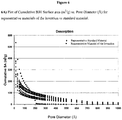
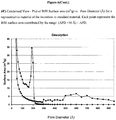
- Figure 6 shows representative plots of the BJH surface area vs pore diameter of representative compounds of the invention as compared to a standard material as determined using a nitrogen gas desorption isotherm at 77.3K.
- Figures 6 A-B show graphs of the cumulative BJH surface area vs the pore diameter.
- Figures 6 C-E show graphs of the BJH surface area vs the pore diameter in which the value of the cumulative BJH surface area at the higher pore diameter is subtracted from the value at the next lowest pore diameter.
- the associated BJH surface area in Figures 6 C-E is not a cumulative surface area, but rather, a representation of the overall surface area associated with or contributed by a given pore diameter across the range of the subtraction.
- the value shown at 900 in the Fig 6 C-E graphs is representative of the BJH surface area associated with the 900 to 950 ⁇ pores.
- the percentage of the BJH surface area contributed by pores greater than 200 ⁇ can be calculated by dividing the cumulative BJH surface from 200 ⁇ to 2000 ⁇ by the cumulative BJH surface area from the lowest pore diameter recorded ( e.g. 17 ⁇ ) to 2000 ⁇ - which represents the total BET surface area of the material - and multiplying by 100.
- the invention provides a porous material comprising a copolymer of a least one hydrophobic monomer and at least one hydrophilic monomer, wherein more than 10% of the BJH surface area of the porous material is contributed by pores that have a diameter greater than or equal to 200 ⁇ . In certain aspects, more than 12.5% of the BJH surface area of the porous material is contributed by pores that have a diameter greater than or equal to 200 ⁇ . In other aspects, more than 15% of the BJH surface area of the porous material is contributed by pores that have a diameter greater than or equal to 200 ⁇ . In yet other aspects, more than 17.5 % of the BJH surface area of the porous material is contributed by pores that have a diameter greater than or equal to 200 ⁇ .
- the invention provides a porous material comprising a copolymer of a least one hydrophobic monomer and at least one hydrophilic monomer, wherein more than 10% of the BJH surface area of the porous material is contributed by pores that have a diameter greater than or equal to 300 ⁇ . In certain aspects, more than 12.5% of the BJH surface area of the porous material is contributed by pores that have a diameter greater than or equal to 300 ⁇ . In other aspects, more than 15% of the BJH surface area of the porous material is contributed by pores that have a diameter greater than or equal to 300 ⁇ .
- the invention provides a porous material comprising a copolymer of a least one hydrophobic monomer and at least one hydrophilic monomer, wherein more than 12.5% of the BJH surface area of the porous material is contributed by pores that have a diameter greater than or equal to 200 ⁇ and more than 10% of the BJH surface area of the porous material is contributed by pores that have a diameter greater than or equal to 300 ⁇ . In certain embodiments, more than 15% of the BJH surface area of the porous material is contributed by pores that have a diameter greater than or equal to 200 ⁇ and more than 10% of the BJH surface area of the porous material is contributed by pores that have a diameter greater than or equal to 300 ⁇ .
- more than 17.5% of the BJH surface area of the porous material is contributed by pores that have a diameter greater than or equal to 200 ⁇ and more than 10% of the BJH surface area of the porous material is contributed by pores that have a diameter greater than or equal to 300 ⁇ .
- the invention provides a porous material comprising a copolymer of a least one hydrophobic monomer and at least one hydrophilic monomer, wherein, more than 15% of the BJH surface area of the porous material is contributed by pores that have a diameter greater than or equal to 200 ⁇ and more than 12.5% of the BJH surface area of the porous material is contributed by pores that have a diameter greater than or equal to 300 ⁇ . In other embodiments, more than 17.5% of the BJH surface area of the porous material is contributed by pores that have a diameter greater than or equal to 200 ⁇ and more than 12.5% of the BJH surface area of the porous material is contributed by pores that have a diameter greater than or equal to 300 ⁇ .
- the invention provides a porous material comprising a copolymer of a least one hydrophobic monomer and at least one hydrophilic monomer, wherein more than 17.5% of the BJH surface area of the porous material is contributed by pores that have a diameter greater than or equal to 200 ⁇ and more than 15% of the BJH surface area of the porous material is contributed by pores that have a diameter greater than or equal to 300 ⁇ .
- the BJH surface area of the porous materials of the invention as described herein is measured by BJH analysis of nitrogen gas adsorption at 77.3K.
- the invention provides a porous material comprising a copolymer of a least one hydrophobic monomer and at least one hydrophilic monomer, wherein said material has a median pore diameter of about 100 ⁇ to about 1000 ⁇ .
- Median pore diameter can be measured, for example, by inverse size exclusion chromatography (I-SEC).
- the material has a median pore diameter of about 200 ⁇ to about 800 ⁇ ; about 300 ⁇ to about 550 ⁇ ; about 100 ⁇ ; about 200 ⁇ ; about 300 ⁇ ; about 400 ⁇ ; about 425; about 450 ⁇ ; about 475 ⁇ ; about 500 ⁇ ; about 525 ⁇ ; about 550 ⁇ ; about 575 ⁇ ; about 600 ⁇ ; about 700 ⁇ ; or about 800 ⁇ .
- the invention further provides a porous material comprising a copolymer of a least one hydrophobic monomer and at least one hydrophilic monomer, wherein said material has nitrogen content from about 0.5%N to about 20%N; from about 1%N to about 10%N; from about 1%N to about 5%N; from about 1%N to about 4%N; about 1%N; about 1.5%N; about 2%N; about 2.5%N; about 3%N; about 3.5%N; about 4%N; about 4.5%N; about 5%N; about 5.5%N; about 6%N; about 6.5%N; about 7%N; about 7.5%N; about 8%N; about 8.5%N; about 9%N; about 9.5%N; about 10%N; about 10.5%N; about 11%N; about 11.5%N; about 12%N; about 12.5%N; about 13%N; about 13.5%N; about 14%N; about 14.5%N; or about 15%N
- the porous material of the invention has both a median pore diameter of about 100 ⁇ to about 1000 ⁇ ; about 200 ⁇ to about 900 ⁇ ; about 300 ⁇ to about 800 ⁇ ; or about 300 ⁇ to about 550 ⁇ ; and a nitrogen content from about 0.5%N to about 20%N; from about 1%N to about 10%N; from about 1%N to about 5%N; from about 1%N to about 4%N; about 1%N; about 1.5%N; about 2%N; about 2.5%N; about 3%N; about 3.5%N; about 4%N; about 4.5%N; about 5%N; about 5.5%N; about 6%N; about 6.5%N; about 7%N; about 7.5%N; about 8%N; about 8.5%N; about 9%N; about 9.5%N; about 10%N; about 10.5%N; about 11%N; about 11.5%N; about 12%N; about 12.5%N; about 13%N; about 13.5%N; about 14%N; about 14.5%N; or about 15%N.
- the porous material comprising a copolymer of a least one hydrophobic monomer and at least one hydrophilic monomer, wherein said material has an oxygen content from about 1%O to about 20%O; from about 1%O to about 10%O; from about 1%O to about 5%O; from about 1%O to about 4%O; about 1%O; about 2%O; about 3%O; about 4%O; about 5%O; about 6%O; about 7%O; about 8%O; about 9%O; about 10%O; about 11%O; about 12%0; about 13%0; about 14%0; or about 15%0.
- the porous material comprising a copolymer of a least one hydrophobic monomer and at least one hydrophilic monomer, wherein said material has a sulfur content from about 1%S to about 20%S; from about 1%S to about 10%S; from about 1%S to about 5%S; from about 1%S to about 4%S; about 1%S; about 2%S; about 3%S; about 4%S; about 5%S; about 6%S; about 7%S; about 8%S; about 9%S; about 10%S; about 11%S; about 12%S; about 13%S; about 14%S; or about 15%S.
- the porous material comprising a copolymer of a least one hydrophobic monomer and at least one hydrophilic monomer, wherein said material has a phosphorous content from about 1%P to about 20%P; from about 1%P to about 10%P; from about 1 %P to about 5%P; from about 1%P to about 4%P; about 1%P; about 2%P; about 3%P; about 4%P; about 5%P; about 6%P; about 7%P; about 8%P; about 9%P; about 10%P; about 11%P; about 12%P; about 13%P; about 14%P; or about 15%P.
- the porous material has a specific surface area in the range from about 50 to about 850 square meters per gram and pores having a diameter ranging from about 50 ⁇ to 1000 ⁇ .
- the porous materials of the invention take the form of porous particles, e.g., beads, pellets, or any other form desirable for use.
- the porous particles can have, e.g., a spherical shape, a regular shape or an irregular shape.
- the particles are beads having a diameter in the range from about 3 to about 500 ⁇ m, from about 10 to about 300 ⁇ m, or from about 20 to about 200 ⁇ m.
- the particles are beads having a diameter in the range from about 3 to about 30 ⁇ m, from about 5 to about 20 ⁇ m, or from about 10 to about 15 ⁇ m.
- the porous materials of the invention take the form of porous monoliths.
- the monoliths have the following characteristics: surface area ranging from about 50 to about 800 m 2 /g, more particularly about 300 to about 700 m 2 /g; pore volume ranging from about 0.2 to about 2.5 cm 3 /g, more particularly about 0.4 to about 2.0 cm 3 /g, still more particularly about 0.6 to about 1.4 cm 3 /g; and pore diameter ranging from about 20 to about 500 ⁇ , more particularly about 50 to 300 ⁇ , still more particularly about 80 to about 150 ⁇ .
- the porous materials of the invention comprise a copolymer comprising a least one hydrophobic monomer and at least one hydrophilic monomer.
- the copolymer of the invention is non-sulfonated. In certain other embodiments, the copolymer is sulfonated.
- the hydrophobic monomer comprises an aromatic carbocyclic group, e.g., a phenyl group or a phenylene group, or a straight chain C 2 -C 18 -alkyl group or a branched chain C 2 -C 18 -alkyl group.
- the hydrophobic monomer can be, e.g., styrene or divinylbenzene.
- a preferred copolymer is a poly(divinylbenzene-co-N-vinylcaprolactam).
- the hydrophobic monomer is divinylbenzene or styrene
- the hydrophilic monomer is N-vinylcaprolactam or N-vinyl acetamide.
- the copolymer is a poly(divinylbenzene-co-N-vinylcaprolactam).
- the porous material comprises at least about 8 mole percent N- vinylcaprolactam. In still other embodiments, the porous material comprises at least about 15 mole percent N- vinylcaprolactam.
- the porous material comprises from about 5 to about 35 mole percent N- vinylcaprolactam; from about 7 to about 33 mole percent N- vinylcaprolactam; from about 9 to about 32 mole percent N- vinylcaprolactam; from about 10 to about 30 mole percent N- vinylcaprolactam; from about 15 to about 30 mole percent N-vinylcaprolactam; from about 17.3 to about 29.6 mole percent N- vinylcaprolactam.
- the hydrophobic monomer is further substituted by at least one haloalkyl group.
- the hydrophilic monomer is a monomer having the formula: Wherein n is an integer from 1-3.
- the hydrophilic monomer is N-vinylcaprolactam. In specific embodiments, the hydrophilic monomer is not N-vinylpyrrolidone.
- the hydrophilic monomer is further substituted by at least one haloalkyl group.
- the hydrophilic monomer comprises one or more sulfur, phosphorous, nitrogen and/or oxygen atoms.
- porous materials in either porous particle or monolith form, are advantageously used for solid phase extraction or chromatography.
- the porous material comprises at least one porous particle, and more preferably a plurality of porous particles.
- the porous material comprises the copolymer poly(divinylbenzene-co-N- vinylcaprolactam).
- the poly(divinylbenzene-co-N- vinylcaprolactam) has ion-exchange functional moieties present at a concentration of about 0.01 to about 10.0 milliequivalents per gram of porous material; about 0.01 to about 5.0 milliequivalents per gram of porous material; about 0.01 to about 3.0 milliequivalents per gram of porous material; or about 0.01 to about 1.0 milliequivalents per gram of porous material.
- porous materials in either porous particle or monolith form, may be functionalized to provide an ion-exchange functional moiety.
- the ion-exchange functional moiety can be formed by formation of an amine functionality on materials of the invention after cholomethylation as in the methods described in U.S. Patent No. 7,731,844 , which is incorporated herein by reference.
- an amine functionality can be formed by direct reaction with a neat amine.
- the ion-exchange functional moiety can be formed from a substituted acyclic amine or a substituted cyclic amine.
- the substitution can be at any of the ring atoms, including heteroatoms.
- the ion-exchange functional moiety is a substituted cyclic secondary amine, e.g., N-methyldiazinane and 4-methylpiperidine.
- the aforesaid amines are advantageously substituted by an electron withdrawing group.
- the electron withdrawing group is selected from the group consisting of halogens, aromatic groups, unsaturated groups, ethers, thioethers, nitriles, nitro groups, esters, amides, carbamates, ureas, carbonates, sulfonamides, sulfones, sulfoxides and heteroatoms, e.g., N, O and S.
- the electron withdrawing group is a halogen, an ether, or an aromatic group.
- the electron withdrawing group of the amine has the effect of lowering the average pK a of the conjugate acid of the amine as compared to the conjugate acid of the amine without the electron withdrawing group.
- the pK a ranges from about 5 to about 7.
- the acyclic amine substituted with an electron withdrawing group includes benzylamine, N-methylbenzylamine, N-ethylbenzylamine, N-propylbenzylamine, N-butylbenzylamine, N-pentylbenzylamine, N-hexylbenzylamine, N-heptylbenzylamine, N-octylbenzylamine, N-nonylbenzylamine, N-decylbenzylamine, N-undecylbenzylamine, N-dodecylbenzylamine, N-tridecylbenzylamine, N-tetradecylbenzylamine, N-pentadecylbenzylamine, N-hexadecylbenzylamine, N-heptadecylbenzylamine, N-octadecylbenzylamine, dibenzylamine, aniline, N-methylaniline,
- the acyclic amine substituted with an electron withdrawing group is benzylamine, N-methylbenzylamine, or phenethylamine. In a preferred embodiment, the acyclic amine substituted with an electron withdrawing group is N-methylbenzylamine.
- cyclic secondary amines substituted with an electron withdrawing group include oxazetane, oxazolane, oxazinane, oxazepane, oxazocane, oxazonane, oxazecane, thiazetane, thiazolane, thiazinane, thiazepane, thiazocane, thiazonane, and thiazecane.
- the cyclic secondary amine is 1,4-oxazinane.
- the electron withdrawing group is a second heteroatom that has substituted for a carbon atom in the ring.
- the ring carbon adjacent to the nitrogen atom in azetidine is substituted by an oxygen to yield oxazetane, an amine encompassed by the term "cyclic secondary amine substituted with an electron withdrawing group”.
- an ion-exchange functional moiety can be formed by reaction of the materials of the invention with hydrogen peroxide.
- surface functionalization can be attained on the materials of the invention by the methods described in U.S. Patent No. 7,232,520 and U.S. Patent No. 7,731,844 , which are incorporated herein by reference.
- the materials of the invention may be surface modified by coating with a polymer.
- the materials of the invention may be surface modified by a combination of organic group modification and coating with a polymer.
- the organic group comprises a chiral moiety.
- the materials of the invention may be surface modified via formation of an organic covalent bond between an organic group on the material and the modifying reagent.
- the porous materials of the invention comprise a porous or non-porous core, including, but not limited to an inorganic core, an organic core or a hybrid core onto which a copolymer comprising a least one hydrophobic monomer and at least one hydrophilic monomer is grafted.
- the porous materials of the invention comprise a polymeric, porous core made from at least one hydrophobic monomer onto which a polymer made from a least one hydrophilic monomer is grafted.
- the porous materials of the invention comprise a polymeric, porous core made from at least one hydrophilic monomer onto which a polymer made from a least one hydrophobic monomer is grafted.
- the hydrophilic and hydrophobic monomers may be as described herein.
- the cores may include a silica material; a hybrid inorganic/organic material; a superficially porous material; or a superficially porous particle.
- porous materials of the invention can be prepared via a number of processes and mechanisms including, but not limited to, chain addition and step condensation processes, radical, anionic, cationic, ring-opening, group transfer, metathesis, and photochemical mechanisms.
- the copolymer can be prepared via standard synthetic methods known to those skilled in the art, e.g., as described in the examples.
- porous material may be produced by known methods, such as those methods described in, for example, in U.S. Patent Nos. 4,017,528 ; 6,528,167 ; 6,686,035 ; 7,175,913 ; 7,731,844 and WO2004/041398 .
- novel materials of the invention can be used for solid phase extraction and chromatography.
- the invention also provides a porous material for solid phase extraction or chromatography comprising at least one ion-exchange functional group, at least one hydrophilic component and at least one hydrophobic component.
- the ion-exchange functional groups enable the porous material to interact with anionic, cationic, acidic and/or basic solutes.
- the hydrophilic polar components enable the porous material to have polar interactions and hydrogen bonding capabilities with solutes.
- the hydrophobic components enable the porous material to have affinity towards nonpolar solutes through hydrophobic interaction.
- porous materials of this invention have a combination of various interaction forces towards solutes, they are very useful materials for, e.g., solid phase extraction, ion-exchange, and liquid chromatography applications.
- these novel porous materials can be used to bind, recover and/or remove solutes from fluids.
- these novel porous materials have certain chemical affinities or attractions between the materials and certain molecules, particularly biological or biochemical molecules, such as proteins, peptides, hormones, oligonucleotides, polynucleotides, vitamins, cofactors, metabolites, lipids and carbohydrates.
- the materials of the invention may be used to selectively adsorb and isolate certain biomolecules for analysis and or quantification.
- the invention also provides a method for removing or isolating a component, e.g., a solute, from a mixture.
- a solution having a solute is contacted with a porous material of the invention under conditions that allow for sorption of the solute to the porous material.
- the solute can be, e.g., any molecule having a hydrophobic, hydrophilic, or ionic interaction or a combination of two or three of these interactions.
- the solute is an organic compound of polarity suitable for adsorption onto the porous material.
- solutes include, e.g., drugs, pesticides, herbicides, toxins and environmental pollutants, e.g., resulting from the combustion of fossil fuels or other industrial activity, such as metal-organic compounds comprising a heavy metal such mercury, lead or cadmium.
- the solutes can also be metabolites or degradation products of the foregoing materials.
- Solutes also include, e.g., biomolecules, such as proteins, peptides, hormones, oligonucleotides, polynucleotides, vitamins, cofactors, metabolites, lipids and carbohydrates. Solutes also include, e.g., modified proteins, modified oligonucleotides, single-stranded oligonucleotides, double-stranded oligonucleotides, DNA, and RNA.
- biomolecules such as proteins, peptides, hormones, oligonucleotides, polynucleotides, vitamins, cofactors, metabolites, lipids and carbohydrates.
- Solutes also include, e.g., modified proteins, modified oligonucleotides, single-stranded oligonucleotides, double-stranded oligonucleotides, DNA, and RNA.
- the solution e.g., can comprise water, an aqueous solution, or a mixture of water or an aqueous solution and a water-miscible polar organic solvent, e.g., methanol, ethanol, N,N-dimethylformamide, dimethylsulfoxide or acetonitrile.
- the solution is an acidic, basic or neutral aqueous, i.e., between about 0% and about 99% water by volume, solution. Specific examples are provided in the experimentals.
- the solution comprising the solute can, optionally, further contain one or more additional solutes.
- the solution is an aqueous solution which includes a complex variety of solutes.
- Solutions of this type include, e.g., blood, plasma, urine, cerebrospinal fluid, synovial fluid and other biological fluids, including, e.g., extracts of tissues, such as liver tissue, muscle tissue, brain tissue or heart tissue.
- extracts can be, e.g., aqueous extracts or organic extracts which have been dried and subsequently reconstituted in water or in a water/organic mixture.
- Solutions also include, e.g., ground water, surface water, drinking water or an aqueous or organic extract of an environmental sample, such as a soil sample.
- solutions include a food substance, such as a fruit or vegetable juice or milk or an aqueous or aqueous/organic extract of a food substance, such as fruit, vegetable, cereal or meat.
- a food substance such as a fruit or vegetable juice or milk
- an aqueous or aqueous/organic extract of a food substance such as fruit, vegetable, cereal or meat.
- Other solutions include, e.g., natural products extractions from plants and broths.
- the solution can be contacted with the porous material in any fashion which allows sorption of the solute to the porous material, such as a batch or chromatographic process.
- the solution can be forced through a porous polymer column, disk or plug, or the solution can be stirred with the porous material, such as in a batch-stirred reactor.
- the solution can also be added to a porous material-containing well of a microtiter plate.
- the porous material can take the form of a monolith or particle, e.g., beads or pellets.
- the solution is contacted with the porous material for a time period sufficient for the solute of interest to substantially sorb onto the porous material. This period is typically the time necessary for the solute to equilibrate between the porous material surface and the solution.
- the sorption or partition of the solute onto the porous material can be partial or complete.
- the invention also includes a method for analytically determining the level of solute in a solution.
- a solution having a solute is contacted with a porous material under conditions so as to allow sorption of the solute to the porous material.
- the material comprises at least one ion-exchange functional group, at least one hydrophilic polar component and at least one hydrophobic component.
- the porous material having the sorbed solute is washed with a solvent under conditions so as to desorb the solute from the porous material.
- the level of the desorbed solute present in the solvent after the washing is analytically determined.
- the solution contacted with the porous material can comprise the solute of interest in dilute form, e.g., at a concentration too low for accurate quantitation.
- a solution which includes the solute of interest can be prepared having a substantially higher concentration of the solute of interest than that of the original solution.
- the method can also result in solvent exchange, that is, the solute is removed from a first solvent and re-dissolved in a second solvent.
- Solvents which are suitable for desorbing the solute from the porous material can be, e.g., polar water-miscible organic solvents, such as alcohols, e.g., methanol, ethanol or isopropanol, acetonitrile, acetone, and tetrahydrofuran, or mixtures of water and these solvents.
- the desorbing solvent can also be, e.g., a nonpolar or moderately polar water-immiscible solvent such as dichloromethane, diethylether, chloroform, or ethylacetate. Mixtures of these solvents are also suitable.
- Preferred solvents or solvent mixtures must be determined for each individual case. Specific examples are provided in the experimentals.
- a suitable solvent can be determined by one of ordinary skill in the art without undue experimentation, as is routinely done in chromatographic methods development (see, e.g., McDonald and Bouvier, eds., Solid Phase Extraction Applications Guide and Bibliography, "A Resource for Sample Preparation Methods Development,” 6th edition, Waters, Milford, MA (1995 ); Snyder and Kirkland, Introduction to Modern Liquid Chromatography, New York: J. Wiley and Sons (1974 )).
- the level of the desorbed solute present in the solvent can be analytically determined by a variety of techniques known to those skilled in the art, e.g., high performance liquid chromatography, liquid chromatography/mass spectrometry, gas chromatography, gas chromatography/mass spectrometry, or immunoassay.
- the invention also provides separation devices comprising the porous materials of the invention.
- separation devices include chromatographic columns, cartridges, thin layer chromatographic plates, filtration membranes, sample clean up devices, solid phase organic synthesis supports, and microtiter plates.
- more than one type of functionalized porous material can be used in the separation devices, e.g., columns, cartridges, and the like.
- the porous materials of the invention are especially well suited for solid phase extraction.
- the invention also includes a solid phase extraction cartridge comprising a porous material of the invention packed inside an open-ended container.
- the porous material is packed as particles within the open-ended container to form a solid phase extraction cartridge.
- the container can be, e.g., a cylindrical container or column, which is open at both ends so that the solution can enter the container through one end, contact the porous material within the container, and exit the container through the other end.
- the porous material can be packed within the container as small particles, such as beads having a diameter between about 3 ⁇ m and about 500 ⁇ m; between about 5 ⁇ m and about 200 ⁇ m; or between about 10 ⁇ m and about 50 ⁇ m.
- the porous particles can be packed in the container enmeshed in a porous membrane.
- the container can be formed of any material, which is compatible, within the time frame of the solid phase extraction process, with the solutions and solvents to be used in the procedure. Such materials include glass and various plastics, such as high density polyethylene and polypropylene.
- the container is cylindrical through most of its length and has a narrow tip at one end.
- One example of such a container is a syringe barrel.
- the amount of porous material within the container is limited by the container volume and can range from about 0.001 g to about 50 kg, and preferably is between about 0.025 g and about 1 g.
- the amount of porous material suitable for a given extraction depends upon the amount of solute to be sorbed, the available surface area of the porous material and the strength of the interaction between the solute and the porous material. This amount can be readily determined by one of ordinary skill in the art.
- the cartridge can be a single use cartridge, which is used for the treatment of a single sample and then discarded, or it can be used to treat multiple samples.
- N-vinylcaprolactam and NVP were obtained from ISP
- Sodium oleyl sulfate was obtained from ALCOLAC.
- AIBN was obtained from DUPONT.
- Methocel E- 15 and Divinylbenzene were purchased from DOW. Inhibitor was removed from DVB prior to use.
- the %N values were measured by combustion analysis (CE-440 Elemental Analyzer; Morris Analytical Inc., North Chelmsford, MA).
- the specific surface areas (SSA) and the average pore diameters (APD) of these materials were measured using the multi-point N 2 sorption method (Micromeritics ASAP 2400; Micromeritics Instruments Inc., Norcross, Ga., or equivalent).
- the specific surface area was calculated using either the BJH method or the BET method, and the average pore diameter was calculated from the desorption leg of the nitrogen isotherm at 77.3K.
- the BJH SSA was correlated to pore diameter using the nitrogen desorption isotherm from the BJH method.
- the exclusion volume (Ve) is determined from the intersection of the two linear lines for the external and internal pores in the plot of the logarithm of molecular sizes of PS standards versus their retention volumes.
- the median pore diameter is defined as the molecular size corresponding to 50% internal pore volume, that is, at the retention volume equal to (Vt + Ve)/2.
- aqueous phase was prepared by dissolving 5.05 g of Methocel in 1 L of water @ 90 °C and allowing the mixture to cool to room temperature.
- Sodium oleyl sulfate (Sipex OS, ALCOLAC), for reactions requiring it, was added to the aqueous phase when it reached ⁇ 50 °C.
- the organic phase was prepared by combining the requisite amounts of DVB and either NVP or V-Cap with 1.9 g of AIBN and the requisite amounts of porogens (toluene, diethylbenzene and/or 2-ethylhexanol) in a 3 L, 4-neck kettle equipped with an overhead stirrer and a Thermowatch apparatus. With the overhead mixer turned on low, the aqueous solution was slowly added. At this point, a peristaltic pump (Cole-Parmer MasterFlex Model 7520-00), equipped with an inline static mixer was attached to the kettle via glass tubes (19/24 joints) connected to the inlet and outlet lines of the pump.
- a peristaltic pump Cold-Parmer MasterFlex Model 7520-00
- the system was then purged with Ar, the overhead mixer was set to 400 RPM, and the peristaltic pump was set to 6 ( ⁇ 900 mL/ min.). After mixing for -30 minutes, the droplet size and longevity was checked using a light microscope. The target particle size was 10 - 30 ⁇ m in diameter, with droplets lasting for greater than 30 sec. before collapse. If these conditions were met, the peristaltic pump was allowed to empty into the kettle and then shut off. The solution was heated to 70 °C, allowed to stir overnight ( ⁇ 16 hours), and then cooled to room temperature. The mixture was poured into a 3L glass filter equipped with a 20 ⁇ m cloth, the mother liquor was filtered, and the particles were washed with 3 x 600 mL of methanol. The resulting material was dried in a vacuum oven overnight at 80 °C and then submitted for analysis.
- Methocel E-15 (Dow Chemical) was dissolved in 1L of water at 90 °C, then cooled to room temperature.
- V-Cap N-vinylcaprolactam
- AIBN azobisisobutyronitrile
- the emulsion droplet size was checked after 30 minutes. Once the desired droplet size range had been reached (by adjusting the rate of flow through the static mixer), the static mixing loop was turned off, and the mixture heated at 70 °C for 16 hours, then cooled to room temperature. The mixture was filtered using a 20 ⁇ m polyester filter cloth, washed 3x with 600 mL of methanol and dried for 16 hours under vacuum at 80 °C. %N - 3.34; SA - 562 m 2 /g, BET APD - 88.5 ⁇ .
- Methocel E-15 (Dow Chemical) was dissolved in 1L of water at 90 °C, then cooled to room temperature.
- 174.5 g of divinylbenzene (DVB 80, Dow Chemical) 87.1 g of N- vinylcaprolactam (V-Cap, International Specialty Products, Wayne, NJ)
- 1.9 g of azobisisobutyronitrile (AIBN, DuPont) were dissolved and mixed in 243 g of toluene.
- the organic and aqueous phases were combined in a 3L glass kettle and stirred at 400 rpm with an overhead stirrer, while running through a static mixing loop for 30 minutes. The emulsion droplet size was checked after 30 minutes.
- the static mixing loop was turned off, and the mixture heated at 70 °C for 16 hours, then cooled to room temperature.
- the mixture was filtered using a 20 ⁇ m polyester filter cloth, washed 3x with 600 mL of methanol and dried for 16 hours under vacuum at 80 °C. %N - 1.70; SA - 807 m 2 /g, BET APD - 77.0 ⁇ .
- Methocel E-15 (Dow Chemical) was dissolved in 1L of water at 90 °C. After cooling to 50 °C, 3.24 g of sodium oleyl sulfate (Sipex OS, ALCOLAC) was added, and then the solution was cooled to room temperature.
- the static mixing loop was turned off, and the mixture heated at 70 °C for 16 hours, then cooled to room temperature.
- the mixture was filtered using a 20 ⁇ m polyester filter cloth, washed 3x with 600 mL of methanol and dried for 16 hours under vacuum at 80 °C. %N - 2.05; SA - 552 m 2 /g, BET APD - 145.9 ⁇
- Methocel E-15 (Dow Chemical) was dissolved in 1L of water at 90 °C. After cooling to 50 °C, 3.24 g of sodium oleyl sulfate (Sipex OS, ALCOLAC) was added, and then the solution was cooled to room temperature.
- the static mixing loop was turned off, and the mixture heated at 70 °C for 16 hours, then cooled to room temperature.
- the mixture was filtered using a 20 ⁇ m polyester filter cloth, washed 3x with 600 mL of methanol and dried for 16 hours under vacuum at 80 °C. %N - 2.68; SA - 458 m 2 /g, BET APD - 193 ⁇ .
- Methocel E-15 (Dow Chemical) was dissolved in 12L of water at 90 °C. After cooling to 50 °C, 35.3 g of sodium oleyl sulfate (Sipex OS, ALCOLAC) was added, and then the solution was cooled to room temperature. In a 5 L RBF, divinylbenzene (DVB 80, Dow Chemical), N-vinylcaprolactam (V-Cap, International Specialty Products, Wayne, NJ), and 20.7 g of azobisisobutyronitrile (AIBN, DuPont) were dissolved in a mixture of diethylbenzene and 2-ethylhexanol.
- Dow Chemical divinylbenzene
- V-Cap N-vinylcaprolactam
- AIBN azobisisobutyronitrile
- Material 1 b Cumulative Surface Area of Pores from BJH Desorption Curve (m 2 /g) 17 - 2000 (Total SA) 376. 1 356.2 324. 7 149. 7 261. 2 238. 6 169. 1 237. 8 253. 9 537.3 300 - 2000 77.7 74.3 69.8 65.7 66.2 43.8 38.8 35.1 46.8 1.6 200 - 2000 100.
- Methocel E-15 (Dow Chemical) was dissolved in 12L of water at 90 °C.
- 1902 g of divinylbenzene (DVB 80, Dow Chemical) 1137 g of N-vinylpyrrolidone (NVP, International Specialty Products, Wayne, NJ), and 20.7 g of azobisisobutyronitrile (AIBN, DuPont) were dissolved in a mixture of diethylbenzene and 2-ethylhexanol.
- the organic and aqueous phases were combined in a 33L glass reactor equipped with baffles, and stirred overhead stirrer at a rate appropriate to achieve an oil droplet size of 20 ⁇ m.
- Example 8 Use of Wide Pore Material weak anion exchanger for the purification of oligonucleotides in plasma
- Comparative Material 2 is a representative material from US Patent No. 7,731,884 having a nominal particle size of 30 ⁇ m), according to the following protocol:
- aqueous and organic solutions are prepared as in Example 5, except that no sodium oleyl sulfate is added to the aqueous phase.
- the organic and aqueous phases are combined in small glass vials in the same ratio as in Example 5.
- Each of the vials is then sealed with a stopper, placed vertically in a thermostated oil bath, heated at 70 °C for 16 hours, and cooled to room temperature.
Landscapes
- Chemical & Material Sciences (AREA)
- Chemical Kinetics & Catalysis (AREA)
- Organic Chemistry (AREA)
- Analytical Chemistry (AREA)
- Health & Medical Sciences (AREA)
- Medicinal Chemistry (AREA)
- Polymers & Plastics (AREA)
- Solid-Sorbent Or Filter-Aiding Compositions (AREA)
- Treatment Of Liquids With Adsorbents In General (AREA)
Abstract
Description
- This application claims the benefit of
U.S. provisional application Ser. No. 61/488,561, filed May 20, 2011 - Solid phase extraction (SPE) is a chromatographic technique that is widely used, e.g., for preconcentration and cleanup of analytical samples, for purification of various chemicals, and for removal of toxic or valuable substances from aqueous solutions. SPE is usually performed using a column or cartridge containing an appropriate material or sorbent. SPE procedures have been developed using sorbents that can interact with analytes by hydrophobic, ion-exchange, chelation, sorption, and other mechanisms, to bind and remove the analytes from fluids.
- Because different SPE applications can require different sorbents, there is a need for sorbents with novel properties that have unique selectivities. These include superior wetting characteristics, selective capture of analytes of interest, and non-retention of interfering analytes. Sorbents comprising porous particles having the aforementioned properties are described in
WO 99/64480 U.S. Patent 6,322,695B1 . - The most common materials currently used are a co-polymer of divinylbenzene and N-vinylpyrrolidinone with an average pore diameter of 73 - 89 Å. The pore size of this material is however too restrictive for samples of biological materials.
- There remains a need for SPE materials with larger average pore diameters which maintain nitrogen content in the materials as well as particle morphology.
- The invention provides novel porous materials that are useful in chromatographic processes, e.g., solid phase extraction, and that provide a number of advantages. Such advantages include superior wetting characteristics, selective capture of analytes of interest, and non-retention of interfering analytes. The invention advantageously provides novel porous materials having a large percentage of larger pores (i.e. wide pores). The invention advantageously provides novel porous materials that overcome the problems of SPE of biological samples.
- In one aspect, the invention provides a porous material comprising a copolymer of a least one hydrophobic monomer and at least one hydrophilic monomer, wherein more than 10% of the Barret-Joyner-Halenda (BJH) surface area of the porous material is contributed by pores that have a diameter greater than or equal to 200 Å. In certain aspects, the BJH surface area and pore diameter are determined using a nitrogen gas adsorption desorption isotherm at 77.3K.
- In another aspect, the invention provides a porous material comprising a copolymer of at least one hydrophobic monomer and at least one hydrophilic monomer, wherein said material has a median pore diameter of about 100Å to about 1000Å.
- In yet another aspect, the invention provides a porous material comprising a copolymer of at least one hydrophobic monomer and at least one hydrophilic monomer, wherein at least one of the hydrophilic monomers is a monomer having the formula:
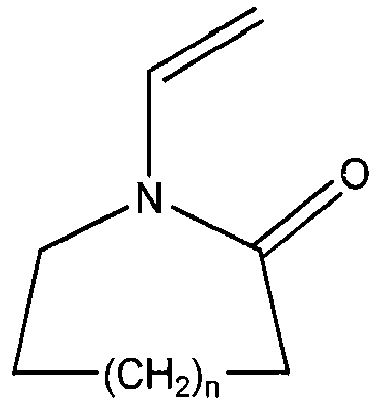
- In certain embodiments, the porous material of the invention comprises a porous particle that comprises said copolymer.
- In certain other embodiments, the porous material of the invention comprises a porous monolith that comprises said copolymer.
- In other embodiments, the porous material of the invention, said hydrophobic monomer is divinylbenzene or styrene.
- In yet other embodiments, said hydrophobic monomer of the porous material of the invention is further substituted by at least one haloalkyl group.
- In still other embodiments, said hydrophilic monomer of the porous material of the invention is N-vinylcaprolactam.
- In other embodiments, said hydrophilic monomer of the porous material of the invention is not N-vinylpyrrolidone.
- In yet other embodiments, said hydrophobic monomer of the porous material of the invention is further substituted by at least one haloalkyl group.
- In still other embodiments, said hydrophilic monomer of the porous material of the invention is further substituted by at least one haloalkyl group.
- In still other embodiments, said copolymer of the porous material of the invention is a poly(divinylbenzene-co-N-vinylcaprolactam).
- In another aspect, the invention also provides solid phase extraction and chromatography materials comprising porous materials of the invention.
- In yet another aspect, the invention provides a separation device comprising a porous material of the invention. In a related aspect, the invention provides a solid phase extraction cartridge comprising a porous material according to the invention.
- The invention also provides a method for removing or isolating a component from a mixture. The method comprises contacting the mixture with a chromatographic material comprising the porous material according to the invention, to thereby remove or isolate the component from the mixture.
- In another aspect, the invention provides a method for determining the level of a component in a mixture. The method comprises contacting the mixture with a chromatographic material comprising a porous material according to the invention under conditions that allow for sorption of the component onto the porous material; washing the chromatographic material having the sorbed component with a solvent under conditions so as to desorb the component from the porous materials; and determining the level of the desorbed component.
-
-
Figure 1 depicts the percent nitrogen content vs. BET average pore diameter of representative porous materials of the invention and standard materials. -
Figure 2 depicts the BJH Desorption dV/dlog(D) pore volume plots of representative porous materials of the invention and standard materials. The graph presents pore diameter distributions of materials made by standard methods and those made by the methods of the invention as determined by BJH analysis -
Figure 3 shows SEM depictions of a) standard materials having a BET average pore diameter of about 91 Å; b) materials of the invention having a BET average pore diameter of about 146Å. and c) materials of the invention having an average pore diameter of about 500Å. -
Figure 4 shows SEM depictions of representative materials of the invention produced during scaled productions and a close-up comparison of the materials of the invention as compared to a standard material produced using toluene and N-vinylpyrrolidone. -
Figure 5 shows an SEM depiction of a material produced using polar porogens, DVB and N-vinylpyrrolidone which demonstrates the inability of N-vinylpyrrolidone to produce wide pore materials like the materials of the invention. -
Figure 6 shows representative plots of the BJH surface area vs pore diameter of representative compounds of the invention as compared to a standard material as determined using a nitrogen gas desorption isotherm at 77.3K.Figures 6 A-B show graphs of the cumulative BJH surface area vs the pore diameter.Figures 6 C-E show graphs of the BJH surface area vs the pore diameter in which the value of the cumulative BJH surface area at the higher pore diameter is subtracted from the value at the next lowest pore diameter. - The present invention will be more fully illustrated by reference to the definitions set forth below.
- The term "BET surface area" describes the specific surface area of a material as determined by standard BET techniques for analysis of gas adsorption-desorption, such as those described in Gregg, S.J. and Sing, K.S.W. (1982) Adsorption, Surface Area and Porosity, p. 303 Academic Press, London; and Lowell, S. and Shields, J.E. (1991) Powder surface area and porosity (3rd edition),p. 245. Chapman and Hall, U.K. In specific aspects of the invention, the BET surface area is as measured by BET analysis of nitrogen gas adsorption at 77.3K.
- The term "BJH surface area" describes the specific surface area of a material as determined by standard BJH techniques for analysis, such as those described in Barret et al. J. Am. Chem. Soc. (1951), vol. 73, pp. 373 -380 In specific aspects of the invention, the BJH surface area and pore diameter are determined using a nitrogen gas adsorption desorption isotherm at 77.3K.
- The term "hydrophilic" describes having an affinity for, attracting, adsorbing or absorbing water.
- The term "hydrophobic" describes lacking an affinity for, repelling, or failing to adsorb or absorb water.
- The term "ion-exchange functional group" is intended to include a group where the counter-ion is partially free and can readily be exchanged for other ions of the same sign.
- The term "mole percent" describes the mole fraction, expressed as a percent, of the monomer of interest relative to the total moles of the various (two or more) monomers that comprise the copolymer of the porous material of the invention.
- The term "monolith" is intended to include a porous, three-dimensional material having a continuous interconnected pore structure in a single piece. A monolith is prepared, for example, by casting precursors into a mold of a desired shape. The term monolith is meant to be distinguished from a collection of individual particles packed into a bed formation, in which the end product still comprises individual particles in bed formation.
- The term "monomer" is intended to include a molecule comprising one or more polymerizable functional groups prior to polymerization, or a repeating unit of a polymer.
- The term "porous material" is intended to include a member of a class of porous crosslinked polymers penetrated by pores through which solutions can diffuse. Pores are regions between densely packed polymer chains.
- The term "random ordering" is intended to include ordering in which individual units are joined randomly.
- The term "solid phase extraction" is intended to include a process employing a solid phase for isolating classes of molecular species from fluid phases such as gases and liquids by, e.g., sorption, ion-exchange, chelation, size exclusion (molecular filtration), affinity or ion pairing mechanisms.
- The term "sorption" describes the ability of a material to take up and hold another material by absorption or adsorption.
- The term "surface modifiers" includes (typically) functional groups which impart a certain chromatographic functionality to the material.
- The language "surface modified" is used herein to describe the composite material of the present invention that possess organic groups which may additionally be substituted or derivatized with a surface modifier. "Surface modifiers" include (typically) organic functional groups that impart a certain chromatographic functionality to the material.
- The language "surface functionalized" is used herein to describe the composite material of the present invention that possess ion-exchange functional groups that impart a certain chromatographic functionality to the material.
- BET theory is used to explain the physical adsorption of gas molecules on a solid surface. The theory was developed by Stephen Brunauer, Paul Hugh Emmett, and Edward Teller and serves as the basis for an important analysis technique for the measurement of the specific surface area of a material.
- In physical gas adsorption, an inert gas, typically nitrogen, is adsorbed on the surface of a solid material. This occurs on the outer surface and, in case of porous materials, also on the surface of pores. Adsorption of nitrogen at a temperature of 77 K leads to a so-called adsorption isotherm, sometimes referred to as BET isotherm, which is mostly measured over porous materials. In specific cases, the use of argon adsorption, carbon dioxide or krypton gas adsorption may be used instead of nitrogen adsorption to accurately probe the micropores.
- Monolayer formation of gas molecules on the surface is used to determine the specific surface area, while the principle of capillary condensation can be applied to assess the presence of pores, pore volume and pore size distribution.
- In general, two different techniques can be distinguished:
The flow technique uses a detector to obtain information on the amount of adsorbed gas resulting in a specific BET surface area and/or total pore volume. - The volumetric technique measures many adsorption and/or desorption points providing a full isotherm with information on BET surface area, pore volume and pore size distribution.
- Standard BET analysis techniques are well known in the art and can be found, for example, in Gregg, S.J. and Sing, K.S.W. (1982) Adsorption, Surface Area and Porosity, p. 303 Academic Press, London and in Lowell, S. and Shields, J.E. (1991) Powder surface area and porosity (3rd edition),p. 245. Chapman and Hall, U.K. The disclosures of each of these references are incorporated herein by reference in their entireties.
- BJH Analysis is used to estimate the volume and area of porous adsorbents available to molecules of various sizes. BJH Analysis is related to the BET and can also be employed to determine pore area and specific pore volume using adsorption and desorption techniques. This technique characterizes pore size distribution independent of external area due to particle size of the sample. BJH Analysis was developed by Elliot Barrett, Leslie Joyner and Paul Halenda.
-
Figure 6 shows representative plots of the BJH surface area vs pore diameter of representative compounds of the invention as compared to a standard material as determined using a nitrogen gas desorption isotherm at 77.3K.Figures 6 A-B show graphs of the cumulative BJH surface area vs the pore diameter.Figures 6 C-E show graphs of the BJH surface area vs the pore diameter in which the value of the cumulative BJH surface area at the higher pore diameter is subtracted from the value at the next lowest pore diameter. Thus, the associated BJH surface area inFigures 6 C-E is not a cumulative surface area, but rather, a representation of the overall surface area associated with or contributed by a given pore diameter across the range of the subtraction. Thus, for example, the value shown at 900 in theFig 6 C-E graphs is representative of the BJH surface area associated with the 900 to 950 Å pores. - The percentage of the BJH surface area contributed by pores greater than 200 Å, for example, can be calculated by dividing the cumulative BJH surface from 200 Å to 2000 Å by the cumulative BJH surface area from the lowest pore diameter recorded (e.g. 17 Å) to 2000 Å - which represents the total BET surface area of the material - and multiplying by 100.
- In one aspect, the invention provides a porous material comprising a copolymer of a least one hydrophobic monomer and at least one hydrophilic monomer, wherein more than 10% of the BJH surface area of the porous material is contributed by pores that have a diameter greater than or equal to 200 Å. In certain aspects, more than 12.5% of the BJH surface area of the porous material is contributed by pores that have a diameter greater than or equal to 200 Å. In other aspects, more than 15% of the BJH surface area of the porous material is contributed by pores that have a diameter greater than or equal to 200 Å . In yet other aspects, more than 17.5 % of the BJH surface area of the porous material is contributed by pores that have a diameter greater than or equal to 200 Å.
- In another aspect, the invention provides a porous material comprising a copolymer of a least one hydrophobic monomer and at least one hydrophilic monomer, wherein more than 10% of the BJH surface area of the porous material is contributed by pores that have a diameter greater than or equal to 300 Å. In certain aspects, more than 12.5% of the BJH surface area of the porous material is contributed by pores that have a diameter greater than or equal to 300 Å. In other aspects, more than 15% of the BJH surface area of the porous material is contributed by pores that have a diameter greater than or equal to 300 Å.
- In still another aspect, the invention provides a porous material comprising a copolymer of a least one hydrophobic monomer and at least one hydrophilic monomer, wherein more than 12.5% of the BJH surface area of the porous material is contributed by pores that have a diameter greater than or equal to 200 Å and more than 10% of the BJH surface area of the porous material is contributed by pores that have a diameter greater than or equal to 300 Å. In certain embodiments, more than 15% of the BJH surface area of the porous material is contributed by pores that have a diameter greater than or equal to 200 Å and more than 10% of the BJH surface area of the porous material is contributed by pores that have a diameter greater than or equal to 300 Å. In other embodiments, more than 17.5% of the BJH surface area of the porous material is contributed by pores that have a diameter greater than or equal to 200 Å and more than 10% of the BJH surface area of the porous material is contributed by pores that have a diameter greater than or equal to 300 Å.
- In yet another aspect, the invention provides a porous material comprising a copolymer of a least one hydrophobic monomer and at least one hydrophilic monomer, wherein, more than 15% of the BJH surface area of the porous material is contributed by pores that have a diameter greater than or equal to 200 Å and more than 12.5% of the BJH surface area of the porous material is contributed by pores that have a diameter greater than or equal to 300 Å. In other embodiments, more than 17.5% of the BJH surface area of the porous material is contributed by pores that have a diameter greater than or equal to 200 Å and more than 12.5% of the BJH surface area of the porous material is contributed by pores that have a diameter greater than or equal to 300 Å.
- In still yet another aspect, the invention provides a porous material comprising a copolymer of a least one hydrophobic monomer and at least one hydrophilic monomer, wherein more than 17.5% of the BJH surface area of the porous material is contributed by pores that have a diameter greater than or equal to 200 Å and more than 15% of the BJH surface area of the porous material is contributed by pores that have a diameter greater than or equal to 300 Å.
- In yet another aspect, the BJH surface area of the porous materials of the invention as described herein is measured by BJH analysis of nitrogen gas adsorption at 77.3K.
- In another aspect, the invention provides a porous material comprising a copolymer of a least one hydrophobic monomer and at least one hydrophilic monomer, wherein said material has a median pore diameter of about 100Å to about 1000Å. Median pore diameter can be measured, for example, by inverse size exclusion chromatography (I-SEC). In certain aspects, the material has a median pore diameter of about 200Å to about 800Å; about 300Å to about 550Å; about 100Å; about 200Å; about 300Å; about 400Å; about 425; about 450Å; about 475Å; about 500Å; about 525Å; about 550Å; about 575Å; about 600Å; about 700Å; or about 800Å.
- The invention further provides a porous material comprising a copolymer of a least one hydrophobic monomer and at least one hydrophilic monomer, wherein said material has nitrogen content from about 0.5%N to about 20%N; from about 1%N to about 10%N; from about 1%N to about 5%N; from about 1%N to about 4%N; about 1%N; about 1.5%N; about 2%N; about 2.5%N; about 3%N; about 3.5%N; about 4%N; about 4.5%N; about 5%N; about 5.5%N; about 6%N; about 6.5%N; about 7%N; about 7.5%N; about 8%N; about 8.5%N; about 9%N; about 9.5%N; about 10%N; about 10.5%N; about 11%N; about 11.5%N; about 12%N; about 12.5%N; about 13%N; about 13.5%N; about 14%N; about 14.5%N; or about 15%N
- In certain embodiments, the porous material of the invention has both a median pore diameter of about 100Å to about 1000Å; about 200Å to about 900Å; about 300Å to about 800Å; or about 300Å to about 550 Å; and a nitrogen content from about 0.5%N to about 20%N; from about 1%N to about 10%N; from about 1%N to about 5%N; from about 1%N to about 4%N; about 1%N; about 1.5%N; about 2%N; about 2.5%N; about 3%N; about 3.5%N; about 4%N; about 4.5%N; about 5%N; about 5.5%N; about 6%N; about 6.5%N; about 7%N; about 7.5%N; about 8%N; about 8.5%N; about 9%N; about 9.5%N; about 10%N; about 10.5%N; about 11%N; about 11.5%N; about 12%N; about 12.5%N; about 13%N; about 13.5%N; about 14%N; about 14.5%N; or about 15%N.
- In other embodiments, the porous material comprising a copolymer of a least one hydrophobic monomer and at least one hydrophilic monomer, wherein said material has an oxygen content from about 1%O to about 20%O; from about 1%O to about 10%O; from about 1%O to about 5%O; from about 1%O to about 4%O; about 1%O; about 2%O; about 3%O; about 4%O; about 5%O; about 6%O; about 7%O; about 8%O; about 9%O; about 10%O; about 11%O; about 12%0; about 13%0; about 14%0; or about 15%0.
- In yet other embodiments, the porous material comprising a copolymer of a least one hydrophobic monomer and at least one hydrophilic monomer, wherein said material has a sulfur content from about 1%S to about 20%S; from about 1%S to about 10%S; from about 1%S to about 5%S; from about 1%S to about 4%S; about 1%S; about 2%S; about 3%S; about 4%S; about 5%S; about 6%S; about 7%S; about 8%S; about 9%S; about 10%S; about 11%S; about 12%S; about 13%S; about 14%S; or about 15%S.
- In still other embodiments, the porous material comprising a copolymer of a least one hydrophobic monomer and at least one hydrophilic monomer, wherein said material has a phosphorous content from about 1%P to about 20%P; from about 1%P to about 10%P; from about 1 %P to about 5%P; from about 1%P to about 4%P; about 1%P; about 2%P; about 3%P; about 4%P; about 5%P; about 6%P; about 7%P; about 8%P; about 9%P; about 10%P; about 11%P; about 12%P; about 13%P; about 14%P; or about 15%P.
- In certain aspects, the porous material has a specific surface area in the range from about 50 to about 850 square meters per gram and pores having a diameter ranging from about 50 Å to 1000 Å.
- In certain embodiments, the porous materials of the invention take the form of porous particles, e.g., beads, pellets, or any other form desirable for use. The porous particles can have, e.g., a spherical shape, a regular shape or an irregular shape. In some embodiments, the particles are beads having a diameter in the range from about 3 to about 500 µm, from about 10 to about 300 µm, or from about 20 to about 200 µm. In other embodiments, the particles are beads having a diameter in the range from about 3 to about 30 µm, from about 5 to about 20 µm, or from about 10 to about 15 µm.
- In other embodiments, the porous materials of the invention take the form of porous monoliths. In certain embodiments, the monoliths have the following characteristics: surface area ranging from about 50 to about 800 m2/g, more particularly about 300 to about 700 m2/g; pore volume ranging from about 0.2 to about 2.5 cm3/g, more particularly about 0.4 to about 2.0 cm3/g, still more particularly about 0.6 to about 1.4 cm3/g; and pore diameter ranging from about 20 to about 500 Å, more particularly about 50 to 300 Å, still more particularly about 80 to about 150 Å.
- The porous materials of the invention comprise a copolymer comprising a least one hydrophobic monomer and at least one hydrophilic monomer. In certain embodiments, the copolymer of the invention is non-sulfonated. In certain other embodiments, the copolymer is sulfonated.
- In certain embodiments the hydrophobic monomer comprises an aromatic carbocyclic group, e.g., a phenyl group or a phenylene group, or a straight chain C2-C18-alkyl group or a branched chain C2-C18-alkyl group. The hydrophobic monomer can be, e.g., styrene or divinylbenzene. A preferred copolymer is a poly(divinylbenzene-co-N-vinylcaprolactam).
- In one embodiment, the hydrophobic monomer is divinylbenzene or styrene, and the hydrophilic monomer is N-vinylcaprolactam or N-vinyl acetamide. In a specific embodiment, the copolymer is a poly(divinylbenzene-co-N-vinylcaprolactam). In certain embodiments, the porous material comprises at least about 8 mole percent N- vinylcaprolactam. In still other embodiments, the porous material comprises at least about 15 mole percent N- vinylcaprolactam. In yet other embodiments, the porous material comprises from about 5 to about 35 mole percent N- vinylcaprolactam; from about 7 to about 33 mole percent N- vinylcaprolactam; from about 9 to about 32 mole percent N- vinylcaprolactam; from about 10 to about 30 mole percent N- vinylcaprolactam; from about 15 to about 30 mole percent N-vinylcaprolactam; from about 17.3 to about 29.6 mole percent N- vinylcaprolactam.
- In some embodiments, the hydrophobic monomer is further substituted by at least one haloalkyl group.
- In certain embodiments the hydrophilic monomer is a monomer having the formula:

- In certain other embodiments, the hydrophilic monomer is N-vinylcaprolactam. In specific embodiments, the hydrophilic monomer is not N-vinylpyrrolidone.
- In some embodiments, the hydrophilic monomer is further substituted by at least one haloalkyl group.
- In certain embodiments the hydrophilic monomer comprises one or more sulfur, phosphorous, nitrogen and/or oxygen atoms.
- The porous materials, in either porous particle or monolith form, are advantageously used for solid phase extraction or chromatography. In a one embodiment, the porous material comprises at least one porous particle, and more preferably a plurality of porous particles. In one embodiment, the porous material comprises the copolymer poly(divinylbenzene-co-N- vinylcaprolactam). In a related embodiment, the poly(divinylbenzene-co-N- vinylcaprolactam) has ion-exchange functional moieties present at a concentration of about 0.01 to about 10.0 milliequivalents per gram of porous material; about 0.01 to about 5.0 milliequivalents per gram of porous material; about 0.01 to about 3.0 milliequivalents per gram of porous material; or about 0.01 to about 1.0 milliequivalents per gram of porous material.
- The porous materials, in either porous particle or monolith form, may be functionalized to provide an ion-exchange functional moiety.
- In certain embodiments, the ion-exchange functional moiety can be formed by formation of an amine functionality on materials of the invention after cholomethylation as in the methods described in
U.S. Patent No. 7,731,844 , which is incorporated herein by reference. In other embodiments, an amine functionality can be formed by direct reaction with a neat amine. - In accordance with the invention, the ion-exchange functional moiety can be formed from a substituted acyclic amine or a substituted cyclic amine. The substitution can be at any of the ring atoms, including heteroatoms. For example, in certain embodiments, the ion-exchange functional moiety is a substituted cyclic secondary amine, e.g., N-methyldiazinane and 4-methylpiperidine.
- In other embodiments, the aforesaid amines are advantageously substituted by an electron withdrawing group. In certain embodiments, the electron withdrawing group is selected from the group consisting of halogens, aromatic groups, unsaturated groups, ethers, thioethers, nitriles, nitro groups, esters, amides, carbamates, ureas, carbonates, sulfonamides, sulfones, sulfoxides and heteroatoms, e.g., N, O and S. In certain embodiments, the electron withdrawing group is a halogen, an ether, or an aromatic group.
- In accordance with the invention, the electron withdrawing group of the amine has the effect of lowering the average pKa of the conjugate acid of the amine as compared to the conjugate acid of the amine without the electron withdrawing group. In certain embodiments, the pKa ranges from about 5 to about 7.
- In certain embodiments, the acyclic amine substituted with an electron withdrawing group includes benzylamine, N-methylbenzylamine, N-ethylbenzylamine, N-propylbenzylamine, N-butylbenzylamine, N-pentylbenzylamine, N-hexylbenzylamine, N-heptylbenzylamine, N-octylbenzylamine, N-nonylbenzylamine, N-decylbenzylamine, N-undecylbenzylamine, N-dodecylbenzylamine, N-tridecylbenzylamine, N-tetradecylbenzylamine, N-pentadecylbenzylamine, N-hexadecylbenzylamine, N-heptadecylbenzylamine, N-octadecylbenzylamine, dibenzylamine, aniline, N-methylaniline, N-ethylaniline, N-propylaniline, N-butylaniline, N-pentylaniline, N-hexylaniline, N-heptylaniline, N-octylaniline, N-nonylaniline, N-decylaniline, N-undecylaniline, N-dodecylaniline, N-tridecylaniline, N-tetradecylaniline, N-pentadecylaniline, N-hexadecylaniline, N-heptadecylaniline, N-octadecylaniline, bis(2,2,2-trifluoromethyl)amine, phenethylamine, N-methylphenethylamine, 4-methylphenethylamine, 3-phenylpropylamine, 1-methyl-3-phenylpropylamine, N-isopropylbenzylamine, and 4-phenylbutylamine. In certain preferred embodiments, the acyclic amine substituted with an electron withdrawing group is benzylamine, N-methylbenzylamine, or phenethylamine. In a preferred embodiment, the acyclic amine substituted with an electron withdrawing group is N-methylbenzylamine.
- In other embodiments, cyclic secondary amines substituted with an electron withdrawing group include oxazetane, oxazolane, oxazinane, oxazepane, oxazocane, oxazonane, oxazecane, thiazetane, thiazolane, thiazinane, thiazepane, thiazocane, thiazonane, and thiazecane. In one embodiment, the cyclic secondary amine is 1,4-oxazinane. In these embodiments, one of ordinary skill in the art will appreciate that the electron withdrawing group is a second heteroatom that has substituted for a carbon atom in the ring. For example, the ring carbon adjacent to the nitrogen atom in azetidine is substituted by an oxygen to yield oxazetane, an amine encompassed by the term "cyclic secondary amine substituted with an electron withdrawing group".
- In still other embodiments, an ion-exchange functional moiety can be formed by reaction of the materials of the invention with hydrogen peroxide.
- In certain embodiments, surface functionalization can be attained on the materials of the invention by the methods described in
U.S. Patent No. 7,232,520 andU.S. Patent No. 7,731,844 , which are incorporated herein by reference. - In another embodiment, the materials of the invention may be surface modified by coating with a polymer.
- In still another embodiment, the materials of the invention may be surface modified by a combination of organic group modification and coating with a polymer. In a further embodiment, the organic group comprises a chiral moiety.
- In other embodiments, the materials of the invention may be surface modified via formation of an organic covalent bond between an organic group on the material and the modifying reagent.
- In certain embodiments, the porous materials of the invention comprise a porous or non-porous core, including, but not limited to an inorganic core, an organic core or a hybrid core onto which a copolymer comprising a least one hydrophobic monomer and at least one hydrophilic monomer is grafted. In certain other embodiments, the porous materials of the invention comprise a polymeric, porous core made from at least one hydrophobic monomer onto which a polymer made from a least one hydrophilic monomer is grafted. In still other embodiments, the porous materials of the invention comprise a polymeric, porous core made from at least one hydrophilic monomer onto which a polymer made from a least one hydrophobic monomer is grafted.
- In such embodiments, the hydrophilic and hydrophobic monomers may be as described herein. The cores may include a silica material; a hybrid inorganic/organic material; a superficially porous material; or a superficially porous particle.
- The porous materials of the invention can be prepared via a number of processes and mechanisms including, but not limited to, chain addition and step condensation processes, radical, anionic, cationic, ring-opening, group transfer, metathesis, and photochemical mechanisms.
- The copolymer can be prepared via standard synthetic methods known to those skilled in the art, e.g., as described in the examples.
- Furthermore, porous material may be produced by known methods, such as those methods described in, for example, in
U.S. Patent Nos. 4,017,528 ;6,528,167 ;6,686,035 ;7,175,913 ;7,731,844 andWO2004/041398 . - The novel materials of the invention, e.g., in the form of porous particles or monoliths, can be used for solid phase extraction and chromatography. Thus, the invention also provides a porous material for solid phase extraction or chromatography comprising at least one ion-exchange functional group, at least one hydrophilic component and at least one hydrophobic component. The ion-exchange functional groups enable the porous material to interact with anionic, cationic, acidic and/or basic solutes. The hydrophilic polar components enable the porous material to have polar interactions and hydrogen bonding capabilities with solutes. The hydrophobic components enable the porous material to have affinity towards nonpolar solutes through hydrophobic interaction. Since the porous materials of this invention have a combination of various interaction forces towards solutes, they are very useful materials for, e.g., solid phase extraction, ion-exchange, and liquid chromatography applications. For example, these novel porous materials can be used to bind, recover and/or remove solutes from fluids. Similarly, these novel porous materials have certain chemical affinities or attractions between the materials and certain molecules, particularly biological or biochemical molecules, such as proteins, peptides, hormones, oligonucleotides, polynucleotides, vitamins, cofactors, metabolites, lipids and carbohydrates. As such, the materials of the invention may be used to selectively adsorb and isolate certain biomolecules for analysis and or quantification.
- The invention also provides a method for removing or isolating a component, e.g., a solute, from a mixture. A solution having a solute is contacted with a porous material of the invention under conditions that allow for sorption of the solute to the porous material.
- The solute can be, e.g., any molecule having a hydrophobic, hydrophilic, or ionic interaction or a combination of two or three of these interactions. Preferably, the solute is an organic compound of polarity suitable for adsorption onto the porous material. Such solutes include, e.g., drugs, pesticides, herbicides, toxins and environmental pollutants, e.g., resulting from the combustion of fossil fuels or other industrial activity, such as metal-organic compounds comprising a heavy metal such mercury, lead or cadmium. The solutes can also be metabolites or degradation products of the foregoing materials. Solutes also include, e.g., biomolecules, such as proteins, peptides, hormones, oligonucleotides, polynucleotides, vitamins, cofactors, metabolites, lipids and carbohydrates. Solutes also include, e.g., modified proteins, modified oligonucleotides, single-stranded oligonucleotides, double-stranded oligonucleotides, DNA, and RNA.
- The solution e.g., can comprise water, an aqueous solution, or a mixture of water or an aqueous solution and a water-miscible polar organic solvent, e.g., methanol, ethanol, N,N-dimethylformamide, dimethylsulfoxide or acetonitrile. In a preferred embodiment, the solution is an acidic, basic or neutral aqueous, i.e., between about 0% and about 99% water by volume, solution. Specific examples are provided in the experimentals. The solution comprising the solute can, optionally, further contain one or more additional solutes. In one embodiment, the solution is an aqueous solution which includes a complex variety of solutes. Solutions of this type include, e.g., blood, plasma, urine, cerebrospinal fluid, synovial fluid and other biological fluids, including, e.g., extracts of tissues, such as liver tissue, muscle tissue, brain tissue or heart tissue. Such extracts can be, e.g., aqueous extracts or organic extracts which have been dried and subsequently reconstituted in water or in a water/organic mixture. Solutions also include, e.g., ground water, surface water, drinking water or an aqueous or organic extract of an environmental sample, such as a soil sample. Other examples of solutions include a food substance, such as a fruit or vegetable juice or milk or an aqueous or aqueous/organic extract of a food substance, such as fruit, vegetable, cereal or meat. Other solutions include, e.g., natural products extractions from plants and broths.
- The solution can be contacted with the porous material in any fashion which allows sorption of the solute to the porous material, such as a batch or chromatographic process. For example, the solution can be forced through a porous polymer column, disk or plug, or the solution can be stirred with the porous material, such as in a batch-stirred reactor. The solution can also be added to a porous material-containing well of a microtiter plate. The porous material can take the form of a monolith or particle, e.g., beads or pellets. The solution is contacted with the porous material for a time period sufficient for the solute of interest to substantially sorb onto the porous material. This period is typically the time necessary for the solute to equilibrate between the porous material surface and the solution. The sorption or partition of the solute onto the porous material can be partial or complete.
- The invention also includes a method for analytically determining the level of solute in a solution. A solution having a solute is contacted with a porous material under conditions so as to allow sorption of the solute to the porous material. The material comprises at least one ion-exchange functional group, at least one hydrophilic polar component and at least one hydrophobic component. The porous material having the sorbed solute is washed with a solvent under conditions so as to desorb the solute from the porous material. The level of the desorbed solute present in the solvent after the washing is analytically determined.
- The solution contacted with the porous material can comprise the solute of interest in dilute form, e.g., at a concentration too low for accurate quantitation. By sorbing the solute onto the porous material and then, e.g., desorbing the solute with a substantially smaller volume of a less polar solvent, a solution which includes the solute of interest can be prepared having a substantially higher concentration of the solute of interest than that of the original solution. The method can also result in solvent exchange, that is, the solute is removed from a first solvent and re-dissolved in a second solvent.
- Solvents which are suitable for desorbing the solute from the porous material can be, e.g., polar water-miscible organic solvents, such as alcohols, e.g., methanol, ethanol or isopropanol, acetonitrile, acetone, and tetrahydrofuran, or mixtures of water and these solvents. The desorbing solvent can also be, e.g., a nonpolar or moderately polar water-immiscible solvent such as dichloromethane, diethylether, chloroform, or ethylacetate. Mixtures of these solvents are also suitable. Preferred solvents or solvent mixtures must be determined for each individual case. Specific examples are provided in the experimentals. A suitable solvent can be determined by one of ordinary skill in the art without undue experimentation, as is routinely done in chromatographic methods development (see, e.g., McDonald and Bouvier, eds., Solid Phase Extraction Applications Guide and Bibliography, "A Resource for Sample Preparation Methods Development," 6th edition, Waters, Milford, MA (1995); Snyder and Kirkland, Introduction to Modern Liquid Chromatography, New York: J. Wiley and Sons (1974)).
- The level of the desorbed solute present in the solvent can be analytically determined by a variety of techniques known to those skilled in the art, e.g., high performance liquid chromatography, liquid chromatography/mass spectrometry, gas chromatography, gas chromatography/mass spectrometry, or immunoassay.
- The invention also provides separation devices comprising the porous materials of the invention. Such devices include chromatographic columns, cartridges, thin layer chromatographic plates, filtration membranes, sample clean up devices, solid phase organic synthesis supports, and microtiter plates. In certain embodiments, more than one type of functionalized porous material can be used in the separation devices, e.g., columns, cartridges, and the like.
- As noted above, the porous materials of the invention are especially well suited for solid phase extraction. Thus, the invention also includes a solid phase extraction cartridge comprising a porous material of the invention packed inside an open-ended container. In one embodiment, the porous material is packed as particles within the open-ended container to form a solid phase extraction cartridge.
- The container can be, e.g., a cylindrical container or column, which is open at both ends so that the solution can enter the container through one end, contact the porous material within the container, and exit the container through the other end. In the form of porous particles, the porous material can be packed within the container as small particles, such as beads having a diameter between about 3 µm and about 500 µm; between about 5 µm and about 200 µm; or between about 10 µm and about 50 µm. In certain embodiments, the porous particles can be packed in the container enmeshed in a porous membrane.
- The container can be formed of any material, which is compatible, within the time frame of the solid phase extraction process, with the solutions and solvents to be used in the procedure. Such materials include glass and various plastics, such as high density polyethylene and polypropylene. In one embodiment, the container is cylindrical through most of its length and has a narrow tip at one end. One example of such a container is a syringe barrel. The amount of porous material within the container is limited by the container volume and can range from about 0.001 g to about 50 kg, and preferably is between about 0.025 g and about 1 g. The amount of porous material suitable for a given extraction depends upon the amount of solute to be sorbed, the available surface area of the porous material and the strength of the interaction between the solute and the porous material. This amount can be readily determined by one of ordinary skill in the art. The cartridge can be a single use cartridge, which is used for the treatment of a single sample and then discarded, or it can be used to treat multiple samples.
- The present invention may be further illustrated by the following nonlimiting examples. All reagents were used as received unless otherwise noted. Those skilled in the art will recognize that equivalents of the following supplies and suppliers exist, and as such the suppliers listed below are not to be construed as limiting.
- Materials. All materials were used as received, except as noted. N-vinylcaprolactam and NVP were obtained from ISP, Sodium oleyl sulfate was obtained from ALCOLAC. Diethethylbenzene, 2-ethylhexanol, were obtained from ALDRICH. AIBN was obtained from DUPONT. Methocel E- 15 and Divinylbenzene were purchased from DOW. Inhibitor was removed from DVB prior to use.
- General. Those skilled in the art will recognize that equivalents of the following instruments and suppliers exist and, as such, the instruments listed below are not to be construed as limiting. The %N values were measured by combustion analysis (CE-440 Elemental Analyzer; Exeter Analytical Inc., North Chelmsford, MA). The specific surface areas (SSA) and the average pore diameters (APD) of these materials were measured using the multi-point N2 sorption method (Micromeritics ASAP 2400; Micromeritics Instruments Inc., Norcross, Ga., or equivalent). The specific surface area was calculated using either the BJH method or the BET method, and the average pore diameter was calculated from the desorption leg of the nitrogen isotherm at 77.3K. The BJH SSA was correlated to pore diameter using the nitrogen desorption isotherm from the BJH method.
- Median Pore Diameter. The median pore sizes of these materials were determined by inverse size exclusion chromatography (I-SEC). (H. Guan and G. Guiochon, J. of Chromatogr. A, 731 (1996) 27-40). Polystyrene (PS) standards were run with tetrahydrofuran mobile phase. Toluene was used for the determination of the total pore volume (Vt) from the internal pores and external pores. The molecular size in angstrom is calculated by dividing the molecular weight of the PS standard by 41.4. (J. M. Evans, POLYMER ENGINEERING AND SCIENCE, Vol. 73 (1973) 401-408). The exclusion volume (Ve) is determined from the intersection of the two linear lines for the external and internal pores in the plot of the logarithm of molecular sizes of PS standards versus their retention volumes. The median pore diameter is defined as the molecular size corresponding to 50% internal pore volume, that is, at the retention volume equal to (Vt + Ve)/2.
- These materials were synthesized in a 3 L kettle with an overhead stirrer, an inline static mixer and a peristaltic pump (
Fig. 4 ). In all cases, the aqueous phase was prepared by dissolving 5.05 g of Methocel in 1 L of water @ 90 °C and allowing the mixture to cool to room temperature. Sodium oleyl sulfate (Sipex OS, ALCOLAC), for reactions requiring it, was added to the aqueous phase when it reached ∼ 50 °C. The organic phase was prepared by combining the requisite amounts of DVB and either NVP or V-Cap with 1.9 g of AIBN and the requisite amounts of porogens (toluene, diethylbenzene and/or 2-ethylhexanol) in a 3 L, 4-neck kettle equipped with an overhead stirrer and a Thermowatch apparatus. With the overhead mixer turned on low, the aqueous solution was slowly added. At this point, a peristaltic pump (Cole-Parmer MasterFlex Model 7520-00), equipped with an inline static mixer was attached to the kettle via glass tubes (19/24 joints) connected to the inlet and outlet lines of the pump. The system was then purged with Ar, the overhead mixer was set to 400 RPM, and the peristaltic pump was set to 6 (∼900 mL/ min.). After mixing for -30 minutes, the droplet size and longevity was checked using a light microscope. The target particle size was 10 - 30 µm in diameter, with droplets lasting for greater than 30 sec. before collapse. If these conditions were met, the peristaltic pump was allowed to empty into the kettle and then shut off. The solution was heated to 70 °C, allowed to stir overnight (∼16 hours), and then cooled to room temperature. The mixture was poured into a 3L glass filter equipped with a 20 µm cloth, the mother liquor was filtered, and the particles were washed with 3 x 600 mL of methanol. The resulting material was dried in a vacuum oven overnight at 80 °C and then submitted for analysis. - A 5g amount of Methocel E-15 (Dow Chemical) was dissolved in 1L of water at 90 °C, then cooled to room temperature. In a separate flask, 174.5 g of divinylbenzene (
DVB 80, Dow Chemical), 139.2 g of N-vinylcaprolactam (V-Cap, International Specialty Products, Wayne, NJ), and 1.9 g of azobisisobutyronitrile (AIBN, DuPont) were dissolved and mixed in 243 g of toluene. The organic and aqueous phases were combined in a 3L glass kettle and stirred at 400 rpm with an overhead stirrer, while running through a static mixing loop for 30 minutes. The emulsion droplet size was checked after 30 minutes. Once the desired droplet size range had been reached (by adjusting the rate of flow through the static mixer), the static mixing loop was turned off, and the mixture heated at 70 °C for 16 hours, then cooled to room temperature. The mixture was filtered using a 20 µm polyester filter cloth, washed 3x with 600 mL of methanol and dried for 16 hours under vacuum at 80 °C. %N - 3.34; SA - 562 m2/g, BET APD - 88.5 Å. - A 5g amount of Methocel E-15 (Dow Chemical) was dissolved in 1L of water at 90 °C, then cooled to room temperature. In a separate flask, 174.5 g of divinylbenzene (
DVB 80, Dow Chemical), 87.1 g of N- vinylcaprolactam (V-Cap, International Specialty Products, Wayne, NJ), and 1.9 g of azobisisobutyronitrile (AIBN, DuPont) were dissolved and mixed in 243 g of toluene. The organic and aqueous phases were combined in a 3L glass kettle and stirred at 400 rpm with an overhead stirrer, while running through a static mixing loop for 30 minutes. The emulsion droplet size was checked after 30 minutes. Once the desired droplet size range had been reached (by adjusting the rate of flow through the static mixer), the static mixing loop was turned off, and the mixture heated at 70 °C for 16 hours, then cooled to room temperature. The mixture was filtered using a 20 µm polyester filter cloth, washed 3x with 600 mL of methanol and dried for 16 hours under vacuum at 80 °C. %N - 1.70; SA - 807 m2/g, BET APD - 77.0 Å. - A 5g amount of Methocel E-15 (Dow Chemical) was dissolved in 1L of water at 90 °C. After cooling to 50 °C, 3.24 g of sodium oleyl sulfate (Sipex OS, ALCOLAC) was added, and then the solution was cooled to room temperature. In a separate flask, 174.5 g of divinylbenzene (
DVB 80, Dow Chemical), 139.2 g of N-vinylcaprolactam (V-Cap, International Specialty Products, Wayne, NJ), and 1.9 g of azobisisobutyronitrile (AIBN, DuPont) were dissolved in a mixture of 106 g of diethylbenzene and 128.9 g of 2-ethylhexanol. The organic and aqueous phases were combined in a 3L glass kettle and stirred at 400 rpm with an overhead stirrer, while running through a static mixing loop for 30 minutes. The emulsion droplet size was checked after 30 minutes. Once the desired droplet size range had been reached (by adjusting the rate of flow through the static mixer), the static mixing loop was turned off, and the mixture heated at 70 °C for 16 hours, then cooled to room temperature. The mixture was filtered using a 20 µm polyester filter cloth, washed 3x with 600 mL of methanol and dried for 16 hours under vacuum at 80 °C. %N - 2.05; SA - 552 m2/g, BET APD - 145.9 Å - A 5g amount of Methocel E-15 (Dow Chemical) was dissolved in 1L of water at 90 °C. After cooling to 50 °C, 3.24 g of sodium oleyl sulfate (Sipex OS, ALCOLAC) was added, and then the solution was cooled to room temperature. In a separate flask, 174.5 g of divinylbenzene (
DVB 80, Dow Chemical), 208.8 g of N-vinylcaprolactam (V-Cap, International Specialty Products, Wayne, NJ), and 1.9 g of azobisisobutyronitrile (AIBN, DuPont) were dissolved in a mixture of 106 g of diethylbenzene and 128.9 g of 2-ethylhexanol. The organic and aqueous phases were combined in a 3L glass kettle and stirred at 400 rpm with an overhead stirrer, while running through a static mixing loop for 30 minutes. The emulsion droplet size was checked after 30 minutes. Once the desired droplet size range had been reached (by adjusting the rate of flow through the static mixer), the static mixing loop was turned off, and the mixture heated at 70 °C for 16 hours, then cooled to room temperature. The mixture was filtered using a 20 µm polyester filter cloth, washed 3x with 600 mL of methanol and dried for 16 hours under vacuum at 80 °C. %N - 2.68; SA - 458 m2/g, BET APD - 193 Å. - The materials of the invention produced in Examples 1-4 above are summarized in the table below (Table 1)
Table 1 - Summary of Representative Materials. Example # % N BET SSA (m2/g) APD (Å) 1 3.34 562 88.5 2 1.70 807 77.0 3 2.05 552 145.9 Repeat of 3 2.09 576 149.1 Repeat of 3 2.18 528 157.5 4 2.68 458 193 - A 55g amount of Methocel E-15 (Dow Chemical) was dissolved in 12L of water at 90 °C. After cooling to 50 °C, 35.3 g of sodium oleyl sulfate (Sipex OS, ALCOLAC) was added, and then the solution was cooled to room temperature. In a 5 L RBF, divinylbenzene (
DVB 80, Dow Chemical), N-vinylcaprolactam (V-Cap, International Specialty Products, Wayne, NJ), and 20.7 g of azobisisobutyronitrile (AIBN, DuPont) were dissolved in a mixture of diethylbenzene and 2-ethylhexanol. The organic and aqueous phases were combined in a 33L glass reactor equipped with baffles, and stirred overhead stirrer at a rate appropriate to achieve an oil droplet size of 20 µm. The emulsion droplet size was checked after 30 minutes. The mixture was then heated at 70 °C for 16 hours, then cooled to room temperature. The mixture was filtered using a 2 µm polyester filter cloth, washed 3x with 600 mL of methanol and dried for 16 hours under vacuum at 80 °C. Particles from these syntheses were highly spherical. See Table 2 for amounts and analytical data. See Table 3 for cumulative surface areas associated with various pore diameter ranges and percentages of total SA accounted for by those ranges. SeeFigure 4 for representative SEM images. All materials were sized to 20 µm, with a 90/10 (v,v) ratio of 2.Table 2 - Reagent Amounts and Analytical Data Example 5 DVB 80 (g) V-Cap (g) DEB (g) 2-EH (g) % N BET SSA (m2/g) BET APD (Å) MPD (Å from I-SEC)a a 1902 1517 1155 1405 1.84 585 166 / b 1902 1896 1155 1405 2.24 566 177 429 c 1902 1517 863 1685 1.88 538 190 / d 1902 1896 863 1685 2.36 509 368 521 e 1902 2655 1155 1405 3.08 432 214 308 f 1902 1517 525 2008 2.01 448 218 / g 1902 2655 525 2008 3.12 295 245 303 h 1902 1896 525 2008 2.21 439 172 860 i 1902 2655 863 1685 2.83 421 199 450 a for comparison, the MPD of a representative material from US Patent # 5,882,521 was measured as 74 Å Table 3 - BJH Specific Surface Area Calculation Material Pore Diameter Range (Ǻ) 5 a) 5 b) 5 c) 5 d) 5 e) 5 f) 5 g) 5 h) 5 i) Comp. Material 1bCumulative Surface Area of Pores from BJH Desorption Curve (m2/g) 17 - 2000 (Total SA) 376. 1 356.2 324. 7 149. 7 261. 2 238. 6 169. 1 237. 8 253. 9 537.3 300 - 2000 77.7 74.3 69.8 65.7 66.2 43.8 38.8 35.1 46.8 1.6 200 - 2000 100. 4 94.8 87.5 81.9 83.7 54.9 49.8 46.7 61.7 34.2 % of Specific Surface Areaa 300 - 2000 20.7 20.9 21.5 43.9 25.4 18.3 23.0 14.8 18.4 0.3 200 - 2000 26.7 26.6 26.9 54.7 32.0 23.0 29.5 19.6 24.3 6.4 a % of Specific Surface Area calculated by: 
bComparative Material 1 is a representative material fromUS Patent No. 5,882,521 having a nominal particle size of 30 µm. - A 55g amount of Methocel E-15 (Dow Chemical) was dissolved in 12L of water at 90 °C. In a 5 L RBF, 1902 g of divinylbenzene (
DVB 80, Dow Chemical), 1137 g of N-vinylpyrrolidone (NVP, International Specialty Products, Wayne, NJ), and 20.7 g of azobisisobutyronitrile (AIBN, DuPont) were dissolved in a mixture of diethylbenzene and 2-ethylhexanol. The organic and aqueous phases were combined in a 33L glass reactor equipped with baffles, and stirred overhead stirrer at a rate appropriate to achieve an oil droplet size of 20 µm. The emulsion droplet size was checked after 30 minutes. Unlike in example 5, the emulsion was unstable, and separated into the respective aqueous and organic components within 5 minutes. The mixture was then heated at 70 °C for 16 hours, then cooled to room temperature. The mixture was filtered using a 2 µm polyester filter cloth, washed 3x with 600 mL of methanol and dried for 16 hours under vacuum at 80 °C. Material obtained from this synthesis has a failed morphology - it was irregular in shape and size. SEM images (Figure 5 ) indicate particle collapse. %N = 1.5 - A 20 g sample of material 5 d) was converted to a weak anion exchanger following the procedure given in
US Patent No. 7,731,844 (Ion exchange capacity = 0.387 meq/g) - A series of polythymidine oligonucleotides were analyzed for recovery (Table 4) from plasma on material 7 and Comparative Material 2 (2 mg per well in µelution plates -
Comparative Material 2 is a representative material fromUS Patent No. 7,731,884 having a nominal particle size of 30 µm), according to the following protocol: - a) Condition with 200µL methanol
- b) Equilibrate 200µL 100mM NaH2PO4 2 mM NaN3 in water, pH 5.5
- c) Dilute stock oligonucleotide 10:1 with plasma, then:
- i) Dilute plasma/oligomer standard 1:1 with citrate buffer/ 2 mM NaN3 solution (
200mM citrate 2 mM NaN3 in water, pH 5.5)
or - ii) Dilute plasma oligomer/standard to make a 10% acetonitrile, 45% plasma/oligomer standard, 45% NaH2PO4/2 mM NaN3 solution (100mM NaH2PO4 2 mM NaN3 in water, pH 5.5)
- i) Dilute plasma/oligomer standard 1:1 with citrate buffer/ 2 mM NaN3 solution (
- d)
Load 100 µL of oligo plasma sample (0.4 nmole/mL) - e)
Wash 100µL 1% HCOOH - f) Wash with 100µL 60% methanol
- g)
Elute 50µL ∗2 30% methanol /70% 30mM triethylamine in water - h)
Elute 100µL 30% methanol /70% 30mM triethylamine in water - i) Measure recovery by comparison to standard using a photodiode array.
- a) A test mixture of several proteins was analyzed for recovery (Table 5) on material 5 g),
Comparative Material 1 and Comparative Material 3 (2 mg per well in µelution plates) (Comparative Material 1 is described above; Comparative Material 3 is a representative material fromUS Patent No. 5,882,521 having a nominal particle size of 20 µm) and according to the following protocol: - 1) Condition plate with 200 µL methanol
- 2) Condition plate with 200 µL water
- 3)
Load 100 µL diluted protein standard (2.5% ACN and 0.05% TFA in water) - 4) Wash with 200
µL 5% methanol in water - 5) Elute with
2x 25 µL of 3:1 methanol/water with 1% trifluoroethanol - 6) Dilute with protein solution for blank and 2.5% acetonitrile and 0.05% TFA in water for sample.
- 7) Measure recovery by HPLC/UV
- 1) Condition plate with 200 µL methanol
- 2) Condition plate with 200 µL water
- 3)
Load 100 µL diluted protein standard - 4) Wash with 200
µL 5% methanol in water - 5) Elute with
2x 25 µL of 3:1 acetonitrile/water with 5% trifluoroacetic acid - 6) Dilute with protein solution for blank and 2.5% acetonitrile and 0.05% TFA in water for sample.
- 7) Measure recovery by HPLC/UV
- The aqueous and organic solutions are prepared as in Example 5, except that no sodium oleyl sulfate is added to the aqueous phase. Following purging of each of the solutions for 10 minutes with Ar, the organic and aqueous phases are combined in small glass vials in the same ratio as in Example 5. Each of the vials is then sealed with a stopper, placed vertically in a thermostated oil bath, heated at 70 °C for 16 hours, and cooled to room temperature.
- The entire contents of all patents, published patent applications and other references cited herein are hereby expressly incorporated herein in their entireties by reference.
- Those skilled in the art will recognize, or be able to ascertain using no more than routine experimentation, numerous equivalents to the specific procedures described herein. Such equivalents were considered to be within the scope of this invention and are covered by the following claims.
- Aspects of the invention will now be described with reference to the following numbered clauses:
- 1. A porous material comprising a copolymer of a least one hydrophobic monomer and at least one hydrophilic monomer, wherein more than 10% of the BJH surface area of the porous material is contributed by pores that have a diameter greater than or equal to 200 Å.
- 2. The porous material of
clause 1, wherein the BJH surface area of the porous material is determined from a nitrogen desorption isotherm at 77.3K. - 3. The porous material of
clause 1, wherein more than 15% of the BJH surface area of the porous material is contributed by pores that have a diameter greater than or equal to 200 Å. - 4. The porous material of clause 3, wherein more than 17.5% of the BJH surface area of the porous material is contributed by pores that have a diameter greater than or equal to 200 Å.
- 5. The porous material of
clause 1, wherein more than 10% of the BJH surface area of the porous material is contributed by pores that have a diameter greater than or equal to 300 Å. - 6. The porous material of
clause 5, wherein more than 12.5% of the BJH surface area of the porous material is contributed by pores that have a diameter greater than or equal to 300 Å. - 7. The porous material of
clause 6, wherein more than 15% of the BJH surface area of the porous material is contributed by pores that have a diameter greater than or equal to 300 Å. - 8. The porous material of
clause 1, wherein the porous material comprises a porous particle that comprises said copolymer. - 9. The porous material of
clause 1, wherein the porous material comprises a porous monolith that comprises said copolymer. - 10. The porous material of
clause 1, wherein said hydrophobic monomer is divinylbenzene or styrene. - 11. The porous material of
clause 1, wherein said hydrophobic monomer is further substituted by at least one haloalkyl group. - 12. The porous material of
clause 1, wherein said hydrophilic monomer is a monomer having the formula:
- 13. The porous material of clause 12, wherein said hydrophilic monomer is N-vinylcaprolactam.
- 14. The porous material of
clause 1, wherein said hydrophilic monomer is not N-vinylpyrrolidone. - 15. The porous material of
clause 1, wherein said hydrophilic monomer is further substituted by at least one haloalkyl group - 16. The porous material of
clause 1, wherein said material has a median pore diameter of about 100Å to about 1000Å. - 17. The porous material of
clause 16 wherein said material has a median pore diameter of about 300Å to about 800Å. - 18. The porous material of clause 17 wherein said material has a median pore diameter of about 300Å to about 550Å.
- 19. The porous material of clause 18 wherein said material has a median pore diameter of about 300Å.
- 20. The porous material of
clause 1 wherein the nitrogen content of said material is from about 0.5%N to about 20%N. - 21. The porous material of
clause 20 wherein the nitrogen content of said material is from about 1%N to about 10%N. - 22. The porous material of clause 21 wherein the nitrogen content of said material is from about 1%N to about 5%N.
- 23. The porous material of clause 22 wherein the nitrogen content of said material is from about 1%N to about 4%N.
- 24. The porous material of
clause 1 wherein said copolymer is a poly(divinylbenzene-coN-vinylcaprolactam). - 25. The porous material of clause 24 wherein the poly(divinylbenzene-co-N-vinylcaprolactam)has ion-exchange functional moieties present at a concentration of about 0.01 to about 10.0 milliequivalents per gram of porous material.
- 26. A porous material comprising a copolymer of at least one hydrophobic monomer and at least one hydrophilic monomer, wherein said material has a median pore diameter of about 100Å to about 1000Å.
- 27. The porous material of clause 26, wherein the porous material comprises a porous particle that comprises said copolymer.
- 28. The porous material of clause 26, wherein the porous material comprises a porous monolith that comprises said copolymer.
- 29. The porous material of clause 26, wherein said hydrophobic monomer is divinylbenzene or styrene.
- 30. The porous material of clause 26, wherein said hydrophobic monomer is further substituted by at least one haloalkyl group.
- 31. The porous material of clause 26, wherein said hydrophilic monomer is a monomer having the formula:

- 32. The porous material of clause 31, wherein said hydrophilic monomer is N-vinylcaprolactam.
- 33. The porous material of clause 26, wherein said hydrophilic monomer is not N-vinylpyrrolidone.
- 34. The porous material of clause 26, wherein said hydrophilic monomer is further substituted by at least one haloalkyl group
- 35. The porous material of clause 26, wherein said material has a median pore diameter of about 300Å to about 800Å.
- 36. The porous material of
clause 35, wherein said material has a median pore diameter of about 300Å to about 550Å. - 37. The porous material of clause 36, wherein said material has a average pore diameter of about 300Å.
- 38. The porous material of clause 26 wherein the nitrogen content of said material is from about 0.5%N to about 20%N.
- 39. The porous material of clause 38 wherein the nitrogen content of said material is from about 1%N to about 10%N.
- 40. The porous material of clause 39 wherein the nitrogen content of said material is from about 1%N to about 5%N.
- 41. The porous material of
clause 40 wherein the nitrogen content of said material is from about 1%N to about 4%N. - 42. The porous material of clause 26, wherein said copolymer is a poly(divinylbenzene-co-N-vinylcaprolactam).
- 43. The porous material of clause 42 wherein the poly(divinylbenzene-co-N-vinylcaprolactam). has ion-exchange functional moieties present at a concentration of about 0.01 to about 10.0 milliequivalents per gram of porous material.
- 44. A porous material comprising a copolymer of at least one hydrophobic monomer and at least one hydrophilic monomer, wherein at least one of the hydrophilic monomers is a monomer having the formula:

- 45. The porous material of clause 44, wherein said hydrophilic monomer is N-vinylcaprolactam.
- 46. The porous material of clause 44, wherein said material has a median pore diameter of about 100Å to about 1000Å.
- 47. The porous material of clause 46, wherein said material has a median pore diameter of about 300Å to about 800Å.
- 48. The porous material of clause 47, wherein said material has a median pore diameter of about 300Å to about 550Å.
- 49. The porous material of clause 48, wherein said material has a median pore diameter of about 300Å.
- 50. The porous material of clause 44, wherein the porous material comprises a porous particle that comprises said copolymer.
- 51. The porous material of clause 44, wherein the porous material comprises a porous monolith that comprises said copolymer.
- 52. The porous material of clause 44, wherein said hydrophobic monomer is divinylbenzene or styrene.
- 53. The porous material of clause 44, wherein the nitrogen content of said material is from about 1%N to about 20%N.
- 54. The porous material of clause 53, wherein the nitrogen content of said material is from about 1%N to about 10%N.
- 55. The porous material of clause 54, wherein the nitrogen content of said material is from about 1%N to about 5%N.
- 56. The porous material of clause 55, wherein the nitrogen content of said material is from about 1%N to about 4%N.
- 57. The porous material of clause 44, wherein said copolymer is a poly(divinylbenzene-co-N-vinylcaprolactam).
- 58. A porous material for solid phase extraction or chromatography comprising at least one porous material of
clause 1. - 59. A porous material for solid phase extraction or chromatography comprising at least one porous material of clause 26.
- 60. A porous material for solid phase extraction or chromatography comprising at least one porous material of clause 44.
- 61. A method for removing or isolating a component from a mixture comprising:
contacting the mixture with a chromatographic material comprising the porous material according toclause 1, to thereby remove or isolate the component from the mixture. - 62. The method for removing or isolating a component from a mixture of clause 61, wherein the porous material is a poly(divinylbenzene-co-N-vinylcaprolactam) copolymer.
- 63. The method for removing or isolating a component from a mixture of clause 62, wherein the component is a biological material.
- 64. The method for removing or isolating a component from a mixture of clause 63, wherein the biological material is an intact protein, a denatured protein, a modified protein, an oligonucleotide, a modified oligonucleotide, a single-stranded oligonucleotide, a double-stranded oligonucleotide, DNA, R A, or a peptide.
- 65. The method for removing or isolating a component from a mixture of clause 63, wherein the biological material is an inclusion body, a biological fluid, a biological tissue, a biological matrix, an embedded tissue sample, or a cell culture supernatant.
- 66. A method for removing or isolating a component from a mixture comprising:
contacting the mixture with a chromatographic material comprising the porous material according to clause 26, to thereby remove or isolate the component from the mixture. - 67. The method for removing or isolating a component from a mixture of clause 66, wherein the porous material is a poly(divinylbenzene-co-N-vinylcaprolactam) copolymer.
- 68. The method for removing or isolating a component from a mixture of clause 66, wherein the component is a biological material.
- 69. The method for removing or isolating a component from a mixture of clause 68, wherein the biological material is an intact protein, a denatured protein, a modified protein, an oligonucleotide, a modified oligonucleotide, a single-stranded oligonucleotide, a double-stranded oligonucleotide, DNA, RNA, or a peptide.
- 70. The method for removing or isolating a component from a mixture of clause 69, wherein the biological material is an inclusion body, a biological fluid, a biological tissue, a biological matrix, an embedded tissue sample, or a cell culture supernatant.
- 71. A method for removing or isolating a component from a mixture comprising:
contacting the mixture with a chromatographic material comprising the porous material according to clause 44, to thereby remove or isolate the component from the mixture. - 72. The method for removing or isolating a component from a mixture of clause 71, wherein the porous material is a poly(divinylbenzene-co-N-vinylcaprolactam) copolymer.
- 73. The method for removing or isolating a component from a mixture of clause 71, wherein the component is a biological material.
- 74. The method for removing or isolating a component from a mixture of clause 71, wherein the biological material is an intact protein, a denatured protein, a modified protein, an oligonucleotide, a modified oligonucleotide, a single-stranded oligonucleotide, a double-stranded oligonucleotide, DNA, RNA, or a peptide.
- 75. The method for removing or isolating a component from a mixture of clause 71, wherein the biological material is an inclusion body, a biological fluid, a biological tissue, a biological matrix, an embedded tissue sample, or a cell culture supernatant.
- 76. A method for determining the level of a component in a mixture, comprising:
- a.) contacting the mixture with a chromatographic material comprising the porous material according to
clause 1 under conditions that allow for sorption of the component onto the porous materials; - b.) washing the chromatographic material having the sorbed component with a solvent under conditions so as to desorb the component from the porous materials; and
- c.) determining the level of the desorbed component.
- a.) contacting the mixture with a chromatographic material comprising the porous material according to
- 77. The method for determining the level of a component in a mixture of clause 76, wherein the porous material is a poly(divinylbenzene-co-N-vinylcaprolactam) copolymer.
- 78. The method for determining the level of a component in a mixture of clause 76, wherein the component is a biological material.
- 79. The method for removing or isolating a component from a mixture of clause 78, wherein the biological material is an intact protein, a denatured protein, a modified protein, an oligonucleotide, a modified oligonucleotide, a single-stranded oligonucleotide, a double-stranded oligonucleotide, DNA, RNA, or a peptide.
- 80. The method for removing or isolating a component from a mixture of clause 78, wherein the biological material is an inclusion body, a biological fluid, a biological tissue, a biological matrix, an embedded tissue sample, or a cell culture supernatant.
- 81. A method for determining the level of a component in a mixture, comprising:
- a.) contacting the mixture with a chromatographic material comprising the porous material according to clause 26 under conditions that allow for sorption of the component onto the porous materials;
- b.) washing the chromatographic material having the sorbed component with a solvent under conditions so as to desorb the component from the porous materials; and
- c.) determining the level of the desorbed component.
- 82. The method for determining the level of a component in a mixture of
clause 81, wherein the porous material is a poly(divinylbenzene-co-N-vinylcaprolactam) copolymer. - 83. The method for determining the level of a component in a mixture of
clause 81, wherein the component is a biological material. - 84. The method for determining the level of a component in a mixture of clause 83, wherein the biological material is an intact protein, a denatured protein, a modified protein, an oligonucleotide, a modified oligonucleotide, a single-stranded oligonucleotide, a double-stranded oligonucleotide, DNA, RNA, or a peptide.
- 85. The method for determining the level of a component in a mixture of clause 83, wherein the biological material is an inclusion body, a biological fluid, a biological tissue, a biological matrix, an embedded tissue sample, or a cell culture supernatant.
- 86. A method for determining the level of a component in a mixture, comprising:
- a.) contacting the mixture with a chromatographic material comprising the porous material according to clause 44 under conditions that allow for sorption of the component onto the porous materials;
- b.) washing the chromatographic material having the sorbed component with a solvent under conditions so as to desorb the component from the porous materials; and
- c.) determining the level of the desorbed component.
- 87. The method for determining the level of a component in a mixture of clause 86, wherein the porous material is a poly(divinylbenzene-co-N-vinylcaprolactam) copolymer.
- 88. The method for determining the level of a component in a mixture of clause 86, wherein the component is a biological material.
- 89. The method for determining the level of a component in a mixture of clause 88, wherein the biological material is an intact protein, a denatured protein, a modified protein, an oligonucleotide, a modified oligonucleotide, a single-stranded oligonucleotide, a double-stranded oligonucleotide, DNA, RNA, or a peptide.
- 90. The method for determining the level of a component in a mixture of clause 88, wherein the biological material is an inclusion body, a biological fluid, a biological tissue, a biological matrix, an embedded tissue sample, or a cell culture supernatant.
- 91. A separation device comprising the porous material according to
clause 1. - 92. The separation device of clause 91, wherein said device is selected from the group consisting of chromatographic columns, cartridges, thin layer chromatographic plates, filtration membranes, sample clean up devices, solid phase organic synthesis supports, and microtiter plates.
- 93. A separation device comprising the porous material according to clause 26.
- 94. The separation device of clause 93, wherein said device is selected from the group consisting of chromatographic columns, cartridges, thin layer chromatographic plates, filtration membranes, sample clean up devices, solid phase organic synthesis supports, and microtiter plates.
- 95. A separation device comprising the porous material according to clause 44.
- 96. The separation device of clause 95, wherein said device is selected from the group consisting of chromatographic columns, cartridges, thin layer chromatographic plates, filtration membranes, sample clean up devices, solid phase organic synthesis supports, and microtiter plates.
- 97. A solid phase extraction cartridge comprising the porous material according to
clause 1. - 98. The solid phase extraction cartridge of clause 97, wherein the cartridge comprises an open-ended column that contains the porous material.
- 99. A solid phase extraction cartridge comprising the porous material according to clause 26.
- 100. The solid phase extraction cartridge of clause 99, wherein the cartridge comprises an open-ended column that contains the porous material.
- 101. A solid phase extraction cartridge comprising the porous material according to clause 44.
- 102. The solid phase extraction cartridge of clause 101, wherein the cartridge comprises an open-ended column that contains the porous material.
| Polythymidine Oligomer | Plasma Dilution Step Utilized | Material Utilized | % Recovery |
| 15mer | c i) | Example 7 | 91 |
| Comp. | 50 | ||
| c ii) | Example 7 | 98 | |
| Comp. | 63 | ||
| 20mer | c i) | Example 7 | 91 |
| Comp. | 45 | ||
| c ii) | Example 7 | 94 | |
| Comp. | 39 | ||
| 25mer | c i) | Example 7 | 88 |
| Comp. | 33 | ||
| c ii) | Example 7 | 71 | |
| Comp. | 13 | ||
| 30mer | c i) | Example 7 | 84 |
| Comp. | 20 | ||
| c ii) | Example 7 | 65 | |
| Comp. | 6 | ||
| 35mer | c i) | Example 7 | 72 |
| Comp. | 11 | ||
| c ii) | Example 7 | 69 | |
| Comp. | 5 |
| Peptide | Size (Approx. MW) | [Protein] (mg/mL) | Material Utilized | % Recovery |
| Insulin | 5734 | 10 | Example 5 g) | 90 |
| Comp. Material 3 | 61 | |||
| Comp. | 30 | |||
| Cytochrome C | 12384 | 4 | Example 5 g) | 39 |
| Comp. Material 3 | 2 | |||
| Comp. | 8 | |||
| Ribonuclease A | 13700 | 4 | Example 5 g) | 56 |
| Comp. Material 3 | 0 | |||
| Comp. | 0 | |||
| Myoglobin | 16951 | 10 | Example 5 g) | 20 |
| Comp. Material 3 | 2 | |||
| Comp. | 2 |
| Peptide | Size (Approx. MW) | [Protein Standard] (mg/mL) | Material Utilized | % Recovery |
| Insulin | 5734 | 10 | Example 5 g) | 100 |
| Comp. Material 3 | 85 | |||
| Cytochrome C | 12384 | 4 | Example 5 g) | 93 |
| Comp. Material 3 | 61 | |||
| Ribonuclease A | 13700 | 4 | Example 5 g) | 65 |
| Comp. Material 3 | 0 | |||
| Myoglobin | 16951 | 10 | Example 5 g) | 62 |
| Comp. Material 3 | 2 | |||
| β-lactoglobulin | 18270 | 4 | Example 5 g) | 25 |
| Comp. Material 3 | 1 | |||
| Apo-Transferrin | 78000 | 10 | Example 5 g) | 42 |
| Comp. Material 3 | 0 |
Claims (14)
- A porous material comprising a copolymer of a least one hydrophobic monomer and at least one hydrophilic monomer, wherein said hydrophilic monomer is N-vinyl caprolactam and wherein said hydrophobic monomer is divinylbenzene.
- The porous material of claim 1, wherein more than 10% of the BJH surface area of the porous material is contributed by pores that have a diameter greater than or equal to 200 Å.
- The porous material of claim 2, wherein more than 15%, preferably more than 17.5%, of the BJH surface area of the porous material is contributed by pores that have a diameter greater than or equal to 200 Å.
- The porous material of claim 1, wherein more than 10% of the BJH surface area of the porous material is contributed by pores that have a diameter greater than or equal to 300 Å.
- The porous material of claim 4, wherein more than 12.5% preferably more than 15%, of the BJH surface area of the porous material is contributed by pores that have a diameter greater than or equal to 300 Å.
- The porous material of claim 1, wherein the porous material comprises a porous particle that comprises said copolymer.
- The porous material of claim 1, wherein the porous material comprises a porous monolith that comprises said copolymer.
- The porous material of claim 1, wherein said material has a median pore diameter of about 100Å to about 1000Å.
- The porous material of claim 8, wherein said material has a median pore diameter of about 300Å to about 800Å, preferably about 300Å to about 550Å.
- The porous material of claim 1, wherein the nitrogen content of said material is from about 1%N to about 10%N, preferably about 1%N to about 5%N.
- The porous material of claim 10, wherein the nitrogen content of said material is from about 1%N to about 4%N.
- A method for removing or isolating a component from a mixture comprising:
contacting the mixture with a chromatographic material comprising the porous material according to any of claims 1 to 11, to thereby remove or isolate the component from the mixture. - A separation device comprising the porous material according to any of claims 1 to 11.
- A solid phase extraction cartridge comprising the porous material according to any one of claims 1 to 11.
Applications Claiming Priority (3)
| Application Number | Priority Date | Filing Date | Title |
|---|---|---|---|
| US201161488561P | 2011-05-20 | 2011-05-20 | |
| PCT/US2012/038501 WO2013002909A1 (en) | 2011-05-20 | 2012-05-18 | Porous materials for solid phase extraction and chromatography and processes for preparation and use thereof |
| EP12804908.7A EP2709754B1 (en) | 2011-05-20 | 2012-05-18 | Porous materials for solid phase extraction and chromatography |
Related Parent Applications (1)
| Application Number | Title | Priority Date | Filing Date |
|---|---|---|---|
| EP12804908.7A Division EP2709754B1 (en) | 2011-05-20 | 2012-05-18 | Porous materials for solid phase extraction and chromatography |
Publications (1)
| Publication Number | Publication Date |
|---|---|
| EP3851189A1 true EP3851189A1 (en) | 2021-07-21 |
Family
ID=47424473
Family Applications (2)
| Application Number | Title | Priority Date | Filing Date |
|---|---|---|---|
| EP12804908.7A Active EP2709754B1 (en) | 2011-05-20 | 2012-05-18 | Porous materials for solid phase extraction and chromatography |
| EP21153190.0A Pending EP3851189A1 (en) | 2011-05-20 | 2012-05-18 | Porous materials for solid phase extraction and chromatography |
Family Applications Before (1)
| Application Number | Title | Priority Date | Filing Date |
|---|---|---|---|
| EP12804908.7A Active EP2709754B1 (en) | 2011-05-20 | 2012-05-18 | Porous materials for solid phase extraction and chromatography |
Country Status (4)
| Country | Link |
|---|---|
| US (2) | US10258979B2 (en) |
| EP (2) | EP2709754B1 (en) |
| JP (2) | JP6522941B2 (en) |
| WO (1) | WO2013002909A1 (en) |
Families Citing this family (14)
| Publication number | Priority date | Publication date | Assignee | Title |
|---|---|---|---|---|
| US20210220814A1 (en) * | 2011-05-20 | 2021-07-22 | Waters Technologies Corporation | Porous materials for solid phase extraction and chromatography and processes for preparation and use thereof |
| US11092574B2 (en) | 2013-12-24 | 2021-08-17 | Waters Technologies Corporation | Materials for hydrophilic interaction chromatography and processes for preparation and use thereof for analysis of glycoproteins and glycopeptides |
| US10119944B2 (en) * | 2013-12-24 | 2018-11-06 | Waters Technologies Corporation | Materials for hydrophilic interaction chromatography and processes for preparation and use thereof for analysis of glycoproteins and glycopeptides |
| TWI746476B (en) * | 2015-11-13 | 2021-11-21 | 美商艾克頌美孚硏究工程公司 | Separation of mixed xylenes |
| WO2017115841A1 (en) * | 2015-12-29 | 2017-07-06 | 株式会社アイスティサイエンス | Analysis preprocessing method for sample containing multiple constituents in significantly different concentrations |
| EP4443155B1 (en) | 2016-07-28 | 2026-05-13 | Waters Technologies Corporation | Encapsulated pre-analytic workflows for flow-through devices, liquid chromatography and mass spectrometric analysis |
| KR102034841B1 (en) * | 2016-11-11 | 2019-10-21 | 주식회사 엘지화학 | Pretreatment method for analyzing dioxins compound and analytical method using the same |
| EP3581578A4 (en) * | 2017-02-10 | 2020-04-22 | Mitsubishi Chemical Corporation | RELEASE AGENT FOR PURIFYING HUMAN INSULIN AND METHOD FOR PURIFYING HUMAN INSULIN |
| GB201719905D0 (en) | 2017-11-30 | 2018-01-17 | Ucl Business Plc | Method and system for assessing analyte concentrations in samples |
| CN113164910B (en) * | 2018-10-02 | 2024-07-02 | 沃特世科技公司 | Adsorbents, devices, kits and methods useful for biological sample processing |
| WO2020252292A1 (en) * | 2019-06-14 | 2020-12-17 | Laboratory Corporation Of America Holdings | Ion-pairing free lc-ms bioanalysis of oligonucleotides |
| NL2031060B1 (en) | 2022-02-24 | 2023-09-06 | Cue2Walk Int B V | Cueing device with self-activation. |
| EP4482382A1 (en) | 2022-02-24 | 2025-01-01 | Cue2Walk International B.V. | Cueing device algorithm |
| WO2024036164A2 (en) * | 2022-08-08 | 2024-02-15 | University Of Wyoming | Method and system for quantifying porous material |
Citations (9)
| Publication number | Priority date | Publication date | Assignee | Title |
|---|---|---|---|---|
| US4017528A (en) | 1973-11-16 | 1977-04-12 | Merck Patent Gesellschaft Mit Beschrankter Haftung | Preparation of organically modified silicon dioxides |
| US5882521A (en) | 1996-04-18 | 1999-03-16 | Waters Investment Ltd. | Water-wettable chromatographic media for solid phase extraction |
| WO1999064480A1 (en) | 1998-06-12 | 1999-12-16 | Waters Investments Limited | Novel ion exchange porous resins for solid phase extraction and chromatography |
| US6114466A (en) * | 1998-02-06 | 2000-09-05 | Renal Tech International Llc | Material for purification of physiological liquids of organism |
| US6528167B2 (en) | 2001-01-31 | 2003-03-04 | Waters Investments Limited | Porous hybrid particles with organic groups removed from the surface |
| US6686035B2 (en) | 1999-02-05 | 2004-02-03 | Waters Investments Limited | Porous inorganic/organic hybrid particles for chromatographic separations and process for their preparation |
| WO2004041398A2 (en) | 2002-10-30 | 2004-05-21 | Waters Investments Limited | Porous inorganic/organic hybrid materials and preparation thereof |
| US7232520B1 (en) | 1998-06-12 | 2007-06-19 | Waters Investments Limited | Ion exchange porous resins for solid phase extraction and chromatography |
| US7731884B2 (en) | 2004-12-08 | 2010-06-08 | Advanced Elastomer Systems, L.P. | Molded gasket and method of making |
Family Cites Families (15)
| Publication number | Priority date | Publication date | Assignee | Title |
|---|---|---|---|---|
| US3663263A (en) | 1969-04-03 | 1972-05-16 | Monsanto Co | Method of preparing chromatographic columns |
| WO1993007945A1 (en) | 1991-10-21 | 1993-04-29 | Cornell Research Foundation, Inc. | Column with macroporous polymer media |
| US20020146413A1 (en) * | 2001-04-10 | 2002-10-10 | James Brady | System for treating patient with bacterial infections |
| JPH11302304A (en) | 1998-04-17 | 1999-11-02 | Sekisui Chem Co Ltd | Method for producing polymer fine particles and method for producing filler for liquid chromatography |
| JP2001343378A (en) | 2000-06-02 | 2001-12-14 | Showa Denko Kk | Filler for solid-phase extraction and solid-phase extraction method |
| BR0113541B1 (en) | 2000-08-29 | 2011-02-08 | functionalized polymer beads, processes for preparing same and processes for separating an analyte from a solution and a mixture. | |
| US20020197252A1 (en) | 2001-04-10 | 2002-12-26 | Renal Tech International | Selective adsorption devices and systems |
| JP4216716B2 (en) | 2001-08-09 | 2009-01-28 | ウォーターズ・インヴェストメンツ・リミテッド | Porous organic / inorganic hybrid monolithic material for chromatographic separation and method for producing the same |
| DE10257095A1 (en) | 2002-12-05 | 2004-06-24 | Basf Ag | Insoluble, highly cross-linked styrene-4-sufonate-containing popcorn polymers, process for their preparation and use |
| JP4637533B2 (en) | 2004-08-31 | 2011-02-23 | 信和化工株式会社 | Separation agent for solid phase extraction |
| DE102004063633B4 (en) * | 2004-12-28 | 2011-12-15 | Polymerics Gmbh | Use of a sorbent for solid phase extraction (SPE) |
| WO2008058349A1 (en) * | 2006-11-17 | 2008-05-22 | Gareth Michael Forde | Materials, methods and systems for purification and/or seperation |
| JP2010515804A (en) | 2007-01-12 | 2010-05-13 | ウオーターズ・テクノロジーズ・コーポレイシヨン | Porous carbon-heteroatom-silicon hybrid inorganic / organic material for chromatographic separation and method for its preparation |
| JP2008185530A (en) | 2007-01-31 | 2008-08-14 | Ai Bio Chips:Kk | Gel composition for separation and recovery, and separation/recovery method using the same |
| AT507846B1 (en) * | 2009-01-22 | 2011-12-15 | Fresenius Medical Care De Gmbh | SORPTION FOR ENDOTOXINES |
-
2012
- 2012-05-18 JP JP2014511570A patent/JP6522941B2/en not_active Expired - Fee Related
- 2012-05-18 EP EP12804908.7A patent/EP2709754B1/en active Active
- 2012-05-18 US US14/114,440 patent/US10258979B2/en active Active
- 2012-05-18 EP EP21153190.0A patent/EP3851189A1/en active Pending
- 2012-05-18 WO PCT/US2012/038501 patent/WO2013002909A1/en not_active Ceased
-
2018
- 2018-03-26 JP JP2018057853A patent/JP2018140392A/en active Pending
-
2019
- 2019-04-11 US US16/381,881 patent/US20200009545A1/en not_active Abandoned
Patent Citations (12)
| Publication number | Priority date | Publication date | Assignee | Title |
|---|---|---|---|---|
| US4017528A (en) | 1973-11-16 | 1977-04-12 | Merck Patent Gesellschaft Mit Beschrankter Haftung | Preparation of organically modified silicon dioxides |
| US5882521A (en) | 1996-04-18 | 1999-03-16 | Waters Investment Ltd. | Water-wettable chromatographic media for solid phase extraction |
| US6114466A (en) * | 1998-02-06 | 2000-09-05 | Renal Tech International Llc | Material for purification of physiological liquids of organism |
| WO1999064480A1 (en) | 1998-06-12 | 1999-12-16 | Waters Investments Limited | Novel ion exchange porous resins for solid phase extraction and chromatography |
| US6322695B1 (en) | 1998-06-12 | 2001-11-27 | Waters Investments Limited | Ion exchange porous resins for solid phase extraction and chromatography |
| US7232520B1 (en) | 1998-06-12 | 2007-06-19 | Waters Investments Limited | Ion exchange porous resins for solid phase extraction and chromatography |
| US7731844B2 (en) | 1998-06-12 | 2010-06-08 | Waters Technologies Corporation | Porous materials for solid phase extraction and chromatography and processes for preparation and use thereof |
| US6686035B2 (en) | 1999-02-05 | 2004-02-03 | Waters Investments Limited | Porous inorganic/organic hybrid particles for chromatographic separations and process for their preparation |
| US6528167B2 (en) | 2001-01-31 | 2003-03-04 | Waters Investments Limited | Porous hybrid particles with organic groups removed from the surface |
| US7175913B2 (en) | 2001-01-31 | 2007-02-13 | Waters Investments Limited | Porous hybrid particles with organic groups removed from the surface |
| WO2004041398A2 (en) | 2002-10-30 | 2004-05-21 | Waters Investments Limited | Porous inorganic/organic hybrid materials and preparation thereof |
| US7731884B2 (en) | 2004-12-08 | 2010-06-08 | Advanced Elastomer Systems, L.P. | Molded gasket and method of making |
Non-Patent Citations (7)
| Title |
|---|
| "Solid Phase Extraction Applications Guide and Bibliography, ''A Resource for Sample Preparation Methods Development", 1995, WATERS |
| BARRET ET AL., J. AM. CHEM. SOC., vol. 73, 1951, pages 373 - 380 |
| GREGG, S.J.SING, K.S.W.: "Adsorption, Surface Area and Porosity", 1982, ACADEMIC PRESS, pages: 303 |
| H. GUANG. GUIOCHON, J. OF CHROMATOGR. A, vol. 731, 1996, pages 27 - 40 |
| J. M. EVANS, POLYMER ENGINEERING AND SCIENCE, vol. 73, 1973, pages 401 - 408 |
| LOWELL, S.SHIELDS, J.E.: "Powder surface area and porosity", 1991, CHAPMAN AND HALL, pages: 245 |
| SNYDERKIRKLAND: "Introduction to Modern Liquid Chromatography", 1974, J. WILEY AND SONS |
Also Published As
| Publication number | Publication date |
|---|---|
| EP2709754B1 (en) | 2021-01-27 |
| JP2018140392A (en) | 2018-09-13 |
| EP2709754A4 (en) | 2015-07-08 |
| EP2709754A1 (en) | 2014-03-26 |
| US20200009545A1 (en) | 2020-01-09 |
| WO2013002909A1 (en) | 2013-01-03 |
| JP6522941B2 (en) | 2019-05-29 |
| US10258979B2 (en) | 2019-04-16 |
| US20140096596A1 (en) | 2014-04-10 |
| JP2014513807A (en) | 2014-06-05 |
Similar Documents
| Publication | Publication Date | Title |
|---|---|---|
| EP2709754B1 (en) | Porous materials for solid phase extraction and chromatography | |
| EP1091981B1 (en) | Novel ion exchange porous resins for solid phase extraction and chromatography | |
| US5976367A (en) | Water-wettable chromatographic media for solid phase extraction | |
| Poole | New trends in solid-phase extraction | |
| CA2762628C (en) | Porous polymeric separation material | |
| CA2376429A1 (en) | Process for making fluorinated polymer adsorbent particles | |
| US20210220814A1 (en) | Porous materials for solid phase extraction and chromatography and processes for preparation and use thereof | |
| CA2606660A1 (en) | Polar functionized polymer modified porous substrate for solid phase extraction | |
| Neagu et al. | Adsorption studies of some inorganic and organic salts on new zwitterionic ion exchangers with carboxybetaine moieties | |
| US7232520B1 (en) | Ion exchange porous resins for solid phase extraction and chromatography | |
| Ma et al. | Dispersion solid-phase extraction of flavonoid with amphiphilic monomers N-vinyl pyrrolidone and 1 H, 1 H, 7 H-dodecafluoroheptyl methacrylate based poly (styrene-divinylbenzene) and silica |
Legal Events
| Date | Code | Title | Description |
|---|---|---|---|
| PUAI | Public reference made under article 153(3) epc to a published international application that has entered the european phase |
Free format text: ORIGINAL CODE: 0009012 |
|
| STAA | Information on the status of an ep patent application or granted ep patent |
Free format text: STATUS: THE APPLICATION HAS BEEN PUBLISHED |
|
| AC | Divisional application: reference to earlier application |
Ref document number: 2709754 Country of ref document: EP Kind code of ref document: P |
|
| AK | Designated contracting states |
Kind code of ref document: A1 Designated state(s): AL AT BE BG CH CY CZ DE DK EE ES FI FR GB GR HR HU IE IS IT LI LT LU LV MC MK MT NL NO PL PT RO RS SE SI SK SM TR |
|
| STAA | Information on the status of an ep patent application or granted ep patent |
Free format text: STATUS: REQUEST FOR EXAMINATION WAS MADE |
|
| 17P | Request for examination filed |
Effective date: 20220117 |
|
| RBV | Designated contracting states (corrected) |
Designated state(s): AL AT BE BG CH CY CZ DE DK EE ES FI FR GB GR HR HU IE IS IT LI LT LU LV MC MK MT NL NO PL PT RO RS SE SI SK SM TR |