EP3845918A1 - Method and system for online estimation of soh and rul of a battery - Google Patents
Method and system for online estimation of soh and rul of a battery Download PDFInfo
- Publication number
- EP3845918A1 EP3845918A1 EP21150354.5A EP21150354A EP3845918A1 EP 3845918 A1 EP3845918 A1 EP 3845918A1 EP 21150354 A EP21150354 A EP 21150354A EP 3845918 A1 EP3845918 A1 EP 3845918A1
- Authority
- EP
- European Patent Office
- Prior art keywords
- determined
- battery
- soh
- opn
- time
- Prior art date
- Legal status (The legal status is an assumption and is not a legal conclusion. Google has not performed a legal analysis and makes no representation as to the accuracy of the status listed.)
- Granted
Links
Images



Classifications
-
- G—PHYSICS
- G01—MEASURING; TESTING
- G01R—MEASURING ELECTRIC VARIABLES; MEASURING MAGNETIC VARIABLES
- G01R31/00—Arrangements for testing electric properties; Arrangements for locating electric faults; Arrangements for electrical testing characterised by what is being tested not provided for elsewhere
- G01R31/36—Arrangements for testing, measuring or monitoring the electrical condition of accumulators or electric batteries, e.g. capacity or state of charge [SoC]
- G01R31/367—Software therefor, e.g. for battery testing using modelling or look-up tables
-
- G—PHYSICS
- G01—MEASURING; TESTING
- G01R—MEASURING ELECTRIC VARIABLES; MEASURING MAGNETIC VARIABLES
- G01R31/00—Arrangements for testing electric properties; Arrangements for locating electric faults; Arrangements for electrical testing characterised by what is being tested not provided for elsewhere
- G01R31/36—Arrangements for testing, measuring or monitoring the electrical condition of accumulators or electric batteries, e.g. capacity or state of charge [SoC]
- G01R31/382—Arrangements for monitoring battery or accumulator variables, e.g. SoC
- G01R31/3828—Arrangements for monitoring battery or accumulator variables, e.g. SoC using current integration
-
- G—PHYSICS
- G01—MEASURING; TESTING
- G01R—MEASURING ELECTRIC VARIABLES; MEASURING MAGNETIC VARIABLES
- G01R31/00—Arrangements for testing electric properties; Arrangements for locating electric faults; Arrangements for electrical testing characterised by what is being tested not provided for elsewhere
- G01R31/36—Arrangements for testing, measuring or monitoring the electrical condition of accumulators or electric batteries, e.g. capacity or state of charge [SoC]
- G01R31/392—Determining battery ageing or deterioration, e.g. state of health
-
- G—PHYSICS
- G06—COMPUTING OR CALCULATING; COUNTING
- G06N—COMPUTING ARRANGEMENTS BASED ON SPECIFIC COMPUTATIONAL MODELS
- G06N20/00—Machine learning
Definitions
- the disclosure herein generally relates to battery management, and, more particularly, to a method and system for online battery management involving real-time estimation of State of Health (SOH) and Remaining Useful Life (RUL) of a battery, based on real-time data collected from the battery.
- SOH State of Health
- RUL Remaining Useful Life
- Battery is an integral part of all devices that are mobile. For example, devices such as but not limited to mobile phones, and cameras are equipped with rechargeable batteries. Performance and life span of such batteries deteriorates with time. A few examples of factors that affect performance and lifetime of batteries are cyclic life, temperature, recharge rate and so on. Battery management in this context refers to monitoring and assessing performance of a battery, and in turn estimating Remaining Useful Life (RUL) of the battery being monitored.
- RUL Remaining Useful Life
- a processor implemented method for online battery management is provided.
- a real-time value of voltage and current of a battery being monitored are determined, via one or more hardware processors.
- a state of the battery is determined as one of charging, discharging, and rest, via the one or more hardware processors, based on the determined value of one of the current and voltage.
- value of at least one of a cumulative charge (Q char ), a time elapsed (T elap ), Operation Time (T opn ), and Charging Time (T opn_ch ) is determined based on the determined state of the battery, via the one or more hardware processors.
- the determined value of the at least one of the Q char , T elap , T opn , and T opn_ch is processed with a battery performance model, via the one or more hardware processors, and the processing involves determining correlation of the determined value of the at least one of the Q char , T elap , T opn , and T opn_ch with a battery performance model, determining a State of Health (SOH) of the battery based on the determined correlation, and determining a Remaining Useful Life (RUL) of the battery based on the determined SOH of the battery.
- SOH State of Health
- RUL Remaining Useful Life
- a system for online battery management includes a memory storing instructions, one or more communication interfaces, and one or more hardware processors coupled to the memory via the one or more communication interfaces.
- the one or more hardware processors are configured by the instructions to determine real-time value of voltage and current of a battery being monitored. Further a state of the battery is determined as one of charging, discharging, and rest, via the one or more hardware processors, based on the determined value of one of the current and voltage.
- value of at least one of a cumulative charge (Q char ), a time elapsed (T elap ), Operation Time (T opn ), and Charging Time (T opn_ch ) is determined based on the determined state of the battery, via the one or more hardware processors.
- the determined value of the at least one of the Q char , T elap , and T opn , T opn_ch is processed with a battery performance model, via the one or more hardware processors, and the processing involves determining correlation of the determined value of the at least one of the Q char , T elap , T opn , and T opn_ch with a battery performance model, determining a State of Health (SOH) of the battery based on the determined correlation, and determining a Remaining Useful Life (RUL) of the battery based on the determined SOH of the battery.
- SOH State of Health
- RUL Remaining Useful Life
- a non-transitory computer readable medium for battery management includes a plurality of instructions which when executed using one or more hardware processors, cause the one or more hardware processors to determine a real-time value of voltage and current of a battery being monitored. Further a state of the battery is determined as one of charging, discharging, and rest, via the one or more hardware processors, based on the determined value of one of the current and voltage.
- value of at least one of a cumulative charge (Q char ), a time elapsed (T elap ), Operation Time (T opn ), and Charging Time (T opn_ch ) is determined based on the determined state of the battery, via the one or more hardware processors.
- the determined value of the at least one of the Q char , T elap , and T opn , T opn_ch is processed with a battery performance model, via the one or more hardware processors, and the processing involves determining correlation of the determined value of the at least one of the Q char , T elap , T opn , and T opn_ch with a battery performance model, determining a State of Health (SOH) of the battery based on the determined correlation, and determining a Remaining Useful Life (RUL) of the battery based on the determined SOH of the battery.
- SOH State of Health
- RUL Remaining Useful Life
- FIG. 1 through 5F where similar reference characters denote corresponding features consistently throughout the figures, there are shown preferred embodiments and these embodiments are described in the context of the following exemplary system and/or method.
- FIG. 1 illustrates an exemplary system for battery monitoring, according to some embodiments of the present disclosure.
- the system 100 includes a processor (s) 104, communication interface device(s), alternatively referred as input/output (I/O) interface(s) 106, and one or more data storage devices or a memory 102 operatively coupled to the processor (s) 104.
- the processor (s) 104 can be one or more hardware processors (104).
- the one or more hardware processors (104) can be implemented as one or more microprocessors, microcomputers, microcontrollers, digital signal processors, central processing units, state machines, logic circuitries, and/or any devices that manipulate signals based on operational instructions.
- the processor(s) 104 is configured to fetch and execute computer-readable instructions stored in the memory 102.
- the system 100 can be implemented in a variety of computing systems, such as laptop computers, notebooks, hand-held devices, workstations, mainframe computers, servers, a network cloud and the like.
- the I/O interface(s) 106 can include a variety of software and hardware interfaces, for example, a web interface, a Graphical User Interface (GUI), and the like and can facilitate multiple communications within a wide variety of networks N/W and protocol types, including wired networks, for example, LAN, cable, etc., and wireless networks, such as WLAN, cellular, or satellite.
- the I/O interface (s) 106 can include one or more ports for connecting a number of devices to one another or to another server.
- the I/O interface 106 enables the authorized user to access the system disclosed herein through the GUI and communicate with other similar systems 100.
- the memory 102 may include any computer-readable medium known in the art including, for example, volatile memory, such as static random access memory (SRAM) and dynamic random access memory (DRAM), and/or non-volatile memory, such as read only memory (ROM), erasable programmable ROM, flash memories, hard disks, optical disks, and magnetic tapes.
- volatile memory such as static random access memory (SRAM) and dynamic random access memory (DRAM)
- non-volatile memory such as read only memory (ROM), erasable programmable ROM, flash memories, hard disks, optical disks, and magnetic tapes.
- the system 100 performs the online battery management. As part of the online battery management, the system 100 performs State of Health (SOH) and Remaining Useful Life (RUL) estimation of the battery. Steps in the SOH and RUL estimation, as performed by the system 100, are explained in description of FIG. 2 through FIG. 4 .
- SOH State of Health
- RUL Remaining Useful Life
- FIG. 2 is a flow diagram depicting steps involved in the process of determining SOH and RUL of the battery, using the system of FIG. 1 , according to some embodiments of the present disclosure.
- the system 100 performs an online monitoring of one or more batteries so as to determine SOH and RUL of the one or more batteries.
- the term 'online estimation' refers to capability of the system 100 to remotely connect with the batteries to collect real-time value of one or more parameters to determine the SOH and RUL, and also refers to capability of the system 100 to dynamically determine the SOH and RUL of the battery based on dynamically collected values of various parameters of the battery.
- the system 100 generates a battery performance model, which is a machine learning data model that is generated using training data including operational data of at least one battery, SOH and RUL of the battery determined over a period of time, values of various parameters corresponding to each of the determined SOH and RUL and so on.
- Such data are collectively referred to as 'historical data' pertaining to operation of the battery. Every time such historical data is collected, the system 100 uses one or more appropriate techniques to clean the collected data. Cleaning of the data includes, but not limited to, synchronization of datasets, outlier removal, and imputation of data.
- the cleaning of the collected data is performed to fine-tune the collected historical data to obtain 'cleaned operational data' which is stored in the memory 101 and which is used for further processing to determine SOH and RUL of the battery at any given point of time.
- the SOH, State of Charge (SOC), RUL and so on are extracted as Key Variable Indicators (KVIs).
- the system 100 uses one or more feature engineering mechanisms to extract additional features, which along with the KVIs form training data for generating the battery performance model. Any appropriate machine learning technique may be used by the system 100 to process the training data and to build the battery performance model.
- the battery performance model is stored in a database in the memory 102, and may be updated from time to time using new training data.
- SOH and RUL estimation Process of determining SOH and RUL of a battery is explained below.
- the SOH and RUL estimation is explained by considering one battery.
- the system 100 may perform the SOH and RUL estimation for more than one battery at a time.
- the SOH and RUL estimation performed by the system 100 is an 'online estimation'.
- the term 'online estimation' in this context refers to capability of the system 100 to remotely connect with the batteries to collect real-time value of one or more parameters to determine the SOH and RUL, and also refers to capability of the system 100 to dynamically determine the SOH and RUL of the battery based on dynamically collected values of various parameters of the battery.
- the system 100 can be connected to the battery using appropriate means such as but not limited to wired or wireless means, for example, a voltmeter and an ammeter are used.
- the voltmeter and ammeter used can be part of the system 100 externally or may be stand-alone devices.
- the system 100 initially determines (202) value of voltage and current of the battery. Based on the determined value of the voltage and battery, the system 100 further determines (204) state of the battery as one of 'charging', 'discharging', and 'rest'. If the determined value of current is non-zero, then the system 100 considers the battery as in operations mode, and if the determined value of current is 'zero', then the system 100 determines the battery as in the state of 'rest'. If the battery in the operations mode is drawing current from an external power supply, then the system 100 determines that the battery is in the 'charging' state. If the charge is coming out of the battery, then the system 100 determines the battery as in 'discharging' state.
- the charging time (T opn_ch ) is one of a charging time if the battery is in charging state, discharging time if the battery is in discharging state, and elapsed time if the battery is in the state of rest. Based on state of the battery, one of the aforementioned three values is determined as:
- V min and V max may be manufacture-specified.
- T elap T curr + T elap prev
- V exceeds V max , then the system 100 terminates the process of SOH and RUL estimation.
- the type of parameters determined for each state of the battery and the equations (1) through (10) are depicted in FIG. 4 .
- the equations for T opn_ch are not depicted in FIG. 4 , however they are used when needed.
- the system 100 determines (208) correlation of the determined value of at least one of the Q char , T elap , T opn , and T opn_ch with the battery performance model.
- the battery performance model has data pertaining to one or more SOH and RUL determined at one or more past instance of time and corresponding values of the Q char , T elap , and T opn parameters, for the same battery and/or a plurality of batteries including the battery for which the SOH and RUL estimation is being performed. While determining the correlation, the system 100 searches for and identifies matching values of the one or more parameters being considered, and based on a match found, determines (210) the corresponding SOH as the SOH of the battery.
- the system 100 determines (212) the RUL of the battery. This process is depicted in FIG. 3 .
- the system 100 determines the RUL based on a rate of deterioration of SOH of the battery over a period of time.
- the system 100 collects (302) historical information pertaining to at least one SOH determined for the battery being monitored, at a current instance of time (i.e. real-time online estimation) and over a plurality of past time instances. In an embodiment, multiple SOH values determined over a period of time are used by the system 100 for the RUL estimation.
- the system 100 subtracts the SOH determined (304) at step 210 (referred to as 'SOH determined at a future instance of time (step 306 in in FIG.
- the system 100 determines (308) difference between future instance of time to reach a SOH Threshold (which is predetermined by user/ manufacturer) for the first time and the at least one SOH at the current instance of time, and based on the determined difference, determines (310) the RUL of the battery.
- the system 100 may use a suitable approach/technique such as but not limited to a normal distribution approximation technique to determine the SOH and value of associated parameters at the future instance of time, and the determined values are used to further determine the RUL.
- the determined value of SOH and RUL are further used by the system 100 to update the battery performance model. This is depicted in FIG. 4 .
- Table. 1 shows results of method of extraction of features including Elapsed Time ratio and total or cumulative charge ratio in. It is to be noted that these two features are considered only for example purpose, however other appropriate parameters also can be used by the system 100. Cumulative nature of these two features makes implementation of the battery performance model easier and convenient.
- a charging instance of 2A is considered, where voltage of the battery rose from 3.2 V to 4.2 V. This instance leads to a positive change of 6000Amp-sec in the total charge-in and elapsed time which accounts for resting period stood at 0 Sec.
- Second point refers to the resting period and hence leads to an elapsed time of 1000 sec with no change in cumulative charge-in.
- Third and fourth cycles refer to discharge by a constant current of 3 A and 4 A respectively, hence no change in both the features is witnessed.
- Fifth cycle refers to the charging by 2.5 A for a duration of 2500 Sec, which lead to a change in cumulative charge in to 12250.
- Sixth cycle again is another rest cycle which changes the elapsed time to 3000 Sec with no change in seventh cycle of discharging.
- a flag based mechanism is used by the system 100 to overcome this issue, and is explained below:
- Results of SOH prediction done by the system 100 is depicted in FIG. 5A .
- Remaining useful Life (RUL) - of the battery refers to the capacity fade, where capacity degrades to less than a certain value (for example, 80%) of rated capacity of the battery.
- RUL requires prediction of SOH at future states i.e. at future instances of time. Most of the time, these predictions come with an upper and lower bound, which talks about the degree of uncertainty in the predicted value and the predictions are supposed to lie within this defined bound.
- the system 100 uses a normal distribution approximation in this scenario. (as depicted in FIG. 5B ), standard deviations (1.96 to be exact) account for 95% of the area coverage w.r.t. mean.
- ⁇ refers to the mean value of an engineered feature(elapsed time for ex.) w.r.t total cumulative time, then upper and lower bound of the feature are given by ⁇ 2 ⁇ , where ⁇ refers to the standard deviation from the mean as shown in FIG. 5B .
- a RUL algorithm used by the system 100 uses predicted value of state parameters to estimate state of health of the battery at any future instance of time.
- the algorithm works on the battery performance model, and predicts state of health of the battery based on estimated state variables value.
- Table. 2 Elapsed Time Ratio Charge Time Ratio Absolute Time Cumulative Charge Time Mean Cumulative Load 0.14 0.25 4000000 1000000 1.9 0.15 0.25 4000000 1100000 1.85 0.16 0.245 4000000 1176000 1.84 0.22 0.2 600000 120000 1.7 0.23 0.2 6500000 1300000 1.6
- the battery performance model is used to determine value of SOH at a future instance of time under certain defined usage conditions.
- the 'usage conditions' are assumptions that usage pattern of the battery being monitored is same as at least one usage pattern previously recorded i.e. a historical usage pattern, which is part of the historical data. Also, sometimes manufacturers of batteries may specify End of Life (EOL) of battery as 70% or 50% of a rated capacity. This information also is taken as input by the system 100 and is used for the RUL estimation).
- Graphs in FIG. 5C show behavior of the battery performance model with progressing cycles. Though, with less cycle information, there can be some error in accurate predictions, but with every passing cycle the battery performance model self-learns and gives more accurate results.
- FIG. 5E shows result of the RUL estimation performed by the system 100. (50% of data is used for training the battery performance model and the ratios and future parameters are calculated. The calculated values are used to predict the SOH of the battery at a future instance of time. As in FIG. 5E , end of actual capacity is considered as End of battery life. Error in RUL prediction for 50% training data was observed as 9 days.
- the embodiments of present disclosure herein addresses unresolved problem of online battery monitoring.
- the embodiment thus provides a mechanism for determining a State of Health (SOH) of a battery using values of battery specific parameters collected dynamically/real-time.
- the embodiments herein further provide a method and system for RUL estimation based on relative deterioration in the SOH of the battery over a period of time.
- the hardware device can be any kind of device which can be programmed including e.g. any kind of computer like a server or a personal computer, or the like, or any combination thereof.
- the device may also include means which could be e.g. hardware means like e.g. an application-specific integrated circuit (ASIC), a field-programmable gate array (FPGA), or a combination of hardware and software means, e.g.
- ASIC application-specific integrated circuit
- FPGA field-programmable gate array
- the means can include both hardware means and software means.
- the method embodiments described herein could be implemented in hardware and software.
- the device may also include software means.
- the embodiments may be implemented on different hardware devices, e.g. using a plurality of CPUs.
- the embodiments herein can comprise hardware and software elements.
- the embodiments that are implemented in software include but are not limited to, firmware, resident software, microcode, etc.
- the functions performed by various components described herein may be implemented in other components or combinations of other components.
- a computer-usable or computer readable medium can be any apparatus that can comprise, store, communicate, propagate, or transport the program for use by or in connection with the instruction execution system, apparatus, or device.
- a computer-readable storage medium refers to any type of physical memory on which information or data readable by a processor may be stored.
- a computer-readable storage medium may store instructions for execution by one or more processors, including instructions for causing the processor(s) to perform steps or stages consistent with the embodiments described herein.
- the term "computer-readable medium” should be understood to include tangible items and exclude carrier waves and transient signals, i.e., be non-transitory. Examples include random access memory (RAM), read-only memory (ROM), volatile memory, nonvolatile memory, hard drives, CD ROMs, DVDs, flash drives, disks, and any other known physical storage media.
Landscapes
- General Physics & Mathematics (AREA)
- Physics & Mathematics (AREA)
- Engineering & Computer Science (AREA)
- Software Systems (AREA)
- Theoretical Computer Science (AREA)
- Evolutionary Computation (AREA)
- Medical Informatics (AREA)
- Data Mining & Analysis (AREA)
- Computing Systems (AREA)
- General Engineering & Computer Science (AREA)
- Computer Vision & Pattern Recognition (AREA)
- Mathematical Physics (AREA)
- Artificial Intelligence (AREA)
- Charge And Discharge Circuits For Batteries Or The Like (AREA)
- Secondary Cells (AREA)
- Automation & Control Theory (AREA)
Abstract
Description
- The present application claims priority from Indian provisional patent application no.
202021000556, filed on January 6, 2020 - The disclosure herein generally relates to battery management, and, more particularly, to a method and system for online battery management involving real-time estimation of State of Health (SOH) and Remaining Useful Life (RUL) of a battery, based on real-time data collected from the battery.
- Battery is an integral part of all devices that are mobile. For example, devices such as but not limited to mobile phones, and cameras are equipped with rechargeable batteries. Performance and life span of such batteries deteriorates with time. A few examples of factors that affect performance and lifetime of batteries are cyclic life, temperature, recharge rate and so on. Battery management in this context refers to monitoring and assessing performance of a battery, and in turn estimating Remaining Useful Life (RUL) of the battery being monitored.
- Many state of the art systems/methods exist for performing the battery management. However, process adopted, and type of parameters considered by each methods may vary. Also, one disadvantage of the state of the art methods and systems for the battery management is that they rely on static values collected as input, for the purpose of the RUL estimation.
- Embodiments of the present disclosure present technological improvements as solutions to one or more of the above-mentioned technical problems recognized by the inventors in conventional systems. For example, in one embodiment, a processor implemented method for online battery management is provided. In this method, a real-time value of voltage and current of a battery being monitored are determined, via one or more hardware processors. Further a state of the battery is determined as one of charging, discharging, and rest, via the one or more hardware processors, based on the determined value of one of the current and voltage. Further, value of at least one of a cumulative charge (Qchar), a time elapsed (Telap), Operation Time (Topn), and Charging Time (Topn_ch) is determined based on the determined state of the battery, via the one or more hardware processors. Further, the determined value of the at least one of the Qchar, Telap, Topn, and Topn_ch is processed with a battery performance model, via the one or more hardware processors, and the processing involves determining correlation of the determined value of the at least one of the Qchar, Telap, Topn, and Topn_ch with a battery performance model, determining a State of Health (SOH) of the battery based on the determined correlation, and determining a Remaining Useful Life (RUL) of the battery based on the determined SOH of the battery.
- In another aspect, a system for online battery management is provided. The system includes a memory storing instructions, one or more communication interfaces, and one or more hardware processors coupled to the memory via the one or more communication interfaces. The one or more hardware processors are configured by the instructions to determine real-time value of voltage and current of a battery being monitored. Further a state of the battery is determined as one of charging, discharging, and rest, via the one or more hardware processors, based on the determined value of one of the current and voltage. Further, value of at least one of a cumulative charge (Qchar), a time elapsed (Telap), Operation Time (Topn), and Charging Time (Topn_ch) is determined based on the determined state of the battery, via the one or more hardware processors. Further, the determined value of the at least one of the Qchar, Telap, and Topn, Topn_ch is processed with a battery performance model, via the one or more hardware processors, and the processing involves determining correlation of the determined value of the at least one of the Qchar, Telap, Topn, and Topn_ch with a battery performance model, determining a State of Health (SOH) of the battery based on the determined correlation, and determining a Remaining Useful Life (RUL) of the battery based on the determined SOH of the battery.
- In yet another aspect, a non-transitory computer readable medium for battery management is provided. The non-transitory computer readable medium includes a plurality of instructions which when executed using one or more hardware processors, cause the one or more hardware processors to determine a real-time value of voltage and current of a battery being monitored. Further a state of the battery is determined as one of charging, discharging, and rest, via the one or more hardware processors, based on the determined value of one of the current and voltage. Further, value of at least one of a cumulative charge (Qchar), a time elapsed (Telap), Operation Time (Topn), and Charging Time (Topn_ch) is determined based on the determined state of the battery, via the one or more hardware processors. Further, the determined value of the at least one of the Qchar, Telap, and Topn, Topn_ch is processed with a battery performance model, via the one or more hardware processors, and the processing involves determining correlation of the determined value of the at least one of the Qchar, Telap, Topn, and Topn_ch with a battery performance model, determining a State of Health (SOH) of the battery based on the determined correlation, and determining a Remaining Useful Life (RUL) of the battery based on the determined SOH of the battery.
- It is to be understood that both the foregoing general description and the following detailed description are exemplary and explanatory only and are not restrictive of the invention, as claimed.
- The accompanying drawings, which are incorporated in and constitute a part of this disclosure, illustrate exemplary embodiments and, together with the description, serve to explain the disclosed principles:
-
FIG. 1 illustrates an exemplary system for battery monitoring, according to some embodiments of the present disclosure. -
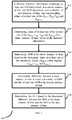
FIG. 2 is a flow diagram depicting steps involved in the process of determining State of Health (SOH) and Remaining Useful Life (RUL) of the battery, using the system ofFIG. 1 , according to some embodiments of the present disclosure. -
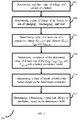
FIG. 3 is a flow diagram depicting steps involved in the process of determining the RUL from a determined SOH of the battery, in accordance with some embodiments of the present disclosure. -
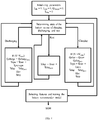
FIG. 4 is an example flow diagram depicting calculation of various parameters for determining the SOH for different states of the battery, using the process inFIG. 2 and the system inFIG. 1 , in accordance with some embodiments of the present disclosure. -
FIGS. 5A through 5F are graphs depicting values of different parameters as estimated by the system ofFIG. 1 during the battery monitoring and SOH and RUL estimation, using the process inFIG. 2 , in accordance with some embodiments of the present disclosure. - Exemplary embodiments are described with reference to the accompanying drawings. In the figures, the left-most digit(s) of a reference number identifies the figure in which the reference number first appears. Wherever convenient, the same reference numbers are used throughout the drawings to refer to the same or like parts. While examples and features of disclosed principles are described herein, modifications, adaptations, and other implementations are possible without departing from the scope of the disclosed embodiments. It is intended that the following detailed description be considered as exemplary only, with the true scope being indicated by the following claims.
- Referring now to the drawings, and more particularly to
FIG. 1 through 5F , where similar reference characters denote corresponding features consistently throughout the figures, there are shown preferred embodiments and these embodiments are described in the context of the following exemplary system and/or method. -
FIG. 1 illustrates an exemplary system for battery monitoring, according to some embodiments of the present disclosure. In an embodiment, thesystem 100 includes a processor (s) 104, communication interface device(s), alternatively referred as input/output (I/O) interface(s) 106, and one or more data storage devices or amemory 102 operatively coupled to the processor (s) 104. In an embodiment, the processor (s) 104, can be one or more hardware processors (104). In an embodiment, the one or more hardware processors (104) can be implemented as one or more microprocessors, microcomputers, microcontrollers, digital signal processors, central processing units, state machines, logic circuitries, and/or any devices that manipulate signals based on operational instructions. Among other capabilities, the processor(s) 104 is configured to fetch and execute computer-readable instructions stored in thememory 102. In an embodiment, thesystem 100 can be implemented in a variety of computing systems, such as laptop computers, notebooks, hand-held devices, workstations, mainframe computers, servers, a network cloud and the like. - The I/O interface(s) 106 can include a variety of software and hardware interfaces, for example, a web interface, a Graphical User Interface (GUI), and the like and can facilitate multiple communications within a wide variety of networks N/W and protocol types, including wired networks, for example, LAN, cable, etc., and wireless networks, such as WLAN, cellular, or satellite. In an embodiment, the I/O interface (s) 106 can include one or more ports for connecting a number of devices to one another or to another server. For example, the I/
O interface 106 enables the authorized user to access the system disclosed herein through the GUI and communicate with othersimilar systems 100. - The
memory 102 may include any computer-readable medium known in the art including, for example, volatile memory, such as static random access memory (SRAM) and dynamic random access memory (DRAM), and/or non-volatile memory, such as read only memory (ROM), erasable programmable ROM, flash memories, hard disks, optical disks, and magnetic tapes. Thus, thememory 102 may comprise information pertaining to input(s)/output(s) of each step performed by the processor(s) 104 of thesystem 100 and methods of the present disclosure. - The
system 100 performs the online battery management. As part of the online battery management, thesystem 100 performs State of Health (SOH) and Remaining Useful Life (RUL) estimation of the battery. Steps in the SOH and RUL estimation, as performed by thesystem 100, are explained in description ofFIG. 2 through FIG. 4 . -
FIG. 2 is a flow diagram depicting steps involved in the process of determining SOH and RUL of the battery, using the system ofFIG. 1 , according to some embodiments of the present disclosure. Thesystem 100 performs an online monitoring of one or more batteries so as to determine SOH and RUL of the one or more batteries. The term 'online estimation' refers to capability of thesystem 100 to remotely connect with the batteries to collect real-time value of one or more parameters to determine the SOH and RUL, and also refers to capability of thesystem 100 to dynamically determine the SOH and RUL of the battery based on dynamically collected values of various parameters of the battery. - The
system 100 generates a battery performance model, which is a machine learning data model that is generated using training data including operational data of at least one battery, SOH and RUL of the battery determined over a period of time, values of various parameters corresponding to each of the determined SOH and RUL and so on. Such data are collectively referred to as 'historical data' pertaining to operation of the battery. Every time such historical data is collected, thesystem 100 uses one or more appropriate techniques to clean the collected data. Cleaning of the data includes, but not limited to, synchronization of datasets, outlier removal, and imputation of data. The cleaning of the collected data is performed to fine-tune the collected historical data to obtain 'cleaned operational data' which is stored in the memory 101 and which is used for further processing to determine SOH and RUL of the battery at any given point of time. From the cleaned operational data, the SOH, State of Charge (SOC), RUL and so on are extracted as Key Variable Indicators (KVIs). - Further, the
system 100 uses one or more feature engineering mechanisms to extract additional features, which along with the KVIs form training data for generating the battery performance model. Any appropriate machine learning technique may be used by thesystem 100 to process the training data and to build the battery performance model. The battery performance model is stored in a database in thememory 102, and may be updated from time to time using new training data. - Process of determining SOH and RUL of a battery is explained below. For convenience, the SOH and RUL estimation is explained by considering one battery. However, it is to be noted that the
system 100 may perform the SOH and RUL estimation for more than one battery at a time. Also, the SOH and RUL estimation performed by thesystem 100 is an 'online estimation'. The term 'online estimation' in this context refers to capability of thesystem 100 to remotely connect with the batteries to collect real-time value of one or more parameters to determine the SOH and RUL, and also refers to capability of thesystem 100 to dynamically determine the SOH and RUL of the battery based on dynamically collected values of various parameters of the battery. - The
system 100 can be connected to the battery using appropriate means such as but not limited to wired or wireless means, for example, a voltmeter and an ammeter are used. The voltmeter and ammeter used can be part of thesystem 100 externally or may be stand-alone devices. When connected, thesystem 100 initially determines (202) value of voltage and current of the battery. Based on the determined value of the voltage and battery, thesystem 100 further determines (204) state of the battery as one of 'charging', 'discharging', and 'rest'. If the determined value of current is non-zero, then thesystem 100 considers the battery as in operations mode, and if the determined value of current is 'zero', then thesystem 100 determines the battery as in the state of 'rest'. If the battery in the operations mode is drawing current from an external power supply, then thesystem 100 determines that the battery is in the 'charging' state. If the charge is coming out of the battery, then thesystem 100 determines the battery as in 'discharging' state. - Further the
system 100 determines (206) value of at least one of a plurality of parameters including cumulative charge (Qchar), time elapsed (Telap), Operation time (Topn), and Charging Time (Topn_ch). If the battery is in the discharging state, thesystem 100 checks whether the determined value of the voltage (V) exceeds a minimum threshold of voltage (Vmin). If V exceeds Vmin, then thesystem 100 determines values of Qchar, time elapsed Telap, and Topn as:


- The charging time (Topn_ch) is one of a charging time if the battery is in charging state, discharging time if the battery is in discharging state, and elapsed time if the battery is in the state of rest. Based on state of the battery, one of the aforementioned three values is determined as:
- 1. For charging state:
If the battery is in 'charging' state and if (V ≤ maximum threshold of voltage (Vmax)), then
- 2. For discharging state:
If the battery is in discharging state and if V ≥ Vmin,
- 3. For battery in the state of rest:

- Values of Vmin and Vmax may be manufacture-specified.
- If V is less than Vmin, then the
system 100 terminates the process of SOH and RUL estimation. If the battery is in the state of 'rest', then thesystem 100 determines value of only the time elapsed (Telap), as:
- If the battery is in the 'charging' state, then the
system 100 checks whether the determined value of the voltage (V) is less than a maximum threshold of voltage (Vmax) i.e. whether V < Vmax. If V is less than Vmax, then thesystem 100 determines values of Qchar, time elapsed Telap, and Topn as:


- If V exceeds Vmax, then the
system 100 terminates the process of SOH and RUL estimation. The type of parameters determined for each state of the battery and the equations (1) through (10) are depicted inFIG. 4 . The equations for Topn_ch are not depicted inFIG. 4 , however they are used when needed. - In the next step, the
system 100 determines (208) correlation of the determined value of at least one of the Qchar, Telap, Topn, and Topn_ch with the battery performance model. The battery performance model has data pertaining to one or more SOH and RUL determined at one or more past instance of time and corresponding values of the Qchar, Telap, and Topn parameters, for the same battery and/or a plurality of batteries including the battery for which the SOH and RUL estimation is being performed. While determining the correlation, thesystem 100 searches for and identifies matching values of the one or more parameters being considered, and based on a match found, determines (210) the corresponding SOH as the SOH of the battery. - In the next step, the
system 100 determines (212) the RUL of the battery. This process is depicted inFIG. 3 . Thesystem 100 determines the RUL based on a rate of deterioration of SOH of the battery over a period of time. Thesystem 100 collects (302) historical information pertaining to at least one SOH determined for the battery being monitored, at a current instance of time (i.e. real-time online estimation) and over a plurality of past time instances. In an embodiment, multiple SOH values determined over a period of time are used by thesystem 100 for the RUL estimation. Thesystem 100 subtracts the SOH determined (304) at step 210 (referred to as 'SOH determined at a future instance of time (step 306 in inFIG. 3' ) from the at least one SOH determined during at least one past instance of time. Thesystem 100 then determines (308) difference between future instance of time to reach a SOH Threshold (which is predetermined by user/ manufacturer) for the first time and the at least one SOH at the current instance of time, and based on the determined difference, determines (310) the RUL of the battery. Thesystem 100 may use a suitable approach/technique such as but not limited to a normal distribution approximation technique to determine the SOH and value of associated parameters at the future instance of time, and the determined values are used to further determine the RUL. The determined value of SOH and RUL are further used by thesystem 100 to update the battery performance model. This is depicted inFIG. 4 . -
Table. 1 Absolute time (seconds) Voltage Current Profile (Charging (C)/Discharging (D)/Rest (R)) Time (Relative in sec) Derived tags Features Cumulative elapsed time Cumulative charge-in (Amp-Sec) Total charge time (sec) Elapsed Time Ratio Mean Cumulative Charge Load 3000 3.2-4.2 V 2A C 3000 0 6000 3000 0 2 4000 4.2-4.2 V 0 R 1000 1000 6000 3000 0.25 2 5500 4.2-3.5 V 3A D 1500 1000 6000 3000 0.181818182 2 5600 3.5-3.4 V 4A D 100 1000 6000 3000 0.178571429 2 8100 3.4-4.2 V 2.5 A c 2500 1000 12550 5500 0.12345679 2.227272727 1010 0 4.2-4.2 V 0 R 2000 3000 12550 5500 0.297029703 2.227272727 1160 0 4.2-3.4 V 3A D 1000 3000 12550 5500 0.25862069 2.227272727 - Table. 1 shows results of method of extraction of features including Elapsed Time ratio and total or cumulative charge ratio in. It is to be noted that these two features are considered only for example purpose, however other appropriate parameters also can be used by the
system 100. Cumulative nature of these two features makes implementation of the battery performance model easier and convenient. During a first point, a charging instance of 2A is considered, where voltage of the battery rose from 3.2 V to 4.2 V. This instance leads to a positive change of 6000Amp-sec in the total charge-in and elapsed time which accounts for resting period stood at 0 Sec. Second point refers to the resting period and hence leads to an elapsed time of 1000 sec with no change in cumulative charge-in. Third and fourth cycles refer to discharge by a constant current of 3 A and 4 A respectively, hence no change in both the features is witnessed. Fifth cycle refers to the charging by 2.5 A for a duration of 2500 Sec, which lead to a change in cumulative charge in to 12250. Sixth cycle again is another rest cycle which changes the elapsed time to 3000 Sec with no change in seventh cycle of discharging. - For online measurement, it may not be directly possible to calculate the elapsed time. A flag based mechanism is used by the
system 100 to overcome this issue, and is explained below: - a. Keep a check on current and voltage of the battery and compare instantaneous voltage of the battery.
- b. If, there is some charging or discharging happening in the battery, then Elapsed time remains at its previous value. Otherwise if the battery is at rest (not loaded or getting charged), elapsed time increases with resting time.
- c. Add Elapsed time with previous value, whenever charging and discharging commences.
- Results of SOH prediction done by the
system 100 is depicted inFIG. 5A . - Remaining useful Life (RUL) - of the battery refers to the capacity fade, where capacity degrades to less than a certain value (for example, 80%) of rated capacity of the battery. RUL requires prediction of SOH at future states i.e. at future instances of time. Most of the time, these predictions come with an upper and lower bound, which talks about the degree of uncertainty in the predicted value and the predictions are supposed to lie within this defined bound.
- The
system 100 uses a normal distribution approximation in this scenario. (as depicted inFIG. 5B ), standard deviations (1.96 to be exact) account for 95% of the area coverage w.r.t. mean. Considering the same analogy, at time t_1, θ refers to the mean value of an engineered feature(elapsed time for ex.) w.r.t total cumulative time, then upper and lower bound of the feature are given by θ± 2σ, where σ refers to the standard deviation from the mean as shown inFIG. 5B . - A RUL algorithm used by the
system 100 uses predicted value of state parameters to estimate state of health of the battery at any future instance of time. The algorithm works on the battery performance model, and predicts state of health of the battery based on estimated state variables value.Table. 2 Elapsed Time Ratio Charge Time Ratio Absolute Time Cumulative Charge Time Mean Cumulative Load 0.14 0.25 4000000 1000000 1.9 0.15 0.25 4000000 1100000 1.85 0.16 0.245 4000000 1176000 1.84 0.22 0.2 600000 120000 1.7 0.23 0.2 6500000 1300000 1.6 - a. First, state variables are identified, value of which need to be predicted based on fixed values of other state variables. For example, in the case of mean cumulative charge and elapsed time ratio as state variables, the elapsed time ratio is predicted based on historical data for given value of cumulative charge. Mean cumulative charge load is also predicted based on ratio of charging time to absolute time, using the battery performance model. Likewise, other parameters also are calculated.
- b. Define values of state variables, as mentioned in the Table. 2. Here, every row in the table defines a specific time when SOH prediction needs to be made, based on estimated value of SOH at a given starting time with cumulative charge of 11000 units. Cumulative charge column gives the point of prediction for RUL, second column gives the estimated mean value of elapsed time when battery is cumulatively charged to the given number based on historical data and is given by θ.
- c. Third and fourth columns give upper and lower bound on mean value as θ ± 1.96σ respectively.
- Further in next steps, the battery performance model is used to determine value of SOH at a future instance of time under certain defined usage conditions. The 'usage conditions' are assumptions that usage pattern of the battery being monitored is same as at least one usage pattern previously recorded i.e. a historical usage pattern, which is part of the historical data. Also, sometimes manufacturers of batteries may specify End of Life (EOL) of battery as 70% or 50% of a rated capacity. This information also is taken as input by the
system 100 and is used for the RUL estimation). Graphs inFIG. 5C , show behavior of the battery performance model with progressing cycles. Though, with less cycle information, there can be some error in accurate predictions, but with every passing cycle the battery performance model self-learns and gives more accurate results. - RUL of the battery is predicted using above mentioned procedure for all the cycles. To estimate between any two cycles, the RUL is estimated at cycle n and cycle n-1 and then linearly interpolated in between as shown in
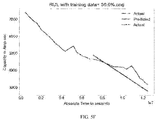
FIG. 5D .FIG. 5E shows result of the RUL estimation performed by thesystem 100. (50% of data is used for training the battery performance model and the ratios and future parameters are calculated. The calculated values are used to predict the SOH of the battery at a future instance of time. As inFIG. 5E , end of actual capacity is considered as End of battery life. Error in RUL prediction for 50% training data was observed as 9 days. - The written description describes the subject matter herein to enable any person skilled in the art to make and use the embodiments. The scope of the subject matter embodiments is defined by the claims and may include other modifications that occur to those skilled in the art. Such other modifications are intended to be within the scope of the claims if they have similar elements that do not differ from the literal language of the claims or if they include equivalent elements with insubstantial differences from the literal language of the claims.
- The embodiments of present disclosure herein addresses unresolved problem of online battery monitoring. The embodiment, thus provides a mechanism for determining a State of Health (SOH) of a battery using values of battery specific parameters collected dynamically/real-time. Moreover, the embodiments herein further provide a method and system for RUL estimation based on relative deterioration in the SOH of the battery over a period of time.
- It is to be understood that the scope of the protection is extended to such a program and in addition to a computer-readable means having a message therein; such computer-readable storage means contain program-code means for implementation of one or more steps of the method, when the program runs on a server or mobile device or any suitable programmable device. The hardware device can be any kind of device which can be programmed including e.g. any kind of computer like a server or a personal computer, or the like, or any combination thereof. The device may also include means which could be e.g. hardware means like e.g. an application-specific integrated circuit (ASIC), a field-programmable gate array (FPGA), or a combination of hardware and software means, e.g. an ASIC and an FPGA, or at least one microprocessor and at least one memory with software processing components located therein. Thus, the means can include both hardware means and software means. The method embodiments described herein could be implemented in hardware and software. The device may also include software means. Alternatively, the embodiments may be implemented on different hardware devices, e.g. using a plurality of CPUs.
- The embodiments herein can comprise hardware and software elements. The embodiments that are implemented in software include but are not limited to, firmware, resident software, microcode, etc. The functions performed by various components described herein may be implemented in other components or combinations of other components. For the purposes of this description, a computer-usable or computer readable medium can be any apparatus that can comprise, store, communicate, propagate, or transport the program for use by or in connection with the instruction execution system, apparatus, or device.
- The illustrated steps are set out to explain the exemplary embodiments shown, and it should be anticipated that ongoing technological development will change the manner in which particular functions are performed. These examples are presented herein for purposes of illustration, and not limitation. Further, the boundaries of the functional building blocks have been arbitrarily defined herein for the convenience of the description. Alternative boundaries can be defined so long as the specified functions and relationships thereof are appropriately performed. Alternatives (including equivalents, extensions, variations, deviations, etc., of those described herein) will be apparent to persons skilled in the relevant art(s) based on the teachings contained herein. Such alternatives fall within the scope of the disclosed embodiments. Also, the words "comprising," "having," "containing," and "including," and other similar forms are intended to be equivalent in meaning and be open ended in that an item or items following any one of these words is not meant to be an exhaustive listing of such item or items, or meant to be limited to only the listed item or items. It must also be noted that as used herein and in the appended claims, the singular forms "a," "an," and "the" include plural references unless the context clearly dictates otherwise.
- Furthermore, one or more computer-readable storage media may be utilized in implementing embodiments consistent with the present disclosure. A computer-readable storage medium refers to any type of physical memory on which information or data readable by a processor may be stored. Thus, a computer-readable storage medium may store instructions for execution by one or more processors, including instructions for causing the processor(s) to perform steps or stages consistent with the embodiments described herein. The term "computer-readable medium" should be understood to include tangible items and exclude carrier waves and transient signals, i.e., be non-transitory. Examples include random access memory (RAM), read-only memory (ROM), volatile memory, nonvolatile memory, hard drives, CD ROMs, DVDs, flash drives, disks, and any other known physical storage media.
- It is intended that the disclosure and examples be considered as exemplary only, with a true scope of disclosed embodiments being indicated by the following claims.
Claims (15)
- A processor implemented method (200) for online battery management, comprising:determining (202) real-time value of voltage and current of a battery being monitored, via one or more hardware processors;determining (204) a state of the battery as one of charging, discharging,and rest, via the one or more hardware processors, based on the determined value of one of the current and voltage;determining (206) value of at least one of a cumulative charge (Qchar), a time elapsed (Telap), Operation time (Topn), and Charging Time (Topn_ch) based on the determined state of the battery, via the one or more hardware processors; andprocessing the determined value of the at least one of the Qchar, Telap, Topn, and Topn_ch with a battery performance model to determine a State of Health (SOH) and Remaining Useful Life (RUL) of the battery, via the one or more hardware processors, comprising:determining (208) correlation of the determined value of the at least one of the Qchar, Telap, Topn, and Topn_ch with the battery performance model;determining (210) the State of Health (SOH) of the battery based on the determined correlation; anddetermining (212) the Remaining Useful Life (RUL) of the battery based on the determined SOH of the battery.
- The method as claimed in claim 1, wherein the value of the Qchar, Telap, Topn , and Topn_ch are determined if the determined state of the battery is one of charging or discharging.
- The method as claimed in claim 1, wherein the value of the Telap is determined if the determined state of the battery is 'rest'.
- The method as claimed in claim 1, wherein the battery performance model is a machine learning model trained using training data comprising historical data pertaining to a plurality of SOH and RUL of at least one battery and value of a plurality of Key Variables of Interest (KVI) for each of the plurality of SOH and RUL.
- The method as claimed in claim 1, wherein determining the RUL based on the determined SOH of the battery comprises:collecting (302) historical information, wherein the historical information comprises at least one SOH of the battery determined at a past time instance, and values of the cumulative charge (Qchar), the time elapsed (Telap), the Topn, and the Topn_ch corresponding to the determined at least one SOH;determining (304) values of the cumulative charge (Qchar), the time elapsed (Telap), the Topn, and the Topn_ch for a future instance of time, based on the historical information;determining (306) the SOH at the future instance of time, based on the determined values of the cumulative charge (Qchar), the time elapsed (Telap), the Topn, and the Topn_ch; andprocessing the determined SOH and the determined values of Qchar, Telap, Topn, and the Topn_ch using the battery performance model,comprising:comparing the SOH determined for the future instance of time with the at least one SOH determined at the past instance of time;determining (308) difference between the SOH determined for the future instance of time and the at least one SOH determined at the past instance of time; anddetermining (310) the RUL of the battery based on the determined difference between the SOH determined for the future instance of time and the at least one SOH determined at the past instance of time.
- A system for online battery management, comprising:a memory (102) storing instructions;one or more communication interfaces (106); andone or more hardware processors (104) coupled to the memory (102) via the one or more communication interfaces (106), wherein the one or more hardware processors (104) are configured by the instructions to:determine real-time value of voltage and current of a battery being monitored;determine a state of the battery as one of charging, discharging, and rest, based on the determined value of one of the current and voltage;determine value of at least one of a cumulative charge (Qchar), a time elapsed (Telap), Operation Time (Topn), and Charging Time (Topn_ch) based on the determined state of the battery; andprocess the determined value of the at least one of the Qchar, Telap, Top,n, and Topn_ch with a battery performance model to determine a State of Health (SOH) and Remaining Useful Life (RUL) of the battery, comprising:determining correlation of the determined value of the at least one of the Qchar, Telap, and Topn with a battery performance model;determining the State of Health (SOH) of the battery based on the determined correlation; anddetermining the Remaining Useful Life (RUL) of the battery based on the determined SOH of the battery.
- The system as claimed in claim 6, wherein the system determines value of the Qchar, Telap, Topn, and Topn_ch if the determined state of the battery is one of charging or discharging.
- The system as claimed in claim 6, wherein the system determines the value of the Telap if the determined state of the battery is 'rest'.
- The system as claimed in claim 6, wherein the battery performance model is a machine learning model trained using training data comprising historical data pertaining to a plurality of SOH and RUL of at least one battery and value of a plurality of Key Variables of Interest (KVI) for each of the plurality of SOH and RUL.
- The system as claimed in claim 6, wherein the system determines the RUL based on the determined SOH of the battery by:collecting historical information, wherein the historical information comprises at least one SOH of the battery determined at a past time instance, and values of the cumulative charge (Qchar), the time elapsed (Telap), the Topn, and the Topn_ch corresponding to the determined at least one SOH;determining values of the cumulative charge (Qchar), the time elapsed (Telap), the Topn, and the Topn_ch for a future instance of time, based on the historical information;determining the SOH at the future instance of time, based on the determined values of the cumulative charge (Qchar), the time elapsed (Telap), the Topn, and the Topn_ch; andprocessing the determined SOH and the determined values of Qchar, Telap, Topn, and the Topn_ch using the battery performance model, comprising:comparing the SOH determined for the future instance of time with the at least one SOH determined at the past instance of time;determining difference between the SOH determined for the future instance of time and the at least one SOH determined at the past instance of time; anddetermining the RUL of the battery based on the determined difference between the SOH determined for the future instance of time and the at least one SOH determined at the past instance of time.
- A non-transitory computer readable medium for battery management, wherein the non-transitory computer readable medium comprising a plurality of instructions which when executed using one or more hardware processors, cause the one or more hardware processors to perform the battery management by:determining real-time value of voltage and current of a battery being monitored, via one or more hardware processors;determining a state of the battery as one of charging, discharging, and rest, via the one or more hardware processors, based on the determined value of one of the current and voltage;determining value of at least one of a cumulative charge (Qchar), a time elapsed (Telap), Operation time (Topn), and Charging Time (Topn_ch) based on the determined state of the battery, via the one or more hardware processors; andprocessing the determined value of the at least one of the Qchar, Telap, Topn, and Topn_ch with a battery performance model to determine a State of Health (SOH) and Remaining Useful Life (RUL) of the battery, via the one or more hardware processors, comprising:determining correlation of the determined value of the at least one of the Qchar, Telap, Topn, and Topn_ch with the battery performance model;determining the State of Health (SOH) of the battery based on the determined correlation; anddetermining the Remaining Useful Life (RUL) of the battery based on the determined SOH of the battery.
- The non-transitory computer readable medium as claimed in claim 11, wherein the value of the Qchar, Telap, Topn, and Topn_ch are determined if the determined state of the battery is one of charging or discharging.
- The non-transitory computer readable medium as claimed in claim 11, wherein the value of the Telap is determined if the determined state of the battery is 'rest'.
- The non-transitory computer readable medium as claimed in claim 11, wherein the battery performance model is a machine learning model trained using training data comprising historical data pertaining to a plurality of SOH and RUL of at least one battery and value of a plurality of Key Variables of Interest (KVI) for each of the plurality of SOH and RUL.
- The non-transitory computer readable medium as claimed in claim 11, wherein determining the RUL based on the determined SOH of the battery comprises:collecting historical information, wherein the historical information comprises at least one SOH of the battery determined at a past time instance, and values of the cumulative charge (Qchar), the time elapsed (Telap), the Topn, and the Topn_ch corresponding to the determined at least one SOH;determining values of the cumulative charge (Qchar), the time elapsed (Telap), the Topn, and the Topn_ch for a future instance of time, based on the historical information;determining the SOH at the future instance of time, based on the determined values of the cumulative charge (Qchar), the time elapsed (Telap), the Topn, and the Topn_ch; andprocessing the determined SOH and the determined values of Qchar, Telap, Topn, and the Topn_ch using the battery performance model, comprising:comparing the SOH determined for the future instance of time with the at least one SOH determined at the past instance of time;determining difference between the SOH determined for the future instance of time and the at least one SOH determined at the past instance of time; anddetermining the RUL of the battery based on the determined difference between the SOH determined for the future instance of time and the at least one SOH determined at the past instance of time.
Applications Claiming Priority (1)
| Application Number | Priority Date | Filing Date | Title |
|---|---|---|---|
| IN202021000556 | 2020-01-06 |
Publications (3)
| Publication Number | Publication Date |
|---|---|
| EP3845918A1 true EP3845918A1 (en) | 2021-07-07 |
| EP3845918B1 EP3845918B1 (en) | 2024-08-21 |
| EP3845918C0 EP3845918C0 (en) | 2024-08-21 |
Family
ID=74105814
Family Applications (1)
| Application Number | Title | Priority Date | Filing Date |
|---|---|---|---|
| EP21150354.5A Active EP3845918B1 (en) | 2020-01-06 | 2021-01-06 | Method and system for online estimation of soh and rul of a battery |
Country Status (2)
| Country | Link |
|---|---|
| US (1) | US11255918B2 (en) |
| EP (1) | EP3845918B1 (en) |
Cited By (5)
| Publication number | Priority date | Publication date | Assignee | Title |
|---|---|---|---|---|
| CN113759269A (en) * | 2021-11-10 | 2021-12-07 | 武汉理工大学 | A method and system for monitoring the health state of an electric vehicle battery |
| CN114578249A (en) * | 2021-12-23 | 2022-06-03 | 江苏省安全生产科学研究院 | Lithium battery health state estimation method based on stability characteristics and AS-TCN model |
| CN114609529A (en) * | 2022-03-09 | 2022-06-10 | 安徽理工大学 | Data-driven lithium ion battery residual life prediction method and system |
| DE102021129351A1 (en) | 2021-11-11 | 2023-05-11 | TWAICE Technologies GmbH | DETERMINING THE HEALTH STATUS OF BATTERIES WITH DYNAMIC DIAGNOSTIC LOAD PROFILE |
| WO2026015033A1 (en) * | 2024-07-10 | 2026-01-15 | Kongsberg Maritime As | Battery health and control |
Families Citing this family (16)
| Publication number | Priority date | Publication date | Assignee | Title |
|---|---|---|---|---|
| US11740297B2 (en) * | 2020-02-25 | 2023-08-29 | Battelle Energy Alliance, Llc | Methods and systems for diagnosis of failure mechanisms and for prediction of lifetime of metal batteries |
| CN116774081B (en) * | 2021-12-12 | 2024-02-09 | 崔跃芹 | Rechargeable battery life prediction method and device adopting composite life index, electronic equipment and readable storage medium |
| KR102885036B1 (en) * | 2021-11-04 | 2025-11-11 | 에스케이온 주식회사 | Method for predicting a remaining useful life of battery, and a control device operating the same |
| US20230268753A1 (en) * | 2022-02-21 | 2023-08-24 | Lenovo (United States) Inc. | Intelligent battery charging based on history |
| CN114814592B (en) * | 2022-03-14 | 2024-08-09 | 湖北工业大学 | Lithium battery health state estimation and residual service life prediction method and equipment |
| KR20230137149A (en) * | 2022-03-21 | 2023-10-04 | 주식회사 엘지에너지솔루션 | Apparatus and method for managing battery |
| CN114675188A (en) * | 2022-03-29 | 2022-06-28 | 北京芯虹科技有限责任公司 | A method, device and battery system for determining battery health state information |
| CN115219919B (en) * | 2022-07-27 | 2026-03-10 | 浙江极氪智能科技有限公司 | Battery health state prediction method and device, electronic equipment and readable storage medium |
| CN115436815A (en) * | 2022-11-07 | 2022-12-06 | 深圳盛齐能源技术有限公司 | Household or industrial and commercial energy storage SOH estimation method and device and energy storage battery |
| US12510604B2 (en) * | 2023-02-02 | 2025-12-30 | Toyota Motor North America, Inc. | Systems and methods for determining indica for remaining useful life of a battery |
| CN116990692B (en) * | 2023-09-28 | 2023-12-08 | 深圳康普盾科技股份有限公司 | Lithium battery health condition assessment and residual life prediction method and system |
| BE1031646B1 (en) * | 2023-11-27 | 2024-12-19 | Quicksand | An electronic device containing a predictive and real-time adaptive energy management module |
| US20250208225A1 (en) * | 2023-12-20 | 2025-06-26 | Robert Bosch Gmbh | Electrochemical state of health estimating method |
| CN117686937B (en) * | 2024-02-02 | 2024-04-12 | 河南科技学院 | Method for estimating health state of single battery in battery system |
| CN118837775A (en) * | 2024-06-28 | 2024-10-25 | 淮阴工学院 | Lithium ion battery health state and residual service life joint estimation method |
| CN120294587B (en) * | 2025-06-16 | 2025-08-22 | 浙江广曜数智科技有限公司 | Multi-mode feature fusion storage battery health state monitoring and predicting method and system |
Citations (7)
| Publication number | Priority date | Publication date | Assignee | Title |
|---|---|---|---|---|
| US20030184307A1 (en) * | 2002-02-19 | 2003-10-02 | Kozlowski James D. | Model-based predictive diagnostic tool for primary and secondary batteries |
| US20150301122A1 (en) * | 2014-04-18 | 2015-10-22 | Samsung Electronics Co., Ltd. | Method and apparatus for correcting error occurring in estimation of battery life |
| US20160209472A1 (en) * | 2015-01-21 | 2016-07-21 | North Carolina State University | Method and apparatus for estimating battery life |
| US20180143257A1 (en) * | 2016-11-21 | 2018-05-24 | Battelle Energy Alliance, Llc | Systems and methods for estimation and prediction of battery health and performance |
| US10371753B1 (en) * | 2013-12-20 | 2019-08-06 | Hrl Laboratories, Llc | Methods for online estimation of battery capacity and state of health |
| WO2019199219A1 (en) * | 2018-04-09 | 2019-10-17 | Scania Cv Ab | Methods and control units for determining an extended state of health of a component and for control of a component |
| US20190353711A1 (en) * | 2018-05-17 | 2019-11-21 | CW Professional Services LLC d/b/a Lochbridge | Predicting remaining useful life of a battery |
Family Cites Families (5)
| Publication number | Priority date | Publication date | Assignee | Title |
|---|---|---|---|---|
| US9157966B2 (en) * | 2011-11-25 | 2015-10-13 | Honeywell International Inc. | Method and apparatus for online determination of battery state of charge and state of health |
| US20170115355A1 (en) * | 2015-10-23 | 2017-04-27 | Oxfordian, Llc | Maximum capacity estimator for battery state of health and state of charge determinations |
| US20180246173A1 (en) * | 2017-02-28 | 2018-08-30 | Honeywell International Inc. | Online determination of model parameters of lead acid batteries and computation of soc and soh |
| US11598816B2 (en) * | 2017-12-07 | 2023-03-07 | Yazami Ip Pte. Ltd. | Method and system for online assessing state of health of a battery |
| US10921383B2 (en) * | 2019-03-07 | 2021-02-16 | Mitsubishi Electric Research Laboratories, Inc. | Battery diagnostic system for estimating capacity degradation of batteries |
-
2021
- 2021-01-05 US US17/142,037 patent/US11255918B2/en active Active
- 2021-01-06 EP EP21150354.5A patent/EP3845918B1/en active Active
Patent Citations (7)
| Publication number | Priority date | Publication date | Assignee | Title |
|---|---|---|---|---|
| US20030184307A1 (en) * | 2002-02-19 | 2003-10-02 | Kozlowski James D. | Model-based predictive diagnostic tool for primary and secondary batteries |
| US10371753B1 (en) * | 2013-12-20 | 2019-08-06 | Hrl Laboratories, Llc | Methods for online estimation of battery capacity and state of health |
| US20150301122A1 (en) * | 2014-04-18 | 2015-10-22 | Samsung Electronics Co., Ltd. | Method and apparatus for correcting error occurring in estimation of battery life |
| US20160209472A1 (en) * | 2015-01-21 | 2016-07-21 | North Carolina State University | Method and apparatus for estimating battery life |
| US20180143257A1 (en) * | 2016-11-21 | 2018-05-24 | Battelle Energy Alliance, Llc | Systems and methods for estimation and prediction of battery health and performance |
| WO2019199219A1 (en) * | 2018-04-09 | 2019-10-17 | Scania Cv Ab | Methods and control units for determining an extended state of health of a component and for control of a component |
| US20190353711A1 (en) * | 2018-05-17 | 2019-11-21 | CW Professional Services LLC d/b/a Lochbridge | Predicting remaining useful life of a battery |
Non-Patent Citations (2)
| Title |
|---|
| BARRÉ ANTHONY ET AL: "A review on lithium-ion battery ageing mechanisms and estimations for automotive applications", JOURNAL OF POWER SOURCES, ELSEVIER SA, CH, vol. 241, 7 June 2013 (2013-06-07), pages 680 - 689, XP028675862, ISSN: 0378-7753, DOI: 10.1016/J.JPOWSOUR.2013.05.040 * |
| NUHIC ADNAN ET AL: "Health diagnosis and remaining useful life prognostics of lithium-ion batteries using data-driven methods", JOURNAL OF POWER SOURCES, ELSEVIER SA, CH, vol. 239, 13 December 2012 (2012-12-13), pages 680 - 688, XP028566893, ISSN: 0378-7753, DOI: 10.1016/J.JPOWSOUR.2012.11.146 * |
Cited By (6)
| Publication number | Priority date | Publication date | Assignee | Title |
|---|---|---|---|---|
| CN113759269A (en) * | 2021-11-10 | 2021-12-07 | 武汉理工大学 | A method and system for monitoring the health state of an electric vehicle battery |
| DE102021129351A1 (en) | 2021-11-11 | 2023-05-11 | TWAICE Technologies GmbH | DETERMINING THE HEALTH STATUS OF BATTERIES WITH DYNAMIC DIAGNOSTIC LOAD PROFILE |
| CN114578249A (en) * | 2021-12-23 | 2022-06-03 | 江苏省安全生产科学研究院 | Lithium battery health state estimation method based on stability characteristics and AS-TCN model |
| CN114609529A (en) * | 2022-03-09 | 2022-06-10 | 安徽理工大学 | Data-driven lithium ion battery residual life prediction method and system |
| CN114609529B (en) * | 2022-03-09 | 2024-04-23 | 安徽理工大学 | A data-driven method and system for predicting the remaining life of lithium-ion batteries |
| WO2026015033A1 (en) * | 2024-07-10 | 2026-01-15 | Kongsberg Maritime As | Battery health and control |
Also Published As
| Publication number | Publication date |
|---|---|
| EP3845918B1 (en) | 2024-08-21 |
| EP3845918C0 (en) | 2024-08-21 |
| US11255918B2 (en) | 2022-02-22 |
| US20210247447A1 (en) | 2021-08-12 |
Similar Documents
| Publication | Publication Date | Title |
|---|---|---|
| EP3845918B1 (en) | Method and system for online estimation of soh and rul of a battery | |
| US11300623B2 (en) | Method and system for remaining useful life prediction of lithium based batteries | |
| US20200150185A1 (en) | Method for approximating algorithms for fast charging li-ion batteries based on electrochemical battery models | |
| CN110320474A (en) | A Lifetime Prediction Method for Lithium-ion Battery Aging Model | |
| CN109992473B (en) | Application system monitoring method, device, equipment and storage medium | |
| US10324139B2 (en) | Method and electronic device for detecting internal short circuit in battery | |
| CN115792627A (en) | Lithium battery SOH analysis and prediction method and device, electronic equipment and storage medium | |
| CN108920336A (en) | A kind of service abnormity prompt method and device based on time series | |
| Kim et al. | Reliable online parameter identification of li-ion batteries in battery management systems using the condition number of the error covariance matrix | |
| CN116482557A (en) | A battery management method, device, electronic equipment and medium based on battery internal resistance | |
| CN109037810A (en) | A kind of charging method of battery, device and battery system | |
| US20240134325A1 (en) | Online characterization of battery model parameters with augmented dynamic stimulus | |
| Zhou et al. | Research on Online Capacity Estimation of Power Battery Based on EKF‐GPR Model | |
| Kim et al. | A battery lifetime monitoring and estimation using split learning algorithm in smart mobile consumer electronics | |
| Deshpande et al. | Performance and Life Analysis of Lithium‐Ion Batteries Aided by Data‐Driven Analysis | |
| CN111209111A (en) | Resource allocation method, device, equipment and storage medium based on block chain system | |
| Lu et al. | Remaining useful lifetime prediction of lithium-ion batteries based on fragment data and trend identification | |
| CN110544031B (en) | Electric energy meter reliability prediction method, device, computer equipment and storage medium | |
| CN119024213B (en) | Method, system, terminal and medium for calculating battery capacity based on charging data | |
| CN111273181A (en) | Battery backup unit monitoring method, device, server and readable storage medium | |
| CN116331044A (en) | A charging data storage system for DC charging piles | |
| Kumar et al. | Battery health estimation for iot devices using v-edge dynamics | |
| CN111312326A (en) | Flash memory life testing method and device, power acquisition terminal and storage medium | |
| Wang et al. | Research on Lithium-Ion Battery State of Health Prediction Based on Autoregressive Integrated Moving Average Mode | |
| Fang et al. | Remaining Useful Life Prediction of Lithium-Ion Batteries Using Physics-Informed Gaussian Process Regression Under Multi-Phase Degradation |
Legal Events
| Date | Code | Title | Description |
|---|---|---|---|
| PUAI | Public reference made under article 153(3) epc to a published international application that has entered the european phase |
Free format text: ORIGINAL CODE: 0009012 |
|
| STAA | Information on the status of an ep patent application or granted ep patent |
Free format text: STATUS: THE APPLICATION HAS BEEN PUBLISHED |
|
| AK | Designated contracting states |
Kind code of ref document: A1 Designated state(s): AL AT BE BG CH CY CZ DE DK EE ES FI FR GB GR HR HU IE IS IT LI LT LU LV MC MK MT NL NO PL PT RO RS SE SI SK SM TR |
|
| STAA | Information on the status of an ep patent application or granted ep patent |
Free format text: STATUS: REQUEST FOR EXAMINATION WAS MADE |
|
| 17P | Request for examination filed |
Effective date: 20220107 |
|
| RBV | Designated contracting states (corrected) |
Designated state(s): AL AT BE BG CH CY CZ DE DK EE ES FI FR GB GR HR HU IE IS IT LI LT LU LV MC MK MT NL NO PL PT RO RS SE SI SK SM TR |
|
| STAA | Information on the status of an ep patent application or granted ep patent |
Free format text: STATUS: EXAMINATION IS IN PROGRESS |
|
| 17Q | First examination report despatched |
Effective date: 20231115 |
|
| GRAP | Despatch of communication of intention to grant a patent |
Free format text: ORIGINAL CODE: EPIDOSNIGR1 |
|
| STAA | Information on the status of an ep patent application or granted ep patent |
Free format text: STATUS: GRANT OF PATENT IS INTENDED |
|
| INTG | Intention to grant announced |
Effective date: 20240426 |
|
| GRAS | Grant fee paid |
Free format text: ORIGINAL CODE: EPIDOSNIGR3 |
|
| GRAA | (expected) grant |
Free format text: ORIGINAL CODE: 0009210 |
|
| STAA | Information on the status of an ep patent application or granted ep patent |
Free format text: STATUS: THE PATENT HAS BEEN GRANTED |
|
| AK | Designated contracting states |
Kind code of ref document: B1 Designated state(s): AL AT BE BG CH CY CZ DE DK EE ES FI FR GB GR HR HU IE IS IT LI LT LU LV MC MK MT NL NO PL PT RO RS SE SI SK SM TR |
|
| REG | Reference to a national code |
Ref country code: GB Ref legal event code: FG4D |
|
| REG | Reference to a national code |
Ref country code: CH Ref legal event code: EP |
|
| REG | Reference to a national code |
Ref country code: IE Ref legal event code: FG4D |
|
| REG | Reference to a national code |
Ref country code: DE Ref legal event code: R096 Ref document number: 602021017359 Country of ref document: DE |
|
| U01 | Request for unitary effect filed |
Effective date: 20240821 |
|
| U07 | Unitary effect registered |
Designated state(s): AT BE BG DE DK EE FI FR IT LT LU LV MT NL PT SE SI Effective date: 20240827 |
|
| PG25 | Lapsed in a contracting state [announced via postgrant information from national office to epo] |
Ref country code: NO Free format text: LAPSE BECAUSE OF FAILURE TO SUBMIT A TRANSLATION OF THE DESCRIPTION OR TO PAY THE FEE WITHIN THE PRESCRIBED TIME-LIMIT Effective date: 20241121 |
|
| PG25 | Lapsed in a contracting state [announced via postgrant information from national office to epo] |
Ref country code: PL Free format text: LAPSE BECAUSE OF FAILURE TO SUBMIT A TRANSLATION OF THE DESCRIPTION OR TO PAY THE FEE WITHIN THE PRESCRIBED TIME-LIMIT Effective date: 20240821 Ref country code: GR Free format text: LAPSE BECAUSE OF FAILURE TO SUBMIT A TRANSLATION OF THE DESCRIPTION OR TO PAY THE FEE WITHIN THE PRESCRIBED TIME-LIMIT Effective date: 20241122 |
|
| PG25 | Lapsed in a contracting state [announced via postgrant information from national office to epo] |
Ref country code: IS Free format text: LAPSE BECAUSE OF FAILURE TO SUBMIT A TRANSLATION OF THE DESCRIPTION OR TO PAY THE FEE WITHIN THE PRESCRIBED TIME-LIMIT Effective date: 20241221 |
|
| PG25 | Lapsed in a contracting state [announced via postgrant information from national office to epo] |
Ref country code: HR Free format text: LAPSE BECAUSE OF FAILURE TO SUBMIT A TRANSLATION OF THE DESCRIPTION OR TO PAY THE FEE WITHIN THE PRESCRIBED TIME-LIMIT Effective date: 20240821 |
|
| PG25 | Lapsed in a contracting state [announced via postgrant information from national office to epo] |
Ref country code: RS Free format text: LAPSE BECAUSE OF FAILURE TO SUBMIT A TRANSLATION OF THE DESCRIPTION OR TO PAY THE FEE WITHIN THE PRESCRIBED TIME-LIMIT Effective date: 20241121 Ref country code: ES Free format text: LAPSE BECAUSE OF FAILURE TO SUBMIT A TRANSLATION OF THE DESCRIPTION OR TO PAY THE FEE WITHIN THE PRESCRIBED TIME-LIMIT Effective date: 20240821 |
|
| PG25 | Lapsed in a contracting state [announced via postgrant information from national office to epo] |
Ref country code: RS Free format text: LAPSE BECAUSE OF FAILURE TO SUBMIT A TRANSLATION OF THE DESCRIPTION OR TO PAY THE FEE WITHIN THE PRESCRIBED TIME-LIMIT Effective date: 20241121 Ref country code: PL Free format text: LAPSE BECAUSE OF FAILURE TO SUBMIT A TRANSLATION OF THE DESCRIPTION OR TO PAY THE FEE WITHIN THE PRESCRIBED TIME-LIMIT Effective date: 20240821 Ref country code: NO Free format text: LAPSE BECAUSE OF FAILURE TO SUBMIT A TRANSLATION OF THE DESCRIPTION OR TO PAY THE FEE WITHIN THE PRESCRIBED TIME-LIMIT Effective date: 20241121 Ref country code: IS Free format text: LAPSE BECAUSE OF FAILURE TO SUBMIT A TRANSLATION OF THE DESCRIPTION OR TO PAY THE FEE WITHIN THE PRESCRIBED TIME-LIMIT Effective date: 20241221 Ref country code: HR Free format text: LAPSE BECAUSE OF FAILURE TO SUBMIT A TRANSLATION OF THE DESCRIPTION OR TO PAY THE FEE WITHIN THE PRESCRIBED TIME-LIMIT Effective date: 20240821 Ref country code: GR Free format text: LAPSE BECAUSE OF FAILURE TO SUBMIT A TRANSLATION OF THE DESCRIPTION OR TO PAY THE FEE WITHIN THE PRESCRIBED TIME-LIMIT Effective date: 20241122 Ref country code: ES Free format text: LAPSE BECAUSE OF FAILURE TO SUBMIT A TRANSLATION OF THE DESCRIPTION OR TO PAY THE FEE WITHIN THE PRESCRIBED TIME-LIMIT Effective date: 20240821 |
|
| U20 | Renewal fee for the european patent with unitary effect paid |
Year of fee payment: 5 Effective date: 20250127 |
|
| PG25 | Lapsed in a contracting state [announced via postgrant information from national office to epo] |
Ref country code: SM Free format text: LAPSE BECAUSE OF FAILURE TO SUBMIT A TRANSLATION OF THE DESCRIPTION OR TO PAY THE FEE WITHIN THE PRESCRIBED TIME-LIMIT Effective date: 20240821 |
|
| PG25 | Lapsed in a contracting state [announced via postgrant information from national office to epo] |
Ref country code: CZ Free format text: LAPSE BECAUSE OF FAILURE TO SUBMIT A TRANSLATION OF THE DESCRIPTION OR TO PAY THE FEE WITHIN THE PRESCRIBED TIME-LIMIT Effective date: 20240821 |
|
| PG25 | Lapsed in a contracting state [announced via postgrant information from national office to epo] |
Ref country code: SK Free format text: LAPSE BECAUSE OF FAILURE TO SUBMIT A TRANSLATION OF THE DESCRIPTION OR TO PAY THE FEE WITHIN THE PRESCRIBED TIME-LIMIT Effective date: 20240821 |
|
| PLBE | No opposition filed within time limit |
Free format text: ORIGINAL CODE: 0009261 |
|
| STAA | Information on the status of an ep patent application or granted ep patent |
Free format text: STATUS: NO OPPOSITION FILED WITHIN TIME LIMIT |
|
| 26N | No opposition filed |
Effective date: 20250522 |
|
| PG25 | Lapsed in a contracting state [announced via postgrant information from national office to epo] |
Ref country code: MC Free format text: LAPSE BECAUSE OF FAILURE TO SUBMIT A TRANSLATION OF THE DESCRIPTION OR TO PAY THE FEE WITHIN THE PRESCRIBED TIME-LIMIT Effective date: 20240821 |
|
| PG25 | Lapsed in a contracting state [announced via postgrant information from national office to epo] |
Ref country code: IE Free format text: LAPSE BECAUSE OF NON-PAYMENT OF DUE FEES Effective date: 20250106 |
|
| REG | Reference to a national code |
Ref country code: CH Ref legal event code: U11 Free format text: ST27 STATUS EVENT CODE: U-0-0-U10-U11 (AS PROVIDED BY THE NATIONAL OFFICE) Effective date: 20260201 |
|
| U20 | Renewal fee for the european patent with unitary effect paid |
Year of fee payment: 6 Effective date: 20260126 |
|
| PGFP | Annual fee paid to national office [announced via postgrant information from national office to epo] |
Ref country code: GB Payment date: 20260126 Year of fee payment: 6 |
|
| PG25 | Lapsed in a contracting state [announced via postgrant information from national office to epo] |
Ref country code: RO Free format text: LAPSE BECAUSE OF FAILURE TO SUBMIT A TRANSLATION OF THE DESCRIPTION OR TO PAY THE FEE WITHIN THE PRESCRIBED TIME-LIMIT Effective date: 20240821 |
|
| PGFP | Annual fee paid to national office [announced via postgrant information from national office to epo] |
Ref country code: CH Payment date: 20260201 Year of fee payment: 6 |